10,000 Matching Annotations
  1. Apr 2025
    1. nos referiremos a esa funcionalidad migrada y enriquecida

      La evolución de las herramientas digitales ha permitido una integración más rica de diferentes tipos de contenido en un solo documento, además de la importancia de las tecnologías libres en este proceso

    1. los documentos como aspectos separados y encerrados de nuestra experiencia de cómputo

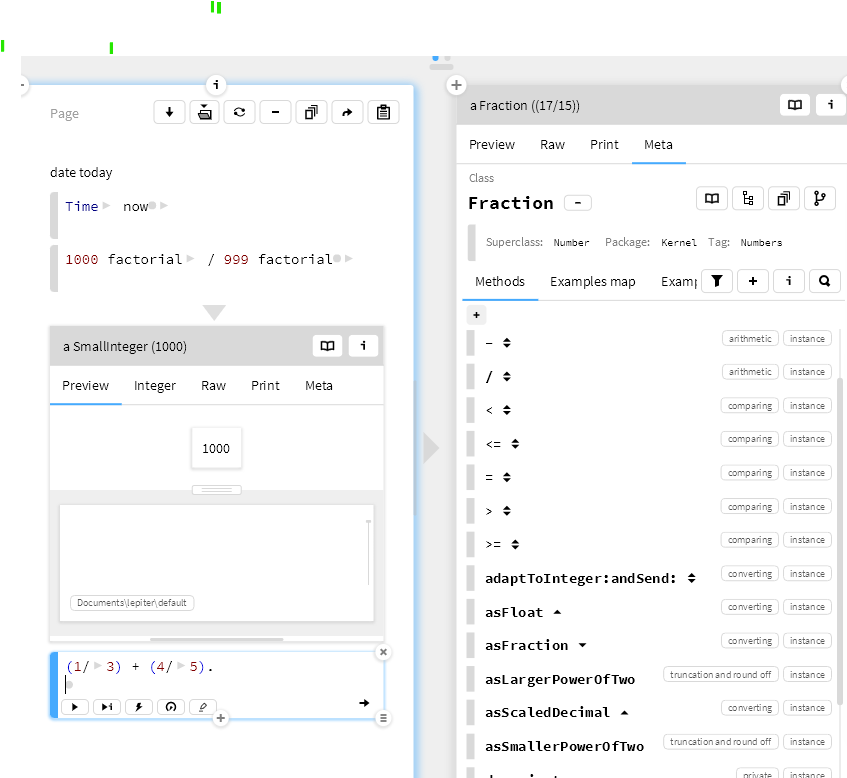
      Es interesante ver como, en un inicio, no se tenía la idea de poder unir todas estas herramientas en una, sino que se fueron creando por cada necesidad que se tiene. Actualmente se sigue así, solo hay que ver el largo listado de aplicaciones que ofrece Microsoft y como cada una va siendo más especifica en funciones y necesidades que la anterior. Es un arma de doble filo; al ser tan especifica excluye posibilidades y actividades que se puede realizar en otras aplicaciones, pero también satisface a los usuarios que necesitan suplir una sola necesidad. La diferencia es que con las libretas computaciones el límite no lo da el programa, sino el mismo usuario.

    2. Debido a su caracter hipertextual este documento no sólo que cuenta con hipervínculos que apuntan a otros enlaces que extienden la información, sino que también es posible hacer una lectura anotada hipertextual, compartiendo nuestras notas de lectura al margen con otres lectores del mismo.

      El valor agregado de este tipo de documentos, más que los hipervínculos que extienden la información, pues esto ya es popularizado y utilizado en distintos lugares: principalmente Wikipedia, pero también Fandom, Wikcionario o parecidas; sino el hecho de poder comentar sobre el mismo texto. Hay un valor tanto comunitario como personal. Comunitario porque podemos ver comentarios, ideas, o anotaciones de la comunidad que lee los textos junto sus etiquetas, como también en le valor personal en apoyo de procesos de aprendizaje, ya que nos permite recuperar y catalogar textos que vamos leyendo en la web, como agregarlo nuestras propias anotaciones.

    1. 在量子计算中,量子门的反向操作由其伴随门实现

      在量子计算中,对偶操作(伴随操作) 是量子门的一个重要性质,其核心在于伴随门(Adjoint Gate)的定义和性质。对于某些量子门(如 \( X \) 门和 \( H \) 门),它们的伴随门恰好等于自身,即 \( X^\dagger = X \) 和 \( H^\dagger = H \)。以下是详细解释:


      1. 伴随门的定义

      在量子计算中,量子门(量子操作)通常由幺正矩阵(Unitary Matrix)表示,满足 \( U^\dagger U = UU^\dagger = I \),其中 \( U^\dagger \) 是 \( U \) 的伴随矩阵(共轭转置)。<br /> 伴随门 \( U^\dagger \) 的物理意义是原门 \( U \) 的逆操作,即: [ U^\dagger = U^{-1}. ] 因此,若要撤销一个量子门 \( U \) 的操作,只需应用其伴随门 \( U^\dagger \)。


      2. 为什么 \( X^\dagger = X \) 和 \( H^\dagger = H \)?

      (1) Pauli-X 门(\( X \) 门)

      • 矩阵形式:<br /> [ X = \begin{pmatrix} 0 & 1 \ 1 & 0 \end{pmatrix}. ]
      • 伴随门计算:<br /> 由于 \( X \) 的矩阵元素均为实数,其共轭转置(伴随)等于转置: [ X^\dagger = X^T = \begin{pmatrix} 0 & 1 \ 1 & 0 \end{pmatrix} = X. ]
      • 性质:<br /> \( X \) 是自伴的(Self-Adjoint),即 \( X^\dagger = X \)。因此,\( X \) 的逆操作就是它自身: [ X^{-1} = X. ]

      (2) Hadamard 门(\( H \) 门)

      • 矩阵形式:<br /> [ H = \frac{1}{\sqrt{2}} \begin{pmatrix} 1 & 1 \ 1 & -1 \end{pmatrix}. ]
      • 伴随门计算:<br /> 同样,\( H \) 的矩阵元素为实数,其共轭转置等于转置: [ H^\dagger = H^T = \frac{1}{\sqrt{2}} \begin{pmatrix} 1 & 1 \ -1 & 1 \end{pmatrix}. ] 但注意到 \( H \) 的特殊性: [ H^T = H^\dagger = H, ] 因为: [ H \cdot H = I \quad \Rightarrow \quad H^\dagger = H^{-1} = H. ]
      • 性质:<br /> \( H \) 也是自伴的,满足 \( H^\dagger = H \),因此其逆操作也是自身。

      3. 自伴门的意义

      当量子门 \( U \) 是自伴的(\( U^\dagger = U \)),则: 1. 逆操作即自身:<br /> [ U^{-1} = U^\dagger = U \quad \Rightarrow \quad U^2 = I. ] 例如,\( X^2 = I \),\( H^2 = I \)。 2. 本征值为实数:<br /> 自伴算符的本征值必为实数。例如,\( X \) 的本征值为 \( \pm 1 \),\( H \) 的本征值为 \( \pm 1 \)。 3. 物理意义:<br /> 自伴门对应可观测量(如泡利算符 \( X \)、\( Y \)、\( Z \)),但 \( H \) 作为变换门,其自伴性简化了逆操作的设计。


      4. 知识库支持与应用

      (1) 量子门的伴随与逆操作

      • 知识库[2] 明确指出 \( X \) 门类似经典 NOT 门,其逆操作是自身,而 \( H \) 门用于叠加态的生成与撤销。
      • 知识库[4] 强调自伴算符(如 \( X \)、\( Z \))的本征值为实数,符合量子力学可观测量的性质。

      (2) 反向工程中的伴随门

      • 知识库[1] 提到反向工程需要准确确定量子门的逆操作,而自伴门的逆操作直接等于自身,简化了电路设计和错误校正。例如,若需撤销一个 \( H \) 门,只需再次应用 \( H \)。

      (3) 对偶性与量子算法

      • 知识库[3][5][7] 指出对偶性在量子计算中用于优化和表征量子态,伴随门的性质(如 \( H^\dagger = H \))在量子傅里叶变换和量子态分辨率中起关键作用。

      5. 其他常见门的伴随关系

      | 量子门 | 矩阵形式 | 伴随门 \( U^\dagger \) | 性质 | |--------------|----------------------------------------|--------------------------------|-----------------------| | Pauli-X | \( \begin{pmatrix}0&1\1&0\end{pmatrix} \) | \( X \) | 自伴、幺正、本征值±1 | | Hadamard | \( \frac{1}{\sqrt{2}}\begin{pmatrix}1&1\1&-1\end{pmatrix} \) | \( H \) | 自伴、幺正、本征值±1 | | Pauli-Z | \( \begin{pmatrix}1&0\0&-1\end{pmatrix} \) | \( Z \) | 自伴、幺正、本征值±1 | | CNOT | \( \begin{pmatrix}1&0&0&0\0&1&0&0\0&0&0&1\0&0&1&0\end{pmatrix} \) | \( \text{CNOT} \) | 自伴、幺正 |


      6. 总结

      • 伴随门的物理意义:量子门的逆操作由其伴随门实现,自伴门的逆操作等于自身,简化了电路设计。
      • 数学基础:自伴门的伴随等于自身,源于其矩阵的实对称性(如 \( X \)、\( H \)、\( Z \))。
      • 应用价值:在量子算法(如量子傅里叶变换、量子相位估计)和量子电路优化中,自伴门的性质显著降低了复杂度。

      通过理解伴随门的性质,可以更高效地设计量子电路,并在反向工程中准确还原量子操作的逆过程。

    1. Prophet

      Prophet 模型简介

      Prophet 是由 Facebook 开发并开源的一种时间序列预测模型,专门用于处理具有强烈季节性和趋势的时间序列数据。Prophet 模型通过自动化的季节性分解和趋势拟合,能够有效地处理缺失数据和异常值,同时支持灵活的季节性模式(如日、周、年)和假期效应。

      Prophet 模型的特点

      1. 自动化处理
      2. 自动检测和处理缺失数据。
      3. 自动识别和调整异常值。
      4. 自动拟合趋势和季节性成分。

      5. 灵活性

      6. 支持多种季节性模式(如日、周、年)。
      7. 支持自定义假期效应。
      8. 支持外部回归变量(如促销活动、价格变化等)。

      9. 可解释性

      10. 提供详细的分解图,展示趋势、季节性和假期效应。
      11. 便于理解和解释模型结果。

      12. 易于使用

      13. 提供简洁的 Python 和 R 接口。
      14. 适合初学者和数据科学家快速上手。

      Prophet 模型的数学原理

      Prophet 模型将时间序列分解为三个主要部分: 1. 趋势(Trend):表示时间序列的长期变化趋势。 2. 季节性(Seasonality):表示时间序列的周期性变化,如日、周、年季节性。 3. 假期效应(Holidays):表示特定日期的异常变化,如节假日、促销活动等。

      模型的数学形式为: [ y(t) = g(t) + s(t) + h(t) + \epsilon_t ]

      其中: - \( y(t) \) 是时间点 \( t \) 的观测值。 - \( g(t) \) 是趋势项。 - \( s(t) \) 是季节性项。 - \( h(t) \) 是假期效应项。 - \( \epsilon_t \) 是误差项。

      Prophet 模型的实现

      Python 实现

      以下是一个使用 Python 的 Prophet 模型进行时间序列预测的示例:

      ```python import pandas as pd from fbprophet import Prophet

      示例数据

      data = { 'ds': ['2024-01-01', '2024-01-02', '2024-01-03', '2024-01-04', '2024-01-05'], 'y': [100, 120, 110, 130, 140] } df = pd.DataFrame(data)

      初始化 Prophet 模型

      model = Prophet()

      拟合模型

      model.fit(df)

      创建未来预测的时间点

      future = model.make_future_dataframe(periods=5)

      进行预测

      forecast = model.predict(future)

      查看预测结果

      print(forecast[['ds', 'yhat', 'yhat_lower', 'yhat_upper']])

      绘制预测结果

      model.plot(forecast) ```

      R 实现

      以下是一个使用 R 的 Prophet 模型进行时间序列预测的示例:

      ```R library(prophet)

      示例数据

      df <- data.frame( ds = as.Date(c('2024-01-01', '2024-01-02', '2024-01-03', '2024-01-04', '2024-01-05')), y = c(100, 120, 110, 130, 140) )

      初始化 Prophet 模型

      m <- prophet(df)

      创建未来预测的时间点

      future <- make_future_dataframe(m, periods = 5)

      进行预测

      forecast <- predict(m, future)

      查看预测结果

      print(forecast[c('ds', 'yhat', 'yhat_lower', 'yhat_upper')])

      绘制预测结果

      prophet_plot_components(m, forecast) ```

      Prophet 模型的应用

      Prophet 模型广泛应用于各种时间序列预测场景,例如:

      • 电商销售预测:预测商品的销售量。
      • 金融市场预测:预测股票价格或交易量。
      • 网站流量预测:预测网站的访问量。
      • 能源需求预测:预测电力或天然气的需求。

      总结

      Prophet 模型是一种强大的时间序列预测工具,特别适合处理具有强烈季节性和趋势的数据。它通过自动化的季节性分解和趋势拟合,能够有效地处理缺失数据和异常值,同时支持灵活的季节性模式和假期效应。Prophet 提供简洁的 Python 和 R 接口,易于使用且具有良好的可解释性,适合初学者和数据科学家快速上手。

    2. Spatial Panel data analysis

      空间面板数据分析(Spatial Panel Data Analysis)

      空间面板数据分析是一种结合了空间依赖性和时间维度的统计方法,用于分析具有空间和时间结构的数据。这种分析方法特别适用于研究地理上相互关联的单位(如城市、地区、国家)在不同时间点上的数据。

      模型规范

      在空间面板数据分析中,模型规范可以是一个混合结构,结合了空间滞后模型(Spatial Lag Model, SLM)和空间误差模型(Spatial Error Model, SEM)。

      1. 空间滞后模型(SLM)
      2. 模型形式:\( Y = \rho W Y + X \beta + \epsilon \)
      3. 解释:因变量 \(Y\) 不仅受到解释变量 \(X\) 的影响,还受到邻近单位的因变量 \(WY\) 的影响,其中 \(W\) 是空间权重矩阵,\(\rho\) 是空间滞后系数。

      4. 空间误差模型(SEM)

      5. 模型形式:\( Y = X \beta + \lambda W \epsilon + \epsilon \)
      6. 解释:误差项 \(\epsilon\) 存在空间自相关,即误差项在空间上相互依赖,其中 \(\lambda\) 是空间误差系数。

      面板数据中的异质性

      面板数据中可能存在的未观测异质性可以通过固定效应(Fixed Effects, FE)或随机效应(Random Effects, RE)来处理。

      • 固定效应(FE):假设每个单位(如城市、地区)有其自身的固定效应,这些效应不随时间变化。
      • 随机效应(RE):假设未观测的异质性是随机的,并且与解释变量不相关。

      估计方法

      1. 普通最小二乘法(OLS)
      2. 问题:在存在空间依赖性的情况下,OLS估计量是有偏的且不一致的。

      3. 工具变量(IV)或两阶段最小二乘法(2SLS)

      4. 解释:为了处理内生性问题,可以使用工具变量方法或两阶段最小二乘法。这些方法可以提供一致的估计量。
      5. 稳健推断:使用稳健的标准误来处理异方差性和自相关性。

      6. 极大似然估计(MLE)

      7. 解释:如果假设模型的误差项服从正态分布,可以使用极大似然估计。MLE在正态性假设下是有效的,但计算复杂度较高。

      8. 广义矩估计(GMM)

      9. 推荐方法:GMM是一种有效的估计方法,特别适用于处理空间依赖性和内生性问题。GMM通过最小化矩条件来估计参数,具有良好的渐近性质。

      案例分析

      案例:微信公众号流量对微信视频号流量的溢出效应

      假设我们想研究微信公众号流量对微信视频号流量的影响,可能存在空间溢出效应。具体步骤如下:

      1. 数据收集
      2. 收集不同地区(如城市)的微信公众号流量和微信视频号流量数据。
      3. 收集其他控制变量,如地区人口、互联网普及率等。

      4. 构建空间权重矩阵

      5. 根据地理距离或经济联系构建空间权重矩阵 \(W\)。

      6. 模型选择

      7. 选择一个混合结构的模型,结合空间滞后和空间误差模型。

      8. 估计方法

      9. 使用GMM估计方法来处理空间依赖性和内生性问题。

      10. 模型形式

      11. 假设模型形式为: [ \ln(\text{VideoFlow}{it}) = \rho W \ln(\text{VideoFlow}{it}) + \beta_0 + \beta_1 \ln(\text{PubFlow}{it}) + X{it} \gamma + \lambda W \epsilon_{it} + \epsilon_{it} ]
      12. 其中:

        • \(\ln(\text{VideoFlow}_{it})\) 是第 \(i\) 个地区在时间 \(t\) 的微信视频号流量的对数。
        • \(\ln(\text{PubFlow}_{it})\) 是第 \(i\) 个地区在时间 \(t\) 的微信公众号流量的对数。
        • \(X_{it}\) 是其他控制变量。
        • \(\rho\) 是空间滞后系数。
        • \(\lambda\) 是空间误差系数。
      13. 解释结果

      14. 如果 \(\beta_1\) 显著为正,说明微信公众号流量对微信视频号流量有正向溢出效应。
      15. 如果 \(\rho\) 显著为正,说明存在空间依赖性,即一个地区的视频号流量受到邻近地区视频号流量的影响。

      总结

      空间面板数据分析是一种强大的工具,用于研究具有空间和时间结构的数据。通过选择合适的模型规范和估计方法,可以有效地处理空间依赖性和内生性问题,从而得到可靠的估计结果。在实际应用中,GMM是一种推荐的估计方法,因为它在处理这些复杂问题时具有良好的渐近性质。

    3. 各种回归的形式

      功能形式与边际效应和弹性

      在经济学和统计学中,不同的函数形式用于描述变量之间的关系。以下是一些常见的函数形式,以及它们对应的边际效应和弹性。

      线性函数

      函数形式:\( Y = \beta_0 + \beta_1 X \)

      边际效应:\( \beta_1 \)

      弹性:\( \frac{\beta_1 X}{Y} \)

      线性-对数函数

      函数形式:\( Y = \beta_0 + \beta_1 \ln X \)

      边际效应:\( \frac{\beta_1}{X} \)

      弹性:\( \frac{\beta_1}{Y} \)

      二次函数

      函数形式:\( Y = \beta_0 + \beta_1 X + \beta_2 X^2 \)

      边际效应:\( \beta_1 + 2\beta_2 X \)

      弹性:\( \frac{(\beta_1 + 2\beta_2 X)X}{Y} \)

      对数-线性函数

      函数形式:\( \ln Y = \beta_0 + \beta_1 X \)

      边际效应:\( \beta_1 Y \)

      弹性:\( \beta_1 X \)

      双对数函数

      函数形式:\( \ln Y = \beta_0 + \beta_1 \ln X \)

      边际效应:\( \beta_1 \frac{Y}{X} \)

      弹性:\( \beta_1 \)

      Logistic函数

      函数形式:\( \ln \left( \frac{Y}{1-Y} \right) = \beta_0 + \beta_1 X \)

      边际效应:\( \beta_1 Y (1-Y) \)

      弹性:\( \beta_1 (1-Y) \frac{X}{Y} \)

      解释

      • 边际效应(Marginal Effect):表示自变量 \(X\) 变化一个单位时,因变量 \(Y\) 的变化量。
      • 弹性(Elasticity):表示自变量 \(X\) 变化一个百分比时,因变量 \(Y\) 的变化百分比。

      总结

      不同的函数形式适用于不同的经济关系和数据特性。在实际应用中,选择合适的函数形式对于准确估计边际效应和弹性至关重要。

    4. 相关系数

      相关分析

      相关分析是一种统计方法,用于研究两个或多个变量之间的关系。它通过计算相关系数来衡量变量之间的相关性强度和方向。相关系数的取值范围通常在-1到1之间,其中-1表示完全负相关,1表示完全正相关,0表示没有相关性。

      Pearson相关系数

      Pearson相关系数(Pearson's correlation coefficient)是衡量两个变量之间线性关系的强度和方向的统计量。它是最常用的相关系数,适用于连续变量且假定变量之间存在线性关系。

      定义

      Pearson相关系数 \( r \) 的计算公式为:

      [ r = \frac{\sum (X_i - \bar{X})(Y_i - \bar{Y})}{\sqrt{\sum (X_i - \bar{X})^2 \sum (Y_i - \bar{Y})^2}} ]

      其中: - \( X_i \) 和 \( Y_i \) 是两个变量的观测值。 - \( \bar{X} \) 和 \( \bar{Y} \) 是两个变量的均值。

      特点

      • 取值范围:\( -1 \leq r \leq 1 \)
      • 完全正相关:\( r = 1 \)
      • 完全负相关:\( r = -1 \)
      • 无相关:\( r = 0 \)

      适用条件

      • 两个变量应为连续变量。
      • 变量之间存在线性关系。
      • 数据应服从正态分布。

      Spearman相关系数

      Spearman相关系数(Spearman's rank correlation coefficient)是一种非参数统计量,用于衡量两个变量之间的单调关系(不一定是线性关系)。它通过变量的秩(rank)来计算相关性,适用于连续变量或有序分类变量。

      定义

      Spearman相关系数 \( \rho \) 的计算公式为:

      [ \rho = 1 - \frac{6 \sum d_i^2}{n(n^2 - 1)} ]

      其中: - \( d_i \) 是两个变量的秩之差。 - \( n \) 是样本量。

      特点

      • 取值范围:\( -1 \leq \rho \leq 1 \)
      • 完全正相关:\( \rho = 1 \)
      • 完全负相关:\( \rho = -1 \)
      • 无相关:\( \rho = 0 \)

      适用条件

      • 两个变量应为连续变量或有序分类变量。
      • 不要求变量之间存在线性关系。
      • 不要求数据服从正态分布。

      Kendall's τ

      Kendall's τ(Kendall's tau)也是一种非参数统计量,用于衡量两个变量之间的单调关系。它通过计算变量的秩对之间的一致性(concordant)和不一致性(discordant)来衡量相关性。

      定义

      Kendall's τ 的计算公式为:

      [ \tau = \frac{(\text{number of concordant pairs}) - (\text{number of discordant pairs})}{\frac{n(n-1)}{2}} ]

      其中: - \( n \) 是样本量。 - 一致性对(concordant pairs)是指两个变量的秩对在相同的方向上变化。 - 不一致性对(discordant pairs)是指两个变量的秩对在相反的方向上变化。

      特点

      • 取值范围:\( -1 \leq \tau \leq 1 \)
      • 完全正相关:\( \tau = 1 \)
      • 完全负相关:\( \tau = -1 \)
      • 无相关:\( \tau = 0 \)

      适用条件

      • 两个变量应为连续变量或有序分类变量。
      • 不要求变量之间存在线性关系。
      • 不要求数据服从正态分布。

      相关分析的应用

      相关分析在各个领域都有广泛的应用,例如:

      • 医学研究:研究不同变量之间的关系,如血压与年龄、体重与身高之间的关系。
      • 心理学研究:研究心理变量之间的关系,如焦虑水平与考试成绩之间的关系。
      • 市场研究:研究市场变量之间的关系,如广告支出与销售额之间的关系。

      总结

      • Pearson相关系数:适用于连续变量且假定变量之间存在线性关系。
      • Spearman相关系数:适用于连续变量或有序分类变量,不要求变量之间存在线性关系。
      • Kendall's τ:适用于连续变量或有序分类变量,不要求变量之间存在线性关系。

      在实际应用中,选择哪种相关系数取决于数据的类型和分布,以及研究的具体需求。

    5. 以下是对用户提供内容的系统整理和详细解释,采用清晰的中文分章节呈现:


      统计分析

      统计推断

      基本概念

      核心思想:利用样本信息对总体特征进行推断,包括参数估计和假设检验两大方法。

      参数估计 vs 假设检验

      | 维度 | 参数估计 | 假设检验 | |--------------|--------------------------------------------------------------------------|--------------------------------------------------------------------------| | 目的 | 用样本统计量估计未知总体参数 | 对总体参数提出假设,用样本数据检验其合理性 | | 理论依据 | 抽样分布理论 | 小概率原理(P值小于α时拒绝原假设) | | 对偶关系 | 置信区间覆盖参数真值的概率为1-α | 拒绝域对应置信区间外的区域 |

      重要定理:置信区间与假设检验的对偶性 - 若参数θ₀不在(1-α)置信区间内 ⟺ 在α水平下拒绝H₀: θ=θ₀ - 接受域A(θ₀)的集合构成参数空间中的置信区间C(X)

      参数估计

      方法对比

      | 方法 | 核心思想 | 公式示例 | |------------|--------------------------------------------------------------------------|-------------------------------------| | 矩估计 | 用样本矩替代总体矩,解方程组求参数 | E(X) = 样本均值,Var(X) = 样本方差 | | MLE | 寻找使样本出现概率最大的参数值,常对对数似然函数求导 | ln L(θ) = Σln f(x_i;θ) |

      置信区间解读

      • 正确理解:重复抽样时,构造的区间包含真值的概率为1-α
      • 常见误解:某次计算的具体区间包含参数的概率(错误,参数是固定值)
      • 两类错误
      • I类错误α:错误拒绝真原假设(假阳性)
      • II类错误β:错误接受假原假设(假阴性)
      • 关系:α↓导致β↑,需权衡控制

      假设检验方法

      T检验家族

      | 类型 | 适用场景 | 检验统计量公式 | |--------------------|--------------------------------------------|-------------------------------------------------------------------------------| | 单样本t检验 | 样本均值与已知值比较 | t = (x̄ - μ₀)/(s/√n) ~ t(n-1) | | 配对样本t检验 | 相关组别前后测比较(如药物效果) | t = d̄/(s_d/√n) ~ t(n-1) | | 独立样本t检验 | 两独立组均值比较(需方差齐性) | t = (x̄₁ - x̄₂)/√(s_p²(1/n₁+1/n₂)),s_p²=((n₁-1)s₁²+(n₂-1)s₂²)/(n₁+n₂-2) |

      其他重要检验

      | 检验类型 | 核心应用 | 关键公式/原理 | |------------|----------------------------------------|-------------------------------------------------------------------------------| | Z检验 | 大样本或已知总体方差时的均值检验 | z = (x̄ - μ)/(σ/√n) ~ N(0,1) | | F检验 | 方差齐性检验/方差分析 | F = (SSB/(k-1))/(SSE/(n-k)) ~ F(k-1, n-k) | | 卡方检验 | 分类变量独立性/拟合优度检验 | χ² = Σ[(O-E)²/E] ~ χ²(df) |

      方差分析(ANOVA)

      步骤: 1. 建立假设:H₀: μ₁=μ₂=...=μₖ vs H₁: 至少存在两均值不等 2. 计算组间(SSB)、组内(SSE)平方和 3. F统计量:F = (SSB/(k-1))/(SSE/(n-k)) 4. 与F分布临界值比较判断显著性

      前提条件: 1. 正态性:各组数据来自正态总体 2. 方差齐性:各组方差相等 3. 观测独立性


      概率论基础

      贝叶斯理论

      核心公式: [ P(Y|X) = \frac{P(X|Y)P(Y)}{P(X)} ]

      | 概念 | 定义 | |------------|----------------------------------------------------------------------| | 先验概率 | 未考虑观测数据前的初始信念(如P(Y)) | | 后验概率 | 结合数据更新后的信念(P(Y\|X)) | | 似然函数 | 参数θ下观测数据出现的概率(L(θ) = P(X\|θ)) |

      相关分析

      | 相关系数 | 适用数据类型 | 特点 | |----------------|----------------------------------|------------------------------------------------------------------------------| | Pearson | 连续变量、线性关系、正态分布 | 对异常值敏感,ρ = cov(X,Y)/(σ_Xσ_Y) | | Spearman | 等级数据、单调关系 | 基于秩次,ρ = 1 - 6Σd_i²/(n(n²-1)) | | Kendall's τ| 有序分类变量、小样本 | 计算一致对比例,τ = (C-D)/(C+D) |

      重要定理

      | 定理 | 核心思想 | |----------------------|--------------------------------------------------------------------------| | 大数定律 | 样本均值依概率收敛于总体均值(伯努利、辛钦、切比雪夫形式) | | 中心极限定理 | 独立同分布变量和的标准化形式依分布收敛于标准正态分布 | | 正态分布解释 | 钟形曲线特征,自然界常见(如身高、测量误差),可用成绩分布等实例说明 |

      P值解读

      • 定义:原假设成立时,获得比观测结果更极端情况的概率
      • 正确使用
      • P < α → 拒绝H₀
      • 不能解释为H₀为真的概率
      • 需与效应大小结合分析

      高级统计方法

      回归模型

      | 模型类型 | 函数形式 | 边际效应 | 弹性公式 | |-----------------|-----------------------------|-----------------------|-----------------------| | 线性回归 | Y = β₀ + β₁X | β₁ | β₁X/Y | | 双对数模型 | lnY = β₀ + β₁lnX | β₁(Y/X) | β₁ | | Logistic回归 | ln[Y/(1-Y)] = β₀ + β₁X | β₁Y(1-Y) | β₁(1-Y)X |

      时间序列分析

      Prophet模型

      分解形式: [ y(t) = g(t) + s(t) + h(t) + ε_t ] - g(t): 趋势项(分段线性或逻辑增长) - s(t): 季节项(傅里叶级数表示) - h(t): 节假日效应 - ε_t: 误差项

      贝叶斯结构时间序列

      状态空间模型: [ \begin{aligned} y_t &= μ_t + x_tβ + S_t + ε_t \ μ_{t+1} &= μ_t + ν_t \end{aligned} ] - μ_t: 潜在趋势项 - S_t: 季节效应 - x_t: 外生变量

      优势: 1. 显式量化预测不确定性 2. 整合先验知识(如已知业务周期) 3. 处理缺失数据更灵活


      贝叶斯统计

      核心优势

      • 不确定性量化:通过后验分布直接获得参数概率分布
      • 序贯更新:后验→新先验→更新后验,保持一致性
      • 先验选择
      • 无信息先验(Jeffreys prior)
      • 弱信息先验(控制方差)
      • 分层先验(超参数建模)

      空间面板分析

      模型特征: - 混合空间滞后与误差结构 - 固定效应/随机效应处理异质性 - 推荐GMM估计方法 - 案例:社交平台流量溢出效应分析


      应用建议

      1. 检验方法选择
      2. 正态小样本→t检验
      3. 分类变量→卡方/Fisher精确检验
      4. 方差分析后需进行多重比较校正

      5. 贝叶斯实践

      6. 使用Stan/PyMC3实现MCMC采样
      7. 收敛诊断(R-hat < 1.1)
      8. 后验预测检验验证模型拟合

      9. 时间序列预测

      10. Prophet适合有明显季节性的业务指标
      11. 贝叶斯结构模型适合需要不确定性量化的场景

      通过系统掌握这些统计方法,能更科学地进行数据分析与决策支持。实际应用中需结合业务背景选择合适模型,并重视结果的可解释性。

      置信区间的定义 置信区间是指在给定的置信水平(Confidence Level)下,包含总体参数的区间。置信水平通常用百分比表示,如95%、99%等,表示在多次抽样中,有相应百分比的置信区间会包含总体参数。 置信区间的计算 置信区间的计算公式一般为: 置信区间=点估计±临界值×标准误差 其中: 中: 点估计(Point Estimate):是对总体参数的估计值,如样本均值、样本比例等。 临界值(Critical Value):是根据置信水平和抽样分布确定的值,通常用 z 或 t 表示。 标准误差(Standard Error):是点估计的标准差,反映了点估计的抽样变异性。

    1. 数据分析

      数据分析解决方案框架解析

      一、核心权衡指标

      • ROI与DAU的平衡
      • ROI(投资回报率) = 用户生命周期价值(LT) × 单用户收入(ARPU) / 用户获取成本(CPA)
      • DAU(日活跃用户) = 新增用户(DNU) × 留存率(LT) + 回流活跃用户(RDAU)
      • 关键策略:高增长期优先DAU扩张,成熟期侧重ROI优化,需动态调整两者权重。

      二、指标体系构建

      1. 案例分析框架

      • 游戏测试评估(AARRR模型)
      • 获取(Acquisition):用户分层(新/老、渠道质量)、规模验证。
      • 激活(Activation):首日关键行为(如停留时长>30分钟)、次日留存率。
      • 留存(Retention):7/30日留存曲线分析,高留存用户特征挖掘。
      • 收入(Revenue):付费转化漏斗(曝光→点击→支付)、ARPU值监控。
      • 传播(Refer):K因子计算(K=邀请率 × 转化率),社交裂变效果评估。

      • 大促活动评估

      • 目标对齐:明确核心目标(拉新/促活/清库存),选择对应北极星指标(如GMV增速、新客占比)。
      • 四维对比
        • 活动前后对比(环比增长)
        • 目标达成率(如GMV目标120%完成)
        • 同期活动横向对比(资源效率)
        • 历史同类活动纵向对比(创新点效果)
      • 长尾监控:活动后7日复购率、新客30日留存率防"数据泡沫"。

      三、异动归因方法论

      1. 指标拆解模型

      • 加法模型(Y=X1+X2+X3)
      • 应用场景:渠道流量波动分析。
      • 案例:某日UV下降10万,拆解为搜索引擎渠道(-8万)、社交媒体(-2万),锁定SEO算法更新导致流量下滑。

      • 乘法模型(Y=X1×X2×X3)

      • 应用场景:GMV=UV×转化率×客单价。
      • 对数分解法:GMV下降20%,经计算主要来自转化率下跌(贡献率65%)而非UV减少。

      • 比率模型(Y=P/S)

      • 示例:首页转化率下降,拆解为:
        • 结构变化:低价商品流量占比提升20%(B类贡献)
        • 指标波动:高价值用户转化率降5%(A类贡献)

      2. 智能归因技术

      • Adtributor算法
      • EP(解释力):维度值波动幅度加权。
      • Surprise(异常度):JS散度量化分布偏离。
      • 案例:某电商GMV异常下降,算法自动定位"iOS端高消费用户群"的支付失败率激增(EP=32%, Surprise=0.89)。

      • ImpAPTr决策树

      • 优势:处理100+维度交叉(渠道×机型×地域)。
      • 落地场景:短视频APP停留时长下降,通过剪枝决策树发现"Android低端机用户+三四线城市"组合贡献度达41%。

      四、用户生命周期管理

      1. RFM模型进阶应用

      • 动态阈值设定
      • 中位数法:快消品行业R≤7天为活跃用户。
      • 聚类优化:奢侈品行业通过K-means识别高净值群体(M>50万)。
      • 业务定制:教育行业将F拆解为完课率、互动次数加权值。

      • 运营策略矩阵: | 用户类型 | 特征 | 策略 | |----------------|-----------------------|--------------------------| | 高价值流失风险 | R↑30天, F↓50% | 专属客服+高额优惠券 | | 低活跃高潜力 | M>行业90分位, F=1 | 定向内容推荐+新手礼包 | | 僵尸用户 | R>180天, F=0 | 唤醒活动/沉默成本评估 |

      2. 流失预警体系

      • 三级预警机制
      • 一级指标:连续3日登录率<基准值20% → 触发EDM推送。
      • 二级指标:关键行为(如购物车添加)周环比降50% → 推送弹窗调查。
      • 三级指标:生存模型预测90天流失概率>80% → 客户经理介入。

      • 多模型融合

      • Cox模型:识别长期风险因子(如会员有效期剩余天数)。
      • LSTM神经网络:捕捉行为序列模式(如最近5次会话时长递减)。

      五、数据驱动决策工具

      1. 费米问题实战

      • 奶茶市场规模估算: ```python # 参数设定 population = 12e6 # 城市人口 penetration_rate = 0.3 # 渗透率(每周至少1杯) cups_per_week = 2.5 # 人均周消费量 price = 15 # 均价(元) weeks = 52

      # 计算逻辑 annual_gmv = population * penetration_rate * cups_per_week * price * weeks print(f"年市场规模预估:{annual_gmv/1e8:.2f}亿元") # 输出:70.20亿元 ```

      2. 可视化最佳实践

      • 异动分析看板
      • 热力图:跨维度组合贡献度(渠道×设备×时段)。
      • 桑基图:用户流转路径(活跃→沉默→流失)。
      • 动态趋势线:核心指标30日滚动趋势+置信区间。

      • AutoML工具链

      • 特征工程:TSFRESH库自动提取500+时间序列特征。
      • 模型选择:TPOT自动优化模型组合(XGBoost+Prophet)。
      • 解释性:SHAP值可视化关键变量影响度。

      六、关键落地建议

      1. 指标治理:建立指标血缘地图,核心指标变动需触发跨部门评审。
      2. 归因自动化:部署实时归因引擎,异常波动10分钟内定位到二级维度。
      3. 用户分层动态化:RFM模型周粒度更新,结合NLP分析客服对话更新标签。
      4. 费米思维产品化:构建估算模型库(市场规模、人力需求等),支持快速决策。

      示例成果:某社交APP通过该框架,6个月内将用户流失预警准确率从62%提升至89%,高价值用户留存率提升40%,营销ROI增长3.2倍。

      AutoML工具链是指一系列用于自动化机器学习流程的工具和框架,这些工具能够自动完成从数据预处理、特征工程、模型选择到超参数优化等一系列机器学习任务。它们的主要目的是简化机器学习模型的开发过程,减少对专业数据科学家的依赖,使机器学习技术更加普及。

      主要组成部分

      • 自动化数据预处理(AutoDP):自动检测数据类型、填补缺失值、对分类属性进行编码、特征缩放和降维等。
      • 自动化特征工程(AutoFE):自动挖掘、生成和选择最相关的特征。
      • 自动化模型和超参数学习(AutoMHL):自动选择最适合的算法及其最优超参数。
      • 自动化模型评估(AutoME):评估模型性能,选择最有效的模型。

      常见的AutoML工具链

      • Vega:由华为诺亚方舟实验室开发,涵盖HPO、数据增强、NAS、模型压缩等关键功能,支持多种深度学习框架。
      • Auto-Sklearn:基于scikit-learn,自动搜索正确的学习算法并优化其超参数。
      • TPOT:使用遗传算法优化机器学习流程,支持数据预处理、模型选择和超参数优化。
      • H2O AutoML:提供自动化的模型训练和调优,支持多种机器学习和深度学习算法。
      • Google Cloud AutoML:提供多种数据类型的自动化模型训练服务。

      这些工具链通过自动化机器学习流程的不同阶段,帮助用户快速构建和部署高效的机器学习模型,提高了开发效率并降低了技术门槛。

      GMV指标的定义与应用

      GMV(Gross Merchandise Volume),即商品交易总额,是衡量电商平台或零售企业在一定时期内所有商品和服务交易总金额的重要指标。它反映了平台的交易规模和市场活跃度,但不直接等同于实际收入。

      1. GMV的定义与计算

      • 定义:GMV是指在特定时间段内,通过电商平台完成的所有交易的总金额,包括已支付和未支付的订单金额,但通常不包括退货和退款金额。
      • 计算公式:[ \text{GMV} = \sum (\text{订单量} \times \text{订单单价}) ],其中订单单价包括商品价格、运费、税费等附加费用。

      2. GMV与销售额的区别

      • GMV:包括所有订单的金额,无论订单是否最终完成支付、是否发生退货或退款。
      • 销售额:仅指实际完成的销售交易金额,即买家已经付款给卖家的金额。
      • 示例:某电商平台在一天内的销售额为100万元,取消订单金额为5万元,拒收订单金额为3万元,退货订单金额为2万元。那么,该平台这一天的GMV为110万元。

      3. GMV的应用与重要性

      • 衡量交易规模:GMV是衡量电商平台交易规模的核心指标,能够反映平台的市场活跃度和用户购买力。
      • 指导战略决策:通过分析GMV的变化,企业可以评估市场趋势、调整营销策略、优化用户体验。
      • 评估用户活跃度:GMV越高,通常表明平台的用户活跃度和购买意愿越强。

      4. GMV的局限性

      • 不反映实际收入:GMV仅表示交易总额,不考虑退款、折扣、运营成本等因素,因此不能直接反映企业的实际收入。
      • 需结合其他指标:评估电商平台的健康程度时,需结合净利润、退货率等其他指标进行综合分析。

      5. 案例分析

      • 阿里巴巴:作为全球知名的电商平台,阿里巴巴通过持续增长的GMV数据展示了其强大的市场影响力和用户基础。2024年“双11”期间,阿里巴巴平台的GMV达到了历史新高,反映了其在电商领域的领先地位。
      • 京东:京东通过优化供应链管理和用户体验,不断提升GMV。其在2024年“618”购物节期间的GMV数据也显示了其在电商市场的强劲表现。

      6. 最新数据与趋势

      • 根据2025年4月24日的数据显示,电商平台的GMV峰值在促销活动期间尤为显著,反映了消费者在特定时间段内的高购买意愿。

      总结

      GMV是衡量电商平台交易规模的重要指标,能够反映市场活跃度和用户购买力。然而,它并不等同于实际收入,需结合其他指标进行综合评估。通过分析GMV的变化,企业可以更好地调整运营策略,提升用户体验,实现可持续发展。

      AARRR模型简介

      AARRR模型,也被称为“海盗模型”(Pirate Metrics),是由著名创业家戴夫·麦克卢尔(Dave McClure)在2007年提出的,用于衡量和优化互联网产品或业务增长的模型。AARRR模型通过五个关键阶段来描述用户生命周期,帮助企业更好地理解和优化用户获取、留存和变现的过程。

      AARRR模型的五个阶段

      1. Acquisition(获取)
      2. 定义:用户如何找到你的产品或服务。
      3. 核心问题:用户是从哪些渠道(如搜索引擎、社交媒体、广告、口碑等)来到你的网站或应用的?
      4. 关键指标
        • 流量来源(Traffic Sources)
        • 访问量(Visits)
        • 新用户注册数(Sign-ups)
        • 获客成本(Customer Acquisition Cost, CAC)
      5. 优化策略:通过搜索引擎优化(SEO)、社交媒体营销、内容营销、广告投放等方式吸引用户。

      6. Activation(激活)

      7. 定义:用户首次使用你的产品或服务时的体验。
      8. 核心问题:用户在首次使用时是否感到满意?他们是否完成了关键的首次操作(如注册、购买、分享等)?
      9. 关键指标
        • 首次操作完成率(如注册完成率、首次购买率)
        • 用户满意度(User Satisfaction)
        • 激活率(Activation Rate)
      10. 优化策略:优化用户注册流程、提供引导教程、优化首次用户体验等。

      11. Retention(留存)

      12. 定义:用户在首次使用后是否继续使用你的产品或服务。
      13. 核心问题:用户是否会再次使用你的产品?他们多久使用一次?
      14. 关键指标
        • 日活跃用户(Daily Active Users, DAU)
        • 月活跃用户(Monthly Active Users, MAU)
        • 留存率(Retention Rate)
        • 用户流失率(Churn Rate)
      15. 优化策略:提供高质量的内容或服务、优化用户体验、建立用户忠诚度计划、发送定期提醒等。

      16. Revenue(收入)

      17. 定义:用户为你的产品或服务支付的金额。
      18. 核心问题:用户是否愿意为你的产品或服务付费?他们支付了多少?
      19. 关键指标
        • 平均每用户收入(Average Revenue Per User, ARPU)
        • 客户生命周期价值(Customer Lifetime Value, CLV)
        • 转化率(Conversion Rate)
        • 收入增长率(Revenue Growth Rate)
      20. 优化策略:优化定价策略、提供增值服务、增加付费用户比例、提高用户购买频次等。

      21. Referral(推荐)

      22. 定义:用户将你的产品或服务推荐给其他人的行为。
      23. 核心问题:用户是否会向他人推荐你的产品?他们推荐的频率和效果如何?
      24. 关键指标
        • 推荐率(Referral Rate)
        • 推荐带来的新用户数(Referral Sign-ups)
        • 推荐带来的收入(Referral Revenue)
      25. 优化策略:提供推荐奖励、优化口碑营销、鼓励用户分享、建立用户社区等。

      AARRR模型的应用

      AARRR模型广泛应用于互联网、移动应用、电商、SaaS等领域,帮助企业和创业者系统地分析和优化用户生命周期的各个环节。通过关注每个阶段的关键指标,企业可以更精准地制定增长策略,提升整体业务表现。

      案例分析

      1. Dropbox

      • 获取(Acquisition):通过搜索引擎优化(SEO)和内容营销吸引用户。
      • 激活(Activation):提供简单易用的文件同步功能,让用户快速体验核心价值。
      • 留存(Retention):通过自动备份、多设备同步等功能,提高用户依赖性。
      • 收入(Revenue):推出付费高级版,提供更大的存储空间和高级功能。
      • 推荐(Referral):通过推荐奖励机制,鼓励用户邀请新用户,每邀请成功一个新用户,双方都获得额外存储空间。

      2. Airbnb

      • 获取(Acquisition):通过社交媒体、广告投放和口碑传播吸引用户。
      • 激活(Activation):提供简洁的注册流程和丰富的房源信息,让用户快速完成首次预订。
      • 留存(Retention):通过优质的住宿体验和用户评价系统,提高用户满意度和忠诚度。
      • 收入(Revenue):通过收取房东和租客的交易佣金实现收入。
      • 推荐(Referral):通过推荐奖励机制,鼓励用户邀请朋友使用Airbnb,每邀请成功一个新用户,双方都获得优惠券。

      总结

      AARRR模型是一个全面且实用的框架,帮助企业系统地分析和优化用户生命周期的各个环节。通过关注每个阶段的关键指标,企业可以更精准地制定增长策略,提升整体业务表现。无论是初创企业还是成熟企业,AARRR模型都能提供有价值的指导,帮助企业在竞争激烈的市场中脱颖而出。

    2. 指标纵向下钻

      指标纵向下钻与贡献率计算详解


      一、加法模型:分解独立贡献

      公式:\( Y = X_1 + X_2 + X_3 \)<br /> 场景:多渠道流量汇总(如UV总量=渠道A+渠道B+渠道C)。<br /> 贡献率计算:<br /> - 单渠道贡献:\( C_{X_i} = \frac{\Delta X_i}{Y^0} = \frac{X_i^1 - X_i^0}{Y^0} \)<br /> - 总变化分解:\( \Delta Y\% = \sum C_{X_i} \)

      案例:某日UV总量下降10%(\( Y^0=1000 \),\( Y^1=900 \)):<br /> - 渠道A减少50(\( \Delta X_A = -50 \))→ 贡献率 \( C_A = -50/1000 = -5\% \)<br /> - 渠道B减少30(\( \Delta X_B = -30 \))→ 贡献率 \( C_B = -3\% \)<br /> - 渠道C增加20(\( \Delta X_C = +20 \))→ 贡献率 \( C_C = +2\% \)<br /> - 总贡献:\( -5\% -3\% +2\% = -6\% \),剩余4%由其他渠道解释。


      二、乘法模型:协同效应归因

      公式:\( Y = X_1 \cdot X_2 \cdot X_3 \)(如RPM=CPC×CTR×曝光量)<br /> 贡献率计算:<br /> - 对数分解法:<br /> \( C_{X_i} = \frac{L(Y^1, Y^0) \cdot \ln\left(\frac{X_i^1}{X_i^0}\right)}{Y^0} \)<br /> 其中 \( L(Y^1, Y^0) = \frac{Y^1 - Y^0}{\ln Y^1 - \ln Y^0} \)(对数均值)

      推导逻辑:<br /> 1. 总变化 \( \Delta Y\% = \frac{Y^1 - Y^0}{Y^0} \)<br /> 2. 通过对数转换分解为各因子贡献:<br /> \( \ln Y = \ln X_1 + \ln X_2 + \ln X_3 \)<br /> 3. 贡献率权重由对数均值调整,确保 \( \sum C_{X_i} = \Delta Y\% \)

      案例:某广告RPM下降20%(\( Y^0=100 \),\( Y^1=80 \)):<br /> - CPC下降10%(\( X_1^1/X_1^0=0.9 \))<br /> - CTR下降15%(\( X_2^1/X_2^0=0.85 \))<br /> - 计算对数均值 \( L = (80-100)/(\ln80 - \ln100) ≈ -20/-0.223 ≈ 89.6 \)<br /> - CPC贡献率:\( C_{CPC} = \frac{89.6 \cdot \ln0.9}{100} ≈ -9.4\% \)<br /> - CTR贡献率:\( C_{CTR} = \frac{89.6 \cdot \ln0.85}{100} ≈ -14.1\% \)<br /> - 剩余变化由曝光量解释(需补足至总-20%)。


      三、比率模型:结构与指标双重影响

      公式:\( Y = \frac{P}{S} = \frac{\sum p_i}{\sum s_i} \)(如转化率=下单用户数/访问用户数)<br /> 贡献分解:<br /> - A项(指标变化):\( A_i = (Y_i^1 - Y_i^0) \cdot P_i^0 \)<br /> - B项(结构变化):\( B_i = (P_i^1 - P_i^0) \cdot (Y_i^1 - Y^0) \)<br /> - 总贡献:\( C_i = \frac{A_i + B_i}{Y^0} \)

      案例:某电商整体转化率下降(\( Y^0=5\% \),\( Y^1=4.5\% \)):<br /> - 分渠道拆解:<br /> | 渠道 | 基期占比 \( P_i^0 \) | 本期占比 \( P_i^1 \) | 基期转化率 \( Y_i^0 \) | 本期转化率 \( Y_i^1 \) |<br /> |------|---------------------|---------------------|-----------------------|-----------------------|<br /> | APP | 60% | 65% | 6% | 5% |<br /> | PC | 40% | 35% | 3% | 3% |

      • APP渠道贡献
      • A项:\( (5\% - 6\%) \times 60\% = -0.6\% \)
      • B项:\( (65\% - 60\%) \times (5\% - 5\%) = 0\% \)
      • 贡献率 \( C_{APP} = (-0.6\%)/5\% = -12\% \)
      • PC渠道贡献
      • A项:\( (3\% - 3\%) \times 40\% = 0\% \)
      • B项:\( (35\% - 40\%) \times (3\% - 5\%) = +0.1\% \)
      • 贡献率 \( C_{PC} = (+0.1\%)/5\% = +2\% \)
      • 总变化:\( -12\% + 2\% = -10\% \)(实际ΔY%=-10%,与计算结果一致)。

      四、逐层下钻:业务驱动的归因路径

      实例:某平台IPV(Item Page Views)下降20%,通过五层拆解定位问题:<br /> 1. 第一层(加法模型):<br /> - IPV = UV × (DUV/UV) × (IPV/DUV) → 发现 UV→DUV转化率(CTR1)下降为主因。<br /> 2. 第二层(比率模型):<br /> - 按端型拆解CTR1:APP端和WAP端各贡献-5%。<br /> 3. 第三层(乘法模型):<br /> - APP端CTR1下降归因于 自然流量(Self-visit) 的CTR下降。<br /> 4. 第四层(结构分析):<br /> - 自然流量中 美国用户占比上升,但该群体CTR低于基准。<br /> 5. 根因定位:<br /> - 美国用户因页面加载速度慢导致CTR下降,需优化CDN节点。

      关键步骤:<br /> - 自动化工具:预设拆解维度(端型>渠道>国家)并计算贡献率。<br /> - 业务干预:优先验证高贡献率维度(如APP端CTR下降需排查版本更新)。


      五、核心原则与注意事项

      1. 模型选择
      2. 加法模型用于独立指标,乘法/比率模型用于关联指标。
      3. 比率模型需同时监控分子(如转化数)和分母(如UV)。
      4. 维度优先级
      5. 按业务重要性排序(如电商优先渠道>用户分层,社交优先场景>人群)。
      6. 验证机制
      7. 贡献率结果需通过AB测试或细分实验验证(如单独优化美国节点看CTR变化)。
      8. 陷阱规避
      9. 避免辛普森悖论:细分与整体趋势相反时,需结合业务解释。
      10. 结构变化可能掩盖真实问题(如高价值用户流失被新用户增长抵消)。

      总结:指标下钻需灵活结合加法、乘法、比率模型,通过多维度拆解定位根因,最终将数学归因转化为可落地的业务策略。

    3. .md .pdf repository open issue Contents 各赛道指标体系 Cases 分析方法 异动归因 指标横向分层 指标纵向下钻 贡献率计算 算法归因 Adtributor ImpAPTr决策树维度组合 内外部分析 Case 费米问题 数据可视化 基础概念 Data types Aesthetics Scales Visualization Collections XY relationships Uncertainty R语言的数据可视化 数据解决方案 打分模型 用户流失预警体系 用户分层 RFM Reference 数据分析 Contents 各赛道指标体系 Cases 分析方法 异动归因 指标横向分层 指标纵向下钻 贡献率计算 算法归因 Adtributor ImpAPTr决策树维度组合 内外部分析 Case 费米问题 数据可视化 基础概念 Data types Aesthetics Scales Visualization Collections XY relationships Uncertainty R语言的数据可视化 数据解决方案 打分模型 用户流失预警体系 用户分层 RFM Reference 数据分析¶ 常见Tradeoff:最大化哪一个: 收益ROI = LT × ARPU / CPA 规模DAU = DNU × LT + RDAU 各赛道指标体系¶ 这个模块是适合用思维导图整理的part!用飞书来整理啦:指标体系 Cases¶ 现在有一个游戏测试的环节,游戏测试结束后需要根据数据提交一份PPT,这个PPT你会如何安排?包括什么内容? 这里可以套AARRR模型: 获取用户(Acquisition) 提高活跃度(Activation) 提高留存率(Retention) 获取收入(Revenue) 自传播(Refer) 获取:我们的用户是谁?用户规模多大? a. 用户分层 激活:游戏是否吸引玩家?哪个渠道获取的用户有质量(如次日留存高、首日停留时间长等)? 留存:用户能否持续留存?哪些用户可以留存? 转化:用户的游戏行为如何?能否进行转化?能否持续转化? 自传播:用户是否会向他人推荐该游戏?哪种方式能有效鼓励用户推荐该游戏?传播k因子是否大于1? 某业务部门在上周结束了为期一周的大促,作为业务对口分析师,需要你对活动进行一次评估,你会从哪几方面进行分析? (1) 确定大促的目的:拉新?促活?清库存? (2) 根据目的确定核心指标。 (3) 效果评估: a. 自身比较:活动前与活动中比较 b. 与预定目标比 c. 与同期其它活动比 d. 与往期同类活动比 (4)持续监控: a. 检查活动后情况,避免透支消费情况发生 b. 如果是拉新等活动,根据后续数据检验这批新客的质量 分析方法¶ 异动归因¶ \[ E(Y)=\sum E\left(Y_{i} \mid X_{i}\right) * P\left(X_{i}\right) \] \(Y_{i}\) 的变化导致,也就是属性的变化,比如人群A人均下单量下降 \(P\left(X_{i}\right)\) 变化导致:也就是结构的变化,比如人群A在群体中占比下降 指标横向分层¶ 分层 基于

      分层归因的落地步骤​ ​数据切片​:按KPI、人群、场景、RFM多维度拆解指标。 ​归因计算​:分离效应变化与结构变化的贡献度。 ​策略匹配​: 效应变化 → 优化产品、定价、运营动作。 结构变化 → 调整流量分配、用户拉新/留存策略。 ​AB测试验证​:针对归因结论设计实验,量化改进效果。

    4. 异动归因

      一、异动归因的数学逻辑​ 公式:E(Y)=∑E(Yi∣Xi)⋅P(Xi) 总体指标​(如GMV、转化率)的波动可分解为两部分: ​子群体内部效应变化​(Y i变化): 同一子群体的表现差异,例如:人群A的人均下单量下降(E(Y A∣XA)降低)。 高价值客户的购买频次减少(Y i为频次,X i为RFM分群)。 ​子群体结构变化​(P(Xi​)变化): 群体占比的调整,例如:促销期间新用户占比提升(P(X 新用户)增加)。 高消费人群流失导致其占比下降(结构劣化)。 ​实际应用​: 若某月GMV下降,需计算: ​效应变化贡献​:各人群人均消费是否降低。 ​结构变化贡献​:高消费人群占比是否减少。 工具:Oaxaca分解、Shapley值分解。

    1. Un format textuel (HTML, XML ou docx), ou un algorithme expert (qui calcule la trajectoire d’une planète, par exemple), ou une application qui fait des requêtes sur une base de données pour récupérer des informations sont tout autant intelligents que chatGPT. Leur “intelligence” est juste différente.

      Dans l'absolu - c'est-à-dire du point de vue de Dieu ou des particules/vibrations cosmiques, au choix - tous ces formats et applications sont certainement sur un même plan d'intelligence et de valeur. La conception de l'intelligence influence la conception de la valeur et inversement : c'est très juste et éclairant de le démontrer comme tu le fais dans cet article, je trouve, et de manière très précise. Le problème reste que ce point de vue absolu est inatteignable par les mortels/machines que nous sommes, et que nos corps se situent dans un certain registre de "ce qui a de la valeur" (un amour, une trajectoire de planète ?) et de "ce qui est intelligent”. Peut-être qu’il y a bien une “équivalence ontologique” comme tu l’écris plus bas - cependant en tant qu’animaux sociaux, on se situe sur un plan plus localisé

    1. I admit

      Instead of reasoning through sequences of rotations (e.g., Z followed by X), I found it clearer to directly construct the rotation matrix by mapping each axis. Since the columns of a rotation matrix specify the images of the x-, y-, and z-axes, we assign them directly: x maps to z, y to –x, and z to –y. The resulting matrix, equivalent to MakeXRotation composed with MakeZRotation, is

      \(\begin{bmatrix} 0 & -1 & 0 \ 0 & 0 & -1 \ 1 & 0 & 0 \end{bmatrix}\)

    1. Author response:

      The following is the authors’ response to the original reviews

      Reviewer #1 (Public Review):

      Summary:

      Olfactory sensory neurons (OSNs) in the olfactory epithelium detect myriads of environmental odors that signal essential cues for survival. OSNs are born throughout life and thus represent one of the few neurons that undergo life-long neurogenesis. Until recently, it was assumed that OSN neurogenesis is strictly stochastic with respect to subtype (i.e. the receptor the OSN chooses to express).

      However, a recent study showed that olfactory deprivation via naris occlusion selectively reduced birthrates of only a fraction of OSN subtypes and indicated that these subtypes appear to have a special capacity to undergo changes in birthrates in accordance with the level of olfactory stimulation. These previous findings raised the interesting question of what type of stimulation influences neurogenesis, since naris occlusion does not only reduce the exposure to potentially thousands of odors but also to more generalized mechanical stimuli via preventing airflow.

      In this study, the authors set out to identify the stimuli that are required to promote the neurogenesis of specific OSN subtypes. Specifically, they aim to test the hypothesis that discrete odorants selectively stimulate the same OSN subtypes whose birthrates are affected. This would imply a highly specific mechanism in which exposure to certain odors can "amplify" OSN subtypes responsive to those odors suggesting that OE neurogenesis serves, in part, an adaptive function.

      To address this question, the authors focused on a family of OSN subtypes that had previously been identified to respond to musk-related odors and that exhibit higher transcript levels in the olfactory epithelium of mice exposed to males compared to mice isolated from males. First, the authors confirm via a previously established cell birth dating assay in unilateral naris occluded mice that this increase in transcript levels actually reflects a stimulus-dependent birthrate acceleration of this OSN subtype family. In a series of experiments using the same assay, they show that one specific subtype of this OSN family exhibits increased birthrates in response to juvenile male exposure while a different subtype shows increased birthrates to adult mouse exposure. In the core experiment of the study, they finally exposed naris occluded mice to a discrete odor (muscone) to test if this odor specifically accelerates the birth rates of OSN types that are responsive to this odor. This experiment reveals a complex relationship between birth rate acceleration and odor concentrations showing that some muscone concentrations affect birth rates of some members of this family and do not affect two unrelated OSN subtypes.

      In addition to the results nicely summarized by the reviewer, which focus on experiments to examine the effects of odor stimulation on unilateral naris occluded (UNO) mice, an important part of the present study are experiments on non-occluded (i.e., non-UNO-treated) mice. These experiments show: 1) that the exposure of non-occluded mice to odors from adolescent male mice selectively increases quantities of newborn OSNs of the musk-responsive subtype Olfr235 (Figure 3G, H; previously Figure 6), 2) the exposure of non-occluded female mice to 2 different musk odorants (muscone, ambretone) selectively increases quantities of newborn OSNs of 3 musk responsive subtypes: Olfr235, Olfr1440 and Olfr1431 (Figure 4D-F; previously Figure 6), and 3) the exposure of non-occluded adult female mice to a musk odorants selectively increases quantities of newborn OSNs of musk responsive subtypes (Figure 5; previously Fig. S7). We have reorganized the revised manuscript to more prominently and clearly present the experimental design and findings of these experiments. We have also made changes to clarify (via schematics) the experimental conditions used (i.e., UNO, non-UNO, odor exposure) in each experiment.

      Strengths:

      The scientific question is valid and opens an interesting direction. The previously established cell birth dating assay in naris occluded mice is well performed and accompanied by several control experiments addressing potential other interpretations of the data.

      Weaknesses:

      (1) The main research question of this study was to test if discrete odors specifically accelerate the birth rate of OSN subtypes they stimulate, i.e. does muscone only accelerate the birth rate of OSNs that express muscone-responsive ORs, or vice versa is the birthrate of muscone-responsive OSNs only accelerated by odors they respond to?

      This question is only addressed in Figure 5 of the manuscript and the results only partially support the above claim. The authors test one specific odor (muscone) and find that this odor (only at certain concentrations) accelerates the birth rate of some musk-responsive OSN subtypes, but not two other unrelated control OSN subtypes. This does not at all show that musk-responsive OSN subtypes are only affected by odors that stimulate them and that muscone only affects the birthrate of musk-responsive OSNs, since first, only the odor muscone was tested and second, only two other OSN subtypes were tested as controls, that, importantly, are shown to be generally stimulus-independent OSN subtypes (see Figure 2 and S2).

      As a minimum the authors should have a) tested if additional odors that do not activate the three musk-responsive subtypes affect their birthrate b) choose 2-3 additional control subtypes that are known to be stimulus-dependent (from their own 2020 study) and test if muscone affects their birthrates.

      We appreciate these suggestions. Within the revised manuscript, we have described and included the results from several new experiments:

      (1) As noted by the reviewer, we had previously tested the effects of exposure to only one exogenous musk odorant, muscone, on quantities of newborn OSNs of the musk-responsive subtypes Olfr235, Olfr1440, and Olfr1431. To test whether the effects observed with muscone exposure occur with other musk odorants, we assessed the effects of exposure to ambretone (5-cyclohexadecenone), a musk odorant previously found to robustly activate musk-responsive OSNs (Sato-Akuhara et al., 2016; Shirasu et al., 2014), on quantities of newborn OSNs of 3 musk-responsive subtypes Olfr235, Olfr1440, and Olfr1431, as well as the SBT-responsive subtype Olfr912, in the OEs of non-occluded female mice. Exposure to ambretone was found to significantly increase quantities of newborn OSNs of all 3 musk-responsive subtypes (Figure 4D-F) but not the SBT-responsive subtype (Figure 4–figure supplement 4C-left), indicating that a variety of musk odorants can accelerate the birthrates of musk responsive subtypes.

      (2) To verify that exogenous non-musk odors do not increase quantities of newborn OSNs of musk responsive OSN subtypes (point a, above), we quantified newborn OSNs of 3 musk-responsive subtypes, Olfr235, Olfr1440, and Olfr1431, in non-occluded female mice that were exposed to the non-musk odorants SBT or IAA. As expected, neither of these odorants significantly affected the birthrates of the subtypes tested (Figure 4D-F).

      (3) To confirm that exogenous musk odors do not accelerate the birthrates of non-musk responsive OSN subtypes that were previously found to undergo stimulation-dependent neurogenesis (point b, above), we quantified newborn OSNs of 2 such subtypes, Olfr827 and Olfr1325, in non-occluded female mice that were exposed to muscone. As expected, exposure to muscone did not significantly affect the birthrates of either of these subtypes (Figure 4–figure supplement 4C-middle, right).

      (4) To provide additional confirmation that only some OSN subtypes have a capacity to exhibit increases in newborn OSN quantities in the presence of odors that activate them, we compared quantities of newborn OSNs of the SBT-responsive subtype Olfr912 in non-occluded females that were either exposed to 0.1% SBT versus unexposed controls. As expected, exposure of SBT caused no significant increase in quantities of newborn Olfr912 OSNs (Figure 4–figure supplement 4C-left).

      (2) The finding that Olfr1440 expressing OSNs do not show any increase in UNO effect size under any muscone concentration (Figure 5D, no significance in line graph for UNO effect sizes, middle) seems to contradict the main claim of this study that certain odors specifically increase birthrates of OSN subtypes they stimulate. It was shown in several studies that olfr1440 is seemingly the most sensitive OR for muscone, yet, in this study, muscone does not further increase birthrates of OSNs expressing olfr1440. The effect size on birthrate under muscone exposure is the same as without muscone exposure (0%).

      In contrast, the supposedly second most sensitive muscone-responsive OR olfr235 shows a significant increase in UNO effect size between no muscone exposure (0%) and 0.1% as well as 1% muscone.

      Findings that quantities of newborn Olfr1440 OSNs do not show a significantly greater UNO effect size in the OEs from mice exposed to muscone compared to control mice was also somewhat surprising to us. We think that there are two potential explanations for this result: 1) Unlike subtype Olfr235, subtype Olfr1440 exhibits a significant open-side bias in newborn OSN quantities in UNO-treated adolescent females even in the absence of exposure to muscone. We speculate that this subtype (as well as subtype Olfr1431) is stimulated by odors that are emitted by female mice at the adolescent stage, and/or by another environmental source. This may limit the influence of muscone exposure on the UNO effect size. 2) There is compelling evidence that odors within the environment can enter the closed side of the OE transnasally [via the nasopharyngeal canal (Kelemen, 1947)] and/or retronasally (via the nasopharynx) in UNO-treated mice [reviewed in (Coppola, 2012)]. Thus, it is conceivable that chronic exposure of UNO-treated mice to muscone results in the eventual entry on the closed side of the OE of muscone at concentrations sufficient to promote neurogenesis. If Olfr1440 is more sensitive to muscone than Olfr235 [e.g., (Sato-Akuhara et al., 2016; Shirasu et al., 2014)], OSNs of this subtype may be especially sensitive to small amounts of odors that enter the closed side of the OE transnasally and/or retronasally. These explanations are supported by the following results:

      - UNO-treated females exposed to 0.1% muscone show higher quantities of newborn Olfr1440 OSNs on both the open and closed sides of the OE in muscone exposed females compared to their unexposed counterparts (Figure 4–figure supplement 1A-middle). Similar results were also observed for newborn Olfr235 OSNs (Figure 4C-middle), albeit to a lesser extent, perhaps due to the lower sensitivity of this subtype to muscone.

      - In non-occluded female mice, exposure to 0.1% muscone was found to significantly increase quantities of newborn Olfr1440 OSNs, as well as newborn Olfr235 and Olfr1431 OSNs (Figure 4D-F in revised manuscript; Figure 6 in original version). Similar results were also observed upon exposure to ambretone, another musk odor (Figure 4D-F). These experiments strongly support the hypothesis that musk odors selectively increase birthrates of OSN subtypes that they stimulate.

      We have addressed these points within the results section of the revised manuscript.

      (3) The authors introduce their choice to study this particular family of OSN subtypes with first, the previous finding that transcripts for one of these musk-responsive subtypes (olfr235) are downregulated in mice that are deprived of male odors. Second, musk-related odors are found in the urine of different species. This gives the misleading impression that it is known that musk-related odors are indeed excreted into male mouse urine at certain concentrations. This should be stated more clearly in the introduction (or cited, if indeed data exist that show musk-related odors in male mouse urine) because this would be a very important point from an ethological and mechanistic point of view.

      In addition, this would also be important information to assess if the chosen muscone concentrations fall at all into the natural range.

      These are important points, which have addressed within the revised manuscript:

      (1) Within the introduction, we have now stated that the emission of musk odors by mice has not been documented. We have also added extensive discussions of what is known about the emission of musk odors by mice in a new subsection within Results, as well as within the Discussion section. Most prominently, we have cited one study (Sato-Akuhara et al., 2016) that noted unpublished evidence for the emission of Olfr1440-activating compounds from male preputial glands: “Indeed, our preliminary experiments suggest that there are unidentified compounds that activate MOR215-1 in mouse preputial gland extracts.” Another study, which used histomorphology, metabolomic and transcriptomic analyses to compare the mouse preputial glands to muskrat scent glands, found that the two glands are similar in many ways, including molecular composition (Han et al., 2022). However, the study did not identify known musk compounds within mouse preputial glands.

      (2) Based on the reviewer’s feedback and our own curiosity, we used GC-MS to analyze both mouse urine and preputial gland extracts for the presence of known musk odorants, particularly those known to activate Olfr235 and Olfr1440 (Sato-Akuhara et al., 2016). Although we were unable to find evidence for known musk odorants in mouse urine extracts (possibly due to insufficient sensitivity of the assay employed), we found that preputial gland extracts contain GC-MS signals that are structurally consistent with known musk odorants. A limitation of this approach, however, is that the conclusive identification of specific musk odorants in extracts derived from mouse urine and tissues requires comparisons to pure standards, many of which we could not readily obtain. For example, we were unable to obtain a pure sample of cycloheptadecanol, a musk molecule with a predicted potential match to a signal identified within preputial gland extracts. Another limitation is that although several known musk odorants have been found to activate Olfr235 and Olfr1440 OSNs, it is conceivable that structurally distinct odorants that have not yet been identified might also activate them. The findings from these experiments have been included in a new figure within the revised manuscript (Appendix 2–figure 1).

      Related: If these are male-specific cues, it is interesting that changes in OR transcripts (Figure 1) can already be seen at the age of P28 where other male-specific cues are just starting to get expressed. This should be discussed.

      We agree that the observed changes in quantities of newborn OSNs of musk-responsive subtypes in mice exposed to juvenile male odors deserves additional discussion. We have included a more extensive discussion of this observation in both the Results and Discussion sections of the revised manuscript.

      (4) Figure 5: Under muscone exposure the number of newborn neurons on the closed sides fluctuates considerably. This doesn't seem to be the case in other experiments and raises some concerns about how reliable the naris occlusion works for strong exposure to monomolecular odors or what other potential mechanisms are at play.

      We agree that the variability in quantities of newborn OSNs of musk-responsive subtypes on the closed side of the OE of UNO-treated mice deserves further discussion. As noted above, we suspect that these fluctuations are due, at least in part, to transnasal and/or retronasal odor transfer via the nasopharyngeal canal (Kelemen, 1947) and nasopharynx, respectively [reviewed in (Coppola, 2012)], which would be expected to result in exposure of the closed OE to odor concentrations that rise with increasing environmental concentrations. In support of this, quantities of newborn Olfr235 and Olfr1440 OSNs increase on both the open and closed sides with increasing muscone concentration (except at the highest concentration, 10%, in the case of Olfr1440) (Figure 4C-middle, Figure 4–figure supplement 1A-middle). It is conceivable that reductions in newborn Olfr1440 OSN quantities observed in the presence of 10% muscone reflect overstimulation-dependent reductions in survival. Our findings from UNO-based experiments are consistent with expectations that naris occlusion does not completely block exposure to odorants on the closed side, particularly at high concentrations. However, they also appear consistent with the hypothesis that exposure to musk odors promotes the neurogenesis of musk-responsive OSN subtypes.

      Considering the limitations of the UNO procedure, it is important to note that the present study also includes experimental exposure of non-occluded animals to both male odors (Figure 3G, H) and exogenous musk odorants (Figures 4D-F). Findings from the latter experiments provide strong evidence that exposure to multiple musk odorants (muscone, ambretone) causes selective increases in the birthrates of multiple musk-responsive OSN subtypes (Olfr235, Olfr1440, Olfr1431).

      We have included within the Results section of the revised manuscript a discussion of how observed effects of muscone exposure of UNO-treated mice may be influenced by transnasal/ retronasal odor transfer to the closed side of the OE.

      (5) In contrast to all other musk-responsive OSN types, the number of newborn OSNs expressing olfr1437 increases on the closed side of the OE relative to the open in UNO-treated male mice (Figure 1). This seems to contradict the presented theory and also does not align with the bulk RNAseq data (Figure S1).

      Subtype Olfr1437 is indeed an outlier among musk-responsive subtypes that were previously found to be more highly represented in the OSN population in 6-month-old sex-separated males compared to females (Appendix 1–figure 1)(C. van der Linden et al., 2018; Vihani et al., 2020). Somewhat unexpectedly, our findings from scRNA-seq experiments show slightly greater quantities of immature Olfr1437 OSNs on the closed side of the OE in juvenile males (Figure 1D, E of the revised manuscript, which now includes data from a second OE). Perhaps more informatively considering the small number of iOSNs of specific subtypes in the scRNA-seq datasets, EdU birthdating experiments show no difference in newborn Orlfr1437 OSN quantities on the 2 sides of the OE from UNO-treated juvenile males (Figure 2G). It is unclear to us why subtype Olfr1437 does not show open-side biases in newborn OSN quantities in juvenile male mice, but potential explanations include:

      - Age: Findings based on bulk RNA-seq that musk responsive OSN subtypes are more highly represented in mice exposed to male odors analyzed mice that were 6 months old (C. van der Linden et al., 2018) or > 9 months old (Vihani et al., 2020) at the time of analysis. By contrast, the present study primarily analyzed mice that were juveniles (PD 28) at the time of scRNA-seq analysis (Figure 1) or EdU labeling (Figure 2G). It is conceivable that different musk-responsive subtypes are selectively responsive to distinct odors that are emitted at different ages. In this scenario, odors that increase the birthrates of Olfr235, Olfr1440, and Olfr1431 OSNs may be emitted starting at the juvenile stage, while those that increase the birthrate of Olfr1437 OSNs may be emitted in adulthood. In potential support of this, juvenile males exposed to their adult parents at the time of EdU labeling showed a slightly greater (although not statistically significantly different) UNO effect size in quantities of newborn Olfr1437 OSNs compared to controls (Figure 3–figure supplement 3).

      - Capacity for stimulation-dependent neurogenesis: It is also conceivable that, unlike other musk-responsive OSN subtypes, Olfr1437 OSNs lack the capacity for stimulation-dependent neurogenesis (like the SBT-responsive subtype Olfr912, for example). If so, this would imply that increased representations of Olfr1437 OSNs observed in mice exposed to male odors for long periods (C. van der Linden et al., 2018; Vihani et al., 2020) may be due to male odor-dependent increases in the lifespans of Olfr1437 OSNs.

      Within the Discussion section of the revised manuscript, we have discussed the findings concerning Olfr1437.

      (6) The authors hypothesize in relation to the accelerated birthrate of musk-responsive OSN subtypes that "the acceleration of the birthrates of specific OSN subtypes could selectively enhance sensitivity to odors detected by those subtypes by increasing their representation within the OE". However, for two other OSN subtypes that detect male-specific odors, they hypothesize the opposite "By contrast, Olfr912 (Or8b48) and Olfr1295 (Or4k45), which detect the male-specific non-musk odors 2-sec-butyl-4,5-dihydrothiazole (SBT) and (methylthio)methanethiol (MTMT), respectively, exhibited lower representation and/or transcript levels in mice exposed to male odors, possibly reflecting reduced survival due to overstimulation."

      Without any further explanation, it is hard to comprehend why exposure to male-derived odors should, on one hand, accelerate birthrates in some OSN subtypes to potentially increase sensitivity to male odors, but on the other hand, lower transcript levels and does not accelerate birth rates of other OSN subtypes due to overstimulation.

      We agree that this point deserves further explanation. Within the revised manuscript, we have expanded the Introduction and Results to describe evidence from previous studies that exposure to stimulating odors causes two categories of changes to specific OSN subtypes: elevated representations or reduced representations within the OSN population. In one study (C. J. van der Linden et al., 2020), UNO treatment was found to cause a fraction of OSN subtypes to exhibit lower birthrates and representations on the closed side of the OE relative to the open. By contrast, another fraction of OSN subtypes exhibited higher representations on the closed side of the OEs of UNO-treated mice, but no difference in birthrates between the two sides. The latter subtypes were found to be distinguished by their receipt of extremely high levels of odor stimulation, suggesting that reduced odor stimulation via naris occlusion may lengthen their lifespans. In support of the possibility that Olfr912 (and Olfr1295), which detect SBT and MTMT, respectively (Vihani et al., 2020), which are emitted specifically by male mice (Lin et al., 2005; Schwende et al., 1986), UNO treatment was previously found to increase total Olfr912 OSN quantities on the closed side compared to the open side in sex-separated males (C. van der Linden et al., 2018), a finding confirmed in the present study (Figure 3–figure supplement 1H).

      Taken together, findings from previous studies as well as the current one indicate that olfactory stimulation can accelerate the birthrates and/or reduced the lifespans of OSNs, depending on the specific subtypes and odors within the environment. As we have now indicated in the Discussion, we do not yet know what distinguishes subtypes that undergo stimulation-dependent neurogenesis, but it is conceivable that they detect odors with a particular salience to mice. Thus, observations that some odorants (e.g., musks) cause stimulation-dependent neurogenesis while others do not (e.g., SBT) might reflect an animal’s specific need to adapt its sensitivity to the former. Alternatively, it is conceivable that stimulation-dependent reductions in representations of subtypes such as Olfr912 and Olfr1295 reflect a fundamentally different mode of plasticity that is also adaptive, as has been hypothesized (C. van der Linden et al., 2018; Vihani et al., 2020).

      Reviewer #1 (Recommendations For The Authors):

      To support the main claim, several controls are necessary as mentioned under point 1 of the public review.

      As outlined in our responses to the public review, new experiments within the revised manuscript indicate the following:

      (1) Accelerated birthrates of 3 different musk responsive OSN subtypes (Olfr235, Olfr1440, Olfr1431) are observed in non-occluded mice following exposure to multiple exogenous musk odorants (muscone, ambretone) (Figure 4D-F).

      (2) Exposure of non-occluded mice to non-musk odors (SBT, IAA) does not accelerate the birthrates of musk responsive OSN subtypes (Olfr235, Olfr1440, Olfr1431) (Figure 4D-F).

      (3) Exposure of mice to exogenous musk odors (muscone, ambretone) does not accelerate the birthrates of non-musk responsive OSN subtypes (e.g., Olfr912), including those previously found to undergo stimulation-dependent neurogenesis (Olfr827, Olfr1325) (Figure 4–figure supplement 4C).

      (4) Only a fraction of OSN subtypes have a capacity to undergo accelerated neurogenesis in the presence of odors that activate them (e.g., Olfr912 birthrates are not accelerated by SBT exposure) (Figure 4–figure supplement 4C-left).

      In addition, this study could be considerably improved by showing that the proposed mechanism applies beyond a single OSN subtype (olfr235), especially since the most sensitive OR subtype (expressing olfr1440) does not align with the main claim. The introduction states that this is difficult because the ligands for many ORs are unknown including all subtypes previously found to undergo stimulation-dependent neurogenesis referring to your 2020 study. While this reviewer agrees that the lack of deorphanization is a significant hurdle in the field, the 2020 study states that about 4% of all ORs (which should equal >40 ORs) show a stimulus-dependent down-regulation on the closed side, not only the 7 ORs which are closer examined (Figure 1). It would tremendously improve the impact of the current study to show that the proposed effect applies also to one of these other >40 ORs.

      We appreciate this question, as it alerted us to some shortcomings in how our findings were presented within the original manuscript. We respectfully disagree that only findings regarding subtype Olfr235 align with the main hypothesis of this study, which is that discrete odors can selectively promote the neurogenesis of sensory neuron subtypes that they stimulate. Specifically, we would like to draw attention to experiments on non-occluded female mice exposed to exogenous musk odorants (muscone, ambretone; revised Figures 4D-F; previously, Figure 6). Findings from these experiments provide compelling evidence that exposure to musk odorants causes selective increases in the birthrates of three different musk-responsive OSN subtypes: Olfr235, Olfr1440, and Olfr1431. Thus, we would suggest that results from the present study already show that the proposed mechanism applies to more than the just Olfr235 subtype. However, we agree with what we think is the essence of the reviewer’s point: that it is important to determine the extent to which this mechanism applies to OSN subtypes that are responsive to other (i.e., non-musk) odorants. While, as noted by the reviewer, our previous study identified several OSN subtypes that undergo stimulation-dependent neurogenesis (as well as many others that predicted to do so)(C. J. van der Linden et al., 2020), we are not aware of ligands that have been identified with high confidence for those subtypes. Although we are in the process of conducting experiments to identify additional odor/subtype pairs to which the mechanism described in this study applies, the early-stage nature of these experiments precludes their inclusion in the present manuscript.

      The ethological and mechanistic relevance of the current study could be significantly improved by showing that musk-related odors that activate olfr235 are actually found in male mouse urine (and additionally are not found in female mouse urine). Otherwise, the implicated link between the acceleration of OSN birthrates by exposure to male odors and acceleration by specific monomolecular odors does not hold, raising the question of any natural relevance (e.g. the proposed adaptive function to increase sensitivity to certain odors).

      As noted in our responses to the public review, we have addressed this important point within the revised manuscript as follows:

      (1) We have included an extensive discussion of what is known about the emission of musk-like odors by mice.

      (2) We have used GC-MS to analyze both mouse urine and preputial gland extracts for the presence of known musk compounds. Although inconclusive, we report that preputial glands contain signals that are structurally consistent with known musk compounds. The findings of these experiments have been included in the revised manuscript (new Appendix 2–figure 1), along with a discussion of their limitations.

      Reviewer #2 (Public Review):

      In their paper entitled "In mice, discrete odors can selectively promote the neurogenesis of sensory neuron subtypes that they stimulate" Hossain et al. address lifelong neurogenesis in the mouse main olfactory epithelium. The authors hypothesize that specific odorants act as neurogenic stimuli that selectively promote biased OR gene choice (and thus olfactory sensory neuron (OSN) identity). Hossain et al. employ RNA-seq and scRNA-seq analyses for subtype-specific OSN birthdating. The authors find that exposure to male and musk odors accelerates the birthrates of the respective responsive OSNs. Therefore, Hossain et al. suggest that odor experience promotes selective neurogenesis and, accordingly, OSN neurogenesis may act as a mechanism for long-term olfactory adaptation.

      We appreciate this summary but would like to underscore that a mechanism involving biased OR gene choice is just one of two possibilities proposed in the Discussion section to explain how odorant stimulation of specific subtypes accelerates the birthrates of those subtypes.

      The authors follow a clear experimental logic, based on sensory deprivation by unilateral naris occlusion, EdU labeling of newborn neurons, and histological analysis via OR-specific RNA-FISH. The results reveal robust effects of deprivation on newborn OSN identity. However, the major weakness of the approach is that the results could, in (possibly large) parts, depend on "downregulation" of OR subtype-specific neurogenesis, rather than (only) "upregulation" based on odor exposure. While, in Figure 6, the authors show that the observed effects are, in part, mediated by odor stimulation, it remains unclear whether deprivation plays an "active" role as well. Moreover, as shown in Figure 1C, unilateral naris occlusion has both positive and negative effects in a random subtype sample.

      In our view, the present study involves two distinct and complementary experimental designs: 1) odor exposure of UNO-treated animals and 2) odor exposure of non-occluded animals. Here we address this comment with respect to each of these designs:

      (1) For experiments performed on UNO-treated animals, we agree that observed differences in birthrates on the open and closed sides of the OE reflect, largely, a deceleration (i.e., downregulation) of the birthrates of these subtypes on the closed side relative to the open (as opposed to an acceleration of birthrates on the open side). Our objective in using this design was to test the extent to which specific OSN subtypes undergo stimulation-dependent neurogenesis under various odor exposure conditions. According to the main hypothesis of this study, a lower birthrate of a specific OSN subtype on the closed side of the OE compared to the open is predicted to reflect a lower level of odor stimulation on the closed side received by OSNs of that subtype. However (and as described in our responses to reviewer #1), a limitation of this design is that environmental odorants, especially at high concentrations, are likely to stimulate responsive OSNs on the closed side of the OE in addition to the open side due to transnasal and/or retronasal air flow.

      (2) Experiments performed on non-occluded animals were designed to provide critical complementary evidence that specific OSN subtypes undergo accelerated neurogenesis in the presence of specific odors. Using this design, we have found compelling evidence that:

      - Exposure of non-occluded mice to male odors causes the selective acceleration of the birthrate of Olfr235 OSNs (Figure 3G, H).

      - Exposure of non-occluded female mice to two different musk odorants (muscone and ambretone) selectively accelerates the birthrates three different musk responsive subtypes: Olfr235, Olfr1440, and Olf1431 (Figure 4D-F and Figure 4–figure supplement 4C).

      We have reorganized the revised manuscript to more clearly present the most important experimental findings using these two experimental designs. We have also highlighted (via schematics) the experimental conditions (e.g., UNO, non-occlusion, odor exposure) used for each experiment.

      Another weakness is that the authors build their model (Figure 8), specifically the concept of selectivity, on a receptor-ligand pair (Olfr912 that has been shown to respond, among other odors, to the male-specific non-musk odors 2-sec-butyl-4,5-dihydrothiazole (SBT)) that would require at least some independent experimental corroboration. At least, a control experiment that uses SBT instead of muscone exposure should be performed.

      We agree that this important concern deserves additional control experiments and discussion. We have addressed this concern within the revised manuscript as follows:

      - Within the Results section, we have added multiple new control experiments (detailed in response to Reviewer #1), including the one recommended above. As suggested, we quantified newborn OSNs of the SBT-responsive subtype Olfr912 in non-occluded females that were either exposed to 0.1% SBT or unexposed controls. Exposure of SBT was found to cause no significant increase in quantities of newborn Olfr912 OSNs (newly added Figure 4–figure supplement 4C-left). These findings further support the model in Figure 7 (previously Figure 8) that only a fraction of OSN subtypes have a capacity to undergo accelerated neurogenesis in the presence of odors that activate them.

      - Also within the Results section, we have made efforts to better highlight relevant control experiments that were included in the original version, particularly those showing that quantities of newborn Olfr912 OSNs are not affected by UNO in mice exposed to male odors (Figure 2H and Figure 3–figure supplement 1G; previously Figure 2F and Figure 3H) or by exposure of non-occluded females to male odors (Figure 3H; previously Figure 6E). Since Olfr235 is responsive to component(s) of male odors (C. van der Linden et al., 2018; Vihani et al., 2020), these results indicate that this subtype does not have the capacity of stimulation-dependent neurogenesis, which is consistent with our previous findings that only a fraction of subtypes have this capacity (C. J. van der Linden et al., 2020).

      In this context, it is somewhat concerning that some results, which appear counterintuitive (e.g., lower representation and/or transcript levels of Olfr912 and Olfr1295 in mice exposed to male odors) are brushed off as "reflecting reduced survival due to overstimulation." The notion of "reduced survival" could be tested by, for example, a caspase3 assay.

      This is a point that we agree deserves further discussion. Please see the explanation that we have outlined above in response to Reviewer #1.

      Within the revised manuscript, we have expanded the Introduction to describe evidence from previous studies that exposure to stimulating odors causes two categories of changes to specific OSN subtypes: elevated representations or reduced representations within the OSN population. We outline evidence from previous studies that Olfr912 and Olfr1295 belong to the latter category, and that the representations of these subtypes are likely reduced by male odor overstimulation-dependent shortening of OSN lifespan.

      Important analyses that need to be done to better be able to interpret the findings are to present (i) the OR+/EdU+ population of olfactory sensory neurons not just as a count per hemisection, but rather as the ratio of OR+/EdU+ cells among all EdU+ cells; and (ii) to the ratio of EdU+ cells among all nuclei (UNO versus open naris). This way, data would be normalized to (i) the overall rate of neurogenesis and (ii) any broad deprivation-dependent epithelial degeneration.

      We have addressed this concern in two ways within the revised manuscript:

      (1) We have noted within the Methods section that the approach of using half-sections for normalization has been used in multiple previous studies for quantifying newborn (OR+/EdU+) and total (OR+) OSN abundances (Hossain et al., 2023; Ibarra-Soria et al., 2017; C. van der Linden et al., 2018; C. J. van der Linden et al., 2020). Additionally, within the figure legends and Methods, we have more thoroughly described the approach used, including that it relies on averaging the quantifications from at least 5 high-quality coronal OE tissue sections that are evenly distributed throughout the anterior-posterior length of each OE and thereby mitigates the effects of section size and cell number variation among sections. In the case of UNO treated mice, the open and closed sides within the same section are paired, which further reduces the effects of section-to section variation. We have found that this approach yields reproducible quantities of newborn and total OSNs among biological replicate mice and enables accurate assessment of how quantities of OSNs of specific subtypes change as a result of altered olfactory experience, a key objective of this study.

      (2) To assess whether the use of alternative approaches for normalizing newborn OSN quantities suggested by the reviewers would affect the present study’s findings, we compared three methods for normalizing the effects of exposure to male odors or muscone on quantities of newborn Olfr235 OSNs in the OEs of both UNO-treated and non-occluded mice: 1) OR+/EdU+ OSNs per half-section (used in this study), 2) OR+/EdU+ OSNs per total number of EdU+ cells (reviewer suggestion (i)), and 3) OR+/EdU+ OSNs per unit of DAPI+ area (an approximate measure of nuclei number; reviewer suggestion (ii)). The three normalization methods yielded statistically indistinguishable differences in assessing the effects of exposure of either UNO-treated or non-occluded mice to male odors (newly added Figure 2–figure supplement 2 and Figure 3–figure supplement 2), or of exposure of non-occluded mice to muscone (newly added Figure 4–figure supplement 3). Based on these findings, and the considerable time that would be required to renormalize all data in the manuscript, we have chosen to maintain the use of normalization per half-section.

      Finally, the paper will benefit from improved data presentation and adequate statistical testing. Images in Figures 2 - 7, showing both EdU labeling of newborn neurons and OR-specific RNA-FISH, are hard to interpret. Moreover, t-tests should not be employed when data is not normally distributed (as is the case for most of their samples).

      We have made extensive changes within the revised manuscript to increase the clarity and interpretability of the figures, including:

      (1) Addition of a split-channel, high-magnification view of a representative image that shows the overlap of FISH and EdU signals (Figure 2D).

      (2) Addition of experimental schematics and timelines corresponding to each set of experiments.

      In the revised manuscript, several changes to the statistical tests have been made, as follows:

      (1) To assess deviation from normality of the histological quantifications of newborn and total OSNs of specific subtypes in this study, all datasets were tested using the Shapiro-Wilk test for non-normality and the P values obtained are included in Supplementary file 1 (figure source data). Of the 274 datasets tested, 253 were found to have Shapiro-Wilk P values > 0.05, indicating that the vast majority (92%) do not show evidence of significant deviation from a normal distribution.

      (2) A general lack of deviation of the datasets in this study from a normal distribution is further supported by quantile-quantile (QQ) plots, which compare actual data to a theoretically normal distribution (Appendix 4–figure 1). The datasets analyzed were separated into the following categories:

      a. Quantities of newborn OSNs in UNO treated mice (Appendix 4-figure 1A)

      b. Quantities of total OSNs in UNO treated mice (Appendix 4-figure 1B)

      c. Quantities of newborn OSNs in non-occluded mice (Appendix 4-figure 1C)

      d. UNO effect sizes for newborn or total OSNs (Appendix 4-figure 1D)

      (3) Results of both parametric and non-parametric statistical tests of comparisons in this study have been included in Supplementary file 2 (statistical analyses). In general, the results from parametric and non-parametric tests are in good agreement.

      (4) Statistical analyses of differences in OSN quantities in the OEs of non-occluded mice or UNO effect sizes in UNO-treated mice subjected more than two different experimental conditions have now been performed using one-way ANOVA tests, FDR-adjusted using the 2-stage linear step-up procedure of Benjamini, Krieger and Yekutieli.

      Reviewer #2 (Recommendations for the Authors):

      The manuscript by Hossain et al. would benefit from a thorough revision. Here, we outline several points that should be addressed:

      Figure 3E - I & Figure 4E&F: Red lines that connect mean values are misleading.

      Within the revised manuscript, the UNO effect size graphs have been modified for clarity, including removal of the lines between mean values except for those comparing changes over time post EdU injection (Figure 6 and Figure 6-figure supplement 1). For these latter graphs, we think that lines help to illustrate changes in effect sizes over time.

      Figure 3E - I: UNO effect sizes (right) should be tested via ANOVA.

      In the revised manuscript, statistical analyses of UNO effect sizes in UNO-treated mice subjected more than two different experimental conditions were done using one-way ANOVA tests, FDR-adjusted using the 2-stage linear step-up procedure of Benjamini, Krieger and Yekutieli (Figure 2-figure supplement 2; Figure 3; Figure 3-figure supplement 1; Figure 4; Figure 4-figure supplements 1, 2). The same tests were used for analysis of differences in OSN quantities in the OEs of non-occluded mice subjected more than two different experimental conditions (Figure 3; Figure 3-figure supplement 2; Figure 4; Figure 4-figure supplements 3, 4). For comparisons of differences in quantities of newborn OSNs of musk-responsive subtypes at 4 and 7 days post-EdU between non-occluded mice exposed and unexposed to muscone, a two sample ANOVA - fixed-test, using F distribution (right-tailed) was used (Figure 6; Figure 6-figure supplement 1).

      Images in Figures 2 - 7, showing both EdU labeling of newborn neurons and OR-specific RNA-FISH: Colabeling is hard / often impossible to discern. Show zoom-ins and better explain the criteria for "colabeling" in the methods.

      In the revised manuscript an enlarged and split-channel view of an image showing multiple newborn Olfr235 OSNs (OR+/EdU+) has been added (Figure 2D). A detailed description of the criteria for OR+/EdU+ OSNs is provided in Methods under the section “Histological quantification of newborn and total OSNs of specific subtypes.”

      Figure 1C: add Olfr912.

      As a control group for iOSN quantities of musk-responsive subtypes in Figure 1, we selected random subtypes that are expressed in the same zones: 2 and 3. Olfr912 OSNs were not included because this subtype was not randomly chosen, nor is it expressed the same zones (Olfr912 is expressed in zone 4). We also note that the scRNA-seq analysis was done to allow an initial exploration of the hypothesis that some OSN subtypes with that are more highly represented in mice exposed to male odors show stimulation-dependent neurogenesis. Considering that the scRNA-seq datasets contain only small numbers of iOSNs of specific subtypes, we think they are more useful for analyzing changes in birthrates within groups of subtypes (e.g., musk responsive, random) rather than individual subtypes.

      The time of OE dissection is different for data shown in Figure 1 (P28) as compared to other figures (P35). Please comment/discuss.

      Within the Results section of the revised manuscript, we have now clarified that the PD 28 timepoint chosen for EdU birthdating in the histological quantification of newborn OSNs of specific subtypes is analogous to the PD 28 timepoint chosen for identification of immature (Gap43-expressing) OSNs in the scRNA-seq samples. In the case of EdU birthdating, it is necessary to provide a chase period of sufficient length to enable robust and stable expression of an OR, which defines the subtype. A chase period of 7 days was chosen based on a previous study (C. J. van der Linden et al., 2020). Hence, a dissection date of PD 35 was chosen.

      Figure 3F&G: please discuss the female à female effects

      In the Results and Discussion sections of the revised manuscript, we discuss our observation that the Olfr1440 and Olfr1431 subtypes show significantly higher quantities of newborn OSNs on the open side compared to closed sides in UNO-treated females. We speculate that these subtypes may receive some odor stimulation in juvenile females, perhaps via musk or related odors emitted by females themselves or from elsewhere within the environment.

      Figure 4E (and other examples): male à male displays two populations (no effect versus effect); please explain/speculate.

      For some UNO effect sizes, there appears to be high degree of variation among mice, and, in some cases, this diversity appears to cause the data to separate into groups. We assessed whether this diversity might reflect mice that came from different litters, but this is not the case. Rather, we speculate that the observed diversity most likely reflects low representations of newborn OSNs of some subtypes and/or under specific conditions. The data referred to by the reviewer (now Figure 3–figure supplement 3D), for example, shows UNO effect sizes for quantities of newborn Olfr1431 OSNs, which has the lowest representation among the musk-responsive subtypes analyzed in this study.

      Figure 5C-E: It is unclear why strong muscone concentrations (10%) have no effect, whereas no muscone sometimes (D&E) has an effect.

      As discussed in response to comments from Reviewer #1, we speculate that fluctuations in UNO effect sizes in muscone-exposed mice, particularly at high muscone concentrations, may be due, at least in part, to transnasal and/or retronasal air flow [reviewed in (Coppola, 2012)], which would be expected to result in exposure of the closed side of the OE to muscone concentrations that increase with increasing environmental concentrations. In support of this, quantities of newborn Olfr235 (Figure 4C-middle) and Olfr1440 (Figure 4–figure supplement 1A-middle) OSNs increase on both the open and closed sides with increasing muscone concentration (except at the highest concentration, 10%, in the case of Olfr1440). We speculate that reductions in newborn Olfr1440 OSN quantities observed in the presence of 10% muscone may reflect overstimulation-dependent reductions in survival.

      As emphasized above, our study also includes experiments on non-occluded animals (Figures 3, 4, 5). Findings from these experiments provide additional evidence that exposure to multiple musk odorants (muscone, ambretone) causes selective increases in the birthrates of multiple musk-responsive OSN subtypes (Olfr235, Olfr1440, Olfr1431).

      We have included an extensive interpretation of UNO-based experiments, including their limitations, within the Results section of the revised manuscript.

      Figure S1: please explain the large error bars regarding "Transcript level".

      We have clarified that the error bars in this figure, which is now Appendix 1–figure 1, correspond to 95% confidence intervals.

      The figure captions could be improved for ease of reading.

      Figure captions have been revised for increased clarity.

      Figure 4: Include Olfr235 data for consistency.

      All OSN subtypes analyzed for the effects of exposure to adult mice on UNO-induced open-side biases in quantities of newborn OSNs have been included in a single figure, which is now Figure 3–figure supplement 3.

      Figure S6F&G: Do not run statistics on n = 2 (G) or 3 (F) samples.

      We have removed statistical test results from comparisons involving fewer than 4 observations.

      Reviewer #3 (Public Review):

      Summary:

      Neurogenesis in the mammalian olfactory epithelium persists throughout the life of the animal. The process replaces damaged or dying olfactory sensory neurons. It has been tacitly that replacement of the OR subtypes is stochastic, although anecdotal evidence has suggested that this may not be the case. In this study, Santoro and colleagues systematically test this hypothesis by answering three questions: is there enrichment of specific OR subtypes associated with neurogenesis? Is the enrichment dependent on sensory stimulus? Is the enrichment the result of differential generation of the OR type or from differential cell death regulated by neural activity? The authors provide some solid evidence indicating that musk odor stimulus selectively promotes the OR types expressing the musk receptors. The evidence argues against a random selection of ORs in the regenerating neurons.

      Strengths:

      The strength of the study is a thorough and systematic investigation of the expression of multiple musk receptors with unilateral naris occlusion or under different stimulus conditions. The controls are properly performed. This study is the first to formulate the selective promotion hypothesis and the first systematic investigation to test it. The bulk of the study uses in situ hybridization and immunofluorescent staining to estimate the number of OR types. These results convincingly demonstrate the increased expression of musk receptors in response to male odor or muscone stimulation.

      Weaknesses:

      A major weakness of the current study is the single-cell RNASeq result. The authors use this piece of data as a broad survey of receptor expression in response to unilateral nasal occlusion. However, several issues with this data raise serious concerns about the quality of the experiment and the conclusions. First, the proportion of OSNs, including both the immature and mature types, constitutes only a small fraction of the total cells. In previous studies of the OSNs using the scRNASeq approach, OSNs constitute the largest cell population. It is curious why this is the case. Second, the authors did not annotate the cell types, making it difficult to assess the potential cause of this discrepancy. Third, given the small number of OSNs, it is surprising to have multiple musk receptors detected in the open side of the olfactory epithelium whereas almost none in the closed side. Since each OR type only constitutes ~0.1% of OSNs on average, the number of detected musk receptors is too high to be consistent with our current understanding and the rest of the data in the manuscript. Finally, unlike the other experiments, the authors did not describe any method details, nor was there any description of quality controls associated with the experiment. The concerns over the scRNASeq data do not diminish the value of the data presented in the bulk of the study but could be used for further analysis.

      We are grateful to the reviewer for raising these important questions.

      In the revised manuscript, we have clarified that the scRNA-seq dataset presented in the original version of the manuscript (now called dataset OE 1) was published and described in detail in a previous study (C. J. van der Linden et al., 2020). The reviewer is correct that the proportion of OSNs within that dataset was lower in that dataset than in other datasets that have been published more recently (using updated methods). We think this is likely because of the way that the cells were processed (e.g., from cryopreserved single cells followed by live/dead selection). However, because the open and closed sides were processed identically, we do not expect the ratios of OSNs of specific subtypes to be greatly affected. Hence, the differences observed for specific OSN subtypes on the open versus closed sides are expected to be valid.

      As the reviewer notes, there is a surprisingly large difference between the number of OSNs of musk-responsive subtypes on the open and closed sides within the OE 1 dataset. This difference is a key piece of information that led us to formulate the hypothesis in the study: that musk responsive subtypes are born at a higher rate in the presence of male/musk odor stimulation. And while it is true that, on average, each subtype represents ~0.1% of the population, it is known that there is wide variance in representations among different subtypes [e.g., (Ibarra-Soria et al., 2017)]. The frequencies of the musk responsive subtypes among all OSNs on the open side of OE 1 (0.3% for Olfr235, 0.4% for olfr1440, 0.06% for Olfr1434, 0% for olfr1431, and 1% for Olfr1437) are in line with previous findings.

      To confirm that the scRNA-seq findings from dataset OE 1 are not an artifact of the cell preparation methods used, we generated a second scRNA-seq dataset, OE 2, which has been added to the revised manuscript (Figure 1). The OE 2 dataset was prepared according to the same experimental timeline as OE 1, but the cells were captured immediately after dissociation and live/dead sorting via FACS. As expected, most cells within OE 2 dataset are OSNs (77% on the open side, 66% on the closed). Importantly, like the OE 1 dataset, the OE 2 dataset shows higher quantities of iOSNs of musk responsive subtypes on the open side of the OE compared to the closed (normalized for either total cells or total OSNs) (Figure 1–figure supplement 1D, E).

      A weakness of the experiment assessing musk receptor expression is that the authors do not distinguish immature from mature OSNs. Immature OSNs express multiple receptor types before they commit to the expression of a single type. The experiments do not reveal whether mature OSNs maintain an elevated expression level of musk receptors.

      While it is established that multiple ORs are coexpressed at a low level during OSN differentiation (Bashkirova et al., 2023; Fletcher et al., 2017; Hanchate et al., 2015; Pourmorady et al., 2024; Saraiva et al., 2015; Scholz et al., 2016; Tan et al., 2015), this has been found to occur primarily at the immediate neuronal precursor 3 (INP3) stage (Bashkirova et al., 2023; Fletcher et al., 2017), which is characterized by expression of Tex15 (Fletcher et al., 2017; Pourmorady et al., 2024) and precedes the immature OSN (iOSN) stage, which is characterized by expression of Gap43 (Fletcher et al., 2017; McIntyre et al., 2010; Verhaagen et al., 1989). Within the scRNA-seq datasets in the present study, iOSNs of specific subtypes are identified based on robust expression of Gap43 (Log<sup>2</sup> UMI > 1) and a specific OR gene (Log<sup>2</sup> UMI > 2), as described in the figures and methods. Thus, the cells defined as iOSNs are expected to express a single OR gene and this expression should be maintained as iOSNs transition to mOSNs. To confirm these predictions, we carried out a detailed analysis of OR expression at three different stages of OSN differentiation: INP3, iOSN, and mOSN (Figure 1–figure supplement 2). The cells chosen for analysis express the musk-responsive ORs Olfr235 or Olfr1440 or a randomly chosen OR Olfr701, in addition to markers that define INP3, iOSN, or mOSN cells. As expected, individual iOSNs and mOSNs of musk-responsive subtypes were found to exhibit robust and singular OR expression on the open and closed sides of OEs from UNO-treated mice. Moreover, and as observed previously, INP3 cells coexpress multiple OR transcripts at low levels. A detailed description of how the analysis was performed is included in the Methods section under Quantification and statistical analysis.

      Within the histology-based quantifications, newborn OSNs are identified based on their robust RNA-FISH signals corresponding to a specific OR transcript and an EdU label. Considering the EdU chase time of 7 days, most EdU-positive cells are expected to have passed the INP3 stage and be iOSNs or mOSNs. Moreover, considering the low level of OR expression within INP3 cells, it is unlikely OR transcripts are expressed at a high enough level to be detectable and/or counted at this stage and thereby affect newborn OSN quantifications.

      There are also two conceptual issues that are of concern. The first is the concept of selective neurogenesis. The data show an increased expression of musk receptors in response to male odor stimulation. The authors argue that this indicates selective neurogenesis of the musk receptor types. However, it is not clear what the distinction is between elevated receptor expression and a commitment to a specific fate at an early stage of development. As immature OSNs express multiple receptors, a likely scenario is that some newly differentiated immature OSNs have elevated expression of not only the musk receptors but also other receptors. The current experiments do not distinguish the two alternatives. Moreover, as pointed out above, it is not clear whether mature OSNs maintain the increased expression. Although a scRNASeq experiment can clarify it, the authors, unfortunately, did not perform an in-depth analysis to determine at which point of neurogenesis the cells commit to a specific musk receptor type. The quality of the scRNASeq data unfortunately also does not lend confidence for this type of analysis.

      The addition of a second scRNA-seq dataset within the revised manuscript (Figure 1), combined with the new scRNA-seq-based analyses of OR expression in INP3, iOSN, and mOSN cells (Figure 1-figure supplement 2), provide strong evidence that iOSNs and mOSNs robustly express a single OR gene and that cellular expression is stable from the iOSN to the mOSN stage. These analyses do not support a scenario in which odor stimulation causes upregulated expression of multiple ORs and thereby causes apparent increases in quantities of newly generated OSNs that express musk-responsive ORs. Rather, the data firmly support a mechanism in which odor stimulation increases quantities of newly generated OSNs that have stably committed to the robust expression of a single musk-responsive OR.

      A second conceptual issue, the idea of homeostasis in regeneration, which the authors presented in the Introduction, needs clarification. In its current form, it is confusing. It could mean that a maintenance of the distribution of receptor types, or it could mean the proper replacement of a specific OR type upon the loss of this type. The authors seem to refer to the latter and should define it properly.

      We have revised the Introduction section to clarify our use of the term homeostatic in one instance (paragraph 4) and replace it with more specific language in a second instance (paragraph 5).

      Reviewer #3 (Recommendations For The Authors):

      Concerns over scRNASeq data. It appears that the samples may have included non-OE tissues, which reduced the representation of the OSNs. This experiment may need to be repeated to increase the number of OSNs.

      As outlined in the response to the public comments, we think that the low proportion of OSNs in the OE 1 data set reflects how the cells were prepared and processed. We have now included a second scRNA-seq dataset to address this concern.

      Cell types should be identified in the scRNASeq analysis, and the number of cells documented for each cell type, at least for the OSNs. The data should be made available for general access.

      We have now clarified that the OE 1 dataset was published as part of a previous study (C. J. van der Linden et al., 2020) and was made publicly available as part of that study (https://www.ncbi.nlm.nih.gov/geo/query/acc.cgi?acc=GSE157119). All cell types in the newly generated OE 2 dataset have been annotated (Figure 1) and this dataset has also been made publicly available (https://www.ncbi.nlm.nih.gov/geo/query/acc.cgi?acc=GSE278693). The numbers and percentages of OSNs within OE 1 and OE 2 datasets have been added to the legend of Figure 1-figure supplement 1.

      The specific OR types should be segregated for mature and immature OSNs. The percentage of a specific OR type should be normalized to the total number of OSNs, rather than the total cells. The current quantification is misleading because it gives the false sense that the muscone receptors represent ~0.1% of cells when the proportion is much higher if only OSNs are considered.

      In the revised manuscript, quantities of iOSNs (Gap43+ cells) of specific subtypes within the OE 1 and OE 2 scRNA-seq datasets are graphed as percentages of both all OSNs (Figure 1E, Figure 1–figure supplement 1D) and all cells (Figure 1–figure supplement 1E). As a percentage of all OSNs, average quantities of iOSNs of musk responsive subtypes on the open side of the OE range from 0.005% (for Olfr1431) to 0.14% (for Olfr1440) (Figure 1E).

      Within the feature plots for the two datasets, the differentiation stages of indicated OSNs have been clearly defined within the figures and figure legends. For the OE 1 dataset, iOSNs are differentiated from mOSNs by arrows (Figure 1–figure supplement 1C). For the OE 2 dataset (Figure 1D), only immature OSNs are shown for simplicity.

      Technical details of the scRNASeq should be documented. In the feature plot of musk-response receptors (Figure. 1D), it is better to use the actual quantity of expression rather than binarized representation (with or without an OR). If one needs to use on/off to determine the number of cells for a given OR type, then the criteria of selection should be given.

      Technical details of generation of the scRNA-seq datasets have been documented in the “Method details” section (for the OE 2 dataset) and in the method section of our previous publication of the OE 1 dataset (C. J. van der Linden et al., 2020). Details of the scRNA-seq analyses, including the criteria used to define immature OSNs of specific subtypes, are documented within the “Quantification and statistical analysis” section.

      Within the feature plots, we have decided to show OSNs of a given subtype in a binary fashion using specific colors for the sake of simplicity (Figure 1D, Figure 1-figure supplement 1C). To address the reviewer’s cooncern, we have added a new figure that provides detailed information about OR transcript expression (levels and genes) within iOSNs and mOSNs of two different musk responsive subtypes and a randomly chosen subtype (Figure 1-figure supplement 2).

      An in-depth analysis of the onset of OR expression in the GBC, INP, immature, and mature OSNs should be performed. It is also important to determine how many other receptors are detected in the cells that express the musk receptors. The current scRNASeq data may not be of sufficiently high quality and the experiment needs to be repeated. It is also important for the authors to take measures to eliminate ambient RNA contamination.

      The revised manuscript includes a second scRNA-seq dataset (OE 2; Figure 1). Details of how both the original (OE 1) and new datasets were generated have been documented within the Methods sections of the corresponding publications [(C. J. van der Linden et al., 2020); present study]. For both datasets, live/dead selection of cells was performed, which was expected to reduce ambient RNA.

      The revised manuscript also includes a new figure that provides detailed information about OR transcript expression within INP3, iOSN and mOSN cells that express one of two different musk responsive ORs or a randomly chosen OR (Figure 1-figure supplement 2). These data reveal, as reported previously (Bashkirova et al., 2023; Fletcher et al., 2017; Pourmorady et al., 2024), that low levels of multiple OR transcripts are detected in INP3 (Tex15+) cells. By contrast, iOSN (Gap43+) and mOSN (Omp+) cells robustly express a single OR, with little or no expression of other ORs.

      Quantification of cells for Figure 2-7 should be changed. Instead of using cell number per 1/2 section, the data should be calculated using density (using the area of the epithelium or normalized to the total number of cells (based on DAPI staining). This is because multiple sections are taken from the same mouse along the A-P axis. These sections have different sizes and numbers of cells.

      As noted in response to a similar concern of Reviewer #2, this has been addressed in two ways within the revised manuscript:

      (1) We have noted within the Methods section that the approach of using half-sections for normalization has been used in multiple previous studies for quantifying newborn (OR+/EdU+) and total (OR+) OSN abundances (Hossain et al., 2023; Ibarra-Soria et al., 2017; C. van der Linden et al., 2018; C. J. van der Linden et al., 2020). Additionally, within the figure legends and Methods, we have more thoroughly described the approach used, including that it relies on averaging the quantifications from at least 5 high-quality coronal OE tissue sections that are evenly distributed throughout the anterior-posterior length of each OE and thereby mitigates the effects of section size and cell number variation among sections. In the case of UNO treated mice, the open and closed sides within the same section are paired, which further reduces the effects of section-to section variation. We have found that this approach yields reproducible quantities of newborn and total OSNs among biological replicate mice and enables accurate assessment of how quantities of OSNs of specific subtypes change as a result of altered olfactory experience, a key objective of this study.

      (2) To assess whether the use of alternative approaches for normalizing newborn OSN quantities suggested by the reviewers would affect the present study’s findings, we compared three methods for normalizing the effects of exposure to male odors or muscone on quantities of newborn Olfr235 OSNs in the OEs of both UNO-treated and non-occluded mice: 1) OR+/EdU+ OSNs per half-section (used in this study), 2) OR+/EdU+ OSNs per total number of EdU+ cells (reviewer suggestion (i)), and 3) OR+/EdU+ OSNs per unit of DAPI+ area (an approximate measure of nuclei number; reviewer suggestion (ii)). The three normalization methods yielded statistically indistinguishable differences in assessing the effects of exposure of either UNO-treated or non-occluded mice to male odors (newly added Figure 2–figure supplement 2 and Figure 3–figure supplement 2), or of exposure of non-occluded mice to muscone (newly added Figure 4–figure supplement 3). Based on these findings, and the considerable time that would be required to renormalize all data in the manuscript, we have chosen to maintain the use of normalization per half-section.

      References

      Bashkirova, E. V., Klimpert, N., Monahan, K., Campbell, C. E., Osinski, J., Tan, L., Schieren, I., Pourmorady, A., Stecky, B., Barnea, G., Xie, X. S., Abdus-Saboor, I., Shykind, B. M., Marlin, B. J., Gronostajski, R. M., Fleischmann, A., & Lomvardas, S. (2023). Opposing, spatially-determined epigenetic forces impose restrictions on stochastic olfactory receptor choice. eLife, 12, RP87445. https://doi.org/10.7554/eLife.87445

      Coppola, D. M. (2012). Studies of olfactory system neural plasticity: The contribution of the unilateral naris occlusion technique. Neural Plasticity, 2012, 351752. https://doi.org/10.1155/2012/351752

      Fletcher, R. B., Das, D., Gadye, L., Street, K. N., Baudhuin, A., Wagner, A., Cole, M. B., Flores, Q., Choi, Y. G., Yosef, N., Purdom, E., Dudoit, S., Risso, D., & Ngai, J. (2017). Deconstructing Olfactory Stem Cell Trajectories at Single-Cell Resolution. Cell Stem Cell, 20(6), 817-830.e8. https://doi.org/10.1016/j.stem.2017.04.003

      Han, X., Jiang, Y., Feng, N., Yang, P., Zhang, M., Jin, W., Zhang, T., Huang, Z., Zhao, H., Zhang, K., Liu, S., & Hu, D. (2022). Comparison of the Homology Between Muskrat Scented Gland and Mouse Preputial Gland. Journal of Mammalian Evolution, 29(2), 435–446. https://doi.org/10.1007/s10914-022-09604-w

      Hanchate, N. K., Kondoh, K., Lu, Z., Kuang, D., Ye, X., Qiu, X., Pachter, L., Trapnell, C., & Buck, L. B. (2015). Single-cell transcriptomics reveals receptor transformations during olfactory neurogenesis. Science (New York, N.Y.), 350(6265), 1251–1255. https://doi.org/10.1126/science.aad2456

      Hossain, K., Smith, M., & Santoro, S. W. (2023). A histological protocol for quantifying the birthrates of specific subtypes of olfactory sensory neurons in mice. STAR Protocols, 4(3), 102432. https://doi.org/10.1016/j.xpro.2023.102432

      Ibarra-Soria, X., Nakahara, T. S., Lilue, J., Jiang, Y., Trimmer, C., Souza, M. A., Netto, P. H., Ikegami, K., Murphy, N. R., Kusma, M., Kirton, A., Saraiva, L. R., Keane, T. M., Matsunami, H., Mainland, J., Papes, F., & Logan, D. W. (2017). Variation in olfactory neuron repertoires is genetically controlled and environmentally modulated. eLife, 6. https://doi.org/10.7554/eLife.21476

      Kelemen, G. (1947). The junction of the nasal cavity and the pharyngeal tube in the rat. Archives of Otolaryngology, 45(2), 159–168. https://doi.org/10.1001/archotol.1947.00690010168002

      Lin, D. Y., Zhang, S.-Z., Block, E., & Katz, L. C. (2005). Encoding social signals in the mouse main olfactory bulb. Nature, 434(7032), 470–477. https://doi.org/10.1038/nature03414

      McIntyre, J. C., Titlow, W. B., & McClintock, T. S. (2010). Axon growth and guidance genes identify nascent, immature, and mature olfactory sensory neurons. Journal of Neuroscience Research, 88(15), 3243–3256. https://doi.org/10.1002/jnr.22497

      Pourmorady, A. D., Bashkirova, E. V., Chiariello, A. M., Belagzhal, H., Kodra, A., Duffié, R., Kahiapo, J., Monahan, K., Pulupa, J., Schieren, I., Osterhoudt, A., Dekker, J., Nicodemi, M., & Lomvardas, S. (2024). RNA-mediated symmetry breaking enables singular olfactory receptor choice. Nature, 625(7993), 181–188. https://doi.org/10.1038/s41586-023-06845-4

      Saraiva, L. R., Ibarra-Soria, X., Khan, M., Omura, M., Scialdone, A., Mombaerts, P., Marioni, J. C., & Logan, D. W. (2015). Hierarchical deconstruction of mouse olfactory sensory neurons: From whole mucosa to single-cell RNA-seq. Scientific Reports, 5, 18178. https://doi.org/10.1038/srep18178

      Sato-Akuhara, N., Horio, N., Kato-Namba, A., Yoshikawa, K., Niimura, Y., Ihara, S., Shirasu, M., & Touhara, K. (2016). Ligand Specificity and Evolution of Mammalian Musk Odor Receptors: Effect of Single Receptor Deletion on Odor Detection. The Journal of Neuroscience: The Official Journal of the Society for Neuroscience, 36(16), 4482–4491. https://doi.org/10.1523/JNEUROSCI.3259-15.2016

      Scholz, P., Kalbe, B., Jansen, F., Altmueller, J., Becker, C., Mohrhardt, J., Schreiner, B., Gisselmann, G., Hatt, H., & Osterloh, S. (2016). Transcriptome Analysis of Murine Olfactory Sensory Neurons during Development Using Single Cell RNA-Seq. Chemical Senses, 41(4), 313–323. https://doi.org/10.1093/chemse/bjw003

      Schwende, F. J., Wiesler, D., Jorgenson, J. W., Carmack, M., & Novotny, M. (1986). Urinary volatile constituents of the house mouse,Mus musculus, and their endocrine dependency. Journal of Chemical Ecology, 12(1), 277–296. https://doi.org/10.1007/BF01045611

      Shirasu, M., Yoshikawa, K., Takai, Y., Nakashima, A., Takeuchi, H., Sakano, H., & Touhara, K. (2014). Olfactory receptor and neural pathway responsible for highly selective sensing of musk odors. Neuron, 81(1), 165–178. https://doi.org/10.1016/j.neuron.2013.10.021

      Tan, L., Li, Q., & Xie, X. S. (2015). Olfactory sensory neurons transiently express multiple olfactory receptors during development. Molecular Systems Biology, 11(12), 844. https://doi.org/10.15252/msb.20156639

      van der Linden, C. J., Gupta, P., Bhuiya, A. I., Riddick, K. R., Hossain, K., & Santoro, S. W. (2020). Olfactory Stimulation Regulates the Birth of Neurons That Express Specific Odorant Receptors. Cell Reports, 33(1), 108210. https://doi.org/10.1016/j.celrep.2020.108210

      van der Linden, C., Jakob, S., Gupta, P., Dulac, C., & Santoro, S. W. (2018). Sex separation induces differences in the olfactory sensory receptor repertoires of male and female mice. Nature Communications, 9(1), 5081. https://doi.org/10.1038/s41467-018-07120-1

      Verhaagen, J., Oestreicher, A. B., Gispen, W. H., & Margolis, F. L. (1989). The expression of the growth associated protein B50/GAP43 in the olfactory system of neonatal and adult rats. The Journal of Neuroscience: The Official Journal of the Society for Neuroscience, 9(2), 683–691.

      Vihani, A., Hu, X. S., Gundala, S., Koyama, S., Block, E., & Matsunami, H. (2020). Semiochemical responsive olfactory sensory neurons are sexually dimorphic and plastic. eLife, 9, e54501. https://doi.org/10.7554/eLife.54501

    1. Initializer Block
      • Initializer Block adalah blok kode di dalam kelas Java yang digunakan untuk menginisialisasi instance variabel.
      • Mirip dengan static initializer block, tapi tidak pakai keyword static.
      • Kode di dalam initializer block akan dijalankan setiap kali objek dibuat, sebelum konstruktor dijalankan.
      • Java compiler secara otomatis menyalin kode di initializer block ke setiap konstruktor di kelas tersebut.
      • Fungsinya untuk mengatur nilai awal variabel jika ada beberapa konstruktor, supaya tidak perlu menulis kode inisialisasi berulang-ulang di setiap konstruktor.
      • Contoh:

      java class Contoh { int x; { x = 10; // initializer block } Contoh() { // kode di initializer block otomatis dijalankan di sini } Contoh(int y) { // kode di initializer block juga dijalankan di sini x = y; } } - Jadi, setiap kali objek Contoh dibuat, kode di dalam { ... } (initializer block) akan dijalankan dulu.

    Annotators

    1. Under this data generating process, the treatment interacts quite strongly with W. The average effect of treatment is 1, but the conditional average treatment effects are 0 and 2 for the two levels of W. The difference-in-means analysis strategy for this design is equivalent to an OLS regression of the outcome on the treatment with no control variables included. Because of random assignment, this procedure is of course unbiased, but it leaves money on the table in the sense that we could achieve higher statistical power if we included information about W in some way.

      Bajo este proceso generador de datos, el tratamiento interactúa con fuerza con \(W\). El efecto promedio del tratamiento es 1, pero los efectos promedio condicionales son 0 y 2 para los dos niveles de \(W\). La estrategia de análisis basada en la diferencia de medias para este diseño equivale a una regresión OLS del resultado sobre la variable de tratamiento sin covariables. Debido a la asignación aleatoria, este procedimiento es insesgado; sin embargo, “deja dinero sobre la mesa”, pues podríamos obtener mayor potencia estadística si incorporáramos la información sobre \(W\) de alguna manera.

    1. the Guyana Police Force continues to urge anyone with information to step forward as investigations intensify.

      This gives me the impression they have no leads, aside from the owner of the car.

    1. Author response:

      The following is the authors’ response to the original reviews

      Public Reviews:

      Reviewer #1 (Public review):

      This study investigates alterations in the autophagic-lysosomal pathway in the Q175 HD knock-in model crossed with the TRGL autophagy reporter mouse. The findings provide valuable insights into autophagy dynamics in HD and the potential therapeutic benefits of modulating this pathway. The study suggests that autophagy stimulation may offer therapeutic benefits in the early stages of HD progression, with mTOR inhibition showing promise in ameliorating lysosomal pathology and reducing mutant huntingtin accumulation.

      However, the data raises concerns regarding the strength of the evidence. The observed changes in autophagic markers, such as autolysosome and lysosome numbers, are relatively modest, and the Western blot results do not fully match the quantitative results. These discrepancies highlight the need for further validation and more pronounced effects to strengthen the conclusions. While the study suggests the potential of autophagy regulation as a long-term therapeutic strategy, additional experiments and more reliable data are necessary to confirm the broader applicability of the TRGL/Q175 mouse model.

      Furthermore, the 2004 publication by Ravikumar et al. demonstrated that inhibition of mTOR by rapamycin or the rapamycin ester CCI-779 induces autophagy and reduces the toxicity of polyglutamine expansions in fly and mouse models of Huntington's disease. mTOR is a key regulator of autophagy, and its inhibition has been explored as a therapeutic strategy for various neurodegenerative diseases, including HD. Studies suggest that inhibiting mTOR enhances autophagy, leading to the clearance of mHTT aggregates. Given that dysfunction of the autophagic-lysosomal pathway and lysosomal function in HD is already well-established, and that mTOR inhibition as a therapeutic approach for HD is also known, this study does not present entirely novel findings.

      Major Concerns:

      (1) In Figure 3A1 and A2, delayed and/or deficient acidification of AL causes deficits in the reformation of LY to replenish the LY pool. However, in Figure S2D, there is no difference in AL formation or substrate degradation, as shown by the Western blotting results for CTSD and CTSB. How can these discrepancies be explained?

      We appreciate the reviewer raising this point, and we agree with the concern. Please note that the material used for our immunoblotting was hemibrain homogenates, containing not only neurons but also glial cells, so the results for any protein, e.g., CTSD or CTSB in Fig. S2D, represented combined signals from neurons and glial cells. Our longstanding experience with western blot analysis of autophagy pathway markers is that signals from glial cells significantly interfere with/dilute the signals from neurons. By contrast, the immunofluorescence (IF) results in Fig. 3A, obtained with the assistance of tfLC3 probe and hue angle-based AV/LY subtype analysis, revealed the in situ conditions of the AL and LY within neurons selectively, which reflects the advantage of using the in vivo neuron-specific expression of the LC3 probe combined with IF with a LY marker in this study and our other related studies (Lee, Rao et al. 2019, Lee, Yang et al. 2022) as explained in the Introduction of this paper. Please also refer to a similar discussion regarding the WB-detected protein levels of p-ATG14 in L542-547. 

      (2) The results demonstrate that in the brain sections of 17-month-old TRGL/Q175 mice, there was an increase in the number of acidic autolysosomes (AL), including poorly acidified autolysosomes (pa-AL), alongside a decrease in lysosome (LY) numbers. These AL/pa-AL changes were not significant in 2-month-old or 7-month-old TRGL/Q175 mice, where only a reduction in lysosome numbers was observed. This indicates that these changes, representing damage to the autophagy-lysosome pathway (ALP), manifest only at later stages of the disease. Considering that the ALP is affected predominantly in the advanced stages of the disease (e.g., at 17 months), why were 6-month-old TRGL/Q175 mice selected for oral mTORi INK treatment, and why was the treatment duration restricted to just 3 weeks?

      We thank the reviewer for the comment. A key outcome measure in our evaluation of mTORi treatment was amelioration of mHTT pathology, i.e., mHTT aggregates/IBs. Before conducting the mTORi treatment experiments, we had learned from our assessments of age-associated progression of mHTT aggresomes/IBs in mice of different ages (e.g., 2-, 6-, 10- and 17-mo) that there were already severe mHTT accumulations in Q175 at 10-mo-old (e.g., Fig. 2A). This is consistent with a previous report (Carty, Berson et al. 2015) showing that striatal mHTT inclusions dynamically increase from 4 to 8 months. From a therapeutic point of view, more aggregates in the mouse brain would make it more difficult for the autophagy machinery to clear these aggregates. Thus, the high degree of aggregates in 10- or 17-mo may not be modifiable by the mTORi and/or prevent reliable/sensitive measurements on mTORi-induced phenotype changes. We then preferred to apply the treatment to younger (i.e., 6-mo-old) mice when the mHTT pathology was not so severe, with detectable, albeit mild, ALP abnormality.  Additionally, due to the 2-year funding limit for this project, there was insufficient time to generate a large set of old mice (e.g., ~18-mo) for another drug treatment experiment.  In future studies, it might be worthy to conduct the treatment “in the advanced stages of the disease (e.g., ~18-mo)” to further examine the modification potential of the mTORi on the ALP as well as the HTT aggregations. As for the treatment duration, we were interested in an acute treatment schedule given that, in our dosing tests, we observed rapid responses to the treatment (e.g., target engagement) in a few days even with one dose, and that the 14-15-day treatments produced consistent responses (e.g., Fig. S3A). Long-term treatment, however, would be worthy testing in the future although our current study informs a therapeutic approach that has been suggested by others involving intermittent/pulsatile administration of mTOR inhibitors to minimize side effects of chronic long-term administration.

      (3) Is the extent of motor dysfunction in TRGL/Q175 mice comparable to that in Q175 mice? Does the administration of mTORi INK improve these symptoms?

      Unfortunately, we were unable to investigate motor functions experimentally with specific assays such as open field or rotarod tests in this study (partially affected by the falling of the funded research period within the COVID-19 pandemic peak periods in 2020). Based on our experience in handling the mice, we did not notice any obvious differences between Q175 and TRGL/Q175, and any improvements after the acute mTORi INK treatment.  

      (4) Why is eGFP expression not visible in Fig. 6A in TRGL-Veh mice? Additionally, why do normal (non-poly-Q) mice have fewer lysosomes (LY) than TRGL/Q175-INK mice? IHC results also show that CTSD levels are lower in TRGL mice compared to TRGL/Q175-INK mice. Does this suggest lysosome dysfunction in TRGL-Veh mice?

      We appreciate the reviewer raising this point, which has been corrected (through slightly increasing the eGFP signal in the green channel and the merged channels equally for all genotypes), and the revised Fig. 6A is showing better eGFP signals. Regarding higher LY numbers/CTSD levels in TRGL/Q175-INK compared to the control TRGL-Veh mice, it does not necessarily imply LY dysfunction in TRGL mice, rather, it likely suggests mTORi treatment inducing LY biogenesis. Our original characterization of the TRGL mouse of varying ages, where low expression of the tgLC3 construct, produces only a very small increment of total LC3, resulting in no discernable functional changes in the autophagy pathway (Lee, Rao et al. 2019). The underlying mechanism, e.g., TFEB activation following mTOR inhibition, remains to be investigated in future studies. 

      (5) In Figure 5A, the phosphorylation of ATG14 (S29) shows minimal differences in Western blotting, which appears inconsistent with the quantitative results. A similar issue is observed in the quantification of Endo-LC3.

      We welcome the reviewer’s point, and therefore bands showing bigger differences of p-ATG14 (S29) have been used in the revised Fig. 5A, making the images and the quantitative results more consistent and representative. Similar changes have also been made to the Endo-LC3 data at the bottom of Fig. 5A.

      (6) In Figure S2A and Figure S2B, 17-month-old TRGL/Q175 mice show a decrease in pp70S6K and the p-ULK1/ULK1 ratio, but no changes are observed in autophagy-related markers. Do these results indicate only a slight change in autophagy at this stage in TRGL/Q175 mice? Since the mTOR pathway regulates multiple cellular mechanisms, could mTOR also influence other processes? Is it possible that additional mechanisms are involved?

      We completely agree with the reviewer. As mentioned in the text at multiple locations, LAP alterations in Q175 and TRGL/Q175 mice are mild even at a relatively old age (e.g., 17-mo), especially at the protein levels detected by immunoblotting. We agree that even if the mild alterations in the levels of pp70S6K (T389) and p-ULK1/ULK1 ratio may indicate “a slight change in autophagy”, it may also imply that other cell processes are involved given that mTOR signaling regulates multiple cellular functions. In particular, the p70S6K/p-p70S6K – a mTOR substrate used as a readout for mTOR activity in this study – is a key component of the protein synthesis pathway (Wang and Proud 2006, Magnuson, Ekim et al. 2012) , so its changes may serve as readouts for alterations in not only the autophagy pathway, but also the protein synthesis pathway. [A related discussion about mTOR/protein synthesis pathways, in response to a comment from Reviewer 2, has been incorporated into the text under Discussion, L633-640]

      Reviewer #2 (Public review):

      Summary:

      In this manuscript, the authors have explored the beneficial effect of autophagy upregulation in the context of HD pathology in a disease stage-specific manner. The authors have observed functional autophagy lysosomal pathway (ALP) and its machineries at the early stage in the HD mouse model, whereas impairment of ALP has been documented at the later stages of the disease progression. Eventually, the authors took advantage of the operational ALP pathway at the early stage of HD pathology, in order to upregulate ALP and autophagy flux by inhibiting mTORC1 in vivo, which ultimately reverted back to multiple ALP-related abnormalities and phenotypes. Therefore, this manuscript is a promising effort to shed light on the therapeutic interventions with which HD pathology can be treated at the patient level in the future.

      Strengths:

      The study has shown the alteration of ALP in the HD mouse model in a very detailed manner. Such stage-dependent in vivo study will be informative and has not been done before. Also, this research provides possible therapeutic interventions for patients in the future.

      Weaknesses:

      Some constructive comments and suggestions in order to reflect the key aspects and concepts better in the manuscript :

      (1) The authors have observed lysosome number alteration in a temporally regulated disease stage-specific manner. In this scenario investigation of regulation, localization, and level of TFEB, the transcription factor required for lysosome biogenesis, would be interesting and informative.

      We thank the reviewer for this point and completely agree that exploring TFEBrelated aspects would be interesting which will be investigated in future studies. 

      (2) For the general scientific community better clarification of the short forms will be useful. For example, in line 97, page 4, AP full form would be useful. Also 'metabolized via autophagy' can be replaced by 'degraded via autophagy'.

      We appreciate the reviewer for raising this point. We introduced each abbreviation at the location where the full term first appears and, for the case of “AP”, it was introduced in (previous) Line 69 when “autophagosome” first appears. We agree with the reviewer about easy reading for the general scientific community and thus we have added an Abbreviation section after the Key Words section, listing abbreviations used in this manuscript.

      Also, the word “metabolized” has been replaced with “degraded” as suggested. 

      (3) The nuclear vs cytosolic localization of HTT aggregates shown in Figure 2, are very interesting. The increase in cytosolic HTT aggregate formation at 10 months compared to 6 months probably suggests spatio-temporal regulation of aggregate formation. The authors could comment in a more elaborate manner, on the reason and impact of this kind of regulation of aggregate formation in the context of HD pathology.

      We value the reviewer’s important point. Previous studies have well documented that mHTT aggregates exist in both intranuclear and extranuclear locations in the brains of both human HD and mouse models (DiFiglia, Sapp et al. 1997, Li, Li et al. 1999, Carty, Berson et al. 2015, Peng, Wu et al. 2016, Berg, Veeranna et al. 2024). HTT can travel between the nucleus and cytoplasm and the default location for HTT is cytoplasmic, and thus the occurrence of nuclear mHTT aggregates is considered as a result of dysfunction in the nuclear exporting system for proteins (DiFiglia, Sapp et al. 1995, Gutekunst, Levey et al. 1995, Sharp, Loev et al. 1995, Cornett, Cao et al. 2005) while other factors such as phosphorylation of HTT may also affect nuclear targeting (DeGuire, Ruggeri et al. 2018). Extranuclear aggregates of mHTT usually appear later than nuclear aggregates and develop more aggressively in terms of numbers and pace after their appearance (Li, Li et al. 1999, Carty, Berson et al. 2015, Landles, Milton et al. 2020). The fact that there are neurons containing extranuclear aggregates without having nuclear aggregates within the same cells (Carty, Berson et al. 2015) does not support a nuclear-cytoplasmic sequence for aggregate formation, implying different mechanisms controlling the formation of these two types of aggregates. It was reported that there were no significant differences in toxicity associated with the presence of nuclear compared with extranuclear aggregates (Hackam, Singaraja et al. 1999), while other studies have proposed that nuclear aggregates correlate with transcriptional dysfunction while extranuclear aggregates may impair neuronal communication and can track disease progression (Li, Li et al. 1999, Benn, Landles et al. 2005, Landles, Milton et al. 2020). Thus, the observation of a higher level of extranuclear mHTT aggregates at 10-mo compared to 6-mo from the present study is consistent with previous findings mentioned above. In addition, our EM observations of homogenous granular/short fine fibril ultrastructure of both nuclear and extranuclear aggregates are consistent with findings from mouse model studies (Davies, Turmaine et al. 1997, Scherzinger, Lurz et al. 1997), which, interestingly, is different from in vitro studies where nuclear aggregates exhibited a core and shell structure but extranuclear aggregates did not possess the shell (Riguet, Mahul-Mellier et al. 2021), reflecting differences between in vivo and in vitro conditions. Taken together, even if efforts have been made in this and previous studies in trying to understand the differences between nuclear and extranuclear aggregates, the mechanisms regarding the spatial-temporal regulation of aggregate formation have so far not been fully revealed which will require additional investigations.

      (4) In this manuscript, the authors have convincingly shown that mTOR inhibition is inducing autophagy in the HD mouse model in vivo. On the other hand, mTOR inhibition would also reduce overall cellular protein translation. This aspect of mTOR inhibition can also potentially contribute to the alleviation of disease phenotype and disease symptoms by reducing protein overload in HD pathology. The authors' comments regarding this aspect would be appreciated.

      We recognize the value of the reviewer’s point which we completely agree with. Lowering mHTT via interfering protein translation (e.g., through RNAi, antisense oligonucleotides) has been an attractive strategy in HD therapeutic development (Kordasiewicz, Stanek et al. 2012, Tabrizi, Ghosh et al. 2019).  As mentioned above, mTOR regulates multiple cellular pathways including protein synthesis, and inhibition of mTOR as what was done in the present study is potentially affect protein synthesis as well. While our results of decreases in mHTT signals (Fig. 7) can be interpreted as a result of autophagymediated clearance of mHTT, certainly, a possibility cannot be excluded that mTOR inhibition may result in a reduction in HTT production which may also contribute to the observed results – future studies should determine how significant of such a contribution is. [The above description has been incorporated into the text under Discussion, L633-640] 

      (5) The authors have shown nuclear inclusion formation and aggregation of mHTT and also commented on its potential removal with the UPS system (proteasomal degradation) in vivo. As there is also a reciprocal relationship present between autophagy and proteasomal machineries, upon upregulation of autophagy machinery by mTOR inhibition proteasomal activity may decrease. How nuclear proteasomal activity increases to tackle nuclear mHTT IBs, would be interesting to understand in the context of HD pathology. Comments from the authors in this aspect would clarify the role of multiple degradation pathways in handling mutant HTT protein in HD pathology.

      We appreciate the reviewer raising this point. We agree that there are reciprocal relationships between autophagy and the UPS (Korolchuk, Menzies et al. 2010, Park and Cuervo 2013). In general, failure in one pathway would lead to compensatory upregulation of the other pathway, and vice versa (Lee, Park et al. 2019). So, as the reviewer pointed out, “upon upregulation of autophagy machinery by mTOR inhibition proteasomal activity may decrease”. However, we proposed in the Discussion that “It is possible that stimulation of autophagy is reducing the mHTT in the cytoplasm and thereby partially relieves the burden of the proteasome both in the cytoplasm and in the nucleus so that the nuclear proteasome operates more effectively”, which is inconsistent with the general expectation for a decreased UPS activity. However, please note that there are also instances where two pathways may act in the same direction, e.g., autophagy inhibition disturbs UPS degradative function (Korolchuk, Mansilla et al. 2009, Park and Cuervo 2013). Anyhow, our statement is just speculation, requiring verifications with additional experiments in the future. One of the observations reported here which may support the above speculation is the reductions of AV-non-associated form of mHTT/p62/Ub (Fig. 7B3), given that some of them might exist within the nucleus, whose reduced levels may reflect increased intranuclear UPS activity, besides the other possibility that they may travel from the nucleus to the cytosol for clearance as already discussed inside the text. [The last sentence has been incorporated into the text under Discussion, L628-632]

      (6) For the treatment of neurodegenerative disorders taking the temporal regulation into consideration is extremely important, as that will determine the success rate of the treatments in patients. The authors in this manuscript have clearly discussed this scenario. However, for neurodegenerative disordered patients, in most cases, the symptom manifestation is a late onset scenario. In that case, it will be complicated to initiate an early treatment regime in HD patients. If the authors can comment on and discuss the practicality of the early treatment regime for therapeutic purposes that would be impactful.

      We appreciate the reviewer raising this point and we agree with the main concern that “for neurodegenerative disordered patients, in most cases, the symptom manifestation is a late onset scenario.” This is really a common challenge in the therapeutic fields for neurodegeneration diseases. It should be first noted that the current study is an experimental therapeutical attempt in a mouse model which is consistent with previous reports (Ravikumar, Vacher et al. 2004) as a proof of concept for manipulating autophagy (i.e., via inhibiting mTOR in the current setting) as a potential therapeutic, whose clinical practicality requires further verifications. Moreover, in our opinion, early diagnosis (e.g., genetic testing in individuals with higher risk for HD) may be a key in overcoming the above challenges, i.e., if early diagnosis is enabled, it would become possible for earlier interventions. [The above description has been incorporated into the text under Discussion, L654-659] 

      Recommendations for the authors: 

      Reviewer #1 (Recommendations for the authors):

      Minor concerns:

      (1) Figures 1 and 2 should indicate the number of sections and mice/genotypes.

      Thanks for the suggestion, and the info has been added in the figure legends. 

      (2) Figure 3A2 should explain how AP, AL, pa-AL, and LY are quantified.

      Thanks for raising this point. Please note that the quantitation of AP, AL, pa-AL and LY was performed by the hue angle-based analysis which was described under “Confocal image collection and hue angle-based quantitative analysis for AV/LY subtypes” within the Materials and Methods. A phrase “(see the Materials and Methods)” has been added after the existing description “Hue angle-based analysis was performed for AV/LY subtype determination using the methods described in Lee et al., 2019” in the figure legend.

      References

      Benn, C. L., C. Landles, H. Li, A. D. Strand, B. Woodman, K. Sathasivam, S. H. Li, S. Ghazi-Noori, E. Hockly, S. M. Faruque, J. H. Cha, P. T. Sharpe, J. M. Olson, X. J. Li and G. P. Bates (2005). "Contribution of nuclear and extranuclear polyQ to neurological phenotypes in mouse models of Huntington's disease." Hum Mol Genet 14(20): 3065-3078.

      Berg, M. J., Veeranna, C. M. Rosa, A. Kumar, P. S. Mohan, P. Stavrides, D. M. Marchionini, D.S. Yang and R. A. Nixon (2024). "Pathobiology of the autophagy-lysosomal pathway in the Huntington’s disease brain." bioRxiv: 2024.2005.2029.596470.

      Carty, N., N. Berson, K. Tillack, C. Thiede, D. Scholz, K. Kottig, Y. Sedaghat, C. Gabrysiak, G. Yohrling, H. von der Kammer, A. Ebneth, V. Mack, I. Munoz-Sanjuan and S. Kwak (2015). "Characterization of HTT inclusion size, location, and timing in the zQ175 mouse model of Huntington's disease: an in vivo high-content imaging study." PLoS One 10(4): e0123527.

      Cornett, J., F. Cao, C. E. Wang, C. A. Ross, G. P. Bates, S. H. Li and X. J. Li (2005). "Polyglutamine expansion of huntingtin impairs its nuclear export." Nat Genet 37(2): 198204.

      Davies, S. W., M. Turmaine, B. A. Cozens, M. DiFiglia, A. H. Sharp, C. A. Ross, E. Scherzinger, E. E. Wanker, L. Mangiarini and G. P. Bates (1997). "Formation of neuronal intranuclear inclusions underlies the neurological dysfunction in mice transgenic for the HD mutation." Cell 90(3): 537-548.

      DeGuire, S. M., F. S. Ruggeri, M. B. Fares, A. Chiki, U. Cendrowska, G. Dietler and H. A. Lashuel (2018). "N-terminal Huntingtin (Htt) phosphorylation is a molecular switch regulating Htt aggregation, helical conformation, internalization, and nuclear targeting." J Biol Chem 293(48): 18540-18558.

      DiFiglia, M., E. Sapp, K. Chase, C. Schwarz, A. Meloni, C. Young, E. Martin, J. P. Vonsattel, R. Carraway, S. A. Reeves and et al. (1995). "Huntingtin is a cytoplasmic protein associated with vesicles in human and rat brain neurons." Neuron 14(5): 1075-1081.

      DiFiglia, M., E. Sapp, K. O. Chase, S. W. Davies, G. P. Bates, J. P. Vonsattel and N. Aronin (1997). "Aggregation of huntingtin in neuronal intranuclear inclusions and dystrophic neurites in brain." Science 277(5334): 1990-1993.

      Gutekunst, C. A., A. I. Levey, C. J. Heilman, W. L. Whaley, H. Yi, N. R. Nash, H. D. Rees, J. J. Madden and S. M. Hersch (1995). "Identification and localization of huntingtin in brain and human lymphoblastoid cell lines with anti-fusion protein antibodies." Proc Natl Acad Sci U S A 92(19): 8710-8714.

      Hackam, A. S., R. Singaraja, T. Zhang, L. Gan and M. R. Hayden (1999). "In vitro evidence for both the nucleus and cytoplasm as subcellular sites of pathogenesis in Huntington's disease." Hum Mol Genet 8(1): 25-33.

      Kordasiewicz, H. B., L. M. Stanek, E. V. Wancewicz, C. Mazur, M. M. McAlonis, K. A. Pytel, J. W. Artates, A. Weiss, S. H. Cheng, L. S. Shihabuddin, G. Hung, C. F. Bennett and D. W. Cleveland (2012). "Sustained therapeutic reversal of Huntington's disease by transient repression of huntingtin synthesis." Neuron 74(6): 1031-1044.

      Korolchuk, V. I., A. Mansilla, F. M. Menzies and D. C. Rubinsztein (2009). "Autophagy inhibition compromises degradation of ubiquitin-proteasome pathway substrates." Mol Cell 33(4): 517-527.

      Korolchuk, V. I., F. M. Menzies and D. C. Rubinsztein (2010). "Mechanisms of cross-talk between the ubiquitin-proteasome and autophagy-lysosome systems." FEBS Lett 584(7): 1393-1398.

      Landles, C., R. E. Milton, N. Ali, R. Flomen, M. Flower, F. Schindler, C. Gomez-Paredes, M. K. Bondulich, G. F. Osborne, D. Goodwin, G. Salsbury, C. L. Benn, K. Sathasivam, E. J. Smith, S. J. Tabrizi, E. E. Wanker and G. P. Bates (2020). "Subcellular Localization And Formation Of Huntingtin Aggregates Correlates With Symptom Onset And Progression In A Huntington'S Disease Model." Brain Commun 2(2): fcaa066.

      Lee, J. H., S. Park, E. Kim and M. J. Lee (2019). "Negative-feedback coordination between proteasomal activity and autophagic flux." Autophagy 15(4): 726-728.

      Lee, J. H., M. V. Rao, D. S. Yang, P. Stavrides, E. Im, A. Pensalfini, C. Huo, P. Sarkar, T. Yoshimori and R. A. Nixon (2019). "Transgenic expression of a ratiometric autophagy probe specifically in neurons enables the interrogation of brain autophagy in vivo." Autophagy 15(3): 543-557.

      Lee, J. H., D. S. Yang, C. N. Goulbourne, E. Im, P. Stavrides, A. Pensalfini, H. Chan, C. Bouchet-Marquis, C. Bleiwas, M. J. Berg, C. Huo, J. Peddy, M. Pawlik, E. Levy, M. Rao, M. Staufenbiel and R. A. Nixon (2022). "Faulty autolysosome acidification in Alzheimer's disease mouse models induces autophagic build-up of Abeta in neurons, yielding senile plaques." Nat Neurosci 25(6): 688-701.

      Li, H., S. H. Li, A. L. Cheng, L. Mangiarini, G. P. Bates and X. J. Li (1999). "Ultrastructural localization and progressive formation of neuropil aggregates in Huntington's disease transgenic mice." Hum Mol Genet 8(7): 1227-1236.

      Magnuson, B., B. Ekim and D. C. Fingar (2012). "Regulation and function of ribosomal protein S6 kinase (S6K) within mTOR signalling networks." Biochem J 441(1): 1-21.

      Park, C. and A. M. Cuervo (2013). "Selective autophagy: talking with the UPS." Cell Biochem Biophys 67(1): 3-13.

      Peng, Q., B. Wu, M. Jiang, J. Jin, Z. Hou, J. Zheng, J. Zhang and W. Duan (2016). "Characterization of Behavioral, Neuropathological, Brain Metabolic and Key Molecular Changes in zQ175 Knock-In Mouse Model of Huntington's Disease." PLoS One 11(2): e0148839.

      Ravikumar, B., C. Vacher, Z. Berger, J. E. Davies, S. Luo, L. G. Oroz, F. Scaravilli, D. F. Easton, R. Duden, C. J. O'Kane and D. C. Rubinsztein (2004). "Inhibition of mTOR induces autophagy and reduces toxicity of polyglutamine expansions in fly and mouse models of Huntington disease." Nat Genet 36(6): 585-595.

      Riguet, N., A. L. Mahul-Mellier, N. Maharjan, J. Burtscher, M. Croisier, G. Knott, J. Hastings, A. Patin, V. Reiterer, H. Farhan, S. Nasarov and H. A. Lashuel (2021). "Nuclear and cytoplasmic huntingtin inclusions exhibit distinct biochemical composition, interactome and ultrastructural properties." Nat Commun 12(1): 6579.

      Scherzinger, E., R. Lurz, M. Turmaine, L. Mangiarini, B. Hollenbach, R. Hasenbank, G. P. Bates, S. W. Davies, H. Lehrach and E. E. Wanker (1997). "Huntingtin-encoded polyglutamine expansions form amyloid-like protein aggregates in vitro and in vivo." Cell 90(3): 549-558.

      Sharp, A. H., S. J. Loev, G. Schilling, S. H. Li, X. J. Li, J. Bao, M. V. Wagster, J. A. Kotzuk, J. P. Steiner, A. Lo and et al. (1995). "Widespread expression of Huntington's disease gene (IT15) protein product." Neuron 14(5): 1065-1074.

      Tabrizi, S. J., R. Ghosh and B. R. Leavitt (2019). "Huntingtin Lowering Strategies for Disease Modification in Huntington's Disease." Neuron 101(5): 801-819.

      Wang, X. and C. G. Proud (2006). "The mTOR pathway in the control of protein synthesis." Physiology (Bethesda) 21: 362-369.

    1. Author response:

      The following is the authors’ response to the original reviews

      Public Reviews:

      Reviewer #1 (Public review):

      This study offers a valuable investigation into the role of cholecystokinin (CCK) in thalamocortical plasticity during early development and adulthood, employing a range of experimental techniques. The authors demonstrate that tetanic stimulation of the auditory thalamus induces cortical long-term potentiation (LTP), which can be evoked through either electrical or optical stimulation of the thalamus or by noise bursts. They further show that thalamocortical LTP is abolished when thalamic CCK is knocked down or when cortical CCK receptors are blocked. Interestingly, in 18-month-old mice, thalamocortical LTP was largely absent but could be restored through the cortical application of CCK. The authors conclude that CCK contributes to thalamocortical plasticity and may enhance thalamocortical plasticity in aged subjects.

      While the study presents compelling evidence, I would like to offer several suggestions for the authors' consideration:

      (1) Thalamocortical LTP and NMDA-Dependence:

      It is well established that thalamocortical LTP is NMDA receptor-dependent, and blocking cortical NMDA receptors can abolish LTP. This raises the question of why thalamocortical LTP is eliminated when thalamic CCK is knocked down or when cortical CCK receptors are blocked. If I correctly understand the authors' hypothesis - that CCK promotes LTP through CCKR-intracellular Ca2+-AMPAR. This pathway should not directly interfere with the NMDA-dependent mechanism. A clearer explanation of this interaction would be beneficial.

      Thank you for your question regarding the role of CCK and NMDA receptors (NMDARs) in thalamocortical LTP. We propose that CCK receptor (CCKR) activation enhances intracellular calcium levels, which are crucial for thalamocortical LTP induction. Calcium influx through NMDARs is also essential to reach the threshold required for activating downstream signaling pathways that promote LTP (Heynen and Bear, 2001). Thus, CCKRs and NMDARs may function in a complementary manner to facilitate LTP, with both contributing to the elevation of intracellular calcium.

      However, it is important to note that the postsynaptic mechanisms of thalamocortical LTP in the auditory cortex (ACx) differ from those in other sensory cortices. Studies have shown that thalamocortical LTP in the ACx appears to be less dependent on NMDARs (Chun et al., 2013), which is distinct from somatosensory or visual cortices. Our previous studies also found that while NMDAR antagonists can block HFS-induced LTP in the inner ACx, LTP can still be induced in the presence of CCK even after the NMDARs blockade (Chen et al. 2019). These findings suggest that CCK may act through an alternative mechanism involving CCKR-mediated calcium signaling and AMPAR modulation, which partially compensates for the loss of NMDAR signaling. This distinction may reflect functional differences between the ACx and other sensory cortices, as highlighted in previous studies (King and Nelken, 2009).

      While our current study focuses on the role of CCKR-mediated plasticity in the auditory system, further investigations are needed to elucidate how CCKRs and NMDARs interact within the broader framework of thalamocortical neuroplasticity across different cortical regions. Understanding whether similar mechanisms operate in other sensory systems, such as the visual cortex, will be an important direction for future research.

      Heynen, A.J., and Bear, M.F. (2001). Long-term potentiation of thalamocortical transmission in the adult visual cortex in vivo. J Neurosci 21, 9801-9813. 10.1523/jneurosci.21-24-09801.2001.

      Chun, S., Bayazitov, I.T., Blundon, J.A., and Zakharenko, S.S. (2013). Thalamocortical Long-Term Potentiation Becomes Gated after the Early Critical Period in the Auditory Cortex. The Journal of Neuroscience 33, 7345-7357. 10.1523/jneurosci.4500-12.2013.

      Chen, X., Li, X., Wong, Y.T., Zheng, X., Wang, H., Peng, Y., Feng, H., Feng, J., Baibado, J.T., Jesky, R., et al. (2019). Cholecystokinin release triggered by NMDA receptors produces LTP and sound-sound associative memory. Proc Natl Acad Sci U S A 116, 6397-6406. 10.1073/pnas.1816833116.

      King, A. J., & Nelken, I. (2009). Unraveling the principles of auditory cortical processing: can we learn from the visual system? Nature neuroscience, 12(6), 698-701.

      (2) Complexity of the Thalamocortical System:

      The thalamocortical system is intricate, with different cortical and thalamic subdivisions serving distinct functions. In this study, it is not fully clear which subdivisions were targeted for stimulation and recording, which could significantly influence the interpretation of the findings. Clarifying this aspect would enhance the study's robustness.

      Thank you for your valuable feedback. We would like to clarify that stimulation was conducted in the medial geniculate nucleus ventral (MGv), and recording was performed in layer IV of the ACx. Targeting the MGv allows us to investigate the influence of thalamic inputs on auditory cortical responses. Layer IV of the ACx is known to receive direct thalamic projections, making it an ideal site for assessing how thalamic activity influences cortical processing. We will incorporate this clarification into the revised manuscript to enhance the robustness of our study.

      Results section:

      “Stimulation electrodes were placed in the MGB (specifically in the medial geniculate nucleus ventral subdivision, MGv), and recording electrodes were inserted into layer IV of ACx”

      “The recording electrodes were lowered into layer IV of ACx, while the stimulation electrodes were lowered into MGB (MGv subdivision). The final stimulating and recording positions were determined by maximizing the cortical fEPSP amplitude triggered by the ES in the MGB. The accuracy of electrode placement was verified through post-hoc histological examination and electrophysiological responses.”

      (3) Statistical Variability:

      Biological data, including field excitatory postsynaptic potentials (fEPSPs) and LTP, often exhibit significant variability between samples, sometimes resulting in a standard deviation that exceeds 50% of the mean value. The reported standard deviation of LTP in this study, however, appears unusually small, particularly given the relatively limited sample size. Further discussion of this observation might be warranted.

      Thank you for your question. In our experiments, the sample size N represents the number of animals used, while n refers to the number of recordings, with each recording corresponding to a distinct stimulation and recording sites. To adhere to ethical guidelines and minimize animal usage, we often perform multiple recordings within a single animal, such as from different hemispheres of the brain. Although N may appear small, our statistical analyses are based on n, ensuring sufficient data points for reliable conclusions.

      Furthermore, as our experiments are conducted in vivo, we observe lower variability in the increase of fEPSP slopes following LTP induction compared to brain slice preparations, where standard deviations exceeding 50% of the mean are common. This reduced variability likely reflects the robustness of the physiologically intact conditions in the in vivo setup.

      (4) EYFP Expression and Virus Targeting:

      The authors indicate that AAV9-EFIa-ChETA-EYFP was injected into the medial geniculate body (MGB) and subsequently expressed in both the MGB and cortex. If I understand correctly, the authors assume that cortical expression represents thalamocortical terminals rather than cortical neurons. However, co-expression of CCK receptors does not necessarily imply that the virus selectively infected thalamocortical terminals. The physiological data regarding cortical activation of thalamocortical terminals could be questioned if the cortical expression represents cortical neurons or both cortical neurons and thalamocortical terminals.

      Thank you for your question. In Figure 2A, EYFP expression indicates thalamocortical projections, while the co-expression of EYFP with PSD95 confirms the identity of thalamocortical terminals. The CCK-B receptors (CCKBR) are located on postsynaptic cortical neurons. The observed co-labeling of thalamocortical terminals and postsynaptic CCKBR suggests that CCK-expressing neurons in the medial geniculate body (MGB) can release CCK, which subsequently acts on the postsynaptic CCKBR. This evidence supports our interpretation of the functional role of CCK modulating neural plasticity between thalamocortical inputs and cortical neurons. As shown in Figure 2A, we aim to demonstrate that the co-labeling of thalamocortical terminals with CCK receptors accounts for a substantial proportion of the thalamocortical terminals. We will ensure that this clarification is emphasized in the revised manuscript to address your concerns.

      Results section:

      “Cre-dependent AAV9-EFIa-DIO-ChETA-EYFP was injected into the MGB of CCK-Cre mice. EYFP labeling marked CCK-positive neurons in the MGB. The co-expression of EYFP thalamocortical projections with PSD95 confirms the identity of thalamocortical terminals (yellow), which primarily targeted layer IV of the ACx (Figure 2A, upper panel). Immunohistochemistry revealed that a substantial proportion (15 out of 19, Figure 2A lower right panel) of thalamocortical terminals (arrows) colocalize with CCK receptors (CCKBR) on postsynaptic cortical neurons in the ACx (Figure 2A lower panel), supporting the functional role of CCK in modulating thalamocortical plasticity.”

      (5) Consideration of Previous Literature:

      A number of studies have thoroughly characterized auditory thalamocortical LTP during early development and adulthood. It may be beneficial for the authors to integrate insights from this body of work, as reliance on data from the somatosensory thalamocortical system might not fully capture the nuances of the auditory pathway. A more comprehensive discussion of the relevant literature could enhance the study's context and impact.

      Thank you for your valuable feedback. We will enhance our discussion on auditory thalamocortical LTP during early development and adulthood to provide a more comprehensive context for our study.

      (6) Therapeutic Implications:

      While the authors suggest potential therapeutic applications of their findings, it may be somewhat premature to draw such conclusions based on the current evidence. Although speculative discussion is not harmful, it may not significantly add to the study's conclusions at this stage.

      Thank you for your thoughtful feedback. We agree that the therapeutic applications mentioned in our study are speculative at this stage and should be regarded as a forward-looking perspective rather than definitive conclusions. Our intention was to highlight the broader potential of our findings to inspire further research, rather than to propose immediate clinical applications.

      In light of your feedback, we have adjusted the language in the manuscript to reflect a more cautious interpretation. Speculative discussions are now explicitly framed as hypotheses or possibilities for future exploration. We emphasize that our findings provide a foundation for further investigations into CCK-based plasticity and its implications.

      We believe that appropriately framed forward-thinking discussions are valuable in guiding the direction of future research. We sincerely hope that our current and future work will contribute to a deeper understanding of thalamocortical plasticity and, over time, potentially lead to advancements in human health.

      Reviewer #2 (Public review):

      Summary:

      This work used multiple approaches to show that CCK is critical for long-term potentiation (LTP) in the auditory thalamocortical pathway. They also showed that the CCK mediation of LTP is age-dependent and supports frequency discrimination. This work is important because it opens up a new avenue of investigation of the roles of neuropeptides in sensory plasticity.

      Strengths:

      The main strength is the multiple approaches used to comprehensively examine the role of CCK in auditory thalamocortical LTP. Thus, the authors do provide a compelling set of data that CCK mediates thalamocortical LTP in an age-dependent manner.

      Weaknesses:

      The behavioral assessment is relatively limited but may be fleshed out in future work.

      Reviewer #3 (Public review):

      Summary:

      Cholecystokinin (CCK) is highly expressed in auditory thalamocortical (MGB) neurons and CCK has been found to shape cortical plasticity dynamics. In order to understand how CCK shapes synaptic plasticity in the auditory thalamocortical pathway, they assessed the role of CCK signaling across multiple mechanisms of LTP induction with the auditory thalamocortical (MGB - layer IV Auditory Cortex) circuit in mice. In these physiology experiments that leverage multiple mechanisms of LTP induction and a rigorous manipulation of CCK and CCK-dependent signaling, they establish an essential role of auditory thalamocortical LTP on the co-release of CCK from auditory thalamic neurons. By carefully assessing the development of this plasticity over time and CCK expression, they go on to identify a window of time that CCK is produced throughout early and middle adulthood in auditory thalamocortical neurons to establish a window for plasticity from 3 weeks to 1.5 years in mice, with limited LTP occurring outside of this window. The authors go on to show that CCK signaling and its effect on LTP in the auditory cortex is also capable of modifying frequency discrimination accuracy in an auditory PPI task. In evaluating the impact of CCK on modulating PPI task performance, it also seems that in mice <1.5 years old CCK-dependent effects on cortical plasticity are almost saturated. While exogenous CCK can modestly improve discrimination of only very similar tones, exogenous focal delivery of CCK in older mice can significantly improve learning in a PPI task to bring their discrimination ability in line with those from young adult mice.

      Strengths:

      (1) The clarity of the results along with the rigor multi-angled approach provide significant support for the claim that CCK is essential for auditory thalamocortical synaptic LTP. This approach uses a combination of electrical, acoustic, and optogenetic pathway stimulation alongside conditional expression approaches, germline knockout, viral RNA downregulation, and pharmacological blockade. Through the combination of these experimental configures the authors demonstrate that high-frequency stimulation-induced LTP is reliant on co-release of CCK from glutamatergic MGB terminals projecting to the auditory cortex.

      (2) The careful analysis of the CCK, CCKB receptor, and LTP expression is also a strength that puts the finding into the context of mechanistic causes and potential therapies for age-dependent sensory/auditory processing changes. Similarly, not only do these data identify a fundamental biological mechanism, but they also provide support for the idea that exogenous asynchronous stimulation of the CCKBR is capable of restoring an age-dependent loss in plasticity.

      (3) Although experiments to simultaneously relate LTP and behavioral change or identify a causal relationship between LTP and frequency discrimination are not made, there is still convincing evidence that CCK signaling in the auditory cortex (known to determine synaptic LTP) is important for auditory processing/frequency discrimination. These experiments are key for establishing the relevance of this mechanism.

      Weaknesses:

      (1) Given the magnitude of the evoked responses, one expects that pyramidal neurons in layer IV are primarily those that undergo CCK-dependent plasticity, but the degree to which PV-interneurons and pyramidal neurons participate in this process differently is unclear.

      Thank you for this insightful comment. We agree that the differential roles of PV-interneurons and pyramidal neurons in CCK-dependent thalamocortical plasticity remain unclear and acknowledge this as an important limitation of our study. Our primary focus was on pyramidal neurons, as our in vivo electrophysiological recordings measured the fEPSP slope in layer IV of the auditory cortex, which primarily reflects excitatory synaptic activity. However, we recognize the critical role of the excitatory-inhibitory balance in cortical function and the potential contribution of PV-interneurons to this process. In future studies, we plan to utilize techniques such as optogenetics, two-photon calcium imaging and cell-type-specific recordings to investigate the distinct contributions of PV-interneurons and pyramidal neurons to CCK-dependent thalamocortical plasticity, thereby providing a more comprehensive understanding of how CCK modulates thalamocortical circuits.

      (2) While these data support an important role for CCK in synaptic LTP in the auditory thalamocortical pathway, perhaps temporal processing of acoustic stimuli is as or more important than frequency discrimination. Given the enhanced responsivity of the system, it is unclear whether this mechanism would improve or reduce the fidelity of temporal processing in this circuit. Understanding this dynamic may also require consideration of cell type as raised in weakness #1.

      Thank you for this thoughtful comment. We acknowledge that our study did not directly address the fidelity of temporal processing, which is indeed a critical aspect of auditory function. Our behavioral experiments primarily focused on linking frequency discrimination to the role of CCK in synaptic strengthening within the auditory thalamocortical pathway. However, we agree that enhanced responsivity of the system could also impact temporal processing dynamics, such as the precise timing of auditory responses. Whether this modulation improves or reduces the fidelity of temporal processing remains an open and important question.

      As you noted, understanding these dynamics will require a deeper investigation into the interactions between different cell types, particularly the balance between excitatory and inhibitory neurons. Exploring how CCK modulation affects both the circuit and cellular levels in temporal processing is an important direction for future research, which we plan to pursue. Thank you again for raising this important point.

      Disscusion section:

      “While we focused on homosynaptic plasticity at thalamocortical synapses by recording only fEPSPs in layer IV of ACx, it is essential to further explore heterosynaptic effects of CCK released from thalamocortical synapses on intracortical circuits, particularly its role in modulating the excitatory-inhibitory balance. PV-interneurons, as key regulators of cortical inhibition, may contribute to the temporal fidelity of sensory processing, which is critical for auditory perception (Nocon et al., 2023; Cai et al., 2018). Additionally, CCK may facilitate cross-modal plasticity by modulating heterosynaptic plasticity in interconnected cortical areas. Future studies would provide valuable insights into the broader role of CCK in shaping sensory processing and cortical network dynamics.”

      Nocon, J.C., Gritton, H.J., James, N.M., Mount, R.A., Qu, Z., Han, X., and Sen, K. (2023). Parvalbumin neurons enhance temporal coding and reduce cortical noise in complex auditory scenes. Communications Biology 6, 751. 10.1038/s42003-023-05126-0.

      Cai, D., Han, R., Liu, M., Xie, F., You, L., Zheng, Y., Zhao, L., Yao, J., Wang, Y., Yue, Y., et al. (2018). A Critical Role of Inhibition in Temporal Processing Maturation in the Primary Auditory Cortex. Cereb Cortex 28, 1610-1624. 10.1093/cercor/bhx057.

      (3) In Figure 1, an example of increased spontaneous and evoked firing activity of single neurons after HFS is provided. Yet it is surprising that the group data are analyzed only for the fEPSP. It seems that single-neuron data would also be useful at this point to provide insight into how CCK and HFS affect temporal processing and spontaneous activity/excitability, especially given the example in 1F.

      Thank you for your insightful comment. In our in vivo electrophysiological experiments on LTP induction, we recorded neural activity for over 1.5 hours to assess changes in neuronal responses over time, both prior to and following the induction. While single neuron firing data can provide valuable insights, such measurements are inherently more variable due to factors like cortical state fluctuations and the condition of nearby neurons, which makes them less reliable for long-term analysis. For this reason, we focused on fEPSP, as it offers a more stable and robust readout of synaptic activity over extended periods.

      We appreciate your suggestion and recognize the value of single-neuron data in understanding how CCK and HFS affect temporal processing and excitability. In future studies, we will consider to incorporate single-neuron analyses to complement our synaptic-level findings and provide a more comprehensive understanding of these mechanisms.

      (4) The authors mention that CCK mRNA was absent in CCK-KO mice, but the data are not provided.

      Thank you for your comment. Data from the CCK-KO mice are presented in Figure 3A (far right) and in the upper panel of Figure 3B (far right). In the lower panel of Figure 3B, data from the CCK-KO group are not shown because the normalized values for this group were essentially zero, as expected due to the absence of CCK mRNA.

      (5) The circuitry that determines PPI requires multiple brain areas, including the auditory cortex. Given the complicated dynamics of this process, it may be helpful to consider what, if anything, is known specifically about how layer IV synaptic plasticity in the auditory cortex may shape this behavior.

      Thank you for raising this important point. Pre-pulse inhibition (PPI) of the acoustic startle response indeed involves multiple brain regions, with the ascending auditory pathway playing a key role (Gómez-Nieto et al., 2020). Within the auditory cortex, layer IV neurons receive tonotopically organized inputs from the medial geniculate nucleus and are critical for integrating thalamic inputs and shaping auditory processing.

      In our behavioral experiments, mice were required to discriminate pre-pulses of varying frequencies against a continuous background sound. Given the role of auditory cortical neurons in integrating thalamic inputs and shaping auditory processing, it is likely that synaptic plasticity in these neurons contributes to the enhanced discrimination of pre-pulses. Supporting this idea, our previous work demonstrated that local infusion of CCK, paired with weak acoustic stimuli, significantly increased auditory responses in the auditory cortex (Li et al., 2014). In the current study, we further showed that CCK release during high-frequency stimulation of the thalamocortical pathway induced LTP in layer IV of the auditory cortex. Together, these findings suggest that CCK-dependent synaptic plasticity in layer IV may amplify the cortical representation of weak auditory inputs, thereby improving pre-pulses detection and enhancing PPI performance.

      It is also worth noting that aged mice with hearing loss typically exhibit PPI deficits due to impaired auditory processing (Ouagazzal et al., 2006 and Young et al., 2010). We propose that enhanced plasticity in the thalamocortical pathway, mediated by CCK, might partially compensate for these deficits by amplifying residual auditory signals in aged mice. However, the precise mechanisms by which layer IV synaptic plasticity modulates PPI behavior remain to be fully understood. Given the complex dynamics of sensory processing, future studies could explore how layer IV neurons interact with other cortical and subcortical circuits involved in PPI, as well as the specific contributions of excitatory and inhibitory cell types. These investigations will help provide a more comprehensive understanding of the role of CCK in modulating sensory gating and auditory processing.

      Gómez-Nieto, R., Hormigo, S., & López, D. E. (2020). Prepulse inhibition of the auditory startle reflex assessment as a hallmark of brainstem sensorimotor gating mechanisms. Brain sciences, 10(9), 639.

      Li, X., Yu, K., Zhang, Z., Sun, W., Yang, Z., Feng, J., Chen, X., Liu, C.-H., Wang, H., Guo, Y.P., and He, J. (2014). Cholecystokinin from the entorhinal cortex enables neural plasticity in the auditory cortex. Cell Research 24, 307-330. 10.1038/cr.2013.164.

      Ouagazzal, A. M., Reiss, D., & Romand, R. (2006). Effects of age-related hearing loss on startle reflex and prepulse inhibition in mice on pure and mixed C57BL and 129 genetic background. Behavioural brain research, 172(2), 307-315.

      Young, J. W., Wallace, C. K., Geyer, M. A., & Risbrough, V. B. (2010). Age-associated improvements in cross-modal prepulse inhibition in mice. Behavioral neuroscience, 124(1), 133.

      Recommendations for the authors:

      Reviewer #2 (Recommendations for the authors):

      Major concerns:

      (1) In Figure 1, the authors used different metrics for fEPSP strength. In Figure 1D, the authors used the slope, while they used the amplitude in Figure 1G. It is known that the two metrics are different from each other. While the slope is calculated from the linear regression between the voltage change per time of the rising phase of the fEPSP, the amplitude represents the voltage value of the fEPSP's peak. Please clarify here and in the method what metric you used, because the two terms are not interchangeable.

      Thank you for pointing out this oversight in our manuscript. We confirm that we used the slope of the fEPSP as the metric for assessing synaptic strength throughout the study, including both Figure 1D and Figure 1G. We will make the necessary corrections to ensure clarity and consistency. Thank you for bringing this to our attention.

      (2) It is not mentioned in the details of the methods about the CCK-KO mice. Please give such details. Although the authors used the CCK-KO mouse model as a control, I think that it is not a good choice to test the hypothesis mentioned in lines 165 and 166. The experiment was supposed to monitor the CCK-BR activity after HFS of the MGB and answer whether the CCK-BR will get activated by thalamic stimulation, but the CCK-KO mouse does not have CCK to be released after the optogenetic activation of the Chrimson probe. Therefore, it is expected to give nothing as if the experimenter runs an experiment without intervention. I think that the appropriate way to examine the hypothesis is to compare mice that were either injected with AAV9-Syn-FLEX-ChrimsonR-tdTomato or AAV9-Syn-FLEX-tdTomato. However, CCK-OK would be a perfect model to confirm that LTP can be only generated dependently on CCK, by simply running the HFS of the MGB that would be associated with the cortical recording of the fEPSP. This also will rule out the assumption that the authors mentioned in lines 191 and 192.

      Thank you for your valuable feedback. The rationale behind our experimental design was to validate the newly developed CCK sensor and confirm its specificity. We aimed to verify CCK release post-HFS by comparing the responses of the CCK sensor in CCK-KO mice and CCK-Cre mice. This comparison allowed us to determine that the observed increase in fluorescence intensity post-HFS was specifically due to CCK release, rather than other neurotransmitters induced by HFS.

      We appreciate your suggestion to compare mice injected with AAV9-Syn-FLEX-ChrimsonR-tdTomato and AAV9-Syn-FLEX-tdTomato, as it is indeed a valuable approach for directly testing the hypothesis regarding CCK-BR activation. However, we prioritized using the CCK-KO model to validate the CCK sensor's efficacy and specificity. The validation can be inferred by comparing the CCK sensor activity before and after HFS.

      Regarding concerns mentioned in lines 191 and 192 about potential CCK release from other projections via indirect polysynaptic activation, CCK-KO mice were not suitable for this aspect due to their global knockout of CCK. To address this limitation, we utilized shRNA to specifically down-regulate Cck expression in MGB neurons. This approach focused on the necessity of CCK released from thalamocortical projections for the observed LTP and effectively ruled out the possibility of indirect polysynaptic activation.

      We also acknowledge that the methods section lacked sufficient details about the CCK-KO mice, which may have caused confusion. In the revised methods section, we will add the following details:

      (1) The genotype of the CCK-KO mice used in this study (CCK-ires-CreERT2, Jax#012710).

      (2) A brief description of the CCK-KO validation, emphasizing the absence of CCK mRNA in these mice (as shown in Figure 3A and 3B).

      (3) The experimental purpose of using CCK-KO mice to validate the specificity of the CCK sensor.

      We believe these additions will clarify the rationale for using CCK-KO mice and their role in this study. Thank you again for highlighting these important points.

      (3) Figure 3C: The authors should examine if there is a difference in the baseline of fEPSPs across different age groups as the dependence on the normalization in the analysis within each group would hide if there were any difference of the baseline slope of fEPSP between groups which could be related to any misleading difference after HFS. Also, I wonder about the absence of LTP in P20, which is a closer age to the critical period. Could the authors discuss that, please?

      Thank you for your insightful feedback. To address your concern regarding baseline differences in fEPSP slopes across age groups, we conducted additional analysis. Baseline fEPSP across the three groups (P20, 8w, 18m), normalized to the 8w group, were 64.8± 13.1%, 100.0 ± 20.4%, and 58.8± 10.3%, respectively. While there was a trend suggesting smaller fEPSP slopes in the P20 and 18m groups compared to the young adult group, these differences were not statistically significant due to data variability (P20 vs. 8w, P = 0.319; 8w vs. 18m, P=0.147; P20 vs. 18m, P = 1.0, one-way ANOVA). These results suggest that baseline variability is unlikely to confound the observed differences in LTP after HFS. Furthermore, we ensured that normalization minimized any potential baseline effects.

      Regarding the absence of LTP in P20, this likely reflects developmental regulation of CCKBR expression in the auditory cortex (ACx). The HFS-induced thalamocortical LTP observed in our study is CCK-dependent and mechanistically distinct from the NMDA-dependent thalamocortical LTP during the critical period. Specifically, correlated pre- and postsynaptic activity can induce NMDA-dependent thalamocortical LTP only during an early critical period corresponding to the first several postnatal days, after which this pairing becomes ineffective starting from the second postnatal week (Crair and Malenka, 1995; Isaac et al., 1997; Chun et al., 2013). In contrast, the CCK-dependent Thalamocortical LTP induced by HFS is robust in adult mice but appears absent in P20, likely due to the lack of postsynaptic CCKBR expression in the ACx at this developmental stage.

      We will include these clarifications in the revised manuscript, particularly in the Discussion section, to provide a more comprehensive explanation of our findings. Thank you for your valuable comments and suggestions.

      Crair, M.C., and Malenka, R.C. (1995). A critical period for long-term potentiation at thalamocortical synapses. Nature 375, 325-328. 10.1038/375325a0.

      Isaac, J.T.R., Crair, M.C., Nicoll, R.A., and Malenka, R.C. (1997). Silent Synapses during Development of Thalamocortical Inputs. Neuron 18, 269-280. https://doi.org/10.1016/S0896-6273(00)80267-6.

      Chun, S., Bayazitov, I.T., Blundon, J.A., and Zakharenko, S.S. (2013). Thalamocortical Long-Term Potentiation Becomes Gated after the Early Critical Period in the Auditory Cortex. The Journal of Neuroscience 33, 7345-7357. 10.1523/jneurosci.4500-12.2013.

      (4) Figure 4F: It is noticed that the baseline fEPSP of the CCK group and ACSF groups were different, which raises a concern about the baseline differences between treatment groups.

      Thank you for your valuable feedback and for pointing out this important detail. We apologize for any confusion caused by the presentation of the data. As noted in the figure legend, the scale bars for the fEPSPs were different between the left (0.1 mV) and right panels (20 µV). This difference in scale may have created the perception of baseline differences between the CCK and ACSF groups. To enhance clarity and avoid potential misunderstanding, we will unify the scale bar values in the revised figure. This adjustment will provide a clearer and more accurate comparison of fEPSPs between groups. Thank you again for bringing this issue to our attention.

      (5) From Figure S2D, it seems that different animals were injected with the drug and ACSF. Therefore, how the authors validate the position of the recording electrode to the cortical area of certain CF and relative EF. Also, there is not enough information about the basis of the selection of the EF. Should it be lower than the CF with a certain value? Was the EF determined after the initial tuning curve in each case? To mitigate this difference, it would be appropriate if the authors examined the presence of a significant difference in the tuning width and CFs between animals exposed to ACSF and CCK-4. This will give some validation of a balanced experiment between ACSF and CCK-4. I wonder also why the authors used rats here not mice, as it will be easier to interpret the results came from the same species.

      Thank you for your thoughtful comments. The effective frequency (EF) was determined after measuring the initial tuning curve for each case. The EF was selected to elicit a clear sound response while maintaining a sufficient distance from the characteristic frequency (CF) to allow measurable increases in response intensity. Specifically, EF was selected based on the starting point of the tuning peak, which corresponds to the onset of its fastest rising phase. From this point, EF was determined by moving 0.2 or 0.4 octaves toward the CF. While there were individual differences in EF selection among animals, the methodology for determining EF was standardized and applied consistently across both the ACSF and CCK-4 groups.

      Regarding the use of rats in these experiments, these studies were conducted prior to our current work with mice. The findings in rat provide valuable insights that support our current results in mice. Since the rat data are supplementary to the primary findings, we included them as supplementary material to provide additional context and validation. Furthermore, in consideration of animal welfare, we chose not to replicate these experiments in mice, as the findings from rats were sufficient to support our conclusions.

      Methods section:

      “The tuning curve was determined by plotting the lowest intensity at which the neuron responded to different tones. The characteristic frequency (CF) is defined as the frequency corresponding to the lowest point on this curve. The effective frequency (EF) was determined to elicit a clear sound response while maintaining a sufficient distance from the CF to allow measurable increases in response intensity. Specifically, EF was selected based on the starting point of the tuning peak, which corresponds to the onset of its fastest rising phase. From this point, EF was determined by moving 0.2 or 0.4 octaves toward the CF.”

      (6) Lines 384-386: There are no figures named 5H and I.

      Thank you for pointing this out. The references to Figures 5H and 5I were incorrect and should have referred to Figures 5C and 5D. We sincerely apologize for this oversight and will correct these errors in the revised manuscript to ensure clarity and accuracy. Thank you again for bringing this to our attention.

      (7) The authors should mention the sex of the animals used.

      Thank you for your comment and for highlighting this important detail. The sex of the animals used in this study is specified in the Animals section of the Methods: "In the present study, male mice and rats were used to investigate thalamocortical LTP." We appreciate your careful attention to this point and will ensure that this detail remains clearly stated in the manuscript.

      (8) Lines 534 and 648: These coordinates are difficult to understand. Since the experiment was done on both mice and rats, we need a clear description of the coordinates in both. Also, I think that you should mention the lateral distance from the sagittal suture as the ventral coordinates should be calculated from the surface of the skull above the AC and not from the sagittal suture.

      Thank you for your valuable feedback and for pointing out this important issue. We apologize for any confusion caused by our description of the coordinates. The term “ventral” was deliberately used because the auditory cortex is located on the lateral side of the skull, which may have caused some misunderstanding.

      To provide a clearer and more accurate descriptions of the coordinates, we will revise the text in the manuscript as follows: “A craniotomy was performed at the temporal bone (-2 to -4 mm posterior and -1.5 to -3 mm ventral to bregma for mice; -3.0 to -5.0 mm posterior and -2.5 to -6.5 mm ventral to bregma for rats) to access the auditory cortex.'

      We appreciate your attention to these details and will ensure that the revised manuscript includes this clarification to improve accuracy and eliminate potential confusion. Thank you again for bringing this to our attention.

      (9) Line 536: The author should specify that these coordinates are for the experiment done on mice.

      Thank you for your valuable feedback. We will revise the manuscript to explicitly specify that these coordinates refer to the experiments conducted on mice. This clarification will help improve the clarity and precision of the manuscript. We greatly appreciate your attention to this point and your effort to enhance the quality of our work.

      Methods section:

      “and a hole was drilled in the skull according to the coordinates of the ventral division of the MGB (MGv, AP: -3.2 mm, ML: 2.1 mm, DV: 3.0 mm) for experiments conducted on mice.”

      (10) Line 590: Please add the specifications of the stimulating electrode. Is it unipolar or bipolar? What is the cat.# provided by FHC?

      Thank you for your valuable feedback. The electrodes used in the experiments are unipolar. We will include the catalog number provided by FHC in the revised manuscript for clarity. The revised text will be updated as follows:

      “In HFS-induced thalamocortical LTP experiments, two customized microelectrode arrays with four tungsten unipolar electrodes each, impedance: 0.5-1.0 MΩ (recording: CAT.# UEWSFGSECNND, FHC, U.S.), and 200-500 kΩ (stimulating: CAT.# UEWSDGSEBNND, FHC, U.S.), were used for the auditory cortical neuronal activity recording and MGB ES, respectively.”

      We appreciate your attention to this detail, and we will ensure that the revised manuscript reflects this clarification accurately.

      (11) Lines 612-614: There are no details of how the optic fiber was inserted or post-examined. If there is a word limitation, the authors may reference another study showing these procedures.

      Thank you for your insightful comment and for highlighting this important aspect of the methodology. To address this, we will reference the study by Sun et al. (2024) in the revised manuscript, which provides detailed procedures for optic fiber insertion and post-examination. We believe that this reference will help enhance the clarity and completeness of the methods section.

      Sun, W., Wu, H., Peng, Y., Zheng, X., Li, J., Zeng, D., Tang, P., Zhao, M., Feng, H., Li, H., et al. (2024). Heterosynaptic plasticity of the visuo-auditory projection requires cholecystokinin released from entorhinal cortex afferents. eLife 13, e83356. 10.7554/eLife.83356.

      We appreciate your valuable suggestion, which will contribute to improving the quality of the manuscript.

      Minor concerns:

      (1) The definition of HFS was repeated many times throughout the manuscript. Please mention the defined name for the first time in the manuscript only followed by its abbreviation (HFS).

      Thank you for your suggestion and for pointing out this important detail. We will revise the manuscript to ensure that all abbreviations are defined only upon their first mention in the manuscript, with subsequent mentions using the abbreviations consistently. We appreciate your careful attention to detail and your effort to help improve the manuscript.

      (2) Line 173: There is a difference between here and the methods section (620 nm here and 635 nm there) please correct which wavelength the authors used.

      Thank you for your careful review and for bringing this discrepancy to our attention. We have corrected the inconsistency, and the wavelength has been unified throughout the manuscript to ensure accuracy and clarity. The revised text now reads as follows:

      “The fluorescent signal was monitored for 25s before and 60s after the HFLS (5~10 mW, 620 nm) or HFS application.”

      We appreciate your valuable feedback, which has helped us improve the precision and consistency of the manuscript.

      (3) Line 185: I think the authors should refer to Figure 2G before mentioning the statistical results.

      Thank you for your careful review and for pointing out this oversight. We have now added a reference to Figure 2G at the appropriate location to ensure clarity and logical flow in the manuscript, as recommended..

      (4) Line 202: I think the authors should refer to Figure 2J before mentioning the statistical results.

      Thank you again for your careful review and for highlighting this point. We have revised the manuscript to include a reference to Figure 2J before mentioning the statistical results.

      We appreciate your valuable feedback, which has helped us improve the accuracy and presentation of the results.

      (5) Line 260: Please add appropriate references at the end of the sentence to support the argument.

      Thank you for your valuable suggestion. To address this, we have add appropriate references to support the statement regarding the multiple steps involved between mRNA expression and neuropeptide release. Additionally, we have revised the statement to adopt a more cautious interpretation. The revised text is as follows:

      “It is widely recognized that mRNA levels do not always directly correlate with peptide levels due to multiple steps involved in peptide synthesis and processing, including translation, post-translational modifications, packaging, transportation, and proteolytic cleavage, all of which require various enzymes and regulatory mechanisms (38-41). A disruption at any stage in this process could lead to impaired CCK release, even when Cck mRNA is present.”

      We have included the following references to support this statement:

      38. Mierke, C.T. (2020). Translation and Post-translational Modifications in Protein Biosynthesis. In Cellular Mechanics and Biophysics: Structure and Function of Basic Cellular Components Regulating Cell Mechanics, C.T. Mierke, ed. (Springer International Publishing), pp. 595-665. 10.1007/978-3-030-58532-7_14.

      39. Gualillo, O., Lago, F., Casanueva, F.F., and Dieguez, C. (2006). One ancestor, several peptides post-translational modifications of preproghrelin generate several peptides with antithetical effects. Mol Cell Endocrinol 256, 1-8. 10.1016/j.mce.2006.05.007.

      40. Sossin, W.S., Fisher, J.M., and Scheller, R.H. (1989). Cellular and molecular biology of neuropeptide processing and packaging. Neuron 2, 1407-1417. https://doi.org/10.1016/0896-6273(89)90186-4.

      41. Hook, V., Funkelstein, L., Lu, D., Bark, S., Wegrzyn, J., and Hwang, S.R. (2008). Proteases for processing proneuropeptides into peptide neurotransmitters and hormones. Annu Rev Pharmacol Toxicol 48, 393-423. 10.1146/annurev.pharmtox.48.113006.094812.

      We greatly appreciate your helpful feedback, which has allowed us to improve both the accuracy and the depth of discussion in the manuscript.

      (6) Line 278: The authors mentioned "due to the absence of CCK in aged animals", which was not an appropriate description. It should be a reduction of CCK gene expression or a possible deficient CCK release.

      Thank you for your careful review and for pointing out the inaccuracy in our description. We agree with your suggestion and have revised the statement to more appropriately reflect the findings.

      “Our findings revealed that thalamocortical LTP cannot be induced in aged mice, likely due to insufficient CCK release, despite intact CCKBR expression.”

      This revision ensures a more accurate and precise description of the potential mechanisms underlying the observed phenomenon. We greatly appreciate your valuable feedback, which has helped us improve the clarity and accuracy of the manuscript.

      (7) Line 291: The authors mentioned that "without MGB stimulation", which is confusing. The MGB was stimulated with a single electrical pulse to evoke cortical fEPSPs. Therefore it should be "without HFS of MGB".

      Thank you for pointing this out and for highlighting the potential confusion caused by our original phrasing. Upon review, we recognize that our original phrasing "without MGB stimulation" may have been unclear and could have led to misinterpretation. To clarify, our intention was to describe the period during which CCK was present without any stimulation of the MGB.

      It is important to note that, in the presence of CCK, LTP can be induced even with low-frequency stimulation, including in aged mice. This observation underscores the potent effect of CCK in facilitating thalamocortical LTP, regardless of the specific stimulation protocol used.

      To address this issue, we have revised the sentence for improved clarity as follows::

      " To investigate whether CCK alone is sufficient to induce thalamocortical LTP without activating thalamocortical projections, we infused CCK-4 into the ACx of young adult mice immediately after baseline fEPSPs recording. Stimulation was then paused for 15 min to allow for CCK degradation, after which recording resumed."

      We believe this revision resolves the misunderstanding and provides a clearer and more accurate description of the experimental context. We greatly appreciate your insightful feedback, which has helped us refine the manuscript for clarity and precision.

      Reviewer #3 (Recommendations for the authors):

      Minor comments:

      (1) Line 99, 134, possibly other locations: "site" to "sites".

      Thank you for your careful review. We appreciate your attention to detail and have made the necessary corrections in the manuscript.

      (2) Throughout the manuscript there are some minor issues with language choice and subtle phrasing errors and I suggest English language editing.

      Thank you for your suggestion. In response, we have thoroughly reviewed the manuscript and addressed issues related to language choice and phrasing. The text has been carefully edited to ensure clarity, precision, and consistency. We believe these revisions have significantly enhanced the overall quality of the manuscript. We greatly appreciate your feedback, which has been invaluable in improving the presentation of our work.

      (3) Based on the experimental configurations, I do not think it is a problematic caveat, but authors should be aware of the high likelihood of AAV9 jumping synapses relative to other AAV serotypes.

      Thank you for bringing up the potential of AAV9 crossing synapses, a recognized characteristic of this serotype. We appreciate your observation regarding its relevance to our experimental design. In our study, we carefully considered the possibility of trans-synaptic transfer during both the experimental design and data interpretation phases. To minimize the likelihood of significant trans-synaptic spread, we implemented several measures, including controlling the injection volume, using a slow injection rate, and limiting the viral expression time. Post-hoc histological analyses confirmed that the expression of AAV9 was largely confined to the intended regions, with limited evidence of synaptic jumping under our experimental conditions.

      While we acknowledge the inherent potential for AAV9 to cross synapses, we believe this effect does not substantially confound the interpretation of our findings in the current study. To address this concern, we have added a brief discussion on this point in the revised manuscript to enhance clarity. We greatly appreciate your insightful comment, which has helped us further refine our work.

      Discussion section:

      “ One potential limitation of our study is the trans-synaptic transfer property of AAV9. To mitigate this, we carefully controlled the injection volume, rate, and viral expression time, and conducted post-hoc histological analyses to minimize off-target effects, thereby reducing the likelihood of trans-synaptic transfer confounding the interpretation of our findings.”

      (4) The trace identifiers (1-4) do not seem correctly placed/colored in Figure S1D. Please check others carefully.

      Thank you for your careful review and for bringing this issue to our attention. We have corrected the trace identifiers in Figure S1D. Additionally, we have carefully reviewed all other figures to ensure their accuracy and consistency. We greatly appreciate your attention to detail, which has helped improve the overall quality of the manuscript.

      (5) Please provide a value of the laser power range based on calibrated values.

      Thank you for your suggestion. We have included the calibrated laser power range in the revised manuscript as follows:

      “The laser stimulation was produced by a laser generator (5-20 mW(30), Wavelength: 473 nm, 620 nm; CNI laser, China) controlled by an RX6 system and delivered to the brain via an optic fiber (Thorlabs, U.S.) connected to the generator.”

      We appreciate your feedback, which has helped improve the clarity and precision of our methodological description.

      (6) It would be useful to annotate figures in a way that identifies in which transgenic mice experiments are being performed.

      Thank you for your valuable suggestion. We will add annotations to the figures to explicitly identify the type of mice used in each experiment. We believe this enhancement will improve the clarity and accessibility of our results. We greatly appreciate your input in making our manuscript more informative.

      (7) Please comment on the rigor you use to address the accuracy of viral injections. How often did they spread outside of the MGB/AC?

      Thank you for raising this important question regarding the accuracy of viral injections and the potential spread outside the MGB or AC. Below, we provide details for each set of experiments:

      shRNA Experiments:

      For the shRNA experiments targeting the MGB, our primary goal was to achieve comprehensive coverage of the entire MGB. To this end, we used larger injection volumes and multiple injection sites, which inevitably resulted in some viral spread beyond the MGB. However, this approach was necessary to ensure robust knockdown effects that were representative of the entire MGB. While strict confinement to specific subregions could not be guaranteed, this strategy allowed us to prioritize the effectiveness of the knockdown within the target region.

      Fiber photometry Experiments:

      For the fiber photometry experiments targeting the auditory cortex (AC), we used larger injection volumes and multiple injection sites to cover its relatively large size. Although this approach might have resulted in some CCK-sensor virus spread outside the AC, the placement of the optic fiber was guided by the location of the auditory cortex. Consequently, any minor viral expression outside the AC would not affect the experimental results, as recordings were confined to the intended area through precise fiber placement.  

      Optogenetic Experiments:

      For the optogenetic experiments targeting the MGB, we specifically injected virus into the MGv subregion. To minimize viral spread, we employed several strategies, including the used fine injection needles, waiting for tissue stabilization (7 minutes post-needle insertion), delivering small volumes at a slow rate to prevent backflow, aspirating 5 nL of the solution post-injection, and raising the needle by 100 μm before waiting an additional 5 minutes prior to full retraction. These measures significantly reduced the risk of viral leakage to adjacent regions.

      Histological Validation:

      After the electrophysiological experiments, we systematically verified the accuracy of viral expression by examining histological sections to ensure that the expression was primarily localized within the intended regions.

      Terminology in the Manuscript:

      In the manuscript, we deliberately used the term "MGB" in the manuscript rather than specifically "MGv" to transparently acknowledge the potential for viral spread in some experiments.

      We hope this explanation clarifies the strategies we employed to address the accuracy of viral injections, as well as how we managed potential viral spread. We have also added a brief information in the revised manuscript to reflect these points and acknowledge the inherent variability in viral delivery.

    1. Author response:

      The following is the authors’ response to the original reviews

      eLife Assessment

      This valuable study investigates how hearing impairment affects neural encoding of speech, in particular the encoding of hierarchical linguistic information. The current analysis provides incomplete evidence that hearing impairment affects speech processing at multiple levels, since the novel analysis based on HM-LSTM needs further justification. The advantage of this method should also be further explained. The study can also benefit from building a stronger link between neural and behavioral data.

      We sincerely thank the editors and reviewers for their detailed and constructive feedback.

      We have revised the manuscript to address all of the reviewers’ comments and suggestions. The primary strength of our methods lies in the use of the HM-LSTM model, which simultaneously captures linguistic information at multiple levels, ranging from phonemes to sentences. As such, this model can be applied to other questions regarding hierarchical linguistic processing. We acknowledge that our current behavioral results from the intelligibility test may not fully differentiate between the perception of lower-level acoustic/phonetic information and higher-level meaning comprehension. However, it remains unclear what type of behavioral test would effectively address this distinction. We aim to xplore this connection further in future studies.

      Public Reviews:

      Reviewer #1 (Public Review):

      The authors are attempting to use the internal workings of a language hierarchy model, comprising phonemes, syllables, words, phrases, and sentences, as regressors to predict EEG recorded during listening to speech. They also use standard acoustic features as regressors, such as the overall envelope and the envelopes in log-spaced frequency bands. This is valuable and timely research, including the attempt to show differences between normal-hearing and hearing-impaired people in these regards. I will start with a couple of broader questions/points, and then focus my comments on three aspects of this study: The HM-LSTM language model and its usage, the time windows of relevant EEG analysis, and the usage of ridge regression.

      Firstly, as far as I can tell, the OSF repository of code, data, and stimuli is not accessible without requesting access. This needs to be changed so that reviewers and anybody who wants or needs to can access these materials. 

      It is my understanding that keeping the repository private during the review process and making them public after acceptance is standard practice. As far as I understand, although the OSF repository was private, anyone with the link should be able to access it. I have now made the repository public.

      What is the quantification of model fit? Does it mean that you generate predicted EEG time series from deconvolved TRFs, and then give the R2 coefficient of determination between the actual EEG and predicted EEG constructed from the convolution of TRFs and regressors? Whether or not this is exactly right, it should be made more explicit.

      Model fit was measured by spatiotemporal cluster permutation tests (Maris & Oostenveld, 2007) on the contrasts of the timecourses of the z-transformed coefficient of determination (R<sup>2</sup>). For instance, to assess whether words from the attended stimuli better predict EEG signals during the mixed speech compared to words from the unattended stimuli, we used the 150dimensional vectors corresponding to the word layer from our LSTM model for the attended and unattended stimuli as regressors. We then fit these regressors to the EEG signals at 9 time points (spanning -100 ms to 300 ms around the sentence offsets, with 50 ms intervals). We then conducted one-tailed two-sample t-tests to determine whether the differences in the contrasts of the R<sup>2</sup> timecourses were statistically significant. Note that we did not perform TRF analyses. We have clarified this description in the “Spatiotemporal clustering analysis” section of the “Methods and Materials” on p.10 of the manuscript.

      About the HM-LSTM:

      • In the Methods paragraph about the HM-LSTM, a lot more detail is necessary to understand how you are using this model. Firstly, what do you mean that you "extended" it, and what was that procedure? 

      The original HM-LSTM model developed by Chung et al. (2017) consists of only two levels: the word level and the phrase level (Figure 1b from their paper). By “extending” the model, we mean that we expanded its architecture to include five levels: phoneme, syllable, word, phrase, and sentence. Since our input consists of phoneme embeddings, we cannot directly apply their model, so we trained our model on the WenetSpeech corpus (Zhang et al., 2021), which provides phoneme-level transcripts. We have added this clarification on p.4 of the manuscript.

      • And generally, this is the model that produces most of the "features", or regressors, whichever word we like, for the TRF deconvolution and EEG prediction, correct? 

      Yes, we extracted the 2048-dimensional hidden layer activity from the model to represent features for each sentence in our speech stimuli at the phoneme, syllable, word, phrase and sentence levels. But we did not perform any TRF deconvolution, we fit these features (downsampled to 150-dimension using PCA) to the EEG signals at 9 timepoints around the offset of each sentence using ridge regression. We have now added a multivariate TRF (mTRF) analysis following Reviewer 3’s suggestions, and the results showed similar patterns to the current results (see Figure S2). We have added the clarification in the “Ridge regression at different time latencies” section of the “Methods and Materials” on p.10 of the manuscript.

      Resutls from the mTRF analyses were added on p.7 of the manuscript.

      • A lot more detail is necessary then, about what form these regressors take, and some example plots of the regressors alongside the sentences.

      The linguistic regressors are just 5 150-dimensional vectors, each corresponding to one linguistic level, as shown in Figure 1B.

      • Generally, it is necessary to know what these regressors look like compared to other similar language-related TRF and EEG/MEG prediction studies. Usually, in the case of e.g. Lalor lab papers or Simon lab papers, these regressors take the form of single-sample event markers, surrounded by zeros elsewhere. For example, a phoneme regressor might have a sample up at the onset of each phoneme, and a word onset regressor might have a sample up at the onset of each word, with zeros elsewhere in the regressor. A phoneme surprisal regressor might have a sample up at each phoneme onset, with the value of that sample corresponding to the rarity of that phoneme in common speech. Etc. Are these regressors like that? Or do they code for these 5 linguistic levels in some other way? Either way, much more description and plotting is necessary in order to compare the results here to others in the literature.

      No, these regressors were not like that. They were 150-dimensional vectors (after PCA dimension reduction) extracted from the hidden layers of the HM-LSTM model. After training the model on the WenetSpeech corpus, we ran it on our speech stimuli and extracted representations from the five hidden layers to correspond to the five linguistic levels. As mentioned earlier, we did not perform TRF analyses; instead, we used ridge regression to predict EEG signals around the offset of each sentence, a method commonly employed in the literature (e.g., Caucheteux & King, 2022; Goldstein et al., 2022; Schmitt et al., 2021; Schrimpf et al., 2021). For instance, Goldstein et al. (2022) used word embeddings from GPT-2 to predict ECoG activity surrounding the onset of each word during naturalistic listening. We have included these literatures on p.3 in the manuscript, and the method is illustrated in Figure 1B.

      • You say that the 5 regressors that are taken from the trained model's hidden layers do not have much correlation with each other. However, the highest correlations are between syllable and sentence (0.22), and syllable and word (0.17). It is necessary to give some reason and interpretation of these numbers. One would think the highest correlation might be between syllable and phoneme, but this one is almost zero. Why would the syllable and sentence regressors have such a relatively high correlation with each other, and what form do those regressors take such that this is the case?

      All the regressors are represented as 2048-dimensional vectors derived from the hidden layers of the trained HM-LSTM model. We applied the trained model to all 284 sentences in our stimulus text, generating a set of 284 × 2048-dimensional vectors. Next, we performed Principal Component Analysis (PCA) on the 2048 dimensions and extracted the first 100 principal components (PCs), resulting in 284 × 100-dimensional vectors for each regressor. These 284 × 100 matrices were then flattened into 28,400-dimensional vectors. Subsequently, we computed the correlation matrix for the z-transformed 28,400-dimensional vectors of our five linguistic regressors. The code for this analysis, lstm_corr.py, can be found in our OSF repository. We have added a section “Correlation among linguistic features” in “Materials and Methods” on p.10 of the manuscript.

      We consider the observed coefficients of 0.17 and 0.22 to be relatively low compared to prior model-brain alignment studies which report correlation coefficients above 0.5 for linguistic regressors (e.g., Gao et al., 2024; Sugimoto et al., 2024). In Chinese, a single syllable can also function as a word, potentially leading to higher correlations between regressors for syllables and words. However, we refrained from overinterpreting the results to suggest a higher correlation between syllable and sentence compared to syllable and word. A paired ttest of the syllable-word coefficients versus syllable-sentence coefficients across the 284 sentences revealed no significant difference (t(28399)=-3.96, p=1). We have incorporated this information into p.5 of the manuscript.

      • If these regressors are something like the time series of zeros along with single sample event markers as described above, with the event marker samples indicating the onset of the relevant thing, then one would think e.g. the syllable regressor would be a subset of the phoneme regressor because the onset of every syllable is a phoneme. And the onset of every word is a syllable, etc.

      All the regressors are aligned to 9 time points surrounding sentence offsets (-100 ms to 300 ms with a 50 ms interval). This is because all our regressors are taken from the HM-LSTM model, where the input is the phoneme representation of a sentence (e.g., “zh ə_4 y ie_3 j iəu_4 x iaŋ_4 sh uei_3 y ii_2 y aŋ_4”). For each unit in the sentence, the model generates five 2048dimensional vectors, each corresponding to the five linguistic levels of the entire sentence. We have added the clarification on p.11 of the manuscript.

      For the time windows of analysis:

      • I am very confused, because sometimes the times are relative to "sentence onset", which would mean the beginning of sentences, and sometimes they are relative to "sentence offset", which would mean the end of sentences. It seems to vary which is mentioned. Did you use sentence onsets, offsets, or both, and what is the motivation?

      • If you used onsets, then the results at negative times would not seem to mean anything, because that would be during silence unless the stimulus sentences were all back to back with no gaps, which would also make that difficult to interpret.

      • If you used offsets, then the results at positive times would not seem to mean anything, because that would be during silence after the sentence is done. Unless you want to interpret those as important brain activity after the stimuli are done, in which case a detailed discussion of this is warranted.

      Thank you very much for pointing this out. All instances of “sentence onset” were typos and should be corrected to “sentence offset.” We chose offset because the regressors are derived from the hidden layer activity of our HM-LSTM model, which processes the entire sentence before generating outputs. We have now corrected all the typos. In continuous speech, there is no distinct silence period following sentence offsets. Additionally, lexical or phrasal processing typically occurs 200 ms after stimulus offsets (Bemis & Pylkkanen, 2011; Goldstein et al., 2022; Li et al., 2024; Li & Pylkkänen, 2021). Therefore, we included a 300 ms interval after sentence offsets in our analysis, as our regressors encompass linguistic levels up to the sentence level. We have added this motivation on p.11 of the manuscript.

      • For the plots in the figures where the time windows and their regression outcomes are shown, it needs to be explicitly stated every time whether those time windows are relative to sentence onset, offset, or something else.

      Completely agree and thank you very much for the suggestion. We have now added this information on Figure 4-6.

      • Whether the running correlations are relative to sentence onset or offset, the fact that you can have numbers outside of the time of the sentence (negative times for onset, or positive times for offset) is highly confusing. Why would the regressors have values outside of the sentence, meaning before or after the sentence/utterance? In order to get the running correlations, you presumably had the regressor convolved with the TRF/impulse response to get the predicted EEG first. In order to get running correlation values outside the sentence to correlate with the EEG, you would have to have regressor values at those time points, correct? How does this work?

      As mentioned earlier, we did not perform TRF analyses or convolve the regressors. Instead, we conducted regression analyses at each of the 9 time points surrounding the sentence offsets, following standard methods commonly used in model-brain alignment studies (e.g., Gao et al., 2024; Goldstein et al., 2022). The time window of -100 to 300 ms was selected based on prior findings that lexical and phrasal processing typically occurs 200–300 ms after word offsets (Bemis & Pylkkanen, 2011; Goldstein et al., 2022; Li et al., 2024; Li & Pylkkänen, 2021). Additionally, we included the -100 to 200 ms time period in our analysis to examine phoneme and syllable level processing (cf. Gwilliams et al., 2022). We have added the clarification on p. of the manuscript.

      • In general, it seems arbitrary to choose sentence onset or offset, especially if the comparison is the correlation between predicted and actual EEG over the course of a sentence, with each regressor. What is going on with these correlations during the middle of the sentences, for example? In ridge regression TRF techniques for EEG/MEG, the relevant measure is often the overall correlation between the predicted and actual, calculated over a longer period of time, maybe the entire experiment. Here, you have calculated a running comparison between predicted and actual, and thus the time windows you choose to actually analyze can seem highly cherry-picked, because this means that most of the data is not actually analyzed.

      The rationale for choosing sentence offsets instead of onsets is that we are aligning the HM-LSTM model’s activity with EEG responses, and the input to the model consists of phoneme representations of the entire sentence at one time. In other words, the model needs to process the whole sentence before generating representations at each linguistic level. Therefore, the corresponding EEG responses should also align with the sentence offsets, occurring after participants have seen the complete sentence. The ridge regression followed the common practice in model-brain alignment studies (e.g., Gao et al., 2024; Goldstein et al., 2022; Huth et al., 2016; Schmitt et al., 2021; Schrimpf et al., 2021), and the time window is not cherrypicked but based on prior literature reporting lexical and sublexical processing at these time period (e.g., Bemis & Pylkkanen, 2011; Goldstein et al., 2022; Gwilliams et al., 2022; Li et al., 2024; Li & Pylkkänen, 2021).

      • In figures 5 and 6, some of the time window portions that are highlighted as significant between the two lines have the lines intersecting. This looks like, even though you have found that the two lines are significantly different during that period of time, the difference between those lines is not of a constant sign, even during that short period. For instance, in figure 5, for the syllable feature, the period of 0 - 200 ms is significantly different between the two populations, correct? But between 0 and 50, normal-hearing are higher, between 50 and 150, hearing-impaired are higher, and between 150 and 200, normal-hearing are higher again, correct? But somehow they still end up significantly different overall between 0 and 200 ms. More explanation of occurrences like these is needed.

      The intersecting lines in Figures 5 and represent the significant time windows for withingroup comparisons (i.e., significant model fit compared to 0). They do not depict betweengroup comparisons, as no significant contrasts were found between the groups. For example, in Figure 1, the significant time windows for the acoustic models are shown separately for the hearing-impaired and normal-hearing groups. No significant differences were observed, as indicated by the sensor topography. We have now clarified this point in the captions for Figures 5 and 6.

      Using ridge regression:

      • What software package(s) and procedure(s) were specifically done to accomplish this? If this is ridge regression and not just ordinary least squares, then there was at least one non-zero regularization parameter in the process. What was it, how did it figure in the modeling and analysis, etc.?

      The ridge regression was performed using customary python codes, making heavy use of the sklearn (v1.12.0) package. We used ridge regression instead of ordinary least squares regression because all our linguistic regressors are 150-dimensional dense vectors, and our acoustic regressors are 130-dimension vectors (see “Acoustic features of the speech stimuli” in “Materials and Methods”). We kept the default regularization parameter (i.e., 1). This ridge regression methods is commonly used in model-brain alignment studies, where the regressors are high-dimensional vectors taken from language models (e.g., Gao et al., 2024; Goldstein et al., 2022; Huth et al., 2016; Schmitt et al., 2021; Schrimpf et al., 2021). The code ridge_lstm.py can be found in our OSF repository, and we have added the more detailed description on p.11 of the manuscript.

      • It sounds like the regressors are the hidden layer activations, which you reduced from 2,048 to 150 non-acoustic, or linguistic, regressors, per linguistic level, correct? So you have 150 regressors, for each of 5 linguistic levels. These regressors collectively contribute to the deconvolution and EEG prediction from the resulting TRFs, correct? This sounds like a lot of overfitting. How much correlation is there from one of these 150 regressors to the next? Elsewhere, it sounds like you end up with only one regressor for each of the 5 linguistic levels. So these aspects need to be clarified.

      • For these regressors, you are comparing the "regression outcomes" for different conditions; "regression outcomes" are the R2 between predicted and actual EEG, which is the coefficient of determination, correct? If this is R2, how is it that you have some negative numbers in some of the plots? R2 should be only positive, between 0 and 1.

      Yes we reduced 2048-dimensional vectors for each of the 5 linguistic levels to 150 using PCA, mainly for saving computational resources. We used ridge regression, following the standard practice in the field (e.g., Gao et al., 2024; Goldstein et al., 2022; Huth et al., 2016; Schmitt et al., 2021; Schrimpf et al., 2021). 

      Yes, the regression outcomes are the R<sup>2</sup> values representing the fit between the predicted and actual EEG data. However, we reported normalized R<sup>2</sup> values which are ztransformed in the plots. All our spatiotemporal cluster permutation analyses were conducted using the z-transformed R<sup>2</sup> values. We have added this clarification both in the figure captions and on p.11 of the manuscript. As a side note, R<sup>2</sup> values can be negative because they are not the square of a correlation coefficient. Rather, R<sup>2</sup> compares the fit of the chosen model to that of a horizontal straight line (the null hypothesis). If the chosen model fits the data worse than the horizontal line, then R<sup>2</sup> value becomes negative: https://www.graphpad.com/support/faq/how-can-rsup2sup-be-negative 

      Reviewer #2 (Public Review):

      This study compares neural responses to speech in normal-hearing and hearing-impaired listeners, investigating how different levels of the linguistic hierarchy are impacted across the two cohorts, both in a single-talker and multi-talker listening scenario. It finds that, while normal-hearing listeners have a comparable cortical encoding of speech-in-quiet and attended speech from a multi-talker mixture, participants with hearing impairment instead show a reduced cortical encoding of speech when it is presented in a competing listening scenario. When looking across the different levels of the speech processing hierarchy in the multi-talker condition, normal-hearing participants show a greater cortical encoding of the attended compared to the unattended stream in all speech processing layers - from acoustics to sentencelevel information. Hearing-impaired listeners, on the other hand, only have increased cortical responses to the attended stream for the word and phrase levels, while all other levels do not differ between attended and unattended streams.

      The methods for modelling the hierarchy of speech features (HM-LSTM) and the relationship between brain responses and specific speech features (ridge-regression) are appropriate for the research question, with some caveats on the experimental procedure. This work offers an interesting insight into the neural encoding of multi-talker speech in listeners with hearing impairment, and it represents a useful contribution towards understanding speech perception in cocktail-party scenarios across different hearing abilities. While the conclusions are overall supported by the data, there are limitations and certain aspects that require further clarification.

      (1) In the multi-talker section of the experiment, participants were instructed to selectively attend to the male or the female talker, and to rate the intelligibility, but they did not have to perform any behavioural task (e.g., comprehension questions, word detection or repetition), which could have demonstrated at least an attempt to comply with the task instructions. As such, it is difficult to determine whether the lack of increased cortical encoding of Attended vs. Unattended speech across many speech features in hearing-impaired listeners is due to a different attentional strategy, which might be more oriented at "getting the gist" of the story (as the increased tracking of only word and phrase levels might suggest), or instead it is due to hearing-impaired listeners completely disengaging from the task and tuning back in for selected key-words or word combinations. Especially the lack of Attended vs. Unattended cortical benefit at the level of acoustics is puzzling and might indicate difficulties in performing the task. I think this caveat is important and should be highlighted in the Discussion section. RE: Thank you very much for the suggestion. We admit that the hearing-impaired listeners might adopt different attentional strategies or potentially disengage from the task due to comprehension difficulties. However, we would like to emphasize that our hearing-impaired participants have extended high-frequency (EHF) hearing loss, with impairment only at frequencies above 8 kHz. Their condition is likely not severe enough to cause them to adopt a markedly different attentional strategy for this task. Moreover, it is possible that our normalhearing listeners may also adopt varying attentional strategies, yet the comparison still revealed notable differences.We have added the caveat in the Discussion section on p.8 of the manuscript.

      (2) In the EEG recording and preprocessing section, you state that the EEG was filtered between 0.1Hz and 45Hz. Why did you choose this very broadband frequency range? In the literature, speech responses are robustly identified between 0.5Hz/1Hz and 8Hz. Would these results emerge using a narrower and lower frequency band? Considering the goal of your study, it might also be interesting to run your analysis pipeline on conventional frequency bands, such as Delta and Theta, since you are looking into the processing of information at different temporal scales.

      Indeed, we have decomposed the epoched EEG time series for each section into six classic frequency bands components (delta 1–3 Hz, theta 4–7 Hz, alpha 8–12 Hz, beta 12–20 Hz, gamma 30–45 Hz) by convolving the data with complex Morlet wavelets as implemented in MNE-Python (version 0.24.0). The number of cycles in the Morlet wavelets was set to frequency/4 for each frequency bin. The power values for each time point and frequency bin were obtained by taking the square root of the resulting time-frequency coefficients. These power values were normalized to reflect relative changes (expressed in dB) with respect to the 500 ms pre-stimulus baseline. This yielded a power value for each time point and frequency bin for each section. We specifically examined the delta and theta bands, and computed the correlation between the regression outcome (R<sup>2</sup> in the shape of number of subject * sensor * time were flattened for computing correlation) for the five linguistic predictors from these bands and those obtained using data from all frequency bands. The results showed high correlation coefficients (see the correlation matrix in Supplementary Figures S2 for the attended and unattended speech). Therefore, we opted to use the epoched EEG data from all frequency bands for our analyses. We have added this clarification in the Results section on p.5 and the “EEG recording and preprocessing” section in “Materials and Methods” on p.11 of the manuscript.

      (3) A paragraph with more information on the HM-LSTM would be useful to understand the model used without relying on the Chung et al. (2017) paper. In particular, I think the updating mechanism of the model should be clarified. It would also be interesting to modify the updating factor of the model, along the lines of Schmitt et al. (2021), to assess whether a HM-LSTM with faster or slower updates can better describe the neural activity of hearing-impaired listeners. That is, perhaps the difference between hearing-impaired and normal-hearing participants lies in the temporal dynamics, and not necessarily in a completely different attentional strategy (or disengagement from the stimuli, as I mentioned above).

      Thank you for the suggestion. We have added more details on our HM-LSTM model on p.10 “Hierarchical multiscale LSTM model” in “Materials and Methods”: Our HM-LSTM model consists of 4 layers, at each layer, the model implements a COPY or UPDATE operation at each time step t. The COPY operation maintains the current cell state of without any changes until it receives a summarized input from the lower layer. The UPDATE operation occurs when a linguistic boundary is detected in the layer below, but no boundary was detected at the previous time step t-1. In this case, the cell updates its summary representation, similar to standard RNNs. We agree that exploring modifications to the model’s updating factor would be an interesting direction. However, since we have already observed contrasts between normal-hearing and hearing-impaired listeners using the current model’s update parameters, we believe discussing additional hypotheses would overextend the scope of this paper.

      (4) When explaining how you extracted phoneme information, you mention that "the inputs to the model were the vector representations of the phonemes". It is not clear to me whether you extracted specific phonetic features (e.g., "p" sound vs. "b" sound), or simply the phoneme onsets. Could you clarify this point in the text, please?

      The model inputs were individual phonemes from two sentences, each transformed into a 1024-dimensional vector using a simple lookup table. This lookup table stores embeddings for a fixed dictionary of all unique phonemes in Chinese. This approach is a foundational technique in many advanced NLP models, enabling the representation of discrete input symbols in a continuous vector space. We have added this clarification on p.10 of the manuscript.

      Reviewer #3 (Public Review):

      Summary:

      The authors aimed to investigate how the brain processes different linguistic units (from phonemes to sentences) in challenging listening conditions, such as multi-talker environments, and how this processing differs between individuals with normal hearing and those with hearing impairments. Using a hierarchical language model and EEG data, they sought to understand the neural underpinnings of speech comprehension at various temporal scales and identify specific challenges that hearing-impaired listeners face in noisy settings.

      Strengths:

      Overall, the combination of computational modeling, detailed EEG analysis, and comprehensive experimental design thoroughly investigates the neural mechanisms underlying speech comprehension in complex auditory environments.

      The use of a hierarchical language model (HM-LSTM) offers a data-driven approach to dissect and analyze linguistic information at multiple temporal scales (phoneme, syllable, word, phrase, and sentence). This model allows for a comprehensive neural encoding examination of how different levels of linguistic processing are represented in the brain.

      The study includes both single-talker and multi-talker conditions, as well as participants with normal hearing and those with hearing impairments. This design provides a robust framework for comparing neural processing across different listening scenarios and groups.

      Weaknesses:

      The analyses heavily rely on one specific computational model, which limits the robustness of the findings. The use of a single DNN-based hierarchical model to represent linguistic information, while innovative, may not capture the full range of neural coding present in different populations. A low-accuracy regression model-fit does not necessarily indicate the absence of neural coding for a specific type of information. The DNN model represents information in a manner constrained by its architecture and training objectives, which might fit one population better than another without proving the non-existence of such information in the other group. To address this limitation, the authors should consider evaluating alternative models and methods. For example, directly using spectrograms, discrete phoneme/syllable/word coding as features, and performing feature-based temporal response function (TRF) analysis could serve as valuable baseline models. This approach would provide a more comprehensive evaluation of the neural encoding of linguistic information.

      Our acoustic features are indeed direct the broadband envelopes and the log-mel spectrograms of the speech streams. The amplitude envelope of the speech signal was extracted using the Hilbert transform. The 129-dimension spectrogram and 1-dimension envelope were concatenated to form a 130-dimension acoustic feature at every 10 ms of the speech stimuli. Given the duration of our EEG recordings, which span over 10 minutes, conducting multivariate TRF (mTRF) analysis with such high-dimensional predictors was not feasible. Instead, we used ridge regression to predict EEG responses across 9 temporal latencies, ranging from -100 ms to +300 ms, with additional 50 ms latencies surrounding sentence offsets. To evaluate the model's performance, we extracted the R<sup>2</sup> values at each latency, providing a temporal profile of regression performance over the analyzed time period. This approach is conceptually similar to TRF analysis.

      We agree that including baseline models for the linguistic features is important, and we have now added results from mTRF analysis using phoneme, syllable, word, phrase, and sentence rates as discrete predictors (i.e., marking a value of 1 at each unit boundary offset). Our EEG data spans the entire 10-minute duration for each condition, sampled at 10-ms intervals. The TRF results for our main comparison—attended versus unattended conditions— showed similar patterns to those observed using features from our HM-LSTM model. At the phoneme and syllable levels, normal-hearing listeners showed marginally significantly higher TRF weights for attended speech compared to unattended speech at approximately -80 to 150 ms after phoneme offsets (t=2.75, Cohen’s d=0.87, p=0.057), and 120 to 210 ms after syllable offsets (t=3.96, Cohen’s d=0.73d = 0.73, p=0.083). At the word and phrase levels, normalhearing listeners exhibited significantly higher TRF weights for attended speech compared to unattended speech at 190 to 290 ms after word offsets (t=4, Cohen’s d=1.13, p=0.049), and around 120 to 290 ms after phrase offsets (t=5.27, Cohen’s d=1.09, p=0.045). For hearing-impaired listeners, marginally significant effects were observed at 190 to 290 ms after word offsets (t=1.54, Cohen’s d=0.6, p=0.059), and 180 to 290 ms after phrase offsets (t=3.63, Cohen’s d=0.89, p=0.09). These results have been added on p.7 of the manuscript, and the corresponding figure is included as Supplementary F2.

      It is not entirely clear if the DNN model used in this study effectively serves the authors' goal of capturing different linguistic information at various layers. Specifically, the results presented in Figure 3C are somewhat confusing. While the phonemes are labeled, the syllables, words, phrases, and sentences are not, making it difficult to interpret how the model distinguishes between these levels of linguistic information. The claim that "Hidden-layer activity for samevowel sentences exhibited much more similar distributions at the phoneme and syllable levels compared to those at the word, phrase and sentence levels" is not convincingly supported by the provided visualizations. To strengthen their argument, the authors should use more quantified metrics to demonstrate that the model indeed captures phrase, word, syllable, and phoneme information at different layers. This is a crucial prerequisite for the subsequent analyses and claims about the hierarchical processing of linguistic information in the brain.

      Quantitative measures such as mutual information, clustering metrics, or decoding accuracy for each linguistic level could provide clearer evidence of the model's effectiveness in this regard.

      In Figure 3C, we used color-coding to represent the activity of five hidden layers after dimensionality reduction. Each dot on the plot corresponds to one test sentence. Only phonemes are labeled because each syllable in our test sentences contains the same vowels (see Table S1). The results demonstrate that the phoneme layer effectively distinguishes different phonemes, while the higher linguistic layers do not. We believe these findings provide evidence that different layers capture distinct linguistic information. Additionally, we computed the correlation coefficients between each pair of linguistic predictors, as shown in Figure 3B. We think this analysis serves a similar purpose to computing the mutual information between pairs of hidden-layer activities for our constructed sentences. Furthermore, the mTRF results based on rate models of the linguistic features we presented earlier align closely with the regression results using the hidden-layer activity from our HM-LSTM model. This further supports the conclusion that our model successfully captures relevant information across these linguistic levels. We have added the clarification on p.5 of the manuscript.

      The formulation of the regression analysis is somewhat unclear. The choice of sentence offsets as the anchor point for the temporal analysis, and the focus on the [-100ms, +300ms] interval, needs further justification. Since EEG measures underlying neural activity in near real-time, it is expected that lower-level acoustic information, which is relatively transient, such as phonemes and syllables, would be distributed throughout the time course of the entire sentence. It is not evident if this limited time window effectively captures the neural responses to the entire sentence, especially for lower-level linguistic features. A more comprehensive analysis covering the entire time course of the sentence, or at least a longer temporal window, would provide a clearer understanding of how different linguistic units are processed over time. Additionally, explaining the rationale behind choosing this specific time window and how it aligns with the temporal dynamics of speech processing would enhance the clarity and validity of the regression analysis.

      Thank you for pointing this out. We chose this time window as lexical or phrasal processing typically occurs 200 ms after stimulus offsets (Bemis & Pylkkanen, 2011; Goldstein et al., 2022; Li et al., 2024; Li & Pylkkänen, 2021). Additionally, we included the -100 to 200 ms time period in our analysis to examine phoneme and syllable level processing (e.g., Gwilliams et al., 2022). Using the entire sentence duration was not feasible, as the sentences in the stimuli vary in length, making statistical analysis challenging. Additionally, since the stimuli consist of continuous speech, extending the time window would risk including linguistic units from subsequent sentences. This would introduce ambiguity as to whether the EEG responses correspond to the current or the following sentence. We have added this clarification on p.12 of the manuscript.

      Recommendations for the authors:

      Reviewer #1 (Recommendations For The Authors):

      As I mentioned, I think the OSF repo needs to be changed to give anyone access. I would recommend pursuing the lines of thought I mentioned in the public review to make this study complete and to allow it to fit into the already existing literature to facilitate comparisons.

      Yes the OSF folder is now public. We have made revisions following all reviewers’ suggestions.

      There are some typos in figure labels, e.g. 2B.

      Thank you for pointing it out! We have now revised the typo in Figure 2B.

      Reviewer #2 (Recommendations For The Authors):

      (1) I was able to access all of the audio files and code for the study, but no EEG data was shared in the OSF repository. Unless there is some ethical and/or legal constraint, my understanding of eLife's policy is that the neural data should be made publicly available as well.

      The preprocessed EEG data in .npy format in the OSF repository. 

      (2) The line-plots in Figures 4B,5B, and 6B have very similar colours. They would be easier to interpret if you changed the line appearance as well as the colours. E.g., dotted line for hearingimpaired listeners, thick line for normal-hearing.

      Thank you for the suggestion! We have now used thicker lines for normal-impaired listeners in all our line plots.

      Reviewer #3 (Recommendations For The Authors):

      (1) The authors may consider presenting raw event-related potentials (ERPs) or spatiotemporal response profiles before delving into the more complex regression encoding analysis. This would provide a clearer foundational understanding of the neural activity patterns. For example, it is not clear if the main claims, such as the neural activity in the normal-hearing group encoding phonetic information in attended speech better than in unattended speech, are directly observable. Showing ERP differences or spatiotemporal response pattern differences could support these claims more straightforwardly. Additionally, training pattern classifiers to test if different levels of information can be decoded from EEG activity in specific groups could provide further validation of the findings.

      We have now included results from more traditional mTRF analyses using phoneme, syllable, word, phrase, and sentence rates as baseline models (see p.7 of the manuscript and Figure S3). The results show similar patterns to those observed in our current analyses. While we agree that classification analyses would be very interesting, our regression analyses have already demonstrated distinct EEG patterns for each linguistic level. Consequently, classification analyses would likely yield similar results unless a different method for representing linguistic information at these levels is employed. To the best of our knowledge, no other computational model currently exists that can simultaneously represent these linguistic levels.

      (2) Is there any behavioral metric suggesting that these hearing-impaired participants do have deficits in comprehending long sentences? The self-rated intelligibility is useful, but cannot fully distinguish between perceiving lower-level phonetic information vs longer sentence comprehension.

      In the current study, we included only self-rated intelligibility tests. We acknowledge that this approach might not fully distinguish between the perception of lower-level phonetic information and higher-level sentence comprehension. However, it remains unclear what type of behavioral test would effectively address this distinction. Furthermore, our primary aim was to use the behavioral results to demonstrate that our hearing-impaired listeners experienced speech comprehension difficulties in multi-talker environments, while relying on the EEG data to investigate comprehension challenges at various linguistic levels.

      Minor:

      (1) Page 2, second line in Introduction, "Phonemes occur over ..." should be lowercase.

      According to APA format, the first word after the colon is capitalized if it begins a complete sentence (https://blog.apastyle.org/apastyle/2011/06/capitalization-after-colons.html). Here

      the sentence is a complete sentence so we used uppercase for “phonemes”.

      (2) Page 8, second paragraph "...-100ms to 100ms relative to sentence onsets", should it be onsets or offsets?

      This is typo and it should be offsets. We have now revised it.

      References

      Bemis, D. K., & Pylkkanen, L. (2011). Simple composition: An MEG investigation into the comprehension of minimal linguistic phrases. Journal of Neuroscience, 31(8), 2801– 2814.

      Gao, C., Li, J., Chen, J., & Huang, S. (2024). Measuring meaning composition in the human brain with composition scores from large language models. In L.-W. Ku, A. Martins, & V. Srikumar (Eds.), Proceedings of the 62nd Annual Meeting of the Association for Computational Linguistics (Volume 1: Long Papers) (pp. 11295–11308). Association for Computational Linguistics.

      Goldstein, A., Zada, Z., Buchnik, E., Schain, M., Price, A., Aubrey, B., Nastase, S. A., Feder, A., Emanuel, D., Cohen, A., Jansen, A., Gazula, H., Choe, G., Rao, A., Kim, C., Casto, C., Fanda, L., Doyle, W., Friedman, D., … Hasson, U. (2022). Shared computational principles for language processing in humans and deep language models. Nature Neuroscience, 25(3), Article 3.

      Gwilliams, L., King, J.-R., Marantz, A., & Poeppel, D. (2022). Neural dynamics of phoneme sequences reveal position-invariant code for content and order. Nature Communications, 13(1), Article 1.

      Huth, A. G., de Heer, W. A., Griffiths, T. L., Theunissen, F. E., & Gallant, J. L. (2016). Natural speech reveals the semantic maps that tile human cerebral cortex. Nature, 532(7600), 453–458.

      Li, J., Lai, M., & Pylkkänen, L. (2024). Semantic composition in experimental and naturalistic paradigms. Imaging Neuroscience, 2, 1–17.

      Li, J., & Pylkkänen, L. (2021). Disentangling semantic composition and semantic association in the left temporal lobe. Journal of Neuroscience, 41(30), 6526–6538.

      Maris, E., & Oostenveld, R. (2007). Nonparametric statistical testing of EEG- and MEG-data. Journal of Neuroscience Methods, 164(1), 177–190.

      Schmitt, L.-M., Erb, J., Tune, S., Rysop, A. U., Hartwigsen, G., & Obleser, J. (2021). Predicting speech from a cortical hierarchy of event-based time scales. Science Advances, 7(49), eabi6070.

      Schrimpf, M., Blank, I. A., Tuckute, G., Kauf, C., Hosseini, E. A., Kanwisher, N., Tenenbaum, J. B., & Fedorenko, E. (2021). The neural architecture of language: Integrative modeling converges on predictive processing. Proceedings of the National Academy of Sciences, 118(45), e2105646118.

      Sugimoto, Y., Yoshida, R., Jeong, H., Koizumi, M., Brennan, J. R., & Oseki, Y. (2024). Localizing Syntactic Composition with Left-Corner Recurrent Neural Network Grammars. Neurobiology of Language, 5(1), 201–224.

    1. Author response:

      The following is the authors’ response to the previous reviews

      Public Reviews: 

      Reviewer #1 (Public review): 

      Summary:

      The study identifies two types of activation: one that is cue-triggered and nonspecific to motion directions, and another that is specific to the exposed motion directions but occurs in a reversed manner. The finding that activity in the medial temporal lobe (MTL) preceded that in the visual cortex suggests that the visual cortex may serve as a platform for the manifestation of replay events, which potentially enhance visual sequence learning.

      Evaluations:

      Identifying the two types of activation after exposure to a sequence of motion directions is very interesting. The experimental design, procedures and analyses are solid. The findings are interesting and novel.

      In the original submission, it was not immediately clear to me why the second type of activation was suggested to occur spontaneously. The procedural differences in the analyses that distinguished between the two types of activation need to be a little better clarified. However, this concern has been satisfactorily addressed in the revision.

      We thank the reviewer for his/her positive evaluation and thoughtful comments. 

      Reviewer #2 (Public review):

      This paper shows and analyzes an interesting phenomenon. It shows that when people are exposed to sequences of moving dots (That is moving dots in one direction, followed by another direction etc.), that showing either the starting movement direction, or ending movement direction causes a coarsegrained brain response that is similar to that elicited by the complete sequence of 4 directions. However, they show by decoding the sensor responses that this brain activity actually does not carry information about the actual sequence and the motion directions, at least not on the time scale of the initial sequence. They also show a reverse reply on a highly-compressed time scale, which is elicited during the period of elevated activity, and activated by the first and last elements of the sequence, but not others. Additionally, these replays seem to occur during periods of cortical ripples, similar to what is found in animal studies.

      These results are intriguing. They are based on MEG recordings in humans, and finding such replays in humans is novel. Also, this is based on what seems to be sophisticated statistical analysis. The statistical methodology seems valid, but due to its complexity it is not easy to understand. The methods especially those described in figures 3 and 4 should be explained better.  

      We thank the reviewer’s detailed evaluation. As suggested, we have further revised the Methods and Results sections, particularly the descriptions related to Figures 3 and 4, to enhance clarity. Please see the revisions highlighted in red in the revised manuscript.

      Recommendations for the authors:

      Reviewer #2 (Recommendations for the authors):

      The most important results here are in Figure 4, and they rely on methods explained in Figure 3. Figure 4 and the results in the figure are confusing.

      What is the red bar in 4B,E. What are the units of the Y axis in figure 4B,E?

      Does sequenceness have units? How do we interpret these magnitudes apart from the line of statistical significance? Shouldn't there be two lines, one for forward replay and the other for backward replay rather than a single line with positive and negative values? The term sequnceness is defined in figure 3, and is key. The replayed sequence in figure 4A,D seems to last about 120 ms.

      What is the meaning of having significance only within a window of 28-36 ms?

      We thank the reviewer’s careful reading and insightful comments. We apologize for the lack of clarity regarding these details in the previous version. As mentioned above, we have revised the Methods and Results sections to enhance clarity throughout the manuscript. For convenience, we provide detailed explanations addressing the specific points raised by the reviewer below.

      First, the red bars in Figures 4B and 4E indicate the lags when the evidence of sequenceness surpassed the statistical significance threshold, as determined by permutation testing. We have now explicitly clarified this in the revised figure captions.

      Second, sequenceness doesn’t have units. It corresponds to the regression coefficient (β) obtained from the second-level GLM in the TDLM framework. Specifically, in the first step of TDLM, we constructed an empirical transition matrix that quantifies the evidence for all possible transitions (e.g., 0° → 90°) at each time lag (Δt). In the second step, we evaluated the extent to which each model transition matrix (e.g., forward or backward transitions) predicts the empirical transition matrix at each Δt, yielding second-level β values. Sequenceness is defined as the difference between the β values for the forward and backward transition models, reflecting the relative strength and directionality of sequential replay. As it is derived from regression coefficients, sequenceness is inherently a unitless measure.

      Regarding the interpretation of sequenceness magnitudes beyond statistical significance, the β values reflect the extent to which the model transition matrix explains variance in the empirical transition matrix. While larger β values suggest stronger sequenceness, absolute magnitudes are influenced by various factors, such as between-participant noise. Therefore, the key criterion for interpreting these values is whether they surpass permutationbased significance thresholds, which indicate that the observed sequenceness is unlikely to have occurred by chance.

      Third, as the reviewer correctly pointed out, we initially computed two separate regression lines, one for forward replay and the other for backward replay. We then defined sequenceness as the contrast between the forward and backward replay (forward minus backward). This contrast approach is commonly used in previous studies to remove between-participant variance in the sequential replay per se, which may arise due to variability in task engagement or measurement sensitivity (Liu et al., 2021; Nour et al., 2021).

      Finally, regarding the duration of replay events, the example sequences shown in Figures 4A and 4D indeed span about 120 ms in total. However, the time lag (Δt) between successive reactivation peaks within these sequences is about 30 ms. This is in line with the findings shown in Figures 4B and 4E, where statistical significance is observed at a time lag window of 28 – 36 ms on the x-axis. It is important to note that the x-axis in these plots represents the time lag (Δt) between sequential reactivations, rather than absolute time.

      We hope these clarifications address the reviewer’s concerns, and we have revised the manuscript accordingly to make these points clearer to readers.

      The methods here are not simple and not simple to explain. The new version is easier to understand. From the new version it seems that the methodology is sound. It should be still clarified and better explained.

      We have carefully revised the manuscript to better explain the methodology. We appreciate the reviewer’s feedback, which is valuable in improving the clarity of our work.

      Now that I understand what they mean by decoding probability, I think that this term is confusing or even misleading. The decoding accuracy is the probability that the direction of motion classification was correct. It seems the so-called decoding probability is value of the logistic regression after normalizing the sum to 1. If this is a standard term it can probably be kept, if not another term would be better.

      Thank you for the reviewer’s comment. We agree that the term decoding probability may initially seem confusing. However, decoding probability is a commonly used term in the neural decoding literature, particularly in human studies (e.g., Liu et al., 2019; Nour et al., 2021; Turner et al., 2023). To maintain consistency with previous work, we have kept this term in the manuscript. We appreciate the opportunity to clarify this point.

      References

      Liu, Y., Dolan, R. J., Higgins, C., Penagos, H., Woolrich, M. W., Ólafsdóttir, H. F., Barry, C., Kurth-Nelson, Z., & Behrens, T. E. (2021). Temporally delayed linear modelling (TDLM) measures replay in both animals and humans. eLife, 10, e66917. https://doi.org/10.7554/eLife.66917

      Liu, Y., Dolan, R. J., Kurth-Nelson, Z., & Behrens, T. E. J. (2019). Human Replay Spontaneously Reorganizes Experience. Cell, 178(3), 640-652.e14. https://doi.org/10.1016/j.cell.2019.06.012

      Nour, M. M., Liu, Y., Arumuham, A., Kurth-Nelson, Z., & Dolan, R. J. (2021). Impaired neural replay of inferred relationships in schizophrenia. Cell, 184(16), 4315-4328.e17. https://doi.org/10.1016/j.cell.2021.06.012

      Turner, W., Blom, T., & Hogendoorn, H. (2023). Visual Information Is Predictively Encoded in Occipital Alpha/Low-Beta Oscillations. Journal of Neuroscience, 43(30), 5537–5545. https://doi.org/10.1523/JNEUROSCI.0135-23.2023

    1. Subrayar da la ilusión de que uno aprende.

      Subrayar todo no tiene ninguna utilidad para el aprendizaje.

      La forma correcta de subrayar es leer todo el texto y en una segunda pasada, subrayar los conceptos claves, ser selectivo con lo que se subraya.

      Releer texto resaltado cambia un poco contexto, lo cual ayuda a memorizar cosas. Leer todo el tiempo lo mismo es peor que leer cosas con variaciones.

      Un estudio comparó resaltar vs no resaltar. Los que resaltaron recordaron mejor el texto. Y los que resaltaron poco les fue mejor que los que resaltaron mucho.

    1. #(2 33-4 67) collect: [ :each | each abs ]
      • receptor: #(2 33-4 67)
      • selector: collect:
      • argumento: [ :each | each abs ]

      Este es un caso de la combinación de tres cosas: las colecciones, los bloques y los iteraradores.

      each es el iterador, que toma la forma de las llamadas variables mudas, pues puedo colocar su nombre de manera arbitraria (se define en la parte a la izquiera de la barra del bloque [ :each y a la derecha, lo que quiero hacer con dicha variable, una vez vaya tomando los valores de cada elemento en el arreglo, que, para este ejercicio, es sacar el valor absoluto (each abs ]). Podría haberle llamado number o de otra forma. Lo clave es que el nombres :each sea el mismo usado antes y después de la barra del bloque, que separa la definición de variables, de lo que hago con ellas.

    2. #('' 'World') at: 1 put: 'Hello'
      • Receptor: #( '' 'World')
      • Selector: at: put:
      • Argumentos: 1, Hello

      El error a continuación se presenta por que el arreglo es estático (es decir que no se puede cambiar, después de que se crea). El ejemplo debería hacerse con un arreglo dinámico, definido así:

      smalltalk {'' . 'World'} at: 1 put: 'Hello'; yourself Con lo cual en la posición 1 estoy colocando palabra Hello en lugar de la que había originalmente.

      Nótese que el yourself se agrega al final como un mensaje en cascada , es decir se lo seguimos enviando al mismo receptor, con la intensión de que se muestre a sí mismo (yourself) para que veamos cómo queda una vez hemos aplicado los cambios.

    3. 4.1 Challenge: Message identification

      Se deben usar secciones en lugar de negrillas. Por tanto el código fuente de éste y las secciones similares debería reemplazarse cambiando

      **4.1 Challenge: Message identification**

      por:

      # 4.1 Challenge: Message identification

    1. Author response:

      The following is the authors’ response to the original reviews

      Public Reviews:

      Reviewer #1 (Public Review):

      Summary:

      The manuscript reports that expression of the E. coli operon topAI/yjhQ/yjhP is controlled by the translation status of a small open reading frame, that authors have discovered and named toiL, located in the leader region of the operon. The authors propose the following model for topAI activation: Under normal conditions, toiL is translated but topAI is not expressed because of Rho-dependent transcription termination within the topAI ORF and because its ribosome binding site and start codon are trapped in an mRNA hairpin. Ribosome stalling at various codons of the toiL ORF, caused by the presence of some ribosome-targeting antibiotics, triggers an mRNA conformational switch which allows translation of topAI and, in addition, activation of the operon's transcription because the presence of translating ribosomes at the topAI ORF blocks Rho from terminating transcription. Even though the model is appealing and several of the experimental data support some aspects of it, several inconsistencies remain to be solved. In addition, even though TopAI was shown to be an inhibitor of topoisomerase I (Yamaguchi & Inouye, 2015, NAR 43:10387), the authors suggest, without offering any experimental support, that, because ribosome-targeting antibiotics act as inducers, expression of the topAI/yjhQ/yjhP operon may confer resistance to these drugs.

      Strengths:

      - There is good experimental support of the transcriptional repression/activation switch aspect of the model, derived from well-designed transcriptional reporters and ChIP-qPCR approaches.

      - There is a clever use of the topAI-lacZ reporter to find the 23S rRNA mutants where expression topAI was upregulated. This eventually led the authors to identify that translation events occurring at toiL are important to regulate the topAI/yjhQ/yjhP operon. Is there any published evidence that ribosomes with the identified mutations translate slowly (decreased fidelity does not necessarily mean slow translation, does it?)?

      G2253 is in helix 80 of the 23S rRNA, which has been proposed to be involved in correct positioning of the tRNA. Mutations in helix 80 have been reported to cause defects in peptidyl transferase center activity, which could reduce the rate of ribosome movement along the mRNA. If ribosomes are sufficiently slowed when translating toiL, this could induce expression of topAI. G1911 and Ψ1917 are in helix 69 of the 23S rRNA, which is involved in forming the inter-subunit bridge, as well as interactions with release factors. Mutations in helix 69 cause a decrease in the processivity of translation, suggesting that the mutations we identified may increase the occupancy of ribosomes within toiL, thereby inducing expression of topAI. We have added text to the Discussion section to include this speculation.

      - Authors incorporate relevant links to the antibiotic-mediated expression regulation of bacterial resistance genes. Authors can also mention the tryptophan-mediated ribosome stalling at the tnaC leader ORF that activates the expression of tryptophan metabolism genes through blockage of Rho-mediated transcriptional attenuation.

      We have added a citation to a recent structural study of ribosomes translating the tnaC uORF. Specifically, we speculate in the Discussion that toiL may have evolved to sense a ribosome-targeting antibiotic, or another ribosome-targeting small molecule such as an amino acid.

      Weaknesses:

      The main weaknesses of the work are related to several experimental results that are not consistent with the model, or related to a lack of data that needs to be included to support the model.

      The following are a few examples:

      - It is surprising that authors do not mention that several published Ribo-seq data from E. coli cells show active translation of toiL (for example Li et al., 2014, Cell 157: 624). Therefore, it is hard to reconcile with the model that starts codon/Shine-Dalgarno mutations in the toiL-lux reporter have no effect on luciferase expression (Figure 2C, bar graphs of the no antibiotic control samples).

      These data are for a topAI-lux reporter construct rather than toiL-lux. In our model, ribosome stalling within toiL is required to induce expression of the downstream genes; preventing translation of toiL by mutating the start codon or Shine-Dalgarno sequence would not cause ribosome stalling, consistent with the lack of an effect on topAI expression.

      - The SHAPE reactivity data shown in Figure 5A are not consistent with the toiL ORF being translated. In addition, it is difficult to visualize the effect of tetracycline on mRNA conformation with the representation used in Figure 5B. It would be better to show SHAPE reactivity without/with Tet (as shown in panel A of the figure).

      We have modified this figure (now Figure 6) so that we no longer show the SHAPE-seq data +/- tetracycline overlayed on the predicted RNA structure, since at best, the predicted structure likely only represents uninduced state. We have included the predicted structure together with the SHAPE-seq data for untreated cells as a separate panel because it is part of the basis for our model. We have also added a supplementary figure showing a similar RNA structure prediction based on conservation of the topAI upstream region across species (Figure 6 – figure supplement 1), and we describe this in the text.

      - The "increased coverage" of topAI/yjhP/yjhQ in the presence of tetracycline from the Ribo-seq data shown in Figure 6A can be due to activation of translation, transcription, or both. For readers to know which of these possibilities apply, authors need to provide RNA-seq data and show the profiles of the topAI/yjhQ/yjhP genes in control/Tet-treated cells.

      A previous study (Li et al., 2014, PMID 24766808) compared RNA-seq and Ribo-seq data for E. coli to measure normalized ribosome occupancy for each gene. However, sequence coverage for topAI was too low to confidently quantify either the RNA-seq or the Ribo-seq data. Presumably RNA levels were low because of Rho termination. Hence, we were not confident that RNA-seq would provide information on the regulation of topAI-yjhQP. Other data in our study provide strong evidence that regulation is primarily at the level of translation. And the key conclusion from Figure 6 (now Figure 7) is that tetracycline stalls ribosomes on start codons.

      - Similarly, to support the data of increased ribosomal footprints at the toiL start codon in the presence of Tet (Figure 6B), authors should show the profile of the toiL gene from control and Tet-treated cells.

      Figure 6B shows data for both treated and untreated cells. The overall ribosome occupancy is much lower for untreated cells, making it difficult to draw strong conclusions about the relative distribution of ribosomes across toiL.

      - Representation of the mRNA structures in the model shown in Figure 5, does not help with visualizing 1) how ribosomes translate toiL since the ORF is trapped in double-stranded mRNA, and 2) how ribosome stalling on toiL would lead to the release of the initiation region of topAI to achieve expression activation.

      We now show the predicted structure with only SHAPE-seq data for untreated cells. The comparison of SHAPE-seq +/- tetracycline is shown without reference to the predicted structure.

      - The authors speculate that, because ribosome-targeting antibiotics act as expression inducers [by the way, authors should mention and comment that, more than a decade ago, it had been reported that kanamycin (PMID: 12736533) and gentamycin (PMID: 19013277) are inducers of topAI and yjhQ], the genes of the topAI/yjhQ/yjhP operon may confer resistance to these antibiotics. Such a suggestion can be experimentally checked by simply testing whether strains lacking these genes have increased sensitivity to the antibiotic inducers.

      We thank the reviewer for pointing out these references, which we now cite. The fact that another group found that gentamycin induces topAI expression – it is one of the most highly induced genes in that paper – strongly suggests that we missed the key inducing concentrations for one or more antibiotics, meaning that topAI is induced by even more ribosome-targeting antibiotics than we realized.

      We did some preliminary experiments to look for effects of TopAI, YjhQ, and/or YjhP on antibiotic sensitivity, but generated only negative results. Since these experiments were preliminary and far from exhaustive, we have chosen not to include them in the manuscript. Other studies of genes regulated by ribosome stalling in a uORF have looked at genes whose functions in responding to translation stress were already known, so the environmental triggers were more obvious. With so many possible triggers for topAI-yjhQP, it will likely require considerable effort to find the relevant trigger(s). Hence, we consider this an important question, but beyond the scope of this manuscript.

      Reviewer #2 (Public Review):

      Summary:

      In this important study, Baniulyte and Wade describe how the translation of an 8-codon uORF denoted toiL upstream of the topAI-yjhQP operon is responsive to different ribosome-targeting antibiotics, consequently controlling translation of the TopAI toxin as well as Rho-dependent termination with the gene.

      Strengths:

      I appreciate that the authors used multiple different approaches such as a genetic screen to identify factors such as 23S rRNA mutations that affect topA1 expression and ribosome profiling to examine the consequences of various antibiotics on toiL-mediated regulation. The results are convincing and clearly described.

      Weaknesses:

      I have relatively minor suggestions for improving the manuscript. These mainly relate to the figures.

      Reviewer #3 (Public Review):

      Summary:

      The authors nicely show that the translation and ribosome stalling within the ToiL uORF upstream of the co-transcribed topAI-yjhQ toxin-antitoxin genes unmask the topAI translational initiation site, thereby allowing ribosome loading and preventing premature Rho-dependent transcription termination in the topAI region. Although similar translational/transcriptional attenuation has been reported in other systems, the base pairing between the leader sequence and the repressed region by the long RNA looping is somehow unique in toiL-topAI-yjhQP. The experiments are solidly executed, and the manuscript is clear in most parts with areas that could be improved or better explained. The real impact of such a study is not easy to appreciate due to a lack of investigation on the physiological consequences of topAI-yjhQP activation upon antibiotic exposure (see details below).

      Strengths:

      Conclusion/model is supported by the integrated approaches consisting of genetics, in vivo SHAPE-seq and Ribo-Seq.

      Provide an elegant example of cis-acting regulatory peptides to a growing list of functional small proteins in bacterial proteomes.

      Recommendations for the authors:

      Reviewing Editor Comments:

      (1) Examine the consequences of mutations impeding translation of the topAI/yjhQ/yjhP operon on cell growth in the presence and absence of antibiotics.

      See response to Reviewer 1’s comment.

      (2) Resolve discrepancies between the SHAPE data indicating constitutive sequestration of the toiL Shine Dalgarno sequence with antibiotic-regulated translation of the toiL ORF.

      See response to Reviewer 1’s comment.

      (3) Reconcile published Ribo-Seq data with the model that start codon/Shine-Dalgarno mutations in the toiL-lux reporter have no effect on luciferase expression in the absence of antibiotics.

      See response to Reviewer 1’s comment.

      (4) Clarify whether antibiotic MIC values were employed to select antibiotic concentrations for different experiments.

      The antibiotic concentrations we used are in line with reported MICs for E. coli. We now list the reported ECOFFs/MICs and include relevant citations.

      (5) Provide RNA-seq data to complement the Ribo-Seq data for the topAI/yjhQ/yjhP genes in control vs. Tet-treated cells.

      See response to Reviewer 1’s comment.

      (6) Revise the text to address as many of the reviewers' suggestions as reasonably possible.

      Changes to the text have been made as indicated in the responses to the reviewers’ comments.

      Reviewer #2 (Recommendations for the Authors):

      (1) Page 6: I would have liked to have more information about the 39 suppressor mutations in rho. Do any of the cis-acting mutations give support for the model proposed in Figure 8?

      We only know the specific mutation for some of the strains, and we now list those mutations in the Methods section. For other mutants, we mapped the mutation to either the rho gene or to Rho activity, but we did not sequence the rho gene. Most of the specific mutations we did identify fall within the primary RNA-binding site of Rho and hence should be considered partial-loss-of-function mutations (complete loss of function would be lethal).

      We identified cis-acting mutations by re-transforming the lacZ reporter plasmid into a wild-type strain. We did not sequence any of these plasmids.

      (2) Page 12-13, Section entitled "Mapping ribosome stalling sites induced by different antibiotics": This section should start with a better transition regarding the logic of why the experiments were carried out and should end with an interpretation of the results.

      We have added a few sentences at the start of this section to explain the rationale. We have also added two sentences at the end of this section to summarize the interpretation of the data.

      (3) Page 15: The authors should discuss under what conditions the expression of TopAI (and YjhQ/YjhP might be induced? Is expression also elevated upon amino acid starvation?

      We have looked through public RNA-seq data but have not identified growth conditions other than antibiotic treatment that induce expression of topAI, yjhQ or yjhP.

      (4) References: The authors should be consistent about capitalization, italics, and abbreviations in the references.

      These formatting errors will be fixed in the proofing stage.

      (5) All graph figures: There should be more uniformity in the sizes of individual data points (some are almost impossible to see) and error bars across the figures.

      We have tried to make the data points and error bars more visible for figures where they were smaller.

      (6) Figure 1B: I do not think the left arrow labeling is very intuitive and suggest renaming these constructs.

      We have removed the arrows to improve clarity.

      (7) Figure 2A: toiL should be introduced at the first mention of Figure 2A.

      We have added a schematic of the topAI-yjhQ-yjhP region as Figure 1A, including the toiL ORF, which we briefly mention in the text. We have opted to split Figure 2C into two panels. In Figure 2C we now only show data for the wild-type construct. Data for the mutant constructs are now shown in a new figure (Figure 5), alongside data for the wild-type constructs. We have simplified Figure 2A, since the mutations are not relevant to this revised figure, and we now show the schematic with the mutations as Figure 5A.

      (8) Figure 3C and 3D: I suggest giving these graphs headings (or changing the color of the bars in Figure 3D) to make it more obvious that different things are measured in the two panels.

      We have added headers to panels B-D make it clear that which graphs show ChIP-qPCR data which graph shows qRT-PCR data.

      (9) Figure 6: It might be nice to show the topAI-yjhPQ operon here.

      We now show the operon in Figure 1A.

      (10) Figure 8: This figure could be optimized by adding 5' and 3' end labels and having more similarity with the model in Figure 7.

      The constructs shown in Figure 7 lack most of the topAI upstream region, so they aren’t readily comparable to the schematic in Figure 8. However, we have changed the color of the ribosome in Figure 7 to match that in Figure 8. We also indicate the 5’ end of the RNA in Figure 8.

      Reviewer #3 (Recommendations for the Authors):

      Areas to improve:

      (1) While it's important to learn about ToiL-dependent regulation of the downstream topAI-yjhQ toxin-antitoxin genes, the physiological consequence of topAI-yjhQ activation seems to be lost in the manuscript. Everything was done with a reporter lacZ/lux. In the absence of toiL translation (i.e. SD mutant) and/or ribosome stalling, does premature transcription termination result in non-stochiometric synthesis of toxin vs. antitoxin, leading to growth arrest or other measurable phenotype? Knowing the impact of ToiL in the native topAI-yjhQ context will be valuable.

      See response to Reviewer 1’s comment.

      (2) It was indicated in Figure 4-figure supplement 1 that toiL homologs are found in many other proteobacteria, are the UR sequences in those species also form a similar inhibitory RNA loop?? The nt sequence identity of toiL is likely to be constrained by the base pairing of the topAI 5' region.

      We have added a supplementary figure panel showing an RNA structure prediction for the topAI upstream region based on sequence alignment of homologous regions from other species (Figure 6 – figure supplement 1).

      What is the frequency of the MLENVII hepta-peptide in the E. coli genome-wide. Is the sequence disfavored to avoid spurious multi-antibiotic sensing?

      LENVII is not found in any annotated E. coli K-12 protein. However, this is a sufficiently long sequence that we would expect few to no instances in the E. coli proteome.

      (3) Figure 1A, it would be helpful to indicate the location of the toiL (red arrow as in Figure 2A) relative to the putative rut site early in the beginning of the results. Does TSS mark the transcription start site? There is no annotation of TSS in the figure legend. Was TSS previously mapped experimentally? Please include relevant citations.

      We now indicate the position of the TSS relative to the topAI start codon. Similarly, we indicate the position of the start of toiL relative to the topAI start codon in Figure 2A. We now explain “TSS” in the figure legend. There is a reference in the text for the TSS (Thomason et al., 2015).

      (4) Please consider rearranging the results section, perhaps more helpful to introduce the toiL in Figure 1 or earlier. The current format requires readers to switch back-and-forth between Figure 4 and Figure 2.

      We have added a schematic of the topAI upstream region as Figure 1A, and we have separated Figure 2C as described in a response to a comment from Reviewer 2.

      (5) Figure 2A and Figure 2-Figure Suppl 1A, for clarity, please mark the rut site upstream of the red arrow.

      Rather than mark the rut on Figure 2A, which would make for a busy schematic, readers can compare the positions of the rut to those of toiL, which we have now added to Figures 1B (formerly Figure 1A) and 2A.

      (6) The following conclusion seems speculative: "...but does not trigger termination until RNAP ..., >180 nt further downstream…". Shouldn't the authors already know where the termination site is based on their previous Term-seq data (see Ref 1, Adams PP et al 2021)?

      Sites of Rho-dependent transcription termination cannot be mapped precisely from Term-seq data because exoribonucleases rapidly process the unstructured RNA 3’ ends.

      (7) Genetic screen: Please discuss why the 23S rRNA mutations that cause translational infidelity could promote topAI translation. Wouldn't the mutant ribosome be affected in translating toiL?

      See response to Reviewer 1’s comment.

      (8) Although antibiotic concentrations were provided in Figure 2 legend, please provide the MIC values of each antibiotic, e.g., in Table S2, for the tested E. coli strain, to inform readers how specific subinhibitory concentrations were chosen.

      See response to Reviewing Editor.

      (9) Please clarify the calculation of luciferase units in the y-axis of Figure 2A, why the scale is drastically higher than that of Figure 7C using the same antibiotics?

      These reporter assays use different constructs. The reporter construct used for experiments in Figure 7 includes a portion of the ermCL gene and associated downstream sequence. We have enlarged Figure 7A to highlight the difference in reporter constructs.

      (10) Table S4 needs a few more details. It is unclear how those numbers in columns G-H were generated. Do those numbers correspond to ribosome density per nt/ORF?

      We have added footnotes to Table S4 to indicate that the numbers in columns G and H represent sequence read coverage normalized by region length and by the upper quartile of gene expression.

      (11) Figure 5, if the SHAPE results were true, the Shine Dalgarno sequence of toiL is sequestered in the hairpin structure with and without tetracycline treatment. It is inconceivable that translational initiation will occur efficiently, please discuss.

      Our representation of the SHAPE-seq data was confusing since we overlayed the SHAPE-seq changes on a predicted structure that likely corresponds to the uninduced state. We hope that the new version of Figure 5 is clearer.

      We presume the reviewer is referring to the Shine-Dalgarno sequence of topAI rather than toiL, since the Shine-Dalgarno sequence of toiL is predicted to be unstructured even in the absence of tetracycline treatment. The ribosome-binding site of topAI is more accessible in cells treated with tetracycline, although the SHAPE-seq data suggest that this is a transient event. The binding of the initiating ribosome may also reduce reactivity in this region under inducing conditions. We now discuss this briefly in the text.

    1. Author response:

      The following is the authors’ response to the original reviews

      Reviewer #1 (Recommendations for the authors):

      Major comments

      (1) The section on page 20 describing the proteomic analysis of EVs is poorly written and confusing, with a lot of data in the supplement. It is not clear what the proteomics data actually means.

      We appreciate your feedback on the clarity of the proteomic analysis section. We have rewritten the section on page 20 with more detained information to provide a clearer explanation of the proteomics data and its biological significance. Additionally, we have incorporated a comparative analysis of the EV and total cell lysate proteomes (Fig. 8E, Supplementary Fig. S7A, Supplementary Tables 3 and 4) for supplemental data interpretation.

      (2) The order of the data could be improved.

      We appreciate your feedback regarding the data organization. We have reorganized the order and position of some data in a more structured and coherent manner, as suggested by the reviewers.

      - Reorganization of the qPCR data (previously Fig. 1C) as Fig. 3A

      - Removal of the data on the growth analysis on raffinose media (previously Fig. 7H).

      -Reorganization of the spotting data of the double mutant (previously Fig 3B) to Supplementary Fig. S3B

      - Reorganization of the subcellular localization data (previously Fig 3E) to Supplementary Fig. S4A

      (3) The discussion is repetitive with the introduction and merely summarizes the results and speculates on the mechanism of how the absence of UGGT, leading to ERQC defects, results in defective EV biogenesis/cargo loading in C. neoformans.

      We removed several repetitive sentences in the discussion and provided additional information on proteome analysis.

      Other questions and comments

      (1) Instead of comprehensively analyzing EVs from the UGG1 mutant, a more informative approach to better understanding how defects in N-linked glycosylation impact secretion, would be to do a proteomic analysis on the total secretions (including beta glucanase-treated cells to release classically secreted proteins from the cell wall) and EVs.

      We agree that a comprehensive proteomic analysis of total secretions and classically secreted proteins would provide deeper insights into how defects in N-glycosylation impact secretion in C. neoformans. To address this concern, we performed an additional set of proteomic analyses, the proteome profiles of total cell lysates and the secretome of C. neoformans cultivated in SD broth and presented the results as Supplementary Table S5 and Supplementary Fig. S7B. These additional analyses provide further insights into the impact of UGG1 deletion on both conventional and unconventional secretion pathways, supporting a more pronounced effect of the UGG1 defect on EV-mediated trafficking. The discussion has been updated accordingly (Page 22, lines 509-514).

      (2) The melanization defect in Ugg1 mutant is not strong. Could the reduction be due to partially compromised Ugg1 mutant growth at 30{degree sign}C as indicated in the spot tests. Were photos of the spot dilution assays taken at 1 and 2 days to investigate slower growth? Or alternatively were growth curves taken in a liquid culture?

      For accuracy of melanin synthesis defect, in addition to analysis on L-DOPA plates, we had assessed melanin production in liquid L-DOPA medium following a 3-day incubation, and the melanin production in liquid media was normalized by cell density (OD<sub>600</sub>). The data on normalized melanin production is now included as Fig. 4B in the revised manuscript. The defective laccase activity in the _ugg1_Δ mutant (Fig. 7C) further corroborates our melanization assay results, which is additionally mentioned in the text (Page 18, lines 393-395).

      (3) Is it accurate to say that some virulence factors (i.e. melanin, capsule and phosphatases) are predominantly trafficked through EV's in C. neoformans? Have studies been done to determine the proportion of virulence factors trafficked via EV's versus traditional secretion?

      We thank you for the thoughtful comments. Some virulence factors, such as urease, melanin and capsule polysaccharides, lack a signal peptide required for targeting for the conventional ER/Golgi secretion pathway. It is generally assumed that the trafficking of these factors in C. neoformans is predominantly mediated by non-conventional secretion via EVs. Additionally, even some virulence factors with signal peptides, such as laccase and phosphatases, are also transported via EVs besides the conventional secretion. The quantitative analysis to compare the proportion of virulence factors secretion via EVs versus the conventional pathway has not been yet reported, despite that genetic evidence suggests that conventional secretion also plays a significant role in the export of capsule polysaccharides. Thus, we were also careful not to highlight EV as the main route of virulence factors in the manuscript.

      (4) There is insufficient background in the introduction linking what is known about the ERQC process to secretion in general. The topic changes from the ERQC process to fungal virulence factor, with a primary focus on non-classical (EV-based) secretion. Classical secretion should also be discussed without assuming that non classical (EV) secretion is the major pathway contributing to fungal virulence.

      We appreciate your insightful comments highlighting the need for more background on the ERQC process and its relationship with secretion. To address the reviewer’s concerns, we have added sentences to describe the key roles of ERQC in conventional protein secretion in the Introduction (Page 5, lines 102-106).

      (5) Figure 1A. What does the blue filled circle with the red outline signify? Fig 1 A legend is not well explained. A summary using material provided in the intro/discussion should be included to briefly explain the process and the differences between fungal species. Please also be aware that the intro starts describing the human ERQC process and then switches to what happens in S. cerevisiae.

      We have revised Figure 1A by removing the red circle and updated the figure legend in the revised manuscript to include more detailed information about the ERQC differences across higher eukaryotes and fungal species.

      (6) Figure 2A. There are no units on the Y-axis. Presumably, the scale is the same for all 3 strains.

      Thank you for your comments. The Y-axis is the same for all three strains and, as in Fig. 2C, and represents the relative fluorescence intensity obtained from the HPLC analysis. We added the units on the Y-axis in Fig. 2A.

      (7) If Mnl1 and 2 have proposed roles in proteasomal degradation, wouldn't they be expected to have ER retention signals, like Ugg1?

      We appreciate your valuable insights regarding the absence of ER retention signals in Mnl1 and Mnl2. Previous studies have shown that Saccharomyces cerevisiae Mnl1/Htm1 does not possess canonical KDEL/HDEL-like ER retention signals. Instead, its retention in the ER lumen is facilitated through its interaction with protein disulfide isomerase Pdi1, which contains an HDEL sequence (Gauss et al. 2011). Thus, it is expected that non-canonical retention mechanisms—such as interactions with other ER proteins—could contribute to the retention of Mnl1 and Mnl2 within the ER. We added this information to the revised manuscript (Page 8, lines 154-159).

      (8) Figure 1 C qPCR showing change in mRNA in response to ER stress should not be grouped in this figure. It could be standalone or discussed when the spot dilution assays are performed. Anyway, spots tests are more convincing of a role in stress response than qPCR as the ugg1 mutant is sensitive to tunicamycin, DTT and cell wall stressing agents.

      As suggested by the reviewer, we have reorganized the qPCR data as a part of Figure 3 (Figure 3A) in the revised manuscript.

      (9) It is odd that mns1/101 mutants are not sensitive to ER and CW stress given their proposed differing location/function in the pathway (Figure 1) determined from the N-linked profiling. Any explanation? Could there be redundancy?

      We appreciate the reviewer’s observation regarding the lack of ER and CW stress sensitivity in the mns1_Δ and _mns101_Δ mutants, despite their proposed roles in _N-glycan processing. We had previously reported that the C. neoformans alg3_Δ mutant, lacking a critical enzyme responsible for the synthesis of Dol-PP-Man<sub>6</sub>GlcNAc<sub>2</sub> in the _N-glycosylation pathway, exhibited clearly impaired N-glycan elongation, but showed no detectable growth defects even under stress conditions in vitro. However, alg3_Δ is avirulent in _in vivo pathogenicity (Thak et al., 2020). Similarly, the mns1_Δ_101_Δ double mutant shows glycan-processing defects that do not compromise cellular fitness under stress conditions but result in attenuated virulence in animal models. These findings suggest that some glycosylation-related defects may impact more severely _in vivo pathogenicity rather than in vitro stress sensitivity.

      (10) Although the Silver-stained gels of the ugg1 mutant are not particularly informative, why weren't they (and Con A blots) performed for the other mutants?

      The overall decrease of hypermannosylated glycans observed in the ugg1_Δ mutant allowed us to detect clear alterations in protein glycosylation patterns in the lectin blot using _Galanthus nivalis agglutinin, which recognizes terminal α1,2-, α1,3-, and α1,6-linked mannose residues. In contrast, the limited changes of a few glycan species in other mutants, including mns1_Δ, _mns101_Δ, and _mns1_Δ_101_Δ, are relatively subtle to be detected in the lectin blot, due to only minor differences in the average lengths of their _N-glycans compared to the WT. Therefore, we presented the lectin blotting data only for the _ugg1_Δ mutant.

      (11) If there is ER stress under normal conditions in the Ugg1 mutant then technically this mutant should be growing more slowly under normal conditions. This is difficult to predict in a spot dilution assay where growth is only visualized at day three when any growth defect may have been corrected. The slower growth rather than the reduced secretion of GXM specifically is therefore more likely to be responsible for the reduced virulence.

      We appreciate the reviewer’s insightful comment regarding the interplay between ER stress, growth defects, and virulence attenuation in the ugg1_Δ mutant. While retarded growth in _C. neoformans is often associated with reduced virulence, there are a few exceptions. For instance, disruptions in cell cycle progression in C. neoformans have been reported to result in larger capsule sizes, which rather enhance in vivo virulence when analyzed in Galleria mellonella infection models (García-Rodas et al., 2014). This highlights that growth defect alone is not sufficient for virulence attenuation. In the case of the _ugg1_Δ mutant, we speculate that the almost complete loss of virulence is attributed not only to its growth retardation but also to its impaired secretion of key virulence factors, including the polysaccharide capsule.

      (12) The rationale for using leucine analogue 5',5',5'-trifluoroleucine (TFL), in a growth assay (Fig. 3C) to determine whether the defective ugg1Δ phenotypes are induced by ER stress caused by misfolded protein accumulation is not explained.

      The leucine analogue 5',5',5'-trifluoroleucine (TFL) can be incorporated into newly synthesized proteins, disrupting normal folding and thus leading to the generation of misfolded proteins (Trotter et al., 2002; Cowie et al., 1959). In the context of a defective ERQC pathway, these misfolded proteins cannot be adequately repaired, resulting in their accumulation and triggering ER stress. Excessive ER stress may ultimately inhibit cell growth in the presence of TFL. This explanation has been incorporated into the revised manuscript (Page 11, lines 236–241).

      (13) I would argue that only the Ugg1 and double Mns mutant were defective in virulence. For the single mutants, it looks like no difference was found relative to WT. The longer median survival of these mutants (if significant) is most likely due to poor infection technique.

      We agree with the reviewer’s opinion that the mns1_Δ and _mns101_Δ single mutants have no significant difference in _in vivo virulence compared to the WT strain, unlike the _mns1_Δ_101_Δ double mutant which showed significant attenuated virulence. We had previously addressed that in the manuscript (Page 13, lines 267-269).

      (14) The authors conclude that the ugg1Δ strain specifically is impaired in extracellular secretion of capsular polysaccharides but is this via classical (SAV1) secretion or EVs?

      In addition to EV-mediated transport, capsular polysaccharide secretion can occur via the Sav1 (Sec4p)-mediated classical secretion pathway. However, our proteome data of total cell lysates indicated that the protein levels of Sav1 were comparable between the WT and _ugg1_Δ strains, suggesting that Sav1p function itself might not be impaired. Given that the _ugg1_Δ mutant exhibits altered vesicular structures (Supplementary Fig. S6) and loss of microvesicles (Fig. 8A), we speculate that a defect might occur at a post-Sav1p step, such as vesicle fusion with the plasma membrane, likely contributing to the complete defect in secretion of capsular polysaccharides in the _ugg1_Δ strain, in which EV biogenesis and defective cargo loading are severely impaired, producing EVs that lack capsular polysaccharides (Figure 8F). However, further studies should be carried out to define the contribution of SAV1 to the secretion of capsular polysaccharides in in the _ugg1_Δ strain.

      (15) The rationale for doing 7 H is very confusing.

      The experiment assessing raffinose utilization as a carbon source was inspired by the previous work of Garcia-Rivera et al., reporting that the _cap59_Δ mutant is unable to utilize raffinose due to a defect in the secretion of raffinose-hydrolyzing enzymes. As another way to investigate potential defects in the conventional secretion pathway, we investigated the growth of the _ugg1_Δ mutant in the presence of raffinose. Due to our extensive data length, we have decided to remove this complementary data from the manuscript.

      (16) It is speculated in the discussion that ER stress impacts lipid/sterol synthesis and that LDs (lipid droplets?) aid the UPR and ERAD in degrading misfolded proteins during ER stress in S. cerevisiae. The authors mention that they observed a drastic increase in LDs in the ugg1Δ mutant. Where is this data? Even with the data, this is all speculation. The authors also speculate that increased numbers of vacuoles in ugg1 (where is the data?) could be the cause of the altered vesicular structures observed in the mutants, which may indicate abnormal lipid homeostasis caused by the ERQC defects, which could, in turn, affect EV biogenesis. Again, this is speculative.

      The data on lipid droplets (LDs) and vacuole staining are presented in Supplementary Figure S6, showing a drastic increase in LDs and an increased in vacuolar size in the _ugg1_Δ mutant compared to the wild-type strain, especially in capsule-inducing conditions. In addition to such changes in vesicular structures, our preliminary data on sphingolipids and sterol analysis in the surface lipid fraction of the _ugg1_Δ mutant led us to propose the hypothesis that ERQC defects may impact lipid metabolism, which in turn could influence EV biogenesis and membrane properties. It is expected that these findings would provide a strong foundation for future studies exploring the link between ERQC, lipid homeostasis, and EV biogenesis. We have revised our speculation on the association of abnormal lipid homeostasis, caused by ERQC, with EV biogenesis more appropriately by adding the information on our preliminary data of lipid profiles and mentioning that the _ugg1_Δ mutant lacks microvesicles, which are derived from the plasma membrane (Page 24, lines 554-559).

      Reviewer #2 (Recommendations for the authors):

      (1) My suggestions for the authors are the same as those presented in the public review: (1) reducing the text in certain sections of the paper to improve readability for the audience, and (2) reconsidering the figures to reduce the amount of information in each one, moving some of the content to the supplementary material.

      We thank the reviewer for their constructive suggestions regarding the organization and readability of the manuscript. As suggested, we addressed your concerns as follows:

      (1) Reducing the text in the Introduction, Results, and Discussion sections by removing repetitive statements and simplifying complex descriptions where possible.

      (2) Changing the presentation of figures: we have also reorganized the presentation of some data by moving non-essential data to the supplementary material. The updated figures and supplementary materials have been clearly referenced in the text to guide readers.

      (3) Reorganization of materials and methods: some parts of methods were moved to Supplementary Information

      (4) Removal of Figure 7H and the sentences describing the result

      More detailed explanations on the reduction and reorganization are also described in the response to the major comments (2) and (3) made by Reviewer #1.

      (2) Figure 3, for example, shows no difference in fungal growth under different cultivation conditions. This information is valuable but could be mentioned in the text, with the image provided as supplementary material, focusing the figure only on images that show significant growth differences among the strains. I suggest a similar approach for other figures so that the authors can include only the most relevant results in the main body of the article and move some figures to the supplementary materials.

      For Fig. 3, the spotting data of the double mutant (previously Fig. 3B) is now presented in the supplementary information (Supplementary Fig. S3B). Additionally, the subcellular localization data (previously Fig 3E) was also moved to the supplementary material (Supplementary Fig. S4A).

      Reviewer #3 (Recommendations for the authors):

      (1) Line 43 "EV-mediated transport of virulence bags" doesn't make sense. EVs have been described as "virulence bags" (and are in this work later in the introduction) but this should here be "transport of virulence factors" or "compounds associated with virulence" but only if you have confirmed that the "cargo" is consistent with this- which is not evident in the abstract.

      Thank you for your insightful comment. We have revised this to "EV-mediated transport of virulence factors" in line with your suggestion.

      (2) Line 49 "secretory pathway" - is there not more than one secretion pathway?

      Thank you for pointing this out. The term "secretory pathway" has been updated to "secretory pathways" to acknowledge the presence of both conventional and unconventional secretion mechanisms.

      (3) Line 53 "recognizes folding defects, repairs them, and ensures the translocation of irreparable misfolded proteins" should be "recognizes folding defects and repairs them or ensures the translocation of irreparable misfolded proteins.

      Thank you for pointing this out. We have revised the sentence as you suggested.

      (4) Lines 88-90 ALG needs to be written out the first time - Asn-linked glycans. Also, consider adding that ALG genes are present in most eukaryotes as it is unclear what you are comparing C. neoformans to.

      Thank you for your helpful comment. We have revised the text to write out "ALG" as "Asn-linked glycosylation" and added the sentence “ALG genes are evolutionary conserved in most eukaryotes” in the revised manuscript (Page 4, line 84).

      (5) Line 99 Cryptococcus has already been abbreviated to C. so don't write it out again.

      We have corrected "Cryptococcus" to “C.” throughout the manuscript after its first mention.

      (6) Line 152- tunicamycin and DTT are not described yet, which may make it challenging for some readers to understand what these drugs are doing/why they were used. What is on lines 156 and 157 for these drugs should go up with the first mention of these drugs.

      Thank you for your helpful suggestion. We have revised the manuscript to include the descriptions and purpose of using tunicamycin (TM) and dithiothreitol (DTT) immediately following their first mention, as recommended (Page 10, lines 208-210).

      (7) The text for Figure 1 C is inaccurate. High temperature also induced KAR2, as noted above, but inaccurately stated in line 160. There is no comment on the significant UGG1 increase with tunicamycin or that KAR2 was highest in this condition.

      Thank you for your thoughtful comment. We have better clarified the significant increase of UGG1 expression following tunicamycin treatment and KAR2 induction upon heat stress in the revised manuscript (Page 10, lines 216-217). Please note that Fig. 1C was revised and is now referred to as Fig. 3A.

      (8) Figure 2B is not well explored/explained. There appears to be more protein in the mutant, including of higher weight in the intracellular compartment. It is difficult to ascertain if there is more too in the secretion phase with this gel. The methods do not specifically describe the concentration of protein added - just volume. Is what we are seeing a loading issue vs real differences?

      Thank you for your insightful comments regarding Figure 2B. We added information on amounts of protein (30 µg per lane) in the legend of Figure 2B.

      The main purpose of Fig. 2B is to examine the altered glycosylation pattern of ERQC by detecting glycoproteins using the Galanthus nivalis agglutinin, which specifically bind terminal α1,2-, α1,3-, and α1,6-linked mannose residues. The result of lectin blotting indicated that glycoproteins are more abundantly detected in the secretion fraction compared to in the soluble intracellular fraction, consistent with the general notion that more than 50% of secretory proteins are glycoproteins. Also, the more abundant proteins with decreased molecular weight in the secretion fraction of ugg1_Δ mutant supported the _N-glycan profiles with decreased hypermannosylation in _ugg1_Δ mutant. We added the purpose and more detailed interpretation on Figure 2B in the revised manuscript (Page 9, lines 174-179).

      (9) Line 242 "melanin pigment" is redundant as melanin is a pigment.

      We thank the reviewer for pointing out the redundancy in the phrase. We revised the text to simply state "melanin".

      (10) Line 250 drops "completely" especially as the mutant did colonize the lungs of mice.

      To avoid any possible misleading, we removed the term "completely" in the revised manuscript.

      (11) Line 275- need to reference 18B7 as it is first introduced here.

      We added the reference on the antibody 18B7 in the revised manuscript.

      (12) Line 308- there are specific techniques to measure GXM size that could validate or refute the statement on "incomplete" polysaccharides. For example, DOI:10.1128/EC.00268-09.

      We appreciated the valuable suggestion on specific techniques to measure GXM size, which will be one of key experiments in our future study. In the revised manuscript we cited the suggested reference to indicate the need for validation of our statement (Page 14, lines 316-318).

      (13) Line 496 "mammals" - why is this used when the study is on a fungus, not a mammal? The structure of the first 2 paragraphs can be clearer to focus more on fungal biology.

      We have compared both mammals and fungi to emphasize that the ERQC system is conserved among eukaryotes but diverged with a few species-specific features. This comparison is relevant in the context of understanding the evolutionary unique features of ERQC pathways in C. neoformans. We modified the first 2 paragraphs to clarify the main issue of our present study (Page 21, lines 472-483).

      (14) Line 525- the ugg mutant was not avirulent as CFU was present and histopathology in the supplementary figures shows the tissue with ugg1 deletion was not normal (although the images are not especially easy to review). Yes, the mutant did not kill under your test conditions, but it was not avirulent (incapable of causing disease). Significantly attenuated or other descriptors should be utilized. Line 548 is also thus incorrect "complete loss of virulence").

      We appreciate the reviewer’s concern regarding the description of the _ugg1_Δ mutant as avirulent. We agree that the use of merely “avirulent" may not fully capture the observed phenotypes in the CFU and histopathological data, since we cannot exclude the possibility that the _ugg1_Δ mutant retains the ability to establish an infection. Thus, we have revised the text by describing the _ugg1_Δ mutant as "almost avirulent".

      (15) Line 597- the study by Fukuoka used kidney cells. It is misleading to not clearly state that this finding of ER stress was NOT done in fungi as the way it is presented makes it read as if this work was performed in C. neoformans. This should be clarified. This should also be double-checked and clarified for other statements, such as the reference to Harada in line 606, as this study used melanoma cells. These cell types are very different from cryptococcus- though I absolutely concur that lessons can be learned from comparative assessments.

      We thank the reviewer for pointing out the need to clarify the experimental context of the cited studies. We explicitly stated the host cell types used in the referenced studies by Fukuoka et al. and by Harada et al., respectively, in the revised manuscript (Page 25, lines 560 and 568).

    1. Author response:

      Joint Public Review:

      Summary:

      In this study, Daniel et al. used three cognitive tasks to investigate behavioral signatures of cerebellar degeneration. In the first two tasks, the authors found that if an equation was incorrect, reaction times slowed significantly more for cerebellar patients than for healthy controls. In comparison, the slowing in the reaction times when the task required more operations was comparable to normal controls. In the third task, the authors show increased errors in cerebellar patients when they had to judge whether a letter string corresponded to an artificial grammar.

      Strengths:

      Overall, the work is methodologically sound and the manuscript well written. The data do show some evidence for specific cognitive deficits in cerebellar degeneration patients.

      Thank you for the thoughtful summary and constructive feedback. We are pleased that the methodological rigor and clarity of the manuscript were appreciated, and that the data were recognized as providing meaningful evidence regarding cognitive deficits in cerebellar degeneration.

      Weaknesses:

      The current version has some weaknesses in the visual presentation of results. Overall, the study lacks a more precise discussion on how the patterns of deficits relate to the hypothesized cerebellar function. The reviewers and the editor agreed that the data are interesting and point to a specific cognitive deficit in cerebellar patients. However, in the discussion, we were somewhat confused about the interpretation of the result: If the cerebellum (as proposed in the introduction) is involved in forming expectations in a cognitive task, should they not show problems both in the expected (1+3 =4) and unexpected (1+3=2) conditions? Without having formed the correct expectation, how can you correctly say "yes" in the expected condition? No increase in error rate is observed - just slowing in the unexpected condition. But this increase in error rate was not observed. If the patients make up for the lack of prediction by using some other strategy, why are they only slowing in the unexpected case? If the cerebellum is NOT involved in making the prediction, but only involved in detecting the mismatch between predicted and real outcome, why would the patients not show specifically more errors in the unexpected condition?

      Thank you for asking these important questions and initiating an interesting discussion. While decision errors and processing efficiency are not fully orthogonal and are likely related, they are not necessarily the same internal construct. The data from Experiments 1 and 2 suggest impaired processing efficiency rather than increased decision error. Reaction time slowing without increased error rates suggests that the CA group can form expectations but respond more slowly, possibly due to reduced processing efficiency. Thus, this analysis of our data can indicate that the cerebellum is not essential for forming expectations, but it plays a critical role in processing their violations.

      Relatedly, two important questions remain open in the literature concerning the cerebellum’s role in expectation-related processes. The first is whether the cerebellum contributes to the formation of expectations or the processing of their violations. In Experiments 1 and 2, the CA group did not show impairments in the complexity manipulation. As mentioned by the editors, solving these problems requires the formation of expectations during the reasoning process. Given the intact performance of the CA group, these results suggest that they are not impaired in forming expectations. However, in both Experiments 1 and 2, patients exhibited selective impairments in solving incorrect problems compared to correct problems. Since expectation formation is required in both conditions, but only incorrect problems involve a violation of expectation (VE), we hypothesize that the cerebellum is involved in VE processes. We suggest that the CA group can form expectations in familiar tasks, but are impaired in processing unexpected compared to expected outcomes. This supports the notion that the cerebellum contributes to VE, rather than to forming expectations.

      Importantly, while previous experimental manipulations(1–6) have provided important insights, some may have confounded these two internal constructs due to task design limitations (e.g., lack of baseline conditions). Notably, some of these previous studies did not include control conditions (e.g., correct trials) where there was no VE. In addition, other studies did not include a control measure (e.g., complexity effect), which limits their ability to infer the specific cerebellar role in expectation manipulation.

      In addition to the editors’ question, we would like to raise a second important question regarding cerebellar contributions to expectations-related processes. While our findings point to a both unique and consistent cerebellar role in VE processes in sequential tasks, we do not aim to generalize this role to all forms of expectations(2,7,8). Another interesting process is how expectations are formed. Expectations can be formed by different processes(2,7,8), and this should be taken into account when defining cerebellar function. For instance, previous experimental paradigms(1–6), aiming to assess VE, utilized tasks that manipulated rule-based errors or probability-based errors, but did not fully dissociate these constructs. In our Experiments 1 and 2, we specifically manipulated error signals derived from previous top-down effects. However, in Experiment 3, the participant’s VE was derived from within-task processes. In Experiment 3, expectations were formed either by statistical learning or by rule-based learning. During the test stage, when evaluating sensitivity to correct and incorrect problems, the CA group showed deficits only when expectations were formed based on rules. These findings suggest that cerebellar patients may retain a general ability to form expectations. However, their deficit appears to be specific to processing rule-based VE, but not statistically derived VE. This pattern of results aligns with the results of Experiments 1 and 2 where the rules are known and based on pre-task knowledge.

      We suggest that these two key questions are relevant to both motor and non-motor domains and were not fully addressed even in the previous, well-studied motor domain. Thus, the current experimental design used in three different experiments provides a valuable novel experimental perspective, allowing us to distinguish between some, but not all, of the processes involved in the formation of expectations and their violations. For instance, to our knowledge, this is the first study to demonstrate a selective impairment in rule-based VE processing in cerebellar patients across both numerical reasoning and artificial grammar tasks.

      If feasible, we propose that future studies should disentangle different forms of VE by operationalizing them in experimental tasks in an orthogonal manner. This will allow us, as a scientific community, to achieve a more detailed, well-defined cerebellar motor and non-motor mechanistic account.

      References

      (1) Butcher, P. A. et al. The cerebellum does more than sensory prediction error-based learning in sensorimotor adaptation tasks. J. Neurophysiol. 118, 1622–1636 (2017).

      (2) Moberget, T., Gullesen, E. H., Andersson, S., Ivry, R. B. & Endestad, T. Generalized role for the cerebellum in encoding internal models: Evidence from semantic processing. J. Neurosci. 34, 2871–2878 (2014).

      (3) Riva, D. The cerebellar contribution to language and sequential functions: evidence from a child with cerebellitis. Cortex. 34, 279–287 (1998).

      (4) Sokolov, A. A., Miall, R. C. & Ivry, R. B. The Cerebellum: Adaptive Prediction for Movement and Cognition. Trends Cogn. Sci. 21, 313–332 (2017).

      (5) Fiez, J. A., Petersen, S. E., Cheney, M. K. & Raichle, M. E. Impaired non-motor learning and error detection associated with cerebellar damage. A single case study. Brain 115 Pt 1, 155–178 (1992).

      (6) Taylor, J. A., Krakauer, J. W. & Ivry, R. B. Explicit and Implicit Contributions to Learning in a Sensorimotor Adaptation Task. J. Neurosci. 34, 3023–3032 (2014).

      (7) Sokolov, A. A., Miall, R. C. & Ivry, R. B. The Cerebellum: Adaptive Prediction for Movement and Cognition. Trends Cogn. Sci. 21, 313–332 (2017).

      (8) Fiez, J. A., Petersen, S. E., Cheney, M. K. & Raichle, M. E. IMPAIRED NON-MOTOR LEARNING AND ERROR DETECTION ASSOCIATED WITH CEREBELLAR DAMAGEA SINGLE CASE STUDY. Brain 115, 155–178 (1992).

      (9) Picciotto, Y. De, Algon, A. L., Amit, I., Vakil, E. & Saban, W. Large-scale evidence for the validity of remote MoCA administration among people with cerebellar ataxia administration among people with cerebellar ataxia. Clin. Neuropsychol. 0, 1–17 (2024).

      (10) Binoy, S., Monstaser-Kouhsari, L., Ponger, P. & Saban, W. Remote Assessment of Cognition in Parkinsons Disease and Cerebellar Ataxia: The MoCA Test in English and Hebrew. Front. Hum. Neurosci. 17, (2023).

      (11) Saban, W. & Ivry, R. B. Pont: A protocol for online neuropsychological testing. J. Cogn. Neurosci. 33, 2413–2425 (2021).

      (12) Algon, A. L. et al. Scale for the assessment and rating of ataxia : a live e ‑ version. J. Neurol. (2025). doi:10.1007/s00415-025-13071-7

      (13) McDougle, S. D. et al. Continuous manipulation of mental representations is compromised in cerebellar degeneration. Brain 145, 4246–4263 (2022).

    1. On a ici un exemple typique de mauvaise orientation professionnelle. Une personne traumatisée dans l'enfance par la pauvreté de sa mère divorcée et la sienne, ne peut une fois adulte que chercher à distribuer le plus largement possible de l'argent qui ne lui appartient pas.

      Comme elle le dit elle même son action consiste essentiellement à loger et nourrir des femmes avec enfants à la rue qui sont MIGRANTES. C'est à dire à transformer son sort en celui de l'ensemble du tiers monde à accueillir et sauver au prix de la ruine de la ville de Paris, et encore, débordée, elle n'y arrive pas. L'appel d'air est pourtant là et toute l'Afrique se rue à Paris pour y "prospérer" à l'aise espérant gratter encore un peu. Que Fillon ait pensé à supprimer l'infâme et honteux AME, subvention à la misère du monde, et cela il y a dix ans, illustre bien l'odeur effroyable qui monte du cloaque drogué qu'est devenu Paris. L'humanitarisme dévoyé est responsable de cette honte et il faut le refuser absolument , à la hauteur du moralisme qu'il impose, encore une fois en confondant engagement personnel (qui se réduit à son emploi, municipal qui plus est) et véritable don de soi, le prix de ses lunettes et de son pull sortant bien de quelquepart.

      A bas la gauche !

    1. ¡Claro! El panel ACTION (Acción) en Pianoteq se centra en simular el comportamiento y los ruidos del mecanismo interno del piano, pero excluyendo el golpe inicial del martillo (que suele estar en Voicing/Design). Se enfoca principalmente en cómo se apagan las notas (amortiguación) y los ruidos mecánicos sutiles.

      Action.

    1. Reviewer #2 (Public review):

      This article addresses the question of how complex behavior is maintained despite perturbations in underlying motor circuits. Using zebra finch song production as a model system, the authors employ a genetic approach to perturb activity in GABAergic neurons within the vocal control nucleus HVC. Specifically, they use AAV to deliver the tetanus toxin light chain (TeNT) under the interneuron-specific DLX promoter, with the goal of silencing interneurons. This manipulation causes rapid degradation of song, followed by recovery over several weeks.

      The authors characterize the recovery using a combination of transcriptomic analysis, electrophysiology, and lesion studies. Notably, the recovery does not require the lMAN, which is typically considered critical for vocal learning and plasticity. The authors speculate that homeostatic mechanisms within the motor pathway - potentially involving microglial remodeling -may mediate this recovery.

      The strength of the study lies in the striking behavioral effects - both degradation and recovery - resulting from a specific circuit perturbation, and the use of complementary approaches (gene expression, neurophysiology, behavior, and lesions) to link circuit changes to behavior. The approach is creative, and the findings are intriguing. More detailed comments are provided below that may help enhance the manuscript's value to the community.

      (1) In Figure 1b, the authors show changes in the relative abundance of cell types following TeNT expression in HVC. The most prominent change, as noted by the authors, is an increase in microglia. However, there are also apparent changes in the proportions of other cell types-particularly decreases in neurons and radial glia. How do the authors interpret the observed reductions in GABAergic and glutamatergic cells, as well as radial glia? Are these decreases statistically significant? Given the magnitude of these changes, could they reflect sampling differences (e.g., inclusion of tissue outside HVC) or neuronal cell death? Alternatively, is it possible that the absolute number of mature neurons remains constant, and increases in other cell types shift the relative proportions? The authors should clarify how to interpret the Y-axis of this plot. It appears to reflect relative abundance rather than absolute cell numbers, which has important implications for interpretation.

      (2) The authors appear to define their own cell type clusters and labels, rather than using standard classifications (e.g., Colquitt et al. 2021; Colquitt et al. 2023). This makes cross-study comparisons difficult. For example, Colquitt describes four classes of putative immature neurons (pre2-pre4, GABA-pre). In contrast, the authors refer to "neuroblasts" in Figure 1b. Are these equivalent to pre2-pre4 and/or to "GABA-pre"? What about "migrating neuroblasts" in Supplementary Figure 11? The authors could consider using the standard nomenclature, or if they disagree with that classification, explain why an alternative scheme is warranted.

      (3) The transcriptomic data are underexplored. Many genes appear differentially expressed (e.g., in Figure 1c), however, the main text contains little discussion of differential gene expression beyond MHC I and B2M. It would be useful to discuss whether transcriptomic data support or rule out any other specific mechanistic hypotheses for recovery.

      (4) The authors attribute increased microglial markers to interneuron silencing rather than inflammation from viral injection, based on control virus results (lines 143-146). However, is it plausible that TeNT expression itself, or batch variability, could drive differences in inflammation? The authors could address these alternatives with additional evidence or discussion.

    1. The icons are scaled inappropriately by both height and width, the y-axis does not start at zero, and the icons use stereotypical pink colors.

      I deeply appreciated the comment on the tweet ahead of the graph. I can see what they are trying to accomplish, but it wasn't done to accurately display the data

    1. Por lo tanto, ahora tiene una comprensión básica de lo que forma una red y los diferentes tipos de redes. Pero, ¿cómo se conecta realmente a los usuarios y organizaciones a Internet? Como habrás adivinado, hay muchas maneras diferentes de hacer esto.

      Los usuarios domésticos, los trabajadores remotos y las oficinas pequeñas generalmente requieren una conexión a un ISP para acceder a Internet. Las opciones de conexión varían mucho entre los ISP y las ubicaciones geográficas. Sin embargo, las opciones más utilizadas incluyen banda ancha por cable, banda ancha por línea de suscriptor digital (DSL), redes WAN inalámbricas y servicios móviles.

      Las organizaciones generalmente necesitan acceso a otros sitios corporativos, así como a Internet. Para admitir servicios empresariales, como telefonía IP, videoconferencias y el almacenamiento en centros de datos, se requieren conexiones rápidas. Los SPs ofrecen interconexiones de clase empresarial. Los servicios de nivel empresarial más comunes son DSL empresarial, líneas arrendadas y red Metro Ethernet.

    1. First, we are by now very used to asking as feminists what we aren't yet used to asking as antihomophobic readers: how a variety of forms of oppression intertwine systemically with each other; and especially how the person who is disabled through one set of oppressions may by the same positioning be enabled through others. For instance, the understated demeanor of educated women in our society tends to mark both their deference to educated men and their expectation of deference from women and men of lower class. Again, a woman's use of a married name makes graphic at the same time her subordination as a woman and her privilege as a presumptive heterosexual. Or, again, the distinctive vulnerability to rape of women of all races has become in this count~y a powerful tool for the racist enforcement by which white people, including women, are privileged at the expense of Black people of both genders.

      very good points.

    1. En caso de que las actividades y/o transcripciones sean realizados por alguien externo al equipo de investigación, se deben adjuntar cartas de compromiso de confidencialidad, según corresponda.

      Aplica en nuestro caso

    1. When I first entered the multicultural, multiethnic class-room setting I was unprepared. I did not know how to cope effective!y with so much "diflerence." Despite progressive po li-tics, and my deep engagement with the feminist movement, I had never before been compelled to work within a truly diverse setting and I lacked the necessary skills. This is the case with most educators. It is difficult for many educators in the United States to conceptualize how the classroom willlook when they are confronted with the demographics which indicate that ''whiteness" may cease to be the norm ethnicity in classroom settings on all levels. Hence, educators are poorly prepared when we actually confront diversity. This is why so many of us stubbornly ding to oid patterns. As I worked to create teacbing strategies tbat would make a space for multiculturallearning, I found it necessary to recognize wbat I have called in other writ-ing on pedagogy different "cultural codes." To teacb effectively a diverse student body, I bave to learn tbese codes. And so do students. Tbis act alone transforms tbe classroom. Tbe sbaring of ideas and information does not always progress as quickly as it may in more bomogeneous settings. Often, professors and students bave to learn to accept different ways ofknowing, new epistemologies, in the multicultural setting.

      The topic resonated with me due to its presentation about educators who struggle despite their good intentions when working with diverse classes. The instructor acknowledged that learning in these situations takes effort while requiring the student to push through initial challenges. The lesson demonstrated why multicultural teaching requires more than adding multicultural content because it requires teachers to understand multiple ways of knowing and cultural codes. The actual transformation of the learning environment comes from changing educational perspectives.

    2. Since my formative education took place m on my tm mg. . . ted schools I spoke about the expenence of racmlly segrega ' . . . h one's experience IS recogmzed as central and Jearnmg w en . . . d then how that changed w1th desegregatwn, sigmficant an bl k hildren were forced to attend schools where we when ac e . rded as obiects and nat subJects. Many of the profes-were rega " ent at the first meeting were disturbed by our overt sors pres . . . d. ussion of political standpoints. Agam and agam, 1t was nec-mc . . ¡· . 11 t remind everyone that no educatwn 1s po 1tica y neu-essary o . . 1 Emphasizing that a white male professor m an Enghsh tra. ,. ak d arttnent who teaches only work by "great white men IS m -ep . . ing a political decision, we had to work cons1stently agamst and through the overwhelming will on the part of folks to deny the politics of racism, sexism, heterosexism, and so forth that · form how and what we teach. We found again and again that :most everyone, especially the old guard, were more distur~ed by the overt recognition of the role our political perspectives play in shaping pedagogy than by their pa~sive acce~tance of ways of teaching and learning that reflect bmses, particularly a white supremacist standpoint

      The section captured my attention because it disputes the notion that education lacks political biases. The author strongly highlighted how decisions in teaching both large and small classes become reflections of underlying political principles. Thinking more critically about how biases exist in traditional teaching methods taught me the value of their public admission for achieving genuine change.

    1. Morfología similar a los grandes simios, con un hueso frontal inclinado y ausencia de frente vertical.

      Esto está mal, depende de la especie de Australopithecus que estemos hablando y H. habilis está dentro del rango de A.

    2. El vello corporal disminuyó drásticamente, reduciéndose al cabello de la cabeza (que, de forma excepcional, crece sin límite) y al vello de otras zonas que se desarrolla desde la pubertad como caracteres sexuales secundarios (vello púbico, axilas, barba).[26]​

      No realmente, los chimpancés y los humanos tienen la misma proporción de vello, es el tamaño y la calidad del pelo lo que hacen que parezca que los humanos tienen menos

    1. Welcome back. In this lesson, I want to cover CloudWatch events. We've covered CloudWatch earlier in the course, which focused on metrics and monitoring, and we've also covered CloudWatch logs, which focused on the ingestion and management of logging data.

      CloudWatch events delivers a near real-time stream of system events, and these events describe changes in AWS products and services. When an instance is terminated, started or stopped, these generate an event, and when any AWS products and services which are supported by CloudWatch events perform actions, they generate events that the product has visibility of.

      Events Bridge is the service which is replacing CloudWatch events, and it can perform all of the same bits of functionality that CloudWatch events can produce, as it's got a superset of its functionality. In addition, Events Bridge can also handle events from third parties as well as custom applications.

      They do both share the same basic underlying architecture, but AWS are now starting to encourage a migration from CloudWatch events over to Events Bridge. We've got a lot of architecture to cover, so let's jump in and get started.

      Both Events Bridge and CloudWatch events perform at a high level the same basic task; they allow you to implement an architecture which can observe if X happens or if something happens at a certain time, so Y, then do Z. X is a supported service which generates an event, so it's a producer of an event, and Y can be a certain time or time period, and this is specified using the Unix Cron format, which is a flexible format letting you specify one or more times when something should occur, and Z is a supported target service to deliver the event to.

      Events Bridge is basically CloudWatch events version two; it uses the same underlying APIs, and it has the same basic architecture, but AWS recommend that for any new deployments, you should use Events Bridge because it has a superset of the features offered by CloudWatch events. Things created in one are visible in the other for now, but this could change in the future, so as a general best practice, you should start using Events Bridge by default for any of the functions that you can use CloudWatch events for.

      Now, both of these services actually operate using a default entity, which is known as an event bus, and both of them actually have a default event bus for a single AWS account. A bus in this context is a stream of events which occur from any supported service inside that AWS account.

      Now, in CloudWatch events, there is only one event bus available, so it's implicit; it's not really exposed to the UI, it just exists. You interact with it, but because there's only one of them, it's not actually exposed as a visible thing; you just look for events and then send these events to targets when you want something to occur. So in CloudWatch events, there is only one event bus, and it's not exposed inside the UI.

      In Event Bridge, you can create additional buses, either for your applications or third-party products and services, and you can interact with these buses in the same way as the account default event bus.

      Now, with CloudWatch events and Event Bridge, you create rules, and these rules pattern match events which occur on the buses, and when they see an event which matches, they deliver that event to a target. Alternatively, you also have schedule-based rules which are essentially pattern-matching rules but which match a certain date and time or ranges of dates and times, so if you're familiar with the Unix Cron system, this is similar.

      For a schedule rule, you define a Cron expression, and the rule executes whenever this matches and delivers this to a particular target. So the rule matches an event, and it routes that event to one or more targets which you define on that rule, and an example of one target is to invoke a specific Lambda function.

      Now, architecturally, at the heart of Event Bridge is the default account event bus, which is a stream of events which are generated by supported services within the AWS account. Now, EC2 is an example of a supported service, and let's say in this case, we've got Bob changing the state of an EC2 instance, and he's changing the state from stopped to running.

      When the instance changes state, an event gets generated which runs through the event bus. Event Bridge, which sits over the top of any event buses that it has exposure to, monitors all of the events which pass through this event bus.

      Now, within Event Bridge or CloudWatch events, which I'm going to start calling just Event Bridge from now on because it makes it easier, but within Event Bridge, we have rules. Now, rules are created, and these are linked to a specific event bus, and the default is the account default event bus.

      The two types of rules are pattern matching rules, and these match particular patterns of the events themselves as they pass through the event bus. We've also got scheduled rules which match particular cron-formatted times or ranges of times, and when this cron-formatted expression matches a particular time, the rule is executed, and in both of these cases, when a rule is executed, the rule delivers the particular event that it's matched through to one or more targets.

      And of course, as I just mentioned, examples of these targets could be to invoke a lambda function. Now, events themselves are just JSON structures, and the data in the event structure can be used by the targets.

      So in the example of a state change of an EC2 instance, the lambda function will receive the event JSON data, which includes which instance has changed state, what state it's changed into, as well as other things like the date and time when the change occurred.

      So that's a theory of both CloudWatch events and the event bridge, and both of these products are used as a central point for managing events generated inside an AWS account and controlling what to do with those events.

      So at this point, that is everything that I wanted to cover. Go ahead and complete this lesson, and then when you're ready, I look forward to you joining me in the next.

    1. Welcome back, and in this lesson I'm going to be covering EC2, auto scaling groups, which is how we can configure EC2 to scale automatically based on demand placed on the system. Auto scaling groups are generally used together with elastic load balances and launch templates to deliver elastic architectures. Now we've got a lot to cover, so let's jump in and get started.

      Auto scaling groups do one thing — they provide auto scaling for EC2. Strictly speaking, they can also be used to implement a self-healing architecture as part of that scaling or in isolation. Auto scaling groups make use of configuration defined within launch templates or launch configurations, and that's how they know what to provision. An auto scaling group uses one launch configuration or one specific version of a launch template which is linked to it. You can change which of those is associated, but it's one of them at a time, and so all instances launched using the auto scaling group are based on this single configuration definition, either defined inside a specific version of a launch template or within a launch configuration.

      Now, an auto scaling group has three super important values associated with it — the minimum size, the desired capacity, and the maximum size — and these are often referred to as min, desired, and max, and can often be expressed as x, y, or z. For example, 1, 2, 4 means 1 minimum, 2 desired, and 4 maximum. An auto scaling group has one foundational job which it performs — it keeps the number of running EC2 instances the same as the desired capacity, and it does this by provisioning or terminating instances. So, the desired capacity always has to be more than the minimum size and less than the maximum size.

      If you have a desired capacity of 2 but only one running EC2 instance, then the auto scaling group provisions a new instance. If you have a desired capacity of 2 but have three running EC2 instances, then the auto scaling group will terminate an instance to make these two values match. You can keep an auto scaling group entirely manual so there's no automation and no intelligence — you just update values and the auto scaling group performs the necessary scaling actions.

      Normally though, scaling policies are used together with auto scaling groups. Scaling policies can update the desired capacity based on certain criteria, for example CPU load, and if the desired capacity is updated, then as I've just mentioned, it will provision or terminate instances.

      Visually, this is how it looks: we have an auto scaling group, and these run within a VPC across one or more subnets. The configuration for EC2 instances is provided either using launch templates or launch configurations, and then on the auto scaling group we specify a minimum value — in this case 1 — and this means there will always be at least one running EC2 instance, in this case the cat pictures blog. We can also set a desired capacity, in this example 2, and this will add another instance if a desired capacity is set which is higher than the current number of instances. If this is the case, then instances are added. Finally, we could set the maximum size — in this case to 4 — which means that two additional instances could be provisioned, but they won't immediately be because the desired capacity is only set to 2 and there are currently two running instances.

      We could manually adjust the desired capacity up or down to add or remove instances which would automatically be built based on the launch template or launch configuration. Alternatively, we could use scaling policies to automate that process and scale in or out based on sets of criteria.

      Architecturally, auto scaling groups define where instances are launched. They're linked to a VPC, and subnets within that VPC are configured on the auto scaling group. Whatever subnets are configured will be used to provision instances into. When instances are provisioned, there's an attempt to keep the number of instances within each availability zone even. So in this case, if the auto scaling group was configured with three subnets and the desired capacity was also set to three, then it's probable each subnet would have one EC2 instance running within it — but this isn't always the case. The auto scaling group will try and level capacity where available.

      Scaling policies are essentially rules — rules which you define which can adjust the values of an auto scaling group — and there are three ways that you can scale auto scaling groups. The first is not really a policy at all — it's just to use manual scaling, and I just talked about doing that. This is where you manually adjust the values at any time and the auto scaling group handles any provisioning or termination that's required.

      Next there's scheduled scaling, which is great for sale periods where you can scale out the group when you know there's going to be additional demand or when you know a system won't be used so you can scale in outside of business hours. Scheduled scaling adjusts the desired capacity based on schedules, and this is useful for any known periods of high or low usage. For the exam, if you have known periods of usage, then scheduled scaling is going to be a great potential answer.

      Then we have dynamic scaling, and there are three subtypes. What they all have in common is they are rules which react to something and change the values on an auto scaling group. The first is simple scaling — and this, well, it's simple. This is most commonly a pair of rules — one to provision instances and one to terminate instances. You define a rule based on a metric, and an example of this is CPU utilization. If the metric, for example CPU utilization, is above 50% then adjust the desired capacity by adding one, and if the metric is below 50% then remove one from the desired capacity. Using this method you can scale out (meaning adding instances) or scale in (meaning terminating instances) based on the value of a metric.

      Now, this metric isn't limited to CPU — it can be many other metrics including memory or disk input/output. Some metrics need the CloudWatch agent to be installed. You can also use some metrics not on the EC2 instances — for example, maybe the length of an SQS queue (which we'll cover elsewhere in the course) or a custom performance metric within your application such as response time.

      We also have stepped scaling, which is similar, but you define more detailed rules, and this allows you to act depending on how out of normal the metric value is. So maybe add one instance if the CPU usage is above 50%, but if you have a sudden spike of load maybe add three if it's above 80%, and the same could happen in reverse. Step scaling allows you to react quicker the more extreme the change in conditions. Step scaling is almost always preferable to simple — except when your only priority is simplicity.

      And then lastly we have target tracking, and this takes a slightly different approach — it lets you define an ideal amount of something, say 40% aggregate CPU, and then the group will scale as required to stay at that level, provisioning or terminating instances to maintain that desired amount or that target amount. Not all metrics work for target tracking, but some examples of ones that are supported are average CPU utilization, average network in, average network out, and the one that's relevant to application load balancers — request count per target.

      Now lastly there's a configuration on an auto scaling group called a cooldown period, and this is a value in seconds. It controls how long to wait at the end of a scaling action before doing another. It allows auto scaling groups to wait and review chaotic changes to a metric and can avoid costs associated with constantly adding or removing instances — because remember, there is a minimum billable period since you'll be billed for at least the minimum time every time an instance is provisioned, regardless of how long you use it for.

      Now auto scaling groups also monitor the health of instances that they provision. By default, this uses the EC2 status checks. So if an EC2 instance fails, EC2 detects this, passes this on to the auto scaling group, and then the auto scaling group terminates the EC2 instance — then it provisions a new EC2 instance in its place. This is known as self-healing, and it will fix most problems isolated to a single instance. The same would happen if we terminated an instance manually — the auto scaling group would simply replace it.

      Now there's a trick with EC2 and auto scaling groups — if you create a launch template which can automatically build an instance, then create an auto scaling group using that template, set the auto scaling group to use multiple subnets in different availability zones, then set the auto scaling group to use a minimum of one, a maximum of one, and a desired of one, then you have simple instance recovery. The instance will recover if it's terminated or if it fails. And because auto scaling groups work across availability zones, the instance can be reprovisioned in another availability zone if the original one fails. It's cheap, simple, and effective high availability.

      Now auto scaling groups are really cool on their own, but their real power comes from their ability to integrate with load balancers. Take this example: Bob is browsing to the cat blog that we've been using so far, and he's now connecting through a load balancer. And the load balancer has a listener configured for the blog and points at a target group. Instead of statically adding instances or other resources to the target group, then you can use an auto scaling group configured to integrate with the target group.

      As instances are provisioned within the auto scaling group, then they're automatically added to the target group of that load balancer. And then as instances are terminated by the auto scaling group, then they're removed from that target group. This is an example of elasticity because metrics which measure load on a system can be used to adjust the number of instances. These instances are effectively added as load balancer targets, and any users of the application, because they access via the load balancer, are abstracted away from the individual instances and they can use the capacity added in a very fluid way.

      And what's even more cool is that the auto scaling group can be configured to use the load balancer health checks rather than EC2 status checks. Application load balancer checks can be much richer — they can monitor the state of HTTP or HTTPS requests. And because of this, they're application aware, which simple status checks which EC2 provides are not.

      Be careful though — you need to use an appropriate load balancer health check. If your application has some complex logic within it and you're only testing a static HTML page, then the health check could respond as okay even though the application might be in a failed state. And the inverse of this — if your application uses databases and your health check checks a page with some database access requirements — well, if the database fails then all of your health checks could fail, meaning all of your EC2 instances will be terminated and reprovisioned when the problem is with the database, not the instances. And so you have to be really careful when it comes to setting up health checks.

      Now the next thing I want to talk about is scaling processes within an auto scaling group. So you have a number of different processes or functions performed by the auto scaling group, and these can be set to either be suspended or they can be resumed.

      So first we've got launch and terminate, and if launch is set to suspend, then the auto scaling group won't scale out if any alarms or schedule actions take place. And the inverse is if terminate is set to suspend, then the auto scaling group will not terminate any instances. We've also got add to load balancer, and this controls whether any instances provisioned are added to the load balancer. Next we've got alarm notification, and this controls whether the auto scaling group will react to any CloudWatch alarms. We've also got AZ rebalance, and this controls whether the auto scaling group attempts to redistribute instances across availability zones.

      We've got health check, and this controls whether instance health checks across the entire group are on or off. We've also got replace unhealthy, which controls whether the auto scaling group will replace any instances marked as unhealthy. We've got scheduled actions, which controls whether the auto scaling group will perform any scheduled actions or not. And then in addition to those, you can set a specific instance to either be standby or in service, and this allows you to suspend any activities of the auto scaling group on a specific instance.

      So this is really useful — if you need to perform maintenance on one or more EC2 instances, you can set them to standby, and that means they won't be affected by anything that the auto scaling group does.

      Now before we finish, I just want to talk about a few final points, and these are really useful for the exam. Auto scaling groups are free — the only costs are for the resources created by the auto scaling group, and to avoid excessive costs, use cooldowns within the auto scaling group to avoid rapid scaling.

      To be cost-effective, you should also think about using more smaller instances, because this means you have more granular control over the amount of compute and therefore costs that are incurred by your auto scaling group. So if you have two larger instances and you need to add one, that's going to cost you a lot more than if you have 20 smaller instances and only need to add one. Smaller instances mean more granularity, which means you can adjust the amount of compute in smaller steps, and that makes it a more cost-effective solution.

      Now auto scaling groups are used together with application load balancers for elasticity, so the load balancer provides the level of abstraction away from the instances provisioned by the auto scaling group, so together they're used to provision elastic architectures.

      And lastly, an auto scaling group controls the when and the where — so when instances are launched and which subnets they're launched into. Launch templates or launch configurations define the what — so what instances are launched and what configuration those instances have.

      Now at this point, that's everything I wanted to cover in this lesson — it's been a huge amount of theory for one lesson, but these are really essential concepts that you need to understand for the exam. So go ahead and complete this lesson, and when you're ready, I look forward to you joining me in the next.

    1. F U LL O FJO Y , DRAUPAD ICAME U P TOPiRJU N fi WITH AG A R LA N D O FFLO W ERS

      Even though the deal was to get Draupadi married off to anyone who won the contest, king Panchala and his family still should have conducted some kind of background check of every contestants present. The life of his daughter depended on it. I do not know if it is a good thing that the Pandavas were fated to get married to her however, being a father, he could have at least shown interest to this matter for the safety and security of his daughter. Whatever the leading male figure in the family says have to be followed by the women in the family and this tradition is still prominent in my society even though it is a misogynistic point of view.

    2. AS THE PRIN CES L IST E N E D TO H IS ST O R Y , /C U N T! W ATCH/NO THEIR. FA CES& U E S 3 E D TH E STA TE O F HER. S O N S * M IN D S .

      My focus is on the dialogue that follows this quote; “Each one of them seems to be keen on winning the chaste Draupadi at the Swayamvara.” This quote is referring to the traditional ceremony where a princess can choose a husband from a group of assembled suitors, but the actual power dynamics are a lot less liberating than they appear. Like saying “Keen on winning” places Draupadi not as a human being with free thinking thoughts but as a passive prize that can be won. Like an object that can be obtained without objection or choice.

    1. Commission for Conciliation

      The Commission for Conciliation Meditation Assistant in south Africa was created to ensure a fast, convenient, and fair labor dispute mechanism with the labor force environment. Although there is no specific mandate in relation to lessoning poverty, reducing unemployment and inequality, the Commission for Conciliation Meditation Assistant still plays an active role in the reduction in these economic issues. The ability to resolve disputes in an effective timely manner and maintain high settlement rate year after year can contribute to the institution. The Commission for Conciliation Meditation Assistant must ensure that fairness exists in their community, handling both employers and employees on equal footing in case of any labor disputes. In south Africa, conflict resolution procedures have a rick historical and cultural background that can be traced to different African dispute resolution procedures. Instead of just punishing the wrongdoers, these procedures emphasize the significance of restoring the peace and upholding the connections between the parties. This approach contributed to the racial and social inequalities that characterized South African society during apartheid. After the apartheid ended South Africa adopted a new constitution that contains provision for the creation of offering alternative dispute resolutions. The establishment of the Commission for Conciliation Meditation Assistant in 1995 was a key milestone in promoting access to justice for all workers and employers in South Africa.

      Source 1

      Source 2

    1. Briefing Document : Colloque CNB - Droit, sport et inclusion

      Introduction :

      Ce document de briefing synthétise les principaux thèmes, idées et faits saillants discutés lors du colloque organisé par le Conseil National des Barreaux (CNB) sur le thème "Droit, sport et inclusion".

      Les discussions ont mis en lumière les défis et les avancées concernant l'accès au droit et au sport pour les personnes en situation de handicap, ainsi que le rôle potentiel du droit dans la promotion d'une inclusion véritable et la nécessité d'une évolution législative et des mentalités.

      Thème 1 : L'accès au droit pour les personnes en situation de handicap

      • Constat des besoins : Près de 12 millions de concitoyens en situation de handicap (visible ou non) rencontrent des difficultés d'accès au droit.
      • Initiatives du CNB :Mise en place durant la pandémie de COVID-19 de permanences juridiques dématérialisées "Agir Handicap 100% accessible et gratuite", animées par des juristes et des avocats bénévoles. L'originalité réside dans la possibilité de poser des questions par courriel, téléphone ou visioconférence en langue des signes.
      • Volonté de déconcentration et de déploiement de ces dispositifs localement dans chaque barreau, en collaboration avec la Conférence des Bâtonniers, pour impliquer un maximum de confrères.
      • Création d'un réseau de référents handicap au sein des 164 barreaux et des écoles d'avocats dans le cadre d'un plan d'action en faveur de l'égalité (adopté en mai 2019), visant à accroître la sensibilisation, la connaissance et la cohérence de l'action sur ce sujet.
      • Annonce de futures permanences périodiques au sein de chaque barreau pour aller plus loin dans l'inclusion par le droit, en partenariat avec d'autres acteurs.
      • Mise en ligne début 2025 d'une formation e-learning sur le droit du handicap, basée sur les modules de formation HELP du Conseil de l'Europe, pour la formation continue et initiale des avocats.
      • Objectif : Poser les jalons d'une inclusion par le droit en facilitant l'accès, en formant les professionnels et en sensibilisant la profession d'avocat.

      Thème 2 : Le sport comme vecteur d'inclusion et les spécificités du parasport

      • Rôle de la Fédération Française Handisport (FFH) : Permettre la pratique de l'activité physique et du sport aux personnes en situation de handicap physique, auditif ou visuel (environ 30 000 licenciés, 1700 clubs).

      La FFH organise 27 sports, dont 14 paralympiques.

      • Valeurs de la FFH : Singularité, autonomie et épanouissement des sportifs, que ce soit à travers le haut niveau (vitrine) ou la pratique loisir. Il est important de rappeler que le sport de haut niveau n'est pas la seule finalité et que la pratique sportive est accessible à tous.
      • Faciliter l'accès : Développer l'attractivité et l'expertise en multipliant les clubs et en travaillant sur l'"aller vers".
      • Partager l'expertise : Reconnaître et prendre en compte les spécificités du handicap dans la pratique sportive.
      • Témoignage de Yannick Ifébé (Escrime Paralympique) : Souligne les problématiques d'accessibilité (transports, gymnases), le coût élevé du matériel spécifique et l'importance d'un accompagnement adapté. Il met en avant l'amélioration de la médiatisation du parasport et la nécessité de poursuivre les efforts.

      • Citation : "la grosse problématique ça reste surtout au niveau de l'accessibilité et bah pour en dire un peu sur l'anecdote moi je suis arrivé un petit peu en retard euh parce que du coup je devais prendre la 14 mais l'ascenseur est en panne et l'escalateur aussi donc j'ai dû un peu remonter sur le sur le taxi et ça permet vraiment d'illustrer le je peux pas sur le tableau non plus il y a quand même de de belles avancées comme ça a été dit par le divine il y a quand même des choses qu'on été faites pour les transports mais en fauteil parfois il y a quand même en l'accessibilité"

      • Témoignage de Gaël Rivière (Cécifoot Paralympique) : Illustre comment le sport et le droit peuvent être des terrains d'intégration et d'inclusion. Le sport de haut niveau permet de bousculer les préjugés liés au handicap en montrant la capacité de performance.

      Le droit, notamment dans le domaine juridique, offre un terrain où l'inclusion est possible grâce à l'accessibilité des ressources numériques. Il soulève la question de l'imposition d'obligations aux structures sportives pour accueillir les personnes en situation de handicap et l'importance de la liberté de choix plutôt que de la seule inclusion.

      • Citation : "je crois que le droit et le sport ont cela en commun que ce sont des domaines des terrains privilégiés d'intégration d'inclusion... mais tout en gardant à l'esprit que ce ne sont pas des instruments magiques et que tant le droit que le sport s'ils peuvent beaucoup pour l'inclusion bien évidemment ils ont quelques limites et il ne faut pas en attendre trop non plus."
      • Citation : "j'aime pas beaucoup personnellement ce mot d'inclusion euh parce que euh je préfère celui de liberté ce ce ce qu'on cherche lorsqu'on est en situation d'handicap c'est pas tellement l'inclusion par forcément on peut avoir envie de pratiquer un sport avec euh nos pères on peut avoir envie de ne pas de de d'être dans une institution spécialisée... ce qu'il faut c'est donner la possibilité et la liberté aux personnes en situation de de handicap d'être en inclusion ou de ne pas être..."

      • Témoignage de Marie Rabatel (Experte Violences et Handicap) : Met en avant le rôle du sport comme facteur de catalyseur social et d'égalité. Elle souligne l'importance de l'expertise d'usage des personnes en situation de handicap dans la conception de politiques publiques et d'outils inclusifs, comme la "Règle Sport" (outil de prévention des violences inclusif) et le dispositif "Andigynéco" (accès aux droits gynécologiques et repérage des violences pour les femmes handicapées).

      • Citation : "quand on réfléchit et qu'on pense aux populations les plus vulnérables d'une société et bien ce qu'on met en place c'est utile à toute la société."

      • Citation : "très souvent dans notre société et bien on veut répondre à un besoin mais pas un besoin des personnes un besoin pour soi... sauf que on peut pas être dans une société si on pense const à soi en ignorant les besoins des autres."

      • Témoignage de Yannick Louis-Odinbar (Avocat, CNB) : Souligne la multiplication des problèmes d'accessibilité et de moyens dans les Outre-Mers pour la pratique sportive des personnes en situation de handicap. Le manque d'équipements adaptés, la vétusté des infrastructures, le manque de formation des éducateurs et les difficultés de financement sont des freins majeurs.

      Malgré un potentiel de champions, le nombre de pratiquants et de licenciés reste faible. La communication et la visibilité offertes par les Jeux Paralympiques sont essentielles pour faire évoluer la situation.

      • Témoignage de Pierre Kuller (Para Hockey sur Glace) : Évoque les difficultés rencontrées au sein de sa fédération pour la prise en compte du parasport (manque de moyens dédiés).

      La professionnalisation est une différence majeure avec d'autres pays (Canada, États-Unis). Le statut de sportif de haut niveau ne suffit pas toujours à garantir les aménagements nécessaires auprès des employeurs.

      Thème 3 : Les défis législatifs et la nécessité d'évolution du droit

      • Bilan de la loi de 2005 : Bien qu'ayant marqué une avancée, la loi de 2005 apparaît aujourd'hui imparfaite et nécessiterait une réécriture intégrant davantage les spécificités du sport et les besoins des personnes en situation de handicap.

      L'esprit initial de la loi, axé sur l'utilisateur, s'est parfois perdu au profit de compromis financiers.

      • Nécessité d'un chapitre "Sport et Handicap" : Intégrer spécifiquement le sport dans la législation relative au handicap, avec la participation des sportifs concernés pour garantir la prise en compte de leurs besoins spécifiques.

      • Formation : La formation initiale et continue des professionnels (enseignants, juristes, professionnels du sport, corps médical) au handicap et à l'accueil des personnes en situation de handicap est cruciale. Il est nécessaire d'intégrer ces thématiques dans les cursus.

      • Revalorisation de l'aidant : Reconnaître et valoriser le rôle essentiel des aidants (AVS/AESH, guides, pilotes, assistants) sur le plan législatif et financier. Il faut sortir des systèmes de "bidouillage" et créer un cadre juridique clair pour leur statut et leur financement.

      • Compensation du handicap (PCH) : Le système actuel de la PCH ne prévoit pas de volet spécifique pour le sport et reste inadapté aux besoins des sportifs de haut niveau. Des réflexions sont nécessaires pour une PCH sport ou des mécanismes de financement dédiés. La question de la justification de l'utilisation des fonds et de l'égalité d'accès selon les territoires et les types de handicap est également soulevée.

      • Accessibilité : Au-delà de l'obligation légale, il est nécessaire de développer une véritable culture de l'accessibilité, perçue non pas comme une contrainte, mais comme une source de mieux-être collectif. La question de l'accessibilité numérique reste un enjeu important.

      • Surveillance médicale réglementaire : Les protocoles de surveillance médicale pour les sportifs de haut niveau doivent prendre en compte l'accessibilité des cabinets médicaux et les spécificités des différents handicaps.

      • Financement du parasport : Les moyens alloués au parasport restent insuffisants. Il est nécessaire d'explorer des pistes de financement innovantes, comme un reversement d'une partie des gains de la loterie nationale, et de développer le partenariat privé.

      • Protection des données personnelles (RGPD) : Trouver un équilibre entre la protection des données personnelles des personnes en situation de handicap et la nécessité pour les fédérations sportives et les professionnels de santé d'accéder aux informations pertinentes pour proposer un accompagnement adapté (finalité de l'information).

      • Rôle potentiel du CNB : Le CNB pourrait jouer un rôle moteur dans la réécriture de la loi de 2005 en s'associant avec des experts et des personnes concernées pour proposer un texte législatif ambitieux, axé sur les droits, la liberté et une compensation adaptée.

      Le CNB pourrait également s'engager dans la formation des avocats au droit du handicap et à l'accessibilité.

      Conclusion :

      Le colloque a souligné l'importance cruciale de l'accès au droit et au sport comme facteurs d'inclusion pour les personnes en situation de handicap.

      Si des avancées notables ont été réalisées, notamment à travers les initiatives du CNB et la médiatisation des Jeux Paralympiques, de nombreux défis persistent en matière d'accessibilité, de financement, de formation et d'évolution législative.

      Une action concertée de l'ensemble des acteurs, y compris les pouvoirs publics, les professionnels du droit et du sport, les associations et les personnes en situation de handicap elles-mêmes, est indispensable pour garantir une inclusion véritable et permettre à chacun d'exercer ses droits et de s'épanouir pleinement.

      La réécriture de la loi de 2005, intégrant une vision renouvelée et les spécificités du sport, apparaît comme une étape essentielle pour atteindre cet objectif.

    1. Briefing Document : L'Enfermement des Enfants - Thèmes et Idées Clés

      Ce document de briefing synthétise les principaux thèmes, idées et faits saillants ressortant des sources fournies concernant l'enfermement des enfants, tant dans un contexte migratoire que pénal, ainsi que les enjeux liés à leur prise en charge psychiatrique.

      1. L'Enfermement des Enfants : Une Exception qui Devient Norme ?

      La première source, un colloque sur l'enfermement des enfants, pose d'emblée le principe que l'enfermement d'un enfant devrait être une exception.

      "l'enfermement euh d'un enfant euh par essence et euh quelque chose de qui doit être exceptionnel et qui euh qui peut en tout cas au regard des des textes qui s'applique textes internationaux comme de nos textes fondamentaux euh être une exception si ce n'est une contrariété ou quelque chose de d'assez euh contreintuitif."

      L'enfant est défini comme un être en devenir, en construction, que la société pousse à l'ouverture et à la progression. L'enfermement, au contraire, constitue un arrêt et une fermeture, ce qui apparaît comme un non-sens au regard de la nature de l'enfance.

      Le colloque distingue deux formes principales d'enfermement :

      Hors champ pénal : Concerne les enfants en contexte migratoire (risque de menace à l'ordre public, demande d'asile à la frontière, mineurs étrangers en transit).

      Dans le champ pénal : Conséquence d'une décision de justice suite à une infraction.

      2. L'Enfermement des Enfants en Contexte Migratoire : Chiffres et Conséquences

      Les chiffres présentés soulignent une réalité préoccupante :

      Au niveau international : Environ 330 000 enfants sont privés de liberté chaque année dans un contexte migratoire.

      En France (estimation depuis 2012) : 40 000 enfants placés en rétention, dont plus de 1500 en métropole et l'immense majorité à Mayotte.

      En 2023 : 3349 enfants placés en rétention en France, dont 3262 à Mayotte.

      En zone d'attente (chiffres 2022) : Au moins 5338 enfants enfermés, contre 372 en 2021.

      L'âge moyen des enfants concernés est très faible.

      La durée de rétention peut être brève, mais ses conséquences sont réelles et graves sur la santé des enfants :

      "la communauté scientifique est assez unanime sur le fait que le enfermer un enfant particulier pour des raisons migratoires a de graves conséquences sur sur son état de santé"

      Ces conséquences incluent : repli sur soi, refus de s'alimenter, insomnies, stress, stress post-traumatique.

      Les enfants peuvent être exposés à des événements traumatisants en rétention (tentatives de suicide, automutilations, violences, éloignements sous contrainte).

      L'environnement global de la rétention est décrit comme anxiogène (bruits, grillages, barbelés, présence policière constante).

      Des psychiatres observent que même les bébés ressentent l'anxiété de cet environnement.

      La situation à Mayotte est particulièrement critique, avec un nombre d'enfants enfermés 37 fois supérieur à celui de l'Hexagone.

      Les conditions de prise en charge dans les centres de rétention administrative y sont qualifiées de "juste au-dessus du niveau terrain vague", avec des problèmes d'accès à l'eau et une violence moins organisée qu'en métropole mais bien présente en raison de l'ennui et du manque d'activités.

      La confusion entre zones d'attente et rétention administrative y règne.

      Sur le territoire hexagonal, les zones d'attente sont une notion juridique parfois sans existence physique concrète (chambres d'hôtels).

      La non-admission signifie que fictivement, les personnes en zone d'attente ne sont pas considérées comme étant en France.

      Le réacheminement vers le pays d'origine n'est pas autorisé pour les enfants.

      L'accès aux droits est problématique, notamment l'accès aux interprètes pour les personnes non francophones.

      Des situations absurdes sont relevées, comme des mineurs non contestés recevant des Obligations de Quitter le Territoire Français (OQTF).

      La question des nourrissons en zone d'attente est également soulevée.

      Un protocole départemental à Menton concernant l'accueil des mineurs non accompagnés a fait l'objet de critiques de la Défenseure des Droits et pourrait conduire à un contentieux.

      Le recours à l'incarcération dans le champ pénal est parfois utilisé par des magistrats comme une mesure de protection pour les mineurs non accompagnés, notamment victimes de trafic, par manque d'alternatives adéquates.

      Cela a pu entraîner une saturation des quartiers mineurs.

      Une circulaire ministérielle de 2023 est mentionnée, rappelant l'interdiction de placer en CRA ou LRA les familles accompagnées de mineurs (sauf à Mayotte) et incitant à transformer les anciennes places familles en places adultes.

      Elle rappelle également la nécessité d'exécuter les mesures d'éloignement et d'envisager l'assignation à résidence, tout en soulignant la compatibilité des obligations avec la vie privée et familiale (scolarisation des enfants).

      La possibilité d'éloignement de la famille lors d'une visite domiciliaire sur autorisation du juge est également évoquée, suscitant une vigilance particulière.

      La question des rattachements fictifs de mineurs à des adultes pour justifier leur éloignement est condamnée par la CEDH.

      Des modifications de dates de naissance pour transformer des mineurs en majeurs sont également signalées, notamment en zone d'attente en métropole.

      3. La Protection de l'Enfance et la Dimension Sémantique

      Un éducateur de la PJJ souligne la dimension sémantique préoccupante dans le débat public actuel, où la notion de protection des enfants en CRA ou en prison tend à disparaître au profit d'un discours sur les "enfants dangereux", notamment en lien avec les trafics de drogue.

      La situation à Mayotte est perçue comme dérogeant à un certain nombre de droits fondamentaux, posant la question de l'égalité des droits sur le territoire de la République.

      L'évolution des pratiques d'éloignement, passant de l'expulsion des parents laissant les enfants seuls à l'éloignement de toute la famille, est également source d'inquiétude au regard des besoins fondamentaux de l'enfant (liens avec ses parents).

      4. Soins Psychiatriques des Mineurs : Consentement, Isolement et Contention La question des soins sans consentement chez les mineurs est abordée, soulignant une "idiotie juridique" puisque, par définition, les soins (y compris l'hospitalisation) sont décidés par les parents ou les détenteurs de l'autorité parentale, sur indication médicale.

      La seule exception est la décision du représentant de l'État (SDRE). Le consentement du mineur n'est pas requis stricto sensu pour l'hospitalisation.

      Cependant, la dimension clinique et humaine reste essentielle, et l'adhésion du mineur et de ses parents aux soins est un enjeu important, tout comme la préparation de la sortie et le maintien de l'adhésion.

      Le pédopsychiatre intervenant souligne que, bien que le consentement juridique soit parental, la question de la prise en compte de l'opinion de l'enfant et de l'adolescent dans les décisions de soins est fondamentale.

      L'isolement et la contention sont des pratiques utilisées, mais dans des contextes spécifiques et pas toujours en urgence, notamment pour des troubles importants du comportement ou des troubles du spectre autistique.

      La DGOS travaille à une réforme des autorisations d'activités en psychiatrie, entrée en vigueur en juin 2023, visant à homogénéiser la qualité de la prise en charge, notamment en pédopsychiatrie.

      Désormais, un établissement souhaitant faire de la pédopsychiatrie devra être autorisé spécifiquement, de même que pour les soins sans consentement.

      L'offre de soins devra comprendre l'ambulatoire, l'hospitalisation partielle et à temps complet. La prise en charge en pédopsychiatrie s'étend désormais jusqu'à 18 ans.

      La décision médicale d'isolement ou de contention doit être une mesure de dernier recours, non une sanction ou une facilitation pour les soignants, et ne peut concerner que les patients en soins sans consentement.

      Un contrôle du juge est prévu, avec une durée maximale et des réévaluations médicales régulières.

      Cependant, des situations persistent où des mineurs en soins libres font l'objet de mesures d'isolement ou de contention, soulevant un flou jurisprudentiel quant à la compétence du juge dans ces cas.

      Le ministère de la Santé reste convaincu que ces décisions sont justifiées médicalement. Un travail est nécessaire avec le ministère de la Justice, le CGLPL et les professionnels pour clarifier et améliorer cette situation.

      La question du statut du mineur hospitalisé en psychiatrie à la demande de ses parents mérite d'être réexaminée.

      5. Le Contexte de la Psychiatrie Infantile et les Défis La pédopsychiatrie en France est confrontée à une crise démographique majeure et à un modèle psychiatrique qui peine à s'aligner sur les directives internationales prônant la désinstitutionnalisation.

      La diversité doctrinale complexifie la compréhension et l'application du droit.

      La situation est encore plus critique en pédopsychiatrie, avec des départements entiers sans service d'hospitalisation à temps complet, entraînant une hospitalisation massive en état de crise par manque de prévention.

      Le statut juridique des mineurs en crise diffère de celui des adultes.

      Dès lors qu'il y a une décision d'autorité parentale (ou une ordonnance de placement provisoire), le mineur est considéré comme étant en soins libres, même en cas d'hospitalisation.

      Cette fiction juridique signifie qu'il ne bénéficie pas des mêmes droits et protections que les patients en soins sans consentement (droits de la défense, contrôle du JLD).

      L'isolement et la contention ne sont pas autorisés en soins libres. Cependant, le CGLPL constate que cette règle n'est pas toujours respectée, avec un flou jurisprudentiel persistant et des juges parfois réticents à se déclarer compétents ou à lever les mesures illégales.

      Le CGLPL, bien que reconnaissant le manque de base légale de ces pratiques, peine à formuler des recommandations concrètes et hésite à recourir à l'article 40 du Code de procédure pénale (signalement d'un acte de séquestration).

      Le rôle des avocats est crucial pour la progression du droit de la psychiatrie. Il est nécessaire de continuer à saisir les tribunaux, y compris le juge administratif sur la question des conditions indignes d'hospitalisation, en s'inspirant des avancées obtenues pour les conditions de détention.

      Un JLD spécialisé pourrait être une piste à explorer, bien que la tendance actuelle soit à la déspécialisation.

      La prise en compte de l'opinion de l'enfant dans les décisions de soins est un principe fondamental (article 12 de la Convention des droits de l'enfant), qui doit être mieux intégré dans les procédures, y compris par le JLD.

      Le rôle de l'assistance éducative et de l'administrateur ad hoc peut être clé pour garantir la protection des droits de l'enfant.

      6. L'Action du Contrôleur Général des Lieux de Privation de Liberté (CGLPL)

      Le CGLPL visite régulièrement les quartiers mineurs (QM) et les établissements pénitentiaires pour mineurs (EPM), parfois plusieurs fois. Il reçoit très peu de saisines directes de la part des mineurs incarcérés.

      Les contrôleurs auditionnent les mineurs seuls en cellule ou en salle d'audience, inspectent les conditions matérielles de détention et discutent des conditions de vie. Ils constatent souvent un manque d'accès à des activités adaptées et un ennui important.

      La violence est présente mais moins organisée qu'en milieu adulte. L'offre de formation et d'enseignement est essentielle mais doit être adaptée.

      La question des transferts vers des établissements pour majeurs à la majorité est un point de vigilance.

      Le CGLPL dispose d'une ligne téléphonique confidentielle pour les détenus. Il publie des rapports et fait des recommandations pour améliorer les conditions de détention et le respect des droits.

      7. Le Rôle du Bâtonnier et l'Opération "Diego"

      Depuis 2021, l'article 719 du Code de procédure pénale confère au Bâtonnier un droit de visite dans les lieux de privation de liberté. Un guide pratique a été élaboré pour faciliter l'exercice de ce droit.

      L'opération "Diego", menée par la Conférence des Bâtonniers, vise à rendre effectif ce droit de visite et à vérifier le respect des droits fondamentaux des mineurs en détention (éducation, santé, dignité, respect).

      Des affiches informant les mineurs de la possibilité de consultations gratuites avec des avocats sont installées dans les lieux de parloir.

      De nombreux barreaux se sont mobilisés et ont intégré cette prérogative. Cependant, des difficultés persistent, notamment en ce qui concerne l'accès aux établissements pénitentiaires (circulaires limitant l'accompagnement du Bâtonnier) et aux Centres Éducatifs Fermés (CEF), où l'accès peut être plus complexe.

      Les visites permettent de constater des améliorations concrètes, comme des travaux de rénovation d'urgence. Le Bâtonnier peut également saisir les autorités compétentes en cas de manquements constatés.

      8. La Situation des Mineurs Incarcérés : Perspectives de la Protection Judiciaire de la Jeunesse (PJJ)

      La PJJ a une mission conjointe avec l'administration pénitentiaire pour accompagner les mineurs détenus et organiser l'individualisation de leur parcours.

      L'intervention éducative est assurée soit par des services éducatifs en détention (EPM, gros QM) soit par les services de milieu ouvert (autres établissements).

      Les services de la PJJ sont chargés de construire et de proposer au magistrat un projet de sortie individualisé.

      Un travail est mené avec les familles pour maintenir le lien et les impliquer dans le projet de sortie.

      Des initiatives concrètes sont développées en détention (cafés des parents, goûters préparés par les mineurs, brochures d'information, réunions de remise de bulletins).

      La PJJ favorise l'accès aux droits des mineurs détenus et l'information aux familles, notamment en participant à la grande consultation du Défenseur des Droits et en élaborant un guide d'accès aux droits adapté aux jeunes.

      Le travail sur le rapport à l'altérité et la citoyenneté est également important.

      L'accès à l'enseignement et à la formation est une obligation (Code de l'éducation).

      Des personnels de l'Éducation Nationale sont présents en détention, mais les spécificités de ce public nécessitent des adaptations.

      Des certifications peuvent être obtenues en détention. Des projets d'orientation sont mis en place.

      9. Peut-on Rendre Utile la Prison pour les Enfants ? Débats et Perspectives

      La question centrale est de savoir si la prison peut être utile pour les enfants.

      L'avocate Amélie Mourino exprime un doute profond, notamment en ce qui concerne la détention provisoire, qui ne semble utile qu'en termes de prévention de la réitération immédiate, sans prendre en compte le sens pour le mineur. Les délais courts de la détention provisoire ne permettent pas un travail significatif avec le jeune.

      Concernant la prison comme peine, elle rejoint la notion de désistance, un processus long et complexe, marqué par des rechutes et des ambivalences, qui dépend de nombreux facteurs environnementaux et de la création de nouveaux liens sociaux pro-sociaux.

      La prison a tendance à isoler et à couper des alliés potentiels. Le temps de la détention est rarement celui de la désistance.

      Les mécanismes d'aménagement de peine, souvent automatiques et rapides, peuvent perdre de leur sens. Rares sont les mineurs pour lesquels la prison a été un coup d'arrêt définitif à la délinquance ; ceux-là auraient probablement pu être aidés par la seule rencontre avec la justice des mineurs.

      Les conditions d'incarcération des mineurs sont également un sujet préoccupant.

      La juge pour enfants Aurélie Champion aborde la question de l'utilité de la détention à travers la notion de parcours du mineur.

      L'utilité ne se mesure pas à l'instant de la détention mais sur un temps plus long, si on parvient à lui donner du sens et à partager ce sens avec le mineur.

      La pensée symbolique de la prison comme menace peut avoir un impact pour certains mineurs, mais pas pour les plus fragiles.

      Il est essentiel de connaître le parcours du mineur et les facteurs de vulnérabilité et de protection pour prendre des décisions cohérentes, notamment celle du placement en détention, et éviter qu'elle n'arrive au "mauvais moment".

      L'audience unique, dans le cadre du CJPM, confie la décision du placement en détention provisoire à des magistrats qui ne connaissent pas le mineur, marquant une rupture potentielle dans son parcours. Des aménagements existent pour un second examen par le juge des enfants.

      La détention provisoire sert souvent à préparer un projet de sortie, parfois sans réelle participation du mineur.

      La question du post-sentenciel, avec l'application automatique des aménagements de peine, pose la question du sens de la détention si le suivi n'est pas effectif.

      La PJJ souligne que, malgré la contrainte de la détention, un travail de fond est mené pour donner du sens à cette période, en se fondant sur le droit commun et en tendant vers le respect de l'obligation de scolarité et de formation.

      L'individualisation du parcours, le maintien du lien familial et la préparation de la sortie sont des axes essentiels. Des initiatives concrètes sont développées en détention pour soutenir ces objectifs.

      Un débat émerge concernant l'efficacité des dispositifs de "sentinelles" (jeunes pairs aidant) en détention, soulignant la nécessité d'une approche collective et de la sensibilisation de l'ensemble de la communauté éducative.

      Face au discours ambiant favorisant la répression et l'incarcération des mineurs, il est rappelé l'importance de considérer le parcours de fragilité de ces jeunes et le rôle essentiel de la justice restaurative, encore trop peu développée pour les mineurs en France.

      Le soutien du Conseil National des Barreaux à la PJJ, face aux contraintes budgétaires, souligne l'importance des moyens dédiés à la prise en charge éducative.

      En conclusion, la question de l'utilité de la prison pour les enfants reste ouverte et complexe.

      Si la nécessité de la contrainte peut être admise dans certains cas, un consensus semble émerger sur l'importance de privilégier des approches éducatives individualisées, de maintenir le lien familial, de préparer activement la sortie et de favoriser l'accès aux droits et à la formation, afin de donner un sens à cette période et de favoriser la désistance à long terme.

      Les conditions d'enfermement et le respect des droits fondamentaux des mineurs doivent être une priorité constante.

    1. Briefing Document : Justice Pénale, Justice Restaurative et leurs Applications Diverses

      Ce document de briefing synthétise les principaux thèmes et idées issus des sources fournies, explorant la justice restaurative dans le contexte de la justice pénale, ses modalités de mise en œuvre, ses bénéfices potentiels et les défis rencontrés dans son application, notamment dans des cas d'infractions graves et en matière environnementale.

      Thèmes Principaux et Idées Clés

      1. Définition et Champ d'Application de la Justice Restaurative :

      La justice restaurative est présentée comme une réflexion alternative à la justice pénale traditionnelle, cherchant à impliquer les auteurs et les victimes d'infractions dans un processus de réparation et de dialogue.

      Bien que la loi française n'exclue aucune infraction du champ de la justice restaurative, des limitations peuvent exister dans la pratique au niveau local en raison de considérations de moyens, de disponibilité des intervenants, de politiques locales et de la nature de certaines infractions (par exemple, les violences conjugales font souvent débat).

      "même si la loi ne n'interdit pas enfin n'exclut aucune infraction du champ de la justice restaurative certains acteurs locaux qui vont considérer que elle n'est pas adapté pour tel ou tel tel ou telle nature d'infraction euh notamment les violences conjugal ça peut faire souvent débat"

      La participation des auteurs et des victimes doit être pleinement consentie et ils ont la possibilité de se retirer du dispositif à tout moment.

      La reconnaissance des faits par l'auteur est une condition nécessaire, non pas dans les moindres détails, mais dans leur principe et leurs éléments principaux, y compris l'élément intentionnel.

      "c'est un dispositif qui implique nécessairement la reconnaissance des faits par son auteur alors la loi et le le code de procédure pénale on trouve un peu partout cette cette référence à la reconnaissance des faits"

      2. Autonomie et Complémentarité avec la Justice Pénale :

      La justice restaurative est autonome par rapport à la procédure pénale et peut être mise en œuvre à n'importe quel stade de la procédure (avant, pendant, après) voire même en l'absence de procédure (infractions prescrites, classement sans suite).

      En théorie, la participation à une mesure de justice restaurative n'a pas d'influence directe sur la procédure pénale, l'exécution de la peine ou l'indemnisation de la victime. Une décision judiciaire ne peut être motivée sur cette seule base.

      Cependant, une incidence psychologique sur les décisions des magistrats n'est pas totalement exclue.

      "on évoque régulièrement l'absence d'influence sur la procédure judiciaire en ce que effectivement la justice restaurative n'aura aucune conséquence sur la procédure pénale sur l'exécution de la peine"

      3. Acteurs et Mise en Œuvre de la Justice Restaurative :

      La mise en œuvre de la justice restaurative repose sur un partenariat entre divers acteurs : les services de la Protection Judiciaire de la Jeunesse (PJJ), les Services Pénitentiaires d'Insertion et de Probation (SPIP), les associations d'aide aux victimes, la juridiction (principalement en tant que prescripteur), le barreau (de plus en plus impliqué).

      Au niveau local, ce partenariat se formalise souvent par des conventions et des réunions régulières (groupes projets) pour coordonner les mesures.

      Au niveau national, le Ministère de la Justice joue un rôle central à travers le Comité National de la Justice Restaurative, instance interdirectionnelle chargée du développement de la justice restaurative. Le ministère finance également la formation des acteurs et soutient les associations spécialisées (comme la FGR).

      4. Défis et Freins au Développement de la Justice Restaurative :

      Manque de visibilité et caractère encore confidentiel : Malgré un cadre légal favorable, le nombre de mesures de justice restaurative reste très faible par rapport au volume des condamnations pénales.

      En 2023, on comptait 302 mesures pour plus de 500 000 condamnations délictuelles et 2400 condamnations criminelles.

      Comment rendre la justice restaurative plus visible et accessible aux bénéficiaires potentiels reste une question cruciale.

      Manque de moyens (notamment budgétaires) : Le budget alloué à la justice restaurative est jugé largement insuffisant pour permettre un développement à grande échelle.

      Le coût est estimé à environ 1 200 000 € en France, une fraction infime du budget de la justice.

      Le nombre de professionnels formés et certifiés (environ 1000 animateurs) est également insuffisant pour répondre à une demande potentielle beaucoup plus importante.

      Le financement par l'auteur à travers la "contribution citoyenne" est principalement destiné à l'aide aux victimes et non directement au financement des mesures de justice restaurative pour cet auteur.

      Résistances et manque d'implication de certains acteurs : Les autorités judiciaires ne sont pas toujours motrices dans la prescription de mesures de justice restaurative, ce qui peut s'expliquer par la nature complémentaire du dispositif par rapport à leur office traditionnel.

      Difficultés opérationnelles : Des problèmes logistiques, comme le manque d'information sur les personnes formées dans différents établissements pénitentiaires, peuvent entraver la continuité des mesures.

      Craintes spécifiques liées à certaines infractions : En matière de terrorisme, par exemple, des freins importants peuvent exister au niveau de la magistrature, des avocats et de l'administration pénitentiaire.

      5. Bénéfices et Potentiel de la Justice Restaurative :

      La justice restaurative est perçue comme un outil puissant de réparation pour les victimes, favorisant l'apaisement, la compréhension et potentiellement le pardon. Le témoignage de Nathalie illustre profondément ce potentiel de guérison et de réappropriation de son histoire.

      Pour les auteurs, elle peut favoriser la prise de conscience des conséquences de leurs actes, la reconnaissance de leur responsabilité et leur réinsertion sociale.

      Sur le plan économique et social, des études suggèrent que la justice restaurative pourrait générer des économies significatives en termes de coûts de justice pénale et de réduction de la récidive. Le rapport coût-bénéfice est estimé à 1 € investi pour 8 € économisés.

      Elle permet de restaurer le lien social et de reconstruire un rapport à l'État et à la justice parfois fragilisé.

      6. Application à des Contextes Spécifiques : Terrorisme et Environnement :

      Terrorisme : Bien que représentant une infime partie des mesures de justice restaurative, l'expérience montre que l'approche est applicable aux infractions à caractère terroriste, sans limitation légale.

      L'accent est mis sur la reconnaissance de responsabilité de l'auteur, l'accompagnement individualisé et sécurisé, et la prise en compte de toutes les personnes touchées (y compris la famille des auteurs).

      Les craintes liées aux justifications idéologiques ou à l'absence de remords existent, mais sont similaires à celles rencontrées dans d'autres types d'infractions.

      Les expériences partagées soulignent le potentiel de dialogue et de prise de conscience, même dans des contextes d'extrême violence.

      Environnement : La justice restaurative est envisagée comme une réponse possible aux infractions environnementales, axée sur la réparation des préjudices (souvent envers la nature, mais avec des conséquences pour les humains).

      L'intégration de la justice restaurative dans le cadre institutionnel existant (pôles régionaux environnement, magistrats référents) est possible, mais nécessite une mobilisation des associations environnementales et une meilleure reconnaissance de leur rôle.

      Des défis persistent, notamment en termes de reconnaissance de culpabilité, d'efficacité de la justice environnementale et de la place des victimes (souvent les associations de protection de l'environnement).

      L'exemple de la justice transitionnelle en Colombie, reconnaissant la nature comme victime, offre des perspectives intéressantes, bien que difficilement transposables en l'état. Conclusion :

      La justice restaurative représente une approche prometteuse et potentiellement transformatrice de la justice, complémentaire à la justice pénale traditionnelle.

      Bien qu'elle soit applicable à un large éventail d'infractions, y compris les plus graves, son développement se heurte à des obstacles significatifs, principalement liés au manque de moyens et à des résistances culturelles ou institutionnelles.

      Les expériences menées, notamment dans le domaine du terrorisme, soulignent son potentiel de réparation et de dialogue.

      L'intégration de la justice restaurative dans des domaines spécifiques comme l'environnement offre également des perspectives intéressantes, à condition de surmonter les défis propres à ces contextes.

      Un engagement politique et des moyens accrus sont nécessaires pour que la justice restaurative puisse pleinement déployer son potentiel et devenir une composante essentielle du paysage judiciaire français.

    1. Briefing Document : La Santé Mentale de Nos Enfants (Forum de Bioéthique, Février 2025)

      Thème Central : L'augmentation significative des troubles de santé mentale chez les enfants et les adolescents, exacerbée par les crises sociétales récentes (notamment la crise covid), et la nécessité urgente d'une approche multidimensionnelle et sociétale pour y faire face, dans un contexte de crise de la pédopsychiatrie.

      Introduction (Sarah Sananes, Pédopsychiatre et Modératrice) :

      La santé mentale des enfants est un thème ambitieux, actuel et intemporel qui concerne toute la société.

      On observe une augmentation des troubles psychiatriques, notamment chez les plus jeunes, suite aux crises sociétales, en particulier la crise covid.

      Cette situation pose de nouveaux défis sociétaux et met en lumière la crise majeure et systémique que traverse la pédopsychiatrie.

      Prendre soin de la santé mentale dès le plus jeune âge est un enjeu majeur de santé publique.

      "les troubles psychiatriques sont très fréquents euh dans les suites de nombreuses crises de société la crise covid est souvent mentionnée pour ne citer que celle-là euh les problèmes de santé mental ne cesse d'augmenter notamment chez les plus jeunes et ça pose des nouveaux défis de société"

      Principaux Thèmes et Idées Développés par les Experts :

      1. L'Augmentation des Troubles Psychiques chez les Adolescents et son Contexte (Julie Rolling, Pédopsychiatre) :

      Environ 15% des adolescents en France souffrent d'un trouble psychique diagnostiqué (Santé Publique France, 2023), et la moitié des troubles psychiatriques adultes débutent avant 14 ans.

      La déstigmatisation progressive des troubles psychiques est globalement bénéfique car elle favorise l'accès aux soins.

      "il y a sans conteste ces 10 dernières années une déstigmatisation des troubles psychiques qui est globalement bénéfique parce qu'elle favorise l'accès aux soins elle réduit l'exclusion sociale et elle améliore la qualité de vie des personnes que l'on est amené à rencontrer"

      La crise covid a agi comme un modèle expérimental unique, révélant la vulnérabilité du psychisme adolescent en période de bouleversement.

      On a observé une augmentation significative des passages aux urgences et des consultations pour troubles du comportement alimentaire, épisodes dépressifs et idées suicidaires chez les jeunes pendant la pandémie.

      L'adolescence est une période de changements majeurs (physiques, psychiques, sociaux) qui peut être vécue comme une "tempête intérieure". L'issue de cette période dépend des fondations narcissiques et identitaires de l'adolescent et de ses appuis extérieurs.

      Le modèle biopsychosocial (Engel, 1977) est pertinent pour comprendre les troubles psychiques comme l'interaction de facteurs biologiques, psychologiques et sociaux (environnement).

      L'un des enjeux sociétaux est que chaque adulte puisse occuper sa fonction auprès des enfants, offrant une "contenance systémique".

      Les troubles anxieux et le refus scolaire anxieux ont connu une augmentation significative, interrogeant le rôle de la société perfectionniste, de la peur de l'échec, de la pression sociale (réseaux sociaux) et des nouvelles technologies (intelligence artificielle). La modernité pourrait favoriser l'évitement.

      Le rapport au corps réel est modifié par l'hyperconnectivité et la digitalisation, affectant l'ancrage existentiel et pouvant favoriser l'angoisse. Le contact physique est riche d'indices inconscients importants.

      Les troubles des comportements alimentaires ont également augmenté, possiblement liés à la pression sur l'image corporelle amplifiée par les réseaux sociaux et l'accès à des communautés encourageant ces troubles.

      Le rôle du cyberharcèlement dans les passages à l'acte suicidaire chez les jeunes est devenu majeur, avec un effet de masse et de persistance de la trace en ligne.

      La question du regard à l'adolescence est cruciale, avec l'influence des réseaux sociaux (audience imaginée, relations avec des personnes jamais rencontrées physiquement) et potentiellement de l'intelligence artificielle (biais algorithmiques, bulles cognitives).

      Être un adulte de référence ne signifie pas être parfait, mais être à l'écoute, valider les ressentis, être cohérent et continu.

      "il faut vraiment imaginer ces adolescents qui vont vivre des changements qui vont les traverser des changement physique bien sûr l'accession à la puberté le changement du corps la sexualisation et ces changements physiques et neuropsychologique soutendent un certain nombre de changements psychique qui se caractérise par la question de l'autonomisation par rapport au parents la projection dans l'avenir le rapport au monde qui peut changer et l'ensemble de cette traversée de l'adolescence va permettre aux jeunes de parfaire leur construction identitaire"

      "penser les choses de cette manière mais d'embler en évidence la marge d'action possible à l'échelle du d'une société pour améliorer la santé des plus jeunes"

      2. Les Adolescents "Difficiles" et la Dérive des Contenants (Maurice Corcos, Professeur de Psychiatrie et Psychanalyste) :

      Il existe une population d'adolescents "difficiles" (borderline, "sauvageons") particulièrement touchée et peu évoquée dans le débat public, bien que très fréquente en psychiatrie (hospitalisation, consultation).

      Ces adolescents ont particulièrement souffert du confinement et n'ont pas pu bénéficier des soins appropriés.

      On observe un démarrage plus précoce de l'hétéroagressivité et des tentatives de suicide plus intenses et chez des sujets plus jeunes.

      Les troubles des conduites alimentaires chez les filles ont évolué vers des formes mixtes (boulimie-anorexie), avec une comorbidité toxicomaniaque plus rapide.

      Ces patients sont souvent rejetés, y compris par la psychiatrie, qui peine à les prendre en charge.

      Ces "maladies sociales" sont massivement marquées par des traumatismes depuis l'enfance et même au niveau transgénérationnel. La prévention primaire dès la maternité est cruciale.

      Les familles de ces adolescents sont souvent monoparentales (mère seule) avec des difficultés socio-économiques importantes.

      On observe une "dérive des contenants" : défaillance du contenant maternel, absence du père, déliquescence du soutien sociétal, difficultés de l'éducation nationale, désorganisation du contenant santé, et tensions au niveau policier et judiciaire.

      Le confinement a montré que la famille est un refuge, mais un enfermement prolongé peut être délétère, surtout pour les plus vulnérables. L'environnement est central. Le manque de contenance et de soutien peut entraîner une contre-investissement en emprise de la part des adultes (parents, éducateurs, soignants), aggravant la situation.

      Il est essentiel de mettre l'accent sur les facteurs sociologiques dans la recherche sur les troubles de santé mentale.

      "ces adolescents difficiles c'est un neuphémisme c'est ce qu'on appelle aussi les patients borderline les patients limite c'est ce qu'on appelle aussi dans des termes beaucoup plus stigmatisants les sauvageons les barbares"

      "ces patients ces états limites ces fonctionnements limit ces borderline c'estes barbares c'estes sauvages sont des maladies sociales des maladies sociétales"

      "la dérive des contenants c'est que de ne pas être suffisamment bien les adultes face à des enfants qui ont à vivre aussi des événements considérables comme la pandémie par exemple ces enfants nous regarde sont très attentifs à l'anxiété l'angoisse la dépression ce'est la désorganisation qui nous prend ça les affole considérablement"

      3. Déterminisme, Devenir et la Crise de la Psychiatrie (François Ansermet, Professeur Honoraire de Pédopsychiatrie et Psychanalyste) :

      La santé mentale est autant fonction de la façon dont on la considère que de la façon dont on y répond.

      L'enjeu majeur autour de la santé mentale des enfants est la question du déterminisme (génétique, social, neuroscientifique, psychanalytique, etc.). Il faudrait organiser des "assises des déterminismes".

      Il existe un risque performatif dans la psychiatrie de l'enfant (spécialiste de la prédiction du passé, effet Pygmalion généralisé).

      Il faut miser sur l'"au-delà du déterminisme", sur la part non déterminée, sur le "hiatus" entre d'où l'on vient et ce que l'on devient.

      La pratique clinique doit miser sur un devenir possible, sur une "clinique de la solution" et une "logique de la réponse" plutôt qu'une logique de la cause.

      La responsabilité est liée à la réponse ; il s'agit que l'enfant puisse devenir responsable d'un devenir.

      La crise de la psychiatrie est liée au malaise dans la civilisation, dans l'institution et dans les savoirs. C'est une occasion de changement vers un nouveau paradigme.

      On observe un passage de la norme pour tous à chacun sa norme, voire au hors norme pour tous, impliquant une reconfiguration du champ.

      La question de l'amnésie infantile et de l'accès à la souffrance dans la petite enfance doit être remise au travail.

      Les nouvelles formes de fabrication des enfants reconfigurent la notion de famille.

      L'inclusion de la cité et de la culture dans les lieux de soins pour enfants et adolescents est centrale (exemple de la Maison de l'Enfance et de l'Adolescence à Genève). La souffrance mentale peut être conçue comme une nouvelle allure de la vie.

      "notre pratique c'est une pratique qui mise sur un devenir possible"

      "une crise est toujours une occasion d'un changement"

      "une conception de la souffrance mentale la souffrance psychique pourquoi pas de la maladie psychique comme une nouvelle allure de la vie"

      4. Dépendance, Identité et le Rôle Ambivalent des Réseaux Sociaux (Serge Tisseron, Psychiatre et Docteur en Psychologie) :

      On observe une dépendance matérielle croissante des adolescents à leur famille sur une période plus longue, couplée à une dépendance psychologique croissante aux réseaux sociaux, créant une contradiction.

      La dépendance aux réseaux sociaux est liée au manque d'espaces de rencontre physiques pour les jeunes, à la recherche de popularité pour ceux en difficulté scolaire, et aux algorithmes regroupant les usagers par centres d'intérêt.

      Cette contradiction peut se traduire par de nouvelles symptomatalogies :

      Syndrome de Münchhausen partagé : Adolescents maltraités qui adoptent une complicité avec leurs parents dans les services de soins.

      Identification pathologique via les réseaux sociaux : Adolescents prétendant avoir des symptômes (autisme, troubles bipolaires, Gilles de la Tourette) mis en avant par des youtubeurs.

      Les réseaux sociaux ont des effets ambivalents sur la santé mentale (lutte contre la solitude, augmentation des amitiés existantes), mais aussi des risques.

      L'éducation par les pairs en ligne (via youtubeurs et communautés) est une réalité et peut être une alternative ou un complément aux stratégies traditionnelles d'éducation à la santé mentale.

      Il faut se méfier de la "prédiction qui se réalise" (dire que les ados vont mal peut contribuer à cela).

      L'engagement des jeunes dans des causes diverses est un signe positif.

      Un point commun à leur souffrance est une crise de confiance envers les autres et envers soi. Il est crucial de renforcer leur estime de soi.

      Il faut valoriser les compétences extrascolaires, souvent ignorées par l'institution.

      Les parents ont intérêt à s'intéresser aux domaines d'intérêt de leurs enfants (numérique, jeux vidéo, musique, réseaux sociaux) pour renforcer la confiance mutuelle et comprendre la nouvelle société.

      "le problème n'est pas qu'ils aient cette dépendance à leur famille seulement c'est pas qu'ils aient seulement cette dépendance aux réseaux sociaux c'est que les deux sont en contradiction absolue c'est ça le problème"

      "l'éducation par les pères dans PS évidemment est une alternative ou un complément aux stratégies d'éducation à la santé traditionnelle"

      "toute leur souffrance à mon avis un point commun et c'est làdus que je voudrais terminer c'est que c'est c'est une crise de confi envers les autres envers soi donc je pense que si on veut faire en sorte que les choses évoluent au mieux ben il faut vraiment renforcer toutes les occasions qu'on a d'augmenter leur estime d'eux-même"

      Conclusion Générale :

      Les experts convergent sur la nécessité d'une approche globale et coordonnée pour faire face à la crise de la santé mentale des enfants et des adolescents.

      Cela implique une meilleure compréhension des facteurs de risque et de protection (biologiques, psychologiques, sociaux), une action précoce dès la périnatalité, un renforcement des moyens de la pédopsychiatrie et des autres institutions (éducation, justice, social), une prise en compte de l'impact des nouvelles technologies et des réseaux sociaux, une valorisation de l'estime de soi des jeunes, et une remise en question des déterminismes pour favoriser un devenir positif.

      La prévention, sous toutes ses formes, est un enjeu majeur.

    1. Briefing Document : La Santé Mentale et le Rôle de l'Union Européenne

      Date: Octobre 26, 2023 (basé sur la date de la source : FÉV 2025 - anticipation du débat)

      Sources: Excerpts de "Comment l'Union européenne peut-elle montrer la voie en matière de santé mentale ? | FEB 2025"

      Introduction:

      Ce document de briefing résume les principaux thèmes, idées et faits saillants discutés lors d'un débat à l'Association Parlementaire Européenne consacré à la santé mentale, au rôle de la bioéthique et à l'implication de l'Union Européenne dans ce domaine. Le débat a réuni des membres du Parlement Européen, des experts en bioéthique et en gouvernance européenne, ainsi que des membres de la société civile.

      Thèmes Principaux et Idées Clés:

      Visibilité Croissante de la Santé Mentale au Niveau Européen:

      Le Parlement Européen accorde une attention croissante à la question de la santé mentale, notamment par la création d'un intergroupe dédié.

      Citation: "In recent years the European Parliament has been paying increasing attention to the issue of mental health and you have been one of the most committed members in this field together with Maria."

      L'intergroupe a réussi à obtenir un soutien transpartisan pour mettre la santé mentale à l'agenda politique de manière horizontale, reconnaissant que ce n'est pas uniquement une question de santé publique.

      Citation: "...to have cross party support of likeeminded MPs when it comes to the creation of an official intergroup dealing directly with mental health... mental health is not restricted to the public health commtee to particular committees but it's a crosscutting subject..."

      Réalisations et Défis Actuels du Parlement Européen: Des initiatives ont été prises, comme la proposition de la "right to disconnect" (droit à la déconnexion) pour protéger la santé mentale des travailleurs.

      Citation: "...initiatives which have not directly translated into legislation when it comes to mental such as the right to disconnect the own legislative initiative that we had during the past mandate..."

      Cependant, des déceptions sont présentes, car des initiatives importantes comme la "right to disconnect" et des mesures contre les addictions en ligne n'ont pas été incluses dans le programme de travail de la Commission. Citation: "...unfortunately the to disconnect did not feature in the Commission working program. Another important piece of legislation and an initiative which I believe will be a top priority for this intergroup is the issue of online addictions and the impact on the mental health of the most vulnerable including min this is one of the bigest challenges that we are facing..."

      Priorités d'Action Futures au Niveau Européen:

      Les intervenants insistent sur la nécessité d'une stratégie européenne pour la santé mentale qui englobe une augmentation des dépenses budgétaires (en ligne avec les recommandations de l'OMS d'au moins 10% du budget santé).

      Citation: "...for me that EU mental heal c important that puts on not just on the Commission to drive forth it also puts on on ourselves in the Parliament to have that common thread as well as increased budget spend. um the who recommends at least 10% of a health budget per per Member State..."

      L'idée d'une "Année européenne de la santé mentale" est proposée pour lever la stigmatisation et favoriser la discussion autour des problèmes de santé mentale.

      L'intégration de la santé mentale dans toutes les politiques de l'UE est cruciale, y compris dans des domaines comme l'agriculture et le marché intérieur (en lien avec les addictions en ligne et la désinformation). Citation: "...we're just constantly reminding pushing and lobbying to make sure the mental health aspects of everything that we do comes to the..."

      La régulation du design addictif des plateformes en ligne et de leurs algorithmes est considérée comme une idée disruptive essentielle pour protéger la santé mentale, en particulier celle des mineurs.

      Citation: "...the best idea that we can have is to control the design the addictive design of these platforms, the algorithms that are being used on a daily basis on these platforms to attract as much attention as possible for for these for miners..."

      Perspective Bioéthique sur la Santé Mentale:

      La définition de la santé mentale est complexe et a évolué, passant d'une opposition à la santé physique à une considération plus large incluant des aspects psychologiques, sociaux et culturels.

      Les dilemmes bioéthiques se posent, notamment en ce qui concerne l'euthanasie pour des raisons de santé psychique, soulignant la nécessité d'une définition claire de ce qu'est une maladie incurable dans ce contexte.

      Une crise de la psychiatrie est constatée dans de nombreux pays européens, avec une inadéquation entre les besoins croissants et l'offre de soins restreinte.

      Citation: "il existe entre la prise en charge de la santé mentale et nous tous ici présents un décalage important entre les besoins nos besoins nous allons de plus en plus mal nous sommes de plus en plus souvent malades nous avons besoin de plus en plus de prise en charge psychologique ou psychiatrique et une inadéquation donc entre ces besoins qui sont de plus en plus importants et l'offre qui elle est de plus en plus restreinte..."

      Les crises contemporaines (climatique, économique, politique) ont un impact significatif sur la santé mentale, avec l'émergence de concepts comme l'éco-anxiété. Citation: "la crise climatiq ue a fait l'objet d'une table ronde puisqu'en effet cette nouvelle pathologie qu'on appelle l'écoanxiété est loin d'être anecdotique elle impacte énormément les populations les plus jeunes dans leur choix professionnel dans leur choix de fonder une famille..."

      Rôle et Limites de l'Action Juridique de l'UE: La santé mentale a toujours été présente indirectement dans le droit de l'UE via la libre circulation.

      La politique de santé de l'UE est une compétence d'appui et de coordination, limitant la possibilité d'adopter des normes contraignantes.

      L'approche globale de la Commission (2023) ambitionne de faire de la santé mentale un pilier autonome de la politique de santé, mais soulève des défis de concrétisation et de dilution de sa spécificité.

      La base juridique pour agir reste limitée (article 168 TFUE et article 16 pour la protection des données).

      La question de la répartition des compétences entre l'UE et les États membres demeure un enjeu majeur.

      Citation: "l'Union européenne n'a pas en principe compétence pour venir uniformiser ou rapprocher les législations nationales dans ce domaine pourquoi parce que on a la réalisation du marché intérieur... la compétence de principe reste celle des états..."

      Importance de la Lutte Contre la Stigmatisation et de l'Autonomisation:

      La stigmatisation reste un obstacle majeur à la recherche d'aide et à la discussion ouverte sur la santé mentale.

      Il est crucial de rendre la question plus visible et d'encourager ceux qui souffrent à se sentir plus à l'aise pour parler et chercher du soutien.

      L'éducation précoce et l'évolution des mentalités sont essentielles pour normaliser la recherche d'aide psychologique.

      Les initiatives de soutien par les pairs sont importantes mais souvent négligées.

      La connexion humaine est fondamentale, et la santé mentale concerne chaque individu.

      Réponses aux Questions du Public:

      Jeunes mamans: Nécessité d'une politique de santé protégeant les personnes vulnérables, y compris les mères et les enfants, avec des initiatives de prévention et de soutien.

      Politique Agricole Commune (PAC): Intégration indirecte de la santé mentale via les conditions de travail des agriculteurs, soulignant le paradoxe de l'approche globale et les défis de concrétisation.

      Dépression Post-Partum: Possibilité pour l'UE d'émettre des directives pour la détection et la prévention, et de soutenir financièrement des initiatives nationales existantes.

      Premiers Secours en Santé Mentale: Potentiel pour l'UE de fédérer et de promouvoir de telles initiatives au niveau européen, bien que le changement de mentalité et la normalisation de la recherche d'aide soient cruciaux.

      Protection Juridique des Personnes Atteintes de Troubles Mentaux: La santé mentale est de moins en moins liée à la "folie", mais la stigmatisation reste un problème. La protection des droits fondamentaux (CEDH) offre un regard extérieur sur les pratiques nationales, notamment en matière d'hospitalisation sans consentement.

      Contamination Collective des Comportements Déviants et Définition du "Normal": Prudence nécessaire dans la définition de la normalité en santé mentale pour éviter la stigmatisation et respecter la dignité humaine. La norme pourrait être définie par l'absence de souffrance personnelle et de souffrance infligée à la société. La santé mentale doit être traitée avec précaution.

      Soutien aux Familles: Nécessité d'une approche globale incluant l'environnement familial. L'UE peut apporter un soutien financier et encourager les États à développer des actions de prévention et de soutien aux familles.

      Conclusion:

      Le débat met en lumière la prise de conscience croissante de l'importance de la santé mentale au niveau européen. Bien que des progrès aient été réalisés, de nombreux défis persistent en termes de législation, de financement, de lutte contre la stigmatisation et de mise en œuvre de politiques cohérentes et efficaces.

      La collaboration entre les institutions européennes, les États membres, les experts et la société civile est essentielle pour que l'Union Européenne puisse véritablement montrer la voie en matière de santé mentale.

      Les intervenants soulignent l'urgence d'agir et d'intégrer la santé mentale dans toutes les dimensions de l'action politique et sociale.

    1. Briefing Document : Éducation à la Sexualité en France

      Source : Excerpts de "Texte collé" (Transcription d'un webinaire)

      Date du document : Inconnu (le webinaire semble être postérieur au 3 février 2024, date de publication du programme d'éducation à la sexualité)

      Objectif du document : Analyser les principaux thèmes, idées et faits saillants concernant l'éducation à la sexualité en France, tels qu'exprimés par les intervenants du webinaire.

      Intervenants principaux :

      • Marc Pelletier : (Fonction non explicitement mentionnée, mais semble être impliqué dans l'élaboration des programmes d'éducation à la sexualité au niveau national - probablement au Conseil Supérieur des Programmes).
      • Sarah Durocher : Représentante du Planning Familial.
      • Adeline Gouttenoire : Animatrice du webinaire.
      • Samira Meguellati : (Rôle non explicitement mentionné, pose des questions).

      Thèmes Principaux et Idées Clés :

      1. Contexte et Nécessité de l'Éducation à la Sexualité :

      • Obligation légale : L'éducation à la sexualité est une éducation obligatoire en France, inscrite par le législateur. ("le législateur a choisi de l'inscrire parmi les éducations obligatoires." - 00:04:17-00:04:19).

      • Évolution sociétale : La prise de conscience et l'importance accordée à cette question ont grandi avec l'évolution de la société, notamment l'autonomie croissante de la jeunesse, l'évolution des modes de socialisation, l'importance des médias et l'évolution des droits, en particulier les droits des femmes. ("à mesure que la jeunesse est devenue un peu plus autonome, que les modalités de socialisation de la jeunesse ont également évolué... les médias sont devenus progressivement plus importants à mesure également que la société se transformait, notamment à travers l'évolution des droits et notamment des droits des femmes.

      Et bien de nouvelles questions sont apparues et progressivement, on a eu une attention...” - 00:04:37-00:05:08).

      • Réponse aux enjeux actuels : L'éducation à la sexualité est essentielle pour répondre aux questions que se posent les jeunes aujourd'hui dans la société. ("très directement finalement aux questions qui se posent aujourd'hui dans la société." - 00:11:16-00:11:21).

      • Lutte contre la désinformation : Il existe de nombreuses idées reçues et une désinformation importante concernant la sexualité, rendant l'éducation cruciale. (Sarah Durocher souligne la désinformation autour du Planning Familial - 00:12:39-00:12:41).

      2. Évolution du Concept : De l'Information Sexuelle à l'Éducation à la Sexualité :

      • Élargissement du champ : L'approche a évolué d'une simple information biologique (corps humain, procréation) vers une éducation plus holistique intégrant des dimensions psychologiques (respect de soi, intimité), affectives, sociales (égalité fille-garçon, prévention des violences, droits).

      ("Ce n'est que progressivement dans les années 70 80 90, que cette information s'est élargie et progressivement devenue une éducation à la sexualité, c'est-à-dire comme lorsqu'on passe d'une information sexuelle à une éducation à la sexualité, on aborde de nouvelles dimensions au champ biologique... on ajoute des dimensions psychologiques... affectives... sociales...” - 00:06:11-00:06:55).

      • Valeurs fondamentales : L'éducation à la sexualité est centrée autour de la tolérance, la liberté, le respect de soi et d'autrui, et vise à aider les élèves à adopter des attitudes responsables.

      ("et qui est d'emblée, d'ailleurs, dès les années 90, qui est centrée autour de la tolérance, la liberté, le respect de soi et d'autrui et d'aider les individus, les élèves à s'intégrer finalement dans à adopter des attitudes responsables en termes individuels, familiales et sociales." - 00:07:09-00:07:27).

      3. Le Nouveau Programme d'Éducation à la Sexualité :

      • Impulsion législative : La loi de 2001 relative à l'interruption volontaire de grossesse et à la contraception a marqué une étape importante en étant déclinée dans le code de l'éducation, rendant l'éducation à la sexualité obligatoire à l'école.

      • Élaboration du programme : Un nouveau programme a été élaboré par le Conseil Supérieur des Programmes (CSP) suite à une lettre de saisine de 2023.

      Un groupe d'experts a été constitué de manière transparente.

      • Objectifs principaux de la lettre de saisine :Attention particulière au premier degré.

      • Articulation avec les trois piliers de l'éducation à la sexualité

      • dimensions biologiques,
      • socio-culturelles et
      • psycho-affectives).

      • Inscription dans le cadre du développement des compétences psycho-sociales des élèves.

      • Adoption et publication : Le programme a été adopté en janvier 2024 et publié le 3 février 2024, à la demande de la ministre.

      • Réponse aux besoins essentiels : Le programme vise à répondre aux besoins actuels des jeunes en matière de relations, de respect, de bien-être et de prévention des violences.

      • Structure autour de trois questions :

      Le programme s'articule autour de trois grandes questions :

      • Comment devenir soi ?
      • Comment rencontrer les autres ?
      • Comment trouver sa place dans la société ?

      4. Mise en Œuvre et Intervenants :

      • Distinction premier et second degré : Le terme "sexualité" n'apparaît explicitement dans le programme qu'à partir de la classe de quatrième.

      Au premier degré, on parle d'éducation à la vie affective et relationnelle.

      • Rôle des enseignants : Les enseignants sont les premiers acteurs de cette éducation, en lien avec les valeurs de l'école.

      • Rôle des intervenants extérieurs (associations agréées) : Des associations comme le Planning Familial, agréées par l'Éducation Nationale, interviennent depuis des décennies et sont un complément important.

      Elles sont formées et ont une expertise spécifique. ("le planning familial, c'est une association féministe d'éducation populaire qui va bientôt avoir 70 ans... on intervient aussi... dans le cadre scolaire ou ça fait des décennies maintenant. Et on a un agrément pour ça...” - 00:12:31-00:13:16).

      • Formation des intervenants : Les intervenants des associations agréées sont formés sur les questions de sexualité, de consentement, de lutte contre les discriminations, etc. Certains ont des formations spécifiques comme le conseil conjugal et familial (diplôme d'état).

      • Respect de la parole et neutralité : Les interventions doivent garantir un climat de confiance, une position neutre et bienveillante, respecter la parole de chacun et favoriser les échanges sans imposer de vues personnelles.

      • Information aux parents : Les parents doivent être informés des projets et des contenus abordés dans le cadre de l'éducation à la vie affective et relationnelle. Les établissements sont encouragés à présenter les projets aux parents lors de réunions.

      5. Réponses aux Questions et Préoccupations :

      • Droit des parents : L'éducation à la sexualité est obligatoire. Une absence ponctuelle pour des motifs philosophiques ou religieux peut être signalée, mais ne constitue pas un droit de retrait général.

      Il est important de dialoguer avec l'établissement. ("L'instruction est obligatoire, l'éducation à la sexualité est une de ses composantes.

      Donc, il n'y a pas de possibilité de se soustraire à cet enseignement." - 00:57:21-00:57:34).

      • Formation des enseignants : Un vaste programme de formation est mis en place au niveau national et académique pour accompagner la mise en œuvre du nouveau programme. Des ressources pédagogiques seront mises à disposition.

      • Notion de consentement et d'intimité : Le consentement est abordé dès le plus jeune âge comme le fait de demander l'autorisation avant de faire quelque chose à quelqu'un.

      L'intimité est la sphère privée de chacun, qu'il faut respecter dès l'enfance.

      • Impact sur la violence sexuelle : L'éducation à la sexualité vise à prévenir les violences en informant sur le consentement, le respect, l'égalité et les droits.

      Elle ne supprimera pas la violence à elle seule, mais contribue à une société plus informée et respectueuse.

      • Perception du programme : Il existe des perceptions diverses, avec des parents inquiets et d'autres qui y voient une nécessité pour la protection et l'information des enfants. Il est crucial de lire le programme et de dialoguer.

      • "Théorie du genre" : L'ancienne ministre de l'Éducation Nationale a affirmé que la théorie du genre n'existait pas et n'était pas présente dans les programmes.

      Conclusion :

      • Le webinaire met en lumière l'importance et l'évolution de l'éducation à la sexualité en France, désormais encadrée par un nouveau programme national.

      Les intervenants insistent sur la nécessité de cette éducation pour répondre aux enjeux sociétaux, lutter contre la désinformation et prévenir les violences.

      Ils soulignent le rôle complémentaire des enseignants et des associations agréées, ainsi que l'importance de la formation des professionnels et de l'information aux parents.

      Malgré certaines inquiétudes, le programme vise à instaurer un cadre clair et respectueux des valeurs de la République, en adaptant les contenus à l'âge des élèves et en favorisant le dialogue.

    2. Éducation à la sexualité : Guide d'étude

      Quiz : Questions courtes

      • Selon les intervenants, quand l'éducation à la sexualité est-elle devenue une action éducative en France ?
      • Quels éléments ont contribué à ce que la sensibilité à la question de l'éducation à la sexualité grandisse dans la société française ? Citez-en deux.
      • Quelle distinction est faite entre l'information sexuelle et l'éducation à la sexualité ?
      • Quels sont les trois objectifs principaux de la lettre de saisine concernant l'élaboration d'un programme d'éducation à la sexualité ?
      • Quand le nouveau programme d'éducation à la sexualité a-t-il été adopté par le Conseil supérieur des programmes et publié ?
      • Selon Sarah Durocher du Planning Familial, quel est l'objectif principal de leur association ?
      • Comment le Planning Familial intervient-il auprès des jeunes en matière d'éducation à la sexualité ?
      • Quelle distinction importante est soulignée concernant l'appellation du programme dans le premier et le second degré ?
      • Quels sont les trois axes qui structurent le nouveau programme d'éducation à la sexualité ?
      • Selon les intervenants, quel rôle essentiel jouent les associations agréées dans la mise en œuvre de l'éducation à la sexualité ?

      Clé de réponses du quiz

      • L'éducation à la sexualité est progressivement devenue une question éducative, notamment dans les années 70, 80 et 90, avec un élargissement des thèmes abordés au-delà des aspects biologiques. La loi de 2001 a ensuite inscrit l'éducation à la sexualité parmi les éducations obligatoires.
      • L'autonomie croissante de la jeunesse et l'évolution des modalités de socialisation (horizontalisation, importance du groupe de pairs et des médias) ont contribué à cette sensibilité accrue. L'évolution des droits, notamment des droits des femmes, et l'apparition de nouvelles questions sociétales ont également joué un rôle.
      • L'information sexuelle se concentre sur les aspects biologiques, la procréation et la physiologie. L'éducation à la sexualité élargit le champ en ajoutant des dimensions psychologiques (respect de soi, intimité), affectives et sociales (égalité, prévention des violences, droits des personnes).
      • Les trois objectifs principaux étaient une attention particulière au premier degré, une prise en compte des enjeux liés à l'égalité entre les filles et les garçons, et une inscription de l'éducation à la sexualité dans le cadre du développement des compétences psychosociales des élèves.
      • Le nouveau programme d'éducation à la sexualité a été adopté par le Conseil supérieur des programmes en janvier dernier (fin janvier) et publié le 3 février.
      • L'objectif principal du Planning Familial est de permettre aux personnes, y compris les jeunes, d'avoir accès à une information et à une éducation complète en matière de sexualité, de contraception et d'avortement, afin qu'elles puissent faire leurs propres choix et se protéger.
      • Le Planning Familial intervient dans le cadre scolaire depuis des décennies grâce à un agrément. Ils accueillent également des personnes dans leurs antennes et interviennent auprès des personnes éloignées du droit, en proposant des informations et un accompagnement sur les questions de sexualité et de droits.
      • Dans le premier degré, on parle d'éducation à la vie affective et relationnelle, tandis que dans le second degré, le programme s'intitule éducation à la vie affective et relationnelle et à la sexualité, cette dernière étant abordée dans ses dimensions juridique et sociale.

      • Les trois axes qui structurent le nouveau programme sont :

        • comment vivre ensemble dans le respect de l'égalité ?
        • Comment prendre soin de soi et des autres ?
        • Comment s'informer et développer son esprit critique ?
      • Les associations agréées apportent leur expertise de terrain, forment les professionnels de l'éducation et contribuent à la mise en œuvre des programmes en proposant des interventions adaptées et en luttant contre la désinformation.

      Pour approfondir

      • Analysez l'évolution de la perception et de l'intégration de l'éducation à la sexualité dans le système éducatif français, en vous appuyant sur les éléments historiques et sociétaux mentionnés dans l'extrait.
      • Discutez de l'importance de la distinction entre "information sexuelle" et "éducation à la sexualité" telle qu'elle est présentée, et expliquez comment cette distinction se traduit concrètement dans les objectifs et les contenus du programme.
      • Évaluez le rôle et l'apport des associations comme le Planning Familial dans la mise en œuvre de l'éducation à la sexualité en milieu scolaire, en tenant compte de leur expérience et de leur agrément.
      • Comment le nouveau programme d'éducation à la sexualité tente-t-il de répondre aux enjeux actuels de la société concernant les relations, le respect, l'égalité et la prévention des violences, notamment chez les jeunes ?
      • Réflexion sur les défis et les opportunités liés à la mise en œuvre d'un programme national d'éducation à la sexualité, en considérant les diverses réactions et les besoins de formation exprimés par les professionnels et les parents.

      Glossaire des termes clés

      • Éducation à la sexualité : Démarche éducative globale visant à informer, sensibiliser et développer les compétences des individus en matière de sexualité, incluant les aspects biologiques, psychologiques, affectifs, sociaux, juridiques et éthiques. Elle vise à promouvoir le bien-être, le respect, l'égalité et la responsabilité.
      • Information sexuelle : Transmission de connaissances factuelles concernant la biologie de la reproduction, le fonctionnement du corps et les risques sanitaires liés à la sexualité. Elle constitue une partie de l'éducation à la sexualité mais ne l'englobe pas entièrement.
      • Consentement : Accord libre, éclairé et sans équivoque d'une personne pour participer à une activité sexuelle. La notion de consentement est fondamentale dans la prévention des violences sexuelles et est abordée dès le plus jeune âge dans le cadre de l'éducation à la vie relationnelle.
      • Compétences psychosociales : Ensemble des aptitudes nécessaires pour adopter un comportement adapté et positif qui permette de faire face efficacement aux exigences et aux défis de la vie quotidienne. Elles incluent la conscience de soi, la gestion des émotions, l'empathie, la communication, la résolution de problèmes et la pensée critique, et sont liées à l'éducation à la sexualité.
      • Planning Familial : Association féministe d'éducation populaire qui œuvre pour le droit à la contraception, à l'avortement, à l'éducation à la sexualité et à l'égalité entre les femmes et les hommes. Elle propose des informations, des consultations et des actions de sensibilisation.
      • Développement affectif et relationnel : Processus par lequel les individus développent leur capacité à comprendre et à gérer leurs émotions, à établir et à maintenir des relations saines et respectueuses avec les autres. Cet aspect est central dans l'éducation à la sexualité, en particulier au premier degré.
      • Violence sexiste et sexuelle : Ensemble des actes de violence dirigés contre une personne en raison de son sexe ou de son orientation sexuelle. L'éducation à la sexualité joue un rôle dans la prévention de ces violences par la sensibilisation au consentement, au respect et à l'égalité.
      • Discrimination : Traitement inégalitaire et injuste basé sur des critères tels que le sexe, l'orientation sexuelle, l'identité de genre, etc. L'éducation à la sexualité vise à lutter contre les discriminations en promouvant la tolérance et l'acceptation de la diversité.
      • Cadre légal : Ensemble des lois et des réglementations qui encadrent une activité ou un domaine. En France, l'éducation à la sexualité est inscrite dans le code de l'éducation et fait l'objet de lois spécifiques (comme la loi de 2001).
      • Esprit critique : Capacité à analyser l'information de manière objective, à identifier les biais, à évaluer la fiabilité des sources et à se former un jugement éclairé. L'éducation à la sexualité vise à développer l'esprit critique des jeunes face aux informations et aux représentations de la sexualité.
    1. y Eric Bradner,

      Team of professional journalists. Bradner led coverage of 2018 midterms and 2020 democratic primaries. CNN "leans left" per an AllSides independent review.

    1. Author response:

      The following is the authors’ response to the original reviews

      Public Reviews:

      Reviewer #1 (Public review):

      Summary:

      This work done by Huang et.al. revealed the complex regulatory functions and transcription network of 172 unknown transcription factors of Pseudomonas aeruginosa PAO1. The authors utilized ChIP-seq to profile TFs binding site information across the genome, demonstrating diverse regulatory relationships among them via hierarchical networks with three levels. They further constructed thirteen ternary regulatory motifs in small subs and co-association atlas with 7 core associated clusters. The study also uncovered 24 virulence-related master regulators. The pan-genome analysis uncovered both the conservation and evolution of TFs with P. aeruginosa complex and related species. Furthermore, they established a web-based database combining both existing and novel data from HT-SELEX and ChIP-seq to provide TF binding site information. This study offered valuable insights into studying transcription regulatory networks in P. aeruginosa and other microbes.

      Strengths:

      The results are presented with clarity, supported by well-organized figures and tables that not only illustrate the study's findings but also enhance the understanding of complex data patterns.

      Thank you for your valuable feedback on our paper exploring the transcription regulatory networks in P. aeruginosa.

      Weaknesses:

      The results of this manuscript are mainly presented in systematic figures and tables. Some of the results need to be discussed as an illustration how readers can utilize these datasets.

      We appreciate the valuable suggestion about enhancing the practical aspects of our manuscript. We have expanded the discussion section to include more detailed explanations of how these datasets can be utilized in practical applications. 

      Reviewer #2 (Public review):

      In this work, the authors comprehensively describe the transcriptional regulatory network of Pseudomonas aeruginosa through the analysis of transcription factor binding characteristics. They reveal the hierarchical structure of the network through ChIP-seq, categorizing transcription factors into top-, middle-, and bottom-level, and reveal a diverse set of relationships among the transcription factors. Additionally, the authors conduct a pangenome analysis across the Pseudomonas aeruginosa species complex as well as other species to study the evolution of transcription factors. Moreover, the authors present a database with new and existing data to enable the storage and search of transcription factor binding sites. The findings of this study broaden our knowledge on the transcriptome of P. aeruginosa. This study sheds light on the complex interconnections between various cellular functions that contribute to the pathogenicity of P. aeruginosa, along with the associated regulatory mechanisms. Certain findings, such as the regulatory tendencies of DNA-binding domain-types, provides valuable insights on the possible functions of uncharacterized transcription factors and new functions of those that have already been characterized. The techniques used hold great potential for discovery of transcription factor functions in understudied organisms as well.

      The study would benefit from a more clear discussion on the implications of various findings, such as binding preferences, regulatory preferences, and the link between regulatory crosstalk and virulence. Additionally, the pangenome analysis would be furthered through a discussion of the divergence of the transcription factors of P. aeruginosa PAO1 across species in relation to the findings on the hierarchical structure of the transcriptional regulatory network.

      Thank you for your positive feedback and suggestions.

      Recommendations for the authors:

      Reviewer #1 (Recommendations for the authors):

      Major:

      (1) It appears that many TFs are conserved among bacteria, archaebacteria, fungi, plants, and animals. Does this mean these TFs in bacterial could be the ancestors of TFs in fungi, plants, and animals? If we fetch these TFs out and build an evolutionary tree, can we visual the three kingdoms as well?

      Thank you for this comment. While many TFs are conserved across bacteria, archaea, fungi, plants, and animals, this conservation does not necessarily imply a direct ancestral relationship. Instead, it may reflect the fundamental importance of certain domains and regulatory mechanisms, which could have arisen from a common ancestral system or through convergent evolution. If we fetch TF PA2032 out to build an evolutionary tree by setting PAO1 as the root, we can visualize these kingdoms in a tree. We added this content in the revised manuscript. Please see Figure S7D and Lines 404-411.

      “The phylogenetic tree of PA2032 across bacteria, archaea, fungi, plants, and animals, with PAO1 as the root revealed that the bacterial TFs (purple) indicates a high degree of conservation within prokaryotes, suggesting a fundamental role in core regulatory processes. In contrast, eukaryotic TFs (fungi, plants, and animals) form distinct clades with longer branch lengths, indicating significant divergence and specialization during eukaryotic evolution. These findings suggest that while TF is conserved across domains of life, its functional roles and regulatory mechanisms have undergone substantial diversification in eukaryotes.”

      (2) Can the authors give an indication how could we employ the findings of this study in designing next generation of antimicrobial agents?

      Thank you for this important suggestion. We have provided this content in the discussion part. Please see Lines 481-492.

      “The extensive datasets generated in this study offer valuable insights into understanding and targeting P. aeruginosa pathogenicity. The genome-wide binding profiles can be systematically analyzed through our hierarchical regulatory network framework to decode complex virulence mechanisms. The virulence-related master regulators and core regulatory clusters identified in this study highlighted key nodes of transcriptional control. Understanding these regulatory relationships is particularly valuable for identifying targets whose modulation would significantly impact virulence while accounting for potential compensatory mechanisms. This knowledge base thus provides a foundation for developing targeted approaches to combat P. aeruginosa infections, moving beyond traditional antibiotic strategies toward more sophisticated interventions based on regulatory network manipulation.”

      Minor:

      (1) Lines 178-180: It would strengthen the discussion to include a few additional references that support the claims made in this section, providing a more comprehensive context for the readers.

      Yes. We have added more citations(1-5) (No. 1-5 in the references at the end of the rebuttal) to support the claims. Please see Line 182.

      (2) Line 198: You mention 'seven' motifs containing toggle switches, but Fig.3 actually displays eight motifs. Please revise this discrepancy to ensure consistency between the text and the figure.

      Yes. We have revised the wording to “eight”. Please see Line 200.

      (3) Figure 3A: Consider adding a diagram or legend that represents the colors associated with each DNA-binding domain (DBD) family.

      Thank you for your suggestion. The colors of DBD were aligned with the legend in Figure S3. We have added it in Figure 3A.

      Reviewer #2 (Recommendations for the authors):

      Line 21: The use of the abbreviation 'TF' should be done at the first instance of 'transcription factor'.

      Yes. We have revised it. Please see Line 21.

      Line 74: The purpose of this paragraph is slightly unclear. It is recommended that appropriate modifications are made.

      We are sorry for the confusion. The purpose of this paragraph was to introduce the major virulence pathways in P. aeruginosa and mention the important role of TRN in these pathways. We have modified it to make it clearer. Please see Lines 74-75.

      “P. aeruginosa employs diverse virulence pathways to establish successful infection, with QS being one of the major mechanisms involving the expression of many virulence genes.”

      Line 113: How were these 172 TFs selected?

      Thank you for indicating this question. In a previous study, we performed HT-SELEX to characterize the DNA-binding motifs of all TFs in P. aeruginosa PAO1, successfully identifying binding sequences for 182 TFs. To further elucidate the binding landscapes of the rest, we performed ChIP-seq on the remaining TFs (172 TFs in total with high-quality ChIP-seq libraries). Please see Lines 100-101 in the revised manuscript.

      Line 119: Defining other features, namely downstream and include Feature, would be helpful.

      Thank you for your suggestion. We have added the definition for all peak annotation in the legend. Please see Lines 569-574.

      “Annotation heatmap of all peak distribution with 6 locations: Upstream, where the peak is located entirely upstream of the gene; Downstream, where the peak is positioned completely downstream of the gene; Inside, where the peak is entirely contained within the gene body; OverlapStart, where the peak overlaps with the 5' end of the gene; OverlapEnd, where the peak overlaps with the 3' end of the gene; and IncludeFeature, where the peak completely encompasses the gene.”

      Line 129: The distribution type of AraC-type TFs is unclear - it is mentioned that AraC has a 'broad distribution', but it is later stated that it has a 'narrow distribution'.

      We are sorry for this mistake, and we have revised the example for “broad distribution”, which is Cor_CI instead of AraC. Please see Lines 132-135.

      Line 161: 'h value' here may need to be modified to 'absolute h value'.

      Yes. We have revised it. Please see Line 164.

      Line 502: "s The DNA" needs to be corrected.

      Yes. We have revised it. Please see Line 514.

      Line 515: It would be helpful to readers if the reference used for these pathways was cited.

      Yes. We have added the review reference (Shao et al, 2023) related to these pathways(6) (the 6th reference at the end of the rebuttal). Please see Line 527.

      Line 558: "Translation start site" needs to be corrected to "Transcription start site"

      The “TSS” here exactly indicated “Translation start site”.

      Line 593. "Virulent" pathways needs to be corrected to "virulence" pathways.

      Yes. We have revised it. Please see Line 609.

      Line 604: The type of categorization based on which the proportion of genes is displayed needs to be mentioned.

      Yes, we agree. We have added the type of categorization in the legend. Please see Lines 621-627.

      “Figure 6. Conservation and variability of TFs in PAO1. (A). The pie chart shows the proportions of genes categorized by their presence across P. aeruginosa strains for all genes. (B). The pie chart shows the distribution of TFs identified from PAO1 across different conservation categories. (C). The bar plot of the proportion for non-core TFs. Genes are categorized based on their presence frequency across P. aeruginosa strains: Core genes (present in 99% ~ 100% strains), Soft core genes (present in 95% ~ 99% strains), Shell genes (present in 15% ~ 95% strains), and Cloud genes (present in 0% ~ 15% strains).”

      Reference:

      (1) Liang H, Deng X, Li X, Ye Y, Wu M. 2014. Molecular mechanisms of master regulator VqsM mediating quorum-sensing and antibiotic resistance in Pseudomonas aeruginosa. Nucleic acids research 42:10307-10320.

      (2) Jones CJ, Ryder CR, Mann EE, Wozniak DJ. 2013. AmrZ modulates Pseudomonas aeruginosa biofilm architecture by directly repressing transcription of the psl operon. Journal of bacteriology 195:1637-1644.

      (3) Hickman JW, Harwood CS. 2008. Identification of FleQ from Pseudomonas aeruginosa as ac‐di‐GMP‐responsive transcription factor. Molecular microbiology 69:376-389.

      (4) Déziel E, Gopalan S, Tampakaki AP, Lépine F, Padfield KE, Saucier M, Xiao G, Rahme LG. 2005. The contribution of MvfR to Pseudomonas aeruginosa pathogenesis and quorum sensing circuitry regulation: multiple quorum sensing‐regulated genes are modulated without affecting lasRI, rhlRI or the production of N‐acyl‐L‐homoserine lactones. Molecular microbiology 55:998-1014.

      (5) Lizewski SE, Lundberg DS, Schurr MJ. 2002. The transcriptional regulator AlgR is essential for Pseudomonas aeruginosa pathogenesis. Infection and immunity 70:6083-6093.

      (6) Shao X, Yao C, Ding Y, Hu H, Qian G, He M, Deng X. 2023. The transcriptional regulators of virulence for Pseudomonas aeruginosa: Therapeutic opportunity and preventive potential of its clinical infections. Genes & Diseases 10:2049-2063.

    1. Note: This response was posted by the corresponding author to Review Commons. The content has not been altered except for formatting.

      Learn more at Review Commons


      Reply to the reviewers

      Manuscript number: RC-2024-02825

      Corresponding author(s): Padinjat, Raghu

      Key to revision plan document:

      Black: reviewer comments

      Red: response to reviewer comment-authors

      Blue: specific changes that will be done in a revision-authors

      1. General Statements [optional]

      We thank the reviewers for their detailed comments on our manuscript and appreciating the novelty, quality and thoroughness of the work. Detailed responses to individual queries and revision plans are indicated below.

      2. Description of the planned revisions

      Reviewer 1:

      Summary The study by Sharma et al uses iPSC and neural differentiation in 2D and 3D to investigate how mutation in the OCRL gene affects neural differentiation and neurons. Mutation in the OCRL gene the cause of Lowe Syndrome (LS), a neurodevelopmental disorder. Neural cultures derived from LS patient iPSCs exhibited reduced excitability and increased glial markers expression. Additional data show increased levels of DLK1, cleaved Notch protein, and HES5 indicate upregulated Notch signaling in OCRL mutated neural cells. Treatment of brain organoids with a PIP5K inhibitor restored calcium signalling in neurons. These findings describe new dysregulated phenotypes in neural cultures of OCRL mutated cell shedding light on the underlaying caus of Lowe Syndrome.

      Major comments

      1. In general, I think the use of iNeurons usually means direct reprogramming from a somatic cell to neurons without the iPSC stage. Could be confusing to use this term for iPSC derived neurons. Thank you for pointing this out. We agree and will remove this term and replace it with a more suitable one in the revised manuscript.

      Please add at least one more replicate of WP cell line to the single nuclei RNAseq.

      There is no cell line called WP1 in the manuscript. We believe the reviewer was likely referring to WT1 (wild-type 1).

      10xgenomics guidelines highlight that the statistical power of a multiome experiment relies on several factors including sequencing depth, total number of cells per sample, sample size and number of cells per cell type of interest (10xgenomics). In this study, we performed a multiome experiment and obtained high-quality reads from 20,000 nuclei for each sample for both the modalities: snRNA seq and snATAC seq. The multiome kit recommends a lower limit is 10,000 nuclei per sample. Thus the number of cells sampled per cell line is double the suggested minimum. Therefore, and consistent with other single-cell seq studies already published, our study followed the approach where biological replicates were not included ( for e.g see PMID: 39487141, GSE238206; PMID: 31651061; PMID: 32109367, GSE144477; PMID: 40056913, GSE279894; PMID: 38280846 GSE250386; PMID: 36430334, GSE213798; PMID: 33333020, GSE123722; PMID: 32989314, GSE145122; PMID: 38711218, GSE243015, PMID: 38652563, GSE236197). Furthermore, single-cell RNA-seq inherently treats each individual cell as as a replicate (Satija lab guidelines, PMID: 29567991; Wellcome Sanger Institute), reducing the necessity for additional biological replicates. Overall this appears to be the current standard in the field which we have followed.

      Importantly, we took additional steps to validate the predictions our single-nuclei RNA-seq findings experimentally. For this we used a 3D brain organoid system. We confirmed key observations noted initially in 2D neural stem cells using a brain organoid model. This approach allowed us to confirm key predictions from the single cell sequencing data set. For example, in Lowe Syndrome patient derived organoids and OCRL-KO organoids, we noted increased DLK1 levels (Fig5.C-D, H-I) as well as increased GFAP+ cells and gene expression in brain organoids (Fig.S4E,F). These complementary approaches strengthen our confidence in the biological relevance of our findings from the single nuclei sequencing experiments.

      The WT1 and the patient lines are rarely analysed together with the WT2 and KO lines, thus it is tricky to understand if the KO line is mimicking the patient lines? Please, add more merged analyses. Co-analysing all lines:

      (i)would show if the KO line is more similar to the patient lines or to the WT1 or somewhere in between.

      1. ii) Could answer questions about the variation in phenotypes between the genetic backgrounds. iii) Elucidate how much variability there is between the two WT lines in your assays. If the two WT lines vary much then conclusions about phenotypes in the patients and KO lines might need to be rethought? The reviewer is right is noting that throughout the manuscript we have analysed the patient lines with WT1 and the KO line with WT2. This was a conscious decision which we believe is the correct one for the following reasons:

      It is well recognized and discussed in the literature that genetic background can be a key factor contributing to phenotypes observed in cells differentiated from iPSC (Anderson et al., 2021, PMID: 33861989; Brunner et al., 2023, PMID: 36385170; Hockemeyer and Jaenisch, 2016, PMID: 27152442; Soldner and Jaenisch, 2012, PMID: 30340033; Volpato and Webber, 2020, PMID: 31953356). Therefore, as a matter of abundant precaution, in this study we have tried to use the closest possible genetically matched control lines for analysis.

      The patient lines used in this study for Lowe syndrome were all derived from a family in India of Indian ethnic origin. Therefore, in order to reduce the potential impact of genetic background contributing to potential phenotypes, we have used a control line derived from an individual of Indian ethnic background; this line has previously been developed and published by our group (PMID: 29778976 DOI: 10.1016/j.scr.2018.05.001). By contrast, the OCRLKO line was generated using the control line NCRM5 (WT2); this line is derived from a Caucasian male (RRID: CVCL_1E75). Therefore, whenever we have analyzed OCRLKO, we have used NCRM5 as the control; throughout the manuscript, NCRM5 is referred to as WT2.

      However, in deference to the reviewer’s concerns we have performed a few analyses to compare the extent of variability between the two control lines.

      Figure Legend: Replotted [Ca2+]i transients data from LS patient lines, OCRLKO and two control cell lines WT1 and WT2. (A) There is no statistical difference in the frequency of [Ca2+]i transients between WT 1 and WT2. Test used-Mann Whitney test. (B) Plot with WT1 and WT2 data combined versus all three LS lines and OCRLKO combined. Test used-Mann Whitney test. (C) WT1 and WT2 combined plotted against three individual patient lines and OCRLKO. Statistical test used One-way ANOVA. (total neurons analysed: WT1:808; WT2:267; LSP2:150; LSP3:462; LSP4:463; OCRLKO:411)

      (i) We compared the frequency of calcium transients between neurons of age 30 DIV between WT1 and WT2 (Panel A above). We found no significant difference between these.

      Additionally, as suggest we combined the data from both control lines into a single set and that from all the LSP patient lines and OCRLKO into another one (Panel B above). At the end of the analysis the difference between control and OCRL depleted cells remains. Please note the large number of cells studied in each genotype.

      We also combined both control lines into a single control data set and compared it to each patient line and OCRLKO. We find that each patient line and OCRLKO is still significantly different from the control set (panel C above).

      We did not find that OCRLKO to be significantly different from LSP2 or LSP4, indicating that the OCRLKO line closely aligns with the patient-derived lines, supporting the idea that the observed phenotype is primarily disease-driven rather than background-dependent. However, we did observe a significant difference between LSP3 and OCRLKO, highlighting some degree of inter-patient variability. Therefore, the key point is that the disease phenotype remains stable across different backgrounds, reinforcing the idea that the observed differences are driven by OCRL loss rather than background variability. This will be discussed in the revision.

      (ii) In our RTPCR assay for HES5, when WT1 and WT2 are plotted together, there is no significant difference observed (panel A below). Similarly, western blotting data for cNotch (panel C) and DLK1 (panel B) of pooled WT1 and WT2 together on one plot shows no significant difference (Unpaired t-test, Welch’s correction). Overall, based on the above data, WT1 and WT2 are not statistically different.

      Figure legend: Comparison of control lines WT1 and WT2. (A) comparison of HES5 transcripts. (B) Western blot for DLK1 levels. (C) Western blot for cleaved notch protein levels. Statistical test: Unpaired t-test, Welch’s correction.

      Please include more discussion and rational around the link between the expression pattern of OCRL and the various phenotypes shown. From the RNAseq data performed at the NSC state where the expression of OCRL is lower than in neurons there are considerable differences in cell type distribution between lines. How can this skew cell type distribution affect downstream differentiation and neuronal function?

      We would like to highlight that we did not perform bulk RNAseq in NSC and neurons; rather, we performed snRNA seq in NSCs (Fig3). The data in Fig.1E is mined from a publicly available resource dataset (Sidhaye et.al., 2023, PMID: 36989136) as mentioned in line 155, which is an integrated proteomics and transcriptomics generated from iPSC-derived human brain organoids at different stages of development in-vitro.

      Fig 1D and 1E do indeed show lower levels of OCRL expression in NSC compared to neurons. However, it is important to bear in mind that even though OCRL may be expressed at relatively low levels during the NSC stage, its enzymatic activity could still have a substantial impact. Therefore, even at low expression levels, OCRL could be modulating the PI(4,5)P2 pool in ways that significantly influence cellular functions, especially during early stages of neurodevelopment that alter cell-fate decisions thereby affecting neuronal excitability.

      Our working model posits that loss of OCRL leads to increased levels of PI(4,5)P2 which upregulates Notch pathway thereby leading to an increase in its downstream effector HES5. HES5 is a known transcription factor influencing gliogenesis and thus leading to a precocious glial shift in OCRL deficient NSCs as seen in our multiome dataset. This temporal perturbation in differentiation affects maturation of LS/OCRL-KO neurons and/or astrocytes leading to a defective neuronal excitability.

      Also, OCRL is expressed also at the iPSC state as shown in Figure 1I, do you see any phenotypes in iPSC? If not, explain how that could be.

      Yes, OCRL is indeed expressed in iPSCs as shown in Figure 1I. In an earlier paper from our lab that described the generation of these patient derived iPSC from Lowe syndrome patients (Akhtar et.al 2022 PMID: 35023542), we have reported that PIP2 levels are elevated at the iPSC stage as well as NSC stage in OCRL patient lines. We have not performed a detailed analysis of the iPSC stage for these lines as the focus of our investigation was primarily on the later stages of differentiation, particularly in neural progenitors and differentiated neurons. However, in response to the reviewer’s questions on why there are no obvious phenotypes at the iPSC we would suggest that this is due to compensation from the activity of other genes of the 5-phosphatse family. In support of this, we would cite our previous study (Akhtar et.al 2022 PMID: 35023542), in which we show that in LS patient derived lines, at the iPSC Stage, at least six other 5-phosphatases are upregulated.

      There is not enough data in the manuscript to show mechanistic links between OCRL, DLK1 and Notch so be aware not to overstate the conclusions.

      We appreciate the reviewer’s constructive comment regarding the mechanistic links between OCRL, DLK1, and Notch. Treatment of organoids and neurons with UNC-3230 PIP5K1C inhibitor rescues the observed phenotypes suggesting a role for a PIP2 dependent process, this process itself remains to be identified. We will adjust the wording in the manuscript during the revision to ensure that this comes through and the conclusions do not appear overstated.

      Line 173, please describe what mutation in the OCRL these patients have, is it a biallelic deletion? Is the protein totally absents? Please show western blot analyses of the protein in the patient lines.

      The patients from whom these LS lines were generated, the nature of the OCRL allele in them and the status of OCRL protein have all been previously been described in detail in a paper from our lab. This paper (Akhtar et.al 2022 PMID: 35023542) has been cited in the present manuscript at the very first occasion that the lines are described (Line 174, references 26 and 27). In addition, in the present manuscript, the protein status of OCRL in all the three patient lines is shown with a Western blot in Figure 3C.

      Would be good with a bit of clinical explanation of these patients? Do they have the same level of severity? Are there any differences between their clinical symptoms? This could be interesting to link to differences in cellular phenotypes.

      The clinical details of each patient are described in a preprint from our lab (Pallikonda et.al., 2021 bioRxiv 2021.06.22.449382).The potential reasons for the difference in severity, a very interesting scientific question, is also addressed in this preprint. Currently experimental analysis to support the proposed likely reasons is ongoing in our lab. We feel those analysis are beyond the scope of this manuscript and will be published later this year as a separate study.

      As described in in ref 26 and 27, LSP patients have a mutation in exon 8 leading to a stop codon. We mimicked this by CRISPR based genome editing to introduce a stop codon and protein truncation in exon 8 to generate of WT2 to OCRLKO. This is also described in supplementary Fig 1 of the present manuscript and the technical details of line generation are fully described in the materials and methods.

      Like the patient lines OCRLKO is a protein null allele-this is shown by Western blot in Fig 2D. Also in OCRLKO, the PIP2 levels are elevated (Fig 2E) recapitulating what has been described by us in (Akhtar et.al 2022 PMID: 35023542). We will explicitly state this detail around line 185.

      Figure 1I, could the protein levels at the different stages be quantified?

      Yes, we can and will do it in the revision

      Figure 3A, there seem to be much more cells in LSP2, making it tricky to compare with the other cell lines. Density during differentiation can affect the cell fate. Please, provide images from the different lines that are comparable with similar density.

      We controlled for cell density by seeding equal number of cells 50,000 cells/cm2 for all the genotypes, as mentioned in the material and methods. However, heterogeneity between lines during terminal differentiation is well-established, leading to crowding in some genotypes while not in others. Additionally, different growth rates during terminal differentiation also leads to crowded neural cultures as a function of genotype. Therefore, to complement our immunostaining data, we have provided western blot analyses showing increased GFAP protein levels in LS patient lines compared to controls. We will provide images from different lines that are comparable in density during the revision.

      Please provide quantification to the statement that there is fewer number of S100B cells in the LSP lines.

      As we haven’t quantified the number of S100B cells, we will remove that statement.

      Figure 3B, the images show cells very different, and it is tricky to compare similarities and differences, please provide images that look more similar to each other. Avoid images with clusters of cells or make sure to select representative images with clusters from each cell line. If the clustering is a phenotype explain and quantify that. Make sure the density is similar in all pictures.

      We will provide images of matched density during the revision. Also see response to comment above.

      Line 2018, the statement "In the same cultures, there was no change in the staining pattern of the neuronal markers MAP2 and CTIP2 (Fig 3B)" is not strengthened by the figure. Please provide new pictures or data to prove the statement.

      As CTIP2 staining is inherently observed in either clumps or sparsely distributed regions across WT1 and LSP genotypes, we will replace the CTIP2 marker with TBR1, which is also a deep layer cortical marker (layer VI-V), as shown below. Using this additional marker for neurons, we continue to see no change in staining pattern of neuronal markers MAP2 and TBR1. Corresponding images for each genotype are optically zoomed-in images of individual neurons positive for MAP2 and TBR1. Scale bar=50µm, 20µm.

      Figure 3E, please describe all markers in the picture, thus also MAP2, S100B, CTIP2 and draw conclusions. Try to show comparable pictures.

      This will be attended in the revision

      Fig 3D and G, what are the replicates? please explain.

      Each point represents a single neural induction done on iPSCs to generate NSCs and then terminally differentiated 30DIV cultures. Experiments were done across 3-6 independent neural inductions. This detail will be included in the revised figure legend.

      Figure 4 A, C, there is a large difference in the ratio of different cell types between the different cell lines, also between the LSP2 and LSP3. This would indicate either that the genetic background affects the phenotype to a large extent or that there is large variability between rounds of differentiation. To understand how much variability that comes from the differentiation and culturing: another replicate of WP cell from another donor (WT2) should be included (single nuclei RNAseq). Confirm that three independed rounds of differentiation of the WT1, WT2, LSP2, LSP3, LSP4, and OCRL-KO result in similar outcome when it comes to cell type distribution. Could be done with qPCR marker.

      For scientific reasons explained in response to the reviewer’s comment #2 we feel it is not necessary to perform replicates of the single nucleus multiome seq. However to allay the reviewer’s concern of variability between differentiations leading to a conclusion of altered cell state we present the following three suggestions for a revised manuscript:

      • We will perform multiple differentiations from iPSC to NSC and test the altered cell state using Q-PCR for transcripts of glial lineage markers.
      • Shown below are western blot analyses for WT1, LSP2, LSP3 and LSP4 NSCs (left). Analyses were done from 4 independent rounds of neural inductions and exhibit a significant increase in the levels of a astrocytic fate-determinant marker NF1A in LSP NSCs wrt to WT1 (Mann Whitney test used to measure statistical significance). Each point represents sample from an independent neural differentiation.

      • We would also like to highlight that we have already demonstrated increased GFAP levels in LS patient derived differentiated cultures and OCRLKO. These data, quantified in Fig 3D are done using samples derived from multiple differentiations of iPSC to NSC and then terminally differentiated. Thus the phenotype of enhanced glial cells in LS derived cultures, is most likely a consequence of the increased number of glial precursor cells is seen across multiple differentiations.

      Line 309, "astrocytic transcripts NF1A and GFAP was elevated" It is unclear from this sentence in which cell lines NF1A and GFAP is elevated? Please explain.

      We acknowledge the incompleteness in the statement. We will add the complete statement explaining the graphs. The levels of astrocytic transcripts NF1A and GFAP were elevated in LSP3 and LSP4 compared to WT1.

      Figure 5C, E, G, there is a large variation of Notch and Hes5 expression between the different

      This comment is incomplete.

      Figure 5H, unclear which of the bands that is DLK1 and how the bands relate to the quantification. The band at 50 kDa seems to be stronger in the WT2 than in the OCRL-KO but in the quantification in Figure 5I, it shows 2x more in the KO. Thus, the other way around.

      The datasheet of DLK1 antibody used (Abcam ab21682; RRID_AB731965) describes bands seen at 50,48, 45 and 15kDa. We have quantified the bands at 50kDa and 48-45kDa for all the genotypes. This will be explicitly stated in the revised figure legend.

      Figure 6, please show that the inhibitor is inhibiting PIP5KC.

      Have you titered the added concentration of the inhibitor?

      Figure legend: Fields of view from WT1 derived NSC expressing the plasma membrane PIP2 reporter. Plasma membrane distribution of the probe indicating PIP2 levels is shown in (A) untreated cells (B) treatment with 10mM and (C) 50mM UNC-3230 PIP5K1C inhibitor. Scale bar=50µm (D) Quantification of plasma membrane PIP2 levels using this reporter. Y-axis shows probe levels at PM; X-axis shows treatment conditions.

      Yes, we used a previously generated plasma membrane PH-PLC::mCherry reporter WT1-NSCs (Akhtar et.al., 2021) and carried out a dose-response experiment using 10mM and 50mM of the UNC-3230 PIP5K1C inhibitor as shown above. We quantified intensity of PI(4,5)P2::mCherry at the plasma membrane and plotted the mean intensity. We observed a significant decrease in plasma PI(4,5)P2 levels at 50mM (Statistical used: Mann Whitney test) but not 10mM and therefore we selected that concentration for our experiments.

      Figure 6B, why do the calcium data for the WT2+1Ci look so different to the other, the dots are much more spread and seem to fewer replicates that for the other sample, please explain.

      We had only analysed a few replicates for WT2+1Ci genotype. We analysed the remaining replicates and have updated the data as shown below. The revised data set resolves the reviewer’s concern. The revised data set will be included in the revision.

      Figure 6F, there is no significant differences between the bars but the statement in the text (sentence starts on line 332) indicate it is, please update the figure or remove the statement.

      We added more replicates (now total is 7-10 biological replicates each with 15-20 organoids) and updated the figure (panel B) is shown below. The differences between treated and untreated of OCRLKO are significant whereas there is no significant difference between wild type, treated and untreated (statistical test: Mann Whitney test).

      Revised figure will be included in the revision

      Figure 6G, the HES5 expression seem to behave very similar in both WT2 and OCRL-KO cells when the inhibitor is used. What does this mean? Seems to not be linked to OCRL. Explain.

      Thank you for your comment. In our initial experiment (shown in original version of manuscript), we observed a reduction in HES5 expression upon inhibitor treatment in both WT2 and OCRL-KO cells. However, to ensure robustness of our findings, we repeated the experiment across multiple, additional independent organoid differentiation batches. In this redone experiment, we no longer observe the previous trend. Instead, we see no significant changes in WT2 on inhibitor treatment, while OCRLKO cells show a reduction in HES5 expression upon inhibitor treatment (Panel A). Similarly, the protein levels of cNotch and DLK1 are not different between WT2 and WT2+1Ci (panel B and C). This strongly suggests loss of OCRL leading to elevated levels of PIP2 perturbs Notch pathway, resulting in higher cNotch and thereby increased effector expression of HES5. New data set will be included in the revision.

      Minor comments

      The panels in Figure 6 are not completely referred to correctly in the text, please check. Double check that all figure panels are referred to properly in the text

      Yes, we will correct it in the revised manuscript.

      Reviewer #1 (Significance (Required)): The manuscript is an interesting addition to the in vitro iPSC derived cellular modelling of neurodevelopmental disorder. Strengths: The use of both patient iPSC lines and CRISPR edited lines The use of both monolayer and 3D cultures We thanks the reviewer for their detailed critique. Addressing these has helped improve the manuscript. We thank the reviewer for appreciating the strengths of the manuscript. Weaknesses: the significance decrease a bit due too few replicates (only 1 WT line in each experiment) and the variability between the patients' cell lines. We thank the reviewer for this comment. As explained above we have added substantially more data and revised the analysis which should remove this concern.

      Reviewer 2:

      This paper describes the effects of loss of OCRL (the Lowe syndrome protein) upon the function and differentiation of neurones, using an in vitro iPSC model system. Cells derived from three related Lowe syndrome patients and an OCRL knockout, generated using CRISPR, were used for these experiments. The results show that upon loss of OCRL, differentiation of stem cells into neurones is reduced, with an increased number of cells adopting glial and astrocytic fates. The neurones that are generated have reduced calcium transients and electrical activity. Gene expression data combined with biochemical analysis indicate altered Notch activity, which may account for the altered cell fate data seen in the in vitro differentiation model. Finally, rescue of cell fate and neuronal activity is seen upon knockdown of a PIP5K, which indicates that these phenotypes are due to the elevated PIP2 levels seen on the OCRL-deficient cells.

      The results provide new insights into the pathogenesis of Lowe syndrome. I found the paper to be well done, and the data supports the conclusions of the authors. I have a few comments below that may improve the manuscript:

      We thank the reviewer for summarizing the comprehensive nature of our study and appreciating the value of our study in providing new insights into the pathogenesis of Lowe syndrome with respect to the brain. Thank you for appreciating that our study is well done, and that the data supports the conclusions of the authors.

      Major points

      1. The UMAP and ATAC-Seq data indicate different maps for the two different Lowe syndrome patient-derived cells (Fig 4 and Fig S3). This suggests that the cells are quite different, and therefore that changes seen in one Lowe syndrome patient may not be applicable to the others. I think this heterogeneity has important implications for the paper i.e. how general are findings obtained? Several different glioblast types are described (numbered 1-5)- how different or similar are these? We are unclear what the reviewer means by “ the UMAP and ATAC seq data indicate different maps…….”.

      UMAP is a technique for visually representing data generated by single cell analysis methods be it RNAseq or ATAC seq. Perhaps what the reviewer means is that the UMAP generated from RNA seq and ATAC seq data looks different from each other.

      We would like to reiterate that the UMAP generated from single cell RNA seq data is based on the complement of transcripts in each cell of the analysis compared to an existing single cell RNAseq data set, whereas the UMAP generated from ATACseq is generated from regions of open chromatin detected in and around genes and therefore presumably also reflecting ongoing gene expression. In principle the two analyses for any set of cells should indicate overall clustering into similar groups on UMAPs generated using both data sets, if the ATACseq based read out of transcription largely maps the RNAseq based read out of differences in transcription. However, it may not be reasonable to expect them to be identical. This is indeed what we see for our data set, and this has been represented in Fig 4E. The cell clusters detected based on GEX (gene expression i.e single cell RNA seq) analysis are plotted against the cells clusters detected from ATACseq data using a confusion matrix. As can be seen from this panel (Fig 4E), a very large fraction of cells falls on the diagonal indicated a large degree of similarity between clusters detected by both methods (GEX and ATACseq) of analysis. This can be reiterated more strongly during the revision by strengthening this statement.

      The PIP5K inhibitor seems to have a very strong effect on both WT and KO cells in terms of Notch activity (Fig 5G). This strongly suggests the effects of this inhibitor are not through OCRL and that changes in PIP2 induced by the inhibitor override those of OCRL. Thus, the experiments shown in Fig 5 seem not to be due to a rescue of OCRL activity as such.

      We think reviewer means Fig 6G and our response is as follows:

      In our initial experiment (shown in the current version of manuscript), we observed a reduction in HES5 expression upon inhibitor treatment in both WT2 and OCRLKO cells. However, to ensure robustness of our findings, we repeated the experiment across multiple, additional independent organoid differentiation batches. In this redone experiment, we no longer observe the previous trend. Instead, we see no significant changes in WT2 on inhibitor treatment, while OCRLKO cells show a reduction in HES5 expression upon inhibitor treatment (Panel A). Similarly, the protein levels of cNotch and DLK1 are not different between WT2 and WT2+1Ci (panel B and C). This strongly suggests loss of OCRL leading to elevated levels of PIP2 perturbs Notch pathway, resulting in higher cNotch and thereby increased effector expression of HES5. The figures updated with the new data will be included in the revision.

      Minor points

      1. The main text needs to say what synapsin is and why it was analysed. In Fig 1I, synapsin abundance declines at 90 days. This appears quite strange. The authors should comment on it in the text. We will add a line about use of synapsin in the western. Synapsin is only used qualitatively to highlight mature neuronal culture age, as was done in Sidhaye et.al PMID: 36989136.

      In the revised main text, we will add the following explanation: "We also analyzed the expression of synapsin-1, a synaptic vesicle protein that serves as a marker for mature synapses and functional neuronal networks. The presence of synapsin-1 indicates the development of synaptic connections in our cultures, providing evidence of neuronal maturation."

      .

      The decline and thereby variability in synapsin-1 protein levels has been reported before. Regarding the decline in synapsin-1 at 90 days, we can add the following discussion:

      "We observed a decline in synapsin-1 levels at 90 days in vitro (DIV) compared to earlier time points. This pattern has been previously reported in iPSC-derived neuronal models (Togo et.al PMID: 34629097 and Nazir et.al PMID: 30342961). Such variability in synapsin-1 expression over extended culture periods may reflect the dynamic nature of synaptic remodeling and maturation processes in vitro. It's important to note that synapsin-1 levels can fluctuate due to various factors, including culture conditions and the heterogeneity of neuronal populations present at different time points."

      In Fig 2A and 3B there are clumps of green cells (CTIP2 positive). I am concerned that the lack of uniformity in the cell distribution could impact other analysis performed, where certain fields of view have been analysed e.g. by imaging or electrophysiology e.g. calcium measurements.

      To address the reviewers concern about uniformity, in the revised manuscript, we will provide/replace the representative images of deep layer markers along with MAP2 from all genotypes showing the areas selected for analysis to demonstrate that data collection was performed in comparable regions across all experimental conditions. As answered in the response to reviewer 1, comment 11.

      The clumps of neurons (as seen in Fig2A) poses challenges for obtaining high-quality seals during patch-clamp recordings. To address this, we primarily selected areas with sparsely distributed neurons for electrophysiology experiments. This approach ensured robust recordings. To address this, we can provide a clarification in the Methods section to explicitly state that neurons used for all patch-clamp recordings were chosen from regions where cells were sparsely distributed.

      In case of calcium imaging experiments, we focused on both crowded and sparse fields of views across genotypes to avoid potential biases introduced by clumped cells. However, it is to be noted that during the stages of terminal differentiation there are NSCs undergoing proliferation, which makes the neuronal culture denser. We can provide video files as a supplementary material to demonstrate the types of areas used for calcium imaging experiments. Additionally, we will include a statement in the Methods section specifying that regions with uniform neuronal distribution were selected for calcium imaging to ensure consistency in our analysis.

      In Fig 2J and 2K are the differences between sampels significant? The error bars are huge.

      From line 204-209, we have not used the word “significantly different”. We acknowledge that the error bars in Figures 2J and 2K are indeed large, which is not uncommon in electrophysiological recordings from iPSC-derived neurons due to their inherent variability. We have intentionally refrained from claiming statistical significance for these specific comparisons. Instead, we describe the data as showing a pattern or trend of reduced currents in OCRLKO neurons compared to WT2. To improve clarity, we propose to add a statement in the results section acknowledging the variability in these measurements and explaining our interpretation of the data as a trend rather than a statistically significant difference.

      In Fig S4- it would be good to show gene expression analysis and GFAP staining

      We are not completely sure what this comment means. However the present figure shows double staining with GFAP and S100beta. These will be split and shown separately to enhance clarity.

      Fig 5A needs more annotation- fold change comparing what to what?

      We will add the annotation “fold change wrt to WT1”.

      There should be more information provided in the main text relating to DLK1. For example, it is shown to be secreted, but no information is provided on whether this is expected. Secreted? The DLK1 blot in Fig 5F is not convincing.

      We will add more information relating to DLK1 and secretion status.

      DLK1 is a non-canonical notch ligand that is indeed known to be secreted by neighboring cells to either activate/inhibit notch pathway. While we acknowledge the blot could have been better, however, variability in the blot could arise due to differences in secretion efficiency, or protein stability in the cell culture media that could have led to inconsistencies across LSP genotypes. However, as shown in the blot, the OCRLKO shows a clear enrichment of secreted-DLK1 compared to WT2.

      We have performed the western blot analyses across two independent differentiations of organoids from WT1, LSP2, LSP3, LSP4, WT2, OCRL-KO iPSCs in phenol-free neurobasal-A medium, and quantified secreted protein. We then loaded 40mg of protein per genotype. Shown below is the quantification. The quantification of mean intensity of DLK1 band shows a moderate increase in LSP2, and substantial increase in LSP3 and LSP4 organoids as compared to WT1. While OCRL-KO a substantial increase compared to its control, WT2. A revised figure will be used in the revision.

      Rationale for choosing PIP5K1C

      PIP5K1C is one of the major regulators maintaining appropriate levels of the synaptic pool of PI(4,5)P2, synaptic transmission and synaptic vesicle trafficking (Hara et al., 2013 PMID: 23802628; Morleo et al., 2023 PMID: 37451268; Wenk et al., 2001 PMID: 11604140). Therefore, we were interested in rescuing the physiological phenotype, we chose PIP5K1C. Additionally, in initial experiments we found that inhibiting PIP5K1B using ISA-2011B killed the organoids or lead to detachment of 2D neuronal cultures.

      Fig 6D is confusing. I suspect the figure labelling is not correct- it does not correlate with the graphs.

      We apologise for the error and will correct this.

      Reviewer #2 (Significance (Required)):

      This paper is significant because it provides important new information on the neurological features of Lowe syndrome. The approach is novel in terms of studying this condition. The findings are likely to be of interest to clinicians, cell biologists, neurobiologists and those studying human development. My expertise is in membrane traffic and OCRL/Lowe syndrome. I am not a neurobiologist.

      We thank the reviewer for appreciating the importance of our study, novelty of findings and newof our approach we have used. We would light to highlight that while extensive work has been done with respect to the renal phenotype of Lowe syndrome, the brain phenotypes have remained largely a black box. This is in part because mouse knockouts of OCRL have failed to recapitulate the brain related clinical phenotypes displayed by Lowe syndrome patients (for e.g. PMID: 30590522; PMCID: PMC6548226; DOI: 10.1093/hmg/ddy449). Our study of brain development defects in Lowe syndrome depleted cells provides the first insight into the cellular and developmental changes in this disorder.

      Reviewer 3:

      This paper by Sharma et al describes findings in an iPSC model of Lowe Syndrome. This is an important line of research because no mouse models phenocopy the neurodevelopmental aspects of the condition. They identified a potential role of Notch signaling in pathogenesis, a potentially druggable target. However, several issues need to be addressed.

      We thank the reviewer for appreciating the importance of our study in covering the basis of the neurodevelopmental phenotype of Lowe syndrome. Due to a lack of a mouse model, there was previously no understanding of how the clinical features related to the brain arise.

      Major issues

      1. The sample size is very small, which is understandable to some extent given the expense and difficulty doing research using iPSCs. However, there are a couple of opportunities to improve the sample size. For example, in the analysis of DLK1 and other proteins shown in Figure 5, the analysis amounts to a single control vs the 3 patient lines, and a single control vs the KO line. The separation is justified because a complete KO of the gene might result in differences compared to hypomorphic mutation that apparently affects the 3 cases. However, there is no reason why WT1 and WT2 shouldn't be combined. They are both random controls. This might not affect the results of the other proteins analyzed, NOTCH and HES5, but the significance of DLK1 could change. Nature of the allele in LS patient lines

      There is a misconception in the reviewer comment that the OCRL allele in the three Lowe syndrome lines is a hypomorph. This is not correct. In the patients from whom these LS lines were generated, the nature of the OCRL allele and the status of OCRL protein in cells have been previously described in detail in a peer-reviewed, published paper from our lab. This paper (Akhtar et.al 2022 PMID: 35023542) has been cited in the present manuscript at the very first occasion that the LS patient lines are described (Line 174, references 26 and 27). As described in in ref 26 and 27, LSP patients have a mutation in exon 8 leading to a stop codon. This results in a protein null allele of OCRL in all three patient lines. This has been shown in Fig 1B of Akhtar et.al 2022 by immunofluorescence using an OCRL specific antibody (PMID: 35023542). It has also been demonstrated by Western blot using an OCRL specific antibody for all three LS patient lines in Fig 3C and 5C of the present manuscript. The nature of the allele will be highlighted more clearly in the revision.

      *Combining WT1 and WT2 *

      We are not in favour of combining WT1 and WT2. The reason for this is as follows.

      It is well recognized and discussed that genetic background can be a key factor contributing to phenotypes observed in cells differentiated from iPSC (Anderson et al., 2021, PMID: 33861989; Brunner et al., 2023, PMID: 36385170; Hockemeyer and Jaenisch, 2016, PMID: 27152442; Soldner and Jaenisch, 2012, PMID: 30340033; Volpato and Webber, 2020, PMID: 31953356). As a result, it is recommended that a line closely matched for genetic background be used when assessing the validity of observed phenotypes. The patient lines used in this study for Lowe syndrome were all derived from a family in India of Indian ethnic origin. Therefore, in order to reduce the impact of genetic background contributing to potential phenotypes, we have used a control line (referred to in this manuscript as WT1) derived from an individual of Indian ethnic background; this line has previously been developed and published by our group (PMID: 29778976 DOI: 10.1016/j.scr.2018.05.001).”

      In the case of OCRLKO we have genome edited NCRM5 (a white Caucasian male control line) to introduce a stop codon in exon 8 to mimic the truncation seen in our LS patient lines. This allele is also protein null as shown by Western blot using an OCRL specific antibody. The data is shown in Fig 2D of the present manuscript. Therefore, we reiterate that all the LS patient lines in this study and OCRLKO are protein null alleles.

      Status of DLK1 levels

      We have performed a combined analysis of DLK1 levels in the two control lines and all the patient lines as well as OCRLKO. As shown below the result remains unchanged, namely that DLK1 levels are elevated in OCRL depleted cells in this model system.

      Figure legend: Quantification of DLK1 protein levels in control, LS patient and OCRLKO iPSC lines. Western blot intensities for each patient line and OCRLKO were normalized to GAPDH and then to the respective internal WT control (WT1 or WT2) resulting in fold-change values. For statistical analysis across genotypes, normalized fold-change values from different gels were pooled post hoc. All statistical testing was performed on fold-change values. Statistical test used: Mann Whitney test. (A) Values for WT1 and WT2 have been combined and plotted against individual values for three patient lines and OCRLKO (B) Values for WT1 and WT2 have been combined and plotted against combined values for all three LSP lines and OCRLKO.

      Reviewer comment: DLK1 expression brings up another point. This, along with MEG3 and MEG8 are imprinted genes, two of the top differentially expressed genes in this study. However, these findings can be questioned by the well-known phenomenon that the expression of some imprinted genes may not be properly maintained during iPSC reprogramming. Thus, the differential expression of these imprinted genes might be due to a reprogramming artifact rather than the effects of OCRL per se. Analyzing both controls together could mitigate this objection. However, even if it does, the potential dysregulation of imprinted genes in the development of iPSCs should be acknowledged and addressed.

      We are aware that the DLK1 locus is imprinted. However, we feel that reprogramming artifacts are very unlikely to explain the observed changes in DLK1 levels.

      It is important to note that the patient lines and WT1 were not directly re-programmed from White blood cells to iPSC and then used for differentiation and analysis. As detailed in our previous peer-reviewed publications WT1 (PMID: 29778976) and the patient LSP lines (PMID: 35023542) were first converted to lymphoblastoid cell lines and subsequently reprogrammed into iPSC.

      We think that re-programming induced imprinting changes are unlikely to be responsible for the elevated levels of DLK1 seen in LS patient lines. The reason is as follows:

      We compared DLK1 levels in WT2 and OCRLKO which is a CRISPR edited line that introduces a stop codon in exon 8. NCRM-5/WT2 was derived from CD34+ cord blood cells. What we found is that levels of DLK1 are elevated in OCRLKO compared to WT2. Since OCRLKO was generated by genome editing WT2, it must be the case that the level of imprinting of the DLK-DIO3 locus is comparable if not identical between the two lines. Therefore, the difference in DLK1 levels between WT2 and OCRLKO cannot be a consequence of different imprinting status of the DLK1 locus between these two lines. Rather, it strongly suggests a causal link to OCRL deficiency. Following on from this, the DLK1 levels are elevated in patient lines compared to the OCRLKO. We will highlight and discuss and explain this in the revised version.

      Similarly, in the calcium signaling experiment shown in fig.2, the KO and patient lines are justifiably separated. However, again, why not combine both controls in the comparison with the patient samples?

      The data has been reanalyzed and presented as requested by the reviewer. There is no change in the conclusion.

      For the reasons described above, it remains our preference to present each set of lines with the appropriate control; i.e WT1 and the three LS patient lines and WT2 with OCRLKO. However, as the reviewer has asked for it, we also present below analysis in which WT1 and WT2 and combined and LS patient lines and OCRLKO are combined. The replotted data is shown below. The essential conclusion shown in the main manuscript remains, namely that [Ca2+]i transients in LS depleted developing neurons is lower than in wild type.

      Figure Legend: Replotted [Ca2+]i transients from LS patient lines, OCRLKO and two control cell lines WT1 and WT2 (A) There is no statistical difference in the frequency of [Ca2+]i transients between WT 1 and WT2. Test used-Mann Whitney test. (B) Plot with WT1 and WT2 data combined v all three LS lines and OCRLKO combined. Test used-Mann Whitney test. (C) WT1 and WT2 combined plotted against three individual patient lines and OCRLKO. Statistical test used One-way ANOVA. (total neurons analyzed: WT1:808; WT2:267; LSP2:150; LSP3:462; LSP4:463; OCRLKO:411)

      Regarding the hypomorphic nature of the patient-specific iPSC, I do not see the OCRL variant that was found in the family. Please correct me if I missed that, and if it was omitted, it should be included. I suspect that the variant generates a hypomorphic OCRL protein because the authors show expression in Figure 1D. Hypomorphic OCRL mutations compared with complete KO could show differences in molecular phenotypes, as found in Barnes et al. (PMID: 30147856) in an analysis of F-actin and WAVE-1 expression.

      Nature of the allele in LS patient lines

      There is a misconception in the reviewer’s comment that the OCRL allele in the three Lowe syndrome lines is a hypomorph. This is incorrect. In the patients from whom these LS lines were generated, the nature of the OCRL allele in them and the status of OCRL protein have all previously been described in detail in a peer-reviewed, published paper from our lab. This paper (Akhtar et.al 2022 PMID: 35023542) has been cited in the present manuscript at the very first occasion that the LS patient lines are described (Line 174, references 26 and 27). As described in in ref 26 and 27, LSP patients have a mutation in exon 8 leading to a stop codon. This results in a protein null allele of OCRL in all three patient lines. This has been shown in Fig 1B of Akhtar et.al 2022 by immunofluorescence using an OCRL specific antibody (PMID: 35023542). It has also been demonstrated by Western blot using an OCRL specific antibody for all three LS patient lines in Fig 3C and 5C of the present manuscript.

      The data presented in Fig.1D, E is a publicly available resource data PMID: 36989136 as mentioned in line 155, which is an integrated proteomics and transcriptomics generated from control iPSC-derived human brain organoids at different stages of development in-vitro.

      Minor issue

      The authors use the term mental retardation on line 102 to describe the cognitive phenotype in Lowe Syndrome. Medical, legal, and advocacy groups have abandoned this term because it is viewed as offensive. It is being replaced by intellectual disability, although this term also is problematic. In any event, many conferences on autism and intellectual disabilities are attended by families, and high-functioning cases sometimes address an audience of scientists. They would object to the use of this term if presented in a talk by one of the co-authors.

      Thank you. We will rephrase this line.

      3. Description of the revisions that have already been incorporated in the transferred manuscript

      Not applicable at this stage. The above is a revision plan.

      4. Description of analyses that authors prefer not to carry out

      We prefer to not carry out replicates of the single cell multiome analysis. As explained above the state of the art in the single cell analysis field is to not do so. The scientific reasons as to why such replicates are not required have been explained in the response to the reviewer comment.

    1. S’agissant de la vie privée et familiale, lesdemandes fondées sur les liens personnelset familiaux (article L. 423-23 du CESEDA) nerelèvent pas de l’ANEF, y compris lorsqu’ellesémanent de personnes en situation régulière. Ilen va de même des mineurs entrés en Franceavant 13 ans.
    2. Briefing Document : Rapport du Défenseur des Droits sur l'ANEF

      Date de publication du rapport : 27 novembre 2024 (date figurant sur le document)

      Source : Défenseur des Droits (France) - Rapport : L’Administration numérique pour les étrangers en France (ANEF) : une dématérialisation à l’origine d’atteintes massives aux droits des usagers

      Objet : Analyse des principaux thèmes, idées et faits saillants du rapport du Défenseur des Droits concernant l'impact de la plateforme numérique ANEF sur les droits des étrangers en France.

      Introduction :

      Le Défenseur des Droits a publié un rapport alarmant concernant l'Administration numérique pour les étrangers en France (ANEF), une plateforme mise en place pour dématérialiser les demandes de titres de séjour.

      Alors que l'objectif initial était de simplifier l'accès aux droits, le rapport met en lumière une réalité préoccupante : la dématérialisation, dans ses modalités actuelles de conception et de mise en œuvre, est à l'origine d'atteintes massives aux droits des usagers étrangers. Le Défenseur des Droits, s'appuyant sur un nombre croissant de réclamations, dresse un bilan critique et formule des recommandations pour remédier à cette situation.

      I. La dématérialisation du dépôt des demandes de titres de séjour : un objectif non atteint et source de dysfonctionnements

      Le rapport constate que la réforme, loin de simplifier l'accès aux droits, a engendré de nouvelles difficultés et aggravé certaines préexistantes.

      A. Limites et dysfonctionnements affectant le dépôt et l’instruction des demandes de titres de séjour :

      Bugs techniques persistants : Le rapport souligne la récurrence de problèmes techniques empêchant les usagers de déposer leur demande en ligne.

      Un exemple cité est l'impossibilité de déposer une nouvelle demande si le système n'enregistre pas la remise du titre précédent, même si celle-ci a bien eu lieu.

      "Cette difficulté, déjà soulignée par le Défenseur des droits dans sa décision n°2022-061, a perduré bien au-delà."

      D'autres bugs incluent la perte de mot de passe sans possibilité de récupération, l'impossibilité de consulter les messages de l'administration, et la non-prise en compte de pièces transmises.

      Choix de conception sources de difficultés :Impossibilité de réaliser simultanément plusieurs démarches :

      Un usager ne peut pas déposer plusieurs demandes de titres de séjour sur des fondements différents via l'ANEF.

      Par exemple, un étudiant ne peut pas demander le renouvellement de son titre et une demande pour raisons médicales en parallèle.

      "Une première limite de l’ANEF, telle qu’elle a été conçue, réside dans l’impossibilité de réaliser simultanément plusieurs démarches via ce téléservice."

      Difficultés de rectification ou d'annulation des demandes :

      Il est complexe pour les usagers de rectifier des erreurs, de compléter leur dossier avec des pièces supplémentaires (notamment volumineuses ou non sollicitées initialement), ou d'annuler une demande en cours.

      Fermetures automatiques de dossiers : Le système clôt automatiquement les dossiers si les pièces complémentaires ne sont pas fournies dans un délai de 30 jours, même en cas de difficultés techniques signalées par l'usager.

      Impensés préjudiciables à certains publics vulnérables :Bénéficiaires d'une protection internationale (BPI) : Des difficultés spécifiques sont rencontrées par les BPI, notamment l'impossibilité pour les parents de mineurs réfugiés sans numéro étranger de déposer leur demande via l'ANEF.

      "En effet, il semble que les parents de mineurs reconnus réfugiés ou bénéficiaires de la protection subsidiaire en leur nom propre ne puissent pas, lorsqu’ils sont dépourvus de numéro étranger, déposer leur demande de titre sur l’ANEF, alors même que l’arrêté du 29 mars 2022 le leur impose."

      Les mineurs ayant obtenu une protection et atteignant la majorité sont également concernés.

      Victimes de violences sexistes et sexuelles, de traite et de proxénétisme : Des besoins d'accompagnement spécifiques pour ces victimes ne sont pas suffisamment pris en compte dans le dispositif actuel.

      Déploiement parcellaire, source de confusion pour les usagers : La liste des titres de séjour concernés par l'obligation de passer par l'ANEF a été élargie progressivement par plusieurs arrêtés, sans réelle lisibilité pour les usagers.

      De nombreuses catégories de titres restent exclues de la plateforme, créant de la confusion quant à la procédure à suivre.

      "Depuis l’adoption du décret du 24 mars 2021, quatre arrêtés ont été pris sur son fondement, élargissant progressivement – et sans réelle lisibilité pour les usagers – la liste des catégories de titres de séjour pour lesquels la demande doit être effectuée sur l’ANEF."

      II. Des atteintes graves et massives aux droits des usagers

      Les dysfonctionnements de l'ANEF entraînent des conséquences directes et significatives sur les droits des étrangers.

      Ruptures de droits au séjour : L'impossibilité de déposer ou de finaliser une demande, de répondre à des demandes de pièces, ou la fermeture arbitraire de dossiers peuvent conduire à la perte du droit au séjour et de tous les droits qui y sont attachés (travail, prestations sociales, etc.).

      "Dès lors qu’une personne se trouve empêchée d’accéder à une démarche ou de la finaliser (...), elle risque de subir une rupture de son droit au séjour et de tous les droits qui y sont attachés."

      Augmentation des réclamations au Défenseur des Droits :

      Le nombre de réclamations relatives aux droits des étrangers a explosé depuis le déploiement de l'ANEF, passant de 10% des saisines en 2019-2020 à 28% en 2023 et prévoyant plus d'un tiers en 2024.

      "Cet accroissement, en à peine quatre ans, de près de 400 % des réclamations relatives aux droits des étrangers reçues par le Défenseur des droits, est sans commune mesure avec l’augmentation tendancielle du nombre total de saisines du Défenseur des droits."

      Difficultés rencontrées même par les étrangers en situation régulière : Les problèmes ne concernent pas uniquement les primo-arrivants, mais aussi des personnes établies en France depuis de nombreuses années, y compris les titulaires de cartes de résident de 10 ans, notamment lors du renouvellement de leurs titres.

      Non-priorisation des situations urgentes : Contrairement aux attentes, l'ANEF ne facilite pas l'identification et le traitement prioritaire des situations urgentes, qui reposent toujours largement sur les sollicitations externes (usagers, associations, Défenseur des Droits, tribunaux administratifs).

      III. Les causes profondes des dysfonctionnements de l'ANEF

      Le rapport met en évidence des problèmes de conception et de mise en œuvre de la plateforme.

      Manque d'anticipation et de concertation : Dès 2019, la Direction interministérielle du numérique (DINUM) avait pointé des problèmes de gouvernance et un manque d'anticipation concernant l'arrêt de l'ancien système (AGDREF) et la reprise des données.

      "Elle a surtout relevé « l’absence de prise en compte à la hauteur des enjeux d’un aspect clé du programme : l’arrêt de l’ancien applicatif (Agedref) et la reprise subséquente des données de gestion. Aucune organisation spécifique de projet n’était prévue ou préparée à cet effet. »"

      Ces avertissements semblent avoir été insuffisamment pris en compte, contribuant aux problèmes techniques actuels liés à la gestion des bases de données.

      Phase d'expérimentation insuffisante : Une phase d'expérimentation plus longue et concertée aurait pu permettre d'identifier et de résoudre en amont de nombreux bugs récurrents.

      Choix techniques limitatifs : L'impossibilité d'effectuer plusieurs démarches simultanément est un choix de conception majeur qui entrave l'exercice des droits.

      Déploiement progressif et illisible : Le calendrier de déploiement de l'ANEF n'a pas été respecté, et la manière dont les différentes catégories de titres ont été intégrées manque de clarté pour les usagers.

      IV. L'insuffisance des dispositifs d'accompagnement et de la solution de substitution

      Le rapport critique l'efficacité des mesures mises en place pour aider les usagers en difficulté avec l'ANEF.

      Le Centre de Contact Citoyen (CCC) : Bien que destiné à assister les usagers, le CCC est souvent inefficace pour résoudre les blocages techniques et son rôle est mal compris par les usagers. Il ne fournit pas toujours d'attestation explicite des blocages rencontrés, ce qui limite l'accès à la solution de substitution.

      Les Points d'Accueil Numérique (PAN) : Leur existence et leur rôle ne sont pas suffisamment connus, et leur fonctionnement est hétérogène selon les préfectures. Souvent animés par des volontaires en service civique, ils ne disposent pas toujours des compétences juridiques nécessaires.

      De plus, leur accès peut être complexe (prise de rendez-vous en ligne parfois obligatoire), et ils sont sollicités à la fois par les personnes en difficulté avec le numérique et par celles confrontées à des bugs de l'ANEF, limitant leur capacité d'accompagnement réel.

      "La Cour des comptes note également, dans son rapport de novembre 2023 relatif à la capacité d’action des préfets45, que la prise de rendez-vous au PAN ne peut parfois s’effectuer que par internet, « ce qui conduit à douter de l’intérêt même du service »."

      La solution de substitution (dépôt non dématérialisé) : Si une solution de substitution (rendez-vous physique, envoi postal ou électronique) est théoriquement prévue en cas de dysfonctionnement de l'ANEF, son accès est en réalité très difficile. Les modalités de prise de rendez-vous ne sont pas clairement indiquées sur les sites préfectoraux, et les usagers doivent souvent prouver un blocage technique constaté par le CCC ou le PAN, ce qui n'est pas toujours aisé à obtenir. "Deux ans après la décision du Conseil d’État, il reste difficile d’évaluer l’effectivité de cette solution de substitution. Cependant, le fait que les services du Défenseur des droits, et tout particulièrement ses délégués, soient quotidiennement saisis de réclamations de personnes ne parvenant à déposer leur demande sur l’ANEF en raison d’un dysfonctionnement de ce téléservice tend à indiquer que le dépôt hors ANEF demeure très difficile d’accès."

      V. Conséquences sur l'accès aux droits sociaux et professionnels

      Les difficultés liées à l'obtention ou au renouvellement des titres de séjour via l'ANEF ont des répercussions sur l'accès aux droits sociaux et professionnels.

      Les attestations provisoires de séjour (attestations de prolongation d'instruction, de décision favorable) ne sont pas toujours reconnues par les organismes sociaux et les employeurs, faute d'une information claire et d'une mise à jour des textes réglementaires.

      "En second lieu, il faut souligner que nombre de droits sociaux sont subordonnés à une condition de régularité de séjour et que, dans la plupart des cas, des listes fixées au niveau réglementaire recensent de façon exhaustive les documents susceptibles de justifier de cette condition.

      Dans ce contexte, il apparaît que des défauts de coordination entre les nouvelles dispositions du CESEDA relatives à ces documents provisoires et certains textes, doublés d’un manque d’information global24 sur la valeur juridique de ces nouveaux documents, ont pour effet d’affecter l’accès aux droits sociaux des personnes concernées."

      VI. Recommandations du Défenseur des Droits

      Le Défenseur des Droits formule une série de recommandations visant à garantir un accès effectif aux droits pour les étrangers et à faire de l'ANEF un outil réellement utile.

      Recommandations générales :

      Recommandation 1 : Intégrer dans le CESEDA le droit à un accès omnicanal pour toutes et tous, permettant de réaliser toute démarche par un canal non dématérialisé sans condition préalable.

      Recommandation 2 : Améliorer l'information des usagers sur les procédures et les dispositifs d'accompagnement.

      Recommandation 3 : Évaluer régulièrement l'impact de la dématérialisation sur l'accès aux droits.

      Recommandations concernant l'ANEF :

      Recommandation 4 : Modifier le téléservice pour permettre la réalisation simultanée de plusieurs démarches, la rectification ou l'annulation des demandes, le dépôt de pièces volumineuses, etc.

      Recommandation 5 : Améliorer la gestion des attestations provisoires de séjour (édition, contenu, automatisation du renouvellement).

      Recommandation 6 : Organiser des consultations régulières avec les utilisateurs de l'ANEF.

      Recommandation 7 : Clarifier le contenu et la valeur juridique des attestations provisoires de séjour en modifiant les articles du CESEDA concernés.

      Recommandations pour les publics vulnérables :

      Recommandation 8 : Régler les difficultés spécifiques rencontrées par les BPI (accès à l'ANEF, délivrance d'attestations).

      Recommandation 9 : Apporter un appui spécifique aux victimes de violences sexistes et sexuelles, de traite et de proxénétisme en préfecture.

      Recommandations concernant les services d'accompagnement :

      Recommandation 10 : Faire évoluer les missions du CCC (renforcement des prérogatives, attestation des blocages, information sur la solution de substitution).

      Recommandation 11 : Faire évoluer les missions du PAN (recentrage sur l'accompagnement, accès non dématérialisé, signalement des demandes déposées, moyens humains formés).

      Recommandation 12 : Doter chaque préfecture d'un service d'accompagnement téléphonique pour les personnes ne pouvant se déplacer ou utiliser l'outil numérique. Recommandation 13 : Permettre aux structures d'accompagnement identifiées par la préfecture de disposer d'adresses électroniques utilisables pour réaliser des démarches sur l'ANEF pour le compte de plusieurs usagers.

      Recommandation concernant les moyens alloués aux préfectures :

      Recommandation 14 : Renforcer durablement les moyens humains affectés aux préfectures pour traiter les demandes et accompagner les usagers. Conclusion :

      Le rapport du Défenseur des Droits met en lumière les conséquences négatives majeures de la dématérialisation des demandes de titres de séjour via l'ANEF dans sa configuration actuelle.

      Les dysfonctionnements techniques, les choix de conception problématiques et l'insuffisance des dispositifs d'accompagnement entraînent des atteintes massives aux droits des étrangers en France.

      Le Défenseur des Droits insiste sur la nécessité d'adopter des mesures urgentes, notamment la reconnaissance d'un droit à un accès omnicanal et l'amélioration significative de l'ANEF et des services de soutien, afin de garantir l'accès au service public et l'effectivité des droits de toutes et tous.

    1. Author response:

      Reviewer #1 (Public review):

      Summary:

      This paper tackles an important question: What drives the predictability of pre-stimulus brain activity? The authors challenge the claim that "pre-onset" encoding effects in naturalistic language data have to reflect the brain predicting the upcoming word. They lay out an alternative explanation: because language has statistical structure and dependencies, the "pre-onset" effect might arise from these dependencies, instead of active prediction. The authors analyze two MEG datasets with naturalistic data.

      Strengths:

      The paper proposes a very reasonable alternative hypothesis for claims in prior work. Two independent datasets are analyzed. The analyses with the most and least predictive words are clever, and nicely complement the more naturalistic analyses.

      Weaknesses:

      I have to admit that I have a hard time understanding one conceptual aspect of the work, and a few technical aspects of the analyses are unclear to me. Conceptually, I am not clear on why stimulus dependencies need to be different from those of prediction. Yes, it is true that actively predicting an upcoming word is different from just letting the regression model pick up on stimulus dependencies, but given that humans are statistical learners, we also just pick up on stimulus dependencies, and is that different from prediction? Isn't that in some way, the definition of prediction (sensitivity to stimulus dependencies, and anticipating the most likely upcoming input(s))?

      This brings me to some of the technical points: If the encoding regression model is learning one set of regression weights, how can those reflect stimulus dependencies (or am I misunderstanding which weights are learned)? Would it help to fit regression models on for instance, every second word or something (that should get rid of stimulus dependencies, but still allow to test whether the model predicts brain activity associated with words)? Or does that miss the point? I am a bit unclear as to what the actual "problem" with the encoding model analyses is, and how the stimulus dependency bias would be evident. It would be very helpful if the authors could spell out, more explicitly, the precise predictions of how the bias would be present in the encoding model.

      We thank the reviewer for their comments and address both points.

      Conceptually, there is a key difference between encoding predictions, i.e. pre-activations of future words, versus encoding stimulus dependencies. The speech acoustics provide a useful control case: they encode the stimulus (and therefore stimulus dependencies) but do not predict. When we apply the encoding analysis to the acoustics (i.e. when we estimate the acoustics pre-onset from post-onset words), we observe the “hallmarks of prediction” – yet, clearly, the acoustics aren't "predicting" the next word.

      This reveals the methodological issue: if the brain were just passively filtering the stimulus (akin to a speech spectrogram), these "prediction hallmarks" would still appear in the acoustics encoding results, despite no actual prediction taking place. Therefore, one necessary criterion for concluding pre-activation from pre-stimulus neural encoding, is that at least the pre-stimulus encoding performance is better on neural data than on the stimulus itself. This would show that the pre-onset neural signal contains additional predictive information about the next word beyond that of the stimulus (e.g. acoustics) itself. We will make this point more prominent in the revision.

      Regarding the regression: different weights are estimated per time point in a time-resolved regression. This allows for modeling of unfolding responses over time, but also for the learning of stimulus dependencies.

      To sum up, the difference between encoding dependencies and predictions is at the core of our work. We appreciate this was not clear in the initial version and we will make this much clearer in the revision, conceptually and methodologically.

      Reviewer #2 (Public review):

      Summary:

      At a high level, the reviewers demonstrate that there is an explanation for pre-word-onset predictivity in neural responses that does not invoke a theory of predictive coding or processing. The paper does this by demonstrating that this predictivity can be explained solely as a property of the local mutual information statistics of natural language. That is, the reason that pre-word onset predictivity exists could simply boil down to the common prevalence of redundant bigram or skip-gram information in natural language.

      Strengths:

      The paper addresses a problem of significance and uses methods from modern NeuroAI encoding model literature to do so. The arguments, both around stimulus dependencies and the problems of residualization, are compellingly motivated and point out major holes in the reasoning behind several influential papers in the field, most notably Goldstein et al. This result, together with other papers that have pointed out other serious problems in this body of work, should provoke a reconsideration of papers from encoding model literature that have promoted predictive coding. The paper also brings to the forefront issues in extremely common methods like residualization that are good to raise for those who might be tempted to use or interpret these methods incorrectly.

      Weaknesses:

      The authors don't completely settle the problem of whether pre-word onset predictivity is entirely explainable by stimulus dependencies, instead opting to show why naive attempts at resolving this problem (like residualization) don't work. The paper could certainly be better if the authors had managed to fully punch a hole in this.

      We thank the reviewer for their assessment.

      We believe the limitation we highlight extends beyond the specific method of residualizing features. Rather, it points to a fundamental problem: adjusting the features (X matrix) alone cannot address stimulus dependencies that persist in the signal (y matrix), as we demonstrate by using a different signal (acoustics) that encodes no predictions. While removing dependencies from the signal would be more thorough, this would also eliminate the effect of interest. We view this as a fundamental limitation of the encoding analysis approach combined with the experimental design, rather than something that can be resolved analytically. We will perform additional analyses to test this premise and elaborate on this point in our revision.

      Reviewer #3 (Public review):

      Summary:

      The study by Schönmann et al. presents compelling analyses based on two MEG datasets, offering strong evidence that the pre-onset response observed in a highly influential study (Goldstein et al., 2022) can be attributed to stimulus dependencies, specifically, the auto-correlation in the stimuli-rather than to predictive processing in the brain. Given that both the pre-onset response and the encoding model are central to the landmark study, and that similar approaches have been adopted in several influential works, this manuscript is likely to be of high interest to the field. Overall, this study encourages more cautious interpretation of pre-onset responses in neural data, and the paper is well written and clearly structured.

      Strengths:

      (1) The authors provide clear and convincing evidence that inherent dependencies in word embeddings can lead to pre-activation of upcoming words, previously interpreted as neural predictive processing in many influential studies.

      (2) They demonstrate that dependencies across representational domains (word embeddings and acoustic features) can explain the pre-onset response, and that these effects are not eliminated by regressing out neighboring word embeddings - an approach used in prior work.

      (3) The study is based on two large MEG datasets, showing that results previously observed in ECoG data can be replicated in MEG. Moreover, the stimulus dependencies appear to be consistent across the two datasets.

      Weaknesses:

      (1) To allow a more direct comparison with Goldstein et al., the authors could consider using their publicly available dataset.

      (2) Goldstein et al. already addressed embedding dependencies and showed that their main results hold after regressing out the embedding dependencies. This may lessen the impact of the concerns about self-dependency raised here.

      (3) While this study shows that stimulus dependency can account for pre-onset responses, it remains unclear whether this fully explains them, or whether predictive processing still plays a role. The more important question is whether pre-activation remains after accounting for these confounds.

      We thank the reviewer for their comments.

      We want to address a key unclarity regarding the procedure of regressing out embedding dependencies. While Goldstein et al. showed that neural encoding results persist after their control analysis (like we did, too, in our supplementary Figure S3), this does not lessen the concern surrounding stimulus dependencies. Our analyses demonstrate that even after such residualization, the "hallmarks of prediction" remain encodable in the speech acoustics – a control system that, by definition, cannot predict upcoming words. Therefore, the hallmarks of prediction can be fully explained by stimulus dependencies. This persistence in the acoustics strengthens rather than lessens our concerns about dependencies.

      This connects to a broader methodological point: our key evidence comes from analyzing the stimulus material itself as a control system. By comparing results from encoding neural responses to those of a system that encodes the stimulus, and therefore the dependencies that cannot predict the upcoming input (like acoustics), we can establish proper criteria for concluding that the brain engages in prediction. Notably, the Goldstein dataset was not available when we conducted this research. However, for the revision we will perform additional analyses to make a more direct comparison.

      Finally, our focus was not to definitively test whether the brain predicts upcoming words, but rather to establish rigorous methodological and epistemological criteria for making such claims. We will elaborate on this crucial distinction in our revision and more prominently feature our central argument about the limitations of current evidence for neural prediction.

    1. Sin una experiencia de filiación y fraternidad, el acompañamiento puede dar lugar a expectativas irreales, malentendidos y formas de dependencia que dejan a la persona en un estado infantil.

      cuidado

    1. Said differently,although mutations at any replication point might be Brownian and viral-cell interactions chaotic,viral genomes adapted to a host (i.e. a particular niche) approximate a temporary Lyapunovstable point to minimize system-wide energy expenditure

      This feels pretty vague and hand-wave-y. The term "Lyapunov stable point" is mentioned without establishing or discussing the mathematical conditions or assumptions that would justify using it. Also, phrases like "system-wide energy expenditure" are not defined; what is meant by "energy", and why would viruses adapt in order to minimize it?

    1. Author response:

      The following is the authors’ response to the original reviews

      Public Reviews:

      Reviewer #1 (Public review):

      Summary:

      In this manuscript, Muramoto and colleagues have examined a mechanism by which the executioner caspase Drice is activated in a non-lethal context in Drosophila. The authors have comprehensively examined this in the Drosophila olfactory receptor neurons using sophisticated techniques. In particular, they had to engineer a new reporter by which non-lethal caspase activation could be detected. The authors conducted a proximity labeling experiment and identified Fasciclin 3 as a key protein in this context. While the removal of Fascilin 3 did not block non-lethal caspase activation (likely because of redundant mechanisms), its overexpression was sufficient to activate non-lethal caspase activation.

      Strengths:

      While non-lethal functions of caspases have been reported in several contexts, far less is known about the mechanisms by which caspases are activated in these non-lethal contexts. So, the topic is very timely. The overall detail of this work is impressive and the results for the most part are wellcontrolled and justified.

      Weaknesses:

      The behavioral results shown in Figure 6 need more explanation and clarification (more details below). As currently shown, the results of Figure 6 seem uninterpretable. Also, overall presentation of the Figures and description in legends can be improved.

      We sincerely thank the reviewer for their highly positive evaluation of our study, particularly from a technical perspective. We also greatly appreciate the valuable comments provided on our manuscript. In response, we have revised the manuscript with a particular focus on Figure 6, as well as the overall presentation of the figure and its description in the legends, in accordance with the reviewer’s suggestions. For further clarification, please refer to our detailed point-by-point responses provided below.

      Reviewer #2 (Public review):

      In this study, the authors investigate the role of caspases in neuronal modulation through non-lethal activation. They analyze proximal proteins of executioner caspases using a variety of techniques, including TurboID and a newly developed monitoring system based on Gal4 manipulation, called MASCaT. They demonstrate that overexpression of Fas3G promotes the non-lethal activation of caspase Dronc in olfactory receptor neurons. In addition, they investigate the regulatory mechanisms of non-lethal function of caspase by performing a comprehensive analysis of proximal proteins of executioner caspase Drice. It is important to point out that the authors use an array of techniques from western blot to behavioral experiments and also that the generated several reagents, from fly lines to antibodies.

      This is an interesting work that would appeal to readers of multiple disciplines. As a whole these findings suggest that overexpression of Fas3G enhances a non-lethal caspase activation in ORNs, providing a novel experimental model that will allow for exploration of molecular processes that facilitate caspase activation without leading to cell death.

      We sincerely thank the reviewer for their highly positive evaluation of our study, particularly from a methodological perspective. We also greatly appreciate the valuable comments provided on our manuscript. In response, we have revised the manuscript in line with the reviewer’s suggestions. For further clarification, please refer to our detailed point-by-point responses provided below.

      Reviewing Editor comments:

      I am pleased to let you know that our reviewers found the results in your paper important and the evidence compelling. There are a few minor comments and a point was raised regarding figure 6 for which further details were asked. Please see the reviewer's comments. We are looking forward to receiving an updated version of your very interesting paper.

      We are grateful to you and the reviewers for dedicating time to review our manuscript and for providing insightful comments and suggestions. We have revised our manuscript in line with the reviewers' feedback. The major revision involves clarifying the two-choice preference assay presented in Figure 6. Details of these revisions are provided in our point-by-point responses to the reviewers’ comments below. The new and extensively modified sections of text are highlighted in blue. We have introduced new panels (Figures 1D, 3D, 6B, and 6C) and made modifications to Figure 6A. The previous Figure 1D has been relocated to Figure 1–figure supplement 1B. Additionally, our detailed responses to the reviewers’ comments are also highlighted in blue within the point-by-point response section. With all concerns and suggestions from the Editor and reviewers addressed, our conclusion—that executioner caspase is proximal to Fasciclin 3 which facilitates non-lethal activation in Drosophila olfactory receptor neurons—is now more robustly supported. We are confident that our revised manuscript makes a significant contribution to the fields of caspase function and neurobiology. We remain hopeful that the reviewers will find it suitable for publication in eLife.

      Reviewer #1 (Recommendations for the authors):

      The main comment here is related to Figure 6, which needs to be better explained. First, if the results in Figure 6B and C are conducted with young flies, why is the preference index close to 0? Aren't these young flies more attracted to ACV? Second, what are the results with Dronc-RNAi and DroncDN alone? These should be shown to more accurately assess the outcome of Fas3G expression with and without Dronc inhibition. Third, if Fas3G overexpression induces non-lethal caspase activation and a behavioral change, why does Dronc inhibition enhance (and not suppress) this behavioral change?

      We sincerely thank the reviewer for the comment. We used one-week-old young flies for the two-choice preference assay. We found that 16 hours of starvation combined with 25% ACV in the trap elicited a robust attraction behavior to the vinegar (New Figure 6B). In contrast, 4 hours of starvation with 1% ACV in the trap resulted in milder attraction behavior, with the preference index value being close to 0 but still showing a positive trend (New Figure 6B). Since our hypothesis is that non-lethal caspase activation suppresses attraction behavior, and that inhibiting caspase activation could enhance attraction, we used the milder experimental condition for subsequent analyses.

      In the original manuscript, we did not test Dronc inhibition alone because caspase activation is rarely observed in young flies (as demonstrated in Figure 3C, New Figure 3D, etc), suggesting that Dronc inhibition during this stage would not affect behavior. This hypothesis is further supported by previous research showing that inhibition of caspase activity in aged flies restores attraction behavior but does has no effect in young flies (Chihara et al., 2014). To validate this hypothesis, we conducted the two-choice preference assay again, including caspase activity inhibition by Dronc<sup>DN</sup> expression alone. As expected, Dronc inhibition alone did not alter behavior in young flies (New Figure 6C).

      We also observed that Fas3G overexpression promotes a weak, though not statistically significant, enhancement in attraction behavior. Importantly, simultaneous inhibition of caspase activity further enhanced attraction behavior (New Figure 6C). These results suggest that Fas3G overexpression has a dual function: one aspect promotes attraction behavior, while the other induces non-lethal caspase activation. In this context, non-lethal caspase activation appears to counteract the behavioral response, acting as a regulatory brake. To address the reviewer’s comments comprehensively, we included the New Figure 6B and replaced the original Figure 6B and C with New Figure 6C. Additionally, we revised the manuscript text as follows:

      Using a two-choice preference assay with ACV (Figure 6A), we found that 16 hours of starvation combined with 25% ACV in the trap elicited a robust attraction behavior to the vinegar (Figure 6B). In contrast, 4 hours of starvation with 1% ACV in the trap resulted in milder attraction behavior, with the preference index value being close to 0 but still showing a positive trend (Figure 6B). Under the milder experimental condition, we first confirmed that inhibition of caspase activity through expressing Dronc<sup>DN</sup> didn’t affect attraction behavior in young adult (Figure 6C), consistent with a previous report (Chihara et al., 2014).We then observed that the overexpression of Fas3G, which activates caspases, did not impair attraction behavior. Instead, it rather appeared to enhance the tendency for attraction behavior (Figure 6C), suggesting that Fas3G promotes attraction behavior. Finally, we found that inhibiting Fas3G overexpression-facilitated non-lethal caspase activation by expressing Dronc<sup>DN</sup> strongly promoted attraction to ACV (Figure 6C). Overall, these results suggest that Fas3G overexpression has a dual function: it enhances attraction behavior while also triggering non-lethal caspase activation, which counteracts the behavioral response, functioning as a regulatory brake without causing cell death.

      Other minor comments are below:

      The authors should clarify that while they refer to their caspases reporters as "non-lethal caspase reporters", these are caspase reporters in general and can report both lethal and non-lethal caspase activation. Of course, the only surviving cells are those that experience non-lethal caspase activation.

      We thank the reviewer for pointing this out. This reporter can monitor caspase activation with high sensitivity only if the cell is capable of transcribing and translating the reporter proteins following cleavage of the probe, most likely in living cells. However, as mentioned, using the term “non-lethal reporter” is not accurate, as additional experiments are required to determine whether caspase activation leads to cell death. Therefore, we removed the term “non-lethal” and referred to this reporter simply as a highly sensitive caspase reporter in the revised manuscript.

      Some of the figure panels could be better described in the legends (e.g. Figure 1E, 1F, 4E, 4F).

      We thank the reviewer for the comment. We have included additional explanations in the figure legends throughout the manuscript.

      In Figure 3C, the OL and AL regions should be marked in the figure as done in Figure 1C.

      We thank the reviewer for the comment. We have marked OL and AL regions in Figure 3C and Figure 2A as in Figure 1C.

      In Figures 4A and B, the authors should rearrange the order of the x-axis to reflect the order that appears in the text (Dronc first).

      We thank the reviewer for the comment. We have rearranged the order of labels on the X-axis to reflect the order that appears in the text.

      In Figure 6B, do the colors imply anything? If so, it should be explained. 

      We thank the reviewer for pointing this out. We intended to use the colors where the light blue bars represent Fas3G overexpression, while the red dots indicate caspase-activated conditions. In the New Figure 6C, we used light blue dots for Fas3G overexpression and red bars for caspase-activated conditions. We have added an explanation in the figure legend. In addition, we have removed the colors in Figure 4B and have added an explanation in the figure legend in Figure 4D.  

      Reviewer #2 (Recommendations for the authors):

      (1) For the methods section make a table for the lines, the way they are listed is not the most easy to read.

      We thank the reviewer for the comment. We have listed the fly strains used in this study in Table S3.

      (2) Lines 420 to 573, not sure why this is here, this information should be in the figure or figure legend, or make a table if necessary.

      We thank the reviewer for the comment. We have listed the detailed genotypes corresponding to each figure in Table S4.

      (3) Blocking with donkey serum, do you get better results than bovine?

      We have not conducted tests with bovine serum for immunohistochemistry. Donkey serum was used throughout the manuscript.

      (4) The Methods section is very thorough and complete but I recommend the use of tables to organize some of the reagents used.

      We thank the reviewer for the comment. We have listed the fly strains used in this study in Table S3 and the detailed genotypes corresponding to each figure in Table S4.

      (5) Line 647 spells out LC-MS/MS.

      We thank the reviewer for pointing this out. We have provided the full spelling as “liquidchromatography-tandem mass spectrometry”.

      (6) Line 808 spells out ACV (apple cider vinegar) and MQ (MilliQ water).

      We thank the reviewer for pointing this out. We have provided the full spelling as suggested.

      (7) Figure 1D. Why do you use only females? 

      We thank the reviewer for pointing this out. In the original manuscript, we analyzed female flies by crossing each Gal4 strain with UAS-Drice-RNAi; Drice::V5::TurboID virgin females. In this case, because Pebbled-Gal4 is located on X chromosome, we could only use female flies for the analysis. To address this, we examined the expression pattern in males flies by crossing each Gal4 virgin female with UAS-Drice-RNAi; Drice::V5::TurboID males. As expected, Drice expression is also mostly depleted when using the ORN-specific Gal4 driver, Pebbled-Gal4, suggesting that Drice expression is predominantly observed in ORNs in males as well. We have added New Figure 1D to present the male data. The original Figure 1D, which presents female data, has been relocated to Figure 1–figure supplement 1B.

      (8) Figure 1D. Be clear about the LN driver used here in the figure.

      We thank the reviewer for pointing this out. We used Orb<sup>0449</sup>-Gal4 driver (#63325, Bloomington Drosophila Stock Center), which has been previously characterized as an LN-specific Gal4 driver (Wu et al., 2017). Accordingly, we have revised “LN-Gal4” to “Orb<sup>0449</sup>-Gal4” throughout the manuscript.

      (9) Figure 1 and Supplementary Figure 1 images are very good. I would recommend the use of a different color palette, to help visualization for colorblind readers (such as this reviewer).

      We apologize for any inconvenience caused. We chose the green/magenta color pair because these are complementary colors, which generally provide better contrast compared to other color pairs. Therefore, we have decided to continue using this pair. To enhance readability, we have intensified the magenta signal in the New Figure 1D and Figure 1–figure supplement 1B. We retained the original magenta signal levels in Figure 1C and Figure 1–figure supplement 1A to avoid oversaturation. Instead, we have kept the Streptavidin-only signal images alongside the color merged images for clarity. We hope these adjustments improve the visualization and help you better interpret the figures.

      (10) Based on Supplementary Figure 1 and based on the fact that Figures 1B and 1C use males, why not used also males for Figure 1D?

      Please refer to our reply to comment #7. We have now included the results for males in the New Figure 1D, which show a similar expression pattern to that observed in females. The results for females originally shown in Figure 1D have been relocated to Figure 1–figure supplement 1B.

      (11) Why were the old versus young flies used for Figure 3 raised at 29C? Why not let the animals age at 25C? The use of 29C throughout the manuscript is not clear.

      We thank the reviewer for pointing this out. Most of the UAS fly strains used in this study, including a Fas3G overexpression line, are UASz lines, which exhibit relatively low expression levels compared to UASt lines (DeLuca and Spradling, 2018). Since the Gal4/UAS system is temperature-dependent (Duffy, 2002), we performed most of the experiments at 29°C to enhance gene expression.

      For the aging experiments, we chose to rear flies at 29°C because higher temperatures accelerate aging including neuronal aging (Okenve-Ramos et al., 2024), allowing for faster experimentation, and 29°C is within the ecologically relevant range of temperatures for Drosophila melanogaster (SotoYéber et al., 2018). Additionally, we confirmed that a subset of olfactory receptor neurons undergo aging-dependent caspase activation at both 29°C and 25°C, as shown in New Figure 3D.

      (12) Why not use an Or42b specific GAL 4 for the aging experiment? What are the odorants that are detected by this ORN? Are any of the odorants behaviorally relevant compounds?

      We thank the reviewer for pointing this out. While the exact odorant detected by Or42b neurons has not been fully determined, these neurons innervate the DM1 region in the antennal lobe, which is activated by ACV. Additionally, Or42b neurons have been shown to be required for attraction behavior to ACV (Semmelhack and Wang, 2009), supporting the relevance of ACV for the behavioral experiment.   We used Or42b-Gal4 to confirm that Or42b neurons undergo aging-dependent caspase activation, which is detectable using the MASCaT system (New Figure 3D). Furthermore, we verified that these neurons exhibit aging-dependent caspase activation at both 25°C and 29°C (New Figure 3D).

      (13) Make the panel lettering in all the figures bigger or bold.

      We thank the reviewer for pointing this out. We have increased the size of the panel lettering and made it bold throughout the figures to improve the readability.

      (14) Line 806. MilliQ water.

      We thank the reviewer for pointing this out. We have ensured that “MilliQ water” is consistently spelled this way throughout the manuscript.

      (15) Figure 6. The authors need to be more clear on the experimental conditions. At what time of the day was this experiment performed? Was the experiment run in DD? Were the flies young or old?

      We thank the reviewer for pointing this out. We performed the assay using one-week-old young flies under constant dark conditions during both the starvation period and the assay. We have added a detailed explanation in the Methods section. For clarity, we have also revised Figure 6A to provide a more detailed explanation of the experimental setup.

      References

      Chihara T, Kitabayashi A, Morimoto M, Takeuchi K-I, Masuyama K, Tonoki A, Davis RL, Wang JW, Miura M. 2014. Caspase inhibition in select olfactory neurons restores innate attraction behavior in aged Drosophila. PLoS Genet 10:e1004437.

      DeLuca SZ, Spradling AC. 2018. Efficient expression of genes in the Drosophila germline using a UAS promoter free of interference by Hsp70 piRNAs. Genetics 209:381–387.

      Duffy JB. 2002. GAL4 system in Drosophila: a fly geneticist’s Swiss army knife. Genesis 34:1–15.

      Okenve-Ramos P, Gosling R, Chojnowska-Monga M, Gupta K, Shields S, Alhadyian H, Collie C, Gregory E, Sanchez-Soriano N. 2024. Neuronal ageing is promoted by the decay of the microtubule cytoskeleton. PLoS Biol 22:e3002504.

      Semmelhack JL, Wang JW. 2009. Select Drosophila glomeruli mediate innate olfactory attraction and aversion. Nature 459:218–223.

      Soto-Yéber L, Soto-Ortiz J, Godoy P, Godoy-Herrera R. 2018. The behavior of adult Drosophila in the wild. PLoS One 13:e0209917.

      Wu B, Li J, Chou Y-H, Luginbuhl D, Luo L. 2017. Fibroblast growth factor signaling instructs ensheathing glia wrapping of Drosophila olfactory glomeruli. Proc Natl Acad Sci U S A 114:7505–7512.

    1. Continuando la métáfora de las células, la idea es que se puede modelar complejidad a través de la agregación de unidades más sencillas: las células conforman tejidos, que conforman órganos, que conforman tejidos, que conforman cuerpos. Si lo pensamos desde las álgebras, lo anterior crea una jerarquía de contenencias posibles, similares a las que veíamos en teoría de conjuntos, durante la educación de escuela primaria, en la que un conjunto puede contener a otros conjuntos1, que a su vez contienen otros, hasta llegar a elementos que ya no contienen conjuntos, sino propiedades particulares. En programación objetual, a los conjuntos se les llama clases y a los elementos en ellos objetos. Cuando las propiedades de un objeto toma valores específicos, se les llama instancia. La siguiente gráfica lo ejemplifica:

      Le hecho de pensar la computación como lo propone Kay ¿Qué implica? quizá es una manera de analizar estas esstructuras desde una mirada mucho menos rígida como originalmente se planteaba.

    1. Author response:

      The following is the authors’ response to the original reviews

      Reviewer #1 (Public review): 

      Summary: 

      This fascinating manuscript studies the effect of education on brain structure through a natural experiment. Leveraging the UK BioBank, these authors study the causal effect of education using causal inference methodology that focuses on legislation for an additional mandatory year of education in a regression discontinuity design. 

      Strengths: 

      The methodological novelty and study design were viewed as strong, as was the import of the question under study. The evidence presented is solid. The work will be of broad interest to neuroscientists 

      Weaknesses: 

      There were several areas which might be strengthed from additional consideration from a methodological perspective. 

      We sincerely thank the reviewer for the useful input, in particular, their recommendation to clarify RD and for catching some minor errors in the methods (such as taking the log of the Bayes factors). 

      Reviewer #1 (Recommendations for the authors): 

      (1) The fuzzy local-linear regression discontinuity analysis would benefit from further description. 

      (2) In the description of the model, the terms "smoothness" and "continuity" appear to be used interchangeably. This should be adjusted to conform to mathematical definitions. 

      We have now added to our explanations of continuity regression discontinuity. In particular, we now explain “fuzzy”, and add emphasis on the two separate empirical approaches (continuity and local-randomization), along with fixing our use of “smoothness” and “continuity”.

      results:

      “Compliance with ROSLA was very high (near 100%; Sup. Figure 2). However, given the cultural and historical trends leading to an increase in school attendance before ROSLA, most adolescents were continuing with education past 15 years of age before the policy change (Sup Plot. 7b). Prior work has estimated 25 percent of children would have left school a year earlier if not for ROSLA 41. Using the UK Biobank, we estimate this proportion to be around 10%, as the sample is healthier and of higher SES than the general population (Sup. Figure 2; Sup. Table 2) 46–48.”

      methods:

      “RD designs, like ours, can be ‘fuzzy’ indicating when assignment only increases the probability of receiving it, in turn, treatment assigned and treatment received do not correspond for some units 33,53. For instance, due to cultural and historical trends, there was an increase in school attendance before ROSLA; most adolescents were continuing with education past 15 years of age (Sup Plot. 7b). Prior work has estimated that 25 percent of children would have left school a year earlier if not for ROSLA 41. Using the UK Biobank, we estimate this proportion to be around 10%, as the sample is healthier and of higher SES than the general population (Sup. Figure 2; Sup. Table 2) 46–48.”

      (3) The optimization of the smoother based on MSE would benefit from more explanation and consideration. How was the flexibility of the model taken into account in testing? Were there any concerns about post-selection inference? A sensitivity analysis across bandwidths is also necessary. Based on the model fit in Figure 1, results from a linear model should also be compared. 

      It is common in the RD literature to illustrate plots with higher-order polynomial fits while inference is based on linear (or at most quadratic) models (Cattaneo, Idrobo & Titiunik, 2019). We agree that this field-specific practice can be confusing to readers. Therefore, we have redone Figure 1 using local-linear fits better aligning with our analysis pipeline. Yet, it is still not a one-to-one alignment as point estimation and confidence are handled robustly while our plotting tools are simple linear fits. In addition, we updated Sup. Fig 3 and moved 3rd-order polynomial RD plots to Sup. Fig 4.

      Empirical RD has many branching analytical decisions (bandwidth, polynomial order, kernel) which can have large effects on the outcome. Fortunately, RD methodology is starting to become more standardized (Catteneo & Titiunik, 2022, Ann. Econ Rev) as there have been indications of publication bias using these methods (Stommes, Aronow & Sävje, 2023, Research and Politics (This paper suggest it is not researcher degrees of freedom, rather inappropriate inferential methods)). While not necessarily ill-intended, researcher degrees of freedom and analytic flexibility are major contributors to publication bias. We (self) limited our analytic flexibility by using pre-registration (https://osf.io/rv38z).

      One of the most consequential analytic decisions in RD is the bandwidth size as there is no established practice, they are context-specific and can be highly influential on the results. The choice of bandwidths can be framed as a ‘bias vs. variance trade-off’. As bandwidths increase, variance decreases since more subjects are added yet bias (misspecification error/smoothing bias) also increases (as these subjects are further away and less similar). In our case, our assignment (running/forcing) variable is ‘date of birth in months’; therefore our smallest comparison would be individuals born in August 1957 (unaffected/no treatment) vs September 1957 (affected/treated). This comparison has the least bias (subjects are the most similar to each other), yet it comes at the expense of very few subjects (high variance in our estimate). 

      MSE-derived bandwidths attempt to solve this issue by offering an automatic method to choose an analysis bandwidth in RD. Specifically, this aims to minimize the MSE of the local polynomial RD point estimator – effectively choosing a bandwidth by balancing the ‘bias vs. variance trade-off’ (explained in detail 4.4.2 Cattaneo et al., 2019 p 45 - 51 “A practical introduction to regression discontinuity designs: foundations”). Yet, you are very correct in highlighting potential overfitting issues as they are “by construction invalid for inference” (Calonico, Cattaneo & Farrell, 2020, p. 192). Quoting from Cattaneo and Titiunik’s Annual Review of Economics from 2022: 

      “Ignoring the misspecification bias can lead to substantial overrejection of the null hypothesis of no treatment effect. For example, back-of-the-envelop calculations show that a nominal 95% confidence interval would have an empirical coverage of about 80%.”

      Fortunately, modern RD analysis packages (such as rdrohust or RDHonest) calculate robust confidence intervals - for more details see Armstrong and Kolesar (2020). For a summary on MSE-bandwidths see the section “Why is it hard to estimate RD effects?” in Stommes and colleagues 2023 (https://arxiv.org/abs/2109.14526). For more in-depth handling see the Catteneo, Idrobo, and Titiunik primer (https://arxiv.org/abs/1911.09511).

      Lastly, with MSE-derived bandwidths sensitivity tests only make sense within a narrow window of the MSE-optimized bandwidth (5.5 Cattaneo et al., 2019 p 106 - 107). When a significant effect occurs, placebo cutoffs (artificially moving the cutoff) and donut-hole analysis are great sensitivity tests. Instead of testing our bandwidths, we decided to use an alternate RD framework (local randomization) in which we compare 1-month and 5-month windows. Across all analysis strategies, MRI modalities, and brain regions, we do not find any effects of the education policy change ROSLA on long-term neural outcomes.

      (4) In the Bayesian analysis, the authors deviated from their preregistered analytic plan. This whole section is a bit confusing in its current form - for example, point masses are not wide but rather narrow. Bayes factors are usually estimated; it is unclear how or why a prior was specified. What exactly is being modeled using a prior? Also, throughout - If the log was taken, as the methods seem to indicate for the Bayes factor, this should be mentioned in figures and reported estimates. 

      First, we would like to thank you for spotting that we incorrectly kept the log in the methods. We have fixed this and added the following sentence to the methods: 

      “Bayes factors are reported as BF<sub>10</sub> in support of the alternative hypothesis, we report Bayes factors under 1 as the multiplicative inverse (BF<sub>01</sub> = 1/BF)”

      All Bayesian analyses need to have a prior. In practice, this becomes an issue when you’re uncertain about 1) the location of the effect (directionality & center mass, defined by a location parameter), yet more importantly, the 2) confidence/certainty of the range-spread of possible effects (determined by a scale parameter). In normally distributed priors these two ‘beliefs’ are represented with a mean and a standard deviation (the latter impacts your confidence/certainty on the range of plausible parameter space). 

      Supplementary figure 6 illustrates several distributions (location = 0 for all) with varying scale parameters; when used as Bayesian priors this indicates differing levels of confidence in our certainty of the plausible parameter space. We illustrate our three reported, normally distributed priors centered at zero in blue with their differing scale parameters (sd = .5, 1 & 1.5).

      All of these five prior distributions have the same location parameter (i.e., 0) yet varying differences in the scale parameter – our confidence in the certainty of the plausible parameter space. At first glance it might seem like a flat/uniform prior (not represented) is a good idea – yet, this would put equal weight on the possibility of every estimate thereby giving the same probability mass to implausible values as plausible ones. A uniform prior would, for instance, encode the hypothesis that education causing a 1% increase in brain volume is just as plausible as it causing either a doubling or halving in brain volume. In human research, we roughly know a range of reasonable effect sizes and it is rare to see massive effects.

      A benefit of ‘weakly-informative’ priors is that they limit the range of plausible parameter values. The default prior in STAN (a popular Bayesian estimation program; https://mc-stan.org) is a normally distributed prior with a mean of zero and an SD of 2.5 (seen in orange in the figure; our initial preregistered prior). This large standard deviation easily permits positive and negative estimates putting minimal emphasis on zero. Contrast this to BayesFactor package’s (Morey R, Rouder J, 2023) default “wide” prior which is the Cauchy distribution (0, .7) illustrated in magenta (for more on the Cauchy see: https://distribution-explorer.github.io/continuous/cauchy.html). 

      These different defaults reflect differing Bayesian philosophical schools (‘estimate parameters’ vs ‘quantify evidence’ camps); if your goal is to accurately estimate a parameter it would be odd to have a strong null prior, yet (in our opinion) when estimating point-null BF’s a wide default prior gives far too much evidence in support of the null. In point-null BF testing the Savage-Dickey density ratio is the ratio between the height of the prior at 0 and the height of the posterior at zero (see Figure under section “testing against point null 0”). This means BFs can be very prior sensitive (seen in SI tables 5 & 6). For this reason, we thought it made sense to do prior sensitivity testing, to ensure our conclusions in favor of the null were not caused solely by an overly wide prior (preregistered orange distribution) we decided to report the 3 narrower priors (blue ones).

      Alternative Bayesian null hypotheses testing methods such as using Bayes Factors to test against a null region and ‘region of practical equivalence testing’ are less prior sensitive, yet both methods demand the researcher (e.g. ‘us’) to decide on a minimal effect size of practical interest. Once a minimal effect size of interest is determined any effect within this boundary is taken as evidence in support of the null hypothesis.

      (5) It is unclear why a different method was employed for the August / September data analysis compared to the full-time series. 

      We used a local-randomization RD framework, an entirely different empirical framework than continuity methods (resulting in a different estimate). For an overview see the primer by Cattaneo, Idrobo & Titiunik 2023 (“A Practical Introduction to Regression Discontinuity Designs: Extensions”; https://arxiv.org/abs/2301.08958).

      A local randomization framework is optimal when the running variable is discrete (as in our case with DOB in months) (Cattaneo, Idrobo & Titiunik 2023). It makes stronger assumptions on exchangeability therefore a very narrow window around the cutoff needs to be used. See Figure 2.1 and 2.2 (in the Cattaneo, Idrobo & Titiunik 2023) for graphical illustrations of 1) a randomized experiment, 2) a continuity RD design, and 3) local-randomization RD. Using the full-time series in a local randomization analysis is not recommended as there is no control for differences between individuals as we move further away from the cutoff – making the estimated parameter highly endogenous.

      We understand how it is confusing to have both a new framework and Bayesian methods (we could have chosen a fully frequentist approach) but using a different framework allows us to weigh up the aforementioned ‘bias vs variance tradeoff’ while Bayesian methods allow us to say something about the weight of evidence (for or against) our hypothesis.

      (6) Figure 1 - why not use model fits from those employed for hypothesis testing? 

      This is a great suggestion (ties into #3), we have now redone Figure 1.

      (7) The section on "correlational effect" might also benefit from additional analyses and clarifications. Indeed, the data come from the same randomized experiment for which minimum education requirements were adjusted. Was the only difference that the number of years of education was studied as opposed to the cohort? If so, would the results of this analysis be similar in another subsample of the UK Biobank for which there was no change in policy?

      We have clarified the methods section for the correlational/associational effect. This was the same subset of individuals for the local randomization analysis; all we did was change the independent variable from an exogenous dummy-coded ROSLA term (where half of the sample had the natural experiment) to a continuous (endogenous) educational attainment IV. 

      In principle, the results from the associational analysis should be exactly the same if we use other UK Biobank cohorts. To see if the association of education attainment with the global neuroimaging cohorts was similar across sub-cohorts of new individuals, we conducted post hoc Bayesian analysis on eight more subcohort of 10-month intervals, spaced 2 years apart from each other (Sup. Figure 7; each indicated by a different color). Four of these sub-cohorts predate ROSLA, while the other four are after ROSLA. Educational attainment is slowly increasing across the cohorts of individuals born from 1949 until 1965; intriguingly the effect of ROSLA is visually evident in the distributions of educational attainment (Sup. Figure 7). Also, as seen in the cohorts predating ROSLA more and more individuals were (already) choosing to stay in education past 15 years of age (see cohort 1949 vs 1955 in Sup. Figure 7).

      Sup. Figure 8 illustrates boxplots of the educational attainment posterior of the eight sub-cohorts in addition to our original analysis (s1957) using a normal distributed prior with a mean of 0 and a sd of 1. Total surface area shows a remarkably replicable association with education attainment. Yet, it is evident the “extremely strong” association we found for CSF was a statistical fluke – as the posterior of other cohorts (bar our initial test) crosses zero. The conclusions for the other global neuroimaging covariates where we concluded ‘no associational effect’ seems to hold across cohorts.

      We have now added methods, deviation from preregistration, and the following excerpt to the results:

      “A post hoc replication of this associational analysis in eight additional 10-month cohorts spaced two years apart (Sup. Figure 7) indicates our preregistered report on the associational effect of educational attainment on CSF to be most likely a false-positive (Sup. Figure 8). Yet, the positive association between surface area and educational attainment is robust across the additional eight replication cohorts.”

      Reviewer #2 (Public review): 

      Summary: 

      The authors conduct a causal analysis of years of secondary education on brain structure in late life. They use a regression discontinuity analysis to measure the impact of a UK law change in 1972 that increased the years of mandatory education by 1 year. Using brain imaging data from the UK Biobank, they find essentially no evidence for 1 additional year of education altering brain structure in adulthood. 

      Strengths: 

      The authors pre-registered the study and the regression discontinuity was very carefully described and conducted. They completed a large number of diagnostic and alternate analyses to allow for different possible features in the data. (Unlike a positive finding, a negative finding is only bolstered by additional alternative analyses). 

      Weaknesses: 

      While the work is of high quality for the precise question asked, ultimately the exposure (1 additional year of education) is a very modest manipulation and the outcome is measured long after the intervention. Thus a null finding here is completely consistent educational attainment (EA) in fact having an impact on brain structure, where EA may reflect elements of training after a second education (e.g. university, post-graduate qualifications, etc) and not just stopping education at 16 yrs yes/no. 

      The work also does not address the impact of the UK Biobank's well-known healthy volunteer bias (Fry et al., 2017) which is yet further magnified in the imaging extension study (Littlejohns et al., 2020). Under-representation of people with low EA will dilute the effects of EA and impact the interpretation of these results. 

      References: 

      Fry, A., Littlejohns, T. J., Sudlow, C., Doherty, N., Adamska, L., Sprosen, T., Collins, R., & Allen, N. E. (2017). Comparison of Sociodemographic and Health-Related Characteristics of UK Biobank Participants With Those of the General Population. American Journal of Epidemiology, 186(9), 1026-1034. https://doi.org/10.1093/aje/kwx246 

      Littlejohns, T. J., Holliday, J., Gibson, L. M., Garratt, S., Oesingmann, N., Alfaro-Almagro, F., Bell, J. D., Boultwood, C., Collins, R., Conroy, M. C., Crabtree, N., Doherty, N., Frangi, A. F., Harvey, N. C., Leeson, P., Miller, K. L., Neubauer, S., Petersen, S. E., Sellors, J., ... Allen, N. E. (2020). The UK Biobank imaging enhancement of 100,000 participants: rationale, data collection, management and future directions. Nature Communications, 11(1), 2624. https://doi.org/10.1038/s41467-020-15948-9 

      We thank the reviewer for the positive comments and constructive feedback, in particular, their emphasis on volunteer bias in UKB (similar points were mentioned by Reviewer 3). We have now addressed these limitations with the following passage in the discussion:

      “The UK Biobank is known to have ‘healthy volunteer bias’, as respondents tend to be healthier, more educated, and are more likely to own assets [71,72]. Various types of selection bias can occur in non-representative samples, impacting either internal (type 1) or external (type 2) validity. One benefit of a natural experimental design is that it protects against threats to internal validity from selection bias [43], design-based internal validity threats still exist, such as if volunteer bias differentially impacts individuals based on the cutoff for assignment. A more pressing limitation – in particular, for an education policy change – is our power to detect effects using a sample of higher-educated individuals. This is evident in our first stage analysis examining the percentage of 15-year-olds impacted by ROSLA, which we estimate to be 10% in neuro-UKB (Sup. Figure 2 & Sup. Table 2), yet has been reported to be 25% in the UK general population [41]. Our results should be interpreted for this subpopulation  (UK, 1973, from 15 to 16 years of age, compliers) as we estimate a ‘local’ average treatment effect [73]. Natural experimental designs such as ours offer the potential for high internal validity at the expense of external validity.”

      We also highlighted it both in the results and methods.

      We appreciate that one year of education may seem modest compared to the entire educational trajectory, but as an intervention, we disagree that one year of education is ‘a very modest manipulation’. It is arguably one of the largest positive manipulations in childhood development we can administer. If we were to translate a year of education into the language of a (cognitive) intervention, it is clear that the manipulation, at least in terms of hours, days, and weeks, is substantial. Prior work on structural plasticity (e.g., motor, spatial & cognitive training) has involved substantially more limited manipulations in time, intensity, and extent. There is even (limited) evidence of localized persistent long-term structural changes (Wollett & Maguire, 2011, Cur. Bio.).

      We have now also highlighted the limited generalizability of our findings since we estimate a ‘local’ average treatment effect. It is possible higher education (college, university, vocational schools, etc.) could impact brain structure, yet we see no theoretical reason why it would while secondary wouldn’t. Moreover, higher education education is even trickier to research empirically due to heightened self and administrative selection pressures. While we cannot discount this possibility, the impacts of endogenous factors such as genetics and socioeconomic status are most likely heightened. That being said, higher education offers exciting possibilities to compare more domain-specific processes (e.g., by comparing a philosophy student to a mathematics student). Causality could be tested in European systems with point entry into field-specific programs – allowing comparison of students who just missed entry criteria into one topic and settled for another.

      Regarding the amount of time following the manipulation, as we highlight in our discussion this is both a weakness and a strength. Viewed from a developmental neuroplasticity lens it would have been nice to have imaging immediately following the manipulation. Yet, from an aging perspective, our design has increased power to detect an effect.  

      Reviewer #2 (Recommendations for the authors): 

      (1) The authors assert there is no strong causal evidence for EA on brain structure. This overlooks work from Mendielian Randomisation, e.g. this careful work: https://pubmed.ncbi.nlm.nih.gov/36310536/ ... evidence from (good quality) MR studies should be considered. 

      We thank the reviewer for highlighting this well-done mendelian randomization study. We have now added this citation and removed previous claims on the “lack of causal evidence existing”. We refrain from discussing Mendelian randomization, as it it would need to be accompanied by a nuanced discussion on the strong limitations regarding EduYears-PGS in Mendelian randomization designs.

      (2) Tukey/Boxplot is a good name for your identification of outliers but your treatment of outliers has a well-recognized name that is missing: Windsorisation. Please add this term to your description to help the reader more quickly understand what was done. 

      Thanks, we have now added the term winsorized.

      (3) Nowhere is it plainly stated that "fuzzy" means that you allow for imperfect compliance with the exposure, i.e. some children born before the cut-off stayed in school until 16, and some born after the cut-off left school before 16. For those unfamiliar with RD it would be very helpful to explain this at or near the first reference of the term "fuzzy". 

      We have now clarified the term ‘fuzzy’ to the results and methods:

      methods:

      “RD designs, like ours, can be ‘fuzzy’ indicating when assignment only increases the probability of receiving it, in turn, treatment assigned and treatment received do not correspond for some units 33,53. For instance, due to cultural and historical trends, there was an increase in school attendance before ROSLA; most adolescents were continuing with education past 15 years of age (Sup Plot. 7b). Prior work has estimated that 25 percent of children would have left school a year earlier if not for ROSLA 41. Using the UK Biobank, we estimate this proportion to be around 10%, as the sample is healthier and of higher SES than the general population (Sup. Figure 2; Sup. Table 2) 46–48.”

      (4) Supplementary Figure 2 never states what the percentage actually measures. What exactly does each dot represent? Is it based on UK Biobank subjects with a given birth month? If so clarify. 

      Fixed!

      Reviewer #3 (Public review): 

      Summary: 

      This study investigates evidence for a hypothesized, causal relationship between education, specifically the number of years spent in school, and brain structure as measured by common brain phenotypes such as surface area, cortical thickness, total volume, and diffusivity. 

      To test their hypothesis, the authors rely on a "natural" intervention, that is, the 1972 ROSLA act that mandated an extra year of education for all 15-year-olds. The study's aim is to determine potential discontinuities in the outcomes of interest at the time of the policy change, which would indicate a causal dependence. Naturalistic experiments of this kind are akin to randomised controlled trials, the gold standard for answering questions of causality. 

      Using two complementary, regression-based approaches, the authors find no discernible effect of spending an extra year in primary education on brain structure. The authors further demonstrate that observational studies showing an effect between education and brain structure may be confounded and thus unreliable when assessing causal relationships. 

      Strengths: 

      (1) A clear strength of this study is the large sample size totalling up to 30k participants from the UK Biobank. Although sample sizes for individual analyses are an order of magnitude smaller, most neuroimaging studies usually have to rely on much smaller samples. 

      (2) This study has been preregistered in advance, detailing the authors' scientific question, planned method of inquiry, and intended analyses, with only minor, justifiable changes in the final analysis. 

      (3) The analyses look at both global and local brain measures used as outcomes, thereby assessing a diverse range of brain phenotypes that could be implicated in a causal relationship with a person's level of education. 

      (4) The authors use multiple methodological approaches, including validation and sensitivity analyses, to investigate the robustness of their findings and, in the case of correlational analysis, highlight differences with related work by others. 

      (5) The extensive discussion of findings and how they relate to the existing, somewhat contradictory literature gives a comprehensive overview of the current state of research in this area. 

      Weaknesses: 

      (1) This study investigates a well-posed but necessarily narrow question in a specific setting: 15-year-old British students born around 1957 who also participated in the UKB imaging study roughly 60 years later. Thus conclusions about the existence or absence of any general effect of the number of years of education on the brain's structure are limited to this specific scenario. 

      (2) The authors address potential concerns about the validity of modelling assumptions and the sensitivity of the regression discontinuity design approach. However, the possibility of selection and cohort bias remains and is not discussed clearly in the paper. Other studies (e.g. Davies et al 2018, https://www.nature.com/articles/s41562-017-0279-y) have used the same policy intervention to study other health-related outcomes and have established ROSLA as a valid naturalistic experiment. Still, quoting Davies et al. (2018), "This assumes that the participants who reported leaving school at 15 years of age are a representative sample of the sub-population who left at 15 years of age. If this assumption does not hold, for example, if the sampled participants who left school at 15 years of age were healthier than those in the population, then the estimates could underestimate the differences between the groups.". Recent studies (Tyrrell 2021, Pirastu 2021) have shown that UK Biobank participants are on average healthier than the general population. Moreover, the imaging sub-group has an even stronger "healthy" bias (Lyall 2022). 

      (3) The modelling approach used in this study requires that all covariates of no interest are equal before and after the cut-off, something that is impossible to test. Mentioned only briefly, the inclusion and exclusion of covariates in the model are not discussed in detail. Standard imaging confounds such as head motion and scanning site have been included but other factors (e.g. physical exercise, smoking, socioeconomic status, genetics, alcohol consumption, etc.) may also play a role. 

      We thank the reviewer for their numerous positive comments and have now attempted to address the first two limitations (generalizability and UKB bias) with the following passage in the discussion:

      “The UK Biobank is known to have ‘healthy volunteer bias’, as respondents tend to be healthier, more educated, and are more likely to own assets [71,72]. Various types of selection bias can occur in non-representative samples, impacting either internal (type 1) or external (type 2) validity. One benefit of a natural experimental design is that it protects against threats to internal validity from selection bias [43], design-based internal validity threats still exist, such as if volunteer bias differentially impacts individuals based on the cutoff for assignment. A more pressing limitation – in particular, for an education policy change – is our power to detect effects using a sample of higher-educated individuals. This is evident in our first stage analysis examining the percentage of 15-year-olds impacted by ROSLA, which we estimate to be 10% in neuro-UKB (Sup. Figure 2 & Sup. Table 2), yet has been reported to be 25% in the UK general population [41]. Our results should be interpreted for this subpopulation  (UK, 1973, from 15 to 16 years of age, compliers) as we estimate a ‘local’ average treatment effect [73]. Natural experimental designs such as ours offer the potential for high internal validity at the expense of external validity.”

      We further highlight this in the results section:

      “Compliance with ROSLA was very high (near 100%; Sup. Figure 2). However, given the cultural and historical trends leading to an increase in school attendance before ROSLA, most adolescents were continuing with education past 15 years of age before the policy change (Sup Plot. 7b). Prior work has estimated 25 percent of children would have left school a year earlier if not for ROSLA 41. Using the UK Biobank, we estimate this proportion to be around 10%, as the sample is healthier and of higher SES than the general population (Sup. Figure 2; Sup. Table 2) 46–48.”

      Healthy volunteer bias can create two types of selection bias; crucially participation itself can serve as a collider threatening internal validity (outlined in van Alten et al., 2024; https://academic.oup.com/ije/article/53/3/dyae054/7666749). Natural experimental designs are partially sheltered from this major limitation, as ‘volunteer bias’ would have to differentially impact individuals on one side of the cutoff and not the other – thereby breaking a primary design assumption of regression discontinuity. Substantial prior work (including this article) has not found any threats to the validity of the 1973 ROSLA (Clark & Royer 2010, 2013; Barcellos et al., 2018, 2023; Davies et al., 2018, 2023). While the Davies 2028 article did IP-weight with the UK Biobank sample, Barcellos and colleagues 2023 (and 2018) do not, highlighting the following “Although the sample is not nationally representative,  our estimates have internal validity because there is no differential selection on the two sides of the September 1, 1957 cutoff – see  Appendix A.”.

      The second (more acknowledged & arguably less problematic) type of selection bias results in threats to external validity (aka generalizability). As highlighted in your first point; this is a large limitation with every natural experimental design, yet in our case, this is further amplified by the UK Biobank’s healthy volunteer bias. We have now attempted to highlight this limitation in the discussion passage above.

      Point 3 – the inability to fully confirm design validity – is again, another inherent limitation of a natural experimental approach. That being said, extensive prior work has tested different predetermined covariates in the 1973 ROSLA (cited within), and to our knowledge, no issues have been found. The 1973 ROSLA seems to be one of the better natural experiments around (there was also a concerted effort to have an ‘effective’ additional year; see Clark & Royer 2010). For these reasons, we stuck with only testing the variables we wanted to use to increase precision (also offering new neuroimaging covariates that didn’t exist in the literature base). One additional benefit of ROSLA was that the cutoff was decided years later on a variable that happened (date of birth) in the past – making it particularly hard for adolescents to alter their assignments.

      Reviewer #3 (Recommendations for the authors): 

      (1) FMRIB's preprocessing pipeline is mentioned. Does this include deconfounding of brain measures? Particularly, were measures deconfounded for age before the main analysis? 

      This is such a crucial point that we triple-checked, brain imaging phenotypes were not corrected for age (https://biobank.ctsu.ox.ac.uk/crystal/crystal/docs/brain_mri.pdf) – large effects of age can be seen in the global metrics; older individuals have less surface area, thinner cortices, less brain volume (corrected for head size), more CSF volume (corrected for head size), more white matter hyperintensities, and worse FA values. Figure 1 shows these large age effects, which are controlled for in our continuity-based RD analysis.

      One’s date of birth (DOB) of course does not match perfectly to their age, this is why we included the covariate ‘visit date’; this interplay can now be seen in our updated SI Figure 1 (recommended in #3) which shows the distributions of visit date, DOB, and age of scan. 

      In a valid RD design covariates should not be necessary (as they should be balanced on either side of the cutoff), yet the inclusion of covariates does increase precision to detect effects. We tested this assumption, finding the effect of ‘visit date’ and its quadratic term to be not related to ROSLA (Sup. Table 1). This adds further evidence (specific to the UK Biobank sample) to the existing body of work showing the 1973 ROSLA policy change to not violate any design assumptions. Threats to internal validity would more than likely increase endogeneity and result in ‘false causal positive causal effects’ (which is not what we find).  

      (2) Despite the large overall sample size, I am wondering whether the effective number of samples is sufficient to detect a potentially subtle effect that is further attenuated by the long time interval before scanning. As stated, for the optimised bandwidth window (DoB 20 to 35 months around cut-off), N is about 5000. Does this mean that effectively about 250 (10%) out of about 2500 participants born after the cut-off were leaving school at 16 rather than 15 because of ROSLA? For the local randomisation analysis, this becomes about N=10 (10% out of 100). Could a power analysis show that these cohort sizes are large enough to detect a reasonably large effect? 

      This is a very valid point, one which we were grappling with while the paper was out for review. We now draw attention to this in the results and highlight this as a limitation in the discussion. While UKB’s non-representativeness limits our power (10% affected rather than 25% in the general population), it is still a very large sample. Our sample size is more in line with standard neuroimaging studies than with large cohort studies. 

      The novelty of our study is its causal design, while we could very precisely measure an effect of some phenotype (variable X) in 40,000 individuals. This effect is probably not what we think we are measuring. Without IP-weighting it could even have a different sign. But more importantly, it is not variable X – it is the thousands of things (unmeasured confounders) that lead an individual to have more or less of variable X. The larger the sample the easier it is for small unmeasured confounders to reach significance (Big data paradox) – this in no way invalidates large samples, it is just our thinking and how we handle large samples will hopefully change to a more casual lens.

      (3) Supplementary Figure 1: A similar raincloud plot of date of birth would be instructive to visualise the distribution of subjects born before and after the 1957 cut-off. 

      Great idea! We have done this in Sup Fig. 1 for both visit date and DOB.

      (4) p.9: Not sure about "extreme evidence", very strong would probably be sufficient. 

      As preregistered, we interpreted Bayes Factors using Jeffrey’s criteria. ‘Extreme evidence’ is only used once and it is about finding an associational effect of educational attainment on CSF (BF10 > 100). Upon Reviewer 1’s recommendation 7, we conducted eight replication samples (Sup. Figure 7 & 8) and have now added the following passage to the results:

      “A post hoc replication of this associational analysis in eight additional 10-month cohorts spaced two years apart (Sup. Figure 7) indicates our preregistered report on the associational effect of educational attainment on CSF to be most likely a false-positive (Sup. Figure 8). Yet, the positive association between surface area and educational attainment is robust across the additional eight replication cohorts.”

      (5) The code would benefit from a bit of clean-up and additional documentation. In its current state, it is not easy to use, e.g. in a replication study. 

      We have now further added documentation to our code; including a readme describing what each script does. The analysis pipeline used is not ideal for replications as the package used for continuity-based RD (RDHonest) initially could not handle covariates – therefore we manually corrected our variables after a discussion with Prof Kolesár (https://github.com/kolesarm/RDHonest/issues/7). 

      Prof Kolesár added this functionality recently and future work should use the latest version of the package as it can correct for covariates. We have a new preprint examining the effect of 1972 ROLSA on telomere length in the UK Biobank using the latest package version of RDHonest (https://www.biorxiv.org/content/10.1101/2025.01.17.633604v1). To ensure maximum availability of such innovations, we will ensure the most up-to-date version of this script becomes available on this GitHub link (https://github.com/njudd/EduTelomere).

    1. Author response:

      The following is the authors’ response to the original reviews

      Reviewer #1 (Public review):

      Summary:

      In a heroic effort, Ozanna Burnicka-Turek et al. have made and investigated conduction system-specific Tbx3-Tbx5 deficient mice and investigated their cardiac phenotype. Perhaps according to expectations, given the body of literature on the function of the two T-box transcription factors in the heart/conduction system, the cardiomyocytes of the ventricular conduction system seemed to convert to "ordinary" ventricular working myocytes. As a consequence, loss of VCS-specific conduction system propagation was observed in the compound KO mice, associated with PR and QRS prolongation and elevated susceptibility to ventricular tachycardia.

      Strengths:

      Great genetic model. Phenotypic consequences at the organ and organismal levels are well investigated. The requirement of both Tbx3 and Tbx5 for maintaining VCS cell state has been demonstrated.

      We thank Reviewer #1 for acknowledging the effort involved in generating and characterizing the Tbx3/Tbx5 double conditional knockout mouse model and for highlighting the significance of this work in elucidating the role of these transcription factors in maintaining the functional and transcriptional identity of the ventricular conduction system. 

      Weaknesses:

      The actual cell state of the Tbx3/Tbx5 deficient conducting cells was not investigated in detail, and therefore, these cells could well only partially convert to working cardiomyocytes, and may, in reality, acquire a unique state.

      We agree with Reviewer #1 that the Tbx3/Tbx5 double mutant ventricular conduction myocardial cells may only partially convert to working cardiomyocytes or may acquire a unique state.  The transcriptional state of the double mutant VCS cells was investigated by bulk profiling of key genes associated with specific conduction and non-conduction cardiac regions, including fast conduction, slow conduction, or working myocardium. Neither the bulk transcriptional approaches nor the optical mapping approaches we employed capture single-cell data; in both cases, the data represents aggregated signals from multiple cells (1, 2). Single cell approaches for transcriptional profiling and cellular electrophysiology would clarify this concern and are appropriate for future studies. 

      (1) O’Shea C, Nashitha Kabri S, Holmes AP, Lei M, Fabritz L, Rajpoot K, Pavlovic D (2020) Cardiac optical mapping – State-of-the-art and future challenges. The International Journal of Biochemistry & Cell Biology 126:105804. doi: 10.1016/j.biocel.2020.105804. (2) Efimov IR, Nikolski VP, and Salama G (2004) Optical Imaging of the Heart. Circulation Research 95:21-33. doi: 10.1161/01.RES.0000130529.18016.35.

      Reviewer #2 (Public review):

      Summary:

      The goal of this work is to define the functions of T-box transcription factors Tbx3 and Tbx5 in the adult mouse ventricular cardiac conduction system (VCS) using a novel conditional mouse allele in which both genes are targeted in cis. A series of studies over the past 2 decades by this group and others have shown that Tbx3 is a transcriptional repressor that patterns the conduction system by repressing genes associated with working myocardium, while Tbx5 is a potent transcriptional activator of "fast" conduction system genes in the VCS. In a previous work, the authors of the present study further demonstrated that Tbx3 and Tbx5 exhibit an epistatic relationship whereby the relief of Tbx3-mediated repression through VCS conditional haploinsufficiency allows better toleration of Tbx5 VCS haploinsufficiency. Conversely, excess Tbx3-mediated repression through overexpression results in disruption of the fast-conduction gene network despite normal levels of Tbx5. Based on these data the authors proposed a model in which repressive functions of Tbx3 drive the adoption of conduction system fate, followed by segregation into a fast-conducting VCS and slow-conduction AVN through modulation of the Tbx5/Tbx3 ratio in these respective tissue compartments.

      The question motivating the present work is: If Tbx5/Tbx3 ratio is important for slow versus fast VCS identity, what happens when both genes are completely deleted from the VCS? Is conduction system identity completely lost without both factors and if so, does the VCS network transform into a working myocardium-like state? To address this question, the authors have generated a novel mouse line in which both Tbx5 and Tbx3 are floxed on the same allele, allowing complete conditional deletion of both factors using the VCS-specific MinK-CreERT2 line, convincingly validated in previous work. The goal is to use these double conditional knockout mice to further explore the model of Tbx3/Tbx5 co-dependent gene networks and VCS patterning. First, the authors demonstrate that the double conditional knockout allele results in the expected loss of Tbx3 and Tbx5 specifically in the VCS when crossed with Mink-CreERT2 and induced with tamoxifen. The double conditional knockout also results in premature mortality. Detailed electrophysiological phenotyping demonstrated prolonged PR and QRS intervals, inducible ventricular tachycardia, and evidence of abnormal impulse propagation along the septal aspect of the right ventricle. In addition, the mutants exhibit downregulation of VCS genes responsible for both fast conduction AND slow conduction phenotypes with upregulation of 2 working myocardial genes including connexin-43. The authors conclude that loss of both Tbx3 and Tbx5 results in "reversion" or "transformation" of the VCS network to a working myocardial phenotype, which they further claim is a prediction of their model and establishes that Tbx3 and Tbx5 "coordinate" transcriptional control of VCS identity.

      We appreciate Reviewer #2’s detailed summary of the study’s aims, methodologies, and findings, as well as their thoughtful suggestions for further analysis. We are grateful for their recognition of our genetic model’s novelty and robustness.

      Overall Appraisal:

      As noted above, the present study does not further explore the Tbx5/Tbx3 ratio concept since both genes are completely knocked out in the VCS. Instead, the main claims are that the absence of both factors results in a transcriptional shift of conduction tissue towards a working myocardial phenotype, and that this shift indicates that Tbx5 and Tbx3 "coordinate" to control VCS identity and function.

      We agree with this reviewer’s assessment of the assertions in our manuscript.  The novel combined Tbx5/Tbx3 double mutant model does not further explore the TBX5/TBX3 ratio concept, which we previously examined in detail (1). Instead, as the Reviewer notes, this manuscript focuses on testing a model that the coordinated activity of Tbx3 and Tbx5 defines specialized ventricular conduction identity. 

      (1) Burnicka-Turek O, Broman MT, Steimle JD, Boukens BJ, Petrenko NB, Ikegami K, Nadadur RD, Qiao Y, Arnolds DE, Yang XH, Patel VV, Nobrega MA, Efimov IR, Moskowitz IP (2020) Transcriptional Patterning of the Ventricular Cardiac Conduction System. Circulation Research 127:e94-e106. doi:10.1161/CIRCRESAHA.118.314460. 

      Strengths:

      (1) Successful generation of a novel Tbx3-Tbx5 double conditional mouse model.

      (2) Successful VCS-specific deletion of Tbx3 and Tbx5 using a VCS-specific inducible Cre driver line.

      (3) Well-powered and convincing assessments of mortality and physiological phenotypes. (4) Isolation of genetically modified VCS cells using flow.

      We thank Reviewer #2 for acknowledging the listed strengths of our study.

      Weaknesses:

      (1) In general, the data is consistent with a long-standing and well-supported model in which Tbx3 represses working myocardial genes and Tbx5 activates the expression of VCS genes, which seem like distinct roles in VCS patterning. However, the authors move between different descriptions of the functional relationship and epistatic relationship between these factors, including terms like "cooperative", "coordinated", and "distinct" at various points. In a similar vein, sometimes terms like "reversion" are used to describe how VCS cells change after Tbx3/Tbx5 conditional knockout, and other times "transcriptional shift" and at other times "reprogramming". But these are all different concepts. The lack of a clear and consistent terminology for describing the phenomena observed makes the overarching claims of the manuscript more difficult to evaluate.

      We discriminate prior work on the “long-standing and well-supported model’ supported by investigation of the role of Tbx5 and Tbx3 independently from this work examining the coordinated role of Tbx5 and Tbx3. Prior work demonstrated that Tbx3 represses working myocardial genes and Tbx5 activates expression of VCS genes, consistent with the reviewer’s suggestion of their distinct roles in VCS patterning. However, the current study uniquely evaluates the combined role of Tbx3 and Tbx5 in distinguishing specialized conduction identify from working myocardium, for the first time. 

      We appreciate Reviewer #2’s feedback regarding the need for consistent terminology when describing the impact of the double Tbx3 and Tbx5 mutant. We will edit the manuscript to replace terms like “reversion” with “transcriptional shift” or “transformation” when describing the observed phenotype, and we will use “coordination” to describe the combined role of Tbx5 and Tbx3 in maintaining VCS-specific identity.

      (2) A more direct quantitative comparison of Tbx5 Adult VCS KO with Tbx5/Tbx3 Adult VCS double KO would be helpful to ascertain whether deletion of Tbx3 on top of Tbx5 deletion changes the underlying phenotype in some discernable way beyond mRNA expression of a few genes. Superficially, the phenotypes look quite similar at the EKG and arrhythmia inducibility level and no optical mapping data from a single Tbx5 KO is presented for comparison to the double KO.

      We thank Reviewer #2 for the suggestions that a direct comparison between Tbx5 single conditional knockout and Tbx3/Tbx5 double conditional knockout models may help isolate the specific contribution of Tbx3 deletion in addition to Tbx5 deletion. 

      Previous studies have assessed the effect of single Tbx5 CKO in the VCS of murine hearts (1, 3, 5). Arnolds et al. demonstrated that the removal of Tbx5 from the adult ventricular conduction system results in VCS slowing, including prolonged PR and QRS intervals, prolongation of the His duration and His-ventricular (HV) interval (3).

      Furthermore, Burnicka-Turek et al. demonstrated that the single conditional knockout of Tbx5 in the adult VCS caused a shift toward a pacemaker cell state, with ectopic beats and inappropriate automaticity (1). Whole-cell patch clamping of VCS-specific Tbx5 deficient cells revealed action potentials characterized by a slower upstroke (phase 0), prolonged plateau (phase 2), delayed repolarization (phase 3), and enhanced phase 4 depolarization - features characteristic of nodal action potentials rather than typical VCS action potentials (3). These observations were interpreted as uncovering nodal potential of the VCS in the absence of Tbx5. Based on the role of Tbx3 in CCS specification (2), we hypothesized that the nodal state of the VCS uncovered in the absence of Tbx5 was enabled by maintained Tbx3 expression. This motivated us to generate the double Tbx5

      / Tbx3 knockout model to examine the state of the VCS in the absence of both T-box TFs. In the current study, we demonstrate that the VCS-specific deletion of Tbx3 and Tbx5 results in the loss of fast electrical impulse propagation in the VCS, similar to that observed in the single Tbx5 mutant. However, unlike the Tbx5 single mutant, the Tbx3/Tbx5 double deletion does not cause a gain of pacemaker cell state in the VCS. Instead, the physiological data suggests a transition toward non-conduction working myocardial physiology. This conclusion is supported by the presence of only a single upstroke in the optical action potential (OAP) recorded from the His bundle region and VCS cells in Tbx3/Tbx5 double conditional knockout mice. The electrical properties of VCS cells in the double knockout are functionally indistinguishable from those of ventricular working myocardial cells. As a result, ventricular impulse propagation is significantly slowed, resembling activation through exogenous pacing rather than the rapid conduction typically associated with the VCS. We will edit the text of the manuscript to more carefully distinguish the observations between these models, as suggested.

      (1) Burnicka-Turek O, Broman MT, Steimle JD, Boukens BJ, Petrenko NB, Ikegami K, Nadadur RD, Qiao Y, Arnolds DE, Yang XH, Patel VV, Nobrega MA, Efimov IR, Moskowitz IP (2020) Transcriptional Patterning of the Ventricular Cardiac Conduction System. Circulation Research 127:e94-e106. doi:10.1161/CIRCRESAHA.118.314460. 

      (2) Mohan RA, Bosada FM, van Weerd JH, van Duijvenboden K, Wang J, Mommersteeg MTM, Hooijkaas IB, Wakker V, de Gier-de Vries C, Coronel R, Boink GJJ, Bakkers J, Barnett P, Boukens BJ, Christoffels VM (2020) T-box transcription factor 3 governs a transcriptional program for the function of the mouse atrioventricular conduction system. Proc Natl Acad Sci U S A. 117:18617-18626. doi: 10.1073/pnas.1919379117.

      (3) Arnolds DE, Liu F, Fahrenbach JP, Kim GH, Schillinger KJ, Smemo S, McNally EM, Nobrega MA, Patel VV, Moskowitz IP (2012) TBX5 drives Scn5a expression to regulate cardiac conduction system function. The Journal of Clinical Investigation 122:2509–2518. doi: 10.1172/JCI62617.

      (4) Frank DU, Carter KL, Thomas KR, Burr RM, Bakker ML, Coetzee WA, Tristani-Firouzi M, Bamshad MJ, Christoffels VM, Moon AM (2012) Lethal arrhythmias in Tbx3-deficient mice reveal extreme dosage sensitivity of cardiac conduction system function and homeostasis. Proc Natl Acad Sci U S A. 109:E154-63. doi: 10.1073/pnas.1115165109.

      (5) Moskowitz IP, Pizard A, Patel VV, Bruneau BG, Kim JB, Kupershmidt S, Roden D, Berul CI, Seidman CE, Seidman JG (2004) The T-Box transcription factor Tbx5 is required for the patterning and maturation of the murine cardiac conduction system. Development 131:4107-4116. doi: 10.1242/dev.01265. PMID: 15289437.

      (3) The authors claim that double knockout VCS cells transform to working myocardial fate, but there is no comparison of gene expression levels between actual working myocardial cells and the Tbx3/Tbx5 DKO VCS cells so it's hard to know if the data reflect an actual cell state change or a more non-specific phenomenon with global dysregulation of gene expression or perhaps dedifferentiation. I understand that the upregulation of Gja1 and Smpx is intended to address this, but it's only two genes and it seems relevant to understand their degree of expression relative to actual working myocardium. In addition, the gene panel is somewhat limited and does not include other key transcriptional regulators in the VCS such as Irx3 and Nkx2-5. RNA-seq in these populations would provide a clearer comparison among the groups.

      And

      the main claims are that the absence of both factors results in a transcriptional shift of conduction tissue towards a working myocardial phenotype, and that this shift indicates that Tbx5 and Tbx3 "coordinate" to control VCS identity and function. However, only limited data are presented to support the claim of transcriptional reprogramming since the knockout cells are not directly compared to working myocardial cells at the transcriptional level and only a small number of key genes are assessed (versus genome-wide assessment).

      We appreciate Reviewer #2’s suggestion to expand the gene expression analysis in Tbx3/Tbx5-deficient VCS cells by including other specific genes and comparisons with “native”/actual working ventricular myocardial cells and broadening the gene panel. In this study, we evaluated core cardiac conduction system markers, revealing a loss of conduction system-specific gene expression in the double mutant VCS. Furthermore, we evaluated key working myocardial markers normally excluded from the conduction system, Gja1 and Smpx, revealing a shift towards a working myocardial state in the double mutant VCS (Figure 4). We agree that a more comprehensive analysis, such as transcriptome-wide approaches, would offer greater clarity on the extent and specificity of the observed shift from conduction to non-conduction identity. These approaches are appropriate directions for future studies.

      (4) From the optical mapping data, it is difficult to distinguish between the presence of (a) a focal proximal right bundle branch block due to dysregulation of gene expression in the VCS but overall preservation of the right bundle and its distal ramifications; from (b) actual loss of the VCS with reversion of VCS cells to a working myocardial fate. Related to this, the authors claim that this experiment allows for direct visualization of His bundle activation, but can the authors confirm or provide evidence that the tissue penetration of their imaging modality allows for imaging of a deep structure like the AV bundle as opposed to the right bundle branch which is more superficial? Does the timing of the separation of the sharp deflection from the subsequent local activation suggest visualization of more distal components of the VCS rather than the AV bundle itself? Additional clarification would be helpful.

      And

      In addition, the optical mapping dataset is incomplete and has alternative interpretations that are not excluded or thoroughly discussed.

      We agree with Reviewer #2 that the resolution of the optical mapping experiment may be insufficient to precisely localize the conduction block due to the limited signal strength from the VCS. It is possible that the region defined as the His Bundle also includes portions of the right bundle branch. Our control mice show VCS OAP upstrokes consistent with those reported by Tamaddon et al. (2000) using Di-4-ANEPPS (1). We appreciate the Reviewer’s attention to alternative interpretations, and we will incorporate these caveats into the manuscript text. 

      (1) Tamaddon HS, Vaidya D, Simon AM, Paul DL, Jalife J, Morley GE (2000) Highresolution optical mapping of the right bundle branch in connexin40 knockout mice reveals slow conduction in the specialized conduction system. Circulation Research 87:929-36. doi: 10.1161/01.res.87.10.929. 

      Impact:

      The present study contributes a novel and elegantly constructed mouse model to the field. The data presented generally corroborate existing models of transcriptional regulation in the VCS but do not, as presented, constitute a decisive advance.

      And

      In sum, while this study adds an elegantly constructed genetic model to the field, the data presented fit well within the existing paradigm of established functions of Tbx3 and Tbx5 in the VCS and in that sense do not decisively advance the field. Moreover, the authors' claims about the implications of the data are not always strongly supported by the data presented and do not fully explore alternative possibilities.

      We appreciate Reviewer # 2’s acknowledgment of the elegance and novelty of the mouse model we generated. However, we respectfully disagree with their assessment that this work merely corroborates existing models without providing a decisive advance. Previous studies have investigated single Tbx5 or Tbx3 gene knockouts in-depth and established the T-box ratio model for distinguishing fast VCS from slow nodal conduction identity (1) that the reviewer alludes to in earlier comments. In contrast, this study aimed to explore a different model, that the combined effects of Tbx5 and Tbx3 distinguish adult VCS identity from non-conduction working myocardium. The coordinated Tbx3 and Tbx5 role in conduction system identify remained untested due to the lack of a mouse model that allowed their simultaneous removal. The very model the reviewer recognizes as “novel and elegantly constructed” has allowed the examination of the coordinated role of Tbx5 and Tbx3 for the first time. While we acknowledge the opportunity for additional depth of investigation of this model in future studies, the data we present provides consistent experimental support for the coordinated requirement of both Tbx5 and Tbx3 for ventricular cardiac conduction system identity. 

      (1) Burnicka-Turek O, Broman MT, Steimle JD, Boukens BJ, Petrenko NB, Ikegami K, Nadadur RD, Qiao Y, Arnolds DE, Yang XH, Patel VV, Nobrega MA, Efimov IR, Moskowitz IP (2020) Transcriptional Patterning of the Ventricular Cardiac Conduction System. Circulation Research 127:e94-e106. doi:10.1161/CIRCRESAHA.118.314460. 

      Reviewer #3 (Public review):

      Summary:

      In the study presented by Burnicka-Turek et al., the authors generated for the first time a mouse model to cause the combined conditional deletion of Tbx3 and Tbx5 genes. This has been impossible to achieve to date due to the proximity of these genes in chromosome 5, preventing the generation of loss of function strategies to delete simultaneously both genes. It is known that both Tbx3 and Tbx5 are required for the development of the cardiac conduction system by transcription factor-specific but also overlapping roles as seen in the common and diverse cardiac defects found in patients with mutations for these genes. After validating the deletion efficiency and specificity of the line, the authors characterized the cardiac phenotype associated with the cardiac conduction system (CCS)-specific combined deletion of T_bx5_ and Tbx3 in the adult by inducing the activation of the CCS-specific tamoxifen-inducible Cre recombination (MinKcreERT) at 6 weeks after birth. Their analysis of 8-9-week-old animals did not identify any major morphological cardiac defects. However, the authors found conduction defects including prolonged PR and QTR intervals and ventricular tachycardia causing the death of the double mutants, which do not survive more than 3 months after tamoxifen induction. Molecular and optical mapping analysis of the ventricular conduction system (VCS) of these mutants concluded that, in the absence of Tbx5 and Tbx3 function, the cells forming the ventricular conduction system (VCS) become working myocardium and lose the specific contractile features characterizing VCS cells. Altogether, the study identified the critical combined role of Tbx3 and Tbx5 in the maintenance of the VCS in adulthood.

      Strengths:

      The study generated a new animal model to study the combined deletion of Tbx5 and Tbx3 in the cardiac conduction system. This unique model has provided the authors with the perfect tool to answer their biological questions. The study includes top-class methodologies to assess the functional defects present in the different mutants analyzed, and gathered very robust functional data on the conduction defects present in these mutants. They also applied optical action potential (OAP) methods to demonstrate the loss of conduction action potential and the acquisition of working myocardium action potentials in the affected cells because of Tbx5/Tbx3 loss of function. The study used simpler molecular and morphological analysis to demonstrate that there are no major morphological defects in these mutants and that indeed, the conduction defects found are due to the acquisition of working myocardium features by the VCS cells. Altogether, this study identified the critical role of these transcription factors in the maintenance of the VCS in the adult heart.

      We appreciate the Reviewer’s comments regarding the originality and utility of our model and the strengths of our methodological approach. The Reviewer’s appreciation of the molecular and morphological analyses as well as their constructive feedback is highly valuable.

      Weaknesses:

      In the opinion of this reviewer, the weakness in the study lies in the morphological and molecular characterization. The morphological analysis simply described the absence of general cardiac defects in the adult heart, however, whether the CCS tissues are present or not was not investigated. Lineage tracing analysis using the reporter lines included in the crosses described in the study will determine if there are changes in CCS tissue composition in the different mutants studied. Similarly, combining this reporter analysis with the molecular markers found to be dysregulated by qPCR and western blot, will demonstrate that indeed the cells that were specified as VCS in the adult heart, become working myocardium in the absence of Tbx3 and Tbx5 function.

      We appreciate the reviewer’s concern regarding the morphology of the cardiac conduction system in the Tbx3/Tbx5 double conditional knockout model. We did not observe any structural abnormalities, as the Reviewer notes. We agree with their suggestion for using Genetic Inducible Fate Mapping to mark cardiac conduction cells expressing MinKCre. In fact, we utilized this approach to isolate VCS cells for transcriptional profiling. Specifically, we combined the tamoxifen-inducible MinKCreERT allele with the Cre-dependent R26Eyfp reporter allele to label MinKCre-expressing cells in both control VCS and VCS-specific double Tbx3/Tbx5 knockouts. EYFP-positive cells were isolated for transcriptional studies, ensuring that our analysis exclusively targeted conduction system-lineage marked cells. The ability to isolate MinKCre-marked cells from both controls and Tbx5/Tbx3 double mutants indicates that VCS cells persisted in the double knockout. Nonetheless, the suggestion for in-vivo marking by Genetic Inducible

      Fate Mapping and morphologic analysis is a valuable recommendation for future studies. 

      Reviewer #1 (Recommendations for the authors):

      In a heroic effort, Ozanna Burnicka-Turek et al. have made and investigated conduction system-specific Tbx3-Tbx5 deficient mice and investigated their cardiac phenotype. Perhaps according to expectations, given the body of literature on the function of the two T-box transcription factors in the heart/conduction system, the cardiomyocytes of the ventricular conduction system seemed to convert to "ordinary" ventricular working myocytes. As a consequence, loss of VCS-specific conduction system propagation was observed in the compound KO mice, associated with PR and QRS prolongation and elevated susceptibility to ventricular tachycardia.

      Previous work suggested the prediction that VCS-specific genetic ablation of both the TBX3 and TBX5 would transform fast-conducting adult VCS into cells resembling working myocardium, eliminating specialized CCS fate. The current study suggests that this prediction is at least to some extent accurate.

      We appreciate Reviewer #1’s summary and recognition of our study. As the review notes, the simultaneous deletion of Tbx3 and Tbx5 in the mature ventricular conduction system (VCS) suggests a conversion of VCS to "ordinary" ventricular working myocytes. To our knowledge, this represents a novel observation and experimental model that uniquely captures the combined roles of these essential T-box transcription factors. We believe that this model offers a valuable platform for further investigation into the transcriptional mechanisms underlying conduction system specialization.

      (1) The huge effort made to generate the DKO model contrasts with the limited efforts made to study the mechanism. Conditional deficiency of Tbx3 and Tbx5 creates an artificial situation that is useful for addressing fundamental mechanistic questions. The authors provide a rather superficial analysis of the changes in the VCS upon deletion of these two critically important factors and do not provide really novel insights into their requirement/function in the VCS gene regulatory network and epigenetic state. So to what extent do VCS cardiomyocytes (CMs) from Tbx3/5 DKO mice resemble "simple" working myocardium? To what extent do these cells acquire the working myocardial (epigenetic) state, do these cells have an epigenetic memory of the Tbx3/Tbx5+ history, is the enhancer usage between the modified VCS CMs and the working CMs similar or not, etc.? The assumption that the authors' data indicate that the DKO VCS CMs simply acquire a ventricular working "fate" is unlikely. Following this reasoning, the reverse experiment to induce Tbx3 and Tbx5 expression in working CMs would result in complete conversion to VCS CMs, which is also unlikely.

      To answer such questions, transcriptomic and epigenetic state analysis, electrophysiologic analysis (e.g. patch-clamp), cell/subcellular level analysis, etc. would be required, as well as a comparison of the changed state of the DKO VCS CMs to that of working CMs.

      This initial study focused on generating the Tbx3:Tbx5 double-conditional knockout model and characterizing the resulting physiological and molecular changes within the VCS. We analyzed transcriptomic markers of fast conduction (VCS), slow conduction (nodal), and non-conduction (working myocardium). Additionally, we applied optical mapping to evaluate the physiological consequences of the double knockout, which allowed a calculated AP of the VCS to be generated. We agree that a more in-depth mechanistic investigation of the VCS transformation upon Tbx3/Tbx5 deletion by transcriptomic or cellular electrophysiology could provide a deeper understanding of the precise transcriptional/epigenetic state of the VCS in the double knockout and clarify whether there is a partial or complete conversion of VCS cells to a simple working myocardial phenotype. The suggestions by the reviewer will be considered for future studies.

      (2) Tbx3 stimulates BMP-TGFb signaling (e.g. positive loop between Tbx3-Bmp2), which in turn stimulates EMT and modulates the behavior of endocardial and mesenchymal cells. Did the authors investigate the impact of Tbx3/5 DKO on non-CM cells in and around the VCS? (see also comment 1). The insulation of the AVB for example could be a Tbx3/5 non cell autonomous target.

      We appreciate the Reviewer’s suggestion to examine the impact of Tbx3/Tbx5 deletion on non-CM cells surrounding the VCS. While this is an intriguing avenue for future exploration, it falls outside the scope of the current study, which focused on the cardiomyocyte-specific roles of Tbx3 and Tbx5 in maintaining adult VCS identity.

      (3) The MinK-Cre line used (from the Moskowitz lab) also recombines in the AVN (Arnolds et al 2011). The authors do not mention changes in the AVN, and systematically call the line VCS specific (which refers to the AVB, BB, PVCS I assume). This could also impact the PR interval. Please address.

      The MinK-Cre line recombines in the atrioventricular bundle (AVB) and bundle branches (BB). It recombines in cardiomyocytes adjacent to the atrioventricular node (AVN). We previously interpreted these cells as the penetrating portion of the His bundle into the AVN. This line does not recombine in the vast majority, if any, physiologic nodal cells. We also assessed nodal conduction parameters by invasive electrophysiologic (EP) studies. Our data showed that non-VCS parameters, including sinus node recovery time, AV node recovery time, and atrial and ventricular effective refractory periods, remained within normal ranges in Tbx3:Tbx5-deficient mice (please see Figure 2I). These findings indicate that AVN function is preserved in the VCS-specific double knockout, reinforcing the specificity of the observed conduction defects to the ventricular conduction system.

      (4) Did the authors also investigate the electrophysiological changes in the (EGFP+) DKO VCS CMs? Would these resemble the properties of ventricular working CMs, or would they still show some VCS properties? (see also comment 1).

      We performed electrophysiologic analysis of the double knockout by optical mapping. Optical mapping provides tissue-level resolution, capturing the functional behavior of clusters of thousands of cells simultaneously, rather than individual cells. While this technique does not achieve single-cell resolution, it allows for a comprehensive assessment of electrophysiological changes across the VCS region. Single cell electrophysiology is a good idea for future studies. 

      (5) Throughout the manuscript, the authors use "patterning" and "fate", which are applicable to development and differentiation, not to the situation where a gene is removed from fully differentiated cells in an adult organism resulting in a change of these cells. Perhaps more appropriate are "state" change and the requirement for "homeostasis/maintenance" of state.

      We appreciate the Reviewer’s concern regarding the terminology used to describe changes in VCS cell identity. To ensure precision and uniformity, we replaced terms such as “fate” and “patterning” with “state” or “maintenance” to reflect the shift in cellular characteristics in a fully differentiated adult tissue context. 

      Minor:

      (1) Please provide all data points in bar graphs.

      We have incorporated individual data points into the bar graphs as suggested, ensuring enhanced transparency and clarity in the data presentation.

      “(2) Formally, gene expression levels between samples are not normally distributed. The Welch t-test used here assumes a normal distribution. Therefore, nonparametric tests should be used.

      We appreciate Reviewer #1’s consideration of the appropriate statistical approach to the qPCR data and clarify our statistical approach here. Normality within each experimental group was assessed using the Shapiro-Wilk test. Between-group comparisons were conducted using Welch t-test, and multiple comparisons were corrected using the Benjamini & Hochberg method to control the false discovery rate (FDR) (71). If a significant difference was detected between two groups (t-test FDR < 0.05) but normality was rejected in any of the compared groups (Shapiro-Wilk P < 0.05), a non-parametric Wilcoxon rank-sum test was used for verification. A significant group-mean difference was confirmed at one-tailed Wilcoxon P≤0.05 (detailed in Supplementary Data Set I). Furthermore, we have updated the qRT-PCR information in each figure and their respective legends as follows. Statistical analysis was performed using R version 4.2.0. We have included a new Supplementary Data Set I, detailing the statistical analysis of qRT-PCR data. Additionally, we have revised the Methods/Statistics section to detail the applied statistical analysis. 

      (3) Some of the panels of figures are tiny and cannot be evaluated. For example, in Figure 1B the actual data (expression of Tbx3/5) is impossible to see.

      We appreciate the Reviewer’s observation and have revised the figures to improve visual clarity and ensure that the presented data are easily interpretable by readers.

      Reviewer #2 (Recommendations for the authors):

      Additional Experiments, Data, Analysis:

      (1) Comparisons between both single knockouts and double knockouts at the phenotypic level are needed. In some instances, the data is shown (e.g., mortality and EKG) but direct statistical comparison is not performed. In other instances (optical mapping and gene expression), data with single knockouts are not shown. If combined VCS Tbx3/Tbx5 deletion does not change the phenotype of the VCS Tbx5 single deletion, this should be explicitly stated and discussed.

      We appreciate Reviewer #2’s suggestion to compare the phenotypic outcomes of the Tbx3 and Tbx5 single conditional knockout models with those observed in Tbx3/Tbx5 double conditional knockout model. We have expanded the discussion section of our manuscript to incorporate a more detailed comparison between the double Tbx3/Tbx5 model and the single Tbx5 and Tbx3 models [1-5], highlighting the distinct phenotypic outcomes of the single and double knockouts.

      (1) Burnicka-Turek O, Broman MT, Steimle JD, Boukens BJ, Petrenko NB, Ikegami K, Nadadur RD, Qiao Y, Arnolds DE, Yang XH, Patel VV, Nobrega MA, Efimov IR, Moskowitz IP (2020) Transcriptional Patterning of the Ventricular Cardiac Conduction System. Circulation Research 127:e94-e106. doi:10.1161/CIRCRESAHA.118.314460. 

      (2) Mohan RA, Bosada FM, van Weerd JH, van Duijvenboden K, Wang J, Mommersteeg MTM, Hooijkaas IB, Wakker V, de Gier-de Vries C, Coronel R, Boink GJJ, Bakkers J, Barnett P, Boukens BJ, Christoffels VM (2020) T-box transcription factor 3 governs a transcriptional program for the function of the mouse atrioventricular conduction system. Proc Natl Acad Sci U S A. 117:18617-18626. doi: 10.1073/pnas.1919379117.

      (3) Arnolds DE, Liu F, Fahrenbach JP, Kim GH, Schillinger KJ, Smemo S, McNally EM, Nobrega MA, Patel VV, Moskowitz IP (2012) TBX5 drives Scn5a expression to regulate cardiac conduction system function. The Journal of Clinical Investigation 122:2509–2518. doi: 10.1172/JCI62617.

      (4) Frank DU, Carter KL, Thomas KR, Burr RM, Bakker ML, Coetzee WA, Tristani-Firouzi M, Bamshad MJ, Christoffels VM, Moon AM (2012) Lethal arrhythmias in Tbx3-deficient mice reveal extreme dosage sensitivity of cardiac conduction system function and homeostasis. Proc Natl Acad Sci U S A. 109:E154-63. doi: 10.1073/pnas.1115165109. [5] Moskowitz IP, Pizard A, Patel VV, Bruneau BG, Kim JB, Kupershmidt S, Roden D, Berul CI, Seidman CE, Seidman JG (2004) The T-Box transcription factor Tbx5 is required for the patterning and maturation of the murine cardiac conduction system. Development 131:4107-4116. doi: 10.1242/dev.01265.

      (2) Genome-wide expression analysis including working myocardium would provide stronger evidence for interconversion of cell states. Ideally, this would include single knockouts.

      We agree that a genome-wide expression analysis, including a direct comparison with working myocardium, would provide more comprehensive insights into cell state transitions in Tbx3:Tbx5-deficient VCS cells. Additionally, incorporating single knockout models into such analyses would further clarify the distinct and cooperative contributions of Tbx3 and Tbx5 to maintaining VCS identity. This is a good suggestion for future studies.

      (3) This may not be essential to support the authors' claims, but the addition of epigenetic data from single and double KO VCS using ATAC-seq (which can be performed with relatively small numbers of cells) could provide stronger evidence for cell state changes of the kind hypothesized by the authors.

      We agree that epigenetic data such as ATAC-seq would complement transcriptional analyses and provide insight into chromatin states that underlie the observed cellular reprogramming. This is a good suggestion for follow-up studies to further characterize the molecular state of Tbx3:Tbx5-deficient VCS cells.

      (4) Additional clarification of the optical mapping experiments to exclude alternative interpretations like focal right bundle branch block and to include single knockouts for comparison - if the Tbx5 single KO looks the same as the double KO that would be very important to know and would directly affect interpretation of the experiment.

      Right septal optical mapping preparation involved removing the right ventricular free wall to directly image the right ventricular septum, which contains the VCS. In a healthy mouse, there are two peak components of the optical action potential upstroke, the first peak due to the activation of the VCS and the second due to the activation of the ventricular cardiomyocytes. Importantly, in Tbx3:Tbx5 double-conditional knockout mice, the first peak was absent, rather than delayed, indicating loss of fast conduction through the VCS. This absence suggests a shift in VCS cells toward a ventricular working myocardial phenotype, rather than a regional conduction block or delayed propagation through a structurally intact VCS.

      Previous studies from our group have extensively characterized the effect of single Tbx5 knockout on the VCS in murine hearts [1, 2, 3]. Arnolds et al. demonstrated that VCSspecific Tbx5-deficiency results in significant slowing of VCS conduction, evidenced by prolonged PR and QRS intervals, along with lengthening of the atrio-Hisian interval, His duration, and Hisioventricular interval [1]. Although both single Tbx5 knockout and Tbx3:Tbx5 double knockout mice exhibit slowing of ventricular conduction system, our optical mapping studies reveal distinct differences in their electrophysiological phenotypes. Burnicka-Turek et al. showed that the single knockout of Tbx5 in the VCS leads to a shift toward a pacemaker cell state, evidenced by ectopic beats originating in the ventricles and inappropriate automaticity [3]. During spontaneous beats, electrical impulses were retrogradely activated, propagating from the ventricles to the atria [3]. Whole-cell patch clamping recordings confirmed that Tbx5-deficient VCS cells displayed action potentials resembling pacemaker cells, characterized by slower upstroke (phase 0), prolonged plateau (phase 2), delayed repolarization (phase 3), and enhanced phase 4 depolarization [3]. In contrast, our current study on VCS-specific Tbx3:Tbx5 double knockout demonstrates a loss of the VCS-specific fast conduction propagation. Optical mapping demonstrated the absence of the initial upstroke corresponding to VCS activation in the His bundle region, indicating a shift in the VCS cells toward a ventricular working myocardium state. This loss of fast conduction properties highlights a fundamental distinction between single and double knockouts, suggesting that both Tbx3 and Tbx5 are required to maintain VCS identity and function.

      (1) D. E. Arnolds et al., “TBX5 drives Scn5a expression to regulate cardiac conduction system function,” J. Clin. Invest., vol. 122, no. 7, pp. 2509–2518, Jul. 2012, doi: 10.1172/JCI62617.

      (2) Moskowitz, I.P., Pizard, A., Patel, V.V., Bruneau, B.G., Kim, J.B., Kupershmidt, S., Roden, D., Berul, C.I., Seidman, C.E., Seidman, J.G. (2004) The T-Box transcription factor Tbx5 is required for the patterning and maturation of the murine cardiac conduction system. Development 131(16):4107-4116. 

      (3) Burnicka-Turek, O., Broman, M.T., Steimle, J.D., Boukens, B.J., Peterenko, N.B, Ikegami, K., Nadadur, R.D., Qiao, Y., Arnolds, D.E., Yang, X.H., Patel, V.V., Nobrega, M.A., Efimov, I.R., Moskowitz, I.P. (2020) Transcriptional Patterning of the Ventricular Cardiac Conduction System. Circ Res. 127(3):e94-e106. 

      Methods:

      (1) Additional methods on FACS are required. The methods section references a paper from 2004 (reference 67) that describes the flow sorting of embryonic cardiomyocytes. However, flow cytometric isolation of intact adult cardiomyocytes, which the authors describe in the present work, is a distinct technique and generally requires special equipment. These need to be described in more detail to be fully replicable.

      We thank Reviewer #2 for highlighting the need to provide additional details regarding our flow cytometric isolation of adult VCS cardiomyocytes. While we referenced earlier methods, we agree that isolating adult cardiomyocytes requires specialized approaches. Therefore, we revised the Methods section to include a detailed description of the equipment, procedures, and adaptations specific to isolating intact adult VCS cells to ensure full replicability.

      Minor Corrections:

      (1) Figure 1D. Please add a statistical test for mortality between the double conditional KO and the Tbx5 conditional KO.

      We have revised Figure 1D to include the statistical test comparing mortality between the Tbx3:Tbx5 double conditional knockout and the Tbx5 conditional knockout cohorts.

      (2) Figure 2A, 2I, 3A: Please include all individual data points not just a bar graph with error bars.

      We have added all individual data points to the bar graphs as recommended, enhancing the transparency and clarity of the data presentation.

      (3) Figure 2A: Please consider separate graphs for PR and QRS with appropriately scaled Y-axis so differences are easier to see.

      We appreciate Reviewer #2’s suggestion and fully agree with it. As a result, we have revised Figure 2A to include separate graphs for PR and QRS intervals, each with appropriately scaled Y-axes. This adjustment enhanced both the readability and the clarity of the observed differences.

      (4) Figure 3 G-K: The figure would be easier to interpret for the reader if genotypes were shown in the figure not just in the legend.

      We agree with Reviewer #2’s suggestion and have revised Figure 3 accordingly by adding genotype labels directly to the histological sections in Panels G-K. This update improves clarity, making the data easier for readers to interpret without needing to refer to the figure legend.

      (5) Figure 4A, C: Are vertical axes mislabeled? They say, "CON VCS and TBX5OE VCS". Please double-check axis labels and data on the graph.

      We appreciate the Reviewer bringing the mislabeling of the vertical axis in Figure 4 to our attention. We have corrected the labeling errors and ensured consistency between the graph and the underlying data.

      (6) Legend to Supplementary Figure 6. Says "Tbx3:Tbx3" instead of "Tbx3:Tbx5".

      We thank Reviewer #2 for pointing out the typo. It has been corrected to: “Supplementary Figure 6. Tbx3:Tbx5 double-conditional knockout mice exhibit QRS prolongation”.

      (7) Discussion. The authors write, "In Tbx3:Tbx5 double VCS knockout, we observed repression of fast VCS markers and also repression of Pan-CCS markers transcribed throughout the entire CCS." The term 'repression' has a specific connotation with transcription regulators that is likely not intended in this context so perhaps 'reduced expression' would be better here?

      We agree with Reviewer #2 and have replaced “repression” with “reduced expression” throughout the text (look below for references).

      “In the Tbx3:Tbx5 double VCS knockout, we observed a reduction in the expression of both fast VCS markers and Pan-CCS markers transcribed throughout the entire CCS.”

      (8) Discussion, the authors write, "This study combined with prior literature (1, 7, 11, 15, 26, 53, 54) indicates that the presence of both Tbx3 and Tbx5 is necessary for the specification of the adult VCS (Figure 7)." Since this work presents data from an adult conditional deletion, it's not clear how it informs our understanding of the specification, which occurs during development. Perhaps "maintenance of VCS fate" would be more appropriate here?

      We agree with Reviewer #2 that the term “maintenance of VCS fate” is more appropriate in the context of our study. Accordingly, we have updated the text to reflect this terminology.

      Reviewer #3 (Recommendations for the authors):

      (1) Figure 2B: It is hard to see the IF images. What is the cardiac structure studied? Maybe a dashed line and a label to define the region and the structure represented will help. As the authors have described that the crosses used contain a reporter allele (R26-EYFP), a clearer way to show these results would be to include images of the linage traced cells with the reporter, not only to identify the CCS structure analyzed, but also to demonstrate that the deletion is specific to the MinK-creERT expression in the CCS.

      We appreciate the Reviewer’s suggestion to improve the clarity of Figure 2B by delineating the cardiac structures analyzed. In response, we have added dashed lines and labels to highlight the regions of interest within the IF images. Unfortunately, we were unable to capture high-quality EYFP fluorescence images for these sections. However, to address this concern, we microdissected the region shown in the IF images and performed FACS to isolate EYFP-positive cells from this specific area. These sorted cells were subsequently used for qPCR analysis, which confirmed the presence of Tbx3 and Tbx5 in control samples and the successful deletion of both genes in the doubleconditional knockout samples (Figure 2C, middle panel). We believe this approach provides robust evidence for the specificity of the MinK-CreERT expression in the CCS and the efficiency of gene deletion in the targeted region.

      (2) 3G-K: The authors describe the absence of morphological defects in the tissue sections of adult hearts from the different genotypes analyzed. Although this reviewer agrees that there seem to be no major defects in the general cardiac morphology of these animals, the higher magnification images suggest some tissue differences at the level of the AVN especially in the double HET, double HOMO, and the Tbx3 HOMO. Is that due to the section plane used? If so, more appropriate and comparable sections must be provided. Again, as the crosses used by the authors contain a reporter allele (R26-EYFP), it is required that the authors show that the CCS cells, where deletions are induced, are still present in equivalent areas in the mutants and that they remain in similar numbers only failing to maintain their specification into CCS due to Tbx3 and Tbx5 loss of function.

      This analysis will reinforce the authors' claims on the role of Tbx5/Tbx3 in this process.

      We thank the reviewer for their thorough assessment and thoughtful feedback on our histological analysis. The higher magnification images in Figure 3G-K do not specifically present the AVN. These sections primarily represent areas of the ventricular conduction system (VCS), particularly the His bundle and bundle branches, rather than the AVN itself. We do not believe that the observed morphological differences are related to AVN tissue, and there were no functional deficits attributable to the AVN in the double knockout. Furthermore, the Mink-Cre allele used in this study does not recombine in the ANV proper.   We agree that confirming the presence of CCS cells in equivalent regions across different genotypes is crucial. Our approach using FACS-based isolation of EYFP-positive cells from the VCS, followed by qPCR analysis, provides evidence that these cells remain present in double conditional knockouts, although they fail to maintain their specialized gene expression profile. This reinforces our conclusion that Tbx3 and Tbx5 are essential for maintaining the molecular identity of CCS cells, rather than their physical presence.

      (3) Figure 4: The authors performed molecular analysis by qPCR and WB in Tbx5/Tbx3 double mutants to demonstrate that CCS cells lose the expression of CCS genes and express working myocardium genes. Could this be further demonstrated by ISH, HCR, or IF together with lineage tracing to provide evidence that these changes are located where the CCS tissues are in the control embryos? Analysis of 2 or 3 of these markers of each type on tissue sections would be enough.

      We thank the Reviewer for their insightful suggestion regarding additional validation of our molecular findings through ISH, HCR, or IF combined with lineage tracing. However, we would like to clarify that the molecular analyses we performed by qPCR and WB were conducted on EYFP-positive cells that were specifically isolated from the ventricular conduction system (VCS) region of both control and double conditional knockout (dCKO) mice. These EYFP-positive cells were obtained through fluorescence-activated cell sorting (FACS), ensuring that our analyses were confined to the targeted VCS population. Alternate approaches are appropriate for future studies to investigate the precise genomic and molecular nature of the transformation observed in the double knockout.

      (4) Discussion: in the discussion section the authors conclude that the combined role of Tbx5/Tbx3 is critical for the specification of the adult VCS. However, as the Tbx5/Tbx3 loss of function conditions are only induced in adult animals 6 weeks old, would it be more appropriate that their function is the maintenance of the VCS cell fate and that if not present these cells return to the working myocardium fate? If the authors believe that these genes are involved in the induction of VCS specification in adults, then they need to demonstrate that, before the loss of function induction at 6 weeks, these cells are not yet specified as adult VCS.

      We appreciate the Reviewer’s clarification regarding terminology. We agree that our study focuses on adult-specific conditional deletion and thus reflects the maintenance, rather than the specification, of VCS cell fate. Accordingly, we have revised the text to explicitly state that Tbx3 and Tbx5 are critical for maintaining VCS identity in adult mice, and that their loss leads to a shift toward a working myocardial fate.

      Minor:

      (1) There is no consistency in the way the quantitative data is shown in graphs. There are some graphs showing only bars, other dot plots, and other a combination of both. The authors must homogenise the representation of quantitative data showing the different data points in dot plots and not in bar graphs.

      We have standardized the quantitative data presentation across all figures, by including individual data points in bar graphs, ensuring enhanced transparency and clarity.

      (2) Figure 3: The labels defining the genotypes corresponding to the different histological sections of adult hearts (Panels G-K) are missing. Panels J and K are not referenced in the text.

      We thank Reviewer #3 for highlighting these omissions. We have added the genotype labels to the histological sections in Panels G-K of Figure 3 to ensure clarity. Furthermore, we have now referenced Panels J and K in the results and in the supplementary material (please look below for references).

      “Histological examination of all four-chambers demonstrated no discernible differences between VCS-specific Tbx3:Tbx5 double-knockout (Tbx3<sup>fl/fl</sup>;Tbx5<sup>fl/fl</sup>;R26<sup>EYFP/+</sup>; MinK<sup>CreERT2/+</sup>) and control (Tbx3<sup>+/+</sup>;Tbx5<sup>+/+</sup>;R26<sup>EYFP/+</sup>; MinK<sup>CreERT2/+</sup>) mice, nor between . the double-knockout (Tbx3<sup>fl/fl</sup>;Tbx5<sup>fl/fl</sup>;R26<sup>EYFP/+</sup>; MinK<sup>CreERT2/+</sup>) and single-knockout models for either Tbx3 (Tbx3<sup>fl/fl</sup>;Tbx5<sup>+/+</sup>;R26<sup>EYFP/+</sup>; MinK<sup>CreERT2/+</sup>) or Tbx5 (Tbx3<sup>+/+</sup>;Tbx5<sup>fl/fl</sup>;R26<sup>EYFP/+</sup>; MinK<sup>CreERT2/+</sup>).Ventricular muscle appeared normal without hypertrophy or myofibrillar disarray and no fibrosis was present (Figure 3G, 3I, 3J, and 3K, respectively).”

      “Additionally, we confirmed the absence of histological and structural abnormalities in these mice, aligning with previous findings (Figures 3A, 3F versus 3B, and 3K versus 3G, respectively)(1, 11).”

      (3) Typo: Supplementary Figure 6. Tbx3:Tbx3 double-conditional knockout: it should say Tbx5:Tbx3 double-conditional knockout.

      We thank Reviewer #3 for pointing out the typo. It has been corrected to: “Supplementary Figure 6. Tbx3:Tbx5 double-conditional knockout mice exhibit QRS prolongation”.

    1. Cadenas

      Las cadenas son unir o concatenar varios caracteres para formar una palabra o expresión ' Pharo Tutorial ' es una cadena de caracteres

    2. la preocupación por una mirada crítica a los datos y el código y la formación de capacidades al respecto, de modo que el código sea más un lenguaje común en lugar de un bien exclusivo a los desarrolladores de software y a sus preocupaciones. Un código que refleje sujetos y mundos más plurales.

      Para lograr que esto sea un bien para todos en el que todos puedan participar se debe empezar a capacitar desde los inicios de estudio a las personas para que estos lenguajes sean mas comprensibles y no solo los entiendan los programadores, de esta forma se puede llegar a hablar de mundos plurales

    1. Reviewer #2 (Public Review):

      Summary:

      This paper describes a new approach to detecting directed causal interactions between two genes without directly perturbing either gene. To check whether gene X influences gene Z, a reporter gene (Y) is engineered into the cell in such a way that (1) Y is under the same transcriptional control as X, and (2) Y does not influence Z. Then, under the null hypothesis that X does not affect Z, the authors derive an equation that describes the relationship between the covariance of X and Z and the covariance of Y and Z. Violation of this relationship can then be used to detect causality.

      The authors benchmark their approach experimentally in several synthetic circuits. In 4 positive control circuits, X is a TetR-YFP fusion protein that represses Z, which is an RFP reporter. The proposed approach detected the repression interaction in 2 of the 4 positive control circuits. The authors constructed 16 negative control circuit designs in which X was again TetR-YFP, but where Z was either a constitutively expressed reporter, or simply the cellular growth rate. The proposed method detected a causal effect in two of the 16 negative controls, which the authors argue is perhaps not a false positive, but due to an unexpected causal effect. Overall, the data support the potential value of the proposed approach.

      Strengths:

      The idea of a "no-causality control" in the context of detected directed gene interactions is a valuable conceptual advance that could potentially see play in a variety of settings where perturbation-based causality detection experiments are made difficult by practical considerations.

      By proving their mathematical result in the context of a continuous-time Markov chain, the authors use a more realistic model of the cell than, for instance, a set of deterministic ordinary differential equations.

      The authors have improved the clarity and completeness of their proof compared to a previous version of the manuscript.

      Limitations:

      The authors themselves clearly outline the primary limitations of the study: The experimental benchmark is a proof of principle, and limited to synthetic circuits involving a handful of genes expressed on plasmids in E. coli. As acknowledged in the Discussion, negative controls were chosen based on the absence of known interactions, rather than perturbation experiments. Further work is needed to establish that this technique applies to other organisms and to biological networks involving a wider variety of genes and cellular functions. It seems to me that this paper's objective is not to delineate the technique's practical domain of validity, but rather to motivate this future work, and I think it succeeds in that.

      Might your new "Proposed additional tests" subsection be better housed under Discussion rather than Results?

      I may have missed this, but it doesn't look like you ran simulation benchmarks of your bootstrap-based test for checking whether the normalized covariances are equal. It would be useful to see in simulations how the true and false positive rates of that test vary with the usual suspects like sample size and noise strengths.

      It looks like you estimated the uncertainty for eta_xz and eta_yz separately. Can you get the joint distribution? If you can do that, my intuition is you might be able to improve the power of the test (and maybe detect positive control #3?). For instance, if you can get your bootstraps for eta_xz and eta_yz together, could you just use a paired t-test to check for equality of means?

      The proof is a lot better, and it's great that you nailed down the requirement on the decay of beta, but the proof is still confusing in some places:

      - On pg 29, it says "That is, dividing the right equation in Eq. 5.8 with alpha, we write the ..." but the next equation doesn't obviously have anything to do with Eq. 5.8, and instead (I think) it comes from Eq 5.5. This could be clarified.

      - Later on page 29, you write "We now evoke the requirement that the averages xt and yt are stationary", but then you just repeat Eq. 5.11 and set it to zero. Clearly you needed the limit condition to set Eq. 5.11 to zero, but it's not clear what you're using stationarity for. I mean, if you needed stationarity for 5.11 presumably you would have referenced it at that step.

      It could be helpful for readers if you could spell out the practical implications of the theorem's assumptions (other than the no-causality requirement) by discussing examples of setups where it would or wouldn't hold.

    1. Author response:

      The following is the authors’ response to the original reviews

      Reviewer #1 (Public Review): 

      Despite evidence suggesting the benefits of neutralizing mucosa-derived IgA in the upper airway in protection against the SARS-CoV-2 virus, all currently approved vaccines are administered intramuscularly, which mainly induces systemic IgG. Waki et al. aimed to characterize the benefits of intranasal vaccination at the molecular level by isolating B cell clones from nasal tissue. The authors found that Spike-specific plasma cells isolated from the spleen of vaccinated mice showed significant clonal overlap with Spikespecific plasma cells isolated from nasal tissue. Interestingly, they could not detect any spike-specific plasma cells in the bone marrow or Peyer's patches, indicating that these nose-derived cells did not necessarily home to and reside in these locations, although the Peyer's patch is not a typical plasma cell niche - rather the lamina propria of the gut would have been a better place to look. Furthermore, they found that multimerization improves the antibody/antigen binding when the antibody is of low or intermediate affinity, but that high-affinity monomeric antibodies do not benefit from multimerization. Lastly, the authors used a competitive ELISA assay to show that multimerization could improve the neutralizing capacity of these

      antibodies. 

      The strength of this paper is the cloning of multiple IgA from the nasal mucosae (n=99) and the periphery (n=114) post-SARS-CoV-2 i.n. vaccination to examine the clonal relationship of this IgA with other sites, including the spleen. This analysis provides novel insights into the nature of the mucosal antibody response at the site where the host would encounter the virus, and whether this IgA response disseminates to other

      tissues. 

      There were also some weaknesses: 

      (1) The finding that multimerization improves binding and neutralization is not surprising as this was observed before by Wang and Nussenzweig for anti-SARS-CoV-2 IgA (authors should cite Enhanced SARS-CoV-2 neutralization by dimeric IgA. Wang et al., Sci. Transl. Med 2021, 13:3abf1555). 

      We have cited the paper, and the relevant sentence has been modified as follows (line 51-53); Recent studies have demonstrated that multimeric IgA is more effective and provides greater cross-protection than IgG and M-IgA (Okuya et al., 2020b) (Asahi et al., 2002) (Dhakal et al., 2018) (Asahi-Ozaki et al., 2004) (Wang et al., 2021).

      In addition, as far as I can tell we cannot ascertain the purity of fractions from the size exclusion chromatography thus I wasn't sure whether the input material used in Fig. 4 was a mixed population of dimer/trimer/tetramer?  

      The S-IgAs used in the SPR analysis in Fig. 4 consist of a mixture of dimers, trimers, and tetramers. The observed values indicate the average affinity of the S-IgAs. Please refer to the revised version (line 278280).

      (2) The flow cytometric assessment of the IgA+ clones from the nasal mucosae was difficult to interpret (Fig. 1B). It was hard for me to tell what they were gating on and subsequently analyzing without an IgA-negative population for reference. 

      We have updated FACS plots to illustrate the presence of IgA+ plasma cells in Fig. 1B, and the detailed gating strategy is outlined in Fig. 1B legend. Please find the relevant statements (line 115-120).

      (3) While the i.n. study itself is large and challenging, it would have been interesting to compare an i.m. route and examine the breadth of SARS-CoV-2 variant S1 binding for IgGs as in Fig. 2A. Are the IgA responses derived from the mucosae of greater breadth than systemic IgG responses? Alternatively, and easier, authors could do some comparisons with well-characterized IgG mAb for affinity and cross-reactivity as a benchmark to compare with the IgAs they looked at. Overall the authors did a good job of looking at a large range of systemic vs mucosal S1-specific antibodies in the context of an intra-nasal vaccination and this provides additional evidence for the utility of mucosal vaccination approaches for reducing person-to-person transmission. 

      I appreciate your consideration. Recent reports indicate that some M-IgA monomers possess neutralizing activity that is equivalent to or less than that of IgGs. However, the opposite phenomenon has also been observed. These results suggest that the Fc does not merely correlate with the degree of increase in antibody reactivity or functionality. We believe the discrepancies in previous studies are due to variations in the binding modes between the epitope and paratope of each antibody clone. Nevertheless, oligomerization enhances the functionality of most monomeric antibody clones, suggesting that the multivalent S-IgA enables a mode of action that is challenging to achieve with a monomeric antibody. Please refer to the revised version (line 399-403).

      Alternatively, and easier, authors could do some comparisons with well-characterized IgG mAb for affinity and cross-reactivity as a benchmark to compare with the IgAs they looked at. Overall the authors did a good job of looking at a large range of systemic vs mucosal S1-specific antibodies in the context of an intra-nasal vaccination and this provides additional evidence for the utility of mucosal vaccination approaches for reducing person-to-person transmission. 

      We have summarized the characteristics of the four types of nasal IgAs in Fig.7 and in the Discussion. Please refer to the revised version (line 405-422).

      Reviewer #2 (Public Review): 

      Summary: 

      This research demonstrates the breadth of IgA response as determined by isolating individual antigenspecific B cells and generating mAbs in mice following intranasal immunization of mice with SARS-CoV2 Spike protein. The findings show that some IgA mAb can neutralize the virus, but many do not. Notable immunization with Wuhan S protein generates a weak response to the omicron variant. 

      Strengths: 

      Detailed analysis characterizing individual B cells with the generation of mAbs demonstrates the response's breadth and diversity of IgA responses and the ability to generate systemic immune responses. 

      Weaknesses: 

      The data presentation needs clarity, and results show mAb ability to inhibit SARS-CoV2 in vitro. How IgA functions in vivo is uncertain. 

      We conducted an additional experiment using a hamster model and confirmed that S-IgAs can protect against SARS-CoV-2 infection. Please refer to the revised version (line 349-373 and 431-438).

      Reviewer #1 (Recommendations For The Authors): 

      (1) Figure 1A shows antibody titers in nasal lavage fluid and serum of mice post intranasal vaccination with SARS-CoV-2 Spike protein. The Y-axis of this figure is labeled as "U/mg" however these units are not clearly defined. 

      The antibody titers are expressed as optical density (OD450) value per total protein in nasal lavage fluids or serum. Please find the relevant statements (line 113-114).

      Furthermore, what do antibody titers in the nasal lavage fluid and serum look like post-intramuscular vaccination with the same vaccine and dose? Comparison of titers to the intramuscular route as well as to the PBS control would make this data more impactful. 

      We appreciate your consideration. We have not conducted experiments comparing the effects of intramuscular and intranasal administration using the same dosage and adjuvant. Cholera toxin has primarily been used as an adjuvant for nasal immunization, but it is seldom applied for intramuscular injection. We are interested in its impact on the immune compartment when using cholera toxin as an adjuvant for intramuscular injection. We plan to conduct further experiments in the future.

      Lastly, in Figure 1B, the detection of nasal IgG is not shown even though the authors assess nasally-derived IgG in the spleen further into the study.  

      Since the number of lymphocytes that can be collected from the nasal mucosa is limited, there is an insufficient capacity to isolate IgG+ plasma cells after collecting IgA+ plasma cells. Therefore, conducting such an experiment on mice is technically challenging. A larger animal, such as rats, will be necessary to perform this experiment. Further investigation is needed to determine whether antigen-specific IgG+ plasma cells, sharing V-(D)-J with nasal IgA, can be detected in the nasal mucosa.

      (2) There appears to be something amiss with the IgA stain. It is smushed up against the X-axis. Better flow cytometry profiles should be shown. Likewise in Supplemental Fig. 1A, their IgA stain appears to not be working. This must be addressed using positive and negative controls. 

      We have updated FACS-polts to show the IgA+ plasma cell in Fig.1B, and the detailed gating strategy is outlined in the Fig.1B legend. Please find the relevant statements on line 115-120.

      (3) We do not know the purity of the samples that were subjected to SPR and since the legend of Fig. 4 is partially incorrect, it was difficult to know how this experiment was done. 

      The S-IgA used in the SPR analysis shown in Figure 4 is a mixture of dimers, trimers, and tetramers, and the observed values are believed to reflect the affinity of the S-IgA in the nasal mucosa. Please refer to the revised version (line 278-280).

      (4) Fig. 5 results need to compare with some of the well-characterized mAb (IgG) to understand the biological significance of these neutralizing titres. 

      We have summarized the characteristics of the four types of nasal IgA in Fig.7 and in the Discussion. Please refer to the revised version (page 405-422).

      Communication of results: 

      (1) Authors could improve the communication of their results by introducing the vaccination protocol in the results section accompanied by a diagram of the vaccination strategy (nature of the Ag, route, and frequency). This could be Fig. 1A .  

      A schematic diagram of the vaccination protocol is presented in Fig.1.

      (2) Care should be taken with some of the terminology. Intranasal is the accepted term but authors sometimes use "internasal". The term "immunosuppression" on page 2 could be misleading as it means something different to other audiences. The distinction when speaking about "protection from harmful pathogens" should be made between protection against infection (ie sterilizing immunity) vs protection against disease (ie morbidity and mortality). Instead of "nose", one should say "nasal". Nose-related could be rephrased as "potentially nasal-derived". P.5, line 2 didn't make sense: "IgG+ plasma cells that express nose-related IgA"...

      In many places, Spike is missing it's "e".  

      We have made the correction accordingly.

      (3) Page 3: The lumping of the human and animal SARS-CoV-2 intranasal studies together is a bit misleading. Very little has worked for intranasal vaccination against SARS-CoV-2 in humans at this point in time (although hopefully that will change soon!). Authors should specify which studies were done in animals and which were done in humans. 

      The manuscript has been revised to include two citations on line 73-75 (Ewer et al., 2021 and Zhu et al., 2023).

      (4) What is ER-tracker? It comes out of nowhere and should be explained why it was used to the reader (as well as why they used the other markers) to sort for Spike-specific PC. 

      ER-Tracker is a fluorescent dye that is highly selective for the endoplasmic reticulum of living cells. Because plasma cells have an expanded endoplasmic reticulum for properly folding and secreting large quantities of antibodies, using ER-Tracker along with anti-CD138 facilitates the isolation of plasma cells from lymphocytes without the need for additional antibodies. Please refer to the revised version for details. (ine 130-134).

    1. Author response:

      The following is the authors’ response to the original reviews

      Public Reviews: 

      Reviewer #1 (Public review): 

      Summary: 

      This manuscript by Kremer et al. characterizes the tissue-specific responses to changes in TFAM levels and mtDNA copy number in prematurely aging mice (polg mutator model). The authors find that overexpression of TFAM can have beneficial or detrimental effects depending on the tissue type. For instance, increased TFAM levels increase mtDNA copy number in the spleen and improve spleen homeostasis but do not elevate mtDNA copy number in the liver and impair mtDNA expression.

      Similarly, the consequences of reduced TFAM expression are tissue-specific. Reduced TFAM levels improve brown adipocyte tissue function while other tissues are unaffected. The authors conclude that these tissue-specific responses to altered TFAM levels demonstrate that there are tissue-specific endogenous compensatory mechanisms in response to the continuous mutagenesis produced in the prematurely aging mice model, including upregulation of TFAM expression, elevated mtDNA copy number, and altered mtDNA gene expression. Thus, the impact of genetically manipulating global TFAM expression is limited and there must be other determinants of mtDNA copy number under pathological conditions beyond TFAM. 

      Strengths: 

      Overall, this is an interesting study. It does a good job of demonstrating that given the multi-functional role of TFAM, the outcome of manipulating its activity is complex. 

      Weaknesses: 

      No major weaknesses were noted. We have minor suggestions for improving the clarity of the manuscript that are detailed in the "recommendations for the authors" section. 

      We thank the reviewer for the suggestions and addressed them as described in the "recommendations for the authors" section.

      Reviewer #2 (Public review): 

      Summary: 

      This study by Kremer et al. investigates the impact of modulation of expression of TFAM, a key protein involved in mitochondrial DNA (mtDNA) packaging and expression, in mtDNA mutator mice, which carry random mtDNA mutations. While previous research suggested that increasing TFAM could counteract the pathological effects of mtDNA mutations, this study reveals that the effects of TFAM modulation are tissue-specific. These findings highlight the complexity of mtDNA copy number regulation and gene expression, emphasizing that TFAM alone is not the sole determinant of mtDNA levels in contexts where oxidative phosphorylation is impaired. Other factors likely play a significant role, underscoring the need for nuanced approaches when targeting TFAM for therapeutic interventions. 

      Strengths: 

      The data presented in the manuscript is of high quality and supports major conclusions. 

      Weaknesses: 

      The statistical methods used are not clearly described, and some marked nonsignificant results appear visually significant, which raises concerns about data analysis. 

      Data presentation requires improvement. 

      We thank the reviewer for the comments. We updated the text in the Materials and Methods section to state the statistical methods and improved the figures as described in detail in the "recommendations for the authors" section.

      Recommendations for the authors:

      (1) Please include testis data in Figure 2 given previous work by authors showing that elevated mtDNA copy number can improve testis function. It would be interesting to compare the changes in mtDNA copy number in testis to these other tissues.

      We measured mtDNA copy number in testis using the CytB probe and added it as Supplementary figure 2 A.

      (2) The clarity of Table 1 could be improved. It is difficult to know whether the changes in the TFAM to mtDNA ratio are driven by changes in TFAM levels or mtDNA copy number. A suggestion is to include the TFAM and mtDNA values in parenthesis next to each listed ratio.

      We updated Table 1 and included the values of the normalized TFAM and mtDNA levels in parentheses.

      (3) The authors should consider showing TFAM western blot data in Figure 1.

      We thank the reviewer for the suggestion but would like to keep the TFAM western blot data with the other western blot data for the respective tissue.

      (4) The graphs for qPCR data (e.g. Figure 2) show mRNA or mtDNA levels relative to the control, which is always set to 1. Why, then, does the control group display error bars?

      For the normalization of the data to the WT group, we first calculate the average of the values from all the samples of the WT group. We then divide all values from the samples of all groups, including the WT group, by that average value. By doing so, we set the average value of the WT group to 1 and express all values from all samples of all groups, including the WT group, relative to this average value. Differences between the samples of the WT group are hence retained and allow for error calculations and the display of error bars.  

      (5) Page 3 second sentence to the last: overexpression of TFAM leads to...? Did the author mean mtDNA?

      We updated the text to “Heterozygous knockout of Tfam in wild-type mice results in ~50% decrease of mtDNA levels, whereas moderate overexpression of Tfam leads to ~50% increase in mtDNA levels25,26”

      (6) The sentence "In summary, mtDNA copy number regulation is more complex than previously assumed and the TFAM-to-mtDNA ratio seems to be finely tuned in a tissue-specific manner" - not clear who assumed (references?) and based on what data, please rephrase.

      We updated the text and it now reads “In summary, mtDNA copy number regulation is more complex than suggested by previous studies23–27 and the TFAM-to-mtDNA ratio seems to be finely tuned in a tissue-specific manner.”

      (7) The significant increase in complex II activity under TFAM overexpression (Figure 3) warrants additional discussion.

      We updated the Results section and it now reads “We detected increased levels of the complex II subunit Succinate Dehydrogenase Complex Iron Sulfur Subunit B (SDHB). Complex II is exclusively nuclear encoded and a compensatory increase upon impaired mitochondrial gene expresson has been observed before32.

      We proceeded to measure the enzyme activities of individual OXPHOS complexes in liver mitochondria (Fig. 3C). The complex I and complex IV activities were reduced to about 50% in Polg-/mut; Tfam+/+ mice in comparison with wild-type mice (Fig. 3C). However, we did not see any further alteration of the reduced enzyme activities induced by TFAM overexpression or reduced TFAM expression (Fig. 3C). Interestingly, we detected a significant increase in complex II and complex II + complex III activity upon TFAM overexpression, which can partially be explained by the increased complex II protein levels we oberseved in Polg-/mut; Tfam+/OE mice (Fig. 3, B and C).”

      (8) The statistical methods used should be explicitly stated. Some results marked as non-significant appear visually significant, for example, mt-Cytb in Figure 2C, Supplementary Figure 2B).

      We updated the text in the Materials and Methods section to state the statistical methods and it now reads “Statistical analysis and generation of graphs were performed with GraphPad Prism v9 software except for quantitative mass spectrometry data which was analyzed and plotted using R as described above. Statistical comparisons were performed using one-way analysis of variance (ANOVA), and post hoc analysis was conducted with Dunnett’s multiple comparisons test. Values of P < 0.05 were considered statistically significant.”

      Minor points: 

      (1) Replace numerical indications of significance with asterisks for consistency.

      We replaced all numerical indications of significance with asterisks.

      (2) Abbreviations SKM and BAT are not defined.

      We removed the mentioning of SKM (skeletal muscle) as the data from this tissue was not included. The Introduction reads “In contrast, in brown adipose tissue (BAT), a decrease in TFAM levels normalized Uncoupling protein 1 (Ucp1) expression.”

      (3) Use uniform scales across bar graphs in Figure 2 to improve clarity.

      We updated Figure 2 to have uniform scales.

      (4) Remove or increase the transparency of data points in Figure 1A to make group averages more discernible.

      We removed the data points in Figure 1A.

      (5) Add a Y-axis title to Figure 1C.

      We added the Y-axis title “Heart / body weight” to Figure 1C.

      (6) Size of the font used in some figures (4?) is not appropriate.

      We increased the font size for the figures.

      (7) All figure legend titles need work. Insert "expression" after TFAM in the Figure 2 title, Change the title to "Modulation of TFAM expression..." in Figure 4. 

      The figure legends now read as follows:

      “Figure 2: Modulation of TFAM expression affects mtDNA copy number in a tissue-specific manner.”

      “Figure 4: Alteration of TFAM expression does not affect the heart phenotype of mtDNA mutator mice.”

    1. Chronologie des principaux événements abordés dans les sources :

      • 1976 : Archive sonore de Françoise Dolto prodiguant des conseils sur l'éducation à la radio sur France Inter. Cet extrait sert de point de départ pour souligner l'ancienneté du conseil parental.

      • Avant le 20e siècle et à travers les siècles : L'idée que l'éducation façonne l'état futur et que les enfants sont l'avenir est présentée comme une constante historique. Les conseils aux parents évoluent en fonction du contexte historique, économique et politique.

      • Entre-deux-guerres : Période marquée par l'eugénisme, où l'accent était mis sur la discipline pour former une race "belle et forte".

      • Après la Seconde Guerre mondiale : L'amour revient au premier plan dans les conseils parentaux, coïncidant avec la popularisation des théories de Bowlby sur l'attachement, dans un contexte de retour des femmes au foyer après avoir été mobilisées dans les usines pendant la guerre.

      • Il y a environ 50 ans : Le terme "parentalité" n'existait pas, soulignant l'évolution de la conception du rôle parental vers une idée de compétence et de responsabilité individuelle.

      • Aujourd'hui (date de l'enregistrement, courant 2023/2024) :Le conseil parental représente un marché de 20 millions d'euros en France (source : GFK).

      • Le contexte actuel est marqué par un système économique néolibéral et capitaliste, où l'individu est fortement responsabilisé.

      • Installation d'une commission ADOC en décembre 2023, témoignant d'un enjeu de politiques publiques autour du conseil parental.

      • Les neurosciences et le discours sur les "1000 premiers jours" ont renforcé l'importance accordée au développement précoce de l'enfant et, selon les intervenants, ont parfois créé une pression et une culpabilisation excessives chez les parents.

      • Développement de programmes parentaux standardisés et commercialisés, parfois basés sur des recherches présentées comme infaillibles (ex : Triple P Parentalité Positive).

      • Émergence et médiatisation de débats autour des différentes approches éducatives (ex : éducation positive vs. approche plus autoritaire, incarnée par exemple par Caroline Goldman).

      • Les difficultés rencontrées par les élèves et les problèmes sociaux sont de plus en plus imputés à la responsabilité des parents, comme illustré par la réaction du Président de la République suite aux émeutes de juillet précédent (juillet 2023).

      • Privatisation croissante des structures d'accueil de la petite enfance (crèches), soulevant des questions sur la qualité de l'accueil et l'utilisation des fonds publics.

      • Constat d'un manque d'écoute des attentes des parents par l'école, tandis que les attentes de l'école envers les parents sont souvent exprimées.

      • Débats autour de la mixité sociale à l'école et des raisons du "séparatisme scolaire", parfois attribué à des choix parentaux.

      • Mercredi 20 mars (année non précisée, mais vraisemblablement 2024) : Sortie du documentaire "Le monde est à eux" de Jérémy Fontagneux, qui suit un projet de réconciliation entre l'école et les parents en quartier populaire.

      Cast des personnages principaux et leurs brèves bios :

      • Michel Vanerbrook : Universitaire, professeur en pédagogie de la famille au département du travail social et de la pédagogie sociale à l'université de Gand en Belgique. Auteur du livre "Être parent dans notre monde néolibéral". Il apporte une perspective académique et critique sur l'évolution du conseil parental et la responsabilisation des parents dans le contexte socio-économique actuel.
      • Béatrice Bayot (mentionnée comme Béatrice Billot par erreur à plusieurs reprises dans la transcription) : Directrice générale de la FNEP (Fédération nationale des écoles des parents et éducateurs). Elle représente une organisation avec une longue histoire d'accompagnement des parents et met en lumière l'évolution de leur approche, passant d'un accompagnement collectif à une tendance à l'individualisation, et insiste sur la nécessité d'écouter les besoins des parents.
      • Françoise Dolto (archive) : Célèbre pédopsychiatre française qui a prodigué de nombreux conseils sur l'éducation à la radio (notamment sur France Inter). Son archive de 1976 est utilisée pour illustrer l'ancienneté de la pratique du conseil parental.
      • Bowlby (mentionné) : Psychiatre et psychanalyste britannique, connu pour ses travaux sur la théorie de l'attachement. Ses théories ont eu une influence significative sur les approches éducatives après la Seconde Guerre mondiale.
      • David Cameron (mentionné) : Ancien Premier ministre du Royaume-Uni. Son intervention est citée pour illustrer une tendance à attribuer les problèmes de délinquance à l'éducation parentale plutôt qu'à la pauvreté.
      • Aurore Bergé (mentionnée) : Ancienne ministre des Solidarités et des Familles en France (au moment du lancement de la commission parentalité mentionnée). Son action est liée au lancement de la commission sur la parentalité et à des déclarations sur la responsabilité des parents.
      • Serge Hefez (mentionné) : Psychiatre et psychanalyste, nommé à la tête de la commission sur la parentalité en France.
      • Caroline Goldman (mentionnée) : Psychologue pour enfants qui tient une chronique radiophonique (notamment sur France Inter). Elle est présentée comme représentant une approche éducative parfois opposée à l'éducation positive, suscitant des débats.
      • Simone de Beauvoir (mentionnée) : Écrivaine et philosophe française. Un souvenir de son enfance, relaté dans "Mémoires d'une jeune fille rangée", est utilisé pour montrer que les "crises de colère" des enfants ne sont pas un phénomène nouveau.
      • Nicolas Mathieu (mentionné) : Écrivain français, dont une citation relativisant l'efficacité des "grands mots" de l'éducation est utilisée en introduction du livre de Michel Vanerbrook.
      • Jérémy Fontagneux (mentionné) : Professeur de sciences économiques et sociales au lycée dans l'académie de Créteil. Réalisateur du documentaire "Le monde est à eux" qui suit un projet impliquant les parents dans la réussite scolaire. Son témoignage illustre les défis rencontrés par les parents en quartier populaire et l'importance de la collaboration entre l'école et les familles.
      • Paolo Freire (mentionné) : Pédagogue brésilien, connu pour ses travaux sur l'éducation populaire et sa question fondamentale "Education : what for ?" (Éducation : pour quoi faire ?). Sa pensée est évoquée pour souligner la perte de la réflexion sur les objectifs profonds de l'éducation publique.
      • Eva Illouz (mentionnée) : Sociologue israélienne, dont les travaux sur la marchandisation de l'amour sont évoqués pour faire un parallèle avec la possible marchandisation de l'éducation et de la valeur des enfants dans une société compétitive.
      • Victor Castanet (mentionné) : Journaliste et auteur de l'enquête "Les Fossoyeurs" sur les dérives dans les maisons de retraite privées. Son travail est comparé au manque de retentissement médiatique des enquêtes sur la privatisation des crèches.
      • DAF Gastal (mentionné) : Auteur du livre "Le prix du berceau", une enquête sur la privatisation des crèches en France, qui est cité pour illustrer les conséquences potentielles de cette marchandisation sur la qualité de l'accueil et l'utilisation des fonds publics.
    2. Briefing Document : "Parentalité : le coût des 'bons conseils'"

      Source : Excerpts du podcast "Parentalité : le coût des "bons conseils" : épisode 4⧸8 du podcast Quand l'éducation devient un marché | Radio France [8450424].mp3"

      Date de diffusion : 2024

      Intervenants principaux :

      Michel Vanerbrook : Universitaire, professeur en pédagogie de la famille à l'université de Gand (Belgique) et auteur de "Être parent dans notre monde néolibéral".

      Béatrice Bayot : Directrice générale de la FNEPE (Fédération nationale des écoles des parents et éducateurs).

      Thèmes principaux :

      La surcharge de "bons conseils" et son paradoxe : Malgré l'abondance de recommandations adressées aux parents, ceux-ci se sentent de plus en plus stressés, épuisés et isolés.

      La question centrale soulevée est de savoir si ce soutien à la parentalité aide réellement à surmonter les problèmes éducatifs ou s'il ne contribue pas à une individualisation et une responsabilisation excessive des parents.

      Citation : "Comment se fait-il que malgré l'accumulation de conseils à leur attention, les parents semblent toujours plus stressés, épuisés, isolés ?"

      (Introduction)

      La nature changeante des "bons conseils" à travers l'histoire :

      Les conseils éducatifs ne sont pas nouveaux et évoluent en fonction du contexte historique, économique et politique.

      Exemples : Période de l'entre-deux-guerres axée sur l'eugénisme et la discipline, après la Seconde Guerre mondiale avec le retour de l'importance de l'amour (contexte des théories de Bowlby sur l'attachement et le besoin de réintégrer les femmes au foyer).

      Cette historicisation relativise la "vérité" des conseils actuels.

      Citation : "si on veut comprendre les changements, il faut regarder au-delà de l'éducation, il faut regarder le contexte historique, économique, politique." (Michel Vanerbrook)

      Le marché du conseil parental et ses enjeux politiques : Le conseil parental représente un marché de 20 millions d'euros en France (source GFK).

      Il est devenu un enjeu des politiques publiques, avec notamment la mise en place de la commission ADOC en décembre 2023.

      Cette commercialisation soulève la question de savoir si les conseils diffusent des normes implicites.

      La décontextualisation et la normativité des conseils : Les conseils sont souvent décontextualisés, ignorant les réalités diverses des familles (milieu social, conditions de vie, etc.). Ils tendent à définir une norme du "bon parent" et du "bon enfant", basées sur des compétences et des "faire" plutôt que sur l'amour et le lien.

      Citation : "Le problème avec les conseils aux parents, c'est qu'ils sont très très très très souvent décontextualisés qu'on pense que ce qui est bien pour chaque enfant, pour chaque parent..." (Béatrice Bayot citant Michel Vanerbrook)

      La responsabilisation individuelle excessive des parents :

      La société a tendance à rendre les parents individuellement responsables des problèmes de leurs enfants et, par extension, des problèmes sociaux.

      Exemple cité : Réaction du Président de la République suite aux émeutes de juillet (nécessité d'un retour de l'autorité, d'abord dans la famille, et responsabilisation des parents).

      Ce phénomène n'est pas uniquement français et s'observe dans d'autres pays occidentaux (Angleterre, Belgique).

      Citation : "Tous les problèmes de la société, on on montre le parent du doigt et c'est le parent qui est rendu responsable." (Michel Vanerbrook)

      L'évolution du concept de parentalité :

      Le terme "parentalité" est relativement nouveau (apparition il y a environ 50 ans) et est lié à l'idée que le bébé a une conscience et que l'action du parent a un impact sur son développement.

      On est passé d'une focalisation sur l'amour à une insistance sur la compétence et la responsabilité individuelle des parents.

      La distinction entre conseil et accompagnement :

      La FNEPE privilégie l'approche de l'accompagnement plutôt que du conseil, visant à aider les parents à trouver leurs propres solutions plutôt que de leur imposer une vérité.

      L'importance de l'échange entre parents (pair-aidance) tend à diminuer au profit du conseil individuel. L'impact de la "scientification" du développement de l'enfant (neurosciences) :

      La vulgarisation des neurosciences a parfois conduit à un amalgame entre périodes sensibles et périodes critiques du développement, créant une pression anxiogène sur les parents ("tout se joue dans les 1000 premiers jours").

      Cette approche peut déresponsabiliser les parents en les rendant dépendants d' "experts" pour interpréter le développement de leur enfant.

      Dans certains cas extrêmes (Royaume-Uni), cela a mené à des lois permettant le retrait de l'autorité parentale sur la base d'arguments neuroscientifiques.

      Citation : "ce que nous fait passer ce message de des neurosciences avec le discours sur les 1000 premiers jours, c'est comme si tout se jouait dans ces 1000 premiers jours... et que si on fait pas tout ce qui nous disent les conseils en tant que parents, c'est foutu." (Michel Vanerbrook)

      Le débat autour de l'éducation positive vs. approches plus directives :

      Ce débat passionne mais tend à proposer des solutions standardisées ignorant l'individualité de chaque enfant et de chaque famille.

      L'important n'est pas de choisir une "bonne" méthode unique, mais de reconnaître la capacité des parents à faire preuve de bon sens et à connaître leurs enfants.

      La marchandisation de la petite enfance : Le développement rapide des crèches privées à but lucratif transforme les parents en consommateurs et la crèche en produit commercial.

      Le bénéfice pour les actionnaires peut se faire au détriment de la qualité de l'accueil et de l'investissement public dans ce secteur.

      Citation : "Pour le parent, ça le met dans une position de client, de consommateur comme si la crèche était un pot de yaourt." (Michel Vanerbrook)

      Le rôle de l'école et les attentes envers les parents : L'école a souvent des attentes claires envers les parents, mais écoute peu leurs besoins et leurs attentes en retour, menant à un manque de réciprocité.

      La participation parentale est encouragée, mais sa forme et sa signification sont souvent définies unilatéralement par l'école.

      Des initiatives comme celle de Jérémy Fontagneux (projet Réconciliation) montrent l'importance de créer une alliance entre parents et professeurs pour surmonter les difficultés et renforcer la légitimité des parents.

      Le sentiment d'illégitimité de certains parents face aux attentes de l'école (notamment concernant l'orientation) est souligné.

      La "démission" parentale est souvent un manque de moyens ou un sentiment de solitude face à la complexité des informations à traiter.

      Mixité sociale et responsabilité parentale : La question du séparatisme scolaire en France tend parfois à responsabiliser les parents qui éviteraient l'école publique.

      La question fondamentale de l'objectif de l'éducation publique (uniquement la performance ou aussi le vivre ensemble, la solidarité) est souvent occultée.

      La perte de vue du sens profond de l'éducation : La société pousse vers une éducation de la performance au détriment d'autres valeurs essentielles.

      L'accompagnement des enfants dans l'accueil de la diversité et la création de solidarité est parfois négligé. Idées et faits importants :

      Le marché du conseil parental en France s'élève à 20 millions d'euros.

      Le terme "parentalité" est apparu il y a environ 50 ans. La vulgarisation des neurosciences peut générer une anxiété excessive chez les parents.

      La France, autrefois considérée comme résistante à la privatisation de la petite enfance, a connu une augmentation significative des crèches privées à but lucratif.

      La solitude des parents et des enseignants face aux défis éducatifs est un problème majeur.

      Questions soulevées :

      Le soutien à la parentalité contribue-t-il réellement au bien-être des familles ou participe-t-il à une pression normative et individualisante ?

      Comment concilier la diffusion de conseils utiles (ex: sommeil du nourrisson) avec le respect de la diversité des situations familiales et des choix personnels ?

      Où se situe la limite entre la responsabilité individuelle des parents et la responsabilité collective de la société dans l'éducation des enfants ?

      Quel est le rôle de l'État dans le soutien à la parentalité : régulateur, prestataire de services, ou simple diffuseur de normes ?

      Comment repenser le dialogue entre l'école et les parents pour une meilleure compréhension mutuelle et une participation plus significative ?

      Quel sens profond voulons-nous donner à l'éducation de nos enfants au-delà de la performance scolaire et de la préparation à la compétition économique ?

      Ce briefing met en lumière la complexité de la parentalité contemporaine, tiraillée entre une injonction à la performance et à la responsabilité individuelle, un marché florissant de "bons conseils" parfois décontextualisés, et un besoin fondamental de soutien et de solidarité collective.

    1. She did everything musically and was an excellent performer and dancer. She deserves to have more recognition rather than only being known for her career-ending mishap.

      Janet was so influential for the blueprint of pop stars as we know them today. Beyonce, Britney Spears, tinashe, etc. all pulling inspiration from her. Specifically her genre bending, experimental album, "The Velvet Rope." She's now seeing a resurgence via TikTok due to a 20+ y/o song of her's, "Someone to Call My Lover"

    1. . In intervocalic position short consonants were prone to extensive lenition, involving voicing, fricativization, and sometimes total loss, with significant variation between and sometimes within regions: i. -[p]- > -[b]- > -[v]- > Ø, e.g. Rmg. [ʃaˈvoŋ], Mil. [saˈũ],Ven. [saˈoŋ] < saponem ‘soap’;ii. -[t]- > -[d]- > -[ð]- > Ø (although in the absence of apocope of the following vowel, restoration as [d] is common, especially in Lombard and Venetan, or as a glide in Piedmont), e.g. Gen. [veˈɲyu], [veˈɲya] ‘come.pst.ptcp.m/fsg’ < *veˈnutu/-a, Mil. [senˈti], [senˈtida] ‘heard.pst.ptcp.m/fsg’ < *senˈtitu/-a, Vnz. [maˈɲa], [maˈɲada] ‘eaten.pst.ptcp.m/fsg’< *manduˈkatu/-a, but the nearby dialect of Burano has msg [maˈɲao] ~ fsg [maˈɲa], while urban Veronese has [maˈɲado] ~ [maˈɲada] (Marcato and Ursini 1998:306);iii. [k] > [ɡ] > [ɣ] > Ø in Piedmont, if in the vicinity of the front vowels, [i], [y], [ø], e.g. Lmb. [furˈmiɡa], Ven. [forˈmiɡa], Pie. [fyrˈmia] < formicam ‘ant’. As mentioned above, Latin intervocalic geminates were shortened over the whole area, usually remaining distinct from the original short consonants. Significantly,

      ?

    1. La solución prioritaria

      Es importante que el gobierno y los productores agrícolas no solo adopten medidas tradicionales, sino que también busquen soluciones innovadoras a largo plazo para asegurar la estabilidad de la producción en México frente al cambio climático.

    1. Note: This response was posted by the corresponding author to Review Commons. The content has not been altered except for formatting.

      Learn more at Review Commons


      Reply to the reviewers

      Reviewer #1 (Evidence, reproducibility and clarity (Required)):

      __* SUMMARY

      This study utilizes the developing chicken neural tube to assess the regulation of the balance between proliferative and neurogenic divisions in the vertebrate CNS. Using single-cell RNAseq and endogenous protein tagging, the authors identify Cdkn1c as a potential regulator of the transition towards neurogenic divisions. Cdkn1c knockdown and overexpression experiments suggest that low Cdkn1c expression enhances neurogenic divisions. Using a combination of clonal analysis and sequential knockdown, the authors find that Cdkn1c lengthens the G1 phase of the cell cycle via inhibition of cyclinD1. This study represents a significant advance in understanding how cells can transition between proliferative and asymmetric modes of division, the complex and varying roles of cycle regulators, and provides technical advance through innovative combination of existing tools.

      MAJOR AND MINOR COMMENTS *__

      Overall Sample numbers are missing or unclear throughout for all imaging experiments. The authors should add numbers of cells analysed and/or numbers of embryos for their results to be appropriately convincing.

      This information is now provided in the figure legends (numbers of cells analyzed and/or numbers of embryos) except for data in Figure 5, which are presented in a new Supplementary Table

      Values and error bars on graphs must be defined throughout. Are the values means and error bars SD or SEM?

      We have used SD throughout the study. This information has now been added in figure legends.

      Results 2

      ____A reference should be provided for cell type distribution in spinal neural tube, where the authors state that cell bodies of progenitors reside within the ventricular zone.

      We now cite a recent review on spinal cord development (Saade and E. Marti, Nature Reviews Neuroscience, 2025) to illustrate this point

      The authors state that Cdkn1c "was expressed at low levels in a salt and pepper fashion in the ventricular zone, where the cell bodies of neural progenitors reside, and markedly increased in a domain immediately adjacent to this zone which is enriched in nascent neurons on their way to the mantle zone. In contrast, the transcript was completely excluded from the mantle zone, where HuC/D positive mature neurons accumulate." It is not clear if this is referring only to E4 or also to E3 embryos. Indeed, Cdkn1c expression appears to be much more salt and pepper at E3 and only resolves into a clear domain of high expression adjacent to the mantle zone at E4. It may be helpful if this expression pattern could be described in a bit more detail highlighting the changes that occur between E3 and E4.

      We have now reformulated this paragraph as follows: "At E3, the transcript was expressed at low levels in a salt and pepper fashion in the ventricular zone, where the cell bodies of neural progenitors reside (Saade and Marti, 2025)). One day later, at E4, this salt and pepper expression was still detected in the ventricular zone, while it markedly increased in the region of the mantle zone that is immediately adjacent to the ventricular zone. This region is enriched in nascent neurons on their way to differentiation that are still HuC/D negative. In contrast, the transcript was completely excluded from the more basal region of the mantle zone, where mature HuC/D positive neurons accumulate.

      It would be useful to annotate the ISH images in Fig 2A to show the ventricular and mantle zones as defined by immunofluorescence.

      Thank you for the suggestion. We have now added a dotted line that separates the ventricular zone from the mantle zone at E3 and E4 in Figure 2A

      Reference should be included for pRb expression dynamics.

      This section has been rewritten in response to comments from Reviewer #3, and now contains several references regarding pRb expression dynamics. See detailed response to Reviewer #3 for the new version

      Could the Myc tag insertion approach disrupt protein function or turnover? ____Why was the insertion target site at the C terminus chosen?

      The first reason was practical: at the time when we decided to generate a KI in Cdkn1c, we had already generated several successful KIs at C-termini of other genes, in particular using the P2A-Gal4 approach (see Petit-Vargas et al, 2024), and had not yet experimented with N-terminal Gal4-P2A. We therefore decided to use the same approach for Cdkn1c.

      We also chose to target the C-terminus to avoid affecting the active CKI domain which is located at the N-terminus.

      Nevertheless, the C-terminal targeting may have an impact on the turnover: it has been described that CDK2 phosphorylation of a Threonin close to the C-terminus of Cdkn1c leads to its targeting for degradation by the proteasome from late G1 (Kamura et al, PNAS, 2003; doi: 10.1073/pnas.1831009100). We can therefore not rule out that the addition of the Myc tags close to this phosphorylation site modulates the dynamics of Cdkn1c degradation. We note, however, that we observed little overlap between the Cdkn1c-Myc and pRb signals in cycling progenitors, suggesting that Cdkn1c is effectively degraded from late G1.

      OPTIONAL Could a similar approach be used to tag Cdkn1c with a fluorescent protein to enable live imaging of dynamics?

      Although it could be done, we have not attempted to do this for CDKN1c because our current experience of endogenous tagging of several genes with a similar expression level (based on our scRNAseq data) and nuclear localization (Hes5, Pax7) with a fluorescent reporter shows that the fluorescent signal is extremely low or undetectable in live conditions; Therefore we favored the multi-Myc tagging approach, and indeed we find that the Myc signal in progenitors is also very low even though it is amplified by the immunohistology method; this suggests that most likely, the only signal that would be detected -if any- with a fluorescent approach would be the peak of expression in newborn neurons.

      In suppl Fig 1C nlsGFP-positive cells are shown in the control shRNA condition. How can this be explained and does it impact the interpretation of the findings?

      The reviewer refers to the control gRNA condition in panel C, that shows that two small patches of GFP-positive cells are visible in the whole spinal cord of this particular embryo.

      Technically, the origin of these "background" cells could be multiple. A spontaneous legitimate insertion at the CDKN1c locus by homologous recombination is possible, although we tend to think it is unlikely, given the extremely short length of the arms of homology; illegitimate insertions of the Myc-P2A-Gal4 cassette at off-target sites of the control gRNA is a possibility. Alternatively, a low-level leakage of Gal4 expression from the donor vector could lead to a detectable nls-GFP expression in a few cells via Gal4-UAS amplification.

      In any case, these cells are observed at a very low frequency (1 or 2 patches of cells/embryo) relative to the signal obtained in presence of the CDKN1c gRNA#1 (probably several thousand positive cells per embryo). This suggests that if similar "background" cells are also present in presence of the CDKN1c gRNA, they would not significantly contribute to the signal, and would not impact the interpretation.

      In Fig 2B, there are a number of Myc labelled cells in the mantle zone, whereas the in situ images show no appreciable transcript expression. Is this because the protein but not the transcript is present in these cells? Could the authors comment on this?

      It is indeed possible that the CDKN1c protein is more stable than the transcript in newborn neurons and remains detectable in the mantle zone after the mRNA disappears. In Gui et al, 2006, where they use an anti-CDKN1c antibody to label the protein in mouse spinal cord transverse sections at E11.5 (Figure 1B), a few positive cells are also visible basally. They could correspond to neurons that have not yet degraded CDKN1c, although it is unclear in the picture whether these cells are really in the mantle zone or in the adjacent dorsal root ganglion; we note that a similar differential expression dynamics between mRNA and protein has been described for Tis21/Btg2 in the developing mouse cortex, where the protein, but not the mRNA, is detected in some differentiated bIII-tubulin-positive neurons (Iacopetti et al, 1999).

      However, related to our response above to a previous comment from the same reviewer, we cannot rule out the possibility that the Myc tags modulate the turnover of CDKN1c protein and slow down the dynamics of its degradation in differentiating neurons.

      We have added a sentence to indicate the presence of these cells: "In addition, a few Myc-positive cells were located deeper in the mantle zone, where the transcript is no more present, suggesting that the protein is more stable than the transcript."

      Results

      It should be mentioned how mRNA expression levels were quantified in the shRNA validation experiment (supp Fig 2A).

      We did not quantify the level of mRNA reduction, it was just evaluated by eye. The reason for choosing shRNA1 for the whole study was dictated by 1) the fact that we more consistently saw (by eye) a reduction in the signal on the electroporated side with this construct than with the other shRNAs, and 2) that the effect on neurogenesis was also more consistent.

      We will perform additional experiments to provide some quantitation of the shRNA effect, as this is also requested by Reviewer #3.

      As our Cdkn1c KI approach offers a direct read-out of the protein levels in the ventricular and mantle zones, and since our shRNA strategy of "partial knock-down" is based on the idea that the shRNA effect should be more complete in progenitors expressing Cdkn1c at low levels than in newborn progenitors that express the protein at a higher level, we propose to validate the shRNA in the Cdkn1c-Myc knock-in background, by comparing the Myc signal intensity between control and Cdkn1c shRNA conditions

      Figure panels are not currently cited in order. Citation or figure order could be changed.

      We have now added a common citation of the panels referring to analyses at 24 and 48 hours after electroporation (now Figure 3A-F), allowing us to display the experimental data on the figure according to the timing post electroporation, while the text details the phenotype at the later time point first.

      The authors should provide representative images for the graphs shown in Fig 3A and 3B. These could go into supplementary if the authors prefer.

      We have added images in a revised version of the Figure 3, as requested

      A supplementary figure showing the Caspase3 experiment should be added.

      We have added data showing Caspase3 experiments in Supplementary Figure 3D

      OPTIONAL. Identification of sister cells in the clonal analysis experiments is based on static images and cannot be guaranteed. Could live imaging be used to watch divisions followed by fixation and immunostaining to confirm identity?

      We agree with the reviewer that direct tracking is the most direct method for the identification of pairs of sister cells. However, it remains technically challenging, and the added value compared to the retrospective identification would be limited, while requiring a great workload, especially considering the many different experimental conditions that we have explored in this study.

      Results 4

      How did the authors quantify the intensity of endogenous Myc-tagged Cdkn1c to confirm the validity of the Pax7 locus knock in? Can they show that the expression level was consistently lower than the endogenous expression in neurons? Quantification and sample numbers should be shown.

      We have not done these quantifications in the original version of the study. We will add a quantification of the signal intensity in the ventricular and mantle zones for the revised version of the manuscript, as also requested by reviewer #3.

      In Fig 4B, the brightness of row 2 column 1 is lower than the same image in row 2 column 2, which is slightly misleading, since it makes the misexpressed expression level look lower than it is compared with endogenous in column 3. Is this because only a single z-section is being displayed in the zoomed in image? If so, this should be stated in the figure legend.

      All images in the figure are single Z confocal images. Images in Column 2 (showing both electroporated sides of the same tube) were acquired with a 20x objective, whereas the insets shown in Columns 1 and 3 are 100x confocal images. 100x images on both sides were acquired with the same acquisition parameters, and the display parameters are the same for both images in the figure. The signal intensity can therefore be compared directly between columns 1 and 3.

      We have modified the legend of the Figure to indicate these points: "The insets shown in Columns 1 and 3 are 100x confocal images acquired in the same section and are presented with the same display parameters".

      In Fig 4D, the increase in neurogenic divisions is mainly because of the rise in terminal NN divisions according to the graph, but no clear increase in PN divisions. Could the authors comment on the significance of this?

      Our interpretation is that Pax7-CDKN1c misexpression experiments cause both PP to PN and PN to NN conversions. This is coherent with the classical idea of a progressive transition between these three modes of division in the spinal cord. Coincidentally, in our experimental conditions (timing of analysis and level of overexpression), the increase in PN resulting from PP to PN conversions is perfectly balanced by a decrease resulting from PN to NN conversions, giving the artificial impression that the PN compartment is unaffected. A less likely hypothesis would be that misexpression directly transforms symmetric PP into symmetric NN divisions, and that asymmetric PN divisions are insensitive to CDKN1c levels. We do not favor this hypothesis, because one would expect, in that case, that the shRNA approach would also not affect the PN compartment, and it is not what we have observed (see Figure 3H - previously 3F).

      We have modified the manuscript to elaborate on our interpretation of this result: "We observed an increase in the proportion of terminal neurogenic (NN) divisions and a decrease in proliferative (PP) divisions (Figure 4D). This suggests that CDKN1c premature expression in PP progenitors converts them to the PN mode of division, while the combined endogenous and Pax7-driven expression of CDKN1c converts PN progenitors to the NN mode of division. Coincidentally, at the stage analyzed, PP to PN conversions are balanced by PN to NN conversions, leaving the PN proportion artificially unchanged. The alternative interpretation of a direct conversion of symmetric PP into symmetric NN divisions is less likely, because the PN compartment was affected in the reciprocal CDKN1c shRNA approach (see Figure 3H)."

      Results 5 ____The proportion of pRb-positive progenitors having entered S phase was stated to be higher at all time points; however, it is not significantly higher until 6h30 and is actually trending lower at 2h30.

      Thank you for pointing this out. We have modified the sentence in the main text.

      "We found that the proportion of pRb positive progenitors having entered S phase (EdU positive cells) was significantly higher at all time points examined more than 4h30 after FT injection in the Cdkn1c knock-down condition compared to the control population (Figure 5D)"

      OPTIONAL Could CyclinD1 activity be directly assessed?

      This is an interesting suggestion. For example, using the fluorescent CDK4/6 sensor developed by Yang et al (eLife, 2020; https://doi.org/10.7554/eLife.44571) in a CDKN1c shRNA condition would represent an elegant experimental alternative to complement our rescue experiments with the double CDKN1c/CyclinD1 shRNA. However, we fear that setting up and calibrating such a tool for in vivo usage in the chick embryo represents too much of a challenge for incorporation in this study.

      General ____Scale bars missing fig s1c s4d.

      Thanks for pointing this out. Scale bars have been added in the figures and corresponding legends

      OPTIONAL Some of the main findings be replicated in another species, for example, mouse or human to examine whether the mechanism is conserved.

      OPTIONAL Could use approaches other than image analysis be used to reinforce findings, for example biochemical methods, RNAseq or FACS?

      We agree that it will be interesting and important that our findings are replicated in other species, experimental systems, and even tissues, or by alternative experimental approaches. Nevertheless, it is probably beyond the scope of this study.

      A model cartoon to summarise outcomes would be useful.

      We thank the reviewer for the suggestion. We will propose a summary cartoon for the revised version of the manuscript.

      Unclear how cells were determined to be positive or negative for a label. Was this decided by eye? If so, how did the authors ensure that this was unbiased?

      Positivity or negativity was decided by eye. However, for each experiment, we ensured that all images of perturbed conditions and the relevant controls were analyzed with the same display parameters and by the same experimenter to guarantee that the criteria to determine positivity or negativity were constant.

      Reviewer #1 (Significance (Required)):

      SIGNIFICANCE

      Strengths: This manuscript investigates the mechanisms regulating the switch from symmetric proliferative divisions to neurogenic division during vertebrate neuronal differentiation. This is a question of fundamental importance, the answer to which has eluded us so far. As such, the findings presented here are of significant value to the neurogenesis community and will be of broad interest to those interested in cell divisions and asymmetric cell fate acquisition. Specific strengths include:

      • Variety of approaches used to manipulate and observe individual cell behaviour within a physiological context.
      • A limitation of using the chicken embryo is the lack of available antibodies for immunostaining. The authors take advantage of recent advances in chicken embryo CRISPR strategy to endogenously tag the target protein with Myc, to facilitate immunostaining.
      • Innovative combination of genetic and labelling tools to target cells, for example, use of FlashTag and EdU in combination to more accurately assess G1 length than the more commonly used method.
      • Premature misexpression demonstrates that the previously observed dynamics indeed regulate cell fate.
      • Mechanistic insight by examining downstream target CyclinD1.
      • Clearly presented with useful illustrations throughout.
      • Logic is clear and examination thorough.
      • Conclusions are warranted on the basis of their findings. ____Limitations ____T____his study primarily used visual analysis of fixed tissue images to assess the main outcomes. To reinforce the conclusions, these could be supplemented with live imaging to appreciate dynamics, or biochemical techniques to look at protein expression levels.

      Some aspects of quantification require explanation in order for the experiments to be replicated.

      It is imperative that precise sample sizes are included for all experiments presented.

      Advance: ____First functional demonstration role for Cdkn1c in regulating neurogenic transition in progenitors.

      Conceptual advance suggesting Cdkn1c has dual roles in driving neurogenesis: promoting neurogenic divisions of progenitors and the established role of mediating cell cycle exit previously reported.

      Technical advances in the form of G1 signposting and endogenous Myc tagging using CRISPR in chicken embryonic tissue.

      Audience:

      Of broad interest to developmental biologists. Could be relevant to cancer, since Cdkn1c is implicated.

      Please define your field of expertise with a few keywords to help the authors contextualize your point

      Developmental biology, vertebrate embryonic development, neuronal differentiation, imaging. Please note that we have not commented on RNAseq experiments as these are outside of our area of expertise.

      Reviewer #2 (Evidence, reproducibility and clarity (Required)):

      The work by Mida and colleagues addresses important questions about neurogenesis in the embryo, using the chicken neural tube as their model system. The authors investigate the mechanisms involved in the transition from stem cell self-renewal to neurogenic progenitor divisions, using a combination of single cell, gene functional and tracing studies.

      The authors generated a new single cell data set from the embryonic chicken spinal cord and identify a transitory cell population undergoing neuronal differentiation, which expresses Tis21, Neurog2 and Cdkn1c amongst other genes. They then study the role of Cdkn1c and investigate the hypothesis that it plays a dual role in spinal cord neurogenesis: low levels favour transition from proliferative to neurogenic divisions and high levels drive cell cycle exit and neuronal differentiation.

      Major comments

      I have only a general comment related to the main point of the paper. The authors claim that Cdkn1c onset in cycling progenitor drives transition towards neurogenic modes of division, which is different from its role in cell cycle exit and differentiation. Figures 3F and 4D are key figures where the authors analysed PP, PN and NN mode of divisions via flash tag followed by analysis of sister cell fate. If their assumption is correct, shouldn't they also see, for example in Fig. 4D, an increase in PN or is this too transient to be observed or is it bypassed?

      As already stated in our response to a similar question from reviewer #1, our interpretation is that Pax7-CDKN1c misexpression experiments cause both PP to PN and PN to NN conversions. This is coherent with the classical idea of a progressive transition between these three modes of division in the spinal cord. Coincidentally, in our experimental conditions (timing of analysis and level of overexpression), the increase in PN resulting from PP to PN conversions is perfectly balanced by a decrease resulting from PN to NN conversions, giving the artificial impression that the PN compartment is unaffected. A less likely hypothesis would be that misexpression directly transforms symmetric PP into symmetric NN divisions, and that asymmetric PN divisions are insensitive to CDKN1c levels. We do not favor this hypothesis, because one would expect, in that case, that the shRNA approach would also not affect the PN compartment, and it is not what we have observed (see Figure 3H - previously 3F).

      At the moment, the calculations of PN and NN frequencies are merged in the text, so perhaps describing PN and NN numbers separately will help better understand the dynamics of this gradual process (especially since there is little to no difference in PN).

      Regarding the results of Pax7 overexpression presented in figure 4D (now Figure 4E in the revised version), we had made the choice to merge PN and NN values in the main text to focus on the neurogenic transition from PP to PN/NN collectively. We agree with this reviewer, as well as with reviewer #1, that it should be more detailed and better discussed. We therefore propose to modify the paragraph as follows (and as already indicated above in the response to reviewer #1):

      "We observed an increase in the proportion of terminal neurogenic (NN) divisions and a decrease in proliferative (PP) divisions (Figure 4D). This suggests that Cdkn1c premature expression in PP progenitors converts them to the PN mode of division, while the combined endogenous and Pax7-driven expression of Cdkn1c converts PN progenitors to the NN mode of division. Coincidentally, at the stage analyzed, PP to PN conversions are balanced by PN to NN conversions, leaving the PN proportion artificially unchanged. The alternative interpretation of a direct conversion of symmetric PP into symmetric NN divisions is less likely, because the PN compartment was affected in the reciprocal Cdkn1c shRNA approach (see Figure 3F, now 3H)."

      Could the increase in NN be compatible also with a role in cell cycle exit and differentiation, for example from cells that have been targeted and are still undergoing the last division (hence marked by flash tag) or there won't be any GFP cells marked by flash tag a day after expression of high levels of Cdkn1c?

      It is likely that a proportion of cells that would normally have done a NN division are pushed to a direct differentiation that bypasses their last division in the Pax7-CDKN1c condition, and that they contribute to the general increase in neuron production observed in our quantification 48hae (Figure 3F -previously 3C). However, these cases would not contribute to the increase in the NN quantification in pairs of sister cells 6 hours after division at 24hae (Figure 4E - previously 4D), because by design they would not incorporate FlashTag. The rise in NN is therefore the result of a PN to NN conversion.

      Basically, what would the effect of expressing higher levels of Cdkn1c be? I guess this will really help them distinguish between transition to neurogenic division rather than neuronal differentiation. If not experimentally, any further comments on this would be appreciated.

      These experiments have been performed and presented in the study by Gui et al., 2007, which we cite in the paper. Using a strong overexpression of CDKN1c from the CAGGS promoter, they showed a massive decrease in proliferation, assessed by BrdU incorporation, 24hours after electroporation. We will cite this result more explicitly in the main text, and better explain the difference of our approach. We propose the following modification

      « We next explored whether low Cdkn1c activity is sufficient to induce the transition to neurogenic modes of division. A previous study has shown that overexpression of Cdkn1c driven by the strong CAGGS promoter triggers cell cycle exit of chick spinal cord progenitors, revealed by a drastic loss of BrdU incorporation 1 day after electroporation (Gui et al., 2007). As this precludes the exploration of our hypothesis, we developed an alternative approach designed to prematurely induce a pulse of Cdkn1c in progenitors, with the aim to emulate in proliferative progenitors the modest level of expression observed in neurogenic progenitors. We took advantage of the Pax7 locus, which is expressed in progenitors in the dorsal domain at a level similar to that observed for Cdkn1c in neurogenic precursors (Supplementary Figure 6A)."

      * * Minor comments

      Fig 3C my understanding is that HuC/D should be nuclear, but in fig 3C it seems more cytoplasmic (any comment?)

      Some studies suggest that HuC/D can, under certain conditions, be observed in the nucleus of neurons. However, HuC/D is a RNA binding protein whose localization is mainly expected to be cytoplasmic. In our experience (Tozer et al, 2017), and in other publications using the antibody in the chick spinal cord (see, for example, le Dreau et al, 2014), it is observed in the cell body of differentiated neurons, as in the current manuscript.

      Fig Suppl 3E (and related 4B), immuno for Cdkn1c-Myc: to help the reader understand the difference between the immuno signals when looking at the figure, I would suggest writing on the panel i) Pax7-Cdkn1c-Myc and ii) endogenous Cdkn1c-Myc, rather than 'misexpressed' and 'endogenous', which is slightly confusing (especially because what it is called endogenous expression is higher).

      This has now been modified in the figures.

      Literature citing: Introduction and discussion are very nicely written, although they could benefit from some more recent literature on the topic. For example, Cdkn1c role as a gatekeeper of stem cell reserve in the stomach, gut, (Lee et al, CellStemCell 2022 PMID: 35523142) or some other work on symmetric/asymmetric divisions and clonal analysis in zebrafish (Hevia et al, CellRep 2022 PMID: 35675784, Alexandre et al, NatNeur PMID: 20453852), mammals (Royal et al, Elife 2023 37882444, Appiah et al, EMBO rep 2023 PMID: 37382163). Also, similar work has been performed in the developing pancreatic epithelium, where mild expression of Cdkn1a under Sox9rtTa control was used to lengthen G1 without overt cell cycle exit and this resulted in Neurog3 stabilization and priming for endocrine differentiation (Krentz et al, DevCell 2017 PMID: 28441528), so similar mechanisms might be in in place to gradually shift progenitor towards stable decision to differentiate. Moreover, in the discussion, alongside Neurog2 control of Cdkn1c, it could be mentioned that the feedback loop between Cdk inhibitors and neurogenic factor is usually established via Cdk inhibitor-mediated inhibition of proneural bHLHs phosphorylation by CDKs (Krentz et al, DevCell 2017 PMID: 28441528, Ali et al, 24821983, Azzarelli et al 2017 - PMID: 28457793; 2024 - PMID:39575884). Further, in the discussion, could they mention anything about the following open questions: is there evidence for Cdkn1c low/high expression in mammalian spinal cord? Or maybe of other Cdk inhibitors? Is Cdkn1c also involved in cell cycle exit during gliogenesis? Or is there another Cdk inhibitor expressed at later developmental stages, hence linking this with specific cell fate decisions?

      We will modify the introduction and discussion in several instances, in order to address the above suggestions and we will:

      • add references to its role in other contexts and/or species.

      • expand the discussion on the cross talk between neurogenic factors and CDK inhibitors in other cellular contexts.

      • add a dedicated paragraph in the discussion to answer reviewer#2's questions: is there evidence for Cdkn1c low/high expression in mammalian spinal cord? Or maybe of other Cdk inhibitors? Is Cdkn1c also involved in cell cycle exit during gliogenesis or is there another Cdk inhibitor expressed at later developmental stages?

      Reviewer #2 (Significance (Required)):

      The work here presented has important implications on neural development and its disorders. The authors used the most advanced technologies to perform gene functional studies, such as CRISPR-HDR insertion of Myc-tag to follow endogenous expression, or expression under endogenous Pax7 promoter, often followed by flash tag experiments to trace sister cell fate, and all of this in an in vivo system. They then tested cell cycle parameters, clonal behaviour and modes of cell division in a very accurate way. Overall data are convincing and beautifully presented. The limitation is potentially in the resolution between the events of switching to neurogenic division versus neuronal differentiation, which might just warrant further discussion. This work advances our knowledge on vertebrate neurogenesis, by investigating a key player in proliferation and differentiation.

      ____I believe this work will be of general interest to developmental and cellular biologists in different fields. Because it addresses fundamental questions about the coordination between cell cycle and differentiation and fate decision making, some basic concepts can be translated to other tissues and other species, thus increasing the potential interested audience.

      My work focuses on stem cell fate decisions in mammalian systems, and I am familiar with the molecular underpinnings of the work here presented. However, I am not an expert in the chicken spinal cord as a model and yet the manuscript was interesting. I am also not sufficiently expert in the bioinformatic analysis, so cannot comment on the technical aspects of Figure 1 and the way they decided to annotate their data.

      __*

      Reviewer #3 (Evidence, reproducibility and clarity (Required)): *__

      Summary: In this study, Mida et al. analyze large-scale single-cell RNA-seq data from the chick embryonic neural tube and identify Cdkn1c as a key molecular regulator of the transition from proliferative to neurogenic cell divisions, marking the onset of neurogenesis in the developing CNS. To confirm this hypothesis, they employed classical techniques, including the quantification of neural cell-specific markers combined with the flashTAG label, to track and isolate isochronic cohorts of newborn cells in different division modes. Their findings reveal that Cdkn1c expression begins at low levels in neurogenic progenitors and becomes highly expressed in nascent neurons. Using a classical knockdown strategy based on short hairpin RNA (shRNA) interference, they demonstrate that Cdkn1c suppression promotes proliferative divisions, reducing neuron formation. Conversely, novel genetic manipulation techniques inducing low-level CDKN1c misexpression drive progenitors into neurogenic divisions prematurely.

      By employing cumulative EdU incorporation assays and shRNA-based loss-of-function approaches, Mida et al. further show that Cdkn1c extends the G1 phase by inhibiting cyclin D, ultimately concluding that Cdkn1c plays a dual role: first facilitating the transition of progenitors into neurogenic divisions at low expression levels, and later promoting cell cycle exit to ensure proper neural development.

      This study presents several ambiguities and lacks precision in its analytical methodologies and quantification approaches, which contribute to confusion and potential bias. To enhance the reliability of the conclusions, a more rigorous validation of the methods employed is essential.

      This study introduces a novel approach to tracking the fate of sister cells from neural progenitor divisions to infer the division modes. While previous methods for analyzing the division mode of neural progenitor cells have been implemented, rigorous validation of the approach introduced by Mida et al. is necessary. Furthermore, the concept of cell cycle regulators interacting to control the duration of specific cell cycle stages and influencing progenitor cell division modes has been explored before, potentially limiting the novelty of these findings.

      Major comments:

      1.-The study presents ambiguity and lacks precision in quantifying neural precursor division modes. The authors use phosphorylated retinoblastoma protein (pRb) as a marker for neurogenic progenitors, claiming its reliability in identifying neurogenic divisions.

      However, they do not provide a thorough characterization of pRb expression in the developing chick neural tube, leaving its suitability as a neurogenic division marker unverified.

      Throughout their comments on the manuscript, this reviewer raises several points regarding the characterization of pRb expression in our model and of our use of this marker in our study. We take these comments into account and propose to expand on pRb characteristics in the first occurrence of pRb as a marker of cycling cells in the manuscript. The modifications rely on:

      • the quotation of several studies showing that phosphorylation of Rb is regulated during the cell cycle, and that "it is not detectable during a period of variable length in early G1 in several cell types (Moser et al, 2018;Spencer et al, 2013; Gookin et al, 2017), including neural progenitors in the developing chick spinal cord (Molina et al, 2022). Apart from this absence in early G1, pRb is detected throughout the rest of the cell cycle until mitosis".

      • a more detailed description of our own characterization of pRb dynamics in a synchronous cohort of cycling cells, which reveals a similar heterogeneity in the timing of the onset of Rb phosphorylation after mitosis. This description was initially shown in supplementary figure 3 and will be transferred to a new supplementary figure 2 to account for the fact that it will now be cited earlier in the manuscript.

      Regarding the specific question the "suitability (of pRb) as a neurogenic division marker": we do not directly "use phosphorylated retinoblastoma protein (pRb) as a marker for neurogenic progenitors", but we use Rb phosphorylation to discriminate between progenitors (pRb+) and neurons (pRb-) identity in pairs of sister cells to retrospectively identify the mode of division of their mother.

      Given that Rb is unphosphorylated during a period of variable length after mitosis (see references above), pRb is not a reliable marker of ALL cycling progenitors. We developed an assay to identify the timepoint (the maximal length of this "pRb-negative" phase) after which Rb is phosphorylated in all cycling progenitors (new Supplementary Figure 2). This assay relies on a time course of pRb detection in cohorts of FlashTag-positive pairs of sister cells born at E3. This time course experiment allowed us to identify a plateau after which the proportion of pRb-positive cells in the cohort remains constant. From this timepoint, this proportion corresponds to the proportion of cycling cells in the cohort. Rb phosphorylation therefore becomes a discriminating factor between cycling progenitors (pRb+) and non-cycling neurons (pRb-).

      We are confident that this provides a solid foundation for the determination of the identity of pairs of sister cells in all our Flash-Tag based assays, which retrospectively identify the mode of division of a progenitor on the basis of the phosphorylation status of its daughter cells 6 hours after division.

      We propose to modify the main text to describe the strategy and protocol more explicitly, by introducing the sentence highlighted in yellow in the following paragraph where the paired-cell analysis is first introduced (in the section on CDKN1c knock-down):

      "This approach allows to retrospectively deduce the mode of division used by the mother progenitor cell. We injected the cell permeant dye "FlashTag" (FT) at E3 to specifically label a cohort of progenitors that undergoes mitosis synchronously (Baek et al., 2018; Telley et al., 2016 and see Methods), and let them develop for 6 hours before analyzing the fate of their progeny using pRb immunoreactivity (Figure 3D). Our characterization of pRb immunoreactivity in the tissue had established beforehand that 6 hours after mitosis, all progenitors can reliably be detected with this marker (Supplementary Figure 2, Methods). Therefore, at this timepoint after FT injection, two-cell clones selected on the basis of FT incorporation can be categorized as PP, PN, or NN based on pRb positivity (P) or not (N) (see Methods, new Figure 3G and new Supplementary Figures 2 and 4)."

      We also modified accordingly the legend to Supplementary Figure 2 (previously Supplementary Figure 3, which describes the identification of the plateau of pRb.

      Furthermore, retinoblastoma protein (Rb) and cyclin D interact crucially to regulate the G1/S phase transition of the cell cycle, with cyclin D/CDK complexes phosphorylating Rb. Since the authors conclude that CDKN1c primarily acts by inhibiting the cyclin D/CDK6 complex, it is likely that CDKN1c influences pRb expression or phosphorylation state. This raises the possibility that pRb could be a direct target of CDKN1c, whose expression and phosphorylation would be altered in gain-of-function (GOF) and loss-of-function (LOF) analyses of CDKN1c.

      In light of this, it would be more appropriate to consider pRb as a CDKN1c target and discuss the molecular mechanisms regulating cell cycle components.

      We agree with the reviewer that Rb phosphorylation may be a direct or indirect target of Cdkn1c activity, and exploring the molecular aspects of the cellular and developmental phenomena that we describe in our manuscript would represent an interesting follow up study.

      ____A more precise approach would involve using other markers or targets to quantify neural precursor division modes at earlier stages of neurogenesis.

      To complement our analyses of the modes of division, we propose to use a positive marker to assess neural identity in parallel to the absence of pRb within pairs of cells. This approach may be the most meaningful in the gain of function context (Pax7 driven expression of Cdkn1c) because in this context, the time-point to reach the plateau of Rb phosphorylation used in our FT-based assay may indeed be delayed. On the opposite, in the context of loss of functions, the plateau may be reached earlier, which would have no effect on this assay.

      2.-Furthermore, the study employs FlashTag labeling to track daughter cells post-division, but the 16-hour post-injection window may result in misidentification of sister cells due to the potential presence of FlashTagged cells that did not originate from the same division.

      This introduces a risk of bias in quantification, data misinterpretation, and potential errors in defining division modes. A more rigorous validation of the FlashTag strategy and its specificity in tracking division pairs is necessary to ensure the reliability of their conclusions.

      The reviewer probably mistyped and meant 6-hour post injection, which is the duration that we use for paired cell tracking. We would like to emphasize that in addition to the FlashTag label, we benefit from the electroporation reporter to assess clonality. Altogether, we combine 5 criteria to define a clonal relationship :

      • 2 cells are positive for Flash Tag
      • The Flash Tag intensity is similar between the 2 cells
      • The 2 cells are positive for the electroporation reporter
      • The electroporation reporter intensity is similar between the two cells
      • the position of the two cells is consistent with the radial organization of clones in this tissue (Leber and Sanes, 1995;__; __Loulier et al, 2014): they are found on a shared line along the apico-basal axis, and share the same Dorso-Ventral and Antero-Posterior position . This combination is already described in the Methods section. We propose to modify the paragraph to include the sentence highlighted in yellow in the text below;

      "Cell identity of transfected GFP positive cells was determined as follows: cells positive for pRb and FT were classified as progenitors and cells positive for FT and negative for pRb as neurons. In addition, a similar intensity of both the GFP and FT signals within pairs of cells, and a relative position of the two cells consistent with the radial organization of clones in this tissue (Leber and Sanes, 1995; Loulier et al, 2014) were used as criteria to further ascertain sisterhood. This combination restricts the density of events fulfilling all these independent criteria, and can confidently be used to ensure a robust identification of pairs of sister cells."

      3.- The knock-in strategy used to tag the endogenous CDKN1c protein in Figure 2 is an elegant tool to infer protein dynamics in vivo. However, since strong conclusions regarding CDKN1c dynamics during the cell cycle are drawn from this section, it would be advisable to strengthen the results by including quantification with adequate replication and proper statistical analysis, as the current findings are preliminary and somewhat speculative.

      - "Although pRb is specific for cycling cells, it is only detected once cells have passed the point of restriction during the G1 phase." Please provide literary reference confirming this observation.

      We have entirely remodeled this section, which describes the expression of Myc-tagged Cdkn1c relative to pRb and now provide several references that describe the generally accepted view that pRb is specific of cycling cells, regulated during the cell cycle, and in particular absent in early G1. We also remove the mention of the "Restriction point" in the main text to avoid any confusion on the timing of phosphorylation, as the notion of restriction point is not useful in our study. The section now reads as follows:

      "To ascertain that Cdkn1c is translated in neural progenitors, we used an anti-pRb antibody, recognizing a phosphorylated form of the Retinoblastoma (Rb) protein that is specifically detected in cycling cells (Gookin et al., 2017; Moser et al., 2018; Spencer et al., 2013) , including neural progenitors of the developing chick spinal cord (Molina et al., 2022). In the ventricular zone of transverse sections at E4 (48hae), we detected triple Cdkn1c-Myc/GFP/pRb positive cells (arrowheads in Figure 2B), providing direct evidence for the Cdkn1c protein in cycling progenitors. We also observed many double GFP/pRb positive cells that were Myc negative (arrowheads in Figure 2B). The observation of UAS-driven GFP in these pRb-positive cells is evidence for the translation of Gal4 and therefore provides a complementary demonstration that the Cdkn1c *transcript is translated in progenitors. The absence of Myc detection in these double GFP/pRb positive cells also suggests that Cdkn1c/Cdkn1c-Myc stability is regulated during the cell cycle. *

      Finally, we observed double Myc/GFP-positive cells that were pRb-negative (Figure 2B; asterisks). One characteristic of Rb phosphorylation as a marker of cycling cells is a period in early G1 during which it is not detectable, as described in several cell types (Gookin et al., 2017; Moser et al., 2018; Spencer et al., 2013) including chick spinal cord neural progenitors (Molina et al., 2022). Using a method that specifically labels a synchronous cohort of dividing cells in the neural tube, we similarly observed a period in early G1 during which pRb is not detectable in some progenitors at E3 (See Supplementary Figure 2 and Methods). Hence, the double Myc/GFP positive and pRb negative cells may correspond to progenitors in early G1. Alternatively, they may be nascent neurons whose cell body has not yet translocated basally (see Figure 2C). Finally, we observed a pool of GFP positive/pRb negative nuclei with a strong Myc signal in the region of the mantle zone that is in direct contact with the ventricular zone (VZ), corresponding to the region where the transcript is most strongly detected (see Figure 2A). This pool of cells with a high Cdkn1c expression likely corresponds to immature neurons exiting the cell cycle and on their way to differentiation (Figure 2B; double asterisks). In addition, a few Myc positive cells were located deeper in the mantle zone, where the transcript is no more present, suggesting that the protein is more stable than the transcript.

      In summary, our dual Myc and Gal4 knock-in strategy which reveals the history of Cdkn1c transcription and translation confirms that Cdkn1c is expressed at low level in a subset of progenitors in the chick spinal neural tube, as previously suggested (Gui et al., 2007; Mairet-Coello et al., 2012). In addition, the restricted overlap of Cdkn1c-Myc detection with Rb phosphorylation suggests that in progenitors, Cdkn1c is degraded during or after G1 completion. "

      This section will again be remodeled in a future revised version of the manuscript, in which we will add quantifications of Myc levels, as requested by Reviewer 1 above, and also by Reviewer #3 below.

      Given that pRb immunoreactivity is used as a marker for cycling progenitors to base many of the results of this study, it would be very valuable to characterize the dynamics of pRb in cycling cells in the studied tissue, for instance combined with the cell cycle reporter used by Molina et al. (Development 2022).

      In the original version of the manuscript, the section describing the dynamics of CDKN1c-Myc in the KI experiments presented in Figure 2 relied on the idea that the dynamics of pRb in chick spinal progenitors is similar to what I described in other tissues and cell types, without providing any references to substantiate this fact. Actually, Molina et al provide a characterization of pRb in combination with their cell cycle reporter and conclude that pRb negative progenitors are in G1 ("We also verified that phospho-Rb- and HuC/D-negative cells were in G1 by using our FUCCI G1 and PCNA reporters"). We will now cite this reference to support our claim. In addition, our characterization of Rb progressive phosphorylation in the synchronic Flash-Tag cohort of newborn sister cells provides a complementary demonstration that a fraction of the progenitors are pRb-negative when they exit mitosis (i.e. in early G1). This analysis was initially only introduced in the supplementary Figure 3, as support for the section that presents the Paired-cell assay used in Figure 3. We propose to introduce the data from Supplementary Figure 3 earlier in the manuscript (now Supplementary Figure 2), in order to better introduce the reader with the dynamics of pRb in cycling cells in our model. This will better support our description of the Cdkn1c-Myc dynamics in relation with pRb. We therefore propose to reformulate this whole section as follows.

      - It would be valuable to analyse the dynamics of Myc immunoreactivity in combination of pRb in all three gRNAs (highlighted in Supplementary Figure 1), as it would be a strong point in favour that the dynamics reflect the endogenous CDKN1c dynamics.

      - It would be very valuable to provide a quantification of said dynamics (e.g. plotting myc intensity / pRb immunoreactivity along the apicobasal axis of the tissue).

      These are two interesting suggestions. To complement our data with guide #1, we have performed Myc-immunostaining experiments on transverse sections in the context of guide #3, showing exactly the same pattern of Myc signal, with low expression in the VZ, and a peak of signal in the part of the mantle zone that is immediately touching the VZ. This confirms the specificity of the spatial distribution of the Cdkn1c-Myc signal. These data have been added in a revised version of Supplementary Figure 1.

      We will perform the suggested quantifications using guides #1 and #3, which both show a good KI efficiency. We do not think it is useful to do these experiments with guide #2, whose efficiency is much lower, and which would lead to a very sparse signal.

      - The characterization of dynamics is performed only with one of the gRNAs (#1) on the basis that it produces the strongest NLS-GFP signal, as a proxy for guide efficiency. It would be nice if the authors could validate guide cutting efficiency via sequencing (e.g. using a Cas9-T2A-GFP plasmid and sorting for positive cells).

      We will perform these experiments to validate guide cutting efficiency using the Tide method (Brinkman et al, 2014)

      - In order to make sure that the dynamics inferred from Myc-tag immunoreactivity do reflect the cell cycle dynamics of CDKN1c-myc, it would be advisable to confirm in-frame insertion of the myc-tag sequence.

      We will perform genomic PCR experiments to confirm in-frame insertion of the Myc tags at the Cdkn1c locus

      4.- In Figure 3, the authors use a short-hairpin-mediated knock-down strategy to decrease the levels of Cdkn1c, and show that this manipulation leads to an increase percentage of cycling progenitors and a decrease in the number of neurons in electroporated cells.

      The authors claim that their shRNA-based knockdown strategy aims to reduce low-level Cdkn1c expression in neurogenic progenitors while minimally affecting the higher expression in newborn neurons required for cell cycle exit. However, several factors need consideration. Electroporation introduces variability in shRNA delivery, making it difficult to achieve consistent gene inhibition across all cells, especially for dose-dependent genes like Cdkn1c.

      Additionally, Cdkn1c generates multiple isoforms, which may not be fully annotated in the chick genome, raising the possibility that the shRNA targets specific isoforms, potentially explaining the observed low expression.

      All the predicted isoforms in the chick genome contain the sequence targeted by shRNA1, which is located in the CKI domain, the region of the protein that is most conserved between species. Besides, all the isoforms annotated in the mouse and human genomes also contain the region targeted by shRNA1. We are therefore confident that shRNA1 should target all chick isoforms.

      A more rigorous approach, such as qPCR analysis of sorted electroporated cells, would better validate the expression levels, rather than relying on in situ hybridization, presenting electroporated and non-electroporated cells in the same section (Supp. Figure 2).

      This approach (qRT-PCR on sorted cells) would enable us to focus solely on electroporated cells, but it would result in an averaged quantification of Cdkn1c depletion. In order to obtain additional information on the shRNA-dependent decrease in Cdkn1C in the different neural cell populations (progenitor versus differentiating neuron), we propose an alternative approach consisting in monitoring the level of Cdkn1c protein, assessed through Cdkn1c-Myc signal in knock-in cells, in the presence versus absence of Cdkn1c shRNA.

      - As the authors note, "Unambiguous identification of cycling progenitors and postmitotic neurons is notoriously difficult in the chick spinal cord". "markers of progenitors usually either do not label all the phases of the cell cycle (eg. Phospho-Rb, thereafter pRb), or persist transiently in newborn neurons (eg. Sox2)." Given that pRb immunoreactivity is used as the basis for a lot of the conclusions in this study, it would be valuable to add a characterization of its dynamics as mentioned in Figure 2, as well as provide literary references/proof that Sox2 expression persists in newborn neurons.

      We have addressed the case of pRb dynamics in progenitors above and added a reference documented pRb expression during the cell cycle of chick neural progenitors (Molina et al, 2022).

      Regarding Sox2 persistence: we consistently detect a small fraction of double positive Sox2+/HuC/D+ cells in chick spinal cord transverse sections. We have shown that this marker of differentiating neurons (HuC/D) only becomes detectable more than 8 hours after mitosis in newborn neurons at E3 (Baek et al, 2018), indicating that Sox2 protein can persist for up to at least 8 hours in newborn neurons.

      We now cite a paper showing that a similar persistence of Sox2 protein is reported in differentiating neurons of the human neocortex, where double Sox2/NeuN positive cells are frequently observed in cerebral organoids (Coquand et al, Nature Cell Biology 2024__)__

      - The undefined population (pRb-/HuCD-) introduces an unknown that assumes that the percentage of progenitors in G1 phase before the restriction point and the number of newborn neurons are equal for both conditions in an experiment. Can the authors provide explanation for this assumption?

      We do not think that these numbers are equal for both conditions, and we did not formulate this assumption. We only indicate (in the methods section) that this undefined/undetermined population (based on negativity for both markers) is a mix of two possible cell types. However, we do not offer any interpretation of the CDKN1c phenotypes based on the changes in this population. Indeed, our interpretation of the knock-down phenotype is solely based on the increase in pRb-positive and decrease in HuC/D-positive cells, which both suggest a delay in neurogenesis. We understand from the reviewer's comment that depicting an "undefined" population on the graph may cause some confusion. We therefore propose to present the data on pRb and HuC/D in different graphs, rather than on a combined plot, and to remove the reference to undefined cells in Figure 3, as well as in Figures 4 and 5 depicting the gain of function and double knock-down experiments. We have implemented these changes in updated versions of the figures.

      - In Gui et al. (Dev Biol 2006), authors showed that a knockdown of Cdkn1c leads to a failure of nascent neurons to exit the cell cycle and causes them to re-entry the cell cycle, shown by ectopic mitoses. In that study, cells born from those ectopic mitoses eventually leave the cell cycle leading to an increase in the number of neurons. Can the authors check for ectopic mitoses at 24hpe and 48hpe?

      We have now performed experiments with an anti phospho Histone 3 antibody, which labels mitotic cells, at 24 and 48 hours post electroporation. We do not see any ectopic mitoses upon Cdkn1c knock-down with this marker, and we have produced a Supplementary Figure with these data. This is consistent with the fact that we also do not see ectopic pRb or Sox2 positive cells in the mantle zone in the knock-down experiments. These data (pH3 and Sox2) have been added in the new Supplementary Figure 3E and F.

      We have now modified the main text to include these data:

      "In the context of a full knock-out of Cdkn1c in the mouse spinal cord, a reduction in neurogenesis was also observed, which was attributed to a failure of prospective neurons to exit the cell cycle, resulting in the observation of ectopic mitoses in the mantle zone (Gui et al, 2007). In contrast with this phenotype, using an anti phospho-Histone3 antibody, we did not observe any ectopic mitoses 24 or 48 hours after electroporation in our knock-down condition (Supplementary Figure 3E-F). This is consistent with the fact that we also do not observe ectopic cycling cells with pRb (Figure 3A and D) and Sox2 (Supplementary Figure 3E-F) antibodies. We therefore postulated that the reduced neurogenesis that we observe upon a partial Cdkn1c knock-down may result from a delayed transition of progenitors from the proliferative to neurogenic modes of division."

      - The authors then address the question of whether the decrease in neuron number is due to the failure of newborn neurons to exit the cell cycle or to a delay in the transition from proliferative to neurogenic divisions. For that, they implement a strategy to label a synchronized cohort of progenitors based of incorporation of a FlashTag dye.

      - Given that this strategy is the basis of many of the experiments in this article, it would be very valuable to expand on the validation of this technique as cited in major comment #2. In figure 3E, the close proximity of cell pairs in PP and PN clones shown in the pictures makes their sibling status apparent. However, this is not the case for the NN clone. Can the authors further explain with what criteria they determined the clonal status of two FlashTag labelled cells?

      The key criterion for cells that are not directly touching each other is that their relative position corresponds to the classical "radial" organization of clones in this tissue (Leber and Sanes, 1995__; __Loulier et al, Neuron, 2014). In other words, we make sure that they are located on a same apico-basal axis, as is the case for the NN clone presented on the figure. As stated above in our response to major comment #2, we have modified the Methods section accordingly.

      Can they provide further image examples of different types of clones?

      We now provide additional examples in a new Supplementary Figure 4

      - Can the authors show that the plateau reached in Sup Figure 3 for pRb immunoreactivity corresponds to a similar dynamic for HuC/D immunoreactivity?

      The plateau for Rb phosphorylation in progenitors is reached before 6 hours post mitosis at E3. At the same age, we have previously shown (Baek et al, PLoS Biology 2018) in a similar time course experiment in pairs of FT+ cells that the HuC/D signal is not detected in newborn neurons 8 hours after mitosis. HuC/D only starts to appear between 8 and 12 hours, and still increases between 8 and 16 hours. The plateau would therefore be very delayed for HuC/D compared to pRb. This long delay in the appearance of this « positive » marker of neural differentiation is the main reason why we chose to use Rb phosphorylation status for the analysis of synchronous cohorts of pairs of sister cells, because pRb becomes a discriminating factor much earlier than HuC/D after mitosis.

      - In order to further validate the strategy, could the authors use it at different stages to validate if they can replicate the different percentages of PP/PN/NN reported in the literature (e.g. Saade Cell Rep 2013)?

      We have carried out similar experiments at E2, showing a plateau of 95% of pRb-positive cells in the FT-positive population (see graph on the right). This provides a retrospective estimate of the mode of division of the mother cells at this stage (roughly 90% of PP and 10% of PN) which is consistent with the vast majority of PP divisions described by Saade et al (2013, see Figure S1) at this stage.

      5.- In Figure 4, the strategy used to induce a low-dose overexpression of CDKN1c is an elegant method to introduce CDKN1c-Myc expression under the control of the endogenous Pax7 promoter, active in proliferative progenitors. The main point to address is:

      - Please provide proof that Pax7 expression is not altered in guides with a successful knock-in event (e.g. sorting and WB against the Pax7 protein) or the immunohistochemistry as performed in the Pax7-P2A-Gal4 tagging in Petit-Vargas et al., 2024.

      We have now performed Pax7 immunostainings on transverse sections at 24 and 48 hours post electroporation, both with the Pax7-CDKN1c-Gal4 and with the Pax7-Gal4 control constructs. We present these data in the new supplementary figure 7. In both conditions, we find that the Pax7 protein is still present in KI-positive cells. We observe a modest increase in Pax7 signal intensity in these cells, suggesting either that the insertion of exogenous sequences stabilizes the Pax7 transcript, or that the C-terminal modification of Pax7 protein with the P2A tag increases its stability. This does not affect the interpretation of the CDKN1c overexpression phenotype, because we used the Pax7-Gal4 construct that shows the same modification of Pax7 stability as a control for this experiment. We have introduced this comment in the legend of Supplementary Figure 7.

      - Given the cell cycle regulated expression and activity of CDKN1c, can the authors elaborate on whether this is regulated at the promoter level?

      Cdkn1c transcription is regulated by multiple transcription factors and non-coding RNAs (see for example Creff and Besson, 2020, or Rossi et al, 2018 for a review). To our knowledge, these studies focus more on the regulation of Cdkn1c global expression than on the regulation of its levels during cell cycle progression. Although it is very likely that transcriptional regulation contributes, post-translational regulation, and in particular degradation by the proteasome, is also a key factor in the cell cycle regulation of Cdkn1c activity

      If so, how does this differ from the promoter activity of Pax7?

      The transcriptional regulation of Pax7 and Cdkn1c is probably controlled by different regulators, since their expression profiles are very different. Regardless of the mechanisms that control their expression, the rationale for choosing Pax7 as a driver for Cdkn1c expression was that Pax7 expression precedes that of Cdkn1c in the progenitor population, and that it disappears in newborn neurons, when that of Cdkn1c peaks. This provided us with a way to advance the timing of Cdkn1c expression onset in proliferative progenitors.

      - It would be advisable to characterize the dynamics along the cell cycle for the overexpressed form of CDKN1c-Myc relative to pRb, similarly to what was done in Figure 2B.

      We will carry out experiments similar to those shown in Figure 2B in order to characterise the dynamics of Cdkn1c in a context of overexpression, in relation to pRb.

      In addition, we will include a more precise quantification of the "misexpressed" compared to "endogenous" Cdkn1c -Myc levels, as already mentioned in the answer to a request by reviewer1.

      6.-In figure 5, the authors use a double knock-down strategy to test the hypothesis that the effect of Cdkn1c in G1 length is partially at least through its inhibition of CyclinD1. Results show that double shRNA-mediated knock-down of CyclinD1 and Cdkn1c counteracts the effects of Cdkn1c-sh alone on EdU incorporation, PP/PN/NN cell divisions and overall rations of progenitors and neurons.

      - In the measurement of progenitor cell cycle length in Figure 5A, it would be more appropriate to present the nonlinear regression method described by Nowakowski et al. (1989), as has been commonly used in the field (Saade et al., 2013, PMID: 23891002, Le Dreau et al., 2014, PMID: 24515346, Arai et al., 2011, PMID: 21224845).

      The Nowakowski non linear regression method has been used often in the literature in the same tissue, and is generally used to calculate fixed values for Tc, Ts, etc... This method is based on several selective criteria, and in particular the assumption that "all of the cells have the same cycle times". Yet, many studies have documented that cell cycle parameters change during the transition from proliferative to neurogenic modes of division during which our analysis is performed; live imaging data in the chick spinal cord have illustrated very different cell cycle durations at a given time point (see Molina et al). We therefore think that the proposed formulas do not reflect the heterogenous reality of neural progenitors of the embryonic spinal cord. However, the cumulative approach described by Nowakowski is useful to show qualitative differences between populations (e.g. a global decrease of the cycle length, like in our comparison between control and shRNA conditions). For these reasons, we prefer to display only the raw measurements rather than the regression curves.

      - Cumulative EdU incorporation in spinal progenitors (pRb-positive) at E3 (24 hours after injection) showed that the proportion of EdU-positive progenitors reached a plateau at 14 hours in control conditions, which is later than what has been reported in Le Dreau et al., 2014 (PMID: 24515346). Can you explain why?

      Le Dreau et al count the EdU+ proportion of cells in the total population of electroporated cells located in the VZ (which includes progenitors, but also future neurons that have been labelled during the previous cycles -at least for the time points after 2hours- and have not yet translocated to the mantle zone), whereas we only consider pRb+ progenitors in the analysis. In addition, the experiments are not performed at the same developmental stage. Altogether, this may account for the different curves obtained in our study.

      - It would be interesting to measure G1 length as in Figure 5D for the double cdkn1c-sh - ccnd1-sh knock down condition, to see if it rescues G1 length. As well as in the Ccnd1 knock down condition alone to see if it increases G1 length in this context as well.

      We will perform cumulative EDU incorporation experiments similar to that shown in Figure 5D to measure G1 length for the cdkn1c-sh - ccnd1-sh knock down double conditions, as well as in the Ccnd1 knock down condition alone.

      Minor comments

      __*Introduction:

      • The introduction should include references of studies of the role of Cdkn1c in cortical development (Imaizumi et al. Sci Rep 2020, Colasante et al. Cereb Cortex 2015, Laukoter et al. ____Nature Communications 2020).*__

      We will modify the introduction in several instances, in order to address suggestions by Reviewers #2 (see above) and #3, in particular to expand the description of the role of Cdkn1c during cortical development

      1) Transcriptional signature of the neurogenic transition (Figure 1).

      - In the result section, it would be informative to include the genes used to determine the progenitor and neuron score (instead of in Methods).

      We have now listed the genes used to determine the progenitor and neuron score in the main text of the result section

      - Figure 1A. It would be informative to add in the diagram what "filtering" means (eg. Neural crest cells).

      We have now added the detail of what 'filtering' means in the diagram

      - In the result section, "However, while Tis21 expression is switched off in neurons, Cdkn1c transiently peaks at high levels in nascent neurons before fading off in more mature cells." Missing literary reference or data to clearly demonstrate this point.

      We have reworded this sentence, adding a reference to the expression profile of Tis 21. The paragraph now reads as follows:

      « However, Cdkn1c expression is maintained longer and transiently peaks at high levels after Tis21 expression is switched off. Given that Tis21 is no more expressed in neurons (Iacopetti et al, 1999), this suggests that Cdkn1c expression is transiently upregulated in nascent neurons before fading off in more mature cells. »

      - "Interestingly, the gene cluster that contained Tis21 also contained genes encoding proteins with known expression and/or functions at the transition from proliferation to differentiation, such as the Notch ligand Dll1, the bHLH transcription factors Hes6, NeuroG1 and NeuroG2, and the coactivator Gadd45g." Missing references.

      We have now added references linking the function and/or expression profile of these genes to the neurogenic transition: Dll1 (Henrique et al., 1995), the bHLH transcription factors Hes6 (Fior and Henrique, 2005), NeuroG1 and NeuroG2 (Lacomme et al., 2012; Sommer et al., 1996) and the coactivator Gadd45g (Kawaue et al., 2014).

      - There is an error in the color code in Cell Clusters in Figure 1C (cluster 4 yellow in the legend but ocre in the figure)

      - Figure Sup3B colour code is switched (green for PP and red for NN) compared to the rest of the paper.

      We have corrected the colour code errors in Figure 1c and Supp Figure 3B (now changed to Supplementary Figure 5 in the modified revision)

      ____It would be valuable to assign cell cycle stage to neural progenitor cells (based on cell cycle score) and determine whether cdkn1c at the transcript level also shows enrichment in G1 cells considered to be progenitors.

      We have so far refrained from performing the suggested combined analysis based on cell cycle and cell type scores, as the "neurogenic progenitor population" (based on neurogenic progenitor score values) in which Cdkn1c expression is initiated represents a small number of cells in our scRNAseq, and felt that the significance of such an analysis is uncertain. We will perform this analysis in the revised version

      2) Progressive increase in Cdkn1c/p57kip2 expression underlie different cellular states in the embryonic spinal neural tube (Figure 2).

      - Figure 2A. Scale bar is missing in E3 and E4. It is important to consider the growth of the developing spinal cord and present it accordingly (E3 transverse section, Figure 2).

      The scale bar is actually valid for the whole panel A. The E2 section in the original figure appeared as "large" as the E3 section along the DV axis probably because the cutting angle was not perfectly transverse at E2, artificially lengthening the section. In a new version of the figure, we have replaced the E2 images with another section from the same experiment. The scale bar remains valid for the whole panel.

      - Figure 2 could use a diagram of the knock-in strategy used, similar as the one in Figure 4A.

      We have now added a diagram for the knock-in strategy in Figure 2B, and modified the legend of the figure accordingly.

      - Indicate hours post-electroporation. Indicate which guide is used in the main text.

      We have now added the post-electroporation timing and guide used in the main text.

      3) Downregulation of Cdkn1c in neural progenitors delays the transition from proliferative to neurogenic modes of division (Figure 3).

      - In methods: "Thus, to reason on a more homogeneous progenitor population, we restricted all our analysis to the dorsal one half or two thirds of the neural tube." Indicate when and depending on what one half or two thirds of the neural tube were analysed.

      - Are the clonal analysis experiments (Fig 3D, E and F) also restricted to the dorsal region?

      __We have modified this sentence as follows: "__Thus, to reason on a more homogeneous progenitor population, we restricted all our analysis to the dorsal two thirds of the neural tube, except for the Pax7-Cdkn1c misexpression analysis, which was performed in the more dorsal Pax7 domain."

      This is valid both for the whole population and clonal analyses

      - Figure 3. Would have a better flow if 3C preceded 3A and 3B.

      We have modified the Figure accordingly.

      - Figure 3C. it would be informative to show pictures of the electroporated NT at both 24hpe and 48hpe, as well as highlighting the dorsal part of the neural tube that was used for quantification.

      We have modified the Figure accordingly

      - In methods "At each measured timepoint (1h, 4h, 7h, 10h, 12h, 14 and 17h after the first EdU injection), we quantified the number of EdU positive electroporated progenitors (triple positive for EdU, pRb and GFP) over the total population of electroporated progenitor cells (pRb and GFP positive) (Figure 3B)." Explanation does not correspond to Figure 3B.

      This explanation corresponds indeed to Figure 5A. We have corrected this mistake in the new version of the manuscript.

      4) Inducing a premature expression of Cdkn1c in progenitors triggers the transition to neurogenic modes of division (Figure 4.).

      - "We took advantage of the Pax7 locus, which is expressed in progenitors in the dorsal domain at a level similar to that observed for Cdkn1c in neurogenic precursors (Supplementary Figure 4A)". Missing reference or data showing that Pax7 is restricted to the dorsal domain.

      We have added references to the expression profile of Pax7 in the dorsal neural tube (Jostes et al, 1990). In addition, the new Supplementary Figure 7 shows anti-Pax7 staining that confirm this expression pattern at E3 and E4

      - "its intensity was similar to the one observed for endogenous Myc-tagged Cdkn1c in progenitors (Figure 4B and Supplementary Figure 4E), and remained below the endogenous level of Myc-tagged Cdkn1c observed in nascent neurons, confirming the validity of our strategy". It would be valuable to add a quantification to demonstrate this point, either by fluorescence levels or WB of nls-GFP cells.

      As stated in the response to Major Point 5 above, we will perform a quantification based on Myc immunofluorescence to compare endogenous Cdkn1c expression versus Cdkn1c expression upon overexpression.

      - "At the population level, at E4, Cdkn1c expression from the Pax7 locus resulted in a strong reduction in the number of progenitors (pRb positive cells)". Indicate in the main text that this is 48hpe.

      We have added in the main text that the quantification was performed 48hae.

      - Legend of figure 4D should indicate that the quantification has been done 24hpe.

      We have added the timing of quantification in the legend of Figure 4D.

      - "To circumvent the cell cycle arrest that is triggered in progenitors by strong overexpression of Cdkn1c (Gui et al., 2007)". It would be advisable to expand on this reference on the text, or ideally to include a simple Cdkn1c overexpression experiment.

      These experiments have been performed and presented in the study by Gui et al., 2007, which we cite in the paper. Using a strong overexpression of CDKN1c from the CAGGS promoter, they showed a massive decrease in proliferation, assessed by BrdU incorporation, 24hours after electroporation. We will cite this result more explicitly in the main text, and better explain the difference of our approach. We propose the following modification:

      « We next explored whether low Cdkn1c activity is sufficient to induce the transition to neurogenic modes of division. A previous study has shown that overexpression of Cdkn1c driven by the strong CAGGS promoter triggers cell cycle exit of chick spinal cord progenitors, revealed by a drastic loss of BrdU incorporation 1 day after electroporation (Gui et al., 2007). As this precludes the exploration of our hypothesis, we developed an alternative approach designed to prematurely induce a pulse of Cdkn1c in progenitors, with the aim to emulate in proliferative progenitors the modest level of expression observed in neurogenic progenitors. We took advantage of the Pax7 locus, which is expressed in progenitors in the dorsal domain at a level similar to that observed for Cdkn1c in neurogenic precursors (Supplementary Figure 4A)."

      - "We observed a massive increase in the proportion of neurogenic (PN and NN) divisions rising from 57% to 84% at the expense of proliferative pairs (43% PP pairs in controls versus 16% in misexpressing cells, Figure 4D)." adding the percentages in the main text is a bit inconsistent with how the rest of the data is presented in the rest of the sections.

      This whole section has been modified in response to a question from reviewer 1. The new version does not contain percentages in the main text, and reads as follows:

      « Using the FlashTag cohort labeling approach described above, we traced the fate of daughter cells born 24 hae. We observed an increase in the proportion of terminal neurogenic (NN) divisions and a decrease in proliferative (PP) divisions (Figure 4D). This suggests that CDKN1c premature expression in PP progenitors converts them to the PN mode of division, while the combined endogenous and Pax7-driven expression of CDKN1c converts PN progenitors to the NN mode of division. Coincidentally, at the stage analyzed, PP to PN conversions are balanced by PN to NN conversions, leaving the PN proportion artificially unchanged. The alternative interpretation of a direct conversion of symmetric PP into symmetric NN divisions is less likely, because the PN compartment was affected in the reciprocal CDKN1c shRNA approach (see Figure 3F). Overall, these data show that inducing a premature low-level expression of Cdkn1c in cycling progenitors is sufficient to accelerate the transition towards neurogenic modes of division. »

      - Figure sup 4C includes references to 3 gRNAs even when only one is used in the study.

      The three guides listed in the original Supplementary Figure 4C correspond to the guides that we tested in Petit-Vargas et al. 2024. In this study, we only used the most efficient of these three guides. We have modified Figure 4C by quoting only this guide.

      5) The proneurogenic activity of Cdkn1c in progenitors is mediated by modulation of cell cycle dynamics (Figure 5)

      - "we targeted the CyclinD1/CDK4-6 complex, which promotes cell cycle progression and proliferation, and is inhibited by Cdkn1c." reference missing

      We have included references related to the activity of the CyclinD1/CDK4-6 complex in the developing CNS, and the antagonistic activities of CyclinD1 and Cdkn1c in this model

      - "we targeted the CyclinD1/CDK4-6 complex, which promotes cell cycle progression and proliferation in the developing CNS (Lobjois et al, 2004, 2008, Lange 2009, Gui et al 2007), and is inhibited by Cdkn1c (Gui et al, 2007)."

      - It would be informative to include experimental set-up information (e.g. hae) in Figures 5A, 5B, 5F and 5G.

      We have added the experimental set-up information in Figure 5.

      - Clarify if analysis is restricted to the dorsal progenitors or the whole dorsoventral length of the tube.

      The analyses were carried out on two thirds of the neural tube (dorsal 2/3), excluding the ventral zone, as specified above (and in the Methods section)

      - It would be valuable to add an image to illustrate what is quantified in Figure 5D, Figure F and Figure G.

      - For Figure 4C and D, it would be valuable to add images to illustrate the quantification.

      We have added images:

      • in Supplementary Figure 7C to illustrate what is quantified in Figures 4C (now 4C and 4D);
      • In Figure 5E to illustrate what is quantified in Figure 5D
      • In Supplementary Figure 8B to illustrate what is quantified in Figure 5G (now Figure 5H and 5I) Regarding the requested images for Figures 4D and 5F, they correspond to the same types of images already shown in Figure 3E. Since we have now added several additional examples of representative pairs of each type of mode of division in the new Supplementary Figure 4, we do not think that adding more of these images in figures 4 and 5 would strengthen the result of the quantifications.

      Discussion:

      - "Nonetheless, studies in a wide range of species have demonstrated that beyond this binary choice, cell cycle regulators also influence the neurogenic potential of progenitors, i.e the commitment of their progeny to differentiate or not (Calegari and Huttner, 2003; FUJITA, 1962; Kicheva et al., 2014; Lange et al., 2009; Lukaszewicz and Anderson, 2011a; Pilaz et al., 2009; Smith and Schoenwolf, 1987; Takahashi et al., 1995)." Should include maybe references to Peco et al. Development 2012, Roussat et al. J Neurosci. 2023).

      We have now included the references suggested by the reviewer.

      - "This occurs through a change in the mode of division of progenitors, acting primarily via the inhibition of the CyclinD1/CDK6 complex." The data shown in the paper does not demonstrate that Cdkn1c is inhibiting CyclinD1, only that knocking down both mRNAs counteracts the effect of knocking down Cdkn1c alone at the general tissue level and in the percentage of PP/PN/NN clones. This statement should be qualified.

      We propose to reformulate this paragraph in the discussion as follows to take this remark into account

      "This allows us to re-interpret the role of Cdkn1c during spinal neurogenesis: while previously mostly considered as a binary regulator of cell cycle exit in newborn neurons, we demonstrate that Cdkn1c is also an intrinsic regulator of the transition from the proliferative to neurogenic status in cycling progenitors. This occurs through a change in their mode of division, and our double knock-down experiments suggest that the onset of Cdkn1c expression may promote this change by counteracting a CyclinD1/CDK6 complex dependent mechanism."

      Other comments:

      - To improve clarity for the reader, it would help if electroporation was shown consistently on the same side of the neural tube. If electroporation has been performed at different sides and this is reflected in the figures, it would be advisable to explain on the figure legend.

      We have modified the figures to systematically show the electroporated side of the neural tube on the same side of the image for single electroporations.

      ____- Figure legends should include the number of embryos/tissue sections analysed for each experiment, as well as information on whether the sections were cryostat or vibratome.

      This information is now provided in the figure legends (numbers of cells analysed and/or numbers of embryos), except for data in Figure 5, which are presented in a new Supplementary Table 1.

      All experiments were performed on vibratome sections, except for in situ hybridization experiments, which were performed on cryostat sections. This last information was already indicated in the relevant figure legends

      - Overall, there is a lack of consistency in the figures regarding how much information is available to the reader (e.g. Sup Figure 2A, in the panel mRNA in situ hybridisation of Cdkn1c is referred to only as Cdkn1c whereas in Sup figure 5 the in situ reads as CCND1 mRNA). Readability would improve a lot if figures included information on what is an electroporated fluorescent tag or an immunostaining (similar to the label in sup 4D) as well as the exact stage and hours after electroporation where relevant.

      - There is a general lack of consistency in indicating the timing of the experiments, both in terms of embryonic stage/day and in terms of hours-post-electroporation.

      We have now homogenized the nomenclature in the figures.

      - "Primary antibodies used are: chick anti-GFP (GFP-1020 - 1:2000) from Aves Labs; goat antiSox2 (clone Y-17 - 1:1000) from Santa Cruz". There is no Sox2 immunostaining in the article.

      In the original version of the manuscript, the anti-Sox2 antibody was not used; we have now added experiments using this antibody in the modified version of the manuscript; this sentence in the Methods thus remains unchanged.

      Reviewer #3 (Significance (Required)):

      __*Significance:

      In neural development, there is a progressive switch in competence in neural progenitor cells, that transition from a proliferative (able to expand the neural progenitor pool) to neurogenic (able to produce neurons). Several factors are known to influence the transition of neural progenitor cells from a proliferative to a neurogenic state, including the activity of extracellular signalling pathways (e.g. SHH) (Saade et al. 2013, Tozer et al. 2017). In this study, the authors perform scRNA-seq of the cervical neural tube of chick at a stage of both proliferative and neurogenic progenitors are present, and identify transcriptional differences between the two populations. Among the differently expressed transcripts, they identify Cdkn1c (p57-Kip2) as enriched in neurogenic progenitors. Initially characterized as a driver of cell cycle exit in newborn neurons, the authors investigate the role of Cdkn1c in cycling progenitors. *__

      The authors find that knock-down of Cdkn1c leads to an increase in proliferative divisions at the expense of neurogenic divisions. Conversely, misexpression of Cdkn1c in proliferative progenitors leads to a switch to neurogenic divisions. Furthermore, they find that knock-down of Cdkn1c shortens G1 phase of the cell cycle, suggesting a link between G1 length and neurogenic competence in neural progenitor cells. Cell cycle length has previously been linked to competence of neural progenitors, and it has been described that longer G1 duration is linked to neurogenic competence (e.g. Calegari F, Huttner WB. 2003).

      The strengths of the study include:

      The identification of a subset of genes enriched in neurogenic vs. proliferative progenitors. Since the transition from proliferative to neurogenic competence is a gradual process at the tissue level, the classification of proliferative vs. neurogenic progenitors based on a score of transcripts and the identification of a subset of transcripts that are enriched in neurogenic progenitors is a valuable contribution to the neurodevelopmental field.

      - The somatic knock-in strategy used to induce low-level overexpression of Cdkn1c in proliferative progenitors is an elegant strategy to induce overexpression in a subset of cells in a controlled manner and is a valuable technical advance.

      - The characterization of a specific role of Cdkn1c in regulating cell cycle length in cycling progenitors is novel and valuable knowledge contributing to our understanding of how regulation of cell cycle length impacts competence of neural progenitors.

      The aspects to improve:

      - The sc-RNAseq isolated genes enriched in neurogenic versus proliferative progenitors, providing valuable insight into the gradual transition from proliferative to neurogenic competence at the tissue level. However, this gene subset requires clearer representation and detailed characterization. Additionally, the full scRNA-seq dataset should be made publicly available to support further research in neurodevelopment.

      The sequencing dataset has been deposited in NCBI's Gene Expression Omnibus database. It is currently under embargo, but will be made available upon acceptance and publication of the peer reviewed manuscript. Access is nonetheless available to the reviewers via a token that can be retrieved from the Review Commons website.

      The following information will be added in the final manuscript.

      Data availability

      Single cell RNA sequencing data have been deposited in NCBI's Gene Expression Omnibus (GEO) repository under the accession number GSE273710, and are available at https://www.ncbi.nlm.nih.gov/geo/query/acc.cgi?acc=GSE273710."

      - The characterization of Cdkn1c dynamics in cycling progenitors using endogenous tagging of the Cdkn1c transcript with a Myc tag is an elegant way to investigate the dynamics of Cdkn1c-myc along the cell cycle. However, it would be much more powerful if combined with a careful characterization of pRb immunostaining along the cell cycle in this tissue, as well as the quantifications and controls proposed. - Retinoblastoma protein (Rb) and cyclin D play a key role in regulating the G1/S transition, with cyclin D/CDK complexes phosphorylating Rb. Given that CDKN1c primarily inhibits the cyclin D/CDK6 complex, it likely affects pRb expression or phosphorylation. This suggests pRb may be a direct target of CDKN1c, making it an unreliable marker for tracking and quantifying neurogenic progenitors through CDKN1c modulation. In light of this, it would be more appropriate to consider pRb as a CDKN1c target and discuss the molecular mechanisms regulating cell cycle components. A more precise approach would involve using other markers or targets to quantify neural precursor division modes at earlier stages of neurogenesis.

      - Many of the conclusions of the study are based on experiments performed using the FlashTag dye in order to perform clonal analysis of proliferative vs. neurogenic divisions. It would be very valuable to further characterize the reliability of this tool as well as to provide more information on the criteria used to determine the fate of the pairs of sister cells.

      - The somatic knock-in strategy used to induce low-level overexpression of Cdkn1c in proliferative progenitors is an elegant strategy to induce overexpression in a subset of cells in a controlled manner. It would be valuable to further characterize the dynamics of Cdkn1c expression using this too and to provide proof that Pax7 expression is not altered in guides with the knock-in event.

      - The presentation of the existing literature could be more up to date.

      - The presentation of the data in the figures could be improved for readability. The sc-RNA seq data and the technical advances could be of interest for an audience of researchers using chick as a model organism, and working on neurodevelopment in general. Furthermore, the characterization of Cdkn1c as a regulator of G1 length in cycling progenitors and its implications for neurogenic competence could be of general interest for people working on basic research in the neurodevelopmental field.

      Field of expertise of the reviewer: neural development, cell biology, embryology.

    2. Note: This preprint has been reviewed by subject experts for Review Commons. Content has not been altered except for formatting.

      Learn more at Review Commons


      Referee #3

      Evidence, reproducibility and clarity

      Summary:

      In this study, Mida et al. analyze large-scale single-cell RNA-seq data from the chick embryonic neural tube and identify Cdkn1c as a key molecular regulator of the transition from proliferative to neurogenic cell divisions, marking the onset of neurogenesis in the developing CNS. To confirm this hypothesis, they employed classical techniques, including the quantification of neural cell-specific markers combined with the flashTAG label, to track and isolate isochronic cohorts of newborn cells in different division modes. Their findings reveal that Cdkn1c expression begins at low levels in neurogenic progenitors and becomes highly expressed in nascent neurons. Using a classical knockdown strategy based on short hairpin RNA (shRNA) interference, they demonstrate that Cdkn1c suppression promotes proliferative divisions, reducing neuron formation. Conversely, novel genetic manipulation techniques inducing low-level CDKN1c misexpression drive progenitors into neurogenic divisions prematurely. By employing cumulative EdU incorporation assays and shRNA-based loss-of-function approaches, Mida et al. further show that Cdkn1c extends the G1 phase by inhibiting cyclin D, ultimately concluding that Cdkn1c plays a dual role: first facilitating the transition of progenitors into neurogenic divisions at low expression levels, and later promoting cell cycle exit to ensure proper neural development.

      This study presents several ambiguities and lacks precision in its analytical methodologies and quantification approaches, which contribute to confusion and potential bias. To enhance the reliability of the conclusions, a more rigorous validation of the methods employed is essential.

      This study introduces a novel approach to tracking the fate of sister cells from neural progenitor divisions to infer the division modes. While previous methods for analyzing the division mode of neural progenitor cells have been implemented, rigorous validation of the approach introduced by Mida et al. is necessary. Furthermore, the concept of cell cycle regulators interacting to control the duration of specific cell cycle stages and influencing progenitor cell division modes has been explored before, potentially limiting the novelty of these findings.

      Majors comments:

      1. The study presents ambiguity and lacks precision in quantifying neural precursor division modes. The authors use phosphorylated retinoblastoma protein (pRb) as a marker for neurogenic progenitors, claiming its reliability in identifying neurogenic divisions. However, they do not provide a thorough characterization of pRb expression in the developing chick neural tube, leaving its suitability as a neurogenic division marker unverified. Furthermore, retinoblastoma protein (Rb) and cyclin D interact crucially to regulate the G1/S phase transition of the cell cycle, with cyclin D/CDK complexes phosphorylating Rb. Since the authors conclude that CDKN1c primarily acts by inhibiting the cyclin D/CDK6 complex, it is likely that CDKN1c influences pRb expression or phosphorylation state. This raises the possibility that pRb could be a direct target of CDKN1c, whose expression and phosphorylation would be altered in gain-of-function (GOF) and loss-of-function (LOF) analyses of CDKN1c. In light of this, it would be more appropriate to consider pRb as a CDKN1c target and discuss the molecular mechanisms regulating cell cycle components. A more precise approach would involve using other markers or targets to quantify neural precursor division modes at earlier stages of neurogenesis.
      2. Furthermore, the study employs FlashTag labeling to track daughter cells post-division, but the 16-hour post-injection window may result in misidentification of sister cells due to the potential presence of FlashTagged cells that did not originate from the same division. This introduces a risk of bias in quantification, data misinterpretation, and potential errors in defining division modes. A more rigorous validation of the FlashTag strategy and its specificity in tracking division pairs is necessary to ensure the reliability of their conclusions.
      3. The knock-in strategy used to tag the endogenous CDKN1c protein in Figure 2 is an elegant tool to infer protein dynamics in vivo. However, since strong conclusions regarding CDKN1c dynamics during the cell cycle are drawn from this section, it would be advisable to strengthen the results by including quantification with adequate replication and proper statistical analysis, as the current findings are preliminary and somewhat speculative.
        • "Although pRb is specific for cycling cells, it is only detected once cells have passed the point of restriction during the G1 phase." Please provide literary reference confirming this observation. Given that pRb immunoreactivity is used as a marker for cycling progenitors to base many of the results of this study, it would be very valuable to characterize the dynamics of pRb in cycling cells in the studied tissue, for instance combined with the cell cycle reporter used by Molina et al. (Development 2022).
        • The characterization of dynamics is performed only with one of the gRNAs (#1) on the basis that it produces the strongest NLS-GFP signal, as a proxy for guide efficiency. It would be nice if the authors could validate guide cutting efficiency via sequencing (e.g. using a Cas9-T2A-GFP plasmid and sorting for positive cells).
        • In order to make sure that the dynamics inferred from Myc-tag immunoreactivity do reflect the cell cycle dynamics of CDKN1c-myc, it would be advisable to confirm in-frame insertion of the myc-tag sequence.
        • It would be valuable to analyse the dynamics of Myc immunoreactivity in combination of pRb in all three gRNAs (highlighted in Supplementary Figure 1), as it would be a strong point in favour that the dynamics reflect the endogenous CDKN1c dynamics.
      4. It would be very valuable to provide a quantification of said dynamics (e.g. plotting myc intensity / pRb immunoreactivity along the apicobasal axis of the tissue).
      5. In Figure 3, the authors use a short-hairpin-mediated knock-down strategy to decrease the levels of Cdkn1c, and show that this manipulation leads to an increase percentage of cycling progenitors and a decrease in the number of neurons in electroporated cells.

      The authors claim that their shRNA-based knockdown strategy aims to reduce low-level Cdkn1c expression in neurogenic progenitors while minimally affecting the higher expression in newborn neurons required for cell cycle exit. However, several factors need consideration. Electroporation introduces variability in shRNA delivery, making it difficult to achieve consistent gene inhibition across all cells, especially for dose-dependent genes like Cdkn1c. Additionally, Cdkn1c generates multiple isoforms, which may not be fully annotated in the chick genome, raising the possibility that the shRNA targets specific isoforms, potentially explaining the observed low expression. A more rigorous approach, such as qPCR analysis of sorted electroporated cells, would better validate the expression levels, rather than relying on in situ hybridization, presenting electroporated and non-electroporated cells in the same section (Supp. Figure 2). - As the authors note, "Unambiguous identification of cycling progenitors and postmitotic neurons is notoriously difficult in the chick spinal cord". "markers of progenitors usually either do not label all the phases of the cell cycle (eg. Phospho-Rb, thereafter pRb), or persist transiently in newborn neurons (eg. Sox2)." Given that pRb immunoreactivity is used as the basis for a lot of the conclusions in this study, it would be valuable to add a characterization of its dynamics as mentioned in Figure 2, as well as provide literary references/proof that Sox2 expression persists in newborn neurons. - The undefined population (pRb-/HuCD-) introduces an unknown that assumes that the percentage of progenitors in G1 phase before the restriction point and the number of newborn neurons are equal for both conditions in an experiment. Can the authors provide explanation for this assumption? - In Gui et al. (Dev Biol 2006), authors showed that a knockdown of Cdkn1c leads to a failure of nascent neurons to exit the cell cycle and causes them to re-entry the cell cycle, shown by ectopic mitoses. In that study, cells born from those ectopic mitoses eventually leave the cell cycle leading to an increase in the number of neurons. Can the authors check for ectopic mitoses at 24hpe and 48hpe? - The authors then address the question of whether the decrease in neuron number is due to the failure of newborn neurons to exit the cell cycle or to a delay in the transition from proliferative to neurogenic divisions. For that, they implement a strategy to label a synchronized cohort of progenitors based of incorporation of a FlashTag dye. - Given that this strategy is the basis of many of the experiments in this article, it would be very valuable to expand on the validation of this technique as cited in major comment #2. In figure 3E, the close proximity of cell pairs in PP and PN clones shown in the pictures makes their sibling status apparent. However, this is not the case for the NN clone. Can the authors further explain with what criteria they determined the clonal status of two FlashTag labelled cells? Can they provide further image examples of different types of clones? - Can the authors show that the plateau reached in Sup Figure 3 for pRb immunoreactivity corresponds to a similar dynamic for HuC/D immunoreactivity? - In order to further validate the strategy, could the authors use it at different stages to validate if they can replicate the different percentages of PP/PN/NN reported in the literature (e.g. Saade Cell Rep 2013)?. 5. In Figure 4, the strategy used to induce a low-dose overexpression of CDKN1c is an elegant method to introduce CDKN1c-Myc expression under the control of the endogenous Pax7 promoter, active in proliferative progenitors. The main point to address is: - Please provide proof that Pax7 expression is not altered in guides with a successful knock-in event (e.g. sorting and WB against the Pax7 protein) or the immunohistochemistry as performed in the Pax7-P2A-Gal4 tagging in Petit-Vargas et al., 2024. - Given the cell cycle regulated expression and activity of CDKN1c, can the authors elaborate on whether this is regulated at the promoter level? If so, how does this differ from the promoter activity of Pax7? - It would be advisable to characterize the dynamics along the cell cycle for the overexpressed form of CDKN1c-Myc relative to pRb, similarly to what was done in Figure 2B. 6. In figure 5, the authors use a double knock-down strategy to test the hypothesis that the effect of Cdkn1c in G1 length is partially at least through its inhibition of CyclinD1. Results show that double shRNA-mediated knock-down of CyclinD1 and Cdkn1c counteracts the effects of Cdkn1c-sh alone on EdU incorporation, PP/PN/NN cell divisions and overall rations of progenitors and neurons. - In the measurement of progenitor cell cycle length in Figure 5A, it would be more appropriate to present the nonlinear regression method described by Nowakowski et al. (1989), as has been commonly used in the field (Saade et al., 2013, PMID: 23891002, Le Dreau et al., 2014, PMID: 24515346, Arai et al., 2011, PMID: 21224845). - Cumulative EdU incorporation in spinal progenitors (pRb-positive) at E3 (24 hours after injection) showed that the proportion of EdU-positive progenitors reached a plateau at 14 hours in control conditions, which is later than what has been reported in Le Dreau et al., 2014 (PMID: 24515346). Can you explain why? - It would be interesting to measure G1 length as in Figure 5D for the double cdkn1c-sh - ccnd1-sh knock down condition, to see if it rescues G1 length. As well as in the Ccnd1 knock down condition alone to see if it increases G1 length in this context as well.

      Minor comments

      Introduction:

      • The introduction should include references of studies of the role of Cdkn1c in cortical development (Imaizumi et al. Sci Rep 2020, Colasante et al. Cereb Cortex 2015, Laukoter et al. Nature Communications 2020).

      • Transcriptional signature of the neurogenic transition (Figure 1).

        • In the result section, it would be informative to include the genes used to determine the progenitor and neuron score (instead of in Methods).
        • Figure 1A. It would be informative to add in the diagram what "filtering" means (eg. Neural crest cells).
        • In the result section, "However, while Tis21 expression is switched off in neurons, Cdkn1c transiently peaks at high levels in nascent neurons before fading off in more mature cells." Missing literary reference or data to clearly demonstrate this point.
        • "Interestingly, the gene cluster that contained Tis21 also contained genes encoding proteins with known expression and/or functions at the transition from proliferation to differentiation, such as the Notch ligand Dll1, the bHLH transcription factors Hes6, NeuroG1 and NeuroG2, and the coactivator Gadd45g." Missing references.
        • There is an error in the color code in Cell Clusters in Figure 1C (cluster 4 yellow in the legend but ocre in the figure)

      It would be valuable to assign cell cycle stage to neural progenitor cells (based on cell cycle score) and determine whether cdkn1c at the transcript level also shows enrichment in G1 cells considered to be progenitors. 2. Progressive increase in Cdkn1c/p57kip2 expression underlie different cellular states in the embryonic spinal neural tube (Figure 2). - Figure 2A. Scale bar is missing in E3 and E4. It is important to consider the growth of the developing spinal cord and present it accordingly (E3 transverse section, Figure 2). - Figure 2 could use a diagram of the knock-in strategy used, similar as the one in Figure 4A. - Indicate hours post-electroporation. Indicate which guide is used in the main text. 3. Downregulation of Cdkn1c in neural progenitors delays the transition from proliferative to neurogenic modes of division (Figure 3). - In methods: "Thus, to reason on a more homogeneous progenitor population, we restricted all our analysis to the dorsal one half or two thirds of the neural tube." Indicate when and depending on what one half or two thirds of the neural tube were analysed. - Figure 3. Would have a better flow if 3C preceded 3A and 3B. - Figure 3C. it would be informative to show pictures of the electroporated NT at both 24hpe and 48hpe, as well as highlighting the dorsal part of the neural tube that was used for quantification. - Are the clonal analysis experiments (Fig 3D, E and F) also restricted to the dorsal region? - Figure Sup3B colour code is switched (green for PP and red for NN) compared to the rest of the paper. - In methods "At each measured timepoint (1h, 4h, 7h, 10h, 12h, 14 and 17h after the first EdU injection), we quantified the number of EdU positive electroporated progenitors (triple positive for EdU, pRb and GFP) over the total population of electroporated progenitor cells (pRb and GFP positive) (Figure 3B)." Explanation does not correspond to Figure 3B. 4. Inducing a premature expression of Cdkn1c in progenitors triggers the transition to neurogenic modes of division (Figure 4.).<br /> - "We took advantage of the Pax7 locus, which is expressed in progenitors in the dorsal domain at a level similar to that observed for Cdkn1c in neurogenic precursors (Supplementary Figure 4A)". Missing reference or data showing that Pax7 is restricted to the dorsal domain. - "its intensity was similar to the one observed for endogenous Myc-tagged Cdkn1c in progenitors (Figure 4B and Supplementary Figure 4E), and remained below the endogenous level of Myc-tagged Cdkn1c observed in nascent neurons, confirming the validity of our strategy". It would be valuable to add a quantification to demonstrate this point, either by fluorescence levels or WB of nls-GFP cells. - For Figure 4C and D, it would be valuable to add images to illustrate the quantification. - "At the population level, at E4, Cdkn1c expression from the Pax7 locus resulted in a strong reduction in the number of progenitors (pRb positive cells)". Indicate in the main text that this is 48hpe. - Legend of figure 4D should indicate that the quantification has been done 24hpe. - "To circumvent the cell cycle arrest that is triggered in progenitors by strong overexpression of Cdkn1c (Gui et al., 2007)". It would be advisable to expand on this reference on the text, or ideally to include a simple Cdkn1c overexpression experiment. - "We observed a massive increase in the proportion of neurogenic (PN and NN) divisions rising from 57% to 84% at the expense of proliferative pairs (43% PP pairs in controls versus 16% in misexpressing cells, Figure 4D)." adding the percentages in the main text is a bit inconsistent with how the rest of the data is presented in the rest of the sections. - Figure sup 4C includes references to 3 gRNAs even when only one is used in the study. 5. The proneurogenic activity of Cdkn1c in progenitors is mediated by modulation of cell cycle dynamics (Figure 5) - "we targeted the CyclinD1/CDK4-6 complex, which promotes cell cycle progression and proliferation, and is inhibited by Cdkn1c." reference missing - It would be valuable to add an image to illustrate what is quantified in Figure 5D, Figure F and Figure G. - It would be informative to include experimental set-up information (e.g. hae) in Figures 5A, 5B, 5F and 5G. - Clarify if analysis is restricted to the dorsal progenitors or the whole dorsoventral length of the tube.

      Discussion:

      • "Nonetheless, studies in a wide range of species have demonstrated that beyond this binary choice, cell cycle regulators also influence the neurogenic potential of progenitors, i.e the commitment of their progeny to differentiate or not (Calegari and Huttner, 2003; FUJITA, 1962; Kicheva et al., 2014; Lange et al., 2009; Lukaszewicz and Anderson, 2011a; Pilaz et al., 2009; Smith and Schoenwolf, 1987; Takahashi et al., 1995)." Should include maybe references to Peco et al. Development 2012, Roussat et al. J Neurosci. 2023).
      • "This occurs through a change in the mode of division of progenitors, acting primarily via the inhibition of the CyclinD1/CDK6 complex." The data shown in the paper does not demonstrate that Cdkn1c is inhibiting CyclinD1, only that knocking down both mRNAs counteracts the effect of knocking down Cdkn1c alone at the general tissue level and in the percentage of PP/PN/NN clones. This statement should be qualified.

      Other comments:

      • There is a general lack of consistency in indicating the timing of the experiments, both in terms of embryonic stage/day and in terms of hours-post-electroporation.
      • To improve clarity for the reader, it would help if electroporation was shown consistently on the same side of the neural tube. If electroporation has been performed at different sides and this is reflected in the figures, it would be advisable to explain on the figure legend.
      • Figure legends should include the number of embryos/tissue sections analysed for each experiment, as well as information on whether the sections were cryostat or vibratome.
      • Overall, there is a lack of consistency in the figures regarding how much information is available to the reader (e.g. Sup Figure 2A, in the panel mRNA in situ hybridisation of Cdkn1c is referred to only as Cdkn1c whereas in Sup figure 5 the in situ reads as CCND1 mRNA). Readability would improve a lot if figures included information on what is an electroporated fluorescent tag or an immunostaining (similar to the label in sup 4D) as well as the exact stage and hours after electroporation where relevant.
      • "Primary antibodies used are: chick anti-GFP (GFP-1020 - 1:2000) from Aves Labs; goat antiSox2 (clone Y-17 - 1:1000) from Santa Cruz". There is no Sox2 immunostaining in the article.

      Significance

      In neural development, there is a progressive switch in competence in neural progenitor cells, that transition from a proliferative (able to expand the neural progenitor pool) to neurogenic (able to produce neurons). Several factors are known to influence the transition of neural progenitor cells from a proliferative to a neurogenic state, including the activity of extracellular signalling pathways (e.g. SHH) (Saade et al. 2013, Tozer et al. 2017). In this study, the authors perform scRNA-seq of the cervical neural tube of chick at a stage of both proliferative and neurogenic progenitors are present, and identify transcriptional differences between the two populations. Among the differently expressed transcripts, they identify Cdkn1c (p57-Kip2) as enriched in neurogenic progenitors. Initially characterized as a driver of cell cycle exit in newborn neurons, the authors investigate the role of Cdkn1c in cycling progenitors. The authors find that knock-down of Cdkn1c leads to an increase in proliferative divisions at the expense of neurogenic divisions. Conversely, misexpression of Cdkn1c in proliferative progenitors leads to a switch to neurogenic divisions. Furthermore, they find that knock-down of Cdkn1c shortens G1 phase of the cell cycle, suggesting a link between G1 length and neurogenic competence in neural progenitor cells. Cell cycle length has previously been linked to competence of neural progenitors, and it has been described that longer G1 duration is linked to neurogenic competence (e.g. Calegari F, Huttner WB. 2003).

      The strengths of the study include:

      The identification of a subset of genes enriched in neurogenic vs. proliferative progenitors. Since the transition from proliferative to neurogenic competence is a gradual process at the tissue level, the classification of proliferative vs. neurogenic progenitors based on a score of transcripts and the identification of a subset of transcripts that are enriched in neurogenic progenitors is a valuable contribution to the neurodevelopmental field.

      • The somatic knock-in strategy used to induce low-level overexpression of Cdkn1c in proliferative progenitors is an elegant strategy to induce overexpression in a subset of cells in a controlled manner and is a valuable technical advance.
      • The characterization of a specific role of Cdkn1c in regulating cell cycle length in cycling progenitors is novel and valuable knowledge contributing to our understanding of how regulation of cell cycle length impacts competence of neural progenitors.

      The aspects to improve:

      • The sc-RNAseq isolated genes enriched in neurogenic versus proliferative progenitors, providing valuable insight into the gradual transition from proliferative to neurogenic competence at the tissue level. However, this gene subset requires clearer representation and detailed characterization. Additionally, the full scRNA-seq dataset should be made publicly available to support further research in neurodevelopment.
      • The characterization of Cdkn1c dynamics in cycling progenitors using endogenous tagging of the Cdkn1c transcript with a Myc tag is an elegant way to investigate the dynamics of Cdkn1c-myc along the cell cycle. However, it would be much more powerful if combined with a careful characterization of pRb immunostaining along the cell cycle in this tissue, as well as the quantifications and controls proposed.
      • Retinoblastoma protein (Rb) and cyclin D play a key role in regulating the G1/S transition, with cyclin D/CDK complexes phosphorylating Rb. Given that CDKN1c primarily inhibits the cyclin D/CDK6 complex, it likely affects pRb expression or phosphorylation. This suggests pRb may be a direct target of CDKN1c, making it an unreliable marker for tracking and quantifying neurogenic progenitors through CDKN1c modulation. In light of this, it would be more appropriate to consider pRb as a CDKN1c target and discuss the molecular mechanisms regulating cell cycle components. A more precise approach would involve using other markers or targets to quantify neural precursor division modes at earlier stages of neurogenesis.
      • Many of the conclusions of the study are based on experiments performed using the FlashTag dye in order to perform clonal analysis of proliferative vs. neurogenic divisions. It would be very valuable to further characterize the reliability of this tool as well as to provide more information on the criteria used to determine the fate of the pairs of sister cells.
      • The somatic knock-in strategy used to induce low-level overexpression of Cdkn1c in proliferative progenitors is an elegant strategy to induce overexpression in a subset of cells in a controlled manner. It would be valuable to further characterize the dynamics of Cdkn1c expression using this too and to provide proof that Pax7 expression is not altered in guides with the knock-in event.
      • The presentation of the existing literature could be more up to date.
      • The presentation of the data in the figures could be improved for readability. The sc-RNA seq data and the technical advances could be of interest for an audience of researchers using chick as a model organism, and working on neurodevelopment in general. Furthermore, the characterization of Cdkn1c as a regulator of G1 length in cycling progenitors and its implications for neurogenic competence could be of general interest for people working on basic research in the neurodevelopmental field.

      Field of expertise of the reviewer: neural development, cell biology, embryology.

    1. Author response:

      The following is the authors’ response to the original reviews

      Public Reviews:

      Reviewer #1 (Public Review):

      Summary:

      In this manuscript by Thronlow Lamson et al., the authors develop a "beads-on-a-string" or BOAS strategy to link diverse hemagglutinin head domains, to elicit broadly protective antibody responses. The authors are able to generate varying formulations and lengths of the BOAS and immunization of mice shows induction of antibodies against a broad range of influenza subtypes. However, several major concerns are raised, including the stability of the BOAS, that only 3 mice were used for most immunization experiments, and that important controls and analyses related to how the BOAS alone, and not the inclusion of diverse heads, impacts humoral immunity.

      Strengths:

      Vaccine strategy is new and exciting.

      Analyses were performed to support conclusions and improve paper quality.

      Weaknesses:

      Controls for how different hemagglutinin heads impact immunity versus the multivalency of the BOAS.

      Only 3 mice were used for most experiments.

      There were limited details on size exclusion data.

      We appreciate the reviewer’s comments and have made the following changes to the manuscript.

      (1) We recognize that deconvoluting the effect of including a diverse set of HA heads and multivalency in the BOAS immunogens is necessary to understand the impact on antigenicity. Therefore, we now include a cocktail of the identical eight HA heads used in the 8-mer and BOAS nanoparticle (NP) as an additional control group. While we observed similar HA binding titers relative to the 8-mer and BOAS NP groups, the cocktail group-elicited sera was unable to neutralize any of the viruses tested; multivalency thus appears to be important for eliciting neutralizing responses

      (2) We increased the sample size by repeated immunizations with n=5 mice, for a total of n=8 mice across two independent experiments.

      (3) We expanded the details on size exclusion data to include:

      a) extended chromatograms from Figure 2C as Supplemental Figure 3.

      b) additional details in the materials and methods section (lines 370-372):

      “Recovered proteins were then purified on a Superdex 200 (S200) Increase 10/300 GL (for trimeric HAs) or Superose 6 Increase 10/300 GL (for BOAS) size-exclusion column in Dulbecco’s Phosphate Buffered Saline (DPBS) within 48 hours of cobalt resin elution.”

      Reviewer #2 (Public Review):

      Summary:

      The authors describe a "beads-on-a-string" (BOAS) immunogen, where they link, using a non-flexible glycine linker, up to eight distinct hemagglutinin (HA) head domains from circulating and non-circulating influenzas and assess their immunogenicity. They also display some of their immunogens on ferritin NP and compare the immunogenicity. They conclude that this new platform can be useful to elicit robust immune responses to multiple influenza subtypes using one immunogen and that it can also be used for other viral proteins.

      Strengths:

      The paper is clearly written. While the use of flexible linkers has been used many times, this particular approach (linking different HA subtypes in the same construct resembling adding beads on a string, as the authors describe their display platform) is novel and could be of interest.

      Weaknesses:

      The authors did not compare to individuals HA ionized as cocktails and did not compare to other mosaic NP published earlier. It is thus difficult to assess how their BOAS compare.<br /> Other weaknesses include the rationale as to why these subtypes were chosen and also an explanation of why there are different sizes of the HA1 construct (apart from expression). Have the authors tried other lengths? Have they expressed all of them as FL HA1?

      We appreciate the reviewer’s comments. We responded to the concerns below and modified the manuscript accordingly.

      (1) We recognize that including a “cocktail” control is important to understand how the multivalency present in a single immunogen affects the immune response. We now include an additional control group comprised of a mixture of the same eight HA heads used in the 8-mer and the BOAS nanoparticle (NP). While this cocktail elicited similar HA binding titers relative to the 8-mer and BOAS NP immunogens (Fig. 6G), there was no detectable neutralization any of the viruses tested (Fig. 7).

      (2) In the introduction we reference other multivalent display platforms but acknowledge that distinct differences in their immunogen design platforms make direct comparisons to ours difficult—which is ultimately why we did not use them as comparators for our in vivo studies. Perhaps most directly relevant to our BOAS platform is the mosaic HA NP from Kanekiyo et al. (PMID 30742080). Here, HA heads, with similar boundaries to ours, were selected from historical H1N1 strains. These NPs however were significantly less antigenic diverse relative to our BOAS NPs as they did not include any group 2 (e.g., H7, H9) or B influenza HAs; restricting their multivalent display to group 1 H1N1s likely was an important factor in how they were able to achieve broad, neutralizing H1N1 responses. Additionally, Cohen et al. (PMID 33661993) used similarly antigenically distinct HAs in their mosaic NP, though these included full-length HAs with the conserved stem region, which likely has a significant impact on the elicited cross-reactive responses observed. Lastly, we reference Hills et al. (PMID 38710880), where authors designed similar NPs with four tandemly-linked betacoronoavirus receptor binding domains (RBDs) to make “quartets”. In contrast to our observations, the authors observed increased binding and neutralization titers following conjugation to protein-based NPs. We acknowledge potential differences between the studies, such as the antigen and larger VLP NP, that could lead to the different observed outcomes.

      (3) We intended to highlight the “plug-and-play” nature of the BOAS platform; theoretically any HA subtype could be interchanged into the BOAS. To that end, our rationale for selecting the HA subtypes in our proof-of-principle immunogen was to include an antigenically diverse set of circulating and non-circulating HAs that we could ultimately characterize with previously published subtype-specific antibodies that were also conformation-specific. In doing so, these diagnostic antibodies could confirm presence and conformation integrity of each component. We intentionally did not include HA subtypes that we did not have a conformation-specific antibody for.

      The different sizes of HA head domains was determined exclusively by expression of the recombinant protein. We have not attempted expression of full-length HA1 domains. Furthermore, we have not attempted to express the full-length HA (inclusive of HA1 and HA2) in our BOAS platform. The primary reason was to avoid including the conserved stem region of HA2 which may distract from the HA1 epitopes (e.g., receptor binding site, lateral patch) that can be engaged by broadly neutralizing antibodies. Additionally, the full-length HA is inherently trimeric and may not be as amenable to our BOAS platform as the monomeric HA1 head domain.

      Reviewer #3 (Public Review):

      This work describes the tandem linkage of influenza hemagglutinin (HA) receptor binding domains of diverse subtypes to create 'beads on a string' (BOAS) immunogens. They show that these immunogens elicit ELISA binding titers against full-length HA trimers in mice, as well as varying degrees of vaccine mismatched responses and neutralization titers. They also compare these to BOAS conjugated on ferritin nanoparticles and find that this did not largely improve immune responses. This work offers a new type of vaccine platform for influenza vaccines, and this could be useful for further studies on the effects of conformation and immunodominance on the resulting immune response.

      Overall, the central claims of immunogenicity in a murine model of the BOAS immunogens described here are supported by the data.

      Strengths included the adaptability of the approach to include several, diverse subtypes of HAs. The determination of the optimal composition of strains in the 5-BOAS that overall yielded the best immune responses was an interesting finding and one that could also be adapted to other vaccine platforms. Lastly, as the authors discuss, the ease of translation to an mRNA vaccine is indeed a strength of this platform.

      One interesting and counter-intuitive result is the high levels of neutralization titers seen in vaccine-mismatched, group 2 H7 in the 5-BOAS group that differs from the 4-BOAS with the addition of a group 1 H5 RBD. At the same time, no H5 neutralization titers were observed for any of the BOAS immunogens, yet they were seen for the BOAS-NP. Uncovering where these immune responses are being directed and why these discrepancies are being observed would constitute informative future work.

      There are a few caveats in the data that should be noted:

      (1) 20 ug is a pretty high dose for a mouse and the majority of the serology presented is after 3 doses at 20 ug. By comparison, 0.5-5 ug is a more typical range (https://www.ncbi.nlm.nih.gov/pmc/articles/PMC6380945/, https://www.ncbi.nlm.nih.gov/pmc/articles/PMC9980174/). Also, the authors state that 20 ug per immunogen was used, including for the BOAS-NP group, which would mean that the BOAS-NP group was given a lower gram dose of HA RBD relative to the BOAS groups.

      We agree that this is on the “upper end” of recombinant protein dose. While we did not do a dose-response, we now include serum analyses after a single prime. The overall trends and reactivity to matched and mis-matched BOAS components remained similar across days d28 and d42. However, the differences between the BOAS and BOAS NP groups and the mixture group were more pronounced at d28, which reinforces our observation that the multivalency of the HA heads is necessary for eliciting robust serum responses to each component. These data are included in Supplemental Figure 5, and we’ve modified the text (lines 185-187) to include;

      “Similar binding trends were also observed with d28 serum, though the difference between the 8mer and mix groups was more pronounced at d28 (Supplemental Figure 5).”

      Additionally, we acknowledge that there is a size discrepancy between the BOAS NP and the largest BOAS, leading to an approximately ~15-fold difference on a per mole basis of the BOAS immunogen. The smallest and largest BOAS also differ by ~ 2.5-fold on a per mole basis; this could favor the overall amount of the smaller immunogens, however because vaccine doses are typically calculated on a mg per kg basis, we did not calculate on a molar basis for this study. Any promising immunogens will be evaluated in dose-response study to optimize elicited responses.

      (2) Serum was pooled from all animals per group for neutralization assays, instead of testing individual animals. This could mean that a single animal with higher immune responses than the rest in the group could dominate the signal and potentially skew the interpretation of this data.

      We repeated the neutralization assays with data points for individual mice. There does appear to be variability in the immune response between mice. This is most noticeable for responses to the H5 component. We are currently assessing what properties of our BOAS immunogen might contribute to the variability across individual mice.

      (3) In Figure S2, it looks like an apparent increase in MW by changing the order of strains here, which may be due to differences in glycosylation. Further analysis would be needed to determine if there are discrepancies in glycosylation amongst the BOAS immunogens and how those differ from native HAs.

      There does appear to be a relatively small difference in MW between the two BOAS configurations shown in Figure S2. This could be due to differences in glycosylation, as the reviewer points out, and in future studies, we intend to assess the influence of native glycosylation on antibody responses elicited by our BOAS immunogens.

      Recommendations for the authors:

      Reviewer #1 (Recommendations For The Authors):

      Major Concerns

      (1) From Figure 2D-E, it looks like BOAS are forming clusters, rather than a straight line. Do these form aggregates over time? Both at 4 degrees over a few days or after freeze-thaw cycle(s)? It is unclear from the SEC methods how long after purification this was performed and stability should be considered.

      Due to the inherent flexibility of the Gly-Ser linker between each component we do not anticipate that any rigidity would be imposed resulting in a “straight line”. Nevertheless, we appreciate the reviewers concern about the long-term stability of the BOAS immunogens. To address this, we include 1) the extended chromatograms from Figure 2C as Supplemental Figure 3 to show any aggregates present, 2) traces from up to 48 hours post-IMAC, and 3) chromatograms following a freeze-thaw cycle. Post-IMAC purification there is a minor (<10% total peak height) at ~9mL corresponding to aggregation. Note, we excluded this aggregation for immunizations. Post freeze-thaw cycle, we can see that upon immediate (<24hrs) thawing, the BOAS maintain a homogeneous peak with no significant (<10%) aggregation or degradation peak. However, after ~1 week post-freeze-thaw cycle at 4C, additional peaks within the chromatogram correspond to degradation of the BOAS.

      We modified the materials and methods section to state (lines 370-372)

      “Recovered proteins were then purified on a Superdex 200 (S200) Increase 10/300 GL (for trimeric HAs) or Superose 6 Increase 10/300 GL (for BOAS) size-exclusion column in Dulbecco’s Phosphate Buffered Saline (DPBS) within 48 hours of cobalt resin elution.”

      We commented on BOAS stability in the results section (lines 142-148)

      “Following SEC, affinity tags were removed with HRV-3C protease; cleaved tags, uncleaved BOAS, and His-tagged enzyme were removed using cobalt affinity resin and snap frozen in liquid nitrogen before immunizations. BOAS maintained monodispersity upon thawing, though over time, degradation was observed following longer term (>1 week) storage at 4C (Supplemental Figure 3). This degradation became more significant as BOAS increased in length (Supplemental Figure 3).”

      We also included in the discussion (lines 277-279):

      “Notably, for longer BOAS we observed degradation following longer term storage at 4C, which may reflect their overall stability.”

      (2) Figures 3-4 and 6-7, to make conclusions off of 3 mice per group is inappropriate. A sample size calculation should have been conducted and the appropriate number of mice tested. In addition, two independent mouse experiments should always be performed. Moreover, the reliability of the statistical tests performed seems unlikely, given the very small sample size.

      We agree that additional mice are necessary to make assessments regarding immunogenicity and cross-reactivity differences between the immunogens. To address this, we repeated the immunization with 5 additional mice, for a total of n=8 mice over two independent experiments. We incorporated these data into Figure 3B-D, as well as an additional Figure 3E (see below). We also now report the log-transformed endpoint titer (EPT) values rather than reciprocal EC50 values and added clarity to statistical analyses used. We have added the following lines to the methods section

      lines 427-431:

      “Serum endpoint titer (EPT) were determined using a non-linear regression (sigmoidal, four-parameter logistic (4PL) equation, where x is concentration) to determine the dilution at which dilution the blank-subtracted 450nm absorbance value intersect a 0.1 threshold. Serum titers for individual mice against respective antigens are reported as log transformed values of the EPT dilution.”

      lines 406-408:

      “C57BL/6 mice (Jackson Laboratory) (n=8 per group for 3-, 4-, 5-, 6-, 7-, and 8mer cohorts; n=5 for BOAS NP, NP, and mix cohorts) were immunized with 20µg of BOAS immunogens of varying length and adjuvanted with 50% Sigmas Adjuvant for a total of 100µL of inoculum.”

      lines 482-490:

      “Statistical Analysis

      Significance for ELISAs and microneutralization assays were determined using Prism (GraphPad Prism v10.2.3). ELISAs comparing serum reactivity and microneutralization and comparing >2 samples were analyzed using a Kruskal-Wallis test with Dunn’s post-hoc test to correct for multiple comparisons. Multiple comparisons were made between each possible combination or relative to a control group, where indicated. ELISAs comparing two samples were analyzed using a Mann-Whitney test. Significance was assigned with the following: * = p<0.05, ** = p<0.01, *** = p<0.001, and **** = p<0.0001. Where conditions are compared and no significance is reported, the difference was non-significant.”

      (3) One critical control that is missing is a homogenous BOAS, for example, just linking one H1 on a BOAS. Does oligomerization and increasing avidity alone improve humoral immunity?

      We agree that this is an interesting point, However, to address the impact of oligomerization and avidity on humoral immunity, we now include an additional control with a cocktail of HA heads used in the 8mer. We have incorporated this into Figure 3A, 3D and 3E, Figure 6G, and Figure 7.

      Additionally, we have added the following lines in the manuscript:

      lines 38-40:

      “Finally, vaccination with a mixture of the same HA head domains is not sufficient to elicit the same neutralization profile as the BOAS immunogens or nanoparticles.”

      lines 105-106:

      “Additionally, we showed that a mixture of the same HA head components was not sufficient to recapitulate the neutralizing responses elicited by the BOAS or BOAS NP.”

      lines 169-172:

      “To determine immunogenicity of each BOAS immunogen, we performed a prime-boost-boost vaccination regimen in C5BL/6 mice at two-week intervals with 20µg of immunogen and adjuvanted with Sigma Adjuvant (Figure 3A). We compared these BOAS to a control group immunized with a mixture of the eight HA heads present in the 8mer.”

      lines 265-267:

      “There were qualitatively immunodominant HAs, notably H4 and H9, and these were relatively consistent across BOAS in which they were a component. This effect was reduced in the mix cohort.”

      (4) While some cross-reactivity is likely (Figure 6G), there is considerable loss of binding when there is a mismatch. Of the antibodies induced, how much of this is strain-specific? For example, how well do serum antibodies bind to a pre-2009 H1?

      We agree with the reviewer that there is a considerable loss of binding when there is a mismatched HA component. To better understand this and incorporate a mismatched strain into our analysis of the 8mer and BOAS NP, we looked at serum binding titers to a pre-2009 H1, H1/Solomon Islands/2006, and an antigenically distinct H3, H3/Hong Kong/1968. We have incorporated this data into Figures 3D, 3E, 6F and 6G. We observed relatively high titers against both a mismatched H1 and H3, indicating that the BOAS maintain high titers against subtype-specific strains that are conserved over considerable antigenic distance. However, this was similar in the mixture group, indicating that this may not be specific to oligomerization of BOAS immunogens.

      We added the following to the methods section:

      lines 357-361

      “Head subdomains from these HAs were used in the BOAS immunogens, and full-length soluble ectodomain (FLsE) trimers were used in ELISAs. Additional H1 (H1/A/Solomon Islands/3/2006) and H3 (H3/A/Hong Kong/1/1968) FLsEs were used in ELISAs as mismatched, antigenically distinct HAs for all BOAS.”

      Minor Concerns

      (1) Line 44-46, the deaths per year are almost exclusively due to seasonal influenza outbreaks caused by antigenically drifted viruses in humans, not those spilling over from avian sp. and swine. For accuracy, please adjust this sentence.

      We have adjusted lines 45-48 to say “This is largely a consequence of viral evolution and antigenic drift as it circulates seasonally within humans and ultimately impacts vaccine effectiveness. Additionally, the chance for spillover events from animal reservoirs (e.g., avian, swine) is increasing as population and connectivity also increase.”

      (2) Figure 4D-E, provide a legend for what the symbols indicate, or simply just put the symbol next to either the homology score and % serum competition labels on the y-axis.

      We have included a legend in Figures 4D,E to distinguish between homology score and % serum competition

      (3) I am a bit confused by the data presented in Figure 7. The figure legend says the two symbols represent technical replicates. How? Is one technical replicate of all the mice in a group averaged and that's what's graphed? If so, this is not standard practice. I would encourage the authors to show the average technical replicates of each animal, which is standard.

      We thank the reviewer for their suggestion, and we have revised Figure 7 such that each symbol represents a single animal for n=5 animals. We have also adjusted the figure caption to the following:

      “Figure 7: Microneutralization titers to matched and mis-matched virus- Microneutralization of matched and mis-matched psuedoviruses: H1N1 (green, top left), H3N2 (orange, top right), H5N1 (yellow, bottom left), and H7N9 viruses (pink, bottom right) with d42 serum. Solid bars below each plot indicate a matched sub-type, and striped bars indicate a mis-matched subtype (i.e. not present in the BOAS). NP negative controls were used to determine threshold for neutralization. Upper and lower dashed lines represent the first dilution (1:32) (for H1N1, H3N2, and H5N1) or neutralization average with negative control NP serum (H7N9), and the last serum dilution (1:32,768), respectively, and points at the dashed lines indicate IC50s at or outside the limit of detection. Individual points indicate IC50 values from individual mice from each cohort (n=5). The mean is denoted by a bar and error bars are +/- 1 s.d., * = p<0.05 as determined by a Kruskal-Wallis test with Dunn’s multiple comparison post hoc test relative to the mix group.”

      (4) Paragraphs 298-313, multiple studies are referred to but not referenced.

      We have added the following references to this section:

      (38) Kanekiyo, M. et al. Self-assembling influenza nanoparticle vaccines elicit broadly neutralizing H1N1 antibodies. Nature 498, 102–106 (2013).

      (48) Hills, R. A. et al. Proactive vaccination using multiviral Quartet Nanocages to elicit broad anti-coronavirus responses. Nat. Nanotechnol. 1–8 (2024) doi:10.1038/s41565-024-01655-9.

      (65) Jardine, J. et al. Rational HIV immunogen design to target specific germline B cell receptors. Science 340, 711–716 (2013).

      (66) Tokatlian, T. et al. Innate immune recognition of glycans targets HIV nanoparticle immunogens to germinal centers. Science 363, 649–654 (2019).

      (67) Kato, Y. et al. Multifaceted Effects of Antigen Valency on B Cell Response Composition and Differentiation In Vivo. Immunity 53, 548-563.e8 (2020).

      (68) Marcandalli, J. et al. Induction of Potent Neutralizing Antibody Responses by a Designed Protein Nanoparticle Vaccine for Respiratory Syncytial Virus. Cell 176, 1420-1431.e17 (2019).

      (69) Bruun, T. U. J., Andersson, A.-M. C., Draper, S. J. & Howarth, M. Engineering a Rugged Nanoscaffold To Enhance Plug-and-Display Vaccination. ACS Nano 12, 8855–8866 (2018).

      (70) Kraft, J. C. et al. Antigen- and scaffold-specific antibody responses to protein nanoparticle immunogens. Cell Reports Medicine 100780 (2022) doi:10.1016/j.xcrm.2022.100780.

      Reviewer #2 (Recommendations For The Authors):

      Can the authors define "detectable titers"?

      Maybe add a threshold value of reciprocal EC on the figure for each plot.

      We recognize the reviewers concern with reporting serum titers in this way, and we have adjusted our reported titers as endpoint titers (EPT) with a dotted line for the first detectable dilution (1:50). We have also adjusted the methods section to reflect this change:

      (lines 427-431)

      “Serum endpoint titer (EPT) were determined using a non-linear regression (sigmoidal, four-parameter logistic (4PL) equation, where x is concentration) to determine the dilution at which dilution the blank-subtracted 450nm absorbance value intersect a 0.1 threshold. Serum titers for individual mice against respective antigens are reported as log transformed values of the EPT dilution.”

      It also appears that not all X-mer elicits an immune response against matched HA, e.g. for the 7 and 8 -mer. Not sure why the authors do not mention this. It could be due to too many HAs, not sure.

      We apologize for the confusion, and agree that our original method of reporting EC50 values does not reflect weak but present binding titers. Upon further analysis with additional mice as well as adjusting our method of reporting titers, it is easier to see in Figure 3D that all X-mer BOAS do indeed elicit binding detectable titers to matched HA components.

      It will be nice to add a conclusion to the cross-reactivity - again it appears that past 6-mer there has been a loss in cross-reactivity even though there are more subtypes on the BOAS.

      Also, the TI seemed to be the more conserved epitope targeted here.

      (Of note these two are mentioned in the discussion)

      We have updated the results section to include the following:

      (lines 281-294)

      “Based on the immunogenicity of the various BOAS and their ability to elicit neutralizing responses, it may not be necessary to maximize the number of HA heads into a single immunogen. Indeed, it qualitatively appears that the intermediate 4-, 5-, and 6mer BOAS were the most immunogenic and this length may be sufficient to effectively engage and crosslink BCR for potent stimulation. These BOAS also had similar or improved binding cross-reactivity to mis-matched HAs as compared to longer 7- or 8mer BOAS. Notably, the 3mer BOAS elicited detectable cross-reactive binding titers to H4 and H5 mismatched HAs in all mice. This observed cross-reactivity could be due to sequence conservation between the HAs, as H3 and H4 share ~51% sequence identity, and H1 and H2 share ~46% and ~62% overall sequence identity with H5, respectively (Supplemental Figure 6). Additionally, the degree of surface conservation decreased considerably beyond the 5mer as more antigenically distinct HAs were added to the BOAS. These data suggest that both antigenic distance between HA components and BOAS length play a key role in eliciting cross-reactive antibody responses, and further studies are necessary to optimize BOAS valency and antigenic distance for a desired response.”

      Figure 5E, the authors could indicate which subtype each mab is specific to for those who are not HA experts. (They have them color-coded but it is hard to see because very small).

      The authors also do not explain why 3E5 does not bind well to H1, H2, H3, H4 4-mer BOA, etc...

      We apologize for the lack of clarity in this figure. We updated Figure 5E to include the subtype it is specific for as well as listing the antibodies and their subtype and targeted epitope in the figure caption.

      Minor

      Figure 1B zoom looks like the line is hidden to the structure - should come in front

      We adjusted the figure accordingly.

      Line 127 - whether the order

      Corrected

      What is the rationale for thinking that a different order will lead to a different expression and antigenic results?

      We thank the reviewer for this question. We did not necessarily anticipate a difference in protein expression based on BOAS order We, however, wanted to verify that our platform was indeed “plug-and-play” platform and we could readily exchange components and order. We do, however, hypothesize that a different order may in fact lead to different antigenic results. We think that the conformation of the BOAS as well as physical and antigenic distance of HA components may influence cross-linking efficiency of BCRs and lead to different antigenic results with different levels of cross-reactivity. For example, a BOAS design with a cluster of group 1 HAs followed by a cluster of group 2 HAs, rather than our roughly alternating pattern could impact which HAs are in proximity to each other or could be potentially shielded in certain conformations, and thus could affect antigenic results. We expand on this rationale in the discussion in lines 310-314:

      “Further studies with different combinations of HAs could aid in understanding how length and composition influences epitope focusing. For example, a BOAS design with a cluster of group 1 HAs followed by a cluster of group 2 HAs, rather than our roughly alternating pattern could impact which HAs are in close proximity to one other or could be potentially shielded in certain conformations, and thus could affect antigenic results.”

      Maybe list HA#1 HA#2 HA#3 instead of HA1, HA2, HA3 to make sure it is not confounded with HA2 and HA2

      We agree that this may be confusing for readers, and have adjusted Figure 1C to show HA#1, HA#2, etc.

      For nsEM, do the authors have 2D classes and even 3D reconstructions? Line 148-149: maybe or just because there are more HAs.

      We did not obtain 2D class or 3D reconstructions of these BOAS. However, we do agree with the reviewer that the collapsed/rosette structure of the 8mer BOAS may be a consequence of the additional HA heads as well as the flexible Gly-Ser linkers between the components. We have added clarify to our statement in the discussion to read:

      lines 154-156:

      “This is likely a consequence of the flexible GSS linker separating the individual HA head components as well as the addition of significantly more HA head components to the construct.”.

      Line 153 " interface-directed" - what does this mean?

      We apologize for any confusion- we intend for “interface-directed” to refer antibodies that engage the trimer interface (TI) epitope between HA protomers. We have adjusted the manuscript to use the same terminology throughout, i.e. trimer interface or its abbreviation, TI.

      For Figure 2 F - do you have a negative control? Usually one does not determine an ELISA KD, it is not very accurate but shows binding in terms of OD value.

      We did include a negative control, MEDI8852, a stem-directed antibody, though it was not shown in the figure because we observed no binding, as expected. This negative control antibody was also used in Figure 5E for characterizing the BOAS NPs, and also shows no binding. We recognize that in an ELISA the KD is an equilibrium measurement and we do not report kinetic measurements as determined by a method such as bio-layer interferometry (BLI), and have this adjusted the figure caption to denote the values as “apparent K<sub>D</sub> values”.

      Line 169 - reads strangely, "BOAS-elicited serum, regardless of its length, reacted<br /> The length is the one of the Immunogen, not the serum

      We agree that this statement is unclear, and we have modified the sentence to read:

      lines 177-178:

      “Each of the BOAS, regardless of its length, elicited binding titers to all matched full-length HAs representing individual components (Figure 3D).”

      What is the adjuvant used (add in results)?

      We used Sigma adjuvant for all immunizations, and have included this information in the results section:

      lines 169-171:

      “To determine immunogenicity of each BOAS, we performed a prime-boost-boost vaccination regimen in C5BL/6 mice at two-week intervals with 20µg of immunogen and adjuvanted with Sigma Adjuvant (Figure 3A).”

      This information is also included in the methods section in lines 406-412.

      Line 178 - remove " across"

      We have removed the word “across” in this sentence and replaced it with “on” (line 194)

      Trimer- interface, and interface epitopes are used exchangeably - maybe keep it as trimer interface to be more precise

      As stated above, we have adjusted the manuscript to use the same term throughout, i.e., trimer interface or its abbreviation, TI.

      Line 221 - no figure 6H (6G?)

      We apologize for this typo and have corrected to Figure 6G (line 231)

      Reviewer #3 (Recommendations For The Authors):

      (1) Since 20 ug x3 doses is quite a high amount of vaccine, differences between immunogens may become blurred. Thus, it may be informative to compare post-prime serology for all immunogens or select immunogens to compare to the post-3rd dose data.

      We agree with the reviewer that this is on the upper end of vaccine dose and thus we explored the serum responses after a single boost. The overall trends and reactivity to matched and mis-matched BOAS components remained similar across days d28 and d42. However, the differences between the BOAS and BOAS NP groups and the mixture group were more pronounced at d28, which bolsters our claim that the presentation of the HA heads is important for eliciting strong serum responses to all components. We have included this data in Supplemental Figure 5, and have acknowledged this in the text:

      lines 185-187:

      “Similar binding trends were also observed with d28 serum, though the difference between the 8mer and mix groups was more pronounced at d28 (Supplemental Figure 5).”

      (2) Significance statistics for all immunogenicity data should be added and discussed; it is particularly absent in Figures 3D and 7.

      We have added statistical analyses to Figure 3 and Figure 7 to reflect changes in immunogenicity. We have also added the following to the methods section:

      lines 482-490:

      “Statistical Analysis

      Significance for ELISAs and microneutralization assays were determined using either a Mann-Whitney test or a Kruskal-Wallis test with Dunn’s post-hoc test in Prism (GraphPad Prism v10.2.3) to correct for multiple comparisons. Multiple comparisons were made between each possible combination or relative to a control group, where indicated. Significance was assigned with the following: * = p<0.05, ** = p<0.01, *** = p<0.001, and **** = p<0.0001. Where conditions are compared and no significance is reported, the difference was non-significant.”

      (3) Figure 2F: the figure has K03.12 listed for the H3-specific mAb and in the main text, but the caption says 3E5 - is the 3E5 in the caption a typo? 3E5 is listed for the competition ELISAs as an RBS mAb, but its binding site is distal to the RBS at residues 165-170 (https://www.ncbi.nlm.nih.gov/pmc/articles/PMC9787348/), H7.167 binds in the RBS periphery and not directly within the RBS, and the epitope for P2-D9 is undetermined/not presented. This could mean that there is actually a higher proportion of RBS-directed antibodies than what is determined from this serum competition data. Also, reference to these as 'RBS-directed' in the serum competition methods section should be revised for accuracy.

      We sincerely apologize for this error and the resulting confusion. 3E5 in the caption is incorrect and should be K03.12 (https://www.rcsb.org/structure/5W08) and does engage the receptor binding site. We also apologize for the oversight that H7.167 is in the RBS periphery and not directly in the RBS. The additional P2-D9 in the panel of RBS-directed antibodies was also in error, as we do not believe it is RBS-directed, but is indeed H4 specific. We also included a reference to the paper and immunogen that elicited this antibody. We agree that this indicates that there could be a higher proportion of RBS-directed antibodies in the serum and have modified the text in the results and methods sections to read:

      lines 300-306:

      “Notably, this proportion is approximate, as at the time of reporting, antibodies that bind the receptor binding site of all components were not available. RBS-directed antibodies to the H4 and H9 component were not available, and the RBS-directed antibodies used targeting the other HA components have different footprints around the periphery of the RBS. Additionally, there are currently no reported influenza B TI-directed antibodies in the literature. Therefore, this may be an underestimate of the serum proportion focused to the conserved RBS and TI epitopes.”

      lines 435-439:

      “Following blocking with BSA in PBS-T, blocking solution was discarded and 40µL of either DPBS (no competition control), a cocktail of humanized antibodies targeting the RBS and periphery (5J8, 2G1, K03.12, H5.3, H7.167, H1209), a cocktail of humanized TI-directed antibodies (S5V2-29, D1 H1-17/H3-14, D2 H1-1/H3-1), or a negative control antibody (MEDI8852) were added at a concentration of 100µg/mL per antibody.”

      (4) Only nsEM data is shown for the 3-BOAS and 8-BOAS, where differences in morphology were seen between these longer and shorter proteins. Including nsEM images for all BOAS immunogens may show trends in morphology or organization that could correlate with immune responses, e.g. if the 5-BOAS also forms a higher proportion of rosette-like structures, while the the 4-BOAS is still a mix between extended and rosette-like, this could be a factor in the better immune responses seen for 5-BOAS.

      We appreciate the reviewer’s suggestion for further analysis of morphology between the intermediate BOAS sizes. We agree that the relationship between BOAS length and morphology should be explored more in depth, and we intend to do so in future studies and to also vary linker length and rigidity.

    1. Note d'Information : Les Parcours Éducatifs dans l'Académie de Nantes Source : Extraits du document "guide-acad-parcours-educatifs-nantes.pdf"

      Date de publication : Non spécifiée, mais mentionne la loi de refondation de l’école de la République du 08 juillet 2013.

      Public cible du document : Personnels d’encadrement des premier et second degrés, et enseignants.

      Objectif du document : Fournir des pistes de mise en œuvre réalistes et respectueuses de l’esprit des textes concernant les parcours éducatifs.

      Thèmes Principaux et Idées Clés :

      Le document met en lumière l'importance et la mise en œuvre des parcours éducatifs, une obligation découlant de la loi de refondation de l’école de la République de 2013.

      Ces parcours visent à offrir à chaque élève un cheminement cohérent et personnalisé tout au long de sa scolarité, en s'appuyant sur quatre domaines fondamentaux : l'avenir, la citoyenneté, l'éducation artistique et culturelle, et la santé.

      1. Fondement Législatif et Objectifs des Parcours Éducatifs :

      • La mise en place de quatre parcours éducatifs est une obligation légale issue de la loi du 8 juillet 2013.
      • "Permettre à tout élève de construire quatre parcours éducatifs est un attendu de la loi de la refondation de l’école de la République du 08 juillet 2013."
      • Ces parcours ont pour but de renforcer l’ambition des élèves et de leur permettre de construire une culture personnelle sans discrimination.
      • "Ils visent à renforcer l’ambition de chacun et à lui permettre de construire une culture personnelle sans discrimination."
      • Ils doivent permettre aux élèves de réaliser un cheminement progressif, basé sur des expériences vécues pendant les temps scolaire, périscolaire et extrascolaire.

      2. Nature et Construction des Parcours :

      • Un parcours éducatif est défini comme à la fois :
      • Un chemin pour atteindre des objectifs fixés à l’avance.
      • Un processus guidé et progressif, permettant la découverte, l'expérimentation, la mobilisation, le développement et le renforcement des compétences.
      • "Un parcours c’est, d’une part, un chemin que l’élève emprunte pour atteindre des objectifs fixés à l’avance, et d’autre part, un processus guidé et progressif, construit pour offrir à chaque élève la possibilité, par la découverte et l’expérimentation, de mobiliser, développer et renforcer ses compétences."
      • La construction des parcours doit se faire pour et avec l’élève, en tenant compte de son point de vue et de celui de l'adulte accompagnateur.
      • Les parcours s’ancrent dans les enseignements, mais les dépassent en s'intéressant aux projets qui ont du sens pour l'élève et en l'aidant à garder des traces de son cheminement, notamment à travers des outils comme FOLIOS.
      • "Toutefois les parcours éducatifs dépassent la stricte entrée par discipline le temps d’une année scolaire ou même celui d’un cycle d’enseignement. Ils conduisent en effet les équipes à s’intéresser aux projets qui font sens pour l’élève relativement à ces quatre entrées et lui permettent de se construire tout au long de sa scolarité. Il s’agit donc aussi d’aider l’élève à garder des traces qui font sens pour lui, concrétisent le chemin parcouru et l’aident à lier entre eux les divers projets pédagogiques menés tout au long de la scolarité. Des outils tel FOLIOS permettent cette personnalisation."

      3. Pilotage et Mise en Œuvre :

      • La mise en œuvre des parcours éducatifs requiert un pilotage pédagogique affirmé de la part de l'IEN, du directeur d'école ou du chef d'établissement. Ce pilotage vise à assurer la cohérence, faciliter les partenariats et offrir des opportunités pour renforcer la cohérence des enseignements pour l'élève et sa famille.
      • "Mettre en œuvre les parcours éducatifs induit un pilotage pédagogique affirmé. L’IEN de la circonscription, le directeur de l’école ou le chef d’établissement donne l’impulsion, sensibilise à la cohérence d’ensemble, facilite les partenariats. Ce pilotage a pour objectif d’offrir l’opportunité d’inscrire les enseignements dans une cohérence encore plus forte pour l’élève et sa famille."
      • Les parcours doivent être programmés au niveau de l'établissement, en lien avec les priorités du projet d'école ou d'établissement.
      • Il est essentiel de favoriser la continuité et la cohérence entre les activités menées en classe et les actions proposées dans le cadre des projets.
      • Les équipes pédagogiques doivent réfléchir aux stratégies pour accompagner les élèves dans la réflexivité, la distanciation et la construction d’un regard critique.

      4. L'Élève Acteur de Ses Parcours :

      • L'élève est placé au centre de la construction de ses parcours. Il est amené à observer, explorer, chercher, exprimer, témoigner, collaborer, coopérer, prendre conscience et donner du sens.
      • "L’élève acteur Une organisation pour rendre l’élève acteur de ses parcours Il observe, explore, cherche, exprime ou témoigne de ce qu’il fait. Il collabore ou coopère avec ses pairs afin de mesurer le chemin parcouru et d’identifier celui qui reste à parcourir. Il prend conscience et donne du sens. Il entretient son intérêt et sa motivation."
      • L'élève acquiert progressivement des connaissances et des compétences qui s'accumulent tout au long de son cheminement.

      5. Enjeux des Parcours Éducatifs :

      • Les parcours éducatifs sont fondés sur les enseignements disciplinaires et transversaux et, pour l'école et le collège, sur le socle commun de connaissances, de compétences et de culture.
      • Ils participent au parcours de réussite de l’élève, en lui permettant d’appréhender le monde, de l’interroger et d’y trouver sa place pour devenir un adulte citoyen, engagé et responsable.
      • "Réussir son parcours scolaire c’est, pour l’élève, être capable d’appréhender le monde dans lequel il vit, l’interroger, se l’approprier, y trouver sa place pour devenir un adulte citoyen, engagé et responsable."
      • L'épreuve orale du DNB permettra à l'élève d'exposer ses intérêts, ses pratiques et ses engagements dans la réalisation des parcours éducatifs.

      6. Articulation Temps Scolaire, Périscolaire et Extrascolaire :

      • Les parcours éducatifs se déploient sur les trois temps de l'élève : scolaire, périscolaire et extrascolaire, en assurant continuité, cohérence et équité.
      • Ils mobilisent différentes modalités : les enseignements, les projets et les partenariats.

      7. Rôle Essentiel des Partenariats :

      • Les partenariats sont considérés comme le rouage essentiel de la mise en œuvre des parcours, qu'ils soient institutionnels, avec les collectivités territoriales, les milieux professionnels, les organismes spécialisés ou les mouvements associatifs.
      • "Les partenariats sont le rouage essentiel de la mise en œuvre des parcours."
      • La complémentarité des approches et la diversité des modalités offertes par les partenaires permettent à chacun de trouver sa place.
      • L'élaboration concertée des projets entre l'équipe pédagogique et les partenaires assure la cohérence des actions.
      • La prise en compte de l'ancrage territorial de l'établissement est indispensable.

      8. Implication des Parents et des Familles :

      La mise en œuvre des parcours éducatifs est une occasion de rapprocher les parents et les familles du monde scolaire et de leur donner une place importante dans l'accompagnement de leurs enfants.

      9. Distinguer Projets et Parcours :

      Le projet est un ensemble articulé d'objectifs, de méthodes et de moyens dans une temporalité déterminée. Le parcours est l'ensemble de projets articulés, cohérents et diversifiés, réalisés sur une temporalité longue (cycle d'enseignement, scolarité obligatoire, parcours de vie). "Ce sont les projets, différents et variés, et les expériences vécues qui constituent le parcours. Chaque projet est une étape dans le parcours pour atteindre les objectifs fixés. C’est la temporalité des actions et donc le cadre qui permet de distinguer le projet du parcours."

      10. Méthodologie de Construction des Parcours :

      • Le document propose des étapes pour construire les parcours :
      • Inventorier les actions existantes et les acquis.
      • Identifier les axes de complémentation.
      • S'interroger sur les méthodes et les approches pédagogiques.
      • Concevoir et mettre en œuvre des projets équilibrés et progressifs.

      11. Évolution de la Posture de l'Enseignant :

      La mise en œuvre des parcours nécessite une évolution de la posture traditionnelle de l'enseignant, qui devient davantage un accompagnateur et un guide pour aider les élèves à établir des liens et à développer leur réflexivité.

      12. Outil Numérique FOLIOS :

      L'outil numérique FOLIOS est mentionné comme un moyen pour l'élève de personnaliser son parcours en collectant, mutualisant et mettant en forme ses expériences scolaires et personnelles, avec l'aide des adultes.

      13. Les Quatre Parcours :

      • Le document réaffirme l'existence des quatre parcours : Avenir, Citoyen, Éducation Artistique et Culturelle, et Santé.
      • En conclusion, ce document académique souligne l'importance d'une approche globale et concertée pour la mise en œuvre des parcours éducatifs, plaçant l'élève au centre de son apprentissage et favorisant la cohérence entre les différents temps et espaces éducatifs, grâce à une collaboration étroite entre les équipes pédagogiques, les partenaires et les familles.
    1. 1. remplacer l’abattement en faveur des contribuables ayantdes enfants majeurs mariés ou chargés de famille rattachés àleur foyer fiscal par l’attribution des mêmes parts de quotientfamilial que pour les jeunes célibataires (recommandationréitérée–ministère chargé du budget et des comptes publics) ;2. dès leur majorité, adresser un courrier d’information auxjeunes les incitant à activer leur espace numérique personnel(ministère chargé du budget et des comptes publics) ;3. harmoniser les modalités de déclaration des revenusdes jeunes faisant l’objet d’exonérations (ministèrechargé du budget et des comptes publics) ;4. promouvoir une sensibilisation à l’impôt afin de familiariserles jeunes, y compris avant leur majorité fiscale, aux grandsprincipes sur lesquels repose le système fiscal français(ministère chargé du budget et des comptes publics).185L’ENTRÉE DES JEUNES DANS L’IMPôT SUR LE REVENU
    2. Il y a de nombreux éléments en lien avec la santé dans les sources que vous avez fournies.

      Ces éléments concernent à la fois la santé physique et mentale des jeunes, ainsi que les politiques de prévention et de prise en charge mises en place ou nécessaires.

      • Voici les principaux éléments en lien avec la santé que l'on peut trouver dans ces sources :

      • Santé des jeunes comme enjeu global : La santé des jeunes est construite autour de l'accompagnement des adultes et des dispositifs publics mis en place. S'intéresser à la santé des jeunes, c'est considérer la santé de toute la population.

      • Habitudes de vie délétères et risques : Certaines études mettent en évidence des habitudes de vie délétères chez les jeunes qui affectent leur bien-être et peuvent les mettre en danger. Ces conduites à risque nécessitent des réponses publiques adaptées.

      • Rôle du sport pour la santé : La pratique sportive est liée à une moindre probabilité d'adopter des comportements à risque et favorise les interactions sociales. Elle contribue à la lutte contre la sédentarité, l’obésité et les maladies cardio-vasculaires.

      • Priorité de la santé mentale : La santé mentale des jeunes est une priorité, surtout depuis la crise sanitaire. Le suicide est une cause importante de décès chez les adolescents. Les acteurs publics doivent garantir l’accès à des infrastructures d’écoute et d’aide.

      • Importance de la prévention en santé mentale : Les dispositifs de prévention doivent faire des jeunes des acteurs de leur santé mentale. Les Maisons des Adolescents (MDA) ont cette mission.

      • Sensibilisation aux conséquences des mauvaises habitudes : Il est essentiel de sensibiliser les jeunes aux conséquences des mauvaises habitudes alimentaires, de l’inactivité et des addictions sur leur santé.

      • Consommation de substances psychoactives : Les niveaux de consommation d’alcool, de tabac et de cannabis restent élevés chez les jeunes en France. Les usages et les modes de consommation évoluent, comme l'alcoolisation ponctuelle importante. La Cour des comptes a mené une enquête sur les addictions des jeunes à l’alcool et aux drogues illicites.

      • Inaptitudes en EPS : Le recours aux inaptitudes en Éducation Physique et Sportive (EPS) peut révéler une dégradation de l’état de santé global des élèves ou traduire des freins socio-culturels ou religieux.

      • Maisons des Adolescents (MDA) : Ces structures accueillent, écoutent et orientent les jeunes en mal-être et leurs familles, proposant une approche globale de la santé. Elles répondent à une demande croissante depuis la crise sanitaire. Le Président de la République les considère comme un acteur central de la prévention des troubles psychiques chez les jeunes.

      • Addictions : Les jeunes sont un public sensible aux risques liés à la consommation d’alcool et de drogues illicites en raison de la vulnérabilité de leur cerveau en développement. Les addictions ont des conséquences sur leur santé mentale et physique. La réponse sanitaire et médico-sociale aux addictions des jeunes est jugée insuffisante.

      • Obésité : L'obésité chez les jeunes est un problème de santé publique, particulièrement en Nouvelle-Calédonie et en Polynésie française, résultant d'une alimentation déséquilibrée et d'un manque d'activité physique. L'obésité accroît le risque de comorbidités et affecte la qualité de vie des jeunes. La prévention de l'obésité est essentielle et pourrait réduire les coûts associés à la prise en charge.

      • Rôle des professionnels de santé : Les médecins généralistes et la médecine scolaire devraient jouer un rôle clé dans la sensibilisation, l’information et l’orientation concernant les addictions.

      • Offre de soins en addictologie : La filière hospitalière de soins en addictologie et le secteur médico-social (CSAPA, CAARUD, CJC) prennent en charge les personnes souffrant d'addictions. Une meilleure coordination des soins est nécessaire.

      • Prévention des addictions : Des stratégies de prévention plus ambitieuses doivent être mises en œuvre, y compris la mobilisation du ministère de l’éducation nationale. Le développement des compétences psychosociales chez les jeunes est important pour prévenir l'entrée dans la consommation de substances psychoactives.

      • Santé dans l'enseignement supérieur : Une réflexion est menée autour du concept d’université promotrice de santé, lieu protecteur pour les étudiants. Les services de santé étudiante développent des actions de réduction des risques.

      • Obésité en Outre-mer : La prévalence de l'obésité est plus élevée chez les jeunes en Nouvelle-Calédonie et en Polynésie française par rapport à l'hexagone. Des actions de prévention sont mises en place dans les écoles et les entreprises.

      • Fiscalité et santé : La fiscalité comportementale sur les produits sucrés est un outil de prévention de l'obésité. L'étiquetage nutritionnel est également important pour orienter les choix alimentaires.

      • Ces éléments soulignent l'importance de considérer la santé des jeunes dans sa globalité, en abordant les aspects physiques et mentaux, et en mettant en place des politiques de prévention et de prise en charge adaptées aux différents risques et vulnérabilités.

    3. synthèse analyse les principaux thèmes et idées clés issus des sources fournies, qui abordent divers aspects de la situation des jeunes en France (15-25 ans), notamment en matière de sport, de santé mentale, d'addictions, de citoyenneté, d'impôts et de justice pénale.

      1. Activité physique et sportive

      Manque de données et de ciblage: Il n'existe pas d'étude nationale ou locale sur l'occupation effective et les profils des utilisateurs des installations sportives extérieures, en particulier pour les 15-25 ans.

      Ce manque de données limite la capacité des acteurs publics à évaluer la performance de leurs dépenses et à cibler efficacement les jeunes.

      Difficulté d'association des jeunes: Les communes rencontrent des difficultés pour impliquer les jeunes en amont des projets sportifs.

      Les besoins sont souvent définis par les associations, qui ne représentent qu'une partie de cette tranche d'âge.

      Inaptitudes en EPS: Le volume des inaptitudes en éducation physique et sportive pourrait révéler une dégradation de l'état de santé global des élèves ou traduire des freins socio-culturels ou religieux. Il n'existe pas de suivi académique ou national des absences en EPS.

      Un arrêté de 1989 prévoit l'adaptation de la pratique en cas d'inaptitude partielle, soulignant la nécessité d'un suivi statistique et pédagogique, ainsi qu'une sensibilisation des médecins.

      Hétérogénéité des politiques sportives: Malgré des efforts récents, les politiques sportives peinent à cibler efficacement des publics hétérogènes.

      Structure du tissu associatif sportif: Une majorité des clubs sportifs sont de proximité (< 100 licenciés) et représentent une part significative des licenciés (66%), mais leur poids économique est plus faible (31%) comparé aux clubs intermédiaires et élite.

      2. Santé mentale et Maisons des Adolescents (MDA)

      Rôle essentiel des MDA: Les MDA jouent un rôle d'écoute, d'évaluation et d'orientation pour les jeunes en difficulté. L'accompagnement individuel permet de les diriger vers les solutions les plus adaptées.

      Des témoignages soulignent l'impact positif des MDA : "Depuis la première fois que je suis venue ici, tout a changé et en bien, les personnes qui m’ont suivie m’ont beaucoup aidée et montré les démarches à suivre pour mon cas." (une femme de 18 ans).

      Pluridisciplinarité et orientation sanitaire: Les MDA regroupent des professionnels de différentes disciplines (médecins, psychologues, infirmiers, éducateurs spécialisés), ce qui leur donne une orientation principalement sanitaire, complétée par une dimension socio-éducative.

      Principaux sujets évoqués par les jeunes en MDA: Le mal-être, l'estime de soi, l'anxiété sont les sujets les plus fréquemment abordés (72%), suivis des relations familiales (21%) et de la scolarité (10%).

      Manque de connaissance des MDA par les jeunes: Une part importante des jeunes ne sait pas ce qu'est une MDA : "À la question « savez-vous ce qu’est une MDA ? », 37 % « non pas du tout »."

      Accessibilité géographique inégale: L'implantation des MDA dans les grandes villes garantit l'accès à de nombreux jeunes, mais elles sont moins accessibles en zones rurales.

      Des initiatives "d'aller-vers" et des équipes mobiles se développent pour réduire les zones non couvertes.

      "Il faudrait qu’il y ait des MDA dans plus de villes car pas facile de faire 30 minutes de route quand on habite en campagne et qu’il n’y a pas de bus. Ou un bus itinérant" (parent d’une fille de 13 ans).

      Coordination avec d'autres structures: Une meilleure articulation et complémentarité entre les MDA et les

      Points d'Accueil et d'Écoute Jeunes (PAEJ) sont nécessaires pour une meilleure lisibilité pour le public et les partenaires.

      Financements en hausse mais hétérogènes: Les MDA sont principalement financées par les Agences Régionales de Santé (ARS), les départements et, marginalement, le bloc communal et les régions.

      Malgré une augmentation des financements suite aux Assises de la santé mentale et de la psychiatrie en 2021, l'hétérogénéité des modalités de pilotage et la souplesse du cahier des charges ne garantissent pas une harmonisation des ressources ni une offre proportionnée aux besoins des territoires.

      Nécessité d'évaluer l'impact des MDA: L'ANMDA est favorable à une évaluation scientifique de l'impact des MDA pour valoriser leurs résultats et identifier des axes d'amélioration.

      Augmentation des troubles psychiques: La pandémie et des facteurs à plus long terme (anxiété liée aux écrans, écoanxiété, violences) ont entraîné une augmentation des troubles psychiques chez les jeunes, avec une hausse notable des prescriptions de psychotropes, surtout chez les jeunes filles.

      Renforcement du dispositif "Mon soutien psy":

      L'assurance maladie contribue au renforcement du dispositif "Mon soutien psy" en augmentant le nombre de séances prises en charge et en facilitant l'accès direct aux psychologues.

      3. Addictions chez les jeunes

      Consommation en baisse chez les mineurs, préoccupante chez les majeurs: Une baisse de la consommation d'alcool et de cannabis est observée chez les mineurs depuis 2010, mais la consommation d'alcool et de drogues illicites chez les 15-24 ans en France reste supérieure à la moyenne de l'Union européenne.

      Estimation du nombre de jeunes souffrant d'addictions: Plusieurs méthodes d'estimation donnent des chiffres variables, soulignant la complexité de cette évaluation.

      L'OFDT estime qu'un pourcentage significatif des jeunes de 17 ans présente un risque élevé d'usage problématique ou de dépendance au cannabis.

      Risques liés à la consommation de cannabis: L'usage précoce et régulier de cannabis est un facteur de risque de troubles psychiques et socio-comportementaux.

      Sous-dimensionnement des dispositifs spécifiques:

      Les Consultations Jeunes Consommateurs (CJC), dispositif spécifique aux jeunes, semblent sous-dimensionnées malgré leur utilité et pertinence reconnues par les ARS. "Enfin le seul dispositif spécifique aux jeunes - celui des « consultations jeunes consommateurs » (CJC), aujourd’hui au nombre de 260 (réparties en 540 points d’accueil) - paraît sous-dimensionné." Une évaluation nationale des CJC est nécessaire pour envisager leur développement.

      Manque de coordination et de données financières: Le financement des activités hospitalières liées aux addictions chez les jeunes manque de lisibilité, et il est difficile de calculer les coûts d'hospitalisation spécifiques.

      Il manque également un état des lieux national agrégé de l'offre médico-sociale destinée aux jeunes en état de dépendance.

      Stratégie interministérielle sans objectifs chiffrés clairs:

      La stratégie interministérielle de mobilisation contre les conduites addictives manque d'objectifs de santé publique clairs, notamment en termes de diminution de la consommation d'alcool et de drogues chez les jeunes.

      Importance de la prévention et de l'orientation: Les structures existantes devraient davantage jouer leur rôle de prévention et d'orientation, avec le soutien des ARS.

      Exemples internationaux de prévention: Les exemples du Danemark (programme MOVE) montrent l'efficacité d'une mobilisation de tous les acteurs autour d'un programme de prévention ambitieux.

      Débats autour de la légalisation du cannabis: La légalisation ou la dépénalisation du cannabis dans d'autres pays a souvent entraîné une hausse de sa consommation, avec des conséquences potentielles pour la lutte contre les addictions.

      4. Journée Défense et Citoyenneté (JDC)

      Évolution du contexte et des enjeux: Le contexte international actuel et la montée en puissance du Service National Universel (SNU) renouvellent les enjeux de la JDC, qui mérite d'être redéfinie. "Or, les contextes sociaux, nationaux et internationaux ont évolué depuis l'instauration de cette journée... ont renouvelé les enjeux de la JDC, qui mérite donc d'être redéfinie."

      Objectifs multiples et tensions: La JDC est à la fois un temps fort obligatoire du parcours citoyen, un outil de maintien du lien entre l'armée et la jeunesse, un moyen de rappeler le devoir de défense, et potentiellement un outil de recrutement pour les armées.

      La volonté du ministère des armées de "remilitariser" la JDC en l'orientant davantage vers le recrutement et le recensement des compétences s'écarte potentiellement de l'équilibre initial entre Défense et Citoyenneté.

      Recrutement : objectif de plus en plus assumé: Bien que le recrutement ne soit pas un objectif explicite du code du service national pour la JDC, les armées le considèrent indispensable pour atteindre leurs objectifs d'engagement. Une étude a établi une corrélation entre la participation à la JDC et le recrutement dans l'armée de terre.

      Adaptation et expérimentation de la JDC: Des évolutions sont en cours, avec une "JDC adaptée" et un projet de "JDC Nouvelle Génération" qui pourraient transformer profondément le contenu et les objectifs du dispositif.

      JDC en ligne pour les Français de l'étranger: La mise en place d'une organisation et la mobilisation des moyens nécessaires au déploiement de la JDC en ligne pour les jeunes Français résidant à l'étranger est une recommandation.

      Bilan mitigé du test d'illettrisme: Le test d'illettrisme réalisé lors de la JDC ne répond pas pleinement aux objectifs du ministère des armées et empiète sur le temps disponible pour les autres contenus.

      Sa suppression pourrait être envisagée sous réserve de modifications législatives.

      5. Les jeunes et l'impôt

      Entrée progressive dans l'impôt: L'entrée des jeunes dans l'impôt est marquée par des disparités de revenus et dépend de plusieurs facteurs (études, charge de famille, âge).

      Le rattachement au foyer fiscal des parents ou l'imposition distincte constituent une spécificité française.

      Dispositifs atténuant l'impôt: Plusieurs dispositifs (exonérations, déductions, crédits d'impôt) atténuent l'impôt dû par les jeunes et leurs familles, notamment en lien avec les études, l'apprentissage, les stages et certaines formes de volontariat.

      Accès aux informations fiscales: La Direction Générale des Finances Publiques (DGFiP) facilite l'accès des jeunes à leur espace particulier sur impots.gouv.fr, notamment par l'envoi d'un courrier dès l'âge de 20 ans.

      Imposition des jeunes mariés: Des règles spécifiques s'appliquent à l'imposition des jeunes mariés ou pacsés qui peuvent être rattachés au foyer fiscal de l'un ou l'autre de leurs parents sous forme d'abattement.

      6. Les jeunes et la justice pénale

      Rupture de la réponse pénale à la majorité: La réponse pénale face aux jeunes de 15 à 25 ans n'est pas homogène, marquée par une rupture lors du passage à la majorité. La justice des mineurs privilégie l'éducatif et l'individualisation, tandis que les jeunes majeurs relèvent du droit commun avec des peines de prison plus fréquentes. "Face aux jeunes de 15 à 25 ans, la réponse pénale n’est pas homogène... la réponse marque une rupture, les « jeunes majeurs » basculant dans le droit commun des procédures et des conditions d’exécution des peines."

      Évolution de la délinquance des mineurs: Si le nombre de mineurs condamnés pour crimes a diminué, la direction de la protection judiciaire de la jeunesse fait état d'une tendance à la hausse du nombre et des durées d'incarcération pour des faits d'une extrême violence.

      Atténuation de la responsabilité pénale des mineurs: Le code de la justice pénale des mineurs prévoit l'atténuation de la responsabilité des mineurs en fonction de leur âge et de leur discernement.

      Alternatives aux poursuites pour les mineurs: La réponse pénale privilégie davantage les alternatives aux poursuites pour les mineurs que pour les jeunes majeurs.

      Stabilité du taux de récidive: Le taux de jeunes de 15 à 25 ans condamnés en état de récidive ou de réitération légales reste stable autour de 45%, soulignant que la politique à l'égard des jeunes délinquants n'atteint pas pleinement ses objectifs de prévention de la récidive.

      Difficultés d'insertion des jeunes sortant de prison: Des études mettent en lumière les difficultés de santé mentale et d'insertion rencontrées par les jeunes sortant de prison.

      Nécessité de renforcer l'accompagnement et la coordination: L'action des services du ministère de la justice doit être articulée avec celle des autres acteurs (éducation, collectivités territoriales, aide sociale à l'enfance) et l'accompagnement des parents doit être renforcé. "Le principe de responsabilité parentale est inscrit dans le droit positif... C’est d’ailleurs en vertu de ce principe que l’aide sociale à l’enfance et la protection judiciaire de la jeunesse interviennent dans le milieu familial pour conforter, en premier lieu, le rôle des parents."

      Conseil des droits et devoirs des familles (CDDF): Ce dispositif de prévention de la délinquance, visant à impliquer les parents, a vu son instauration obligatoire dans les grandes communes supprimée en 2019.

      7. Éducation Artistique et Culturelle (EAC)

      Importance de l'accès à l'EAC: L'éducation artistique et culturelle est reconnue comme essentielle pour le développement des jeunes.

      Périmètre de l'EAC: Le périmètre de l'EAC s'étend au-delà des arts et lettres pour inclure la culture scientifique, le numérique et les médias.

      Organisation territoriale complexe: La gouvernance territoriale de l'EAC, basée sur des comités de pilotage régionaux et locaux, est mise en œuvre de manière diverse selon les territoires.

      8. Préoccupations des jeunes

      Inégalités sociales et environnement: Les préoccupations majeures des jeunes portent sur les inégalités sociales et les questions environnementales.

      Enjeux de sécurité: Les enjeux de sécurité, de liberté, de propriété et de résistance à l'oppression restent importants.

      En conclusion, ces sources mettent en évidence la complexité des enjeux liés à la jeunesse en France.

      Des efforts sont déployés dans de nombreux domaines, mais des défis persistent en termes de connaissance des publics, de ciblage des politiques, de coordination des acteurs, d'évaluation des dispositifs et d'adaptation aux évolutions sociétales.

      Une approche globale et concertée est nécessaire pour répondre efficacement aux besoins et aux aspirations des jeunes.

    1. Participants’ learning requires two kinds of interaction: interaction with thecourse content and interaction with people, namely the e-moderator(s) andother participants.

      Isto faz-me pensar num artigo "Erickson, Frederick. “El discurso en el aula como improvisación: las relaciones entre la estructura de la tarea académica y la estructura de la participación social en clase”. In Lecturas de antropología para educadores. El ámbito de la antropología de la educación y de la etnografía escolar, edited by Honorio M. Velasco Maillo, F. Javier García Castaño & Ángel Díaz de Rada, 315-354. Madrid: Trotta, 1993. A importância do conhecimento processual, que por vezes nós, docentes, não temos em conta, mas que é fundamental no processo de aprendizagem.

    1. lassical computer science, of the sort practiced by Turing and von Neumann and everyone after, manipulates symbols in a fashion that we think of as algebraic, and that’s what’s really at stake. In simple algebra, we have three kinds of entities, variables (like x and y), operations (like + or -), and bindings (which tell us, for example, to let x = 12 for the purpose of some calculation). If I tell you that x = y + 2, and that y = 12, you can solve for the value of x by binding y to 12 and adding to that value, yielding 14. Virtually all the world’s software works by stringing algebraic operations together, assembling them into ever more complex algorithms.

      argument symbols

    1. Selon le Dr. Hélène Denis, pédopsychiatre, elle a un "petit regard critique sur la profession de l'éducation et sur le milieu de l'éducation nationale".

      Plus spécifiquement, elle critique :

      • Le fait que l'anxiété de performance soit très présente à l'école en France, suggérant que le système éducatif français pourrait involontairement contribuer à augmenter les cas. Elle dit à ce sujet : "on est assez bon", avec une connotation critique.
      • Le discours autour du "haut potentiel intellectuel" (HPI) qui émane souvent de l'Éducation Nationale sans se baser sur des données scientifiques solides.

      Elle décrit cela comme un "délire" et "n'importe quoi", expliquant que l'attribution d'un mal-être à un potentiel intellectuel élevé est souvent fausse et peut même conduire à des errances diagnostiques et des tentatives de suicide.

      Elle déplore que des professionnels de l'éducation suggèrent aux parents de faire des tests de QI pour expliquer les difficultés de leurs enfants anxieux.

      De plus, elle critique le fait que des aménagements soient automatiquement demandés sous prétexte de HPI, sans considérer d'autres troubles comme l'anxiété, les troubles de l'attention avec hyperactivité ou l'autisme.

      • Un potentiel manque de proximité des professionnels de l'Éducation Nationale avec les données scientifiques concernant la prise en charge du harcèlement.

      Elle regrette que des programmes soient mis en place sans être en phase avec ces données.

      De plus, lors de la discussion, une représentante des usagers au CHU critique l'Éducation Nationale pour avoir tendance à ne considérer que les meilleurs résultats, au détriment du bien-être et du plaisir d'apprendre des enfants.

      Elle souligne que l'objectif ne devrait pas être que l'enfant aille stressé à l'école pour réussir, mais qu'il puisse y trouver un bonheur d'apprendre.

      Il est important de noter que malgré ses critiques, le Dr. Denis précise que les refus scolaires anxieux ne sont pas uniquement dus à un dysfonctionnement de l'Éducation Nationale française, car ce problème existe aussi dans des pays ayant des systèmes éducatifs réputés exemplaires.

      Elle insiste sur la complexité du problème et sur le fait que la peur des jeunes n'est pas toujours directement liée à l'école en elle-même.

    2. Briefing Document : Le Refus Scolaire Anxieux

      Source : Excerpts de la transcription de la conférence "Le refus scolaire anxieux : mieux le reconnaitre, mieux le comprendre pour mieux le soigner" avec le Docteur Hélène Denis, pédopsychiatre au CHU de Montpellier.

      Date de la conférence : 2025

      Thèmes Principaux :

      Définition et distinction du Refus Scolaire Anxieux (RSA) :

      Le Dr. Denis insiste sur l'importance d'utiliser le terme "refus scolaire anxieux" plutôt que "phobie scolaire", qu'elle considère comme un terme obsolète et imprécis.

      Le RSA est défini comme l'incapacité pour un enfant ou un adolescent d'aller à l'école en raison d'une anxiété intense.

      Elle cite la définition de Juria Guérin (1974) : enfants ou adolescents qui, pour des raisons irrationnelles, refusent d'aller à l'école et résistent avec des réactions d'anxiété vive ou de panique à l'idée d'y aller, malgré les efforts pour les y forcer.

      • "le refus scolaire anxieux qu'est-ce que c'est et ben c'est ce qu'on appelle dans le jargon populaire la phobie scolaire et il faut plus employer ce mot-là à partir de ce soir phobie scolaire ça veut plus trop rien dire"
      • "ce sont des enfants ou des adolescents qui n'arrivent plus à aller à l'école parce qu'ils sont anxieux et que cette anxiété est tellement forte qu'il n'arrive plus à y aller"
      • Caractéristiques des jeunes souffrant de RSA : Contrairement à l'absentéisme scolaire classique (école buissonnière), les jeunes atteints de RSA veulent retourner à l'école, ont des ambitions scolaires et souffrent de cette situation. Ils sont souvent conscients du caractère irrationnel de leurs peurs anxieuses et demandent de l'aide.
      • "la particularité de ces jeunes qui ne qui sont absents parce qu'il n'arrivent plus à aller à l'école pour des raisons anxieux sont des patients qui veulent retourner à l'école ils ont des ambitions scolaires ils étaient auparavant plutôt très intéressés voir très investis dans la scolarité et à un moment donné ils n'arrivent plus à y aller et ce sont des jeunes qui du coup souffrent de cette situation et demandent de l'aide"

      Le RSA comme complication de troubles anxieux : Le RSA n'est pas un diagnostic en soi dans les classifications internationales, mais plutôt une manifestation ou une complication de troubles anxieux sous-jacents (un ou plusieurs).

      Le Dr. Denis présente les critères de Berg pour définir les patients concernés par le RSA dans le cadre de la recherche : refus d'aller à l'école entraînant une absence prolongée, détresse émotionnelle anticipatoire (peur, colère, tristesse, symptômes physiques), maintien au domicile pendant les heures de classe, absence de comportements antisociaux significatifs et efforts parentaux préalables pour la rescolarisation.

      "le refus scolaire anxieux c'est pas un diagnostic qui est dans les classifications parce qu'en fait c'est une complication de plusieurs troubles anxieux"

      Les Troubles Anxieux : Le Dr. Denis souligne la sous-reconnaissance et la mauvaise prise en charge des troubles anxieux en France.

      Elle explique que l'anxiété est une émotion normale et utile, mais que les troubles anxieux se caractérisent par une peur exagérée, intense, fréquente et durable, entraînant une souffrance importante et des comportements d'évitement.

      Elle détaille différents types de troubles anxieux chez l'enfant et l'adolescent : anxiété de séparation, phobies spécifiques, trouble anxiété généralisée (TAG), anxiété sociale (y compris l'anxiété de performance), trouble panique et troubles obsessionnels compulsifs (TOC) (bien que n'étant plus classés comme troubles anxieux, ils peuvent entraîner un RSA).

      • "les troubles anxieux c'est une c'est une pathologie qui est très peu connue ou très mal diagnostiquée et très très mal prise en charge en France"
      • "les troubles anxieux c'est une peur normale qui va être très exagérée au départ ça peut être une peur normale mais on n'arrive pas à trouver la résolution ou alors c'est une peur normale qui a trouvé une résolution qui revient très forte à un autre moment du développement"

      Conséquences des Troubles Anxieux non traités : Le Dr. Denis insiste sur les répercussions importantes des troubles anxieux non traités sur le développement psychologique, la vie familiale, les apprentissages scolaires, et le risque accru de développer à l'âge adulte des troubles anxieux persistants, une dépression, ou des conduites addictives (abus de substances pour gérer l'anxiété).

      "le problème des troubles anxieux de l'enfant et de l'adolescent c'est que si on n'y fait rien il y a pas de raison que ça s'arrête et donc on va laisser se construire comme ça un adulte anxieux sans s'en être occupé sans avoir arrêté cette trajectoire d'anxiété"

      Diagnostic Différentiel du RSA : Il est crucial de distinguer le RSA de l'absentéisme scolaire volontaire (école buissonnière), qui n'est pas motivé par l'anxiété et où les jeunes n'expriment pas de souffrance ni de désir de retourner à l'école. La distinction peut parfois être complexe, notamment en présence de facteurs familiaux compliqués.

      "ce qui n'est pas un refus scolaire anxieux c'est ceux qui ne vont pas à l'école mais parce qu'ils n'ont pas envie d'y aller ce sont des jeunes qu'on appelle école buissonnière"

      Traitement du RSA : Le traitement de référence, basé sur les études internationales, est la Thérapie Cognitive et Comportementale (TCC), éventuellement associée à un traitement médicamenteux (antidépresseurs ISRS).

      La TCC vise à apprendre au patient à identifier et à modifier ses pensées dysfonctionnelles, à gérer ses émotions et à s'exposer progressivement aux situations anxiogènes.

      "dans les études scientifiques de bonne qualité on retrouve qu'il faut faire de la thérapie cognitive et comportementale qui est le traitement de référence des troubles anxieux"

      "la technique de référence c'est s'exposer aux situations qui font peur on va préparer le patient doucement mais sûrement à s'exposer à ce qui fait peur"

      Prise en charge spécifique au CHU de Montpellier : L'unité du Dr. Denis propose une prise en charge spécifique en hospitalisation de jour pour les adolescents (11-16 ans) souffrant de RSA.

      Cette prise en charge combine scolarité adaptée au sein de l'unité avec des thérapies cognitives et comportementales individuelles et en groupe.

      Un travail important est mené en partenariat avec les familles et les établissements scolaires pour faciliter le retour à l'école.

      "l'unité du docteur Hélène Denis au CHU de Montpellier a développé une prise en charge spécifique ces patients qui ont en général entre 11 et 16 ans [...] sont reçus en hospitalisation de jours durant cette période ils poursuivent leurs études au sein de l'unité et reçoivent des soins en thérapie cognitive et comportementale à la fois en individuel et en groupe"

      Rôle de l'Éducation Nationale dans la détection et la prise en charge précoce : Le Dr. Denis encourage les professionnels de l'éducation à être attentifs aux signes d'anxiété liés à la scolarité (peur exprimée, somatisations, absences perlées), à adopter une attitude empathique et bienveillante, à proposer des aménagements scolaires si nécessaire (temps partiel), à faciliter la verbalisation des peurs, et à orienter vers une aide spécialisée en cas de persistance ou d'aggravation. Elle souligne l'importance du lien avec les parents.

      "aller chercher avec des mots simples et une reconnaissance empathique et bienveillante de 'Mais qu'est-ce qui te fait peur ? même si c'est débile tu peux peut-être me le dire'"

      "il vaut mieux aménager faire du temps partiel plutôt que s'acharner et après tout bloquer la déscolarisation totale c'est l'enfer pour repartir c'est l'enfer il vaut mieux y rester un peu et moins souvent et et mettre en place des stratégies pour essayer que petit à petit on y reparte"

      Points de vigilance : Le Dr. Denis exprime un regard critique sur certaines approches et terminologies dans le domaine de l'éducation, notamment concernant le "haut potentiel intellectuel" (HPI), qu'elle considère comme une invention franco-française problématique et non étayée scientifiquement comme cause de mal-être scolaire.

      Elle met également en garde contre une utilisation excessive et parfois inappropriée du terme "harcèlement". Idées ou Faits Importants :

      • Le refus scolaire anxieux est une problématique fréquente et invalidante chez les adolescents.
      • Il est essentiel de distinguer le RSA de l'absentéisme non anxieux pour une prise en charge adaptée.
      • Les troubles anxieux sous-jacents sont souvent mal diagnostiqués et pris en charge en France.
      • La TCC est le traitement de référence du RSA et des troubles anxieux.
      • Une prise en charge multidisciplinaire et un partenariat étroit avec les familles et les écoles sont cruciaux pour un retour à l'école réussi.
      • La détection précoce et les aménagements scolaires peuvent prévenir une déscolarisation totale.
      • Certaines notions populaires comme le lien systématique entre HPI et mal-être scolaire sont remises en question par le Dr. Denis.

      Conclusion :

      La conférence du Dr. Hélène Denis met en lumière la complexité du refus scolaire anxieux, son lien étroit avec les troubles anxieux, et l'importance d'une approche diagnostique et thérapeutique rigoureuse.

      Elle souligne le rôle crucial des professionnels de l'éducation dans la détection précoce et l'orientation, ainsi que la nécessité d'une collaboration étroite avec les équipes médicales et les familles pour accompagner au mieux ces jeunes en souffrance et favoriser leur retour à l'école.

      La présentation du dispositif spécifique du CHU de Montpellier offre un exemple concret de prise en charge efficace basée sur la TCC.

    1. Note de Briefing : Analyse des thèmes et idées clés de "L'école n'est pas faite pour les pauvres"

      Ce document de briefing résume les principaux thèmes, idées et faits marquants issus de la transcription de la conférence intitulée "L'école n'est pas faite pour les pauvres", animée par Jean-Paul Delahaye.

      La conférence s'inscrit dans le cycle des "Mercredis des savoirs" de la Faculté d'Éducation et vise à interroger les enjeux éducatifs et sociétaux, en s'appuyant sur la recherche et l'engagement des acteurs de l'éducation.

      Introduction et Contexte :

      La conférence s'ouvre par un rappel du cadre et des objectifs de ces rencontres par Agnès Perin Dousel, soulignant le partenariat entre l'université de Montpellier, la CASDEN, les CMA Occitanie, la MAIF et la MGEN.

      L'objectif principal est d'assurer l'ouverture de la science sur la société et de promouvoir les valeurs émancipatrices et citoyennes portées par l'école de la République, l'éducation populaire et l'économie sociale et solidaire.

      Elle insiste sur la nécessité de ces rappels dans un contexte actuel "compliqué, un peu anxiogène".

      Sylvain Vagnon présente ensuite Jean-Paul Delahaye, en soulignant son parcours de haut fonctionnaire du ministère de l'Éducation nationale, son expertise du système scolaire, son engagement contre l'illettrisme, et son rôle dans l'élaboration du rapport "Grande pauvreté et réussite scolaire".

      Il le décrit comme un "homme de conviction" dont l'œuvre vise à "changer l'école finalement pour changer la société".

      Son dernier ouvrage, "L'école n'est pas faite pour les pauvres", sous-titré "pour une école républicaine et fraternelle", est présenté comme la poursuite de cette réflexion, particulièrement pertinente dans la période actuelle.

      Thème central : L'impact de la pauvreté sur l'école et le rôle de l'école face à la pauvreté.

      Jean-Paul Delahaye ouvre son propos en ayant une pensée pour Dominique Bernard, enseignant assassiné. Il introduit ensuite les trois sources principales de sa conférence :

      Le rapport "Grande pauvreté et réussite scolaire" (2015) : Décrivant le quotidien des enfants et adolescents issus de familles pauvres dans le système éducatif.

      Il y reconnaît son propre vécu d'enfant issu d'un milieu modeste.

      "Exception consolante" : Un ouvrage personnel où il relate son parcours et interroge la notion d'"exception consolante" de Ferdinand Buisson, soulignant que la réussite de quelques enfants pauvres ne doit pas masquer les injustices persistantes.

      "L'école n'est pas faite pour les pauvres" (2022) : Un essai provocateur visant à alimenter le débat sur la place de l'école dans les élections présidentielles, en mettant en lumière le manque de connaissance des réalités des enfants de milieux populaires.

      La Mission de l'École et la Réalité Actuelle :

      Delahaye rappelle la mission fondamentale de l'école, telle qu'énoncée par le Conseil National de la Résistance en 1944 :

      "la possibilité effective pour tous les enfants français de bénéficier de l'instruction et d'accéder à la culture la plus développée, quelle que soit la situation de fortune de leurs parents, afin que les fonctions les plus hautes soient réellement accessibles à tous ceux qui auront les capacités requises pour les exercer et que soit ainsi promue une élite véritable non de naissance mais de mérite et constamment renouvelée par les apports populaires."

      Il confronte cette ambition à un graphique éloquent illustrant la "disparition progressive et constante des enfants du peuple au fur et à mesure que l'on s'élève dans la hiérarchie scolaire".

      Il souligne que l'élite actuelle n'est pas constamment renouvelée par les apports populaires, évoquant une "héritocratie" plutôt qu'une "méritocratie".

      Il cite Condorcet pour alerter sur le risque de formation d'une "aristocratie non de talent et de lumière mais de profession" lorsque l'accès aux fonctions importantes dépend d'études spécifiques.

      La Réalité de la Pauvreté pour les Jeunes :

      Delahaye présente des chiffres alarmants sur la pauvreté en France : 9 millions de personnes vivent avec moins de 1128 € par mois, dont 3 millions de jeunes (1 sur 5).

      Parmi eux, 1,6 million connaissent la grande pauvreté (12% des effectifs scolaires, en augmentation depuis 2015).

      Il décrit la pauvreté comme une situation d'"éprouvés" (Guillaume Leblanc), marquée par :

      Pauvreté de biens et de conditions de vie : Privations, restrictions, retards de paiement, dépendance aux allocations (il évoque l'attente du facteur pour les allocations familiales dans son enfance).

      Pauvreté de lien : Exclusion sociale, sentiment d'inutilité, moins de vacances, moins d'amis.

      Difficultés pour se nourrir : Il cite une enquête du Secours Populaire montrant que 11% des Français n'ont pas pu payer la cantine, et évoque des cas de sous-alimentation constatés par les médecins scolaires.

      Difficultés pour se loger : Espaces exigus, mal chauffés, surpeuplés, sans espace pour le travail scolaire (citation de Daniel Thin sur l'impossibilité de "faire vivre ce qu'ils apprennent à l'école").

      Difficultés pour s'habiller : Il rend hommage au dévouement des personnels de l'éducation nationale et évoque son propre vécu d'enfant pauvre aidé par les instituteurs.

      Difficultés pour se soigner : Problèmes d'accès aux soins, exemple des caries dentaires non soignées au Havre.

      Difficultés générales : Listes de fournitures onéreuses, incompréhension du caractère non obligatoire de la coopérative scolaire, coût des sorties scolaires (il relate son humiliation de ne pas pouvoir partir en voyage scolaire). Les Leviers Manquants du Système Éducatif :

      Delahaye reconnaît que l'école n'est pas responsable de tout, citant un rapport de la Cour des Comptes de 2018 qui souligne les facteurs exogènes (logement, salaires, etc.).

      Il reprend la citation de Jean Jaurès sur la nécessité de rattacher le problème scolaire à l'ensemble du problème social.

      Néanmoins, il critique le manque d'investissement et les dysfonctionnements du système éducatif :

      Manque de personnel : Insuffisance d'assistants sociaux et de médecins scolaires (il cite le rapport de Robin Reda : "8 enfants sur 10 n'ont jamais vu de médecins scolaires").

      Bourses insuffisantes et inégalités d'accès : Montant des bourses de collège dérisoire (360 € par an en 2015), complexité des démarches administratives (aggravée par la numérisation).

      Fonds sociaux : Variable d'ajustement budgétaire, avec des périodes de forte baisse.

      Difficultés dans le travail après la classe : 58% des élèves déclarent rencontrer des difficultés (enquête DEPP, 2021), manque d'efficacité des dispositifs d'aide (APC, accompagnement personnalisé).

      Inégalités flagrantes dans les moyens alloués : Comparaison accablante entre les dépenses pour l'accompagnement éducatif en éducation prioritaire (18,80 € par élève) et en classes préparatoires (843 € par élève).

      Défiscalisation des cours particuliers payants : Coût de 300 millions d'euros, dix fois plus que l'accompagnement éducatif en éducation prioritaire. Il interroge : "Qui sont les assistés ?" et dénonce une forme de "prédation budgétaire".

      Répartition des Moyens et Organisation du Système :

      Delahaye critique la mauvaise répartition du budget de l'Éducation nationale, avec des dépenses moindres pour l'école primaire par rapport aux autres pays européens et un investissement plus important dans le lycée.

      Cela se traduit par des effectifs de classe plus élevés en France au niveau de la scolarité obligatoire.

      Il aborde également la question de l'éducation prioritaire, soulignant que les efforts supplémentaires sont relativisés par la concentration de professeurs plus expérimentés et mieux rémunérés dans les collèges favorisés.

      Il cite Thomas Piketty pour illustrer les différences de dépenses selon les parcours scolaires et les origines sociales (coût quatre fois supérieur d'un parcours en classes préparatoires et master par rapport à un lycée professionnel).

      Il met en évidence des inégalités similaires dans le financement de l'enseignement supérieur (moins pour les étudiants à l'université que pour ceux en classes préparatoires).

      Formation des Enseignants et Mixité Sociale :

      Delahaye insiste sur la nécessité d'une formation pédagogique solide pour les enseignants, point faible du système français selon l'OCDE.

      Il regrette la diminution du volume horaire de formation initiale et continue des professeurs des écoles depuis 30 ans.

      Il souligne l'importance cruciale de la mixité sociale et scolaire, démontrant que celle-ci ne nuit pas aux meilleurs élèves et est un levier formidable pour ceux en difficulté.

      Il dénonce la ségrégation inter-établissements (12% des collégiens dans des établissements uniquement avec des enfants de milieux défavorisés), la ségrégation sociale et scolaire au sein des établissements (pratiques illégales de classes de niveau), et l'aggravation de cette ségrégation due au financement important de la concurrence privée de l'école publique.

      Il rappelle que la scolarité obligatoire à 3 ans n'a fait qu'augmenter le financement des écoles maternelles privées sans apporter d'élèves supplémentaires.

      Il commente un graphique illustrant la forte disparité de l'IPS entre les établissements publics et privés.

      Liste de Courses pour une École Plus Juste et Fraternelle :

      Delahaye propose une série de mesures (qu'il qualifie de "banales" mais nécessitant une mise en œuvre cohérente) :

      • Conviction que tous les enfants sont capables d'apprendre.
      • Meilleure répartition du budget.
      • Meilleure formation et rémunération des enseignants.
      • Réflexion sur les savoirs enseignés (importance du travail manuel).
      • Attention aux cycles et transitions.
      • Développement de la coopération plutôt que de la compétition.
      • Évaluation encourageante.
      • Orientation moins liée aux origines sociales.
      • Rythmes scolaires adaptés aux besoins des enfants (retour à la semaine de 4 jours et demi).
      • Davantage de mixité sociale et scolaire.
      • Confiance aux équipes de terrain.
      • Travail en coéducation avec les parents.

      Enjeux Politiques et Choix de Société :

      Delahaye insiste sur le fait que la réussite scolaire des enfants de milieux populaires est avant tout une question politique, impliquant des choix fondamentaux :

      • Intérêt général vs. intérêt particulier.
      • Collectif vs. parcours individuels.
      • Scolarisation ensemble vs. scolarisation séparée.
      • Savoirs qui font sens pour tous vs. savoirs de sélection.
      • Coopération vs. compétition (il relate une anecdote illustrant l'opposition à la vision coopérative).

      Il souligne que les inégalités dans le système éducatif ne nuisent pas à tout le monde, et qu'une partie de la population n'a pas intérêt à ce que cela change.

      Il prend l'exemple des rythmes scolaires primaires, démontrant que la semaine de 4 jours, plébiscitée par les classes moyennes et favorisées et arrangeant les collectivités, est défavorable aux enfants de milieux populaires (manque de l'après-midi d'école où ils ne bénéficient pas d'activités extrascolaires).

      Il cite l'Académie de Médecine sur la nécessité d'adapter les journées scolaires aux besoins des enfants.

      Il note que les familles populaires sont conscientes de ces enjeux et sont plus favorables à la semaine de 4 jours et demi.

      Conclusion : Un Appel à l'Action pour Préserver le Pacte Républicain :

      Delahaye avance trois raisons fondamentales pour agir en faveur de la réussite scolaire de tous :

      • Économique : Les inégalités freinent la croissance.

      • Sociale : Les échecs et humiliations scolaires créent des frustrations et des colères.

      • Républicaine : Ceux qui n'ont pas eu les mêmes droits à l'école pourraient ne pas accepter les mêmes devoirs.

      • Il conclut en rappelant la première ligne de la Constitution de 1958 : "La France est une République indivisible, laïque, démocratique et sociale."

      Il explique que l'indivisibilité implique à la fois la reconnaissance de la diversité et la nécessité de rester unis.

      Pour maintenir cette unité, la République doit impérativement être laïque, démocratique et sociale.

      Échanges et Questions :

      Les questions et remarques suite à la présentation ont porté sur :

      • Le lien entre l'autobiographie et l'engagement politique de Jean-Paul Delahaye.
      • La place de la fratrie dans l'accompagnement scolaire.
      • L'articulation entre les classes populaires et les questions ethniques et culturelles.
      • La possibilité de reproduction de parcours comme celui de Jean-Paul Delahaye dans le contexte actuel.
      • Le pessimisme ambiant chez les enseignants et la nécessité de temps de réflexion.
      • L'impact des évaluations nationales sur le sentiment d'échec précoce.
      • Le rôle de la formation des enseignants face à la diversité des publics.
      • L'importance de la coopération et de la mixité.
      • La situation préoccupante de l'enseignement professionnel.

      En conclusion, la conférence de Jean-Paul Delahaye dresse un tableau lucide et alarmant des inégalités scolaires en France, enracinées dans des problématiques sociales et politiques profondes.

      Elle constitue un appel vibrant à une action collective et à des choix politiques courageux pour que l'école de la République devienne réellement "faite pour tous", et en particulier pour les enfants issus des milieux populaires.

    1. En los documentos nacionales de política científicay en la bibliografíasobretaxonomía de la ciencia abierta (p.ej. Silveira et al., 2023)los preprints se contemplan como un componente esencial tanto de la ruta verde delacceso abierto como de una ciencia más transparente, ágil y participativa, e

      Aquí hay dos cuestiones: 1) que actualmente el movimiento de ciencia abierta se está concentrando más en el tema de los datos de investigación y se está dejando de lado (o no dándole la importancia debida) a otras tareas que pueden hacer a las revistas de acceso abierto más abiertas. 2) Por otro lado, si bien no se pone en duda la utilidad del preprint para comunicar de manera rápida los resultados de investigación hay una contradicción que debería discutirse. Si la ciencia abierta busca que dicha ciencia sea más democrática y participativa, esto es, que la sociedad civil pueda participar de sus procesos (p.e. la ciencia ciudadana) cabría preguntarse si los preprints son la mejor herramienta disponible. Y aquí vuelvo al tema de la capacidad que tienen para llegar a los lectores. Si los preprints pueden llegar a lectores no especializados (que buscamos involucrar en la producción científica), pero éstos no tienen las herramientas necesarias para distinguir un trabajo que ha pasado el proceso de filtrado (ergo, ya ha sido validado por la comunidad científica y ha pasado por un proceso de curado) de uno que sólo ha sido "colgado" y que, en un proceso de revisión por pares, podría ser rechazado por tener información errónea, incompleta o, incluso falsa ¿cómo dotar a esos lectores no especializados que buscamos involucrar de habilidades para discriminar información? Quizás ésta sea una razón para que las revistas sí deberían aceptar preprints para el proceso de evaluación, no obstante, cabría también preguntarnos sobre las ventajas de su proliferación cuando la producción supera con mucho la capacidad de la comunidad científica para dialogar y revisar estos preprints. Me parece que hacernos estas preguntas es especialmente importante en una época donde el terraplanismo vuelve a encontrar espacios de difusión, no para rechazar los preprints, sino para pensar cómo nos hacemos cargo de los efectos adversos que pudieran traer consigo. También para preguntarnos sobre la capacidad que tienen los repositorios para encontrar a los lectores. No es el objetivo de este artículo, claro está, pero se trata de un texto estimulante que alienta muchas preguntas y discusiones en torno a qué políticas asumimos o no en las revistas.

    2. una mayor claridad con respecto a los preprints y al autoarchivo en las plantillas de OJS redundaría en una mejora sustancial de la claridad con la que se manifiestan la revistas

      Sí, sin duda, pero ésta no debería ser una tarea del gestor, sino del equipo de edición y la tarea impostergable que todos deberíamos asumir de personalizar el gestor de acuerdo a las características y necesidades de las revistas. La homogeneización tiene múltiples inconvenientes.

    3. o que a partes iguales sería imputable al déficit de las plantillas y a su aplicación por parte de las revistas sinla necesaria reflexión sobre la necesidad de adaptación a sus decisiones editoriales sobre el tema de los preprints.

      ¡!

    4. ya que se justifica la prohibición del autoarchivo de la versión enviada, o de la versión evaluada previa a la versión editorial, como solución para evitar que la revista pierda citas en determinadas bases de datos como resultado de la dispersión de versiones circulantes en los repositorios institucionales y de investigación que no se citan identificando correctamente el vínculo con la revista.

      Creo que el argumento principal para que las políticas de autoarchivo consideren la versión final publicada por la revista debería ser porque ésta ya pasó el proceso de filtrado y curación del contenido (marcos y modelos) en el que se han corregido o eliminado los errores y ambigüedades que pudo haber tenido el texto (sea por el proceso de revisión por pares, sea por el proceso de cuidado editorial). ¿Vale leer un texto que tiene errores e inconsistencias? Recordemos también que las políticas de autoarchivo se generaron también como respuesta a las editoriales comerciales que mantenían bajo muros de pago los contenidos, de manera que sugerir que sea la versión editada la que se guarde en los repositorios debería ser también un criterio de acceso abierto.

    5. los resultados ponen de manifiesto que en un buen número de casos esos directorios no reflejan claramente lo que las revistas declaran en su sitio web, por lo que se ha de poner en cuestión su eficacia como fuente para ayudar a los autores que buscan revistas que acepten preprints para evaluación y permitan el autoarchivo de la “submitted version”

      Este hallazgo es de lo más importante y nos pone ante la pregunta si necesitamos todo el ecosistema (¿negocio?) que hemos construido alrededor de la producción científica y si no tenemos un exceso de tareas (registro en muchas plataformas para diversos fines) que nos distraigan de lo sustancial como es tener políticas claras, reflejarlas en nuestros sitios web (los cuales deberían estar curados y personalizados de acuerdo a cada revista) y que éstas sean congruentes con nuestras políticas de acceso abierto.

    6. stos resultados son consistentes con una mayor tradición de los preprints en los ámbitos de las ciencias experimentales, en los que la cultura de comunicación científica valora la necesidad de una mayor agilidad en la presentación de resultados (Ni & Waltman, 2024)y en los que la incorporación de prácticas de ciencia abierta es más palpable (Klebel et al., 2020)

      Si bien la evidencia al respecto es abundante (incluido este artículo), cabría también problematizar este tema pues una de las razones por las que se ha popularizado el preprint no es sólo la búsqueda de mayor agilidad en la comunicación científica, sino que se vincula también con la productividad ligada al sistema de evaluación. Y el resultado de ésta es que tenemos más textos que lectores posibles. Ello nos trae de vuelta la importancia que tiene, en la publicación y edición, el proceso de amplificación y éste de vuelta al papel y función real que tienen los preprints (¿son una herramienta de la ciencia abierta o un resultado del "publish or perish" y, en ese sentido, sí son una forma de publicación? ¿son ambas? ¿Ninguna?)

    7. Las pocas editoriales comerciales presentes en la muestra son las que se expresan con mayor claridad su política y las que manifiestan una mayor aceptación explícita de envíos de preprints.

      Quizás en un trabajo futuro se pueda cruzar también las variables del tipo de editorial con las políticas de autoarchivo... para saber si esa misma apertura se mantiene (sospecho que no, pero podría darse la sorpresa)

    8. en el trabajo de campo se pudo observar que el papel de las plantillas de OJS es muy relevante en la forma en la que los editores formulan sus instrucciones a los autores y sus políticas, pues se constató que un buen número de revistas de editoriales muy diferentes presentan textos idénticos o muy similares.

      Este hallazgo es muy importante y pone de manifiesto los "inconvenientes" de ciertas formas de estandarizar los procesos de gestión editorial. En todo caso, abre todo un camino de trabajo posible con editores pues no debería dejarse al uso de ciertas herramientas las decisiones de política editorial (eso sin mencionar el problema de falta de identidad que trae a las revistas)

    9. as menciones confusas y la falta de menciones a los preprints en los sitios web de las revistas son ampliamente mayoritarios, por lo tanto, se reproducen abundantemente cualesquiera que sean los datos consignados en OPF y Dulcinea

      Quizás sería conveniente explicar por qué se decidió acudir a esas bases de datos para consultar las políticas de autoarchivo y no sólo verificarlas en las páginas web de las revisas como se hizo con el análisis de preprints, sobre todo porque esta parte resulta un poco confusa al tener que considerar las discrepancias tanto entre las dos bases como entre las bases y las páginas web. Se entiende que dichas bases están hechas para consignar esa información, pero quizás la razón de las discrepancias está más vinculada con la utilidad de esas bases de datos. En todo caso, habría que analizar si esas consideraciones ayudan al argumento central sobre la falta de claridad o explicitación (o de toma de decisiones) sobre las políticas de autoarchivo.

    10. se consideró como muestra representativa de la edición académica española el conjunto de los títulos presentes en los cuartiles Q1 y Q2 de la edición 2022 del Scimago Journal & Country Rank (SJ&CR)

      Faltaría argumentar por qué esa muestra es representativa o por qué se consideró ideónea para el análisis propuesto (si esa selección es más comprehensiva que otras bases de datos, por ejemplo). También por qué sólo considerar los Q1 y Q2 (¿se considera que a mayor cuartil mayor cuidado editorial?, sería una hipótesis arriesgada)

    11. para conseguir una mayor y más rápida difusión del trabajo publicado

      Sin duda es un ejemplo de llamar la atención especialmente porque las razones que arguyen para no aceptar preprints son justo por las que deberían aceptarlos, especialmente "para conseguir una mayor y más rápida difusión del trabajo publicado"

    12. P2: ¿En qué medida el tipo de editor y la forma de acceso tiene alguna influencia en las políticasconrespecto a los preprints en laaceptación de originales a evaluación?

      Si bien se establece que "los editores comerciales aceptan explícitamente los preprints en mayor proporción que las instituciones no-comerciales (30,0% contra 13,1%)" y que "se puede observar que domina claramente el AA y que entre ellas la aceptación explícita de preprints es, porcentualmente, la mitad que entre las cerradas (14,7% contra 30,0%)", no se adelanta, aunque sea a manera de hipótesis, el porqué. Esto es importante porque pareciera contraintuitivo que las revistas comerciales y las cerradas acepten en mayor proporción el preprint, pero creo que falto indagar en un elemento que puede ser la clave de por qué aceptan preprints para publicación: si cobran APCs. Creo que convendría reportar esto porque si resulta que esas revistas que aceptan cobran APCs, ahí está la explicación del porqué.

    13. del Committee on Publication Ethics (COPE)se ha fijado un consenso sobre la consideración de lospreprints como documentos no-publicados, aunque estén en acceso público

      Si bien no es el objetivo del artículo pues éste plantea "Más allá de la legítima decisión editorial de aceptar o no aceptar preprints, lo que está en juego en este proceso de transformación del ciclo de la comunicación científica es la claridad con la que las revistas definen su posición", sí me parece importante problematizar, desde el ámbito de la edición, qué se entiende por publicar. La idea que subyace a la distinción de COPE y Crossref es entender la edición en su acepción más tradicional: un texto es público, pero no publicado, en tanto no ha pasado por el proceso de edición, esto es, revisión por pares (principalmente) y cuidado editorial (corrección, formación). No obstante, si atendemos a la teoría de la edición que propone Michael Bhaskar el trabajo de edición consiste en dotar al contenido de: marcos, modelos (entre éstos dos se encontrarían las tareas de cuidado editorial, pero no sólo), filtrado y amplificación, es decir, publicar está estrechamente vinculado a la tarea de dar a conocer, de difundir. Efectivamente, en los preprints no hay un trabajo de filtrado (que en edición académica es, principalmente, la tarea de revisión por pares sea ciega o abierta, aunque también el cuidado editorial), pero la propia configuración de los repositorios permiten tareas de amplificación (además de proporcionar marcos, es decir, formas de experimentar el contenido) pues los metadatos y la interoperabilidad hacen que el contenido sea visible y encontrable (trazabilidad y persistencia, mencionan ustedes). En síntesis, para hablar de publicación debe considerarse siempre las tareas de difusión y apropiación del contenido (con ello, se considera la edición no sólo desde quien emite, sino también a quien recibe el contenido: los lectores), ello vuelve más problemático cómo clasificar un material que "sólo es colgado" por el autor, pero que encuentra lectores. En todo caso, más que una reflexión teórica sobre el tema, más adelante plantearé cómo esta característica sí tiene implicaciones en el paradigma de la ciencia abierta, así como preguntas que los editores debemos plantearnos cómo resolver.

    1. Existen muchas líneas de comunicación y los expertos tienen muchas oportunidades no sólo de ser escuchados sino de influir directamente en la administración de políticas educativas. Digamos que son los expertos, universitarios o escolares que, trascendiendo a los vaivenes políticos de los partidos en el poder, hacen valer su opinión.

      Si hacen valer su opinión y además trascienden los cambios gubernamentales, tienes planes y programas de transformación educativa de larga duración y largo alcance.

    2. en su extraordinario libro sobre una Breve historia de la inteligencia, Max Bennett sostiene que el factor crucial para el crecimiento de la inteligencia en los mamíferos hasta llegar al ser humano es la política.

      Si tomamos en cuenta lo que comentan Yuval Noah Harari y otros autores sobre la colaboración entre un gran número de sujetos como la característica distintiva de los seres humanos, entre otros mamíferos, que los llevó a dominar el planeta, hace sentido que la capacidad de mover esas masas sea una función clave del cerebro humano.

    3. lo que el famoso Informe Coleman del sociólogo del mismo nombre halló en 1966: la familia es más importante que la escuela; la pobreza y la segregación, racial o económica, son cruciales para explicar la diferencia en el desempeño de los estudiantes y las escuelas.

      Bueno, me acabo de enterar que no es una condición específica de mi país.

    1. using literary and visual narratives to address relevant issues and challenges

      I didn't read the part about genres and their affect on society because it seemed irrelevant, but maybe I'll go back and read it later!

    1. 需区分主动变换(改变物理场景)与被动变换(改变坐标描述)

      在物理学中,主动变换与被动变换是描述系统变化的两种不同视角,其核心区别在于变换的对象和物理意义。以下是对两者的详细解释:


      1. 主动变换(Active Transformation)

      • 定义:主动变换是指物理系统本身的状态发生改变,而坐标系保持不变。例如,将物体从一个位置移动到另一个位置,或旋转物体的方向。
      • 特点
      • 改变物理状态:系统的实际位置、方向或属性发生变化。
      • 坐标系不变:观察者使用的参考系未发生改变。
      • 数学表示:在同一坐标系下,物理量(如位置矢量)被直接操作。例如,将点 \( (x, y) \) 平移至 \( (x+a, y) \),数学上表示为: [ \mathbf{r}' = \mathbf{r} + a \mathbf{\hat{x}}. ]
      • 实例
      • 经典力学:将球从桌面左端推到右端。
      • 量子力学:通过操作符(如平移算符)改变量子态的位置。

      2. 被动变换(Passive Transformation)

      • 定义:被动变换是指观察者的坐标系发生改变,而物理系统的实际状态保持不变。例如,旋转坐标系或平移坐标系原点。
      • 特点
      • 改变描述方式:仅调整坐标系的参数,系统的物理状态未受影响。
      • 物理状态不变:物体的实际位置、方向或属性与变换前一致。
      • 数学表示:通过坐标系的重新参数化,物理量需按新坐标系重新表达。例如,坐标系向右平移 \( a \),原坐标系中的点 \( (x, y) \) 在新坐标系中为 \( (x-a, y) \),即: [ \mathbf{r}' = \mathbf{r} - a \mathbf{\hat{x}}. ]
      • 实例
      • 相对论:洛伦兹变换下,同一事件在不同惯性系的坐标不同。
      • 工程学:从笛卡尔坐标系切换到极坐标系分析同一物体的运动。

      3. 核心区别总结

      | 特征 | 主动变换 | 被动变换 | |------------------|----------------------------------|----------------------------------| | 变换对象 | 物理系统的状态 | 观察者的坐标系 | | 物理影响 | 实际改变系统的位置、方向或属性 | 仅改变描述系统的方式,状态不变 | | 数学关系 | 直接操作物理量(如位置矢量) | 调整坐标参数,物理量需重新表达 | | 实例 | 移动物体、旋转粒子自旋 | 切换参考系、坐标系的缩放或旋转 |


      4. 变换的逆关系

      主动变换与被动变换在数学上可能互为逆操作。例如: - 主动平移:将物体向右移动 \( a \)(主动变换)等价于将坐标系向左移动 \( a \)(被动变换)。 - 数学关系:若主动变换为 \( T \),对应的被动变换为 \( T^{-1} \)。


      5. 物理意义与应用场景

      • 主动变换:用于分析系统在操作后的行为,如研究物体受力后的运动。
      • 被动变换:用于简化问题求解,如将复杂轨迹转换到对称性更明显的坐标系中。

      6. 在对称性中的角色

      • 主动对称性:系统在主动变换下保持不变,如球体的旋转对称性。
      • 被动对称性:物理定律在被动变换下形式不变,如相对论中的洛伦兹协变性。

      总结

      主动变换与被动变换的本质区别在于变换的对象是物理系统本身还是描述它的坐标系。理解这一区分有助于避免物理问题中的概念混淆,尤其在相对论、量子力学和工程学中,正确应用两种变换能更清晰地分析系统的行为与对称性。

    1. 更确切地说,这个"有"不就是那种未规定的、中性的、无名的存在者之整体,而不是存有本身吗?

      il y a=Seinende im Ganzen≠Sein

    Annotators

    1. Base unit vector along the first axis which spans the coordinate system. This axis is frequently referred to as the x-axis in real space and the i-axis in reciprocal space.

      It is quite unclear to me what is supposed to be denoted here. The unit vector along the the first axis that spans the coordinate system has the coordinates [1,0,0], right (?) Same for 'y', 'z'.

    1. Briefing Document : Évolution des Représentations Alimentaires Source : Excerpts de "Un œil dans l'assiette : Evolution des représentations [avec Universcience]"

      Date : (Implicite : période contemporaine)

      Thèmes Principaux :

      • La nature évolutive de nos représentations alimentaires : Nos choix alimentaires actuels ne sont pas naturels ou figés, mais le résultat d'une histoire complexe d'évolutions historiques, économiques et culturelles. Le "présentisme cognitif" nous empêche de percevoir ces transformations passées et d'imaginer les bouleversements futurs dans notre alimentation.
      • L'impact des facteurs externes sur nos habitudes alimentaires : Découvertes géographiques, révolutions industrielles, essor du froid domestique, intensification agricole, globalisation des marchés, publicité, marketing et normes sanitaires ont profondément façonné ce que nous mangeons aujourd'hui.
      • Remise en question des piliers traditionnels et émergence de nouvelles préoccupations : Des aliments autrefois valorisés (viande, pain, céréales) sont aujourd'hui contestés pour des raisons de santé ou d'impact climatique. L'ultra-transformation et le gaspillage alimentaire sont devenus des enjeux majeurs.
      • Le rôle des multiples acteurs dans nos choix alimentaires : Industrie alimentaire, pouvoirs publics, ONG, associations de consommateurs, influenceurs et experts (réels ou supposés) contribuent à former nos perceptions et nos valeurs alimentaires.
      • Le mythe de la "sagesse des anciens" et l'évolution réelle de l'alimentation : Bien qu'il y ait une nostalgie d'une époque où l'on mangeait "mieux", l'espérance de vie au Paléolithique était bien inférieure. Cependant, certaines pratiques ancestrales (prise de temps pour manger, savoirs empiriques sur les transformations et les mélanges alimentaires) pourraient être réhabilitées. L'émergence récente de l'ultra-transformation et des additifs pose de nouvelles questions sanitaires.
      • La dimension politique et sociale de l'alimentation : L'alimentation a toujours été un objet politique, impliquant consommateurs, marchés et l'État (qui diffuse normes et recommandations). Il existe une grande diversité de consommateurs dont les habitudes alimentaires sont fortement déterminées par des facteurs socio-économiques (origine sociale, diplôme). Les inégalités sociales se reflètent dans les choix alimentaires et leurs conséquences sur la santé.
      • L'impact du fast-food et l'importance du temps et du plaisir dans l'alimentation : Le fast-food, phénomène relativement récent, est associé à des habitudes de consommation plus fréquentes dans les milieux sociaux défavorisés. La prise de temps pour manger et l'écoute des signaux de faim et de satiété sont des aspects potentiellement mieux gérés autrefois et importants pour une alimentation de qualité. Le plaisir reste un élément essentiel de l'alimentation.
      • Les limites des politiques de santé publique et l'importance de la littératie : Malgré les efforts d'éducation et de sensibilisation (PNNS), les courbes d'obésité et de surpoids continuent de monter, touchant même des catégories sociales auparavant relativement protégées. La littératie (capacité à chercher, évaluer et utiliser l'information) est cruciale, mais les individus ne sont pas toujours rationnels et sont soumis à des biais.
      • Les leviers d'action : Régulation, éducation, initiatives locales et sécurité sociale de l'alimentation : Agir sur la publicité (notamment pour les enfants), réguler les filières industrielles, promouvoir l'éducation nutritionnelle dès l'enfance, soutenir les initiatives citoyennes locales et explorer des systèmes comme la sécurité sociale de l'alimentation sont des pistes pour améliorer l'environnement alimentaire.
      • Les défis de l'avenir : Durabilité, gaspillage, production et consommation responsable : Il est impératif de repenser nos modes de production et de consommation pour nourrir une population croissante de manière durable, en privilégiant les aliments végétaux, de saison et locaux, et en luttant contre le gaspillage.
      • Les conflits d'intérêts et la fiabilité de la recherche scientifique : Le financement de la recherche par l'industrie agroalimentaire peut influencer les résultats des études. Il est crucial d'être vigilant quant aux conflits d'intérêts et de privilégier les expertises collectives indépendantes.
      • Le rôle de l'école dans l'éducation à l'alimentation : L'école a un rôle potentiel important dans la transmission de savoirs et le développement de la pensée critique en matière d'alimentation, mais des inégalités existent et il est essentiel de former les enseignants et de mettre à jour les recommandations.

      Idées et Faits Importants (avec citations) :

      • Le présentisme cognitif : "Nous avons tendance à voir notre époque comme une évidence un état figé un équilibre naturel qui aurait toujours existé et qui perdurera C'est ce qu'on appelle le présentisme cognitif, figurez-vous Une difficulté à percevoir les transformations passées et à imaginer les bou les bouleversements futurs L'alimentation ne fait pas exception..."
      • L'évolution de nos habitudes alimentaires : "Ce que nous mangeons aujourd'hui est le produit [...] de découverte géographique de révolution industrielle de l'essort du froid domestique de l'intensification agricole et de la globalisation des marchés."
      • Le caractère récent de certaines préoccupations : "Il y a un siècle l'idée de boire du lait d'amande ou d'avoine aurait semblé plus farfelue que les voitures volantes promises pour 2015. Elles sont où mes voitures volantes de 2015 ?"
      • La remise en cause de la viande : "De même la viande autrefois synonyme de prospérité est aujourd'hui remise en cause pour des raisons de santé et d'impact climatique."
      • La méfiance envers l'ultra-transformation : "Et l'ultratransformation suscite une méfiance croissante bien que son rôle dans l'accessibilité alimentaire soit indéniable."
      • Le rôle des acteurs : "Tous ces acteurs ont joué et continu de jouer un rôle dans notre manière d'appréhender une tranche de jambon une laitue ou une barre chocolatée."
      • Le mythe du "c'était mieux avant" : (Fran Arbois Calas) "...rappelons quand même que au paléolithique he ils devaient avoir une espéance de vie de 35 ans Je sais pas quand ils avaient de la chance Euh donc non c'était pas mieux avant."
      • Les préoccupations liées à l'ultra-transformation : (Fran Arbois Calas) "...quand on on évoquait tout à l'heure la problématique de l'ultra transformation des aliments c'est vrai que euh bah l'usage de ces additifs alimentaires oui il y a un siècle et quelques il y avait pas tout ça On se pose de plus en plus la question On a aujourd'hui plus de 80 90 études qui montrent des impacts potentiellement négatifs de ces aliments ultra transformé he qui vont contenir notamment ces additifs alimentaires dont on pourrait se passer sur la santé."
      • La réhabilitation des savoirs empiriques : (Fran Arbois Calas) "...sur les transformations alimentaires il y avait des savoirs empiriques qui sont qu'on peut réhabiliter à travers ça sur les processus de conservation des aliments aussi sur les les mélanges aussi qu'on peut faire... ces savoirs ancestraux ils réhabilitent certains savoirs qu'aujourd'hui la science oublie un petit peu."
      • L'alimentation comme objet politique : (Philippe Cardon) "Par contre la réalité c'est que de tout temps l'alimentation était un objet politique."
      • La diversité des consommateurs et l'impact socio-économique : (Philippe Cardon) "Et un consommateur ça n'existe pas en soi En fait il y a une diversité de consommateurs qui sont liés en fait à tout un ensemble de caractéristiques sociales Genre la l'origine sociale c'est un élément important le diplôme c'est un élément important le genre... plus on monte dans l'échelle sociale plus les individus consomment de produits frais et de légumes Par exemple plus on descend dans l'échelle sociale plus moins on en consomme et plus on va consommer de produits par exemple transformés voire même ultra transformés qui ont des conséquences [...] sur la santé."
      • L'impact du fast-food : (Fran Arbois Calas) "Après le problème de ces chaînes de fast food c'est que euh bah c'est pas une fois de temps en temps c'est-à-dire qu'il y a un voilà une publicité un marketing auprès des jeunes qui incitent à y aller tous les jours..."
      • L'importance du temps pour manger : (Fran Arbois Calas) "...le côté de prendre le temps de manger et du coup d'écouter c'est de le d'avoir le temps d'écouter son estomac qui nous dit 'C'est bon là j'ai atteint la satiété' écouter ces signaux de faim et de satiété manger ce qu'on appelle en pleine conscience..."
      • Lien entre fast-food et origine sociale : (Philippe Cardon) "Les statistiques sont imparables Et la consommation de fast food là aussi elle est fondamentalement liée à la structure sociale Plus on monte dans l'échelle sociale moins on consomme de fast food Plus on descend dans l'échelle sociale plus on consomme de fast food."
      • Les limites du PNNS : (Philippe Cardon) "On part quand même d'un constat qui est assez dur c'est que ça fait à peu près 30 ans qu'on investit dans des politiques publiques de d'éducation de sensibilisation qu'on transmet des recommandations [...] Et paradoxalement quand on regarde la courbe d'obésité de surpoids sur les 30 dernières années elle ne fait que monter."
      • La littératie en santé : (Fran Arbois Calas) "...sur le concept de littératie c'est-à-dire comment on est capable de d'accueillir déjà d'aller chercher l'information d'exercer sa pensée critique sur l'information d'évaluer la source d'assimiler l'information et d'orienter ses comportements en fonction."
      • L'importance du plaisir : (Mathilde Touvier) "Et la santé ça passe aussi par le plaisir ça passe aussi par ces moments où on s'autorise des écarts où voilà..."
      • Les disparités en matière d'ultra-transformation : (Mathilde Touvier) "...sur les aliments ultra transformer On est à 30 % de la fenêtre où on peut le faire Ouais bah faisons-le toujours mais et ils sont à 60 % des calories par jour par les aliments ultra transformés et cetera Donc on est quand même dans un pays où l'alimentation enf tout n'est pas perdu..."
      • Le rôle de la publicité : (Mathilde Touvier) "...il y a une étude de santé publique France qui a mesuré qui a regardé toutes les publicités auxquelles étaient exposés les enfants [...] ils ont montré que pour plus de la moitié des produits c'était des produits avec un Nutriscore Dou E."
      • Les actions citoyennes locales : (Philippe Cardon) "...à l'échelle local de quartier il existe tout un ensemble d'actions qui sont portées par des citoyens qui créent des cantines des restaurants citoyens qui créent des ateliers de sensibilisation..."
      • La sécurité sociale de l'alimentation : (Mathilde Touvier) "...il y a un projet en France actuellement c'est la sécurité sociale de l'alimentation pour aider les personnes les plus démunies à avoir un budget qui leur permet d'aller vers des produits sains des produits de haute valeur nutritionnelle."
      • L'importance de privilégier les aliments végétaux et de saison : (Mathilde Touvier) "...il y avait déjà dans la version actuelle du PNS par exemple des aspects de privilégier les aliments végétaux essayer de limiter les les produits carnés ou les les graisses animales et cetera... Il y avait déjà des recommandations qui étaient qualitatives sur le fait d'essayer de privilégier les fruits et légumes de saison."
      • Les conflits d'intérêts dans la recherche : (Mathilde Touvier) "...il y a quand même des études qui ont été publié par exemple sur boisson sucrée obésité qui montre que quand l'étude est financée par une célèbre marque de soda ou voilà par coca par exemple et ben il y a cinq fois plus de risque de conduire à bah aucun lien aucun problème entre boisson sucré obésité que si c'est une étude financée par pour la recherche publique."
      • Le Nutriscore et son potentiel : (Mathilde Touvier) "...150 publications même l'OCDE [...] qui dit ça qu'on pourrait éviter 2 millions de cas de maladies chroniques en Europe grâce au Nutriscorde d'ici 2050 et pour autant l'Europe ne prend pas la destinition de le rendre obligatoire."
      • La complexité de l'éducation à l'école : (Philippe Cardon) "Sauf que ben je vais le dire de manière assez crue c'est que l'école on lui demande beaucoup de choses en fait."
      • L'importance des compétences psychosociales : (Fran Arbois Calas) "...aujourd'hui on un des piliers enfin un des éléments sur lesquels est construite les est construit le programme d'éducation des enfants c'est les compétences psychosociales le développement des compétences psychosociales dont la pensée critique fait partie..."
      • Les circuits courts : (Mathilde Touvier) "Donc bien entendu que c'est à développer le tissu associatif le tissu local Voilà c'est il y a que des bénéfices..."

      Conclusion :

      • Ces extraits soulignent la complexité de nos représentations alimentaires et leur caractère profondément évolutif.

      Nos choix sont influencés par une multitude de facteurs historiques, économiques, sociaux et culturels.

      Si le mythe d'un passé alimentaire idéal est déconstruit, l'émergence de préoccupations sanitaires liées à l'ultra-transformation et aux modes de production actuels est mise en évidence.

      La dimension politique et sociale de l'alimentation, marquée par des inégalités importantes, nécessite des approches multidimensionnelles pour promouvoir des habitudes plus saines et durables.

      L'éducation, la régulation, le soutien aux initiatives locales et la prise en compte des facteurs socio-économiques apparaissent comme des leviers essentiels pour l'avenir de notre alimentation.

      La vigilance face aux conflits d'intérêts dans la recherche scientifique est également cruciale pour garantir la fiabilité des connaissances.

    1. 中性流相互作用 (Neutral Current Interaction)

      好的,我们来详细解释一下中性流相互作用 (Neutral Current Interactions)。中性流相互作用是粒子物理标准模型中描述的两种弱相互作用类型之一,另一种是带电流相互作用。中性流相互作用的媒介粒子是电中性的 Z 玻色子 (Z boson)

      1. 引言

      弱相互作用是自然界四种基本相互作用之一(另外三种是强相互作用、电磁相互作用和引力)。它负责某些类型的放射性衰变,例如 β 衰变,并且在太阳内部的核聚变过程中也起着关键作用。弱相互作用由三种媒介粒子传递:带正电的 W<sup>+</sup> 玻色子,带负电的 W<sup>-</sup> 玻色子,以及电中性的 Z 玻色子。

      2. 弱相互作用

      弱相互作用与其他基本相互作用相比,强度非常弱,且作用范围极短。它能够改变夸克和轻子的种类(味),并且是唯一能够改变夸克味的相互作用。

      3. 带电流相互作用 (Charged Current Interactions)

      在详细介绍中性流相互作用之前,我们先简要回顾一下带电流相互作用。带电流相互作用通过交换 W<sup>+</sup> 或 W<sup>-</sup> 玻色子发生。这类相互作用的特点是会改变参与相互作用的费米子的电荷和味。例如:

      • β<sup>-</sup> 衰变: 一个中子(由两个下夸克和一个上夸克组成)通过发射一个 W<sup>-</sup> 玻色子衰变成一个质子(由两个上夸克和一个下夸克组成),同时产生一个电子和一个反电子中微子。在这个过程中,一个下夸克的味变成了上夸克,并且发射了带电的 W<sup>-</sup> 玻色子。
      • μ子衰变: 一个负μ子通过发射一个 W<sup>-</sup> 玻色子衰变成一个电子、一个反电子中微子和一个μ中微子。

      4. 中性流相互作用的细节

      中性流相互作用与带电流相互作用的主要区别在于其媒介粒子和相互作用的结果:

      • 媒介粒子: 中性流相互作用由电中性的 Z 玻色子 (Z<sup>0</sup>) 传递。Z 玻色子的质量约为 91.2 GeV/c²,比质子重约 97 倍。
      • 不改变电荷: 与带电流相互作用不同,中性流相互作用不会改变参与相互作用的粒子的电荷。一个带电粒子在通过中性流相互作用后仍然保持其电荷。
      • 不改变味: 中性流相互作用也不会改变参与相互作用的夸克或轻子的味。例如,一个电子在通过中性流相互作用后仍然是电子,不会变成中微子或其他轻子。同样,一个上夸克也不会变成下夸克。
      • 与所有标准模型费米子相互作用: Z 玻色子可以与标准模型中的所有夸克和轻子(包括中微子)发生相互作用。它也可以与 W 玻色子和希格斯玻色子相互作用。

      5. 中性流相互作用的例子

      以下是一些中性流相互作用的例子:

      • 中微子散射 (Neutrino Scattering): 中微子可以通过交换 Z 玻色子与带电轻子(如电子)或夸克发生散射。例如,一个电子中微子可以与一个电子交换 Z 玻色子并发生散射,而不会改变它们的种类。这是中性流相互作用的第一个实验证据。
      • 电子-质子散射 (Electron-Proton Scattering): 高能电子在散射过程中,除了通过交换光子(电磁相互作用)外,也可以通过交换 Z 玻色子与质子内部的夸克发生相互作用。在足够高的能量下,Z 玻色子的贡献变得显著。
      • Z 玻色子衰变 (Z Boson Decay): Z 玻色子本身是不稳定的,它会通过中性流相互作用衰变成一对费米子(夸克-反夸克对或轻子-反轻子对)。例如,Z 玻色子可以衰变成一对电子-正电子、一对μ子-反μ子、一对τ子-反τ子,或者各种夸克-反夸克对(例如,上夸克-反上夸克,下夸克-反下夸克等)。

      6. 实验发现

      中性流相互作用的存在于 1973 年在欧洲核子研究中心 (CERN) 的 Gargamelle 气泡室实验中首次被观测到。实验中观察到了中微子与原子核发生相互作用,但没有产生带电轻子(如电子或μ子),这表明相互作用是通过一个电中性的媒介粒子发生的,即 Z 玻色子。这一发现是弱电统一理论的巨大胜利,证实了电磁力和弱力在更高能量下是统一的。

      7. 中性流相互作用的重要性

      中性流相互作用在粒子物理学中具有重要的意义:

      • 证实弱电统一理论: 它的发现是格拉肖-温伯格-萨拉姆 (Glashow-Weinberg-Salam) 弱电统一理论的关键证据,该理论成功地将电磁相互作用和弱相互作用统一起来。
      • Z 玻色子的性质: 研究中性流相互作用可以帮助物理学家精确测量 Z 玻色子的性质,例如其质量、宽度以及与不同粒子的耦合强度。
      • 标准模型的精确检验: 中性流过程为检验标准模型的精确性提供了重要的途径。通过精确测量各种中性流相互作用的截面和分布,可以寻找与标准模型预言的偏差,从而寻找超出标准模型的新物理的迹象。
      • 中微子物理学: 中性流相互作用对于理解中微子的相互作用和性质至关重要。

      8. 理论框架

      在中性流相互作用的理论描述中,Z 玻色子是弱电规范群 SU(2)<sub>L</sub> × U(1)<sub>Y</sub> 中的一个规范玻色子。Z 玻色子是 SU(2)<sub>L</sub> 的第三个生成元 W<sup>3</sup> 和 U(1)<sub>Y</sub> 的生成元 B<sup>0</sup> 的混合态,通过所谓的希格斯机制获得质量。

      9. 与电磁相互作用的比较

      中性流相互作用(通过 Z 玻色子交换)与电磁相互作用(通过光子交换)有一些相似之处,但也有关键的区别:

      • 相似性: 两者都是通过交换中性玻色子发生的。
      • 区别: 光子是无质量的,导致电磁相互作用的作用范围是无限的;而 Z 玻色子是有质量的,导致中性流相互作用的作用范围非常短。此外,光子只与带电粒子相互作用,而 Z 玻色子与所有标准模型费米子都相互作用。

      值得注意的是,在弱电统一理论中,电磁相互作用和弱相互作用被统一描述,光子和 Z 玻色子是同一个基本理论的不同表现。

      10. 结论

      中性流相互作用是弱相互作用的一种基本形式,由电中性的 Z 玻色子传递。它与带电流相互作用的主要区别在于不改变参与相互作用的粒子的电荷和味。中性流相互作用的发现是粒子物理学发展史上的重要里程碑,有力地支持了弱电统一理论,并为我们研究基本粒子的性质和寻找新物理提供了重要的工具。

    1. El problema de todos estos valores tanto éticos, como económicos y ambientales son adoptados por un segmento muy pequeño de la población que poco puede hacer ante la avalancha de descubrimientos tecno científicos, como ejemplo esta la IA, que tiene un alto costo ambiental y pocos reflexionan sobre su uso.

    2. La ciencia se ha convertido en una estructura empresarial, empresas como SpaceX ahora se financian como cualquier otra empresa, hacen uso de marketing para atraer inversión, la época del amor al conocimiento está siendo desplazada por una nueva época del capitalismo de la ciencia, con sus pros y sus contras.

    1. Note: This response was posted by the corresponding author to Review Commons. The content has not been altered except for formatting.

      Learn more at Review Commons


      Reply to the reviewers

      Manuscript number: RC- 2025-02880

      Corresponding author(s): Monica, Gotta

      1. General Statements [optional]

      We thank the reviewers for their useful comments that will improve our manuscript and make it clearer. We agree with Reviewer 1 that SDS-22 has more general functions in cellular processes by maintaining GSP-1/-2 levels, rather than only regulating cell polarity. We have now modified our conclusion in the text (all changes are highlighted in yellow) and we hope that it is now more clear and better explained. Below we address the reviewer’s comments one by one and indicate how we have or will address the comments in the final version. We expect the revisions to take 2-3 months.

      2. Description of the planned revisions

      Major comments

      Reviewer 1

      (1) Overall, the evidence supporting the core finding that SDS-22 is required for normal GSP-1/2 levels is strong and well documented. The experiments were performed well and controls, statistics, replicates were appropriate. Our only slight reservation was whether the effect of sds-22(RNAi) on stability may be overstated due to the use of GFP fusions to GSP-1/2 for this analysis. The authors note these alleles are hypomorphic, potentially raising the possibility that GFP tags destabilise the proteins and make them more prone to degradation. Ideally this would be repeated with an untagged allele via Western (e.g. Peel et al 2017 for relevant antibodies).

      We thank the reviewer for the general comments. To address this important point on the protein levels we have requested GSP-1 and GSP-2 antibodies reported in Peel et al and Tzur et al (Peel et al, 2017; Tzur et al, 2012). The published GSP-1 antibody has been used in western blot, and the GSP-2 antibody has been used in both immunostaining and Western blot analysis. Despite our efforts, we were not able to detect GSP-2 neither on western blots nor on immunostainings with the aliquot we have received. On the opposite, GSP-1 antibodies worked well on western blot. We have already measured the GSP-1 levels in SDS-22 depleted embryos (N=2, see below) and we observed reduced levels, confirming our initial result. However, as the reviewer rightly pointed out, the levels are reduced by 20% (rather than about 50% as in the GFP strain), suggesting that indeed the GFP fusion does contribute to the instability. We will measure GSP-1 levels in at least an additional sds-22(RNAi) experiment and in sds-22(E153A) embryos.

      Left, Western Blot of embryonic extracts from N2 in ctrl(RNAi) and sds-22(RNAi) embryos. Tubulin is used as a loading control. Right, Fold change of GSP-1 normalized to Tubulin levels. N = 2.

      Since we could not detect endogenous GSP-2 with the antibodies we have received, we will generate an OLLAS-tagged GSP-2 strain. OLLAS is a commonly used tag consisting of 14 amino acids (Park et al, 2008), with an additional 4 amino acids as a linker. The tag is much smaller than mNeonGreen, which consists of approximately 270 amino acids. We will then measure the GSP-2 levels using the ollas antibody in sds-22(RNAi) embryos. We will also cross this strain with sds-22(E153A) and measure OLLAS::GSP-2 levels in this mutant. If this strain is not embryonic lethal, as in the case of the mNG::gsp-2; sds-22(E153A) (Fig EV6A), it will also suggest that ollas::gsp-2 does not behave as hypomorph.

      These data will complement the data shown in Fig 6.

      (2) The role for SDS-22 in polarity is rather weak. Both the SDS-22 depletion phenotypes and the ability of SDS-22 depletion to suppress pkc-3(ts) polarity phenotypes are modest (and weaker in than GSP-2 depletion). For example, the images in Figure 1B appear striking, but from Movie S1 it is clear that this isn't a full rescue as PAR-2 is initially uniformly enriched on the cortex (rather than mostly cytoplasmic) and it is never fully cleared. In the movie, the clearance at the point of pronuclear meeting is very modest. Quantitation might be helpful here (i.e. as in Figure 3G). As the authors state, it seems that SDS-22 does not have a specific role in polarity beyond the general effect on GSP-1/2 levels. This does not undermine the core message of the paper, but we would recommend downplaying the conclusions with respect to contributing to polarity establishment. For example "...suggesting that SDS-22 regulates GSP-1/-2 activity to control the loading of PAR-2 to the posterior cortex in one-cell stage C. elegans embryos" implies a regulatory role for SDS-22 in polarity, but we would interpret it as simply helping reduce aberrant degradation of GSP-1/2 and this impacts a variety of cellular processes including polarity.

      We agree with the reviewer that the rescue of pkc-3ts polarity defects by SDS-22 depletion is not as strong as GSP-2 depletion, and as suggested, we have re-quantified the phenotype, as we did in Fig 3G, as shown below in Fig 1C.

      This has replaced Fig.1 in the manuscript.

      Accordingly, we have clarified this in the text in several locations. We have added “partial” rescue in many places and modified conclusions in the results and discussion. The changes are all highlighted and the major ones are also below:

      From Result Line 119-121, page 5:

      “In contrast, depletion of SDS-22 resulted in PAR-2 localization being restricted to the posterior cortex in 87.5% of the one-cell stage embryos (Fig 1B) and PAR-2 was localized to the P1 blastomere after the first cell-division (Movie EV1).”

      To: Result Line 122-125, page 5

      “In contrast, depletion of SDS-22 resulted in PAR-2 localization being enriched in the posterior cortex in 87.5% of the one-cell stage embryos (Fig 1B,C) and PAR-2 was localized to the P1 blastomere after the first cell-division (Movie EV1).”

      • *

      From Result Line 172-175, page 7:

      “Our data show that depletion of SDS-22 results in a smaller PAR-2 domain, suppresses the polarity defects of a pkc-3 temperature sensitive strain and the aberrant PAR-2 localization observed in the PAR-2(L165V) mutant strain. As SDS-22 is a conserved PP1 regulator, our data suggest that SDS-22 positively regulates GSP-2 in polarity establishment.”

      To: Result Line 178-181, page 7

      “Our data show that depletion of SDS-22 results in a smaller PAR-2 domain, partially suppresses the polarity defects of a pkc-3 temperature sensitive strain and the aberrant PAR-2 localization observed in the PAR-2(L165V) mutant strain. As SDS-22 is a conserved PP1 regulator, our data suggest that SDS-22 positively regulates GSP-2.”

      From Result Line 256-257, page 10:

      “suggesting that the interaction of SDS-22 with the PP1 phosphatases is important for polarity establishment.”

      To: Result Line 264-265, page 10

      “suggesting that the interaction of SDS-22 with the PP1 phosphatases contributes to polarity establishment”

      • *

      From Result Line 311-313, page 12:

      To conclude, while our genetic data on PAR-2 cortical localization suggest that SDS-22 is not required to fully activate GSP-1 and/or GSP-2, depletion or mutation of SDS-22 results in a reduced activity of the phosphatases.

      To: Result Line 319-322, page 12

      To conclude, while our genetic data on PAR-2 cortical localization suggest that SDS-22 is not required to fully activate GSP-1 and/or GSP-2, depletion or mutation of SDS-22 results in a reduced activity of the phosphatases, as shown by phospho-histone H3 (Ser10) levels. This suggests that SDS-22 plays a general role in regulating GSP-1 and GSP-2, which is not specific to cell polarity.

      From Result Line 391-392, page 15:

      In summary, our results show that SDS-22 maintains the levels of GSP-1 and GSP-2 by protecting them

      392 from proteasome mediated degradation.

      To: Result Line 402-403, page 15

      In summary, these data show that SDS-22 is important to maintain the levels of GSP-1 and GSP-2 by protecting them from proteasome mediated degradation.

      We have also rephrased our conclusion according to Reviewer 1’s suggestion.

      From Introduction Line 95-101, Page 4:

      Here we show that SDS-22 depletion rescues the polarity defects caused by reduced PAR-2 phosphorylation in the pkc-3(ne4246) mutant at the semi-restrictive temperature (24°C), similarly to the depletion of GSP-2. Depletion of SDS-22 results in lower GSP-1 and GSP-2 protein levels which can be rescued by depleting proteasomal subunits. These results establish SDS-22 as a regulator of PAR polarity establishment in the C. elegans one-cell embryo and are consistent with and complement the recent data in mammalian cells showing that SDS22 is important to control the stability of the PP1 phosphatase (Cao et al., 2024).

      To: Introduction Line 96-101, Page 4

      *Here we show that SDS-22 depletion partially rescues the polarity defects caused by reduced PAR-2 phosphorylation in the pkc-3(ne4246) mutant at the semi-restrictive temperature (24°C). Depletion of SDS-22 results in lower GSP-1 and GSP-2 protein levels which can be rescued by depleting proteasomal subunits. These results establish that SDS-22 contributes to cell polarity by regulating GSP-1/-2 levels and are consistent with and complement the recent data in mammalian cells showing that SDS22 is important to control the stability of the PP1 phosphatase (Cao et al., 2024). *

      From Discussion Line 417-420, page 17:

      Depletion of SDS-22, or mutation of its E153 residue (E153A) important for SDS-22-PP1 interaction resulted in reduced GSP-1/-2 protein levels, decreased dephosphorylation of a PP1 substrate, and a smaller PAR-2 domain, suggesting that SDS-22 regulates GSP-1/-2 activity to control the loading of PAR-2 to the posterior cortex in one-cell stage C. elegans embryos.

      To: Discussion Line 426-429, page 17

      *Here we find that a conserved PP1 regulator, SDS-22, when depleted, results in a smaller PAR-2 domain and can partially rescue the polarity defects of a pkc-3(ne4246) mutant. We demonstrate that SDS-22 contributes to the activity of GSP-1/-2 by protecting them from proteasomal degradation and maintaining their protein levels. *

      Add new discussion to Discussion Line 429-432, page 17:

      Taken together, our data suggest that the role of SDS-22 in polarity is indirect via the regulation of GSP-1/-2 levels. In support of this, SDS-22 depletion results in broader GSP-1/-2 dependent phenotypes such as increased Phospho-H3 (Ser10) (Fig 5) and centriole duplication defects in later-stage embryos (Peel et al., 2017).

      • *

      (3) Specificity of SDS-22 effects on polarity. SDS-22 (or GSP-1/2) depletion is likely to have effects on many pathways. We wondered whether some of the polarity phenotypes may not be specifically due to changes in the PAR-2 phosphorylation cycle as implied.

      One candidate is the actomyosin cortex. It was noticeable that control and sds-22 embryos were different: In Movies S1, S2, and S3 control embryos show either stronger or more persistent cortical ruffling or pseudocleavage furrows. This is also visible in Figure 3A. Is it possible that disruption of SDS-22 reduces cortical flows (time, intensity or duration) and could this explain the small reduction in anterior PAR-2 spreading and thus the slightly smaller domain size measured in Figures 1B and 3A.

      We have noticed that SDS-22 depletion results in less ruffling and reduced pseudocleavage furrows. To properly address this question we should have a condition in which we can rescue the cortical flow reduction in the SDS-22 depletion and measure the PAR-2 domain. Since we do not know how SDS-22 reduces the flows, we could not come up with a clean experiment to address this issue and are happy to have suggestions.

      We believe that the most rigorous way to address this issue, as reviewer 1 points out, is to clearly address this limitation in the text. We have now added this in the discussion:

      Discussion Line 463-466, page 18:

      Consistent with GSP-2 reduced levels, SDS-22 depleted or E153A mutant embryos also have a smaller PAR-2 domain. However, since these embryos also show reduced cortical ruffling (Movie EV1,2) and are smaller (Fig EV2C) we cannot exclude that these two phenotypes also contribute to the smaller size of the PAR-2 domain.

      • *

      A potentially related issue could be embryo size. sds-22 embryos generally seem to be smaller than wild-type (e.g. Figure 1B(left), 4A(left column), and particularly EV3). Is this consistently true? Could cell size effects change the ability of embryos to clear anterior PAR-2 domains as described in EV3? Klinkert et al (2018, biorXiv) note that reducing the size of air-1(RNAi) embryos reduces the frequency of bipolar PAR-2 domains.

      Quantification of perimeter of embryos at pronuclear meeting in live zygotes. Sample size (n) is indicated in the graph, each dot represents a single embryo and mean is shown. N = 5. The P value was determined using two-tailed unpaired Student’s t test.

      We quantified the perimeter of the embryos and as seen by quantification, there is a weak but significant decrease of size in the absence of SDS-22, and in SDS-22(E153A) mutant, as shown above. We have now added the data of the RNAi in the supplementary information and mentioned it in the results.

      Results Line 129, page 5:

      SDS-22 depleted embryos also displayed a smaller size (Fig EV2C).

      Klinkert et al reported that reducing the size of air-1(RNAi) embryos by depletion of ANI-2, a homolog of the actomyosin scaffold protein anillin, reduces the frequency of bipolar PAR-2 domains (Klinkert et al, 2018). In the image shown in the paper on bioRxiv, the PAR-2 domain appears small but there are no quantifications and these data have been removed from the published paper.

      From published data, a smaller embryo size does not appear to correlate with smaller PAR-2 domain. Chartier et al show that depletion of ANI-2 reduces embryo size without changing the relative anterior PAR-6 domain (Chartier et al, 2011), thereby suggesting that the posterior PAR-2 domain should not change either. In addition, Hubatsch et al reported that small embryos depleted of ima-3 tend to have larger PAR-2 domains, whereas larger embryos depleted of C27D9.1 exhibit smaller PAR-2 domains (Hubatsch et al, 2019), which is the opposite of what we see. We do not believe that the smaller PAR-2 domain is the important message of our paper. Our main question was whether PAR-2 was cortical or not and since GSP-2 had a smaller domain, we decided to quantify the PAR-2 domain length in the different RNAi conditions and mutants. Since RNAi of C27D9.1 which makes embryos bigger, results in a small PAR-2 domain, again we do not know how to experimentally address this question, unless the reviewer has a suggestion. As for the point above, we will clearly highlight this limitation in the discussion (see our reply to the previous point, now it is in Discussion Line 463-466, page 18).

      We would stress that these comments relate to interpreting the polarity phenotypes and do not undermine the core finding that SDS-22 stabilises GSP-1/2.

      We thank the reviewer and we hope that by performing the experiments mentioned above and by changing the text, their comments are properly addressed.

      Reviewer 2

      Major comment: Consistent with the model that PP1 activity is reduced in the absence of SDS-22, the authors show that a surrogate PP1 target (phospho-histone H3) becomes hyper-phosphorylated. To strengthen the study, the authors could consider performing an OPTIONAL experiment (see below) of assaying the phosphorylation status of PAR-2 itself, as this is proposed to be the target of both PKC-3 and PP1, and represent the mechanism of PAR-2 polarization.

      We thank the reviewer for this comment and also for pointing out that there is technical difficulty in the proposed experiment.

      We have already attempted to address this point without success in Calvi et al (Calvi et al, 2022), using western blot analysis (see below). For this we used the GFP::PAR-2 strain and used a GFP antibody (shown below in the left panel), as none of the anti-PAR-2 antibodies (neither the ones produced by us nor the ones produced by other laboratories) were working on western blot. We observed several bands of GFP::PAR-2 but were not able to determine if these represented phosphorylated forms or to compare the ratio of phosphorylated to unphosphorylated PAR-2. We did use λ-PPase in the embryonic extracts but we did not always observe a clear difference. We show three experiments below.

      Left, __Western blots of gfp::par-2 embryonic extract in the presence or absence of λ-PPase (+/- PhosSTOP) and probed with anti-GFP and anti-Tubulin antibodies. Right,__ Representative images of fixed embryos with indicated genotypes at one-, two- and four-cell stages. DNA (DAPI) is gay. Scale bars, 5 μm. Anterior is to the left and posterior to the right.

      One possible explanation is that the role of GSP-1/-2 in PAR-2 dephosphorylation is specific to the very early embryos. As shown in the right panel above, despite PAR-2(RAFA) remaining cytoplasmic in one- and two-cell embryos due to lack of binding to GSP-1/-2, it can localize to internal cortices in four-cell stage embryos, similarly to the control and suggesting that in later embryos other mechanisms are intervening. One limitation of our Western Blot is that it is not possible to isolate only early embryos, which are a minority in a mixed population of embryos. This may mask difference of phosphorylation status of PAR-2 in the early stages.

      For the revision, we plan to blot PAR-2 using GFP antibody in gfp::par-2 embryo lysates, with both control and sds-22(RNAi) treatment. We will also compare the GFP::PAR-2 bands between gfp::par-2 and gfp::par-2; sds-22(E153A) mutant samples. We are not very hopeful and our failures with gsp-1/2 RNAi (unpublished) are why we did not try with SDS-22 but it is definitely worth giving it a go and we will.

      As for Hao et al (Hao et al, 2006) the result was quite clear. In this paper however, the authors used a transgene strain of PAR-2. We have never tried to use a transgene (the proteins are usually overexpressed) but we can deplete SDS-22 in a PAR-2 transgene as well and see if a difference is observed.


      Reviewer 3

      Major comments: major issues affecting the conclusions

      Overall, the authors' conclusions are supported by their data. The data and methods are presented clearly, with appropriate replicates and statistics. Here I propose two experiments to strengthen the link between some of their data and their claims. These experiments could take a month or two to complete.

      Experiment 1

      It would be helpful if the authors could show that blocking the proteasome in the zygote restores GSP-1/-2 levels in the absence of SDS-22 or even better in the SDS-22(E153A) mutant. This would provide more direct evidence to support their claim that SDS-22 regulates polarity by protecting PP1 from proteasomal degradation. While they are currently conducting this experiment in the germline, they cannot assess polarity there. However, in the zygote, they would be able to examine the PAR-2 domain (polarity). To do this, the authors could permeabilise the embryos and apply a proteasome inhibitor.

      This would be a straightforward experiment if we were using culture cells. One problem with the set up is that much of the protein of the one-cell embryo is inherited from the egg and the reduction in SDS-22 depletion or mutant happens already in the germline (Fig 6-7). Even if the proteasome is inhibited in embryos, the whole division process only takes 20 minutes and we wonder whether the timing will be sufficient to inhibit the proteasome, produce more protein and rescue the phenotype. We will try, as only this will tell us.

      One alternative approach would be to apply the proteasome inhibitor to adult worms in liquid culture for several hours before dissection. This would aim to inhibit degradation in the germline, therefore allowing us to test whether GSP-1/-2 levels are restored in the embryos with SDS-22 disruption. However, proteasome inhibition in the germline impairs oogenesis (Shimada et al, 2006), suggesting that we might incur in the same problem (unless we succeed in timing the inhibition).

      One additional experiment that we will try is to deplete other proteasomal subunits that result in a lower level or proteasomal activity reduction. As reported by Fernando et al (Fernando et al, 2022), depletion of RPN-9, -10, or -12 impairs proteasomal activity, but worms remain fertile.

      Quantification of mNG::GSP-2 and GFP::GSP-1fluorescence intensity in rpn-12, rpn-9, and rpn-10(RNAi) normalized to ctrl(RNAi). Mean is shown and error bars indicate SD. Dots in graphs represent individual embryo measurements and sample size (n) is indicated inside the bars in the graph. N = 1.

      So far, our data suggest that the GSP-1/-2 levels are weakly but significantly increased in the embryos (16.8% for GSP-2 and 12.5% for GSP-1) following RPN-12 depletion (see above). We will co-deplete RPN-12 and SDS-22 to assess if the protein levels of GSP-1/-2 are rescued. We will also deplete RPN-12 in gfp::gsp-1; sds-22(E153A) strains to test if GSP-1 levels are rescued. We cannot measure GSP-2 levels in mNG::GSP-2; sds-22(E153A) because they are embryonic lethal (see details below in the reply to minor comments of Reviewer 3).

      Left, Representative midsection images of gfp::gsp-1 and gfp::gsp-1;sds-22(E153A) embryos in ctrl(RNAi) and rpn-12(RNAi).__ Right, __Quantification of GFP::GSP-1 intensity levels. N = 1.

      Our preliminary data showed that similar to germlines (Fig 7G-I), RPN-12 depletion in gfp::gsp-1; sds-22(E153A) rescued the reduction of GSP-1 levels in embryos (shown above). We will perform two additional experiments to quantify GSP-1 levels.

      We will also test if the smaller PAR-2 domain in sds-22(E153A) mutant is rescued by RPN-12 depletion. With these experiments, we aim to answer if proteasome inhibition rescues the reduced levels of GSP-1/-2 and thereby rescues the reduced PAR-2 domain when SDS-22 is depleted or mutated.

      Experiment 2

      The posterior localization of PAR-2 after co-RNAi of GSP-1 and SDS-22 contrasts with the absence of PAR-2 at the cortex when both GSP-1 and GSP-2 are depleted. This difference may be due to the partial reduction of GSP-2 levels when SDS-22 is depleted, compared to the more substantial reduction of GSP-2 upon GSP-2 RNAi. Have the authors considered combining full depletion of GSP-1 with partial depletion of GSP-2 to see if PAR-2 remains present and localized to the posterior? This experiment could help clarify the discrepancy between the phenotypes and further support the role of SDS-22 in regulating GSP-2 protein levels. Additionally, by titrating PP1, the authors may be able to determine the minimum amount of PP1 needed to establish the PAR-2 domain.

      We will try this experiment but, assuming we find a condition in which we can fully deplete GSP-1 and only half of GSP-2, one problem is that it is impossible to control the levels of both GSP-1 and 2 and measure the PAR-2 domain in the same embryos (which would be the most rigorous way to perform the experiment so that we know the amount of depletion and correlate with the PAR-2 domain length). The only thing we can do is the same depletion time in the 3 different strains (the mNG::gsp-2, the gfp::gsp-1 and the gfp::par-2) and assume that the depletion will work the same in the three different strains.

      • *

      Minor comments

      Reviewer 1

      Minor Points

      • The link between lethality and polarity of the zygote is not always obvious and whether they are connected (or not) could probably be made clearer. Indeed, the source of lethality is unclear, particularly given that loss of SDS-22 on its own strongly impacts lethality with minimal effects on polarity (at least in the zygote).

      In many cases, we have reported embryonic lethality as information, not with a precise scope to correlate the lethality with the phenotype. We apologize for the lack of clarity. We know that embryonic lethality is normally associated with severe polarity defects. As example, in the par-2(RAFA) mutant and in the pkc-3ts mutant at temperatures around 24-25°C cortical polarity is lost, embryos divide symmetrically and synchronously and die (Calvi et al., 2022; Rodriguez et al, 2017) and many more references for the PAR mutants (Kemphues et al, 1988; Kirby et al, 1990; Morton et al, 1992). We and others have also shown that depletion of GSP-2 can rescue the lethality of pkc-3(ts) but only at a semipermissive temperature when there is still residual PKC-3 activity (Calvi et al., 2022; Fievet et al, 2013). As our aim was to identify the regulator of GSP-2, we tested the potential regulators by RNAi in the pkc-3(ts), with the assumptions that a regulator, similar to GSP-2, would rescue the pkc-3(ts) polarity defects and lethality. As it turns out, SDS-22 is not a canonical regulator of GSP-2. The partial rescue of the polarity defects is most likely the result of the fact that SDS-22 lowers the level of GSP-2. However, SDS-22 is probably involved in many other functions that involve GSP-1 and GSP-2 (as shown for example:(Beacham et al, 2022; Peel et al., 2017)) and it is embryonic lethal. We do not know, however, whether the embryonic lethality is the results of the sum of the various functions of SDS-22 or it is due to a specific function.

      To clarify it better, we have now explained the connection between polarity and lethality in the text,

      From Result Line 111-114, page 5:

      We first asked whether depletion of any of these three regulators suppress the embryonic lethality of pkc-3(ne4246); gfp::par-2 embryos at the semi-permissive temperature of 24°C (in which PKC-3 is partially active, temperature used in all experiments with the pkc-3(ne4246) mutant, unless otherwise stated), similar to depletion of the catalytic subunit GSP-2.

      To Results Line 111-117, page 5:

      *When the temperature sensitive mutant pkc-3(ne4246) is grown at semi-permissive temperature, the residual PKC-3 activity is not sufficient to exclude PAR-2 from the anterior cortex. These embryos cannot establish polarity and die. Depletion of the catalytic subunit GSP-2 in this strain suppresses PAR-2 mislocalization and the resulting polarity defects, thereby rescuing embryonic lethality. We first asked whether depletion of any of these three identified regulators suppresses the embryonic lethality of pkc-3(ne4246); gfp::par-2 embryos at the semi-permissive temperature of 24°C (temperature used in all experiments with the pkc-3(ne4246) mutant, unless otherwise stated) , similar to depletion of GSP-2. *

      From Result Line 241-242, page 10:

      We next asked whether sds-22(E153A) was able to rescue the lethality and the polarity defects of pkc-3(ne4246) embryos.

      To Results Line 223-224, page 9:

      Because of this, we decided to test whether sds-22(E153A) was able to rescue the lethality and the polarity defects of pkc-3(ne4246) embryos.

      • Formally, the conclusion that reduced GSP-1/2 in SDS-22 depletion conditions is due to increased proteasomal degradation is not shown directly as there is no data on rates just steady-state levels. We agree that the genetic data is strongly suggestive of this model and it is consistent with work of other labs. Thus this is the most likely scenario, but could in principle reflect reduced expression that is balanced by reduced degradation.

      We agree with the reviewer. To address this point, we will perform RT-PCR analysis to measure the gene expression levels of gsp-1 and gsp-2 from control, SDS-22 depletion and sds-22(E153A) embryos.

      • It is interesting that sds-22(E153A) caused a stronger decrease in oocyte GSP-1 levels than sds-22(RNAi) (Fig 7). The authors may want to comment on this result.

      As we performed depletion of SDS-22 by RNAi feeding from L4 stage, we might not see strong reduction of GSP-1 in oocytes compared to that in sds-22(E153A) mutant, which carries an endogenous mutation of SDS-22 throughout the life cycle.

      Left, Representative images of gfp::gsp-1 germlines in ctrl(RNAi) and sds-22(RNAi), comparing to gfp::gsp-1; sds-22(E153A); ctrl(RNAi). __Right, __Quantification of GFP::GSP-1 intensity levels in the cytoplasm and nucleus of -1 and -2 oocytes. N = 1.

      To address this point we have performed an experiment where we have depleted SDS-22 starting from L1s. As shown above, RNAi feeding of SDS-22 from L1 stage showed a similar reduction of GSP-1 (16.1% in the cytoplasm; 24.6% in the nucleus) as in gfp::gsp-1; sds-22(E153A), which was stronger comparing to feeding from L4 (8.8% in the cytoplasm; 17.4% in the nucleus, Fig 7D-E). This supports our hypothesis that the difference shown in Fig 7D-I might result from a relative short RNAi depletion of SDS-22 from L4 stage comparing to endogenous SDS-22(E153A) mutation. This experiment was done only once and will be repeated. If confirmed, we will add a sentence in the text. As RNAi feeding of SDS-22 from L1 stage impairs the formation of germlines, we will keep the protocol using SDS-22 RNAi feeding in L4 worms for other experiments in this study.

      • "At polarity establishment, the PP1 phosphatases GSP-1/-2 dephosphorylate PAR-2 allowing its cortical posterior accumulation." This statement, possibly inadvertently, implies temporal regulation, which has not been shown.

      We have changed the sentence, as suggested by the reviewer:

      To Introduction Line 59-60, page 3:

      The PP1 phosphatases GSP-1/-2 dephosphorylate PAR 2 allowing its cortical posterior accumulation and embryo polarization.

      • It would be ideal if the authors could explicitly state how they define pronuclear meeting. For example in Figure 1B, the embryos look like they are a few minutes past pronuclear meeting (e.g. compared to Figure 3), but maybe the pronuclei tend to meet more centrally in these conditions? Given that PAR-2 clearance is changing in time in some of these cases (based on looking at the movies), staging needs to be very accurate to get the best comparisons.

      We apologize for the lack of clarity. Pronuclear meeting is defined when the two pronuclei first contact each other.

      As noted by Reviewer 1, it is true that the pronuclei in pkc-3ts mutant tend to meet more centrally compared to control embryos. The same finding was also observed on PKC-3 inhibition (through depletion, mutation or inhibitor treatment) by Rodriguez et al (Rodriguez et al., 2017). In addition, Kirby et al reported that mutations in the anterior PAR complex lead to the mislocalization of the pronuclei, causing them to meet more in the center (Kirby et al., 1990). We now specify this in the Material and Methods.

      Add in Material and Methods Line 633-635, page 22:

      *The stage of pronuclear meeting is defined when the two pronuclei first contact each other. In pkc-3(ne4246) embryos, the two pronuclei exhibited a tendency to meet more centrally compared to controls (Fig 1B, Movie EV1), as shown in (Kirby et al, 1990; Rodriguez et al, 2017). *

      As Reviewer 1 mentioned, accurate staging is crucial, as PAR-2 clearance can vary over time. The measurements were done in the first frame where pronuclei touch each other. However, in Fig. 1B we had shown one pkc-3ts; sds-22(RNAi) embryo one frame (10 seconds) later. We have now corrected this (see the updated Figure 1B).

      • In the interests of data-availability, upon publication the authors would deposit the raw mass spec data underlying Figure EV1.

      The reviewer is right, this was forgotten. We have now added as supplementary material the Dataset EV1 and EV2.

      Reviewer 3

      Minor comments: important issues that can confidently be addressed

      In the introduction (line 83), it's unclear what reconciles the contradictory data. I also have difficulty understanding this point in the discussion (line 435).

      We apologize for the lack of clarity and have now modified the text:

      From Introduction Line 82-84, page 4:

      This underscores the complex roles of SDS22 in regulating PP1 function and reconciling the contradictory data obtained in vivo and in vitro (Cao et al., 2024; Cao et al, 2022; Kueck et al., 2024; Lesage et al, 2007).

      To Introduction Line 81-85, page 4:

      These two recent findings suggest that while SDS-22 is required for the biogenesis of PP1 holoenzymes, its removal is essential to have an active PP1. This dual role of SDS-22 explains how SDS22 behaves as an inhibitor in biochemical assays in vitro but as an activator in vivo (Cao et al., 2024; Cao et al, 2022; Kueck et al., 2024; Lesage et al, 2007).

      From Discussion Line 435-436, page 17:

      These data reconcile the contradictory in vivo and in vitro observations.

      To Discussion Line 447-451, page 17:

      Given that SDS-22 both stabilizes PP1 levels and inhibits its activity, this dual role clarifies the apparent contradiction: while SDS-22 is essential for PP1 activity in vivo (because it is essential for the biogenesis/stability), it inhibits PP1 activity in vitro (as it needs to be removed to have an active PP1), while in vivo it is removed by p97/Valosin resulting in active PP1.

      Additionally, in the results section (line 389), it's not clear why the gonads cannot be studied in the strain with dead embryos. Are the gonads also altered in a way that prevents their observation?

      We explained this in the material and methods part (Line 583-584, 588-592), page 21.

      To clarify it better in the main text, we have now modified

      Results Line 377-378, page 15:

      Since depletion of these subunits results in worms with very little to no progeny (Fernando et al., 2022)

      Results Line 396-401, page 15:

      *Since we use the embryonic lethality phenotype of the mNG::gsp-2; sds-22(E153A) strain to recognize the homozygote sds-22(E153A), this precluded the possibility to analyze the germlines of homozygote mNG::gsp-2; sds-22(E153A) worms depleted of RNP-6.1 or RPN-7, as these worms do not have progenies (Fernando et al., 2022) and we therefore cannot distinguish the sds-22(E153A) homozygote from the sds-22(E153A) heterozygote (see material and methods for details). *

      3. Description of the revisions that have already been incorporated in the transferred manuscript

      Please insert a point-by-point reply describing the revisions that were already carried out and included in the transferred manuscript. If no revisions have been carried out yet, please leave this section empty.

      • *

      We have re-quantified the data in Fig 1B and displayed as in Fig 1C.

      We have double checked our data and corrected Fig 3G.

      We have modified the text to address many of the comments of the reviewer about clarity and rigor.

      We have added supplementary information Fig EV2C and Dataset EV1 and EV2.

      Other experiments performed are still preliminary and only shown in this revision letter.

      4. Description of analyses that authors prefer not to carry out

      Please include a point-by-point response explaining why some of the requested data or additional analyses might not be necessary or cannot be provided within the scope of a revision. This can be due to time or resource limitations or in case of disagreement about the necessity of such additional data given the scope of the study. Please leave empty if not applicable.

      • *

      We believe with the reply, the text changes and the experiments that we have proposed and started, we will address all comments of the reiewers.

      • *

      References

      Beacham GM, Wei DT, Beyrent E, Zhang Y, Zheng J, Camacho MMK, Florens L, Hollopeter G (2022) The Caenorhabditis elegans ASPP homolog APE-1 is a junctional protein phosphatase 1 modulator. Genetics 222

      Calvi I, Schwager F, Gotta M (2022) PP1 phosphatases control PAR-2 localization and polarity establishment in C. elegans embryos. J Cell Biol 221

      Chartier NT, Salazar Ospina DP, Benkemoun L, Mayer M, Grill SW, Maddox AS, Labbe JC (2011) PAR-4/LKB1 mobilizes nonmuscle myosin through anillin to regulate C. elegans embryonic polarization and cytokinesis. Curr Biol 21: 259-269

      Fernando LM, Quesada-Candela C, Murray M, Ugoaru C, Yanowitz JL, Allen AK (2022) Proteasomal subunit depletions differentially affect germline integrity in C. elegans. Front Cell Dev Biol 10: 901320

      Fievet BT, Rodriguez J, Naganathan S, Lee C, Zeiser E, Ishidate T, Shirayama M, Grill S, Ahringer J (2013) Systematic genetic interaction screens uncover cell polarity regulators and functional redundancy. Nat Cell Biol 15: 103-112

      Hao Y, Boyd L, Seydoux G (2006) Stabilization of cell polarity by the C. elegans RING protein PAR-2. Dev Cell 10: 199-208

      Hubatsch L, Peglion F, Reich JD, Rodrigues NT, Hirani N, Illukkumbura R, Goehring NW (2019) A cell size threshold limits cell polarity and asymmetric division potential. Nat Phys 15: 1075-1085

      Kemphues KJ, Priess JR, Morton DG, Cheng NS (1988) Identification of genes required for cytoplasmic localization in early C. elegans embryos. Cell 52: 311-320

      Kirby C, Kusch M, Kemphues K (1990) Mutations in the par genes of Caenorhabditis elegans affect cytoplasmic reorganization during the first cell cycle. Dev Biol 142: 203-215

      Klinkert K, Levernier N, Gross P, Gentili C, von Tobel L, Pierron M, Busso C, Herrman S, Grill SW, Kruse K et al (2018) Aurora A depletion reveals centrosome-independent polarization mechanism in C.elegans. bioRxiv: 388918

      Morton DG, Roos JM, Kemphues KJ (1992) par-4, a gene required for cytoplasmic localization and determination of specific cell types in Caenorhabditis elegans embryogenesis. Genetics 130: 771-790

      Park SH, Cheong C, Idoyaga J, Kim JY, Choi JH, Do Y, Lee H, Jo JH, Oh YS, Im W et al (2008) Generation and application of new rat monoclonal antibodies against synthetic FLAG and OLLAS tags for improved immunodetection. J Immunol Methods 331: 27-38

      Peel N, Iyer J, Naik A, Dougherty MP, Decker M, O'Connell KF (2017) Protein Phosphatase 1 Down Regulates ZYG-1 Levels to Limit Centriole Duplication. PLoS Genet 13: e1006543

      Rodriguez J, Peglion F, Martin J, Hubatsch L, Reich J, Hirani N, Gubieda AG, Roffey J, Fernandes AR, St Johnston D et al (2017) aPKC Cycles between Functionally Distinct PAR Protein Assemblies to Drive Cell Polarity. Dev Cell 42: 400-415 e409

      Shimada M, Kanematsu K, Tanaka K, Yokosawa H, Kawahara H (2006) Proteasomal ubiquitin receptor RPN-10 controls sex determination in Caenorhabditis elegans. Mol Biol Cell 17: 5356-5371

      Tzur YB, Egydio de Carvalho C, Nadarajan S, Van Bostelen I, Gu Y, Chu DS, Cheeseman IM, Colaiacovo MP (2012) LAB-1 targets PP1 and restricts Aurora B kinase upon entrance into meiosis to promote sister chromatid cohesion. PLoS Biol 10: e1001378

    1. Paramount, MGM and Lionsgate

      Varios estudios y canales de televisión proveen a Tubi de contenido, por eso no es de extrañarse que haya buenos títulos

    1. Reviewer #3 (Public review):

      Summary:

      This study successfully identified genetic loci associated with various traits by generating large-scale long-read sequencing data from a diverse set of samples. This study is significant because it not only produces large-scale long-read genome sequencing data but also demonstrates its application in actual genetics research. Given its potential utility in various fields, this study is expected to make a valuable contribution to the academic community and to this journal. However, there are several critical aspects that could be improved. Below are specific comments for consideration.

      Strengths:

      Producing high-quality, large-scale variant datasets and imputation datasets

      Weaknesses:

      (1) Data availability

      Currently, it appears that only the Genomic Lens SV Panel is available on the webpage described in the Data Availability section. It is unclear whether the authors intend to release the raw sequencing data. Since the study utilized samples from the 1000 Genomes Project, there should be no restriction on making the data publicly accessible. Given this, would the authors consider making the raw sequencing reads publicly available? If so, NCBI SRA or EBI ENA would be the most appropriate repositories for data deposition. I strongly encourage the authors to consider public data release.

      Additionally, accessing the Genomic Lens SV Panel data does not seem straightforward. The manuscript should provide a more detailed description of how researchers can access and utilize these data. In my opinion, the best approach would be to upload the variant data (VCF files) to a public database such as the European Variation Archive (EVA) hosted by EBI.

      I strongly request that the authors publicly deposit the variant data. At a minimum:

      a) The joint genotype data for all 888 samples from the 1000 Genomes Project must be publicly available.<br /> b) For the UK Biobank samples, at least allele frequency data should be disclosed.

      Since eLife has a well-established data-sharing policy, compliance with these guidelines is essential for publication in this journal.

      (2) Long-read sequencing data quality

      While the manuscript presents N50 read length and mean or median read base quality for each sample in a table, it would be highly beneficial to visualize these data in figures as well. A violin plot or similar visualization summarizing these distributions would significantly improve data presentation.

      Notably, the base quality of ONT long-read sequencing data appears lower than expected. This may be attributed to the use of pore version 9.4.1, but the unexpectedly low base quality still warrants attention. It would be helpful to include a small figure within Figure 2 to illustrate this point. A visual representation of read length distribution and base quality distribution would strengthen the manuscript.

      (3) Variant detection precision, recall, and F1 score

      This study focuses on insertions and deletions (indels) {greater than or equal to}50 bp, but it remains unclear how well variants <50 bp are detected. I am particularly interested in the precision, recall, and F1 score for variants between 5-49 bp.

      While ONT base quality is relatively low, single-base variants are challenging to analyze, but variants {greater than or equal to}5 bp should still be detectable as their read accuracy is still approximately 90%, making analysis feasible. Given that Sniffles supports the detection of variants as small as 1 bp, I strongly encourage the authors to conduct an additional analysis.

      A simple two-category classification (e.g., 5-49 bp and {greater than or equal to}50 bp) should suffice. Additionally, a comparative analysis with HiFi and short-read sequencing data would be highly valuable. If possible, I strongly recommend that all detected variants {greater than or equal to}5 bp be made publicly available as VCF files.

      (4) Assembly-based methods

      Given the low read accuracy and low sequencing depth in this dataset, it is understandable that genome assembly is challenging. However, the latest high-quality human genome datasets-such as those produced by the Human Pangenome Reference Consortium (HPRC)-demonstrate that assembly-based approaches provide significant advantages, particularly for resolving complex and long structural variants.

      Since HPRC data also utilize 1000 Genomes Project samples, it would be highly informative to compare the accuracy of ONT sequencing in this study with HPRC's assembly-based genome data. The recent publication on 47 HPRC samples provides a valuable reference for such a comparison. Given its relevance, the authors should consider providing a comparative analysis with HPRC data.

      References:

      (1) A draft human pangenome reference<br /> https://www.nature.com/articles/s41586-023-05896-x

      (2) The Human Pangenome Project: a global resource to map genomic diversity<br /> https://www.nature.com/articles/s41586-022-04601-8

      (3) A pangenome reference of 36 Chinese populations<br /> https://www.nature.com/articles/s41586-023-06173-7

      (4) Long-read sequencing of 3,622 Icelanders provides insight into the role of structural variants in human diseases and other traits<br /> https://www.nature.com/articles/s41588-021-00865-4

      (5) Increased mutation and gene conversion within human segmental duplications<br /> https://www.nature.com/articles/s41586-023-05895-y

      (6) Structural polymorphism and diversity of human segmental duplications<br /> https://www.nature.com/articles/s41588-024-02051-8

      (7) Highly accurate Korean draft genomes reveal structural variation highlighting human telomere evolution<br /> https://academic.oup.com/nar/article/53/1/gkae1294/7945385

    1. Briefing Document : "Prof. Judy Fan : Cognitive Tools for Making the Invisible Visible" Source : Extraits d'une introduction et d'une présentation de la Professeure Judy Fan.

      Thèmes Principaux :

      Les outils cognitifs et l'abstraction visuelle comme moteurs de la compréhension et de l'innovation humaine.

      La présentation explore comment les humains utilisent des outils conceptuels et matériels, en particulier l'abstraction visuelle, pour rendre visible l'invisible, communiquer des connaissances complexes et innover.

      Le parcours de recherche de Judy Fan : de la neuroscience fondamentale à la cognition humaine complexe.

      L'introduction met en lumière la transition de la recherche de Judy Fan des processus perceptuels de base (vision, neurosciences computationnelles) vers des aspects plus complexes de la cognition humaine, tels que la créativité, la narration, l'éducation et la pensée symbolique.

      L'importance de la rigueur scientifique dans l'étude de la cognition de haut niveau.

      Judy Fan est présentée comme une chercheuse cherchant à appliquer la rigueur des neurosciences computationnelles à l'étude de phénomènes cognitifs complexes, reconnaissant le défi de cette entreprise.

      L'étude de la communication visuelle à travers le dessin. Une partie de la présentation se concentre sur la manière dont les gens utilisent l'abstraction visuelle dans le dessin pour communiquer des connaissances sémantiques, explorant les bases perceptuelles de la compréhension des dessins, l'influence du contexte et l'émergence de conventions graphiques.

      La distinction entre la représentation visuelle et l'explication mécaniste.

      La recherche présentée explore comment les gens conçoivent et créent des explications visuelles du fonctionnement des choses, en les comparant aux simples représentations visuelles et en soulignant un potentiel sacrifice de la fidélité visuelle au profit de l'abstraction mécaniste.

      L'évaluation et la modélisation de l'abstraction visuelle par des systèmes artificiels.

      La présentation aborde la question de la création de systèmes d'intelligence artificielle capables d'abstraction visuelle d'une manière similaire aux humains, en utilisant un nouveau benchmark (SA) pour évaluer la compréhension et la génération de croquis.

      Les fondements cognitifs de la visualisation de données et du raisonnement statistique.

      La dernière partie de la présentation se penche sur la manière dont les gens utilisent les visualisations de données pour le raisonnement statistique, explorant la compréhension des graphiques par les humains et les systèmes d'IA, la sélection appropriée de types de graphiques pour des objectifs épistémiques et l'évaluation des outils de mesure existants. Idées et Faits Importants :

      Définition des outils cognitifs : "so we study cognitive tools what are those okay let's start with something as familiar and simple as the number line i've been told not to move around as much because we're using this mic okay I'm going to try to do that um nature didn't give us number line we invented it".

      L'exemple de la ligne numérique illustre comment des constructions humaines abstraites deviennent des outils fondamentaux pour la pensée.

      L'impact des systèmes de coordonnées cartésiennes :

      L'invention des coordonnées rectangulaires est présentée comme un "genuinely cutting edge tool for thought" qui a permis de lier l'algèbre et la géométrie, résolvant des problèmes mathématiques complexes.

      L'histoire de l'apprentissage humain est liée aux technologies rendant l'invisible visible : Des exemples historiques comme les pinsons de Darwin, le télescope de Galilée, les dessins de Ramón y Cajal et les diagrammes de Feynman illustrent l'importance des outils visuels dans la découverte scientifique.

      L'abstraction visuelle : Toutes ces représentations partagent la capacité à "leverage [...] visual abstraction to communicate um what we see and know about the world in a format that um highlights what is relevant to notice".

      Le modèle conceptuel de la recherche de Judy Fan: Un schéma est présenté pour illustrer l'intégration des outils cognitifs et de l'ingénierie dans la compréhension de la découverte et de l'invention humaines, complétant les modèles traditionnels de la psychologie cognitive et de la cognition sociale.

      La communication visuelle à travers le dessin : La recherche explore si la compréhension des dessins repose sur la ressemblance (comme suggéré par la performance des réseaux neuronaux entraînés sur des photos) ou sur la convention.

      L'adaptation de l'abstraction au contexte : Une étude montre que les gens ajustent le niveau de détail de leurs dessins en fonction du contexte référentiel, produisant des dessins plus détaillés lorsque des distracteurs sont similaires et des dessins plus schématiques dans le cas contraire.

      La distinction entre la représentation et l'explication visuelle : La recherche suggère que les explications visuelles privilégient les mécanismes et les abstractions, potentiellement au détriment de la fidélité visuelle, contrairement aux simples représentations. "people think of explanations as being images that pick out mechanistic abstractions while greatly deemphasizing visual appearance".

      L'évaluation des modèles d'IA pour l'abstraction visuelle : Le benchmark SA (Sketch Amodal) évalue la capacité des modèles d'IA à comprendre et à générer des croquis abstraits, révélant un écart significatif entre les performances des modèles et celles des humains.

      Les défis de la compréhension des visualisations de données par l'IA : Une comparaison rigoureuse entre les humains et les systèmes d'IA sur plusieurs tests de raisonnement basé sur des graphiques révèle des lacunes importantes dans la capacité des modèles d'IA à interpréter les visualisations de données d'une manière similaire aux humains, y compris dans les schémas d'erreurs. "across all these assessments we did see a meaningful gap between models and humans".

      La sensibilité des humains au choix approprié de graphiques : Une étude suggère que même les non-experts sont sensibles aux caractéristiques des graphiques qui les rendent plus adaptés à répondre à certaines questions sur des données.

      L'évaluation critique des tests existants de compréhension de la visualisation de données : La recherche remet en question ce que mesurent réellement les tests standardisés de compréhension de graphiques, suggérant que des facteurs sous-jacents non liés aux types de graphiques ou aux types de questions pourraient être plus pertinents pour expliquer les schémas d'erreurs. Citations Pertinentes :

      (Introduction de Judy Fan) "I think of Judy as one of the most creative researchers I know of any stage in any field and I really mean that deeply." (Judy Fan sur la ligne numérique) "nature didn't give us number line we invented it".

      (Judy Fan sur l'abstraction visuelle) "what all of these examples share in common is they leverage um what I've been calling visual abstraction to communicate um what we see and know about the world in a format that um highlights what is relevant to notice".

      (Judy Fan sur les explications visuelles) "people think of explanations as being images that pick out mechanistic abstractions while greatly deemphasizing visual appearance".

      (Judy Fan sur l'écart entre les modèles d'IA et les humains pour la compréhension des graphiques) "across all these assessments we did see a meaningful gap between models and humans". Conclusion :

      La présentation de la Professeure Judy Fan offre un aperçu fascinant de sa recherche sur les outils cognitifs et l'abstraction visuelle.

      Elle met en lumière l'importance de ces mécanismes pour la compréhension, la communication et l'innovation humaines, tout en explorant les défis de la modélisation de ces capacités par l'intelligence artificielle et de l'évaluation de la compréhension des visualisations de données.

      Sa recherche souligne la complexité de la cognition humaine et la nécessité d'approches rigoureuses et interdisciplinaires pour l'étudier.