An example of NYU's Manifold platform.
10,000 Matching Annotations
- Dec 2023
-
nyu.manifoldapp.org nyu.manifoldapp.org
-
Local file Local file
-
Das Bemerkenswerte an dieser Aussage ist, dass sie klar zum Ausdruck bringt, was wir in system-theoretischen Begriffen als Produktion von Komplexität durch Selektion bezeichnen könnten. DerGrundgedanke ist, dass der Zettelkasten, wenn er richtig eingerichtet ist, in der Lage sein muss, vielmehr Komplexität zu erzeugen, als in den Zettelkasten eingeführt worden ist. Das ist eben der Fall,wenn seine Innenstruktur, wie Luhmann (1992a, S. 66) es formuliert hat, „selbständige kombinatori-sche Leistungen“ ermöglicht, so dass das, was der Zettelkasten bei jeder Abfrage mitzuteilen hat, im-mer viel mehr ist, als der Benutzer selbst im Kopf hatte.
machine translation:
The remarkable thing about this statement is that it clearly expresses what we might call, in systems theory terms, the production of complexity by selection. The basic idea is that the Zettelkasten, when set up correctly, must be able to generate much more complexity than was introduced into the Zettelkasten. This is precisely the case if its internal structure, as Luhmann (1992a, p. 66) put it, enables “independent combinatorial performances”, so that what the Zettelkasten has to communicate with each query is always much more than that user himself had in mind.
Perhaps a usable quote to support my own theory, but certainly nothing new to me.
Perhaps some interesting overlap with Ashby's law of requisite variety here? Perhaps an inverse version for creating variety and complexity?
-
Dieser Aspekt war den gebildeten Menschen der frühen Neuzeit nicht entgangen. Am Ende des 18.Jahrhunderts hatte Christoph Meiners (1791, S. 91) darauf hingewiesen, dass „selbst die Vereinigungvon so vielen Factis und Gedanken, als man in vollständigen Excerpten zusammengebracht hat, eineMenge von Combinationen und Aussichten [veranläßt], die man sonst niemals gemacht oder erhaltenhätte“.
Machine translation:
This aspect was not lost on the educated people of the early modern period. At the end of the 18th century, Christoph Meiners (1791, p. 91) had pointed out that “even the union of as many facts and ideas as have been brought together in complete excerpts [causes] a multitude of combinations and prospects that otherwise never made or received would have".
Find the Meiners reference and look more closely at his version of combinatorial creativity with respect to excerpts.
See: Meiners, Christoph. 1791. Anweisungen für Jünglinge zum eigenen Arbeiten besonders zum Lesen, Excerpiren, und Schreiben. Hannover: In der Helwingschen Hofbuchhandlung.
-
In der Maschine hingegen ist die Ordnung des Wissens in alphabetisch geordneten Einträgen auf-gelöst. Das heißt, es gibt keine Hierarchie und keine besondere Struktur außer der der völlig konventi-onellen alphabetischen Ordnung. Der entscheidende Effekt dieser Auflösung besteht darin, dass diekombinatorischen Möglichkeiten dramatisch steigen und das Wissen auf unvorhersehbare Weise aufsich selbst reagieren kann.
Machine translation:
In the machine, however, the order of knowledge is broken down into alphabetically ordered entries. That is, there is no hierarchy and no particular structure other than that of the completely conventional alphabetical order. The crucial effect of this dissolution is that combinatorial possibilities increase dramatically and knowledge can react on itself in unpredictable ways.
Cevolini suggests that by removing knowledge from traditional rhetorical geographical commonplaces new combinations of knowledge were more likely to occur. There was no hierarchy other than conventional alphabetical order.
I would suggest that he's on the wrong track as these combinations both then and now could certainly have been done by moving the excerpts around via slips or even looking things up while flipping pages. He also seems to be unaware of Llull's mnemonic techniques which specifically seemed to be designed to increase combinatorial creativity.
-
Harrison’s Karteikasten hingegen ist eine Maschine (Harrison selbst definiert ihn so), die Wissenenthält, das als Erinnerungswürdiges und Bewahrenswertes ausgewählt (das heißt selektiert) wordenist.
Harrison defined his Ark of Studies as a machine.
-
Die erste Neuerung besteht darin, dass Harrison’s Karteikasten so aufgebaut ist, dass er als ein ech-tes Zweitgedächtnis fungiert.
Cevolini seems to be saying that it was an innovation of Harrison's Ark of Studies that it served as a second memory.
Surely my translation is "off" as the use of a variety of notes and writing long prior to this were used in this way.
-
Cevolini, Alberto. “Die Erfindung des Zettelkastens als Vergessensmaschine: Eine historische und wissenssoziologische Einführung.” Polarisierte Welten. Verhandlungen des 41. Kongresses der Deutschen Gesellschaft für Soziologie in Bielefeld 2022 41 (September 29, 2023). https://publikationen.soziologie.de/index.php/kongressband_2022/article/view/1564.
Tags
- intellectual history
- open questions
- Alberto Cevolini
- ars excerpendi
- machines
- Ark of Studies
- law of requisite variety
- XVIII
- Thomas Harrison's Ark of Studies
- References
- Thomas Harrison
- second memory
- Llullan combinatorial arts
- Niklas Luhmann's zettelkasten
- Christoph Meiners
- combinatorial creativity
- forgetting machines
- W. Ross Ashby
Annotators
-
-
lifelonglearn.substack.com lifelonglearn.substack.com
-
www.youtube.com www.youtube.com
-
https://www.youtube.com/watch?v=CAerQtNkGT0
Short video version
Tags
Annotators
URL
-
-
emacsconf.org emacsconf.org
-
-
You need structure. Index cards gave Nabokov a really powerful way to impose this structure because they created small, independent chunks of prose that he could bundle together into groups, like we saw in the box. This let him navigate his novel in progress quickly. He could just flip through those bundles, bundle by bundle, instead of card by card. He could also impose on and modify the structure of his novel just by shuffling those bundles around. So that's why Nabokov loved index cards for writing novels.
While this supposition may be true, I don't believe that there's direct evidence from Nabokov to support the statement that this is why he "loved index cards for writing novels". It's possible that he may have hated it, but just couldn't come up with anything better.
-
-
orgmode.org orgmode.org
-
A GNU Emacs major mode for convenient plain text markup — and much more. Org mode is for keeping notes, maintaining to-do lists, planning projects, authoring documents, computational notebooks, literate programming and more — in a fast and effective plain text system.
A note taking tool discussed by [[Bastien Guerry]] at I Annotate 2021.
Tags
Annotators
URL
-
-
www.youtube.com www.youtube.com
-
www.reddit.com www.reddit.com
-
It's not that tree structures don't have to be hierarchical, it's that what you're describing is not a tree structure.This..."If we visualized all links in Luhmann's ZK, we would have a forest with many links between branches and trees."...is not a tree structure.Tree structures are by design hierarchical. They are meant to show "hereditary" (so to speak) relationships in a linear trajectory. This is accepted in more or less every discipline where they are employed. To equate Luhmann's ZK as having anything to do with that is just false. It's a mistake, and is, unfortunately, one that is regularly perpetuated.Even Schmidt (and by proxy Kieserling), who visually depict Luhmann's "analog" "branches" very much as a tree structure (aka a hierarchy) go out of their way to state on the Archive's website that having done so was an editorial decision done out of convenience and should not be taken literally or be read as representative of the structure of Luhmann's zettelkasten:"The hierarchization of the organizational structure carried out by the Niklas Luhmann archive is an editorial decision, the order of [Luhmann's zettelkasten] does not follow a strict hierarchy logic." (Schmidt)But, what about trees....?"A tree structure, tree diagram, or tree model is a way of representing the hierarchical nature of a structure in a graphical form." (guru wikipedia)For those in the back...."The zettelkasten is in no way a hierarchy." (Kieserling)And, in case there's any doubt (as many think the alphanumeric numbering schema is itself representative of a hierarchy), Schmidt couldn't be more clear:"[T]he number structure does not represent a hierarchical structure."What you're describing (see above) is more along the lines of a rhizome:"We will enter, then, by any point whatsoever; none matters more than another.... We will be trying only to discover what other points our entrance connects to, what crossroads and galleries one passes through to link two points, what is the map of the rhizome and how the map is modified if one enters by another point." (Deleuze and Guattari 1986: 3)Rhizomes are the antithesis of tree structures.“We’re tired of trees.... They’ve made us suffer too much.” (.ibid)
Collection of Bob Doto's notes on tree structures with respect to N. Luhmann's zettelkasten
-
-
www.atomicworkflows.com www.atomicworkflows.com
-
StudentsTeachersContent CreatorsEntrepreneursProgrammersProfessionalsLife-long Learners
He's at least done enough research to know the general groups of people who are already broadly using the zettelkasten method (or some other area of PKM).
-
https://www.atomicworkflows.com/atomic-note-taking/
A new zettelkasten book, though oddly no physical copy and no ebook version? The fact that this is bundled with a course and seems priced on the high side seems a major turn off.
-
-
www.ebay.com www.ebay.com
-
https://www.ebay.com/itm/166471025582
19 drawer Remington Rand Kardex in 20 gauge steel on casters.

Tags
Annotators
URL
-
-
www.ebay.com www.ebay.com
-
https://www.ebay.com/itm/166462302430
This Yawman & Erbe multi-drawer piece sold for $250 by auction on eBay o/a 2023-12-03. A variety of filing drawers, but doesn't appear to have been specifically for index cards.

Cost per drawer: $8.93
-
In 1895 they changed their name to the Office Specialty Manufacturing Company.
This is a horrible source for this fact as I'm reasonably sure they had Y&E well after 1895, but check this out. Did they maybe split off part of the company?
-
-
industrialartifacts.net industrialartifacts.net
-
https://industrialartifacts.net/
Some nice vintage furniture and miscellaneous hardware.
-
-
-
Not large enough for most index card collections, but you have to love this listing for this photo of a man snuggling up to his card index:

Original photo from their website:

-
-
github.com github.com
-
https://github.com/nathanlesage
Hendrik Erz is the primary developer and maintainer of the markdown text editor Zettlr.
Tags
Annotators
URL
-
-
docs.zettlr.com docs.zettlr.com
-
-
Also, our own experiences show that when one doesn't use easy-to-recognise IDs, one is less prone to assume stuff, making them better suited to cross-link files.
Zettlr's maintainer's experience suggests that using complex zettelkasten IDs makes one less likely to assume something about what they mean and thereby making them better suited for cross-linking notes.
Part of this can be read as a means of disassociating the idea of specific topics from the notes on the cards.
-
The default ID is a good call, because it uses the date in the format YYYYMMDDHHMMSS, which is unique to the second.
Zettlr uses a date-time stamp as their zettelkasten default. It doesn't suggest any useful or worthwhile reason why.
-
-
-
https://www.ebay.com/itm/314945102079
It's been listed a while, but first saw 2023-12-02 for $3,699.00. Local pick up from Green Bay, WI and flat rate shipping for $399.00
35 drawer modular Gaylord Bros. card catalog. 2 sections of 15 and one section of 5 along with a sectional two writing drawers and a table base with thin legs.
Modest wear, some minor water damage on one section, has all the rods, some sticker damage to finish in label areas.

cost per drawer: 105.68
Tags
Annotators
URL
-
-
www.ebay.com www.ebay.com
-
https://www.ebay.com/itm/155791697888
Offered for $1,292.00 for auction on 2023-09-24 with free local pick up from Bayonne, NJ. Modular, unlabeled Card catalog with standalone (non-interlocking) 5x3 set of drawers and a section with two pull out writing drawers.

Cost per drawer: $86.13
This has been listed separately in the past year, but taken off eBay for several months before this relisting. (versus being continually relisted...)
2023-10-11: Relisted at https://www.ebay.com/itm/155822159839 for $1292.00
2023-12-02: Relisted at https://www.ebay.com/itm/155923155812 for 1292.00
-
-
www.ebay.com www.ebay.com
-
https://www.ebay.com/itm/386335942459
Yawman & Erbe metal filing cabinet for 3x5" index cards with 10 drawers, each with two sections (equivalently 20 drawers). Approximate capacity 27" / 0.0072"/card = 75,000 cards.
Listed on 2023-12-02 for 800.00 with local pick up only from Putney, VT.
Looks like some heavy wear; enough that I'd likely refinish it for office use.

Marking as I don't think I've ever seen a Y&E cabinet made in metal before.
Cost per drawer: $40.00
Tags
Annotators
URL
-
-
www.theatlantic.com www.theatlantic.com
-
www.youtube.com www.youtube.com
-
How to fold and cut a Christmas star<br /> Christian Lawson-Perfect https://www.youtube.com/watch?v=S90WPkgxvas
What a great simple example with some interesting complexity.
For teachers trying this with students, when one is done making some five pointed stars, the next questions a curious mathematician might ask are: how might I generalize this new knowledge to make a 6 pointed star? A 7 pointed star? a 1,729 pointed star? Is there a maximum number of points possible? Is there a minimum? Can any star be made without a cut? What happens if we make more than one cut? Are there certain numbers for which a star can't be made? Is there a relationship between the number of folds made and the number of points? What does all this have to do with our basic definition of what a paper star might look like? What other questions might we ask to extend this little idea of cutting paper stars?
Recalling some results from my third grade origami days, based on the thickness of most standard office paper, a typical sheet of paper can only be folded in half at most 7 times. This number can go up a bit if the thickness of the paper is reduced, but having a maximum number of potential folds suggests there is an upper bound for how many points a star might have using this method of construction.
-
-
werd.io werd.io
-
https://werd.io/2023/doing-it-all
Interesting to see what, in generations past, might have been a gendered (female) striving for "having it all" (entailing time with children, family and a career) has crossed over into the masculine space.
Sounds like Ben's got some basic priorities set, which is really the only thing necessary. Beyond this, every parent, especially of new babies, in the W.E.I.R.D. culture is tired. By this measurement he's doing it "right". What is missing is an interpersonal culture around him of extended family and immediate community of daily interaction to help normalize his conditions. Missing this he's attempting to replace the lack of experience with this area by reaching out to his online community, which may provide a dramatically different and biased sample.
Some of the "it takes a village" (to raise a child) still operates on many facets, but dramatically missing is the day-to-day direct care and help that many parents need.
Our capitalistic culture has again, in this case of parenting in the W.E.I.R.D. world, managed to privatize the profits and socialize the losses. Here the losses in Ben's case are on his physical well-being (tiredness) and his mental state wondering if his case is "normal". A further loss is the erosion of his desire for a family unit and cohesion of community which the system is attempting to sever by playing on his desire to "have it all". Giving in to the pull of work at the expense of family only drives the system closer to collapse.
-
-
dead.garden dead.garden
-
https://dead.garden/blog/this-post-was-typewritten.html
-
-
en.wikipedia.org en.wikipedia.org
-
https://en.wikipedia.org/wiki/The_Cisco_Kid
I can't help but feel like this story and subsequent television shows and movies informed the creation of Robert Aldrich's The Frisco Kid (1979).
-
-
tracydurnell.com tracydurnell.com
-
https://tracydurnell.com/2023/11/30/building-community-out-of-strangers/
Amen!
-
While social media emphasizes the show-off stuff — the vacation in Puerto Vallarta, the full kitchen remodel, the night out on the town — on blogs it still seems that people are sharing more than signalling.
Yes!
-
-
en.wikipedia.org en.wikipedia.org
-
en.wikipedia.org en.wikipedia.org
-
en.wikipedia.org en.wikipedia.org
-
en.wikipedia.org en.wikipedia.org
- Nov 2023
-
Tags
Annotators
URL
-
imaginarytext.ca imaginarytext.ca
-
https://imaginarytext.ca/posts/2023/OnTypst/
via John Maxwell https://hcommons.social/@jmaxsfu/111496741446813321
-
-
kfitz.info kfitz.info
-
Midway between a sermon and a bedtime story, the lecture is knowledge's dramatic form. —Mary Cappello, Lecture
via https://kfitz.info/mary-cappello-lecture/ on 2023-11-29
-
-
www.amazon.com www.amazon.com
-
Recommended by Veronica Erb in https://theinformed.life/2022/04/24/episode-86-veronica-erb/
-
-
theinformed.life theinformed.life
-
[[Jorge Arango]] interviews Veronica Erb on Annotating Books
Anecdotal evidence that dyslexia has an overlap with creating links to see a "bigger picture"
-
-
en.wikipedia.org en.wikipedia.org
-
veronicaerb.com veronicaerb.com
-
zoonomiaproject.org zoonomiaproject.orgZoonomia1
-
findingout.substack.com findingout.substack.com
-
“You don't read without marking;” it said, “you can't mark without reading.”
“You don't read without marking; you can't mark without reading.” —Kori Stamper
-
Taking notes for now and later<br /> by [[Veronica Erb]] on 2022-04-21
-
-
danallosso.substack.com danallosso.substack.com
-
Chapter 39 of Zoonomia, “On Generation,” presents Erasmus’ ideas on competition, extinction, and how “different fibrils or molecules are detached from…the parent…to form” the child. The Temple of Nature goes even farther, declaring “all vegetables and animals now existing were originally derived from the smallest microscopic ones, formed by spontaneous vitality” in ancient oceans.
Interesting to contemplate the evolution of the idea of evolution through the Darwin family.
Charles would obviously have read his grandfather's book, but it also bears noting that he also had access to his grandfather's commonplace book (and likely his other papers).
-
Darwin's Grandfather<br /> by [[Dan Allosso]]
-
Erasmus Darwin’s popularity in America was so great that over a hundred children in Massachusetts between 1800 and 1850 were apparently named after him. I was so surprised to discover a half dozen of them in the remote hill-town of Ashfield where I had gone to find Dr. Charles Knowlton that I did a whole project trying to track them down.
-
-
-
Gilmore, William J. Reading Becomes Necessity of Life: Material Cultural Life in Rural New England, 1780-1835. Knoxville: University of Tennessee Press, 1992. https://www.amazon.com/Reading-Becomes-Necessity-Life-1780-1835/dp/0870497685
ᔥ[[Dan Allosso]] in Darwin's Grandfather
-
-
myboogieboard.com myboogieboard.com
-
https://myboogieboard.com/<br /> A groups of portable writing boards with an associated app.
A sleeker version of Rocketbook notebooks, but with only one "page". A modern day version of the wax tablet.
-
-
typora.io typora.io
-
Multiplatform markdown editor<br /> https://typora.io/
-
-
-
https://bear.app/
Mac/iOS only
-
-
www.reddit.com www.reddit.com
-
Lovely. I guess what I'm trying to define is some methodology for practicing. Many times I simply resort to my exhaustive method, which has worked for me in the past simply due to brute force.Thank you for taking the time to respond and for what look like some very interesting references.
reply to u/ethanzanemiller at https://www.reddit.com/r/Zettelkasten/comments/185xmuh/comment/kb778dy/?utm_source=reddit&utm_medium=web2x&context=3
Some of your methodology will certainly depend on what questions you're asking, how well you know your area already, and where you'd like to go. If you're taking notes as part of learning a new area, they'll be different and you'll treat them differently than notes you're collecting on ideas you're actively building on or intriguing facts you're slowly accumulating. Often you'll have specific questions in mind and you'll do a literature review to see what's happing around that area and then read and take notes as a means of moving yourself closer to answering your particular questions.
Take for example, the frequently asked questions (both here in this forum and by note takers across history): how big is an idea? what is an atomic note? or even something related to the question of how small can a fact be? If this is a topic you're interested in addressing, you'll make note of it as you encounter it in various settings and see that various authors use different words to describe these ideas. Over time, you'll be able to tag them with various phrases and terminologies like "atomic notes", "one idea per card", "note size", or "note lengths". I didn't originally set out to answer these questions specifically, but my interest in the related topics across intellectual history allowed such a question to emerge from my work and my notes.
Once you've got a reasonable collection, you can then begin analyzing what various authors say about the topic. Bring them all to "terms" to ensure that they're talking about the same things and then consider what arguments they're making about the topic and write up your own ideas about what is happening to answer those questions you had. Perhaps a new thesis emerges about the idea? Some have called this process having a conversation with the texts and their authors or as Robert Hutchins called it participating in "The Great Conversation".
Almost anyone in the forum here could expound on what an "atomic note" is for a few minutes, but they're likely to barely scratch the surface beyond their own definition. Based on the notes linked above, I've probably got enough of a collection on the idea of the length of a note that I can explore it better than any other ten people here could. My notes would allow me a lot of leverage and power to create some significant subtlety and nuance on this topic. (And it helps that they're all shared publicly so you can see what I mean a bit more clearly; most peoples' notes are private/hidden, so seeing examples are scant and difficult at best.)
Some of the overall process of having and maintaining a zettelkasten for creating material is hard to physically "see". This is some of the benefit of Victor Margolin's video example of how he wrote his book on the history of design. He includes just enough that one can picture what's happening despite his not showing the deep specifics. I wrote a short piece about how I used my notes about delving into S.D. Goitein's work to write a short article a while back and looking at the article, the footnotes, and links to my original notes may be illustrative for some: https://boffosocko.com/2023/01/14/a-note-about-my-article-on-goitein-with-respect-to-zettelkasten-output-processes/. The exercise is a tedious one (though not as tedious as it was to create and hyperlink everything), but spend some time to click on each link to see the original notes and compare them with the final text. Some of the additional benefit of reading it all is that Goitein also had a zettelkasten which he used in his research and in leaving copies of it behind other researchers still actively use his translations and notes to continue on the conversation he started about the contents of the Cairo Geniza. Seeing some of his example, comparing his own notes/cards and his writings may be additionally illustrative as well, though take care as many of his notes are in multiple languages.
Another potentially useful example is this video interview with Kathleen Coleman from the Thesaurus Linguae Latinae. It's in the realm of historical linguistics and lexicography, but she describes researchers collecting masses of data (from texts, inscriptions, coins, graffiti, etc.) on cards which they can then study and arrange to write their own articles about Latin words and their use across time/history. It's an incredibly simple looking example because they're creating a "dictionary", but the work involved was painstaking historical work to be sure.
Again, when you're done, remember to go back and practice for yourself. Read. Ask questions of the texts and sources you're working with. Write them down. Allow your zettelkasten to become a ratchet for your ideas. New ideas and questions will emerge. Write them down! Follow up on them. Hunt down the answers. Make notes on others' attempts to answer similar questions. Then analyze, compare, and contrast them all to see what you might have to say on the topics. Rinse and repeat.
As a further and final (meta) example, some of my answer to your questions has been based on my own experience, but the majority of it is easy to pull up, because I can pose your questions not to my experience, but to my own zettelkasten and then quickly search and pull up a variety of examples I've collected over time. Of course I have far more experience with my own zettelkasten, so it's easier and quicker for me to query it than for you, but you'll build this facility with your own over time.
Good luck. 🗃️
-
Taking notes for historical writing .t3_185xmuh._2FCtq-QzlfuN-SwVMUZMM3 { --postTitle-VisitedLinkColor: #9b9b9b; --postTitleLink-VisitedLinkColor: #9b9b9b; --postBodyLink-VisitedLinkColor: #989898; } questionI'm trying to understand how to adopt parts of the Zettelkasten method for thinking about historical information. I wrote a PhD in history. My note-taking methodology was a complete mess the whole time. I used note-taking to digest a book, but it would take me two or three times longer than just reading. I would go back over each section and write down the pieces that seemed crucial. Sometimes, when I didn't know a subject well, that could take time. In the end, I would sometimes have many pages of notes in sequential order sectioned the way the book was sectioned, essentially an overlay of the book's structure. It was time-consuming, very hard, not useless at all, but inefficient.Now consider the Zettelkasten idea. I haven't read much of Luhmann. I recall he was a sociologist, a theorist in the grand style. So, in other words, they operate at a very abstract level. When I read about the Zettelkasten method, that's the way it reads to me. A system for combining thoughts and ideas. Now, you'll say that's an artificial distinction, perhaps...a fact is still rendered in thought, has atomicity to it etc. And I agree. However, the thing about facts is there are just A LOT of them. Before you write your narrative, you are drowning in facts. The writing of history is the thing that allows you to bring some order and selectivity to them, but you must drown first; otherwise, you have not considered all the possibilities and potentialities in the past that the facts reveal. To bring it back to Zettelkasten, the idea of Zettel is so appealing, but how does it work when dealing with an overwhelming number of facts? It's much easier to imagine creating a Zettelkasten from more rarefied thoughts provoked by reading.So, what can I learn from the Zettelkasten method? How can I apply some or all of its methodologies, practically speaking? What would change about my initial note-taking of a book if I were to apply Zettelkasten ideas and practice? Here is a discussion about using the method for "facts". The most concrete suggestions here suggest building Zettels around facts in some ways -- either a single fact, or groups of facts, etc. But in my experience, engaging with a historical text is a lot messier than that. There are facts, but also the author's rendering of the facts, and there are quotes (all the historical "gossip"), and it's all in there together as the author builds their narrative. You are trying to identify the key facts, the author's particular angle and interpretation, preserve your thoughts and reactions, and save these quotes, the richest part of history, the real evidence. In short, it is hard to imagine being able to isolate clear Zettel topics amid this reading experience.In Soenke Ahrens' book "How to Take Smart Notes," he describes three types of notes: fleeting notes (these are fleeting ideas), literature notes, and permanent notes. In that classification, I'm talking about "literature notes." Ahrens says these should be "extremely selective". But with the material I'm talking about it becomes a question. How can you be selective when you still don't know which facts you care about or want to maintain enough detail in your notes so you don't foreclose the possibilities in the historical narrative too early?Perhaps this is just an unsolvable problem. Perhaps there is no choice but to maintain a discipline of taking "selective" literature notes. But there's something about the Zettelkasten method that gives me the feeling that my literature notes could be more detailed and chaotic and open to refinement later.Does my dilemma explained here resonate with anyone who has tried this method for intense historical writing? If so, I'd like to hear you thoughts, or better yet, see some concrete examples of how you've worked.
reply to u/ethanzanemiller at https://www.reddit.com/r/Zettelkasten/comments/185xmuh/taking_notes_for_historical_writing/
Rather than spending time theorizing on the subject, particularly since you sound like you're neck-deep already, I would heartily recommend spending some time practicing it heavily within the area you're looking at. Through a bit of time and experience, more of your questions will become imminently clear, especially if you're a practicing historian.
A frequently missing piece to some of this puzzle for practicing academics is upping the level of how you read and having the ability to consult short pieces of books and articles rather than reading them "cover-to-cover" which is often unnecessary for one's work. Of particular help here, try Adler and Van Doren, and specifically their sections on analytical and syntopical reading.
- Adler, Mortimer J., and Charles Van Doren. How to Read a Book: The Classical Guide to Intelligent Reading. Revised and Updated ed. edition. 1940. Reprint, Touchstone, 2011.
In addition to the list of practicing historians I'd provided elsewhere on the topic, you might also appreciate sociologist Beatrice Webb's short appendix C in My Apprenticeship or her longer related text. She spends some time talking about handling dates and the database nature of querying collected facts and ideas to do research and to tell a story.
- Webb, Beatrice Potter. My Apprenticeship. First Edition. New York: Longmans, Green & Co., 1926. https://archive.org/details/myapprenticeship0000beat/page/412/mode/2up.
- Webb, Sidney, and Beatrice Webb. Methods of Social Study. London; New York: Longmans, Green & Co., 1932. http://archive.org/details/b31357891.
Also helpful might be Mill's article which became a chapter in one of his later books:
- Mills, C. Wright. “On Intellectual Craftsmanship (1952).” Society 17, no. 2 (January 1, 1980): 63–70. https://doi.org/10.1007/BF02700062.
Perhaps u/danallosso may have something illuminating to add, or you can skim through his responses on the subject on Reddit or via his previous related writing: https://danallosso.substack.com/.
Enough historians and various other humanists have been practicing these broad methods for centuries to bear out their usefulness in researching and organizing their work. Read a bit, but truly: practice, practice, and more practice is going to be your best friend here.
-
-
-
How to Read a Book. Los Angeles: KCET Los Angeles, 1975. https://www.youtube.com/watch?v=Y_rizr8bb0c.
13 part series including:<br /> - 01:33:02 Part 8: How to read Stories - 01:46:13 Part 9: What Makes a Story Good - 01:59:24 Part 10 How to Read a Poem - Shakespeare sonnet 116, "admit" definition - Wordsworth poem about London and nature - 02:12:49 Part 11: Activating Poetry and Plays - 02:26:09 Part 12: How to Read Two Books at the Same Time - 02:39:29 Part 13: The Pyramid of Books
2023-11-29: Since the original video was removed, one can also view the series at: https://www.youtube.com/playlist?list=PLPajsb520dyzNw9mHsZnrzi5w9N_amS7E
-
-
Local file Local file
-
The ‘size’ of facts served a dream of information recombination, and was served bythe card form. Other advocates of Zettelkasten like Johann Jacob Moser (1701–1785)remarked that fairly small facts meant the mass of information was broken down to itsindividual components and thus could be constantly reshuffled in a ‘game of cards’(Krajewski, 2011: 53-5).
suggestion of recombination of individual notes using cards to create something new
(have I remarked on this in krajewski?) ᔥ Johann Jacob Moser commented on the ability to breakdown bodies of information into smaller pieces that might be reshuffled into new configurations as one might in a 'game of cards'.
-
Muchrecent scholarship on card indexes and factuality falls into one of two modes: first,scholars have excavated early modern indexes, catalogues, and the pursuit of ‘facts’to demonstrate information overload prior to the contemporary ‘information age’ as wellas the premodern attempts to counteract the firehose of books and other information(Blair, 2010; Krajewski, 2011; Mu ̈ ller-Wille and Scharf, 2009; Poovey, 1998;
Zedelmaier, 1992). All the same, a range of figures have tracked and critiqued the trajectory of the ‘noble dream’ of historical and scientific ‘objectivity’ (Appleby, Hunt and Jacob, 1994: 241-70; Daston and Galison, 2007; Novick, 1988).
Lustig categorizes scholarship on card indexes into two modes: understanding of information overload tools and the "trajectory of the 'noble dream' of historical and scientific 'objectivity'".
-
Deutsch himself never theorized his index, treating it – like hiswhole focus on ‘facts’ – at face value.
-
Moreover, card indexes give further form to Bruno Latour’s meditations on writing: ifLatour described writing as a kind of ‘flattening’ of knowledge, then card indexes, likevertical files, represent information in three dimensions, making ideas simultaneouslyimmutable and highly mobile, and the smallness of ideas and ‘facts’ forced to fit onpaper slips allowed for reordering (Latour, 1986: 19-20).
-
However, the miniscule size of ‘facts’ did not neces-sarily reflect Deutsch’s adherence to any theory of information. Instead, it indicated hispersonal interest in distinctions of the smallest scale, vocalized by his motto ‘de minimiscurat historicus’, that history’s minutiae matter.
Gotthard Deutsch didn't adhere to any particular theory of information when it came to the size of his notes. Instead Jason Lustig indicates that his perspective was influenced by his personal motto 'de minimis curat historicus' (history's minutiae matter), and as a result, he was interested in the smallest of distinctions of fact and evidence. ᔥ
-
he spoke of the ‘historian’s credo’ that ‘the factscrubbed clean is more eternal than perfumed or rouged words’ (Marcus, 1957:466).17
Jacob Marcus, ‘The Historian’s Credo’, 1958, AJA Marcus Nearprint File, Box 2.
Tags
- note lengths
- Gotthard Deutsch's zettelkasten
- card index scholarship
- note size
- flowery language
- information overload
- ᔥ
- card index
- atomic notes
- note taking building blocks
- facts
- Bruno Latour
- scientific objectivity
- personal knowledge management
- building blocks
- Johann Jacob Moser
- combinatorial creativity
- Jacob Rader Marcus
- historical method
- quotes
- Gotthard Deutsch
- historical objectivity
- mottos
Annotators
-
-
feeei.substack.com feeei.substack.com
-
We know we’re supposed to write one idea per page/card. What constitutes an “idea”? How do I identify what a good idea is? What does an idea that fits on one card feel like?
Here the writer, who doesn't lay out any of the general principles of a zettelkasten practice, automatically presumes one idea per card (presumes it from where? zeitgeist) and then jumps into the question of note size and other semantics.
-
-
Local file Local file
-
taking in sociological investigation
The simplest and most direct way of bringing home to the reader the truth of this dogmatic assertion of the scientific value of note-taking in sociological investigation...
Beatrice Webb indicates that it is an incontrovertible truth that sociologists should use a card index (zettelkasten) as a primary tool in their research.
We ought to closely notice that she wrote this truism about the field of sociology in a book published in 1926, the year prior to Niklas Luhmann's <s>death</s> birth.
How popular was her book with respect to the remainder of the field of sociology subsequently? What other sociology texts may have had similar ideas? Webb obviously quotes some of this technique in the late 1800s as being popular within the area of history. How evenly was it spread across the humanities in general?
Is Beatrice Webb's card index amongst her papers? Where might they be stored today?
-
-
-
Can you provide any more information about how this method works in detail?
reply to u/ethanzanemiller at https://www.reddit.com/r/Zettelkasten/comments/1843k2w/comment/kb4d882/?utm_source=reddit&utm_medium=web2x&context=3
Presuming you came into this from a search on "history" or a related topic rather than long time experience in this sub?
A card index, fichier boîte (French), or zettelkasten (German) is broadly the use of index cards (or digital versions) for research and writing. (I generally frame it as an extension of keeping a commonplace book.)
But some of it is best described within the area of "historical method" by practicing historians themselves, so also try these texts written by historians on the subject:
Allosso, Dan, and S. F. Allosso. How to Make Notes and Write. Minnesota State Pressbooks, 2022. https://minnstate.pressbooks.pub/write/.
Barzun, Jacques. The Modern Researcher. Boston : Houghton Mifflin Co., 1992. http://archive.org/details/modernresearcher00barz_1.
Dow, Earle Wilbur. Principles of a Note-System for Historical Studies. New York: Century Company, 1924.
Eco, Umberto. How to Write a Thesis. Translated by Caterina Mongiat Farina and Geoff Farina. 1977. Reprint, Cambridge, MA, USA: MIT Press, 2015. https://mitpress.mit.edu/books/how-write-thesis.
Gottschalk, Louis Reichenthal. Understanding History: A Primer of Historical Method. 1st ed. New York: Alfred A. Knopf, 1950. https://www.amazon.com/Understanding-History-Louis-Gottschalk/dp/B001OY27L6.
Goutor, Jacques. The Card-File System of Note-Taking. Approaching Ontario’s Past 3. Toronto: Ontario Historical Society, 1980. http://archive.org/details/cardfilesystemof0000gout.
Langlois, Charles Victor, and Charles Seignobos. Introduction to the Study of History. Translated by George Godfrey Berry. First. New York: Henry Holt and company, 1898. http://archive.org/details/cu31924027810286.
Margolin, Victor. The Process of Writing World History of Design, 2015. https://www.youtube.com/watch?v=Kxyy0THLfuI.
Thomas, Keith. “Diary: Working Methods.” London Review of Books, June 10, 2010. https://www.lrb.co.uk/the-paper/v32/n11/keith-thomas/diary.
Maybe start with Keith Thomas and Margolin which are short and then jump to either Goutor or Allosso (first half of that text) which are slightly longer but still quick reads. Umberto Eco may be the dean of studies here, though Barzun has been fairly influential. If you prefer, you can practice Luhmann's method, which is very similar though with a twist, and laid out at https://zettelkasten.de/posts/overview/.
-
documented evidence of oral transmission of index card use as a method
reply to u/atomicnotes at https://www.reddit.com/r/Zettelkasten/comments/1843k2w/comment/kaypbk2/?utm_source=reddit&utm_medium=web2x&context=3
I'm reasonably certain that most of the transmission of the traditions was specifically from person to person rather than from text to person. Yours is an interesting and important (and rare oral) example of person to person zettelkasten transmission, of which I've been collecting some scant examples. (Other examples appreciated, inquire within.)
Interestingly a lot of this transmission is still happening every day (though now more "visibly" online) in fora like Reddit, zettelkasten.de, Discord, in social media, and even smaller group courses. As Annie Murphy Paul indicates in The Extended Mind, people like to imitate rather than innovate. Perhaps Luhmann, being on his own outside of the establishment, was more likely to innovate because he was on his own and took Heyde's advice, but evolved it to his needs rather than asking questions on Reddit?
-
Who uses a card index? Top historians, that's who
reply to u/atomicnotes at https://www.reddit.com/r/Zettelkasten/comments/1843k2w/who_uses_a_card_index_top_historians_thats_who/
Nice finds u/atomicnotes.
We can add them to the list of other known historians who used zettelkasten including: - Barbara Tuchman - Victor Margolin - S.D. Goitein - Gotthard Deutsch - Jacques Barzun - Henry F. Graff - Keith Thomas - Jacques Goutor - Umberto Eco - Frederic L. Paxson - Earle W. Dow - Aby Warburg - Frederick Jackson Turner - Theodor Mommsen - Charles Victor Langlois - Charles Seignobos - Ernst Bernheim*
Certainly there are several hundreds (thousands?) I've missed. Those marked with a (*) have written texts covering note taking or historical method.
-
-
zibaldone.substack.com zibaldone.substack.com
-
IMPORTANT EDIT: Amongst the important sources linked below, I forgot to include THIS one, which may be the most important for contributing to your understanding of the Zettelkasten concept
HA! Apparently my work has been influential for someone. I love that he put it up top like this. 😂
via https://zibaldone.substack.com/p/a-guide-to-zettelkasten-part-2-a
-
https://zibaldone.substack.com/p/a-guide-to-zettelkasten-part-2-a
I showed up expecting a one pager on zettelkasten method and was surprised to find it was about reading. :)
-
-
hac.bard.edu hac.bard.edu
-
arendtarchives.herokuapp.com arendtarchives.herokuapp.com
-
www.edge.org www.edge.orgEdge.org5
-
Naughton, John. “Ashby’s Law of Requisite Variety.” Edge.org, 2017. https://www.edge.org/response-detail/27150.
-
Ashby's law of requisite variety may also be at play for overloading our system 1 heuristic abilities with respect to misinformation (particularly in high velocity social media settings). Switching context from system 1 to system 2 on a constant basis to fact check everything in our (new digital) immediate environment can be very mentally and emotionally taxing. This can result in both mental exhaustion as well as anxiety.
-
It would seem that people who spend too much time online experience more anxiety. Could it be that we've evolved to only be able to manage so many inputs and amounts of variety of those inputs? The experiencing of too much variety in our environments and the resultant anxiety may be a result of the limits of Ross Ashby's law of requisite variety within human systems.
This may also be why chaos machines like Donald Trump are effective at creating anxiety in a populace whose social systems are not designed to handle so many crazy ideas at once.
Implications for measurements of resilience?
-
a viable system is one that can handle the variability of its environment. Or, as Ashby put it, only variety can absorb variety.
-
Ashby came up with the concept of variety as a measurement of the number of possible states of a system. His "Law" of Requisite Variety stated that for a system to be stable, the number of states that its control mechanism is capable of attaining (its variety) must be greater than or equal to the number of states in the system being controlled.
Tags
- misinformation
- open questions
- System 1 vs. System 2
- chaos machines
- variability
- laws
- resilience
- stability
- Donald J. Trump
- exhaustion
- systems
- read
- law of requisite variety
- viability
- References
- complexity theory
- anxiety
- digital humanism
- chaos boxes
- definitions
- systems theory
- W. Ross Ashby
Annotators
URL
-
-
www.maxtonandcompany.com www.maxtonandcompany.com
-
https://www.maxtonandcompany.com/alfion
Maxton & Company also carries Notsu cards.
-
-
digital.library.illinois.edu digital.library.illinois.edu
-
archives.library.illinois.edu archives.library.illinois.edu
-
bagerbach.com bagerbach.com
-
https://bagerbach.com/blog/projects-and-goals-obsidian
For creating project "dashboard"
-
-
documentation.divio.com documentation.divio.com
-
www.ebay.com www.ebay.com
-
https://www.ebay.com/itm/305189692899
The Merchants Box Co. manufactured a variety of wooden index card boxes in the 1960s.
I've seen some marked 1960 and 1962. Dates of manufacture? Sizes? Definitely 4x6".
-
-
archive.reclaim.tv archive.reclaim.tv
-
Making a Hedgedoc installer? https://archive.reclaim.tv/w/22279169-525d-469b-afcd-e036c7b7f051
-
-
docs.reclaimed.tech docs.reclaimed.tech
-
https://docs.reclaimed.tech/
Reclaim Hosting's version of HedgeDoc for testing purposes. Sign in via GitHub.
-
-
-
Reclaim Hosting / Reclaim Cloud has a one button installer for HedgeDoc
Friends of the Link uses this for collaborative note taking into the anagora.org.
-
-
etherpad.org etherpad.orgEtherpad1
-
A collaborative online editor
-
-
cdl-geneseo.github.io cdl-geneseo.github.io
-
events.reclaimhosting.com events.reclaimhosting.com
-
https://events.reclaimhosting.com/event/flex-course-open-publishing-ecosystems/
Watch live at https://watch.reclaimed.tech/open-publishing-ecosystems
-
https://events.reclaimhosting.com/event/flex-course-open-publishing-ecosystems/
Tags
- Docsify-This
- Open Publishing Ecosystems 2023-12-12
- Reclaim Hosting
- Docsify
- Reclaim Hosting Community chat 2023-11-15
- Open Publishing Ecosystems 2023-12-19
- events
- open publishing
- Manifold
- Open Publishing Ecosystems 2023-12-05
- EdTech SoCal Meetup 2023-11-15
- RSVP
- Open Publishing Ecosystems 2023-11-28
- HedgeDoc
- HAX
Annotators
URL
-
-
archive.reclaim.tv archive.reclaim.tv
-
-
thatsthenorm.com thatsthenorm.com
-
Live-Roaming: Using Roam to teach students in college
I'd listened to this whole episode sometime since 2022-04-05, but didn't put it in my notes.
Mark Robertson delineates how he actively models the use of his note taking practice (using Roam Research) while teaching/lecturing in the classroom. This sort of modeling can be useful for showing students how academics read, gather, and actively use their knowledge. It does miss the portion about using the knowledge to create papers, articles, books, etc., but the use of this mode of reading and notes within a discussion setting isn't terribly different.
Use of the system for conversation/discussion with the authors of various texts as you read, with your (past) self as you consult your own notes, or your students in classroom lectures/discussion sections is close to creating your own discussion for new audiences (by way of the work your write yourself.)
https://www.buzzsprout.com/1194506/4875515-mark-robertson-history-socratic-dialogue-live-roaming.mp3
-
-
www.youtube.com www.youtube.com
-
Empire Podcast: Lenin and The Rise of the Bolsheviks
ᔥu/atomicnotes in Who uses a card index? Top historians, that's who at r/Zettelkasten
At the start of a recent episode of the Empire Podcast (the one on the Bolshevik Revolution), historian William Dalrymple reveals that when he began to write his first history book, The White Moghul, he had no idea how to do it, so he called the eminent historian Antony Bevor, who invited him round for a lesson in using his own method - a card index. Dalrymple says he's been using a card index ever since.
Then the podcast co-host, Anita Anand says she learned this approach from William and she too has been using it ever since.
By my rough calculation, the card index lesson would have taken place about 1998-2000, so Antony Bevor probably used index cards to write his great books on Crete in WW2 and on the Battle of Stalingrad, among many others.
So that's three highly successful popular historians using a card index to research and write significant and best-selling non-fiction books.
-
-
www.waggish.org www.waggish.org
-
collections.library.yale.edu collections.library.yale.edu
-
Delmore Schwartz' heavily annotated copy of James Joyce's Finnegans Wake; complete work digitized
-
-
www.waggish.org www.waggish.orgWaggish1
-
Ran across David Auerbach's blog while looking up a note on Keith Thomas.
He's got some interesting looking stuff on Hans Blumenberg in translation.
Tags
Annotators
URL
-
-
Local file Local file
-
As to the mechanics of research, I take notes on four-by-six indexcards, reminding myself about once an hour of a rule I read long agoin a research manual, “Never write on the back of anything.”
Barbara Tuchman took her notes on four-by-six inch index cards.
She repeated the oft-advised mantra to only write on one side of a sheet.
What manual did she read this in? She specifically puts quotes on "Never write on the back of anything." so perhaps it might be something that could be tracked down?
Who was the earliest version of this quote? And was it always towards the idea of cutting up slips or pages and not wanting to lose material on the back? or did it also (later? when?) include ease-of-use and user interface features even when not cutting things up?
At what point did double sided become a thing for personal printed materials? Certainly out of a duty to minimize materials, but it also needed the ability to duplex print pages or photocopy them that way.
-
-
-
www.reddit.com www.reddit.com
-
https://www.reddit.com/r/ClassicalEducation/comments/1824odg/best_publisher_for/
-
If you want notes and commentary op you gotta pick up editions with the original language. I recommend Aris and Philips (publisher) for you since the commentary is pegged to the English not the original language.
-
Classical texts the green and yellows from Cambridge contain highly detailed introductions that don’t require any original language knowledge.
-
-
indieweb-bingo.jalcine.dev indieweb-bingo.jalcine.dev
-
https://indieweb-bingo.jalcine.dev/
-
-
lifelonglearn.substack.com lifelonglearn.substack.com
-
My Very Own Great Books! by Dan Allosso
-
-
en.wikipedia.org en.wikipedia.org
-
lifelonglearn.substack.com lifelonglearn.substack.com
-
The Syntopicon Vault by Dan Allosso
-
-
cinematreasures.org cinematreasures.org
-
https://cinematreasures.org/ Cinema Treasures
Tags
Annotators
URL
-
-
frankmeeuwsen.com frankmeeuwsen.com
-
-
I am proud to have my site as part of The Internet of Unmonetisable Enthusiasms, whether it is mentioned in the article or not.
via Ron Chester at https://micro.blog/Ron/369099
-
-
dianeravitch.net dianeravitch.net
-
www.goodreads.com www.goodreads.com
-
“The schools we go to are reflections of the society that created them. Nobody is going to give you the education you need to overthrow them. Nobody is going to teach you your true history, teach you your true heroes, if they know that that knowledge will help set you free.” ― Assata Shakur, Assata: An Autobiography
-
-
en.wikipedia.org en.wikipedia.org
-
https://en.wikipedia.org/wiki/Boots_theory
“The Sam Vimes "Boots" Theory of Economic Injustice runs thus:<br /> At the time of Men at Arms, Samuel Vimes earned thirty-eight dollars a month as a Captain of the Watch, plus allowances. A really good pair of leather boots, the sort that would last years and years, cost fifty dollars. This was beyond his pocket and the most he could hope for was an affordable pair of boots costing ten dollars, which might with luck last a year or so before he would need to resort to makeshift cardboard insoles so as to prolong the moment of shelling out another ten dollars.<br /> Therefore over a period of ten years, he might have paid out a hundred dollars on boots, twice as much as the man who could afford fifty dollars up front ten years before. And he would still have wet feet.<br /> Without any special rancour, Vimes stretched this theory to explain why Sybil Ramkin lived twice as comfortably as he did by spending about half as much every month.”<br /> ― Terry Pratchett, Men at Arms (1993)
-
-
t73f.de t73f.de
-
Markdown Lock-in<br /> by Detlef Stern
-
-
molodtsov.me molodtsov.me
-
I Wish Bear Hadn’t Wasted Years<br /> by Yury Molodtsov
Some generic state-of-the-app in the note taking space.
-
-
www.huffpost.com www.huffpost.com
-
forum.zettelkasten.de forum.zettelkasten.de
-
Your comment inspires me to pay more attention to citing and clarifying my claims.
replying to Will at https://forum.zettelkasten.de/discussion/comment/18885/#Comment_18885
I've generally found that this is much easier to do when it's an area you tend to specialize in and want to delve ever deeper (or on which you have larger areas within your zettelkasten) versus those subjects which you care less about or don't tend to have as much patience for.
Perhaps it's related to the System 1/System 2 thinking of Kahneman/Tversky? There are only some things that seem worth System 2 thinking/clarifying/citing and for all the rest one relies on System 1 heuristics. I find that the general ease of use of my zettelkasten (with lots of practice) allows me to do a lot more System 2 thinking than I had previously done, even for areas which I don't care as much about.
syndication link: https://forum.zettelkasten.de/discussion/comment/18888/#Comment_18888
-
Not every note box with paper slips in it is a Zettelkasten.
Sascha Fast takes a hard line on what is and is not a zettelkasten.
-
Manguel, Alberto. A history of reading. 2014.
Will indicates there's a passage in Latin hiding in here about note taking and memory/meditation.
-
-
www.ebay.com www.ebay.com
-
https://www.ebay.com/itm/285562642873
2023-11-17 Gaylord Bros. modular 15 drawer card catalog with table/stand listed for $2995.00. Almost exactly like the one I paid $250 for (mine had an additional section of drawers.) Looks like it's slightly rougher condition than mine even.

Cost per drawer: $199.00
This may be one of the highest I've seen per drawer.
Tags
Annotators
URL
-
-
boffosocko.com boffosocko.com
-
Richard Carter says: November 16, 2023 at 5:38 am (Edit) Mortimer Adler read books more than once? I guess that made sense from someone whose name was an anagram of ‘Mr Read-More-Lit’!
Mortimer Adler's name is an anagram of "Mr. Read More Lit".
via Richard Carter at https://boffosocko.com/2023/11/14/55819838/#comment-422743
-
-
-
Graeber, David. Debt: The First 5,000 Years. Updated and Expanded. 2011. Reprint, Brooklyn, NY: Melville House Publishing, 2021. https://amzn.to/3MPHKaZ.
-
-
adactio.com adactio.com
-
In the margins on November 8th, 2023 by Jeremy Keith https://adactio.com/journal/20608
Tags
Annotators
URL
-
-
-
www.youtube.com www.youtube.com
-
https://www.youtube.com/watch?v=9fP4zFQMXSw
The fun things usually happen at the messy edges. This description of zettelkasten is a perfect encapsulation of this, though it's not necessarily on the surface.
This is a well done encapsulation of what a zettelkasten. Watch it once, then practice for a bit. Knowing the process is dramatically different from practicing it. Too many people want perfection (perfection for them and from their perspective) and they're unlikely to arrive at it by seeing examples of others. The examples may help a bit, but after you've seen a few, you're not going to find a lot of insight without practicing it to see what works for you.
This could be compared with epigenetic factors with respect to health. The broad Rx may help, but epigenetic factors need to be taken into account.
-
-
www.youtube.com www.youtube.com
-
How to Read (and Understand) Hard Books<br /> Jared Henderson https://www.youtube.com/watch?v=laXcJyx9xCc
A short overview of Adler and Van Doren's How to Read a Book
Not bad, though Henderson accidentally reads "syntopical" as "synoptical".
-
I appreciate they're anagrams, but Adler wrote about syntopical reading, not synoptical reading. Syntopical = same topic. Show less Read more 15
reply to RichardCarter, timbushell8640, _jared, et al at https://www.youtube.com/watch?v=laXcJyx9xCc&lc=UgwDgpIktVi8yFDjEVZ4AaABAg
I see you @timbushell8640 and @RichardCarter. ;)
Let's be clear that synoptic (meaning "seen together") is certainly a useful word apart from syntopic. Quite often it's used to describe the books Matthew, Mark, and Luke of the New Testament which are sometimes placed together on the same page to compare the stories, particularly for historical analysis. This sort of reading, not too dissimilar to syntopical reading, is a fantastic analytical tool as well and is described well by Bart Ehrman in one of his more scholarly works. Reading these books this way shows that the so-called synoptic gospels are anything but consistent (talk about crosses to bear....) Given the increase in the number of biblical scholars in the late 1800s doing this specific sort of reading (synoptic) may have influenced Adler's choice of neologism to describe that particular reading method. For those that haven't seen a synoptic book presentation, Throckmorton's version is a fairly good/popular one, though others certainly exist, including versions for translators which have side by side versions of books in Hebrew, Latin, Greek, etc. These can be found by searching for books with "interlinear", "parallel" and/or "polyglot" in their titles, especially with respect to bibles. They're somewhat similar to the layouts of the Loeb Classics collection, though those only have Greek/English or Latin/English in parallel.
Ehrman, Bart D. The New Testament: A Historical Introduction to the Early Christian Writings. Second Edition. Oxford, New York: Oxford University Press, 2000. Chapter 6, "The Synoptic Problem and Its Significance for Interpretation", pp76-83.
Throckmorton, Jr., Burton H. Gospel Parallels: A Comparison of the Synoptic Gospels, New Revised Standard Version. 5th Revised edition. Nashville: Thomas Nelson, 1992.
-
-
www.johnpe.art www.johnpe.art
-
https://www.johnpe.art/2023/10/31/making-webmentions-look-more-conversational/
-
-
paulrobertlloyd.com paulrobertlloyd.com
-
docs.google.com docs.google.com
-
O’Byrne, W. Ian, Doug Belshaw, and Laura Hilliger. “Promoting Informed Citizenship in a Connected World: Advancing Media and Information Literacy.” Google Docs, November 10, 2023. https://docs.google.com/document/d/1ztAJGD-6KooF3ligI0H9DChpBdc-ROBdCLXJDbaTJm4/edit.
-
-
archaeologyofreading.org archaeologyofreading.org
-
https://archaeologyofreading.org/ The Archaeology of Reading
-
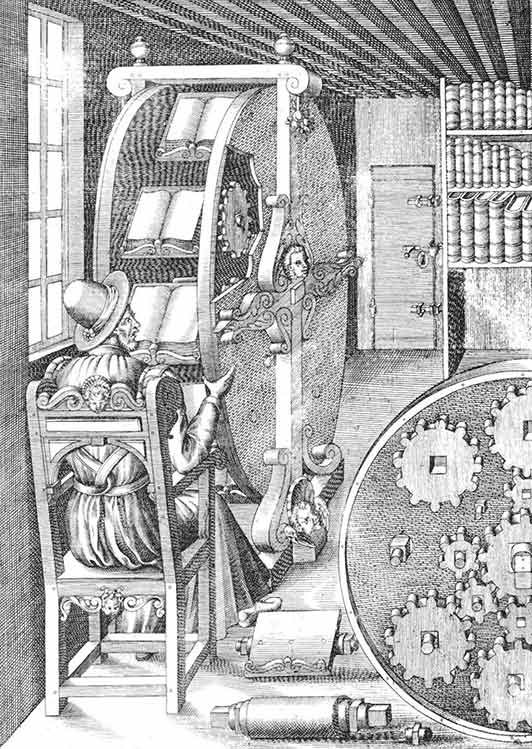
The early modern bookwheel, from Le diverse et artificiose machine del capitano Agostino Ramelli (1588)
-
-
support.reclaimhosting.com support.reclaimhosting.com
-
See also, Reclaim Cloud video session: https://archive.reclaim.tv/w/aeneh3tKN3DrcR88XHwhqJ
-
-
docdrop.org docdrop.org
-
Can be used to create optical character recognition on .pdf documents and return documents with selectable/machine readable text.
Tags
Annotators
URL
-
-
indieweb.org indieweb.org
-
www.meetup.com www.meetup.com
-
https://www.meetup.com/edtechsocal/events/296723328/
Generative AI: Super Learning Skills with Data Discovery and more!
-
-
-
Research and write your next paper with Jenni AI
-
-
www.scholarcy.com www.scholarcy.com
-
The AI-powered article summarizer
Scholarcy https://www.scholarcy.com/
-
-
www.wizdom.ai www.wizdom.ai
-
Your personal research assistant
-
-
markgrabe.substack.com markgrabe.substack.com
-
Grabe, Mark. “Student and Professional Note-Taking.” Substack newsletter. Mark’s Substack (blog), November 10, 2023. https://markgrabe.substack.com/p/student-and-professional-note-taking?publication_id=1857743&utm_campaign=email-post-title&r=77i35.
Educator Mark Grabe looks at some different forms of note taking with respect to learning compared lightly with note taking for productivity or knowledge management purposes.
Note taking for: - learning / sensemaking - personal knowledge management - productivity / projects - thesis creation/writing/other creative output (music, dance, etc.)
Not taken into account here is the diversity of cognitive abilities, extent of practice (those who've practiced at note taking for longer are likely to be better at it), or even neurodiversity, which becomes an additional layer (potentially noise) on top of the research methodologies.
-
With more notes, you have more to work with and what a learner does with this content is where the more significant benefits are produced.
Yes, this by itself, but note that it also requires that one put in additional work—something many don't want to do in the first place.
-
Things that have no interest to you can be ignored without anxiety.
This is one of the primary keys.
When taking college-like courses now later in life, I can do so with a much broader perspective. I can focus on the broader shape of the course and the information that intrigues me and place less focus on the nitty-gritty details that a high school or college student might be expected to memorize.
Of course, some of this would depend on the professor and the evaluations they planned on giving. If it was a humanities course where creating a paper or two was primary over memorizing details, then students might be able to get away with something closer to "professional" notes versus "student" notes. Depending on a syllabus, there could definitely be some overlap between the two.
-
-
-
https://www.reddit.com/r/MapPorn/comments/17oxi03/the_most_common_dream_in_every_country_mapped/
According to this map "The Most Common Dream in Every Country" the West spends a lot of time dreaming about their teeth falling out.
-
-
www.npr.org www.npr.org
-
Weeks, Linton. “How Scams Worked In The 1800s.” NPR, February 12, 2015, sec. NPR History Dept. https://www.npr.org/sections/npr-history-dept/2015/02/12/385310877/how-scams-worked-in-the-1800s.
-
What do change over time "are the particular rituals and customs and expectations and rules pertaining to trust in society," she adds. "As those norms are shifting, as they did quite massively in the 19th century, you have the perfect conditions for exploiting the gaps between new and old. That shift to modernity was often the very script of the con."
Many confidence games rely on information imbalance in the gaps between old and new ways of doing things.
This was certainly true in the 19 C. as well as with technology changes in the 20th and 21st C.
-
Listened to on 2023-11-11
Huffduffer data: podcast:name="fresh air", podcast:producer=npr, podcast:interviewer="terry gross", podcast:interviewee="scott eyman", book:author="scott eyman", book:title="Charlie Chaplin vs. America", book:year=2023, movie:writer="charlie chaplin", movie:director="The Great Dictator", movie:genre=satire, movie:genre=comedy,
-
-
www.reddit.com www.reddit.com
-
How do you title your literature notes?
reply to u/tenebrasocculta at https://www.reddit.com/r/Zettelkasten/comments/17vejto/how_do_you_title_your_literature_notes/
Like many, I prefer to call these reference notes. For ease of use and brevity I use the standard citekey from Zotero, which I also use to quickly generate bibliographies. Like others have mentioned this is typically the author's sir name and publication date, so something like Gessner1548, or for your particular example Weeks2015. I can then use these quickly as well on cards with quotes or notes relating to sources that get excerpted from them for linking back to them.
Generally I'd caution that if its a topic you're really interested in that you don't do too much note taking from tertiary sources but instead delve into more primary sourcing like the book mentioned in the article by Amy Reading. You'll get a lot further a lot faster, and generally find more useful insight.
-
-
cssbattle.dev cssbattle.dev
-
Welcome to CSSBattleThe funnest multiplayer game with 300K+ web designers & developers. Replicate the target images using CSS - the shorter your code, the higher your score! Happy coding!
https://cssbattle.dev/
-
-
gregorlove.com gregorlove.com
-
docsify.js.org docsify.js.orgDeploy1
-
A magical documentation site generator. Simple and lightweightNo statically built html filesMultiple themes
-
-
richardcarter.com richardcarter.com
-
http://richardcarter.com/sidelines/a-good-reason-not-to-write-in-books/
That book annotating monster Adler indicated that if he read books second and subsequent times that he would generally purchase a new copy and mark it up afresh. Doublemonster!
See: How to Read a Book. Los Angeles: KCET Los Angeles, 1975. https://www.youtube.com/watch?v=Y_rizr8bb0c. It was one of the later episodes as I recall.
-
-
oztypewriter.blogspot.com oztypewriter.blogspot.com
-
www.youtube.com www.youtube.com
-
https://www.youtube.com/watch?v=Yf1DfAXFpGE how to identify a typewriter
Tags
Annotators
URL
-
-
www.youtube.com www.youtube.comYouTube1
-
Red Typewriter at 8:28
Related: Holiday Ornament in Swift store: https://store.taylorswift.com/collections/holiday-collection/products/all-too-well-typewriter-ornament
Easter eggs: https://www.buzzfeed.com/ryanschocket2/taylor-swift-all-too-well-typewriter-easter-egg
Typewriter identity: https://www.reddit.com/r/typewriters/comments/17utzze/identity_of_the_red_typewriter_from_taylor_swifts/
Tags
Annotators
URL
-
-
www.dalekeiger.net www.dalekeiger.net
-
www.browndailyherald.com www.browndailyherald.com
-
-
https://www.ebay.com/itm/115971327839
I remember this came on the market in Fall 2023 in September or October for $975.00. it's a modular portion of a card catalog with what looks like an added top. 5 x 4 set of 20 drawers; appears to be in rough shape. Drawers are wood, so maybe late 60s early 70s? No rods.
2023-11-13, seller sent me an offer to purchase for $400.
Local pick up from Senatobia, MS.

Cost per drawer: $48.75 Cost per drawer revised at 400: $20.00
Even at the lower price, it's a total pass....
Tags
Annotators
URL
-
-
medical-dictionary.thefreedictionary.com medical-dictionary.thefreedictionary.comtomaine1
-
ptomaine [to´mān, to-mān´] any of several toxic bases formed by decarboxylation of an amino acid, often by bacterial action, such as cadaverine, muscarine, and putrescine.ptomaine poisoning a term commonly misapplied to food poisoning. Contrary to popular belief, ptomaines are not injurious to the human digestive system, which is quite capable of reducing them to harmless substances.
https://medical-dictionary.thefreedictionary.com/tomaine
I recall hearing ptomaine used in an Abbott and Costello bit with the connotation of foot poisoning. Charlie Chaplin also portrayed Adenoid Hynkel, Dictator of Tomania, in the picture The Great Dictator (1940).
The implication of the country name Tomania outside of the "mania" meaning may be lost on audiences today.
Lou Costello: Now look, Mr. Fields, don't get mad. Now, you can bring your kids to the party, and they can eat anything they want. They can have plenty of food. They can eat anything they want.<br /> Sid Fields: Sure, I can have my kids eat first, huh? Then if that broken-down, bad food you got doesn't give my kids ptomaine, then the other people will eat it, huh? You're gonna use my kids for guinea pigs. Say it! My kids are guinea pigs!<br /> Lou Costello: Mr. Fields, your kids are not guinea pigs.<br /> Sid Fields: Oh, they're just plain pigs?
The Abbott and Costello Show, S1.E5 "The Birthday Party", Episode aired Jan 2, 1953, Running time: 00:27:00 <br /> (emphasis added)
-
-
www.ebay.com www.ebay.com
-
https://www.ebay.com/itm/155882824820
9 drawer desktop all-wood and metal index card cabinet for sale o/a 2023-11-12. Local pick up from Fargo, ND. Excellent looking condition, all rods, nice detailing and woodwork. Early XX C. Listed for sale at $500.00

Cost per drawer: $55.55
Tags
Annotators
URL
-
-
sparkles.sploot.com sparkles.sploot.com
-
https://sparkles.sploot.com/login
Sparkles is a Micropub client that supports posting articles, notes, replies, likes, rsvps, photos, bookmarks, movie watch, and book read posts to your site. Created by benji.
Tags
Annotators
URL
-
-
news.artnet.com news.artnet.com
-
Min Chen in Artnet News, A U.K. Researcher Has Unearthed the Original 19th-Century Photo Featured on an Iconic Led Zeppelin Album Cover on November 9, 2023<br /> accessed:: 2023-11-11 07:53:00
-
-
www.slashfilm.com www.slashfilm.com
-
[[William Bibbiani]] in Ten Days Before The Twilight Zone Premiered, Mike Wallace Asked Rod Serling A Question That Aged Badly<br /> accessed:: 2023-11-12 08:30
-
-
sea.nathanstrait.com sea.nathanstrait.com
-
http://sea.nathanstrait.com/journaling/
A lot of this looks surprisingly familiar... (even down to the ordering that it seems to have been discovered).
:)
-
-
sea.nathanstrait.com sea.nathanstrait.com
-
blogs.bard.edu blogs.bard.edu
-
https://blogs.bard.edu/arendtcollection/ Hannah Arendt Personal Library
-
The collection represents approximately 4,000 volumes, ephemera and pamphlets that made up the library in Hannah Arendt’s last apartment in New York City. Of particular significance are the 900+ volumes containing marginal notes or lining, endnotes or ephemera, as well as many volumes inscribed to her by Martin Heidegger, Gershom Scholem, W.H. Auden and Randall Jarrell, among others.
-
Thanks to a grant from the Andrew W. Mellon Foundation (2008), the collection is cataloged and stabilized. We are now working to digitize all volumes containing marginalia, a project that is freely shared with the international scholarly community in order to expand the rich contemporary dialogue on Arendt’s significant contribution to public discourse.
https://blogs.bard.edu/arendtcollection/
cc: remikalir
-
-
hdl.loc.gov hdl.loc.gov
-
Arendt, Hannah. “Hannah Arendt Papers, 1898-2006.” Mixed material. Library of Congress. Manuscript Division, Washington, D.C., 2006. http://hdl.loc.gov/loc.mss/eadmss.ms001004.
-
-
www.loc.gov www.loc.gov
-
Hannah Arendt Papers - Digital Collections - Library of Congress
Hannah Arendt apparently kept a zettelkasten. The Library of Congress has a digitized version of it in their archives from her nachlass.
ᔥMikjail in comment on The Two Definitions of Zettelkasten
-
In December 1998, the Andrew W. Mellon Foundation awarded the Library of Congress a grant to support a two-year project to digitize the Hannah Arendt Papers manuscript collection. The staff of the Manuscript Division at the Library administered the project, with assistance from the National Digital Library Program (NDLP) and in cooperation with the New School University in New York City.
-
Addition III, 1945 (Box 95) Correspondence and notes by Arendt. Arranged alphabetically by type of material.
-
Addition I, 1966-1977 (Boxes 88-94) Manuscripts, notes, and printed and near-print material relating to books and lectures by Arendt. Arranged alphabetically by format and title. Addition I supplements the Speeches and Writings series with extensive material pertaining to the publication of The Life of the Mind, including drafts annotated by the work’s editor, Mary McCarthy. A small group of lectures is also contained in this addition.
-
There are also essays and lectures in the Speeches and Writings series in addition to the lectures and seminar notes in the Subject File folders designated “Courses” Research material arranged by topic is filed under “Extracts and Notes” in the Speeches and Writings series.
-
Arendt’s two-volume work The Life of the Mind, published posthumously in 1978.
-
and several files of notes and miscellaneous background information.
Were any of Arendt's Adolf Eichmann file notes done on index cards? Their arrangement, if any?
-
the Arendt Papers include letters to and from Hanan J. Ayalti (pen name of Hanan Klenbort), Walter Benjamin, Rosalie Littell Colie, Robert and Elke Gilbert, J. Glenn Gray, Waldemar Gurian, Rolf Hochhuth, Hans Jonas, Lotte Kohler, Judah Leon Magnes, Mary McCarthy, Ruth H. Rosenau, Gershom Gerhard Scholem, Paul Tillich, Eric Voegelin, Ernst Vollrath, Anne Weil, Helen and Kurt Wolff, and many others.
-
Arendt often typed replies on the reverse side of the original letters that she received.
-
The collection was digitized in 1998-2000 through the generous support of the Andrew W. Mellon Foundation. Initially, some digital content was limited to onsite access through dedicated work stations available only at the Library of Congress, The New School in New York City, and the Hannah Arendt Center at the University of Oldenburg, Germany. This updated digital presentation of the Hannah Arendt Papers at the Library of Congress is now available publicly online in its entirety.
-
Arendt studied with Karl Jaspers at Heidelberg University
Did Karl Jaspers have a zettelkasten practice? Did he specifically pass it along to students, like Arendt?
-
Hannah Arendt (1906-1975)
-
Rich in manuscripts and correspondence for Arendt’s productive years as a writer and lecturer after World War II, the papers are sparse before the mid-1940s because of Arendt’s forced departure from Nazi Germany in 1933 and her escape from occupied France in 1941.
-
The Library of Congress received the Hannah Arendt Papers as a gift and bequest from Arendt in various installments from 1965 to 2000. Small additions have been subsequently received, including those made by Klaus Loewald in 1981, Roger Errera in 1994, Jochen Kölsch, International Verbindungen, 2007, and Patchen Markell, 2018.
Tags
- Eichmann in Jerusalem
- open questions
- digitized note collections
- Hannah Arendt nachlass
- National Digital Library Program (NDLP)
- Heidelberg University
- letter writing
- Walter Benjamin
- Hannah Arendt
- 1998
- zettelkasten transmission
- read
- The Life of the Mind (1978)
- THe New School
- References
- zettelkasten examples
- Hannah Arendt Center
- Andrew W. Mellon Foundation
- Karl Jaspers
- Nazi Germany
- nachlass
- note taking transmission
- Hannah Arendt's zettelkasten
- want to read
- Adolf Eichmann
- Library of Congress
- note collection loss and damage
Annotators
URL
-
-
dulynoted.fyi dulynoted.fyi
-
https://dulynoted.fyi/
Duly Noted: Principles and Practices for Thriving in the Information Age
Tags
Annotators
URL
-
-
theinformed.life theinformed.life
-
https://theinformed.life/
Hosted by Jorge Arango (https://jarango.com/)
-
-
twitter.com twitter.com
-
Freudian typo du jour: teachnologies
via Jorge Arango at https://twitter.com/jarango/status/1723389160680243381
-
-
jarango.com jarango.com
-
everbookforever.com everbookforever.comEverbook1
-
Everbook appears to be a variation on some of the GTD, PKM, and productivity traditions done on larger loose slips of paper (instead of notebook style) with an incredibly lovely leather folder. There's a lot to like here for those stuck between love of slips and notebooks. Its reminiscent of project planning and to do methods using ring binders or FiloFaxes.
Tags
Annotators
URL
-