CO2 Emission Index: 6,564.11 4,587.53
4587.53
CO2 Emission Index: 6,564.11 4,587.53
4587.53
Time Index (in minutes): 38.87 33.06
33.06
CO2 Emission Index: 5,419.09
5419.09
CO2 Emission Index: 5,419.09 5,711.01
5711.01
Time Index (in minutes): 43.98
43.98
Time Index (in minutes): 43.98 39.99
39.99
3,956.71
3956.71
CO2 Emission Index: 3,956.71 3,308.53
3308.53
Time Index (in minutes):
41.33
Time Index (in minutes): 32.07 41.33
32.07
122.73 142.91 Time Index (in minutes): 34.00
34.00
12 Canada 0.890
.885
12 Canada 0.890 16.
.886
12 Canada 0.890
0.887
12 Canada 0.890
0.890
35 Italy 0.814
.778
35 Italy 0.814
.780
35 Italy 0.814
.810
1 Australia 0.939
.930
1 Australia 0.939
.937
1 Australia
.938
1 Australia 0.939
.939
35 Italy 0.814 16.3 10.9 26
.814
Google also says location records stored in My Activity are used to target ads. Ad buyers can target ads to specific locations — say, a mile radius around a particular landmark — and typically have to pay more to reach this narrower audience. While disabling “Web & App Activity” will stop Google from storing location markers, it also prevents Google from storing information generated by searches and other activity. That can limit the effectiveness of the Google Assistant, the company’s digital concierge. Sean O’Brien, a Yale Privacy Lab researcher with whom the AP shared its findings, said it is “disingenuous” for Google to continuously record these locations even when users disable Location History. “To me, it’s something people should know,” he said.
Google says that will prevent the company from remembering where you’ve been. Google’s support page on the subject states: “You can turn off Location History at any time. With Location History off, the places you go are no longer stored.” That isn’t true. Even with Location History paused, some Google apps automatically store time-stamped location data without asking. (It’s possible, although laborious, to delete it .)
Data mining can be defined broadly as: “the application of specific algorithms for extracting patterns from data.” [17]
Data mining definition
No human is involved in the extraction of data via a computer.
hus it becomes possible to see how ques-tions around data use need to shift from asking what is in the data, to include discussions of how the data is structured, and how this structure codifies value systems and social practices, subject positions and forms of visibility and invisi-bility (and thus forms of surveillance), along with the very ideas of crisis, risk governance and preparedness. Practices around big data produce and perpetuate specific forms of social engagement as well as understandings of the areas affected and the people being served.
How data structure influences value systems and social practices is a much-needed topic of inquiry.
Big data is not just about knowing more. It could be – and should be – about knowing better or about changing what knowing means. It is an ethico- episteme-ontological- political matter. The ‘needle in the haystack’ metaphor conceals the fact that there is no such thing as one reality that can be revealed. But multiple, lived are made through mediations and human and technological assemblages. Refugees’ realities of intersecting intelligences are shaped by the ethico- episteme-ontological politics of big data.
Big, sweeping statement that helps frame how big data could be better conceptualized as a complex, socially contextualized, temporal artifact.
Burns (2015) builds on this to investigate how within digital humanitarianism discourses, big data produce and perform subjects ‘in need’ (individuals or com-munities affected by crises) and a humanitarian ‘saviour’ community that, in turn, seeks answers through big data
I don't understand what Burns is arguing here. Who is he referring to claims that DHN is a "savior" or "the solution" to crisis response?
"Big data should therefore be be conceptualized as a framing of what can be known about a humanitarian crisis, and how one is able to grasp that knowledge; in short, it is an epistemology. This epistemology privileges knowledges and knowledge- based practices originating in remote geographies and de- emphasizes the connections between multiple knowledges.... Put another way, this configuration obscures the funding, resource, and skills constraints causing imperfect humanitarian response, instead positing volunteered labor as ‘the solution.’ This subjectivity formation carves a space in which digital humanitarians are necessary for effective humanitarian activities." (Burns 2015: 9–10)
Crises are often not a crisis of information. It is often not a lack of data or capacity to analyse it that prevents ‘us’ from pre-venting disasters or responding effectively. Risk management fails because there is a lack of a relational sense of responsibility. But this does not have to be the case. Technologies that are designed to support collaboration, such as what Jasanoff (2007) terms ‘technologies of humility’, can be better explored to find ways of framing data and correlations that elicit a greater sense of relational responsibility and commitment.
Is it "a lack of relational sense of responsibility" in crisis response (state vs private sector vs public) or is it the wicked problem of power, class, social hierarchies, etc.?
"... ways of framing data and correlations that elicit a greater sense of responsibility and commitment."
That could have a temporal component to it to position urgency, timescape, horizon, etc.
In some ways this constitutes the production of ‘liquid resilience’ – a deflection of risk to the individuals and communities affected which moves us from the idea of an all-powerful and knowing state to that of a ‘plethora of partial projects and initiatives that are seeking to harness ICTs in the service of better knowing and governing individuals and populations’ (Ruppert 2012: 118)
This critique addresses surveillance state concerns about glue-ing datasets together to form a broader understanding of aggregate social behavior without the necessary constraints/warnings about social contexts and discontinuity between data.
Skimmed the Ruppert paper, sadly doesn't engage with time and topologies.
Indeed, as Chandler (2015: 9) also argues, crowdsourcing of big data does not equate to a democratisation of risk assessment or risk governance:
Beyond this quote, Chandler (in engaging crisis/disaster scenarios) argues that Big Data may be more appropriately framed as community reflexive knowledge than causal knowledge. That's an interesting idea.
*"Thus, It would be more useful to see Big Data as reflexive knowledge rather than as causal knowledge. Big Data cannot help explain global warming but it can enable individuals and household to measure their own energy consumption through the datafication of household objects and complex production and supply chains. Big Data thereby datafies or materialises an individual or community’s being in the world. This reflexive approach works to construct a pluralised and multiple world of self-organising and adaptive processes. The imaginary of Big Data is that the producers and consumers of knowledge and of governance would be indistinguishable; where both knowing and governing exist without external mediation, constituting a perfect harmonious and self-adapting system: often called ‘community resilience’. In this discourse, increasingly articulated by governments and policy-makers, knowledge of causal connections is no longer relevant as communities adapt to the real-time appearances of the world, without necessarily understanding them."
"Rather than engaging in external understandings of causality in the world, Big Data works on changing social behaviour by enabling greater adaptive reflexivity. If, through Big Data, we could detect and manage our own biorhythms and know the effects of poor eating or a lack of exercise, we could monitor our own health and not need costly medical interventions. Equally, if vulnerable and marginal communities could ‘datafy’ their own modes of being and relationships to their environments they would be able to augment their coping capacities and resilience without disasters or crises occurring. In essence, the imaginary of Big Data resolves the essential problem of modernity and modernist epistemologies, the problem of unintended consequences or side-effects caused by unknown causation, through work on the datafication of the self in its relational-embeddedness.42 This is why disasters in current forms of resilience thinking are understood to be ‘transformative’: revealing the unintended consequences of social planning which prevented proper awareness and responsiveness. Disasters themselves become a form of ‘datafication’, revealing the existence of poor modes of self-governance."*
Downloaded Chandler paper. Cites Meier quite a bit.
However, with these big data collections, the focus becomes not the individu-al’s behaviour but social and economic insecurities, vulnerabilities and resilience in relation to the movement of such people. The shift acknowledges that what is surveilled is more complex than an individual person’s movements, communica-tions and actions over time.
The shift from INGO emergency response/logistics to state-sponsored, individualized resilience via the private sector seems profound here.
There's also a subtle temporal element here of surveilling need and collecting data over time.
Again, raises serious questions about the use of predictive analytics, data quality/classification, and PII ethics.
Andrejevic and Gates (2014: 190) suggest that ‘the target becomes the hidden patterns in the data, rather than particular individuals or events’. National and local authorities are not seeking to monitor individuals and discipline their behaviour but to see how many people will reach the country and when, so that they can accommodate them, secure borders, and identify long- term social out-looks such as education, civil services, and impacts upon the host community (Pham et al. 2015).
This seems like a terribly naive conclusion about mass data collection by the state.
Also:
"Yet even if capacities to analyse the haystack for needles more adequately were available, there would be questions about the quality of the haystack, and the meaning of analysis. For ‘Big Data is not self-explanatory’ (Bollier 2010: 13, in boyd and Crawford 2012). Neither is big data necessarily good data in terms of quality or relevance (Lesk 2013: 87) or complete data (boyd and Crawford 2012)."
as boyd and Crawford argue, ‘without taking into account the sample of a data set, the size of the data set is meaningless’ (2012: 669). Furthermore, many tech-niques used by the state and corporations in big data analysis are based on probabilistic prediction which, some experts argue, is alien to, and even incom-prehensible for, human reasoning (Heaven 2013). As Mayer-Schönberger stresses, we should be ‘less worried about privacy and more worried about the abuse of probabilistic prediction’ as these processes confront us with ‘profound ethical dilemmas’ (in Heaven 2013: 35).
Primary problems to resolve regarding the use of "big data" in humanitarian contexts: dataset size/sample, predictive analytics are contrary to human behavior, and ethical abuses of PII.
There is also a need for mechanisms to support transformations and processesover time, both for scientific data and scientific ideas. These mechanisms should not only help the user visualize but also express time and change.
This is still true today. Is the problem truly a technical one or an opportunity to re-imagine the human process of representing time as an attribute and time as a function of evolving data?
Contrary to paper notes, computer files do not display the traces or versions that led to their final state.
This seems weirdly overstated. How do paper notes maintain versions and traces? Electronic documents contain rich sources of meta data for trace analysis, as well as various options to explicitly demonstrate temporal order and change through formatting.
This is related to the fact that biology researchers are in a creative process and reflect on their decisions in order to explore new leads or justify their decisions. Paper laboratory notebooks show this temporality ofthoughts.
The iterative self-reflection process described in biology research seems relatively undeveloped in DHN work. I don't know that I've seen much negotiation/reflection/critical analysis take place between the moment the data is collected by volunteers and the maps/viz/data/after-action reports created after the fact by the Core Team.
Perhaps that's a missing element that should be more deeply explored in thinking about data having both a time attribute and being in a state of change? Is there a needed intermediate validation step between data cleaning and creating a data analysis product.
Temporal Data and Data Temporality: Time is change, not only ord
Synthesis:
City Data Exchange is a public-private partnership that explores the possibilities of data exchange. The project investigates the purchase, sale and sharing of a wide variety of data types between different types of users in the city - citizens, public institutions and private companies. The project is a collaboration between the City of Copenhagen, the Capital Region, CLEAN and Hitachi. The idea behind the cooperation is to create a data hub that supports innovation, and which improves the quality of life in the Copenhagen area. The project aims at establishing a marketplace for data owned by both public authorities and private companies. In this way, the project aims to enable large, small and medium-sized enterprises, start-up companies, universities and the public sector to collaborate by consolidating several sources of information. So far, the project has conducted several experiments aimed at organizational and technical setup of a computer market. The technical part of this can be seen on the platform developed by Hitachi, citydataexchange.com .
Open Data DK is a union consisting of a number of Danish municipalities and regions aimed at making public data open and accessible for citizens and businesses. The goal is to increase transparency in public administration and support data-driven growth. The Copenhagen portal for city data contains information about infrastructure, traffic, cultural events and much more. You can find the portal here .
Although the spatio-temporal variation in rumor quantity and content has long been of interest to thefield, collecting data that accounts for temporalandspatial characteristics of rumoring has been extraordinarily difficult to dowith any degree of precision. Some have been able to capture rumoring data with some degree of temporal precision (Bordiaand Rosnow, 1998; Danzig, 1958; Greenberg, 1964) or with some spatial precision (Larsen, 1954), but bridging the two hasbeen difficult. Synthesizing temporal and spatial rumoring data across a wide variety of events had long been beyond thecapabilities of researchers. Simply gathering reliable data on rumoring was already fraught with challenges.
Check these citations on difficulty of temporal data capture. Since they are all quite old studies (between 20-60 years old), I question how relevant they are to current behavior -- either offline or online.
Computer tech
where applicable, any rating in the form of a data trust score that may be assignedto the data fiduciary under section 35;and
A Data Trust score. Thankfully, it isn't mandatory to have a data trust score, which mean that apps and services can exist without there being a trust score
the period for which the personal data will beretained in terms of section 10 or where such period is not known, the criteria for determining such period;
This defines the terms for data retention. From a company perspective, they are likely to keep this as broad as possible.
Upon receipt of notification, the Authority shall determine whether such breach should be reported by the data fiduciaryto the data principal, taking into account the severity of the harm that may be caused to such data principal or whether some action is required on the part of the data principal to mitigate suchharm.
This means that users aren't always informed about a breach of data. That's the prerogative of the Data Protection Authority, and not mandatory, in the interest of the user.
“Personal data breach”means any unauthorised or accidental disclosure, acquisition, sharing, use, alteration, destruction, loss of access to, of personal data that compromises the confidentiality, integrity or availability of personal data to a data principal;
Personal data breach here includes "accidental disclosure" as well.
David Golumbia provides a list of six types of personal data: provided, observed, derived, inferred, anonymised and aggregate.
We noticed that the people who use the data are usually not the same people who produce the data, and they often don’t know where to find the information about the data they try to use. Since the Schematizer already has the knowledge about all the schemas in the Data Pipeline, it becomes an excellent candidate to store information about the data. Meet our knowledge explorer, Watson. The Schematizer requires schema registrars to include documentation along with their schemas. The documentation then is extracted and stored in the Schematizer. To make the schema information and data documentation in the Schematizer accessible to all the teams at Yelp, we created Watson, a webapp that users across the company can use to explore this data. Watson is a visual frontend for the Schematizer and retrieves its information through a set of RESTful APIs exposed by the Schematizer.
Mayor de Blasio and his administration have made progress in meeting their goal of building 200,000 affordable units over the span of a decade, as 21,963 new units were added in 2016, the most in 27 years. However, there continues to be a shortage in East Harlem. Out of the nearly 20,000 affordable units, the city brought to all five boroughs, just 249 units have been built in East Harlem, according to a new report by the Department of Housing and Preservation Development (HPD). To better accommodate these residents, the city plans on expediting the construction of 2,400 units of affordable housing over the next few years, as DNA Info reported.
Furthermore, and differentiating digital time from clock time, he suggests that a lack of adherence to chronological time is compounded by the fact that digital technologies connect with a flow of information that is al-ways and instantly available. He argues that continual change, which is bound up with web services such as social network sites, blogs and the news, is central to the experi-enced need for constant connectivity.
Q: How does this idea of time vs information flow affect the data harvested during a digital crowdwork process in humanitarian emergencies?
Q: How does this idea of time vs information flow manifest when the information flow is not chronological due to content throttling or algorithmic decisions on what content to deliver to a user?
It is not the data that are valuable, he says, but the services powered by them. Some firms are just better at developing new offerings than others.
Kahneman concluded his aforementioned presentation to academics by arguing that computers or robots are better than humans on three essential dimensions: they are better at statistical reasoning and less enamoured with stories; they have higher emotional intelligence; and they exhibit far more wisdom than humans.
A little over-the-top?
But, while Kahneman calls for large-scale replications of priming studies, the argument here is not that we need more studies or data to verify that people indeed miss blatantly obvious gorillas. Instead, we need better interpretation and better theories.
More data vs more theories
Humans are biased by our theories (though not totally). But isn't that the goal of science, to collectively question our assumptions and experiments? We need to attempt to falsify our theories not only by questioning the experiments and repeating them, but also by questioning the theories used to interpret data.
webinar
per chi fosse interessato/a a webinar registrati su "open data" a questo link è disponibile un catalogo di diverse decine di appuntamenti formativi già effettuati molto utili
With over 65% contribution to the total revenue, talent solutions are the most important services and tools included in the LinkedIn business model. Talent solutions include premium recruiting tools for the companies and recruiters to help them find the most suitable employees/partners for their business.
LinkedIn apart from being the best recruitment platform is also a sought-after social networking website by marketers to execute their marketing campaigns. This service contributes to over 18% of the total revenue of the company and offers features which let companies to not only create a company page but also enhance their marketing efforts by creating sponsored content, sponsored InMails and text advertisements.
The mobile version of the website was launched in February 2008 and the company was bought by Microsoft in February 2016 for $26.2 billion.
In one high-profile example, a human swarm challenge by CBS Interactive to predict the Kentucky Derby. The swarm correctly predicted the first four horses, in order, defying 542–1 odds and turning a $20 bet into $10,800.
About 600,000 people visit News Genius a month, Lehman said, a figure that had grown 10 times since before President Donald Trump was inaugurated. And the number of people who annotate a post on Genius each month is now at 10,000, up 30 percent from the start of the year. “More people are using News Genius now than ever,” Lehman said. Meanwhile, overall traffic to the website and apps has grown to 62 million a month.
Soon after, Genius made a definitive push to realize Andreessen’s vision. By 2015, Genius claimed 40 million visitors to its website a month, 1 million of whom had annotated a post.
But the biggest problem with the annotator from Genius’ perspective is that few individuals are using it. After more than two years of development, the Chrome extension has only 12,320 users. It was last updated in June 2016.
Right now, they estimate the global taxi market is worth $108 billion, which is triple the size of the $36-billion ride-hailing market. At the same time, they calculate an average of 15 million ride-hailing trips a day globally, which they expect to increase to 97 million by 2030.
Recent studies have indicated that Uber’s U.S. driver churn has sharply increased this year, to rates as high as 96%. Needless to say, it’s hard (and costly) to maintain double-digit growth rates, when only 4% of mission critical, de facto employees stay on the job for more than a year.
Figure 9. Constraint plots
This is another example of a form of online data we support for our authors. In this case the 83 objects analyzed in this paper each had graphical representations of the model fits. All 83 elements can be viewed in the online journal via a filmstrip UI element. Readers can read individual captions for each element, download individual plots, or the entire set.
Only a portion of this table is shown here to demonstrate its form and content. A machine-readable version of the full table is available.
This is an example of one of the Journal's machine readable tables. The reader clicks from the a shortened "example" version of the table inline to the main article to an ASCII text file that they can download and reuse. One of the Journal's data editors built this full ASCII text file from data provided by the author. This process includes standardizing formats, units and column explanations, which are all proofed by the author after the paper has been accepted.
Our posterior samples are available online (10.5281/zenodo.162965).
This is an example of our current data linking markup. Data links are inline to the text through a parenthetical anchored link to the DOI resource.
There is a bug in the current version of the article. Our formal practice is to include this in the "Article Data" tab, which didn't happen this time. We will have to do some more work standardizing our production practices. We are also still thinking about how best to markup the anchored text.
We have not yet adopted a formal XML schema for including data links. We are working on this, which may be made easier when we adopt the most recent JATS schema.
S7 Data Release 2.0
The paper associated with this data release is now published: "Probing the Physics of Narrow-line Regions in Active Galaxies. IV. Full Data Release of the Siding Spring Southern Seyfert Spectroscopic Snapshot Survey (S7)", Thomas et al. (2017), ApJS, https://doi.org/10.3847/1538-4365/aa855a
Acero F., Ackermann M., Ajello M. et al (Fermi-LAT) 2015 arXiv:1501.02003Preprint
Starting in 2014-2015, AAS/IOP started linking to preprints in reference lists if they were the version cited by the author and an accepted manuscript did not at that time exist.
Thus we now have built in "categories" for references, which could be expanded to include data/software sections.
The catalog of fakes used to generate the efficiency grids in Section 3 are available in a persistent directory: doi:10.5258/SOTON/D0030.
This is the dataset related to this article. It contains reproducibility and reusable data for readers.
Our "article data" tab is suppose to show this entry, but the article data tab is currently linked to the wrong DOI (the Zenodo one highlighted below).
We do not yet submit this type of data citation as CrossRef metadata. We are still discussing how data citations should appear and be acknowledged in the text.
1- 13 A13 --- Planet Planet 15- 15 I1 --- robust Robust flag (1) 17- 23 F7.3 d Per Orbital period 25- 28 F4.1 Rgeo Rad Planet radius 30- 33 F4.2 Rgeo E_Rad 1{sigma} upper error bound on Rad 35- 38 F4.2 Rgeo e_Rad 1{sigma} lower error bound on Rad 40- 40 A1 --- r_Rad Source of planet-star radius ratio (2) 42- 44 F3.1 solMass Mstar Mass of host star 46- 49 F4.2 solMass E_Mstar 1{sigma} upper error bound on Mstar 51- 54 F4.2 solMass e_Mstar 1{sigma} lower error bound on Mstar 56- 56 I1 --- l_Md Md upper limit flag (3) 58- 63 F6.2 Mgeo Md Planet mass from default prior 65- 69 F5.2 Mgeo E_Md ?="" 1{sigma} upper error bound on Md 71- 74 F4.2 Mgeo e_Md ?="" 1{sigma} lower error bound on Md 76- 81 F6.2 g/cm3 rhod Planet density from default prior 83- 87 F5.2 g/cm3 E_rhod ?="" 1{sigma} upper error bound on rhod 89- 92 F4.2 g/cm3 e_rhod ?="" 1{sigma} lower error bound on rhod 94- 94 I1 --- l_Mh Mh upper limit flag (3) 96-100 F5.1 Mgeo Mh Planet mass from high mass prior 102-107 F6.2 Mgeo E_Mh ?="" 1{sigma} upper error bound on Md 109-112 F4.2 Mgeo e_Mh ?="" 1{sigma} lower error bound on Md 114-119 F6.2 g/cm3 rhoh Planet density from high mass prior 121-126 F6.2 g/cm3 E_rhoh ?="" 1{sigma} upper error bound on rhod 128-131 F4.2 g/cm3 e_rhoh ?="" 1{sigma} lower error bound on rhod 133-155 A23 --- Ref References (4)
This is the main header block of the AAS Journal's "Machine Readable Format" for structured tables. It is based on the CDS table format, and follows their structuring rules. There are columns for the numerical format, units, labels, and explanations for each column.
WISE J085510.83−071442.5
The corresponding SIMBAD object can be found at -- http://simbad.u-strasbg.fr/simbad/sim-basic?Ident=WISE+J085510.83-071442.5
“In short, they have no history of supporting the machine learning research community and instead they are viewed as part of the disreputable ecosystem of people hoping to hype machine learning to make money.”
Whew. Hot.
Thus, the digital object ossifies out of two histories, one virtual and another visual.Within computation, the object arises out of a desire to create a model of the worldwithin the computer but at the same time out of an attempt to create a whole new visualworld native to the compute
We showhow the rise of large datasets, in conjunction with arising interest in data as scholarly output, contributesto the advent of data sharing platforms in a field trad-itionally organized by infrastructures.
What does this paper mean by infrastructures? Perhaps this is a reference to the traditional scholarly journals and monographs.
Negative values included when assessing air quality In computing average pollutant concentrations, EPA includes recorded values that are below zero. EPA advised that this is consistent with NEPM AAQ procedures. Logically, however, the lowest possible value for air pollutant concentrations is zero. Either it is present, even if in very small amounts, or it is not. Negative values are an artefact of the measurement and recording process. Leaving negative values in the data introduces a negative bias, which potentially under represents actual concentrations of pollutants. We noted a considerable number of negative values recorded. For example, in 2016, negative values comprised 5.3 per cent of recorded hourly PM2.5 values, and 1.3 per cent of hourly PM10 values. When we excluded negative values from the calculation of one‐day averages, there were five more exceedance days for PM2.5 and one more for PM10 during 2016.
Human cognition loses its personal character. Individuals turn into data, and data become regnant
Reminds me of The End of Theory. But if we lose the theory, the human understanding, what will be the consequences?
students' past performance in courses
Traditional approaches to information processing present ‘‘information’’as given, well-defined and stable.
This assumption about information attributes runs completely counter to humanitarian crisis data, broadly spreaking, and SBTF data collection/analysis, in general. In fact, this couldn't further from the truth.
hi there check this link on SAS training and tutorial with the detailed explanation on the Base Training of that along with real time Examples and Projects practices
hi there check out the SAS Basics Training and Tutorial with better Explanation on the Analytical tools and data workflow in the databases https://www.youtube.com/watch?v=wNQLAUaaMHE
hi there get the full insights on MSBI tools training and tutorial with the Real time Examples and application on the Running Projects as well https://www.youtube.com/watch?v=OzmdY0zCw4g
hi there Check this MSBI Tools training and tutorial insights with the real time Examples and projects analysis on the MSBI
hi there learn MSBI in 20 min with handwritten explanation on each and every topics on the Course with real time examples
Get the proper Explanation on the ETL testing Tools training and Tutorial Course with better Real time exercises and understanding of Testing Processes on different stages from Extraction to Loading of data in client location
so check this link for better learning:- https://www.youtube.com/watch?v=-vNgcOsHbIU
Get the best Explanation on Talend Training and Tutorial Course with Real time Experience and Exercises with Real time projects for better Hands on from the scratch to advance level
so check this link and learn :- https://www.youtube.com/watch?v=lhTPrpBvakw
hi there we have came up with the newly launched Procedural Query in PL sql with Oracle 12 c so please check this out For detailed Description on the Pl Sql from the scratch to advance level:-
hi there please check on the Recent Updated SAS Training and Tutorial Course which can explain about the SAS and its integration with the R as well so please go through the Link:-
sqlite> .mode column sqlite> .headers on
At the start of your session,these will format your sqlite3 output so it is clearer, and add columns headers.
pandas is a Python module used for manipulation and analysis of tabular data.
Introduction to Pandas
Pandas is used to manipulation and analysis of tabular data
pandas official documentation
pandas reference and tutorials include:full docs, 10minutes to pandas, blog tutorials
The alternative, of a regulatory patchwork, would make it harder for the West to amass a shared stock of AI training data to rival China’s.
Fascinating geopolitical suggestion here: Trans-Atlantic GDPR-like rules as the NATO of data privacy to effectively allow "the West" to compete against the People's Republic of China in the development of artificial intelligence.
Data Re-Use. Contractor agrees that any and all Institutional Data exchanged shall be used expressly and solely for the purposes enumerated in the Agreement. UH Institutional Data shall not be distributed, repurposed or shared across other applications, environments, or business units of the Contractor. The Contractor further agrees that no Institutional Data of any kind shall be revealed, transmitted, exchanged or otherwise passed to other vendors or interested parties except on a case-by-case basis as specifically agreed to in writing by a University officer with designated data, security, or signature authority.
Like this clause. Wonder if this is the exception or the rule in Uni procurement deals these days?
For the past 100 years we have been chasing visions of data with a singular passion. Many of the best minds of each new generation have devoted themselves to delivering on the inspired data science promises of their day: intelligence testing, building the computer, cracking the genetic code, creating the internet, and now this. We have in the course of a single century built an entire society, economy and culture that runs on information. Yet we have hardly begun to engineer data ethics appropriate for our extraordinary information carnival. If we do not do so soon, data will drive democracy, and we may well lose our chance to do anything about it.
We have hardly begun to engineer data ethincs approriate for our extraordinary information carnival.
Introducing Subscribe with Google
Interesting to see this roll out as Facebook is having some serious data collection problems. This looks a bit like a means for Google to directly link users with content they're consuming online and then leveraging it much the same way that Facebook was with apps and companies like Cambridge Analytica.
Dentro de esta propuesta, bien llamada ‘investigación desde la acción colectiva’ (IAC), “las comunidades hacen parte de la producción del conocimiento como investigadoras y los investigadores e investigadoras hacen parte de las acciones colectivas [de transformación social]”
[...] plantear la desjerarquización y deselitización del conocimiento, es decir, a la descolonización epistémica como elemento integral de estas visiones.
La hackatón en ese sentido tendría que diversificarse, para admitir más saberes. Aún nos falta, pero estamos abriéndonos a saberes bibliotecarios, editoriales y periodísticos, desde las prácticas y convocatorias que realiza el Data Week. Los diplomados podrían extender esto.
‘caminar la palabra’, un concepto desarrollado por la minga social y comunitaria de los nasa para señalar la necesidad de hacerse visible, denunciar y tejer conocimientos, resistencias y estrategias de manera colectiva con otros movimientos. Las alianzas requieren la creación de inter-conocimiento y traducción entre movimientos y mundos para permitir la inteligibilidad y una medida de coordinación (
. Cambiar la forma de cambiar para cambiar de manera autónoma y construir una nueva realidad (comunidad, región, nación) desde abajo y a la izquierda, como los zapatistas gustan decir. La autonomía no se logra por medio de la ‘captura del Estado’ sino recuperando del Estado las áreas claves de la vida social que ha colonizado. Crea ámbitos de acción que son autónomos del Estado y nuevos arreglos institucionales con ese propósito (como las conocidas juntas de buen gobierno en los territorios zapatistas). La autonomía pretende el establecimiento de nuevas bases para la vida social.
Para compartir el comienzo del Data Week.
Como la tecnología nos cambia, cambiamos la forma de cambiarnos.
Maestría en Estudios Interdisciplinarios del Desarrollo de la Universidad del Cauca (un bastión del pensamiento decolonial en América Latina, a pesar de su referencia al desarrollo), busca ser una cátedra abierta en la que pueda tener lugar un diálogo inter-epistémico entre académicos, intelectuales y activistas. Tramas y mingas, al que asisten varios cientos de participantes, en gran parte de movimientos sociales y comunidades de base del suroccidente colombiano, es un maravilloso espacio de conversación entre mundos y conocimientos.
¿Podríamos hacer algo así en el SLUD, las JSL o el FLISoL o incluso en el Data Week? ¿Articular trueques de saberes, experiencias y diálogos desde la diversidad en favor del pluriverso y los bines comunes y ligados a los territorios? Salir de una mirada muy particular y tecnocéntrica de lo hacker, y pensarnos/actuarnos/encontrarnos de modos más incluyentes?¿Cómo lograrlo?
. La ICT tiene conexiones directas con los movimientos de intelectuales y activistas en torno a las nociones de ‘decrecimiento’ y la defensa de los comunes. La ICT, el decrecimiento y los comunes en conjunto constituyen un espacio unificado para el futuro desarrollo de la teoría y la práctica del diseño para la transición. En la siguiente sección voy a proponer unconjunto similar de nociones provenientes de América Latina, incluyendo el post-desarrollo, el buen vivir, los derechos de la naturaleza y las transiciones al post-extractivismo como espacios importantes para profundizar el diseño para la transici
¿Cómo esto podría experimentarse desde escalas locales, en un hackerspace, barrio o pequeña ciudad tensionada por el crecimiento, como Cajicá?
Una de las posibilidades sería transparentar el discurso y acción política en pequeñas ciudades y barrios a partir de las prácticas ocurridas desde el hackerspace y/o la biblioteca pública., extendiendo y conectando lo que ocurre en los planos simbólicos y del código, con los de los planos físicos y el diálogo cotidiano. Los Data Selfies son un prototipo en esa línea.
El énfasis en la construcción de lugar y en la práctica colaborativa, así como en el arraigo inequívoco del diseño para la transición a una visión ecológica, constituye, sin duda, una intervención ontológica —una ontología política del diseño
El Data Week, ayuda en esa construcción de lugar, en la medida en que es una práctica sostenida de HackBo, lo da a conocer hacia afuera y ha llevado a participantes a vincularse de manera permanente al espacio como miembros del mismo.
Todo diseño es para ‘uso’ enactivo (pero no involucra sólo ‘usuarios’); produce eficacia operacional (pero no ‘utilidad’); fomenta la autopoiesis de las entidades vivas y de los conjuntos heterogéneos de vida; es consciente de vivir en el pluriverso.
En la creación de ámbitos de conversaciones para la acción pasa, necesariamente, del diseño a la experiencia y viceversa (a través, por ejemplo, de la creación de prototipos y de análisis de escenarios). Se pregunta hasta dónde la creación de nuevos diseños permite la emergencia de mejores dominios de interpretación y de acción (
desde esta perspectiva las organizaciones constituyen conversaciones para la acción. Hay un cierto grado de recurrencia y formalización en estas conversaciones, que Winograd y Flores (1986) caracterizan en términos de actos lingüísticos distintivos. Las organizaciones son redes de compromisos que operan a través de actos lingüísticos, como las promesas y
las peticiones. [...] En última instancia la característica central de las organizaciones y su diseño es el desarrollo de competencias comunicativas en un ámbito abierto para la interpretación, de manera que los compromisos sean transparentes
[...] Una parte importante del marco de Winograd y Flores es el desarrollo de un enfoque lingüístico para el trabajo de las organizaciones sobre la base de ‘directivas’ (pedidos, solicitudes, consultas y ofertas) y ‘comisiones’ (promesas, aceptaciones y rechazos). En la década de 1980 Flores desarrolló un software para organizaciones, llamado El coordinador, basado en la idea de que las organizaciones son redes de compromisos que operan en el lenguaje. Véanse Winograd y Flores (1986, capítulos 5 y 11) y Flores y Flores (2013). Su objetivo era “hacer las interacciones transparentes [...] en el dominio de las conversaciones para la acción”
La interacción entre organizaciones institucionalizadas y conviviales está ocurriendo para casos del hacktivismo en términos de peticiones (derechos de petición, entradas al blog) y promesas (hackatones, respuestas, proyectos).
Una de las preguntas actuales es cómo hacer que las dinámicas de gobernanza propias de las organizaciones conviviales puedan ser coherentes y escalables a nivel barrio o ciudad. Qué infraestructuras favorecerían dichas posibilidades de acuerdos transparentes en red.
Interesante reencontrar el software de Windograd y Flores y revisar cómo se adecuan o no a sistemas como wikis y repositorios de código y cómo el diálogo entre ellos podría alentar estas ideas de software para acciones transparentes.
Las rupturas son momentos en los que se interrumpe el modo habitual de ser-en-el-mundo; cuando ocurre una descomposición de este tipo nuestras prácticas consuetudinarias y el papel de nuestras herramientas en su mantenimiento quedan expuestas y aparecen nuevas soluciones de diseño;
[...] avanzan hacia una perspectiva de interacciones sociales modeladas y contextualizadas —es decir, una perspectiva que destaca nuestra participación activa en ámbitos de interés común
Al proponer nuevas metáforas y artefactos (cfg: [artículo][gf-primer-articulo]) se instauran estas rupturas metodológicas.
[gf-primer-articulo]: http://mutabit.com/repos.fossil/grafoscopio/doc/tip/Docs/Es/Articulos/Libertadores/bootstrapping-objeto-investigacion.pdf
I have been arguing for some time that Caliper should be used as a data interoperability exchange standard between apps that operates through the LTI window
How does the whole Caliper thing relate to data H might generate?
Diseñar, por lo tanto, se convierte en una práctica crítica localizada, que vincula la dimensión abierta (open source) de la tecnología con la práctica cultural del diseño.9Como lo anuncia un reciente texto sobre metodologías de diseño, este tiene lugaren términos de conocimientos, contextos, acciones, y aprendizajes situados, ya no neutrales ni universales (Simonsen et al. 2014). A partir de este debate es importante destacar la relevancia que estos diseñadores dan a las preguntas sobre el lugar, la localidad y la comunidad en su revisión de la práctica del diseño como un correctivo a la aceptación acrítica de las tecnologías digitales móviles y como una manera de redefinir su papel en la vida cotidiana.
La buena noticia, sin embargo, es que ya están sucediendo cosas más allá de lo usual en muchos ámbitos sociales, políticos y tecnológicos (como veremos más adelante, las transiciones civilizatorias ya están surgiendo); la mala noticia es que quizás no están sucediendo con la rapidez suficiente, si nos atenemos a los criterios de científicos y activistas del cambio climático
o con el grado de propósito requerido. Más preocupante aún, la mayor parte de las políticas de diseño que continúan a nivel de la economía y el Estado descansan, cómodamente, en el mismo orden epistémico y cultural que creó los problemas que buscan resolver. Por eso una de las cuestiones más importantes que tiene que abordar el pensamiento radical del diseño es cómo ir más allá de las aporías causadas por el hecho de que enfrentamos problemas modernos para los cuales no existen soluciones modernas (Santos 2014).
¿Podríamos, de modo casi que paradójico, acelerar el diseño para las transiciones? Por supuesto, esto no tendría que ver con las dinámicas angustiantes del aceleracionismo de la singularidad y otras maquinaciones, sino con brindarnos infraestructuras y prácticas potentes que nos conecten y articulen a escalas más complejas para un mundo más humano.
Algo similar a lo que hacemos en los Data Rodas y Data Weeks, con Grafoscopio, en los que un pequeño grupo de activistas puede editar obras completas y complejas en dos fines de semana, y aumentar la capacidad de enunciación y apertura de aquello que crea y construir sobre lo construido.
Allí puede haber una clave sobre cómo acelerar la transición, cambiando de modelos epistémicos hacia ideas sobre bienes comunes soportados por infraestructuras comunitarias y de bolsillo. El tema es cómo escalar esto.
el metarrelato del ‘razonamiento abstracto’ del conocimiento ignora una característica muy importante de la producción de conocimiento que el pensamiento de diseño no olvida: el hecho de que la creación es siempre emergente, en los dos sentidos del término, es decir, auto-organizada y ‘alter-organizada’. Este último calificativo significa que el académico/diseñador también establece elementos y toma decisiones que permiten que la dinámica de auto-organización despegue y haga su trabajo.
¿Hasta qué punto el Data Week y las Data Rodas han permitido alter-organizaciones?
co. El diseño es ontológico porque cada objeto, herramienta, servicio o, incluso, narrativa en los que está involucrado, crea formas particulares de ser, saber y hacer
Diseñamos formas de ser saber y hacer ciudadanía con herramientas como Grafoscopio y el Data Week.
big data solutions for cardiovascular and oncological research.
big data solutions for cardiovascular and oncological research.
patient adherence
Patient adherence strategy and Big Data
reliability and accessibility of big data will help facilitate increased reliance upon outcomes-based contracting and alternative payment models.
reliability and accessibility of big data will help facilitate increased reliance upon outcomes-based contracting and alternative payment models.
. Skill, effort and practice are regarded necessary elements in the process by which an actor becomes taken-for-granted (Bourdieu 2000). Accordingly, legitimacy is not simply out there for the asking, but has to be created as well as exploited by actors who seek to gain legitimation.
¿Cómo ocurre esto en el caso de las Data Rodas y Data Weeks, dado su carácter recurrente y orientado a la creación de capacidad en la base?
t from day one the Club complemented its hacks with outward-oriented com-munication aimed to make the hackers’ findings comprehensible and its political demands visible to the largest possible public. The Btx hack itself, for example, would not have been overly effectual if news media had not picked up the story. As news media reported widely on the hack and were largely in support of the hackers’ criticism, the hack gained an event character. Following the Btx hack, the CCC was recognized as a collective actor that had something relevant to say about the communi-cation and information landscape in Germany. The CCC was invited to speak on the main television news magazine of public broadcaster ZDF, the advice of Club members was frequently sought by national newspa-pers, they were asked by corporations to speak on data security and were requested by the newly established Green Party to write a report on the Party’s potential use of networked computing. one of the important details here is that instead of only being the subject of media coverage, the CCC had the opportunity to communicate its point of view to differ-ent audiences
En nuestro caso eso no ocurrió. El impacto mediático ha sido bajo (ver comentario anterior) y cuando se han entrevistado miembros de la comunidad, por ejemplo en el caso d RedPaTodos y la Ley Lleras, estos espacios mediáticos han sido usados para hablar desde lo indvidual y las fundaciones y no para visibilizar a las comunidades de base que eran cercanas a sus luchas.y consginas y que las empoderaron y posicionaron originalmente.
El tema de los data selfies intentará lograr mayor visibilidad estratégica en periodos pre-electorales (supeditado a la terminación de la tesis doctoral) y una manera más articulada de recorrer el camino entre comunidades de base e instituciones circundantes).
a lower number of partici-pating members also meant a lower number of differing opinions; which, in turn, enabled the group to keep the frames of relevance more focused and to make decisions in a timely manner. Accordingly, performing direct digital action in the form of hacking was directly related to com-municative practices, as they later played an important role in relation to organizing, coordinating and executing the Club’s political project
[...] This communicative figuration within the hacker organization formed the Club’s basis for executing well-orchestrated hacks, emphasizing that for the hacker organization media technologies and infrastructures are not simply instruments for acting politically but are political matters in themselves
El tamaño pequeño de la comunidad y la recurrencia de algunos de sus miembros en los eventos tipo Data Week y Data Rodas nos ha dado una agilidad de acción/reacción similar, así como la madurez progresiva de las infraestructuras, lo cual se refleja en los cortos tiempos en los que asumimos proyectos relativamente más complejos, como el Manual de Periodismo de Datos y la hackatón de Biblioteca Digital de Bogotá, usando saberes, prácticas e infraestructuras desarrolladas en nuestros encuentros previos cara a cara y cristalizados progresivamente en las infraestructuras.
La siguiente fase estará relacionada con diversificar los caminos recorridos por los asistentes a los encuentros para cristalizar sus saberes y aportar desde los mismos, con un currículo que incluya más prontamente los espectros de licenciamiento y uso de repositorios y documentación, además de los habituales temas de visualización de datos.
A pesar del incremente de la agilidad, hay un desafío permanente respecto a la visibilidad y alcance de estas iniciativas.
Statistical and integrative system-level analysis of DNA methylation data
Projects by IF is a limited company based in London, England. We run this website (projectsbyif.com) and its subdomains. We also use third party services to publish work, keep in touch with people and understand how we can do those things better. Many of those services collect some data about people who are interested in IF, come to our events or work with us. Here you can find out what those services are, how we use them and how we store the information they collect. If you’ve got any questions, or want to know more about data we might have collected about you, email hello@projectsbyif.com This page was published on 25 August 2017. You can see any revisions by visiting the repository on Github.
As you'd expect, If's privacy page is fantastic
Mount St. Mary’s use of predictive analytics to encourage at-risk students to drop out to elevate the retention rate reveals how analytics can be abused without student knowledge and consent
Wow. Not that we need such an extreme case to shed light on the perverse incentives at stake in Learning Analytics, but this surely made readers react. On the other hand, there’s a lot more to be said about retention policies. People often act as though they were essential to learning. Retention is important to the institution but are we treating drop-outs as escapees? One learner in my class (whose major is criminology) was describing the similarities between schools and prisons. It can be hard to dissipate this notion when leaving an institution is perceived as a big failure of that institution. (Plus, Learning Analytics can really feel like the Panopticon.) Some comments about drop-outs make it sound like they got no learning done. Meanwhile, some entrepreneurs are encouraging students to leave institutions or to not enroll in the first place. Going back to that important question by @sarahfr: why do people go to university?
An institution has implemented a learning management system (LMS). The LMS contains a learning object repository (LOR) that in some aspects is populated by all users across the world who use the same LMS. Each user is able to align his/her learning objects to the academic standards appropriate to that jurisdiction. Using CASE 1.0, the LMS is able to present the same learning objects to users in other jurisdictions while displaying the academic standards alignment for the other jurisdictions (associations).
Sounds like part of the problem Vitrine technologie-éducation has been tackling with Ceres, a Learning Object Repository with a Semantic core.
Moving to a Web of Linked Data for Credential Ecosystems
Oh? Credentials going Semantic? CBE going TBL?
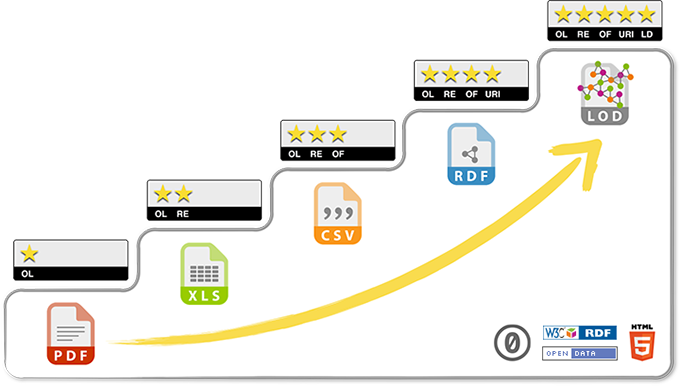
Might be worth a deeper discussion with @jeffgrann, at some point.
HarvardX Biomedical Data Science Open Online Training
Thismaynotbestatedexplicitly,butthediscourseoninscribingdigitalrightsashumanrightsininternationalhumanrightslawoftenassumesthattheforceofsuchlawswillguaranteethatindividuals,states,corporations,andotherbodieswillperformthem.Thisassumptionfailstorecognizethathowpeopleexperiencebeingdigitalcitizensandhowtheyperformrightsbybringingthemintobeingthroughenactingthemselvesarethegroundsonwhichrightswillbeguaranteed.Howpeopleexperienceperformingrightsisthekeytounderstandinghowtheyinhabitthatspaceofrightsanddevelopapoliticalsubjectivitynecessarytomakingrightsclaims‘I,we,theyhavearightto’.Withoutsuchunderstandingandwithoutdevelopingconceptsandmethodsappropriatetosuchanunderstanding,mosteffortstoinscriberights,weareafraid,wouldremaininadequate,forthesewouldberightswithoutpoliticalsubjects.Conversely,thesamecanbesaidforthosewhoassumethattheenactmentofrights,ofimaginativelyandperformativelybringingrightsintobeing,wouldguaranteetheirinscription.Withoutunderstandingthelegalityofclaimsandtheirscopeorsubstance,suchenactmentswouldremaininadequate,too.Withouttheforceoflaw,thiswouldamounttosubjectswithoutpoliticalrights.Itisthatspacebetweeninscriptionandenactmentthatprovidescluestounderstandinghowdigitalcitizensareemergingaspoliticalsubjectsofoureraandthosewhosepoliticssidewitheitherinscriptionorenactmentaresomewhatmissingthesignificanceofthatrelation.
Aún está pendiente ver cómo los temas de colectivos como RedPaTodos se cruzan con temas como los del Data Week y cuáles son los espacios para dichos cruces. Pueden lugares como la Biblioteca Pública Digital, Universidad, Institutos (como ISUR) y hackerspaces (como HackBo) favorecerlos?
First,itisundecidablewhetheranactisindeedcapableofproducingasubjectthatitnames.Forthatreason,withoutguarantees,itmustbedoneregardlessofitsactualeffects,fortheeffectsofcitationanditerationareasmuchaboutbringingthepoliticalsubjectthusnamedintobeingasaboutmakinganattempttoremindourselvesthat‘I,we,theyhavearightto’mustbeperformed.Second,withoutnamingthepoliticalsubject,withoutcitinganditeratingyetagainthat‘I,we,theyhavearightto’,itseventualeffectwillnotbeaccomplished,thatis,bringingtheforceoflawintobeing.
[...] Our argument is that bills, charters, declarations, and manifestos would have stronger imaginary force if they also derived their performative force from everyday acts through the Internet: how people uptake positions as citizens of cyberspace, how they respond to callings to participate in cyberspace, how they create openings for constituting themselves differently, how they struggle for and against closings, and how they make digital rights claims in or by performing digital acts.[85] They would also have more performative if not legal force if they arose from not only a universal commitment but also regional commitments to understanding how the figure of the citizen is being articulated differently in cyberspace and how this figure is essential for bringing the force of law into being. The most significant space for thinking about the politics of the Internet and the political subject it has given rise to—the digital citizen—is the space between the inscription of rights and their enactment.
Hasta qué punto las criptodivisas y criptocontratos son una reiteración de este "yo, nosotros, ellos" y sus acuerdos a través de un algoritmo? La idea de inscribirse o excluirse son las únicas posibilidades. El resto de la política ocurre en repositorios de código y en "propuestas de mejora" técnicas.
El caracter recurrente del Data Week es una manera de hacer enactivos los compromisos que nos juntan como comunidad. La página es un acto de enunciación que es reiterado a través del Data Week
Thecharterincludesnineteenrightsandonesetofduties,whichareimportanttooutline
Nuestro trabajo estaría enmarcado en la parte de Libertad de participación en los asuntos públicos a través de Internet y también con las puestas por el pluralismo y la gobernanza.
Rancièrecallsbringingthesetwoaspectsofrightstogetherasdissensus.Itisdissensusratherthanconsensusbecausepoliticsisalwaysacontestationoverwhoiscountedandwhatcounts.ForRancière,apoliticalsubjectinvolvesthecapacityforstagingsuchscenesofdissensus.Thus,‘politicalsubjectsarenotdefinitecollectivities.Theyaresurplusnames,namesthatsetoutaquestionoradisputeaboutwhoisincludedintheircount.’
Conceiving the enactment of rights as dissensus is more powerful than understanding dissent as civil disobedience. For all its illustrative history, civil disobedience still evokes a reactionary politics, whereas dissensus is creative and affirmative. Although significant as a specific act, civil disobedience is rather too narrow to understand political acts in general. Staging dissensus brings into play the imaginary, performative, and legality of rights all at once and constitutes subjects as citizen subjects of power. Julian Assange, Edward Snowden, Anonymous, Aaron Swartz, and Open Rights are not only definite individuals or collectives of civil disobedience but stand for a political subjectivity enacting rights as the staging of dissensus. This is what we gather from their acts. When they enact rights that they do not have and the rights that they should have, they bring into being political subjects who cannot be known in advance. Their acts are contestations over who is counted as political and what counts as politics. To put it slightly differently, the performative and imaginary force of rights lies in the double movement between their inscription and enactment.
Acá estaría el derecho a scrappear como una forma de reapropiación de los bienes comunes y de repolitización de lo publico.
Kroton, the country’s largest university, has about 2 million students
Wow. Although, it doesn’t say much about what this enrollment figure really represents, by comparison to other for-profits or, perhaps more fittingly, Brazil’s public education system. Still, it’s a big number.
Open Referral : faciliter l’accès aux services sociaux pour les personnes dans le besoinLa rencontre a permis aussi de s’intéresser à des standards plus « grassroots », élaborés par la société civile en fonction de ses besoins. C’est le cas d’Open Referral, un standard élaboré aux Etats-Unis par Greg Bloom pour répondre à un problème essentiel : les personnes dans le besoin ont le plus grand mal à trouver les informations sur les services sociaux à leur disposition. A l’heure actuelle, tous les services d’aides sociales constituent leurs propres bases de données et se plaignent de leur incomplétude. Pour y répondre, Open Referral propose un standard de données pour déterminer : quel organisme propose quel service social ? Où, quand et comment y accéder ? Plutôt que de proposer une application qui répond à ces questions, Open Referral tente de développer un écosystème autour de ses données pour que les personnes dans le besoin trouvent l’information, quel que soit le service dans lequel elles cherchent. A Chicago, Open Referral a permis le lancement de plusieurs services autour des données ouvertes par Purple Binder, un annuaire des services sociaux. Le standard en est à ses débuts mais, pour Open Referral, l’incertitude porte sur le modèle économique : comment générer des revenus tout en augmentant l’impact social par l’ouverture des données ?
differentplatformsproducedifferentsociotechnicalarrangements—rules,norms,procedures,protocols,code,andalgorithms—inordertocreateaneffectivepresentationfortheirusers.Thesearrangements,orwhatwecallconventions,accomplishnotonlyasenseoffairnessbutalsostronghierarchiesthroughwhichnewsisproduced.[19]Thereisnoreasontobelievethattheseplatformsfeatureflathierarchiesorsmoothspacesofdialogue;rather,theyarehierarchicalandstriated.Theissuesofstatusandgatekeepingareasprominentintheseplatformsastheyareelsewhere.
Thus, there is also no reason to think that citizen journalism—at least as it is practiced in these platforms—is intrinsically counterhegemonic. Rather, we would investigate the rationalities of these conventions, the way they are taken up by subjects in obedient, submissive, and subversive ways, and the effects they produce.
Para el caso de nuestras infraestructuras de bolsillo, que alientan prácticas de apropiación (vía la el código) y bifurcación (vía los repositorios de código fuente), dichas racionalidades distintas materializan en infraestructuras y herramientas diferentes.
¿Cómo podemos hacer que ciertas plataformas, las prácticas y los ethos de las mismas sean más visibles y ampliamente utilizadas? Para el caso de Grafoscopio, esto podría tener que ver con facilitar el proceso de instalación (lo cual llevaría a temas como vigilar que el crecimiento de la comunidad tenga estrategias para satisfacer sus demandas). Esos lugares alternativos deberían entrar en diálogo con los más hegemónicos, y en ese sentido la viralidad puede ser una estrategia, como en el caso de los Data Selfies.
En ese diálogo entre lo alternativo y lo hegemónico, cómo en particular interpelar lugares de investigación como la academia y los periodísticos?
‘citizenjournalismunderstandspeopleashavingpoliticalroles,interestsandrelationships,andasactivelyinterestedinsharingnewstheydeemrelevant.Itunderstands,orperhapsintuits,thataknee-jerkdefinitionofallformsofjournalismasacquiringanddistributinginformationmissesthepoint.’
La ventaja de términos neutralizantes como "datos" es que permiten convocar públicos distintos, sin pensar en su condición de profesional o amateur, o la disciplina particular desde la que se vinculan a los datos. Esta por ejemplo, es una ventaja que se aprecia en eventos locales, como "Datos y Guaros", si bien también hay que atravesar las diferencias entre las formas de actuar y comprender de cada uno de los lugares desde donde se proviene.
‘themorepredictableresultwouldbeagradualdesertificationoftheculturallifeofindividualsnolongerabletoencounterwhatisunusual,unexpected,andsurprising.’[61]Ratherthanindividualizedbubbles,sharingsegregatessocialnetworkusersintoculturalbubblesofpreferences,products,andknowledge
Whileitmaysoundcontradictory,evenpersonalizationisanormalizingaction.Thepersonalizedprofilesor‘filterbubbles’generatedbyplatformssuchasGoogleandFacebookoperateonstandardizedalgorithms;whilethepredictionsabout‘whoyouareandwhatyou’lldoandwantnext’maybeuniquefordifferentsubjects,theyareuniqueonlyinlinewiththerulesofthealgorithm.
Thesedigitaltracesareoftenreferredtoasbigdataandarepopularlydiscussedasaresource,arawmaterialwithqualitiestobeminedandcapitalized,thenewoiltobetappedtospureconomies.Throughavarietyofpracticesofvaluation,corporationsnotonlyexploitthedigitaltracesoftheircustomerstomaximizetheiroperationsbutalsosellthosetracestoothers.Forthatreason,citizensubjectswhouseplatformssuchasGooglearesometimesreferredtonotasitscustomersbutasitsproduct.
atrendthatshecallsa‘modernexampleofatragedyofthecommons.’[33]Justasintheclassicversion,subjectswhoprotecttheirdatacontinuetoreapthecollectivebenefits(suchasinmedicine)ofdataleftinthecommons,yetthosebenefitsarethreatenedandwilldegenerateasdatasubjectsoptout.Othersstrikeadifferentwarning,arguingthattheanonymizationofidentityleadstocrowdbehaviourandsubjectstakinglessresponsibilityforwhattheysayanddoandincreasesthelikelihoodoftheirmisbehaving.[34]Boththeargumentsforandagainstanonymizationasasolutionpresumethatwhatisatissueisprotectingthe‘datadoubles’ofcitizensubjects.
digitaltracesalsogetcirculatedandrepurposedandinthisregardhavesociallivesbeyondthefeedbackloopsoftheirplatforms.[28]Thus,notonlyistrackingincipienttothefunctioningofspecificconventions,butthedatageneratedhasextensitysuchthatitcantravelbeyondandbetweenconventions.
TarletonGillespiearguesthattensionsbetweenusersandthedesignersoftheTwitteralgorithmarepartoflargerstakesinthe‘politicsofrepresentation.’Itisatensionunderscoredbyaconflictbetweenpeople’swilltoknowandbevisibletoothersandTwitter’simperativetodrawnewusersintonewconversations.Butsignificantly,Gillespienotesthatsuchalgorithmsnotonlyarebasedonassumptionsabouttheimageofapublictheyseektorepresentbutalsohelpconstructpublicsinthatimage.Thesamecouldbesaidofotherplatforms
En el caso de los Data Selfies, lo que queremos hacer es presentar otra idea sobre nosotros mismos, nuestros gobernantes e instituciones públicas (principalmente). Particularmente por la sensación de no ser representados apropiadamente por la línea de tiempo de Twitter.
Inthisinstance,criticsprotestedthatTwitterwasinvolvedincensoringpoliticalcontent,butothershaveshownthatthecomplexalgorithmsoftheplatformorganizeandfiltercontentinwaysoftenbeyondtheintentionsoftheirdesigners.Ratherthanasimplemeasureofpopularity,thealgorithmisbasedonacombinationoffactors,andthosethatTwitterhasrevealedincludeidentifyingtopicsthatareenjoyingasurgeinaparticularway,suchaswhethertheuseofatermisspiking(acceleratingrapidlyratherthangradually),whetherusersofatermformatightsingleclusterorcutacrossmultipleclusters,whethertweetsareuniqueormostlyretweetsofthesamepost,andwhetherthetermhaspreviouslytrended
Se podría invitar a una figura (política por ej) de relativo renombre a que maneje su presencia en línea desde un lugar como los de Indie Web (Mastodon, Known, etc) y mirar qué ocurre con sus redes de seguidores. ¿Alguno migra a una nueva red para tener interacciones ampliadas con dichas figuras?
platformssuchasGoogleandFacebookthatoperatelike‘predictionengines’by‘constantlycreatingandrefiningatheoryofwhoyouareandwhatyou’lldoandwantnext’basedonwhatyouhavedoneandwantedbefore
Popularlyknownasthe‘quantifiedself’,datatracesproduceacompulsiontonotonlyself-trackbutsharethisdatasothatsubjectscanmonitorthemselvesinrelationtoothersbutalsocontributetoresearchon,forexample,healthconditions.Ironically,whilegovernmentprogrammesforsharinghealthdatahavebeenscuppered,thesharingofhealthinformationthroughprivateorganizationssuchas23andMe(DNAprofilingofmorethan700,000members)andPatientsLikeMe(healthconditionsofmorethan250,000members)areproliferatingandpromotingdatasharingforthepublicgoodofadvancingmedicine.[62]Governmentsandcorporationsalikecalluponcitizensubjectstosharedataaboutthemselvesasanactofcommongood.Throughdisciplinarymethodstheycompelcitizensubjectstoconstitutethemselvesasdatasubjectsratherthanmakingrightsclaimsabouttheownershipofdatathattheyproduce.
Hay simplemente datos que no registramos y tenemos la tendencia dejar una sobra digital pequeña en lugar de una grande. Los data selfies son maneras de reapropiar las narrativas sobre los datos y pensarnos de otras maneras desde ellos, en lugar de dejar esas lecturas sólo a quienes nos mercantilizan.
Toputitbluntly,fromourperspective,popularcriticshavebecometooconcernedaboutcyberspacecreatingobedientsubjectstopowerratherthanunderstandingthatcyberspaceiscreatingsubmissivesubjectsofpowerwhoarepotentiallycapableofsubversion.
Or,aswewouldputit,actingthroughtheInternetandmakingconnectionswithothersdoesnotreplace,displace,orsupplantotherwaysofactinginsocialorculturalspacesinwhichweareembedded.
Howcanthecallingtoparticipatethatwehaveidentifiedproducedigitalcitizenswhoseactsexceedtheirintentions?Toputitdifferently,atensionexistsbetweenthewaysinwhichthefigureofthedigitalcitizenisconceivedinhegemonicimaginariesandlegaldiscoursesandhowsheisperformativelycomingintobeingthroughactionsthatequiphertobeacitizeninwaysthatarenotacknowledgedoralwaysintended.
Mossbergeretal.,forexample,understanddigitalcitizenshipastheabilitytofullyparticipateinsocietyonline,whichrequiresregularaccesstotheInternet,withadequatedevicesandspeeds,technologicalskillsandcompetence,andinformationliteracy.[21]Equippingthusincludesnotonlyhardware,suchasinstallingcomputersinclassroomsandlibrariesandexpandinghigh-speedbroadbandservices,butalsodevelopingskillsandcapabilitiesthroughtrainingcoursesincomputing,coding,andprogramming
Una de las cosas que hemos hecho es apropiarnos de los ciclos de actualización tecnológica para ponerlos en nuestras manos sin andar corriendo detrás de la última actualización.
Theempoweringpossibilitiesofaccessingandworkingwithdataalsounderpin‘opengovernmentdata’programmes.Opennessisextendedtomakinggovernmenttransparentthroughapublicrighttodataandfreedomtoinformation,aversionthatisalsoadvancedbycivicorganizationssuchasmySociety.[19]Thesecallforthanimaginaryofcitizensasdataanalystsequippedwiththeskillsnecessarytoanalysetheircommercialtransactionsandthusmakebetterdecisionsortoanalysethetransactionsofgovernmentsandthusholdthemtoaccount.
Agregar la gráfica de la manera en la cual se puede hacer al gobierno:
Inequalityisexpressedasleadingtotwodivisions:betweenthosewhodoanddonothaveaccessandbetweenthosewhodoordonotcontributetocontentorleavedigitaltraces.
Aumentar la capacidad en la comunidad de base para enunciar sus propias voces.
Wecannotsimplyassumethatbeingadigitalcitizenalreadymeanssomething,suchastheabilitytoparticipate,andthenlookforwhoseconductconformstothismeaning.Rather,digitalactsarerefashioning,inventing,andmakingupcitizensubjectsthroughtheplayofobedience,submission,andsubversion
Nosotros hablábamos de deliberación, implementación y seguimiendo sobre las decisiones, como forma de participación. Desde el Data Week estamos yendo del seguimiento a las primeras.
‘Theforceoftheperformativeisthusnotinheritedfrompriorusage,butissuesforthpreciselyfromitsbreakwithanyandallpriorusage.Thatbreak,thatforceofrupture,istheforceoftheperformative,beyondallquestionoftruthormeaning.’[22]Forpoliticalsubjectivity,‘performativitycanworkinpreciselysuchcounter-hegemonicways.Thatmomentinwhichaspeechactwithoutpriorauthorizationneverthelessassumesauthorizationinthecourseofitsperformancemayanticipateandinstatealteredcontextsforitsfuturereception.’[23]Toconceiveruptureasasystemicortotalupheavalwouldbefutile.Rather,ruptureisamomentwherethefuturebreaksthroughintothepresent.[24]Itisthatmomentwhereitbecomespossibletodosomethingdifferentinorbysayingsomethingdifferent.
Acá los actos futuros guían la acción presente y le dan permiso de ocurrir. Del mismo modo como el derecho a ser olvidado es un derecho futuro imaginado que irrumpe en la legislación presente, pensar un retrato de datos o campañas políticas donde éstos sean importantes, le da forma al activismo presente.
La idea clave acá es hacer algo diferente, que ha sido el principio tras Grafoscopio y el Data Week, desde sus apuestas particulares de futuro, que en buena medida es discontinuo con las prácticas del presente, tanto ciudadanas, cono de alfabetismos y usos populares de la tecnología.
We also downloaded Twitter user profiles, such as the size offollowers, along with their profile description.
I wonder how many profiles in the 3,389 tweets? Did the automate the review and capture of the details? Or did they review each profile by hand?
We deleted non-directed tweets, but itshould be acknowledged that non-directed tweets may also bear implications for knowledgesharing and can be examined in future studies. The data cleaning procedure also excludedretweets and tweets that serve as quoting.
This is a detailed description of their data cleaning methodology. It is good to know to help understand the results of this research study, but is also helpful for me to understand how to clean such large data sets.
A Python script was used to download tweets through Twitter API.
Data collection method to collect data/tweets from Twitter. They say that the data set has 125,907 unique tweets. I think they didn't include any re-tweets as well.
The company's API for scoring toxicity in online discussions already behaves like a racist hand dryer.
this is just so awful.
Addressing implicit and explicit cultural biases in data is going to be a huge challenge for everyone who is trying to build a system dependent on data classified by or about humans.
bias in data
what are our best, shared hopes for DH? What tasks and projects might we take up, or tie in? What are our functions—or, if you prefer, our vocations, now
The Digital Recovery of Texts. Due to computer assisted approaches to paleography( noun: paleography the study of ancient writing systems and the deciphering and dating of historical manuscripts) and the steady advances in the field of digital preservation "Resurrection can be grisly work, I THINK WE COME TO UNDERSTAND EXTINCTION BETTER IN OUR STRUGGLES." .
DH has a public and transformative role to play : Big Data and The Longue Duree
Unable to look at article by Armitage, D & Guldi,j.i on The Return of The Longue Duree - hit by paywall each time,
Look at great article on WWW.WIRED.COM .
https://www.wired.com/2014/01/return-of-history-long-timescales/
"The return of the longue durée is intimately connected to changing questions of scale. In a moment of ever-growing inequality, amid crises of global governance, and under the impact of anthropogenic climate change, even a minimal understanding of the conditions shaping our lives demands a scaling-up of our inquiries. "
What does she mean by BIG DATA? Read Samuel Arbesman article in The Washington Post for easy explanation [] (https://www.washingtonpost.com/opinions/five-myths-about-big-data/2013/08/15/64a0dd0a-e044-11e2-963a-72d740e88c12_story.html?utm_term=.54ff7fdf82fe)
The learning analytics and education data mining discussed in this handbook hold great promise. At the same time, they raise important concerns about security, privacy, and the broader consequences of big data-driven education. This chapter describes the regulatory framework governing student data, its neglect of learning analytics and educational data mining, and proactive approaches to privacy. It is less about conveying specific rules and more about relevant concerns and solutions. Traditional student privacy law focuses on ensuring that parents or schools approve disclosure of student information. They are designed, however, to apply to paper “education records,” not “student data.” As a result, they no longer provide meaningful oversight. The primary federal student privacy statute does not even impose direct consequences for noncompliance or cover “learner” data collected directly from students. Newer privacy protections are uncoordinated, often prohibiting specific practices to disastrous effect or trying to limit “commercial” use. These also neglect the nuanced ethical issues that exist even when big data serves educational purposes. I propose a proactive approach that goes beyond mere compliance and includes explicitly considering broader consequences and ethics, putting explicit review protocols in place, providing meaningful transparency, and ensuring algorithmic accountability. Export Citation: Plain Text (APA
importance of data discoverability: an informatics issue that was not considered by WWARN's designers in the initial phase, when it was assumed that access for external users would be limited to the summary data shown on the WWARN Explorer. Discoverability - the ability of potential outside users to find the data set and easily understand what it contains - is critical if the data are to be reused by any investigator with a legitimate research question that may be addressed by data held in the resource. WWARN took care to develop data management tools that included a full audit trail for the variables that they standardised.
tools and standards again
OxTREC Reference: 593-16
Kudos for listing the identifier. I googled that, which brought me to http://researchsupport.admin.ox.ac.uk/governance/ethics/committees/oxtrec , and under "Approved studies 2016", I found the entry
593-16 Elizabeth Pisani What makes data sharing work? WWARN case study Minimal Risk N/A 16/5/16
which is way more transparent than most ethics statements in published papers.
Also kudos to the Central University Research Ethics Committee (CUREC) for the decision highlighted under the "Approved studies 2016" headline:
It was agreed by CUREC in early 2016 that, in the interest of transparency, OxTREC should make publicly available a list of studies that it has approved. The list below sets out those studies that have been approved by OxTREC since January 2016.
protocol available at doi: 10.7910/DVN/V1TKIO20
kudos for citing (rather than just mentioning) the dataset and especially for including the consent forms (they are in Study_protocol.docx)
Documents considered to be highly relevant by either investigator were processed as below.
Somewhere near here, it would be good to mention that the list of historic records included in the analysis is available as proprietary_documents_coded.tab from the data supplement.
wewillspecifydigitalacts—callings(demands,pressures,provocations),closings(tensions,conflicts,disputes),andopenings(opportunities,possibilities,beginnings)—aswaysofconductingourselvesthroughtheInternetanddiscusshowthesebringcyberspaceintobeing
Deleuzethinksthat,bycontrast,incontrolsocieties‘thekeythingisnolongerasignatureornumberbutacode:codesarepasswords,whereasdisciplinarysocietiesareruled...byprecepts.’[67]Heobservesthat‘thedigitallanguageofcontrolismadeupofcodesindicatingwhetheraccesstosomeinformationshouldbeallowedordenied.’[68]ForDeleuze,controlsocietiesfunctionwithanewgenerationofmachinesandwithinformationtechnologyandcomputers.Forcontrolsocieties,‘thepassivedangerisnoiseandtheactive[dangersare]piracyandviralcontamination.
[...] For Deleuze, ‘[i]t’s true that, even before control societies are fully in place, forms of delinquency or resistance (two different things) are also appearing. Computer piracy and viruses, for example, will replace strikes and what the nineteenth century called “sabotage” (“clogging” the machinery).’
Otras formas de contestación pueden referirse a la creación de narrativas alternativas usando las mismas herramientas que crean las estructuras de control.
Wehaveidentifiedthisasthecontradictionbetweensubmissionandsubversionorconsentanddissent.JacquesRancièrecapturesthisasdissensus.[27]Wewillreturntodissensusinchapter7.Second,whilearticulatingaparticulardemand(forinclusion,recognition),performingcitizenshipenactsauniversalrighttoclaimrights.Thisisthecontradictionbetweentheuniversalismandparticularismofcitizenship.
Estos reclamos por el reconocimiento han tomado diferentes formas en las prácticas del Data Week. ¿Quiénes son nuestros supuestos interlocutores? ¿Por quién queremos ser reconocidos desde nuestras prácticas alternas? Yo diría que se trata de algún tipo de configuración insitucional: empresa, academía y sobre todo gobierno, pues si bien no todos estamos en los dos primeros lugares, si es cierto que todos habitamos el territorio colombiano. Uno de los esfuerzos de la Gobernatón, por ejemplo, fue pensar una manera de reparto más equitativo de los recursos públicos entre comunidades de base diversas y no sólo en aquellas enagenadas por el discurso de la innovación.
Ifmakingrightsclaimsisperformative,itfollowsthattheserightsareneitherfixednorguaranteed:theyneedtoberepeatedlyperformed.Theircomingintobeingandremainingeffectiverequiresperformativity.Theperformativeforceofcitizenshipremindsusthatthefigureofthecitizenhastobebroughtintobeingrepeatedlythroughacts(repertoires,declarations,andproclamations)andconventions(rituals,customs,practices,traditions,laws,institutions,technologies,andprotocols).Withouttheperformanceofrights,thefigureofthecitizenwouldmerelyexistintheoryandwouldhavenomeaningindemocraticpolitics.
Givenitspervasivenessandomnipresence,avoidingorshunningcyberspaceisasdystopianasquittingsocialspace;itisalsocertainthatconductingourselvesincyberspacerequires,asmanyactivistsandscholarshavewarned,intensecriticalvigilance.Sincetherecannotbegenericoruniversalanswerstohowweconductourselves,moreorlesseveryincipientorexistingpoliticalsubjectneedstoaskinwhatwaysitisbeingcalleduponandsubjectifiedthroughcyberspace.Inotherwords,toreturnagaintotheconceptualapparatusofthisbook,thekindsofcitizensubjectscyberspacecultivatesarenothomogenousanduniversalbutfragmented,multiple,andagonistic.Atthesametime,thefigureofacitizenyettocomeisnotinevitable;whilecyberspaceisafragileandprecariousspace,italsoaffordsopenings,momentswhenthinking,speaking,andactingdifferentlybecomepossiblebychallengingandresignifyingitsconventions.Thesearethemomentsthatwehighlighttoarguethatdigitalrightsarenotonlyaprojectofinscriptionsbutalsoenactment.
¿A qué somos llamados y cómo respondemos a ello? Esta pregunta ha sido parte tácita de lo que hacemos en el Data Week.
whenweconsiderTwitter,forinstance,wecanask:Howdoconventionssuchasmicrobloggingplatformsconfigureactionsandcreatepossibilitiesfordigitalcitizenstoact?
Es curioso que los autores también se hayan enfocado en esta plataforma, como lo hemos hecho en los Data Week de manera reiterada.
Butthefigureofcyberspaceisalsoabsentincitizenship
-> But the figure of cyberspace is also absent in citizenship studies as scholars have yet to find a way to conceive of the figure of the citizen beyond its modern configuration as a member of the nation-state. Consequently, when the acts of subjects traverse so many borders and involve a multiplicity of legal orders, identifying this political subject as a citizen becomes a fundamental challenge. So far, describing this traversing political subject as a global citizen or cosmopolitan citizen has proved difficult if not contentious.
First,bybringingthepoliticalsubjecttothecentreofconcern,weinterferewithdeterministanalysesoftheInternetandhyperbolicassertionsaboutitsimpactthatimaginesubjectsaspassivedatasubjects.Instead,weattendtohowpoliticalsubjectivitiesarealwaysperformedinrelationtosociotechnicalarrangementstothenthinkabouthowtheyarebroughtintobeingthroughtheInternet.[13]WealsointerferewithlibertariananalysesoftheInternetandtheirhyperbolicassertionsofsovereignsubjects.Wecontendthatifweshiftouranalysisfromhowwearebeing‘controlled’(asbothdeterministandlibertarianviewsagree)tothecomplexitiesof‘acting’—byforegroundingcitizensubjectsnotinisolationbutinrelationtothearrangementsofwhichtheyareapart—wecanidentifywaysofbeingnotsimplyobedientandsubmissivebutalsosubversive.Whileusuallyreservedforhigh-profilehacktivistsandwhistle-blowers,weask,howdosubjectsactinwaysthattransgresstheexpectationsofandgobeyondspecificconventionsandindoingsomakerightsclaimsabouthowtoconductthemselvesasdigitalcitizens
La idea de que estamos imbrincados en arreglos socio técnicos y que ellos son deconstriuidos, estirados y deconstruidos por los hackers a través de su quehacer material también implica que existe una conexión entre la forma en que los hackers deconstruyen la tecnología y la forma en que se configuran las ciudadanías mediadas por dichos arreglos sociotécnicos.
Coexisting, but rarely (if ever touching).
Good point. How can we quantify this? Can you include some data to show how we are leading parallel lives?
In fact, it has been argued that the networks that offer the sort of social capital that could transition into economic capital are insular, and quite hard to become a part of.
Where? Can you provide a citation?
of belonging to those who may otherwise feel isolated. Transgender teenagers, for example, are able to find support and understanding
These are empirical assertions. Provide data to support this point.
remote connections comprise a social network that offers a degree of social capital without some of the demands that go along with social networks in closer quarters.
What are the benefits of this? In terms of cost/benefit, if these ties pay off just as well as in person ties without the expending of as much time and labor, is that a net positive? Or is something lost in the ease of contact? Again, what does data say?
We do not rely on neighbors and geographically convenient groups and organizations to piece together our social networks as heavily as we once did.
Do we know this for sure? Or is this our perception? What does data say?
enterprise-wide systems that gather and analyze data to help institutions improve their performance and student outcomes.
With the right data collection and presentation H could certainly help here too.
We found that data citations appear in the references section of an article less frequently than in the main text, making it difficult to identify the reward and credit for data authors (i.e. data sharers). Consistent data citation formats could not be found. Current data citation practices do not (yet) benefit data sharers.
Genetics and Heredity is the top field with almost 2.3 million records (representing public datasets, software, data studies, and data repositories).
interesting.
Given that researchers benefit from publicly shared data through data reuse in their own research, researchers who provide access to data should be acknowledged for their contributions, much in the same way that authors are recognized for their research publications through citation. Researchers who use shared data or other shared research products (e.g. open access software, tissue cultures) should also acknowledge the providers of these resources through formal citation. At present, data citation is not widely practiced in most disciplines and as an object of study remains largely overlooked.
Third, the space acted as a recruitment tool for participants and served as a source of solidarity as members rallied around the space. This emphasis on actively inviting new members drew attention to the group's latent desire for open-access, a radical shift from the often insular nature of hacker culture.
En HackBo, el espacio que atrae más miembros externos a la comunidad es el Data Week. Unos pocos de los cuales se convierten en miembros permanentes. Algunos miembros optan por mantener la membresía cerrada, si bien tenemos permanentes crisis respecto a pagar las mensualidades que permiten cubrir el arriendo y los servicios y es un espacio muy frágil económicamente, que requiere de la solidaridad constante de los miembros.
The most important shift in learning during this period was members' relationship to knowledge. GeekSpace attempted to democratize hacking and move towards a more inclusive model. This stands in contrast to Jean Burgess' observation that hacking "as an ideal, permits rational mastery ... but in reality, it is only the technical avant-garde (like computer scientists or hacker subcultures) who achieve this mastery" (Burgess, 2012, p. 30). Individualized encounters with software gave way to making and hardware tinkering where users learned by doing (Rosenberg, 1982). Collaborative work in the space took place in small groups clustered around a project, or the projects were passed from person to person to solve specific problems. The frustrations members had with the first phase of the space organically shifted to a set of practices based in materials, routines, and projects. "Collaboration on ideas and [their] physical manifestations," in the words of a GeekSpace director, is "how you tell somebody's part of the community."
Un cambio similar se dio en HackBo, al menos en lo referido al Data Week y las Data Rodas como experiencias y rituales de aprendizaje intensional y semi-estructurado, en lugar de ir a ver gente haciendo cosas en solitario.
Coleman (2010) asserts that previous literature such as Taylor's "fails to substantially address (and sometimes even barely acknowledge) is the existence and growing importance of face-to-face interactions" (p. 48). For example, Vichot (2009) notes how communities of hackers that coalesce online use "real space" to gain visibility needed to accomplish their collective political goals.
En Colombia tenemos ejemplos como la SLUD, JSL, el FLISoL y el Data Week.
The grassroots nature of HMSs provides a contrast to the less popular FabLabs (Gershenfeld, 2005), which operate as franchises that require expensive tools, and Computer Clubhouses (Kaf ai, Peppler, & Chapman, 2009), which are extensions of schools. Hacker and maker space backers such as Mitch Altman claim that hands-on interactions with technology enable a more flexible and personalized learning experience than an institutionalized curriculum (Baichtal, 2011 ).
Esto lo hemos visto también en el caso de HackBo. Los Data Weeks son esfuerzos por formalizar parte de ese aprendizaje informal a través de la idea de talleres.
We’re delighted to announce that the California Digital Library has been awarded a 2-year NSF EAGER grant to support active, machine-actionable data management plans (DMPs).
Textbook maker Pearson is also getting in on the action by developing adaptive learning software and launching virtual tutors for students as they “read” through digital textbook resources.
Ok, here I'm getting a bit more worried. It's not that I don't think this is helpful. But I do think it's skipping some possible better, more human solutions.
One concern: the premise here is that comprehension struggles are mostly questions requiring answers rather than discursive situations requiring more interaction. A second related concern: is the ultimate goal of "learning" to get the answer or to acquire facility with that discursive process? (Answer: the latter.)
I think simple social annotation, perhaps backed by some AI, could go a long way here. Allow students to ask questions, answer each others questions, and surface those questions and answers in a useful way to teachers...
The president of the university requested the list of 26 names be on his desk the next day so he could take direct action to make sure they stay, Bell says. There it is. Instead of a helping hand for struggling students, imagine the outstretched fingers of a—better, faster, arguably more engaged—machine.
In two adjacent sentences, the authors completely misrepresent the story they're researching. It's not a machine reaching out, it's a human who's been informed by a machine.
A data lake management service with an Apache licence. I am particularly interested in how well the monitoring features of this platform work.
test
It's true that this whole methodology is completely test-based, presuming that that assessment produces valid, valuable data about reading habits.
shining a light on the strengths they demonstrated.
I think the "shining a light" metaphor is a good one.
I began meeting with each student individually, focusing on remediation that targeted their areas for growth based on the data for each domain.
I see this is a great example of data collection that informs human instruction.
We would enter the raw scores into a spreadsheet and send it to the department head at the end of the semester. No meetings, no discussions, no impact on instruction. Many of us were confused—this seemed more about compliance than helping students.
Bad use of data.
that can be daunting.
Data is not necessarily easy or efficient.
get the data needed to design instruction isn’t easy.
Data informs human design of instruction. Does not simply determine it.
Signposting is an approach to make the scholarly web more friendly to machines. It uses Typed Links as a means to clarify patterns that occur repeatedly in scholarly portals. For resources of any media type, these typed links are provided in HTTP Link headers. For HTML resources, they are additionally provided in HTML link elements. Throughout this site, examples use the former approach.
A kind of light-weight linked data approach to connecting web pages?
yay for successive elaboration presentation! I would like to see more of that in the docs.
data or continuation - good. ocap-happy
query for prolog terms...
"API is database independent... mongo / lightning" they have different failure modes, no? hard to hide that in a higher level API, no?
specialK - still on my reading list
Very interesting proposal to create a computational research paper.
How might civic hackathons be improved? Balsamo does not deny contradictory influences exist in these spaces nor avoid engaging because they are “neoliberalist.” Rather, she suggests that sites of messy innovation are also potential sites of learning. Accordingly, my hope is that civic hackathons might be treated more seriously as moments for education and public engagement around the politics of technology. This can be a radical notion because culture, narratives, myths, rituals, expressions, and knowledge might still be reworked.
Desde acá se puede pensar la presencia nuestra en Hackatones organizadas por el Gobierno y los privados, para aportar desde la diversidad y en ocasiones desde la contestación. Podríamos llevar materiales preparados (interminados y variables) para novatos, así como nuestra perspectiva particular a estos espacios, extendiendo y potenciando prácticas similares a cuando participamos en la Hackatón Salud con Silvia.
Civic hackathons are undeniably fraught. Our projections about civic futures are entangled with collective fantasies abouttechnology. This is a story at least as old as science fiction, yet never ultimately removed from our social realities. In some cases small tasks stimulated the civic imagination on larger public problems. In others, cultural reproduction led people to imagine technology that was already racialized, reflecting collective fears that rise to the top. Yet, I resist dismissing civic hackathons. Donna Haraway would certainly see the fallacy in demanding we return to the deliberation of Tocqueville’s town hall meetings. Plus, as anyone who has participated in local government can tell you, city council meetings are hardly a gold standard for civic participation. Mills reminds us that our rationalities are bounded and exist within a particular historic context. We might never get technology out of politics, or the politics out of technology. In a sense, civic technology may itself be a cyborg formed from our collective hopes and fears, one that we might better learn to live with.
Se puede colocar como introducción al Data Week y las Data Rodas.