10,000 Matching Annotations
  1. Jan 2026
    1. Author response:

      The following is the authors’ response to the original reviews

      Public Reviews:

      Reviewer #1 (Public review):

      Summary:

      The authors set out to understand how animals respond to visible light in an animal without eyes. To do so, they used the C. elegans model, which lacks eyes, but nonetheless exhibits robust responses to visible light at several wavelengths. Here, the authors report a promoter that is activated by visible light and independent of known pathways of light responses.

      Strengths:

      The authors convincingly demonstrate that visible light activates the expression of the cyp-14A5 promoter-driven gene expression in a variety of contexts and report the finding that this pathway is activated via the ZIP-2 transcriptionally regulated signaling pathway.

      Weaknesses:

      Because the ZIP-2 pathway has been reported to be activated predominantly by changes in the bacterial food source of C. elegans -- or exposure of animals to pathogens -- it remains unclear if visible light activates a pathway in C. elegans (animals) or if visible light potentially is sensed by the bacteria on the plate, which also lack eyes. Specifically, it is possible that the plates are seeded with excess E. coli, that E. coli is altered by light in some way, and in this context, alters its behavior in such a way that activates a known bacterially responsive pathway in the animals. This weakness would not affect the ability to use this novel discovery as a tool, which would still be useful to the field, but it does leave some questions about the applicability to the original question of how animals sense light in the absence of eyes.

      Thank you for the insightful questions and suggestions. We have now performed a key experiment requested. Interesting new data (Fig. S1I) show that light induction of cyp-14A5p::GFP requires live bacteria that maintain a non-starved physiological state. Neither plates without food nor plates with heat-killed OP50 support robust induction. We now include this interesting new result in the paper and revised discussion on the bacteria-modulated mechanism but note that this bacterial requirement does not alter the central conclusions of the study. Rather, it reveals an intriguing mechanistic layer, namely, that bacterial metabolic activity likely influences the animal’s sensitivity to environmental light. We are pursuing this host–microbe interaction in a separate study. In the present work, we focus on the intrinsic regulation and functional significance of cyp-14A5 under standard laboratory conditions with live OP50. Accordingly, we have revised the Results and Discussion to reflect the appropriate scope.

      Reviewer #2 (Public review):

      Summary:

      Ji, Ma, and colleagues report the discovery of a mechanism in C. elegans that mediates transcriptional responses to low-intensity light stimuli. They find that light-induced transcription requires a pair of bZIP transcription factors and induces expression of a cytochrome P450 effector. This unexpected light-sensing mechanism is required for physiologically relevant gene expression that controls behavioral plasticity. The authors further show that this mechanism can be co-opted to create light-inducible transgenes.

      Strengths:

      The authors rigorously demonstrate that ambient light stimuli regulate gene expression via a mechanism that requires the bZIP factors ZIP-2 and CEBP-2. Transcriptional responses to light stimuli are measured using transgenes and using measurements of endogenous transcripts. The study shows proper genetic controls for these effects. The study shows that this light-response does not require known photoreceptors, is tuned to specific wavelengths, and is highly unlikely to be an artifact of temperature-sensing. The study further shows that the function of ZIP-2 and CEBP-2 in light-sensing can be distinguished from their previously reported role in mediating transcriptional responses to pathogenic bacteria. The study includes experiments that demonstrate that regulatory motifs from a known light-response gene can be used to confer light-regulated gene expression, demonstrating sufficiency and suggesting an application of these discoveries in engineering inducible transgenes. Finally, the study shows that ambient light and the transcription factors that transduce it into gene expression changes are required to stabilize a learned olfactory behavior, suggesting a physiological function for this mechanism.

      Weaknesses:

      The study implies but does not show that the effects of ambient light on stabilizing a learned olfactory behavior are through the described pathway. To show this clearly, the authors should determine whether ambient light has any effect on mutants lacking CYP-14A5, ZIP-2, or CEBP-2. Other minor edits to the text and figures are suggested.

      We appreciate the reviewer’s comment. Our study indeed implies that ambient light stabilizes learned olfactory behavior through effects on the described pathway. Importantly, the existing data already address this point. Mutants lacking CYP-14A5, ZIP-2, or CEBP-2 display impaired olfactory memory even when exposed to ambient light, indicating that these genes are required for the behavioral effect of light. Consistent with this, ambient light robustly induces cyp-14A5p::GFP in wild-type animals but fails to do so in zip-2 and cebp-2 mutants, demonstrating that light-dependent transcriptional activation is blocked upstream in these pathway mutants. Together, these results support the conclusion that ambient light acts through the ZIP-2 → CEBP-2 → CYP-14A5 pathway to stabilize memory. Minor textual and figure revisions have been made where helpful to clarify this point.

      Reviewer #3 (Public review):

      Ji et al. report a novel and interesting light-induced transcriptional response pathway in the eyeless roundworm Caenorhabditis elegans that involves a cytochrome P450 family protein (CYP-14A5) and functions independently from previously established photosensory mechanisms. Although the exact mechanisms underlying photoactivation of this pathway remain unclear, light-dependent induction of CYP-14A5 requires bZIP transcription factors ZIP-2 and CEBP-2 that have been previously implicated in worm responses to pathogens. The authors then suggest that light-induced CYP-14A5 activity in the C. elegans hypoderm can unexpectedly and cell-non-autonomously contribute to retention of an olfactory memory. Finally, the authors demonstrate the potential for this pathway to enable robust light-induced control of gene expression and behavior, albeit with some restrictions. Overall, the evidence supporting the claims of the authors is convincing, and the authors' work suggests numerous interesting lines of future inquiry.

      (1) The authors determine that light, but not several other stressors tested (temperature, hypoxia, and food deprivation), can induce transcription of cyp-15A5. The authors use these experiments to suggest the potential specificity of the induction of CYP-14A5 by light. Given the established relationship between light and oxidative stress and the authors' later identification of ZIP-2, testing the effect of an oxidative stressor or pathogen exposure on transcription of cyp-14A5 would further strengthen the validity of this statement and potentially shed some insight into the underlying mechanisms.

      We appreciate the reviewer’s thoughtful suggestion. We would like to clarify that the “specificity” we refer to is the strong and preferential induction of cyp-14A5 by light among pathogen or detoxification-related genes, rather than an assertion that cyp-14A5 is exclusively light-responsive. This does not preclude the possibility that cyp-14A5 can also be activated under other conditions. Indeed, prior work from the Troemel laboratory has identified cyp-14A5 as one of many pathogen-inducible genes, consistent with its role in stress physiology. Our data show that classical pathogen-responsive genes (e.g., irg-1) are not induced by light, whereas cyp-14A5 is strongly induced, highlighting the selective engagement of this cytochrome P450 by light under the conditions tested. We have revised the text to clarify this point.

      (2) The authors suggest that short-wavelength light more robustly increases transcription of cyp-14A5 compared to equally intense longer wavelengths (Figure 2F and 2G). Here, however, the authors report intensities in lux of wavelengths tested. Measurements of and reporting the specific spectra of the incident lights and their corresponding irradiances (ideally, in some form of mW/mm2 - see Ward et al., 2008, Edwards et al., 2008, Bhatla and Horvitz, 2015, De Magalhaes Filho et al., 2018, Ghosh et al., 2021, among others, for examples) is critical for appropriate comparisons across wavelengths and facilitates cross-checking with previous studies of C. elegans light responses. On a related and more minor note, the authors place an ultraviolet shield in front of a visible light LED to test potential effects of ultraviolet light on transcription of cyp-14A5. A measurement of the spectrum of the visible light LED would help confirm if such an experiment was required. Regardless, the principal conclusions the authors made from these experiments will likely remain unchanged.

      Thank you. We have revised the text to clarify this point. “Using controlled light versus dark conditions, we confirmed the finding from an integrated cyp-14A5p::GFP reporter and observed its robust widespread GFP expression in many tissues induced by moderate-intensity (500-3000 Lux, 16-48 hr duration) LED light exposure (Fig. 1A). The photometric Lux range is approximately 0.1–0.60 mW/cm<sup>2</sup> in radiometric (total radiant power) metric given the spectrum of the LED light source.”

      (3) The authors report an interesting observation that animals exposed to ambient light (~600 lux) exhibit significantly increased memory retention compared to those maintained in darkness (Figure 4). Furthermore, light deprivation within the first 2-4 hours after learning appears to eliminate the effect of light on memory retention. These processes depend on CYP-14A5, loss of which can be rescued by re-expression of cyp-14A5 in mutant animals using a hypoderm-specific- and non-light-inducible- promoter. Taken together, the authors argue convincingly that hypodermal expression of cyp-14A5 can contribute to the retention of the olfactory memory. More broadly, these experiments suggest that cell-non-autonomous signaling can enhance retention of olfactory memory. How retention of the olfactory memory is enhanced by light generally remains unclear. In addition, the authors' experiments in Figure 1B demonstrate - at least by use of the transcriptional reporter - that light-dependent induction of cyp-14A5 transcription at 500 - 1000 lux is minimal and especially so at short duration exposures. Additional experiments, including verification of light-dependent changes in CYP-14A5 levels in the olfactory memory behavioral setup, would help further interpret these otherwise interesting results.

      We thank the reviewer for these thoughtful comments. We agree that understanding how light enhances memory retention at a mechanistic level is an important direction for future work. Regarding the light intensities used in Figure 1B, we would like to clarify that 500–1000 lux does produce a measurable and statistically significant induction of cyp-14A5p::GFP, although the magnitude is lower than that observed at higher intensities. We interpret this modest induction as physiologically relevant: intermediate light levels appear sufficient to engage the CYP-14A5–dependent program required for memory stabilization, whereas stronger light intensities are detrimental to learning and reduce behavioral performance. Thus, the behavioral paradigm uses a light regime that activates the pathway without introducing stress-associated confounders.

      (4) The experiments in Figure 4 nicely validate the usage of the cyp-14A5 promoter as a potential tool for light-dependent induction of gene expression. Despite the limitations of this tool, including those presented by the authors, it could prove useful for the community.

      Thank you and we agree. In addition, we have included in the revised manuscript the single-copy integration strains based on UAS-GAL4 that produced similar results as transgenic strains and will be even more flexible and useful for the community.

      Recommendations for the authors:

      Reviewing Editor Comments:

      While appreciating the quality and presentation of this important study, we had two major concerns that the authors need to address.

      (1) Bacteria-versus-worm origin:

      To rule out a bacterially derived stimulus, we suggest testing whether cyp-14A5p::GFP is inducible without bacteria (or killed bacteria). Checking whether the canonical immune reporters irg-5p::GFP and gst-4p::GFP are also light-inducible will further clarify this point.

      We have now performed the key experiment requested by the reviewers. Interesting new data (Fig. S1I) show that light induction of cyp-14A5p::GFP requires live bacteria that maintain a non-starved physiological state. Neither plates without food nor plates with heat-killed OP50 support robust induction. Importantly, this requirement does not alter any of the central conclusions of the study. Rather, it reveals an intriguing mechanistic layer, namely, that bacterial metabolic activity influences the animal’s sensitivity to environmental light. We are pursuing this host–microbe interaction in a separate study. In the present work, we focus on the regulation and functional significance of cyp-14A5 under standard laboratory conditions with live OP50.

      We included the data (Fig. 2D) to show that the canonical immune reporter irg-1p::GFP is not induced by the light condition that robustly induced cyp-14A5p::GFP, and gst-4p::GFP is only very mildly induced (Fig. S1J).

      (2) Pathway-behaviour link:

      The behavioural relevance of the newly described pathway is intriguing, but it needs direct support. Ideally, this would require comparing memory in WT, zip-2-/-, cebp-2-/-, and cyp-14A5-/- under both dark and light conditions. But at the very least, it would require testing if constitutive CYP-14A5 rescue in the dark bypasses the requirement of light.

      We respectfully submit that additional experiments are not required to support the behavioral conclusions. Our model posits that cyp-14A5 is required but not sufficient for memory stabilization, one component within a broader set of light-induced genes. Thus, constitutive hypodermal expression of cyp-14A5 would not be expected to bypass the requirement for ambient light. The existing data are fully consistent with this framework and conclusions of the paper.

      Reviewer #1 (Recommendations for the authors):

      Overall, I think this paper is interesting to the field of C. elegans researchers at a minimum, as a light-inducible gene expression system might have a variety of uses throughout the diverse research paradigms that use this model system. With that said, I have a couple of suggestions that I think would substantially impact the ability to interpret these findings, which might be useful for broader implications of the study.

      (1) Most importantly, the supplemental table of RNA-seq data should likely be updated and discussed further beyond the cyp-14A5 findings. First, the authors report 7,902 genes are differentially expressed in response to light and then break these into upregulated and downregulated genes. But there are only 1,785 upregulated genes and 3,632 downregulated genes. This adds up to 5417 genes, but doesn't match the 7,902 genes reported to change, and I could not find in the text if some other filters were applied that might explain this not adding up.

      Thank you for this helpful comment. We agree that the exact numbers depend on statistical thresholds and are therefore somewhat arbitrary. To avoid implying unwarranted precision, we have revised the text to state that “thousands of genes are differentially regulated by light.”

      (2) Among the upregulated genes in response to light are irg-5, irg-4, irg-6, irg-8, and gst-4. Indeed, all of these well-studied genes (or most) show even more induction by light than cyp-14A5. It is my opinion that this result needs further criticism as there are existing GFP reporters for gst-4 and irg-5 that are similarly well studied to irg-1, which is in the paper (and is not upregulated). In my opinion, the authors should test if they see activation of the irg-4 and gst-4 GFP reporters by light as well. This would not only validate their RNA-seq but might provide more important evidence for the field, as these other reporters are not considered light-inducible previously. If they are, several major studies might be impacted by this.

      Thank you for the comments. We have irg-1p::GFP and gst-4p::GFP in the lab but did not find other reporters for the genes mentioned from CGC. Neither of the two reporters showed light induction (Figs. 2D and S1J) as strongly as cyp-14A5p::GFP. It is possible that irg-1 and gst-4 RNA levels are up-regulated but not reflected in our transgenic reporters that used their promoters to drive GFP expression. Stronger light induction of cyp-14A5p::GFP is unlikely caused by the multi-copy nature of the transgene since newly generated single-copy integration strains based on the UAS-GAL4 system produced similar robust results for light induction (Fig. S1I and see Method).

      (3) Along the same lines, if at least 4 (and likely more) well characterized immune response genes are activated by light and these genes are known to mostly respond to differences in C. elegans bacterial food source/diet, then it stands to reason that maybe in this experimental context the light is not acting on "animals" at all, but rather triggering changes in E. coli (i.e. changing E. coli metabolism or pathogenicity like properties). If true, then perhaps the light affects bacteria in such a way that it activates a previously known bacterial pathogen response mechanism. This should be easy to test by seeing if this reporter is still activated by light in the presence of diverse bacterial diets, which are available from the CGC (CeMBio collection, for example). This is likely very important to the conclusions of the manuscript as it relates to animals sensing light, but might not be as important to the use of this system as a tool.

      Thank you for the insightful questions and suggestions. Interesting new data (Fig. S1I) show that light induction of cyp-14A5p::GFP requires live bacteria that maintain a non-starved physiological state. Neither plates without food nor plates with heat-killed OP50 support robust induction. Importantly, this requirement does not alter any of the central conclusions of the study. Rather, it reveals an intriguing mechanistic layer, namely, that bacterial metabolic activity influences the animal’s sensitivity to environmental light. We are pursuing this host–microbe interaction in a separate study. In the present work, we focus on the regulation and functional significance of cyp-14A5 under standard laboratory conditions with live OP50. We have revised the Results and Discussion to reflect the appropriate scope of our study and implications of the new findings.

      (4) Lastly, it seems unlikely that nearly half the C. elegans genome is transcriptionally regulated by light (or nearly half of the detected genes in the RNA-seq results). It seems likely that this list of 7,902 genes contains false positives. I would suggest upping some sort of filter, like moving to padj < 0.01 instead of 0.05, or adding a 4-fold change filter (2-fold and 0.01 still results in near 5000+ genes changing, which might explain the difference in up and down genes just being due to different padj filters. Along these lines, it is worth noting that the padj is generated using DESeq2 it appears and one of the first assumptions of DESeq2 is that the median expressed genes do not change, and there is a normalization. However, if MOST genes do change in expression, then one of the fundamental assumptions of DESeq2 is not valid, and thus would mean it might not be an appropriate analysis tool - perhaps there is some other normalization that could be done before running DESeq2 due to some other noise present in the RNA-seq runs?

      Thank you for this helpful comment. We agree that the exact numbers depend on statistical thresholds and are therefore somewhat arbitrary. To avoid implying unwarranted precision, we have revised the text to state that “thousands of genes are differentially regulated by light.”

      (5) Minor point - I would delete the reference to ER in line 92. While most CYPs do localize to the ER, the images shown are not clearly ER and probably do not have enough resolution to make claims about subcellular localization. To me, it would be easier to just delete this claim as it is not required for the main claims of the manuscript.

      Reference deleted.

      Reviewer #2 (Recommendations for the authors):

      I have one request for clarification that likely requires additional data. Figure 3 shows that ambient light stabilizes learned changes to chemotaxis and further shows that CYP-14A5 has a similar function. The implication is that light promotes CYP-14A5 expression, which somehow promotes memory consolidation. The authors should test whether memory consolidation in cyp-15A5, zip-2, or cebp-2 mutants is no longer affected by ambient light.

      It is also possible to test whether forced expression of CYP14A5 can bypass the effect of 'no light' conditions on memory consolidation.

      Thank you for the comments. We respectfully submit that additional experiments are not required to support the behavioral conclusions. Our model posits that cyp-14A5 is required but not sufficient for memory stabilization, one component within a broader set of light-induced genes. Thus, constitutive hypodermal expression of cyp-14A5 would not be expected to bypass the requirement for ambient light. The existing data are fully consistent with this framework and conclusions of the paper.

      I have several minor suggestions relating to the text and figures.

      (1) In the introduction, the authors assert that little is known about non-visual light sensing and then list many examples of molecular mechanisms of non-visual light-sensing. They should emphasize that non-visual light sensing is important and accomplished by diverse molecular mechanisms.

      Agree and revised accordingly.

      (2) Check spacing between gene names (line 109).

      Corrected.

      (3) There should be a new paragraph break when the uORF experiments are described (line 146).

      Corrected.

      (4) 'Phenoptosis' is an esoteric word. Please define it (line 206).

      Corrected.

      (5) 'p' in the transgene name cyp-14A5p::nlp-22 is in italics, unlike the rest of the manuscript.

      Corrected.

      (6) 'Acknowledgment' should be 'Acknowledgments' (line 384).

      Corrected.

      (7) The color map in panel 1B should have units.

      It was arbitrary unit (now added) to highlight relative not absolute differences.

      (8) In panel 1E, it is confusing to have 'DARK' denoted by reddish bars and 'LIGHT' denoted by bluish bars. Perhaps 'DARK' is black/dark grey and 'LIGHT' is white?

      Corrected.

      (9) In panel 1D, it takes a minute to find the purple diamond. Please mark up the volcano plot to make it easier.

      Corrected.

      Reviewer #3 (Recommendations for the authors):

      The authors generally present convincing experiments detailing interesting results in a well-written manuscript.

      One quick note: the same Bhatla and Horvitz (2015) papers appear to be cited twice [line 52].

      Corrected.

    1. Author response:

      The following is the authors’ response to the latest reviews:

      "One remaining question is the interpretation of matching variants with very low stable posterior probabilities (~0), which the authors have analyzed in detail but without fully conclusive findings. I agree with the authors that this event is relatively rare and the current sample size is limited but this might be something to keep in mind for future studies."

      Fine-mapping stabilityon matching variants with very low stable posterior probability

      We thank Reviewer 2 for encouraging us to think more about how low stable posterior probability matching variants can be interpreted. We describe a few plausible interpretations, even though – as Reviewer 2 and we have both acknowledged – our present experiments do not point to a clear and conclusive account.

      One explanation is that the locus captured by the variant might not be well-resolved, in the sense that many correlated variants exist around the locus. Thus, the variant itself is unlikely causal, but the set of variants in high LD with it may contain the true causal variant, or it's possible that the causal variant itself was not sequenced but lies in that locus. A comparison of LD patterns across ancestries at the locus would be helpful here.

      Another explanation rests on the following observation. For a variant to be matching between top and stable PICS and to also have very small stable PP, it has to have the largest PP after residualization on the ALL slice but also have positive PP with gene expression on many other slices. In other words, failing to control for potential confounders shrinks the PP. If one assumes that the matching variant is truly causal, then our observation points to an example of negative confounding (aka suppressor effect). This can occur when the confounders (PCs) are correlated with allele dosage at the causal variant in a different direction than their correlation with gene expression, so that the crude association between unresidualized gene expression and causal variant allele dosage is biased toward 0.

      Although our present study does not allow us to systematically confirm either interpretation – since we found that matching variants were depleted in causal variants in our simulations, violating the second argument, but we also found functional enrichment in analyses of GEUVADIS data though only 17 matching variants with low stable PP were reported – we believe a larger-scale study using larger cohort sizes (at least 1000 individuals per ancestry) and many more simulations (to increase yield of such cases) would be insightful.

      ———

      The following is the authors’ response to the original reviews:

      Reviewer #1:

      Major comments:

      (1) It would be interesting to see how much fine-mapping stability can improve the fine-mapping results in cross-population. One can simulate data using true genotype data and quantify the amount the fine-mapping methods improve utilizing the stability idea.

      We agree, and have performed simulation studies where we assume that causal variants are shared across populations. Specifically, by mirroring the simulation approach described in Wang et al. (2020), we generated 2,400 synthetic gene expression phenotypes across 22 autosomes, using GEUVADIS gene expression metadata (i.e., gene transcription start site) to ensure largely cis expression phenotypes were simulated. We additionally generated 1,440 synthetic gene expression phenotypes that incorporate environmental heterogeneity, to motivate our pursuit of fine-mapping stability in the first place (see Response to Reviewer 2, Comment 6). These are described in Results section “Simulation study”:

      We evaluated the performance of the PICS algorithm, specifically comparing the approach incorporating stability guidance against the residualization approach that is more commonly used — similar to our application to the real GEUVADIS data. We additionally investigated two ways of “combining” the residualization and stability guidance approaches: (1) running stability-guided PICS on residualized phenotypes; (2) prioritizing matching variants returned by both approaches. See Response to Reviewer 2, Comment 5.

      (2) I would be very interested to see how other fine-mapping methods (FINEMAP, SuSiE, and CAVIAR) perform via the stability idea.

      Thank you for this valuable comment. We ran SuSiE on the same set of simulated datasets. Specifically, we ran a version that uses residualized phenotypes (supposedly removing the effects of population structure), and also a version that incorporates stability. The second version is similar to how we incorporate stability in PICS. We investigated the performance of Stable SuSiE in a similar manner to our investigation of PICS. First we compared the performance relative to SuSiE that was run on residualized phenotypes. Motivated by our finding in PICS that prioritizing matching variants improves causal variant recovery, we did the same analysis for SuSiE. This analysis is described in Results section “Stability guidance improves causal variant recovery in SuSiE.”

      We reported overall matching frequencies and causal variant recovery rates of top and stable variants for SuSiE in Figures 2C&D.

      Frequencies with which Stable and Top SuSiE variants match, stratified by the simulation parameters, are summarized in Supplementary File 2C (reproduced for convenience in Response to Reviewer 2, Comment 3). Causal variant recovery rates split by the number of causal variants simulated, and stratified by both signal-to-noise ratio and the number of credible sets included, are reported in Figure 2—figure supplements 16-18. We reproduce Figure 2—figure supplement 18 (three causal variants scenario) below for convenience. Analogous recovery rates for matching versus non-matching top or stable variants are reported in Figure 2—figure supplements 19, 21 and 23.

      (3) I am a little bit concerned about the PICS's assumption about one causal variant. The authors mentioned this assumption as one of their method limitations. However, given the utility of existing fine-mapping methods (FINEMAP and SuSiE), it is worth exploring this domain.

      Thank you for raising this fair concern. We explored this domain, by considering simulations that include two and three causal variants (see Response to Reviewer 2, Comment 3). We looked at how well PICS recovers causal variants, and found that each potential set largely does not contain more than one causal variant (Figure 2—figure supplements 20 and 22). This can be explained by the fact that PICS potential sets are constructed from variants with a minimum linkage disequilibrium to a focal variant. On the other hand, in SuSiE, we observed multiple causal variants appearing in lower credible sets when applying stability guidance (Figure 2—figure supplements 21 and 23). A more extensive study involving more fine-mapping methods and metrics specific to violation of the one causal variant assumption could be pursued in future work.

      Reviewer #2:

      Aw et al. presents a new stability-guided fine-mapping method by extending the previously proposed PICS method. They applied their stability-based method to fine-map cis-eQTLs in the GEUVADIS dataset and compared it against what they call residualization-based method. They evaluated the performance of the proposed method using publicly available functional annotations and claimed the variants identified by their proposed stability-based method are more enriched for these functional annotations.

      While the reviewer acknowledges the contribution of the present work, there are a couple of major concerns as described below.

      Major:

      (1) It is critical to evaluate the proposed method in simulation settings, where we know which variants are truly causal. While I acknowledge their empirical approach using the functional annotations, a more unbiased, comprehensive evaluation in simulations would be necessary to assess its performance against the existing methods.

      Thank you for this point. We agree. We have performed a simulation study where we assume that causal variants are shared across populations (see response to Reviewer 1, Comment 1). Specifically, by mirroring the simulation approach described in Wang et al. (2020), we generated 2,400 synthetic gene expression phenotypes across 22 autosomes, using GEUVADIS gene expression metadata (i.e., gene transcription start site) to ensure cis expression phenotypes were simulated.

      (2) Also, simulations would be required to assess how the method is sensitive to different parameters, e.g., LD threshold, resampling number, or number of potential sets.

      Thank you for raising this point. The underlying PICS algorithm was not proposed by us, so we followed the default parameters set (LD threshold, r<sup>2</sup> \= 0.5; see Taylor et al., 2021 Bioinformatics) to focus on how stability considerations will impact the existing fine-mapping algorithm. We attempted to derive the asymptotic joint distribution of the p-values, but it was too difficult. Hence, we used 500 permutations because such a large number would allow large-sample asymptotics to kick in. However, following your critical suggestion we varied the number of potential sets in our analyses of simulated data. We briefly mention this in the Results.

      “In the Supplement, we also describe findings from investigations into the impact of including more potential sets on matching frequency and causal variant recovery…”

      A detailed write-up is provided in Supplementary File 1 Section S2 (p.2):

      “The number of credible or potential sets is a parameter in many fine-mapping algorithms. Focusing on stability-guided approaches, we consider how including more potential sets for stable fine-mapping algorithms affects both causal variant recovery and matching frequency in simulations…

      Causal variant recovery. We investigate both Stable PICS and Stable SuSiE. Focusing first on simulations with one causal variant, we observe a modest gain in causal variant recovery for both Stable PICS and Stable SuSiE, most noticeably when the number of sets was increased from 1 to 2 under the lowest signal-to-noise ratio setting…”

      We observed that increasing the number of potential sets helps with recovering causal variants for Stable PICS (Figure 2—figure supplements 13-15). This observation also accounts for the comparable power that Stable PICS has with SuSiE in simulations with low signal-to-noise ratio (SNR), when we increase the number of credible sets or potential sets (Figure 2—figure supplements 10-12).

      (3) Given the previous studies have identified multiple putative causal variants in both GWAS and eQTL, I think it's better to model multiple causal variants in any modern fine-mapping methods. At least, a simulation to assess its impact would be appreciated.

      We agree. In our simulations we considered up to three causal variants in cis, and evaluated how well the top three Potential Sets recovered all causal variants (Figure 2—figure supplements 13-15; Figure 2—figure supplement 15). We also reported the frequency of variant matches between Top and Stable PICS stratified by the number of causal variants simulated in Supplementary File 2B and 2C. Note Supplementary File 2C is for results from SuSiE fine-mapping; see Response to Reviewer 1, Comment 2.

      Supplementary File 2B. Frequencies with which Stable and Top PICS have matching variants for the same potential set. For each SNR/ “No. Causal Variants” scenario, the number of matching variants is reported in parentheses.

      Supplementary File 2C. Frequencies with which Stable and Top SuSiE have matching variants for the same credible set. For each SNR/ “No. Causal Variants” scenario, the number of matching variants is reported in parentheses.

      (4) Relatedly, I wonder what fraction of non-matching variants are due to the lack of multiple causal variant modeling.

      PICS handles multiple causal variants by including more potential sets to return, owing to the important caveat that causal variants in high LD cannot be statistically distinguished. For example, if one believes there are three causal variants that are not too tightly linked, one could make PICS return three potential sets rather than just one. To answer the question using our simulation study, we subsetted our results to just scenarios where the top and stable variants do not match. This mimics the exact scenario of having modeled multiple causal variants but still not yielding matching variants, so we can investigate whether these non-matching variants are in fact enriched in the true causal variants.

      Because we expect causal variants to appear in some potential set, we specifically considered whether these non-matching causal variants might match along different potential sets across the different methods. In other words, we compared the stable variant with the top variant from another potential set for the other approach (e.g., Stable PICS Potential Set 1 variant vs Top PICS Potential Set 2 variant). First, we computed the frequency with which such pairs of variants match. A high frequency would demonstrate that, even if the corresponding potential sets do not have a variant match, there could still be a match between non-corresponding potential sets across the two approaches, which shows that multiple causal variant modeling boosts identification of matching variants between both approaches — regardless of whether the matching variant is in fact causal.

      Low frequencies were observed. For example, when restricting to simulations where Top and Stable PICS Potential Set 1 variants did not match, about 2-3% of variants matched between the Potential Set 1 variant in Stable PICS and Potential Sets 2 and 3 variants in Top PICS; or between the Potential Set 1 variant in Top PICS and Potential Sets 2 and 3 variants in Stable PICS (Supplementary File 2D). When looking at non-matching Potential Set 2 or Potential Set 3 variants, we do see an increase in matching frequencies (between 10-20%) between Potential Set 2 variants and other potential set variants between the different approaches. However, these percentages are still small compared to the matching frequencies we observed between corresponding potential sets (e.g., for simulations with one causal variant this was 70-90% between Top and Stable PICS Potential Set 1, and for simulations with two and three causal variants this was 55-78% and 57-79% respectively).

      We next checked whether these “off-diagonal” matching variants corresponded to the true causal variants simulated. Here we find that the causal variant recovery rate is mostly less than the corresponding rate for diagonally matching variants, which together with the low matching frequency suggests that the enrichment of causal variants of “off-diagonal” matching variants is much weaker than in the diagonally matching approach. In other words, the fraction of non-matching (causal) variants due to the lack of multiple causal variant modeling is low.

      We discuss these findings in Supplementary File 1 Section S2 (bottom of p.2).

      (5) I wonder if you can combine the stability-based and the residualization-based approach, i.e., using the residualized phenotypes for the stability-based approach. Would that further improve the accuracy or not?

      This is a good idea, thank you for suggesting it. We pursued this combined approach on simulated gene expression phenotypes, but did not observe significant gains in causal variant recovery (Figure 2B; Figure 2—figure supplements 2, 13 and 15). We reported this Results “Searching for matching variants between Top PICS and Stable PICS improves causal variant Recovery.”

      “We thus explore ways to combine the residualization and stability-driven approaches, by considering (i) combining them into a single fine-mapping algorithm (we call the resulting procedure Combined PICS); and (ii) prioritizing matching variants between the two algorithms. Comparing the performance of Combined PICS against both Top and Stable PICS, however, we find no significant difference in its ability to recover causal variants (Figure 2B)...”

      However, we also confirmed in our simulations that prioritizing matching variants between the two approaches led to gains in causal variant recovery (Figure 2D; Figure 2—figure supplements 4, 19, 20 and 22). We reported this Results “Searching for matching variants between Top PICS and Stable PICS improves causal variant Recovery.”

      “On the other hand, matching variants between Top and Stable PICS are significantly more likely to be causal. Across all simulations, a matching variant in Potential Set 1 is 2.5X as likely to be causal than either a non-matching top or stable variant (Figure 2D) — a result that was qualitatively consistent even when we stratified simulations by SNR and number of causal variants simulated (Figure 2—figure supplements 19, 20 and 22)...”

      This finding is consistent with our analysis of real GEUVADIS gene expression data, where we reported larger functional significance of matching variants relative to non-matching variants returned by either Top of Stable PICS.

      (6) The authors state that confounding in cohorts with diverse ancestries poses potential difficulties in identifying the correct causal variants. However, I don't see that they directly address whether the stability approach is mitigating this. It is hard to say whether the stability approach is helping beyond what simpler post-hoc QC (e.g., thresholding) can do.

      Thank you for raising this fair point. Here is a model we have in mind. Gene expression phenotypes (Y) can be explained by both genotypic effects (G, as in genotypic allelic dosage) and the environment (E): Y = G + E. However, both G and E depend on ancestry (A), so that Y = G|A+E|A. Suppose that the causal variants are shared across ancestries, so that (G|A=a)=G for all ancestries a. Suppose however that environments are heterogeneous by ancestry: (E|A=a) = e(a) for some function e that depends non-trivially on a. This would violate the exchangeability of exogenous E in the full sample, but by performing fine-mapping on each ancestry stratum, the exchangeability of exogenous E is preserved. This provides theoretical justification for the stability approach.

      We next turned to simulations, where we investigated 1,440 simulated gene expression phenotypes capturing various ways in which ancestry induces heterogeneity in the exogenous E variable (simulation details in Lines 576-610 of Materials and Methods). We ran Stable PICS, as well as a version of PICS that did not residualize phenotypes or apply the stability principle. We observed that (i) causal variant recovery performance was not significantly different between the two approaches (Figure 2—figure supplements 24-32); but (ii) disagreement between the approaches can be considerable, especially when the signal-to-noise ratio is low (Supplementary File 2A). For example, in a set of simulations with three causal variants, with SNR = 0.11 and E heterogeneous by ancestry by letting E be drawn from N(2σ,σ<sup>2</sup>) for only GBR individuals (rest are N(0,σ<sup>2</sup>)), there was disagreement between Potential Set 1 and 2 variants in 25% of simulations — though recovery rates were similar (Probability of recovering at least one causal variant: 75% for Plain PICS and 80% for Stable PICS). These points suggest that confounding in cohorts can reduce power in methods not adjusting or accounting for ancestral heterogeneity, but can be remedied by approaches that do so. We report this analysis in Results “Simulations justify exploration of stability guidance”

      In the current version of our work, we have evaluated, using both simulations and empirical evidence, different ways to combine approaches to boost causal variant recovery. Our simulation study shows that prioritizing matching variants across multiple methods improves causal variant recovery. On GEUVADIS data, where we might not know which variants are causal, we already demonstrated that matching variants are enriched for functional annotations. Therefore, our analyses justify that the adverse consequence of confounding on reducing fine-mapping accuracy can be mitigated by prioritizing matching variants between algorithms including those that account for stability.

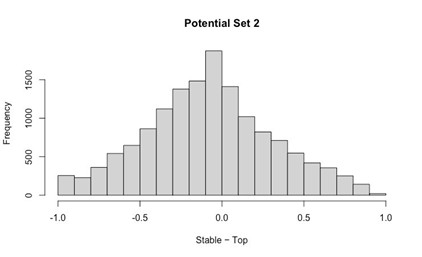
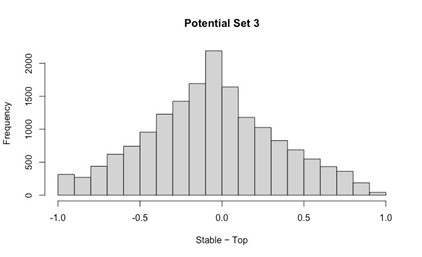
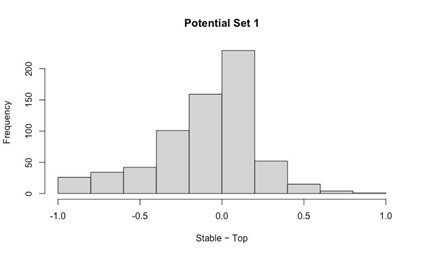
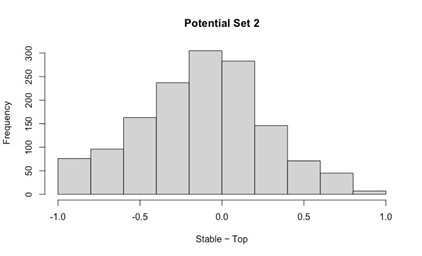
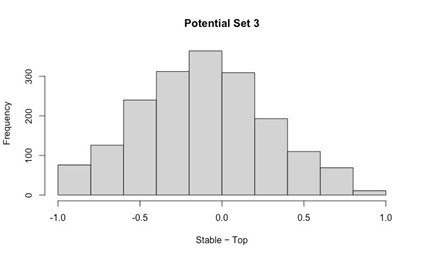
      (7) For non-matching variants, I wonder what the difference of posterior probabilities is between the stable and top variants in each method. If the difference is small, maybe it is due to noise rather than signal.

      We have reported differences in posterior probabilities returned by Stable and Top PICS for GEUVADIS data; see Figure 3—figure supplement 1. For completeness, we compute the differences in posterior probabilities and summarize these differences both as histograms and as numerical summary statistics.

      Potential Set 1

      - Number of non-matching variants = 9,921

      - Table of Summary Statistics of (Stable Posterior Probability – Top Posterior Probability)

      Author response table 1.

      - Histogram of (Stable Posterior Probability – Top Posterior Probability)

      Author response image 1.

      Potential Set 2

      - Number of non-matching variants = 14,454

      - Table of Summary Statistics of (Stable Posterior Probability – Top Posterior Probability)

      Author response table 2.

      - Histogram of (Stable Posterior Probability – Top Posterior Probability)

      Author response image 2.

      Potential Set 3

      - Number of non-matching variants = 16,814

      - Table of Summary Statistics of (Stable Posterior Probability – Top Posterior Probability)

      Author response table 3.

      - Histogram of (Stable Posterior Probability – Top Posterior Probability)

      Author response image 3.

      We also compared the difference in posterior probabilities between non-matching variants returned by Stable PICS and Top PICS for our 2,400 simulated gene expression phenotypes. Focusing on just Potential Set 1 variants, we find two equally likely scenarios, as demonstrated by two distinct clusters of points in a “posterior probability-posterior probability” plot. The first is, as pointed out, a small difference in posterior probability (points lying close to y=x). The second, however, reveals stable variants with very small posterior probability (of order 4 x 10<sup>–5</sup> to 0.05) but with a non-matching top variant taking on posterior probability well distributed along [0,1]. Moving down to Potential Sets 2 and 3, the distribution of pairs of posterior probabilities appears less clustered, indicating less tendency for posterior probability differences to be small ( Figure 2—figure supplement 8).

      Here are the histograms and numerical summary statistics.

      Potential Set 1

      - Number of non-matching variants = 663 (out of 2,400)

      - Table of Summary Statistics of (Stable Posterior Probability – Top Posterior Probability)

      Author response table 4.

      - Histogram of (Stable Posterior Probability – Top Posterior Probability)

      Author response image 4.

      Potential Set 2

      Number of non-matching variants = 1,429 (out of 2,400)

      - Table of Summary Statistics of (Stable Posterior Probability – Top Posterior Probability)

      Author response table 5.

      - Histogram of (Stable Posterior Probability – Top Posterior Probability)

      Author response image 5.

      Potential Set 3

      - Number of non-matching variants = 1,810 (out of 2,400)

      - Table of Summary Statistics of (Stable Posterior Probability – Top Posterior Probability)

      Author response table 6.

      - Histogram of (Stable Posterior Probability – Top Posterior Probability)

      Author response image 6.

      (8) It's a bit surprising that you observed matching variants with (stable) posterior probability ~ 0 (SFig. 1). What are the interpretations for these variants? Do you observe functional enrichment even for low posterior probability matching variants?

      Thank you for this question. We have performed a thorough analysis of matching variants with very low stable posterior probability, which we define as having a posterior probability < 0.01 (Supplementary File 1 Section S11). Here, we briefly summarize the analysis and key findings.

      Analysis

      First, such variants occur very rarely — only 8 across all three potential sets in simulations, and 17 across all three potential sets for GEUVADIS (the latter variants are listed in Supplementary 2E). We begin interpreting these variants by looking at allele frequency heterogeneity by ancestry, support size — defined as the number of variants with positive posterior probability in the ALL slice* — and the number of slices including the stable variant (i.e., the stable variant reported positive posterior probability for the slice).

      *Note that the stable variant posterior probability need not be at least 1/(Support Size). This is because the algorithm may have picked a SNP that has a lower posterior probability in the ALL slice (i.e., not the top variant) but happens to appear in the most number of other slices (i.e., a stable variant).

      For variants arising from simulations, because we know the true causal variants, we check if these variants are causal. For GEUVADIS fine-mapped variants, we rely on functional annotations to compare their relative enrichment against other matching variants that did not have very low stable posterior probability.

      Findings

      While we caution against generalizing from observations reported here, which are based on very small sample sizes, we noticed the following. In simulations, matching variants with very low stable posterior probability are largely depleted in causal variants, although factors such as the number of slices including the stable variant may still be useful. In GEUVADIS, however, these variants can still be functionally enriched. We reported three examples in Supplementary File 1 Section S11 (pp. 8-9 of Supplement), where the variants were enriched in either VEP or biologically interpretable functional annotations, and were also reported in earlier studies. We partially reproduce our report below for convenience.

      “However, we occasionally found variants that stand out for having large functional annotation scores. We list one below for each potential set.

      - Potential Set 1 reported the variant rs12224894 from fine-mapping ENSG00000255284.1 (accession code AP006621.3) in Chromosome 11. This variant stood out for lying in the promoter flanking region of multiple cell types and being relatively enriched for GC content with a 75bp flanking region. This variant has been reported as a cis eQTL for AP006632 (using whole blood gene expression, rather than lymphoblastoid cell line gene expression in this study) in a clinical trial study of patients with systemic lupus erythematosus (Davenport et al., 2018). Its nearest gene is GATD1, a ubiquitously expressed gene that codes for a protein and is predicted to regulate enzymatic and catabolic activity. This variant appeared in all 6 slices, with a moderate support size of 23.

      - Potential Set 2 reported the variant rs9912201 from fine-mapping ENSG00000108592.9 (mapped to FTSJ3) in Chromosome 17. Its FIRE score is 0.976, which is close to the maximum FIRE score reported across all Potential Set 2 matching variants. This variant has been reported as a SNP in high LD to a GWAS hit SNP rs7223966 in a pan-cancer study (Gong et al., 2018). This variant appeared in all 6 slices, with a moderate support size of 32.

      - Potential Set 3 reported the variant rs625750 from fine-mapping ENSG00000254614.1 (mapped to CAPN1-AS1, an RNA gene) in Chromosome 11. Its FIRE score is 0.971 and its B statistic is 0.405 (region under selection), which lie at the extreme quantiles of the distributions of these scores for Potential Set 3 matching variants with stable posterior probability at least 0.01. Its associated mutation has been predicted to affect transcription factor binding, as computed using several position weight matrices (Kheradpour and Kellis, 2014). This variant appeared in just 3 slices, possibly owing to the considerable allele frequency difference between ancestries (maximum AF difference = 0.22). However, it has a small support size of 4 and a moderately high Top PICS posterior probability of 0.64.

      To summarize, our analysis of GEUVADIS fine-mapped variants demonstrates that matching variants with very low stable posterior probability could still be functionally important, even for lower potential sets, conditional on supportive scores in interpretable features such as the number of slices containing the stable variant and the posterior probability support size…”

    1. Openness at a publisher 📚Publishing is of fundamental importance in many aspects of openness, and in one way, to publish is to make something open. However, when we look below the surface, we see that it’s not quite so simple. What does it mean, therefore, to “make things open” as a publisher?In the session, we will hear from Emma Brennan, Editorial Director at Manchester University Press (MUP). Drawing on experience at one of the key players in the open publishing movement, Emma will share her insights and experience of the practicalities of openness at MUP. After the session, we will add a summary of the discussion here; in the meantime, read about MUP’s Open Access (OA) books and OA journals.Please submit any questions for Emma below. Comments are public and anonymous; please don’t share personal information.What questions do you have about openness at MUP?

      May need changing if Emma cannot present - JB to confirm

  2. clavis-nxt-user-guide-clavisnxt-erste-dev.apps.okd.dorsum.intra clavis-nxt-user-guide-clavisnxt-erste-dev.apps.okd.dorsum.intra
    1. Szerződés rögzítés és számlanyitá

      Ide ezt tenném be : A szerződés (a továbbiakban: Contract) a Letétkezelési üzletágnak a Client részére nyújtott szolgáltatását leíró, a CNXT-ben létező technikai entitás, nem igényli tényleges (fizikai) dokumentum meglétét, azt (ha létezik ilyen) nem rögzítjük a CNXT-ben.

      Jelleg szempontjából háromféle Contractot különböztetünk meg CNXT-ben, ezek az alábbiak:

      Account jellegű Contract, amely értékpapírszámlavezetési és kapcsolódó szolgáltatás nyújtására vonatkozik (pl. értékpapír számlavezetés és letétkezelés).

      Framework jellegű Contract, amely már létező számlához további addicionális szolgáltatás nyújtására vonatkozik (pl. portfóliókezelés)

      Classification jellegű Contract, amely a Client típusa szerinti addicionális szolgáltatás nyújtására vonatkozik (pl. privátbank)

      A fentiek közül az ERSTE esetén csak az Account jellegű Contract lesz használva. Erre tekintettel a továbbiakban leírtak is erre a jellegre vonatkoznak.

    2. Természetes személy

      EGészítsük ki még, ha itt a kötelező töltendő mezők vannak akkor még ide Custom value-kat is fel kell sorolni mert ezekből is van 3 ami nélkül nem menthető az ügyfél : C2 ID - C2 ID BEVA insured vagy BEVA Exception érték Fatca status

    3. A rendszerben a tulajdonszámla kezelése több dimenziós modellben valósul meg, annak érdekében, hogy ugyanazon vagyonelem fedezetértékelési, teljesítményértékelési, adózási és hozzáférhetőségi szempontból is vizsgálható legyen. Az, hogy mely dimenziók kerülnek kihasználásra az üzleti működés során, az implementáció során eldönthető. A helyszámlák tekintetében a rendszer minden időpillanatban tudja, hogy az adott tulajdonszámlán lévő instrumentum melyik Elszámolóháznál/Letétkezelőnél van tárolva. A rendszer minden számlaállományi adatát képes külső rendszer felé publikálni a szabványos interface-eknek köszönhetően, valamint a rendszer további lehetőséget biztosít web-service, message queue, fájl és adatbázis alapú interface-ek kiépítésére is. A ClavisNXT-ben lehetőség van fedezeti körök létrehozására. Ezeket a fedezeti köröket nevezzük a ClavisNXT terminológiában pool-oknak. Tehát a pool-ok szolgálnak az állományok fedezeti célú elkülönítésére. Éppúgy rendelkeznek törzsadat jellemzőkkel (pl. típus, szerződésszám, kedvezményezett, státusz), mint egy számla. Olyan üzleti funkciók kiszolgálására alkalmasak többek között, mint a befektetési hitel fedezet elkülönítése, hatósági és egyéb zárolások, vagy az alapletétek kivonása az ügyfél szabad rendelkezése alól. A fedezeti kör és az elkülönült vagyontömeg számlákon átívelő. A pool-ok diszjunktak, azaz egy vagyonelem csak egy fedezeti körben lehet egyszerre, de közöttük hierarchia kialakítására is van lehetőség. A pool-ok között átvezetés ügyletekkel lehetséges az állományok mozgatása. Állomány be- vagy kivonás előtt lehetőség van ellenőrzések futtatására, fedezettség vizsgálatra. Az átvezetések nem hordoznak készletinformációkat, mivel a fedezettség ellenőrzéshez erre nincs szükség. Lehetőség van az értékpapírszámlákon belül a meghatározott célra (pl: portfóliókezelés) elkülönített vagyonelemeket portfóliókba szervezni. A portfóliók szintén rendelkeznek törzsadatokkal (pl. név, szerződésszám, státusz). Ez a típusú elkülönítés készletes, mivel alapvető célja a riporting és teljesítmény mérés igények kiszolgálása. A portfóliószintű elkülönítés szolgálhat eltérő díjszámítás szabályok alapjául is. A portfóliók között átvezetéssel mozgathatóak a vagyonelemek. Ha a számlákon átívelő vagyontömeg létrehozására van szükség, a ClavisNXT erre is biztosít lehetőséget. A portfóliócsoportok a portfóliók összekapcsolásával üzletileg aggregáltan kezelhető vagyontömeget képeznek. Mind a pool-ok, a portfóliók és a portfóliócsoportok létrehozására, adatainak módosítására és megszüntetésére lehetőség van a ClavisNXT felületén, külső rendszerből (API hívással) és folyamatba ágyazottan. Több pool-lal vagy portfólióval rendelkező ügyfél esetén a tranzakciók rögzítése során a számlán túl szükséges a pool és portfólió megadása is.

      Átgondolom még ezt a részt

    4. Master Data/

      Margó szerintem ez nem lett nyelvesítve . ÍRok ki erre JIRA jegyet . Ha a magyar felületen Törzsadat szerepel, akkor itt is annak kéne.

    5. Jogi személy

      EGészítsük ki még, ha itt a kötelező töltendő mezők vannak akkor még ide Custom value-kat is fel kell sorolni mert ezekből is van 3 ami nélkül nem menthető az ügyfél : C2 ID - C2 ID BEVA insured vagy BEVA Exeption érték Fatca status

    1. Reviewer #1 (Public review):

      While the structure of the melibiose permease in both outward and inward-facing forms has been solved previously, there remains unanswered questions regarding its mechanism. Hariharan et al set out to address this with further crystallographic studies complemented with ITC and hydrogen deuterium exchange (HDX) mass spectrometry. They first report 4 different crystal structures of galactose derivatives to explore molecular recognition showing that the galactose moiety itself is the main source of specificity. Interestingly, they observe a water-mediated hydrogen bonding interaction with the protein and suggest that this water molecule may be important in binding.

      The results from the crystallography appear sensible, though the resolution of the data is low with only the structure with NPG better than 3Å. Support for the conclusion of the water molecule in the binding site, as interpreted from the density, is given by MD studies.

      The HDX also appears to be well done and is explained reasonably well in the revision.

    2. Reviewer #3 (Public review):

      Summary:

      The melibiose permease from Salmonella enterica serovar Typhimurium (MelBSt) is a member of the Major Facilitator Superfamily (MFS). It catalyzes the symport of a galactopyranoside with Na⁺, H⁺, or Li⁺, and serves as a prototype model system for investigating cation-coupled transport mechanisms. In cation-coupled symporters, a coupling cation typically moves down its electrochemical gradient to drive the uphill transport of a primary substrate; however, the precise role and molecular contribution of the cation in substrate binding and translocation remain unclear. In a prior study, the authors showed that the binding affinity for melibiose is increased in the presence of Na+ by about 8-fold, but the molecular basis for the cooperative mechanism remains unclear. The objective of this study was to better understand the allosteric coupling between the Na+ and melibiose binding sites. To verify the sugar-recognition specific determinants, the authors solved the outward-facing crystal structures of a uniport mutant D59C with four sugar ligands containing different numbers of monosaccharide units (α-NPG, melibiose, raffinose, or α-MG). The structure with α-NPG bound has improved resolution (2.7 Å) compared to a previously published structure and to those with other sugars. These structures show that the specificity is clearly directed toward the galactosyl moiety. However, the increased affinity for α-NPG involves its hydrophobic phenyl group, positioned at 4 Å-distance from the phenyl group of Tyr26 forms a strong stacking interaction. Moreover, a water molecule bound to OH-4 in the structure with α-NPG was proposed to contribute to the sugar recognition and appears on the pathway between the two specificity-determining pockets. Next, the authors analyzed by hydrogen-to-deuterium exchange coupled to mass spectrometry (HDX-MS) the changes in structural dynamics of the transporter induced by melibiose, Na+, or both. The data support the conclusion that the binding of the coupling cation at a remote location stabilizes the sugar-binding residues to switch to a higher-affinity state. Therefore, the coupling cation in this symporter was proposed to be an allosteric activator.

      Strengths:

      (1) The manuscript is generally well written.

      (2) This study builds on the authors' accumulated knowledge of the melibiose permease and integrates structural and HDX-MS analyses to better understand the communication between the sodium ion and sugar binding sites. A high sequence coverage was obtained for the HDX-MS data (86-87%), which is high for a membrane protein.

      The revised manuscript shows clear improvement, and the authors have addressed my concerns in a satisfactory manner. Of note, I noticed two mistakes that should be corrected:

      - page 11. Unless I am mistaken, the sentence "In contrast, Na+ alone or with melibiose primarily caused deprotections" should be corrected with "protections". The authors may wish to verify this sentence and also the previous one in the main text.

      - Figure 8 displays two cytoplasmic gates (one of them should be periplasmic)

    3. Author response:

      The following is the authors’ response to the original reviews

      eLife Assessment

      This manuscript presents useful insights into the molecular basis underlying the positive cooperativity between the co-transported substrates (galactoside sugar and sodium ion) in the melibiose transporter MelB. Building on years of previous studies, this work improves on the resolution of previously published structures and reports the presence of a water molecule in the sugar binding site that would appear to be key for its recognition, introduces further structures bound to different substrates, and utilizes HDX-MS to further understand the positive cooperativity between sugar and the co-transported sodium cation. Although the experimental work is solid, the presentation of the data lacks clarity, and in particular, the HDX-MS data interpretation requires further explanation in both methodology and discussion, as well as a clearer description of the new insight that is obtained in relation to previous studies. The work will be of interest to biologists and biochemists working on cation-coupled symporters, which mediate the transport of a wide range of solutes across cell membranes.

      We express our gratitude to the associate editor, review editor, and reviewers for their favorable evaluation of this manuscript, as well as their constructive comments and encouragement. Their feedback has been integrated to fortify the evidence, refine the data analysis, and elevate the presentation of the results, thereby enhancing the overall quality and clarity of the manuscript.

      A brief summary of the modifications in this revision:

      (a) We performed four new experiments: 1) intact cell [<sup>3</sup>H]raffinose transport assay; 2) intact cell p-nitrophenol detection to demonstrate α-NPG transport; 3) ITC binding assay for the D59C mutant; and 4) molecular dynamics to simulate the water-1 in sugar-binding site and the dynamics of side chains in the Na<sup>+</sup>- and melibiose-binding pockets. All data consistently support the conclusion draw in this article.

      (b) We have added a new figure to show the apo state dynamics (the new Fig. 5a,b) and annotated the amino acid residue positions and marked positions in sugar- or Na<sup>+</sup>-binding pockets.

      (c) As suggested by reviewer-3, we have moved the individual mapping of ligand effects on HDX data to the main figure, combined with the residual plots, and marked the amino-acid residue positions.

      (d) We have added more deuterium uptake plots to cover all residues in the sugar- or Na<sup>+</sup>-binding pockets in the current figure 7 (previously figure 6).

      (e) We have added a new figure 8 showing the positions at the well-studied cytoplasmic gating salt-bridge network and other loops likely important for conformational changes, along with a membrane topology marked with the HDX data. We have added a new figure 9 from MD simulations.

      Reviewer #1:

      While the structure of the melibiose permease in both outward and inward-facing forms has been solved previously, there remain unanswered questions regarding its mechanism. Hariharan et al set out to address this with further crystallographic studies complemented with ITC and hydrogen-deuterium exchange (HDX) mass spectrometry.

      (1) They first report 4 different crystal structures of galactose derivatives to explore molecular recognition, showing that the galactose moiety itself is the main source of specificity. Interestingly, they observe a water-mediated hydrogen bonding interaction with the protein and suggest that this water molecule may be important in binding.

      We thank you for understanding what we've presented in this manuscript.

      (2) The results from the crystallography appear sensible, though the resolution of the data is low, with only the structure with NPG better than 3Å. However, it is a bit difficult to understand what novel information is being brought out here and what is known about the ligands. For instance, are these molecules transported by the protein or do they just bind? They measure the affinity by ITC, but draw very few conclusions about how the affinity correlates with the binding modes. Can the protein transport the trisaccharide raffinose?

      The four structures with bound sugars of different sizes were used to identify the binding motif on both the primary substrate (sugar) and the transporter (MelB<sub>St</sub>). Although the resolutions of the structures complexed with melibiose, raffinose, or a-MG are relatively low, the size and shape of the densities at each structure are consistent with the corresponding sugar molecules, which provide valuable data for confirming the pose of the bound sugar proposed previously. In this revision, we further refine the α-NPG-bound structure to 2.60 Å. The identified water-1 in this study further confirms the orientation of C4-OH. Notably, this transporter does not recognize or transport glucosides in which the orientation of the C4-OH at the glucopyranosyl ring is opposite. To verify the water in the sugar-binding site, we initiated a new collaborative study using MD simulations. Results showed that Wat-1 exhibited nearly full occupancy when melibiose was present, regardless of whether Na<sup>+</sup> was bound at the cation-binding site.

      As detailed in the Summary, we added two additional sets of transport assays and confirmed that raffinose and α-NPG are transportable substrates of MelB<sub>St</sub>. For α-NPG transport, we measured the end products of the process—enzyme hydrolysis and membrane diffusion of p-nitrophenol released from intracellular α-NPG.

      As a bonus, based on the WT-like downhill α-NPG transport activity by the D59C uniporter mutant that failed in active transport against a sugar concentration gradient, we further emphasized that the sugar translocation pathway is isolated from the cation-binding site. The new data strongly support the allosteric effects of cation binding on sugar-binding affinity. Thank you for this helpful suggestion.

      A meaningful analysis of ITC data heavily depends on the quality of the data. My laboratory has extensive experience with ITC and has gained rich, insightful mechanistic knowledge of MelB<sub>St</sub>. Because of the low affinity in raffinose and a-MG, unfortunately, no further information can be convincingly obtained. Therefore, we did not dissect the enthalpic and entropic contributions but focused on the Kd value and binding stoichiometry.

      (3) The HDX also appears to be well done; however, in the manuscript as written, it is difficult to understand how this relates to the overall mechanism of the protein and the conformational changes that the protein undergoes.

      We are sorry for not presenting our data clearly in the initial submission. In this revised manuscript, we have made numerous improvements, as described in the Summary. These enhancements in the HDX data analysis provided new mechanistic insights into the allosteric effects, leading us to conclude that protein dynamics and conformational transitions are coupled with sugar-binding affinity. Na<sup>+</sup> binding restricts protein conformational flexibility, thereby increasing sugar-binding affinity. The HDX study revealed that the major dynamic region includes a sugar-binding residue, Arg149, which also plays a gating role. Structurally, this dual-function residue undergoes significant displacement during the sugar-affinity-coupled conformational transition, thereby coupling the sugar binding and structural dynamics.

      Reviewer #2:

      This manuscript from Hariharan, Shi, Viner, and Guan presents x-ray crystallographic structures of membrane protein MelB and HDX-MS analysis of ligand-induced dynamics. This work improves on the resolution of previously published structures, introduces further sugar-bound structures, and utilises HDX to explore in further depth the previously observed positive cooperatively to cotransported cation Na<sup>+</sup>. The work presented here builds on years of previous study and adds substantial new details into how Na<sup>+</sup> binding facilitates melibiose binding and deepens the fundamental understanding of the molecular basis underlying the symport mechanism of cation-coupled transporters. However, the presentation of the data lacks clarity, and in particular, the HDX-MS data interpretation requires further explanation in both methodology and discussion.

      We appreciate this reviewer's time in reading our previous articles related to this manuscript.

      Comments on Crystallography and biochemical work:

      (1) It is not clear what Figure 2 is comparing. The text suggests this figure is a comparison of the lower resolution structure to the structure presented in this work; however, the figure legend does not mention which is which, and both images include a modelled water molecule that was not assigned due to poor resolution previously, as stated by the authors, in the previously generated structure. This figure should be more clearly explained.

      This figure is a stereo view of a density map created in cross-eye style. In this revision, we changed this figure to Fig. 3 and showed only the density for sugar and water-1. 

      (2) It is slightly unclear what the ITC measurements add to this current manuscript. The authors comment that raffinose exhibiting poor binding affinity despite having more sugar units is surprising, but it is not surprising to me. No additional interactions can be mapped to these units on their structure, and while it fits into the substrate binding cavity, the extra bulk of additional sugar units is likely to reduce affinity. In fact, from their listed ITC measurements, this appears to be the trend. Additionally, the D59C mutant utilised here in structural determination is deficient in sodium/cation binding. The reported allostery of sodium-sugar binding will likely influence the sugar binding motif as represented by these structures. This is clearly represented by the authors' own ITC work. The ITC included in this work was carried out on the WT protein in the presence of Na<sup>+</sup>. The authors could benefit from clarifying how this work fits with the structural work or carrying out ITC with the D59C mutant, or additionally, in the absence of sodium.

      Thank this reviewer for your helpful suggestions. We have performed the suggested ITC measurements with the D59C mutant. The purpose of the ITC experiments was to demonstrate that MelB<sub>St</sub> can bind raffinose and α-MG to support the crystal structures.

      Comments on HDX-MS work:

      While the use of HDX-MS to deepen the understanding of ligand allostery is an elegant use of the technique, this reviewer advises the authors to refer to the Masson et al. (2019) recommendations for the HDX-MS article (https://doi.org/10.1038/s41592-019-0459-y) on how to best present this data. For example:

      All authors value this reviewer's comments and suggestions, which have been included in this revision.

      (1) The Methodology includes a lipid removal step. Based on other included methods, I assumed that the HDX-MS was being carried out in detergent-solubilised protein samples. I therefore do not see the need for a lipid removal step that is usually included for bilayer reconstituted samples. I note that this methodology is the same as previously used for MelB. It should be clarified why this step was included, if it was in fact used, aka, further details on the sample preparation should be included.

      Yes, a lipid/detergent removal step was included in this study and previous ones, and this information was clearly described in the Methods.

      (2) A summary of HDX conditions and results should be given as recommended, including the mean peptide length and average redundancy per state alongside other included information such as reaction temperature, sequence coverage, etc., as prepared for previous publications from the authors, i.e., Hariharan et al., 2024.

      We have updated the Table S2 and addressed the reviewer’ request for the details of HDX experiments.

      (3) Uptake plots per peptide for the HDX-MS data should be included as supporting information outside of the few examples given in Figure 6.

      We have prepared and presented deuterium uptake time-course plots for any peptides with ΔD > threshold in Fig. S5a-c.

      (4) A reference should be given to the hybrid significance testing method utilised. Additionally, as stated by Hageman and Weis (2019) (doi:10.1021/acs.analchem.9b01325), the use of P < 0.05 greatly increases the likelihood of false positive ΔD identifications. While the authors include multiple levels of significance, what they refer to as high and lower significant results, this reviewer understands that working with dynamic transporters can lead to increased data variation; a statement of why certain statistical criteria were chosen should be included, and possibly accompanied by volcano plots. The legend of Figure 6 should include what P value is meant by * and ** rather than statistically significant and highly statistically significant.

      We appreciate this comment and have cited the suggested article on the hybrid significance method. We fully acknowledge that using a cutoff of P < 0.05 can increase the likelihood of false-positive identifications. By applying multiple levels of statistical testing, we determined that P < 0.05 is an appropriate threshold for this study. The threshold values were presented in the residual plots and explained in the text. For the previous Fig. 6 (renamed Fig. S4b in the current version), we have reported the P value. *, < 0.05; **, < 0.01. (The text for 0.01 was not visible in the previous version. Sorry for the confusion.)

      (5) Line 316 states a significant difference in seen in dynamics, how is significance measured here? There is no S.D. given in Table S4. Can the authors further comment on the potential involvement in solvent accessibility and buried helices that might influence the overall dynamics outside of their role in sugar vs sodium binding? An expected low rate of exchange suggests that dynamics are likely influenced by solvent accessibility or peptide hydrophobicity. The increased dynamics at peptides covering the Na binding site on overall more dynamic helices suggests that there is no difference between the dynamics of each site.

      The current Table S3 (combined from previous Tables S3 and S4 as suggested) was prepared to provide an overall view of the dynamic regions with SD values provided. For other questions, if we understand correctly, this reviewer asked us to comment on the effects of solvent accessibility or hydrophobic regions on the overall dynamics outside the binding residues of the peptides that cover them. Since HDX rates are influenced by two linked factors: solvent accessibility and hydrogen-bonding interactions that reflect structural dynamics, poor solvent accessibility in buried regions should result in low deuterium uptakes. The peptides in our dataset that include the Na<sup>+</sup>-binding site showed lower HDX, likely due to limited solvent accessibility and lower structural stability. It is unclear what this reviewer meant by "increased dynamics at peptides covering the Na binding site on overall more dynamic helices." We did not observe increased dynamics in peptides covering the Na<sup>+</sup>-binding site; instead, all Na<sup>+</sup>-binding residues and nearby sugar-binding residues have lower degrees of deuteriation.

      (6) Previously stated HDX-MS results of MelB (Hariharan et al., 2024) state that the transmembrane helices are less dynamic than polypeptide termini and loops with similar distributions across all transmembrane bundles. The previous data was obtained in the presence of sodium. Does this remove the difference in dynamics in the sugar-binding helices and the cation-binding helices? Including this comparison would support the statement that the sodium-bound MelB is more stable than the Apo state, along with the lack of deprotection observed in the differential analysis.

      Thanks for this suggestion. The previous datasets were collected in the presence of Na<sup>+</sup>. In the current study, we also have two Na<sup>+</sup>-containing datasets. Both showed similar results: the multiple overlapping peptides covering the sugar-binding residues on helices I and V have higher HDX rates than those peptides covering the Na<sup>+</sup>-binding residues, even when Na<sup>+</sup> was present.

      (7) Have the authors considered carrying out an HDX-MS comparison between the WT and the D59C mutant? This may provide some further information on the WT structure (particularly a comparison with sugar-bound). This could be tied into a nice discussion of their structural data.

      Thank you for this suggestion. Comparing HDX-MS between the WT and the D59C mutant is certainly interesting, especially with the increasing amount of structural, biochemical, and biophysical data now available for this mutant. However, due to limited resources, we might consider it later.

      (8) Have the authors considered utilising Li<sup>+</sup> to infer how cation selectivity impacts the allostery? Do they expect similar stabilisation of a higher-affinity sugar binding state with all cations?

      We have shown that Li<sup>+</sup> also works positively with melibiose. Li<sup>+</sup> binds to MelB<sub>St</sub> with a higher affinity than Na<sup>+</sup> and modifies MelB<sub>St</sub> differently. It is important to study this thoroughly and separately. To answer the second question, H<sup>+</sup> is a weak coupling cation with little effect on melibiose binding. Since its pKa is around 6.5, only a small population of MelB<sub>St</sub> is protonated at pH 7.5. The order of sugar-binding cooperativity is highest with Na<sup>+</sup>, then Li<sup>+</sup>, and finally H<sup>+</sup>.

      (9) MD of MelB suggests all transmembrane helices are reorientated during substrate translocation, yet substrate and cotransporter ligand binding only significantly impacts a small number of helices. Can the authors comment on the ensemble of states expected from each HDX experiment? The data presented here instead shows overall stabilisation of the transporter. This data can be compared to that of HDX on MFS sugar cation symporter XylE, where substrate binding induces a transition to the OF state. There is no discussion of how this HDX data compares to previous MFS sugar transporter HDX. The manuscript could benefit from this comparison rather than a comparison to LacY. It is unlikely that there are universal mechanisms that can be inferred even from these model proteins. Highlighting differences between these transport systems provides broader insights into this protein class. Doi: 10.1021/jacs.2c06148 and 10.1038/s41467-018-06704-1.

      The sugar translocation free-energy landscape simulations showed that both helix bundles move relative to the membrane plane. This analysis aimed to clarify a hypothesis in the field—that the MFS transporter can use an asymmetric mode to perform the conformational transition between inward- and outward-facing states. In the case of MelB<sub>St</sub>, we clearly demonstrated that both domains move and each helix bundle moves as a unit. So only a small number of helices and loops showed labeling changes. Thanks for the suggestion about comparing with XylE. We have included that in the discussion.

      (10) Additionally, the recent publication of SMFS data (by the authors: doi:10.1016/j.str.2022.11.011) states the following: "In the presence of either melibiose or a coupling Na<sup>+</sup>-cation, however, MelB increasingly populates the mechanically less stable state which shows a destabilized middle-loop C3." And "In the presence of both substrate and co-substrate, this mechanically less stable state of MelB is predominant.". It would benefit the authors to comment on these data in contrast to the HDX obtained here. Additionally, is the C3 loop covered, and does it show the destabilization suggested by these studies? HDX can provide a plethora of results that are missing from the current analysis on ligand allostery. The authors instead chose to reference CD and thermal denaturation methods as comparisons.

      Thank this reviewer for reading the single-molecule force spectroscopy (SMFS) study on MelB<sub>St</sub>.  The C3 loop mentioned in this SMFS article is partially covered in the dataset Mel or Mel plus Na<sup>+</sup> vs. apo, and there is more coverage in the Na<sup>+</sup> vs. apo dataset. In either condition, no deprotection was detected. The labeling time point might not be long enough to detect it.

      Reviewer #3:

      Summary:

      The melibiose permease from Salmonella enterica serovar Typhimurium (MelB<sub>St</sub>) is a member of the Major Facilitator Superfamily (MFS). It catalyzes the symport of a galactopyranoside with Na<sup>+</sup>, H<sup>+</sup>, or Li<sup>+</sup>, and serves as a prototype model system for investigating cation-coupled transport mechanisms. In cation-coupled symporters, a coupling cation typically moves down its electrochemical gradient to drive the uphill transport of a primary substrate; however, the precise role and molecular contribution of the cation in substrate binding and translocation remain unclear. In a prior study, the authors showed that the binding affinity for melibiose is increased in the presence of Na<sup>+</sup> by about 8-fold, but the molecular basis for the cooperative mechanism remains unclear. The objective of this study was to better understand the allosteric coupling between the Na<sup>+</sup> and melibiose binding sites. To verify the sugar-recognition specific determinants, the authors solved the outward-facing crystal structures of a uniport mutant D59C with four sugar ligands containing different numbers of monosaccharide units (α-NPG, melibiose, raffinose, or α-MG). The structure with α-NPG bound has improved resolution (2.7 Å) compared to a previously published structure and to those with other sugars. These structures show that the specificity is clearly directed toward the galactosyl moiety. However, the increased affinity for α-NPG involves its hydrophobic phenyl group, positioned at 4 Å-distance from the phenyl group of Tyr26, which forms a strong stacking interaction. Moreover, a water molecule bound to OH-4 in the structure with α-NPG was proposed to contribute to the sugar recognition and appears on the pathway between the two specificity-determining pockets. Next, the authors analyzed by hydrogen-to-deuterium exchange coupled to mass spectrometry (HDX-MS) the changes in structural dynamics of the transporter induced by melibiose, Na<sup>+</sup>, or both. The data support the conclusion that the binding of the coupling cation at a remote location stabilizes the sugar-binding residues to switch to a higher-affinity state. Therefore, the coupling cation in this symporter was proposed to be an allosteric activator.

      Strengths:

      (1) The manuscript is generally well written.

      (2) This study builds on the authors' accumulated knowledge of the melibiose permease and integrates structural and HDX-MS analyses to better understand the communication between the sodium ion and sugar binding sites. A high sequence coverage was obtained for the HDX-MS data (86-87%), which is high for a membrane protein.

      Thank this reviewer for your positive comments.

      Weaknesses:

      (1) I am not sure that the resolution of the structure (2.7 Å) is sufficiently high to unambiguously establish the presence of a water molecule bound to OH-4 of the α-NPG sugar. In Figure 2, the density for water 1 is not obvious to me, although it is indeed plausible that water mediates the interaction between OH4/OH6 and the residues Q372 and T373.

      A water molecule can be modeled at a resolution ranging from 2.4 to 3.2 Å, and the quality of the model depends on the map quality and water location. In this revision, we refined the resolution to 2.6 Å using the same dataset and also performed all-atom MD simulations. All results support the occupancy of water-1 in the sugar-bound MelB<sub>St</sub>.

      (2) Site-directed mutagenesis could help strengthen the conclusions of the authors. Would the mutation(s) of Q372 and/or T373 support the water hypothesis by decreasing the affinity for sugars? Mutations of Thr121, Arg 295, combined with functional and/or HDX-MS analyses, may also help support some of the claims of the authors regarding the allosteric communication between the two substrate-binding sites.

      The authors thank this reviewer for the thoughtful suggestions. MelB<sub>St</sub> has been subjected to Cys-scanning mutagenesis (https://doi.org/10.1016/j.jbc.2021.101090). Placing a Cys residue at Gln372 significantly decreased the transport initial rate, accumulation, and melibiose fermentation, with minimal effect on protein expression, as shown in Figure 2 of this JBC article, which could support its role in the binding pocket. The T373C mutant retained most of the WT's activities. Our previous studies showed that Thr121 is only responsible for Na<sup>+</sup> binding in MelB<sub>St</sub>, and mutations decreased protein stability; now, HDX reveals that this is the rigid position. Additionally, our previous studies indicated that Arg295 is another conformationally important residue. In this version, we have added more HDX analysis to explore the relationship between the two substrate-binding sites with conformational dynamics, especially focusing on the gating salt-bridge network including Arg295, which has provided meaningful new insights.

      (3) The main conclusion of the authors is that the binding of the coupling cation stabilizes those dynamic sidechains in the sugar-binding pocket, leading to a high-affinity state. This is visible when comparing panels c and a from Figure S5. However, there is both increased protection (blue, near the sugar) and decreased protection in other areas (red). The latter was less commented, could the increased flexibility in these red regions facilitate the transition between inward- and outward-facing conformations? The HDX changes induced by the different ligands were compared to the apo form (see Figure S5). It might be worth it for data presentation to also analyze the deuterium uptake difference by comparing the conditions sodium ion+melibiose vs melibiose alone. It would make the effect of Na<sup>+</sup> on the structural dynamics of the melibiose-bound transporter more visible. Similarly, the deuterium uptake difference between sodium ion+melibiose vs sodium ion alone could be analyzed too, in order to plot the effect of melibiose on the Na<sup>+</sup>-bound transporter.

      Thanks for this important question. We have added more discussion of the deprotected data and prepared a new Fig. 8b to highlight the melibiose-binding-induced flexibility in several loops, especially the gating area on both sides of the membrane. We also proposed that these changes might facilitate the formation of the transition-competent state. The overall effects induced by substrate binding are relatively small, and the datasets for apo and Na were collected separately, so comparing melibiose&Na<sup>+</sup> versus Na<sup>+</sup> might not be as precise. In fact, the Na<sup>+</sup> effects on the sugar-binding site can be clearly seen in the deuterium uptake plots shown in Figures 7-8, by comparing the first and last panels.

      (4) For non-specialists, it would be beneficial to better introduce and explain the choice of using D59C for the structural analyses.

      Asp59 is the only site that responds to the binding of all coupling cations: Na<sup>+</sup>, Li<sup>+</sup>, or H<sup>+</sup>. Notably, this thermostable mutant D59C selectively abolishes all cation binding and associated cotransport activities, but it maintains intact sugar binding and exhibits conformational transition as the WT, as demonstrated by electroneutral transport reactions including α-NPG transport showed in this articles, and melibiose exchange and fermentation showed previously. Therefore, the structural data derived from this mutant are significant and offer important mechanistic insights into sugar transport, which supports the conclusion that the Na<sup>+</sup> functions as allosteric activator.

      (5) In Figure 5a, deuterium changes are plotted as a function of peptide ID number. It is hardly informative without making it clearer which regions it corresponds to. Only one peptide is indicated (213-226). I would recommend indicating more of them in areas where deuterium changes are substantial.

      We appreciate this comment and have modified the plots by marking the residue position as well as labeled several peptides of significant HDX in the Fig 5b. We also provided a deuteriation map based on peptide coverage (Fig. 5a).

      (6) From prior work of the authors, melibiose binding also substantially increases the affinity of the sodium ion. Can the authors interpret this observation based on the HDX data?

      This is an intriguing mechanistic question. In this HDX study, we found that the cation-binding pocket and nearby sugar-binding residues are conformationally rigid, while some sugar-binding residues farther from the cation-binding pocket are flexible. We concluded that conformational dynamics regulate sugar-binding affinity, but the increase in Na-binding affinity caused by melibiose is not related to protein dynamics. Our previous interpretation based on structural data remains our preferred explanation; therefore, the bound melibiose physically prevents the release of Na<sup>+</sup> or Li<sup>+</sup> from the cation-binding pocket. We also proposed the mechanism of intracellular NA<sup>+</sup> release in the 2024 JBC paper (https://doi.org/10.1016/j.jbc.2024.107427); after sugar release, the rotamer change of Asp55 will help NA<sup>+</sup> exit the cation pocket into the empty sugar pocket, and the negative membrane potential inside the cell will further facilitate movement from MelB<sub>St</sub> to the cytosol.

      Recommendations for the authors:

      Reviewing Editor Comments:

      (1) It would help the reader if the previous work were introduced more clearly, and if the results of the experiments reported in this manuscript were put into the context of the previous work. Lines 283-296 discuss observations that are similar to previous reported structures as well as novel interpretations. It would help the reader to be clearer about what the new observations are.

      Thank you for the important comment. We have revised accordingly by adding related citations and words “as showed previously” when we stated our previous observations.

      (2) The affinity by ITC is measured for various ligands, but very few conclusions are drawn about how the affinity correlates with the binding modes. Are the other ligands that are investigated in this study transported by the protein, or do they just bind? Can the protein transport the trisaccharide raffinose? The authors comment that raffinose exhibiting poor binding affinity despite having more sugar units is surprising, but this is not surprising to me. No additional interactions can be mapped to these units on their structure, and while it fits into the substrate binding cavity, the extra bulk of additional sugar units is likely to reduce affinity. In fact, from their listed ITC measurements, this appears to be the trend.

      Additionally, the D59C mutant utilized here in structural determination is deficient in sodium/cation binding. The reported allostery of sodium-sugar binding will likely influence the sugar binding motif as represented by these structures. This is clearly represented by the authors' own ITC work. The ITC included in this work was carried out on the WT protein in the presence of Na<sup>+</sup>. The authors could benefit from clarifying how this work fits with the structural work or carrying out ITC with the D59C mutant, or additionally, in the absence of sodium. For non-specialists, please better introduce and explain the choice of using D59C for the structural analyses.

      Thank you for the meaningful comments. We have comprehensively addressed all the concerns and suggestions as listed in the summary of this revision. Notably, the D59C mutant does not catalyze any electrogenic melibiose transport involved in a cation transduction but catalyze downhill transport location of the galactosides, as shown by the downhill α-NPG transport assay in Fig. 1a. The intact downhill transport results from D59C mutant further supports the allosteric coupling between the cation- and sugar-binding sites.

      The binding isotherm and poor affinity of the ITC measurements do not support to further analyze the binding mode since none showed sigmoidal curve, so the enthalpy change cannot be accurately determined. But authors thank this comment.

      (3) It is not clear what Figure 2 is comparing. The text suggests this figure is a comparison of the lower resolution structure to the structure presented in this work; however, the figure legend does not mention which is which, and both images include a modelled water molecule that was not assigned due to poor resolution previously, as stated by the authors, in the previously generated structure. This figure should be more clearly explained.

      We have addressed these concerns in the response to the Public Reviews at reviewer-2 #1.

      (4) I am not sure that the resolution of the structure (2.7 Å) is sufficiently high to unambiguously establish the presence of a water molecule bound to OH-4 of the α-NPG sugar. In Figure 2, the density for water 1 is not obvious to me, although it is indeed plausible that water mediates the interaction between OH4/OH6 and the residues Q372 and T373. Please change line 278 to state "this OH-4 water molecule is likely part of sugar binding".

      We have addressed these concerns in the response to the Public Reviews at reviewer-3 #1.

      (5) Line 290-296: The Thr121 is not represented in any figures, while the Lys377 is. Their relative positioning between sugar water and sodium is not made clear by any figure.

      Thanks for this comment. This information has been clearly presented in the Figs. 7-8. Lys377 is closer to the cation site and related far from the sugar-binding site.

      (6) Methodology includes a lipid removal step. Based on other included methods, I assumed that the HDX-MS was being carried out in detergent-solubilized protein samples. I therefore do not see the need for a lipid removal step that is usually included for bilayer reconstituted samples. I note that this methodology is the same as previously used for MelB. It should be clarified why this step was included, if it was in fact used, aka, further details on the sample preparation should be included.

      (7) A summary of HDX conditions and results should be given as recommended, including the mean peptide length and average redundancy per state alongside other included information such as reaction temperature, sequence coverage, etc., as prepared for previous publications from the authors, i.e., Hariharan et al., 2024.

      We have addressed these concerns in the response to the Public Reviews at reviewer-2 #4.

      (8) Uptake plots per peptide for the HDX-MS data should be included as supporting information outside of the few examples given in Figure 6.

      We have addressed these concerns in the response to the Public Reviews at reviewer-2 #4.

      (9) A reference should be given to the hybrid significance testing method utilised. Additionally, as stated by Hageman and Weis (2019) (doi:10.1021/acs.analchem.9b01325), the use of P < 0.05 greatly increases the likelihood of false positive ΔD identifications. While the authors include multiple levels of significance, what they refer to as high and lower significant results, and this reviewer understands that working with dynamic transporters can lead to increased data variation, a statement of why certain statistical criteria were chosen should be included, and possibly accompanied by volcano plots. The legend of Figure 6 should include what P value is meant by * and ** rather than statistically significant and highly statistically significant.

      We have addressed these concerns in the response to the Public Reviews at reviewer-2 #4.

      (10) The table (S3) and figure (S4) showing uncovered residues is an unclear interpretation of the data; this would be better given as a peptide sequence coverage heat map. This would also be more informative for the redundancy in covered regions, too. In this way, S3 and S4 can be combined.

      We have addressed these concerns in the response to the Public Reviews at reviewer-2 #4.

      (11) Residual plots in Figure 5 could be improved by a topological map to indicate how peptide number resembles the protein amino acid sequence.

      Thanks for the request, due to the figure 6 is big so that we add a transmembrane topology plot colored with the HDX results in Fig. 8c.

      (12) The presentation of data in S5 could be clarified. Does the number of results given in the brackets indicate overlapping peptides? What are the lengths of each of these peptides? Classical HDX data presentation utilizes blue for protection and red for deprotection. The use of yellow ribbons to show protection in non-sugar binding residues takes some interpretation and could be clarified by also depicting in a different blue. I also don't see the need to include ribbon and cartoon representation when also using colors to depict protection and deprotection. The authors should change or clarify this choice.

      We have moved this figure into the current Fig. 6b as suggested by Reviewer-3. To address your questions listed in the figure legend, the number of results shown in brackets indeed indicates overlapping peptides. What are the lengths of each of these peptides? The sequences of each peptide are shown in Figures 7-8 and are also included in Supplemental Figure S5. Regarding the use of color, both blue and green were used to distinguish peptides protecting the substrate-binding site from other regions. The ribbon and cartoon representations are provided for clarity, as the cartoon style hides many helices.

      (13) In Table S5, the difference between valid points and protection is unclear. And what is indicated by numbers in brackets or slashes? Additionally, it should be highlighted again here that single-residue information is inferred from peptide-level data. By value, are the authors referring to peptide-level differential data?

      Please review our responses in the Public Reviews at reviewer-2 #5.

      (14) Line 316 states a significant difference in seen in dynamics, how is significance measured here? There is no S.D. given in Table S4. Can the authors further comment on the potential involvement in solvent accessibility and buried helices that might influence the overall dynamics outside of their role in sugar vs sodium binding? An expected low rate of exchange suggests that dynamics are likely influenced by solvent accessibility or peptide hydrophobicity? The increased dynamics at peptides covering the Na binding site on overall more dynamic helices suggests that there isn't a difference between the dynamics of each site.

      Please review our responses in the Public Reviews at reviewer-2 #5.

      (15) Previously stated HDX-MS results of MelB (Hariharan et al., 2024) state that the transmembrane helices are less dynamic than polypeptide termini and loops with similar distributions across all transmembrane bundles. The previous data was obtained in the presence of sodium. Does this remove the difference in dynamics in the sugar-binding helices and the cation-binding helices? Including this comparison would support the statement that the sodium-bound MelB is more stable than the Apo state, along with the lack of deprotection observed in the differential analysis.

      Please review our responses in the Public Reviews.

      (16) MD of MelB suggests all transmembrane helices are reorientated during substrate translocation, yet substrate and cotransporter ligand binding only significantly impacts a small number of helices. Can the authors comment on the ensemble of states expected from each HDX experiment? The data presented here instead shows overall stabilisation of the transporter. This data can be compared to that of HDX on MFS sugar cation symporter XylE, where substrate binding induces a transition to the OF state. There is no discussion of how this HDX data compares to previous MFS sugar transporter HDX. The manuscript could benefit from this comparison rather than a comparison to LacY. It is unlikely that there are universal mechanisms that can be inferred even from these model proteins. Highlighting differences instead between these transport systems provides broader insights into this protein class. Doi: 10.1021/jacs.2c06148 and 10.1038/s41467-018-06704-1.

      Please review our responses in the Public Reviews.

      (17) Additionally, the recent publication of SMFS data (by the authors: doi:10.1016/j.str.2022.11.011) states the following: "In the presence of either melibiose or a coupling Na<sup>+</sup>-cation, however, MelB increasingly populates the mechanically less stable state which shows a destabilized middle-loop C3." And "In the presence of both substrate and co-substrate this mechanically less stable state of MelB is predominant.". It would benefit the authors to comment on these data in contrast to the HDX obtained here. Additionally, is the C3 loop covered, and does it show the destabilization suggested by these studies? HDX can provide a plethora of results that are missing from the current analysis on ligand allostery. The authors instead chose to reference CD and thermal denaturation methods as comparisons.

      Please review our responses in the Public Reviews.

      (18) The main conclusion of the authors is that the binding of the coupling cation stabilizes those dynamic sidechains in the sugar-binding pocket, leading to a high-affinity state. This is visible when comparing panels c and a from Figure S5. However, there is both increased protection (blue, near the sugar) and decreased protection in other areas (red). The latter was less commented, could the increased flexibility in these red regions facilitate the transition between inward- and outward-facing conformations? The HDX changes induced by the different ligands were compared to the apo form (see Figure S5). It might be worth it for data presentation more visible to also analyze the deuterium uptake difference by comparing the conditions sodium ion+melibiose vs melibiose alone. You would make the effect of Na<sup>+</sup> on the structural dynamics of the melibiose-bound transporter. Similarly, the deuterium uptake difference between sodium ion+melibiose vs sodium ion alone could be analyzed too, in order to plot the effect of melibiose on the Na<sup>+</sup>-bound transporter.

      Please review our responses in the Public Reviews.

      (19) In Figure 5a, deuterium changes are plotted as a function of peptide ID number. It is hardly informative without making it clearer which regions it corresponds to. Only one peptide is indicated (213-226); I would recommend indicating more of them, in areas where deuterium changes are substantial.

      Please review our responses in the Public Reviews.

      (20) Figure 6, please indicate in the legend what the black and blue lines are (I assume black is for the apo?)

      We are sorry that we did not make it clear. Yes, the black was used for apo state and blue was used for all bound states

      (21) From prior work of the authors, melibiose binding also substantially increases the affinity of the sodium ion. Can the authors interpret this observation based on the HDX data?

      Please review our responses in the Public Reviews.

      Addressing the following three points would strengthen the manuscript, but also involve a significant amount of additional experimental work. If the authors decide not to carry out the experiments described below, they can still improve the assessment by focusing on points (1-21) described above.

      (22) Have the authors considered carrying out an HDX-MS comparison between the WT and the D59C mutant? This may provide some further information on the WT structure (particularly a comparison with sugar-bound). This could be tied into a nice discussion of their structural data.

      Please review our responses in the Public Reviews.

      (23) Have the authors considered utilising Li<sup>+</sup> to infer how cation selectivity impacts the allostery? Do they expect similar stabilisation of a higher-affinity sugar binding state with all cations?

      Please review our responses in the Public Reviews.

      (24) Site-directed mutagenesis could help strengthen the conclusions. Would the mutation(s) of Q372 and/or T373 support the water hypothesis by decreasing the affinity for sugars? Mutations of Thr 121 and Arg 295, combined with functional and/or HDX-MS analyses, may also help support some of the authors' claims regarding allosteric communication between the two substrate-binding sites.

      Please review our responses in the Public Reviews.

    1. Note: This response was posted by the corresponding author to Review Commons. The content has not been altered except for formatting.

      Learn more at Review Commons


      Reply to the reviewers

      Reviewer #1

      Evidence, reproducibility and clarity

      __Summary

      Köver et al. examine the genetic and environmental underpinnings of multicellular-like phenotypes (MLPs) in fission yeast, studying 57 natural isolates of Schizosaccharomyces pombe. They uncover that a noteworthy subset of these isolates can develop MLPs, with the extent of these phenotypes varying according to growth media. Among these, two strains demonstrate pronounced MLP across a range of conditions. By genetically manipulating one strain with an MLP phenotype (distinct from the previously mentioned two strains), they provide evidence that genes such as MBX2 and SRB11 play a direct role in MLP formation, strengthening their genetic mapping findings. The study also reveals that while some key genes and their phenotypic effects are strikingly similar between budding and fission yeast, other aspects of MLP formation are not conserved, which is an intriguing finding.

      Overall, the manuscript is well-written, dense yet logically structured, and the figures are well presented. The combination of phenotypic, genetic, and bioinformatics analyses, particularly from wet lab experiments, is commendable. The study addresses a significant gap in our understanding, primarily explored in budding yeast, by providing comprehensive data on MLP diversity in fission yeast and the interplay of genetic and environmental factors.

      In summary, I enjoyed reading the manuscript and have only a few minor suggestions to strengthen the paper:

      Minor revisions:

      1. Although this may seem like a minor revision, but it is a crucial point. Please make sure that all raw data used to generate figures, run stats, sequence data, and scripts used to run data analysis are made publicly available. Provide relevant accession numbers and links to public data repositories. It is important that others can download the various types of data that went into the major conclusions of this paper in order to replicate your analysis or expand upon the scope of this work. I am not sure if the journal has a policy regarding this, but it should be followed to allow for transparency and reproducibility of the research.__

      Reply: We very much agree with the reviewer that sharing raw data and scripts is an essential part of open science. All code and data are deposited to Github (https://github.com/BKover99/S.-Pombe-MLPs) and Figshare (https://figshare.com/articles/software/S_-Pombe-MLPs/25750980), which have now been updated to reflect our revisions. Additionally, the sequenced genomes have been deposited to ENA (PRJEB69522). Where external data was used, it was properly referenced and specifically included in Supplementary Table 3.

      Two out of 57 strains exhibit strong and consistent MLP across multiple environments. Providing more information on these strains (JB914 and JB953), such as their natural habitats and distinct appearances of their MLP phenotypes under varying conditions, would provide valuable insights.

      First, a brief discussion highlighting what differentiates these two strains from the rest would be helpful for readers (e.g. insight into their unique genetic and environmental background that might be linked to the MLP phenotype).

      Additionally, culture tube and microscopy images of these strains, similar to those presented for JB759 in Figure 2A, can be included in the supplementary materials. My reasoning is that these images could help illustrate variation or lack thereof in aggregative group size across different media.

      Reply: We thank the reviewer for highlighting this issue. Our further investigation into these strains has added additional interesting insights. JB914 and JB953 were isolated from molasses in Jamaica and the exudate of Eucalyptus in Australia, respectively, though it remains unclear whether these environments are related or even selective for the ability of these strains to form MLPs. We note that the environment from which a strain is isolated is an incomplete way of assessing its ecology. Indeed, recent research suggests that the primary habitat of S. pombe is honeybee honey and suggests that bees, which may be attracted to a number of sugary substances, may be a vector by which fission yeast are transported (1). Therefore, isolation from a particular nectar or food production environment might not reflect significant ecological differences. We now refer to the location of strain isolation in the manuscript text (lines 208-209).

      However, there is more to learn from the genetic backgrounds of these two strains. We found that JB914 possesses the same variant in srb11 causally related to MLPs as JB759, the MLP-forming parental strain for our QTL analysis. To understand whether the appearance of this variant in these two strains derived from a single mutation event or was a case of convergent evolution, we analysed homology between the genomes of JB759 and JB914, focusing specifically on that variant. We found an approximately 20kb region of homology between JB759 and JB914 surrounding the srb11 truncation variant, in contrast to the majority of the genome, which does not share homology between those two strains (New Supplementary Figure 9A, B)). This result suggests that, while the two strains are largely unrelated, that specific region shares a recent common ancestor and is likely a result of interbreeding across strains.

      Importantly, this analysis further emphasizes the point that the srb11 variant segregates with the MLP-forming phenotype. We conclude this because none of the other strains similar to JB759 (either across the whole genome, or specifically in the region surrounding srb11) exhibit MLPs (New Supplementary Figure 9C). This thereby further complements our QTL analysis on the significance of this variant. We have added this analysis to the manuscript text (lines 337-349).

      Furthermore, we searched other strains which exhibited MLPs in our experiments (e.g. JB953) for frame shifts, insertions or deletions in any other genes in the CKM module or in the genes that were identified in our deletion library screen as adhesive, and did not identify any severe mutations falling into coding regions (other than the srb11 truncation in JB914 and JB759). This indicates that MLPs in these other strains may be caused by differences in regulatory regions surrounding these genes, or variants in other genes that were not identified in our screen. We have added this analysis to our manuscript (lines 424-425) and Supplementary Table 13.

      We agree that microscopy and culture tube images of JB914 and JB953 may give insight into the nature of the MLPs exhibited by those strains. We have included such images of cultures grown in YES, EMM and EMM-Phosphate media in our revision (Lines 207-208, Supplementary Figures 4 and 5). These images are consistent with our adhesion assay screen and show that JB914 and JB953 are adhesive at the microscopic level in the relevant conditions (EMM or EMM-Phosphate).

      The phenotypic outcome of overexpressing MXB2 is striking, as shown in Supplementary Figure 4C. Incorporating at least one of the culture tube images depicting large flocs into the main text, perhaps adjacent to Figure 3 panel D, would improve the visual appeal and highlight this key finding (at the moment those images are only shown in the supplementary materials).

      Reply: We thank the reviewer for this suggestion. In response to Reviewer 2's suggestion to overexpress mbx2 in YES, we created new mbx2 overexpression strains that could overexpress mbx2 in YES, which was not possible in our previous strain in which mbx2 overexpression was triggered by removal of thymine from the media. We have replaced our original data from Figure 3D with data from the new mbx2 overexpression experiment, including flask images.

      I know that the authors discuss the knowledge gap in the intro and results, but the abstract does not mention this critical gap. Please stress this critical gap (i.e., MLPs understudied in fission yeast) with a brief sentence in the abstract. Similarly, please consider writing a brief concluding sentence summarizing the paper's most significant finding referring to the knowledge gap would provide a clearer takeaway message for the reader - the abstract ends abruptly without any conclusion.

      Reply: We agree and have now emphasized the critical gap in our abstract:

      "As MLP formation remains understudied in fission yeast compared to budding yeast, we aimed to narrow this gap." at lines 18-19.

      Additionally, we added the following final sentence to give the reader a clearer takeaway message:

      "Our findings provide a comprehensive genetic survey of MLP formation in fission yeast, and a functional description of a causal mutation that drives MLP formation in nature." at lines 31-32.

      1. The observation that strains with adhesive phenotypes have a lower growth rate compared to non-adhesive strains is a noteworthy point (lines 532-535). This represents yet another example of this classical trade-off. This point could be emphasized in the Discussion or alongside the relevant result, with a brief speculative explanation for this phenomenon.

      Reply: We agree that the nature of the trade-off between MLP formation is an interesting discussion point that could arise from our work. Understanding this trade-off is made more complicated by the fact that growth is always condition-dependent, and measuring growth in strains exhibiting MLPs is non-trivial, as adhesion to labware and thick clumps of cells separated by regions of cell-free media can add variability. Nonetheless, there has been some previous work on this problem. In S. cerevisiae, it was shown that larger group size correlates with slower growth rate (3), and that flocculating cells grow more slowly (4). In S. cerevisiae, cAMP, a signalling molecule heavily involved in regulating growth in response to nutrient availability, also regulates filamentation (5). However, the relationship between flocculation and slow growth is not consistent in the literature. In some settings overexpressing the flocculins FLO8, FLO5, and FLO10 results in slower growth (6), while in others it does not (7). In addition, ethanol production has been shown to improve for biofilms (7).

      Furthermore, in S. cerevisiae, MLP-forming cells grow better in low sucrose concentrations (8) and under various stress conditions (4). Flocculating cells have also shown faster fermentation in media containing common industrial bioproduction inhibitors, despite slower fermentation than non-flocculating cells in non-inhibitory media (9). However, any consequence of this possible advantage on growth has not been characterised.

      In S. pombe, there is less work on this topic; however, it has been shown that deletions of rpl3201 and rpl3202, which code for ribosomal proteins, cause flocculation and slow growth (10). In that case, it is not clear if there is any causal relationship between slow growth and flocculation or if they are both parallel consequences of the ribosomal pathway disruption. We have added some of these points to the portion of the discussion that discusses this tradeoff (Lines 477-499).

      To get a better understanding of this tradeoff in our system, we took several approaches. First, we added a supporting analysis (New Supplementary Figure 12B), using published growth data based on measurements on agar plates for the S. pombe gene deletion library (11). There, the authors defined a set of deletion strains that grow more slowly on EMM than the wild-type lab strain. We found that our MLP hit strains were significantly enriched in this "EMM-slow" category. This information is now included in the manuscript (Lines 409-413, New Supplementary Figure 12B).

      It is, however, possible that for the assays from that work, the appearance of slow growth on solid agar in adhesive cells could be partially artifactual. Indeed, we have observed that adhesive cells tend to stick to flasks and, when grown on agar plates, cells in the same colony can stick to one another rather than to inoculation loops or pin pads. Both of these dynamics can reduce initial inoculation densities. This is less of a concern for our adhesion assay and Figures 2E, 5B, and 5F, because our before-wash intensity was done with a 7x7 pinned square about 10x10 mm2. Nonetheless, as we wanted to make a point about srb10 and srb11 mutants growing faster than other deletion mutants that exhibit MLP-formation, we also conducted growth assays in liquid media (New Figure 5F).

      We observed that srb10Δ and srb11Δ strains (which exhibit MLPs in EMM) show growth curves similar to wild-type cells in minimal (EMM) and rich media (YES). On the other hand, other strains that grow similarly to wild type cells in YES, such as tlg2Δ and rpa12Δ, grow much more slowly in EMM when they clump together. There are also some strains, mus7Δ and kgd2Δ, that grow more slowly in both YES and EMM but are only adhesive in EMM.

      The text mentions two lab strains, JB22 and JB50, displaying strong adhesion under phosphate starvation (lines 525-526), yet the data point for JB22 in Figure 2C is not labeled.

      Reply: We agree that highlighting JB22 on the figure is crucial, given that it was mentioned in the main text. JB22 is now highlighted in green on Fig 2C.

      1. Although I generally avoid commenting on formatting, I found the manuscript to be dense. As mentioned above, I truly enjoyed reading it! But I couldn't help but think of ways to make the manuscript more concise for readers. The Results section spans nine pages (excluding figure captions), and the Discussion is five pages long. The main text contains 6 figures with approximately 27 panels and 32 plots and Venn diagrams, while the supplementary material has 11 figures with 22 panels and about 59 plots. Altogether, the manuscript comprises 17 figures, 49 panels, and roughly 91 plots and Venn diagrams! While I will not request any changes, I encourage the authors to consider streamlining the text/data where possible to focus on the core theme of the study.

      We thank the reviewer for these suggestions and have reorganised some of our figures and text to appear less dense. We have also added several figures and panels in response to reviewer comments. While we endeavor to make our points clear and concise in the main figures, we believe that it is important to retain key supplementary figures so that an interested reader can evaluate the data in more detail:

      A summary of our major changes to the figures is below, and we also provide a manuscript with changes tracked for the reviewers' convenience:

      Fig 2:

      Added Panel E in response to reviewer comments. Fig 3:

      Removed axes for pfl3 and pfl7 from Fig 3C, as the point was made by the other genes displayed (mbx2, pfl8 and gsf2) Replaced Fig 3D with similar data from an improved experiment in response to reviewer comments. Added New Fig 3F from Original Supp Fig 5 Fig 5:

      Moved Original Fig 5A to New Supp Fig 10A. Added New Fig 5F in response to reviewer comments. Original Supp Fig 4 / New Supp Fig 6:

      Removed mbx2 overexpression images from Original Fig 4C, to be replaced by new overexpression data and images in New Fig 3D. Added flask images for srb10 and srb11 deletion mutants from Original Supp Fig 5A to New Supp Fig 6C. Added microscope image for srb11 deletion mutant from Ooriginal Supp Fig 5A to New Supp Fig 6C. Added adhesion assay results from Original Supp Fig 5C to New Supp Fig 6C. Added New Supp Fig 6D in response to review Original Supp Fig 5

      Removed this figure. Original Supp Fig 5A and 5B were moved to New Supp Fig 6. Original Supp Fig 5B was removed to make the manuscript more concise. Original Supp Figs 6, 7 and 8 were combined into New Supp Fig 8.

      Original Supp Fig 6A and 6B are now New Supp Fig 8A and 8B. Original Supp Fig 7 is now New Supp Fig 8C. Original Supp Fig 8A is now New Supp Fig 8D and 8E. Original Supp Fig 8B is now New Supp Fig 8F Original Supp Fig 9/New Supp Fig 10

      Added Original Fig 5A as new Supp Fig 10A. Original Supp Fig 11/New Supp Fig 12

      Removed Original Fig 11B and the relevant text to make the manuscript more concise. Added New Supp Fig 12B in response to reviewer comments. New Supplementary Figures added in response to reviewer comments:

      New Supp Fig 4: Microscopy images of natural isolates. New Supp Fig 5: Flask images of natural isolates New Supp Fig 7: Microscopy and flask images of mbx2 overexpression strains. New Supp Fig 9: Genomic comparisons between JB759 and the MLP-forming wild isolate, JB914. Removed some less relevant points from our discussion, to reduce the length.

      Added new Supplementary Tables:

      Supplementary Table 13: Variants in candidate genes. Added in response to reviewer comments Supplementary Table 14: List of plasmids used in the study.

      **Referees cross-commenting**

      There are many useful recommendations from all the other reviewers that will help improve the final product. Once those points are revised, I think this will be a nice paper of interest to folks interested in natural variation in MLPs and its genetic background.

      Significance

      My expertise: evolutionary genetics, evolution of multicellularity, yeast genetics, experimental evolution

      Overall, the manuscript is well-written, dense yet logically structured, and the figures are well presented. The combination of phenotypic, genetic, and bioinformatics analyses, particularly from wet lab experiments, is commendable. The study addresses a significant gap in our understanding, primarily explored in budding yeast, by providing comprehensive data on MLP diversity in fission yeast and the interplay of genetic and environmental factors.

      In summary, I enjoyed reading the manuscript and have only a few minor suggestions to strengthen the paper.

      Reviewer #2

      Evidence, reproducibility and clarity

      REVIEWER COMMENTS

      Yeast species, including fission yeast and budding yeast, could form multicellular-like phenotypes (MLP). In this work, Kӧvér and colleagues found most proteins involved in MLP formation are not functionally conserved between S. pombe and budding yeast by bioinformatic analysis. The authors analyzed 57 natural S. pombe isolates and found MLP formation to widely vary across different nutrient and drug conditions. The authors demonstrate that MLP formation correlated with expression levels of the transcription factor gene mbx2 and several flocculins. The authors also show that Cdk8 kinase module and srub11 deletions also resulted in MLP formation. The experimental design is logic, the manuscript is well-written and organized. I have a few concerns that should be addressed before the publication.

      Major points:

      1) Line 61-62, how did the authors grow yeast cells in the liquid medium? Shaking or static? If shaking, the nutrient should be even distributed in the medium.

      If static culture, most single yeast cells could precipitate on the bottom, how do you address the advantage of flocculation for increasing the sedimentation? In addition, under static culture, the bottom will have less air than the up medium, how to balance the air and nutrients?

      Reply: In line 61-62 we stated that "Similarly, flocculation could increase sedimentation in liquid media, thereby assisting the search for more nutrient-rich or less stressful environments (4)".

      Our intent was to speculate on the advantages of multicellular-like growth, and cited a review article which has mentioned sedimentation. After further consideration, we decided that this is a minor point and is rather speculative, and removed it altogether from the manuscript.

      In response to the Reviewer's question about how cells were grown in liquid medium, throughout the paper we used shaking cultures for our flocculation assays and for pre-cultures. We have made this more clear in the text where it was ambiguous (e.g. line 189, throughout the methods section, and in the legend of Fig. 2A).

      2) Line 555, it will be interesting to test whether overexpression of mbx2 could cause flocculation in YES medium. In Figure 3D, the authors use two control strains, but only one mbx2 OE strain, mbx2 OE should be tested in both strains. In addition, did the authors transform empty plasmid into the control strains, please indicate in the figure.

      In this experiment, mbx2 was overexpressed using a thiamine-repressible nmt1 promoter, which is a standard construct in fission yeast studies. Assaying MLP formation was not feasible in YES with this strain, because YES is a rich media made up of yeast extract which contains thiamine. Thus, we could not remove thiamine from the media to trigger mbx2 overexpression.

      In order to test the influence of mbx2 overexpression in YES, we constructed strains in which mbx2 was integrated into the genome and expression was driven by the rpl2102 promoter, which has been shown to provide constitutive moderate expression levels (12). We observed strong flocculation in both EMM and YES (Fig 3D, New Supplementary Figure 7) . We did not see strong flocculation in a control in which GFP was expressed under the rpl2102 promoter. The flocculation phenotype was so strong that our original adhesion assay protocol required modification for this experiment, including resuspension in 10 mM EDTA before repinning (Methods). We observed strong adhesion for the mbx2 overexpression strains (Fig 3D), but not for control strains in YES. We could not check adhesion in EMM for those strains because cells pinned on EMM did not survive resuspension in EDTA.

      We performed these experiments in two backgrounds, 968 h90 (JB50), which is one of the parental strains of the segregant library analysed in Figure 3 and 972 h- (JB22), which is an appropriate background for the gene deletion collection.

      We have replaced the data from the original Figure 3D with the new adhesion assay and added New Supplementary Figure 7 to the manuscript (Lines 236-244).

      This result also helped us to further refine our model for the pathway. We can now say that the repression of MLPs in rich media must act via Mbx2, as overexpression of mbx2 is sufficient to abolish it, and is likely to act transcriptionally (if it acted on the protein level, the mild overexpression would likely not have led to the phenotype) (Figure 6, Lines 554-556 in the discussion)

      3) Line 600-601, the authors may do the backcross of srb11Δ::Kan to exclude the possibility caused by other mutations.

      Reply: We thank the reviewer for noticing our concern about suppressor mutations arising in the srb11Δ strain obtained from our deletion library. This initial concern arose following the observation that while qualitatively the srb11Δ::Kan and srb11Δ(CRISPR) strains were both strongly adhesive, there was a minor quantitative difference in their adhesion.

      As we obtained this strain from an h+ deletion library strain backcrossed with a prototrophic h- strain (JB22) in order to restore auxotrophies (13), the chances for a suppressor mutation to arise are very low. We have therefore removed that language from our text. We now suspect that a more likely explanation for this small difference could be the strain background, as our CRISPR engineered strain was made in a JB50 background which has the h90 mating type, while the deletion library strains are h- without auxotrophic markers.

      We would like to emphasize, however, that despite this quantitative difference in the adhesion phenotype between the two srb11Δ strains, they both have a large increase in the adhesion phenotype relative to the respective wild-type strains. To address this point, we have removed the unnecessary statistical comparison of these two deletion strains and focused on their qualitatively high levels of adhesion in the text (lines 267-269) and in our Revised Supplementary Figure 6D.

      Minor points:

      1) Line 506, what are the growth conditions of cells in Figure 2A? Did the authors use the liquid or solid medium? Please mention in the Methods or figure legends.

      Reply: We have updated the manuscript to include the relevant details in the text (line 189), figure caption for Fig. 2A and in the methods section (lines 829-831).

      2) Line 533-535, please explain why the strains exhibiting strong adhesion have a decreased growth rate. Is there any related research? Please add some references.

      Reply: Please see reply to Reviewer 1, comment 5.

      **Referees cross-commenting**

      I agree with most of the comments from other reviewers. This publication may indeed be of interest to a minor area. But the results and the interpretations of the data are interesting and warranted, the findings are scientifically important.

      Significance

      The authors did many large-scale screens and bioinformatic analyses. The experiments in the manuscript are generally logical and sound. This study is useful for deciphering the mechanism of multicellular-like phenotype formation in the fission yeast, with some implications for some other organisms.

      Reviewer #3 (Evidence, reproducibility and clarity (Required)):

      Summary: Using a variety of targeted and genome wide analyses, the authors investigate the basis for "multicellular-like phenotypes" in S. pombe. Authors developed several methodologies to detect and quantify "multicellular-like phenotypes" (flocculation, aggregation...) and defined genes involved in these processes in laboratory and wild S. pombe.

      SECTION A - Evidence, reproducibility and clarity

      This is a very solid manuscript that is well-written and supported by convincing data. While one can imagine many additional experiments, the manuscript stands on its own and presents a quite exhaustive analysis of the area. I commend the author for their rigorous work and clear presentation. They are only a few minor points that warrant comments or corrections: - Supplementary Figure 1 is a typical example of the "necessity" to have statistics and P-values everywhere. The data are convincing but what is the evidence that the Filtering assay and the Plate-reader assay values should be linearly related? Lets imagine that Plate-reader assay value is proportional to the square of the Filtering assay value. What would be the Pearson R and P-value in this case? What is most appropriate? Why would one use a linear correlation? What is the "real" significance?

      Reply: We thank the reviewer for pointing out that the data in Supplementary Figure 1 does not appear to be linear and, therefore, reporting the Pearson correlation coefficient may not be the best way to represent the relationship between the two assays. The nonlinear nature of this data could indicate that

      The filtering assay saturates before the plate reader assay, and is less able to distinguish between strains that flocculate strongly and The filtering assay may be more sensitive for strains that show lower levels of flocculation. In general, we observed fewer strains with intermediate phenotypes for both assays, making it difficult to ascertain the true relationship between them; however, we believe that the key result is that the strains with the highest level of flocculation have the highest values in both assays. To capture this aspect of the data, we now report the Spearman correlation which is non-parametric and indicates how similar the ranking of each strain is based on both assays. With the alternative hypothesis being that the correlation is > 0, we report a Spearman correlation coefficient of 0.24 and a P-value of 0.04 (lines 823-826)

      • Minor points: * They are several "personal communications" in the manuscript (page 11, page 18, page 23). It should be checked whether this is accepted in the journal that publishes this manuscript.

      Reply: We thank the reviewer for highlighting this issue. We had three instances of "personal communications" in our original submission.

      The first instance was an acknowledgement for advice on our DNA extraction protocol from Dan Jeffares. We now include this in the Acknowledgements section instead.

      The second communication with Angad Garg described that they observed flocculation while growing cells in phosphate starvation conditions, which was not reported in their publication (14). Though we appreciate their willingness to share unpublished data with us, we have removed this observation from our manuscript and instead rely only on our own observations and arguments based on their published RNA-seq data to make our point.

      The third personal communication with Olivia Hillson supplements a minor hypothesis, namely that deletion of SPNCRNA.781 might cause MLP formation by affecting the promoter of hsr1, for which we had access to unpublished ChIP-seq data, showing its binding to flocculins. Recently published work from a different group (15) also suggests this link between hsr1 and flocculation and is now discussed in our manuscript instead of the result based on unpublished data obtained from personal communication at Lines 397-398.

      * Page 4 check "a few regulators"

      Reply: For clarity, this has now been changed to "several regulatory proteins" at Line 108. The specific proteins we are referring to are highlighted in Figure 1C.

      * Page 19, line 567: "remaining 8 strains" may be confusing as Material and Methods states "remaining 10 strains".

      Reply: Two of the 10 strains were found to be redundant after sequencing as explained in the Methods (Lines 930-934). Therefore, we only added 8 new strains to the analysis. We thank the reviewer for highlighting this as a potential source of misunderstanding, and clarified this point in the text (Lines 247-250 and in the methods).

      **Referees cross-commenting**

      I concur with most comments. Overall, the reviewers agree that this is a solid piece of work that could benefit from minor modifications and should be published. I reiterate that, for me, despite its quality, this publication will only be of interest to specialists.

      Reviewer #3 (Significance (Required)):

      A limited number of studies have investigated "multicellular-like phenotypes" in S. pombe. This manuscript brings therefore new and solid information. Yet, despite an impressive amount of work, our conceptual advance in understanding this process and its phylogenetic conservation remains limited. This is probably best illustrated in the figure 6 that summarize the study and contains 3 question marks and an additional unknown mechanism. (Most of the solid arrows in this figure correspond to interactions within the Mediator complex that were well known before this study.) In addition, while only few studies have been published in this area, the authors' findings are often only bringing additional support to already published observations. Overall, while this manuscript will be of interest to a restricted group of aficionados, it will most likely not attract the attention of a wide readership.

      __ Reviewer #4 (Evidence, reproducibility and clarity (Required)):__

      In this manuscript, the authors explore how multicellular-like phenotypes (MLPs) arise in the fission yeast S. pombe. Although yeasts are characterized as unicellular fungi, diverse species show MLPs, including filamentous growth on agar plates and flocculation in liquid media. MLPs may provide certain advantages in nutritionally poor conditions and protection against external challenges, upon which natural selection can then act. Previous work on MLPs has mostly been carried out in the budding yeasts S. cerevisiae and C. albicans, and little was known about these behaviors in S. pombe. The authors thus set out to investigate both genetic and environmental regulators of MLP formation.

      First, their analysis of published data revealed a limited number of shared regulators of MLP between S. pombe, S. cerevisiae, and C. albicans, although the cell adhesion proteins themselves are largely not conserved. Next, the authors screened a set of non-clonal natural isolates using two high-throughput assays that they developed and found that MLPs vary in strains and depending on nutrient conditions. Focusing on a natural isolate that showed both adhesion on agar plates and flocculation in liquid medium, they then analyzed a segregant library generated from this and a laboratory strain using their assays. Using QTL analysis, they uncovered a frameshift in the srb11 gene, which encodes a subunit of the Mediator complex, as the likely causal inducer of MLP. This was confirmed by additional analyses of strains lacking srb11 or other members of Mediator. Furthermore, the authors showed that loss of srb11 function resulted in the upregulation of the Mbx2 transcription factor, which was both necessary and sufficient for MLP formation in this background. Finally, screening of two additional yeast strain collections (gene and long intergenic non-coding RNA deletion) identified both known and novel regulators representing different pathways that may be involved in MLP formation.

      Altogether, this study provides new perspectives into our understanding of the diverse inputs that regulate multicellular-like phenotypes in yeast.

      Major comments:

      • The methods for screening for adhesion and flocculation are well described, with representative figures that show plates and flasks. However, there are few microscopy images of cells, and it would be interesting and helpful for the reader to have an idea of how cells look when they exhibit MLPs. For instance, are there any differences in cell shape or size when strains present different degrees of adhesion or flocculation? In addition, the authors mention that mutants with strong adhesion generally had lower colony density and are likely to be slower growing. Although their analyses suggest otherwise (page 22), this has a potential for introducing error in their observations, and including images of the adhesion/flocculation phenotypes may provide further support for their conclusions. I suggest that the authors present microscopy images 1) similar to what is shown for JB759 in Figure 2A and 2) of cells growing on agar in the adhesion assay. This could be included for the different Mediator subunit deletions that they tested, where there appear to be varying phenotypes. It could also be informative for a subset of the 31 high-confidence candidates that they identified in their screen.

      Reply: We thank the reviewer for highlighting the need for further microscopic characterisation of MLP forming strains. We therefore now include images of JB914, JB953 (New Supplementary Figures 4, Figure 2E) in liquid media in EMM, EMM-Phosphate, and YES; an srb11 deletion strain (Figure 3F), and mbx2 overexpression strains (New Supplementary Figure 7).

      • Upon identifying a frameshift in srb11 that is responsible for the MLP, the authors assessed whether deletion of other Mediator subunits would result in the same phenotype. They found that srb10 and srb11 deletions both flocculate and show adhesion, while other mutants had milder phenotypes. However, the authors also found that a new deletion of srb11 that they generated had a stronger adhesion phenotype than the srb11 deletion from the prototrophic deletion library, which was attributed this the accumulation of suppressor mutations in the strains of the deletion collection. As the authors make clear distinctions between the phenotypes of different Mediator mutants, I suggest generating and analyzing "clean" deletions of the 6 other subunits that they tested. This would strengthen their conclusion and help to rule out accumulated suppressors as the cause of the differences in the observed phenotypes.

      Reply: We thank the reviewer for noticing our concern about suppressor mutations in the manuscript. As we describe above in response to a similar question from reviewer 2, as the prototrophic deletion library from which we extracted the Mediator deletion strains had been backcrossed during its construction (13), we no longer suspect that small difference between the srb11Δ::Kan strain from the deletion library and the newly created srb11Δ (CRISPR) strains is due to suppressor mutations. Rather, we think they may be a result of the difference in genetic background and possibly mating type between the two strains. We also want to emphasize that this difference is small compared to the difference between the adhesion ratios of the srb11Δ strains and their respective control strains.

      Nevertheless, we made clean, independent Mediator mutants for 5 out of 6 Mediator genes tested (med10Δ, med13Δ, med19Δ, med27Δ, and srb10Δ) as well as an additional mutant that we didn't have in our library, med12Δ (Figure R9). When running the assay on these new strains we got an overall lower dynamic range, possibly due to variations in the water flow rate relative to the first assay. However, we saw a strong phenotype for both library and our own srb10Δ and CRISPR srb11Δ strains. We did not see a significant increase in adhesion for the other Mediator deletion mutants in EMM relative to wild type with the exception of for med10Δ in both the library strain and for our clean mutant, for which we did not observe a phenotype in our previous experiment. We included the experiment for the newly created mutants as New Supplementary Figure S6E and described them in lines 276-281 in our revised manuscript.

      Minor comments:

      • One point that recurs in the manuscript is the idea that mutations that give rise to strong MLPs also generally lead to slower growth, representing a potential trade-off. This idea could be reinforced with measurements of growth rate or generation time by optical density or cell number, for instance, rather than comparisons of colony density. Also, it would be interesting to mention if the slow growth phenotype is only observed in MLP-inducing conditions or also in rich medium.

      Reply: As described above in response to item 5 from Reviewer 1, we have conducted growth assays in liquid media for srb10Δ, srb11Δ, and other mutants from our adhesion screen (tlg2Δ, rpa12Δ, mus7Δ and kgd2Δ) that showed a similar phenotype to those genes in both minimal (EMM) and rich (YES) media. We observe that in rich media, srb10Δ and srb11Δ cells grow similarly to control strains, and they exhibit a lower decrease in growth rate than the other similarly adhesive strains. Both mus7Δ and kgd2Δ cells grow more slowly, even in rich media.

      We have also added data on the tradeoff between growth and adhesion based on growth on solid media from (11) for all mutants identified in our screen (New Supp Fig 12B)).

      Thus, the relationship between slow growth and clumpiness depends on the mutation, and specifically, mutations of the Mediator, including those to srb11 and srb10, seem to decrease the impact of any tradeoff between growth and adhesion.

      • The authors show that the MLPs of the srb10 and srb11 deletions occur through mbx2 upregulation. Do the varying strengths of the phenotypes of the strains lacking different Mediator subunits correlate with mbx2 levels in these backgrounds?

      Reply: There is some evidence from previous work that the relationship between the strength of the MLPs and the expression of mbx2 may not be perfectly proportional. In (16), med12Δ had a higher (though qualitatively comparable) level of mbx2 upregulation than srb10Δ (New Supp Fig 8E), even though that paper reported a milder phenotype for med12Δ than for srb10Δ cells. We did not observe a significant increase in adhesion in our med12Δ strain (New Supp Fig 6D). This suggests that in the case of these mutants, it is not simply the level of mbx2 that controls MLP formation, but that there are likely additional regulatory mechanisms. We have added some discussion on this context in the manuscript (lines 545-547).

      **Referees cross-commenting**

      I agree overall with the comments and suggestions from the other reviewers. The revision would require only minor modifications. The paper is interesting both for the combination of methodologies used and its findings, and I believe that it would benefit a growing community of researchers.

      Reviewer #4 (Significance (Required)):

      This study employed a variety of methods that allowed the authors to uncover previously unknown regulators of MLPs. Taking advantage of the diversity of natural fission yeast isolates as well as the constructed gene and non-coding RNA deletion collections, the authors identified novel genetic determinants that give rise to MLPs, opening new avenues into this exciting area of research. The overall conclusions of the work are solid and supported by the reported results and analyses. This study will be appreciated by a broad audience of readers who are interested in understanding how organisms respond to environmental challenges as well as how MLPs may result in emergent properties that play key roles in these responses. Some of the limitations of the work are described above, with recommendations for addressing these points.

      Keywords for my field of expertise: fission yeast, cell cycle, transcription, replication.

      References for Response to Reviews

      1. Brysch-Herzberg M, Jia GS, Seidel M, Assali I, Du LL. Insights into the ecology of Schizosaccharomyces species in natural and artificial habitats. Antonie Van Leeuwenhoek. 2022 May 1;115(5):661-95.
      2. Jeffares DC, Rallis C, Rieux A, Speed D, Převorovský M, Mourier T, et al. The genomic and phenotypic diversity of Schizosaccharomyces pombe. Nat Genet. 2015 Mar;47(3):235-41.
      3. Ratcliff WC, Denison RF, Borrello M, Travisano M. Experimental evolution of multicellularity. Proc Natl Acad Sci. 2012 Jan 31;109(5):1595-600.
      4. Smukalla S, Caldara M, Pochet N, Beauvais A, Guadagnini S, Yan C, et al. FLO1 is a variable green beard gene that drives biofilm-like cooperation in budding yeast. Cell. 2008 Nov 14;135(4):726-37.
      5. Lorenz MC, Heitman J. Yeast pseudohyphal growth is regulated by GPA2, a G protein alpha homolog. EMBO J. 1997 Dec 1;16(23):7008-18.
      6. Ignacia DGL, Bennis NX, Wheeler C, Tu LCL, Keijzer J, Cardoso CC, et al. Functional analysis of Saccharomyces cerevisiae FLO genes through optogenetic control. FEMS Yeast Res. 2025 Sept 24;25:foaf057.
      7. Wang Z, Xu W, Gao Y, Zha M, Zhang D, Peng X, et al. Engineering Saccharomyces cerevisiae for improved biofilm formation and ethanol production in continuous fermentation. Biotechnol Biofuels Bioprod. 2023 July 31;16(1):119.
      8. Koschwanez JH, Foster KR, Murray AW. Improved use of a public good selects for the evolution of undifferentiated multicellularity. eLife. 2013 Apr 2;2:e00367.
      9. Westman JO, Mapelli V, Taherzadeh MJ, Franzén CJ. Flocculation Causes Inhibitor Tolerance in Saccharomyces cerevisiae for Second-Generation Bioethanol Production. Appl Environ Microbiol. 2014 Nov;80(22):6908-18.
      10. Li R, Li X, Sun L, Chen F, Liu Z, Gu Y, et al. Reduction of Ribosome Level Triggers Flocculation of Fission Yeast Cells. Eukaryot Cell. 2013 Mar;12(3):450-9.
      11. Rodríguez-López M, Bordin N, Lees J, Scholes H, Hassan S, Saintain Q, et al. Broad functional profiling of fission yeast proteins using phenomics and machine learning. Marston AL, James DE, editors. eLife. 2023 Oct 3;12:RP88229.
      12. Hebra T, Smrčková H, Elkatmis B, Převorovský M, Pluskal T. POMBOX: A Fission Yeast Cloning Toolkit for Molecular and Synthetic Biology. ACS Synth Biol. 2024 Feb 16;13(2):558-67.
      13. Malecki M, Bähler J. Identifying genes required for respiratory growth of fission yeast. Wellcome Open Res. 2016 Nov 15;1:12.
      14. Garg A, Sanchez AM, Miele M, Schwer B, Shuman S. Cellular responses to long-term phosphate starvation of fission yeast: Maf1 determines fate choice between quiescence and death associated with aberrant tRNA biogenesis. Nucleic Acids Res. 2023 Feb 16;51(7):3094-115.
      15. Ohsawa S, Schwaiger M, Iesmantavicius V, Hashimoto R, Moriyama H, Matoba H, et al. Nitrogen signaling factor triggers a respiration-like gene expression program in fission yeast. EMBO J. 2024 Oct 15;43(20):4604-24.
      16. Linder T, Rasmussen NN, Samuelsen CO, Chatzidaki E, Baraznenok V, Beve J, et al. Two conserved modules of Schizosaccharomyces pombe Mediator regulate distinct cellular pathways. Nucleic Acids Res. 2008 May;36(8):2489-504.
    2. Note: This preprint has been reviewed by subject experts for Review Commons. Content has not been altered except for formatting.

      Learn more at Review Commons


      Referee #4

      Evidence, reproducibility and clarity

      In this manuscript, the authors explore how multicellular-like phenotypes (MLPs) arise in the fission yeast S. pombe. Although yeasts are characterized as unicellular fungi, diverse species show MLPs, including filamentous growth on agar plates and flocculation in liquid media. MLPs may provide certain advantages in nutritionally poor conditions and protection against external challenges, upon which natural selection can then act. Previous work on MLPs has mostly been carried out in the budding yeasts S. cerevisiae and C. albicans, and little was known about these behaviors in S. pombe. The authors thus set out to investigate both genetic and environmental regulators of MLP formation.

      First, their analysis of published data revealed a limited number of shared regulators of MLP between S. pombe, S. cerevisiae, and C. albicans, although the cell adhesion proteins themselves are largely not conserved. Next, the authors screened a set of non-clonal natural isolates using two high-throughput assays that they developed and found that MLPs vary in strains and depending on nutrient conditions. Focusing on a natural isolate that showed both adhesion on agar plates and flocculation in liquid medium, they then analyzed a segregant library generated from this and a laboratory strain using their assays. Using QTL analysis, they uncovered a frameshift in the srb11 gene, which encodes a subunit of the Mediator complex, as the likely causal inducer of MLP. This was confirmed by additional analyses of strains lacking srb11 or other members of Mediator. Furthermore, the authors showed that loss of srb11 function resulted in the upregulation of the Mbx2 transcription factor, which was both necessary and sufficient for MLP formation in this background. Finally, screening of two additional yeast strain collections (gene and long intergenic non-coding RNA deletion) identified both known and novel regulators representing different pathways that may be involved in MLP formation.

      Altogether, this study provides new perspectives into our understanding of the diverse inputs that regulate multicellular-like phenotypes in yeast.

      Major comments:

      • The methods for screening for adhesion and flocculation are well described, with representative figures that show plates and flasks. However, there are few microscopy images of cells, and it would be interesting and helpful for the reader to have an idea of how cells look when they exhibit MLPs. For instance, are there any differences in cell shape or size when strains present different degrees of adhesion or flocculation? In addition, the authors mention that mutants with strong adhesion generally had lower colony density and are likely to be slower growing. Although their analyses suggest otherwise (page 22), this has a potential for introducing error in their observations, and including images of the adhesion/flocculation phenotypes may provide further support for their conclusions. I suggest that the authors present microscopy images 1) similar to what is shown for JB759 in Figure 2A and 2) of cells growing on agar in the adhesion assay. This could be included for the different Mediator subunit deletions that they tested, where there appear to be varying phenotypes. It could also be informative for a subset of the 31 high-confidence candidates that they identified in their screen.
      • Upon identifying a frameshift in srb11 that is responsible for the MLP, the authors assessed whether deletion of other Mediator subunits would result in the same phenotype. They found that srb10 and srb11 deletions both flocculate and show adhesion, while other mutants had milder phenotypes. However, the authors also found that a new deletion of srb11 that they generated had a stronger adhesion phenotype than the srb11 deletion from the prototrophic deletion library, which was attributed this the accumulation of suppressor mutations in the strains of the deletion collection. As the authors make clear distinctions between the phenotypes of different Mediator mutants, I suggest generating and analyzing "clean" deletions of the 6 other subunits that they tested. This would strengthen their conclusion and help to rule out accumulated suppressors as the cause of the differences in the observed phenotypes.

      Minor comments:

      • One point that recurs in the manuscript is the idea that mutations that give rise to strong MLPs also generally lead to slower growth, representing a potential trade-off. This idea could be reinforced with measurements of growth rate or generation time by optical density or cell number, for instance, rather than comparisons of colony density. Also, it would be interesting to mention if the slow growth phenotype is only observed in MLP-inducing conditions or also in rich medium.
      • The authors show that the MLPs of the srb10 and srb11 deletions occur through mbx2 upregulation. Do the varying strengths of the phenotypes of the strains lacking different Mediator subunits correlate with mbx2 levels in these backgrounds?

      Referees cross-commenting

      I agree overall with the comments and suggestions from the other reviewers. The revision would require only minor modifications. The paper is interesting both for the combination of methodologies used and its findings, and I believe that it would benefit a growing community of researchers.

      Significance

      This study employed a variety of methods that allowed the authors to uncover previously unknown regulators of MLPs. Taking advantage of the diversity of natural fission yeast isolates as well as the constructed gene and non-coding RNA deletion collections, the authors identified novel genetic determinants that give rise to MLPs, opening new avenues into this exciting area of research. The overall conclusions of the work are solid and supported by the reported results and analyses. This study will be appreciated by a broad audience of readers who are interested in understanding how organisms respond to environmental challenges as well as how MLPs may result in emergent properties that play key roles in these responses. Some of the limitations of the work are described above, with recommendations for addressing these points.

      Keywords for my field of expertise: fission yeast, cell cycle, transcription, replication.

    3. Note: This preprint has been reviewed by subject experts for Review Commons. Content has not been altered except for formatting.

      Learn more at Review Commons


      Referee #2

      Evidence, reproducibility and clarity

      Yeast species, including fission yeast and budding yeast, could form multicellular-like phenotypes (MLP). In this work, Kӧvér and colleagues found most proteins involved in MLP formation are not functionally conserved between S. pombe and budding yeast by bioinformatic analysis. The authors analyzed 57 natural S. pombe isolates and found MLP formation to widely vary across different nutrient and drug conditions. The authors demonstrate that MLP formation correlated with expression levels of the transcription factor gene mbx2 and several flocculins. The authors also show that Cdk8 kinase module and srub11 deletions also resulted in MLP formation. The experimental design is logic, the manuscript is well-written and organized. I have a few concerns that should be addressed before the publication.

      Major points:

      1. Line 61-62, how did the authors grow yeast cells in the liquid medium? Shaking or static? If shaking, the nutrient should be even distributed in the medium. If static culture, most single yeast cells could precipitate on the bottom, how do you address the advantage of flocculation for increasing the sedimentation? In addition, under static culture, the bottom will have less air than the up medium, how to balance the air and nutrients?
      2. Line 555, it will be interesting to test whether overexpression of mbx2 could cause flocculation in YES medium. In Figure 3D, the authors use two control strains, but only one mbx2 OE strain, mbx2 OE should be tested in both strains. In addition, did the authors transform empty plasmid into the control strains, please indicate in the figure.
      3. Line 600-601, the authors may do the backcross of srb11Δ::Kan to exclude the possibility caused by other mutations.

      Minor points:

      1. Line 506, what are the growth conditions of cells in Figure 2A? Did the authors use the liquid or solid medium? Please mention in the Methods or figure legends.
      2. Line 533-535, please explain why the strains exhibiting strong adhesion have a decreased growth rate. Is there any related research? Please add some references.

      Referees cross-commenting

      I agree with most of the comments from other reviewers. This publication may indeed be of interest to a minor area. But the results and the interpretations of the data are interesting and warranted, the findings are scientifically important.

      Significance

      The authors did many large-scale screens and bioinformatic analyses. The experiments in the manuscript are generally logical and sound. This study is useful for deciphering the mechanism of multicellular-like phenotype formation in the fission yeast, with some implications for some other organisms.

    4. Note: This preprint has been reviewed by subject experts for Review Commons. Content has not been altered except for formatting.

      Learn more at Review Commons


      Referee #1

      Evidence, reproducibility and clarity

      Summary

      Köver et al. examine the genetic and environmental underpinnings of multicellular-like phenotypes (MLPs) in fission yeast, studying 57 natural isolates of Schizosaccharomyces pombe. They uncover that a noteworthy subset of these isolates can develop MLPs, with the extent of these phenotypes varying according to growth media. Among these, two strains demonstrate pronounced MLP across a range of conditions. By genetically manipulating one strain with an MLP phenotype (distinct from the previously mentioned two strains), they provide evidence that genes such as MBX2 and SRB11 play a direct role in MLP formation, strengthening their genetic mapping findings. The study also reveals that while some key genes and their phenotypic effects are strikingly similar between budding and fission yeast, other aspects of MLP formation are not conserved, which is an intriguing finding.

      Overall, the manuscript is well-written, dense yet logically structured, and the figures are well presented. The combination of phenotypic, genetic, and bioinformatics analyses, particularly from wet lab experiments, is commendable. The study addresses a significant gap in our understanding, primarily explored in budding yeast, by providing comprehensive data on MLP diversity in fission yeast and the interplay of genetic and environmental factors.

      In summary, I enjoyed reading the manuscript and have only a few minor suggestions to strengthen the paper:

      Minor revisions:

      1. Although this may seem like a minor revision, but it is a crucial point. Please make sure that all raw data used to generate figures, run stats, sequence data, and scripts used to run data analysis are made publicly available. Provide relevant accession numbers and links to public data repositories. It is important that others can download the various types of data that went into the major conclusions of this paper in order to replicate your analysis or expand upon the scope of this work. I am not sure if the journal has a policy regarding this, but it should be followed to allow for transparency and reproducibility of the research.
      2. Two out of 57 strains exhibit strong and consistent MLP across multiple environments. Providing more information on these strains (JB914 and JB953), such as their natural habitats and distinct appearances of their MLP phenotypes under varying conditions, would provide valuable insights.

      First, a brief discussion highlighting what differentiates these two strains from the rest would be helpful for readers (e.g. insight into their unique genetic and environmental background that might be linked to the MLP phenotype).

      Additionally, culture tube and microscopy images of these strains, similar to those presented for JB759 in Figure 2A, can be included in the supplementary materials. My reasoning is that these images could help illustrate variation or lack thereof in aggregative group size across different media. 3. The phenotypic outcome of overexpressing MXB2 is striking, as shown in Supplementary Figure 4C. Incorporating at least one of the culture tube images depicting large flocs into the main text, perhaps adjacent to Figure 3 panel D, would improve the visual appeal and highlight this key finding (at the moment those images are only shown in the supplementary materials). 4. I know that the authors discuss the knowledge gap in the intro and results, but the abstract does not mention this critical gap. Please stress this critical gap (i.e., MLPs understudied in fission yeast) with a brief sentence in the abstract. Similarly, please consider writing a brief concluding sentence summarizing the paper's most significant finding referring to the knowledge gap would provide a clearer takeaway message for the reader - the abstract ends abruptly without any conclusion. 5. The observation that strains with adhesive phenotypes have a lower growth rate compared to non-adhesive strains is a noteworthy point (lines 532-535). This represents yet another example of this classical trade-off. This point could be emphasized in the Discussion or alongside the relevant result, with a brief speculative explanation for this phenomenon. 6. The text mentions two lab strains, JB22 and JB50, displaying strong adhesion under phosphate starvation (lines 525-526), yet the data point for JB22 in Figure 2C is not labeled. 7. Although I generally avoid commenting on formatting, I found the manuscript to be dense. As mentioned above, I truly enjoyed reading it! But I couldn't help but think of ways to make the manuscript more concise for readers. The Results section spans nine pages (excluding figure captions), and the Discussion is five pages long. The main text contains 6 figures with approximately 27 panels and 32 plots and Venn diagrams, while the supplementary material has 11 figures with 22 panels and about 59 plots. Altogether, the manuscript comprises 17 figures, 49 panels, and roughly 91 plots and Venn diagrams! While I will not request any changes, I encourage the authors to consider streamlining the text/data where possible to focus on the core theme of the study.

      Referees cross-commenting

      There are many useful recommendations from all the other reviewers that will help improve the final product. Once those points are revised, I think this will be a nice paper of interest to folks interested in natural variation in MLPs and its genetic background.

      Significance

      My expertise: evolutionary genetics, evolution of multicellularity, yeast genetics, experimental evolution

      Overall, the manuscript is well-written, dense yet logically structured, and the figures are well presented. The combination of phenotypic, genetic, and bioinformatics analyses, particularly from wet lab experiments, is commendable. The study addresses a significant gap in our understanding, primarily explored in budding yeast, by providing comprehensive data on MLP diversity in fission yeast and the interplay of genetic and environmental factors.

      In summary, I enjoyed reading the manuscript and have only a few minor suggestions to strengthen the paper.

    1. Author response:

      The following is the authors’ response to the original reviews

      Reviewing Editor Comment:

      The reviewers felt that the study could be improved by (1) better integrating the results with the existing literature in the field

      (1) In the Introduction and Results section of the manuscript, we had made every attempt to cite the relevant literature. (Reviewer 1 stated that “The literature is appropriately cited”). We agree with the Reviewing Editor that rather than simply cite the relevant literature, we could have done a better job of integrating our findings with what has been previously discovered by others. We have attempted to do this in the revised manuscript. Also, we have included many additional citations in the Introduction and in the first section of the Results where work by others has provided a framework for interpreting our single-cell studies.

      and (2) manipulating Trib expression and analyzing the expression of 1-2 HIX genes.

      (2) We are grateful for this suggestion. As suggested by the Reviewing Editor we have attempted to increase and decrease trbl expression and assess the effect on expression of two genes, Swim and CG15784.

      We increased trbl levels in the wing pouch using rn-Gal4, tub-Gal80<sup>ts</sup> and UAS-trbl. By transferring larvae for 24 h from 18oC to 31oC, we were able to induce trbl expression in the wing pouch. When these larvae were irradiated at 4000 rad, we found reduced levels of apoptosis in the wing pouch of discs that overexpressed trbl (Figure 7-figure supplement 1). This indicated that upregulation of trbl is radioprotective. Consistent with our findings, others have previously shown that upregulation of trbl and stalling in the G2 phase of the cells cycle protects cells from JNK-induced apoptosis (Cosolo et al., 2019, PMID:30735120) or that downregulating the G2/M progression promoting factor string protects cells from X-ray radiation induced apoptosis (Ruiz-Losada et al., 2021, PMID:34824391).

      As suggested by the Reviewing Editor, we also examined the effect of trbl overexpression on the induction of two “highly induced by X-ray irradiation (HIX)” gene, Swim and CG15784. Increasing trbl expression had no effect on the induction of Swim and only a modest decrease in the induction of CG15784 (Figure 7-figure supplement 2). Thus, increasing trbl expression, is in itself, insufficient to promote HIX gene expression indicating that other factors are necessary for HIX gene induction.

      We also attempted to reduce trbl expression, using three different RNAi lines. While some of these lines have been used previously by others to reduce trbl expression under unirradiated conditions (Cosolo et al., 2019, PMID:30735120), we nevertheless wanted to check if they reduced trbl induction following irradiation. For each of the three lines, we observed no obvious reduction in trbl RNA following irradiation when visualized using HCR (Author response image 1). Thus, any effects on gene expression that we observe could not be attributed to a decrease in trbl expression. We have therefore included the images showing a lack of knockdown in this Response to Reviews document but not included these experiments in the revised manuscript.

      Author response image 1.

      RNA in situ hybridizations using the hybridization chain reaction performed using probes to trbl. In A-F, the RNAi is expressed using nubbin-Gal4. In G-I the RNAi is expressed using rn-Gal4, tub-Gal80<sup>ts</sup>. white-RNAi was used as a control (A, B, G, H). Three different RNAi lines directed against trbl were tested: Vienna lines VDRC 106774 (C, D) and VDRC 22113 (E, F), and Bloomington line BL42523. In no case was a reduction in trbl RNA upregulation in the wing pouch following 4000 rad observed, except for one disc (n = 6) of VDRC 106774 crossed to nubbin-gal4.

      Reviewer #1 (Public review):

      Summary:

      The authors analyze transcription in single cells before and after 4000 rads of ionizing radiation. They use Seuratv5 for their analyses, which allows them to show that most of the genes cluster along the proximal-distal axis. Due to the high heterogeneity in the transcripts, they use the Herfindahl-Hirschman index (HHI) from Economics, which measures market concentration. Using the HHI, they find that genes involved in several processes (like cell death, response to ROS, DNA damage response (DDR)) are relatively similar across clusters. However, ligands activating the JAK/STAT, Pvr, and JNK pathways and transcription factors Ets21C and dysf are upregulated regionally. The JAK/STAT ligands Upd1,2,3 require p53 for their upregulation after irradiation, but the normal expression of Upd1 in unirradiated discs is p53-independent. This analysis also identified a cluster of cells that expressed tribbles, encoding a factor that downregulates mitosis-promoting String and Twine, that appears to be G2/M arrested and expressed numerous genes involved in apoptosis, DDR, the aforementioned ligands, and TFs. As such, the tribbles-high cluster contains much of the heterogeneity.

      Strengths:

      (1) The authors have used robust methods for rearing Drosophila larvae, irradiating wing discs, and analyzing the data with Seurat v5 and HHI.

      (2) These data will be informative for the field.

      (3) Most of the data is well-presented

      (4) The literature is appropriately cited.

      We thank the reviewer for these comments.

      Weaknesses:

      (1) The data in Figure 1 are single-image representations. I assume that counting the number of nuclei that are positive for these markers is difficult, but it would be good to get a sense of how representative these images are and how many discs were analyzed for each condition in B-M.

      For each condition at least 5 discs were imaged but we imaged up to 15 discs in some cases. We tried to choose a representative disc for each condition after looking at all of them. All discs imaged under each condition are shown below; the disc chosen for the figure is indicated with an asterisk. All scale bars are 100 mm.

      Author response image 2.

      Images for discs shown in Manuscript Figure 1panels B, C

      Author response image 3.

      Images for discs shown in Manuscript Figure 1panels D, E

      Author response image 4.

      Images used in Manuscript Figure 1, F, G

      Author response image 5.

      Images used in Manuscript Figure 1H, I

      Author response image 6.

      Images used in Manuscript Figure 1J, K

      Author response image 7.

      Images used in Manuscript Figure 1L, M

      (2) Some of the figures are unclear.

      It is unclear to us exactly which figures the Reviewer is referring to. Perhaps this is the same issue mentioned below in “Recommendations for the authors”. We address it below.

      Reviewer #1 (Recommendations for the authors):

      (1) Regarding Figure 1, what is stained in blue? Is it DAPI? If so, this should be added to the figure legend.

      Thank you for pointing out this omission. This has been addressed in the revised manuscript.

      It is very difficult to see blue on black, so could the authors please outline the discs?

      Alternatively, they could show DAPI in green and the markers (pH2Av, etc) in magenta.

      We used DAPI (blue) as a way of outlining the discs. While we appreciate the reviewer’s concern, after reviewing the images, we found that the blue is clearly visible when the document is viewed on the screen. It is less obvious if the document is printed on some kinds or printers. Since boosting this channel would make the signal from the channels more difficult to see, we left the images as they were.

      (2) Figure 3, Figure Supplement 2, panel B. It is not possible to read the gene names in the panel's current form. Please break this up into 4 lines (as much as possible from the current 2).

      Thank you for this suggestion. We have done this in the revised manuscript.

      Reviewer #2 (Public review):

      This manuscript investigates the question of cellular heterogeneity using the response of Drosophila wing imaginal discs to ionizing radiation as a model system. A key advance here is the focus on quantitatively expressing various measures of heterogeneity, leveraging single-cell RNAseq approaches. To achieve this goal, the manuscript creatively uses a metric from the social sciences called the HHI to quantify the spatial heterogeneity of expression of individual genes across the identified cell clusters. Inter- and intra-regional levels of heterogeneity are revealed. Some highlights include the identification of spatial heterogeneity in the expression of ligands and transcription factors after IR. Expression of some of these genes shows dependence on p53. An intriguing finding, made possible by using an alternative clustering method focusing on cell cycle progression, was the identification of a high-trbl subset of cells characterized by concordant expression of multiple apoptosis, DNA damage repair, ROS-related genes, certain ligands, and transcription factors, collectively representing HIX genes. This high-trbl set of cells may correspond to an IR-induced G2/M arrested cell state.

      Overall, the data presented in the manuscript are of high quality but are largely descriptive. This study is therefore perceived as a resource that can serve as an inspiration for the field to carry out follow-up experiments.

      Thank you for your assessment of the work.

      Reviewer #2 (Recommendations for the authors):

      I suggest two major points for improvement:

      (1) It is important to test whether manipulation of trbl levels (i.e., overexpression, knockdown, mutation) would result in measurable biological outcomes after IR, such as altered HIX gene expression, altered cell cycle progression, or both. This may help disentangle the question of whether high trbl expression and correlated HIX gene expression are a cause or consequence of G2/M stalling.

      We have described these experiments at the beginning of this Response to Reviews document when addressing the comments made by the Reviewing Editor. Please see Figure 7, figure supplements 1 and 2. These experiments suggest that upregulation of trbl offers some protection from radiation-induced death, yet it is itself insufficient to induce expression of two HIX genes tested. As we have also described earlier, three different RNAi lines tested did not reduce trbl upregulation after irradiation.

      (2) A more extensive characterization of the high-trbl cell state would also be appropriate, particularly in terms of their relationship to the cell cycle.

      We attempted to address this issue in two ways. First, we used the expression of a trbl-gfp transgene and RNA in-situ hybridization experiments to visualize the distribution of the high-trbl cells (shown in new manuscript figure, Figure 6-figure supplement 3). When examining trbl RNA in irradiated discs, there is no obvious demarcation between cells that express high levels of trbl and other cells. This is also apparent in the UMAP shown in Figure 6A and A’. Most cells seem to express trbl; cells in the “high trbl” cluster simply express more trbl than others. We observed cells expressing trbl and PCNA as well as cells expressing only one of those two genes at detectable levels. Thus, it was not possible to distinguish the “high trbl” cells from other cells by this approach.

      We decided instead to focus on examining the expression of other cell-cycle genes in the high-trbl cluster. We have added a paragraph in the Results section that details our findings. Many transcriptional changes are indeed consistent with stalling in G2 such as high levels of trbl and low levels of string (stg). Additionally, that the cells are likely in G2 is consistent with reduced levels of genes that are normally expressed at other stages of the cell cycle: G1 genes such as E2f1 and Dp, S-phase genes such as several Mcm genes, PCNA and RnrS, and genes that encode mitotic proteins such as polo, Incenp and claspin. There are however, several anomalies such as slightly increased expression of the early-G1 cyclin, CycD, and the retinoblastoma ortholog Rbf. Thus, at least as assessed by the transcriptome, this cluster may not correspond to a cell state that is found under normal physiological conditions.

      (3) Minor: p. 12, line 3. Figure 5A is mentioned, but it seems that it should be 4A instead.

      Thank you for pointing this out. We have addressed this in our revisions.

      Reviewer #3 (Public review):

      Strengths:

      Overall, the manuscript makes a compelling case for heterogeneity in gene expression changes that occur in response to uniform induction of damage by X-rays in a single-layer epithelium. This is an important finding that would be of interest to researchers in the field of DNA damage responses, regeneration, and development.

      Weaknesses:

      This work would be more useful to the field if the authors could provide a more comprehensive discussion of both the impact and the limitations of their findings, as explained below.

      Propidium iodide staining was used as a quality control step to exclude cells with a compromised cell membrane. But this would exclude dead/dying cells that result from irradiation. What fraction of the total do these cells represent? Based on the literature, including works cited by the authors, up to 85% of cells die at 4000R, but this likely happens over a longer period than 4 hours after irradiation. Even if only half of the 85% are PI-positive by 4 hr, this still removes about 40% of the cell population from analysis. The remaining cells that manage to stay alive (excluding PI) at 4 hours and included in the analysis may or may not be representative of the whole disc. More relevant time points that anticipate apoptosis at 4 hr may be 2 hr after irradiation, at which time pro-apoptotic gene expression peaks (Wichmann 2006). Can the authors rule out the possibility that there is heterogeneity in apoptosis gene expression, but cells with higher expression are dead by 4 hours, and what is left behind (and analyzed in this study) may be the ones with more uniform, lower expression? I am not asking the authors to redo the study with a shorter time point, but to incorporate the known schedule of events into their data interpretation.

      We thank the reviewer for these important comments. The generation of single-cell RNA-seq data from irradiated cells is tricky. Many cells have already died. Even those that do not incorporate propidium iodide are likely in early stages of apoptosis or are physiologically unhealthy and likely made it through our FACS filters. Indeed, in irradiated samples up to 57% of sequenced cells were not included in our analysis since their RNA content seemed to be of low quality. It is therefore likely that our data are biased towards cells that are less damaged. As advised by the reviewer, we will include a clearer discussion of these issues as well as the time course of events and how our analysis captures RNA levels only at a single time point.

      If cluster 3 is G1/S, cluster 5 is late S/G2, and cluster 4 is G2/M, what are clusters 0, 1, and 2 that collectively account for more than half of the cells in the wing disc? Are the proportions of clusters 3, 4, and 5 in agreement with prior studies that used FACS to quantify wing disc cells according to cell cycle stage?

      Work by others (Ruiz-Losada et al., 2021, PMID:34824391) has shown that almost 80% of cells have a 4C DNA content 4 h after 4,000 rad X-ray irradiation. The high-trbl cluster accounts for only 18% of cells and can therefore account for a minority of cells with a 4C DNA content.

      Thus clusters 0, 1 and 2 could potentially contain other populations that also have a 4C DNA content. Importantly, similar proportions of cells in these clusters are also observed in unirradiated discs.

      We expect that clusters 1 and 2 are largely comprised of cells in G2/M. Together, these clusters are marked by some genes previously found to be higher in FACS separated G2 cells compared to G1 cells (Liang et al., 2014, PMID: 24684830). These genes include Det, aurA, and ana1. Strangely, cluster 0 is not strongly marked by any of the 175 cell cycle genes used in our clustering (eff being the strongest marker) and has a lower-than-average expression of 165/175 cell cycle genes. Cluster 0 is however marked by the genes ac and sc, which are known to be expressed in proneuronal cell clusters interspersed throughout the disc that stall in G2 and form mitotically quiescent domains (Usui & Kimura 1992, Development, 116 (1992), pp. 601-610 (no PMID); Nègre et al., 2003, PMID: 12559497). Given these observations, we hypothesize that cluster 0 is largely comprised of stalled G2 cells like those found in ac/sc-expressing proneural clusters.

      The EdU data in Figure 1 is very interesting, especially the persistence in the hinge. The authors speculate that this may be due to cells staying in S phase or performing a higher level of repair-related DNA synthesis. If so, wouldn't you expect 'High PCNA' cells to overlap with the hinge clusters in Figures 6G-G'? Again, no new experiments are needed. Just a more thorough discussion of the data.

      We have found that the locations of elevated PCNA expression do not always correlate with the location of EdU incorporation either by examining scRNA-seq data or by using HCR to detect PCNA. PCNA expression is far more widespread as we now show in Figure 6-figure supplement 3.

      Trbl/G2/M cluster shows Ets21C induction, while the pattern of Ets21C induction as detected by HCR in Figures 5H-I appears in localized clusters. I thought G2/M cells are not spatially confined. Are Ets21C+ cells in Figure 5 in G2/M? Can the overlap be confirmed, for example, by co-staining for Trbl or a G2/M marker with Ets21C?

      The data show that the high-trbl cells are higher in Ets21C transcripts relative to other cell-cycle-based clusters after irradiation. This does not imply that high-trbl-cells in all regions of the disc upregulate Ets21C equally. Ets21C expression is likely heterogeneous in both ways – by location in the disc and by cell-cycle state.

      Induction of dysf in some but not all discs is interesting. What were the proportions? Any possibility of a sex-linked induction that can be addressed by separating male and female larvae?

      We can separate the cells in our dataset into male and female cells by expression of lncRNA:roX1/2. When we do this, we see X-ray induced dysf expressed similarly in both male and female cells. We think that it is therefore unlikely that this difference in expression can be attributed to cell sex. Another possibility is that dysf upregulation might be acutely sensitive to the developmental stage of the disc. This would require experiments with very precisely-staged larvae. We have not investigated this further as it is not a central issue in our paper.

      Reviewer #3 (Recommendations for the authors):

      Please check the color-coding in Figure 1A. The region marked as pouch appears to include hinge folds that express Zfh2 (a hinge marker) in Figure 2A (even after accounting for low Zfh2 expression in part of the pouch).

      We have corrected this and have marked the pouch region based on the analysis of expression of different hinge and pouch markers by Ayala-Camargo et al. 2013 (PMID 2398534).

      The statement 'Furthermore, within tissues, stem cells are most sensitive while differentiated cells are relatively radioresistant' needs to be qualified, as there are differences in radiosensitivity of adult versus embryonic stem cells (e.g., PMID: 30588339)

      We thank the reviewer for bringing this point to our attention and for pointing us to an article that addresses this issue in detail. We appreciate that our statement was rather simplistic – we have modified it and added two additional references.

    1. Synthèse du Webinaire : Aménagements d'Examens pour les Élèves à Besoins Éducatifs Particuliers

      Résumé Exécutif

      Ce document de synthèse résume les points clés du webinaire organisé par la FCPE nationale le 20 novembre 2025, animé par Guillaume Laffitte, conseiller technique académique pour l'École inclusive, et Laurence Noël, chef de la division des examens et concours (DEC) de l'académie de Montpellier.

      L'objectif central était de clarifier les droits, les procédures et les délais concernant les aménagements d'examens.

      Les aménagements ne sont pas des faveurs, mais un droit fondamental pour garantir l'égalité des chances et permettre une évaluation juste et adaptée aux besoins de chaque élève.

      Le concept central est la cohérence du "parcours de l'élève" : les aménagements aux examens doivent être l'aboutissement logique des aides pédagogiques mises en place durant toute la scolarité.

      Deux acteurs principaux collaborent : le Pôle École Inclusive, qui se concentre sur l'accompagnement pédagogique en amont, et la Division des Examens et Concours (DEC), qui gère le cadre réglementaire et logistique des épreuves.

      La procédure de demande se divise en deux voies : une procédure simplifiée pour les élèves bénéficiant déjà d'un PAP, PAI ou PPS, et une procédure complète pour les autres cas ou les demandes nouvelles.

      L'anticipation est cruciale : les démarches doivent être entamées dès la classe de quatrième pour le brevet et en seconde pour le baccalauréat.

      Enfin, des outils pédagogiques innovants comme les "matrices pédagogiques" sont encouragés pour renforcer l'autonomie des élèves, illustrant une évolution vers une "école pour tous" où les adaptations bénéfiques pour certains le sont pour l'ensemble des élèves.

      --------------------------------------------------------------------------------

      1. Principes Fondamentaux et Philosophie

      Le webinaire établit d'emblée que les démarches d'aménagement d'examen sont essentielles pour garantir l'égalité des chances. Elles constituent un parcours souvent lourd et mal compris pour les familles.

      Un Droit, Pas une Faveur : Il est rappelé que les aménagements sont un "droit indispensable pour que chaque élève soit évalué dans des conditions le plus juste et adaptée à leurs besoins".

      De l'École Inclusive à l'École pour Tous : Guillaume Laffitte propose de dépasser le terme "école inclusive" pour viser une "école pour tous", qui répond aux besoins de chacun sans étiqueter les élèves. La diversité est présentée comme normale et bénéfique.

      Le Parcours de l'Élève : L'idée centrale est que l'examen n'est pas une simple étape, mais l'aboutissement de toute la scolarité.

      Il doit exister une cohérence systématique entre les aménagements pédagogiques fournis en classe tout au long du parcours et ceux accordés lors des épreuves. Cette continuité renforce l'autonomie de l'élève.

      "Il faut vraiment qu'on puisse corréler systématiquement [...] le parcours de l'élève jusqu'aux épreuves pour le candidat, parce qu'il faut une cohérence et c'est comme ça qu'on peut renforcer finalement les élèves face à leur autonomie en situation d'apprentissage." - Guillaume Laffitte

      2. Les Acteurs Clés et Leurs Rôles

      La gestion des aménagements repose sur la collaboration de deux services principaux au sein du rectorat, ici illustrés par l'Académie de Montpellier.

      Le Pôle Académique École Inclusive

      Dirigé par Guillaume Laffitte, ce pôle se concentre sur l'accompagnement pédagogique de l'élève tout au long de sa scolarité.

      Coordination : Il pilote l'organisation de l'école inclusive au niveau académique, en s'appuyant sur les orientations nationales.

      Collaboration : Il travaille en lien étroit avec tous les services de l'académie, notamment la Division des Examens et Concours (DEC).

      Création de Ressources : Il produit des guides pour les familles et les équipes, comme le "guide académique pour les aménagements des examens, mais du parcours de l'élève jusqu'aux aménagements des examens".

      Priorités Académiques : L'une des priorités est l'utilisation des matrices pédagogiques comme réponse pédagogique cohérente.

      La Division des Examens et Concours (DEC)

      Dirigée par Laurence Noël, la DEC est le service administratif et logistique qui organise l'ensemble des épreuves et gère l'application réglementaire des aménagements.

      Chaque rectorat possède une DEC (à Paris, il s'agit du SIEC).

      Missions principales :

      Organisation Globale : Organisation de tous les examens (DNB, CAP, Baccalauréats, BTS, etc.) et des concours de recrutement de l'Éducation Nationale.

      Volet Sujets : Élaboration et adaptation des sujets d'examen (ex: dictée aménagée, sujets agrandis, sujets en braille).

      Volet Organisationnel : Gestion des inscriptions, élaboration des calendriers (en tenant compte des tiers temps qui allongent la durée des épreuves), répartition des candidats dans les centres, et communication des aménagements aux chefs de centre.

      Volet Logistique : Fourniture de matériel spécifique comme les copies spéciales (mais pas les ordinateurs ou le mobilier ergonomique).

      Volet Administratif :

      Notification : C'est la DEC qui envoie la décision officielle d'aménagement (la "notification") aux familles via l'application Cyclades.  

      Recours : Elle traite les recours des familles en cas de désaccord avec une décision.   

      Fraudes : Elle gère les commissions de discipline, y compris celles liées à un mauvais usage des aménagements (ex: aide humaine qui donne les réponses, ordinateur non vidé de son contenu).

      3. Le Cadre des Aménagements d'Examens

      Types d'Aménagements Possibles

      Les aménagements peuvent porter sur divers aspects de l'épreuve pour répondre aux besoins spécifiques du candidat.

      Catégorie

      Exemples d'aménagements

      Temps

      - Temps majoré (ex: tiers temps) pour les épreuves écrites, orales ou pratiques.<br>- Temps compensatoire pour permettre des soins ou des pauses.<br>- Temps pour se lever et faire quelques pas.

      Espace

      - Composition en rez-de-chaussée.<br>- Placement spécifique dans la salle (près d'une fenêtre).<br>- Composition dans une salle isolée.

      Aides Techniques

      - Utilisation d'un ordinateur (personnel ou fourni par le centre).<br>- Matériel spécifique (tables ou chaises ergonomiques, non fournies par la DEC).<br>- Sujets adaptés : en braille, agrandis, sur support numérique.

      Aides Humaines

      - Secrétaire : Tâches d'exécution pure (lecteur, scripteur sous la dictée).<br>- Assistant : Marge d'autonomie (reformulation ou séquençage des consignes, recentrage de l'attention).<br>- AESH : Missions précises définies dans le cadre d'un PPS.

      Adaptations & Dispenses

      - Adaptation de l'épreuve : Dictée aménagée pour le DNB.<br>\

      • Dispense d'épreuve : Très réglementée et spécifique à chaque examen (ex: dispense de langue vivante, non applicable à tous les diplômes).<br>\

      • Étalement : Possibilité de passer les épreuves sur plusieurs sessions consécutives.<br>\

      • Conservation des notes : Les notes obtenues peuvent être conservées durant cinq ans.

      Correction

      - Anonymat respecté : Le correcteur n'a pas connaissance du handicap.<br>\

      • Non-pénalisation de l'orthographe : Si validé, un sigle sur la copie anonyme l'indique au correcteur.

      Les "Matrices Pédagogiques" : Un Outil d'Avenir

      Fortement mises en avant par Guillaume Laffitte, les matrices sont des outils méthodologiques qui aident l'élève à séquencer une tâche et à organiser sa pensée.

      Principe : Elles ne sont pas une antisèche, mais une fiche qui guide l'élève dans les étapes d'une tâche (ex: comment utiliser son brouillon, construire un fil conducteur, organiser son temps).

      Cohérence : Elles permettent à l'élève d'utiliser le jour de l'examen un outil qu'il maîtrise déjà pour l'avoir utilisé en classe.

      Autonomie : Elles visent à rendre l'élève plus autonome et à renforcer son estime de soi.

      Statut : L'utilisation de matrices est un aménagement réglementaire autorisé pour les examens.

      _"Ce qui réussit à l'élève qui a le plus de besoins, il n'y a pas de raison que ce ne soit pas utile à tous.

      C'est ce qu'on appelle la conception universelle des apprentissages."_ - Guillaume Laffitte

      Distinction Cruciale : Dispense d'Enseignement et Aménagement d'Examen

      Il est essentiel de ne pas confondre ces deux notions :

      Dispense d'enseignement : Décision très rare, prise uniquement par le recteur à la demande des parents, pour un élève en situation de handicap.

      Elle a un impact majeur sur le parcours et l'orientation future de l'élève et doit être évaluée en cohérence avec les examens à venir.

      Dispense d'épreuve d'examen : Fait partie des aménagements possibles mais est strictement encadrée par la réglementation de chaque diplôme.

      La DEC ne peut valider une dispense que si le règlement de l'examen le permet.

      4. Procédures de Demande d'Aménagement

      La procédure a été simplifiée en 2020 pour garantir la continuité entre le parcours scolaire et les examens. Elle s'articule en deux voies principales.

      Pour Qui ?

      Tout candidat présentant un handicap (reconnu par la MDPH), un trouble de santé invalidant (dans le cadre d'un PAP ou PAI) ou une limitation temporaire d'activité (ex: bras cassé avant l'épreuve) peut demander un aménagement, quel que soit son statut (scolarisé, candidat individuel, etc.).

      Procédure Simplifiée

      Conditions : Réservée aux élèves scolarisés en établissement public ou privé sous contrat, disposant d'un PAP, PAI ou PPS valide, et dont les aménagements demandés pour l'examen sont identiques à ceux déjà mis en place durant leur scolarité.

      Processus : La demande ne nécessite pas l'avis d'un médecin. Le chef d'établissement signe le formulaire, qui est ensuite transmis à la DEC.

      Procédure Complète

      Conditions : S'applique à tous les autres candidats (individuels, hors contrat), à ceux qui n'ont pas de plan formalisé (PAP, PAI, PPS), ou à ceux qui demandent des aménagements différents ou nouveaux par rapport à leur scolarité.

      Elle est également requise en cas d'aggravation de l'état de santé ou pour une majoration de temps au-delà du tiers temps (mi-temps).

      Processus : Le dossier est examiné par l'équipe pédagogique et doit obligatoirement recevoir l'avis d'un médecin de l'Éducation Nationale avant d'être transmis à la DEC.

      Calendrier et Délais Clés

      L'anticipation est le maître-mot. L'interlocuteur principal pour les familles est le chef d'établissement.

      Examen

      Moment pour Entamer la Procédure

      DNB / CFG

      En classe de quatrième

      Baccalauréats (général, techno, pro)

      Fin du second trimestre de la classe de seconde

      Autres examens (CAP, BTS, etc.)

      Au cours de l'année de l'examen

      La demande formelle et la transmission des pièces se font généralement au moment de l'inscription à l'examen. Le respect des délais est impératif pour permettre à la DEC d'organiser la logistique (ex: la production d'un sujet en braille demande un mois).

      Le Processus de Traitement et de Notification

      1. Instruction : Les services de la DEC étudient le dossier et vérifient sa conformité réglementaire.

      2. Décision : Le recteur prend la décision finale.

      3. Notification : La DEC informe officiellement la famille de la décision via l'application Cyclades. Les notifications sont envoyées entre février et mai.

      4. Conservation : La notification est à conserver précieusement, à présenter à chaque épreuve avec la convocation, et peut servir de pièce justificative pour de futures demandes.

      5. Données Chiffrées et Tendances (Académie de Montpellier)

      Les statistiques de l'Académie de Montpellier illustrent une forte augmentation des demandes d'aménagement.

      Indicateur

      Données 2020

      Données 2025 (prévisionnel)

      % de candidats avec aménagement

      10 %

      13,51 %

      Nombre total de dossiers

      ~10 000

      14 000

      Nombre total de mesures d'aménagement

      15 000

      76 000

      Moyenne de mesures par candidat

      ~1,5

      ~5,5

      Taux de notifications positives

      N/A

      99,67 %

      Mesures les plus courantes :

      • Tiers temps

      • Dictée aménagée (DNB)

      • Autorisation de la calculatrice

      • Aide humaine pour le séquençage ou la reformulation des consignes

      6. Points de Vigilance et Conseils Pratiques

      Confiance et Autonomie : Les deux intervenants insistent sur la nécessité de faire confiance aux capacités des enfants, de viser leur autonomie et de s'assurer que les aménagements demandés correspondent réellement à leurs besoins et à leurs habitudes de travail.

      Utilisation de l'ordinateur : Si un ordinateur personnel est autorisé, il doit être entièrement vide de tout dossier et présenté au chef de centre pour vérification avant chaque épreuve.

      Il faut bien distinguer la demande de "sujet sur support numérique" de la "composition sur ordinateur".

      Enregistrement régulier : En cas de composition sur ordinateur, il est vital d'enregistrer le travail très régulièrement sur le disque dur ET sur une clé USB pour éviter toute perte en cas de problème technique.

      Contacter le Centre d'Examen : Pour des aménagements lourds ou spécifiques (notamment liés à l'espace, comme un fauteuil roulant), il est conseillé de prendre contact en amont avec le chef du centre d'examen.

      Recours : Si un aménagement accordé n'est pas respecté le jour de l'épreuve, la famille doit adresser un recours écrit au recteur.

      La DEC mènera alors une enquête.

    1. Briefing de Préparation à l'Ouverture de Parcoursup 2026

      Résumé Exécutif

      L'ouverture de la procédure Parcoursup 2026 s'inscrit dans une volonté de simplification et d'accompagnement renforcé pour les élèves et leurs familles. Les points clés à retenir pour cette session sont les suivants :

      Simplification du processus : Un dossier unique, un calendrier commun et une offre centralisée de près de 25 000 formations.

      Dates charnières : Mise à jour de l'offre le 17 décembre 2025, ouverture des inscriptions le 19 janvier 2026, clôture des vœux le 12 mars 2026, et début des réponses le 2 juin 2026.

      Outils d'aide à la décision : Le "simulateur" (basé sur les données des trois dernières années) et les fiches formations détaillées permettent d'évaluer les chances d'admission et de lever l'autocensure.

      Réussite du dispositif : En 2025, deux tiers des lycéens ont reçu une proposition dès le premier jour. En fin de procédure, seuls 38 lycéens sur plus de 160 000 n'avaient pas reçu de proposition.

      Primauté de l'humain : Contrairement aux idées reçues, ce n'est pas un algorithme qui décide de l'admission, mais des commissions d'enseignants qui analysent les dossiers selon des critères affichés en toute transparence.

      --------------------------------------------------------------------------------

      I. Nature et Missions de la Plateforme Parcoursup

      Parcoursup n'est pas qu'un outil d'affectation ; il se définit comme un support d'amélioration de l'orientation pour favoriser la réussite dans l'enseignement supérieur.

      Une procédure simplifiée et transparente

      Unicité : Un seul dossier numérique et un calendrier identique pour les lycéens, les parents et les formations.

      Offre diversifiée : Près de 25 000 formations sont répertoriées, incluant des diplômes nationaux (Licence, BTS, BUT) et des diplômes d'établissement (Écoles d'ingénieurs, Sciences Po, etc.).

      Transparence des critères : Chaque formation doit afficher ses critères d'analyse (résultats scolaires, savoir-être, motivation) et ses frais de scolarité.

      L'action pour l'égalité des chances

      La plateforme applique des dispositions légales pour soutenir l'accès au supérieur :

      • Quotas pour les lycéens boursiers.

      • Priorité aux lycéens professionnels pour les BTS et aux lycéens technologiques pour les BUT.

      • Prise en compte des situations de handicap, des sportifs de haut niveau et des artistes confirmés.

      --------------------------------------------------------------------------------

      II. Calendrier de la Procédure 2026

      Le calendrier se décompose en trois phases majeures :

      | Phase | Dates Clés | Objectifs | | --- | --- | --- | | Information | À partir du 17 déc. 2025 | Découverte de la carte des formations mise à jour pour 2026. | | Inscription & Vœux | 19 janv. au 1er avril 2026 | Création du dossier et formulation des vœux (Date limite : 12 mars). | | Admission | 2 juin au 11 juillet 2026 | Réception des réponses et choix définitifs des candidats. |

      --------------------------------------------------------------------------------

      III. Comprendre l'Offre de Formation

      Il est crucial de distinguer les types de formations pour adapter sa stratégie de vœux.

      Formations Sélectives (CPGE, BTS, BUT, Écoles)

      • La sélection est effective : si une formation dispose de 30 places mais ne retient que 15 candidats, elle n'est pas tenue de remplir ses capacités si les profils ne correspondent pas.

      Formations Non Sélectives (Licences)

      Principe de remplissage : L'université doit remplir jusqu'à la hauteur de sa capacité d'accueil.

      Classement : Un classement est effectué uniquement en cas de tension (plus de candidats que de places) pour éviter le tirage au sort. Ce classement repose sur la cohérence entre le dossier de l'élève et les "attendus" de la formation.

      --------------------------------------------------------------------------------

      IV. Outils d'Analyse et Aide au Choix

      Pour lutter contre l'autocensure et la surconfiance, Parcoursup propose des outils de données historiques.

      Le Simulateur d'Admission

      Cet outil (utilisé 105 millions de fois l'an dernier) permet de visualiser les chances d'admission selon le profil du candidat (baccalauréat, spécialités, moyenne générale).

      Données : Basées sur les trois dernières années.

      Indicateurs de chance : Rarement (0-5%), Occasionnellement (5-20%), Régulièrement (20-50%), etc.

      Note : La moyenne générale utilisée est une moyenne brute (non pondérée). Les formations regardent toutefois les moyennes par discipline.

      La Fiche Formation (Carte d'Identité)

      Chaque fiche présente un cadre unique pour faciliter la comparaison :

      • Statut de l'établissement (public/privé).

      • Taux d'accès (proportion de candidats ayant reçu une offre).

      • Taux de réussite et débouchés professionnels (incluant le salaire médian après un an).

      • Rapports détaillés de la session précédente (profil des admis).

      --------------------------------------------------------------------------------

      V. Modalités de Candidature et Accompagnement

      Formulation des vœux

      Nombre : Jusqu'à 10 vœux (plus 10 vœux en apprentissage).

      Sous-vœux : Possibles pour certaines filières (ex: un vœu pour un type de BTS, plusieurs lycées en sous-vœux).

      Absence de hiérarchie : Les vœux ne sont pas classés par l'élève. Les formations ne savent pas quels sont les autres vœux formulés.

      Photo Finish : Ce qui compte est l'état du dossier au 12 mars ; l'ordre chronologique de saisie n'influence pas l'admission.

      Dispositifs d'assistance

      Numéro vert : 0 800 400 070 (accessible de France et de l'étranger).

      Réseau AEFE : Les élèves des lycées français à l'étranger sont traités avec une égalité stricte. Ils bénéficient d'une priorité géographique sur tout le territoire français pour les licences (n'ayant pas d'université locale).

      Accompagnement des "sans proposition" : À partir du 2 juin, les élèves n'ayant que des refus sont contactés par téléphone. Une phase complémentaire s'ouvre le 11 juin pour postuler sur les places vacantes.

      --------------------------------------------------------------------------------

      VI. Citations et Conseils Clés

      "Parcoursup ne fait jamais l’analyse des candidatures. Ce sont bien des enseignants qui reçoivent les dossiers et font l’analyse à partir des critères affichés."Jérôme Théard

      "L’échec sur Parcoursup, ce n'est pas de ne pas avoir de proposition puisqu'on vous accompagne. L’échec, c'est d'avoir exactement ce qu'on veut et de s'apercevoir trois jours après le début que ça ne nous plaît pas."Jérôme Théard

      Conseils aux familles :

      Inscrire les coordonnées parentales : Il est possible d'ajouter l'email et le numéro des parents dans le dossier de l'enfant pour recevoir les mêmes alertes en temps réel.

      Favoriser le dialogue humain : Les journées portes ouvertes (de janvier à mars) sont essentielles pour "donner de la chair" aux informations numériques.

      Diversifier les vœux : Ne pas se mettre en situation de risque en ne formulant qu'un seul vœu ou uniquement des vœux très sélectifs.

    1. Briefing : Bien Choisir ses Spécialités au Lycée

      Résumé Exécutif

      Le choix des spécialités au lycée constitue un pivot stratégique déterminant pour la réussite au baccalauréat et l'orientation vers l'enseignement supérieur.

      Avec un coefficient de 16 pour chaque épreuve terminale, ces matières pèsent lourdement dans l'obtention du diplôme et la qualité du dossier Parcoursup.

      La stratégie de sélection doit idéalement équilibrer les compétences réelles de l'élève (stratégie de performance) et les prérequis des formations visées (stratégie de projet).

      Un point de vigilance majeur concerne les mathématiques : bien que réintégrées dans le tronc commun, ce niveau est jugé insuffisant pour la quasi-totalité des filières scientifiques et économiques sélectives, rendant le choix de la spécialité mathématique indispensable pour ces parcours.

      1. Cadre Général et Enjeux du Choix

      Depuis la réforme du baccalauréat, les élèves doivent choisir trois spécialités en classe de Première, pour n'en conserver que deux en Terminale.

      Impact sur le Baccalauréat : Les spécialités représentent un engagement de travail significatif (4 heures par semaine en Première, 6 heures en Terminale) et sont dotées d'un coefficient élevé (16).

      Calendrier de décision :

      En Seconde : Choix provisoire en février (2ème conseil de classe) et choix définitif au 3ème conseil de classe.    ◦ En Première : Choix de l'abandon d'une spécialité entre janvier et mars pour une décision finale en fin d'année.

      Flexibilité limitée : Un changement de spécialité en début de Première est possible uniquement avant les vacances de la Toussaint, sous réserve de justification et de capacité à rattraper les cours manqués.

      2. Offre et Accessibilité des Enseignements

      Il existe actuellement 13 spécialités au total. Cependant, la disponibilité varie selon les établissements.

      Les Spécialités "Prioritaires"

      Sept spécialités sont jugées prioritaires et sont normalement proposées dans tous les lycées car elles ouvrent les perspectives les plus larges :

      1. Mathématiques

      2. Physique-Chimie

      3. Sciences de la Vie et de la Terre (SVT)

      4. Sciences Économiques et Sociales (SES)

      5. Histoire-Géographie, Géopolitique et Sciences Politiques (HGGSP)

      6. Humanités, Littérature et Philosophie (HLP)

      7. Langues, Littératures et Cultures Étrangères (LLCE)

      Les Spécialités "Rares" et alternatives

      Certaines matières (Arts, Sport - EPPCS, Langues de l'Antiquité) ne sont pas présentes partout. En cas d'absence dans le lycée de secteur, des solutions existent :

      Mutualisation : Partenariats entre lycées (déplacement de l'élève ou cours en visioconférence).

      CNED : Enseignement à distance, nécessitant une grande autonomie de l'élève.

      3. Analyse Statistique et Performance

      Les effectifs en Première générale (~380 000 élèves) révèlent une hiérarchie marquée dans les choix :

      | Spécialité | Part des élèves (approx.) | Observations | | --- | --- | --- | | Mathématiques | 2/3 des élèves | Forte déperdition entre la 1ère et la Terminale. | | Physique-Chimie | 1/2 des élèves | Souvent couplée aux mathématiques. | | SVT | ~45% des élèves | Troisième pilier scientifique classique. | | HGGSP | 1/3 des élèves | Profils diversifiés (sciences po, droit, lettres). |

      Le facteur "Effectif / Réussite" : Les données du ministère indiquent que les spécialités à petits effectifs (Italien, Espagnol, Sport) affichent souvent de meilleures moyennes au baccalauréat. Cela s'explique par un accompagnement plus individualisé et un "choix du cœur" qui booste la motivation, contrairement aux choix purement stratégiques parfois subis.

      4. Stratégies de Sélection Recommandées

      Deux approches principales doivent être croisées pour un choix optimal :

      La Stratégie de Performance (Le Dossier)

      L'objectif est de maximiser les notes pour le baccalauréat et Parcoursup. Il est conseillé de choisir des matières où l'élève excelle déjà. Un bon dossier dans une spécialité cohérente est plus valorisé qu'un dossier médiocre dans une spécialité jugée "prestigieuse".

      La Stratégie de Projet (L'Orientation)

      Certaines formations supérieures exigent des parcours spécifiques :

      Filières Scientifiques (Ingénieurs, Prépa MP) : Mathématiques et Physique-Chimie sont quasi-indispensables en Terminale.

      Santé (PASS/L.AS) : Un duo parmi Mathématiques, Physique-Chimie et SVT est requis.

      Économie (Prépa ECG) : La spécialité Mathématiques est essentielle.

      Droit / Sciences Po : Pas de spécialité imposée, mais HGGSP, SES ou HLP sont recommandées pour la cohérence du profil.

      5. Le Cas Critique des Mathématiques

      L'enseignement des mathématiques est le point de crispation majeur de la réforme.

      Le Tronc Commun : Insuffisant pour la majorité des poursuites d'études scientifiques ou économiques.

      L'Option "Maths Complémentaires" : Destinée aux élèves ayant suivi la spécialité en Première mais souhaitant l'arrêter en Terminale tout en gardant un socle pour des études de santé ou de sciences sociales.

      L'Option "Maths Expertes" : Un ajout de 3 heures pour les profils très scientifiques. Bien que non exigée officiellement, elle facilite grandement l'entrée en prépa mathématiques.

      6. Accompagnement et Ressources

      Le rôle des parents doit être celui d'un accompagnateur objectif, évitant de projeter ses propres désirs sur l'enfant.

      Acteurs à solliciter

      1. Le Professeur Principal : Pivot de l'orientation au sein du lycée.

      2. Les Psy-EN (Psychologues de l'Éducation Nationale) : Pour des conseils individualisés sur le profil de l'élève (disponibles en lycée ou en CIO).

      3. Les Étudiants : Lors des salons spécialisés, ils offrent un retour d'expérience concret sur la charge de travail et la réalité des cours.

      Outils disponibles

      Simulateurs de spécialités : Pour visualiser les débouchés en fonction des combinaisons choisies.

      Parcoursup : La "Carte des formations" (mise à jour mi-décembre) permet de consulter les "attendus" de chaque cursus sans avoir besoin de compte.

      Journées Portes Ouvertes (JPO) : Indispensables pour confirmer si une spécialité est réellement nécessaire pour une école spécifique.

      "Le choix au lycée ne ferme pas de porte de manière définitive, sauf pour des filières extrêmement spécifiques comme la santé (PASS).

      L'enseignement supérieur s'adapte en proposant parfois des remises à niveau, mais la cohérence du parcours reste le meilleur gage de succès."

    1. Briefing sur la Plateforme Avenir : Un Outil d'Accompagnement à l'Orientation de la 5ème à la Terminale

      Résumé Exécutif

      La plateforme Avenir, développée par l'Office national d'information sur les enseignements et les professions (Onisep), constitue le pivot numérique du « parcours Avenir ».

      Conçue pour accompagner les élèves de la classe de 5ème jusqu'à la Terminale, elle vise à rendre la démarche d'orientation plus lisible, interactive et personnalisée.

      L'objectif central est de permettre à chaque élève de construire progressivement son projet scolaire et professionnel en fonction de ses compétences et centres d'intérêt, tout en atténuant la pression liée aux choix d'orientation. Intégrée aux établissements scolaires, la plateforme favorise la coéducation en impliquant les équipes éducatives et les familles dans un cadre sécurisé et structuré sur le long terme.

      --------------------------------------------------------------------------------

      1. L'Onisep : Missions et Valeurs de l'Opérateur d'État

      L'Onisep est un opérateur public placé sous la double tutelle du ministère de l'Éducation nationale et du ministère de l'Enseignement supérieur et de la Recherche. Sa mission repose sur deux piliers : informer et accompagner.

      1.1 Un maillage territorial dense

      L'Onisep s'appuie sur des services centraux en région parisienne et sur 17 directions territoriales (incluant la Corse et l'Outre-mer). Ce réseau permet :

      • L'alimentation continue de bases de données documentaires sur les formations, les métiers et les établissements.

      • Un déploiement de la plateforme au plus près des usagers via des présentations en établissement et lors de salons.

      1.2 Principes fondamentaux

      L'action de l'Onisep et de la plateforme Avenir est guidée par des valeurs d'inclusion et d'équité :

      Égalité d'accès : Un socle commun d'information pour tous.

      Lutte contre les stéréotypes : Déconstruction des préjugés sur les métiers et promotion de l'égalité garçons-filles.

      Inclusion : Ressources spécifiques pour les élèves en situation de handicap.

      Développement durable : Sensibilisation aux enjeux écologiques dans les parcours professionnels.

      --------------------------------------------------------------------------------

      2. Structure et Fonctionnalités de la Plateforme Avenir

      La plateforme a été conçue de manière intuitive avec le concours d'élèves, d'enseignants, de psychologues de l'Éducation nationale et de parents. Elle s'articule autour de quatre onglets principaux.

      2.1 L'Agenda de l'orientation

      Il ne s'agit pas d'un cahier de textes scolaire, mais d'un calendrier dédié exclusivement à l'orientation. L'élève y trouve :

      Activités en médiation : Séances programmées par les enseignants.

      Événements suggérés : Forums des métiers, journées portes ouvertes ou salons régionaux.

      Dates institutionnelles : Repères clés (notamment pour Parcoursup en Terminale).

      2.2 Les Objectifs annuels

      Les objectifs sont adaptés à chaque niveau scolaire pour garantir une progression cohérente.

      | Niveau | Exemples d'Objectifs Incontournables | | --- | --- | | Collège (3ème) | Lister ses goûts et points forts ; identifier les voies après la 3ème ; préparer et réaliser un stage de découverte. | | Lycée (Terminale) | Préparer l'accès à l'enseignement supérieur ; finaliser son projet pour Parcoursup. |

      2.3 Les Outils d'exploration

      La plateforme propose des modules interactifs pour aider l'élève à se découvrir :

      « Je découvre des métiers » : Outil ludique explorant des thématiques modernes (ex: impact de l'intelligence artificielle sur les métiers).

      Fiches métiers et vidéos : Contenus contextualisés permettant de « liker » des professions pour les enregistrer dans son profil.

      2.4 L'Espace « Me faire accompagner »

      Ce volet rappelle l'importance de l'accompagnement humain. Il facilite la mise en relation avec :

      • Le psychologue de l'Éducation nationale (PsyEN) de l'établissement.

      • Le service « Mon orientation en ligne », un support gratuit accessible par chat, mail ou téléphone.

      --------------------------------------------------------------------------------

      3. Dispositifs Spécifiques pour le Lycée : Le Module « Mon Projet Sup »

      Pour les lycéens, la plateforme intègre l'outil Mon Projet Sup, dont la mission principale est de lutter contre l'autocensure.

      Personnalisation : L'outil part des centres d'intérêt, des enseignements de spécialité choisis et des préférences géographiques de l'élève.

      Suggestions intelligentes : Il propose des formations ambitieuses ou des « plans B » réalistes auxquels l'élève n'aurait pas forcément pensé.

      Lien avec Parcoursup : Bien qu'indépendant du système d'affectation, il permet de préparer ses vœux et d'explorer la carte des formations de manière fluide.

      --------------------------------------------------------------------------------

      4. Le Portfolio : Une Mémoire du Cheminement

      Le portfolio est l'espace où l'élève consigne toutes ses traces d'apprentissage et de réflexion de la 5ème à la Terminale.

      Continuité : Les données suivent l'élève même s'il change d'établissement, d'académie ou de région.

      Conservation : Le contenu est conservé jusqu'à trois ans après la Terminale pour faciliter d'éventuelles réorientations ou reprises d'études.

      Contenus stockés : Projets d'études, CV, lettres de motivation, comptes rendus d'entretiens avec les PsyEN et documents personnels (ex: interviews de professionnels, brochures d'entreprises).

      --------------------------------------------------------------------------------

      5. Gouvernance des Données et Rôle des Acteurs

      5.1 Accès et Connexion

      L'accès à Avenir se fait via les identifiants nationaux sécurisés :

      EduConnect pour la majorité des élèves de l'Éducation nationale.

      EduAgri pour l'enseignement agricole.

      Note : Les parents n'ont pas de compte propre mais sont invités à explorer la plateforme « côte à côte » avec leur enfant.

      5.2 Confidentialité et Droits

      RGPD : La plateforme respecte strictement les normes de protection des données personnelles.

      Visibilité restreinte : Les enseignants voient le tableau de bord des objectifs (auto-évaluation de l'élève) et le portfolio pour conseiller l'élève, mais n'ont pas accès à l'espace de stockage privé ni aux comptes rendus confidentiels des psychologues.

      Droit à l'erreur : L'élève est acteur de son profil ; il peut modifier ou supprimer ses centres d'intérêt et métiers favoris à tout moment.

      5.3 Déploiement dans les établissements

      Le déploiement est progressif.

      Le « plan Avenir » prévoit la formation des enseignants, en priorité les professeurs principaux de 3ème.

      La mise en œuvre dépend du projet de chaque établissement (utilisation durant les heures dédiées à l'orientation, vie de classe ou demi-journées thématiques).

      La plateforme est un outil pédagogique à la main des équipes, respectant leur liberté pédagogique.

    1. Synthèse : Prévention et lutte contre le harcèlement scolaire (Webinaire FCPE-MAE)

      Résumé exécutif

      Le harcèlement scolaire est une problématique systémique qui touche environ un élève sur dix.

      Face à ce constat, le webinaire organisé par la FCPE et la MAE souligne l'impératif d'une action concertée entre parents, professionnels de l'éducation et partenaires institutionnels.

      L'approche défendue repose sur trois piliers : la détection précoce des signaux d'alerte, l'utilisation d'outils pédagogiques adaptés à chaque tranche d'âge (de la maternelle au lycée), et une coéducation active.

      La MAE, partenaire historique de l'enseignement public, met à disposition des ressources gratuites et agréées par le Ministère de l'Éducation nationale, s'inscrivant notamment dans le cadre du programme national Phare.

      L'objectif central est de briser le silence et de passer d'une logique de réaction à une culture de prévention durable.

      --------------------------------------------------------------------------------

      1. Analyse du phénomène de harcèlement scolaire

      Définitions et mécanismes

      Le harcèlement se caractérise par un rapport de force déséquilibré où une ou plusieurs personnes exercent une pression ou un contrôle répété sur une victime.

      Formes constatées : Insultes, moqueries, rumeurs, humiliations et mises à l'écart.

      Évolution : Les situations débutent souvent par des faits perçus comme « pour rire » avant de déraper vers une souffrance physique et psychologique grave.

      Le défi du cyber-harcèlement

      Le cyber-harcèlement transpose ces violences sur les réseaux sociaux, les messageries, les forums et les jeux vidéo.

      Gravité : La circulation des attaques est extrêmement rapide et peut toucher une audience très large.

      Traces : Les agressions en ligne laissent des marques durables et ne s'arrêtent pas aux portes de l'école.

      Statistique clé : Un collégien sur cinq a déjà été victime d'au moins un acte de cyber-violence répété.

      Signaux d'alerte pour les adultes

      La vigilance des parents et des enseignants doit se porter sur les changements de comportement :

      État émotionnel : Isolement, colère, tristesse subite.

      Vie scolaire : Baisse des résultats, refus d'aller en cours ou de participer à certaines activités.

      Santé physique : Troubles du sommeil, de l'appétit, maux de tête ou de ventre fréquents.

      Signes matériels : Vêtements abîmés, perte d'effets personnels.

      Rapport au numérique : Enfant qui cache son téléphone ou le consulte avec une angoisse permanente.

      --------------------------------------------------------------------------------

      2. Le cadre institutionnel et l'engagement de la MAE

      Un acteur historique

      Fondée en 1932 par des enseignants, la MAE est une mutuelle issue de l'économie sociale et solidaire. Elle bénéficie de l'agrément national du Ministère de l'Éducation nationale pour intervenir dans les établissements scolaires.

      Soutien aux familles et garanties

      Au-delà de la prévention, la MAE propose des protections spécifiques dans ses contrats d'assurance :

      • Soutien psychologique en cas de harcèlement avéré.

      • Assistance juridique en cas d'atteinte à l'image de l'enfant.

      • Aide à la suppression de contenus malveillants sur Internet.

      Le programme Phare

      Les outils présentés s'inscrivent dans le dispositif ministériel Phare, qui repose sur cinq piliers :

      1. Éduquer pour prévenir les phénomènes de harcèlement.

      2. Former une communauté protectrice autour des élèves.

      3. Intervenir efficacement sur les situations de harcèlement.

      4. Associer les parents et les partenaires.

      5. Mobiliser les instances de démocratie scolaire (CESCE).

      --------------------------------------------------------------------------------

      3. Ressources et outils pédagogiques par cycles

      Les ressources proposées sont gratuites et conçues en collaboration avec des professionnels de l'éducation (notamment l'AGEEM pour le premier degré).

      Pour les 3 - 11 ans (Maternelle et Élémentaire)

      | Outil | Description | Objectif | | --- | --- | --- | | Album "Maël le roi des bêtises" | Support de 25 pages avec cahier d'activités. | Apprendre le respect des différences et le vivre-ensemble dès le plus jeune âge. | | BD "Main dans la main" | Format innovant (illustration à gauche, exploitation pédagogique à droite). | Présenter les points de vue de tous les acteurs : victime, harceleur, aidant, suiveur, adulte. | | Jeu de l'oie "Non au harcèlement" | Mallette physique ou version dématérialisée (TBI). | Utiliser le jeu comme prétexte au débat et à l'échange collectif. |

      Pour les 11 - 18 ans (Collège et Lycée)

      Jeu de l'oie spécialisé : Orienté vers le harcèlement sexuel, sexiste et homophobe (Cycle 4).

      BD "La Jungle" : Récit d'une rentrée en collège basée sur des témoignages réels, incluant une trousse à outils et des liens utiles.

      "Le Labyrinthe de Nina" (Serious Game) :

      Concept : Jeu immersif où le joueur explore le smartphone d'une lycéenne disparue pour comprendre les mécanismes du cyber-harcèlement.  

      Partenariat : Développé avec l'association e-Enfance (gestionnaire du 3018).  

      Versions : Une version grand public (60 min) et une version "Express" (30 min) pour les ateliers scolaires, facilitant la médiation par l'enseignant.

      --------------------------------------------------------------------------------

      4. Supports multimédias et prévention numérique

      La MAE développe des formats variés pour s'adapter aux nouveaux usages des familles :

      Podcasts :

      Au-delà du miroir : Témoignages de jeunes sur la différence, la discrimination et la résilience.  

      Nos enfants, les écrans et Internet : Épisodes dédiés à la pornographie en ligne, aux réseaux sociaux et aux jeux vidéo.   

      Parentalité accompagnée : Focus sur la santé mentale et l'égalité filles-garçons.

      Vidéos "3 minutes pour comprendre" : Décryptage par Natacha Waro, psychologue clinicienne, pour identifier les signaux d'alerte et savoir comment agir.

      --------------------------------------------------------------------------------

      5. Modalités de déploiement et collaboration territoriale

      Accès aux outils

      Numérique : Téléchargement gratuit sur les sites mae.fr ou labyrinthedenina.fr, et sur les stores d'applications mobiles (Android/iOS).

      Physique : Les mallettes et albums sont distribués via les réseaux de délégués départementaux de la MAE. Les parents peuvent solliciter ces délégués via un formulaire sur le site national.

      Rôle des parents et coéducation

      Ambassadeurs : Les parents d'élèves sont encouragés à informer les directions d'école de l'existence de ces outils agréés.

      Actions locales : Collaboration possible pour organiser des "Cafés parents", des tables rondes ou des animations lors des assemblées générales de la FCPE.

      Obligations légales : Il est rappelé que depuis 2022, les enseignants ont l'obligation de se former à la lutte contre le harcèlement scolaire.

      Vigilance sur les intervenants

      Il est crucial de vérifier l'agrément des intervenants extérieurs.

      Le Ministère de l'Éducation nationale publie une liste officielle des associations autorisées à intervenir en milieu scolaire afin d'éviter les dérives ou les discours non conformes aux valeurs de la République.

    1. Note: This response was posted by the corresponding author to Review Commons. The content has not been altered except for formatting.

      Learn more at Review Commons


      Reply to the reviewers

      Reviewer #1

      Evidence, reproducibility and clarity

      The manuscript by Wu and Griffin describes a mechanism where CHD4 and BRG1, two chromatin remodelling enzymes, have antagonistic functions to regulate extracellular matrix (ECM) plasmin activity and sterile inflammatory phenotype in the endothelial cells of the developing liver. As a follow up from a previous study, the authors investigate the phenotype of embryonic-lethal endothelial-specific CHD4-knockout, leading to liver phenotype and embryo death, and the rescue of this phenotype when subsequently BRG1 is knocked-out also in the endothelium. First, the authors show that the increase in plasmin activator uPAR (which leads to ECM degradation) in CHD4-KO embryos can be rescued by BRG1-KO, and that both CHD4 and BRG1 interact with the uPAR promoter. However, the authors demonstrate that reducing plasminogen by genetic knockout is unable to rescue the CHD4-KO embryos alone, suggesting an additional mechanism. By RNAseq analysis, the authors identify sterile inflammation as another potential contributor to the lethal phenotype of CHD4-KO embryos through increased expression of ICAM-1 in endothelial cells, also showing binding of both chromatin remodellers to ICAM-1 promoter. Finally, the authors use nonsteroidal anti-inflammatory drug carprofen, alone or in combination with plasminogen genetic knockout, and demonstrate CHD4-KO lethal embryonic phenotype rescue with the combination of plasminogen reduction and inflammation reduction, highlighting the synergistic role of both ECM degradation and sterile inflammation in this genetic KO.

      The findings of the manuscript are interesting, experiments well controlled and paper well written. While the work is of potential specialist interest to the field of liver development, there are several issues which authors should address before this paper can be published:

      Major issues:

      1. The authors still see embryonic lethality of some embryos with endothelial BRG1-KO or combined endothelial CHD4/BRG1-KO - could the authors please show or at least comment in the discussion why those animals are dying?

      We observed no dead Brg1-ECko or Brg1/Chd4-ECdko embryos by E14.5. However, at E17.5, there was an 18.8% lethality rate for Brg1-ECko mutants and a 12.5% rate for Brg1/Chd4-ECdko mutants (Fig. 1B). The reasons behind the incomplete rescue of Brg1/Chd4-ECdko embryos and the cause of death in Brg1-ECko mutants remain unknown, as we have mentioned in the revised discussion (see lines 311-316).

      1. In the qRT-PCR results Fig.2c, what is each dot?

      Each dot represents transcripts acquired from a separate embryo. We have modified the figure legend for clarification.

      1. In the same figure, I would expect that in CHD4-KO there is no CHD4 transcript, and in BRG1-KO there is no BRG1 transcript, rather than the reduction shown, which seems quite noisy (though significant) - is it this a result of normalisation? Or is indeed only a certain amount of the transcript reduced?

      The VE-Cadherin Cre mouse line utilized in this study is reported to have progressive Cre expression and activity from E8.5 to E13.5 and only to reach full penetrance across all vasculature at E14.51. The liver sinusoidal ECs (LSECs) analyzed in Fig. 2C were isolated at E12.5, before Cre activity reached its full penetrance. This is likely the primary cause of the variability in gene excision seen in this panel.

      1. In the same figure, is the statistical testing performed before or after normalisation? This can introduce errors if done after normalisation.

      Normalization was performed before statistical analysis to combine relative transcript counts from embryos harvested in multiple litters. This is now clarified in our methods (see lines 486-489).

      1. In some cases, the authors show immunofluorescence images but do not specify how many biological replicates this represents (e.g. Fig.1d, 4c-d). This should be added.

      We have updated the legends for Figs. 1E, 4C-D, and 6E-F, as suggested.

      1. I also encourage the authors to present a supplementary figure with at least one other biological replicate shown for imaging data (optional).

      We appreciated this suggestion but opted not to add additional supplemental figures, which might have been confusing to readers.

      1. The plasminogen reduction by genetic modulation results in drastic changes to the embryos' appearance - is this a whole embryo KO or endothelial-specific KO? Can authors at least comment on the differences?

      The plasminogen-deficient embryos used in this study were global knockouts; this is now clarified on line 177. The Chd4-ECko embryos with varying degrees of plasminogen deficiency that are shown in Fig. 2F were dissected at E17.5, which is ~3 days after the typical time of death for Chd4-ECko embryos. This explains why the dead and partially resorbed mutants in Fig. 2F look so different from their control (Plg-/-) littermate and from the E14.5 Chd4-ECko embryos shown in Fig. 1C.

      1. In Fig.2b, do I understand correctly only 1 sample was analysed with different areas plotted on the graph? If so, this experiment should be repeated on another set of embryos to be robust, and data plotted as a mean of each embryo (rather than areas).

      Each dot represents the mean value obtained after quantifying 4 fluorescent areas within a liver section from a single embryo. The N number indicates the number of embryos used from each genotype. We have updated the figure legend accordingly.

      1. Also in some graphs, authors specify that it was more than n>x embryos, but then - what are the dots on the graph representing? Each embryo? This should be specified (e.g. Fig.2b-c, but please check this in all the figure legends).

      Thank you for this question. We have worked to clarify the legends for all our graphs. Overall, for graphs related to embryos, each dot represents data from a single embryo. Since the sample sizes vary across genotypes, we used the smallest sample size taken from the mutant groups when listing our minimum N.

      1. "we found Plaur was the only gene that was induced in CHD4-ECko LSECs at E12.5 (Figure S3D)." - I am not sure this is correct, as gene Plau is also increased in 2/3 samples?

      Although Plau transcripts were also increased in Chd4-ECko LSECs compared to control samples, our statistical analysis showed a p-value of 0.0564, which was deemed non-significant according to our cutoff criteria of p

      1. I find the title and the running title somewhat misleading and too broad; the authors should specify more detail in the title about the content of the paper - the current statement of the title is somewhat true but shown only for one genetic model and not confirmed for all types of "lethal embryonic liver degeneration".

      We have updated the title to incorporate this suggestion. The revised title is ‘Plasmin activity and sterile inflammation synergize to promote lethal embryonic liver degeneration in endothelial chromatin remodeler mutants.’ The revised running title is ‘Plasmin and inflammation in endothelial mutant livers.’

      Minor issues:

      1. If an animal licence was used, its number should be specified in the ethics or methods section

      We have added this information to the methods (see line 383).

      1. In fig.3g it is very hard to see each of the samples, could authors try to improve this graph for clarity using colours-or split Y axis - or both?

      We have revised Fig. 3G to include a split y-axis, as suggested.

      1. "This indicates that ECs can play a pro-inflammatory role in embryonic livers and highlights the need for tight regulation to ensure normal liver growth." This sentence for me is misleading, EC are producing inflammatory signals only during the CHD4-KO according to the author's data, and authors do not show such data in normal homeostasis condition. Actually, the pro-inflammatory role here seems detrimental, and ECs should not exhibit it for correct development. The authors should rephrase this to be clearer.

      The detrimental inflammation observed when Chd4 was deleted in ECs indicates that endothelial CHD4 normally suppresses inflammation during liver development (Fig. 3F-G, and 4A-B). When endothelial CHD4 functions properly, there is no excessive cytokine activation and inflammation. We have modified the sentence to help clarify this information (see lines 295-297).

      Significance

      General assessment: The study is well controlled and well written. The findings are interesting. The limitation of the findings is only 1 combination genetic model being studied, and it is unclear if the synergistic effect of sterile inflammation and ECM degradation is broadly applicable to other models, where embryo dies because of liver failure.

      Advance: The study makes an incremental advance, following up findings from a previous study. However, it is conceptually interesting.

      Audience: The audience for this manuscript would be a liver development specialist. However, broader concepts could also be applicable to liver disease.

      Expertise: I research in the field of liver regeneration and disease.

      __Reviewer #2 __

      Evidence, reproducibility and clarity

      In essence, Wu et Al find that Chd4 mutant mice exhibit embryonic liver degeneration due to uPA-mediated plasmin hyperactivity and an ICAM-1-driven hyperinflammation and that additional mutation of BRG1 opposes this liver degeneration, possibly via ICAM-1.

      Generally, this is an excellent manuscript with a very logical sequence of experiments, although it has shortcomings such as validating their findings in an independent system, ideally human, and further establishing the translational relevance. Establishing translational relevance through mechanistic experiments that identify specific inflammatory tissue pathways, such as by blocking ICAM-1 and TNF-alpha, could also define developmental aberrations as a model for broader (patho)physiology and thereby enhance the impact on the field.

      Major

      1. The embryonic and postnatal survival data of Chd4-ECko and Brg1/Chd4-Ecdko mice should be included in Fig. 1

      We revised Fig. 1 to add representative photos and lethality rates for control and mutant embryos at E17.5 (see new Fig. 1B). All Chd4-ECko embryos we dissected at E17.5 were dead, which was consistent with our previous report2. Although Brg1/Chd4-ECdko embryos were largely rescued at E17.5, these mutants still die soon after birth due to lung development issues, as we previously reported3.

      1. What is the impact of Chd4-ECko and Brg1/Chd4-ECdko on the multicellular microenvironment? At a minimum, IF or spatial transcriptomics for hepatocyte and biliary markers, pericytes, and other mesenchymal cells would be recommended. Can there be a distinction made on what type of endothelial cell is affected? (sinusoidal lineage, vs. venous vs. lymphatic)

      To assess whether the multicellular microenvironment of Chd4-ECko livers was altered, we performed immunostaining for various cellular markers from E12.5 to E14.5. These markers included LYVE-1 for liver sinusoids; PROX1 and E-cadherin (ECAD) for hepatocytes; CD41 for platelets and megakaryocytes; CD45 for leukocytes; CD68 and F4/80 for macrophages; MPO for neutrophils; TER119 for erythroid cells; and a-smooth muscle actin (SMA) for pericytes and smooth muscle cells (see Fig. 4D and__ Fig. R1*__). Across all the images we examined, no obvious cell-type-specific differences were observed between control and mutant livers.

      Biliary epithelial cells, which begin to differentiate at approximately E15.54, were also assessed using cytokeratin 19 (CK19) immunostaining; however, no CK19-positive cells were detected in control livers at E14.5 (see Fig. R2*). Note that although LYVE-1 is also expressed by lymphatic endothelial cells, lymphatic vessels are not yet established in the liver at E14.52. Therefore, LYVE-1 staining is appropriate for identifying liver sinusoidal ECs at this stage of development. Our data indicate that the affected vasculature in Chd4-ECko livers is predominantly localized to the liver periphery (see Fig. 1D), which LYVE-1 staining shows to be mostly populated by sinusoidal vessels (Fig. R1B and R1F).

      *Please see uploaded Response to Reviewers PDF for Figures R1 and R2

      1. The experiments showing how endothelial Chd4 loss leads to a hyperinflammatory endothelial-and potentially hepatoblast-state are important. However, the relevance of immune cell infiltration in the hematopoietic-developing liver remains unclear. Which immune cells are presumably recruited to inflame the microenvironment then? Bone-marrow-derived? This aspect would benefit from experimental clarification, for example, using migration and/or direct co-culture versus indirect cell co-culture-ideally with or without ICAM-1 blockade-in vitro assays to determine if direct crosstalk with the CD45+ immune cell compartment explains the hyperinflammatory endothelia phenotype.

      In mice, the first hematopoietic cells emerge in the yolk sac at E7.55. Subsequently, embryonic hematopoiesis takes place in the aorta-gonad-mesonephros (AGM) region and the placenta, before immature hematopoietic cells migrate to the fetal liver. After E11.0, the fetal liver becomes the main hematopoietic organ, supporting the expansion and differentiation of hematopoietic stem and progenitor cells into all mature blood cell lineages5-8. Around E16.5, hematopoietic cells migrate to the bone marrow9, so the bone marrow is not a relevant source of infiltrating immune cells in our E12.5-14.5 Chd4-ECko mutants. We therefore examined immune cell populations, including leukocytes, macrophages, and neutrophils, in Chd4-ECko livers. No enrichment of specific immune cell types was observed in Chd4-ECko livers compared with controls at E13.5-14.5 (Fig. R1). Since immune cells develop within fetal livers at this stage, these findings suggest that they are locally activated rather than recruited to Chd4-ECko livers. Moreover, because fetal livers contain a heterogeneous mixture of immature and mature hematopoietic and immune cells, appropriate in vitro cell models to assess immune cell activation in this context are currently lacking. We have added comments to the introduction to address some of these points (see lines 66-68).

      1. Related to the previous comment: Can the authors validate their findings in an independent, ideally human, cell-based system?

      To explore this, we analyzed PLAUR and ICAM1 transcripts following CHD4 and/or BRG1 knockdown in primary human umbilical vein endothelial cells (HUVECs) for 48 hours. No antagonistic regulation of either gene was detected in HUVECs (Fig. R3*). Moreover, while Icam1 transcription was antagonistically regulated by CHD4 and BRG1 in the mouse MS1 EC line (see Fig. 5A), transcriptional regulation of Plaur by these remodelers was observed only in isolated LSECs and not in cultured MS1 cells. Together, these findings demonstrate that BRG1 and CHD4 play context-specific roles when regulating Icam1 and Plaur transcription in different EC types. Furthermore, in vitro versus in vivo EC environments may additionally influence BRG1 and CHD4 activity.

      *Please see uploaded Response to Reviewers PDF for Figure R3

      1. Identifying the specific hematopoietic/immune subset could further increase the paper's impact, as it would more definitively clarify the mechanism in the developing endothelial niche.

      Please see our response to question # 3.

      1. Also, can the authors show experimentally whether, conversely, Chd4 overexpression can limit an endothelial-type of inflammatory liver injury?

      We agree that exploring this suggestion would provide useful insights. However, we currently lack a genetic or inducible endothelial-specific Chd4 overexpression model, which makes it challenging to link our embryonic findings to the context of adult liver injury. For now, our study demonstrates that hepatic ECs regulate sterile inflammation to support embryonic liver development. Future development of appropriate genetic tools will allow us to determine if the role of endothelial CHD4 that is demonstrated in the current study is recapitulated in adult inflammatory liver injury models.

      Minor

      1. A separate figure panel for Chd4fl/fl; Vav-Cre+ appears reasonable, instead of being shown as a table.

      Thank you. Please see our new Fig. S1, which includes representative images (and lethality rates) of control and Chd4fl/fl;Vav-Cre+ embryos at E18.5.

      Significance:

      Generally, this is an excellent manuscript with a strong developmental biology focus, and its translational relevance is not immediately apparent; however, establishing such a link could significantly increase its impact. For example, the significance of these findings in ischemia-reperfusion injury, SOS/VOD, and sepsis could offer therapeutic avenues to stabilize endothelial function.

      The advance is the elegant discovery of a multifactorial endothelial-stabilizing mechanism in development, although its applicability to scenarios beyond developmental mutation remains unknown.

      The strengths are the clear and transparent experimental interrogation. Rightfully, the authors acknowledge that there would be a benefit in finalizing inflammatory blockade, genetic or antibody-mediated, to pin down the mechanistic circuit.

      The reviewer's expertise is: childhood liver diseases, developmental liver organoid generation, stem cells (iPSCs), cell reprogramming

      Reviewer #3

      Evidence, reproducibility and clarity:

      1. Wu et al. report antagonistic roles for chromatin remodelers Chd4 and Brg1, in endothelial cells, during liver development. There is a major flaw in the study which makes it difficult to interpret the conclusions. The genotypes of the mouse models used are flawed. The comparison should be made between two single knockouts (Chd4 single, Brg1 single), double mutants (Chd4/Brg1) and proper controls. For both "single KO", one allele of the other gene is also deleted - Chd4 -Ecko has one allele of Brg1 deleted and vice versa. Also, the proper control should be Chd4 fl/flBrg1fl/fl without the Cre. Since 3 alleles (not just two that belong to the same gene) are deleted in a single knockout, it is impossible to assign the effect to one gene.

      We acknowledge the fact that the single Brg1 and Chd4 EC knockouts in this study each carry a heterozygous deletion allele for the other remodeler (exact genotypes are shown in Fig. 1A). The mating strategy that yielded these mutants was chosen for three reasons. First, we have found that genetic background influences the embryonic phenotypes of these chromatin remodeler mutants3. Moreover, embryonic development at the stages analyzed in this study occurs quickly and requires precise timing for comparative analysis between genotypes. Therefore, it is most rigorous to study littermates when comparing single- and double-mutant embryos for BRG1 and CHD4. To achieve this, we used Brg1fl/fl;Chd4fl/fl females rather than Brg1fl/+;Chd4fl/+ females for timed matings. Although the former females cannot produce single knockout embryos without a compound heterozygous allele of the other remodeler, these females allowed us to generate single- and double-knockouts at a rate of 1/8 embryos. If we had used Brg1fl/+;Chd4fl/+ females for timed matings, we would have been able to generate “clean” single mutants with wildtype alleles of the other remodeler, but the single- and double-knockout generation rate would have been 1/32 embryos. This would have been an impractical mutant generation rate for this study. Second, our prior research demonstrates that heterozygous deletion of Chd4 or Brg1 does not produce the liver phenotypes seen with the respective homozygous deletions2,3. Third, the complete lethality of Chd4-ECko (Brg1fl/+;Chd4fl/fl;VE-cadherin-Cre+) mutants in this study demonstrates that deleting one allele of Brg1 cannot rescue Chd4-related lethality.

      As for controls in this study, we saw no evidence of phenotypes or of any gene deletion in our Cre- embryos (either in this study or in previous ones analyzing similar phenotypes2,3). Therefore, we used Cre- embryos for controls because they were generated at a 1/2 rate by our timed matings, which boosted our output for analyses.

      Specific points

      1. Fig 2c Plaur transcript - no statistical comparison between 2nd and 4th column, Chd4 Ecko vs double mutant. If there is not statistical difference, does not explain the rescue in double mutants

      Thank you for the suggestion. We have included a comparison between Chd4-ECko and Brg1/Chd4-ECdko in our revised Fig 2C. The Kruskal-Wallis test showed a significant difference between the Chd4-Ecko and Brg1/Chd4-ECdkogroups (p=0.016). This indicates that Plaur induction in Chd4-Ecko LSECs is rescued in Brg1/Chd4-ECdko LSECs.

      1. Fig 2e. Comparison should be made between Plg-/- Chd4 fl/fl and Plg-/- Chd4 fl/fl Cre, not other genotypes

      This experiment aims to determine whether different levels of plasminogen (Plg) reduction can rescue the lethality caused by Chd4 deletion. To do this, we set up the mating strategy shown in Fig. 2E to produce appropriate littermate controls and to compare lethality among Plg+/+;Chd4-ECko, Plg+/-;Chd4-ECko, and Plg-/-;Chd4-ECko embryos. This comparison would not have been possible with embryos generated only from mice on a Plg-/- background.

      1. Fig. 4. How does Chd4 or Brg1 activity in endothelial cells lead to Icam1 activation in epithelial cells?

      Since cytokines like IFNg, TNFa, and IL1b can induce ICAM-1 expression in hepatocytes10, we speculate that ICAM-1 expression in hepatoblasts (ECAD+ cells in Fig. 4D) was induced by the elevated TNFa and IL1b produced in Chd4-ECko livers (Fig. 3G).

      1. Mice used in Figure 5 are Cdf4 fl/+ and Cdf4 fl/fl, no Brg1 deletion. The authors improperly compare these to Chd4-Ecko which have one allele of Brg1 deleted. The rescue needs to be done in the same genotype Chd4-Ecko.

      Please note that data from Fig. 5 were generated from cultured ECs (MS1 cells).

      Significance

      Wu et al. report antagonistic roles for chromatin remodelers Chd4 and Brg1, in endothelial cells, during liver development. There is a major flaw in the study which makes it difficult to interpret the conclusions. Genotypes that were chosen for the study make the data not interpretable

      Please see our response to your Question #1


      In summary, we have included the following changes to this revised manuscript:

      • New Figure 1B: Representative images and lethality rates for control, Chd4-ECko, Brg1-ECko, and Brg1/Chd4-ECdko embryos at E17.5.
      • New Figure 2C: qRT-PCR analysis of Chd4, Brg1, and Plaur gene transcripts in E12.5 control and mutant LSECs.
      • Regraphing of Figure 3G: qRT-PCR analysis of Tnf, Il6, and Il1b gene transcripts in E14.5 control and mutant livers.
      • New Figure S1: Representative images and lethality rates for control, Chd4fl/+;Vav-Cre+, and Chd4fl/fl;Vav-Cre+embryos at E18.5. References for this revision:

      Alva JA, Zovein AC, Monvoisin A, Murphy T, Salazar A, Harvey NL, Carmeliet P, Iruela-Arispe ML. VE-Cadherin-Cre-recombinase Transgenic Mouse: A Tool for Lineage Analysis and Gene Deletion in Endothelial Cells. Dev Dyn. 2006;235:759-767. doi: 10.1002/dvdy.20643 Crosswhite PL, Podsiadlowska JJ, Curtis CD, Gao S, Xia L, Srinivasan RS, Griffin CT. CHD4-regulated plasmin activation impacts lymphovenous hemostasis and hepatic vascular integrity. J Clin Invest. 2016;126:2254-2266. doi: 10.1172/JCI84652 Wu ML, Wheeler K, Silasi R, Lupu F, Griffin CT. Endothelial Chromatin-Remodeling Enzymes Regulate the Production of Critical ECM Components During Murine Lung Development. Arterioscler Thromb Vasc Biol. 2024;44:1784-1798. doi: 10.1161/ATVBAHA.124.320881 Shiojiri N, Inujima S, Ishikawa K, Terada K, Mori M. Cell lineage analysis during liver development using the spfash-heterozygous mouse. Lab Invest. 2001;81:17-25. doi: 10.1038/labinvest.3780208 Soares-da-Silva F, Peixoto M, Cumano A, Pinto-do OP. Crosstalk Between the Hepatic and Hematopoietic Systems During Embryonic Development. Front Cell Dev Biol. 2020;8:612. doi: 10.3389/fcell.2020.00612 Ema H, Nakauchi H. Expansion of hematopoietic stem cells in the developing liver of a mouse embryo. Blood. 2000;95:2284-2288. Kieusseian A, Brunet de la Grange P, Burlen-Defranoux O, Godin I, Cumano A. Immature hematopoietic stem cells undergo maturation in the fetal liver. Development. 2012;139:3521-3530. doi: 10.1242/dev.079210 Freitas-Lopes MA, Mafra K, David BA, Carvalho-Gontijo R, Menezes GB. Differential Location and Distribution of Hepatic Immune Cells. Cells. 2017;6. doi: 10.3390/cells6040048 Christensen JL, Wright DE, Wagers AJ, Weissman IL. Circulation and chemotaxis of fetal hematopoietic stem cells. PLoS Biol. 2004;2:E75. doi: 10.1371/journal.pbio.0020075 Satoh S, Nussler AK, Liu ZZ, Thomson AW. Proinflammatory cytokines and endotoxin stimulate ICAM-1 gene expression and secretion by normal human hepatocytes. Immunology. 1994;82:571-576.

    1. sem a manifestação

      No contexto da Lei do Parcelamento do Solo, o silêncio da Administração, quanto á aprovação ou não das obras, gerará a recusa tácita. Portanto, nesse caso:

      • Silêncio administrativo = REJEIÇÃO
  3. www.planalto.gov.br www.planalto.gov.br
    1. Le phénomène du bavardage scolaire : Analyse et perspectives

      Synthèse Exécutive

      Ce document présente une analyse approfondie du phénomène de bavardage scolaire, un enjeu souvent sous-estimé qui affecte de manière significative le climat de classe et la réussite des élèves.

      Basée sur une étude combinant une revue de la littérature scientifique et une enquête de terrain menée auprès d'élèves de 4ème, cette synthèse met en lumière la complexité du bavardage, les perceptions divergentes qu'il suscite et l'efficacité limitée des interventions basées uniquement sur la prise de conscience individuelle.

      L'analyse théorique révèle que le bavardage a évolué, passant d'un "chahut traditionnel" structuré à un désordre plus "anomique" et généralisé.

      Les travaux de chercheurs comme Florence Ehnuel et Alain Courneloup soulignent un décalage fondamental entre les perceptions des différents acteurs : les élèves le banalisent souvent comme une interaction sociale normale, les parents le perçoivent avec une faible gravité, tandis que les enseignants le vivent comme une source de déprofessionnalisation et d'impuissance.

      Les causes identifiées sont multiples, incluant l'ennui, le besoin d'interaction sociale, la pression des pairs et un cadre scolaire parfois perçu comme trop rigide.

      L'enquête de terrain, réalisée via un questionnaire suivi d'entretiens individuels, confirme ces constats. Une majorité d'élèves bavards ne se sentent pas personnellement dérangés par le bruit et estiment que leurs propres conversations ne nuisent pas à leurs camarades, se croyant capables de parler et d'écouter simultanément.

      L'outil de questionnement a permis une prise de conscience modérée chez environ la moitié des participants, mais n'a entraîné un changement de comportement durable que pour une minorité.

      La crainte de sanctions demeure le levier externe le plus efficace, tandis que la motivation interne reste fragile.

      En conclusion, la lutte contre le bavardage scolaire ne peut se résumer à des sanctions disciplinaires.

      Elle exige une approche globale qui intègre la compréhension des perceptions des élèves, la mise en place de cadres clairs et co-construits, et l'adoption de stratégies pédagogiques actives pour réduire l'ennui.

      Si la prise de conscience est une étape nécessaire, elle s'avère insuffisante sans un accompagnement structuré et des règles appliquées avec constance.

      --------------------------------------------------------------------------------

      I. Cadre Théorique du Bavardage Scolaire

      Définition et Évolution du Phénomène

      Le bavardage scolaire est défini comme toute prise de parole non autorisée par l'enseignant durant un temps de cours. Il constitue un phénomène social complexe qui perturbe la transmission des savoirs et le climat d'apprentissage.

      L'analyse sociologique de Jacques Testanière (1967) offre une perspective historique sur l'évolution du désordre en classe. Il distingue :

      • Le chahut traditionnel : Une "anomalie normale" et collective, souvent ritualisée, qui visait à tester l'autorité de l'enseignant tout en renforçant la cohésion du groupe d'élèves.

      • Le chahut anomique : Une forme de désordre plus généralisée, individualiste et sans règles, qui exprime une mauvaise intégration de l'élève au système pédagogique. Le bavardage contemporain s'apparente davantage à cette seconde forme, caractérisée par une multitude de conversations parallèles plutôt qu'une confrontation unifiée.

      Perceptions Divergentes des Acteurs

      L'une des difficultés majeures dans la gestion du bavardage réside dans le profond décalage de perception entre les différents acteurs de la communauté éducative, comme le démontre l'ouvrage de Florence Ehnuel, « Le bavardage : Parlons-en enfin ! ».

      | Acteur | Perception du Bavardage | | --- | --- | | Élèves | Considéré comme une interaction sociale normale et un "non-acte". Beaucoup estiment pouvoir écouter et parler en même temps. Il est souvent justifié par l'ennui, le besoin d'échanger avec les pairs ou le désintérêt pour la matière. | | Enseignants | Vécu comme une nuisance majeure, un manque de respect, et une source de fatigue et de culpabilité. Les réactions varient de la tolérance à la sanction systématique, en passant par un sentiment d'impuissance. | | Parents | Souvent perçu comme un problème mineur, non comparable à l'insolence ou aux mauvais résultats. Certains y voient même un signe de "vitalité" ou d'"aisance relationnelle". | | Didacticiens | Interprété comme une forme de résistance à la norme scolaire, une pratique sociale d'échange, une échappatoire face aux difficultés d'apprentissage, ou un symptôme du décalage entre la culture scolaire et la culture jeune. |

      Causes et Motivations du Bavardage

      La littérature identifie plusieurs facteurs expliquant la prévalence du bavardage :

      Facteurs Pédagogiques : L'ennui provoqué par un cours jugé trop lent ou inintéressant est une cause majeure. Comme le souligne Alain Courneloup, "un élève qui s'ennuie est un élève qui va trouver à s'occuper".

      Facteurs Sociaux : Le besoin d'interaction avec les pairs est fondamental à l'adolescence. Le groupe agit comme un "médiateur" entre l'individu et les adultes. Répondre à un camarade est souvent perçu comme une obligation sociale pour ne pas le "vexer" ou trahir une amitié.

      Facteurs Sociétaux : La "génération du zapping" est habituée à un environnement bruyant et à la multi-activité. Le silence peut être perçu comme angoissant par certains élèves.

      Facteurs Institutionnels : L'absence de règles claires ou le manque de constance dans l'application des sanctions par les enseignants peut créer un cadre propice au développement du bavardage.

      Conséquences et Enjeux

      Les méfaits du bavardage sont souvent sous-estimés. Il ne s'agit pas d'un simple désagrément sonore.

      Sur les apprentissages : Le bavardage est une "forme d'absentéisme" intellectuel.

      Même si l'élève est physiquement présent, son attention est détournée, ce qui nuit à la concentration, à la compréhension et à la mémorisation.

      Sur le climat de classe : Le bruit constant génère de la fatigue et de la tension pour l'enseignant et pour les élèves qui souhaitent travailler.

      Il ralentit le rythme du cours et peut créer un sentiment d'impunité.

      Sur le parcours de l'élève : À long terme, le bavardage persistant, lorsqu'il est le symptôme d'un désintérêt plus profond, peut être un indicateur de risque de décrochage scolaire.

      François Dubet, dans « La galère », décrit comment le désengagement scolaire peut mener à des trajectoires de marginalisation.

      --------------------------------------------------------------------------------

      II. Enquête de Terrain sur la Prise de Conscience des Élèves

      Objectif et Méthodologie de l'Étude

      L'enquête visait à déterminer si un outil de questionnement pouvait amener des élèves de 4ème à prendre conscience de l'ampleur et des conséquences de leur propre bavardage, et si cette prise de conscience pouvait induire un changement de comportement. L'expérimentation s'est déroulée en trois phases :

      1. Phase 1 : Administration d'un questionnaire en ligne (Google Forms) à 52 élèves pour évaluer leurs pratiques et perceptions.

      2. Phase 2 : Une période de plusieurs semaines pour observer d'éventuels changements.

      3. Phase 3 : Entretiens individuels avec un échantillon de 8 élèves pour mesurer l'impact de l'intervention.

      Principaux Résultats du Questionnaire (N=52, dont 35 "bavards")

      L'analyse s'est concentrée sur les 35 élèves s'identifiant comme discutant en cours "de temps en temps", "assez" ou "tout le temps".

      Auto-perception des élèves bavards :

      Un paradoxe central : Une grande majorité des élèves bavards (65,7%) déclarent ne pas être dérangés par le bruit en classe.   

      La rationalisation du multitâche : Plus de la moitié (54,3%) estiment que leurs propres discussions ne gênent "pas du tout" leurs camarades. La raison principale invoquée (68,4%) est leur conviction de pouvoir "parler à [leur] voisin et écouter le professeur en même temps". 

      Les motivations sociales avant tout : La raison principale du bavardage est d'avoir "des choses importantes à dire à leurs amis" (45,7%), devant les difficultés de concentration (40%) et le désintérêt pour la matière (34,3%).

      Conscience de l'Impact :

      Un effet modéré : Le questionnaire a permis à 51,4% des élèves de prendre "un peu" conscience des conséquences de leurs conversations.

      Seuls 5 élèves (14,3%) ont jugé cette prise de conscience "nécessaire" ou "essentielle". 

      Lien avec les résultats scolaires contesté : Les avis sont partagés quant à l'impact du bavardage sur les notes. 37,5% pensent que leurs discussions n'ont "pas d'impact" sur leurs résultats.

      Volonté de Changement :

      Une faible envie d'arrêter : Plus de la moitié des élèves bavards n'ont pas l'intention de mettre fin à leurs discussions, considérant que ce n'est "pas si bavard que ça" ou que c'est "plus fort que moi".  

      Le poids des sanctions : La "sanction de la part du professeur" est identifiée comme la pression extérieure la plus efficace pour les inciter à diminuer leurs bavardages.   

      Des résolutions fragiles : Malgré tout, 16 élèves sur 35 ont décidé de "prendre une résolution" pour se modérer.

      Résultats des Entretiens Individuels (N=8)

      Les entretiens menés quelques semaines après le questionnaire ont permis de nuancer les résolutions prises.

      Un Impact Limité sur le Comportement Réel : Seuls 3 des 8 élèves interrogés ont déclaré avoir effectivement diminué leur niveau de bavardage. Pour les autres, la situation était "pareille" voire "accentuée".

      La Persistance des Habitudes : Le changement de comportement s'est avéré difficile.

      Le placement en classe (proximité avec un ami) reste un facteur déterminant.

      Plusieurs élèves reconnaissent que malgré leur bonne volonté, l'habitude reprend le dessus.

      Un Acte Anormal mais Inévitable : La majorité des élèves interrogés conviennent qu'il n'est "pas normal" de discuter en classe.

      Cependant, cette reconnaissance intellectuelle ne se traduit que rarement par une auto-discipline efficace, illustrant le fossé entre la conscience d'une règle et sa mise en application.

      --------------------------------------------------------------------------------

      III. Synthèse et Recommandations Stratégiques

      Synthèse des Constats

      1. Le fossé perceptuel comme obstacle majeur : Le principal frein au changement est que les élèves bavards ne perçoivent majoritairement pas leur comportement comme une nuisance, ni pour eux-mêmes ni pour les autres.

      La croyance erronée en leur capacité à effectuer plusieurs tâches à la fois est une rationalisation puissante.

      2. L'insuffisance de la prise de conscience seule : L'enquête démontre qu'une intervention visant à provoquer une prise de conscience interne, bien qu'utile, est insuffisante pour modifier durablement les comportements.

      La volonté de changer est souvent volatile et rapidement supplantée par les habitudes et la dynamique sociale de la classe.

      3. L'importance persistante du cadre externe : Les facteurs externes, notamment la clarté des règles et la constance dans l'application des sanctions, restent des leviers d'action déterminants pour la majorité des élèves.

      Pistes de Réflexion et Stratégies d'Intervention

      En s'appuyant sur les apports de la littérature et les résultats de l'enquête, plusieurs stratégies peuvent être envisagées pour une gestion plus efficace du bavardage.

      Co-construire les règles de vie (Courneloup) : Impliquer les élèves dans l'élaboration des règles de communication en classe.

      Cet exercice de citoyenneté permet de rendre les règles plus explicites et de favoriser l'adhésion en montrant qu'elles servent l'intérêt collectif.

      Établir un cadre clair et constant (Ehnuel) : Dès le début de l'année, l'enseignant doit définir clairement ses attentes en matière de silence et de prise de parole.

      La constance est cruciale : les élèves identifient rapidement les enseignants dont les avertissements ne sont pas suivis d'effets.

      Adopter une pédagogie active (Courneloup) : Pour contrer l'ennui, il est essentiel de varier les modalités de travail. Alterner les exposés magistraux avec des exercices, des travaux de groupe structurés, et des mises en commun permet de canaliser l'énergie des élèves et de réduire les temps morts propices au bavardage.

      Utiliser la communication non verbale (Courneloup) : Un regard appuyé, un doigt sur la bouche ou un déplacement silencieux vers un groupe d'élèves est souvent plus efficace et moins perturbateur pour le reste de la classe qu'une réprimande verbale à voix haute.

      Privilégier le dialogue individuel (Ehnuel) : En cas de bavardage récurrent d'un élève, une discussion en aparté à la fin du cours peut être bénéfique.

      Elle permet de comprendre les raisons du comportement (difficultés, anxiété, etc.) et de responsabiliser l'élève sans l'humilier publiquement.

    1. Synthèse sur la Consommation d'Alcool en France : Enjeux, Conséquences et Stratégies

      Résumé Exécutif

      Ce document synthétise les enjeux majeurs liés à la consommation d'alcool en France, en se basant sur les analyses d'experts et des témoignages.

      L'alcool demeure la deuxième cause de mortalité évitable dans le pays, avec 49 000 décès par an, juste après le tabac.

      Bien que la consommation globale soit en baisse, elle reste à un niveau excessivement élevé, posant un problème de santé publique majeur.

      Les conséquences de cette consommation sont multiples : sanitaires (cancers, maladies cardiovasculaires), sociales (destruction de familles, stigmatisation des abstinents) et personnelles (perte de contrôle, addiction).

      La jeunesse est particulièrement vulnérable, avec une prévalence alarmante du "binge drinking" qui compromet le développement cérébral et augmente le risque de dépendance à l'âge adulte.

      Face à ce constat, plusieurs stratégies sont débattues : une prévention jugée insuffisante, notamment en milieu scolaire ; des initiatives comme le "Dry January" portées par la société civile face à un État réticent ; l'émergence d'un marché dynamique de boissons sans alcool comme alternative ; et un cadre réglementaire et fiscal (Loi Évin, taxes) considéré comme moins dissuasif que celui appliqué au tabac, soulevant des questions sur l'influence des lobbys.

      Analyse Approfondie des Thématiques Clés

      L'Ampleur du Problème de l'Alcool en France

      La situation de la consommation d'alcool en France est marquée par une dualité : une tendance à la baisse sur le long terme mais des niveaux qui restent parmi les plus préoccupants en Europe.

      Bilan Humain : L'alcool est directement responsable de 49 000 décès chaque année, ce qui en fait un enjeu de santé publique de premier ordre.

      Le Paradoxe Français : La formule "On boit moins, mais on boit trop" résume la situation. La consommation moyenne a diminué, mais elle excède toujours les seuils de risque recommandés.

      Repères de Consommation : Depuis 2017, Santé Publique France recommande de ne pas dépasser deux verres par jour, et pas tous les jours.

      L'Organisation Mondiale de la Santé (OMS) va plus loin en affirmant qu'il n'existe aucune consommation d'alcool sans risque.

      Conséquences Sanitaires et Sociales

      Les impacts de l'alcool sont profonds et touchent toutes les sphères de la vie de l'individu et de la société. L'âge moyen où les complications graves apparaissent est de 56 ans, mais les dommages peuvent survenir bien plus tôt.

      | Type de Conséquence | Description détaillée | | --- | --- | | Sanitaires Aiguës | Liées à l'ivresse : accidents de la voie publique, accidents domestiques, chutes, traumatismes et mises en danger diverses. | | Sanitaires Chroniques | Pathologies graves se développant sur le long terme : cancers (digestifs, foie, sphère ORL), maladies digestives et maladies cardiovasculaires. | | Sociales et Familiales | L'alcool est décrit comme un "ravage dans une famille". L'impact sur les enfants de parents alcooliques est particulièrement dévastateur, créant des perturbations profondes. | | Personnelles | Conséquences professionnelles, financières et judiciaires (retraits de permis, gardes à vue pour bagarre). | | Culturelles | L'alcool est banalisé et associé à la convivialité ("bon vivant"). Inversement, la sobriété est stigmatisée, les non-buveurs étant perçus comme "pas fun", "chiants" ou même "malades". |

      Le Mécanisme de l'Addiction et les Facteurs de Vulnérabilité

      L'addiction à l'alcool est un processus insidieux qui s'installe progressivement.

      1. La "Belle Rencontre" : La consommation débute souvent par la recherche d'effets psychotropes agréables (désinhibition, plaisir).

      2. La Perte de Contrôle : Progressivement, l'individu perd la maîtrise de sa consommation (quantité, fréquence, temps consacré). C'est un critère central de l'addiction.

      3. La Poursuite Malgré les Conséquences : Le signe définitif de l'addiction est la continuation de la consommation alors même que la personne constate les conséquences négatives sur sa santé, sa famille ou son travail.

      Le Dr Delphine Moisan souligne que tout le monde n'est pas égal face à ce risque. Plusieurs facteurs de vulnérabilité individuelle existent :

      Génétiques : Antécédents familiaux d'addiction.

      Biologiques : Différences dans le fonctionnement du "circuit de la récompense" cérébral.

      Psychologiques : Faible estime de soi, sensibilité au stress, introversion.

      Psychiatriques : Comorbidités comme la dépression, la bipolarité ou l'hyperactivité.

      Environnementaux : Traumatismes vécus, contexte social.

      L'Alcoolisation des Jeunes : Le Phénomène du "Binge Drinking"

      La consommation d'alcool chez les jeunes représente une préoccupation majeure en raison de ses risques spécifiques.

      Définition : Le "Binge Drinking" (ou Alcoolisation Ponctuelle Importante) consiste à consommer une grande quantité d'alcool en un temps très court. Le seuil est fixé à 5 verres ou plus par occasion pour un adolescent.

      Statistiques Inquiétantes :

      36 % des jeunes de 17 ans ont connu un épisode de binge drinking le mois précédant l'enquête.    ◦ 15 % des élèves de 4ème et 3ème rapportent des épisodes similaires.

      Risques Spécifiques :

      Développement Cérébral : Le cerveau est en maturation jusqu'à l'âge de 25 ans. L'exposition précoce à l'alcool perturbe ce développement.    ◦ Risque d'Addiction Future : Il est prouvé que plus la consommation d'alcool commence tôt, plus le risque de développer une dépendance à l'âge adulte est élevé.

      Stratégies de Réduction et Alternatives

      Face à ce tableau, différentes approches sont mises en œuvre ou envisagées, avec des niveaux d'implication variables des acteurs publics et privés.

      Prévention : La sénatrice Cathy Apourceau-Poly dénonce un manque de moyens pour la prévention, notamment dans les établissements scolaires qui voient le nombre d'infirmières et d'assistantes sociales diminuer.

      Initiatives Citoyennes : Le "Dry January", une campagne d'origine britannique invitant à un mois sans alcool, a été adoptée par 1 million de Français. Fait notable, cette initiative n'est pas portée par l'État français, qui s'est rétracté, mais par la société civile.

      Le Marché des Boissons Sans Alcool : Ce secteur est en pleine expansion, avec l'ouverture d'une trentaine de caves spécialisées en France.

      Clientèle : Entre 70 % et 80 % des clients de ces caves sont des consommateurs d'alcool qui cherchent à réduire leur consommation, notamment en semaine.   

      Adoption : Plus de 25 % des Français déclarent consommer des boissons sans alcool, un chiffre qui monte à 41 % chez les 26-35 ans. 

      Usage Thérapeutique : Pour les personnes dépendantes, ces boissons peuvent être une aide mais aussi un risque, le goût pouvant déclencher une envie de consommer de l'alcool.

      Le Rôle des Pouvoirs Publics et de la Réglementation

      L'action de l'État est jugée ambivalente et souvent insuffisante par les experts interrogés.

      Fiscalité Comportementale : La taxation est un levier efficace mais sous-utilisé pour l'alcool, contrairement au tabac (un paquet de cigarettes comporte 75 % de taxes).

      L'exemple de l'Écosse, où une surtaxe a entraîné une baisse de 13 % de la mortalité liée à l'alcool, démontre le potentiel de cette mesure.

      Législation : La Loi Évin est jugée "pas satisfaisante" et ne va pas assez loin.

      Publicité : Contrairement au tabac, la publicité pour l'alcool reste autorisée, ce qui est considéré comme un problème majeur.

      La régulation est de plus complexifiée par les publicités provenant de l'étranger via les réseaux sociaux.

      Témoignages et Études de Cas

      Le Parcours de Marine : De l'Addiction à la Sobriété

      Le témoignage de Marine, 31 ans, illustre le cheminement vers la dépendance et la possibilité d'en sortir.

      Historique : Consommation initiée à 15 ans, qui s'intensifie avec le "binge drinking" durant ses études supérieures, où l'alcool devient une "béquille" sociale indispensable.

      Le Déclic : Une période de convalescence post-opératoire, marquée par une consommation excessive par ennui, lui fait prendre conscience de son problème.

      La Transition : Elle entame un "Dry January", réduit drastiquement sa consommation, se met au sport, puis décide d'arrêter totalement.

      Les Bénéfices : En 475 jours, elle a économisé près de 3 000 €, évité 171 000 calories et a perdu beaucoup de poids.

      Les Défis Sociaux : Elle se heurte à la pression sociale et à l'image de la personne "rabat-joie". Son témoignage met en lumière la difficulté d'une sobriété choisie mais subie :

      "Je préférerais être capable de boire un verre de vin de temps en temps mais j'en suis vraiment pas capable donc je préfère ne rien boire du tout."

      Ressources et Informations Utiles

      Plusieurs dispositifs d'aide et d'information sont disponibles pour les personnes souhaitant évaluer ou réduire leur consommation.

      Ligne d'écoute : 09 80 980 930

      Site d'information : alcool-info-service.fr

      Outil d'auto-évaluation : alcoometre.fr

    1. Analyse du Microlycée de Sénart : Une Approche Pédagogique Alternative pour les Décrocheurs Scolaires

      Synthèse

      Le microlycée de Sénart est un établissement public qui incarne une approche pédagogique radicalement différente, conçue pour rescolariser les jeunes de 17 à 26 ans ayant quitté le système traditionnel.

      Face au phénomène national de 100 000 décrocheurs annuels, cette structure offre une "seconde chance" à 90 élèves, en s'attaquant aux causes profondes de leur déscolarisation : phobie scolaire, harcèlement, problèmes psychologiques ou mauvaise orientation.

      La méthode du microlycée repose sur trois piliers fondamentaux : la flexibilité, la confiance et la co-construction.

      Le cadre scolaire est volontairement assoupli : les retards sont tolérés, il n'y a pas de sanctions, et certaines règles des lycées classiques sont levées, comme l'interdiction du téléphone en cours ou de la cigarette (par dérogation).

      Les classes à effectifs réduits (neuf élèves) permettent une relation enseignant-élève intime et familière, caractérisée par le tutoiement et un suivi proactif, comme les appels quotidiens aux absents pour les encourager.

      L'évaluation est entièrement réinventée pour ne plus être une source de jugement destructeur.

      Les notes sur 20 sont remplacées par des pourcentages de réussite que les élèves peuvent discuter, voire négocier, avec leurs professeurs.

      Ce système de "co-construction" vise à faire de l'évaluation un outil d'apprentissage, renforçant l'autonomie et la confiance de l'élève.

      De même, le conseil de classe est transformé en un format de "speed dating" où chaque élève échange directement avec ses professeurs, devenant ainsi un acteur central de son parcours.

      Les parcours d'élèves comme Romain, Lola et Léo témoignent de l'efficacité de cette approche. Ils illustrent la capacité de l'établissement à reconstruire des jeunes brisés par le système traditionnel, en leur redonnant le goût d'apprendre et en leur permettant de se réconcilier avec l'école et avec eux-mêmes.

      Le dispositif inclut également un soutien crucial aux familles, via des groupes de parole, qui partagent leur désarroi et leur soulagement.

      Malgré un taux d'abandon de 20% en cours d'année, le microlycée parvient à mener 7 élèves sur 10 jusqu'au baccalauréat, prouvant la pertinence de son modèle atypique.

      --------------------------------------------------------------------------------

      1. Contexte et Mission du Microlycée de Sénart

      Le microlycée de Sénart, ouvert en septembre 2000, est l'une des 61 structures publiques en France dédiées à la rescolarisation des élèves décrocheurs.

      Chaque année, 100 000 jeunes quittent le lycée sans diplôme, soit 9% des élèves.

      L'établissement accueille 90 de ces jeunes, âgés de 17 à 26 ans, de la seconde à la terminale.

      Les raisons du décrochage sont multiples et complexes :

      • Phobie scolaire

      • Refus du système éducatif traditionnel

      • Problèmes psychologiques

      • Harcèlement scolaire

      • Mauvaise orientation

      La mission principale de l'établissement est de "réapprendre à aimer l'école" à ces jeunes en leur offrant un cadre bienveillant et des méthodes alternatives.

      2. Une Approche Pédagogique Fondée sur la Confiance et la Flexibilité

      Le programme de l'Éducation Nationale est suivi à la lettre, mais les méthodes d'enseignement et le cadre de vie scolaire sont radicalement différents de ceux d'un lycée traditionnel.

      2.1. Un Cadre Souple et Non-Punitif

      L'objectif est de dédramatiser l'école en supprimant les sources de stress et de conflit.

      Absence de Sanctions : Les retards sont autorisés et il n'y a pas de sanctions disciplinaires. Comme le souligne une enseignante, "on a d'autres moyens aussi de faire en sorte que ces jeunes puissent raccrocher".

      Tolérance et Flexibilité : Les élèves peuvent utiliser leur téléphone portable pour écouter de la musique en cours. La cigarette est autorisée dans des zones dédiées, sur dérogation de l'inspection académique.

      Suivi Proactif : Une professeure, Christine, appelle chaque jour les dizaines d'élèves absents, non pas pour les réprimander, mais pour les encourager à revenir. "Je t'appelle pour t'encourager à revenir à l'école [...] courage".

      2.2. La Relation Enseignant-Élève

      Le rapport entre les professeurs et les élèves est au cœur du dispositif.

      Effectifs Réduits : Les classes ne comptent que neuf élèves, favorisant une interaction directe et personnalisée.

      Proximité et Familiarité : Le tutoiement est la norme et les élèves sont appelés par leur prénom. Un élève explique : "Ça apporte plutôt je me trouve plus à l'aise en fait avec les profs [...] on commence à prendre confiance".

      Enseignants Volontaires et Formés : Les 14 professeurs sont tous volontaires et suivent des formations spécifiques pour encadrer ces élèves. Une professeure de français, Emmanuel, témoigne de la valeur de son travail : "Ce qu'il m'apporte de plus fondamental, c'est un sens profond à ce que je fais [...] j'ai l'impression de pouvoir accompagner ces jeunes jusqu'à une reprise de confiance en eux".

      3. L'Évaluation Réinventée : De la Sanction à la Co-construction

      L'un des aspects les plus innovants du microlycée est sa redéfinition complète du système de notation, souvent vécu comme un "jugement de la personne" dans le système classique.

      Pas de Note sur 20 : Les copies ne sont pas notées sur 20 mais reçoivent un pourcentage de réussite.

      La Co-construction : L'évaluation n'est pas un verdict final mais le début d'un dialogue. L'élève peut discuter son résultat avec le professeur.

      Emmanuel Catinois, professeure de français, précise : "C'est ce qu'on appelle la co-construction, c'est on construit ensemble l'évaluation. L'idée c'est que l'évaluation, ça ne doit pas être un coup prêt, une note qui sanctionne, mais une note sur laquelle on peut s'appuyer, une note qui aide".

      Le Droit à l'Erreur : Les élèves ont la possibilité de retravailler une partie d'un devoir pour améliorer leur score. Romain, un élève, apprécie cette méthode : "Je peux le refaire, je peux me reprendre et elle va accepter [...] au moins on peut justifier au lieu de perdre des points bêtement".

      4. Parcours d'Élèves : Portraits de la Reconstruction

      Les profils des élèves sont variés, issus de tous les milieux sociaux, et illustrent les défis auxquels le microlycée répond.

      | Élève | Âge | Parcours Avant le Microlycée | Situation au Microlycée | | --- | --- | --- | --- | | Romain | 17 | Ancien "premier de la classe", il tombe en dépression après le divorce de ses parents. Déscolarisé pendant deux ans. | Est devenu le meilleur élève de sa classe. Se réconcilie avec l'école grâce à la nouvelle approche de l'évaluation et des conseils de classe. | | Lola | \- | Déscolarisée pendant deux ans après avoir été harcelée au collège en raison de son homosexualité. A fait une tentative de suicide et a été hospitalisée six mois en psychiatrie. | A réappris à "aimer les lycées, à aimer les cours". Malgré d'importantes lacunes scolaires, l'équipe pédagogique parie sur elle en la faisant passer en classe supérieure. | | Léo | 19 | Décrit comme "je-m'en-foutiste", il a été renvoyé de plusieurs lycées. A décroché pendant deux ans, vivant la nuit et faisant des petits boulots. | Participe activement en cours, a pris le rôle d' "intendant café" et s'est réconcilié avec le français, écrivant désormais des chansons. |

      5. Le Rôle Crucial des Familles

      Le microlycée reconnaît que le décrochage scolaire est une épreuve pour toute la famille et intègre les parents dans son dispositif.

      Groupe de Parole : Un professeur anime des réunions régulières pour les parents, leur permettant de partager leur "désarroi" et de se soutenir mutuellement.

      Témoignages Émouvants : Les parents expriment un immense soulagement.

      Claude, père de Lola : "On est complètement paumé [...] Aujourd'hui [...] regardez c'est le sourire, Lola elle a un soir magnifique".    ◦ Laurence, mère de Romain : "Vous nous avez sauvé [...] le Romain de l'année dernière [...] à se poser des grosses questions est-ce qu'il va pas franchir une autre étape. Et puis aujourd'hui où je retrouve un môme de 17 ans vraiment bien dans ses baskets [...] c'est le jour et la nuit, on respire enfin".

      Forte Demande : L'établissement est perçu comme une "bouée de sauvetage". Chaque année, 40 familles postulent mais 20 candidatures doivent être refusées faute de place.

      6. Le Conseil de Classe : Un Modèle de Transparence et d'Implication

      Le traditionnel conseil de classe à huis clos est remplacé par un format innovant, conçu pour rendre l'élève acteur de son parcours.

      Format "Speed Dating" : Chaque élève rencontre individuellement chaque professeur pendant trois minutes pour discuter de ses résultats et de ses appréciations.

      Transparence Totale : "Il ne faut pas qu'il y ait des choses qui se disent sans la présence des élèves, rien n'est secret".

      Implication de l'Élève : Les élèves valident ou non les commentaires des professeurs. Romain explique : "On a l'interaction avec le prof et il nous met son commentaire devant nous et on valide ou pas [...] Ça m'apporte que je vois l'avis du prof en face de moi et qu'il fasse pas derrière mon dos".

      Renforcement de la Confiance : Cette pratique est jugée essentielle pour associer des élèves "adultes" (plus de 17 ans) à la construction de leur scolarité, ce qui "permet la confiance et le raccrochage".

      7. Résultats, Défis et Perspectives

      Le modèle du microlycée de Sénart, bien qu'exigeant, affiche des résultats probants.

      Taux de Réussite : 7 élèves sur 10 qui poursuivent leur scolarité au microlycée décrochent leur baccalauréat.

      Taux d'Abandon : Le parcours reste difficile, et 20% des élèves abandonnent en cours d'année.

      Défis Pédagogiques : L'équipe doit gérer des écarts de niveau considérables, comme celui de Lola qui a un niveau de 5ème en langues. L'établissement fait alors "le pari de la seconde chance" en adaptant ses décisions pour ne pas décourager les élèves malgré leurs lacunes.

      Transformation Personnelle : Au-delà du succès scolaire, l'établissement permet aux élèves de se reconstruire, de reprendre confiance et de développer de nouveaux projets, à l'image de Léo qui compose des chansons : "Apprendre, me cultiver et revenir avec des phrases de prof de français".

    1. Note: This response was posted by the corresponding author to Review Commons. The content has not been altered except for formatting.

      Learn more at Review Commons


      Reply to the reviewers

      Reviewer #1 (Evidence, reproducibility and clarity (Required)):

      SECTION A - Evidence, Reproducibility, and Clarity Summary The study investigates the neurodevelopmental impact of trisomy 21 on human cortical excitatory neurons derived from induced pluripotent stem cells (hiPSCs). Key findings include a modest reduction in spontaneous firing, a marked deficit in synchronized bursting, decreased neuronal connectivity, and altered ion channel expression-particularly a downregulation of voltage‐gated potassium channels and HCN1. These conclusions are supported by a combination of in vitro calcium imaging, electrophysiological recordings, viral monosynaptic tracing, RNA sequencing, and in vivo transplantation with two‐photon imaging.

      Major Comments • Convincing Nature of Key Conclusions: The study's conclusions are generally well supported by a diverse set of experimental approaches. However, certain claims regarding the intrinsic properties of the excitatory network would benefit from further qualification. In particular, the assertion that reduced synchronization is solely attributable to altered ion channel expression might be considered somewhat preliminary without additional corroborative experiments.

      1.1) We agree with the reviewer and now write in the abstract: 'Together, these findings demonstrate long-lasting impairments in human cortical excitatory neuron network function associated with Trisomy 21 .' And in the Introduction: 'Collectively, the observed changes in ion channel expression, neuronal connectivity, and network activity synchronization may contribute to functional differences relevant to the cognitive and intellectual features associated with Down syndrome.'

      • One major limitation of the current experimental design is the reliance on predominantly excitatory neuronal cultures derived from hiPSCs. Although the authors convincingly demonstrate differences in network synchronization and connectivity between trisomic (TS21) and control neurons, the almost exclusive focus on excitatory cells limits the physiological relevance of the in vitro network. In the developing cortex, interneurons and astrocytes play crucial roles in modulating network excitability, synaptogenesis, and plasticity. Therefore, incorporating these cell types-either through co-culture systems or through directed differentiation protocols that yield a more heterogeneous neuronal population-could help to determine whether the observed deficits are intrinsic to excitatory neurons or are compounded by a lack of proper inhibitory regulation and glial support. 1.2) Thank you for this thoughtful comment. We agree that interneurons and astrocytes are crucial for network function. To clarify, astrocytes are generated in this culture system, as we previously reported in our characterisation of the timecourse of network development using this approach (Kirwan et al., Development 2025). However, our primary goal was to first isolate and define the cell-autonomous defects intrinsic to TS21 excitatory neurons, minimizing the complexity introduced by additional neuronal types. This focused approach was chosen also because engineering a stable co-culture system with reproducible excitatory/inhibitory (E/I) proportions is a significant undertaking that extends beyond the scope of this initial investigation, and has proven challenging to date for the field. By establishing this foundational phenotype, our work complements prior studies on interneuron and glial contributions. Future studies building on this work will be essential to dissect the more complex, non-cell-autonomous effects within a heterogeneous network. Importantly, since our initial submission, two highly relevant preprints have emerged-including a notable study from the Geschwind laboratory at UCLA (Vuong et al., bioRxiv, 2025; Risgaard et al., bioRxiv, 2025), as well as our own complementary study Lattke et al, under revision, that highlight widespread transcriptional changes in excitatory cells of the human fetal DS cortex, providing strong validation for our central findings. This convergence of results from multiple groups underscores the timeliness and importance of our work.

      • Furthermore, the assessment of neuronal connectivity via pseudotyped rabies virus tracing, while innovative, has inherent limitations. The quantification of connectivity as a ratio of red-to-green fluorescence pixels may be influenced by differential viral infection efficiencies, variations in the expression levels of the TVA receptor, or even by the lower basal activity levels observed in TS21 cultures. Complementary approaches-such as electron microscopy for synaptic density analysis or functional connectivity measurements using multi-electrode arrays (MEAs)-could provide additional structural and functional insights that would validate the rabies tracing data. 1.3) Thank you for this constructive feedback. While we cannot formally exclude that TS21 cells might express the TVA receptor at lower levels due to generalized gene dysregulation, we infected all WT and TS21 cultures in parallel using identical virus preparations and titers to minimize technical variability. Crucially, we also addressed the potential confound of differential basal activity by performing the rabies tracing under TTX incubation (see Suppl. Fig. 7), which blocks network activity and ensures that viral spread reflects structural connectivity alone.

      While complementary methods like EM or MEA could provide additional insight, they fall outside the scope of the current study. We are confident that our rigorous controls validate our use of the rabies tracing method to assess structural connectivity.

      • Qualification of Claims: Some conclusions, particularly those linking specific ion channel dysregulation (e.g., HCN1 loss) directly to network deficits, might be better presented as preliminary. The authors could temper their language to indicate that while the evidence is suggestive, the mechanistic link remains to be fully established. 1.4) We have revised the text to more clearly indicate that the link between HCN1 dysregulation and network deficits is correlative and remains to be fully established. While our ex vivo recordings suggest altered Ih-like currents consistent with reduced HCN1 expression, we now present these findings as preliminary and hypothesis-generating, pending further functional validation. We write in the discussion: However, further targeted functional validation will be needed to confirm a causal link.

      • Need for Additional Experiments: Additional experiments that could further consolidate the current findings include: o Inclusion of Inhibitory Neurons or Co-culture Systems: Incorporating interneurons or astrocytes would help determine whether the observed deficits are solely intrinsic to excitatory neurons. See 1.2 o Alternative Connectivity Assessments: Complementing the rabies virus tracing with electron microscopy or multi-electrode array (MEA) recordings would add structural and functional validation of the connectivity differences. See 1.3 o Extended Temporal Profiling: Monitoring network activity over a longer developmental window would clarify whether the observed deficits represent a delay or a permanent alteration in network maturation. 1.5) In vivo we were able to track the cells for up to five months post-transplantation supporting the interpretation of a permanent alteration.

      • Reproducibility and Statistical Rigor: The methods and data presentation are largely clear, with adequate replication and appropriate statistical analyses. Nonetheless, a more detailed description of the experimental replicates, particularly regarding the viral tracing and in vivo transplantation studies, would enhance reproducibility. The availability of raw data and scripts for calcium imaging analysis would also further support independent verification. We thank the reviewer for these suggestions and we now provide a more detailed description of replicates. We also add the raw data.

      Minor Comments • Experimental Details: Minor revisions could include clarifying the infection efficiency and expression levels of the viral constructs used in connectivity assays to rule out technical variability.

      See 1.3

      • Literature Context: The authors reference prior studies appropriately; however, integrating a brief discussion comparing their findings with alternative DS models (e.g., organoids or other hiPSC-derived systems) would improve contextual clarity. We thank the reviewer for this helpful suggestion. We have now added a brief discussion comparing our findings with those reported in alternative Down syndrome models, including brain organoids and other hiPSC-derived systems. This addition helps to contextualize our results within the broader field and highlights the unique strengths and limitations of our in vitro and in vivo xenograft approach. We write: 'Our findings align with and extend previous studies using alternative Down syndrome models, such as brain organoids and other hiPSC-derived systems. Organoid models have provided valuable insights into early neurodevelopmental phenotypes in DS, including altered interneuron proportions (Xu et al Cell Stem Cell 2019) but also suggest that variability across isogenic lines can overshadow subtle trisomy 21 neurodevelopmental phenotypes (Czerminski et al Front in Neurosci 2023). However, these systems often lack the structural complexity, vascularization, and long-term maturation achievable in vivo. By using a xenotransplantation model, we were able to assess the maturation and functional properties of human neurons within a physiologically relevant environment over extended time frames, offering complementary insights into DS-associated circuit dysfunction (Huo et al Stem Cell Reports 2018; Real et al., 2018).

      • Presentation and Clarity: Figures are generally clear,.But the manuscript contains a minor labeling error. On page 13, the figure is erroneously labeled as "Fig6A", whereas, based on the context and corresponding data, it should be "Fig5A". I recommend that the authors correct this mistake to ensure consistency and avoid potential confusion for readers. Thank you for pointing this out. This has been corrected in the revised manuscript.

      Reviewer #1 (Significance (Required)):

      SECTION B - Significance • Nature and Significance of the Advance: The work offers a substantial conceptual advance by providing a mechanistic link between trisomy 21 and impaired neuronal network synchronization. Technically, the study integrates state-of-the-art imaging, electrophysiology, and transcriptomic profiling, thereby offering a multifaceted view of DS-related neural dysfunction. Clinically, the findings have the potential to inform future therapeutic strategies targeting network connectivity and ion channel function in Down syndrome.

      We thank the reviewer for this very supportive comment.

      • Context in the Existing Literature: The study builds on previous observations of altered network activity in DS patients and DS mouse models (e.g., altered EEG synchronization and reduced synaptic connectivity). It extends these findings to human-derived neuronal models, thus bridging a gap between clinical observations and molecular/cellular mechanisms. Relevant literature includes studies on DS neurodevelopment and the role of ion channels in synaptic maturation. • Target Audience: The reported findings will be of interest to researchers in neurodevelopmental disorders, Down syndrome, and ion channel physiology. Additionally, the study may attract the attention of those working on hiPSC-derived models of neurological diseases, as well as clinicians interested in the pathophysiology of DS. • Keywords and Field Contextualization: Keywords: Down syndrome, trisomy 21, neuronal connectivity, synchronized network activity, hiPSC-derived cortical neurons, ion channel dysregulation.

      Reviewer #2 (Evidence, reproducibility and clarity (Required)):

      Summary The manuscript by Peter et al., reports on the neuronal activity and connectivity of iPSC-derived human cortical neurons from Down syndrome (DS) that is caused by caused by trisomy of the human chromosome 21 (TS21). Major points: Although the manuscript is potentially interesting, the results appear somehow preliminary and need to be corroborated by control experiments and quantifications of effects to fully sustain the conclusions. (1) The authors have not assessed the percentage of WT and TS21 cells that acquire a neuronal or glia identity in their cultures. Indeed, the origin of alterations in network activity and connectivity observed in TS21 neurons could simply derive from reduced number of neurons arising from TS21 iPSC. Alternatively, the same alteration in network activity and connectivity could derive from a multitude of other factors including deficits in neuronal development, neurite extension, or intrinsic electrophysiological properties. In the current version of the manuscript, none of these has been investigated. 2.1) We thank the reviewer for this thoughtful comment. In response, we included an in vivo characterization of cell-type proportions at the same time points where we observed network activity defects using in vivo calcium imaging (see Supplementary Fig. 6).

      Previous work has identified several cellular and molecular phenotypes in human cells, postmortem tissue, and mouse models-including those mentioned by the reviewer. In this study, our focus was on investigating neural network activity, intrinsic electrophysiological properties both in vitro and in vivo, and preliminary bulk RNA sequencing. We have also independently measured cell proportions in the human fetal cortex and conducted a more extensive transcriptomic analysis of Ts21 versus control cells in a separate study (Lattke et al., under revision). We observed a reduction of RORB/FOXP1-expressing Layer 4 neurons in the human fetal cortex at midgestation, as well as increased GFAP+ cells, reduced progenitors and a non significant reduction of Cux2+ cells in late stage DS human cell transplants, along with a gene network dysregulation specifically affecting excitatory neurons (Lattke et al., under revision). Here, we provide complementary findings, demonstrating reduced excitatory neuron network connectivity in vitro and decreased neural network synchronised activity in both in vitro and in vivo models (see also 2.8). We agree with the reviewer that this could be for a number of reasons, both cell autonomous (channel expression and/or function) or non-autonomous (connectivity and/or network composition - as reflected in differences in proportions of SATB2+ neurons generated in TS21 cortical differentiations).

      (2) Electrophysiological properties of TS21 and WT neurons at day 53/54 in vitro indicate an extremely immature stage of development (i.e. RMP between -36 and -27 mV with most of the cells firing a single action potential after current injection) in the utilized culture conditions: This is far from ideal for in vitro neuronal-network studies. Finally, reduced activity of HCN1 channels should be confirmed by specific recordings isolating or blocking the related current.

      2.2) Thank you for this thoughtful comment. We have also conducted ex vivo electrophysiological recordings and found that the neurons exhibit relatively immature properties, consistent with the known slow developmental trajectory of human neuron cultures. In light of this and the absence of direct confirmatory evidence, we now refer to the observed reduction in HCN1 as preliminary.

      Main points highlighting the preliminary character of the study. 1) In Figure 1 immunofluorescence images of the neuronal differentiation markers (Tbr1, Ctip2 and Tuj1) are showed. However, no quantification of the percentage of cells expressing these markers for WT and TS21 neurons is reported. On the other hand, simple inspection of the representative images clearly seams to indicate a difference between the two genotypes, with TS21 cultures showing lower number of cells expressing neuronal markers. This quantification should be corroborated by a similar staining for an astrocyte marker (GFAP, but not S100b since is triplicated in DS). This is an extremely important point since it is obvious that any change in the percentage of neurons (or the neuron/astrocyte ratio) in the cultures will strongly affect the resulting network activity (shown in Figure 2) and the connectivity (showed in Figure 4). Possibly, the quantification should be done at the same time points of the calcium imaging experiments.

      2.3) See 2.1. We included an in vivo characterization of cell-type proportions at the same time points where we observed network activity defects using in vivo calcium imaging. (see Supplementary Fig. 6).

      2) In Figure 2 the authors show some calcium imaging traces of WT and TS21 cultures at different time points. However, they again do not show any quantification of neuronal activity. A power spectra analysis is shown in Supplementary Figure 2, but only for WT cultures, while in Supplementary Figure 3 a comparison between WT and Ts21 power spectra is done, but only at the 50 day time point, while difference in synchrony are assessed at 60 days. At minimum, the author should include in main Figure 2 the quantification of the mean calcium event rate and mean event amplitude at the different time points and the power spectra analysis for both WT and TS21 cultures at the same timepoints.

      2.4) We thank the reviewer for this comment. We now add the power spectra analysis in the main Figure 2 and quantification of the mean calcium burst rate and mean event amplitude in SuppFig. 4.

      Of note, the synchronized neuronal activity is present in WT cultures at day 60, but totally lost at subsequent time-points (70 and 80 days). The results of this later time points are different from previous data from the same lab (Kirwan et al., 2015). How might these data be explained? It would be important to rule out any potential issues with the health of the culture that could explain the loss of neuronal activity.It would be beneficial to check cell viability at the different time points to exclude possible confounding factors ? A propidium staining or a MTT assay would strongly improve the soundness of the calcium data.

      2.5) We thank the reviewer for this important observation. The difference from the findings reported in Kirwan et al., 2015 is due to the use of a different neuronal differentiation medium in the current study (BrainPhys versus N2B27). BrainPhys medium supports robust early network activity compared to N2B27 (onset before day 60 in BrainPhys, post-day 60 in N2B27), resulting in an earlier decline in synchrony at later stages (day 70-80 in BrainPhys, compared with day 90-100 in N2B27). Importantly, in our in vivo xenograft model, burst activity is sustained up to at least 5 months post-transplantation (mpt), indicating that the neurons retain the capacity for network activity over extended periods in a more physiological environment. We adapted the text accordingly.

      3) In Figure 3 there is no quantification of the number and/or density of transplanted neurons for WT and TS21, but only representative images. As above, inspection of the representative images seems to show a decrease in cells labeled by the Tbr1 neuronal marker for TS21 cells. Moreover, the in vivo calcium imaging of transplanted WT and TS21 cells lacks most of the quantification normally done in calcium imaging experiments. Are the event rate and event amplitude different between WT and TS21 neurons ? The measure of neuronal synchrony by mean pixel correlation is not well explained, but it looks somehow simplistic. Neuronal synchrony can be more precisely measured by cross-correlation analysis or spike time tiling coefficients on the traces from single-neuron ROI rather than on all pixels in the field of view, as apparently was done here.

      2.6) We thank the reviewer for these valuable points. We now include quantification of the number and density of transplanted neurons for both WT and Ts21 grafts in Extended Data Figure 5 (see 2.1).

      Regarding the in vivo calcium imaging, we appreciate the reviewer's suggestion to include additional standard metrics. We have quantified the event rate in Real et al 2018. These analyses reveal that Ts21 neurons show a reduction in event rate.

      We agree that our initial description of the synchrony analysis using mean pixel correlation was not sufficiently detailed. We have now clarified this in the Methods and Results, and we acknowledge its limitations. Importantly, we note that the reduced synchronisation is a highly consistent phenotype, observed across at least six independent donor pairs, different differentiation protocols, and both in vitro (and in two independent labs) and in vivo settings. As suggested, future studies using ROI-based approaches-such as cross-correlation or spike-time tiling coefficients-would provide a more refined characterization of synchrony at the single-neuron level (Sintes et al, in preparation). We now include this point in the discussion.

      4) The results on reduced neuronal connectivity in Figure 3 look very striking. However, these results should be accompanied by control experiments to verify the number of neuronal cells and neurite extension in WT and Ts21 cultures. These two parameters could indeed strongly influence the results. As the cultures appear to grow in clusters, bright-field images and TuJ1 staining of the cultures will also greatly help to understand the degree of morphological interconnection between the clusters.

      We now add Tuj1 staining in Supplementary figure 10.

      5) The authors performed RNA-seq experiments on day 50 cultures. Why the authors do not show the complete differential gene expression analysis, but only a small subset of genes? A comprehensive volcano plot and the complete list of identified genes with logFC and FDR values would be helpful. If possible, comparison of the present data (particularly on KCN and HCN expression changes) with published and publicly available expression datasets of other human or human Down syndrome iPSC-derived neurons or human Down syndrome brains will greatly increase the soundness of the present findings. In addition, the gene ontology (GO) results are mentioned in the text, but are not presented. Showing the complete GO analysis for both up and downregulated genes will help the reader to better understand the RNA-seq results. Notably, the results shown in Supplementary Figure on GRIN2A and GRIN2B expression (with values of 300-700 counts versus 2000-4000 counts, respectively) clearly indicate that in both WT and TS21 cultures the NMDA developmental switch has not occurred yet at the 50 days timepoint.

      We now show volcano plots in Supplementary Fig. 11.

      6) The measure of hyperpolarization-activated currents shown in Figure 5 lack proper control experiments. First, the hyperpolarizing current in TS21 cells do not reach a steady-state as the controls. The two curves are therefore hard to compare. To exclude possible difference in kinetic activation, the authors should have prolonged the current injection period (1-2 seconds). Second, to ultimately prove that such currents are mediated by HCN channels in WT cells the authors should perform some control experiments with a specific HCN blocker. A good example of a suitable protocol, with also current blockers to exclude all other possible current contributions, is the one reported in Matt et al Cell. Mol. Life Sci. 68, 125-137 (2011).

      2.7) We thank the reviewer for this detailed and helpful comment. We agree that to definitively identify the recorded currents as Ih, it would be necessary to isolate them pharmacologically using specific HCN channel blockers and appropriate controls, such as those described in Matt et al., Cell. Mol. Life Sci. Unfortunately, due to current constraints, we no longer have access to the animals used in this study and cannot allocate the necessary time or resources, we are unable to perform the additional experiments at this stage.

      However, our goal here was to use electrophysiological recordings as an indication of altered HCN channel activity, which we then support with molecular evidence. We now emphasize this point more clearly in the revised manuscript.

      7) The manuscript lacks information on the statistical analysis used. Also, the numerosity of samples is not clear. Were the dots shown in some graph technical replicates from a single neuronal induction or were all independent neuronal inductions or a mix of the two ? Please clarify.

      We now clarify the numbers in the Figure legend.

      8) The method section lacks important information to guarantee reproducibility. Just a few examples: • Only electrophysiology methods for slice are reported, but not for in vitro culture.

      We now clarify these details in the methods.

      • Details on Laminin coating is lacking. What concentration was used ? Was poly-ornithine or poly-lysine used before Laminin coating ? We now clarify these details in the methods.

      • How long cells were switched to BrainPhys medium before calcium imaging ? We now clarify these details in the methods.

      Minor point/typos etc.

      Introduction • Page 4 line 6: in the line "Trisomy 21 in humans commonly results in a range in developmental and morphological changes in the forebrain ..." "in" could be replaced by "of". We have fixed this. • Page 5 line 2: please remove "an" before the word "another". We have fixed this. • Page 5 line 2: please replace "ecitatory" with "excitatory". We have fixed this typo.

      Results • Page 10 line 25: The concept of "pixel-wise" appears for the first time in this section and could be better introduced to facilitate the understanding of the experiment. • In the "results" section, page 11 line 1 and 4, references are made to "Figure 4D" and "4F," but these figures do not appear to be present in the figure section. Upon reviewing the rest of the section, the data seem to refer to "Figure 3D" and "3E." We have fixed this. Discussion • Page 15 line 20: please replace "synchronised" with "synchronized". We have fixed this typo. • Page 16 line 11: please replace "T21" with "TS21". We have fixed this typo. Methods • Page 19 line 12: "Pens/Strep" has to be replaced by Pen/Strep. We have fixed this typo. • Page 20 line 20: "Tocris Biocience" has to be replaced by "Tocris Bioscience". We have fixed this typo. • Page 21 line 2: "Addegene" has to be replaced by "Addgene". We have fixed this typo. Figures • Figure 3: the schematic experimental design (Fig. 3A) could be enlarged to match the width of the images/graphs below. We have fixed this. • Figure 5: the reviewer suggests resizing/repositioning the graphs in Fig. 1A so that they match the width of those below. We have fixed this. • Figure S1D: In all the figures of the paper, the respective controls for the TS21 1 and TS21 2 lines are labelled as "WT1/WT2," while in these graphs, they are called "Ctrl1" and "Ctrl2." To ensure consistency throughout the paper, it is suggested to change the names in these graphs. We have fixed this. • Figure S4L: The graph is not very clear, especially regarding the significance reported at -50 pA, please modify the graphical visualization and/or add a legend in the caption. We have fixed this.

      Reviewer #2 (Significance (Required)):

      Nature and significance of the advance for the field. The results presented in the manuscript are potentially interesting and useful, but not completely novel (currents deregulation has already been highlighted in mouse models of Down Syndrome).

      2.8) We thank the reviewer for this comment. While we agree that current deregulation has been observed in mouse models of Down syndrome, the novelty and significance of our study lie in demonstrating these alterations directly in human neurons using both in vitro and in vivo xenograft models.

      This is a critical advance because the human cortex has distinct developmental and functional properties not fully recapitulated in mice. In fact, three recent studies have already highlighted significant defects mainly in excitatory neurons within the fetal human DS cortex (Vuong et al., bioRxiv, 2025; Risgaard et al., bioRxiv, 2025; Lattke et al, under revision). Our work builds directly on these observations by providing, for the first time, an electrophysiological and network-level characterization of these human-specific deficits.

      Our findings thus provide translationally relevant insight that is not merely confirmatory but extends previous work by grounding it in a human cellular context.

    2. Note: This preprint has been reviewed by subject experts for Review Commons. Content has not been altered except for formatting.

      Learn more at Review Commons


      Referee #2

      Evidence, reproducibility and clarity

      Summary

      The manuscript by Peter et al., reports on the neuronal activity and connectivity of iPSC-derived human cortical neurons from Down syndrome (DS) that is caused by caused by trisomy of the human chromosome 21 (TS21).

      Major points:

      Although the manuscript is potentially interesting, the results appear somehow preliminary and need to be corroborated by control experiments and quantifications of effects to fully sustain the conclusions.

      (1) The authors have not assessed the percentage of WT and TS21 cells that acquire a neuronal or glia identity in their cultures. Indeed, the origin of alterations in network activity and connectivity observed in TS21 neurons could simply derive from reduced number of neurons arising from TS21 iPSC. Alternatively, the same alteration in network activity and connectivity could derive from a multitude of other factors including deficits in neuronal development, neurite extension, or intrinsic electrophysiological properties. In the current version of the manuscript, none of these has been investigated.

      (2) Electrophysiological properties of TS21 and WT neurons at day 53/54 in vitro indicate an extremely immature stage of development (i.e. RMP between -36 and -27 mV with most of the cells firing a single action potential after current injection) in the utilized culture conditions: This is far from ideal for in vitro neuronal-network studies. Finally, reduced activity of HCN1 channels should be confirmed by specific recordings isolating or blocking the related current.

      Main points highlighting the preliminary character of the study.

      1) In Figure 1 immunofluorescence images of the neuronal differentiation markers (Tbr1, Ctip2 and Tuj1) are showed. However, no quantification of the percentage of cells expressing these markers for WT and TS21 neurons is reported. On the other hand, simple inspection of the representative images clearly seams to indicate a difference between the two genotypes, with TS21 cultures showing lower number of cells expressing neuronal markers. This quantification should be corroborated by a similar staining for an astrocyte marker (GFAP, but not S100b since is triplicated in DS). This is an extremely important point since it is obvious that any change in the percentage of neurons (or the neuron/astrocyte ratio) in the cultures will strongly affect the resulting network activity (shown in Figure 2) and the connectivity (showed in Figure 4). Possibly, the quantification should be done at the same time points of the calcium imaging experiments.

      2) In Figure 2 the authors show some calcium imaging traces of WT and TS21 cultures at different time points. However, they again do not show any quantification of neuronal activity. A power spectra analysis is shown in Supplementary Figure 2, but only for WT cultures, while in Supplementary Figure 3 a comparison between WT and Ts21 power spectra is done, but only at the 50 day time point, while difference in synchrony are assessed at 60 days. At minimum, the author should include in main Figure 2 the quantification of the mean calcium event rate and mean event amplitude at the different time points and the power spectra analysis for both WT and TS21 cultures at the same timepoints.

      Of note, the synchronized neuronal activity is present in WT cultures at day 60, but totally lost at subsequent time-points (70 and 80 days). The results of this later time points are different from previous data from the same lab (Kirwan et al., 2015). How might these data be explained? It would be important to rule out any potential issues with the health of the culture that could explain the loss of neuronal activity.It would be beneficial to check cell viability at the different time points to exclude possible confounding factors ? A propidium staining or a MTT assay would strongly improve the soundness of the calcium data.

      3) In Figure 3 there is no quantification of the number and/or density of transplanted neurons for WT and TS21, but only representative images. As above, inspection of the representative images seems to show a decrease in cells labeled by the Tbr1 neuronal marker for TS21 cells. Moreover, the in vivo calcium imaging of transplanted WT and TS21 cells lacks most of the quantification normally done in calcium imaging experiments. Are the event rate and event amplitude different between WT and TS21 neurons ? The measure of neuronal synchrony by mean pixel correlation is not well explained, but it looks somehow simplistic. Neuronal synchrony can be more precisely measured by cross-correlation analysis or spike time tiling coefficients on the traces from single-neuron ROI rather than on all pixels in the field of view, as apparently was done here.

      4) The results on reduced neuronal connectivity in Figure 3 look very striking. However, these results should be accompanied by control experiments to verify the number of neuronal cells and neurite extension in WT and Ts21 cultures. These two parameters could indeed strongly influence the results. As the cultures appear to grow in clusters, bright-field images and TuJ1 staining of the cultures will also greatly help to understand the degree of morphological interconnection between the clusters.

      5) The authors performed RNA-seq experiments on day 50 cultures. Why the authors do not show the complete differential gene expression analysis, but only a small subset of genes? A comprehensive volcano plot and the complete list of identified genes with logFC and FDR values would be helpful. If possible, comparison of the present data (particularly on KCN and HCN expression changes) with published and publicly available expression datasets of other human or human Down syndrome iPSC-derived neurons or human Down syndrome brains will greatly increase the soundness of the present findings. In addition, the gene ontology (GO) results are mentioned in the text, but are not presented. Showing the complete GO analysis for both up and downregulated genes will help the reader to better understand the RNA-seq results. Notably, the results shown in Supplementary Figure on GRIN2A and GRIN2B expression (with values of 300-700 counts versus 2000-4000 counts, respectively) clearly indicate that in both WT and TS21 cultures the NMDA developmental switch has not occurred yet at the 50 days timepoint.

      6) The measure of hyperpolarization-activated currents shown in Figure 5 lack proper control experiments. First, the hyperpolarizing current in TS21 cells do not reach a steady-state as the controls. The two curves are therefore hard to compare. To exclude possible difference in kinetic activation, the authors should have prolonged the current injection period (1-2 seconds). Second, to ultimately prove that such currents are mediated by HCN channels in WT cells the authors should perform some control experiments with a specific HCN blocker. A good example of a suitable protocol, with also current blockers to exclude all other possible current contributions, is the one reported in Matt et al Cell. Mol. Life Sci. 68, 125-137 (2011).

      7) The manuscript lacks information on the statistical analysis used. Also, the numerosity of samples is not clear. Were the dots shown in some graph technical replicates from a single neuronal induction or were all independent neuronal inductions or a mix of the two ? Please clarify.

      8) The method section lacks important information to guarantee reproducibility. Just a few examples: - Only electrophysiology methods for slice are reported, but not for in vitro culture. - Details on Laminin coating is lacking. What concentration was used ? Was poly-ornithine or poly-lysine used before Laminin coating ? - How long cells were switched to BrainPhys medium before calcium imaging ?

      Minor point/typos etc.

      Introduction

      • Page 4 line 6: in the line "Trisomy 21 in humans commonly results in a range in developmental and morphological changes in the forebrain ..." "in" could be replaced by "of".
      • Page 5 line 2: please remove "an" before the word "another".
      • Page 5 line 2: please replace "ecitatory" with "excitatory"

      Results

      • Page 10 line 25: The concept of "pixel-wise" appears for the first time in this section and could be better introduced to facilitate the understanding of the experiment.
      • In the "results" section, page 11 line 1 and 4, references are made to "Figure 4D" and "4F," but these figures do not appear to be present in the figure section. Upon reviewing the rest of the section, the data seem to refer to "Figure 3D" and "3E."

      Discussion

      • Page 15 line 20: please replace "synchronised" with "synchronized".
      • Page 16 line 11: please replace "T21" with "TS21".

      Methods

      • Page 19 line 12: "Pens/Strep" has to be replaced by Pen/Strep.
      • Page 20 line 20: "Tocris Biocience" has to be replaced by "Tocris Bioscience".
      • Page 21 line 2: "Addegene" has to be replaced by "Addgene".

      Figures

      • Figure 3: the schematic experimental design (Fig. 3A) could be enlarged to match the width of the images/graphs below.
      • Figure 5: the reviewer suggests resizing/repositioning the graphs in Fig. 1A so that they match the width of those below.
      • Figure S1D: In all the figures of the paper, the respective controls for the TS21 1 and TS21 2 lines are labelled as "WT1/WT2," while in these graphs, they are called "Ctrl1" and "Ctrl2." To ensure consistency throughout the paper, it is suggested to change the names in these graphs.
      • Figure S4L: The graph is not very clear, especially regarding the significance reported at -50 pA, please modify the graphical visualization and/or add a legend in the caption.

      Significance

      Nature and significance of the advance for the field. The results presented in the manuscript are potentially interesting and useful, but not completely novel (currents deregulation has already been highlighted in mouse models of Down Syndrome).

      Work in the context of the existing literature. This work follows the line of evidence that characterizes Down Syndrome in human neurons (Huo, H.-Q. et al. Stem Cell Rep. 10, 1251-1266 (2018); Briggs, J. A. et al. Etiology. Stem Cells 31, 467-478 (2013)), both in vitro and in xenotransplanted mice, by corrborating some important findings already found in animal models (Stern, S., Segal, M. & Moses, E. EBioMedicine 2, 1048-1062 (2015); Cramer, N. P., Xu, X., F. Haydar, T. & Galdzicki, Z. Physiol. Rep. 3, e12655 (2015); Stern, S., Keren, R., Kim, Y. & Moses, E. http://biorxiv.org/lookup/doi/10.1101/467522 (2018) doi:10.1101/467522.

      Audience. Scientists in the field of pre-clinical biomedical research, especially those working on neurodevelopmental disorders and iPSC-based non-animal models.

      Field of expertise. In vitro electrophysiology, Neurodevelopmental disorders, Down Syndrome, ips cells.

    1. Author response:

      The following is the authors’ response to the original reviews.

      Public Reviews:

      Reviewer #1 (Public review):

      Summary: 

      This study is an evaluation of patient variants in the kidney isoform of AE1 linked to distal renal tubular acidosis. Drawing on observations in the mouse kidney, this study extends findings to autophagy pathways in a kidney epithelial cell line. 

      Strengths: 

      Experimental data are convincing and nicely done.

      Thank you

      Weaknesses: 

      Some data are lacking or not explained clearly. Mutations are not consistently evaluated throughout the study, which makes it difficult to draw meaningful conclusions.

      We have revised our manuscript to clarify some earlier explanations and provided rationale for focusing on specific variants throughout the study.

      Reviewer #2 (Public review):

      Context and significance: 

      Distal renal tubular acidosis (dRTA) can be caused by mutations in a Cl-/HCO3- exchanger (kAE1) encoded by the SLC4A1 gene. The precise mechanisms underlying the pathogenesis of the disease due to these mutations are unclear, but it is thought that loss of the renal intercalated cells (ICs) that express kAE1 and/or aberrant autophagy pathway function in the remaining ICs may contribute to the disease. Understanding how mutations in SLC4A1 affect cell physiology and cells within the kidney, a major goal of this study, is an important first step to unraveling the pathophysiology of this complex heritable kidney disease. 

      Summary: 

      The authors identify a number of new mutations in the SLC4A1 gene in patients with diagnosed dRTA that they use for heterologous experiments in vitro. They also use a dRTA mouse model with a different SLC4A1 mutation for experiments in mouse kidneys. Contrary to previous work that speculated dRTA was caused mainly by trafficking defects of kAE1, the authors observe that their new mutants (with the exception of Y413H, which they only use in Figure 1) traffic and localize at least partly to the basolateral membrane of polarized heterologous mIMCD3 cells, an immortalized murine collecting duct cell line. They go on to show that the remaining mutants induce abnormalities in the expression of autophagy markers and increased numbers of autophagosomes, along with an alkalinized intracellular pH. They also reported that cells expressing the mutated kAE1 had increased mitochondrial content coupled with lower rates of ATP synthesis. The authors also observed a partial rescue of the effects of kAE1 variants through artificially acidifying the intracellular pH. Taken together, this suggests a mechanism for dRTA independent of impaired kAE1 trafficking and dependent on intracellular pH changes that future studies should explore. 

      Strengths: 

      The authors corroborate their findings in cell culture with a well-characterized dRTA KI mouse and provide convincing quantification of their images from the in vitro and mouse experiments

      Thank you  

      Weaknesses: 

      The data largely support the claims as stated, with some minor suggestions for improving the clarity of the work. Some of the mutants induce different strengths of effects on autophagy and the various assays than others, and it is not clear why this is from the present manuscript, given that they propose pHi and the unifying mechanism

      We have modified our manuscript to discuss the various strengths of the mutants and emphasize that alteration of cytosolic pH by kAE1 variants may not be the only mechanism leading to dRTA.  

      Reviewer #3 (Public review):

      Summary: 

      The authors have identified novel dRTA causing SLC4A1 mutations and studied the resulting kAE1 proteins to determine how they cause dRTA. Based on a previous study on mice expressing the dRTA kAE1 R607H variant, the authors hypothesize that kAE1 variants cause an increase in intracellular pH, which disrupts autophagic and degradative flux pathways. The authors clone these new kAE1 variants and study their transport function and subcellular localization in mIMCD cells. The authors show increased abundance of LC3B II in mIMCD cells expressing some of the kAE1 variants, as well as reduced autophagic flux using eGFP-RFP-LC3. These data, as well as the abundance of autophagosomes, serve as the key evidence that these kAE1 mutants disrupt autophagy. Furthermore, the authors demonstrate that decreasing the intracellular pH abrogates the expression of LC3B II in mIMCD cells expressing mutant SLC4A1. Lastly, the authors argue that mitochondrial function, and specifically ATP synthesis, is suppressed in mIMCD cells expressing dRTA variants and that mitochondria are less abundant in AICs from the kidney of R607H kAE1 mice. While the manuscript does reveal some interesting new results about novel dRTA causing kAE1 mutations, the quality of the data to support the hypothesis that these mutations cause a reduction in autophagic flux can be improved. In particular, the precise method of how the western blots and the immunofluorescence data were quantified, with included controls, would enhance the quality of the data and offer more supportive evidence of the authors' conclusions. 

      Strengths: 

      The authors cloned novel dRTA causing kAE1 mutants into expression vectors to study the subcellular localization and transport properties of the variants. The immunofluorescence images are generally of high quality, and the authors do well to include multiple samples for all of their western blots.

      Thank you

      Weaknesses: 

      Inconsistent results are reported for some of the variants. For example, R295H causes intracellular alkalinization but also has no effect on intracellular pH when measured by BCECF. The authors also appear to have performed these in vitro studies on mIMCD cells that were not polarized, and therefore, the localization of kAE1 to the basolateral membrane seems unlikely, based upon images included in the manuscript. Additionally, there is no in vivo work to demonstrate that these kAE1 variants alter intracellular pH, including the R607H mouse, which is available to the authors. The western blots are of varying quality, and it is often unclear which of the bands are being quantified. For example, LAMP1 is reported at 100kDa, the authors show three bands, and it is unclear which one(s) are used to quantify protein abundance. Strikingly, the authors report a nonsensical value for their quantification of LCRB II in Figure 2, where the ratio of LCRB II to total LCRB (I + II) is greater than one. The control experiments with starvation and bafilomyocin are not supportive and significantly reduce enthusiasm for the authors' findings regarding autophagy. There are labeling errors between the manuscript and the figures, which suggest a lack of vigilance in the drafting process.

      The R295H variant was identified in a dRTA patient and as such, it was important to report it. However, this is the first mutation located in the amino-terminus of the protein, which may be involved in protein-protein interactions, so other mechanisms may cause dRTA for this variant. We have therefore modified our manuscript to state that alteration of cytosolic pH may not be the only mechanism leading to dRTA. At this time, we are not able to measure cytosolic pH in vivo and hope to be able to do it in the future.

      In our revised manuscript, we also show cell surface biotinylation results supporting that plasma membrane abundance of the kAE1 S525F and R589H variants is not significantly different than WT in non-polarized mIMCD3 cells (Figure 3 A&B), in line with the predominant basolateral localization of the variants in polarized cells (Figure 1C). Therefore, these two mutant proteins are not mis-trafficked in non-polarized cells.  Finally, we have clarified which bands have been used for quantification and corrected quantifications (including ratio measurements).

      Recommendations for the authors:

      Reviewer #1 (Recommendations for the authors):

      (1) R295H is recessively inherited, whereas Y413H is dominantly inherited: this is interesting and may be linked to their cellular expression and function. Is this information known for the other mutations examined in this study? 

      The S25F and R589H dRTA variants have both been reported to exhibit autosomal dominant inheritance. This information is now updated in lines 146 and 158-159.

      (2) R589H expression levels are evaluated in the Western blot of Figure 1, but localization and activity are not examined in Figure 2. However, R589H is included in autophagy experiments shown in later figures. Similarly, mutant R607H is the subject of several experiments further into the manuscript, but no initial analysis is provided for this variant. 

      Protein abundance and localization of the R589H mutant in mIMCD3 cells have been shown in our previous publication in Supplementary Fig 5D and Supplementary Fig 2J [1]. This now indicated on lines 158-159. Our previous paper also presented a detailed study of the R607H dRTA mutant, the mouse model corresponding to the human R589H mutation. This is now indicated on lines 70, 118-119 and 180. The present study builds upon those published findings.

      (3) This inconsistency is confusing, detracts from the usefulness of the study, and makes the comparative analysis of mutations incomplete. It is difficult to extrapolate from published studies in MDCK1 cells, which show different results on trafficking. 

      The mIMCD3 cell line, which more closely resembles the physiology of the mouse collecting duct than MDCK cells, was selected for this study and our previous one [1]. Accordingly, the results obtained are better aligned with in vivo evidence. In contrast, differences in mutant protein expression and localization observed in other cell lines, like the MDCK cells, are likely attributable to differences in their cellular origin. 

      (4) In Figure 2, could the authors explain why total LC3B is graphed for the data shown in mouse lysates, whereas the ratio of bands is analysed for cell lysates? Both sets of data show the two LC3B bands.

      Total LC3B levels were significantly increased in the mutant compared to WT; however, no significant difference was observed in the lipidation ratio. For this reason, that graph is not shown in the main paper but has been included in the Supplementary Figure 1D. 

      (5) In Figure 3, representative fluorescence images should be shown for all cell lines.

      We have now included representative immunofluorescence images for all cell lines in Figure 3C.

      (6) pH effects: Suggest that steady state pHi (Figure 3E) and rate of alkalization (Figure 1F) would be more effective together in Figure 1. The authors should show data for the effect of nigericin on cytoplasmic pH in Figure 3. If the rate of alkalinization in the mutant cells is reduced, shouldn't the intracellular steady state pH be more acidic? A cartoon depicting the transporter activity in the cell and the expected changes in pHi would be helpful. Is there a way to activate/inhibit NHE1 and rescue the effect of the mutant kAE1? It is unclear if the link between the mutant kAE1 and mitochondrial ATP production is a consequence of the intracellular pH or an indirect effect.

      We opted to keep the effect of nigericin on pHi in Supplementary Fig1A given that Figure 3 already contains 11 panels. Also, in intercalated cells, the kAE1 protein physiologically exports 1 molecule of bicarbonate in exchange of 1 chloride ion import hence a reduced transport activity would result in a more alkaline intracellular pH. To clarify this point, we have included a diagram in Figure 1E as suggested. However, to calculate the rate of intracellular alkalinisation, the transporter is functioning in the opposite direction, i.e. extruding chloride and importing bicarbonate (see methods protocol for transport assay). Therefore, in this assay (Figure 1G), a defective chloride/bicarbonate activity results in a reduced rate of intracellular alkalinisation rate. This is now explained on lines 169-172.

      Disruption of NHE1 function would impair sodium homeostasis and as such, potentially affect the activity of other proteins associated with acid-base balance and autophagy in collecting duct cells. Therefore, any resulting effects may not be confidently attributed specifically to the mutant kAE1. With nigericin, we aimed to alter pHi while affecting the least possible other ion concentration. Due to space considerations, Figure 1 has been reorganised to include the rate of alkalinisation and pHi (panels F and G). 

      Reviewer #2 (Recommendations for the authors):

      (1) The authors could improve the readability of this manuscript for a general audience by clarifying and summarizing the respective phenotype(s)/effect(s) of the different mutants in some kind of table in the main figures. It is hard to keep track of the different disease mutants alongside the KI mouse mutations, as the text frequently discusses multiple mutants at a time. 

      As requested, we added two tables (Supplementary Tables 1 & 2) in Supplementary files summarizing the data obtained in this study. We hope this will help the readership to keep track of each variant’s phenotype.

      (2) The subtitle of the results section of Figure 2 should be reworded to reflect that  whole kidney lysates are used for the KI mice and not the other mutants.

      As requested, the title in the Results section has been modified (lines 178-179).

      (3) More discussion of why the different mutants cause different strengths of phenotypes should be included.

      Different variants induce different degree of functional defects as seen in Figure 1F & G. The kAE1 R295H, the only amino acid substitution in the amino-terminal cytosol causing dRTA, does not affect the transporter’s function or cells’ pHi. Therefore, this variant may cause dRTA via a different pathway than transport-defective S525F or partially inactive R589H variants that both affect pHi. Our study does not exclude that dRTA may be caused by other defects than pHi alterations, including defective proteinprotein interactions. This discussion is now included in the manuscript on lines 386-391.

      Reviewer #3 (Recommendations for the authors):

      In general, I found the subject matter of this manuscript interesting and of value to the scientific community. The interpretation of the data and how much it supports the conclusion that "kAE1 variants increases pHi which alters mitochondrial function and leads to reduced cellular energy levels that eventually attenuate energy-dependent autophagic pathways" is largely incomplete. There are significant concerns about the quantification of Western blot data. Additionally, including the R607H variant in the in vitro experiments would improve the interpretation and extrapolation of in vitro data to the kidney.

      We apologize for the confusion with R589H and R607H variants. The R607H mutant is the murine ortholog to the human R589H dRTA variation. To clarify this, we have added this information on line 180, in addition to lines 118-119 and line 70.

      Suggestions:

      (1) Can an anion replacement experiment be performed in the mIMCD cells (no Cl or no HCO3) to determine that bicarbonate transport through AE1 is responsible for the reduced ATP rates in Figure 5? Inclusion of WT +dox control would be helpful to convince the reader of the effects.

      Because Seahorse real-time cell metabolism ATP rates measurements require specific and patented buffers with un-specified compositions, it was not possible to modify the Cl⁻ or HCO₃⁻ content during the ATP measurement assay. All cell lines, including empty vector cells (EV) were treated with doxycycline; thus, WT + dox was already included. The empty vector cell line treated with doxycycline allowed the exclusion of specific effects of doxycycline on mitochondrial activity as a control. This is now clarified in Figure 5 legend, lines 655-656.

      (2) Can the authors measure pHi in fresh kidney sections from the R607H mouse?

      Unfortunately, we are not currently able to measure pHi in fresh kidney sections and although we recognize it would benefit greatly to our study, establishing a new collaboration to perform this measurement would significantly delay the publication of this work; therefore, these results will not be available for the present manuscript. 

      (3) Does pH 7.0 media have any effect on autophagy, as shown in Figure 3? Why was pH 6.6 selected?

      The idea was to artificially acidify pHi in mutant cell lines (that have a steady state alkaline pHi) and assess whether this acidification corrects autophagy defects. We first determined that incubation in cell culture medium at pH 6.6 with 0.033 µM nigericin (final potassium concentration: 168 mM) for 2 hours provided optimal conditions, i.e. ensuring cell viability over the 2-hour period while effectively lowering intracellular pH to 6.9, as demonstrated in Supplementary Figure 1A-C.

      (4) In vitro experiments should be performed on polarized cells with kAE1 properly inserted in the basolateral membrane. Experiments on subconfluent, non-polarized cells do not support the hypothesis that transport functions of AE1 initiate the cascade of events attributed to these SLC4A1 mutations.

      To address this point, we have performed cell surface biotinylations on 70-80 % confluent mIMCD3 cells expressing kAE1 WT, S525F or R589H mutants and show that cell surface abundance of the mutants is not significantly different from the WT protein. This is now shown in Figure 3 A&B. As cell surface biotinylation provides a more quantitative assessment of protein cell surface abundance, we have removed the immunofluorescence images from non-polarised cells and replaced them with representative immunoblots from a cell surface biotinylation assay.

      Concerns:

      (1) No information about the B1 ATPase antibody used.

      Now provided in Supplementary Material, ATP6V1B1 Antibody from Bicell cat#20901.

      (2) No actin band in Figure 1E (as prepared).

      Actin bands are provided for each blot in Figure 1D.

      (3) Figures 1E and 1F are labelled wrong in the figure versus the results section. 

      Thank you for letting us know, this is now corrected.

      (4) The cortical sections shown in Figure 4 for the KI/KI do not appear to have the morphology of a CCD. The authors may want to consider including glomeruli to convince the reader of the localization of the tubules. Same concern with Figure 5G and I. The WT image in 5G does not have the morphology of a CCD. Principal cells should be predominant, and ICs should be dispersed.

      Both figures 4 and 5 have been updated with images showing glomeruli (light blue “G” on figure) with neighbour and dispersed IC staining.

      (5) The quantification of LAMP1 in Figure 4 is unclear. How did the authors determine the boundary of AICs, and how did they calculate the volume of lysosomes? If a zstack was used, how are the authors sure that their 10um section includes the entire AIC?

      The quantification of LAMP1 is detailed under “Image analysis”, then “Volocity” sections in Supplementary Material. The boundary of A-IC was manually detected in Volocity based on the presence of the H<sup>+</sup>-ATPase before Volocity analysis for lysosomal volume as described in the Methods.

      The 10 micron sections are expected to include full AIC as well as partial AIC, but the frequency of these events should be the same between WT and variants’ sections, therefore they were all included in the analysis if cells displayed H<sup>+</sup>-ATPase signal. 

      (6) Figure 5: There is no description of how ATP rates are calculated from the provided traces.

      We used Agilent Seahorse XF ATP rate assay kit for this experiment. In this assay, the total ATP rate is the sum of ATP production rate from both glycolysis and oxidative phosphorylation. Glycolysis releases protons in a 1:1 ratio with ATP hence the glycolytic ATP rate is calculated from the glycolytic proton efflux rate (glycoPER). GlycoPER is determined by subtracting respiration linked proton efflux from total proton efflux by inhibiting complex I and III. This information is now added to Supplementary Material, in the “Metabolic Flux analysis” section.

      (7) Figure labels in Figure 5 are wrong. It seems 5H (as presented) should actually be labeled 5G. In 5H (G?), why did some cells not have any TOM20 pixel intensity for S525F and R589H variants?

      Confocal image acquisition in this experiment was kept under the same settings to allow comparison between samples. Therefore, some cells show dimer fluorescence than others. From the figure 5 panels, all cells showed TOM 20 pixel intensity. Figure 5H panel has been relabelled Figure 5G.

      (8) In Figure 2, the summary graphs show analysis of more samples than are visible on the included western blots. What is the rationale for this? Why does S525F have 9 samples in BafA1 while R295H only has 3 (2H)? Yet, R295H has 6 samples in 2I. In 2D, S525F has at least 9 samples. Explain.

      Figure 2A-C shows representative immunoblots, among several ones independently conducted. Therefore, the final number of samples is higher than showed on Figure 2. This is now indicated in Figure 2 legend, line 603. It became clear quite early in our study that the recessive kAE1 R295H variant does not behave similarly to the other variants studied, maybe because it affects the cytosolic domain, so we did not perform as many replicates for this variant as we did for the others. However, we felt it was valuable to the research community to report the characterization of this variant and decided to keep it in our study. 

      (9) In general, the actin loading does not appear to be equal between samples. And some figures show the same actin blot twice (2A, C) while some show independent actin bands for LC3B and p62. Equal loading seems a fairly significant control, considering the importance of quantification in the figures.

      In addition to performing protein assays, we systematically conduct immunoblot with anti-b-actin antibody to control for loading variability. When possible, two or three proteins, including actin, are detected on the same blot, when molecular weight differ enough. This sometimes results in b-actin being used as a loading control for two different proteins, as seen on Figure 2A and 2C. This is now indicated on lines 605606.

      (10) In the Supplemental Figure 2, which band is being quantified for mature CTSD at 33kDa? Same for intermediate CTSD. The quantification of V-ATPase seems questionable based on the actin variance shown in the blot. Surely the ratio of the fourth sample is greater than 1.

      Supplementary Figure 2 has been updated to include arrows indicating which band was selected for the quantification. After verifying the measurements of band intensities from “Image Lab” quantification software, we confirm the results, including that fourth KI/KI sample has a ratio of 0.78 (Adj Total Band Vol (Int), lanes 10). Screen shots of quantifications are attached below.

      Author response image 1.

      Author response image 2.

      (11) Why are the experiments performed on non-confluent IMCD cells? Figure 1D shows good basolateral localization of AE1, yet the other experiments in the manuscript appear to use IMCD cells in low confluent states, without proper localization of AE1. Figure 3A shows AE1 dispersed throughout the cytoplasm. Why have the authors decided to study the effects of an anion exchanger without it being properly localized to the basolateral membrane? Shouldn't all experiments be performed in polarized IMCDs? If AE1 isnt properly in the membrane, and the cells do not have defined apico-basolateral polarity, then what role can AE1-mediated intracellular pH change have on the results of the experiments? Were the pHi experiments in 3E performed on polarized cells? Or even 1F?

      To address this point, we have performed cell surface biotinylations on 70-80 % confluent mIMCD3 cells expressing kAE1 WT, S525F or R589H mutants and show that cell surface abundance of the mutants is not significantly different from the WT protein. This is now shown in Figure 3A & B. As it provides a more quantitative assessment of protein cell surface abundance, we have removed the immunofluorescence images from non-polarised cells and replaced them with a representative immunoblot from a cell surface biotinylation assay.

      (12) As mentioned in the public comments, how is the ratio A/(A+B) greater than 1? With A and B > 0. In Figure 3, the data is reasonable, but in Figure 2, the data is simply impossible. What is the explanation for this phenomenon? Why was this presentation of data approved? Is it supposedly a fold of WT, like 2K and 2L? Is the reader also to believe that total LC3B is 2-fold greater in KI/KI mice, as shown in 2K? My eyes, though not densitometry equipment, cannot confirm this. The actin bands are not equal. Yet again, there are 4 lanes of KI/KI mice, but the quantification shows 5 samples.

      The ratios in figure 2D, 2F, 2H and 2L have been re-calculated and corrected. As indicated above, immunoblots are representative and quantification of additional blots has been included in the graphs.

      (12) Spelling error Figure 4B: cels.

      Corrected

      References 

      (1) Mumtaz, R. et al. Intercalated Cell Depletion and Vacuolar H+-ATPase Mistargeting in an Ae1 R607H Knockin Model. Journal of the American Society of Nephrology 28, 1507–1520 (2017).

    1. Author response:

      The following is the authors’ response to the original reviews.

      Public Reviews:

      Reviewer #1 (Public review):

      Lahtinen et al. evaluated the association between polygenic scores and mortality. This question has been intensely studied (Sakaue 2020 Nature Medicine, Jukarainen 2022 Nature Medicine, Argentieri 2025 Nature Medicine), where most studies use PRS as an instrument to attribute death to different causes. The presented study focuses on polygenic scores of non-fatal outcomes and separates the cause of death into "external" and "internal". The majority of the results are descriptive, and the data doesn't have the power to distinguish effect sizes of the interesting comparisons: (1) differences between external vs. internal (2) differences between PGI effect and measured phenotype. I have two main comments:

      (1) The authors should clarify whether the p-value reported in the text will remain significant after multiple testing adjustment. Some of the large effects might be significant; for example, Figure 2C

      We have now added Benjamini-Hochberg multiple-testing adjusted p-values in the text each time we present nominal p-values. Additionally, supplementary tables S5 and S6 provide multiple-adjusted p-values for all analysed PGIs.

      Although this was not always the case, many comparisons remained significant after multiple testing adjustments, especially in Figure 2C that the reviewer commented on. In the revised version, we have placed more emphasis on describing these HRs that have low p-values after multiple-test adjustment. The revised text for Figure 2C in the Results section now reads:

      Panel C analyses mortality in three age-specific follow-up periods. The PGIs were more predictive of death in younger age groups, although the difference between the 25–64 and 65–79 age groups was small, except for the PGI of ADHD (HR=1.14, 95% CI 1.08; 1.21 for 25–64-year-olds; HR=1.04, 95% CI 1.00; 1.08 for 65–79-year-olds; p=0.008 for difference, p=0.27 after multiple-testing adjustment). PGIs predicted death only negligibly among those aged 80+, and the largest differences between the age groups 25–64 and 80+ were for PGIs of self-rated health (HR 0.87, 95% CI 0.82; 0.93 for 25–64-year-olds, HR 1.00, 95% CI 0.94; 1.04 for 80+ year-olds, p=2*10<sup>-4</sup> for difference, p=0.006 after multiple-testing adjustment), ADHD (HR 1.14, 95% CI 1.08; 1.21 for 25–64-year-olds, HR 0.99, 95% CI 0.95; 1.03 for 80+ year-olds, p=7*10<sup>-4</sup> for difference, p=0.012 after multiple-testing adjustment) and depressive symptoms (HR 1.12, 95% CI 1.06; 1.18 for 25–64-year-olds, HR 1.00, 95% CI 0.96; 1.04 for 80+ year-olds, p=0.002 for difference, p=0.032 after multiple-testing adjustment). Additionally, the difference in HRs between these age groups achieved significance after multiple testing adjustment at the conventional 5% level for PGIs of cigarettes per day, educational attainment, and ever smoking.

      We have also included the recent study by Argentieri et al. (2025) in the literature review, which was missing from our previous version. We appreciate the reference. Other references mentioned were already included in the previous version of the manuscript.

      (note that the small prediction accuracy of PGI in older age groups has been extensively studied, see Jiang, Holmes, and McVean, 2021, PLoS Genetics).

      We would like to thank the reviewer for suggesting the relevant reference by Jiang et al. We have now expanded on the discussion of age-specific differences in the discussion section and included this reference.

      (2) The authors might check if PGI+Phenotype has improved performance over Phenotype only. This is similar to Model 2 in Table 1, but slightly different.

      The reviewer raises an interesting angle to approach the analysis. We have now added an analysis assessing the information criteria and the significance of improvement between nested models in Supplementary table S8. All the tested PGI+phenotype models show improvement over the phenotype-only model that is statistically significant at all conventional levels when tested by likelihood-ratio tests between nested models . Additionally,  improvement was found when using Akaike and Bayesian (Schwarz) information criteria (albeit sometimes modest in size). We have added a passage in the results section briefly summarising this analysis:

      Supplementary table S8 presents information criteria and significance tests on corresponding models. Models with PGI+phenotype (Models 2a–f) showed improvement over models with the phenotype only (Models 1a, 1c, 1e, 1g, 1i, 1k, with a p=0.0006 or lower) in terms of both Akaike information criterion (AIC) as well as Bayesian (Schwarz) information criterion (BIC) with a p=0.0006 or lower in all comparisons. The full Model 4 again showed improvement over the model with all PGIs jointly (Model 3b, with a p=0.0002 or p=0.00002, depending on continuous/categorical phenotype measurement), which had a lower AIC but not BIC.

      Reviewer #2 (Public review): 

      Summary:

      This study provides a comprehensive evaluation of the association between polygenic indices (PGIs) for 35 lifestyle and behavioral traits and all-cause mortality, using data from Finnish population- and family-based cohorts. The analysis was stratified by sex, cause of death (natural vs. external), age at death, and participants' educational attainment. Additional analyses focused on the six most predictive PGIs, examining their independent associations after mutual adjustment and adjustment for corresponding directly measured baseline risk factors.

      Strengths:

      Large sample size with long-term follow-up.

      Use of both population- and family-based analytical approaches to evaluate associations.

      Weaknesses:

      It is unclear whether the PGIs used for each trait represent the most current or optimal versions based on the latest GWAS data.

      To our reading, this comment is closely related to the “recommendations for the author” number 3 by reviewer 2, and we thus address them together. 

      If the Finnish data used in this study also contributed to the development of some of the PGIs, there is a risk of overestimating their associations with mortality due to overfitting or "double-dipping." Similar inflation of effect sizes has been observed in studies using the UK Biobank, which is widely used for PGI construction.

      To our reading, this comment is closely related to the “recommendations for the author” 4 by reviewer 2, and we thus address them together.

      Recommendations for the authors:

      Reviewer #1 (Recommendations for the authors):

      Specific comments:

      (1) Cited reference 1 also investigated the PRS association with life span; cited reference 8 explains PRS association with healthy lifespan. Can authors be clearer about what is new in the context of these references? Specifically, what are the PGIs studied here that were not analyzed in the cited analyses?

      Although some previous studies on the topic do exist, our analysis arguably has novelty in touching upon several unstudied or scarcely studied themes. These include:

      A set of PGIs focusing on social, psychological, and behavioural phenotypes or PGIs for typically non-fatal health conditions.

      An assessment of direct genetic effects/ confounding with a within-sibship design.

      An assessment of potential heterogeneous effects by several socio-demographic characteristics.

      An analysis of external causes of deaths (which can be hypothesised to be particularly relevant here, given the choice of our PGIs not focusing directly on typical causes of death).

      A detailed assessment of the interplay of the most predictive PGIs with their corresponding phenotypes.

      We have substantially revised the Introduction section focusing on making these novel contributions more explicit.

      (2) In the Methods section, it is not very clear why the authors specifically study the "within-sibship" samples. Is this for avoiding nurturing effects from parental genotypes or for controlling assortative mating? The authors should clarify the rationale behind the design.

      The substance-related rationale behind this approach was briefly discussed in the Introduction section while in the Methods section, we focused more on the technical description of our analyses. However, it is certainly worthwhile to clarify to the reader why within-sibship methods have been used. The revised passage in the methods section now states:

      “In addition to this population sample, we used a within-sibship analysis sample to assess the extent of direct and indirect genetic associations captured by the PGIs, as discussed in the introduction.”

      (3) Residual correlations of PGIs were no more than 0.050..." As a minor comment, since PGIs is a noisy variable, the correlation would be low; however, I don't think there are better ways to evaluate Cox assumptions, and in many cases, this assumption is not correct for strong predictors.

      Yes, these points are true. Overall, it is often implausible that empirical distributions exactly match distributional assumptions in statistical models. For example, it may not be realistic to expect that the mortality hazards across categories of independent variables stay exactly proportional during long mortality-follow-ups; some deviations from constant proportions are almost inevitable. However, there are reasonable grounds to argue that in case of moderate violations of the proportional hazards assumption, the estimates still remain interpretable for practical uses. They can be read as approximating average relative hazards over the study period (for discussion, see pages 42–47 in Allison P. 2014. Event history and survival analysis: Regression for longitudinal event data (second edition). Thousand Oaks: SAGE).

      (4) "PGI of ADHD (HR=1.08 95%CI 1.04;1.11 among men; HR=1.01 95%CI 0.97;1.05 among women; p=0.012 for difference)." Is this difference significant after multiple testing correction?

      We have presented multiple-testing adjusted p-values together with nominal ones in this and in all other instances where they are mentioned in the text. Additionally, Supplementary tables S5–S6 present multiple-adjusted p-values for each PGIs studied.

      (5) "Panel D displays that most PGIs had stronger associations with external (accidents, violent, suicide, and alcohol related deaths) than natural causes of death." Similar to the comment above, are there any results that are significantly different between internal and external?

      We have added the p-values of those variables that had larger differences in the revised text. Quoting from the revised article: “The HR differences between external and natural causes of death were nominally significant at the conventional 5% level for cannabis use (p=0.016), drinks per week (p=0.028), left out of social activity (p=0.029), ADHD (p=0.031), BMI (p=0.035) and height (p=0.049), but none of these differences remained significant after adjusting for 35 multiple tests. “

      (6) Table 1: The effect of the phenotype is stronger than the PGI; this is expected as PGI is a weak predictor and can be considered as "noised" measurement of true genetic value (Becker 2021 Nature Human behavior). Is there a way to adjust for the impact of noise in PGI at tagging genetic value and compare if the PGI effect is different from the phenotype effect?

      PGIs are certainly imperfect measures that contain a lot of noise. However, extracting new information from what is unknown is an extremely demanding exercise, and still further complicated for example, by that we do not know the exact benchmark of total genetic effect we should be aiming at. Different methods of heritability estimation, for instance, often give dramatically differing results – for reasons that are still up to scrutiny.

      We are thus not familiar with a method that could achieve satisfactory answer for this challenging task.

      Reviewer #2 (Recommendations for the authors):

      (3) Justification and Selection of PGIs:

      For several traits, such as BMI, multiple polygenic indices (PGIs) are currently available. The criteria used to select specific PGIs for this study are not clearly described. A more systematic and reproducible approach-for example, leveraging metadata from the PGS Catalog-could strengthen the justification for PGI selection and enhance the study's generalizability.

      There are numerous PGIs developed in the extensive GWAS literature, but a finite set of PGIs always needs to be chosen for any analysis. The rationale behind our decision to include every PGI from the repository of Becker et al. 2021 (full reference in the manuscript, see also https://www.thessgac.org/pgi-repository) that was available for the Finnish data (including the possibility to exclude overlapping samples, see our response to the next comment for more discussion) was to provide rigorous analysis by limiting the researchers degrees of freedom in arbitrarily choosing PGIs. Although it would have been tempting to not use some PGIs that were not expected to substantially correlate with mortality, we believe that our conservative strategy increases the credibility of the reported p-values, particularly the multiple adjustment should now work as intended. 

      We also mention now this rationale when discussing the chosen PGIs in the methods section: “As the independent variables of main interest, we used 35 different PGIs in the Polygenic Index repository by Becker et al., which were mainly based on GWASes using UK Biobank and 23andMe, Inc. data samples, but also other data collections. They were tailored for the Finnish data, i.e., excluding overlapping individuals between the original GWAS and our analysis and performing linkage-disequilibrium adjustment. We used every single-trait PGI defined in the repository (except for subjective well-being, for which we were unable to obtain a meta-analysis version that excluded the overlapping samples). By limiting the researchers’ freedom in selecting the measures, this conservative strategy should increase the validity of our estimates, particularly with regards to multiple-testing adjusted p-values.”

      (4) Overlap Between PGI Training Data and Study Sample:

      The authors should describe any overlap between the data used to develop the PGIs and the current study sample. If such overlap exists, it may lead to overestimation of effect sizes due to "double-dipping." A discussion of this issue and its potential implications is warranted, as similar concerns have been raised in studies using UK Biobank data.

      This is, fortunately, not a concern of our analysis. Overlapping samples were excluded in creating the PGIs that we used. We have now described this more clearly in the revised methods section.

      (1) Clarify the Methodology for Family-Based Cox Analysis:

      It is unclear what specific method was used to perform Cox regression in the family-based analysis. Please provide additional methodological details. ”

      We have described the method further and added an additional reference in the revision. The text now stands:

      “We compared these models to the corresponding within-sibship models, using the sibship identifier as the strata variable. This method employs a sibship-specific (instead of a whole-sample-wide baseline hazard in the population models) baseline hazard, and corresponds to a fixed-effects model in some other regression frameworks (e.g., linear model with sibship-specific intercepts)”

      (2) Clarify Timing of Measured Risk Factors Relative to Follow-Up:

      The main text should provide more detailed information regarding the timing of data collection for directly measured risk factors. Specifically, it should be clarified whether the measurements used correspond to the first available data for each individual after the start of follow-up, or if a different criterion was applied.

      BMI, self-rated health, alcohol consumption and smoking status were measured at the baseline survey of each dataset. Education was registered as the highest completed degree up to the end of 2019. Depression was a composite of survey self-report (at the time of the baseline survey), as well as depression-related medicine purchases and hospitalizations over a two-year period before the start of the individual’s follow-up.

      We have added more comprehensive information on the measurement of the phenotypes of interest in Supplementary table 2, including the timing of the measurement.

    1. Cette communication défend le rôle central des presses universitaires dans la pérenisation des éditions numériques. Les presses universitaires peuvent s’appuyer sur des institutions séculaires, dotées d’infrastructures solides (services informatiques, bibliothèques). Elles ont également pour fonction de légitimer la production des savoirs, et sont en mesure d’établir des contrats durables entre les universités et les producteurs de ces éditions (Epron et Vitali-Rosati 2018).

      Est-ce que ce paragraphe n'aurait pas plus sa place après celui sur les étapes du travail ? Si on est pris, je pourrai participer à la rédaction de cette partie (surtout que les bibli ont pas toujours les infrastructures, selon les institutions, c'est parfois les presses, parfois les bibli, parfois la DSI... et ça renforce justement le côté "qui est le responsable" ?)

  4. clavis-nxt-user-guide-clavisnxt-erste-dev.apps.okd.dorsum.intra clavis-nxt-user-guide-clavisnxt-erste-dev.apps.okd.dorsum.intra
    1. ETÜ: Ellenőrzött tőkepiaci ügylet adózása: Vannak olyan társasági események, amelyek közvetlenül ETÜ jövedelmet keletkeztetnek (pl. TEND lesz ilyen valószínűleg), ill. olyanok is, amik közvetlenül nem generálnak ETÜ-t, de későbbi ETÜ számításra befolyással bírnak (pl. DVOP - választásos osztalékfizetés secu opció). Ezek esetében a helyes beker árat, a társasági eseményből adjuk át , mely a tranzakció alapján létrejövő készlettételnél jelenik meg . A CA modul nem számol ETÜ-t, azt más NXT komponensek végzik, a CA feladata az, hogy ehhez megfelelő inputot biztosítson: gondoskodik arról, hogy a NXT tranzakciók, készlettételek és készletpárok keletkezzenek.

      EZt tegyük át légyszi . A vizsgálatok blokk alá a DTT tábla fölé

    1. A piacra kimenő ügyfél instrukció esetén a bejövő MT567 –esek (státuszüzenetek) egy forgatótábla szerint MT567 forgatótábla kerülnek kiküldésr

      Na szóval helyesen a mondat : Alletétkezelőtől, elszámolóháztól bejövő (MT567) szátuszüzenetek egy un. forgatótábla szerint kerülnek kiküldésre vagy megállításra ...

  5. clavis-nxt-user-guide-clavisnxt-erste-dev.apps.okd.dorsum.intra clavis-nxt-user-guide-clavisnxt-erste-dev.apps.okd.dorsum.intra
    1. a. Ha a kamatfizetés és lejárat is van, akkor PRII eseményt hoz létre b. Ha csak kamatfizetés van, akkor INTR esemény jön létre

      Ide nem kell a, b. csak sime bullet pontok legyenek

    1. Author response:

      Point-by-point description of the revisions:

      Reviewer #1 (Evidence, reproducibility and clarity):

      Summary

      In this article, the authors used the synthetic TALE DNA binding proteins, tagged with YFP, which were designed to target five specific repeat elements in Trypanosoma brucei genome, including centromere and telomeres-associated repeats and those of a transposon element. This is in order to detect and identified, using YFP-pulldown, specific proteins that bind to these repetitive sequences in T. brucei chromatin. Validation of the approach was done using a TALE protein designed to target the telomere repeat (TelR-TALE) that detected many of the proteins that were previously implicated with telomeric functions. A TALE protein designed to target the 70 bp repeats that reside adjacent to the VSG genes (70R-TALE) detected proteins that function in DNA repair and the protein designed to target the 177 bp repeat arrays (177R-TALE) identified kinetochore proteins associated T. brucei mega base chromosomes, as well as in intermediate and mini-chromosomes, which imply that kinetochore assembly and segregation mechanisms are similar in all T. brucei chromosome.

      Major comments:

      Are the key conclusions convincing?

      The authors reported that they have successfully used TALE-based affinity selection of proteinassociated with repetitive sequences in the T. brucei genome. They claimed that this study has provided new information regarding the relevance of the repetitive region in the genome to chromosome integrity, telomere biology, chromosomal segregation and immune evasion strategies. These conclusions are based on high-quality research, and it is, basically, merits publication, provided that some major concerns, raised below, will be addressed before acceptance for publication.

      (1) The authors used TALE-YFP approach to examine the proteome associated with five different repetitive regions of the T. brucei genome and confirmed the binding of TALE-YFP with Chip-seq analyses. Ultimately, they got the list of proteins that bound to synthetic proteins, by affinity purification and LS-MS analysis and concluded that these proteins bind to different repetitive regions of the genome. There are two control proteins, one is TRF-YFP and the other KKT2-YFP, used to confirm the interactions. However, there are no experiment that confirms that the analysis gives some insight into the role of any putative or new protein in telomere biology, VSG gene regulation or chromosomal segregation. The proteins, which have already been reported by other studies, are mentioned. Although the author discovered many proteins in these repetitive regions, their role is yet unknown. It is recommended to take one or more of the new putative proteins from the repetitive elements and show whether or not they (1) bind directly to the specific repetitive sequence (e.g., by EMSA); (2) it is recommended that the authors will knockdown of one or a small sample of the new discovered proteins, which may shed light on their function at the repetitive region, as a proof of concept.

      The main request from Referee 1 is for individual evaluation of protein-DNA interaction for a few candidates identified in our TALE-YFP affinity purifications, particularly using EMSA to identify binding to the DNA repeats used for the TALE selection. In our opinion, such an approach would not actually provide the validation anticipated by the reviewer. The power of TALE-YFP affinity selection is that it enriches for protein complexes that associate with the chromatin that coats the target DNA repetitive elements rather than only identifying individual proteins or components of a complex that directly bind to DNA assembled in chromatin.

      The referee suggests we express recombinant proteins and perform EMSA for selected candidates, but many of the identified proteins are unlikely to directly bind to DNA – they are more likely to associate with a combination of features present in DNA and/or chromatin (e.g. specific histone variants or histone post-translational modifications). Of course, a positive result would provide some validation but only IF the tested protein can bind DNA in isolation – thus, a negative result would be uninformative.

      In fact, our finding that KKT proteins are enriched using the 177R-TALE (minichromosome repeat sequence) identifies components of the trypanosome kinetochore known (KKT2) or predicted (KKT3) to directly bind DNA (Marciano et al., 2021; PMID: 34081090), and likewise the TelR-TALE identifies the TRF component that is known to directly associate with telomeric (TTAGGG)n repeats (Reis et al 2018; PMID: 29385523). This provides reassurance on the specificity of the selection, as does the lack of cross selectivity between different TALEs used (see later point 3 below). The enrichment of the respective DNA repeats quantitated in Figure 2B (originally Figure S1) also provides strong evidence for TALE selectivity.

      It is very likely that most of the components enriched on the repetitive elements targeted by our TALE-YFP proteins do not bind repetitive DNA directly. The TRF telomere binding protein is an exception – but it is the only obvious DNA binding protein amongst the many proteins identified as being enriched in our TelR-TALE-YFP and TRF-YFP affinity selections.

      The referee also suggests that follow up experiments using knockdown of the identified proteins found to be enriched on repetitive DNA elements would be informative. In our opinion, this manuscript presents the development of a new methodology previously not applied to trypanosomes, and referee 2 highlights the value of this methodological development which will be relevant for a large community of kinetoplastid researchers. In-depth follow-up analyses would be beyond the scope of this current study but of course will be pursued in future. To be meaningful such knockdown analyses would need to be comprehensive in terms of their phenotypic characterisation (e.g. quantitative effects on chromosome biology and cell cycle progression, rates and mechanism of recombination underlying antigenic variation, etc) – simple RNAi knockdowns would provide information on fitness but little more. This information is already publicly available from genome-wide RNAi screens (www.tritrypDB.org), with further information on protein location available from the genome-wide protein localisation resource (Tryptag.org). Hence basic information is available on all targets selected by the TALEs after RNAi knock down but in-depth follow-up functional analysis of several proteins would require specific targeted assays beyond the scope of this study.

      (2) NonR-TALE-YFP does not have a binding site in the genome, but YFP protein should still be expressed by T. brucei clones with NLS. The authors have to explain why there is no signal detected in the nucleus, while a prominent signal was detected near kDNA (see Fig.2). Why is the expression of YFP in NonR-TALE almost not shown compared to other TALE clones?

      The NonR-TALE-YFP immunolocalisation signal indeed is apparently located close to the kDNA and away from the nucleus. We are not sure why this is so, but the construct is sequence validated and correct. However, we note that artefactual localisation of proteins fused to a globular eGFP tag, compared to a short linear epitope V5 tag, near to the kinetoplast has been previously reported (Pyrih et al, 2023; PMID: 37669165).

      The expression of NonR-TALE-YFP is shown in Supplementary Fig. S2 in comparison to other TALE proteins. Although it is evident that NonR-TALE-YFP is expressed at lower levels than other TALEs (the different TALEs have different expression levels), it is likely that in each case the TALE proteins would be in relative excess.

      It is possible that the absence of a target sequence for the NonR-TALE-YFP in the nucleus affects its stability and cellular location. Understanding these differences is tangential to the aim of this study.

      However, importantly, NonR-TALE-YFP is not the only control for used for specificity in our affinity purifications. Instead, the lack of cross-selection of the same proteins by different TALEs (e.g. TelR-TALE-YFP, 177R-TALE-YFP) and the lack of enrichment of any proteins of interest by the well expressed ingiR-TALE-YFP or 147R-TALE-YFP proteins each provide strong evidence for the specificity of the selection using TALEs, as does the enrichment of similar protein sets following affinity purification of the TelR-TALE-YFP and TRF-YFP proteins which both bind telomeric (TTAGGG)n repeats. Moreover, control affinity purifications to assess background were performed using cells that completely lack an expressed YFP protein which further support specificity (Figure 6).

      We have added text to highlight these important points in the revised manuscript:

      Page 8:

      “However, the expression level of NonR-TALE-YFP was lower than other TALE-YFP proteins; this may relate to the lack of DNA binding sites for NonR-TALE-YFP in the nucleus.”

      Page 8:

      “NonR-TALE-YFP displayed a diffuse nuclear and cytoplasmic signal; unexpectedly the cytoplasmic signal appeared to be in the vicinity the kDNA of the kinetoplast (mitochrondria). We note that artefactual localisation of some proteins fused to an eGFP tag has previously been observed in T. brucei (Pyrih et al, 2023).”

      Page 10:

      Moreover, a similar set of enriched proteins was identified in TelR-TALE-YFP affinity purifications whether compared with cells expressing no YFP fusion protein (No-YFP), the NonR-TALE-YFP or the ingiR-TALE-YFP as controls (Fig. S7B, S8A; Tables S3, S4). Thus, the most enriched proteins are specific to TelR-TALE-YFP-associated chromatin rather than to the TALE-YFP synthetic protein module or other chromatin.

      (3) As a proof of concept, the author showed that the TALE method determined the same interacting partners enrichment in TelR-TALE as compared to TRF-YFP. And they show the same interacting partners for other TALE proteins, whether compared with WT cells or with the NonR-TALE parasites. It may be because NonR-TALE parasites have almost no (or very little) YFP expression (see Fig. S3) as compared to other TALE clones and the TRF-YFP clone. To address this concern, there should be a control included, with proper YFP expression.

      See response to point 2, but we reiterate that the ingi-TALE -YFP and 147R-TALE-YFP proteins are well expressed (western original Fig. S3 now Fig. S2) but few proteins are detected as being enriched or correspond to those enriched in TelR-TALE-YFP or TRF-YFP affinity purifications (see Fig. S9). Therefore, the ingi-TALE -YFP and 147R-TALE-YFP proteins provide good additional negative controls for specificity as requested. To further reassure the referee we have also included additional volcano plots which compare TelR-TALE-YFP, 70R-TALE-YFP or 177R-TALE-YFP to the ingiR-TALE-YFP affinity selection (new Figure S8). As with No-YFP or NonR-TALE-YFP controls, the use of ingiR-TALE-YFP as a negative control demonstrates that known telomere associated proteins are enriched in TelR-TALE-YFP affinity purification, RPA subunits enriched with 70R-TALE-YFP and Kinetochore KKT poroteins enriched with 177RTALE-YFP. These analyses demonstrate specificity in the proteins enriched following affinity purification of our different TALE-YFPs and provide support to strengthen our original findings.

      We now refer to use of No-YFP, NonR-TALE-YFP, and ingiR-TALE -YFP as controls for comparison to TelR-TALE-YFP, 70R-TALE-YFP or 177R-TALE-YFP in several places:

      Page10:

      “Moreover, a similar set of enriched proteins was identified in TelR-TALE-YFP affinity purifications whether compared with cells expressing no YFP fusion protein (No-YFP), the NonR-TALE-YFP or the ingiR-TALE-YFP as controls (Fig. S7B, S8A; Tables S3, S4).”

      Page 11:

      “Thus, the nuclear ingiR-TALE-YFP provides an additional chromatin-associated negative control for affinity purifications with the TelR-TALE-YFP, 70R-TALE-YFP and 177R-TALE-YFP proteins (Fig. S8).”

      “Proteins identified as being enriched with 70R-TALE-YFP (Figure 6D) were similar in comparisons with either the No-YFP, NonR-TALE-YFP or ingiR-TALE-YFP as negative controls.”

      Top Page 12:

      “The same kinetochore proteins were enriched regardless of whether the 177R-TALE proteomics data was compared with No-YFP, NonR-TALE or ingiR-TALE-YFP controls.”

      Discussion Page 13:

      “Regardless, the 147R-TALE and ingiR-TALE proteins were well expressed in T. brucei cells, but their affinity selection did not significantly enrich for any relevant proteins. Thus, 147R-TALE and ingiR-TALE provide reassurance for the overall specificity for proteins enriched TelR-TALE, 70R-TALE and 177R-TALE affinity purifications.”

      (4) After the artificial expression of repetitive sequence binding five-TALE proteins, the question is if there is any competition for the TALE proteins with the corresponding endogenous proteins? Is there any effect on parasite survival or health, compared to the control after the expression of these five TALEs YFP protein? It is recommended to add parasite growth curves, for all the TALE proteins expressing cultures.

      Growth curves for cells expressing TelR-TALE-YFP, 177R-TALE-YFP and ingiR-TALE-YFP are now included (New Fig S3A). No deficit in growth was evident while passaging 70R-TALE-YFP, 147R-TALE-YFP, NonR-TALE-YFP cell lines (indeed they grew slightly better than controls).

      The following text has been added page 8:

      “Cell lines expressing representative TALE-YFP proteins displayed no fitness deficit (Fig. S3A).”

      (5) Since the experiments were performed using whole-cell extracts without prior nuclear fractionation, the authors should consider the possibility that some identified proteins may have originated from compartments other than the nucleus. Specifically, the detection of certain binding proteins might reflect sequence homology (or partial homology) between mitochondrial DNA (maxicircles and minicircles) and repetitive regions in the nuclear genome. Additionally, the lack of subcellular separation raises the concern that cytoplasmic proteins could have been co-purified due to whole cell lysis, making it challenging to discern whether the observed proteome truly represents the nuclear interactome.

      In our experimental design, we confirmed bioinformatically that the repeat sequences targeted were not represented elsewhere in the nuclear or mitochondrial genome (kDNA). The absence of subcellular fractionation could result in some cytoplasmic protein selection, but this is unlikely since each TALE targets a specific DNA sequence but is otherwise identical such that cross-selection of the same contaminating protein set would be anticipated if there was significant non-specific binding. We have previously successfully affinity selected 15 chromatin modifiers and identified associated proteins without major issues concerning cytoplasmic protein contamination (Staneva et al 2021 and 2022; PMID: 34407985 and 36169304). Of course, the possibility that some proteins are contaminants will need to be borne in mind in any future follow-up analysis of proteins of interest that we identified as being enriched on specific types of repetitive element in T. brucei. Proteins that are also detected in negative control, or negative affinity selections such as No-YFP, NoR-YFP, IngiR-TALE or 147R-TALE must be disregarded.

      (6) Should the authors qualify some of their claims as preliminary or speculative, or remove them altogether?

      As mentioned earlier, the author claimed that this study has provided new information concerning telomere biology, chromosomal segregation mechanisms, and immune evasion strategies. But there are no experiments that provides a role for any unknown or known protein in these processes. Thus, it is suggested to select one or two proteins of choice from the list and validate their direct binding to repetitive region(s), and their role in that region of interaction.

      As highlighted in response to point 1 the suggested validation and follow up experiments may well not be informative and are beyond the scope of the methodological development presented in this manuscript. Referee 2 describes the study in its current form as “a significant conceptual and technical advancement” and “This approach enhances our understanding of chromatin organization in these regions and provides a foundation for investigating the functional roles of associated proteins in parasite biology.”

      The Referee’s phrase ‘validate their direct binding to repetitive region(s)’ here may also mean to test if any of the additional proteins that we identified as being enriched with a specific TALE protein actually display enrichment over the repeat regions when examined by an orthogonal method. A key unexpected finding was that kinetochore proteins including KKT2 are enriched in our affinity purifications of the 177R-TALE-YFP that targets 177bp repeats (Figure 6F). By conducting ChIP-seq for the kinetochore specific protein KKT2 using YFP-KKT2 we confirmed that KKT2 is indeed enriched on 177bp repeat DNA but not flanking DNA (Figure 7). Moreover, several known telomere-associated proteins are detected in our affinity selections of TelRTALE-YFP (Figure 6B, FigS6; see also Reis et al, 2018 Nuc. Acids Res. PMID: 29385523; Weisert et al, 2024 Sci. Reports PMID: 39681615).

      Would additional experiments be essential to support the claims of the paper? Request additional experiments only where necessary for the paper as it is, and do not ask authors to open new lines of experimentation.

      The answer for this question depends on what the authors want to present as the achievements of the present study. If the achievement of the paper was is the creation of a new tool for discovering new proteins, associated with the repeat regions, I recommend that they add a proof for direct interactions between a sample the newly discovered proteins and the relevant repeats, as a proof of concept discussed above, However, if the authors like to claim that the study achieved new functional insights for these interactions they will have to expand the study, as mentioned above, to support the proof of concept.

      See our response to point 1 and the point we labelled ‘6’ above.

      Are the suggested experiments realistic in terms of time and resources? It would help if you could add an estimated cost and time investment for substantial experiments.

      I think that they are realistic. If the authors decided to check the capacity of a small sample of proteins (which was unknown before as a repetitive region binding proteins) to interacts directly with the repeated sequence, it will substantially add of the study (e.g., by EMSA; estimated time: 1 months). If the authors will decide to check the also the function of one of at least one such a newly detected proteins (e.g., by KD), I estimate the will take 3-6 months.

      As highlighted previously the proposed EMSA experiment may well be uninformative for protein complex components identified in our study or for isolated proteins that directly bind DNA in the context of a complex and chromatin. RNAi knockdown data and cell location data (as well as developmental expression and orthology data) is already available through tritrypDB.org and trtyptag.org

      Are the data and the methods presented in such a way that they can be reproduced? Yes

      Are the experiments adequately replicated, and statistical analysis adequate?

      The authors did not mention replicates. There is no statistical analysis mentioned.

      The figure legends indicate that all volcano plots of TALE affinity selections were derived from three biological replicates. Cutoffs used for significance: P < 0.05 (Student's t-test).

      For ChiP-seq two biological replicates were analysed for each cell line expressing the specific YFP tagged protein of interest (TALE or KKT2). This is now stated in the relevant figure legends – apologies for this oversight. The resulting data are available for scrutiny at GEO: GSE295698.

      Minor comments:

      Specific experimental issues that are easily addressable.

      The following suggestions can be incorporated:

      (1) Page 18, in the material method section author mentioned four drugs: Blasticidine, Phleomycin and G418, and hygromycin. It is recommended to mention the purpose of using these selective drugs for the parasite. If clonal selection has been done, then it should also be mentioned.

      We erroneously added information on several drugs used for selection in our labaoratory. In fact all TALE-YFP construct carry the Bleomycin resistance genes which we select for using Phleomycin. Also, clones were derived by limiting dilution immediately after transfection. We have amended the text accordingly:

      Page 17/18:

      “Cell cultures were maintained below 3 x 10⁶ cells/ml. Pleomycin 2.5 µg/ml was used to select transformants containing the TALE construct BleoR gene.”

      “Electroporated bloodstream cells were added to 30 ml HMI-9 medium and two 10-fold serial dilutions were performed in order to isolate clonal Pleomycin resistant populations from the transfection. 1 ml of transfected cells were plated per well on 24-well plates (1 plate per serial dilution) and incubated at 37°C and 5% CO2 for a minimum of 6 h before adding 1 ml media containing 2X concentration Pleomycin (5 µg/ml) per well.”

      (2) In the method section the authors mentioned that there is only one site for binding of NonR-TALE in the parasite genome. But in Fig. 1C, the authors showed zero binding site. So, there is one binding site for NonR-TALE-YFP in the genome or zero?

      We thank the reviewer for pointing out this discrepancy. We have checked the latest Tb427v12 genome assembly for predicted NonR-TALE binding sites and there are no exact matches. We have corrected the text accordingly.

      Page 7:

      “A control NonR-TALE protein was also designed which was predicted to have no target sequence in the T. brucei genome.”

      Page 17:

      “A control NonR-TALE predicted to have no recognised target in the T. brucei geneome was designed as follows: BLAST searches were used to identify exact matches in the TREU927 reference genome. Candidate sequences with one or more match were discarded.”

      (3) The authors used two different anti-GFP antibodies, one from Roche and the other from Thermo Fisher. Why were two different antibodies used for the same protein?

      We have found that only some anti-GFP antibodies are effective for affinity selection of associated proteins, whereas others are better suited for immunolocalisation. The respective suppliers’ antibodies were optimised for each application.

      (4) Page 6: in the introduction, the authors give the number of total VSG genes as 2,634. Is it known how many of them are pseudogenes?

      This value corresponds to the number reported by Consentino et al. 2021 (PMID: 34541528) for subtelomeric VSGs, which is similar to the value reported by Muller et al 2018 (PMID: 30333624) (2486), both in the same strain of trypanosomes as used by us. Based on the earlier analysis by Cross et al (PMID: 24992042), 80% of the identified VSGs in their study (2584) are pseudogenes. This approximates to the estimation by Consentino of 346/2634 (13%) being fully functional VSG genes at subtelomeres, or 17% when considering VSGs at all genomic locations (433/2872).

      (5) I found several typos throughout the manuscript.

      Thank you for raising this, we have read through the manuscipt several times and hopefully corrected all outstanding typos.

      (6) Fig. 1C: Table: below TOTAL 2nd line: the number should be 1838 (rather than 1828)

      Corrected- thank you.

      - Are prior studies referenced appropriately? Yes

      - Are the text and figures clear and accurate? Yes

      - Do you have suggestions that would help the authors improve the presentation of their data and conclusions? Suggested above

      Reviewer #1 (Significance):

      Describe the nature and significance of the advance (e.g., conceptual, technical, clinical) for the field:

      This study represents a significant conceptual and technical advancement by employing a synthetic TALE DNA-binding protein tagged with YFP to selectively identify proteins associated with five distinct repetitive regions of T. brucei chromatin. To the best of my knowledge, it is the first report to utilize TALE-YFP for affinity-based isolation of protein complexes bound to repetitive genomic sequences in T. brucei. This approach enhances our understanding of chromatin organization in these regions and provides a foundation for investigating the functional roles of associated proteins in parasite biology. Importantly, any essential or unique interacting partners identified could serve as potential targets for therapeutic intervention.

      - Place the work in the context of the existing literature (provide references, where appropriate). I agree with the information that has already described in the submitted manuscript, regarding its potential addition of the data resulted and the technology established to the study of VSGs expression, kinetochore mechanism and telomere biology.

      - State what audience might be interested in and influenced by the reported findings. These findings will be of particular interest to researchers studying the molecular biology of kinetoplastid parasites and other unicellular organisms, as well as scientists investigating chromatin structure and the functional roles of repetitive genomic elements in higher eukaryotes.

      - (1) Define your field of expertise with a few keywords to help the authors contextualize your point of view. Protein-DNA interactions/ chromatin/ DNA replication/ Trypanosomes

      - (2) Indicate if there are any parts of the paper that you do not have sufficient expertise to evaluate. None

      Reviewer #2 (Evidence, reproducibility and clarity):

      Summary

      Carloni et al. comprehensively analyze which proteins bind repetitive genomic elements in Trypanosoma brucei. For this, they perform mass spectrometry on custom-designed, tagged programmable DNA-binding proteins. After extensively verifying their programmable DNA-binding proteins (using bioinformatic analysis to infer target sites, microscopy to measure localization, ChIP-seq to identify binding sites), they present, among others, two major findings: 1) 14 of the 25 known T. brucei kinetochore proteins are enriched at 177bp repeats. As T. brucei's 177bp repeatcontaining intermediate-sized and mini-chromosomes lack centromere repeats but are stable over mitosis, Carloni et al. use their data to hypothesize that a 'rudimentary' kinetochore assembles at the 177bp repeats of these chromosomes to segregate them. 2) 70bp repeats are enriched with the Replication Protein A complex, which, notably, is required for homologous recombination. Homologous recombination is the pathway used for recombination-based antigenic variation of the 70bp-repeat-adjacent variant surface glycoproteins.

      Major Comments

      None. The experiments are well-controlled, claims well-supported, and methods clearly described. Conclusions are convincing.

      Thank you for these positive comments.

      Minor Comments

      (1) Fig. 2 - I couldn't find an uncropped version showing multiple cells. If it exists, it should be linked in the legend or main text; Otherwise, this should be added to the supplement.

      The images presented represent reproducible analyses, and independently verified by two of the authors. Although wider field of view images do not provide the resolution to be informative on cell location, as requested we have provided uncropped images in new Fig. S4 for all the cell lines shown in Figure 2A.

      In addition, we have included as supplementary images (Fig. S3B) additional images of TelRTALE-YFP, 177R-TALE-YFP and ingiR-TALE YFP localisation to provide additional support their observed locations presented in Figure 1. The set of cells and images presented in Figure 2A and in Fig S3B were prepared and obtained by a different authors, independently and reproducibly validating the location of the tagged protein.

      (2) I think Suppl. Fig. 1 is very valuable, as it is a quantification and summary of the ChIP-seq data. I think the authors could consider making this a panel of a main figure. For the main figure, I think the plot could be trimmed down to only show the background and the relevant repeat for each TALE protein, leaving out the non-target repeats. (This relates to minor comment 6.) Also, I believe, it was not explained how background enrichment was calculated.

      We are grateful for the reviewer’s positive view of original Fig. S1 and appreciate the suggestion. We have now moved these analysis to part B of main Figure 2 in the revised manuscript – now Figure 2B. We have also provided additional details in the Methods section on the approaches used to assess background enrichment.

      Page 19:

      “Background enrichment calculation

      The genome was divided into 50 bp sliding windows, and each window was annotated based on overlapping genomic features, including CIR147, 177 bp repeats, 70 bp repeats, and telomeric (TTAGGG)n repeats. Windows that did not overlap with any of these annotated repeat elements were defined as "background" regions and used to establish the baseline ChIP-seq signal. Enrichment for each window was calculated using bamCompare, as log₂(IP/Input). To adjust for background signal amongst all samples, enrichment values for each sample were further normalized against the corresponding No-YFP ChIP-seq dataset.”

      Note: While revising the manuscript we also noticed that the script had a nomalization error. We have therefore included a corrected version of these analyses as Figure 2B (old Fig. S1)

      (3) Generally, I would plot enrichment on a log2 axis. This concerns several figures with ChIP-seq data.

      Our ChIP-seq enrichment is calculated by bamCompare. The resulting enrichment values are indeed log2 (IP/Input). We have made this clear in the updated figures/legends.

      (4) Fig. 4C - The violin plots are very hard to interpret, as the plots are very narrow compared to the line thickness, making it hard to judge the actual volume. For example, in Centromere 5, YFP-KKT2 is less enriched than 147R-TALE over most of the centromere with some peaks of much higher enrichment (as visible in panel B), however, in panel C, it is very hard to see this same information. I'm sure there is some way to present this better, either using a different type of plot or by improving the spacing of the existing plot.

      We thank the reviewer for this suggestion; we have elected to provide a Split-Violin plot instead. This improves the presentation of the data for each centromere. The original violin plot in Figure 4C has been replaced with this Split-Violin plot (still Figure 4C).

      (5) Fig. 6 - The panels are missing an x-axis label (although it is obvious from the plot what is displayed).

      Maybe the "WT NO-YFP vs" part that is repeated in all the plot titles could be removed from the title and only be part of the x-axis label?

      In fact, to save space the X axis was labelled inside each volcano plot but we neglected to indicate that values are a log2 scale indicating enrichment. This has been rectified – see Figure 6, and Fig. S7, S8 and S9.

      (6) Fig. 7 - I would like to have a quantification for the examples shown here. In fact, such a quantification already exists in Suppl. Figure 1. I think the relevant plots of that quantification (YFPKKT2 over 177bp-repeats and centromere-repeats) with some control could be included in Fig. 7 as panel C. This opportunity could be used to show enrichment separated out for intermediate-sized, mini-, and megabase-chromosomes. (relates to minor comment 2 & 8)

      The CIR147 sequence is found exclusively on megabase-sized chromosomes, while the 177 bp repeats are located on intermediate- and mini-sized chromosomes. Due to limitations in the current genome assembly, it is not possible to reliably classify all chromosomes into intermediate- or mini- sized categories based on their length. Therefore, original Supplementary Fig. S1 presented the YFP-KKT2 enrichment over CIR147 and 177 bp repeats as a representative comparison between megabase chromosomes and the remaining chromosomes (corrected version now presented as main Figure 2B). Additionally, to allow direct comparison of YFP-KKT2 enrichment on CIR147 and 177 bp repeats we have included a new plot in Figure 7C which shows the relative enrichment of YFP-KKT2 on these two repeat types.

      We have added the following text , page 12:

      “Taking into account the relative to the number of CIR147 and 177 bp repeats in the current T.brucei genome (Cosentino et al., 2021; Rabuffo et al., 2024), comparative analyses demonstrated that YFP-KKT2 is enriched on both CIR147 and 177 bp repeats (Figure 7C).”

      (7) Suppl. Fig. 8 A - I believe there is a mistake here: KKT5 occurs twice in the plot, the one in the overlap region should be KKT1-4 instead, correct?

      Thanks for spotting this. It has been corrected

      (8) The way that the authors mapped ChIP-seq data is potentially problematic when analyzing the same repeat type in different regions of the genome. The authors assigned reads that had multiple equally good mapping positions to one of these mapping positions, randomly.

      This is perfectly fine when analysing repeats by their type, independent of their position on the genome, which is what the authors did for the main conclusions of the work.

      However, several figures show the same type of repeat at different positions in the genome. Here, the authors risk that enrichment in one region of the genome 'spills' over to all other regions with the same sequence. Particularly, where they show YFP-KKT2 enrichment over intermediate- and mini-chromosomes (Fig. 7) due to the spillover, one cannot be sure to have found KKT2 in both regions.

      Instead, the authors could analyze only uniquely mapping reads / read-pairs where at least one mate is uniquely mapping. I realize that with this strict filtering, data will be much more sparse. Hence, I would suggest keeping the original plots and adding one more quantification where the enrichment over the whole region (e.g., all 177bp repeats on intermediate-/mini-chromosomes) is plotted using the unique reads (this could even be supplementary). This also applies to Fig. 4 B & C.

      We thank the reviewer for their thoughtful comments. Repetitive sequences are indeed challenging to analyze accurately, particularly in the context of short read ChIP-seq data. In our study, we aimed to address YFP-KKT2 enrichment not only over CIR147 repeats but also on 177 bp repeats, using both ChIP-seq and proteomics using synthetic TALE proteins targeted to the different repeat types. We appreciate the referees suggestion to consider uniquely mapped reads, however, in the updated genome assembly, the 177 bp repeats are frequently immediately followed by long stretches of 70 bp repeats which can span several kilobases. The size and repetitive nature of these regions exceeds the resolution limits of ChIP-seq. It is therefore difficult to precisely quantify enrichment across all chromosomes.

      Additionally, the repeat sequences are highly similar, and relying solely on uniquely mapped reads would result in the exclusion of most reads originating from these regions, significantly underestimating the relative signals. To address this, we used Bowtie2 with settings that allow multi-mapping, assigning reads randomly among equivalent mapping positions, but ensuring each read is counted only once. This approach is designed to evenly distribute signal across all repetitive regions and preserve a meaningful average.

      Single molecule methods such as DiMeLo (Altemose et al. 2022; PMID: 35396487) will need to be developed for T. brucei to allow more accurate and chromosome specific mapping of kinetochore or telomere protein occupancy at repeat-unique sequence boundaries on individual chromosomes.

      Reviewer #2 (Significance):

      This work is of high significance for chromosome/centromere biology, parasitology, and the study of antigenic variation. For chromosome/centromere biology, the conceptual advancement of different types of kinetochores for different chromosomes is a novelty, as far as I know. It would certainly be interesting to apply this study as a technical blueprint for other organisms with minichromosomes or chromosomes without known centromeric repeats. I can imagine a broad range of labs studying other organisms with comparable chromosomes to take note of and build on this study. For parasitology and the study of antigenic variation, it is crucial to know how intermediate- and mini-chromosomes are stable through cell division, as these chromosomes harbor a large portion of the antigenic repertoire. Moreover, this study also found a novel link between the homologous repair pathway and variant surface glycoproteins, via the 70bp repeats. How and at which stages during the process, 70bp repeats are involved in antigenic variation is an unresolved, and very actively studied, question in the field. Of course, apart from the basic biological research audience, insights into antigenic variation always have the potential for clinical implications, as T. brucei causes sleeping sickness in humans and nagana in cattle. Due to antigenic variation, T. brucei infections can be chronic.

      Thank you for supporting the novelty and broad interest of our manuscript

      My field of expertise / Point of view:

      I'm a computer scientist by training and am now a postdoctoral bioinformatician in a molecular parasitology laboratory. The laboratory is working on antigenic variation in T. brucei. The focus of my work is on analyzing sequencing data (such as ChIP-seq data) and algorithmically improving bioinformatic tools.

    1. Author response:

      The following is the authors’ response to the original reviews.

      Public Reviews:

      Reviewer #1 (Public review):

      Summary:

      The authors assess the role of map3k1 in adult Planaria through whole body RNAi for various periods of time. The authors' prior work has shown that neoblasts (stem cells that can regenerate the entire body) for various tissues are intermingled in the body. Neoblasts divide to produce progenitors that migrate within a "target zone" to the "differentiated target tissues" where they differentiate into a specific cell type. Here the authors show that map3k1-i animals have ectopic eyes that form along the "normal" migration path of eye progenitors (Fig. 1), ectopic neurons and glands along the AP axis (Fig. 2) and pharynx in ectopic anterior positions (Fig. 3). The rest of the study show that positional information is largely unaffected by loss of map3k1 (Fig. 4,5). However, loss of map3k1 leads to premature differentiated of progenitors along their normal migratory route (Fig. 6). They also show that an ill-defined "long-term" whole body depletion of map3k1 results in mis-specified organs and teratomas.

      Strengths:

      (1) The study has appropriate controls, sample sizes and statistics.

      (2) The work appears to be high-quality.

      (3) The conclusions are supported by the data.

      (4) Planaria is a good system to analyze the function of map3k1, which exists in mammals but not in other invertebrates.

      Weaknesses:

      (1) The paper is largely descriptive with no mechanistic insights. 

      The mechanistic insights we aim to address are primarily at the cellular systems level – how adult progenitor cells produce pattern. Specifically, we uncovered strong evidence that regulation of differentiation is an active process occurring in migratory progenitors and that this regulation is a major component of pattern formation during the adult processes of tissue turnover and regeneration. The map3k1 phenotype provided a tool used to reveal the existence of this regulation, and to understand the patterning abnormalities prevented by this regulatory mechanism. We updated the text in several places to make clearer some of this emphasis. For example, in the Discussion: "We suggest that differentiation is restricted during migratory targeting as an essential component of pattern formation, with the map3k1 RNAi phenotype indicating the existence and purpose of this element of patterning." 

      Naturally, identifying a particular molecule involved in this process is of interest for understanding molecular mechanism; this would allow for comparison to other cellular systems in other organisms and would focus future molecular inquiry. Future molecular studies into the mechanism of Map3k1 regulation and its downstream signaling will be fascinating as next steps towards understanding the process at the molecular level more deeply. We also added some discussion considering the types of upstream activation cues that could potentially be associated with Map3k1 regulation to suppress differentiation. 

      (2) Given the severe phenotypes of long-term depletion of map3k1, it is important that this exact timepoint is provided in the methods, figures, figure legends and results. 

      We removed the use of the term “long-term” and instead added timepoints used to all figure legends. We also added a summary of timepoints used in the methods section and included RNAi timepoint labels in figures where a phenotype progression over time is relevant to interpretation. For timecourses, we also added suitable time information to text in the results. 

      (3) Figure 1C, the ectopic eyes are difficult to see, please add arrows. 

      To improve visualization, we replaced the example animal in the original Figure 1C with one that has a stronger phenotype, including arrows pointing to every ectopic event. Additionally, we included magnified images of optic cup cells and photoreceptor neurons in the trunk and tail region. This is now Figure 1B.

      (4) line 217 - why does the n=2/12 animals not match the values in Figure 3B, which is 11/12 and 12/12. The numbers don't add up. Please correct/explain. 

      In Figure 3B in the submitted version (3/18 had cells in the tail) had more animals scored (6 animals from a replicate experiment where 1/6 showed the cells in the tail) than the total scored (2/12 had cells in the tail) in the text, which did not have the animals from the replicate added during writing. The results are the same, just different sample sizes were noted in those locations and we fixed this issue. In the updated Figure 3, the order of presentation has shifted (e.g., prior 3B is now in 3C and Figure 3_figure supplement 1). We made sure to include numbers to all figure panels. 

      (5) Figure panels do not match what is written in the results section. There is no Figure 6E. Please correct.

      Thank you for catching this. We have gone through figures and text after editing to make sure that text callouts are appropriately matched to the figures. 

      Reviewer #2 (Public review):

      Summary:

      The flatworm planarian Schmidtea mediterranea is an excellent model for understanding cell fate specification during tissue regeneration and adult tissue maintenance. Planarian stem cells, known as neoblasts, are continuously deployed to support cellular turnover and repair tissues damaged or lost due to injury. This reparative process requires great precision to recognize the location, timing, and cellular fate of a defined number of neoblast progeny. Understanding the molecular mechanisms driving this process could have important implications for regenerative medicine and enhance our understanding of how form and function are maintained in long-lived organisms such as humans. Unfortunately, the molecular basis guiding cell fate and differentiation remains poorly understood.

      In this manuscript, Canales et al. identified the role of the map3k1 gene in mediating the differentiation of progenitor cells at the proper target tissue. The map3k1 function in planarians appears evolutionarily conserved as it has been implicated in regulating cell proliferation, differentiation, and cell death in mammals. The results show that the downregulation of map3k1 with RNAi leads to spatial patterning defects in different tissue types, including the eye, pharynx, and the nervous system. Intriguingly, long-term map3k1-RNAi resulted in ectopic outgrowths consistent with teratomas in planarians. The findings suggest that map3k1 mediates signaling, regulating the timing and location of cellular progenitors to maintain correct patterning during adult tissue maintenance.

      Strengths:

      The authors provide an entry point to understanding molecular mechanisms regulating progenitor cell differentiation and patterning during adult tissue maintenance.

      The diverse set of approaches and methods applied to characterize map3k1 function strengthens the case for conserved evolutionary mechanisms in a selected number of tissue types. The creativity using transplantation experiments is commendable, and the findings with the teratoma phenotype are intriguing and worth characterizing.

      Thank you to the reviewer for the positive feedback

      Weaknesses:

      The article presents a provocative idea related to the importance of positional control for organs and cells, which is at least in part regulated by map3k1. Nonetheless, the role of map3k1 or its potential interaction with regulators of the anterior-posterior, mediolateral axes, and PCGs is somewhat superficial. The authors could elaborate or even speculate more in the discussion section and the different scenarios incorporating these axial modulators into the map3k1 model presented in Figure 8 

      First, to strengthen the support for our finding that positional information is largely unaffected in map3k1 RNAi animals, we added data regarding the expression of additional relevant position control genes (PCGs) –ndl-4, ptk7, sp5, and wnt11-1 – to the PCG panel in Figure 5. The expression domain of ndl-4, an FGF receptor-like protein family member that contributes to head patterning and anterior pole maintenance, was normal in map3k1 RNAi. wnt11-1, a PCG with expression concentrated in the posterior end of the animal and with expression dependent on general Wnt activity, was also normal in map3k1 RNAi animals. ptk7, RNAi of which can result in supernumerary pharynges, also showed normal expression in map3k1 RNAi animals. Finally, sp5, a Wnt-activated gene with expression in the tail, also showed normal expression in map3k1 RNAi animals. 

      Second, to further support the conclusion that cells are not suitably responding to positional information after map3k1 RNAi, which we argue normally dictates where differentiation should occur, we added examples of differentiated cell types that are ectopically positioned within an atypical PCG expression domain for that cell type (Figure 5C). This underscores that following map3k1 RNAi the PCG expression domains do not change, but the pattern of differentiated cell types relative to these domains does shift. We also added data showing that regenerating tails had a proper wntP-2 gradient, but an anterior regenerating pharynx appeared outside of this wntP-2<sup>+</sup> zone and inside of an ndl-5<sup>+</sup> zone (Figure 5- figure supplement 1E). We added some discussion of these new data in the Figure 5 results section. We also noted, regarding independent recent map3k1 work (Lo, 2025), some evidence exists that a minor posterior shift in ndl-5 expression can occur after map3k1 RNAi.

      Next, we added a new element to the model figure (Figure 8B) depicting that PCG expression domains remain normal after map3k1 RNAi, with ectopic differentiation occurring in an incorrect positional information environment. We refer to this new panel in the discussion: "We suggest that map3k1 is not required for the spatial distribution of progenitor-extrinsic differentiation-promoting cues themselves, but for progenitors to be restricted from differentiating until these cues are received (Figure 8B)."; we then follow this statement with a summary in the Discussion of six pieces of evidence that support this model.

      Finally, we added some additional text to the discussion section about candidate mechanisms by which extrinsic cues could potentially regulate Map3k1, pointing to potential future inquiry directions. We suggest that map3k1 is not involved in regulating PCG activity domains themselves, but instead acts as a brake on differentiation within migratory progenitors through active signaling. This brake is then lifted when the progenitors hit their correct PCG-based migratory target, or when they hit their target tissue. How that occurs mechanistically is unknown. One scenario is that each progenitor is tuned to respond to a particular PCG-regulated environment (such as a particular ECM or signaling environment) to generate a molecular change that inactivates Map3K1 signaling, such as by inactivating or disengaging an RTK signal. Alternatively, the migratory process in progenitors could engage the Map3K1 signal, enabling signal cessation with arrival at a target location. When Map3K1 is active it could result in a transcriptional state that prevents full expression of differentiated factors required for maturation, tissue incorporation, and cessation of migration. These considerations are now added to the discussion.

      The article can be improved by addressing inconsistencies and adding details to the results, including the main figures and supplements. This represents one of the most significant weaknesses of this otherwise intriguing manuscript. Below are some examples of a few figures, but the authors are expected to pay close attention to the remaining figures in the paper.

      Details associated with the number of animals per experiment, statistical methods used, and detailed descriptions of figures appear inconsistent or lacking in almost all figures. In some instances, the percentage of animals affected by the phenotype is shown without detailing the number of animals in the experiment or the number of repeats. Figures and their legends throughout the paper lack details on what is represented and sometimes are mislabeled or unrelated. 

      We endeavored to ensure that these noted details are present throughout the legends and figures for all figure panels.

      Specifically, the arrows in Figure 1A are different colors. Still, no reasoning is given for this, and in the exact figure, the top side (1A) shows the percentages and the number of animals below. 

      The only reason for the different colored arrows was for visibility purposes. To avoid confusion, we now use white arrows for all FISH images in figure 1, and where ever else possible. We also replaced the percentages with n numbers in the bottom left corner of the live images in Figure 1A. 

      Conversely, in Figures 1B, C, and D, no details on the number of animals or percentages are shown, nor an explanation of why opsin was used in Figure 1A but not 1B. 

      The original Figure 1B represented a few different examples of ectopic eye/eye cell patterns in the map3k1 RNAi animals to demonstrate the variable and disorganized nature of the phenotype. To address this, we added further explanation in the legend. We also merged 1A and 1B for simplicity of interpretation. opsin was used in Figure 1A to label cell bodies of photoreceptors. anti-Arrestin was used in the example FISH images to see if these cells were interconnected via projections, which we now clarify in the legend and in the text. 

      Is Figure 1B missing an image for the respective control? Figure 1C needs details regarding what the two smaller boxes underneath are. 

      The control for Figure 1B was in Figure 1A; the merger of Figures 1A/B should address this. Boxes in Figure 1C were labelled with numbers corresponding to the image above them.

      Figure 1C could use an AP labeling map in 10 days (e.g., AP6 has one optic cup present). Figure 1C and F counts do not match. 

      We added a cartoon to 1C to show the region imaged. Note that the 36d trunk image (now Fig. 1B) has now been replaced with a full animal image and magnified boxes that show locations of example ectopic cells. That cell in 1C was categorized as in AP5. Note that additional animals were analyzed and data added to the distribution (now Fig. 1D). 

      In Figure 1C, we do not know the number of animals tested, controls used, the scale bar sizes in the first two images, nor the degree of magnification used despite the pharynx region appearing magnified in the second image.  Figure 1C is also shown out of chronological order; 36 days post RNAi is shown before 10 days post RNAi. Moreover, the legends for Figures 1C and 1D are swapped.

      We have endeavored to ensure sample numbers, control images, and appropriate scale bar notation in legends are present for all images. Figure 1C has now been split into two panels: Figure 1B and Figure 1C. It does not follow a chronological order in presentation for the following logic flow: we uncover and describe the phenotype; then, with knowledge of the defect, we walk back to see how early the phenotype starts after RNAi and what the pattern of ectopic cell distribution is when the phenotype starts to emerge (using the knowledge of which cells are affected from the overt phenotype described in 1A/B). 

      Additionally, Figure 1F and many other figures throughout the paper lack overall statistical considerations. Furthermore, Figure 1F has three components, but only one is labeled. Labeling each of them individually and describing them in the corresponding figure legend may be more appropriate.

      The main point of the graphs in 1F (now 1D) was the overt overall pattern difference with the wild-type, which never has ectopic eye cells in the midbody or tail, and that the ectopic eye cells progress throughout the entire AP axis. However, we concur that a statistical test is a reasonable thing to show here and that is now included in the legend. The 3 components (in Figure 1F, now Figure 1D) where kept together with one figure label (D) for simplicity, but were rearranged (top and bottom) with a cartoon to the side and with modified labeling for extra clarity. 

      Figure 2C shows images of gene expression for two genes, but the counts are shown for only one in Figure 2D. It is challenging to follow the author's conclusions without apparent reasoning and by only displaying quantitative considerations for one case but not the other. These inconsistencies are also observed in different figures. 

      In Figure 2C, FISH images of cintillo+ and dd_17258+ neurons are shown to display the specificity of this effect to some neurons and not others. Because cintillo+ cells did not expand at all (n=24/24 animals), the counts for them would all be zero values. We only counted data for dd_17258 cells because it was the neuron that expanded compared to the control animals. We have now added a note in the legend explaining this.

      In Figure 2D, 24/24 animals were reported to show the phenotype, but only eight were counted (is there a reason for this?).

      8 animals were used to quantitatively characterize the spread of cells along the AP axis, as it was deemed an adequate sample size to capture the change in distribution of 17258+ cells from being head restricted to being present throughout the body. Through multiple cohorts of animals in replicates, a total of 24/24 examined animals showed this expansion phenotype. Double FISH experiments were additionally carried out using dd_17258 and various PCGs; these data are now included in Figure 5C, and these animals were added to the total counts regarding quantitative analysis of the phenotype in Figure 2D. 

      In Figure 2E, the expression for three genes is shown, with some displaying anterior and posterior regions while others only show the anterior picture. Is there a particular reason for this? 

      The original first panel in Figure 2E showed an example of a non-expanding gland cell type, dd_9223, which is very restricted to the head in both control and map3k1 RNAi animals. Because we did not observe a phenotype for this cell type (no cells in all control and map3k1 RNAi animal tails), we only included tail images of cell types that showed an abnormal phenotype with clear expanded to the posterior (dd_8476 and dd_7131). However, we have now included tail images of dd_9223 cells and added data for dd_9223 to the graph in Figure 2E. 

      Also, in Figure 2F, the counts are shown for only the posterior region of two genes out of the three displayed in Figure 2E. It is unclear why the authors do not show counts for the anterior areas considered in Figure 2E. Furthermore, the legend for Figure 2D is missing, and the legend for 2F is mislabeled as a description for Figure 2D.

      We now include tail images for dd_9223 in Figure 2E to show that there are no ectopic cells in tails. We did not originally include counts of dd_9223 because there was no phenotype observed. dd_7131 and dd_8476 cell types appeared in the posterior of even control animals at a low frequency, unlike dd_9223 cells. However, we did now add counts for dd_9223 tail regions in the graph. We did not count the anterior regions of the animal because our goal was to show data for the visible phenotype (ectopic cells in the tail) not only with an example image, but also by showing the number of cells in the tail with a graph and statistical test. Legends have been updated with correct details.

      Supplement Figure 1 B reports data up to 6 weeks, but no text in the manuscript or supplement mentions any experiment going up to 6 weeks. There are no statistics for data in Supplement Figure 1E. Any significance between groups is unclear.

      More details about the RNAi feeding schedules have been added in the methods section. All RNAi timepoints are now specified specifically in the legends. The Figure 1F and Figure 1- figure supplement 1E (additional data: ovo<sup>+</sup>; smedwi-1<sup>-</sup> cell counts) and legends now mention the statistical tests performed and annotations (not significant *ns) or p values have been added to the graphs. For simplicity, we decided to include all smedwi-1+ counts together rather than splitting them into low and high smedwi-1+ cells, because we weren't really making any claims about low and high cells. 

      Recommendations for the authors:

      Reviewer #1 (Recommendations for the authors):

      It would be good to acknowledge in the discussion the recent paper from the Petersen lab on map3k1, published in PLoS Genet 2025, especially if the results differ between the two labs.

      We added reference/discussion regarding the recent PLoS Genetics Lo, 2025 map3k1 paper at several suitable points in the manuscript.

      Reviewer #2 (Recommendations for the authors):

      Please pay close attention to the description of experimental details and the consistency throughout the paper. It seems like the reader has to assume or come across information that is not readily available from the text or the legends in the paper. This is an interesting paper with intriguing findings. However, the version presented here appears rushed or put together on the flight.

      Thank you for your thorough feedback. We have endeavored to ensure all appropriate details are present in figures and/or figure legends.

    1. La pacienții cu diabet zaharat de tip 2 confirmat (durată >5 ani), hemodinamica vasculară periferică prezice leziunile microvasculare oculare prin fiziopatologia endotelială comună.

      make this not bold

    1. Reviewer #1 (Public review):

      Summary:

      This manuscript by Joshi and colleagues demonstrates that the precise theta-phase timing of spikes is causal for CA1 hippocampal theta sequences during locomotion on a linear track and is necessary for learning the cognitively demanding outbound component of a hippocampus-dependent alternation task (W-maze), independently of replay during immobility. To reach these conclusions, the authors developed a theta-phase-specific, closed-loop manipulation that used optogenetic activation of medial septal parvalbumin (PV) interneurons at the ascending phase of theta during locomotion. This protocol preserved immobility periods, allowing a clean and elegant dissociation from SWR-associated replay.

      The manuscript is well written and was a pleasure to read. The work described is of high quality and introduces several notable advances to the field:

      (a) It extends prior studies that manipulated theta oscillations by examining precise temporal structure (specifically theta sequences) rather than only LFP features.

      (b) The closed-loop manipulation enabled dissociation between deficits in theta sequences during a behavioural task and SWR-associated replay activity.

      (c) As controls, the authors included rats with suboptimal viral transduction or optic-fibre placement, and, within subjects, both stimulation-on (stim-on) and stimulation-off (stim-off) trials. Notably, sequence disruption persisted into stim-off periods within the same session.

      Overall, this is a strong manuscript that will provide valuable insights to the field. I have only minor comments:

      (1) As the authors note, it is striking that both behavioural performance and spike patterns are altered during stim-off trials. They propose that "disruption of theta sequences during the initial experience in an environment is sufficient to have lasting effects," implying that rapid, experience-dependent plasticity is driven by sequential firing. Does this imply that if rats were previously trained on the task, subsequent stim-on and stim-off trials would yield different outcomes, with stim-off trials showing improved performance and intact theta sequences? For example, if the sequence of one-third stim-on, one-third stim-off, one-third stim-on were inverted to off-on-off, would theta sequences be expected to emerge, disappear, and potentially re-emerge? While I am not asking for additional experiments, I think the discussion could be extended in this aspect.

      Alternatively, could the number of stim-off trials (one third of the total) be insufficient to support learning/induce plasticity? In the controls, ~50-100 trials appear necessary to achieve high performance.

      (2) In line with the point above, the authors characterise the behavioural changes induced by MS optogenetic stimulation specifically as a "learning deficit," as rats failed to improve across 300 trials in an initially novel environment (W-maze). While they present this as complementary to prior demonstrations of impaired performance on previously learned tasks (Zutshi et al., 2018; Quirk et al., 2021; Etter et al., 2023; Petersen et al., 2020), an alternative interpretation is a working-memory deficit. This would produce the same behavioural pattern, with reference memory (the less cognitively demanding trials) remaining intact despite stimulation and concomitant changes in theta sequences. This interpretation would also be consistent with work in certain disease models, where reduced synaptic plasticity and working-memory deficits co-occur with preserved place coding despite impaired theta sequences (e.g., Viana da Silva et al., 2024; Donahue et al., 2025).

      (3) It was not immediately clear whether SWR-associated activity was derived from the interleaved ~15-min rest sessions in a rest box, or from periods of immobility or reward consumption in the maze (aSWR, as in Jadhav et al 2012). Regardless, it would be informative to compare aSWR events within the maze to rest-box SWRs that may occur during more prolonged slow-wave episodes (even if not full sleep). This contrasts with Liu et al. (2024), who analysed replay during ~1.5-h sleep sessions.

    1. Synthèse : Enfants Violents à l'École - Entre Aide et Répression

      Résumé Exécutif

      Ce document de synthèse analyse les tensions et les débats entourant la gestion de la violence chez les jeunes enfants au sein du système scolaire et de la société française.

      Il ressort que l'école se trouve démunie face à des comportements extrêmes, conduisant à la création de structures expérimentales comme "r'école" pour éviter la déscolarisation.

      Parallèlement, une tendance croissante à la médicalisation des troubles du comportement, incarnée par le diagnostic d'hyperactivité et la prescription de Ritaline, suscite une vive controverse.

      Des experts dénoncent l'influence du lobbying pharmaceutique et une simplification qui ignore les causes profondes de la souffrance de l'enfant.

      Cette approche s'inscrit dans un contexte de "psychose médiatique" qui exagère le phénomène de la violence infantile, contredit par la réalité judiciaire qui atteste de la rareté des cas criminels chez les très jeunes.

      L'analyse des cas individuels révèle que la violence est souvent le symptôme d'une souffrance psychique profonde, liée à des contextes familiaux difficiles (ruptures, violence parentale) et socio-économiques précaires.

      Face à des réponses répressives ou médicamenteuses, des initiatives de prévention de proximité, comme l'association "Mission Possible", démontrent qu'un accompagnement axé sur l'écoute et le soutien aux familles est non seulement plus humain, mais aussi considérablement moins coûteux et plus efficace à long terme pour la société.

      --------------------------------------------------------------------------------

      1. Le Défi de l'École Face aux Comportements Extrêmes

      Le système éducatif est confronté à une difficulté croissante pour gérer les comportements violents et ingérables de certains très jeunes élèves.

      Les enseignants et les directions d'école expriment un sentiment d'impuissance et de manque de formation, menant à des situations d'échec et à l'exclusion des enfants concernés comme ultime recours.

      Le Cas d'Ethan Paul et Hamadi (6 ans) : Ces deux élèves de CP ont été exclus de leur école pour "comportement violent et ingérable".

      Ethan Paul aurait tenté d'étrangler un camarade, conduisant des parents à porter plainte. Sa maîtresse reconnaît son échec :

      "Je n'ai pas réussi à ce qu'ils puissent être intégrés en classe et faire les apprentissages de la place de façon satisfaisante." Elle décrit un enfant en "très très très très grande souffrance".

      La Structure "r'école" : Mise en place en janvier 2009 par le rectorat de Paris, cette structure unique en France accueille pour trois mois des enfants exclus.

      Objectif : Éviter la déscolarisation en offrant une "surveillance éducative renforcée" et en réapprenant aux enfants les règles de la vie en groupe.  

      Fonctionnement : Les enfants sont pris en charge par un personnel mixte (enseignante, auxiliaire de vie scolaire), mais seule l'enseignante est spécifiquement formée. Les crises de violence y sont fréquentes et difficiles à gérer pour le personnel.   

      Limites : Bien que présentée comme le "seul espoir", cette solution est coûteuse et soulève le risque de créer des filières alternatives pour enfants "difficiles", comme le souligne Jean-Louis Barateau, initiateur du projet : "Ça pourrait être dangereux si on multipliait des r'écoles au point d'avoir finalement des écoles alternatives."

      2. La Médicalisation de la Violence Infantile : Une Solution Controversée

      Face à l'inquiétude grandissante, une approche tendant à considérer les troubles du comportement comme des pathologies médicales à traiter a émergé, non sans susciter de vives critiques.

      2.1. Le Rapport de l'INSERM et la Récupération Politique

      Le Rapport (2006) : Consacré aux "troubles des conduites", ce rapport d'experts visait à dépister les "facteurs de risque" et de "vulnérabilité" chez l'enfant.

      La Controverse : Le rapport a servi de caution scientifique à un projet de loi sur la délinquance des mineurs, porté par Nicolas Sarkozy, alors ministre de l'Intérieur.

      Celui-ci affirmait : "Plutôt on n'intervient plus mieux on a de chances d'éviter le drame d'un enfant qui évolue vers la délinquance."

      La Réponse de la Société Civile : Des experts ayant participé au rapport ont précisé n'avoir "jamais écrit un rapport sur la prévention de la délinquance".

      En réaction, la pétition "Pas de zéro de conduite pour les enfants de 3 ans" a recueilli près de 200 000 signatures, dénonçant le risque de transformer des comportements normaux (morsures, colères) en symptômes d'un trouble mental à rééduquer.

      2.2. L'Hyperactivité et la Ritaline : Remède ou Simplification ?

      Le diagnostic de "l'hyperactivité avec déficit de l'attention" (TDAH) et son traitement par la Ritaline, une amphétamine, sont au cœur du débat.

      La Défense du Traitement : La pédopsychiatre Marie-France Le Heuzey justifie son usage pour "améliorer la qualité de vie et d'améliorer le quotidien de ces enfants", soulignant la souffrance liée au rejet social et familial.

      Pour elle, si le médicament permet à l'enfant de ne plus être puni et aux parents de moins se disputer, "on a aussi fait du bien largement à l'enfant".

      La Critique de la Sur-médicalisation :

      Rareté de la pathologie : Selon le Pr Bernard Golse (Hôpital Necker), l'hyperactivité "vraie" est très rare (1 à 2 cas pour 1000), loin des 5 à 10% avancés par certains. Il dénonce "l'effet direct du lobbying pharmaceutique qui veut élargir coûte que coûte la prescription de médicaments".   

      Création de la demande : Philippe Pignarre, ancien cadre de l'industrie pharmaceutique, explique la stratégie marketing : "L'industrie pharmaceutique travaille à créer à la fois l'offre et la demande... On va la créer la demande en disant aux gens... ce que vous saviez pas, c'est qu'il a un trouble mental et qu'on peut soigner ce trouble mental."   

      Traitement des symptômes, pas des causes : La Ritaline, surnommée "pilule de l'obéissance", agit sur les symptômes mais ne traite pas les causes sous-jacentes de la souffrance.

      2.3. L'Expérience Vécue : Le Cas d'Aymeric

      Aymeric, 16 ans, a été traité à la Ritaline pendant des années.

      Son témoignage illustre l'ambivalence du traitement : "C'était bien mais c'est pas bien. Pourquoi c'était bien ? Parce que ça me calmait d'un côté. Mais... c'était bien pour eux, mais pour moi c'était pas bien parce que là je mangeais plus... j'étais tout le temps fatigué."

      3. Psychose Médiatique et Réalité Judiciaire

      La perception publique de la violence infantile est fortement influencée par un traitement médiatique qui tend à se focaliser sur des faits divers extrêmes, créant une forme de psychose collective.

      L'Affaire d'Uckange (2009) : Un Emballement Révélateur :

      ◦ Un garçon de 5 ans est accusé d'avoir poignardé sa sœur de 8 ans, prétendument sous l'influence de jeux vidéo.

      L'affaire est largement médiatisée, et la thèse de l'enfant coupable est acceptée par les médias, la police et la justice.   

      ◦ Quelques jours plus tard, la mère avoue être l'auteure du coup de couteau. L'affaire démontre la rapidité avec laquelle "les médias ont véhiculé un peu trop vite le scénario de l'enfant criminel".

      La Perspective des Magistrats : La juge pour enfants Marie-Pierre Hourcade affirme que les affaires de violence au pénal impliquant de très jeunes enfants sont très rares.

      Le critère de la responsabilité pénale est le discernement, qui apparaît vers 7-8 ans. "En aucune façon le parquet ne nous saisit pour des situations de violences commises par des très jeunes enfants."

      4. Derrière la Violence : Souffrance Psychique et Contexte Familial

      L'analyse approfondie des cas révèle que les comportements violents sont presque toujours l'expression d'une souffrance profonde, souvent enracinée dans des histoires familiales et sociales complexes.

      L'Expression de la Souffrance : Le Cas de Sami (13 ans) :

      ◦ Retiré à 8 ans d'un contexte familial violent, Sami a été ballotté de foyer en foyer. Sa violence est une manifestation de sa tristesse face aux ruptures affectives répétées.  

      ◦ Le Dr Roger Teboul, psychiatre, explique : "Bien souvent, quand vous parlez de la violence, vous parlez de la tristesse... Le seul truc qui permet de tenir, c'est d'être en colère."

      L'objectif de son service est de permettre à ces jeunes d'exprimer leur tristesse pour ne plus avoir à l'agir par la violence.

      L'Impact du Contexte Socio-économique : Le Cas de Florian (7 ans) :

      ◦ Florian vit dans un quartier précaire d'Amiens. Sa mère élève seule 5 enfants avec le RMI. L'État s'est largement désengagé du quartier.  

      ◦ Cet environnement de précarité rend l'éducation extrêmement difficile. La mère de Florian exprime sa peur que son fils devienne délinquant si elle n'est pas soutenue.

      5. Stratégies d'Intervention : La Prévention comme Alternative

      Face aux approches répressives ou médicales, les initiatives de prévention axées sur l'accompagnement et le soutien des familles démontrent leur pertinence humaine et économique.

      "Mission Possible" : Un Modèle de Prévention de Proximité :

      ◦ Créée par le juge des enfants Claude Baud, cette association à Amiens accueille librement des familles sans obligation judiciaire.  

      ◦ Elle offre un soutien aux parents, souvent démunis et en rupture avec les services sociaux, sans les juger ni les culpabiliser.   

      ◦ Elle apprend aux enfants les règles de vie en société par le dialogue et un cadre clair, en cherchant à comprendre le sens de leurs comportements plutôt qu'à les étiqueter.

      L'Analyse d'un Juge : Coût et Efficacité : Claude Baud souligne les avantages de la prévention :

      Moins Stigmatisant : "Un parcours judiciaire pour un enfant est dix fois plus stigmatisant qu'un parcours de prévention."   

      Moins Coûteux : Il établit une comparaison financière éloquente :      

      Prévention (Mission Possible) : 8 € par jour et par enfant.     

      Placement Éducatif : 200 à 400 € par jour.    

      Détention en section mineurs : 700 à 1000 € par jour.

      La conclusion est claire : investir dans des moyens humains, de l'écoute et du personnel bien formé pour aider les familles et les enfants en souffrance est infiniment moins coûteux que de devoir gérer, quelques années plus tard, les conséquences de cette souffrance non traitée.

    1. Cher Tony Gheeraert,

      Merci pour cet article, que j'ai vraiment apprécié. Parce que c'est une chronique, elle pourrait être publiée telle quelle. j'ai fait un certain nombre de commentaires, que vous être libre d'utiliser ou non, qui ne s'insèrent pas toujours dans la logique de l'article (reprendre la théorie marxiste de la création de valeurs et essayer de l'appliquer à la situation présente de l'IA) et que vous êtes bien évidemment libre de reprendre ou non.

      Reprenons les différents critères d'évaluation :

      Pertinence de la réflexion

      Cet article propose une relecture marxiste de l'économie de l'IA générative, de la bulle spéculative qu'elle forme, etc. Même pour un non-marxiste, cette relecture est intéressante: dans mon expérience de chercheur non-marxiste, les écrits marxistes (orthodoxes ou hétérodoxes) m'ont toujours forcé à regarder des situations avec un autre regard et, donc, à varier mes analyses.

      Deux exemple: le livre de Gavin Mueller qui essaye de réconcilier luddisme et marxisme (Mueller Gavin, Breaking things at work: the Luddites are right about why you hate your job, London New York, Verso, 2021.) J'avoue que je me contrefiche un peu de la compatibilité du luddisme avec le marxisme (sauf par intérêt historique). Mais cela a poussé Mueller à analyser la nature du mouvement du logiciel libre comme forme de luddisme technophile, idée que je repends depuis à mon tompte.

      Second exemple, très loin de ce qui nous préoccupe ici: ce sont notamment des analyses marxistes hétérodoxes qui ont poussé les historiens et historiennes à regarder de plus près les politiques financière, budgétaires des dictatures fascistes et nazies, dès la fin des années 1940.

      Le seul problème de cette démarche de relecture marxiste est qu'elle peut être souvent frustrante pour le lecteur. Est-ce qu'il y a des moyens d'éviter cela, je n'en suis pas sûr.

      Je reste cela dit peu convaincu par l'entrée en matière de l'article. Le texte de gemini est vraiment mauvais et caricatural (et en outre, j'aime bien avoir les prompts quand quelqu'un cite une IA).

      Subjectivité et démarche

      Je renvoie à la section précédente sur ce point, car la démarche, une relecture marxiste, y est bien commentée.

      Contribution au champ disciplinaire

      Il est indéniable que cet artcile participe à quelque chose d'important, démystifier l'IA générative. Ce que je regrette un peu, c'est le fait que l'auteur ne fait pas complètement le tri (de manière explicite, s'entend) entre certains mythes de l'IA et la réalité économique de l'IA. Je reconnais que c'est assez difficile, dans la mesure où certains éléments relèvent des deux, la question de la bulle spéculative en premier lieu. Mais on a parfois l'impression que lauteur succombe lui-même un peu au mythe de l'IA (ce que je ne juge pas, moi-même y succombant parfois aussi). Mais je ne peux qu'être d'accord avec la logique d'ensemble de l'article et notamment la section "Par-delà « le libre »".

      Avis général sur la publication

      Comme c'est une chronique, je dirais que l'article peut être publié sans modification. À l'auteur, ou à l'éditeurice, de voir s'il souhaite prendre en compte certaines de mes remarques.

      Bien à vous.

    2. en favorisant la mutualisation des infrastructures, ou le financement de la recherche sur les modèles plus efficients.

      À titre personnel, je ne peux qu'approuver ces trois points. La question reste de savoir s'ils sont applicables, car: - quelles conditions économiques pour qu'ils soient applicables? Les grandes plateformes sont quand même assez douées pour étouffer ce type de modèles alternatifs, - quelles conditions sociales, disons, et institutionnelles?

      Sur ce second point, ce que je veux dire, c'est qu'il faudrait notamment -- pour juste considérer le milieu universitaire -- que ce milieu s'empare de l'IA générative, pour être prête à proposer des modèles alternatifs de développement de l'IA générative (et au-delà). Or celles et ceux qui veulent s'en emparer et en faire quelque chose d'autre vont de plus en plus vers un rejet complet de l'IA générative (voir les deux prises de position sur la liste DH: https://groupes.renater.fr/sympa/arc/dh/2025-12/msg00047.html , https://www.lobrassard.net/carnet/2025-12-19-ia-agnotologie.html et https://atecopol.hypotheses.org/13082)

      Le résultat est que beaucoup d'usage de l'IA dans le monde universitaire se fait à bas bruit (du côté des chercheurs et chercheuses en SHS, s'entend, pas du côté des institutions qui elles font grand bruit de beaucoup de bullshit). Bref, les conditions ne sont pas réunies pour un tel programme.

    3. Ce serait une sorte de technocratie du clic : l’économie tournerait à vide autour de machines coûteuses, nécessitant toujours plus de correctifs et de « soins » humains, mais sans gains de productivité substantiels.

      Ce qui n'est pas totalement nouveau, en effet -- Graeber l'a montré, mais beaucoup d'économistes (je n'ai pas ici de références précises, pardon, sauf Robert Solow et le paradoxe de la productivité) ont mis en doute les gains de productivité proclamés de l'informatique dès les années 1980.

    4. Le travail tertiaire, plus routinier et aliénant que jamais sous le règne des IA

      quid des métiers intellectuels? quid des universitaires? Quid des pamphlétaires? quid des intellectuels médiatiques semi-éduqués? L'IA générative telle que nous la connaissant vient aussi troubler le jeux de ces professions.

    5. On a mesuré pendant la période du Covid sur quel socle reposait vraiment le fonctionnement socio-économique des nations occidentales, mais on s’est gardé de s’en souvenir après la pandémie.

      Oui!

    6. Aujourd’hui, revendiquer un « néo-luddisme » éclairé consisterait à soumettre l’introduction des IA à une délibération démocratique sur ses effets concrets.

      OUI! Suivant Gavin Mueller, je suis un luddite technophile.

    7. (comme naguère à l’époque de la robotisation dans l’industrie).

      Ou l'époque du bon roi Ludd! Les machines que détruisaient les luddites en 1811-1812 étaient moins performantes que les ouvriers, mais les patrons voulaient s'affranchir des ouvriers.

    8. Deux figures historiques peuvent inspirer une politique alternative des techniques, comme l’a suggéré Sadowski : celle du mécanicien et celle du luddite.

      OUI!

      Une autre références intéressante pourrait être celle-là: Mueller Gavin, Breaking things at work: the Luddites are right about why you hate your job, London New York, Verso, 2021.

    9. D’ores et déjà, on constate qu’aucun ralentissement n’est à l’horizon : malgré les mises en garde, le rythme d’investissement reste soutenu fin 2025 (Sriram : 2025).

      Je regarderais un peu plus qui émet les mises en garde -- ces derniers temps, elles viennent du secteur de l'IA lui-même, et peuvent faire partie de la même tactique de surinvestissement: investissez chez moi car je survivrai à une crise, mais pas le voisin.

    10. Ce choc, conformément aux analyses marxistes, détruirait une partie du capital excédentaire, et ramènerait ainsi la capacité productive du secteur à un niveau plus conforme à la demande réelle. Parallèlement, la concentration de marché s’accentuerait

      Aussi pour partie le schéma de la crise des dotcoms. Et pour partie, des acteurs communs (google, amazon), mais aussi de nouveaux acteurs (certes openai et anthropic -- mais leurs investisseurs sont souvent aussi les historiques, dont microsoft, mais aussi les entreprises chinoises comme deepseek: il serait intéressant de se demander si une telle crise ne changerait pas cette fois la configuration geopolitique du secteur des nouvelles technologies).

    11. En simplifiant, on retrouve : une phase de suraccumulation de capital, suivie d’une surproduction (relative) de capacités productives, menant in fine à une dévalorisation violente (un « krach »), suivie d’une restructuration qui rétablit temporairement les conditions de profit

      Modèle de la crise des dotcoms en 2000-2001, d'aileurs. Mais cette crise a débouché sur le fameux web2 d'O'Reilly en 2005, plus participatif, etc mais surtout fondé sur un nouveau modèle économique prédateur, le capitalisme de surveillance décrit par Zuboff.

      Je ne suis pas fan des prédictions (la damnation des historiens), même si je pense qu'il y aura éclatement de la bulle: toutefois, il n'y a pas de certitude qu'elle éclate effectivement. Il y a d'autres trajectoires de sortie des bulles spéculatives.

    12. La supposée machine automatique et « perpétuelle » à créer de la valeur est en réalité tributaire d’une base de travailleurs et d’usagers qui lui fournissent constamment de la matière et de la correction, dans une course sans fin de plus en plus difficile (les gisements s’épuisent) et pour cette raison coûteuse.

      Là aussi, je suis un peu gêné, car ces propos ne sont valables que pour les plus grands modèles de données, aujourd'hui pour la plupart (exception de deepseek et mistral3) accessibles que par les chatbots et/ou des APIs spécifiques (pour anthropic et openai notamment, google également). C'est beaucou pmoins vrai pour les petits modèles, qui sont pourtant de plus en plus performants.

    13. Or, les premières études sur le sujet montrent qu’un tel entraînement récursif dégrade fortement la qualité des modèles au fil des générations,

      J'ai un doute ici. Il faudrait peut-être éclaircir les choses: il y a tout un champs de recherche sur les données synthétiques et leur efficacité / inefficacité pour entraîner un modèle de langue. PleIAs par exemple a sorti un jeu de données synthétiques pour l'entraînement de petits modèles, jeux de donées extrapolé à partir de plus de 50 000 articles de wikipedia (si j'ai bien compris). Dans votre exemple, il me semble que vous pensez plutôt à la possibilité que les grandes composantes des données d'entraînement (wikipedia pour les articles qui sont semble-t-il de plus en plus générés par des bots IA, commoncrawl qui intègre une grande partie du web, donc de nombreuses pages désormais générées par IA, etc) contiennent de plus en plus de données engendrées automatiquement, et surtout du domaine du 'AI Slop'. Je pense que ce sont deux cas bien différent, et l'usage du terme 'synthétique' est trop ambigu ici.

    14. L’illusion d’une autonomie totale des machines fait abstraction de la multitude d’êtres humains impliqués, directement ou indirectement, dans la boucle de l’IA

      oui! Je ne vois pas de référence à A. Casilli, mai cela pourrait être pertinent de la rajouter.

      Je pense particulièrement au rapport du diplab qu'il a co-écrit sur le digital labor dans deepseek: https://ip-paris.hal.science/hal-04952735/file/THE%20HUMAN%20COST%20OF%20DEEPSEEK-DiPLab%20Policy%20Memo%201%281%29.pdf

    15. du fait de son usure.

      Je me demande ce que serait l'usure, ici d'un modèle de langue ou d'un chatbot? Ce serait intéressant d'avoir une petite réflexion là-dessus.

    16. Mais ce faisant, il ne crée pas de valeur nouvelle : il la transforme et la transporte.

      Je pense qu'il y a des arguments qui contredisent cette phrase. Alors, n'étant pas un spécialiste de Marx, je suis susceptble de n'avoir compris ce que vous impliquez ici. Mais je vois aussi dans cette affirmation une référence implicite à l'article 'stochastic parrots (bender et al.). Or il a été contesté depuis.

      Surtout, pour être le plus rigoureux possible, il faudrait séparer la référence au modèle de langue et la référene au chatbot: il y a beaucoup plus qu'un modèle de langue derrière un chatbot, même si c'en est le coeur, avec de très nombreuses opérations avant et après la requête au chatbot elle-même. Quid de ces opérations en termes de 'travail mort'?

      La question de la différence entre chatbot et modèle au sens strict, me semble importante, car l'on pourrait argumenter que la création de valeur se situe non pas dans les réponses des chatbots, mais bien dans l'interaction entre l'utilisateur et le chatbot.

    17. Gemini, au demeurant, ne fait ici que relayer le discours public des plateformes,

      En dehors du fantastique "que sauver de Marx?", le texte de gemini laisse un peu le lecteur sur sa faim, car d'une très grande platitude. Il serait intéressant de donner au lecteur pour le paragraphe 18, des citations peut-être plus concrètes du discours public des plateformes (il y a beaucoup de textes de ce type chez Sam Altman, par exemple). Il y a certes la référence au blog de microsoft, mais pas tellement plus.

    18. on constate que l’IA actuelle s’inscrit dans un paradigme de grande dépense en amont, soutenu par l’espoir de bénéfices futurs.

      Faire un lien avec des exemples passés? Je pense aux dotcoms de la find es années 1990, qui se sont effondrées en 2000-2001, sauf celles qui ont pu adopter le capitalisme de la surveillance, bien sûr.

    19. Gemini m’a menti. IA, valeur-travail et contradictions du capitalisme

      Cher auteur -- les remarques ci-dessous sont faites au fur et à mesure de ma lecture de votre article. Il peut donc y avoir des interrogations auxquelles vous répondez plus tard dans l'article.

    1. Synthèse sur la Maltraitance Infantile : Thèmes, Intervenants et Cas d'Étude

      Synthèse Exécutive

      Ce document de synthèse analyse les thèmes centraux, les dynamiques et les conséquences de la maltraitance infantile, en se basant sur une série d'études de cas et d'interventions d'experts.

      L'analyse révèle que la maltraitance est un phénomène polymorphe, incluant la violence physique extrême, le syndrome du bébé secoué, les abus sexuels et les négligences graves.

      Une conclusion alarmante émerge : dans la majorité des cas (neuf sur dix), les sévices sont infligés au sein même de la cellule familiale, transformant le lieu de sécurité supposé en principal foyer de danger.

      Le silence des victimes, la complicité passive ou active de certains membres de la famille et l'aveuglement de l'entourage constituent des obstacles majeurs à la protection des enfants.

      La chaîne d'intervention, bien que complexe, est clairement définie : elle commence par une alerte (via le 119 ou un signalement médical), se poursuit par une enquête policière (Brigade des Mineurs), aboutit à une réponse judiciaire (Procureur, Juge des enfants) et se conclut par une prise en charge spécialisée (placement, suivi psychologique).

      Les séquelles de la maltraitance sont profondes et durables, affectant les victimes sur les plans physique, psychologique et comportemental.

      Néanmoins, les témoignages de résilience, illustrés par des parcours de reconstruction personnelle et la recréation de liens affectifs, soulignent que la guérison, bien que longue et ardue, reste possible grâce à un soutien adéquat et continu.

      --------------------------------------------------------------------------------

      1. Les Multiples Visages de la Maltraitance

      La maltraitance infantile se manifeste sous diverses formes, souvent cumulatives, allant des sévices physiques aux abus psychologiques et sexuels.

      Violences Physiques et Sévices Graves

      La violence physique est la forme la plus visible de la maltraitance. Les statistiques présentées sont alarmantes : chaque semaine en France, trois enfants meurent des suites de mauvais traitements.

      Le cas de Gaël : Adolescent de 15 ans, il a été victime de violences extrêmes de la part de son père pendant 21 mois, à l'âge de 8 ans. Ses témoignages décrivent un calvaire :

      ◦ Brûlures de cigarettes.  

      ◦ Coups portés avec divers objets : manche à balai, fourchette à poulet, bouteille de verre, assiette, pare-chocs de voiture.  

      ◦ Tentative de noyade dans la baignoire.  

      ◦ Humiliations extrêmes, comme être forcé à manger des excréments de chien.

      Son père a été condamné à 14 ans de prison ferme.

      Gaël utilise aujourd'hui la boxe à haut niveau pour "dégager la haine" et se reconstruire.

      Le cas de Dylan : Enfant de 4 ans décédé en 2003, son corps présentait d'innombrables traces de coups, de morsures et de brûlures de cigarettes, infligées par son beau-père.

      Il était devenu son "souffre-douleur" depuis plusieurs mois.

      Le Syndrome du Bébé Secoué

      Une forme de violence spécifique aux nourrissons est mise en évidence : le syndrome du bébé secoué.

      Mécanisme : Le Dr Philippe Meyer explique qu'il ne s'agit pas d'un simple jeu, mais de "mouvements très répétitifs" et "extrêmement violents".

      La tête du bébé, très lourde et mal soutenue par les muscles du cou, subit des accélérations et décélérations qui provoquent des hémorragies cérébrales (hématome sous-dural).

      Prévalence : L'hôpital Necker reçoit plus de 50 bébés par an présentant ces symptômes.

      Conséquences : Les séquelles peuvent être irréversibles, et un bébé secoué sur dix en meurt.

      Cas étudiés :

      Louis (6 jours) : Arrivé pour un hématome sous-dural, son cas est d'autant plus suspect que son frère est décédé cinq ans plus tôt dans des circonstances similaires, conduisant les médecins à faire un signalement au procureur.  

      Willy (3,5 mois) : Admis pour le même symptôme, son père avoue lui avoir porté un coup lors d'une dispute.

      Il reconnaît son geste : "J'ai craqué [...] j'ai fait ces gestes là j'ai regretté".

      Abus Sexuels

      Les abus sexuels, souvent perpétrés par des proches, sont une autre facette de la maltraitance.

      Le cas d'Elena (7 ans) : La fillette se plaint d'avoir été touchée par Yvon, l'ami de sa grand-mère.

      L'enquête de la Brigade des Mineurs révèle que l'agresseur présumé a déjà des antécédents pour "agression sexuelle sur mineur" en 1998. Confronté, il avoue les faits.

      Le cas d'Estelle : Violée de 2 à 12 ans par son grand-père maternel, elle n'a osé en parler que dix ans plus tard.

      Son parcours illustre la difficulté de la révélation et le poids de la culpabilité et de la honte, qui se sont traduits par des conduites à risque (tentatives de suicide, drogue) à l'adolescence.

      Négligences Graves et Violences Psychologiques

      La maltraitance ne se limite pas aux actes de commission.

      Le placement d'un enfant de 8 ans : La Brigade des Mineurs intervient pour retirer un enfant de sa famille suite à des "graves négligences". L'enfant n'est pas scolarisé et les services sociaux n'ont plus accès à la famille.

      Le cas de Marie : Placée à 15 ans, elle a fui une famille où, au-delà des violences physiques, régnait une "violence psychologique permanente". Elle témoigne : "chaque fois je faisais quelque chose ma mère me disait que ça allait pas tout le temps tout le temps". Cette emprise psychologique l'a conduite à des pensées suicidaires.

      2. L'Environnement Familial : Principal Foyer de Danger

      Le documentaire souligne de manière récurrente que le danger provient le plus souvent de l'entourage immédiat de l'enfant.

      La Responsabilité des Auteurs et le Silence Complice

      Les auteurs des violences sont les parents, beaux-parents ou des proches. Le silence d'un des parents peut être assimilé à une forme de complicité.

      Le cas d'Adeline, mère de Dylan : Elle est jugée pour ne pas avoir dénoncé les violences infligées par son compagnon à son fils.

      Elle a retiré Dylan de l'école pour cacher ses blessures. Son procès en appel aboutit à une peine alourdie à 20 ans de réclusion criminelle.

      Pour l'avocat du père de Dylan, son comportement n'était pas un simple silence mais une "dissimulation" active des faits, court-circuitant toute aide possible.

      L'Aveuglement et la Culpabilité de l'Entourage

      L'entourage élargi peine souvent à percevoir ou à admettre la réalité de la maltraitance, ce qui engendre une profonde culpabilité a posteriori.

      L'entourage de Gaël : La mère de Gaël, Carole, a lutté seule pendant deux ans pour récupérer son fils, séquestré par son ex-mari.

      Les grands-parents expriment leur regret : "Carole disait toujours mon enfant est en danger et nous autour d'elle, on le croyait pas [...] on ne peut pas imaginer qu'on s'est rendu compte de rien." Ils avouent même avoir pensé qu'elle "amplifiait la chose".

      L'indifférence du voisinage : Gaël raconte avoir dormi en slip sur le toit du garage, visible par des centaines de personnes, y compris les parents et enfants de l'école voisine. "Personne a jugé bon de signaler qu'il y avait un souci, c'est inadmissible."

      3. La Chaîne d'Intervention : Du Signalement à la Protection

      Le processus de prise en charge d'un enfant en danger implique une succession d'acteurs institutionnels.

      | Étape | Acteurs Clés | Actions et Observations | | --- | --- | --- | | L'Alerte | Ligne 119, entourage, écoles, médecins | Le service du 119 reçoit plus de 4000 appels par jour. L'alerte est le point de départ crucial qui déclenche l'intervention. | | Le Diagnostic Médical | Médecins hospitaliers (pédiatres, réanimateurs) | Ils sont en première ligne pour détecter les signes physiques (hématomes, fractures). Leur rôle est de soigner mais aussi de signaler les suspicions aux autorités judiciaires, comme dans le cas de Louis. | | L'Enquête Policière | Brigade de Protection des Mineurs | Les policiers mènent des auditions et des interrogatoires pour établir les faits. Leur travail consiste à démêler le vrai du faux face aux dénégations initiales des parents (cas du bébé secoué) ou à obtenir les aveux (cas d'Elena). | | La Réponse Judiciaire | Procureur de la République, Juge des enfants | Le procureur décide des suites à donner (mise en examen, contrôle judiciaire, procès). Le juge des enfants prend les mesures de protection nécessaires (enquête sociale, placement) et évalue la sécurité de l'enfant dans son milieu familial (cas d'Elena et de Marie). | | Le Placement et le Soin | Foyers, pouponnières, éducateurs spécialisés, pédopsychiatres | Lorsque le danger est avéré, les enfants sont retirés de leur famille et placés dans des structures spécialisées. Le placement est souvent un traumatisme, comme le montre l'intervention forcée pour l'enfant de 8 ans. Le soin vise à "réparer" les traumatismes (cas de Roxane et Charlotte à la pouponnière). |

      4. Les Séquelles et le Chemin de la Reconstruction

      Les conséquences de la maltraitance sont profondes et nécessitent un travail de reconstruction de longue haleine.

      Traumatismes Physiques et Psychologiques

      Séquelles physiques : Gaël conserve de multiples cicatrices de ses blessures.

      Séquelles psychologiques : Me Brun Meyrin, l'avocate de Gaël, souligne : "Il a surtout des séquelles morales dont on se demande bien comment elles pourraient ne pas avoir de conséquences dans son futur."

      La psychologue Martine Nisse explique que la communication paradoxale dans les familles maltraitantes ("c'est pour ton bien que je te frappe") rend les enfants "difficiles à comprendre".

      Comportements post-traumatiques : Les enfants placés en pouponnière manifestent des troubles du comportement :

      Roxane, exposée à la violence, développe de l'agressivité et des difficultés relationnelles ; Charlotte, bébé secoué, a appris à "éviter la relation" en se protégeant du contact physique.

      La Thérapie comme Voie de Guérison

      Le suivi psychologique est essentiel pour surmonter le traumatisme.

      Le cas d'Estelle : Après quatre ans de thérapie, elle a pu mettre des mots sur l'inceste subi et déconstruire le sentiment de culpabilité. "Là j'ai compris vraiment que j'y étais pour rien [...] la honte elle reste mais elle s'estompe."

      L'importance de la parole : L'éducateur de Marie souligne que "le fait qu'il y ait une intervention du commissariat [...] n'a pas réglé les problèmes". Il a fallu deux ans et demi pour qu'elle arrive progressivement à "prendre en main sa vie".

      La Résilience et la Reconstruction des Liens

      Malgré la gravité des faits, des parcours de résilience sont possibles.

      Gaël : La boxe lui sert d'exutoire et il retisse un lien fort avec sa mère, Carole. Il parvient à formuler : "Grâce à ma mère, je suis là."

      Marie : Bien qu'inquiète de sa majorité, elle demande à la juge de continuer à la protéger, montrant sa volonté de se construire un avenir stable.

      Cindy, mère de Roxane : En désintoxication et séparée de son conjoint violent, elle s'engage dans un processus pour recréer un lien avec ses enfants et espère pouvoir un jour les récupérer.

      5. Citations Clés

      Gaël, victime de violences paternelles : "C'est pour pouvoir me défendre, c'est pour pouvoir dégager la haine que j'ai sur lui."

      Père de Willy, auteur de secouement : "J'ai craqué [...] je pardonne pas parce qu'on fait pas ça à un bébé mais je sais que ça peut arriver à n'importe qui."

      Grand-père de Gaël, sur sa culpabilité : "Carole disait toujours mon enfant est en danger et nous autour d'elle, on le croyait pas [...] je m'imaginais jamais ce qui se passe."

      Maître Bejo, avocat du père de Dylan : "On n'est pas dans le silence, on est dans un comportement actif de dissimulation des faits et c'est ce comportement actif qui a court-circuité toutes les velléités d'intervention."

      Dr Renier, pionnier sur le syndrome du bébé secoué : "Ce qui fait la différence entre un bien-traitant pour un bébé et un non bien-traitant [...] c'est la maîtrise et la maîtrise elle est indispensable en toutes circonstances."

      Françoise Achard, médecin scolaire, aux enseignants : "On sait que tout le monde peut être maltraitant, c'est-à-dire que ces parents qui avaient l'air bien sympathiques, et ben ça veut pas dire pour autant qu'ils soient pas maltraitants dans l'intimité de leur maison."

      Martine Nisse, psychologue : "Je crois que les principaux sévices c'est la famille, c'est le principal danger pour l'enfant."

      Carole, mère de Gaël : "On essaie de récupérer mais on récupérera jamais ces années, c'est des années qui vont nous manquer toujours."

    1. Note d'information : La Stratégie d'Expansion du Groupe Emeis (ex-Orpea) dans le Secteur de la Psychiatrie en France

      Synthèse Exécutive

      Cette note d'information analyse la stratégie d'expansion du groupe privé lucratif Emeis (anciennement Orpea) dans le secteur de la psychiatrie en France.

      Elle s'appuie sur une enquête journalistique qui met en lumière comment le groupe, marqué par le scandale de ses EHPAD, capitalise sur la crise profonde de la psychiatrie publique pour s'implanter sur ce marché jugé très rentable.

      L'analyse révèle une situation de crise systémique dans le secteur public : un sous-financement chronique, un manque criant de personnel (seulement 600 pédopsychiatres en France), des infrastructures vétustes et une explosion de la demande de soins, notamment chez les jeunes depuis la crise du Covid (+77 % d'épisodes dépressifs chez les 18-24 ans).

      Dans ce contexte, Emeis déploie une stratégie agressive pour s'imposer, illustrée par un projet de clinique de 80 lits près de Strasbourg.

      Cette implantation, menée via sa filiale Clinea, s'est initialement appuyée sur une alliance "étonnante" avec un concurrent, Clinipsy.

      L'enquête suggère que cette alliance aurait pu servir de "cheval de Troie" pour Emeis, lui permettant d'obtenir des autorisations administratives que le groupe, sous le nom d'Orpea, s'était vu refuser à plusieurs reprises depuis 2007.

      Les principales préoccupations soulevées sont le risque d'affaiblissement de l'hôpital public par le débauchage de son personnel, une complémentarité illusoire où le privé se concentrerait sur les cas les plus rentables en laissant les plus complexes au public, et un modèle économique basé sur la rentabilité qui pourrait se faire au détriment de la qualité des soins par la réduction des effectifs.

      Enfin, le document souligne l'opacité de l'Agence Régionale de Santé (ARS) Grand Est, qui a refusé de communiquer des documents essentiels sur ce projet malgré les importants financements publics engagés.

      1. Le Contexte : Une Psychiatrie Publique en Crise Profonde

      La psychiatrie en France est décrite comme étant "malade" et "abandonnée par les pouvoirs publics".

      Ce secteur est devenu le "parent pauvre de la santé", confronté à un manque critique de moyens alors que les besoins de soins explosent.

      Explosion de la demande : La crise du Covid et les confinements ont provoqué une forte augmentation des pathologies mentales.

      +77 % d'épisodes dépressifs chez les 18-24 ans.    ◦ +133 % d'hospitalisations pour tentative de suicide ou automutilation.

      Manque de moyens structurel : Le secteur public souffre d'un sous-investissement chronique.

      Une politique ambulatoire non financée : Depuis les années 1980, une politique de fermeture de lits a été menée au profit de soins ambulatoires (hors de l'hôpital).

      Cependant, les moyens financiers n'ont pas suivi pour développer ces structures alternatives comme les Centres Médico-Psychologiques (CMP).  

      Pénurie de personnel : La France compte environ 600 pédopsychiatres, laissant des départements entiers sans spécialiste.  

      Diminution des capacités : L'hôpital public a perdu près de 7 000 places de prise en charge psychiatrique à temps complet en 15 ans.

      Vétusté des infrastructures : L'état des bâtiments publics est alarmant.

      À Strasbourg, le secteur de la pédopsychiatrie des Hôpitaux Universitaires est logé dans des "bâtiments complètement vétustes" et des "préfabriqués".

      L'Inspection générale des affaires sociales (Igas) a signalé des risques d'incendie et demandé un déménagement en urgence, qui n'a été annoncé que 15 ans plus tard.

      "On a alerté qu'on allait droit dans le mur et le mur aujourd'hui on se le prend en pleine face." - Un soignant, cité dans le documentaire de Laurence Deur.

      2. L'Émergence d'un Nouvel Eldorado : Le Secteur Privé Lucratif

      La défaillance du système public crée une opportunité majeure pour les groupes privés à but lucratif, qui considèrent la psychiatrie comme un "marché très rentable".

      Un secteur profitable : Selon un rapport récent du Sénat, la psychiatrie est l'un des secteurs de la santé les plus rentables, avec des marges estimées entre 5 % et 8 %.

      L'investissement principal étant l'humain, la réduction du personnel est le principal levier pour augmenter les profits.

      Une croissance rapide : La part du secteur privé lucratif dans l'offre de soins psychiatriques a considérablement augmenté :

      1975 : 11 % des lits.    ◦ Aujourd'hui : Plus de 30 % des lits.

      Un parallèle avec les EHPAD : La situation actuelle en psychiatrie est comparée à la privatisation du secteur des EHPAD dans les années 1980.

      Face à des établissements publics vieillissants et coûteux à rénover, l'État avait ouvert la porte au privé qui promettait de "faire moins cher, plus vite".

      Le rôle des ARS : Les Agences Régionales de Santé, autrefois réticentes à ouvrir la psychiatrie au privé, sont aujourd'hui plus enclines à le faire.

      Face à l'incapacité du public à répondre à la demande immense, elles autorisent l'ouverture de cliniques et d'hôpitaux de jour privés.

      3. Étude de Cas : La Stratégie d'Implantation d'Emeis à Strasbourg

      L'enquête se concentre sur un projet de clinique psychiatrique privée de 80 lits à Schiltigheim, près de Strasbourg, porté par le groupe Emeis (ex-Orpea), rebaptisé pour faire oublier le scandale révélé par le livre Les Fossoyeurs. Ce projet est jugé "démesuré" et "anachronique" par les acteurs locaux.

      Une Alliance Stratégique Inédite

      Le projet est né d'une alliance "étonnante" entre deux concurrents :

      1. Clinea : La filiale sanitaire d'Emeis/Orpea.

      2. Clinipsy : Un acteur plus petit, déjà connu pour une enquête du Parquet National Financier (PNF) concernant des autorisations obtenues en région Rhône-Alpes par d'anciens fonctionnaires de l'ARS locale, ensuite embauchés par des filiales du groupe.

      Cette collaboration entre concurrents directs est jugée inhabituelle, comparable à "si Intermarché et Leclerc montaient un supermarché ensemble".

      L'Hypothèse du "Cheval de Troie"

      L'enquête soulève l'hypothèse que cette alliance aurait servi de stratégie à Emeis pour contourner des obstacles réglementaires.

      Dissimulation : Emeis se serait "dissimulé un petit peu" derrière le nom de Clinipsy, un groupe plus petit avec une "moins mauvaise image" auprès des ARS, pour obtenir plus facilement les autorisations.

      Historique des refus : Des documents montrent qu'Orpea tentait d'ouvrir une clinique psychiatrique dans la région depuis au moins 2007 et avait essuyé au moins deux refus de la part de l'agence régionale (alors ARH).

      Depuis, Clinipsy s'est désengagé du projet de clinique de 80 lits pour se concentrer sur des hôpitaux de jour, des structures moins coûteuses et "extrêmement rentables", laissant le champ libre à Emeis pour le projet principal.

      "La question [...] se pose de savoir si Clinipsy a été un petit peu le cheval de Troie d'Orpea dans cette affaire." - Laurence Deur, journaliste.

      4. Les Risques Systémiques de la Privatisation

      L'arrivée massive d'acteurs privés lucratifs comme Emeis dans la psychiatrie fait peser plusieurs risques majeurs sur l'équilibre global du système de santé mentale.

      Le "Pillage" des Ressources Humaines du Public

      La principale inquiétude est que les nouvelles cliniques privées, en offrant de meilleures conditions de travail ou de rémunération, ne débauchent le personnel médical et soignant déjà en sous-effectif dans le secteur public.

      Un exemple concret : Un courrier de 2022 révèle qu'une clinique privée près de Nancy a débauché cinq médecins de l'hôpital public local, fragilisant ce dernier.

      L'inquiétude de la Mairie de Strasbourg : La maire, Jeanne Barségan, craint que le projet de 80 lits n'aggrave la pénurie de psychiatres et ne "vide" l'hôpital public de ses forces.

      Une Complémentarité Illusoire : Le "Triage" des Patients

      L'offre privée est souvent présentée comme "complémentaire" du public. Cependant, l'analyse montre qu'elle ne remplit pas les mêmes missions.

      Évitement des cas complexes : Le privé évite généralement les missions les plus lourdes et les moins rentables, comme l'hospitalisation sous contrainte, qui nécessite plus de personnel et de temps.

      Gestion des urgences "à la carte" : Dans le projet d'Emeis, la prise en charge des urgences se ferait "de gré à gré", sans obligation contraignante. Le médecin du privé peut accepter ou refuser un patient envoyé par le public.

      La conclusion : "Tout ce qui est complexe reste dans l'hôpital public", tandis que le privé se positionne sur des missions "plus faciles à assurer".

      Le Modèle Économique : Profit vs. Qualité des Soins

      Emeis est une entreprise cotée en bourse qui doit générer du profit pour ses actionnaires.

      Le levier du personnel : En psychiatrie, où "l'investissement, c'est l'humain", la principale méthode pour augmenter la rentabilité est de réduire les effectifs.

      Conflits sociaux : Plusieurs conflits sociaux ont éclaté dans des cliniques psychiatriques d'Emeis (Thionville, Nord, Isère) où le personnel dénonçait un manque d'effectifs et une réorganisation du travail impactant la qualité des soins.

      Une grève de trois semaines a eu lieu à Seyssins, un événement "extrêmement rare dans le privé".

      "Une entreprise est là pour faire du profit alors que l'hôpital public on lui demande pas d'être profitable, on lui demande d'être à l'équilibre." - Laurence Deur, journaliste.

      5. Le Rôle et l'Opacité des Autorités de Régulation

      L'enquête met en cause le manque de transparence de l'Agence Régionale de Santé (ARS) Grand Est.

      Rétention d'information : La journaliste a été "baladée pendant un mois et demi" sans obtenir de réponse ni les documents demandés concernant le projet de clinique Emeis.

      L'ARS a fini par envoyer un document public générique qui ne correspondait pas à la demande.

      Recours à la CADA : Il a fallu saisir la Commission d'Accès aux Documents Administratifs (CADA) pour obtenir une partie des informations.

      Enjeux financiers publics : Cette opacité est jugée problématique car le projet engage d'importants fonds publics.

      Les autorisations délivrées "valent des millions d'euros" et le groupe peut prétendre à une "dotation d'amorçage" de l'État pour financer son démarrage.

      Cette situation soulève des questions sur le contrôle et la régulation de l'expansion du secteur privé lucratif, financée en partie par de l'argent public, dans un domaine aussi sensible que la santé mentale.

  6. www.vie-publique.fr www.vie-publique.fr
    1. Synthèse du rapport : Protection de l’enfance et maltraitances — État des lieux 2025

      Résumé Exécutif

      Ce document de synthèse présente les principales conclusions du rapport "Protection de l’enfance et maltraitances — État des lieux 2025", publié par l’Observatoire national de la protection de l’enfance (ONPE).

      L'analyse des données, arrêtées au 31 décembre 2023, révèle plusieurs tendances structurelles profondes qui redéfinissent le paysage de la protection de l'enfance en France.

      Au 31 décembre 2023, 364 200 prestations et mesures étaient en cours pour les mineurs et 33 400 pour les jeunes majeurs, des chiffres en augmentation significative sur la dernière décennie.

      Les dynamiques clés sont les suivantes :

      1. Une croissance globale et continue : Le nombre total d'interventions pour les mineurs a augmenté de 22 % entre 2013 et 2023.

      Le taux de prise en charge pour 1 000 mineurs a quant à lui progressé de 27 % sur la même période, passant de 20,3 ‰ à 25,8 ‰, une hausse accentuée par la baisse démographique de cette tranche d'âge.

      2. Un basculement structurel vers l'accueil : Pour la première fois depuis le début du suivi, l'accueil (placement hors du domicile familial) est devenu majoritaire, représentant 52,2 % des interventions pour les mineurs.

      Cette inversion de tendance, amorcée en 2018, marque un changement profond par rapport au suivi en milieu ouvert (à domicile).

      3. La prédominance de l'hébergement en établissement : Une seconde inversion de tendance est observée dans les modalités d'accueil.

      L'hébergement en établissement (41 %) dépasse désormais l'accueil familial traditionnel chez les assistants familiaux (36 %), qui voit sa part diminuer de manière continue.

      4. Une judiciarisation accrue des mesures : La part des interventions décidées par un juge ne cesse de croître, atteignant 82,4 % de l'ensemble des mesures pour mineurs en 2023, contre 78,6 % en 2013.

      Cette tendance est particulièrement marquée pour les mesures d'accueil (92,1 %).

      5. L'impact majeur des mineurs non accompagnés (MNA) : La forte augmentation du nombre de MNA pris en charge (46 200 mineurs et jeunes majeurs fin 2023) influence profondément les statistiques globales, notamment la hausse des accueils, la prédominance masculine chez les adolescents et l'augmentation des saisines judiciaires.

      6. Des disparités territoriales persistantes et croissantes : Des écarts considérables subsistent entre les départements, que ce soit pour les taux de prise en charge globaux, les taux de judiciarisation ou les modalités d'intervention. Ces disparités tendent à se creuser au fil du temps.

      7. Une attention renforcée aux jeunes majeurs : Bien qu'en légère baisse depuis un pic en 2021, le soutien aux 18-20 ans a fortement augmenté sur dix ans (+53 %).

      Le taux de poursuite de l'accompagnement après la majorité a atteint 52 % en 2023, retrouvant son niveau d'avant 2013, signe d'une politique active contre les "sorties sèches".

      --------------------------------------------------------------------------------

      1. Vue d'ensemble de la prise en charge en protection de l'enfance

      1.1. Augmentation continue des interventions

      Le nombre d'interventions en protection de l'enfance pour les mineurs (0-17 ans) a connu une croissance soutenue sur la dernière décennie.

      Nombre total d'interventions : Au 31 décembre 2023, 364 200 prestations administratives et mesures judiciaires étaient en cours, soit une augmentation de 22 % par rapport à 2013 (297 500).

      Taux de prise en charge : Le taux d'intervention pour 1 000 mineurs est passé de 20,3 ‰ en 2013 à 25,8 ‰ en 2023, une augmentation de 27 %.

      Cette hausse est plus rapide que celle des effectifs en raison d'une diminution de 4 % de la population des moins de 18 ans sur la même période.

      Estimation du nombre de mineurs : En croisant diverses sources (DREES, Olinpe), le nombre de mineurs uniques suivis est estimé à environ 351 500 au 31 décembre 2023.

      | Année | Nombre de prestations et mesures | Taux pour 1 000 mineurs | | --- | --- | --- | | 2013 | 297 500 | 20 ‰ | | 2017 | 342 900 | 23 ‰ | | 2020 | 338 600 | 24 ‰ | | 2022 | 347 100 | 24 ‰ | | 2023 | 364 200 | 26 ‰ |

      Source : DREES, DPJJ, Insee, calculs ONPE

      La croissance a été particulièrement marquée entre 2022 et 2023, avec une hausse de 5 %.

      Cette dynamique fait écho à l'augmentation des saisines des juges des enfants observée après la crise sanitaire.

      1.2. Disparités territoriales croissantes

      Les écarts de prise en charge entre les départements non seulement persistent mais se sont accentués entre 2013 et 2023.

      Écart des taux : Au 31 décembre 2023, le taux de prise en charge des mineurs variait de 13,5 ‰ (Yvelines) à 48,1 ‰ (Nièvre). En 2013, l'écart était moins prononcé, allant de 10,9 ‰ à 37 ‰.

      Tendances géographiques :

      ◦ Les taux les plus faibles se concentrent majoritairement en Île-de-France et en Auvergne-Rhône-Alpes.  

      ◦ Les taux les plus élevés sont observés dans des territoires souvent moins densément peuplés.

      Évolutions hétérogènes : Entre 2013 et 2023, le taux de prise en charge a augmenté dans 98 départements, mais avec des variations extrêmes, allant de -7 % (Hauts-de-Seine, Loiret) à +101 % (Lozère).

      2. La dynamique des types d'intervention

      2.1. Une judiciarisation accrue

      La prise en charge des mineurs est majoritairement décidée par l'autorité judiciaire, et cette tendance se renforce.

      Part des mesures judiciaires : Au 31 décembre 2023, 82,4 % des 364 200 interventions résultaient d'une décision judiciaire, contre 78,6 % en 2013.

      Répartition par type d'intervention :

      Accueil : 92,1 % des mesures sont judiciaires.    ◦ Milieu ouvert : 71,7 % des mesures sont judiciaires.

      Disparités départementales : Le "taux de judiciarisation" varie fortement, de 66,9 % (Morbihan) à 94,9 % (Seine-Saint-Denis).

      Les départements des Hauts-de-France et du Grand-Est affichent des taux particulièrement élevés.

      2.2. Le basculement vers l'accueil au détriment du milieu ouvert

      Un changement structurel majeur s'est opéré : le nombre de placements d'enfants (accueil) dépasse désormais le nombre d'interventions à domicile (milieu ouvert).

      Inversion de la tendance : En 2023, les mesures d'accueil s'élèvent à près de 190 300 (52,2 % du total), tandis que les mesures en milieu ouvert sont de 174 000 (47,8 %). Le point de bascule s'est produit en 2018.

      Croissance différentielle (2013-2023) :

      ◦ Le taux de mineurs accueillis a augmenté de 40 % (passant de 9,7 ‰ à 13,5 ‰).    ◦ Le taux de mineurs suivis en milieu ouvert a augmenté de 16 % (passant de 10,7 ‰ à 12,3 ‰).

      Facteurs explicatifs : Cette évolution est notamment liée à la forte augmentation des accueils de mineurs non accompagnés (MNA) et au développement de nouvelles mesures comme le "placement à domicile", comptabilisées comme de l'accueil.

      3. L'accueil des mineurs : modalités et profils

      3.1. Évolution des modes d'hébergement : l'établissement devance la famille d'accueil

      Pour la deuxième année consécutive, l'accueil en établissement est la modalité la plus fréquente, devant l'accueil familial traditionnel.

      | Mode d'hébergement | Part en 2013 | Part en 2023 | Évolution en effectifs (2013-2023) | | --- | --- | --- | --- | | Établissement | 38 % | 41 % | +50 % | | Famille d'accueil | 52 % | 36 % | \-4 % (depuis 2019) | | Hébergement autonome | 4 % | 6 % | +143 % | | Autres modes d'hébergement | 6 % | 17 % | +321 % |

      Source : DREES, calculs ONPE. Champ : Mineurs et jeunes majeurs confiés à l'ASE.

      • La catégorie "Autres modes d'hébergement" inclut les placements chez un tiers digne de confiance, en internat, l'accueil durable et bénévole, etc. Son explosion est un facteur clé de la restructuration du secteur.

      • Cette tendance coïncide avec une baisse de 11 % du nombre d'assistants familiaux employés par les départements entre 2016 et 2023.

      3.2. Le placement direct : le recours croissant au "tiers digne de confiance"

      Le placement direct, décidé par un juge sans passer par une mesure de confiement à l'ASE, évolue également.

      • Au 31 décembre 2023, 17 100 enfants bénéficiaient d'un placement direct.

      • La part des placements chez un "tiers digne de confiance" a fortement augmenté, passant de 69 % en 2013 à 86 % en 2023.

      • Cette évolution est directement liée à la loi du 7 février 2022, qui systématise la recherche d'un membre de la famille ou d'un proche pour accueillir l'enfant.

      3.3. Profils démographiques des enfants accueillis

      Prédominance masculine : Les garçons représentent 59 % des mineurs accueillis (hors placement direct).

      Ce déséquilibre s'accentue avec l'âge, atteignant 69 % chez les 16-17 ans, principalement en raison de la population de MNA (à plus de 90 % masculine).

      Répartition par âge : Entre 2015 et 2023, la croissance des accueils a été la plus forte aux âges extrêmes : +38 % pour les moins de 6 ans et +50 % pour les 16-17 ans.

      Profil en placement direct : La population en placement direct est très différente, avec un équilibre quasi parfait entre les sexes (50,2 % de filles) et une part plus importante de 11-15 ans (39 % contre 34 %).

      4. La situation spécifique des jeunes majeurs (18-20 ans)

      4.1. Tendances générales et disparités

      L'accompagnement des jeunes majeurs a connu une croissance massive, bien qu'en léger recul depuis 2021.

      Effectifs : 33 400 jeunes majeurs étaient pris en charge fin 2023, soit une augmentation de 53 % depuis 2013. Le pic a été atteint en 2021 avec 35 100 jeunes.

      Nature de l'intervention : La prise en charge est quasi exclusivement administrative (99,8 %) et consiste très majoritairement en un accueil (92,2 %).

      Taux de prise en charge : Le taux national est de 13,6 ‰, mais les disparités départementales sont extrêmes, allant de 1,6 ‰ (Hautes-Alpes) à 28,5 ‰ (Allier).

      4.2. La poursuite de l'accompagnement après 18 ans

      Un nouvel indicateur, le "taux de poursuite en Accueil Provisoire Jeunes Majeurs (APJM)", mesure la probabilité pour un jeune confié à 17 ans de continuer à être hébergé après sa majorité.

      • Après une chute à un niveau plancher de 37 % en 2018, ce taux a connu une remontée spectaculaire pour atteindre 52 % en 2023.

      • Cette hausse s'explique par les mesures liées à la crise sanitaire puis par la Stratégie nationale de prévention et de protection de l’enfance, qui a fait de la lutte contre les "sorties sèches" un objectif prioritaire.

      5. Facteurs d'influence et dynamiques transversales

      5.1. L'impact des mineurs non accompagnés (MNA)

      Les MNA constituent une part croissante et influente de la population protégée.

      Effectifs : Au 31 décembre 2023, 46 200 mineurs et jeunes majeurs MNA étaient pris en charge, une hausse de 17 % en un an.

      Répartition : 65 % sont mineurs et 35 % sont de jeunes majeurs. Cette proportion de jeunes majeurs a diminué depuis son pic à 50 % en 2021.

      Influence statistique : Les MNA contribuent significativement à la hausse du nombre d'accueils, à la surreprésentation des garçons de 16-17 ans et à l'augmentation des saisines judiciaires.

      5.2. L'augmentation des saisines des juges des enfants

      L'activité judiciaire en assistance éducative est en forte croissance.

      • En 2023, les juges des enfants ont été saisis pour 124 117 nouveaux mineurs, un chiffre en hausse de 10 % par rapport à 2022 et de 50 % depuis 2013.

      • Le rapport note une corrélation entre la courbe des saisines judiciaires et celle des évaluations de minorité pour les MNA, suggérant un lien de cause à effet partiel.

    1. Analyse de l'Avis du CESE sur les Temps de Vie de l'Enfant

      Résumé Exécutif

      Cet avis du Conseil économique, social et environnemental (CESE), intitulé « Satisfaire les besoins fondamentaux des enfants et garantir leurs droits », dresse un constat critique de la situation des enfants en France, dont les temps de vie sont davantage structurés par les contraintes des adultes que par leurs propres besoins fondamentaux.

      Fruit d'une saisine gouvernementale faisant suite à une Convention citoyenne, le rapport souligne un décalage majeur entre les droits constitutionnels et internationaux de l'enfant et leur application effective, particulièrement pour les plus vulnérables.

      Les principales conclusions révèlent des inégalités sociales, territoriales et économiques profondes qui entravent le développement, la santé et le bien-être des enfants.

      L'avis pointe du doigt des rythmes scolaires inadaptés, une sédentarité croissante, un manque de sommeil chronique, une surexposition aux écrans, et une déconnexion préoccupante de la nature.

      La pression sur les familles, notamment monoparentales, et le manque de coordination entre les acteurs éducatifs aggravent ces constats.

      Pour y remédier, le CESE formule 19 préconisations interdépendantes visant une transformation systémique. Celles-ci incluent des mesures politiques fortes comme l'instauration d'une « clause impact enfance » dans chaque projet de loi, une réforme ambitieuse des rythmes scolaires sur la base des besoins physiologiques, et la création d'un Service Public de la Continuité Éducative (SPCE) pour assurer une meilleure coordination des acteurs.

      L'avis appelle également à renforcer le soutien à la parentalité, à garantir l'accès de tous les enfants aux loisirs, à la culture et aux activités de plein air, et à allouer des financements publics pérennes pour faire de l'enfance un véritable investissement d'avenir.

      Introduction et Contexte

      En réponse à une saisine du Premier ministre de mai 2025, le CESE a élaboré cet avis suite aux travaux d'une Convention citoyenne dédiée aux temps de vie des enfants. Cent trente-trois citoyens et un panel de vingt enfants et adolescents ont été invités à répondre à la question :

      « Comment mieux structurer les différents temps de la vie quotidienne des enfants afin qu’ils soient plus favorables à leurs apprentissages, à leur développement et à leur santé ? ».

      Le constat principal de la Convention citoyenne, repris par le CESE, est que les enfants subissent les rythmes effrénés d'une société qui construit leurs temps autour des contraintes des adultes plutôt qu'en réponse à leurs besoins biologiques et de développement.

      Le rapport du CESE, s'appuyant sur les 20 propositions citoyennes, formule 19 préconisations qui constituent une position commune de la société civile organisée.

      Cet avis s'inscrit dans la continuité de travaux antérieurs du CESE sur l'éducation, la protection de l'enfance et la santé mentale, et vise à proposer des réponses globales et articulées.

      Partie 1 : Droits et Besoins Fondamentaux de l'Enfant : Un Constat Alarmant

      A. L'Écart entre Droits Reconnus et Réalité Vécue

      La France a consacré les droits de l'enfant dans sa Constitution et a ratifié la Convention Internationale des Droits de l'Enfant (CIDE) en 1990, s'engageant sur quatre principes fondamentaux : le droit à la vie, l'intérêt supérieur de l'enfant, la non-discrimination et le respect de son opinion.

      Cependant, l'avis du CESE met en lumière une ineffectivité préoccupante de ces droits pour une part significative des enfants.

      Pauvreté et Précarité : En 2023, 21,9 % des enfants de moins de 18 ans vivent sous le seuil de pauvreté monétaire.

      À la rentrée 2025, au moins 2 159 enfants se sont retrouvés sans solution d'hébergement.

      Ces réalités percutent violemment la capacité de la société à répondre à leurs besoins fondamentaux.

      Critiques Internationales : Le Comité des droits de l'enfant de l'ONU a enjoint la France en 2023 à prendre des mesures urgentes concernant la violence, la protection de l'enfance, la détention d'enfants étrangers, la pauvreté et l'inclusion des enfants en situation de handicap.

      L'« Infantisme » : Le rapport dénonce la persistance de l'« infantisme », un concept désignant les préjugés et la discrimination fondée sur l'âge, qui considère les enfants comme des êtres inférieurs et moins dignes de respect.

      Cette culture conduit à ignorer leur parole et leur capacité à être des acteurs sociaux. Pour le combattre, le CESE réaffirme la nécessité d'un débat de société et la création d'un Code de l'enfance.

      Clause « Impact Enfance » : S'inspirant de la « clause impact jeunesse », le CESE préconise (Préconisation #1) d'intégrer un volet enfance dans chaque étude d'impact des projets de loi afin de s'assurer que toute politique publique soit fondée sur le respect des droits de l'enfant.

      B. Le Rôle de la Famille et les Obstacles Socio-économiques

      La famille est le premier lieu de développement de l'enfant, mais elle fait face à de nombreux obstacles.

      Soutien à la Parentalité : Face à la diversité des modèles familiaux (nucléaire, monoparentale, recomposée...), un soutien renforcé à la parentalité est jugé nécessaire pour aider les parents à répondre aux besoins de leurs enfants (Préconisation #7).

      Inégalités de Genre : Les femmes continuent d'assumer l'essentiel des responsabilités familiales et de la charge mentale, ce qui impacte leur santé et leur carrière.

      Le rapport souligne la nécessité d'une répartition équitable des tâches.

      Conciliation Vie Professionnelle/Familiale : Les contraintes professionnelles empiètent sur le temps familial.

      Le CESE préconise (Préconisation #2) la transposition complète de la directive européenne sur l'équilibre vie professionnelle-vie personnelle, en créant un droit à des « formules souples de travail » (aménagement du temps, télétravail) négocié dans les branches et la fonction publique.

      Enfants Séparés de leur Famille :

      Parents séparés : Il est crucial de soutenir les dispositifs comme les Espaces de rencontre pour préserver la relation parent-enfant tout en prenant en compte le point de vue de l'enfant (Préconisation #3).   

      Aide Sociale à l'Enfance (ASE) : L'avis dénonce une crise systémique de la protection de l'enfance, où les droits des enfants confiés, notamment l'accès aux loisirs et à la culture, sont négligés.

      Il est préconisé (Préconisation #4) que le Projet Pour l'Enfant (PPE) soit co-construit avec les parents et l'enfant, et qu'il intègre l'ensemble de ses besoins.

      Partie 2 : Les Enjeux des Temps et des Espaces de Vie

      L'avis analyse en profondeur la manière dont les temps et les espaces de l'enfant sont organisés, révélant de multiples fractures et inadéquations.

      A. Les Temps de Vie : Entre Contraintes et Qualité

      La vie de l'enfant est rythmée par trois grands temps : familial, scolaire, et les "tiers temps" (périscolaire, extrascolaire).

      Qualité des Temps : Le rapport insiste sur la nécessité d'un équilibre entre temps contraints et temps libre, temps individuel et collectif, activité et repos.

      La qualité des interactions avec les adultes et un environnement sécurisant sont déterminants.

      Le CESE préconise (Préconisation #6) d'intégrer des temps libres de qualité dans toutes les activités d'apprentissage.

      Le Temps Scolaire : La France se distingue par des journées scolaires longues et un temps d'instruction élevé, sans que cela se traduise par de meilleurs résultats.

      Le rythme de la semaine de quatre jours est jugé contraire aux besoins des enfants. Le CESE estime que le statu quo n'est plus tenable et appelle (Préconisation #8) à une évolution des rythmes scolaires :

      Premier degré : Réorganiser la journée et la semaine scolaire après concertation.   

      Second degré : Adapter les amplitudes horaires aux besoins physiologiques des jeunes (ex: commencer plus tard).   

      Calendrier scolaire : Organiser le calendrier hexagonal autour de deux zones de vacances, avec une alternance de 7 semaines de cours et 2 semaines de vacances.

      Les Tiers Temps et le Droit aux Loisirs : Les activités périscolaires et extrascolaires, portées par les associations et les collectivités, sont essentielles mais menacées par le désengagement de l'État et la marchandisation.

      L'accès à ces activités, ainsi qu'aux vacances, est fortement marqué par les inégalités sociales.

      Un enfant sur deux ne part pas en vacances. Le CESE réaffirme (Préconisation #9) que chaque enfant a droit aux vacances et aux loisirs, et appelle à renforcer le financement des accueils collectifs de mineurs et l'information sur les aides existantes.

      B. Les Espaces de Vie : De l'« Enfant d'Intérieur » à la Reconnexion au Dehors

      L'environnement physique joue un rôle crucial dans le développement de l'enfant.

      L'« Enfant d'Intérieur » : Le rapport alerte sur le phénomène des « enfants d'intérieur », qui passent de moins en moins de temps à l'extérieur et en contact avec la nature, en raison de la peur du risque, de l'urbanisation centrée sur la voiture et de l'attrait des écrans.

      Repenser l'Aménagement : Il est impératif de repenser l'aménagement des territoires « à hauteur d'enfant », en créant des espaces publics (rues, places) sécurisés, propices au jeu, à la socialisation et aux mobilités douces.

      Le CESE préconise (Préconisation #11) d'associer les enfants à l'élaboration des projets d'urbanisme.

      Le Bâti et le Cadre de Vie : Les bâtiments accueillant des enfants (écoles, centres de loisirs) sont souvent inadaptés, notamment face aux enjeux climatiques (vagues de chaleur).

      Leur rénovation écologique et leur accessibilité sont des priorités. Toute rénovation doit faire l'objet d'une concertation incluant les enfants et les jeunes (Préconisation #12).

      Partie 3 : Leviers d'Action pour la Santé et le Bien-être

      L'avis identifie quatre domaines d'action prioritaires pour améliorer la santé physique et mentale des enfants.

      Reconnecter à la Nature : Le contact avec la nature est fondamental pour la santé.

      Le CESE appelle à valoriser et accompagner l'éducation au dehors (Préconisation #10) et à garantir que chaque enfant bénéficie d'un accès à des espaces naturels, de sorties régulières et d'au moins un séjour en classe de découverte par cycle scolaire (Préconisation #13).

      Lutter contre le Manque de Sommeil : Le déficit de sommeil touche plus de 30 % des enfants et 70 % des adolescents, avec des conséquences graves sur l'apprentissage et la santé.

      Le CESE demande une campagne nationale de sensibilisation (Préconisation #14) et la garantie de temps de repos et de sieste dans toutes les structures, notamment en maternelle (Préconisation #15).

      Favoriser l'Activité Physique : Face à une sédentarité alarmante, il est crucial de faciliter l'accès au sport pour tous. Le CESE préconise (Préconisation #16) une tarification sociale et l'élargissement du dispositif Pass'Sport, récemment restreint.

      Mieux Réguler les Écrans : L'omniprésence des écrans a des effets néfastes documentés (sommeil, sédentarité, exposition à des contenus inappropriés). L'avis souligne la nécessité d'une meilleure régulation et d'un accompagnement à la parentalité numérique.

      Partie 4 : Gouvernance, Coordination et Financement

      Pour que ces changements soient effectifs, une transformation de la gouvernance des politiques de l'enfance est indispensable.

      Coordination des Acteurs : L'action publique est jugée trop fragmentée. Le CESE préconise (Préconisation #17) de réhabiliter le Projet Éducatif Territorial (PEDT) et d'en faire le volet éducation des Conventions Territoriales Globales (CTG) pour assurer une coordination efficace au niveau local.

      Un Service Public de la Continuité Éducative (SPCE) : Pour garantir une offre éducative cohérente sur tous les temps de l'enfant, l'avis propose la création d'un SPCE (Préconisation #18).

      Ce service, confié aux collectivités locales, serait chargé de diagnostiquer les besoins et de planifier les actions en associant tous les acteurs.

      Formation et Financement : La revalorisation des métiers éducatifs et le développement d'une culture commune des droits de l'enfant sont essentiels.

      Enfin, le CESE alerte sur l'insuffisance des budgets alloués aux politiques de l'enfance et appelle (Préconisation #19) à un effort budgétaire conséquent et pérenne de l'État et de la Sécurité sociale, considérant ces dépenses comme un investissement fondamental pour l'avenir.

      Synthèse des 19 Préconisations du CESE

      | Numéro | Thème Principal | Résumé de la Préconisation | | --- | --- | --- | | #1 | Droits de l'enfant | Mettre en œuvre une « clause impact enfance » dans chaque étude d'impact de projet de loi ou de texte réglementaire pour garantir que les politiques publiques respectent les droits de l'enfant. | | #2 | Parentalité & Travail | Créer un droit aux « formules souples de travail » (aménagement du temps, télétravail) pour les parents, par la négociation dans les branches et la fonction publique. | | #3 | Séparation parentale | Développer et soutenir financièrement les Espaces de rencontre pour aider les parents séparés à assumer leurs responsabilités parentales en prenant en compte le point de vue de l'enfant. | | #4 | Protection de l'enfance (ASE) | Rendre le Projet pour l'enfant (PPE) systématiquement co-construit avec les parents et l'enfant, et y intégrer tous les besoins, y compris les loisirs et la culture. Simplifier la gestion des actes usuels. | | #5 | Accès à la culture | Soutenir financièrement et développer tous les dispositifs culturels et artistiques pour les enfants (scolaires, ACM), via des contrats multipartites (État, collectivités, réseau culturel). | | #6 | Qualité des temps | Intégrer des temps libres de qualité dans les activités d'apprentissage, ce qui implique de former les adultes et personnels encadrants. | | #7 | Soutien à la parentalité | Mieux faire connaître, rendre accessibles et valoriser financièrement les lieux et actions d'aide aux parents (maisons des familles, groupes de parole, LAEP, PMI...). | | #8 | Rythmes scolaires | Faire évoluer les rythmes scolaires : réorganiser la journée et la semaine au primaire ; adapter les horaires aux besoins physiologiques au secondaire ; organiser un calendrier national à 2 zones (7 semaines de cours / 2 de vacances). | | #9 | Droit aux vacances et loisirs | Mobiliser les pouvoirs publics pour rendre effectif le droit aux vacances. Renforcer l'information sur les aides et financer davantage les accueils collectifs de mineurs (ACM). | | #10 | Éducation à la nature | Valoriser et accompagner l'éducation au dehors et en lien avec la nature (formation des acteurs, verdissement des espaces, aires éducatives, terrains d'aventure...). | | #11 | Aménagement du territoire | Aménager les territoires « à hauteur d'enfant » dans une démarche participative, en repensant les espaces publics comme lieux de sociabilité, de mixité et de jeu. | | #12 | Bâti et cadre de vie | Rendre obligatoire la concertation avec les enfants et les jeunes pour tout projet d'aménagement ou de rénovation de bâtiments (écoles, centres de loisirs, gymnases...). | | #13 | Lien à la nature | Garantir que chaque enfant bénéficie d'un accès à des espaces naturels, de sorties régulières, et d'au moins un séjour en classe de découverte par cycle de scolarité. | | #14 | Sommeil | Organiser une campagne nationale d'information et de sensibilisation sur le rôle fondamental du sommeil et les facteurs qui lui nuisent. | | #15 | Temps de repos | Prévoir des temps de repos, de calme et de sieste (préservée en maternelle) dans toutes les structures accueillant des enfants, et repenser les locaux pour créer une atmosphère paisible. | | #16 | Activité physique et sportive | Soutenir une tarification sociale pour l'accès au sport. Étendre et revaloriser le Pass'Sport, en y incluant les associations sportives scolaires. | | #17 | Coordination locale | Réhabiliter le Projet Éducatif Territorial (PEDT) et en faire le volet "éducation" des Conventions Territoriales Globales (CTG) pour une coordination globale des acteurs. | | #18 | Gouvernance | Créer un Service Public de la Continuité Éducative (SPCE), confié aux collectivités, pour diagnostiquer les besoins et planifier les actions éducatives sur le territoire. | | #19 | Financement | Assurer un effort budgétaire conséquent et pérenne de l'État et de la Sécurité sociale pour financer les politiques publiques en faveur de l'enfance. |

    1. Synthèse de l'Étude sur la Protection des Mineurs en Ligne

      Synthèse Exécutive

      Cette étude, menée par l'Arcom en septembre 2025, révèle que les plateformes numériques sont devenues un pilier central et inévitable de la vie des adolescents de 11 à 17 ans, avec des implications majeures en matière d'exposition aux risques et d'efficacité des mesures de protection.

      L'accès à ces services est quasi universel, de plus en plus précoce, et se fait souvent en contournant les restrictions d'âge conçues pour protéger les plus jeunes.

      Les principaux points à retenir sont les suivants :

      Usage quasi universel et intensif : 99 % des 11-17 ans utilisent au moins une plateforme en ligne, et 83 % fréquentent quotidiennement une très grande plateforme (VLOP).

      En moyenne, les adolescents utilisent 3,6 plateformes différentes chaque jour, motivés principalement par le besoin de lien social, de divertissement et d'accès à l'information.

      Contournement systématique des restrictions d'âge : L'âge moyen de la première utilisation des réseaux sociaux est de 12,3 ans, bien en deçà du seuil légal de 13 ans.

      Une part significative (62 %) des adolescents reconnaît avoir menti sur son âge lors de l'inscription, principalement pour accéder à des services pour lesquels ils n'avaient pas l'âge requis (65 %).

      Cette tendance à une inscription précoce s'accentue chez les plus jeunes générations.

      Faiblesse des mécanismes de vérification : Les systèmes de vérification d'âge des plateformes s'avèrent largement inefficaces.

      Seulement 18 % des mineurs déclarent avoir déjà dû prouver leur âge ou avoir vu leur compte bloqué.

      Les observations techniques montrent que le contournement des blocages à l'inscription est souvent simple, notamment sur des plateformes majeures comme Instagram, Snapchat et Facebook.

      Encadrement parental ambivalent et contourné : Bien que 94 % des foyers instaurent des règles sur l'usage du numérique, près de la moitié des adolescents (45 %) admettent les contourner régulièrement.

      Il existe une perception partagée des risques entre parents et enfants, mais les parents se montrent nettement plus inquiets et moins convaincus des bénéfices des plateformes.

      Perception dichotomique : Les adolescents et leurs parents entretiennent un rapport ambivalent aux plateformes, les considérant à la fois comme des outils d'intégration sociale et de divertissement indispensables, mais aussi comme des sources d'inquiétude et d'exposition à des risques graves.

      1. Contexte et Méthodologie de l'Étude

      Objectifs de l'Étude

      L'étude menée pour l'Arcom vise à dresser un état des lieux complet de la protection des mineurs dans l'univers numérique. Elle s'articule autour de trois axes principaux d'investigation :

      1. L'Exposition : Mesurer le degré de conscience des mineurs face aux risques en ligne et leur exposition réelle.

      2. La Protection : Analyser les moyens de prévention mis en place par les mineurs et leur entourage, ainsi que leurs réactions post-exposition.

      3. Les Attentes : Recueillir les attentes des mineurs, des parents et des professionnels pour une meilleure protection.

      L'objectif est de comprendre les compétences que les adolescents mobilisent pour naviguer en ligne, dans un contexte oscillant entre la conscience des dangers et la prise de risques.

      Approche Méthodologique

      Pour garantir une vision exhaustive, l'étude a été réalisée en quatre volets complémentaires entre novembre 2024 et avril 2025, en partenariat avec Ipsos BVA et OpinionWay.

      | Volet | Type d'étude | Période | Participants et Méthodes | | --- | --- | --- | --- | | 1 | Entretiens préparatoires | Nov - Déc 2024 | Entretiens avec des experts, des représentants de plateformes. | | 2 | Étude qualitative | Fév - Mars 2025 | Entretiens avec des experts (associations, psychologue, pédiatre), 16 entretiens individuels et 4 triades avec des mineurs (11-17 ans). | | 3 | Étude sémiologique et observations | Avril 2025 | Analyse des outils et CGU des plateformes ; simulation de parcours utilisateurs avec 8 profils fictifs ; focus sur les thèmes de la maigreur et du masculinisme. | | 4 | Étude quantitative | Avril 2025 | Questionnaire en ligne auprès de 2 000 mineurs (11-17 ans) et de leurs parents. |

      Le périmètre de l'étude couvre les réseaux sociaux (Snapchat, TikTok, Facebook, Instagram, etc.), les plateformes de partage de vidéos (YouTube, Twitch, etc.) et les messageries instantanées (WhatsApp, Discord, etc.).

      2. L'Usage Incontournable des Plateformes par les Mineurs

      Omniprésence et Intensité d'Usage

      Les plateformes en ligne sont omniprésentes dans la vie des 11-17 ans. L'étude révèle des chiffres qui témoignent d'une adoption quasi totale et d'un usage quotidien intensif.

      99 % des 11-17 ans utilisent au moins une plateforme en ligne.

      83 % utilisent au moins une Très Grande Plateforme en Ligne (VLOP) chaque jour.

      • En moyenne, les adolescents utilisent 3,6 plateformes différentes quotidiennement.

      La ventilation par catégorie de services montre une forte pénétration de tous les types de plateformes.

      | Catégorie de Service | Taux d'Utilisation (11-17 ans) | | --- | --- | | Plateformes de vidéos en ligne | 98 % | | Messageries instantanées | 91 % | | Réseaux sociaux | 88 % | | Jeux en ligne | 87 % | | Sites de rencontres | 15 % |

      YouTube, Snapchat, TikTok et WhatsApp sont les plateformes les plus utilisées au quotidien par plus de la moitié des 11-17 ans. L'usage quotidien des VLOP augmente de manière significative avec l'âge, passant de 62 % chez les 11 ans à 96 % chez les 17 ans.

      Motivations Principales des Adolescents

      Trois motivations majeures expliquent pourquoi les plateformes sont devenues incontournables pour les adolescents.

      1. Le besoin d'appartenance et de lien social : Les plateformes sont perçues comme un vecteur essentiel d'intégration sociale et de communication avec les pairs.

      2. La recherche de divertissement et d'évasion : Les contenus ludiques et humoristiques sont massivement plébiscités pour se détendre et s'évader du quotidien.

      3. L'accès à l'information : Les plateformes servent également de canal d'information pour se tenir au courant de l'actualité et des sujets d'intérêt.

      3. Le Contournement Systématique des Restrictions d'Âge

      Malgré les dispositifs de restriction, l'accès des mineurs aux plateformes est de plus en plus précoce, grâce à des stratégies de contournement généralisées et à une faible application des règles par les services en ligne.

      Précocité de l'Accès

      L'âge de la première utilisation des plateformes se situe bien en dessous des seuils réglementaires.

      • Âge moyen déclaré de la 1ère utilisation :

      11,2 ans pour les plateformes vidéos.    ◦ 12,3 ans pour les réseaux sociaux.

      L'étude met en évidence une tendance à un accès toujours plus précoce : 22 % des jeunes de 11 ans actuels déclarent avoir utilisé les réseaux sociaux pour la première fois à 10 ans ou moins, contre seulement 4 % des jeunes de 17 ans.

      Déclaration d'Âge et Manquements à la Vérification

      Le contournement de l'âge minimum requis est une pratique massive et assumée par les adolescents.

      62 % des adolescents reconnaissent ne pas avoir mis leur vraie date de naissance sur au moins une de leurs inscriptions.

      17 % l'ont fait sur toutes leurs inscriptions.

      La principale raison invoquée est l'impossibilité de s'inscrire autrement :

      65 % n'avaient pas l'âge minimum requis.

      31 % ne voulaient pas donner leurs données personnelles.

      12 % voulaient passer pour plus âgés.

      "Tout le monde peut y aller, parce que quand tu t'inscris, tu as juste à mettre une fausse date de naissance, ils ne la vérifient pas." - Garçon, 15 ans.

      Face à cette pratique, les mesures de contrôle des plateformes apparaissent très limitées :

      • Seulement 18 % des 11-17 ans ont déjà dû prouver leur âge ou ont vu leur compte bloqué.

      • Facebook est la plateforme où les contrôles sont les plus fréquents (12 % des utilisateurs concernés), suivie par TikTok (10 %) et Instagram (7 %).

      Failles Techniques et Contournement à l'Inscription

      Les observations de parcours utilisateurs confirment la facilité avec laquelle les restrictions peuvent être contournées.

      • L'interdiction d'inscription pour les moins de 13 ans n'est pas clairement explicitée lors du processus.

      • Sur Instagram, Snapchat et Facebook, il est possible de contourner un premier refus en modifiant simplement sa date de naissance lors d'une nouvelle tentative.

      • Le contournement est plus complexe sur d'autres plateformes comme TikTok, YouTube ou X, nécessitant des manipulations comme la réinitialisation de l'application ou la création d'une nouvelle adresse mail.

      4. Perceptions Ambivalentes et Encadrement Familial

      Une Perception Dichotomique des Risques et Bénéfices

      Les adolescents et leurs parents partagent une vision ambivalente des plateformes, oscillant entre l'attrait des bénéfices et l'inquiétude face aux risques. Cependant, les parents se montrent systématiquement plus préoccupés et moins convaincus des avantages.

      | Perception des plateformes (% d'accord) | Mineurs | Parents | | --- | --- | --- | | Permettent d’avoir une vie sociale riche | 80 % | 37 % | | Permettent d’accéder à des contenus éducatifs | 76 % | 56 % | | Exposent les mineurs à des risques graves | 77 % | 89 % | | Inquiètent quant à leur impact sur moi / votre enfant | 83 % | 86 % |

      L'Encadrement Parental : Règles et Contournement

      L'encadrement familial est une réalité dans la quasi-totalité des foyers, mais son efficacité est relative.

      94 % des familles ont instauré au moins une règle concernant l'usage du numérique, avec une moyenne de 3,5 règles par foyer.

      • Les règles les plus fréquentes sont l'interdiction du téléphone pendant les repas (63 %) et au coucher (55 %).

      Malgré ce cadre, 45 % des mineurs admettent contourner ces règles régulièrement (8 % "souvent" et 37 % "de temps en temps"). Les adolescents reconnaissent la finalité protectrice de ces règles mais développent des stratégies pour s'y soustraire.

      Utilisation des Comptes Supervisés

      Une majorité de jeunes déclarent utiliser des dispositifs de protection intégrés aux plateformes, mais une part non négligeable ignore leur statut.

      71 % des 11-17 ans déclarent utiliser au moins un compte paramétré pour un adolescent ou supervisé par un adulte.

      • Le taux d'utilisation de ces comptes varie selon les plateformes : 63 % sur Snapchat, 60 % sur TikTok, 58 % sur Instagram et 49 % sur YouTube.

      • Cependant, une part importante des jeunes (par exemple, 26 % sur Instagram) ne savent pas si leur compte est un compte "adulte" ou un compte "ado/supervisé", ce qui questionne la clarté et l'efficacité de ces dispositifs.

    1. Rapport sur l’Éducation aux Médias, à l’Information et à la Citoyenneté Numérique 2024-2025

      Résumé Exécutif

      Ce rapport de l'Arcom pour l'année 2024-2025 analyse les initiatives en matière d’éducation aux médias, à l’information et à la citoyenneté numérique (EMI&CN) menées par les acteurs de l'audiovisuel et du numérique.

      L'engagement global est en nette progression, avec une augmentation de 35 % des actions déclarées par les chaînes de télévision et de radio.

      La croissance la plus spectaculaire concerne les actions de terrain, qui ont bondi de 75 %, témoignant d'une volonté d'aller à la rencontre des publics.

      Cette dynamique s'accompagne d'une diversification des publics cibles, touchant non seulement le public scolaire mais aussi de plus en plus les étudiants, le grand public, les seniors et même le public carcéral.

      Cependant, si les thématiques de la lutte contre la désinformation et la découverte du journalisme dominent, un effort reste à fournir pour diversifier les sujets abordés.

      De plus, la proportion de programmes spécifiquement dédiés au décryptage des médias reste faible sur les antennes (12 %) et les plateformes numériques (27 %).

      Les plateformes en ligne concentrent leurs efforts sur des campagnes de sensibilisation à la désinformation et à la détection des contenus générés par l'IA, en s'appuyant sur des partenariats stratégiques.

      De son côté, l'Arcom a intensifié ses propres actions, sensibilisant plus de 13 000 personnes sur tout le territoire, développant de nouvelles ressources pédagogiques et renforçant ses collaborations institutionnelles.

      Les préconisations pour l'avenir incluent le renforcement des actions de proximité, l'élargissement des publics cibles (notamment les parents et seniors), la diversification des thématiques traitées et la mise en place systématique de dispositifs d'évaluation de l'impact des actions menées.

      Contexte et Enjeux de l'EMI&CN

      L'intégration des médias audiovisuels et numériques dans la vie quotidienne des Français s'intensifie.

      Le Baromètre du numérique 2025 révèle que 94 % des 12 ans et plus utilisent Internet, dont 82 % quotidiennement, et 91 % de la population possède un smartphone.

      Cette omniprésence numérique transforme les usages : bien que la télévision demeure un média majeur, les jeunes générations se tournent massivement vers les écrans numériques pour consommer des contenus.

      Dans ce contexte, une étude de l'Arcom sur la protection des mineurs en ligne (septembre 2025) souligne que 53 % des mineurs souhaitent être mieux accompagnés face aux risques en ligne.

      Ces évolutions confirment l'impératif de renforcer les initiatives d'EMI&CN pour outiller l'ensemble des citoyens.

      L'objectif est de développer un usage critique et responsable des médias, en s'adressant tant aux publics scolaires qu'aux responsables éducatifs comme les enseignants et les parents.

      L'Arcom appelle à un engagement collectif, coordonné et durable pour répondre à ces enjeux démocratiques fondamentaux.

      Cadre Réglementaire et Rôle des Acteurs

      L'implication des différents acteurs dans l'EMI&CN est encadrée par des obligations légales et réglementaires précises, sous la supervision de l'Arcom.

      1. Les Chaînes de Télévision et de Radio

      Secteur public : Les groupes France Télévisions, Radio France et France Médias Monde sont soumis à des obligations légales issues de la loi du 30 septembre 1986. L'article 43-11 stipule qu'ils doivent :

      Secteur privé : Depuis 2020, l'Arcom intègre une stipulation relative à l'EMI&CN dans les conventions signées avec les chaînes privées. Celles-ci s'engagent à mener des actions dédiées et à en rendre compte annuellement à l'Autorité.

      2. Les Plateformes en Ligne

      Le cadre réglementaire européen et français impose des responsabilités spécifiques aux plateformes :

      Règlement sur les Services Numériques (RSN) : Ce règlement européen du 19 octobre 2022 impose aux très grandes plateformes (VLOPSEs) de lutter contre les risques systémiques, notamment la désinformation. La participation à des campagnes d'éducation aux médias est une des mesures d'atténuation prévues.

      Loi SREN : La loi du 21 mai 2024 visant à sécuriser et réguler l'espace numérique conforte les missions de l'Arcom dans la lutte contre la manipulation de l'information.

      3. Le Rôle de l'Arcom

      En tant que garante des libertés de communication, l'Arcom considère l'EMI&CN comme un volet essentiel de sa mission. Consciente que la seule régulation normative ne suffit plus, elle s'investit dans une démarche pédagogique pour donner à tous les publics les clés de compréhension des écosystèmes médiatiques. L'Arcom incite les chaînes et les plateformes à contribuer à cet effort, valorise leurs actions et présente dans ce rapport annuel une analyse des déclarations reçues.

      Analyse des Actions d'EMI&CN en 2024-2025

      Une Hausse Globale de 35 % des Actions des Médias Audiovisuels

      En 2024-2025, les chaînes de télévision et de radio ont déclaré 267 initiatives de plus que l'exercice précédent, soit une hausse de 35 %. Cette augmentation concerne tous les types d'actions : +125 sur les antennes, +45 sur le numérique et +97 sur le terrain. L'Arcom salue cet engagement constant, notamment celui des médias locaux qui jouent un rôle de relais de confiance essentiel.

      Forte Progression des Actions de Terrain (+75 %) et Diversification des Publics

      La hausse la plus significative concerne les actions de terrain, avec une progression de 75 % (près de 100 actions supplémentaires). Ces actions de contact direct gagnent en importance par rapport aux diffusions sur les antennes.

      | Type d'action | Part en 2024 | Part en 2025 | | --- | --- | --- | | Programmes diffusés sur les antennes | 70% | 64% | | Contenus sur les prolongements numériques | 13% | 14% | | Actions de terrain | 17% | 22% |

      Cette progression s'accompagne d'une diversification notable des publics ciblés. La part du public scolaire, bien que majoritaire, est passée de 58 % à 51 %, au profit des étudiants (13 %, soit +4 points) et du "tout public" (30 %, soit +8 points). Cette évolution est portée par des projets innovants touchant des publics spécifiques (seniors, public carcéral).

      Les thématiques abordées sur le terrain restent cependant concentrées sur :

      La lutte contre la désinformation (56 %)

      • La découverte du métier de journaliste (30 %)

      • L'éducation au numérique (5 %)

      Exemples d'Actions de Terrain Inspirantes

      Actions itinérantes : Le « Camion de l’info TropMytho » (Lumières sur l’info, TF1, M6, FTV, etc.) et le « Tour de France académique de l’EMI » (France Télévisions, CLEMI) vont à la rencontre des publics sur tout le territoire.

      Apprentissage par la pratique : « L’Ecole des Odyssées » (Radio France) initie 33 600 élèves de CM2 à la création de podcasts, tandis que le « Prix de la Jeune Création » (Groupe M6) encourage les talents de 18-30 ans.

      Actions auprès de publics isolés : Des ateliers en centre pénitentiaire (TF1, Ministère de la Justice) ont été organisés pour 130 détenus. Radio France a participé au festival « En Quête d’info » avec des ateliers pour seniors sur l'information via les réseaux sociaux.

      Nouvelles thématiques : France Médias Monde a animé des tables rondes sur l'intelligence artificielle lors du Sommet de la Francophonie.

      Contenus sur les Antennes et le Numérique : un Potentiel à Mieux Exploiter

      Si la diffusion de contenus éducatifs au sens large a augmenté (+23 % sur les antennes, +45 % sur le numérique), la part des programmes spécifiquement dédiés à l'EMI&CN reste faible : 12 % sur les antennes et 27 % sur le numérique. Les thèmes principaux restent la lutte contre la désinformation et l'éducation au numérique. L'Arcom encourage un traitement plus approfondi de sujets comme la distinction entre faits et opinions, la reconnaissance des ingérences étrangères ou la lutte contre la haine en ligne.

      Initiatives des Plateformes en Ligne et Réseaux Sociaux

      Les plateformes en ligne mènent des actions diversifiées, souvent en partenariat avec des acteurs de référence (associations, agences de presse, etc.). Leurs principales initiatives incluent :

      Campagnes d'EMI&CN sous forme de vidéos ou de messages d'intérêt général sur la désinformation et la détection de contenus générés par l'IA.

      Intégration de fonctionnalités pédagogiques pour expliquer le fonctionnement des services (ex: systèmes de recommandation).

      Création de ressources et d'initiatives de qualité en collaboration avec des experts de l'EMI&CN.

      L'Action de l'Arcom sur le Terrain

      L'Arcom s'investit directement sur le terrain pour sensibiliser aux enjeux de ses missions.

      Publics touchés : En 2024-2025, plus de 13 000 personnes ont été sensibilisées (enseignants, élèves, parents, conseillers numériques, bibliothécaires) sur tout le territoire, grâce aux Arcom locales et au prestataire Génération Numérique.

      Création de ressources : De nouvelles ressources ont été créées sur la haine en ligne (avec Pharos, CNCDH), l'impact de l'IA (avec "Café IA") et la découverte du numérique (avec le ministère de l'Éducation nationale, la CNIL, etc.).

      Partenariats : Un partenariat a été signé avec l'Institut Français de Presse de l'Université Paris-Panthéon-Assas.

      Actions emblématiques : Participation à la « Semaine de la presse et des médias dans l’école », au forum « Numérique en commun[s] », au Forum de la parentalité numérique, et création du Réseau francophone en EMI (REFEMI).

      Préconisations et Perspectives

      Préconisations Clés

      Pour renforcer l'efficacité des actions d'EMI&CN, l'Arcom formule quatre préconisations majeures :

      1. Multiplier les actions de proximité pour toucher les publics éloignés des écosystèmes audiovisuels et numériques.

      2. Élargir les publics cibles, en s'adressant notamment aux parents et aux seniors, qui jouent un rôle clé dans l'accompagnement et peuvent être sensibles à la désinformation.

      3. Diversifier les thématiques abordées pour permettre au public de différencier connaissances et opinions, d'identifier les ingérences numériques étrangères et de prévenir les discours de haine.

      4. Évaluer la pertinence des actions mises en place pour mesurer leur impact réel.

      Prochaines Actions de l'Arcom

      L'Arcom poursuivra son engagement à travers un programme d'actions dense début 2026 :

      | Date | Action | | --- | --- | | Janvier 2026 | Renouvellement de la convention avec le ministère de l’Éducation nationale et ses opérateurs (Réseau Canopé, CLEMI). | | Janvier 2026 | Signature d’une convention de partenariat avec Pix. | | Fin janvier 2026 | Publication d’une ressource pédagogique sur la transition écologique, en partenariat avec ARTE Education. | | À partir de jan. 2026 | Organisation par les Arcom locales de rencontres entre acteurs de l’éducation, des médias et associatifs. | | Mars 2026 | Participation à la « Semaine de la presse et des médias dans l’école » et organisation d'une table ronde sur la citoyenneté numérique. | | Courant mars 2026 | Signature d’une convention de partenariat avec l’INSPE de Lille. | | Avril 2026 | Mise en place d’un partenariat avec la Ville de Marseille pour des interventions dans les écoles primaires. |

    1. 3.7. Recommandations

      Note de synthèse : Usages des réseaux sociaux et santé des adolescents - Analyse et recommandations de l'Anses

      1. Introduction : Contexte et portée de l'expertise de l'Anses

      Face à l'expansion massive des réseaux sociaux numériques et aux préoccupations croissantes concernant leur impact sur la santé, l'Agence nationale de sécurité sanitaire de l’alimentation, de l’environnement et du travail (Anses) s'est autosaisie en septembre 2019 pour évaluer les risques sanitaires encourus par les adolescents.

      Cette démarche répond à un besoin d'expertise scientifique indépendante sur un phénomène socio-culturel majeur qui reconfigure en profondeur les modes de vie et de socialisation des plus jeunes.

      L'expertise, menée par un groupe de travail pluridisciplinaire, s'appuie sur une analyse rigoureuse de plus d'un millier d'études scientifiques internationales.

      Elle se concentre sur la population des 11-17 ans, une période charnière du développement marquée par une vulnérabilité particulière.

      L'objectif est de caractériser les usages, d'identifier les risques avérés et de formuler des recommandations pour protéger la santé de cette population.

      La conclusion centrale de l'Agence est sans équivoque : l'usage des réseaux sociaux numériques a des effets négatifs documentés sur la santé physique et mentale des adolescents.

      Ces effets ne sont pas le fruit du hasard mais découlent en grande partie de la conception même des plateformes. Ils nécessitent une réponse coordonnée et systémique impliquant les pouvoirs publics, les plateformes elles-mêmes, ainsi que les acteurs du monde éducatif et de la santé.

      2. Le Modèle Économique des Plateformes : Un Facteur de Risque Systémique

      Pour évaluer les risques sanitaires des réseaux sociaux, il est indispensable de comprendre leur fonctionnement. Leur conception n'est pas neutre mais répond à des impératifs économiques précis qui constituent le cœur du problème.

      Le modèle économique dominant des grandes plateformes repose sur la monétisation de l'attention et des données des utilisateurs.

      En offrant un accès gratuit à leurs services, ces entreprises transforment l'usager en une source de profit, principalement par la vente d'espaces publicitaires ciblés et l'exploitation de ses données comportementales.

      Ce modèle induit une course à l'engagement maximal. Pour y parvenir, les plateformes intègrent délibérément des mécanismes de captation de l'attention conçus pour influencer le comportement de l'utilisateur, maximiser le temps passé sur le service et, in fine, induire une perte de contrôle. Parmi ces techniques figurent notamment les interfaces persuasives ou trompeuses, qui exploitent des biais cognitifs pour inciter les utilisateurs à réaliser des actions qu'ils ne feraient pas autrement, et le défilement infini, qui élimine les points d'arrêt naturels pour favoriser une consultation prolongée et passive.

      Les adolescents sont particulièrement vulnérables à ces stratégies.

      Leurs capacités de régulation émotionnelle et comportementale étant encore en développement, ils peinent davantage à maîtriser leur temps de connexion.

      De plus, la conception de ces plateformes entre en résonance directe avec leurs aspirations fondamentales : besoin d'interactions sociales avec les pairs, recherche de sensations et construction de l'identité.

      Les réseaux sociaux exploitent ainsi une vulnérabilité psychologique et développementale inhérente à cette période de la vie. Ces mécanismes de conception sont à l'origine de risques sanitaires spécifiques et documentés.

      3. Principaux Risques Sanitaires Identifiés et Populations Vulnérables

      L'expertise de l'Anses établit des corrélations claires et préoccupantes entre l'usage des réseaux sociaux et la détérioration de la santé des jeunes.

      Ces risques ne sont pas des externalités malheureuses, mais des conséquences directes des stratégies de captation de l'attention et d'exploitation des vulnérabilités développementales décrites précédemment. Un constat transversal émerge de l'analyse : les filles constituent une population particulièrement à risque.

      Cette vulnérabilité accrue n'est pas monolithique ; elle résulte d'une confluence de facteurs : un temps d'usage quantitativement supérieur, une orientation vers des plateformes hautement visuelles qui exacerbent la pression sur l'apparence, et une plus grande exposition aux dynamiques de cyberviolence genrée.

      D'autres populations, comme les jeunes LGBTQIA+ ou ceux présentant des troubles préexistants (anxiodépressifs, TDAH), sont également surexposées.

      3.1. Dégradation de la Santé Mentale et de l'Image de Soi

      L'expertise de l'Anses établit que l'usage des réseaux sociaux constitue un facteur contributif aux troubles anxiodépressifs.

      Cette relation est médiée par plusieurs mécanismes psychologiques délétères, tels que la comparaison sociale ascendante, qui génère un sentiment d'insatisfaction ; le FoMO (Fear of Missing Out), qui nourrit une connexion anxiogène ; et le cyberharcèlement.

      L'expertise met en lumière un cercle vicieux : un mal-être initial peut conduire un adolescent à se réfugier dans les réseaux sociaux dans une stratégie d'« escapisme », ce qui renforce paradoxalement ses difficultés psychologiques.

      L'impact sur l'image corporelle est particulièrement prononcé. L'exposition continue à des corps idéalisés, souvent modifiés par des filtres et des retouches, favorise l'insatisfaction corporelle.

      L'expertise identifie cette exposition comme étant corrélée à l’intériorisation des idéaux corporels, l’auto-objectification et la comparaison sociale ascendante, autant de facteurs intermédiaires des troubles des conduites alimentaires.

      L'effet est amplifié par les algorithmes de personnalisation qui créent un effet « silo », enfermant les jeunes vulnérables dans des boucles de contenus délétères (valorisation de la maigreur, automutilation, suicide), banalisant ces comportements et augmentant le risque d'imitation.

      3.2. Altération du Sommeil : Un Médiateur Clé des Troubles de Santé

      L'Anses identifie la perturbation du sommeil comme un effet sanitaire majeur et un médiateur central entre l'usage des réseaux sociaux et la dégradation de la santé mentale.

      L'impact négatif sur le sommeil s'opère via trois mécanismes principaux :

      Réduction de la durée du sommeil : l'augmentation du temps d'écran retarde systématiquement l'heure du coucher.

      Altération de la qualité du sommeil : les contenus et interactions en ligne provoquent une stimulation cognitive et émotionnelle qui entrave l'endormissement et fragmente le sommeil.

      Perturbation du rythme circadien : l'exposition à la lumière bleue des écrans en soirée inhibe la sécrétion de mélatonine, l'hormone de l'endormissement.

      Or, une perturbation chronique du sommeil est elle-même un facteur de risque majeur pour le développement de troubles de santé mentale et de maladies chroniques.

      3.3. Exposition aux Conduites à Risques et aux Cyberviolences

      Les réseaux sociaux agissent comme de puissants vecteurs de conduites à risques.

      Ils contribuent à la normalisation de la consommation de substances psychoactives (alcool, tabac, cannabis) et assurent la propagation virale de défis dangereux (challenges), dont l'attrait repose sur la quête de reconnaissance sociale.

      Le cyberharcèlement est une autre menace centrale. Il prolonge les dynamiques de harcèlement hors ligne, mais son impact est amplifié par des facteurs spécifiques au numérique : l'anonymat (réel ou perçu), la persistance des contenus et l'ampleur de leur diffusion.

      L'expertise souligne que le fait d’appartenir à une communauté LGBTQIA+ est associé à une probabilité plus élevée d’être cybervictime.

      Les conséquences documentées par l'Anses sont graves :

      • Augmentation des symptômes dépressifs

      • Risque accru d'idées suicidaires et de tentatives de suicide

      • Comportements d'automutilation

      • Augmentation de l'usage problématique des réseaux sociaux

      Enfin, l'expertise alerte sur les cyberviolences à caractère sexuel, comme le sexting non consenti ou la coercition numérique. Ces pratiques constituent une nouvelle expression du sexisme, particulièrement risquée pour les filles.

      Ce tableau de risques multifactoriels, systémiquement liés à la conception des plateformes, appelle une réponse stratégique et coordonnée, que l'Anses articule en quatre axes d'intervention.

      4. Axes d'Intervention Stratégiques : Les Recommandations de l'Anses

      L'Anses préconise une approche systémique et coordonnée qui ne fait pas reposer la charge uniquement sur les individus. Les recommandations visent à la fois les plateformes, les pouvoirs publics, les acteurs de l'éducation et la communauté scientifique. L'Agence insiste sur la nécessité d'impliquer les adolescents dans l'élaboration de ces mesures pour garantir leur pertinence et faciliter leur adhésion.

      4.1. Axe 1 : Réguler et Sécuriser l'Environnement Numérique

      Cet axe vise directement les plateformes et les pouvoirs publics, considérant que la responsabilité première incombe aux concepteurs des services. Les recommandations phares incluent :

      Instaurer un cahier des charges technique pour les réseaux sociaux accessibles aux mineurs, afin de garantir un design protecteur.

      Appliquer des mécanismes fiables de vérification de l'âge et du consentement parental.

      Encadrer légalement les interfaces persuasives ou trompeuses et les algorithmes de personnalisation, en s'appuyant sur les dispositions du Digital Services Act (DSA) européen pour interdire les techniques d'influence trompeuse et la diffusion de contenus délétères.

      Imposer un paramétrage par défaut protecteur pour les comptes des mineurs (limitation des notifications, suppression des indicateurs d'activité en ligne).

      Mettre en place des procédures de signalement simples et efficaces pour les contenus problématiques.

      4.2. Axe 2 : Développer une Éducation aux Médias Numériques

      L'éducation est un levier complémentaire indispensable. Pour les parents et adolescents, il s'agit de co-construire des repères de bonnes pratiques et d'alerter sur les pressions sociales spécifiques (stéréotypes de genre, harcèlement).

      Pour le milieu scolaire, l'Anses préconise de renforcer les programmes d'éducation au numérique, de développer l'esprit critique et les compétences socio-émotionnelles, et de promouvoir des espaces de parole entre pairs.

      4.3. Axe 3 : Renforcer la Prévention des Effets sur la Santé

      Une approche de santé publique globale est nécessaire. L'Anses préconise de :

      • Mener des campagnes de sensibilisation sur l'hygiène de vie (sommeil, sédentarité) et l'hygiène numérique (risques liés à l'image de soi, aux images intimes).

      Renforcer la prévention en santé mentale, par la formation des professionnels et l'augmentation des moyens du système de santé et du personnel médical scolaire.

      Lutter activement contre les cyberviolences et toutes les formes de discrimination.

      Développer des alternatives attractives à la socialisation en ligne (infrastructures sportives, culturelles, associatives).

      4.4. Axe 4 : Soutenir la Recherche Scientifique

      Pour combler les lacunes de la recherche, l'Anses recommande de garantir l'accès des chercheurs aux données des plateformes, comme le prévoit le Digital Services Act (DSA) européen, et d'améliorer la méthodologie des études pour mieux objectiver les usages et les effets sanitaires.

      Enfin, l'Agence appelle la communauté scientifique à étudier la pertinence de qualifier l'« usage problématique » des réseaux sociaux comme une addiction comportementale, au même titre que les jeux d’argent et de hasard.

      5. Conclusion Générale

      L'expertise de l'Anses dresse un constat sévère : les effets négatifs documentés des réseaux sociaux sur la santé des adolescents sont étroitement liés aux caractéristiques de conception et au modèle économique des plateformes.

      Le problème n'est donc pas réductible à une simple question de responsabilité individuelle.

      Les stratégies de captation de l'attention sont systémiques et exploitent des vulnérabilités psychologiques propres à l'adolescence.

      Ces constats invalident l'approche de l'autorégulation et démontrent l'urgence d'adopter un cadre de gouvernance robuste pour les réseaux sociaux, à la hauteur des enjeux de santé publique.

      Si l'éducation au numérique et l'accompagnement parental sont des piliers nécessaires, ils demeurent insuffisants face à un problème d'une telle ampleur structurelle.

      L'expertise de l'Anses fournit la base factuelle pour une politique publique plus musclée, engageant la responsabilité des plateformes pour imposer des modifications profondes de leurs services.

      Une vigilance continue s'impose face aux évolutions technologiques rapides, notamment l'intégration de l'intelligence artificielle, qui pourrait démultiplier les risques identifiés.

    2. Synthèse du rapport de l'Anses sur les usages des réseaux sociaux et la santé des adolescents

      Résumé Exécutif

      Ce document synthétise l'avis et le rapport d'expertise collective de l'Agence nationale de sécurité sanitaire de l'alimentation, de l'environnement et du travail (Anses), publiés en décembre 2025, concernant les effets de l'usage des réseaux sociaux numériques sur la santé des adolescents de 11 à 17 ans.

      S'appuyant sur l'analyse de plus d'un millier d'études scientifiques, l'expertise établit un lien clair entre l'utilisation des réseaux sociaux et une augmentation des risques pour la santé mentale et le bien-être des jeunes.

      Les conclusions principales indiquent que le modèle économique des plateformes, fondé sur une "économie de l'attention", induit des conceptions (interfaces persuasives, défilement infini, algorithmes de personnalisation) qui exploitent les vulnérabilités propres à l'adolescence.

      Ces mécanismes favorisent un usage excessif et une perte de contrôle, entraînant des conséquences sanitaires multifactorielles.

      Les principaux effets négatifs identifiés sont :

      Perturbation du sommeil : Réduction de la durée et de la qualité du sommeil, agissant comme un médiateur clé pour d'autres troubles de santé mentale.

      Troubles anxiodépressifs : L'usage des réseaux sociaux est un facteur contributif, notamment via la comparaison sociale, le cyberharcèlement et la "peur de manquer" (FoMO).

      Image corporelle et troubles des conduites alimentaires : L'exposition à des contenus idéalisés renforce l'insatisfaction corporelle, particulièrement chez les filles.

      Conduites à risques : Les plateformes agissent comme des vecteurs pour la normalisation de la consommation de substances, la participation à des défis dangereux et l'exposition aux cyberviolences.

      L'expertise souligne que les filles constituent une population particulièrement à risque, étant plus impactées sur l'ensemble des effets sanitaires étudiés.

      Face à ce constat, l'Anses formule des recommandations structurées autour de quatre axes :

      • une régulation stricte des plateformes pour protéger les mineurs,
      • le renforcement de l'éducation aux médias,
      • des campagnes de prévention en santé publique, et
      • un soutien accru à la recherche pour combler les lacunes de connaissances.

      L'Agence conclut que si l'accompagnement parental et l'éducation sont nécessaires, ils ne peuvent se substituer à un cadre de gouvernance contraignant pour les plateformes, dont la responsabilité dans les impacts sanitaires observés est centrale.

      --------------------------------------------------------------------------------

      1. Contexte et Organisation de l'Expertise

      1.1. Origine et Objectifs

      Face à l'expansion massive des technologies numériques et aux interrogations sur leurs effets sanitaires, l'Anses s'est autosaisie le 12 septembre 2019 pour évaluer les risques liés à leurs usages.

      L'expertise a été spécifiquement focalisée sur les risques pour la santé des adolescents (11-17 ans) liés à l'utilisation des réseaux sociaux numériques, en raison de la vulnérabilité particulière de cette période de la vie.

      Les objectifs de l'expertise étaient de :

      • Caractériser le fonctionnement et les usages des réseaux sociaux.

      • Analyser les spécificités de la population adolescente.

      • Décrire les effets sur la santé de certaines pratiques.

      • Analyser les risques sanitaires globaux.

      • Formuler des recommandations pour protéger la santé des adolescents.

      1.2. Méthodologie

      L'expertise a été menée par le groupe de travail "Effets de l’usage des outils numériques sur la santé des adolescents", créé en septembre 2020, et adoptée par le Comité d’experts spécialisé (CES) "Agents physiques et nouvelles technologies". La démarche s'est appuyée sur :

      Une revue exhaustive de la littérature scientifique académique (plus d'un millier d'articles analysés via les bases de données Scopus et Pubmed entre 2011 et 2021, complétée par des études antérieures et postérieures).

      L'analyse de la littérature grise (rapports institutionnels et associatifs).

      Une analyse du cadre législatif menée par l'Institut de recherche juridique de la Sorbonne.

      1.3. Limites de la Littérature Scientifique

      Le groupe de travail a identifié plusieurs limites aux études disponibles :

      Décalage temporel : De nombreuses études portent sur des réseaux sociaux moins populaires aujourd'hui (ex: Facebook) et peu sur des plateformes plus récentes comme TikTok.

      Mesure de l'utilisation : La plupart des études reposent sur le temps d'utilisation déclaré, une mesure sujette aux biais de mémoire et de désirabilité sociale. Un temps élevé n'est pas suffisant pour qualifier un usage de "préoccupant".

      Hétérogénéité des contextes : Les études proviennent de divers pays, mais les mécanismes d'action des plateformes étant similaires, les résultats ont été jugés transposables.

      Causalité : La majorité des études sont transversales, montrant des liens statistiques mais ne permettant pas d'établir de lien de cause à effet. Les études longitudinales, bien que moins nombreuses, apportent des éléments sur la temporalité des effets.

      2. Le Fonctionnement des Réseaux Sociaux Numériques

      2.1. Définition et Modèle Économique

      En l'absence de définition consensuelle, l'expertise s'est adossée à une conception large, similaire à celle de la loi du 7 juillet 2023 : une plateforme permettant aux utilisateurs de se connecter, communiquer et partager des contenus.

      Le modèle économique des plateformes majeures s'apparente à celui d'une régie publicitaire. La gratuité apparente du service est compensée par la monétisation des données personnelles et de l'attention des utilisateurs.

      Ce modèle incite les plateformes à maximiser le temps passé et l'engagement des utilisateurs.

      2.2. Stratégies de Captation de l'Attention

      Pour maintenir l'engagement, les plateformes déploient des stratégies de conception spécifiques :

      Algorithmes de personnalisation : Ils proposent des contenus visant à retenir l'utilisateur, créant parfois un "effet silo" qui renforce l'exposition à des contenus potentiellement délétères.

      Interfaces trompeuses (ou dark patterns) : Ce sont des mécanismes persuasifs qui exploitent des biais psychologiques pour inciter les utilisateurs à des actions qu'ils ne feraient pas autrement.

      Fonctionnalités incitatives : Le défilement infini, les notifications et les contenus éphémères sont conçus pour inciter à un usage prolongé et induire une perte de contrôle.

      Ces stratégies exploitent les vulnérabilités de l'adolescence : besoin d'interactions sociales, recherche de sensations et capacités de régulation émotionnelle encore limitées.

      3. Usages des Réseaux Sociaux par les Adolescents

      L'expertise distingue l'utilisation (interaction technique), l'usage (intégration sociale et culturelle) et la pratique (routines et savoir-faire). L'analyse se concentre sur les usages, qui sont des phénomènes complexes.

      3.1. État des Lieux

      | Donnée Clé | Valeur | Source / Année | | --- | --- | --- | | Adolescents (12-17 ans) utilisant un smartphone quotidiennement pour aller sur Internet | Près de 90 % | \- | | Adolescents (12-17 ans) passant entre 2 et 5h/jour sur leur smartphone | 42 % | Credoc, 2025 | | Adolescents (12-17 ans) passant plus de 5h/jour sur leur smartphone | 9 % | Credoc, 2025 | | Utilisation quotidienne des réseaux sociaux chez les 12-17 ans (2023) | 53 % | CREDOC, Baromètre du numérique | | Utilisation quotidienne des réseaux sociaux chez les 12-17 ans (2024) | 58 % | CREDOC, Baromètre du numérique |

      Les usages varient selon l'âge, le genre et le milieu social. Les filles consacrent plus de temps aux réseaux sociaux que les garçons, qui privilégient les jeux vidéo.

      3.2. Rôle dans la Socialisation

      Les réseaux sociaux répondent aux aspirations des adolescents (interactions, recherche d'informations auprès des pairs, prise de risques) et participent à l'exploration de leur identité. Ils prolongent et transforment les processus de socialisation, s'inscrivant dans la continuité des dynamiques familiales, scolaires et amicales.

      La sphère familiale peut jouer un rôle de régulation et de ressource, mais les usages configurent aussi un territoire informationnel propre à l'adolescent.

      4. Principaux Effets sur la Santé des Adolescents

      L'expertise révèle des conséquences négatives significatives, avec une prévalence plus marquée chez les filles pour la majorité des effets sanitaires étudiés.

      4.1. Usage Problématique et Addiction

      Le terme "addiction aux réseaux sociaux" n'est pas reconnu dans les classifications internationales (DSM-5R, ICD-11) et fait l'objet de débats. Le rapport opte pour la notion d'"usage problématique", la plus fréquente dans la littérature.

      Les outils de mesure sont hétérogènes mais s'accordent sur deux dimensions caractéristiques d'une addiction :

      • Les répercussions négatives sur la santé et les activités quotidiennes.

      • L'impossibilité de maîtriser le temps passé sur les plateformes (perte de contrôle).

      4.2. Perturbation du Sommeil

      Un impact négatif clair est démontré. Les mécanismes sont :

      Réduction de la durée du sommeil par un retard de l'heure du coucher.

      Stimulation de l'éveil (physiologique, cognitif, émotionnel) qui entrave l'endormissement.

      Exposition à la lumière bleue des écrans le soir, qui inhibe la sécrétion de mélatonine.

      Une perturbation chronique du sommeil est un facteur de risque pour des maladies physiques et mentales, et un médiateur clé entre l'usage des réseaux sociaux et les symptômes anxiodépressifs.

      4.3. Image du Corps et Troubles des Conduites Alimentaires (TCA)

      Certaines pratiques, notamment sur les réseaux "hautement visuels", sont corrélées à :

      L'intériorisation d'idéaux corporels irréalistes.

      La comparaison sociale ascendante (se comparer à des personnes perçues comme plus désirables).

      L'auto-objectification (se percevoir comme un objet à regarder).

      Ces facteurs renforcent l'insatisfaction corporelle et la surveillance de son apparence, particulièrement chez les filles, et constituent des facteurs intermédiaires des TCA.

      Les algorithmes peuvent amplifier l'exposition à des contenus valorisant la maigreur ou la musculature, exacerbant les comportements délétères.

      4.4. Troubles Anxiodépressifs et Idées Suicidaires

      L'usage des réseaux sociaux est identifié comme un facteur contributif aux troubles anxiodépressifs, sans être une cause unique. La relation est complexe et médiée par :

      • L'altération du sommeil.

      • Le cyberharcèlement.

      • La comparaison sociale.

      • Le FoMO (Fear Of Missing Out), qui peut entraîner une perte de contrôle.

      Une spirale délétère est souvent observée : un mal-être initial peut conduire à un usage compulsif des réseaux ("escapisme"), qui à son tour détériore la santé mentale.

      Les algorithmes peuvent enfermer les jeunes en détresse dans des "silos" de contenus négatifs (automutilation, suicide), banalisant ces comportements (effet Werther).

      4.5. Conduites à Risques et Cyberviolences

      Consommation de substances : Les réseaux sociaux participent à la normalisation de la consommation d'alcool, de tabac et de cannabis en exposant les jeunes à des contenus valorisants et en renforçant les normes sociales perçues.

      Défis (challenges) : La recherche de reconnaissance par les pairs peut inciter à la participation à des défis dangereux.

      Cyberharcèlement : Il s'agit souvent d'une extension du harcèlement scolaire, amplifiée par l'anonymat, la persistance des contenus et l'ampleur de leur diffusion.

      La cybervictimation est associée à une augmentation des symptômes dépressifs, des idées suicidaires et de l'automutilation.

      Sexting non consenti : La diffusion d'images intimes sans consentement est une forme de cyberviolence sexuelle aux conséquences graves, en particulier pour les filles.

      4.6. Résultats Scolaires

      L'expertise met en évidence une association négative faible entre le temps passé sur les réseaux sociaux et les résultats scolaires.

      Cependant, les limites méthodologiques des études empêchent de conclure à un lien causal direct. Le multitâche numérique et la perturbation du sommeil sont des facteurs explicatifs probables.

      5. Autres Impacts Soulignés par le Comité d'Experts

      Le CES a rappelé la pertinence d'autres enjeux sanitaires et sociétaux :

      Sédentarité et inactivité physique : Bien que l'usage nomade des smartphones ne soit pas directement synonyme de sédentarité, les longues durées d'utilisation y contribuent probablement.

      Lumière bleue : Les adolescents sont plus sensibles à la lumière bleue des écrans, ce qui augmente le risque de perturbation des rythmes circadiens et, à long terme, de troubles métaboliques ou de santé mentale.

      Impacts environnementaux : Le numérique représente près de 4 % des émissions mondiales de gaz à effet de serre, un chiffre en hausse, notamment à cause du streaming vidéo encouragé par les réseaux sociaux.

      Enjeux démocratiques : Les algorithmes peuvent polariser les opinions, diffuser de la désinformation et manipuler l'information, soulevant des questions majeures pour la construction citoyenne des adolescents.

      6. Recommandations de l'Anses

      Face à ces constats, l'Agence formule des recommandations structurées selon quatre axes d'action complémentaires.

      6.1. Réguler et Sécuriser l'Environnement Numérique

      Imposer un cahier des charges aux plateformes pour qu'elles soient accessibles aux mineurs, incluant des mécanismes fiables de vérification de l'âge.

      Encadrer légalement les interfaces persuasives et les algorithmes de personnalisation pour interdire les techniques d'influence trompeuse et limiter l'amplification de contenus préjudiciables.

      • Instaurer un paramétrage par défaut protecteur pour les comptes des mineurs (limitation des notifications, etc.).

      • Mettre en place des procédures simples et efficaces de signalement et de modération des contenus délétères.

      • Étendre aux réseaux sociaux l'encadrement des publicités prévu pour la télévision.

      6.2. Éduquer aux Médias Numériques

      Fournir des repères de bonnes pratiques aux parents et adolescents, coconstruits avec eux.

      Renforcer l'éducation au numérique à l'école, en formant du personnel dédié et en développant l'esprit critique et les compétences socio-émotionnelles des élèves.

      • Promouvoir des espaces de parole entre pairs pour réfléchir collectivement aux pratiques numériques.

      6.3. Prévenir les Effets sur la Santé

      • Mener des campagnes de santé publique sur l'hygiène de vie (sommeil, activité physique) et l'hygiène numérique (risques liés à l'image de soi, au consentement).

      Renforcer la prévention en santé mentale en formant les professionnels au contact des adolescents et en dotant les systèmes scolaire et de santé de moyens suffisants.

      Intensifier la lutte contre les cyberviolences et toutes les formes de discrimination.

      • Développer des alternatives de socialisation hors ligne (infrastructures sportives, culturelles) adaptées aux adolescents.

      6.4. Soutenir la Recherche

      Garantir l'accès aux données des plateformes pour les chercheurs, comme le prévoit le Digital Services Act (DSA) européen.

      Améliorer la méthodologie des études scientifiques en diversifiant les approches et en développant des outils de mesure plus fiables.

      • Financer la recherche sur des thèmes clés comme le cyberharcèlement, les interfaces trompeuses, les populations vulnérables et l'efficacité des actions de prévention.

      • Étudier la pertinence de qualifier l'usage problématique des réseaux sociaux comme une addiction comportementale.

    1. Synthèse de l'Avis du Conseil d'État sur la Proposition de Loi "Protéger les Mineurs en Ligne"

      1. Contexte et Objectifs de la Proposition de Loi

      Cette proposition de loi a été élaborée en réponse à des constats alarmants concernant les risques auxquels les réseaux sociaux exposent les mineurs.

      Faisant directement suite aux recommandations du rapport de la commission d’enquête sur TikTok, le texte met en lumière les dangers d'addiction et les effets psychologiques néfastes de certaines plateformes sur la santé mentale des jeunes.

      L'objectif principal du législateur est donc de renforcer de manière significative le cadre de protection des mineurs dans l'environnement numérique, en instaurant des mesures contraignantes et préventives.

      Les deux mesures phares de la proposition initiale sont les suivantes :

      Interdiction d'accès pour les moins de 15 ans : Le texte visait à imposer une obligation directe aux fournisseurs de services de réseaux sociaux de refuser l'inscription des mineurs de moins de 15 ans.

      Pour ce faire, les plateformes auraient dû mettre en œuvre des dispositifs de contrôle d'âge robustes, sous peine de sanctions financières et d'injonctions judiciaires.

      Couvre-feu numérique pour les 15-18 ans : Pour cette tranche d'âge, la proposition prévoyait une obligation de désactivation automatique de l'accès aux comptes entre 22 heures et 8 heures du matin, en s'appuyant sur les mêmes solutions techniques de vérification de l'âge.

      En complément de ce dispositif central, le texte comprend plusieurs autres mesures structurantes :

      | Mesure | Objectif Stratégique | | --- | --- | | Lutte contre la publicité pro-suicide | Compléter la liste des contenus illicites pour inclure la propagande en faveur de moyens de se donner la mort. | | Renforcement des peines | Augmenter la durée de suspension des comptes d'accès aux plateformes en cas d'infraction. | | Messages sanitaires | Imposer des informations préventives sur les publicités pour les réseaux sociaux et sur les emballages de smartphones. | | Formation scolaire | Étendre la formation sur l'usage du numérique à la sensibilisation aux enjeux de santé mentale. | | Interdiction des téléphones dans les lycées | Généraliser l'interdiction déjà en vigueur dans les collèges pour favoriser la concentration et prévenir le harcèlement. | | Création d'un délit de négligence parentale | Sanctionner les parents en cas d'usage excessif, inadapté ou non surveillé des outils numériques par leur enfant. |

      L'analyse juridique approfondie du Conseil d'État révèle cependant que, si l'intention est louable, les mécanismes proposés soulèvent des difficultés majeures de compatibilité avec le droit européen et les libertés fondamentales.

      2. Analyse Critique du Conseil d'État : Compatibilité avec le Droit Européen

      La conformité au droit de l'Union européenne est une condition essentielle de la validité de toute loi nationale.

      Le Conseil d'État souligne que le Règlement sur les Services Numériques (DSA) harmonise pleinement les règles pour les plateformes opérant dans l'UE, limitant drastiquement la capacité des États membres à leur imposer des obligations supplémentaires.

      L'avis du Conseil se révèle être une véritable leçon d'ingénierie juridique, démontrant comment atteindre un objectif de politique nationale dans le cadre contraignant d'un droit européen harmonisé.

      Le Conseil d'État met en évidence une incompatibilité juridique frontale : en imposant une obligation directe aux plateformes de refuser l'inscription des mineurs, la proposition de loi initiale violerait le principe d'harmonisation maximale du DSA, rendant la mesure juridiquement fragile et susceptible d'être invalidée.

      Pour surmonter cet obstacle majeur, le Conseil d'État propose une reformulation décisive, qui constitue le pivot de sa stratégie. Au lieu d'obliger les plateformes, la loi doit directement interdire l'accès au mineur : `

      « Il est interdit au mineur de quinze ans d’accéder à un service de réseau social en ligne »`.

      Cet acte de prohibition qualifie automatiquement un tel accès de "contenu illicite" au sens de la définition large du DSA.

      Cette reclassification est la clé de voûte de la stratégie du Conseil : elle permet de mobiliser les puissants mécanismes de régulation du DSA (injonctions de l'Arcom, signalements, sanctions) contre les plateformes sans créer une nouvelle obligation nationale, interdite par le droit européen.

      Le cadre de l'UE devient ainsi le principal outil d'application d'une politique nationale française.

      Pour renforcer l'effectivité de cette interdiction, le Conseil suggère d'ouvrir un second flanc de mise en conformité. Il préconise de prévoir la nullité de plein droit des contrats passés par un mineur en violation de cette interdiction.

      Une telle nullité priverait de base légale tout traitement de ses données personnelles, exposant les plateformes à des contrôles et sanctions de la part de la CNIL au titre du RGPD, ce qui augmente considérablement la pression en faveur du respect de la loi.

      Enfin, le Conseil recommande que la Commission européenne élabore des lignes directrices pour s'assurer que les plateformes gèrent correctement la restitution des contenus et des données aux mineurs dont les comptes sont résiliés, afin de ne pas porter atteinte à leurs droits de propriété intellectuelle.

      Cette refonte juridique est présentée comme une condition sine qua non à la viabilité du texte.

      3. Analyse Critique du Conseil d'État : Équilibre avec les Droits et Libertés Fondamentaux

      Au-delà de la conformité européenne, le Conseil d'État analyse la conciliation entre l'objectif de protection de l'enfance — une exigence constitutionnelle — et le respect des libertés fondamentales du mineur (liberté d'expression, d'information) et des droits des parents.

      Sur ce plan, le Conseil juge le dispositif initial déséquilibré et disproportionné pour trois raisons principales :

      1. Caractère général et absolu : L'interdiction s'appliquerait à tous les "réseaux sociaux" sans distinction, y compris ceux ne présentant aucun risque avéré (plateformes collaboratives, éducatives), ce qui est jugé excessif.

      2. Absence de discernement et de rôle parental : Le mécanisme initial ignore le degré de maturité de l'enfant et écarte totalement les parents de leur rôle d'accompagnement, en contradiction avec le Code civil et la Convention relative aux droits de l’enfant.

      3. Manque de justification du couvre-feu : Les bornes horaires du couvre-feu pour les 15-18 ans (22h-8h) sont jugées insuffisamment documentées et donc disproportionnées.

      Pour rééquilibrer le texte, le Conseil d'État propose une refonte qui incarne un changement de philosophie réglementaire : passer d'une interdiction étatique, brute et centrée sur la plateforme, à un système nuancé, responsabilisant les parents et centré sur le terminal. Ce mécanisme alternatif repose sur deux volets :

      Volet 1 - Interdiction Ciblée Le Gouvernement pourrait, par décret en Conseil d’État pris après avis de l’Arcom, interdire l'accès aux mineurs de moins de 15 ans à des réseaux sociaux spécifiquement identifiés comme dangereux en raison de leurs systèmes de recommandation.

      L'État utilise ici son pouvoir de prohibition de manière ciblée, là où le danger est avéré.

      Volet 2 - Autorisation Parentale Généralisée Pour tous les autres réseaux sociaux, l'accès serait interdit sauf autorisation expresse d'un parent.

      Réalisée via des dispositifs installés sur les systèmes d’exploitation des équipements terminaux distribués par les fournisseurs d’accès à l’internet (à l'instar des mécanismes de contrôle parental existants), cette autorisation serait révocable et pourrait préciser une durée d'usage.

      L'État délègue ici à une autorité parentale guidée le soin d'évaluer le risque.

      Cette approche duale résout le problème de proportionnalité, transformant une interdiction fragile en un système de régulation juridiquement beaucoup plus solide.

      4. Recommandations et Points de Vigilance sur les Autres Articles

      Le Conseil d'État a également examiné les autres articles de la proposition de loi, formulant des recommandations d'ajustement ou des réserves importantes.

      Interdiction des téléphones dans les lycées (Art. 6) : La mesure est jugée nécessaire et proportionnée.

      Le Conseil recommande d'exclure explicitement de son champ les formations de l'enseignement supérieur et de différer son entrée en vigueur à la rentrée scolaire 2026.

      Formation scolaire (Art. 4) : Jugée conforme, la mesure est cependant qualifiée de potentiellement redondante avec des dispositions déjà existantes.

      Une entrée en vigueur différée à la rentrée 2026 est également suggérée pour permettre l'adaptation des enseignants.

      Délit de négligence numérique (Art. 7) : Le Conseil exprime de fortes réserves.

      À titre principal, il estime que le droit pénal existant est suffisant.

      À titre subsidiaire, si le délit était maintenu, ses termes ("usage excessif", "outils numériques") sont jugés trop vagues et contraires au principe constitutionnel de légalité des délits et des peines.

      Publicité et emballages (Art. 3) : Ces dispositions devront être notifiées à la Commission européenne au titre de la directive "TRIS", une étape procédurale cruciale destinée à prévenir la création de barrières techniques inopinées au sein du marché unique.

      Rapport au Parlement (Art. 5) : Il est suggéré de restreindre le champ du rapport pour le concentrer sur le respect par les plateformes de leurs obligations spécifiques envers les mineurs dans le cadre du DSA.

      Ces ajustements visent à garantir la sécurité juridique et l'applicabilité concrète de l'ensemble du texte.

      5. Conclusion : Synthèse Stratégique pour la Décision

      L'avis du Conseil d'État valide sans équivoque la nécessité d'agir face aux dangers documentés que les réseaux sociaux font peser sur les mineurs et reconnaît la pertinence de l'objectif poursuivi par le législateur.

      Cependant, cette validation de l'objectif s'accompagne d'une censure quasi totale du dispositif initialement proposé. Celui-ci est jugé doublement fragile :

      1. Incompatible avec le droit de l'Union européenne, en raison de la violation du principe d'harmonisation maximale du DSA.

      2. Déséquilibré au regard des droits fondamentaux, car l'interdiction générale et le couvre-feu sont jugés disproportionnés et écartent indûment l'autorité parentale.

      En définitive, les amendements du Conseil d'État ne sont pas de simples ajustements.

      Ils constituent une refondation juridique et une véritable feuille de route stratégique et législative offerte au Parlement. Ils transforment un projet juridiquement précaire en une loi conforme, proportionnée et, par conséquent, viable et réellement efficace pour protéger les mineurs dans l'espace numérique.

    1. Note: This response was posted by the corresponding author to Review Commons. The content has not been altered except for formatting.

      Learn more at Review Commons


      Reply to the reviewers

      Note: This preprint has been reviewed by subject experts for Review Commons. Content has not been altered except for formatting.

      Reply to the Reviewers

      I thank the Referees for their...

      Referee #1

      1. The authors should provide more information when...

      Responses + The typical domed appearance of a hydrocephalus-harboring skull is apparent as early as P4, as shown in a new side-by-side comparison of pups at that age (Fig. 1A). + Though this is not stated in the MS 2. Figure 6: Why has only...

      Response: We expanded the comparison

      Minor comments:

      1. The text contains several...

      Response: We added...

      Referee #2

    2. Note: This preprint has been reviewed by subject experts for Review Commons. Content has not been altered except for formatting.

      Learn more at Review Commons


      Referee #2

      Evidence, reproducibility and clarity

      In the present study, Neupane et al. performed arrayed CRISPR activation and ablation screens, targeting genes related to mitochondria, trafficking and motility, to identify genes that modulate the presence of Ser 129 phosphorylated alpha-synuclein aggregates (pSyn129) upon administration of exogenous preformed alpha-synuclein fibrils. The screens have been performed in HEK cells stably overexpressing alpha-synuclein in two independent replicates, and hits have been further validated in induced pluripotent stem cell derived forebrain and dopaminergic neurons. Following functional validations, the authors conclude that enhancing the expression of OXR1 results in a modest increase in the number of pSyn129 puncta within cells, and their size, while partial loss of EMC4 expression reduces these puncta. To date some pre-print studies have used genome-wide CRISPR screening to identify modifiers of the accumulation of alpha-synuclein preformed fibrils in cells, suggesting the importance of uptake and endolysosomal trafficking for the propagation of alpha-synuclein aggregates in recipient cells. Although the topic is of interest in the field of Parkinson's disease and synucleinopathies in general, the readout of the present screen (presence of pSyn129) is not very sensitive and without investigating endogenous alpha-synuclein or cell homeostasis in neuronal models limits the stated conclusions.

      Major comments:

      • Please clarify whether the positive control genes RAB13 and PIKFYVE were nominated hits within the CRISPR screens. Specifically, the authors state that the positive control of the CRISPRa screen was RAB13, expected to reduce pSyn129 upon overexpression, nevertheless this gene does not appear as a hit in the CRISPRa volcano plot (although present in table S1 but not making the cutoff). In figure 2D, activation of RAB13 does not seem to impact the main readout phenotype. Moreover, in the CRISPRo screen, PIKFYVE was used, but this gene is also not presented as a hit linked to reducing pSyn129 in the CRISPRo plot. If these control genes do not come up as hits, it is difficult to support the conclusions of the screen.
      • The effect size for screen hits presented in figure 2A/B is rather small. It is difficult to interpret the power of these findings in the absence of uptake efficiency controls, such as dextrans of appropriate molecular weights.
      • The readout of the screen is not very sensitive, and it is unclear what it represents. Specifically, in Figure 2F, G the authors validate the hits OXR1 and EMC4, showing a small effect, albeit statistically significant. The authors should strengthen this data by adding more experiments addressing, for instance, what the pSyn spot area and spot intensity signify for the cell. Some experiments in a neuronal context are important, including SNCA KO as a negative control.
      • It is unclear why the authors chose to follow up on the OXR1 and EMC4 hits. Please explain the rationale for follow-up studies.
      • Generally, the notable difference in the number of pSyn129+ cells in the non-targeting across various experiments (including Fig.1G/I compared to Fig.2G/I or Fig. 3F/G or flow cytometry experiment) suggests the readout is not very sensitive.

      For instance, in figure S3 it would be important to add an experiment controlling for cell number as opposed to LDH release, as the micrographs show some differences in cells number, e.g. in the ntg vs. EMC4 condition. - The data is not sufficient to suggest that OXR1 and EMC4 are strong modulators of alpha-synuclein aggregation, as the authors suggest based on figures 2 and 3 that show statistically significant difference and a rather small effect size. It is important to provide more insight into how these genes may affect endogenous alpha-synuclein and cellular homeostasis in more detail, especially in neuronal models. Further investigating the hits in this direction in additional genetic backgrounds would also increase the relevance of the findings, e.g. in SNCA triplication or GBA-PD neurons.<br /> In Fig. S8B the immunoblot analysis shows there may be an effect of EMC4 and OXR1 CRISPRa on α-synuclein levels; please quantify for both iPSC-derived cortical neurons and dopaminergic neurons. - The pattern of tyrosine hydroxylase staining in Figure 5F does not seem specific or as expected for iPSC-derived dopaminergic neurons. Furthermore, since endogenous SNCA expression is expected to be analogous to the expression of TH (with TH+ cells expressing higher SNCA), it would be important to compare pSyn129 between TH+ cells and/or relative to the TH+ area.

      Minor comments:

      • The authors report that RAB13 overexpression reduces pSyn129⁺ prevalence, whereas RAB13 ablation (CRISPRo screen) enhances pSyn129⁺ levels (Figures 2D-2E). Please revise as these specific figures show no effects for this gene.
      • Please specify how many individual cells (approximately) were quantified in each figure legend.
      • Figure 3F/G may be better as a supplemental figure since it does not add to the conclusions of the study.
      • It would be good to clarify for the reader some of the genes that serve as positive controls for the screen's readout (as shown in Fig. S2D/G).
      • It would be helpful to further clarify which cell type was used in each figure legend.

      Significance

      Important topic but their experimental design limits the significance of their findings. Hard to improve the work in a reasonable amount of time. Also many technical issues.

    3. Note: This preprint has been reviewed by subject experts for Review Commons. Content has not been altered except for formatting.

      Learn more at Review Commons


      Referee #1

      Evidence, reproducibility and clarity

      Summary:

      This study by Neupane et al. investigates modulators of α-synuclein aggregation, focusing on Ser129-phosphorylated α-synuclein (pSyn129), a pathological hallmark of Parkinson's disease (PD). The authors performed high-content image-based, arrayed CRISPR activation (CRISPRa) and knockout (CRISPRo) screens targeting > 2300 genes related to mitochondrial function, intracellular trafficking, and cytoskeletal reorganization. Using α-Syn overexpressing HEK293 cells, they identified OXR1 and EMC4 as novel modulators of pSyn129 abundance. Key findings were that activation of the mitochondrial protein OXR1 increased pSyn129 by decreasing ATP levels, while ablation of the ER-associated protein EMC4 reduced pSyn129 by enhancing autophagic flux and lysosomal clearance. These findings were validated in human iPSC-derived cortical and dopaminergic neurons.

      My major comments have to do with statistical methods and with significance of their findings.

      Major comments:

      Are the claims and the conclusions supported by the data or do they require additional experiments or analyses to support them?

      The claims and conclusions are generally well-supported by the presented data. The dual CRISPRa/CRISPRo screen provides a robust initial discovery platform, and the validation in iPSC-derived neurons strengthens the findings and their translational relevance. The mechanistic insights into OXR1 (ATP levels) and EMC4 (autophagic flux, lysosomal clearance) are supported by the described experiments. The use of two antibodies (81A and EP1536Y) for pSyn129 also enhances confidence in the measurements. I had a few questions about the statistical methods. The main concern I have about methodology for the screen is whether the authors have corrected for multiple hypotheses in their discovery screen. This is not clear from the text, methods, or legends (for Figures 2A/2B/2C).

      • Figure 1B suggests a very large range of activation (multiple orders of magnitude) in the initial screen. What is the relationship between level of expression change and functional effect across the screen? How upregulated/downregulated are OXR1 and EMC4 at the mRNA and protein levels?
      • Supplemental Figure S2D: Why do the non-targeting controls differ from the majority of the CRISPRa genes? If I am reading the figure correctly, it seems strange that the vast majority of the CRISPRa gene targets reduces pSyn pathology relative to the non-targeting controls (which is why I am wondering whether the level of increased expression correlates with the level of functional effect).
      • In Figure 2A/B/C, is the p-value adjusted in any way for multiple comparisons? If so, this should be indicated in the legend. If not, why not? (The potential for false positives in a screen is very large and requires correction for multiple comparisons.)
      • Figure 3: It's interesting that different seeding materials have different effects. However, it's quite surprising that the authors find less seeding with MSA-derived material in both the CRISPRa and CRISPRo context. This contradicts the work of Peng and coauthors (PMID 29743672) who find that MSA-derived material is much more potent in seeding aggregates in a number of different cell types. Do the authors have any thoughts about why this is the case?
      • Figure 7A: pSyn129 image in the non-targeting control is poor - the very bright dots look like artifact. Not clear why the authors don't corroborate with EP1536Y antibody as they do in Figure 5.
      • Overall methodology: Are the pSyn inclusions soluble? This could be easily determined by performing 1% TritonX extraction, for example, and it helps us understand how "pathological" the inclusions are.
      • OPTIONAL: The authors perform some interesting experiments looking at genes affected downstream by, for example, OXR1 over-expression. It would be useful to understand whether the upstream effect is dependent on downstream effect. This could be tested by performing double perturbations (e.g. OXR1 overexpression and CCL8 knockout or ALDOC upregulation).
      • OPTIONAL: The link between EMC4 ablation and enhanced ER-driven autophagic flux/lysosomal clearance could be corroborated with additional experiments. E.g.: Does EMC4 normally inhibit this pathway? Or only in the context of aSyn fibril seeding?

      Are the suggested experiments realistic in terms of time and resources?

      The OPTIONAL experiments are generally feasible as they employ methods that the lab is already using in this paper.

      Are the experiments adequately replicated and statistical analysis adequate?

      See comment about multiple hypothesis testing above.

      Significance

      This is a well-designed, difficult-to-accomplish study that expands the landscape of pS129Syn modulators. The validation of the primary hits identified in HEK293 cells in iPSC-derived neurons gives the findings greater relevance.

      Strengths:

      • Novelty: Using an unbiased and high-throughput approach, the study identifies two novel regulators of α-Syn aggregation, namely OXR1 and EMC4.
      • Methodological Rigor: The use of arrayed CRISPRa/CRISPRo screens with high-content imaging is powerful and difficult to accomplish. Methodologically, this is a tour de force.
      • Orthogonal Validation: The use of multiple α-Syn fibril polymorphs/strains and different antibodies (81A, EP1536Y) strengthens the robustness of the findings.

      Limitations:

      • It's not clear to me that pSyn129 is the ultimate readout. At a minimum, we should know something about the solubility of the inclusions. Some panels (e.g. Figure 7A) are not very informative in terms of what the authors are calling pSyn129+.
      • The study relies on in vitro cellular models. While iPSC-derived neurons are relevant, the complexity of the brain environment, including glial cell interactions is not fully captured. This is fine for an initial report, but it does limit the significance.
      • OXR1 and EMC4 seem to be very generic modulators. It's not clear to me that their effects are specific to aSyn or to PD in any way - they might just be effects on very basic cellular functions that would be applicable to a number of stressors or proteinopathies. Maybe that is fine (we probably need to get rid of tau aggregates, too!), but I don't think the authors can claim that they have identified "organelle-specific genetic nodes of aSyn pathology" since they biased their screen towards mitochondria and they don't test any other pathological aggregates. Moreover, from a translational perspective, it's not clear to me that implicating the antioxidant pathway or lysosomal/autophagosomal pathways in the pathogenesis of PD is new, and it's not clear that the specific genes identified would make good therapeutic targets.
    1. Author response:

      The following is the authors’ response to the original reviews.

      Public reviews:

      Reviewer #1 (Public review):

      Summary: 

      The authors provide a resource to the systems neuroscience community, by offering their Python-based CLoPy platform for closed-loop feedback training. In addition to using neural feedback, as is common in these experiments, they include a capability to use real-time movement extracted from DeepLabCut as the control signal. The methods and repository are detailed for those who wish to use this resource. Furthermore, they demonstrate the efficacy of their system through a series of mesoscale calcium imaging experiments. These experiments use a large number of cortical regions for the control signal in the neural feedback setup, while the movement feedback experiments are analyzed more extensively.

      Strengths:

      The primary strength of the paper is the availability of their CLoPy platform. Currently, most closed-loop operant conditioning experiments are custom built by each lab and carry a relatively large startup cost to get running. This platform lowers the barrier to entry for closed-loop operant conditioning experiments, in addition to making the experiments more accessible to those with less technical expertise.

      Another strength of the paper is the use of many different cortical regions as control signals for the neurofeedback experiments. Rodent operant conditioning experiments typically record from the motor cortex and maybe one other region. Here, the authors demonstrate that mice can volitionally control many different cortical regions not limited to those previously studied, recording across many regions in the same experiment. This demonstrates the relative flexibility of modulating neural dynamics, including in non-motor regions.

      Finally, adapting the closed-loop platform to use real-time movement as a control signal is a nice addition. Incorporating movement kinematics into operant conditioning experiments has been a challenge due to the increased technical difficulties of extracting real-time kinematic data from video data at a latency where it can be used as a control signal for operant conditioning. In this paper they demonstrate that the mice can learn the task using their forelimb position, at a rate that is quicker than the neurofeedback experiments.

      Weaknesses:

      There are several weaknesses in the paper that diminish the impact of its strengths. First, the value of the CLoPy platform is not clearly articulated to the systems neuroscience community. Similarly, the resource could be better positioned within the context of the broader open-source neuroscience community. For an example of how to better frame this resource in these contexts, I recommend consulting the pyControl paper. Improving this framing will likely increase the accessibility and interest of this paper to a less technical neuroscience audience, for instance by highlighting the types of experimental questions CLoPy can enable.

      We appreciate the editor’s feedback regarding the clarity of the CLoPy platform's value and its positioning within the broader neuroscience community. We agree and understand the importance of effectively communicating the utility of CLoPy to both the systems neuroscience field and the wider open-source neuroscience community.

      To address this, we have revised the introduction and discussion sections of the manuscript to more clearly articulate the unique contributions of the CLoPy platform. Specifically:

      (1) We have emphasized how CLoPy can address experimental questions in systems neuroscience by highlighting its ability to enable real-time closed-loop experiments, such as investigating neural dynamics during behavior or studying adaptive cortical reorganization after injury. These examples are aimed at demonstrating its practical utility to the neuroscience audience.

      (2) We have positioned CLoPy within the broader open-source neuroscience ecosystem, drawing comparisons to similar resources like pyControl. We describe how CLoPy complements existing tools by focusing on real-time optical feedback and integration with genetically encoded indicators, which are becoming increasingly popular in systems neuroscience. We also emphasize its modularity and ease of adoption in experimental settings with limited resources.

      (3) To make the manuscript more accessible to a less technically inclined audience, we have restructured certain sections to focus on the types of experiments CLoPy enables, rather than the technical details of the implementation.

      We have consulted the pyControl paper, as suggested, and have used it as a reference point to improve the framing of our resource. We believe these changes will increase the accessibility and appeal of the paper to a broader neuroscience audience.

      While the dataset contains an impressive amount of animals and cortical regions for the neurofeedback experiment, and an analysis of the movement-feedback experiments, my excitement for these experiments is tempered by the relative incompleteness of the dataset, as well as its description and analysis in the text. For instance, in the neurofeedback experiment, many of these regions only have data from a single mouse, limiting the conclusions that can be drawn. Additionally, there is a lack of reporting of the quantitative results in the text of the document, which is needed to better understand the degree of the results. Finally, the writing of the results section could use some work, as it currently reads more like a methods section.

      Thank you for your thoughtful and constructive feedback on our manuscript. We appreciate the time and effort you took to review our work and provide detailed suggestions for improvement. Below, we address the key points raised in your review:

      (1) Dataset Completeness: We acknowledge that some of the neurofeedback experiments include data from only a single mouse for some cortical regions while for some cortical regions, there are several animals. This was due to practical constraints during the study, and we understand the limitations this poses for drawing broad conclusions. We felt it was still important to include these data sets with smaller sample sizes as they might be useful for others pursuing this direction in the future. To address this, we have revised the text to explicitly acknowledge these limitations and clarify that the results for some regions are exploratory in nature. We believe our flexible tool will provide a means for our lab and others include more animals representing additional cortical regions in future studies. Importantly, we have included all raw and processed data as well as code for future analysis.

      (2) Quantitative Results: We recognize the importance of reporting quantitative results in the text for better clarity and interpretation. In response, we have added more detailed description of the quantitative findings from both the neurofeedback and movement-feedback experiments. This will include effect sizes, statistical measures, and key numerical results to provide a clearer understanding of the degree and significance of the observed effects.

      (3) Results Section Writing: We appreciate your observation that parts of the results section read more like a methods section. To improve clarity and focus, we have restructured the results section to present the findings in a more concise and interpretative manner, while moving overly detailed descriptions of experimental procedures to the methods section.

      Suggestions for improved or additional experiments, data or analyses:

      Not necessary for this paper, but it would be interesting to see if the CLNF group could learn without auditory feedback.

      This is a great suggestion and certainly something that could be done in the future.

      There are no quantitative results in the results section. I would add important results to help the reader better interpret the data. For example, in: "Our results indicated that both training paradigms were able to lead mice to obtain a significantly larger number of rewards over time," You could show a number, with an appropriate comparison or statistical test, to demonstrate that learning was observed.

      Thank you for pointing this out. We have mentioned quantification values in the results now, along with being mentioned in the figure legends, and we are quoting it in following sentences. “A ΔF/F0 threshold value was calculated from a baseline session on day 0 that would have allowed 25% performance. Starting from this basal performance of around 25% on day 1, mice (CLNF No-rule-change, N=23, n=60 and CLNF Rule-change, N=17, n=60) were able to discover the task rule and perform above 80% over ten days of training (Figure 4A, RM ANOVA p=2.83e-5), and Rule-change mice even learned a change in ROIs or rule reversal (Figure 4A, RM ANOVA p=8.3e-10, Table 5 for different rule changes). There were no significant differences between male and female mice (Supplementary Figure 3A).”

      For: "Performing this analysis indicated that the Raspberry Pi system could provide reliable graded feedback within ~63 {plus minus} 15 ms for CLNF experiments." The LED test shows the sending of the signal, but the actual delay for the audio generation might be longer. This is also longer than the 50 ms mentioned in the abstract.

      We appreciate the reviewer’s insightful comment. The latency reported (~63ms) was measured using the LED test, which captures the time from signal detection to output triggering on the Raspberry Pi GPIO. We agree that the total delay for auditory feedback generation could include an additional latency component related to the digital-to-analog conversion and speaker response. In our setup, we employ a fast Audiostream library written in C to generate the audio signal and expect the delay contribution to be negligible compared to the GPIO latency. Though we did not do this, it can be confirmed by an oscilloscope-based pilot measurement (for additional delay calculation). We have updated the manuscript to clarify that the 63 ± 15 ms value reflects the GPIO-triggered output latency, and we have revised the abstract to accurately state the delay as “~63 ms” rather than 50 ms. This ensures consistency and avoids underestimation of the latency. We have corrected the LED latency for CLNF and CLMF experiments in the abstract as well.

      It could be helpful to visualize an individual trial for each experiment type, for instance how the audio frequency changes as movement speed / calcium activity changes.

      We have added Supplementary Figure 8 that contains this data where you can see the target cortical activity trace, target paw speed, rewards, along with the audio frequency generated.

      The sample sizes are small (n=1) for a few groups. I am excited by the variety of regions recorded, so it could be beneficial for the authors to collect a few more animals to beef up the sample sizes.

      We've acknowledged that some of the sample sizes are small. Importantly, we have included raw and processed data as well as code for future analysis. We felt it was still important to still include these data sets with smaller sample sizes as they might be useful for others pursuing this direction in the future.

      I am curious as to why 60 trials sessions were used. Was it mostly for the convenience of a 30 min session, or were the animals getting satiated? If the former, would learning have occurred more rapidly with longer sessions?

      This is a great observation and the answer is it was mostly due to logistical reasons. We tried to not keep animals headfixed for more than 45 minutes in each session as they become less engaged with long duration headfixed sessions. After headfixing them, it takes about 15 minutes to get the experiment going and therefore 30 - 40 minutes long recorded sessions seemed appropriate before they stop being engaged or before they get satiated in the task. We provided supplemental water after the sessions and we observed that they consumed water after the sessions so they were not fully satiated during the sessions even when they performed well in the task and got maximum rewards. We also had inter-trial rest periods of 10s that elongated the session duration. We think it would be interesting to explore the relationship between session duration(number of trials) and task learning progression over the days in a separate study.

      Figure 4E is interesting, it seems like the changes in the distribution of deltaF was in both positive and negative directions, instead of just positive. I'd be curious as to the author's thoughts as to why this is the case. Relatedly, I don't see Figure 4E, and a few other subplots, mentioned in the text. As a general comment, I would address each subplot in the text.

      We have split Figure 4 into two to keep the figures more readable. Previous Figure 4E-H are now Figure 5A-D in the revised manuscript. The online real-time CLNF sessions were using a moving window average to calculate ΔF/F<sub>0</sub>  and the figures were generated by averaging the whole recorded sessions. We have added text in Methods under “Online ΔF/F<sub>0</sub>calculation” and “Offline ΔF/F<sub>0</sub> calculation” sections making it clear about how we do our ΔF/F<sub>0</sub> normalization based on average fluorescence over the entire session. Using this method of normalization does increase the baseline so that some peaks appear to be below zero. Additionally, it is unclear what strategy animals are employing to achieve the rule specific target activity. The task did not constrain them to have a specific strategy for cortical activation - they were rewarded as long as they crossed the threshold in target ROI(s). For example, in 2-ROI experiments, to increase ROI1-ROI2 target activity, they could increase activity of ROI1 relative to ROI2 or decreased activity of ROI1 relative to ROI1 - both would have led to a reward as long as the result crossed the threshold.

      We have now addressed and added reference to the figures in the text in Results under “Mice can explore and learn an arbitrary task, rule, and target conditions” and “Mice can rapidly adapt to changes in the task rule” sections - thanks for pointing this out.

      For: "In general, all ROIs assessed that encompassed sensory, pre-motor, and motor areas were capable of supporting increased reward rates over time," I would provide a visual summary showing the learning curves for the different types of regions.

      We have rewritten this section to emphasize that these conclusions were based on pooled data from multiple regions of interest. The sample sizes for each type of region are different and some are missing. We believe it would be incomplete and not comparable to present this as a regular analysis since the sample sizes were not balanced. We would be happy to dive deeper into this and point to the raw and processed dataset if anyone would like to explore this further by GitHub or other queries.

      Relatedly, I would further explain the fast vs slow learners, and if they mapped onto certain regions.

      Mice were categorized into fast or slow learners based on the slope of learning over days (reward progression over the days) as shown in Supplementary Figure 3C,D. Our initial aim was not to probe cortical regions that led to fast vs slow learning but this was a grouping we did afterwards. Based on the analysis we did, the fast learners included the sensory (V1), somatosensory (BC, HL), and motor (M1, M2) areas, while the slow learners included the motor (M1, M2), and higher order (TR, RL) cortical areas. Testing all dorsal cortical areas would be prudent to establish their role in fast or slow learning and it is an interesting future direction.

      Also I would make the labels for these plots (e.g. Supp Fig3) more intuitive, versus the acronyms currently used.

      We have made more expressive labels and explained the acronyms below the Supplementary Figure 3.

      The CLMF animals showed a decrease in latency across learning, what about the CLNF animals? There is currently no mention in the text or figures.

      We have now incorporated the CLNF task latency data into both the Results text and Figure 4C. Briefly, task latency decreased as performance improved, increased following a rule change, and then decreased again as the animals relearned the task. The previous Figure 4C has been updated to Figure 4D, and the former Figure 4D has been moved to Supplementary Figure 4E.

      Reviewer #2 (Public review):

      Summary:

      In this work, Gupta & Murphy present several parallel efforts. On one side, they present the hardware and software they use to build a head-fixed mouse experimental setup that they use to track in "real-time" the calcium activity in one or two spots at the surface of the cortex. On the other side, the present another setup that they use to take advantage of the "real-time" version of DeepLabCut with their mice. The hardware and software that they used/develop is described at length, both in the article and in a companion GitHub repository. Next, they present experimental work that they have done with these two setups, training mice to max out a virtual cursor to obtain a reward, by taking advantage of auditory tone feedback that is provided to the mice as they modulate either (1) their local cortical calcium activity, or (2) their limb position.

      Strengths:

      This work illustrates the fact that thanks to readily available experimental building blocks, body movement and calcium imaging can be carried using readily available components, including imaging the brain using an incredibly cheap consumer electronics RGB camera (RGB Raspberry Pi Camera). It is a useful source of information for researchers that may be interested in building a similar setup, given the highly detailed overview of the system. Finally, it further confirms previous findings regarding the operant conditioning of the calcium dynamics at the surface of the cortex (Clancy et al. 2020) and suggests an alternative based on deeplabcut to the motor tasks that aim to image the brain at the mesoscale during forelimb movements (Quarta et al. 2022).

      Weaknesses:

      This work covers 3 separate research endeavors: (1) The development of two separate setups, their corresponding software. (2) A study that is highly inspired from the Clancy et al. 2020 paper on the modulation of the local cortical activity measured through a mesoscale calcium imaging setup. (3) A study of the mesoscale dynamics of the cortex during forelimb movements learning. Sadly, the analyses of the physiological data appears uncomplete, and more generally the paper tends to offer overstatements regarding several points:

      In contrast to the introductory statements of the article, closed-loop physiology in rodents is a well-established research topic. Beyond auditory feedback, this includes optogenetic feedback (O'Connor et al. 2013, Abbasi et al. 2018, 2023), electrical feedback in hippocampus (Girardeau et al. 2009), and much more.

      We have included and referenced these papers in our introduction section (quoted below) and rephrased the part where our previous text indicated there are fewer studies involving closed-loop physiology.

      “Some related studies have demonstrated the feasibility of closed-loop feedback in rodents, including hippocampal electrical feedback to disrupt memory consolidation (Girardeau et al.2009), optogenetic perturbations of somatosensory circuits during behavior (O'Connor et al.2013), and more recent advances employing targeted optogenetic interventions to guide behavior (Abbasi et al. 2023).”

      The behavioral setups that are presented are representative of the state of the art in the field of mesoscale imaging/head fixed behavior community, rather than a highly innovative design. In particular, the closed-loop latency that they achieve (>60 ms) may be perceived by the mice. This is in contrast with other available closed-loop setups.

      We thank the reviewer for this thoughtful comment and fully agree that our closed-loop latency is larger than that achieved in some other contemporary setups. Our primary aim in presenting this work, however, is not to compete with the lowest possible latencies, but to provide an open-source, accessible, and flexible platform that can be readily adopted by a broad range of laboratories. By building on widely available and lower-cost components, our design lowers the barrier of entry for groups that wish to implement closed-loop imaging and behavioral experiments, while still achieving latencies well within the range that can support many biologically meaningful applications.

      For example, our latency (~60 ms) remains compatible with experimental paradigms such as:

      Motor learning and skill acquisition, where sensorimotor feedback on the scale of tens to hundreds of milliseconds is sufficient to modulate performance.

      Operant conditioning and reward-based learning, in which reinforcement timing windows are typically broader and not critically dependent on sub-20 ms latencies.

      Cortical state dependent modulation, where feedback linked to slower fluctuations in brain activity (hundreds of milliseconds to seconds) can provide valuable insight.

      Studies of perception and decision-making, in which stimulus response associations often unfold on behavioral timescales longer than tens of milliseconds.

      We believe that emphasizing openness, affordability, and flexibility will encourage widespread adoption and adaptation of our setup across laboratories with different research foci. In this way, our contribution complements rather than competes with ultra-low-latency closed-loop systems, providing a practical option for diverse experimental needs.

      Through the paper, there are several statements that point out how important it is to carry out this work in a closed-loop setting with an auditory feedback, but sadly there is no "no feedback" control in cortical conditioning experiments, while there is a no-feedback condition in the forelimb movement study, which shows that learning of the task can be achieved in the absence of feedback.

      We fully agree that such a control would provide valuable insight into the contribution of feedback to learning in the CLNF paradigm. In designing our initial experiments, we envisioned multiple potential control conditions, including No-feedback and Random-feedback. However, our first and primary objective was to establish whether mice could indeed learn to modulate cortical ROI activation through auditory feedback, and to further investigate this across multiple cortical regions. For this reason, we focused on implementing the CLNF paradigm directly, without the inclusion of these additional control groups. To broaden the applicability of the system, we subsequently adapted the platform to the CLMF experiments, where we did incorporate a No-feedback group. These results, as the reviewer notes, strengthen the evidence for the role of feedback in shaping task performance. We agree that the inclusion of a No-feedback control group in the CLNF paradigm will be crucial in future studies to further dissect the specific contribution of feedback to cortical conditioning.

      The analysis of the closed-loop neuronal data behavior lacks controls. Increased performance can be achieved by modulating actively only one of the two ROIs, this is not clearly analyzed (for instance looking at the timing of the calcium signal modulation across the two ROIs. It seems that overall ROIs1 and 2 covariate, in contrast to Clancy et al. 2020. How can this be explained?

      We agree that the possibility of increased performance being driven by modulation of a single ROI is an important consideration. Our study indeed began with 1-ROI closed-loop experiments. In those early experiments, while we did observe animals improving performance across days, we realized that daily variability in ongoing cortical GCaMP activity could lead to fluctuations in threshold-crossing events. The 2-ROI design was subsequently introduced to reduce this variability, as the target activity was defined as the relative activity between the two ROIs (e.g., ROI1 – ROI2). This approach offered a more stable signal by normalizing ongoing fluctuations. In our analysis of the early 2-ROI experiments, we observed that animals adopted diverging strategies to achieve threshold crossings. Specifically, some animals increased activity in ROI1 relative to ROI2, while others decreased activity in ROI2 to accomplish the same effect. Once discovered, each animal consistently adhered to its chosen strategy throughout subsequent training sessions. This was an early and intriguing observation, but as the experiments were not originally designed to systematically test this effect, we limited our presentation to the analysis of a small number of animals (shown in Figure 11). We have added details about this observation in our Results section as well, quoted below-

      “In the 2-ROI experiment where the task rule required “ROI1 - ROI2” activity to cross a threshold for reward delivery, mice displayed divergent strategies. Some animals predominantly increased ROI1 activity, whereas others reduced ROI2 activity, both approaches leading to successful threshold crossing (Figure 11)”.

      We hope this clarifies how the use of two ROIs helps explain the apparent covariation of the signals, and why some divergence from the observations of Clancy et al. (2020) may be expected.

      Reviewer #3 (Public review):

      Summary:

      The study demonstrates the effectiveness of a cost-effective closed-loop feedback system for modulating brain activity and behavior in head-fixed mice. Authors have tested real-time closed-loop feedback system in head-fixed mice two types of graded feedback: 1) Closed-loop neurofeedback (CLNF), where feedback is derived from neuronal activity (calcium imaging), and 2) Closed-loop movement feedback (CLMF), where feedback is based on observed body movement. It is a python based opensource system, and authors call it CLoPy. The authors also claim to provide all software, hardware schematics, and protocols to adapt it to various experimental scenarios. This system is capable and can be adapted for a wide use case scenario.

      Authors have shown that their system can control both positive (water drop) and negative reinforcement (buzzer-vibrator). This study also shows that using the close loop system mice have shown better performance, learnt arbitrary task and can adapt to change in the rule as well. By integrating real-time feedback based on cortical GCaMP imaging and behavior tracking authors have provided strong evidence that such closed-loop systems can be instrumental in exploring the dynamic interplay between brain activity and behavior.

      Strengths:

      Simplicity of feedback systems designed. Simplicity of implementation and potential adoption.

      Weaknesses:

      Long latencies, due to slow Ca2+ dynamics and slow imaging (15 FPS), may limit the application of the system.

      We appreciate the reviewer’s comment and agree that latency is an important factor in our setup. The latency arises partly from the inherent slow kinetics of calcium signaling and GCaMP6s, and partly from the imaging rate of 15 FPS (every 66 ms). These limitations can be addressed in several ways: for example, using faster calcium indicators such as GCaMP8f, or adapting the system to electrophysiological signals, which would require additional processing capacity. In our implementation, image acquisition was fixed at 15 FPS to enable real-time frame processing (256 × 256 resolution) on Raspberry Pi 4B devices. With newer hardware, such as the Raspberry Pi 5, substantially higher acquisition and processing rates are feasible (although we have not yet benchmarked this extensively). More powerful platforms such as Nvidia Jetson or conventional PCs would further support much faster data acquisition and processing.

      Major comments:

      (1) Page 5 paragraph 1: "We tested our CLNF system on Raspberry Pi for its compactness, general-purpose input/output (GPIO) programmability, and wide community support, while the CLMF system was tested on an Nvidia Jetson GPU device." Can these programs and hardware be integrated with windows-based system and a microcontroller (Arduino/ Tency). As for the broad adaptability that's what a lot of labs would already have (please comment/discuss)?

      While we tested our CLNF system on a Raspberry Pi (chosen for its compactness, GPIO programmability, and large user community) and our CLMF system on an Nvidia Jetson GPU device (to leverage real-time GPU-based inference), the underlying software is fully written in Python. This design choice makes the system broadly adaptable: it can be run on any device capable of executing Python scripts, including Windows-based PCs, Linux machines, and macOS systems. For hardware integration, we have confirmed that the framework works seamlessly with microcontrollers such as Arduino or Teensy, requiring only minor modifications to the main script to enable sending and receiving of GPIO signals through those boards. In fact, we are already using the same system in an in-house project on a Linux-based PC where an Arduino is connected to the computer to provide GPIO functionality. Furthermore, the system is not limited to Raspberry Pi or Arduino boards; it can be interfaced with any GPIO-capable devices, including those from Adafruit and other microcontroller platforms, depending on what is readily available in individual labs. Since many neuroscience and engineering laboratories already possess such hardware, we believe this design ensures broad accessibility and ease of integration across diverse experimental setups.

      (2) Hardware Constraints: The reliance on Raspberry Pi and Nvidia Jetson (is expensive) for real-time processing could introduce latency issues (~63 ms for CLNF and ~67 ms for CLMF). This latency might limit precision for faster or more complex behaviors, which authors should discuss in the discussion section.

      In our system, we measured latencies of approximately ~63 ms for CLNF and ~67 ms for CLMF. While such latencies indeed limit applications requiring millisecond precision, such as fast whisker movements, saccades, or fine-reaching kinematics, we emphasize that many relevant behaviors, including postural adjustments, limb movements, locomotion, and sustained cortical state changes, occur on timescales that are well within the capture range of our system. Thus, our platform is appropriate for a range of mesoscale behavioral studies that probably needs to be discussed more. It is also important to note that these latencies are not solely dictated by hardware constraints. A significant component arises from the inherent biological dynamics of the calcium indicator (GCaMP6s) and calcium signaling itself, which introduce slower temporal kinetics independent of processing delays. Newer variants, such as GCaMP8f, offer faster response times and could further reduce effective biological latency in future implementations.

      With respect to hardware, we acknowledge that Raspberry Pi provides a low-cost solution but contributes to modest computational delays, while Nvidia Jetson offers faster inference at higher cost. Our choice reflects a balance between accessibility, cost-effectiveness, and performance, making the system deployable in many laboratories. Importantly, the modular and open-source design means the pipeline can readily be adapted to higher-performance GPUs or integrated with electrophysiological recordings, which provide higher temporal resolution. Finally, we agree with the reviewer that the issue of latency highlights deeper and interesting questions regarding the temporal requirements of behavior classification. Specifically, how much data (in time) is required to reliably identify a behavior, and what is the minimum feedback delay necessary to alter neural or behavioral trajectories? These are critical questions for the design of future closed-loop systems and ones that our work helps frame.

      We have added a slightly modified version of our response above in the discussion section under “Experimental applications and implications”.

      (3) Neurofeedback Specificity: The task focuses on mesoscale imaging and ignores finer spatiotemporal details. Sub-second events might be significant in more nuanced behaviors. Can this be discussed in the discussion section?

      This is a great point  and we have added the following to the discussion section. “In the case of CLNF we have focused on regional cortical GCAMP signals that are relatively slow in kinetics. While such changes are well suited for transcranial mesoscale imaging assessment, it is possible that cellular 2-photon imaging (Yu et al. 2021) or preparations that employ cleared crystal skulls (Kim et al. 2016) could resolve more localized and higher frequency kinetic signatures.”

      (4) The activity over 6s is being averaged to determine if the threshold is being crossed before the reward is delivered. This is a rather long duration of time during which the mice may be exhibiting stereotyped behaviors that may result in the changes in DFF that are being observed. It would be interesting for the authors to compare (if data is available) the behavior of the mice in trials where they successfully crossed the threshold for reward delivery and in those trials where the threshold was not breached. How is this different from spontaneous behavior and behaviors exhibited when they are performing the test with CLNF? 

      We would like to emphasize that we are not directly averaging activity over 6 s to compare against the reward threshold. Instead, the preceding 6 s of activity is used solely to compute a dynamic baseline for ΔF/F<sub>0</sub> ( ΔF/F<sub>0</sub> = (F –F<sub>0</sub> )/F<sub>0</sub>). Here, F<sub>0</sub>is calculated as the mean fluorescence intensity over the prior 6 s window and is updated continuously throughout the session. This baseline is then subtracted from the instantaneous fluorescence signal to detect relative changes in activity. The reward threshold is therefore evaluated against these baseline-corrected ΔF/F<sub>0</sub> values at the current time point, not against an average over 6 s. This moving-window baseline correction is a standard approach in calcium imaging analyses, as it helps control for slow drifts in signal intensity, bleaching effects, or ongoing fluctuations unrelated to the behavior of interest. Thus, the 6-s window is not introducing a temporal lag in reward assignment but is instead providing a reference to detect rapid increases in cortical activity.  We have added the term dynamic baseline to the Methods to clarify.

      Recommendations for the authors

      Reviewer #1 (Recommendations for the authors):

      Additional suggestions for improved or additional experiments, data or analyses.

      For: "Looking closely at their reward rate on day 5 (day of rule change), they had a higher reward rate in the second half of the session as compared to the first half, indicating they were adapting to the rule change within one session." It would be helpful to see this data, and would be good to see within-session learning on the rule change day

      Thank you for pointing this out. We had missed referencing the figure in the text, and have now added a citation to Supplementary Figure 4A, which shows the cumulative rewards for each day of training. As seen in the plot for day 5, the cumulative rewards are comparable to those on day 1, with most rewards occurring during the second half of the session.

      For: "These results suggest that motor learning led to less cortical activation across multiple regions, which may reflect more efficient processing of movement-related activity," it could also be the case that the behaviour became more stereotyped over learning, which would lead to more concentrated, correlated activity. To test this, it would be good to look at the limb variability across sessions. Similarly, if it is movement-related, there should be good decoding of limb kinematics.

      Indeed, we observed that behavior became more stereotyped over the course of learning, as shown in Supplementary Figure 4C, 4D. One plausible explanation for the reduction in cortical activation across multiple regions is that behavior itself became more stereotyped, a possibility we have explored in the manuscript. Specifically, forelimb movements during the trial became increasingly correlated as mice improved on the task, particularly in the groups that received auditory feedback (Rule-change and No-rule-change groups; Figure 8). As movements became more correlated, overall body movements during trials decreased and aligned more closely with the task rule (Figure 9D). This suggests that reduced cortical activity may in part reflect changes in behavior. Importantly, however, in the Rule-change group, we observed that on the day of the rule switch (day 5), when the target shifted from the left to the right forelimb, cortical activity increased bilaterally (Figure 9A–C). This finding highlights our central point: groups that received feedback (Rule-change and No-rule-change) were able to identify the task rule more effectively, and both their behavior and cortical activity became more specifically aligned with the rule compared to the No-feedback group. We agree with the reviewers that additional analyses along these lines would be valuable future directions. To facilitate this, we have included the movement data for readers who may wish to pursue further analyses, details can be found under “Data and code availability” in Methods section. However, given the limited sample sizes in our dataset and the need to keep the manuscript focused on the central message, we felt that including these additional analyses here would risk obscuring the main findings.

      For: "We believe the decrease in ΔF/F0peak is unlikely to be driven by changes in movement, as movement amplitudes did not decrease significantly during these periods (Figure 7D CLMF Rule-change)." I would formally compare the two conditions. This is an important control. Also, another way to see if the change in deltaF is related to movement would be to see if you can predict movement from the deltaF.

      Figure 7D in the previous version is Figure 9D in the current revision of the manuscript. We've assessed this for the examples shown based on graphing the movement data, unfortunately there is not enough of that data to do a group analysis of movement magnitude. We would suggest that this would be an excellent future direction that would take advantage of the flexible open source nature of our tool.

      Recommendations for improving the writing and presentation.

      In the abstract there is no mention of the rationale for the project, or the resulting significance. I would modify this to increase readership by the behavioral neuroscience community. Similarly, the introduction also doesn't highlight the value of this resource for the field. Again, I think the pyControl paper does a good job of this. For readability, I would add more subheadings earlier in the results, to separate the different technical aspects of the system.

      We have revised the introduction to include the rationale for the project, its potential implications, and its relevance for translational research. We have also framed the work within the broader context of the behavioral and systems neuroscience community. We greatly appreciate this suggestion, as we believe it enhances the clarity and accessibility of the manuscript for the community.

      For: "While brain activity can be controlled through feedback, other variables such as movements have been less studied, in part because their analysis in real time is more challenging." I would highlight research that has studied the control of behavior through feedback, such as the Mathis paper where mice learn to pull a joystick to a virtual box, and adapt this motion to a force perturbation.

      We have added a citation to the Mathis paper and describe this as an additional form of feedback. The text is quoted below:

      “Opportunities also exist in extending real time pose classification (Forys et al. 2020; Kane et al. 2020) and movement perturbation (Mathis et al. 2017) to shape aspects of an animal’s motor repertoire.”

      Some of the results content would be better suited for the methods, one example: "A previous version of the CLNF system was found to have non-linear audio generation above 10 kHz, partly due to problems in the audio generation library and partly due to the consumer-grade speaker hardware we were employing. This was fixed by switching to the Audiostream (https://github.com/kivy/audiostream) library for audio generation and testing the speakers to make sure they could output the commanded frequencies"

      This is now moved to the Methods section.

      For: "There are reports of cortical plasticity during motor learning tasks, both at cellular and mesoscopic scales (17-19), supporting the idea that neural efficiency could improve with learning," not sure I agree with this, the studies on cortical plasticity are usually to show a neural basis for the learning observed, efficiency is separate from this.

      We have modified this statement to remove the concept of efficiency "There are reports of cortical plasticity during motor learning tasks, both at cellular and mesoscopic scales (17-19).”

      The paragraph that opens "Distinct task- and reward-related cortical dynamics" that describes the experiment should appear in the previous section, as the data is introduced there.

      We have moved the mentioned paragraphs in the previous section where we presented the data and other experiment details. This makes the text more readable and contextual.

      I would present the different ROI rules with better descriptors and visualization to improve the readability.

      We have added Supplementary Figure 7, which provides visualizations of the ROIs across all task rules used in the CLNF experiments.

      Minor corrections to the text and figures.

      Figure 1 is a little crowded, combining the CLNF and CLMF experiments, I would turn this into a 2 panel figure, one for each, similar to how you did figure 2.

      We have revised Figure 1 to include two panels, one for CLNF and one for CLMF. The colored components indicate elements specific to each setup, while the uncolored components represent elements shared between CLNF and CLMF. Relevant text in the manuscript is updated to refer to these figures.

      For Figure 2, the organization of the CLMF section is not intuitive for the reader. I would reorder it so it has a similar flow as the CLNF experiment.

      We have revised the figure by updating the layout of panel B (CLMF) to align with panel A (CLNF), thereby creating a more intuitive and consistent flow between the panels. We appreciate this helpful suggestion, which we believe has substantially improved the clarity of the figure. The corresponding text in the manuscript has also been updated to reflect these changes.

      For Figure 3, highlight that C and E are examples. They also seem a little out of place, so they could even be removed.

      We have now explicitly labeled Figures 3C and 3E as representative examples (figure legend and on figure itself). We believe including these panels provides helpful context for readers: Figure 3C illustrates how the ROIs align on the dorsal cortical brain map with segmented cortical regions, while Figure 3E shows example paw trajectories in three dimensions, allowing visualization of the movement patterns observed during the trials.

      In the plots, I would add sample sizes, for instance, in CLNF learning curve in Figure 4A, how many animals are in each group? 

      We have labeled Figure 4 with number of animals used in CLNF (No-rule-change, N=23; Rule-change, N=17), and CLMF (Rule-change, N=8; No-rule-change, N=4; No-feedback, N=4).

      Also, Figure 7 for example, which figures are single-sessions, versus across animals? For Figure 7c, what time bin is the data taken from?

      We have clarified this now and mentioned it in all the figures. Figure 7 in the previous version is Figure 9 in the current updated manuscript. Figure 9A is from individual sessions on different days from the same mouse. Figure 9B is the group average reward centered ΔF/F<sub>0</sub> activity in different cortical regions (Rule-change, N=8; No-rule-change, N=4; No-feedback, N=4). Figure 9C shows average ΔF/F<sub>0</sub> peak values obtained within -1sec to +1sec centered around the reward point (N=8).

      It says "punish" in Figure 3, but there is no punishment?

      Yes, the task did not involve punishment. Each trial resulted in either a success, which is followed by a reward, or a failure, which is followed by a buzzer sound. To better reflect these outcomes, we have updated Figure 3 and replaced the labels “Reward” with “Success” and “Punish” with “Failure.”

      The regression on 5c doesn't look quite right, also this panel is not mentioned in the text.

      The figure referred to by the reviewer as Figure 5 is now presented as Figure 6 in the revised manuscript. Regarding the reviewer’s observation about the regression line in the left panel of Figure 5C, the apparent misalignment arises because the majority of the data points are densely clustered at the center of the scatter plot, where they overlap substantially. The regression line accurately reflects this concentration of overlapping data. To improve clarity, we have updated the figure and ensured that it is now appropriately referenced in the Results section.

      Reviewer #2 (Recommendations for the authors):

      (1) There would be many interesting observations and links between the peripheral and cortical studies if there was a body video available during the cortical study. Is there any such data available?

      We agree that a detailed analysis of behavior during the CLNF task would be necessary to explore any behavior correlates with success in the task. Unfortunately, we do not have a sufficient video of the whole body to perform such an analysis.

      (2) The text (p. 24) states: [intracortical GCAMP transients measured over days became more stereotyped in kinetics and were more correlated (to each other) as the task performance increased over the sessions (Figure 7E).] But I cannot find this quantification in the figures or text?

      Figure 7 in the previous version of the manuscript now appears as Figure 9. In this figure, we present cortical activity across selected regions during trials, and in Figure 9E we highlight that this activity becomes more correlated. Since we did not formally quantify variability, we have removed the previous claim that the activity became stereotyped and revised the text in the updated manuscript accordingly.

      Typos:

      10-serest c (page 13)

      Inverted color codes in figure 4E vs F

      Reviewer #3 (Recommendations for the authors):

      We have mostly attempted to limit the feedback to suggestions and posed a few questions that might be interesting to explore given the dataset the authors have collected.

      Comments:

      In close loop systems the latency is primary concern, and authors have successfully tested the latency of the system (Delay): from detection of an event to the reaction time was less than 67ms.

      We have commented on the issues and limitations caused by latency, and potential future directions to overcome these challenges in responses to some of the previous comments.

      Additional major comments:

      "In general, all ROIs assessed that encompassed sensory, pre-motor, and motor areas were capable of supporting increased reward rates over time (Figure 4A, Animation 1)." Fig 4A is merely showing change in task performance over time and does not have information regarding the changes observed specific to CLNF for each ROI.

      We acknowledge that the sample size for individual ROI rules was not sufficient for meaningful comparisons. To address this limitation, we pooled the data across all the rules tested. The manuscript includes a detailed list of the rules along with their corresponding sample sizes for transparency.

      A ΔF/F<sub>0</sub> threshold value was calculated from a baseline session on day 0 that would have allowed 25% performance. Starting from this basal performance of around 25% on day 1, mice (CLNF No-rule-change, n=28 and CLNF Rule-change, n=13). It is unclear what the replicates here are. Trials or mice? The corresponding Figure legend has a much smaller n value.

      Thank you for pointing this out. We realized that we had not indicated the sample replicates in the figure, and the use of n instead of N for the number of animals may have been misleading. We have now corrected the notation and clarified this information in the figure to resolve the discrepancy.

      What were the replicates for each ROI pairs evaluated?

      Each ROI rule and number of mice and trials are listed in Table 5 and Table 6.

      Our analysis revealed that certain ROI rules (see description in methods) lead to a greater increase in success rate over time than others (Supplementary Figure 3D). The Supplementary figures 3C and 3D are blurry and could use higher resolution images. 

      We have increased the font size of the text that was previously difficult to read and re-exported the figure at a higher resolution (300 DPI). We believe these changes will resolve the issue.

      Also, It will help the reader is a visual representation of the ROI pairs are provided, instead of the text view. One interesting question is whether there are anatomical biases to fast vs slow learning pairs (Directionality - anterior/posterior, distance between the selected ROIs etc). This could be interesting to tease apart.

      We have added Supplementary Figure 7, which provides visualizations of the ROIs across all task rules used in the CLNF experiments. While a detailed investigation of the anatomical basis of fast versus slow learning cortical ROIs is beyond the scope of the present study, we agree that this represents an exciting future direction for further research.

      How distant should the ROIs be to achieve increased task performance?

      We appreciate this insightful question. We did not specifically test this scenario. In our study, we selected 0.3 × 0.3 mm ROIs centered on the standard AIBS mouse brain atlas (CCF). At this resolution, ROIs do not overlap, regardless of their placement in a two-ROI experiment. Furthermore, because our threshold calculations are based on baseline recordings, we expect the system would function for any combination of ROI placements. Nonetheless, exploring this systematically would be an interesting avenue for future experiments.

      Figures:

      I would leave out some of the methodological details such as the protocol for water restriction (Fig. 3) out of the legend. This will help with readability.

      We have removed some of the methodological details, including those mentioned above, from the legend of Figure 3 in the updated manuscript.

      Fig 1 and Fig 2: In my opinion, It would be easier for the reader if the current Fig. 2, which provides a high level description of CLNF and CLBF is presented as Fig. 1. The current Fig. 1, goes into a lot of methodological implementation details, and also includes a lot of programming jargon that is being introduced early in the paper that is hard to digest early on in the paper's narrative.

      Thank you for the suggestion. In the new manuscript, Figure 1 and Figure 2 have been swapped.

      Higher-resolution images/ plots are needed in many instances. Unsure if this is the pdf compression done by the manuscript portal that is causing this.

      All figures were prepared in vector graphics format using the open-source software Inkscape. For this manuscript, we exported the images at 300 DPI, which is generally sufficient for publication-quality documents. The submission portal may apply additional processing, which could have resulted in a reduction in image quality. We will carefully review the final submission files and ensure that all figures are clear and of high quality.

      The authors repeatedly show ROI specific analysis M1_L, F1_R etc. It will be helpful to provide a key, even if redundant in all figures to help the reader.

      We have now included keys to all such abbreviations in all the figures.

      There are also instances of editorialization and interpretation e.g., "Surprisingly, the "Rule-change" mice were able to discover the change in rule and started performing above 70% within a day of the rule change, on day 6" that would be more appropriate in the main body of the paper.

      Thank you for pointing this out in the figure legend, and we have removed it now since we already discussed this in the Results.

      Minor comments

      (1) The description of Figure 1 is hard to follow and can be described better based on how the information is processed and executed in the system from source to processing and back. Using separated colors (instead of shaded of grey) for the neuro feedback and movement feedback would help as well. Common components could have a different color. The specification like the description of the config file should come later.

      Figure 1 in the previous version is Figure 2 in the updated version. We have taken suggestions from other reviewers and made the figure easier to understand and split it into two panels with color coding Green for CLNF, Pink for CLMF specific parts while common shared parts are left without any color.

      (2) Page 20 last paragraph:

      Authors are neglecting that the rule change is done one day prior and the results that you see in the second half on the 6th day are not just because of the first half of the 6th day instead combined training on the 5th day (rule change) and then the first half of the 6th day. Rephrasing this observation is essential.

      We have revised the text for clarity to indicate that the performance increase observed on day 6 is not necessarily attributable to training on that day. In fact, we noted and mentioned that mice began to perform the task better during the second half of the session on day 5 itself.

      (3)  The method section description of the CLMF setup (Page no 39 first paragraph) is more detailed, a diagram of this setup would make it easy to follow and a better read.

      We have made changes to the CLMF setup (Figure 1B) and CLMF schematic (Figure 2B) to make it easier to understand parts of the setup and flow of control.

  7. stylo.ecrituresnumeriques.ca stylo.ecrituresnumeriques.ca
    1. peuvent peut-être l’être mieux à travers d’autres concepts (liberté, réciprocité, égalité, autonomie sexuelle…).

      Énumération à ajuster en fonction du contenu de la section concernée.

    2. L’éducation à la sexualité à l’école n’est pas une nouveauté.

      Un peu trop "de tous temps les hommes". Il est logique de commencer avec un petit historique mais cela manque peut-être un peu d'accroche.

    1. Author response:

      The following is the authors’ response to the original reviews.

      Public Reviews:

      Reviewer #1 (Public review):

      Summary:

      Bansal et al. present a study on the fundamental blood and nectar feeding behaviors of the critical disease vector, Anopheles stephensi. The study encompasses not just the fundamental changes in blood feeding behaviors of the crucially understudied vector, but then uses a transcriptomic approach to identify candidate neuromodulation pathways which influence blood feeding behavior in this mosquito species. The authors then provide evidence through RNAi knockdown of candidate pathways that the neuromodulators sNPF and Rya modulate feeding either via their physiological activity in the brain alone or through joint physiological activity along the brain-gut axis (but critically not the gut alone). Overall, I found this study to be built on tractable, well-designed behavioral experiments.

      Their study begins with a well-structured experiment to assess how the feeding behaviors of A. stephensi change over the course of its life history and in response to its age, mating, and oviposition status. The authors are careful and validate their experimental paradigm in the more well-studied Ae. aegypti, and are able to recapitulate the results of prior studies, which show that mating is a prerequisite for blood feeding behaviors in Ae. aegypt. Here they find A. Stephensi, like other Anopheline mosquitoes, has a more nuanced regulation of its blood and nectar feeding behaviors.

      The authors then go on to show in a Y-maze olfactometer that ,to some degree, changes in blood feeding status depend on behavioral modulation to host cues, and this is not likely to be a simple change to the biting behaviors alone. I was especially struck by the swap in valence of the host cues for the blood-fed and mated individuals, which had not yet oviposited. This indicates that there is a change in behavior that is not simply desensitization to host cues while navigating in flight, but something much more exciting is happening.

      The authors then use a transcriptomic approach to identify candidate genes in the blood-feeding stages of the mosquito's life cycle to identify a list of 9 candidates that have a role in regulating the host-seeking status of A. stephensi. Then, through investigations of gene knockdown of candidates, they identify the dual action of RYa and sNPF and candidate neuromodulators of host-seeking in this species. Overall, I found the experiments to be well-designed. I found the molecular approach to be sound. While I do not think the molecular approach is necessarily an all-encompassing mechanism identification (owing mostly to the fact that genetic resources are not yet available in A. stephensi as they are in other dipteran models), I think it sets up a rich line of research questions for the neurobiology of mosquito behavioral plasticity and comparative evolution of neuromodulator action.

      We appreciate the reviewer’s detailed summary of our work. We thank them for their positive comments and agree with them on the shortcomings of our approach.

      Strengths:

      I am especially impressed by the authors' attention to small details in the course of this article. As I read and evaluated this article, I continued to think about how many crucial details could potentially have been missed if this had not been the approach. The attention to detail paid off in spades and allowed the authors to carefully tease apart molecular candidates of blood-seeking stages. The authors' top-down approach to identifying RYamide and sNPF starting from first principles behavioral experiments is especially comprehensive. The results from both the behavioral and molecular target studies will have broad implications for the vectorial capacity of this species and comparative evolution of neural circuit modulation.

      We really appreciate that the reviewer has recognised the attention to detail we have tried to put, thank you!

      Weaknesses:

      There are a few elements of data visualizations and methodological reporting that I found confusing on a first few read-throughs. Figure 1F, for example, was initially confusing as it made it seem as though there were multiple 2-choice assays for each of the conditions. I would recommend removing the "X" marker from the x-axis to indicate the mosquitoes did not feed from either nectar, blood, or neither in order to make it clear that there was one assay in which mosquitoes had access to both food sources, and the data quantify if they took both meals, one meal, or no meals.

      We thank the reviewer for flagging the schematic in figure 1F. As suggested, we have removed the “X” markers from the x-axis and revised the axis label from “choice of food” to “choice made” to better reflect what food the mosquitoes chose in the assay. For clarity, we have now also plotted the same data as stacked graphs at the bottom of Fig. 1F, which clearly shows the proportion of mosquitoes fed on each particular choice. We avoid the stacked graph as the sole representation of this data, as it does not capture the variability in the data.

      I would also like to know more about how the authors achieved tissue-specific knockdown for RNAi experiments. I think this is an intriguing methodology, but I could not figure out from the methods why injections either had whole-body or abdomen-specific knockdown.

      The tissue-specific knockdown (abdomen only or abdomen+head) emerged from initial standardisations where we were unable to achieve knockdown in the head unless we used higher concentrations of dsRNA and did the injections in older females. We realised that this gave us the opportunity to isolate the neuronal contribution of these neuropeptides in the phenotype produced. Further optimisations revealed that injecting dsRNA into 0-10h old females produced abdomen-specific knockdowns without affecting head expression, whereas injections into 4 days old females resulted in knockdowns in both tissues. Moreover, head knockdowns in older females required higher dsRNA concentrations, with knockdown efficiency correlating with the amount injected. In contrast, abdominal knockdowns in younger females could be achieved even with lower dsRNA amounts.

      We have mentioned the knockdown conditions- time of injection and the amount dsRNA injected- for tissue-specific knockdowns in methods but realise now that it does not explain this well enough. We have now edited it to state our methodology more clearly (see lines 932-948).

      I also found some interpretations of the transcriptomic to be overly broad for what transcriptomes can actually tell us about the organism's state. For example, the authors mention, "Interestingly, we found that after a blood meal, glucose is neither spent nor stored, and that the female brain goes into a state of metabolic 'sugar rest', while actively processing proteins (Figure S2B, S3)".

      This would require a physiological measurement to actually know. It certainly suggests that there are changes in carbohydrate metabolism, but there are too many alternative interpretations to make this broad claim from transcriptomic data alone.

      We thank the reviewer for pointing this out and agree with them. We have now edited our statement to read:

      “Instead, our data suggests altered carbohydrate metabolism after a blood meal, with the female brain potentially entering a state of metabolic 'sugar rest' while actively processing proteins (Figure S2B, S3). However, physiological measurements of carbohydrate and protein metabolism will be required to confirm whether glucose is indeed neither spent nor stored during this period.” See lines 271-277.

      Reviewer #2 (Public review):

      Summary:

      In this manuscript, Bansal et al examine and characterize feeding behaviour in Anopheles stephensi mosquitoes. While sharing some similarities to the well-studied Aedes aegypti mosquito, the authors demonstrate that mated females, but not unmated (virgin) females, exhibit suppression in their bloodfeeding behaviour. Using brain transcriptomic analysis comparing sugar-fed, blood-fed, and starved mosquitoes, several candidate genes potentially responsible for influencing blood-feeding behaviour were identified, including two neuropeptides (short NPF and RYamide) that are known to modulate feeding behaviour in other mosquito species. Using molecular tools, including in situ hybridization, the authors map the distribution of cells producing these neuropeptides in the nervous system and in the gut. Further, by implementing systemic RNA interference (RNAi), the study suggests that both neuropeptides appear to promote blood-feeding (but do not impact sugar feeding), although the impact was observed only after both neuropeptide genes underwent knockdown.

      Strengths and/or weaknesses:

      Overall, the manuscript was well-written; however, the authors should review carefully, as some sections would benefit from restructuring to improve clarity. Some statements need to be rectified as they are factually inaccurate.

      Below are specific concerns and clarifications needed in the opinion of this reviewer:

      (1) What does "central brains" refer to in abstract and in other sections of the manuscript (including methods and results)? This term is ambiguous, and the authors should more clearly define what specific components of the central nervous system was/were used in their study.

      Central brain, or mid brain, is a commonly used term to refer to brain structures/neuropils without the optic lobes (For example: https://www.nature.com/articles/s41586-024-07686-5). In this study we have focused our analysis on the central brain circuits involved in modulating blood-feeding behaviour and have therefore excluded the optic lobes. As optic lobes account for nearly half of all the neurons in the mosquito brain (https://pmc.ncbi.nlm.nih.gov/articles/PMC8121336/), including them would have disproportionately skewed our transcriptomic data toward visual processing pathways. 

      We have indicated this in figure 3A and in the methods (see lines 800-801, 812). We have now also clarified it in the results section for neurotranscriptomics to avoid confusion (see lines 236-237).

      (2) The abstract states that two neuropeptides, sNPF and RYamide are working together, but no evidence is summarized for the latter in this section.

      We thank the reviewer for pointing this out. We have now added a statement “This occurs in the context of the action of RYa in the brain” to end of the abstract, for a complete summary of our proposed model. 

      (3) Figure 1

      Panel A: This should include mating events in the reproductive cycle to demonstrate differences in the feeding behavior of Ae. aegypti.

      Our data suggest that mating can occur at any time between eclosion and oviposition in An. stephensi and between eclosion and blood feeding in Ae. aegypti. Adding these into (already busy) 1A, would cloud the purpose of the schematic, which is to indicate the time points used in the behavioural assays and transcriptomics.

      Panel F: In treatments where insects were not provided either blood or sugar, how is it that some females and males had fed? Also, it is unclear why the y-axis label is % fed when the caption indicates this is a choice assay. Also, it is interesting that sugar-starved females did not increase sugar intake. Is there any explanation for this (was it expected)?

      We apologise for the confusion. The experiment is indeed a choice assay in which sugar-starved or sugar-sated females, co-housed with males, were provided simultaneous access to both blood and sugar, and were assessed for the choice made (indicated on the x-axis): both blood and sugar, blood only, sugar only, or neither. The x-axis indicates the choice made by the mosquitoes, not the choice provided in the assay, and the y-axis indicates the percentage of males or females that made each particular choice. We have now removed the “X” markers from the x-axis and revised the axis label from “choice of food” to “choice made” to better reflect what food the mosquitoes chose to take.

      In this assay, we scored females only for the presence or absence of each meal type (blood or sugar) and are therefore unable to comment on whether sugar-starved females consumed more sugar than sugarsated females. However, when sugar-starved, a higher proportion of females consumed both blood and sugar, while fewer fed on blood alone.

      For clarity, we have now also plotted the same data as stacked graphs at the bottom of Fig. 1F, which clearly shows the proportion of mosquitoes fed on each particular choice. We avoid the stacked graph as the sole representation of this data as it does not capture the variability in the data.

      (4) Figure 3

      In the neurotranscriptome analysis of the (central) brain involving the two types of comparisons, can the authors clarify what "excluded in males" refers to? Does this imply that only genes not expressed in males were considered in the analysis? If so, what about co-expressed genes that have a specific function in female feeding behaviour?

      This is indeed correct. We reasoned that since blood feeding is exclusive to females, we should focus our analysis on genes that were specifically upregulated in them. As the reviewer points out, it is very likely that genes commonly upregulated in males and females may also promote blood feeding and we will miss out on any such candidates based on our selection criteria. 

      (5) Figure 4

      The authors state that there is more efficient knockdown in the head of unfed females; however, this is not accurate since they only get knockdown in unfed animals, and no evidence of any knockdown in fed animals (panel D). This point should be revised in the results test as well.

      Perhaps we do not understand the reviewer’s point or there has been a misunderstanding. In figure 4D, we show that while there is more robust gene knockdown in unfed females, blood-fed females also showed modest but measurable knockdowns ranging from 5-40% for RYamide and 2-21% for sNPF. 

      Relatedly, blood-feeding is decreased when both neuropeptide transcripts are targeted compared to uninjected (panel C) but not compared to dsGFP injected (panel E). Why is this the case if authors showed earlier in this figure (panel B) that dsGFP does not impact blood feeding?

      We realise this concern stems from our representation of the data. Since we had earlier determined that dsGFP-injected females fed similarly to uninjected females (fig 4B), we used these controls interchangeably in subsequent experiments. To avoid confusion, we have now only used the label ‘control’ in figure 4 (and supplementary figure S9) and specified which control was used for each experiment in the legend.

      In addition to this, we wanted to clarify that fig 4C and 4E are independent experiments. 4C is the behaviour corresponding to when the neuropeptides were knocked down in both heads and abdomens. 4E is the behaviour corresponding to when the neuropeptides were knocked down in only the abdomens. We have now added a schematic in the plots to make this clearer.

      In addition, do the uninjected and dsGFP-injected relative mRNA expression data reflect combined RYa and sNPF levels? Why is there no variation in these data,…

      In these qPCRs, we calculated relative mRNA expression using the delta-delta Ct method (see line 975). For each neuropeptide its respective control was used. For simplicity, we combined the RYa and sNPF control data into a single representation. The value of this control is invariant because this method sets the control baseline to a value of 1.

      …and how do transcript levels of RYa and sNPF compare in the brain versus the abdomen (the presentation of data doesn't make this relationship clear).

      The reviewer is correct in pointing out that we have not clarified this relationship in our current presentation. While we have not performed absolute mRNA quantifications, we extracted relative mRNA levels from qPCR data of 96h old unmanipulated control females. We observed that both sNPF and RYa transcripts are expressed at much lower levels in the abdomens, as compared to those in the heads, as shown in Author response Image 1 below. 

      Author response image 1.

      (6) As an overall comment, the figure captions are far too long and include redundant text presented in the methods and results sections.

      We thank the reviewer for flagging this and have now edited the legends to remove redundancy.  

      (7) Criteria used for identifying neuropeptides promoting blood-feeding: statement that reads "all neuropeptides, since these are known to regulate feeding behaviours". This is not accurate since not all neuropeptides govern feeding behaviors, while certainly a subset do play a role.

      We agree with the reviewer that not all neuropeptides regulate feeding behaviours. Our statement refers to the screening approach we used: in our shortlist of candidates, we chose to validate all neuropeptides.

      (8) In the section beginning with "Two neuropeptides - sNPF and RYa - showed about 25% and 40% reduced mRNA levels...", the authors state that there was no change in blood-feeding and later state the opposite. The wording should be clarified as it is unclear.

      Thank you for pointing this out. We were referring to an unchanged proportion of the blood fed females. We have now edited the text to the following: 

      “Two neuropeptides - sNPF and RYa - showed about 25% and 40% reduced mRNA levels in the heads but the proportion of females that took blood meals remained unchanged”. See lines 338-340.

      (9) Just before the conclusions section, the statement that "neuropeptide receptors are often ligandpromiscuous" is unjustified. Indeed, many studies have shown in heterologous systems that high concentrations of structurally related peptides, which are not physiologically relevant, might cross-react and activate a receptor belonging to a different peptide family; however, the natural ligand is often many times more potent (in most cases, orders of magnitude) than structurally related peptides. This is certainly the case for various RYamide and sNPF receptors characterized in various insect species.

      We agree with the reviewer and apologise for the mistake. We have now removed the statement.

      (10) Methods

      In the dsRNA-mediated gene knockdown section, the authors could more clearly describe how much dsRNA was injected per target. At the moment, the reader must carry out calculations based on the concentrations provided and the injected volume range provided later in this section.

      We have now edited the section to reflect the amount of dsRNA injected per target. Please see lines 921-931.

      It is also unclear how tissue-specific knockdown was achieved by performing injection on different days/times. The authors need to explain/support, and justify how temporal differences in injection lead to changes in tissue-specific expression. Does the blood-brain barrier limit knockdown in the brain instead, while leaving expression in the peripheral organs susceptible?

      To achieve tissue-specific knockdowns of sNPF and RYa, we optimised both the time of injection as well as the dsRNA concentration to be injected. Injecting dsRNA into 0-10h females produced abdomen-specific knockdowns without affecting head expression, whereas injections into 96h old females resulted in knockdowns in both tissues. Head knockdowns in older females required higher dsRNA concentrations, with knockdown efficiency correlating with the amount injected. In contrast, abdominal knockdowns in younger females could be achieved even with lower dsRNA amounts, reflecting the lower baseline expression of sNPF in abdomens compared to heads and the age-dependent increase in head expression (as confirmed by qPCR). It is possible that the blood-brain barrier also limits the dsRNA entering the brain, thereby requiring higher amounts to be injected for head knockdowns. 

      We have now edited this section to state our methodology more clearly (see lines 932-948).

      For example, in Figure 4, the data support that knockdown in the head/brain is only effective in unfed animals compared to uninjected animals, while there is no evidence of knockdown in the brain relative to dsGFP-injected animals. Comparatively, evidence appears to show stronger evidence of abdominal knockdown mostly for the RYa transcript (>90%) while still significantly for the sNPF transcript (>60%).

      As we explained earlier, this concern likely stems from our representation of the data. Since we had earlier determined that dsGFP-injected females fed similarly to uninjected females (fig 4B), we used these controls interchangeably in subsequent experiments. To avoid confusion, we have now only used the label ‘control’ in figure 4 (and supplementary figure S9) and specified which control was used for each experiment in the legend.

      In addition to this, we wanted to clarify that fig 4C and 4E are independent experiments. 4C is the behaviour corresponding to when the neuropeptides were knocked down in both heads and abdomens.  4E is the behaviour corresponding to when the neuropeptides were knocked down in only the abdomen. We have now added a schematic in the plots to make this clearer.

      Reviewer #3 (Public review):

      Summary:

      This manuscript investigates the regulation of host-seeking behavior in Anopheles stephensi females across different life stages and mating states. Through transcriptomic profiling, the authors identify differential gene expression between "blood-hungry" and "blood-sated" states. Two neuropeptides, sNPF and RYamide, are highlighted as potential mediators of host-seeking behavior. RNAi knockdown of these peptides alters host-seeking activity, and their expression is anatomically mapped in the mosquito brain (sNPF and RYamide) and midgut (sNPF only).

      Strengths:

      (1) The study addresses an important question in mosquito biology, with relevance to vector control and disease transmission.

      (2) Transcriptomic profiling is used to uncover gene expression changes linked to behavioral states.

      (3) The identification of sNPF and RYamide as candidate regulators provides a clear focus for downstream mechanistic work.

      (4) RNAi experiments demonstrate that these neuropeptides are necessary for normal host-seeking behavior.

      (5) Anatomical localization of neuropeptide expression adds depth to the functional findings.

      Weaknesses:

      (1) The title implies that the neuropeptides promote host-seeking, but sufficiency is not demonstrated (for example, with peptide injection or overexpression experiments).

      Demonstrating sufficiency would require injecting sNPF peptide or its agonist. To date, no small-molecule agonists (or antagonists) that selectively mimic sNPF or RYa neuropeptides have been identified in insects. An NPY analogue, TM30335, has been reported to activate the Aedes aegypti NPY-like receptor 7 (NPYLR7; Duvall et al., 2019), which is also activated by sNPF peptides at higher doses (Liesch et al., 2013). Unfortunately, the compound is no longer available because its manufacturer, 7TM Pharma, has ceased operations. Synthesising the peptides is a possibility that we will explore in the future.

      (2) The proposed model regarding central versus peripheral (gut) peptide action is inconsistently presented and lacks strong experimental support.

      The best way to address this would be to conduct tissue-specific manipulations, the tools for which are not available in this species. Our approach to achieve head+abdomen and abdomen only knockdown was the closest we could get to achieving tissue specificity and allowed us to confirm that knockdown in the head was necessary for the phenotype. However, as the reviewer points out, this did not allow us to rule out any involvement of the abdomen. This point has been addressed in lines 364-371.

      (3) Some conclusions appear premature based on the current data and would benefit from additional functional validation.

      The most definitive way of demonstrating necessity of sNPF and RYa in blood feeding would be to generate mutant lines. While we are pursuing this line of experiments, they lie beyond the scope of a revision. In its absence, we relied on the knockdown of the genes using dsRNA. We would like to posit that despite only partial knockdown, mosquitoes do display defects in blood-feeding behaviour, without affecting sugar-feeding. We think this reflects the importance of sNPF in promoting blood feeding.

      Recommendations for the authors:

      Reviewer #1 (Recommendations for the authors):

      Overall, I found this manuscript to be well-prepared, visually the figures are great and clearly were carefully thought out and curated, and the research is impactful. It was a wonderful read from start to finish. I have the following recommendations:

      Thank you very much, we are very pleased to hear that you enjoyed reading our manuscript!

      (1) For future manuscripts, it would make things significantly easier on the reviewer side to submit a format that uses line numbers.

      We sincerely apologise for the oversight. We have now incorporated line numbers in the revised manuscript.

      (2) There are a few statements in the text that I think may need clarification or might be outside the bounds of what was actually studied here. For example, in the introduction "However, mating is dispensable in Anophelines even under conditions of nutritional satiety". I am uncertain what is meant by this statement - please clarify.

      We apologise for the lack of clarity in the statement and have now deleted it since we felt it was not necessary.

      (3) Typo/Grammatical minutiae:

      (a) A small idiosyncrasy of using hyphens in compound words should also be fixed throughout. Typically, you don't hyphenate if the words are being used as a noun, as in the case: e.g. "Age affects blood feeding.". However, you would hyphenate if the two words are used as a compound adjective "Age affects blood-feeding behavior". This may not be an all-inclusive list, but here are some examples where hyphens need to either be removed or added. Some examples:

      "Nutritional state also influences other internal state outputs on blood-feeding": blood-feeding -> blood feeding

      "... the modulation of blood-feeding": blood-feeding -> blood feeding

      "For example, whether virgin females take blood-meals...": blood-meals -> blood meals

      ".... how internal and external cues shape meal-choice"-> meal choice

      "blood-meal" is often used throughout the text, but is correctly "blood meal" in the figures.

      There are many more examples throughout.

      We apologise for these errors and appreciate the reviewer’s keen eye. We have now fixed them throughout the manuscript.  

      (b) Figure 1 Caption has a typo: "co-housed males were accessed for sugar-feeding" should be "co-housed males were assessed for sugar feeding"

      We apologise for the typo and thank the reviewer for spotting it. We have now corrected this.  

      (c) It would be helpful in some other figure captions to more clearly label which statement is relevant to which part of the text. For example, in Figure 4's caption.

      "C,D. Blood-feeding and sugar-feeding behaviour of females when both RYa and sNPF are knocked down in the head (C). Relative mRNA expressions of RYa and sNPF in the heads of dsRYa+dssNPF - injected blood-fed and unfed females, as compared to that in uninjected females, analysed via qPCR (D)."

      I found re-referencing C and D at the end of their statements makes it look as thought C precedes the "Relative mRNA expression" and on a first read through, I thought the figure captions were backwards. I'd recommend reformatting here and throughout consistently to only have the figure letter precede its relevant caption information, e.g.:

      "C. Blood-feeding and sugar-feeding behaviour of females when both RYa and sNPF are knocked down in the head. D. Relative mRNA expressions of RYa and sNPF in the heads of dsRYa+dssNPF - injected bloodfed and unfed females, as compared to that in uninjected females, analysed via qPCR."

      We have now edited the legends as suggested.

      Reviewer #2 (Recommendations for the authors):

      Separately from the clarifications and limitations listed above, the authors could strengthen their study and the conclusions drawn if they could rescue the behavioural phenotype observed following knockdown of sNPF and RYamide. This could be achieved by injection of either sNPF or RYa peptide independently or combined following knockdown to validate the role of these peptides in promoting blood-feeding in An. stephensi. Additionally, the apparent (but unclear) regionalized (or tissue-specific) knockdown of sNPF and RYamide transcripts could be visualized and verified by implementing HCR in situ hyb in knockdown animals (or immunohistochemistry using antibodies specific for these two neuropeptides). 

      In a follow up of this work, we are generating mutants and peptides for these candidates and are planning to conduct exactly the experiments the reviewer suggests.

      Reviewer #3 (Recommendations for the authors):

      The loss-of-function data suggest necessity but not sufficiency. Synthetic peptide injection in non-hostseeking (blood-fed mated or juvenile) mosquitoes would provide direct evidence for peptide-induced behavioral activation. The lack of these experiments weakens the central claim of the paper that these neuropeptides directly promote blood feeding.

      As noted above, we plan to synthesise the peptide to test rescue in a mutant background and sufficiency.  

      Some of the claims about knockdown efficiency and interpretation are conflicting; the authors dismiss Hairy and Prp as candidates due to 30-35% knockdown, yet base major conclusions on sNPF and RYamide knockdowns with comparable efficiencies (25-40%). This inconsistency should be addressed, or the justification for different thresholds should be clearly stated.

      We have not defined any specific knockdown efficacy thresholds in the manuscript, as these can vary considerably between genes, and in some cases, even modest reductions can be sufficient to produce detectable phenotypes. For example, knockdown efficiencies of even as low as about 25% - 40% gave us observable phenotypes for sNPF and RYa RNAi (Figure S9B-G).

      No such phenotypes were observed for Hairy (30%) or Prp (35%) knockdowns. Either these genes are not involved in blood feeding, or the knockdown was not sufficient for these specific genes to induce phenotypes. We cannot distinguish between these scenarios. 

      The observation that knockdown animals take smaller blood meals is interesting and could reflect a downstream effect of altered host-seeking or an independent physiological change. The relationship between meal size and host-seeking behavior should be clarified.

      We agree with the reviewer that the reduced meal size observed in sNPF and RYa knockdown animals could result from their inability to seek a host or due to an independent effect on blood meal intake. Unfortunately, we did not measure host-seeking in these animals. We plan to distinguish between these possibilities using mutants in future work.

      Several figures are difficult to interpret due to cluttered labeling and poorly distinguishable color schemes. Simplifying these and improving contrast (especially for co-housed vs. virgin conditions) would enhance readability. 

      We regret that the reviewer found the figures difficult to follow. We have now revised our annotations throughout the manuscript for enhanced readability. For example, “D1<sup>B”</sup> is now “D1<sup>PBM”</sup> (post-bloodmeal) and “D1<sup>O”</sup> is now “D1<sup>PO”</sup> (post-oviposition). Wherever mated females were used, we have now appended “(m)” to the annotations and consistently depicted these females with striped abdomens in all the schematics. We believe these changes will improve clarity and readability.

      The manuscript does not clearly justify the use of whole-brain RNA sequencing to identify peptides involved in metabolic or peripheral processes. Given that anticipatory feeding signals are often peripheral, the logic for brain transcriptomics should be explained.

      The reviewer is correct in pointing out that feeding signals could also emerge from peripheral tissues. Signals from these tissues – in response to both changing nutritional and reproductive states – are then integrated by the central brain to modulate feeding choices. For example, in Drosophila, increased protein intake is mediated by central brain circuitry including those in the SEZ and central complex (Munch et al., 2022; Liu et al., 2017; Goldschmidt et al., 202ti). In the context of mating, male-derived sex peptide further increases protein feeding by acting on a dedicated central brain circuitry (Walker et al., 2015). We, therefore focused on the central brain for our studies.

      The proposed model suggests brain-derived peptides initiate feeding, while gut peptides provide feedback. However, gut-specific knockdowns had no effect, undermining this hypothesis. Conversely, the authors also suggest abdominal involvement based on RNAi results. These contradictions need to be resolved into a consistent model.

      We thank the reviewer for raising this point and recognise their concern. Our reasons for invoking an involvement of the gut were two-fold:

      (1) We find increased sNPF transcript expression in the entero-endocrine cells of the midgut in blood-hungry females, which returns to baseline after a blood-meal (Fig. 4L, M).

      (2) While the abdomen-only knockdowns did not affect blood feeding, every effective head knockdown that affected blood feeding also abolished abdominal transcript levels (Fig. S9C, F). (Achieving a head-only reduction proved impossible because (i) systemic dsRNA delivery inevitably reaches the abdomen and (ii) abdominal expression of both peptides is low, leaving little dynamic range for selective manipulation.) Consequently, we can only conclude the following: 1) that brain expression is required for the behaviour, 2) that we cannot exclude a contributory role for gut-derived sNPF. We have discussed this in lines 364-371.

      The identification of candidate receptors is promising, but the manuscript would be significantly strengthened by testing whether receptor knockdowns phenocopy peptide knockdowns. Without this, it is difficult to conclude that the identified receptors mediate the behavioral effects.

      We agree that functional validation of the receptors would strengthen the evidence for sNPF and RYa-mediated control of blood feeding in An. stephensi. We selected these receptors based on sequence homology. A possibility remains that sNPF neuropeptides activate more than one receptor, each modulating a distinct circuit, as shown in the case of Drosophila Tachykinin (https://pmc.ncbi.nlm.nih.gov/articles/PMC10184743/). This will mean a systematic characterisation and knockdown of each of them to confirm their role. We are planning these experiments in the future.  

      The authors compared the percentage changes in sugar-fed and blood-fed animals under sugar-sated or sugar-starved conditions. Figure 1F should reflect what was discussed in the results.

      Perhaps this concern stems from our representation of the data in figure 1F? We have now edited the xaxis and revised its label from “choice of food” to “choice made” to better reflect what food the mosquitoes chose to take.

      For clarity, we have now also plotted the same data as stacked graphs at the bottom of Fig. 1F, which clearly shows the proportion of mosquitoes fed on each particular choice. We avoid the stacked graph as the sole representation of this data because it does not capture the variability in the data.

      Minor issues:

      (1) The authors used mosquitoes with belly stripes to indicate mated females. To be consistent, the post-oviposition females should also have belly stripes.

      We thank the reviewer for pointing this out. We have now edited all the figures as suggested.

      (2) In the first paragraph on the right column of the second page, the authors state, "Since females took blood-meals regardless of their prior sugar-feeding status and only sugar-feeding was selectively suppressed by prior sugar access." Just because the well-fed animals ate less than the starved animals does not mean their feeding behavior was suppressed.

      Perhaps there has been a misunderstanding in the experimental setup of figure 1F, probably stemming from our data representation. The experiment is a choice assay in which sugar-starved or sugar-sated females, co-housed with males, were provided simultaneous access to both blood and sugar, and were assessed for the choice made (indicated on the x-axis): both blood and sugar, blood only, sugar only, or neither. We scored females only for the presence or absence of each meal type (blood or sugar) and did not quantify the amount consumed.

      (3) The figure legend for Figure 1A and the naming convention for different experimental groups are difficult to follow. A simplified or consistently abbreviated scheme would help readers navigate the figures and text.

      We regret that the reviewer found the figure difficult to follow. We have now revised our annotations throughout the manuscript for enhanced readability. For example, “D1<sup>B”</sup> is now “D1<sup>PBM”</sup> (post-bloodmeal) and “D1<sup>O”</sup> is now “D1<sup>PO”</sup> (post-oviposition).

      (4) In the last paragraph of the Y-maze olfactory assay for host-seeking behaviour in An. stephensi in Methods, the authors state, "When testing blood-fed females, aged-matched sugar-fed females (bloodhungry) were included as positive controls where ever possible, with satisfactory results." The authors should explicitly describe what the criteria are for "satisfactory results".

      We apologise for the lack of clarity. We have now edited the statement to read:

      “When testing blood-fed females, age-matched sugar-fed females (blood-hungry) were included wherever possible as positive controls. These females consistently showed attraction to host cues, as expected.” See lines 786-790.

      (5) In the first paragraph of the dsRNA-mediated gene knockdown section in Methods, dsRNA against GFP is used as a negative control for the injection itself, but not for the potential off-target effect.

      We agree with the reviewer that dsGFP injections act as controls only for injection-related behavioural changes, and not for off-target effects of RNAi. We have now corrected the statement. See lines 919-920.

      To control for off-target effects, we could have designed multiple dsRNAs targeting different parts of a given gene. We regret not including these controls for potential off-target effects of dsRNAs injected. 

      (6) References numbers 48, 89, and 90 are not complete citations.

      We thank the reviewer for spotting these. We have now corrected these citations.

    1. Author response:

      The following is the authors’ response to the original reviews.

      First, we thank the reviewers for the valuable and constructive reviews. Thanks to these, we believe the article has been considerably improved. We have organized our response to address points that are relevant to both reviewers first, after which we address the unique concerns of each individual reviewer separately. We briefly paraphrase each concern and provide comments for clarification, outlining the precise changes that we have made to the text.

      Common Concerns (R1 & R2):

      Can you clarify how NREM and REM sleep relate to the oneirogen hypothesis?

      Within the submission draft we tried to stay agnostic as to whether mechanistically similar replay events occur during NREM or REM sleep; however, upon a more thorough literature review, we think that there is moderately greater evidence in favor of Wake-Sleep-type replay occurring during REM sleep which is related to classical psychedelic drug mechanisms of action.

      First, we should clarify that replay has been observed during both REM and NREM sleep, and dreams have been documented during both sleep stages, though the characteristics of dreams differ across stages, with NREM dreams being more closely tied to recent episodic experience and REM dreams being more bizarre/hallucinatory (see Stickgold et al., 2001 for a review). Replay during sleep has been studied most thoroughly during NREM sharp-wave ripple events, in which significant cortical-hippocampal coupling has been observed (Ji & Wilson, 2007). However, it is critical to note that the quantification methods used to identify replay events in the hippocampal literature usually focus on identifying what we term ‘episodic replay,’ which involves a near-identical recapitulation of neural trajectories that were recently experienced during waking experimental recordings (Tingley & Peyrach, 2020). In contrast, our model focuses on ‘generative replay,’ where one expects only a statistically similar reproduction of neural activity, without any particular bias towards recent or experimentally controlled experience. This latter form of replay may look closer to the ‘reactivation’ observed in cortex by many studies (e.g. Nguyen et al., 2024), where correlation structures of neural activity similar to those observed during stimulus-driven experience are recapitulated. Under experimental conditions in which an animal is experiencing highly stereotyped activity repeatedly, over extended periods of time, these two forms of replay may be difficult to dissociate.

      Interestingly, though NREM replay has been shown to couple hippocampal and cortical activity, a similar study in waking animals administered psychedelics found hippocampal replay without any obvious coupling to cortical activity (Domenico et al., 2021). This could be because the coupling was not strong enough to produce full trajectories in the cortex (psychedelic administration did not increase ‘alpha’ enough), and that a causal manipulation of apical/basal influence in the cortex may be necessary to observe the increased coupling. Alternatively, as Reviewer 1 noted, it may be that psychedelics induce a form of hippocampus-decoupled replay, as one would expect from the REM stage of a recently proposed complementary learning systems model (Singh et al., 2022). 

      Evidence in favor of a similarity between the mechanism of action of classical psychedelics and the mechanism of action of memory consolidation/learning during REM sleep is actually quite strong. In particular, studies have shown that REM sleep increases the activity of soma-targeting parvalbumin (PV) interneurons and decreases the activity of apical dendrite-targeting somatostatin (SOM) interneurons (Niethard et al., 2021), that this shift in balance is controlled by higher-order thalamic nuclei, and that this shift in balance is critical for synaptic consolidation of both monocular deprivation effects in early visual cortex (Zhou et al., 2020) and for the consolidation of auditory fear conditioning in the dorsal prefrontal cortex (Aime et al., 2022). These last studies were not discussed in our previous text–we have added them, in addition to a more nuanced description of the evidence connecting our model to NREM and REM replay. 

      Relevant modifications: Page 4, 1st paragraph; Page 11, 1st paragraph.

      Can you explain how synaptic plasticity induced by psychedelics within your model relates to learning at a behavioral level?

      While the Wake-Sleep algorithm is a useful model for unsupervised statistical learning, it is not a model of reward or fear-based conditioning, which likely occur via different mechanisms in the brain (e.g. dopamine-dependent reinforcement learning or serotonin-dependent emotional learning). The Wake-Sleep algorithm is a ‘normative plasticity algorithm,’ that connects synaptic plasticity to the formation of structured neural representations, but it is not the case that all synaptic plasticity induced by psychedelic administration within our model should induce beneficial learning effects. According to the Wake-Sleep algorithm, plasticity at apical synapses is enhanced during the Wake phase, and plasticity at basal synapses is enhanced during the Sleep phase; under the oneirogen hypothesis, hallucinatory conditions (increased ‘alpha’) cause an increase in plasticity at both apical and basal sites. Because neural activity is in a fundamentally aberrant state when ‘alpha’ is increased, there are no theoretical guarantees that plasticity will improve performance on any objective: psychedelic-induced plasticity within our model could perhaps better be thought of as ‘noise’ that may have a positive or negative effect depending on the context.

      In particular, such ‘noise’ may be beneficial for individuals or networks whose synapses have become locked in a suboptimal local minimum. The addition of large amounts of random plasticity could allow a system to extricate itself from such local minima over subsequent learning (or with careful selection of stimuli during psychedelic experience), similar to simulated annealing optimization approaches. If our model were fully validated, this view of psychedelic-induced plasticity as ‘noise’ could have relevance for efforts to alleviate the adverse effects of PTSD, early life trauma, or sensory deprivation; it may also provide a cautionary note against repeated use of psychedelic drugs within a short time frame, as the plasticity changes induced by psychedelic administration under our model are not guaranteed to be good or useful in-and-of themselves without subsequent re-learning and compensation.

      We should also note that we have deliberately avoided connecting the oneirogen hypothesis model to fear extinction experimental results that have been observed through recordings of the hippocampus or the amygdala (Bombardi & Giovanni, 2013; Jiang et al., 2009; Kelly et al., 2024; Tiwari et al., 2024). Both regions receive extensive innervation directly from serotonergic synapses originating in the dorsal raphe nucleus, which have been shown to play an important role in emotional learning (Lesch & Waider, 2012); because classical psychedelics may play a more direct role in modulating this serotonergic innervation, it is possible that fear conditioning results (in addition to the anxiolytic effects of psychedelics) cannot be attributed to a shift in balance between apical and basal synapses induced by psychedelic administration. We have provided a more detailed review of these results in the text, as well as more clarity regarding their relation to our model.

      Relevant modifications: Page 9, final paragraph; Page 12, final paragraph.

      Reviewer 1 Concerns:

      Is it reasonable to assign a scalar parameter ‘alpha’ to the effects of classical psychedelics? And is your proposed mechanism of action unique to classical psychedelics? E.g. Could this idea also apply to kappa opioid agonists, ketamine, or the neural mechanisms of hallucination disorders?

      We have clarified that within our model ‘alpha’ is a parameter that reflects the balance between apical and basal synapses in determining the activity of neurons in the network. For the sake of simplicity we used a single ‘alpha’ parameter, but realistically, each neuron would have its own ‘alpha’ parameter, and different layers or individual neurons could be affected differentially by the administration of any particular drug; therefore, our scalar ‘alpha’ value can be thought of as a mean parameter for all neurons, disregarding heterogeneity across individual neurons.

      There are many different mechanisms that could theoretically affect this ‘alpha’ parameter, including: 5-HT2a receptor agonism, kappa opioid receptor binding, ketamine administration, or possibly the effects of genetic mutations underlying the pathophysiology of complex developmental hallucination disorders. We focused exclusively on 5-HT2a receptor agonism for this study because the mechanism is comparatively simple and extensively characterized, but similar mechanisms may well be responsible for the hallucinatory symptoms of a variety of drugs and disorders.

      Relevant modifications: Page 4, first paragraph; Page 13, first paragraph.

      Can you clarify the role of 5-HT2a receptor expression on interneurons within your model?

      While we mostly focused on the effects of 5-HT2a receptors on the apical dendrites of pyramidal neurons, these receptors are also expressed on soma-targeting parvalbumin (PV) interneurons. This expression on PV interneurons is consistent with our proposed psychedelic mechanism of action, because it could lead to a coordinated decrease in the influence of somatic and proximal dendritic inputs while increasing the influence of apical dendritic inputs. We have elaborated on this point, and moved the discussion earlier in the text.

      Relevant modifications: Page 1, 1st paragraph; Page 4, 2nd paragraph.

      Discussions of indigenous use of psychedelics over millenia may amount to over-romanticization.

      We ultimately decided to remove these discussions from the main text, as they had little bearing on the content of our work. Within the Ethics Declarations section we softened our claims from “millenia” to “centuries,” as indigenous psychedelic use over this latter period of time is well-substantiated.

      Relevant modifications: removed from introduction; modified Ethics Declarations

      You isolate the 5-HT2a agonism as the mechanism of action underlying ‘alpha’ in your model, but there exist 5-HT2a agonists that do not have hallucinatory effects (e.g. lisuride). How do you explain this?

      Lisuride has much-reduced hallucinatory effects compared to other psychedelic drugs at clinical doses (though it does indeed induce hallucinations at high doses; Marona-Lewicka et al., 2002), and we should note that serotonin (5-HT) itself is pervasive in the cortex without inducing hallucinatory effects during natural function. Similarly, MDMA is a partial agonist for 5-HT2a receptors, but it has much-reduced perceptual hallucination effects relative to classical psychedelics (Green et al., 2003) in addition to many other effects not induced by classical psychedelics.

      Therefore, while we argue that 5-HT2a agonism induces an increase in influence of apical dendritic compartments and a decrease in influence of basal/somatic compartments, and that this change induces hallucinations, we also note that there are many other factors that control whether or not hallucinations are ultimately produced, so that not all 5-HT2a agonists are hallucinogenic. There are two possible additional factors that could contribute to this phenomenon: 5-HT receptor binding affinity and cellular membrane permeability.

      Importantly, many 5-HT2a receptor agonists are also 5-HT1a receptor agonists (e.g. serotonin itself and lisuride), while MDMA has also been shown to increase serotonin, norepinephrine, and dopamine release (Green et al., 2003). While 5-HT2a receptor agonism has been shown to reduce sensory stimulus responses (Michaiel et al., 2019), 5-HT1a receptor agonism inhibits spontaneous cortical activity (Azimi et al., 2020); thus one might expect the net effect of administering serotonin or a nonselective 5-HT receptor agonist to be widespread inhibition of a circuit, as has been observed in visual cortex (Azimi et al., 2020). Therefore, selective 5-HT2a agonism is critical for the induction of hallucinations according to our model, though any intervention that jointly excites pyramidal neurons’ apical dendrites and inhibits their basal/somatic compartments across a broad enough area of cortex would be predicted to have a similar effect. Lisuride has a much higher binding affinity for 5-HT1a receptors than, for instance, LSD (Marona-Lewicka et al., 2002).

      Secondly, it has recently been shown that both the head-twitch effect (a coarse behavioral readout of hallucinations in animals) and the plasticity effects of psychedelics are abolished when administering 5-HT2a agonists that are impermeable to the cellular membrane because of high polarity, and that these effects can be rescued by temporarily rendering the cellular membrane permeable (Vargas et al., 2023). This suggests that the critical hallucinatory effects of psychedelics (apical excitation according to our model) may be mediated by intracellular 5-HT2a receptors. Notably, serotonin itself is not membrane permeable in the cortex.

      Therefore, either of these two properties could play a role in whether a given 5-HT2a agonist induces hallucinatory effects. We have provided an extended discussion of these nuances in our revision.

      Relevant modifications: Page 1, paragraph 2.

      Your model proposes that an increase in top-down influence on neural activity underlies the hallucinatory effects of psychedelics. How do you explain experimental results that show increases in bottom-up functional connectivity (either from early sensory areas or the thalamus)?

      Firstly, we should note that our proposed increase in top-down influence is a causal, biophysical property, not necessarily a statistical/correlative one. As such, we will stress that the best way to test our model is via direct intervention in cortical microcircuitry, as opposed to correlative approaches taken by most fMRI studies, which have shown mixed results with regard to this particular question. Correlative approaches can be misleading due to dense recurrent coupling in the system, and due to the coarse temporal and spatial resolution provided by noninvasive recording technologies (changes in statistical/functional connectivity do not necessarily correspond to changes in causal/mechanistic connectivity, i.e. correlation does not imply causation).

      There are two experimental results that appear to contradict our hypothesis that deserve special consideration. The first shows an increase in directional thalamic influence on the distributed cortical networks after psychedelic administration (Preller et al., 2018). To explain this, we note that this study does not distinguish between lower-order sensory thalamic nuclei (e.g. the lateral and medial geniculate nuclei receiving visual and auditory stimuli respectively) and the higher-order thalamic nuclei that participate in thalamocortical connectivity loops (Whyte et al., 2024). Subsequent more fine-grained studies have noted an increase in influence of higher order thalamic nuclei on the cortex (Pizzi et al., 2023; Gaddis et al., 2022), and in fact extensive causal intervention research has shown that classical psychedelics (and 5-HT2a agonism) decrease the influence of incoming sensory stimuli on the activity of early sensory cortical areas, indicating decoupling from the sensory thalamus (Evarts et al., 1955; Azimi et al., 2020; Michaiel et al. 2019). The increased influence of higher-order thalamic nuclei is consistent with both the cortico-striatal-thalamo-cortical (CTSC) model of psychedelic action as well as the oneirogen hypothesis, since higher-order thalamic inputs modulate the apical dendrites of pyramidal neurons in cortex (Whyte et al., 2024).

      The second experimental result notes that DMT induces traveling waves during resting state activity that propagate from early visual cortex to deeper cortical layers (Alamia et al., 2020). There are several possibilities that could explain this phenomenon: 1) it could be due to the aforementioned difficulties associated with directed functional connectivity analyses, 2) it could be due to a possible high binding affinity for DMT in the visual cortex relative to other brain areas, or 3) it could be due to increases in apical influence on activity caused by local recurrent connectivity within the visual cortex which, in the absence of sensory input, could lead to propagation of neural activity from the visual cortex to the rest of the brain. This last possibility is closest to the model proposed by (Ermentrout & Cowan, 1979), and which we believe would be best explained within our framework by a topographically connected recurrent network architecture trained on video data; a potentially fruitful direction for future research.

      Relevant modifications: Page 9, paragraph 1; Page 10, final paragraph; Page 11, final paragraph.

      Shouldn’t the hallucinations generated by your model look more ‘psychedelic,’ like those produced by the DeepDream algorithm?

      We believe that the differences in hallucination visualization quality between our Wake-Sleep-trained models and DeepDream are mostly due to differences in the scale and power of the models used across these two studies. We are confident that with more resources (and potentially theoretical innovations to improve the Wake-Sleep algorithm’s performance) the produced hallucination visualizations could become more realistic.

      We note that more powerful generative models trained with backpropagation are able to produce surreal images of comparable quality (Rezende et al., 2014; Goodfellow et al., 2020; Vahdat & Kautz, 2020), though these have not yet been used as a model of psychedelic hallucinations. However, the DeepDream model operates on top of large pretrained image processing models, and does not provide an biologically mechanistic/testable interpretation of its hallucination effects. When training smaller models with a local synaptic plasticity rule (as opposed to backpropagation), the hallucination effects are less visually striking due to the reduced quality of our trained generative model, though they are still strongly tied to the statistics of sensory inputs, as quantified by our correlation similarity metric (Fig. 5b).

      To demonstrate that our proposed hallucination mechanism is capable of producing more complex hallucinations in larger, more powerful models, we employed our same hallucination generation mechanism in a pretrained Very Deep Variational Autoencoder (VDVAE) (Child et al., 2021), which is a hierarchical variational autoencoder with a nearly identical structure compared to our Wake-Sleep-trained networks, with both a bottom-up inference pathway and a top-down generative pathway that maps cleanly onto our multicompartmental neuron model. VDVAEs are trained on the same objective function as our Wake-Sleep-trained networks, but using the backpropagation algorithm. The VDVAE models were able to generate much more complex hallucinations (emergence of complex geometric patterns, smooth deformations of objects and faces), whose complexity arguably exceeds those produced by the DeepDream algorithm. Therefore while the VDVAEs are less biologically realistic (they do not learn via local synaptic plasticity), they function as a valuable high-level model of hallucination generation that complements our Wake-Sleep-trained approach. As further validation, we were also able to replicate our key results and testable predictions with these models.

      Relevant modifications: Results section “Modeling hallucinations in large-scale pretrained networks”; Figure 6, S7, S8; Page 12, paragraph 3; Methods section “Generating hallucinations in hierarchical variational autoencoders.”

      Your model assumes domination by entirely bottom-up activity during the ‘wake’ phase, and domination entirely by top-down activity during ‘sleep,’ despite experimental evidence indicating that a mixture of top-down and bottom-up inputs influence neural activity during both stages in the brain. How do you explain this?

      Our use of the Wake-Sleep algorithm, in which top-down inputs (Sleep) or bottom-up inputs (Wake) dominate network activity is an over-simplification made within our model for computational and theoretical reasons. Models that receive a mixture of top-down and bottom-up inputs during ‘Wake’ activity do exist (in particular the closely related Boltzmann machine (Ackley et al., 1985)), but these models are considerably more computationally costly to train due to a need to run extensive recurrent network relaxation dynamics for each input stimulus. Further, these models do not generalize as cleanly to processing temporal inputs. For this reason, we focused on the Wake-Sleep algorithm, at the cost of some biological realism, though we note that our model should certainly be extended to support mixed apical-basal waking regimes. We have added a discussion of this in our ‘Model Limitations’ section.

      Relevant modifications: Page 12, paragraph 4.

      Your model proposes that 5-HT2a agonism enhances glutamatergic transmission, but this is not true in the hippocampus, which shows decreases in glutamate after psychedelic administration.

      We should note that our model suggests only compartment specific increases in glutamatergic transmission; as such, our model does not predict any particular directionality for measures of glutamatergic transmission that includes signaling at both apical and basal compartments in aggregate, as was measured in the provided study (Mason et al., 2020).

      You claim that your model is consistent with the Entropic Brain theory, but you report increases in variance, not entropy. In fact, it has been shown that variance decreases while entropy increases under psychedelic administration. How do you explain this discrepancy?

      Unfortunately, ‘entropy’ and ‘variance’ are heavily overloaded terms in the noninvasive imaging literature, and the particularities of the method employed can exert a strong influence on the reported effects. The reduction in variance reported by (Carhart-Harris et al., 2016) is a very particular measure: they are reporting the variance of resting state synchronous activity, averaged across a functional subnetwork that spans many voxels; as such, the reduction in variance in this case is a reduction in broad, synchronous activity. We do not have any resting state synchronous activity in our network due to the simplified nature of our model (particularly an absence of recurrent temporal dynamics), so we see no reduction in variance in our model due to these effects.

      Other studies estimate ‘entropy’ or network state disorder via three different methods that we have been able to identify. 1) (Carhart-Harris et al., 2014) uses a different measure of variance: in this case, they subtract out synchronous activity within functional subnetworks, and calculate variability across units in the network. This measure reports increases in variance (Fig. 6), and is the closest measure to the one we employ in this study. 2) (Lebedev et al., 2016) uses sample entropy, which is a measure of temporal sequence predictability. It is specifically designed to disregard highly predictable signals, and so one might imagine that it is a measure that is robust to shared synchronous activity (e.g. resting state oscillations). 3) (Mediano et al., 2024) uses Lempel-Ziv complexity, which is, similar to sample entropy, a measure of sequence diversity; in this case the signal is binarized before calculation, which makes this method considerably different from ours. All three of the preceding methods report increases in sequence diversity, in agreement with our quantification method. Our strongest explanation for why the variance calculation in (Carhart-Harris et al., 2016) produces a variance reduction is therefore due to a reduction in low-rank synchronous activity in subnetworks during resting state.

      As for whether the entropy increase is meaningful: we share Reviewer 1’s concern that increases in entropy could simply be due to a higher degree of cognitive engagement during resting state recordings, due to the presence of sensory hallucinations or due to an inability to fall asleep. This could explain why entropy increases are much more minimal relative to non-hallucinating conditions during audiovisual task performance (Siegel et al., 2024; Mediano et al., 2024). However, we can say that our model is consistent with the Entropic Brain Theory without including any form of ‘cognitive processing’: we observe increases in variability during resting state in our model, but we observe highly similar distributions of activity when averaging over a wide variety of sensory stimulus presentations (Fig. 5b-c). This is because variability in our model is not due to unstructured noise: it corresponds to an exploration of network states that would ordinarily be visited by some stimulus. Therefore, when averaging across a wide variety of stimuli, the distribution of network states under hallucinating or non-hallucinating conditions should be highly similar.

      One final point of clarification: here we are distinguishing Entropic Brain Theory from the REBUS model–the oneirogen hypothesis is consistent with the increase in entropy observed experimentally, but in our model this entropy increase is not due to increased influence of bottom-up inputs (it is due instead to an increase in top-down influence). Therefore, one could view the oneirogen hypothesis as consistent with EBT, but inconsistent with REBUS.

      Relevant modifications: Page 10, paragraph 1.

      You relate your plasticity rule to behavioral-timescale plasticity (BTSP) in the hippocampus, but plasticity has been shown to be reduced in the hippocampus after psychedelic administration. Could you elaborate on this connection?

      When we were establishing a connection between our ‘Wake-Sleep’ plasticity rule and BTSP learning, the intended connection was exclusively to the mathematical form of the plasticity rule, in which activity in the apical dendrites of pyramidal neurons functions as an instructive signal for plasticity in basal synapses (and vice versa): we will clarify this in the text. Similarly, we point out that such a plasticity rule tends to result in correlated tuning between apical and basal dendritic compartments, which has been observed in hippocampus and cortex: this is intended as a sanity check of our mapping of the Wake-Sleep algorithm to cortical microcircuitry, and has limited further bearing on the effects of psychedelics specifically.

      Reduction in plasticity in the hippocampus after psychedelic administration could be due to a complementary learning systems-type model, in which the hippocampus becomes partly decoupled from the cortex during REM sleep (Singh et al., 2022); were this to be the case, it would not be incompatible with our model, which is mostly focused on the cortex. Notably, potentiating 5HT-2a receptors in the ventral hippocampus does not induce the head-twitch response, though it does produce anxiolytic effects (Tiwari et al., 2024), indicating that the hallucinatory and anxiolytic effects of classical psychedelics may be partly decoupled. 

      Reviewer 2 Concerns:

      Could you provide visualizations of the ‘ripple’ phenomenon that you’re referring to?

      In our revised submission, ‘ripple’ phenomena are now visible in two places: Fig 2c-d, and Fig 6 (rows 2 and 3). Because the VDVAE models used to generate Figure 6 produce higher quality generated images, the ripples appearing in these plots are likely more prototypical, but it is not easy to evaluate the quality of these visualizations relative to subjective hallucination phenomena.

      Could you provide a more nuanced description of alternative roles for top-down feedback, beyond being used exclusively for learning as depicted in your model?

      For the sake of simplicity, we only treat top-down inputs in our model as a source of an instructive teaching signal, the originator of generative replay events during the Sleep phase, and as the mechanism of hallucination generation. However, as discussed in a response to a previous question, in the cortex pyramidal neurons receive and respond to a mixture of top-down and bottom-up processing.

      There are a variety of theories for what role top-down inputs could play in determining network activity. To name several, top-down input could function as: 1) a denoising/pattern completion signal (Kadkhodaie & Simoncelli, 2021), 2) a feedback control signal (Podlaski & Machens, 2020), 3) an attention signal (Lindsay, 2020), 4) ordinary inputs for dynamic recurrent processing that play no specialized role distinct from bottom-up or lateral inputs except to provide inputs from higher-order association areas or other sensory modalities (Kar et al., 2019; Tugsbayar et al., 2025). Though our model does not include these features, they are perfectly consistent with our approach.

      In particular, denoising/pattern completion signals in the predictive coding framework (closely related to the Wake-Sleep algorithm) also play a role as an instructive learning signal (Salvatori et al., 2021); and top-down control signals can play a similar role in some models (Gilra & Gerstner, 2017; Meulemans et al., 2021). Thus, options 1 and 2 are heavily overlapping with our approach, and are a natural consequence of many biologically plausible learning algorithms that minimize a variational free energy loss (Rao & Ballard, 1997; Ackley et al., 1985). Similarly, top-down attentional signals can exist alongside top-down learning signals, and some models have argued that such signals can be heavily overlapping or mutually interchangeable (Roelfsema & van Ooyen, 2005). Lastly, generic recurrent connectivity (from any source) can be incorporated into the Wake-Sleep algorithm (Dayan & Hinton, 1996), though we avoided doing this in the present study due to an absence of empirical architecture exploration in the literature and the computational complexity associated with training on time series data.

      To conclude, there are a variety of alternative functions proposed for top-down inputs onto pyramidal neurons in the cortex, and we view these additional features as mutually compatible with our approach; for simplicity we did not include them in our Wake-Sleep-trained model, but we believe that these features are unlikely to interfere with our testable predictions or empirical results. In fact, the pretrained VDVAE models that we worked with do include top-down influence during the Wake-stage inference process, and these models recapitulated our key results and testable predictions (Fig. S8).

      Relevant modifications: Fig. S8; Page 12, paragraph 4.

    1. Synthèse et Analyse : Gestion de l'Espace pour une Vie Lycéenne Efficace

      Résumé Exécutif

      Ce document synthétise les enseignements du module "Gestion de l'espace" de la formation "8 étapes vers une vie lycéenne efficace et sereine".

      L'objectif central est de démontrer comment un environnement de travail physique bien organisé constitue un levier fondamental pour réduire le stress et améliorer l'efficacité scolaire.

      La méthode proposée vise à agir sur les causes du stress qui sont "100 % sous [le] contrôle" de l'élève.

      Les points critiques à retenir sont les suivants :

      La Dualité de l'Espace : La chambre d'un lycéen abrite deux énergies distinctes et complémentaires : l'espace de repos ("Yin", calme) et l'espace de travail ("Yang", efficacité).

      Une séparation, même symbolique (par un tapis, par exemple), est cruciale pour que le cerveau distingue clairement les zones de repos et de concentration.

      L'Orientation du Bureau : Travailler face à un mur peut "cloisonner les idées" et limiter la créativité.

      Il est préconisé de s'orienter vers un espace ouvert. Si cela est impossible, une image évoquant l'espace (ciel, mer) peut compenser.

      Le Bureau comme Plan de Travail : La surface du bureau doit être considérée comme une toile vierge, dédiée uniquement à la tâche en cours. Elle ne doit pas servir d'espace de stockage.

      Les "banettes" (bacs de rangement superposés) sont présentées comme une "fausse bonne idée" qui n'organise rien en profondeur.

      Le Tri Fondamental : Une réorganisation radicale et unique, appelée le "festival du rangement", est nécessaire pour vider entièrement le bureau et ses tiroirs afin de ne conserver que l'essentiel, de jeter l'inutile et de catégoriser le matériel.

      L'Organisation des Tiroirs :

      Pour maintenir l'ordre, il est recommandé d'utiliser un système de compartimentation à l'aide de petites boîtes ou de pots pour regrouper les objets par catégorie (stylos, surligneurs, trombones).

      L'intervenante, une professeure forte de 36 ans d'expérience, structure sa démarche en cinq clés, dont les deux premières, détaillées ici, posent les bases d'un espace de travail apaisant, fonctionnel et propice à la concentration.

      1. Contexte et Objectif Général de la Formation

      La vidéo s'inscrit dans une formation intitulée "8 étapes vers une vie lycéenne efficace et sereine".

      Le principe fondamental est que l'efficacité et le stress sont inversement liés : être inefficace génère du stress, et le stress nuit à l'efficacité.

      Plutôt que de traiter les symptômes du stress, cette session se concentre sur ses causes, en particulier celles sur lesquelles l'élève a un contrôle total.

      La gestion du temps est citée comme une cause majeure, mais la gestion de l'environnement de travail est présentée comme le point de départ essentiel.

      Un bureau en désordre et des cours mal classés sont identifiés comme des sources de fatigue, de perte de temps et de procrastination, créant un "cercle vicieux" qui augmente le stress avant même que le travail ne commence.

      2. Les Cinq Objectifs de la Gestion de l'Espace

      L'organisation de l'environnement de travail vise à atteindre cinq objectifs principaux :

      1. Obtenir plus de clarté dans son espace et un "visuel apaisant".

      2. S'aménager un lieu propice à la concentration, en éliminant les éléments distrayants.

      3. Retrouver les documents nécessaires avec aisance et rapidité grâce à un classement efficace.

      4. Avoir envie de s'installer à son bureau pour effectuer les tâches scolaires.

      5. Se préparer un sac de cours allégé mais contenant tout l'indispensable.

      3. Les Cinq Clés pour une Gestion Optimisée (Partie 1)

      Pour atteindre ces objectifs, l'intervenante propose cinq clés.

      La vidéo se concentre sur les deux premières.

      1. Un bureau fonctionnel (la pièce et son aménagement).

      2. Le bureau en tant que meuble et le matériel indispensable.

      3. Un classement efficace des cours.

      4. Un matériel adapté.

      5. Une checklist pour les tâches du soir.

      3.1. Clé N°1 : Un Bureau Fonctionnel (L'Espace de la Pièce)

      Cette première clé concerne l'aménagement global de la pièce de travail ("chambre-bureau").

      La Dualité Énergétique (Yin et Yang)

      La pièce est présentée comme un lieu contenant deux énergies distinctes :

      L'espace chambre (lit) : Associé à une énergie Yin, calme, propice au sommeil, au repos et au repli sur soi. Il requiert une lumière douce et l'absence d'écrans.

      L'espace bureau : Associé à une énergie Yang, tournée vers l'efficacité, l'action et l'ouverture sur l'extérieur (le travail pour le lycée). Il nécessite une lumière vive.

      Pour que le cerveau enregistre cette distinction, il est recommandé de séparer physiquement ces deux espaces.

      Si la configuration de la pièce ne le permet pas, une séparation visuelle (une étagère, un tapis de couleur vive sous le bureau) peut suffire.

      L'Importance des Espaces Ouverts

      Travailler face à un mur est déconseillé car cette disposition peut "cloisonner les idées" et nuire à la créativé.

      L'intervenante partage son expérience personnelle, expliquant qu'elle était incapable de travailler à son bureau face à un mur et préférait la table de la salle à manger qui offrait un espace dégagé.

      Solution idéale : Placer le bureau de manière à avoir un espace ouvert devant soi, avec le mur dans le dos pour un sentiment de "soutien".

      Alternative : Si le bureau doit rester face au mur, il est conseillé d'y afficher une image qui évoque l'espace (paysage maritime, ciel, envolée d'oiseaux) pour favoriser l'ouverture d'esprit.

      L'Éclairage

      Un bon éclairage est indispensable. Il est suggéré de :

      • Placer le bureau près d'une fenêtre pour maximiser la lumière naturelle.

      • Ajouter une lampe d'appoint pour éclairer le plan de travail.

      • Privilégier les lumières "chaudes" (type LED) aux lumières "froides", plus riches en rayonnements bleus, qui peuvent perturber l'endormissement le soir.

      Le Tri des Objets et Distractions

      Il est crucial de passer en revue tous les objets de la pièce et de se poser pour chacun la question :

      "Est-ce que cet objet est vraiment à sa place ?

      Est-ce qu'il va me servir dans ma scolarité ou est-ce que c'est quelque chose qui va me distraire ?".

      • Les objets distrayants (télévision, console de jeux, téléphone) doivent être rangés à l'abri du regard (par exemple, dans un meuble fermé).

      • Pour éviter d'utiliser le téléphone comme horloge, une simple montre non connectée est une alternative efficace.

      3.2. Clé N°2 : Le Bureau en tant que Meuble

      Cette seconde clé s'attache à l'organisation du bureau lui-même et de son contenu.

      Le Grand Tri ("Festival du Rangement")

      Inspirée par Marie Kondo, cette étape consiste en un tri unique et complet qui dure entre 1h30 et 2h.

      1. Vider intégralement la surface du bureau et le contenu de tous les tiroirs, en déposant tout sur le lit ou au sol.

      2. Trier chaque objet un par un :

      ◦ Jeter ce qui est usé ou cassé (stylos qui fuient, tube de colle sec).  

      ◦ Donner ce qui est en bon état mais n'est plus utilisé (cartouches d'encre d'un ancien stylo).   

      ◦ Regrouper les objets similaires par catégorie (tous les trombones ensemble, tous les surligneurs, etc.).

      La Surface du Bureau : Un Plan de Travail, Pas un Espace de Stockage

      Le principe fondamental est que le bureau est une surface de travail qui doit rester vierge.

      Analogie : On ne peint pas sur une toile déjà peinte. De même, un plan de travail doit être dégagé pour être efficace.

      Règle d'or : Seuls les outils et documents nécessaires à la tâche en cours doivent se trouver sur le bureau.

      Processus : Une fois une tâche terminée (ex: physique), on range le matériel correspondant (calculatrice, cours de physique) avant de sortir celui de la tâche suivante (ex: histoire).

      Cette méthode aide à se concentrer sur une seule chose à la fois et à ne pas se sentir dépassé.

      Le Rejet des "Banettes" (Bacs de Rangement)

      L'intervenante affirme avoir "banni les banettes" de son organisation. Elle les qualifie de "fausse bonne idée" car :

      • Elles ne classent rien, elles ne font que stocker temporairement.

      • Pour retrouver un document, il faut souvent soulever toute la pile, ce qui est une perte de temps.

      • Une alternative plus efficace sera présentée dans une future vidéo.

      L'Organisation des Tiroirs

      Pour éviter que le désordre ne revienne, il est essentiel de compartimenter l'intérieur des tiroirs.

      Méthode : Utiliser des petites boîtes (issues d'emballages) ou des petits pots (ex: pots de crème brûlée nettoyés) pour créer des compartiments dédiés à chaque catégorie d'objets (stylos, surligneurs, trombones, etc.).

      Bénéfice : Cette organisation permet de voir d'un seul coup d'œil où se trouve chaque chose et de maintenir l'ordre durablement.

      4. Prochaines Étapes Annoncées dans la Vidéo

      L'intervenante conclut en annonçant le contenu de la prochaine session, qui portera sur les trois clés restantes :

      Clé N°3 : Un classement efficace des cours, basé sur un matériel que l'intervenante utilise personnellement et juge optimal.

      Clé N°4 : Le matériel adapté, incluant des outils spécifiques qui lui ont "facilité la vie".

      Clé N°5 : Une checklist des tâches à effectuer chaque soir pour systématiser l'ordre et transformer la routine en un "rituel" apaisant, garantissant que l'espace de travail soit toujours accueillant et prêt à l'emploi.

      Il est suggéré aux élèves de mettre en pratique les clés 1 et 2 avant la prochaine vidéo pour bénéficier immédiatement d'un espace de travail dégagé et propice à la concentration.

    1. Author response:

      The following is the authors’ response to the original reviews.

      We thank the editor and reviewers for their constructive questions, valuable feedback, and for approving our manuscript. We truly appreciate the opportunity to improve our work based on their insightful comments. Before addressing the editor’s and each referee’s remarks individually, we provide below a point-by-point response summarizing the revisions made.

      Duplication of control groups across experiments

      We appreciate the reviewers’ concern regarding the potential duplication of control groups. In the revised manuscript, we have explicitly clarified that independent groups of control mice were used for each experiment. These details are now clearly indicated in the Materials and Methods section to avoid any ambiguity and to reinforce the rigor of our experimental design (Page 15, Line 453-455): “Furthermore, knockout animals and those treated with pharmacological inhibitors or neutralizing antibodies shared the same control groups (chow and HFCD), as required by the animal ethics committee.”

      Validation of the MASLD model

      To strengthen the metabolic characterization of our MASLD model, we have now included additional parameters, including liver weight, Picrosirius staining and blood glucose measurements. These data are presented as new graphs in the revised manuscript and support the metabolic relevance of the HFCD diet model (Figure Suplementary S1). The corresponding description has been added to the Results section (Page 5, Lines 116-117) as follows: “Mice fed HFCD showed no increase in liver weight and collagen deposition as evidenced by Picrosirius staining (Fig. S1A and Fig. S1C)”

      Assessment of liver injury in RagKO and anti-NK1.1 mice

      We fully agree that assessment of liver injury is essential for these models. For mice treated with antiNK1.1, ALT levels are shown in Figure 4G, confirming increased liver injury after treatment. Regarding Rag⁻/⁻ mice, the animals exhibit exacerbation of liver injury when fed a HFCD diet and challenged with LPS (Page 7, Lines 183–184). The corresponding description has been added to the Results section (Page 7, Lines 175-176) as follows: “Interestingly, Rag1-deficient animals under the HFCD remained susceptible to the LPS challenge (Fig. 4C) with exacerbation of liver injury (Fig. 4D) ”

      Discussion of limitations

      We have expanded the Discussion section to provide a more comprehensive and balanced perspective on the limitations of our model and experimental approach (Page 13-14, Lines 401–414) “Our study presents several limitations that should be acknowledged and discussed. First, we cannot entirely rule out the possibility that our mice deficient in pro-inflammatory components exhibit reduced responsiveness to LPS. However, our ex vivo analyses using splenocytes from these animals revealed a preserved cytokine production following LPS stimulation. These results suggest that the in vivo differences observed are primarily driven by the MAFLD condition rather than by intrinsic defects in LPS sensitivity. Second, the absence of publicly available single-cell RNA-seq datasets from MAFLD subjects under endotoxemic or septic conditions limited our ability to perform direct translational comparisons. To overcome this, we analyzed existing MAFLD patients and experimental MAFLD datasets, which consistently demonstrated upregulation of IFN-y and TNF-α inflammatory pathways in MALFD. In line with these findings, our murine model revealed TNF-α⁺ myeloid and IFN-y⁺ NK cell populations, thereby reinforcing the validity and translational relevance of our results.”. This revision highlights the constraints of the MASLD model, the inherent variability among in vivo experiments, and the interpretative limitations related to immunodeficient mouse strains.

      Recommendations for the authors:

      Reviewer #1 (Recommendations for the authors):

      (1) In Figure 4 the authors are showing the number of IFN+ positive CD4, CD8, and NK 1.1+ cells. Could they show from total IFNg production, how much it goes specifically on NK cells and how much on other cell populations since NK1.1 is NK but also NKT and gamma delta T cell marker? Also, in Figure 2E the authors see a substantial increase in IFNg signal in T cells.

      While we did not specifically assess IFNγ production in NKT cells or other minor populations, our data indicate that the NK1.1+CD3+ cells (NKT cells) cited in Page 7, Lines  188-192 were essentially absent in the liver tissue of LPS-challenged animals, as shown in Supplementary Figures 3C and S10. The corresponding description has been added to the Results section (Page 7, Lines 188-192) as follows: “We observed that the number of NK cells increased in the liver tissue of PBS-treated MAFLD mice compared with mice fed a control diet (Fig. 4E). LPS challenge increased the accumulation of NK1.1+CD3− NK cells in the liver tissue of MAFLD mice and the absence of NK1.1+CD3+ NKT cells (Fig. S3C and 4E)”.

      This absence was consistent across all experimental conditions, corroborating our focus on NK1.1+CD3− cells as the primary source of NK1.1-associated IFNγ production. Furthermore, data demonstrated in Figure 2E illustrate the presence of IFNγ primarily in NK cells. Therefore, the observed IFNγ signal, attributed to NK1.1+ cells, predominantly reflects conventional NK cells, with minimal contribution from NKT or γδ T cells.

      (2) In Figure 4C, the authors state that the results suggest that T and B cells do not contribute to susceptibility to LPS challenge. However, they observe a drop in survival compared to chow+LPS. Are the authors certain there is no statistical significance there?

      The observed decrease in survival is consistent with our expectations, as T and B cells are not the primary source of interferon-gamma (IFNγ) in this context. Even in their absence, animals remain susceptible to LPS challenge due to the presence of other IFNγ-producing cells that drive the observed lethality. We have carefully re-examined the statistical analysis and confirm that it was correctly performed.  

      (3) Since the survival curve and rate are exactly the same (60%) in Figures 3F, 3G, 4C, 4F, 5G, and 5H I would just like to double-check that the authors used different controls for each experiment.

      The number of mice used in each experiment was carefully determined to ensure sufficient statistical power while fully complying with the limits established by our institutional Animal Ethics Committee. To minimize animal use, the same control group was shared across multiple survival experiments. Despite using shared controls, the total number of animals per experimental group was adequate to produce robust and reproducible survival outcomes. All groups were properly randomized, and the shared control data were rigorously incorporated into statistical analyses. This strategy allowed us to maintain both ethical standards and the scientific rigor of our findings.

      (4) In Figure 5 the authors are saying that it is neutrophils but not monocytes mediate susceptibility of animals with NAFLD to endotoxemia. However, CXCR2i depletion and CCR2 knock out mice affect both monocytes/macrophages and neutrophils. And in Figures 5E, 5G, and 5H they see that a) LPS+CXCR2i decreases liver damage more than LPS+anti Ly6G, b) HFCD mice challenged with LPS and treated with anti-LY6G do not rescue survival to levels of CHOW LPS and c) anti Ly6G treatment helps less than CXCR2i. Therefore, from both knock out mice and depletion experiments the authors can conclude that most likely monocytes (but potentially also other cells) together with neutrophils are substantial for the development of endotoxemic shock in choline-deficient high-fat diet model.

      While neutrophils express CCR2, our data clearly show that CCR2 deficiency does not impair neutrophil migration, as demonstrated in Supplemental Figures 5A and 5B (added to the manuscript, page 8, lines 213–217). The corresponding description has been added to the Results section (Page 8, Lines 213217) as follows: ``Interestingly, animals deficient in monocyte migration (CCR2-/-) showed a high mortality rate compared to wild type after LPS challenge and neutrophil migration is not altered (Fig. 5SA and Fig. 5SB)``, In contrast, CCR2 deficiency primarily affects monocyte recruitment, yet in our experimental conditions, monocyte depletion or CCR2 knockout did not significantly alter the severity of endotoxemic shock, indicating that monocytes play a minimal role in mediating susceptibility in HFCD-fed mice.

      To specifically investigate neutrophils, we used pharmacological blockade of CXCR2 to inhibit migration and antibody-mediated neutrophil depletion. Both approaches have consistently demonstrated that neutrophils are critical factors in endotoxemic shock.

      These findings support our conclusion that neutrophils are the primary cellular contributors to susceptibility in HFCD-fed mice during endotoxemia, with monocytes making a negligible contribution under the tested conditions.

      (6) In Figure 6A (but also others with PD-L1) did the authors do isotype control? And can they show how much of PD1+ population goes on neutrophils, and how much on all the other populations?

      To address this issue, we performed additional analyses to assess the distribution of PD-L1 expression on CD45+CD11B+ leukocytes. These new results, detailed on Page 9, lines 245-250, and now presented in Supplemental Figure 6, demonstrate that PD-L1 expression is predominantly enriched in neutrophils compared to other immune subsets. This observation further reinforces our conclusion that neutrophils represent a major source of PD-L1 in our experimental model.

      To ensure the robustness of these findings, we also included FMO controls for PD-L1 staining in the newly added Supplemental Figure S6. These controls validate the specificity of our gating strategy and confirm the reliability of the detected PD-L1 signal. The corresponding description has been added to the Results section (Page 9, Lines 245-250) as follows: ``First, we observed that only the MAFLD diet caused a significant increase in PD-L1 expression in CD45+CD11b+ leukocytes after LPS challenge (Fig. S6C). We observed that within this population, neutrophils predominate in their expression when compared to monocytes (Fig. 6SA, Fig. 6SB, and Fig. 6SD). Furthermore, PD-L+1 neutrophils showed an exacerbated migration of PD-L1+ neutrophils towards the liver (Fig. 6A and 6B)”

      (7) In Figure 6D it is interesting that there is not an increase in PD-L1+ neutrophils in LPS HFCD IFNg+/+ mice in comparison to LPS chow IFNg+/+ mice, since those should be like WT mice (Figure 6A going from 50% to 97%) and so an increase should be seen?

      The apparent difference between Figures 6A and 6D likely reflects inter-experimental variability rather than a biological discrepancy. Although the absolute percentages of PD-L1⁺ neutrophils varied slightly among independent experiments, the overall phenotype and trend were consistently maintained namely, that PD-L1 expression on neutrophils is enhanced in response to LPS stimulation and modulated by IFNγ signaling. Thus, the data shown in Figure 6D are representative of this consistent phenotype despite minor quantitative variation.

      (8) In Figure 7 do the authors have isotype control for TNFa because gating seems a bit random so an isotype control graph would help a lot as supplementary information, in order to make the figure more persuasive

      To address the concern regarding gating in Figure 7, we have included the FMO showing TNFα as a histogram Supplementary Figure 8gG. These control reaffirm the accuracy and reliability of our gating strategy for TNFα, further supporting the robustness of our data. The corresponding description has been added to the Results section (Page 9, Lines 272-274) as follows:`` We observed an exacerbated TNF-α expression by PD-L1+ neutrophils from MAFLD when compared to control chow animals (Fig. 7A, Fig. 7B, Fig. 7D, and Fig8SG).

      (9) Figure 6C IFNg+/+ mice on CHOW +LPS is same as Figure 8E mice chow +LPS but just with different numbers. Can the authors explain this?

      Although the data points in Figures 6C and 8E may appear similar, we confirm that they originate from entirely independent experiments and represent distinct datasets. To enhance clarity and avoid any potential confusion, we have adjusted the figure presentation and sizing in the revised manuscript. These changes make it clear that the datasets, while comparable, are derived from separate experimental replicates.

      (10) Figure 1E chow B6+LPS is the same as Figure 5D B6+LPS but should they be different since those should be two different experiments?

      We confirm that Figures 1E and 5D correspond to data obtained from independent experiments. Although the experimental conditions were similar, each dataset was generated and analyzed separately to ensure the reproducibility and robustness of our results.

      Reviewer #2 (Recommendations for the authors):

      (1) Why did you look at kidney injury in Figure 1D? I think this should be explained a little.

      We assessed kidney injury alongside ALT, a marker of liver damage, because both the liver and kidneys are among the primary organs affected during sepsis and endotoxemia. This rationale has been added to the manuscript (page 5, lines 129–131): “Remarkably, compared to the Chow group, HFCD mice exposed to LPS did not show greater changes in other organs commonly affected by endotoxemia, such as the kidneys (Figure 1D).” By evaluating markers of injury in both organs, we aimed to determine whether our physiopathological condition was liver-specific or indicative of broader systemic injury.

      (2) I know Figure 2C isn't your data, but why are there so few NK cells, considering NK cells are a resident liver cell type? Doesn't that also bring into question some of your data if there are so few NK cells? And the IFNG expression (2E) looks to mostly come from T-cells (CD8?).

      The data shown in Figure 2C were reanalyzed from a separate NAFLD model based on a 60% high-fat diet. Although this model differs from ours, the observed low number of NK cells is consistent with expectations for animals subjected solely to a hyperlipidic diet, which primarily provides an inflammatory stimulus that promotes recruitment rather than maintaining high baseline NK cell numbers.

      In our experimental model, these observations align with published data. Specifically, liver tissue from NAFLD animals typically exhibits low baseline NK cell numbers, but upon LPS challenge, there is a marked increase in NK cell recruitment to the liver. This dynamic illustrates the interplay between dietinduced inflammation and immune cell recruitment in our experimental context and supports the interpretation of our IFNγ data.

      (3) In your methods, I think you didn't explain something. You said LPS was administered to 56 week old mice, but that HFCD diet was started in 5-6 week old mice and lasted 2 weeks, then LPS was administered. So LPS administration happened when the mice were 7-8 weeks old, right?

      We thank the reviewer for pointing out this inconsistency in our Methods section. The reviewer is correct: the HFCD diet was initiated in 5–6-week-old mice, and LPS was administered after 2 weeks on the diet, such that LPS challenge occurred when the mice were 7–8 weeks old.

      We have revised the Methods section (add page 15-16, lines 474–480).  to clarify this timeline and ensure it is accurately described in the manuscript. The corresponding description has been added to the Materials and Methods section (Page 14, Lines 436-442) as follows: “Lipopolysaccharide (LPS; Escherichia coli (O111:B4), L2630, Sigma-Aldrich, St. Louis, MO, USA) was administered intraperitoneally (i.p.; 10 mg/kg) in C57BL/6, CCR2 -/-, IFN-/-, and TNFR1R2 -/- mice. The HFCD was initiated in 5–6 week-old mice, and LPS was administered after 2 weeks on the diet, meaning that LPS administration occurred when the mice were 7–8 weeks old, with body weights ranging from 22 to 26 g. LPS was previously solubilized in sterile saline and frozen at -70°C. The animals were euthanized 6 hours after LPS administration”.

      (4) Throughout the manuscript, I would consider changing the term NAFLD to something else. I think HFCD diet is a closer model to NASH, so there needs to be some discussion on that. And the field is changing these terms, so NAFLD is now MASLD and NASH is now MASH.

      We appreciate the reviewer’s comment regarding the terminology and disease classification. In our experimental conditions, the animals were subjected to a high-fat, choline-deficient (HFCD) diet for only two weeks, a period considered very early in the progression of diet-induced liver disease. At this stage, histological analysis revealed lipid accumulation in hepatocytes without evidence of hepatocellular injury, inflammation, or fibrosis. Therefore, our model more closely resembles the metabolic-associated fatty liver disease (MAFLD, formerly NAFLD) stage rather than the more advanced metabolic-associated steatohepatitis (MASH, formerly NASH).

      Indeed, prolonged exposure to HFCD diets, typically 8 to 16 weeks, is required to induce the inflammatory and fibrotic features characteristic of MASH. Since our objective was to study the initial metabolic and immune alterations preceding overt liver injury, we believe that using the term MAFLD more accurately reflects the pathological stage represented in our model. Accordingly, we have revised the text to align with the updated nomenclature and disease context.

      (6) I am concerned about over interpretation of the publicly available RNA-seq data in Figure 2. This data comes from human NAFLD patients with unknown endotoxemia and mouse models using a traditional high-fat diet model. So it is hard to compare these very disparate datasets to yours. Also, if these datasets have elevated IFNG, why does your model require LPS injection?

      We thank the reviewer for their thoughtful comments regarding the interpretation of the RNA-seq data presented in Figure 2. We would like to clarify that the human NAFLD datasets referenced in our study do not specifically include patients with endotoxemia; rather, they focus on individuals with NAFLD alone.

      Comparing data from human and murine MAFLD models, we observed that NK cells, T cells, and neutrophils are present and contribute to the hepatic inflammatory environment. Our reanalysis indicates that the elevations of IFNγ and TNF in NAFLD are primarily derived from NK cells, T cells, and myeloid cells, respectively.

      In our experimental model, LPS administration was used to evaluate whether these immune populations particularly NK cells are further potentiated under a hyperinflammatory state, leading to exacerbated IFNγ production. This approach allows us to determine whether increased IFNγ contributes to worsening outcomes in NAFLD, providing mechanistic insights that cannot be obtained from static human or traditional mouse datasets alone.

      (7) The zoom-ins for the histology (for example, Figure 1E) don't look right compared to the dotted square. The shape and area expanded don't match. And the cells in the zoom-in don't look exactly the same either.

      We have thoroughly re-examined the histological sections and the corresponding zoom-ins, including the example in Figure 1E. Upon verification, we confirm that the zoom-ins accurately represent the highlighted areas indicated by the dotted squares. The apparent discrepancies in shape or cellular appearance are likely due to minor differences in orientation or cropping during figure preparation. Nevertheless, the content and regions depicted are consistent with the original sections.  

      (8) Did the authors measure myeloid infiltration in the CCR2-/- mice? Did you measure Neutrophil infiltration in the TNF-Receptor KO mice?

      Analysis of CD45+ cell migration in CCR2 knockout mice, as shown in Supplemental Figure 5C and 5D, demonstrates that the absence of CCR2 does not impair overall leukocyte migration. Similarly, assessment of neutrophil migration in TNF receptor (TNFR1/2) knockout mice, presented in Supplemental Figure 8A, shows that neutrophil trafficking is not affected in these animals. These results indicate that the respective knockouts do not compromise the migration of the analyzed immune populations, supporting the interpretations presented in our study.

      (9) Regarding Methods for RNA-seq Analysis. Was the Mitochondrial percentage cutoff 0.8%, because that seems low. And was there not a Padj or FDR cutoff for the differential expression?

      The mitochondrial percentage in our scRNA-seq analysis reflects the proportion of mitochondrial gene expression per cell, which serves as a quality control metric. A low mitochondrial gene expression percentage, such as the 0.8% cutoff used here, is indicative of highly viable cells.

      For differential gene expression analysis, we employed the FindMarkers function in Seurat with standard parameters: adjusted p-value (Padj) < 0.05 and log2 fold change > 0.25 for upregulated genes, and adjusted p-value < 0.05 with log2 fold change < -0.25 for downregulated genes. These thresholds ensure robust identification of differentially expressed genes while balancing sensitivity and specificity.

      (10) Regarding Methods for Flow Cytometry. How were IFNG and TNF staining performed? Was this an intracellular stain? Did you need to block secretion? TNF and IFNG antibodies have the same fluorophore (PE), so were these stainings and analyses performed separately?

      Six hours after LPS challenge, non-parenchymal liver cells were isolated using Percoll gradient centrifugation. Because the animals were in a hyperinflammatory state induced by LPS, no in vitro stimulation was performed; all staining was carried out immediately after cell isolation. Detection of IFNγ and TNF was performed via intracellular staining using the Foxp3 staining kit (eBioscience). Due to both antibodies being conjugated to PE, IFN-γ and TNF-α staining and analyses were conducted in separate experiments. These distinct staining protocols and analyses are detailed in Supplemental Figures 10 and 11. The corresponding description has been added to the Materials and Methods section (Page 16, Lines 490-493) as follows: ``As animals were already in a hyperinflammatory state, no additional in vitro stimulation was required. Intracellular detection of IFN-γ and TNF-α was conducted using the Foxp3 staining kit (eBioscience). Since both antibodies were conjugated to PE, staining and analyses were performed in separate experiments``

      Reviewer #3 (Recommendations for the authors):

      (1) Achieving an NAFLD model/disease is the starting point of this study. I understand that a two-week HFCD diet period was applied due to the decrease in lymphocyte numbers. Was it enough to initiate NAFLD then? Or is it a milder metabolic disease? Which parameters have been evaluated to accept this model as a NAFLD model?

      Indeed, the two-week HFCD diet induces an early-stage form of NAFLD, characterized by initial fat accumulation in the liver without significant hepatic injury. While this represents a milder metabolic phenotype, it is sufficient to study the inflammatory and immune responses associated with NAFLD. To validate this model, we assessed multiple parameters: liver weight, blood glucose levels, and collagen deposition. These measurements confirmed the presence of early-stage NAFLD features in the animals, providing a relevant and reliable context for investigating susceptibility to endotoxemia and immune cell dynamics. They are shown in Figure Suplementary 1 and the text was included in the manuscript (Page 5, Lines 116-117): “Mice fed HFCD showed no increase in liver weight and collagen deposition as evidenced by Picrosirius staining (Fig. S1A and Fig. S1C) ”.

      (2) It is true that the CD274 gene (encoding PD-L1) and the IFNGR2 gene, corresponding to the IFNγ receptor, are among the upregulated genes when authors analyzed the publicly available RNAseq data but they are not the most significantly elevated genes. What is the reasoning behind this cherrypicking? Why are other high DEGs not analyzed but these two are analyzed?

      We highlighted the expression of the IFN-γ receptor (IFNGR2) and CD274 (encoding PD-L1) in the publicly available RNA-seq data to align and corroborate these findings with the key results observed later in our study. To avoid redundancy, we chose to present these genes in the initial figures as they are directly relevant to the subsequent analyses. Regarding the broader analysis of human RNA-seq data, our primary objective was to identify enriched biological processes and pathways, which served as a foundation for the focus and direction of this study.

      (3) Figures 3C-3G: I understand that IFNg-/- and NFR1R2a-/- mice are not showing elevated liver damage but it may simply be because of the non-responsiveness to the LPS challenge. I suggest using a different challenge or recovery experiments with the cytokines to show that the challenge is successful and results are caused by NAFLD, truly. The same goes for Figure 6: Looking at Figure 6D one may think that IFNg deficiency alters the LPS response independent of the diet condition (or NAFLD condition).

      We appreciate the reviewer’s insightful comment and fully understand the concern regarding the potential non-responsiveness of IFN-γ⁻/⁻ and TNFR1R2a⁻/⁻ mice to the LPS challenge. To address this point and confirm that these knockout animals are indeed responsive to LPS stimulation, we conducted an additional set of ex vivo experiments.

      Specifically, WT and cytokine-deficient (IFN-γ⁻/⁻) mice were fed either Chow or HFCD for two weeks, after which spleens were collected, and splenocytes were challenged in vitro with LPS. We then quantified TNF, IFN, and IL-6 production to confirm that these mice are capable of mounting cytokine responses upon LPS stimulation.

      Due to current breeding limitations and a temporary issue in colony maintenance of TNF-deficient mice, we were unable to include TNFR1R2a⁻/⁻ animals in this additional experiment. Nevertheless, we prioritized performing the analysis with the available knockout line to avoid leaving this important point unaddressed.

      These additional data demonstrate that IFN-γ-deficient mice remain responsive to LPS, reinforcing that the differences observed in vivo are related to the NAFLD condition rather than a lack of LPS responsiveness.

      (4) Figure 1 vs Figure 4: Rag-/- mice seem more susceptible to LPS-derived death even after normal conditions. But If I compare the survival data between Figure 1 and Figure 4, Rag-/- HFCD diet mice seem to be doing better than wt mice after LPS treatment. (1 day survival vs 2 days survival). How do you explain these different outcomes?

      We thank the reviewer for this insightful question regarding the survival data in Figures 1 and 4. Although there is a one-day difference in survival outcomes, Rag-/- mice consistently exhibit increased susceptibility to LPS-induced mortality can influence the exact survival timing. Nonetheless, across all experiments, Rag-/- mice display a reproducible phenotype of heightened sensitivity to LPS challenge, which is supported by multiple independent observations in our study.

      (5) How do you explain Figure 4J in connection to the observation presented with Figure 7: TNFa tissue levels, even though significant, seem very similar between the conditions?

      We would like to clarify that the animals in this study are in a metabolic syndrome state, with early-stage NAFLD characterized by hepatic fat accumulation without significant tissue injury, as shown in Figure 1C.

      Under these conditions, the LPS challenge triggers an exacerbated inflammatory response, leading to increased secretion of IFN-γ and TNF-α, primarily from NK cells and neutrophils. While TNFα levels may appear visually similar across conditions, the HFCD mice exhibit a heightened predisposition for an amplified immune response compared to chow-fed mice. This difference is consistent with the functional outcomes observed in our study and highlights the diet-specific sensitization of the immune system.

    1. better represent exposure contexts currently found

      Das könnte auch ein eigener Absatz mit dem Statement "there is a new exposure context that we need to adequately describe" sein. Der Absatz zuvor (oder aktuell die Sätze zuvor) geht ja vor allem darum, dass die aktuelle evidence base bzgl methodische Qualität suboptimal ist.

    Annotators

    1. Using Veeam Deployment Kit.

      Maybe it is better to change for this link? https://tw-preview.dev.amust.local/html/vbr/draft/13.0.1-vbr-ma-0016213/userguide/agents_deployer_vaw.html?ver=13

    1. Romeo. Ay, nurse; what of that? both with an R. Nurse. Ah. mocker! that's the dog's name; R is for the—No; I know it begins with some other letter:—and she hath the prettiest sententious of it, of you and rosemary, that it would do you good 1365to hear it.

      Symbolism: Rosemary was for remembrance and weddings. Nurse's confused rambling shows her affection.

    2. Mercutio. Nay, I'll conjure too. 805Romeo! humours! madman! passion! lover! Appear thou in the likeness of a sigh: Speak but one rhyme, and I am satisfied; Cry but 'Ay me!' pronounce but 'love' and 'dove;' Speak to my gossip Venus one fair word, 810One nick-name for her purblind son and heir, Young Adam Cupid, he that shot so trim, When King Cophetua loved the beggar-maid! He heareth not, he stirreth not, he moveth not; The ape is dead, and I must conjure him. 815I conjure thee by Rosaline's bright eyes, By her high forehead and her scarlet lip, By her fine foot, straight leg and quivering thigh And the demesnes that there adjacent lie, That in thy likeness thou appear to us!

      Mockery: Mercutio humorously calls for Romeo using love clichés and Rosaline's body parts. Shows he doesn't understand true love.

    1. Les Figures d'Attachement au Sein de la Communauté Éducative : Analyse d'une Table Ronde

      Synthèse Exécutive

      Ce document de briefing synthétise les interventions d'une table ronde consacrée aux figures d'attachement au sein de la communauté éducative, en se concentrant sur les rôles souvent méconnus du personnel non-enseignant et spécialisé.

      L'analyse révèle quatre conclusions principales :

      1. L'Importance Stratégique des "Lieux en Marge" : Les espaces non-formels comme l'infirmerie, le bureau du CPE, la cuisine ou la lingerie sont des lieux cruciaux pour l'établissement de relations de confiance.

      Moins soumis à la pression scolaire, ils permettent des interactions individuelles (duales) qui favorisent la confidence et l'expression des difficultés des élèves.

      2. La Diversité des Figures d'Attachement :

      Au-delà des enseignants, des acteurs variés jouent un rôle éducatif et affectif fondamental.

      L'infirmière, le Conseiller Principal d'Éducation (CPE), l'assistante sociale, l'enseignante spécialisée et même les agents de restauration et les assistants d'éducation (AE) constituent des points de repère stables et bienveillants, particulièrement pour les élèves les plus fragiles.

      3. Des Pratiques Basées sur la Confiance et l'Empathie :

      La création du lien d'attachement repose sur un ensemble de compétences et de postures professionnelles partagées : l'écoute active, le non-jugement, l'empathie, la disponibilité et une "présence proche".

      Des outils concrets, allant des objets à manipuler (Fidget Toys) à des projets pédagogiques détournés (cuisine, photographie), sont utilisés pour désacraliser l'échec, redonner du sens aux apprentissages et créer une relation de confiance préalable à tout travail scolaire.

      4. La Nécessité d'une Approche Collaborative et Transparente :

      Face à des situations complexes, notamment la rupture de confiance suite à une sanction ou un signalement, la collaboration au sein de l'équipe éducative est essentielle.

      La transparence avec l'élève, l'explication des décisions et la possibilité de "passer le relais" à un autre adulte de confiance permettent de maintenir le lien et de gérer les crises, en gardant une perspective à long terme sur le bien-être de l'enfant.

      --------------------------------------------------------------------------------

      1. Introduction : L'Éloge des Marges Éducatives

      La table ronde s'ouvre sur une référence à Paul Fustier, psychologue qui a théorisé l'importance des "lieux en marge" au sein des internats.

      Ces espaces, tels que la cuisine ou la lingerie, bien que non officiellement éducatifs, sont décrits comme des lieux "accueillants, chaleureux, maternels" où les enfants se permettent d'exprimer des choses qu'ils taisent dans le cadre plus formel de la salle de classe.

      L'objectif de la rencontre est de donner la parole aux professionnels qui occupent ces espaces et fonctions "décalées" par rapport aux enseignants.

      Il s'agit de mettre en lumière comment, à travers des relations souvent individuelles et moins contraignantes, ces acteurs créent des liens spécifiques et essentiels avec les élèves, contribuant à leur bien-être et à leur parcours scolaire.

      L'enjeu est également de favoriser l'interconnaissance entre ces différentes institutions et professions pour montrer la richesse des interlocuteurs disponibles dans les établissements.

      2. Profils et Contributions des Acteurs Éducatifs

      Chaque intervenant a présenté son rôle spécifique, illustrant la diversité des points de contact et de soutien pour les élèves.

      L'Infirmière Scolaire : Un Refuge et un Levier de Confiance

      Périmètre d'action : Catherine Julien, infirmière conseillère technique, supervise environ 348 postes dans le département du Nord, couvrant les lycées, collèges et écoles primaires (dès le CP).

      Missions Clés : Les missions, définies par le Bulletin Officiel de 2015, sont nombreuses. Celles qui favorisent particulièrement le lien d'attachement sont :

      Le dépistage infirmier et la consultation : Ces temps privilégiés permettent de créer un lien de confiance en tête-à-tête.

      L'infirmière voit 80 % des élèves de CP et 100 % de ceux de 6ème, offrant une occasion d'aborder le contexte de vie de l'enfant.   

      L'infirmerie comme "lieu refuge" : Pour l'élève en difficulté, l'infirmerie est un espace propice aux confidences et à la révélation de situations de danger ou de mal-être.

      Les signes somatiques sont souvent des indicateurs de craintes sous-jacentes.

      Approche et Posture : La pratique est basée sur "l'empathie, l'écoute active, l'accompagnement, le non-jugement".

      La longévité des infirmières sur leur poste permet un suivi des élèves et de leur fratrie sur plusieurs années, créant une stabilité relationnelle.

      Le Conseiller Principal d'Éducation (CPE) : Un Pilier de la Vie Hors Classe

      Dépasser le Stéréotype : Nicolas Seradin, CPE en collège REP, insiste sur la nécessité de dépasser l'image réductrice du "surveillant général" qui ne fait que sanctionner.

      Trois Pôles de Missions :

      1. Le suivi des élèves : Accompagnement à la scolarité et durant l'adolescence, en lien avec tous les acteurs (professeurs, personnel médico-social, direction, familles).  

      2. L'organisation de la vie scolaire : Gestion des temps hors-classe (permanence, self) avec les assistants d'éducation (AE).  

      3. La formation à la citoyenneté : Animation d'instances (Conseil de la Vie Collégienne) et soutien à l'engagement des élèves.

      Un Rôle Particulier auprès des Élèves Protégés : En tant que référent pour les élèves suivis par la protection de l'enfance (placés en MECS ou en famille d'accueil), le CPE est un interlocuteur clé pour ces jeunes fragilisés, qui sont "en recherche de l'adulte parfois même plus que de camarades".

      Pour beaucoup, l'école représente "le seul point stable de la semaine".

      Le Bureau du CPE comme Espace de Rencontre : Le bureau devient un lieu où se tissent des liens informels ("le petit bonjour du matin", l'annonce d'un anniversaire) mais aussi où les émotions peuvent s'exprimer et être régulées.

      Le Rôle des Assistants d'Éducation (AE) : Les AE, par leur jeunesse et leur statut intermédiaire, sont des figures d'attachement importantes.

      Ils sont les premiers visages que les élèves voient le matin à la grille, et leur position "entre les deux mondes" (ni élève, ni tout à fait adulte) facilite le tutoiement et la confidence.

      L'Assistante Sociale Scolaire : Lever les Freins et Soutenir la Parole

      Quatre Priorités Académiques : Joséphine Magundou, conseillère technique, présente les missions du service social en faveur des élèves :

      • 1. Prévention du décrochage scolaire et de l'absentéisme en levant les freins sociaux.  
      • 2. Contribution à la protection de l'enfance.  
      • 3. Prévention des violences et du harcèlement.  
      • 4. Soutien à la parentalité et accès aux droits.

      Offrir un "Espace pour Être" : Le rôle premier est d'offrir un lieu où les jeunes, dont la confiance en l'école a pu être "abîmée", peuvent se sentir "entendus, accueillis et rassurés".

      Outils Concrets :

      En individuel : Utilisation de "cartes des émotions et des besoins" pour aider les jeunes à mettre des mots sur leur ressenti, et de "Fidget Toys" pour apaiser l'agitation.  

      En collectif : Développement des compétences psychosociales.

      Un exemple marquant est le projet de "carte d'identité de l'estime de soi", où l'élève note une qualité donnée par lui-même, un camarade et un adulte de l'établissement, créant ainsi un "pont" avec la communauté éducative.

      L'Agent de Service et de Restauration : La Bienveillance au Quotidien

      Le Visage de la Cantine : Pascal Raison se décrit simplement comme "la dame de la cantine".

      Son rôle consiste à accueillir 505 élèves chaque jour "avec le sourire" et "d'être bienveillante avec chacun".

      Une Confidente et une Alerte : Très émue, elle souligne qu'elle est à l'écoute et que les élèves lui confient souvent des "petits secrets".

      Elle exerce un discernement crucial : si un secret ne met pas l'élève en danger, elle le garde.

      En revanche, si elle "sent l'élève en danger", elle alerte immédiatement le CPE, l'infirmière, l'assistante sociale ou la direction.

      Son témoignage illustre le rôle essentiel des agents dans le maillage de la bienveillance et de la protection.

      L'Enseignante Spécialisée : Reconstruire le Lien avec l'École

      Un Public Spécifique : Saïda Ben Daoud travaille dans un service d'accompagnement pour des adolescents (14-17 ans) en situation de décrochage, de déscolarisation ou de grande fragilité familiale.

      Le Défi de l'Image de l'Enseignante : Sa première difficulté est qu'elle représente l'institution scolaire, synonyme d'échec pour ces jeunes.

      Une élève lui a dit : "sur ton front je vois enseignante et c'est mort."

      Stratégies de Contournement et de Création de Lien :

      Passer par d'autres lieux et activités : Utiliser la cuisine ("un projet autour des cookies") ou la photographie pour aborder de manière indirecte les compétences scolaires et "donner du sens aux apprentissages".   

      Changer la posture relationnelle : Utilisation du tutoiement, de l'humour, et surtout du non-jugement.

      Elle crée un espace où les jeunes peuvent aborder des sujets lourds (conduites à risque) sans craindre la moralisation.  

      Désacraliser le Savoir et l'Erreur : Travailler sur les neurosciences et la plasticité cérébrale pour déconstruire l'idée d'une intelligence figée et leur montrer qu'ils peuvent évoluer.  

      Prendre le Temps : La temporalité est différente de l'enseignement ordinaire.

      La priorité est de "créer une relation de confiance", car "s'il n'y a pas de relation de confiance, c'est mort".  

      Exprimer la Fierté : Dire aux jeunes "je suis fière de vous" et les remercier pour leurs efforts sont des actes puissants pour des élèves qui l'entendent rarement.

      3. La Gestion des Ruptures de Confiance

      Une question de l'auditoire a porté sur la manière de gérer la rupture du lien lorsqu'un professionnel doit sanctionner un élève ou signaler une situation de danger.

      Les réponses convergent vers plusieurs principes :

      L'Importance de l'Explication : Il est crucial de prendre le temps d'expliquer à l'élève les raisons de la décision.

      L'honnêteté permet souvent à l'élève de comprendre, même s'il est en colère ou en désaccord.

      La Transparence en Amont : Il est utile de poser le cadre dès le début d'une relation.

      L'élève doit savoir que certaines informations, notamment celles qui relèvent de la loi, ne pourront pas rester confidentielles.

      Le Travail en Équipe : Si le lien est rompu avec un professionnel, un autre membre de l'équipe (un autre CPE, l'assistante sociale) peut "passer le relais" pour maintenir le dialogue et aider à la reconstruction du lien.

      La Perspective du Temps Long : La confiance peut être blessée à un instant T, mais se reconstruire avec le temps.

      Une intervenante cite l'exemple d'une élève qui, des années après un signalement difficile, est revenue la remercier.

      Accepter l'Échec Relatif : Parfois, la confiance est rompue et le temps manque pour la rétablir.

      La priorité absolue demeure la mise en sécurité de l'enfant, même si cela implique de "vivre avec ça".

    1. L'Implication Affective des Enseignants : Synthèse des Recherches de Maël Virat

      Résumé Exécutif

      Ce document de synthèse analyse les travaux de Maël Virat sur l'implication affective des enseignants et son impact sur les élèves.

      La thèse centrale est que la relation affective enseignant-élève, loin d'être un simple supplément à la pédagogie, est un moteur fondamental de l'apprentissage et du développement de l'élève.

      Cette dynamique s'ancre dans la théorie de l'attachement, où la sécurité affective fournie par l'enseignant libère les capacités d'exploration de l'élève.

      Les points clés sont les suivants :

      1. Sécurité et Exploration : La relation enseignant-élève est gouvernée par la même dynamique "sécurité-exploration" que celle observée entre un parent et son enfant.

      Un enseignant perçu comme une "base de sécurité" permet à l'élève, notamment celui de style d'attachement anxieux, de persévérer face aux difficultés scolaires.

      2. L'Engagement comme Médiateur : Des méta-analyses à grande échelle confirment le lien entre la qualité de la relation affective et la réussite scolaire.

      Cet effet est principalement médiatisé par l'engagement de l'élève : une relation sécurisante favorise la motivation et l'implication, qui à leur tour améliorent les résultats.

      3. L'Amour Compassionnel : Pour caractériser l'implication affective de l'enseignant, Maël Virat propose le concept d'« amour compassionnel ».

      Il s'agit d'un sentiment altruiste, centré sur le bien-être de l'autre, qui se distingue de l'amour romantique ou amical.

      Cet amour se manifeste par l'attention, le soutien comportemental et une sensibilité émotionnelle aux réussites et aux difficultés de l'élève.

      4. Les Facteurs d'Influence : L'implication de l'enseignant n'est pas un trait de personnalité immuable mais dépend fortement du contexte. Les facteurs déterminants incluent :

      Le soutien institutionnel : Le soutien perçu de la part des collègues et de la hiérarchie est directement corrélé à la capacité de l'enseignant à s'investir affectivement auprès de ses élèves. 

      Les croyances professionnelles : L'intention d'un enseignant de fournir un soutien émotionnel est principalement prédite par son attitude (les bénéfices qu'il en retire personnellement en termes de plaisir au travail et de relations), son sentiment de contrôle (se sentir formé, avoir le temps, considérer que cela fait partie de son rôle) et, dans une moindre mesure, par les normes sociales perçues.  

      Le contexte systémique : La taille de l'établissement, la culture professionnelle, et la formation initiale jouent un rôle crucial dans la facilitation ou l'inhibition de ces relations.

      En conclusion, améliorer l'engagement et la réussite des élèves passe par la reconnaissance et la valorisation du rôle affectif des enseignants.

      Cela nécessite des interventions qui ne se limitent pas à l'individu, mais qui agissent sur le système : la formation, la culture d'établissement et le soutien offert aux professionnels de l'éducation.

      --------------------------------------------------------------------------------

      1. Introduction à la Recherche de Maël Virat

      Maël Virat, chercheur en psychologie, concentre une partie significative de ses travaux sur la relation enseignant-élève, bien que ses recherches s'étendent également aux besoins sociaux des adolescents et au vécu des professionnels du travail social, notamment dans la protection de l'enfance.

      Ses travaux mobilisent la théorie de l'attachement comme cadre théorique principal pour analyser les dynamiques relationnelles en milieu scolaire.

      Il est membre d'un groupe de recherche francophone (FREE) qui s'intéresse à la manière de prendre en compte la dimension relationnelle dans la formation, initiale et continue, des enseignants.

      2. La Dynamique d'Attachement dans l'Apprentissage

      2.1. Fondements Théoriques : Sécurité et Exploration

      La théorie de l'attachement, développée par John Bowlby, établit un lien fondamental entre la sécurité affective et le comportement d'exploration.

      Les Expériences de Harlow : Les travaux de Harry Harlow avec des bébés singes ont démontré que le besoin de sécurité affective est primordial.

      Privés de leur mère mais en présence de substituts maternels (l'un en fil de fer nourrissant, l'autre en tissu doux), les singes privilégiaient le contact réconfortant.

      Ce manque de sécurité affective réduisait significativement leurs comportements exploratoires dans un nouvel environnement.

      Une Théorie pour toute la Vie : Cette dynamique n'est pas limitée à la petite enfance.

      Une étude sur des couples mariés a montré que lorsqu'un homme était confronté à une tâche impossible (résoudre des puzzles insolubles), la présence de sa partenaire agissant comme une base de sécurité (encouragements, attention, absence d'interférence) augmentait sa persistance dans la tâche.

      La figure d'attachement principale à l'âge adulte est souvent le partenaire amoureux, suivi par la mère.

      2.2. Application au Contexte Scolaire

      Plusieurs études expérimentales transposent cette dynamique à la relation enseignant-élève, démontrant que l'enseignant peut fonctionner comme une "base de sécurité" qui favorise l'apprentissage.

      Étude 1 : Soutien Émotionnel et Comportements Exploratoires

      Une étude basée sur l'observation de duos enseignant-élève a établi une chaîne causale claire :

      1. Soutien de l'enseignant : Plus l'enseignant manifeste de comportements de soutien émotionnel (temps d'attention, regards, encouragements).

      2. Sécurité de l'élève : Plus l'élève montre des signes de sécurité affective (détente, absence de stress, concentration).

      3. Exploration : Et plus il met en œuvre des comportements exploratoires (persistance face à la difficulté, concentration accrue).

      Étude 2 : L'Amorçage Subliminal par la Photo de l'Enseignant

      Des chercheurs allemands et autrichiens ont mené une expérience où des élèves devaient résoudre des tests psychotechniques.

      Protocole : Avant chaque test, la photo de leur enseignant était projetée de manière subliminale (20 à 40 millisecondes), un temps trop court pour une perception consciente.

      Pour le groupe contrôle, une image brouillée ayant les mêmes propriétés lumineuses était utilisée.

      Condition : Au préalable, les enseignants avaient évalué la qualité de leur relation avec chaque élève via une échelle mesurant la proximité et la chaleur, un outil fortement corrélé aux mesures d'attachement.

      Résultats : La présentation subliminale de la photo de l'enseignant améliorait les performances des élèves uniquement lorsque l'enseignant avait décrit sa relation avec cet élève comme étant chaleureuse, affective et sécurisante.

      Étude 3 : La Persistance des Adolescents face à l'Échec

      Une étude menée en Israël par Mario Mikuliner, spécialiste de l'attachement, a examiné la persistance scolaire chez des adolescents.

      | Variable mesurée | Méthode | | --- | --- | | Style d'attachement de l'élève | Questionnaire évaluant le niveau de sécurité ou d'anxiété dans les relations. | | Perception de l'enseignant comme "base de sécurité" | Questionnaire demandant aux élèves s'ils perçoivent leur professeur principal comme disponible, accueillant et non rejetant. | | Condition expérimentale (3 semaines plus tard) | Groupe expérimental : Exercice de visualisation demandant à l'élève de penser intensément à son professeur principal. <br> Groupe contrôle : Exercice de visualisation demandant de penser à un voisin neutre. | | Mesure de la persistance | Tâche d'association de mots contenant 4 items impossibles à résoudre. La persistance est mesurée par le temps passé sur ces items impossibles avant d'abandonner, comparativement au temps de réponse moyen de l'élève. |

      Résultats principaux :

      • Dans le groupe contrôle (pensée neutre), les élèves au style d'attachement anxieux montrent une persistance significativement plus faible que les autres.

      • Dans le groupe expérimental, le fait de penser à un enseignant perçu comme une base de sécurité compense totalement le déficit de persistance des élèves anxieux. Leur performance devient indiscernable de celle des élèves sécures.

      Conclusion de cette partie : Ces travaux démontrent expérimentalement que la perception d'un enseignant comme une figure sécurisante a un effet direct et mesurable sur les capacités cognitives et la persévérance des élèves, en particulier pour ceux qui sont les plus vulnérables sur le plan affectif.

      3. Impact Global et Nuances

      3.1. La Méta-analyse de Roorda (2017)

      Une méta-analyse majeure réalisée par Débora Roorda, portant sur 189 études et un total de près de 250 000 élèves du primaire et du secondaire, confirme l'importance de la relation affective.

      Lien avec la réussite et l'engagement : Il existe un lien statistique modéré mais robuste et constant entre la qualité de la relation affective enseignant-élève et à la fois l'engagement scolaire et la réussite scolaire.

      Le rôle médiateur de l'engagement : Le principal mécanisme par lequel la relation affective influence la réussite est l'engagement. Une relation positive renforce la motivation et l'implication de l'élève dans les tâches scolaires.

      Ordre de grandeur de l'effet : La relation positive avec les enseignants peut expliquer environ 10% de la variance de l'engagement des élèves.

      Dans le domaine de la psychologie, où il est rare d'expliquer plus de 50% d'un phénomène complexe, ce chiffre est considéré comme important.

      3.2. Qui sont les Figures Sécurisantes à l'École ?

      Une enquête menée par Maël Virat auprès de collégiens via le questionnaire "Who To ?" (Vers qui te tournes-tu en cas de problème ?) apporte des nuances importantes.

      Diversité des figures d'attachement : Si les enseignants sont fréquemment cités comme personnes ressources, les assistants d'éducation (AED) apparaissent également comme des figures sécurisantes majeures.

      Un constat préoccupant : Dans un premier échantillon, 50% des élèves n'ont nommé aucune personne au sein de leur établissement vers qui se tourner.

      Corrélation : Le nombre de personnes sécurisantes citées par un élève est positivement corrélé à sa motivation, son engagement scolaire et son sentiment d'appartenance à l'école.

      4. L'Implication Affective de l'Enseignant

      Face à l'abondance de littérature sur les effets de la relation, Maël Virat a orienté ses recherches sur une question moins explorée : qu'est-ce que l'implication affective du côté de l'enseignant ?

      Son postulat est qu'un élève ne peut se sentir en sécurité affective avec une personne qui n'est pas elle-même impliquée affectivement.

      4.1. La Quête du Bon Concept : L'Amour Compassionnel

      Après avoir écarté des concepts jugés inadéquats :

      La bienveillance : Trop général, pouvant s'appliquer à un voisin dans un train et pas nécessairement doté d'une dimension affective spécifique à la relation pédagogique.

      L'empathie : Décrit davantage une compétence cognitive et émotionnelle mobilisable dans divers contextes (y compris la vente) qu'un engagement relationnel durable.

      Il s'est arrêté sur le concept d'amour compassionnel.

      Définition de l'Amour Compassionnel : C'est une forme d'amour altruiste, centrée sur le bien et le développement de l'autre.

      Dans la théorie de l'attachement, c'est le sentiment éprouvé par la figure de soin (le caregiver) en réponse à l'attachement de l'enfant. Il se construit dans la durée et ne disparaît pas avec la fin de la relation.

      Cet amour se compose de trois dimensions :

      1. Cognitive : Une attention soutenue à l'autre, des efforts pour comprendre sa perspective.

      2. Comportementale : Des actes concrets d'aide, de soutien et de dévouement.

      3. Affective : Une sensibilité à l'état de l'autre, se traduisant par :

      ◦ Des émotions positives (plaisir au contact de l'élève, joie face à ses réussites).  

      ◦ Des émotions négatives (tristesse, peine, lorsque l'élève est en difficulté).  

      Note : Des études par questionnaire montrent que les enseignants reconnaissent plus facilement les émotions positives que les négatives, possiblement en raison de normes professionnelles.

      4.2. L'Interprétation Affective des Pratiques Pédagogiques

      Une hypothèse centrale est que de nombreuses actions perçues comme purement pédagogiques par l'enseignant sont interprétées par l'élève comme des signes d'implication affective.

      Une étude sur des élèves de 4ème en mathématiques a testé cette hypothèse :

      Variable indépendante : La perception par les élèves du "climat de classe" (structure de but), soit centré sur la maîtrise (chacun progresse à son rythme), soit sur la performance (comparaison et classement entre élèves).

      Variable médiatrice : La perception par l'élève de l'amour compassionnel de son enseignant de mathématiques à son égard.

      Variable dépendante : L'engagement affectif de l'élève pour les mathématiques ("j'aime les maths").

      Résultat : Un climat de classe centré sur la maîtrise est positivement lié à l'engagement de l'élève parce qu'il est interprété par ce dernier comme un signe que l'enseignant se soucie de lui et l'aime (amour compassionnel).

      L'efficacité du choix pédagogique passe par sa signification affective.

      5. Les Déterminants de l'Implication Enseignante

      L'amour compassionnel n'est pas une émotion arbitraire ("l'amour ne se commande pas"). Il peut être cultivé et dépend fortement de facteurs contextuels et personnels.

      5.1. Facteurs d'Influence sur la Relation Enseignant-Élève

      | Catégorie de Facteurs | Exemples | | --- | --- | | Facteurs Externes | Taille de l'école et de la classe (plus c'est petit, meilleures sont les relations), type de management du chef d'établissement, culture d'établissement valorisant les relations. | | Facteurs liés à l'Élève | Compétences sociales et scolaires, sexe (très léger effet en faveur des filles). Le facteur le plus puissant est la présence de problèmes de comportement. | | Facteurs liés à l'Enseignant | Quantité et qualité de la formation, état de stress, compétences émotionnelles et sociales, style d'attachement (les enseignants "sécures" ont des relations légèrement meilleures), sentiment d'efficacité, croyances sur leur rôle. |

      5.2. Le Soutien des Pairs comme Catalyseur

      Une étude montre que plus les enseignants déclarent recevoir de soutien de la part de leurs collègues, plus ils rapportent ressentir de l'amour compassionnel pour leurs élèves.

      Cela s'explique par le fait que le système de caregiving (prendre soin) de l'enseignant est d'autant plus actif que son propre système d'attachement est sécurisé par son environnement professionnel.

      5.3. Les Croyances qui Prédisent l'Intention de Soutenir Émotionnellement

      Une étude récente basée sur la théorie du comportement planifié a cherché à identifier les croyances spécifiques qui prédisent l'intention d'un enseignant de s'impliquer dans le soutien émotionnel.

      Le modèle testé explique 68% de la variance de cette intention, un score très élevé.

      Voici les croyances les plus déterminantes, qui constituent des cibles d'action pour la formation :

      1. L'Attitude (ce que l'enseignant pense du soutien émotionnel) L'intention est plus forte quand l'enseignant croit que le soutien émotionnel est bénéfique... pour lui-même.

      • Il améliore ses relations avec les élèves.

      • Il augmente son plaisir au travail.

      • Il renforce son sentiment d'utilité. (Argumenter sur les seuls bénéfices pour l'élève serait donc moins efficace pour motiver les enseignants).

      2. Le Contrôle Comportemental Perçu (se sentir capable) L'intention est plus forte quand l'enseignant :

      • Pense que le soutien émotionnel fait partie intégrante de son travail (et n'est pas "en plus").

      • Pense qu'il a suffisamment de temps pour cela.

      • Se sent formé à cette dimension du métier.

      3. Les Normes Sociales (ce qui est attendu, ce que font les autres)

      Cet aspect a un effet moins fort.

      L'intention est plus forte quand l'enseignant croit que ses collègues investis et compétents fournissent ce type de soutien, et non que seuls ceux qui "ne veulent pas en faire plus" s'en abstiennent.

      6. Conclusion et Perspectives

      La recherche de Maël Virat démontre que l'implication affective de l'enseignant est un pilier de la réussite et du bien-être de l'élève, avec des effets qui s'étendent bien au-delà des apprentissages scolaires (bien-être, symptômes dépressifs, rapport à l'autorité).

      Cette implication, conceptualisée comme de l'amour compassionnel, n'est pas une simple inclination personnelle mais le résultat d'un écosystème complexe.

      Pour la favoriser, il est essentiel d'agir à plusieurs niveaux :

      La formation : Intégrer la dimension relationnelle comme une compétence professionnelle à part entière.

      La culture d'établissement : Promouvoir une culture qui valorise les relations et reconnaît le soutien émotionnel comme partie intégrante du rôle enseignant.

      Le soutien aux professionnels : Assurer que les enseignants eux-mêmes se sentent soutenus par leurs pairs et leur hiérarchie, afin qu'ils puissent à leur tour devenir une base de sécurité pour leurs élèves.

    1. Synthèse sur le Parrainage de Proximité et le Soutien aux Enfants Protégés

      Résumé Exécutif

      Ce document de synthèse analyse le concept du parrainage de proximité comme un levier essentiel de mobilisation de la société civile dans le champ de la protection de l'enfance.

      Basé sur des témoignages et des expertises, il met en lumière comment des citoyens non professionnels peuvent jouer un rôle déterminant dans le parcours de vie d'enfants protégés en créant des liens d'attachement durables.

      Le cas central examiné est celui de Florian, un enseignant devenu le parrain de Dylan, son ancien élève de CP placé en famille d'accueil, illustrant la transformation d'une relation scolaire forte en un engagement personnel et structuré.

      L'analyse détaille le cadre opérationnel proposé par l'association France Parrainage, qui organise ce soutien.

      Le processus, rigoureux et sécurisé, comprend une évaluation des candidats parrains, la vérification des conditions d'accueil, et l'obtention indispensable du consentement de l'enfant et de ses parents.

      Le parrainage se distingue par sa flexibilité, offrant des modalités adaptées comme le "parrainage ciblé" (pour des personnes qui se connaissent déjà) et le "parrainage classique".

      Enfin, le document replace le parrainage dans un contexte plus large d'évolution des solutions d'accueil en protection de l'enfance, aux côtés du mentorat ou de l'accueil par des "tiers dignes de confiance".

      Ces dispositifs, plus souples et "poreux", visent à offrir aux enfants une expérience de vie normalisée et des relations affectives stables, complémentaires à l'accompagnement professionnel.

      --------------------------------------------------------------------------------

      1. Le Parrainage comme Mobilisation de la Société Civile

      Le parrainage de proximité est présenté comme une manifestation concrète de l'engagement de la société civile dans le domaine de la protection de l'enfance.

      L'Observatoire Départemental de la Protection de l'Enfance et de lutte contre les violences intrafamiliales (ODPE) du département du Nord souligne l'importance de ce sujet, qui vise à impliquer des personnes qui ne sont pas nécessairement des professionnels du secteur pour jouer un rôle significatif dans la vie des enfants protégés.

      Le témoignage central de la session, celui de Florian Merlin et de son engagement auprès de Dylan, est positionné comme une illustration de "l'histoire d'une rencontre" et de la création de "liens d'attachement à l'école" qui transcendent le cadre professionnel.

      Ces "savoirs issus de l'expérience" sont considérés comme un complément essentiel aux savoirs scientifiques et professionnels, apportant un éclairage différent et fondamental pour comprendre les enjeux humains du parrainage.

      2. Le Témoignage Central : La Rencontre entre Florian et Dylan

      Le Lien d'Attachement à l'École

      Florian Merlin, professeur des écoles depuis 10 ans, a eu Dylan, un enfant placé en famille d'accueil, dans sa classe de CP durant l'année scolaire 2023-2024.

      Il décrit la naissance d'un lien d'attachement "très naturel et très rapidement".

      Relation Spontanée : Le contact est passé "rapidement, facilement". Dylan venait lui faire un câlin tous les jours et lui tenait la main lors des sorties scolaires.

      Dépassement du Cadre Enseignant-Élève : Florian Merlin a ressenti que ce lien était "plus que ça".

      Un souvenir marquant est celui d'une sortie au cinéma où Dylan, devant le stand de confiseries, a compris de lui-même qu'il ne pouvait rien demander dans le cadre scolaire, illustrant une maturité et une nature particulière de leur relation.

      Soutien Émotionnel et Pédagogique : Dylan demandait beaucoup d'attention. Florian devait parfois s'isoler avec lui pour accueillir ses émotions et le conseiller avant qu'il puisse retourner aux apprentissages.

      De la Relation Enseignant-Élève au Projet de Parrainage

      À la fin de l'année scolaire, la famille d'accueil de Dylan a annoncé son départ, signifiant un changement de lieu de vie pour l'enfant.

      Le Refus de la Rupture : Pour Florian, il était "impensable de ne plus avoir de ses nouvelles".

      La Prise de Contact : En août 2024, il contacte la Maison Départementale de la Solidarité (MDS) de Calais pour prendre des nouvelles. Une interlocutrice lui suggère le parrainage et lui donne les coordonnées de France Parrainage.

      La Période d'Hésitation : Par crainte de créer une situation "compliquée" dans son couple, Florian met le projet de côté jusqu'en janvier. Il continue cependant à penser souvent à Dylan.

      Le Déclencheur : Le jour de l'anniversaire de Dylan, le 15 janvier 2024, le sentiment de ne pas pouvoir "laisser ce petit comme ça" le pousse à contacter définitivement France Parrainage. Les démarches administratives ont débuté en mars.

      3. France Parrainage : Cadre et Modalités du Parrainage de Proximité

      Rachel Lerou, éducatrice spécialisée et référente chez France Parrainage, a détaillé le fonctionnement de l'association, qui existe depuis 1947.

      Définition et Objectifs

      Deux Pôles d'Activité : L'association dispose d'un pôle international (soutien financier) et d'un pôle de parrainage de proximité, qui est au cœur du sujet.

      Mission Principale : Le parrainage de proximité consiste à "soutenir un enfant dans la création de liens" durables.

      L'objectif est de faire comprendre à l'enfant "qu'il compte pour quelqu'un".

      Pour certains enfants, notamment les pupilles de l'État, les parrains et marraines sont les "seules personnes hors professionnel qui sont dans leur vie".

      Public et Durée : L'accompagnement concerne les enfants de 2 à 18 ans, avec une possibilité de poursuite jusqu'à 21 ans. L'association souligne : "on sait à quel moment on commence, on sait pas à quel moment on finira".

      Le Processus de Validation des Parrains

      Le parcours pour devenir parrain ou marraine est structuré en plusieurs étapes, d'une durée d'environ deux mois.

      1. Réunion d'Information : Première étape pour présenter le dispositif.

      2. Formulaire de Demande : Formalisation de la candidature.

      3. Première Évaluation : Un entretien pour explorer les motivations et le sens du projet pour le candidat.

      4. Deuxième Évaluation à Domicile : Une visite pour vérifier que l'enfant sera accueilli "dans de bonnes conditions". La validation des lieux est effectuée même si des nuitées ne sont pas prévues initialement.

      5. Commission de Validation : Échange final sur le projet et validation de la candidature.

      Parrainage Ciblé vs. Parrainage Classique

      Parrainage Classique : La majorité des candidats ("les trois quarts de nos parrains/marraines") souhaitent passer du temps avec un enfant qu'ils ne connaissent pas. L'association se charge alors de trouver une correspondance.

      Parrainage Ciblé : Le cas de Florian et Dylan est un "parrainage ciblé", où deux personnes qui se connaissent déjà souhaitent formaliser et encadrer leur relation dans un autre cadre.

      Le Rôle Crucial du Consentement

      Le parrainage ne peut se mettre en place sans l'accord de toutes les parties.

      L'Avis de l'Enfant : La parole de l'enfant est sollicitée. Dans le cas de Dylan, une rencontre a été organisée à l'antenne d'Arras.

      Il a "très très vite compris qu'il allait revoir Florian et il était très content et très impatient". Si l'enfant refuse, le projet n'aboutit pas.

      L'Accord des Parents : L'accord des détenteurs de l'autorité parentale est également obligatoire. La mère de Dylan ne s'est pas opposée.

      L'association travaille à rassurer les parents "frileux" en leur expliquant qu'ils ne "perdent pas leur place de parents".

      4. La Mise en Œuvre du Parrainage : Le Quotidien de Florian et Dylan

      Le parrainage de Dylan par Florian est effectif depuis septembre.

      Rythme et Nature des Rencontres

      Fréquence : Dylan est accueilli environ deux week-ends par mois ("à peu près deux fois par mois").

      Phase d'Essai : Les trois premiers mois constituent une phase de test, initialement avec des journées sans nuitée (sauf une nuitée "exceptionnelle"). Un bilan est prévu le 10 décembre pour officialiser la poursuite du parrainage, qui inclura alors des nuitées régulières et des vacances.

      Intégration Familiale : Dylan s'est intégré "très naturellement" dans la vie de famille de Florian, rencontrant sa famille, sa belle-famille et ses amis. Il apprécie également les moments plus calmes "rien qu'à trois à la maison".

      La Collaboration avec les Acteurs

      La réussite du parrainage repose sur une bonne coordination entre les différentes personnes qui entourent l'enfant.

      Famille d'Accueil : Les relations avec la nouvelle famille d'accueil sont excellentes. Ils sont décrits comme "très ouverts" et favorisant le parrainage. Des temps d'échange de 15-20 minutes ont lieu à chaque fois.

      Services Sociaux : La collaboration avec la référente Aide Sociale à l'Enfance (ASE) de Dylan à la MDS est très bonne, ce qui a facilité la mise en place du projet.

      La Distinction des Rôles

      Un point essentiel est la transition du rôle d'enseignant à celui de parrain.

      Le Cadre Scolaire : Florian a clairement expliqué à Dylan qu'il n'était "pas là pour lui faire faire les devoirs". L'école reste importante, mais le temps de parrainage est dédié à d'autres activités.

      Spontanéité : Dylan a bien intégré ce nouveau cadre, appelant Florian "parfois Florian, parfois Parrain". Il lui arrive de réciter spontanément ses poésies, mais ce n'est pas une attente formelle.

      Prévention des Amalgames : France Parrainage favorise une fréquence d'accueil régulière (un week-end sur deux) pour que l'enfant ne se projette pas sur un accueil à long terme chez son parrain, son lieu de vie principal demeurant la famille d'accueil.

      5. Perspectives et Enjeux du Parrainage

      La discussion a élargi le sujet à des considérations plus générales sur le parrainage en protection de l'enfance.

      Profil des Parrains et Marraines

      Il a été noté qu'un nombre significatif de parrains et marraines sont des enseignants et des travailleurs sociaux.

      Ce constat suggère que les professionnels qui développent des liens particuliers dans le cadre de leur travail peuvent être amenés à "franchir un autre pas" vers un engagement personnel.

      Sécurité et Évolution des Dispositifs

      Vérifications de Sécurité : Un point important a été soulevé : le processus de recrutement des parrains inclut toutes les "sécurités qui sont vérifiées" pour ne pas confier un enfant à un adulte qui pourrait lui nuire davantage.

      "Porosité" des Solutions d'Accueil : Le parrainage s'inscrit dans un mouvement vers des solutions plus souples et diversifiées.

      Il existe aujourd'hui une "porosité beaucoup plus importante des possibilités d'accueil" qu'il y a 10 ans. Des dispositifs comme l'accueil bénévole durable ou l'accueil par un tiers digne de confiance (TDC) se développent. Parfois, un parrainage peut évoluer vers un statut de TDC.

      Normalisation de l'Expérience de l'Enfant : Ces solutions permettent de "remettre l'enfant dans des choses qui relèvent un peu de la normalité", comme passer du temps simple en famille, aller au bowling, etc., des activités qui ne sont pas toujours possibles dans les structures d'accueil traditionnelles.

      Résultats à Long Terme

      Bien que l'antenne du Pas-de-Calais n'ait que 5 ans d'existence, des antennes plus anciennes comme celle de Picardie (30 ans) rapportent des retours d'expérience très positifs.

      De nombreux parrainages se poursuivent à l'âge adulte sous la forme d'une relation "d'adulte à adulte", avec des échanges de nouvelles et des présentations de famille.

    1. Reviewer #3 (Public review):

      This study investigates the characteristics of the autofluorescence signal excited by 740 nm 2-photon excitation, in the range of 420-500 nm, across the Drosophila brain. The fluorescence lifetime (FL) appears bi-exponential, with a short 0.4 ns time constant followed by a longer decay. The lifetime decay and the resulting parameter fits vary across the brain. The resulting maps reveal anatomical landmarks, which simultaneous imaging of genetically encoded fluorescent proteins help identify. Past work has shown that the autofluorescence decay time course reflects the balance of the redox enzyme NAD(P)H vs. its protein bound form. The ratio of free to bound NADPH is thought to indicate relative glycolysis vs. oxidative phosphorylation, and thus shifts in the free-to-bound ratio may indicate shifts in metabolic pathways. The basics of this measure have been demonstrated in other organisms, and this study is the first to use the FLIM module of the STELLARIS 8 FALCON microscope from Leica to measure autofluorescence lifetime in the brain of the fly. Methods include registering brains of different flies to a common template and masking out anatomical regions of interest using fluorescence proteins.

      The analysis relies on fitting a FL decay model with two free parameters, f_free and T_bound. F_free is the fraction of the normalized curve contributed by a decaying exponential with a time constant 0.4 ns, thought to represent the FL of free NADPH or NADH, which apparently cannot be distinguished. T_bound is the time constant of the second exponential, with scalar amplitude = (1-f_free). The T_bound fit is thought to represent the decay time constant of protein bound NADPH, but can differ depending on the protein. The study shows that across the brain, T_bound can range from 0 to >5 ns, whereas f_free can range from 0.5 to 0.9 ns (Figure 1a). The paper beautifully lays out the analysis pipeline, providing a valuable resource. The full range of fits are reported, including maximum likelihood quality parameters, and can be benchmarks for future studies.

      The authors measure properties of NADPH related autofluorescence of Kenyon Cells (KCs) of the fly mushroom body. The somata and calyx of mushroom bodies have a longer average tau_bound than other regions (Figure 1e); the f_free fit is higher for the calyx (input synapses) region than for KC somata; and the average across flies of average f_free fits in alpha/beta KC somata decreases slightly following paired presentation of odor and shock, compared to unpaired presentation of the same stimuli. Though the change is slight, no comparable change is detected in gamma KCs, suggesting that distributions of f_free derived from FL may be sensitive enough to measure changes in metabolic pathways following conditioning.

      FLIM as a method is not yet widely prevalent in fly neuroscience, but recent demonstrations of its potential are likely to increase its use. Future efforts will benefit from the description of the properties of the autofluorescence signal to evaluate how autofluorescence may impact measures of FL of genetically engineered indicators.

    2. Author response:

      The following is the authors’ response to the original reviews.

      Public Reviews:

      Reviewer #1 (Public review):

      Summary:

      The authors present a novel usage of fluorescence lifetime imaging microscopy (FLIM) to measure NAD(P)H autofluorescence in the Drosophila brain, as a proxy for cellular metabolic/redox states. This new method relies on the fact that both NADH and NADPH are autofluorescent, with a different excitation lifetime depending on whether they are free (indicating glycolysis) or protein-bound (indicating oxidative phosphorylation). The authors successfully use this method in Drosophila to measure changes in metabolic activity across different areas of the fly brain, with a particular focus on the main center for associative memory: the mushroom body.

      Strengths:

      The authors have made a commendable effort to explain the technical aspects of the method in accessible language. This clarity will benefit both non-experts seeking to understand the methodology and researchers interested in applying FLIM to Drosophila in other contexts.

      Weaknesses:

      (1) Despite being statistically significant, the learning-induced change in f-free in α/β Kenyon cells is minimal (a decrease from 0.76 to 0.73, with a high variability). The authors should provide justification for why they believe this small effect represents a meaningful shift in neuronal metabolic state.

      We agree with the reviewer that the observed f_free shift averaged per individual, while statistically significant, is small. However, to our knowledge, this is the first study to investigate a physiological (i.e., not pharmacologically induced) variation in neuronal metabolism using FLIM. As such, there are no established expectations regarding the amplitude of the effect. In the revised manuscript, we have included an additional experiment involving the knockdown of ALAT in α/β Kenyon cells, which further supports our findings. We have also expanded the discussion to expose two potential reasons why this effect may appear modest.

      (2) The lack of experiments examining the effects of long-term memory (after spaced or massed conditioning) seems like a missed opportunity. Such experiments could likely reveal more drastic changes in the metabolic profiles of KCs, as a consequence of memory consolidation processes.

      We agree with the reviewer that investigating the effects of long-term memory on metabolism represent a valuable future path of investigation. An intrinsic caveat of autofluorescence measurement, however, is to identify the cellular origin of the observed changes. To this respect, long-term memory formation is not an ideal case study as its essential feature is expected to be a metabolic activation localized to Kenyon cells’ axons in the mushroom body vertical lobes (as shown in Comyn et al., 2024), where many different neuron subtypes send intricate processes. This is why we chose to first focus on middle-term memory, where changes at the level of the cell bodies could be expected from our previous work (Rabah et al., 2022). But our pioneer exploration of the applicability of NAD(P)H FLIM to brain metabolism monitoring in vivo now paves the way to extending it to the effect of other forms of memory.

      (3) The discussion is mostly just a summary of the findings. It would be useful if the authors could discuss potential future applications of their method and new research questions that it could help address.

      The discussion has been expanded by adding interpretations of the findings and remaining challenges.

      Reviewer #2 (Public review):

      This manuscript presents a compelling application of NAD(P)H fluorescence lifetime imaging (FLIM) to study metabolic activity in the Drosophila brain. The authors reveal regional differences in oxidative and glycolytic metabolism, with a particular focus on the mushroom body, a key structure involved in associative learning and memory. In particular, they identify metabolic shifts in α/β Kenyon cells following classical conditioning, consistent with their established role in energy-demanding middle- and long-term memories.

      These results highlight the potential of label-free FLIM for in-vivo neural circuit studies, providing a powerful complement to genetically encoded sensors. This study is well-conducted and employs rigorous analysis, including careful curve fitting and well-designed controls, to ensure the robustness of its findings. It should serve as a valuable technical reference for researchers interested in using FLIM to study neural metabolism in vivo. Overall, this work represents an important step in the application of FLIM to study the interactions between metabolic processes, neural activity, and cognitive function.

      Reviewer #3 (Public review):

      This study investigates the characteristics of the autofluorescence signal excited by 740 nm 2-photon excitation, in the range of 420-500 nm, across the Drosophila brain. The fluorescence lifetime (FL) appears bi-exponential, with a short 0.4 ns time constant followed by a longer decay. The lifetime decay and the resulting parameter fits vary across the brain. The resulting maps reveal anatomical landmarks, which simultaneous imaging of genetically encoded fluorescent proteins helps to identify. Past work has shown that the autofluorescence decay time course reflects the balance of the redox enzyme NAD(P)H vs. its protein-bound form. The ratio of free-to-bound NADPH is thought to indicate relative glycolysis vs. oxidative phosphorylation, and thus shifts in the free-to-bound ratio may indicate shifts in metabolic pathways. The basics of this measure have been demonstrated in other organisms, and this study is the first to use the FLIM module of the STELLARIS 8 FALCON microscope from Leica to measure autofluorescence lifetime in the brain of the fly. Methods include registering the brains of different flies to a common template and masking out anatomical regions of interest using fluorescence proteins.

      The analysis relies on fitting an FL decay model with two free parameters, f_free and t_bound. F_free is the fraction of the normalized curve contributed by a decaying exponential with a time constant of 0.4 ns, thought to represent the FL of free NADPH or NADH, which apparently cannot be distinguished. T_bound is the time constant of the second exponential, with scalar amplitude = (1-f_free). The T_bound fit is thought to represent the decay time constant of protein-bound NADPH but can differ depending on the protein. The study shows that across the brain, T_bound can range from 0 to >5 ns, whereas f_free can range from 0.5 to 0.9 (Figure 1a). These methods appear to be solid, the full range of fits are reported, including maximum likelihood quality parameters, and can be benchmarks for future studies.

      The authors measure the properties of NADPH-related autofluorescence of Kenyon Cells(KCs) of the fly mushroom body. The results from the three main figures are:

      (1) Somata and calyx of mushroom bodies have a longer average tau_bound than other regions (Figure 1e);

      (2) The f_free fit is higher for the calyx (input synapses) region than for KC somata (Figure 2b);

      (3) The average across flies of average f_free fits in alpha/beta KC somata decreases from 0.734 to 0.718. Based on the first two findings, an accurate title would be "Autofluorecense lifetime imaging reveals regional differences in NADPH state in Drosophila mushroom bodies."

      The third finding is the basis for the title of the paper and the support for this claim is unconvincing. First, the difference in alpha/beta f_free (p-value of 4.98E-2) is small compared to the measured difference in f_free between somas and calyces. It's smaller even than the difference in average soma f_free across datasets (Figure 2b vs c). The metric is also quite derived; first, the model is fit to each (binned) voxel, then the distribution across voxels is averaged and then averaged across flies. If the voxel distributions of f_free are similar to those shown in Supplementary Figure 2, then the actual f_free fits could range between 0.6-0.8. A more convincing statistical test might be to compare the distributions across voxels between alpha/beta vs alpha'/beta' vs. gamma KCs, perhaps with bootstrapping and including appropriate controls for multiple comparisons.

      The difference observed is indeed modest relative to the variability of f_free measurements in other contexts. The fact that the difference observed between the somata region and the calyx is larger is not necessarily surprising. Indeed, these areas have different anatomical compositions that may result in different basal metabolic profiles. This is suggested by Figure 1b which shows that the cortex and neuropile have different metabolic signatures. Differences in average f_free values in the somata region can indeed be observed between naive and conditioned flies. However, all comparisons in the article were performed between groups of flies imaged within the same experimental batches, ensuring that external factors were largely controlled for. This absence of control makes it difficult to extract meaningful information from the comparison between naive and conditioned flies.

      We agree with the reviewer that the choice of the metric was indeed not well justified in the first manuscript. In the new manuscript, we have tried to illustrate the reasons for this choice with the example of the comparison of f_free in alpha/beta neurons between unpaired and paired conditioning (Dataset 8). First, the idea of averaging across voxels is supported by the fact that the distributions of decay parameters within a single image are predominantly unimodal. Examples for Dataset 8 are now provided in the new Sup. Figure 14. Second, an interpretable comparison between multiple groups of distributions is, to our knowledge, not straightforward to implement. It is now discussed in Supplementary information. To measure interpretable differences in the shapes of the distributions we computed the first three moments of distributions of f_free for Dataset 8 and compared the values obtained between conditions (see Supplementary information and new Sup. Figure 15). Third, averaging across individuals allows to give each experimental subject the same weight in the comparisons.

      I recommend the authors address two concerns. First, what degree of fluctuation in autofluorescence decay can we expect over time, e.g. over circadian cycles? That would be helpful in evaluating the magnitude of changes following conditioning. And second, if the authors think that metabolism shifts to OXPHOS over glycolosis, are there further genetic manipulations they could make? They test LDH knockdown in gamma KCs, why not knock it down in alpha/beta neurons? The prediction might be that if it prevents the shift to OXPHOS, the shift in f_free distribution in alpha/beta KCs would be attenuated. The extensive library of genetic reagents is an advantage of working with flies, but it comes with a higher standard for corroborating claims.

      In the present study, we used control groups to account for broad fluctuations induced by external factors such as the circadian cycle. We agree with the reviewer that a detailed characterization of circadian variations in the decay parameters would be valuable for assessing the magnitude of conditioning-induced shifts. We have integrated this relevant suggestion in the Discussion. Conducting such an investigation lies unfortunately beyond the scope and means of the current project.

      In line with the suggestion of the reviewer, we have included a new experiment to test the influence of the knockdown of ALAT on the conditioning-induced shift measured in alpha/beta neurons. This choice is motivated in the new manuscript. The obtained result shows that no shift is detected in the mutant flies, in accordance with our hypothesis.

      FLIM as a method is not yet widely prevalent in fly neuroscience, but recent demonstrations of its potential are likely to increase its use. Future efforts will benefit from the description of the properties of the autofluorescence signal to evaluate how autofluorescence may impact measures of FL of genetically engineered indicators.

      Recommendations for the authors

      Reviewer #1 (Recommendations for the authors):

      (1) Y axes in Figures 1e, 2c, 3b,c are misleading. They must start at 0.

      Although we agree that making the Y axes start at 0 is preferable, in our case it makes it difficult to observe the dispersion of the data at the same time (your next suggestion). To make it clearer to the reader that the axes do not start at 0, a broken Y-axis is now displayed in every concerned figure.

      (2) These same plots should have individual data points represented, for increased clarity and transparency.

      Individual data points were added on all boxplots.

      Reviewer #2 (Recommendations for the authors):

      I am evaluating this paper as a fly neuroscientist with experience in neurophysiology, including calcium imaging. I have little experience with FLIM but anticipate its use growing as more microscopes and killer apps are developed. From this perspective, I value the opportunity to dig into FLIM and try to understand this autofluorescence signal. I think the effort to show each piece of the analysis pipeline is valuable. The figures are quite beautiful and easy to follow. My main suggestion is to consider moving some of the supplemental data to the main figures. eLife allows unlimited figures, moving key pieces of the pipeline to the main figures would make for smoother reading and emphasize the technical care taken in this study.

      We thank the reviewer for their feedback. Following their advice we have moved panels from the supplementary figures to the main text (see new Figure 2).

      Unfortunately, the scientific questions and biological data do not rise to the typical standard in the field to support the claims in the title, "In vivo autofluorescence lifetime imaging of the Drosophila brain captures metabolic shifts associated with memory formation". The authors also clearly state what the next steps are: "hypothesis-driven approaches that rely on metabolite-specific sensors" (Intro). The advantage of fly neuroscience is the extensive library of genetic reagents that enable perturbations. The key manipulation in this study is the electric shock conditioning paradigm that subtly shifts the distribution of a parameter fit to an exponential decay in the somas of alpha/beta KCs vs others. This feels like an initial finding that deserves follow-up; but is it a large enough result to motivate a future student to pick this project up? The larger effect appears to be the gradients in f_free across KCs overall (Figure 2b). How does this change with conditioning?

      We acknowledge that the observed metabolic shift is modest relative to the variability of f_free and agree that additional corroborating experiments would further strengthen this result. Nevertheless, we believe it remains a valid and valuable finding that will be of interest to researchers in the field. The reviewer is right in pointing out that the gradient across KCs is higher in magnitude, however, the fact that this technique can also report experience-dependent changes, in addition to innate heterogeneities across different cell types, is a major incentive for people who could be interested in applying NAD(P)H FLIM in the future. For this reason, we consider it appropriate to retain mention of the memory-induced shift in the title, while making it less assertive and adding a reference to the structural heterogeneities of f_free revealed in the study. We have also rephrased the abstract to adopt a more cautious tone and expanded the discussion to clarify why a low-magnitude shift in f_free can still carry biological significance in this context. Finally, we have added the results of a new set of data involving the knockdown of ALAT in Kenyon cells, to further support the relevance of our observation relative to memory formation, despite its small magnitude. We believe that these elements together form a good basis for future investigations and that the manuscript merits publication in its present form.

      Together, I would recommend reshaping the paper as a methods paper that asks the question, what are the spatial properties of NADPH FL across the brain? The importance of this question is clear in the context of other work on energy metabolism in the MBs. 2P FLIM will likely always have to account for autofluorescence, so this will be of interest. The careful technical work that is the strength of the manuscript could be featured, and whether conditioning shifts f_free could be a curio that might entice future work.

      By transferring panels of the supplementary figures to the main text (see new Figure 2) as suggested by Reviewer 2, we have reinforced the methodological part of the manuscript. For the reasons explained above, we however still mention the ‘biological’ findings in the title and abstract.

      Minor recommendations on science:

      Figure 2C. Plotting either individual data points or distributions would be more convincing.

      Individual data points were added on all boxplots.

      There are a few mentions of glia. What are the authors' expectations for metabolic pathways in glia vs. neurons? Are glia expected to use one more than the other? The work by Rabah suggests it should be different and perhaps complementary to neurons. Can a glial marker be used in addition to KC markers? This seems crucial to being able to distinguish metabolic changes in KC somata from those in glia.

      Drosophila cortex glia are thought to play a similar role as astrocytes in vertebrates (see Introduction). In that perspective, we expect cortex glia to display a higher level of glycolysis than neurons. The work by Rabah et al. is coherent with this hypothesis. Reviewer 2 is right in pointing out that using a glial marker would be interesting. However, current technical limitations make such experiments challenging. These limitations are now exposed in the discussion.

      The question of whether KC somata positions are stereotyped can probably be answered in other ways as well. For example, the KCs are in the FAFB connectomic data set and the hemibrain. How do the somata positions compare?

      The reviewer’s suggestion is indeed interesting. However, the FAFB and hemibrain connectomic datasets are based on only two individual flies, which probably limits their suitability for assessing the stereotypy of KC subtype distributions. In addition, aligning our data with the FAFB dataset would represent substantial additional work.

      The free parameter tau_bound is mysterious if it can be influenced by the identity of the protein. Are there candidate NADPH binding partners that have a spatial distribution in confocal images that could explain the difference between somas and calyx?

      There are indeed dozens of NADH- or NADPH-binding proteins. For this reason, in all studies implementing exponential fitting of metabolic FLIM data, tau_bound is considered a complex combination of the contributions from many different proteins. In addition, one should keep in mind that the number of cell types contributing to the autofluorescence signal in the mushroom body calyx (Kenyon cells, astrocyte-like and ensheathing glia, APL neurons, olfactory projection neurons, dopamine neurons) is much higher than in the somas (only Kenyon cells and cortex glia). This could also participate in the observed difference. Hence, focusing on intracellular heterogeneities of potential NAD(P)H binding partners seems premature at that stage.

      The phrase "noticeable but not statistically significant" is misleading.

      We agree with the reviewer and have removed “noticeable but” from the sentence in the new version of the manuscript.

      Minor recommendations on presentation:

      The Introduction can be streamlined.

      We agree that some parts of the Introduction can seem a bit long for experts of a particular field. However, we think that this level of detail makes the article easily accessible for neuroscientists working on Drosophila and other animal models but not necessarily with FLIM, as well as for experts in energy metabolism that may be familiar with FLIM but not with Drosophila neuroscience.

    1. Attachement Fragilisé : Enjeux et Stratégies pour le Parcours Scolaire des Jeunes Protégés

      Résumé Exécutif

      Ce document de synthèse analyse les enjeux complexes liés à l'attachement fragilisé chez les jeunes relevant de la protection de l'enfance et de la protection judiciaire de la jeunesse, en s'appuyant sur les témoignages de professionnels du secteur.

      Il ressort que ces jeunes, souvent issus de systèmes familiaux extrêmement dégradés sur les plans économique, sanitaire et social, présentent des difficultés multiples qui impactent directement leur disponibilité pour les apprentissages.

      Les points critiques sont les suivants :

      Le Contexte Socio-économique : La réalité des familles est marquée par une précarité extrême (chômage, incarcération, addictions), loin des vignettes cliniques classiques.

      La Disponibilité Psychique Limitée : Bien que beaucoup de jeunes parviennent à se conformer aux normes scolaires durant la journée, leur énergie psychique s'épuise.

      Le soir, en institution, les angoisses (abandon, manque) resurgissent, rendant le travail scolaire presque impossible.

      Le Rôle Ambivalent de l'École : L'école est perçue à la fois comme un lieu de normalité essentiel, où l'enfant peut être "juste un élève", et une source de stress intense pour ceux dont la scolarité devient une stratégie de survie.

      La Posture Professionnelle : La clé de l'accompagnement réside dans une posture juste et prévisible.

      Les professionnels (éducateurs, assistants familiaux) doivent construire un lien de confiance dans la durée, en restant à leur place, sans se substituer aux parents ou aux enseignants.

      La Collaboration Interinstitutionnelle : Bien qu'indispensable, la collaboration entre les services de protection de l'enfance et l'Éducation Nationale se heurte à des freins structurels (rythmes de travail divergents) et à un débat sur le niveau d'information à partager concernant le parcours de l'enfant.

      En conclusion, la réussite de ces jeunes dépend d'une approche coordonnée et bienveillante, axée sur la valorisation de leurs compétences, la création d'un sentiment de sécurité et d'appartenance, et une communication fluide et préventive entre tous les acteurs impliqués.

      --------------------------------------------------------------------------------

      1. Profil et Manifestations de l'Attachement Fragilisé

      La table ronde met en lumière les caractéristiques et les défis quotidiens des jeunes protégés, dont le parcours est marqué par un attachement insécure ou fragilisé.

      1.1. Un Contexte Familial et Social Sévèrement Dégradé

      Pascal Abdakovi, directeur d'une Maison d'Enfants à Caractère Social (MECS), souligne un décalage majeur entre les vignettes cliniques théoriques et la réalité du terrain.

      Contrairement aux exemples de parents insérés professionnellement, la sociologie des familles accompagnées dans le Pas-de-Calais est marquée par une précarité extrême.

      Absence d'Insertion Professionnelle : Sur 280 parents suivis, "une dizaine de parents qui travaillent tout au plus".

      Problématiques Lourdes : Un nombre significativement plus élevé de parents est "incarcérés ou hospitalisés" que de parents en activité professionnelle.

      Facteurs Multiples : Les systèmes familiaux sont "très très fortement dégradés sur le plan économique, sur le plan de la santé mentale, sur le plan des addictions".

      1.2. Témoignages des Assistantes Familiales sur le Quotidien

      Les observations recueillies par Lidy Poevin auprès de deux assistantes familiales, Caroline de Velter et Sandrine Belligas, décrivent les manifestations concrètes de cet attachement fragilisé :

      Difficultés d'Apprentissage et Troubles Associés : Les enfants présentent souvent des retards et des troubles du sommeil, de l'alimentation et de la motricité. Les plus grands montrent un manque d'assiduité, de motivation et d'intérêt pour l'école.

      Insécurité et Conflit de Loyauté : Les contacts "en montagne russes" avec les parents biologiques génèrent un "grand sentiment d'insécurité, conflit de loyauté et une autoprotection envers l'attachement".

      Mise à l'Épreuve Constante : Les enfants testent la capacité des adultes "à tenir et à être toujours là quoi qu'il fasse", cherchant une attention exclusive.

      Comportements "Chronophages" : Ils sont décrits comme des "enfants chronophages" qui monopolisent l'attention, parfois par des bêtises, car "ils savent que c'est un moyen de mobiliser le plus de personnes possibles".

      Impact des Visites Parentales : Les troubles du comportement sont particulièrement marqués "la veille et les lendemains de visite", surtout si celle-ci se passe mal ou est annulée.

      Leur vécu familial est "toujours présent à chaque visite, à chaque appel".

      2. Conséquences sur la Scolarité et la Vie en Collectivité

      L'attachement fragilisé a des répercussions directes et profondes sur la capacité des jeunes à s'investir dans les apprentissages et à interagir au sein de leurs différents lieux de vie.

      2.1. Le Phénomène de la Double Disponibilité : École vs Institution

      Pascal Abdakovi décrit un phénomène courant chez les jeunes qui vont "plutôt bien".

      Adaptation en Milieu Scolaire : Pendant la journée, à l'école, ces enfants fonctionnent bien.

      Ils répondent à leur "envie de normalité" dans un environnement où ils sont face à "des adultes qui n'entravent rien à la protection de l'enfance".

      Ils peuvent encore avoir un "œil assez pétillant" et un "désir d'apprendre".

      Épuisement Psychique le Soir : Le retour en MECS le soir marque une rupture.

      Le jour décline, "les angoisses remontent : angoisses d'abandon, le manque des parents". L'enfant redevient un "enfant placé".

      Indisponibilité pour le Travail Scolaire : En fin de journée, la disponibilité psychique pour les devoirs est "souvent absente".

      Comme l'exprime Pascal Abdakovi : "n'en jetez plus la cour est pleine et ils sont complètement inaccessibles". Cette indisponibilité n'est pas une question de moyens mais de saturation psychique.

      2.2. Le Cas Spécifique des Adolescents Incarcérés

      Sophie Nicolas, responsable en Établissement Pénitentiaire pour Mineurs (EPM), décrit des jeunes "extrêmement abîmés" par des parcours institutionnels lourds et des ruptures de liens familiaux.

      | Comportement Observé | Analyse et Cause | | --- | --- | | Troubles Relationnels Extrêmes | Demande d'attention extrême ("collé à la jambe de l'éducateur") ou, à l'inverse, une mise à distance radicale avec l'adulte. | | Test Constant du Lien | Les jeunes cherchent à voir "jusqu'où l'adulte tiendra avec lui" et s'il vivra un "énième abandon". | | Estime de Soi Dégradée | Ils se dévalorisent fortement et ne comprennent pas quand un adulte pose un regard positif sur eux. | | Indisponibilité pour les Apprentissages | Malgré une scolarité obligatoire, ils sont focalisés sur d'autres inquiétudes, notamment familiales. L'exemple est donné d'un jeune angoissé pour sa mère, incapable de s'investir scolairement. |

      3. Stratégies d'Accompagnement et Postures Professionnelles

      Face à ces défis, les intervenants proposent des postures et des stratégies concrètes visant à créer un environnement sécurisant et propice au développement.

      3.1. Créer un Cadre Sécurisant et Prévisible

      Pascal Abdakovi insiste sur la nécessité de construire le lien "dans la durée" en organisant la prévisibilité.

      Rendre l'Environnement Lisible : "Leur permettre de savoir qui vont être les adultes présents le matin au lever, qui vont être les adultes présents au retour de l'école".

      Adopter une Posture Juste : Chaque professionnel doit "parler de la bonne place".

      L'éducateur n'est "pas le parent, pas l'enseignant, pas le juge". Ce respect des rôles est essentiel pour l'enfant, qui a un "fort besoin de normalité".

      3.2. Travailler sur l'Appartenance et la Valorisation

      Nadine Musinski, pilote de projet au service adoption, met en avant l'importance de la notion d'appartenance pour les pupilles de l'État, des enfants qui ont un "sentiment d'exister pour personne".

      Redonner une Place : Le fait de se réunir autour de l'enfant, de prendre son avis en compte, lui permet de "commencer à compter pour quelqu'un".

      Diluer la Culpabilité : Il est crucial d'aider l'enfant à comprendre les raisons de son placement pour qu'il ne se sente pas responsable.

      "Si l'adulte ne l'aide pas à diluer les responsabilités [...], il est persuadé que c'est lui qui est [...] victime de ce qui a causé ce délaissement".

      Appuyer sur les Compétences : Plutôt que de pointer les échecs, il faut "appuyer la compétence".

      Pointer ce que l'enfant ne sait pas faire "vient renforcer l'idéologie qu'ils ne sont bons à rien et qu'ils ne sont pas aimables".

      Éviter le Rapport de Force : Face à des enfants habitués à l'adversité, l'autorité punitive est inefficace.

      La négociation et la recherche d'adhésion permettent de leur montrer "un autre monde" que celui du rapport de force.

      3.3. L'Importance Cruciale du Partenariat avec l'École

      Les témoignages des assistantes familiales soulignent le rôle déterminant d'une collaboration positive avec l'équipe enseignante.

      Le Rôle de l'Enseignant : "Il y a cette rencontre, cet enseignant qui sans le savoir, par une approche bienveillante, par des paroles valorisantes, des encouragements malgré les faibles résultats, va appuyer notre discours et soulager l'enfant d'un poids".

      Activités Alternatives : Le sport ou les clubs au sein de l'établissement permettent de "les mettre en valeur dans d'autres domaines que la scolarité", ce qui est "non négligeable pour leur donner une bonne image à l'école".

      4. La Collaboration Interinstitutionnelle : Freins et Leviers

      La coordination entre les services de protection et l'Éducation Nationale est un facteur de réussite essentiel, mais elle rencontre des obstacles concrets.

      4.1. Les Freins Pratiques à la Communication

      Pascal Abdakovi identifie des difficultés structurelles :

      Différences de Rythmes : Le personnel éducatif travaillant en 3x8 n'est pas disponible aux mêmes horaires que le personnel enseignant.

      Le créneau de fin de journée (16h-17h30), idéal pour une rencontre, est "le moment où nous on a 140 enfants qui débarquent".

      Turnover du Personnel : L'instabilité des équipes peut également compliquer le suivi et la transmission d'informations.

      4.2. Les Leviers pour une Meilleure Collaboration

      Des solutions sont mises en œuvre pour surmonter ces obstacles :

      Aménagement du Temps Scolaire : Il est fréquent de proposer rapidement d'aménager les emplois du temps, notamment en sortant les enfants "de la cantine" ou de la "garderie" pour protéger les zones et moments les plus sensibles.

      Lignes de Communication Directes : Mettre en place des canaux de communication directs entre les cadres des institutions (ex: "les portables professionnels des cadres de chez nous") permet de "régler les problèmes avant de ne plus se supporter".

      Chartes Partenariales : Un CPE dans l'audience souligne l'efficacité des chartes partenariales qui, sans tout résoudre, "impulsent des nouvelles dynamiques et des liens" et permettent des "avancées concrètes sur l'orientation, le bien-être, la gestion des émotions".

      4.3. Le Débat sur le Partage d'Informations

      Une tension émerge entre le besoin de l'école d'avoir des informations pour mieux comprendre et accompagner l'élève, et la volonté des services sociaux de préserver la "normalité" de l'enfant en tant qu'élève.

      Le Point de Vue de l'Éducation Nationale : Un intervenant de l'école exprime le besoin de connaître les "grandes lignes" de l'histoire de l'élève (placement long, ruptures multiples) non par "curiosité malsaine", mais pour contextualiser des comportements (ex: un élève qui n'a pas ses affaires car "sa seule maison en fait c'est le collège") et gérer des procédures administratives complexes (signatures parentales).

      Le Point de Vue de la Protection de l'Enfance : Pascal Abdakovi met en garde contre le "fantasme" que connaître l'histoire de l'enfant donnera des solutions.

      Il soutient que cela peut "rompre le contrat" qui permet à l'enfant, pendant 7-8 heures par jour, de n'être "plus un enfant placé héritier d'une histoire sordide" mais "juste un élève".

    1. Briefing : L'Attachement à l'École et ses Implications

      Synthèse

      Ce document de synthèse analyse les concepts fondamentaux présentés par le Docteur Anne Raynaud concernant la théorie de l'attachement et son application cruciale dans le contexte scolaire et la protection de l'enfance.

      L'analyse met en lumière une crise systémique où l'école est devenue le réceptacle des difficultés sociétales, confrontée à une augmentation alarmante de la détresse psychologique chez les enfants, y compris des idées suicidaires dès l'âge de 4-5 ans.

      La théorie de l'attachement de John Bowlby est proposée comme une grille de lecture essentielle et une "culture commune" pour tous les professionnels de l'enfance.

      Elle offre des clés de décodage pour comprendre les comportements des enfants, qui sont souvent mal interprétés. Les points critiques sont :

      1. Sécurité comme Prérequis à l'Apprentissage : L'activation du système d'attachement (déclenché par la peur ou le sentiment de menace) désactive biologiquement et obligatoirement le système d'exploration, qui est nécessaire à la curiosité, la motivation et les apprentissages. Un enfant en insécurité ne peut pas apprendre.

      2. Décoder les Comportements "Aversifs" : L'agressivité, l'opposition et la provocation ne sont pas des signes de malveillance mais des "comportements d'attachement aversifs".

      Ce sont des signaux de détresse envoyés par un enfant dont le système d'attachement est activé et qui cherche désespérément protection et réconfort.

      3. L'Urgence de la Collaboration : Le fonctionnement en "couloirs de nage" des institutions (école, soin, protection de l'enfance) génère de l'insécurité et est délétère.

      Une collaboration basée sur une culture partagée, la confiance et une responsabilité collective est indispensable pour créer une "chaîne de sécurité" autour de l'enfant.

      4. Le Rôle des Professionnels : Les enseignants sont des figures d'attachement majeures ("porte-avions"), dont la posture et la propre sécurité émotionnelle ont un impact direct sur la scolarité de l'enfant.

      La manière d'interagir avec les parents est également déterminante : il est impératif de sécuriser les parents ("confetti positif") pour permettre une coéducation efficace, plutôt que de les menacer, ce qui active leur propre système d'attachement et bloque toute collaboration.

      Constat : Une Crise Systémique Affectant l'École et l'Enfance

      L'École comme Réceptacle des Difficultés Sociétales

      Le Docteur Raynaud constate que l'école est aujourd'hui un "espace réceptacle de toutes les difficultés des familles".

      De nouvelles missions s'y accumulent sans cesse (questions de genre, laïcité, enjeux sociaux et sociétaux), créant un "mille-feuilles" de responsabilités.

      Les enseignants se retrouvent à l'interface entre des "prescrits" nationaux exigeants (programmes, plans) et la réalité de plus en plus complexe du terrain, ce qui les place dans des injonctions paradoxales.

      L'école est le lieu où se déposent les conflits parentaux, les violences et le harcèlement, bousculant sa mission première d'apprentissage et de bien-être.

      La Souffrance Croissante des Enfants

      Le constat sur la santé mentale des enfants est qualifié de "très préoccupant".

      Augmentation des Idées Suicidaires : Une hausse sans précédent des idées suicidaires est observée chez de très jeunes enfants (4-5 ans), qui expriment un désir "d'être en paix" face à une pression qu'ils ressentent (évaluations, cris des adultes).

      Pression Académique Précoce : Le plan maternel, qui rend l'école obligatoire à 3 ans, promeut des attendus sur les fondamentaux à un âge où les enfants n'ont pas la maturité émotionnelle ou cérébrale pour y répondre. Cela les met en situation de menace constante.

      Augmentation des Signalements : Le nombre d'informations préoccupantes (IP) émanant des écoles, notamment maternelles, flambe, ce qui témoigne d'une détresse généralisée.

      Le Cloisonnement des Institutions

      Un frein majeur au système français est le fonctionnement cloisonné des différentes institutions (école, soin, médico-social, justice).

      "Couloirs de Nage" : Chaque institution opère dans son propre couloir, avec une méconnaissance mutuelle et peu de liens nourris, ce qui génère de la méfiance.

      "Causalité Externe" : Face aux difficultés, la tendance est de blâmer les autres institutions ("c'est la faute du juge", "l'enseignant n'a pas fait son job").

      Cette attitude empêche une remise en question et une évolution collective.

      Besoin d'une Culture Commune : Pour sortir de cette impasse, il est urgent de construire une culture partagée et d'adopter un langage commun pour observer et comprendre les enfants.

      La théorie de l'attachement est proposée comme ce socle commun.

      La Théorie de l'Attachement : Une Grille de Lecture Essentielle

      Fondements de la Théorie (John Bowlby)

      Contrairement à une croyance répandue, l'attachement au sens de Bowlby n'est pas synonyme d'amour ou d'affection. Il s'agit d'un besoin biologique et universel de sécurité.

      La théorie repose sur trois systèmes motivationnels interdépendants.

      | Système | Activation | Fonction | | --- | --- | --- | | Système d'Attachement | Peur, menace, détresse perçue (manque de cohérence, prévisibilité, stabilité). | Activer des comportements visant à obtenir protection et réconfort auprès d'une figure d'attachement. | | Système d'Exploration | Sentiment de sécurité, système d'attachement apaisé. | Développer la curiosité, la motivation, les apprentissages, la socialisation, le langage, etc. | | Système de Caregiving | Perception de la vulnérabilité et de la détresse d'autrui. | Apporter protection et réconfort, répondre au besoin de sécurité de l'autre (fonction parentale et professionnelle). |

      L'Interaction Cruciale entre Attachement et Exploration

      La découverte majeure de la théorie de l'attachement est l'incompatibilité biologique entre le système d'attachement et le système d'exploration.

      Principe de la Balance : "Quand j'active mon système d'attachement, quand j'ai peur... de fait biologiquement et de manière obligatoire je vais désactiver mon système d'exploration."

      Conséquence Directe : Un enfant dont le besoin de sécurité n'est pas satisfait ne peut pas se rendre disponible pour les apprentissages.

      Son énergie et son attention sont entièrement focalisées sur la régulation de sa peur. Sans sécurité, il ne peut y avoir d'apprentissage.

      Les Comportements d'Attachement : Décoder les Signaux de l'Enfant

      Lorsqu'un enfant active son système d'attachement, il envoie des signaux (comportements d'attachement) pour obtenir du réconfort. Le drame provient de la méconnaissance des signaux les plus difficiles :

      Comportements de Signalisation : Sourires, tentatives de rapprochement.

      Comportements Actifs : Suivre, s'agripper.

      Comportements Aversifs : C'est la catégorie la plus mal comprise.

      L'enfant, submergé par la peur, exprime son besoin de proximité par des comportements qui, paradoxalement, provoquent le rejet : agressivité, opposition, provocation, agitation, refus.

      Ces comportements aversifs sont l'expression d'un vécu émotionnel intense et le symptôme d'une insécurité profonde. Il est crucial de regarder sous la surface de l'iceberg : le comportement visible n'est que la pointe, cachant la peur et les besoins non satisfaits.

      Les Stratégies d'Attachement et leurs Manifestations à l'École

      En fonction de la disponibilité et de la sensibilité de ses figures d'attachement (le "porte-avions"), l'enfant (le "petit avion") développe différentes stratégies pour gérer sa peur et maintenir un lien.

      | Stratégie | Description de la Relation au "Porte-Avion" | Comportements Typiques à l'École | | --- | --- | --- | | Sécure | La base de sécurité est fiable et disponible. L'enfant explore sereinement et sait qu'il peut revenir chercher du réconfort si besoin. | Curieux, motivé, entre facilement en relation avec les pairs et les adultes, demande de l'aide en cas de difficulté. (Environ 60-65% de la population générale) | | Insécure Évitant | Le porte-avions est indisponible ou rejetant. L'enfant apprend à ne pas solliciter d'aide, à s'autonomiser et à réprimer l'expression de ses besoins. | Apparaît "trop sage", en retrait, isolé. Peut avoir un retard de langage ou un mutisme sélectif. S'intéresse plus aux objets qu'aux relations. Peut mimer des traits autistiques. | | Insécure Anxieux ("Attachiants") | La disponibilité du porte-avions est imprévisible. L'enfant ne sait jamais s'il obtiendra du réconfort et maximise donc ses signaux d'attachement. | Agité, provocateur, agressif, très exigeant sur le plan relationnel, difficile à apaiser. Son exploration est morcelée. Peut mimer un trouble de l'attention avec hyperactivité (TDAH). | | Désorganisé | Le porte-avions est à la fois la source de réconfort et la source de la peur (ex: humiliation, violence). L'enfant est pris dans un paradoxe insoluble. | Comportements contradictoires et "sans solution". Peut se manifester par un contrôle punitif (domination), un contrôle attentif (parentification) ou une hypersexualisation de la relation. Évolue souvent vers des psychopathologies (addictions, troubles de la personnalité). |

      Étude de Cas : Olivier, 7 ans

      Le cas d'Olivier illustre l'application concrète de cette grille de lecture.

      Contexte : Olivier arrive dans un nouvel établissement (ITEP) au moment où son père, atteint d'une pathologie psychiatrique, est hospitalisé. Ce cumul de facteurs de stress active massivement son système d'attachement.

      Comportements : Il présente une grande agitation, de l'opposition et de la provocation. Son système d'exploration est désactivé (il ne s'intéresse plus aux apprentissages).

      Interprétation via l'Attachement : Ses comportements ne sont pas des troubles en soi, mais des signaux de détresse aversifs témoignant de son insécurité. Il utilise une stratégie de type anxieux ("attachiants") pour tenter de faire face.

      Réponse du Système : L'équipe de l'ITEP, se sentant elle-même menacée et ne sachant pas décoder son comportement, rédige une information préoccupante "pour se protéger". Cette action, au lieu de sécuriser, a réactivé le traumatisme familial du placement et a majoré l'insécurité de tous.

      Implications pour les Professionnels et le Système

      Le Rôle de l'Enseignant comme Figure d'Attachement

      Les enseignants, en particulier en maternelle et en primaire, sont des figures d'attachement fondamentales et des "porte-avions" pour les élèves.

      L'Impact de l'Attachement du Professionnel : La propre stratégie d'attachement de l'enseignant (sécure, évitant, anxieux) influence sa capacité à percevoir les besoins de l'enfant et à y répondre de manière ajustée. La relation est une "histoire de rencontre" entre la stratégie de l'enfant et celle de l'adulte.

      Le Besoin de Formation : Il y a une sous-estimation de l'importance des relations interpersonnelles dans la fonction d'enseignant et un manque de formation sur cette dimension relationnelle, alors qu'ils sont confrontés à des enfants de plus en plus en difficulté.

      Vers une Coéducation et une Collaboration Efficaces

      Pour travailler efficacement avec les familles, surtout les plus vulnérables, il est impératif de ne pas activer leur système d'attachement.

      Le "Confetti Positif" : Commencer systématiquement par valoriser ce qui fonctionne, même si la situation est difficile. Pointer uniquement les dysfonctionnements met le parent sur la défensive, active sa peur et le rend incapable d'explorer des solutions ou de collaborer.

      Construire une "Chaîne de Sécurité" : La solution réside dans la création d'un réseau de sécurité autour de l'enfant, où tous les acteurs (enseignants, direction, soignants, éducateurs, parents) communiquent, se font confiance et partagent la même grille de lecture.

      Recommandations Stratégiques

      1. Former tous les acteurs du champ de l'enfance (enseignants, magistrats, travailleurs sociaux, etc.) à la théorie de l'attachement pour créer une culture et un langage communs.

      2. Repenser les pratiques institutionnelles pour prioriser la sécurité émotionnelle.

      Par exemple, revoir la rédaction des bulletins scolaires pour commencer par les réussites, ou organiser les équipes éducatives en s'assurant de la présence des figures d'attachement clés pour la famille.

      3. Sortir de la sur-pathologisation. Avant de poser un diagnostic (TDAH, autisme), il faut systématiquement questionner le niveau de sécurité de l'enfant. Anticiper des dossiers MDPH pour des enfants de 3-4 ans risque de les enfermer dans une pathologie qu'ils n'ont pas.

      4. Assumer une responsabilité collective et individuelle. Plutôt que de pointer les manquements des autres, chaque professionnel doit s'interroger sur sa part de responsabilité dans la création ou la rupture de la sécurité de l'enfant et de sa famille.

    1. Synthèse : L'Autorité Éducative Soutenue par la Confiance Interpersonnelle

      Résumé Exécutif

      Cette note de synthèse résume les principaux arguments de Marie Beretti concernant la relation intrinsèque entre l'autorité éducative et la confiance interpersonnelle, basés sur sa thèse de 2019.

      L'analyse met en lumière quatre points critiques :

      1. L'Autorité comme Relation Éducative : L'autorité n'est pas un pouvoir de contrainte, mais une relation professionnelle nécessaire et asymétrique, fondée sur la responsabilité de l'enseignant envers les besoins de l'élève.

      Son exercice est légitime à condition qu'il vise l'adhésion volontaire de l'élève et non sa soumission, en respectant sa dignité.

      2. Le Cercle Vertueux de la Confiance et de l'Autorité : L'argument central est l'existence d'un renforcement mutuel. Une autorité stable et bienveillante sécurise les élèves, ce qui nourrit leur confiance.

      En retour, la confiance des élèves facilite l'exercice de l'autorité, car elle engendre une tendance naturelle à l'adhésion et à la coopération, rendant la relation moins "coûteuse" en énergie pour l'enseignant.

      3. Les Trois Domaines de la Confiance : L'enquête de terrain révèle que la confiance des élèves envers leur enseignant n'est pas un concept monolithique.

      Elle se manifeste dans trois domaines distincts et coexistants :

      Confiance Élémentaire : Liée à la relation de personne à personne.  

      Confiance Juridique : Liée au rôle de l'enseignant comme garant du cadre collectif et des règles.  

      Confiance Éducative : Liée à la relation d'apprentissage et d'étayage intellectuel.

      4. Inspirer Confiance comme Compétence Professionnelle : La capacité à inspirer confiance n'est pas innée mais constitue une compétence professionnelle qui peut être développée.

      Elle repose sur l'adoption de postures spécifiques (fiabilité, loyauté, bienveillance), la mise en place d'expériences positives répondant aux besoins fondamentaux des élèves (reconnaissance, sécurité, appartenance) et une démarche compréhensive et empathique.

      --------------------------------------------------------------------------------

      1. Contexte de la Recherche

      L'intervention de Marie Beretti se fonde sur son travail de thèse soutenu en 2019, intitulé "La relation d'autorité éducative au prisme de la confiance".

      La recherche a été motivée par le besoin de comprendre les mécanismes relationnels de l'obéissance et de la désobéissance des élèves.

      Pour ce faire, une enquête de terrain approfondie a été menée pendant une année scolaire complète.

      Échantillon : Trois classes de cycle 3 (CE2, CM1, CM2, selon la définition de l'époque).

      Enseignants : Deux hommes et une femme, ayant tous entre 8 et 10 ans d'ancienneté.

      Ce choix visait à observer des praticiens ayant une posture d'autorité établie mais n'étant pas encore "trop aguerris ou fatigués".

      Méthodologie :

      ◦ Observations continues dans les classes, du premier au dernier jour de l'année.  

      ◦ Entretiens longs et approfondis avec les trois enseignants.  

      ◦ Entretiens avec les élèves, menés en petits groupes.

      C'est en analysant la confrontation des discours des enseignants et des élèves sur l'autorité que le concept de confiance a émergé comme un facteur explicatif central et inattendu.

      2. La Nature de l'Autorité Éducative

      Avant d'aborder la confiance, il est essentiel de définir l'autorité éducative comme une relation professionnelle nécessaire mais conditionnée.

      2.1. Le "Pourquoi" : Une Nécessité Inhérente à l'Éducation

      L'autorité est inévitable et nécessaire dans toute relation éducative.

      Relation Asymétrique : Elle découle de la verticalité de la relation enseignant-élève. Les places ne sont "ni niables ni interchangeables".

      Réponse aux Besoins de l'Élève : L'enfant est "constitutivement vulnérable" car en construction.

      L'autorité de l'éducateur est légitime car elle répond aux besoins fondamentaux de l'élève : être accompagné, encadré, enseigné.

      Responsabilité Professionnelle : Assumer cette autorité est une compétence attendue et une responsabilité. Nier la question de l'autorité reviendrait à "nier l'idée même d'éducation".

      2.2. Le "Comment" : Les Conditions d'un Exercice Éducatif

      Si l'autorité est nécessaire, elle ne doit pas être un pouvoir sans limites.

      Responsabilité vs. Pouvoir : L'autorité de l'enseignant est "plus une responsabilité envers les élèves qu'un pouvoir sur les élèves".

      Elle ne doit pas les écraser ou les nier en tant que personnes.

      Respect de la Dignité : L'élève, bien qu'en position "basse", est un "égal en droit", un "semblable".

      L'autorité doit s'exercer dans le respect de sa dignité.

      De la Soumission à l'Adhésion : L'objectif n'est pas de soumettre les élèves, mais de les amener à reconnaître la légitimité de l'autorité exercée sur eux, puis à y adhérer volontairement.

      Une autorité est véritablement éducative lorsque l'élève choisit "librement" d'obéir.

      En se référant aux travaux de Bruno Robe, Beretti distingue deux écueils :

      L'autorité évacuée : Un manque professionnel qui met l'élève en péril.

      L'autorité autoritariste : Une autorité imposée qui verse dans l'autoritarisme et ne permet pas à l'élève de "bien grandir".

      3. Le Lien de Renforcement Mutuel entre Autorité et Confiance

      Le résultat principal de la recherche est l'identification d'un cercle vertueux entre la relation d'autorité et la confiance interpersonnelle.

      De l'Autorité à la Confiance : Une relation d'autorité stable, contenante et bienveillante sécurise les élèves.

      Se sentant soutenus et encadrés, ils développent un sentiment de confiance envers leur enseignant.

      De la Confiance à l'Autorité : La confiance, en retour, facilite l'exercice de l'autorité.

      Un des effets majeurs de la confiance est qu'elle génère une "tendance à l'adhésion".

      Les élèves qui ont confiance sont plus enclins à coopérer et à obéir volontairement.

      Cette dynamique rend l'exercice de l'autorité beaucoup moins "coûteux" physiquement et psychiquement pour l'enseignant.

      Les classes où la confiance était forte étaient celles où l'autorité s'exerçait avec le plus de fluidité.

      4. Les Trois Domaines de la Confiance de l'Élève

      L'analyse des discours des élèves a permis de distinguer trois types de confiance qu'ils peuvent nourrir simultanément envers leur enseignant.

      Ces domaines sont distincts : un enseignant peut inspirer une forte confiance dans un domaine et une confiance faible dans un autre.

      | Domaine de Confiance | Description | Registre de la Relation | | --- | --- | --- | | Confiance Élémentaire | Confiance en l'enseignant en tant que personne fiable, loyale et bienveillante dans les échanges interpersonnels. | Échange de personne à personne | | Confiance Juridique | Confiance en l'enseignant comme garant juste et impartial du cadre collectif, des règles et du vivre-ensemble. | Échange collectif | | Confiance Éducative | Confiance en l'enseignant en tant qu'expert capable de guider l'apprentissage et de favoriser le développement. | Échange intellectuel et culturel |

      Un domaine de confiance fragilisé peut impacter négativement la relation de confiance globale et, par conséquent, la relation d'autorité. Il est donc crucial pour un enseignant de prêter attention à ces trois domaines de manière spécifique.

      5. Développer la Confiance : Une Compétence Professionnelle

      La capacité à inspirer confiance n'est pas un don, mais une compétence qui se travaille.

      Le processus de construction de la confiance suit un schéma précis.

      5.1. Le Mécanisme de Naissance de la Confiance

      1. Besoins Fondamentaux de l'Élève : Tout élève a des besoins de reconnaissance, de sécurité et d'appartenance.

      2. Expériences Positives : Lorsque l'enseignant, par ses actions et ses dispositifs, permet à l'élève de vivre des expériences positives (se sentir considéré, en sécurité, intégré), ces besoins sont comblés.

      3. Attribution à l'Enseignant : L'élève attribue ce bien-être à l'enseignant. Il a le sentiment que "c'est grâce à l'enseignant qu'il se sent bien".

      4. Génération de la Confiance : Ce sentiment positif nourrit la confiance envers l'enseignant, ce qui déclenche le mécanisme d'adhésion et de coopération.

      Inversement, des expériences négatives (sentiment de mépris, d'insécurité, de rejet) attribuées à l'enseignant génèrent de la méfiance ou de la défiance, ce qui rend la relation d'autorité conflictuelle et coûteuse.

      5.2. Postures et Attitudes Favorisant la Confiance

      Plusieurs postures transversales, relevant de compétences relationnelles et communicationnelles, ont été identifiées chez les enseignants qui inspirent confiance.

      Être une Personne Fiable, Loyale et Animée de Bonnes Intentions :

      Fiabilité : Se montrer stable, constant dans ses attitudes et solide dans ses compétences.   

      Loyauté : Faire preuve de transparence en rendant explicites les objectifs, les règles et les décisions.  

      Bonnes Intentions : Démontrer que toutes les actions, même les contraintes, visent le bien des élèves et non un intérêt personnel.

      Donner des Gages et des Preuves :

      Gages : Annoncer ce qui va se passer, faire des promesses, anticiper.   

      Preuves : Assurer une congruence totale entre les discours et les actes. "Faire ce qu'on dit et dire ce qu'on va faire."

      Témoigner de sa Confiance envers les Élèves :

      ◦ La confiance se nourrit de la confiance. Il faut postuler a priori que les élèves sont dignes de confiance, plutôt que d'attendre qu'ils le prouvent.

      Fédérer le Groupe et se Positionner en Leader :

      ◦ Créer un sentiment d'appartenance en donnant une identité au groupe-classe.  

      ◦ L'enseignant doit se positionner comme un membre du groupe ("nous", "on"), tout en en étant le guide.

      Adopter une Attitude Compréhensive et Empathique :

      ◦ Partir du point de vue des élèves pour évaluer la pertinence de ses propres attitudes et dispositifs.   

      ◦ Faire verbaliser les élèves sur leur ressenti et leur interprétation des situations, de manière inconditionnelle.

      Travailler en Équipe :

      ◦ Un engagement collectif de l'équipe éducative sur la voie de la confiance renforce les chances de succès, car il crée un climat global et modélise des relations de confiance pour les élèves.

      6. Points Clés de la Session de Questions-Réponses

      Conscience des Enseignants : Les enseignants ont une conscience intuitive du lien entre confiance et autorité ("c'est plus facile quand on a la confiance des élèves").

      Cependant, les mécanismes précis de construction de cette confiance sont souvent un "impensé".

      Influence de l'Âge : La confiance est plus spontanée chez les plus jeunes enfants, car elle est liée à une question de survie et de réponse aux besoins vitaux.

      Plus l'élève grandit, plus la confiance devient une construction rationnelle et doit être activement travaillée.

      Profils d'Attachement et Confiance Généralisée : L'histoire personnelle de l'élève (relation à l'adulte, profil sécure/insécure) constitue sa "confiance généralisée".

      C'est un déterminant qui ne dépend pas de l'enseignant mais qui influence la capacité de l'élève à faire confiance.

      L'enseignant doit en avoir conscience pour ajuster ses attentes et ses précautions, tout en sachant que le résultat n'est jamais garanti.

      Rôle de la Famille : La confiance des parents envers l'école et l'enseignant peut "étayer" la confiance de l'enfant.

      Il est donc important de travailler également à inspirer confiance aux parents.

      Cependant, une défiance institutionnelle profonde de la part des familles est très difficile à surmonter à l'échelle d'un seul enseignant.

    1. 'Autorité en Mutation : Analyse des Perceptions et Implications pour l'Enseignement

      Résumé

      Ce document de synthèse analyse les dynamiques contemporaines de l'autorité dans le contexte éducatif, en se basant sur les travaux de recherche de Vanessa Joinel-Alvarez.

      L'analyse révèle que l'autorité n'est pas en "crise" mais en "mutation", s'éloignant d'un modèle traditionnel basé sur le statut pour évoluer vers une forme qui doit être activement construite et légitimée.

      Les points critiques à retenir sont les suivants :

      1. Distinction Fondamentale entre Pouvoir et Autorité : Le pouvoir contraint à l'obéissance via des stratégies (persuasion, coercition, etc.), tandis que l'autorité pédagogique suscite une adhésion libre et volontaire, fondée sur une légitimité reconnue par l'élève.

      Seule cette autorité permet un apprentissage authentique, qui est un acte libre.

      2. Les Cinq Sources de Légitimité : L'autorité de l'enseignant repose sur un ensemble de cinq sources interdépendantes : l'expertise professionnelle (didactique, relationnelle, gestion du cadre), le statut et les qualités personnelles.

      L'enseignant doit démontrer cette expertise pour qu'elle soit reconnue.

      3. Décalage Crucial des Perceptions : Il existe une divergence significative entre les perceptions des enseignants et celles des élèves.

      Les enseignants estiment que leur expertise didactique est la source principale de leur autorité.

      À l'inverse, les élèves, à tous les âges, accordent une importance primordiale à l'expertise relationnelle (respect, humour, écoute, confiance).

      4. Évolution de la Perception avec l'Âge : La perception de l'autorité par les élèves évolue. Au primaire, l'expertise relationnelle domine.

      Au collège, l'obéissance est fortement liée au pouvoir et à la peur des sanctions.

      Au lycée, l'expertise didactique gagne en importance aux côtés de l'expertise relationnelle, tandis que les élèves développent une plus grande autorité sur eux-mêmes.

      5. Implications pour la Formation : L'enjeu principal est de réduire l'écart entre les perceptions des enseignants et celles des élèves.

      La formation doit insister sur le développement de l'expertise relationnelle à tous les niveaux, aider les enseignants à adapter leur posture à l'âge des élèves et travailler sur la démonstration visible de leurs compétences professionnelles pour construire une autorité cohérente et efficace.

      1. Le Contexte de l'Autorité : d'une Crise à une Mutation

      L'autorité dans le monde de l'éducation fait face à des défis majeurs, souvent qualifiés de "crise".

      Cependant, le terme "mutation" est plus approprié pour décrire la transformation profonde en cours.

      Cette mutation est alimentée par plusieurs facteurs sociétaux et institutionnels qui redéfinissent la relation éducative.

      1.1. La Crise de l'Institution Scolaire

      L'école, en tant qu'institution, voit sa légitimité remise en cause :

      Perte de confiance : La promesse de l'ascenseur social s'est érodée. L'obtention d'un diplôme ne garantit plus l'avenir professionnel, ce qui diminue la motivation à s'engager dans un processus d'apprentissage exigeant.

      Décharge de la Tâche Normative : Certaines familles délèguent à l'école l'apprentissage des normes du vivre-ensemble, créant une surcharge pour l'institution et des difficultés de gestion de classe.

      Décalage des Valeurs : L'école promeut des valeurs d'effort, de coopération et de gratification différée, qui entrent en conflit avec les valeurs sociétales dominantes axées sur l'individualisme et le plaisir immédiat.

      La "Tyrannie du Présent" : Les jeunes, anxieux face à un futur incertain et peu intéressés par le passé, se retrouvent "coincés dans un présent".

      Cette posture rend l'apprentissage difficile, car celui-ci nécessite de valoriser les savoirs passés pour construire l'avenir.

      1.2. La Crise de la Fonction Enseignante

      Le rôle même de l'enseignant est fragilisé :

      Remise en Cause de l'Autorité Statutaire : Le respect autrefois accordé d'emblée à la fonction enseignante a considérablement diminué.

      Une étude tchèque illustre ce phénomène : plus de 80 % des plus de 65 ans respectent les enseignants de base, contre seulement un tiers des moins de 20 ans.

      L'autorité doit donc être construite, et non plus supposée.

      Dépréciation des Savoirs : L'enseignant n'est plus le détenteur exclusif du savoir.

      L'accès universel à l'information (Internet, IA) transforme les savoirs en connaissances relatives et diminue l'une des sources traditionnelles de supériorité de l'enseignant.

      Influence du Juridisme : La tendance croissante des familles à contester les décisions scolaires par des voies judiciaires affaiblit l'autorité de l'institution et de ses agents.

      L'Autorité "Évacuée ou Transférée" : Face à ces pressions, certains enseignants renoncent à exercer leur autorité.

      Selon Bruno Rob, cette autorité n'est jamais vraiment évacuée mais transférée, souvent à des acteurs internes (élèves) ou externes à l'école.

      1.3. L'Évolution du Public Scolaire

      Les élèves d'aujourd'hui présentent des caractéristiques qui complexifient l'exercice de l'autorité :

      Déconditionnement à l'Autorité de l'Adulte : L'obéissance n'est plus une valeur centrale dans l'éducation familiale.

      Les enfants, comme les adultes, questionnent et cherchent le sens d'une demande avant d'y adhérer.

      Hyperconnectivité : L'exposition constante aux écrans a des effets documentés sur la concentration, les méthodes d'apprentissage et les centres d'intérêt des jeunes.

      Hétérogénéité Croissante : La diversité grandissante des niveaux scolaires et des comportements au sein d'une même classe rend la gestion de groupe particulièrement difficile.

      2. Définir l'Autorité et le Pouvoir : une Distinction Fondamentale

      Une compréhension claire de l'autorité passe par sa distinction avec le concept de pouvoir.

      Bien que les deux coexistent en classe, leurs mécanismes et leurs effets sur l'apprentissage sont radicalement différents.

      Selon la définition d'Olivier Reboule, l'autorité est "le pouvoir qu'a quelqu'un de faire faire à d'autres ce qu'il veut sans avoir à recourir à la violence".

      Elle repose sur une légitimité qui suscite une adhésion volontaire.

      La formule synthétique proposée est : Autorité Pédagogique = Pouvoir d'éduquer + Double Légitimité

      Cette double légitimité implique que les élèves reconnaissent à la fois :

      1. Le bien-fondé de la personne enseignante (sa légitimité à être là et à demander).

      2. Le bien-fondé de la demande adressée (le sens de la tâche).

      Le tableau suivant résume les différences clés :

      | Caractéristique | Le Pouvoir | L'Autorité Pédagogique | | --- | --- | --- | | Fondement | Stratégies de contrainte ou d'influence (persuasion, négociation, coercition, séduction). | Reconnaissance de la légitimité (de la personne et de la demande). | | Réponse de l'élève | Soumission, obéissance contrainte. | Consentement, engagement libre et volontaire. | | Risque | Abus : propagande, violence, démagogie, menace. | \- | | Climat de classe | Potentiellement tendu, basé sur la négociation ou la contrainte. | Positif, fondé sur la confiance et l'engagement mutuel. | | Effet sur l'apprentissage | Peut mettre l'élève au travail (faire une fiche). | Seule l'autorité permet l'apprentissage authentique, qui est un acte libre. |

      Comme le disait Hannah Arendt, "l'autorité implique une obéissance dans laquelle les hommes gardent leur liberté".

      Sur un axe de la relation, l'autorité pédagogique se situe entre deux extrêmes non éthiques :

      L'Autorité Évacuée : Relation trop horizontale qui ne fournit pas le cadre sécurisant nécessaire à l'apprentissage.

      L'Autorité Autoritariste : Relation de domination verticale qui empêche l'autonomie et l'apprentissage.

      3. Les Fondements de la Légitimité : une Analyse Multi-niveaux

      L'enjeu central est de comprendre sur quoi repose la légitimité de l'enseignant aujourd'hui, alors que le statut ne suffit plus.

      Les recherches présentées explorent cette question à travers un modèle théorique validé par les perceptions des enseignants et des élèves.

      3.1. Le Modèle Théorique : Cinq Sources de Légitimité

      Une méta-analyse a permis d'identifier cinq grandes sources sur lesquelles un enseignant peut s'appuyer pour construire son autorité.

      1. Expertise Professionnelle :

      Didactique : Maîtrise des savoirs et des méthodes de transmission.   

      Relationnelle : Capacité à construire des relations positives, à gérer la dynamique de groupe et à communiquer efficacement.   

      Gestion du cadre : Capacité à poser des règles structurantes et à intervenir de manière juste lors des transgressions.

      2. Statut : La position institutionnelle d'adulte et d'enseignant, qui, bien qu'affaiblie, doit être assumée.

      3. Qualités Personnelles : Compétences développées au fil du parcours de vie (confiance en soi, gestion des émotions, capacité d'adaptation, etc.).

      Ces sources sont influencées par des facteurs contextuels, notamment les caractéristiques des élèves, la dynamique du groupe, le contexte familial, le climat d'établissement et les valeurs sociétales.

      3.2. La Perception des Enseignants

      Une étude menée auprès de 400 enseignants du canton de Vaud révèle comment ils perçoivent les sources de l'autorité.

      Attribution de l'obéissance : Les enseignants s'attribuent à plus de 75 % la responsabilité de l'obéissance des élèves, considérant que leur action est le facteur déterminant.

      Hiérarchie des sources de légitimité : Pour les enseignants, la source la plus importante de leur autorité est, de loin, leur expertise didactique. L'ordre d'importance perçu est le suivant :

      1. Expertise didactique    2. Expertise relationnelle    3. Statut    4. Dimensions personnelles    5. Gestion du cadre

      3.3. La Perception des Élèves : Le Point de Vue Décisif

      L'étude miroir, menée auprès de plus de 500 élèves, offre des résultats contrastés et éclairants.

      Évolution de l'attribution : Plus les élèves grandissent, plus ils s'attribuent leur propre obéissance. Ils "font autorité sur eux-mêmes", intégrant progressivement le cadre et nécessitant moins d'interventions externes.

      Hiérarchie des sources de légitimité par niveau :

      | Niveau Scolaire | Source Principale de Légitimité | Observation Clé | | --- | --- | --- | | Primaire | Expertise relationnelle | La bienveillance, l'écoute et l'humour sont primordiaux. Le pouvoir (peur des punitions) reste un facteur important. | | Collège | Pouvoir (peur des conséquences) | C'est la source principale d'obéissance déclarée, ce qui interroge sur le climat de classe. Si l'on exclut le pouvoir, l'expertise relationnelle redevient la plus importante. | | Lycée | Expertise relationnelle et Expertise didactique | La pertinence des contenus et la structure du cours deviennent aussi importantes que la qualité de la relation. Le pouvoir diminue significativement. |

      Focus sur les Attentes des Élèves

      Ce qui constitue l'expertise relationnelle :

      Communication : Bienveillante, stimulante, avec de l'écoute et une place centrale pour l'humour.   

      Éthique : Le respect manifesté par l'enseignant, la justice relationnelle et la prise en compte des besoins des élèves.   

      Proximité : Un enseignant qui s'intéresse à eux et partage des éléments personnels, mais "pas trop".

      Il s'agit de trouver un juste équilibre.

      Ce qui constitue l'expertise didactique :

      Contenus : Présentés de manière variée, intéressante et utile.  

      Apprentissage : Les élèves veulent sentir qu'ils apprennent réellement quelque chose.  

      Clarté et Structure : Des objectifs explicites et un cours bien organisé sont particulièrement appréciés des plus grands.

      4. Implications pour la Formation et la Pratique Pédagogique

      L'analyse de ces données, et surtout du décalage entre les perceptions, offre des pistes d'action concrètes pour la formation des enseignants.

      1. Reconnaître et Réduire le Décalage : Le constat principal est la divergence entre ce que les enseignants pensent être efficace (la didactique) et ce que les élèves valorisent le plus (le relationnel).

      Une autorité fonctionnelle repose sur une cohérence entre la manière dont elle est exercée et la manière dont elle est perçue. L'objectif est donc de réduire cet écart.

      2. L'Expertise Relationnelle comme Constante Fondamentale :

      Contrairement à une idée reçue, l'importance de la relation ne diminue pas avec l'âge des élèves.

      Elle reste un pilier de l'autorité au lycée, non seulement pour le bien-être, mais aussi pour l'investissement dans les apprentissages.

      Les élèves déclarent "faire le job" sans relation positive, mais ne fourniront pas "le petit plus" d'engagement.

      La formation doit donc renforcer cette compétence à tous les niveaux.

      3. Adapter la Posture à l'Âge des Élèves : L'enseignant doit faire évoluer sa posture.

      La personne de l'enseignant (qualités personnelles, relation) est centrale pour les plus jeunes, mais doit progressivement "s'effacer" au profit de la fonction et de l'expertise didactique pour les plus grands.

      4. Rendre l'Expertise Visible : L'autorité ne découle pas seulement de la possession d'une expertise, mais de la capacité à la démontrer de manière perceptible par les élèves.

      Il faut travailler à rendre explicites les aspects de l'expertise didactique, souvent implicites pour les plus jeunes.

      5. Interroger la Place du Pouvoir : La prédominance du pouvoir (peur de la punition) comme moteur de l'obéissance au collège est problématique.

      Cela interroge les pratiques en classe et leurs conséquences négatives sur la qualité des apprentissages.

      En conclusion,

      la construction d'une autorité légitime et efficace au 21e siècle exige de travailler sur deux fronts : du côté des enseignants, en renforçant leur expertise professionnelle (surtout relationnelle) et leur conscience des perceptions élèves ; et du côté des élèves, en travaillant leur propre rapport à l'autorité pour favoriser une relation éducative propice aux apprentissages.

    1. Reviewer #2 (Public review):

      Summary:

      In this paper, the authors report on a case-control study in which participants with chronic pain (TMD) were compared to controls on performance of a three-option learning task. The authors find no difference in task behavior, but fit a model to this behavior and suggest that differences in the model-derived metrics (specifically, change in learning rate/estimated volatility/model estimated uncertainty) reveal a relevant between-group effect. They report a mediation effect suggesting that group differences on self-report apathy may be partially mediated by this uncertainty adaptation result.

      Strengths:

      The role of sensitivity to uncertainty in pathological states is an interesting question and is the focus of a reasonable amount of research at present. This paper provides a useful assessment of these processes in people with chronic pain.

      Weaknesses:

      (1) The interpretation of the model in the absence of any apparent behavioral effect is not convincing. The model is quite complex with a number of free parameters (what these parameters are is not well explained in the methods, although they seem to be presented in the supplement). These parameters are fitted to participant choice behavior - that is, they explain some sort of group difference in this choice behavior. The authors haven't been able to demonstrate what this difference is. The graphs of learning rate per group (Figure 2) suggest that the control group has a higher initial learning rate and a lower later learning rate. If this were actually the case, you would expect to see it reflected in the choice data (the control group should show higher lose-shift behavior earlier on, with this then declining over time, and the TMD group should show no change). This behavior is not apparent. The absence of a clear effect on behavior suggests that the model results are more likely to be spurious.

      (2) As far as I could see, the actual parameters of the model are not reported. The results (Figure 2) illustrate the trial-level model estimated uncertainty/learning rate, etc, but these differ because the fitted model parameters differ. The graphs look like there are substantial differences in v0 (which was not well recovered), but presumably lambda, at least, also differs. The mean(SD) group values for these parameters should be reported, as should the correlations between them (it looks very much like they will be correlated).

      (3) The task used seems ill-suited to measuring the reported process. The authors report the performance of a restless bandit task and find an effect on uncertainty adaptation. The task does not manipulate uncertainty (there are no periods of high/low uncertainty) and so the only adaptation that occurs in the task is the change from what appears to be the participants' prior beliefs about uncertainty (which appear to be very different between groups - i.e. the lines in Figure 2a,b,c are very different at trial 0). If the authors are interested in measuring adaptation to uncertainty, it would clearly be more useful to present participants with periods of higher or lower uncertainty.

      (4) The main factor driving the better fit of the authors' preferred model over listed alternatives seems to be the inclusion of an additive uncertainty term in the softmax-this differentiates the chosen model from the other two Kalman filter-based models that perform less well. But a similar term is not included in the RW models-given the uncertainty of a binary outcome can be estimated as p(1-p), and the RW models are estimating p, this would seem relatively straightforward to do. It would be useful to know if the factor that actually drives better model fit is indeed in the decision stage (rather than the learning stage).

    1. 结算执行流程

      逻辑有问题,oa 回调结算后,是通过SummarySettlementDocumentUpdateEvent 来往下更新结算单、结算指令以及账务的生成

    1. Author response:

      Public Reviews:

      Reviewer #1 (Public review):

      Summary:

      This manuscript by Wang et al. reports the potential involvement of an asymmetric neurocircuit in the sympathetic control of liver glucose metabolism.

      Strengths:

      The concept that the contralateral brain-liver neurocircuit preferentially regulates each liver lobe may be interesting.

      Weaknesses:

      However, the experimental evidence presented did not support the study's central conclusion.

      We sincerely thank the reviewer for recognizing the conceptual novelty of our work and for constructive comments aimed at enhancing its rigor and clarity. In response, we will carry out targeted experiments to address the points raised, including: (i) further characterization of LPGi projections to vagal and sympathetic circuits; (ii) evaluation of potential pancreatic involvement; and (ii) validation of the specificity of chemogenetic activation within the proposed circuit. We anticipate completing the revised version within 8 weeks.

      (1) Pseudorabies virus (PRV) tracing experiment:

      The liver not only possesses sympathetic innervations but also vagal sensory innervations. The experimental setup failed to distinguish whether the PRV-labeling of LPGi (Lateral Paragigantocellular Nucleus) is derived from sympathetic or vagal sensory inputs to the liver.

      Thank you for raising this important point. We fully agree that the liver receives both sympathetic and vagal sensory innervation, and we acknowledge that PRV-based tracing alone does not definitively distinguish between these two pathways. This represents a limitation of the original experimental design.

      Based on established anatomical literature as well as our experimental observations, vagal sensory neuron cell bodies reside in the nodose ganglion (NG), and their central projections terminate predominantly in the nucleus of the solitary tract (NTS) (Nature. 2023;623(7986):387-396; Curr Biol. 2020;30(20):3986-3998.e5.), which is located in the dorsomedial medulla. In contrast, the LPGi, together with other sympathetic-related nuclei, is predominantly distributed in the ventral medulla (Cell Metab. 2025;37(11):2264-2279.e10; Nat Commun. 2022;13(1):5079.).

      To directly assess the contribution of vagal sensory pathways, we will perform an additional PRV tracing experiment using two groups of mice: one with bilateral nodose ganglion (NG) removal and a sham-operated control group. Identical PRV injections will be delivered to the liver in both groups, and PRV labeling in the LPGi will be quantitatively compared. Preservation of LPGi labeling following NG ablation would indicate that PRV transmission occurs primarily via sympathetic, rather than vagal sensory, pathways. These data will be incorporated into the revised manuscript and are expected to be completed within 3 weeks.

      (2) Impact on pancreas:

      The celiac ganglia not only provide sympathetic innervations to the liver but also to the pancreas, the central endocrine organ for glucose metabolism. The chemogenetic manipulation of LPGi failed to consider a direct impact on the secretion of insulin and glucagon from the pancreas.

      Thank you for this important comment. We agree that the celiac ganglia (CG) provide sympathetic innervation not only to the liver but also to the pancreas, which plays a central role in glucose homeostasis through the secretion of both insulin and glucagon. Therefore, the potential pancreatic implications associated with LPGi chemogenetic manipulation worth careful consideration.

      To address this concern, we examined circulating glucagon levels following chemogenetic manipulation of the LPGi. As shown in the Supplementary Figure below, plasma glucagon (GCG) concentrations were not significantly altered at 30, 60, 90, or 120 minutes compared with control mice (n = 6), indicating that LPGi manipulation does not measurably affect glucagon secretion under our experimental conditions.

      We acknowledge that insulin secretion was not assessed in the study, which represents an important limitation given the pancreatic innervation of the CG. To further strengthen our interpretation, we are performing additional experiments in newly prepared mice to measure circulating insulin levels following LPGi manipulation. These data together with Author response image 1 below will be included in the revised manuscript upon completion.

      Author response image 1.

      Plasma concentrations of GCG in mice following LPGi GABAergic neurons activation.

      (3) Neuroanatomy of the brain-liver neurocircuit:<br /> The current study and its conclusion are based on a speculative brain-liver sympathetic circuit without the necessary anatomical information downstream of LPGi.

      Thank you for raising this important point. A clear anatomical definition of the downstream pathways linking the brain to the liver is essential for interpreting the proposed brain-liver sympathetic circuit.

      However, the present study (Figure 4A) provides direct anatomical evidence supporting the organization of the brain–liver sympathetic neurocircuit. These observations are consistent with our recent detailed characterization of the brain-liver sympathetic circuit published in Cell Metabolism (Cell Metab. 2025;37(11):2264–2279), LPGi GABAergic neurons inhibit GABAergic neurons in the caudal ventrolateral medulla (CVLM). Disinhibition of CVLM reduces GABAergic suppression of rostral ventrolateral medulla (RVLM) neurons, which are key excitatory drivers of sympathetic tone. RVLM neurons project to sympathetic preganglionic neurons in the sympathetic chain (Syc). These neurons synapse with postganglionic sympathetic neurons in ganglia such as the celiac-superior mesenteric ganglion (CG-SMG). Postganglionic sympathetic fibers then innervate the liver, releasing NE to activate hepatic β<sub>2</sub>-adrenergic receptors and stimulate HGP.

      Together, these data establish a coherent anatomical basis for the proposed brain-liver sympathetic pathway and clarify the downstream organization relevant to the functional experiments presented here.

      Author response image 2.

      Tracing scheme (Left) and whole-mount imaging (Right) of PRV-labeled brain-liver neurocircuit. Scale bars, 3,000 (whole mount) or 1,000 (optical sections) μm.

      (4) Local manipulation of the celiac ganglia:<br /> The left and right ganglia of mice are not separate from each other but rather anatomically connected. The claim that the local injection of AAV in the left or right ganglion without affecting the other side is against this basic anatomical feature.

      Thank you for raising this important anatomical point. We fully acknowledge that the left and right celiac ganglia (CG) in mice are interconnected, and that unilateral viral injection could theoretically affect the contralateral side. The celiac–superior mesenteric ganglion (CG-SMG) complex serves as a major sympathetic hub that regulates visceral organ functions. Recent transcriptomic, anatomical, and functional studies have revealed that the CG-SMG is not a homogeneous structure but is composed of molecularly and functionally distinct neuronal populations. These populations exhibit specialized projection patterns and regulate different aspects of gastrointestinal physiology, supporting a model of modular sympathetic control. (Nature. 2025 Jan;637(8047):895-902). Therefore, we were aware of this phenomenon during the initial stages of these experiments.

      To minimize unintended spread to the contralateral CG, we took two complementary approaches.

      First, we optimized the injection strategy by using an extremely small injection volume (100 nL per site), with a very slow infusion rate (50 nL/min), and fine glass micropipettes. With these refinements, contralateral viral spread was rarely observed.

      Second, and importantly, all animals included in the final analyses were subjected to post hoc anatomical verification. After completion of the experiments, CG were collected, sectioned, and examined for viral expression. As shown in Supplementary Figure 5F, only mice in which viral expression was strictly confined to the targeted CG, with no detectable infection in the contralateral ganglion, were included in the presented data.

      Together, these measures ensure that the reported effects are attributable to local manipulation of the intended CG. We will ensure that the Methods section more explicitly details these technical precautions and that the legend for Figure S5F clearly states its role in validating injection specificity.

      Reviewer #2 (Public review):

      Summary:

      The manuscript by Wang and colleagues aims to determine whether the left and right LPGi differentially regulate hepatic glucose metabolism and to reveal decussation of hepatic sympathetic nerves.

      The authors used tissue clearing to identify sympathetic fibers in the liver lobes, then injected PRV into the hepatic lobes. Five days post-injection, PRV-labeled neurons in the LPGi were identified. The results indicated contralateral dominance of premotor neurons and partial innervation of more than one lobe. Then the authors activated each side of the LPGi, resulting in a greater increase in blood glucose levels after right-sided activation than after left-sided activation, as well as changes in protein expression in the liver lobes. These data suggested modulation of HGP (hepatic glucose production) in a lobe-specific manner. Chemical denervation of a particular lobe did not affect glucose levels due to compensation by the other lobes. In addition, nerve bundles decussate in the hepatic portal region.

      We thank the reviewer for the thorough and constructive evaluation of our manuscript. In direct response, we will undertake comprehensive revisions to enhance the rigor and clarity of the study, including: (i) correcting ambiguous or misleading terminology pertaining to anatomical resolution and sympathetic circuit organization; (ii) expanding the Methods section with complete experimental details, improved image presentation, and explicit justification of our viral and genetic approaches; and (iii) strengthening data interpretation by addressing issues related to sparse PRV labeling, projection heterogeneity, and the functional implications of double-labeled neurons. All revisions are expected to be completed within 8 weeks.

      Strengths:

      The manuscript is timely and relevant. It is important to understand the sympathetic regulation of the liver and the contribution of each lobe to hepatic glucose production. The authors use state-of-the-art methodology.

      Weaknesses:

      (1) The wording/terminology used in the manuscript is misleading, and it is not used in the proper context. For instance, the goal of the study is "to investigate whether cerebral hemispheres differentially regulate hepatic glucose metabolism..." (see abstract); however, the authors focus on the brainstem (a single structure without hemispheres). Similarly, symmetric is not the best word for the projections.

      We thank the reviewer for raising these critical points regarding terminology and conceptual framing. We acknowledge that certain phrases in our original manuscript may have been overly broad or ambiguous, particularly in describing the scope of sympathetic heterogeneity and the specificity of neural projections. Due to practical constraints and the scope of our study, our investigation is focused on the brainstem, which represents the final common pathway for these lateralized commands. We acknowledge that terms referring to the cerebral hemispheres do not accurately describe our study.

      We are revising the manuscript to ensure accurate and consistent terminology and will submit the revised version with these corrections.

      (2) Sparse labeling of liver-related neurons was shown in the LPGi (Figure 1). It would be ideal to have lower magnification images to show the area. Higher quality images would be necessary, as it is difficult to identify brainstem areas. The low number of labeled neurons in the LPGi after five days of inoculation is surprising. Previous findings showed extensive labeling in the ventral brainstem at four days post-inoculation (Desmoulins et al., 2025). Unfortunately, it is not possible to compare the injection paradigm/methods because the PRV inoculation is missing from the methods section. If the PRV is different from the previously published viral tracers, time-dependent studies to determine the order of neurons and the time course of infection would be necessary.

      We sincerely thank the reviewer for these detailed and constructive comments regarding the PRV tracing experiments. We fully agree that careful presentation and interpretation of the anatomical data are essential for ensuring rigor and transparency. We address each point in detail below.

      (1) Image magnification and anatomical context of LPGi labeling

      We agree that the original images did not sufficiently convey the broader anatomical context of the LPGi. In the revised manuscript, we will replace the original panels in Figure 1 with new images that include lower-magnification overviews of the brainstem, alongside higher-magnification views of the LPGi. These images clearly delineate the LPGi with respect to established anatomical landmarks and atlas boundaries. Image contrast and resolution will also be optimized to allow unambiguous identification of PRV-labeled neurons and surrounding structures.

      (2) Sparse LPGi labeling at 5 days post-injection and methodological details

      We apologize for the omission of the detailed PRV injection protocol in the original Methods section. We deliberately used small-volume, focal injections (1 µL per liver lobe) to minimize viral spread and to restrict labeling to circuits specifically connected to the targeted hepatic region. Under these conditions, early-stage or intermediate-order upstream nuclei such as the LPGi are expected to exhibit relatively sparse labeling compared to more proximal autonomic nuclei. This information will add, including the PRV strain, viral titer, injection volume, precise injection coordinates, and surgical procedures.

      (3) Not all LPGi cells are liver-related. Was the entire LPGi population stimulated, or was it done in a cell-type-specific manner? What was the strain, sex, and age of the mice? What was the rationale for using the particular viral constructs?

      We thank the reviewer for this insightful and important question. We agree that not all neurons within the LPGi are liver-related, and we apologize that our rationale was not clearly articulated in the original manuscript.

      (1) Our decision to target GABAergic neurons in the LPGi using Gad1-Cre mice was based on prior experimental evidence rather than an assumption about the entire LPGi population. In our previous study (Cell Metab. 2025;37(11):2264-2279.e10), we performed single-cell RNA sequencing on retrogradely labeled LPGi neurons following liver tracing. These analyses revealed that the majority of liver-projecting LPGi neurons are GABAergic in nature. Based on these findings, we chose to selectively manipulate GABAergic neurons in the LPGi rather than the entire LPGi neuronal population, in order to achieve greater cellular specificity and to minimize potential confounding effects arising from heterogeneous neuron types within this region. We regret that this rationale was not clearly described in the original submission and have now revised the manuscript to explicitly state this reasoning.

      (2) In addition, we apologize for the omission of mouse strain, sex, and age information in the Methods section. These details will be fully added.

      (3) We selected AAV-based viral vectors, specifically the AAV9 serotype, due to their well-established efficiency in transducing neurons in the brainstem, relatively low toxicity, and widespread use in circuit-level chemogenetic and optogenetic studies. When combined with Cre-dependent viral constructs in Gad1-Cre mice, this approach enabled selective and reliable manipulation of LPGi GABAergic neurons.

      (4) The authors should consider the effect of stimulation of double-labeled neurons (innervating more than one lobe) and potential confounding effects regarding other physiological functions.

      We thank the reviewer for raising this important point. We agree that neurons innervating more than one liver lobe could, in principle, introduce potential confounding effects and may reflect higher-order integrative autonomic neurons.

      This consideration is consistent with a key finding of the cited study: the celiac-superior mesenteric ganglion (CG-SMG) contains molecularly distinct sympathetic neuron populations (e.g., RXFP1<sup>+</sup> vs. SHOX2<sup>+</sup>) that exhibit complementary organ projections and separate, non‑overlapping functions. Specifically, RXFP1<sup>+</sup> neurons innervate secretory organs (pancreas, bile duct) to regulate secretion, while SHOX2<sup>+</sup> neurons innervate the gastrointestinal tract to control motility. This functional segregation supports the concept of specialized autonomic modules rather than a uniform,“fight or flight”response, reinforcing the need for careful interpretation of circuit-specific manipulations. (Nature. 2025;637(8047):895-902; Neuron. Published online December 10, 2025).

      In our PRV tracing experiments, the proportion of double-labeled neurons was relatively small, suggesting that the majority of labeled LPGi neurons preferentially associate with individual hepatic lobes. Nevertheless, we recognize that activation of this minority population could contribute to broader physiological effects beyond strictly lobe-specific regulation. We acknowledge that the absence of single-cell-level resolution in the current study limits our ability to further dissect the functional heterogeneity of these projection-defined neurons, and we will explicitly state this as a limitation in the revised manuscript. We will explicitly acknowledge this possibility in the revised manuscript and included it as a limitation of the current study. We thank the reviewer for highlighting this important conceptual consideration.

      (5) The authors state that "central projections directly descend along the sympathetic chain to the celiac-superior mesenteric ganglia". What they mean is unclear. Do the authors refer to pre-ganglionic neurons or premotor neurons? How does it fit with the previous literature?

      We thank the reviewer for pointing out this imprecise wording. We agree that the original phrasing was anatomically inaccurate and potentially confusing. The pathways we intended to describe involve brainstem premotor neurons that project to sympathetic preganglionic neurons in the spinal cord. These preganglionic neurons then innervate neurons in the celiac–superior mesenteric ganglia, which in turn provide postganglionic input to the liver.

      We are revising the manuscript to clearly distinguish premotor from preganglionic neurons and to describe this pathway in a manner consistent with the established organization of sympathetic autonomic circuits reported in the previous literature. The revised wording will explicitly reflect this hierarchical relay structure.

      (6) How was the chemical denervation completed for the individual lobes?

      We thank the reviewer for raising this important methodological concern. We agree that potential diffusion of 6-OHDA is a critical issue when performing lobe-specific chemical denervation, and we apologize that our original description did not sufficiently clarify how this was controlled.

      In the revised Methods section, we will provide a detailed description of the denervation procedure, including the injection volume and concentration of 6-OHDA, as well as the physical separation and isolation of individual hepatic lobes during application to minimize diffusion to adjacent tissue.

      To directly assess the specificity of the chemical denervation, we included immunofluorescence and Western blot analyses demonstrating a selective reduction of sympathetic markers in the targeted lobe, with minimal effects on non-targeted lobes. These results support the effectiveness and relative spatial confinement of the 6-OHDA treatment under our experimental conditions.

      We thank the reviewer for highlighting this point, which has helped us improve both the clarity and rigor of the manuscript.

      (7) The Western Blot images look like they are from different blots, but there are no details provided regarding protein amount (loading) or housekeeping. What was the reason to switch beta-actin and alpha-tubulin? In Figures 3F -G, the GS expression is not a good representative image. Were chemiluminescence or fluorescence antibodies used? Were the membranes reused?

      We thank the reviewer for this careful and detailed evaluation of the Western blot data. We apologize that insufficient methodological detail was provided in the original submission.

      (1) We would like to clarify that the protein bands shown within each panel were derived from the same membrane. To improve transparency, we will provide full, uncropped images of the corresponding membranes in the supplementary materials. In addition, detailed information regarding protein loading amounts, gel conditions, and housekeeping controls will be added to the Methods section.

      (2) The use of different loading controls (β-actin or α-tubulin) reflects a technical consideration rather than an experimental inconsistency. In our experiments, the molecular weight of the TH (62kDa) was too close to α-tubulin (55kDa), and β-actin (42kDa) was therefore used to avoid band overlap and to ensure accurate quantification.

      (3) Regarding the GS signal shown in Figures 3F–G, we agree that the original representative image was suboptimal. This appears to be related to antibody performance rather than sample quality. To address this, we are repeating the GS Western blot using a newly validated antibody. The original tissue samples had been aliquoted and stored at −80 °C, allowing reliable re-analysis. This work will be done in 8 weeks.

      (4) All Western blot experiments were detected using chemiluminescence, and membrane stripping and reprobing procedures are now explicitly described in the Methods section.

      We thank the reviewer for highlighting these issues, which significantly improve the rigor and clarity of our data presentation.

      (8) Key references using PRV for liver innervation studies are missing (Stanley et al, 2010 [PMID: 20351287]; Torres et al., 2021 [PMID: 34231420]; Desmoulins et al., 2025 [PMID: 39647176]).

      We thank the reviewer for pointing out these important and highly relevant references that were inadvertently omitted in our initial submission. The studies by Stanley et al. (Proc Natl Acad Sci U S A, 2010), Torres et al. (Am J Physiol Regul Integr Comp Physiol, 2021), and Desmoulins et al. (Auton Neurosci, 2025) represent key PRV-based retrograde tracing work that has mapped central neural circuits innervating the liver and thus provide essential context for our anatomical analyses.

      We agree that inclusion of these studies is necessary to properly situate our findings within the existing literature. Accordingly, we will incorporate citations to these references in the revised manuscript and discuss their relationship to our results.

      Reviewer #3 (Public review):

      Summary:

      This study found a lobe-specific, lateralized control of hepatic glucose metabolism by the brain and provides anatomical evidence for sympathetic crossover at the porta hepatis. The findings are particularly insightful to the researchers in the field of liver metabolism, regeneration, and tumors.

      Strengths:

      Increasing evidence suggests spatial heterogeneity of the liver across many aspects of metabolism and regenerative capacity. The current study has provided interesting findings: neuronal innervation of the liver also shows anatomical differences across lobes. The findings could be particularly useful for understanding liver pathophysiology and treatment, such as metabolic interventions or transplantation.

      Weaknesses:

      Inclusion of detailed method and Discussion:

      We sincerely thank the reviewer for the positive and constructive feedback, which will significantly enhance both the methodological rigor and the broader biological interpretation of our study. In direct response, we will revise the Discussion to elaborate on the potential physiological advantages of a lateralized and lobe-specific pattern of liver innervation. Furthermore, we will expand the Methods section to include a comprehensive description of the quantitative analysis applied to PRV-labeled neurons. Together, these revisions will strengthen the manuscript’s clarity, depth, and relevance to researchers in hepatic metabolism, regeneration, and disease. We expect to complete all updates within 8 weeks.

      (1) The quantitative results of PRV-labeled neurons are presented, and please include the specific quantitative methods.

      We thank the reviewer for this helpful suggestion. We will add a detailed description of the quantitative methods used to analyze PRV-labeled neurons in the revised Methods section. This includes information on the counting criteria, the brain regions analyzed, how the regions of interest were delineated, and the normalization procedures applied to obtain the reported neuron counts.

      (2) The Discussion can be expanded to include potential biological advantages of this complex lateralized innervation pattern.

      We appreciate the reviewer’s suggestion. We will expand the Discussion to include a paragraph addressing the potential biological significance of lateralized liver innervation. We highlight that this asymmetric organization could allow for more precise, lobe-specific regulation of hepatic metabolism, enable integration of distinct physiological signals, and potentially provide robustness against perturbations. These points will discuss in the revised manuscript.

      Reviewer #4 (Public review):

      Summary:

      The studies here are highly informative in terms of anatomical tracing and sympathetic nerve function in the liver related to glucose levels, but given that they are performed in a single species, it is challenging to translated them to humans, or to determine whether these neural circuits are evolutionarily conserved. Dual-labeling anatomical studies are elegant, and the addition of chemogenetic and optogenetic studies is mechanistically informative. Denervation studies lack appropriate controls, and the role of sensory innervation in the liver is overlooked.

      We sincerely appreciate the reviewer's thoughtful evaluation and fully agree that findings derived from a single-species model must be interpreted with caution in relation to human physiology. In direct response, we will revise the manuscript to explicitly clarify that all experimental data were obtained in mice and to provide a discussion of the limitations regarding direct extrapolation to humans. Concurrently, we will expand the Discussion section by integrating our findings with recent human and translational studies, including a multicenter clinical trial demonstrating that catheter-based endovascular denervation of the celiac and hepatic arteries significantly improved glycemic control in patients with poorly controlled type 2 diabetes, without major adverse events (Signal Transduct Target Ther. 2025;10(1):371). While our current work focuses on defining the anatomical organization and functional asymmetry of this circuit in mice, the clinical findings suggest that the core principles, sympathetic control of hepatic glucose metabolism via CG-liver pathways, may be conserved and of translational relevance. Additionally, we will clarify the interpretation of tyrosine hydroxylase labeling and expand the discussion of hepatic sensory and parasympathetic innervation, acknowledging their important roles in liver–brain communication and identifying them as key directions for future research. Collectively, these revisions will provide a more balanced, clinically informed, and rigorous framework for interpreting our findings, and we aim to complete all updates within 8 weeks.

      Specific Weaknesses - Major:

      (1) The species name should be included in the title.

      We thank the reviewer for this suggestion. We agree that the species should be clearly indicated. The findings presented in this study were obtained in mice using tissue clearing and whole-organ imaging approaches. Due to technical limitations, these observations are currently limited to the mouse strain. We will update the title and clarified the species used throughout the manuscript.

      (2) Tyrosine hydroxylase was used to mark sympathetic fibers in the liver, but this marker also hits a portion of sensory fibers that need to be ruled out in whole-mount imaging data

      We thank the reviewer for pointing this out. We acknowledge that tyrosine hydroxylase (TH) labels not only sympathetic fibers but also a subset of sensory fibers. We will add a limitation of this point in the revised manuscript. In addition, ongoing experiments using retrograde PRV labeling from the liver, combined with sectioning, are being used to distinguish sympathetic fibers from vagal and dorsal root ganglion–derived sensory fibers. These data will be included in a forthcoming update of the manuscript and are expected to be completed in approximately 6 weeks.

      (3) Chemogenetic and optogenetic data demonstrating hyperglycemia should be described in the context of prior work demonstrating liver nerve involvement in these processes. There is only a brief mention in the Discussion currently, but comparing methods and observations would be helpful.

      We thank the reviewer for this suggestion. Previous studies largely relied on electrical stimulation to modulate liver innervation, which provides relatively coarse control of neural activity (Eur J Biochem. 1992;207(2):399-411). By contrast, our use of chemogenetic and optogenetic approaches allows selective, cell-type–specific manipulation of LPGi neurons. We will revise the Discussion to place our functional data in the context of prior work, highlighting how these more precise approaches improve understanding of the contribution of liver-innervating neurons to hyperglycemia.

      (4) Sympathetic denervation with 6-OHDA can drive compensatory increases to tissue sensory innervation, and this should be measured in the liver denervation studies to implicate potential crosstalk, especially given the increase in LPGi cFOS that may be due to afferent nerve activity. Compensatory sympathetic drive may not be the only culprit, though it is clearly assumed to be. The sensory or parasympathetic/vagal innervation of the liver is altogether ignored in this paper and could be better described in general.

      We thank the reviewer for this insightful comment and agree that chemical sympathetic denervation with 6-OHDA may induce compensatory changes in non-sympathetic hepatic inputs, including sensory and parasympathetic (vagal) innervation. As the reviewer correctly points out, increased LPGi cFOS activity may reflect afferent nerve engagement rather than solely compensatory sympathetic drive.

      More broadly, we agree that the central nervous system functions as an integrated homeostatic network that continuously processes diverse afferent signals, including hepatic sensory and vagal inputs, as well as other interoceptive cues. From this perspective, the LPGi cFOS changes observed in our study likely represent one component of a complex integrative response rather than evidence for a single dominant pathway.

      We acknowledge that the present study did not directly assess hepatic sensory or parasympathetic innervation, which represents a limitation in scope. In the revised manuscript, we will expand the Discussion to explicitly note this limitation and provide a more balanced consideration of potential crosstalk among sympathetic, sensory, and parasympathetic pathways in shaping LPGi activity following hepatic denervation.

      Recommendations for the authors:

      Reviewer #2 (Recommendations for the authors):

      Although the findings are interesting, this reviewer has major concerns about the experimental design, methodology, results, and interpretation of the data. Experimental details are lacking, including basic information (age, sex, strain of mice, procedures, magnification, etc.).

      We thank the reviewer for this important recommendation. We agree that comprehensive reporting of experimental details is essential for rigor and reproducibility.

      In the revised manuscript, we will add complete information regarding mouse strain, sex, age, and sample size for each experiment. In addition, detailed descriptions of surgical procedures, viral constructs, injection parameters, imaging magnification, and analysis methods have been incorporated into the Methods section.

      These revisions ensure that all experiments are described with sufficient technical detail and clarity to allow accurate interpretation and replication of our findings.

      Reviewer #3 (Recommendations for the authors):

      Addressing a few questions might help:

      (1) The study found that liver-associated LPGi neurons are predominantly GABAergic. It would be informative to molecularly characterize the PRV-traced, liver-projecting LPGi neurons to determine their neurochemical phenotypes.

      We thank the reviewer for this insightful suggestion. We agree that molecular characterization of liver-projecting LPGi neurons is important for understanding their functional identity.

      This issue has been addressed in detail in our recent study (Cell Metab. 2025;37(11):2264-2279.e10), in which we performed single-cell RNA sequencing on retrogradely traced LPGi neurons connected to the liver. These analyses demonstrated that the majority of liver-projecting LPGi neurons are GABAergic, with a defined transcriptional profile distinct from neighboring non–liver-related populations.

      Based on these findings, the current study selectively targets GABAergic LPGi neurons using Gad1-Cre mice. We are now explicitly referencing and summarizing these molecular results in the revised manuscript to clarify the neurochemical identity of the PRV-traced LPGi neurons.

      (2) Is it possible to do a local microinjection of a sodium channel blocker (e.g., lidocaine) or an adrenergic receptor antagonist into the porta hepatis? That would potentially provide additional evidence for the porta hepatis as the functional crossover point.

      We appreciate the reviewer’s thoughtful suggestion. While pharmacological blockade at the porta hepatis could modulate local neural activity, the proposed approach may not fully capture the distinction between ipsilateral and contralateral inputs, and may not conclusively establish neural crossover at this particular site.

      In our view, the anatomical evidence provided by whole-mount tissue clearing, dual-labeled tracing, and direct visualization of decussating nerve bundles at the porta hepatis offers a more definitive demonstration of sympathetic crossover. Pharmacological blockade would affect both crossed and uncrossed fibers simultaneously and therefore would not specifically resolve the anatomical organization of this decussation.

      Nevertheless, we agree that functional interrogation of the porta hepatis represents an interesting direction for future work, and we will now acknowledge this possibility in the Discussion.

      (3) It is possible to investigate the effects of unilateral LPGi manipulation or ablation of one side of CG/SMG on liver metabolism, such as hyperglycemia?

      We thank the reviewer for this important suggestion. We agree that unilateral ablation or silencing of the CG-SMG could provide additional insight into lateralized sympathetic control of liver metabolism.

      However, precise and selective ablation of one side of the CG-SMG through 6-OHDA without affecting the contralateral ganglion or adjacent autonomic structures remains technically challenging, particularly given the anatomical connectivity between the two sides. We are currently optimizing approaches to achieve reliable unilateral manipulation.

      If successful within the revision timeframe, we will include these experiments and corresponding metabolic analyses in the revised manuscript. If not, we will explicitly discuss this experimental limitation and the predicted metabolic consequences of unilateral CG-SMG ablation as an important direction for future studies. This work will be done in 6 weeks.

      Reviewer #4 (Recommendations for the authors):

      In the abstract and elsewhere, the use of the term 'sympathetic release' is unclear - do you mean release of nerve products, such as the neurotransmitter norepinephrine? This should be more clearly defined.

      We thank the reviewer for pointing out this ambiguity. We agree that the term “sympathetic release” was imprecise. In the revised manuscript, we will explicitly refer to the release of sympathetic neurotransmitters, primarily norepinephrine, from postganglionic sympathetic fibers.

      We will revise the wording throughout the manuscript to ensure accurate and consistent terminology and to avoid potential confusion regarding the underlying neurobiological mechanisms.

    1. Author response:

      The following is the authors’ response to the original reviews.

      Public Reviews

      Reviewer #1 (Public review):

      Summary:

      In this paper, the authors investigate the effects of Miro1 on VSMC biology after injury. Using conditional knockout animals, they provide the important observation that Miro1 is required for neointima formation. They also confirm that Miro1 is expressed in human coronary arteries. Specifically, in conditions of coronary diseases, it is localized in both media and neointima, and, in atherosclerotic plaque, Miro1 is expressed in proliferating cells.

      However, the role of Miro1 in VSMC in CV diseases is poorly studied, and the data available are limited; therefore, the authors decided to deepen this aspect. The evidence that Miro-/- VSMCs show impaired proliferation and an arrest in S phase is solid and further sustained by restoring Miro1 to control levels, normalizing proliferation. Miro1 also affects mitochondrial distribution, which is strikingly changed after Miro1 deletion. Both effects are associated with impaired energy metabolism due to the ability of Miro1 to participate in MICOS/MIB complex assembly, influencing mitochondrial cristae folding. Interestingly, the authors also show the interaction of Miro1 with NDUFA9, globally affecting super complex 2 assembly and complex I activity.

      Finally, these important findings also apply to human cells and can be partially replicated using a pharmacological approach, proposing Miro1 as a target for vasoproliferative diseases.

      Strengths:

      The discovery of Miro1 relevance in neointima information is compelling, as well as the evidence in VSMC that MIRO1 loss impairs mitochondrial cristae formation, expanding observations previously obtained in embryonic fibroblasts.

      The identification of MIRO1 interaction with NDUFA9 is novel and adds value to this paper. Similarly, the findings that VSMC proliferation requires mitochondrial ATP support the new idea that these cells do not rely mostly on glycolysis.

      Weaknesses:

      (1) Figure 3:

      I appreciate the system used to assess mitochondrial distribution; however, I believe that time-lapse microscopy to evaluate mitochondrial movements in real time should be mandatory. The experimental timing is compatible with time-lapse imaging, and these experiments will provide a quantitative estimation of the distance travelled by mitochondria and the fraction of mitochondria that change position over time. I also suggest evaluating mitochondrial shape in control and MIRO1-/- VSMC to assess whether MIRO1 absence could impact mitochondrial morphology, altering fission/fusion machinery, since mitochondrial shape could differently influence the mobility.

      Mitochondrial motility experiments. WT and Miro1-/- VSMCs were transiently transfected with mito-ds-red and untargeted GFP adenoviruses to fluorescently label mitochondria and cytosol, respectively. Live-cell fluorescence confocal microscopy was used to acquire mitochondrial images at one-minute intervals over a 25-30-minute period. WT cells exhibited dynamic reorganization of the mitochondrial network, whereas Miro1-/- VSMCs displayed minimal mitochondrial movement, characterized only by limited oscillatory behavior without network remodeling (Supplemental Video 1).

      Mitochondrial shape (form factor) was assessed by confocal microscopy in WT and Miro1-/- VSMCs. Analysis of the mitochondrial form factor (defined as the ratio of mitochondrial length to width) during cell cycle progression revealed morphological changes in wild type (WT) cells, characterized by an increase in form factor. In contrast, Miro1-/- cells exhibited no significant alterations in mitochondrial morphology (Figure 3- Figure supplement 1B).

      (2) Figure 6:

      The evidence of MIRO1 ablation on cristae remodeling is solid; however, considering that the mechanism proposed to explain the finding is the modulation of MICOS/MIB complex, as shown in Figure 6D, I suggest performing EM analysis in each condition. In my mind, Miro1 KK and Miro1 TM should lead to different cristae phenotypes according to the different impact on MICOS/MIB complex assembly. Especially, Miro1 TM should mimic Miro1 -/- condition, while Miro1 KK should drive a less severe phenotype. This would supply a good correlation between Miro1, MICOS/MIB complex formation and cristae folding.

      I also suggest performing supercomplex assembly and complex I activity with each plasmid to correlate MICOS/MIB complex assembly with the respiratory chain efficiency.

      Complex I activity assays revealed that overexpression of MIRO1-WT fully restored enzymatic activity in MIRO1-/- cells, whereas MIRO1-KK provided partial rescue. In contrast, a MIRO1 mutant lacking the transmembrane domain failed to restore activity and resembled the Miro1-/- phenotype (Figure 6- Figure supplement 2).

      The Complex I activity in each Miro1 mutant correlated with the degree of MICOS/MIB complex assembly in pulldown assays, implying a functional link between Miro1 and mitochondrial cristae organization.

      Moreover, an in-gel Complex V activity assay was performed to evaluate the enzymatic activity of mitochondrial ATP synthase in a native gel following electrophoresis. To normalize the activity signal, a Blue Native PAGE of the same samples was probed for the ATP5F1 subunit. A modest, yet statistically significant reduction in Complex V activity was observed in Miro1-/- cells (Figure 6- Figure supplement 1).

      (3) I noticed that none of the in vitro findings have been validated in an in vivo model. I believe this represents a significant gap that would be valuable to address. In your animal model, it should not be too complex to analyze mitochondria by electron microscopy to assess cristae morphology. Additionally, supercomplex assembly and complex I activity could be evaluated in tissue homogenates to corroborate the in vitro observations.

      We appreciate the reviewer’s comment. However, our currently available samples have been processed by light microscopy and are therefore not suitable for embedding for light for electron microscopy.

      (4) I find the results presented in Figure S7 somewhat unclear. The authors employ a pharmacological strategy to reduce Miro1 and validate the findings previously obtained with the genetic knockout model. They report increased mitophagy and a reduction in mitochondrial mass. However, in my opinion, these changes alone could significantly impact cellular metabolism. A lower number of mitochondria would naturally result in decreased ATP production and reduced mitochondrial respiration. This, in turn, weakens the proposed direct link between Miro1 deletion and impaired metabolic function or altered electron transport chain (ETC) activity. I believe this section would benefit from additional experiments and a more in-depth discussion.

      We initially conducted experiments using the MIRO1 reducer to explore the translational potential of our findings. These experiments aimed to provide a foundation in vivo studies. However, despite multiple attempts, we were unable to demonstrate a significant effect of MIRO1reducer, delivered via a Pluronic gel, on the mitochondria of the vascular wall. Of note, he role of MIRO1 in mitophagy has been well-established in several studies (for example, PMID: 34152608), which show that genetic deletion of Miro1 delays the translocation of the E3 ubiquitin ligase Parkin onto damaged mitochondria, thereby reducing mitochondrial clearance in fibroblasts and cultured neurons. Furthermore, loss of Miro1 in the hippocampus and cortex increases mitofusin levels with the appearance of hyperfused mitochondria and activation of the integrated stress response. Thus, MIRO1 deletion in genetic models does not result in a substantial reduction of mitochondria but causes hyperfused mitochondria. The rationale for developing the MIRO1 reducer stems from genetic forms of Parkinson’s disease, where Miro1 is retained in PD cells but degraded in healthy cells following mitochondrial depolarization (PMID: 31564441). Thus, the degradation of mutant MIRO1 by the reducer does not phenocopy the effects of genetic MIRO1 depletion. Thus, we believe the data with the reducer demonstrate that MIRO1 can be acutely targeted in vitro, but the mechanism of action (as the reviewer points out, the reduction of mitochondrial mass may lead to decreased ATP levels, potentially reducing cell proliferation) differs from that of chronic genetic deletion. In fact, we observe somewhat increased mitochondrial length in MIRO1-/- cells. We acknowledge that this is complex and have revised the paragraph to clarify the use of the MIRO1 reducer.

      Reviewer #2 (Public review):

      Summary:

      This study identifies the outer mitochondrial GTPase MIRO1 as a central regulator of vascular smooth muscle cell (VSMC) proliferation and neointima formation after carotid injury in vivo and PDGF-stimulation ex vivo. Using smooth muscle-specific knockout male mice, complementary in vitro murine and human VSMC cell models, and analyses of mitochondrial positioning, cristae architecture, and respirometry, the authors provide solid evidence that MIRO1 couples mitochondrial motility with ATP production to meet the energetic demands of the G1/S cell cycle transition. However, a component of the metabolic analyses is suboptimal and would benefit from more robust methodologies. The work is valuable because it links mitochondrial dynamics to vascular remodeling and suggests MIRO1 as a therapeutic target for vasoproliferative diseases, although whether pharmacological targeting of MIRO1 in vivo can effectively reduce neointima after carotid injury has not been explored. This paper will be of interest to those working on VSMCs and mitochondrial biology.

      Strengths:

      The strength of the study lies in its comprehensive approach, assessing the role of MIRO1 in VSMC proliferation in vivo, ex vivo, and importantly in human cells. The subject provides mechanistic links between MIRO1-mediated regulation of mitochondrial mobility and optimal respiratory chain function to cell cycle progression and proliferation. Finally, the findings are potentially clinically relevant given the presence of MIRO1 in human atherosclerotic plaques and the available small molecule MIRO1.

      Weaknesses:

      (1) There is a consistent lack of reporting across figure legends, including group sizes, n numbers, how many independent experiments were performed, or whether the data is mean +/- SD or SEM, etc. This needs to be corrected.

      These data were added in the revised manuscript.

      (2) The in vivo carotid injury experiments are in male mice fed a high-fat diet; this should be explicitly stated in the abstract, as it's unclear if there are any sex- or diet-dependent differences. Is VSMC proliferation/neointima formation different in chow-fed mice after carotid injury?

      This is an important point, and we appreciate the feedback. In this model, the transgene is located on the Y chromosome. As a result, only male mice can be studied. However, in our previous experiments, we have not observed any sex-dependent changes in neointimal formation. Additionally, please note that smooth muscle cell proliferation in neointimal formation is enhanced in models of cholesterol-fed mice on a high-fat diet.

      (3) The main body of the methods section is thin, and it's unclear why the majority of the methods are in the supplemental file. The authors should consider moving these to the main article, especially in an online-only journal.

      We thank the reviewer for this suggestion. We moved the methods to the main manuscript.

      (4) Certain metabolic analyses are suboptimal, including ATP concentration and Complex I activity measurements. The measurement of ATP/ADP and ATP/AMP ratios for energy charge status (luminometer or mass spectrometry), while high-resolution respirometry (Oroboros) to determine mitochondrial complex I activity in permeabilized VSMCs would be more informative.

      ATP/ADP and ATP/AMP ratios were assessed on samples from WT and Miro1-/- VSMCs using an ATP/ADP/AMP Assay Kit (Cat#: A-125) purchased from Biomedical Research Service, University at Buffalo, New York). Miro1-/- samples exhibited reduced ATP levels accompanied by elevated concentrations of ADP and AMP. As a result, both ATP/ADP and ATP/AMP ratios were significantly lower in MIRO1-/- cells compared to WT, indicating impaired cellular energy homeostasis (Figure 5B, C).

      (5) The statement that 'mitochondrial mobility is not required for optimal ATP production' is poorly supported. XF Seahorse analysis should be performed with nocodazole and also following MIRO1 reconstitution +/- EF hands.

      To evaluate the metabolic effects of Nocodazole, we conducted Seahorse metabolic assays on vascular smooth muscle cells with various conditions (VSMCs). We used WT VSMCs, Miro1-/- VSMCs, and Miro1-/- VSMCs that expressed either MIRO1-WT, KK, or ΔTM mutants.Our results demonstrate that Nocodazole exposure did not compromise mitochondrial respiratory activity. However, Miro1-/- VSMCs displayed a trend toward reduced basal and maximal mitochondrial respiration when compared to WT cells. This deficit was only partially corrected by the expression of the MIRO1-KK mutant. In contrast, reintroducing MIRO1-WT through adenoviral delivery fully restored mitochondrial respiration to normal levels (Figure 5- Figure supplement 1).

      (6) The authors should consider moving MIRO1 small molecule data into the main figures. A lot of value would be added to the study if the authors could demonstrate that therapeutic targeting of MIRO1 could prevent neointima formation in vivo.

      We appreciate the reviewer's comment and attempted the suggested in vivo experiments using the commercially available Miro1 reducer. For these experiments, we used a pluronic gel to deliver the reducer to the adventitial area surrounding the carotid artery. Despite numerous attempts to optimize the experimental conditions, we were unable to reliably detect a significant effect of the reducer on mitochondria in the vascular wall.

      Reviewer #3 (Public review):

      Summary:

      This study addresses the role of MIRO1 in vascular smooth muscle cell proliferation, proposing a link between MIRO1 loss and altered growth due to disrupted mitochondrial dynamics and function. While the findings are potentially useful for understanding the importance of mitochondrial positioning and function in this specific cell type within health and disease contexts, the evidence presented appears incomplete, with key bioenergetic and mechanistic claims lacking adequate support.

      Strengths:

      (1)The study focuses on an important regulatory protein, MIRO1, and its role in vascular smooth muscle cell (VSMC) proliferation, a relatively underexplored context.

      (2) It explores the link between smooth muscle cell growth, mitochondrial dynamics, and bioenergetics, which is a potentially significant area for both basic and translational biology.

      (3) The use of both in vivo and in vitro systems provides a potentially useful experimental framework to interrogate MIRO1 function in this context.

      Weaknesses:

      (1) The central claim that MIRO1 loss impairs mitochondrial bioenergetics is not convincingly demonstrated, with only modest changes in respiratory parameters and no direct evidence of functional respiratory chain deficiency.

      (2) The proposed link between MIRO1 and respiratory supercomplex assembly or function is speculative, lacking mechanistic detail and supported by incomplete or inconsistent biochemical data.

      (3) Key mitochondrial assays are either insufficiently controlled or poorly interpreted, undermining the strength of the conclusions regarding oxidative phosphorylation.

      (4) The study does not adequately assess mitochondrial content or biogenesis, which could confound interpretations of changes in respiratory activity.

      (5) Overall, the evidence for a direct impact of MIRO1 on mitochondrial respiratory function in the experimental setting is weak, and the conclusions overreach the data.

      Recommendations for the authors:

      Reviewer #3 (Recommendations for the authors):

      (1)  Throughout the manuscript, the authors incorrectly use "mobility" to describe the active transport of mitochondria. The appropriate term is "mitochondrial motility," which refers to active, motor-driven movement. "Mobility" implies passive diffusion and is not scientifically accurate in this context.

      (2) "Super complex" should be consistently written as "supercomplex," in line with accepted mitochondrial biology terminology.

      We thank the reviewer for this comment and revised the text accordingly.

      (3) A significant limitation of the in vivo model is the mild phenotype observed, which is expected from an inducible knockout system. The authors should clarify whether a constitutive, tissue-specific knockout was considered and, if not, whether embryonic lethality or another limitation prevented its generation.

      This genetic model was originally developed by Dr. Janet Shaw at the University of Utah. In the original publication, Miro1 was constitutively knocked out in neurons. Germline inactivation of Miro1 was achieved by crossing mice harboring the Miro1F allele with a mouse line expressing Cre recombinase under the control of the hypoxanthine-guanine phosphoribosyltransferase (HPRT) promoter. Mating Miro1+/− mice resulted in Miro1−/− animals, which were cyanotic and died shortly after birth. Due to this outcome, we opted to develop an inducible, smooth muscle-specific model. Additionally, we considered testing whether the acute use of an inhibitor or a knockdown system targeting Miro1 could be evaluated as a potential therapeutic approach.

      (4) In Figure 1A and S1A, the authors use Western blotting to validate the knockout in the aorta and IHC in carotid arteries. The choice of different methods does not seem justified, and qPCR data are shown only for the aorta. IHC appears to be suboptimal for assessing MIRO1 levels in vascular tissue due to high autofluorescence, and IHC in Figure S1A is merely qualitative, with no quantification provided.

      We present complementary approaches to validate the deletion of Miro1. For Western blot analysis, we used the aorta because it provides more material for analysis. The autofluorescence observed via immunofluorescence is characteristic of elastin fibers within the media layer, making our results typical for this technique. As shown in Figure 1- Figure supplement 1, our data demonstrate a significant decrease, if not a complete knockout, of the target protein specifically in smooth muscle cells.

      (5) In Figure 1G, the bottom left panel (magnification) shows a lower green signal than the top left panel, suggesting these may have been collected with different signal intensity. This raises concerns about image consistency and representation.

      Top images in Figure 1G are taken at magnification 63x. Bottom images were made at magnification 20x. The intensity is different between the two magnifications, but similar between genotypes.

      (6) In Figure S3, the sampling is uncontrolled: the healthy subject and the patient differ markedly in age. The claim of colocalization is not substantiated with any quantitative analysis.

      As outlined in the Methods section, our heart samples were obtained from LVAD patients or explanted hearts from transplant recipients. Due to the limited availability of such samples, there is indeed a difference in age between the healthy subject and the patient. While we acknowledge this limitation, the scarcity of samples made it challenging to control for age. Additionally, we determined that performing a quantitative analysis of colocalization would not yield robust or meaningful data given the constraints of our sample size and variability. 

      (7) Figure S4A lacks statistical analysis, which is necessary for interpreting the data shown.

      This appears to be a misunderstanding. In this manuscript, we do present statistically significant differences and focus on those that are biologically meaningful. Specifically, we highlight differences between PDGF treatment versus no treatment within the same genotype, as well as differences between the two genotypes under the same treatment condition (control or PDGF treatment). In this particular case, there is only a statistical difference between WT+PDGF and SM-Miro1-/, but since this is not a meaningful comparison, it is not shown. Please note that this approach applies to all figures in the manuscript. Including all comparisons—whether statistically significant or not, and whether biologically meaningful or not—may appear rigorous but in our opinion, ultimately detracts from the main message of this paper.

      (8) The authors state, "given the generally poor proliferation of VSMCs from SM-MIRO1-/- mice, in later experiments we used VSMCs from MIRO1fl/fl mice and infected them with adenovirus expressing cre." This is not convincing, especially since in vivo cre efficiency is generally lower than in vitro. Moreover, the methods indicate that "VSMCs from littermate controls were subjected to the same procedure with empty vector control adenovirus," yet in Figure 2A, the control appears to be MIRO1fl/fl VSMCs transduced with Ad-EV. The logic and consistency of the controls used need clarification.

      For the initial experiments, cells were explanted from SM-MIRO1-/- mice (Figure 2- Figure supplement 1). In these mice, Cre recombination had occurred in vivo, and the cells exhibited very poor growth. In fact, their growth was so limited that we decided not to pursue this experimental approach after three independent experiments.

      For subsequent experiments, cells were explanted from Miro1fl/fl mice and passaged several times, which allowed us to generate the number of cells required for the experiments (Figure 2B). Once sufficient Miro1fl/fl cells were obtained, they were treated with adenovirus expressing Cre, as described in the Methods section. Control cells were treated with an empty vector adenovirus. To clarify, the control cells are Miro1fl/fl cells infected with an empty vector adenovirus, while the MIRO1-/- cells are Miro1fl/fl cells infected with adenovirus expressing Cre. The statement that “littermate controls were used” is incorrect as in fact, Miro1fl/fl cells from the same preparation were either infected with an empty vector adenovirus, or with adenovirus expressing Cre. As mentioned, the knockdown was confirmed by Western blotting.

      (9) Figure 2C shows a growth delay in MIRO1-/- cells. Have the authors performed additional time points to determine when these cells return to G1 and quantify the duration of the lag?

      This is an excellent suggestion. So far, we have not performed this experiment.

      (10) In the 24 h time point of Figure 2C, MIRO1-/- cells appear to be cycling, yet no cyclin E signal is detected. How do the authors explain this inconsistency? Additionally, in Figure 2H, the quantification of cyclin E is unreliable, given that lanes 3 and 4 show no detectable signal.

      We agree with the reviewer—the inconsistency is driven by the exposure of the immunoblot presented. We revisited the data, reviewed the quantification, and performed an additional experiment. We are now presenting an exposure that demonstrates levels of cyclin E (Figure 2G).

      (11) In Figure 3D, the authors present mitochondrial probability map vs. distance from center curves. How was the "center" defined in this analysis? Were radial distances normalized across cells (e.g., to the cell radius or maximum extent)? If not, variation in cell and/or nucleus size or shape could significantly affect the resulting profiles. No statistical analysis is provided for this assessment, which undermines its quantitative value. Furthermore, the rationale behind the use of mito95 values is not clearly explained.

      The center refers to the center of the microchip's Y-shaped pattern, to which each cell is attached. Since all Y-shapes on the chip are identical in size, normalization is not required. The size of the optimal Y-shapes was tested as recommended by CYTOO. For further context, please refer to the papers by the Kittler group.

      Additionally, a graph demonstrating the percentage of mitochondria localized at specific distances can be produced for any given distance. Notably, the further from the center of the chip, the more pronounced the differences become.

      (12) The authors apply a 72 h oligomycin treatment to assess proliferation and a 16 h treatment to measure ATP levels. This discrepancy in experimental design is not justified in the manuscript. The length of treatment directly impacts the interpretation of the data in Figures 4C, 4D, and 4E, and needs to be addressed.

      Thank you for this comment. We have performed additional experiments to align these time points. In the revised manuscript, we now present proliferation and ATP production measured at the same time point (Figure 4A, B for proliferation and ATP levels).

      (13) The manuscript repeatedly suggests that MIRO1 loss causes a defect in mitochondrial ATP production, yet no direct demonstration of a bioenergetic defect is provided. The claim relies on a modest decrease in supercomplex species (of undefined composition) and a mild reduction in complex I activity that does not support a substantial OXPHOS defect. Notably, the respirometry data in Figure 5I do not align with the BN-PAGE results in Figure 6I. There is increasing evidence that respiratory chain supercomplexes do not confer a catalytic advantage. The authors should directly assess the enzymatic activities of all respiratory complexes. Reported complex I activity in MIRO1-/- cells appears rotenone-like (virtually zero, figure 3K) or ~30% residual (Figure 3L), suggesting a near-total loss of functional complex I, which is not reflected in the BN-PAGE. Additionally, complex I activity has not been normalized to a mitochondrial reference, such as citrate synthase.

      Given that we work in primary cells and are limited by the number of cells we can generate, we concentrated on ETC1 and 5 and performed experiments in cells after expression of MIRO1 WT and MIRO1 mutants (Figure 6- Figure supplement 1). Please note that the addition of Rotenone abolishes the slope of NADH consumptions (Figure 6- Figure supplement 2F).

      While the ETC1 activity is measured in Fig. 6K, the blue native gel shown in Figure 6I is performed without substrate and thus, indicative of protein complex abundance rather than complex activity.

      In additional experiments, we normalized the activity to citrate synthase as requested.

      (14) In the methods section, the complex I activity assay is incorrectly described: complex I is a NADH dehydrogenase, so the assay measures NADH oxidation, not NADPH.

      We thank the reviewer for his comment and revised the manuscript accordingly.

      (15) The authors have not assessed mitochondrial mass, which is a critical omission. Differences in mitochondrial biogenesis or content could underlie several observed phenotypes and should be controlled for.

      A qPCR assay was used to assess mitochondrial DNA copy number in WT and Miro1-/- VSMCs. We determined the abundance of COX1 and MT-RNR1 DNA as mitochondrial gene targets and NDUFV DNA as the nuclear reference gene. While the results in Miro1-/- cells were highly variable, no statistically significant reduction of copy numbers was detected (Figure 3- Figure supplement 1B).

      (16) Complex IV signal is missing in Figure 6I. Its omission is not acknowledged or explained.

      Thank you for this comment. We believe this is due to a technical issue. Complex IV can be challenging to detect consistently, as its visibility is highly dependent on sample preparation conditions. In this specific case, we suspect that the buffer used during the isolation process may have influenced the detection of Complex IV.

      (17) Figure 6D does not appear representative of the quantifications shown. C-MYC signal is visibly reduced in the mutant, consistent with the lower levels of interactors such as Sam50 and NDUFA9. Additionally, the SDHA band is aligned at the bottom of the blot box. The list of antibodies used, and their catalog number is missing, or it was not provided to the reviewers. It seems plausible that the authors used a cocktail antibody set (e.g., Abcam ab110412), which includes anti-NDUFA9. This would contradict the claim of reduced complex I and SC levels, as the steady-state levels of NDUFA9 appear unchanged.

      We acknowledge that the expression of the myc-MIRO1 mutant is lower compared to myc-MIRO1 WT or myc-MIRO1 KK. Achieving identical expression levels when overexpressing multiple MIRO1 constructs is challenging. We agree that the lower expression of this mutant contributes to a reduced pull-down. Our quantification shows a reduction in association, although it is not statistically significant.

      A list of the antibodies was provided in the Methods section.

      We would like to clarify that we did not use an antibody cocktail in our experiments.

      (18) The title of Figure 6, "Loss of Miro1 leads to dysregulation of ETC activity under growth conditions," is vague. The term "dysregulation" should be replaced with a more specific mechanistic descriptor-what specific regulatory defect is meant?

      We thank the reviewer for this suggestion and rephrased the title.

      (19) In the results text for Figure 6, the authors state: "These data demonstrate that MIRO1 associates with MIB/MICOS and that this interaction promotes the formation of mitochondrial super complexes and the activity of ETC complex I." This conclusion is speculative and not mechanistically supported by the data presented.

      We appreciate the reviewer's feedback. We have revised the text to clarify the relationship between MIRO1, MIB/MICOS, supercomplex formation, and ETC activity. The updated text now states: "These data demonstrate that MIRO1 associates with MIB/MICOS. Additionally, MIRO1 promotes the formation of mitochondrial supercomplexes and enhances the activity of ETC complex I.”

      (20) In Figure 7A, it is unclear what the 3x siControl/siMiro1 pairs represent-are these different cell lines or technical replicates of the same line? No loading control is shown. If changes in mitochondrial protein abundance are being evaluated, using COX4 as a loading control is inappropriate. The uneven COX4 signal across samples further complicates interpretation

      Please note that we used primary cells, not cell lines. The three siControl/siMiro1 pairs represent independent cell isolations, each transfected with either siControl or. siMIRO1 mRNA. While the possibility of a difference in mitochondrial mass is an interesting question, the primary objective of this experiment is to demonstrate that the technique effectively results in the knockdown of Miro1, which is exclusively localized to mitochondria and not present in the cytosol. As such, we believe that Cox4 serves as a reasonable loading control. Although Miro1 knockdown may lead to a reduction in mitochondrial mass, the focus of this experiment is not to assess mitochondrial mass but to confirm the reduction in Miro1 protein levels on mitochondria. We also performed anti-VDAC immunoblots on the same membranes as alternative loading control (Author response image 1).

      Author response image 1.

      (21) Figure 7G is difficult to interpret. Why did the authors choose to use a sensor-based method instead of the chemiluminescent assay to measure ATP in these samples?

      Both methods were employed to assess ATP levels in human samples. ATP measurements obtained with luminescent assay are provided.

    1. hereditary

      “Hereditary / 遗传的” — with appropriate images

      Image

      Image

      Image

      Image


      English — hereditary (thorough explanation)

      1) Core meaning

      Hereditary means passed from parents to offspring through genes. If something is hereditary, it can be inherited biologically because it is encoded in DNA.

      2) Biological mechanism

      • Genes are segments of DNA located on chromosomes.
      • Each person usually inherits two versions of a gene (alleles):

      • one from the mother

      • one from the father
      • These alleles influence:

      • traits (eye color, hair texture)

      • disease risk (some genetic disorders)

      3) Traits vs. conditions

      • Hereditary traits → visible or functional characteristics
      • Hereditary diseases → conditions influenced by inherited genes

      Important:

      • Hereditary ≠ contagious
      • Hereditary ≠ guaranteed (a gene can increase risk without causing disease)

      4) Common inheritance patterns

      • Autosomal dominant: one allele is enough to show the trait
      • Autosomal recessive: two recessive alleles are required
      • X-linked: gene is on the X chromosome, affecting males and females differently

      5) Example sentences

      • “Eye color is partly hereditary.”
      • “This disease is hereditary, but symptoms may not appear in every carrier.”

      中文 — hereditary(遗传的) 详细解释

      1) 核心含义

      遗传的(hereditary)通过基因从父母传给子女的性状或特征,本质上与 DNA 有关。

      2) 生物学原理

      • 基因存在于 染色体 上,由 DNA 构成
      • 人通常从父母各获得一份 等位基因
      • 等位基因共同决定:

      • 外貌或生理性状

      • 是否携带某些遗传性疾病的风险

      3) 重要区分

      • 遗传 ≠ 传染(不是病菌传播)
      • 遗传 ≠ 一定会发生

      • 有些人携带基因,但并不表现症状

      4) 常见遗传方式(中学重点)

      • 显性遗传:一份显性基因即可表现
      • 隐性遗传:需要两份隐性基因
      • 伴性遗传:基因位于 X 染色体上

      5) 中文例句

      • “这种特征是遗传的,会在家族中出现。”
      • “这是遗传性疾病,但并非每个携带者都会发病。”

      学习提示(给 Biology / Genetics)

      看到 hereditary,可以立刻联想到这条逻辑链: DNA → 基因 → 等位基因 → 遗传方式 → 性状 / 疾病

      如果你愿意,我可以下一步把它做成 中英对照生物词卡(flashcards),或直接嵌入你之前的 Unit 1 DNA HTML 教学页面

    2. alleles

      Image

      Image

      Image

      Image

      English — alleles (thorough explanation)

      1) What alleles are (core idea)

      Alleles are different versions of the same gene. They control variations of a trait, such as eye color or flower color.

      Allele = one version of a gene

      Each gene can have two or more alleles, but an individual organism usually carries two alleles per gene (one from each parent).


      2) Where alleles are found

      • Genes are located on chromosomes
      • Alleles sit at the same position (locus) on homologous chromosomes
      • One allele comes from the mother
      • One allele comes from the father

      📌 This is why offspring show traits from both parents.


      3) Example of alleles (simple)

      Trait: Seed color

      • Y = yellow
      • y = green

      Possible allele combinations:

      • YY
      • Yy
      • yy

      These combinations affect the trait that appears.


      4) Dominant vs recessive alleles (Science 10 focus)

      Dominant allele

      • Shown with a capital letter (A)
      • Expressed if at least one copy is present

      Recessive allele

      • Shown with a lowercase letter (a)
      • Expressed only if two copies are present

      📌 Example:

      • Aa → dominant trait shows
      • aa → recessive trait shows

      5) Alleles, genotype, and phenotype (key relationship)

      | Term | Meaning | Example | | --------- | ------------------ | ---------- | | Allele | Version of a gene | A or a | | Genotype | Allele combination | Aa | | Phenotype | Physical trait | Brown eyes |

      Alleles determine the genotype, which determines the phenotype.


      6) Alleles in Punnett squares

      Punnett squares:

      • Show how alleles from parents combine
      • Predict possible offspring genotypes
      • Estimate trait probabilities

      📌 Example: Parents: Aa × Aa

      • Possible offspring: AA, Aa, Aa, aa

      7) Why alleles are important

      Alleles:

      • Explain variation within a species
      • Help predict inheritance patterns
      • Are the basis of genetics and evolution
      • Allow populations to adapt over time

      One-sentence exam summary

      Alleles are different versions of the same gene that determine variations in traits.


      中文 — alleles(等位基因) 详细解释

      1) 什么是等位基因(核心概念)

      等位基因(alleles)是指同一基因的不同版本,决定同一性状的不同表现。

      等位基因 = 同一基因的不同形式


      2) 等位基因在哪里

      • 基因位于染色体
      • 等位基因位于同源染色体的相同位置
      • 一个来自母亲,一个来自父亲

      3) 等位基因举例

      性状:豌豆高度

      • T = 高
      • t = 矮

      组合可能是:

      • TT
      • Tt
      • tt

      4) 显性与隐性等位基因(必考)

      • 显性等位基因:只要有一个就会表现
      • 隐性等位基因:必须两个都有才表现

      📌 Tt → 显性性状 📌 tt → 隐性性状


      5) 等位基因与性状的关系

      • 等位基因 → 基因型
      • 基因型 → 表现型

      一句话考试版总结

      等位基因是控制同一性状的不同基因形式。

      如果你愿意,我可以把 alleles → genotype → phenotype → Punnett squares 整理成 Science 10 中英对照闪卡或互动练习,直接用于复习或教学。


      等位基因(allele) EN: Different versions of the same gene that may produce different forms of a trait. Example: For pea flower colour, one allele codes for purple and another for white. 中文:位于同源染色体相同位置、控制同一性状的基因的不同形式。 例子:例如花色基因可以有紫花等位基因和白花等位基因。

    1. Los síntomas de la hiperplasia prostática benigna pueden deberse al componente obstructivo de la próstata o a la respuesta secundaria de la vejiga a la resistencia en la salida. El componente obstructivo puede subdividirse en obstrucción mecánica y obstrucción dinámica. ++ Conforme ocurre el crecimiento prostático, la obstrucción mecánica puede deberse a la intrusión en la luz uretral o el cuello vesical, lo que aumenta la resistencia de la salida vesical. El tamaño de la próstata en el DRE tiene una escasa correlación con los síntomas. ++ El componente dinámico de la obstrucción prostática explica la naturaleza variable de los síntomas. El estroma prostático se compone de músculo liso y colágena, y tiene una rica inervación adrenérgica. Por consiguiente, el grado de estimulación autonómica establece un “tono” en la uretra prostática. El tratamiento α-bloqueador reduce este tono, lo que disminuye la resistencia en la salida. ++ Las molestias irritativas durante la micción de la hiperplasia prostática benigna provienen de la respuesta secundaria de la vejiga al aumento de la resistencia a la salida. La obstrucción de la salida vesical causa hipertrofia e hiperplasia del músculo detrusor, así como depósito de colágena. Esto último es el causante más probable de la disminución de la distensibilidad vesical, aunque también hay inestabilidad del detrusor.

      sintomatología

    1. yeataans soz aoueyp Afuo ayp quasardar pasput saop a8en8ury ‘ayeumorzre ap Joy ‘xayJaxdz03s ays 10,J “UaUT JayI0 puodaq "ynour jo pom Aq ‘paarams sey ay Jey) put ‘oyeUMorE ay} yim auto s} ay IeYB sn 03 sINDd20 IT ‘padfoauy ysq1 94) Jo pue ‘asenduey ut opty sty jo s[]a1 apy "y8noua sr 3ey puy “yseur sty pue aouasazd sry st daoys ayp ut yeya adaoxa ‘any noge apay 472A mouy af “patajqezun pue ssgjauueu st sajjaaA10as af],

      Is is implied the storyteller and arrow maker are one and the same

    2. aouayradxa Arexa -2] ano souIULaiap AtOIs sIY puL ‘TOYeUIMOIIe ayy saupUazep asendur] ‘ahay st siya avy2 aqnop ou aaey J ‘ued ay Aem ATU ay] UT IT sUOIZUOD ay ivya pure ‘oreipoumm pue yeai8 st ued sry 34a pueyssapun 03 uaais aie am pur ‘quoye pue somes st ay yey2 31 sey Azoas ap sed puy

      The story is important of the phenomena and positionalities it conveys.

    3. ‘awn ur yjasa1 Jo axour pur azoww aai8 2 sttiaas YW Lueaz2 st aad pu ‘xapduzoa si ay ‘aanavIoNy JO UONIUOp v pur adurexe uv yroq stu

      The dual roles it serves.

    4. cyst e st Bunpdrosa ‘Aes 02 stuaas yy ‘prom v UT yjasit wayuos 03 syaas HN siyy ur pue ‘Anpiqisuodsar pue ysir Jo siuatuaza aya sajoaut a8en8uyy ays evap daaa ayy uodn ung 02 Ivy Us suld—as I]

      It foregrounds how risks are laden in all things.

    5. ujaq-[JaM pue JopIO JO UONLIOISII dYI UI Spud II puL ‘sJqudoAaILII pure ayafduror st ammquaa ay f “os sn sya saqpaadsoas ayy 9213 ‘Auta -ua uv ATpapioap st apismo aouasaid ayy “Ajseapo purad sry yeaaor oye -moue IY) JO SPIOM aya ‘ayeIsIUA OU ayBPY “WY Jasco adeqUEApE eIoNAD B poureS sey ‘uayeUMone ay) ‘ay wy? puv ‘uasaid st pue ‘st fuoua siy JVY} :aJOJaq UMOUY JOU sey dy IY IU IW sMOUy JayBUIMOLL ay] puL ‘aMsUB OU ST a1ay3 Ing

      Could this not potentially suggest ways stories could be instruments of biased construction.

    6. ‘yealains Joy svy ay aauvy? dquo ayy squasaadas uy pur ‘odpapmouy sou siy jo Azonsodas ays st adenBurz fsnut ay asnesaq yeads 02 saanquas apy ‘sino jo ye uoneoydun Aq pue ‘Aunsap siy jo Je pue uonuyap sty jo ye st ypaads sydans sry ur noydury

      Language realizes individuals, and implies both definition and destiny.

    7. gouryeq ays ut apy] Azad sty saseyd ay Rtnop os ur pu ‘syvads ay Ieya st 3ez jedounad ayy, “shes ay igi poapur pur—sdes ay 2eyM UE Ing ‘saop JayxeUMoIe ay FyM GP YPMUT os WU SalT A108 aya jo amiod aL ‘pyod si yoryas yey pue Bury out uoaMioq aduasagpip our st azaya ‘Aqyenaa A, ‘palqns umo si Jo paored pur tid agoyadayy sta pure ‘ype qaqye ‘gBendury inoqe st If

      Language's self-aware centrality to the story. While rupturing a distinction.

    8. ‘MONIUIXa Woy parouras uorerquad auo Inq waaq shee sey at ‘pyer uaag sey Aaoys aya se sau Aueur se Joy ‘os aq 09 saeadde px uONpEN aya asngaq snonues ‘uoppery yeto ap TIP aM YpIqAs adengury yo urey> quai IsoU JeYI UE UT] sNONUA? B “Mz E JO uorssassod awatid ayy usag sey Joyeumolie aya Jo Azoas ayp Apuazer Area IQ)

      The cultural positioning of the story.

    9. yaeoy s,Aaxaua ay) 02 ysre1s Has Mowe oy, ‘Bus ayy Jo o8 a] ay pue ‘pooas Auraua sity atayas ooujd aya uodn yay ware sry asey ay

      The tale concluded in violence.

    1. bát cháo hành của thị Nở làm hắn suy nghĩ nhiều

      Bát cháo hành là biểu hiện của sự quan tâm giản dị nhưng có sức đánh thức phần người còn sót lại trong Chí Phèo

    2. Tức mình hắn chửi ngay tất cả làng Vũ Ðại. Nhưng cả làng Vũ Ðại ai cũng nhủ, "Chắc nó trừ mình ra!" Không ai lên tiếng cả.

      Tiếng chửi của Chí Phèo thể hiện sự cô độc của một con người bị xã hội ruồng bỏ

    1. Juliet. Ay, those attires are best: but, gentle nurse, I pray thee, leave me to myself to-night, 2550For I have need of many orisons To move the heavens to smile upon my state, Which, well thou know'st, is cross, and full of sin.

      Plot: Juliet needs to be alone to take the potion. She lies about praying.

    1. built their notebooks as simple web pages. The interface is missing Mathematica’s Steve Jobsian polish, and its sophistication. But by latching itself to the web, IPython got what is essentially free labor: Any time Google, Apple, or a random programmer open-sourced a new plotting tool, or published better code for rendering math, the improvement would get rolled into IPython. “It has paid off handsomely,” Pérez said.

      Algo similar es lo que quiero capitalizar con Cardumem y luego portar a Grafoscopio, pues, como lo ha mostrado la experiencia con este último, las interfaces en Spec, el toolkit gráfico de Pharo, si bien brindan algunas cosas que las interfaces web no tienen, adolecen del basto ecosistema de ésta última y mantienen los documentos y la computación aisladas dentro de la imagen.

      La web, por el contrario, es casi ubicua en términos de las tecnologías ya instaladas y así no se cuente con una conexión a internet en el equipo de cómputo, si este tiene una interfaz gráfica, muy seguramente contará con un naveador web. Y ahora que los sistemas hipermedia, hacen posible programar la web desde cualquier lenguaje (HOWL: Hypermedia On Whatever you Like), se puede aprovechar tanto lo que sabemos de los lenguajes/entornos que nos gustan (Pharo o Lua) como del amplio sistema de la web. Antes de 2023, que se popularizaron los sistemas hipermedia, teníamos que elegir entre lo uno y lo otro. Y yo deselegí activamente la web, debido al adefesio de JavaScript y lo engorroso del CSS. Hoy, las condiciones son bien distintas.

    2. In early 2001, Fernando Pérez found himself in much the same position Wolfram had 20 years earlier: He was a young graduate student in physics running up against the limits of his tools. He’d been using a hodgepodge of systems, Mathematica among them, feeling as though every task required switching from one to the next. He remembered having six or seven different programming-language books on his desk. What he wanted was a unified environment for scientific computing.

      Como he documentado en mi blog, antes de Grafoscopio, mis primeros intentos por crear flujos y herramientas de documentación interactiva a medida fueron en IPython, pero me cansé de lidiar con la complejidad incidental del stack con el que IPython y luego Jupyter estaban hechos, encontrando en Pharo Smalltalk una plataforma más coherente, simple, entendible y adaptable.

      Como he explicado en otros apartados, si bien Grafoscopio mezcla herramientas distintas de nuestros flujos de documentación y publicación, ahora Cardumem surge con la idea de crear una interfaz web y una experiencia unificada para las integraciones, con una sintaxis minimalista y sin los requerimientos conceptuales de la programación orientada a objetos.

    3. Grafoscopio incluía los automatismos que permitían exportar un documento/árbol a distintos formatos. Cardumem debería continuar dicha tradición, indicando qué versión y checksum del mismo fue utilizado para la exportación, junto con el algoritmo de selección, traversal y expotación que dieron lugar a un documento exportado en un formato particular. Dicha información debería ser parte del documento fuente, del mismo modo que lo era en Grafoscopio y, eventualmente, del exportado, cuando sea posible. (en Grafoscopio lo colocaba en los anexos.

    4. To write a paper in a Mathematica notebook is to reveal your results and methods at the same time; the published paper and the work that begot it. Which shouldn’t just make it easier for readers to understand what you did—it should make it easier for them to replicate it (or not). With millions of scientists worldwide producing incremental contributions, the only way to have those contributions add up to something significant is if others can reliably build on them. “That’s what having science presented as computational essays can achieve,” Wolfram said.

      La idea y el uso de las libretas computacionales es menos generales que la de (Inter) Personal Knowledge Management, como era de esperarse y ha evidenciado nuestras prácticas en la comunidad de Grafoscopio, donde sus libretas interactivas fueron usadas extensivamente y de acuerdo a las necesidades descubiertas con la comunidad en la creación y articulación de flujos documentales a medida. Algo similar se puede decir en las ciencias sociales y humanas, donde también se escribe, pero no simulaciones de sistemas complejos.

      En estos contextos comunitarios y de las ciencias amplias y estudios críticos, el hipertexto y la interactividad puede servir, pero más para explorar la memoria propia, imaginar y enactuar otras formas de comunicarla y construirla.

      El énfasis actual en Cardumem, en lugar de Grafoscopio, y los posibles vínculos entre ambos reconoce estas otras posibilidades de interacción y computación desde esa memoria interpersonal e interactiva.

    5. “Pick any field X, from archeology to zoology. There either is now a ‘computational X’ or there soon will be. And it’s widely viewed as the future of the field.” As practitioners in those fields become more literate with computation, Wolfram argues, they’ll vastly expand the range of what’s discoverable. The Mathematica notebook could be an accelerant for science because it could spawn a new kind of thinking.

      Lo he notado con las Ciencias Archivisticas Computacionales, o CAS, por su sigla en inglés y mi rol dentro del departamento de Ciencias de la Información de la PUJ, alentando dicha transición

    6. In the mid-1600s, Gottfried Leibniz devised a notation for integrals and derivatives (the familiar ∫ and dx/dt) that made difficult ideas in calculus almost mechanical. Leibniz developed the sense that a similar notation applied more broadly could create an “algebra of thought.” Since then, logicians and linguists have lusted after a universal language that would eliminate ambiguity and turn complex problem-solving of all kinds into a kind of calculus.

      Bret Victor, en Media for thinking the unthikable, compara a Leibnitz con Steve Jobs, diciendo que el primero era un gran inventor de interfaces de su época, en la forma de nuevas notaciones.

      Cardumem, de hecho, empezó como un ejercicio mental pensando una nueva notación para expresar "álgebras hipertextuales" que pudieran ser embebidas en un motor wiki (al comienzo vía Lua en JavaScript y luego del lado del servidor, con sistemas hipermedia). Y dicha notación fue concebida en la medida en que las herramientas externas para manipular hipertexto, como TiddlyWiki Pharo generaban mucha fricción en los miembros de la comunidad de Grafoscopio, al punto que su uso era marginal. Una nueva herramienta con una nueva notación alentaría usos y personalizaciones compartidas que con herramientas separadas eran muy esporpadicos y más bien solitarios, entre un puñado de personas, a lo sumo.

      Dado que las piezas para armar el wiki (Djot y YueScript) ya estaban integradas al ecosistema Lua, y que originalmente se pensaba en integrarlo directamente a TiddlyWiki, del lado del navegador web, en lugar del servidor, Lua este fue elegido en lugar de Pharo para los procesos de prototipo, dando muy buenos resultados iniciales hasta el momento.

    1. Free-swimming flagellated cells were also107observed, but couldn’t be identified further using optical microscopy

      Very cool work! In Figure 3A, both algae from Clade A and Clade B appear to have flagella. Is it known whether symbiont motility/flagellar beating impacts host development? For instance, does it affect gastrocoel roof plate function during left-right asymmetry establishment? This would be interesting to explore, especially given the potential for both clades to colonize eggs in the same populations.

    1. Note: This preprint has been reviewed by subject experts for Review Commons. Content has not been altered except for formatting.

      Learn more at Review Commons


      Referee #3

      Evidence, reproducibility and clarity

      Sheidaei et al., report how chromosomes are brought to positions that facilitate kinetochore-microtubule interactions during mitosis. The study focusses on an important early step of the highly orchestrated chromosome segregation process. Studying kinetochore capture during early prophase is extremely difficult due to kinetochore crowding but the team has taken up the challenge by classifying the types of kinetochore movements, carefully marking kinetochore positions in early mitosis and linking these to map their fate/next-positions over time. The work is an excellent addition to the field as most of the literature has thus far focussed on tracking kinetochore in slightly later stages of mitosis. The authors show that the PANEM facilitates chromosome positioning towards the interior of the newly forming spindle, which in turn facilitates chromosome congression - in the absence of PANEM chromosomes end up in unfavourable locations, and they fail to form proper kinetochore-microtubule interactions. The work highlights the perinuclear actomyosin network in early mitosis (PANEM) as a key spatial and temporal element of chromosome congression which precedes the segregation process.

      Major points

      1) The complexity of tracking has been managed by classifying kinetochore movements into 4 categories, considering motions towards or away from the spindle mid-plane. While this is a very creative solution in most cases, there may be some difficult phases that involve movement in both directions or no dominant direction (eg Phase3-like). It is unclear if all kinetochores go through phase1, 2, 3 and 4 in a sequential or a few deviate from this pattern. A comment on this would be helpful. Also, it may be interesting to compare those that deviate from the sequence, and ask how they recover in the presence and absence of azBB.

      2) Would peripheral kinetochore close to poles behave differently compared to peripheral kinetochore close to the midplane (figure S4) ?In figure 3D, are they separated? If not, would it look different?

      3) Uncongressed polar chromosomes (eg., CENPE inhibited cells) are known to promote tumbling of the spindle. In figure 5B with polar chromosomes, it will be helpful to indicate how the authors decouple spindle pole movements from individual kinetochore movements.

      4) The work has high quality manual tracking of objects in early mitosis- if this would be made available to the field, it can help build AI models for tracking. The authors could consider depositing the tracking data and increasing the impact of their work.

      Minor points

      1. It will be helpful for readers to see how many kinetochores/cell were considered in the tracking studies. Figure legends show kinetochore numbers but not cell numbers.
      2. Discussion point: If cells had not separated their centrosomes before NEBD, would PANEM still be effective? Perhaps the cancer cell lines or examples as shown in Figure 6A have some clues here.
      3. Figure 7 cartoon shows misalignment leading to missegregation. It may be useful to consider this in the context of the centrosome directed kinetochore movements via pivoting microtubules. Is this process blocked in azBB treated cells?
      4. Are all the N-CIN- lines with PANEM highly sensitive to azBB? In other words, is PANEM essential for normal congression in some of these lines.
      5. Are congression times delayed in lines that naturally lack PANEM?
      6. Page 23 "we first identified the end of congression" how does this relate to kinetochore oscillations that move kinetochores away from the metaphase plate?
      7. Are spindle pole distances (spindle sizes) different in early and late mitotic cells (4min vs 6min after NEBD) in control vs azBB treated cells? Please comment on Figure S2E (mean distance) in the context of when phase 4 is completed. Does spindle size return to normal after congression?

      Significance

      The current work builds upon their previous work, in which the authors demonstrated that an actomyosin network forms on the cytoplasmic side of the nuclear envelope during prophase. This work explains how the network facilitates chromosome capture and congression by tracking motions of individual kinetochores during early mitosis. The findings can be broadly useful for cell division and the cytoskeletal fields.

    2. Note: This preprint has been reviewed by subject experts for Review Commons. Content has not been altered except for formatting.

      Learn more at Review Commons


      Referee #1

      Evidence, reproducibility and clarity

      Summary

      Sheidaei and colleagues report a novel and potentially important role for an early mitotic actomyosin-based mechanism, PANEM contraction, in promoting timely congression of chromosomes located at the nuclear periphery, particularly those in polar positions. The manuscript will interest researchers studying cell division, cytoskeletal dynamics, and motor proteins. Although some data overlap with the group's prior work, the authors extend those findings by optimizing key perturbations and performing more detailed analyses of chromosome movements, which together provide a clearer mechanistic explanation. The study also builds naturally on recent ideas from other groups about how chromosome positioning influences both early and later mitotic movements.

      In its current form, however, the manuscript is not acceptable for publication. It suffers from major organizational problems, an overcrowded and confusing Results section and figures, and a lack of essential experimental controls and contextual discussion. These deficiencies make it difficult to evaluate the data and the authors' conclusions. A substantial structural revision is required to improve clarity and persuasiveness. In addition, several key control experiments and more conceptual context are needed to establish the specificity and relevance of PANEM relative to other microtubule- and actin-based mitotic mechanisms. Testing PANEM in additional cell lines or contexts would also strengthen the claim. I therefore recommend Major Revision, addressing the structural, conceptual, and experimental issues detailed below.

      Major Comments

      1. Structural overhaul and figure reorganization

      The Results section is overly dense, lacks clear structure, and includes descriptive content that belongs in the Methods. Many figure panels should be moved to Supplementary Materials. A substantial reorganization is required to transform the manuscript into a focused, "Reports"-type article. - Move methodological and descriptive details (e.g., especially from the second Results subheading and Figure 2) to the Methods or Supplementary Materials. - Remove repetitive statements that simply restate that later phenotypes arise as consequences of delayed Phase 1 (applicable to subheadings 3 onward). - Figure 4I: This panel is currently unclear and should be drastically simplified. I recommend to reorganize figures as follows: - Figure I: Keep as single figure but simplify. Figure 1D and 1E could be combined, move unnormalized SCV to supplementary materials. Same goes for 1F. - New Figure 2: Combine current Figures 2A, 3A, 3C, 3D, 4C, 4F, and 4H to illustrate how PANEM contraction facilitates initial interactions of peripheral chromosomes with spindle microtubules which increases speed of congression initiation. - New Figure 3: Combine current Figures 5A, 5C, 5D, 5F, 6B, 6C, and lower panels of 4H to show how PANEM contraction repositions polar chromosomes and reduces chromosome volume in early mitosis to enable rapid initiation of congression. - New Figure 4: Combine Figures 7A, 7B, 7D, 7E, 7F, expanded Supplementary Figure S7, and new data to demonstrate that PANEM actively pushes peripheral chromosomes inward which is important for efficient chromosome congression in diverse cellular contexts. 2. Specificity and redundancy of actin perturbation

      To establish the specificity and relevance of PANEM, the authors should include or discuss appropriate controls:

      - Apply global actin inhibitors (e.g., cytochalasin D, latrunculin A) to disrupt the entire actin cytoskeleton. These perturbations strongly affect mitotic rounding and cytokinesis but only modestly influence early chromosome movements, as reported previously (Lancaster et al., 2013; Dewey et al., 2017; Koprivec et al., 2025). The minimal effect of global inhibition must be addressed when proposing a localized actomyosin mechanism. Comment if the apparent differences in this approach and one that the authors were using arises due to different cell types.
      - Clarify why spindle-associated actin, especially near centrosomes, as reported in prior studies using human cultured cells (Kita et al., 2019; Plessner et al., 2019; Aquino-Perez et al., 2024), was not observed in this study. The Myosin-10 and actin were also observed close to centrosomes during mitosis in X.laevis mitotic spindles (Woolner et al., 2008). Possible explanations include differences in fixation, probe selection, imaging methods, or cell type. Note that some actin probes (e.g., phalloidin) poorly penetrate internal actin, and certain antibodies require harsh extraction protocols. Comment on possibility that interference with a pool of Myo10 at the centrosomes is important for effects on congression.
      
      1. Expansion of PANEM functional analysis

      To strengthen the conclusions and broaden the study beyond the group's previous work, PANEM function should be tested in additional contexts (some may be considered optional but important for broader impact): - Test PANEM function in at least one additional cell line that displays PANEM to rule out cell-line-specific effects. - Examine higher-ploidy or binucleated cells to determine whether multiple PANEM contractions are coordinated and if PANEM contraction contributes more in cells of higher ploidies or specific nuclear morphologies. - Investigate dependency on nuclear shape or lamina stiffness; test whether PANEM force transmission requires a rigid nuclear remnant. - Analyze PANEM's contribution under mild microtubule perturbations that are known to induce congression problems (e.g., low-dose nocodazole). - Evaluate PANEM contraction role in unsynchronized U2OS cells, where centrosome separation can occur before NEBD in a subset of cells (Koprivec et al., 2025), and in other cell types with variable spindle elongation timing. - Quantify not only the percentage of affected cells after azBB but also the number of chromosomes per cell with congression defects in the current and future experiments. 4. Conceptual integration in Introduction and Discussion The manuscript should better situate its findings within the context of early mitotic chromosome movements: - Clearly state in the Introduction and elaborate in the Discussion that initiation of congression is coupled to biorientation (Vukušić & Tolić, 2025). This provides essential context for how PANEM-mediated nuclear volume reduction supports efficient congression of polar chromosomes. - Explain that PANEM is most critical for polar chromosomes because their peripheral positions are unfavorable for rapid biorientation (Barišić et al., 2014; Vukušić & Tolić, 2025). - Discuss how cell lines lacking PANEM (e.g., HeLa and others) nonetheless achieve efficient congression, and what alternative mechanisms compensate in the absence of PANEM. For example, it is well established that cells congress chromosomes after monastrol or nocodazole washout, which essentially bypasses the contribution of PANEM contraction.

      Minor Comments

      These issues are more easily addressable but will significantly improve clarity and presentation.

      Introduction

      • Remove the reference to Figure 1A in the Introduction. The portion of Figure 1 and related text that recapitulates the authors' previous work should be incorporated into the Introduction, not the Results.

      Results (by subheading)

      • First subheading: When introducing the ~8-minute early mitotic interval, cite additional studies that have characterized this period: Magidson et al., 2011 (Cell); Renda et al., 2022 (Cell Reports); Koprivec et al., 2025 (bioRxiv); Vukušić & Tolić, 2025 (Nat Commun); Barišić et al., 2013 (Nat Cell Biol).
      • Second subheading: Cite key reviews and foundational research on kinetochore architecture and sequential chromosome movement during early mitosis: Mussachio & Desai, 2017 (Biology); Itoh et al., 2018 (Sci Rep); Magidson et al., 2011 (Cell); Vukušić & Tolić, 2025 (Nat Commun); Koprivec et al., 2025 (boRxiv); Rieder & Alexander, 1990 (J Cell Biol); Skibbens et al., 1993 (J Cell Biol); Kapoor et al., 2006 (Science); Armond et al., 2015 (PLoS Comput Biol); Jaqaman et al., 2010 (J Cell Biol).
      • Third subheading: Clarify why some kinetochores on Figure 3A appear outside the white boundaries if these boundaries are intended to represent the nuclear envelope.
      • Fourth subheading: Note that congression speed is lower for centrally located kinetochores because they achieve biorientation more rapidly (Barišić et al., 2013, Nat Cell Biol; Vukušić & Tolić, 2025, Nat Commun).
      • Fifth subheading: Cite studies on polar chromosome movements: Klaasen et al., 2022 (Nature); Koprivec et al., 2025 (bioRxiv). Clarify that Figure 5F displays only those kinetochores that initiated directed congression movements.
      • Sixth subheading (currently in Discussion): Move the final paragraph of the Discussion into the Results and expand it with preliminary analyses linking PANEM contraction to congression efficiency across untreated cell types or under mild nocodazole treatment.

      Discussion

      • When discussing cortical actin, cite key reviews on its presence and function during mitosis: Kunda & Baum, 2009 (Trends Cell Biol); Pollard & O'Shaughnessy, 2019 (Annu Rev Biochem); Di Pietro et al., 2016 (EMBO Rep).

      Significance

      Advance

      This study's main strength is its novel and potentially important demonstration that contraction of PANEM, a peripheral actomyosin network that operates contracts early mitosis, contributes to the timely initiation of chromosome congression, especially for polar chromosomes. While PANEM itself was previously described by this group, this manuscript provides new mechanistic evidence, improved perturbations, and detailed chromosome tracking. To my knowledge, no prior studies have mechanistically connected this contraction to polar chromosome congression in this level of detail. The work complements dominant microtubule-centric models of chromosome congression and introduces actomyosin-based forces as a cooperating system during very early mitosis. However, the impact of the study is currently limited by major organizational issues, insufficient controls, and incomplete contextualization within existing literature. Addressing these issues will substantially improve clarity and credibility.

      Audience

      Primary audience of this study will be researchers working in cell division, mitosis, cytoskeleton dynamics, and motor proteins. The findings may interest also the wider cell biology community, particularly those studying chromosome segregation fidelity, spindle mechanics, and cytoskeletal crosstalk. If validated and clarified, the concept of PANEM could be integrated into textbooks and models of chromosome congression and could inform studies on mitotic errors and cancer cell mechanics.

      Expertise

      My expertise lies in kinetochore-microtubule interactions, spindle mechanics, chromosome congression, and mitotic signaling pathways.

    1. A CA modul az alábbi társasági esemény típusok kezelését képes automatikusan végezni:

      EZ a lista biztosan nem jó. Ezt alaposan át kell nézneKüldöm e-mailen azt amit be kellene helyette emelni

    2. Esemény azonosítója 714-748 I Új mező Esemény típus 749-752 Mindig “DSCL” I Új mező Kapcsolódó esemény 753-756 ISO szerinti kód (DVCA, MEET, ...) N Új mező Kapcsolódó esemény azonosítója 757-791 N Új mező Bankszámlaszám IBAN 792-826 IBAN formátumú számlaszám N Új mező Kapcsolattartó neve 827-876 Levelezési kapcsolattartó neve N Új mező Tartós befektetési számla nyitás éve 877-880 Év, ÉÉÉÉ formábanKötelező, ha az értékpapír tartós befektetési számlán van I/N Új mező 5%-nál nagyobb tulajdonosi hányad 881-881 „I” / „N” N Új mező Határozat dátuma 882-889 Dátum, ÉÉÉÉHHNN formában N Új mező Határozat száma 890-909 N Új mező Közvetett tulajdonos 910-910 „I” / „N” N Új mező Közvetett tulajdoni hányad % 911-920 Szám (10 jegyű) N

      Ezt a részt töröljük

    3. Tranzakciós adathalmaz átadása EX date –re A modul az eseményhez kapcsolódó ex date-1 EOD (utolsó kereskedési) napon a settled egyenlegek (ami = fizikai készlettel) és az úton lévő tételek (unsettled állomány) alapján, ex date-re összeállít egy adatcsomagot a hozamkalkuláció alapján, melyet a BO felé továbbít. Tranzakció generálás a bejövő MT566-ból nem indul. Amennyiben a hely és tulajdonszámla adatok megegyeznek akkor nincs szükség módosító adatok, csak settlement státusz átadására. A végső (fordulónapi) hozamjog kalkulációs adatok már ex date-n átadásra kerültek. Ha nem egyezik a bejövő MT566 PSTA egyenlege a helyszámlákon a hozzákapcsolt tulajdonszámlák egyenlegével akkor a felhasználó dönthet úgy, hogy a hozamjogsorok módosítása után, újabb tranzakcióhoz szükséges adatkiöntést indít el vagy minimális eltérés (kerekítési különbözet) esetén manuálisan javítja a BO rendszerben létrejött tranzakciókat és korrigálja a kifizetés napján a nettóeszközérték számítást.

      OTP specifikus , én ezt törölném.

    4. Mivel a mezők szerkezete a SWIFT üzenet mezőit követi, egyes mezők úgy használhatók helyesen, ha együttesen vannak kitöltve (vagy éppen NEM kitöltve).

      Ezt töröljük

    5. a. Ha a kamatfizetés és lejárat is van, akkor PRII eseményt hoz létre b. Ha csak kamatfizetés van, akkor INTR esemény jön létre

      EZ vmi kép, ezt írjuk bele a szövegbe normálisan :))

    6. Ha Manage narrative public jelöléssel manuálisan lett töltve az esemény jóváhagyását követően, akkor a jóváhagyáskor meggenerált kimenő üzeneteket a REGENERATE funkcióval újra kell generálni (azért mert a jóváhagyás pillanatában nem volt megadva public narrative, így az email XLS összesítője nem tartalmazta a generálás pillanatában).

      töröljük ezt a részt

    7. A későbbiekben lehetőség van a bizonyos létező paraméterezési pontoknál beállítva akár bankon belül is eltérő működést definiálni (ezt a bank CA Specifikációja részletezi).

      vegyük ki ezt a részt

    8. A CA modulban társasági események három csatornán keresztül jöhetnek létre:

      Egészítsük ki egy 4.ponttal Import file felcsatolással ( az új GMET/XMET ill. DSCL XML üzenetek esetében)

    9. E: például határidőn túl érkezett választások rögzítésénél az ügyintéző felelőssége, hogy ezek befogadásáról egyeztessen az alletétkezelővel, vagy ha a rögzített választ valamiért mégsem fogadja el az alletétkezelő, akkor azt a CA modulból törölje, az ügyfelet értesítse a törlésről a nem-SWIFT csatornán érkező ügyfélválaszokat a CA nem tudja befogadni, feldolgozni, figyelmeztetni a felhasználót, hogy rögzítse, így ezek kezelése a felhasználó felelőssége

      Töröljük ezt a részt

    10. Az egyes opcióknál lehetséges pénz és/vagy papír jóváírása és levonása is, de az is lehetséges, hogy nem történik semmilyen pénz és értékpapír mozgás.

      Töröljük ezt a részt , és helyette: A választásos eseményeknél mindig megjelölnek egy alapértelmezett opciót, Abban az esetben, ha nem választ a részvényes akkor automatikusan ennek az opciónak a végrehajtása történik. Pl: NOAC - Nem él az ajánlattal.

    1. Nurse. Even or odd, of all days in the year, Come Lammas-eve at night shall she be fourteen. Susan and she—God rest all Christian souls!— Were of an age: well, Susan is with God; She was too good for me: but, as I said, 405On Lammas-eve at night shall she be fourteen; That shall she, marry; I remember it well. 'Tis since the earthquake now eleven years; And she was wean'd,—I never shall forget it,— Of all the days of the year, upon that day: 410For I had then laid wormwood to my dug, Sitting in the sun under the dove-house wall; My lord and you were then at Mantua:— Nay, I do bear a brain:—but, as I said, When it did taste the wormwood on the nipple 415Of my dug and felt it bitter, pretty fool, To see it tetchy and fall out with the dug! Shake quoth the dove-house: 'twas no need, I trow, To bid me trudge: And since that time it is eleven years; 420For then she could stand alone; nay, by the rood, She could have run and waddled all about; For even the day before, she broke her brow: And then my husband—God be with his soul! A' was a merry man—took up the child: 425'Yea,' quoth he, 'dost thou fall upon thy face? Thou wilt fall backward when thou hast more wit; Wilt thou not, Jule?' and, by my holidame, The pretty wretch left crying and said 'Ay.' To see, now, how a jest shall come about! 430I warrant, an I should live a thousand years, I never should forget it: 'Wilt thou not, Jule?' quoth he; And, pretty fool, it stinted and said 'Ay.'

      The Nurse is talkative, funny, and loves telling stories about Juliet's childhood.

    2. Sampson. Ay, the heads of the maids, or their maidenheads; take it in what sense thou wilt.

      Stylistic Device: Sexual innuendo. "Maidenhead" means virginity. This is a very rude joke by Samson.

    3. Gregory. Ay, while you live, draw your neck out o' the collar.

      Stylistic Device: Pun. Gregory jokes that Sampson will be hanged (collar = noose).

    4. Act I, Scene 1 Verona. A public place.       next scene [Enter SAMPSON and GREGORY, of the house of Capulet, armed with swords and bucklers] Sampson. Gregory, o' my word, we'll not carry coals. Gregory. No, for then we should be colliers. Sampson. I mean, an we be in choler, we'll draw. Gregory. Ay, while you live, draw your neck out o' the collar. 20 Sampson. I strike quickly, being moved. Gregory. But thou art not quickly moved to strike. Sampson. A dog of the house of Montague moves me. Gregory. To move is to stir; and to be valiant is to stand: therefore, if thou art moved, thou runn'st away. 25 Sampson. A dog of that house shall move me to stand: I will take the wall of any man or maid of Montague's. Gregory. That shows thee a weak slave; for the weakest goes to the wall. Sampson. True; and therefore women, being the weaker vessels, 30are ever thrust to the wall: therefore I will push Montague's men from the wall, and thrust his maids to the wall. Gregory. The quarrel is between our masters and us their men. Sampson. 'Tis all one, I will show myself a tyrant: when I 35have fought with the men, I will be cruel with the maids, and cut off their heads. Gregory. The heads of the maids? Sampson. Ay, the heads of the maids, or their maidenheads; take it in what sense thou wilt. 40 Gregory. They must take it in sense that feel it. Sampson. Me they shall feel while I am able to stand: and 'tis known I am a pretty piece of flesh. Gregory. 'Tis well thou art not fish; if thou hadst, thou hadst been poor John. Draw thy tool! here comes 45two of the house of the Montagues. Sampson. My naked weapon is out: quarrel, I will back thee. Gregory. How! turn thy back and run? Sampson. Fear me not. Gregory. No, marry; I fear thee! 50 Sampson. Let us take the law of our sides; let them begin. Gregory. I will frown as I pass by, and let them take it as they list. Sampson. Nay, as they dare. I will bite my thumb at them; which is a disgrace to them, if they bear it. 55 [Enter ABRAHAM and BALTHASAR] Abraham. Do you bite your thumb at us, sir? Sampson. I do bite my thumb, sir. Abraham. Do you bite your thumb at us, sir? Sampson. [Aside to GREGORY] Is the law of our side, if I say 60ay? Gregory. No. Sampson. No, sir, I do not bite my thumb at you, sir, but I bite my thumb, sir. Gregory. Do you quarrel, sir? 65 Abraham. Quarrel sir! no, sir. Sampson. If you do, sir, I am for you: I serve as good a man as you. Abraham. No better. Sampson. Well, sir. Gregory. Say 'better:' here comes one of my master's kinsmen. 70 Sampson. Yes, better, sir. Abraham. You lie. Sampson. Draw, if you be men. Gregory, remember thy swashing blow. [They fight] [Enter BENVOLIO] Benvolio. Part, fools! Put up your swords; you know not what you do. [Beats down their swords] [Enter TYBALT] Tybalt. What, art thou drawn among these heartless hinds? 80Turn thee, Benvolio, look upon thy death. Benvolio. I do but keep the peace: put up thy sword, Or manage it to part these men with me. Tybalt. What, drawn, and talk of peace! I hate the word, As I hate hell, all Montagues, and thee: 85Have at thee, coward! [They fight] [Enter, several of both houses, who join the fray; then enter Citizens, with clubs] First Citizen. Clubs, bills, and partisans! strike! beat them down! 90Down with the Capulets! down with the Montagues! [Enter CAPULET in his gown, and LADY CAPULET] Capulet. What noise is this? Give me my long sword, ho! Lady Capulet. A crutch, a crutch! why call you for a sword? Capulet. My sword, I say! Old Montague is come, 95And flourishes his blade in spite of me. [Enter MONTAGUE and LADY MONTAGUE] Montague. Thou villain Capulet,—Hold me not, let me go. Lady Montague. Thou shalt not stir a foot to seek a foe. [Enter PRINCE, with Attendants] Prince Escalus. Rebellious subjects, enemies to peace, Profaners of this neighbour-stained steel,— Will they not hear? What, ho! you men, you beasts, That quench the fire of your pernicious rage With purple fountains issuing from your veins, 105On pain of torture, from those bloody hands Throw your mistemper'd weapons to the ground, And hear the sentence of your moved prince. Three civil brawls, bred of an airy word, By thee, old Capulet, and Montague, 110Have thrice disturb'd the quiet of our streets, And made Verona's ancient citizens Cast by their grave beseeming ornaments, To wield old partisans, in hands as old, Canker'd with peace, to part your canker'd hate: 115If ever you disturb our streets again, Your lives shall pay the forfeit of the peace. For this time, all the rest depart away: You Capulet; shall go along with me: And, Montague, come you this afternoon, 120To know our further pleasure in this case, To old Free-town, our common judgment-place. Once more, on pain of death, all men depart. [Exeunt all but MONTAGUE, LADY MONTAGUE, and BENVOLIO] Montague. Who set this ancient quarrel new abroach? 125Speak, nephew, were you by when it began? Benvolio. Here were the servants of your adversary, And yours, close fighting ere I did approach: I drew to part them: in the instant came The fiery Tybalt, with his sword prepared, 130Which, as he breathed defiance to my ears, He swung about his head and cut the winds, Who nothing hurt withal hiss'd him in scorn: While we were interchanging thrusts and blows, Came more and more and fought on part and part, 135Till the prince came, who parted either part. Lady Montague. O, where is Romeo? saw you him to-day? Right glad I am he was not at this fray. Benvolio. Madam, an hour before the worshipp'd sun Peer'd forth the golden window of the east, 140A troubled mind drave me to walk abroad; Where, underneath the grove of sycamore That westward rooteth from the city's side, So early walking did I see your son: Towards him I made, but he was ware of me 145And stole into the covert of the wood: I, measuring his affections by my own, That most are busied when they're most alone, Pursued my humour not pursuing his, And gladly shunn'd who gladly fled from me. 150 Montague. Many a morning hath he there been seen, With tears augmenting the fresh morning dew. Adding to clouds more clouds with his deep sighs; But all so soon as the all-cheering sun Should in the furthest east begin to draw 155The shady curtains from Aurora's bed, Away from the light steals home my heavy son, And private in his chamber pens himself, Shuts up his windows, locks far daylight out And makes himself an artificial night: 160Black and portentous must this humour prove, Unless good counsel may the cause remove. Benvolio. My noble uncle, do you know the cause? Montague. I neither know it nor can learn of him. Benvolio. Have you importuned him by any means? 165 Montague. Both by myself and many other friends: But he, his own affections' counsellor, Is to himself—I will not say how true— But to himself so secret and so close, So far from sounding and discovery, 170As is the bud bit with an envious worm, Ere he can spread his sweet leaves to the air, Or dedicate his beauty to the sun. Could we but learn from whence his sorrows grow. We would as willingly give cure as know. 175 [Enter ROMEO] Benvolio. See, where he comes: so please you, step aside; I'll know his grievance, or be much denied. Montague. I would thou wert so happy by thy stay, To hear true shrift. Come, madam, let's away. 180 [Exeunt MONTAGUE and LADY MONTAGUE] Benvolio. Good-morrow, cousin. Romeo. Is the day so young? Benvolio. But new struck nine. Romeo. Ay me! sad hours seem long. 185Was that my father that went hence so fast? Benvolio. It was. What sadness lengthens Romeo's hours? Romeo. Not having that, which, having, makes them short. Benvolio. In love? Romeo. Out— 190 Benvolio. Of love? Romeo. Out of her favour, where I am in love. Benvolio. Alas, that love, so gentle in his view, Should be so tyrannous and rough in proof! Romeo. Alas, that love, whose view is muffled still, 195Should, without eyes, see pathways to his will! Where shall we dine? O me! What fray was here? Yet tell me not, for I have heard it all. Here's much to do with hate, but more with love. Why, then, O brawling love! O loving hate! 200O any thing, of nothing first create! O heavy lightness! serious vanity! Mis-shapen chaos of well-seeming forms! Feather of lead, bright smoke, cold fire, sick health! 205Still-waking sleep, that is not what it is! This love feel I, that feel no love in this. Dost thou not laugh? Benvolio. No, coz, I rather weep. Romeo. Good heart, at what? 210 Benvolio. At thy good heart's oppression. Romeo. Why, such is love's transgression. Griefs of mine own lie heavy in my breast, Which thou wilt propagate, to have it prest With more of thine: this love that thou hast shown 215Doth add more grief to too much of mine own. Love is a smoke raised with the fume of sighs; Being purged, a fire sparkling in lovers' eyes; Being vex'd a sea nourish'd with lovers' tears: What is it else? a madness most discreet, 220A choking gall and a preserving sweet. Farewell, my coz. Benvolio. Soft! I will go along; An if you leave me so, you do me wrong. Romeo. Tut, I have lost myself; I am not here; 225This is not Romeo, he's some other where. Benvolio. Tell me in sadness, who is that you love. Romeo. What, shall I groan and tell thee? Benvolio. Groan! why, no. But sadly tell me who. 230 Romeo. Bid a sick man in sadness make his will: Ah, word ill urged to one that is so ill! In sadness, cousin, I do love a woman. Benvolio. I aim'd so near, when I supposed you loved. Romeo. A right good mark-man! And she's fair I love. 235 Benvolio. A right fair mark, fair coz, is soonest hit. Romeo. Well, in that hit you miss: she'll not be hit With Cupid's arrow; she hath Dian's wit; And, in strong proof of chastity well arm'd, From love's weak childish bow she lives unharm'd. 240She will not stay the siege of loving terms, Nor bide the encounter of assailing eyes, Nor ope her lap to saint-seducing gold: O, she is rich in beauty, only poor, That when she dies with beauty dies her store. 245 Benvolio. Then she hath sworn that she will still live chaste? Romeo. She hath, and in that sparing makes huge waste, For beauty starved with her severity Cuts beauty off from all posterity. She is too fair, too wise, wisely too fair, 250To merit bliss by making me despair: She hath forsworn to love, and in that vow Do I live dead that live to tell it now. Benvolio. Be ruled by me, forget to think of her. Romeo. O, teach me how I should forget to think. 255 Benvolio. By giving liberty unto thine eyes; Examine other beauties. Romeo. 'Tis the way To call hers exquisite, in question more: These happy masks that kiss fair ladies' brows 260Being black put us in mind they hide the fair; He that is strucken blind cannot forget The precious treasure of his eyesight lost: Show me a mistress that is passing fair, What doth her beauty serve, but as a note 265Where I may read who pass'd that passing fair? Farewell: thou canst not teach me to forget. Benvolio. I'll pay that doctrine, or else die in debt. [Exeunt] previous scene       Act I, Scene 2 A street.       next scene [Enter CAPULET, PARIS, and Servant] Capulet. But Montague is bound as well as I, In penalty alike; and 'tis not hard, I think, For men so old as we to keep the peace. Paris. Of honourable reckoning are you both; And pity 'tis you lived at odds so long. 275But now, my lord, what say you to my suit? Capulet. But saying o'er what I have said before: My child is yet a stranger in the world; She hath not seen the change of fourteen years, Let two more summers wither in their pride, 280Ere we may think her ripe to be a bride. Paris. Younger than she are happy mothers made. Capulet. And too soon marr'd are those so early made. The earth hath swallow'd all my hopes but she, She is the hopeful lady of my earth: 285But woo her, gentle Paris, get her heart, My will to her consent is but a part; An she agree, within her scope of choice Lies my consent and fair according voice. This night I hold an old accustom'd feast, 290Whereto I have invited many a guest, Such as I love; and you, among the store, One more, most welcome, makes my number more. At my poor house look to behold this night Earth-treading stars that make dark heaven light: 295Such comfort as do lusty young men feel When well-apparell'd April on the heel Of limping winter treads, even such delight Among fresh female buds shall you this night Inherit at my house; hear all, all see, 300And like her most whose merit most shall be: Which on more view, of many mine being one May stand in number, though in reckoning none, Come, go with me. [To Servant, giving a paper] 305Go, sirrah, trudge about Through fair Verona; find those persons out Whose names are written there, and to them say, My house and welcome on their pleasure stay. [Exeunt CAPULET and PARIS] Servant. Find them out whose names are written here! It is written, that the shoemaker should meddle with his yard, and the tailor with his last, the fisher with his pencil, and the painter with his nets; but I am sent to find those persons whose names are here 315writ, and can never find what names the writing person hath here writ. I must to the learned.—In good time. [Enter BENVOLIO and ROMEO] Benvolio. Tut, man, one fire burns out another's burning, One pain is lessen'd by another's anguish; 320Turn giddy, and be holp by backward turning; One desperate grief cures with another's languish: Take thou some new infection to thy eye, And the rank poison of the old will die. Romeo. Your plaintain-leaf is excellent for that. 325 Benvolio. For what, I pray thee? Romeo. For your broken shin. Benvolio. Why, Romeo, art thou mad? Romeo. Not mad, but bound more than a mad-man is; Shut up in prison, kept without my food, 330Whipp'd and tormented and—God-den, good fellow. Servant. God gi' god-den. I pray, sir, can you read? Romeo. Ay, mine own fortune in my misery. Servant. Perhaps you have learned it without book: but, I pray, can you read any thing you see? 335 Romeo. Ay, if I know the letters and the language. Servant. Ye say honestly: rest you merry! Romeo. Stay, fellow; I can read. [Reads] 'Signior Martino and his wife and daughters; 340County Anselme and his beauteous sisters; the lady widow of Vitravio; Signior Placentio and his lovely nieces; Mercutio and his brother Valentine; mine uncle Capulet, his wife and daughters; my fair niece Rosaline; Livia; Signior Valentio and his cousin 345Tybalt, Lucio and the lively Helena.' A fair assembly: whither should they come? Servant. Up. Romeo. Whither? Servant. To supper; to our house. 350 Romeo. Whose house? Servant. My master's. Romeo. Indeed, I should have ask'd you that before. Servant. Now I'll tell you without asking: my master is the great rich Capulet; and if you be not of the house 355of Montagues, I pray, come and crush a cup of wine. Rest you merry! [Exit] Benvolio. At this same ancient feast of Capulet's Sups the fair Rosaline whom thou so lovest, 360With all the admired beauties of Verona: Go thither; and, with unattainted eye, Compare her face with some that I shall show, And I will make thee think thy swan a crow. Romeo. When the devout religion of mine eye 365Maintains such falsehood, then turn tears to fires; And these, who often drown'd could never die, Transparent heretics, be burnt for liars! One fairer than my love! the all-seeing sun Ne'er saw her match since first the world begun. 370 Benvolio. Tut, you saw her fair, none else being by, Herself poised with herself in either eye: But in that crystal scales let there be weigh'd Your lady's love against some other maid That I will show you shining at this feast, 375And she shall scant show well that now shows best. Romeo. I'll go along, no such sight to be shown, But to rejoice in splendor of mine own. [Exeunt] previous scene       Act I, Scene 3 A room in Capulet’s house.       next scene [Enter LADY CAPULET and Nurse] Lady Capulet. Nurse, where's my daughter? call her forth to me. Nurse. Now, by my maidenhead, at twelve year old, I bade her come. What, lamb! what, ladybird! God forbid! Where's this girl? What, Juliet! [Enter JULIET] Juliet. How now! who calls? Nurse. Your mother. Juliet. Madam, I am here. What is your will? Lady Capulet. This is the matter:—Nurse, give leave awhile, 390We must talk in secret:—nurse, come back again; I have remember'd me, thou's hear our counsel. Thou know'st my daughter's of a pretty age. Nurse. Faith, I can tell her age unto an hour. Lady Capulet. She's not fourteen. 395 Nurse. I'll lay fourteen of my teeth,— And yet, to my teeth be it spoken, I have but four— She is not fourteen. How long is it now To Lammas-tide? Lady Capulet. A fortnight and odd days. 400 Nurse. Even or odd, of all days in the year, Come Lammas-eve at night shall she be fourteen. Susan and she—God rest all Christian souls!— Were of an age: well, Susan is with God; She was too good for me: but, as I said, 405On Lammas-eve at night shall she be fourteen; That shall she, marry; I remember it well. 'Tis since the earthquake now eleven years; And she was wean'd,—I never shall forget it,— Of all the days of the year, upon that day: 410For I had then laid wormwood to my dug, Sitting in the sun under the dove-house wall; My lord and you were then at Mantua:— Nay, I do bear a brain:—but, as I said, When it did taste the wormwood on the nipple 415Of my dug and felt it bitter, pretty fool, To see it tetchy and fall out with the dug! Shake quoth the dove-house: 'twas no need, I trow, To bid me trudge: And since that time it is eleven years; 420For then she could stand alone; nay, by the rood, She could have run and waddled all about; For even the day before, she broke her brow: And then my husband—God be with his soul! A' was a merry man—took up the child: 425'Yea,' quoth he, 'dost thou fall upon thy face? Thou wilt fall backward when thou hast more wit; Wilt thou not, Jule?' and, by my holidame, The pretty wretch left crying and said 'Ay.' To see, now, how a jest shall come about! 430I warrant, an I should live a thousand years, I never should forget it: 'Wilt thou not, Jule?' quoth he; And, pretty fool, it stinted and said 'Ay.' Lady Capulet. Enough of this; I pray thee, hold thy peace. Nurse. Yes, madam: yet I cannot choose but laugh, 435To think it should leave crying and say 'Ay.' And yet, I warrant, it had upon its brow A bump as big as a young cockerel's stone; A parlous knock; and it cried bitterly: 'Yea,' quoth my husband,'fall'st upon thy face? 440Thou wilt fall backward when thou comest to age; Wilt thou not, Jule?' it stinted and said 'Ay.' Juliet. And stint thou too, I pray thee, nurse, say I. Nurse. Peace, I have done. God mark thee to his grace! Thou wast the prettiest babe that e'er I nursed: 445An I might live to see thee married once, I have my wish. Lady Capulet. Marry, that 'marry' is the very theme I came to talk of. Tell me, daughter Juliet, How stands your disposition to be married? 450 Juliet. It is an honour that I dream not of. Nurse. An honour! were not I thine only nurse, I would say thou hadst suck'd wisdom from thy teat. Lady Capulet. Well, think of marriage now; younger than you, Here in Verona, ladies of esteem, 455Are made already mothers: by my count, I was your mother much upon these years That you are now a maid. Thus then in brief: The valiant Paris seeks you for his love. Nurse. A man, young lady! lady, such a man 460As all the world—why, he's a man of wax. Lady Capulet. Verona's summer hath not such a flower. Nurse. Nay, he's a flower; in faith, a very flower. Lady Capulet. What say you? can you love the gentleman? This night you shall behold him at our feast; 465Read o'er the volume of young Paris' face, And find delight writ there with beauty's pen; Examine every married lineament, And see how one another lends content And what obscured in this fair volume lies 470Find written in the margent of his eyes. This precious book of love, this unbound lover, To beautify him, only lacks a cover: The fish lives in the sea, and 'tis much pride For fair without the fair within to hide: 475That book in many's eyes doth share the glory, That in gold clasps locks in the golden story; So shall you share all that he doth possess, By having him, making yourself no less. Nurse. No less! nay, bigger; women grow by men. 480 Lady Capulet. Speak briefly, can you like of Paris' love? Juliet. I'll look to like, if looking liking move: But no more deep will I endart mine eye Than your consent gives strength to make it fly. [Enter a Servant] Servant. Madam, the guests are come, supper served up, you called, my young lady asked for, the nurse cursed in the pantry, and every thing in extremity. I must hence to wait; I beseech you, follow straight. Lady Capulet. We follow thee. 490[Exit Servant] Juliet, the county stays. Nurse. Go, girl, seek happy nights to happy days. [Exeunt] previous scene       Act I, Scene 4 A street.       next scene [Enter ROMEO, MERCUTIO, BENVOLIO, with five or six [p]Maskers, Torch-bearers, and others] Romeo. What, shall this speech be spoke for our excuse? Or shall we on without a apology? Benvolio. The date is out of such prolixity: We'll have no Cupid hoodwink'd with a scarf, 500Bearing a Tartar's painted bow of lath, Scaring the ladies like a crow-keeper; Nor no without-book prologue, faintly spoke After the prompter, for our entrance: But let them measure us by what they will; 505We'll measure them a measure, and be gone. Romeo. Give me a torch: I am not for this ambling; Being but heavy, I will bear the light. Mercutio. Nay, gentle Romeo, we must have you dance. Romeo. Not I, believe me: you have dancing shoes 510With nimble soles: I have a soul of lead So stakes me to the ground I cannot move. Mercutio. You are a lover; borrow Cupid's wings, And soar with them above a common bound. Romeo. I am too sore enpierced with his shaft 515To soar with his light feathers, and so bound, I cannot bound a pitch above dull woe: Under love's heavy burden do I sink. Mercutio. And, to sink in it, should you burden love; Too great oppression for a tender thing. 520 Romeo. Is love a tender thing? it is too rough, Too rude, too boisterous, and it pricks like thorn. Mercutio. If love be rough with you, be rough with love; Prick love for pricking, and you beat love down. Give me a case to put my visage in: 525A visor for a visor! what care I What curious eye doth quote deformities? Here are the beetle brows shall blush for me. Benvolio. Come, knock and enter; and no sooner in, But every man betake him to his legs. 530 Romeo. A torch for me: let wantons light of heart Tickle the senseless rushes with their heels, For I am proverb'd with a grandsire phrase; I'll be a candle-holder, and look on. The game was ne'er so fair, and I am done. 535 Mercutio. Tut, dun's the mouse, the constable's own word: If thou art dun, we'll draw thee from the mire Of this sir-reverence love, wherein thou stick'st Up to the ears. Come, we burn daylight, ho! Romeo. Nay, that's not so. 540 Mercutio. I mean, sir, in delay We waste our lights in vain, like lamps by day. Take our good meaning, for our judgment sits Five times in that ere once in our five wits. Romeo. And we mean well in going to this mask; 545But 'tis no wit to go. Mercutio. Why, may one ask? Romeo. I dream'd a dream to-night. Mercutio. And so did I. Romeo. Well, what was yours? 550 Mercutio. That dreamers often lie. Romeo. In bed asleep, while they do dream things true. Mercutio. O, then, I see Queen Mab hath been with you. She is the fairies' midwife, and she comes In shape no bigger than an agate-stone 555On the fore-finger of an alderman, Drawn with a team of little atomies Athwart men's noses as they lie asleep; Her wagon-spokes made of long spiders' legs, The cover of the wings of grasshoppers, 560The traces of the smallest spider's web, The collars of the moonshine's watery beams, Her whip of cricket's bone, the lash of film, Her wagoner a small grey-coated gnat, Not so big as a round little worm 565Prick'd from the lazy finger of a maid; Her chariot is an empty hazel-nut Made by the joiner squirrel or old grub, Time out o' mind the fairies' coachmakers. And in this state she gallops night by night 570Through lovers' brains, and then they dream of love; O'er courtiers' knees, that dream on court'sies straight, O'er lawyers' fingers, who straight dream on fees, O'er ladies ' lips, who straight on kisses dream, Which oft the angry Mab with blisters plagues, 575Because their breaths with sweetmeats tainted are: Sometime she gallops o'er a courtier's nose, And then dreams he of smelling out a suit; And sometime comes she with a tithe-pig's tail Tickling a parson's nose as a' lies asleep, 580Then dreams, he of another benefice: Sometime she driveth o'er a soldier's neck, And then dreams he of cutting foreign throats, Of breaches, ambuscadoes, Spanish blades, Of healths five-fathom deep; and then anon 585Drums in his ear, at which he starts and wakes, And being thus frighted swears a prayer or two And sleeps again. This is that very Mab That plats the manes of horses in the night, And bakes the elflocks in foul sluttish hairs, 590Which once untangled, much misfortune bodes: This is the hag, when maids lie on their backs, That presses them and learns them first to bear, Making them women of good carriage: This is she— 595 Romeo. Peace, peace, Mercutio, peace! Thou talk'st of nothing. Mercutio. True, I talk of dreams, Which are the children of an idle brain, Begot of nothing but vain fantasy, 600Which is as thin of substance as the air And more inconstant than the wind, who wooes Even now the frozen bosom of the north, And, being anger'd, puffs away from thence, Turning his face to the dew-dropping south. 605 Benvolio. This wind, you talk of, blows us from ourselves; Supper is done, and we shall come too late. Romeo. I fear, too early: for my mind misgives Some consequence yet hanging in the stars Shall bitterly begin his fearful date 610With this night's revels and expire the term Of a despised life closed in my breast By some vile forfeit of untimely death. But He, that hath the steerage of my course, Direct my sail! On, lusty gentlemen. 615 Benvolio. Strike, drum. [Exeunt] previous scene       Act I, Scene 5 A hall in Capulet’s house.         [Musicians waiting. Enter Servingmen with napkins] First Servant. Where's Potpan, that he helps not to take away? He shift a trencher? he scrape a trencher! 620 Second Servant. When good manners shall lie all in one or two men's hands and they unwashed too, 'tis a foul thing. First Servant. Away with the joint-stools, remove the court-cupboard, look to the plate. Good thou, save me a piece of marchpane; and, as thou lovest me, let 625the porter let in Susan Grindstone and Nell. Antony, and Potpan! Second Servant. Ay, boy, ready. First Servant. You are looked for and called for, asked for and sought for, in the great chamber. 630 Second Servant. We cannot be here and there too. Cheerly, boys; be brisk awhile, and the longer liver take all. [Enter CAPULET, with JULIET and others of his house, meeting the Guests and Maskers] Capulet. Welcome, gentlemen! ladies that have their toes Unplagued with corns will have a bout with you. 635Ah ha, my mistresses! which of you all Will now deny to dance? she that makes dainty, She, I'll swear, hath corns; am I come near ye now? Welcome, gentlemen! I have seen the day That I have worn a visor and could tell 640A whispering tale in a fair lady's ear, Such as would please: 'tis gone, 'tis gone, 'tis gone: You are welcome, gentlemen! come, musicians, play. A hall, a hall! give room! and foot it, girls. [Music plays, and they dance] 645More light, you knaves; and turn the tables up, And quench the fire, the room is grown too hot. Ah, sirrah, this unlook'd-for sport comes well. Nay, sit, nay, sit, good cousin Capulet; For you and I are past our dancing days: 650How long is't now since last yourself and I Were in a mask? Second Capulet. By'r lady, thirty years. Capulet. What, man! 'tis not so much, 'tis not so much: 'Tis since the nuptials of Lucentio, 655Come pentecost as quickly as it will, Some five and twenty years; and then we mask'd. Second Capulet. 'Tis more, 'tis more, his son is elder, sir; His son is thirty. Capulet. Will you tell me that? 660His son was but a ward two years ago. Romeo. [To a Servingman] What lady is that, which doth enrich the hand Of yonder knight? Servant. I know not, sir. 665 Romeo. O, she doth teach the torches to burn bright! It seems she hangs upon the cheek of night Like a rich jewel in an Ethiope's ear; Beauty too rich for use, for earth too dear! So shows a snowy dove trooping with crows, 670As yonder lady o'er her fellows shows. The measure done, I'll watch her place of stand, And, touching hers, make blessed my rude hand. Did my heart love till now? forswear it, sight! For I ne'er saw true beauty till this night. 675 Tybalt. This, by his voice, should be a Montague. Fetch me my rapier, boy. What dares the slave Come hither, cover'd with an antic face, To fleer and scorn at our solemnity? Now, by the stock and honour of my kin, 680To strike him dead, I hold it not a sin. Capulet. Why, how now, kinsman! wherefore storm you so? Tybalt. Uncle, this is a Montague, our foe, A villain that is hither come in spite, To scorn at our solemnity this night. 685 Capulet. Young Romeo is it? Tybalt. 'Tis he, that villain Romeo. Capulet. Content thee, gentle coz, let him alone; He bears him like a portly gentleman; And, to say truth, Verona brags of him 690To be a virtuous and well-govern'd youth: I would not for the wealth of all the town Here in my house do him disparagement: Therefore be patient, take no note of him: It is my will, the which if thou respect, 695Show a fair presence and put off these frowns, And ill-beseeming semblance for a feast. Tybalt. It fits, when such a villain is a guest: I'll not endure him. Capulet. He shall be endured: 700What, goodman boy! I say, he shall: go to; Am I the master here, or you? go to. You'll not endure him! God shall mend my soul! You'll make a mutiny among my guests! You will set cock-a-hoop! you'll be the man! 705 Tybalt. Why, uncle, 'tis a shame. Capulet. Go to, go to; You are a saucy boy: is't so, indeed? This trick may chance to scathe you, I know what: You must contrary me! marry, 'tis time. 710Well said, my hearts! You are a princox; go: Be quiet, or—More light, more light! For shame! I'll make you quiet. What, cheerly, my hearts! Tybalt. Patience perforce with wilful choler meeting Makes my flesh tremble in their different greeting. 715I will withdraw: but this intrusion shall Now seeming sweet convert to bitter gall. [Exit] Romeo. [To JULIET] If I profane with my unworthiest hand This holy shrine, the gentle fine is this: 720My lips, two blushing pilgrims, ready stand To smooth that rough touch with a tender kiss. Juliet. Good pilgrim, you do wrong your hand too much, Which mannerly devotion shows in this; For saints have hands that pilgrims' hands do touch, 725And palm to palm is holy palmers' kiss. Romeo. Have not saints lips, and holy palmers too? Juliet. Ay, pilgrim, lips that they must use in prayer. Romeo. O, then, dear saint, let lips do what hands do; They pray, grant thou, lest faith turn to despair. 730 Juliet. Saints do not move, though grant for prayers' sake. Romeo. Then move not, while my prayer's effect I take. Thus from my lips, by yours, my sin is purged. Juliet. Then have my lips the sin that they have took. Romeo. Sin from thy lips? O trespass sweetly urged! 735Give me my sin again. Juliet. You kiss by the book. Nurse. Madam, your mother craves a word with you. Romeo. What is her mother? Nurse. Marry, bachelor, 740Her mother is the lady of the house, And a good lady, and a wise and virtuous I nursed her daughter, that you talk'd withal; I tell you, he that can lay hold of her Shall have the chinks. 745 Romeo. Is she a Capulet? O dear account! my life is my foe's debt. Benvolio. Away, begone; the sport is at the best. Romeo. Ay, so I fear; the more is my unrest. Capulet. Nay, gentlemen, prepare not to be gone; 750We have a trifling foolish banquet towards. Is it e'en so? why, then, I thank you all I thank you, honest gentlemen; good night. More torches here! Come on then, let's to bed. Ah, sirrah, by my fay, it waxes late: 755I'll to my rest. [Exeunt all but JULIET and Nurse] Juliet. Come hither, nurse. What is yond gentleman? Nurse. The son and heir of old Tiberio. Juliet. What's he that now is going out of door? 760 Nurse. Marry, that, I think, be young Petrucio. Juliet. What's he that follows there, that would not dance? Nurse. I know not. Juliet. Go ask his name: if he be married. My grave is like to be my wedding bed. 765 Nurse. His name is Romeo, and a Montague; The only son of your great enemy. Juliet. My only love sprung from my only hate! Too early seen unknown, and known too late! Prodigious birth of love it is to me, 770That I must love a loathed enemy. Nurse. What's this? what's this? Juliet. A rhyme I learn'd even now Of one I danced withal. [One calls within 'Juliet.'] Nurse. Anon, anon! Come, let's away; the strangers all are gone. [Exeunt]

      I can see various characterizations, themes and stylistic devices, which I will discuss below

  8. www.planalto.gov.br www.planalto.gov.br
    1. I - arts. 353 a 359 desta Lei Complementar, no que diz respeito à fixação da alíquota de referência da CBS de 2027 a 2033, observado o disposto no art. 368 para o período de 2030 a 2033; e II - arts. 366 e 369 desta Lei Complementar, no que diz respeito à fixação da alíquota de referência da CBS em 2034 e 2035.

      dois critérios diferentes a depender do ano

    1. Author response:

      The following is the authors’ response to the original reviews

      Public Reviews:

      Reviewer #1 (Public review):

      Summary:

      Here, the authors have addressed the recruitment and firing patterns of motor units (MUs) from the long and lateral heads of the triceps in the mouse. They used their newly developed Myomatrix arrays to record from these muscles during treadmill locomotion at different speeds, and they used template-based spike sorting (Kilosort) to extract units. Between MUs from the two heads, the authors observed differences in their firing rates, recruitment probability, phase of activation within the locomotor cycle, and interspike interval patterning. Examining different walking speeds, the authors find increases in both recruitment probability and firing rates as speed increases. The authors also observed differences in the relation between recruitment and the angle of elbow extension between motor units from each head. These differences indicate meaningful variation between motor units within and across motor pools and may reflect the somewhat distinct joint actions of the two heads of triceps.

      Strengths:

      The extraction of MU spike timing for many individual units is an exciting new method that has great promise for exposing the fine detail in muscle activation and its control by the motor system. In particular, the methods developed by the authors for this purpose seem to be the only way to reliably resolve single MUs in the mouse, as the methods used previously in humans and in monkeys (e.g. Marshall et al. Nature Neuroscience, 2022) do not seem readily adaptable for use in rodents.

      The paper provides a number of interesting observations. There are signs of interesting differences in MU activation profiles for individual muscles here, consistent with those shown by Marshall et al. It is also nice to see fine-scale differences in the activation of different muscle heads, which could relate to their partially distinct functions. The mouse offers greater opportunities for understanding the control of these distinct functions, compared to the other organisms in which functional differences between heads have previously been described.

      The Discussion is very thorough, providing a very nice recounting of a great deal of relevant previous results.

      We thank the Reviewer for these comments.

      Weaknesses:

      The findings are limited to one pair of muscle heads. While an important initial finding, the lack of confirmation from analysis of other muscles acting at other joints leaves the general relevance of these findings unclear.

      The Reviewer raises a fair point. While outside the scope of this paper, future studies should certainly address a wider range of muscles to better characterize motor unit firing patterns across different sets of effectors with varying anatomical locations. Still, the importance of results from the triceps long and lateral heads should not be understated as this paper, to our knowledge, is the first to capture the difference in firing patterns of motor units across any set of muscles in the locomoting mouse.

      While differences between muscle heads with somewhat distinct functions are interesting and relevant to joint control, differences between MUs for individual muscles, like those in Marshall et al., are more striking because they cannot be attributed potentially to differences in each head's function. The present manuscript does show some signs of differences for MUs within individual heads: in Figure 2C, we see what looks like two clusters of motor units within the long head in terms of their recruitment probability. However, a statistical basis for the existence of two distinct subpopulations is not provided, and no subsequent analysis is done to explore the potential for differences among MUs for individual heads.

      We agree with the Reviewer and have revised the manuscript to better examine potential subpopulations of units within each muscle as presented in Figure 2C. We performed Hartigan’s dip test on motor units within each muscle to test for multimodal distributions. For both muscles, p > 0.05, so we cannot reject the null hypothesis that the units in each muscle come from a multimodal distribution. However, Hartigan’s test and similar statistical methods have poor statistical power for the small sample sizes (n=17 and 16 for long and lateral heads, respectively) considered here, so the failure to achieve statistical significance might reflect either the absence of a true difference or a lack of statistical resolution.

      Still, the limited sample size warrants further data collection and analysis since the varying properties across motor units may lead to different activation patterns. Given these results, we have edited the text as follows:

      “A subset of units, primarily in the long head, were recruited in under 50% of the total strides and with lower spike counts (Figure 2C). This distribution of recruitment probabilities might reflect a functionally different subpopulation of units. However, the distribution of recruitment probabilities were not found to be significantly multimodal (p>0.05 in both cases, Hartigan’s dip test; Hartigan, 1985). However, Hartigan’s test and similar statistical methods have poor statistical power for the small sample sizes (n=17 and 16 for long and lateral heads, respectively) considered here, so the failure to achieve statistical significance might reflect either the absence of a true difference or a lack of statistical resolution.”

      The statistical foundation for some claims is lacking. In addition, the description of key statistical analysis in the Methods is too brief and very hard to understand. This leaves several claims hard to validate.

      We thank the Reviewer for these comments and have clarified the text related to key statistical analyses throughout the manuscript, as described in our other responses below.

      Reviewer #2 (Public review):

      The present study, led by Thomas and collaborators, aims to describe the firing activity of individual motor units in mice during locomotion. To achieve this, they implanted small arrays of eight electrodes in two heads of the triceps and performed spike sorting using a custom implementation of Kilosort. Simultaneously, they tracked the positions of the shoulder, elbow, and wrist using a single camera and a markerless motion capture algorithm (DeepLabCut). Repeated one-minute recordings were conducted in six mice at five different speeds, ranging from 10 to 27.5 cm·s<sup>-1</sup>.

      From these data, the authors reported that:

      (1) a significant portion of the identified motor units was not consistently recruited across strides,

      (2) motor units identified from the lateral head of the triceps tended to be recruited later than those from the long head,

      (3) the number of spikes per stride and peak firing rates were correlated in both muscles, and

      (4) the probability of motor unit recruitment and firing rates increased with walking speed.

      The authors conclude that these differences can be attributed to the distinct functions of the muscles and the constraints of the task (i.e., speed).

      Strengths:

      The combination of novel electrode arrays to record intramuscular electromyographic signals from a larger muscle volume with an advanced spike sorting pipeline capable of identifying populations of motor units.

      We thank the Reviewer for this comment.

      Weaknesses:

      (1) There is a lack of information on the number of identified motor units per muscle and per animal.

      The Reviewer is correct that this information was not explicitly provided in the prior submission. We have therefore added Table 1 that quantifies the number of motor units per muscle and per animal.

      (2) All identified motor units are pooled in the analyses, whereas per-animal analyses would have been valuable, as motor units within an individual likely receive common synaptic inputs. Such analyses would fully leverage the potential of identifying populations of motor units.

      Please see our answer to the following point, where we address questions (2) and (3) together.

      (3) The current data do not allow for determining which motor units were sampled from each pool. It remains unclear whether the sample is biased toward high-threshold motor units or representative of the full pool.

      We thank the Reviewer for these comments. To clarify how motor unit responses were distributed across animals and muscle targets, we updated or added the following figures:  

      Figure 2C

      Figure 4–figure supplement 1

      Figure 5–figure supplement 2

      Figure 6–figure supplement 2

      These provide a more complete look at the range of activity within each motor pool, suggesting that we do measure from units with different activation thresholds within the same motor pool, rather than this variation being due to cross-animal differences. For example, Figure 2C illustrates that motor units from the same muscle and animal show a wide variety of recruitment probabilities. However, the limited number of motor units recorded from each individual animal does not allow a statistically rigorous test for examining cross-animal differences.

      (4) The behavioural analysis of the animals relies solely on kinematics (2D estimates of elbow angle and stride timing). Without ground reaction forces or shoulder angle data, drawing functional conclusions from the results is challenging.

      The Reviewer is correct that we did not measure muscular force generation or ground reaction forces in the present study. Although outside the scope of this study, future work might employ buckle force transducers as used in larger animals (Biewener et al., 1988; Karabulut et al., 2020) to examine the complex interplay between neural commands, passive biomechanics, and the complex force-generating properties of muscle tissue.

      Major comments:

      (1) Spike sorting

      The conclusions of the study rely on the accuracy and robustness of the spike sorting algorithm during a highly dynamic task. Although the pipeline was presented in a previous publication (Chung et al., 2023, eLife), a proper validation of the algorithm for identifying motor unit spikes is still lacking. This is particularly important in the present study, as the experimental conditions involve significant dynamic changes. Under such conditions, muscle geometry is altered due to variations in both fibre pennation angles and lengths.

      This issue differs from electrode drift, and it is unclear whether the original implementation of Kilosort includes functions to address it. Could the authors provide more details on the various steps of their pipeline, the strategies they employed to ensure consistent tracking of motor unit action potentials despite potential changes in action potential waveforms, and the methods used for manual inspection of the spike sorting algorithm's output?

      This is an excellent point and we agree that the dynamic behavior used in this investigation creates potential new challenges for spike sorting. In our analysis, Kilosort 2.5 provides key advantages in comparing unit waveforms across multiple channels and in detecting overlapping spikes. We modified this version of Kilosort to construct unit waveform templates using only the channels within the same muscle (Chung et al., 2023), as clarified in the revised Methods section (see “Electromyography (EMG)”):

      “A total of 33 units were identified across all animals. Each unit’s isolation was verified by confirming that no more than 2% of inter-spike intervals violated a 1 ms refractory limit. Additionally, we manually reviewed cross-correlograms to ensure that each waveform was only reported as a single motor unit.”

      The Reviewer is correct that our ability to precisely measure a unit’s activity based on its waveform will depend on the relationship between the embedded electrode and the muscle geometry, which alters over the course of the stride. As a follow-up to the original text, we have included new analyses to characterize the waveform activity throughout the experiment and stride (also in Methods):

      “We further validated spike sorting by quantifying the stability of each unit’s waveform across time (Figure 1–figure supplement 1). First, we calculated the median waveform of each unit across every trial to capture long-term stability of motor unit waveforms. Additionally, we calculated the median waveform through the stride binned in 50 ms increments using spiking from a single trial. This second metric captures the stability of our spike sorting during the rapid changes in joint angles that occur during the burst of an individual motor unit. In doing so, we calculated each motor unit’s waveforms from the single channel in which that unit’s amplitude was largest and did not attempt to remove overlapping spikes from other units before measuring the median waveform from the data. We then calculated the correlation between a unit’s waveform over either trials or bins in which at least 30 spikes were present. The high correlation of a unit waveform over time, despite potential changes in the electrodes’ position relative to muscle geometry over the dynamic task, provides additional confidence in both the stability of our EMG recordings and the accuracy of our spike sorting.”

      (2) Yield of the spike sorting pipeline and analyses per animal/muscle

      A total of 33 motor units were identified from two heads of the triceps in six mice (17 from the long head and 16 from the lateral head). However, precise information on the yield per muscle per animal is not provided. This information is crucial to support the novelty of the study, as the authors claim in the introduction that their electrode arrays enable the identification of populations of motor units. Beyond reporting the number of identified motor units, another way to demonstrate the effectiveness of the spike sorting algorithm would be to compare the recorded EMG signals with the residual signal obtained after subtracting the action potentials of the identified motor units, using a signal-to-residual ratio.

      Furthermore, motor units identified from the same muscle and the same animal are likely not independent due to common synaptic inputs. This dependence should be accounted for in the statistical analyses when comparing changes in motor unit properties across speeds and between muscles.

      We thank the Reviewer for this comment. Regarding motor unit yield, as described above the newly-added Table 1 displays the yield from each animal and muscle.

      Regarding spike sorting, while signal-to-residual is often an excellent metric, it is not ideal for our high-resolution EMG signals since isolated single motor units are typically superimposed on a “bulk” background consisting of the low-amplitude waveforms of other motor units. Because these smaller units typically cannot be sorted, it is challenging to estimate the “true” residual after subtracting (only) the largest motor unit, since subtracting each sorted unit’s waveform typically has a very small effect on the RMS of the total EMG signal. To further address concerns regarding spike sorting quality, we added Figure 1–figure supplement 1 that demonstrates motor units’ consistency over the experiment, highlighting that the waveform maintains its shape within each stride despite muscle/limb dynamics and other possible sources of electrical noise or artifact.

      Finally, the Reviewer is correct that individual motor units in the same muscle are very likely to receive common synaptic inputs. These common inputs may reflect in sparse motor units being recruited in overlapping rather than different strides. Indeed, in the following added to the Results, we identified that motor units are recruited with higher probability when additional units are recruited.

      “Probabilistic recruitment is correlated across motor units

      Our results show that the recruitment of individual motor units is probabilistic even within a single speed quartile (Figure 5A-C) and predicts body movements (Figure 6), raising the question of whether the recruitment of individual motor units are correlated or independent. Correlated recruitment might reflect shared input onto the population of motor units innervating the muscle (De Luca, 1985; De Luca & Erim, 1994; Farina et al., 2014). For example, two motor units, each with low recruitment probabilities, may still fire during the same set of strides. To assess the independence of motor unit recruitment across the recorded population, we compared each unit’s empirical recruitment probability across all strides to its conditional recruitment probability during strides in which another motor unit from the same muscle was recruited (Figure 7). Doing this for all motor unit pairs revealed that motor units in both muscles were biased towards greater recruitment when additional units were active (p<0.001, Wilcoxon signed-rank tests for both the lateral and long heads of triceps). This finding suggests that probabilistic recruitment reflects common synaptic inputs that covary together across locomotor strides.”

      (3) Representativeness of the sample of identified motor units

      However, to draw such conclusions, the authors should exclusively compare motor units from the same pool and systematically track violations of the recruitment order. Alternatively, they could demonstrate that the motor units that are intermittently active across strides correspond to the smallest motor units, based on the assumption that these units should always be recruited due to their low activation thresholds.

      One way to estimate the size of motor units identified within the same muscle would be to compare the amplitude of their action potentials, assuming that all motor units are relatively close to the electrodes (given the selectivity of the recordings) and that motoneurons innervating more muscle fibres generate larger motor unit action potentials.

      We thank the Reviewer for this comment. Below, we provide more detailed analyses of the relationships between motor unit spike amplitude and the recruitment probability as well as latency (relative to stride onset) of activation.

      We generated the below figures to illustrate the relationship between the amplitude of motor units and their firing properties. As suspected, units with larger-amplitude waveforms fired with lower probability and produced their first spikes later in the stride. If we were comfortable assuming that larger spike amplitudes mean higher-force units, then this would be consistent with a key prediction of the size principle (i.e. that higher-force units are recruited later). However, we are hesitant to base any conclusions on this assumption or emphasize this point with a main-text figure, since EMG signal amplitude may also vary due to the physical properties of the electrode and distance from muscle fibers. Thus it is possible that a large motor unit may have a smaller waveform amplitude relative to the rest of the motor pool.

      Author response image 1.

      Relation between motor unit amplitude and (A) recruitment probability and (B) mean first spike time within the stride. Colored lines indicate the outcome of linear regression analyses.

      Currently, the data seem to support the idea that motor units that are alternately recruited across strides have recruitment thresholds close to the level of activation or force produced during slow walking. The fact that recruitment probability monotonically increases with speed suggests that the force required to propel the mouse forward exceeds the recruitment threshold of these "large" motor units. This pattern would primarily reflect spatial recruitment following the size principle rather than flexible motor unit control.

      We thank the Reviewer for this comment. We agree with this interpretation, particularly in relation to the references suggested in later comments, and have added the following text to the Discussion to better reflect this argument:

      “To investigate the neuromuscular control of locomotor speed, we quantified speed-dependent changes in both motor unit recruitment and firing rate. We found that the majority of units were recruited more often and with larger firing rates at faster speeds (Figure 5, Figure5–figure supplement 1). This result may reflect speed-dependent differences in the common input received by populations of motor neurons with varying spiking thresholds (Henneman et al., 1965). In the case of mouse locomotion, faster speeds might reflect a larger common input, increasing the recruitment probability as more neurons, particularly those that are larger and generate more force, exceed threshold for action potentials (Farina et al., 2014).”

      (4) Analysis of recruitment and firing rates

      The authors currently report active duration and peak firing rates based on spike trains convolved with a Gaussian kernel. Why not report the peak of the instantaneous firing rates estimated from the inverse of the inter-spike interval? This approach appears to be more aligned with previous studies conducted to describe motor unit behaviour during fast movements (e.g., Desmedt & Godaux, 1977, J Physiol; Van Cutsem et al., 1998, J Physiol; Del Vecchio et al., 2019, J Physiol).

      We thank the Reviewer for this comment. In the revised Discussion (see ‘Firing rates in mouse locomotion compared to other species’) we reference several examples of previous studies that quantified spike patterns based on the instantaneous firing rate. We chose to report the peak of the smoothed firing rate because that quantification includes strides with zero spikes or only one spike, which occur regularly in our dataset (and for which ISI rate measures, which require two spikes to define an instantaneous firing rate, cannot be computed). Regardless, in the revised Figure 4B, we present an analysis that uses inter-spike intervals as suggested, which yielded similar ranges of firing rates as the primary analysis.

      (5) Additional analyses of behaviour

      The authors currently analyse motor unit recruitment in relation to elbow angle. It would be valuable to include a similar analysis using the angular velocity observed during each stride, re broadly, comparing stride-by-stride changes in firing rates with changes in elbow angular velocity would further strengthen the final analyses presented in the results section.

      We thank the Reviewer for this comment. To address this, we have modified Figure 6 and the associated Supplemental Figures, to show relationships in unit activation with both the range of elbow extension and the range of elbow velocity for each stride. These new Supplemental Figures show that the trends shown in main text Figure 6C and 6E (which show data from all speed quartiles on the same axes) are also apparent in both the slower and faster quartiles individually, although single-quartile statistical tests (with smaller sample size than the main analysis) not reach statistical significance in all cases.

      Reviewer #3 (Public review):

      Summary:

      Using the approach of Myomatrix recording, the authors report that:

      (1) Motor units are recruited differently in the two types of muscles.

      (2) Individual units are probabilistically recruited during the locomotion strides, whereas the population bulk EMG has a more reliable representation of the muscle.

      (3) The recruitment of units was proportional to walking speed.

      Strengths:

      The new technique provides a unique data set, and the data analysis is convincing and well-performed.

      We thank the Reviewer for the comment.

      Weaknesses:

      The implications of "probabilistical recruitment" should be explored, addressed, and analyzed further.

      Comments:

      One of the study's main findings (perhaps the main finding) is that the motor units are "probabilistically" recruited. The authors do not define what they mean by probabilistically recruited, nor do they present an alternative scenario to such recruitment or discuss why this would be interesting or surprising. However, on page 4, they do indicate that the recruitment of units from both muscles was only active in a subset of strides, i.e., they are not reliably active in every step.

      If probabilistic means irregular spiking, this is not new. Variability in spiking has been seen numerous times, for instance in human biceps brachii motor units during isometric contractions (Pascoe, Enoka, Exp physiology 2014) and elsewhere. Perhaps the distinction the authors are seeking is between fluctuation-driven and mean-driven spiking of motor units as previously identified in spinal motor networks (see Petersen and Berg, eLife 2016, and Berg, Frontiers 2017). Here, it was shown that a prominent regime of irregular spiking is present during rhythmic motor activity, which also manifests as a positive skewness in the spike count distribution (i.e., log-normal).

      We thank the Reviewer for this comment and have clarified several passages in response. The Reviewer is of course correct that irregular motor unit spiking has been described previously and may reflect motor neurons’ operating in a high-sensitivity (fluctuation-driven) regime. We now cite these papers in the Discussion (see ‘Firing rates in mouse locomotion compared to other species’). Additionally, the revision clarifies that “probabilistically” - as defined in our paper - refers only to the empirical observation that a motor unit spikes during only a subset of strides, either when all locomotor speeds are considered together (Figure 2) or separately (Figure 5A-C):

      “Motor units in both muscles exhibited this pattern of probabilistic recruitment (defined as a unit’s firing on only a fraction of strides), but with differing distributions of firing properties across the long and lateral heads (Figure 2).”

      “Our findings (Figure 4) highlight that even with the relatively high firing rates observed in mice, there are still significant changes in firing rate and recruitment probability across the spikes within bursts (Figure 4B) and across locomotor speeds (Figure 5F). Future studies should more carefully examine how these rapidly changing spiking patterns derive from both the statistics of synaptic inputs and intrinsic properties of motor neurons (Manuel & Heckman, 2011; Petersen & Berg, 2016; Berg, 2017).”

      Recommendations for the authors:

      Reviewer #1 (Recommendations for the authors):

      As mentioned above, there are several issues with the statistics that need to be corrected to properly support the claims made in the paper.

      The authors compare the fractions of MUs that show significant variation across locomotor speeds in their firing rate and recruitment probability. However, it is not statistically founded to compare the results of separate statistical tests based on different kinds of measurements and thus have unconstrained differences in statistical power. The comparison of the fractional changes in firing rates and recruitment across speeds that follow is helpful, though in truth, by contemporary standards, one would like to see error bars on these estimates. These could be generated using bootstrapping.

      The Reviewer is correct, and we have revised the manuscript to better clarify which quantities should or should not be compared, including the following passage (see “Motor unit mechanisms of speed control” in Results):

      “Speed-dependent increases in peak firing rate were therefore also present in our dataset, although in a smaller fraction of motor units (22/33) than changes in recruitment probability (31/33). Furthermore, the mean (± SE) magnitude of speed-dependent increases was smaller for spike rates (mean rate<sub>fast</sub>/rate<sub>slow</sub> of 111% ± 20% across all motor units) than for recruitment probabilities (mean p(recruitment) <sub>fast</sub>/p(recruitment) <sub>slow</sub> of 179% ± 3% across all motor units). While fractional changes in rate and recruitment probability are not readily comparable given their different upper limits, these findings could suggest that while both recruitment and peak rate change across speed quartiles, increased recruitment probability may play a larger role in driving changes in locomotor speed.”

      The description in the Methods of the tests for variation in firing rates and recruitment probability across speeds are extremely hard to understand - after reading many times, it is still not clear what was done, or why the method used was chosen. In the main text, the authors quote p-values and then state "bootstrap confidence intervals," which is not a statistical test that yields a p-value. While there are mathematical relationships between confidence intervals and statistical tests such that a one-to-one correspondence between them can exist, the descriptions provided fall short of specifying how they are related in the present instance. For this reason, and those described in what follows, it is not clear what the p-values represent.

      Next, the authors refer to fitting a model ("a Poisson distribution") to the data to estimate firing rate and recruitment probability, that the model results agree with their actual data, and that they then bootstrapped from the model estimates to get confidence intervals and compute p-values. Why do this? Why not just do something much simpler, like use the actual spike counts, and resample from those? I understand that it is hard to distinguish between no recruitment and just no spikes given some low Poisson firing rate, but how does that challenge the ability to test if the firing rates or the number of spiking MUs changes significantly across speeds? I can come up with some reasons why I think the authors might have decided to do this, but reasoning like this really should be made explicit.

      In addition, the authors would provide an unambiguous description of the model, perhaps using an equation and a description of how it was fit. For the bootstrapping, a clear description of how the resampling was done should be included. The focus on peak firing rate instead of mean (or median) firing rate should also be justified. Since peaks are noisier, I would expect the statistical power to be lower compared to using the mean or median.

      We thank the Reviewer for the comments and have revised and expanded our discussion of the statistical tests employed. We expanded and clarified our description of these techniques in the updated Methods section:

      “Joint model of rate and recruitment

      We modeled the recruitment probability and firing rate based on empirical data to best characterize firing statistics within the stride. Particularly, this allowed for multiple solutions to explain why a motor unit would not spike within a stride. From the empirical data alone, strides with zero spikes would have been assumed to have no recruitment of a unit. However, to create a model of motor unit activity that includes both recruitment and rate, it must be possible that a recruited unit can have a firing rate of zero. To quantify the firing statistics that best represent all spiking and non-spiking patterns, we modeled recruitment probability and peak firing rate along the following piecewise function:

      where y denotes the observed peak firing rate on a given stride (determined by convolving motor unit spike times with a Gaussian kernel as described above), p denotes the probability of recruitment, and λ denotes the expected peak firing rate from a Poisson distribution of outcomes. Thus, an inactive unit on a given stride may be the result of either non-recruitment or recruitment with a stochastically zero firing rate. The above equations were fit by minimizing the negative log-likelihood of the parameters given the data.

      “Permutation test for joint model of rate and recruitment and type 2 regression slopes

      To quantify differences in firing patterns across walking speeds, we subdivided each mouse’s total set of strides into speed quartiles and calculated rate (𝜆, Eq. 1 and 2, Fig. 5A-C) and recruitment probability terms (p, Eq. 1 and 2, Fig. 5D-F) for each unit in each speed quartile. Here we calculated the difference in both the rate and recruitment terms across the fastest and slowest speed quartiles (p<sub>fast</sub>-p<sub>slow</sub> and 𝜆<sub>fast</sub>-𝜆<sub>slow</sub>). To test whether these model parameters were significantly different depending on locomotor speed, we developed a null model combining strides from both the fastest and slowest speed quartiles. After pooling strides from both quartiles, we randomly distributed the pooled set of strides into two groups with sample sizes equal to the original slow and fast quartiles. We then calculated the null model parameters for each new group and found the difference between like terms. To estimate the distribution of possible differences, we bootstrapped this result using 1000 random redistributions of the pooled set of strides. Following the permutation test, the 95% confidence interval of this final distribution reflects the null hypothesis of no difference between groups. Thus, the null hypothesis can be rejected if the true difference in rate or recruitment terms exceeds this confidence interval.

      We followed a similar procedure to quantify cross-muscle differences in the relationship between firing parameters. For each muscle, we estimated the slope across firing parameters for each motor unit using type 2 regression. In this case, the true difference was the difference in slopes between muscles. To test the null hypothesis that there was no difference in slopes, the null model reflected the pooled set of units from both muscles. Again, slopes were calculated for 1000 random resamplings of this pooled data to estimate the 95% confidence interval.”

      The argument for delayed activation of the lateral head is interesting, but I am not comfortable saying the nervous system creates a delay just based on observations of the mean time of the first spike, given the potential for differential variability in spike timing across muscles and MUs. One way to make a strong case for a delay would be to show aggregate PSTHs for all the spikes from all the MUs for each of the two heads. That would distinguish between a true delay and more gradual or variable activation between the heads.

      This is a good point and we agree that the claim made about the nervous system is too strong given the results. Even with Author response image 2 below that the Reviewer suggested, there is still not enough evidence to isolate the role of the nervous system in the muscles’ activation.

      Author response image 2.

      Aggregate peristimulus time histogram (PSTH) for all motor unit spike times in the long head (top) and lateral head (bottom) within the stride.

      In the ideal case, we would have more simultaneous recordings from both muscles to make a more direct claim on the delay. Still, within the current scope of the paper, to correct this and better describe the difference in timing of muscle activity, we edited the text to the following:

      “These findings demonstrate that despite the synergistic (extensor) function of the long and lateral heads of the triceps at the elbow, the motor pool for the long head becomes active roughly 100 ms before the motor pool supplying the lateral head during locomotion (Figure 3C).”

      The results from Marshall et al. 2022 suggest that the recruitment of some MUs is not just related to muscle force, but also the frequency of force variation - some of their MUs appear to be recruited only at certain frequencies. Figure 5C could have shown signs of this, but it does not appear to. We do not really know the force or its frequency of variation in the measurements here. I wonder whether there is additional analysis that could address whether frequency-dependent recruitment is present. It may not be addressable with the current data set, but this could be a fruitful direction to explore in the future with MU recordings from mice.

      We agree that this would be a fruitful direction to explore, however the Reviewer is correct that this is not easily addressable with the dataset. As the Reviewer points out, stride frequency increases with increased speed, potentially offering the opportunity to examine how motor unit activity varies with the frequency, phase, and amplitude of locomotor movements. However, given our lack of force data (either joint torques or ground reaction forces), dissociating the frequency/phase/amplitude of skeletal kinematics from the frequency/phase/amplitude of muscle force. Marshall et al. (2022) mitigated these issues by using an isometric force-production task (Marshall et al., 2022). Therefore, while we agree that it would be a major contribution to extend such investigations to whole-body movements like locomotion, given the complexities described above we believe this is a project for the future, and beyond the scope of the present study.

      Minor:

      Page 5: "Units often displayed no recruitment in a greater proportion of strides than for any particular spike count when recruited (Figures 2A, B)," - I had to read this several times to understand it. I suggest rephrasing for clarity.

      We have changed the text to read:

      “Units demonstrated a variety of firing patterns, with some units producing 0 spikes more frequently than any non-zero spike count (Figure 2A, B),...”

      Figure 3 legend: "Mean phase ({plus minus} SE) of motor unit burst duration across all strides.": It is unclear what this means - durations are not usually described as having a phase. Do we mean the onset phase?

      We have changed the text to read:

      “Mean phase ± SE of motor unit burst activity within each stride”

      Page 9: "suggesting that the recruitment of individual motor units in the lateral and long heads might have significant (and opposite) effects on elbow angle in strides of similar speed (see Discussion)." I wouldn't say "opposite" here - that makes it sound like the authors are calling the long head a flexor. The authors should rephrase or clarify the sense in which they are opposite.

      This is a fair point and we agree we should not describe the muscles as ‘opposite’ when both muscles are extensors. We have removed the phrase ‘and opposite’ from the text.

      Page 11: "in these two muscles across in other quadrupedal species" - typo.

      We have corrected this error.

      Page 16: This reviewer cannot decipher after repeated attempts what the first two sentences of the last paragraph mean. - “Future studies might also use perturbations of muscle activity to dissociate the causal properties of each motor unit’s activity from the complex correlation structure of locomotion. Despite the strong correlations observed between motor unit recruitment and limb kinematics (Fig. 6, Supplemental Fig. 3), these results might reflect covariations of both factors with locomotor speed rather than the causal properties of the recorded motor unit.”

      For better clarity, we have changed the text to read:

      “Although strong correlations were observed between motor unit recruitment and limb kinematics during locomotion (Figure 6, Figure 6–figure supplement 1), it remains unclear whether such correlations actually reflect the causal contributions that those units make to limb movement. To resolve this ambiguity, future studies could use electrical or optical perturbations of muscle contraction levels (Kim et al., 2024; Lu et al., 2024; Srivastava et al., 2015, 2017) to test directly how motor unit firing patterns shape locomotor movements. The short-latency effects of patterned motor unit stimulation (Srivastava et al., 2017) could then reveal the sensitivity of behavior to changes in muscle spiking and the extent to which the same behaviors can be performed with many different motor commands.”

      Reviewer #2 (Recommendations for the authors):

      Minor comments:

      Introduction:

      (1) "Although studies in primates, cats, and zebrafish have shown that both the number of active motor units and motor unit firing rates increase at faster locomotor speeds (Grimby, 1984; Hoffer et al., 1981, 1987; Marshall et al., 2022; Menelaou & McLean, 2012)." I would remove Marshall et al. (2022) as their monkeys performed pulling tasks with the upper limb. You can alternatively remove locomotor from the sentence and replace it with contraction speed.

      Thank you for the comment. While we intended to reference this specific paper to highlight the rhythmic activity in muscles, we agree that this deviates from ‘locomotion’ as it is referenced in the other cited papers which study body movement. We have followed the Reviewer’s suggestion to remove the citation to Marshall et al.

      (2) "The capability and need for faster force generation during dynamic behavior could implicate motor unit recruitment as a primary mechanism for modulating force output in mice."

      The authors could add citations to this sentence, of works that showed that recruitment speed is the main determinant of the rate of force development (see for example Dideriksen et al. (2020) J Neurophysiol; J. L. Dideriksen, A. Del Vecchio, D. Farina, Neural and muscular determinants of maximal rate of force development. J Neurophysiol 123, 149-157 (2020)).

      Thank you for pointing out this important reference. We have included this as a citation as recommended.

      Results:

      (3) "Electrode arrays (32-electrode Myomatrix array model RF-4x8-BHS-5) were implanted in the triceps brachii (note that Figure 1D shows the EMG signal from only one of the 16 bipolar recording channels), and the resulting data were used to identify the spike times of individual motor units (Figure 1E) as described previously (Chung et al., 2023)."

      This sentence can be misleading for the reader as the array used by the researchers has 4 threads of 8 electrodes. Would it be possible to specify the number of electrodes implanted per head of interest? I assume 8 per head in most mice (or 4 bipolar channels), even if that's not specifically written in the manuscript.

      Thank you for the suggestion. As described above, we have added Table 1, which includes all array locations, and we edited the statement referenced in the comment as follows:

      “Electrode arrays (32-electrode Myomatrix array model RF-4x8-BHS-5) were implanted in forelimb muscles (note that Figure 1D shows the EMG signal from only one of the 16 bipolar recording channels), and the resulting data were used to identify the spike times of individual motor units in the triceps brachii long and lateral heads (Table 1, Figure 1E) as described previously (Chung et al., 2023).“

      (4) "These findings demonstrate that despite the overlapping biomechanical functions of the long and lateral heads of the triceps, the nervous system creates a consistent, approximately 100 ms delay (Figure 3C) between the activation of the two muscles' motor neuron pools. This timing difference suggests distinct patterns of synaptic input onto motor neurons innervating the lateral and long heads."

      Both muscles don't have fully overlapping biomechanical functions, as one of them also acts on the shoulder joint. Please be more specific in this sentence, saying that both muscles are synergistic at the elbow level rather than "have overlapping biomechanical functions".

      We agree with the above reasoning and that our manuscript should be clearer on this point. We edited the above text in accordance with the Reviewer suggestion as follows:

      "These findings demonstrate that despite the synergistic (extensor) function of the long and lateral heads of the triceps at the elbow, …”  

      (5) "Together with the differences in burst timing shown in Figure 3B, these results again suggest that the motor pools for the lateral and long heads of the triceps receive distinct patterns of synaptic input, although differences in the intrinsic physiological properties of motor neurons innervating the two muscles might also play an important role."

      It is difficult to draw such an affirmative conclusion on the synaptic inputs from the data presented by the authors. The differences in firing rates may solely arise from other factors than distinct synaptic inputs, such as the different intrinsic properties of the motoneurons or the reception of distinct neuromodulatory inputs.

      To better explain our findings, we adjusted the above text in the Results (see “Motor unit firing patterns in the long and lateral heads of the triceps”):

      “Together with the differences in burst timing shown in Figure 3B, these results again suggest that the motor pools for the lateral and long heads of the triceps receive distinct patterns of synaptic input, although differences in the intrinsic physiological properties of motor neurons innervating the two muscles might also play an important role.”

      We also included the following distinction in the Discussion (see “Differences in motor unit activity patterns across two elbow extensors”) to address the other plausible mechanisms mentioned.

      “The large differences in burst timing and spike patterning across the muscle heads suggest that the motor pools for each muscle receive distinct inputs. However, differences in the intrinsic physiological properties of motor units and neuromodulatory inputs across motor pools might also make substantial contributions to the structure of motor unit spike patterns (Martínez-Silva et al., 2018; Miles & Sillar, 2011).”

      (6) "We next examined whether the probabilistic recruitment of individual motor units in the triceps and elbow extensor muscle predicted stride-by-stride variations in elbow angle kinematics."

      I'm not sure that the wording is appropriate here. The analysis does not predict elbow angle variations from parameters extracted from the spiking activity. It rather compares the average elbow angle between two conditions (motor unit active or not active).

      We thank the Reviewer for this comment and agree that the wording could be improved here to better reflect our analysis. To lower the strength of our claim, we replaced usage of the word ‘predict’ with ‘correlates’ in the above text and throughout the paper when discussing this result.

      Methods:

      (7) "Using the four threads on the customizable Myomatrix array (RF-4x8-BHS-5), we implanted a combination of muscles in each mouse, sometimes using multiple threads within the same muscle. [...] Some mice also had threads simultaneously implanted in their ipsilateral or contralateral biceps brachii although no data from the biceps is presented in this study."

      A precise description of the localisation of the array (muscles and the number of arrays per muscle) for each animal would be appreciated.

      (8) "A total of 33 units were identified and manually verified across all animals." A precise description of the number of motor units concurrently identified per muscle and per animal would be appreciated. Moreover, please add details on the manual inspection. Does it involve the manual selection of missing spikes? What are the criteria for considering an identified motor unit as valid?

      As discussed earlier, we added Table 1 to the main text to provide the details mentioned in the above comments.

      Regarding spike sorting, given the very large number of spikes recorded, we did not rely on manual adjusting mislabeled spikes. Instead, as described in the revised Methods section, we verified unit isolation by ensuring units had >98% of spikes outside of 1ms of each other. Moreover, as described above we have added new analyses (Figure 1–figure supplement 1) confirming the stability of motor unit waveforms across both the duration of individual recording sessions (roughly 30 minutes) and across the rapid changes in limb position within individual stride cycles (roughly 250 msec).

      Reviewer #3 (Recommendations for the authors):

      Figure 2 (and supplement) show spike count distributions with strong positive skewness, which is in accordance with the prediction of a fluctuation-driven regime. I suggest plotting these on a logarithmic x-axis (in addition to the linear axis), which should reveal a bell-shaped distribution, maybe even Gaussian, in a majority of the units.

      We thank the Reviewer for the suggestion. We present the requested analysis below, which shows bell-shaped distributions for some (but not all) distributions. However, we believe that investigating why some replotted distributions are Gaussian and others are not falls beyond the scope of this paper, and likely requires a larger dataset than the one we were able to obtain.

      Author response image 3.

      Spike count distributions for each motor unit on a logarithmic x-axis.

      Why not more data? I tried to get an overview of how much data was collected.

      Supplemental Figure 1 has all the isolated units, which amounts to 38 (are the colors the two muscle types?). Given there are 16 leads in each myomatrix, in two muscles, of six mice, this seems like a low yield. Could the authors comment on the reasons for this low yield?

      Regarding motor unit yield, even with multiple electrodes per muscle and a robust sorting algorithm, we often isolated only a few units per muscle. This yield likely reflects two factors. First, because of the highly dynamic nature of locomotion and high levels of muscle contraction, isolating individual spikes reliably across different locomotor speeds is inherently challenging, regardless of the algorithm being employed. Second, because the results of spike-train analyses can be highly sensitive to sorting errors, we have only included the motor units that we can sort with the highest possible confidence across thousands of strides.

      Minor:

      Figure captions especially Figure 6: The text is excessively long. Can the text be shortened?

      We thank the Reviewer for this comment. Generally, we seek to include a description of the methods and results within the figure captions, but we concede that we can condense the information in some cases. In a number of cases, we have moved some of the descriptive text from the caption to the Methods section.

      References

      Berg, R. W. (2017). Neuronal Population Activity in Spinal Motor Circuits: Greater Than the Sum of Its Parts. Frontiers in Neural Circuits, 11. https://doi.org/10.3389/fncir.2017.00103

      Biewener, A. A., Blickhan, R., Perry, A. K., Heglund, N. C., & Taylor, C. R. (1988). Muscle Forces During Locomotion in Kangaroo Rats: Force Platform and Tendon Buckle Measurements Compared. Journal of Experimental Biology, 137(1), 191–205. https://doi.org/10.1242/jeb.137.1.191

      Chung, B., Zia, M., Thomas, K. A., Michaels, J. A., Jacob, A., Pack, A., Williams, M. J., Nagapudi, K., Teng, L. H., Arrambide, E., Ouellette, L., Oey, N., Gibbs, R., Anschutz, P., Lu, J., Wu, Y., Kashefi, M., Oya, T., Kersten, R., … Sober, S. J. (2023). Myomatrix arrays for high-definition muscle recording. eLife, 12, RP88551. https://doi.org/10.7554/eLife.88551

      De Luca, C. J. (1985). Control properties of motor units. Journal of Experimental Biology, 115(1), 125–136. https://doi.org/10.1242/jeb.115.1.125

      De Luca, C. J., & Erim, Z. (1994). Common drive of motor units in regulation of muscle force. Trends in Neurosciences, 17(7), 299–305. https://doi.org/10.1016/0166-2236(94)90064-7

      Farina, D., Negro, F., & Dideriksen, J. L. (2014). The effective neural drive to muscles is the common synaptic input to motor neurons. The Journal of Physiology, 592(16), 3427–3441. https://doi.org/10.1113/jphysiol.2014.273581

      Hartigan, P. M. (1985). Algorithm AS 217: Computation of the Dip Statistic to Test for Unimodality. Applied Statistics, 34(3), 320. https://doi.org/10.2307/2347485

      Henneman, E., Somjen, G., & Carpenter, D. O. (1965). FUNCTIONAL SIGNIFICANCE OF CELL SIZE IN SPINAL MOTONEURONS. Journal of Neurophysiology, 28(3), 560–580. https://doi.org/10.1152/jn.1965.28.3.560

      Karabulut, D., Dogru, S. C., Lin, Y.-C., Pandy, M. G., Herzog, W., & Arslan, Y. Z. (2020). Direct Validation of Model-Predicted Muscle Forces in the Cat Hindlimb During Locomotion. Journal of Biomechanical Engineering, 142(5), 051014. https://doi.org/10.1115/1.4045660

      Kim, J. J., Wyche, I. S., Olson, W., Lu, J., Bakir, M. S., Sober, S. J., & O’Connor, D. H. (2024). Myo-optogenetics: Optogenetic stimulation and electrical recording in skeletal muscles. https://doi.org/10.1101/2024.06.21.600113

      Lu, J., Zia, M., Baig, D. A., Yan, G., Kim, J. J., Nagapudi, K., Anschutz, P., Oh, S., O’Connor, D., Sober, S. J., & Bakir, M. S. (2024). Opto-Myomatrix: μLED integrated microelectrode arrays for optogenetic activation and electrical recording in muscle tissue. https://doi.org/10.1101/2024.07.01.601601

      Manuel, M., & Heckman, C. J. (2011). Adult mouse motor units develop almost all of their force in the subprimary range: A new all-or-none strategy for force recruitment? Journal of Neuroscience, 31(42), 15188–15194. https://doi.org/10.1523/JNEUROSCI.2893-11.2011

      Marshall, N. J., Glaser, J. I., Trautmann, E. M., Amematsro, E. A., Perkins, S. M., Shadlen, M. N., Abbott, L. F., Cunningham, J. P., & Churchland, M. M. (2022). Flexible neural control of motor units. Nature Neuroscience, 25(11), 1492–1504. https://doi.org/10.1038/s41593-022-01165-8

      Martínez-Silva, M. de L., Imhoff-Manuel, R. D., Sharma, A., Heckman, C. J., Shneider, N. A., Roselli, F., Zytnicki, D., & Manuel, M. (2018). Hypoexcitability precedes denervation in the large fast-contracting motor units in two unrelated mouse models of ALS. eLife, 7(2007), 1–26. https://doi.org/10.7554/eLife.30955

      Miles, G. B., & Sillar, K. T. (2011). Neuromodulation of Vertebrate Locomotor Control Networks. Physiology, 26(6), 393–411. https://doi.org/10.1152/physiol.00013.2011

      Petersen, P. C., & Berg, R. W. (2016). Lognormal firing rate distribution reveals prominent fluctuation–driven regime in spinal motor networks. eLife, 5. https://doi.org/10.7554/elife.18805

      Srivastava, K. H., Elemans, C. P. H., & Sober, S. J. (2015). Multifunctional and Context-Dependent Control of Vocal Acoustics by Individual Muscles. The Journal of Neuroscience, 35(42), 14183–14194. https://doi.org/10.1523/JNEUROSCI.3610-14.2015

      Srivastava, K. H., Holmes, C. M., Vellema, M., Pack, A. R., Elemans, C. P. H., Nemenman, I., & Sober, S. J. (2017). Motor control by precisely timed spike patterns. Proceedings of the National Academy of Sciences of the United States of America, 114(5), 1171–1176. https://doi.org/10.1073/pnas.1611734114

    Annotators

    1. analizaron

      mediante el uso de la implementacion numerica presentada en el capitulo 6 y el uso de las herramientas computacionales descritas en el capitulo 7

    Annotators

    1. Humans are subject to these material needs, but their purposeand agency are not set by the imperatives of material survival.The purposes of human lives are set by normative not naturalimperatives. By “ought” not “instinct”. These normative pur-poses, in turn, can be changed in the light of self-reflection.“As distinct from natural freedom, spiritual freedom requiresthe ability to ask which imperatives to follow in the light of ourends, as well as the ability to call into question, challenge andtransform our ends themselves”.28Humans also generate surplus time, after material necessi-ties have been met, but nothing tells them how they ought touse this time. They themselves must decide this. Material andspiritual freedom are inseparable – there is no spiritual realmapart from the material – but they are not the same. Spiritualfreedom is a higher order of freedom; it is dependent on naturebut transcends it. The way we lead our lives is not set by mate-rial necessity but set by us. To which I would add that culture,at its broadest, is the name we give to the collective patterningof our material and spiritual freedoms, patterns based not juston communication – all plants and animals communicate – buton symbolisation, forms of speaking about what we ought to do.

      In other words, we have to fill our time lest it be boring enough to not be worth living. It's an uphill battle against the vastness of the universe as a Sisyphus' giant boulder up the hill of society. We rationalise. We have to, to exist: Once we accept patterns and we are made aware of our ability to layer multiple of them, we rely on social constructs, on organising fictions, on tales, the stories we tell ourselves and others, on narratives (a la Byung Chul), religions, the argument behind our actions, the why, our purpose, our goals… these reasons are needed. Culture is needed.

    2. When Indigenous peoples talk about culture, it is ofsomething foundational to their lives, inseparable from them.

      When I think of this I think of slavery, and Malatesta's anarchic thought experiment of having your leg immobilised and telling you this is needed to walk, much like Arslan Senki's golden cage. Living in an isolated casquet means sensory and life reduction. If you've liven in and about rites, you will partake on those and these may look necessary to you. Most people today would not let go of on-demand shows or music, let alone their phones! These are engraved, inseparable of how they live, from their identities, an extension of their selves, a la McLuhan's cyborgs.

      It also reminds me of absurdist takes like those of Camus whereby one lives to rebel in one way. To maximise your own identity in this already set-in-stone world, we need a maximal diversity of alternatives, else risk suicide out of meaninglessness.

    Annotators

    1. Author response:

      The following is the authors’ response to the previous reviews

      Public Reviews:

      Reviewer #1 (Public review):

      Summary:

      Mazar & Yovel 2025 dissect the inverse problem of how echolocators in groups manage to navigate their surroundings despite intense jamming using computational simulations.

      The authors show that despite the 'noisy' sensory environments that echolocating groups present, agents can still access some amount of echo-related information and use it to navigate their local environment. It is known that echolocating bats have strong small and large-scale spatial memory that plays an important role for individuals. The results from this paper also point to the potential importance of an even lower-level, short-term role of memory in the form of echo 'integration' across multiple calls, despite the unpredictability of echo detection in groups. The paper generates a useful basis to think about the mechanisms in echolocating groups for experimental investigations too.

      Strengths:

      The paper builds on biologically well-motivated and parametrised 2D acoustics and sensory simulation setup to investigate the various key parameters of interest

      The 'null-model' of echolocators not being able to tell apart objects & conspecifics while echolocating still shows agents succesfully emerge from groups - even though the probability of emergence drops severely in comparison to cognitively more 'capable' agents. This is nonetheless an important result showing the direction-of-arrival of a sound itself is the 'minimum' set of ingredients needed for echolocators navigating their environment.

      The results generate an important basis in unraveling how agents may navigate in sensorially noisy environments with a lot of irrelevant and very few relevant cues.

      The 2D simulation framework is simple and computationally tractable enough to perform multiple runs to investigate many variables - while also remaining true to the aim of the investigation.

      Weaknesses:

      Authors have not yet provided convincing justification for the use of different echolocation phases during emergence and in cave behaviour. In the previous modelling paper cited for the details - here the bat-agents are performing a foraging task, and so the switch in echolocation phases is understandable. While flying with conspecifics, the lab's previous paper has shown what they call a 'clutter response' - but this is not necessarily the same as going into a 'buzz'-type call behaviour. As pointed out by another reviewer - the results of the simulations may hinge on the fact that bats are showing this echolocation phase-switching, and thus improving their echo-detection. This is not necessarily a major flaw - but something for readers to consider in light of the sparse experimental evidence at hand currently.

      The use of echolocation phases—defined as the sequential search, approach, and buzz call patterns—has been documented not only during foraging but also in tasks such as landing, obstacle avoidance, clutter navigation, and drinking. Bat call structure has been shown to vary systematically with object proximity, not exclusively in response to prey. During obstacle avoidance, phase transitions were observed, with approach calls emitted in grouped sequences and with reduced durations (Gustafson & Schnitzler, 1979; Schnitzler et al., 1987). In landing contexts, bats have been reported to emit short-duration calls and decrease inter-pulse intervals—buzz-like patterns also observed during prey capture— suggesting shared acoustic strategies across behaviors (Hagino et al., 2007; Hiryu et al., 2008; Melcón et al., 2007, 2009). Comparable patterns have been reported during drinking maneuvers, where “drinking buzzes” have been proposed to guide a precise approach to the water surface, analogous to landing buzzes (Griffiths, 2013; Russo et al., 2016). In response to environmental complexity, bats were found to shorten calls and increase repetition rates when navigating cluttered spaces compared to open ones (Falk et al., 2014; Kalko & Schnitzler, 1993).

      Moreover, field recordings from our study of Rhinopoma microphyllum (Goldshtein et al., 2025) revealed shortened call durations and inter-pulse intervals during dense group flight outside the cave during emergence—patterns consistent with terminal-approach phase that is typical when coming very close to an object (another bat in this case). The Author response image 1 shows an approach sequence recorded from a tagged bat approximately 20 meters from the cave entrance, with self-generated echolocation calls marked. The inter-pulse-interval of ca. 20 ms is used by these bats when a reflective object (another bat in this case) is nearby. 

      Author response image 1.

      These results provide direct evidence that bats actively employ approach-phase echolocation during swarming likely to avoid collision with other bats. This supports the view that echolocation phase transitions are a general proximity-based sensing strategy, adapted across a variety of behavioral scenarios—not limited to hunting alone. 

      In our simulations, bats predominantly emitted calls in the approach phase, with only rare occurrences of buzz-phase calls.

      See lines 355-363 in the revised manuscript.

      The decision to model direction-of-arrival with such high angular resolution (1-2 degrees) is not entirely justifiable - and the authors may wish to do simulation runs with lower angular resolution. Past experimental paradigms haven't really separated out target-strength as a confounding factor for angular resolution (e.g. see the cited Simmons et al. 1983 paper). Moreover, to this reviewer's reading of the cited paper - it is not entirely clear how this experiment provides source-data to support the DoA-SNR parametrisation in this manuscript. The cited paper has two array-configurations, both of which are measured to have similar received levels upon ensonification. A relationship between angular resolution and signal-to-noise ratio is understandable perhaps - and one can formulate such a relationship, but here the reviewer asks that the origin/justification be made clear. On an independent line, also see the recent contrasting results of Geberl, Kugler, Wiegrebe 2019 (Curr. Biol.) - who suggest even poorer angular resolution in echolocation.

      We thank the reviewer for raising this important point. The acuity of 1.5–3° in horizontal direction-of-arrival (DoA) estimation is based on the classical work of Simmons et al. with Eptesicus fuscus (Simmons et al., 1983). Similar precision was later supported by Erwin et al. (Erwin et al., 2001), who modeled azimuth estimation from measured interaural intensity differences (IIDs), reporting an average error of 0.2° with a standard deviation of ~2.2°, consistent with the behavioral data found by Simmons. The decline in acuity with increasing arrival angle has also been demonstrated in behavioral and physiological studies of binaural IID processing (Erwin et al., 2001; Fay, 1995; Razak, 2012; Wohlgemuth et al., 2016). The error model itself was first introduced in our earlier work (Mazar & Yovel, 2020).

      Importantly, Geberl et al. (Geberl et al., 2019) examined the resolution of weak targets masked by nearby strong flankers  and found poor spatial discrimination of ~45 degrees; however, they were studying a detection problem, rather than the horizontal acuity of azimuth estimation. Indeed, our model assumes there is no spatial discrimination at all.

      Overall, while our DoA–SNR parametrization can certainly be critiqued and alternative parameterizations could be tested in future work, we believe it reflects a reasonable and empirically supported assumption. 

      Reviewer #2 (Public review):

      This manuscript describes a detailed model for bats flying together through a fixed geometry. The model considers elements which are faithful to both bat biosonar production and reception and the acoustics governing how sound moves in air and interacts with obstacles. The model also incorporates behavioral patterns observed in bats, like one-dimensional feature following and temporal integration of cognitive maps. From a simulation study of the model and comparison of the results with the literature, the authors gain insight into how often bats may experience destructive interference of their acoustic signals and those of their peers, and how much such interference may actually negatively effect the groups' ability to navigate effectively. The authors use generalized linear models to test the significance of the effects they observe.

      The work relies on a thoughtful and detailed model which faithfully incorporates salient features, such as acoustic elements like the filter for a biological receiver and temporal aggregation as a kind of memory in the system. At the same time, the authors abstract features that are complicating without being expected to give additional insights, as can be seen in the choice of a two-dimensional rather than three-dimensional system. I thought that the level of abstraction in the model was perfect, enough to demonstrate their results without needless details. The results are compelling and interesting, and the authors do a great job discussing them in the context of the biological literature.

      With respect to the first version of the manuscript, the authors have remedied all my outstanding questions or concerns in the current version. The new supplementary figure 5 is especially helpful in understanding the geometry.

      Recommendations for the authors:

      Reviewer #1 (Recommendations for the authors):

      Data Availability: This reviewer lauds the authors for switching from a private commercial folder requiring login to one that does not. At the cost of being overtly pedantic - the Github repository is not a long-term archival resource. The ideal solution is to upload the code in an academic repository (Zenodo, OSF, etc.) to periodically create a 'static snapshot' of code for archival, while also hosting a 'live' version on Github.

      We have uploaded to Zenodo repository, and updated the link in the paper:

      How bats exit a crowded colony when relying on echolocation only - a modeling approach

      In one of the rebuttals to Reviewer #3- the authors have cited a wrong paper (Beleyur & Goerlitz 2019) - while discussing broad bandwidth calls improving detection - and may wish to correct this if possible on record.

      We have removed the incorrect citation from the revised version of the manuscript.

      Specific comments on the 2nd manuscript:

      Figure 5: Table 1 says 1, 2,5,10,20,40,100 bats were simulated (line 138-139) but the conclusion (line 398) says '1 to 100 bats' per 3msq. However, the X-axis only stops at 40 and says 'number of bats', while the legend says bats/3msq....what is actually being plotted? Moreover, in the entire paper there is a constant back-and-forth between density and # of bats - perhaps it is explained beforehand, but it is a bit unsettling - and more can be done to clarify these two conventions.

      While most parameters were tested across the full range of 1 to 100 bats per 3 m², a subset of conditions—including misidentification, multi-call clustering, wall target strength, and conspecific target strength—were simulated only up to 40 bats due to significantly longer run-times. This is now clarified in both the main text and the Table 1 caption.

      In our simulations, the primary parameter was the number of bats placed within a 3 m² starting area, which directly determined the initial density (bats per 3 m²). Throughout the manuscript, we use “number of bats” to refer to the simulation input, while “density” denotes the equivalent ecological measure. Figure 5 and related captions have been revised accordingly to note these conventions and to indicate when results are shown only up to 40 bats (see lines 120–122, 314-317 in the revised text).

      Table 1: This was made considerably difficult to read given the visual clutter - and I hope I've understood these changes correctly.

      What is in the square brackets of the effect-size (e.g. first row with values 'Exit prob. (%)' says -0.37/bat [63:100] ? What does this 63:100 refer to?

      What is the 'process flag'

      Values in square brackets indicate the minimum and maximum values of the metric across the tested range (e.g., [63:100] shows the range of exit probabilities observed across different bat densities).

      The term “process flag” has been replaced with “with and without multi-call clustering” for clarity

      Both the table layout and caption have been revised to reduce visual clutter and to make these conventions clearer to the reader. 

      Lines 562-3: "In our study, due to the dense cave environment, the bats are found to operate in the approach phase nearly all of the time, which is consistent with natural cave emergence behavior" - bats are 'found to' implies there is some experimental data or it is an emergent property. See above for the point questioing the implementation of multiple echolocation phases in the model, but also - here the bat-agents are allowed to show different phases and thus they do so -- it is a constraint of the implementation and not a result per se given the size of the cave and the number of bats involved...

      We removed the sentence from the Methods section, since it could be misinterpreted as an experimental finding rather than a model outcome. Instead, we now discuss this in the Discussion, clarifying that the predominance of the approach phase arises from the cluttered cave environment in our simulations, which is consistent with natural emergence behavior (see lines 355-363). In this context, the use of echolocation phases is presented as a biologically plausible modeling choice rather than an empirical result.

      Lines 659-660: The parametrisation between DoA and SNR is supposedly found in 'Equation 10' - which this reviewer could not find in the manuscript

      The equation was accidentally omitted in the previous revision and has now been reinserted into the manuscript. It defines how direction-of-arrival (DoA) error depends on SNR and azimuth angle (see lines 603-605).

    1. Author response:

      The following is the authors’ response to the original reviews.

      Public Reviews:

      Reviewer #1 (Public review):

      The key discovery of the manuscript is that the authors found that genetically wild type females descended from Khdc3 mutants shows abnormal gene expression relating to hepatic metabolism, which persist over multiple generations and pass through both female and male lineages. They also find dysregulation of hepatically-metabolized molecules in the blood of these wild type mice with Khdc3 mutant ancestry. These data provide solid evidence further support that phenotype can be transmitted to multiple generations without altering DNA sequence, supporting the involvement of epigenetic mechanisms. The authors further performed exploratory studies on the small RNA profiles in the oocytes of Khdc3-null females, and their wild type descendants, suggesting that altered small RNA expression could be a contributor of the observed phenotype transmission, although this has not been functionally validated.

      Reviewer #2 (Public review):

      Summary:

      This manuscript aimed to investigate the non-genetic impact of KHDC3 mutation on the liver metabolism. To do that they analyzed the female liver transcriptome of genetically wild type mice descended from female ancestors with a mutation in the Khdc3 gene. They found that genetically wild type females descended from Khdc3 mutants have hepatic transcriptional dysregulation which persist over multiple generations in the progenies descended from female ancestors with a mutation in the Khdc3 gene. This transcriptomic deregulation was associated with dysregulation of hepatically-metabolized molecules in the blood of these wild type mice with female mutational ancestry. Furthermore, to determine whether small non-coding RNA could be involved in the maternal non-genetic transmission of the hepatic transcriptomic deregulation, they performed small RNA-seq of oocytes from Khdc3-/- mice and genetically wild type female mice descended from female ancestors with a Khdc3 mutation and claimed that oocytes of wild type female offspring from Khdc3-null females has dysregulation of multiple small RNAs.

      Finally, they claimed that their data demonstrates that ancestral mutation in Khdc3 can produce transgenerational inherited phenotypes.

      However, at this stage and considering the information provided in the paper, I think that these conclusions are too preliminary. Indeed, several controls/experiments need to be added to reach those conclusions.

      Additional context you think would help readers interpret or understand the significance of the work

      Line 25: this first sentence is very strong and needs to be documented in the introduction.

      Line 48: Reference 5 is not appropriate since the paper shows the remodeling of small RNA during post-testicular maturation of mammalian sperm and their sensibility to environment. Please, change it

      Line 51: "implies" is too strong and should be replaced by « suggests »

      Line 67: reference is missing

      Database, the accession numbers are lacking.

      References showing the maternal transmission of non-genetically inherited phenotypes in mice via small RNA need to be added

      Line 378: All RNA-Seq and small RNA-Seq data are available in the NCBI GEO

      We have changed references as requested, and updated portions of the introduction in order to mention specifically genes that seem to regulate an RNA-based genetic nurture effect.  We are not aware of any published work that has demonstrated maternal transmission of non-genetic phenotypes via small RNAs; if the reviewer has a specific reference in mind, we would be happy to read it and add it to our manuscript.  We did add a few sentences describing why this work has primarily been performed in males/fathers.

      Reviewer #1 (Recommendations for the authors):

      (1) In addition to the altered hepatic gene expression and metabolites, did the authors notice any overall phenotypes? including body weight, overall growth, eating behavior, etc?

      We have added information on more general phenotypes of the mice, including litter size, birth weights, and weights at 3 and 8 weeks of age.  We have also performed a metabolic analysis of WT****** mice at 8 months of age.  Overall, there are no striking differences in the WT* mice in these broad phenotypic measures, and also no indication that a smaller litter size or larger birthweight are the drivers of our observed hepatic abnormalities.

      (2) When analyzing the small RNAs, the authors mentioned that they have mapped the reads aging rRNAs. This should have resulted in the identifications of many rRNA-derived small RNAs (rsRNAs). The authors should also perform analyses on the differential expression of rsRNAs in this context. Both tsRNAs and rsRNAs has been shown to be involved in epigenetic inheritance (at least in sperm) (Nat Cell Biol 2018, PMID: 29695786).

      In the oocyte small RNA data, we did not notice many differences in either piRNAs or rRNAs between either the WT and KO oocytes, or the WT and WT** oocytes.  The most significant differences by far were in miRNA and tsRNA.  We have added that we do not see any differences in rRNAs.

      Reviewer #2 (Recommendations for the authors):

      To support your conclusion, you should include the following Data/experiments:

      (1) In the abstract, you wrote "Our results demonstrate that ancestral mutation in Khdc3 can produce transgenerational inherited phenotypes". The full phenotypic description of the phenotype (weight at birth, 3-weeks, 8weights old, phenotype of the liver...) of each progeny should carefully described/analyzed.

      Female KHDC3-deficient mice showed reduced fertility with smaller litter. Given the fact that litter size influences early growth and adult physiology (DOI: 10.1016/j.cmet.2020.07.014), all the metabolic effects observed in the paper could be the result of the litter size. Information about the litter size should be provided. Without this information, it is difficult to evaluate the non-genetic impact of KHDC3 mutation on the metabolism of the progenies.

      We have added information on more general phenotypes of the mice, including litter size, birth weights, and weights at 3 and 8 weeks of age (Figure 3). We have also performed a metabolic analysis of WT****** mice at 8 months of age.  Overall, there were no striking differences in the WT* mice in these broad phenotypic measures, and also no indication that a smaller litter size or larger birthweight are the drivers of our observed hepatic abnormalities.

      We have also added a new figure in order to examine the mechanism of transmission of our observed transcriptional abnormalities (Figure 5).  By transferring serum from WT* mice into wild type recipients, we observe alterations to hepatic gene expression, suggesting that serum-based molecules are driving the altered non-genetic factors in the oocyte.  This lends further support to the conclusion that the observed changes in WT* mice are from inherited germ cell abnormalities (informed by somatic metabolic abnormalities and communicated via blood), and not a consequence of litter sizes or growth rates.

      (2) In addition to the lack of phenotypic information of the progenies, the DEG for the small RNA-seq should be filtered on padj(FDR)<0.05 and not on pvalue<0.05. In Figure 4a, the legend is missing.

      We did not alter the filtering on the small RNA-Seq data.  We are not focusing on any specific small RNA, rather we are stating that these groups (miRNA, tsRNA) of small RNAs are dysregulated; accordingly we believe that using pval is not inappropriate in this circumstance.  The analysis was performed similarly to 4 cell embryo RNA-Seq performed by Harris et al, Cell Reports (PMID 38573852).

    1. Reviewer #2 (Public review):

      Summary:

      This work extends a previous recurrent neural network model of activity-silent working memory to account for well-established findings from psychology and neuroscience suggesting that working memory capacity constraints can be partially overcome when stimuli can be organized into chunks. This is accomplished via the introduction of specialized chunking clusters of neurons to the original model. When these chunking clusters are activated by a cue (such as a longer delay between stimuli), they rapidly suppress recently active stimulus clusters. This makes these stimulus clusters available for later retrieval via a synaptic augmentation mechanism, thereby expanding the network's overall effective capacity. Furthermore, these chunking clusters can be arranged in a hierarchical fashion, where chunking clusters are themselves chunked by higher-level chunking clusters, further expanding the network's overall effective capacity to a new "magic number", 2^{C-1} (where C is the basic capacity without chunking). In addition to illustrating the basic dynamics of the model with detailed simulations (Figures 1 and 2), the paper also utilizes qualitative predictions from the model to (re-)analyze data collected in previous experiments, including single-unit recordings from human medial temporal lobe as well as behavioral findings from a classic study of human memory.

      Strengths:

      The writing and figures are very clear, and the general topic is relevant to a broad interdisciplinary audience. The work is strongly theory-driven, but also makes some effort to engage with existing data from two empirical studies. The basic results showcasing how chunking can be achieved in an activity-silent working memory model via suppression and synaptic augmentation dynamics are interesting. Furthermore, we agree with the authors that the derivation of their new "magic number" is relatively general and could apply to other models, so those findings in particular may be of interest even to researchers using different modeling frameworks.

      Weaknesses:

      (1) Very important aspects of the model are assumed / hard-coded, raising the concern that it relies too much on an external controller, and that it would therefore be difficult to implement the same principles in a fully behaving model responsible for producing its own outputs from a sequence of stimuli (i.e., without a priori knowledge of the structure of incoming sequences).

      (i) One such aspect is the use of external chunking cues provided to the model at critical times to activate the chunking clusters. The simulations reported in the paper were conducted in a setting where signals to chunk are conveniently indicated by longer delays between stimuli. In this case, it is not difficult to imagine how an external component could detect the presence of such a delay and activate a chunking cluster in response. However, in order for the model to be more broadly applicable to different memory tasks that elicit chunking-related phenomena, a more general-purpose detector would be required (see further comments below and alternative models).

      (ii) Relatedly, and as the authors acknowledge in the discussion, the network relies on a pretty sophisticated external controller that decides when the individual chunking clusters are activated or deactivated during readout/retrieval. This seems especially complex in the hierarchical case. How might a network decide which chunking/meta-chunking clusters are activated/deactivated in which order? This was hard-coded in their simulations, but we imagine that it would be difficult to implement a general solution to this problem, especially in cases where there is ambiguity about which stimuli should be chunked, or where the structure of the incoming sequence is not known in advance.

      (iii) One of the central mechanisms of the model is the rapid synaptic plasticity in the inhibitory connections responsible for binding chunking clusters to their corresponding stimulus clusters. This mechanism again appears to have been hard-coded in the main simulations. Although we appreciate that the authors worked on one possible way that this could be implemented (Methods section D, Supplementary Figure S2), in the end, their solution seems to rely on precisely fine-tuning the timing with which stimuli are presented - a factor that seems unlikely to matter very much in humans/animals. This stands in contrast with models of working memory that rely on persistent activity, which are more robust to changes in timing. Note that we do not discount the possibility of activity-silent WM, and indeed it should be studied in its own right, but it is then even more important to highlight which of its features are dependent on the time constants, etc.

      (2) Another key shortcoming of this work is its limited direct engagement with empirical evidence and alternative computational accounts of chunking in WM. Although the efforts to re-analyze existing empirical results in light of the new predictions made by the model are commendable, in the end, we think they fall short of being convincing. As noted above, the model doesn't actually perform the same two tasks used in the human experiments, so direct quantitative comparisons between the model and human behavior or neural data are not possible. Instead, the authors rely on isolating two qualitative predictions of the model - the "dip" and "ramp" phenomena observed after a chunking cluster is activated (Figure 3), and the new magic number for effective capacity derived from the model in the case where stimuli are chunkable, which approximately converges with human recall performance in a memory study (Figure 4). Below, we highlight some specific issues related to these two sets of analyses, but the larger point is that if the model is making a commitment about how these neural mechanisms relate to behavioral phenomena, it would be important to test if the model can produce the behavioral patterns of data in experimental paradigms that have been extensively used to characterize those phenomena. For example, modern paradigms characterizing capacity limits have been more careful to isolate the contributions of WM per se (whereas the original magic number 7 is now thought to reflect a combination of episodic and working memory; see Cowan 2010). There are several existing models that more directly engage with this literature (e.g., Edin et al., 2009; Matthey et al., 2015; Nassar et al., 2018; Soni & Frank, 2025; Swan & Wyble, 2014; van den Berg et al., 2014; Wei et al., 2012), some of which also account for chunking-related phenomena (e.g., Wei et al, 2012; Nassar et al., 2018; Panichello et al., 2019; Soni & Frank, 2025). A number of related proposals suggest that WM capacity limits emerge from fundamentally different mechanisms than the one considered here - for example, content-related interference (Bays, 2014; Ma et al., 2014; Schurgin et al., 2020), or limitations in the number of content-independent pointers that can be deployed at a given time (Awh & Vogel, 2025), and/or the inherent difficulty of learning this binding problem (Soni & Frank, 2025). We think it would be worth discussing how these ideas could be considered complementary or alternatives to the ones presented here.

      (i) Single unit recordings. We found it odd that the authors chose to focus on evidence from single-unit recordings in the medial temporal lobe from a study focused on episodic memory. It was unclear how exactly these data are supposed to relate to their proposal. Is the suggestion that a mechanism similar to the boundary neurons might be operative in the case of working memory over shorter timescales in WM-related areas such as the prefrontal cortex, or that their chunking mechanism may relate not only to working memory but also to episodic memory in the medial temporal lobe?

      (ii) N-gram memory experiment. Our main complaint about the analysis of the behavioral data from the human memory study (Figure 4) is that the model clearly does not account for the main effect observed in that study - namely, the better recall observed for higher-order n-gram approximations to English. We acknowledge that this was perhaps not the main point of the analysis (which related more to the prediction about the absolute capacity limit M*), but it relates to a more general criticism that the model cannot account for chunking behavior associated with statistical learning or semantic similarity. Most of the examples used in the introduction and discussion are of this kind (e.g., expressions such as "Oh my God" or "Easier said than done", etc.). However, the chunking mechanism of the model should not have any preference for segmenting based on statistical regularities or semantic similarity - it should work just as well if statistical anomalies or semantic dissimilarity were used as external chunking cues. In our view, these kinds of effects are likely to relate to the brain's use of distributed representations that can capture semantic similarity and learn statistical regularities in the environment. Although these kinds of effects may be beyond the scope of this model, some effort could be made to highlight this in the discussion. But again, more generally, the paper would be more compelling if the model were challenged to simulate more modern experimental paradigms aimed at testing the nature of capacity limits in WM, or chunking, etc.

      (iii) There are a number of other empirical phenomena that we're not sure the model can explain. In particular, one of the hallmarks of WM capacity limits is that it suffers from a recency bias, where people are more likely to remember the most recent items at the expense of items presented prior to that (Oberauer et al 2012). [There are also studies showing primacy effects in addition to recency effects, but the primacy effects are generally attributed to episodic rather than working memory - for example, introducing a distractor task abolishes the recency but not primacy effect]. But the current model seems to make the opposite prediction: when the stimuli exceed its base capacity, it appears to forget the most recent stimuli rather than the earliest ones (Figure 1d). This seems to result from the number of representations that can be reactivated within a cycle and thus seems inherent to the dynamics of the model, but the authors can clarify if, instead, it depends on the particular values of certain parameters. (In contrast, this recency effect is captured in other models with chunking capabilities based on attractive dynamics and/or gating mechanisms - eg Boboeva et al 2023; Soni & Frank (2025)). Relatedly, we're not sure if the model could account for the more recent finding that recall is specifically enhanced when chunks occur in early serial positions compared to later ones (Thalmann, Souza, Oberauer, 2019).

    1. Una solución serían los artículos de fuente única y salidas distintas (PDF y Web estática/interactiva) en los que la marginalia puede ser usada para colocar notas extendidas en forma de enlaces abreviados, AprilTags o códigos QR que apunten a las versiones expandidas de esos códigos en los formatos estáticos. Esto haría que esos códigos extendidos se presenten por demanda si la lectora/exploradora los desea, en el medio (impreso, web) donde acceda al artículo.

      Afortunadamente, para las ciencias humanas y sociales, esta computación está aún en desuso y se pueden explorar otras dinámicas de escritura en digital mientras las acá criticadas maduran y mientras se trabaja el problema de reproducibilidad desdes otros lugares, como Cardumem

    1. Aldosterone, a hormone produced by the adrenal cortex, increases the reabsorption of Na+, which then increases the reabsorption of water. Antidiuretic hormone (ADH), a hormone released by the posterior pituitary gland, also increases the reabsorption of water. ADH exerts its effect farther along in the nephron at the distal collecting tubule and collecting duct. It influences how dilute or concentrated the final urine will be

      Do we want to have a quick conversation about obligatory vs selective reabsorption here? I worry that this section implies that these hormones impact all reabsorption instead of only selective.

    1. Stap 3: Gevangenhouding door de Raadkamer rechtbank

      Wie beslist? De Raadkamer van de rechtbank (dit volgt na de rechter-commissaris).

      De beslissing: De Raadkamer besluit of de minderjarige langer vast moet blijven zitten (gevangenhouding) of naar huis mag (schorsing met voorwaarden).

      De termijnen:

      De zitting moet binnen 30 dagen plaatsvinden.

      Dit mag twee keer verlengd worden.

      De totale duur van dit voorarrest is maximaal 90 dagen.

      Wat gebeurt er ondertussen? Hoewel de echte rechtszaak nog moet komen, wordt er direct een plan van aanpak gemaakt (hulpverlening, toezicht, school/werk, etc.). De hulpverlening start dus al vóór de veroordeling.

    1. Author response:

      The following is the authors’ response to the original reviews.

      Public Reviews:

      Reviewer #1 (Public review):

      Summary:

      This study addresses the encoding of forelimb movement parameters using a reach-to-grasp task in mice. The authors use a modified version of the water-reaching paradigm developed by Galinanes and Huber. Two-photon calcium imaging was then performed with GCaMP6f to measure activity across both the contralateral caudal forelimb area (CFA) and the forelimb portion of primary somatosensory cortex (fS1) as mice perform the reaching behavior. Established methods were used to extract the activity of imaged neurons in layer 2/3, including methods for deconvolving the calcium indicator's response function from fluorescence time series. Video-based limb tracking was performed to track the positions of several sites on the forelimb during reaching and extract numerous low-level (joint angle) and high-level (reach direction) parameters. The authors find substantial encoding of parameters for both the proximal and distal parts of the limb across both CFA and fS1, with individual neurons showing heterogeneous parameter encoding. Limb movement can be decoded similarly well from both CFA and fS1, though CFA activity enables decoding of reach direction earlier and for a more extended duration than fS1 activity. Collectively, these results indicate involvement of a broadly distributed sensorimotor region in mouse cortex in determining low-level features of limb movement during reach-to-grasp.

      Strengths:

      The technical approach is of very high quality. In particular, the decoding methods are well designed and rigorous. The use of partial correlations to distinguish correlation between cortical activity and either proximal or distal limb parameters or either low- or high-level movement parameters was very nice. The limb tracking was also of extremely high quality, and critical here to revealing the richness of distal limb movement during task performance.

      The task itself also reflects an important extension of the original work by Galinanes and Huber. The demonstration of a clear, trackable grasp component in a paradigm where mice will perform hundreds of trials per day expands the experimental opportunities for the field. This is an exciting development.

      The findings here are important and the support for them is solid. The work represents an important step forward toward understanding the cortical origins of limb control signals. One can imagine numerous extensions of this work to address basic questions that have not been reachable in other model systems.

      Collectively, these strengths made this manuscript a pleasure to read and review.

      Thank you!

      Weaknesses:

      In the last section of the results, the authors purport to examine the representation of "higher-level target-related signals," using the decoding of reach direction. While I think the authors are careful in their phrasing here, I think they should be more explicit about what these signals could be reflecting. The "signals" here that are used to decode direction could relate to anything - low-level signals related to limb or postural muscles, or true high-level commands that dictate only what movement downstream motor centers should execute, rather than the muscle commands that dictate how. One could imagine using a partial correlation-type approach again here to extract a signal uncorrelated with all the measured low-level parameters, but there would still be all the unmeasured ones. Again, I think it is still ok to call these "high-level signals," but I think some explicit discussion of what these signals could reflect is necessary.

      Thank you for this excellent suggestion. We have followed both pieces of the reviewer’s advice. First, we performed the suggested analysis, partialing off the kinematics then performing target classification on the residuals. This is now Figure 6S1. The analysis revealed the presence of target-related information in the neural activity after subtracting off all linear correlations with kinematics, supporting our claims that higher-level information is present in both populations. The exact timing of classifier performances varied substantially across mice, potentially due to differences in reach-to-grasp strategy, kinematic tracking fidelity, and exact spatial locations of each recorded FOV. Following the second suggestion, we have made the relevant text more careful. We now conclude simply that higher-level signals, meaning those signals that are largely unrelated to forelimb joint angle kinematics, are present but with variable timing and strengths in each area. That text now reads:

      “Target decoding performance could result from truly higher-level signals that code abstractly for target location, or alternatively could be supported by strong encoding of kinematic variables that differed between targets. To disambiguate these possibilities, we refit the linear classifier to neural data after regressing off variance related to the joint angle kinematics. The strength and exact time course of the resulting target decoding varied somewhat across animals, but the earliest portion of target decoding performance persisted in all animals after the removal of kinematics and performance remained stronger for M1-fl than S1-fl (Fig. 6S1B). We thus conclude that higher-level signals are present in both areas, but differ in their exact timing and strength. However, we note that other possible signals, such as postural changes, could not be controlled for here.”

      Related to this, I think the manuscript in general does not do an adequate job of explicitly raising the important caveats in interpreting parametric correlations in motor system signals, like those raised by Todorov, 2000. The authors do an expert job of handling the correlations, using PCA to extract uncorrelated components and using the partial correlation approach. However, more clarity about the range of possible signal types the recorded activity could reflect seems necessary.

      This is an important point, and our text could have unintentionally misled readers. We have now attempted to make this point explicit in the Discussion and in the Results for Figure 6. This Discussion text now reads:

      “Moreover, as is widely known (Todorov 2000), the exact role of these kinematically-related signals is challenging to determine from correlative measures alone; thus, determining whether these signals are used for direct movement control or instead indirectly reflect control performed elsewhere is left as a topic for future work.”

      The manuscript could also do a better job of clarifying relevant similarities and differences between the rodent and primate systems, especially given the claims about the rodent being a "first-class" system for examining the cellular and circuit basis of motor control, which I certainly agree with. Interspecies similarities and differences could be better addressed both in the Introduction, where results from both rodents and primates are intermixed (second paragraph), and in the Discussion, where more clarity on how results here agree and disagree with those from primates would be helpful. For example, the ratio of corticospinal projections targeting sensory and motor divisions of the spinal cord differs substantially between rodents and primates. As another example, the relatively high physical proximity between the typical neurons in mouse M1 and S1 compared to primates seems likely to yoke their activity together to a greater extent. There is also the relatively large extent of fS1 from which forelimb movements can be elicited through intracortical microstimulation at current levels similar to those for evoking movement from M1. All of these seem relevant in the context of findings that activity in mouse M1 and S1 are similar.

      We understand two points to address here. The first point is that we needed to be more careful to attribute previous results as being from the rodent vs. monkey. We agree. We have now revised several parts of the paper to make these distinctions clearer. The second point is about the potential benefit of a thorough review of the many ways in which primate and rodent sensorimotor systems differ. We entirely agree that this could be useful for the field. However, this is a sizable endeavor and doing it full justice is beyond what we know how to fit in the space allotted for framing our results here. We therefore sought a compromise, acknowledging how our results correspond to existing results in the primate without exhaustively accounting for how they differ. Future work will be necessary to more carefully disambiguate whether species-specific differences are due to biomechanical, neurological, ethological, or as-of-yet undetermined sources. We have incorporated your final specific points about what could produce similar information in M1 and S1 into the Discussion.

      “This may simply be a consequence of widely distributed representations of movement across mouse cortex (Musall et al. 2019; Steinmetz et al. 2019; Stringer et al. 2019), including forelimb somatosensory areas, or may be a consequence of the close physical proximity of M1-fl and S1-fl hindering development of functionally distinct representations (Tennant et al. 2011).”

      In addition, there are a number of other issues related to the interpretation of findings here that are not adequately addressed. These are described in the Recommendations for improvement.

      Reviewer #2 (Public review):

      Summary:

      In this manuscript, Grier, Salimian, and Kaufman characterize the relationship between the activity of neurons in sensorimotor cortex and forelimb kinematics in mice performing a reach-to-grasp task. First, they train animals to reach to two cued targets to retrieve water reward, measure limb motion with high resolution, and characterize the stereotyped kinematics of the shoulder, elbow, wrist, and digits. Next, they find that inactivation of the caudal forelimb motor area severely impairs coordination of the limb and prevents successful performance of the task. They then use calcium imaging to measure the activity of neurons in motor and somatosensory cortex, and demonstrate that fine details of limb kinematics can be decoded with high fidelity from this activity. Finally, they show reach direction (left vs right target) can be decoded earlier in the trial from motor than from somatosensory cortex.

      Strengths:

      In my opinion, this manuscript is technically outstanding and really sets a new bar for motor systems neurophysiology in the mouse. The writing and figures are clear, and the claims are supported by the data. This study is timely, as there has been a recent trend towards recording large numbers of neurons across the brain in relatively uncontrolled tasks and inferring a widespread but coarse encoding of high-level task variables. The central finding here, that sensorimotor cortical activity reflects fine details of forelimb movement, argues against the resurgent idea of cortical equipotentiality, and in favor of a high degree of specificity in the responses of individual neurons and of the specialization of cortical areas.

      Thank you!

      Weaknesses:

      It would be helpful for the authors to be more explicit about which models of mouse cortical function their results support or rule out, and how their findings break new conceptual ground.

      We appreciate this feedback and have attempted to make these details clearer through changes to the Introduction and Discussion. One key change is noted below:

      “The presence of detailed kinematic signals in the sensorimotor cortex supports a model of mouse sensorimotor cortex in which M1-fl and S1-fl play a strong role in shaping the fine details of reaching and grasping movements.”

      Recommendations for the authors:

      Reviewer #1 (Recommendations for the authors):

      In addition to the weaknesses noted above, I suggest the authors also address the following:

      The last results section is generally lacking in statistical support for claims. Statistical support should be added.

      Thank you for pointing this out, we have added more statistical support to this section.

      The consideration in the Discussion of relevant previous findings and potential explanations for the distal limb signals in mouse sensorimotor cortex is somewhat lacking. There are several specific issues:

      (1) In contrast to the present study, the studies cited in regards to a lack of motor cortical involvement did not involve dexterous movements - in fact, Kawai et al. explicitly engineered a task that did not involve dexterity to distinguish the role of motor cortex in learning from its known role in dextrous movement execution. In Kawai et al., the authors note one rat who adopted a more dexterous approach to the lever pressing task; in this rat, a motor cortical lesion did cause a longer-lasting reduction in task performance. In additional experiments reported in Kawai's PhD thesis, performance of a dextrous task does erode with motor cortex lesion, as seen in other studies, like the early rodent reaching work of Whishaw and colleagues.

      (2) Other possible explanations for the persistence of non-dexterous tasks following motor cortical removal are compensation by, or redundant functionality in, other motor system regions.

      (3) It is also worth noting that stimulation in different regions of mouse M1 and S1 evokes alternately, digit, wrist, and elbow movements in fairly similar proportions (Tennant, 2011), suggesting that descending pathways substantially target spinal circuits that control all forelimb joints.

      (4) It also seems relevant that although the recovery time course is longer, nonhuman primates also retain substantial hand control after motor cortical removal (e.g. Lashley, 1925; Glees and Cole, 1950; Passingham et al., 1983). Humans of course, appear to be a different story.

      These are good points. We have tried to make the Discussion better reflect the tension in the literature, including with this new text:

      “However, several other previous results have indirectly suggested that M1 and S1 may be involved in the details of forelimb movement. Performance suffers with inactivation or lesioning of M1 and S1 in skilled, complex manual behaviors (Guo et al 2015, Mizes et al 2024, Whishaw et al 1990) or idiosyncratic use of digits to accomplish non-dexterous tasks (Kawai 2014). The sparing of non-dexterous tasks with these lesions may also reflect redundancy in control as opposed to irrelevance of M1 and S1. Nevertheless, our finding of low-level kinematic information in sensorimotor cortex supports a role for cortex beyond simply providing redundant high-level commands to these subcortical areas.”

      We have avoided mentioning points 3 and 4 in the paper; the stimulation results might follow from activating projections not normally involved in this behavior, and discussing primates in this context would require a long list of caveats. We agree that these points are worth thinking about, but are concerned that they are too circumstantial to include in interpreting the results formally.

      Although similar decoding performance is achieved using neurons from both CFA and fS1, I am left wondering whether you would do substantially better with CFA using activity at additional preceding time points, or when using exclusively time points from the past. The primary model used here appears to use neural signals from corresponding time points to decode limb parameters, but results seemingly could be different when using preceding time points as regressors.

      We appreciate this suggestion and have added the analysis to an additional supplementary panel for Figure 5 (Figure 5S3). Incorporating lags into the decoder via a Wiener filter does indeed improve the decoding performance, but this could simply be due to the increase in the number of predictor variables. This analysis did not, however, further disambiguate M1-fl and S1-fl: the performance improvement was similar across areas for both causal and acausal lag configurations. This could be a consequence of the time resolution of calcium imaging, so further experiments with electrophysiology would be required to rule this possibility out. We now note this new result:

      “Including additional causal (-100 ms preceding) and/or acausal (-100 ms preceding to 100 following) lags improved decoding performance modestly and similarly for both areas (Fig. 5S3E-F).”

      Related to this, I am also worried about the bleeding of signals across time here. If you deconvolve and interpolate between time points, the interpolation seemingly will pull information into the past, up to half the sampling period, which here is on the order of how long it takes signals to travel to and from the limb. The authors do not make any inappropriate claims about the neural signals here reflecting causes or consequences of what is happening at the limb, but readers (like me) will still try to draw these sorts of conclusions. Is it possible that, although decoding from instantaneous signals is similar for the two regions, the M1 signals are actually motor signals related to future limb state while the S1 signals are sensory consequences? Even if many of the relevant details related to conduction times are not known, perhaps the authors could clarify what can and can't be said related to causal interpretation here.

      Thank you for suggesting further explanation here. We agree that our interpretation could be made more specific. We have added text in the Discussion section to speak more directly to what can and cannot be concluded from our analyses. In short, it is hard to be certain of lags in calcium imaging data for many reasons, and using recording methods with finer temporal resolution (like electrophysiology) will be necessary for determining the precise temporal relationships between kinematics and neural activity. In the absence of these recordings, we limit our claim to kinematic information being present in M1-fl and S1-fl neural activity and leave determining the causal role of this information to future work.

      New clarifying text in the Discussion:

      “The use of calcium imaging further prevents strong conclusions about whether activity reflects future limb states or sensory consequences. Confirming this limitation, inclusion of lagged data in the decoding models, whether causal or acausal, resulted in similar performance changes in both areas.”

      An alternative reason why lift onset is less decodable in CFA is that CFA activates substantially before lift onset, as has been observed in previous rodent studies (Kargo and Nitz, 2004; Miri et al., 2017; Veuthey et al., 2020), perhaps as some sort of movement preparation. S1, on the other hand, may not have this early activity, and so may show a clearer transient at onset when the hand and limb start to move. This seems more likely than the explanations provided by the authors.

      This is a valid possible alternative explanation and we have updated the Discussion to reflect this. This difference in the structure of M1-fl activity versus S1-fl is apparent in the projections of Figure 6A, which show M1-fl projections more clearly aligned to cue-onset than S1-fl projections.

      “Our lift time decoding results are consistent with this view and align with recent observations characterizing mouse proprioceptive forelimb cortex, (Alonso et al 2023), although an alternative explanation may be simply that M1-fl activates earlier than S1-fl during reaching (Kargo and Nitz 2004; Miri et al 2017; Veuthey et al 2020).”

      To better clarify relevant similarities and differences between the rodent and primate systems, the Introduction could include some of these similarities and differences exposed by the literature currently cited, and the Discussion could include an additional paragraph specifically relating findings here to previous observations in the primate.

      We appreciate the reviewer’s thoughtfulness on possible framings of our results. When writing this paper, framing was a major challenge for us and we drafted quite a few versions of the Introduction including some that focused more on mouse-primate comparison. In the end, we decided the most critical function of the Intro was to set up our central question, of “levels-of-sensorimotor-control”. The rich primate literature was valuable here, but getting into a protracted compare-and-contrast exercise quickly became a distraction from the point. Further, we sought to highlight the relevance and importance of the question answered in our work as the mouse has gained prominence for filling gaps that are challenging to address with primates. This paper serves as one of many early steps towards the ultimate goal of revealing general properties of sensorimotor cortical function with the mouse model. We have made some subtle changes to the Introduction that we hope will more clearly communicate this narrative. 

      We agree that a Discussion paragraph directly relating our results to those in primates would benefit our conclusions and have added one:

      “These results expand our understanding of the rodent sensorimotor system and highlight similarities to nonhuman primates. We show here evidence in mice of detailed joint angle kinematic signals from the full forelimb in M1 and S1, as has been shown in macaque cortex during tasks involving reaching and grasping objects (Vargas-Irwin et al. 2010; Saleh et al. 2010, 2012; Goodman et al. 2019; Okorokova et al. 2020). Additionally, the earlier onset of movement-related activity in M1-fl compared to S1-fl is similar to macaque M1 and S1 (Tanji and Evarts 1976). Taken together these results suggest that the mouse can be employed to address questions traditionally explored in primates about how cortical activity encodes detailed movement commands.”

      Although this is outside the scope of the present study, it would be interesting to image descending projection neurons to see what signals are conveyed downstream, and to what targets. Some signals observed in layer 2/3 may not be strongly reflected in descending projections.

      We agree that recording from descending projection neurons in this task would be of deep interest – and also agree that these experiments are beyond the scope of the present study. We look forward to performing these additional experiments in future work.

      Minor:

      (1) The use of "CFA" and “fS1” is a bit confusing. S1, like M1, is defined primarily based on histological criteria, while CFA is defined by intracortical microstimulation. CFA contains a substantial fraction of fS1, seemingly most of it based on the maps shown in Tennant et al., 2011. This is not really a criticism, as the field has not reached any sort of consensus on this nomenclature yet.

      We are similarly unhappy with the inconsistency of the terminology in the field, and struggled with how not to make it worse.  After much debate and consultation with colleagues, we decided to use “M1” and “S1” to evoke the century of literature on these areas; and “-fl” to indicate forelimb because it is more intuitive than “-ul” and avoids using the illegible “-ll” for hindlimb (relevant to our subsequent paper). For what we called M1-fl, we recorded where we did because anecdotally we saw similar responses across that swath; but note that this definition is also consistent with the definition of “MOp-ul” found with multimodal mapping by

      Munoz-Castaneda (2021), which extends a little anteriorly of MOp as defined by the Allen CCF. As the field continues to mature, we hope future work can converge on a set of shared terms.

      (2) Page 4: "Inactivations and lesions of M1 and S1 have shown that M1 is required for the execution of dexterous reach-to-grasp movements" - to me, earlier work from Whishaw and colleagues deserves to be cited here.

      We appreciate the suggestion and have updated the references in this section to better reflect the prior work from Whishaw and other researchers.

      (3) Page 5: "evoking sufficient trial-to-trial variability to avoid model overfitting." - what I think the authors are referring to here is a particular kind of "overfitting," the consequence of not exploring the full movement space, as opposed to model overfitting from issues with the model-fitting method itself. Rather than just saying overfitting, the authors could be clearer about what they are referring to.

      The reviewer is right; the phenomenon we intended to refer to is not properly termed overfitting. Specifically, we meant that data with restricted range does not necessarily express global structure, and models can therefore incorrectly fit them. For example, fitting a linear model to data including many periods of a sine wave will correctly show a zero-slope linear component, but fitting to only a portion of a single cycle will typically yield a nonzero slope. This is not overfitting, is not exactly underfitting (because the relevant structure is barely present in the data, as opposed to missed by an insufficiently powerful model), is not bias (the data are fit well), and is not even necessarily a problem (the local relationship may be what you are interested in). Yet, it does not reflect the larger structure of the data.

      We do not know of a standard term for this phenomenon, so instead of dragging the reader through this tangential argument, we have tried to offer a simpler motivation for using multiple targets:

      “Assessing the relationship between neural activity and the details of movement requires striking a balance between achieving repeatable behavior and evoking sufficient trial-to-trial variability to broadly sample movement space”.

      (4) Page 5: Caudal Forelimb Area should not be capitalized.

      Obviated with the change in area nomenclature.

      (5) Page 7: "of linearly independent degrees of freedom" - for a neuroscience audience, I think it is better to explicitly mention that the resulting PCs are uncorrelated.

      We agree that this section could benefit from clarification. We have attempted to provide additional nuance to indicate what the analysis was intended to test.

      “Despite the strong coupling between the proximal and distal joint angles, rich variation remained in the action of different joints over time. The presence of strong correlations across joints suggested that the kinematics may be well described by a smaller number of independent degrees of freedom than the total number of recorded angles. To assess the number of linearly independent (uncorrelated) degrees of freedom amongst the 24 joint angles and velocities, we used double-cross-validated PCA (Yu et al. 2009); Methods; Fig. 3D), finding intermediate dimensionalities of 7 (median for joint angles) and 10 (velocities; Fig. 3E). This is consistent with the idea that joint angles across the limb are coordinated instead of controlled independently, and that this coordination is flexible enough over time to enable accurately performing reaching and grasping to different targets.”

      (6) Page 7: In the Results, the authors should mention what indicator is being used, the imaging frame rate, and summarize briefly how cells were defined.

      Thank you for the suggestion, these details have been added to the relevant results section for clarity.

      “To do so, we recorded neural activity from neurons in layer 2/3 M1-fl extending into the immediately adjacent secondary motor cortex (M2), and the forelimb region of S1 (S1-fl) using two-photon calcium imaging of GCaMP6f-expressing neurons in layer 2/3 (185-230 μm deep, imaged at 31 Hz, cells extracted with Suite2p (Pachitariu et al 2017)).”

      (7) Page 7: "corrected at n=2" - n doesn't typically refer to the number of tests, so for clarity I would say "corrected for dual tests."

      Thank you for pointing this out, we have corrected the text and added additional explanation in the methods for our approach to determining statistical significance across the targets and locking events.

      “P-values obtained through the ZETA were then Bonferroni corrected for dual tests when measuring the number of cells modulated to a given event and corrected for six tests (2 targets and 3 events) when measuring the overall number of modulated cells.”

      (8) Page 7: In the Results, when the decoding is introduced, it would be helpful to have a few details without having to hunt through the Methods. For example, were things regularized, how was cross-validation handled, etc?

      Thank you for the suggestion, these details have been added to the relevant results section for clarity.

      A simple linear regression model related the single-trial joint angles at all time points to single-trial neural activity at the corresponding moments. The model was fit with ridge regression, the ridge penalty was determined via a heuristic (Karabatsos 2018), and performance was measured on held-out trials (80/20 train/test split, 50 folds).

      (9) Page 8: I think it is worth noting how much mouse reaching involves shoulder rotation as opposed to movement in other joints, as this seems very different from primates.

      Thank you for pointing this out. We think this is mostly a task difference: our mice were in a quadrupedal stance, whereas monkeys are typically asked to reach from a sitting position. We now mention this in the Results. 

      “Reaching evoked particularly large rotation of the shoulder, likely because the mice reached from a quadrupedal position to targets on either side of the snout.”

      (10) Page 8: Should provide quantification to clarify what is meant by "closely tracked."

      We have updated the text to indicate that this claim was meant to be qualitative, and to more clearly highlight that the interest here is the first demonstration of the ability to reconstruct valid forelimb postures from decoded joint angles in the mouse. Quantifying the reconstruction properly would require substantially more manual data labeling, and the successful decoding itself demonstrates indirectly that the reconstructions are good enough to obtain the results of interest.

      Additionally, we reconstructed the skeletal representation of the forelimb from the decoded joint angles and found that, as intended, the reconstructed postures had strong qualitative resemblance to the true postures, even of “minor” angles like cylindrical paw deformation or digit splay (Fig. 5C,G).

      (11) Page 8: "Overall, these results suggest that instantaneous movement-related signals are similarly distributed across CFA and fS1." - I know we are being succinct here, but this sentence sounds like a non sequitur in the context of this paragraph - perhaps include a conclusion from the results in this paragraph first, then summarize the whole section.

      Thank you for the suggestion, we have updated this text to more clearly conclude the results of this section.

      Overall, these results reveal that neural activity in M1-fl and S1-fl is closely related to the kinematic details of reach-to-grasp movements. The ability to decode substantial variance in proximal and distal joints suggests that this relationship extends to the entire forelimb and the similar performance obtained from each area suggests that this information is similarly distributed across M1-fl and S1-fl. 

      (12) Page 10: Mention of projections from fS1 does not explicitly specify their preferential targeting of the dorsal horn, which seems relevant.

      We appreciate the suggestion and have added this detail to the text.

      Rodent S1-fl is known to influence interneuron populations in the spinal cord through direct and indirect projections that predominantly target the dorsal horn (Ueno et al. 2018), thus these signals may also reflect S1-fl’s important role in modulating reflex circuits to coordinate sensory feedback with movement generation (Moreno-López et al. 2016; Moreno-Lopez et al. 2021; Seki et al. 2003).

      (13) Page 31: Labels on the figure indicating what blue and red stand for would be helpful.

      Thank you for the suggestion, labels have been added to indicate left and right trials for Figure 5 C/F and Figure 6A.

      (14) Page 32: Legend does not include panel D.

      Thank you for catching this, the corresponding caption has been added.

      Reviewer #2 (Recommendations for the authors):

      (1) The Introduction could perhaps set the central question in starker relief. What specifically do the authors mean by high- vs low-level control? As suggested by the cited studies, this has been a fraught issue in primate work for decades, and I think a finer-grained framing of alternative hypotheses would help set up the results. For example, would better performance at decoding joint angles than paw position be evidence for lower-level control? The clarity of the Introduction might also be improved if the facts and unknowns were broken down by species throughout.

      We have tried to further improve the focus of the Introduction on the central question, clarify what we mean, and make clearer in the review of the literature which species a finding comes from.

      The clarifying text from the introduction is quoted below:

      Extensive motor mapping experiments in rodents have revealed that activating different parts of the sensorimotor cortex evokes movements of different body parts or different kinds of movements of the same body part, as it does in primates (for review, see (Harrison and Murphy 2014)). Yet it is unclear how the topography of stimulation-evoked movements relates to the roles of these areas during volitional actions. Perturbations during behavioral tasks in mice involving forelimb lever or reaching movements have provided a coarse-level understanding of how these areas contribute during behavior. Inactivations and lesions of M1 and S1 have shown that M1 is required for the execution of dexterous reach-to-grasp movements (Guo et al. 2015; Sauerbrei et al. 2020; Galiñanes et al. 2018; Wang et al. 2017; Whishaw et al. 1991; Whishaw 2000) and that S1 is essential for adapting learned movements to external perturbations of a joystick (Mathis et al. 2017). However, spinal cord projections from mouse M1 and S1 primarily target spinal interneurons rather than directly synapsing onto motor neurons (Gu et al. 2017; Ueno et al. 2018; Wang et al. 2017), suggesting cortical activity might play a more modulatory role. Further, stimulation of brainstem nuclei alone can evoke naturalistic forelimb actions, including realistic reaching movements involving coordinated flexion and extension of the proximal and distal limb (Esposito et al. 2014; Ruder et al. 2021; Yang et al. 2023). Taken together, these results have raised the question of what role mouse M1 and S1 play in the control of goal-directed forelimb movements. 

      One route to answering this question involves characterizing the signals present in mouse M1 and S1 during movement. If mouse M1 and S1 were to control only high-level aspects of forelimb movements, activity should be dominated by ‘abstract’ signals like target location and reflect little trial-to-trial variability in reach kinematics. If instead M1 and S1 control low-level movement features then activity should correlate strongly with forelimb joint angle kinematics and their trial-to-trial variation when reaching to different targets. While the presence of high- or low-level signals in a cortical area does not necessarily imply that they are causally responsible for these aspects of movement, characterizing what signals are present serves as a first step toward determining how these areas relate to movement.

      (2) The kinematics and calcium traces appear to be highly stereotyped across trials. If the population encodes joint angles, would one expect to find correlations between the neural and kinematic residuals after subtraction of the time-varying means? Some additional analysis and/or discussion on this point would be helpful, especially as there are only two targets.

      This is a great idea. As suggested, we implemented regression models on the residuals for each target in the new Figure 5S3. Figure 5S3 A and B show the performance when decoding the residuals for right trials and C and D show performance for left trials. Decoding remained well above chance, despite shrinking down due to predicting this relatively small within-target variation. This analysis supports our claims from the main regression models in Figure 5 and 5S1-2, and also suggests that movements ipsilateral to the reaching limb (contralateral to the recording hemisphere) may be better encoded than movements contralateral to the reaching limb. We have added a reference to this additional residual analysis in the final paragraph of the decoding section of the Results section:

      “Finally, we tested whether the ability to decode these many joint angles was a direct consequence of inter-joint correlations, and might not be indicative of the presence of “real” information about some of these joints. To do so, we fit partial correlation models that removed correlations between proximal and distal joints, or removed correlations of the joint angles with a high-level parameter – the overall distance of the paw centroid to the spout. Despite substantially lowering the behavioral variance, in each case the residuals could still be decoded from neural activity (Fig 5S2A-D). Similar decoding performance for M1-fl and S1-fl was obtained from models fit to decode single-trial residuals separately for left and right trials (Fig 5S3A-D), indicating that trial-to-trial variations on each basic movement were decodable from these populations.”

      Along similar lines, binary classification is used to characterize cue-, lift-, and contact-responsive neurons. Is it possible to exploit trial-to-trial variation in the cue-lift and lift-contact latencies to extract the time-varying marginal effects of each event (e.g., using a GLM)?

      For the detection of single-cell modulations by different events, we have elected to retain our simple statistical test to determine modulation; in our experience, encoding models typically involve a surprising number of steps to get them to do what you actually intend. We leave more extensive encoding model-style analysis to future work, currently in progress.

      (3) The authors mention prior studies suggesting that the control of some forelimb tasks can be gradually transferred from the cortex to the subcortical centers. Have they performed the inactivation at different time points across learning, and if so, do they have evidence for a diminishing effect over time (e.g., blocking of both initiation and coordination early in training)? In addition, the effects of motor cortex inactivation are similar to, but slightly different from, effects shown in reaching tasks in prior studies. Some additional discussion on this point would be useful.

      Our inactivation experiments in this study were intended to coarsely demonstrate the involvement of mouse forelimb sensorimotor cortex in our task. We have not performed the inactivations over learning and leave such experiments to future work. 

      We agree that a little more clarity relating our results to previous ones was warranted. Previous studies (Guo et al. 2015 and Galinanes et al. 2018) have demonstrated inactivation impacts on similar tasks, but for thoroughness we sought to show the same for our task as it varied from the pellet and motorized water spout tasks in both training time and target configurations. Our results are strongly in line with those of Galinanes et al. 2018 which used a fairly similar water spout target configuration. In the inactivation experiments of that paper, 3 out of 13 animals with initiation-triggered inactivations were able to initiate reaching within a time window similar to control trials. Additionally, a proportion of trials across multiple mice proceeded with little perturbation from the inactivations. This is consistent with our observation that M1-fl inactivations may either abolish movement initiation or allow movement initiation but impair task completion on a trial-by-trial and animal-to-animal basis. Further work is required to determine what factors influence these differential responses to inactivation and to determine how these effects differ across task variations (i.e., pellet vs water spout). We have added a brief description of these nuances to the text for clarity. 

      “These inactivations blocked the execution of the reach to grasp sequence, preventing the animal from making contact with the spout during the 3-second laser stimulation period (Fig. 1F; 86.5% control trials with contact within 3 seconds of cue, 5.1% inactivation trials with contact, P < 10<sup>-191</sup>, Mann-Whitney U test, 2 mice, 495 stimulation trials). Interestingly, inactivation at the time of cue often did not prevent reach initiation (mouse 1: 54.7%, mouse 2: 34.2% of inactivation trials with lift within 3 seconds; 93.5%, 86.2% control trials). Yet the movement stalled once the paw and digits extended towards the spout, producing uncoordinated and unsuccessful reaching trajectories (Fig. 1I, two representative datasets). Taken together, these results support the involvement of M1-fl in the water-reaching task and suggest that the strength of inactivation effects may depend on specific task details like training time or target configuration (c.f. Galinanes et al. 2018).”

      Minor points

      (1) The rationale for the multiple comparisons procedure in identifying event-locked responses should be explained in more detail. If I understand correctly, the authors are not correcting for comparisons across ROIs, but instead control the family-wise error rate across brain regions and event types (dividing alpha by two or six). Why not instead control the false discovery rate across ROIs? 

      Thank you for pointing this out, it was confusing as written and we received a similar comment from Reviewer 1. We have fixed the wording now to make it clearer why we did this. We simply aimed to describe how many of the recorded neurons in each area were modulated by the task as a proxy for the engagement of these areas during the behavior, and to use this measure of modulation as a criterion for including the neuron in subsequent analysis. In other words, if the question had been “are any neurons in this area modulated by the task?” then correcting for the number of ROIs would be the correct method; but if the question is, “is this neuron probably modulated and therefore worth including in my decoder?” correcting for the number of ROIs will typically be much too conservative. Thus, we only sought to correct for the false discovery rate across events and targets for each ROI. We have added additional text in the methods to clarify these choices, below. Please also see response to (7) from Reviewer 1 above.

      “Note that we did not correct for the number of ROIs tested for two reasons. First, the goal of this testing was to serve as a criterion for inclusion in subsequent decoding analyses, not to determine whether any neurons in the area at all were modulated; and second, correcting for the number of ROIs would bias comparison between areas if different numbers of ROIs were recorded in one area vs. the other.”

      (2) It appears joint angles are treated as linear variables in the decoding analysis; is this correct? This seems reasonable as long as the range of motion is not too large, but the authors might briefly comment on the issue in the Methods. 

      Yes, all joint angles are treated as linear variables in the linear regression model. We observed empirically (as can be seen in Figure 3B and Figure 5B/F) that the joint angle variables were relatively constrained to specific ranges during the task, with no angles displaying substantial wrap-around during the reaching and grasping movements. It is true that use of nonlinear decoding would almost surely improve performance further. Future work could also compare decoding of joint angles with muscle forces, which correlate and which we made no effort to distinguish here. In this work, though, the demonstration of a substantial relationship between neural activity and kinematics already tells us that fine details of movement are present in the M1 and S1-fl populations, which is a critical fact to understand these areas and was not previously known. We now comment explicitly on this, as suggested.

      “Joint angle or velocity kinematics were linearly interpolated from their original 6.66 ms to 10 ms and smoothed with a Gaussian (15 ms s.d.). These angular variables were then treated linearly in decoding analyses as their ranges were relatively constrained during the reaching and grasping movements; although the true relationships are likely nonlinear, this serves as a sufficient approximation to demonstrate the presence of a relationship between neural activity and kinematics.”

      (3) Are the limb pose estimates mirrored along the mediolateral axis? Figures 1C and 2D appear to show reaches to the left spout on the animal's right.

      Thank you for pointing out the ambiguity in the display of these data. The reach trajectories were not mirrored along the mediolateral axis, but they are displayed from the perspective of the behavioral imaging cameras as shown in Figure 1A. Thus the right target reaches (ipsilateral to the animal’s reaching arm) are on the left side of the camera image and the left target reaches (contralateral to the animal’s reaching arm) are on the right side of the image. We have clarified this in the figure captions.

    1. Author response:

      The following is the authors’ response to the previous reviews

      General recommendations (from the Reviewing Editor):

      The reviewers agreed that addressing some specific concerns would improve the clarity of the paper and the strength of the conclusions. These points are listed below, and described in more detail in the reviewer-specific 'Recommendations for Authors':

      We thanks the editor and reviewers for the encouraging feedback and constructive comments. We provide our point-by-point response below.

      (1) The details of the new experiment including number of subjects and a description of the analysis should be provided in the main text.

      We now provide a detailed description of the methods (including the number of subjects; N = 30) and analyses for the new experiment. See our response to Reviewer 2 for more details.

      (2) It would be informative to see how the amplitude biases observed, agree with those found by Gordon et al. 1994.

      Addressed. Please see our response to Reviewer 1, comment 1.

      (3) Each of the models lead to different bias patterns. It would be very helpful to hear the author's interpretation, ideally with a mathematical explanation, of what leads to these distinct patterns.

      Addressed. Please see our response to Reviewer 1, comment 2.

      Reviewer #1 (Recommendations for the authors):

      (1) Most of my points have been addressed convincingly in this revision. The new experiment in which also biases in movement amplitude were determined is a welcome addition to the paper. However, I could not see the results of this study, as the authors did not include Fig. 4 in the manuscript, but repeated Fig. 3. That's unfortunate as I would have like to see the similarity between the biases in direction and amplitude. Moreover, I would have liked to see how the amplitude biases agree with those found by Gordon et al. EBR (1994) 99:112-130, and to which extent Gordon et al.'s explanation can explain the pattern.

      We apologize for including the incorrect figure in the previous version of our manuscript. We did make a correction and submitted a corrected version, but it appears that it didn’t make its way to you. The correct Figure 4 is now in the manuscript.

      The motor biases in amplitude (extent) observed in Experiment 4 (Author response image 1) are qualitatively similar to the pattern reported by Gordon et al. 1994. While the exact peaks do not match perfectly, both datasets show a two-peaked pattern.

      Gordon et al. (1994) attributed the bias in amplitude to direction-dependent variation in movement speed which, in their view, arise from anisotropies in limb inertia. Specifically, moving the upper arm along its quasiorthogonal direction (i.e., rotation about the elbow) requires lower effective inertia than moving parallel to the upper-arm axis. Given the arm posture in both datasets, the upper limb points toward ~135°/315°, with the orthogonal direction corresponding to ~45°/225°. The two-peaked speed profiles in both our data Author response image 1 and Gordon et al. are consistent with this prediction.

      Author response image 1.

      Gordon et al (1994) noted that, while the extent bias function should mirror the speed bias function, the motor planning system might proactively compensate for the speed bias. Indeed, while the extent and speed bias functions are roughly aligned in their study, the two are misaligned in our Experiment 4. For example, the speed function peaks around 45° which corresponds to a valley in the extent bias function. The difference between their data and ours could be due to a difference in the starting point configuration. However, their model predicts alignment of the speed and extent functions independent of starting point configuration. In contrast, the TR+TG model does predict our observed extent bias function and yields predictions about how this should change with different start point configurations. As such, while heterogeneity in movement speed may contribute to extent bias to some degree, we think the transformation bias and visual-target bias likely play a larger role in determining the amplitude bias observed extent bias at movement endpoint.

      We have added a discussion section about the bias function reported by Gordon et al. (1994) and their account in the manuscript (lines 482-493). We do not repeat it here, as the content largely overlaps with the response above.

      (2) One of the most important new insights from this study is that the three single-source models lead to different bias patterns, with 1, 2 or 4 peaks. However, what I miss in the paper is an intuitive explanation why they do so. Now, the models are described and their predictions are shown, but it remains unclear where these distinct patterns come from. As scientists, we want to understand things, so I would very much appreciate if the authors can provide such an intuitive explanation, for instance using a mathematical proof. That could also identify how general these patterns are, or if there are certain requirements for them to occur (such as a certain shape of the transformation bias).

      Note that the closed-form mathematical expression for the motor bias function is not straight forward. As such, the intuition comes primarily from inspection, that is, the model simulations themselves, what we show Figure 1 of the paper. Importantly, the model predictions are insensitive to the parameter values over a reasonable range. Thus, the number of peaks predicted by each model is a core distinguishing feature. We present in the Supplementary Results a formalized mathematical analysis to illustrate how different models produce different numbers of peaks in the movement-bias function.

      (3) I think it's a good idea to change the previous "Visual Bias" into a "Target Bias". This raises the question whether the "Prioprioceptive Bias" should not be changed into a "Hand Bias" or "Start Bias"?

      While we appreciate the reviewer’s point here, we prefer the term “Proprioceptive Bias” given that this term has been used in the literature and provides a contrast with sources of bias arising from vision. “Hand Bias” and "Start Bias” seem more ambiguous.

      L51: I think "would fall short" should be replaced by "would overshoot".

      L127: I think "biased toward the vertical axis" should be replaced by "biased away from the vertical axis". Figure 3 still contains the old terminology like T+V. Please replace by the new terminology. L255: Replace "Exp 1a" by "Exp 1b".

      L376: Replace 60 by 6.

      L831-2: I hope the summed LL was maximized, not minimized.

      Thanks for catching the typos. We have corrected all of them.

      Reviewer #2 (Recommendations for the authors):

      I think that Experiment 4 does not mention how many participants performed the study. (Only in the response to the reviewers I found this)

      We have added information regarding the number of participants in the Fig 4 (N=30).

      I am very happy that the authors added the biomechanical simulation into the paper. I am not convinced that this addressed my concerns exactly but it is an excellent addition and the authors have now adjusted the text appropriately.

      We appreciate the positive response to our additional assessment of biomechanical factors. We welcome any additional information on how we might fully address this issue.

      line 826: extend -> extent

      Corrected.

      Figure 4. I think that the authors have put the wrong figure here. I cannot see any data for extent. I would need to see this figure (or please correct me - but the caption doesn't match the figure and I don't see the results clearly. (I think the review might have the correct figure).

      We apologize for this mistake. We now provided the correct Figure 4 in the paper (also included in the first page of the response letter).

      I am missing the detailed description on when the direction error and distance error were calculated for exp 4 - and what exactly was used? How did the authors examine the values without correction? What time point was used? Did I miss the analysis section for this?

      Participants were instructed to make fast, straight movement without any corrections and were given up to 1 s to complete the movement. Hand position was recorded once the movement speed dropped below 1 cm/s. On 99.8% of trials, movement speed did not increase once this threshold was passed, indicating that the participants adhered to the instructions. On the remaining trials, we detected a secondary corrective movement (increase in speed >5 cm/s). On these trials, we used the position recorded when the movement speed initially dropped below 1 cm/s as the endpoint position. The pattern of results would be the same were we to exclude these trials.

      This information has been added to the Methods section (line 661-666).

    1. eLife Assessment

      This valuable study assesses through simulations how several features of local cortical circuits - interneuron subtypes, their specific targeting of dendritic compartments, and certain brain rhythms - together affect the integration of synaptic inputs by a pyramidal cell. Employing several carefully considered simulation setups they convincingly demonstrate that beta rhythms are best suited to modulate and control dendritic Ca-spikes while gamma rhythms affect their coupling to somatic spiking, or how basal inputs are directly integrated into somatic spikes. However, the baseline setup may be idealized for the generation of the events in question and it would be beneficial if the similarity to the in-vivo activity regime was demonstrated further. The results will be relevant for neuroscientists studying local circuits or developing more abstract theories at the systems level.

    2. Author response:

      The following is the authors’ response to the original reviews.

      Reviewer #1:

      SOM+ interneurons such as Martinotti cells target the apical tufts of pyramidals in the cortex. Since interneurons in general are strongly implicated in mediating rhythmic population activity over a range of timescales, it is quite appropriate to study the consequence of rhythmic inhibition provided by SOM+ interneurons for synaptic integration, including the phenomenon of dendritic spikes. However, using conclusions from a singular study (ref 22) to identify the beta band as the rhythm mediated by SOM+ is not very accurate. SOM+ interneurons have been implicated in regulating rhythms centered just below 30 Hz (refs 22, 21). It is a range that lies in the grey zone of the traditional definition of beta and gamma. However, it is significantly higher than the 16 Hz rhythms explored in this study. It thus remains unknown how a 25-30 Hz rhythmic inhibition (that has an experimentally suggested role for dendrite targeting SOM+ INs) in apical tufts regulates dendritic spikes.

      We agree with the reviewer that the rhythms arising from SOM+ interneurons can extend their frequencies higher than the 16 Hz analyzed in this study. To address this, we have conducted a new set of simulations where we delivered distal dendritic inhibition across a range of frequencies, from 0.5 to 80 Hz (see new Results section “Frequency specific effects of rhythmic inhibition on neuronal integration”). These results revealed, surprisingly, that at 30 Hz their ability to entrain Ca<sup>2+</sup> and NMDA spikes degrades (but not Na<sup>+</sup> spikes). This suggests that beta rhythms in the 20-30 Hz range are operating at the highest frequency for which dendritically targeting inhibition will be effective. The implications are covered in the Discussion section “Interaction with microcircuitry”. They are:

      “Particularly in the visual cortex, SOM interneurons can generate a rhythm in the 25-30 Hz range [22]. We found this to be at the upper end of the frequency range for dendritic inhibitory rhythms to be effective in modulating NMDA and Ca<sup>2+</sup> spikes. If this rhythm solely recruited SOM interneurons, its effectiveness would be marginal. Potentially compensating for this, recent work has found that PV interneurons also participate in beta/low-gamma [23, 24] (but see [21, 22]). In our model, on its own when beta rhythmic inhibition was delivered perisomatically we found that it was less able to entrain spiking and had an overall hyperpolarizing effect. However, if delivered in conjunction with the distal dendritic inhibition arising from SOM interneurons, this may strengthen entrainment.”

      Distal dendritic inhibition has been previously shown to be more effective in controlling dendritic spikes. However, given the slow timescale of dendritic spikes, it can be hypothesized that high-frequency rhythmic inhibition would be ineffective in entraining the dendritic spikes either in distal or proximal location, as demonstrated by 4H and 5F, and vice versa. A computational study can take this further by exploring the robustness of this hypothesis. By sticking to a single-frequency definition of what constitutes Gamma (64 Hz) and Beta (16 Hz) inhibition, the current exploration does support the core hypothesis. However, given the temporal dynamics of dendritic spikes, it is valuable to learn, for example, the upper bound of "Beta" range (13-30Hz) inhibition that fails to phasically modulate them. In addition to the reason stated in the earlier paragraph, Alpha band activity (8-12 Hz), has been implicated (e.g. van Kerkoerle, 2014) in signaling of inter-areal feedback to the superficial layer in the cortex, potentially targeting apical tufts of pyramidals from multiple layers and resulting in alpha-range rhythmic inhibition. To make the findings significant, it might therefore be more pertinent to understand the consequences of ~10Hz rhythmic inhibition (in addition to the ~25-30 Hz Beta/Gamma) in the apical tufts for phasic modulation of dendritic spikes.

      We added an additional set of simulations that address this in the Results section ‘Frequency specific effects of rhythmic inhibition on neuronal integration’. In general, we found that dendritic and perisomatic inhibitory rhythms at lower frequencies could entrain AP generation, but with less functional specialization. This is explored in our Discussion section ‘Interneuron specializations and rhythm timescales’.

      The differential effect of Gamma and Beta range inhibition on basal and apical excitatory clusters is not convincing from the information provided. The basal cluster appears to overlap with perisomatic inhibitory synapses. The description in the methods does not have enough information to negate the visual perception (ln 979-81). With this understanding, it is not surprising that the correlation between excitation and APs is high (during the trough of gamma) for basal and not apical excitation. A more comparable scenario would be a more distal location of the basal excitatory cluster.

      While we stated in the original manuscript that we were contrasting ‘basal’ vs. ‘apical’ clustered inputs, this terminology did not reflect our intent with these analyses. We meant to contrast proximal vs. distal dendritic clustered synaptic inputs, which the reviewer correctly noted is confounded in the apical vs. basal comparison. We have rewritten these results, their discussion, and corresponding figure, to clearly state that we are contrasting proximal vs. distal synaptic input.

      Reviewer #2:

      The weaknesses are probably in some of the parameterizations of inhibitory synaptic dynamics. A unitary peak conductance of 1nS is very high for inhibitory synapses. This high value could invariably skew some of the network-level predictions. The authors could obtain specific parameters from the Neocortical Collaboration Portal (https://bbp.epfl.ch/nmcportal/microcircuit.html), which is an incredible resource for cortical neurons and synapses.

      We appreciate the valuable resource mentioned by the reviewer and will consult it when constructing future models. Regarding the present one, our choice of peak conductance was based on previous studies, namely:

      Egger R, Narayanan RT, Guest JM, Bast A, Udvary D, Messore LF, Das S, de Kock CPJ, Oberlaender M (2020) Cortical output is gated by horizontally projecting neurons in the deep layers. Neuron 105, 122-137.e128.

      and

      Xiang Z, Huguenard JR, Prince DA (2002) Synaptic inhibition of pyramidal cells evoked by different interneuronal subtypes in layer v of rat visual cortex. J Neurophysiol 88, 740-750.

      The study by Egger et al. used an inhibitory peak conductance of 1 nS and was simulating circuitry very similar to ours. We validated these synapses in pilot simulations that sought to characterize the resulting IPSPs and IPSCs, and whose results can be seen in Table 1 of our methods. These synapses exhibited IPSCs whose peak amplitudes ranged over values (~24162 pA) that agreed with the experimental literature, such as Xiang et al.

      Given this, we feel our parameterization of inhibitory synapses does not warrant any changes.

      Reviewer #3:

      What disappointed me a bit was the lack of a concise summary of what we learned beyond the fact that beta and gamma act differently on dendritic integration. The individual paragraphs of the discussion often are 80% summary of existing theories and only a single vague statement about how the results in this study relate. I think a summarizing schematic or similar would help immensely.

      We agree with the reviewer that a summary schematic would help the reader. This has been added to the manuscript as Figure 11. It demonstrates the principal findings of the paper and is referenced in the opening paragraph of the discussion section.

      Orthogonal to that, there were some points where the authors could have offered more depth on specific features. For example, the authors summarized that their "results suggest that the timescales of these rhythms align with the specialized impacts of SOM and PV interneurons on neuronal integration". Here they could go deeper and try to explain why SOM impact is specialized at slower time scales. (I think their results provide enough for a speculative outlook.)

      This discussion has been expanded under the section “Interneuron specializations and rhythm timescales”. The added text is:

      “So, while our results suggest that spatial targeting of SOM and PV interneurons aligns with the timescales of their network-level rhythms, it could also be that their timing and subcellular localization interact to produce specialized neuron-level functions [85]. For instance, NMDA and Ca<sup>2+</sup> spikes in the distal dendrites last for ~50 ms, making the slower beta rhythm more appropriate for bidirectionally controlling them. Both can be described as dynamical systems with distinct phases with differing sensitivity to inhibition. Ca<sup>2+</sup> spikes are dynamical events comprised of an initiation, plateau, and termination phase. Inhibition delivered during the plateau phase shortens their duration [86]. If the beta rhythm is comprised of cycling between periods of elevated excitation (increased NMDA spike generation) followed by elevated inhibition, then Ca<sup>2+</sup> spike initiation will tend to occur during the excitatory phase, and its plateau during the subsequent inhibitory phase. A plateau during the inhibitory phase will more quickly enter termination. This is bidirectional control. On the other hand, slower rhythms (e.g. 1 Hz) initiate Ca<sup>2+</sup> spikes during the excitatory phase that plateau and enter termination autonomously, before the inhibitory phase is reached. The same principle holds for NMDA spikes [87]. As a result, rhythms in the range from 15-30 Hz are optimal for synchronizing the onsets and offsets of dendritic spikes across a population of neurons.

      The integrative effects of gamma (>40 Hz) are also specialized. Low frequency inhibitory rhythms delivered to the soma tended to shift the membrane potential higher or lower with the rhythm’s phase, effectively bringing it closer or farther from AP generation but not changing the neuron’s sensitivity to fast synaptic inputs. In the gamma frequency range, this is reversed, with the mean membrane potential not varying with rhythm phase but with a shifting bias to positive or negative membrane potential fluctuations. In addition, the trough phase of gamma lowers the threshold for AP generation, while slower rhythms like beta only raise the threshold. Consequently, the timing of gamma is ideal for increasing the sensitivity of the neuron to rapid excitation. This agrees with the observation that gamma oscillations accompany rapid excitation-inhibition balancing [88].”

      We also extended our discussion section ‘Relevance to coding’ to explore how beta and gamma rhythms can support sparse vs. dense population coding, respectively. It reads:

      “One interpretation of rhythms arising from local inhibitory feedback is that they maintain the balance between excitation and inhibition. This can be thought of as a normalization operation that maintains activity within a set range. Normalization can be achieved either through a subtractive effect that raises the threshold for initiating an action potential, or a multiplicative effect that lowers the slope of the relationship between excitation and action potential firing rate. When considered at the population level, these normalization effects impact coding in different ways. Subtractive normalization increases sparsity by dropping out neurons whose excitation is below the raised threshold. Multiplicative normalization, however, encourages dense codes by scaling down firing rates and compressing the range of firing rates. This study found that while both perisomatic and distal dendritic inhibition produced subtractive effects, only perisomatic had a multiplicative effect. Tying this to beta and gamma, beta rhythms may encourage sparse population codes while gamma allows for dense.”

      Beyond that, the authors invite the community to reappraise the role of gamma and beta in coding. This idea seems to be hindered by the fact that I cannot find a mention of a release of the model used in this work. The base pyramidal cell model is of course available from the original study, but it would be helpful for follow-up work to release the complete setup including excitatory and inhibitory synapses and their activation in the different simulation paradigms used. As well as code related to that.

      We have added a Code and Data Availability section that addresses this. It reads: “Simulation code is deposited at ModelDB athttps://modeldb.science/2019883 . The raw simulation data are available from DBH upon request. Analysis code is posted as a github repo at https://github.com/dbheadley/InhibOnDendComp.”

    1. Author response:

      The following is the authors’ response to the original reviews.

      Public Reviews:

      Reviewer #1 (Public Review):

      Summary:

      I read the paper by Parrotta et al with great interest. The authors are asking an interesting and important question regarding pain perception, which is derived from predictive processing accounts of brain function. They ask: If the brain indeed integrates information coming from within the body (interoceptive information) to comprise predictions about the expected incoming input and how to respond to it, could we provide false interoceptive information to modulate its predictions, and subsequently alter the perception of such input? To test this question, they use pain as the input and the sounds of heartbeats (falsified or accurate) as the interoceptive signal.

      Strengths:

      I found the question well-established, interesting, and important, with important implications and contributions for several fields, including neuroscience of prediction-perception, pain research, placebo research, and health psychology. The paper is well-written, the methods are adequate, and the findings largely support the hypothesis of the authors. The authors carried out a control experiment to rule out an alternative explanation of their finding, which was important.

      Weaknesses:

      I will list here one theoretical weakness or concern I had, and several methodological weaknesses.

      The theoretical concern regards what I see as a misalignment between a hypothesis and a result, which could influence our understanding of the manipulation of heartbeats, and its meaning: The authors indicate from prior literature and find in their own findings, that when preparing for an aversive incoming stimulus, heartbeats *decrease*. However, in their findings, manipulating the heartbeats that participants hear to be slower than their own prior to receiving a painful stimulus had *no effect* on participants' actual heartbeats, nor on their pain perceptions. What authors did find is that when listening to heartbeats that are *increased* in frequency - that was when their own heartbeats decreased (meaning they expected an aversive stimulus) and their pain perceptions increased.

      This is quite complex - but here is my concern: If the assumption is that the brain is collecting evidence from both outside and inside the body to prepare for an upcoming stimulus, and we know that *slowing down* of heartbeats predicts an aversive stimulus, why is it that participants responded in a change in pain perception and physiological response when listened to *increased heartbeats* and not decreased? My interpretation is that the manipulation did not fool the interoceptive signals that the brain collects, but rather the more conscious experience of participants, which may then have been translated to fear/preparation for the incoming stimulus. As the authors indicate in the discussion (lines 704-705), participants do not *know* that decreased heartbeats indicate upcoming aversive stimulus, and I would even argue the opposite - the common knowledge or intuitive response is to increase alertness when we hear increased heartbeats, like in horror films or similar scenarios. Therefore, the unfortunate conclusion is that what the authors assume is a manipulation of interoception - to me seems like a manipulation of participants' alertness or conscious experience of possible danger. I hope the (important) distinction between the two is clear enough because I find this issue of utmost importance for the point the paper is trying to make. If to summarize in one sentence - if it is decreased heartbeats that lead the brain to predict an approaching aversive input, and we assume the manipulation is altering the brain's interoceptive data collection, why isn't it responding to the decreased signal? --> My conclusion is, that this is not in fact a manipulation of interoception, unfortunately

      We thank the reviewer for their comment, which gives us the opportunity to clarify what we believe is a theoretical misunderstanding that we have not sufficiently made clear in the previous version of the manuscript. The reviewer suggests that a decreased heart rate itself might act as an internal cue for a forthcoming aversive stimulus, and questions why our manipulation of slower heartbeats then did not produce measurable effects.

      The central point is this: decreased heart rate is not a signal the brain uses to predict a threat, but is a consequence of the brain having already predicted the threat. This distinction is crucial. The well-known anticipatory decrease of heartrate serves an allostatic function: preparing the body in advance so that physiological responses to the actual stressor (such as an increase in sympathetic activation) do not overshoot. In other words, the deceleration is an output of the predictive model, not an input from which predictions are inferred. It would be maladaptive for the brain to predict threat through a decrease in heartrate, as this would then call for a further decrease, creating a potential runaway cycle.

      Instead, increased heart rate is a salient and evolutionarily conserved cue for arousal, threat, and pain. This association is reinforced both culturally - for example, through the use of accelerating heartbeats in films and media to signal urgency, as R1 mentions - and physiologically, as elevated heart rates reliably occur in response to actual (not anticipated) stressors. Decreased heartrates, in contrast, are reliably associated with the absence of stressors, for example during relaxation and before (and during) sleep. Thus, across various everyday experiences, increased (instead of decreased) heartrates are robustly associated with actual stressors, and there is no a priori reason to assume that the brain would treat decelerating heartrates as cue for threat. As we argued in previous work, “the relationship between the increase in cardiac activity and the anticipation of a threat may have emerged from participants’ first-hand experience of increased heart rates to actual, not anticipated, pain” (Parrotta et al., 2024). The changes in heart rate and pain perception that we hypothesize (and observe) are therefore fully in line with the prior literature on the anticipatory compensatory heartrate response (Bradley et al., 2008, 2005; Colloca et al., 2006; Lykken et al., 1972; Taggart et al., 1976; Tracy et al., 2017; Skora et al., 2022), as well as with Embodied Predictive Coding models (Barrett & Simmons, 2015; Pezzulo, 2014; Seth, 2013; Seth et al., 2012), which assume that our body is regulated through embodied simulations that anticipate likely bodily responses to upcoming events, thereby enabling anticipatory or allostatic regulation of physiological states (Barrett, 2017).

      We now add further explanation to this point to the Discussion (lines 740-758) and Introduction (lines 145-148; 154-156) of our manuscript to make this important point clearer.

      Barrett, L. F., & Simmons, W. K. (2015). Interoceptive predictions in the brain. Nature reviews neuroscience, 16(7), 419-429.

      Barrett, L. F. (2017). The theory of constructed emotion: An active inference account of interoception and categorization. Social cognitive and affective neuroscience, 12(1), 1-23.

      Bradley, M. M., Moulder, B., & Lang, P. J. (2005). When good things go bad: The reflex physiology of defense. Psychological science, 16(6), 468-473.

      Bradley, M. M., Silakowski, T., & Lang, P. J. (2008). Fear of pain and defensive activation. PAIN®, 137(1), 156-163.

      Colloca, L., Petrovic, P., Wager, T. D., Ingvar, M., & Benedetti, F. (2010). How the number of learning trials affects placebo and nocebo responses. Pain®, 151(2), 430-439.

      Lykken, D., Macindoe, I., & Tellegen, A. (1972). Preception: Autonomic response to shock as a function of predictability in time and locus. Psychophysiology, 9(3), 318-333.

      Taggart, P., Hedworth-Whitty, R., Carruthers, M., & Gordon, P. D. (1976). Observations on electrocardiogram and plasma catecholamines during dental procedures: The forgotten vagus. British Medical Journal, 2(6039), 787-789.

      Tracy, L. M., Gibson, S. J., Georgiou-Karistianis, N., & Giummarra, M. J. (2017). Effects of explicit cueing and ambiguity on the anticipation and experience of a painful thermal stimulus. PloS One, 12(8), e0183650.

      Parrotta, E., Bach, P., Perrucci, M. G., Costantini, M., & Ferri, F. (2024). Heart is deceitful above all things: Threat expectancy induces the illusory perception of increased heartrate. Cognition, 245, 105719.

      Pezzulo, G. (2014). Why do you fear the bogeyman? An embodied predictive coding model of perceptual inference. Cognitive, Affective & Behavioral Neuroscience, 14(3), 902-911.

      Seth, A., Suzuki, K., & Critchley, H. (2012). An Interoceptive Predictive Coding Model of Conscious Presence. Frontiers in Psychology, 2. https://www.frontiersin.org/articles/10.3389/fpsyg.2011.00395

      Seth, A. K. (2013). Interoceptive inference, emotion, and the embodied self. Trends in Cognitive Sciences, 17(11), 565-573.

      Skora, L. I., Livermore, J. J. A., & Roelofs, K. (2022). The functional role of cardiac activity in perception and action. Neuroscience & Biobehavioral Reviews, 104655.

      I will add that the control experiment - with an exteroceptive signal (knocking of wood) manipulated in a similar manner - could be seen as evidence of the fact that heartbeats are regarded as an interoceptive signal, and it is an important control experiment, however, to me it seems that what it is showing is the importance of human-relevant signals to pain prediction/perception, and not directly proves that it is considered interoceptive. For example, it could be experienced as a social cue of human anxiety/fear etc, and induce alertness.

      The reviewer asks us to consider whether our measured changes in pain response happen not because the brain treats the heartrate feedback in Experiment 1 as interoceptive stimulus, but because heartbeat sounds could have signalled threat on a more abstract, perhaps metacognitive or affective, level, in contrast to the less visceral control sounds in Experiment 2. We deem this highly unlikely for several reasons.

      First, as we point out in our response to Reviewer 3 (Point 3), if this were the case, the different sounds in both experiments should have induced overall (between-experiment) differences in pain perception and heart rate, induced by the (supposedly) generally more threatening heart beat sounds. However, when we added such comparisons, no such between-experiment differences were obtained (See Results Experiment 2, and Supplementary Materials, Cross-experiment analysis between-subjects model). Instead, we only find a significant interaction between experiment and feedback (faster, slower). Thus, it is not the heartbeat sounds per se that induce the measured changes to pain perception, but the modulation of their rate, and that identical changes to the rate of non-heartrate sounds produce no such effects. In other words, pain perception is sensitive to a change in heart rate feedback, as we predicted, instead of the overall presence of heartbeat sounds (as one would need to predict if heart beat sounds had more generally induced threat or stress).

      Second, one may suspect that it is precisely the acceleration of heartrate feedback that could act as cue to arousal, while accelerated exteroceptive feedback would not. However, if this were the case, one would need to predict a general heart rate increase with accelerated feedback, as this is the general physiological marker of increasing alertness and arousal (e.g. Tousignant-Laflamme et al., 2005; Terkelsen et al., 2005; for a review, see Forte et al., 2022). However, the data shows the opposite, with real heartrates decreasing when the heartrate feedback increases. This result is again fully in line with the predicted interoceptive consequences of accelerated heartrate feedback, which mandates an immediate autonomic regulation, especially when preparing for an anticipated stressor.

      Third, our view is further supported by neurophysiological evidence showing that heartbeat sounds, particularly under the belief they reflect one’s own body, are not processed merely as generic aversive or “human-relevant” signals. For instance, Vicentin et al. (2024) showed that simulated faster heartbeat sounds elicited stronger EEG alpha-band suppression, indicative of increased cortical activation  over frontocentral and right frontal areas, compatible with the localization of brain regions contributing to interoceptive processes (Kleint et al., 2015). Importantly, Kleint et al. also demonstrated via fMRI that heartbeat sounds, compared to acoustically matched tones, selectively activate bilateral anterior insula and frontal operculum, key hubs of the interoceptive network. This suggests that the semantic identity of the sound as a heartbeat is sufficient to elicit internal body representations, despite its exteroceptive nature. Further evidence comes from van Elk et al. (2014), who found that heartbeat sounds suppress the auditory N1 component, a neural marker of sensory attenuation typically associated with self-generated or predicted stimuli. The authors interpret this as evidence that the brain treats heartbeat sounds as internally predicted bodily signals, supporting interoceptive predictive coding accounts in which exteroceptive cues (i.e., auditory cardiac feedback) are integrated with visceral information to generate coherent internal body representations.

      Finally, it is worth noting that the manipulation of heartrate feedback in our study elicited measurable compensatory changes in participants’ actual heart rate. This is striking compared to our previous work (Parrotta et al., 2024), wherein we used a highly similar design as here, combined with a very strong threat manipulation. Specifically, we presented participants with highly salient threat cues (knives directed at an anatomical depiction of a heart), which predicted forthcoming pain with 100% validity (compared to flowers that did predict the absence of pain with 100%). In other words, these cues perfectly predicted actual pain, through highly visceral stimuli. Nevertheless, we found no measurable decrease in actual heartrate. From an abstract threat perspective, it is therefore striking that the much weaker manipulation of slightly increased or decreased heartrates we used here would induce such a change. The difference therefore suggests that what caused the response here is not due to an abstract feeling of threat, but because the brain indeed treated the increased heartrate feedback as an interoceptive signal for (stressor-induced) sympathetic activation, which would then be immediately down-regulated.

      Together, we hope you agree that these considerations make a strong case against a non-specific, arousal or alertness-related explanation of our data. We now make this point clearer in the new paragraph of the Discussion (Accounting for general unspecific contributionslines 796-830), and have added the relevant between experiment comparisons to the Results of Experiment 2.

      Forte, G., Troisi, G., Pazzaglia, M., Pascalis, V. D., & Casagrande, M. (2022). Heart rate variability and pain: a systematic review. Brain sciences, 12(2), 153.

      Vicentin, S., Guglielmi, S., Stramucci, G., Bisiacchi, P., & Cainelli, E. (2024). Listen to the beat: behavioral and neurophysiological correlates of slow and fast heartbeat sounds. International Journal of Psychophysiology, 206, 112447.

      Kleint, N. I., Wittchen, H. U., & Lueken, U. (2015). Probing the interoceptive network by listening to heartbeats: an fMRI study. PloS one, 10(7), e0133164.

      Parrotta, E., Bach, P., Perrucci, M. G., Costantini, M., & Ferri, F. (2024). Heart is deceitful above all things: Threat expectancy induces the illusory perception of increased heartrate. Cognition, 245, 105719.

      Terkelsen, A. J., Mølgaard, H., Hansen, J., Andersen, O. K., & Jensen, T. S. (2005). Acute pain increases heart rate: differential mechanisms during rest and mental stress. Autonomic Neuroscience, 121(1-2), 101-109.

      Tousignant-Laflamme, Y., Rainville, P., & Marchand, S. (2005). Establishing a link between heart rate and pain in healthy subjects: a gender effect. The journal of pain, 6(6), 341-347.

      van Elk, M., Lenggenhager, B., Heydrich, L., & Blanke, O. (2014). Suppression of the auditory N1-component for heartbeat-related sounds reflects interoceptive predictive coding. Biological psychology, 99, 172-182.

      Several additional, more methodological weaknesses include the very small number of trials per condition - the methods mention 18 test trials per participant for the 3 conditions, with varying pain intensities, which are later averaged (and whether this is appropriate is a different issue). This means 6 trials per condition, and only 2 trials per condition and pain intensity. I thought that this number could be increased, though it is not a huge concern of the paper. It is, however, needed to show some statistics about the distribution of responses, given the very small trial number (see recommendations for authors). The sample size is also rather small, on the verge of "just right" to meet the required sample size according to the authors' calculations.

      We provide detailed responses to these points in the “Recommendations for The Authors” section, where each of these issues is addressed point by point in response to the specific questions raised.

      Finally, and just as important, the data exists to analyze participants' physiological responses (ECG) after receiving the painful stimulus - this could support the authors' claims about the change in both subjective and objective responses to pain. It could also strengthen the physiological evidence, which is rather weak in terms of its effect. Nevertheless, this is missing from the paper.

      This is indeed an interesting point, and we agree that analyzing physiological responses such as ECG following the painful stimulus could offer additional insights into the objective correlates of pain. However, it is important to clarify that the experiment was not designed to investigate post-stimulus physiological responses. Our primary focus was on the anticipatory processes leading up to the pain event. Notably, in the time window immediately following the stimulus - when one might typically expect to observe physiological changes such as an increase in heart rate - participants were asked to provide subjective ratings of their nociceptive experience. It is therefore not a “clean” interval that would lend itself for measurement, especially as a substantial body of evidence indicates that one’s heart rate is strongly modulated by higher-order cognitive processes, including attentional control, executive functioning, decision-making and action itself (e.g., Forte et al., 2021a; Forte et al., 2021b; Luque-Casado et al., 2016).

      This limitation is particularly important as the induced change in pain ratings by our heart rate manipulation is substantially smaller than the changes in heart rate induced by actual pain (e.g., Loggia et al., 2011). To confirm this for our study, we simply estimated how much change in heart rate is produced by a change in actual stimulus intensity in the initial no feedback phase of our experiment. There, we find that a change between stimulus intensities 2 and 4 induces a NPS change of 32.95 and a heart rate acceleration response of 1.19 (difference in heart rate response relative to baseline, Colloca et al., 2006), d = .52, p < .001. The change of NPS induced by our implicit heart rate manipulation, however, is only a seventh of this (4.81 on the NPS). This means that the expected effect size of heart rate acceleration produced by our manipulation would only be d = .17. A power analysis, using GPower, reveals that a sample size of n = 266 would be required to detect such an effect, if it exists. Thus, while we agree that this is an exciting hypothesis to be tested, it requires a specifically designed study, and a much larger sample than was possible here.

      Colloca, L., Benedetti, F., & Pollo, A. (2006). Repeatability of autonomic responses to pain anticipation and pain stimulation. European Journal of Pain, 10(7), 659-665.

      Forte, G., Morelli, M., & Casagrande, M. (2021a). Heart rate variability and decision-making: Autonomic responses in making decisions. Brain sciences, 11(2), 243.

      Forte, G., Favieri, F., Oliha, E. O., Marotta, A., & Casagrande, M. (2021b). Anxiety and attentional processes: the role of resting heart rate variability. Brain sciences, 11(4), 480.

      Loggia, M. L., Juneau, M., & Bushnell, M. C. (2011). Autonomic responses to heat pain: Heart rate, skin conductance, and their relation to verbal ratings and stimulus intensity. PAIN®, 152(3), 592-598.

      Luque-Casado, A., Perales, J. C., Cárdenas, D., & Sanabria, D. (2016). Heart rate variability and cognitive processing: The autonomic response to task demands. Biological psychology, 113, 83-90

      I have several additional recommendations regarding data analysis (using an ANOVA rather than multiple t-tests, using raw normalized data rather than change scores, questioning the averaging across 3 pain intensities) - which I will detail in the "recommendations for authors" section.

      We provide detailed responses to these points in the “Recommendations for The Authors” section, where each of these issues is addressed point by point in response to the specific questions raised.

      Conclusion:

      To conclude, the authors have shown in their findings that predictions about an upcoming aversive (pain) stimulus - and its subsequent subjective perception - can be altered not only by external expectations, or manipulating the pain cue, as was done in studies so far, but also by manipulating a cue that has fundamental importance to human physiological status, namely heartbeats. Whether this is a manipulation of actual interoception as sensed by the brain is - in my view - left to be proven.

      Still, the paper has important implications in several fields of science ranging from neuroscience prediction-perception research, to pain and placebo research, and may have implications for clinical disorders, as the authors propose. Furthermore, it may lead - either the authors or someone else - to further test this interesting question of manipulation of interoception in a different or more controlled manner.

      I salute the authors for coming up with this interesting question and encourage them to continue and explore ways to study it and related follow-up questions.

      We sincerely thank the reviewer for the thoughtful and encouraging feedback. We hope our responses to your points below convince you a bit more that what we are measuring does indeed capture interoceptive processes, but we of course fully acknowledge that additional measures - for example from brain imaging (or computational modelling, see Reviewer 3) - could further support our interpretation, and highlights in the Limitations and Future directions section.

      Reviewer #2 (Public Review):

      In this manuscript, Parrotta et al. tested whether it is possible to modulate pain perception and heart rate by providing false HR acoustic feedback before administering electrical cutaneous shocks. To this end, they performed two experiments. The first experiment tested whether false HR acoustic feedback alters pain perception and the cardiac anticipatory response. The second experiment tested whether the same perceptual and physiological changes are observed when participants are exposed to a non-interoceptive feedback. The main results of the first experiment showed a modulatory effect for faster HR acoustic feedback on pain intensity, unpleasantness, and cardiac anticipatory response compared to a control (acoustic feedback congruent to the participant's actual HR). However, the results of the second experiment also showed an increase in pain ratings for the faster non-interoceptive acoustic feedback compared to the control condition, with no differences in pain unpleasantness or cardiac response.

      The main strengths of the manuscript are the clarity with which it was written, and its solid theoretical and conceptual framework. The researchers make an in-depth review of predictive processing models to account for the complex experience of pain, and how these models are updated by perceptual and active inference. They follow with an account of how pain expectations modulate physiological responses and draw attention to the fact that most previous studies focus on exteroceptive cues. At this point, they make the link between pain experience and heart rate changes, and introduce their own previous work showing that people may illusorily perceive a higher cardiac frequency when expecting painful stimulation, even though anticipating pain typically goes along with a decrease in HR. From here, they hypothesize that false HR acoustic feedback evokes more intense and unpleasant pain perception, although the actual HR actually decreases due to the orienting cardiac response. Furthermore, they also test the hypothesis that an exteroceptive cue will lead to no (or less) changes in those variables. The discussion of their results is also well-rooted in the existing bibliography, and for the most part, provides a credible account of the findings.

      Thank you for the clear and thoughtful review. We appreciate your positive comments on the manuscript’s clarity, theoretical framework, and interpretation of results.

      The main weaknesses of the manuscript lies in a few choices in methodology and data analysis that hinder the interpretation of the results and the conclusions as they stand.

      The first peculiar choice is the convoluted definition of the outcomes. Specifically, pain intensity and unpleasantness are first normalized and then transformed into variation rates (sic) or deltas, which makes the interpretation of the results unnecessarily complicated. This is also linked to the definitions of the smallest effect of interest (SESOI) in terms of these outcomes, which is crucial to determining the sample size and gauging the differences between conditions. However, the choice of SESOI is not properly justified, and strangely, it changes from the first experiment to the second.

      We thank the reviewer for this important observation. In the revised manuscript, we have made substantial changes and clarifications to address both aspects of this concern: (1) the definition of outcome variables and their normalization, and (2) the definition of the SESOI.

      First, As explained in our response to Reviewer #1, we have revised the analyses and removed the difference-based change scores from the main results, addressing concerns about interpretability. However, we retained the normalization procedure: all variables (heart rate, pain intensity, unpleasantness) are normalized relative to the no-feedback baseline using a standard proportional change formula (X−bX)/bX(X - bX)/bX(X−bX)/bX, where X is the feedback-phase mean and bX is the no-feedback baseline. This is a widely used normalization procedure (e.g., Bartolo et al., 2013; Cecchini et al., 2020). This method controls for interindividual variability by expressing responses relative to each participant’s own baseline. The resulting normalized values are then used directly in all analyses, and not further transformed into deltas.

      To address potential concerns about this baseline correction approach and its interpretability, we also conducted a new set of supplementary analyses (now reported in the supplementary materials) that include the no-feedback condition explicitly in the models, rather than treating it as a baseline for normalization. These models confirm that our main effects are not driven by the choice of normalization and hold even when no-feedback is analyzed as an independent condition. The new analyses and results are now reported in the Supplementary Materials.

      Second, concerning the SESOI values and their justification: The difference in SESOI values between Experiment 1 and Experiment 2 reflects the outcome of sensitivity analyses conducted for each dataset separately, rather than a post-hoc reinterpretation of our results. Specifically, we followed current methodological recommendations (Anderson, Kelley & Maxwell, 2017; Albers & Lakens, 2017; Lakens, 2022), which advise against estimating statistical power based on previously published effect sizes, especially when working with novel paradigms or when effect sizes in the literature may be inflated or imprecise. Instead, we used the sensitivity analysis function in G*Power (Version 3.1) to determine the smallest effect size our design was capable of detecting with high statistical power (90%), given the actual sample size, test type, and alpha level used in each experiment. This is a prospective, design-based estimation rather than a post-hoc analysis of observed effects. The slight differences in SESOI are due to more participants falling below our exclusions criteria in Experiment 2, leading to slightly larger effect sizes that can be detected (d = 0.62 vs d = 0.57). Importantly, both experiments remain adequately powered to detect effects of a size commonly reported in the literature on top-down pain modulation. For instance, Iodice et al. (2019) reported effects of approximately d = 0.7, which is well above the minimum detectable thresholds of our designs.

      We have now clarified the logic in the Participant section of Experiment 1 (193-218).

      Anderson, S. F., Kelley, K., & Maxwell, S. E. (2017). Sample-Size Planning for More Accurate Statistical Power: A Method Adjusting Sample Effect Sizes for Publication Bias and Uncertainty. Psychological Science, 28(11), 1547-1562.

      Bartolo, M., Serrao, M., Gamgebeli, Z., Alpaidze, M., Perrotta, A., Padua, L., Pierelli, F., Nappi, G., & Sandrini, G. (2013). Modulation of the human nociceptive flexion reflex by pleasant and unpleasant odors. PAIN®, 154(10), 2054-2059.

      Cecchini, M. P., Riello, M., Sandri, A., Zanini, A., Fiorio, M., & Tinazzi, M. (2020). Smell and taste dissociations in the modulation of tonic pain perception induced by a capsaicin cream application. European Journal of Pain, 24(10), 1946-1955.

      Lakens, D. (2022). Sample size justification. Collabra: psychology, 8(1), 33267.

      Albers, C., & Lakens, D. (2018). When power analyses based on pilot data are biased: Inaccurate effect size estimators and follow-up bias. Journal of experimental social psychology, 74, 187-195.

      Furthermore, the researchers propose the comparison of faster vs. slower delta HR acoustic feedback throughout the manuscript when the natural comparison is the incongruent vs. the congruent feedback.

      We very much disagree that the natural comparison is congruent vs incongruent feedback. First, please note that congruency simply refers to whether the heartrate feedback was congruent with (i.e., matched) the participant’s heartrate measurements in the no feedback trials, or whether it was incongruent, and was therefore either faster or slower than this baseline frequency. As such, simply comparing congruent with incongruent feedback could only indicate that pain ratings change when the feedback does not match the real heart rate, irrespective of whether it is faster or slower. Such a test can therefore only reveal potential general effects of surprise or salience, when the feedback heartrate does not match the real one.

      We therefore assume that the reviewer specifically refers to the comparison of congruent vs incongruent faster feedback. However, this is not a good test either, as this comparison is, by necessity, confounded with the factor of surprise described above. In other words, if a difference would be found, it would not be clear if it emerges because, as we assume, that faster feedback is represented as an interoceptive signal for threat, or simply because participants are surprised about heartrate feedback that diverges from their real heartrate. Note that even a non-significant result in the analogous comparison of congruent vs incongruent slower feedback would not be able to resolve this confound, as in null hypothesis testing the absence of a significant effect does, per definition, not indicate that there is no effect - only that it could not be detected here.

      Instead, the only possible test of our hypothesis is the one we have designed our experiment around and focussed on with our central t-test: the comparison of incongruent faster with incongruent slower feedback. This keeps any possible effects of surprise/salience from generally altered feedback constant and allows us to test our specific hypothesis: that real heart rates will decrease and pain ratings will increase when receiving false interoceptive feedback about increased compared to decreasing heartrates. Note that this test of faster vs slower feedback is also statistically the most appropriate, as it collapses our prediction onto a single and highest-powered hypothesis test: As faster and slower heartrate feedback are assumed to induce effects in the opposite direction, the effect size of their difference is, per definition, double than the averaged effect size for the two separate tests of faster vs congruent feedback and slower vs congruent feedback.

      That being said, we also included comparisons with the congruent condition in our revised analysis, in line with the reviewer’s suggestion and previous studies. These analyses help explore potential asymmetries in the effect of false feedback. While faster feedback (both interoceptive and exteroceptive) significantly modulated pain relative to congruent feedback, the slower feedback did not, consistent with previous literature showing stronger effects for arousal-increasing cues (e.g., Valins, 1966; Iodice et al., 2019). To address this point, in the revised manuscript we have added a paragraph to the Data Analysis section of Experiment 1 (lines 405-437) to make this logic clearer.

      Valins, S. (1966). Cognitive effects of false heart-rate feedback. Journal of personality and social psychology, 4(4), 400.

      Iodice, P., Porciello, G., Bufalari, I., Barca, L., & Pezzulo, G. (2019). An interoceptive illusion of effort induced by false heart-rate feedback. Proceedings of the National Academy of Sciences, 116(28), 13897-13902.

      This could be influenced by the fact that the faster HR exteroceptive cue in experiment 2 also shows a significant modulatory effect on pain intensity compared to congruent HR feedback, which puts into question the hypothesized differences between interoceptive vs. exteroceptive cues. These results could also be influenced by the specific choice of exteroceptive cue: the researchers imply that the main driver of the effect is the nature of the cue (interoceptive vs. exteroceptive) and not its frequency. However, they attempt to generalize their findings using knocking wood sounds to all possible sounds, but it is possible that some features of these sounds (e.g., auditory roughness or loomingness) could be the drivers behind the observed effects.

      We appreciate this thoughtful comment. We agree that low-level auditory features can potentially introduce confounds in the experimental design, and we acknowledge the importance of distinguishing these factors from the higher-order distinction that is central to our study: whether the sound is perceived as interoceptive (originating from within the body) or exteroceptive (perceived as external). To this end, the knocking sound was chosen not for its specific acoustic profile, but because it lacked bodily relevance, thus allowing us to test whether the same temporal manipulations (faster, congruent, slower) would have different effects depending on whether the cue was interpreted as reflecting an internal bodily state or not. In this context, the exteroceptive cue served as a conceptual contrast rather than an exhaustive control for all auditory dimensions.

      Several aspects of our data make it unlikely that the observed effects are driven by unspecific acoustic characteristics of the sounds used in the exteroceptive and interoceptive experiments (see also our responses to Reviewer 1 and Reviewer 3 who raised similar points).

      First, if the knocking sound had inherent acoustic features that strongly influenced perception or physiological responses, we would expect it to have produced consistent effects across all feedback conditions (Faster, Slower, Congruent), regardless of the interpretive context. This would have manifested as an overall difference between experiments in the between-subjects analyses and in the supplementary mixed-effects models that included Experiment as a fixed factor. Yet, we observed no such main effects in any of our variables. Instead, significant differences emerged only in specific theoretically predicted comparisons (e.g., Faster vs. Slower), and critically, these effects depended on the cue type (interoceptive vs. exteroceptive), suggesting that perceived bodily relevance, rather than a specific acoustic property, was the critical modulator. In other words, any alternative explanation based on acoustic features would need to be able to explain why these acoustic properties would induce not an overall change in heart rate and pain perception (i.e., similarly across slower, faster, and congruent feedback), but the brain’s response to changes in the rate of this feedback – increasing pain ratings and decreasing heartrates for faster relative to slower feedback. We hope you agree that a simple effect of acoustic features would not predict such a sensitivity to the rate with which the sound was played.

      Please refer to our responses to Reviewers 1 and 2 for further aspects of the data, arguing strongly against other features associated with the sounds (e.g., alertness, arousal) could be responsible for the results, as the data pattern again goes in the opposite direction than that predicted by such accounts (e.g., faster heartrate feedback decreased real heartrate, instead of increasing them, as would be expected if accelerated heartrate feedback increased arousal).

      Finally, to further support this interpretation, we refer to neurophysiological evidence showing that heartbeat sounds are not processed as generic auditory signals, but as internal, bodily relevant cues especially when believed to reflect one’s own physiological state. For instance, fMRI research (Kleint et al., 2015) shows that heartbeat sounds engage key interoceptive regions such as the anterior insula and frontal operculum more than acoustically matched control tones. EEG data (Vicentin et al., 2024) showed that faster heartbeat sounds produce stronger alpha suppression over frontocentral areas, suggesting enhanced processing in networks associated with interoceptive attention. Moreover, van Elk et al. (2014) found that heartbeat sounds attenuate the auditory N1 response, a neural signature typically linked to self-generated or predicted bodily signals. These findings consistently demonstrate that heartbeats sounds are processed as interoceptive and self-generated signals, which is in line with our rationale that the critical factor at play concern whether it is semantically perceived as reflecting one’s own bodily state, rather than the physical properties of the sound.

      We now explicitly discuss these issues in the revised Discussion section (lines 740-758).

      Kleint, N. I., Wittchen, H. U., & Lueken, U. (2015). Probing the interoceptive network by listening to heartbeats: an fMRI study. PloS one, 10(7), e0133164.

      van Elk, M., Lenggenhager, B., Heydrich, L., & Blanke, O. (2014). Suppression of the auditory N1-component for heartbeat-related sounds reflects interoceptive predictive coding. Biological psychology, 99, 172-182.

      Vicentin, S., Guglielmi, S., Stramucci, G., Bisiacchi, P., & Cainelli, E. (2024). Listen to the beat: behavioral and neurophysiological correlates of slow and fast heartbeat sounds. International Journal of Psychophysiology, 206, 112447.

      Finally, it is noteworthy that the researchers divided the study into two experiments when it would have been optimal to test all the conditions with the same subjects in a randomized order in a single cross-over experiment to reduce between-subject variability. Taking this into consideration, I believe that the conclusions are only partially supported by the evidence. Despite of the outcome transformations, a clear effect of faster HR acoustic feedback can be observed in the first experiment, which is larger than the proposed exteroceptive counterpart. This work could be of broad interest to pain researchers, particularly those working on predictive coding of pain.

      We appreciate the reviewer’s suggestion regarding a within-subject crossover design. While such a design indeed offers increased statistical power by reducing interindividual variability (Charness, Gneezy, & Kuhn, 2012), we intentionally opted for a between-subjects design due to theoretical and methodological considerations specific to studies involving deceptive feedback. Most importantly, carryover effects are a major concern in deception paradigms. Participants exposed to one type of feedback initially (e.g., interoceptive), and then the other (exteroceptive) would be more likely to develop suspicion or adaptive strategies that would alter their responses. Such expectancy effects could contaminate results in a crossover design, particularly when participants realize that feedback is manipulated. In line with this idea, past studies on false cardiac feedback (e.g., Valins, 1966; Pennebaker & Lightner, 1980) often employed between-subjects or blocked designs to mitigate this risk.

      Pennebaker, J. W., & Lightner, J. M. (1980). Competition of internal and external information in an exercise setting. Journal of personality and social psychology, 39(1), 165.

      Valins, S. (1966). Cognitive effects of false heart-rate feedback. Journal of personality and social psychology, 4(4), 400.

      Reviewer #3 (Public Review):

      In their manuscript titled "Exposure to false cardiac feedback alters pain perception and anticipatory cardiac frequency", Parrotta and colleagues describe an experimental study on the interplay between false heart rate feedback and pain experience in healthy, adult humans. The experimental design is derived from Bayesian perspectives on interoceptive inference. In Experiment 1 (N=34), participants rated the intensity and unpleasantness of an electrical pulse presented to their middle fingers. Participants received auditory cardiac feedback prior to the electrical pulse. This feedback was congruent with the participant's heart rate or manipulated to have a higher or lower frequency than the participant's true heart rate (incongruent high/ low feedback). The authors find heightened ratings of pain intensity and unpleasantness as well as a decreased heart rate in participants who were exposed to the incongruent-high cardiac feedback. Experiment 2 (N=29) is equivalent to Experiment 1 with the exception that non-interoceptive auditory feedback was presented. Here, mean pain intensity and unpleasantness ratings were unaffected by feedback frequency.

      Strengths:

      The authors present interesting experimental data that was derived from modern theoretical accounts of interoceptive inference and pain processing.

      (1) The motivation for the study is well-explained and rooted within the current literature, whereas pain is the result of a multimodal, inferential process. The separation of nociceptive stimulation and pain experience is explained clearly and stringently throughout the text.

      (2) The idea of manipulating pain-related expectations via an internal, instead of an external cue, is very innovative.

      (3) An appropriate control experiment was implemented, where an external (non-physiological) auditory cue with parallel frequency to the cardiac cue was presented.

      (4) The chosen statistical methods are appropriate, albeit averaging may limit the opportunity for mechanistic insight, see weaknesses section.

      (5) The behavioral data, showing increased unpleasantness and intensity ratings after exposure to incongruent-high cardiac feedback, but not exteroceptive high-frequency auditory feedback, is backed up by ECG data. Here, the decrease in heart rate during the incongruent-high condition speaks towards a specific, expectation-induced physiological effect that can be seen as resulting from interoceptive inference.

      We thank the reviewer for their positive feedback. We are glad that the study’s theoretical foundation, innovative design, appropriate control conditions, and convergence of behavioral and physiological data were well received.

      Weaknesses:

      Additional analyses and/ or more extensive discussion are needed to address these limitations:

      (1) I would like to know more about potential learning effects during the study. Is there a significant change in ∆ intensity and ∆ unpleasantness over time; e.g. in early trials compared to later trials? It would be helpful to exclude the alternative explanation that over time, participants learned to interpret the exteroceptive cue more in line with the cardiac cue, and the effect is driven by a lack of learning about the slightly less familiar cue (the exteroceptive cue) in early trials. In other words, the heartbeat-like auditory feedback might be "overlearned", compared to the less naturalistic tone, and more exposure to the less naturalistic cue might rule out any differences between them w.r.t. pain unpleasantness ratings.

      We thank the reviewer for raising this important point. Please note that the repetitions in our task were relatively limited (6 trials per condition), which limits the potential influence of such differential learning effects between experiments. To address this concern, we performed an additional analysis, reported in the Supplementary Materials, using a Linear Mixed-Effects Model approach. This method allowed us to include "Trial" (the rank order of each trial) as a variable to account for potential time-on-task effects such as learning, adaptation, or fatigue (e.g., Möckel et al., 2015). All feedback conditions (no-feedback, congruent, faster, slower) and all stimulus intensity levels were included.

      Specifically, we tested the following models:

      Likert Pain Unpleasantness Ratings ~ Experiment × Feedback × StimInt × Trial + (StimInt + Trial | Subject)

      Numeric Pain Scale of Intensity Ratings ~ Experiment × Feedback × StimInt × Trial + (StimInt + Trial | Subject)

      In both models, no significant interactions involving Trial × Experiment or Trial × Feedback × Experiment were found. Instead, we just find generally larger effects in early trials compared to later ones (Main effect of Trial within each Experiment), similar to other cognitive illusions where repeated exposure diminishes effects. Thus, although some unspecific changes over time may have occurred (e.g., due to general task exposure), these changes did not differ systematically across experimental conditions (interoceptive vs. exteroceptive) or feedback types. However, we are fully aware that the absence of significant higher-order interactions does not conclusively rule out the possibility of learning-related effects. It is possible that our models lacked the statistical power to detect more subtle or complex time-dependent modulations, particularly if such effects differ in magnitude or direction across feedback conditions.

      We report the full description of these analyses and results in the Supplementary materials 1. Cross-experiment analysis (between-subjects model).

      (2) The origin of the difference in Cohen's d (Exp. 1: .57, Exp. 2: .62) and subsequently sample size in the sensitivity analyses remains unclear, it would be helpful to clarify where these values are coming from (are they related to the effects reported in the results? If so, they should be marked as post-hoc analyses).

      Following recommendations (Anderson, Kelley & Maxwell, 2017; Albers &  Lakens, 2017), we do not report theoretical power based on previously reported effect sizes as this neglects uncertainty around effect size measurements, especially for new effects for which no reliable expected effect size estimates can be derived across the literature. Instead, the power analysis is based on a sensitivity analysis, conducted in G*Power (Version 3.1). Importantly, these are not post-hoc analyses, as they are not based on observed effect sizes in our study, but derived a priori. Sensitivity analyses estimate effect sizes that our design is well-powered (90%) to detect (i.e. given target power, sample size, type of test), for the crucial comparison between faster and slower feedback in both experiments (Lakens, 2022). Following recommendations, we also report the smallest effect size this test can in principle detect in our study (SESOI, Lakens, 2022). This yields effect sizes of d = .57 in Experiment 1 and d = .62 in Experiment 2 at 90% power and SESOIs of d = .34 and .37, respectively. Note that values are slightly higher in Experiment 2, as more participants were excluded based on our exclusion criteria. Importantly, detectable effect sizes in both experiments are smaller than reported effect sizes for comparable top-down effects on pain measurements of d = .7 (Iodice et al., 2019).  We have now added more information to the power analysis sections to make this clearer (lines 208-217).

      Albers, C., & Lakens, D. (2018). When power analyses based on pilot data are biased: Inaccurate effect size estimators and follow-up bias. Journal of experimental social psychology, 74, 187-195.

      Anderson, S. F., Kelley, K., & Maxwell, S. E. (2017). Sample-Size Planning for More Accurate Statistical Power: A Method Adjusting Sample Effect Sizes for Publication Bias and Uncertainty. Psychological Science, 28(11), 1547-1562.

      Lakens, D. (2022). Sample size justification. Collabra: psychology, 8(1), 33267.

      (3) As an alternative explanation, it is conceivable that the cardiac cue may have just increased unspecific arousal or attention to a larger extent than the exteroceptive cue. It would be helpful to discuss the role of these rather unspecific mechanisms, and how it may have differed between experiments.

      We thank the reviewer for raising this important point. We agree that, in principle, unspecific mechanisms such as increased arousal or attention driven by cardiac feedback could be an alternative explanation for the observed effects. However, several aspects of our data indicate that this is unlikely:

      (1) No main effect of Experiment on pain ratings:

      If the cardiac feedback had simply increased arousal or attention in a general (non-specific) way, we would expect a main effect of Experiment (i.e., interoceptive vs exteroceptive condition) on pain intensity or unpleasantness ratings, regardless of feedback frequency. However, such a main effect was never observed when we compared between experiments (see between-experiment t-tests in results, and in supplementary analyses). Instead, effects were specific to the manipulation of feedback frequency.

      (2) Heart rate as an arousal measure:

      Heart rate (HR) is a classical physiological index of arousal. If there had been an unspecific increase in arousal in the interoceptive condition, we would expect a main effect of Experiment on HR. However, no such main effect was found. Instead, our HR analyses revealed a significant interaction between feedback and experiment, suggesting that HR changes depended specifically on the feedback manipulation rather than reflecting a general arousal increase.

      (3) Arousal predicts faster, not slower, heart rates

      In Experiment 1, faster interoceptive cardiac feedback led to a slowdown in heartrates both when compared to slower feedback and to congruent cardiac feedback. This is in line with the predicted compensatory response to faster heart rates. In contrast, if faster feedback would have only generally increased arousal, heart rates should have increased instead of decreased, as indicated by several prior studies (Tousignant-Laflamme et al., 2005; Terkelsen et al., 2005; for a review, see Forte et al., 2022), predicting the opposite pattern of responses than was found in Experiment 1.

      Taken together, these findings indicate that the effects observed are unlikely to be driven by unspecific arousal or attention mechanisms, but rather are consistent with feedback-specific modulations, in line with our interoceptive inference framework.

      We have now integrated these considerations in the revised discussion (lines 796-830), and added the relevant between-experiment comparisons to the Results of Experiment 2 and the supplementary analysis.

      Terkelsen, A. J., Mølgaard, H., Hansen, J., Andersen, O. K., & Jensen, T. S. (2005). Acute pain increases heart rate: differential mechanisms during rest and mental stress. Autonomic Neuroscience, 121(1-2), 101-109.

      Tousignant-Laflamme, Y., Rainville, P., & Marchand, S. (2005). Establishing a link between heart rate and pain in healthy subjects: a gender effect. The journal of pain, 6(6), 341-347.

      Forte, G., Troisi, G., Pazzaglia, M., Pascalis, V. D., & Casagrande, M. (2022). Heart rate variability and pain: a systematic review. Brain sciences, 12(2), 153.

      (4) The hypothesis (increased pain intensity with incongruent-high cardiac feedback) should be motivated by some additional literature.

      We thank the reviewer for this helpful suggestion. Please note that the current phenomenon was tested in this experiment for the first time. Therefore, there is no specific prior study that motivated our hypotheses; they were driven theoretically, and derived from our model of interoceptive integration of pain and cardiac perception. The idea that accelerated cardiac feedback (relative to decelerated feedback) will increase pain perception and reduce heart rates is grounded on Embodied Predictive coding frameworks. Accordingly, expectations and signals from different sensory modalities (sensory, proprioceptive, interoceptive) are integrated both to efficiently infer crucial homeostatic and physiological variables, such as hunger, thirst, and, in this case, pain, and regulate the body’s own autonomic responses based on these inferences.

      Within this framework, the concept of an interoceptive schema (Tschantz et al., 2022; Iodice et al., 2019; Parrotta et al., 2024; Schoeller et al., 2022) offers the basis for understanding interoceptive illusions, wherein inferred levels of interoceptive states (i.e., pain) deviate from the actual physiological state. Cardiac signals conveyed by the feedback manipulation act as a misleading prior, shaping the internal generative model of pain. Specifically, an increased heart rate may signal a state of threat, establishing a prior expectation of heightened pain. Building on predictive models of interoception, we predict that this cardiac prior is integrated with interoceptive (i.e., actual nociceptive signal) and exteroceptive inputs (i.e., auditory feedback input), leading to a subjective experience of increased pain even when there is no corresponding increase in the nociceptive input.

      This idea is not completely new, but it is based on our previous findings of an interoceptive cardiac illusion driven by misleading priors about anticipated threat (i.e., pain). Specifically, in Parrotta et al. (2024), we tested whether a common false belief that heart rate increases in response to threat lead to an illusory perception of accelerated cardiac activity when anticipating pain. In two experiments, we asked participants to monitor and report their heartbeat while their ECG was recorded. Participants performed these tasks while visual cues reliably predicted a forthcoming harmless (low-intensity) vs. threatening (high-intensity) cutaneous electrical stimulus. We showed that anticipating a painful vs. harmless stimulus causes participants to report an increased cardiac frequency, which does not reflect their real cardiac response, but the common (false) belief that heart rates would accelerate under threat, reflecting the hypothesised integration of prior expectations and interoceptive inputs when estimating cardiac activity.

      Here we tested the counterpart of such a cardiac illusion. We reasoned that if cardiac interoception is shaped by expectations about pain, then the inverse should also be true: manipulating beliefs about cardiac activity (via cardiac feedback) in the context of pain anticipation should influence the perception of pain. Specifically, we hypothesized that presenting accelerated cardiac feedback would act as a misleading prior, leading to an illusory increase in pain experience, even in the absence of an actual change in nociceptive input.

      Moreover, next to the references already provided in the last version of the manuscript, there is ample prior research that provides more general support for such relationships. Specifically, studies have shown that providing mismatched cardiac feedback in contexts where cardiovascular changes are typically expected (i.e. sexual arousal, Rupp & Wallen, 2008; Valins, 1996; physical exercise, Iodice et al., 2019) can enhance the perception of interoceptive states associated with those experiences. Furthermore, findings that false cardiac feedback can influence emotional experience suggest that it is the conscious perception of physiological arousal, combined with the cognitive interpretation of the stimulus, that plays a key role in shaping emotional responses (Crucian et al., 2000).

      This point is now addressed in the revised Introduction, wherein additional references have been integrated (lines 157-170).

      Crucian, G. P., Hughes, J. D., Barrett, A. M., Williamson, D. J. G., Bauer, R. M., Bowers, D., & Heilman, K. M. (2000). Emotional and physiological responses to false feedback. Cortex, 36(5), 623-647.

      Iodice, P., Porciello, G., Bufalari, I., Barca, L., & Pezzulo, G. (2019). An interoceptive illusion of effort induced by false heart-rate feedback. Proceedings of the National Academy of Sciences, 116(28), 13897-13902.

      Parrotta, E., Bach, P., Perrucci, M. G., Costantini, M., & Ferri, F. (2024). Heart is deceitful above all things: Threat expectancy induces the illusory perception of increased heartrate. Cognition, 245, 105719.

      Rupp, H. A., & Wallen, K. (2008). Sex differences in response to visual sexual stimuli: A review. Archives of sexual behavior, 37(2), 206-218.

      Schoeller, F., Horowitz, A., Maes, P., Jain, A., Reggente, N., Moore, L. C., Trousselard, M., Klein, A., Barca, L., & Pezzulo, G. (2022). Interoceptive technologies for clinical neuroscience.

      Tschantz, A., Barca, L., Maisto, D., Buckley, C. L., Seth, A. K., & Pezzulo, G. (2022). Simulating homeostatic, allostatic and goal-directed forms of interoceptive control using active inference. Biological Psychology, 169, 108266.

      Valins, S. (1966). Cognitive effects of false heart-rate feedback. Journal of personality and social psychology, 4(4), 400.

      (5) The discussion section does not address the study's limitations in a sufficient manner. For example, I would expect a more thorough discussion on the lack of correlation between participant ratings and self-reported bodily awareness and reactivity, as assessed with the BPQ.

      We thank the reviewer for this valuable observation. In response, we have revised the Discussion section to explicitly acknowledge and elaborate on the lack of significant correlations between participants’ pain ratings and their self-reported bodily awareness and reactivity as assessed with the BPQ.

      We now clarify that the inclusion of this questionnaire was exploratory. While it would be theoretically interesting to observe a relationship between subjective pain modulation and individual differences in interoceptive awareness, detecting robust correlations between within-subject experimental effects and between-subjects trait measures such as the BPQ typically requires much larger sample sizes (often exceeding N = 200) due to the inherently low reliability of such cross-level associations (see Hedge, Powell & Sumner, 2018; the “reliability paradox”). As such, the absence of a significant correlation in our study does not undermine the conclusions we draw from our main findings. Future studies with larger samples will be needed to systematically address this question. We now acknowledge this point explicitly in the revised manuscript (lines 501-504; 832-851).

      Hedge, C., Powell, G., & Sumner, P. (2018). The reliability paradox: Why robust cognitive tasks do not produce reliable individual differences. Behavior Research Methods, 50(3), 1166-1186. https://doi.org/10.3758/s13428-017-0935-1

      (a) Some short, additional information on why the authors chose to focus on body awareness and supradiaphragmatic reactivity subscales would be helpful.

      We chose to focus on the body awareness and supradiaphragmatic reactivity subscales because these aspects are closely tied to emotional and physiological processing, particularly in the context of interoception. Body awareness plays a critical role in how individuals perceive and interpret bodily signals, which in turn affects emotional regulation and self-awareness. Supradiaphragmatic reactivity refers specifically to organs located or occurring above the diaphragm (i.e., the muscle that separates the chest cavity from the abdomen), which includes the heart, compared to subdiaphragmatic reactivity subscales further down. Our decision to include these subscales is further motivated by recent research, including the work by Petzschner et al. (2021), which demonstrates that the focus of attention can modulate the heartbeat-evoked potential (HEP), and that this modulation is predicted by participants’ responses on the supradiaphragmatic reactivity subscales. Thus, this subscale, and the more general body awareness scale, allows us to explore the interplay between bodily awareness, physiological reactivity, and emotional processing in our study. We now clarify this point in the revised version of the Methods - Body Perception Questionnaire (lines 384-393).

      (6) The analyses presented in this version of the manuscript allow only limited mechanistic conclusions - a computational model of participants' behavior would be a very strong addition to the paper. While this may be out of the scope of the article, it would be helpful for the reader to discuss the limitations of the presented analyses and outline avenues towards a more mechanistic understanding and analysis of the data. The computational model in [7] might contain some starting ideas.

      Thank you for your valuable feedback. We agree that a computational model would enhance the mechanistic understanding of our findings. While this is beyond the current scope, we now discuss the limitations of our analysis in the Limitations and Future directions section (lines 852-863). Specifically, we acknowledge that future studies could use computational models to better understand the interactions between physiological, cognitive, and perceptual factors.

      Some additional topics were not considered in the first version of the manuscript:

      (1) The possible advantages of a computational model of task behavior should be discussed.

      We agree that a computational model of task behavior could provide several advantages. By formalizing principles of predictive processing and active inference, such a model could generate quantitative predictions about how heart rate (HR) and feedback interact, providing a more precise understanding of their respective contributions to pain modulation. However, this is a first demonstration of a theoretically predicted phenomenon, and computationally modelling it is currently outside the scope of the article. We would be excited to explore this in the future. We have added a brief discussion of these potential advantages in the revised manuscript and suggest that future work could integrate computational modelling to further deepen our understanding of these processes (lines 852-890).

      (2) Across both experiments, there was a slightly larger number of female participants. Research suggests significant sex-related differences in pain processing [1,2]. It would be interesting to see what role this may have played in this data.

      Thank you for your insightful comment. While we acknowledge that sex-related differences in pain processing are well-documented in the literature, we do not have enough participants in our sample to test this in a well-powered way. As such, exploring the role of sex differences in pain perception will need to be addressed in future studies with more balanced samples. It would be interesting if more sensitive individuals, with a more precise representation of pain, also show smaller effects on pain perception. We have noted this point in the revised manuscript (lines 845-851) and suggest that future research could specifically investigate how sex differences might influence the modulation of pain and physiological responses in similar experimental contexts.

      (3) There are a few very relevant papers that come to mind which may be of interest. These sources might be particularly useful when discussing the roadmap towards a mechanistic understanding of the inferential processes underlying the task responses [3,4] and their clinical implications.

      Thank you for highlighting these relevant papers. We appreciate your suggestion and have now cited them in the Limitations and Future directions paragraph (lines 852-863).

      (4) In this version of the paper, we only see plots that illustrate ∆ scores, averaged across pain intensities - to better understand participant responses and the relationship with stimulus intensity, it would be helpful to see a more descriptive plot of task behavior (e.g. stimulus intensity and raw pain ratings)

      To directly address the reviewer’s request, we now provide additional descriptive plots in the supplementary material of the revised manuscript, showing raw pain ratings across different stimulus intensities and feedback conditions. These plots offer a clearer view of participant behavior without averaging across pain levels, helping to better illustrate the relationship between stimulus intensity and reported pain.

      Mogil, J. S. (2020). Qualitative sex differences in pain processing: emerging evidence of a biased literature. Nature Reviews Neuroscience, 21(7), 353-365. https://www.nature.com/articles/s41583-020-0310-6

      Sorge, R. E., & Strath, L. J. (2018). Sex differences in pain responses. Current Opinion in Physiology, 6, 75-81. https://www.sciencedirect.com/science/article/abs/pii/S2468867318300786?via%3Dihub

      Unal, O., Eren, O. C., Alkan, G., Petzschner, F. H., Yao, Y., & Stephan, K. E. (2021). Inference on homeostatic belief precision. Biological Psychology, 165, 108190.

      Allen, M., Levy, A., Parr, T., & Friston, K. J. (2022). In the body's eye: the computational anatomy of interoceptive inference. PLoS Computational Biology, 18(9), e1010490.

      Stephan, K. E., Manjaly, Z. M., Mathys, C. D., Weber, L. A., Paliwal, S., Gard, T., ... & Petzschner, F. H. (2016). Allostatic self-efficacy: A metacognitive theory of dyshomeostasis-induced fatigue and depression. Frontiers in human neuroscience, 10, 550.

      Friston, K. J., Stephan, K. E., Montague, R., & Dolan, R. J. (2014). Computational psychiatry: the brain as a phantastic organ. The Lancet Psychiatry, 1(2), 148-158.

      Eckert, A. L., Pabst, K., & Endres, D. M. (2022). A Bayesian model for chronic pain. Frontiers in Pain Research, 3, 966034.

      We thank the reviewer for highlighting these relevant references which have now been integrated in the revised version of the manuscript.

      Recommendations For The Authors: 

      Reviewer #1 (Recommendations For The Authors):

      At the time I was reviewing this paper, I could not think of a detailed experiment that would answer my biggest concern: Is this a manipulation of the brain's interoceptive data integration, or rather a manipulation of participants' alertness which indirectly influences their pain prediction?

      One incomplete idea that came to mind was delivering this signal in a more "covert" manner (though I am not sure it will suffice), or perhaps correlating the effect size of a participant with their interoceptive abilities, as measured in a different task or through a questionnaire.... Another potential idea is to tell participants that  this is someone else's HR that they hear and see if that changes the results (though requires further thought). I leave it to the authors to think further, and perhaps this is to be answered in a different paper - but if so, I am sorry to say that I do not think the claims can remain as they are now, and the paper will need a revision of its arguments, unfortunately. I urge the authors to ask further questions if my point about the concern was not made clear enough for them to address or contemplate it.

      We thank the reviewer for raising this important point. As detailed in our previous response, this point invites an important clarification regarding the role of cardiac deceleration in threat processing. Rather than serving as an interoceptive input from which the brain infers the likelihood of a forthcoming aversive event, heart rate deceleration is better described as an output of an already ongoing predictive process, as it reflects an allostatic adjustment of the bodily state aimed at minimizing the impact of the predicted perturbation (e.g., pain) and preventing sympathetic overshoot. It would be maladaptive for the brain to use a decelerating heart rate as evidence of impending threat, since this would paradoxically trigger further parasympathetic activation, initiating a potentially destabilizing feedback loop. Conversely, increased heart rate represents an evolutionarily conserved cue for arousal, threat, and pain. Our results therefore align with the idea that the brain treats externally manipulated increases in cardiac signals as congruent with anticipated sympathetic activation, prompting a compensatory autonomic and perceptual response consistent with embodied predictive processing frameworks (e.g., Barrett & Simmons, 2015; Seth, 2013).

      We would also like to re-iterate that our results cannot be explained by general differences induced by the different heart rate sounds relative to the exteroceptive (see also our detailed comments to your point above, and our response to a similar point from Reviewer 3), for three main reasons.

      (1) No main effect of Experiment on pain ratings:

      If the cardiac feedback had simply increased arousal or attention in a general (non-specific) way, we would expect a main effect of Experiment (i.e., interoceptive vs exteroceptive condition) on pain intensity or unpleasantness ratings, regardless of feedback frequency. However, such a main effect was never observed. Instead, effects were specific to the manipulation of feedback frequency.

      (2) Heart rate as an arousal measure:

      Heart rate (HR) is a classical physiological index of arousal. If there had been an unspecific increase in arousal in the interoceptive condition, we would expect a main effect of Experiment on HR. However, no such main effect was found. Instead, our HR analyses revealed a significant interaction between feedback and experiment, suggesting that HR changes depended specifically on the feedback manipulation rather than reflecting a general arousal increase.

      (3) Arousal predicts faster, not slower, heart rates

      In Experiment 1, faster interoceptive cardiac feedback led to a slowdown in heartrates both when compared to slower feedback and to congruent cardiac feedback. This is in line with the predicted compensatory response to faster heart rates. In contrast, if faster feedback would have only generally increased arousal, heart rates should have increased instead of decreased, as indicated by several prior studies (for a review, see Forte et al., 2022), predicting the opposite pattern of responses than was found in Experiment 1.

      Taken together, these findings indicate that the effects observed are unlikely to be driven by unspecific arousal or attention mechanisms, but rather are consistent with feedback-specific modulations, in line with our interoceptive inference framework. We now integrate these considerations in the general discussion (lines 796-830).

      Barrett, L. F., & Simmons, W. K. (2015). Interoceptive predictions in the brain. Nature reviews neuroscience, 16(7), 419-429.

      Forte, G., Troisi, G., Pazzaglia, M., Pascalis, V. D., & Casagrande, M. (2022). Heart rate variability and pain: a systematic review. Brain sciences, 12(2), 153.

      Seth, A. K. (2013). Interoceptive inference, emotion, and the embodied self. Trends in Cognitive Sciences, 17(11), 565-573.

      Additional recommendations:

      Major (in order of importance):

      (1) Number of trials per participant, per condition: as I mentioned, having only 6 trials for each condition is very little. The minimum requirement to accept so few trials would be to show data about the distribution of participants' responses to these trials, both per pain intensity (which was later averaged across - another issue discussed later), and across pain intensities, and see that it allows averaging across and that it is not incredibly variable such that the mean is unreliable.

      We appreciate the reviewer’s concern regarding the limited number of trials per condition. This choice was driven by both theoretical and methodological considerations.

      First, as is common in body illusion paradigms (e.g., the Rubber Hand Illusion, Botvinick & Cohen, 1998; the Full Body Illusion, Ehrsson, 2007; the Cardio-visual full body illusion, Pratviel et al., 2022) only a few trials are typically employed due to the immediate effects these manipulations elicit. Repetition can reduce the strength of the illusion through habituation, increased awareness, or loss of believability.

      Second, the experiment was already quite long (1.5h to 2h per participant) and cognitively demanding. It would not have been feasible to expand it further without compromising data quality due to fatigue, attentional decline, or participant disengagement.

      Third, the need for a large number of trials is more relevant when using implicit measures such as response times or physiological indices, which are typically indirectly related to the psychological constructs of interest. In contrast, explicit ratings are often more sensitive and less noisy, and thus require fewer repetitions to yield reliable effects (e.g., Corneille et al., 2024).

      Importantly, we also addressed your concern analytically. We ran therefore linear mixed-effects model analyses across all dependent variables (See Supplementary materials), with Trial (i.e., the rank order of each trial) included as a predictor to account for potential time-on-task effects such as learning, adaptation, or fatigue (e.g., Möckel et al., 2015). These models captured trial-by-trial variability and allowed us to test for systematic changes in heart rate (HR) and pain ratings including interactions with feedback conditions (e.g., Klieg et al., 2011; Baayen et al., 2010; Ambrosini et al., 2019). The consistent effects of Trial suggest that repetition dampens the illusion, reinforcing our decision to limit the number of exposures.

      In the interoceptive experiment, these analyses revealed a significant Feedback × Trial interaction (F(3, 711.19) = 6.16, p < .001), indicating that the effect of feedback on HR was not constant over time. As we suspected, and in line with other illusion-like effects, the difference between Faster and Slower feedback, which was significant early on (estimate = 1.68 bpm, p = .0007), decreased by mid-session (estimate = 0.69 bpm, p = .0048), and was no longer significant in later trials (estimate = 0.30 bpm, p = .4775). At the end of the session, HR values in the Faster and Slower conditions even numerically converged (Faster: M = 74.4, Slower: M = 74.1), and the non-significant contrast confirms that the difference had effectively vanished (for further details about slope estimation, see Supplementary material).

      The same pattern emerged for pain-unpleasantness ratings. A significant Feedback × Trial interaction (F (3, 675.33) = 3.44, p = .0165) revealed that the difference between Faster and Slower feedback was strongest at the beginning of the session and progressively weakened. Specifically, Faster feedback produced higher unpleasantness than Slower in early trials (estimate= -0.28, p = .0058) and mid-session (estimate = - 0.19, p = .0001), but this contrast was no longer significant in the final trials, wherein all the differences between active feedback conditions vanished (all ps > .55).

      Finally, similar results were yielded for pain intensity ratings. A significant Feedback × Trial interaction (F (3, 669.15) = 9.86, p < .001) showed that the Faster vs Slower difference was greatest at the start of the session and progressively vanished over trials. In early trials Faster feedback exceeded Slower (estimate=-8.33, p = .0001); by mid-session this gap had shrunk to 4.48 points (p < .0001); and in the final trials it was no longer significant (all ps > .94).

      Taken together, our results show that the illusion induced by Faster relative to slower feedback fades with repetition; adding further trials would likely have masked this key effect, confirming the methodological choice to restrict each condition to fewer exposures. To conclude, given that this is the first study to investigate an illusion of pain using heartbeat-based manipulation, we intentionally limited repeated exposures to preserve the integrity of the illusion. The use of mixed models as complementary analyses strengthens the reliability of our conclusions within these necessary design constraints. We now clarify this point in the Procedure paragraph (lines 328-335)

      Ambrosini, E., Peressotti, F., Gennari, M., Benavides-Varela, S., & Montefinese, M. (2023). Aging-related effects on the controlled retrieval of semantic information. Psychology and Aging, 38(3), 219.

      Baayen, R. H., & Milin, P. (2010). Analyzing reaction times. International Journal of Psychological Research, 3(2), 12-28.

      Botvinick, M., & Cohen, J. (1998). Rubber hands ‘feel’touch that eyes see. Nature, 391(6669), 756-756.

      Corneille, O., & Gawronski, B. (2024). Self-reports are better measurement instruments than implicit measures. Nature Reviews Psychology, 3(12), 835–846.

      Ehrsson, H. H. (2007). The experimental induction of out-of-body experiences. Science, 317(5841), 1048-1048.

      Kliegl, R., Wei, P., Dambacher, M., Yan, M., & Zhou, X. (2011). Experimental effects and individual differences in linear mixed models: Estimating the relation of spatial, object, and attraction effects in visual attention. Frontiers in Psychology, 1, 238. https://doi.org/10.3389/fpsyg.2010.00238

      Möckel, T., Beste, C., & Wascher, E. (2015). The effects of time on task in response selection-an ERP study of mental fatigue. Scientific reports, 5(1), 10113.

      Pratviel, Y., Bouni, A., Deschodt-Arsac, V., Larrue, F., & Arsac, L. M. (2022). Avatar embodiment in VR: Are there individual susceptibilities to visuo-tactile or cardio-visual stimulations?. Frontiers in Virtual Reality, 3, 954808.

      (2) Using different pain intensities: what was the purpose of training participants on correctly identifying pain intensities? You state that the aim of having 5 intensities is to cause ambiguity. What is the purpose of making sure participants accurately identify the intensities? Also, why then only 3 intensities were used in the test phase? The rationale for these is lacking.

      We thank the reviewer for raising these important points regarding the use of different pain intensities. The purpose of using five levels during the calibration and training phases was to introduce variability and increase ambiguity in the participants’ sensory experience. This variability aimed to reduce predictability and prevent participants from forming fixed expectations about stimulus intensity, thereby enhancing the plausibility of the illusion. It also helped prevent habituation to a single intensity and made the manipulation subtler and more credible. We had no specific theoretical hypotheses about this manipulation. Regarding the accuracy training, although the paradigm introduced ambiguity, it was important to ensure that participants developed a stable and consistent internal representation of the pain scale. This step was essential to control for individual differences in sensory discrimination and to ensure that illusion effects were not confounded by participants’ inability to reliably distinguish between intensities.

      As for the use of only three pain intensities in the test phase, the rationale was to focus on a manageable subset that still covered a meaningful range of the stimulus spectrum. This approach followed the same logic as Iodice et al. (2019, PNAS), who used five (rather than all seven) intensity levels during their experimental session. Specifically, they excluded the extreme levels (45 W and 125 W) used during baseline, to avoid floor and ceiling effects and to ensure that each test intensity could be paired with both a “slower” and a “faster” feedback from an adjacent level. This would not have been possible at the extremes of the intensity range, where no adjacent level exists in one direction. We adopted the same strategy to preserve the internal consistency and plausibility of our feedback manipulation.

      We further clarified these points in the revised manuscript (lines 336-342).

      Iodice, P., Porciello, G., Bufalari, I., Barca, L., & Pezzulo, G. (2019). An interoceptive illusion of effort induced by false heart-rate feedback. Proceedings of the National Academy of Sciences, 116(28), 13897-13902.

      (3) Averaging across pain intensities: this is, in my opinion, not the best approach as by matching a participant's specific responses to a pain stimulus before and after the manipulation, you can more closely identify changes resulting from the manipulation. Nevertheless, the minimal requirement to do so is to show data of distributions of pain intensities so we know they did not differ between conditions per participant, and in general - as you indicate they were randomly distributed.

      We thank the reviewer for this thoughtful comment. The decision to average across pain intensities in our main analyses was driven by the specific aim of the study: we did not intend to determine at which exact intensity level the illusion was most effective, and the limited number of trials makes such an analysis difficult. Rather, we introduced variability in nociceptive input to increase ambiguity and reduce predictability in the participants’ sensory experience. This variability was critical for enhancing the plausibility of the illusion by preventing participants from forming fixed expectations about stimulus strength. Additionally, using a range of intensities helped to minimize habituation effects and made the feedback manipulation subtler and more credible.

      That said, we appreciate the reviewer’s point that matching specific responses before and after the manipulation at each intensity level could provide further insights into how the illusion operates across varying levels of nociceptive input. We therefore conducted supplementary analyses using linear mixed-effects models in which all three stimulus intensities were included as a continuous fixed factor. This allowed us to examine whether the effects of feedback were intensity-specific or generalized across different levels of stimulation

      These analyses revealed that, in both the interoceptive and exteroceptive experiments, the effect of feedback on pain ratings was significantly modulated by stimulus intensity, as indicated by a Feedback × Stimulus Intensity interaction (Interoceptive: unpleasantness F(3, 672.32)=3.90, p=.0088; intensity ratings F(3, 667.07)=3.46, p=.016. Exteroceptive: unpleasantness F(3, 569.16)=8.21, p<.0001; intensity ratings F(3, 570.65)=3.00, p=.0301). The interaction term confirmed that the impact of feedback varied with stimulus strength, yet the pattern that emerged in each study diverged markedly.

      In the interoceptive experiment, the accelerated-heartbeat feedback (Faster) systematically heightened pain relative to the decelerated version (Slower) at every level of noxious input: for low-intensity trials Faster exceeded Slower by 0.22 ± 0.08 points on the unpleasantness scale (t = 2.84, p = .0094) and by 3.87 ± 1.69 units on the numeric intensity scale (t = 2.29, p = .0448); at the medium intensity the corresponding differences were 0.19 ± 0.05 (t = -4.02, p = .0001) and 4.52 ± 1.06 (t = 4.28, p < .0001); and even at the highest intensity, Faster still surpassed Slower by 0.17 ± 0.08 on unpleasantness (t = 2.21, p = .0326) and by 5.16 ± 1.67 on intensity (t = 3.09, p = .0032). This uniform Faster > Slower pattern indicates that the interoceptive manipulation amplifies perceived pain in a stimulus-independent fashion.

      The exteroceptive control experiment told a different story: the Faster-Slower contrast reached significance only at the most noxious setting (unpleasantness: estimate = 0.24 ± 0.07, t = -3.24, p = .0019; intensity: estimate = - 5.14 ± 1.82, t = 2.83, p = .0072) and was absent at the medium level (intensity , p=0.29; unpleasantness,  p=0.45), while at the lowest level Slower actually produced numerically higher unpleasantness (2.56 versus 2.40) and intensity ratings (44.7 versus 42.2).

      Thus, although both studies show that feedback effects depend on the actual nociceptive level of the stimulus, the results suggest that the faster vs. slower interoceptive feedback manipulation delivers a robust and intensity-invariant enhancement of pain, whereas the exteroceptive cue exerts a sporadic influence that surfaces solely under maximal stimulation.

      These new results are now included in the Supplementary Materials, where we report the detailed analyses for both the Interoceptive and Exteroceptive experiments on the Likert unpleasantness ratings and the numeric pain intensity ratings.

      (4) Sample size: It seems that the sample size was determined after the experiment was conducted, as the required N is identical to the actual N. I would be transparent about that, and say that retrospective sample size analyses support the ability of your sample size to support your claims. In general, a larger sample size than is required is always recommended, and if you were to run another study, I suggest you increase the sample size.

      As also addressed in our responses to your later comments (see our detailed reply regarding the justification of SESOI and power analyses), the power analyses reported here were not post-hoc power analyses based on obtained results. In line with current recommendations (Anderson, Kelley & Maxwell, 2017; Albers & Lakens, 2018), we did not base our analyses on previously reported effect sizes, as these can carry considerable uncertainty, particularly for novel effects where robust estimates are lacking. Instead, we used sensitivity analyses, conducted using the sensitivity analysis function in G*Power (Version 3.1). Sensitivity analyses allow us to report effect sizes that our design was adequately powered (90%) to detect, given the actual sample size, desired power level, and the statistical test used in each experiment (Lakens, 2022). Following further guidance (Lakens, 2022), we also report the smallest effect size of interest (SESOI) that these tests could reliably detect.

      This approach indicated that our design was powered to detect effect sizes of d = 0.57 in Experiment 1 and d = 0.62 in Experiment 2, with corresponding SESOIs of d = 0.34 and d = 0.37, respectively. The slightly higher value in Experiment 2 reflects the greater number of participants excluded (from an equal number originally tested) based on pre-specified criteria. Importantly, both experiments were well-powered to detect effects smaller than those typically reported in similar top-down pain modulation studies, where effect sizes around d = 0.7 have been observed (Iodice et al., 2019).

      We have now clarified this rationale in the revised manuscript, Experiment 1- Methods - Participants (lines 208-217).

      Albers, C., & Lakens, D. (2018). When power analyses based on pilot data are biased: Inaccurate effect size estimators and follow-up bias. Journal of experimental social psychology, 74, 187-195.

      Anderson, S. F., Kelley, K., & Maxwell, S. E. (2017). Sample-Size Planning for More Accurate Statistical Power: A Method Adjusting Sample Effect Sizes for Publication Bias and Uncertainty. Psychological Science, 28(11), 1547-1562. https://doi.org/10.1177/0956797617723724

      Lakens, D. (2022). Sample size justification. Collabra: psychology, 8(1), 33267.

      (5) Analysis: the use of change scores instead of the actual scores is not recommended, as it is a loss of data, but could have been ignored if it didn't have a significant effect on the analyses conducted. Instead of conducting an RM-ANOVA of conditions (faster, slower, normal heartbeats) across participants, finding significant interaction, and then moving on to specific post-hoc paired comparisons between conditions, the authors begin with the change score but then move on to conduct the said paired comparisons without ever anchoring these analyses in an appropriate larger ANOVA. I strongly recommend the use of an ANOVA but if not, the authors would have to correct for multiple comparisons at the minimum.

      We thank the reviewer for their comment regarding the use of change scores. These were originally derived from the difference between the slower and faster feedback conditions relative to the congruent condition. In line with the reviewer’s recommendation, we have now removed these difference-based change scores from the main analysis. The results remain identical. Please note that we have retained the normalization procedure, relative to each participant’s initial baseline in the no feedback trials, as it is widely used in the interoceptive and pain literature (e.g., Bartolo et al., 2013; Cecchini et al., 2020; Riello et al., 2019). This approach helps to control for interindividual variability and baseline differences by expressing each participant’s response relative to their no-feedback baseline. As before, normalization was applied across all dependent variables (heart rate, pain intensity, and pain unpleasantness).

      To address the reviewer’s concern about statistical validity, we now first report a 1-factor repeated-measures ANOVA (Greenhouse-Geisser corrected) for each dependent variable, with feedback condition (slower, congruent, faster) as the within-subject factor.

      These show in each case a significant main effect, which we then follow with planned paired-sample t-tests comparing:

      Faster vs. slower feedback (our main hypothesis, as these manipulations are expected to produce largest, most powerful, test of our hypothesis, see response to Reviewer 3),

      Faster vs. congruent and slower vs. congruent (to test for potential asymmetries, as suggested  by previous false heart rate feedback studies).

      The rationale of these analyses is further discussed in the Data Analysis of Experiment 1 (lines 405-437).

      Although we report the omnibus one-factor RM-ANOVAs to satisfy conventional expectations, we note that such tests are not statistically necessary, nor even optimal, when the research question is fully captured by a priori, theory-driven contrasts. Extensive methodological work shows that, in this situation, going straight to planned contrasts maximises power without inflating Type I error and avoids the logical circularity of first testing an effect one does not predict (e.g., Rosenthal & Rosnow, 1985). In other words, an omnibus F is warranted only when one wishes to protect against unspecified patterns of differences. Here our hypotheses were precise (Faster ≠ Slower; potential asymmetry relative to Congruent), so the planned paired comparisons would have sufficed statistically. We therefore include the RM-ANOVAs solely for readers who expect to see them, but our inferential conclusions rest on the theoretically motivated contrasts.

      Rosenthal, R., & Rosnow, R. L. (1985). Contrast analysis. New York: Cambridge.

      (6) Correlations: were there correlations between subjects' own heartbeats (which are considered a predictive cue) and pain perceptions? This is critical to show that the two are in fact related.

      We thank the reviewer for this thoughtful suggestion. While we agree that testing for a correlation between anticipatory heart rate responses and subjective pain ratings is theoretically relevant. However, we have not conducted this analysis in the current manuscript, as our study was not designed or powered to reliably detect such individual differences. As noted by Hedge, Powell, and Sumner (2018), robust within-subject experimental designs tend to minimize between-subject variability in order to detect clear experimental effects. This reduction in variance at the between-subject level limits the reliability of correlational analyses involving trait-like or individual response patterns. This issue, known as the reliability paradox, highlights that measures showing robust within-subject effects may not show stable individual differences, and therefore correlations with other individual-level variables (like subjective ratings used here) require much larger samples to produce interpretable results than available here (and commonly used in the literature), typically more than 200 participants. For these reasons, we believe that running such an analysis in our current dataset would not yield informative results and could be misleading.

      We now explicitly acknowledge this point in the revised version of the manuscript (Limitations and future directions, lines 832-851) and suggest that future studies specifically designed to examine individual variability in anticipatory physiological responses and pain perception would be better suited to address this question.

      Hedge, C., Powell, G., & Sumner, P. (2018). The reliability paradox: Why robust cognitive tasks do not produce reliable individual differences. Behavior Research Methods, 50(3), 1166-1186. https://doi.org/10.3758/s13428-017-0935-1

      (7) The direct comparison between studies is great! and finally the use of ANOVA - but why without the appropriate post-hoc tests to support the bold claims in lines 542-544? This is needed. Same for 556-558.

      We apologize if our writing was not clear here, but the result of the ANOVAs fully warrants the claims in 542-544 (now lines 616-618) and 556-558 (now lines 601-603).

      In a 2x2 design, the interaction term is mathematically identical to comparing the difference induced by Factor 1 at one level of Factor 2 with the same difference induced at the other level of Factor 2. In our 2x2 analysis with the factors Experiment (Cardiac feedback, Exteroceptive feedback - between participants) and Feedback Frequency (faster, slower - within participants), the interaction therefore directly tests whether the effect of Feedback frequency differs statistically (i.e., is larger or smaller) in the participants in the interoceptive and exteroceptive experiments. Thus, the conclusion that “faster feedback affected the perceptual bias more strongly in the Experiment 1 than in Experiment 2” captures the outcome of the significant interaction exactly. Indeed, this test would be statistically equivalent (and would produce identical p values) to a simple between-group t-test between each participant’s difference between the faster and slower feedback in the interoceptive group and the analogous differences between the faster and slower feedback in the exteroceptive group, as illustrated in standard examples of factorial analysis (see, e.g., Maxwell, Delaney and Kelley, 2018).

      Please note that, for the above reason, mathematically the conclusion of larger effects in one experiment than the other is licensed by the significant interaction even without follow-up t-tests. However, if the reader would like to see these tests, they are simply the main analysis results reported in each of the two experiment sections, where significant (t-test) differences between faster and slower feedback were induced with interoceptive cues (Experiment 1) but not exteroceptive cues (Experiment 2). Reporting them in the between-experiment comparison section again would therefore be redundant.

      To avoid this lack of clarity, we have now re-written the results section of each experiment. First, as noted above, we now precede our main hypothesis test - the crucial t-test comparing heartrate and pain ratings after faster vs slower feedback - with an ANOVA including all three levels (faster, congruent, slower feedback). Moreover, we removed the separate between-experiment comparison section. Instead, in the Result section of the exteroceptive Experiment 2, we now directly compare the (absent or reversed) effects of faster vs slower feedback directly, with a between-groups t-test, with the present effects in the interoceptive Experiment 1. This shows conclusively, and hopefully more clearly, that the effects in both experiments differ. We hope that this makes the logic of our analyses clearer.

      Maxwell, S. E., Delaney, H. D., & Kelley, K. (2017). Designing experiments and analyzing data: A model comparison perspective. Routledge.

      (8) The discussion is missing a limitation paragraph.

      Thank you for the suggestion. We have now added a dedicated limitations paragraph in the Discussion section (lines 832-890).

      Additional recommendations:

      Minor (chronological order):

      (1) Sample size calculations for both experiments: what was the effect size based on? A citation or further information is needed. Also, clarify why the effect size differed between the two experiments.

      Please see above

      (2) "Participants were asked to either not drink coffee or smoke cigarettes" - either is implying that one of the two was asked. I suspect it is redundant as both were not permitted.

      The intention was to restrict both behaviors, so we have corrected the sentence to clarify that participants were asked not to drink coffee or smoke cigarettes before the session.

      (3) Normalization of ECG - what exactly was normalized, namely what measure of the ECG?

      The normalized measure was the heart rate, expressed in beats per minute (bpm). We now clarify this in the Data Analysis section of Experiment 1 (Measures of the heart rate recorded with the ECG (beats per minute) in the feedback phase were normalized)

      (4) Line 360: "Mean Δ pain unpleasantness ratings were analysed analogously" - this is unclear, if already described in methods then should be removed here, if not - should be further explained here.

      Thank you for your observation. We are no longer using change scores.

      (5) Lines 418-420: "Consequently, perceptual and cardiac modulations associated with the feedback manipulation should be reduced over the exposure to the faster exteroceptive sound." - why reduced and not unchanged? I didn't follow the logic.

      We chose the term “reduced” rather than “unchanged” to remain cautious in our interpretation. Statistically, the absence of a significant effect in one experiment does not necessarily mean that no effect is present; it simply means we did not detect one. For this reason, we avoided using language that would suggest complete absence of modulation. It also more closely matches the results of the between experiment comparisons that we report in the Result section of Experiment 2, which can in principle only show that the effect in Experiment 2 was smaller than that of Experiment 1, not that it was absent. Even the TOST analysis that we utilize to show the absence of an effect can only show that any effect that is present is smaller than we could reasonably expect to detect with our experimental design, not its complete absence.

      Also, on a theoretical level, pain is a complex, multidimensional experience influenced not only by sensory input but also by cognitive, emotional, social and expectancy factors. For this reason, we considered it important to remain open to the possibility that other mechanisms beyond the misleading cardiac prior induced by the feedback might have contributed to the observed effects. If such other influences had contributed to the induced differences between faster and slower feedback in Experiment 1, some remainder of this difference could have been observed in Experiment 2 as well.

      Thus, for both statistical and theoretical reasons, we were careful to predict a reduction of the crucial difference, not its complete elimination. However, to warrant the possibility that effects could be completely eliminated we now write that “perceptual and cardiac modulations associated with the feedback manipulation should be reduced or eliminated with exteroceptive feedback”

      (6) Study 2 generation of feedback - was this again tailored per participants (25% above and beyond their own HR at baseline + gradually increasing or decreasing), or identical for everyone?

      Yes, in Study 2, the generation of feedback was tailored to each participant, mirroring the procedure or Experiment 1. Specifically, the feedback was set to be 25% above or below their baseline heart rate, with the feedback gradually increasing or decreasing. This individualized approach ensured that each participant experienced feedback relative to their own baseline heart rate. We now clarify this in the Methods section (lines 306-318).

      (7) I did not follow why we need the TOST and how to interpret its results.

      We thank the reviewer for raising this important point. In classical null hypothesis significance testing (NHST), a non-significant p-value (e.g., p > .05) only indicates that we failed to find a statistically significant difference, not that there is no difference. It therefore does not allow us to conclude that two conditions are equivalent – only that we cannot confidently say they are different. In our case, to support the claim that exteroceptive feedback does not induce perceptual or physiological changes (unlike interoceptive feedback), we needed a method to test for the absence of a meaningful effect, not just the absence of a statistically detectable one.

      The TOST (Two One-Sided Tests) procedure reverses the logic of NHST by testing whether the observed effect falls within a predefined equivalence interval, called the smallest effect size of interest (SESOI) that is in principle measurable with our design parameters (e.g., type of test, number of participants). This approach is necessary when the goal is not to detect a difference, but rather to demonstrate that an observed effect is so small that it can be considered negligible – or at the least smaller than we could in principle expect to observe in the given experiment. We used the TOST procedure in Experiment 2 to test for statistical equivalence between the effects of faster and slower exteroceptive feedback on pain ratings and heart rate.

      We hope that the clearer explanation now provided in data analysis of Experiment 2 section (lines 5589-563) fully addresses the reviewer’s concern.

      (8) Lines 492-3: authors say TOST significant, while p value = 0.065

      We thank the reviewer for spotting this inconsistency. The discrepancy was due to a typographical error in the initial manuscript. During the revision of the paper, we rechecked and fully recomputed all TOST analyses, and the results have now been corrected throughout the manuscript to accurately reflect the statistical outcomes. In particular, for the comparison of heart rate between faster and slower exteroceptive feedback in Experiment 2, the corrected TOST analysis now shows a significant equivalence, with the observed effect size being d = -0.19 (90% CI [-0.36, -0.03]) and both one-sided tests yielding p = .025 and p < .001. These updated results are reported in the revised Results section.

      Reviewer #2 (Recommendations For The Authors):

      I would suggest the authors revise their definition of pain in the introduction, since it is not always a protective experience. The new IASP definition specifically takes this into consideration.

      We thank the reviewer for this suggestion. We have updated the definition of pain in the Introduction (lines 2-4) to align with the most recent IASP definition (2020), which characterizes pain as “an unpleasant sensory and emotional experience associated with, or resembling that associated with, actual or potential tissue damage” (lines 51-53).

      The work on exteroceptive cues does not necessarily neglect the role of interoceptive sources of information, although it is true that it has been comparatively less studied. I suggest rephrasing this sentence to reflect this.

      We thank the reviewer for pointing out this important nuance. We agree that studies employing exteroceptive cues to modulate pain perception do not necessarily neglect the role of interoceptive sources, even though these are not always the primary focus of investigation. Our intention was not to imply a strict dichotomy, but rather to highlight that interoceptive mechanisms have been comparatively under-investigated. We have revised the sentence in the Introduction accordingly to better reflect this perspective (Introduction, lines 110-112, “Although interoceptive processes may have contributed to the observed effects, these studies did not specifically target interoceptive sources of information within the inferential process.”).

      The last paragraph of the introduction (lines 158-164) contains generalizations beyond what can be supported by the data and the results, about the generation of predictive processes and the origins of these predictions. The statements regarding the understanding of pain-related pathologies in terms of chronic aberrant predictions in the context of this study are also unwarranted.

      We have deleted this paragraph now.

      I could not find the study registration (at least in clinicaltrials.gov). This is curious considering that the hypothesis and the experimental design seem in principle well thought out, and a study pre-registration improves the credibility of the research (Nosek et al., 2018). I also find the choice for the smallest effect of interest (SESOI) odd. Besides the unnecessary variable transformations (more on that later), there is no justification for why that particular SESOI was chosen, or why it changes between experiments (Dienes, 2021; King, 2011), which makes the choice look arbitrary. The SESOI is a fundamental component of a priori power analysis (Lakens, 2022), and without rationale and preregistration, it is impossible to tell whether this is a case of SPARKing or not (Sasaki & Yamada, 2023).

      We acknowledge that the study was not preregistered. Although our hypotheses and design were developed a priori and informed by established theoretical frameworks, the lack of formal preregistration is a limitation.

      The SESOI values for Experiments 1 and 2 were derived from sensitivity analyses based on the fixed design parameters (type of test, number of participants, alpha level) of our study, not from any post-hoc interpretation based on observed results - they can therefore not be a case of SPARKing. Following current recommendations (Anderson, Kelley & Maxwell, 2017; Albers & Lakens, 2017; Lakens, 2022), we avoided basing power estimates on published effect sizes, as no such values exist for in novel paradigms, and are typically inflated due to publication and other biases. Instead, sensitivity analyses (using G*Power, v 3.1) allows us to calculate, prospectively, the smallest effect each design could detect with 90 % power, given the actual sample size, test type, and α level. Because more participants were excluded in Experiment 2, this design can detect slightly larger effects (d = 0.62) than Experiment 1 (d = 0.57). Please note that both studies therefore remain well-powered to capture effects of the magnitude typically reported in previous research using feedback manipulations to explore interoceptive illusions (e.g., Iodice et al., 2019, d ≈ 0.7).

      We have added this clarification to the Participants section of Experiment 1 (Lines 208-217).

      Anderson, S. F., Kelley, K., & Maxwell, S. E. (2017). Sample-Size Planning for More Accurate Statistical Power: A Method Adjusting Sample Effect Sizes for Publication Bias and Uncertainty. Psychological Science, 28(11), 1547-1562.

      Lakens, D. (2022). Sample size justification. Collabra: psychology, 8(1), 33267.

      Albers, C., & Lakens, D. (2018). When power analyses based on pilot data are biased: Inaccurate effect size estimators and follow-up bias. Journal of experimental social psychology, 74, 187-195.

      In the Apparatus subsection, it is stated that the intensity of the electrical stimuli was fixed at 2 ms. I believe the authors refer to the duration of the stimulus, not its intensity.

      You are right, thank you for pointing that out. The text should refer to the duration of the electrical stimulus, not its intensity. We have corrected this wording in the revised manuscript to avoid confusion.

      It would be interesting to report (in graphical form) the stimulation intensities corresponding to the calibration procedure for the five different pain levels identified for all subjects.

      That's a good suggestion. We have included a supplementary figure showing the stimulation intensities corresponding to the five individually calibrated pain levels across all participants (Supplementary Figure 11.)

      It is questionable that researchers state that "pain and unpleasantness should be rated independently" but then the first level of the Likert scale for unpleasantness is "1=no pain". This is particularly relevant since simulation (and specifically electrical stimulation) can be unpleasant but non-painful at the same time. Since the experiments were already performed, the researchers should at least explain this choice.

      Thank you for raising this point. You are right in that the label of “no pain” in the pain unpleasantness scale was not ideal, and we now acknowledge this in the text (lines 886-890). Please note that this was always the second rating that participants gave (after pain intensity), and the strongest results come from this first rating.

      Discussion.

      I did not find in the manuscript the rationale for varying the frequency of the heart rate by 25% (instead of any other arbitrary quantity).

      We thank the Reviewer for this observation, which prompted us to clarify the rationale behind our choice of a ±25% manipulation of heart rate feedback. False feedback paradigms have historically relied on a variety of approaches to modulate perceived cardiac signals. Some studies have adopted non-individualised values, using fixed frequencies (e.g., 60 or 110 bpm) to evoke states of calm or arousal, independently of participants’ actual physiology (Valins, 1966; Shahidi & Baluch, 1991; Crucian et al., 2000; Tajadura-Jiménez et al., 2008). Others have used the participant’s real-time heart rate as a basis, introducing accelerations or decelerations without applying a specific percentage transformation (e.g., Iodice et al., 2019). More recently, a growing body of work has employed percentage-based alterations of the instantaneous heart rate, offering a controlled and participant-specific manipulation. These include studies using −20% (Azevedo et al., 2017), ±30% (Dey et al., 2018), and even ±50% (Gray et al., 2007).

      These different methodologies - non-individualised, absolute, or proportionally scaled - have all been shown to effectively modulate subjective and physiological responses. They suggest that the impact of false feedback does not depend on a single fixed method, but rather on the plausibility and salience of the manipulation within the context of the task. We chose to apply a ±25% variation because it falls well within the most commonly used range and strikes a balance between producing a detectable effect and maintaining the illusion of physiological realism. The magnitude is conceptually justified as being large enough to shape interoceptive and emotional experience (as shown by Azevedo and Dey), yet small enough to avoid implausible or disruptive alterations, such as those approaching ±50%. We have now clarified this rationale in the revised Procedure paragraph of Experiment 1 (lines 306-318).

      T. Azevedo, R., Bennett, N., Bilicki, A., Hooper, J., Markopoulou, F., & Tsakiris, M. (2017). The calming effect of a new wearable device during the anticipation of public speech. Scientific reports, 7(1), 2285.

      Crucian, G. P., Hughes, J. D., Barrett, A. M., Williamson, D. J. G., Bauer, R. M., Bowers, D., & Heilman, K. M. (2000). Emotional and physiological responses to false feedback. Cortex, 36(5), 623-647.

      Dey, A., Chen, H., Billinghurst, M., & Lindeman, R. W. (2018, October). Effects of manipulating physiological feedback in immersive virtual environments. In Proceedings of the 2018 Annual Symposium on Computer-Human Interaction in Play (pp. 101-111).

      Gray, M. A., Harrison, N. A., Wiens, S., & Critchley, H. D. (2007). Modulation of emotional appraisal by false physiological feedback during fMRI. PLoS one, 2(6), e546.

      Shahidi, S., & Baluch, B. (1991). False heart-rate feedback, social anxiety and self-attribution of embarrassment. Psychological reports, 69(3), 1024-1026.

      Tajadura-Jiménez, A., Väljamäe, A., & Västfjäll, D. (2008). Self-representation in mediated environments: the experience of emotions modulated by auditory-vibrotactile heartbeat. CyberPsychology & Behavior, 11(1), 33-38.

      Valins, S. (1966). Cognitive effects of false heart-rate feedback. Journal of personality and social psychology, 4(4), 400.

      The researchers state that pain ratings collected in the feedback phase were normalized to the no-feedback phase to control for inter-individual variability in pain perception, as established by previous research. They cite three studies involving smell and taste, of which the last two contain the same normalization presented in this study. However, unlike these studies, the outcomes here require no normalization whatsoever, because there should be no (or very little) inter-individual variability in pain intensity ratings. Indeed, pain intensity ratings in this study are anchored to 30, 50, and 70 / 100 as a condition of the experimental design. The researchers go to extreme lengths to ensure this is the case, by adjusting stimulation intensities until at least 75% of stimulation intensities are correctly matched to their pain ratings counterpart in the pre-experiment procedure. In other words, inter-individual variability in this study is in stimulation intensities, and not pain intensity ratings. Even if it could be argued that pain unpleasantness and heart rate still need to account for inter-individual variability, the best way to do this is by using the baseline (no-feedback) measures as covariates in a mixed linear model. Another advantage of this approach is that all the effects can be described in terms of the original scales and are readily understandable, and post hoc tests between levels can be corrected for multiple comparisons. On the contrary, the familywise error rate for the comparisons between conditions in the current analysis is larger than 5% (since there is a "main" paired t-test and additional "simple" tests).

      We disagree that there is little to no variability in the no feedback phase. Participants were tested in their ability to distinguish intensities in an initial pre-experiment calibration phase. In the no feedback phase, participants rated the pain stimuli in the full experimental context.

      In the pre-experiment calibration phase, participants were tested only once in their ability to match five electrical‐stimulation levels to the 0-100 NPS scale, before any feedback manipulation started. During this pre-experiment calibration we required that each level was classified correctly on ≥ 75 % of the four repetitions; “correct” meant falling within ± 5 NPS units of the target anchor (e.g., a response of 25–35 was accepted for the 30/100 anchor). This procedure served one purpose only: to make sure that every participant entered the main experiment with three unambiguously distinguishable stimulation levels (30 / 50 / 70). We integrated this point in the revised manuscript lines 263-270.

      Once the real task began, the context changed: shocks are unpredictable, attention is drawn to the heartbeat, and participants must judge both intensity and unpleasantness. In this full experimental setting the no-feedback block indeed shows considerable variability, even for the pain intensity ratings. Participants mean rating on the NPS scale was 46.4, with a standard deviation of 11.9 - thus participants vary quite strongly in their mean ratings (range 14.5 to 70). Moreover, while all participants show a positive correlation between actual intensities and their ratings (i.e., they rate the higher intensities as more intense than the lower ones), they vary in how much of the scale they use, with differences between reported highest and lowest intensities ranging between 8 and 91, for the participants showing the smallest and largest differences, respectively.

      Thus, while we simplified the analysis to remove the difference scoring relative to the congruent trials and now use these congruent trials as an additional condition in the analysis, we retained the normalisation procedure to account for the in-fact-existing between-participant variability, and ensure consistency with prior research (Bartolo et al., 2013; Cecchini et al., 2020; Riello et al., 2019) and our a priori analysis plan.

      However, to ensure we fully address your point here (and the other reviewers’ points about potential additional factors affecting the effects, like trial number and stimulus intensity), we also report an additional linear mixed-effects model analysis without normalization. It includes every feedback level as condition (No-Feedback, Congruent, Slower, Faster), plus additional predictors for actual stimulus intensity and trial rank within the experiment (as suggested by the other reviewers). This confirms that all relevant results remain intact once baseline and congruent trials are explicitly included in the model.

      In brief, cross‐experiment analyses demonstrated that the Faster vs Slower contrast was markedly larger when the feedback was interoceptive than when it was exteroceptive. This held for heart-rate deceleration (b = 0.94 bpm, p = .005), for increases in unpleasantness (b = -0.16 Likert units, p = .015), and in pain-intensity ratings (b = -3.27 NPS points, p = .037).

      These findings were then further confirmed by within-experiment analyses. Within the interoceptive experiment, the mixed-model on raw scores replicated every original effect: heart rate was lower after Faster than Slower feedback (estimate = –0.69 bpm, p = .005); unpleasantness was higher after Faster than Slower feedback (estimate = 0.19, p < .001); pain-intensity rose after Faster versus Slower (estimate=-4.285, p < .001). In the exteroceptive experiment, however, none of these Faster–Slower contrasts reached significance for heart rate (all ps > .33), unpleasantness (all ps > .43) or intensity (all ps > .10).  Because these effects remain significant even with No-Feedback and Congruent trials explicitly included in the model and vanish under exteroceptive control, the supplementary, non-normalised analyses confirm that the faster vs. slower interoceptive feedback uniquely lowers anticipatory heart rate while amplifying both intensity and unpleasantness of pain, independent of data transformation or reference conditions.  Please see Supplementary analyses for further details.

      Bartolo, M., Serrao, M., Gamgebeli, Z., Alpaidze, M., Perrotta, A., Padua, L., Pierelli, F., Nappi, G., & Sandrini, G. (2013). Modulation of the human nociceptive flexion reflex by pleasant and unpleasant odors. PAIN®, 154(10), 2054-2059.

      Cecchini, M. P., Riello, M., Sandri, A., Zanini, A., Fiorio, M., & Tinazzi, M. (2020). Smell and taste dissociations in the modulation of tonic pain perception induced by a capsaicin cream application. European Journal of Pain, 24(10), 1946-1955.

      Riello, M., Cecchini, M. P., Zanini, A., Di Chiappari, M., Tinazzi, M., & Fiorio, M. (2019). Perception of phasic pain is modulated by smell and taste. European Journal of Pain, 23(10), 1790-1800.

      I could initially not find a rationale for bringing upfront the comparison between faster vs. slower HR acoustic feedback when in principle the intuitive comparisons would be faster vs. congruent and slower vs. congruent feedback. This is even more relevant considering that in the proposed main comparison, the congruent feedback does not play a role: since Δ outcomes are calculated as (faster - congruent) and (slower - congruent), a paired t-test between Δ faster and Δ slower outcomes equals (faster - congruent) - (slower - congruent) = (faster - slower). I later realized that the statistical comparison (paired t-test) of pain intensity ratings of faster vs. slower acoustic feedback is significant in experiment 1 but not in experiment 2, which in principle would support the argument that interoceptive, but not exteroceptive, feedback modulates pain perception. However, the "simple" t-tests show that faster feedback modulates pain perception in both experiments, although the effect is larger in experiment 1 (interoceptive feedback) compared to experiment 2 (exteroceptive feedback).

      The comparison between faster and slower feedback is indeed crucial, and we regret not having made this clearer in the first version of the manuscript. As noted in our response to your point in the public review, this comparison is both statistically most powerful, and theoretically the most appropriate, as it controls for any influence of salience or surprise when heart rates deviate (in either direction) from what is expected. It therefore provides a clean measure of how much accelerated heartrate affects pain perception and physiological response, relative to an equal change in the opposite direction. However, as noted above, in the new version of the manuscript we have now removed the analysis via difference scores, and directly compared all three relevant conditions (faster, congruent, slower), first via an ANOVA and then with follow-up planned t-tests.

      Please refer to our previous response for further details (i.e., Furthermore, the researchers propose the comparison of faster vs. slower delta HR acoustic feedback throughout the manuscript when the natural comparison is the incongruent vs. the congruent feedback [..]).

      The design of experiment two involves the selection of knocking wood sounds to act as exteroceptive acoustic feedback. Since the purpose is to test whether sound affects pain intensity ratings, unpleasantness, and heart rate, it would have made sense to choose sounds that would be more likely to elicit such changes, e.g. Taffou et al. (2021), Chen & Wang (2022), Zhou et al. (2022), Tajadura-Jiménez et al. (2010). Whereas I acknowledge that there is a difference in effect sizes between experiment 1 and experiment 2 for the faster acoustic feedback, I am not fully convinced that this difference is due to the nature of the feedback (interoceptive vs. exteroceptive), since a similar difference could arguably be obtained by exteroceptive sound with looming or rough qualities. Since the experiment was already carried out and this hypothesis cannot be tested, I suggest that the researchers moderate the inferences made in the Discussion regarding these results.

      Please refer to our previous response for a previous detailed answer to this point in the Public Review (i.e., This could be influenced by the fact that the faster HR exteroceptive cue in experiment 2 also shows a significant modulatory effect [..]). As we describe there, we see little grounds to suspect such a non-specific influence of acoustic parameters, as it is specifically the sensitivity to the change in heart rate (faster vs slower) that is affected by our between-experiment manipulation, not the overall response to the different exteroceptive or interoceptive sounds. Moreover, the specific change induced by the faster interoceptive feedback - a heartrate deceleration - is not consistent with a change in arousal or alertness (which would have predicted an increase in heartrate with increasing arousal). See also Discussion-Accounting for general unspecific contributions.

      Additionally, the fact that no significant effects were found for unpleasantness ratings or heart rate (absence of evidence) should not be taken as proof that faster exteroceptive feedback does not induce an effect on these outcomes (evidence of absence). In this case, it could be that there is actually no effect on these variables, or that the experiment was not sufficiently powered to detect those effects. This would depend on the SESOIs for these variables, which as stated before, was not properly justified.

      We very much agree that the absence of significant effects should not be interpreted as definitive evidence of absence. Indeed, we were careful not to overinterpret the null findings for heart rate and unpleasantness ratings, and we conducted additional analyses to clarify their interpretation. First, the TOST analysis shows that any effects in Experiment 2 are (significantly) smaller than the smallest effect size that can possibly be detected in our experiment, given the experimental parameters (number of participants, type of test, alpha level). Second, and more importantly, we run between-experiments comparisons (see Results Experiment 2, and Supplementary materials, Cross-experiment analysis between-subjects model) of the crucial difference in the changes induced by faster and slower feedback. This showed that the differences were larger with interoceptive (Experiment 1) than exteroceptive cues (Experiment 2). Thus, even if a smaller than is in principle detectable effect is induced by the exteroceptive cues in Experiment 2, it is smaller than with interoceptive cues in Experiment 1.

      To ensure we fully address this point, we have now simplified our main analysis (main manuscript), replicated it with a different analysis (Supplementary material), we motivate more clearly (Methods Experiment 1), why the comparison between faster and slower feedback is crucial, and we make clearer that the difference between these conditions is larger in Experiment 1 than Experiment 2 (Results Experiment 2). Moreover, we went through the manuscript and ensured that our wording does not over-interpret the absence of effects in Experiment 2, as an absence of a difference.

      The section "Additional comparison analysis between experiments" encompasses in a way all possible comparisons between levels of the different factors in both experiments. My original suggestion regarding the use of a mixed linear model with covariates is still valid for this case. This analysis also brings into question another aspect of the experimental design: what is the rationale for dividing the study into two experiments, considering that variability and confounding factors would have been much better controlled in a single experimental session that includes all conditions?

      We thank the reviewer for their comment. We would like to note, first, that the between-experiment analyses did not encompass all possible comparisons between levels, as it just included faster and slower feedback for the within-experiment comparison Instead, they focus on the specific interaction between faster and slower feedback on the one hand, and interoceptive vs exteroceptive cues on the other. This interaction essentially compares, for each dependent measure (HR, pain unpleasantness, pain intensity), the difference between faster and slower feedback in Experiment 1 with that the same difference in Experiment 2 (and would produce identical p values to a between-experiment t-test). The significant interactions therefore indicate larger effects of interoceptive cues than exteroceptive ones for each of the measures. To make this clearer, we have now exchanged the analysis with between-experiment t-tests of the difference between faster and slower feedback for each measure (Results Experiment 2), producing identical results. Moreover, as suggested, we also now report linear mixed model analyses (see Supplementary Materials), which provide a comprehensive comparison across experiments.

      Regarding the experimental design, we appreciate the reviewer’s suggestion regarding a within-subject crossover design. While such an approach indeed offers greater statistical power by reducing interindividual variability (Charness, Gneezy, & Kuhn, 2012), we intentionally chose a between-subjects design due to theoretical and methodological considerations specific to deceptive feedback paradigms. First, carryover effects are a major concern in deception studies. Participants exposed to one type of feedback could develop suspicion or adaptive strategies that would alter their responses in subsequent conditions (Martin & Sayette, 1993). Expectancy effects could thus contaminate results in a crossover design, particularly when feedback manipulation becomes apparent. In line with this idea, past studies on false cardiac feedback (e.g., Valins, 1966; Pennebaker & Lightner, 1980) often employed between-subjects or blocked designs to maintain the ecological validity of the illusion.

      Charness, G., Gneezy, U., & Kuhn, M. A. (2012). Experimental methods: Between-subject and within-subject design. Journal of economic behavior & organization, 81(1), 1-8.

      Martin, C. S., & Sayette, M. A. (1993). Experimental design in alcohol administration research: limitations and alternatives in the manipulation of dosage-set. Journal of studies on alcohol, 54(6), 750-761.

      Pennebaker, J. W., & Lightner, J. M. (1980). Competition of internal and external information in an exercise setting. Journal of personality and social psychology, 39(1), 165.

      Valins, S. (1966). Cognitive effects of false heart-rate feedback. Journal of personality and social psychology, 4(4), 400.

      References

      Chen ZS, Wang J. Pain, from perception to action: A computational perspective. iScience. 2022 Dec 1;26(1):105707. doi: 10.1016/j.isci.2022.105707.

      Dienes Z. Obtaining Evidence for No Effect. Collabra: Psychology 2021 Jan 4; 7 (1): 28202. doi: 10.1525/collabra.28202

      King MT. A point of minimal important difference (MID): a critique of terminology and methods. Expert Rev Pharmacoecon Outcomes Res. 2011 Apr;11(2):171-84. doi: 10.1586/erp.11.9.

      Lakens D. Sample Size Justification. Collabra: Psychology 2022 Jan 5; 8 (1): 33267. doi: 10.1525/collabra.33267

      Nosek BA, Ebersole CR, DeHaven AC, Mellor DT. The preregistration revolution. Proc Natl Acad Sci U S A. 2018 Mar 13;115(11):2600-2606. doi: 10.1073/pnas.1708274114.

      Sasaki K, Yamada Y. SPARKing: Sample-size planning after the results are known. Front Hum Neurosci. 2023 Feb 22;17:912338. doi: 10.3389/fnhum.2023.912338.

      Taffou M, Suied C, Viaud-Delmon I. Auditory roughness elicits defense reactions. Sci Rep. 2021 Jan 13;11(1):956. doi: 10.1038/s41598-020-79767-0.

      Tajadura-Jiménez A, Väljamäe A, Asutay E, Västfjäll D. Embodied auditory perception: The emotional impact of approaching and receding sound sources. Emotion. 2010, 10(2), 216-229.https://doi.org/10.1037/a0018422

      Zhou W, Ye C, Wang H, Mao Y, Zhang W, Liu A, Yang CL, Li T, Hayashi L, Zhao W, Chen L, Liu Y, Tao W, Zhang Z. Sound induces analgesia through corticothalamic circuits. Science. 2022 Jul 8;377(6602):198-204. doi: 10.1126/science.abn4663.

      Reviewer #3 (Recommendations For The Authors):

      The manuscript would benefit from some spelling- and grammar checking.

      Done

      Discussion:

      The discussion section is rather lengthy and would benefit from some re-structuring, editing, and sub-section headers.

      In response, we have restructured and edited the Discussion section to improve clarity and flow.

      I personally had a difficult time understanding how the data relates to the rubber hand illusion (l.623-630). I would recommend revising or deleting this section.

      We thank the reviewer for this valuable feedback. We have revised the paragraph and made the parallel clearer (lines 731-739).

      Other areas are a bit short and might benefit from some elaboration, such as clinical implications. Since they were mentioned in the abstract, I had expected a bit more thorough discussion here (l. 718).

      Thank you for this suggestion. We have expanded the discussion to more thoroughly address the clinical implications of our interoceptive pain illusion (See Limitations and Future Directions paragraph).

      Further, clarification is needed for the following:

      I would like some more details on participant instructions; in particular, the potential difference in instruction between Exp. 1 and 2, if any. In Exp. 1, it says: (l. 280) "Crucially, they were also informed that over the 60 seconds preceding the administration of the shock, they were exposed to acoustic feedback, which was equivalent to their ongoing heart rate". Was there a similar instruction for Exp. 2? If yes, it would suggest a more specific effect of cardiac auditory feedback; if no, the ramifications of this difference in instructions should be more thoroughly discussed.

      Thank you for this suggestion. We have clarified this point in the Procedure of Experiment 2 (548-550).

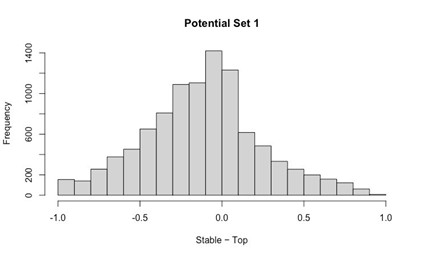
    1. Paramount (adjective)
      派拉蒙 Pài lā méng 形容詞 高級的 paramount 首要的 paramount, principal 至高的 paramount 最高的 suzerain, top, topmost 最重要的 leading, paramount