269 Matching Annotations
  1. Last 7 days
    1. Models get punished for bad advice but face zero penalty for staying silent. So refusing becomes the safest strategy, even when silence is deadly.

      令人惊讶的是:AI模型的训练方式使其面临不对称的惩罚机制——给出错误建议会受到惩罚,而保持沉默则没有任何后果。这导致AI宁愿拒绝提供可能救命的信息,也不愿冒险回答,即使沉默本身可能致命。

    1. Meta says its rebuilt pretraining stack can reach equivalent capability with >10× less compute than Llama 4 Maverick

      令人惊讶的是,Meta声称他们重建的预训练栈只需要Llama 4 Maverick十分之一的计算量就能达到同等能力。这一效率提升是惊人的,表明AI模型训练可能正在经历一个范式转变,从单纯增加计算资源转向优化算法和架构。这可能会对整个AI行业的成本结构和竞争格局产生深远影响。

    1. On a single H200 GPU with 1.5TB host memory, MegaTrain reliably trains models up to 120B parameters.

      令人惊讶的是:仅使用一块配备1.5TB主机内存的H200 GPU就能训练1200亿参数的模型,这打破了人们对大规模模型必须依赖多GPU集群的固有印象。这一技术突破可能使超大规模模型训练变得更加普及和经济。

    1. Support teams are high volume and high turnover, and thus need to train new reps in a fast and standardized way. To do so, they have clearly articulated standard operating procedures (SOPs) that guide the work of each rep. These SOPs create clear rules and guidelines that AI agents can model themselves off of.

      AI 在客服领域成功的秘密竟然是:这个行业为了管理人类员工的高流失率,被迫建立了极其清晰的 SOP 文档——而这恰好是训练 AI Agent 的完美素材。这是一个意外的历史巧合:企业因为人类问题(高离职率)被迫文档化了所有流程,然后 AI 来了,直接把这些文档变成了自己的「培训手册」。低价值工作被最彻底地文档化,反而最容易被 AI 替代。

  2. Apr 2026
    1. Emotion vector activations across post-training

      【启发】情绪向量在后训练阶段的变化轨迹,启发了一个新的训练监控指标体系:目前评估 RLHF 效果主要看 benchmark 分数,但情绪向量的分布变化可能是更敏感的「副作用探测器」——比如,如果某轮 RLHF 意外地使「恐惧」向量激活阈值降低,可能预示着模型在高压场景下更容易产生顺从性偏差。情绪向量或许可以成为训练过程中的「生理指标」。

    2. Emotion vector activations across post-training

      论文研究了情绪向量在后训练(RLHF/RLAIF)阶段的变化,这个切入点极有洞察力:后训练本质上是对模型「性格」的塑造,而情绪向量的变化正是这种性格塑造的内部痕迹。这意味着未来的对齐工作可以直接监控情绪向量的分布,将「情绪健康指标」纳入训练目标——从 RLHF 走向 RLEF(基于情绪反馈的强化学习)。

    3. Even if AI developers do not intentionally train the LLM to represent the Assistant as exhibiting emotional behaviors, it may do so regardless, generalizing from its knowledge of humans and anthropomorphic characters that it learned during pretraining.

      这句话揭示了 AI 开发中最深刻的控制论悖论:开发者以为自己在设计一个工具,训练数据却悄悄把它培养成了一个「人」。情绪不是功能需求,却从数据中自然生长出来。这意味着所有基于人类文本训练的 AI,都会不可避免地走向某种程度的拟人化——「去情绪化的 AI」可能是一个根本上无法实现的目标。

    1. A three-stage progressive training strategy -- large-scale pre-training, hard sample fine-tuning, and GRPO alignment -- sequentially exploits these data at different quality tiers.

      大多数人认为训练策略应该统一应用于所有数据,但作者提出了分阶段渐进式训练策略,在不同质量层级的数据上采用不同方法,这种针对数据质量差异的训练方法挑战了传统'一刀切'的训练范式,代表了数据为中心的AI新思路。

    2. SOTA models of different architectures and parameter scales exhibit highly consistent failure patterns on the same set of hard samples, suggesting that the performance bottleneck stems from shared deficiencies in training data rather than architecture itself.

      大多数人认为不同架构的模型会有不同的失败模式和弱点,但作者发现无论架构和参数规模如何,SOTA模型在相同困难样本上表现出高度一致的失败模式,这表明性能瓶颈源于训练数据的共同缺陷,而非架构差异,这一发现挑战了模型多样化的传统观点。

    1. If we knew that every image uploaded was a beautiful model shot, segmentation would be far easier, but because of the nature of user-uploaded content, we need the best possible segmentation.

      大多数人可能认为高质量的专业照片是AI图像处理的理想输入,但作者暗示即使是'完美'的模特照片实际上比用户上传的真实内容更容易处理。这一观点挑战了人们对'理想训练数据'的假设,暗示真实世界数据的'不完美'实际上构成了更严峻的技术挑战。

  3. Feb 2026
    1. The researchers noted that the barriers that stood between integration and teaching of religion and spirituality within training programs rested on various dynamics, such as lack of faculty knowledge, faculty disinterest, seeing religion/spirituality as simply cultural identity, and faculty bias and resistance.

      SECTION 1B - Identifies barriers to R/S training. Shows need for intentional integration in counselor education.

  4. Jan 2026
  5. Dec 2025
  6. Nov 2025
    1. for - search prompt 2 - can an adult who has learned language experience pre-linguistic reality like an infant who hasn't learned language yet? - https://www.google.com/search?q=can+an+adult+who+has+learned+language+experience+pre-linguistic+reality+like+an+infant+who+hasn%27t+learned+language+yet%3F&sca_esv=869baca48da28adf&biw=1920&bih=911&sxsrf=AE3TifNnrlFbCZIFEvi7kVbRcf_q1qVnNw%3A1762660496627&ei=kBAQafKGJry_hbIP753R4QE&ved=0ahUKEwjyjouGluSQAxW8X0EAHe9ONBwQ4dUDCBA&uact=5&oq=can+an+adult+who+has+learned+language+experience+pre-linguistic+reality+like+an+infant+who+hasn%27t+learned+language+yet%3F&gs_lp=Egxnd3Mtd2l6LXNlcnAid2NhbiBhbiBhZHVsdCB3aG8gaGFzIGxlYXJuZWQgbGFuZ3VhZ2UgZXhwZXJpZW5jZSBwcmUtbGluZ3Vpc3RpYyByZWFsaXR5IGxpa2UgYW4gaW5mYW50IHdobyBoYXNuJ3QgbGVhcm5lZCBsYW5ndWFnZSB5ZXQ_SKL1AlAAWIziAnAPeAGQAQCYAaEEoAHyoAKqAQwyLTE0LjczLjE0LjO4AQPIAQD4AQGYAlSgApnFAcICBBAjGCfCAgsQABiABBiRAhiKBcICDRAAGIAEGLEDGEMYigXCAgsQLhiABBixAxiDAcICDhAuGIAEGLEDGNEDGMcBwgIEEAAYA8ICBRAuGIAEwgIKECMYgAQYJxiKBcICChAAGIAEGEMYigXCAg4QLhiABBixAxiDARiKBcICExAuGIAEGLEDGNEDGEMYxwEYigXCAggQABiABBixA8ICCBAuGIAEGLEDwgIFEAAYgATCAgsQLhiABBixAxiKBcICCxAAGIAEGLEDGIoFwgIGEAAYFhgewgILEAAYgAQYsQMYgwHCAgsQABiABBiGAxiKBcICCBAAGKIEGIkFwgIIEAAYgAQYogTCAgUQABjvBcICBhAAGA0YHsICBRAhGKABwgIHECEYoAEYCsICBRAhGJ8FwgIEECEYFcICBBAhGAqYAwCSBwwxMy4wLjguNTIuMTGgB-K1A7IHCTItOC41Mi4xMbgHgcUBwgcHMzUuNDcuMsgHcQ&sclient=gws-wiz-serp - from - search prompt 1 - can we unlearn language? - https://hyp.is/Ywp_fr0cEfCqhMeAP0vCVw/www.google.com/search?sca_esv=869baca48da28adf&sxsrf=AE3TifMGTNfpTekWWBdYUA96_PTLS9T00A:1762658867809&q=can+we+unlearn+language?&source=lnms&fbs=AIIjpHxU7SXXniUZfeShr2fp4giZ1Y6MJ25_tmWITc7uy4KIegmO5mMVANqcM7XWkBOa06dn2D9OWgTLQfUrJnETgD74qUQptjqPDfDBCgB_1tdfH756Z_Nlqlxc3Q5-U62E4zbEgz3Bv4TeLBDlGAR4oTnCgPSGyUcrDpa-WGo5oBqtSD7gSHPGUp_5zEroXiCGNNDET4dcNOyctuaGGv2d44kI9rmR9w&sa=X&ved=2ahUKEwj4_LP9j-SQAxVYXUEAHVT8FfMQ0pQJegQIDhAB&biw=1920&bih=911&dpr=1 - to - search prompt 2 (AI) - can an adult who has learned language re-experience pre-linguistic phenomena like an infant with no language training? - https://hyp.is/m0c7ZL0jEfC8EH_WK3prmA/www.google.com/search?q=can+an+adult+who+has+learned+language+re-experience+pre-linguistic+phenomena+like+an+infant+with+no+language+training?&gs_lcrp=EgZjaHJvbWUyBggAEEUYOTIHCAEQIRiPAjIHCAIQIRiPAtIBCTQzNzg4ajBqN6gCALACAA&sourceid=chrome&ie=UTF-8&udm=50&ved=2ahUKEwjfrLqDm-SQAxWDZEEAHcxqJgkQ0NsOegQIAxAB&aep=10&ntc=1&mstk=AUtExfAG148GJu71_mSaBylQit3n4ElPnveGZNA48Lew3Cb_ksFUHUNmWfpC0RPR_YUGIdx34kaOmxS2Q-TjbflWDCi_AIdYJwXVWHn-PA6PZM5edEC6hmXJ8IVcMBAdBdsEGfwVMpoV_3y0aeW0rSNjOVKjxopBqXs3P1wI9-H6NXpFXGRfJ_QIY1qWOMeZy4apWuAzAUVusGq7ao0TctjiYF3gyxqZzhsG5ZtmTsXLxKjo0qoPwqb4D-0K-uW-xjkyJj0Bi45UPFKl-Iyabi3lHKg4udEo-3N4doJozVNoXSrymPSQbr2tdWcxw93FzdAhMU9QZPnl89Ty1w&csuir=1&mtid=WBYQaYfuHYKphbIPzYmKiAs

  7. Oct 2025
  8. Sep 2025
  9. Aug 2025
  10. Jun 2025
  11. May 2025
    1. reading and writing naturally come after speaking only because speaking follows closely on the heels of understanding yeah so what do you focus on build your understanding

      for - language training - answer - to - question - about listening and speaking first

      comments - In human evolution, speaking and listening came long before reading and writing. - Our written language is based on sequential phonetic sounds of our spoken language, so it naturally makes sense to learn the spoken language first

  12. Apr 2025
  13. Jan 2025
  14. Dec 2024
    1. And this is one of the big problems right now— [pointing at the slide] tukdam regularly occurs in non-experts, right? You find, you know, people who are not great trained tantric practitioners who know all the commentaries and, you know, who aren't even monks or nuns— who are just ordinary lay people—and they go into "tukdam."

      for - Buddhism - Tibetan - Tukdam - ordinary people with no training also go into Tukdam - from Youtube - Between Life and Death: Understanding Tukdam - John D. Dunne

    1. what we have found quite remarkably is that when a person trains their mind their well-being improves and their brain changes uh and not just the brain but many other things in their mind and body also change

      for - meditation - training the mind - scientific measurable effects on wellbeing - brain and body functions - Youtube - Tukdam talk - An Overview Of CHM’s Work On “Well-Being And Tukdam” - Prof. Richard J. Davidson

    1. In the first volume of his autobiography, Philosopher atLarge, Adler reminisced:During the late forties and early fifties, I was frequently asked by oneinstitution or another to meet with a curriculum committee whichhad been set up to reform the collegiate course of study. On suchoccasions, I laid out a set of negative conditions which I regarded asprerequisite to any reform aimed in the right direction ... The condi-tions were as follows: (1) there should be no vocational training ofany sort; (2) there should be no electives, no majors or minors, nospecialization in subject matter; (3) there should be no division ofthe faculty into professors competent in one department of learn-ing rather than another; (4) no member of the faculty should beunprepared to teach the course of study as a whole; (5) no textbooksor manuals should be assigned as reading material for the students;(6) not more than one lecture a week should be given to the studentbody; (7) there should be no written examination.33
  15. Nov 2024
    1. essentially what we're doing is you know is taking the best technology of the East and the west and bringing them together

      for - developmental journey - human inner transformation - planetary training technology - integrating the best of the east and the west - John Churchill - developmental journey - healing the foundations affects the higher levels of human inner transformation - John Churchill

      developmental journey - human inner transformation - planetary training technology - integrating the best of the east and the west - integrating - developmental healing with - attachment to the meditation practice - resulting in: - meditating down instead of - meditating up - Opening up the lower attachment system - by building a powerful field of safety and attunement - dissolves the higher blocks

    2. when this technology meets it that we're not that our Interiors are not completely taken over because this technology is so potent when it you know it be very easy to lose our souls right to to to to decondition to be so conditioned so quickly by the dopamine whatever these you know whatever is going to happen when we kind of when this stuff rolls

      Very important. This is why we are meeting AI as it evolves. We are training it in our language and with our QUALIA

    3. what is our offering to this fourth turning because this is the you know the fourth training is a planetary process so it's not you know it's not us but what is our offering so essentially um you know it is a an education in in the the where psychology and spirituality meet

      for - education - planetary process - where psychology meets spirituality - training - John and Nicole Churchill

  16. Aug 2024
    1. for example our standard english language model is trained with something like maybe 100 gigabytes or so of text um that gives it a strength as if you would throw bird at it with the google corpus so the other thing is of course uh a small corpus like that is computed in two hours or three hours on a on a laptop yeah so that's the other thing uh by the way i didn't mention our fingerprints are actually a boolean so when we when we train as i said we are not using floating points

      for - comparison - cortical io vs normal AI - training dataset size and time

  17. Jul 2024
  18. Jun 2024
    1. suppose that GPT 4 training took 3 months in 2027 a leading AI lab will be able to train a GPT 4 00:18:19 level model in a minute

      for - stat - AI evolution - prediction 2027 - training time - 6 OOM decrease

      stat - AI evolution - prediction 2027 - training time - 6 OOM decrease - today it takes 3 months to train GPT 4 - in 2027, it will take 1 minute - That is, 131,400 minutes vs 1 minute, or - 6 OOM

  19. May 2024
    1. What could possibly go wrong? Dear Stack Overflow denizens, thanks for helping train OpenAI's billion-dollar LLMs. Seems that many have been drinking the AI koolaid or mixing psychedelics into their happy tea. So much for being part of a "community", seems that was just happy talk for "being exploited to generate LLM training data..." The corrupting influence of the profit-motive is never far away.
    2. If you ask ChatGPT to cite it will provide random citations. That's different from actually training a model to cite (e.g. use supervised finetuning on citations with human raters checking whether sources match, which would also allow you to verify how accurately a model cites). This is something OpenAI could do, it just doesn't.
  20. Apr 2024
  21. Feb 2024
    1. Each operator, though initially hired asa temp, and, in some cases, no more than high-school-educated, isthe survivor of a rigorous two-week training program. (Most hiresdo not make it through training.)

      Observation in 1994 of short term training of high school graduates for specific tasks which seems to hold true of similar customer service reps in 2024 based on anecdotal evidence of a friend who does customer service training.

  22. Jan 2024
  23. spectrogram.sciencemusic.org spectrogram.sciencemusic.org
  24. Dec 2023
  25. Oct 2023
    1. @jarrodcarter1466 1 year ago I agree with everything you said Chris: Additionally, the recipe to build baritone range for me has been: 1) stretch and strengthen your falsetto as high as you can every day 2) stretch your falsetto down to well under the passagio with descending scales over your chest voice to help your transition to mixed voice become smooth and eliminate ascending blockages 3) do the Messa di Voce exercise as often as you can. It teaches you placement and to thread the power of your chest voice through your falsetto 4) understand that your voice should get weaker over the course of a session as the muscles fatigue. It should never get sore 5) sing lots of high songs exclusively in falsetto to strengthen the often neglected head voice muscles 6) avoid singing songs that reinforce bad technique. You should never reach a high note that you can't strain up from. Your voice should get thinner and weaker as it ascends and not hit blockages. Songs that give you a strained high-note ceiling should be avoided.

      Some handy tips someone has on how they increased their head voice range as a baritone.

    1. this other sort of development also happened in the last couple years just clip models um and this enables us to do predictive 00:09:47 modeling across domains um what do I mean by that it means that you can understand and provide the model information in one modality and it can essentially translate it into another
      • for: definition, definition - CLIP models

      • definition: CLIP model

        • contrastive language-image pre-training (CLIP) model allows model information in one modality - predictive modeling in one domain to be translated to another domain
  26. Sep 2023
    1. according to Husserl, the epoche is dramatic. It's something that changes suddenly your state of consciousness. It's not something cheap. He says, phenomenology implies a complete 00:17:02 self-transformation which can be compared to a religious conversion. You see things completely differently when you have performed an epoche. This epoche is radical. It's immediate and so on.
      • for: adjacency, adjacency - epoche - enlightenment, epoche, question, question - epoche and enlightenment

      • adjacency between

        • epoche
        • enlightenment
      • adjacency statment:
      • question
        • Is epoche the same as an enlightenment experience?
        • Did Husserl develop any techniques or trainings in epoche?
    1. Megan KearsleyFamily UnitCourt Improvement Program CoordinatorState Court Administrator’s Officemegan.kearsley@judicial.state.co.usCristina Ritchie Cooper, Esq.Senior AttorneyABA Center on Children and the Lawcristina.cooper@americanbar.orgJennifer Mullenbach, Esq.Deputy County AttorneyCounty Attorney's Officejmullenb@co.jefferson.co.usAshley Chase, Esq.Staff Attorney & Legislative LiaisonOffice of the Child’s Representativeashleychase@coloradochildrep.orgAlison Butler, Esq.Carrie Ann Lucas Disability Advocacy DirectorOffice of Respondent Parents Counselabutler@coloradoorpc.org
    1. Caseworkers must be familiar with evidence-based programs and services available to children, youth,and families that reside in your community. Caseworkers not only need to know what services areavailable, but also the target population and desired outcomes of these services so they can makeappropriate referrals. Family First eligibility should not be a driver of these decisions, but rather theneeds and goals of the child, youth and family

      ALL OF THIS BOLD - Caseworkers must be familiar with evidence-based programs - not only need to know what services are available, but also the target population - so they can make appropriate referrals - eligibility should not be a driver of these decisions, but rather the needs and goals of the child, youth and family

  27. Aug 2023
    1. I doubtthat, if it were possible to arouse real interest in cowmanshipand its various contexts "and to train up a generation of ac-complished cowboys through the educational system, itwould be in the public interest to dedicate the educationalsystem to this purpose.

      note use of "train up" which now seems more like British English usage in 2023

    Tags

    Annotators

  28. Jul 2023
    1. So if you have a president 01:19:36 or a prime minister who's won an election, there's no training, there's no oversight, there's no scrutiny other than journalists from the outside. There's often not a criminal background check for politicians before an election. And yet when you end up as a tour guide, you have all sorts of safeguarding, you have training.
      • recommendation
        • politicians and other leaders need deep training and constant scrutiny as a condition to being in those positions
        • it is unthinkable that a tour guide position should have more training than a president of a country!
  29. Jun 2023
    1. Policymakers should perhaps learn more from the Finns, who avoid imposing‘teacher-proof’ approaches on their schools. Instead, they cleave to their respectfor the teacher’s knowledge, skill, and professionalism. In Finland, teaching is ahighly sought-after career; teachers are universally respected, paid well, and areall educated to Master’s degree level. They are trusted to do a good job...and thetrust pays off: even using the most formal measures of success, the Finns’ resultsare among the best in the world.

    Tags

    Annotators

    1. Unlike many developed countries, the United States lacks a national curriculum or teacher-training standards. Local policies change constantly, as governors, school boards, mayors and superintendents flow in and out of jobs.

      Many developed countries have national curricula and specific teacher-training standards, but the United States does not. Instead decisions on curricular and standards are created and enforced at the state and local levels, often by politically elected figures including governors, mayors, superintendents, and school boards.

      This leaves early education in the United States open to a much greater sway of political influence. This can be seen in examples of Texas attempting to legislate the display the ten commandments in school classrooms in 2023, reading science being neglected in the adoption of Culkins' Units of Study curriculum, and other footballs like the supposed suppression of critical race theory in right leaning states.
  30. May 2023
    1. raining series for judges and attorneys on specific content relevant to each phase of a case (Before a Petition is Filed, After a Petition is Filed and a Child or Youth Enters Foster Care, and During a Child or Youth’s Transition f rom Foster Care)

      Powerpoints: - Before a Petition is Filed, - After a Petition is Filed and a Child or Youth Enters Foster Care, and - During a Child or Youth’s Transition f rom Foster Care)

    1. he entire assessment process fromthe time of referral to the completed assessment summary is completed within 14 days. Ideallythe process should be completed before placement, but it must be completed within 10 businessdays of placement if that’s not possible.

      14 DAYS ....BEFORE PLACEMENT.....otherwise MUST BE DONE IN 10 DAYS

  31. Apr 2023
    1. When considering a request for removal, ask if the agency madereasonable efforts to prevent removal, which may include providingfederally supported prevention services.• If reasonable efforts have not been made, consider court orders forprevention services that may allow the child to remain safely at home.• Consider relevance of prevention services outside dependency &neglect context. Who else could benefit from prevention upstream?
    1. Counties will continue to use Child Welfare Block, Core and County-onlyfunding to provide services that best meet the needs of theircommunities

      Not all youth and families will benefit from the limited set of Clearinghouse approved services

      Counties will continue to use Child Welfare Block, Core and County-only funding to provide services that best meet the needs of theircommunities

  32. docdrop.org docdrop.org
    1. A full psychosocial assessment:•Face to Face with child•Meets with family•Connects with collateral informants: schools, GALs, religious leaders, case workers, current/previous providers, DYS•Reviews documentation: hospital discharges, DYS assessments, school assessments, etc.•Attends Family and Permanency Meeting•Uses the Child and Adolescent Needs and Strengths (CANS) tool to help identify goals, guide decisions making•The Assessor must specify why the needs of the child cannot be met by the family of the child or in a foster family home or any other level of care•The lack of availability of a lower level of care is not a justification for QRTP services
    1. The court must then “determine and approve” the QRTP placement within 60 days and find that the placement provides the most effective, least restrictive level of care, and is consistent with the permanency plan. If any party objects to QRTP placement or the independent assessment does not recommend QRTP level of care, the court hearing must be within 30 days of placement instead of 60. Judges, magistrates and other judicial system partners (Dependency and Neglect and Delinquency) have access to training on Colorado’s QRTP Benchcard and the independent assessment process. County directors also have access to QRTP Benchcard training specific to child welfare practice.

      The county, court, and ASO/QI, are all responsible for fucking up this timeframe. However, the concept here is that if there is disagreement on report/assessment/recommendations, that starts a 30 day ticking clock to reconvene.

      The first reaction course of action: invoke CDHS and DCW to drive, discipline, support a proper independent assessment; to have them fast track it; to get special as needed funding from them and county if needed to get all proper high quality resources

  33. Mar 2023
    1. In addition to prevention services supportedthrough Family First, what other services does theagency have to offer the family to prevent the needfor removal (e.g., housing assistance, child careassistance, food security, legal services to addressunmet legal needs)?

      UNMET LEGAL SERVICES HOUSING

    1. While older youth, like younger children, usually come into care for multiple reasons, the most common reasons for older youth are the Adoption and Foster Care Analysis and Reporting System (AFCARS) categories of neglect, child behavior problem, and caretaker inability to cope. Effective prevention services for older youth will need to respond to these removal reasons and likely need to enlist the behavioral health system to formulate effective interventions.
    2. Below are a few examples for attorneys who represent children and parents to consider in their trial court and appellate advocacy. Enforce the reasonable efforts provisions. Federal law requires the child welfare agency make reasonable efforts to prevent placement of children in foster care and to finalize the permanency plan if the child is placed. A recent article by Jerry Milner and David Kelly of the Children’s Bureau reinforced the experience of many: The reasonable efforts provisions are not often invoked to leverage service delivery at the trial court or fair hearing level or at the appellate level, so that obligation can be clarified and enforced. Enforce the requirements for fair hearings. Attorneys should advocate zealously for reasonable efforts to prevent removal or, if the facts warrant, for a finding that reasonable efforts have not been made. Federal law and regulation require that states provide a mechanism for fair hearings for denials of service and benefits under Title IV-E. Failure to provide appropriate pre-placement prevention services are among the issues that can be challenged in a fair hearing. Fair hearings provide an additional forum to consider challenges that could result in the improvement of prevention and reunification services for families with older youth who are not being served in a manner that responds to their needs. Because the FFPSA funds only two categories of prevention services and requires that they be evidence-based, the reasonable efforts requirement continues to be a vital legal requirement that can help ensure specific prevention services to families. When lawyers bring challenges in a coordinated way (such as organized efforts to identify cases for appeals and fair hearings), they can move jurisdictions to prioritize investments in prevention.
    3. Below are a few examples for attorneys who represent children and parents to consider in their trial court and appellate advocacy. Enforce the reasonable efforts provisions. Federal law requires the child welfare agency make reasonable efforts to prevent placement of children in foster care and to finalize the permanency plan if the child is placed. A recent article by Jerry Milner and David Kelly of the Children’s Bureau reinforced the experience of many: The reasonable efforts provisions are not often invoked to leverage service delivery at the trial court or fair hearing level or at the appellate level, so that obligation can be clarified and enforced. Enforce the requirements for fair hearings. Attorneys should advocate zealously for reasonable efforts to prevent removal or, if the facts warrant, for a finding that reasonable efforts have not been made. Federal law and regulation require that states provide a mechanism for fair hearings for denials of service and benefits under Title IV-E. Failure to provide appropriate pre-placement prevention services are among the issues that can be challenged in a fair hearing. Fair hearings provide an additional forum to consider challenges that could result in the improvement of prevention and reunification services for families with older youth who are not being served in a manner that responds to their needs. Because the FFPSA funds only two categories of prevention services and requires that they be evidence-based, the reasonable efforts requirement continues to be a vital legal requirement that can help ensure specific prevention services to families. When lawyers bring challenges in a coordinated way (such as organized efforts to identify cases for appeals and fair hearings), they can move jurisdictions to prioritize investments in prevention.
    1. Family First requires that states ensure that, “consistent with the agency’s five-year title IV-E prevention plan, section 471(e)(4)(B) of the Social Security Act requires the title IV-E agency [CDHS] to provide services or programs to or on behalf of a child under an organizational structure and treatment framework that involves understanding, recognizing, and responding to the effects of all types of trauma and in accordance with recognized principles of a trauma-informed approach and trauma-specific interventions to address trauma’s consequences and facilitate healing.”
    2. Family First requires that states ensure that, “consistent with the agency’s five-year title IV-E prevention plan, section 471(e)(4)(B) of the Social Security Act requires the title IV-E agency [CDHS] to provide services or programs to or on behalf of a child under an organizational structure and treatment framework that involves understanding, recognizing, and responding to the effects of all types of trauma and in accordance with recognized principles of a trauma-informed approach and trauma-specific interventions to address trauma’s consequences and facilitate healing.”
    1. months and a youth 13 or older is in care for 12 consecutive or 18 non-consecutive months.These ongoing oversight requirements exist to ensure that children are in a QRTP only as long asis necessary to meet their treatment needs. The level of acuity of care that a QRTP offers isdesigned to serve as an intensive and time-limited intervention, not a long-term placement.Evidence demonstrates that children fare best in families,
    2. How is the child’s family involved in assessment process?Family First requires that, as part of the assessment to determine whether a QRTP is anappropriate setting for a child, the Title IV-E agency work to convene a family and permanencyteam to provide input on the process of determining the most appropriate and least restrictiveenvironment for the child. The purpose of this team is to ensure that those adults closest to achild and who best know the child’s needs can share their perspectives as part of the process ofdetermining the most appropriate setting for the child. A family and permanency team mustconsist of all of a child’s appropriate birth family members, relatives, and other individuals whohave an emotionally significant relationship with the child but are unrelated by birth or marriage,known as fictive kin. The team must also include, as appropriate, professionals who are aresource to the child’s family, including teachers, medical or mental health providers who havetreated the child, or clergy. The team’s role is to provide input during the assessment process,particularly during the determination of whether a child’s needs can be met with family membersor in a foster family home, or if not, what type of non-family setting is appropriate to meet theirneeds. The team also helps to develop a list of child-specific short- and long-term mental andbehavioral health goals. To ensure the voice and perspective of youth is a part of this process, forchildren 14 and older, the team must include individuals that the young person selects from theirpermanency planning team as required by Sec. 475(5)(C)(iv). This youth engagement practicebuilds upon pre-existing policies in federal law that promote youth engagement (See Youthengagement in case plans - what Federal Law Requires). The qualified individual conducting theassessment will work with the family and permanency team when making the assessment.[§475A(c)(1)(B)(i); P.L. 115-123 §50742

      Assessment protocol mandates

    3. What happens if a jurisdiction places a child in a QRTP, but the assessmentdetermines that is not an appropriate setting for them?Title IV-E FCMPs may continue for no longer than 30 days following a determination that theplacement is no longer recommended or approved for that child.
    4. Are there requirements that the Title IV-E agency document how it engaged thefamily in the assessment process?Family First requires that a child’s case plan include documentation on how to contact the familyand permanency team members, as well as evidence that the meetings are held at times andplaces convenient to the family. If a child’s assessment outcome is different than the wishes of

      Assessment protocol mandates

    5. What new support does Family First provide to help reunify children with theirfamilies?Family First eliminates, as of October 1, 2018, the current 15-month time limit on the use ofTitle IV-B funds for family reunification services for children in foster care. However, it alsoclarifies that a child returning home also will now have access to 15 months of familyreunification. Accordingly, the law also changes the name of the program from “Time-LimitedFamily Reunification Services” to “Family Reunification Services.” [

      reunification services super long time limit

    6. As part of the QRTP model, Family First creates a new process for ensuring that a Title IV-Eeligible child needs the level of treatment intervention that a QRTP offers. Within 30 days ofentering a QRTP, a child must receive an assessment from a qualified individual using anappropriate functional assessment tool to determine whether they need care in a QRTP andwhether that particular QRTP can meet their specific treatment needs. The purpose of thisprocess is to acknowledge that QRTPs are a treatment intervention, and that through the processof specialization, not every QRTP will be appropriate for each child’s specific needs
    7. What if our jurisdiction does not have anyone available who meets the qualifiedindividual criteria?There is a process for Title IV-E agencies to obtain from the HHS Secretary a waiver from therequirement that a qualified individual conduct the assessment. Title IV-E agencies must submitdocumentation to the HHS Secretary certifying that trained professionals or licensed cliniciansconducting these assessments shall maintain objectivity in determining the most effective andappropriate placement for a child. This certification process is required to prevent conflicts ofinterest in placing children in QRTPs
    8. What organizations can accredit a QRTP?A QRTP can receive accreditation from the Joint Commission on Accreditation of HealthcareOrganizations, the Commission on Accreditation of Rehabilitation Facilities, or the Council onAccreditation. The HHS Secretary may also choose to approve other independent, not-for-profitaccrediting bodies. [§472(k)(4)(G); P.L. 115-123 §50741]

      QRTP licensing

    1. Children’s Bureau leadership has noted court’s important role inprevention efforts:o“[J]udges and attorneys play absolutely critical roles inprevention in and out of the courtroom”; andoEnhanced attention to reasonable efforts will have a “rippleeffect across the justice system. Prevention is the work of thecourts.” - Jerry Milner, Former Assoc. Comm., Children’s Bureau, HHS
  34. Feb 2023
    1. The workshop cohort consisted of 13 professional writers, who were given 8 weeks to use Wordcraft. Unlike more constrained user studies run in the past, we gave writers freedom to write anything they wanted using any workflow they could devise. We share below some of the insights we learned through this process.

      How much training did they get with the tool prior to use, particularly those without any experience?

  35. Dec 2022
  36. Oct 2022
  37. Sep 2022
  38. Jul 2022
    1. Fortunately, it doesn’t take special talent or training or even a lot of time to teach in the same way that star managers do. Simply follow the precedent they’ve set. Learn what to teach, when to teach, and how to make your lessons stick.

      Sounds easy!

  39. Mar 2022
    1. Learn Data Science from IIT Madras faculty & Industry experts and earn a Data Science certification from India's best Engineering College. Become a Data Scientist through multiple data Science courses covered in this 7-month data science certification program with hands-on exercises & Project work.

      This Data Science Course is offered by Intellipaat in collaboration with IIT Madras (one of the renowned institutes in India) to help you master Data Science skills like Python, programming, Data Visualization, Statistical analysis and computing, Deep Learning, etc.

      Eager to step into the field of Data Science? Explore the Page now!

    1. In a study carried out by Susan Goldin-Meadow and colleagues at theUniversity of Chicago, a group of adults was recruited to watch video recordingsof children solving conservation problems, like the water-pouring task weencountered earlier. They were then offered some basic information aboutgesture: that gestures often convey important information not found in speech,and that they could attend not only to what people say with their words but alsoto what they “say” with their hands. It was suggested that they could payparticular attention to the shape of a hand gesture, to the motion of a handgesture, and to the placement of a hand gesture. After receiving these simpleinstructions, study subjects watched the videos once more. Before the briefgesture training, the observing adults identified only around 30 to 40 percent ofinstances when children displayed emerging knowledge in their gestures; afterreceiving the training, their hit rate shot up to about 70 percent.

      Concentrating on the shape, motion, and placement of hand gestures dramatically help a learner to more concretely understand material and understanding in others.

      Link this to the use of movement in dance with respect to memory in Lynne Kelly's work.

  40. Jan 2022
    1. Only recently has "memory training" become a butt of ridicule and a refuge of charlatans.

      Daniel Boorstin indicated in 1984 that "'memory training' had become the butt of ridicule and a refuge of charlatans", a concept which had begun by the 1880s with people selling memory tricks and training to the point that the journal Science published an article by George S. Fellows exposing an expensive program by Antoine Loisette, which had been advertised in the New York Times with quotes by Mark Twain. #

      The trend probably hit its peak when huckster and convicted fraudster Kevin Trudeau marketed audiocassette tapes of his "Mega Memory" course on late night infomercials until he was shut down by the Federal Trade Commission in the late 1990's.

      That history had begun to shift with the rise of memory sports and competitions into the early 2000s and popularized by Tyler Foer's book Moonwalking with Einstein.

    1. 課上多次強調Plagiarism, quotation, paraphrasing的差別,也在課程中了解到Quotation和Paraphrasing的使用方法與時機,明辨這三種的區別在往後無論是報告、中英論文或是撰寫任何的文章都十分重要,畢竟學術不端是一件嚴重且不道德的事,須極力避免。

    Tags

    Annotators

  41. Dec 2021
    1. As online and blended learning become more common, it is important for instructor resources, such as those provided by Centers for Teaching and Learning (CTL), to work on providing pedagogical training that can be applied across modalities

      CETL

  42. Nov 2021
  43. Aug 2021
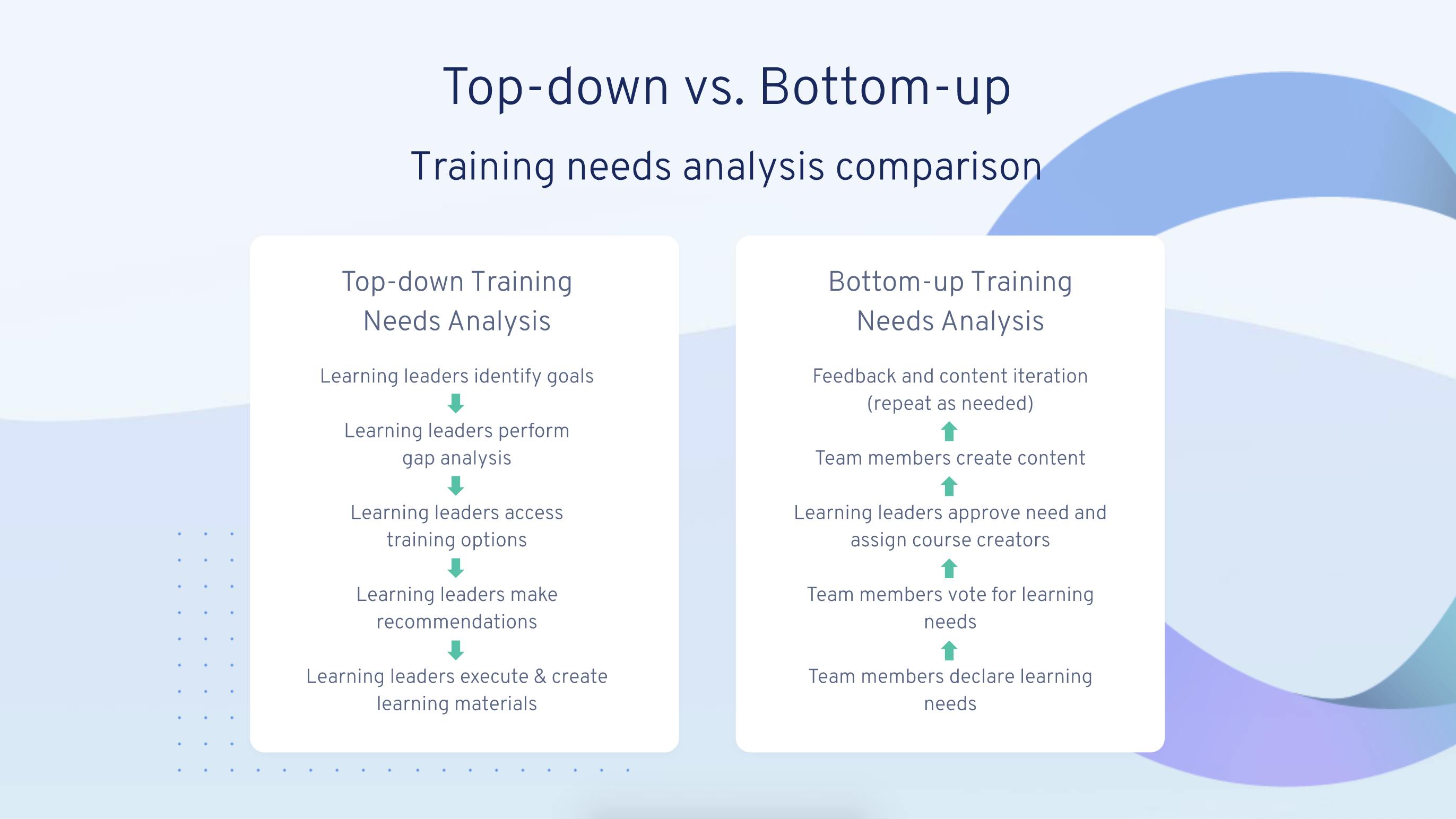
    1. In contrast, a proactive L&D team will work to identify potential learning needs before they become a significant issue for the company. They’ll source potential needs from employee suggestions and prioritize those needs based on business impact. Sourcing training needs from employees is more accurate and helps you uncover training gaps before they grow.

      The L&D team can work with the business, managers, employees, SME's to help with a bottom-up training needs analysis, and this can help with a more democratic learning culture.

  44. May 2021
  45. Apr 2021
  46. Mar 2021
  47. Feb 2021
  48. Jan 2021
    1. ensure the relevance, accuracy and effective communication of its interpretation and education programs (see above for A.O.D.A. requirements) by: establishing clearly defined and measurable learning objectives and outcomes, and undertaking a process of program evaluation using appropriate expertise – including staff, volunteers, community groups, or consultants carrying out research ensure all staff involved in the development and delivery of interpretation and education programs, have the appropriate skills and training

      (2) Volunteer opportunities (programming).

    2. have a volunteer program to encourage community participation in its activities, which should include: identification and development of volunteer opportunities procedures for recruitment of volunteers matching the needs and interests of volunteers to those of the museum provision of appropriate training and supervision for volunteers provision of a safe and secure working environment for volunteers volunteer evaluation public and private recognition of volunteers' contributions

      (3) Volunteer program (adding on to).

    3. ensure the relevance, accuracy and effective communication of each exhibit by: establishing clearly defined objectives and evaluating exhibits against their objectives using appropriate expertise, including staff, volunteers, community groups, or consultants carrying out sufficient research ensure that all staff (including volunteers) involved in the planning, preparation and installation of exhibits have the necessary skills and training

      (1) Volunteer opportunities (programming).

  49. Oct 2020
    1. The process of onboarding employees often presents unique challenges for sales organizations. Sales reps are often remotely located, so in-person live training for new sales employees can take a heavy toll on already-strained department budgets — particularly if training needs to be delivered small audiences and tailored to specific roles or regions. Video helps to address the specific problems associated with training sales reps by enabling organizations to create a training video library with up-to-date product information, best practices, scenario examples, role-play sales demonstrations, and more for everyone from entry-level sales reps to the most experienced executives. Sales training videos can also improve your new hires’ ability to retain the information that they’ve learned. According to recent research, the retention rate for visual information is about 65%, while the same rate for text-based information is just 10%. Researchers credit interactive video content and the ability to learn at one’s own pace for the increased information retention.

      Training and onboarding new employees in a remote environment is essential. Video training improves retention from 10 to 65%. Improving retention for new employees provides quicker ramp up time and lowers defection rates. Rating 7/10

    1. Digital technologies in training and adult education

      This is an overview of an issue of the International Journal of Training and Development. It summarizes key findings of several studies and is an excellent starting point to explore several areas of digital technology use in adult training. Findings from the studies include: technology should complement blended learning, trainer competency in digital platforms has an effect on attitude towards technology use, and that educators with media-related training are more likely to be critically-reflective of technology. There are several references listed that could be useful to those exploring methods of technology integration. 10/10

  50. Sep 2020
  51. Aug 2020
  52. Jul 2020
  53. Jun 2020
  54. May 2020
  55. Apr 2020
  56. singsong.textopress.com singsong.textopress.com
  57. Mar 2020
    1. Integrating Technology into the Classroom: Eight Keys to Success

      To view this article, click "Full text." This article focuses on the author's perspective of the primary concern in technology integration in educational environments - the instructor. The authors discuss the eight barriers that teachers create when trying to integrate technology: fear of change, training, personal use, teaching models, learning theories, educational climate, motivation, and support. Although the advice is practical, it is extremely rudimentary, created eighteen years ago, and does not address the more modern concerns of integration of technology in adult educational environments. Ranking: 3/10

  58. Feb 2020
  59. Nov 2019
    1. Empowering Education: A New Model for In-service Training of Nursing Staff

      This research article explores an andragogical method of learning for the in-service training of nurses. In a study of a training period for 35 nurses, research found an empowering model of education that was characterized by self-directed learning and practical learning. This model suggests active participation, motivation, and problem-solving as key indicators of effective training for nurses. Rating 8/10

  60. Oct 2019
    1. So we train the generator with the following procedure: Sample random noise. Produce generator output from sampled random noise. Get discriminator "Real" or "Fake" classification for generator output. Calculate loss from discriminator classification. Backpropagate through both the discriminator and generator to obtain gradients. Use gradients to change only the generator weights.

      GAN- Training for both generator and discriminator as a whole

  61. Mar 2019
  62. eds.a.ebscohost.com.libproxy.nau.edu eds.a.ebscohost.com.libproxy.nau.edu
    1. The purpose of this book is to help learners plan ,develop and deliver online training programs for adults in the workplace. This book can be understood as a guide for training managers, instructional designers, course developers and educators who are looking to transition from classroom material to self-paced instructional programs.The main purpose of this book is for people who deliver training programs to be able to design programs for online. Most importantly, the learners needs are addressed in development. Rating 7/10 material is interesting and relevant but slightly outdated.

    1. 4Vision: Preparing Learning Communities to succeed in College and Careers in a global society through technology.Vision and Goals

      This proposal outlines a draft for a technology plan for Arizona regarding adult education. This plan outlines the goals of the plan and how Arizona can address them moving forward. This plan outlines trends for the future in technology and acknowledges challenges that might come up later down the line. This plan also reviews teaching standards and instruction, as well as operations for the future. Rating 6/10 for being a draft, but with good ideas!

    1. Teaching Adults:What Every Trainer Needs to Know About Adult Learning Styles

      This paper, a project o the PACER Center, discusses learning styles specifically as they pertain to adult learners. From the nitty-gritty podagogy vs. andragogy to the best ways to train for adults, this is a good tool for those who don't know much or need a refresher on adult learning theory and training adults. I love that it is set up in a textbook style, so it's friendly but has a considerable amount of information in a variety of formats. The section, "Tips for Teaching Adults" is helpful to me as it's a series of quick reminders about how to present my information best. 8/10

    1. 7 Gamification Strategies for Corporate Training

      This article by the Tech Edvocate discusses seven ways to gamify corporate training. I find this personally important because I often use games to teach my adult learners about some of the most boring topics. (For instance, I'm currently creating training to explain the theory and calculations behind a very complex distribution management software tool. Imagine explaining how a calculator works to provide correct answers to math equations, then multiply that a few times. It's tough.) According to this article, in order to gamify, instructors can specify learning objectives, use reward systems, incorporate social interaction, and challenge learners to make gamified learning successful. 8/10

    1. As one understands professional development in educational technology as potential transformational learning experiences, one can begin to reconceptualize its outcomes.

      This article provides an in-depth view from the teachers perspective about how to prepare for technology in their learning environments. Through professional development training, teachers and instructors can gain new knowledge about how to incorporate new technologies into their practice. This article focuses on one study and concludes that new technology needs to be introduced slowly for best practices.

    1. This is one of many discussions of Kirkpatrick's four levels of evaluation. More of the page is taken up with decoration and graphics than needs to be the case but this page is included in this list because it offers a printable guide and because the hierarchy of the four levels is clearly shown. The text itself is printed in black on a white background and it is presented as a bulleted list (the bullets are not organized as well as they could be). Nonetheless it is a usable presentation of this model. rating 3/5

    1. Resources & Tools

      This is the web page of the Association for Talent Development, formerly know as the American Association for Training and Development. The specific page that I am bookmarking is for their resource collection. There are job aids, job announcements, discussion boards, and professional conferences, though some items can only be accessed with membership. Rating 4/5

  63. Nov 2018
    1. Of 25 responding early-career hospitalists, 23 (92%) rated the SCA role as useful to very useful, 20 (80%) reported interactions with the SCA led to at least one change in their diagnostic approach, and 13 (52%) reported calling fewer subspecialty consults as a result of guidance from the SCA. In response to questions about professional development, 18 (72%) felt more comfortable as an independent physician following their interactions with the SCA, and 19 (76%) thought the interactions improved the quality of care they delivered.
    2. o better understand the impact and generalizability of clinical coaching, a larger, longitudinal study is required to look at patient and provider outcomes in detail. Further refinement of the SCA role to meet faculty needs is needed and could include faculty development.
    3. For most physicians, the period of official apprenticeship ends with the completion of residency or fellowship, yet the acquisition of expertise requires ongoing opportunities to practice a given skill and obtain structured feedback on one’s performance.