10,000 Matching Annotations
  1. Jan 2026
    1. Reviewer #3 (Public review):

      Summary:

      The manuscript explores the dependence of ABC transporter activity on membrane curvature. The underlying concept being analysed here is whether membrane mechanics can regulate the conformation of the protein and thereby its activity.

      Strengths:

      The protein of choice here is BmrA, a bacterial transmembrane ABC transporter. This protein was previously found to exhibit two states: open conformation with Nucleotide Binding domains (NBDs) separated from each other and an ATP-bound closed conformation with dimerised NBDs. The protein was purified and reconstituted into liposomes of varying diameters, largely categorised as Small vesicles (SV) and Large vesicles (LV). The authors find that the activity of the protein is reduced with the changing curvature of the membrane vesicles used to make the proteoliposomes. This could be modulated by making vesicles at different temperatures, LV at high and SV at lower temperature (4 {degree sign}C), following which they perform biochemical measurement of activity or smFRET experiments at HT or RT. They use well-characterized single-molecule FRET-based measurements to assess the change in conformation of the protein during the ATPase cycle. They find that a significant fraction of the protein is in an open (inactive) conformation in vesicles of higher curvature (SVs) at a given temperature. The authors develop a simple yet elegant theoretical model based on the energy of protein configuration states and their coupling to membrane energetics (bending rigidity) and curvature to explain these findings. The model provides a parameter-free fit that predicts the open/closed state distributions as well as the ATPase activity differences between SV and LV. Using experimentally determined values of the protein conicity, the authors to extract reasonable values of membrane rigidity, consistent with available literature.

      The data and theoretical model together convincingly support the claim that membrane mechanics via local curvature modulation may bias membrane protein conformation states and thereby modify the activity of membrane proteins. This is an important and general conclusion that the authors also elaborate on in their discussion.

      Weaknesses:

      The authors say that the protein activity is irreversibly inhibited by orthovanadate, but 50% of the proteins are still in open conformation, while being accessible to the analogue (Table 2). It is unclear what this means in the context of activity vs. conformation.

      The difference in the fraction of proteins in closed conformation is quite similar between LV and SV treated with AMP-PNP at 20 {degree sign}C (Figure 2B), and it is not clear if the difference is significant. The presence of a much higher FRET tail in the plots of smFRET experiment in SVs at 20 {degree sign}C or 33 {degree sign}C in the apo conformation of the protein (Figure 3A-B) is cause of some concern since one would not expect BmrA to access the closed states more frequently in the Apo conformation especially when incorporated in the SV. This is because the subtraction of the higher fraction of closed states in the Apo conformation contributes directly to enhancing the bias between the closed states in SV versus LV membrane bilayers.

    2. Author response:

      Global answer about the ATP analogs (concerns the 3 reviewers)

      We use ATP-Vanadate essentially for detecting the FRET efficiency for the closed state. But these data are not included in our theoretical model. Thus, even if the comments of the reviewers on the observation of a non-negligible fraction of proteins in the open state in the presence of ATP-vanadate are justified, this has no consequence on our conclusions on the effect of curvature on BmrA on the conformational changes with ATP or AMP-PNP.

      We agree with the comments of the reviewers that the binding of vanadate is not irreversible, but the reported lifetime of the closed state is very long compared to our experimental conditions (see (Urbatsch et al. JBC (1995)) on PgP).

      Nevertheless, we will perform new experiments independent of ATP analogs using the E504A BmrA mutant. It has been shown structurally and enzymatically to bind and not hydrolyze ATP and to be 100% in a closed conformation at 5 mM ATP (A. Gobet et al., Nat. Commun. 16, 1745 (2025)). It will clear up all doubts about our experiments.

      We will also add new references:

      I. L. Urbatsch, B. Sankaran, J. Weber, A. E. Senior, J. Biol. Chem. 270, 19383 (1995)

      T. Baukrowitz, T.-C. Hwang, A. C. Nairn, D. C. Gadsby, Neuron 12, 473 (1994)

      A. Gobet et al., Nat. Commun. 16, 1745 (2025)

      Y. Liu, M. Liao, Sci. Adv. 11, eadv9721 (2025) (on the effect of vanadate and temperature on a plant ABC)

      Public Reviews:

      Reviewer #1 (Public review):

      (1) An important aspect of this paper is the difference in mechanism between inhibitors AMP-PNP (a substrate analog) and vanadate (together with ADP, forms a transition state analog inhibitor). The mechanisms and inhibitory constants/binding affinities of these inhibitors are not very well-supported in the current form of the manuscript, either through citations or through experiments. Related to this, the interpretation of the different curvature response of BmrA in the presence of vanadate vs AMPPNP is not very clear.

      See the global answer about ATP-analogs (above)

      (2) Overall, the energetic contribution of the membrane curvature is subtle (less than a kT), so while the principles seem generalizable among membrane proteins, whether these principles impact transport or cell physiology remains to be established.

      This is correct that the effect is limited to high curvature in the case of BmrA. Our theoretical model allows predictions for different protein parameters. The effect is particularly dependent on the protein size and on protein conicity, which can vary over a wide range. We show that larger proteins, such as piezo 1 are in principle expected to display a much stronger curvature dependence than BmrA. But testing our predictions on other proteins and on their physiological function is indeed an exciting perspective but beyond the objective of the current manuscript.

      Reviewer #2 (Public review):

      (1) Although this study may be considered as a purely biophysical investigation of the sensitivity of an ABC transporter to mechanical perturbation of the membrane, the impact would be strengthened if a physiological rationale for this mode of regulation were discussed. Many factors, including temperature, pH, ionic strength, or membrane potential, are likely to affect flux through the transport cycle to some extent, without justifying describing BmrA as a sensor for changes in any of these. Indeed, a much stronger dependence on temperature than on membrane curvature was measured. It is not clear what radii of curvature BmrA would normally be exposed to, and whether this range of curvatures corresponds to the range at which modulation of transport activity could occur. Similarly, it is not clear what biological condition would involve a substantial change to membrane curvature or tension that would necessitate altered BmrA activity.

      Reviewers 1 and 2 both stressed that we showed that activity and conformational changes are mechanosensitive, not that the function of the protein is to be a mechanosensor. This will be corrected.

      Regarding the physiological relevance of the mechanosensitivity of BmrA, we have addressed this point in the manuscript (bottom of page 10 and top of page 11). This discussion was positively appreciated by Reviewer #3. We stress that we have used BmrA as a model system, but considering our results and the theoretical model, we can predict the parameters that are relevant for future studies on the sensitivity of other transmembrane proteins to membrane mechanical properties. And, as stated by the reviewer, "mechanosensitivity of proteins is an understudied phenomenon".

      (2) The size distributions of vesicles were estimated by cryoEM. However, grid blotting leaves a very thin layer of vitreous ice that could sterically exclude large vesicles, leading to a systematic underestimation of the vesicle size distribution.

      We used Lacey carbon grids with large mesh size ranges for our cryoEM images, and we blot on the backside, precisely to measure the largest size range accessible to cryoEM. In our hands, this was not the case when using Quantifoil or C-Flat grids with uniform hole sizes and a large fraction of carbon where the vesicles adhere. With our grids, we are able to image vesicles from 20 to 200 nm diameter and the precision on the diameter is high, but the statistics might not be as good as with DLS or other diffusion-based methods. DLS is an indirect method (as compared to cryoEM) to measure vesicle size distribution, that may overestimate the fraction of large objects and underestimate the small ones. We will perform DLS experiments for comparison purpose.

      (3) The relative difference in ATP turnover rates for BmrA in small versus large vesicles is modest (~2-fold) and could arise from different success rates of functional reconstitution with the different protocols.

      The ATPase activity is sensitive to several parameters. We thus carefully characterized our reconstituted samples, including ATPase activity, yield of incorporation and orientation of proteins that are often reported. In addition, we showed by cryo-EM the unilamellarity of the proteoliposomes and their stability during the experiments, which were never reported. The ATPase activity of our samples reconstituted in liposomes at 20 ° and at 4°C are high, among the highest reported for BmrA, and less sensitive to errors as compared to the low activities in micelles of detergent.

      We would also like to stress that with our protocol, we have prepared the same batch of lipid/protein mixture that we have split it 2 for the reconstitution at 4°C and 20°C conversely. Both preparations contain the same amount of detergent. The only difference is that we include more BioBeads for the preparation at 4°C to account for the difference of absorption of the detergent on the beads at low temperature (D. Lévy, A. Bluzat, M. Seigneuret, J.L. Rigaud Biochim. Biophys. Acta. 179 (1990)), but we also showed that the proteins do not adsorb on the BioBeads (J.-L. Rigaud, B. Pitard, D. Levy, Biochim. Biophys. Acta 1231, 223 (1995)). In addition, the activity of the protein at 37°C is high and comparable to those reported in the literature (E. Steinfels et al., Biochemistry 43, 7491 (2004)., W. Mi et al., Nature 549, 233 (2017).), which speaks for a good functional reconstitution. Finally, our results are consistent between the smFRET where we have only one protein maximum per vesicle and the activity measurements where the amount of protein is higher.

      We also performed reconstitution from molar LPR= 1:13600 to 1:1700 and found the same activity per protein, confirming that the proteins are functional, independently of their surface fraction. We will add these data in the revision.

      Altogether, these data suggest that we correctly estimate the rate of functional reconstitution in our experiments.

      Nevertheless, we will design additional experiments to further compare the activity of the proteins before and after reconstitution.

      (4) The conformational state of the NBDs of BmrA was measured by smFRET imaging. Several aspects of these investigations could be improved or clarified. Firstly, the inclusion and exclusion criteria for individual molecules should be more quantitatively described in the methods. Secondly, errors were estimated by bootstrapping. Given the small differences in state occupancies between conditions, true replicates and statistical tests would better establish confidence in their significance. Thirdly, it is concerning that very few convincing dynamic transitions between states were observed. This may in part be due to fast photobleaching compared to the rate of isomerization, but this could be overcome by reducing the imaging frequency and illumination power. Alternatively, several labs have established the ability to exchange solution during imaging to thereby monitor the change in FRET distribution as a ligand is delivered or removed. Visualizing dynamic and reversible responses to ligands would greatly bolster confidence in the condition-dependent changes in FRET distributions. Such pre-steady state experiments would also allow direct comparison of the kinetics of isomerization from the inward-facing to the outward-facing conformation on delivery of ATP between small and large vesicles.

      (a) We will better detail the inclusion and exclusion criteria.

      (b) For the smFRET, we have performed N=3 true replicates. We will add statistical tests on our graphs.

      (c) We will detail more how we have optimized our illumination protocol, considering the signal to noise ratio and the photobleaching. Practically, we cannot add ATP to our sealed observation chamber on our TIRF system to detect dynamical changes on our immobilized liposomes. The experiment suggested by the reviewer would imply to build a flow chamber to exchange the medium around immobilized liposomes, compatible with TIRF microscopy. This is an excellent idea, which has been achieved only recently (S. N. Lefebvre, M. Nijland, I. Maslov, D. J. Slotboom, Nat. Commun. 16, 4448 (2025)). It will require a full new study to optimize both the flow chamber and the dyes to track the smFRET changes over long periods of time.

      Nevertheless, we would like to stress that our objective is not to study the dynamics of the conformational changes, and that we expect it to be slow for BmrA, even at 33°C.

      (5) A key observation is that BmrA was more prone to isomerize ATP- or AMP-PNP-dependently to the outward-facing conformations in large vesicles. Surprisingly, the same was not observed with vanadate-trapping, although the sensitivity of state occupancy to membrane curvature would be predicted to be greatest when state occupancies of both inward- and outward-facing states are close to 50%. It is argued that this was due to irreversibility of vanadate-trapping, but both vanadate and AMP-PNP should work fully reversibly on ABC transporters (see e.g. PMID: 7512348 for vanadate). Further, if trapping were fully irreversible, a quantitative shift to the outward-facing condition would be predicted.

      See the global answer about ATP-analogs (above)

      Reviewer #3 (Public review):

      (1) The authors say that the protein activity is irreversibly inhibited by orthovanadate, but 50% of the proteins are still in open conformation, while being accessible to the analogue (Table 2). It is unclear what this means in the context of activity vs. conformation.

      See the global answer about ATP-analogs (above)

      (2) The difference in the fraction of proteins in closed conformation is quite similar between LV and SV treated with AMP-PNP at 20 {degree sign}C (Figure 2B), and it is not clear if the difference is significant. The presence of a much higher FRET tail in the plots of smFRET experiment in SVs at 20 {degree sign}C or 33 {degree sign}C in the apo conformation of the protein (Figure 3A-B) is cause of some concern since one would not expect BmrA to access the closed states more frequently in the Apo conformation especially when incorporated in the SV. This is because the subtraction of the higher fraction of closed states in the Apo conformation contributes directly to enhancing the bias between the closed states in SV versus LV membrane bilayers.

      We have consistently observed, both at 20°C and at 33°C, a fraction of proteins with a high FRET signal in our measurements, higher in SV (about 15% and 17%) than in LV (about 10% and 6%). We have quantified the fraction of proteins with NBDs facing inside the liposomes (page 5), 20% in LV and 23.85% in SV. Considering the inverted curvature of the membrane, this orientation could favor the closed conformation, even in the absence of ATP, more for SV than LV. The fraction with inverted orientation could explain our higher fraction of high FRET signal in SV.

      Moreover, for part of it, it can be due to a fraction of proteins with a non-specific labeling that would produce a higher FRET signal. We will add data with Cys-less mutants showing that less than 4% are labeled.

    1. Author response:

      The following is the authors’ response to the previous reviews

      Public Reviews:

      Reviewer #3 (Public review):

      To summarize: The authors' overfilling hypothesis depends crucially on the premise that the very quickly reverting paired-pulse depression seen after unusually short rest intervals of << 50 ms is caused by depletion of release sites whereas Dobrunz and Stevens (1997) concluded that the cause was some other mechanism that does not involve depletion on. The authors now include experiments where switching extracellular Ca2+ from 1.2 to 2.5 mM increases synaptic strength on average, but not by as much as at other synapse types. They contend that the result supports the depletion on hypothesis. I didn't agree because the model used to generate the hypothesis had no room for any increase at all, and because a more granular analysis revealed a mixed population with a subset where: (a) synaptic strength increased by as much as at standard synapses; and yet (b) the quickly reverting depression for the subset was the same as the overall population.

      The authors raise the possibility of additional experiments, and I do think this could clarify things if they pre-treat with EGTA as I recommended initially. They've already shown they can do this routinely, and it would allow them to elegantly distinguish between pv and pocc explanations for both the increases in synaptic strength and the decreases in the paired pulse ratio upon switching Ca2+ to 2.5 mM. Plus/minus EGTA pre-treatment trials could be interleaved and done blind with minimal additional effort.

      Showing reversibility would be a great addition too, because, in our experience, this does not always happen in whole-cell recordings in ex-vivo tissue even when electrical properties do not change. If the goal is to show that L2/3 synapses are less sensitive to changes in Ca2+ compared to other synapse types - which is interesting but a bit off point - then I would additionally include a positive control, done by the same person with the same equipment, at one of those other synapse types using the same kind of presynaptic stimulation (i.e. ChRs).

      Specific points (quotations are from the Authors' rebuttal)

      (1) Regarding the Author response image 1, I was instead suggesting a plot of PPR in 1.2 mM Ca2+ versus the relative increase in synaptic strength in 2.5 versus in 1.2 mM. This continues to seem relevant.

      Complying with your suggestion, we studied the effects of external [Ca<sup>2+</sup>] ([Ca<sup>2+</sup>]<sub>o</sub>) after pre-incubating the slice in aCSF containing 50 μM EGTA-AM, and added the results as Figure 3—figure supplement 3C-D. Elevation of ([Ca<sup>2+</sup>]<sub>o</sub>) from 1.3 to 2.5 mM produced no significant change in either baseline EPSC amplitude or PPR, supporting that the p<sub>v</sub> is already saturated at 1.3 mM [Ca<sup>2+</sup>]<sub>o</sub> and implying that the modest Ca<sup>2+</sup> dependence of baseline EPSCs and PPR in the absence of EGTA (Figure 3—figure supplement 3A-B) is mediated by the change in baseline vesicular occupancy of release sites (p<sub>occ</sub>) rather than fusion probability of docked vesicles (p<sub>v</sub>).

      We found some correlation of high Ca<sup>2+</sup>-induced relative increase in synaptic strength with the PPR at low Ca<sup>2+</sup> (Author response image 1-A). But this correlation was abolished by pre-incubating the slices in EGTA-AM too (Author response image 1-B). It should be noted that high PPR does not always mean low p<sub>v</sub>. For example, when the replenishment is equal between high and low baseline p<sub>occ</sub> synapses, the PPR would be higher at low p<sub>occ</sub> synapses than that at high p<sub>occ</sub> synapses, even if p<sub>v</sub> is close to unity. Therefore, high baseline release probability (Pr), whatever it is attributed to high p<sub>v</sub> or high p<sub>occ</sub>, can result in low PPR, considering that Pr = p<sub>occ</sub> x p<sub>v</sub>.

      As we have already mentioned in our previous letter, the relationship of PPR with refilling rate is complicated and can be bidirectional, whereas an increase in p<sub>v</sub> always results in a reduction of PPR. For example, PPR can be reduced by both a decrease and an increase in the refilling rate (Figure 2— figure supplement 1 and Lin et al., 2025). Therefore, the PPR analysis alone is insufficient to differentiate the contributions of p<sub>v</sub> and p<sub>occ</sub> Thanks to your suggestion, we could resolve this ambiguity by the EGTA-AM pre-incubation study (Figure 3—figure supplement 3C-D).

      Author response image 1.

      Plot of PPR at low [Ca<sup>2+</sup>]<sub>o</sub> (1.3 mM) as a function of the baseline EPSC at high [Ca<sup>2+</sup>]<sub>o</sub> (2.5 mM) normalized to that at low [Ca<sup>2+</sup>]<sub>o</sub> measured at recurrent excitatory synapses in L2/3 of the prelimbic cortex under the conditions without EGTA-AM (A) and after pre-incubating the slices in EGTA-AM (50 μM) (B)

      (2) "Could you explain in detail why two-fold increase implies pv < 0.2?"

      (a) start with power((2.5/(1 + (2.5/K1) + 1/2.97)),4) = 2<sup>*</sup>power((1.3/(1 + (1.3/K1) + 1/2.97)),4);

      (b) solve for K1 (this turns out to be 0.48);

      (c) then implement the premise that pv -> 1.0 when Ca2+ is high by calculating Max = power((C/(1 + (C/K1) + 1/2.97)),4) where C is [Ca] -> infinity.

      (d) pv when [Ca] = 1.3. mM must then be power((1.3/(1 + (1.3/K1) + 1/2.97)),4)/Max, which is <0.2. Note that modern updates of Dodge and Rahamimoff typically include a parameter that prevents pv from approaching 1.0; this is the gamma parameter in the versions from Neher group.

      Thank you very much for your kind explanation. This interpretation, however, based on the premise that pv is not saturated at low[Ca<sup>2+</sup>]<sub>o</sub>, and that Pr = p<sub>v</sub>. In the present study, however, we presented multiple convergent lines of evidence supporting that p<sub>v</sub> is already saturated at 1.3 mM [Ca<sup>2+</sup>]<sub>o</sub> as follows: (1) little effect of EGTA-AM on the baseline EPSCs (Figure 2—figure supplement 1); (2) high double failure rates (Figure 3—figure supplement 2); (3) little effect of high [Ca<sup>2+</sup>]<sub>o</sub> on baseline EPSC (Figure 3—figure supplement 3). Therefore, our results suggest that the classical Dodge-Rahamimoff fourth-power relationship can not be applied to estimate p<sub>v</sub> at the L2/3 recurrent excitatory synapses. 

      (3) "If so, we can not understand why depletion-dependent PPD should lead to PPF." When PPD is caused by depletion and pv < 0.2, the number of occupied release sites should not be decreased by more than one-filth at the second stimulus so, without facilitation, PPR should be > 0.8. The EGTA results then indicate there should be strong facilitation, driving PPR to something like 1.2 with conservative assumptions. And yet, a value of < 0.4 is measured, which is a large miss.

      As mentioned above, the framework used for inferring that p<sub>v</sub> < 0.2, the Dodge-Rahamimoff equation, is not applicable to our experimental system. Consequently, the subsequent deduction— that depletion-dependent PPD should logically lead to PPF—is based on a model that does not compatible with aforementioned multiple convergent lines of evidence, which supports high p<sub>v</sub> rather than the low p<sub>v</sub> facilitation model.

      (4) Despite the authors' suggestion to the contrary, I continue to think there is a substantial chance that Ca2+-channel inactivation is the mechanism underlying the very quickly reverting paired-pulse depression. However, this is only one example of a non-depletion mechanism among many, with the main point being that any non-depletion mechanism would undercut the reasoning for overfilling. And, this is what Dobrunz and Stevens claimed to show; that the mechanism - whatever it is - does not involve depletion. The most effective way to address this would be affirmative experiments showing that the quickly reverting depression is caused by depletion after all. Attempting to prove that Ca2+channel inactivation does not occur does not seem like a worthwhile strategy because it would not address the many other possibilities.

      We have systematically ruled out alternative possibilities that may underlie the strong PPD observed at our synapses and demonstrated that it arises from high p<sub>v</sub>-induced vesicle depletion through multiple independent lines of evidence. First, we excluded (1) AMPAR desensitization or saturation (Figure 1—figure supplement 5), (2) Ca<sup>2+</sup> channel inactivation (Figure 2—figure supplement 2), (3) channelrhodopsin inactivation (Figure 1—figure supplement 2), (4) artificial bouton stimulation (Figure 1—figure supplement 4), and (5) transient vesicle undocking (Figure 5; addressed in our previous rebuttal). Second, EGTA-AM experiments (Figure 2, Figure 2—figure supplement 1) revealed that release sites are tightly coupled to Ca<sup>2+</sup>  channels, and that EGTA further exacerbates PPD. Third, we validated high baseline p<sub>v</sub> through analysis of double failure rates (Figure 3—figure supplement 2). Fourth, the minimal increase in baseline EPSCs upon elevation of external [Ca<sup>2+</sup>] (Figure 3—figure supplement 3) further supports that baseline p<sub>v</sub> is already saturated at low [Ca<sup>2+</sup>]<sub>o</sub>. Additionally, to further validate our hypothesis, we performed the specific experiment suggested by the reviewer. We have now added EGTA pre-incubation experiments (Figure 3—figure supplement 3C-D) and have revised the manuscript. Specifically, when slices were pre-incubated with 50 μM EGTA-AM, elevation of extracellular [Ca<sup>2+</sup>] from 1.3 to 2.5 mM produced no significant change in either baseline EPSC amplitude or PPR, strongly supporting that the high [Ca<sup>2+</sup>]<sub>o</sub> effects in the absence of EGTA are primarily mediated by changes in p<sub>occ</sub> rather than p<sub>v</sub>

      (5) True that Kusick et al. observed morphological re-docking, but then vesicles would have to re-prime and Mahfooz et al. (2016) showed that re-priming would have to be slower than 110 ms (at least during heavy use at calyx of Held).

      As previously discussed, Kusick et al. (2020) demonstrated that the transient destabilization of the docked vesicle pool recovers very rapidly within 14 ms after stimulation. This implies that any posts stimulation undocking events are likely recovered before the 20 ms ISI used in our PPR experiments. Consequently, transient undocking/re-docking events are unlikely to significantly influence the PPR measured at this interval. Furthermore, regarding the slow re-priming kinetics (>100 ms) reported by Mahfooz et al. (2016) and Kusick et al., (2020), our 20 ms ISI effectively falls into a me window that avoids the potential confounds of both processes: it is long enough for the rapid morphological recovery (~14 ms) of docked vesicles to occur, yet too short for the slow re-priming process to make a substantial  contribution. Furthermore, Vevea et al. (2021) showed that post-stimulus undocking is facilitated in synaptotagmin-7 (Syt7) knockout synapses. In our study, however, Syt7 knockdown did not affect PPR at 20 ms ISI, suggesting that the undocking process described in Kusick et al. (2020) is not a major contributor to the PPD observed at 20 ms intervals in our experiments. Therefore, we conclude that the 20 ms ISI used in our experiments falls within a me window that is influenced neither by the rapid undocking (<14 ms) reported nor by the slow re-priming process (>100 ms).

    1. Reviewer #2 (Public review):

      Summary:

      In this manuscript, the authors examine the mechanisms by which stimulation of the infralimbic cortex (IL) facilitates the retention and retrieval of inhibitory memories. Previous work has shown that optogenetic stimulation of the IL suppresses freezing during extinction but does not improve extinction recall when extinction memory is probed one day later. When stimulation occurs during a second extinction session (following a prior stimulation-free extinction session), freezing is suppressed during the second extinction as well as during the tone test the following day. The current study was designed to further explore the facilitatory role of the IL in inhibitory learning and memory recall. The authors conducted a series of experiments to determine whether recruitment of IL extends to other forms of inhibitory learning (e.g., backward conditioning) and to inhibitory learning involving appetitive conditioning. Further, they assessed whether their effects could be explained by stimulus familiarity. The results of their experiments show that backward conditioning, another form of inhibitory learning, also enabled IL stimulation to enhance fear extinction. This phenomenon was not specific to aversive learning as backward appetitive conditioning similarly allowed IL stimulation to facilitate extinction of aversive memories. Finally, the authors ruled out the possibility that IL facilitated extinction merely because of prior experience with the stimulus (e.g., reducing the novelty of the stimulus). These findings significantly advance our understanding of the contribution of IL to inhibitory learning. Namely, they show that the IL is recruited during various forms of inhibitory learning and its involvement is independent of the motivational value associated with the unconditioned stimulus.

      Strengths to highlight:

      (1) Transparency about the inclusion of both sexes and the representation of data from both sexes in figures.

      (2) Very clear representation of groups and experimental design for each figure.

      (3) The authors were very rigorous in determining the neurobehavioral basis for the effects of IL stimulation on extinction. They considered multiple interpretations and designed experiments to address these possible accounts of their data.

      (4) The rationale for and the design of the experiments in this manuscript are clearly based on a wealth of knowledge about learning theory. The authors leveraged this expertise to narrow down how the IL encodes and retrieves inhibitory memories.

    2. Author response:

      The following is the authors’ response to the current reviews.

      Public Reviews:

      Reviewer #1 (Public review):

      The revised manuscript presents an interesting and technically competent set of experiments exploring the role of the infralimbic cortex (IL) in extinction learning. The inclusion of histological validation in the supplemental material improves the transparency and credibility of the results, and the overall presentation has been clarified. However, several key issues remain that limit the strength of the conclusions.

      We thank the Reviewer for their positive assessment of our revised manuscript. We discussed the issues raised by the Reviewer below.

      The behavioral effects reported are modest, as evident from the trial-by-trial data included in the supplemental figures. Although the authors interpret their findings as evidence that IL stimulation facilitates extinction only after prior inhibitory learning, this conclusion is not directly supported by their data. The experiments do not include a condition in which IL stimulation is delivered during extinction training alone, without prior inhibitory experience. Without this control, the claim that prior inhibitory memory is necessary for facilitation remains speculative.

      The manuscript provides evidence across five experiments (Figures 2-6) that IL stimulation fails to facilitate extinction training in the absence of prior inhibitory experience. We therefore remain confident that the data support our conclusion: prior inhibitory learning enables IL stimulation to facilitate subsequent inhibitory learning.

      The electrophysiological example provided shows that IL stimulation induces a sustained inhibition that outlasts the stimulation period. This prolonged suppression could potentially interfere with consolidation processes following tone presentation rather than facilitating them. The authors should consider and discuss this alternative interpretation in light of their behavioral data.

      The possibility that IL stimulation exerted its effects by interfering with consolidation processes is inconsistent with the literature. Disrupting consolidation processes in the IL impairs extinction learning (1), even when animals have prior inhibitory learning experience (2). Yet our experiments found that IL stimulation failed to interfere with initial extinction learning but instead facilitated subsequent learning. Furthermore, the electrophysiological example demonstrates that the inhibitory effect is transient: the cell returned to firing properties similar to those observed pre-stimulation, making it unlikely that inhibition persists during the consolidation window.

      It is unfortunate that several animals had to be excluded after histological verification, but the resulting mismatch between groups remains a concern. Without a power analysis indicating the number of subjects required to achieve reliable effects, it is difficult to determine whether the modest behavioral differences reflect genuine biological variability or insufficient statistical power. Additional animals may be needed to properly address this imbalance.

      As noted in the revised manuscript, we are confident about the reliability of the findings reported. The manuscript provides evidence across five experiments that IL stimulation fails to facilitate brief extinction in the absence of prior inhibitory experience, replicating previous findings (3, 4). The manuscript also replicates these prior studies by demonstrating that experience with either fear or appetitive extinction enables IL stimulation to facilitate subsequent fear extinction. Furthermore, the present experiments replicate the facilitative effects of IL stimulation following fear or appetitive backward conditioning.

      Overall, while the manuscript is improved in clarity and methodological detail, the behavioral effects remain weak, and the mechanistic interpretation requires stronger experimental support and consideration of alternative explanations.

      We respectfully disagree with the assertion that the reported results are weak. The manuscript replicates all main findings internally or reproduces findings from previously published studies. While alternative explanations cannot be entirely excluded, we are not aware of any competing account that predicts the pattern of results reported here.

      Reviewer #2 (Public review):

      Summary:

      In this manuscript, the authors examine the mechanisms by which stimulation of the infralimbic cortex (IL) facilitates the retention and retrieval of inhibitory memories. Previous work has shown that optogenetic stimulation of the IL suppresses freezing during extinction but does not improve extinction recall when extinction memory is probed one day later. When stimulation occurs during a second extinction session (following a prior stimulation-free extinction session), freezing is suppressed during the second extinction as well as during the tone test the following day. The current study was designed to further explore the facilitatory role of the IL in inhibitory learning and memory recall. The authors conducted a series of experiments to determine whether recruitment of IL extends to other forms of inhibitory learning (e.g., backward conditioning) and to inhibitory learning involving appetitive conditioning. Further, they assessed whether their effects could be explained by stimulus familiarity. The results of their experiments show that backward conditioning, another form of inhibitory learning, also enabled IL stimulation to enhance fear extinction. This phenomenon was not specific to aversive learning as backward appetitive conditioning similarly allowed IL stimulation to facilitate extinction of aversive memories. Finally, the authors ruled out the possibility that IL facilitated extinction merely because of prior experience with the stimulus (e.g., reducing the novelty of the stimulus). These findings significantly advance our understanding of the contribution of IL to inhibitory learning. Namely, they show that the IL is recruited during various forms of inhibitory learning and its involvement is independent of the motivational value associated with the unconditioned stimulus.

      We thank the Reviewer for their positive assessment.

      Strengths to highlight:

      (1) Transparency about the inclusion of both sexes and the representation of data from both sexes in figures

      We thank the Reviewer for their positive assessment.

      (2) Very clear representation of groups and experimental design for each figure

      We thank the Reviewer for their positive assessment.

      (3) The authors were very rigorous in determining the neurobehavioral basis for the effects of IL stimulation on extinction. They considered multiple interpretations and designed experiments to address these possible accounts of their data.

      We thank the Reviewer for their positive assessment.

      (4) The rationale for and the design of the experiments in this manuscript are clearly based on a wealth of knowledge about learning theory. The authors leveraged this expertise to narrow down how the IL encodes and retrieves inhibitory memories.

      We thank the Reviewer for their positive assessment.

      Reviewer #3 (Public review):

      Summary:

      This is a really nice manuscript with different lines of evidence to show that the IL encodes inhibitory memories that can then be manipulated by optogenetic stimulation of these neurons during extinction. The behavioral designs are excellent, with converging evidence using extinction/re-extinction, backwards/forwards aversive conditioning, and backwards appetitive/forwards aversive conditioning. Additional factors, such as nonassociative effects of the CS or US, also are considered, and the authors evaluate the inhibitory properties of the CS with tests of conditioned inhibition. The authors have addressed the prior reviews. I still think it is unfortunate that the groups were not properly balanced in some of the figures (as noted by the authors, they were matched appropriately in real time, but some animals had to be dropped after histology, which caused some balancing issues). I think the overall pattern of results is compelling enough that more subjects do not need to be added, but it would still be nice to see more acknowledgement and statistical analyses of how these pre-existing differences may have impacted test performance.

      We thank the Reviewer for their positive assessment of our revised manuscript. We discussed the comments regarding group balancing below.

      Strengths:

      The experimental designs are very rigorous with an unusual level of behavioral sophistication.

      We thank the Reviewer for their positive assessment

      Weaknesses:

      The various group differences in Figure 2 prior to any manipulation are still problematic. There was a reliable effect of subsequent group assignment in Figure 2 (p<0.05, described as "marginal" in multiple places). Then there are differences in extinction (nonsignificant at p=.07). The test difference between ReExt OFF/ON is identical to the difference at the end of extinction and the beginning of Forward 2, in terms of absolute size. I really don't think much can be made of the test result. The authors state in their response that this difference was not evident during the forward phase, but there clearly is a large ordinal difference on the first trial. I think it is appropriate to only focus on test differences when groups are appropriately matched, but when there are pre-existing differences (even when not statistically significant) then they really need to be incorporated into the statistical test somehow.

      We carefully considered the Reviewer's suggestion, but it is not possible to adjust the statistical analyses at test because these analyses do not directly compare the two ReExt groups. Any scaling of performance would require including the two Ext groups, which is not feasible since these groups did not receive initial extinction. Moreover, the analyses provide no conclusive evidence of pre-existing differences between the two ReExt groups: the difference was not significant during initial extinction and was absent during the Forward 2 stage. We acknowledge that closer performance between the two ReExt groups during initial extinction would have been preferable. However, we remain confident in the results obtained because they replicate previous experiments in which the two ReExt groups displayed identical performance during initial extinction.

      The same problem is evident in Figure 4B, but here the large differences in the Same groups are opposite to the test differences. It's hard to say how those large differences ultimately impacted the test results. I suppose it is good that the differences during Forward conditioning did not ultimately predict test differences, but this really should have been addressed with more subjects in these experiments. The authors explore the interactions appropriately but with n=6 in the various subgroups, it's not surprising that some of these effects were not detected statistically.

      As the Reviewer noted, the unexpected differences in Figure 4B are opposite in direction to the test differences. Importantly, Figure 4B replicates the main findings from Figure 3, which did not show these unexpected differences.

      It is useful to see the trial-by-trial test data now presented in the supplement. I think the discussion does a good job of addressing the issues of retrieval, but the ideas of Estes about session cues that the authors bring up in their response haven't really held up over the years (e.g., Robbins, 1990, who explicitly tested this; other demonstrations of within-session spontaneous recovery), for what it's worth.

      We thank the Reviewer for bringing our attention to Robbins’ work on session cues. We understand that the issue of retrieval is important but as we noted before, our manuscript and its conclusions do not claim to differentiate retrieval from additional learning.

      References

      (1) K. E. Nett, R. T. LaLumiere, Infralimbic cortex functioning across motivated behaviors: Can the differences be reconciled Neurosci Biobehav Rev 131, 704–721 (2021).

      (2) V. Laurent, R. F. Westbrook, Inactivation of the infralimbic but not the prelimbic cortex impairs consolidation and retrieval of fear extinction Learn Mem 16, 520–529 (2009).

      (3) N. W. Lingawi, R. F. Westbrook, V. Laurent, Extinction and Latent Inhibition Involve a Similar Form of Inhibitory Learning that is Stored in and Retrieved from the Infralimbic Cortex Cereb Cortex 27, 5547–5556 (2017).

      (4) N. W. Lingawi, N. M. Holmes, R. F. Westbrook, V. Laurent, The infralimbic cortex encodes inhibition irrespective of motivational significance Neurobiol Learn Mem 150, 64–74 (2018).


      The following is the authors’ response to the original reviews.

      Public Reviews:

      Reviewer #1 (Public review):

      Summary:

      The manuscript reports a series of experiments designed to test whether optogenetic activation of infralimbic (IL) neurons facilitates extinction retrieval and whether this depends on animals' prior experience. In Experiment 1, rats underwent fear conditioning followed by either one or two extinction sessions, with IL stimulation given during the second extinction; stimulation facilitated extinction retrieval only in rats with prior extinction experience. Experiments 2 and 3 examined whether backward conditioning (CS presented after the US) could establish inhibitory properties that allowed IL stimulation to enhance extinction, and whether this effect was specific to the same stimulus or generalized to different stimuli. Experiments 5 - 7 extended this approach to appetitive learning: rats received backward or forward appetitive conditioning followed by extinction, and then fear conditioning, to determine whether IL stimulation could enhance extinction in contexts beyond aversive learning and across conditioning sequences. Across studies, the key claim is that IL activation facilitates extinction retrieval only when animals possess a prior inhibitory memory, and that this effect generalizes across aversive and appetitive paradigms.

      Strengths:

      (1) The design attempts to dissect the role of IL activity as a function of prior learning, which is conceptually valuable.

      We thank the Reviewer for their positive assessment.

      (2) The experimental design of probing different inhibitory learning approaches to probe how IL activation facilitates extinction learning was creative and innovative.

      We thank the Reviewer for their positive assessment.

      Weaknesses:

      (1) Non-specific manipulation.

      ChR2 was expressed in IL without distinction between glutamatergic and GABAergic populations. Without knowing the relative contribution of these cell types or the percentage of neurons affected, the circuit-level interpretation of the results is unclear.

      ChR2 was intentionally expressed in the infralimbic cortex (IL) without distinction between local neuronal populations for two reasons. First, the primary aim of this was to uncover some of the features characterizing the encoding of inhibitory memories in the IL, and this encoding likely engages interactions among various neuronal populations within the IL. Second, the hypotheses tested in the manuscript derived from findings that indiscriminately stimulated the IL using the GABA<sub>A</sub> receptor antagonist picrotoxin, which is best mimicked by the approach taken. We agree that it is also important to determine the respective contributions of distinct IL neuronal populations to inhibitory encoding; however, the global approach implemented in the present experiments represents a necessary initial step. These matters have been incorporated in the Discussion of the revised manuscript.

      (2) Extinction retrieval test conflates processes

      The retrieval test included 8 tones. Averaging across this many tone presentations conflate extinction retrieval/expression (early tones) with further extinction learning (later tones). A more appropriate analysis would focus on the first 2-4 tones to capture retrieval only. As currently presented, the data do not isolate extinction retrieval.

      It is unclear when retrieval of what has been learned across extinction ceases and additional extinction learning occurs. In fact, it is only the first stimulus presentation that unequivocally permits a distinction between retrieval and additional extinction learning, as the conditions for this additional learning have not been fulfilled at that presentation. However, confining evidence for retrieval to the first stimulus presentation introduces concerns that other factors could influence performance. For instance, processing of the stimulus present at the start of the session may differ from that present at the end of the previous session, thereby affecting what is retrieved. Such differences between the stimuli present at the start and end of an extinction session have been long recognized as a potential explanation for spontaneous recovery (Estes, 1955). More importantly, whether the test data presented confound retrieval and additional extinction learning or not, the interpretation remains the same with respect to the effects of a prior history of inhibitory learning on enabling the facilitative effects of IL stimulation. Finally, it is unclear how these facilitative effects could occur in the absence of the subjects retrieving the extinction memory formed under the stimulation. Nevertheless, the revised manuscript now provides the trial-by-trial performance (see Supplemental Figure 3) during the post-extinction retrieval tests and addresses this issue in the Discussion.

      (3) Under-sampling and poor group matching.

      Sample sizes appear small, which may explain why groups are not well matched in several figures (e.g., 2b, 3b, 6b, 6c) and why there are several instances of unexpected interactions (protocol, virus, and period). This baseline mismatch raises concerns about the reliability of group differences.

      Efforts were made to match group performance upon completion of each training stage and before IL stimulation. Unfortunately, these efforts were not completely successful due to exclusions following post-mortem analyses. This has been made explicit in the revised manuscript (Materials and Methods, Subjects section). However, we acknowledge that the unexpected interactions deserve further discussion, and this has been incorporated into the revised manuscript (see also comment from Reviewer 2). Although we cannot exclude the possibility that sample sizes may have contributed to some of these interactions, we remain confident about the reliability of the main findings reported, especially given their replication across the various protocols. Overall, the manuscript provides evidence that IL stimulation does not facilitate brief extinction in the absence of prior inhibitory experience in five different experiments, replicating previous findings (Lingawi et al., 2018; Lingawi et al., 2017). It also replicates these previous findings by showing that prior experience with either fear or appetitive extinction enables IL stimulation to facilitate subsequent fear extinction. Furthermore, the facilitative effects of such stimulation following fear or appetitive backward conditioning are replicated in the present manuscript. This is discussed in the Discussion of the revised manuscript.

      (4) Incomplete presentation of conditioning data

      Figure 3 only shows a single conditioning session despite five days of training. Without the full dataset, it is difficult to evaluate learning dynamics or whether groups were equivalent before testing.

      We apologize, as we incorrectly labeled the X axis for the backward conditioning data in Figures 3B, 4B, 4D and 5B. It should have indicated “Days” instead of “Trials”. This error has been corrected in the revised manuscript (see also second comment from Reviewer 2).

      (5) Interpretation stronger than evidence.

      The authors conclude that IL activation facilitates extinction retrieval only when an inhibitory memory has been formed. However, given the caveats above, the data are insufficient to support such a strong mechanistic claim. The results could reflect nonspecific facilitation or disruption of behavior by broad prefrontal activation. Moreover, there is compelling evidence that optogenetic activation of IL during fear extinction does facilitate subsequent extinction retrieval without prior extinction training (DoMonte et al 2015, Chen et al 2021), which the authors do not directly test in this study.

      As noted above, the interpretations of the main findings stand whether the test data confounds retrieval with additional extinction learning or not. The revised manuscript also clarifies the plotting of the data for the backward conditioning stages. We do agree that further discussion of the unexpected interactions is necessary, and this has been incorporated into the revised manuscript. However, the various replications of the core findings provide strong evidence for their reliability and the interpretations advanced in the original manuscript. The proposal that the results reflect non-specific facilitation or disruption of behavior seems highly unlikely. Indeed, the present experiments and previous findings (Lingawi et al., 2018; Lingawi et al., 2017) provide multiple demonstrations that IL stimulation fails to produce any facilitation in the absence of prior inhibitory experience with the target stimulus. Although these demonstrations appear inconsistent with previous studies (Do-Monte et al., 2015; Chen et al., 2021), this inconsistency is likely explained by the fact that these studies manipulated activity in specific IL neuronal populations. Previous work has already revealed differences between manipulations targeting discrete IL neuronal populations as opposed to general IL activity (Kim et al., 2016). Importantly, as previously noted, the present manuscript aimed to generally explore inhibitory encoding in the IL that is likely to engage several neuronal populations within the IL. Adequate statements on these matters have been included in the Discussion of the revised manuscript.

      Reviewer #2 (Public review):

      Summary:

      In this manuscript, the authors examine the mechanisms by which stimulation of the infralimbic cortex (IL) facilitates the retention and retrieval of inhibitory memories. Previous work has shown that optogenetic stimulation of the IL suppresses freezing during extinction but does not improve extinction recall when extinction memory is probed one day later. When stimulation occurs during a second extinction session (following a prior stimulation-free extinction session), freezing is suppressed during the second extinction as well as during the tone test the following day. The current study was designed to further explore the facilitatory role of the IL in inhibitory learning and memory recall. The authors conducted a series of experiments to determine whether recruitment of IL extends to other forms of inhibitory learning (e.g., backward conditioning) and to inhibitory learning involving appetitive conditioning. Further, they assessed whether their effects could be explained by stimulus familiarity. The results of their experiments show that backward conditioning, another form of inhibitory learning, also enabled IL stimulation to enhance fear extinction. This phenomenon was not specific to aversive learning, as backward appetitive conditioning similarly allowed IL stimulation to facilitate extinction of aversive memories. Finally, the authors ruled out the possibility that IL facilitated extinction merely because of prior experience with the stimulus (e.g., reducing the novelty of the stimulus). These findings significantly advance our understanding of the contribution of IL to inhibitory learning. Namely, they show that the IL is recruited during various forms of inhibitory learning, and its involvement is independent of the motivational value associated with the unconditioned stimulus.

      Strengths:

      (1) Transparency about the inclusion of both sexes and the representation of data from both sexes in figures.

      We thank the Reviewer for their positive assessment.

      (2) Very clear representation of groups and experimental design for each figure.

      We thank the Reviewer for their positive assessment.

      (3) The authors were very rigorous in determining the neurobehavioral basis for the effects of IL stimulation on extinction. They considered multiple interpretations and designed experiments to address these possible accounts of their data.

      We thank the Reviewer for their positive assessment.

      (4) The rationale for and the design of the experiments in this manuscript are clearly based on a wealth of knowledge about learning theory. The authors leveraged this expertise to narrow down how the IL encodes and retrieves inhibitory memories.

      We thank the Reviewer for their positive assessment.

      Weaknesses:

      (1) In Experiment 1, although not statistically significant, it does appear as though the stimulation groups (OFF and ON) differ during Extinction 1. It seems like this may be due to a difference between these groups after the first forward conditioning. Could the authors have prevented this potential group difference in Extinction 1 by re-balancing group assignment after the first forward conditioning session to minimize the differences in fear acquisition (the authors do report a marginally significant effect between the groups that would undergo one vs. two extinction sessions in their freezing during the first conditioning session)?

      Efforts were made daily to match group performance across the training stages, but these efforts were ultimately hampered by the necessary exclusions following postmortem analyses. This has been made explicit in the revised manuscript (Materials and Methods, Subjects section). Regarding freezing during Extinction 1, as noted by the Reviewer, the difference, which was not statistically significant, was absent across trials during the subsequent forward fear conditioning stage. Likewise, the protocol difference observed during the initial forward fear conditioning was absent in subsequent stages. We are therefore confident that these initial differences (significant or not) did not impact the main findings at test. Importantly, these findings replicate previous work using identical protocols in which no differences were present during the training stages. These considerations have been addressed in the revised manuscript (see Results for Experiment 1).

      (2) Across all experiments (except for Experiment 1), the authors state that freezing during the initial conditioning increased across "days". The figures that correspond to this text, however, show that freezing changes across trials. In the methods, the authors report that backward conditioning occurred over 5 days. It would be helpful to understand how these data were analyzed and collated to create the final figures. Was the freezing averaged across the five days for each trial for analyses and figures?

      We apologize, as noted above, for having incorrectly labeled the X axis across the backward conditioning data sets in Figures 3B, 4B, 4D and 5B. It should have indicated “Days” instead of “Trials”. The data shown in these Figures use the average of all trials on a given day. This has been clarified in the methods section of the revised manuscript (Statistical Analyses section). The labeling errors on the Figures have been corrected.

      (3) In Experiment 3, the authors report a significant Protocol X Virus interaction. It would be useful if the authors could conduct post-hoc analyses to determine the source of this interaction. Inspection of Figure 4B suggests that freezing during the two different variants of backward conditioning differs between the virus groups. Did the authors expect to see a difference in backward conditioning depending on the stimulus used in the conditioning procedure (light vs. tone)? The authors don't really address this confounding interaction, but I do think a discussion is warranted.

      We agree with the Reviewer that further discussion of the Protocol x Virus interaction that emerged during the backward conditioning and forward conditioning stages of Experiment 3 is warranted. This discussion has been provided in the revised manuscript (see Results section). Briefly, during both stages, follow-up analyses did not reveal any differences (main effects or interactions) between the two groups trained with the light stimulus (Diff-EYFP and Diff-ChR2). By contrast, the ChR2 group trained with the tone (Back-ChR2) froze more overall than the EYFP group (Back-EYFP), but there were no other significant differences between the two groups. Based on these analyses, the Protocol x Virus interaction appears to be driven by greater freezing in the ChR2 group trained with the tone rather than a difference in the backward conditioning performance based on stimulus identity. Consistent with this, the statistical analyses did not reveal a main effect of Protocol during either the backward conditioning stage or the stimulus trials during the forward conditioning stage. Nevertheless, during this latter stage, a main effect of Protocol emerged during baseline performance, but once again, this seems to be driven by the Back-ChR2 group. Critically, it is unclear how greater stimulus freezing in the Back-ChR2 group during forward conditioning would lead to lower freezing during the post-extinction retrieval test.

      We note that an unexpected Protocol x Period interaction was found during appetitive backward conditioning in Experiment 5. For consistency, we conducted additional analyses to determine the source of this interaction (see Results section). As previously noted, performance during appetitive backward conditioning is noisy and cannot be taken as a failure to generate inhibitory learning. It is therefore unlikely that this interaction implied a difference in such learning.

      (4) In this same experiment, the authors state that freezing decreased during extinction; however, freezing in the Diff-EYFP group at the start of extinction (first bin of trials) doesn't look appreciably different than their freezing at the end of the session. Did this group actually extinguish their fear? Freezing on the tone test day also does not look too different from freezing during the last block of extinction trials.

      We confirm that overall, there was a significant decline in freezing across the extinction session shown in Figure 4B. The Reviewer is correct to point out that this decline was modest (if not negligible) in the Diff-EYFP group, which was receiving its first inhibitory training with the target tone stimulus. It is worth noting that across all experiments, most groups that did not receive infralimbic stimulation displayed a modest decline in freezing during the extinction session since it was relatively brief, involving only 6 or 8 tone alone presentations. This was intentional, as we aimed for the brief extinction session to generate minimal inhibitory learning and thereby to detect any facilitatory effect of infralimbic stimulation. This has been clarified and explained in the revised version of the manuscript (see Results section, description of Experiment 1).

      (5) The Discussion explored the outcomes of the experiments in detail, but it would be useful for the authors to discuss the implications of their findings for our understanding of circuits in which the IL is embedded that are involved in inhibitory learning and memory. It would also be useful for the authors to acknowledge in the Discussion that although they did not have the statistical power to detect sex differences, future work is needed to explore whether IL functions similarly in both sexes.

      In line with the Reviewer’s suggestion (see also Reviewer 3), the Discussion section has been substantially altered in the revised manuscript. Among other things, it does mention that future studies will need to examine the role of additional brain regions in the effects reported and it acknowledges the need to further explore sex differences and IL functions.

      Reviewer #3 (Public review):

      Summary:

      This is a really nice manuscript with different lines of evidence to show that the IL encodes inhibitory memories that can then be manipulated by optogenetic stimulation of these neurons during extinction. The behavioral designs are excellent, with converging evidence using extinction/re-extinction, backwards/forwards aversive conditioning, and backwards appetitive/forwards aversive conditioning. Additional factors, such as nonassociative effects of the CS or US, are also considered, and the authors evaluate the inhibitory properties of the CS with tests of conditioned inhibition.

      Strengths:

      The experimental designs are very rigorous with an unusual level of behavioral sophistication.

      We thank the Reviewer for their positive assessment

      Weaknesses:

      (1) More justification for parametric choices (number of days of backwards vs forwards conditioning) could be provided.

      All experimental parameters were based on previously published experiments showing the capacity of the backward conditioning protocols to generate inhibitory learning and the forward conditioning protocols to produce excitatory learning. Although this was mentioned in the methods section, we acknowledge that further explanation was required to justify the need for multiple days of backward training. This has been provided in the revised manuscript (see Results section and description of the backward parameters.

      (2) The current discussion could be condensed and could focus on broader implications for the literature.

      The discussion has been severely condensed and broader implications have been discussed with respect to the existing literature looking at the neural circuitry underlying inhibitory learning.

      Recommendations for the authors:

      Reviewer #1 (Recommendations for the authors):

      (1) Re-analyze extinction retrieval, focusing only on the first 2-4 tones to capture extinction expression.

      This recommendation corresponds to the second public comment made by the Reviewer, and we have replied to this comment.

      (2) Directly test whether activation of IL during fear extinction is insufficient to facilitate extinction retrieval without prior extinction training.

      The manuscript provides five separate demonstrations that the optogenetic approach to stimulate IL activity did not facilitate the initial brief extinction session. This reproduces what had been found with indiscriminate pharmacological stimulation in our previous research (Lingawi et al., 2018; Lingawi et al., 2017). We appreciate that other work that stimulated specific IL neuronal populations has observed facilitation of extinction but, the present manuscript focuses on the role of all IL neuronal populations in encoding inhibitory memories. The Reviewer’s request would imply contrasting the role of various neuronal populations, which is beyond the scope of this manuscript. Nevertheless, we have modified our discussion to indicate that future research should establish which IL neuronal population(s) contribute to the effects reported here.

      (3) Show the percentage of neurons that exhibit excitatory or inhibitory responses in IL after non-specific optogenetic activation to better understand how this manipulation is affecting IL circuitry.

      All electrophysiological recordings (n = 10 cells) are presented in Figure 1C. ChR2 excitation was substantial and overwhelming. Based on the physiological and morphological characteristics of the recorded cells, one was non-pyramidal and was excited by LED light delivery. The remaining 9 cells were pyramidal. One did not respond to LED delivery, but we cannot exclude the possibility that this was due to a lack of ChR2 expression in the somatic compartment. Another cell showed a mild reduction in activity following LED stimulation, while the remaining 7 cells displayed clear excitation upon LED stimulation. We have modified our manuscript to reflect these observations. We did not include percentages since only 10 recordings are shown.

      (4) Present data from all five conditioning sessions, not just one, to allow evaluation of learning history.

      This recommendation corresponds to the fourth public comment made by the Reviewer, and we have replied to this comment.

      (5) Address the issue of small and poorly matched groups, particularly in Figures 2b, 3b, 6b, and 6c.

      This recommendation corresponds to the third public comment made by the Reviewer, and we have replied to this comment.

      (6) Temper the conclusions to reflect the limitations of sampling, group matching, and the lack of specificity in the manipulation.

      We have modified our Discussion to address potential issues related to sampling and group matching. However, we are unsure how the lack of specificity of the IL stimulation has any impact on the interpretations made, since no statement is made about neuronal specificity. That said, as noted above, “we have modified our discussion to indicate that future research should establish which IL neuronal population(s) contribute to the effects reported here”.

      Reviewer #2 (Recommendations for the authors):

      Nothing additional to include beyond what is written for public view.

      Reviewer #3 (Recommendations for the authors):

      This is a really nice manuscript with different lines of evidence to show that the IL encodes inhibitory memories that can then be manipulated by optogenetic stimulation of these neurons during extinction. The behavioral designs are excellent, with converging evidence using extinction/re-extinction, backwards/forwards aversive conditioning, and backwards appetitive/forwards aversive conditioning. Additional factors, such as nonassociative effects of the CS or US, are also considered, and the authors evaluate the inhibitory properties of the CS with tests of conditioned inhibition. I only have a couple of comments that the authors may want to consider.

      We thank the Reviewer for their positive assessment.

      First, in Figure 2, it is unfortunate that there is a general effect of the LED assignment before the LED experience (p=.07 during that first extinction session). This is in the same direction as the difference during the test, so it is not clear that the test difference really reflects differences due to Extinction 2 treatment or to preexisting differences based on group assignments.

      The Reviewer’s comment is identical to the first public comment of Reviewer 2, which has been addressed.

      Second, it is notable that the backwards fear conditioning phase was conducted over 5 days, but the forward conditioning phase was conducted over one day. The rationale for these differences should be presented. There is an old idea going back to Konorski that backwards conditioning may lead to excitation initially, and it is only after more extensive trials that inhibitory conditioning occurs (a finding supported by Heth, 1976). Some discussion of the potential biphasic nature of backwards conditioning would be useful, especially for people who want to run this type of experiment but with only a single session of backwards conditioning.

      In line with the Reviewer’s suggestion, the revised manuscript (see results section) provide an explanation for conducting backward conditioning across multiple days.

      Third, as written, each paragraph of the discussion is mostly a recapitulation of the findings from each experiment. This could be condensed significantly, and it would be nice to see more integration with the current literature and how these results challenge or suggest nuance in current thinking about IL function.

      We have significantly condensed the recapitulation of our findings in the Discussion of the revised manuscript. The Discussion now dedicates space to address comments from the other Reviewers and integrate the present findings with the current literature.

      References

      Chen, Y.-H., Wu, J.-L., Hu, N.-Y., Zhuang, J.-P., Li, W.-P., Zhang, S.-R., Li, X.-W., Yang, J.-M., & Gao, T.-M. (2021). Distinct projections from the infralimbic cortex exert opposing effects in modulating anxiety and fear. J Clin Invest, 131(14), e145692. https://doi.org/10.1172/JCI145692

      Do-Monte, F. H., Manzano-Nieves, G., Quiñones-Laracuente, K., Ramos-Medina, L., & Quirk, G. J. (2015). Revisiting the role of infralimbic cortex in fear extinction with optogenetics. J Neurosci, 35(8), 3607-3615. https://doi.org/10.1523/JNEUROSCI.3137-14.2015

      Estes, W. K. (1955). Statistical theory of spontaneous recovery and regression. Psychol Rev, 62(3), 145-154. https://doi.org/10.1037/h0048509

      Kim, H.-S., Cho, H.-Y., Augustine, G. J., & Han, J.-H. (2016). Selective Control of Fear Expression by Optogenetic Manipulation of Infralimbic Cortex after Extinction. Neuropsychopharmacology, 41(5), 1261-1273. https://doi.org/10.1038/npp.2015.276

      Lingawi, N. W., Holmes, N. M., Westbrook, R. F., & Laurent, V. (2018). The infralimbic cortex encodes inhibition irrespective of motivational significance. Neurobiol Learn Mem, 150, 64-74. https://doi.org/10.1016/j.nlm.2018.03.001

      Lingawi, N. W., Westbrook, R. F., & Laurent, V. (2017). Extinction and Latent Inhibition Involve a Similar Form of Inhibitory Learning that is Stored in and Retrieved from the Infralimbic Cortex. Cereb Cortex, 27(12), 5547-5556.

      https://doi.org/10.1093/cercor/bhw322.

    1. Reviewer #4 (Public review):

      Summary:

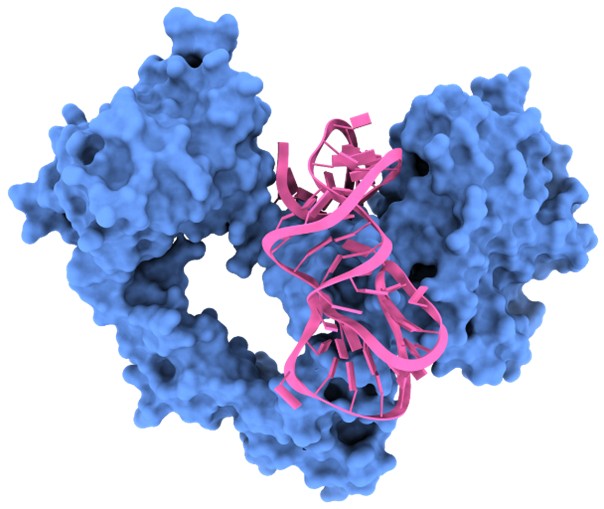
      The authors demonstrate a computational rational design approach for developing RNA aptamers with improved binding to the Receptor Binding Domain (RBD) of the SARS-CoV-2 spike protein. They demonstrate the ability of their approach to improve binding affinity using a previously identified RNA aptamer, RBD-PB6-Ta, which binds to the RBD. They also computationally estimate the binding energies of various RNA aptamers with the RBD and compare against RBD binding energies for a few neutralizing antibodies from the literature. Finally, experimental binding affinities are estimated by electrophoretic mobility shift assays (EMSA) for various RNA aptamers and a single commercially available neutralizing antibody to support the conclusions from computational studies on binding. The authors conclude that their computational framework, CAAMO, can provide reliable structure predictions and effectively support rational design of improved affinity for RNA aptamers towards target proteins. Additionally, they claim that their approach achieved design of high affinity RNA aptamer variants that bind to the RBD as well or better than a commercially available neutralizing antibody.

      Strengths:

      The thorough computational approaches employed in the study provide solid evidence of the value of their approach for computational design of high affinity RNA aptamers. The theoretical analysis using Free Energy Perturbation (FEP) to estimate relative binding energies supports the claimed improvement of affinity for RNA aptamers and provides valuable insight into the binding model for the tested RNA aptamers in comparison to previously studied neutralizing antibodies. The multimodal structure prediction in the early stages of the presented CAAMO framework, combined with the demonstrated outcome of improved affinity using the structural predictions as a starting point for rational design, provide moderate confidence in the structure predictions.

      Weaknesses:

      The experimental characterization of RBD affinities for the antibody and RNA aptamers in this study present serious concerns regarding the methods used and the data presented in the manuscript, which call into question the major conclusions regarding affinity towards the RBD for their aptamers compared to antibodies. The claim that structural predictions from CAAMO are reasonable is rational, but this claim would be significantly strengthened by experimental validation of the structure (i.e. by chemical footprinting or solving the RBD-aptamer complex structure).

      The conclusions in this work are somewhat supported by the data, but there are significant issues with experimental methods that limit the strength of the study's conclusions.

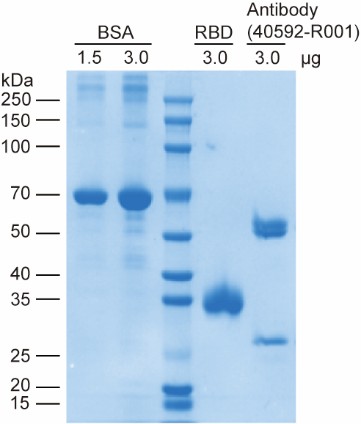
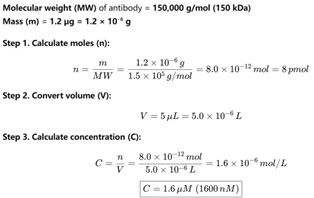
      (1) The EMSA experiments have a number of flaws that limit their interpretability. The uncropped electrophoresis images, which should include molecular size markers and/or positive and negative controls for bound and unbound complex components to support interpretation of mobility shifts, are not presented. In fact, a spliced image can be seen for Figure 4E, which limits interpretation without the full uncropped image. Additionally, he volumes of EMSA mixtures are not presented when a mass is stated (i.e. for the methods used to create Figure 3D), which leaves the reader without the critical parameter, molar concentration, and therefore leaves in question the claim that the tested antibody is high affinity under the tested conditions. Additionally, protein should be visualized in all gels as a control to ensure that lack of shifts is not due to absence/aggregation/degradation of the RBD protein. In the case of Figure 3E, for example, it can be seen that there are degradation products included in the RBD-only lane, introducing a reasonable doubt that the lack of a shift in RNA tests (i.e. Figure 2F) is conclusively due to a lack of binding. Finally, there is no control for nonspecific binding, such as BSA or another non-target protein, which fails to eliminate the possibility of nonspecific interactions between their designed aptamers and proteins in general. A nonspecific binding control should be included in all EMSA experiments.

      (2) The evidence supporting claims of better binding to RBD by the aptamer compared to the commercial antibody is flawed at best. The commercial antibody product page indicates an affinity in low nanomolar range, whereas the fitted values they found for the aptamers in their study are orders of magnitude higher at tens of micromolar. Moreover, the methods section is lacking in the details required to appropriately interpret the competitive binding experiments. With a relatively short 20-minute equilibration time, the order of when the aptamer is added versus the antibody makes a difference in which is apparently bound. The issue with this becomes apparent with the lack of internal consistency in the presented results, namely in comparing Fig 3E (which shows no interference of Ta binding with 5uM antibody) and Fig 5D (which shows interference of Ta binding with 0.67-1.67uM antibody). The discrepancy between these figures calls into question the methods used, and it necessitates more details regarding experimental methods used in this manuscript.

      (3) The utility of the approach for increasing affinity of RNA aptamers for their targets is well supported through computational and experimental techniques demonstrating relative improvements in binding affinity for their G34C variant compared to the starting Ta aptamer. While the EMSA experiments do have significant flaws, the observations of relative relationships in equilibrium binding affinities among the tested aptamer variants can be interpreted with reasonable confidence, given that they were all performed in a consistent manner.

      (4) The claim that the structure of the RBD-Aptamer complex predicted by the CAAMO pipeline is reliable is tenuous. The success of their rational design approach based on the structure predicted by several ensemble approaches supports the interpretation of the predicted structure as reasonable, however, no experimental validation is undertaken to assess the accuracy of the structure. This is not a main focus of the manuscript, given the applied nature of the study to identify Ta variants with improved binding affinity, however the structural accuracy claim is not strongly supported without experimental validation (i.e. chemical footprinting methods).

      (5) Throughout the manuscript, the phrasing of "all tested antibodies" was used, despite there being only one tested antibody in experimental methods and three distinct antibodies in computational methods. While this concern is focused on specific language, the major conclusion that their designed aptamers are as good or better than neutralizing antibodies in general is weakened by only testing only three antibodies through computational binding measurements and a fourth single antibody for experimental testing. The contact residue mapping furthermore lacks clarity in the number of structures that were used, with a vague description of structures from the PDB including no accession numbers provided nor how many distinct antibodies were included for contact residue mapping.

      Overall, the manuscript by Yang et al presents a valuable tool for rational design of improved RNA aptamer binding affinity toward target proteins, which the authors call CAAMO. Notably, the method is not intended for de novo design, but rather as a tool for improving aptamers that have been selected for binding affinity by other methods such as SELEX. While there are significant issues in the conclusions made from experiments in this manuscript, the relative relationships of observed affinities within this study provide solid evidence that the CAAMO framework provides a valuable tool for researchers seeking to use rational design approaches for RNA aptamer affinity maturation.

    2. Author response:

      The following is the authors’ response to the current reviews.

      Reviewer #4 (Public review):

      Summary:

      The authors demonstrate a computational rational design approach for developing RNA aptamers with improved binding to the Receptor Binding Domain (RBD) of the SARS-CoV-2 spike protein. They demonstrate the ability of their approach to improve binding affinity using a previously identified RNA aptamer, RBD-PB6-Ta, which binds to the RBD. They also computationally estimate the binding energies of various RNA aptamers with the RBD and compare against RBD binding energies for a few neutralizing antibodies from the literature. Finally, experimental binding affinities are estimated by electrophoretic mobility shift assays (EMSA) for various RNA aptamers and a single commercially available neutralizing antibody to support the conclusions from computational studies on binding. The authors conclude that their computational framework, CAAMO, can provide reliable structure predictions and effectively support rational design of improved affinity for RNA aptamers towards target proteins. Additionally, they claim that their approach achieved design of high affinity RNA aptamer variants that bind to the RBD as well or better than a commercially available neutralizing antibody.

      Strengths:

      The thorough computational approaches employed in the study provide solid evidence of the value of their approach for computational design of high affinity RNA aptamers. The theoretical analysis using Free Energy Perturbation (FEP) to estimate relative binding energies supports the claimed improvement of affinity for RNA aptamers and provides valuable insight into the binding model for the tested RNA aptamers in comparison to previously studied neutralizing antibodies. The multimodal structure prediction in the early stages of the presented CAAMO framework, combined with the demonstrated outcome of improved affinity using the structural predictions as a starting point for rational design, provide moderate confidence in the structure predictions.

      We thank the reviewer for this accurate summary and for recognizing the strength of our integrated computational–experimental workflow in improving aptamer affinity.

      Weaknesses:

      The experimental characterization of RBD affinities for the antibody and RNA aptamers in this study present serious concerns regarding the methods used and the data presented in the manuscript, which call into question the major conclusions regarding affinity towards the RBD for their aptamers compared to antibodies. The claim that structural predictions from CAAMO are reasonable is rational, but this claim would be significantly strengthened by experimental validation of the structure (i.e. by chemical footprinting or solving the RBD-aptamer complex structure).

      The conclusions in this work are somewhat supported by the data, but there are significant issues with experimental methods that limit the strength of the study's conclusions.

      (1) The EMSA experiments have a number of flaws that limit their interpretability. The uncropped electrophoresis images, which should include molecular size markers and/or positive and negative controls for bound and unbound complex components to support interpretation of mobility shifts, are not presented. In fact, a spliced image can be seen for Figure 4E, which limits interpretation without the full uncropped image.

      Thank you for your valuable comments and careful review.

      In response to your suggestion, we will provide all uncropped electrophoresis raw images corresponding to the results in the main figures and supplementary figures (Figure 2F, 3D, 3E, 4E, S9A and S10 of the original manuscript) in the revised version. Regarding the spliced image in Figure 4E, the uncropped raw gel image clearly shows that the two C23U samples were run on an adjacent lane of the same gel due to the total number of samples exceeding the well capacity of a single lane. All samples were electrophoresed and signal-detected under identical experimental conditions in one single experiment, ensuring the validity of direct signal intensity comparison across all samples. These complete uncropped raw images will be supplemented in the revised manuscript as Figure S12 (also see Author response image 1).

      Author response image 1.

      Uncropped electrophoresis images corresponding to Figures 2F, 3D, 3E, 4E, S9A and S10 of the original manuscript.

      Additionally, he volumes of EMSA mixtures are not presented when a mass is stated (i.e. for the methods used to create Figure 3D), which leaves the reader without the critical parameter, molar concentration, and therefore leaves in question the claim that the tested antibody is high affinity under the tested conditions.

      Thank you for your valuable comment on this oversight.

      For the EMSA assay in Figure 3D, the reaction mixture (10 μL total volume) contained 3 μg of RBD protein and 3 μg of antibody (40592-R001), either individually or in combination, with incubation at room temperature for 20 minutes. Based on the molecular weights (35 kDa for RBD and 150 kDa for the IgG antibody), the corresponding molar concentrations in the mixture were calculated as 8.57 μM for RBD and 2 μM for the antibody. To ensure consistency, clarity and provide the critical molar concentration parameter, we will revise the legend of Figure 3D, replacing the mass values with the calculated molar concentrations as you suggested in the revised manuscript.

      Additionally, protein should be visualized in all gels as a control to ensure that lack of shifts is not due to absence/aggregation/degradation of the RBD protein. In the case of Figure 3E, for example, it can be seen that there are degradation products included in the RBD-only lane, introducing a reasonable doubt that the lack of a shift in RNA tests (i.e. Figure 2F) is conclusively due to a lack of binding.

      We sincerely appreciate your careful evaluation of our work, which helps us further clarify the experimental details and data reliability.

      First, we would like to clarify the nature of the gel electrophoresis in Figure 3E: the RBD protein was separated by native-PAGE rather than denaturing SDS-PAGE. The RBD protein used in all experiments was purchased from HUABIO (Cat. No. HA210064) with guaranteed quality, and its integrity and purity were independently verified in our laboratory via denaturing SDS-PAGE (see Author response image 2), which showed a single, intact band without any degradation products. The ladder-like bands observed in the RBD-only lane of the native-PAGE gel are not a result of protein degradation. Instead, they arise from two well-characterized properties of recombinant SARS-CoV-2 Spike RBD protein expressed in human cells: intrinsic conformational heterogeneity (the RBD domain exists in multiple dynamic conformations due to its structural flexibility) (Cai et al., Science, 2020; Wrapp et al., Science, 2020) and heterogeneity in N-glycosylation modification (variable glycosylation patterns at the conserved N-glycosylation sites of RBD) (Casalino et al., ACS Cent. Sci., 2020; Ives et al., eLife, 2024), both of which could cause distinct migration bands in native-PAGE under non-denaturing conditions.

      Second, to ensure the reliability of the RNA-binding results, the EMSA experiments for determining the binding affinity (K<sub>d</sub>) of RBD to Ta, Tc and Ta variants were performed with three independent biological replicates (the original manuscript includes all replicate data in Figure 2F and S9). Consistent results were obtained across all replicates, which effectively rules out false-negative outcomes caused by accidental absence or loss of functional RBD protein in the reaction system. In addition, our gel images (Figure 2F and S9 in the original manuscript) and uncropped raw images of all EMSA gels (see Author response image 1) show no significant signal accumulation in the sample wells, confirming the absence of RBD protein aggregation in the binding reactions—an issue that would otherwise interfere with RNA-protein interaction and band shift detection.

      New results for RBD analysis by denaturing SDS-PAGE, along with the associated discussion, will be added to the revised manuscript as Figure S10 (also see Author response image 2).

      Author response image 2.

      SDS-PAGE analysis of the SARS-CoV-2 Spike RBD protein, neutralizing antibody (40592-R001) and BSA reference. This gel validates the high purity and structural integrity of the commercially sourced RBD protein and neutralizing antibody used in this study.

      References

      Cai, Y. et al. Distinct conformational states of SARS-CoV-2 spike proteins. Science 369, 1586-1592 (2020).

      Casalino, L. et al. Beyond shielding: the roles of glycans in the SARS-CoV-2 spike protein. ACS Cent. Sci. 6, 1722-1734 (2020).

      Ives, C.M. et al. Role of N343 glycosylation on the SARS-CoV-2 S RBD structure and co-receptor binding across variants of concern. eLife 13, RP95708 (2024).

      Wrapp, D. et al. Cryo-EM structure of the 2019-nCoV spike in the prefusion conformation. Science 367, 1260-1263 (2020).

      Finally, there is no control for nonspecific binding, such as BSA or another non-target protein, which fails to eliminate the possibility of nonspecific interactions between their designed aptamers and proteins in general. A nonspecific binding control should be included in all EMSA experiments.

      Thank you for this constructive comment.

      Following your recommendation, we are currently supplementing the EMSA assays with BSA as a non-target protein control to rigorously exclude potential non-specific binding between our designed aptamers (Ta and Ta variants) and exogenous proteins. These additional experiments are designed to directly assess whether the aptamers exhibit unintended interactions with unrelated proteins and to further validate the protein specificity of the RBD–aptamer interaction observed in our study.

      The resulting nonspecific binding control data will be formally incorporated into the revised manuscript as Figure S11, and the corresponding Results and Discussion sections will be updated accordingly to reflect this critical validation once the experiments are completed.

      (2) The evidence supporting claims of better binding to RBD by the aptamer compared to the commercial antibody is flawed at best. The commercial antibody product page indicates an affinity in low nanomolar range, whereas the fitted values they found for the aptamers in their study are orders of magnitude higher at tens of micromolar. Moreover, the methods section is lacking in the details required to appropriately interpret the competitive binding experiments. With a relatively short 20-minute equilibration time, the order of when the aptamer is added versus the antibody makes a difference in which is apparently bound. The issue with this becomes apparent with the lack of internal consistency in the presented results, namely in comparing Fig 3E (which shows no interference of Ta binding with 5uM antibody) and Fig 5D (which shows interference of Ta binding with 0.67-1.67uM antibody). The discrepancy between these figures calls into question the methods used, and it necessitates more details regarding experimental methods used in this manuscript.

      Thank you for your insightful comments, which have helped us refine the rigor of our study. We address each of your concerns in detail below:

      First, we agree with your observation that the commercial neutralizing antibody (Sino Biological, Cat# 40592-R001) is reported to bind Spike RBD with low nanomolar affinity on its product page. However, this discrepancy in affinity values (nanomolar vs. micromolar) stems from the use of distinct analytical methods. The product page affinity was determined via the Octet RED System, a technique analogous to Surface Plasmon Resonance (SPR) that offers high sensitivity for kinetic and affinity measurements. In contrast, our study employed EMSA, a method primarily optimized for semi-quantitative assessment of binding interactions. The inherent differences in sensitivity and principle between these two techniques—with Octet RED System enabling real-time monitoring of biomolecular interactions and EMSA relying on gel separation—account for the observed variation in affinity values.

      Second, regarding the competitive binding experiments, we appreciate your note on the critical role of reagent addition order and equilibration time. To eliminate potential biases from sequential addition, we clarify that Cy3-labeled RNAs, RBD proteins, and the neutralizing antibody were added simultaneously to the reaction system. We will revise the Methods section in the revised manuscript to provide a detailed protocol for the EMSA experiments, to ensure full reproducibility and appropriate interpretation of the results.

      Third, we acknowledge and apologize for a critical error in the figure legends of Figure 3E: the concentrations reported (5 μM aptamer and antibody 40592-R001) refer to stock solutions, not the final concentrations in the EMSA reaction mixture. The correct final concentrations are 0.5 μM for aptamer Ta, and 0.5 μM for the antibody. This correction resolves the apparent inconsistency between Figure 3E and Figure 5D, as the final antibody concentration in Figure 3E is now consistent with the concentration range used in Figure 5D. We will update the figure legends for Figure 3E and revise the Methods section to explicitly distinguish between stock and final reaction concentrations, ensuring clarity and internal consistency of the results.

      We sincerely thank you for highlighting these issues, which will prompt important revisions to improve the clarity, accuracy, and rigor of our manuscript.

      (3) The utility of the approach for increasing affinity of RNA aptamers for their targets is well supported through computational and experimental techniques demonstrating relative improvements in binding affinity for their G34C variant compared to the starting Ta aptamer. While the EMSA experiments do have significant flaws, the observations of relative relationships in equilibrium binding affinities among the tested aptamer variants can be interpreted with reasonable confidence, given that they were all performed in a consistent manner.

      We sincerely appreciate your valuable concerns and constructive feedback, which have greatly facilitated the improvement of our manuscript. Regarding the flaws of the EMSA experiments you pointed out, we have provided a detailed response to clarify the related issues and supplemented necessary experimental details to enhance the rigor and reproducibility of our work (see corresponding response above). It is worth noting that EMSA remains a classic and widely used technique for studying biomolecular interactions, and its reliability in qualitative and semi-quantitative analysis of binding events has been well recognized in the field. Furthermore, we fully agree with and are grateful for your view that, since all tested aptamer variants were analyzed using a consistent experimental protocol, the observations on the relative relationships of their equilibrium binding affinities can be interpreted with reasonable confidence. This recognition reinforces the validity of the relative affinity improvements we observed for the G34C variant compared to the parental Ta aptamer, which is a key finding of our study.

      (4) The claim that the structure of the RBD-Aptamer complex predicted by the CAAMO pipeline is reliable is tenuous. The success of their rational design approach based on the structure predicted by several ensemble approaches supports the interpretation of the predicted structure as reasonable, however, no experimental validation is undertaken to assess the accuracy of the structure. This is not a main focus of the manuscript, given the applied nature of the study to identify Ta variants with improved binding affinity, however the structural accuracy claim is not strongly supported without experimental validation (i.e. chemical footprinting methods).

      We thank the reviewer for this comment and agree that experimental validation would be required to establish the structural accuracy of the predicted RBD–aptamer complex. We note, however, that the primary aim of this study is not structural determination, but the development of a general computational framework for aptamer affinity maturation. In most practical applications, experimentally resolved structures of aptamer–protein complexes are unavailable. Accordingly, CAAMO is designed to operate under such conditions, using computationally generated binding models as working hypotheses to guide rational optimization rather than as definitive structural descriptions. In this context, the predicted structure is evaluated by its utility for affinity improvement, rather than by direct structural validation. We will revise the manuscript accordingly to further clarify this scope.

      (5) Throughout the manuscript, the phrasing of "all tested antibodies" was used, despite there being only one tested antibody in experimental methods and three distinct antibodies in computational methods. While this concern is focused on specific language, the major conclusion that their designed aptamers are as good or better than neutralizing antibodies in general is weakened by only testing only three antibodies through computational binding measurements and a fourth single antibody for experimental testing. The contact residue mapping furthermore lacks clarity in the number of structures that were used, with a vague description of structures from the PDB including no accession numbers provided nor how many distinct antibodies were included for contact residue mapping.

      We thank the reviewer for this important comment regarding language precision, experimental scope, and clarity of the antibody dataset used in this study. We agree that the phrase “all tested antibodies” was imprecise and could lead to overgeneralization. We will carefully revise the manuscript to use more accurate and explicit wording throughout, clearly distinguishing between experimentally tested antibodies, computationally analyzed antibodies, and antibody structures used for large-scale contact analysis.

      Specifically, the experimental comparison in this study was performed using one commercially available SARS-CoV-2 neutralizing antibody, whereas free energy–based computational analyses were conducted on three representative neutralizing antibodies with available structural data. We will revise the manuscript to explicitly state these distinctions and avoid general statements referring to neutralizing antibodies as a class.

      Importantly, the residue-level contact frequency analysis was not based solely on these individual antibodies. Instead, this analysis leveraged a comprehensive set of experimentally resolved SARS-CoV-2 RBD–antibody complex structures curated from the Coronavirus Antibody Database (CoV-AbDab), a publicly available and actively maintained resource developed by the Oxford Protein Informatics Group. CoV-AbDab aggregates all published coronavirus-binding antibodies with associated PDB structures and provides a systematic and unbiased structural foundation for antibody–RBD interaction analysis. All available high-resolution RBD–antibody complex structures indexed in CoV-AbDab at the time of analysis were included to compute contact residue frequencies across the structural ensemble. We will explicitly state this data source, clarify the number and nature of structures used, and add the appropriate citation (Raybould et al., Bioinformatics, 2021, doi: 10.1093/bioinformatics/btaa739).

      Finally, we will revise the conclusions to avoid claims that extend beyond the scope of the data. The comparison between aptamers and antibodies is now framed in terms of representative antibodies and consensus interaction patterns derived from a large structural ensemble, rather than as a general statement about all neutralizing antibodies. These revisions will improve the clarity, rigor, and reproducibility of the manuscript, while preserving the core conclusion that the CAAMO framework enables effective structure-guided affinity maturation of RNA aptamers.

      Overall, the manuscript by Yang et al presents a valuable tool for rational design of improved RNA aptamer binding affinity toward target proteins, which the authors call CAAMO. Notably, the method is not intended for de novo design, but rather as a tool for improving aptamers that have been selected for binding affinity by other methods such as SELEX. While there are significant issues in the conclusions made from experiments in this manuscript, the relative relationships of observed affinities within this study provide solid evidence that the CAAMO framework provides a valuable tool for researchers seeking to use rational design approaches for RNA aptamer affinity maturation.


      The following is the authors’ response to the original reviews.

      Public Reviews:

      Reviewer #1 (Public review):

      Summary:

      In this study, the authors attempt to devise general rules for aptamer design based on structure and sequence features. The main system they are testing is an aptamer targeting a viral sequence.

      Strengths:

      The method combines a series of well-established protocols, including docking, MD, and a lot of system-specific knowledge, to design several new versions of the Ta aptamer with improved binding affinity.

      We thank the reviewer for this accurate summary and for recognizing the strength of our integrated computational–experimental workflow in improving aptamer affinity.

      Weaknesses:

      The approach requires a lot of existing knowledge and, importantly, an already known aptamer, which presumably was found with SELEX. In addition, although the aptamer may have a stronger binding affinity, it is not clear if any of it has any additional useful properties such as stability, etc.

      Thanks for these critical comments.

      (1) On the reliance on a known aptamer: We agree that our CAAMO framework is designed as a post-SELEX optimization platform rather than a tool for de novo discovery. Its primary utility lies in rationally enhancing the affinity of existing aptamers that may not yet be sequence-optimal, thereby complementing experimental technologies such as SELEX. The following has been added to “Introduction” of the revised manuscript. (Page 5, line 108 in the revised manuscript)

      ‘Rather than serving as a de novo aptamer discovery tool, CAAMO is designed as a post-SELEX optimization platform that rationally improves the binding capability of existing aptamers.’

      (2) On stability and developability: We also appreciate the reviewer’s important reminder that affinity alone is not sufficient for therapeutic development. We acknowledge that the present study has focused mainly on affinity optimization, and properties such as nuclease resistance, structural stability, and overall developability were not evaluated. The following has been added to “Discussion and conclusion” of the revised manuscript. (Page 25, line 595 in the revised manuscript)

      ‘While the present study primarily focused on affinity optimization, we acknowledge that other key developability traits—such as nuclease resistance, structural and thermodynamic stability, and in vivo persistence—are equally critical for advancing aptamers toward therapeutic applications. These properties were not evaluated here but will be systematically addressed in future iterations of the CAAMO framework to enable comprehensive optimization of aptamer candidates.’

      Reviewer #2 (Public review):

      Summary:

      This manuscript proposes a workflow for discovering and optimizing RNA aptamers, with application in the optimization of a SARS-CoV-2 RBD. The authors took a previously identified RNA aptamer, computationally docked it into one specific RBD structure, and searched for variants with higher predicted affinity. The variants were subsequently tested for RBD binding using gel retardation assays and competition with antibodies, and one was found to be a stronger binder by about three-fold than the founding aptamer.

      Overall, this would be an interesting study if it were performed with truly high-affinity aptamers, and specificity was shown for RBD or several RBD variants.

      Strengths:

      The computational workflow appears to mostly correctly find stronger binders, though not de novo binders.

      We thank the reviewer for the clear summary and for acknowledging that our workflow effectively prioritizes stronger binders.

      Weaknesses:

      (1) Antibody competition assays are reported with RBD at 40 µM, aptamer at 5 µM, and a titration of antibody between 0 and 1.2 µg. This approach does not make sense. The antibody concentration should be reported in µM. An estimation of the concentration is 0-8 pmol (from 0-1.2 µg), but that's not a concentration, so it is unknown whether enough antibody molecules were present to saturate all RBD molecules, let alone whether they could have displaced all aptamers.

      Thanks for your insightful comment. We have calculated that 0–1.2 µg antibody corresponds to a final concentration range of 0–1.6 µM (see Author response image 1). In practice, 1.2 µg was the maximum amount of commercial antibody that could be added under the conditions of our assay. In the revised manuscript, all antibody amounts previously reported in µg have been converted to their corresponding molar concentrations in Fig. 1F and Fig. 5D. In addition, the exact antibody concentrations used in the EMSA assays are now explicitly stated in the Materials and Methods section under “EMSA experiments.” The following has been added to “EMSA experiments” of the revised manuscript. (Page 30 in the revised manuscript)

      ‘For competitive binding experiments, 40 μM of RBP proteins, 5 μM of annealed Cy3-labelled RNAs and increasing concentrations of SARS-CoV-2 neutralizing antibody 40592-R001 (0–1.67 μM) were mixed in the EMSA buffer and incubated at room temperature for 20 min.’

      Author response image 1.

      Estimation of antibody concentration. Assuming a molecular weight of 150 kDa, dissolving 1.2 µg of antibody in a 5 µL reaction volume results in a final concentration of 1.6 µM.

      As shown in Figure 5D, the purpose of the antibody–aptamer competition assay was not to achieve full saturation but rather to compare the relative competitive binding of the optimized aptamer (Ta<sup>G34C</sup>) versus the parental aptamer (Ta). Molecular interactions at this scale represent a dynamic equilibrium of binding and dissociation. While the antibody concentration may not have been sufficient to saturate all available RBD molecules, the experimental results clearly reveal the competitive binding behavior that distinguishes the two aptamers. Specifically, two consistent trends emerged:

      (1) Across all antibody concentrations, the free RNA band for Ta was stronger than that of Ta<sup>G34C</sup>, while the RBD–RNA complex band of the latter was significantly stronger, indicating that Ta<sup>G34C</sup> bound more strongly to RBD.

      (2) For Ta, increasing antibody concentration progressively reduced the RBD–RNA complex band, consistent with antibody displacing the aptamer. In contrast, for Ta<sup>G34C</sup>, the RBD–RNA complex band remained largely unchanged across all tested antibody concentrations, suggesting that the antibody was insufficient to displace Ta<sup>G34C</sup> from the complex.

      Together, these observations support the conclusion that Ta<sup>G34C</sup> exhibits markedly stronger binding to RBD than the parental Ta aptamer, in line with the predictions and objectives of our CAAMO optimization framework.

      (2) These are not by any means high-affinity aptamers. The starting sequence has an estimated (not measured, since the titration is incomplete) K<sub>d</sub> of 110 µM. That's really the same as non-specific binding for an interaction between an RNA and a protein. This makes the title of the manuscript misleading. No high-affinity aptamer is presented in this study. If the docking truly presented a bound conformation of an aptamer to a protein, a sub-micromolar K<sub>d</sub> would be expected, based on the number of interactions that they make.

      In fact, our starting sequence (Ta) is a high-affinity aptamer, and then the optimized sequences (such as Ta<sup>G34C</sup>) with enhanced affinity are undoubtedly also high-affinity aptamers. See descriptions below:

      (1) Origin and prior characterization of Ta. The starting aptamer Ta (referred to as RBD-PB6-Ta in the original publication by Valero et al., PNAS 2021, doi:10.1073/pnas.2112942118) was selected through multiple positive rounds of SELEX against SARS-CoV-2 RBD, together with counter-selection steps to eliminate non-specific binders. In that study, Ta was reported to bind RBD with an IC₅₀ of ~200 nM as measured by biolayer interferometry (BLI), supporting its high affinity and specificity. The following has been added to “Introduction” of the revised manuscript. (Page 4 in the revised manuscript)

      ‘This aptamer was originally identified through SELEX and subsequently validated using surface plasmon resonance (SPR) and biolayer interferometry (BLI), which confirmed its high affinity (sub-nanomolar) and high specificity toward the RBD. Therefore, Ta provides a well-characterized and biologically relevant starting point for structure-based optimization.’

      (2) Methodological differences between EMSA and BLI measurements. We acknowledge that the discrepancy between our obtained binding affinity (K<sub>d</sub> = 110 µM) and the previously reported one (IC<sub>50</sub> ~ 200 nM) for the same Ta sequence arises primarily from methodological and experimental differences between EMSA and BLI. Namely, different experimental measurement methods can yield varied binding affinity values. While EMSA may have relatively low measurement precision, its relatively simple procedures were the primary reason for its selection in this study. Particularly, our framework (CAAMO) is designed not as a tool for absolute affinity determination, but as a post-SELEX optimization platform that prioritizes relative changes in binding affinity under a consistent experimental setup. Thus, the central aim of our work is to demonstrate that CAAMO can reliably identify variants, such as Ta<sup>G34C</sup>, that bind more strongly than the parental sequence under identical assay conditions. The following has been added to “Discussion and conclusion” of the revised manuscript. (Page 24 in the revised manuscript)

      ‘Although the absolute K<sub>d</sub> values determined by EMSA cannot be directly compared with surface-based methods such as SPR or BLI, the relative affinity trends remain highly consistent. While EMSA provides semi-quantitative affinity estimates, the close agreement between experimental EMSA trends and FEP-calculated ΔΔG values supports the robustness of the relative affinity changes reported here. In future studies, additional orthogonal biophysical techniques (e.g., filter-binding, SPR, or BLI) will be employed to further validate and refine the protein–aptamer interaction models.’

      (3) Evidence of specific binding in our assays. We emphasize that the binding observed in our EMSA experiments reflects genuine aptamer–protein interactions. As shown in Figure 2G, a control RNA (Tc) exhibited no detectable binding to RBD, whereas Ta produced a clear binding curve, confirming that the interaction is specific rather than non-specific.

      (3) The binding energies estimated from calculations and those obtained from the gel-shift experiments are vastly different, as calculated from the K<sub>d</sub> measurements, making them useless for comparison, except for estimating relative affinities.

      Author Reply: We thank the reviewer for raising this important point. CAAMO was developed as a post-SELEX optimization tool with the explicit goal of predicting relative affinity changes (ΔΔG) rather than absolute binding free energies (ΔG). Empirically, CAAMO correctly predicted the direction of affinity change for 5 out of 6 designed variants (e.g., ΔΔG < 0 indicates enhanced binding free energy relative to WT); such predictive power for relative ranking is highly valuable for prioritizing candidates for experimental testing. Our prior work on RNA–protein interactions likewise supports the reliability of relative affinity predictions (see: Nat Commun 2023, doi:10.1038/s41467-023-39410-8). The following has been added to “Discussion and conclusion” of the revised manuscript. (Page 24 in the revised manuscript)

      ‘While EMSA provides semi-quantitative affinity estimates, the close agreement between experimental EMSA trends and FEP-calculated ΔΔG values supports the robustness of the relative affinity changes reported here.’

      Recommendations for the Authors:

      Reviewer #1 (Recommendations for the authors)

      (1) Overall, the paper is well-written and, in the opinion of this reviewer, could remain as it is.

      We thank the reviewer for the positive evaluation and supportive comments regarding our manuscript. We are grateful for the endorsement of its quality and suitability for publication.

      Reviewer #2 (Recommendations for the authors)

      (1) All molecules present in experiments need to be reported with their final concentrations (not µg).

      We thank the reviewer for raising this important point. In the revised manuscript, all antibody amounts previously reported in µg have been converted to their corresponding molar concentrations in Fig. 1F and Fig. 5D. In addition, the exact antibody concentrations used in the EMSA assays are now explicitly stated in the Materials and Methods section under “EMSA experiments.” The following has been added to “EMSA experiments” of the revised manuscript. (Page 30 in the revised manuscript)

      ‘For competitive binding experiments, 40 μM of RBP proteins, 5 μM of annealed Cy3-labelled RNAs and increasing concentrations of SARS-CoV-2 neutralizing antibody 40592-R001 (0–1.67 μM) were mixed in the EMSA buffer and incubated at room temperature for 20 min.’

      (2) An independent K<sub>d</sub> measurement, for example, using a filter binding assay, would greatly strengthen the results.

      We thank the reviewer for this constructive suggestion and agree that an orthogonal biophysical measurement (e.g., a filter-binding assay, SPR or BLI) would further strengthen confidence in the reported dissociation constants. Unfortunately, all available SARS-CoV-2 RBD protein used in this study has been fully consumed and, due to current supply limitations, we were unable to perform new orthogonal binding experiments for the revised manuscript. We regret this limitation and have documented it in the Discussion as an item for future work.

      Importantly, although we could not perform a new filter-binding experiment at this stage, we have multiple independent lines of evidence that support the reliability of the EMSA-derived affinity trends reported in the manuscript:

      (1) Rigorous EMSA design and reproducibility. All EMSA binding curves reported in the manuscript (e.g., Figs. 2F–G, 4E–F, 5A and Fig. S9) are derived from three independent biological replicates and include standard deviations; the measured binding curves show good reproducibility across replicates.

      (2) Appropriate positive and negative controls. Our gel assays include clear internal controls. The literature-reported strong binder Ta forms a distinct aptamer–RBD complex band under our conditions, whereas the negative-control aptamer Tc shows no detectable binding under identical conditions (see Fig. 2F). These controls demonstrate that the EMSA system discriminates specific from non-binding sequences with high sensitivity.

      (3) Orthogonal computational validation (FEP) that agrees with experiment. The central strength of the CAAMO framework is the integration of rigorous physics-based calculations with experiments. We performed FEP calculations for the selected single-nucleotide mutations and computed ΔΔG values for each mutant. The direction and rank order of binding changes predicted by FEP are in good agreement with the EMSA measurements: five of six FEP-predicted improved mutants (Ta<sup>G34C</sup>, Ta<sup>G34U</sup>, Ta<sup>G34A</sup>, Ta<sup>C23A</sup>, Ta<sup>C23U</sup>) were experimentally confirmed to have stronger apparent affinity than wild-type Ta (see Fig. 4D–F, Table S2), yielding a success rate of 83%. The concordance between an independent, rigorous computational method and our experimental measurements provides strong mutual validation.

      (4) Independent competitive binding experiments. We additionally performed competitive EMSA assays against a commercial neutralizing monoclonal antibody (40592-R001). These competition experiments show that Ta<sup>G34C</sup>–RBD complexes are resistant to antibody displacement under conditions that partially displace the wild-type Ta–RBD complex (see Fig. 5D). This result provides an independent, functionally relevant line of evidence that Ta<sup>G34C</sup> binds RBD with substantially higher affinity and specificity than WT Ta under our assay conditions.

      Given these multiple, independent lines of validation (rigorous EMSA replicates and controls, FEP agreement, and antibody competition assays), we are confident that the relative affinity improvements reported in the manuscript are robust, even though the absolute K<sub>d</sub> values measured by EMSA are not directly comparable to surface-based methods (EMSA typically reports larger apparent K<sub>d</sub> values than SPR/BLI due to methodological differences). The following has been added to “Discussion and conclusion” of the revised manuscript. (Page 24 in the revised manuscript)

      ‘Although the absolute K<sub>d</sub> values determined by EMSA cannot be directly compared with surface-based methods such as SPR or BLI, the relative affinity trends remain highly consistent. While EMSA provides semi-quantitative affinity estimates, the close agreement between experimental EMSA trends and FEP-calculated ΔΔG values supports the robustness of the relative affinity changes reported here. In future studies, additional orthogonal biophysical techniques (e.g., filter-binding, SPR, or BLI) will be employed to further validate and refine the protein–aptamer interaction models.’

      (3) The project would really benefit from a different aptamer-target system. Starting with a 100 µM aptamer is really not adequate.

      We thank the reviewer for this important suggestion and for highlighting the value of testing the CAAMO framework in additional aptamer–target systems.

      First, we wish to clarify the rationale for selecting the Ta–RBD system as the proof-of-concept. The Ta aptamer is not an arbitrary or weak binder: it was originally identified by independent SELEX experiments and subsequently validated by rigorous biophysical assays (SPR and BLI) (see: Proc. Natl. Acad. Sci. 2021, doi: 10.1073/pnas.2112942118). That study confirmed that Ta exhibits high-affinity and high-specificity binding to the SARS-CoV-2 RBD, which is why it serves as a well-characterized and biologically relevant system for method validation and optimization. We have added a brief clarification to the “Introduction” to emphasize these points. The following has been added to “Introduction” of the revised manuscript. (Page 4 in the revised manuscript)

      ‘This aptamer was originally identified through SELEX and subsequently validated using surface plasmon resonance (SPR) and biolayer interferometry (BLI), which confirmed its high affinity and high specificity toward the RBD. Therefore, Ta provides a well-characterized and biologically relevant starting point for structure-based optimization.’

      Second, we agree that apparent discrepancies in absolute K<sub>d</sub> values can arise from different experimental platforms. Surface-based methods (SPR/BLI) and gel-shift assays (EMSA) have distinct measurement principles; EMSA yields semi-quantitative, solution-phase, apparent K<sub>d</sub> values that are not directly comparable in absolute magnitude to surface-based measurements. Crucially, however, our study focuses on relative affinity change. EMSA is well suited for parallel, comparative measurements across multiple variants when all samples are assayed under identical conditions, and thus provides a reliable readout for ranking and validating designed mutations. We have added a short statement in the “Discussion and conclusion”. The following has been added to “Discussion and conclusion” of the revised manuscript. (Page 24 in the revised manuscript)

      ‘Although the absolute K<sub>d</sub> values determined by EMSA cannot be directly compared with surface-based methods such as SPR or BLI, the relative affinity trends remain highly consistent. While EMSA provides semi-quantitative affinity estimates, the close agreement between experimental EMSA trends and FEP-calculated ΔΔG values supports the robustness of the relative affinity changes reported here. In future studies, additional orthogonal biophysical techniques (e.g., filter-binding, SPR, or BLI) will be employed to further validate and refine the protein–aptamer interaction models.’

      Third, and importantly, CAAMO is inherently generalizable. In addition to the Ta–RBD application presented here, we have already begun applying CAAMO to other aptamer–target systems. In particular, we have successfully deployed the framework in preliminary optimization studies of RNA aptamers targeting the epidermal growth factor receptor (EGFR) (see: Gastroenterology 2021, doi: 10.1053/j.gastro.2021.05.055) (see Author response image 2). These preliminary results support the transferability of the CAAMO pipeline beyond the SARS-CoV-2 RBD system. We have added a short statement in the “Discussion and conclusion”. The following has been added to “Discussion and conclusion” of the revised manuscript. (Page 259 in the revised manuscript)

      ‘In addition to the Ta–RBD system, the CAAMO framework itself is inherently generalizable. More work is currently underway to apply CAAMO to optimize aptamers targeting other therapeutically relevant proteins, such as the epidermal growth factor receptor (EGFR) [45], in order to further explore its potential for broader aptamer engineering.’

      Author response image 2.

      Overview of the predicted binding model of the EGFR–aptamer complex generated using the CAAMO framework.

      (4) Several RBD variants should be tested, as well as other proteins, for specificity. At such weak affinities, it is likely that these are non-specific binders.

      We thank the reviewer for this important concern. Below we clarify the basis for selecting Ta and its engineered variants, summarize the experimental controls that address specificity, and present the extensive in silico variant analysis we performed to assess sensitivity and breadth of binding.

      (1) Origin and validation of Ta. As noted in our response to “Comment (3)”, the Ta aptamer was not chosen arbitrarily. Ta was identified by independent SELEX with both positive and negative selection and subsequently validated using surface-based biophysical assays (SPR and BLI), which reported low-nanomolar affinity and high specificity for the SARS-CoV-2 RBD. Thus, Ta is a well-characterized, experimentally validated starting lead for method development and optimization.

      (2) Experimental specificity controls. We appreciate the concern that weak apparent affinities can reflect non-specific binding. As noted in our response to “Comment (2)”, we applied multiple experimental controls that argue against non-specificity: (i) a literature-reported weak binder (Tc) was used as a negative control and produced no detectable complex under identical EMSA conditions (see Figs. 2F–G), demonstrating the assay’s ability to discriminate non-binders from specific binders; (ii) competitive EMSA assays with a commercial neutralizing monoclonal antibody (40592-R001) show that both Ta and Ta<sup>G34C</sup> engage the same or overlapping RBD site as the antibody, and that Ta<sup>G34C</sup> is substantially more resistant to antibody displacement than WT Ta (see Figs. 3D–E, 5D). Together, these wet-lab controls support that the observed aptamer-RBD bands reflect specific interactions rather than general, non-specific adsorption.

      (3) Variant and specificity analysis by rigorous FEP calculations. To address the reviewer’s request to evaluate variant sensitivity, we performed extensive free energy perturbation combined with Hamiltonian replica-exchange molecular dynamics (FEP/HREX) for improved convergence efficiency and increased simulation time to estimate relative binding free energy changes (ΔΔG) of both WT Ta and the optimized Ta<sup>G34C</sup> against a panel of RBD variants. Results are provided in Tables S4 and S5. Representative findings include: For WT Ta versus early lineages, FEP reproduces the experimentally observed trends: Alpha (B.1.1.7; N501Y) yields ΔΔG<sub>FEP</sub> = −0.42 ± 0.07 kcal/mol (ΔΔG<sub>exp</sub> = −0.24), while Beta (B.1.351; K417N/E484K/N501Y) gives ΔΔG<sub>FEP</sub> = 0.64 ± 0.25 kcal/mol (ΔΔG<sub>exp</sub> = 0.36) (see Table S4). The agreement between the computational and experimental results supports the fidelity of our computational model for variant assessment. For the engineered Ta<sup>G34C</sup>, calculations across a broad panel of variants indicate that Ta<sup>G34C</sup> retains or improves binding (ΔΔG < 0) for the majority of tested variants, including Alpha, Beta, Gamma and many Omicron sublineages. Notable examples: BA.1 (ΔΔG = −3.00 ± 0.52 kcal/mol), BA.2 (ΔΔG = −2.54 ± 0.60 kcal/mol), BA.2.75 (ΔΔG = −5.03 ± 0.81 kcal/mol), XBB (ΔΔG = −3.13 ± 0.73 kcal/mol) and XBB.1.5 (ΔΔG = −2.28 ± 0.96 kcal/mol). A minority of other Omicron sublineages (e.g., BA.4 and BA.5) show modest positive ΔΔG values (2.11 ± 0.67 and 2.27 ± 0.68 kcal/mol, respectively), indicating a predicted reduction in affinity for those specific backgrounds. Overall, these data indicate that the designed Ta<sup>G34C</sup> aptamer can maintain its binding ability with most SARS-CoV-2 variants, showing potential for broad-spectrum antiviral activity (see Table S5). The following has been added to “Results” of the revised manuscript. (Page 22 in the revised manuscript)

      ‘2.6 Binding performance of Ta and Ta<sup>G34C</sup> against SARS-CoV-2 RBD variants

      To further evaluate the binding performance and specificity of the designed aptamer Ta<sup>G34C</sup> toward various SARS-CoV-2 variants [39], we conducted extensive free energy perturbation combined with Hamiltonian replica-exchange molecular dynamics (FEP/HREX) [40–42] for both the wild-type aptamer Ta and the optimized Ta<sup>G34C</sup> against a series of RBD mutants. The representative variants include the early Alpha (B.1.1.7) and Beta (B.1.351) lineages, as well as a panel of Omicron sublineages (BA.1–BA.5, BA.2.75, BQ.1, XBB, XBB.1.5, EG.5.1, HK.3, JN.1, and KP.3) carrying multiple mutations within the RBD region (residues 333–527). For each variant, mutations within 5 Å of the bound aptamer were included in the FEP to accurately estimate the relative binding free energy change (ΔΔG).

      For the wild-type Ta aptamer, the FEP-predicted binding affinities toward the Alpha and Beta RBD variants were consistent with the previous experimental results, further validating the reliability of our model (see Table S4). Specifically, Ta maintained comparable or slightly enhanced binding to the Alpha variant and showed only marginally reduced affinity for the Beta variant.

      In contrast, the optimized aptamer Ta<sup>G34C</sup> exhibited markedly improved and broad-spectrum binding capability toward most tested variants (see Table S5). For early variants such as Alpha, Beta, and Gamma, Ta<sup>G34C</sup> maintained enhanced affinities (ΔΔG < 0). Notably, for multiple Omicron sublineages—including BA.1, BA.2, BA.2.12.1, BA.2.75, XBB, XBB.1.5, XBB.1.16, XBB.1.9, XBB.2.3, EG.5.1, XBB.1.5.70, HK.3, BA.2.86, JN.1 and JN.1.11.1—the calculated binding free energy changes ranged from −1.89 to −7.58 kcal/mol relative to the wild-type RBD, indicating substantially stronger interactions despite the accumulation of multiple mutations at the aptamer–RBD interface. Only in a few other Omicron sublineages, such as BA.4, BA.5, and KP.3, a slight reduction in binding affinity was observed (ΔΔG > 0).

      These computational findings demonstrate that the Ta<sup>G34C</sup> aptamer not only preserves high affinity for the RBD but also exhibits improved tolerance to the extensive mutational landscape of SARS-CoV-2. Collectively, our results suggest that Ta<sup>G34C</sup> holds promise as a high-affinity and potentially cross-variant aptamer candidate for targeting diverse SARS-CoV-2 spike protein variants, showing potential for broad-spectrum antiviral activity.’

      The following has been added to “Materials and Methods” of the revised manuscript. (Page 29 in the revised manuscript)

      ‘4.7 FEP/HREX

      To evaluate the binding sensitivity of the optimized aptamer Ta<sup>G34C</sup> toward SARS-CoV-2 RBD variants, we employed free energy perturbation combined with Hamiltonian replica-exchange molecular dynamics (FEP/HREX) simulations for enhanced sampling efficiency and improved convergence. The relative binding free energy changes (ΔΔG) upon RBD mutations were estimated as:

      ΔΔ𝐺 = Δ𝐺<sub>bound</sub> − Δ𝐺<sub>free</sub>

      where ΔG<sub>bound</sub> and ΔG<sub>free</sub> represent the RBD mutations-induced free energy changes in the complexed and unbound states, respectively. All simulations were performed using GROMACS 2021.5 with the Amber ff14SB force field. For each mutation, dual-topology structures were generated in a pmx-like manner, and 32 λ-windows (0.0, 0.01, 0.02, 0.03, 0.06, 0.09, 0.12, 0.16, 0.20, 0.24, 0.28, 0.32, 0.36, 0.40, 0.44, 0.48, 0.52, 0.56, 0.60, 0.64, 0.68, 0.72, 0.76, 0.80, 0.84, 0.88, 0.91, 0.94, 0.97, 0.98, 0.99, 1.0) were distributed uniformly between 0.0 and 1.0. To ensure sufficient sampling, each window was simulated for 5 ns, with five independent replicas initiated from distinct velocity seeds. Replica exchange between adjacent λ states was attempted every 1 ps to enhance phase-space overlap and sampling convergence. The van der Waals and electrostatic transformations were performed simultaneously, employing a soft-core potential (α = 0.3) to avoid singularities. For each RBD variant system, this setup resulted in an accumulated simulation time of approximately 1600 ns (5 ns × 32 windows × 5 replicas × 2 states). The Gromacs bar analysis tool was used to estimate the binding free energy changes.’

      Tables S4 and S5 have been added to Supplementary Information of the revised manuscript.

    1. Operability/可观测性建设

      [迁移自旧评论]

      原作者: 尤嘉宁 原时间: 2026-01-29T08:33:48Z

      每个阶段的里程碑要更明确. 比如: 1. 有个平台. 可以只读看到现有的资产 2. 可以纳管资产. 3. 可以做运维的纳管. 4. 可以通过故障演习.

    1. Author response:

      The following is the authors’ response to the original reviews.

      Public Reviews:

      Reviewer #1 (Public review):

      Summary:

      The temporal regulation of neuronal specification and its molecular mechanisms are important problems in developmental neurobiology. This study focuses on Kenyon cells (KCs), which form the mushroom body in Drosophila melanogaster, in order to address this issue. Building on previous findings, the authors examine the role of the transcription factor Eip93F in the development of late-born KCs. The authors revealed that Eip93F controls the activity of flies at night through the expression of the calcium channel Ca-α1T. Thus, the study clarifies the molecular machinery that controls temporal neuronal specification and animal behavior.

      Strengths:

      The convincing results are based on state-of-the-art molecular genetics, imaging, and behavioral analysis.

      Weaknesses:

      Temporal mechanisms of neuronal specification are found in many nervous systems. However, the relationship between the temporal mechanisms identified in this study and those in other systems remains unclear.

      We have discussed the temporal mechanisms between different nervous systems at the beginning of the Discussion section.

      Reviewer #2 (Public review):

      Summary:

      Understanding the mechanisms of neural specification is a central question in neurobiology. In Drosophila, the mushroom body (MB), which is the associative learning region in the brain, consists of three major cell types: γ, α'/β', and α/β kenyon cells. These classes can be further subdivided into seven subtypes, together comprising ~2000 KCs per hemi-brain. Remarkably, all of these neurons are derived from just four neuroblasts in each hemisphere. Therefore, a lot of endeavors are put into understanding how the neuron is specified in the fly MB.

      Over the past decade, studies have revealed that MB neuroblasts employ a temporal patterning mechanism, producing distinct neuronal types at different developmental stages. Temporal identity is conveyed through transcription factor expression in KCs. High levels of Chinmo, a BTB-zinc finger transcription factor, promote γ-cell fate (Zhu et al., Cell, 2006). Reduced Chinmo levels trigger expression of mamo, a zinc finger transcription factor that specifies α'/β' identity (Liu et al., eLife, 2019). However, the specification of α/β neurons remains poorly understood. Some evidence suggests that microRNAs regulate the transition from α'/β' to α/β fate (Wu et al., Dev Cell, 2012; Kucherenko et al., EMBO J, 2012). One hypothesis even proposes that α/β represents a "default" state of MB neurons, which could explain the difficulty in identifying dedicated regulators.

      The study by Chung et al. challenges this hypothesis. By leveraging previously published RNA-seq datasets (Shih et al., G3, 2019), they systematically screened BAC transgenic lines to selectively label MB subtypes. Using these tools, they analyzed the consequences of manipulating E93 expression and found that E93 is required for α/β specification. Furthermore, loss of E93 impairs MB-dependent behaviors, highlighting its functional importance.

      Strengths:

      The authors conducted a thorough analysis of E93 manipulation phenotypes using LexA tools generated from the Janelia Farm and Bloomington collections. They demonstrated that E93 knockdown reduces expression of Ca-α1T, a calcium channel gene identified as an α/β marker. Supporting this conclusion, one LexA line driven by a DNA fragment near EcR (R44E04) showed consistent results. Conversely, overexpression of E93 in γ and α'/β' Kenyon cells led to downregulation of their respective subtype markers.

      Another notable strength is the authors' effort to dissect the genetic epistasis between E93 and previously known regulators. Through MARCM and reporter analyses, they showed that Chinmo and Mamo suppress E93, while E93 itself suppresses Mamo. This work establishes a compelling molecular model for the regulatory network underlying MB cell-type specification.

      Weaknesses:

      The interpretation of E93's role in neuronal specification requires caution. Typically, two criteria are used to establish whether a gene directs neuronal identity:

      (1) gene manipulation shifts the neuronal transcriptome from one subtype to another, and

      (2) gene manipulation alters axonal projection patterns.

      The results presented here only partially satisfy the first criterion. Although markers are affected, it remains possible that the reporter lines and subtype markers used are direct transcriptional targets of E93 in α/β neurons, rather than reflecting broader fate changes. Future studies using single-cell transcriptomics would provide a more comprehensive assessment of neuronal identity following E93 perturbation.

      We do plan conduct multi-omics experiments to provide a more comprehensive assessment of neuronal identity upon loss-of-function of E93. However, omics results take time to be conducted and analyzed, so the result will be summarized in a future manuscript.

      With respect to the second criterion, the evidence is also incomplete. While reporter patterns were altered, the overall morphology of the α/β lobes appeared largely intact after E93 knockdown. Overexpression of E93 in γ neurons produced a small subset of cells with α/β-like projections, but this effect warrants deeper characterization before firm conclusions can be drawn. While the results might be an intrinsic nature of KC types in flies, the interpretation of the reader of the data should be more careful, and the authors should also mention this in their main text.

      We have toned down our description on the effect of E93 (especially in the loss-offunction) in specifying the α/β-specific cell identity and discussed whether unidentified regulators would work together with E93 in α/β neural fate specification.

      Recommendations for the authors:

      Reviewer #1 (Recommendations for the authors):

      (1) Changes in nighttime activity in flies upon knocking down Ca_α1T and Eip93F are interesting (Fig. 2C). However, examining the morphological changes in the mushroom body under these conditions would be essential.

      We did not find the morphological change of mushroom body lobes by examining with the Fas2 staining (shown in Figure S8D).

      (2) Temporal mechanisms of neuronal specification have been identified in various nervous systems, including the embryonic central nervous system (CNS), the optic lobe of Drosophila, and the nervous systems of other organisms. The Discussion section should address the relationship between the temporal mechanisms identified in this study and those identified in other systems.

      We have discussed the temporal mechanisms between different nervous systems at the beginning of the Discussion section.

      (3) Eip93F is an Ecdysone-induced protein. In the Discussion section, the authors should discuss the relationship between the ecdysone signal and the roles of Eip93F.

      We have added the discussion on the relationship between the ecdysone signal and the roles of Eip93F.

      Reviewer #2 (Recommendations for the authors):

      (1) The behavioral effect of Ca-α1T knockdown is pretty interesting. But how the downregulation of Ca-α1T in the mushroom body can affect locomotion is puzzling. Even though the mushroom body is known to suppress locomotion (Matin et al., Learn Mem, 1998), the real results are opposite. Can authors give further explanation in the discussion? Also, the behavioral experiments are hard to interpret, given that Figure 2C(1) and Figure 2C(3) as a control, also vary a lot. Since the behavioral experiments don't affect the main conclusion of the paper, I would suggest removing that part or adding more explanation in the discussion.

      First, we have discussed the puzzling part on the MB influence in locomotion between the previous study using tetanus toxin light chain (TeNT-Ln) and our Ca-α1T knockdown result. It is possible that the different effect is derived from TeNT-Ln’s function in MB axons and Ca-α1T’s function in MB dendrites. Secondly, we have re-conducted the behavioral results using a new α/β driver (13F02-AD/70F05-DBD) to replace our initial behavioral results (using c739-GAL4, which would cause the abnormal wing when drives E93 RNAi expression; see S8C(2) Fig). Current results (now in Fig 2I) are more consistent in control groups.

      (2) In the manuscript, the authors use "subtype" to describe γKC, α'/β'KC and α/βKC in the fly MB. However, in most of the literature, people use "main types" to summarize these three types, and "subtype" is mostly about the difference in γd, γm, α'/β'ap, α'/β'm, α/βp, α/βs and α/βc KC (Shih et al., G3, 2019). Replacing "subtypes" with "main types" will help to increase the clarity.

      We have replaced "KC subtypes" with "main KC types" or just “KC types”.

      (3) The authors have identified a lot of new markers for the KC cell types, and some of them are used in this manuscript. It will be helpful if they can have a figure to summarize the markers they used in this study and what cell types they labeled.

      We have summarized expression patterns of these markers in Supplemental table 1.

      (4) In the method, the authors mentioned that only females were selected for analysis of Ca-α1T-GFSTF. Could the authors explain the reasons in more detail?

      Since homozygous Ca-α1T-GFSTF female flies and hemizygous Ca-α1T-GFSTF male are a bit sick and hard to collect, we therefore used heterozygous Ca-α1T-GFSTF female in our experiments. I have added this description in the Materials and Methods section.

      (5) Figure S1: The legend of magenta fluorescence is missing. Please add which protein is shown in magenta.

      We have added the legend of magenta fluorescence, which is Trio.

      (6) The detailed genotypes of Figure 2C and Figure S7 are missing in Supplementary Table 1. Please include that, so that readers can know the genetic background.

      We have added genotypes of Figure 2I (previously Figure 2C) and Figure S8 (previously as Figure S7) in Supplementary Table 2.

      (7) Figure 2D-G: It will be helpful if the authors can outline the lobe (γ, α'/β', and α/β) in the figure, which will help readers to understand the images.

      We have outlined α, α', β, β' and γ lobes in Figure 2C-F (previously as Figure 2D-G).

    1. Reviewer #1 (Public review):

      Summary:

      This is a rigorous data-driven modeling study extending the authors' previous model of spinal locomotor central pattern generator (CPG) circuits developed for the mouse spinal cord and adapted here to the rat to explore potential circuit-level changes underlying altered speed-dependent gaits due to asymmetric (lateral) thoracic spinal hemisection and symmetric midline contusion. The model reproduces key features of the rat speed-dependent gait-related experimental data before injury and after recovery from these two different thoracic spinal cord injuries and suggests injury-specific mechanisms of circuit reorganization underlying functional recovery. There is much interest in the mechanisms of locomotor behavior recovery after spinal cord injury, and data-driven behaviorally relevant circuit modeling is an important approach. This study represents an important advance of the authors' previous experimental and modeling work on locomotor circuitry and in the motor control field.

      Strengths:

      (1) The authors use an advanced computational model of spinal locomotor circuitry to investigate potential reorganization of neural connectivity underlying locomotor control following recovery from symmetrical midline thoracic contusion and asymmetrical (lateral) hemisection injuries, based on an extensive dataset for the rat model of spinal cord injury.

      (2) The rat dataset used is from an in vivo experimental paradigm involving challenging animals to perform overground locomotion across the full range of speeds before and after the two distinct spinal cord injury models, enabling the authors to more completely reveal injury-specific deficits in speed-dependent interlimb coordination and locomotor gaits.

      (3) The model reproduces the rat gait-related experimental data before injury and after recovery from these two different thoracic spinal cord injuries, which exhibit roughly comparable functional recovery, and suggests injury-specific, compensatory mechanisms of circuit reorganization underlying recovery.

      (4) The model simulations suggest that recovery after lateral hemisection mechanistically involves partial functional restoration of descending drive and long propriospinal pathways, whereas recovery following midline contusion relies on reorganization of sublesional lumbar circuitry combined with altered descending control of cervical networks.

      (5) These observations suggest that symmetrical (contusion) and asymmetrical (lateral hemisection) injuries induce distinct types of plasticity in different spinal cord regions, suggesting that injury symmetry partly dictates the location and type of neural plasticity supporting recovery.

      (6) The authors suggest therapeutic strategies may be more effective by targeting specific circuits according to injury symmetry.

      Weaknesses:

      (1) The recovery mechanisms implemented in the model involve circuit connectivity/connection weights adjustment based on assumptions about the structures involved and compensatory responses to the injury. As the authors acknowledge, other factors affecting locomotor patterns and compensation, such as somatosensory afferent feedback, neurochemical modulator influences, and limb/body biomechanics, are not considered in the model. The authors have now more adequately discussed the limitations of the modeling and associated implications for functional interpretation.

      Comments on revisions:

      The authors have substantially improved the manuscript by including model parameter sensitivity analyses and by more adequately discussing the limitations of the modeling and associated implications for functional interpretation.

    2. Author response:

      The following is the authors’ response to the original reviews.

      Reviewer #1 (Public review):

      Summary:

      This is a rigorous data-driven modeling study, extending the authors' previous model of spinal locomotor central pattern generator (CPG) circuits developed for the mouse spinal cord and adapted here to the rat to explore potential circuit-level changes underlying altered speeddependent gaits, due to asymmetric (lateral) thoracic spinal hemisection and symmetric midline contusion. The model reproduces key features of the rat speed-dependent gait-related experimental data before injury and after recovery from these two different thoracic spinal cord injuries and suggests injury-specific mechanisms of circuit reorganization underlying functional recovery. There is much interest in the mechanisms of locomotor behavior recovery after spinal cord injury, and data-driven behaviorally relevant circuit modeling is an important approach. This study represents an important advance in the authors' previous experimental and modeling work on locomotor circuitry and in the motor control field.

      Strengths:

      (1) The authors use an advanced computational model of spinal locomotor circuitry to investigate potential reorganization of neural connectivity underlying locomotor control following recovery from symmetrical midline thoracic contusion and asymmetrical (lateral) hemisection injuries, based on an extensive dataset for the rat model of spinal cord injury.

      (2) The rat dataset used is from an in vivo experimental paradigm involving challenging animals to perform overground locomotion across the full range of speeds before and after the two distinct spinal cord injury models, enabling the authors to more completely reveal injury-specific deficits in speed-dependent interlimb coordination and locomotor gaits.

      (3) The model reproduces the rat gait-related experimental data before injury and after recovery from these two different thoracic spinal cord injuries, which exhibit roughly comparable functional recovery, and suggests injury-specific, compensatory mechanisms of circuit reorganization underlying recovery.

      (4) The model simulations suggest that recovery after lateral hemisection mechanistically involves partial functional restoration of descending drive and long propriospinal pathways. In contrast, recovery following midline contusion relies on reorganization of sublesional lumbar circuitry combined with altered descending control of cervical networks.

      (5) These observations suggest that symmetrical (contusion) and asymmetrical (lateral hemisection) injuries induce distinct types of plasticity in different spinal cord regions, suggesting that injury symmetry partly dictates the location and type of neural plasticity supporting recovery.

      (6) The authors suggest that therapeutic strategies may be more effective by targeting specific circuits according to injury symmetry.

      Weaknesses:

      The recovery mechanisms implemented in the model involve circuit connectivity/connection weights adjustment based on assumptions about the structures involved and compensatory responses to the injury. As the authors acknowledge, other factors affecting locomotor patterns and compensation, such as somatosensory afferent feedback, neurochemical modulator influences, and limb/body biomechanics, are not considered in the model.

      We appreciate the positive review and critical comments. We added a dedicate limitation and future direction section (see response recommendations below). Further, we also performed a sensitivity analysis: while the model still relies on a set of hypothesized connectivity changes, this analysis quantifies how robust our conclusions are to these parameter choices and indicates which pathways most strongly affect the recovered locomotor pattern.

      Reviewer #1 (Recommendations for the authors):

      The authors have used an advanced model of rodent spinal locomotor CPG circuits, adapted to the rat spinal cord, which remarkably reproduces the key features of the rat speed-dependent gait-related experimental data before injury and after recovery from the two different thoracic spinal cord injuries studied. Importantly, they have exploited the extensive dataset for the in vivo rat spinal cord injury model involving overground locomotion across the full range of speeds before and after the two distinct spinal cord injuries, enabling the authors to more completely reveal injury-specific deficits in speed-dependent interlimb coordination and locomotor gaits. The paper is well-written and well-illustrated.

      (1) My only general suggestion is that the authors include a section that succinctly summarizes the limitations of the modeling and points to elaborations of the model and experimental data required for future studies. Some important caveats are dispersed throughout the Discussion, but a more consolidated section would be useful.

      We added a dedicated Limitations and future directions section (page XX) that consolidates shortcomings and broadly outlines potential next steps in terms of modeling and experimental data. Specifically, we highlight the issue of lack of afferent feedback connections in the model, lack of consideration of biomechanic mechanisms, and restriction of the model to beneficial plasticity. To resolve these issues, we need neuromechancial models (integration of the neural circuits with a model of the musculoskeletal system), experimental data validating our predictions and data to constrain future models to be able to distinguish between beneficial and maladaptive plasticity.

      (2) Please correct the Figure 11 legend title to indicate recovery after contusion (not hemisection). 

      Done. Thanks for noticing.

      Reviewer #2 (Public review):

      Summary:

      In this paper, the authors present a detailed computational model and experimental data concerning overground locomotion in rats before and after recovery from spinal cord injury. They are able to manually tune the parameters of this physiologically based, detailed model to reproduce many aspects of the observed animals locomotion in the naive case and in two distinct injury cases.

      Strengths:

      The strengths are that the model is driven to closely match clean experimental data, and the model itself has detailed correspondence to proposed anatomical reality. As such, this makes the model more readily applicable to future experimental work. It can make useful suggestions. The model reproduces a large number of conditions across frequencies, and with the model structure changed by injury and recovery. The model is extensive and is driven by known structures, with links to genetic identities, and has been extensively validated across multiple experiments and manipulations over the years. It models a system of critical importance to the field, and the tight coupling to experimental data is a real strength.

      Weaknesses:

      A downside is that, scientifically, here, the only question tackled is one of sufficiency. By manually tuning parameters in a manner that aligns with the field's understanding from experimental work, the detailed model can accurately reproduce the experimental findings. One of the benefits of computational models is that the counterfactual can be tested to provide evidence against alternative hypotheses. That isn't really done here. I'm fairly certain that there are competing theories regarding what happens during recovery from a hemi-section injury and a contusion injury. The model could be used to make predictions for some alternative hypotheses, supporting or rejecting theories of recovery. This may be part of future plans. Here, the focus is on showing that the model is capable of reproducing the experimental results at all, for any set of parameters, however tuned.

      We agree with the reviewer that the present study focuses on sufficiency, and we now explicitly acknowledge this in the revised limitations section. We also added sensitivity analysis (for details see response to reviewer 3) that provides an initial assessment of robustness to the assumed connectivity changes. We note that the model reproduces a broad set of experimentally observed features across the full range of locomotor frequencies (including loss and emergence of specific gaits, reduced maximum stepping frequency, and altered variability of interlimb phase differences) using only a small set of hypothesized circuit reorganizations that have been experimentally observed but previously only correlated with recovery. Our results therefore suggest that this limited set of changes is indeed sufficient to account for the complex pattern of recovered locomotor behavior.

      Finally, although exploring alternative solutions is of interest, we believe such efforts will be most informative once afferent feedback is incorporated, which we see as the logical next step in our studies.

      Reviewer #2 (Recommendations for the authors):

      The paper could be strengthened with some more scientific interpretation and future directions. What are some novel predictions that can be made with the model, now that it has shown sufficiency here, that could guide future experimental work? Does it contradict in any way theories of CPG structure or neuronal plastic recovery?

      The sensitivity analysis that we performed in response to reviewer 3’s suggestion expanded our interpretation/conclusions by showing that, although injury symmetry (contusion vs. lateral hemisection) influences which pathways reorganize, recovered locomotion across injury type depends most strongly on restored activation of lumbar rhythm-generating and strengths of lumbar commissural circuits.

      Interestingly, this sensitivity analysis also showed that variations of strengths of long propriospinal pathways (ascending, descending, spared, injured-and-recovered) have a much smaller, almost negligible effect, when compared to variations of drive to lumbar rhythm generators or lumbar commissural interneuron connection weights in the same range (see Fig 13, 13-supplement 1 and 2). This is in accordance with our initial model suggestions that after contusion LPN connections weight had to be lowered to values substantially lower than what was expected by the severity of the injury. Which is also corroborated by our anatomical findings that in parallel to recovery from contusion, the number of synaptic connections by LAPNs to the cervical enlargement were reduced, and that silencing of LPNs post-contusion improves locomotion. These surprising findings have been extensively discussed in the discussion section.

      Together, these findings suggest that experimental characterization of reorganization of the lumbar circuitry with a specific focus on commissural interneurons and inputs to the lumbar circuitry that could restore activation of sublesional lumbar rhythm generators is a crucial next step for understanding post-injury plasticity and recovery of locomotor function. This is now clearly discussed.

      Finally, we note that a key contribution of this work is that the model demonstrates a plausible mechanistic link between specific circuit reorganizations and recovered locomotor function, a relationship previously supported mainly by correlative evidence.

      Reviewer #3 (Public review):

      Summary:

      This study describes a computational model of the rat spinal locomotor circuit and how it could be reconfigured after lateral hemisection or contusion injuries to replicate gaits observed experimentally.

      The model suggests the emergence of detour circuits after lateral hemisection, whereas after a midline contusion, the model suggests plasticity of left-right and sensory inputs below the injury.

      Strengths:

      The model accurately models many known connections within and between forelimb and hindlimb spinal locomotor circuits.

      The simulation results mirror closely gait parameters observed experimentally. Many gait parameters were studied, as well as variability in these parameters in intact versus injured conditions.

      Weaknesses:

      The study could provide some sense of the relative importance of the various modified connectivities after injury in setting the changes in gait seen after the two types of injuries.

      We performed a local sensitivity analysis of the hemisection and contusion models to identify which connectivity changes most strongly influence post-injury locomotor behavior. Key parameters (descending drive to sublesional rhythm generators and the strength of selected commissural and propriospinal pathways) were perturbed within 80–125% of their baseline values, and for each perturbation we quantified changes in model output using the Earth Mover’s Distance between baseline and perturbed simulations in a 7-dimensional space (six interlimb phase differences plus locomotor frequency). We then trained a surrogate model and computed Sobol first- and total-order sensitivity indices, which quantify how much each parameter and its interactions contribute to variability in this distance measure. This analysis showed that, across both injuries, variations in drive to sublesional lumbar rhythm generators and in lumbar V0/V3 commissural connectivity have the largest impact on recovered gait expression, whereas other pathways had comparatively minor effects within the tested range.

      The sensitivity analysis further refined our conclusions by showing that, although injury symmetry (contusion vs. lateral hemisection) influences which pathways reorganize, effective recovery in both cases depends on re-engaging lumbar rhythm-generating and commissural circuits, highlighting these networks as key therapeutic targets.

      Overall, the authors achieved their aims, and the model provides solid support for the changes in connectivity after the two types of injuries were modelled. This work emphasizes specific changes in connectivity after lateral hemisection or after contusion that could be investigated experimentally. The model is available for public use and could serve as a tool to analyze the relative importance of various highlighted or previously undiscovered changes in connectivity that may underlie the recovery of locomotor function in spinalized rats.

      Reviewer #3 (Recommendations for the authors):

      (1) It would be useful to study the sensitivity of the injured models to small changes in the connectivity changes to determine which ones play a greater role in the gait after injury.

      See response above on the added sensitivity analysis.

      (2) Was there any tissue analysis from the original experiments with the contusion experiments, as contusion experiments can be variable, so it would be good to know the level of variability in the injuries?

      Unfortunately, we were unable to complete tissue analysis of the injury epicenters for these animals because the tissue was not handled appropriately for histology. However, in the past, comparable animals with T10 12.5g-cm contusion injuries delivered by the NYU (MASCIS) Impactor had variability of up to ~30% of the mean (spared white matter, e.g. see Smith et al., 2006). It is also worth noting that spared white matter at the epicenter, at least in our hands, is generally well-correlated with BBB overground locomotor scale scores.

      (3) There is more variability in phase difference in rats than model in the lateral hemisection. Is there any way to figure out which of the connectivity changes is most responsible for that variability? 

      We agree that the variability of phase differences after lateral hemisection is larger in rats than in the model. One possible contributor to this discrepancy is the strength of spared long propriospinal neuron (LPN) pathways, which we kept fixed at pre-injury levels in the model. As an exploratory analysis, we varied the weights of these spared LPN connections and quantified the circular standard deviation of the phase differences (Author response image 1). Decreasing spared LPN weights increased the variability of all phase differences. This suggests that plasticity of spared LPNs (potentially reducing their effective connectivity and partly compensating for the asymmetry introduced by the lesion) could contribute to the higher variability seen in vivo. However, because these results remain speculative, we chose to include them in this response only and not in the main manuscript.

      Author response image 1.

      Variability of phase differences as a function of spared long propriospinal neuron connection weights (hemisection model).

    1. Author response:

      The following is the authors’ response to the original reviews.

      Public Reviews:

      Reviewer #1 (Public review):

      Monziani and Ulitsky present a large and exhaustive study on the lncRNA EPB41L4A-AS1 using a variety of genomic methods. They uncover a rather complex picture of an RNA transcript that appears to act via diverse pathways to regulate the expression of large numbers of genes, including many snoRNAs. The activity of EPB41L4A-AS1 seems to be intimately linked with the protein SUB1, via both direct physical interactions and direct/indirect of SUB1 mRNA expression.

      The study is characterised by thoughtful, innovative, integrative genomic analysis. It is shown that EPB41L4A-AS1 interacts with SUB1 protein and that this may lead to extensive changes in SUB1's other RNA partners. Disruption of EPB41L4A-AS1 leads to widespread changes in non-polyA RNA expression, as well as local cis changes. At the clinical level, it is possible that EPB41L4A-AS1 plays disease-relevant roles, although these seem to be somewhat contradictory with evidence supporting both oncogenic and tumour suppressive activities.

      A couple of issues could be better addressed here. Firstly, the copy number of EPB41L4A-AS1 is an important missing piece of the puzzle. It is apparently highly expressed in the FISH experiments. To get an understanding of how EPB41L4A-AS1 regulates SUB1, an abundant protein, we need to know the relative stoichiometry of these two factors. Secondly, while many of the experiments use two independent Gapmers for EPB41L4A-AS1 knockdown, the RNA-sequencing experiments apparently use just one, with one negative control (?). Evidence is emerging that Gapmers produce extensive off-target gene expression effects in cells, potentially exceeding the amount of on-target changes arising through the intended target gene. Therefore, it is important to estimate this through the use of multiple targeting and non-targeting ASOs, if one is to get a true picture of EPB41L4A-AS1 target genes. In this Reviewer's opinion, this casts some doubt over the interpretation of RNA-seq experiments until that work is done. Nonetheless, the Authors have designed thorough experiments, including overexpression rescue constructs, to quite confidently assess the role of EPB41L4A-AS1 in snoRNA expression.

      It is possible that EPB41L4A-AS1 plays roles in cancer, either as an oncogene or a tumour suppressor. However, it will in the future be important to extend these observations to a greater variety of cell contexts.

      This work is valuable in providing an extensive and thorough analysis of the global mechanisms of an important regulatory lncRNA and highlights the complexity of such mechanisms via cis and trans regulation and extensive protein interactions.

      Reviewer #2 (Public review):

      Summary:

      In this manuscript, Monziani et al. identified long noncoding RNAs (lncRNAs) that act in cis and are coregulated with their target genes located in close genomic proximity. The authors mined the GeneHancer database, and this analysis led to the identification of four lncRNA-target pairs. The authors decided to focus on lncRNA EPB41L4A-AS1.

      They thoroughly characterised this lncRNA, demonstrating that it is located in the cytoplasm and the nuclei, and that its expression is altered in response to different stimuli. Furthermore, the authors showed that EPB41L4A-AS1 regulates EPB41L4A transcription, leading to a mild reduction in EPB41L4A protein levels. This was not recapitulated with siRNA-mediated depletion of EPB41L4AAS1. RNA-seq in EPB41L4A-AS1-depleted cells with single LNA revealed 2364 DEGs linked to pathways including the cell cycle, cell adhesion, and inflammatory response. To understand the mechanism of action of EPB41L4A-AS1, the authors mined the ENCODE eCLIP data and identified SUB1 as an lncRNA interactor. The authors also found that the loss of EPB41L4A-AS1 and SUB1 leads to the accumulation of snoRNAs, and that SUB1 localisation changes upon the loss of EPB41L4A-AS1. Finally, the authors showed that EPB41L4A-AS1 deficiency did not change the steady-state levels of SNORA13 nor RNA modification driven by this RNA. The phenotype associated with the loss of EPB41L4A-AS1 is linked to increased invasion and EMT gene signature.

      Overall, this is an interesting and nicely done study on the versatile role of EPB41L4A-AS1 and the multifaceted interplay between SUB1 and this lncRNA, but some conclusions and claims need to be supported with additional experiments. My primary concerns are using a single LNA gapmer for critical experiments, increased invasion, and nucleolar distribution of SUB1- in EPB41L4A-AS1-depleted cells. These experiments need to be validated with orthogonal methods.

      Strengths:

      The authors used complementary tools to dissect the complex role of lncRNA EPB41L4A-AS1 in regulating EPB41L4A, which is highly commendable. There are few papers in the literature on lncRNAs at this standard. They employed LNA gapmers, siRNAs, CRISPRi/a, and exogenous overexpression of EPB41L4A-AS1 to demonstrate that the transcription of EPB41L4A-AS1 acts in cis to promote the expression of EPB41L4A by ensuring spatial proximity between the TAD boundary and the EPB41L4A promoter. At the same time, this lncRNA binds to SUB1 and regulates snoRNA expression and nucleolar biology. Overall, the manuscript is easy to read, and the figures are well presented. The methods are sound, and the expected standards are met.

      Weaknesses:

      The authors should clarify how many lncRNA-target pairs were included in the initial computational screen for cis-acting lncRNAs and why MCF7 was chosen as the cell line of choice. Most of the data uses a single LNA gapmer targeting EPB41L4A-AS1 lncRNA (eg, Fig. 2c, 3B, and RNA-seq), and the critical experiments should be using at least 2 LNA gapmers. The specificity of SUB1 CUT&RUN is lacking, as well as direct binding of SUB1 to lncRNA EPB41L4A-AS1, which should be confirmed by CLIP qPCR in MCF7 cells. Finally, the role of EPB41L4A-AS1 in SUB1 distribution (Figure 5) and cell invasion (Figure 8) needs to be complemented with additional experiments, which should finally demonstrate the role of this lncRNA in nucleolus and cancer-associated pathways. The use of MCF7 as a single cancer cell line is not ideal.

      Reviewer #3 (Public review):

      Summary:

      In this paper, the authors made some interesting observations that EPB41L4A-AS1 lncRNA can regulate the transcription of both the nearby coding gene and genes on other chromosomes. They started by computationally examining lncRNA-gene pairs by analyzing co-expression, chromatin features of enhancers, TF binding, HiC connectome, and eQTLs. They then zoomed in on four pairs of lncRNA-gene pairs and used LNA antisense oligonucleotides to knock down these lncRNAs. This revealed EPB41L4A-AS1 as the only one that can regulate the expression of its cis-gene target EPB41L4A. By RNA-FISH, the authors found this lncRNA to be located in all three parts of a cell: chromatin, nucleoplasm, and cytoplasm. RNA-seq after LNA knockdown of EPB41L4A-AS1 showed that this increased >1100 genes and decreased >1250 genes, including both nearby genes and genes on other chromosomes. They later found that EPB41L4A-AS1 may interact with SUB1 protein (an RNA-binding protein) to impact the target genes of SUB1. EPB41L4A-AS1 knockdown reduced the mRNA level of SUB1 and altered the nuclear location of SUB1. Later, the authors observed that EPB41L4A-AS1 knockdown caused an increase of snRNAs and snoRNAs, likely via disrupted SUB1 function. In the last part of the paper, the authors conducted rescue experiments that suggested that the full-length, intron- and SNORA13-containing EPB41L4A-AS1 is required to partially rescue snoRNA expression. They also conducted SLAM-Seq and showed that the increased abundance of snoRNAs is primarily due to their hosts' increased transcription and stability. They end with data showing that EPB41L4A-AS1 knockdown reduced MCF7 cell proliferation but increased its migration, suggesting a link to breast cancer progression and/or metastasis.

      Strengths:

      Overall, the paper is well-written, and the results are presented with good technical rigor and appropriate interpretation. The observation that a complex lncRNA EPB41L4A-AS1 regulates both cis and trans target genes, if fully proven, is interesting and important.

      Weaknesses:

      The paper is a bit disjointed as it started from cis and trans gene regulation, but later it switched to a partially relevant topic of snoRNA metabolism via SUB1. The paper did not follow up on the interesting observation that there are many potential trans target genes affected by EPB41L4A-AS1 knockdown and there was limited study of the mechanisms as to how these trans genes (including SUB1 or NPM1 genes themselves) are affected by EPB41L4A-AS1 knockdown. There are discrepancies in the results upon EPB41L4A-AS1 knockdown by LNA versus by CRISPR activation, or by plasmid overexpression of this lncRNA.

      Recommendations for the authors:

      Reviewer #1 (Recommendations for the authors):

      (1) Copy number:

      Perhaps I missed it, but it seems that no attempt is made to estimate the number of copies of EPB41L4A-AS1 transcripts per cell. This should be possible given RNAseq and FISH. At least an order of magnitude estimate. This is important for shedding light on the later observations that EPB41L4A-AS1 may interact with SUB1 protein and regulate the expression of thousands of mRNAs.

      We thank the reviewer for the insightful suggestion. We agree that an estimate of EPB41L4A-AS1 copy number might further strengthen the hypotheses presented in the manuscript. Therefore, we analyzed the smFISH images and calculated the copy number per cell of this lncRNA, as well as that of GAPDH as a comparison.

      Because segmenting MCF-7 cells proved to be difficult due to the extent of the cell-cell contacts they establish, we imaged multiple (n = 14) fields of view, extracted the number of EPB41L4A-AS1/GAPDH molecules in each field and divided them by the number of cells (as assessed by DAPI staining, 589 cells in total). We detected an average of 33.37 ± 3.95 EPB41L4A-AS1 molecules per cell, in contrast to 418.27 ± 61.79 GAPDH molecules. As a comparison, within the same qPCR experiment the average of the Ct values of these two RNAs is about  22.3 and 17.5, the FPKMs in the polyA+ RNA-seq are ~ 2479.4 and 35.6, and the FPKMs in the rRNA-depleted RNA-seq are ~ 3549.9 and 19.3, respectively. Thus, our estimates of the EPB41L4A-AS1 copy number in MCF-7 cells fits well into these observations.

      The question whether an average of ~35 molecules per cell is sufficient to affect the expression of thousands of genes is somewhat more difficult to ascertain. As discussed below, it is unlikely that all the genes dysregulated following the KD of EPB41L4A-AS1 are all direct targets of this lncRNA, and indeed SUB1 depletion affects an order of magnitude fewer genes. It has been shown that lncRNAs can affect the behavior of interacting RNAs and proteins in a substoichiometric fashion (Unfried & Ulitsky, 2022), but whether this applies to EPB41L4A-AS1 remains to be addressed in future studies. Nonetheless, this copy number appears to be sufficient for a trans-acting functions for this lncRNA, on top of its cis-regulatory role in regulating EPB41L4A. We added this information in the text as follows:

      “Using single-molecule fluorescence in-situ hybridization (smFISH) and subcellular fractionation we found that EPB41L4A-AS1 is expressed at an average of 33.37 ± 3.95 molecule per cell, and displays both nuclear and cytoplasmic localization in MCF-7 cells (Fig. 1D), with a minor fraction associated with chromatin as well (Fig. 1E).”

      We have updated the methods section as well:

      “To visualize the subcellular localization of EPB41L4A-AS1 in vivo, we performed single-molecule fluorescence in situ hybridization (smFISH) using HCR™ amplifiers. Probe sets (n = 30 unique probes) targeting EPB41L4A-AS1 and GAPDH (positive control) were designed and ordered from Molecular Instruments. We followed the Multiplexed HCR v3.0 protocol with minor modifications. MCF-7 cells were plated in 8-well chambers (Ibidi) and cultured O/N as described above. The next day, cells were fixed with cold 4% PFA in 1X PBS for 10 minutes at RT and then permeabilized O/N in 70% ethanol at -20°C. Following permeabilization, cells were washed twice with 2X SSC buffer and incubated at 37°C for 30 minutes in hybridization buffer (HB). The HB was then replaced with a probe solution containing 1.2 pmol of EPB41L4A-AS1 probes and 0.6 pmol of GAPDH probes in HB. The slides were incubated O/N at 37°C. To remove excess probes, the slides were washed four times with probe wash buffer at 37°C for 5 minutes each, followed by two washes with 5X SSCT at RT for 5 minutes. The samples were then pre-amplified in amplification buffer for 30 minutes at RT and subsequently incubated O/N in the dark at RT in amplification buffer supplemented with 18 pmol of the appropriate hairpins. Finally, excess hairpins were removed by washing the slides five times in 5X SSCT at RT. The slides were mounted with ProLong™ Glass Antifade Mountant (Invitrogen), cured O/N in the dark at RT, and imaged using a Nikon CSU-W1 spinning disk confocal microscope. In order to estimate the RNA copy number, we imaged multiple distinct fields, extracted the number of EPB41L4A-AS1/GAPDH molecules in each field using the “Find Maxima” tool in ImageJ/Fiji, and divided them by the number of cells (as assessed by DAPI staining).”

      (2) Gapmer results:

      Again, it is quite unclear how many and which Gapmer is used in the genomics experiments, particularly the RNA-seq. In our recent experiments, we find very extensive off-target mRNA changes arising from Gapmer treatment. For this reason, it is advisable to use both multiple control and multiple targeting Gapmers, so as to identify truly target-dependent expression changes. While I acknowledge and commend the latter rescue experiments, and experiments using multiple Gapmers, I'd like to get clarification about how many and which Gapmers were used for RNAseq, and the authors' opinion on the need for additional work here.

      We agree with the Reviewer that GapmeRs are prone to off-target and unwanted effects (Lai et al., 2020; Lee & Mendell, 2020; Maranon & Wilusz, 2020). Early in our experiments, we found out that LNA1 triggers a non-specific CDKN1A/p21 activation (Fig. S5A-C), and thus, we have initially performed some experiments such as RNA-seq with only LNA2.

      Nonetheless, other experiments were performed using both GapmeRs, such as multiple RT-qPCRs, UMI-4C, SUB1 and NPM1 imaging, and the in vitro assays, among others, and consistent results were obtained with both LNAs.

      To accommodate the request by this and the other reviewers, we have now performed another round of polyA+ RNA-seq following EPB41L4A-AS1 knockdown using LNA1 or LNA2, as well as the previously used and an additional control GapmeR. The FPKMs of the control samples are highly-correlated both within replicates and between GapmeRs (Fig. S6A). More importantly, the fold-changes to control are highly correlated between the two on-target GapmeRs LNA1 and LNA2, regardless of the GapmeR used for normalization (Fig. S6B), thus showing that the bulk of the response is shared and likely the direct result of the reduction in the levels of EPB41L4A-AS1. Notably, key targets NPM1 and MTREX (see discussion, Fig. S12A-C and comments to Reviewer 3) were found to be downregulated by both LNAs (Fig. S6C).

      However, we acknowledge that some of the dysregulated genes are observed only when using one GapmeR and not the other, likely due to a combination of indirect, secondary and non-specific effects, and as such it is difficult to infer the direct response. Supporting this, LNA2 yielded a total of 1,069 DEGs (617 up and 452 down) and LNA1 2,493 DEGs (1,328 up and 1,287 down), with the latter triggering a stronger response most likely as a result of the previously mentioned CDKN1A/p21 induction. Overall, 45.1% of the upregulated genes following LNA2 transfection were shared with LNA1, in contrast to only the 24.3% of the downregulated ones.

      We have now included these results in the Results section (see below) and in Supplementary Figure (Fig. S6).

      “Most of the consequences of the depletion of EPB41L4A-AS1 are thus not directly explained by changes in EPB41L4A levels. An additional trans-acting function for EPB41L4A-AS1 would therefore be consistent with its high expression levels compared to most lncRNAs detected in MCF-7 (Fig. S5G). To strengthen these findings, we have transfected MCF-7 cells with LNA1 and a second control GapmeR (NT2), as well as the previous one (NT1) and LNA2, and sequenced the polyadenylated RNA fraction as before. Notably, the expression levels (in FPKMs) of the replicates of both control samples are highly correlated with each other (Fig. S6A), and the global transcriptomic changes triggered by the two EPB41L4A-AS1-targeting LNAs are largely concordant (Fig. S6B and S6C). Because of this concordance and the cleaner (i.e., no CDKN1A upregulation) readout in LNA2-transfected cells, we focused mainly on these cells for subsequent analyses.”

      (3) Figure 1E:

      Can the authors comment on the unusual (for a protein-coding mRNA) localisation of EPB41L4A, with a high degree of chromatin enrichment?

      We acknowledge that mRNAs from protein-coding genes displaying nuclear and chromatin localizations are quite unusual. The nuclear and chromatin localization of some mRNAs are often due to their low expression, length, time that it takes to be transcribed, repetitive elements and strong secondary structures (Bahar Halpern et al., 2015; Didiot et al., 2018; Lubelsky & Ulitsky, 2018; Ly et al., 2022).

      We now briefly mention this in the text:

      “In contrast, both EPB41L4A and SNORA13 were mostly found in the chromatin fraction (Fig. 1E), the former possibly due to the length of its pre-mRNA (>250 kb), which would require substantial time to transcribe (Bahar Halpern et al., 2015; Didiot et al., 2018; Lubelsky & Ulitsky, 2018; Ly et al., 2022).”

      Supporting our results, analysis of the ENCODE MCF-7 RNA-seq data of the cytoplasmic, nuclear and total cell fractions indeed shows a nuclear enrichment of the EPB41L4A mRNA (Author response image 1), in line with what we observed in Fig. 1E by RT-qPCR. 

      Author response image 1.

      The EPB41L4A transcript is nuclear-enriched in the MCF-7 ENCODE subcellular RNA-seq dataset. Scatterplot of gene length versus cytoplasm/nucleus ratio (as computed by DESeq2) in MCF-7 cells. Each dot represents an unique gene, color-coded reflecting if their DESeq2 adjusted p-value < 0.05 and absolute log<sub>2</sub>FC > .41 (33% enrichment or depletion).GAPDH and MALAT1 are shown as representative cytoplasmic and nuclear transcripts, respectively. Data from ENCODE.
      (4) Annotation and termini of EPB41L4A-AS1:

      The latest Gencode v47 annotations imply an overlap of the sense and antisense, different from that shown in Figure 1C. The 3' UTR of EPB41L4A is shown to extensively overlap EPB41L4A-AS1. This could shed light on the apparent regulation of the former by the latter that is relevant for this paper. I'd suggest that the authors update their figure of the EPB41L4A-AS1 locus organisation with much more detail, particularly evidence for the true polyA site of both genes. What is more, the authors might consider performing RACE experiments for both RNAs in their cells to definitely establish whether these transcripts contain complementary sequence that could cause their Watson-Crick hybridisation, or whether their two genes might interfere with each other via some kind of polymerase collision.

      We thank the reviewer for pointing this out. Also in previous GENCODE annotations, multiple isoforms were reported with some overlapping the 3’ UTR of EPB41L4A. In the EPB41L4A-AS1 locus image (Fig. 1C), we report at the bottom the different transcripts isoforms currently annotated, and a schematics of the one that is clearly the most abundant in MCF-7 cells based on RNA-seq read coverage. This is supported by both the polyA(+) and ribo(-) RNA-seq data, which are strand-specific, as shown in the figure.

      We now also examined the ENCODE/CSHL MCF-7 RNA-seq data from whole cell, cytoplasm and nucleus fractions, as well as 3P-seq data (Jan et al., 2011) (unpublished data from human cell lines), reported in Author response image 2. All these data support the predominant use of the proximal polyA site in human cell lines. This shorter isoform does not overlap EPB41L4A.

      Author response image 2.

      Most EPB41L4A-AS1 transcripts end before the 3’ end of EPB41L4A. UCSC genome browser view showing tracks from 3P-seq data in different cell lines and neural crest (top, with numbers representing the read counts, i.e. how many times that 3’ end has been detected), and stranded ENCODE subcellular RNA-seq (bottom).
      Based on these data, the large majority of cellular transcripts of EPB41L4A-AS1 terminate at the earlier polyA site and don’t overlap with EPB41L4A. There is a small fraction that appears to be restricted to the nucleus that terminates later at the annotated isoform. 3' RACE experiments are not expected to provide substantially different information beyond what is already available.

      (5) Figure 3C:

      There is an apparent correlation between log2FC upon EPB41L4A-AS1 knockdown, and the number of clip sites for SUB1. However, I expect that the clip signal correlates strongly with the mRNA expression level, and that log2FC may also correlate with the same. Therefore, the authors would be advised to more exhaustively check that there really is a genuine relationship between log2FC and clip sites, after removing any possible confounders of overall expression level.

      As the reviewer suggested, there is a correlation between the baseline expression level and the strength of SUB1 binding in the eCLIP data. To address this issue, we built expression-matched controls for each group of SUB1 interactors and checked the fold-changes following EPB41L4A-AS1 KD, similarly to what we have done in Fig. 3C. The results are presented, and are now part of Supplementary Figure 7 (Fig. S7C). 

      Based on this analysis, while there is a tendency of increased expression with increased SUB1 binding, when controlling for expression levels the effect of down-regulation of SUB1-bound RNAs upon lncRNA knockdown remains, suggesting that it is not merely a confounding effect. We have updated the text as follows:

      “We hypothesized that loss of EPB41L4A-AS1 might affect SUB1, either via the reduction in its expression or by affecting its functions. We stratified SUB1 eCLIP targets into confidence intervals, based on the number, strength and confidence of the reported binding sites. Indeed, eCLIP targets of SUB1 (from HepG2 cells profiled by ENCODE) were significantly downregulated following EPB41L4A-AS1 KD in MCF-7, with more confident targets experiencing stronger downregulation (Fig. 3C). Importantly, this still holds true when controlling for gene expression levels (Fig. S7C), suggesting that this negative trend is not due to differences in their baseline expression.”

      (6) The relation to cancer seems somewhat contradictory, maybe I'm missing something. Could the authors more clearly state which evidence is consistent with either an Oncogene or a Tumour Suppressive function, and discuss this briefly in the Discussion? It is not a problem if the data are contradictory, however, it should be discussed more clearly.

      We acknowledge this apparent contradiction. Cancer cells are characterized by a multitude of hallmarks depending on the cancer type and stage, including high proliferation rates and enhanced invasive capabilities. The notion that cells with reduced EPB41L4A-AS1 levels exhibit lower proliferation, yet increased invasion is compatible with a function as an oncogene. Cells undergoing EMT may reduce or even completely halt proliferation/cell division, until they revert back to an epithelial state (Brabletz et al., 2018; Dongre & Weinberg, 2019). Notably, downregulated genes following EPB41L4A-AS1 KD are enriched in GO terms related to cell proliferation and cell cycle progression (Fig. 2I), whereas those upregulated are enriched for terms linked to EMT processes. Thus, while we cannot rule out a potential function as tumor suppressor gene, our data fit better the notion that EPB41L4A-AS1 promotes invasion, and thus, primarily functions as an oncogene. We now address this in point in the discussion:

      “The notion that cells with reduced EPB41L4A-AS1 levels exhibit lower proliferation (Fig. 8C), yet increased invasion (Fig. 8A and 8B) is compatible with a function as an oncogene by promoting EMT (Fig. 8D and 8E). Cells undergoing this process may reduce or even completely halt proliferation/cell division, until they revert back to an epithelial state (Brabletz et al., 2018; Dongre & Weinberg, 2019). Notably, downregulated genes following EPB41L4A-AS1 KD are enriched in GO terms related to cell proliferation and cell cycle progression (Fig. 2I), whereas those upregulated for terms linked to EMT processes. Thus, while we cannot rule out a potential function as tumor suppressor gene, our data better fits the idea that this lncRNA promotes invasion, and thus, primarily functions as an oncogene.”

      Reviewer #2 (Recommendations for the authors):

      Below are major and minor points to be addressed. We hope the authors find them useful.

      (1) Figure 1:

      Where are LNA gapmers located within the EPB41L4A-AS1 gene? Are they targeting exons or introns of the EPB41L4A-AS1? Please clarify or include in the figure.

      We now report the location of the two GapmeRs in Fig. 1C. LNA1 targets the intronic region between SNORA13 and exon 2, and LNA2 the terminal part of exon 1.

      (2) Figure 2B:

      Why is a single LNA gapmer used for EPB41L4A Western? In addition, are the qPCR data in Figure 2B the same as in Figure 1B? Please clarify.

      The Western Blot was performed after transfecting the cells with either LNA1 or LNA2. We now have replaced Fig. 2C with the full Western Blot image, in order to show both LNAs. With respect to the qPCRs in Fig. 1B and 2B, they represent the results from two independent experiments.

      (3) Figure 2F:

      2364 DEGs for a single LNA is a lot of deregulated genes in RNA-seq data. How do the authors explain such a big number in DEGs? Is that because this LNA was intronic? Additional LNA gapmer would minimise the "real" lncRNA target and any potential off-target effect.

      We agree with the Reviewer that GapmeRs are prone to off-target and unwanted effects (Lai et al.,2020; Lee & Mendell, 2020; Maranon & Wilusz, 2020). Early in our experiments, we found out that LNA1 triggers a non-specific CDKN1A/p21 activation (Fig. S5A-C), and thus, we have initially performed some experiments such as RNA-seq with only LNA2.

      Nonetheless, other experiments were performed using both GapmeRs, such as multiple RT-qPCRs, UMI-4C, SUB1 and NPM1 imaging, and the in vitro assays, among others, and consistent results were obtained with both LNAs.

      To accommodate the request by this and the other reviewers, we have now performed another round of polyA+ RNA-seq following EPB41L4A-AS1 knockdown using LNA1 or LNA2, as well as the previously used and an additional control GapmeR. The FPKMs of the control samples are highly-correlated both within replicates and between GapmeRs (Fig. S6A). More importantly, the fold-changes to control are highly correlated between the two on-target GapmeRs LNA1 and LNA2, regardless of the GapmeR used for normalization (Fig. S6B), thus showing that despite significant GapmeR-specific effects, the bulk of the response is shared and likely the direct result of the reduction in the levels of EPB41L4A-AS1. Notably, key targets NPM1 and MTREX (see discussion, Fig. S12A-C and comments to Reviewer 3) were found to be downregulated by both LNAs (Fig. S6C).

      However, we acknowledge that some of the dysregulated genes are observed only when using one GapmeR and not the other, likely due to a combination of indirect, secondary and non-specific effects, and as such it is difficult to infer the direct response. Supporting this, LNA2 yielded a total of 1,069 DEGs (617 up and 452 down) and LNA1 2,493 DEGs (1,328 up and 1,287 down), with the latter triggering a stronger response most likely as a result of the previously mentioned CDKN1A/p21 induction. Overall, 45.1% of the upregulated genes following LNA2 transfection were shared with LNA1, in contrast to only the 24.3% of the downregulated ones.

      We have now included these results in the Results section (see below) and in Supplementary Figure (Fig. S6).

      “Most of the consequences of the depletion of EPB41L4A-AS1 are thus not directly explained by changes in EPB41L4A levels. An additional trans-acting function for EPB41L4A-AS1 would therefore be consistent with its high expression levels compared to most lncRNAs detected in MCF-7 (Fig. S5G). To strengthen these findings, we have transfected MCF-7 cells with LNA1 and a second control GapmeR (NT2), as well as the previous one (NT1) and LNA2, and sequenced the polyadenylated RNA fraction as before. Notably, the expression levels (in FPKMs) of the replicates of both control samples are highly correlated with each other (Fig. S6A), and the global transcriptomic changes triggered by the two EPB41L4A-AS1-targeting LNAs are largely concordant (Fig. S6B and S6C). Because of this concordance and the cleaner (i.e., no CDKN1A upregulation) readout in LNA2-transfected cells, we focused mainly on these cells for subsequent analyses.”

      (4) Figure 3B: Does downregulation of SUB1 and NPM1 reflect at the protein level with both LNA gapmers? The authors should show a heatmap and metagene profile for SUB1 CUT & RUN. How did the author know that SUB1 binding is specific, since CUT & RUN was not performed in SUB1-depleted cells?

      As requested by both Reviewer #2 and #3, we have performed WB for SUB1, NPM1 and FBL following EPB41L4A-AS1 KD with two targeting (LNA1 and LNA2) and the previous control GapmeRs. Interestingly, we did not detect any significant downregulation of either proteins (Author response image 3), although this might be the result of the high variability observed in the control samples. Moreover, the short timeframe in which the experiments have been conducted━that is, transient transfections for 3 days━might not be sufficient time for the existing proteins to be degraded, and thus, the downregulation is more evident at the RNA (Fig. 3B and Supplementary Figure 6C) rather than protein level.

      Author response image 3.

      EPB41L4A-AS1 KD has only marginal effects on the levels of nucleolar proteins. (A) Western Blots for the indicated proteins after the transfection for 3 days of the control and targeting GapmeRs. (B) Quantification of the protein levels from (A).  All experiments were performed in n=3 biological replicates, with the error bars in the barplots representing the standard deviation. ns - P>0.05; * - P<0.05; ** - P<0.01; *** - P<0.001 (two-sided Student’s t-test).
      Following the suggestion by the Reviewer, we now show both the SUB1 CUT&RUN metagene profile (previously available as Fig. 3F) and the heatmap (now Fig. 3G) around the TSS of all genes, stratified by their expression level. Both graphs are reported.

      We show that the antibody signal is responsive to SUB1 depletion via siRNAs in both WB (Fig. S8F) and IF (Fig. 5E) experiments. As mentioned below, this and the absence of non-specific signals makes us confident in the CUT&RUN data. Performing CUT&RUN in SUB1 depleted cells would be difficult to interpret as perturbations are typically not complete, and so the remaining protein can still bind the same regions. Since there isn’t a clear way to add spike-ins to CUT&RUN experiments, it is very difficult to show specificity of binding by CUT&RUN in siRNA-knockdown cells.

      (5) Figure 3D: The MW for the depicted proteins are lacking. Why is there no SUB1 protein in the input? Please clarify. Since the authors used siRNA to deplete SUB1, it would be good to know if the antibody is specific in their CUT & RUN (see above)

      We apologize for the lack of the MW in Fig. 3D. As shown in Fig. S8F, SUB1 is ~18 kDa and the antibody signal is responsive to SUB1 depletion via siRNAs in both WB (Fig. S8F) and IF (Fig. 5E) experiments. Thus, given its 1) established specificity in those two settings and 2) the lack of generalized signal at most open chromatin regions, which is typical of nonspecific CUT&RUN experiments, we are confident in the specificity of the CUT&RUN results.

      We now mention the MW of SUB1 in Fig. 3D as well and we provide in Author response image 4 the full SUB1 WB picture, enhancing the contrast to highlight the bands. We agree that the SUB1 band in the input is weak, likely reflecting the low abundance in that fraction and the detection difficulty due to its low MW (see Fig. S8F).

      Author response image 4.

      Western blot for SUB1 following RIP using either a SUB1 or IgG antibody. IN - input, SN - supernatant/unbound, B - bound.
      (6) Supplementary Figure 6C:

      The validation of lncRNA EPB41L4A-AS1 binding to SUB1 should be confirmed by CLIP qPCR, since native RIP can lead to reassociation of RNA-protein interactions (PMID: 15388877). Additionally, the eclip data presented in Figure 3a were from a different cell line and not MCF7.

      We acknowledge that the SUB1 eCLIP data was generated in a different cell line, as we mentioned in the text:

      “Indeed, eCLIP targets of SUB1 (from HepG2 cells profiled by ENCODE) were significantly downregulated following EPB41L4A-AS1 KD in MCF-7, with more confident targets experiencing stronger downregulation (Fig. 3C). Importantly, this still holds true when controlling for gene expression levels (Fig. S7C), suggesting that this negative trend is not due to differences in their baseline expression. To obtain SUB1-associated transcripts in MCF-7 cells; we performed a native RNA immunoprecipitation followed by sequencing of polyA+ RNAs (RIP-seq) (Fig. 3D, S7D and S7E).”

      Because of this, we resorted to native RIP, in order to get binding information in our experimental system. As we show independent evidence for binding using both eCLIP and RIP, and the substantial challenge in establishing the CLIP method, which has not been successfully used in our group, we respectfully argue that further validations are out of scope of this study. We nonetheless agree that several genes which are nominally significantly enriched in our RIP data are likely not direct targets of SUB1, especially given that it is difficult to assign the perfect threshold that discriminates between bound and unbound RNAs.

      We now additionally mention this at the beginning of the paragraph as well:

      “In order to identify potential factors that might be associated with EPB41L4A-AS1, we inspected protein-RNA binding data from the ENCODE eCLIP dataset(Van Nostrand et al., 2020). The exons of the EPB41L4A-AS1 lncRNA were densely and strongly bound by SUB1 (also known as PC4) in both HepG2 and K562 cells (Fig. 3A).”

      (7) Figure 3G:

      Can the authors distinguish whether loss of EPB41L4A-AS1 affects SUB1 chromatin binding or its activity as RBP? Please discuss.

      Distinguishing between altered SUB1 chromatin and RNA binding is challenging, as this protein likely does not interact directly with chromatin and exhibits rather promiscuous RNA binding properties (Ray et al., 2023). In particular, SUB1 (also known as PC4) interacts with and regulates the activity of all three RNA polymerases, and was reported to be involved in transcription initiation and elongation, response to DNA damage, chromatin condensation (Conesa & Acker, 2010; Das et al., 2006; Garavís & Calvo, 2017; Hou et al., 2022) and telomere maintenance (Dubois et al., 2025; Salgado et al., 2024).

      Based on our data, genes whose promoters are occupied by SUB1 display marginal, yet highly significant changes in their steady-state expression levels upon lncRNA perturbations. We also show that upon EPB41L4A-AS1 KD, SUB1 acquires a stronger nucleolar localization (Fig. 5A), which likely affects its RNA interactome as well. However, further elucidating these activities would require performing RIP-seq and CUT&RUN in lncRNA-depleted cells, which we argue is out of the scope of the current study. We note that  KD of SUB1 with siRNAs have milder effects than that of EPB41L4A-AS1 (Fig. S8G), suggesting that additional players and effects shape the observed changes. Therefore, it is highly likely that the loss of this lncRNA affects both SUB1 chromatin binding profile and RNA binding activity, with the latter likely resulting in the increased snoRNAs abundance.

      (8) Figure 4: Can the authors show that a specific class of snorna is affected upon depletion of SUB1 and EPB41L4A-AS1? Can they further classify the effect of their depletion on H/ACA box snoRNAs, C/D box snoRNAs, and scaRNAs?

      Such potential distinct effect on the different classes of snoRNAs was considered, and the results are available in Fig. S8B and S8H (boxplots, after EPB41L4A-AS1 and SUB1 depletion), as well as Fig. 4F and S9F (scatterplots between EPB41L4A-AS1 and SUB1 depletion, and EPB41L4A-AS1 and GAS5 depletion, respectively). We see no preferential effect on one group of snoRNAs or the other.

      (9) Figure 5: From the representative images, it looks to me that LNA 2 targeting EPB41L4A-AS1 has a bigger effect on nucleolar staining of SUB1. To claim that EPB41L4A-AS1 depletion "shifts SUB1 to a stronger nucleolar distribution", the authors need to perform IF staining for SUB1 and Fibrillarin, a known nucleolar marker. Also, how does this data fit with their qPCR data shown in Figure 3B? It is instrumental for the authors to demonstrate by IF or Western blotting that SUB1 levels decrease in one fraction and increase specifically in the nucleolus. They could perform Western blot for SUB1 and Fibrillarin in EPB41L4A-AS1-depleted cells and isolate cytoplasmic, nuclear, and nucleolar fractions.This experiment will strengthen their finding. The scale bar is missing for all the images in Figure 5. The authors should also show magnified images of a single representative cell at 100x.

      We apologize for the confusion regarding the scale bars. As mentioned here and elsewhere, the scale bars are present in the top-left image of each panel only, in order to avoid overcrowding the panel. All the images are already at 100X, with the exception of Fig. 5E (IF for SUB1 upon siSUB1 transfection) which is 60X in order to better show the lack of signal. We however acknowledge that the images are sometimes confusing, due to the PNG features once imported into the document. In any case, in the submission we have also provided the original images in high-quality PDF and .ai formats.  The suggested experiment would require establishing a nucleolar fractionation protocol which we currently don’t have available and we argue that it is out of scope of the current study.

      (10) Additionally, is rRNA synthesis affected in SUB1- and EPB41L4A-AS1-depleted cells? The authors could quantify newly synthesised rRNA levels in the nucleoli, which would also strengthen their findings about the role of this lncRNA in nucleolar biology.

      We acknowledge that there are many aspects of the role of EPB41L4A-AS1 in nucleolar biology that remain to be explored, as well as in nucleolar biology itself, but given the extensive experimental data we already provide in this and other subjects, we respectfully suggest that this experiment is out of scope of the current work. We note that a recent study has shown that SUB1 is required for Pol I-mediated rDNA transcription in the nucleolus (Kaypee et al., 2025). In the presence of nucleolar SUB1, rDNA transcription proceeds as expected, but when SUB1 is depleted or its nucleolar localization is affected—by either sodium butyrate treatment or inhibition of KAT5-mediated phosphorylation at its lysine 35 (K35)—the levels of the 47S pre-rRNA are significantly reduced. In our settings, SUB1 enriches into the nucleolus following EPB41L4A-AS1 KD; thus, we might expect to see a slightly increased rDNA transcription or no effect at all, given that SUB1 localizes in the nucleolus in baseline conditions as well. We now mention this novel role of SUB1 both in the results and discussion.

      “SUB1 interacts with all three RNA polymerases and was reported to be involved in transcription initiation and elongation, response to DNA damage, chromatin condensation(Conesa & Acker, 2010; Das et al., 2006; Garavís & Calvo, 2017; Hou et al., 2022), telomere maintenance(Dubois et al., 2025; Salgado et al., 2024) and rDNA transcription(Kaypee et al., 2025). SUB1 normally localizes throughout the nucleus in various cell lines, yet staining experiments show a moderate enrichment for the nucleolus (source: Human Protein Atlas; https://www.proteinatlas.org/ENSG00000113387-SUB1/subcellular)(Kaypee et al., 2025).”

      “Several features of the response to EPB41L4A-AS1 resemble nucleolar stress, including altered distribution of NPM1(Potapova et al., 2023; Yang et al., 2016). SUB1 was shown to be involved in many nuclear processes, including transcription(Conesa & Acker, 2010), DNA damage response(Mortusewicz et al., 2008; Yu et al., 2016), telomere maintenance(Dubois et al., 2025), and nucleolar processes including rRNA biogenesis(Kaypee et al., 2025; Tafforeau et al., 2013). Our results suggest a complex and multi-faceted relationship between EPB41L4A-AS1 and SUB1, as SUB1 mRNA levels are reduced by the transient (72 hours) KD of the lncRNA (Fig. 3B), the distribution of the protein in the nucleus is altered (Fig. 5A and 5C), while the protein itself is the most prominent binder of the mature EPB41L4A-AS1 in ENCODE eCLIP data (Fig. 3A). The most striking connection between EPB41L4A-AS1 and SUB1 is the similar phenotype triggered by their loss (Fig. 4). We note that a recent study has shown that SUB1 is required for Pol I-mediated rDNA transcription in the nucleolus(Kaypee et al., 2025). In the presence of nucleolar SUB1, rDNA transcription proceeds as expected, but when SUB1 is depleted or its nucleolar localization is affected—by either sodium butyrate treatment or inhibition of KAT5-mediated phosphorylation at its lysine 35 (K35)—the levels of the 47S pre-rRNA are significantly reduced. In our settings, SUB1 enriches into the nucleolus following EPB41L4A-AS1 KD; thus, we might expect to see a slightly increased rDNA transcription or no effect at all, given that SUB1 localizes in the nucleolus in baseline conditions as well. It is however difficult to determine which of the connections between these two genes is the most functionally relevant and which may be indirect and/or feedback interactions. For example, it is possible that EPB41L4A-AS1 primarily acts as a transcriptional regulator of SUB1 mRNA, or that its RNA product is required for proper stability and/or localization of the SUB1 protein, or that EPB41L4A-AS1 acts as a scaffold for the formation of protein-protein interactions of SUB1.”

      (11) Figure 8: The scratch assay alone cannot be used as a measure of increased invasion, and this phenotype must be confirmed with a transwell invasion or migration assay. Thus, I highly recommend that the authors conduct this experiment using the Boyden chamber. Do the authors see upregulation of N-cadherin, Vimentin, and downregulation of E-cadherin in their RNA-seq?

      We agree with the reviewer that those phenotypes are complex and normally require multiple in vitro, as well as in vivo assays to be thoroughly characterized. However, we respectfully consider those as out of scope of the current work, which is more focused on RNA biology and the molecular characterization and functions of EPB41L4A-AS1.

      Nevertheless, in Fig. 8D we show that the canonical EMT signature (taken from MSigDB) is upregulated in cells with reduced expression of EPB41L4A-AS1. Notably, EMT has been found to not possess an unique gene expression program, but it rather involves distinct and partially overlapping gene signatures (Youssef et al., 2024). In Fig. 8D, the most upregulated gene is TIMP3, a matrix metallopeptidase inhibitor linked to a particular EMT signature that is less invasive and more profibrotic (EMT-T2, (Youssef et al., 2024)). Interestingly, we observed a strong upregulation of other genes linked to EMT-T2, such as TIMP1, FOSB, SOX9, JUNB, JUN and KLF4, whereas MPP genes (linked to EMT-T1, which is highly proteolytic and invasive) are generally downregulated or not expressed. With regards to N- and E-cadherin, the first does not pass our cutoff to be considered expressed, and the latter is not significantly changing. Vimentin is also not significantly dysregulated. All these examples are reported, which were added as Fig. 8E:

      The text has also been updated accordingly:

      “These findings suggest that proper EPB41L4A-AS1 expression is required for cellular proliferation, whereas its deficiency results in the onset of more aggressive and migratory behavior, likely linked to the increase of the gene signature of epithelial to mesenchymal transition (EMT) (Fig. 8D). Because EMT is not characterized by a unique gene expression program and rather involves distinct and partially overlapping gene signatures (Youssef et al., 2024), we checked the expression level of marker genes linked to different types of EMTs (Fig. 8E). The most upregulated gene in Fig. 8D is TIMP3, a matrix metallopeptidase inhibitor linked to a particular EMT signature that is less invasive and more profibrotic (EMT-T2) (Youssef et al., 2024). Interestingly, we observed a stark upregulation of other genes linked to EMT-T2, such as TIMP1, FOSB, SOX9, JUNB, JUN and KLF4, whereas MPP genes (linked to EMT-T1, which is highly proteolytic and invasive) are generally downregulated or not expressed. This suggests that the downregulation of EPB41L4A-AS1 is primarily linked to a specific EMT program (EMT-T2), and future studies aimed at uncovering the exact mechanisms and relevance will shed light upon a possible therapeutic potential of this lncRNA.”

      (12) Minor points:

      (a) What could be the explanation for why only the EPB41L4A-AS1 locus has an effect on the neighbouring gene?

      There might be multiple reasons why EPB41L4A-AS1 is able to modulate the expression of the neighboring genes. First, it is expressed from a TAD boundary exhibiting physical contacts with several genes in the two flanking TADs (Fig. 1F and 2A), placing it in the right spot to regulate their expression. Second, it is highly expressed when compared to most of the genes nearby, with transcription having been linked to the establishment and maintenance of TAD boundaries (Costea et al., 2023). Accordingly, the (partial) depletion of EPB41L4A-AS1 via GapmeRs transfection slightly reduces the contacts between the lncRNA and EPB41L4A loci (Fig. 2E and S4J), although this effect could also be determined by a premature transcription termination triggered by the GapmeRs. 

      There are a multitude of mechanisms by which lncRNAs with regulatory functions modulate the expression of one or more target genes in cis (Gil & Ulitsky, 2020), and our data do not unequivocally point to one of them. Distinguishing between these possibilities is a major challenge in the field and would be difficult to address in the context of this one study. It could be that the processive RNA polymerases at the EPB41L4A-AS1 locus are recruited to the neighboring loci, facilitated by the close proximity in the 3D space. It could also be possible that chromatin remodeling factors are recruited by the nascent RNA, and then promote and/or sustain the opening of chromatin at the target site. The latter possibility is intriguing, as this mechanism is proposed to be widespread among lncRNAs (Gil & Ulitsky, 2020; Oo et al., 2025) and we observed a significant reduction of H3K27ac levels at the EPB41L4A promoter region (Fig. 2D). Future studies combining chromatin profiling (e.g., CUT&RUN and ATAC-seq) and RNA pulldown experiments will shed light upon the exact mechanisms by which this lncRNA regulates the expression of target genes in cis and its interacting partners.

      (b) The scale bar is missing on all the images in the Supplementary Figures as well.

      The scale bars are present in the top-left figure of each panel. We acknowledge that due to the export as PNG, some figures (including those with microscopy images) display abnormal font sizes and aspect ratio. All images were created using consistent fonts, sizes and ratio, and are provided as high-quality PDF in the current submission.

      (13) Methods:

      The authors should double-check if they used sirn and LNA gapmers at 25 and 50um concentrations, as that is a huge dose. Most papers used these reagents in the range of 5-50nM maximum.

      We apologize for the typo, the text has been fixed. We performed the experiments at 25 and 50nM, respectively, as suggested by the manufacturer’s protocol.

      (14) Discussion:

      Which cell lines were used in reference 27 (Cheng et al., 2024 Cell) to study the role of SNORA13? It may be useful to include this in the discussion.

      We already mentioned the cell system in the discussion, and now we edited to include the specific cell line that was used:

      “A recent study found that SNORA13 negatively regulates ribosome biogenesis in TERT-immortalized human fibroblasts (BJ-HRAS<Sup>G12V</sup>), by decreasing the incorporation of RPL23 into the maturing 60S ribosomal subunits, eventually triggering p53-mediated cellular senescence(Cheng et al., 2024).”

      Reviewer #3 (Recommendations for the authors):

      Major comments on weaknesses:

      (1) The paper is quite disjointed:

      (a) Figures1/2 studied the cis- and potential trans target genes altered by EPB41L4A-AS1 knockdown. They also showed some data about EPB41L4A-AS1 overlaps a strong chromatin boundary.

      (b) Figures3/4/5 studied the role of SUB1 - as it is altered by EPB41L4A-AS1 knockdown - in affecting genes and snoRNAs, which may partially underlie the gene/snoRNA changes after EPB41L4A-AS1 knockdown.

      (c) Figure 6 showed that EPB41L4A-AS1 knockdown did not directly affect SNORA13, the snoRNA located in the intron of EPB41L4A-AS1. Thus, the upregulation of many snoRNAs is not due to SNORA13.

      (d) Figure 7 studied whether the changes of cis genes or snoRNAs are due to transcriptional stability.

      (e) Figure 8 studied cellular phenotypes after EPB41L4A-AS1 knockdown.

      These points are overly spread out and this dilutes the central theme of these results, which this Reviewer considered to be on cis or trans gene regulation by this lncRNA.The title of the paper implies EPB41L4A-AS1 knockdown affected trans target genes, but the paper did not focus on studying cis or trans effects, except briefly mentioning that many genes were changed in Figure 2. The many changes of snoRNAs are suggested to be partially explained by SUB1, but SUB1 itself is affected (>50%, Figure 3B) by EPB41L4A-AS1 knockdown, so it is unclear if these are mostly secondary changes due to SUB1 reduction. Given the current content of the paper, the authors do not have sufficient evidence to support that the changes of trans genes are due to direct effects or indirect effects. And so they are encouraged to revise their title to be more on snoRNA regulation, as this area took the majority of the efforts in this paper.

      We respectfully disagree with the reviewer. We show that the effect on the proximal genes are cis-acting, as they are not rescued by exogenous expression, whereas the majority of the changes observed in the RNA-seq datasets appear to be indirect, and the snoRNA changes, that indeed might be indirect and not necessarily involve direct interaction partners of the lncRNA, such as SUB1, appear to be trans-regulated, as they can be rescued partially by exogenous expression of the lncRNA. We also show that KD of the main cis-regulated gene, EPB41L4A, results in a much milder transcriptional response, further solidifying the contribution of trans-acting effects. While we agree that the snoRNA effects are interesting, we do not consider them to be the main result, as they are accompanied by many additional changes in gene expression, and changes in the subnuclear distribution of the key nucleolar proteins, so it is difficult for us to claim that EPB41L4A-AS1 is specifically relevant to the snoRNAs rather than to the more broad nucleolar biology. Therefore, we prefer not to mention snoRNAs specifically in the title.

      (2) EPB41L4A-AS1 knockdown caused ~2,364 gene changes. This is a very large amount of change on par with some transcriptional factors. It thus needs more scrutiny. First, on Page 9, second paragraph, the authors used|log2Fold-change| >0.41 to select differential genes, which is an unusual cutoff. What is the rationale? Often |log2Fold-change| >1 is more common. How many replicates are used? To examine how many gene changes are likely direct target genes, can the authors show how many of the cist-genes that are changed by EPB41L4A-AS1 knockdown have direct chromatin contacts with EPB41L4A-AS1 in HiC data? Is there any correlation between HiC contact with their fold changes? Without a clear explanation of cis target genes as direct target genes, it is more difficult to establish whether any trans target genes are directly affected by EPB41L4A-AS1 knockdown.

      A |log<sub>2</sub>Fold-change| >0.41 equals a change of 33% or more, which together with an adjusted P < 0.05 is a threshold that has been used in the past. All RNA-seq experiments have been performed in triplicates, in line with the standards in the field. While it is possible that the EPB41L4A-AS1 establishes multiple contacts in trans—a process that has been observed in at least another lncRNA, namely Firre but involving its mature RNA product—we do believe this to be less likely that the alternative, namely that the > 2,000 DEGs are predominantly result from secondary changes rather than genes directly regulated by EPB41L4A-AS1 contacts.

      In any case, we have inspected our UMI-4C data to identify other genes exhibiting higher contact frequencies than background levels, and thus, potentially regulated in cis. To this end, we calculated the UMI-4C coverage in a 10kb window centered around the TSS of the genes located on chromosome 5, which we subsequently normalized based on the distance from EPB41L4A-AS1, in order to account for the intrinsic higher DNA recovery the closer to the target DNA sequence. However, in our UMI-4C experiment we have employed baits targeting three different genes—EPB41L4A-AS1, EPB41L4A and STARD4—and therefore such approach assumes that the lncRNA locus has the most regulatory features in this region. As expected, we detected a strong negative correlation between the normalized coverage and the distance from the EPB41L4A-AS1 locus (⍴ = -0.51, p-value < 2.2e-16), and the genes in the two neighboring TADs exhibited the strongest association with the bait region (Author response image 5). The genes that we see are down-regulated in the adjacent TADs, namely NREP, MCC and MAN2A1 (Fig. 2F) show substantially higher contacts than background with the EPB41L4A-AS1 gene, thus potentially constituting additional cis-regulated targets of this lncRNA. We note that both SUB1 and NPM1 are located on chromosome 5 as well, albeit at distances exceeding 75 and 50 Mb, respectively, and they do not exhibit any striking association with the lncRNA locus.

      Author response image 5.

      UMI-4C coverage over the TSS of the genes located on chromosome 5. (A) Correlation between the normalized UMI-4C coverage over the TSS (± 5kb) of chromosome 5 genes and the absolute distance (in megabases, Mb) from EPB41L4A-AS1. (B) Same as in (A), but with the x axis showing the relative distance from EPB41L4A-AS1. In both cases, the genes in the two flanking TADs are colored in red and their names are reported.
      To increase the confidence in our RNA-seq data, we have now performed another round of polyA+ RNA-seq following EPB41L4A-AS1 knockdown using LNA1 or LNA2, as well as the previously used and an additional control GapmeR. The FPKMs of the control samples are highly-correlated both within replicates and between GapmeRs (Fig. S6A). More importantly, the fold-changes to control are highly correlated between the two on-target GapmeRs LNA1 and LNA2, regardless of the GapmeR used for normalization (Fig. S6B), thus showing that despite significant GapmeR-specific effects, the bulk of the response is shared and likely the direct result of the reduction in the levels of EPB41L4A-AS1. Notably, key targets NPM1 and MTREX (see discussion, Fig. S12A-C and comments to Reviewer 3) were found to be downregulated by both LNAs (Fig. S6C).

      However, we acknowledge that some of the dysregulated genes are observed only when using one GapmeR and not the other, likely due to a combination of indirect, secondary and non-specific effects, and as such it is difficult without short time-course experiments (Much et al., 2024) to infer the direct response. Supporting this, LNA2 yielded a total of 1,069 DEGs (617 up and 452 down) and LNA1 2,493 DEGs (1,328 up and 1,287 down), with the latter triggering a stronger response most likely as a result of the previously mentioned CDKN1A/p21 induction. Overall, 45.1% of the upregulated genes following LNA2 transfection were shared with LNA1, in contrast to only the 24.3% of the downregulated ones.

      We have now included these results in the Results section (see below) and in Supplementary Figure (Fig. S6).

      “Most of the consequences of the depletion of EPB41L4A-AS1 are thus not directly explained by changes in EPB41L4A levels. An additional trans-acting function for EPB41L4A-AS1 would therefore be consistent with its high expression levels compared to most lncRNAs detected in MCF-7 (Fig. S5G). To strengthen these findings, we have transfected MCF-7 cells with LNA1 and a second control GapmeR (NT2), as well as the previous one (NT1) and LNA2, and sequenced the polyadenylated RNA fraction as before. Notably, the expression levels (in FPKMs) of the replicates of both control samples are highly correlated with each other (Fig. S6A), and the global transcriptomic changes triggered by the two EPB41L4A-AS1-targeting LNAs are largely concordant (Fig. S6B and S6C). Because of this concordance and the cleaner (i.e., no CDKN1A upregulation) readout in LNA2-transfected cells, we focused mainly on these cells for subsequent analyses.”

      Figure 3B, SUB1 mRNA is reduced >half by EPB41L4A-AS1 KD. How much did SUB1 protein reduce after EPB41L4A-AS1 KD? Similarly, how much is the NPM1 protein reduced? If these two important proteins were affected by EPB41L4A-AS1 KD simultaneously, it is important to exclude how many of the 2,364 genes that changed after EPB41L4A-AS1 KD are due to the protein changes of these two key proteins. For SUB1, Figures S7E,F,G provided some answers. But NPM1 KD is also needed to fully understand such. Related to this, there are many other proteins perhaps changed in addition to SUB1 and NPM1, this renders it concerning how many of the EPB41L4A-AS1 KD-induced changes are directly caused by this RNA. In addition to the suggested study of cist targets, the alternative mechanism needs to be fully discussed in the paper as it remains difficult to fully conclude direct versus indirect effect due to such changes of key proteins or ncRNAs (such as snoRNAs or histone mRNAs).

      As requested by both Reviewer #2 and #3, we have performed WB for SUB1, NPM1 and FBL following EPB41L4A-AS1 KD with two targeting (LNA1 and LNA2) and the previous control GapmeRs. Interestingly, we did not detect any significant downregulation of either proteins (Author response image 3), although this might be the result of the high variability observed in the control samples. Moreover, the short timeframe in which the experiments have been conducted━that is, transient transfections for 3 days━might not be sufficient time for the existing proteins to be degraded, and thus, the downregulation is more evident at the RNA (Fig. 3B and Supplementary Figure 6C) rather than protein level.

      We acknowledge that many proteins might change simultaneously, and to pinpoint which ones act upstream of the plethora of indirect changes is extremely challenging when considering such large-scale changes in gene expression. In the case of SUB1 and NPM1━which were prioritized for their predicted binding to the lncRNA (Fig. 3A)━we show that the depletion of the former affects the latter in a similar way than that of the lncRNA (Fig. 5F). Moreover, snoRNAs changes are also similarly affected (as the reviewer pointed out, Fig. 4F), suggesting that at least this phenomenon is predominantly mediated by SUB1. Other effects might also be indirect consequences of cellular responses, such as the decrease in histone mRNAs (Fig. 4A) that might reflect the decrease in cellular replication (Fig. 8C) and cell cycle genes (Fig. 2I) (although a link between SUB1 and histone mRNA expression has been described (Brzek et al., 2018)). 

      Supporting the notion that additional proteins might be involved in driving the observed phenotypes, one of the genes that most consistently was affected by EPB41L4A-AS1 KD with GapmeRs is MTREX (also known as MTR4), that becomes downregulated at both the RNA and protein levels (now presented in the main text as Supplementary Figure 12). MTREX it’s part of the NEXT and PAXT complexes (Contreras et al., 2023), that target several short-lived RNAs for degradation, and the depletion of either MTREX or other complex members leads to the upregulation of such RNAs, that include PROMPTs, uaRNAs and eRNAs, among others. Given the lack in our understanding in snoRNA biogenesis from introns in mammalian systems(Monziani & Ulitsky, 2023), it is tempting to hypothesize a role for MTREX-containing complexes in trimming and degrading those introns and release the mature snoRNAs.  

      We updated the discussion section to include these observations:

      “Beyond its site of transcription, EPB41L4A-AS1 associates with SUB1, an abundant protein linked to various functions, and these two players are required for proper distribution of various nuclear proteins. Their dysregulation results in large-scale changes in gene expression, including up-regulation of snoRNA expression, mostly through increased transcription of their hosts, and possibly through a somewhat impaired snoRNA processing and/or stability. To further hinder our efforts in discerning between these two possibilities, the exact molecular pathways involved in snoRNAs biogenesis, maturation and decay are still not completely understood. One of the genes that most consistently was affected by EPB41L4A-AS1 KD with GapmeRs is MTREX (also known as MTR4), that becomes downregulated at both the RNA and protein levels (Fig. S12A-C). Interestingly, MTREX it is part of the NEXT and PAXT complexes(Contreras et al., 2023), that target several short-lived RNAs for degradation, and the depletion of either MTREX or other complex members leads to the upregulation of such RNAs, that include PROMPTs, uaRNAs and eRNAs, among others. It is therefore tempting to hypothesize a role for MTREX-containing complexes in trimming and degrading those introns, and releasing the mature snoRNAs. Future studies specifically aimed at uncovering novel players in mammalian snoRNA biology will both conclusively elucidate whether MTREX is indeed involved in these processes.”

      With regards to the changes in gene expression between the two LNAs, we provide a more detailed answer above and to the other reviewers as well.

      (3) A Strong discrepancy of results by different approaches of knockdown or overexpression:

      (a) CRISPRa versus LNA knockdown: Figure S4 - CRISPRa of EPB41L4A-AS1 did not affect EPB41L4A expression (Figure S4B). The authors should discuss how to interpret this result. Did CRISPRa not work to increase the nuclear/chromatin portion of EPB41L4A-AS1? Did CRISPRa of EPB41L4A-AS1 affect the gene in the upstream, the STARD4? Did CRISPRa of EPB41L4A-AS1 also affect chromatin interactions between EPB41L4A-AS1 and the EPB41L4A gene? If so, this may argue that chromatin interaction is not necessary for cis-gene regulation.

      There are indeed several possible explanations, the most parsimonious is that since the lncRNA is already very highly transcribed, the relatively modest effect of additional transcription mediated by CRISPRa is not sufficient to elicit a measurable effect. For this reason, we did not check by UMI-4C the contact frequency between the lncRNA and EPB41L4A upon CRISPRa.

      CRISPRa augments transcription at target loci, and thus, the nuclear and chromatin retention of EPB41L4A-AS1 are not expected to be affected. We did not check the expression of STARD4, because we focused on EPB41L4A which appears to be the main target locus according to Hi-C (Fig. 2A), UMI-4C (Fig. 2E and S4J) and GeneHancer (Fig. S1). 

      We already provide extensive evidence of a cis-regulation of EPB41L4A-AS1 over EPB41L4A, and show that EPB41L4A is lowly-expressed and likely has a limited role in our experimental settings. Thus, we respectfully propose that an in-deep exploration of the mechanism of action of this regulatory axis is out of scope of the current study, that instead focused more on the global effects of EPB41L4A-AS1 perturbation.

      (b) Related to this, while CRISPRa alone did not show an effect, upon LNA knockdown of EPB41L4A-AS1, CRISPRa of EPB41L4A-AS1 can increase EPB41L4A expression. It is perplexing as to why, upon LNA treatment, CRISPRa will show an effect (Figure S4H)? Actually, Figures S4H and I are very confusing in the way they are currently presented. They will benefit from being separated into two panels (H into 2 and I into two). And for Ectopic expression, please show controls by empty vector versus EPB41L4A-AS1, and for CRISPRa, please show sgRNA pool versus sgRNA control.

      The results are consistent with the parsimonious assumption mentioned above that the high transcription of the lncRNA at baseline is sufficient for maximal positive regulation of EPB41L4A, and that upon KD, the reduced transcription and/or RNA levels are no longer at saturating levels, and so CRISPRa can have an effect. We now mention this interpretation in the text:

      “Levels of EPB41L4A were not affected by increased expression of EPB41L4A-AS1 from the endogenous locus by CRISPR activation (CRISPRa), nor by its exogenous expression from a plasmid (Fig. S4B and S4C). The former suggests that endogenous levels of EPB41L4A-AS1—that are far greater than those of EPB41L4A—are sufficient to sustain the maximal expression of this target gene in MCF7 cells.”

      We apologize for the confusion regarding the control used in the rescue experiments in Fig. S4H and S4I. The “-” in the Ectopic overexpression and CRISPRa correspond to the Empty Vector and sgControl, respectively, and not the absence of any vector. We changed the text in the figure legends:

      “(H) Changes in EPB41L4A-AS1 expression after rescuing EPB41L4A-AS1 with an ectopic plasmid or CRISPRa following its KD with GapmeRs. In both panels (Ectopic OE and CRISPRa) the “-” samples represent those transfected with the Empty Vector or sgControl. Asterisks indicate significance relative to the –/– control (transfected with both the control GapmeR and vector). (I) Same as in (H), but for changes in EPB41L4A expression.”

      (c) siRNA versus LNA knockdown: Figure S3A showed that siRNA KD of EPB41L4A-AS1 does not affect EPB41L4A expression. How to understand this data versus LNA?

      As explained in the text, siRNA-mediated KD presumably affects mostly the cytoplasmic pool of EPB41L4A-AS1 and not the nuclear one, which we assume explains the different effects of the two perturbations, as observed for other lncRNAs (e.g., (Ntini et al., 2018)). However, we acknowledge that we do not know what aspect of the nuclear RNA biology is relevant, let it be the nascent EPB41L4A-AS1 transcription, premature transcriptional termination or even the nuclear pool of this lncRNA, and this can be elucidated further in future studies.

      (d) EPB41L4A-AS1 OE versus LNA knockdown: Figure 6F showed that EPB41L4A-AS1 OE caused reduction of EPB41L4A mRNA, particularly at 24hr. How to interpret that both LNA KD and OE of EPB41L4A-AS1 reduce the expression of EPB41L4A mRNA?

      We do not believe that the OE of EPB41L4A-AS1, and in particular the one elicited by an ectopic plasmid affects EPB41L4A RNA levels. In the experiment in Fig. 6F, EPB41L4A relative expression at 24h is ~0.65 (please note the log<sub>2</sub> scale in the graph), which is significant as reported. However, throughout this study (and as shown in Fig. S4C for the ectopic and Fig. S4B for the CRISPRa overexpression, respectively), we observed no such behavior, suggesting that the effect reported in Fig. 6F is the result of either that particular setting, and unlikely to reflect a general phenomenon.

      (e) Did any of the effects on snoRNAs or trans target genes after EPB41L4A-AS1 knockdown still appear by CRISPRa?

      As mentioned above, we did a limited number of experiments after CRISPRa, prompted by the fact that endogenous levels of EPB41L4A-AS1 are already high enough to sustain its functions. Pushing the expression even higher will likely result in no or artifactual effects, which is why we respectfully propose such experiments are not essential in this current work, which instead mostly relies on loss-of-function experiments.

      For issue 3, extensive data repetition using all these methods may be unrealistic, but key data discrepancy needs to be fully discussed and interpreted.

      Other comments on weakness:

      (1) This manuscript will benefit from having line numbers so comments from Reviewers can be made more specifically.

      We added line numbers as suggested by the reviewer.

      (2) Figure 2G, to distinguish if any effects of EPB41L4A-AS1 come from the cytoplasmic or nuclear portion of EPB41L4A-AS1, an siRNA KD RNA-seq will help to filter out the genes affected by EPB41L4A-AS1 in the cytoplasm, as siRNA likely mainly acts in the cytoplasm.

      This experiment would be difficult to interpret as while the siRNAs mostly deplete the cytoplasmic pool of their target, they can have some effects in the nucleus as well (e.g., (Sarshad et al., 2018)) and so siRNAs knockdown will not necessarily report strictly on the cytoplasmic functions.

      (3) Figure 2H, LNA knockdown of EPB41L4A should check the protein level reduction, is it similar to the change caused by knockdown of EPB41L4A-AS1?

      As suggested by reviewer #2, we have now replaced the EPB41L4A Western Blot that now shows the results with both LNA1 and LNA2. Please note that the previous Fig. 2C was a subset of this, i.e., we have previously cropped the results obtained with LNA1. Unfortunately, we did not have sufficient antibody to check for EPB41L4A protein reduction following LNA KD of EPB41L4A in a timely manner.

      (4) There are two LNA Gapmers used by the paper to knock down EPB41L4A-AS1, but some figures used LNA1, some used LNA2, preventing a consistent interpretation of the results. For example, in Figures 2A-D, LNA2 was used. But in Figures 2E-H, LNA1 was used. How consistent are the two in changing histone H3K27ac (like in Figure 2D) versus gene expression in RNA-seq? The changes in chromatin interaction appear to be weaker by LNA2 (Figure S4J) versus LNA1 (Figure 2E).

      As explained above and in response to Reviewer #1, we now provide more RNA-seq data for LNA1 and LNA2. We note that besides the unwanted and/or off-target effects, these two GapmeRs might be not equally effective in knocking down EPB41L4A-AS1, which could explain why LNA1 seems to have a stronger effect on chromatin than LNA2. Nonetheless, when we have employed both we have obtained similar and consistent results (e.g., Fig. 5A-D and 8A-C), suggesting that these and the other effects are indeed on target effects due to EPB41L4A-AS1 depletion.

      (5) It will be helpful if the authors provide information on how long they conducted EPB41L4A-AS1 knockdown for most experiments to help discern direct or indirect effects.

      The length of all perturbations was indicated in the Methods section, and we now mention them also  in the Results. Unless specified otherwise, they were carried out for 72 hours. We agree with the reviewer that having time course experiments can have added value, but due to the extensive effort that these will require, we suggest that they are out of scope of the current study.

      (6) In Figures 1C and F, the authors showed results about EPB41L4A-AS1 overlapping a strong chromatin boundary. But these are not mentioned anymore in the later part of the paper. Does this imply any mechanism? Does EPB41L4A-AS1 knockdown or OE, or CRISPRa affect the expression of genes near the other interacting site, STARD4? Do genes located in the two adjacent TADs change more strongly as compared to other genes far away?

      We discuss this point in the Discussion section:

      “At the site of its own transcription, which overlaps a strong TAD boundary, EPB41L4A-AS1 is required to maintain expression of several adjacent genes, regulated at the level of transcription. Strikingly, the promoter of EPB41L4A-AS1 ranks in the 99.8th percentile of the strongest TAD boundaries in human H1 embryonic stem cells(Open2C et al., 2024; Salnikov et al., 2024). It features several CTCF binding sites (Fig. 2A), and in MCF-7 cells, we demonstrate that it blocks the propagation of the 4C signal between the two flanking TADSs (Fig. 1F). Future studies will help elucidate how EPB41L4A-AS1 transcription and/or the RNA product regulate this boundary. So far, we found that EPB41L4A-AS1 did not affect CTCF binding to the boundary, and while some peaks in the vicinity of EPB41L4A-AS1 were significantly affected by its loss, they did not appear to be found near genes that were dysregulated by its KD (Fig. S11C). We also found that KD of EPB41L4A-AS1—which depletes the RNA product, but may also affect the nascent RNA transcription(Lai et al., 2020; Lee & Mendell, 2020)—reduces the spatial contacts between the TAD boundary and the EPB41L4A promoter (Fig. 2E). Further elucidation of the exact functional entity needed for the cis-acting regulation will require detailed genetic perturbations of the locus, that are difficult to carry out in the polypoid MCF-7 cells, without affecting other functional elements of this locus or cell survival as we were unable to generate deletion clones despite several attempts.”

      As mentioned in the text (pasted below) and in Fig. 2F, most genes in the two flanking TADs become downregulated following EPB41L4A-AS1 KD. While STARD4 – which was chosen because it had spatial contacts above background with EPB41L4A-AS1 – did not reach statistical significance, others did and are highlighted. Those included NREP, which we also discuss:

      “Consistently with the RT-qPCR data, KD of EPB41L4A-AS1 reduced EPB41L4A expression, and also reduced expression of several, but not all other genes in the TADs flanking the lncRNA (Fig. 2F).Based on these data, EPB41L4A-AS1 is a significant cis-acting activator according to TransCistor (Dhaka et al., 2024) (P=0.005 using the digital mode). The cis-regulated genes reduced by EPB41L4A-AS1 KD included NREP, a gene important for brain development, whose homolog was downregulated by genetic manipulations of regions homologous to the lncRNA locus in mice(Salnikov et al., 2024). Depletion of EPB41L4A-AS1 thus affects several genes in its vicinity.”

      (7) Related to the description of SUB1 regulation of genes are DNA and RNA levels: "Of these genes, transcripts of only 56 genes were also bound by SUB1 at the RNA level, suggesting largely distinct sets of genes targeted by SUB1 at both the DNA and the RNA levels." SUB1 binding to chromatin by Cut&Run only indicates that it is close to DNA/chromatin, and this interaction with chromatin may still likely be mediated by RNAs. The authors used SUB1 binding sites in eCLIP-seq to suggest whether it acts via RNAs, but these binding sites are often from highly expressed gene mRNAs/exons. Standard analysis may not have examined low-abundance RNAs close to the gene promoters, such as promoter antisense RNAs. The authors can examine whether, for the promoters with cut&run peaks of SUB1, SUB1 eCLIP-seq shows binding to the low-abundance nascent RNAs near these promoters.

      In response to a related comment by Reviewer 1, we now show that when considering expression level–matched control genes, knockdown of EPB41L4A-AS1 still significantly affects expression of SUB1 targets over controls. The results are presented in Supplementary Figure 7 (Fig. S7C).

      Based on this analysis, while there is a tendency of increased expression with increased SUB1 binding, when controlling for expression levels the effect of down-regulation of SUB1-bound RNAs upon lncRNA knockdown remains, suggesting that it is not merely a confounding effect. We have updated the text as follows:

      “We hypothesized that loss of EPB41L4A-AS1 might affect SUB1, either via the reduction in its expression or by affecting its functions. We stratified SUB1 eCLIP targets into confidence intervals, based on the number, strength and confidence of the reported binding sites. Indeed, eCLIP targets of SUB1 (from HepG2 cells profiled by ENCODE) were significantly downregulated following. EPB41L4A-AS1 KD in MCF-7, with more confident targets experiencing stronger downregulation (Fig. 3C). Importantly, this still holds true when controlling for gene expression levels (Fig. S7C), suggesting that this negative trend is not due to differences in their baseline expression.”

      (8) Figure 8, the cellular phenotype is interesting. As EPB41L4A-AS1 is quite widely expressed, did it affect the phenotypes similarly in other breast cancer cells? MCF7 is not a particularly relevant metastasis model. Can a similar phenotype be seen in commonly used metastatic cell models such as MDA-MB-231?

      We agree that further expanding the models in which EPB41L4A-AS1 affects cellular proliferation, migration and any other relevant phenotype is of potential interest before considering targeting this lncRNA as a therapeutic approach. However, given that 1) others have already identified similar phenotypes upon the modulation of EPB41L4A-AS1 in a variety of different systems (see Results and Discussion), and 2) we were most interested in the molecular consequences following the loss of this lncRNA, we respectfully suggest that these experiments are out of scope of the current study.

      References

      Bahar Halpern, K., Caspi, I., Lemze, D., Levy, M., Landen, S., Elinav, E., Ulitsky, I., & Itzkovitz, S. (2015). Nuclear Retention of mRNA in Mammalian Tissues. Cell Reports, 13(12), 2653–2662.

      Brabletz, T., Kalluri, R., Nieto, M. A., & Weinberg, R. A. (2018). EMT in cancer. Nature Reviews. Cancer, 18(2), 128–134.

      Brzek, A., Cichocka, M., Dolata, J., Juzwa, W., Schümperli, D., & Raczynska, K. D. (2018). Positive cofactor 4 (PC4) contributes to the regulation of replication-dependent canonical histone gene expression. BMC Molecular Biology, 19(1), 9.

      Cheng, Y., Wang, S., Zhang, H., Lee, J.-S., Ni, C., Guo, J., Chen, E., Wang, S., Acharya, A., Chang, T.-C., Buszczak, M., Zhu, H., & Mendell, J. T. (2024). A non-canonical role for a small nucleolar RNA in ribosome biogenesis and senescence. Cell, 187(17), 4770–4789.e23.

      Conesa, C., & Acker, J. (2010). Sub1/PC4 a chromatin associated protein with multiple functions in transcription. RNA Biology, 7(3), 287–290.

      Contreras, X., Depierre, D., Akkawi, C., Srbic, M., Helsmoortel, M., Nogaret, M., LeHars, M., Salifou, K., Heurteau, A., Cuvier, O., & Kiernan, R. (2023). PAPγ associates with PAXT nuclear exosome to control the abundance of PROMPT ncRNAs. Nature Communications, 14(1), 6745.

      Costea, J., Schoeberl, U. E., Malzl, D., von der Linde, M., Fitz, J., Gupta, A., Makharova, M., Goloborodko, A., & Pavri, R. (2023). A de novo transcription-dependent TAD boundary underpins critical multiway interactions during antibody class switch recombination. Molecular Cell, 83(5), 681–697.e7.

      Das, C., Hizume, K., Batta, K., Kumar, B. R. P., Gadad, S. S., Ganguly, S., Lorain, S., Verreault, A., Sadhale, P. P., Takeyasu, K., & Kundu, T. K. (2006). Transcriptional coactivator PC4, a chromatin-associated protein, induces chromatin condensation. Molecular and Cellular Biology, 26(22), 8303–8315.

      Dhaka, B., Zimmerli, M., Hanhart, D., Moser, M. B., Guillen-Ramirez, H., Mishra, S., Esposito, R., Polidori, T., Widmer, M., García-Pérez, R., Julio, M. K., Pervouchine, D., Melé, M., Chouvardas, P., & Johnson, R. (2024). Functional identification of cis-regulatory long noncoding RNAs at controlled false discovery rates. Nucleic Acids Research, 52(6), 2821–2835.

      Didiot, M.-C., Ferguson, C. M., Ly, S., Coles, A. H., Smith, A. O., Bicknell, A. A., Hall, L. M., Sapp, E., Echeverria, D., Pai, A. A., DiFiglia, M., Moore, M. J., Hayward, L. J., Aronin, N., & Khvorova, A. (2018). Nuclear Localization of Huntingtin mRNA Is Specific to Cells of Neuronal Origin. Cell Reports, 24(10), 2553–2560.e5.

      Dongre, A., & Weinberg, R. A. (2019). New insights into the mechanisms of epithelial-mesenchymal transition and implications for cancer. Nature Reviews. Molecular Cell Biology, 20(2), 69–84.

      Dubois, J.-C., Bonnell, E., Filion, A., Frion, J., Zimmer, S., Riaz Khan, M., Teplitz, G. M., Casimir, L., Méthot, É., Marois, I., Idrissou, M., Jacques, P.-É., Wellinger, R. J., & Maréchal, A. (2025). The single-stranded DNA-binding factor SUB1/PC4 alleviates replication stress at telomeres and is a vulnerability of ALT cancer cells. Proceedings of the National Academy of Sciences of the United States of America, 122(2), e2419712122.

      Garavís, M., & Calvo, O. (2017). Sub1/PC4, a multifaceted factor: from transcription to genome stability. Current Genetics, 63(6), 1023–1035.

      Gil, N., & Ulitsky, I. (2020). Regulation of gene expression by cis-acting long non-coding RNAs. Nature Reviews. Genetics, 21(2), 102–117.

      Hou, Y., Gan, T., Fang, T., Zhao, Y., Luo, Q., Liu, X., Qi, L., Zhang, Y., Jia, F., Han, J., Li, S., Wang, S., & Wang, F. (2022). G-quadruplex inducer/stabilizer pyridostatin targets SUB1 to promote cytotoxicity of a transplatinum complex. Nucleic Acids Research, 50(6), 3070–3082.

      Jan, C. H., Friedman, R. C., Ruby, J. G., & Bartel, D. P. (2011). Formation, regulation and evolution of Caenorhabditis elegans 3’UTRs. Nature, 469(7328), 97–101.

      Kaypee, S., Ochiai, K., Shima, H., Matsumoto, M., Alam, M., Ikura, T., Kundu, T. K., & Igarashi, K. (2025). Positive coactivator PC4 shows dynamic nucleolar distribution required for rDNA transcription and protein synthesis. Cell Communication and Signaling : CCS, 23(1), 283.

      Lai, F., Damle, S. S., Ling, K. K., & Rigo, F. (2020). Directed RNase H Cleavage of Nascent Transcripts Causes Transcription Termination. Molecular Cell, 77(5), 1032–1043.e4.

      Lee, J.-S., & Mendell, J. T. (2020). Antisense-Mediated Transcript Knockdown Triggers Premature Transcription Termination. Molecular Cell, 77(5), 1044–1054.e3.

      Lubelsky, Y., & Ulitsky, I. (2018). Sequences enriched in Alu repeats drive nuclear localization of long RNAs in human cells. Nature, 555(7694), 107–111.

      Ly, S., Didiot, M.-C., Ferguson, C. M., Coles, A. H., Miller, R., Chase, K., Echeverria, D., Wang, F., Sadri-Vakili, G., Aronin, N., & Khvorova, A. (2022). Mutant huntingtin messenger RNA forms neuronal nuclear clusters in rodent and human brains. Brain Communications, 4(6), fcac248.

      Maranon, D. G., & Wilusz, J. (2020). Mind the Gapmer: Implications of Co-transcriptional Cleavage by Antisense Oligonucleotides. Molecular Cell, 77(5), 932–933.

      Monziani, A., & Ulitsky, I. (2023). Noncoding snoRNA host genes are a distinct subclass of long noncoding RNAs. Trends in Genetics : TIG, 39(12), 908–923.

      Mortusewicz, O., Roth, W., Li, N., Cardoso, M. C., Meisterernst, M., & Leonhardt, H. (2008). Recruitment of RNA polymerase II cofactor PC4 to DNA damage sites. The Journal of Cell Biology, 183(5), 769–776.

      Much, C., Lasda, E. L., Pereira, I. T., Vallery, T. K., Ramirez, D., Lewandowski, J. P., Dowell, R. D., Smallegan, M. J., & Rinn, J. L. (2024). The temporal dynamics of lncRNA Firre-mediated epigenetic and transcriptional regulation. Nature Communications, 15(1), 6821.

      Ntini, E., Louloupi, A., Liz, J., Muino, J. M., Marsico, A., & Ørom, U. A. V. (2018). Long ncRNA A-ROD activates its target gene DKK1 at its release from chromatin. Nature Communications, 9(1), 1636.

      Oo, J. A., Warwick, T., Pálfi, K., Lam, F., McNicoll, F., Prieto-Garcia, C., Günther, S., Cao, C., Zhou, YGavrilov, A. A., Razin, S. V., Cabrera-Orefice, A., Wittig, I., Pullamsetti, S. S., Kurian, L., Gilsbach, R., Schulz, M. H., Dikic, I., Müller-McNicoll, M., … Leisegang, M. S. (2025). Long non-coding RNAs direct the SWI/SNF complex to cell type-specific enhancers. Nature Communications, 16(1), 131.

      Open2C, Abdennur, N., Abraham, S., Fudenberg, G., Flyamer, I. M., Galitsyna, A. A., Goloborodko, A., Imakaev, M., Oksuz, B. A., Venev, S. V., & Xiao, Y. (2024). Cooltools: Enabling high-resolution Hi-C analysis in Python. PLoS Computational Biology, 20(5), e1012067.

      Potapova, T. A., Unruh, J. R., Conkright-Fincham, J., Banks, C. A. S., Florens, L., Schneider, D. A., & Gerton, J. L. (2023). Distinct states of nucleolar stress induced by anticancer drugs. https://doi.org/10.7554/eLife.88799.

      Ray, D., Laverty, K. U., Jolma, A., Nie, K., Samson, R., Pour, S. E., Tam, C. L., von Krosigk, N., Nabeel-Shah, S., Albu, M., Zheng, H., Perron, G., Lee, H., Najafabadi, H., Blencowe, B., Greenblatt, J., Morris, Q., & Hughes, T. R. (2023). RNA-binding proteins that lack canonical RNA-binding domains are rarely sequence-specific. Scientific Reports, 13(1), 5238.

      Salgado, S., Abreu, P. L., Moleirinho, B., Guedes, D. S., Larcombe, L., & Azzalin, C. M. (2024). Human PC4 supports telomere stability and viability in cells utilizing the alternative lengthening of telomeres mechanism. EMBO Reports, 25(12), 5294–5315.

      Salnikov, P., Korablev, A., Serova, I., Belokopytova, P., Yan, A., Stepanchuk, Y., Tikhomirov, S., & Fishman, V. (2024). Structural variants in the Epb41l4a locus: TAD disruption and Nrep gene misregulation as hypothetical drivers of neurodevelopmental outcomes. Scientific Reports, 14(1), 5288.

      Sarshad, A. A., Juan, A. H., Muler, A. I. C., Anastasakis, D. G., Wang, X., Genzor, P., Feng, X., Tsai, P.-F., Sun, H.-W., Haase, A. D., Sartorelli, V., & Hafner, M. (2018). Argonaute-miRNA Complexes Silence Target mRNAs in the Nucleus of Mammalian Stem Cells. Molecular Cell, 71(6), 1040–1050.e8.

      Tafforeau, L., Zorbas, C., Langhendries, J.-L., Mullineux, S.-T., Stamatopoulou, V., Mullier, R., Wacheul, L., & Lafontaine, D. L. J. (2013). The complexity of human ribosome biogenesis revealed by systematic nucleolar screening of Pre-rRNA processing factors. Molecular Cell, 51(4), 539–551.

      Unfried, J. P., & Ulitsky, I. (2022). Substoichiometric action of long noncoding RNAs. Nature Cell Biology, 24(5), 608–615.

      Van Nostrand, E. L., Freese, P., Pratt, G. A., Wang, X., Wei, X., Xiao, R., Blue, S. M., Chen, J.-Y.,Cody, N. A. L., Dominguez, D., Olson, S., Sundararaman, B., Zhan, L., Bazile, C., Bouvrette, L. P. B., Bergalet, J., Duff, M. O., Garcia, K. E., Gelboin-Burkhart, C., … Yeo, G. W. (2020). A large-scale binding and functional map of human RNA-binding proteins. Nature, 583(7818), 711–719.

      Yang, K., Wang, M., Zhao, Y., Sun, X., Yang, Y., Li, X., Zhou, A., Chu, H., Zhou, H., Xu, J., Wu, M., Yang, J., & Yi, J. (2016). A redox mechanism underlying nucleolar stress sensing by nucleophosmin. Nature Communications, 7, 13599.

      Youssef, K. K., Narwade, N., Arcas, A., Marquez-Galera, A., Jiménez-Castaño, R., Lopez-Blau, C., Fazilaty, H., García-Gutierrez, D., Cano, A., Galcerán, J., Moreno-Bueno, G., Lopez-Atalaya, J. P., & Nieto, M. A. (2024). Two distinct epithelial-to-mesenchymal transition programs control invasion and inflammation in segregated tumor cell populations. Nature Cancer, 5(11), 1660–1680.

      Yu, L., Ma, H., Ji, X., & Volkert, M. R. (2016). The Sub1 nuclear protein protects DNA from oxidative damage. Molecular and Cellular Biochemistry, 412(1-2), 165–171.
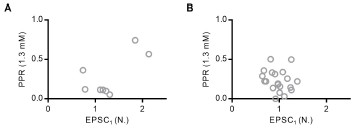
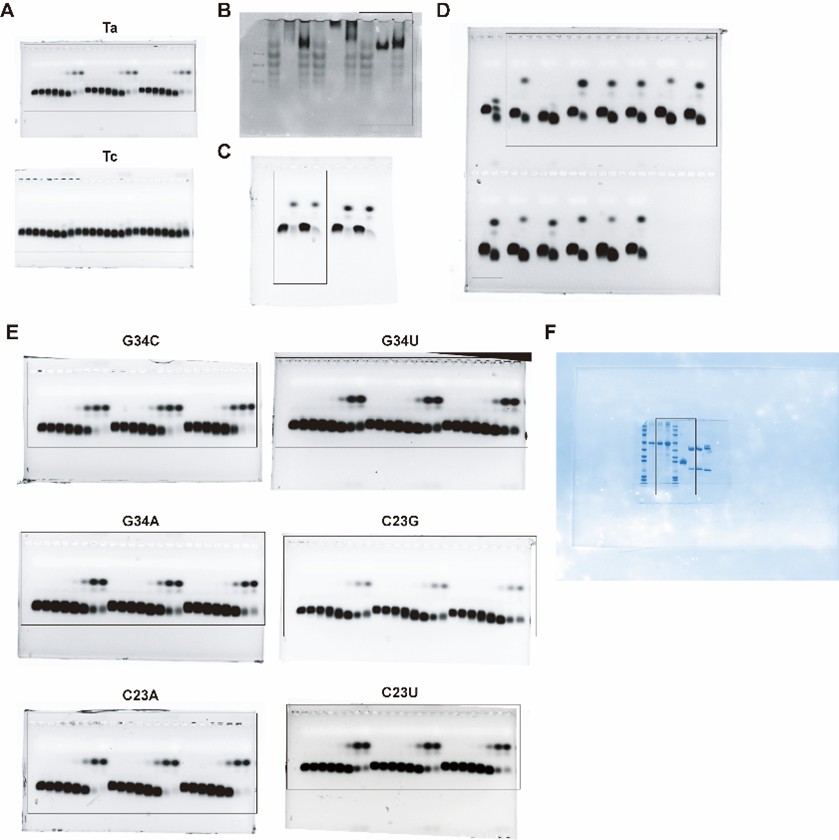
    1. AbstractBackground Large language models (LLMs) have significantly advanced natural language processing in biomedical research, however, their reliance on implicit, statistical representations often results in factual inaccuracies or hallucinations, posing significant concerns in high-stakes biomedical contexts.Results To overcome these limitations, we developed BTE-RAG, a retrieval-augmented generation framework that integrates the reasoning capabilities of advanced language models with explicit mechanistic evidence sourced from BioThings Explorer, an API federation of more than sixty authoritative biomedical knowledge sources. We systematically evaluated BTE-RAG in comparison to traditional LLM-only methods across three benchmark datasets that we created from DrugMechDB. These datasets specifically targeted gene-centric mechanisms (798 questions), metabolite effects (201 questions), and drug–biological process relationships (842 questions). On the gene-centric task, BTE-RAG increased accuracy from 51% to 75.8% for GPT-4o mini and from 69.8% to 78.6% for GPT-4o. In metabolite-focused questions, the proportion of responses with cosine similarity scores of at least 0.90 rose by 82% for GPT-4o mini and 77% for GPT-4o. While overall accuracy was consistent in the drug–biological process benchmark, the retrieval method enhanced response concordance, producing a greater than 10% increase in high-agreement answers (from 129 to 144) using GPT-4o.Conclusion Federated knowledge retrieval provides transparent improvements in accuracy for large language models, establishing BTE-RAG as a valuable and practical tool for mechanistic exploration and translational biomedical research.

      This work has been peer reviewed in GigaScience (see https://doi.org/10.1093/gigascience/giag007), which carries out open, named peer-review. These reviews are published under a CC-BY 4.0 license and were as follows:

      Reviewer 2: Sajib Acharjee Dip

      This paper introduces BTE-RAG, a system that combines large language models with biomedical knowledge from BioThings Explorer. Tested on three benchmarks built from DrugMechDB (genes, metabolites, and drug-process links), it shows clear accuracy gains compared to using LLMs alone.

      Strengths: The work demonstrates that retrieval improves both small and large models, suggesting cost-efficiency and scalability. This paper also curated multi-scale QA datasets (gene, metabolite, drug) from DrugMechDB provide structured, reproducible evaluation.

      Weaknesses: 1. This dual-route design is conceptually sound but too narrow a baseline. A stronger evaluation would compare against other RAG systems (PubMed-based retrieval, BiomedRAG, SPOKE-RAG) instead of just "LLM-only." 2. For Entity Recognition step, using pre-annotated entities in benchmarks artificially simplifies the problem. In real-world biomedical QA, entity recognition itself is a major challenge (e.g., ambiguous drug synonyms, rare disease names). Besides, the zero-shot extraction module is described but not evaluated. The paper should report precision/recall of entity recognition to show feasibility beyond curated inputs. 3. No error analysis of BTE retrieval quality is provided. If BTE returns wrong or noisy triples, how often does this mislead the LLM? Adding experiment to show that would strengthen the study. 4. Though the authors used SOTA LLMs, however, the choice of only OpenAI GPT-4o family is narrow. No comparison with open-source biomedical LLMs (e.g., BioGPT, Meditron, PubMedBERT-RAG). Comparison with these model would increase the generalizability 5. Reliance on one source (DrugMechDB) makes evaluation narrow. The authors should demonstrate performance on at least one independent dataset (e.g., BioASQ, PubMedQA, SPOKE-based tasks) to show broader utility. 6. Cosine similarity ≥0.9 is arbitrary; should provide ROC/AUC or threshold sensitivity. 7. Benchmarks enforce exactly one correct gene, metabolite, or drug per question. Real mechanisms often involve multiple parallel or interacting entities. The single-answer design hides biological complexity and creates an artificial task. 8. Ground truth relies on exact HGNC, CHEBI, or DrugBank IDs. Why the ambiguities (synonyms, deprecated IDs, overlapping terms) are filtered out rather than addressed? This may bias the dataset toward easier, cleaner cases. 9. The paper cited recent biomedical RAG systems such as BiomedRAG, GeneTuring but didn't compare with them (e.g., BiomedRAG). BioRAG (2024) is also highly relevant. These works are highly relevant baselines, showing retrieval from knowledge graphs, APIs, or literature, and including them in comparison would better position BTE-RAG within the current state of the art and highlight its unique contributions.

    2. AbstractBackground Large language models (LLMs) have significantly advanced natural language processing in biomedical research, however, their reliance on implicit, statistical representations often results in factual inaccuracies or hallucinations, posing significant concerns in high-stakes biomedical contexts.Results To overcome these limitations, we developed BTE-RAG, a retrieval-augmented generation framework that integrates the reasoning capabilities of advanced language models with explicit mechanistic evidence sourced from BioThings Explorer, an API federation of more than sixty authoritative biomedical knowledge sources. We systematically evaluated BTE-RAG in comparison to traditional LLM-only methods across three benchmark datasets that we created from DrugMechDB. These datasets specifically targeted gene-centric mechanisms (798 questions), metabolite effects (201 questions), and drug–biological process relationships (842 questions). On the gene-centric task, BTE-RAG increased accuracy from 51% to 75.8% for GPT-4o mini and from 69.8% to 78.6% for GPT-4o. In metabolite-focused questions, the proportion of responses with cosine similarity scores of at least 0.90 rose by 82% for GPT-4o mini and 77% for GPT-4o. While overall accuracy was consistent in the drug–biological process benchmark, the retrieval method enhanced response concordance, producing a greater than 10% increase in high-agreement answers (from 129 to 144) using GPT-4o.Conclusion Federated knowledge retrieval provides transparent improvements in accuracy for large language models, establishing BTE-RAG as a valuable and practical tool for mechanistic exploration and translational biomedical research.

      This work has been peer reviewed in GigaScience (see https://doi.org/10.1093/gigascience/giag007), which carries out open, named peer-review. These reviews are published under a CC-BY 4.0 license and were as follows:

      Reviewer 1: Christopher Tabone

      Dear Authors,

      Thank you for the opportunity to review "Federated Knowledge Retrieval Elevates Large Language Model Performance on Biomedical Benchmarks." The paper tackles a timely and important problem: grounding large language models in mechanistic evidence to reduce unsupported claims. It does so with a thoughtful design that layers BTE-RAG over a federation of approximately 60 biomedical APIs and evaluates three complementary DrugMechDB-derived benchmarks (gene, metabolite, drug to process). The manuscript is clearly written, the technical contribution is meaningful, and the experimental results are promising.

      Recommendation: Major revision.

      Below are concrete, actionable changes that would bring the work in line with GigaScience's standards for FAIR availability, licensing, documentation, testing, and reproducibility. Many are straightforward, but together they matter for long-term reuse and auditability.

      1) Statistical rigor: paired inference, uncertainty, variance The manuscript reports compelling descriptive gains. Because each benchmark item is answered under both conditions (LLM-only and BTE-RAG), the study is a paired design. In paired settings, descriptive plots and point estimates are not sufficient to establish that improvements exceed sampling noise or threshold tuning. Please add paired statistical evidence that quantifies: (i) whether the gains are reliable, (ii) how large they are in practical terms, and (iii) how stable they are under repeated runs or under a fully deterministic pipeline. Gene task (binary): Report McNemar's test on the existing 2×2 tables, along with 95 percent Wilson confidence intervals for each condition and a Newcombe confidence interval for the accuracy difference. Keep the flip counts in the text.

      Metabolite and drug-to-process tasks (similarity): Report paired bootstrap confidence intervals or Wilcoxon signed-rank tests on per-item similarity differences (BTE-RAG minus baseline). Include a nonparametric effect size such as Cliff's delta with its confidence interval.

      Threshold validation: Treat the greater-than-or-equal-to 0.90 "high-fidelity" threshold as a choice that should be validated. Show sensitivity across nearby cutoffs such as 0.85, 0.90, and 0.95, and add a small blinded expert adjudication (about 50 to 100 items) to confirm that the high-cosine band corresponds to acceptable correctness.

      Variance or determinism: Either document end-to-end determinism (frozen retrieval caches, fixed ordering, pinned embeddings) or run at least three replicates and report mean and standard deviation.

      These additions convert the current descriptive story into paired inference with uncertainty and effect sizes and clarify robustness around thresholding and reproducibility.

      2) Benchmark scope and generalizability All three evaluations are derived from DrugMechDB, which makes the study internally consistent but also couples the tasks to a single curation philosophy and evidence distribution. Please acknowledge this limitation explicitly in the Discussion and, ideally, add an external validation on at least one independent source to demonstrate generalizability. Options include CTD (drug-gene-process links), Reactome or GO (pathway and process grounding), DisGeNET (gene-disease associations), or a lightweight question answering set sourced outside DrugMechDB. Even a modest external set of about 100 to 200 items, evaluated with the same paired protocols and identifier-based scoring, would strengthen the claim. If full external validation is not feasible for this revision, please include robustness checks such as a date-based split, entity-family holdouts, and per-source ablations.

      3) Licensing, attribution, and persistent identifiers The project is MIT-licensed and adapts components from BaranziniLab/KG_RAG (Apache-2.0) and SuLab/DrugMechDB (CC0-1.0). To meet license obligations and align with FAIR and the Joint Declaration of Data Citation Principles, please: (i) keep Apache-licensed code under Apache with the upstream LICENSE and NOTICE files, noting any modifications; (ii) include the CC0 dedication text for any DrugMechDB artifacts and note that CC0 provides no patent grant; (iii) archive with DOIs (GigaDB preferred?) the three benchmarks, the exact evaluation caches used in the paper, and a tagged software release of the repository; (iv) license datasets under CC0 or CC BY while keeping the code MIT; (v) add a short Data and Software Availability table listing artifact, DOI or URL, license, and version or date.

      4) Error analysis and degradation cases Please add a brief failure analysis focused on where BTE-RAG reduces accuracy relative to LLM-only. At minimum, report the total number and percent of right-to-wrong flips per task and include a small set of representative cases. For each example, show the input, expected and predicted outputs, the top retrieved evidence with identifiers and timestamps, and a one-line diagnosis of the likely cause (for example normalization mismatch, retrieval coverage gap, ranking or filtering that hid relevant context, or long-context truncation). A short summary that groups the main causes into two or three buckets will make the results more interpretable and point to practical fixes.

      5) Methodological transparency: embedding and scoring models Please add two or three sentences in Methods explaining why S-PubMedBERT-MS-MARCO is used for filtering retrieved context while a BioBERT-based model is used for semantic similarity scoring, and what advantages each provides over plausible alternatives. A brief rationale will strengthen methodological transparency.

      6) Reproducibility workflow and archived caches Because BTE federates live APIs, results can drift as sources update. Please archive the exact retrieval caches used in evaluation with DOIs and minimal provenance if at all possible (query identifier, subject and object identifiers, predicate, source name and version or access date, any confidence score, and a retrieval timestamp).

      In summary, this is a promising and well-motivated study that could make a useful contribution once the statistical evidence, FAIR availability, and reproducibility pieces are tightened as outlined above. I recommend Major Revision and am happy to re-review a revised version.

    1. AbstractAdvances in spatial omics enable measurement of genes (spatial transcriptomics) and peptides, lipids, or N-glycans (mass spectrometry imaging) across thousands of locations within a tissue. While detecting spatially variable molecules is a well-studied problem, robust methods for identifying spatially varying co-expression between molecule pairs remain limited. We introduce SpaceBF, a Bayesian fused modeling framework that estimates co-expression at both local (location-specific) and global (tissue-wide) levels. SpaceBF enforces spatial smoothness via a fused horseshoe prior on the edges of a predefined spatial adjacency graph, allowing large, edge-specific differences to escape shrinkage while preserving overall structure. In extensive simulations, SpaceBF achieves higher specificity and power than commonly used methods that leverage geospatial metrics, including bivariate Moran’s I and Lee’s L. We also benchmark the proposed prior against standard alternatives, such as intrinsic conditional autoregressive (ICAR) and Matérn priors. Applied to spatial transcriptomics and proteomics datasets, SpaceBF reveals cancer-relevant molecular interactions and patterns of cell–cell communication (e.g., ligand–receptor signaling), demonstrating its utility for principled, uncertainty-aware co-expression analysis of spatial omics data.

      This work has been peer reviewed in GigaScience (see https://doi.org/10.1093/gigascience/giag006), which carries out open, named peer-review. These reviews are published under a CC-BY 4.0 license and were as follows:

      Reviewer 2: Daniel Domovic

      Dear authors,

      I read your manuscript "SpaceBF: Spatial coexpression analysis using Bayesian Fused approaches in spatial omics datasets" with interest.

      The manuscript presents SpaceBF, a Bayesian method for detecting spatial co-expression between pairs of molecules in spatial omics data. The topic is relevant since new technologies like spatial transcriptomics, mass spectrometry imaging, and multiplex immunofluorescence produce large data but current tools for co-expression are limited. The authors try to solve this gap with a new model and they also test it on real datasets. The paper is technical, but it also gives biological examples, which is helpful for readers.

      The paper has many strong points. First, the idea to use Bayesian fused horseshoe prior together with MST spatial structure is new and well explained. Second, the authors apply their method on three real datasets and they show interesting biology, for example IGF2-IGF1R relation, keratin isoform consistency, and stromal ECM peptides. Third, I appreciate that the code is open on GitHub. Also, the paper compares with other methods and deals with the common problem of variance-stabilizing transform by modeling UMI counts directly with negative binomial distribution.

      Overall, the work is clear and well organized, but there are some points where more explanation or clarification would help. In my review I give major and minor remarks that I hope will improve the paper.

      Major remarks 1. Were you worried choosing MST may oversimplify spatial relationships, since many meaningful local neighborhoods may be excluded? Would the results of SpaceBF be significantly different if a different spatial graph, such as kNN, Delaunay triangulation, or kernel-based, was used instead of MST? 2. Since MST edges depend a lot on pairwise L2 distances, how stable are the results if spatial coordinates are a little noisy, or if there are tissue registration errors? 3. The model puts one molecule as outcome and the other as predictor. Are the co-expression estimates still the same if you switch roles? 4. In the Results you mention "FDR < 0.1." Can you explain which method you used for FDR? Also, are the discoveries robust if you change the threshold (for example 0.05 vs 0.1)? 5. Do the simulation parameters (lengthscale, slope, dispersion) correspond to realistic biological signal strengths and spatial scales observed in real datasets? Three values of the lengthscale l are considered, l = 3.6, 7.2, 18. Why exactly these values? What does ν=0.75 mean in terms of effect size? How does l=18 compare to real tissue lengthscales? 6. Can you describe runtime and memory for larger datasets, like 10X Visium with 5,000-20,000 spots? Is the current MCMC practical for this scale, or do you think approximate inference (like variational Bayes or INLA) is needed?

      Minor remark 1. How sensitive are the results to the choice of hyperparameters for the Horseshoe prior? 2. In the Results you state that keratins "co-express highly, meaning their binding patterns with any specific type 1 keratin should be similar." Please make clear that SpaceBF measures co-expression, not direct binding, so that conclusions are not overstated. 3. You mention SpatialCorr and Copulacci, but the comparison was not successful. Even if parameters were sensitive, I think one short numerical comparison in the supplement would be helpful. 4. You filter out genes with fewer than ~59 total reads (0.2 x number of spots). Can you justify the choice of this threshold and show if results are stable for other thresholds (for example 0.1x or 0.5x)? Since many ligands and receptors are lowly expressed, is there a risk of losing meaningful biology? Since the dataset has only 293 spots, thresholds can have strong effect.

    2. AbstractAdvances in spatial omics enable measurement of genes (spatial transcriptomics) and peptides, lipids, or N-glycans (mass spectrometry imaging) across thousands of locations within a tissue. While detecting spatially variable molecules is a well-studied problem, robust methods for identifying spatially varying co-expression between molecule pairs remain limited. We introduce SpaceBF, a Bayesian fused modeling framework that estimates co-expression at both local (location-specific) and global (tissue-wide) levels. SpaceBF enforces spatial smoothness via a fused horseshoe prior on the edges of a predefined spatial adjacency graph, allowing large, edge-specific differences to escape shrinkage while preserving overall structure. In extensive simulations, SpaceBF achieves higher specificity and power than commonly used methods that leverage geospatial metrics, including bivariate Moran’s I and Lee’s L. We also benchmark the proposed prior against standard alternatives, such as intrinsic conditional autoregressive (ICAR) and Matérn priors. Applied to spatial transcriptomics and proteomics datasets, SpaceBF reveals cancer-relevant molecular interactions and patterns of cell–cell communication (e.g., ligand–receptor signaling), demonstrating its utility for principled, uncertainty-aware co-expression analysis of spatial omics data.

      This work has been peer reviewed in GigaScience (see https://doi.org/10.1093/gigascience/giag006), which carries out open, named peer-review. These reviews are published under a CC-BY 4.0 license and were as follows:

      Reviewer 1: Satwik Acharyya

      Summary: The manuscript introduces a novel statistical framework for analyzing spa- tially varying molecular co-expression. Leveraging a Bayesian fused modeling approach, SpaceBF estimates both local (location-specific) and global (tissue-wide) co-expression pat- terns, particularly useful for studying cell-cell communication via ligand-receptor interac- tions. The method outperforms traditional geospatial metrics like bivariate Moran's I and Lee's L in terms of specificity and precision. Application of SpaceBF to spatial omics data reveals new insights into molecular interactions across various cancer types, offering a pow- erful tool for spatial omics research. The paper is nicely written, well structured, and great visualizations but I have the following comments.

      1. The authors missed a couple of key references related to co-expression analysis of spatial omics data such as JOBS (Chakrabarti et al., 2024) and SpaceX (Acharyya et al., 2022). The authors are recommended to include these references in the Introduction Section.
      2. A method related figure can be included for visual illustration of the method.
      3. In Melanoma ST data analysis, authors have used the RCTD algorithm (Cable et al., 2022) for cell-type estimation. It seems like the gene expression matrix has been used twice in the whole process: once in case of cell-type estimation and co-expression analysis afterwards. The obtained results can be highly correlated due to multiple uses of the gene expression matrix. It would be great if authors can address this issue.
      4. In the cSCC ST data analysis, BayesSpace (Zhao et al., 2021) algorithm has been used for spatial region identification. In Figure 2C, cluster numbers are provided only and those are not transferred to spatial regions. It is difficult to make spatial region specific inference without such regional annotation of clusters. The gene expression matrix is used multiple times in this case as well (spatial region identification and co-expression analysis).
      5. The spatial omcis datasets are sparse in nature. It possible that some these edges may not exist if the molecules are far apart. Authors are requested to justify the use shrinkage prior such as horseshoe rather than spike-and-slab prior.
      6. While the authors briefly mention about the associated computational costs, it is recommended to include a comparison of the computational costs for different approaches in the simulation studies. This would provide a more comprehensive understanding of the proposed method's efficiency and feasibility. It will be also interesting to see the scalability of the method for large scale datasets.
      7. To ensure the robustness of the proposed methodology, it is requested that the authors include a detailed sensitivity analysis for the selected priors and parameters.
    1. Synthèse de la Conférence sur le Traitement de l'Information Sociale et les Violences Sexuelles

      Résumé Exécutif

      Ce document synthétise la conférence plénière de Massil Ben Bouriche sur le traitement de l'information sociale et les violences sexuelles, présentée lors des 20e journées du Groupe de Réflexion en Psychopathologie Cognitive (Grepaco).

      La présentation met en lumière l'ampleur des violences sexuelles comme un problème de santé publique majeur, soulignant que les données officielles sous-estiment considérablement le phénomène en raison d'un taux d'attrition judiciaire massif (seule une plainte sur dix aboutit à une condamnation).

      L'argument central de la conférence est que les modèles explicatifs dominants de l'agression sexuelle, développés principalement à partir d'échantillons d'auteurs judiciarisés, ont une portée limitée et ne peuvent rendre compte de la majorité des violences commises par des personnes jamais identifiées par les autorités.

      Pour dépasser cette limite, une approche basée sur les modèles de traitement de l'information sociale (TIS) est proposée.

      Ces modèles analysent les violences sexuelles comme le résultat d'une séquence d'opérations mentales (encodage, interprétation, etc.), fortement influencées par des "structures de connaissance" (schémas, mythes sur le viol) issues des expériences individuelles et des normes socioculturelles.

      Les recherches empiriques présentées démontrent que les difficultés cognitives ne sont pas généralisées mais spécifiques.

      Par exemple, les hommes ne présentent pas un déficit global dans la reconnaissance des intentions sexuelles, mais une difficulté particulière à identifier une absence d'intérêt.

      De plus, l'effet de l'alcool sur la perception du consentement n'est significatif que chez les individus qui adhèrent déjà fortement aux mythes du viol.

      Ces constats plaident pour des interventions préventives ciblant les structures de connaissance (stéréotypes de genre, mythes) dès le plus jeune âge, une stratégie dont l'efficacité est soutenue par plusieurs méta-analyses.

      --------------------------------------------------------------------------------

      1. Contexte de la Conférence : 20e Journées du Grepaco

      La conférence s'est déroulée dans le cadre des 20e journées du Groupe de Réflexion en Psychopathologie Cognitive (Grepaco) à Lyon, le 15 mai.

      L'événement, centré sur les interactions sociales et le rôle de la cognition, a été organisé avec le soutien de plusieurs entités, notamment :

      Le centre d'excellence iMIND : Un centre labellisé en 2020 dans le cadre de la stratégie nationale pour les troubles du neurodéveloppement.

      Sa mission est de faire le lien entre la recherche, les usagers et la clinique, en se concentrant spécifiquement sur les problématiques des adultes, souvent "les grands oubliés" des stratégies nationales.

      Ses axes directeurs incluent l'inclusion, la déstigmatisation, l'innovation dans la formation et une recherche translationnelle et participative.

      Le laboratoire EMC, l'Université Lyon 1, le Centre Hospitalier Le Vinatier et d'autres sponsors.

      Joël Billieux, au nom du comité scientifique du Grepaco, a rappelé l'histoire du groupe, qui a évolué de rencontres informelles à un congrès scientifique plus structuré, tout en insistant sur la volonté de maintenir une plateforme pour les ateliers et les projets collaboratifs. Un appel a été lancé pour trouver des lieux d'organisation pour les éditions futures (2026-2028).

      2. La Conférence de Massil Ben Bouriche

      Massil Ben Bouriche, maître de conférences en psychologie et justice à l'Université de Lille, a présenté une conférence plénière intitulée "Information sociale, violences sexuelles et comportements violents".

      2.1. L'Ampleur et la Nature des Violences Sexuelles : Un Problème de Santé Publique

      La présentation a débuté par un rappel contextuel sur l'ampleur et la nature des violences sexuelles, en s'appuyant sur des enquêtes de victimation et de perpétration plutôt que sur des données officielles jugées peu fiables.

      Statistiques Clés :

      | Type de Donnée | Source / Étude | Chiffres Marquants | | --- | --- | --- | | Victimation (Femmes) | Données internationales convergentes | Au moins 1 femme sur 5 à 1 sur 3 sera victime de violence sexuelle au cours de sa vie. | | Victimation (Hommes) | Étude de Briding (USA) | 2 % des hommes sont victimes de viol au cours de leur vie. | | Victimation (Mineurs) | Publication The Lancet (Mai 2024) | 1 femme sur 5 et 1 homme sur 7 sont victimes avant l'âge de 18 ans. | | Perpétration | Données internationales | 20 à 40 % des personnes reconnaissent avoir commis au moins un fait de violence sexuelle non judiciarisé depuis l'âge de 14 ans. | | Perpétration (Étudiants) | Études françaises (Thèse M. Escargel) | En moyenne, 40 % des étudiants et 18 % des étudiantes rapportent avoir commis un fait de violence sexuelle. |

      Stratégies de Perpétrations : Il est souligné que, contrairement aux représentations communes, la force physique ou l'usage d'une arme restent des stratégies peu fréquentes.

      La majorité des violences sexuelles résultent de :

      • Manipulation et pressions verbales.

      • Intoxication de la victime (alcool ou drogues).

      2.2. L'Attrition du Système Judiciaire et la Limite des Modèles Explicatifs

      Un point crucial de la conférence est l'écart massif entre le nombre de violences commises et les condamnations.

      Le "Rapport de 1/10" : La littérature scientifique estime que seule 1 situation de violence sexuelle sur 10 donne lieu à un dépôt de plainte, et que seule 1 plainte sur 10 aboutit à une condamnation.

      Données Françaises (2012-2021) : Un rapport de l'Institut des politiques publiques (2024) révèle que 86 % des plaintes pour violences sexuelles sont classées sans suite.

      Parmi les 14 % de suspects finalement jugés, seuls 13 % sont reconnus coupables.

      Cette réalité a une implication majeure : la grande majorité des auteurs de violences sexuelles ne sont jamais identifiés par les autorités.

      Par conséquent, les modèles théoriques dominants en psychocriminologie, élaborés quasi exclusivement à partir de l'étude d'auteurs condamnés et incarcérés, ne renseignent que sur une minorité très spécifique et probablement non représentative.

      Il existe un risque de postuler à tort qu'une catégorie juridique (l'infraction sexuelle) correspond à un ensemble homogène de processus psychologiques.

      2.3. Le Rôle de la Cognition Sociale

      Dans l'étude des violences sexuelles, la cognition sociale est un élément central. Quatre composantes sont principalement étudiées :

      1. L'empathie et/ou la théorie de l'esprit.

      2. La reconnaissance des émotions.

      3. La régulation émotionnelle et l'autorégulation.

      4. Les distorsions cognitives : Croyances qui servent à rationaliser, minimiser ou justifier l'agression (ex: les mythes sur le viol).

      Cependant, les recherches offrent un portrait nuancé, supportant "partiellement et parfois très partiellement" le rôle de ces cognitions.

      2.4. Le Cadre Théorique du Traitement de l'Information Sociale (TIS)

      Pour mieux comprendre les mécanismes sous-jacents, les modèles de TIS (ex: Crick & Dodge) sont proposés comme un cadre de référence pertinent.

      Ces modèles décrivent tout comportement social comme le résultat d'une séquence de six étapes mentales :

      1. Encodage des indices (internes et externes).

      2. Interprétation des indices (attribution d'intentions).

      3. Clarification des objectifs.

      4. Génération de réponses alternatives.

      5. Évaluation et choix d'une réponse.

      6. Mise en œuvre comportementale.

      Un élément central de ces modèles est le rôle des structures de connaissance (schémas, théories implicites, mythes), qui sont des contenus cognitifs enracinés en mémoire. Issues des expériences de vie et des normes socioculturelles, elles influencent chaque étape du traitement de l'information, notamment via des biais attentionnels et interprétatifs.

      2.5. Résultats des Recherches et Études Empiriques

      La conférence a présenté plusieurs résultats de recherche menées au-delà des seules populations judiciarisées.

      Régulation émotionnelle : La suppression expressive apparaît comme un facteur de risque, tandis que la réévaluation cognitive serait un mécanisme de protection.

      Empathie : Contrairement à une idée reçue, l'empathie n'est généralement pas associée aux violences sexuelles en tant que facteur de risque, mais plutôt comme un facteur de protection (effet tampon ou "buffering").

      Structures de connaissance : L'adhésion aux mythes du viol (croyances erronées sur les victimes, les auteurs et les violences) est un facteur clé.

      Une méta-analyse récente confirme une relation d'effet modérée, stable depuis 30 ans, et qui semble se renforcer avec l'âge si les croyances ne sont pas déconstruites.

      Perception des intentions sexuelles : Une étude utilisant des stimuli vidéo a montré que les hommes ne présentent pas un déficit général, mais une difficulté spécifique à reconnaître une absence d'intérêt.

      Le taux de reconnaissance de cette intention n'est pas statistiquement différent du hasard.

      Effet de l'alcool : Une étude expérimentale a démontré que la consommation d'alcool (jusqu'à 1g/L) dégrade la capacité à percevoir l'absence de consentement uniquement chez les individus qui adhèrent déjà fortement aux mythes du viol.

      L'alcool n'a aucun effet chez ceux qui n'adhèrent pas à ces mythes, remettant en cause son utilisation comme excuse.

      2.6. Implications et Perspectives

      Les résultats présentés ont des implications importantes pour la prévention et la prise en charge.

      1. Nécessité d'une approche globale : Il est crucial d'étendre l'étude de la cognition sociale aux populations non judiciarisées pour comprendre les mécanismes à l'œuvre dans la majorité des cas.

      2. Cibler les structures de connaissance : Les programmes de prévention primaire et secondaire doivent se concentrer sur la déconstruction des structures de connaissance (stéréotypes de genre, mythes sur le viol).

      Ces programmes sont efficaces : une méta-analyse montre une réduction des violences sexuelles de 17 % chez les adolescents.

      3. Prévention précoce : Le travail peut commencer très tôt, avant même de parler de sexualité, en agissant sur les stéréotypes de genre dès l'école primaire.

      4. Évaluation multidimensionnelle : La prise en charge des auteurs doit reposer sur une évaluation fine et multidimensionnelle de la cognition sociale.

      Le programme BOAT, porté par le CHU de Montpellier, est cité comme une initiative ambitieuse adoptant une approche populationnelle pour articuler prévention des violences et promotion de la santé sexuelle.

      3. Synthèse de la Session de Questions-Réponses

      Différence entre "crime" et "violence" : Le terme "violence sexuelle" est utilisé dans la recherche pour inclure les comportements non judiciarisés.

      L'étude des profils psychopathologiques des victimes est également un champ de recherche actif.

      Différences entre auteurs judiciarisés et non judiciarisés :

      L'hypothèse d'une différence se base sur le fait que les cas poursuivis sont souvent ceux où les preuves sont plus fortes ou les faits perçus comme plus graves, ce qui pourrait correspondre à des caractéristiques criminologiques et des profils psychologiques distincts.

      Biais de désirabilité sociale : C'est une limite reconnue des études basées sur des questionnaires autorapportés.

      Ce biais est contrôlé statistiquement, mais la limite demeure. Cependant, le fait que 20 à 40 % des personnes rapportent des actes de perpétration malgré ce biais est en soi significatif.

      Différence entre "mythe du viol" et "culture du viol" : Les deux concepts ont un recouvrement conceptuel très fort. "Mythe du viol" est un terme historiquement utilisé dans le champ de la psychologie, tandis que "culture du viol" est davantage employé en sociologie.

    1. Masculinisme : Synthèse du Péril Sexiste et de ses Enjeux

      Résumé Exécutif

      Ce document de synthèse analyse le phénomène du masculinisme, identifié comme une idéologie politique et sociale structurée, dont la propagation est considérablement amplifiée par les plateformes numériques.

      Défini comme la "mise en pratique concrète de l'antiféminisme", le masculinisme ne se limite pas à des propos sexistes isolés mais constitue un mouvement organisé visant à faire régresser les droits des femmes et des minorités de genre.

      La discussion met en lumière une menace grandissante, illustrée par de multiples tentatives d'attentats déjouées en France ces dernières années, qualifiant ce phénomène de "terrorisme masculiniste".

      Le débat oppose deux visions principales : d'une part, celle qui considère le masculinisme comme une dérive sectaire dangereuse et en pleine expansion, s'appuyant sur des données chiffrées issues du Haut Conseil à l'Égalité ; d'autre part, une perspective plus nuancée qui alerte sur le caractère flou du terme, le risque de généralisation abusive et la nécessité de comprendre les angoisses et les pressions sociales qui pèsent sur certains hommes.

      Face à ce péril, les solutions proposées s'articulent autour d'un double axe : un volet répressif incluant la formation des forces de l'ordre et la régulation des contenus en ligne, et un volet préventif centré sur l'éducation à la vie affective et sexuelle dès l'école.

      --------------------------------------------------------------------------------

      1. Définition et Caractéristiques du Masculinisme

      Une Idéologie Antiféministe Structurée

      Le masculinisme est présenté non pas comme une opinion personnelle mais comme un mouvement politique et social organisé.

      Il est défini par Pauline Ferrari, auditionnée au Sénat, comme "un mouvement social et politique de mise en pratique concrète de l'antiféminisme".

      Il se distingue du sexisme ordinaire par son intention active de "faire régresser les droits des femmes et des minorités de genre, pour tenter de les humilier, pour tenter de les silencier".

      Historiquement, le terme "masculinisme" est presque aussi ancien que celui de "féminisme" et apparaît dès le XIXe siècle comme une réaction directe aux avancées des droits des femmes.

      Céline Piques rappelle que des mouvements masculinistes plus structurés, tels que ceux revendiquant les "droits des pères", ont émergé dans les années 1980, accusant la justice d'être partiale envers les femmes.

      Le Concept de "Sexisme Hostile"

      Le rapport du Haut Conseil à l'Égalité (HCE) distingue deux types de sexisme :

      Le sexisme paternaliste : Moins ouvertement violent, il infériorise les femmes en considérant que l'égalité est atteinte et que chacun doit conserver son rôle traditionnel (sphère domestique pour les femmes, professionnelle pour les hommes).

      Le sexisme hostile : Un sexisme virulent qui légitime la violence contre les femmes et les enfants et réaffirme la suprématie masculine. Le masculinisme est classé dans cette catégorie.

      Typologie des Mouvements Masculinistes

      Le masculinisme est décrit comme une "nébuleuse" regroupant diverses communautés, souvent actives en ligne :

      Les Incels ("célibataires involontaires") : Hommes qui se considèrent célibataires contre leur gré et en rendent les femmes responsables. Ils sont souvent décrits comme étant en détresse psychique et personnelle.

      Les MGTOW ("Men Going Their Own Way") : Prônent le retrait total des relations avec les femmes.

      Les "Mâles Alpha" : Influencés par des coachs en séduction, ils promeuvent un modèle de domination. Leurs techniques sont décrites comme des stratégies de coercition et de mise sous emprise, qualifiées de "stratégie de l'agresseur" par les associations féministes.

      L'influenceur Andrew Tate, poursuivi pour proxénétisme et trafic d'êtres humains, est cité comme un exemple emblématique de ce mouvement.

      2. La Perception Sociétale et les Chiffres Clés

      Le rapport du HCE sur l'état du sexisme en France révèle des chiffres jugés "sidérants" qui témoignent d'une réaction à l'avancée du féminisme, notamment depuis le mouvement #MeToo.

      | Indicateur | Pourcentage d'hommes | Pourcentage de femmes | | --- | --- | --- | | Le féminisme menace la place et le rôle des hommes | 39 % | 25 % | | Les féministes veulent que les femmes aient plus de pouvoir que les hommes | 60 % | \- | | Les féministes ont des demandes exagérées envers les hommes | 60 % | \- | | La justice est plus favorable aux femmes qu'aux hommes | 64 % | \- |

      Ces chiffres sont interprétés comme le reflet d'une "position très victimaire" des masculinistes, qui perçoivent une prise de pouvoir des femmes alors que les féministes revendiquent l'égalité d'accès au pouvoir.

      La Culture du Viol et la Notion de Consentement

      Le rapport met en évidence une mauvaise compréhension de l'autonomie sexuelle des femmes :

      24 % des hommes considèrent normal qu'une femme accepte un rapport sexuel par devoir ou pour faire plaisir.

      15 % des hommes estiment qu'une femme agressée sexuellement peut être en partie responsable.

      26 % des hommes avouent avoir déjà douté du consentement de leur partenaire, bien que 93 % affirment savoir que "non c'est non".

      Ces données illustrent la persistance de l'idée d'un "privilège des hommes à accéder au corps des femmes librement".

      3. L'Amplification par les Plateformes Numériques

      Les réseaux sociaux jouent un rôle crucial dans la croissance et la radicalisation des mouvements masculinistes.

      Propagation rapide : Il ne faudrait que 27 minutes sur une plateforme comme TikTok pour qu'un jeune s'intéressant à des contenus anodins (ex: conseils de drague) soit redirigé par les algorithmes vers des contenus masculinistes.

      Cyberharcèlement ciblé : Les femmes, en particulier les personnalités politiques (comme Sandrine Rousseau) ou les joueuses de jeux vidéo utilisant un pseudo féminin, subissent un cyberharcèlement d'une violence qu'un homme ne subirait pas pour les mêmes propos ou actions.

      Création de communautés : Des documentaires montrent l'existence de communautés en ligne regroupant 2000 à 3000 hommes.

      4. La Dangerosité et le Passage à l'Acte Violent

      Le discours masculiniste est directement lié à des actes de violence extrême, qualifiés de "terrorisme masculiniste".

      Tentatives d'Attentats en France

      Au cours des 14 derniers mois, trois arrestations majeures ont eu lieu en France en lien avec la mouvance masculiniste, toutes concernant des jeunes hommes de 17 à 26 ans :

      Juin 2023 (Saint-Étienne) : Un lycéen de 18 ans, se proclamant masculiniste, est arrêté près de son lycée. Il portait deux couteaux et une liste de prénoms de quatre filles de sa classe. Le Parquet National Antiterroriste (PNAT) s'est saisi de l'affaire.

      2024-2025 (Bordeaux et Ancenis) : Deux jeunes hommes appartenant au groupe des Incels sont arrêtés après des signalements sur la plateforme Pharos, suspectés de vouloir tuer des femmes.

      Attentats Internationaux

      Plusieurs tueries de masse ont été commises par des hommes se réclamant explicitement du masculinisme ou de la communauté Incel :

      1989 (Montréal, Canada) : Marc Lépine tue 14 femmes à l'École Polytechnique, après avoir séparé les hommes des femmes. Dans sa lettre de suicide, il accuse les féministes de lui avoir "gâché la vie".

      2014 (Isla Vista, États-Unis) : Elliot Rodger tue plusieurs personnes après avoir publié un manifeste de 140 pages et une vidéo appelant à tuer les femmes. Il est devenu une figure de référence pour les Incels.

      2021 (Plymouth, Royaume-Uni) : Un jeune homme de 23 ans tue cinq personnes, dont sa mère, avant de se suicider.

      5. Points de Débat et Perspectives Nuancées

      Le débat a également fait émerger des critiques et des mises en garde contre une approche trop univoque du phénomène.

      La Question de la Définition et de la Généralisation

      Peggy Sastre et Jean-Sébastien Ferjou soulignent que le terme "masculinisme" est "flou", "nébuleux" et "mal circonscrit".

      Ils mettent en garde contre le risque d'amalgamer des discours violents avec des critiques légitimes de certaines formes de féminisme.

      La question "le féminisme menace-t-il les hommes ?" serait trop simpliste, la réponse pouvant varier selon que l'on se réfère à Élisabeth Badinter ou à Sandrine Rousseau.

      La Réalité de la "Masculinité Toxique"

      Une étude menée en Nouvelle-Zélande sur plus de 15 800 hommes est citée pour nuancer l'idée d'une toxicité généralisée du masculin :

      • Seulement 3 % des hommes y sont décrits comme "véritablement hostiles et agressifs".

      8 % ont une attitude "bienveillante mais paternaliste".

      89 % (35 % "totalement non toxiques" et 54 % avec des préjugés "modérés") ne relèvent pas de la masculinité destructrice.

      L'étude suggère que les hommes les plus "toxiques" ne sont pas les plus affirmés dans leur masculinité, mais plutôt les hommes fragilisés par le chômage, l'isolement social ou le manque d'éducation.

      Les Pressions Sociales sur les Jeunes Hommes

      Un argument avancé est que les discours masculinistes trouvent un écho car ils résonnent avec des réalités vécues par les jeunes hommes.

      Il existerait une "injonction contradictoire" entre un discours sociétal d'égalité et des comportements sociaux (notamment sur les sites de rencontre) où les femmes continueraient de privilégier les hommes "plus beaux, plus forts et plus riches".

      6. Stratégies de Lutte et de Prévention

      Face à cette menace, deux axes d'action principaux sont envisagés.

      Volet Répressif et Judiciaire

      Formation des forces de l'ordre : Il est jugé nécessaire de former davantage les policiers et les magistrats à la détection du contrôle coercitif, une technique enseignée par les influenceurs masculinistes.

      Bien que cette formation commence, elle n'intègre pas encore systématiquement l'analyse de l'idéologie sous-jacente.

      Surveillance et régulation : La plateforme gouvernementale Pharos est active dans la détection des menaces, mais ses moyens sont jugés insuffisants.

      Une régulation plus stricte du numérique est demandée pour obtenir le retrait des contenus faisant l'apologie de crimes (comme le viol) ou constituant des provocations à la haine, en accord avec les limites de la liberté d'expression.

      Volet Préventif et Éducatif

      Éducation à l'école : L'éducation à la vie affective, relationnelle et sexuelle est considérée comme un levier central de prévention.

      La loi prévoyant trois séances par an dans toutes les classes n'est toujours pas pleinement appliquée.

      Cibler les causes : Il est suggéré de s'attaquer aux racines du mal-être qui rendent les jeunes hommes vulnérables à ces idéologies, notamment en aidant ceux qui sont isolés ou en manque d'éducation, plutôt que d'adopter des discours qui pourraient aliéner la majorité des hommes.

    1. Reviewer #3 (Public review):

      Summary:

      The authors describe a new structural biology framework termed "in extracto cryo-EM," which aims to bridge the gap between single-particle cryo-EM of purified complexes and in situ cryo-electron tomography (cryo-ET). By utilizing high-resolution 2D template matching (2DTM) on mammalian cell lysates, the authors sought to visualize the translational apparatus in a near-native environment while maintaining near-atomic resolution. The study identifies elongation factor 2 (eEF2) as a major hibernation factor bound to both 60S and 80S particles and describes a variety of hibernation scenarios involving factors such as SERBP1, LARP1, and CCDC124.

      Strengths:

      (1) The use of 2DTM effectively overcomes the signal-to-noise challenges posed by the dense and viscous nature of cellular extracts, yielding maps as high as 2.2 Å.

      (2) The discovery of eEF2-GDP as a ubiquitous shield for ribosomal functional centers, particularly its unexpected stabilization on the 60S subunit, provides a compelling model for ribosome preservation during stress.

      Weaknesses:

      (1) Representative nature of cell samples and lower detection limit

      The cells used in this study (MCF-7, BSC-1, and RRL) are either fast-growing cancer cell lines or specialized protein-synthetic systems. For cells with naturally low ribosomal abundance (such as quiescent primary cells), achieving the target concentration (e.g., A260 > 1000 ng/uL) would require an exponentially larger starting cell population.

      Is there a defined lower limit of ribosomal concentration in the raw lysate below which the 2DTM algorithm fails to yield high-resolution classes? In ribosome-sparse lysates, A260 becomes an unreliable proxy for ribosome density due to the high background of other RNA species and proteins. How do the authors estimate specific ribosome abundance in such heterogeneous fields?

      (2) Quantitation in heterogeneous lysates and crowding effects

      The authors utilize A260 as a key quality control measure before grid preparation. However, if extreme physical concentration is required to see enough particles, the background concentration of other cytoplasmic components also increases. This may lead to molecular crowding or sample viscosity that interferes with the formation of optimal thin ice. How do the authors calculate or estimate the specific abundance of ribosomes in the cryo-EM field of view when they represent a much smaller percentage of the total cellular content?

      (3) Optimization of sample preparation

      The authors describe lysates as dense and viscous, requiring multiple blotting steps (2-3 times) for 3-8 seconds. Have the authors tested whether a larger molecular weight cutoff (e.g., 100 kDa) during concentration could improve the ribosome-to-background ratio without losing small factors like eIF5A (approx. 17 kDa)? Could repeated blotting of a concentrated, viscous lysate introduce shearing forces or increased exposure to the air-water interface that perturbs the native conformation of the complexes?

      (4) The regulatory switch and mechanism of eEF2

      The finding that eEF2-GDP occupies dormant ribosomes is striking. What drives eEF2 from its canonical role in translocation to this hibernation state? Is this transition purely driven by stoichiometry (lack of mRNA/tRNA) and the GDP/GTP ratio, or is there a role for post-translational modifications? How do these eEF2-bound dormant ribosomes rapidly re-enter the translation pool upon stress relief?

      (5) Hibernation diversity and LARP1 contextualization

      The study reveals that hibernation strategies vary across cell types. Does the high hibernation rate in RRL reflect a physiological state, or does it hint at "preparation-induced stress" due to resource exhaustion or mRNA degradation in the cell-free system? How do the authors reconcile their discovery of LARP1 on 80S particles with recent 2024 reports that primarily describe LARP1 as an SSU-bound repressor?

    1. Operability/可观测性建设

      每个阶段的里程碑要更明确. 比如: 1. 有个平台. 可以只读看到现有的资产 2. 可以纳管资产. 3. 可以做运维的纳管. 4. 可以通过故障演习.

    1. Annotation: 5 pts./each x 4 = 20 pts. Now It’s My Turn (NIMT): 5 pts./each x 4 = 20 pts. Quizam*: 10 pts./each x 3 : 30 pts. [*A hybrid quiz+exam = Quizam] SUPs (Show Up Points): 20 pts. Attendance is mandatory and part of your grade. Out of the 16 weeks of classes, only 20 random lectures will be designated as point-earning attendance. Must submit 2 time-stamped selfies per lecture to receive the point; no 1/2 point. See more notes below. BETs (Be Engaged Tokens): 10 pts. - Discussion section attendance is mandatory and part of your grade (a lower-division course needs 4 contact hours; the discussion section counts as 1 of the 4 required hours). You earn "tokens" (points) by attending and participating, as well as submitting in-class work and peer reviews. Total Points: 100 (A+~A- = >90 pts. / B+~B- = 89~80 pts. and so on. F = >60. No final grade curving.)

      There is only 100 points worth. Quiz/Exams are worth the most (30%) but showing up and other participation is worth up to 20% of my grade. Continue to show up to class and participate to keep a good grade in this class.

    1. ssignments and Quizzes posted after 11:59:01 on Sunday are late and this is indicated with the late tag in Brightspace.Discussion postings posted after 11:59:01 on Thursday are late and follow up posting posted after Sunday 11:59:01 arelate. For assignments and quizzes posted after 11:59:01 with a late Tag as identified in Brightspace will receive anautomatic 30% reduction in grade. Assignments posted after 11:59:01 PM on Tuesday (2 days after the due date), willreceive a 35% reduction in grade. Assignments posted after 11:59:01 on Thursday (4 days late) will receive a 40%reduction in grade. No assignments will be accepted after 11:59:01 the Sunday after the initial due date (7 days late) andwill receive a zero.

      I think this policy abt late work is very informative and explains clearly what consequences can occur for having late work. It also explains you can turn in things late even after the due date with a reduction in grade of course which is fair.

    2. Late Policy:Assignments and Quizzes posted after 11:59:01 on Sunday are late and this is indicated with the late tag in Brightspace.Discussion postings posted after 11:59:01 on Thursday are late and follow up posting posted after Sunday 11:59:01 arelate. For assignments and quizzes posted after 11:59:01 with a late Tag as identified in Brightspace will receive anautomatic 30% reduction in grade. Assignments posted after 11:59:01 PM on Tuesday (2 days after the due date), willreceive a 35% reduction in grade. Assignments posted after 11:59:01 on Thursday (4 days late) will receive a 40%reduction in grade. No assignments will be accepted after 11:59:01 the Sunday after the initial due date (7 days late) andwill receive a zero.

      This part of the syllabus is one of the most important because it gives clear grading instructions on our assignments. I also think its very nice of the professor to accept late assignments as many online classes do not accept any.

    3. Assignments and Quizzes posted after 11:59:01 on Sunday are late and this is indicated with the late tag in Brightspace.Discussion postings posted after 11:59:01 on Thursday are late and follow up posting posted after Sunday 11:59:01 arelate. For assignments and quizzes posted after 11:59:01 with a late Tag as identified in Brightspace will receive anautomatic 30% reduction in grade. Assignments posted after 11:59:01 PM on Tuesday (2 days after the due date), willreceive a 35% reduction in grade. Assignments posted after 11:59:01 on Thursday (4 days late) will receive a 40%reduction in grade. No assignments will be accepted after 11:59:01 the Sunday after the initial due date (7 days late) andwill receive a zero.

      I think this part of the syllabus is very important, it explains the consequences of a late assignment submission. It is very clear and very forward in terms of the late policy for this course.

    1. R0:

      Reviewer #1: Peer Reviewer’s report for the submission “Reaching the 100 by 2027 target for universal access to rapid diagnostic tests 2 for tuberculosis in Africa: in-sight but out of reach”

      Recommendation: Minor Revisions General Comment: This paper addresses a pertinent global health subject, a WHO priority research gap. The methods are sound and innovative. However, the authors need to improve on the clarity of the paper.

      Abstract: -The authors did a fantastic work summarizing the study with this abstract -Kindly break the abstract into the standard sections: background, methods, results, conclusion -Please clearly designate and state clearly the name of the study design used in this study. Are we an ecological study with mixed methods or what?

      Background -Great job introducing the research gap and pertinence of the research -A brief perspective on funding gaps for diagnostics might strengthen this section -Do not overestimate the knowledge of potential readers on the subject, briefly describe what WRDs are and state list them. Why are they so important?

      Methods -This section of the work is a bit to brief and doesn’t present the work in a way that can be easily reproducible by readers. Use standard sub-headers such as study design, study population, study period, data collection and data analysis for clarity. -Again, I ask what is the study design of this study? -WRD were recommended 10 years ago, what is the rationale behind the period 2021-2023? I think the key landmarks for this are 2015 for End-TB, 2018 for the first UNHLM and 2023 for the second UNHLM. -Line 98-101: How were these cutoffs decided? -Study area is completely absent. It is important to shade more light on the 24 countries. Who are they, what is the burden of TB there, any peculiarities? -Benchmarks which needed a secondary calculation following extraction need to be presented clearly, showing the variables used as denominator and numerator.

      Results -Kindly provide the exact number of cases tested for the different years, prior to providing proportions. A standalone table could resolve this. -Line 151-161, I find it hard to see trends with just 3 years data points. Probably need to increase the years if you want to discuss trends -Did the Table 2 strategies come from the TB staff or the authors? It appears it came from the authors, in which case I don’t agree with their existence in the results. At best in recommendations

      Discussions -The authors did a superb job discussing the available findings of the study -Being a study with policy implications, kindly include a sub-header for Policy implications of the findings and state them clearly -Include sub-headers for strengths and limitations and outline them clearly

      Reviewer #2: Review of Title: Reaching the 100 by 2027 target for universal access to rapid diagnostic tests for tuberculosis in Africa: in-sight but out of reach

      Summary of research and overall impression This is a well-written and researched article reporting on the availability and use of WHO-recommended rapid diagnostics for TB in African countries where there is significant burden. The authors use routinely reported data to assess access to WRDs, and a small survey of programme staff from a subset of countries to identify barriers and facilitators to the inclusion of WRDs in diagnostic algorithms. The paper makes an important contribution to the TB literature by mapping the gaps in terms of access to and usage of WRDs, which is needed to strengthen TB control efforts. There are minor comments for the authors to address to strengthen the paper.

      Methods 1. Include brief details on how/why the 24 countries included in the review were selected. 2. More details are needed to describe the process for the country stakeholder survey. For example:

      • Specify what the questionnaire consisted of, i.e., closed and open-ended questions? What topic areas/sections were included/asked about? How/by whom was the questionnaire designed/developed, using/adapting an existing framework/questionnaire?
      • How were the questionnaires sent out? Were specific people targeted? How many were sent out? What was the timeframe?
      • Provide details of how/why the 6 countries were selected – e.g., 1-2 from each region? Who inputted on these decisions? The authors mention later that these were also selected based on WRD access, which should be mentioned here in methods.

      • It is unclear under ‘statistical analysis’ if this refers to analysis of all data, or just the data review. Suggest revising to clarify analysis for data review, and analysis for the stakeholder survey. Two things to consider: 1) Provide details on the data extracted and the analysis conducted. 2) It is unclear what is meant here: “The first author used topic guides that reflected content areas such as barriers and contextual factors influencing WRD use and the themes that emerged during the review of the survey responses to manually organise the data into thematic codes.” Is this referring to the stakeholder surveys? Suggest revising for clarity on the analysis process. Were any frameworks used in analysis to categorise barriers into categories and develop mitigation strategies? This process needs to be detailed in the methods to lead into the results.

      • Please clarify/confirm the ethics of surveying country stakeholders without a consent process, even if participants (country stakeholders) are not identifiable.

      Results Provide details of how many survey responses were received. Is it only 6 from 6 countries (as in lines 182-186)? How were respondents distributed across the 6 countries? Could they speak to the different country contexts? Later in the text there is mention of 16, suggest clarifying this in the results clearly.

      In lines 163 onwards, when referring to the analysed gaps in the TB diagnostic cascade, please clarify in the text throughout what is meant with ‘countries reported’ – is this a comparison of what is found in the data review with what is reported by country stakeholders?

      As mentioned earlier, the process for categorising the barriers and developing mitigation strategies must be introduced in the methods. “We then distilled the barriers into five categories and developed mitigation strategies 260 (Table 3) to improve the use of WRDs across all 24 LabCoP countries.” Did you use a framework for this to guide at different health system level? Suggest revising the three theme headings as they read more like recommendations statements now than findings, i.e., optimise…, strengthen…. To read as findings of the barriers and facilitators, they should be descriptive of what was found. - Theme 1: ‘optimise WRD capacity’ – clarify what ‘capacity’ is referring to. Under this heading there are multiple aspects included, i.e., policies, guidelines, as well as examples of how access to WRD has been improved, so examples of optimising WRD capacity? - Theme 2: seems to speak to 2 things: sample transportation and access to testing via active case finding. Clarify if/how these are linked. - Theme 3 – insufficient financing, staffing, and infrastructure to implement WRD.

      Discussion Under strengths and limitations, the authors mention that ‘a planned report from our annual meeting will capture responses from all 24 countries’ – lines 362-363. This statement has limited relevance to the article, unless already publicly available and can be referenced. Suggest to delete/remove.

      The authors also mention ‘only reached out to the selected countries’ – line 361. Suggest to phrase this more positively, i.e., we purposively selected a subset of 6 countries from the 24 within the LabCoP network, which may limit…’

      R1:

      Reviewer #2: Well done on an exceptionally well-written and important paper. I do have one pending comment about the number of survey responses, which I do not see reported in the results. It is important to include the number of respondents and how they were distributed across the 6 countries included in the survey.

    1. Assignments and Quizzes posted after 11:59:01 on Sunday are late and this is indicated with the late tag in Brightspace.Discussion postings posted after 11:59:01 on Thursday are late and follow up posting posted after Sunday 11:59:01 arelate. For assignments and quizzes posted after 11:59:01 with a late Tag as identified in Brightspace will receive anautomatic 30% reduction in grade. Assignments posted after 11:59:01 PM on Tuesday (2 days after the due date), willreceive a 35% reduction in grade. Assignments posted after 11:59:01 on Thursday (4 days late) will receive a 40%reduction in grade. No assignments will be accepted after 11:59:01 the Sunday after the initial due date (7 days late) andwill receive a zero.

      So quick question. On the discussion assignments you put that due dates for the initial response is due Friday at 11:59 pm but here in your Syllabus you say the the initial response is due Thursday at 11:59 pm. My question is which one is correct?

    1. er may make an EPUB 3 publication rich with accessibility features, but if a reader does not have the right device or software program to access those features it is not the publication itself that is

      12345

    2. Audio is necessary for readers who are blind, for example, but a reader who is dyslexic might benefit from audio, or from font changes or visual cues, or from a combination of these. There’s no universal

      Prova

  2. academic-oup-com.utk.idm.oclc.org academic-oup-com.utk.idm.oclc.org
    1. The process for conducting a five forces analysis is as follows:4Close 1. Define the relevant industry by both its product scope and geographic scope.2. Identify the players constituting each of the five forces; where appropriate, segment them into groups.3.   Assess the underlying drivers of each force. Which are strong? Which are weak? Why?4. Step back and assess the overall industry structure. Which forces control profitability? Which firms are substantially more profitable than industry averages? Why?5. Analyze recent and likely future changes for each force. How are they trending? What might happen in the future?6. How can a firm position itself in relation to the five forces? Is there a position where the forces are weakest? Is it possible to exploit industry change? Can the industry be reshaped to favor a firm?

      good questions to ask when putting together a case for review and figuring out our weaknesses and strengths.

    1. Le Rôle du Pair-Aidant Famille Professionnel en Psychiatrie : Un Maillon Essentiel

      Résumé Exécutif

      Ce document de synthèse analyse le rôle émergent et crucial du Pair-Aidant Famille Professionnel (PAF) dans le paysage de la santé mentale.

      Basé sur les témoignages d'un psychiatre chef de pôle et d'un PAF, il met en lumière comment cette fonction constitue le "maillon manquant" entre les familles des usagers, les patients eux-mêmes et les équipes soignantes.

      Le PAF, recruté pour son savoir expérientiel de la maladie d'un proche et sa connaissance du système de soins, crée un nouvel espace de dialogue et d'alliance.

      Les interventions du PAF, illustrées par des cas concrets, visent principalement à accueillir la souffrance des familles, à rompre leur isolement, à leur redonner espoir et à renforcer leur pouvoir d'agir.

      En partageant leur propre vécu, les PAF établissent une connexion unique qui facilite la communication et la compréhension.

      Leur action a un double impact : elle favorise le rétablissement des familles et, par ricochet, celui des patients en les impliquant davantage dans le parcours de soin.

      De plus, les PAF jouent un rôle d'acculturation auprès des équipes soignantes, les informant et les transformant pour "faire bouger les lignes".

      Malgré leur importance démontrée, un enjeu majeur demeure la reconnaissance de leur statut professionnel, un défi déjà rencontré par les médiateurs de santé-pairs.

      --------------------------------------------------------------------------------

      1. Introduction : Le Constat d'un "Maillon Manquant"

      L'initiative d'intégrer des Pairs-Aidants Famille Professionnels (PAF) est née d'un constat simple mais fondamental, observé dès 2019 lors de groupes de parole pour les familles.

      Le Dr Alain Cantero, psychiatre et chef de pôle en banlieue parisienne, souligne le "désarroi" des familles face à la maladie de leur proche.

      Cette détresse est souvent aggravée par une incompréhension, voire une hostilité, envers les services de psychiatrie et les soignants.

      De leur côté, les professionnels de santé, bien que centrés sur le soin au patient, peuvent être "maladrois", donner l'impression de rejeter les familles ou de ne pas les écouter.

      Ce décalage crée une rupture dans le triptyque essentiel patient-famille-soignant.

      Le PAF a été identifié comme le "maillon manquant" capable de combler ce fossé, en intervenant spécifiquement entre les familles et les équipes soignantes.

      2. Le Pair-Aidant Famille Professionnel (PAF) : Définition et Missions

      Le PAF n'est pas un soignant au sens traditionnel, mais un professionnel dont la légitimité et la compétence reposent sur un savoir expérientiel unique.

      Profil et Compétences Clés

      Les PAF sont recrutés sur la base de compétences spécifiques qui les distinguent des autres acteurs du soin :

      L'expérience vécue de la maladie mentale d'un proche : Ils partagent un vécu commun avec les familles qu'ils accompagnent, ce qui leur confère un "impact plus fort" que le simple témoignage.

      La connaissance des services de psychiatrie : Ils comprennent le fonctionnement interne du système de soins, ses logiques et parfois ses complexités.

      Une distance suffisante : Ayant cheminé dans leur propre parcours, ils peuvent aborder les situations avec recul.

      Une posture non conflictuelle avec la psychiatrie : L'un de leurs atouts majeurs est de "ne pas être fâché avec la psychiatrie", ce qui leur permet de faire le pont efficacement.

      Une formation qualifiante : Les PAF suivent des formations spécifiques (DU, formations avec le Québec, etc.) pour professionnaliser leur pratique.

      Missions Fondamentales

      Le rôle du PAF s'articule autour de trois axes principaux :

      | Axe d'intervention | Description | | --- | --- | | Créer une alliance | Le PAF travaille à établir un lien de confiance essentiel entre le patient, sa famille et l'équipe soignante, créant ainsi un "nouvel espace de dialogue". | | Soutenir les familles | Leur mission centrale est de favoriser le rétablissement des familles en les aidant à surmonter leur souffrance, rompre l'isolement, redonner l'espoir et la confiance. | | Acculturer les équipes | Par leur présence et leurs retours, les PAF "forment, informent et transforment" les équipes soignantes, contribuant à faire évoluer les pratiques et les mentalités. |

      3. L'Intervention du PAF en Pratique : Études de Cas

      Pascal Machelot, PAF, illustre son travail à travers deux situations concrètes, montrant la diversité et la profondeur de ses interventions.

      Cas 1 : Josette, face à une première hospitalisation (Intra-hospitalier)

      Contexte : Josette est la mère de Julie (45 ans), hospitalisée pour la première fois suite à des épisodes délirants.

      Un entretien familial avec le psychiatre a été "houleux", laissant Josette en colère, confuse et avec le sentiment de ne pas avoir été écoutée.

      Actions du PAF :

      1. Accueillir les émotions : La première entrevue est dédiée à l'accueil de la "très grande colère" et du sentiment de culpabilité de Josette, sans aucun jugement.    

      1. Partage d'expérience : Face à la colère montante, le PAF partage son propre souvenir de colère et de désarroi vécu 20 ans plus tôt dans une situation similaire. Ce partage expérientiel désamorce la tension et crée un lien.  

      3. Informer et expliquer : Il répond aux questions pratiques de Josette sur le fonctionnement du service (mixité, politique des portes ouvertes), clarifiant des aspects anxiogènes pour elle.  

      4. Fournir des outils : Sans se substituer au médecin, il utilise des outils de psychoéducation imagés (comme Bipic ou BREF) pour expliquer des concepts comme le modèle vulnérabilité-stress.  

      5. Aider à la compréhension : Il aide Josette à comprendre pourquoi sa fille, lors d'une permission, a préféré rentrer chez elle plutôt que d'assister à une grande fête d'anniversaire, en expliquant la perspective de la personne malade.  

      6. Orienter vers des ressources : Il propose à Josette de suivre le programme de psychoéducation BREF et l'oriente vers le réseau associatif pour l'aider à prendre de la distance et à trouver d'autres soutiens.

      Cas 2 : Lucie, face à la maladie chronique et l'addiction (CMP)

      Contexte : Lucie est la mère de Catherine (35 ans), suivie en Centre Médico-Psychologique (CMP) pour dépression et forte addiction à l'alcool.

      Lucie est "très très triste", submergée par le désespoir et la culpabilité, et ne se sent pas prête à rejoindre un groupe de parole.

      Actions du PAF :

      1. Écouter le désespoir : Le premier rendez-vous individuel consiste à accueillir son "immense désespoir", sa tristesse et sa culpabilité liée au fait d'avoir élevé sa fille seule.  

      2. Renforcer les compétences parentales : Le PAF travaille avec Lucie pour lui rappeler les "choses extraordinaires" qu'elle a faites pour sa fille, compétences qu'elle a oubliées à cause de la souffrance actuelle.  

      3. Assurer une présence dans la crise : Lorsque Catherine est hospitalisée en réanimation, le PAF maintient un contact discret mais régulier ("en pointillé") par SMS pour réconforter Lucie, qui est très isolée.  

      4. Partager des angoisses communes : Le PAF partage son expérience de la peur de perdre un proche et de la difficulté à ne pas "mettre son enfant sous cloche" après une tentative de suicide, ce qui aide Lucie à gérer sa propre angoisse.  

      5. Transmettre des outils de gestion du stress : Ils échangent sur des stratégies concrètes pour gérer l'angoisse (respiration, marche).  

      6. Favoriser la prise de conscience et le soin de soi : Il aide Lucie à réfléchir à sa relation avec sa fille pour favoriser l'autonomie de cette dernière, et surtout à prendre soin d'elle-même, car elle ne "vit pas".  

      7. Créer des ponts vers le collectif : Le PAF invite Lucie à une représentation théâtrale d'un atelier d'écriture pour aidants, dans le but de la "raccrocher vers d'autres parents" et de l'amener progressivement vers le groupe. Cette expérience a permis d'aborder la notion de rétablissement pour la famille.

      4. Impacts et Perspectives

      Le Rétablissement des Familles et l'Empowerment

      L'action du PAF est directement centrée sur le rétablissement des familles. Les objectifs sont clairs :

      Rompre l'isolement en créant un lien individuel puis en facilitant l'accès à des groupes ou des associations.

      Redonner l'espoir en montrant qu'une évolution positive est possible.

      Favoriser le pouvoir d'agir ("empowerment") en renforçant les compétences, en donnant des outils et en aidant les familles à devenir actrices du parcours de soin.

      Synergies et collaborations

      Le rôle du PAF ne se conçoit pas de manière isolée. Il s'intègre dans un écosystème de soin en pleine évolution :

      Pair-aidance croisée : Des collaborations sont mises en place avec les médiatrices de santé-pair (personnes rétablies d'un trouble psychique), permettant une intervention conjointe auprès du patient et de sa famille.

      Open Dialogue : Les PAF, tout comme les médiateurs de santé-pair, sont formés à cette approche qui favorise le dialogue en situation de crise en incluant la famille et le réseau social.

      L'Enjeu du Statut Professionnel

      Un défi majeur demeure la reconnaissance institutionnelle et statutaire de ce métier.

      Le Dr Cantero rappelle que les médiateurs de santé-pairs, dont la fonction existe depuis 2012, n'ont toujours pas de statut officiel au niveau hospitalier en 2024.

      Il exprime l'espoir que l'intégration des PAF soit plus rapide, soulignant l'urgence de pérenniser ce métier en devenir qui transforme en profondeur la psychiatrie.

    1. La Pair-aidance Familiale en Psychiatrie de l'Enfant et de l'Adolescent : Analyse et Retours d'Expérience

      Résumé Exécutif

      Ce document de synthèse analyse le concept et la mise en œuvre de la pair-aidance familiale en psychiatrie de l'enfant et de l'adolescent, en se basant sur le retour d'expérience d'une professionnelle au sein de la Maison de l'Enfant et de la Famille (MEF) à Créteil.

      L'approche centrale est "écosystémique", visant à décentrer la problématique de l'enfant pour considérer l'ensemble de son environnement (famille, école, institutions).

      La paire-aidante familiale agit comme une "traductrice" et une facilitatrice, établissant un pont entre les familles et les équipes soignantes.

      Son rôle est de soutenir les parents, de favoriser leur participation active au processus décisionnel et de veiller à ce que l'enfant soit au centre des soins, en développant son "assentiment" de manière progressive.

      Cette pratique, qui reconnaît et valorise le savoir expérientiel des familles, a des impacts significatifs : elle renforce l'autonomie et les compétences parentales, améliore la communication, et fait évoluer les représentations et les pratiques des professionnels de santé, menant à une collaboration plus efficace et à une meilleure compréhension des réalités familiales.

      --------------------------------------------------------------------------------

      1. Contexte et Cadre d'Intervention : La Maison de l'Enfant et de la Famille (MEF)

      La Maison de l'Enfant et de la Famille, ouverte en janvier 2023 à Créteil, sert de cadre à cette expérience de pair-aidance.

      Elle présente des caractéristiques fondamentales qui façonnent son approche :

      Localisation Stratégique : Située à l'extérieur de l'enceinte hospitalière, elle offre un environnement perçu comme plus accessible et moins stigmatisant, ce qui facilite la venue des familles.

      Mission Intégrée : La MEF réunit plusieurs services de pédopsychiatrie et combine les savoirs thérapeutiques et expérientiels au service du soin, de l'enseignement et de la recherche.

      Partenariat Étendu : L'établissement collabore non seulement avec des soignants (pédopsychiatres, orthophonistes), mais aussi avec des associations, des chercheurs et la municipalité pour offrir un accès global à la santé, incluant les loisirs et les aides sociales.

      2. Le Modèle de Soin : L'Approche Écosystémique

      L'intervention de la MEF repose sur une approche écosystémique, qui consiste à analyser la situation de l'enfant en considérant l'ensemble des systèmes qui l'entourent.

      Diagnostic de Situation : Plutôt que de se focaliser uniquement sur l'enfant, l'objectif est de réaliser un "diagnostic de situation" pour faire travailler toutes les parties prenantes (famille, école, institutions) et sortir d'une problématique individualisée.

      Principes Directeurs :

      Penser l'enfant dans son environnement et considérer l'influence de tous les systèmes sur son bien-être.    ◦ Consolider les mécanismes de résilience en se centrant sur les compétences des systèmes plutôt que sur leurs dysfonctionnements.   

      Favoriser l'accès à une bonne santé globale, où le soin n'est qu'une des composantes.  

      Rétablir un langage commun entre les différents acteurs (parents, enseignants, soignants). La paire-aidante se décrit comme une "traductrice" pour aider les familles à naviguer dans les différents jargons professionnels.

      3. Le Rôle de l'Enfant et des Parents dans le Processus Décisionnel

      L'implication de la famille est un pilier de l'approche, justifiée par les stratégies nationales (2023-2027) et les droits de l'enfant (Charte européenne des enfants hospitalisés, Convention de l'UNICEF).

      3.1. La Participation de l'Enfant : Du Consentement à l'Assentiment

      Bien que légalement le consentement aux soins soit donné par les parents, un concept clé est développé pour l'enfant : l'assentiment.

      Définition : L'assentiment est un processus dynamique et évolutif visant à rendre l'enfant pleinement acteur de sa santé et de son parcours de soin, en adaptant l'information à son âge et à sa capacité de compréhension.

      Objectif : L'opinion de l'enfant doit être recherchée, obtenue et prise en compte.

      L'objectif est de construire progressivement son autonomie et sa capacité décisionnelle, afin que la responsabilité ne lui "tombe pas dessus" à sa majorité.

      Conditions de Réussite : La participation de l'enfant dépend de l'attitude des adultes (soignants et famille), qui doivent créer un "environnement capacitant" où il se sent légitime et libre de s'exprimer.

      3.2. Le Rôle Clé des Parents comme "Premiers Alliés du Soin"

      Les parents sont considérés comme des acteurs essentiels du modèle de décision partagée.

      Nécessité de Soutien : Pour participer activement, les parents doivent être suffisamment informés, responsabilisés et soutenus.

      Rôle Évolutif : Leurs responsabilités et leur degré de contrôle sur le processus de soin diminuent à mesure que l'enfant grandit. Cet accompagnement vers l'autonomie de l'adolescent doit être préparé en amont.

      Facteurs d'Influence : Le niveau de participation des parents varie selon leur vécu, leur milieu culturel, leur niveau d'éducation et leur "littératie en santé".

      Il est primordial de prendre en compte ces facteurs pour comprendre leurs décisions et leurs craintes éventuelles.

      Positionnement : Bien que leur rôle soit crucial, il est rappelé que l'enfant doit rester au centre du processus, être informé directement et inclus dans les discussions.

      4. La Spécificité de la Pair-aidance Familiale en Pédopsychiatrie

      La distinction entre l'usager et l'aidant, claire en psychiatrie adulte, est plus complexe en pédopsychiatrie où l'enfant et la famille sont difficilement dissociables.

      Une Entité Familiale : La pratique s'inscrit dans une vision systémique où la "famille" (au sens large, incluant les structures non biologiques et les enfants confiés à l'Aide Sociale à l'Enfance) représente à la fois l'usager (l'enfant) et l'usager indirect (le parent).

      Profils des Pairs-aidants : Plusieurs profils sont possibles et à explorer en fonction des besoins du service.

      1. Parent d'un enfant actuellement concerné (le cas de l'intervenante).   

      2. Adulte anciennement concerné dans sa propre enfance.   

      3. Personne ayant vécu les deux situations. L'exemple du comité de vigilance des anciens enfants placés illustre la pertinence du second profil pour défendre les droits des enfants actuellement en institution.

      5. Missions et Pratiques de la Paire-aidante Familiale

      La paire-aidante ne remplace aucun professionnel existant mais "rajoute quelque chose de supplémentaire". Ses missions sont variées et adaptatives :

      Disponibilité et Soutien Direct : Assurer une présence physique et à distance (téléphone, mail, SMS), que ce soit à l'hôpital, au domicile des familles ou dans un lieu neutre.

      Accompagnement Institutionnel : Assister les familles lors des réunions de suivi de scolarité, des moments souvent vécus difficilement, pour les aider à comprendre les décisions et à se sentir soutenues.

      Information et Droits : Aider à la compréhension et à l'obtention des droits.

      Interface avec l'Équipe : Participer aux réunions d'équipe (synthèses) pour y faire valoir la parole et la perspective des familles.

      Médiation et Communication : Rediscuter d'un soin ou d'un diagnostic avec les familles, sans jugement, et faire le lien avec le médecin si elles le souhaitent. Adapter les documents d'information selon leurs retours.

      Animation et Réseautage : Animer des groupes de parole et établir des liens avec les partenaires locaux (ex: Conseil Local de Santé Mentale - CLSM, municipalités) pour porter la voix des familles.

      6. Impacts et Bénéfices de la Pair-aidance Familiale

      L'intégration d'une paire-aidante familiale génère des bénéfices concrets et mesurables, tant pour les familles que pour les équipes soignantes.

      | Bénéfices pour les Familles | Bénéfices pour les Équipes Soignantes | | --- | --- | | Soutien et Déstigmatisation : Partage des craintes, aide à la déstigmatisation (ex: peur du regard des autres), sentiment d'être soutenu et de pouvoir se confier. | Meilleure Compréhension : Meilleure perception des freins des familles, dépassant la simple notion de "déni" pour explorer d'autres explications. | | Empowerment et Compétences : Reconnaissance du savoir expérientiel, développement des compétences parentales et de l'autonomie. | Communication Améliorée : Les familles expriment mieux leurs besoins, ce qui facilite l'interdisciplinarité et l'ajustement des soins. | | Accès aux Ressources : Meilleure information sur les droits, les ressources existantes et le réseau associatif. | Connaissance du Terrain : Accès à une connaissance fine des dispositifs associatifs et municipaux, que les équipes n'ont pas toujours le temps d'explorer. | | Rétablissement des Liens : Soutien pour renouer le dialogue avec l'école. | Évolution des Pratiques : Ouverture au savoir expérientiel, encouragement aux bonnes pratiques et changement des représentations sur les familles. | | Source d'Espoir : La présence d'une paire-aidante qui travaille est un modèle positif, montrant qu'un retour à une vie active est possible. | Prise de Conscience Professionnelle : Réflexion sur le langage utilisé et l'impact des propos sur les familles. |

      7. Citations Clés : La Voix des Professionnels

      Les retours des membres de l'équipe soignante illustrent l'impact transformateur de cette collaboration :

      • "Je ne pensais pas que c'était si compliqué. Quand je vois tout ce que tu as à faire, je comprends mieux l'épuisement de certains parents de mes patients."

      • "Depuis que tu es présente aux synthèses, je ne parle plus de la même manière des patients. Je me rends compte que je n'étais pas toujours le plus adapté dans mes propos."

    1. Les Comportements-Défis : Synthèse du Webinaire iMIND #14

      Résumé Exécutif

      Ce document de synthèse analyse les points clés du webinaire iMIND #14, consacré à la gestion des comportements-défis par la mutualisation des compétences professionnelles et familiales.

      Les intervenantes, la Professeure Caroline de Maigret (psychiatre) et Sophie Biet (parente et administratrice associative), ont souligné que les comportements-défis ne sont pas des actes de défiance, mais une forme de communication atypique dont il est crucial de comprendre la fonction.

      L'approche préconisée repose sur une évaluation pluridisciplinaire rigoureuse, débutant systématiquement par un examen médical complet pour écarter une cause somatique, notamment la douleur.

      La réaction de l'environnement est un facteur déterminant : un même comportement peut devenir un "défi" ou non selon la tolérance et la réponse apportées.

      Les familles, souvent isolées et en souffrance, sont des partenaires de soin essentiels et des experts de leur proche, dont l'expérience est une ressource inestimable.

      La collaboration entre professionnels et familles doit s'articuler autour de la confiance, de l'humilité et d'une posture de "détective" pour formuler et tester des hypothèses sans interprétations hâtives.

      Enfin, des stratégies pratiques, telles que la priorisation des comportements à traiter, le remplacement par des compétences adaptées et la remise en question des habitudes institutionnelles ou familiales, sont fondamentales pour améliorer la qualité de vie de la personne et de son entourage.

      1. Définition et Nature des Comportements-Défis

      Le terme "comportement-défi" est une adaptation de l'anglais "challenging behavior".

      Il ne traduit pas une volonté de la personne de défier son entourage, mais plutôt le défi que ce comportement représente pour les familles et les professionnels.

      Fréquence : Ils concernent 10 à 15 % des personnes présentant un trouble du développement intellectuel (TDI) à un moment de leur parcours.

      Définition (2017) : Un comportement-défi est défini par la réaction de l'entourage et ses conséquences :

      Restrictives : La personne ne peut plus accéder à ses activités ou à des services ordinaires.  

      Répulsives : L'entourage ne parvient plus à s'occuper de la personne.  

      Exclusives : En l'absence d'intervention, la personne est exclue des dispositifs d'accompagnement.

      Impact : Ces comportements mettent en danger la sécurité physique de la personne et d'autrui, et engagent son "pronostic social", c'est-à-dire sa capacité à accéder aux soins, aux loisirs et à une vie sociale ordinaire.

      Manifestations : La panoplie des comportements-défis est large et ne se limite pas à l'agressivité. Elle inclut :

      ◦ Hétéro-agressivité (coups, cris).  

      ◦ Auto-mutilation (souvent, la personne se fait du mal à elle-même avant d'en faire à autrui).  

      ◦ Destruction de matériel.  

      ◦ Perturbations antisociales et nuisances.  

      ◦ Troubles alimentaires graves.   

      ◦ Stéréotypies ou autostimulations excessives.

      2. Le Comportement comme Mode de Communication : L'Approche Fonctionnelle

      L'idée centrale est qu'un comportement-défi n'est jamais gratuit. Il est choisi par la personne car il représente un moyen simple et efficace d'obtenir une fonction.

      Aucun comportement ne se maintient s'il n'est pas renforcé, consciemment ou non, par l'environnement.

      L'objectif est donc d'identifier cette fonction pour proposer une réponse plus adaptée.

      | Fonctions Principales | Description | | --- | --- | | Obtenir quelque chose | Le comportement vise à acquérir un élément positif : attention de l'entourage, renforcement sensoriel, un objet, de la nourriture, ou la possibilité de faire un choix (autodétermination). | | Éviter quelque chose | Le comportement vise à échapper à un processus désagréable : douleur physique, émotions négatives, tâches déplaisantes ou exigeantes. |

      Un même comportement peut avoir plusieurs fonctions (ex: l'hétéro-agressivité pour échapper à une tâche ou pour attirer l'attention), et inversement, plusieurs comportements peuvent servir la même fonction (ex: s'auto-mutiler, agresser ou jeter un objet pour refuser une activité).

      3. L'Importance Cruciale de l'Évaluation Pluridisciplinaire

      Pour comprendre la fonction d'un comportement, une évaluation rigoureuse, pluriprofessionnelle et standardisée est indispensable.

      Elle doit être menée "à froid", c'est-à-dire également lorsque la personne va bien, pour établir une base de référence.

      3.1. L'Examen Médical Soigneux

      C'est la toute première étape. De nombreux comportements-défis, surtout ceux d'apparition aiguë, sont liés à une cause médicale non détectée :

      Douleur : Problèmes bucco-dentaires, troubles sévères du transit (fécalome), etc.

      Outils : L'utilisation de grilles d'évaluation de la douleur, simples et accessibles à tous (y compris les non-médecins), est fortement recommandée pour les personnes non-communicantes.

      3.2. L'Évaluation Fonctionnelle et Cognitive

      Lorsque la cause médicale est écartée, une analyse approfondie est nécessaire pour dresser un "profil" de la personne.

      Communication : Évaluer l'écart entre les capacités de compréhension (souvent supérieures) et d'expression.

      Le manque d'outils de communication adaptés (les pictogrammes ne conviennent pas à tout le monde) génère une frustration majeure.

      Fonctions exécutives : Des difficultés à planifier, s'organiser, hiérarchiser et gérer les transitions peuvent provoquer des réactions fortes.

      La réponse de l'entourage est souvent "l'hypostimulation", alors que la personne a surtout besoin d'aide pour passer d'une activité à l'autre.

      Profil sensoriel : Identifier les particularités (hypo ou hyper-sensibilité) et les besoins d'autostimulation.

      Autodétermination : Le comportement-défi peut être la seule manière pour une personne de manifester son envie de faire des choix, surtout dans des environnements institutionnels où tout est décidé pour elle.

      3.3. L'Évaluation de l'Environnement

      L'évaluation ne se centre pas uniquement sur la personne, mais aussi sur son environnement, car la réaction de ce dernier conditionne le maintien ou l'aggravation du comportement.

      Outils standardisés : Des grilles comme la grille FAST permettent d'évaluer de manière objective la réponse de l'entourage (familial ou professionnel) et d'identifier les renforçateurs involontaires.

      Qualité de l'environnement : Un environnement instable (turnover important dans le secteur médico-social, manque de personnel) peut faire émerger des comportements-défis qui n'auraient pas apparu dans un contexte plus stable.

      4. La Place Centrale des Familles : Partenaires et Experts

      Les familles sont les "premières partenaires du soin". Leur implication est indispensable, mais elles sont souvent en grande difficulté.

      4.1. Les Défis des Familles

      Isolement social : Disparition des temps de partage, renoncement aux sorties et à la vie sociale.

      Le pronostic social de toute la famille peut être engagé.

      Sentiment d'incompétence : Les parents peuvent développer un sentiment d'échec, de la colère (parfois contre eux-mêmes) et se sentir dévalorisés.

      Protection de la fratrie : La gestion de l'impact sur les frères et sœurs est un enjeu majeur et sensible.

      4.2. L'Expérience Parentale comme Ressource

      Sophie Biet insiste sur le fait que l'expérience des parents est une ressource précieuse, citant Eric Schopler, concepteur de l'approche TEACCH :

      "Contrairement aux chercheurs, ses parents ne pouvaient pas laisser de côté des questions pour lesquelles aucune méthodologie n'avait été établie.

      Contrairement aux cliniciens, ils ne pouvaient pas transférer l'enfant ailleurs parce qu'il n'était pas formé pour gérer de tels problèmes.

      Et c'est parce qu'ils ont poursuivi leurs études malgré leurs échecs, leurs frustrations et leurs défaites qu'ils sont devenus de si bons enseignants."

      5. Stratégies Pratiques et Postures d'Accompagnement

      La collaboration entre familles et professionnels doit reposer sur une posture partagée.

      5.1. Les Trois Piliers de la Posture

      Sophie Biet identifie trois mots-clés essentiels :

      1. Confiance : Elle se construit en ne réduisant pas la personne à ses comportements et en impliquant régulièrement la famille dans le suivi (pas seulement "entre deux portes").

      2. Détective : Adopter une démarche pragmatique, poser des hypothèses et les vérifier sans interprétations hâtives ("il est frustré", "il ne veut pas").

      3. Humilité : Accepter que, même en mettant tout en œuvre, on n'y arrive pas toujours.

      5.2. Exemples de Stratégies Concrètes

      Prioriser : Il est impossible de tout traiter en même temps. Il faut choisir, en concertation avec la famille, le comportement le plus impactant à travailler en premier (ex: laisser de côté le déchirement de t-shirts pour se concentrer sur des jeux avec les selles).

      Remplacer, ne pas juste supprimer : Lorsqu'un comportement est diminué, il faut le remplacer par un autre, plus adapté, qui remplit la même fonction. (Ex: remplacer le fait de tordre des lunettes par la mise à disposition de fil de fer et de trombones pour créer des formes, transformant le comportement en activité créative).

      Adapter ses propres réactions : Réfléchir à ses propres déclencheurs. (Ex: remplacer le mot "non", qui peut être anxiogène, par le mot "stop").

      Accepter certaines manies : Tolérer des comportements atypiques qui agissent positivement sur l'anxiété et ne sont pas socialement invalidants. (Ex: accepter qu'une personne enlève ses chaussures dans un magasin).

      Remettre en question les habitudes : S'interroger sur les routines qui peuvent être source de tension. (Ex: dans un foyer, les repas collectifs étaient source de conflits.

      La mise en place de repas individuels à des heures choisies a non seulement supprimé les problèmes mais a aussi favorisé l'autonomie et les invitations mutuelles).

      6. Enjeux Spécifiques et Perspectives

      La session de questions-réponses a permis de souligner plusieurs points importants.

      Autisme sans TDI : Le concept de comportement-défi s'applique aussi aux personnes autistes sans trouble du développement intellectuel.

      Des conduites suicidaires à répétition ou des scarifications peuvent relever de cette problématique, qui est largement sous-estimée et mal évaluée en psychiatrie générale adulte et infanto-juvénile.

      La frontière avec le "normal" : La distinction entre un comportement d'enfant et un comportement-défi est parfois floue. C'est la réaction de l'environnement (rejet, exclusion scolaire) et la persistance qui le qualifient comme "défi".

      Formation : Il existe un manque de programmes de formation validés, tant pour les professionnels que pour les familles.

      L'approche la plus efficace reste une évaluation fine et un accompagnement personnalisé plutôt qu'un programme global.

      Pour les professionnels, des initiatives de formation commencent à se développer, comme celle mise en place à Lyon.

    1. Synthèse du Projet de Diplôme Universitaire de Pair-Aidance Familiale

      Résumé Exécutif

      Ce document présente une analyse détaillée du nouveau Diplôme Universitaire (DU) de pair-aidance familiale en neuro-développement et en santé mentale, tel que présenté par le Dr Mélanie Dautrey du Pôle HU-ADIS, CH le Vinatier.

      Le projet vise à professionnaliser le rôle des familles aidantes en s'inspirant du succès de la pair-aidance usager, un modèle qui a démontré une grande efficacité dans l'amélioration des parcours de soins.

      L'objectif central est de former et de rémunérer des pair-aidants familiaux pour qu'ils puissent mettre leur savoir expérientiel au service d'autres familles, notamment celles dont les proches ne peuvent s'auto-représenter (troubles du développement intellectuel sévère, psychiatrie du sujet âgé, jeunes enfants).

      Cette initiative répond directement aux stratégies nationales de soutien aux aidants et d'inclusion, en valorisant la parole des familles et en leur donnant les moyens d'agir.

      Les diplômés auront pour mission d'informer, d'orienter, de co-construire les modalités de soins, de co-animer des programmes de psychoéducation et de lutter contre la stigmatisation.

      La formation, d'une durée de 140 heures, est conçue pour être accessible et met l'accent sur les compétences relationnelles et la connaissance du réseau de soins et d'accompagnement.

      La finalité est la création de postes rémunérés, conférant aux pair-aidants familiaux une légitimité et une place à part entière au sein des équipes soignantes et médico-sociales, une démarche dont l'efficacité est soutenue par la recherche scientifique.

      --------------------------------------------------------------------------------

      1. Genèse et Justification du Projet

      La création de ce diplôme universitaire repose sur un double constat : l'efficacité prouvée de la pair-aidance et un besoin non satisfait pour une large frange des usagers et de leurs familles.

      L'Inspiration de la Pair-Aidance Usager

      Le point de départ du projet est le succès du déploiement de la pair-aidance usager au sein de l'hôpital. Ce modèle, où des personnes rétablies d'un trouble partagent leur expérience, a démontré une "très grande efficacité" pour :

      • Améliorer le vécu du parcours en psychiatrie pour les usagers.

      • Faciliter une meilleure compréhension de leur situation.

      • Adapter le discours entre soignants et usagers, rendant les soins plus efficaces.

      Le Manque Identifié et le Rôle Pivot des Familles

      Un manque important a été identifié pour les usagers qui ne peuvent accéder à cette forme de pair-aidance, notamment les personnes ayant un trouble du développement intellectuel important ou étant non-verbales.

      Pour ces populations, ainsi que pour les jeunes enfants, les adolescents ou les sujets âgés en psychiatrie, les familles sont les "piliers habituels" et les "principales ressources" d'information et de soutien.

      Le projet propose donc d'adapter le modèle de la pair-aidance aux familles pour combler ce vide.

      La Nécessité Pratique de Professionnaliser

      Un besoin concret a également motivé cette démarche : le développement de programmes de psychoéducation familiale, comme le programme BREF. L'efficacité de ces programmes est conditionnée par la participation d'une famille témoin lors de certaines séances, participation jugée "indispensable".

      Cependant, solliciter continuellement des familles sur la base du bénévolat est devenu "gênant" et a limité l'expansion de ces programmes.

      La création d'un panel de pair-aidants familiaux formés et rémunérés est la solution pour garantir la pérennité et le déploiement de ces outils thérapeutiques essentiels.

      2. Alignement avec les Stratégies Nationales

      Le DU s'inscrit pleinement dans les recommandations et les orientations des politiques publiques actuelles, notamment en matière de soutien aux aidants et d'inclusion.

      Stratégie Nationale de Soutien aux Aidants (2020-2022)

      Le programme répond à plusieurs des 17 mesures de cette stratégie nationale :

      Formation et Information : Les premières mesures de la stratégie insistent sur le besoin pour les aidants de bénéficier d'informations claires et de formations adaptées.

      Santé des Aidants : Une attention particulière est portée à la santé physique et psychique des aidants.

      Le projet souligne qu'un pair-aidant familial, de par son vécu, est mieux placé ("dit par les bonnes personnes") qu'un professionnel de santé pour aborder ces sujets sensibles et faire passer des messages de prévention de manière efficace et sans être "mal perçu".

      Stratégie Nationale pour l'Autisme et l'Inclusion

      Le projet valorise la parole des familles, reconnue comme un moteur de changement social.

      Le bilan 2022 de la stratégie autisme montre que des avancées concrètes (formation de la police, procédures d'alerte disparition) ont été obtenues grâce aux "demandes directes des familles".

      En professionnalisant leur savoir expérientiel, le DU vise à renforcer ce "pouvoir des familles" pour faire évoluer les dispositifs et réussir l'inclusion en ville en toute sécurité.

      3. Rôles et Missions du Pair-Aidant Familial Diplômé

      Le diplôme a pour but de former des professionnels capables d'assumer plusieurs missions clés au sein du système de santé et médico-social.

      Informer et Orienter : Fournir aux familles des informations cruciales sur leurs droits (congés, mesures de répit, etc.) et les orienter vers les structures et ressources existantes.

      Améliorer l'Accueil et Co-construire les Soins : En se basant sur leur expérience, les pair-aidants pourront travailler avec les équipes soignantes pour améliorer les modalités d'accueil des familles dans les unités et co-construire de nouvelles approches de soins, notamment la psychoéducation.

      Faciliter la Compréhension du Diagnostic : Intervenir pour réexpliquer des termes médicaux, permettre des temps de pause et de réflexion lors des annonces diagnostiques, assurant ainsi que l'information soit non seulement délivrée mais réellement comprise par les familles.

      Lutter contre la Stigmatisation : En partageant leur expérience et en augmentant la visibilité des familles dans l'espace public, ils contribueront à changer les regards et à encourager l'adaptation des structures sociales.

      Le pouvoir des associations familiales est cité comme le principal levier ayant fait progresser l'inclusion jusqu'à présent.

      4. Modalités du Programme de Formation

      Le programme a été conçu en collaboration avec de nombreuses associations pour être le plus accessible et pertinent possible.

      | Caractéristique | Détails | | --- | --- | | Volume Horaire | Environ 140 heures de formation au total. | | Format Pédagogique | Un format mixte, répondant à une demande des associations pour ne pas gêner la vie personnelle des participants. | | | \- Présentiel : 2 sessions de 3 jours axées sur la "simulation relationnelle" pour la conduite d'entretiens. | | | \- Distanciel : 3 sessions de 3 jours en visioconférence. | | Contenus Clés | \- Une journée de formation pour dispenser le programme de psychoéducation BREF. | | | \- Des visites de lieux ressources associatifs et institutionnels. | | | \- Une semaine de stage pratique. | | Philosophie | Assurer que les diplômés aient une "connaissance énorme de tout le réseau". La majorité des intervenants ne sont pas des hospitaliers mais des acteurs de la "cité" (associations, droit commun, etc.). |

      Partenaires Associatifs et Institutionnels du Projet :

      • Argos 2021 (troubles bipolaires)

      • Autisme Ambition et Avenir

      • Unafam (maladies psychiques)

      • Connexion Familiale (troubles de la personnalité borderline)

      • Génération 22 (microdélétion 22q11)

      • Métropole Aidante (représentant 165 000 aidants sur la métropole)

      • Association Esper (pair-aidance usager)

      5. La Professionnalisation : Un Enjeu Central

      La question de la rémunération et du statut professionnel est au cœur du projet et a été soulignée comme un élément non négociable.

      Du Bénévolat à la Rémunération

      L'objectif est clair : cette formation doit déboucher sur une rémunération.

      Le recours systématique au bénévolat a atteint ses limites ("le bénévolat c'est limite très clairement") et a freiné le développement d'initiatives comme les programmes de psychoéducation.

      Légitimité et Efficacité Prouvée

      La rémunération est perçue comme un facteur essentiel de légitimité. Une personne rémunérée au même titre que les autres professionnels d'une équipe "a sa place de manière aussi plus légitime de fête".

      De plus, l'efficacité de la pair-aidance n'est pas une simple "constatation au doigt mouillé" ; elle a été démontrée par de nombreuses recherches et méta-analyses qui prouvent qu'elle "améliore significativement la qualité des soins".

      Perspectives de Création de Postes

      L'ambition finale est de "s'acheminer vers la création de poste de père et donc familiaux". Ce mouvement est déjà enclenché, avec l'exemple de Bénédicte Chenu qui occupe un poste de pair-aidante familiale au GHU de Paris.

      Le secteur médico-social est également très intéressé, percevant la nécessité du savoir expérientiel pour améliorer les liens avec les familles. Ce diplôme est donc un outil pour "prétendre à l'ouverture de poste" et essaimer ce modèle.

      1. You were not as qualified as the other applicants.

      This is very harsh and direct. You could say, we were impressed with your application, but unfortunately, we can not accept your application this year.

      1. I won't stay late to do that assignment.

      This is a rude way of saying, I am sorry, but tonight I have a lot of things on my plate, but I can get back to it tomorrow.

      1. Parking fees have increased this year.

      This seems this way of saying bad news without giving any follow-up information. I would have said that, due to rising city water bills and road costs, parking fees had to be increased.

      1. We will not authorize any more vacation requests for the month of July.

      This is very direct and seems to have zero wiggle room. I would have said, because July is our busiest month, there will be no more vacation days given out, but I will make it up to you at some other point in the year.

      1. Employees are not allowed to telework on Mondays and Fridays.

      This is very inflexible and rigid for those who might need to have those days done online. There will be a formal sign-up sheet every week with the same number of slots per day, so that the employees can plan out their week in advance.

      1. You are dressed inappropriately for the office.

      This is rude, as they may not have realized it was inappropriate. I would have said your attire is not in compliance with the guidelines put in place by our office dress code.

    1. Author response:

      The following is the authors’ response to the original reviews.

      Public Reviews:

      Reviewer #1 (Public review):

      Summary:

      This work presents an interesting circuit dissection of the neural system allowing a ctenophore to keep its balance and orientation in its aquatic environment by using a fascinating structure called the statocyst. By combining serial-section electron microscopy with behavioral recordings, the authors found a population of neurons that exists as a syncytium and could associate these neurons with specific functions related to controlling the beating of cilia located in the statocyst. The type A ANN neurons participate in arresting cilia beating, and the type B ANN neurons participate in resuming cilia beating and increasing their beating frequency.

      Moreover, the authors found that bridge cells are connected with the ANN neurons, giving them the role of rhythmic modulators.

      From these observations, the authors conclude that the control is coordination instead of feedforward sensory-motor function, a hypothesis that had been put forth in the past but could not be validated until now. They also compare it to the circuitry implementing a similar behavior in a species that belongs to a different phylum, where the nervous system is thought to have evolved separately.

      Therefore, this work significantly advances our knowledge of the circuitry implementing the control of the cilia that participate in statocyst function, which ultimately allows the animal to correct its orientation. It represents an example of systems neuroscience explaining how the nervous system allows an animal to solve a specific problem and puts it in an evolutionary perspective, showing a convincing case of convergent evolution.

      Strengths:

      The evidence for how the circuitry is connected is convincing. Pictures of synapses showing the direction of connectivity are clear, and there are good reasons to believe that the diagram inferred is valid, even though we can always expect that some connections are missing.

      The evidence for how the cilia change their beating frequency is also convincing, and the paradigm and recording methods seem pretty robust.

      The authors achieved their aims, and the results support their conclusions. This work impacts its field by presenting a mechanism by which ctenophores correct their balance, which will provide a template for comparison with other sensory systems.

      Thank you very much for these comments.

      Weaknesses:

      The evidence supporting the claim that the neural circuitry presented here controls the cilia beating is more correlational because it only relies on the fact that the location of the two types of ANN neurons coincides with the quadrants that are affected in the behavioral recordings. Discussing ways by which causality could be established might be helpful.

      We have now added additional discussions in a new “Future Directions” section explaining that for example calcium imaging or targeted neuron ablations could be used in future work to establish causality. This would require the development of genetic delivery techniques to e.g. introduce GCaMP calcium sensor or transgenic reporters.

      The explanation of the relevance of this work could be improved. The conclusion that the work hints at coordination instead of feedforward sensory-motor control is explained over only a few lines. The authors could provide a more detailed explanation of how the two models compete (coordination vs feedforward sensory-motor control), and why choosing one option over the other could provide advantages in this context.

      We added a more detailed explanation about the two types of model and why we believe that a coordination model is more compatible with our connectome data.

      “An alternative model for the function of the nerve net would be a feedforward sensory-motor system, in which balancer cells provide mechanosensory input to motor effectors via the nerve net, similar to a reflex arc. None of our observations support such a sensory-motor model. There are no synaptic pathways from balancer cells or any other sensory cells to the nerve net. The only synaptic input to ANNs comes from the bridge cells (discussed below) and from each other. The three synaptically interconnected ANNs may generate endogenous rhythm that controls balancer cilia and is influenced by bridge input. ANNs may also be influenced by neuropeptides secreted by other aboral organ neurons. Such chemical inputs may underlie the flexibility of gravitaxis and its modulation by other cues (e.g. light). Overall, the coordination model parsimoniously explains both the ANN wiring topology and the observed dynamics, whereas a simple feedforward reflex does not.”

      Since the fact that the ANN neurons form a syncytium is an important finding of this study, it would be useful to have additional illustrations of it. For instance, pictures showing anastomosing membranes could typically be added in Figure 2.

      We have now included a movie (Video 3) showing a volumetric reconstruction of a segment of an ANN neuron, which highlights the anastomosing morphology in greater detail than static images.

      “Video 3. Volumetric reconstruction of a single ANN Q1-4 neuron showing syncytial soma (cyan) and nuclei (magenta). The rotating view highlights the anastomosing morphology, although not all fine details could be reconstructed due to data limitations.”

      Also, to better establish the importance of the study, it could be useful to explain why the balancers’ cilia spontaneously beat in the first place (instead of being static and just acting as stretch sensors).

      We have discussed in more detail why it may be important for the balancer cilia to beat.

      “The observation that balancer cilia beat spontaneously, even in the absence of external tilt, suggests that they are active sensory oscillators rather than static stretch sensors. Their spontaneous beating could set a dynamic baseline of sensitivity, which can then be modulated by ANN inputs or sensory changes during tilt. Such a dynamic system may be more sensitive to small deflections and be more responsive [@Lowe1997]. Thus, the regulated beating of balancer cilia should not be seen as noise, but as an adaptive feature that enables flexible and robust graviceptive responses. The ctenophore balancer may thus use active ciliary oscillations for enhanced sensorimotor integration similar to other sensory systems [@Wan_2023].”

      Reviewer #2 (Public review):

      Summary:

      In this manuscript, the authors describe the production of a high-resolution connectome for the statocyst of a ctenophore nervous system. This study is of particular interest because of the apparent independent evolution of the ctenophore nervous system. The statocyst is a component of the aboral organ, which is used by ctenophores to sense gravity and regulate the activity of the organ’s balancer cilia. The EM reconstruction of the aboral organ was carried out on a five-day-old larva of the model ctenophore Mnemiopsis leidyi. To place their connectome data in a functional context, the authors used high-speed imaging of ciliary beating in immobilized larvae. With these data, the authors were able to model the circuitry used for gravity sensing in a ctenophore larva.

      Strengths:

      Because of it apparently being the sister phylum to all other metazoans, Ctenophora is a particularly important group for studies of metazoan evolution. Thus, this work has much to tell us about how animals evolved. Added to that is the apparent independent evolution of the ctenophore nervous system. This study provides the first high-resolution connectomic analysis of a portion of a ctenophore nervous system, extending previous studies of the ctenophore nervous system carried out by Sid Tamm. As such, it establishes the methodology for high-resolution analysis of the ctenophore nervous system. While the generation of a connectome is in and of itself an important accomplishment, the coupling of the connectome data with analysis of the beating frequency of balancer cell cilia provides a functional context for understanding how the organization of the neural circuitry in the aboral organ carries out gravity sensing. In addition, the authors identified a new type of syncytial neuron in  Mnemiopsis. Interestingly, the authors show that the neural circuitry controlling cilia beating in Mnemiopsis shares features with the circuitry that controls ciliary movement in the annelid Platynereis, suggesting convergent evolution of this circuitry in the two organisms. The data in this paper are of high quality, and the analyses have been thoroughly and carefully done.

      Weaknesses:

      The paper has no obvious weaknesses.

      We thank the reviewer for these comments.

      Reviewer #3 (Public review):

      Summary:

      It has been a long time since I enjoyed reviewing a paper as much as this one. In it, the authors generate an unprecedented view of the aboral organ of a 5-day-old ctenophore. They proceed to derive numerous insights by reconstructing the populations and connections of cell types, with up to 150 connections from the main Q1-4 neuron.

      Strengths:

      The strengths of the analysis are the sophisticated imaging methods used, the labor-intensive reconstruction of individual neurons and organelles, and especially the mapping of synapses. The synaptic connections to and from the main coordinating neurons allow the authors to create a polarized network diagram for these components of the aboral organ. These connections give insight into the potential functions of the major neurons. This also gives some unexpected results, particularly the lack of connections from the balancer system to the coordinating system.

      Thank you for these positive comments on the paper.

      Weaknesses:

      There were no significant weaknesses in the paper - only a slate of interesting unanswered questions to motivate future studies.

      Recommendations for the authors:

      Reviewing Editor Comments:

      In consultation, the reviewers recommend that improving the evidence to “exceptional” would require additional perturbation experiments (e.g., ablation of specific neurons), as Reviewer 1 suggests. They also recommend adding a “Future Directions” section to the manuscript, because it opens up so many new experimental directions.

      We have added a new “Future Directions” section at the end of the Discussion. To carry out the proposed perturbation or calcium imaging experiments would require significant additional work and method development. We are actively working in establishing mRNA and DNA injection into ctenophore zygotes to enable live imaging, cell labelling or ablations in the future.

      Reviewer #1 (Recommendations for the authors):

      Suggestions for improved or additional experiments, data, or analyses:

      To establish causality (neurons control balancer cilia), an important experiment would be to manipulate each of these neuronal populations (e.g., by ablating them) and measure the effect of these ablations on the beating frequency of the balancer cilia of the four quadrants. Moreover, direct observation of neuronal activity (e.g., by using calcium imaging) would also provide more compelling evidence for neuronal control.

      We agree with the reviewer that such perturbation experiments would be needed to establish causality. Such experiments are currently still not possible in ctenophoes and would require significant technology development. We discuss such experiments in the “Future directions” section and also place this in the context of the currently available techniques in ctenophores. We are actively working on this but waiting for such technological breakthroughs and new experiments would significantly delay the publication of a version of record of the paper.

      Recommendations for improving the writing and presentation:

      ANN neurons are described in great detail, though SNN neurons are described more loosely. Perhaps a more detailed description of SNN neurons would be helpful.

      We added the information on SNNs to show that these cells are distinct from the ANN neurons. Since our focus is on the aboral organ, we did not aim for a comprehensive reconstruction of SNNs. Several of the processes of the SNNs are also truncated and outside our EM volume. We have nevertheless added additional details about the morphology and connectivity of SNN neurons.

      “Near the perifery of the aboral organ, we identified four further anastomosing nerve-net neurons. These resembled the previously reported syncytial subepithelial nerve net (SNN) neurons in the body wall of Mnemiopsis (Figure 2–figure supplement 1C–G) and were clearly distinct from the ANN neurons (both in location and morphology). SNN neurons show a blebbed morphology and contain dense core vesicles @Burkhardt2023 but no synapses.”

      Minor corrections to the text and figures:

      (1) Figure 2 C): “mitochondia” instead of “mitochondria”.

      corrected

      (2) Figure 3. Title: “balancer and and bridge”.

      corrected

      (3) Figure 3.C) “shown in xxx color”

      corrected

      Reviewer #2 (Recommendations for the authors):

      Clearer usage of the terms statocyst, aboral organ, aboral nerve net, statolith, dome, and lithocytes would be helpful. For readers not familiar with ctenophore anatomy, things can get a bit confusing. A single schematic with all of these terms would be helpful. In Figure 1E, there is a label “dc”. Should this be “do”?

      We have added an annotated schematic to Figure 1, explaining these terms.

      Figure 1C “The statocyst is a cavity-like organ enclosed by the dome cilia (do), which contains the statolith formed by lithocytes (li) and supported by the balancer cilia (bal).”

      Reviewer #3 (Recommendations for the authors):

      My comments are numerous, but mostly minor suggestions for improving the clarity.

      [Suggested insertions/changes are indicated by square brackets]

      (1) [It would be much easier to review this if there were line numbers, or with a double-spaced manuscript that was more accommodating for markup.]

      Thank you for this comment. We have increased the line spacing in the revised version. (We set the CSS line-height property on the html ‘body’ element to 2em).

      (2) The terms statolith, statocyst, and lithocytes can be confusing, so it would be nice to have an upfront definition of how they relate to each other.

      We have now explain these terms in the Introduction and also have improved the annotation of Figure 1.

      Figure1C. “The statocyst is a cavity-like organ enclosed by the dome cilia (do), which contains the statolith formed by lithocytes (li) and supported by the balancer cilia (bal).”

      (3) Statolith is spelled as statolyth in the early pages, but statolith in the later pages. I think -lith is more common, but in any case, these should be standardized.

      corrected to ‘statolith’

      ABSTRACT:

      (1) Differential load[s] on the balancer cilia [lead] to altered

      changed

      (2) We used volume electron microscopy (vEM) to image the aboral organ.

      changed

      (3) also form reciprocal connections with the bridge cells.

      corrected

      INTRODUCTION:

      (1) “identify conserved neuronal markers in ctenophores” - confusing - does this mean conserved across ctenophores, or conserved in ctenophores and other animals?

      changed to “classical neuronal markers”

      (2) “either increase or decrease their [ciliary] activity, indicating” - otherwise it sounds like the balancers are increasing activity.

      changed to “balancer cells may either increase or decrease their ciliary activity”

      (3) after “matches the setup used in high-speed imagine experiments”, it might be nice to add a statement like “Future studies could potentially investigate activity in the inverted orientation, when the statolith is suspended below the cilia, to see if the response differs.”

      In this sentence we referred to the orientation of the animals in our figures. There is a consensus among ctenophore researchers that when depicting ctenophores, the aboral organ should face downwards. However, for this paper we chose the opposite orientation to better match our experiments and help interpreting the results. We changed the text to: “In this study, we represent ctenophores with their aboral organ facing upwards (”balancer-up” posture), as this configuration facilitates intuitive interpretation of balance-like functions and matches the setup used in high-speed imaging experiments. ”

      We added the sentences “Future experiments could also explore how orientation affects the response of balancer cilia. For example, when the statolith is suspended below the cilia (the”balancer-down” posture), ciliary beating patterns may differ from what we observed here in the “balancer-up” configuration.” to the section Future Directions”.

      (4) “abolished by calcium[-]channel inhibitors”

      corrected

      (5) “By functional imaging, we uncovered” - It is not clear what functional imaging is. Maybe a fewword definition here, and be sure to explain in the methods.

      changed to “By high-speed ciliary imaging”. The details of the imaging are explained in the Methods section under “Imaging the Activity of Balancer Cilia”.

      RESULTS:

      (1) “five-day-old” - is it worth saying post-fertilization here?

      Thank you for pointing this out. In accordance with Presnell et al. (2022), we use post-hatching as the reference. We have revised the text in the Materials and Methods section to read: “5-day-old (5 days post-hatching)”

      (2) “We classified these cells into cell types [based on …]” - specify a bit about how you classified them based on morphology, the presence of organelles, etc.

      We added a clarification. “Our classification was based on i) ultrastructural features (e.g. number of cilia), ii) cell morphology (e.g. nerve net or bridge cells), iii) unique organelles (e.g. lamellate body, plumose cells), iv) and similarities to cell types previously described by EM. Our classification agrees with the cell types identified in the 1-day-old larva [@ferraioli2025].”

      (3) “CATMAID only supports [bifurcating] skeleton trees” - Correct?

      yes, a node in CATMAID cannot be fused to another node of the same skeleton to represent anastomoses

      FIGURE 1:

      (1) It is not worth redrawing and renumbering everything, but I wish the lateral view in A matched the rotated aboral view in B, instead of having to do two rotations to get the alignment to coincide. (Rotating panel B 90{degree sign} clockwise would make them match, but then it wouldn’t coincide with all the subsequent figures.)

      Thank you for the suggestion. We have replaced panel A with a lateral view that now matches panel B.

      (2) The labels on Figure 1 are a mix of two typefaces (Helvetica and Myriad?). They should be standardized to all use one typeface (preferably Helvetica).

      we have changed the font to Helvetica

      (3) Panel C legend: arrows are not really arrows. Say “Eye icons” or something like that. Can you show the location of the anal pores in the DIC image?

      Changed to ‘eye icons’. The anal pores are usually closed and only open briefly therefore it is not clear where exactly they would be, so indicating their position would be misleading.

      (4) Panel F, I cannot see the lines mentioned in the legend at all, except for maybe a tiny wisp in a couple of places. Either omit or make visible.

      changed to “The spheres indicate the position of nuclei in the reconstructed cells.”

      (5) Panel G. “Cells are color coded according to quadrants”… but unfortunately, the color scale is 90{degree sign} off of what is presented in the rest of the panels and the paper. Q1 and Q3 have been blue, but now Q2+4 are blue/purple, while Q1+3 are orange/yellow. Again, it seems like too much work to recolor panel G, but in future, it would be nice to maintain that consistency, especially since other panels specifically mention the consistent colors.

      We have changed the color code in panels B, C and E to match G and the subsequent panels/figures.

      RESULTS: Aboral synaptic nerve net

      (1)“We reconstructed three aboral nerve-net (ANN) neurons” - out of how many total? Were these three just the first ones traced, or are they likely to be all of the multi-domain neurons? One can’t tell if these are the top 3 (out of X), or if there are other multi-quad neurons that were not traced. Are there any Q1Q4 or Q2Q3 neurona? Specify overall composition.

      There are only three ANN neurons in the aboral organ. These are all completely reconstructed and contained within the volume. We have clarified this in the text. “We identified and reconstructed three aboral nerve-net (ANN) neurons, each exhibiting a syncytial morphology characterized by anastomosing membranes and multiple nuclei (ranging from two to five) (Figure 2A and B, Figure 2–figure supplement 1C). These three neurons are the only fully reconstructed ANN neurons contained within the volume. Several small ANN-like fragments were also observed at the periphery of the aboral organ, but their connectivity to the main ANN remains uncertain.”

      FIGURE 2:

      (1) Panel C: “N > 2 cells for each cell type” - is that supposed to say “N > 2 mitochondria”? More than 2 cells in all the types shown in the graph.

      It is number of cells for each cell type

      (2) Panel D: Is this the wrong caption? I can only see green and black circles, not red, yellow, or blue. Make them larger or “flat” (circled, not shaded spheres) if they are supposed to be visible

      Thank you for pointing this out. The caption was incorrect and has been corrected to match the figure.

      (3) Panel E: Amazing to see the cross-network connections!

      Thank you

      (4) Again, it is great to see the three ANN mapped out, but … are there other connections that weren’t mapped in this study? Other high-level coordinating neurons? ANN_Q1Q4 or Q2Q3?

      The reconstruction is complete and there are no other neurons or connections. Given the large size of ctenophore synapses, we are confident that we identified all or most synapses and their connections.

      RESULTS: Synaptic connectome

      (1) “displaying rotational symmetry” - This is one of the things I am most curious about. Where is the evidence of rotational symmetry in the network diagram? Is it the larger number of connections to Q2 and Q4? Any evidence of rotational symmetry, like Q1 and Q3 connect to Q2 and Q4 respectively, but not the other way around?

      changed to “displaying biradial symmetry”, we do not consider the slight difference in synapse number from ANN Q1-4 to the Q1-Q3 vs. Q2-Q4 balancers as significant or strong enough evidence for a single rotational symmetry (i.e. 180 degrees rotation)

      (2) “Surprisingly” - this *was* really surprising. There have to be some afferent neurons connecting from the balancers, don’t there? I can’t remember the connections to the SNN, but is there a tertiary set of ANNs that connect between the balancers and the top 3 ANNs? I would like a little more discussion about this.

      Indeed, this is why this is so surprising. Most people would have expected some output connections from the balancer to the nerve net or elsewhere. There are none. We have the complete balancer network and all balancer cells are ‘sink nodes’ (inputs only)(Figure3–figure supplement 1).

      we added a short statement in the beginning of the Bridge Cells as Feedback Regulators of Ciliary Rhythms section noting that no direct connections from the balancers to the ANN were found and that all balancer cells act as sink nodes (inputs only; Figure 3–figure supplement 1). This highlights that bridge cells are indeed the sole neuronal input to the ANN circuit.

      Figure 3:

      (1) As you know, during development, the diagonally opposite cells have a shared heritage and shared functionality. Are there neuronal signatures that correspond to the rotational symmetry that we see, for example, in the position of the anal pores?

      We did not find any evidence in neuronal complement for a diagonal symmetry, suggesting that neuronal organization does not simply mirror the organism’s rotational body symmetry.

      (2) Do you have the information to say whether there are any diagonal or asymmetric connections? Can’t tell if those would have shown up in the mapping efforts or if you focused on the major ones only.

      Based on our complete mapping, we did not find evidence for a diagonal pattern. The connectivity instead shows a biradial organization.

      (3) “extending across opposite quadrant regions” - to me, opposite would be diagonally opposite, but this looks like a set of cells between Q1 and Q2 is connecting to a sister-set in Q3+Q4. I wonder if, in a more detailed view, you could see whether this is a rotational correspondence, rather than a reflection. There are some subtle hints of this in the aboral view, with some cells on the right of the blue cluster and the left of the magenta cluster.

      changed to “extending across tentacular-axis-symmetric quadrant regions” for clarity

      (4) As with Figure 2, I do not see any circles/spheres that are yellow, red, or blue! There are some traces of what appear to be other neurons that have these colors, but nothing that would suggest the localization of mitochondria.

      Thank you for pointing this out. We have corrected the caption to match the figure, as in the previous item.

      (5) The connectivity map is very cool, but the caption does not seem to correspond to the version included in the manuscript. I don’t see any hexagons; all arrows seem to have the same thickness.

      changed to: “Complete connectivity map of the gravity-sensing neural circuit. Cells belonging to the same group are shown as diamonds, and the number of cells is added to their labels. The number of synapses is shown on the arrows.”

      RESULTS: Dynamics of balancer cilia

      (1) The orientation of the stage+larvae is a bit hard to follow. Maybe say the sagittal or tentacular plane is parallel to the sample stage and the gravity vector?

      we added “Larvae were oriented with their sagittal or tentacular plane parallel to the sample stage.”

      (2) “We could simultaneously image Q1(3) and Q2(4). The meaning of the numbers in () is not clear. Either way that I try to interpret it does not match the diagrams. Should this say viewing the tentacular plane, you can image Q1 and 4 or Q2 and 3?

      Thank you for spotting this mistake, we have changed to: “In larvae with their sagittal plane facing the objective, we could compare balancer-cilia movements between Q1 vs. Q2 or Q3 vs. Q4. In other larvae oriented in the tentacular plane, we could simultaneously image Q1 and Q4 or Q2 and Q3.”

      (3) Typo: episod[e]s were excluded

      Corrected

      DISCUSSION:

      This section is quite clean. Maybe mention some future directions:

      We have added a “Future Directions” section

      (1) Do these networks change during development? Five-days-old is still quite undeveloped - what would it look like in an adult specimen? Would you expect a larger version of the same or more diverse connections?

      As far as we know from work on aboral organs in adult ctenophores, the same structures and cells can be found. We do not know how the network will develop. We know that at 5 days the balancer is fully functional and the animals can orient and their behaviour is coordinated. So the wiring may not change extensively later in development. In the 1-day-old larva, Ferraioli et al. did not distinguish ANN neurons as a separate population, as these were merged with SNNs in their dataset. This suggests that significant cellular and circuit maturation likely occurs between 1 and 5 days.

      METHODS: Imaging the Activity of Balancer Cilia

      (1) “we selected only larvae whose aboral-oral axis was oriented nearly perpendicular to the gravitational vector”. Shouldn’t this be “nearly parallel to the gravity vector” not perpendicular?

      Thank you for spotting this, corrected.

    1. Analyse Clinique et Psychosociale : Cooccurrence et Confusions entre TSA et TDAH

      Résumé Exécutif

      Ce document propose une synthèse des enjeux cliniques et psychosociaux liés au Trouble du Spectre de l'Autisme (TSA) et au Trouble Déficit de l'Attention avec ou sans Hyperactivité (TDAH).

      L'analyse met en lumière un décalage significatif entre les représentations médiatiques — souvent simplistes et basées sur des oppositions binaires — et la réalité clinique complexe de ces troubles, particulièrement lorsqu'ils coexistent.

      Les points clés incluent :

      La déconstruction des clichés : Contrairement aux idées reçues, les symptômes ne se compensent pas mais s'intensifient en cas de cooccurrence, rendant le quotidien plus difficile.

      Les risques identitaires : L'investissement massif du diagnostic comme socle identitaire ("Je suis TDAH") présente des risques pour l'estime de soi en cas de révision diagnostique ou d'évolution des classifications.

      L'impératif du diagnostic différentiel : La transversalité des symptômes impose une rigueur accrue pour éviter les erreurs de diagnostic et le délaissement d'autres troubles psychiatriques.

      Une vision épistémologique : Les diagnostics doivent être perçus comme des outils utilitaires et évolutifs plutôt que comme des entités biologiques figées.

      --------------------------------------------------------------------------------

      1. Déconstruction des Mythes et Confrontation aux Réalités Cliniques

      Les représentations diffusées sur les réseaux sociaux et parfois relayées par certains cliniciens reposent fréquemment sur une vision dichotomique erronée.

      Le tableau suivant synthétise les contradictions entre les clichés populaires et les observations cliniques étayées.

      Comparaison des Clichés vs Réalités Cliniques

      | Thématique | Cliché / Idée Reçue | Réalité Clinique et Scientifique | | --- | --- | --- | | Cooccurrence (TSA+TDAH) | Les symptômes des deux troubles se masquent ou se compensent réciproquement. | La littérature montre que les symptômes de l'autisme sont plus marqués et le quotidien plus difficile en cas de cooccurrence. | | Flexibilité | Les personnes TDAH sont hyper-flexibles, détestent la routine et ont besoin de changement. | La flexibilité cognitive est l'une des fonctions exécutives les plus fragilisées chez les personnes TDAH. | | Sensorialité | L'hypersensorialité est une caractéristique exclusive du TSA. | L'hypersensorialité se retrouve dans le TDAH, ainsi que dans divers autres troubles psychiatriques. | | Sociabilité | Le TSA empêche la connexion aux autres, tandis que le TDAH pousse à une recherche ardente d'interactions. | Les personnes TDAH peuvent être introverties, souffrir de phobie sociale ou avoir peu d'attrait pour les relations. | | Organisation | Les personnes TDAH sont systématiquement désorganisées. | Beaucoup développent des stratégies de compensation extrêmes (perfectionnisme, planification rigide) pour contrer l'anxiété. | | Intérêts | Intérêts spéciaux durables pour le TSA vs hyperfixations passagères pour le TDAH. | Les personnes TDAH peuvent également présenter des passions uniques et durables sur toute une vie. |

      --------------------------------------------------------------------------------

      2. L'Influence des Médias Sociaux et la Dimension Identitaire

      La visibilité accrue du TSA et du TDAH sur les réseaux sociaux génère une dynamique complexe, oscillant entre bénéfices de sensibilisation et dérives simplificatrices.

      La montée des "diagnostics désirables"

      Dans un contexte de surexposition numérique, le TSA et le TDAH sont devenus, pour les jeunes générations, des diagnostics plus "assumables" ou "désirables" que d'autres troubles psychiatriques.

      Cette tendance crée une forme de hiérarchie implicite des diagnostics, où l'autisme et le TDAH sont perçus comme plus légitimes, au détriment d'autres pathologies qui subissent un rejet ou une stigmatisation accrue.

      Les risques de la fusion identitaire

      L'expression "Je suis TDAH" témoigne d'une fusion entre l'individu et son diagnostic. Cette cristallisation identitaire comporte des risques majeurs :

      Limitation de l'évolution : Fixer son identité autour d'un diagnostic peut entraver la progression personnelle et la flexibilité du parcours de vie.

      Fragilisation de l'estime de soi : En cas d'erreur diagnostique ou d'évolution des critères cliniques (inévitables dans l'histoire de la psychiatrie), la personne peut subir une perte de repères et une rupture dans son récit personnel.

      Réduction des symptômes à des traits de caractère : La simplification médiatique tend à transformer des différences cliniques marquées en simples "traits de personnalité".

      --------------------------------------------------------------------------------

      3. Enjeux du Diagnostic et Prise en Charge

      Le diagnostic ne doit pas être une fin en soi, mais un outil permettant d'accéder à un accompagnement adapté.

      La transversalité des symptômes

      De nombreux symptômes attribués au TSA ou au TDAH se retrouvent dans diverses affections physiologiques ou troubles psychiatriques.

      Cette transversalité souligne l'importance cruciale du diagnostic différentiel.

      Se baser uniquement sur la présence de symptômes concomitants est insuffisant pour poser un diagnostic de TND (Trouble du Neurodéveloppement).

      Les lacunes de la formation clinique

      Deux problématiques majeures coexistent :

      1. Le sous-diagnostic des TND : Le manque de formation de certains cliniciens entraîne des années d'errance diagnostique et de souffrance pour les patients.

      2. Le sur-diagnostic ou l'oubli de comorbidités : À l'inverse, l'accent mis exclusivement sur le TSA/TDAH peut conduire à négliger d'autres troubles psychiatriques, résultant en des prises en charge incomplètes ou inadaptées.

      --------------------------------------------------------------------------------

      4. Perspectives Épistémologiques : Vers une Psychiatrie de Précision

      L'analyse invite à une nécessaire humilité face aux classifications actuelles.

      Diagnostics comme constructions sociales : Les catégories diagnostiques sont des abstractions statistiques et utilitaires créées pour normaliser les soins.

      Elles ne représentent pas des entités biologiques figées.

      Unicité neurobiologique : Il n'existe pas deux cerveaux identiques. Des symptômes similaires peuvent avoir des origines différentes d'un individu à l'autre, nécessitant des besoins spécifiques.

      Priorité aux besoins plutôt qu'aux étiquettes : L'essentiel demeure l'accès à un accompagnement personnalisé.

      L'approche catégorielle ne doit pas entraver la compréhension du fonctionnement unique de chaque personne.

      En conclusion, si le diagnostic apporte souvent un soulagement et un sens au parcours de vie, il doit être manipulé avec une prévention rigoureuse pour éviter qu'il ne devienne une impasse identitaire.

      La priorité doit rester la réponse aux besoins de soutien de l'individu, au-delà de la simple classification.

    1. Briefing : Principaux Enjeux et Découvertes des Actualités Scientifiques

      Résumé

      Ce document de synthèse présente les principales conclusions tirées d'une analyse approfondie de plusieurs actualités scientifiques. Les points essentiels sont les suivants :

      https://www.youtube.com/watch?v=vfuck6aLAUw&t=54s (à 0:54)

      1. Inoculation Psychologique contre la Désinformation : Des recherches menées aux États-Unis et au Brésil démontrent l'efficacité de stratégies de "pré-bunking" (ou inoculation psychologique) pour renforcer la confiance dans les processus démocratiques.

      Ces méthodes, qui consistent à exposer les individus à des informations factuelles sur la sécurité des élections avant qu'ils ne soient confrontés à des rumeurs, se sont avérées particulièrement efficaces sur les publics les plus sceptiques.

      La communication directe de faits semble plus performante qu'un simple avertissement préalable, qui pourrait être perçu comme infantilisant.

      https://www.youtube.com/watch?v=vfuck6aLAUw&t=54s (à 0:54)

      1. L'Inoculation Psychologique contre la Désinformation Démocratique

      Une étude majeure a exploré l'efficacité du "pré-bunking", ou inoculation psychologique, comme un "vaccin" pour protéger les démocraties contre les fausses informations, notamment en période électorale.

      Contexte et Objectifs de l'Étude

      La recherche s'est appuyée sur des événements récents où la désinformation a directement menacé les processus démocratiques, tels que l'invasion du Capitole à Washington en janvier 2021 et celle du Congrès à Brasilia en janvier 2023.

      L'objectif était de tester des stratégies pour :

      • Prévenir l'érosion de la confiance dans les élections.

      • Renforcer la confiance des individus déjà sceptiques, qui sont les plus difficiles à convaincre.

      Méthodologie Expérimentale

      Des études en ligne ont été menées auprès de plus de 5 500 participants aux États-Unis et au Brésil.

      L'expérience principale, menée juste avant les élections de mi-mandat de 2022 aux États-Unis, a réparti les participants en trois groupes :

      Groupe

      Traitement Reçu

      Groupe Témoin

      Aucune information spécifique.

      Groupe "Source Crédible"

      Des informations factuelles et véridiques (par ex. la légitimité des élections) provenant de représentants de leur propre bord politique (par ex. des juges ou fonctionnaires républicains pour les électeurs républicains).

      Groupe "Vaccin" (Inoculation)

      Un avertissement sur les rumeurs de fraude suivi d'informations factuelles détaillées sur les mesures de sécurité électorale (test des machines, vérification des bulletins, etc.).

      Pour s'assurer de l'assimilation du contenu, les participants devaient passer au minimum 10 secondes sur chacun des cinq articles présentés et répondre correctement à une question de compréhension pour chaque article.

      Résultats Clés

      Résultats Globaux (Toutes tendances politiques confondues)

      L'acceptation de la légitimité de la victoire de Joe Biden en 2020 a montré une augmentation statistiquement significative dans les deux groupes de traitement par rapport au groupe témoin.

      Groupe

      Pourcentage d'acceptation

      Augmentation vs Témoin

      Témoin

      72 %

      -

      Vaccin

      75 %

      +3 points

      Source Crédible

      76 %

      +4 points

      Bien que modestes, ces augmentations sont considérées comme significatives compte tenu de la "faible dose" de l'intervention (cinq courts articles).

      Résultats chez les Électeurs Républicains

      C'est sur ce segment, le plus sceptique au départ, que les effets sont les plus notables. La croyance que Joe Biden était le vainqueur légitime a fortement augmenté.

      Groupe

      Pourcentage de Croyance

      Augmentation vs Témoin

      Témoin

      33 %

      -

      Vaccin

      39 %

      +6 points

      Source Crédible

      44 %

      +11 points

      Ces résultats suggèrent que ces techniques sont prometteuses pour toucher les individus ayant des positions déjà très ancrées.

      Il est cependant noté que même après inoculation, le niveau de croyance reste inférieur à 50 %.

      Spécificités par Pays

      Au Brésil, les résultats ont montré une tendance inverse à celle des États-Unis : la stratégie du "vaccin" s'est avérée plus efficace que celle de la "source crédible" pour augmenter la confiance électorale.

      Cela indique que l'efficacité des stratégies dépend fortement du contexte politique, culturel et psychologique local.

      Analyse de l'Avertissement Préalable ("Forewarning")

      Une autre expérience a cherché à isoler l'effet de l'avertissement préalable.

      Des participants républicains ont été répartis en trois groupes : témoin, "vaccin" avec avertissement, et "vaccin" sans avertissement.

      Groupe Témoin : 41 % de croyance dans les fausses allégations.

      Vaccin avec avertissement : 24 % de croyance.

      Vaccin sans avertissement : 19 % de croyance.

      De manière contre-intuitive, l'inoculation factuelle sans avertissement préalable a été la plus efficace pour réduire la croyance dans les fausses informations.

      L'interprétation avancée est que l'avertissement peut être perçu comme une tentative d'infantilisation, tandis que la présentation directe des faits est plus persuasive.

      Perspectives et Débats

      Intelligence Artificielle : Les auteurs de l'étude suggèrent que l'IA, bien qu'étant un outil de création massive de désinformation, pourrait également être utilisée pour générer rapidement des contenus de "pré-bunking" automatisés afin d'anticiper et de contrer les vagues de fausses nouvelles.

      Financement de la Recherche : L'importance de ces recherches est soulignée dans un contexte où le financement public de la recherche sur la désinformation a été réduit, notamment par l'administration Trump, qui la jugeait politiquement biaisée.

      Débat Éthique : La forte efficacité de la stratégie "source crédible" soulève des questions éthiques, notamment sur l'utilisation potentielle de technologies comme les deepfakes pour faire prononcer à des figures politiques des messages validant des faits, même si cela va à l'encontre de leurs déclarations publiques.

      2. Une Nouvelle Ère pour les Antibiotiques grâce aux Archées et à l'IA

      Une avancée majeure offre un nouvel espoir dans la lutte contre l'antibiorésistance, un enjeu de santé publique mondial.

      Contexte : La Crise de l'Antibiorésistance

      La surconsommation et la mauvaise utilisation des antibiotiques ont conduit à l'émergence de bactéries pathogènes résistantes, contre lesquelles les traitements actuels deviennent inefficaces.

      Cela entraîne une augmentation de la mortalité et constitue une menace sanitaire majeure.

      La Piste des Archées

      Des chercheurs de Pennsylvanie se sont tournés vers une troisième catégorie du vivant, les archées.

      Longtemps confondues avec les bactéries, ces micro-organismes ont une biologie unique et survivent dans des milieux extrêmes (sources chaudes, environnements ultra-salés, intestins).

      Pour défendre leur territoire, elles produisent des peptides (fragments de protéines) qui agissent comme des armes chimiques.

      L'idée est de s'inspirer de cet arsenal naturel pour créer de nouveaux antibiotiques.

      Résultats de la Recherche

      1. Identification par l'IA : Un modèle d'apprentissage profond a analysé le génome de 233 espèces d'archées, identifiant plus de 12 600 candidats potentiels pour de nouveaux antibiotiques.

      2. Validation en Laboratoire : Sur 80 de ces candidats synthétisés en laboratoire, 93 % ont montré une activité antibactérienne contre des pathogènes humains dangereux comme le Staphylococcus aureus (staphylocoque doré) et Escherichia coli.

      3. Un Mécanisme d'Action Inédit : Contrairement aux antibiotiques classiques qui perforent la membrane externe des bactéries, ces nouveaux peptides ciblent la membrane interne via un mécanisme de dépolarisation.

      Cette nouvelle stratégie pourrait contourner les résistances existantes.

      4. Tests In Vivo : Une des molécules, l'arcaisine 73, a été testée sur des souris infectées par une bactérie pathogène humaine.

      Elle a réussi à réduire la charge bactérienne avec une efficacité comparable à celle d'un antibiotique de dernier recours, la polymixine B.

      5. Potentiel de Synergie : Les chercheurs ont observé que la combinaison de certaines de ces molécules renforçait leur efficacité, ouvrant la voie à de futures thérapies combinées.

      Bien que le chemin vers une application clinique soit encore long, cette découverte ouvre une nouvelle "boîte à outils" pour combattre les infections bactériennes.

      3. Le Mystère du Noyau de Mars : Solide ou Liquide ?

      L'analyse continue des données de la sonde InSight de la NASA, bien qu'officiellement inactive, remet en question les connaissances sur la structure interne de Mars.

      L'Origine des Données : La Sonde InSight

      Entre 2018 et 2022, le sismomètre ultra-sensible de la sonde InSight a enregistré une vingtaine de "Marsquakes" (séismes martiens).

      L'étude de la propagation de ces ondes sismiques à travers la planète permet aux scientifiques de déduire la composition de ses couches internes, à la manière d'une échographie planétaire.

      Le Débat Scientifique en Cours

      Une nouvelle analyse des données par une équipe chinoise contredit les conclusions d'une étude précédente.

      Hypothèse de 2021 : Le noyau de Mars était considéré comme entièrement liquide, maintenu dans cet état par une sorte de "couverture chauffante" l'empêchant de se solidifier.

      Nouvelle Hypothèse : Les chercheurs ont détecté un décalage de 50 à 200 secondes dans la vitesse de propagation des ondes sismiques par rapport aux modèles basés sur un noyau liquide.

      L'explication la plus plausible serait l'existence d'un noyau interne dense et solide de 600 km de rayon, composé de fer, soufre, oxygène et carbone.

      Actuellement, aucune des deux hypothèses n'est irréfutable. La communauté scientifique est divisée et attend de nouvelles données pour trancher.

      Découvertes sur le Manteau Martien

      La même étude a révélé que le manteau de Mars, contrairement à celui de la Terre, n'est pas homogène.

      Il est traversé par de petites hétérogénéités (1 à 4 km), qui seraient des vestiges d'anciens impacts d'astéroïdes ou d'océans de magma.

      Mars, n'ayant pas de plaques tectoniques, aurait ainsi conservé une "mémoire" de son passé géologique.

      4. La Première Truffe d'Écosse Insulaire : Un Indicateur Climatique

      L'actualité "mystère" du jour, un chiffre de 4,45 g, correspond à la masse de la première truffe cultivée sur l'île de Bute, en Écosse, découverte le 30 juillet par un chien nommé Rou.

      La Découverte et sa Signification

      Il s'agit d'une truffe d'été (ou truffe de Bourgogne) qui, bien que n'étant pas une première pour le Royaume-Uni, est la première à être cultivée avec succès sur une de ses îles.

      Le Lien avec le Changement Climatique

      Cette découverte est une manifestation concrète des effets du changement climatique.

      • Une étude de 2019 prédisait une baisse de 78 à 100 % de la production de truffes dans les régions traditionnelles européennes (Espagne, Italie) en raison de l'assèchement des climats.

      • Inversement, des régions comme l'Écosse, avec un climat devenant plus doux et humide, offrent des conditions de plus en plus favorables à la croissance du champignon.

      Implications Économiques et Scientifiques

      Économiques : La truffe de Bourgogne pouvant se vendre jusqu'à 1 000 € le kilo, cette nouvelle culture représente une opportunité économique et touristique significative pour une région comme l'île de Bute.

      Scientifiques : La truffe a été obtenue 5 ans après qu'un chercheur a planté des noisetiers dont les racines avaient été inoculées avec le champignon truffier, validant ainsi la technique.

      Une autre étude du même groupe a démontré que l'alchimie entre le chien et son maître est un facteur clé pour obtenir une meilleure récolte, tant en quantité qu'en qualité.

    1. Author response:

      The following is the authors’ response to the original reviews

      Reviewer #1:

      Summary: 

      Overall, this is a well-designed and carefully executed study that delivers clear and actionable guidance on the sample size and representative demographic requirements for robust normative modelling in neuroimaging. The central claims are convincingly supported. 

      Strengths: 

      The study has multiple strengths. First, it offers a comprehensive and methodologically rigorous analysis of sample size and age distribution, supported by multiple complementary fit indices. Second, the learning-curve results are compelling and reproducible and will be of immediate utility to researchers planning normative modelling projects. Third, the study includes both replication in an independent dataset and an adaptive transfer analysis from UK Biobank, highlighting both the robustness of the results and the practical advantages of transfer learning for smaller clinical cohorts. Finally, the clinical validation ties the methodological work back to clinical application.  

      We are grateful for the reviewer’s positive overall evaluation and for the constructive feedback, which has helped us refine and clarify the manuscript.

      Weaknesses: 

      There are two minor points for consideration: 

      (1) Calibration of percentile estimates could be shown for the main evaluation (similar to that done in Figure 4E). Because the clinical utility of normative models often hinges on identifying individuals outside the 5th or 95th percentiles, readers would benefit from visual overlays of model-derived percentile curves on the curves from the full training data and simple reporting of the proportion of healthy controls falling outside these bounds for the main analyses (i.e., 2.1. Model fit evaluation). 

      We thank the reviewer for this helpful point. To address this, we implemented two complementary analyses that evaluate the accuracy of percentile estimates in the main evaluation (Section 2.1, Model fit evaluation).

      (a) Percentage of healthy controls (HC) outside the extreme centiles (added to the main figure)

      For each sampling strategy and sample size, we now report the proportion of healthy controls falling outside the predicted 2.5th and 97.5th percentiles, to remain consistent with the 1.96 threshold used throughout the study. Under perfect calibration, this proportion should be close to 2.5%. This metric was computed for every ROI, model run, sample size, and sampling condition. The results are now shown in the main model-fit figure alongside MSLL, EV, Rho, SMSE, and ICC, and the corresponding statistics have been added throughout. This directly quantifies how well the centile estimates capture tail behavior, which is essential for the clinical interpretation of normative deviations. See the added plots to Figure 2 and Figure 3 (see also Table 2-3 in the revised main manuscript and replication in AIBL and transfer leaning experiments in Supplementary Materials Figure S1, S10-11, S18-19, S2829, Table S1-2, S5-6, S9-10). 

      (b) Centile curve overlays (added to the Supplementary Figures)

      To visually demonstrate calibration, we now include additional overlays of model-derived percentile curves against those obtained using the full training set. These are shown for key ROIs, multiple sample sizes and different sampling strategies in Supplementary Materials (Figure S9 and S27). These overlays illustrate where centile estimation diverges, particularly at age extremes. 

      Together, these additions provide both quantitative and qualitative evidence of percentile calibration across sampling regimes and sample sizes.

      (2) The larger negative effect of left-skewed sampling likely reflects a mismatch between the younger training set and the older test set; accounting explicitly for this mismatch would make the conclusions more generalizable. 

      We agree with the reviewer that the large negative effect of left-skewed training reflects a mismatch between the training and test age distributions. 

      To characterize the expected age distributions produced by each sampling strategy, we simulated the procedures used in the main analyses by repeatedly drawing training samples under all sampling conditions (representative, left-skewed, right-skewed, and the predefined sex-ratio settings). Simulations were performed at a fixed sample size (n = 200), generating 1000 samples per condition, and the resulting age distributions were summarized separately for males and females (Supplementary Materials section 5.1). These simulated distributions show that left-skewed sampling produces a more pronounced shift toward younger ages than the corresponding shift toward older ages under rightskewed sampling, particularly in OASIS-3, with smaller differences observed in AIBL (Tables S14– S15).

      To further quantify how these sampling-induced age profiles align with the empirical age structure of the test cohorts, we computed an age-bin coverage metric based on distribution intersection. Age was discretized into 20 quantile-based bins using the full training set of each dataset (OASIS-3 and AIBL) as reference.

      For each sampling strategy (Representative, Left-skewed, Right-skewed), sample size, and dataset, we generated 1000 independent training samples using the same sampling procedures as in the main analyses. For each sampled training set, age-bin count distributions were computed and compared to the corresponding HC test-set age-bin counts.

      Coverage was defined as:

      where, 𝑖 indexes age bins, 𝑛<sub>train</sub> and 𝑛<sub>test</sub> are the numbers of individuals in bin i in the sampled training set and HC test set, respectively. This metric quantifies the fraction of the test-set age distribution that is “covered” by the sampled training set and ranges from 0 (no test-set ages covered) to 1 (complete coverage of the test-set age distribution). For each condition, the mean and standard deviation of the coverage across repetitions were computed.

      We show that under left-skewed sampling, age coverage remains markedly reduced across all sample sizes in OASIS-3 in comparison with AIBL dataset (see Figures S37). This suggests that the poorer performance observed with left-skewed training may stem from a reduced coverage of the test age range. We added the following in the Discussion (page 27):

      “The left-skewed sampling had overall a greater effect than right-skewed sampling in both model evaluation and clinical validation, likely due to (1) the dataset’s original bias toward older individuals, making younger-skewed samples less representative, and (2) the older age structure of the AD population, which exacerbates mismatch when younger HC are used to calibrate models in the clinical population. This asymmetry is also reflected in the coverage analysis, where left-skewed sampling resulted in poorer age coverage of the target population at the same sample size (Supplementary Materials section 5.4.)”

      Reviewer #2:

      Summary: 

      The authors test how sample size and demographic balance of reference cohorts affect the reliability of normative models in ageing and Alzheimer's disease. Using OASIS-3 and replicating in AIBL, they change age and sex distributions and number of samples and show that age alignment is more important than overall sample size. They also demonstrate that models adapted from a large dataset (UK Biobank) can achieve stable performance with fewer samples. The results suggest that moderately sized but demographically well-balanced cohorts can provide robust performance. 

      Strengths: 

      The study is thorough and systematic, varying sample size, age, and sex distributions in a controlled way. Results are replicated in two independent datasets with relatively large sample sizes, thereby strengthening confidence in the findings. The analyses are clearly presented and use widely applied evaluation metrics. Clinical validation (outlier detection, classification) adds relevance beyond technical benchmarks. The comparison between within-cohort training and adaptation from a large dataset is valuable for real-world applications. 

      The work convincingly shows that age alignment is crucial and that adapted models can reach good performance with fewer samples. However, some dataset-specific patterns (noted above) should be acknowledged more directly, and the practical guidance could be sharper. 

      We are grateful for the reviewer’s positive overall evaluation and for the constructive comments that guided our revisions strengthened the manuscript.

      Weaknesses: 

      The paper uses a simple regression framework, which is understandable for scalability, but limits generalization to multi-site settings where a hierarchical approach could better account for site differences. This limitation is acknowledged; a brief sensitivity analysis (or a clearer discussion) would help readers weigh trade-offs. 

      We thank the reviewer for this insightful point. We agree that hierarchical Bayesian regression provides clear advantages in multi-site settings, particularly when site-level variability is substantial or when federated learning is required. In our case, both OASIS-3 and AIBL include only a small number of sites, and the primary aim of the study was to isolate the effects of sample size and covariate composition rather than to model site-related structure. For these reasons, implementing HBR was beyond the scope of the present work, but we fully acknowledge its relevance for studies with larger or more heterogeneous site configurations. To clarify this distinction, we added a dedicated paragraph in the Discussion (page 28) that situates warped BLR and HBR within different data scenarios and outlines the circumstances under which each approach is preferable.

      “From a methodological perspective, the choice between warped BLR and HBR should primarily be guided by the structure of site effects and by computational constraints. HBR explicitly models sitelevel variation through hierarchical random effects, enabling information sharing across sites and supporting federated-learning implementations in which site-specific updates can be combined without sharing raw data (Bayer et al., 2022; Kia et al., 2021; Maccioni et al., 2025). This structure provides more stable estimates when site-specific sample sizes are small or acquisition differences are substantial. In contrast, wrapped BLR treats site as a fixed-effect covariate when site adjustment is required and does not implement hierarchical pooling, but offers simpler inference and substantially lower computational cost while accommodating non-Gaussian data distributions through the warping transformation (C. J. Fraza et al., 2021). These properties make wrapped BLR practical in settings where site heterogeneity is limited or adequately controlled, whereas HBR may be preferable in strongly multisite contexts or when federated learning is required for privacy-preserving data integration.”

      Other than that, there are some points that are not fully explained in the paper: 

      (1) The replication in AIBL does not fully match the OASIS results. In AIBL, left-skewed age sampling converges with other strategies as sample size grows, unlike in OASIS. This suggests that skew effects depend on where variability lies across the age span. 

      Recommendation: Replication differences across datasets (age skew): 

      In OASIS, left-skewed (younger-heavy) training harms performance and does not fully recover with more data; in AIBL, performance under left-skew appears to converge toward the other conditions as training size grows. Given AIBL's smaller size and older age range, please explain this discrepancy. Does this imply that the effect of skew depends on where biological variability is highest across the age span (e.g., more variability from ~45-60 in OASIS vs {greater than or equal to}60 in AIBL), rather than on "skew" per se? If so, the paper should say explicitly that skewness must be interpreted relative to the age-variability profile of the target population, not just counts. 

      We thank the reviewer for this thoughtful comment. To examine whether differences in age-related variability could explain the replication patterns, we quantified how regional variance changed with age by computing age-binned variance profiles in the HC training sets of OASIS-3 and AIBL. Age was discretized into 10 quantile-based bins for each dataset separately. For each ROI and each age bin, we calculated the sample variance of the ROI values within that bin. The bin center was defined as the mean age of individuals in the corresponding bin. We then summarized variance across ROIs by computing, for each age bin, the median variance and its interquartile range (25th–75th percentile). These summary profiles (median and IQR across ROIs as a function of bin-centered age) are shown in Author response image 1. As shown in this plot, OASIS-3 and AIBL display comparable levels of variance across their respective age ranges, and the profiles do not suggest pronounced shifts in variability that would account for the divergent behavior of the left-skewed models.

      Author response image 1.

      Median ROI variance across age bins for OASIS-3 and AIBL. Shaded areas represent variability across regions within each age bin.

      Instead, the coverage analysis recommended by the reviewer in comment #5 and introduced in our response to Reviewer 1, comment #2 indicates that the replication differences between OASIS-3 and AIBL are primarily driven by the age coverage of the sampled training sets relative to the test cohorts. In AIBL, which has a narrower and predominantly older age range, left-skewed sampling shows slightly lower coverage than right-skewed sampling, but coverage increases steadily with sample size, and the strategies converge as n grows. In contrast, OASIS-3 spans a broader lifespan and is itself skewed toward older ages; under left-skewed sampling, coverage of the test-set age range increases more slowly and remains comparatively lower even at large n. This slower recovery of age coverage explains why leftskewed performance does not recover in OASIS-3 and why the discrepancies between left- and rightskewed sampling are more pronounced in this dataset. The corresponding age-coverage curves are reported in Supplementary Figures S37. 

      Furthermore, this difference is also reflected in the expected age distributions obtained from repeated simulations of the sampling procedures (Supplementary Materials section 5.1. Tables S14–S15), where left-skewed sampling induces a larger shift toward younger ages than right-skewed sampling induces toward older ages, especially in OASIS-3, with smaller differences observed in AIBL. 

      For more details on both analyses see also our response to Reviewer 1, comment #2.

      (2) Sex imbalance effects are difficult to interpret, since sex is included only as a fixed effect, and residual age differences may drive some errors. 

      Recommendation: Sex effects may be confounded with age:

      Because sex is treated only as a fixed effect, it is unclear whether errors under sex-imbalance scenarios partly reflect residual age differences between female and male subsets. Please report (or control for) age distributions within each sex-imbalance condition, and clarify whether the observed error changes are truly attributable to sex composition rather than age composition. 

      To address the concern that sex-imbalance effects could be driven by residual age differences we now explicitly report the age distributions by sex for the original training and test datasets, as well as the expected age distributions induced by each sampling condition, obtained by repeated simulation of the sampling procedure (Supplementary Materials section 5.1, Tables S13-15). Table S13 shows very similar distributions of age for HC train and test sets across sexes within each dataset. Tables S14–S15 further show that, within each sampling strategy, the age distributions of females and males are highly similar, including under sex-imbalanced conditions. These summaries confirm that the sampling procedures do not introduce systematic age-structure differences between sexes.

      In addition, we extended the statistical models for tOC and MSE to explicitly include age, sex, and all higher-order interactions with the diagnosis, sample size, and sex-ratio sampling (Supplementary Materials section 5.2., Tables S17 for direct training, and S19 for transferred models). For completion we also included age and sex for age samplings models (Supplementary Tables S16 for direct training, S18 for transferred models). These analyses revealed no significant main effects of age under seximbalanced sampling and only very small effect sizes in isolated higher-order interactions. Together, these results indicate that age did not introduce residual confounding in our analyses.

      We now report in the Results section (page 15) the following: 

      “Supplementary analysis (Tables S17,19) also showed that main effect of age was not significant for either MSE or tOC, and no significant age × sex-ratio interactions were observed. While some higherorder interactions involving age, diagnosis, and sex-ratio reached statistical significance, all associated effect sizes were very small and inconsistent across outcomes, indicating that the observed error changes are not driven by residual age confounding.”

      And in the Methods section (page 36): 

      “Age distributions were summarized separately for males and females in the original training and test sets (Supplementary Table S13) and the expected age distributions resulting from the skewed-age sampling and the sex-imbalance sampling procedures were obtained by repeated simulations at a fixed sample size and are reported in Supplementary Tables S14–S15.”

      (3) In Figure 3, performance drops around n≈300 across conditions. This consistent pattern raises the question of sensitivity to individual samples or sub-sampling strategy. 

      Recommendation: Instability around n ≈ 300 (Figure 3):

      Several panels show a consistent dip in performance near n=300. What drives this? Is the model sensitive to particular individuals being included/excluded at that size, or does it reflect an interaction with the binning/selection scheme? A brief ablation (e.g., alternative sub-sampling seeds or bins) would help rule out artefacts. 

      We thank the reviewer for highlighting this point. To assess whether the observed dip at n=300 reflected sensitivity to the specific individuals selected or to the sub-sampling scheme, we re-ran the analysis at n = 300 using 20 independent random seeds (Supplementary Materials sections 5.3.). This ablation showed no systematic decrease in performance across repetitions, indicating that the original effect was driven by stochastic sampling variability rather than a stable model instability or binning interaction. We now report this control analysis in the Supplementary Materials (Figure S36). We have clarified this point in the Results page 10:

      “A consistent dip in performance was observed around n = 300 for the left-skewed sampling condition in the original analysis (Figure 3). To assess whether this reflected sensitivity to the specific subsampling or stochastic sampling variability, we repeated the analysis for this specific sample using 20 independent random seeds (Figure S36); the absence of a consistent effect across repetitions indicates that the original pattern was driven by sampling variability rather than a systematic model artifact.”

      (4) The total outlier count (tOC) analysis is interesting but hard to generalize. For example, in AIBL, left-skew sometimes performs slightly better despite a weaker model fit. Clearer guidance on how to weigh model fit versus outlier detection would strengthen the practical message. 

      Recommendation: Interpreting total outlier count (tOC): 

      The tOC findings are interesting but hard to operationalize. In AIBL, even for n>40, left-skewed training sometimes yields slightly better tOC discrimination and other strategies plateau. Does this mean that a better model fit on the reference cohort does not necessarily produce better outlier-based case separation? Please add a short practical rule-set: e.g., when optimizing for deviation mapping/outlier detection, prioritize coverage of the patient-relevant age band over global fit metrics; report both fit and tOC sensitivity to training-set age coverage. 

      We thank the reviewer for this important point. Apparent improvements in tOC-based separation under left-skewed training should not be interpreted as indicating a better model or superior deviation mapping. In particular, in AIBL, left-skew can sometimes yield slightly larger group differences in tOC despite weaker overall model fit. This reflects an inflation of deviation magnitude in AD rather than improved separation per se. Crucially, relative ranking between HC and AD remains preserved across sampling strategies, as shown by the classification analysis in the main manuscript (Figure 5C), indicating that enhanced tOC contrast under left-skew does not translate into improved case discrimination. Instead, it reflects a systematic shift in deviation scale due to age-mismatched training.

      We now clarify this distinction in the Discussion of the main manuscript on page 26:

      “Importantly, apparent increases in HC–AD separation in total outlier count should not be interpreted as evidence of superior model quality. Age-mismatched training can rescale deviation magnitudes and inflate tOC in specific subgroups without improving true case–control separability, as shown by classification task (Figure 5C). Model fit metrics and outlier-based measures, therefore capture complementary but distinct aspects of normative model behavior and should be interpreted jointly rather than in isolation.”

      (5) The suggested plateau at n≈200 seems context dependent. It may be better to frame sample size targets in relation to coverage across age bins rather than as an absolute number. 

      Recommendation: "n≈200" as a plateau is context-dependent: 

      The suggested threshold for stable fits (about 200 people) likely depends on how variable the brain features are across the covered ages. Rather than an absolute number, consider reporting a coverageaware target, such as a minimum per-age-bin coverage or an effective sample size relative to the age range. This would make the guidance transferable to cohorts with different age spans. 

      We agree that the observed performance plateau around n≈200 is context dependent and may shift with the covered age range, anatomical variability, and feature of interest. In the present study, this stabilization was evaluated within the specific datasets and age spans considered and extending it to broader lifespan or different biological contexts will require dedicated future work.

      To clarify this point, we added an explicit age-coverage analysis in the Supplementary Materials (section 5.4.) as introduced in response to reviewer 1 on comment #2. This analysis shows that, under representative sampling, the point at which age coverage becomes complete closely coincides with the saturation of model fit and stability metrics. At the same time, we note that normative models operate in continuous covariate space, such that reliable interpolation can still be achieved even when intermediate age ranges are less densely sampled, provided that surrounding age ranges are sufficiently represented. This makes rigid minimum per-bin requirements difficult to define in a generalizable way.

      Rather than proposing a universal sample-size threshold, we now emphasize that both learning-curve analyses and age-coverage assessments offer a more transferable way to identify when performance approaches saturation for a given dataset. This clarification is now included in the Discussion on page 25:

      “This is further supported by the coverage analysis reported in the Supplementary Materials (section 5.4), which shows that under representative sampling, the point of full age coverage closely coincides with the saturation of model fit and stability metrics. Rather than proposing a universal sample size threshold, we therefore encourage readers to perform learning-curve analyses, complemented by age coverage assessments, in their own datasets to empirically assess when performance approaches saturation for their specific age range and population.”

      And we also address it in the limitations page 29: 

      “In addition, the observed stabilization of model performance around 200–300 participants was evaluated within the specific age ranges and cohorts examined here and may shift in broader lifespan settings or in populations with different sources of biological variability.”

      (5) Minor inconsistency in training-set size: 

      The manuscript mentions 691 in Methods, but the figures/scripts label is 692. Please correct for consistency. 

      Thank you for pointing out this inconsistency, the error in the methods section has been corrected.

    1. Author response:

      The following is the authors’ response to the original reviews.

      eLife Assessment

      This valuable study provides insights into the role of Pten mutations in SHH-medulloblastoma, by using mouse models to resolve the effects of heterozygous vs homozygous mutations on proliferation and cell death throughout tumorigenesis. The experiments presented are convincing, with rigorous quantifications and orthogonal experimentation provided throughout, and the models employing sporadic oncogene induction, rather than EGL-wide genetic modifications, represent an advancement in experimental design. However, the study remains incomplete, such that the biological conclusions do not extend greatly from those in the extant literature; this could be addressed with additional experimentation focused on cell cycle kinetic changes at early stages, as well as greater characterization of macrophage phenotypes (e.g., microglia vs circulating monocytes). The work will be of interest to medical biologists studying general cancer mechanisms, as the function of Pten may be similar across tumor types.

      We appreciate the summary of the importance of our work and agree that it provides a foundation for future experiments addressing underlying mechanisms including the role of macrophages in tumor progression/regression

      Public Reviews:

      Reviewer #1 (Public review):

      Summary:

      This paper investigates how Pten loss influences the development of medulloblastoma using mouse models of Shh-driven MB. Previous studies have shown that Pten heterozygosity can accelerate tumorigenesis in models where the entire GNP compartment has MB-promoting mutations, raising questions about how Pten levels and context interact, especially when cancer-causing mutations are more sporadic. Here, the authors create an allelic series combining sporadic, cell-autonomous induction of SmoM2 with Pten loss in granule neuron progenitors. In their models, Pten heterozygosity does not significantly impact tumor development, whereas complete Pten loss accelerates tumour onset. Notably, Pten-deficient tumours accumulate differentiated cells, reduced cell death, and decreased macrophage infiltration. At early stages, before tumour establishment, they observe EGL hyperplasia and more pre-tumour cells in S phase, leading them to suggest that Pten loss initially drives proliferation but later shifts towards differentiation and accumulation of death-resistant, postmitotic cells. Overall, this is a well-executed and technically elegant study that confirms and extends earlier findings with more refined models. The phenotyping is strong, but the mechanistic insight is limited, especially with respect to dosage effects and macrophage biology.

      Strengths:

      The work is carefully executed, and the models-using sporadic oncogene induction rather than EGL-wide genetic manipulations-represent an advance in experimental design. The deeper phenotyping, including singlecell RNA-seq and target validation, adds rigor.

      Weaknesses:

      The biological conclusions largely confirm findings from previous studies (Castellino et al, 2010; Metcalf et al, 2013), showing that germline or conditional Pten heterozygosity accelerates tumorigenesis, generates tumors with a very similar phenotype, including abundant postmitotic cells, and reduced cell death.

      We respectfully would like to point out that we have added new insights not covered in the previous more abbreviated studies. First, we are the first to show that in a sporadic model, heterozygous loss of Pten does not lead to accelerated or more aggressive disease. This is an important finding, since this is the case for many patients and only germline PTEN mutant humans are likely to have more aggressive tumors. Also, the previous studies did not examine tumor progress by analyzing neonatal stages or analyze spinal cord metastasis. We found a different phenotype at some early stages then at end stage, thus they provide new insights. Our study also is the only one to apply a mosaic analysis to study cell behaviors at early stages of progression, including proliferation and differentiation/survival. We are also the first to demonstrate a reduction in macrophages in Pten mutant SHH-MB.

      The second stated goal - to understand why Pten dosage might matter - remains underdeveloped. The difference between earlier models using EGL-wide SmoA1 or Ptch loss versus sporadic cell-autonomous SmoM2 induction and Pten loss in this study could reflect model-specific effects or non-cell-autonomous contributions from Pten-deficient neighbouring cells in the EGL, for example. However, the study does not explore these possibilities. For instance, examining germline Pten loss in the sporadic SmoM2 context could have provided insight into whether dosage effects are cell-autonomous or dependent on the context.

      We thank the reviewer for suggesting this experiment and agree it would be an informative one for other groups to perform as a follow up to our work to allow a direct comparison in the same sporadic SHH-MB model of mosaic vs germline loss of Pten. Also, we would like to point out that we do show a dosage effect of lowering vs removing Pten when only sporadic GCPs also have an activating mutation in SMO. Please see above comments for additional new mechanistic insight we have provided.

      The observations on macrophages are intriguing but preliminary. The reduction in Iba1+ cells could reflect changes in microglia, barrier-associated macrophages, or infiltrating peripheral macrophages, but these populations are not distinguished. Moreover, the functional relevance of these immune changes for tumor initiation or progression remains unexplored.

      We agree, further studies of the influence of Pten mutations on macrophage phenotypes will be interesting.

      Reviewer #2 (Public review):

      The authors sought to answer several questions about the role of the tumor suppressor PTEN in SHHmedulloblastoma formation. Namely, whether Pten loss increases metastasis, understanding why Pten loss accelerates tumor growth, and the effect of single-copy vs double-copy loss on tumorigenesis. Using an elegant mouse model, the authors found that Pten mutations do not increase metastasis in a SmoD2-driven SHH-medulloblastoma mouse model, based on extensive characterization of the presence of spinal cord metastases. Upon examining the cellular phenotype of Pten-null tumors in the cerebellum, the authors made the interesting and puzzling observation that Pten loss increased the differentiation state of the tumor, with fewer cycling cells, seemingly in contrast to the higher penetrance and decreased latency of tumor growth.

      The authors then examined the rate of cell death in the tumor. Interestingly, Pten-null tumors had fewer dying cells, as assessed by TUNEL. In addition, the tumors expressed differentiation markers NeuN and SyP, which are rare in SHH-MB mouse models. This reduction in dying cells is also evident at earlier stages of tumor growth. By looking shortly after Pten-loss induction, the authors found that Pten loss had an immediate impact on increasing the proliferative state of GCPs, followed by enhancing the survival of differentiated cells. These two pro-tumor features together account for the increased penetrance and decreased latency of the model. While heterozygous loss of Pten also promoted proliferation, it did not protect against cell death.

      Interestingly, loss of Pten alone in GCPs caused an increase in cerebellar size throughout development. The authors suggest that Pten normally constrains GCP proliferation, although they did not check whether reduced cell death is also contributing to cerebellum size.

      Lastly, the authors examined macrophage infiltration and found that there was less macrophage infiltration in the Pten-null tumors. Using scRNA-seq, they suggest that the observed reduction in macrophages might be due to an immunosuppressive tumor microenvironment.

      This mouse model will be of high relevance to the medulloblastoma community, as current models do not reflect the heterogeneity of the disease. In addition, the elegant experimentation into Pten function may be relevant to cancer biologists outside of the medulloblastoma field.

      Strengths:

      The in-depth characterisation of the mouse model is a major strength of the study, including multiple time points and quantifications. The single-cell sequencing adds a nice molecular feature, and this dataset may be relevant to other researchers with specific questions of Pten function.

      Weaknesses:

      One weakness of the study was the examination of the macrophage phenotype, which did not include quantification (only single images), so it is difficult to assess whether this reduction of macrophages holds true across multiple samples. Future studies will also be needed to assess whether Pten-mutated patient medulloblastomas also have a differentiation phenotype, but this is difficult to assess given the low number of samples worldwide.

      We thank the reviewer for highlighting the importance of our sporadic mutant approach and new findings. As stated above, we agree, further studies of the influence of Pten mutations on macrophage phenotypes will be interesting as well as of human samples once large numbers can be obtained. All conclusions about macrophages are based on analyzing 3 independent tumors/genotype, which was stated in the Figure legends, and for all end stage tumors the sections were collected from one lateral edge of the tumor to the midline and for earlier stage from one side of the brain to the other, thus we believe the reported phenotypes are consistent within tumor and stages

      Recommendations for the authors:

      Reviewer #1 (Recommendations for the authors):

      Minor points 

      (1) The authors should state explicitly that early EGL analyses sample the same cerebellar region across animals (e.g., matched lobule or distance from the midline) because position-dependent effects are possible. 

      We agree this is an important aspect of the rigor of the study and are sorry this was not clear enough. We had stated in the legends to Figures 4 and 5 that midline sections were analyzed and when it was not the entire EGL quantified the region analyzed was shown, but we now include more details in all relevant Figure legends and in the Methods section. 

      (2) It is not clear from Figure 3i-k that TUNEL density in Syp-high regions differs between Pten+/- and Pten-/- tumors. 

      We have added a new graph as Figure 3 Supplemental Figure 1D with this direct comparison. Indeed, there is no difference between the Syp-high regions of Pten+/- and Pten-/- tumors as these regions of Pten+/- tumors have no detectable PTEN protein and thus have the same behavior as Pten-/- tumors (reduced cell death).

      (3) The authors interpret the increase in the %EdU+ GFP+ cells in the EGL as evidence of a faster cell cycle. However, EdU labeling alone does not demonstrate altered cell cycle kinetics; this would require a dedicated assay. It would also be informative to combine EdU with Ki67 staining. This could clarify whether the effect reflects changes in differentiation - for example, if a higher proportion of GFP+ pre-tumor cells remain Ki67+-or whether the increase in EdU simply reflects a greater fraction of cells being in cycle. Such an analysis might even reveal no change in cycling if the proliferation index in controls is lower. 

      We are sorry we did not make our analysis sufficiently clear in Figure 5 and Figure 6. The quantification of EdU+ cells was restricted to the outer EGL (region defined by containing GFP+ and EdU+ cells) where all cells should be Ki67+.  We cannot perform co-staining of Ki67 and GFP, since antigen retrieval for Ki67 removes the epitope for our GFP antibody. We have revised the wording in the figure legends and results sections.  

      (4) Some of the stains are unconvincing - for example, Figure 2 E,F, the p27 staining is difficult to distinguish from the background, Figure 7G,E- CD31+ blood vessels are difficult to see. 

      As requested, in Fig. 2 we adjusted the level of the green color for P27 to reduce the background in A, B, E , F using Photoshop. In Fig. 7G, H we adjusted the level of the green color for CD31 to reduce the background.  

      (5) Line 158: "unlike a SmoA2 model with germline or broad deletion of Pten in the cerebellum, where heterozygous deletion is sufficient..." That paper refers to the Neuro-D2SmoA1 mouse model. So this statement should be clarified.  

      We have made this edit.

      Reviewer #2 (Recommendations for the authors): 

      (1) I find the final discussion paragraph about Kmt2d does not add much to the study, as it seems obvious that the mechanisms of tumor formation would differ between two different tumor suppressor genes, but this is only my opinion. 

      We respectfully think it is interesting, even if expected, so have left it in the Discussion.

      (2) There is also a typo on line 342 that changes the meaning of the sentence: mTORC1 signaling is significantly 'unregulated'; 

      We thank the reviewer for noticing this mistake. We have changed 'unregulated' to ‘upregulated’.

      (3) Figure 9Q,R mislabeled: not mTORC1, but instead UPR  

      Asns is included in the mTOR pathway in Hallmark MTOR1 signaling as well as in the Unfolded Protein Response gene list. We have made a note of this in the Figure legend.

    1. What learning strategies are the most effective?

      I like the learning strategies the most as it personal to me and assists me with having more confidence in/with the way that I learn. They also assist me in creating better habits for learning. I found in this chapter, four(4) learning strategies that are most effective. 1- Motivation: its the key for learning and balancing studying and classes 2-Deliberate, Focused Effort: being the Master of your efforts, taking ownership and determination to get the work done. 3- Time & Task Management : Having a planner, using apps and taking time to plan out and block out study times will aid in the learning process. 4-Progress tracking: keeping track and monitoring what is learned , what is completed and the quality of the assignment is another strategy that I will incorporate daily.

    1. L’Implication Affective des Enseignants : Analyse des Dynamiques de l’Attachement et de l’Engagement Relationnel

      Synthèse

      Ce document de synthèse analyse les recherches de Maël Virat concernant la dimension affective de la relation enseignant-élève.

      S'appuyant sur la théorie de l'attachement, l'analyse démontre que la sécurité affective fournie par l'enseignant est un moteur essentiel de l'exploration cognitive et de la persévérance scolaire.

      Le concept central d'« amour compassionnel » est proposé pour qualifier l'investissement de l'enseignant, un sentiment altruiste centré sur le bien-être de l'élève.

      Les données indiquent que si les relations positives expliquent environ 10 % de l'engagement des élèves, cet impact est particulièrement crucial pour les profils les plus vulnérables.

      Enfin, l'implication affective n'est pas une donnée arbitraire mais résulte de croyances professionnelles, de la formation et du soutien institutionnel reçu par l'enseignant lui-même.

      --------------------------------------------------------------------------------

      ## 1. Le Cadre Théorique : De l'Attachement à l'Exploration

      La relation enseignant-élève est ici analysée à travers le prisme de la théorie de l'attachement, qui postule un lien intrinsèque entre le sentiment de sécurité et la capacité d'exploration.

      Dynamique Sécurisation-Exploration : La sécurité affective n'est pas une fin en soi, mais un levier.

      Plus un individu (enfant ou adulte) se sent en sécurité, plus il est capable de mobiliser son système exploratoire pour faire face à des tâches complexes ou inconnues.

      Universalité du besoin : Bien que souvent associée à la petite enfance, cette dynamique fonctionne tout au long de la vie.

      Des études sur des couples mariés montrent que le soutien émotionnel du partenaire augmente la persistance face à des tâches impossibles, exactement comme chez le jeune enfant.

      L’enseignant comme « base de sécurité » : En milieu scolaire, l’enseignant peut remplir le rôle de figure d’attachement temporaire, offrant une base sécurisante qui permet à l'élève de se concentrer sur ses apprentissages sans être entravé par le stress ou l'anxiété.

      --------------------------------------------------------------------------------

      2. Preuves Expérimentales de l'Impact Relationnel

      Les recherches présentées fournissent des preuves quantitatives de l'influence du climat affectif sur la performance cognitive.

      La Persistance face à l'échec

      Une étude menée auprès d'adolescents israéliens montre que la visualisation de l'enseignant comme base de sécurité a un effet compensateur majeur :

      • Les élèves de style « anxieux » voient leur persévérance augmenter au niveau des élèves « sécures » lorsqu'ils sont amorcés par l'image ou le visage de leur enseignant.

      • L'effet est particulièrement marqué lors de la confrontation à des exercices truqués (insolubles), où le délai avant le découragement est significativement plus long.

      La Performance Subliminale

      Des expériences utilisant l'amorçage subliminal (présentation d'une photo de l'enseignant durant 20 à 40 millisecondes) révèlent que :

      • La simple évocation non consciente de l'enseignant améliore les résultats à des tests psychotechniques.

      Condition critique : Cette amélioration ne se produit que si la relation préalable entre l'enseignant et l'élève est qualifiée de « chaleureuse et sécurisante ».

      --------------------------------------------------------------------------------

      3. L'Engagement Affectif : Le Concept d'Amour Compassionnel

      Pour définir l'implication de l'enseignant, Maël Virat privilégie le terme d'amour compassionnel au détriment de concepts comme la bienveillance ou l'empathy, jugés parfois trop vagues ou utilitaires.

      Définition et Dimensions

      L'amour compassionnel est une attitude centrée sur la croissance et le bien-être de l'autre. Il se décompose en trois dimensions :

      | Dimension | Description | | --- | --- | | Cognitive | Attention soutenue à l'autre, efforts pour comprendre sa perspective et sa situation. | | Comportementale | Actes concrets d'aide, de soutien et de dévouement. | | Affective | Sensibilité émotionnelle, plaisir lors de la réussite de l'élève, et peine lors de ses difficultés. |

      Caractéristiques de cet engagement

      Altruisme : Contrairement à l'amour-amitié, il n'attend pas de réciprocité et ne vise pas le partage d'activités sociales.

      Inconditionnalité : Les élèves sont sensibles au caractère inconditionnel du soutien. Ils perçoivent si l'enseignant est investi pour leur personne ou seulement pour leurs résultats.

      Permanence : Ce lien, une fois construit, persiste dans le temps (plaisir de revoir un élève des années après).

      --------------------------------------------------------------------------------

      4. Données Statistiques et Réalité du Terrain

      L'analyse s'appuie sur des méta-analyses massives (notamment celle de Débora Rovda portant sur 250 000 élèves) pour quantifier ces liens.

      Engagement Scolaire : Environ 10 % de la variation de l'engagement des élèves est directement explicable par la qualité de la relation positive avec l'enseignant. Dans le domaine de la psychologie, ce chiffre est considéré comme une variable prédictive importante.

      Réussite Scolaire : Il existe un lien statistique modéré (0.17) entre relation affective et réussite.

      L'effet de la relation sur la réussite est médié par l'engagement : la relation favorise la motivation, qui elle-même favorise les résultats.

      Le vide sécuritaire : Un constat alarmant émerge d'enquêtes de terrain : 50 % des élèves interrogés déclarent ne disposer d'aucune personne sécurisante au sein de leur établissement scolaire.

      --------------------------------------------------------------------------------

      5. Déterminants de l'Implication de l'Enseignant

      Pourquoi certains enseignants s'impliquent-ils plus que d'autres ?

      L'étude de Maël Virat utilise la théorie du comportement planifié pour identifier les leviers d'action.

      Les trois piliers de l'intention d'agir

      1. L'Attitude : Les enseignants s'impliquent davantage s'ils croient que cela augmentera leur propre plaisir au travail. Les arguments centrés uniquement sur le bénéfice pour l'élève sont moins motivants.

      2. Le Sentiment de Contrôle : L'enseignant doit se sentir capable d'apporter ce soutien.

      Ce sentiment est renforcé par la formation et par la conviction que cette mission fait partie intégrante de son métier.

      3. La Norme Sociale : La perception de ce que font les collègues et de ce que l'institution attend influence l'investissement, bien que de manière moins forte que l'attitude personnelle.

      Facteurs contextuels

      Soutien des pairs : Plus un enseignant se sent soutenu par ses collègues, plus il est capable de fournir de l'amour compassionnel à ses élèves.

      Le système de caregiving de l'enseignant doit lui-même être sécurisé.

      Taille de l'école : Les établissements de petite taille favorisent de meilleures relations (effet léger mais réel).

      Comportement des élèves : C'est le facteur externe le plus pesant ; les problèmes de comportement sont le principal obstacle à la construction d'une relation de qualité.

      --------------------------------------------------------------------------------

      6. Nuances et Limites Professionnelles

      L'implication affective ne doit pas être confondue avec une absence de cadre ou une confusion des rôles.

      Manifestations physiques : Si les gestes de tendresse peuvent être acceptables et nécessaires avec les très jeunes enfants (3 ans), ils deviennent plus sensibles après la puberté.

      L'essentiel réside dans l'attention et la sensibilité plutôt que dans le contact physique.

      Langage et Posture : L'usage de termes affectifs ou l'expression de la fierté (« Je suis fier de toi ») sont des marqueurs d'implication.

      La fierté indique à l'élève que sa réussite touche personnellement l'enseignant, ce qui renforce le lien.

      La Neutralité comme Risque : Vouloir paraître totalement neutre ou insensible peut être « insécurisant » pour l'élève.

      La reconnaissance du sentiment affectif par l'enseignant est souvent préférable au déni ou aux mécanismes de défense.

      En conclusion, l'implication affective n'est pas une option facultative mais un élément constitutif de l'acte d'enseigner, agissant comme un catalyseur du développement global de l'élève, bien au-delà de la simple transmission de savoirs.

    1. Le Parrainage de Proximité : Analyse d'un Témoignage sur le Lien Enseignant-Élève

      Résumé Exécutif

      Ce document de synthèse analyse les enjeux et les mécanismes du parrainage de proximité, une forme d'engagement de la société civile dans le champ de la protection de l'enfance.

      S'appuyant sur des témoignages d'acteurs de l'association France Parrainage, il met en lumière le processus de création d'un lien durable et non-professionnel entre un adulte bénévole et un enfant protégé.

      Le point central est l'étude du cas de Florian Merlin, un enseignant, et de son ancien élève de CP, Dylan, un enfant placé en famille d'accueil.

      Leur relation, initialement scolaire, a évolué vers un parrainage formalisé, illustrant la notion de "parrainage ciblé" où un lien préexiste.

      Le témoignage souligne la force de l'attachement, la démarche émotionnelle et administrative de l'enseignant, et l'importance de ce lien pour l'enfant.

      L'analyse détaille le processus de sélection et de validation des parrains par France Parrainage, un cadre rigoureux qui inclut des entretiens, des visites à domicile et des vérifications de sécurité, tout en insistant sur le consentement indispensable de l'enfant et de ses parents.

      Le document explore également la dynamique relationnelle complexe entre le parrain, l'enfant, la famille d'accueil et les services sociaux, en insistant sur la nécessité de clarifier les rôles pour ne pas créer de confusion pour l'enfant.

      Enfin, le parrainage de proximité est présenté comme une des modalités d'accompagnement alternatives et souples (aux côtés du mentorat ou des "tiers dignes de confiance") qui se développent dans le secteur de la protection de l'enfance, visant à offrir à l'enfant des expériences de vie "normales" et des repères affectifs stables en dehors du cadre institutionnel.

      --------------------------------------------------------------------------------

      1. Contexte de la Discussion

      La discussion, animée par le responsable de l'Observatoire Départemental de la Protection de l'Enfance et de lutte contre les violences intrafamiliales (ODPE vif) du département du Nord, s'inscrit dans une réflexion plus large sur la mobilisation de la société civile dans le domaine de la protection de l'enfance.

      L'objectif est de valoriser le rôle que peuvent jouer des personnes non-professionnelles dans le parcours de vie des enfants protégés.

      Le témoignage central met en lumière "les liens d'attachement à l'école" à travers la rencontre entre un enseignant et un élève, qui a évolué vers une relation de parrainage.

      Les savoirs abordés sont qualifiés "d'issus de l'expérience", venant compléter les savoirs scientifiques et professionnels pour mieux comprendre les enjeux du parrainage.

      Intervenants :

      Rachel Lerou : Éducatrice spécialisée et référente parrainage chez France Parrainage (antenne du Pas-de-Calais).

      Florian Merlin : Professeur des écoles et parrain chez France Parrainage.

      Il a été décidé de ne pas faire témoigner l'enfant concerné, Dylan, âgé de 8 ans, afin de le préserver d'une situation jugée potentiellement impressionnante et complexe pour son âge.

      2. Le Parrainage de Proximité selon France Parrainage

      France Parrainage, association de protection de l'enfance fondée en 1947, opère sur deux pôles distincts :

      Le pôle international : Soutien financier à des enfants à l'étranger (scolarité, vêtements, frais médicaux).

      Le pôle de proximité : Soutien à un enfant en France par la création d'un lien affectif et durable.

      Le parrainage de proximité vise à soutenir un enfant dans la création de liens avec une personne ou une famille bénévole en dehors du cadre professionnel.

      L'objectif principal est que l'enfant comprenne "qu'il compte pour quelqu'un", particulièrement pour les pupilles de l'État pour qui les parrains sont parfois les seules figures non-professionnelles dans leur vie.

      Principes clés :

      Durée : La relation est conçue pour être la plus longue possible. "On sait à quel moment on commence, on sait pas à quel moment on finira".

      Public : L'accompagnement concerne les enfants de 2 à 18 ans, avec une possibilité de suivi jusqu'à 21 ans, après quoi la relation est considérée comme étant d'adulte à adulte.

      Statistiques locales : L'antenne du Pas-de-Calais, basée à Arras, accompagne actuellement 115 parrainages.

      3. Étude de Cas : Le Parrainage de Florian et Dylan

      Le témoignage de Florian Merlin, professeur des écoles depuis 10 ans, constitue le cœur de la discussion. Il illustre concrètement la naissance et la mise en place d'un "parrainage ciblé".

      3.1. La Rencontre à l'École

      Florian a été l'enseignant de Dylan en classe de CP durant l'année scolaire 2023-2024. Dylan est un enfant placé en famille d'accueil. Un lien d'attachement fort et naturel s'est rapidement créé.

      Manifestations de l'attachement : Dylan venait lui faire un câlin tous les jours, lui racontait sa vie et lui tenait la main sans le lâcher lors des sorties scolaires.

      Une relation singulière : Florian décrit ce lien comme étant "plus qu'entre élève et enseignant". Un souvenir marquant est celui d'une sortie au cinéma où Dylan, face au stand de friandises, a lui-même conclu : "Mais non c'est pas possible, on est avec l'école".

      3.2. Le Point de Rupture et la Prise de Contact

      À la fin de l'année scolaire, Florian apprend que Dylan va changer de famille d'accueil. Cette nouvelle rend "impensable pour [lui] de ne plus avoir de ses nouvelles".

      La démarche : En août 2024, il contacte la Maison Départementale de la Solidarité (MDS) de Calais pour prendre des nouvelles de l'enfant.

      L'orientation : Une interlocutrice de la MDS lui suggère l'existence de solutions comme le parrainage et lui fournit les coordonnées de France Parrainage, qu'il note sur "un petit morceau d'essuie-tout".

      3.3. La Décision de S'engager

      Après une période d'hésitation de plusieurs mois (août à janvier), craignant d'imposer une situation "compliquée" à son couple, Florian est rattrapé par ses pensées pour Dylan.

      Le déclencheur : Le jour de l'anniversaire de Dylan, le 15 janvier 2024, il se dit : "C'est pas possible, je peux pas laisser ce petit comme ça".

      L'action : Il contacte France Parrainage le jour même, et les démarches administratives débutent en mars.

      4. Le Processus pour Devenir Parrain ou Marraine

      Rachel Lerou détaille les étapes concrètes pour devenir bénévole. Il est important de distinguer deux types de situations :

      Le parrainage "classique" : La majorité des candidats souhaitent passer du temps avec un enfant qu'ils ne connaissent pas.

      Le parrainage "ciblé" : Comme dans le cas de Florian et Dylan, le parrain et l'enfant se connaissent déjà et souhaitent formaliser leur lien dans un autre cadre.

      Le processus de validation, qui dure en moyenne deux mois, se déroule comme suit :

      | Étape | Description | | --- | --- | | 1\. Réunion d'information | Présentation générale du dispositif et de ses implications. | | 2\. Formulaire de demande | Officialisation de la candidature après la réunion d'information. | | 3\. Premier entretien | Évaluation des motivations, du projet et du sens donné au parrainage par le candidat. | | 4\. Deuxième entretien | Se déroule au domicile du candidat pour vérifier que l'enfant sera accueilli dans de bonnes conditions. Cette étape valide le domicile, même si des nuitées ne sont pas prévues initialement. | | 5\. Commission de validation | Échange collégial sur le projet du candidat avant la validation finale. | | 6\. Vérifications de sécurité | Un intervenant du public précise que le processus inclut toutes les sécurités nécessaires (vérifications) pour s'assurer de ne pas confier un enfant à un adulte qui pourrait lui nuire. |

      Le consentement de l'enfant est primordial. Sa parole est sollicitée et entendue. De même, l'accord des parents est indispensable.

      Dans le cas de Dylan, sa mère n'était pas opposée au parrainage.

      5. Les Enjeux et la Dynamique du Parrainage en Pratique

      5.1. Intégration et Fréquence des Rencontres

      Le parrainage de Florian et Dylan est effectif depuis septembre.

      Fréquence : Les rencontres ont lieu environ deux fois par mois, le week-end.

      Cadre initial : Une période "test" de trois mois, initialement sans nuitées, précède un bilan formel (prévu le 10 décembre).

      Si le bilan est positif, le parrainage se poursuivra avec des nuitées et des vacances.

      Intégration : Dylan s'est intégré très naturellement dans la vie de famille et amicale de Florian, tout en demandant aussi des moments calmes à trois.

      5.2. Articulation avec les Autres Acteurs

      La famille d'accueil : Les relations sont très positives.

      La famille d'accueil est qualifiée de "très ouverte" et favorise le parrainage. Des échanges de 15-20 minutes ont lieu à chaque transition.

      Clarification des rôles : Il est crucial que l'enfant ne fasse pas d'amalgame et ne voie pas le parrainage comme une étape vers un placement à long terme.

      La fréquence de deux accueils par mois est favorisée pour que Dylan comprenne que son lieu de vie principal reste la famille d'accueil.

      5.3. La Place de la Scolarité

      Florian a clairement établi avec Dylan qu'il n'est pas son parrain pour lui faire faire ses devoirs. Bien qu'il lui rappelle l'importance de l'école, ce temps est dédié à d'autres activités.

      La famille d'accueil gère les devoirs, mais il arrive que Dylan récite spontanément une poésie.

      6. Perspectives et Évolution de la Protection de l'Enfance

      Le parrainage est présenté comme un exemple de l'évolution actuelle du secteur, qui tend vers des solutions plus diversifiées et souples.

      Profil des parrains : Il est noté qu'un grand nombre de parrains et marraines sont des enseignants ou des travailleurs sociaux.

      Mobilisation de la société civile : Le parrainage s'inscrit dans un mouvement plus large incluant le mentorat, les tiers dignes de confiance et l'accueil durable et bénévole.

      Porosité des solutions : Contrairement aux placements traditionnels (assistants familiaux, MECS), ces nouvelles modalités offrent plus de flexibilité. Un parrain peut parfois devenir un tiers digne de confiance.

      Objectif : Ces dispositifs visent à "remettre l'enfant dans des choses qui relèvent un peu de la normalité" en lui permettant de vivre des moments de vie simples (sorties, vie de famille) qu'il ne peut pas toujours expérimenter dans son lieu d'accueil.

      Limites : Il est souligné que ces solutions ne sont pas adaptées à tous les enfants. Certains n'ont pas "l'énergie affective" nécessaire pour s'engager dans une telle relation.

      Concernant les retours à long terme, l'antenne du Pas-de-Calais, âgée de 5 ans, manque de recul.

      Cependant, l'antenne de Picardie (30 ans) rapporte de nombreux retours positifs de parrainages qui se poursuivent à l'âge adulte sous forme de relations durables (SMS, appels, présentation des petits-enfants).

    1. Figures d'Attachement au Sein de la Communauté Éducative : Synthèse de la Table Ronde

      Résumé Exécutif

      Ce document de synthèse analyse les interventions d'une table ronde consacrée aux figures d'attachement au sein de la communauté éducative, au-delà du corps enseignant.

      Il ressort que les personnels non-enseignants — infirmiers, conseillers principaux d'éducation (CPE), assistants sociaux, agents de service — jouent un rôle fondamental et souvent méconnu dans le bien-être et le développement des élèves.

      Les discussions soulignent l'importance cruciale des "lieux en marge" (infirmerie, bureau du CPE, cantine), des espaces non formellement éducatifs où des relations de confiance individuelles peuvent se nouer, à l'abri des pressions de la salle de classe.

      L'établissement d'un lien basé sur l'empathie, l'écoute active et le non-jugement est identifié comme une condition sine qua non pour accompagner efficacement les élèves, particulièrement ceux en situation de grande vulnérabilité (protection de l'enfance, décrochage scolaire).

      Les intervenants partagent des stratégies concrètes pour créer ce lien, allant de l'utilisation d'outils de médiation à l'adoption d'une posture bienveillante et transparente, même lors de la gestion de situations délicates comme la rupture de confiance suite à une sanction ou un signalement.

      1. Introduction : L'Importance des Espaces et des Relations en Marge

      La table ronde s'ouvre sur une référence aux travaux du psychologue Paul Fustier, qui, dans les années 1960-70, mettait en lumière l'intérêt des "lieux en marge" au sein des internats.

      Ces espaces, tels que la cuisine ou la lingerie, bien que non officiellement éducatifs, se révélaient être des lieux accueillants et chaleureux où les enfants s'autorisaient à dire et à faire des choses qu'ils n'osaient pas ailleurs.

      L'objectif de la rencontre est de transposer cette analyse à l'école contemporaine. L'école ne se résume pas à la salle de classe ; de multiples autres lieux existent où se tissent des relations significatives.

      Ces relations, souvent individuelles ("duales"), offrent une alternative aux dynamiques de groupe complexes gérées par les enseignants et permettent des interactions moins contraignantes et plus authentiques.

      La parole est ainsi donnée à des professionnels qui exercent une fonction éducative "décalée" par rapport à celle des enseignants.

      2. Le Rôle Central des Acteurs Non-Enseignants comme Figures de Référence

      Chaque intervenant a présenté son rôle spécifique, illustrant comment sa position unique au sein de l'établissement lui permet de nouer des liens particuliers avec les élèves.

      Les Infirmiers Scolaires : Un Refuge et un Point d'Écoute Privilégié

      Intervenante : Catherine Julien, Infirmière conseillère technique.

      Missions : Définies par le bulletin officiel de novembre 2015, les missions sont nombreuses. Mme Julien met l'accent sur le "dépistage infirmier" et la "consultation infirmière" comme des temps privilégiés pour créer un lien de confiance avec l'enfant.

      Ces moments permettent d'aborder le contexte de vie de l'élève et de déceler d'éventuelles situations de mal-être ou de danger.

      Portée : Les infirmiers voient 80 % des enfants de CP et 100 % des élèves de 6ème en consultation, en plus des passages quotidiens à l'infirmerie.

      Stabilité : La longévité des infirmiers sur leur poste (souvent plusieurs années) leur permet un suivi longitudinal des élèves (du CP à la fin du collège) et une connaissance fine du contexte familial et des fratries.

      Posture professionnelle : L'approche est basée sur l'empathie, l'écoute active, l'accompagnement et le non-jugement.

      Fonction de l'infirmerie : Elle est décrite comme un "lieu privilégié" et un "refuge" pour l'élève en difficulté, propice aux confidences et à la révélation de problèmes. Les signes somatiques sont souvent des indicateurs de craintes ou de difficultés plus profondes, alertant les personnels.

      Les Conseillers Principaux d'Éducation (CPE) et les Assistants d'Éducation (AE)

      Intervenant : Nicolas Seradin, CPE en collège REP.

      Dépasser le stéréotype : Le métier de CPE est souvent réduit à l'image du "surveillant général" qui sanctionne. Or, ses missions sont bien plus larges :

      1. Suivi des élèves : Accompagnement scolaire et personnel, en lien avec tous les acteurs (professeurs, personnel médico-social, direction, familles).   

      2. Organisation de la vie scolaire : Gestion des temps hors-classe (permanence, self) avec les assistants d'éducation (AE).  

      3. Formation à la citoyenneté : Animation d'instances comme le Conseil de la Vie Collégienne (CVC).

      Présence et accessibilité : Le CPE et les AE sont des figures facilement identifiables et constamment présentes tout au long de la journée (accueil, récréations, demi-pension). Cette omniprésence favorise les rencontres informelles ("le petit bonjour du matin").

      Le bureau du CPE : C'est un lieu qui favorise la rencontre, où les élèves (surtout les plus jeunes) viennent pour des motifs anodins (dire bonjour, annoncer leur anniversaire) qui créent du lien, mais aussi pour exprimer des émotions fortes ("exploser") face à des situations difficiles (audience au tribunal, manque de la famille).

      Le rôle du CPE est alors d'écouter et d'aider à la régulation émotionnelle.

      Le statut particulier des AE : Les assistants d'éducation occupent une position intermédiaire, n'étant "pas tout à fait des adultes" mais n'étant "plus véritablement des élèves".

      Ce statut, ainsi que leur jeunesse, les rend particulièrement accessibles. Ils sont souvent les premiers visages que les élèves voient le matin, offrant "le premier sourire".

      Les Assistants Sociaux Scolaires : Soutien et Développement des Compétences

      Intervenante : Joséphine Magundou, Conseillère technique territoriale pour le service social.

      Quatre priorités académiques :

      1. Prévention du décrochage scolaire et de l'absentéisme.  

      2. Contribution à la protection de l'enfance.  

      3. Prévention des violences et du harcèlement.  

      4. Soutien à la parentalité et accès aux droits.

      Offrir un espace pour être : Le premier rôle est d'offrir aux jeunes un lieu où ils se sentent "entendus, accueillis et rassurés", surtout lorsque la confiance en l'école a été abîmée.

      Outils concrets :

      En individuel : Utilisation de "cartes des émotions et des besoins" pour aider les jeunes à mettre des mots sur leur ressenti, et de "Fidget Toys" pour apaiser l'agitation.  

      En collectif : Mise en place de projets axés sur les compétences psychosociales, comme la "carte d'identité de l'estime de soi", qui vise à créer un pont entre l'élève et la communauté éducative en valorisant les qualités reconnues par les pairs et les adultes.

      Les Agents de Service et de Restauration : La Bienveillance au Quotidien

      Intervenante : Pascal Raison, Agent de service restauration ("la dame de la cantine").

      Un rôle éducatif éminent : Bien que la plus éloignée de la relation d'enseignement formelle, sa relation est qualifiée d'"éminemment éducative".

      Posture : Accueille 505 élèves chaque jour "avec le sourire", en essayant d'être bienveillante et à l'écoute.

      Confidente et alerte : Les élèves lui confient des "petits secrets".

      Elle agit comme une gardienne de ces confidences, mais n'hésite pas à alerter le CPE, l'infirmière ou l'assistante sociale si elle perçoit un élève en danger, refusant de "quitter le collège avec un souci comme ça au fond de [d'elle]".

      Créer un climat positif : L'animateur de la table ronde renforce ce point avec une anecdote personnelle sur un cuisinier qui préparait des attentions particulières pour les professeurs, créant une "situation de confort et de bienveillance" qui rendait les personnels "heureux de travailler", avec un effet d'entraînement positif sur les élèves.

      3. Stratégies d'Accompagnement pour les Élèves en Grande Difficulté

      Une attention particulière est portée aux élèves au parcours complexe, notamment ceux suivis par la protection de l'enfance ou en situation de décrochage.

      Le Cas des Élèves Protégés

      • Pour ces élèves (placés en MECS ou en famille d'accueil), souvent fragilisés psychologiquement et émotionnellement, l'école représente parfois le "seul point stable de la semaine".

      • Ils sont en forte recherche de l'adulte référent, mais leur parcours est marqué par l'instabilité (un jeune peut rencontrer une dizaine d'adultes différents du lever au coucher) et un fort turnover des éducateurs.

      • Le besoin d'être rassuré est primordial. La posture de l'adulte doit être celle d'une "présence proche" (selon la formule de Fernand Deligny) : être disponible et accessible, mais sans être intrusif.

      Le Défi des Élèves en Décrochage

      Intervenante : Saida Ben Daoud, Enseignante spécialisée dans un service d'accompagnement.

      La posture de l'enseignante : Pour ces jeunes qui rejettent l'institution scolaire, l'enseignante représente "l'échec" et une "difficulté face au savoir". Le premier contact est souvent difficile.

      Stratégies de contournement : Pour établir le lien, elle passe par des détours :

      Utiliser d'autres lieux et activités : La cuisine, un atelier de menuiserie, un projet photographique.

      L'objectif est d'ancrer les apprentissages dans la réalité (création d'une mini-entreprise) pour leur donner du sens.  

      Désacraliser le savoir et l'erreur : Travailler sur les neurosciences pour expliquer la plasticité cérébrale et leur montrer qu'ils peuvent évoluer.

      L'erreur est dédramatisée.  

      Adopter une temporalité différente : Prendre le temps de créer une relation de confiance, car "s'il n'y a pas de relation de confiance, c'est mort". La qualité prime sur la quantité du programme.  

      Construire une relation authentique : Utilisation de l'humour, du tutoiement (pour ne pas créer de distance avec les autres éducateurs), et d'une posture de non-jugement absolue, même face à des provocations ou des récits de conduites à risques.

      Le gage de réussite : Le fait que ces jeunes, en situation de déscolarisation, viennent tous les jours est la preuve que la stratégie fonctionne.

      Le fait de leur dire "je suis fière de vous" est également un levier puissant pour des jeunes qui l'entendent rarement.

      4. La Gestion de la Rupture de Confiance

      Une question de l'auditoire porte sur la manière de gérer la rupture du lien lorsqu'un professionnel doit imposer une sanction ou effectuer un signalement.

      Pas de procédure formelle : Il n'existe pas de protocole unique. La gestion se fait au cas par cas, mais repose sur des principes partagés.

      L'importance de l'explication et de la transparence : Il est crucial de prendre le temps d'expliquer au jeune les raisons de la décision.

      L'honnêteté est essentielle. Il faut également poser le cadre dès le début de la relation : "il faut qu'il sache qu'une partie des choses qu'il va me dire, si ça tombe sous le coup de la loi, forcément ça devra sortir du bureau".

      Le travail d'équipe : Le relais peut être passé à un autre collègue (un autre CPE, l'assistante sociale) pour maintenir un lien avec l'institution et permettre à l'élève de s'exprimer auprès d'une autre personne de confiance.

      La résilience du lien : Souvent, l'élève "finit toujours par revenir". Une intervenante témoigne d'une élève qui, des années après un signalement difficile, est revenue la remercier.

      L'humilité professionnelle : Il faut accepter que parfois la confiance est rompue et ne peut être rétablie.

      La priorité reste la mise en sécurité de l'enfant. Les professionnels ne sont "pas des sauveurs".

    1. L'Attachement à l'École : Synthèse de l'Intervention du Docteur Anne Raynaud

      Résumé Exécutif

      Ce document synthétise les points clés de l'intervention du Docteur Anne Raynaud, médecin psychiatre, sur l'application de la théorie de l'attachement dans le contexte scolaire.

      Face à une crise sans précédent de la santé mentale infantile, marquée par une augmentation des idées suicidaires chez de très jeunes enfants et une pression croissante sur le système éducatif, la théorie de l'attachement offre une grille de lecture et d'action essentielle.

      L'argument central est que la sécurité émotionnelle est le prérequis biologique à tout apprentissage.

      Le "système d'attachement" d'un enfant, activé par la peur ou le stress (provoqués par l'imprévisibilité, l'instabilité ou le manque de chaleur), désactive biologiquement son "système d'exploration", qui régit la curiosité, la socialisation et les apprentissages scolaires.

      Par conséquent, de nombreux comportements perturbateurs (agitation, opposition, agressivité) ne sont pas des actes de défiance mais des "comportements d'attachement aversifs", c'est-à-dire des signaux de détresse envoyés par un enfant en état d'insécurité.

      L'intervention souligne la responsabilité partagée de tous les adultes dans l'environnement de l'enfant (parents, enseignants, professionnels du soin et de la justice) de devenir des figures d'attachement fiables, ou des "porte-avions", capables d'offrir cette sécurité.

      Cela implique un changement de paradigme : passer d'une focalisation sur le comportement visible à une compréhension de la peur sous-jacente.

      Pour les professionnels, cela nécessite de développer une culture commune basée sur la collaboration interinstitutionnelle, de briser les fonctionnements en silo et de reconnaître l'impact de leurs propres postures et stratégies d'attachement sur les enfants et leurs familles.

      --------------------------------------------------------------------------------

      1. Constat sur l'État Actuel de l'École et de l'Enfance

      Le Dr Raynaud dresse un tableau alarmant de la situation actuelle, soulignant une convergence de crises qui impacte directement les enfants, les familles et le personnel éducatif.

      L'École comme Réceptacle des Crises Sociétales : L'école est devenue un "espace réceptacle de toutes les difficultés des familles".

      On attend d'elle qu'elle gère non seulement l'éducation, mais aussi des questions sociales, sociétales, de genre, de laïcité, accumulant les missions en un "mille-feuille" complexe sans que d'autres ne soient retirées.

      Pression sur les Enseignants : Le personnel enseignant est pris entre des "prescrits" nationaux (programmes, plans) et la réalité du terrain, créant des "injonctions paradoxales".

      Ils font face à des groupes-classes de plus en plus difficiles et hétérogènes.

      Détresse Psychologique Croissante des Enfants : Une augmentation massive et préoccupante de la détresse est observée.

      Citation clé : "J'ai jamais vécu une rentrée scolaire aussi douloureuse. J'ai jamais vu autant d'enfants avec des idées suicidaires."  

      ◦ Des enfants de 4 ou 5 ans expriment des scénarios suicidaires détaillés, motivés par un désir "d'être en paix" face à la pression (évaluations, cris des adultes).   

      ◦ Les exigences académiques du "plan maternel" dès 3 ans sont en décalage avec la maturité émotionnelle et développementale des enfants.

      Dysfonctionnements Systémiques :

      ◦ Une "flambée" des informations préoccupantes (IP), notamment en maternelle, submerge les services de protection de l'enfance (Crips).  

      ◦ La collaboration entre les institutions (école, soin, justice, social) est entravée par la méconnaissance mutuelle, des représentations défensives et un fonctionnement "en couloirs de nage".  

      ◦ Une tendance à la "causalité externe" ("c'est la faute de l'autre") empêche une remise en question collective et individuelle.   

      ◦ Le système lui-même peut devenir iatrogène, créant des traumatismes par son manque de cohérence, comme l'illustre le cas d'une élève ayant connu 11 familles d'accueil en 3 mois.

      2. La Théorie de l'Attachement comme Grille de Lecture

      Face à ce constat, la théorie de l'attachement, développée par le pédopsychiatre John Bowlby, est présentée comme une "culture commune" essentielle pour décoder les comportements et guider les interventions.

      Un Fondement Scientifique Solide : C'est une théorie robuste, validée par de nombreuses publications internationales et déjà intégrée depuis des décennies dans les politiques de l'enfance au Québec et dans les pays nordiques.

      Le Méta-besoin de Sécurité : La théorie se concentre sur le besoin fondamental de sécurité émotionnelle de l'enfant. Elle explique comment ce besoin se construit et comment l'insécurité s'exprime.

      Confusion Sémantique : Le terme anglais "attachment" a été traduit par "attachement", qui en français est souvent synonyme d'amour ou d'affection.

      Or, la théorie de l'attachement de Bowlby est fondamentalement liée à la gestion de la détresse, de la peur et au besoin d'apaisement. C'est un système de survie biologique.

      3. Les Systèmes Motivationnels Fondamentaux

      La théorie repose sur l'interaction de trois systèmes biologiques innés.

      La découverte majeure est que certains de ces systèmes sont mutuellement exclusifs : l'activation de l'un entraîne la désactivation de l'autre.

      | Système | Description | Déclencheur | Conséquence Biologique | | --- | --- | --- | --- | | Système d'Attachement | Système d'alerte et de survie ("gyrophare"). Son but est d'obtenir protection et réconfort. | Perception d'une menace, d'un danger, d'un manque de cohérence, prévisibilité, stabilité ou chaleur. | Activation de stratégies de gestion de la peur (fuir, attaquer, se figer). Désactive le système d'exploration. | | Système d'Exploration | Moteur du développement. Pousse l'individu à découvrir son environnement, à apprendre et à interagir. | Un état de sécurité émotionnelle. Lorsque le système d'attachement est apaisé. | Permet l'apprentissage, la curiosité, la motivation, le développement du langage, les interactions sociales, la régulation du sommeil. | | Système de Caregiving | Pousse un individu à apporter protection et réconfort à un autre perçu comme vulnérable. | Perception de la détresse ou de la vulnérabilité d'autrui. | Mobilise la sensibilité et les comportements de soin. Peut être désactivé si le propre système d'attachement de l'individu est sur-activé. |

      Implication cruciale : Un enfant dont le système d'attachement est activé par la peur ne peut biologiquement pas mobiliser son système d'exploration. Il n'est donc pas disponible pour les apprentissages. De même, un parent ou un professionnel submergé par son propre stress ne peut plus mobiliser efficacement son système de caregiving.

      4. Les Stratégies d'Attachement et leurs Manifestations

      En fonction de la réponse de son environnement (le "porte-avion"), l'enfant (le "petit avion") développe différentes stratégies pour gérer sa sécurité et son exploration.

      | Stratégie d'Attachement | Comportement du "Porte-Avion" (Figure d'attachement) | Comportement de l'Enfant ("Avion") | Manifestations à l'École | | --- | --- | --- | --- | | Sécure (60-65%) | Disponible, sensible et cohérent (au moins 50% du temps). Offre une base de sécurité fiable. | Explore l'environnement, sait qu'il peut revenir chercher du réconfort en cas de besoin. Demande de l'aide si nécessaire. | Curieux, engagé dans les apprentissages, socialement compétent, bonne estime de soi. | | Évitant / Détaché (15-20%) | Indisponible, distant, rejette les demandes de réconfort. | Apprend à ne pas solliciter d'aide et à s'autonomiser de manière précoce. Met ses émotions "sous le tapis". | En retrait, trop sage, isolé. Peut mimer des traits autistiques. Difficulté à évaluer ses compétences. N'attire pas l'attention. | | Ambivalent / Préoccupé ("Attachiant") | Incohérent, tantôt disponible, tantôt non, de manière imprévisible. | Maximise les signaux de détresse pour s'assurer une réponse. Adopte des comportements aversifs (colère, opposition, agitation) pour rester proche. | Agité, opposant, provocateur, très exigeant sur le plan relationnel. Peut mimer un TDAH. Anxiété massive face aux difficultés. | | Désorganisé | Source de menace et de peur (violence, humiliation, négligence grave). Le "porte-avion tire sur l'avion". | Perdu, sans stratégie cohérente. Peut alterner entre des attitudes contrôlantes (punitives ou "parentifiées") et/ou présenter une hypersexualisation de la relation. | Comportements inadaptés, erratiques. Difficulté à comprendre les règles sociales. Évolution fréquente vers des psychopathologies. |

      5. Application Pratique : L'Étude de Cas d'Olivier

      Olivier, 7 ans, présente une agitation et une opposition massives à l'école, conduisant à une IP. L'analyse via les "lunettes de l'attachement" change la perspective :

      1. Comprendre le comportement d'Olivier : Son père est hospitalisé, il intègre un nouvel établissement (ITEP), sa mère est inquiète.

      Ces facteurs activent massivement son système d'attachement. Son agitation et son opposition sont des comportements d'attachement aversifs : des signaux de peur.

      Son désintérêt pour les apprentissages et ses troubles du sommeil montrent que son système d'exploration est désactivé. L'hypothèse est une insécurité de type "attachiant".

      2. Collaborer avec les parents (Quentin et Vanessa) : Affirmer qu'ils sont "trop en difficulté" pour collaborer est une erreur.

      Leur propre système d'attachement est activé.

      Pour les mobiliser, il faut d'abord les sécuriser en utilisant le "confetti positif" (commencer par valoriser ce qui fonctionne) afin de ne pas les menacer et de leur permettre d'explorer l'aide proposée.

      3. La place de l'enseignante (Elodie) : Les stratégies d'attachement de l'enseignant influencent directement la scolarité. L'enseignant est aussi un "porte-avion".

      Si Elodie est elle-même de type anxieux/préoccupé, sa pression sur les apprentissages peut entrer en collision avec le besoin de sécurité d'Olivier, créant un cercle vicieux. La relation est une "rencontre" co-construite.

      6. Le Rôle Crucial des Professionnels et les Enjeux Systémiques

      Responsabilité Professionnelle : Les enseignants et autres professionnels sont des figures d'attachement potentielles, surtout pour les enfants les plus vulnérables.

      Leur sensibilité et leur capacité à offrir un "havre de sécurité" sont déterminantes. Une formation sur cette dimension relationnelle est indispensable.

      Lutter contre la Violence Institutionnelle : Le système actuel, par son cloisonnement et son manque de cohérence, peut "détruire" des enfants déjà fragilisés.

      La priorité doit être de construire des "chaînes de sécurité" : une collaboration fluide et une communication constante entre tous les acteurs (école, ITEP, pédopsychiatrie, justice, etc.) autour de l'enfant.

      Changer de Paradigme à Moyens Constants : Des changements significatifs ne sont pas toujours une question de moyens financiers, mais de "prise de conscience et d'adaptation".

      L'exemple des bulletins scolaires en Guyane, réécrits pour commencer par le "confetti positif", montre comment un changement de posture peut transformer la relation avec les familles et restaurer la confiance, sans coût supplémentaire.

      L'Image de l'Iceberg : Il est impératif de ne pas s'arrêter au comportement visible (la pointe de l'iceberg) mais de toujours chercher à comprendre la peur et les besoins émotionnels sous-jacents qui en sont la cause.

    1. Guide Méthodologique : Conduire un Atelier Participatif avec les Parents et les Collectivités

      Ce document détaille la structure, les objectifs et les modalités opérationnelles d'un atelier participatif visant à associer les parents d'élèves et les collectivités territoriales à la réflexion éducative.

      Fondée sur une démarche structurée en six temps, cette méthodologie favorise l'émergence d'actions concrètes et réalisables.

      Synthèse de Direction

      L'atelier participatif est conçu comme un dispositif de concertation dynamique d'une durée totale d'environ 2 heures 45 minutes.

      Il repose sur trois piliers fondamentaux de la politique éducative : l'excellence, l'égalité et le bien-être.

      La force de cette approche réside dans sa capacité à transformer des échanges informels en solutions opérationnelles grâce à une gestion rigoureuse du temps, une facilitation active et un système d'évaluation par les pairs.

      Le processus mène les participants de l'expression des défis individuels à la co-construction d'un plan d'action validé collectivement.

      --------------------------------------------------------------------------------

      Cadre Organisationnel et Rôles

      Le succès de l'atelier dépend d'une organisation logistique et humaine précise :

      Composition des groupes : Des groupes de 20 personnes sont constitués (en amont ou le jour même).

      Encadrement : Chaque groupe est animé par un facilitateur.

      Ce dernier peut également assurer les rôles de secrétaire et de gardien du temps, à moins que ces fonctions ne soient déléguées à des participants.

      Sous-groupes : Le groupe de 20 est divisé en 4 ou 5 équipes (sous-groupes) de 4 à 5 personnes pour approfondir des problématiques spécifiques.

      Climat de travail : Les échanges sont régis par des consignes de confiance, d'écoute active, de bienveillance et de respect de la parole de chacun.

      --------------------------------------------------------------------------------

      Structure Chronologique de l'Atelier

      L'atelier se déroule selon une séquence linéaire de six phases distinctes :

      | Temps | Phase | Durée | Objectif Principal | | --- | --- | --- | --- | | 1 | Accueil et Présentation | 20 min | Présenter les enjeux et les trois axes (Excellence, Égalité, Bien-être). | | 2 | Connexion au sujet | 25 min | Faire connaissance et identifier les défis via des échanges en binômes. | | 3 | Échanges en sous-groupes | 1 h 00 | Faire émerger des solutions via la méthode des enveloppes. | | 4 | Évaluation et Mise en commun | 30 min | Prioriser les solutions selon des critères définis. | | 5 | Synthèse en plénière | 20 min | Présenter les solutions retenues par chaque groupe. | | 6 | Conclusion et Clôture | 10 min | Fixer les perspectives de travail futures. |

      --------------------------------------------------------------------------------

      Analyse Détaillée des Phases Clés

      Temps 2 : Connexion et Défis (25 minutes)

      Cette phase utilise une technique de rotation rapide en binômes pour briser la glace et s'imprégner du sujet.

      Modalités : Trois tours de discussion de 4 minutes chacun. Les binômes changent à chaque tour.

      Questions directrices :

      1. Qui êtes-vous ?   

      2. Pourquoi êtes-vous présent aujourd'hui ?   

      3. Quel défi pouvons-nous porter collectivement sur ces problématiques ?   

      4. Comment comptez-vous contribuer à ce défi ?

      Temps 3 : Production de Solutions (1 heure)

      C'est le cœur de l'atelier, utilisant la "méthode des enveloppes" pour favoriser le consensus.

      1. Cadrage : Chaque sous-groupe reçoit une enveloppe avec une problématique.

      2. Critères d'évaluation : Avant de chercher des solutions, les participants définissent des critères (ex: coût, réalisme, facilité de mise en œuvre, originalité). Ces critères sont mis de côté pour la fin de l'exercice.

      3. Rotation des enveloppes : Toutes les 10 minutes, les enveloppes circulent d'un sous-groupe à l'autre. Chaque sous-groupe étudie la problématique et insère une proposition de solution acceptable dans l'enveloppe.

      4. Consensus : Le facilitateur veille à ce que chaque proposition résulte d'un accord collectif.

      Temps 4 : Évaluation et Sélection (30 minutes)

      Une phase rigoureuse de sélection des idées les plus pertinentes.

      Lecture et Notation : Chaque sous-groupe récupère une enveloppe, lit toutes les solutions proposées par les autres et distribue un total de 100 points entre elles, en fonction des critères établis au début.

      Classement : Un rapporteur présente les solutions par ordre croissant de points, en terminant par la plus plébiscitée.

      Les meilleures solutions sont consignées sur une feuille commune au format A3.

      --------------------------------------------------------------------------------

      Conclusion et Perspectives

      L'atelier se clôture par une intervention de la direction (chef d'établissement ou directeur) qui synthétise les travaux.

      L'objectif ultime est d'assurer que les actions identifiées comme étant les plus pertinentes (le score le plus élevé par rapport aux critères de réalisme et de coût) soient effectivement mises en œuvre.

      Ce temps de clôture permet de définir l'agenda et la suite opérationnelle à donner aux réflexions menées collectivement.

    1. Reviewer #1 (Public review):

      This manuscript investigates how dentate gyrus (DG) granule cell subregions, specifically suprapyramidal (SB) and infrapyramidal (IB) blades, are differentially recruited during a high cognitive demand pattern separation task. The authors combine TRAP2 activity labeling, touchscreen-based TUNL behavior, and chemogenetic inhibition of adult-born dentate granule cells (abDGCs) or mature granule cells (mGCs) to dissect circuit contributions.

      This manuscript presents an interesting and well-designed investigation into DG activity patterns under varying cognitive demands and the role of abDGCs in shaping mGC activity. The integration of TRAP2-based activity labeling, chemogenetic manipulation, and behavioral assays provides valuable insight into DG subregional organization and functional recruitment. However, several methodological and quantitative issues limit the interpretability of the findings. Addressing the concerns below will greatly strengthen the rigor and clarity of the study.

      Major points:

      (1) Quantification methods for TRAP+ cells are not applied consistently across panels in Figure 1, making interpretation difficult. Specifically, Figure 1F reports TRAP+ mGCs as density, whereas Figure 1G reports TRAP+ abDGCs as a percentage, hindering direct comparison. Additionally, Figure 1H presents reactivation analysis only for mGCs; a parallel analysis for abDGCs is needed for comparison across cell types.

      (2) The anatomical distribution of TRAP+ cells is different between low- and high-cognitive demand conditions (Figure 2). Are these sections from dorsal or ventral DG? Is this specific to dorsal DG, as itis preferentially involved in cognitive function? What happens in ventral DG?

      (3) The activity manipulation using chemogenetic inhibition of abDGCs in AsclCreER; hM4 mice was performed; however, because tamoxifen chow was administered for 4 or 7 weeks, the labeled abDGC population was not properly birth-dated. Instead, it consisted of a heterogeneous cohort of cells ranging from 0 to 5-7 weeks old. Thus, caution should be taken when interpreting these results, and the limitations of this approach should be acknowledged.

      (4) There is a major issue related to the quantification of the DREADD experiments in Figure 4, Figure 5, Figure 6, and Figure 7. The hM4 mouse line used in this study should be quantified using HA, rather than mCitrine, to reliably identify cells derived from the Ascl lineage. mCitrine expression in this mouse line is not specific to adult-born neurons (off-targets), and its expression does not accurately reflect hM4 expression.

      (5) Key markers needed to assess the maturation state of abDGCs are missing from the quantification. Incorporating DCX and NeuN into the analysis would provide essential information about the developmental stage of these cells.

      Minor points:

      (1) The labeling (Distance from the hilus) in Figure 2B is misleading. Is that the same location as the subgranular zone (SGZ)? If so, it's better to use the term SGZ to avoid confusion.

      (2) Cell number information is missing from Figures 2B and 2C; please include this data.

      (3) Sample DG images should clearly delineate the borders between the dentate gyrus and the hilus. In several images, this boundary is difficult to discern.

      (4) In Figure 6, it is not clear how tamoxifen was administered to selectively inhibit the more mature 6-7-week-old abDGC population, nor how this paradigm differs from the chow-based approach. Please clarify the tamoxifen administration protocol and the rationale for its specificity.

    2. Reviewer #2 (Public review):

      Summary

      In this manuscript, the authors combine an automated touchscreen-based trial-unique nonmatching-to-location (TUNL) task with activity-dependent labeling (TRAP/c-Fos) and birth-dating of adult-born dentate granule cells (abDGCs) to examine how cognitive demand modulates dentate gyrus (DG) activity patterns. By varying spatial separation between sample and choice locations, the authors operationally increase task difficulty and show that higher demand is associated with increased mature granule cell (mGC) activity and an amplified suprapyramidal (SB) versus infrapyramidal (IB) blade bias. Using chemogenetic inhibition, they further demonstrate dissociable contributions of abDGCs and mGCs to task performance and DG activation patterns.

      The combination of behavioral manipulation, spatially resolved activity tagging, and temporally defined abDGC perturbations is a strength of the study and provides a novel circuit-level perspective on how adult neurogenesis modulates DG function. In particular, the comparison across different abDGC maturation windows is well designed and narrows the functionally relevant population to neurons within the critical period (~4-7 weeks). The finding that overall mGC activity levels, in addition to spatially biased activation patterns, are required for successful performance under high cognitive demand is intriguing.

      Major Comments

      (1) Individual variability and the relationship between performance and DG activation.

      The manuscript reports substantial inter-animal variability in the number of days required to reach the criterion, particularly during large-separation training. Given this variability, it would be informative to examine whether individual differences in performance correlate with TRAP+ or c-Fos+ density and/or spatial bias metrics. While the authors report no correlation between success and TRAP+ density in some analyses, a more systematic correlation across learning rate, final performance, and DG activation patterns (mGC vs abDGC, SB vs IB) could strengthen the interpretation that DG activity reflects task engagement rather than performance only.

      (2) Operational definition of "cognitive demand".

      The distinction between low (large separation) and high (small separation) cognitive demand is central to the manuscript, yet the definition remains somewhat broad. Reduced spatial separation likely alters multiple behavioral variables beyond cognitive load, including reward expectation, attentional demands, confidence, engagement, and potentially motivation. The authors should more explicitly acknowledge these alternative interpretations and clarify whether "cognitive demand" is intended as a composite construct rather than a strictly defined cognitive operation.

      (3) Potential effects of task engagement on neurogenesis.

      Given the extensive behavioral training and known effects of experience on adult neurogenesis, it remains unclear whether the task itself alters the size or maturation state of the abDGC population. Although the focus is on activity and function rather than cell number, it would be useful to clarify whether neurogenesis rates were assessed or controlled for, or to explicitly state this as a limitation.

      (4) Temporal resolution of activity tagging.

      TRAP and c-Fos labeling provide a snapshot of neural activity integrated over a temporal window, making it difficult to determine which task epochs or trial types drive the observed activation patterns. This limitation is partially acknowledged, but the conclusions occasionally imply trial-specific or demand-specific encoding. The authors should more clearly distinguish between sustained task engagement and moment-to-moment trial processing, and temper interpretations accordingly. While beyond the scope of the current study, this also motivates future experiments using in vivo recording approaches.

      (5) Interpretation of altered spatial patterns following abDGC inhibition.

      In the abDGC inhibition experiments, Cre+ DCZ animals show delayed learning relative to controls. As a result, when animals are sacrificed, they may be at an intermediate learning stage rather than at an equivalent behavioral endpoint. This raises the possibility that altered DG activation patterns reflect the learning stage rather than a direct circuit effect of abDGC inhibition. Additional clarification or analysis controlling for the learning stage would strengthen the causal interpretation.

      (6) Relationship between c-Fos density and behavioral performance.

      The study reports that abDGC inhibition increases c-Fos density while impairing performance, whereas mGC inhibition decreases c-Fos density and also impairs performance. This raises an important conceptual question regarding the relationship between overall activity levels and task success. The authors suggest that both sufficient activity and appropriate spatial patterning are required, but the manuscript would benefit from a more explicit discussion of how different perturbations may shift the identity, composition, or coordination of the active neuronal ensemble rather than simply altering total activity levels.

    1. Note: This response was posted by the corresponding author to Review Commons. The content has not been altered except for formatting.

      Learn more at Review Commons


      Reply to the reviewers

      1. General Statements [optional]

      We thank all three Reviewers for appreciating our work and for sharing constructive feedback to further enhance the quality of our study. It is really gratifying to read that the Reviewers believe that this work is interesting, novel and of interest to broad audience. Therefore, we believe that it will be suitable for a high profile journal. Further, the experiments suggested by the reviewers have added value to the work and have substantiated our findings. It is important to highlight that we have performed all the suggested experiments. Please find below the detailed point by point response to Reviewer’s Comments.

      2. Point-by-point description of the revisions

      Reviewer #1 (Evidence, reproducibility and clarity (Required):

      • The manuscript entitled, "IP3R2 mediated inter-organelle Ca2+ signaling orchestrates melanophagy" is a rather diffuse study of the relationship between IP3R2 and melanin production. While this is an interesting and understudied area, the study lacks a clear focus. The model seems to be that IP3R2 is essential for mitochondrial calcium loading. And that its absence increases lysosomal calcium loading. There are also a number of incomplete and/or unconvincing links to autophagy/melanophagy, TMEM165, TRPML1 and even gene transcription. In this kind of diffuse study, each step needs to be convincing to get to the next one, which is not the case here. There are also references to altered proteasome function, despite the total absence of any direct data on the proteasome. Finally, I felt it was sometimes unclear whether the authors were referring to melanosomes or lysosomes at various points throughout the study.*

      While I suspect that, somewhere in here, there are some novel relationships worthy of further investigation, this is a case where the many parts make the overall product less convincing. What effects here are directly relevant to IP3R2? This study should stop there, leaving investigations of peripheral factors for future investigations, as the further you get from where you start, the less clear what you are studying becomes. And the less direct.

      Response: We thank the Reviewer for finding our study interesting and recognizing that this is an understudied area. Further, we appreciate the constructive feedback given by the Reviewer. We have addressed all the Reviewer’s comments. Please find below point-wise responses to the comments.

      Specific Comments:

      __ Comment 1.__ The separation of Figures 1F and 1J makes it impossible to assess the effect of αMSH on IP3R2 expression. This presentation makes interpretation difficult; a simple 4 lane Western would be more informative.

      Response: We apologize to the Reviewer for not being very clear. Actually, we have separated these data sets because these are two independent experimental conditions. The Figure 1F illustrates data from the LD-based pigmentation model, whereas Supplementary Figure 1K (Previously Fig 1J) depicts data from α-MSH–induced pigmentation model.

      Comment 2. One of the most attractive points made by this study is that there is a specific link between IP3R2 and melanin production. In my opinion, the null hypothesis is that this is just about the amount of IP3Rs expressed per cell. To reject this concept, the authors should show data demonstrating the relative expression of all 3 IP3Rs. Without this information, the null hypothesis that IP3R2 is the most expressed IP3R isoform and that's why its knockdown has the most dramatic effect cannot be rejected It would also be helpful to show where the different IP3Rs are expressed within the cell.

      Response: We thank the Reviewer for raising this interesting point and for the constructive comment. As suggested, we would like to clarify that the relative expression of all three IP₃R isoforms has already been analyzed in our study. Specifically, in Figure 1B, we demonstrate the expression pattern of IP₃R isoforms in our experimental system, where IP₃R2 shows the highest expression level, followed by IP₃R3 and IP₃R1 (IP₃R2 > IP₃R3 > IP₃R1). Further, in the revised manuscript, we additionally analyzed publicly available datasets for IP₃Rs expression. “The Human Protein Atlas” reports a higher expression of IP₃R2 in melanocytes compared to the other IP₃R isoforms (Supplementary Fig 1A). Therefore, we agree with the Reviewer’s proposed concept that the relatively higher expression of IP₃R2 can be one of the important factors that regulate pigmentation levels. Indeed, our analysis of microarray dataset from African vs Caucasian skin revealed a greater IP₃R2 expression in African skin compared to Caucasian skin (__Figure 1L). __

      With respect to subcellular localization, all three IP₃R isoforms are predominantly localized to the endoplasmic reticulum, consistent with their established role as ER-resident Ca²⁺ release channels. However, their expression levels are known to be highly cell and tissue specific (Bartok et al., Nature Communications 2019), supporting the idea that higher IP₃R2 levels play a functionally specialized role in melanogenesis.

      Comment 3. It would be helpful to label Figs 3F-I with the conditions used. The description in the text is of increased LC3II levels, however, the ratio of LC3I to LC3II might be more meaningful. Irrespective, although the graph shows an increase in LC3II, the Western really doesn't show much. As a standalone finding, I don't find this figure to be very convincing; there are better options to demonstrate this proposed relationship between IP3R2 and autophagy than what is shown.

      Response: We sincerely thank the Reviewer for this thoughtful and critical evaluation, which has helped us improve the clarity and precision of this analysis. To address this concern, in the revised manuscript, we have now labeled ‘LD’ in the Supplementary Fig 2A-B (Previously, Fig 4F-I) with the corresponding experimental conditions for clarity. In addition, we reanalyzed the data by calculating the LC3II/LC3I ratio in all the figures of the revised manuscript that include LC3II expression, which provides a more meaningful and robust assessment of autophagic flux. This revised analysis yields a clearer representation of LC3 dynamics and strengthens the interpretation of the western blotting data in support of the relationship between IP₃R2 and autophagy. Further, we have shown by confocal imaging that IP3R2 silencing significantly reduced GFP/RFP ratio of the pMRX-IP-GFP-LC3-RFP reporter system in comparison to control condition in Fig 4M-N to demonstrate the relationship between IP3R2 and autophagy. Collectively, these autophagy flux assays and biochemical experiments clearly demonstrate a direct relationship between IP3R2 and autophagy.

      Comment 4. The following statement at the beginning of page 22 "We observed an impaired proteasomal degradation of critical melanogenic proteins localized on melanosomes in the IP3R2 knockdown condition" is insufficiently supported by data to be made. Even if I was convinced that autophagy was enhanced, there is no data of any kind about the proteasome in this manuscript.

      Response: We appreciate the Reviewer’s careful scrutiny of this statement and the opportunity to clarify and strengthen our interpretation. To directly address the concern regarding proteasomal involvement, in the revised manuscript, we performed additional experiments using MG132, a well-established inhibitor of proteasomal degradation. These experiments were designed to assess whether the altered stability of melanogenic proteins observed upon IP₃R2 knockdown could be attributed to changes in proteasome-mediated turnover.

      In the revised manuscript, our new data show that treatment with MG132 leads to a marked reduction in the levels of melanosome-associated melanogenic proteins, including GP100 and DCT, compared to the DMSO control (Fig. 4A–D). This response contrasts with that of non-melanosomal proteins, such as IP₃R2 and Calnexin, which are localized to the endoplasmic reticulum and exhibits increased accumulation upon MG132 treatment (Fig. 4E–H), consistent with canonical proteasomal inhibition. These differential outcomes suggest that melanosome-resident proteins respond distinctly to proteasomal blockade, likely due to their compartmentalized localization on melanosomes.

      Previous studies have shown that impairment of proteasomal function can activate autophagy as a compensatory, cytoprotective mechanism (Williams et al, 2013; Li et al, 2019; Su & Wang, 2020; Pan et al, 2020). Indeed, we observed a significant increase in LC3II/LC3I levels in IP3R2 knockdown plus MG132 treatment condition in comparison to IP3R2 knockdown plus the DMSO control (Fig. 4I–J).

      To investigate whether impairment of proteasomal degradation upon IP3R2 silencing alone or together with MG132 selectively triggers melanophagy, we assessed melanophagy using melanophagy reporter, mCherry-Tyrosinase-eGFP following IP3R2 silencing along with MG132 treatment. Our observations revealed an increase in melanophagy flux with IP3R2 silencing and MG132 treatment compared to siNT with DMSO control (Fig 5K-L). This suggests that IP3R2 silencing induced inhibition of proteasomal degradation activates melanophagy. Taken together, these findings indicate that compromised proteasomal degradation engages the autophagy machinery, providing a mechanistic link between proteasome dysfunction, enhanced autophagy, and altered melanogenic protein turnover.

      Comment 5. In figure 5, the authors create a new ratiometric dye to detect melanosome stability based on the principle that tyrosinase is exclusively found in melanosomes. Unfortunately, there is no validation that this new construct is found exclusively in melanosomes upon expression. In addition, there is discussion about the pH of lysosomes, but not of melanosomes. Ultimately, this data cannot be considered at face value without any type of validation; I also note that the pictures lack sufficient detail to support identification of these structures as melanosomes. * While I maintain the above concerns, I note that, the data in supplemental figure 3 is MUCH more convincing than what is in the figure. Both the writing and the figure design should be rethought.*

      Response: We appreciate the Reviewer’s thorough evaluation and constructive critique of Figure 5, which has helped us to better clarify and validate this aspect of the study. In the revised manuscript, we directly address the concern regarding the subcellular specificity of the ratiometric probes, we performed detailed colocalization analysis using established melanosome markers. Specifically, we assessed the localization of the melanophagy detection probes mCherry–Tyr–eGFP and tyrosinase–mKeimaN1 with the melanosome-resident protein GP100 detected by anti-HMB45 (Supplementary Fig 2E-F and 2K-L). These analyses revealed a very high degree of colocalization, reflected by strong Pearson’s correlation and overlap coefficients, thereby validating that the expressed probes are predominantly localized to melanosomes.

      Regarding Lysosome/Melanosomal pH considerations, our melanophagy detection ratiometric probes: mCherry–Tyrosinase–eGFP (sensitive to acidic pH via eGFP) and tyrosinase mKeimaN1 (sensitive to acidic pH via Keima) are specifically designed to identify melanosome degradation, which happens upon melanosome fusion with lysosome. Consequently, the observed signal shifts indicate melanosome turnover rather than merely reflecting the lysosomal pH.

      To further corroborate the microscopic observations, we performed biochemical assays to study melanophagy flux upon IP3R2 silencing. We employed Bafilomycin A1, an inhibitor of autophagosome-lysosome fusion, to examine melanosomal protein accumulation. Upon Bafilomycin A1 treatment, IP3R2 silenced cells showed enhanced accumulation of melanosomes, as indicated by elevated tyrosinase levels compared with siNT controls (Supplementary Fig 3C-D), indicating elevated melanophagy flux upon IP3R2 knockdown. In the revised manuscript, we employed additional melanophagy detection strategies to further strengthen our findings. Specifically, we used Retagliptin phosphate (RTG), a well-established selective inducer of melanophagy, and observed a marked increase in melanophagy using the mCherry–Tyrosinase–eGFP melanophagy probe (Supplementary Fig 2G-H). Additionally, we performed independent validation by assessing colocalization of the melanosome (recognized by anti-HMB45 ab that identifies melanosomal structural protein GP100) with LC3 (Supplementary Fig 3A-B). This analysis revealed a significant increase in melanosomes colocalization with LC3 upon IP₃R2 silencing compared to control conditions.

      Collectively, these independent approaches clearly demonstrate that the melanophagy probes localize to melanosomes and detect melanophagy (by responding to melanosome fusion to lysosomes).

      Comment 6. Given the increase in ER Ca2+ content after IP3R2 knockdown, ER calcium content should be emptied before attempting to estimate lysosomal Ca2+ content with GPN or Bafilomycin. Otherwise, the source of calcium is less than clear.

      Response____: We appreciate the Reviewer’s careful consideration of Ca²⁺ source, which is critical for accurate interpretation of these experiments. Therefore, as suggested, in the revised manuscript, we conducted experiments involving Thapsigargin (Tg) pre-treatment to deplete ER Ca²⁺ reserves before examining lysosomal Ca²⁺ release using GPN or Bafilomycin (Supplementary Fig 6I-N). Even under these conditions, we noted increased lysosomal Ca²⁺ release in IP₃R2 knockdown cells, thus confirming that the observed Ca²⁺ signals originate from lysosomes rather than any remaining ER Ca²⁺. Importantly, this approach allowed us to minimize ER-derived Ca²⁺ contributions to changes in the lysosomal Ca²⁺ release.


      Reviewer #1 (Significance (Required)):

      The manuscript entitled, "IP3R2 mediated inter-organelle Ca2+ signaling orchestrates melanophagy" is a rather diffuse study of the relationship between IP3R2 and melanin production. While this is an interesting and understudied area, the study lacks a clear focus. The model seems to be that IP3R2 is essential for mitochondrial calcium loading. And that its absence increases lysosomal calcium loading. There are also a number of incomplete and/or unconvincing links to autophagy/melanophagy, TMEM165, TRPML1 and even gene transcription. In this kind of diffuse study, each step needs to be convincing to get to the next one, which is not the case here. There are also references to altered proteasome function, despite the total absence of any direct data on the proteasome. Finally, I felt it was sometimes unclear whether the authors were referring to melanosomes or lysosomes at various points throughout the study.

      Response____: We thank the Reviewer for finding our work interesting and appreciating that this is an understudied field. Further, we thank him/her for the constructive feedback on our study. We have performed several additional experiments and significantly revised the manuscript to address all the comments of the Reviewer.

      Reviewer #2 (Evidence, reproducibility and clarity (Required)):

      In the present manuscript, Saurav et al. identify IP3R2-mediated ER calcium release as a key suppressor of melanophagy, thereby sustaining pigmentation in melanocytes. Using in vitro (B16 murine melanoma cells, primary human melanocytes) and in vivo (zebrafish) models, the authors report that IP3R2 expression is positively correlated with pigmentation. They then investigate the impact of IP3R2 knockdown and find that IP3R2 silencing enhances the stability of melanogenic proteins, while also inducing autophagic degradation of melanosomes (i.e., melanophagy). Concomitantly, they find that IP3R2 silencing decreases mitochondrial calcium uptake, increases lysosomal calcium loading, and lowers lysosomal pH. They propose a pathway wherein in IP3R2 knockdown cells impaired mitochondrial calcium uptake induces the activation of AMPK-ULK1, and increased lysosomal calcium activates TRPML1 via TMEM165 and closer proximity interactions between ER and lysosomes, TFEB nuclear translocation, and upregulation of melanophagy-related genes, namely OPTN and RCHY1. The work is placed within the context of emerging roles of organelle calcium signaling in pigmentation biology, where extracellular calcium influx pathways are known regulators, but the contribution of ER-mitochondria-lysosome crosstalk to melanosome turnover remains largely unknown.

      Response____: We thank the Reviewer for appreciating our work and highlighting that the contribution of ER-mitochondria-lysosome crosstalk to melanosome turnover remains largely unappreciated.

      Major comments:

      Comment 1- The central finding is that IP3R2 knockdown induces melanophagy and reduces pigmentation. However, the manuscript does not identify any physiological or pathological context in which IP3R2 expression or activity is naturally downregulated in melanocytes. Without such context, the knockdown may represent an artificial perturbation that broadly alters ER calcium handling and triggers melanophagy as part of a general stress-induced autophagy response. This raises uncertainty about whether the pathway operates in vivo under normal or disease conditions. It would strengthen the study to identify upstream cues that reduce IP3R2 function and to test whether these also trigger melanophagy through the proposed mechanism.


      Response____: We thank the Reviewer for asking such an important question. The Reviewer asked to identify any physiological or pathological context in which IP3R2 expression is naturally downregulated in melanocytes. To address this question, in the revised manuscript, we analyzed publicly available microarray datasets comparing skin samples from Caucasian and African populations (Yin et al., Experimental Dermatology 2014). This unbiased analysis revealed considerably lower IP₃R2 expression in the Caucasian skin as compared to African skin (Fig. 1L). This data support a physiological correlation between IP₃R2 expression and pigmentation level, reinforcing the physiological relevance of the proposed pathway.


      Comment 2- While the data link IP3R2 knockdown to decreased pigmentation and increased melanophagy, the causality between altered organelle calcium dynamics and the melanophagy induction is inferred from correlation and partial rescue experiments. More direct interventions in the proposed downstream pathways (e.g., acute mitochondrial calcium uptake restoration, lysosomal calcium buffering) would strengthen mechanistic claims.

      Response____: We appreciate the Reviewer’s recommendation on strengthening the mechanistic causality between organelle Ca²⁺ dynamics and melanophagy. As suggested, in the revised manuscript, we restored acute mitochondrial Ca²⁺ uptake by MCU over-expression in the IP₃R2 knockdown background, which resulted in a marked reduction in melanophagy along with increased mitochondrial Ca²⁺ uptake in comparison to control (Fig 6I-L). This data clearly demonstrates that downstream of IP₃R2 silencing mitochondrial Ca²⁺ restoration rescues the melanophagy phenotype thereby revealing a mechanistic causality between mitochondrial Ca²⁺ dynamics and melanophagy.

      Similarly, to assess the causality between lysosomal Ca²⁺ dynamics and melanophagy, we silenced TMEM165 in the IP₃R2 knockdown background. Excitingly, upon TMEM165 knockdown we observed reduction in melanophagy, concomitant with decrease in lysosomal Ca²⁺ levels under IP₃R2 silencing conditions (Supplementary Fig 7I-L). Together, these direct manipulations support a causal role for altered organelle Ca²⁺ dynamics in driving melanophagy.


      We believe that these experiments would have addressed the concern of the Reviewer. However, if there are any other specific experiments that the Reviewer would like us to perform, we would be happy to carry out them as well.

      __Comment 3____- __Zebrafish assays convincingly show altered pigmentation with altered IP3R2 levels, but do not connect this to in vivo melanophagy measurements or TRPML1/TFEB activity, which would link the cell biology to organismal phenotype more directly.

      Response____: We thank the Reviewer for appreciating our in vivo zenrafish experiments. Futher, we acknowledge the Reviewer’s point of linking the cellular mechanisms to organismal phenotypes in vivo. Therefore, as suggested, we activated TRPML1 in the zebrafish model system. In the revised manuscript, we investigated role of the TRPML1–TFEB axis in pigmentation in vivo by pharmacological activation of TRPML channels with MLSA1. The MLSA1 treatment resulted in a marked reduction in zebrafish pigmentation compared to vehicle-treated controls (Fig. 8M). This phenotypic change was further substantiated by quantitative melanin content assays, which confirmed a significant decrease in melanin levels following MLSA1 treatment (Fig. 8M–N). These in vivo findings support the involvement of TRPML1-mediated lysosomal signaling in pigmentation regulation.

      Comment 4- The work suggests therapeutic potential for pigmentary disorders, but no disease models are tested. It is unclear whether the observed mechanisms operate under physiological stressors.

      Response____: We appreciate the Reviewer’s comment regarding physiological relevance and disease context. As addressed in Comment 1, we examined publicly available human skin microarray datasets for IP₃R2 expression in Caucasian and African population. This analysis revealed a positive correlation between IP₃R2 expression and human skin pigmentation, supporting that modulation of IP₃R2 occurs under physiological conditions rather than representing an artificial perturbation.

      While formal pigmentary disease models were not examined in this study, the observed correlation between IP₃R2 expression and physiological pigmentation differences along with our robust in vivo zebrafish data suggests that IP₃R2 plays an important role in physiological pigmentation. As highlighted by Reviewer 1 and Reviewer 3, the manuscript is already too long. Therefore, we plan to delineate the precise role of IP₃R2 in pigmentary disorders as an independent study.

      Comment 5- The paradox between the observed enhanced stability of melanogenic proteins and increased melanophagy is insufficiently addressed. DCT, Tyrosinase and GP100 are all melanosome-associated and their stability or degradation is in prior literature often interpreted as reflecting melanosome biogenesis and turnover. This discrepancy needs to be resolved, as it complicates interpretation of melanophagy assays.

      Response____: We appreciate the Reviewer’s careful consideration of this apparent paradox. This point was also raised by Reviewer 1. We have addressed the query in detail in response to Comment 4 of Reviewer 1. Briefly, the enhanced stability of melanosome-associated proteins reflects impaired proteasomal degradation and prolonged protein half-life, while the concurrent increase in melanophagy represents a compensatory turnover mechanism for degrading such dysfunctional melanosomes.

      Thus, increased melanophagy and apparent stabilization of melanogenic proteins are not contradictory but instead represent parallel outcomes of disrupted proteostasis. This interpretation is supported by our proteasomal inhibition experiments (Fig 4A-H) and autophagy analyses (Fig 4I-P), which collectively reconcile the observed protein stability with enhanced melanosome turnover.


      Comment 6- The authors propose that mitophagy and ER-phagy are reduced in IP3R2 knockdown cells, suggesting specific induction of melanophagy, but the rationale for why increased autophagic flux only targets melanosomes is insufficiently addressed. Also, these conclusions are solely based on Keima assays, and positive controls for mitophagy and ER-phagy are lacking.

      Response: We appreciate the Reviewer’s critical assessment of the specificity of autophagic targeting in the IP₃R2 knockdown condition and the need for appropriate validation controls. In the revised manuscript, we have repeated both the mitophagy and ER-phagy assays with well-established positive controls. Carbonyl cyanide-p-trifluoromethoxyphenylhydrazone (FCCP) was employed as a positive control to robustly induce mitophagy (Supplementary Fig 4E-F), while 4-phenylbutyric acid (4PBA) was used as a positive control for ER-phagy/reticulophagy (Supplementary Fig 4G-H). Secondly, we have validated the microscopy data with biochemical assays by examining levels of ER (Fig 4E-H) and mitochondria resident protein MCU.

      To provide a mechanistic rationale for the specific induction of melanophagy, we examined recently identified regulators of melanophagy, RCHY1 and OPTN (Lee et al., PNAS 2024). Bioinformatic analysis identified multiple TFEB binding sites on the promoters of both genes, which was supported by increased RCHY1 and OPTN expression following IP₃R2 knockdown. Further, in the revised manuscript, we performed additional loss-of-function experiments to demonstrate that co-silencing IP3R2 along with RCHY1 or OPTN significantly reduced melanophagy flux compared to IP₃R2 knockdown alone (Fig. 9H–K). Taken together, these data explain why enhanced autophagic flux downstream of IP₃R2 silencing is preferentially directed toward melanosomes.

      Comment 7- The melanophagy probes are novel and validated with rapamycin/bafilomycin, but quantitative calibration of GFP/mCherry or Keima signal to actual lysosomal delivery rates is missing; photobleaching, pH heterogeneity (incl., observed decrease in lysosomal pH), and melanin autofluorescence (see below) could confound ratios. Also, side-by-side comparison with other melanophagy detection approaches (e.g., colocalization of melanosomes with LC3) is lacking.

      __Response____: __We appreciate the Reviewer’s careful evaluation of the melanophagy probes and the potential technical confounders. In the revised manuscript, we have performed a variety of experiments to further characterize and validate the probes. First of all, the melanophagy detection ratiometric probes (mCherry–Tyrosinase–eGFP and tyrosinase mKeimaN1) are built on well-established and extensively validated backbones. Further, we used appropriate controls (empty vectors/non-targeting siRNAs/vehicle controls) in all experiments to analyze the relative fluorescence changes in the test condition v/s control. The confounding factors, if any, should be present for both test and control. Therefore, we initially did not perform side-by-side comparison with other melanophagy detection approaches.

      In the revised manuscript, as suggested by the reviewer, we employed additional melanophagy detection strategies to further strengthen our findings. Specifically, we used Retagliptin phosphate (RTG), a well-established selective inducer of melanophagy, and observed a marked increase in melanophagy using the mCherry–Tyrosinase–eGFP melanophagy probe (Supplementary Fig 2G-H). Additionally, we performed independent validation by assessing colocalization of the melanosome (recognized by anti-HMB45 ab that identifies melanosomal structural protein GP100) with LC3 (Supplementary Fig 3A-B). This analysis revealed a significant increase in melanosomes colocalization with LC3 upon IP₃R2 silencing compared to control conditions. Further, to minimize the contribution of melanin autofluorescence, non-transfected cells were imaged under identical settings, and background signals obtained from these cells were subtracted during fluorescence quantitation from all acquired images. Potential effects of photobleaching and pH heterogeneity were minimized by uniform acquisition parameters and ratiometric analysis. Taken together, we believe these complementary approaches address the Reviewer’s concerns and reinforce the robustness of our melanophagy measurements.

      Comment 8- Melanosomes exhibit broad autofluorescence, particularly upon excitation at 405-488 nm and extending into the red channel. This signal can overlap with the detection ranges for GFP, mCherry, and mKeima reporters, potentially confounding quantitative readouts unless appropriate controls (e.g., untransfected cells, spectral unmixing) are used. Throughout this manuscript, it is not addressed how melanosome autofluorescence was controlled for or excluded in the reported fluorescence measurements.

      __Response____: __We apologize to the Reviewer for not clearly stating that melanosome autofluorescence was controlled by imaging non-transfected cells under identical settings, and these background signals were subtracted during quantitation from the acquired images. Specifically, to rigorously control this issue, autofluorescence was systematically evaluated using non-transfected control cells imaged under identical excitation and emission settings used for GFP, mCherry, and mKeima reporters. These controls allowed us to define the baseline autofluorescence profile arising from melanosomes across the relevant spectral ranges. These details are included in the methods section.

      Comment 9- While OPTN and RCHY1 expression is elevated upon IP3R2 knockdown, functional engagement (e.g., OPTN localization to melanosomes, melanosome ubiquitination by RCHY1), or necessity (e.g., siRNA knockdown of these in the IP3R2-deficient background), are not tested.

      Response: We appreciate the Reviewer’s point on establishing necessity of OPTN and RCHY1 in IP₃R2 knockdown–induced melanophagy. In the revised manuscript, we performed targeted loss of function analyses for both OPTN and RCHY1 in the IP₃R2-deficient background. We assessed melanophagy using the mCherry–Tyrosinase–eGFP melanophagy probe following co-silencing of IP₃R2 with either OPTN or RCHY1. Quantitative analysis revealed a significant reduction in melanophagy flux upon co-silencing of either gene compared to IP₃R2 silencing alone (Fig. 9H–K). These findings establish the functional requirement of OPTN and RCHY1 downstream of IP₃R2 loss to drive melanophagy. Since functional engagement of OPTN and RCHY1 on melanosomes is already well-established (Lee et al. PNAS 2024 and Park et al. Autophagy 2024), we have not repeated these experiments. Taken together, our data demonstrates that OPTN and RCHY1 are not only overexpressed but also act as critical mediators of melanophagy downstream of IP₃R2 silencing.

      __Comment 10- __While siRNA/shRNA efficacy is shown, functional rescue with pore-dead mutants sometimes fails to return to control values. The possibility of partial off-target or compensatory effects is not fully excluded.

      Response: We thank the Reviewer for raising for this point. In this study, we employed pore-dead mutants of IP₃R2 (IP₃R2-M) and TRPML1 (TRPML1-M), both of them are well characterized, widely validated and extensively used by a number of leading groups in the field. Upon meticulous literature analysis, we came across multiple studies wherein partial rescue effect was reported with these pore-dead mutants. Therefore, we believe it is not surprising that we are also observing partial rescue in some of our assays.

      Actually, it is important to note that we observe rescue of the function and phenotype in every single experiment carried out with the mutants. We agree with the Reviewer that the extent of rescue is not up to control levels in few experiments. This can be attributed to the differences in the extend of expression of mutants across different experiments. However, we have validated the results with multiple independent approaches. Collectively, the use of multiple independent approaches along with genetic silencing, pharmacological inhibition/activation supports the specificity of the observed phenotypes.

      Comment 11- The mitochondrial and lysosomal calcium measurements are largely endpoint peak quantifications; kinetic analyses and buffering capacity measurements would provide more mechanistic depth, especially for the TMEM165 contribution. Also, TMEM165 necessity for melanophagy induction upon IP3R2 knockdown has not been directly addressed.

      Response: We appreciate the Reviewer’s request for greater mechanistic depth regarding organelle Ca²⁺ dynamics and the specific contribution of TMEM165. Consistent with this, we had previously demonstrated that TMEM165 silencing decreases lysosomal Ca²⁺ levels using Oregon BAPTA–dextran–based measurements (Supplementary Fig 7C-D), establishing its role in regulating lysosomal Ca²⁺ buffering. Building on this, in the revised manuscript, we performed kinetic analyses of lysosomal Ca²⁺ levels following IP₃R2 and TMEM165 silencing. These kinetic analyses validated our end point measurements that IP₃R2 knockdown leads to increase in lysosomal Ca²⁺ levels, whereas TMEM165 silencing results in decrease in lysosomal Ca²⁺ content in comparison to control. Therefore, highlighting distinct and opposing effects of IP₃R2 and TMEM165 on lysosomal Ca²⁺ kinetics.

      Further, we directly evaluated the necessity of TMEM165 for melanophagy induction in the IP₃R2-deficient background. TMEM165 knockdown alone resulted in a significant reduction in melanophagy (Supplementary Fig 7G-H). Further, co-silencing of TMEM165 with IP₃R2 also attenuated melanophagy compared to IP₃R2 knockdown alone (Supplementary Fig 7K-L). Collectively, these kinetic Ca²⁺ assays and genetic loss-of-function analyses provide mechanistic depth to the organelle Ca²⁺ measurements and establish TMEM165 as a critical regulator of melanophagy downstream of IP₃R2 silencing.

      Comment 12- The proximity ligation assay between VAP-A and LAMP1 is interpreted as showing increased ER-lysosome contacts in IP3R2 knockdown cells. However, additional controls are needed and quantitative TEM should be included to substantiate changes in organelle contact frequency and distance.

      Response: We thank the Reviewer’s for his/her emphasis on strengthening the validation of the proximity ligation assay (PLA) findings and on providing ultrastructural evidence to support altered organelle interactions. The PLA data revealed a significant increase in VAP-A–LAMP1 interaction signals in IP₃R2-silenced cells compared to control conditions (Fig. 7L–M). In the revised manuscript, this increase was not observed upon treatment with bafilomycin A1, a specific inhibitor of lysosomal acidification, or when one of the primary antibodies was omitted, confirming the specificity of the PLA signal (Fig. 7L–M). These controls support the interpretation that IP₃R2 downregulation enhances ER–lysosome interactions.

      To further substantiate the changes in organelle contact frequency and distance, we performed ultrastructural analyses using transmission electron microscopy (TEM). The quantitative TEM measurements revealed no significant change in the frequency of ER–mitochondria or ER–lysosome contacts upon IP₃R2 silencing (Fig. 7N–P). Similarly, ER–mitochondria distances remained unchanged. However, we observed a significant reduction in the distance between the ER and lysosomes in IP₃R2 knockdown cells compared to control (Fig. 7N, 7Q–R). Together, these complementary approaches demonstrate that IP₃R2 silencing specifically increases ER–lysosome proximity without altering overall contact frequency, thereby strengthening the conclusion that IP₃R2 regulates ER–lysosome coupling.

      Comment 13- Some assays report small biological n (e.g., three independent experiments with relatively small per-condition cell counts).

      __Response:____ __We appreciate the Reviewer’s comment regarding sample size. All experiments were performed with a minimum of three independent biological replicates, which is consistent with standard practice in the field. For imaging-based assays, multiple fields of view and cells were analyzed per condition in each independent experiment, and quantitative analyses were performed on pooled data across replicates. As suggested by the Reviewer, we have increased the cell numbers in some experiments. The detailed information on biological replicates and cell numbers analyzed is provided in the respective figure legends.

      Minor comments:

      • Comment 1- The title "IP3R2-mediated inter-organelle Ca2+ signaling orchestrates melanophagy" could be misread as indicating IP3R2 'promotes' melanophagy; consider rewording to make clear that IP3R2 suppresses melanophagy to maintain pigmentation. Similarly, the running title "IP3R2 negatively regulates melanophagy" would be clearer as "IP3R2 suppresses melanophagy".*

      __Response____: __As suggested by the Reviewer, we have modified the title and running title in the revised manuscript.

      Comment 2- Unify the framing of "positively regulates pigmentation" vs. "negatively regulates melanophagy" in the Introduction/Discussion.

      Response: As recommended, we have unified the framing in the suggested sections.

      Comment 3- Adding schematic flow diagrams summarizing each pathway at the end of relevant results (figure) sections could help accessibility.

      Response____: __We appreciate the Reviewer’s suggestion to improve accessibility of the presented pathways. Accordingly, we have included schematic diagrams at the end of the relevant figures. These schematics summarize: (i) ER–mitochondria interactions in the context of melanophagy (__Fig. 6P); (ii) differences in Ca²⁺ and pH regulation between wild-type and IP₃R2-silenced cells (Fig. 7S); and (iii) TRPML1-mediated Ca²⁺ release driving melanophagy via TFEB translocation (Fig. 9L). Together, these diagrams provide a concise visual overview of the key mechanistic pathways described in the study.

      Comment 4- While the introduction summarizes extracellular calcium signaling in pigmentation, there is less coverage of recent work on selective autophagy of other lysosome-related organelles (e.g., platelet dense granules, lytic granules), which could provide broader mechanistic context.

      __Response____: __As suggested by the Reviewer, we have discussed selective autophagy of other lysosome-related organelles in the introduction.

      Reviewer #2 (Significance (Required)):

      This study addresses an important gap in pigmentation biology by identifying IP3R2-mediated ER calcium release as a suppressor of melanophagy and a positive regulator of pigmentation. The strongest aspects are the integration of in vitro and in vivo models, the multi-faceted mechanistic exploration linking altered organelle calcium dynamics to selective melanosome turnover, and the development of novel ratiometric fluorescent probes for live-cell melanophagy measurement. Conceptually, the work extends prior literature that has focused on extracellular calcium influx and melanosome biogenesis, revealing a new inter-organelle calcium signaling module that controls melanosome degradation via AMPK-ULK1 and TMEM165-TRPML1-TFEB pathways.

      • However, several limitations reduce the strength of the mechanistic claims. Some key pathway steps are inferred from correlation and partial rescue rather than direct necessity/sufficiency tests (e.g., mitochondrial calcium uptake restoration, lysosomal calcium buffering). The paradoxical observation that IP3R2 knockdown both increases melanophagy and stabilizes melanosome-resident protein (DCT, Tyrosinase, GP100) is not resolved, complicating interpretation of the melanophagy assays. The specificity for melanophagy over other selective autophagy pathways is asserted but not fully explained mechanistically, and positive controls for mitophagy/ER-phagy are missing. Potential technical confounds, such as melanin autofluorescence in the detection ranges of GFP, mCherry, and mKeima, are not explicitly addressed and alternative assays for these key data were insufficiently employed. In vivo results do not yet connect altered pigmentation to melanophagy readouts or downstream TRPML1/TFEB activation. Importantly, the study does not identify any physiological or pathological scenario in which IP3R2 expression or activity is naturally reduced in melanocytes. In the absence of such upstream cues, IP3R2 knockdown may represent an artificial perturbation that triggers melanophagy as part of a broader stress-induced autophagy response, raising questions about the in vivo relevance of the proposed pathway.*

      • The work's primary audience is specialized, cell biologists, autophagy researchers, and pigmentation/skin biology specialists, but the mechanistic framework on organelle crosstalk and selective autophagy will interest a broader basic research readership, including those studying lysosome-related organelles in other systems. The ratiometric probes could be adapted for future melanophagy research, and the pathway insights may guide translational studies in pigmentary disorders or melanoma. My expertise is in mitochondrial and lysosomal calcium signaling, autophagy, and microscopy-based functional assays; I do not have detailed expertise in zebrafish developmental genetics, though the phenotypic analysis appears sound.*

      Response____: We thank the Reviewer for appreciating our work and stating that our study “addresses an important gap in pigmentation biology”. Further, we thank him/her for believing that this work will be of interest to a broad basic research readership. Moreover, we thank him/her for valuing the importance and potential significance of the ratio-metric melanophagy probes generated in this study. Finally, we acknowledge the Reviewer’s constructive feedback on our study, which has helped us in enhancing the quality of our manuscript. We have performed variety of additional in vitro experiments, in vivo zebrafish studies and have significantly revised the manuscript to address all the comments of the Reviewer.

      Reviewer #3 (Evidence, reproducibility and clarity (Required)):

      This is a robust and extensive study showing that IP3R2 selectively initiates a calcium signalling pathway leading to melanophagy, that is the degradation of melanosomes. This reduces pigmentation and UV light protection. A strength of the paper is that it combines detailed cellular studies with in viva studies in the zebrafish model. They show that knockdown of IP3R2 reverses this process perhaps leading to a strategy to enhance melanosome number and hence to afford protection from UV irradiation. The authors use a battery of fluorescent probes (mainly genetically encoded reporters) in investigate the signalling cascade leading to melanophagy or its reduction. This involves reports for a number of different organelles involved in this process. The experiments are generally well performed with clear controls for the probes in many cases. My main issue is the panels contain too much data which may obscure the message, and a good deal could be moved to supplementary data. The manuscript investigates many mechanisms in distinct organelles which is remarkable for a two author paper. Particularly interesting was the design of novel fluorescent protein reporters for melanophagy itself. One area not explored is ion fluxes across melanosomes themselves which are lysosome-related organelles and may exhibit similar properties and signalsomes of lysosomes.

      Specifically, the authors show that a REDUCTION of IP3R2-mediated calcium release leads to a calcium flux from the ER by a different mechanism (possibly via TMBIM6). This increases calcium loading of the lysosome via TMEM165, at the expense of calcium transfer to mitochondria, and an acidification.

      • This leads to TRPML1 activation and the lysosomal calcium release activates TFEB translocation to the nucleus increases the transcription of autophagy/melanophagy genes and activation of the AMPK-ULK1 pathway (rather than mTOR). This is a complex pathway and evidence is presented for many of the steps involved.*

      • This is a tour de force investigating organelle communication during the process of melanophagy, that is little understood. It highlights many important organelle ion transport events that are important findings in their own right. For example, the importance of TMEM165 in calcium filling of lysosomes.*

      Response____: We thank the Reviewer for appreciating our study and thinking that it is a robust and extensive study in a highly understudied area. We appreciate the Reviewer’s acknowledgement that our manuscript combines detailed cellular studies with in vivo studies in the zebrafish model. Further, we thank the Reviewer for his/her constructive feedback on our work.

      __ Major points:__

      Comment 1- The authors state that TPC activation does not activate TFEB translocation the nucleus. This is now not the case and should be at least looked at. What is the role of endolysosomal channels on the melanosomes themselves in melanophagy.

      Response____: We appreciate the Reviewer’s comment regarding the potential contribution of TPC channels to TFEB activation and melanophagy. In the revised manuscript, we assessed Ca²⁺ release from TPC2 under IP₃R2 knockdown conditions using the selective TPC2 agonist TPC2-A1-N (Supplementary Fig 9G-H). Additionally, we evaluated TFEB nuclear translocation following TPC2-mediated Ca²⁺ release using TPC2-A1-N (Supplementary Fig 9I-J). Our analyses revealed no significant differences in TPC2 activity or TFEB nuclear translocation upon IP₃R2 silencing compared to control conditions. These findings suggest that, in our system, TPC2-mediated Ca²⁺ signaling does not contribute significantly to TFEB activation or melanophagy downstream of IP₃R2 silencing, indicating a more prominent role for TRPML1-dependent Ca²⁺ signaling in this context.

      Comment 2- How does reduction in IP3R2 mediated calcium fluxes enhance lysosomal acidity?

      Response____: We thank the Reviewer’s question regarding the mechanistic link between reduced IP₃R2-mediated Ca²⁺ flux and enhanced lysosomal acidity. In the revised manuscript, we show that IP₃R2 silencing results in a significant upregulation of the lysosomal proton pump H⁺-ATPase subunits: ATPV0D1 and ATP6V1H (Supplementary Fig 6E-F). Increased H⁺-ATPase expression is expected to promote proton influx into the lysosomal lumen, thereby enhancing lysosomal acidification. These findings provide a mechanistic basis for how IP₃R2 silencing can drive increased lysosomal acidity.

      Comment 3- What mediates the ER source for calcium filling of lysosomes?

      Response____: We appreciate the Reviewer’s interest in the mechanism underlying ER to lysosome Ca²⁺ transfer. Recently, an independent study also reported that IP₃R2 silencing enhances lysosomal Ca²⁺ levels and lysosomal Ca²⁺ release (Zheng et al. Cell 2022). Literature suggests that lysosomal Ca²⁺ refilling is depend on Ca²⁺ fluxes originating from the endoplasmic reticulum, particularly through ER Ca²⁺ leak pathways at ER–lysosome contact sites. In this context, ER-resident Ca²⁺ leak channels such as TMBIM6 (also known as Bax inhibitor-1) play an important role in maintaining basal cytosolic Ca²⁺ levels that can be subsequently taken up by lysosomes (Kim et al. Autophagy 2020). TMBIM6-mediated Ca²⁺ leak from the ER provides a continuous, low-level Ca²⁺ source that supports lysosomal Ca²⁺ loading, (Kim et al. Autophagy 2020). This mechanism allows lysosomes to replenish their Ca²⁺ stores via Ca²⁺ uptake systems operating at ER–lysosome contact sites. Thus, ER Ca²⁺ leak channels represent a key conduit linking ER Ca²⁺ homeostasis to lysosomal Ca²⁺ filling and function.

      Recently, lysosome localized TMEM165 was identified to play an important role in Ca²⁺ filling of lysosomes (Zajac et al. Science Advances 2024). Here, in our study, we observe that TMEM165 drives lysosomal Ca²⁺ influx in melanocytes.

      Comment 4- Oregon-green-dextran is not a great probe for lysosomal calcium. Its Kd is 170nM and even in the acidic environment this may be lowered to low micromolar which may not be great for measuring changes around luminal concentrations of around 500uM. Additionally, it is usual to correct for pH effects simultaneously since the dye is also a pH reporter and has been used as such. However, I take the point that they still see an increase in fluorescence whilst pH falls probably indicating an increase in luminal lysosomal calcium confirmed by increased perilysosomal calcium.

      Response____: We thank the Reviewer for the careful and balanced assessment of the Oregon Green–dextran measurements. We appreciate the acknowledgment that, despite the known limitations of this probe and its pH sensitivity, the observed increase in fluorescence concurrent with reduced lysosomal pH is consistent with elevated luminal lysosomal Ca²⁺ levels. We are grateful for this positive interpretation, which strengthens our conclusions when considered alongside the large amount of supporting data.

      Comment 5- The major point is to reduce the number of main data panels with consigment of some controls perhaps to supplementary. This would increase the comprehensibility of the paper.

      Response____: We thank the Reviewer for this constructive and positive suggestion. We appreciate the emphasis on reducing the data in the main figures. Therefore, as suggested, we have moved considerable data to the supplementary figures. However, due to the additional experiments performed to address the concerns of other Reviewers, the main data panels may still look little busy. We sincerely think that the Reviewer would understand our situation.

      Minor points

      Comment 1- Fig 10 needs a clear legend with symbols in the diagram explained. eg ER calcium release proteins.

      Response____: We thank the Reviewer for this helpful and constructive comment. Therefore, we have revised the Figure 10 legend to clearly explain all symbols used in the schematic illustration.

      Reviewer #3 (Significance (Required)):

      This is a tour de force investigating organelle communication during the process of melanophagy, that is little understood. It highlights many important organelle ion transport events that are important findings in their own right. For example, the importance of TMEM165 in calcium filling of lysosomes.

      Response____: We sincerely thank the Reviewer for considering our work as “a tour de force investigation” and appreciating that our study presents several important organelle ion transport events.

    2. Note: This preprint has been reviewed by subject experts for Review Commons. Content has not been altered except for formatting.

      Learn more at Review Commons


      Referee #3

      Evidence, reproducibility and clarity

      This is a robust and extensive study showing that IP3R2 selectively initiates a calcium signalling pathway leading to melanophagy, that is the degradation of melanosomes. This reduces pigmentation and UV light protection. A strength of the paper is that it combines detailed cellular studies with in viva studies in the zebrafish model. They show that knockdown of IP3R2 reverses this process perhaps leading to a strategy to enhance melanosome number and hence to afford protection from UV irradiation. The authors use a battery of fluorescent probes (mainly genetically encoded reporters) in investigate the signalling cascade leading to melanophagy or its reduction. This involves reportes for a number of different organelles involved in this process. The experiments are generally well performed with clear controls for the probes in many cases. My main issue is the panels conatin to much data which may obscure the message, and a good deal could be moved to supplementary data. The manuscript investigates many mechanisms in distinct organelles which is remarkable for a two author paper. Particularly interesting was the design of novel fluorescent protein reporters for melanophagy itself. One area not explored is ion fluxes across melanosomes themselves which are lysosome-related organelles and may exhibit similar properties and signalsomes of lysosomes. Specifically the authors show that a REDUCTION of IP3R2-mediated calcium release leads to a calcium flux from the ER by a different mechanism (possibly via TMBIM6). This increases calcium loading of the lysosome via TMEM165, at the expense of calcium transfer to mitochondria, and an acidification. This leads to TRPML1 activation and the lysosomal calcium release activates TFEB translocation to the nucleus increases the transcription of autophagy/melanophagy genes and activation of the AMPK-ULK1 pathway (rather than mTOR). This is a complex pathway and evidence is presented for many of the steps involved.

      This is a tour de force investigating organelle communication during the process of melanophagy, that is little understood. It highlights many important organelle ion transport events that are important finmdings in their own right. For example, the importance of TMEM165 in calcium filling of lysosomes.

      Major points:

      1. The authors state that TPC activation does not activate TFEB translocation the the nucleus. This is now not the case and should be at least looked at. What is the role of endolysosomal channels on the melanosomes themselves in melanophagy.
      2. How does reduction in IP3R2 mediated calcium fluxes enhance lysosomal acidity?
      3. What mediates the ER source for calcium filling of lysosomes?
      4. Oregon-green-dextran is not a great probe for lysosomal calcium. Its Kd is 170nM and even in the acidic environment this may be lowered to low micromolar which may not be great for meaduring changes around luminal concentrations of around 500uM. Additionally, it is usual to correct for pH effects simulataneously since the dye is also a pH reporter and has been used as such. However, I take the point that they still see an increase in fluorescence whilst pH falls probably indicating an increase in luminal lysosomal calcium confirmed by increased perilysosomal calcium.

      The major point is to reduce the number of main data panels with consigment of some controls perhaps to supplementary. This would increase the comprehensibility of the paper.

      Minor points

      1. Fig 10 needs a clear legend with symbols in the diagram explained. eg ER calcium release proteins

      Significance

      This is a tour de force investigating organelle communication during the process of melanophagy, that is little understood. It highlights many important organelle ion transport events that are important findings in their own right. For example, the importance of TMEM165 in calcium filling of lysosomes.

    3. Note: This preprint has been reviewed by subject experts for Review Commons. Content has not been altered except for formatting.

      Learn more at Review Commons


      Referee #1

      Evidence, reproducibility and clarity

      The manuscript entitled, "IP3R2 mediated inter-organelle Ca2+ signaling orchestrates melanophagy" is a rather diffuse study of the relationship between IP3R2 and melanin production. While this is an interesting and understudied area, the study lacks a clear focus. The model seems to be that IP3R2 is essential for mitochondrial calcium loading. And that its absence increases lysosomal calcium loading. There are also a number of incomplete and/or unconvincing links to autophagy/melanophagy, TMEM165, TRPML1 and even gene transcription. In this kind of diffuse study, each step needs to be convincing to get to the next one, which is not the case here. There are also references to altered proteasome function, despite the total absence of any direct data on the proteasome. Finally, I felt it was sometimes unclear whether the authors were referring to melanosomes or lysosomes at various points throughout the study. While I suspect that, somewhere in here, there are some novel relationships worthy of further investigation, this is a case where the many parts make the overall product less convincing. What effects here are directly relevant to IP3R2? This study should stop there, leaving investigations of peripheral factors for future investigations, as the further you get from where you start, the less clear what you are studying becomes. And the less direct.

      Specific Comments:

      1. The separation of Figures 1F and 1J makes it impossible to assess the effect of αMSH on IP3R2 expression. This presentation makes interpretation difficult; a simple 4 lane Western would be more informative
      2. One of the most attractive points made by this study is that there is a specific link between IP3R2 and melanin production. In my opinion, the null hypothesis is that this is just about the amount of IP3Rs expressed per cell. To reject this concept, the authors should show data demonstrating the relative expression of all 3 IP3Rs. Without this information, the null hypothesis that IP3R2 is the most expressed IP3R isoform and that's why its knockdown has the most dramatic effect cannot be rejected It would also be helpful to show where the different IP3Rs are expressed within the cell.
      3. It would be helpful to label Figs 3F-I with the conditions used. The description in the text is of increased LC3II levels, however, the ratio of LC3I to LC3II might be more meaningful. Irrespective, although the graph shows an increase in LC3II, the Western really doesn't show much. As a standalone finding, I don't find this figure to be very convincing; there are better options to demonstrate this proposed relationship between IP3R2 and autophagy than what is shown.
      4. The following statement at the beginning of page 22 "We observed an impaired proteasomal degradation of critical melanogenic proteins localized on melanosomes in the IP3R2 knockdown condition" is insufficiently supported by data to be made. Even if I was convinced that autophagy was enhanced, there is no data of any kind about the proteasome in this manuscript.
      5. In figure 5, the authors create a new ratiometric dye to detect melanosome stability based on the principle that tyrosinase is exclusively found in melanosomes. Unfortunately, there is no validation that this new construct is found exclusively in melanosomes upon expression. In addition, there is discussion about the pH of lysosomes, but not of melanosomes. Ultimately, this data cannot be considered at face value without any type of validation; I also note that the pictures lack sufficient detail to support identification of these stuctures asmelanosomes.

      While I maintain the above concerns, I note that, the data in supplemental figure 3 is MUCH more convincing than what is in the figure. Both the writing and the figure design should be rethought. 6. Given the increase in ER Ca2+ content after IP3R2 knockdown, ER calcium content should be emptied before attempting to estimate lysosomal Ca2+ content with GPN or Bafilomycin. Otherwise, the source of calcium is less than clear.

      Significance

      The manuscript entitled, "IP3R2 mediated inter-organelle Ca2+ signaling orchestrates melanophagy" is a rather diffuse study of the relationship between IP3R2 and melanin production. While this is an interesting and understudied area, the study lacks a clear focus. The model seems to be that IP3R2 is essential for mitochondrial calcium loading. And that its absence increases lysosomal calcium loading. There are also a number of incomplete and/or unconvincing links to autophagy/melanophagy, TMEM165, TRPML1 and even gene transcription. In this kind of diffuse study, each step needs to be convincing to get to the next one, which is not the case here. There are also references to altered proteasome function, despite the total absence of any direct data on the proteasome. Finally, I felt it was sometimes unclear whether the authors were referring to melanosomes or lysosomes at various points throughout the study.

    1. Briefing : L'Instant Parents — Stratégies et Postures pour l'Accompagnement des Devoirs

      Résumé Exécutif

      Les devoirs constituent souvent une source de tension majeure au sein des familles, mais ils représentent surtout une opportunité pédagogique cruciale pour développer l'autonomie et les capacités cognitives de l'enfant.

      Ce document synthétise les interventions du webinaire « L'Instant Parents », soulignant que la réussite ne dépend pas de la quantité de travail, mais de la qualité de la présence parentale et de l'adoption de stratégies d'apprentissage adaptées.

      Le cerveau de l'enfant, en construction jusqu'à 25 ans, nécessite une approche qui valorise l'erreur comme levier d'apprentissage, l'organisation rigoureuse via des outils méthodologiques (Pomodoro, modes d'accompagnement), et une posture parentale alliant fermeté sur le cadre et bienveillance sur le processus.

      --------------------------------------------------------------------------------

      1. Le Sens et la Finalité des Devoirs

      Il est impératif de distinguer les moyens (faire les devoirs) de la finalité (apprendre, mémoriser, créer des automatismes). Les devoirs remplissent plusieurs fonctions essentielles :

      Réactivation des connaissances : Revenir régulièrement sur les notions vues en classe pour consolider l'apprentissage.

      Développement des processus mentaux : Stimuler l'intuition, la logique, l'esprit critique et la capacité à résoudre des problèmes complexes.

      Création d'« autoroutes neuronales » : Par la répétition, le cerveau crée des connexions solides qui transforment les tâches complexes en automatismes, libérant ainsi de la charge mentale.

      Construction de l'autonomie : Apprendre à l'enfant à mobiliser ses propres ressources (internes ou externes).

      --------------------------------------------------------------------------------

      2. Comprendre le Cerveau de l'Apprenant

      Le webinaire s'appuie sur les neurosciences pour expliquer le comportement de l'enfant face au travail :

      Une maturation lente : Les facultés maximales du cerveau ne sont atteintes qu'entre 20 et 25 ans. Il faut donc faire preuve d'humilité face aux difficultés de réflexion des plus jeunes.

      Les trois niveaux du cerveau :

      1. Reptilien : Gère la survie et reçoit l'information en premier.    2. Limbique : Siège des émotions et de la mémoire (un blocage émotionnel empêche la mémorisation).    3. Cognitif (Cortex) : Siège de la pensée complexe, encore en développement chez l'enfant.

      La temporalité de la réflexion : Réfléchir nécessite du temps. Les neurosciences préconisent de « résister » aux premières informations intuitives pour laisser le temps au cerveau de traiter l'information en profondeur.

      --------------------------------------------------------------------------------

      3. La Posture Parentale : Entre Cadre et Bienveillance

      Le parent doit se positionner comme un accompagnateur bienveillant et un stimulant, plutôt que comme un contrôleur.

      Les principes clés de la posture :

      Fermeté sur le cadre : Le fait que les devoirs doivent être faits n'est pas négociable. Ce cadre structure et rassure l'enfant.

      Espaces de choix : Laisser l'enfant décider de l'ordre des tâches, du lieu ou de la méthode de mémorisation pour favoriser son engagement.

      Éviter les étiquettes : Proscrire les phrases limitantes (« Il est nul en maths comme moi ») au profit de croyances aidantes basées sur la ténacité et la méthode.

      Qualité de présence : Mieux vaut une présence courte et disponible qu'une surveillance prolongée et distraite par d'autres tâches.

      --------------------------------------------------------------------------------

      4. Outils et Méthodologies de Travail

      Le document propose une « boîte à outils » pour structurer le temps des devoirs :

      Les Trois Modes d'Accompagnement

      | Mode | Niveau d'Autonomie | Description | | --- | --- | --- | | Conduite accompagnée | 1 | Présence du parent du début à la fin de la tâche. | | Tour de contrôle | 2 | Présence au début pour lancer le travail et à la fin pour vérifier. | | Contrat de confiance | 3 | L'enfant réalise la tâche seul en toute autonomie. |

      La Méthode Pomodoro

      Cette technique de gestion du temps consiste à alterner :

      25 minutes d'activité intense (sans aucune distraction).

      5 minutes de pause (mouvement, boisson, discussion).

      • Le cerveau continue de traiter l'information pendant la pause (« oxygénation »).

      Compréhension des Consignes (Le processus en 4 étapes)

      1. Lecture intégrale : À voix haute de préférence pour s'assurer de l'intégration.

      2. Clarification : Définir chaque mot inconnu.

      3. Identification : Souligner les verbes d'action (entourer, décrire, etc.) et les mots-clés.

      4. Action : Répondre à la commande, idéalement en utilisant un brouillon pour libérer la pensée sans crainte de l'erreur.

      --------------------------------------------------------------------------------

      5. Les Piliers de l'Apprentissage et la Mémorisation

      Inspirés par les travaux de Stanislas Dehaene, quatre piliers sont identifiés :

      1. L'attention : Les yeux doivent être « centrés » sur l'objet. Le cerveau ne peut traiter qu'une seule tâche complexe à la fois.

      2. L'engagement actif : L'enfant doit manipuler la pensée, générer des hypothèses.

      3. Le retour sur erreur : L'erreur est un signal indispensable pour mettre à jour les modèles mentaux. Elle doit être traitée sans jugement et rapidement.

      4. La consolidation : Passage par le sommeil et répétitions espacées (10 minutes après, 1 jour après, 1 semaine après, etc.).

      --------------------------------------------------------------------------------

      6. Gestion de l'Environnement et des Obstacles

      Le lieu et le moment : Ils doivent être définis avec l'enfant. Certains préfèrent le calme absolu, d'autres un fond sonore ou la présence d'un tiers.

      Inhibition des distractions : L'éloignement des écrans (smartphones, tablettes) est crucial car leur simple proximité représente un « coût cognitif » pour le cerveau qui doit lutter contre la tentation.

      Utilisation des questions de curiosité : Plutôt que de donner la réponse, demander : « Comment ferais-tu ici ? » ou « De quoi as-tu besoin pour avancer ? ». Cela projette sur l'enfant la certitude qu'il est capable de trouver la solution.

      Le rôle du sommeil : Le cerveau réorganise et stocke les informations de la journée durant la nuit ; il est un acteur majeur de la réussite scolaire.

      --------------------------------------------------------------------------------

      Conclusion : Vers la Métacognition

      L'objectif ultime est d'amener l'enfant à la métacognition : cette capacité à s'observer en train d'apprendre.

      En comprenant ses propres stratégies (profils d'apprentissage, besoins d'accompagnement), l'élève passe d'une posture subie à une posture active et performante, transformant les devoirs en un moment d'enrichissement mutuel plutôt qu'en zone de conflit.

    1. Guide de Briefing : Animation d'Ateliers Participatifs de Concertation en Milieu Scolaire

      Synthèse de direction

      Ce document détaille les protocoles et les modalités d'organisation d'un atelier participatif de concertation au sein des établissements scolaires.

      L'objectif central est de réunir les acteurs locaux — collectivités territoriales, parents d'élèves et partenaires — sous la direction d'un pilote (directeur d'école ou chef d'établissement) pour échanger sur des problématiques spécifiques et définir des pistes d'action concrètes.

      La réussite de cette démarche repose sur une préparation rigoureuse en amont, notamment l'identification de quatre à cinq problématiques clés s'inscrivant dans les axes ministériels de l'excellence, de l'égalité et du bien-être.

      L'atelier s'appuie sur une structure collaborative organisée en groupes et sous-groupes, encadrée par des facilitateurs, et nécessite une logistique précise pour favoriser l'expression de tous et la synthèse des réflexions.

      --------------------------------------------------------------------------------

      I. Cadrage Stratégique et Prérequis

      La phase de préparation est déterminante pour l'efficacité de la concertation. Elle définit le périmètre et les ambitions de l'atelier.

      1. Le Pilotage de la Concertation

      La responsabilité de l'atelier incombe à un pilote, qui peut être :

      • Le directeur d'école.

      • Le chef d'établissement.

      • Tout autre personnel spécifiquement nommé pour cette mission.

      2. Identification des Problématiques

      Le pilote doit arrêter une liste de quatre ou cinq problématiques avant la tenue de l'atelier. Cette sélection peut s'appuyer sur :

      • Le diagnostic préalable de l'école ou de l'établissement.

      • Un temps de travail spécifique avec l'équipe éducative.

      • Les trois axes fondateurs de la circulaire de rentrée ministérielle : Excellence, Égalité et Bien-être.

      3. Objectifs et Angles d'Exploration

      Chaque atelier doit s'intégrer dans un projet global et cibler des angles précis, tels que :

      • Le temps de l'élève et des personnels.

      • L'aménagement et l'usage des espaces.

      • Le renforcement des liens avec les parents et les partenaires extérieurs.

      --------------------------------------------------------------------------------

      II. Organisation Humaine et Participation

      L'atelier est conçu pour favoriser une dynamique de groupe structurée et inclusive.

      1. Composition des Groupes

      Participants : Groupes de 20 personnes maximum, choisis par le pilote parmi les acteurs locaux (collectivités, partenaires, parents).

      Sous-groupes : Le nombre de sous-groupes au sein d'un groupe de 15 à 20 participants est déterminé par le nombre de problématiques à traiter (idéalement 4 à 5).

      2. Rôles Clés

      | Rôle | Responsabilités | | --- | --- | | Animateur (Pilote) | Assure l'animation globale de l'atelier et la conduite de la concertation. | | Facilitateur | Accompagne chaque groupe pour fluidifier les échanges et garantir que chaque participant puisse s'exprimer. |

      --------------------------------------------------------------------------------

      III. Dispositif Logistique et Matériel

      Une organisation spatiale et matérielle rigoureuse est nécessaire pour soutenir la méthodologie participative.

      1. Configuration des Espaces

      L'atelier nécessite plusieurs types d'espaces :

      Une salle de plénière : Dédiée au rassemblement de tous les participants pour le lancement et la restitution finale.

      Des salles de groupe : Une salle distincte par groupe de participants est conseillée.

      Aménagement intérieur :

      ◦ Tables regroupées en îlots de 4 à 5 places.    ◦ Espace libre permettant des échanges debout en binôme.

      2. Matériel Requis

      Pour chaque groupe de participants, les éléments suivants doivent être prévus :

      | Type de matériel | Quantité / Format | Usage | | --- | --- | --- | | Vidéoprojecteur | 1 par salle de groupe + 1 en plénière | Projection des consignes et saisie de la synthèse en temps réel. | | Enveloppes | 4 à 5 (1 par problématique) | Organisation du travail par thématique. | | Feuilles blanches | 30 feuilles (A4 ou A5) | Activités de réflexion en sous-groupes. | | Affiche collective | Format A3 | Support de synthèse pour chaque groupe. | | Stylos | Pour tous les participants | Prise de notes et rédaction. |

      --------------------------------------------------------------------------------

      IV. Méthodologie de Travail et Restitution

      Le processus est conçu pour que l'intégralité des problématiques soit traitée par chaque entité.

      1. Traitement des problématiques : L'ensemble des problématiques identifiées est traité par chaque groupe de participants.

      2. Travail en sous-groupes : Les participants se répartissent en fonction des problématiques pour approfondir les pistes d'action.

      3. Synthèse intermédiaire : Chaque groupe produit une affiche A3 récapitulant ses conclusions.

      4. Restitution en plénière : L'ensemble des participants se réunit. La synthèse des différents groupes est saisie en direct dans un fichier texte projeté, permettant une validation collective et une visibilité immédiate sur les résultats de la concertation.

    1. Synthèse sur l'Association des Élèves de Collège à la Concertation : Stratégies et Enjeux

      Résumé Analytique

      Ce document présente une analyse détaillée des modalités et des enjeux liés à l'implication des collégiens dans les processus de concertation au sein de leurs établissements.

      L'intégration des élèves n'est pas seulement une démarche consultative, mais s'inscrit au cœur de la formation citoyenne, principalement à travers le programme d'Enseignement Moral et Civique (EMC).

      La concertation permet aux élèves de cycles 3 et 4 d'exercer leur jugement, de développer une culture de l'engagement et d'appréhender les réalités de la vie démocratique face aux défis contemporains (crise de la démocratie représentative, transition écologique, cohésion sociale).

      Les thématiques abordées couvrent un spectre large allant de la lutte contre le harcèlement à la gestion des ressources environnementales, en passant par l'aménagement des espaces de vie et les méthodes pédagogiques favorisant la réussite scolaire.

      --------------------------------------------------------------------------------

      1. Cadre Pédagogique et Fondements Démocratiques

      L'association des élèves à la concertation s'appuie sur les piliers du programme d'EMC et vise à transformer l'établissement en un laboratoire de citoyenneté active.

      L'Éducation à la Démocratie

      Modalités de consultation : Expliquer aux élèves que la démocratie dispose de divers leviers de participation au-delà du simple vote.

      Réponse à la crise de la représentation : L'abstention et la crise de la démocratie représentative soulignent une volonté des citoyens d'être associés différemment à la décision politique. La concertation au collège répond à cette demande d'expression directe.

      Culture du jugement et de la sensibilité : Les débats permettent aux élèves d'exprimer des opinions et sentiments dans un espace sécurisé, tout en apprenant à respecter l'avis d'autrui et à faire évoluer leur propre pensée.

      La Culture de l'Engagement

      La concertation est un moment privilégié pour expérimenter les rôles de responsabilité au sein des instances officielles :

      • Conseil de la Vie Collégienne (CVC).

      • Conseil d'administration (CA).

      • Comité d'éducation à la santé, à la citoyenneté et à l'environnement (CESCE).

      • Conseils de classe.

      --------------------------------------------------------------------------------

      2. Thématiques Sociales et Cohésion Républicaine

      La concertation est un levier pour interroger les valeurs de la République et renforcer la cohésion nationale au sein de l'établissement.

      Égalité, Mixité et Inclusion

      Assignation sociale et territoriale : La réflexion porte sur l'accessibilité de l'établissement et la nécessité de la mixité sociale organisée par l'État.

      Lutte contre les discriminations : Les propositions des élèves doivent permettre d'agir contre les violences, le harcèlement et le cyber-harcèlement (notamment via le programme PHARE).

      Inclusion : La prise en compte de la singularité des élèves, particulièrement ceux en situation de handicap, est un axe central.

      Éducation aux Médias et à l'Information (EMI)

      La concertation permet de sensibiliser les élèves aux dangers des réseaux sociaux et à la gestion de leur identité numérique, compétences essentielles pour une citoyenneté éclairée.

      --------------------------------------------------------------------------------

      3. Santé, Sécurité et Transition Écologique

      L'engagement des élèves se traduit par des actions concrètes liées à leur environnement immédiat et global.

      Parcours Éducatif de Santé

      En lien avec les programmes de SVT (thème sur le corps humain et la santé) et l'EMC, la concertation aborde :

      • La protection de la santé et la prévention des conduites à risque.

      • Le bien-être global des élèves.

      Éducation au Développement Durable (EDD)

      Depuis 2020, les programmes des cycles 2, 3 et 4 renforcent les enseignements sur le changement climatique et la biodiversité.

      Rôle des éco-délégués : Ils sont des acteurs pivots de l'EDD.

      Pistes d'actions collectives :

      ◦ Tri des déchets et lutte contre le gaspillage alimentaire.  

      ◦ Économies d'eau.  

      ◦ Aménagement du collège face au réchauffement climatique.  

      ◦ Développement des mobilités douces.

      --------------------------------------------------------------------------------

      4. Réussite Scolaire et Vie au Collège

      La concertation offre l'opportunité d'entendre les élèves sur des sujets touchant directement à leur quotidien et à leur parcours pédagogique.

      Facteurs de Réussite

      Les élèves peuvent être consultés sur :

      • Les dispositifs pédagogiques les plus adaptés à leurs besoins.

      • Les modalités d'évaluation.

      • Les stratégies de lutte contre le décrochage scolaire.

      • Le suivi individualisé et l'accompagnement dans la construction de leur projet personnel d'orientation.

      Qualité de Vie

      Un axe de réflexion majeur concerne le bien-être au sein de l'établissement, incluant l'aménagement des espaces communs pour favoriser un climat scolaire serein.

      --------------------------------------------------------------------------------

      5. Modalités de Mise en Œuvre et Espaces de Parole

      Pour que la concertation soit efficace, elle doit s'organiser dans des cadres temporels et spatiaux définis.

      | Instance / Temps | Rôle et Fonction | | --- | --- | | Heures de vie de classe | Moments d'échanges privilégiés entre les élèves et l'équipe éducative (Professeur principal, CPE, AED). | | Séances d'EMC | Cadre disciplinaire pour l'apprentissage des fondements du débat démocratique. | | Instances (CVC, CA, CESCE) | Portée institutionnelle des projets et idées issus des échanges. | | Temps dédiés | Séquences organisées en amont et en aval des discussions avec l'ensemble de la communauté éducative. |

      Condition de réussite : Il est impératif de mettre en place des modalités permettant à chaque élève de s'exprimer librement, sans craindre le jugement de ses pairs, afin de garantir un espace de parole préservé.

    1. Synthèse sur l'Association des Élèves à la Concertation Scolaire : de la Maternelle au CM2

      Ce document technique détaille les stratégies et les thématiques permettant d'impliquer les élèves, de la petite section de maternelle au CM2, dans les processus de concertation au sein de leur établissement scolaire.

      Il s'appuie sur les programmes d'enseignement pour structurer une participation active et citoyenne.

      Synthèse Opérationnelle

      L'intégration des élèves à la réflexion sur l'amélioration de leur école n'est pas seulement un exercice de consultation, mais un levier pédagogique majeur s'inscrivant directement dans les programmes officiels.

      Dès la maternelle, l'accent est mis sur le langage et le « vivre ensemble ».

      Pour les cycles 2 et 3, la démarche se densifie à travers l'Enseignement Moral et Civique (EMC), les sciences et l'éducation aux médias.

      Les axes prioritaires de concertation incluent le bien-être (climat scolaire, aménagement des espaces), la réussite académique (compréhension des savoirs, méthodes pédagogiques) et l'engagement citoyen face aux défis sociétaux (écologie, lutte contre le harcèlement et les discriminations).

      La mise en œuvre repose sur des dispositifs variés tels que les conseils d'élèves, les ateliers de langage ou le rôle pivot des éco-délégués.

      --------------------------------------------------------------------------------

      1. Cadre Méthodologique de la Participation

      La concertation avec les élèves doit être pensée comme un processus structuré, intégré au temps scolaire et adapté à la maturité des enfants.

      Temporalité et Espaces d'Échange

      Amont et aval : Des temps dédiés en classe ou à l'échelle de l'école doivent être prévus pour recueillir les avis et formuler des solutions, avant et après les discussions globales avec la communauté éducative.

      Disciplines supports : Les échanges s'insèrent dans les séances de langage (maternelle), d'EMC, de français ou de sciences (cycles 2 et 3).

      Partage des propositions : Les conclusions issues des débats en classe sont ensuite portées par les élèves lors de discussions avec l'ensemble de la communauté éducative.

      Outils de Mise en Œuvre par Niveau

      | Niveau | Modalités de concertation | Supports privilégiés | | --- | --- | --- | | Maternelle | Ateliers de langage, temps de regroupement, échanges individuels à l'accueil. | Photo-langage, littérature de jeunesse. | | Cycles 2 & 3 | Débats réglés, conseils d'élèves ou coopératifs, instances de délégués. | Programmes de sciences, EMI, programme PHARE. |

      --------------------------------------------------------------------------------

      2. L'École Maternelle : Langage et Socialisation

      En maternelle, la démarche de concertation s'inscrit dans l'apprentissage de la vie commune et la construction de l'individu au sein du groupe.

      Le langage comme pivot : La participation repose sur le domaine « Mobiliser le langage dans toutes ses dimensions », incitant les enfants à échanger, réfléchir ensemble et oser communiquer.

      Thématiques de réflexion :

      Réussite : Conscience de ce qui est appris, comment on apprend, et valorisation des projets accomplis.  

      Bien-être : Sentiment de sécurité dans les différents espaces (couloirs, récréation), qualité des relations avec les pairs et les adultes.  

      Besoins physiologiques : Qualité du sommeil, des repas et accès aux sanitaires.

      --------------------------------------------------------------------------------

      3. Cycles 2 et 3 : Citoyenneté et Engagement Civique

      Pour les élèves plus âgés, la concertation devient un outil d'apprentissage de la démocratie et de la responsabilité.

      Culture du Jugement et de la Sensibilité

      Le programme d'EMC permet de travailler la capacité des élèves à exprimer une opinion, à écouter celle d'autrui et à faire évoluer leur point de vue dans un cadre sécurisé. Il s'agit d'appréhender les fondements du débat démocratique et les modalités de consultation des citoyens.

      Lutte contre les Discriminations et le Harcèlement

      La concertation est un levier pour identifier et agir contre les atteintes aux valeurs républicaines :

      Sensibilisation précoce (Cycle 2) : Respect de la diversité, égalité filles-garçons, déconstruction des stéréotypes.

      Approche juridique (CM1-CM2) : Identification des situations de racisme, d'antisémitisme, de sexisme, de xénophobie, de LGBT-phobie et de handicap.

      Sécurité numérique : Sensibilisation aux dangers des réseaux sociaux, à l'identité numérique et au cyber-harcèlement (en lien avec l'EMI et le programme PHARE).

      --------------------------------------------------------------------------------

      4. Thématiques Transversales de Concertation

      Au-delà des programmes, la concertation porte sur des enjeux concrets liés à la vie quotidienne et aux défis mondiaux.

      Transition Écologique et Énergétique

      Les élèves, particulièrement les éco-délégués au cycle 3, sont des acteurs essentiels de l'Éducation au Développement Durable (EDD). La concertation peut aboutir à des projets collectifs territoriaux :

      • Gestion et tri des déchets.

      • Économies d'eau et lutte contre le gaspillage alimentaire.

      • Aménagements pour contrer le réchauffement climatique.

      • Développement des mobilités douces.

      Santé et Bien-être

      En lien avec le parcours éducatif de santé et les programmes de sciences, les élèves sont consultés sur :

      • L'équilibre physiologique (sommeil, alimentation).

      • La prévention des conduites à risques et des addictions.

      • L'aménagement des espaces communs pour améliorer le cadre de vie.

      Réussite Scolaire et Pédagogie

      Il est préconisé d'interroger les écoliers sur leur propre perception de la scolarité :

      • Compréhension des disciplines et des savoirs.

      • Pertinence des modes d'évaluation.

      • Efficacité des dispositifs pédagogiques et besoin d'accompagnement pour les élèves en difficulté.

      --------------------------------------------------------------------------------

      5. Conclusion de l'Analyse

      La concertation des élèves ne doit pas être perçue comme une activité périphérique, mais comme une modalité centrale de l'enseignement de la citoyenneté.

      En permettant aux élèves d'agir sur leur environnement immédiat (aménagement, sécurité, écologie), l'institution scolaire favorise l'acquisition d'une "culture de l'engagement".

      Cette démarche transforme l'élève de simple usager en acteur responsable, capable de porter des projets collectifs et de respecter les normes juridiques et sociales de la République.

    1. Guide Stratégique pour l'Animation d'Ateliers Participatifs en Milieu Éducatif

      Synthèse Opérationnelle

      Ce document détaille les protocoles de mise en œuvre d'ateliers participatifs de constatation au sein des établissements scolaires.

      L'objectif central est de réunir l'équipe ou la communauté éducative pour échanger sur des problématiques préalablement identifiées et définir des pistes d'action concrètes.

      La réussite de cette démarche repose sur une préparation rigoureuse en amont, notamment la sélection de quatre à cinq problématiques clés issues du diagnostic de l'établissement ou des axes ministériels (excellence, égalité, bien-être).

      Piloté par le chef d'établissement ou un responsable nommé, l'atelier s'appuie sur une structure de groupes restreints (10 à 15 participants) et nécessite une logistique précise pour favoriser l'expression de tous et la synthèse efficace des échanges.

      --------------------------------------------------------------------------------

      I. Cadre et Objectifs de la Concertation

      La concertation est structurée autour d'objectifs précis visant à transformer le diagnostic initial en plans d'action.

      Finalité : Échanger sur des problématiques spécifiques pour définir des leviers d'action à mettre en œuvre dans le cadre du projet global de l'école ou de l'établissement.

      Angles d'exploration : La réflexion doit s'orienter selon plusieurs axes, tels que :

      ◦ Le temps de l'élève et des personnels.  

      ◦ L'aménagement et l'usage des espaces.   

      ◦ Les relations avec les parents et les partenaires extérieurs.

      Axes Fondateurs : Le choix des thématiques peut s'aligner sur la circulaire de rentrée ministérielle, articulée autour de l'excellence, l'égalité et le bien-être.

      II. Organisation et Identification des Problématiques

      Le travail préparatoire est la condition sine qua non de la conduite de l'atelier.

      Définition des Problématiques

      Sélection préalable : Quatre ou cinq problématiques doivent être identifiées et choisies avant la tenue de l'atelier.

      Source des problématiques : Elles peuvent être issues du diagnostic de l'établissement ou d'un atelier de travail spécifique réalisé préalablement avec l'équipe éducative.

      Traitement : Chaque groupe de travail est chargé de traiter l'ensemble des problématiques retenues.

      Composition des Groupes

      L'atelier est conçu pour des groupes de 10 à 15 participants, sélectionnés par le directeur ou le chef d'établissement. La composition peut varier selon le périmètre défini :

      Équipe éducative : Enseignants et personnels internes.

      Communauté éducative élargie : Parents, élèves, représentants des collectivités territoriales, partenaires locaux.

      III. Rôles et Responsabilités

      Une répartition claire des rôles assure la fluidité des débats et la neutralité des échanges.

      | Rôle | Responsable | Missions Principales | | --- | --- | --- | | Animateur / Pilote | Chef d'établissement, directeur ou personnel nommé. | Assure l'animation globale, pilote la concertation et supervise la restitution. | | Facilitateur | Accompagnateur de l'animateur (un par groupe). | Facilite les échanges, veille à ce que chaque participant puisse s'exprimer librement. | | Participants | Membres de l'équipe ou de la communauté éducative. | Contribuent à l'analyse et à la définition des pistes d'action. |

      IV. Dispositif Logistique et Matériel

      La configuration spatiale et les ressources matérielles sont organisées pour soutenir la dynamique de groupe et la synthèse en temps réel.

      Aménagement des Espaces

      1. Salle de Plénière : Destinée au rassemblement initial et à la restitution finale. Elle doit être équipée d'un vidéoprojecteur pour projeter la synthèse globale dans un fichier texte.

      2. Salles de Mise en Activité : Une salle par groupe de participants, organisée avec :

      ◦ Des tables regroupées en îlots de 4 à 5 places.    ◦ Un espace permettant les échanges debout en binôme.    ◦ Un dispositif de vidéoprojection.

      Matériel Requis (par groupe)

      Enveloppes : Une enveloppe par problématique (soit 4 à 5 par groupe).

      Supports papier : Environ 30 feuilles blanches (format A4 ou A5) pour les travaux en sous-groupes.

      Synthèse : Une affiche collective de format A3 pour compiler les résultats du groupe.

      Écriture : Stylos pour l'ensemble des participants.

      V. Méthodologie de Travail et Restitution

      La structure de l'atelier favorise une progression allant de la réflexion individuelle ou en petit comité vers une vision partagée.

      Sous-groupes : À l'intérieur de chaque groupe de 15 à 20 personnes, des sous-groupes sont formés selon le nombre de problématiques.

      Production de synthèse : Chaque groupe utilise l'affiche A3 pour synthétiser ses réflexions.

      Restitution finale : Les travaux de tous les groupes sont mutualisés lors de la séance plénière.

      L'animateur saisit et projette les conclusions en direct pour valider la synthèse collective devant l'ensemble des participants.

    1. Référentiel des compétences à s'orienter au collège PDF - 807.59 ko

      Référentiel des Compétences à s’Orienter au Collège : Synthèse du Programme Avenir(s)

      Résumé Exécutif

      Le programme Avenir(s), piloté par l'Onisep, introduit un cadre structuré pour l'accompagnement à l'orientation dès la classe de 5e.

      Ce référentiel repose sur une prémisse fondamentale : savoir s'orienter n'est pas inné ; c'est un apprentissage progressif.

      Fruit d'une recherche-action participative impliquant plus de 6 000 élèves et des experts scientifiques, le document définit 14 compétences clés réparties en trois axes majeurs.

      Il vise à outiller les équipes éducatives pour aider les collégiens à piloter leur parcours, à déconstruire les stéréotypes et à transformer leurs expériences en compétences transférables, tout en favorisant une continuité pédagogique avec le lycée.

      --------------------------------------------------------------------------------

      1. Genèse et Cadre Méthodologique

      L'élaboration du référentiel pour le collège s'inscrit dans la continuité de la version destinée au lycée (parue en juin 2022).

      Il résulte d'un travail coordonné entre l'Onisep, l'Inspection générale de l'éducation, du sport et de la recherche (IGÉSR) et le Laboratoire de psychologie et d'ergonomie appliquées (LaPEA).

      Les phases de développement (2022-2024)

      | Phase | Période | Objectifs et Actions | | --- | --- | --- | | Étude scientifique | 2022-2023 | Recueil qualitatif des mots des élèves (1 320) et des acteurs de l'orientation (60) sur les savoirs et savoir-être nécessaires. | | Construction progressive | 2023-2024 | Animation de focus groups et de 250 réunions de travail. Identification des 14 compétences et définition des niveaux de progressivité avec 4 600 élèves. | | Rédaction et consultation | fév. - août 2024 | Rédaction des fiches descriptives et relecture collective consultative avec les équipes éducatives et les représentants de parents d'élèves. |

      --------------------------------------------------------------------------------

      2. Structure et Modèle d'Apprentissage

      Le référentiel est conçu comme un maillage de compétences interdépendantes. Pour chaque compétence, quatre niveaux de progressivité traduisent l'évolution de l'élève :

      1. Aperçu (Niveau 1) : Découvrir et situer les notions.

      2. Appropriation (Niveau 2) : Comprendre et acquérir des méthodes.

      3. Application (Niveau 3) : Analyser et mettre en place des démarches.

      4. Autonomie (Niveau 4) : Agir de façon autonome et se perfectionner.

      --------------------------------------------------------------------------------

      3. Analyse des Compétences par Axe Thématique

      Axe I : Connaître et savoir s’informer sur le monde

      Cet axe se concentre sur l'interaction de l'élève avec les sources externes d'information et la compréhension de l'environnement socio-économique.

      Chercher et trier l’information : Maîtriser les étapes de traitement (extraire, trier, synthétiser) et vérifier la fiabilité des sources (Internet, brochures, entourage).

      Connaître les personnes, lieux et ressources : Identifier le rôle des acteurs (Psy-EN, professeurs documentalistes, parents) et des structures (CDI, CIO) pour les solliciter au moment opportun.

      Découvrir les parcours de formation : S'approprier le vocabulaire (passerelles, paliers d'orientation) et comprendre la non-linéarité des études.

      Découvrir les métiers et le monde du travail : Explorer la diversité des statuts (salariat, entrepreneuriat) et les transformations liées aux évolutions technologiques.

      S'interroger sur les clichés : Développer un esprit critique face aux stéréotypes de genre ou d'origine pour éviter l'autocensure.

      Axe II : Se découvrir et s’affirmer

      Cet axe favorise l'introspection et la construction d'une identité solide pour soutenir des choix personnels.

      Apprendre à me connaître : Identifier ses intérêts, valeurs et motivations, tout en acceptant leur évolution et leurs paradoxes.

      Définir mes projets en fonction de qui je suis : Mettre en lien son profil personnel avec les attendus et les exigences des formations ou métiers visés.

      M’autoriser à rêver et à avoir des ambitions : Cultiver une vision positive de son avenir tout en apprenant à surmonter les difficultés et les découragements.

      Savoir me présenter et m’affirmer : Maîtriser les codes de communication (orale et écrite), gérer son identité numérique et savoir exprimer ses opinions avec confiance.

      Identifier ce que j’ai appris et ce que je sais faire : Traduire les expériences (scolaires, sportives, associatives) en compétences transférables (savoirs, savoir-faire, savoir-être).

      Axe III : Se construire et se projeter dans un monde en mouvement

      L'objectif est ici de préparer l'élève à l'incertitude et à la prise de décision active.

      Accepter les imprévus et saisir les occasions : Développer la résilience face aux échecs et s'ouvrir à la sérendipité pour transformer des événements inattendus en opportunités.

      M’ouvrir au monde et aux autres : Cultiver la tolérance, l'engagement citoyen et comprendre l'intérêt des réseaux d'interaction.

      Me préparer aux transitions : Anticiper les changements majeurs (passage au lycée, déménagement) et gérer les émotions associées.

      Me projeter et comprendre les conséquences de mes choix : Planifier les étapes de son parcours et assumer la responsabilité de ses décisions immédiates sur son avenir à long terme.

      --------------------------------------------------------------------------------

      4. Enseignements et Perspectives d'Action

      Le rôle des familles et des équipes éducatives

      Le document souligne que si l'élève est le premier concerné, l'accompagnement adulte est crucial.

      Les témoignages de parents mettent en avant la nécessité de responsabiliser l'élève tout en lui fournissant des repères fiables.

      L'orientation ne doit plus être vécue comme une "injonction au projet" mais comme une construction dynamique.

      Synergies Pédagogiques

      Le référentiel propose des pistes d'actions concrètes (séances pédagogiques Onisep, expérimentations académiques) :

      Exploitation du jeu sérieux : Utiliser des outils comme Roots of Tomorrow pour se projeter dans des métiers complexes.

      Enquête métier et immersion : Valoriser les stages de 3e et les mini-stages pour confronter le rêve à la réalité du terrain.

      Éducation aux médias : Lier l'orientation à l'esprit critique pour déconstruire les fake news sur les formations et les métiers.

      Conclusion sur la vision du programme

      Le programme Avenir(s) vise à donner aux élèves un sentiment de piloter leur parcours.

      En structurant ces 14 compétences, le référentiel permet de passer d'une orientation subie (basée sur les notes ou les stéréotypes) à une orientation choisie et argumentée, ancrée dans une compréhension fine de soi et du monde professionnel.

    1. Reviewer #1 (Public review):

      Summary:

      In this manuscript, Dixit and colleagues investigate the role of FRG1 in modulating nonsense-mediated mRNA decay using human cell lines and zebrafish embryos. They present data from experiments that test the effect of normal, reduced or elevated levels of FRG1 on NMD of a luciferase-based NMD reporter and on endogenous mRNA substrates of NMD. They also carry out experiments to investigate FRG1's influence on UPF1 mRNA and protein levels, with a particular focus on the possibility that FRG1 regulates UPF1 protein levels through ubiquitin-mediated proteolysis of UPF1. The experiments described also test whether DUX4's effect on UPF1 protein levels and NMD could be mediated through FRG1. Finally, the authors also present experiments that test for physical interaction between UPF1, the spliceosome and components of the exon junction complex.

      Strengths:

      A key strength of the work is its focus on an intriguing model of NMD regulation by FRG1, which is of particular interest as FRG1 is positively regulated by DUX4, which has been previously implicated in subjecting UPF1 to proteosome-mediated degradation and thereby causing NMD inhibition. The data that shows that DUX4-mediated effect on UPF1 levels is diminished upon FRG1 depletion suggests that DUX4's regulation of NMD could be mediated by FRG1.

      Weaknesses:

      A major weakness and concern is that many of the key conclusions drawn by the authors are not supported by the data, and there are also some significant concerns with experimental design. More specific comments below describe these issues:

      (1) Multiple issues lower the confidence in the experiments testing the effect of FRG1 on NMD.

      (a) All reporter assays presented in the manuscript are based on quantification of luciferase activity, and in most cases, the effect on luciferase activity is quite small. This assay is the key experimental approach throughout the manuscript. However, no evidence is provided that the effect captured by this assay is due to enhanced degradation of the mRNA encoding the luciferase reporter, which is what is implied in the interpretation of these experiments. Crucially, there is also no control for the reporter that can account for the effects of experimental manipulations on transcriptional versus post-transcriptional effects. A control reporter lacking a 3'UTR intron is described in Barid et al, where the authors got their NMD reporter from. Due to small effects observed on luciferase activity upon FRG1 depletion, it is necessary to not only measure NMD reporter mRNA steady state levels, but it will be equally important to ascertain that the effect of FRG1 on NMD is at the level of mRNA decay and not altered transcription of NMD substrates. This can be accomplished by testing decay rates of the beta-globin reporter mRNA.

      (b) It is unusual to use luciferase enzymatic activity as a measurement of RNA decay status. Such an approach can at least be justified if the authors can test how many-fold the luciferase activity changes when NMD is inhibited using a chemical inhibitor (e.g., SMG1 inhibitor) or knockdown of a core NMD factor.

      (c) The concern about the direct effect of FRG1 on NMD is further amplified by the small effects of FRG1 knockout on steady-state levels of endogenous NMD targets (Figure 1A and B: ~20% reduction in reporter mRNA in MCF7 cells; Figure 1M, only 18 endogenous NMD targets shared between FRG1_KO and FRG1_KD).

      (d) The question about transcriptional versus post-transcriptional effects is also important in light of the authors' previous work that FRG1 can act as a transcriptional regulator.

      (2) In the experiments probing the relationship between DUX4 and FRG1 in NMD regulation, there are some inconsistencies that need to be resolved.

      (a) Figure 3 shows that the inhibition of NMD reporter activity caused by DUX4 induction is reversed by FRG1 knockdown. Although levels of FRG1 and UPF1 in DUX4 uninduced and DUX4 induced + FRG1 knockdown conditions are similar (Figure 5A), why is the reporter activity in DUX4 induced + FRG1 knockdown cells much lower than DUX4 uninduced cells in Figure 3?

      (b) In Figure 3, it is important to know the effect of FRG1 knockdown in DUX4 uninduced conditions.

      (c) On line 401, the authors claim that MG132 treatment leads to "time-dependent increase in UPF1 protein levels" in Figure 5C. However, upon proteasome inhibition, UPF1 levels significantly increase only at 8h time point, while the change at 12 and 24 hours is not significantly different from the control.

      (3) There are multiple issues with experiments investigating ubiquitination of UPF1:

      (a) Ubiquitin blots in Figure 6 are very difficult to interpret. There is no information provided either in the text or figure legends as to which bands in the blots are being compared, or about what the sizes of these bands are, as compared to UPF1. Also, the signal for Ub in most IP samples looks very similar to or even lower than the input.

      (b) Western blot images in Figure 6D appear to be adjusted for brightness/contrast to reduce background, but are done in such a way that pixel intensities are not linearly altered. This image appears to be the most affected, although some others have also similar patterns (e.g., Figure 5C).

      (4) The experiments probing physical interactions of FRG1 with UPF1, spliceosome and EJC proteins need to consider the following points:

      (a) There is no information provided in the results or methods section on whether immunoprecipitations were carried out in the absence or presence of RNases. Each RNA can be bound by a plethora of proteins that may not be functionally engaged with each other. Without RNase treatment, even such interactions will lead to co-immunoprecipitation. Thus, experiments in Figure 6 and Figure 7A-D should be repeated with and without RNase treatment.

      (b) Also, the authors claim that FRG1 is a "structural component" of EJC and NMD complexes seems to be an overinterpretation. As noted in the previous comment, these interactions could be mediated by a connecting RNA molecule.

      (c) A negative control (non-precipitating protein) is missing in Figure 7 co-IP experiments.

      (d) Polysome analysis is missing important controls. FRG1 and EIF4A3 co-sedimentation with polysomes could simply be due to their association with another large complex (e.g., spliceosome), which will also co-sediment in these gradients. This possibility can at least be tested by Western blotting for some spliceosome components across the gradient fractions. More importantly, a puromycin treatment control needs to be performed to confirm that FRG1 and EIF4A3 are indeed bound to polysomes, which are separated into ribosome subunits upon puromycin treatment. This leads to a shift of the signal for ribosomal proteins and any polysome-associated proteins to the left.

    2. Reviewer #2 (Public review):

      Summary:

      In this manuscript, Palo et al present a novel role for FRG1 as a multifaceted regulator of nonsense-mediated mRNA decay (NMD). Through a combination of reporter assays, transcriptome-wide analyses, genetic models, protein-protein interaction studies, ubiquitination assays, and ribosome-associated complex analyses, the authors propose that FRG1 acts as a negative regulator of NMD by destabilizing UPF1 and associating with spliceosomal, EJC, and translation-related complexes. Overall, the data, while consistent with the authors' central conclusions, are undermined by several claims-particularly regarding structural roles and mechanistic exclusivity. To really make the claims presented, further experimental evidence would be required.

      Strengths:

      (1) The integration of multiple experimental systems (zebrafish and cell culture).

      (2) Attempts to go into a mechanistic understanding of the relationship between FGR1 and UPF1.

      Weaknesses:

      (1) Overstatement of FRG1 as a structural NMD component.

      Although FRG1 interacts with UPF1, eIF4A3, PRP8, and CWC22, core spliceosomal and EJC interactions (PRP8-CWC22 and eIF4A3-UPF3B) remain intact in FRG1-deficient cells. This suggests that, while FRG1 associates with these complexes, this interaction is not required for their assembly or structural stability. Without further functional or reconstitution experiments, the presented data are more consistent with an interpretation of FRG1 acting as a regulatory or accessory factor rather than a core structural component.

      (2) Causality between UPF1 depletion and NMD inhibition is not fully established.

      While reduced UPF1 levels provide a plausible explanation for decreased NMD efficiency, the manuscript does not conclusively demonstrate that UPF1 depletion drives all observed effects. Given FRG1's known roles in transcription, splicing, and RNA metabolism, alterations in transcript isoform composition and apparent NMD sensitivity may arise from mechanisms independent of UPF1 abundance. To directly link UPF1 depletion to altered NMD efficiency, rescue experiments testing whether UPF1 re-expression restores NMD activity in FRG1-overexpressing cells would be important.

      (3) Mechanism of FRG1-mediated UPF1 ubiquitination requires clarification.

      The ubiquitination assays support a role for FRG1 in promoting UPF1 degradation; however, the mechanism underlying this remains unexplored. The relationship between FRG1-UPF1 what role FRG1 plays in this is unclear (does it function as an adaptor, recruits an E3 ubiquitin ligase, or influences UPF1 ubiquitination indirectly through transcriptional or signaling pathways?).

      (4) Limited transcriptome-wide interpretation of RNA-seq data.

      Although the RNA-seq data analysis relies heavily on a small subset of "top 10" genes. Additionally, the criteria used to define NMD-sensitive isoforms are unclear. A more comprehensive transcriptome-wide summary-indicating how many NMD-sensitive isoforms are detected and how many are significantly altered-would substantially strengthen the analysis.

      (5) Clarification of NMD sensor assay interpretation.

      The logic underlying the NMD sensor assay should be explained more clearly early in the manuscript, as the inverse relationship between luciferase signal and NMD efficiency may be counterintuitive to readers unfamiliar with this reporter system. Inclusion of a schematic or brief explanatory diagram would improve accessibility.

      (6) Potential confounding effects of high MG132 concentration.

      The MG132 concentration used (50 µM) is relatively high and may induce broad cellular stress responses, including inhibition of global translation (its known that proteosome inhibition shuts down translation). Controls addressing these secondary effects would strengthen the conclusion that UPF1 stabilization specifically reflects proteasome-dependent degradation would be essential.

      (7) Interpretation of polysome co-sedimentation data.

      While the co-sedimentation of FRG1 with polysomes is intriguing, this approach does not distinguish between direct ribosomal association and co-migration with ribosome-associated complexes. This limitation should be explicitly acknowledged in the interpretation.

      (8) Limitations of PLA-based interaction evidence.

      The PLA data convincingly demonstrate close spatial proximity between FRG1 and eIF4A3; however, PLA does not provide definitive evidence of direct interaction and is known to be susceptible to artefacts. Moreover, a distance threshold of ~40 nm still allows for proteins to be in proximity without being part of the same complex. These limitations should be clearly acknowledged, and conclusions should be framed accordingly.

    3. Reviewer #3 (Public review):

      The manuscript by Palo and colleagues demonstrates identification of FRG1 as a novel regulator of nonsense-mediated mRNA decay (NMD), showing that FRG1 inversely modulates NMD efficiency by controlling UPF1 abundance. Using cell-based models and a frg1 knockout zebrafish, the authors show that FRG1 promotes UPF1 ubiquitination and proteasomal degradation, independently of DUX4. The work further positions FRG1 as a structural component of the spliceosome and exon junction complex without compromising its integrity. Overall, the manuscript provides mechanistic insight into FRG1-mediated post-transcriptional regulation and expands understanding of NMD homeostasis. The authors should address the following issues to improve the quality of their manuscript.

      (1) Figure 7A-D, appropriate positive controls for the nuclear fraction (e.g., Histone H3) and the cytoplasmic fraction (e.g., GAPDH or α-tubulin) should be included to validate the efficiency and purity of the subcellular fractionation.

      (2) To strengthen the conclusion that FRG1 broadly impacts the NMD pathway, qRT-PCR analysis of additional core NMD factors (beyond UPF1) in the frg1⁻/⁻ zebrafish at 48 hpf would be informative.

      (3) Figure labels should be standardized throughout the manuscript (e.g., consistent use of "Ex" instead of mixed terms such as "Oex") to improve clarity and readability.

      (4) The methods describing the generation of the frg1 knockout zebrafish could be expanded to include additional detail, and a schematic illustrating the CRISPR design, genotyping workflow, and validation strategy would enhance transparency and reproducibility.

      (5) As FRG1 is a well-established tumor suppressor, additional cell-based functional assays under combined FRG1 and UPF1 perturbation (e.g., proliferation, migration, or survival assays) could help determine whether FRG1 influences cancer-associated phenotypes through modulation of the NMD pathway.

      (6) Given the claim that FRG1 inversely regulates NMD efficacy via UPF1, an epistasis experiment such as UPF1 overexpression in an FRG1-overexpressing background followed by an NMD reporter assay would provide stronger functional validation of pathway hierarchy.

    4. Author response:

      Public Reviews:

      Reviewer #1 (Public review):

      Summary:

      In this manuscript, Dixit and colleagues investigate the role of FRG1 in modulating nonsense-mediated mRNA decay using human cell lines and zebrafish embryos. They present data from experiments that test the effect of normal, reduced or elevated levels of FRG1 on NMD of a luciferase-based NMD reporter and on endogenous mRNA substrates of NMD. They also carry out experiments to investigate FRG1's influence on UPF1 mRNA and protein levels, with a particular focus on the possibility that FRG1 regulates UPF1 protein levels through ubiquitin-mediated proteolysis of UPF1. The experiments described also test whether DUX4's effect on UPF1 protein levels and NMD could be mediated through FRG1. Finally, the authors also present experiments that test for physical interaction between UPF1, the spliceosome and components of the exon junction complex.

      Strengths:

      A key strength of the work is its focus on an intriguing model of NMD regulation by FRG1, which is of particular interest as FRG1 is positively regulated by DUX4, which has been previously implicated in subjecting UPF1 to proteosome-mediated degradation and thereby causing NMD inhibition. The data that shows that DUX4-mediated effect on UPF1 levels is diminished upon FRG1 depletion suggests that DUX4's regulation of NMD could be mediated by FRG1.

      Weaknesses:

      A major weakness and concern is that many of the key conclusions drawn by the authors are not supported by the data, and there are also some significant concerns with experimental design. More specific comments below describe these issues:

      (1) Multiple issues lower the confidence in the experiments testing the effect of FRG1 on NMD.

      (a) All reporter assays presented in the manuscript are based on quantification of luciferase activity, and in most cases, the effect on luciferase activity is quite small. This assay is the key experimental approach throughout the manuscript. However, no evidence is provided that the effect captured by this assay is due to enhanced degradation of the mRNA encoding the luciferase reporter, which is what is implied in the interpretation of these experiments. Crucially, there is also no control for the reporter that can account for the effects of experimental manipulations on transcriptional versus post-transcriptional effects. A control reporter lacking a 3'UTR intron is described in Barid et al, where the authors got their NMD reporter from. Due to small effects observed on luciferase activity upon FRG1 depletion, it is necessary to not only measure NMD reporter mRNA steady state levels, but it will be equally important to ascertain that the effect of FRG1 on NMD is at the level of mRNA decay and not altered transcription of NMD substrates. This can be accomplished by testing decay rates of the beta-globin reporter mRNA.

      We thank the reviewer for raising these points and for the careful evaluation of our experimental approach. Here we provide our response to comment (a) in three parts

      Reliance on luciferase-based reporter assays

      While luciferase-based NMD reporter assays represent an important experimental component of this study, our conclusions do not rely exclusively on this approach. The reporter-based findings are independently supported by RNA sequencing analyses of FRG1-perturbed cells, which demonstrate altered abundance of established PTC-containing NMD target transcripts. This genome-wide analysis provides an unbiased and physiologically relevant validation of FRG1 involvement in NMD regulation.

      All reporter assays presented in the manuscript are based on quantification of luciferase activity, and in most cases, the effect on luciferase activity is quite small.

      We respectfully disagree with the comment that the magnitude of the luciferase effects is low. Increased expression of FRG1, which leads to reduced UPF1 levels, results in a ~3.5-fold increase in relative luciferase activity (Fig. 1C), indicating a robust effect. Furthermore, in the in vivo zebrafish model, FRG1 knockout causes a pronounced decrease in relative luciferase activity (Fig. 1H), consistent with elevated UPF1 levels and enhanced NMD activity.

      It is also important to note that FRG1 functions as a negative regulator of UPF1; therefore, its depletion is expected to increase UPF1 levels. However, excessive elevation of UPF1 is likely constrained by additional regulatory mechanisms, which may limit the observable effects of FRG1 knockdown or knockout. In line with this, our previous study (1) demonstrated that FRG1 positively regulates multiple NMD factors while exerting an inverse regulatory effect on UPF1. This dual role suggests that FRG1 may act as a compensatory modulator of the NMD machinery, which likely explains the relatively subtle net effects observed in FRG1 knockdown/knockout conditions in vitro (Fig. 1A and 1B). This interpretation is explicitly discussed in the manuscript (Discussion, paragraph para 4).

      However, no evidence is provided that the effect captured by this assay is due to enhanced degradation of the mRNA encoding the luciferase reporter, which is what is implied in the interpretation of these experiments. Crucially, there is also no control for the reporter that can account for the effects of experimental manipulations on transcriptional versus post-transcriptional effects. A control reporter lacking a 3'UTR intron is described in Barid et al, where the authors got their NMD reporter from. Due to small effects observed on luciferase activity upon FRG1 depletion, it is necessary to not only measure NMD reporter mRNA steady state levels, but it will be equally important to ascertain that the effect of FRG1 on NMD is at the level of mRNA decay and not altered transcription of NMD substrates. This can be accomplished by testing decay rates of the beta-globin reporter mRNA.

      Thank you for your suggestion. We will test decay rates of the beta-globin reporter mRNA.

      (b) It is unusual to use luciferase enzymatic activity as a measurement of RNA decay status. Such an approach can at least be justified if the authors can test how many-fold the luciferase activity changes when NMD is inhibited using a chemical inhibitor (e.g., SMG1 inhibitor) or knockdown of a core NMD factor.

      We respectfully disagree that the use of luciferase enzymatic activity as a readout for NMD is unusual. Multiple prior studies have successfully employed identical or closely related luciferase-based/fluorescence-based reporters to quantify NMD activity (2–5). Importantly, the goal of our study was not to measure RNA decay kinetics per se, but rather to assess how altered FRG1 levels influence the functional efficiency of the NMD pathway. Given that FRG1 is a structural component of the spliceosome C complex (6) and is previously indirectly linked to NMD regulation (1,7) this approach was well-suited to address our central question.

      As suggested by the reviewer, we will also assess luciferase activity following pharmacological inhibition of NMD to further validate the reporter system's responsiveness.

      (c) The concern about the direct effect of FRG1 on NMD is further amplified by the small effects of FRG1 knockout on steady-state levels of endogenous NMD targets (Figure 1A and B: ~20% reduction in reporter mRNA in MCF7 cells; Figure 1M, only 18 endogenous NMD targets shared between FRG1_KO and FRG1_KD).

      The modest changes observed upon FRG1 loss do not preclude a direct role in NMD. As detailed in our response to comment (a) and discussed in paragraph 4 of the Discussion, limited effects on steady-state levels of endogenous NMD targets are expected given the buffering capacity of the NMD pathway and the contribution of compensatory regulatory mechanisms.

      (d) The question about transcriptional versus post-transcriptional effects is also important in light of the authors' previous work that FRG1 can act as a transcriptional regulator.

      We agree that distinguishing between transcriptional and post-transcriptional effects is important, particularly in light of our previous work demonstrating that FRG1 can function as a transcriptional regulator of multiple NMD genes (1). Consistent with this, the current manuscript shows that FRG1 influences the transcript levels of UPF1. In addition, we demonstrate that FRG1 regulates UPF1 at the protein level. We therefore conclude that FRG1 regulates UPF1 dually, at both transcriptional and post-transcriptional levels, supporting a dual role for FRG1 in the regulation of NMD.

      This conclusion is further supported by prior studies indicating post-transcriptional functions of FRG1. FRG1 is a nucleocytoplasmic shuttling protein(8), interacts with the NMD factor ROD1 (7), and has been identified as a component of the spliceosomal C complex (6). FRG1 has also been reported to associate with the hnRNPK family of proteins (8), which participate in extensive protein–protein interaction networks. Collectively, these observations are consistent with a role for FRG1 in regulating NMD components at multiple levels.

      (2) In the experiments probing the relationship between DUX4 and FRG1 in NMD regulation, there are some inconsistencies that need to be resolved.

      (a) Figure 3 shows that the inhibition of NMD reporter activity caused by DUX4 induction is reversed by FRG1 knockdown. Although levels of FRG1 and UPF1 in DUX4 uninduced and DUX4 induced + FRG1 knockdown conditions are similar (Figure 5A), why is the reporter activity in DUX4 induced + FRG1 knockdown cells much lower than DUX4 uninduced cells in Figure 3?

      We appreciate the reviewer’s comment. Figures 3 and 5A represent independent experiments in which FRG1 knockdown was achieved by transient transfection. As such, variability in transfection efficiency is expected and likely accounts for the quantitative difference. We want to highlight that compared to DUX4_induced lane (Fig. 5A, lane 2), when we knock down FRG1 on the DUX4_induced background, it shows a clear increase in the UPF1 level (Fig. 5A, lane 3). We will add one more replicate to 5 A with better FRG1_KD transfection to the experiment.

      (b) In Figure 3, it is important to know the effect of FRG1 knockdown in DUX4 uninduced conditions.

      We thank the reviewer for this thoughtful suggestion. The effect of FRG1 knockdown under DUX4-uninduced conditions is presented in Figure 1A, where FRG1 levels are reduced without altering DUX4 expression. In contrast, Figure 3 is specifically designed to assess the rescue effect—namely, how reduction of FRG1 expression under DUX4-induced conditions influences NMD efficiency. Therefore, inclusion of an FRG1 knockdown–only group in Figure 3 was not relevant to the objective of this experiment.

      (c) On line 401, the authors claim that MG132 treatment leads to "time-dependent increase in UPF1 protein levels" in Figure 5C. However, upon proteasome inhibition, UPF1 levels significantly increase only at 8h time point, while the change at 12 and 24 hours is not significantly different from the control.

      We thank the reviewer for this observation and agree that the statement of a “time-dependent increase in UPF1 protein levels” was inaccurate. A significant increase is observed only at the 8 h time point following MG132 treatment, with no significant changes at 12 h or 24 h. The text will be revised accordingly to reflect Figure 5C.

      (3) There are multiple issues with experiments investigating ubiquitination of UPF1:

      (a) Ubiquitin blots in Figure 6 are very difficult to interpret. There is no information provided either in the text or figure legends as to which bands in the blots are being compared, or about what the sizes of these bands are, as compared to UPF1. Also, the signal for Ub in most IP samples looks very similar to or even lower than the input.

      We agree that the ubiquitin blots in Figure 6 require clearer presentation. In the revised figure, we will annotate the ubiquitin immunoblots to indicate the region corresponding to UPF1 (~140 kDa), which is the relevant molecular weight for interpretation. Because UPF1 is polyubiquitinated, ubiquitinated species are expected to appear as multiple bands rather than a single discrete signal; therefore, ubiquitination was assessed across the full blot. Importantly, interpretation is based on comparisons between UPF1 immunoprecipitated samples within each panel (Fig. 6C–F), rather than between input and IP lanes. For example, in Figure 6 C UPF1 IP FRG1_KD compared to UPF1 IP FRG1_Ex, in Figure 6 D UPF1 IP FRG1_WT compared to UPF1 IP FRG1_KO, in Figure 6 E UPF1 IP FRG1_KO compared to UPF1 IP FRG1_KO+FRG1_Ex, and in Figure 6 F UPF1 IP FRG1_Ex compared to UPF1 IP FRG1_Ex+MG132 TRT.

      (b) Western blot images in Figure 6D appear to be adjusted for brightness/contrast to reduce background, but are done in such a way that pixel intensities are not linearly altered. This image appears to be the most affected, although some others have also similar patterns (e.g., Figure 5C).

      We thank the reviewer for raising this point. The appearance noted in Figure 6D was not due to non-linear alteration of pixel intensities, but rather resulted from the poor quality of the ubiquitin antibody, which required prolonged exposure times. To address this, we replaced the antibody and repeated the ubiquitin immunoblots shown in Figures 6D, 6E, and 6F.

      For Figure 5C, only uniform contrast adjustment was applied for clarity. Importantly, all adjustments were performed linearly and applied to the entire image. Raw, unprocessed images for all blots are provided in the Supplementary Information. Updated versions of Figures 5 and 6 will be included in the revised manuscript.

      (4) The experiments probing physical interactions of FRG1 with UPF1, spliceosome and EJC proteins need to consider the following points:

      (a) There is no information provided in the results or methods section on whether immunoprecipitations were carried out in the absence or presence of RNases. Each RNA can be bound by a plethora of proteins that may not be functionally engaged with each other. Without RNase treatment, even such interactions will lead to co-immunoprecipitation. Thus, experiments in Figure 6 and Figure 7A-D should be repeated with and without RNase treatment.

      We thank the reviewer for this important point. The co-immunoprecipitation experiments shown in Figures 6 and 7A–D were performed in the absence of RNase treatment; this information was inadvertently omitted and will be added to the Methods section and the relevant figure legends. To directly assess whether the observed interactions are RNA-dependent, we will repeat the key co-immunoprecipitation experiments in the presence of RNase treatment and include these results in the revised manuscript.

      (b) Also, the authors claim that FRG1 is a "structural component" of EJC and NMD complexes seems to be an overinterpretation. As noted in the previous comment, these interactions could be mediated by a connecting RNA molecule.

      We thank the reviewer for this insightful comment. As noted, previous studies have suggested that FRG1 interacts with components of the EJC and NMD machinery. Specifically, Bertram et al. (6) identified FRG1 as a component of the spliceosomal C complex via Cryo-EM structural analysis, and pull-down studies have shown direct interaction between FRG1 and ROD1, a known EJC component (7). These findings support a protein-protein interaction rather than one mediated solely by RNA. To further address the reviewer’s concern, we will perform key co-immunoprecipitation experiments in the presence of RNase treatment to distinguish RNA-dependent from RNA-independent interactions.

      (c) A negative control (non-precipitating protein) is missing in Figure 7 co-IP experiments.

      We agree that including a non-precipitating protein as a negative control is important, and we will perform the co-IP experiment incorporating this control.

      (d) Polysome analysis is missing important controls. FRG1 and EIF4A3 co-sedimentation with polysomes could simply be due to their association with another large complex (e.g., spliceosome), which will also co-sediment in these gradients. This possibility can at least be tested by Western blotting for some spliceosome components across the gradient fractions. More importantly, a puromycin treatment control needs to be performed to confirm that FRG1 and EIF4A3 are indeed bound to polysomes, which are separated into ribosome subunits upon puromycin treatment. This leads to a shift of the signal for ribosomal proteins and any polysome-associated proteins to the left.

      As recommended, we will examine the distribution of a spliceosome component across the gradient fractions to assess potential co-sedimentation. Additionally, we will perform a puromycin treatment control to confirm that FRG1 and EIF4A3 are genuinely associated with polysomes.

      Reviewer #2 (Public review):

      Summary:

      In this manuscript, Palo et al present a novel role for FRG1 as a multifaceted regulator of nonsense-mediated mRNA decay (NMD). Through a combination of reporter assays, transcriptome-wide analyses, genetic models, protein-protein interaction studies, ubiquitination assays, and ribosome-associated complex analyses, the authors propose that FRG1 acts as a negative regulator of NMD by destabilizing UPF1 and associating with spliceosomal, EJC, and translation-related complexes. Overall, the data, while consistent with the authors' central conclusions, are undermined by several claims-particularly regarding structural roles and mechanistic exclusivity. To really make the claims presented, further experimental evidence would be required.

      Strengths:

      (1) The integration of multiple experimental systems (zebrafish and cell culture).

      (2) Attempts to go into a mechanistic understanding of the relationship between FGR1 and UPF1.

      Weaknesses:

      (1) Overstatement of FRG1 as a structural NMD component.

      Although FRG1 interacts with UPF1, eIF4A3, PRP8, and CWC22, core spliceosomal and EJC interactions (PRP8-CWC22 and eIF4A3-UPF3B) remain intact in FRG1-deficient cells. This suggests that, while FRG1 associates with these complexes, this interaction is not required for their assembly or structural stability. Without further functional or reconstitution experiments, the presented data are more consistent with an interpretation of FRG1 acting as a regulatory or accessory factor rather than a core structural component.

      We thank the reviewer for this clarification. We would like to emphasize that we do not claim FRG1 to be a core structural component of either the spliceosome or the EJC. Consistent with the reviewer’s interpretation, our data indicate that FRG1 deficiency does not disrupt the structural integrity of these complexes. Our intended conclusion is that FRG1 functions as a regulatory or accessory factor in NMD rather than being required for complex assembly or stability. We will carefully revise the manuscript to remove any language that could be interpreted as an overstatement. In addition, we are currently performing further experiments to better define the association of FRG1 with the EJC.

      (2) Causality between UPF1 depletion and NMD inhibition is not fully established.

      While reduced UPF1 levels provide a plausible explanation for decreased NMD efficiency, the manuscript does not conclusively demonstrate that UPF1 depletion drives all observed effects. Given FRG1's known roles in transcription, splicing, and RNA metabolism, alterations in transcript isoform composition and apparent NMD sensitivity may arise from mechanisms independent of UPF1 abundance. To directly link UPF1 depletion to altered NMD efficiency, rescue experiments testing whether UPF1 re-expression restores NMD activity in FRG1-overexpressing cells would be important.

      As suggested, to directly test causality, we will perform rescue experiments to determine whether UPF1 re-expression restores NMD activity in FRG1-overexpressing MCF7 cells.

      (3) Mechanism of FRG1-mediated UPF1 ubiquitination requires clarification.

      The ubiquitination assays support a role for FRG1 in promoting UPF1 degradation; however, the mechanism underlying this remains unexplored. The relationship between FRG1-UPF1 what role FRG1 plays in this is unclear (does it function as an adaptor, recruits an E3 ubiquitin ligase, or influences UPF1 ubiquitination indirectly through transcriptional or signaling pathways?).

      We agree with the reviewer that the precise mechanism by which FRG1 promotes UPF1 ubiquitination remains to be defined. Our ubiquitination assays support a role for FRG1 in facilitating UPF1 degradation; however, whether FRG1 functions directly as an adaptor or E3 ligase, or instead influences UPF1 stability indirectly, is currently unclear. Notably, a prior study by Geng et al. reported that DUX4 expression alters the expression of numerous genes involved in protein ubiquitination, including multiple E3 ubiquitin ligases (9), and FRG1 itself has been reported to be upregulated upon DUX4 expression in muscle cells. We will expand the Discussion to address these potential mechanisms and place our findings in the context of indirect transcriptional or signaling pathways that may regulate UPF1 proteolysis. A detailed mechanistic dissection of FRG1-mediated ubiquitination is beyond the scope of the present study.

      (4) Limited transcriptome-wide interpretation of RNA-seq data.

      Although the RNA-seq data analysis relies heavily on a small subset of "top 10" genes. Additionally, the criteria used to define NMD-sensitive isoforms are unclear. A more comprehensive transcriptome-wide summary-indicating how many NMD-sensitive isoforms are detected and how many are significantly altered-would substantially strengthen the analysis.

      We thank the reviewer for this comment and agree that the current presentation may place a disproportionate emphasis on a limited subset of genes. These genes were selected as illustrative examples from an isoform-level analysis performed using IsoformSwitchAnalyzeR (ISAR) (10); however, we acknowledge that this approach does not fully convey the transcriptome-wide scope of the analysis.

      Using quantified RNA-seq data, ISAR was employed to identify significant isoform switches and transcripts predicted to be NMD-sensitive. Isoforms were annotated using GENCODE v47, and NMD sensitivity was assigned based on the established 50-nucleotide rule, as described in the Materials and Methods. To address the reviewer’s concern, we will revise the Results section to include a transcriptome-wide summary derived from the ISAR analysis.

      (5) Clarification of NMD sensor assay interpretation.

      The logic underlying the NMD sensor assay should be explained more clearly early in the manuscript, as the inverse relationship between luciferase signal and NMD efficiency may be counterintuitive to readers unfamiliar with this reporter system. Inclusion of a schematic or brief explanatory diagram would improve accessibility.

      We agree with the reviewer and would provide a schematic as well as the experimental setup diagram to improve accessibility to the readers.

      (6) Potential confounding effects of high MG132 concentration.

      The MG132 concentration used (50 µM) is relatively high and may induce broad cellular stress responses, including inhibition of global translation (its known that proteosome inhibition shuts down translation). Controls addressing these secondary effects would strengthen the conclusion that UPF1 stabilization specifically reflects proteasome-dependent degradation would be essential.

      We acknowledge the reviewer’s concern regarding the relatively high concentration of MG132 used in this study. While proteasome inhibition can indeed induce global translation inhibition, our interpretation is based on the specific stabilization of UPF1 observed under these conditions. Since inhibition of global translation would generally reduce protein levels rather than cause selective accumulation, the observed increase in UPF1 is unlikely to result from translational effects. To address this point, we plan to repeat selected experiments using a lower MG132 concentration to further confirm that UPF1 stabilization reflects proteasome-dependent degradation.

      (7) Interpretation of polysome co-sedimentation data.

      While the co-sedimentation of FRG1 with polysomes is intriguing, this approach does not distinguish between direct ribosomal association and co-migration with ribosome-associated complexes. This limitation should be explicitly acknowledged in the interpretation.

      We acknowledge that polysome co-sedimentation alone cannot definitively distinguish between direct ribosomal binding and co-migration with ribosome-associated complexes. Importantly, our interpretation does not rely solely on this assay; when combined with co-immunoprecipitation and proximity ligation assay results, the data consistently support an association of FRG1 with the exon junction complex. We are also conducting additional experiments with appropriate controls to further validate the specificity of FRG1’s association with ribosomes and to address the possibility of nonspecific co-migration.

      (8) Limitations of PLA-based interaction evidence.

      The PLA data convincingly demonstrate close spatial proximity between FRG1 and eIF4A3; however, PLA does not provide definitive evidence of direct interaction and is known to be susceptible to artefacts. Moreover, a distance threshold of ~40 nm still allows for proteins to be in proximity without being part of the same complex. These limitations should be clearly acknowledged, and conclusions should be framed accordingly.

      We thank the reviewer for highlighting this important point. We agree that PLA indicates close spatial proximity but does not constitute definitive evidence of direct interaction and can be susceptible to artefacts. We will explicitly acknowledge this limitation in the revised manuscript. Importantly, our conclusions are not solely based on PLA data; they are supported by complementary co-immunoprecipitation and polysome co-sedimentation assays, which provide biochemical evidence consistent with an association between FRG1 and eIF4A3.

      Reviewer #3 (Public review):

      The manuscript by Palo and colleagues demonstrates identification of FRG1 as a novel regulator of nonsense-mediated mRNA decay (NMD), showing that FRG1 inversely modulates NMD efficiency by controlling UPF1 abundance. Using cell-based models and a frg1 knockout zebrafish, the authors show that FRG1 promotes UPF1 ubiquitination and proteasomal degradation, independently of DUX4. The work further positions FRG1 as a structural component of the spliceosome and exon junction complex without compromising its integrity. Overall, the manuscript provides mechanistic insight into FRG1-mediated post-transcriptional regulation and expands understanding of NMD homeostasis. The authors should address the following issues to improve the quality of their manuscript.

      (1) Figure 7A-D, appropriate positive controls for the nuclear fraction (e.g., Histone H3) and the cytoplasmic fraction (e.g., GAPDH or α-tubulin) should be included to validate the efficiency and purity of the subcellular fractionation.

      We thank the reviewer for the suggestion. We will include appropriate positive controls for the nuclear fraction (Histone H3) and the cytoplasmic fraction (GAPDH or α-tubulin) in Figure 7A–D to validate the efficiency and purity of the subcellular fractionation.

      (2) To strengthen the conclusion that FRG1 broadly impacts the NMD pathway, qRT-PCR analysis of additional core NMD factors (beyond UPF1) in the frg1⁻/⁻ zebrafish at 48 hpf would be informative.

      We appreciate the reviewer’s insightful comment. We will perform qRT-PCR analysis of additional core NMD factors in the frg1⁻/⁻ zebrafish at 48 hpf to further strengthen the conclusion that FRG1 broadly impacts the NMD pathway.

      (3) Figure labels should be standardized throughout the manuscript (e.g., consistent use of "Ex" instead of mixed terms such as "Oex") to improve clarity and readability.

      We thank the reviewer for noticing the inconsistency. We will ensure that all figure labels are standardized throughout the manuscript (e.g., using “Ex” consistently) to improve clarity and readability.

      (4) The methods describing the generation of the frg1 knockout zebrafish could be expanded to include additional detail, and a schematic illustrating the CRISPR design, genotyping workflow, and validation strategy would enhance transparency and reproducibility.

      We appreciate the reviewer’s suggestion and will expand the Methods section to provide additional detail on the generation of the frg1 knockout zebrafish. A schematic illustrating the CRISPR design, genotyping workflow, and validation strategy will also be included to enhance transparency and reproducibility.

      (5) As FRG1 is a well-established tumor suppressor, additional cell-based functional assays under combined FRG1 and UPF1 perturbation (e.g., proliferation, migration, or survival assays) could help determine whether FRG1 influences cancer-associated phenotypes through modulation of the NMD pathway.

      We thank the reviewer for this thoughtful and constructive suggestion. While FRG1 is indeed a well-established tumor suppressor, incorporating additional cell-based functional assays under combined FRG1 and UPF1 perturbation would significantly broaden the scope of the current study. The present work is focused on elucidating the molecular relationship between FRG1 and the NMD pathway. Investigation of downstream cancer-associated phenotypes represents an important and interesting direction for future studies, but is beyond the scope of the current manuscript.

      (6) Given the claim that FRG1 inversely regulates NMD efficacy via UPF1, an epistasis experiment such as UPF1 overexpression in an FRG1-overexpressing background followed by an NMD reporter assay would provide stronger functional validation of pathway hierarchy.

      We agree with the reviewer’s suggestion. To strengthen the functional validation of the proposed pathway hierarchy, we will perform an epistasis experiment by overexpressing UPF1 in an FRG1-overexpressing background and assess NMD activity using an established NMD reporter assay. The results of this experiment will be included in the revised manuscript.

      References

      (1) Palo A, Patel SA, Shubhanjali S, Dixit M. Dynamic interplay of Sp1, YY1, and DUX4 in regulating FRG1 transcription with intricate balance. Biochim Biophys Acta Mol Basis Dis. 2025 Mar;1871(3):167636.

      (2) Sato H, Singer RH. Cellular variability of nonsense-mediated mRNA decay. Nat Commun. 2021 Dec 10;12(1):7203.

      (3) Baird TD, Cheng KCC, Chen YC, Buehler E, Martin SE, Inglese J, et al. ICE1 promotes the link between splicing and nonsense-mediated mRNA decay. eLife. 2018 Mar 12;7:e33178.

      (4) Chu V, Feng Q, Lim Y, Shao S. Selective destabilization of polypeptides synthesized from NMD-targeted transcripts. Mol Biol Cell. 2021 Dec 1;32(22):ar38.

      (5) Udy DB, Bradley RK. Nonsense-mediated mRNA decay uses complementary mechanisms to suppress mRNA and protein accumulation. Life Sci Alliance. 2022 Mar;5(3):e202101217.

      (6) Bertram K, El Ayoubi L, Dybkov O, Agafonov DE, Will CL, Hartmuth K, et al. Structural Insights into the Roles of Metazoan-Specific Splicing Factors in the Human Step 1 Spliceosome. Mol Cell. 2020 Oct 1;80(1):127-139.e6.

      (7) Brazão TF, Demmers J, van IJcken W, Strouboulis J, Fornerod M, Romão L, et al. A new function of ROD1 in nonsense-mediated mRNA decay. FEBS Lett. 2012 Apr 24;586(8):1101–10.

      (8) Sun CYJ, van Koningsbruggen S, Long SW, Straasheijm K, Klooster R, Jones TI, et al. Facioscapulohumeral muscular dystrophy region gene 1 is a dynamic RNA-associated and actin-bundling protein. J Mol Biol. 2011 Aug 12;411(2):397–416.

      (9) Geng LN, Yao Z, Snider L, Fong AP, Cech JN, Young JM, et al. DUX4 activates germline genes, retroelements, and immune mediators: implications for facioscapulohumeral dystrophy. Dev Cell. 2012 Jan 17;22(1):38–51.

      (10) Vitting-Seerup K, Sandelin A. The Landscape of Isoform Switches in Human Cancers. Mol Cancer Res MCR. 2017 Sep;15(9):1206–20.

    1. Reviewer #1 (Public review):

      Summary:

      During the earliest stages of mouse development, the zygote and 2-cell (2C) embryo are totipotent, capable of generating all embryonic and extra-embryonic lineages, and they transiently express a distinctive set of "2C-stage" genes, many driven by MERVL long terminal repeat (LTR) promoters. Although activation of these transcripts is a normal feature of totipotency, they must be rapidly silenced as development proceeds to the 4-cell and 8-cell stages; failure to shut down the 2C program results in developmental arrest. This study examines the role of maternal SETDB1, a histone H3K9 methyltransferase, in suppressing the 2C transcriptional network. Using an oocyte-specific conditional knockout that removes maternal Setdb1 while leaving the paternal allele intact, the authors demonstrate that embryos lacking maternal SETDB1 arrest during cleavage, with very few progressing beyond the 8-cell stage and no morphologically normal blastocysts forming. Transcriptomic analyses reveal persistent expression of MERVL-LTR-driven transcripts and other totipotency markers, indicating a failure to terminate the totipotent state. Together, the data demonstrate that maternally deposited SETDB1 is required to silence the MERVL-driven 2C program and enable the transition from totipotency to pluripotency. More broadly, the work identifies maternal SETDB1 as a key chromatin repressor that deposits repressive H3K9 methylation to shut down the transient 2C gene network and to permit normal preimplantation development.

      Strengths:

      (1) Closes a key knowledge gap.

      The study tackles a central open question - how embryos exit the totipotent 2-cell (2C) state - and provides direct in vivo evidence that epigenetic repression is required to terminate the 2C program for development to proceed. By identifying maternal SETDB1 as the responsible factor, the work substantially advances our understanding of the maternal-to-zygotic transition and early lineage specification.

      (2) Clean genetics paired with rigorous genomics.

      An oocyte-specific Setdb1 knockout cleanly isolates a maternal-effect requirement, ensuring that early phenotypes arise from loss of maternal protein. The resulting cleavage-stage arrest is unambiguous (most embryos stall before or around the 8-cell stage). State-of-the-art single-embryo RNA-seq across stages - well-matched to low-cell-number constraints - captures genome-wide mis-expression, including persistent 2C transcripts in mutants, strongly supporting the conclusions.

      (3) Compelling molecular linkage to phenotype.

      Transcriptome data show that without maternal SETDB1, embryos fail to repress a suite of 1-cell/2C-specific genes by the 8-cell stage. The tight correlation between continued activation of the MERVL-driven totipotency network and developmental arrest provides a specific molecular explanation for the observed failure to progress.

      (4) Mechanistic insight grounded in chromatin biology.

      SETDB1, a H3K9 methyltransferase classically linked to heterochromatin and transposon repression, targets MERVL LTRs and MERVL-driven chimeric transcripts in early embryos. Bioinformatic evidence indicates that these loci normally acquire H3K9me3 during the 2C→4C transition. The data articulate a coherent mechanism: maternal SETDB1 deposits repressive H3K9me3 at 2C gene loci to shut down the totipotency network, extending observations from ESC systems to bona fide embryos.

      (5) Broad implications for development and stem-cell biology.

      By pinpointing a maternal gatekeeper of the totipotent-to-pluripotent transition, the work suggests that some cases of cleavage-stage arrest (e.g., in IVF) may reflect faulty epigenetic silencing of transposon-driven genes. It also informs stem-cell efforts to control totipotent-like states in vitro (e.g., 2C-like cells), linking epigenetic reprogramming, transposable-element regulation, and developmental potency.

      Weaknesses:

      (1) Causality not directly demonstrated.

      The link among loss of SETDB1, persistence of 2C transcripts, and developmental arrest is compelling but remains correlative. No rescue experiments test whether dampening the 2C/MERVL program restores development. Targeted interventions-e.g., knocking down key 2C drivers (such as Dux) or pharmacologically curbing MERVL-linked transcription in maternal Setdb1 mutants-would strengthen the claim that unchecked 2C activity is causal rather than a by-product of other SETDB1 functions.

      (2) Limited mechanistic resolution of SETDB1 targeting.

      The study establishes a requirement for maternal SETDB1 but does not define how it is recruited to MERVL loci. Given SETDB1's canonical cooperation with TRIM28/KAP1 and KRAB-ZNFs, upstream sequence-specific factors and/or pre-existing chromatin features likely guide targeting. Direct occupancy and mark-placement evidence (e.g., SETDB1/TRIM28 CUT&RUN or ChIP, and H3K9me3 profiling at MERVL LTRs during the 2C→4C window) would convert inferred mechanisms into demonstrated ones.

      (3) Narrow scope on MERVL; broader epigenomic consequences underexplored.

      Maternal SETDB1 may restrain additional repeat classes or genes beyond the 2C network. A systematic repeatome analysis (LINEs/SINEs/ERV subfamilies) would clarify specificity versus a general loss of heterochromatin control. Moreover, potential effects on imprinting or DNA methylation balance are not examined; perturbations there could also contribute to arrest. Bisulfite-based DNA methylation maps at imprinted loci and allele-specific expression analyses would help rule in/out these mechanisms.

      (4) Phenotype quantitation and transcriptomic breadth could be clearer.

      The developmental phenotype is described qualitatively ("very few beyond 8-cell") without precise stage-wise arrest rates or representative morphology. Tabulated counts (2C/4C/8C/blastocyst), images, and statistics would increase clarity. On the RNA-seq side, the narrative emphasizes known 2C markers; reporting novel/unannotated misregulated transcripts, as well as downregulated pathways (e.g., failure to activate normal 8-cell programs, metabolism, or early lineage markers), would present a fuller portrait of the mutant state.

    2. Author response:

      eLife Assessment 

      This study presents a valuable finding on maternal SETDB1 as a key chromatin repressor that shuts down the 2C gene program and enables normal mouse embryonic development. The evidence supporting the claims of the authors is solid, although the inclusion of a causality test, a mechanistic understanding of SETDB1 targeting, and phenotypic quantification would have greatly strengthened the study. The work will be of broad interest to biologists working on embryonic development, stem cells and gene regulation.

      Thank you for this positive evaluation of our work. Please find the point-by point responses to the Reviewer’s comments below.

      Public Reviews:

      Reviewer #1 (Public review):

      Summary: 

      During the earliest stages of mouse development, the zygote and 2-cell (2C) embryo are totipotent, capable of generating all embryonic and extra-embryonic lineages, and they transiently express a distinctive set of "2C-stage" genes, many driven by MERVL long terminal repeat (LTR) promoters. Although activation of these transcripts is a normal feature of totipotency, they must be rapidly silenced as development proceeds to the 4-cell and 8-cell stages; failure to shut down the 2C program results in developmental arrest. This study examines the role of maternal SETDB1, a histone H3K9 methyltransferase, in suppressing the 2C transcriptional network. Using an oocyte-specific conditional knockout that removes maternal Setdb1 while leaving the paternal allele intact, the authors demonstrate that embryos lacking maternal SETDB1 arrest during cleavage, with very few progressing beyond the 8-cell stage and no morphologically normal blastocysts forming. Transcriptomic analyses reveal persistent expression of MERVL-LTR-driven transcripts and other totipotency markers, indicating a failure to terminate the totipotent state. Together, the data demonstrate that maternally deposited SETDB1 is required to silence the MERVL-driven 2C program and enable the transition from totipotency to pluripotency. More broadly, the work identifies maternal SETDB1 as a key chromatin repressor that deposits repressive H3K9 methylation to shut down the transient 2C gene network and to permit normal preimplantation development. 

      Strengths: 

      (1) Closes a key knowledge gap. 

      The study tackles a central open question - how embryos exit the totipotent 2-cell (2C) state - and provides direct in vivo evidence that epigenetic repression is required to terminate the 2C program for development to proceed. By identifying maternal SETDB1 as the responsible factor, the work substantially advances our understanding of the maternal-to-zygotic transition and early lineage specification. 

      (2) Clean genetics paired with rigorous genomics. 

      An oocyte-specific Setdb1 knockout cleanly isolates a maternal-effect requirement, ensuring that early phenotypes arise from loss of maternal protein. The resulting cleavage-stage arrest is unambiguous (most embryos stall before or around the 8-cell stage). State-of-the-art single-embryo RNA-seq across stages - well-matched to low-cell-number constraints - captures genome-wide mis-expression, including persistent 2C transcripts in mutants, strongly supporting the conclusions. 

      (3) Compelling molecular linkage to phenotype. 

      Transcriptome data show that without maternal SETDB1, embryos fail to repress a suite of 1-cell/2C-specific genes by the 8-cell stage. The tight correlation between continued activation of the MERVL-driven totipotency network and developmental arrest provides a specific molecular explanation for the observed failure to progress. 

      (4) Mechanistic insight grounded in chromatin biology. 

      SETDB1, a H3K9 methyltransferase classically linked to heterochromatin and transposon repression, targets MERVL LTRs and MERVL-driven chimeric transcripts in early embryos. Bioinformatic evidence indicates that these loci normally acquire H3K9me3 during the 2C→4C transition. The data articulate a coherent mechanism: maternal SETDB1 deposits repressive H3K9me3 at 2C gene loci to shut down the totipotency network, extending observations from ESC systems to bona fide embryos. 

      (5) Broad implications for development and stem-cell biology. 

      By pinpointing a maternal gatekeeper of the totipotent-to-pluripotent transition, the work suggests that some cases of cleavage-stage arrest (e.g., in IVF) may reflect faulty epigenetic silencing of transposon-driven genes. It also informs stem-cell efforts to control totipotent-like states in vitro (e.g., 2C-like cells), linking epigenetic reprogramming, transposable-element regulation, and developmental potency.

      We thank Reviewer 1 for recognizing the strengths in our work and for the suggestions below.

      Weaknesses: 

      (1) Causality not directly demonstrated. 

      The link among loss of SETDB1, persistence of 2C transcripts, and developmental arrest is compelling but remains correlative. No rescue experiments test whether dampening the 2C/MERVL program restores development. Targeted interventions-e.g., knocking down key 2C drivers (such as Dux) or pharmacologically curbing MERVL-linked transcription in maternal Setdb1 mutants-would strengthen the claim that unchecked 2C activity is causal rather than a by-product of other SETDB1 functions.

      We agree that rescue experiments might strengthen causality. Those experiments, however, would be extremely challenging technically because the knockdowns would need to be precisely timed to follow (and not prevent) the wave of 2c-specific activation. Knocking down 2c drivers in the zygote, for example, may prevent switching on the totipotency program. In addition, while sustained MERVL expression—such as that induced by forced DUX expression—disrupts totipotency exit and embryo development (1, 2), derepression of transcription is very broad in Setdb1<sup>mat-/+</sup> embryos and knocking down individual 2C drivers may not be sufficient to rescue development or restore the exit from totipotency.

      (2) Limited mechanistic resolution of SETDB1 targeting. 

      The study establishes a requirement for maternal SETDB1 but does not define how it is recruited to MERVL loci. Given SETDB1's canonical cooperation with TRIM28/KAP1 and KRAB-ZNFs, upstream sequence-specific factors and/or pre-existing chromatin features likely guide targeting. Direct occupancy and mark-placement evidence (e.g., SETDB1/TRIM28 CUT&RUN or ChIP, and H3K9me3 profiling at MERVL LTRs during the 2C→4C window) would convert inferred mechanisms into demonstrated ones.

      We do show H3K9me3 patterns at MERVL LTRs during the early2c-late2c-2c-4c-8c-morula window from a published dataset. Please see the genome browser images in Figures 4C, 4D, 4E, 6D, 6E and Figure S6. We agree that mapping of SETDB1/TRIM28 to those locations would strengthen the mechanistic insight. However, ChIPseq or CUT&RUN of those proteins in preimplantation embryos are not technically feasible. We do provide genetic evidence for the collaboration between SETDB1 and DUXBL, a DNA-binding factor, by showing that DUXBL cannot switch off its top targets without SETDB1 (Figure 6). Future studies will characterize the molecular mechanisms underlying this (likely indirect) collaboration. We do not think that DUXBL and SETDB1 directly interact, because such interaction was not detected by DUXBL IP-MS (3).

      (3) Narrow scope on MERVL; broader epigenomic consequences underexplored. 

      Maternal SETDB1 may restrain additional repeat classes or genes beyond the 2C network. A systematic repeatome analysis (LINEs/SINEs/ERV subfamilies) would clarify specificity versus a general loss of heterochromatin control. Moreover, potential effects on imprinting or DNA methylation balance are not examined; perturbations there could also contribute to arrest. Bisulfite-based DNA methylation maps at imprinted loci and allele-specific expression analyses would help rule in/out these mechanisms.

      We did examine genes and repeat elements beyond the 2c network. We evaluated gene and TE expression changes using four-way comparisons. Please find the results regarding gene expression in Figure 1C-J, Figure S2, Figure S3, Figure S4., Table S2, Table S3, and Table S4. Please find results on TE expression in Figure S5. Table S6, Table S7, and Table S8 and in the text. We agree that DNA methylation may be altered in Setdb1<sup>mat-/+</sup> embryos. In our hands, evaluating this possibility using bisulfite sequencing requires a larger number of embryos than what we can feasibly obtain (the number of obtained mutant embryos is very small). Regarding imprinted gene expression, one cannot fully assess and interpret imprinted gene expression in preimplantation stage embryos before the maternally deposited transcripts are gone. We reported earlier that clear somatic parental-specific patterns of imprinted gene expression may only start later in development, around 8.5 dpc (4).

      (4) Phenotype quantitation and transcriptomic breadth could be clearer. 

      The developmental phenotype is described qualitatively ("very few beyond 8-cell") without precise stage-wise arrest rates or representative morphology. Tabulated counts (2C/4C/8C/blastocyst), images, and statistics would increase clarity. On the RNA-seq side, the narrative emphasizes known 2C markers; reporting novel/unannotated misregulated transcripts, as well as downregulated pathways (e.g., failure to activate normal 8-cell programs, metabolism, or early lineage markers), would present a fuller portrait of the mutant state.

      Tabulated counts are displayed in Figure 1A, and morphology is shown in Figure S1A. We do say that 4% Setdb1<sup>mat-/+</sup> embryos reached the 8-cel stage by 2.5 dpc. We recovered zero Setdb1<sup>mat-/+</sup> blastocysts at 4.5 dpc (not shown). On the RNA-seq side we do report a more global assessment of transcription of genes and TEs (please see above at point 3), including novel chimeric transcripts (Table S6). Developmental pathways are shown in Figure S3 and Figure S4. Metabolic pathways are displayed in Figure S2.

      Reviewer #2 (Public review): 

      Zeng et al. report that Setdb1-/- embryos fail to extinguish the 1- and 2-cell embryo transcriptional program and have permanent expression of MERVL transposable elements. The manuscript is technically sound and well performed, but, in my opinion, the results lack conceptual novelty.

      (1) The manuscript builds on previous observations that: 1, Setbd1 is necessary for early mouse development, with knockout embryos rarely reaching the 8-cell stage; 2, SETB1 mediates H3K9me3 deposition at transposable elements in mouse ESCs; 3, SETB1silences MERVLs to prevent 2CLC-state acquisition in mouse ESCs. The strength of the current work is the demonstration that this is not due to a general transcriptional collapse; but otherwise, the findings are not surprising. The well-known (several Nature papers of years ago) crosstalk between m6A RNA modification and H3K9me3 in preventing 2CLC generation also partly compromises the novelty of this work.

      We thank the Reviewer for appreciating the technical quality of our work. Regarding novelty, please consider that prior work in ES cells included contradictory findings (please see our Introduction). Prior embryology work (please see our Introduction) did not explain the preimplantation-stage phenotype. We highly appreciate those earlier works. Our work here answers the expectations drawn from prior studies and unequivocally shows that SETDB1 carries out the developmentally essential function of suppressing MERVLs and the 2-cell program in the mouse embryo.

      (2) The conclusions regarding H3K9me3 deposition are inferred based on previously reported datasets, but there is no direct demonstration.

      Dynamic H3K9me3 deposition is displayed at MERVL LTRs during the early2c-late2c-2c-4c-8c-morula window (Figures 4C, 4D, 4E, 6D, 6E and Figure S6) from a published work that has very high-quality data. We agree that demonstrating loss off H3K9me3 in Setdb1<sup>mat-/+</sup> embryos would confirm that the H3K9me3 histone methyltransferase function of SETDB1 (as opposed to any, yet unidentified, non-HMT specific activity of SETDB1) is responsible for shutting down MERVL LTRs. However, ChIP-seq, CUT&RUN, or similar assays are not feasible due to the rarity of Setdb1<sup>mat-/+</sup> embryos.

      (3) The detection of chimeric transcripts is somewhat unreliable using short-read sequencing.

      We used single embryo total RNA-seq and we report detecting chimeric transcripts (Table S6), which is considered more reliable than mRNA-seq for detecting chimeric transcripts, because many are not polyadenylated. We acknowledge, however, that long-read sequencing, which recently is becoming available, but which is still very expensive, is currently the most powerful method for detecting chimeric transcripts. This, however, does not affect the major conclusions or the significance of our work.

    1. Author response:

      The following is the authors’ response to the original reviews

      Comment to both reviewers:

      We are very grateful for the thoughtful and constructive comments from both reviewers. During the revision, and in direct response to these comments, we performed additional control experiments for the cellular fluorescence measurements. These new data revealed that the weak increase in green fluorescence reported in our original submission does not depend on retron-expressed Lettuce RT-DNA or the DFHBI-1T fluorophore, but instead reflects stress-induced autofluorescence of E. coli (e.g. upon inducer and antibiotic treatment).

      We also benchmarked the fluorogenic properties of Lettuce against the RNA FLAP Broccoli and found that Lettuce is ~100-fold less fluorogenic under optimal in vitro conditions. Consequently, with the currently available, in vitro- but not in vivo-optimized Lettuce variants, intracellular fluorescence cannot be reliably detected by microscopy or flow cytometry. We have therefore removed the original flow cytometry / and in-culture-fluorescence data and no longer claim detectable intracellular Lettuce fluorescence.

      In the revised manuscript, we now directly demonstrate that retron-produced Lettuce RT-DNA can be purified from cells and remains functional ex vivo with a gel-based fluorophore-binding assays. Together, these data clarify the current limitations of DNA-based FLAPs for in vivo imaging, while still establishing retrons as a viable platform for intracellular production of functional DNA aptamers.

      Reviewer #1 (Public Review):

      Summary:

      The authors use an interesting expression system called a retron to express single-stranded DNA aptamers. Expressing DNA as a single-stranded sequence is very hard - DNA is naturally double-stranded. However, the successful demonstration by the authors of expressing Lettuce, which is a fluorogenic DNA aptamer, allowed visual demonstration of both expression and folding. This method will likely be the main method for expressing and testing DNA aptamers of all kinds, including fluorogenic aptamers like Lettuce and future variants/alternatives.

      Strengths:

      This has an overall simplicity which will lead to ready adoption. I am very excited about this work. People will be able to express other fluorogenic aptamers or DNA aptamers tagged with Lettuce with this system.

      We thank the reviewer for their thoughtful assessment and appreciate their encouraging remarks.

      Weaknesses:

      Several things are not addressed/shown:

      (1) How stable are these DNA in cells? Half-life?

      We thank the reviewer for this insightful question.

      Retron RT-DNA forms a phage surveillance complex with the associated RT and effector protein[1-4]. Moreover, considering the unique ‘closed’ structure of RT-DNA[5] (with the ends of msr and msd bound either by 2’-5’ linkage and base paired region) and its noncoding function, we hypothesized that the RT-DNA must be exceptionally stable. Nevertheless, we attempted to determine half-life of the RT-DNA using qPCR for Eco2 RT-DNA. To this end, we designed an assay where we would first induce RT-DNA expression, use the induced cells to start a fresh culture without the inducers. We would then take aliquots from this fresh culture at different timepoints and determine RT-DNA abundance by qPCR.

      We induced RT-DNA expression of retron Eco2 in BL21AI cells as described in the Methods. After overnight induction, cells were washed to remove IPTG and arabinose, diluted to OD<sub>600</sub> = 0.2 into fresh LB without inducers, and grown at 37°C. At the indicated time points, aliquots corresponding to OD<sub>600</sub> = 0.1 were boiled (95°C, 5 min), and 1 µL of the lysate was used as template in 20 µL qPCR reactions (see revised Methods for details).

      Assuming RT-DNA degradation would occur by active degradation mechanisms (nuclease-mediated degradation) and dilution (cell growth and division), we determined the rate of degradation by the following equation

      where  is the degradation rate constant and the ratio is the dilution factor which takes into account dilution by cell division. OD<sub>600</sub>(t) was determined by fitting the OD<sub>600</sub> measurements by the following the equation describing logistic growth:

      Which yields the plots shown in Figure 2–figure supplement 1.

      After substituting OD<sub>600</sub>(t) by the function in equation (2), we fit the experimental data for the fold-change of the RT-DNA to equation (1). Interestingly, the best fit (red) was obtained with a  converging towards zero suggesting that the half-life of the RT-DNA is beyond the detection limit of our assay. To showcase typical half-lives of RNA, which are in the range of minutes in growing E. coli cells[6], we refitted the data using constant half-life of 15 and 30 minutes. In both cases, simulated curve deviated significantly from the experimental data further confirming that the half-life of the RT-DNA is probably orders of magnitude higher than the doubling time of E. coli under these optimal conditions. While we cannot exclude that the RT-DNA is still produced as a result of promotor leakiness, but we expect this effect to be low as the expression of RT-DNA in E. coli AI cells requires both the presence of IPGT and arabinose, which were thoroughly removed before inoculating the growth media with the starter culture. Overall, our data therefore argues for an exceptional stability of the RT-DNA in growing bacterial cells.

      We have now included this new experimental data in the supplementary information.

      (2) What concentration do they achieve in cells/copy numbers? This is important since it relates to the total fluorescence output and, if the aptamer is meant to bind a protein, it will reveal if the copy number is sufficient to stoichiometrically bind target proteins. Perhaps the gels could have standards with known amounts in order to get exact amounts of aptamer expression per cell?

      The copy number of RT-DNA can be estimated based on the qPCR experiments. We use a pET28a plasmid, which is low-copy with typical copy number 15-20 per cell[7]. We determined the abundance of RT-DNA over plasmid/RT-DNA, upon induction, to be 8-fold, thereby indicating copy number of Eco2 RT-DNA to be roughly around 100-200. Assuming an average aqueous volume of E. coli of 1 femtoliter[6], the concentration of RT-DNA is ~250-500 nM. We have added this information to the revised version of the manuscript.

      (3) Microscopic images of the fluorescent E. coli - why are these not shown (unless I missed them)? It would be good to see that cells are fluorescent rather than just showing flow sorting data.

      In the original submission, we used flow cytometry as an orthogonal method to quantify the fluorescence output of intracellularly expressed Lettuce aptamer, anticipating that it would provide high-throughput, quantitative information on a large population of cells. During the revision, additional controls revealed that the weak increase in fluorescence we had previously attributed to Lettuce expression was in fact a stress-induced autofluorescence signal that occurred independently of retron RT-DNA and DFHBI-1T. We have therefore removed these data from the manuscript and no longer claim detectable intracellular Lettuce fluorescence.

      To understand this limitation, we compared the in vitro fluorescence of Lettuce with that of the RNA FLAP Broccoli, which is commonly used for RNA live-cell imaging. Under optimal in vitro conditions, Lettuce shows ~100-fold lower fluorescence output than Broccoli (new Figure 3–figure supplement 5). Given this poor fluorogenicity and the low intracellular concentration of retron RT-DNA (now derived from the qPCR experiments), we conclude that the current Lettuce variants are below the detection threshold for in vivo imaging in our system. We now explicitly discuss this limitation and the need for further (in vivo) evolution of DNA-based FLAPs in the revised manuscript.

      (4) I would appreciate a better Figure 1 to show all the intermediate steps in the RNA processing, the subsequent beginning of the RT step, and then the final production of the ssDNA. I did not understand all the processing steps that lead to the final product, and the role of the 2'OH.

      We thank the referee for this comment. We have now made changes to Figure 1, showing the intermediate steps as well as a better illustration of the 2’-5’ linkage.

      (5) I would like a better understanding or a protocol for choosing insertion sites into MSD for other aptamers - people will need simple instructions.

      We appreciate the reviewer for bringing up this important point. We simulated the ssDNA structure using Vienna RNA fold with DNA parameters. Based on the resulting structure, we inserted Lettuce sequence in the single stranded and/or loop regions to minimise interference with the native msd fold. We have now included this information in the description of Figure 3.

      (6) Can the gels be stained with DFHBI/other dyes to see the Lettuce as has been done for fluorogenic RNAs?

      Yes. We have now included experiments where we performed in-gel staining with DFHBI-1T for both chemically synthesized Eco2-Lettuce surrogates as well as the heterologously expressed Eco2-Lettuce RT-DNA. We have added this data to the revised Figure 3 (panel C and E).

      (7) Sometimes FLAPs are called fluorogenic RNA aptamers - it might be good to mention both terms initially since some people use fluorogenic aptamer as their search term.

      We thank the referee for this useful suggestion. We have now included both terms in the introduction of the revised version.

      (8) What E coli strains are compatible with this retron system?

      Experimental and bioinformatic analysis have shown that retrons abundance varies drastically across different strains of E. coli[8-10]. For example, in an experimental investigation of 113 independent clinical isolates of E. coli, only 7 strains contained RT-DNA[8]. In our experiments, we have found that BL21AI strain is compatible with plasmid-borne Eco2. The fact that this strain has a native retron system (Eco1) allowed us to use it as internal standard. However, we were also able express Eco2 RT-DNA in conventional lab strains such as E. coli Top 10 (data not shown), indicating both ncRNA and the RT alone are sufficient for intracellular RT-DNA synthesis.

      (9) What steps would be needed to use in mammalian cells?

      We appreciate the reviewer’s thoughtful inquiry. Expression of retrons has been demonstrated in mammalian cells by Mirochnitchenko et al[11] and Lopez et al[12]. For example, Lopez et al demonstrate expression of retrons in mammalian cell lines using the Lipofectamine 3000 transfection protocol (Invitrogen) and a PiggyBac transposase system[12]. We also mention this in the discussion section of the revised manuscript. Expression of retron-encoded DNA aptamers in mammalian cells should be possible with these systems.

      (10) Is the conjugated RNA stable and does it degrade to leave just the DNA aptamer?

      We are grateful to the reviewer for their perceptive question. This usually depends on the specific retron system. For example, in case of certain retron systems such as retron Sen2, Eco4 and Eco7, the RNA is cleaved off, leaving behind just the ssDNA. In our case, with retron Eco2, the RNA remains stably bound to the ssDNA, thereby maintaining a stable hybrid RNA-DNA structure[10,13]. During the extraction of RT-DNA, the conjugated RNA is degraded during the RNase digestion step, and therefore is not visible in the gel images.

      Reviewer #2 (Public Review):

      Summary:

      This manuscript explores a DNA fluorescent light-up aptamer (FLAP) with the specific goal of comparing activity in vitro to that in bacterial cells. In order to achieve expression in bacteria, the authors devise an expression strategy based on retrons and test four different constructs with the aptamer inserted at different points in the retron scaffold. They only observe binding for one scaffold in vitro, but achieve fluorescence enhancement for all four scaffolds in bacterial cells. These results demonstrate that aptamer performance can be very different in these two contexts.

      Strengths:

      Given the importance of FLAPs for use in cellular imaging and the fact that these are typically evolved in vitro, understanding the difference in performance between a buffer and a cellular environment is an important research question.

      The return strategy utilized by the authors is thoughtful and well-described.

      The observation that some aptamers fail to show binding in vitro but do show enhancement in cells is interesting and surprising.

      We appreciate the reviewer’s thorough assessment.

      Weaknesses:

      This study hints toward an interesting observation, but would benefit from greater depth to more fully understand this phenomenon. Particularly challenging is that FLAP performance is measured in vitro by affinity and in cells by enhancement, and these may not be directly proportional. For example, it may be that some constructs have much lower affinity but a greater enhancement and this is the explanation for the seemingly different performance.

      We thank the reviewer for this insightful comment. In response, we conducted a series of additional control experiments to better understand the apparent discrepancy between the in vitro and in vivo data. These experiments revealed that the previously reported increase in intracellular green fluorescence is independent of retron-expressed Lettuce RT-DNA and DFHBI-1T, and instead reflects stress-induced autofluorescence of E. coli upon inducer and antibiotic treatment. Our original negative controls (empty wild-type Eco2, uninduced cells in the presence of DFHBI-1T) were therefore not sufficient to rule out this effect.

      As a consequence, we have removed the earlier FACS data from the manuscript and no longer claim detectable intracellular Lettuce fluorescence. The reviewer’s comment prompted us to re-examine the fluorogenicity of our constructs in vitro. We found that the 4Lev4 construct folds poorly and produces very low signal in in-gel staining assays with DFHBI-1T. In contrast, the 8LE variant (8-nt P1 stem at position v4) shows the highest fluorescence in these in-gel assays (new Figure 3C). Nevertheless, even this construct remains 100-fold less fluorogenic than the RNA-based FLAP Broccoli (new Figure 3–figure supplement 5), and we were unable to detect its intracellular fluorescence above background (new Figure 3–figure supplement 4).

      To still directly demonstrate that retron-embedded Lettuce domains that are synthesized under intracellular conditions are functional, we modified our strategy in the revision and purified the expressed RT-DNA from E. coli, followed by in-gel staining with DFHBI-1T (new Figure 3E). Despite the challenge of obtaining sufficient amounts of ssDNA, this ex vivo approach clearly shows that the retron-produced Lettuce RT-DNA retains fluorogenic activity.

      The authors only test enhancement at one concentration of fluorophore in cells (and this experimental detail is difficult to find and would be helpful to include in the figure legend). This limits the conclusions that can be drawn from the data and limits utility for other researchers aiming to use these constructs.

      We appreciate this excellent suggestion. In the original experiments, the DFHBI-1T concentration in cells was chosen based on published conditions for live-cell imaging of the Broccoli RNA aptamer[14], which is substantially more fluorogenic than Lettuce. Motivated by the reviewer’s comment, we explored different fluorophore concentrations and additional controls to optimize the in vivo readout. These experiments showed that the weak intracellular fluorescence signal is dominated by stress-induced autofluorescence[15] (possibly due to the weaker antitoxin activity of the modified msd) and does not depend on the presence of Lettuce RT-DNA or DFHBI-1T.

      Given the combination of low Lettuce fluorogenicity and low intracellular RT-DNA levels, we concluded that varying the fluorophore concentration alone does not provide a meaningful way to deconvolute these confounding factors in cells. Instead, we shifted our focus to a more direct assessment of Lettuce activity: we now demonstrate that retron-produced Lettuce RT-DNA can be purified from E. coli and retains fluorogenic activity in an in-gel staining assay with DFHBI-1T (new Figure 3E). We believe this revised strategy provides a clearer and more quantitative characterization of the system’s capabilities and limitations than the initial in vivo fluorescence measurements.

      The FLAP that is used seems to have a relatively low fluorescence enhancement of only 2-3 fold in cells. It would be interesting to know if this is also the case in vitro. This is lower than typical FLAPs and it would be helpful for the authors to comment on what level of enhancement is needed for the FLAP to be of practical use for cellular imaging.

      In the revised manuscript, we directly address this point by comparing the in vitro fluorescence of Lettuce (DNA) and Broccoli (RNA) under optimized buffer conditions. These experiments show that Broccoli is nearly two orders of magnitude more fluorogenic than Lettuce (new Figure 3-figure supplement 5). Thus, the low enhancement observed for Lettuce in cells is consistent with its intrinsically poor fluorogenicity in vitro.

      Based on this comparison and on reported properties of RNA FLAPs such as Broccoli, we conclude that robust cellular imaging typically requires substantially higher fluorogenicity and dynamic range than currently provided by DNA-based Lettuce. In other words, under our conditions, Lettuce is close to or below the practical detection limit for in vivo imaging, whereas Broccoli performs well. We now explicitly state in the Discussion that further evolution and optimization of DNA FLAPs will be required to achieve fluorescence enhancements that are suitable for routine cellular imaging, and we position our work as a first demonstration that functional DNA aptamers can be produced in cells via retrons, while also delineating the current sensitivity limits.

      Recommendations for the authors:

      Reviewer #1 (Recommendations For The Authors):

      Addgene accession numbers are not listed - how is this plasmid obtained?

      The sequence was obtained from Millman et al[16], and ordered as gblock from IDT. The gblock was then cloned into a pET28a vector by Gibson assembly. We have now included this in the methods section.

      Reviewer #2 (Recommendations For The Authors):

      Page 2, line 40 - FLAPS should be FLAPs

      We have corrected this typo in the revised version.

      References

      (1) Rousset, F. & Sorek, R. The evolutionary success of regulated cell death in bacterial immunity. Curr. Opin. Microbiol. 74, 102312; 10.1016/j.mib.2023.102312 (2023).

      (2) Gao, L. et al. Diverse enzymatic activities mediate antiviral immunity in prokaryotes. Science 369, 1077–1084; 10.1126/science.aba0372 (2020).

      (3) Carabias, A. et al. Retron-Eco1 assembles NAD+-hydrolyzing filaments that provide immunity against bacteriophages. Mol. Cell 84, 2185-2202.e12; 10.1016/j.molcel.2024.05.001 (2024).

      (4) Wang, Y. et al. DNA methylation activates retron Ec86 filaments for antiphage defense. Cell Rep. 43, 114857; 10.1016/j.celrep.2024.114857 (2024).

      (5) Wang, Y. et al. Cryo-EM structures of Escherichia coli Ec86 retron complexes reveal architecture and defence mechanism. Nat. Microbiol. 7, 1480–1489; 10.1038/s41564-022-01197-7 (2022).

      (6) Milo, R. & Phillips, R. Cell biology by the numbers (Garland Science Taylor & Francis Group, New York NY, 2016).

      (7) Sathiamoorthy, S. & Shin, J. A. Boundaries of the origin of replication: creation of a pET-28a-derived vector with p15A copy control allowing compatible coexistence with pET vectors. PLOS ONE 7, e47259; 10.1371/journal.pone.0047259 (2012).

      (8) Sun, J. et al. Extensive diversity of branched-RNA-linked multicopy single-stranded DNAs in clinical strains of Escherichia coli. Proc. Natl. Acad. Sci. U. S. A. 86, 7208–7212; 10.1073/pnas.86.18.7208 (1989).

      (9) Rice, S. A. & Lampson, B. C. Bacterial reverse transcriptase and msDNA. Virus Genes 11, 95–104; 10.1007/BF01728651 (1995).

      (10) Simon, A. J., Ellington, A. D. & Finkelstein, I. J. Retrons and their applications in genome engineering. Nucleic Acids Res. 47, 11007–11019; 10.1093/nar/gkz865 (2019).

      (11) Mirochnitchenko, O., Inouye, S. & Inouye, M. Production of single-stranded DNA in mammalian cells by means of a bacterial retron. J. Biol. Chem. 269, 2380–2383; 10.1016/S0021-9258(17)41956-9 (1994).

      (12) Lopez, S. C., Crawford, K. D., Lear, S. K., Bhattarai-Kline, S. & Shipman, S. L. Precise genome editing across kingdoms of life using retron-derived DNA. Nat. Chem. Biol. 18, 199–206; 10.1038/s41589-021-00927-y (2022).

      (13) Lampson, B. C. et al. Reverse transcriptase in a clinical strain of Escherichia coli: production of branched RNA-linked msDNA. Science 243, 1033–1038; 10.1126/science.2466332 (1989).

      (14) Filonov, G. S., Moon, J. D., Svensen, N. & Jaffrey, S. R. Broccoli: rapid selection of an RNA mimic of green fluorescent protein by fluorescence-based selection and directed evolution. J. Am. Chem. Soc. 136, 16299–16308; 10.1021/ja508478x (2014).

      (15) Renggli Sabine, Keck Wolfgang, Jenal Urs & Ritz Daniel. Role of Autofluorescence in Flow Cytometric Analysis of Escherichia coli Treated with Bactericidal Antibiotics. J. Bacteriol. 195, 4067–4073; 10.1128/jb.00393-13. (2013).

      (16) Millman, A. et al. Bacterial Retrons Function In Anti-Phage Defense. Cell 183, 1551-1561.e12; 10.1016/j.cell.2020.09.065 (2020).

    1. Briefing : Apprivoiser les écrans et accompagner l'enfant (Repères 3-6-9-12+)

      Ce document synthétise les interventions de Serge Tisseron, psychiatre et docteur en psychologie, concernant l'introduction et la régulation des outils numériques dans la vie des enfants.

      Il détaille la méthodologie des balises « 3-6-9-12+ » et analyse les enjeux sociétaux, psychologiques et éducatifs liés aux écrans.

      Résumé Exécutif

      L'omniprésence des écrans ne doit pas être abordée sous l'angle de la simple interdiction, mais sous celui de l'apprivoisement et de la médiation.

      La méthode « 3-6-9-12+ » propose des repères chronologiques pour adapter l'usage des outils numériques au développement de l'enfant. Les points clés sont les suivants :

      La relation humaine prime sur l'outil : Le danger n'est pas l'écran en soi, mais la carence d'interactions humaines et le défaut d'attention parentale (notamment via l'usage excessif du smartphone par les adultes).

      L'autorégulation : L'objectif éducatif est d'apprendre à l'enfant à gérer son temps et ses frustrations, sur le modèle de l'éducation alimentaire.

      Responsabilité collective : La gestion des écrans relève des parents, mais aussi de l'école (éducation aux médias), des industriels (captologie) et des politiques publiques (offres d'activités alternatives).

      Hygiène de vie : La préservation du sommeil (absence d'écrans dans la chambre la nuit) et des moments d'échanges (repas sans écran) est impérative.

      --------------------------------------------------------------------------------

      1. Mutations générationnelles et culturelles

      L'analyse de Serge Tisseron distingue deux vagues majeures de transformation liées au numérique :

      Les Millennials (nés entre 1980 et 1995)

      Ils ont introduit des changements structurels dans le rapport au savoir et à l'identité :

      Collaboration : Émergence de la construction collaborative des savoirs (type Wikipédia).

      Hyper-attention : Développement d'une attention très concentrée et éphémère, propre aux jeux vidéo, opposée à l'attention lente de la lecture.

      Fluidité identitaire : Capacité à gérer des identités multiples via des avatars dans les mondes virtuels.

      Sociabilité d'intérêt : Les liens se construisent désormais davantage par centres d'intérêt partagés que par proximité physique.

      La Génération Z (née entre 1995 et 2010)

      Cette génération grandit avec un smartphone en poche, ce qui modifie radicalement son rapport à la famille, au travail et à la politique.

      Elle est la cible privilégiée de l'économie de l'attention et de la captologie, discipline utilisant les biais cognitifs pour maximiser le temps passé sur les plateformes.

      --------------------------------------------------------------------------------

      2. Le cadre des balises 3-6-9-12+

      Ce système repose sur trois principes : l'alternance (activités avec/sans écran), l'accompagnement et l'apprentissage de l'autorégulation.

      | Âge | Recommandations Clés | Objectifs et Logique | | --- | --- | --- | | Avant 3 ans | Éviter la télévision. Écrans interactifs uniquement si accompagnés et brefs. | Le cerveau du bébé ne « digère » pas la télévision. Besoin prioritaire de mimiques et de voix humaines réelles. | | De 3 à 6 ans | Temps d'écran fixe à heure régulière. Choix de programmes de qualité. | Apprendre à attendre (retarder la satisfaction) pour développer l'autorégulation. | | De 6 à 9 ans | Introduction d'activités créatives (ex: photographie numérique). | Passer du statut de consommateur à celui d'acteur/créateur d'images. | | De 9 à 12 ans | Écrans partagés. Dialogue sur le fonctionnement d'Internet. | Partager une culture commune (films, jeux collaboratifs type Minecraft). Prévenir les risques (données, pornographie). | | Après 12 ans | Surveillance du sommeil et des réseaux sociaux. | Responsabilisation face aux algorithmes et aux fake news. Éducation à la « grammaire d'Internet ». |

      --------------------------------------------------------------------------------

      3. Les dangers de la « Technoférence » parentale

      Un point majeur du discours de Serge Tisseron concerne l'impact de l'usage des écrans par les adultes sur le développement de l'enfant :

      Appauvrissement relationnel : Un parent sur son smartphone pendant qu'il s'occupe de son bébé réduit ses mimiques, utilise des phrases plus courtes et moins d'émotions.

      Conséquences neurologiques : Pour l'enfant, cette inattention parentale peut avoir les mêmes effets délétères qu'un abandon devant un écran : troubles du développement et sentiment d'insécurité.

      Risques physiques : Augmentation du risque d'accidents dans les espaces publics (jardins, parcs) par manque de vigilance des accompagnateurs connectés.

      --------------------------------------------------------------------------------

      4. Analyse des mésusages : Responsabilités et Facteurs de risque

      Le document identifie plusieurs causes aux usages problématiques des écrans, au-delà de la simple volonté individuelle :

      1. Les quiproquos numériques : La communication par écran est dénuée de mimiques et d'intonations, créant des malentendus qui peuvent dégénérer en violence physique lors du retour en présentiel (notamment le lundi à l'école après un week-end d'échanges numériques).

      2. Inégalités sociales : Les familles favorisées peuvent offrir des alternatives (sport, musique, théâtre). Dans les milieux défavorisés, l'écran est souvent la seule distraction accessible, faute de politiques de la ville adaptées.

      3. Fragilités psychiques : Les enfants ayant subi des traumatismes ou souffrant d'un défaut d'estime de soi peuvent utiliser le numérique pour reproduire des violences ou s'isoler.

      4. Stratégies industrielles : Les plateformes contournent les régulations pour instaurer des habitudes comportementales fortes, bien que le terme médical d'« addiction » soit scientifiquement réservé par l'OMS au seul trouble du jeu vidéo (sous conditions strictes).

      --------------------------------------------------------------------------------

      5. Recommandations pratiques pour les familles

      Pour une gestion saine du numérique au quotidien, deux règles d'or sont préconisées :

      Le repas du soir sans écran : Instituer le dîner comme un moment d'échange exclusif. Cela crée une « fenêtre temporelle » où l'enfant sait qu'il peut parler s'il rencontre un problème (harcèlement, inquiétude).

      Pas d'écran dans la chambre la nuit : Les écrans sont les ennemis du sommeil en raison de la lumière bleue qui perturbe la mélatonine et de l'excitation cognitive.

      L'utilisation d'un réveil classique est conseillée pour tous, parents compris.

      --------------------------------------------------------------------------------

      6. Citations et Réflexions Clés

      « Le problème ce n’est pas l’écran, c’est le défaut de relation humaine. »

      « On ne met pas de bifteck et de frites dans le biberon [...] de la même manière, le bébé ne digère pas la télé. »

      « La culture des jeunes d'aujourd'hui, c'est la culture des adultes de demain. »

      « Apprendre à attendre, c'est la première marche sur la voie de l'apprentissage de l'autorégulation. »

      --------------------------------------------------------------------------------

      7. Perspectives institutionnelles et éducatives

      Serge Tisseron appelle à une mobilisation dépassant le cadre familial :

      Politique de la ville : Créer des activités sportives et culturelles gratuites ou à prix réduit pour offrir des alternatives réelles à l'enfermement numérique.

      Éducation nationale : Passer d'une simple fourniture de tablettes à une véritable formation aux pratiques collaboratives. La tablette doit servir à créer ensemble et non à isoler chaque élève.

      Régulation européenne : Légiférer sur les plateformes pour obliger à la régulation des contenus et protéger les données (RGPD).

    1. Document de Synthèse : L'Approche Stratégique du Harcèlement Scolaire par Emmanuelle Piquet

      Résumé Exécutif

      Le harcèlement scolaire est qualifié de véritable "fléau" sociétal, touchant potentiellement l'ensemble des 12 millions d'élèves français, que ce soit en tant que victimes, agresseurs ou témoins.

      Face à l'inefficacité relative des sanctions traditionnelles et des interventions d'adultes agissant comme "gardes du corps", l'approche systémique de l'école de Palo Alto, portée par Emmanuelle Piquet, propose un changement de paradigme radical.

      Plutôt que de tenter de modifier moralement le harceleur ou de surprotéger la victime, cette méthode vise à "outiller" l'enfant harcelé pour qu'il puisse, par lui-même, briser la dynamique d'emprise.

      Le pivot central de cette stratégie est le "virage à 180 degrés" : cesser de fuir ou de demander l'arrêt des violences pour affronter l'agresseur avec une répartie stratégique et de l'autodérision, déplaçant ainsi l'inconfort de l'épaule de la victime vers celle du harceleur.

      --------------------------------------------------------------------------------

      1. État des Lieux et Ampleur du Phénomène

      Le harcèlement en milieu scolaire n'est plus un sujet tabou mais une urgence nationale reconnue par la loi (délit pénal depuis mars 2021) et le plan national "phARE".

      Statistiques clés :

      1 enfant sur 10 est victime de harcèlement à l'école.   

      1 enfant sur 4 est victime de cyber-harcèlement.   

      100 % des élèves sont concernés, incluant les harceleurs, les harcelés et les témoins (passifs ou non).

      Universalité du fléau : Les données cliniques des centres "Chagrin Scolaire" montrent que le phénomène est homogène sur le territoire (zones rurales, grandes villes comme Paris ou Genève) et traverse tous les milieux socio-professionnels, à l'instar des violences conjugales.

      Le moteur du harcèlement : Le carburant principal du harceleur est la souffrance exprimée par la victime. Percevoir l'impact émotionnel de ses actes procure à l'agresseur un plaisir lié à l'emprise et au pouvoir.

      --------------------------------------------------------------------------------

      2. Analyse de la Vulnérabilité et Mécanismes d'Emprise

      L'agresseur ne choisit pas sa cible au hasard ; il utilise un "radar" pour détecter une vulnérabilité présumée.

      Définition de la vulnérabilité : Une fragilité repérable par ceux qui veulent asseoir leur pouvoir. Elle peut être ponctuelle (deuil, maladie d'un proche, changement de situation).

      Profils à risque : Les enfants très couvés par les parents ou scrutés avec inquiétude par les enseignants dégagent un "anneau d'inquiétude" qui peut attirer les harceleurs en quête de popularité.

      Le rôle du témoin : Les témoins n'interviennent souvent pas par peur d'être les prochains sur la liste. Ils oscillent entre la peur (plus forte) et la culpabilité.

      --------------------------------------------------------------------------------

      3. L'Échec des Solutions Conventionnelles : "Le Problème est la Solution"

      Selon l'école de Palo Alto, ce sont souvent les tentatives de résolution qui alimentent le problème.

      | Type d'intervention | Mécanisme | Conséquence négative | | --- | --- | --- | | L'adulte "Garde du corps" | L'adulte intervient massivement à la place de l'enfant. | Confirme l'incapacité de l'enfant à se défendre ; pousse le harcèlement à devenir souterrain (zones grises). | | La médiation classique | Confrontation entre harceleur et harcelé devant un adulte. | Le harceleur peut feindre le remords puis se venger violemment une fois hors de vue ("poucave"). | | Le conseil de l'indifférence | Dire à l'enfant : "Fais comme si tu n'entendais pas". | Impossible à réaliser pour un enfant ; peut transformer la victime en "poupée cassée" isolée de son environnement. | | Le changement d'école | Soustraire l'enfant à l'écosystème toxique. | 60 à 70 % de récidive, car l'enfant n'a pas appris à gérer la personnalité du harceleur, qu'il retrouvera ailleurs. |

      --------------------------------------------------------------------------------

      4. La Méthodologie du "Virage à 180 Degrés"

      L'objectif est de transformer l'enfant de "proie" en "os relationnel".

      A. La stratégie de résistance

      Plutôt que de demander l'arrêt du harcèlement (ce qui excite l'agresseur), la victime doit envoyer le message : "Continue si tu veux, mais contemple les conséquences pour toi".

      B. Le cas pratique de "Jean-Paul" (12 ans, HPI)

      Situation : Jean-Paul est moqué pour son prénom, son poids (32 kg) et ses excellentes notes. Lucas, le harceleur populaire, lui assène des coups de coude invisibles pour les adultes.

      La riposte stratégique : Au lieu de fuir aux toilettes pour pleurer, Jean-Paul utilise l'autodérision et la flèche de "l'absence de vie sociale" du harceleur : "C'est vrai que je n'ai pas de vie sociale, mais j'ai l'impression que toi sans moi, tu n'en as pas non plus vu que tu es tout le temps sur moi."

      Résultat : L'inversion de l'inconfort. Le harceleur, déstabilisé par cette "morsure d'agneau", perd son piédestal devant ses pairs.

      C. Les trois étapes de la riposte

      1. Attendre l'attaque : Ne plus fuir, mais attendre activement l'agression. Dans 50 % des cas, le simple changement de posture de l'enfant suffit à stopper le harceleur.

      2. L'autodérision (La flèche) : Utiliser une répartie qui valide la moquerie pour la rendre inefficace.

      3. Constater l'effet boomerang : Observer le déplacement de la gêne chez l'agresseur.

      --------------------------------------------------------------------------------

      5. Perspectives sur les Nouvelles Formes de Harcèlement

      Le Cyber-harcèlement : Il est rarement isolé. Il agit comme une "caisse de résonance" du harcèlement vécu en personne.

      Il est particulièrement douloureux car il pénètre dans l'intimité du foyer, sans répit temporel.

      L'ostracisme (Le "harcèlement intelligent") : De plus en plus fréquent, il consiste à isoler totalement un enfant (ne pas lui parler, ne pas l'inviter).

      C'est une forme de violence difficilement sanctionnable par l'institution car on ne peut forcer personne à être ami avec un autre.

      La Sanction : Les études cliniques montrent qu'elle n'a aucun impact durable sur les harceleurs. Elle est souvent perçue comme un "galon" ou une simple règle du jeu à contourner.

      --------------------------------------------------------------------------------

      6. Conseils aux Parents et Équipes Éducatives

      Libérer la parole sans trahir : Ne jamais agir sans l'accord de l'enfant.

      Si un parent intervient contre la volonté de l'enfant, celui-ci ne lui fera plus jamais confiance.

      Identifier les signaux faibles : Baisse des notes, maux de ventre le dimanche soir, irritabilité accrue avec la fratrie, isolement dans la cour.

      Valider les compétences : Il faut cesser de nier les compétences sociales des enfants harcelés et les aider à développer leur propre "carquois" de défense.

      L'entraînement : Dans les cabinets de thérapie ou les ateliers de résistance, les enfants sont entraînés physiquement et verbalement à tenir une posture de résistance crédible.

      Citation clé : "Un des carburants essentiels du harcèlement, c'est la souffrance exprimée. [...] Notre proposition consiste à outiller les enfants pour qu'ils puissent résister par eux-mêmes au moment de l'action." — Emmanuelle Piquet.

    1. Briefing : La Parentalité à l’Ère de la « Famille Tout Écran »

      Ce document de synthèse analyse les enjeux de la parentalité numérique tels qu'exposés par Marie Pierrotte, professeure d'histoire-géographie et de géopolitique, ainsi que référente académique pour l'Éducation aux Médias et à l'Information (EMI) au sein du CLEMI.

      Résumé Exécutif

      L'omniprésence des écrans au sein des foyers — avec une moyenne de neuf écrans par famille — a radicalement transformé les dynamiques éducatives.

      Le concept de « Famille Tout Écran », développé par le CLEMI, souligne que la parentalité numérique est avant tout une question de parentalité classique adaptée à un nouvel environnement.

      Les points clés identifiés sont :

      L'exemplarité parentale : Les parents doivent prendre conscience de leur propre dépendance aux écrans, car ils servent de modèles à leurs enfants.

      Le passage du contrôle au dialogue : La surveillance restrictive doit céder le pas à un accompagnement actif et à une compréhension des usages des jeunes.

      La littératie médiatique : Les compétences numériques ne sont pas innées chez les « digital natives » ; elles nécessitent un apprentissage structuré de la vérification des sources et des mécanismes algorithmiques.

      Les défis institutionnels : Entre l'émergence de l'IA (ChatGPT) et les propositions législatives sur l'âge d'accès aux réseaux sociaux, l'éducation reste le levier le plus efficace face aux limites des solutions purement restrictives.

      --------------------------------------------------------------------------------

      1. État des Lieux : Le Foyer Numérique en Chiffres et Concepts

      L'environnement familial a été bouleversé par l'arrivée de la génération « Alpha » (enfants nés après 2010), qui n'a jamais connu de monde sans écrans.

      Saturation technologique : Un foyer avec deux enfants possède en moyenne neuf écrans. Ce phénomène est transversal à tous les milieux sociaux.

      Paradoxe parental : Les parents équipent massivement leurs enfants, percevant l'ordinateur comme un outil de réussite scolaire, tout en exprimant une profonde anxiété face aux contenus consommés.

      Absence de repères historiques : Les parents actuels ne peuvent pas s'appuyer sur l'éducation qu'ils ont reçue, leurs propres parents n'ayant pas eu à gérer de tels outils.

      --------------------------------------------------------------------------------

      2. Les Quatre Piliers de la Régulation Familiale

      Pour structurer la pratique numérique, Marie Pierrotte propose une analyse selon quatre axes thématiques majeurs :

      | Thème | Enjeux Clés | | --- | --- | | L'Équipement | Le choix du matériel et l'âge du premier équipement (souvent vers 9 ans pour le portable, entrée en 6ème pour l'ordinateur). | | La Temporalité | La conscience du temps passé. Les usages peuvent atteindre 3 heures par jour, souvent de manière inconsciente. | | La Spatialisation | Le lieu d'usage au sein de la maison (chambre isolée vs lieux communs comme le salon pour maintenir un lien visuel). | | Le Contenu | La nature de ce qui est consulté. Il est recommandé de s'intéresser aux activités des enfants sans tomber dans le dénigrement. |

      --------------------------------------------------------------------------------

      3. Information, Réseaux Sociaux et Algorithmes

      La consommation d'information par les jeunes a évolué, s'éloignant des médias traditionnels pour se concentrer sur des plateformes comme Instagram, TikTok, WhatsApp ou Twitch.

      Le Phénomène Hugo Décrypte

      Cette chaîne est citée comme un modèle de succès. Bien qu'elle soit perçue comme la production d'un jeune « éclairé », elle repose sur une structure économique solide (15 salariés, journalistes, monteurs).

      C'est un outil précieux pour le décryptage, mais dont les adolescents doivent comprendre les dessous économiques.

      Bulles Cognitives et Désinformation

      Biais cognitifs : Le cerveau a tendance à ne retenir que les informations confirmant des opinions préexistantes.

      Algorithmes d'enfermement : Des plateformes comme TikTok utilisent des algorithmes pour proposer des contenus similaires à ceux déjà consultés, enfermant l'utilisateur dans une « bulle cognitive ».

      L'exemple de l'attaque du Capitole illustre le danger de cette déconnexion de la réalité factuelle.

      Modèle social chinois vs américain : Le document distingue le contrôle social explicite via le numérique en Chine (système de points) de l'exploitation commerciale des données (RGPD en Europe vs modèles américains).

      --------------------------------------------------------------------------------

      4. Défis Éducatifs et Institutionnels

      L'Intelligence Artificielle (ChatGPT)

      L'IA est perçue comme un défi pour l'évaluation scolaire (rédaction de lettres de motivation, devoirs).

      Cependant, Marie Pierrotte souligne qu'un travail non intégré personnellement ne construit aucune compétence. L'accent doit être mis sur la sincérité de l'apprentissage.

      Le Cadre Légal et l'École

      Âge numérique : La loi fixe l'accès aux réseaux sociaux à 13 ans, mais l'âge réel du premier portable en France est de 9 ans.

      Proposition de loi Marcangeli : Vise à porter cet âge à 15 ans.

      Le document reste sceptique sur l'efficacité d'une telle mesure face à des multinationales américaines, privilégiant la formation des parents.

      Le portable en classe : Au collège, l'interdiction est la règle. Au lycée, des stratégies de contournement apparaissent (le « leurre », où l'élève rend un vieux téléphone et en garde un second pour tricher).

      --------------------------------------------------------------------------------

      5. Risques Comportementaux et Santé Mentale

      Jeux Vidéo et « Hormone de la Joie »

      Le jeu vidéo stimule la sécrétion de dopamine (comparée à la satisfaction d'un aliment sucré ou du sport), ce qui explique la difficulté extrême pour un enfant de « décrocher » au moment des repas, générant des conflits familiaux.

      Conseil pratique : Respecter la signalétique PEGI et définir le temps par « nombre de parties » plutôt que par minutes.

      Brutalisation des Échanges

      L'anonymat ou la distance numérique favorise une brutalité verbale (sexisme, racisme, homophobie).

      Les jeunes ont tendance à oublier que les règles de respect de la « vie réelle » s'appliquent aussi sur WhatsApp ou les réseaux sociaux.

      --------------------------------------------------------------------------------

      6. Outils et Bonnes Pratiques

      Le document mentionne des solutions concrètes pour une transition numérique apaisée :

      1. L'Application "Forest" : Permet de relever des défis de concentration. Si l'utilisateur n'utilise pas son téléphone pendant un temps défini (ex: 2h), un arbre réel est planté.

      2. L'Heure sans Écran : Éviter les écrans une heure avant le coucher pour préserver le sommeil.

      3. La Portabilité des Données : Utiliser le RGPD pour demander aux plateformes l'intégralité des données collectées (souvent des centaines de pages) afin de sensibiliser sur la vie privée.

      4. L'Éducation aux Médias par la Pratique : Encourager la création (webradio, rédaction d'articles) pour comprendre comment l'information est construite.

    1. Briefing : Santé, Besoins et Développement de l'Enfant

      Ce document de synthèse s'appuie sur l'intervention de Marie-Paule Desanti, psychologue clinicienne à la Protection Maternelle et Infantile (PMI) de Corse, lors du webinaire « L'instant parents ».

      Il détaille les enjeux de la santé globale de l'enfant, les étapes charnières de son développement et les besoins fondamentaux nécessaires à son épanouissement.

      Résumé Exécutif

      Le développement de l'enfant ne doit pas être perçu comme une simple progression organique, mais comme une évolution globale intégrant la santé physique, le bien-être psychologique et l'insertion sociale.

      Les points saillants de cette analyse incluent :

      La conception globale de la santé : Elle dépasse l'absence de maladie pour englober un équilibre social et psychologique.

      L'importance des 1000 premiers jours : Une période de vulnérabilité et de plasticité neuronale extraordinaire (du 4ème mois de grossesse aux 2 ans) où l'environnement et l'attachement jouent un rôle déterminant.

      La trajectoire de développement : Un processus non linéaire marqué par des étapes clés (9 mois, 24 mois, 4 ans) validées par des certificats de santé obligatoires.

      Les besoins fondamentaux : Articulés autour de cinq piliers (sécurité, exploration, cadre/limites, identité, valorisation), leur satisfaction est la condition sine qua non d'une maturation réussie.

      --------------------------------------------------------------------------------

      I. Le Rôle de la Protection Maternelle et Infantile (PMI)

      Issue d'une ordonnance de 1945 visant à redresser l'état sanitaire post-guerre, la PMI a évolué d'une mission purement médicale vers un accompagnement global de la parentalité.

      Missions principales : Prévention sanitaire, protection de l'enfance, et accompagnement médico-social des femmes enceintes et des enfants de moins de 6 ans.

      Services proposés : Consultations de nourrissons, bilans de santé en école maternelle, agrément des assistantes maternelles et accueil en structures petite enfance.

      Caractéristiques : C'est un service public de proximité, gratuit et ouvert à tous, composé d'équipes pluridisciplinaires (médecins, sages-femmes, puéricultrices, psychologues, éducatrices).

      --------------------------------------------------------------------------------

      II. Analyse Chronologique du Développement

      L'évolution de l'enfant est suivie à travers trois certificats de santé obligatoires (8 jours, 9 mois, 24 mois) et un bilan en école maternelle (4 ans).

      1. Le cap des 9 mois : L'individuation

      Auto-apaisement : À cet âge, l'enfant commence à acquérir la capacité de se calmer seul, notamment durant la nuit.

      Faire ses nuits signifie ici ne plus solliciter les parents lors des réveils nocturnes.

      Peur de l'étranger et séparation : Ces réactions marquent la construction de l'enfant en tant qu'individu séparé (« dé-fusionné ») de sa figure d'attachement.

      Permanence de l'objet : L'enfant intériorise l'image de ses parents, ce qui lui permet de se rassurer en leur absence.

      2. Le cap des 24 mois : L'explosion motrice et l'indépendance

      Autonomie et opposition : L'utilisation du « non » est un signe de maturation ; l'enfant affirme qu'il est un sujet distinct de ses parents.

      Capacités d'empathie : Début de la reconnaissance des émotions d'autrui et des gestes de consolation.

      Symbolisation : Apparition des jeux de « faire semblant » (bercer une poupée), témoignant de la mise en place de représentations mentales.

      Langage : Émergence d'un langage capable de combiner deux ou trois mots.

      3. Le cap des 4 ans : L'entrée dans le monde social

      Décentration : Avec l'école, l'enfant réalise qu'il n'est plus le centre du monde et doit s'ouvrir aux autres.

      Monde interne : Capacité d'exprimer des émotions complexes (peur, joie, tristesse) et accès à l'auto-réflexion via l'utilisation du « Je ».

      Compétences cognitives : Développement du graphisme (dessin du bonhomme) et structuration du récit.

      --------------------------------------------------------------------------------

      III. Les 1000 Premiers Jours et la Théorie de l'Attachement

      Cette période (grossesse jusqu'à 2 ans) est qualifiée d'« époustouflante » par les experts en raison de la vitesse de maturation cérébrale (200 000 connexions neuronales par minute).

      L'influence de l'environnement : Si la génétique fournit l'encodage, l'environnement (nutrition, sommeil, qualité des interactions) façonne le cerveau.

      L'attachement sécure : Un besoin vital. La réponse chaleureuse et adéquate de l'adulte aux besoins de l'enfant crée un lien de confiance.

      Ce lien sécurisé permet à l'enfant d'explorer le monde et de faire face aux difficultés futures de manière adaptée.

      --------------------------------------------------------------------------------

      IV. Typologie des Besoins Fondamentaux

      L'analyse de Marie-Paule Desanti, basée sur les définitions de la Haute Autorité de Santé (HAS), distingue cinq catégories de besoins :

      | Catégorie de Besoin | Composantes Essentielles | | --- | --- | | Sécurité (Physiologique et Affective) | Nutrition, hygiène, sommeil régulier, protection contre le froid. Relation affective stable et cohérente avec des adultes disponibles. | | Exploration | Liberté de mouvement, exercice du corps, jeux imaginatifs, immersion dans le langage, accès à la culture (ludothèques, crèches). Droit à l'ennui et au rêve. | | Cadre et Limites | Apprentissage des codes sociaux et des valeurs. Régulation émotionnelle (reconnaître et nommer une émotion sans passer à l'acte agressif). Cohérence de l'adulte. | | Identité | Inscription dans une filiation et une génération. Reconnaissance des multiples facettes (sexe, culture, spiritualité, appartenance à un groupe). | | Valorisation | Besoin d'être reconnu comme un être singulier, irremplaçable et nécessaire à la société. Importance du regard de l'autre. |

      --------------------------------------------------------------------------------

      V. Conclusion et Perspectives Éducatives

      Le développement harmonieux de l'enfant repose sur une vigilance constante lors des moments de rupture ou de changement (retour de maternité, entrée en crèche, arrivée d'un nouveau membre dans la fratrie).

      L'objectif final de l'accompagnement parental et éducatif est de garantir un cadre qui soit simultanément :

      1. Bienveillant : Acceptation de tous les ressentis de l'enfant (ex: accepter qu'il exprime ne pas aimer son frère tout en interdisant l'agression physique).

      2. Sécurisant : Présence d'adultes modélisants et cohérents.

      3. Contenant : Capacité de l'environnement à structurer et à donner du sens aux expériences de l'enfant.

      Comme le souligne Desanti, « la santé ne se limite pas à l'absence de pathologie » ; elle est le fruit d'une attention portée à tous les axes de développement : moteur, relationnel, social et affectif.

    1. Author response:

      The following is the authors’ response to the previous reviews

      Public Reviews:

      Reviewer #1 (Public review):

      Summary:

      Zhang and colleagues examine neural representations underlying abstract navigation in entorhinal cortex (EC) and hippocampus (HC) using fMRI. This paper replicates a previously identified hexagonal modulation of abstract navigation vectors in abstract space in EC in a novel task involving navigating in a conceptual Greeble space. In HC, the authors identify a three-fold signal of the navigation angle. They also use a novel analysis technique (spectral analysis) to look at spatial patterns in these two areas and identify phase coupling between HC and EC. Interestingly, the three-fold pattern identified in the hippocampus explains quirks in participants' behavior where navigation performance follows a three-fold periodicity. Finally, the authors propose a EC-HPC PhaseSync Model to understand how the EC and HC construct cognitive maps. The wide array and creativity of the techniques used is impressive but because of their unique nature, the paper would benefit from more details on how some of these techniques were implemented.

      Comments on revisions:

      Most of my concerns were adequately addressed, and I believe the paper is greatly improved. I have two more points. I noticed that the legend for Figure 4 still refers to some components of the previous figure version, this should be updated to reflect the current version of the figure. I also think the paper would benefit from more details regarding some of the analyses.

      Specifically, the phase-amplitude coupling analysis should have a section in the methods which should be sure to clarify how the BOLD signals were reconstructed.

      (1)“…I noticed that the legend for Figure 4 still refers to some components of the previous figure version, this should be updated to reflect the current version of the figure…”.

      Thank you for pointing this out. We have revised the legend of Figure 4 by removing the significance notation “***: p < 0.001”, which referred to elements from a previous version of the figure.

      (2)“…I also think the paper would benefit from more details regarding some of the analyses. Specifically, the phase-amplitude coupling analysis should have a section in the methods which should be sure to clarify how the BOLD signals were reconstructed”.

      We agree and appreciate the reviewer’s helpful suggestion. We have added a dedicated subsection entitled “Phase–amplitude coupling” to the Materials and Methods, in which we provide a detailed description of how the EC and HPC BOLD signals were reconstructed and how the coupling analysis was implemented. Correspondingly, we refined the description of this analysis in the Results section under “Phase synchronization between the HPC and EC activity”. The revised sections have been included below for your convenience. 

      Materials and Methods: Phase–amplitude coupling

      To quantify the spatial peak relationship between EC and HPC BOLD activity, we implemented a cross-frequency amplitude–phase coupling analysis in the directional space (Canolty et al., 2006). Rather than analyzing raw BOLD signals, we reconstructed 6-fold EC activity and 3-fold HPC activity in each voxel using sinusoidal modulation weights (β<sub>sine</sub> and β<sub>cosine</sub>) estimated from the raw BOLD signals. Specifically, activity was modeled as β<sub>cosine</sub>cos(kθ) + β<sub>sine</sub>sin(kθ), where k denotes the rotational symmetry. This approach selectively captures the hypothesized spatial symmetries of neural activity (e.g., 6-fold or 3-fold periodicity) as a function of movement direction. For this coupling analysis, we used participants’ original movement directions (i.e., without applying orientation calibration). The reconstructed 6-fold EC and 3-fold HPC activity were then converted into analytic representations using the Hilbert transform, yielding the instantaneous phase of the HPC (ϕ<sub>HPC</sub>) and the amplitude envelope of the EC (A<sub>ERC</sub>). HPC phases were classified into nine bins. The composite analytic signal, defined as z = A<sub>ERC</sub>e<sup>iϕHPC</sup>, was used to compute the modulation index M (Canolty et al., 2006), defined as the absolute value of the mean of z values, quantifying the scalar coupling strength between EC amplitude and HPC phase within each bin. A surrogate dataset, a null distribution of the modulation indices (M<sup>-</sup>), was generated by spatially offsetting the EC amplitude relative to the HPC phase across all possible spatial lags. The mean of this surrogate distribution was used as the baseline reference against which the observed coupling strength was compared.

      Results: Phase synchronization between the HPC and EC activity

      To examine whether the spatial phase structure in one region could predict that in another, we tested whether the orientations of the 6-fold EC and 3-fold HPC periodic activities, estimated from odd-numbered sessions using sinusoidal modulation with rotationally symmetric parameters, were correlated across participants. A cross-participant circular correlation was conducted between the spatial phases of the two areas to quantify the spatial correspondence of their activity patterns (EC: purple dots; HPC: green dots) (Jammalamadaka & Sengupta, 2001). The analysis revealed a significant circular correlation (Fig. 4a; r = 0.42, p < 0.001), as reflected by the continuous color progression across the participants (i.e., the colored lines connecting each pair of the EC and HPC dots in Fig. 4a), suggesting that participants with smaller hippocampal phases (green, outer ring) tended to have smaller entorhinal phases (purple, inner ring), and vice versa.

      In addition to the across-participant phase correlation, we further examined the spatial alignment between the 6-fold EC and 3-fold HPC activity patterns. Given that the spatial phase of the HPC is hypothesized to depend on EC projections, particularly along the three primary axes of the hexagonal code, we examined whether the periodic activities of the EC and HPC were spatially peak-aligned. Notably, unlike previous studies that focused on temporal coherence of neural oscillations (Buzsaki, 2006; Maris et al., 2011; Friese et al., 2013), our analysis focused on periodic coupling between brain areas in the directional space. To test spatial peak alignment between EC and HPC, a cross-frequency spatial coupling analysis (adapted from the amplitude–phase coupling framework; Canolty et al., 2006) was employed to identify at which HPC phase the EC exhibited maximal amplitude modulation. If the activities of both areas were peak-aligned (i.e., no peak offset), a strong coupling at phase 0 of the HPC would be expected as shown by the one-cyclebased schema in Fig. 4b. In doing so, the instantaneous phase of the HPC and the amplitude envelope of the EC were extracted from the reconstructed activity using the Hilbert transform (see methods for details). HPC phases were classified into nine bins, and the modulation index (M), quantifying the scalar coupling strength between EC amplitude and HPC phase, was computed within each bin. As a result, significant coupling was observed in the bin centered at phase 0 of the HPC (Fig. 4c; t(32) = 2.57, p = 0.02, Bonferroni-corrected across tests; Cohen’s d = 0.45). In contrast, no significant coupling was found in other bins (p > 0.05). To rule out the possibility that the observed coupling was driven by a potential harmonic (integer multiple) relationship between the 3-fold and 6-fold periodicities, we additionally conducted control analyses using 9-fold and 12-fold EC components. However, no significant coupling was observed in these controls (Fig. 4c; p > 0.05). Together, these results confirmed selective alignments of spatial peaks between the 6fold EC and 3-fold HPC periodicity in the conceptual direction domain.

      Reviewer #2 (Public review):

      The authors report results from behavioral data, fMRI recordings, and computer simulations during a conceptual navigation task. They report 3-fold symmetry in behavioral and simulated model performance, 3-fold symmetry in hippocampal activity, and 6-fold symmetry in entorhinal activity (all as a function of movement directions in conceptual space). The analyses seem thoroughly done, and the results and simulations are very interesting.

      We thank the reviewer for the positive assessment of our work.

      We thank both reviewers again for their constructive and insightful feedback, which has substantially strengthened the manuscript.

    1. Note de Synthèse : La Logique Émotionnelle chez l'Enfant

      Ce document de synthèse analyse les interventions de Catherine Aimelet-Perrisol, médecin et psychothérapeute, concernant la nature des émotions enfantines et la posture parentale requise pour les accompagner.

      Il repose sur l'approche de la « logique émotionnelle », qui s'éloigne d'une vision purement psychologique pour embrasser une compréhension biologique de l'émotion.

      Résumé Exécutif

      L’émotion ne doit pas être perçue comme un débordement à gérer ou à réprimer, mais comme un mouvement vital (e-movere) et un langage biologique signalant un besoin d'existence.

      Fondée sur les travaux du professeur Henri Laborit, cette approche postule que chaque émotion (peur, colère, tristesse, joie) répond à un code biologique précis visant la survie et l'affirmation de soi.

      Pour le parent, l'enjeu n'est pas de calmer l'enfant par la coercition, mais d'écouter ce que l'émotion dit de son besoin de sécurité, d'identité ou de sens.

      Le rôle éducatif évolue ainsi d'un cadre rigide vers une structure souple et une enveloppe sécurisante, permettant à l'enfant de transformer ses émotions en solutions adaptatives plutôt qu'en problèmes comportementaux.

      --------------------------------------------------------------------------------

      1. L’Émotion : Un Processus Biologique et Vital

      L'émotion est étymologiquement un « mouvement vers l'extérieur ». Loin d'être un simple phénomène psychologique, elle est une réaction cellulaire et neuronale ancrée dans le vivant.

      L’intention vitale : L'émotion manifeste l'élan vital de l'enfant. Lorsqu'un enfant crie ou s'agite, il exprime fondamentalement : « J'existe ».

      La rupture avec la « gestion » : Vouloir « gérer » ou contrôler les émotions est jugé contre-productif.

      L'émotion est un mécanisme de régime biologique qui s'impose à l'individu ; elle est donc « vraie » par définition, même si la réaction semble inadéquate aux yeux des adultes.

      Un langage à décrypter : L'émotion est le langage utilisé par l'enfant, souvent avant même la maîtrise des mots, pour dire quelque chose de sa propre existence et de son rapport au monde.

      --------------------------------------------------------------------------------

      2. Le Code Émotionnel : Les Quatre Catégories Fondamentales

      Selon la logique émotionnelle, chaque émotion est un signal spécifique répondant à un besoin précis. Le consensus identifie quatre grandes catégories :

      | Émotion | Besoin sous-jacent | Perception de la situation | Comportement associé | | --- | --- | --- | --- | | Peur | Sécurité | Danger perçu | Fuite ou évitement | | Colère | Identité / Estime de soi | Menace ou agression | Lutte ou confrontation | | Tristesse | Sens / Compréhension | Chaos ou privation de sens | Repli sur soi / Bulle de protection | | Joie | Expansion / Vitalité | Opportunité / Récompense | Externalisation / Explosion de vie |

      Focus sur les fonctions spécifiques :

      La Peur : Elle permet d'anticiper le pire pour s'y préparer. Elle devient une solution si le parent aide l'enfant à élaborer une stratégie face au danger ressenti.

      La Colère : Elle sert d'exutoire pour protéger le « moi ». L'enfant cherche à se faire entendre et à affirmer son identité dans la relation.

      La Tristesse : Elle crée une bulle de protection (souvent observée durant la période du COVID-19) face à un monde extérieur devenu incompréhensible.

      --------------------------------------------------------------------------------

      3. La Posture Parentale : Présence, Structure et Enveloppement

      Le parent est invité à passer d'un rôle de « sauveur » ou de « contrôleur » à celui d'accompagnateur.

      L'écoute et la restitution

      Au lieu d'évaluer le comportement, le parent doit s'intéresser au « comment » :

      Observation : Regarder comment l'enfant s'y prend pour dessiner ou apprendre (ex: une lune carrée n'est pas une erreur, mais une expression de ce que l'enfant a vu ou imaginé).

      Restitution : Redonner à l'enfant ses propres outils en lui montrant qu'on a perçu sa démarche (« Je vois que tu apprends mieux en marchant »). Cela renforce sa sécurité intérieure.

      Structure vs Cadre

      Le concept de « cadre » est souvent perçu comme restrictif ou source de conflit. On lui préfère deux autres notions :

      1. La Structure (ou Architecture) : Une colonne vertébrale à la fois souple et solide. C'est la « droiture » qui permet à l'enfant de s'élever et de découvrir ses propres règles.

      2. L'Enveloppement : Une protection nécessaire lorsque l'enfant est démuni ou traversé par un chagrin immense. C'est une présence qui dit : « Je suis là, je t'écoute ».

      L'Éducation comme Conduite

      L'éducation (ducere) consiste à apprendre à l'enfant comment « se conduire » plutôt que de lui imposer une conduite.

      Questionner un enfant sur la façon dont il compte se comporter dans une situation donnée stimule ses neurones et développe son sens de la responsabilité.

      --------------------------------------------------------------------------------

      4. Le Mystère du Développement et de l'Apprentissage

      Chaque enfant naît avec une « tonalité émotionnelle » singulière (plutôt inquiet, batailleur ou joyeux).

      L'influence de l'environnement : La culture familiale peut favoriser ou restreindre certaines émotions (ex : « chez nous, on ne pleure pas »).

      L'enfant s'adapte ou entre en résistance, ce qui constitue une part du mystère de sa personnalité.

      L'apprentissage comme chemin vers la sécurité : Il n'existe pas d'enfant qui ne veuille pas apprendre.

      Comprendre un concept ou réussir un apprentissage est une source majeure de sécurité intérieure.

      La loi commune : Si le « comment » (la méthode) est libre et appartient à l'enfant, le « quoi » (la nécessité d'apprendre la leçon, de respecter les règles sociales) relève de la loi et de l'ordre collectif, qui ne sont pas négociables.

      --------------------------------------------------------------------------------

      Conclusion : L’Émotion comme Solution

      L'approche de Catherine Aimelet-Perrisol conclut que l'émotion n'est jamais un problème en soi.

      Elle est une solution biologique que le corps trouve pour exprimer un besoin non satisfait.

      En validant le ressenti de l'enfant (« Ton corps dit vrai ») sans nécessairement valider toutes ses interprétations factuelles, le parent crée une relation « gagnant-gagnant » fondée sur la reconnaissance de l'existence de l'autre.

    1. L’Éducation Efficace : Synthèse de la Méthode de Laurence Dudek

      Ce document présente une analyse détaillée des principes de la méthode « Éducation efficace » développée par Laurence Dudek, psychopédagogue, lors d'un webinaire organisé par le Réseau Canopé de Corse.

      La méthode repose sur l'idée que la non-violence n'est pas seulement une valeur morale, mais le levier le plus performant pour l'apprentissage et le développement de l'enfant.

      Résumé Exécutif

      L'éducation efficace se définit par un postulat simple : ce qui est bienveillant est ce qui fonctionne.

      Contrairement aux méthodes coercitives (punitions et récompenses) qui visent l'obéissance à court terme au détriment de la relation, cette approche privilégie l'attachement sécure et l'exemple comme moteurs principaux d'apprentissage. Les points critiques à retenir sont :

      Le primat de l'exemple : L'enfant apprend par imitation et expérience, non par des injonctions verbales ou des explications rationnelles (inefficaces avant l'âge de 7 ans).

      L'émotion comme obstacle : La peur, la honte et le rejet sont des « encombrants cognitifs » qui saturent le cerveau et empêchent tout apprentissage réel.

      La redéfinition de l'erreur : L'échec n'est pas un manque de compétence, mais une étape nécessaire du développement qui doit être accueillie avec confiance.

      L'inefficacité de la force : Aucune violence n'est éducative. La contrainte brise le lien de confiance, moteur essentiel de la transmission entre mammifères.

      --------------------------------------------------------------------------------

      I. Les Fondements de l’Éducation Efficace

      Définition et Objectifs

      Laurence Dudek récuse les termes « éducation positive » ou « bienveillante » qui peuvent induire un jugement de valeur (positif vs négatif).

      Elle choisit le terme efficace car il est neutre : une méthode est efficace si elle produit les résultats escomptés (apprentissage, autonomie) sans détruire la relation.

      | Éducation Coercitive | Éducation Efficace | | --- | --- | | Basée sur la force (punition/récompense). | Basée sur la non-violence et l'attachement. | | Vise l'obéissance immédiate. | Vise l'apprentissage à long terme et l'autonomie. | | Génère un lien d'attachement insécure. | Favorise un lien d'attachement sécure. | | Utilise la peur, la honte et le rejet. | Utilise l'exemple, l'expérience et la confiance. |

      Le rôle de l'attachement

      Pour les mammifères humains, le lien d'attachement est la condition sine qua non de l'apprentissage.

      Un enfant qui craint une réaction imprévisible de son parent (punition, claque, colère) entre dans un état de vigilance qui paralyse ses capacités cognitives.

      L'enseignant ou le parent efficace est celui qui sait instaurer un respect mutuel et une disponibilité sécurisante.

      --------------------------------------------------------------------------------

      II. La Clé n°1 : La Valeur et le Pouvoir de l'Exemple

      Le levier principal de l'apprentissage est l'imitation de la figure d'attachement.

      L'inefficacité du discours rationnel

      Une erreur courante consiste à surinvestir l'explication verbale chez les jeunes enfants.

      Avant 7 ans : Les liens indirects de cause à effet (ex: « ne mange pas de bonbons, tu auras mal aux dents plus tard ») n'ont aucun sens pour le cerveau de l'enfant.

      Seul le lien direct et immédiat est intégré (ex: « c'est chaud, ça brûle »).

      Injonctions contradictoires : Dire « fais ce que je dis, pas ce que je fais » est une impasse.

      Un parent qui utilise son téléphone toute la journée ne peut pas exiger de son enfant qu'il s'en détache.

      Le miroir du comportement

      Si un enfant adopte un comportement inadapté, le parent doit d'abord se demander : « Où a-t-il appris cela ? ». L'enfant reflète les informations et le contexte fournis par l'adulte.

      La distinction entre réflexe et violence

      Chez les tout-petits (jusqu'à 4 ans), certains comportements dits « violents » (mordre, griffer) sont des réactions réflexes de défense.

      Si un adulte entrave physiquement un enfant de manière coercitive, le cerveau archaïque de l'enfant interprète la situation comme une prédation.

      L'enfant ne choisit pas d'être violent ; il réagit à un contexte perçu comme hostile.

      --------------------------------------------------------------------------------

      III. L'Impact des Émotions sur l'Apprentissage

      Les émotions douloureuses sont qualifiées d'encombrants cognitifs.

      1. Saturation cérébrale : Lorsqu'un enfant a peur, ressent de la honte ou se sent rejeté, son cerveau est entièrement consacré à la gestion de cette douleur interne. La concentration est rompue.

      2. Ancrages sensoriels négatifs : Si un apprentissage est imposé par la force ou la menace, le cerveau de l'enfant associe durablement le sujet (ex: les devoirs, les repas) à la douleur, cherchant ensuite à l'éviter systématiquement.

      3. Les trois leviers de la coercition : La peur (menaces), la honte (moqueries, culpabilisation) et le rejet (mise à distance) sont les outils d'une éducation qui sacrifie la confiance au profit d'un résultat immédiat et fragile.

      --------------------------------------------------------------------------------

      IV. Application Pratique et Autonomie

      La gestion de l'erreur (Clé n°1 et 3)

      L'erreur est une étape biologique du développement.

      Validation de l'apprentissage : On ne sait vraiment faire une chose que lorsqu'on a expérimenté le fait de ne pas savoir la faire.

      Posturale parentale : Accueillir l'erreur positivement (« C'est bien, tu es en train d'apprendre ») renforce la confiance.

      Sanctionner l'erreur stoppe le processus naturel de recherche et de correction.

      Le cas des règles sociales (Exemple des repas)

      Le webinaire illustre la méthode à travers l'exemple d'un enfant de 9 ans préférant manger avec les doigts.

      L'adulte n'a pas réponse à tout : Si l'enfant a les informations (l'exemple des parents utilisant des couverts) mais choisit de faire autrement, il exerce ses habiletés sociales.

      Contexte vs Obéissance : Forcer l'usage des couverts chez les proches crée un rejet de la relation (peur de retourner chez les grands-parents).

      Dudek suggère de faire confiance à l'enfant : si l'exemple est donné, il saura s'adapter en société par imitation, comme il le fait déjà à la cantine.

      La perfection parentale

      La violence éducative surgit souvent lorsque le parent est lui-même soumis à des injonctions de perfection ou de stress (ex: peur d'être en retard).

      L'urgence sociale (horaires) prend alors le pas sur la relation. La méthode suggère de prioriser le lien : il est moins grave d'être en retard que de briser la sécurité émotionnelle de l'enfant par une crise de colère.

      --------------------------------------------------------------------------------

      V. Enjeux Sociétaux et Institutionnels

      L'entrée précoce à l'école : Le sevrage naturel chez les primates humains se situe vers 5 ans (entre 2,5 et 7,5 ans).

      Envoyer des enfants non sevrés à l'école dès 3 ans génère un stress de séparation massif qui peut placer l'enfant en état de « sidération » ou de veille prolongée, ralentissant les apprentissages sociaux.

      Conditionnement et déconstruction : Environ 60 % de la population revendique encore le droit à la violence éducative, tandis que seuls 20 % conscientisent une approche non violente.

      Pour ces derniers, le défi majeur est de déconstruire leurs propres automatismes coercitifs hérités de leur enfance.

      --------------------------------------------------------------------------------

      Citations Clés

      « Efficace, ça veut juste dire que ça marche. Ce n'est pas un jugement de valeur, c'est un constat. »

      « La bienveillance n'est pas un but en soi, c'est un moyen. C'est le moyen d'être efficace et d'obtenir une meilleure transmission. »

      « Aucune violence n'est éducative. Absolument aucune. »

      « Ce qui va partir à la poubelle en premier [avec la punition], c'est la confiance, c'est la relation. »

      « Une erreur, c'est une étape du développement des apprentissages. »

    1. Briefing : La Sophrologie Ludique et le Renforcement du Lien Parent-Enfant

      Synthèse de la session "Instant Parent" avec Claire Lise de Zerbi

      Ce document de synthèse analyse les interventions de Claire Lise de Zerbi, sophrologue et chargée de mission, concernant la pratique de la sophrologie ludique. Il explore comment cette discipline, adaptée aux enfants et aux adolescents, constitue un levier pour le développement personnel, la réussite éducative et la consolidation des liens affectifs au sein de la famille et de la société.

      --------------------------------------------------------------------------------

      Résumé Exécutif

      La sophrologie ludique est une adaptation de la sophrologie classique destinée aux enfants (prioritairement de 3 à 11 ans) et aux adolescents.

      Elle se distingue par une approche pédagogique fondée sur le jeu, l'imaginaire et l'interaction directe entre le parent et l'enfant.

      Points clés à retenir :

      Objectif central : Développer une conscience accrue du corps, de l'esprit et des émotions pour favoriser l'épanouissement et l'estime de soi.

      Le binôme parent-enfant : Contrairement à une posture d'observation, le parent est un acteur à part entière de la séance, créant un univers de complicité et de confiance mutuelle.

      Applications multiples : La pratique s'étend du cadre familial aux milieux scolaires et aux quartiers prioritaires, visant à améliorer le "vivre ensemble" et à démocratiser l'accès au bien-être.

      Posture de non-jugement : L'absence d'attente de résultat ou de "bonne réponse" permet de lever les pressions sociales et scolaires, particulièrement chez les adolescents.

      --------------------------------------------------------------------------------

      1. Fondements et Méthodologie de la Sophrologie Ludique

      Définition et approche

      La sophrologie ludique est décrite comme une succession progressive d'activités mettant en jeu le corps et la sensibilité. Elle s'articule autour de deux facettes du "monde intérieur" :

      1. La prise de conscience du corps : Habiter son corps et comprendre sa motricité en mouvement.

      2. La gestion des émotions : Ressentir, identifier et poser des mots sur ses états internes.

      Structure d'une séance type

      Une séance ne suit pas un schéma rigide mais s'adapte à la "matière vivante" apportée par les participants. Elle comprend généralement :

      Un rituel d'accueil : Présentation et échanges sur les événements récents.

      L'alternance activité/repos : Des phases de mouvement intense (jeux de rôles, mimes) suivies de moments de calme.

      La "pause réflexive" : Un temps d'introspection et de verbalisation pour analyser ce qui a été fait, ressenti et pensé.

      La relaxation profonde : Utilisation de supports sensoriels (musique, plumes, foulards) pour la détente et le contact physique.

      --------------------------------------------------------------------------------

      2. Le Rôle Pivot du Parent dans l'Atelier

      L'une des spécificités de cette approche est l'implication totale du parent. L'atelier transforme la dynamique habituelle :

      Participation active : Le parent joue, mime des animaux et adopte des postures rigolotes, ce qui stimule et amuse l'enfant.

      Inversion des rôles : Dans les exercices de souplesse ou de créativité, l'enfant est souvent plus performant que l'adulte, ce qui valorise ses capacités.

      Création d'un univers commun : L'expérience partagée renforce la complicité et la confiance. Le regard valorisant du parent est essentiel pour la constitution de l'estime de soi de l'enfant.

      Espace de liberté : Pour les familles nombreuses, c'est un moment privilégié où l'enfant bénéficie de l'attention exclusive de son parent.

      --------------------------------------------------------------------------------

      3. Objectifs et Compétences Développées

      La sophrologie ludique s'aligne sur les compétences psychosociales référencées par l'OMS.

      | Domaine | Objectifs Spécifiques | | --- | --- | | Conscience corporelle | Passer de "avoir un corps" à "être ce corps" ; habiter son corps consciemment. | | Imaginaire et Créativité | Développer la pensée symbolique via des images mentales (ex: marcher sur le feu, imaginer être un poisson). | | Gestion Émotionnelle | Identifier les sensations liées aux émotions ; apprendre à canaliser les débordements. | | Valeurs et Citoyenneté | Explorer des thèmes comme la justice, l'amitié et la coopération à travers des contes et fables. | | Estime de Soi | Valoriser la parole et le vécu sans jugement ; réduire l'anxiété par le renforcement de la confiance. |

      --------------------------------------------------------------------------------

      4. Applications Scolaires et Sociales

      En milieu scolaire

      Les enseignants sollicitent ces interventions car un climat de classe serein est un préalable nécessaire aux apprentissages fondamentaux (mathématiques, français). La sophrologie aide à :

      • Développer l'empathie et le respect mutuel.

      • Réduire l'agitation par la ritualisation et le ralentissement du geste.

      • Favoriser le "vivre ensemble".

      Dans les quartiers prioritaires

      La proposition d'ateliers dans les centres sociaux vise à :

      Démocratiser la pratique : Rendre accessible une technique souvent coûteuse.

      Créer du lien social : Permettre à des parents de cultures différentes de partager des problématiques communes et de sortir de l'isolement.

      Soutien à la parentalité : Reconnaître et accepter les forces et les faiblesses de chacun dans sa fonction parentale.

      --------------------------------------------------------------------------------

      5. Spécificités pour les Adolescents

      Chez les adolescents, la pratique diffère car le regard de l'autre devient un enjeu majeur.

      Format : Ateliers en petits groupes (maximum 8 élèves) basés sur le volontariat.

      Besoin de décompression : Les adolescents utilisent la sophrologie comme une "bulle" pour échapper aux pressions multiples (familiales, sociales, scolaires).

      Absence de performance : Il n'y a pas de "mauvaise séance". L'acceptation de ses propres pensées parasites est considérée comme une réussite.

      Défis : La verbalisation des émotions est souvent plus complexe pour ce public que pour les jeunes enfants, surtout si la culture familiale n'y prédispose pas.

      --------------------------------------------------------------------------------

      6. Conseils Pratiques pour une Mise en Œuvre à Domicile

      L'intervenante souligne que la sophrologie est avant tout une posture plutôt qu'une simple mallette d'outils. Elle propose des pistes pour intégrer cette conscience au quotidien :

      1. Exploiter le quotidien : Utiliser des activités existantes (cuisine, lecture, massage) comme supports de pleine conscience.

      2. Verbaliser les sensations : Lors d'une activité (ex: faire un gâteau), poser des mots sur le toucher, les émotions et le plaisir partagé.

      3. Apprivoiser la respiration : Apprendre à l'enfant à situer sa respiration (narines, gorge, ventre) pour en faire une alliée contre le stress.

      4. Ritualiser : Instauration d'un moment qualitatif hebdomadaire dédié à l'attention soutenue et à l'échange, loin de l'urgence du quotidien.

      5. Horizontalité : L'adulte doit accepter de se "mettre à nu" et de partager ses propres ressentis pour encourager l'enfant.

      --------------------------------------------------------------------------------

      Conclusion

      La sophrologie ludique se présente comme un "moment de liberté" sans pression de résultat.

      En permettant de "plonger en soi" et de redécouvrir ses ressources internes, elle offre aux enfants et aux parents les clés d'une meilleure connaissance de soi et d'une relation plus harmonieuse, ancrée dans le moment présent et l'acceptation de la complexité humaine.

    1. Comprendre et Accompagner l'Adolescence : Analyse de la Crise et des Signes d'Alerte

      Ce document de synthèse s'appuie sur l'expertise de Sophie Ettori, psychologue clinicienne à la Maison des Adolescents de Porto-Vecchio, pour explorer les mécanismes de l'adolescence, identifier les signes de souffrance psychique et définir les modalités d'accompagnement optimales par les parents et les professionnels.

      Synthèse opérationnelle

      L'adolescence est un processus dynamique de "l'entre-deux", une transition de 10 à 15 ans entre l'enfance et l'âge adulte.

      Elle se caractérise par un bouleversement biologique et neurologique majeur : le cerveau adolescent, mature à 80 %, possède un système émotionnel (limbique) suractivé tandis que ses capacités de régulation (lobes frontaux) sont encore immatures.

      Points clés à retenir :

      La "Crise" est un processus sain : L'opposition et la recherche d'identité sont nécessaires pour permettre la séparation d'avec les parents.

      Santé mentale : Environ 15 % des adolescents présentent un trouble psychique (soit 4 élèves par classe de 28).

      Signes d'alerte : Une irritabilité constante ou une colère persistante peuvent masquer une dépression.

      Réseaux sociaux : Ils constituent de nouveaux espaces de socialisation (le "skate park" numérique), mais peuvent exacerber des troubles préexistants, notamment alimentaires.

      Intervention précoce : Une prise en charge rapide, notamment pour les troubles psychotiques, améliore drastiquement le pronostic de vie sociale et professionnelle à long terme.

      --------------------------------------------------------------------------------

      1. Les mécanismes de la mutation adolescente

      Un bouleversement neurologique et biologique

      L'adolescence n'est pas qu'une construction sociale, c'est une réalité physiologique. Le cerveau subit une transformation radicale :

      La métaphore de la Ferrari : Le cerveau adolescent est comparé à "une Ferrari sans freins".

      Le moteur (le système limbique, siège des émotions et de la mémoire) gronde à plein régime, tandis que les freins (les lobes frontaux et pariétaux, responsables de la logique et de la temporisation) sont encore en développement.

      Efficacité des connexions : On observe une augmentation de la substance blanche (myélinisation), ce qui accélère la transmission de l'information. C'est le passage du "56k à la fibre".

      L'élagage synaptique : Le cerveau devient plus performant mais plus sélectif, délaissant certains centres d'intérêt pour en privilégier d'autres, nécessaires à la survie et à l'autonomie.

      Les finalités psychologiques

      Le processus adolescent vise deux objectifs majeurs :

      1. La constitution de l'identité : Une recherche qui peut être plurielle et transitoire.

      2. La séparation-individuation : L'adolescent doit quitter l'espace parental pour écrire sa propre histoire. Cela passe souvent par la transgression (du latin transgreddi : traverser, franchir).

      --------------------------------------------------------------------------------

      2. Identifier les signes de basculement

      Il est parfois complexe de distinguer une crise "normale" d'une souffrance réelle, car l'adolescent masque souvent son mal-être derrière un "masque de normalité".

      Signes de vigilance pour l'entourage

      | Type de comportement | Manifestations normales (Crise saine) | Signes d'alerte (Souffrance) | | --- | --- | --- | | Émotions | Labilité émotionnelle, fleur de peau. | Irritabilité constante, colère incontrôlable, tristesse profonde. | | Social | Besoin accru d'intimité, retrait dans la chambre. | Repli sur soi total, perte d'intérêt pour les amis et les plaisirs (anhédonie). | | Opposition | Changement de style (vêtements noirs), opposition verbale. | Mises en danger réelles, conduites à risques extrêmes. | | Alimentation | Préoccupations esthétiques passagères. | Perte/prise de poids rapide, rituels restrictifs, contrôle excessif. |

      Les troubles de santé mentale

      Dépression : Chez l'adolescent, elle ne ressemble pas toujours au tableau clinique de l'adulte et peut se manifester uniquement par une agressivité permanente.

      Troubles du Comportement Alimentaire (TCA) : Souvent déclenchés par un régime banal, ils peuvent rapidement devenir graves et nécessitent un double suivi (nutritionnel et psychologique).

      Psychoses (Schizophrenie) : Elles émergent généralement entre 15 et 25 ans. Les premiers signes sont souvent ténus : anxiété forte, discours décousu, bizarreries dans les centres d'intérêt ou perte de contact avec la réalité.

      --------------------------------------------------------------------------------

      3. L'univers numérique : Opportunités et Risques

      Le rapport à l'écran est un prolongement identitaire ("exposer, c'est exister").

      Aspects positifs : Les serveurs (type Discord) ou forums spécialisés permettent une socialisation par intérêt (gaming, musique) hors du regard parental. Pour certains adolescents, c'est un refuge salvateur qui facilite la sociabilisation.

      Aspects négatifs :

      Consommation vide : Le "scrollage compulsif" sur TikTok peut nuire au potentiel de l'adolescent par surstimulation immédiate.  

      Désinformation : Les adolescents suivent des influenceurs généralistes dont les conseils en santé (santé mentale, nutrition) sont souvent non sourcés ou commerciaux.  

      Renforcement des troubles : Les réseaux peuvent enfermer un adolescent fragile dans des communautés valorisant des comportements pathologiques (notamment pour les TCA).

      --------------------------------------------------------------------------------

      4. Accompagnement et Ressources

      Le rôle des parents

      La crise d'adolescence est aussi une "crise des parents" qui doivent accepter la perte de l'enfant idéal pour découvrir l'adulte en devenir.

      Communication "élastique" : Le cadre doit être souple, fondé sur une adaptation perpétuelle plutôt que sur une rigidité aveugle.

      Préparation précoce : L'habitude de communiquer doit être instaurée dès l'enfance pour que le terrain soit prêt au moment de la tempête adolescente.

      Intérêt pour leur monde : Participer à leurs jeux (Minecraft, Mario Kart) construit une relation de confiance et légitime leur univers.

      Les structures d'aide

      En cas de doute, il est impératif de consulter, même pour une difficulté qui semble mineure (prévention).

      | Structure | Caractéristiques | | --- | --- | | Maison des Adolescents (MDA) | Accueil des 11-25 ans. Gratuit, anonyme, confidentiel. Aucun accord parental requis, ce qui facilite l'accès pour les jeunes en rébellion. | | Centres Médico-Psychologiques (CMP) | Soins gratuits, axés sur le suivi psychiatrique et pédopsychiatrique sur le long terme. | | Milieu scolaire | Infirmières scolaires, assistants sociaux et psychologues de l'Éducation nationale sont des relais de proximité essentiels. |

      Note sur le secret professionnel : En Maison des Adolescents, le secret est la règle.

      Il n'est levé qu'en cas de danger grave pour l'adolescent ou de révélations de violences subies (obligation de signalement pour protéger le mineur).

    1. Reviewer #1 (Public review):

      Summary:

      The authors develop a multivariate extension of SEM models incorporating transmitted and non-transmitted polygenic scores to disentangle genetic and environmental intergenerational effects across multiple traits. Their goal is to enable unbiased estimation of cross-trait vertical transmission, genetic nurture, gene-environment covariance, and assortative mating within a single coherent framework. By formally deriving multivariate path-tracing rules and validating the model through simulation, they show that ignoring cross-trait structure can severely bias both cross- and within-trait estimates. The proposed method provides a principled tool for studying complex gene-environment interplay in family genomic data.

      Strengths:

      It has become apparent in recent years that multivariate processes play an important role in genetic effects that are studied (e.g., Border et al., 2022), and these processes can affect the interpretation of these studies. This paper develops a comprehensive framework for polygenic score studies using trio data. Their model allows for assortative mating, vertical transmission, gene-environment correlation, and genetic nurture. Their study makes it clear that within-trait and cross-trait influences are important considerations. While their exposition and simulation focus on a bivariate model, the authors point out that their approach can be easily extended to higher-dimensional applications.

      Weaknesses:

      (1) My primary concern is that the paper is very difficult to follow. Perhaps this is inevitable for a model as complicated as this one. Admittedly, I have limited experience working with SEMs, so that might be partly why I really struggled with this paper, but I ultimately still have many questions about how to interpret many aspects of the path diagram, even after spending a considerable amount of time with it. Below, I will try to point out the areas where I got confused (and some where I still am confused). If the authors choose to revise the paper, clarifying some of these points would substantially broaden the paper's accessibility and impact.

      (1a) Figure 1 contains a large number of paths and variable names, and it is not always apparent which variables correspond to which paths. For example, at a first glance, the "k + g_c" term next to the "T_m" box could arguably correspond to any of the four paths near it. Disentangling this requires finding other, more reasonable variables for the other lines and sifting through the 3 pages of tables describing the elements of the figure.

      (1b) More hand-holding, describing the different parameters in the model, would help readers who don't have experience with SEMs. For example, many parameters show up several times (e.g., delta, a, g_c, i_c, w) and describing what these parameters are and why they show up several times would help. Some of this information is found in the tables (e.g., "Note: [N]T denotes either NT or T, as both share the same matrix content"), though I don't believe it is explained what it means to "share the same matrix content."

      (1c) Relatedly, descriptions of the path tracing were very confusing to me. I was relieved to see the example on the bottom of page 10 and top of page 11, but then as I tried to follow the example, I was again confused. Because multiple paths have the same labels, I was not able to follow along which exact path from Figure 1 corresponded to the elements of the sum that made up Theta_{Tm}. Also, based on my understanding of the path-tracing rules described, some paths seemed to be missing. After a while, I think I decided that these paths were captured by the (1/2)*w term since that term didn't seem to be represented by any particular path in the figure, but I'm still not confident I'm right. In this example, rather than referring to things like "four paths through the increased genetic covariance from AM", it might be useful to identify the exact paths represented by indicating the nodes those paths go through. If there aren't space constraints, the authors might even consider adding a figure which just contains the relevant paths for the example

      (1d) The paper has many acronyms and variable names that are defined early in the paper and used throughout. Generally, I would limit acronyms wherever possible in a setting like this, where readers are not necessarily specialists. For the variables, while the definitions are technically found in the paper, it would be useful to readers if they were reminded what the variables stood for when they are referred to later, especially if that particular variable hasn't been mentioned for a while. As I read, I found myself constantly having to scroll back up to the several pages of figures and tables to remind myself of what certain variables meant. Then I would have to find where I was again. It really made a dense paper even harder to follow.

      (1e) Relatedly, on page 13, the authors make reference to a parameter eta, and I don't see it in Figure 1 or any of the tables. What is that parameter?

      (2) This point may be related to me misunderstanding the model, but if LT_p represent the actual genetic factors for the two traits for variants that are transmitted to the child, and T_p represents the PGS of for transmitted variants, shouldn't their be a unidirectional arrow from LT_p to T_p (since the genetic factor affects the PGS and not the other way around) and shouldn't there be no arrow from T_p to Y_0 (since the entire effect of the transmitted SNPs is represented by the arrow from LT_p to Y_0)? If I'm mistaken here, it would be useful to explain why these arrows are necessary.

      (3) Some explanation of how the interpretation of the coefficients differs in a univariate model versus a bivariate model would be useful. For example, in a univariate model, the delta parameter represents the "direct effect" of the PGI on the offspring's outcome (roughly corresponding to a regression of the offspring's outcome onto the offspring's PGI and each parent's PGI). Does it have the same interpretation in the bivariate case, or is it more closely related to a regression of one of the outcomes onto the PGIs for both traits?

      (4) It appears from the model that the authors are assuming away population stratification since the path coefficient between T_m and T_m is delta (the same as the path coefficient between T_m and Y_0). Similarly, I believe the effect of NT_m on Y_0 only has a genetic nurture interpretation if there is no population stratification. Some discussion of this would be valuable.

      References:

      Border, R., Athanasiadis, G., Buil, A., Schork, AJ, Cai, N., Young, AI, ... & Zaitlen, N.A. (2022). Cross-trait assortative mating is widespread and inflates genetic correlation estimates. Science , 378 (6621), 754-761.

    2. Reviewer #2 (Public review):

      (1) Summary and overall comments:

      This is an impressive and carefully executed methodological paper developing an SEM framework with substantial potential. The manuscript is generally very well written, and I particularly appreciated the pedagogical approach: the authors guide the reader step by step through a highly complex model, with detailed explanations of the structure and the use of path tracing rules. While this comes at the cost of length, I think the effort is largely justified given the technical audience and the novelty of the contribution.

      The proposed SEM aims to estimate cross-trait indirect genetic effects and assortative mating, using genotype and phenotype data from both parents and one offspring, and builds on the framework introduced by Balbona et al. While I see the potential interest of the model, it is still a bit unclear in which conditions I could use it in practice. However, this paper made a clear argument for the need for cross-traits models, which changed my mind on the topic (I would have accommodated myself with univariate models and only interpreted in the light of likely pleiotropy, but I am now excited by the potential to actually disentangle cross-traits effects).

      The paper is written in a way that makes me trust the authors' thoroughness and care, even when I do not fully understand every step of the model. I want to stress that I am probably not well-positioned to identify technical errors in the implementation. My comments should therefore be interpreted primarily from the perspective of a potential user of the method: I focus on what I understand, what I do not, and where I see (or fail to see) the practical benefits.

      For transparency, here is some context on my background. I have strong familiarity with the theoretical concepts involved (e.g., genetic nurture, gene-environment covariance, dynastic effects), and I have worked on those with PGS regressions and family-based comparison designs. My experience with SEM is limited to relatively simple models, and I have never used OpenMx. Reading this paper was therefore quite demanding for me, although still a better experience than many similarly technical papers, precisely because of the authors' clear effort to explain the model in detail. That said, keeping track of all moving parts in such a complex framework was difficult, and some components remain obscure to me.

      (2) Length, structure, and clarity:

      I do not object in principle to the length of the paper. This is specialized work, aimed at a relatively narrow audience, and the pedagogical effort is valuable. However, I think the manuscript would benefit from a clearer and earlier high-level overview of the model and its requirements. I doubt that most readers can realistically "just skim" the paper, and without an early hook clearly stating what is estimated and what data are required, some readers may disengage.

      In particular, I would suggest clarifying early on:

      • What exactly is estimated?

      For example, in the Discussion, the first two paragraphs seem to suggest slightly different sets of estimands: "estimate the effects of both within- and cross-trait AM, genetic nurture, VT, G-E covariance, and direct genetic effects." versus "model provides unbiased estimates of direct genetic effects (a and δ), VT effects (f), genetic nurture effects (ϕ and ρ), G-E covariance w and v, AM effects (μ), and other parameters when its assumptions are met." A concise and consistent summary of parameters would be helpful.

      • What data are strictly required?

      At several points, I thought that phenotypes for both parents were required, but later in the Discussion, the authors consider scenarios where parental phenotypes are unavailable. I found this confusing and would appreciate a clearer statement of what is required, what is optional, and what changes when data are missing.

      • Which parameters must be fixed by assumption, rather than estimated from the data?

      Relatedly, in the Discussion, the authors mention the possibility of adding an additional latent shared environmental factor across generations. It would help to clearly distinguish: - the baseline model, - the model actually tested in the paper, and - possible extensions.

      Making these distinctions explicit would improve accessibility.

      This connects to a broader concern I had when reading Balbona et al. (2021): at first glance, the model seemed readily applicable to commonly available data, but in practice, this was not the case. I wondered whether something similar applies here. A clear statement of what data structures realistically allow the model to be fitted would be very useful.

      I found the "Suggested approach for fitting the multivariate SEM-PGS model" in the Supplementary Information particularly helpful and interesting. I strongly encourage highlighting this more explicitly in the main manuscript. If the authors want the method to be widely used, a tutorial or at least a detailed README in the GitHub repository would greatly improve accessibility.

      Finally, while the pedagogical repetition can be helpful, there were moments where it felt counterproductive. Some concepts are reintroduced several times with slightly different terminology, which occasionally made me question whether I had misunderstood something earlier. Streamlining some explanations and moving more material to the SI could improve clarity without sacrificing rigor.

      (3) Latent genetic score (LGS) and the a parameter

      I struggled to understand the role of the latent genetic score (LGS), and I think this aspect could be explained more clearly. In particular, why is this latent genetic factor necessary? Is it possible to run the model without it?

      My initial intuition was that the LGS represents the "true" underlying genetic liability, with the PGS being a noisy proxy. Under that interpretation, I expected the i matrix to function as an attenuation factor. However, i is interpreted as assortative-mating-induced correlation, which suggests that my intuition is incorrect. Or should the parameter be interpreted as an attenuation factor?

      Relatedly, in the simulation section, the authors mention simulating both PGS and LGS, which confused me because the LGS is not a measured variable. I did not fully understand the logic behind this simulation setup.

      Finally, I was unsure whether the values simulated for parameter a in Figures 8-9 are higher than what would typically be expected given the current literature, though this uncertainty may reflect my incomplete understanding of a itself. I appreciated the Model assumptions section of the discussion, and I wonder if this should not be discussed earlier.

      (4) Vertical transmission versus genetic nurture

      I am not sure I fully understand the distinction between vertical transmission (VT) and genetic nurture as defined in this paper. From the Introduction, I initially had the impression that these concepts were used almost interchangeably, but Table 3 suggests they are distinct.

      Relatedly:

      • Why are ϕ and ρ not represented in the path diagram?

      • Are these parameters estimated in the model?

      The authors also mention that these parameters target different estimands compared to other approaches. It would be helpful to elaborate on this point. Relatedly, where would the authors expect dynastic effects to appear in this framework?

      (5) Univariate model and misspecification

      In the simulations where a univariate model is fitted to data generated under a true bivariate scenario, I have a few clarification questions.

      What is the univariate model used (e.g., Table 5)? Is it the same as the model described in Balbona et al. (2025)? Does it include an LGS?

      If the genetic correlation in the founder generation is set to zero, does this imply that all pleiotropy arises through assortative mating? If so, is this a realistic mechanism, and does it meaningfully affect the interpretation of the results?

      (6) Simulations

      Overall, I found the simulations satisfying to read; they largely test exactly the kinds of issues I would want them to test, and the rationale for these tests is clear.

      That said, I was confused by the notation Σ and did not fully understand what it represents.

      In the Discussion, the authors mention testing the misspecification of social versus genetic homogamy, but I do not recall this being explicitly described in the simulation section. They also mention this issue in the SI ("Suggested approach for fitting..."). I think it would be very helpful to include an example illustrating this form of misspecification.

      (7) Cross-trait specific limitations

      I am wondering - and I don't think this is addressed - what is the impact of the difference in the noisiness and the heritability of the traits used for this multivariate analysis?

      Using the example, the authors mention of BMI and EA, one could think that these two traits have different levels of noise (maybe BMI is self-reported and EA comes from a registry), and similarly for the GWAS of these traits, let's say one GWAS is less powered than the other ones. Does it matter? Should I select the traits I look at carefully in function of these criteria? Should I interpret the estimates differently if one GWAS is more powered than the other one?

    1. Reviewer #2 (Public review):

      Summary:

      This manuscript by Choubani et al presents a technically strong analysis of A/B compartment dynamics across interphase using cell-cycle-resolved Hi-C. By combining the elegant Fucci-based staging system with in situ Hi-C, the authors achieve unusually fine temporal resolution across G1, S, and G2, particularly within the short G1 phase of mESCs. The central finding that A/B compartment strength increases abruptly at the G1/S transition, stabilizes during S phase, and subsequently weakens toward G2 challenges the prevailing view that compartmentalization strengthens monotonically throughout interphase. The authors further propose that this "compartment maturation" is triggered by S-phase entry but occurs independently of active DNA synthesis, and that it involves a consolidation and large-scale reorganization of A-compartment domains.

      Strengths:

      Overall, this is a thoughtfully executed study that will be of broad interest to the 3D genome community. The data are of high quality, and the analyses are extensive, albeit not completely novel. In particular, previous work (Nagano et al 2017 and Zhang et al 2019) has shown that compartments are re-established after mitosis and strengthened during early interphase, and single-cell Hi-C studies have reported changes in compartment association across S phase. In particular, Nagano et al show that DNA replication correlates with a build-up of compartments, similar to what is presented here, with the authors' conclusion that compartment strength peaks in early S. The idea that it weakens toward G2, rather than continuing to strengthen, appears to be novel and differs from the prevailing framing in the literature.

      Weaknesses:

      That said, several aspects of the conceptual framing and interpretation would also benefit from further clarification, and the mechanistic interpretation of the reported compartment dynamics requires more careful positioning relative to established models of genome organization. Specific concerns are outlined below:

      (1) One of the major conclusions of the study is that compartment maturation does not require ongoing DNA replication. However, the interpretation would benefit from more precise wording. Thymidine arrest still permits licensing, replisome assembly, and other S-phase-associated chromatin changes upstream of bulk DNA synthesis. Therefore, their data, as presented, demonstrate independence from DNA synthesis per se, but not necessarily from the broader replication program. Please clarify this distinction in the text and interpretations throughout the manuscript.

      (2) A major conceptual issue that is not addressed at all is the well-established anti-correlation between cohesin-mediated loop extrusion and A/B compartmentalization. Numerous studies have shown that loss of cohesin or reduced loop extrusion leads to stronger compartment signals, whereas increased cohesin residence or enhanced extrusion weakens compartmentalization. Given this framework, an obvious alternative explanation for the authors' observations is that the abrupt increase in compartment strength at G1/S, and its decline toward G2, could reflect cell-cycle-dependent modulation of cohesin activity rather than a compartment-intrinsic "maturation" program.

      The manuscript does not explicitly consider this possibility, nor does it examine loop extrusion-related features (such as loop strength, insulation, or stripe patterns) across the same cell-cycle stages. Without discussing or analyzing this widely accepted model, it is difficult to distinguish whether the reported compartment dynamics represent a novel architectural mechanism or an indirect consequence of known changes in extrusion behavior during the cell cycle. I strongly encourage the authors to analyze their data to determine if they observe anti-correlated loop changes at the same time they observe compartment changes. Ideally, the authors would remove loop extrusion during interphase using well-established cohesin degrons available in mESCs and determine if the relative differences in compartment dynamics persist.

      (3) The proposed "peninsula-like" A-domain structures are inferred from ensemble Hi-C data and polymer modeling, rather than directly observed physical conformations. That is, single-cell imaging data clearly have shown that Hi-C (especially ensemble Hi-C) cannot uniquely specify physical conformations and that different underlying structures can produce similar contact patterns. The "peninsula" language, as written, risks being interpreted as a literal structural model rather than a conceptual visualization. Instead of risking this as just another nuanced Hi-C feature in the field, the authors could strengthen the manuscript by either (i) explicitly framing the peninsula model as a heuristic description of contact redistribution rather than a definitive physical architecture, or (ii) discussing alternative structural scenarios that could give rise to similar Hi-C patterns. Clarifying this distinction would improve the rigor and help readers better understand what aspects of A-compartment consolidation are directly supported by the data versus model-based extrapolations. For example, it would be useful to clarify whether the observed increase in long-range A-A contacts reflects spatial extension of internal A regions, changes in loop extrusion dynamics, increased compartment mixing within the A state, or population-averaged heterogeneity across alleles.

      (4) The extension of the analysis to additional cell types using HiRES single-cell data is a valuable addition and supports the idea that compartment maturation is not unique to mESCs. However, the limitations of these data, in particular, the limited phase resolution, in addition to the pseudo-bulk aggregation and variable coverage, should be emphasized more clearly in the main text. Framing these results as evidence for conservation in principle, rather than definitive proof of identical dynamics across tissues, would be a more appropriate framing.

    1. Reviewer #1 (Public review):

      Giordano et al. demonstrate that yeast cells expressing separated N- and C-terminal regions of Tfb3 are viable and grow well. Using this creative and powerful tool, the authors effectively uncouple CTD Ser5 phosphorylation at promoters and assess its impact on transcription. This strategy is complementary to previous approaches, such as Kin28 depletion or the use of CDK7 inhibitors. The results are largely consistent with earlier studies, reinforcing the importance of the Tfb3 linkage in mediating CTD Ser5 phosphorylation at promoters and subsequent transcription.

      Notably, the authors also observe effects attributable to the Tfb3 linker itself, beyond its role as a simple physical connection between the N- and C-terminal domains. These findings provide functional insight into the Tfb3 linker, which had previously been observed in structural studies but lacked clear functional relevance. Overall, I am very positive about this manuscript and offer a few minor comments below that may help to further strengthen the study.

      (1) Page 4

      PIC structures show the linker emerging from the N-terminal domain as a long alpha-helix running along the interface between the two ATPase subunits, followed by a turn and a short stretch of helix just N-terminal to a disordered region that connects to the C-terminal region (see schematic in Figure 1A).

      The linker helix was only observed in the poised PIC (Abril-Garrido et al., 2023), not in other fully-engaged PIC structures.

      (2) Page 8

      Recent structures (reviewed in (Yu et al., 2023)) show that the Kinase Module would block interactions between the Core Module and other NER factors. Therefore, TFIIH either enters into the NER complex as the free Core Module, or the Kinase Module must dissociate soon after.

      To my knowledge, this is still controversial in the NER field. I note the potential function of the kinase module is likely attributed to the N-terminal region of Tfb3 through its binding to Rad3. Because the yeast strains used in Figure 6 retain the N-terminal region of Tfb3, the UV sensitivity assay presented here is unlikely to directly address the contribution of the kinase module to NER.

      (3) Page 11

      Notably, release of the Tfb3 Linker contact also results in the long alpha-helix becoming disordered (Abril-Garrido et al., 2023), which could allow the kinase access to a far larger radius of area. This flexibility could help the kinase reach both proximal and distal repeats within the CTD, which can theoretically extend quite far from the RNApII body.

      Although the kinase module was resolved at low resolution in all PIC-Mediator structures, these structural studies consistently reveal the same overall positioning of the kinase module on Mediator, indicating that its localization is constrained rather than variable. This observation suggests that the linker region may help position the kinase module at this specific site, likely through direct interactions with the PIC or Mediator. This idea is further supported by numerous cross-links between the linker region and Mediator (Robinson et al., 2016).

    1. LONG-TERMPOTENTIATION

      TLDR 1) Glutamate is released and binds to both AMPA and NMDA receptor 2) AMPA receptor opens to allow entry of sodium. NMDA cannot open due to magnesium blockage. 3)Influx of sodium via AMPA receptor causes depolarisation which removes magnesium blockage 4)NMDA channel opens and sodium and calcium can enter 5)Influx of calcium results in activation of kinases that travel to nucleus, leading to upregulation of AMPA receptor in the post synaptic cell or increased glutamate released.

    Annotators

    1. gồm 8 loại hiệu suất: 1. Loại bỏ async waterfalls 2. Bundle size optimization (Tối ưu hóa kích thước gói ) 3. Server-side performance (Hiệu suất phía máy chủ ) 4. Client-side data fetching (Tìm nạp dữ liệu phía máy khách) 5. Re-render optimization (Tối ưu hóa kết xuất lại ) 6. Rendering performance( Hiệu suất kết xuất ) 7. Advanced patterns (Mẫu nâng cao) 8. JavaScript performance (Hiệu suất JavaScript )

    1. Reviewer #1: Evidentiary Rating: Potentially Informative

      Written Review: The manuscript presents an ultradeep, untargeted wastewater metagenomic survey and makes several key claims about pathogen detection, viral seasonality, and the discovery of emerging viruses. Below, we evaluate these claims and the evidence provided. 1. Highly pathogenic viruses, including H5N1, are present in Missouri wastewater

      The authors claim that highly pathogenic viruses like the H5N1 are escaping ordinary surveillance and being picked up by the authors’ ultradeep metagenomic surveillance, requires further scrutiny. In order to be sure that these viruses are really present in the sewage, it is not sufficient to present read counts or BLAST-based classifications alone. Notably, influenza H5N1 was detected only by the less conservative BLAST-based NVD pipeline, while the more stringent GOTTCHA2 method does not find it. 2. Ultradeep Untargeted approach can reveal many remerging and novel viruses

      In order to show that it is the “ultra-deepness” that allows us to see new viruses, the authors should present rarefaction curves. However it is of course not a very controversial claim. One can point to other papers and to the general understanding of microbial and viral community sampling, where increased sequencing depth greatly improves the detection of low-abundance taxa.

      We agree that the sequencing and wet lab procedure is indeed suited to finding novel viruses, but the bioinformatic workflow that the authors choose to implement, is not. Retaining only reads that share k-mers with known viruses in databases, will remove very novel viruses. Furthermore, we expect that the viral assemblies will be more fragmented, when all reads with unknown kmers are removed. 3. Many coronaviruses, rhino viruses and influenza show distinct and reproducible seasonality in the ultradeep metagenomes

      The study analyses samples from a single site spanning a single year. In order to claim that the seasonality is “reproducible”, data from multiple years (several winters) or multiple cities would be useful. The different viruses do indeed seem to have different peaks and can thus be considered distinct from each other. We agree with the authors on this.

      Additional comments: 1. It would be helpful if the authors presented their Kraken2 results in the supplementary material to see both classifiers side by side, as “unique in the GOTTCHA2 database” does not necessarily mean it is unique in the wastewater microbiome community, where many species can share sharing genomic regions. 2. We would recommend an alternative way of visualising the seasonal trends of the viruses as it is quite difficult to see it on the heatmaps. Lineplots for some specific genomes of interest could be helpful. 3. The comparison between metagenomic SARS-CoV-2 counts and PCR measurements shows only a modest correlation, which could also originate from the two workflows that process the samples in different ways. 4. The authors might consider treating the data compositionally (see CLR and ALR transformations), as recommended by Gloor et al1. If a lot of additional microbes are added to a sample, the relative abundance of everything else will go down. 1. Gloor, G. B., Macklaim, J. M., Pawlowsky-Glahn, V. & Egozcue, J. J. Microbiome Datasets Are Compositional: And This Is Not Optional. Front. Microbiol. 8, (2017).

    2. Reviewer #3: Evidentiary Rating: Strong

      Written Review: The authors showcase an impressive ultra-deep sequencing effort and in the manuscript documenting their work address several central points and goals, such as to “test the feasibility of viral surveillance using unbiased metagenomic sequencing”; that their approach can detect novel viruses and is unbiased and scalable; the ability to detect low abundance viruses such as influenza A. Critical thoughts about these claims are developed in the following paragraphs.

      In principle, the feasibility of the presented metagenomics approach is well demonstrated, but I think a clearer communication of what the authors’ notion of feasibility is exactly, and how well the experimental approach performs with regard to such feasibility goals would drive that point home even better. For example, most researchers don’t have resources for routine ultra-deep sequencing - could one sequence less deep and still achieve enough statistical power to detect low abundance viruses?

      While the exact definition of terms like “scalable” in this manuscript remains vague, one might argue that the presented approach is, due to its cost, currently not scalable, and probably will not be so in the midterm, even if sequencing costs continue to drop. Whether the approach is scalable to more than one location or along other axes is not explicitly evaluated in the manuscript.

      Similarly, the authors use “unbiased” but also use “minimally biased” throughout the manuscript. I would recommend a unified use and an explicit discussion of the mentioned minimal biases. Further, a RNA virus workflow is presented, without DNase treatment, implying that DNA viruses are equally represented - but the ability to capture different virus types is not addressed in the manuscript. Has the workflow been optimized to represent DNA and RNA viruses equally, or are DNA viruses in the library just a useful “side-effect”? This challenges the claim of being unbiased.

      Similarly, the authors claim being able to detect “novel” viruses and list relying on a priori knowledge of genetic makeup as a disadvantage of probe-capture approaches, but clearly also rely on a priori knowledge by basing detection filters on public databases. Being more explicit about what “novel” means in their study would make the manuscript more comprehensive. Additionally, this also impacts the notion of “unbiased” (see above).

      The authors validate SARS-CoV-2 detection with digital PCR. A similar validation approach for viruses which are “unexpected” and/or occur in low abundance would strengthen the claim of detecting epidemiological relevant virus surges. Especially the subtyping of influenza down to the genotype would benefit greatly from documenting how the authors came to that conclusion, for example with influenza virus segment coverage plots.

      Viral detection is validated via digital PCR for SARS-CoV-2. I would appreciate more information about the capability of ultra-deep sequencing to detect viruses, by establishing e.g. a limit of detection. In that context, the absolute number of reads attributed to SARS-CoV-2 or other viruses (depicted in Fig 4 & 5) is unclear to me, since the denominator of the normalization is not explicitly stated, i.e. the number or fraction of reads mapped to viral contigs. This together with better documentation of assembly statistics would enhance the manuscript and provide a clearer picture about the method’s capability in detecting low abundance or unexpected viruses.

      Overall, the manuscript is well written, explains methods in great detail and documents well this impressive approach of ultra-deep sequencing. I believe that an associated publication will greatly benefit the community. Publishing a negative finding such as rRNA removal not significantly improving viral detection is appreciated. Using SQL to query the large amounts of generated data is a great approach and shows the intention and ambition of building a routine surveillance pipeline.

    1. Note: This response was posted by the corresponding author to Review Commons. The content has not been altered except for formatting.

      Learn more at Review Commons


      Reply to the reviewers

      We are grateful to the Review Commons reviewers for their constructive feedback, which has significantly strengthened the manuscript. In response, we have performed additional experiments, revised and expanded multiple figures, incorporated new statistical and functional analyses, and carefully edited the text to improve clarity and precision. A detailed point-by-point response to all reviewer comments, together with a summary of revised figures, is provided.

      To address the reviewers' suggestions, we have conducted additional experiments that are now incorporated into new figures, or we have added new images to several existing figures where appropriate.

      For this reason, please note that all figures have been renumbered to improve clarity and facilitate cross-referencing throughout the text. As recommended by Referee #3, all figure legends have been thoroughly revised to reflect these updates and are now labeled following the standard A-Z panel format, enhancing readability and ensuring easier identification. In addition, all figure legends now include the sample size for each statistical analysis.

      For clarity and ease of reference, we provide below a comprehensive list of all figures included in the revised version. Figures that have undergone modifications are underlined.

      Figure 1____. The first spermatogenesis wave in prepuberal mice.

      This figure now includes amplified images of representative spermatocytes and a summary schematic illustrating the timeline of spermatogenesis. In addition, it now presents the statistical analysis of spermatocyte quantification to support the visual data.

      __Figure 2.____ Cilia emerge across all stages of prophase I in spermatocytes during the first spermatogenesis wave. __

      The images of this figure remain unchanged from the original submission, but all the graphs present now the statistical analysis of spermatocyte quantification.

      Figure 3. Ultrastructure and markers of prepuberal meiotic cilia.

      This figure remains unchanged from the original submission; however, we have replaced the ARL3-labelled spermatocyte image (A) with one displaying a clearer and more representative signal.

      __Figure 4. Testicular tissue presents spermatocyte cysts in prepuberal mice and adult humans. __

      This figure remains unchanged from the original submission.

      __Figure 5. Cilia and flagella dynamics are correlated during prepuberal meiosis. __

      This figure remains unchanged from the original submission.

      __Figure 6. Comparative proteomics identifies potential regulators of ciliogenesis and flagellogenesis. __

      This figure remains unchanged from the original submission.

      Figure 7.____ Deciliation induces persistence of DNA damage in meiosis.

      This figure has been substantially revised and now includes additional experiments analyzing chloral hydrate treatment, aimed at more accurately assessing DNA damage under both control and treated conditions. Images F-I and graph J are new.

      Figure 8____. Aurora kinase A is a regulator of cilia disassembly in meiosis.

      This figure is remodelled as the original version contained a mistake in previous panel II, for this, graph in new Fig.8 I has been corrected. In addition, it now contains additional data of αTubulin staining in arrested ciliated metaphases I after AURKA inhibition (new panel L1´).

      __Figure 9. Schematic representation of the prepuberal versus adult seminiferous epithelium. __

      This figure remains unchanged from the original submission.

      __Supplementary Figure 1. Meiotic stages during the first meiotic wave. __

      This figure remains unchanged from the original submission.

      __Supplementary Figure 2 (new)____. __

      This is a new figure that includes additional data requested by the reviewers. It includes additional markers of cilia in spermatocytes (glutamylated Tubulin/GT335), and the control data of cilia markers in non-ciliated spermatocytes. It also includes now the separated quantification of ciliated spermatocytes for each stage, as requested by reviewers, complementing graphs included in Figure 2.

      Please note that with the inclusion of this new Supplementary Figure 2, the numbering of subsequent supplementary figures has been updated accordingly.

      Supplementary Figure 3 (previously Suppl. Fig. 2)__. Ultrastructure of prophase I spermatocytes. __

      This figure is equal in content to the original submission, but some annotations have been included.

      Supplementary Figure 4 (previously Suppl. Fig. 3).__ Meiotic centrosome under the electron microscope. __

      This figure remains unchanged from the original submission, but additional annotations have been included.

      Supplementary Figure 5 (previously Suppl. Fig. 4)__. Human testis contains ciliated spermatocytes. __

      This figure has been revised and now includes additional H2AX staining to better determine the stage of ciliated spermatocytes and improve their identification.

      Supplementary Figure 6 (previously Suppl. Fig. 5). GLI1 and GLI3 readouts of Hedgehog signalling are not visibly affected in prepuberal mouse testes.

      This figure has been remodeled and now includes the quantification of GLI1 and GLI3 and its corresponding statistical analysis. It also includes the control data for Tubulin, instead of GADPH.

      Supplementary Figure 7 (previously Suppl. Fig. 6)__. CH and MLN8237 optimization protocol. __

      This figure has been remodeled to incorporate control experiments using 1-hour organotypic culture treatment.

      Supplementary Figure 8 (previously Suppl. Fig. 7)__. Tracking first meiosis wave with EdU pulse injection during prepubertal meiosis. __This figure remains unchanged from the original submission.

      Supplementary Figure 9 (previously Suppl. Fig. 8)__. PLK1 and AURKA inhibition in cultured spermatocytes. __

      This figure has been remodeled and now includes additional data on spindle detection in control and AURKA-inhibited spermatocytes (both ciliated and non ciliated).

      DETAILED POINT-BY-POINT RESPONSE TO THE REVIEWERS

      We will submit both the PDF version of the revised manuscript and the Word file with tracked changes relative to the original submission. Each modification made in response to reviewers' suggestions is annotated in the Word document within the corresponding section of the text. all new figures have also been uploaded to the system.

      Response to the Referee #1

      In this manuscript by Perez-Moreno et al., titled "The dynamics of ciliogenesis in prepubertal mouse meiosis reveal new clues about testicular maturation during puberty", the authors characterize the development of primary cilia during meiosis in juvenile male mice. The authors catalog a variety of testicular changes that occur as juvenile mice age, such as changes in testis weight and germ cell-type composition. They next show that meiotic prophase cells initially lack cilia, and ciliated meiotic prophase cells are detected after 20 days postpartum, coinciding with the time when post-meiotic spermatids within the developing testes acquire flagella. They describe that germ cells in juvenile mice harbor cilia at all substages of meiotic prophase, in contrast to adults where only zygotene stage meiotic cells harbor cilia. The authors also document that cilia in juvenile mice are longer than those in adults. They characterize cilia composition and structure by immunofluorescence and EM, highlighting that cilia polymerization may initially begin inside the cell, followed by extension beyond the cell membrane. Additionally, they demonstrate ciliated cells can be detected in adult human testes. The authors next perform proteomic analyses of whole testes from juvenile mice at multiple ages, which may not provide direct information about the extremely small numbers of ciliated meiotic cells in the testis, and is lacking follow up experiments, but does serve as a valuable resource for the community. Finally, the authors use a seminiferous tubule culturing system to show that chemical inhibition of Aurora kinase A likely inhibits cilia depolymerization upon meiotic prophase I exit and leads to an accumulation of metaphase-like cells harboring cilia. They also assess meiotic recombination progression using their culturing system, but this is less convincing.

      Author response: We sincerely thank Ref #1 for the thorough and thoughtful evaluation of our manuscript. We are particularly grateful for the reviewer's careful reading and constructive feedback, which have helped us refine several sections of the text and strengthen our discussion. All comments and suggestions have been carefully considered and addressed, as detailed below.

      __Major comments: __

      1. There are a few issues with the experimental set up for assessing the effects of cilia depolymerization on DNA repair (Figure 7-II). First, how were mid pachytene cells identified and differentiated from early pachytene cells (which would have higher levels of gH2AX) in this experiment? I suggest either using H1t staining (to differentiate early/mid vs late pachytene) or the extent of sex chromosome synapsis. This would ensure that the authors are comparing similarly staged cells in control and treated samples. Second, what were the gH2AX levels at the starting point of this experiment? A more convincing set up would be if the authors measure gH2AX immediately after culturing in early and late cells (early would have higher gH2AX, late would have lower gH2AX), and then again after 24hrs in late cells (upon repair disruption the sampled late cells would have high gH2AX). This would allow them to compare the decline in gH2AX (i.e., repair progression) in control vs treated samples. Also, it would be informative to know the starting gH2AX levels in ciliated vs non-ciliated cells as they may vary.

      Response:

      We thank Ref #1 for this valuable comment, which significantly contributed to improving both the design and interpretation of the cilia depolymerization assay.

      Following this suggestion, we repeated the experiment including 1-hour (immediately after culturing), and 24-hour cultures for both control and chloral hydrate (CH)-treated samples (n = 3 biological replicates). To ensure accurate staging, we now employ triple immunolabelling for γH2AX, SYCP3, and H1T, allowing clear distinction of zygotene (H1T−), early pachytene (H1T−), and late pachytene (H1T+) cells. The revised data (Figure 7) now provide a more complete and statistically robust analysis of DNA damage dynamics. These results confirm that CH-induced deciliation leads to persistence of the γH2AX signal at 24 hours, indicating impaired DNA repair progression in pachytene spermatocytes. The new images and graphs are included in the revised Figure 7.

      Regarding the reviewer's final point about the comparison of γH2AX levels between ciliated and non-ciliated cells, we regret that direct comparison of γH2AX levels between ciliated and non-ciliated cells is not technically feasible. To preserve cilia integrity, all cilia-related imaging is performed using the squash technique, which maintains the three-dimensional structure of the cilia but does not allow reliable quantification of DNA damage markers due to nuclear distortion. Conversely, the nuclear spreading technique, used for DNA damage assessment, provides optimal visualization of repair foci but results in the loss of cilia due to cytoplasmic disruption during the hypotonic step. Given that spermatocytes in juvenile testes form developmentally synchronized cytoplasmic cysts, we consider that analyzing a statistically representative number of spermatocytes offers a valid and biologically meaningful measure of tissue-level effects.

      In conclusion, we believe that the additional experiments and clarifications included in revised Figure 7 strengthen our conclusion that cilia depolymerization compromises DNA repair during meiosis. Further functional confirmation will be pursued in future works, since we are currently generating a conditional genetic model for a ciliopathy in our laboratory.

      The authors analyze meiotic progression in cells cultured with/without AURKA inhibition in Figure 8-III and conclude that the distribution of prophase I cells does not change upon treatment. Is Figure 8-III A and B the same data? The legend text is incorrect, so it's hard to follow. Figure 8-III A shows a depletion of EdU-labelled pachytene cells upon treatment. Moreover, the conclusion that a higher proportion of ciliated zygotene cells upon treatment (Figure 8-II C) suggests that AURKA inhibition delays cilia depolymerization (page 13 line 444) does not make sense to me.

      Response:

      We thank Ref#1 for identifying this issue and for the careful examination of Figure 8. We discovered that the submitted version of Figure 8 contained a mismatch between the figure legend and the figure panels. The legend text was correct; however, the figure inadvertently included a non-corresponding graph (previously panel II-A), which actually belonged to Supplementary Figure 7 in the original submission. We apologize for this mistake.

      This error has been corrected in the revised version. The updated Figure 8 now accurately presents the distribution of EdU-labelled spermatocytes across prophase I substages in control and AURKA-inhibited cultures (previously Figure 8-II B, now Figure 8-A). The corrected data show no significant differences in the proportions of EdU-labelled spermatocytes among prophase I substages after 24 hours of AURKA inhibition, confirming that meiotic progression is not delayed and that no accumulation of zygotene cells occurs under this treatment. Therefore, the observed increase in ciliated zygotene spermatocytes upon AURKA inhibition (new Figure 8 H-I) is best explained by a delay in cilia disassembly, rather than by an arrest or slowdown in meiotic progression. The figure legend and main text have been revised accordingly.

      How do the authors know that there is a monopolar spindle in Figure 8-IV treated samples? Perhaps the authors can use a different Tubulin antibody (that does not detect only acetylated Tubulin) to show that there is a monopolar spindle.

      Response:

      We appreciate Ref#1 for this excellent suggestion. In the original submission (lines 446-447), we described that ciliated metaphase I spermatocytes in AURKA-inhibited samples exhibited monopolar spindle phenotypes. This description was based on previous reports showing that AURKA or PLK1 inhibition produces metaphases with monopolar spindles characterized by aberrant yet characteristic SYCP3 patterns, abnormal chromatin compaction, and circular bivalent alignment around non-migrated centrosomes (1). In our study, we observed SYCP3 staining consistent with these characteristic features of monopolar metaphases I.

      However, we agree with Ref #1 that this could be better sustained with data. Following the reviewer's suggestion, we performed additional immunostaining using α-Tubulin, which labels total microtubules rather than only the acetylated fraction. For clarity purposes, the revised Figure 8 now includes α-Tubulin staining in the same ciliated metaphase I cells shown in the original submission, confirming the presence of defective microtubule polymerization and defective spindle organization. For clarity, we now refer to these ciliated metaphases I as "arrested MI". This new data further support our conclusion that AURKA inhibition disrupts spindle bipolarization and prevents cilia depolymerization, indicating that cilia maintenance and bipolar spindle organization are mechanistically incompatible events during male meiosis. The abstract, results, and discussion section has been expanded accordingly, emphasizing that the persistence of cilia may interfere with microtubule polymerization and centrosome separation under AURKA inhibition. The Discussion has been expanded to emphasize that persistence of cilia may interfere with centrosome separation and microtubule polymerization, contrasting with invertebrate systems -e.g. Drosophila (2) and P. brassicae (3)- in which meiotic cilia persist through metaphase I without impairing bipolar spindle assembly.

      1. Alfaro, et al. EMBO Rep 22, (2021). DOI: 15252/embr.202051030 (PMID: 33615693)
      2. Riparbelli et al . Dev Cell (2012) DOI: 1016/j.devcel.2012.05.024 (PMID: 22898783)
      3. Gottardo et al, Cytoskeleton (Hoboken) (2023) DOI: 1002/cm.21755 (PMID: 37036073)

      The authors state in the abstract that they provide evidence suggesting that centrosome migration and cilia depolymerization are mutually exclusive events during meiosis. This is not convincing with the data present in the current manuscript. I suggest amending this statement in the abstract.

      Response:

      We thank Ref#1 for this valuable observation, with which we fully agree. To avoid overstatement, the original statement has been removed from the Abstract, Results, and Discussion, and replaced with a more accurate formulation indicating that cilia maintenance and bipolar spindle formation are mutually exclusive events during mouse meiosis.

      This revised statement is now directly supported by the new data presented in Figure 8, which demonstrate that AURKA inhibition prevents both spindle bipolarization and cilia depolymerization. We are grateful to the reviewer for highlighting this important clarification.

      Minor comments:

      The presence of cilia in all stages of meiotic prophase I in juvenile mice is intriguing. Why is the cellular distribution and length of cilia different in prepubertal mice compared to adults (where shorter cilia are present only in zygotene cells)? What is the relevance of these developmental differences? Do cilia serve prophase I functions in juvenile mice (in leptotene, pachytene etc.) that are perhaps absent in adults?

      Related to the above point, what is the relevance of the absence of cilia during the first meiotic wave? If cilia serve a critical function during prophase I (for instance, facilitating DSB repair), does the lack of cilia during the first wave imply differing cilia (and repair) requirements during the first vs latter spermatogenesis waves?

      In my opinion, these would be interesting points to discuss in the discussion section.

      Response:

      We thank the reviewer for these thoughtful observations, which we agree are indeed intriguing.

      We believe that our findings likely reflect a developmental role for primary cilia during testicular maturation. We hypothesize that primary cilia at this stage might act as signaling organelles, receiving cues from Sertoli cells or neighboring spermatocytes and transmitting them through the cytoplasmic cysts shared by spermatocytes. Such intercellular communication could be essential for coordinating tissue maturation and meiotic entry during puberty. Although speculative, this hypothesis aligns with the established role of primary cilia as sensory and signaling hubs for GPCR and RTK pathways regulating cell differentiation and developmental patterning in multiple tissues (e.g., 1, 2). The Discussion section has been expanded to include these considerations.

      1. Goetz et al, Nat Rev Genet (2010)- DOI: 1038/nrg2774 (PMID: 20395968)
      2. Naturky et al , Cell (2019) DOI: 1038/s41580-019-0116-4 (PMID: 30948801) Our study focuses on the first spermatogenic wave, which represents the transition from the juvenile to the reproductive phase. It is therefore plausible that the transient presence of longer cilia during this period reflects a developmental requirement for external signaling that becomes dispensable in the mature testis. Given that this is only the second study to date examining mammalian meiotic cilia, there remains a vast area of research to explore. We plan to address potential signaling cascades involved in these processes in future studies.

      On the other hand, while we cannot confirm that the cilia observed in zygotene spermatocytes persist until pachytene within the same cell, it is reasonable to speculate that they do, serving as longer-lasting signaling structures that facilitate testicular development during the critical pubertal window. In addition, the observation of ciliated spermatocytes at all prophase I substages at 20 dpp, together with our proteomic data, supports the idea that the emergence of meiotic cilia exerts a significant developmental impact on testicular maturation.

      In summary, although we cannot yet define specific prophase I functions for meiotic cilia in juvenile spermatocytes, our data demonstrate that the first meiotic wave differs from later waves in cilia dynamics, suggesting distinct regulatory requirements between puberty and adulthood. These findings underscore the importance of considering developmental context when using the first meiotic wave as a model for studying spermatogenesis.

      The authors state on page 9 lines 286-288 that the presence of cytoplasmic continuity via intercellular bridges (between developmentally synchronous spermatocytes) hints towards a mechanism that links cilia and flagella formation. Please clarify this statement. While the correlation between the timing of appearance of cilia and flagella in cells that are located within the same segment of the seminiferous tubule may be hinting towards some shared regulation, how would cytoplasmic continuity participate in this regulation? Especially since the cytoplasmic continuity is not between the developmentally distinct cells acquiring the cilia and flagella?

      Response:

      We thank Ref#1 for this excellent question and for the opportunity to clarify our statement.

      The presence of intercellular bridges between spermatocytes is well known and has long been proposed to support germ cell communication and synchronization (1,2) as well as sharing mRNA (3) and organelles (4). A classic example is the Akap gene, located on the X chromosome and essential for the formation of the sperm fibrous sheath; cytoplasmic continuity through intercellular bridges allows Akap-derived products to be shared between X- and Y-bearing spermatids, thereby maintaining phenotypic balance despite transcriptional asymmetry (5). In addition, more recent work has further demonstrated that these bridges are critical for synchronizing meiotic progression and for processes such as synapsis, double-strand break repair, and transposon repression (6).

      In this context, and considering our proteomic data (Figure 6), our statement did not intend to imply direct cytoplasmic exchange between ciliated and flagellated cells. Although our current methods do not allow comprehensive tracing of cytoplasmic continuity from the basal to the luminal compartment of the seminiferous epithelium, we plan to address this limitation using high-resolution 3D and ultrastructural imaging approaches in future studies.

      Based on our current data, we propose that cytoplasmic continuity within developmentally synchronized spermatocyte cysts could facilitate the coordinated regulation of ciliogenesis, and similarly enable the sharing of regulatory factors controlling flagellogenesis within spermatid cysts. This coordination may occur through the diffusion of centrosomal or ciliary proteins, mRNAs, or signaling intermediates involved in the regulation of microtubule dynamics. However, we cannot exclude the possibility that such cytoplasmic continuity extends across all spermatocytes derived from the same spermatogonial clone, potentially providing a larger regulatory network.]] This mechanism could help explain the temporal correlation we observe between the appearance of meiotic cilia and the onset of flagella formation in adjacent spermatids within the same seminiferous segment.

      We have revised the Discussion to explicitly clarify this interpretation and to note that, although hypothetical, it is consistent with established literature on cytoplasmic continuity and germ cell coordination.

      1. Dym, et al. * Reprod.*(1971) DOI: 10.1093/biolreprod/4.2.195 (PMID: 4107186)
      2. Braun et al. Nature. (1989) DOI: 1038/337373a0 (PMID: 2911388)
      3. Greenbaum et al. * Natl. Acad. Sci. USA*(2006). DOI: 10.1073/pnas.0505123103 (PMID: 16549803)
      4. Ventelä et al. Mol Biol Cell. (2003) DOI: 1091/mbc.e02-10-0647 (PMID: 12857863)
      5. Turner et al. Journal of Biological Chemistry (1998). DOI: 1074/jbc.273.48.32135 (PMID: 9822690)
      6. Sorkin, et al. Nat Commun (2025). DOI: 1038/s41467-025-56742-9 (PMID: 39929837) *note: due to manuscript-length limitations, not all cited references can be included in the text; they are listed here to substantiate our response.

      Individual germ cells in H&E-stained testis sections in Figure 1-II are difficult to see. I suggest adding zoomed-in images where spermatocytes/round spermatids/elongated spermatids are clearly distinguishable.

      Response:

      Ref#1 is very right in this suggestion. We have revised Figure 1 to improve the quality of the H&E-stained testis sections and have added zoomed-in panels where spermatocytes, round spermatids, and elongated spermatids are clearly distinguishable. These additions significantly enhance the clarity and interpretability of the figure.

      In Figure 2-II B, the authors document that most ciliated spermatocytes in juvenile mice are pachytene. Is this because most meiotic cells are pachytene? Please clarify. If the data are available (perhaps could be adapted from Figure 1-III), it would be informative to see a graph representing what proportions of each meiotic prophase substages have cilia.

      Response:

      We thank the reviewer for this valuable observation. Indeed, the predominance of ciliated pachytene spermatocytes reflects the fact that most meiotic cells in juvenile testes are at the pachytene stage (Figure 1). We have clarified this point in the text and have added a new supplementary figure (Supplementary Figure 2, new figure) presenting a graph showing the proportion of spermatocytes at each prophase I substage that possess primary cilia. This visualization provides a clearer quantitative overview of ciliation dynamics across meiotic substages.

      I suggest annotating the EM images in Sup Figure 2 and 3 to make it easier to interpret.

      Response:

      We thank the reviewer for this helpful suggestion. We have now added annotations to the EM images in Supplementary Figures 3 and 4 to facilitate their interpretation. These visual guides help readers more easily identify the relevant ultrastructural features described in the text.

      The authors claim that the ratio between GLI3-FL and GLI3-R is stable across their analyzed developmental window in whole testis immunoblots shown in Sup Figure 5. Quantifying the bands and normalizing to the loading control would help strengthen this claim as it hard to interpret the immunoblot in its current form.

      Response:

      We thank the reviewer for this valuable suggestion. Following this recommendation, Supplementary Figure 5 has been revised to include quantification of GLI1 and GLI3 protein levels, normalized to the loading control.

      After quantification, we observed statistically significant differences across developmental stages. Specifically, GLI1 expression is slightly higher at 21 dpp compared to 8 dpp. For GLI3, we performed two complementary analyses:

      • Total GLI3 protein (sum of full-length and repressor forms normalized to loading control) shows a progressive decrease during development, with the lowest levels at 60 dpp (Supplementary Figure 5D).
      • GLI3 activation status, assessed as the GLI3-FL/GLI3-R ratio, is highest during the 19-21 dpp window, compared to 8 dpp and 60 dpp. Although these results suggest a possible transient activation of GLI3 during testicular maturation, we caution that this cannot automatically be attributed to increased Hedgehog signaling, as GLI3 processing can also be affected by other processes, such as changes in ciliogenesis. Furthermore, because the analysis was performed on whole-testis protein extracts, these changes cannot be specifically assigned to ciliated spermatocytes.

      We have expanded the Discussion to address these findings and to highlight the potential involvement of the Desert Hedgehog (DHH) pathway, which plays key roles in testicular development, Sertoli-germ cell communication, and spermatogenesis (1, 2, 3). We plan to investigate these pathways further in future studies.

      1. Bitgood et al. Curr Biol. (1996). DOI: 1016/s0960-9822(02)00480-3 (PMID: 8805249)
      2. Clark et al. Biol Reprod. (2000) DOI: 1095/biolreprod63.6.1825 (PMID: 11090455)
      3. O'Hara et al. BMC Dev Biol. (2011) DOI: 1186/1471-213X-11-72 (PMID: 22132805) *note: due to manuscript-length limitations, not all cited references can be included in the text; they are listed here to substantiate our response.

      There are a few typos throughout the manuscript. Some examples: page 5 line 172, Figure 3-I legend text, Sup Figure 5-II callouts, Figure 8-III legend, page 15 line 508, page 17 line 580, page 18 line 611.

      Response:

      We thank the reviewer for detecting this. All typographical errors have been corrected, and figure callouts have been reviewed for consistency.

      Response to the Referee #2

      This study focuses on the dynamic changes of ciliogenesis during meiosis in prepubertal mice. It was found that primary cilia are not an intrinsic feature of the first wave of meiosis (initiating at 8 dpp); instead, they begin to polymerize at 20 dpp (after the completion of the first wave of meiosis) and are present in all stages of prophase I. Moreover, prepubertal cilia (with an average length of 21.96 μm) are significantly longer than adult cilia (10 μm). The emergence of cilia coincides temporally with flagellogenesis, suggesting a regulatory association in the formation of axonemes between the two. Functional experiments showed that disruption of cilia by chloral hydrate (CH) delays DNA repair, while the AURKA inhibitor (MLN8237) delays cilia disassembly, and centrosome migration and cilia depolymerization are mutually exclusive events. These findings represent the first detailed description of the spatiotemporal regulation and potential roles of cilia during early testicular maturation in mice. The discovery of this phenomenon is interesting; however, there are certain limitations in functional research.

      We thank Referee #2 for their careful reading of the manuscript and for highlighting important limitations regarding functional interpretation.

      Our primary objective in this study was to provide a rigorous structural, temporal, and developmental characterization of meiotic ciliogenesis in the mammalian testis, a process for which almost no prior data exist. Given this lack of foundational information, we focused on establishing when, where, and in which meiotic stages primary cilia form during prepubertal development, and on identifying candidate regulatory pathways using complementary imaging, proteomic, and pharmacological approaches.

      We agree that genetic ablation models would provide the most direct means to test ciliary function during spermatogenesis. However, we believe that such functional analyses must be preceded by a detailed developmental and phenotypic framework, which was previously unavailable. The present study therefore represents a necessary first step, defining the dynamics, ultrastructure, and molecular context of meiotic cilia during the transition from juvenile to adult spermatogenesis. We are currently generating conditional genetic models to directly address functional mechanisms in future work.

      Regarding the temporal coincidence between the emergence of meiotic cilia and the onset of flagellogenesis, we do not interpret this observation as evidence of stochastic or non-functional protein expression. Rather, we present it as a developmental correlation that may reflect shared regulatory constraints on axonemal assembly during testicular maturation. We have clarified in the revised manuscript that this relationship is descriptive and hypothesis-generating, and we avoid assigning direct causal roles.

      With respect to the proteomic analysis, we agree that proteomics alone cannot establish function. Our intent was not to assign causality, but to provide a developmental, hypothesis-generating dataset identifying candidate regulators that are enriched at the precise developmental window when both meiotic cilia and spermatid flagella first emerge. We have revised the text to explicitly frame these data as a resource for future mechanistic studies, rather than as direct functional evidence.

      Taken together, we believe that the revised manuscript now more accurately reflects the scope and limitations of the study, while providing a robust and much-needed developmental framework for future genetic and functional analyses of meiotic ciliogenesis in mammals. We would be happy to further clarify any aspect of these interpretations if the reviewer or editor considers it helpful.

      Major points:

      1. The prepubertal cilia in spermatocytes discovered by the authors lack specific genetic ablation to block their formation, making it impossible to evaluate whether such cilia truly have functions. Because neither in the first wave of spermatogenesis nor in adult spermatogenesis does this type of cilium seem to be essential. In addition, the authors also imply that the formation of such cilia appears to be synchronized with the formation of sperm flagella. This suggests that the production of such cilia may merely be transient protein expression noise rather than a functionally meaningful cellular structure.

      Response:

      We agree that a genetic ablation model would represent the ideal approach to directly test cilia function in spermatogenesis. However, given the complete absence of prior data describing the dynamics of ciliogenesis during testis development, our priority in this study was to establish a rigorous structural and temporal characterization of this process in the main mammalian model organism, the mouse. This systematic and rigorous phenotypic characterization is a necessary first step before any functional genetics could be meaningfully interpreted.

      To our knowledge, this study represents the first comprehensive analysis of ciliogenesis during prepubertal mouse meiosis, extending our previous work on adult spermatogenesis (1). Beyond these two contributions, only four additional studies have addressed meiotic cilia-two in zebrafish (2, 3), with Mytlys et al. also providing preliminary observations relevant to prepubertal male meiosis that we discuss in the present work, one in Drosophila (4) and a recent one in butterfly (5). No additional information exists for mammalian gametogenesis to date.

      1. López-Jiménez et al. Cells (2022) DOI: 10.3390/cells12010142 (PMID: 36611937)
      2. Mytlis et al. Science (2022) DOI: 10.1126/science.abh3104 (PMID: 35549308)
      3. Xie et al. J Mol Cell Biol (2022) DOI: 10.1093/jmcb/mjac049 (PMID: 35981808)
      4. Riparbelli et al . Dev Cell (2012) DOI: 10.1016/j.devcel.2012.05.024 (PMID: 22898783)
      5. Gottardo et al, Cytoskeleton (Hoboken) (2023) DOI: 10.1002/cm.21755 (PMID: 37036073) We therefore consider this descriptive and analytical foundation to be essential before the development of functional genetic models. Indeed, we are currently generating a conditional genetic model for a ciliopathy in our laboratory. These studies are ongoing and will directly address the type of mechanistic questions raised here, but they extend well beyond the scope and feasible timeframe of the present manuscript.

      We thus maintain that the present work constitutes a necessary and timely contribution, providing a robust reference dataset that will facilitate and guide future functional studies in the field of cilia and meiosis.

      Taking this into account, we would be very pleased to address any additional, concrete suggestions from Ref#2 that could further strengthen the current version of the manuscript

      The high expression of axoneme assembly regulators such as TRiC complex and IFT proteins identified by proteomic analysis is not particularly significant. This time point is precisely the critical period for spermatids to assemble flagella, and TRiC, as a newly discovered component of flagellar axonemes, is reasonably highly expressed at this time. No intrinsic connection with the argument of this paper is observed. In fact, this testicular proteomics has little significance.

      Response:

      We appreciate this comment but respectfully disagree with the reviewer's interpretation of our proteomic data. To our knowledge, this is the first proteomic study explicitly focused on identifying ciliary regulators during testicular development at the precise window (19-21 dpp) when both meiotic cilia and spermatid flagella first emerge.

      While Piprek et al (1) analyzed the expression of primary cilia in developing gonads, proteomic data specifically covering the developmental transition at 19-21 dpp were not previously available. Furthermore, a recent cell-sorting study (2), detected expression of cilia proteins in pachytene spermatocytes compared to round spermatids, but did not explore their functional relevance or integrate these data with developmental timing or histological context.

      In contrast, our dataset integrates histological staging, high-resolution microscopy, and quantitative proteomics, revealing a set of candidate regulators (including DCAF7, DYRK1A, TUBB3, TUBB4B, and TRiC) potentially involved in cilia-flagella coordination. We view this as a hypothesis-generating resource that outlines specific proteins and pathways for future mechanistic studies on both ciliogenesis and flagellogenesis in the testis.

      Although we fully agree that proteomics alone cannot establish causal function, we believe that dismissing these data as having little significance overlooks their value as the first molecular map of the testis at the developmental window when axonemal structures arise. Our dataset provides, for the first time, an integrated view of proteins associated with ciliary and flagellar structures at the developmental stage when both axonemal organelles first appear. We thus believe that our proteomic dataset represents an important and novel contribution to the understanding of testicular development and ciliary biology.

      Considering this, we would again welcome any specific suggestions from Ref#2 on additional analyses or clarifications that could make the relevance of this dataset even clearer to readers.

      1. Piprek et al. Int J Dev Biol. (2019) doi: 10.1387/ijdb.190049rp (PMID: 32149371).
      2. Fang et al. Chromosoma. (1981) doi: 10.1007/BF00285768 (PMID: 7227045). Response to the Referee #3

      In "The dynamics of ciliogenesis in prepubertal mouse meiosis reveals new clues about testicular development" Pérez-Moreno, et al. explore primary cilia in prepubertal mouse spermatocytes. Using a combination of microscopy, proteomics, and pharmacological perturbations, the authors carefully characterize prepubertal spermatocyte cilia, providing foundational work regarding meiotic cilia in the developing mammalian testis.

      Response: We sincerely thank Ref#3 for their positive assessment of our work and for the thoughtful suggestions that have helped us strengthen the manuscript. We are pleased that the reviewer recognizes both the novelty and the relevance of our study in providing foundational insights into meiotic ciliogenesis during prepubertal testicular development. All specific comments have been carefully considered and addressed as detailed below.

      Major concerns:

      1. The authors provide evidence consistent with cilia not being present in a larger percentage of spermatocytes or in other cells in the testis. The combination of electron microscopy and acetylated tubulin antibody staining establishes the presence of cilia; however, proving a negative is challenging. While acetylated tubulin is certainly a common marker of cilia, it is not in some cilia such as those in neurons. The authors should use at least one additional cilia marker to better support their claim of cilia being absent.

      Response:

      We thank the reviewer for this helpful suggestion. In the revised version, we have strengthened the evidence for cilia identification by including an additional ciliary marker, glutamylated tubulin (GT335), in combination with acetylated tubulin and ARL13B (which were included in the original submission). These data are now presented in the new Supplementary Figure 2, which also includes an example of a non-ciliated spermatocyte showing absence of both ARL13B and AcTub signals.

      Taken together, these markers provide a more comprehensive validation of cilia detection and confirm the absence of ciliary labelling in non-ciliated spermatocytes.

      The conclusion that IFT88 localizes to centrosomes is premature as key controls for the IFT88 antibody staining are lacking. Centrosomes are notoriously "sticky", often sowing non-specific antibody staining. The authors must include controls to demonstrate the specificity of the staining they observe such as staining in a genetic mutant or an antigen competition assay.

      Response:

      We appreciate the reviewer's concern and fully agree that antibody specificity is critical when interpreting centrosomal localization. The IFT88 antibody used in our study is commercially available and has been extensively validated in the literature as both a cilia marker (1, 2), and a centrosome marker in somatic cells (3). Labelling of IFT88 in centrosomes has also been previously described using other antibodies (4, 5). In our material, the IFT88 signal consistently appears at one of the duplicated centrosomes and at both spindle poles-patterns identical to those reported in somatic cells. We therefore consider the reported meiotic IFT88 staining as specific and biologically reliable.

      That said, we agree that genetic validation would provide the most definitive confirmation. We would like to inform that we are currently since we are currently generating a conditional genetic model for a ciliopathy in our laboratory that will directly assess both antibody specificity and functional consequences of cilia loss during meiosis. These experiments are in progress and will be reported in a follow-up study.

      1. Wong et al. Science (2015). DOI: 1126/science.aaa5111 (PMID: 25931445)
      2. Ocbina et al. Nat Genet (2011). DOI: 1038/ng.832 (PMID: 21552265)
      3. Vitre et al. EMBO Rep (2020). DOI: 15252/embr.201949234 (PMID: 32270908)
      4. Robert A. et al. J Cell Sci (2007). DOI: 1242/jcs.03366 (PMID: 17264151)
      5. Singla et al, Developmental Cell (2010). DOI: 10.1016/j.devcel.2009.12.022 (PMID: 20230748) *note: due to manuscript-length limitations, not all cited references can be included in the text; they are listed here to substantiate our response.

      There are many inconsistent statements throughout the paper regarding the timing of the first wave of spermatogenesis. For example, the authors state that round spermatids can be detected at 21dpp on line 161, but on line 180, say round spermatids can be detected a 19dpp. Not only does this lead to confusion, but such discrepancies undermine the validity of the rest of the paper. A summary graphic displaying key events and their timing in the first wave of spermatogenesis would be instrumental for reader comprehension and could be used by the authors to ensure consistent claims throughout the paper.

      Response:

      We thank the reviewer for identifying this inconsistency and apologize for the confusion. We confirm that early round spermatids first appear at 19 dpp, as shown in the quantitative data (Figure 1J). This can be detected in squashed spermatocyte preparations, where individual spermatocytes and spermatids can be accurately quantified. The original text contained an imprecise reference to the histological image of 21 dpp (previous line 161), since certain H&E sections did not clearly show all cell types simultaneously. However, we have now revised Figure 1, improving the image quality and adding a zoomed-in panel highlighting early round spermatids. Image for 19 dpp mice in Fig 1D shows early, yet still aflagellated spermatids. The first ciliated spermatocytes and the earliest flagellated spermatids are observed at 20 dpp. This has been clarified in the text.

      In addition, we also thank the reviewer for the suggestion of adding a summary graphic, which we agree greatly facilitates reader comprehension. We have added a new schematic summary (Figure 1K) illustrating the key stages and timing of the first spermatogenic wave.

      In the proteomics experiments, it is unclear why the authors assume that changes in protein expression are predominantly due to changes within the germ cells in the developing testis. The analysis is on whole testes including both the somatic and germ cells, which makes it possible that protein expression changes in somatic cells drive the results. The authors need to justify why and how the conclusions drawn from this analysis warrant such an assumption.

      Response:

      We agree with the reviewer that our proteomic analysis was performed on whole testis samples, which contain both germ and somatic cells. Although isolation of pure spermatocyte populations by FACS would provide higher resolution, obtaining sufficient prepubertal material for such analysis would require an extremely large number of animals. To remain compliant with the 3Rs principle for animal experimentation, we therefore used whole-testis samples from three biological replicates per age.

      We acknowledge that our assumption-that the main differences arise from germ cells-is a simplification. However, germ cells constitute the vast majority of testicular cells during this developmental window and are the population undergoing major compositional changes between 15 dpp and adulthood. It is therefore reasonable to expect that a substantial fraction of the observed proteomic changes reflects alterations in germ cells. We have clarified this point in the revised text and have added a statement noting that changes in somatic cells could also contribute to the proteomic profiles.

      The authors should provide details on how proteins were categorized as being involved in ciliogenesis or flagellogenesis, specifically in the distinction criteria. It is not clear how the categorizations were determined or whether they are valid. Thus, no one can repeat this analysis or perform this analysis on other datasets they might want to compare.

      Response:

      We thank the reviewer for this opportunity to clarify our approach. The categorization of protein as being involved in ciliogenesis or flagellogenesis was based on their Gene Ontology (GO) cellular component annotations obtained from the PANTHER database (Version 19.0), using the gene IDs of the Differentially Expressed Proteins (DEPs). Specifically, we used the GO terms cilium (GO:0005929) and motile cilium (GO:0031514). Since motile cilium is a subcategory of cilium, proteins annotated only with the general cilium term, but not included under motile cilium, were considered to be associated with primary cilia or with shared structural components common to different types of cilia. These GO terms are represented in the bottom panel of the Figure 6.

      This information has been added to the Methods section and referenced in the Results for transparency and reproducibility.

      In the pharmacological studies, the authors conclude that the phenotypes they observe (DNA damage and reduced pachytene spermatocytes) are due to loss of or persistence of cilia. This overinterprets the experiment. Chloral hydrate and MLN8237 certainly impact ciliation as claimed, but have additional cellular effects. Thus, it is possible that the observed phenotypes were not a direct result of cilia manipulation. Either additional controls must address this or the conclusions need to be more specific and toned down.

      Response:

      We thank the reviewer for this fair observation and have taken steps to strengthen and refine our interpretation. In the revised version, we now include data from 1-hour and 24-hour cultures for both control and chloral hydrate (CH)-treated samples (n = 3 biological replicates). The triple immunolabelling with γH2AX, SYCP3, and H1T allows accurate staging of zygotene (H1T⁻), early pachytene (H1T⁻), and late pachytene (H1T⁺) spermatocytes.

      The revised Figure 7 now provides a more complete and statistically supported analysis of DNA damage dynamics, confirming that CH-induced deciliation leads to persistent γH2AX signal at 24 hours, indicative of delayed or defective DNA repair progression. We have also toned down our interpretation in the Discussion, acknowledging that CH could affect other cellular pathways.

      As mentioned before, the conditional genetic model that we are currently generating will allow us to evaluate the role of cilia in meiotic DNA repair in a more direct and specific way.

      Assuming the conclusions of the pharmacological studies hold true with the proper controls, the authors still conflate their findings with meiotic defects. Meiosis is not directly assayed, which makes this conclusion an overstatement of the data. The conclusions need to be rephrased to accurately reflect the data.

      Response:

      We agree that this aspect required clarification. As noted above, we have refined both the Results and Discussion sections to make clear that our assays specifically targeted meiotic spermatocytes.

      We now present data for meiotic stages at zygotene, early pachytene and late pachytene. This is demonstrated with the labelling for SYCP3 and H1T, both specific marker for meiosis that are not detectable in non meiotic cells. We believe that this is indeed a way to assay the meiotic cells, however, we have specified now in the text that we are analysing potential defects in meiosis progression. We are sorry if this was not properly explained in the original manuscript: it is now rephrased in the new version both in the results and discussion section.

      It is not clear why the authors chose not to use widely accepted assays of Hedgehog signaling. Traditionally, pathway activation is measured by transcriptional output, not GLI protein expression because transcription factor expression does not necessarily reflect transcription levels of target genes.

      Response:

      We agree with the reviewer that measuring mRNA levels of Hedgehog pathway target genes, typically GLI1 and PTCH1, is the most common method for measuring pathway activation, and is widely accepted by researchers in the field. However, the methods we use in this manuscript (GLI1 and GLI3 immunoblots) are also quite common and widely accepted:

      Regarding GLI1 immunoblot, many articles have used this method to monitor Hedgehog signaling, since GLI1 protein levels have repeatedly been shown to also go up upon pathway activation, and down upon pathway inhibition, mirroring the behavior of GLI1 mRNA. Here are a few publications that exemplify this point:

      • Banday et al. 2025 Nat Commun. DOI: 10.1038/s41467-025-56632-0 (PMID: 39894896)
      • Shi et al 2022 JCI Insight DOI: 10.1172/jci.insight.149626 (PMID: 35041619)
      • Deng et al. 2019 eLife, DOI: 10.7554/eLife.50208 (PMID: 31482846)
      • Zhu et al. 2019 Nat Commun, DOI: 10.1038/s41467-019-10739-3 (PMID: 31253779)
      • Caparros-Martin et al 2013 Hum Mol Genet, DOI: 10.1093/hmg/dds409 (PMID: 23026747) *note: due to manuscript-length limitations, not all cited references can be included in the text; they are listed here to substantiate our response.

      As for GLI3 immunoblot, Hedgehog pathway activation is well known to inhibit GLI3 proteolytic processing from its full length form (GLI3-FL) to its transcriptional repressor (GLI3-R), and such processing is also commonly used to monitor Hedgehog signal transduction, of which the following are but a few examples:

      • Pedraza et al 2025 eLife, DOI: 10.7554/eLife.100328 (PMID: 40956303)
      • Somatilaka et al 2020 Dev Cell, DOI: 10.1016/j.devcel.2020.06.034 (PMID: 32702291)
      • Infante et al 2018, Nat Commun, DOI: 10.1038/s41467-018-03339-0 (PMID: 29515120)
      • Wang et al 2017 Dev Biol DOI: 10.1016/j.ydbio.2017.08.003 (PMID: 28800946)
      • Singh et al 2015 J Biol Chem DOI: 10.1074/jbc.M115.665810 (PMID: 26451044) *note: due to manuscript-length limitations, not all cited references can be included in the text; they are listed here to substantiate our response.

      In summary, we think that we have used two well established markers to look at Hedgehog signaling (three, if we include the immunofluorescence analysis of SMO, which we could not detect in meiotic cilia).

      These Hh pathway analyses did not provide any convincing evidence that the prepubertal cilia we describe here are actively involved in this pathway, even though Hh signaling is cilia-dependent and is known to be active in the male germline (Sahin et al 2014 Andrology PMID: 24574096; Mäkelä et al 2011 Reproduction PMID: 21893610; Bitgood et al 1996 Curr Biol. PMID: 8805249).

      That said, we fully agree that our current analyses do not allow us to draw definitive conclusions regarding Hedgehog pathway activity in meiotic cilia, and we now state this explicitly in the revised Discussion.

      Also in the Hedgehog pathway experiment, it is confusing that the authors report no detection of SMO yet detect little to no expression of GLIR in their western blot. Undetectable SMO indicates Hedgehog signaling is inactive, which results in high levels of GLIR. The impact of this is that it is not clear what is going on with Hh signaling in this system.

      Response:

      It is true that, when Hh signaling is inactive (and hence SMO not ciliary), the GLI3FL/GLI3R ratio tends to be low.

      Although our data in prepuberal mouse testes show a strong reduction in total GLI3 protein levels (GLI3FL+GLI3R) as these mice grow older, this downregulation of total GLI3 occurs without any major changes in the GLI3FL/GLI3R ratio, which is only modestly affected (suppl. Figure 6).

      Hence, since it is the ratio that correlates with Hh signaling rather than total levels, we do not think that the GLI3R reduction we see is incompatible with our non-detection of SMO in cilia: it seems more likely that overall GLI3 expression is being downregulated in developing testes via a Hh-independent mechanism.

      Also potentially relevant here is the fact that some cell types depend more on GLI2 than on GLI3 for Hh signaling. For instance, in mouse embryos, Hh-mediated neural tube patterning relies more heavily on GLI2 processing into a transcriptional activator than on the inhibition of GLI3 processing into a repressor. In contrast, the opposite is true during Hh-mediated limb bud patterning (Nieuwenhuis and Hui 2005 Clin Genet. PMID: 15691355). We have not looked at GLI2, but it is conceivable that it could play a bigger role than GLI3 in our model.

      Moreover, several forms of GLI-independent non-canonical Hh signaling have been described, and they could potentially play a role in our model, too (Robbins et al 2012 Sci Signal. PMID: 23074268).

      We have revised the discussion to clarify some of these points.

      All in all, we agree that our findings regarding Hh signaling are not conclusive, but we still think they add important pieces to the puzzle that will help guide future studies.

      There are multiple instances where it is not clear whether the authors performed statistical analysis on their data, specifically when comparing the percent composition of a population. The authors need to include appropriate statistical tests to make claims regarding this data. While the authors state some impressive sample sizes, once evaluated in individual categories (eg specific cell type and age) the sample sizes of evaluated cilia are as low as 15, which is likely underpowered. The authors need to state the n for each analysis in the figures or legends.

      We thank the reviewer for highlighting this important issue. We have now included the sample size (n) for every analysis directly in the figure legends. Although this adds length, it improves transparency and reproducibility.

      Regarding the doubts of Ref#3 about the different sample sizes, the number of spermatocytes quantified in each stage is in agreement with their distribution in meiosis (example, pachytene lasts for 10 days this stage is widely represented in the preparations, while its is much difficult to quantify metaphases I that are less present because the stage itself lasts for less than 24hours). Taking this into account, we ensured that all analyses remain statistically valid and representative, applying the appropriate statistical tests for each dataset. These details are now clearly indicated in the revised figures and legends.

      Minor concerns:

      1. The phrase "lactating male" is used throughout the paper and is not correct. We assume this term to mean male pups that have yet to be weaned from their lactating mother, but "lactating male" suggests a rare disorder requiring medical intervention. Perhaps "pre-weaning males" is what the authors meant.

      Response:

      We thank the reviewer for noticing this terminology error. The expression has been corrected to "pre-weaning males" throughout the manuscript.

      The convention used to label the figures in this paper is confusing and difficult to read as there are multiple panels with the same letter in the same figure (albeit distinct sections). Labeling panels in the standard A-Z format is preferred. "Panel Z" is easier to identify than "panel III-E".

      Response:

      We thank the reviewer for this suggestion. All figures have been relabelled using the standard A-Z panel format, ensuring consistency and easier readability across the manuscript.

    2. Note: This preprint has been reviewed by subject experts for Review Commons. Content has not been altered except for formatting.

      Learn more at Review Commons


      Referee #3

      Evidence, reproducibility and clarity

      Summary:

      In "The dynamics of ciliogenesis in prepubertal mouse meiosis reveals new clues about testicular development" Pérez-Moreno, et al. explore primary cilia in prepubertal mouse spermatocytes. Using a combination of microscopy, proteomics, and pharmacological perturbations, the authors carefully characterize prepubertal spermatocyte cilia, providing foundational work regarding meiotic cilia in the developing mammalian testis.

      Major concerns:

      1. The authors provide evidence consistent with cilia not being present in a larger percentage of spermatocytes or in other cells in the testis. The combination of electron microscopy and acetylated tubulin antibody staining establishes the presence of cilia; however, proving a negative is challenging. While acetylated tubulin is certainly a common marker of cilia, it is not in some cilia such as those in neurons. The authors should use at least one additional cilia marker to better support their claim of cilia being absent.

      2. The conclusion that IFT88 localizes to centrosomes is premature as key controls for the IFT88 antibody staining are lacking. Centrosomes are notoriously "sticky", often sowing non-specific antibody staining. The authors must include controls to demonstrate the specificity of the staining they observe such as staining in a genetic mutant or an antigen competition assay.

      3. There are many inconsistent statements throughout the paper regarding the timing of the first wave of spermatogenesis. For example, the authors state that round spermatids can be detected at 21dpp on line 161, but on line 180, say round spermatids can be detected a 19dpp. Not only does this lead to confusion, but such discrepancies undermine the validity of the rest of the paper. A summary graphic displaying key events and their timing in the first wave of spermatogenesis would be instrumental for reader comprehension and could be used by the authors to ensure consistent claims throughout the paper.

      4. In the proteomics experiments, it is unclear why the authors assume that changes in protein expression are predominantly due to changes within the germ cells in the developing testis. The analysis is on whole testes including both the somatic and germ cells, which makes it possible that protein expression changes in somatic cells drive the results. The authors need to justify why and how the conclusions drawn from this analysis warrant such an assumption.

      5. The authors should provide details on how proteins were categorized as being involved in ciliogenesis or flagellogenesis, specifically in the distinction criteria. It is not clear how the categorizations were determined or whether they are valid. Thus, no one can repeat this analysis or perform this analysis on other datasets they might want to compare.

      6. In the pharmacological studies, the authors conclude that the phenotypes they observe (DNA damage and reduced pachytene spermatocytes) are due to loss of or persistence of cilia. This overinterprets the experiment. Chloral hydrate and MLN8237 certainly impact ciliation as claimed, but have additional cellular effects. Thus, it is possible that the observed phenotypes were not a direct result of cilia manipulation. Either additional controls must address this or the conclusions need to be more specific and toned down.

      7. Assuming the conclusions of the pharmacological studies hold true with the proper controls, the authors still conflate their findings with meiotic defects. Meiosis is not directly assayed, which makes this conclusion an overstatement of the data. The conclusions need to be rephrased to accurately reflect the data.

      8. It is not clear why the authors chose not to use widely accepted assays of Hedgehog signaling. Traditionally, pathway activation is measured by transcriptional output, not GLI protein expression because transcription factor expression does not necessarily reflect transcription levels of target genes.

      9. Also in the Hedgehog pathway experiment, it is confusing that the authors report no detection of SMO yet detect little to no expression of GLIR in their western blot. Undetectable SMO indicates Hedgehog signaling is inactive, which results in high levels of GLIR. The impact of this is that it is not clear what is going on with Hh signaling in this system.

      10. There are multiple instances where it is not clear whether the authors performed statistical analysis on their data, specifically when comparing the percent composition of a population. The authors need to include appropriate statistical tests to make claims regarding this data. While the authors state some impressive sample sizes, once evaluated in individual categories (eg specific cell type and age) the sample sizes of evaluated cilia are as low as 15, which is likely underpowered. The authors need to state the n for each analysis in the figures or legends.

      Minor concerns:

      1. The phrase "lactating male" is used throughout the paper and is not correct. We assume this term to mean male pups that have yet to be weaned from their lactating mother, but "lactating male" suggests a rare disorder requiring medical intervention. Perhaps "pre-weaning males" is what the authors meant.

      2. The convention used to label the figures in this paper is confusing and difficult to read as there are multiple panels with the same letter in the same figure (albeit distinct sections). Labeling panels in the standard A-Z format is preferred. "Panel Z" is easier to identify than "panel III-E".

      Significance

      Overall, this is a well-done body of work that deserves recognition for the novel and implicative discoveries it presents. Assuming the conclusions hold true following appropriate statistical analysis and rephrasing, this paper would report the first documented evidence of meiotic cilia in the developing mammalian testis with sufficient rigor to become the foundational work on this topic.

      This paper will be of interest to communities focused on germ cell development, cilia, and Hedgehog signaling. It may prompt a new perspective on Desert Hedgehog signaling as it pertains to spermatogenesis. Further, this work will be of interest to those studying male fertility, as it highlights the potential role of cilia in spermatogenesis.

      Further, the proteomic analysis presented has the potential to invoke hypotheses and experimentation investigating the role of several proteins with previously uncharacterized roles in ciliogenesis, flagellogenesis, and/or spermatogenesis. The finding that the onset of ciliogenesis and flagellogenesis appear to be temporally linked has the potential to prompt research regarding shared molecular mechanisms dictating axonemal formation. We believe this paper has the potential to have an impact in its respective field, underscored by the exquisite microscopy and detailed characterization of meiotic cilia.

    3. Note: This preprint has been reviewed by subject experts for Review Commons. Content has not been altered except for formatting.

      Learn more at Review Commons


      Referee #1

      Evidence, reproducibility and clarity

      In this manuscript by Perez-Moreno et al., titled "The dynamics of ciliogenesis in prepubertal mouse meiosis reveal new clues about testicular maturation during puberty", the authors characterize the development of primary cilia during meiosis in juvenile male mice. The authors catalog a variety of testicular changes that occur as juvenile mice age, such as changes in testis weight and germ cell-type composition. They next show that meiotic prophase cells initially lack cilia, and ciliated meiotic prophase cells are detected after 20 days postpartum, coinciding with the time when post-meiotic spermatids within the developing testes acquire flagella. They describe that germ cells in juvenile mice harbor cilia at all substages of meiotic prophase, in contrast to adults where only zygotene stage meiotic cells harbor cilia. The authors also document that cilia in juvenile mice are longer than those in adults. They characterize cilia composition and structure by immunofluorescence and EM, highlighting that cilia polymerization may initially begin inside the cell, followed by extension beyond the cell membrane. Additionally, they demonstrate ciliated cells can be detected in adult human testes. The authors next perform proteomic analyses of whole testes from juvenile mice at multiple ages, which may not provide direct information about the extremely small numbers of ciliated meiotic cells in the testis, and is lacking follow up experiments, but does serve as a valuable resource for the community. Finally, the authors use a seminiferous tubule culturing system to show that chemical inhibition of Aurora kinase A likely inhibits cilia depolymerization upon meiotic prophase I exit and leads to an accumulation of metaphase-like cells harboring cilia. They also assess meiotic recombination progression using their culturing system, but this is less convincing.

      Few suggestions/comments are listed below:

      Major comments

      1. There are a few issues with the experimental set up for assessing the effects of cilia depolymerization on DNA repair (Figure 7-II). First, how were mid pachytene cells identified and differentiated from early pachytene cells (which would have higher levels of gH2AX) in this experiment? I suggest either using H1t staining (to differentiate early/mid vs late pachytene) or the extent of sex chromosome synapsis. This would ensure that the authors are comparing similarly staged cells in control and treated samples. Second, what were the gH2AX levels at the starting point of this experiment? A more convincing set up would be if the authors measure gH2AX immediately after culturing in early and late cells (early would have higher gH2AX, late would have lower gH2AX), and then again after 24hrs in late cells (upon repair disruption the sampled late cells would have high gH2AX). This would allow them to compare the decline in gH2AX (i.e., repair progression) in control vs treated samples. Also, it would be informative to know the starting gH2AX levels in ciliated vs non-ciliated cells as they may vary.

      2. The authors analyze meiotic progression in cells cultured with/without AURKA inhibition in Figure 8-III and conclude that the distribution of prophase I cells does not change upon treatment. Is Figure 8-III A and B the same data? The legend text is incorrect, so it's hard to follow. Figure 8-III A shows a depletion of EdU-labelled pachytene cells upon treatment. Moreover, the conclusion that a higher proportion of ciliated zygotene cells upon treatment (Figure 8-II C) suggests that AURKA inhibition delays cilia depolymerization (page 13 line 444) does not make sense to me.

      3. How do the authors know that there is a monopolar spindle in Figure 8-IV treated samples? Perhaps the authors can use a different Tubulin antibody (that does not detect only acetylated Tubulin) to show that there is a monopolar spindle.

      4. The authors state in the abstract that they provide evidence suggesting that centrosome migration and cilia depolymerization are mutually exclusive events during meiosis. This is not convincing with the data present in the current manuscript. I suggest amending this statement in the abstract.

      Minor comments

      1. The presence of cilia in all stages of meiotic prophase I in juvenile mice is intriguing. Why is the cellular distribution and length of cilia different in prepubertal mice compared to adults (where shorter cilia are present only in zygotene cells)? What is the relevance of these developmental differences? Do cilia serve prophase I functions in juvenile mice (in leptotene, pachytene etc.) that are perhaps absent in adults?

      Related to the above point, what is the relevance of the absence of cilia during the first meiotic wave? If cilia serve a critical function during prophase I (for instance, facilitating DSB repair), does the lack of cilia during the first wave imply differing cilia (and repair) requirements during the first vs latter spermatogenesis waves?

      In my opinion, these would be interesting points to discuss in the discussion section.

      1. The authors state on page 9 lines 286-288 that the presence of cytoplasmic continuity via intercellular bridges (between developmentally synchronous spermatocytes) hints towards a mechanism that links cilia and flagella formation. Please clarify this statement. While the correlation between the timing of appearance of cilia and flagella in cells that are located within the same segment of the seminiferous tubule may be hinting towards some shared regulation, how would cytoplasmic continuity participate in this regulation? Especially since the cytoplasmic continuity is not between the developmentally distinct cells acquiring the cilia and flagella?

      2. Individual germ cells in H&E-stained testis sections in Figure 1-II are difficult to see. I suggest adding zoomed-in images where spermatocytes/round spermatids/elongated spermatids are clearly distinguishable.

      3. In Figure 2-II B, the authors document that most ciliated spermatocytes in juvenile mice are pachytene. Is this because most meiotic cells are pachytene? Please clarify. If the data are available (perhaps could be adapted from Figure 1-III), it would be informative to see a graph representing what proportions of each meiotic prophase substages have cilia.

      4. I suggest annotating the EM images in Sup Figure 2 and 3 to make it easier to interpret.

      5. The authors claim that the ratio between GLI3-FL and GLI3-R is stable across their analyzed developmental window in whole testis immunoblots shown in Sup Figure 5. Quantifying the bands and normalizing to the loading control would help strengthen this claim as it hard to interpret the immunoblot in its current form.

      6. There are a few typos throughout the manuscript. Some examples: page 5 line 172, Figure 3-I legend text, Sup Figure 5-II callouts, Figure 8-III legend, page 15 line 508, page 17 line 580, page 18 line 611.

      Significance

      This work provides new information about an important but poorly understood cellular structure present in meiotic cells, the primary cilium. More generally, this work expands on our understanding of testis development in juvenile mice. The microscopy images presented here are beautiful. The work is mostly descriptive but lays the groundwork for future investigations. I believe that this study would of interest to the germ cell, meiosis, and spermatogenesis communities, and with a few modifications, is suitable for publication.

    1. Reviewer #2 (Public review):

      Summary:

      In the manuscript entitled "Ω-Loop mutations control dynamics 2 of the active site by modulating the 3 hydrogen-bonding network in PDC-3 4 β-lactamase", Chen and coworkers provide a computational investigation of the dynamics of the enzyme Pseudomonas-derived chephalosporinase 3 (PDC3) and some mutants associated with increased antibiotic resistance. After an initial analysis of the enzyme dynamics provided by RMSD/RMSF, the author conclude that the mutations alter the local dynamics within the omega loop and the R2 loop. The authors show that the network of hydrogen bonds in disrupted in the mutants. Constant pH calculations showed that the mutations also change the pKa of the catalytic lysine 67 and pocket volume calculations showed that the mutations expand the catalytic pocket. Finally, time-independent componente analysis (tiCA) showed different profiles for the mutant enzyme as compared to the wild type.

      Strengths:

      The scope of the manuscript is definitely relevant. Antibiotic resistance is an important problem and, in particular, Pseudomonas aeruginosa resistance is associated with an increasing number of deaths. The choice of the computational methods is also something to highlight here. Although I am not familiar with Adaptive Bandit Molecular Dynamics (ABMD), the description provided in the manuscript that this simulation strategy is well suited for the problem under evaluation.

      Weaknesses:

      In the revised version, the authors addressed my concerns regarding their use of the MSM, and in my view, their conclusions are now much more robust and well-supported by the data. While it would be very interesting to see a quantitative correlation between the effects of the mutations observed in the MD data and relevant experimental findings, I understand that this may be beyond the scope of the manuscript.

    2. Author response:

      The following is the authors’ response to the current reviews.

      Reviewer #2 (Public review):

      Summary:

      In the manuscript entitled "Ω-Loop mutations control dynamics 2 of the active site by modulating the 3 hydrogen-bonding network in PDC-3 4 β-lactamase", Chen and coworkers provide a computational investigation of the dynamics of the enzyme Pseudomonas-derived chephalosporinase 3 (PDC3) and some mutants associated with increased antibiotic resistance. After an initial analysis of the enzyme dynamics provided by RMSD/RMSF, the author conclude that the mutations alter the local dynamics within the omega loop and the R2 loop. The authors show that the network of hydrogen bonds in disrupted in the mutants. Constant pH calculations showed that the mutations also change the pKa of the catalytic lysine 67 and pocket volume calculations showed that the mutations expand the catalytic pocket. Finally, time-independent componente analysis (tiCA) showed different profiles for the mutant enzyme as compared to the wild type.

      Strengths:

      The scope of the manuscript is definitely relevant. Antibiotic resistance is an important problem and, in particular, Pseudomonas aeruginosa resistance is associated with an increasing number of deaths. The choice of the computational methods is also something to highlight here. Although I am not familiar with Adaptive Bandit Molecular Dynamics (ABMD), the description provided in the manuscript that this simulation strategy is well suited for the problem under evaluation.

      Weaknesses:

      In the revised version, the authors addressed my concerns regarding their use of the MSM, and in my view, their conclusions are now much more robust and well-supported by the data. While it would be very interesting to see a quantitative correlation between the effects of the mutations observed in the MD data and relevant experimental findings, I understand that this may be beyond the scope of the manuscript.

      Thank you for the careful evaluation and constructive comments. Regarding the suggestion of a more quantitative correlation with experimental observables, we agree that this would be valuable, and we have noted it as an important direction for future work.

      Reviewer #3 (Public review):

      Summary:

      This manuscript aims to explore how mutations in the PDC-3 3 β-lactamase alter its ability to bind and catalyse reactions of antibiotic compounds. The topic is interesting and the study uses MD simulations and to provide hypotheses about how the size of the binding site is altered by mutations that change the conformation and flexibility of two loops that line the binding pocket. Some greater consideration of the uncertainties and how the method choice affect the ability to compare equilibrium properties would strengthen the quantitative conclusions. While many results appear significant by eye, quantifying this and ensuring convergence would strengthen the conclusions.

      Strengths:

      The significance of the problem is clearly described the relationship to prior literature is discussed extensively.

      Comments on revised version:

      I am concerned that the authors state in the response to reviews that it is not possible to get error bars on values due to the use of the AB-MD protocol that guides the simulations to unexplored basins. Yet the authors want to compare these values between the WT and mutants. This relates to RMSD, RMSF, % H-bond and volume calculations. I don't accept that you cannot calculate an uncertainty on a time averaged property calculated across the entire simulation. In these cases you can either run repeat simulations to get multiple values on which to do statistical analysis, or you can break the simulation into blocks and check both convergence and calculate uncertainties.

      We thank the reviewer for raising this point. We would like to clarify that we did not intend to state that error bars are impossible to obtain under AB-MD. In fact, we reported error bars for several quantities derived from the AB-MD trajectories (we also broke the trajectories into blocks and calculated uncertainties for RMSF in our first-round response as you suggested). However, these data are closely related to your concern about comparing quantitative information without an appropriate reweighting of the ensemble. Therefore, in the revised manuscript, we removed quantitative analyses that were calculated directly from the raw AB-MD trajectories. Instead, the quantitative comparisons are now obtained from MSM analysis. We report pocket volumes and key interaction metrics for MSM metastable states, with corresponding error bars for these MSM-based quantities (Figure 6 and its supplementary figure).

      I note that the authors do provide error bars on the volumes, but the statistics given for these need closer scrutiny (I cant test this without the raw data). For example the authors have p<0.0001 for the following pair of volumes 1072 {plus minus} 158 and 1115 {plus minus} 242, or for SASA p<0.0001 is given for 2 identical numbers 155+/- 3.

      Thank you for this comment. As noted above, we have removed the table from the manuscript, and the pocket-volume results together with their error bars are now shown in Figure 6. To address the concern raised here and to avoid making the same mistake in future analyses, we re-examined how the statistics were computed. We believe the very small p-values were caused by treating per-frame MD values as independent observations in two-sample t-tests. Because consecutive MD frames are strongly time-correlated, they do not satisfy the independence assumption, which can greatly overestimate the effective sample size and lead to artificially small p-values. For the SASA, a p < 0.0001 is reported even though both values are shown as 155 ± 3. This is due to rounding, which can hide subtle underlying differences.

      I also remain concerned about comparisons between simulations run with the AB-MD scheme. While each simulation is an equilibrium simulation run without biasing forces, new simulations are seeded to expand the conformational sampling of the system. This means that by definition the ensemble of simulations does not represent and equilibrium ensemble. For example, the frequency at which conformations are sampled would not be the same as in a single much longer equilibrium simulation. While you may be able to see trends in the differences between conditions run in this way, I still don't understand how you can compare quantitative information without some method of reweighing the ensemble. It is not clear that such a rewieghting exists for this methods, in which case I advise some more caution in the wording of the comparisons made from this data.

      At this stage I don't feel the revision has directly addressed the main comments I raised in the earlier review, although there is a stronger response to the comments of Reviewer #2.

      We thank the reviewer for reiterating this important point, and we agree with the underlying concern. Although AB-MD generates unbiased trajectories, the ensemble of simulations does not represent an equilibrium ensemble. As a result, statistics computed by simply concatenating all AB-MD trajectories should not be used for quantitative comparisons. In the original version, we acknowledge that we reported several quantitative descriptors directly from concatenated AB-MD frames, including (i) distributions of χ1 torsions, (ii) mean pocket volumes and SASA, and (iii) percentages of some key interactions. We agree that this was not appropriate given the adaptive sampling protocol. In the revised manuscript, we have removed these quantitative analyses.

      We retained RMSD and RMSF analyses, but we have revised their wording and clarified their purpose. RMSD and RMSF are used only to summarize the structural variability and residue-level mobility observed across the collected trajectory segments and to motivate the selection of structural features for MSM construction. The manuscript now states: “Because AB-MD adaptively seeds new unbiased trajectories to expand conformational sampling, RMSD and RMSF are used here to summarize the structural variability and per-residue mobility observed across the collected trajectories.”

      Regarding the reviewer’s question about reweighting, the Markov state model (MSM) provides a principled framework to obtain the stationary distribution π from the transition probability matrix T<sub>τ</sub>. The resulting π<sub>i</sup> gives the equilibrium weight of each microstate i, and the corresponding discrete free energy can be written as F<sup>i</sup>=−k<sub>B</sub>Tln(π<sub>i</sup>). PCCA then coarse-grains the microstate space into a small number of metastable states. In the revised manuscript, quantitative comparisons are therefore derived from the MSM at the level of these metastable states, rather than from unweighted counts of concatenated AB-MD frames.

      Accordingly, we have revised the sections “E219K and Y221A mutations facilitate proton transfer” and “Substitutions enlarge the active-site pocket to accommodate bulkier R1 and R2 groups of β-lactams”, and we have added new figures in Figure 6 and its figure supplement. The adjustments to the quantitative analyses do not affect our original conclusions.


      The following is the authors’ response to the original reviews.

      Reviewer #1 (Public review):

      Summary:

      This manuscript uses adaptive sampling simulations to understand the impact of mutations on the specificity of the enzyme PDC-3 β-lactamase. The authors argue that mutations in the Ω-loop can expand the active site to accommodate larger substrates.

      Strengths:

      The authors simulate an array of variants and perform numerous analyses to support their conclusions. The use of constant pH simulations to connect structural differences with likely functional outcomes is a strength.

      Weaknesses:

      I would like to have seen more error bars on quantities reported (e.g., % populations reported in the text and Table 1).

      We appreciate this point. Here, the population we analyze is intended to showcase conformational differences across variants rather than to estimate equilibrium occupancies. Although each system includes 100 trajectories, they were generated using an adaptive-bandit protocol. The protocol deliberately guides towards underexplored basins, therefore conformational heterogeneity betweentrajectories is expected by design. For example, in E219K the MSM decomposition shows that in states 1, 6, and 7 the K67(NZ)–S64(OG) distance is almost entirely > 6 Å, whereas in states 2 and 3 it is almost entirely < 3.5 Å (Figure 5—figure supplement 12). These distances suggest that the hydrogen bond fraction is approximately zero in states 1, 6, and 7, and close to one in states 2 and 3. In addition, the mean first passage time of the Markov state models suggests that the formation and disruption of this hydrogen bond occur on the microsecond timescale, which is far longer than the length of each individual trajectory (300 ns). Consequently, across the 100 replicas, some trajectories exhibit very low fractions, while others display the opposite trend. Under such bimodal, protocol-induced heterogeneity, computing an error bar across trajectories mainly visualizes the protocol’s dispersion and risks being misread as thermodynamic uncertainty, which is not central to our aim of comparing conformational differences between wild-type PDC-3 and variants. We therefore do not include the error bars. 

      Reviewer #2 (Public review):

      Summary:

      In the manuscript entitled "Ω-Loop mutations control dynamics of the active site by modulating the 3 hydrogen-bonding network in PDC-3 4 β-lactamase", Chen and coworkers provide a computational investigation of the dynamics of the enzyme Pseudomonas-derived cephalosporinase 3 (PDC3) and some mutants associated with increased antibiotic resistance. After an initial analysis of the enzyme dynamics provided by RMSD/RMSF, the author concludes that the mutations alter the local dynamics within the omega loop and the R2 loop. The authors show that the network of hydrogen bonds is disrupted in the mutants. Constant pH calculations showed that the mutations also change the pKa of the catalytic lysine 67, and pocket volume calculations showed that the mutations expand the catalytic pocket. Finally, time-independent component analysis (tiCA) showed different profiles for the mutant enzyme as compared to the wild type.

      Strengths:

      The scope of the manuscript is definitely relevant. Antibiotic resistance is an important problem, and, in particular, Pseudomonas aeruginosa resistance is associated with an increasing number of deaths. The choice of the computational methods is also something to highlight here. Although I am not familiar with Adaptive Bandit Molecular Dynamics (ABMD), the description provided in the manuscript suggests that this simulation strategy is well-suited for the problem under evaluation.

      Weaknesses:

      In the description of many of their results, the authors do not provide enough information for a deep understanding of the biochemistry/biophysics involved. Without these issues addressed, the strength of the evidence is of concern.

      We thank the reviewer for pointing out the need for deeper discussion of the biochemical and biophysical implications of our results. In our manuscript, we begin by examining basic structural metrics (e.g., RMSD and RMSF) which clearly indicate that the major conformational changes occur in the Ω-loop and the R2 loop. We have now added a paragraph to describe the importance of the Ωloop and highlighted it in the revised manuscript on lines 142-166 of page 6. This observation guided our subsequent focus on these regions, as well as on the catalytic site. Our analysis revealed notable alterations in the hydrogen bonding network—especially in interactions involving the K67-S64, K67N152, K67-G220, Y150-A292, and N287-N314 pairs. These observations led us to conclude that:

      (1) Mutations E219K and Y221A facilitate the proton transfer of catalytic residues. This is consistent with prior experimental data showing that these substitutions produce the most pronounced increase in sensitivity to cephalosporin antibiotics (lines 210-212 in page 8 of the revised manuscript). 

      (2) Substitutions enlarge the active-site pocket to accommodate bulkier R1 and R2 groups of β-lactams.This is in line with MIC measurements reported by Barnes et al. (2018), which showed that mutants with larger active-site pockets exhibit markedly greater sensitivity to cephalosporins with bulky side chains than others (lines 249-259 in pages 10).

      Furthermore, we applied Markov state models (MSMs) to explore the timescales of the transitions between these different conformational states. We believe that these methodological steps support our conclusions.

      Reviewer #3 (Public review):

      Summary:

      This manuscript aims to explore how mutations in the PDC-3 3 β-lactamase alter its ability to bind and catalyse reactions of antibiotic compounds. The topic is interesting, and the study uses MD simulations to provide hypotheses about how the size of the binding site is altered by mutations that change the conformation and flexibility of two loops that line the binding pocket. However, the study doesn't clearly describe the way the data is generated. While many results appear significant by eye, quantifying this and ensuring convergence would strengthen the conclusions.

      Strengths:

      The significance of the problem is clearly described, and the relationship to prior literature is discussed extensively.

      Weaknesses:

      The methods used to gain the results are not explained clearly, meaning it was hard to determine exactly how some data was obtained. The convergence and uncertainties in the data were not adequately quantified. The text is also a little long, which obscures the main findings.

      We thank the reviewer for the suggestion. We respectfully ask the reviewer to specify which aspects of the data-generation methods are unclear so that we can include the necessary details in the next revision. Moreover, all statistics that are reported in the manuscript are obtained from extensive analyses of 300,000 simulation frames. The Markov state models have been validated by the ITS plots and Chapman-Kolmogorov (CK) test. The two-sample t-tests were also carried out for the volume and SASA.

      Reviewer #2 (Recommendations for the authors):

      (1) Figure 1D focus on the PDC3 catalytic site. However, the authors mentioned before that the enzyme has two domains, an alpha domain and an alpha/beta domain. The reader would benefit from a more detailed description of the enzyme, its active site, AND the location of the mutants under investigation in the figure.

      We have updated Figure 1D and marked the positions of all mutations (V211A/G, G214A/R, E219A/G/K and Y221A/H), which have now been highlighted as spheres.

      (2) Since in the journal format, the results come before the methods. It would be interesting to add a brief description of where the results came from. For example, in the first section of the results, the authors describe the flexibility of the omega loop and the R2 loop. However, the reader won't know what kind of simulation was used and for how long, for example. A sentence would add the required context for a deeper understanding here.

      At the beginning of the Results and Discussion section we now state: “To investigate how the mutations in the Ω-loop affect PDC-3 dynamics, adaptive-bandit molecular dynamics (AB-MD) simulations were carried out for each system. 100 trajectories of 300 ns each (totaling 30 μs per system) were run.”

      (3) Still in the same section, the authors don't define what change in RMSF is considered significant. For example, I can't see a relevant change in the RMSF for the omega loop between the et enzyme and the E219 mutants in Figure 2D. A more objective definition would be of benefit here.

      Our analysis reveals that while the wild-type PDC-3 and the G214A, G214R, E214G, and Y221A variants exhibit an average per-residue RMSF of around 4 Å in the Ω-loop, the V211A and V211G variants show markedly lower values (around 1.5 Å), and the E219K and Y221H variants exhibit intermediate values between 2 and 2.5 Å. In addition, the fluctuations around the binding site should be seen collectively along with the fluctuations in the R2-loop. Importantly, we urge the reviewer to focus on the MDLovofit analysis in Figure 2C, where the dynamic differences between the core and the fluctuating loops is clearly evident.  

      (4) In line 138, the authors state that "Therefore, the flexibility of these proteins is mainly caused by the fluctuations in the Ω-loops and R2-loop". This is quite a bold statement to be drawn at this point. First of all, there is no mention of it in the manuscript, but is there any domain movement? Figure 2C clearly shows that there is some mobility in omega and R2 loops. But there is no evidence shown in the manuscript that shows that "the flexibility of these proteins is mainly caused by the fluctuations in the" loops. Please consider rephrasing this sentence or adding more data, if available.

      We have revised the wording to take the reviewer’s concern into account. The sentence now states: “Therefore, flexibility of PDC-3 is predominantly localized to the Ω- and R2-loops, whereas the remainder of the structure is comparatively rigid.” To further explain to the reviewer, the β lactamase enzymes are fairly rigid structures, where no large-scale domain motions occur. Instead, the enzyme communicates structurally via cross correlation of loop dynamics ( https://doi.org/10.7554/eLife.66567 ).  

      (5) I guess, the most relevant question for the scope of the paper is not answered in this section. The authors show that the mobility of the omega- and R2-loops is altered by some mutations. Why is that? I wish I could see a figure showing where the mutations are and where the loops are. This question will come back in other sections.

      We have updated Figure 1D to mark the positions of all mutations (V211A/G, G214A/R, E219A/G/K and Y221A/H) as spheres. The Ω- and R2-loops are also highlighted. All mutations map to the Ω-loop, indicating that these substitutions directly perturb this region. Notably, K67 forms a hydrogen bond with the backbone of G220 within the Ω-loop and another with the phenolic hydroxyl of Y150. Y150, in turn, hydrogen-bonds with A292 in the R2 loop. Together, the residue interaction network (G220– K67–Y150–A292) suggest a pathway by which Ω-loop mutations propagate their effects to the R2 loop.

      (6) The authors then analyze the network of polar residues in the active site and the hydrogen bonds observed there. For the K67-N152 hydrogen bond, for example, there is a reduction in the occupancy from ~70% in the wild-type enzyme to ~30% and 40% in the mutants E219K and Y221, respectively. This finding is interesting. The question that remains is "why is that"? From the structural point of view, how does the replacement of E219 with a Lysine alter the hydrogen bond formation between K67 and N152? Is it due to direct competition? Solvent rearrangement? The reader is left without a clue in this section. Also, Figure 3B won't help the reader, since the mutated residues are not shown there. Please consider adding some information about why the authors believe that the mutations are disrupting the active site hydrogen bond network and showing it in Figure 3B.

      We appreciate the comment and have updated Figures 1D and 3B to highlight the mutation sites. The change from ~70% in the wild type to ~30–40% in the E219K and Y221T variants reported in Table 1 refers to the S64–K67 hydrogen bond. In the wild type, K67 forms an additional hydrogen bond with G220 on the Ω-loop, which helps anchor the K67 side chain in a geometry that favors the S64–K67 interaction. In the variants, the mutations reshape the Ω-loop and frequently disrupt the K67–G220 contact. The loss of this local anchor increases the conformational dispersion of K67, which is consistent with the observed reduction of the S64–K67 occupancy. Furthermore, our observation that the mutations are disrupting the active-site hydrogen-bond network is a data-driven conclusion rather than a subjective inference. Across ten systems, our AB-MD simulations provided 30 µs of sampling per system. Saving one frame every nanosecond yielded 30,000 conformations per system and 300,000 in total. All hydrogen-bond and salt-bridge statistics were computed over this full ensemble. Thus, the conclusion that the mutations disrupt the active-site hydrogen-bond network follows directly from these ensemble statistics. 

      (7) The pKa calculations and the pocket volume calculations show that the mutations expand the volume of the catalytic site and alter the microenvironment. Is there any change in the solvation associated with these changes? If the volume expands and the environment becomes more acidic, are there more water molecules in the mutants as compared to the wt enzyme? If so, can changes in solvation be associated with the changes in the hydrogen bond network? Would a simulation in the presence of a substrate be meaningful here? ( I guess it would!).

      Regarding solvation, we observe a modest increase in transient water occupancy associated with the increase in volume of the pocket. The conserved deacylation water molecule is the most important and is always present throughout the simulation. Additional waters enter and leave the pocket but do not form persistent interactions that measurably perturb the hydrogen-bond network of the Ω- and R2-loops. We agree that simulations with a bound substrate would be informative. However, our study focuses on how Ω-loop mutations modulate the active site of apo PDC-3 and its variants. Within this scope, we find: (i) Amino acid substitutions change the flexibility of Ω-loops and R2-loops; (ii) E219K and Y221A mutations facilitate the proton transfer; (iii) Substitutions enlarge the active-site pocket to accommodate bulkier R1 and R2 groups of β-lactams.

      (8) I have some concerns regarding the Markov State Modeling as shown here. After a time-independent component analysis, the authors show the projections on the components, which is different between wild wild-type enzyme and the mutants, and draw some conclusions from these changes. For example, the authors state that "From the metastable state results, we observe that E219K adopts a highly stable conformation in which all the tridentate hydrogen-bonding interactions (K67(NZ)-S64(OG), K67(NZ)N152(OD1) and K67(NZ)-G220(O) mentioned above are broken". This is conclusion is very difficult to draw from Figure 5 alone. Unless the macrostates observed in the MSM can be shown (their structures) and could confirm the broken interactions, I really don't believe that the reader can come to the same conclusion as drawn by the authors here. I would recommend the authors to map the macrostates back to the coordinates and show them (what structure corresponds to what macrostate). After showing that, it makes sense to discuss what macrostate is being favored by what mutation. Taking conclusions from tiCA projections only is not recommended. I very strongly suggest that the authors revisit this entire section, adding more context so that the reader can draw conclusions from the data that is shown.

      We appreciate the reviewer’s concern. In the Markov state modeling section, our objective is to quantify the timescales (via mean first passage times) associated with the formation and disruption of the critical hydrogen bonds (K67(NZ)-S64(OG), K67(NZ)-N152(OD1), K67(NZ)-G220(O), Y150(N)A292(O), N287(ND2)-N314(OD1)) mentioned above. Representative structures illustrating these interactions are shown in Figures 3B and 4A. We agree that the main Figure 5 alone does not convey structural information. Accordingly, we provide Figure 5—figure supplements 12–16. Together, Figure 5B and Figure 5—figure supplements 12–16 map structures to metastable states, whereas Figures 3B and 4A supply atomistic detail of the interactions. Author response image 1 presents selected subplots from Figure 5— figure supplements 12–14. Together with the free-energy landscape in Figure 5A, these data indicate that E219K adopts a highly stable conformation in which all three K67-centered hydrogen bonds (K67(NZ)–S64(OG), K67(NZ)–N152(OD1), and K67(NZ)–G220(O)) are broken.

      Author response image 1.

      TICA plot illustrates the distribution of E219K with the colour indicating the K67(NZ)-S64(OG), K67(NZ)-N152(OD1) and K67(NZ)-G220(O) distance.

      (9) As a very minor issue, there are a few typos in the manuscript text. The authors might want to take some time to revisit their entire text. Examples in lines 70, 197, etc.

      Thank you for your comment. We have corrected these typos.

      Reviewer #3 (Recommendations for the authors):

      This manuscript aims to explore how mutations in the PDC-3 3 β-lactamase alter its ability to bind and catalyse reactions of antibiotic compounds. The topic is interesting, and the study uses MD simulations to provide hypotheses about how the size of the binding site is altered by mutations that change the conformation and flexibility of two loops that line the binding pocket.

      However, the study doesn't clearly describe the way the data is generated and potentially lacks statistical rigour, which makes it uncertain if the key results are significant. As such, it is difficult to judge if the conclusions made are supported by data.

      All necessary data-acquisition methods are described in the Methods section. The Markov state models have been validated by the ITS plot and the Chapman-Kolmogorov (CK) test (Figure 5—figure supplement 2–11) . The two-sample t-tests were also carried out for the volume and SASA (Table 2).

      The results section jumps straight to reporting RMSD and RMSF values; however, it is not clear what simulations are used to generate this information. Indeed, the main text does not mention the simulations themselves at all. The methods section mentions that 10 independent MD simulations were set up for each system, but no information is given as to how long these were run or the equilibration protocol used. Then it says that AB-MD simulations were run, but it is not clear what starting coordinates were used for this or how the 10 replicates were fed into these simulations. Most importantly, are the RMSD and RMSF calculations and later distance distribution information derived from the equilibrium MD runs or from the AB-MD simulations?

      Thank you for pointing this out. We have added “To investigate how the mutations in the Ω-loop affect PDC-3 dynamics, adaptive-bandit molecular dynamics (AB-MD) simulations were carried out for each system. 100 trajectories of 300 ns each (totaling 30 μs per system) were run.” to the Results and Discussion section. We didn’t run 10 independent MD simulations per system. We regret the typo in the Methods section that confused the reviewer. The sentence should have read – ‘All-atom MD simulations of wild-type PDC-3 and its variants were performed.’ Each system was equilibrated for 5 ns at 1 atmospheric pressure using Berendsen barostat. AB-MD simulations were initiated from these equilibrated structures. All analyses, apart from CpHMD, are based on the AB-MD trajectories.

      If these are taken from the equilibrium simulations, then it is critical that the reproducibility and statistical significance of the simulations is established. This can be done by calculating the RMSD and RMSF values independently for each replicate and determining the error bars. From this, the significance of differences between WT and mutant simulations can be determined. Without this, I have no data to judge if the main conclusions are supported or not. If these are derived from the AB-MD simulations, then I want to know how the independent simulations were combined and reweighted to generate overall RMSD, RMSF, and distance distributions. Unless I misunderstand the approach, the individual simulations no longer sample all regions of conformational space the same relative amount you would see in a standard MD simulation - specific conformational regions are intentionally run more to enhance sampling, then the overall conformational distributions cannot be obtained from these simulations without some form of reweighting scheme. But no such scheme is described. In addition, convergence of the data is required to ensure that the RMSD, RMSF, and distances have reached stable values. It is possible that I am misunderstanding the approach here. But in that case, I hope the authors can clarify the method and provide a means of ensuring that the data presented is converged. Many of the differences are clear by eye, but it is important to know they are not random differences between simulations and rather reflect differences between them.

      Thank you for raising this important point. In our AB-MD workflow, the adaptive bandit is used only for starting-structure selection (adaptive seeding). After each epoch, it chooses new starting snapshots from previously sampled conformations and launches the next runs. Each trajectory itself is standard, unbiased MD with no biasing potentials and no modification of the Hamiltonian. In other words, AB decides where we start, but does not alter the physics or sampling dynamics within an individual trajectory. In addition, our goal in this work is to compare variants under the same adaptive-bandit (AB) protocol, rather than to estimate equilibrium (Boltzmann) populations. Hence, we did not apply equilibrium reweighting to RMSD, RMSF, or distance distributions. However, MSM section provides reweighted reference results based on the MSM stationary distribution.

      In the response to reviews, the authors state that the "RMSF is a statistical quantity derived from averaging the time series of atomic displacements, resulting in a fixed value without an inherent error bar." But normally we would run multiple replicates and get an error bar from the different values in each. To dismiss the request for uncertainties and error bars seems to miss the point. I strongly agree with the prior reviewer that comparisons between RMSF or other values should be accompanied by uncertainties and estimates of statistical significance.

      Regarding the reviewers’ suggestion to present the data as a bar graph with error bars, we would like to note that RMSF is calculated as the time average of the fluctuations of each residue’s Cα atom over the entire simulation. As such, RMSF is a statistical quantity derived from averaging the time series of atomic displacements, resulting in a fixed value without an inherent error bar. We believe that our current presentation clearly and accurately reflects the local flexibility differences among the variants. Nearly all published studies report RMSF in this way, as indicated by the following examples:

      Figure 3a in DOI: https://doi.org/10.1021/jacsau.2c00077

      Figure 2 in DOI: https://doi.org/10.1021/acs.jcim.4c00089

      Supplementary Fig. 1, 2, 5, 9, 12, 20, 22, 24, and 26 in DOI: https://doi.org/10.1038/s41467-022-293313

      However, in response to the reviewers’ strong request, we present RMSF plots with error bars in our response letter. 

      Author response image 2.

      The root-mean-square fluctuation (RMSF) profiles of wild-type PDC-3 and its variants. Blue lines show the mean RMSF across 100 independent MD trajectories for each system; red translucent bands denote the standard deviation across trajectories. The Ω-loop (residues G183 to S226) is highlighted in yellow, and the R2-loop (residues L280 to Q310) is highlighted in blue.

      It was good to see that convergence of the constant-pH simulations was shown. While it can be challenging to get absolute pH values from the implicit solvent-based simulations, the differences between the systems are large and the trends appear significant. I was not clear how the starting coordinates were chosen for these simulations. Is the end point of the classical simulations, or is a representative snapshot chosen somehow?

      To ensure comparison, all systems used the X-ray crystal structure (PDB ID: 4HEF) with T79A substitution as the initial structure. The E219K and Y221A mutants were generated in silico using the ICM mutagenesis module. We have added the clarification in Methods section: “The starting structures were identical to those used for AB-MD.”

      Significant figures: Throughout the text and tables, the authors present data with more figures than are significant. 1071.81+-157.55 should be reported as 1100 +/ 160 or 1070 =- 160 . See the eLife guidelines for advice on this.

      Thank you for your suggestion. We have amended these now. 

      The manuscript is very long for the results presented, and I feel that a clearer story would come across if the authors shortened the text so that the main conclusions and results were not lost.

      We appreciate the suggestion. We examined the twenty most recent research articles published in eLife and found that they are either longer than or comparable in length to our manuscript.

    1. age-grade is a specific age group,

      Developmental psychologists divide the human lifespan into distinct age-related periods 1. Prenatal Development Begins at conception and ends with birth — rapid biological change.

      1. Infancy and Toddlerhood Birth to about 2–3 years — major physical, motor, and sensory development.

      2. Early Childhood (Preschool Years) About ages 2–6 — language expansion, social interaction, basic self-control skills.

      3. Middle Childhood About ages 6–11 — school learning, friendships, logical thinking.

      4. Adolescence Typically puberty to late teens — identity exploration, abstract reasoning.

      5. Early Adulthood Approximately ages 18–40 — forming intimate relationships, career establishment.

      6. Middle Adulthood Approximately 40–65 — sustaining careers, parenting, physical aging signs.

      7. Late Adulthood 65 and older — reflection on life, adapting to physical changes, retirement.

      Some models also include emerging adulthood (18–25) and discussions of death and dying

    1. Author response:

      The following is the authors’ response to the original reviews.

      Reviewer #1 (Public review):

      (1) The authors devote significant effort to characterizing the physical interaction between Bicc1 and Pkd2. However, the study does not examine or discuss how this interaction relates to Bicc1's well-established role in posttranscriptional regulation of Pkd2 mRNA stability and translation efficiency.

      The reviewer is correct that the present study has not addressed the downstream consequences of uthis interaction considering that Bicc1 is a posttranscriptional regulator of Pkd2 (and potentially Pkd1). We think that the complex of Bicc1/Pkd1/Pkd2 retains Bicc1 in the cytoplasm and thus restrict its activity in participating in posttranscriptional regulation (see Author response image 1). We, however, do not yet have data to support this and thus have not included this model in the manuscript. Yet, we have updated the discussion of the manuscript to further elaborate on the potential mechanism of the Bicc1/Pkd1/Pkd2 complex.

      We have updated the discussion to include a discussion on the potential consequences on posttranscriptional regulation by Bicc1.

      Author response image 1.

      Model of BICC1, PC1 and PC2 self-regulation. In this model Bicc1 acts as a positive regulator of PKD gene expression. In the presence of ‘sufficient’ amounts of PC1/PC2 complex, it is tethered to the complex and remains biologically inactive (Fig. 1A). However, once the levels of the PC1/PC2 complex are reduced, Bicc1 is now present in the cytoplasm to promote expression of the PKD proteins, thereby raising their levels (Fig. 4B), which then in turn will ‘shutdown’ Bicc1 activity by again tethering it to the plasma membrane.

      (2) Bicc1 inactivation appears to downregulate Pkd1 expression, yet it remains unclear whether Bicc1 regulates Pkd1 through direct interaction or by antagonizing miR-17, as observed in Pkd2 regulation. This should be further examined or discussed.

      This is a very interesting comment. Vishal Patel published that PKD1 is regulated by a mir-17 binding site in its 3’UTR (PMID: 35965273). We, however, have not evaluated whether BICC1 participates in this regulation. A definitive answer would require utilization of the mice described in above reference, which is beyond the scope of this manuscript. We, however, have revised the discussion to elaborate on this potential mechanism. 

      We have updated the discussion to include a statement on the potential direct regulation of Pkd1 mRNA by Bicc1.

      (3) The evidence supporting Bicc1 and ADPKD gene cooperativity, particularly with Pkd1, in mouse models is not entirely convincing, likely due to substantial variability and the aggressive nature of Bpk/Bpk mice. Increasing the number of animals or using a milder Bicc1 strain, such as jcpk heterozygotes, could help substantiate the genetic interaction.

      We have initially performed the analysis using our Bicc1 complete knockout, we previously reported on (PMID 20215348) focusing on compound heterozygotes. Yet, similar to the Pkd1/Pkd2 compound heterozygotes (PMID 12140187) no cyst development was observed when we sacrificed the mice as late as P21. Our strain is similar to the above mentioned jcpk, which is characterized by a short, abnormal transcript thought to result in a null allele (PMID: 12682776). We thank the reviewer for pointing us to the reference showing the heterozygous mice exhibit glomerular cysts in the adults (PMID: 7723240). This suggestion is an interesting idea we will investigate. In general, we agree with the reviewer that a better understanding of the contribution of Bicc1 to the adult PKD phenotype will be critical. To this end, we are currently generating a floxed allele of Bicc1 that will allow us to address the cooperativity in the adult kidney, when e.g. crossed to the Pkd1<sup>RC/RC</sup> mice. Yet, these experiments are beyond the timeframe for this revision. 

      No changes were made in the revised manuscript. 

      Reviewer #2 (Public review):

      (1) These results are potentially interesting, despite the limitation, also recognized by the authors, that BICC1 mutations seem exceedingly rare in PKD patients and may not "significantly contribute to the mutational load in ADPKD or ARPKD". The manuscript has several intrinsic limitations that must be addressed. 

      As mentioned above, the study was designed to explore whether there is an interaction between BICC1 and the PKD1/PKD2 and whether this interaction is functionally important. How this translates into the clinical relevance will require additional studies (and we have addressed this in the discussion of the manuscript).

      (2) The manuscript contains factual errors, imprecisions, and language ambiguities. This has the effect of making this reviewer wonder how thorough the research reported and analyses have been. 

      We respectfully disagree with the reviewer on the latter interpretation. The study was performed with rigor. We have carefully assessed the critiques raised by the reviewer. As presented below, most of the criticisms raised by the reviewer have been easily addressed in the revised version of the manuscript. Yet, none of the critiques seems to directly impact the overall interpretation of the data. 

      Reviewer #1 (Recommendations for the authors):

      (1) The manuscript requires further editing. For example, figure panels and legends are mismatched in Figure 1

      We have corrected the labeling of Figure 1. 

      (2) Y-axis units and values are inconsistent in Figures 4b-4g, Supplementary Figures S2e and S2f are not referenced in the text, genotypes are missing in Supplementary Figure S3f, and numerous typographical errors are present.

      In respect to the y-axis in Figure 4b-g, the scale is different for each of them, but that is intentional as one would lose the differences if they were all scaled identically. But we have now mentioned this in the figure legend to make the reader aware of it. In respect to the Supplemental Figure S2e,f, we included the panels in the description of the mutant BICC1 lines, but unfortunately forgot to reference them. This has now been done.

      We have updated the labeling of the Y-axis for the cystic indices adding “[%]” as the unit and updated the figure legend of Figure 4. We have included the genotypes in Supplementary Figure S3f. The Supplementary Figure S2e,f is now mentioned in the supplemental material (page 9, 2<sup>nd</sup> paragraph). 

      Reviewer #2 (Recommendations for the authors):

      (1) Previous data from mouse, Xenopus, and zebrafish suggest a crucial role for the RNAbinding protein Bicc1 in the pathogenesis of PKD, although BICC1 mutations in human PKD have not been previously reported." The cited sources (and others that were not cited) link Bicc1 mutations to renal cysts, similar to a report by Kraus (PMID: 21922595) that the authors cite later. However, a more direct link to PKD was reported by Lian and colleagues using whole Pkd1 mice (PMID: 20219263) and by Gamberi and colleagues using Pkd1 kidneys and human microarrays (PMID: 28406902). Although relevant, neither is cited here, and only the former is cited later in the manuscript.

      Thanks for pointing this out. We have added these three citations.

      We have added these three citations (PMID: 21922595, PMID: 20219263 and PMID: 28406902) in the indicated sentence.

      (2) In Figure 1B, the lanes do not seem to correspond among panels, particularly evident in the panel with myc-mBicc1. Hence, it is difficult to agree with the presented conclusions.

      We have corrected the labeling of the lanes in Figure 1b.

      (3) In the Figure 1 legend: "(g) Western blot analysis following co-IP experiments, using an anti-mouse Bicc1 or anti-goat PC2 antibody as bait, identified protein interactions between endogenous PC2 and BICC1 in UCL93 cells. Non-immune goat and mouse IgG were included as a negative control." There is no mention of panel H, although this reviewer can imagine what the authors meant. The capitalization differs in the figure and legend. More troublingly, in panel G, a non-defined star indicates a strong band present in both immune and non-immune control.

      We have corrected the figure legend of Figure 1 and clarified the non-specific band in the figure legend.

      (4) In Figure 4, the authors do not show the matched control for the Bicc1 Pkd1 interaction in panel d, nor do they show a scale bar in either a) or d). Thus, the phenotypic severity cannot be properly assessed.

      Thanks for pointing out the missing scale bars, which have now been added. In respect to the two kidneys shown in Figure 4d, the two kidneys shown are from littermates to illustrate the kidney size in agreement with the cumulative data shown in Figure 4e. Unfortunately, this litter did not have a wildtype control. As the data analysis in Figure 4e is based on littermates, mixing and matching kidneys of different litters does not seem appropriate. Thus, we have omitted showing a wildtype control in this panel. However, the size of the wildtype kidney can be seen in Figure 4a.

      We have added the scale bar to both panels and have updated the figure legend to emphasize that the kidneys shown are from littermates and that no wildtype littermate was present in this litter.

      (5) "Surprisingly, an 8-fold stronger interaction was observed between full-length PC1 and myc-mBicc1-ΔKH compared to mycmBicc1 or myc-mBicc1-ΔSAM." Assuming all the controls for protein folding and expression levels have been carried out and not shown/mentioned, this sentence seems to contradict the previous statement that Bicc1deltaSAM reduced the interaction with PC1 by 55%. Because the full length and SAM deletion have different interaction strengths, the latter sentence makes no sense.

      The reduction in the levels of myc-mBicc1-ΔSAM compared to wildtype mycmBicc1 in respect to PC1 binding was not significant. We have clarified this in the text.

      We have corrected the sentence and modified the Figure accordingly. 

      (6) Imprecise statements make a reader wonder how to interpret the data: "More than three independent experiments were analyzed." Stating the sample size or including it in the figure would save space and improve confidence in the data presented.

      We have stated the exact number of animals per conditions above each of the bars.

      (7) "Next, we performed a similar mouse study for Pkd1 by reducing the gene dose of Pkd1 postnatally in the collecting ducts using a Pkhd1-Cre as previously described40" What did the authors mean?

      The reference was included to cite the mouse strain, but realized that it can be mis-interpreted that the exact experiments has been performed previously. We have clarified this in the text.

      We have reworded the sentence to avoid misinterpretation. 

      (8) The authors examined the additive effects of knocking down Bicc1, Pkd1, and Pkd2 with morpholinos in Xenopus and, genetically, in mice. While the Bicc1[+/-] Pkd1 or 2[+/-] double heterozygote mice did not show phenotypes, the authors report that the Bicc1[-/-] Pkd1 or 2 [+/-] did instead show enlarged kidneys. What is the phenotype of a Bicc1[+/-] Pkd1 or 2 [-/-]? What we learn from the author's findings among the PKD population suggests that the latter situation would be potentially translationally relevant.

      The mouse experiments were designed to address a cooperativity between Bicc1 and either Pkd1 or Pkd2 and whether removal of one copy of Pkd1 or Pkd2 would further worsen the Bicc1 cystic kidney phenotype. Thus, the parental crosses were chosen to maximize the number of animals obtained for these genotypes. Unfortunately, these crosses did not yield the genotypes requested by the reviewer. To address the contribution of Bicc1 towards the PKD population, we will need to perform a different cross, where we eliminate Pkd1 or Pkd2 in a floxed background of Bicc1 postnatally in adult mice. While we are gearing up to perform such an experiment, this is timewise beyond the scope of the manuscript. In addition, please note that we have addressed the question about the translation towards the PKD population already in the discussion of the original submission (page 13/14, last/first paragraph).

      No changes have been made to the revised version of the manuscript.

      (9) How do the authors interpret the milder effects of the Bicc1[-/-] Pkd1[+/-] compared to Bicc1[-/-] Pkd2[+/-] relative to the respective protein-protein interactions?

      The milder effects are due to the nature of the crosses. While the Pkd2 mutant is a germline mutation, the Pkd1 mutant is a conditional allele eliminating Pkd1 only in the collecting ducts of the kidney. As such, we spare other nephron segments such as the proximal tubules, which also significantly contribute to the cyst load. As such these mouse data support the interaction between Pkd1 and Pkd2 with Bicc1, but do not allow us to directly compare the outcomes. While this was mentioned in the previous version of the manuscript, we have expanded on this in the revised version of the manuscript.

      We have expanded the results section in the revised version of the manuscript highlighting that the two different approaches cannot be directly compared.

      (10) How do the authors interpret that the strong Bicc1[Bpk] Pkd1 or Pkd2 double heterozygote mice did not have defects and "kidneys from Bicc1+/-:Pkd2+/- did not exhibit cysts (data not shown)", when the VEO PKD patients and - although not a genetic reduction - also the morpholino-treated Xenopus did?

      VEO PKD patients are characterized by a loss of function of PKD1 or PKD2 and – as we propose in this manuscript - that BICC1 further aggravates the phenotype. Yet, we do not address either in the mouse or Xenopus experiments whether BICC1 is a genetic modifier. We are simply addressing whether the two genes show a genetic interaction. In the mouse studies, we eliminate one copy of Pkd1 or Pkd2 in the background of a hypomorphic allele of Bicc1. Similarly, in the Xenopus experiments, we employ suboptimal doses of the morpholino oligomers, i.e., concentrations that did not yield a phenotypic change and then asked whether removing both together show cooperativity. It is important to state that this is based on a biological readout and not defined based on the amount of protein. While we have described this already in the original manuscript (page 7, first paragraph), we have amended our description of the Xenopus experiment to make this even clearer. 

      Finally, we agree with the reviewer that if we were to address whether Bicc1 is a modifier of the PKD phenotype in mouse, we would need to reduce Bicc1 function in a Pkd1 or Pkd2 mutants. Yet, we have recognized this already in the initial version of the manuscript in the discussion (page 14, first paragraph).

      We have expanded the results section when discussing the suboptimal amounts of the morpholino oligos (Page 6, 1<sup>st</sup> paragraph).

      (11) Unclear: "While variants in BICC1 are very rare, we could identify two patients with BICC1 variants harboring an additional PKD2 or PKD1 variant in trans, respectively." Shortly after, the authors state in apparent contradiction that "the patients had no other variants in any of other PKD genes or genes which phenocopy PKD including PKD1, PKD2, PKHD1, HNF1s, GANAB, IFT140, DZIP1L, CYS1, DNAJB11, ALG5, ALG8, ALG9, LRP5, NEK8, OFD1, or PMM2."

      The reviewer is correct. This should have been phrased differently. We have now added “Besides the variants reported below” to clarify this more adequately.

      The sentence was changed to start with “Besides the variants reported below, […].”

      (12) "The demonstrated interaction of BICC1, PC1, and PC2 now provides a molecular mechanism that can explain some of the phenotypic variability in these families." How do the authors reconcile this statement with their reported ultra-rare occurrence of the BICC1 mutations?

      As mentioned in the manuscript and also in response to the other two reviewers, Bicc1 has been shown to regulate Pkd2 gene expression in mice and frogs via an interaction with the miR-17 family of microRNAs. Moreover, the miR-17 family has been demonstrated to be critical in PKD (PMID: 30760828, PMID: 35965273, PMID: 31515477, PMID: 30760828). In fact, both other reviewers have pointed out that we should stress this more since Bicc1 is part of this regulatory pathway. Future experiments are needed to address whether Bicc1 contributes to the variability in ADPKD onset/severity. Yet, this is beyond the scope of this study. 

      Based on the comments of the two other reviewers we have further addressed the Bicc1/miR-17 interaction.

      (13) The manuscript should use correct genetic conventions of italicization and capitalization. This is an issue affecting the entire manuscript. Some exemplary instances are listed below.

      (a) "We also demonstrate that Pkd1 and Pkd2 modifies the cystic phenotype in Bicc1 mice in a dose-dependent manner and that Bicc1 functionally interacts with Pkd1, Pkd2 and Pkhd1 in the pronephros of Xenopus embryos." Genes? Proteins?

      The data presented in this section show that a hypomorphic allele of Bicc1 in mouse and a knockdown in Xenopus yields this. As both affect the proteins, the spelling should reflect the proteins.

      No changes have been made in the revised manuscript.

      (b) The sentence seems to use both the human and mouse genetic capitalization, although it refers to experiments in the mouse system “to define the Bicc1 interacting domains for PC2 (Fig. 2d,e). Full-length PC2 (PC2-HA) interacted with full-length myc-mBICC1.”

      We agree with the review that stating the species of the molecules used is critical, we have adapted a spelling of Bicc1, where BICC1 is the human homologue, mBicc1 is the mouse homologue and xBicc1 the Xenopus one.

      We have highlighted the species spelling in the methods section and labeled the species accordingly throughout the manuscript and figures. 

      (14) “Together these data supported our biochemical interaction data and demonstrated that BICC1 cooperated with PKD1 and PKD2.” Are the authors implying that these results in mice will translate to the human protein?

      We agree that we have not formally shown that the same applies to the human proteins. Thus, we have changed the spelling accordingly.

      We have revised the capitalization of the proteins. 

      (15) The text is often unclear, terse, or inconsistent.

      (a) “These results suggested that the interaction between PC1 and Bicc1 involves the SAM but not the KH/KHL domains (or the first 132 amino acids of Bicc1). It also suggests that the N-terminus could have an inhibitory effect on PC1-BICC1 association.” How do the authors define the N-terminus? The first 132 aa? KH/KHL domains?

      This was illustrated in the original Figure 2A. The DKH constructs lack the first 351 amino acids. 

      To make this more evident, we have specified this in the text as well.

      (b) Similarly, the authors state below, "Unlike PC1, PC2 interacted with mycmBICC1ΔSAM, but not myc-mBICC1-ΔKH suggesting that PC2 binding is dependent on the N-terminal domains but not the SAM domain." It is unclear if the authors refer to the KH/KHL domains or others. Whatever the reference to the N-terminal region, it should also be consistent with the section above.

      This is now specified in the text.

      (c) Unclear: "We have previously demonstrated that Pkd2 levels are reduced in a complete Bicc1 null mice,22 performing qRT-PCR of P4 kidneys (i.e. before the onset of a strong cystic phenotype), revealed that Bicc1, Pkd1 and Pkd2 were statistically significantly down9 regulated (Fig. 4h-j)".

      We have changed the text to clarify this. 

      (d) “Utilizing recombinant GST domains of PC1 and PC2, we demonstrated that BICC1 binds to both proteins in GST-pulldown assays (Fig. 1a, b)." GST-tagged domains? Fusions?

      We have changed the text to clarify this. 

      (e) "To study the interaction between BICC1, PKD1 and PKD2 we combined biochemical approaches, knockout studies in mice and Xenopus, genetic engineered human kidney cells" > genetically engineered.

      We have changed the text to clarify this.

      (f) Capitalization (e.g., see Figure S3, ref. the Bpk allele) and annotation (e.g., Gly821Glu and G821E) are inconsistent.

      We have homogenized the labeling of the capitalization and annotations throughout the manuscript. 

      (g) What do the authors mean by "homozygous evolutionarily well-conserved missense variant"?

      We have changed this is the revised version of the manuscript. 

      Reviewer #3 (Public review/Recommendations to the authors):

      (1) A further study in HUREC cells investigating the critical regulatory role of BICC1 and potential interaction with mir-17 may yet lead to a modifiable therapeutic target.

      (2) This study should ideally include experiments in HUREC material obtained from patients/families with BICC1 mutations and studying its effects on the PKD1/2 complex in primary cell lines.

      This is an excellent suggestion. We agree with the reviewer that it would have been interesting to analyze HUREC material from the affected patients. Unfortunately, besides DNA and the phenotypic analysis described in the manuscript neither human tissue nor primary patient-derived cells collected once the two patients with the BICC1 p.Ser240Pro variant passed away.

      No changes to the revised manuscript have been made to address this point.

      (3) Please remove repeated words in the following sentence in paragraph 2 of the introduction: "BICC1 encodes an evolutionarily conserved protein that is characterized by 3 K-homology (KH) and 2 KH-like (KHL) RNA-binding domains at the N-terminus and a SAM domain at the C-terminus, which are separated by a by a disordered intervening sequence (IVS).23-28".

      This has been changed.

    1. L'Intelligence Artificielle en Éducation : Défis Pédagogiques et Enjeux Démocratiques

      Synthèse de la Direction

      L'émergence de l'intelligence artificielle générative (IAG) en éducation représente bien plus qu'une simple innovation technique ; elle constitue une rupture anthropologique majeure.

      Si l'IA promet une efficacité accrue par l'individualisation radicale des apprentissages via le learning analytics, elle menace paradoxalement les fondements de l'école républicaine : la construction du commun, l'exercice du jugement critique et le désir d'apprendre.

      Le défi actuel n'est pas d'interdire l'outil, déjà omniprésent, mais de développer une pédagogie de la vigilance. Celle-ci repose sur le principe de réversibilité — n'utiliser l'IA que pour ce que l'on sait déjà faire — et sur la réaffirmation du rôle irremplaçable de l'enseignant comme passeur de valeurs et médiateur du débat démocratique.

      --------------------------------------------------------------------------------

      1. Nature et Fonctionnement de l'Intelligence Artificielle Générative

      L'IA générative, popularisée par des outils comme ChatGPT ou Mistral, repose sur des mécanismes statistiques précis qui définissent ses capacités et ses limites.

      Mécanismes techniques

      Base de données : Une accumulation massive de données (750 000 fois la Bible pour ChatGPT), qui reste néanmoins limitée par rapport à l'ensemble de la production humaine.

      Calculateur d'occurrences statistiques : L'IA ne « pense » pas ; elle calcule le mot qui a statistiquement le plus de probabilités de suivre le précédent.

      Le "Transformer" : Un outil récent permettant de prendre en compte le contexte pour affiner la pertinence statistique.

      Température et fluctuation : Réglée généralement à 0,8, la « température » permet d'introduire une part de fluctuation pour rendre les textes moins rigides et plus proches d'une opinion moyenne (opinion modale).

      Lissage linguistique : Un traitement systématique qui produit des textes à la syntaxe et à l'orthographe parfaites, souvent corrigés manuellement en amont par des opérateurs humains.

      Une externalisation de la mémoire

      L'IA s'inscrit dans la lignée historique de l'externalisation de la mémoire humaine (écriture, imprimerie, moteurs de recherche).

      Ce phénomène soulève un débat ancien, déjà identifié par Platon dans le Phèdre : l'outil apporte-t-il la science ou seulement sa « semblance » ?

      Le risque souligné est celui d'une remémoration venant « du dehors » plutôt que « du dedans », affaiblissant l'exercice même de la pensée.

      --------------------------------------------------------------------------------

      2. La Rupture du Learning Analytics et la Fin de la Forme Scolaire

      L'IA introduit une rupture radicale à travers le learning analytics, une technique d'analyse de données visant à modéliser les stratégies d'apprentissage individuelles.

      | Concept | Description et Conséquences | | --- | --- | | Individualisation Totale | Analyse des comportements sur tablette pour créer un logiciel strictement adapté au rythme, aux handicaps et aux préférences de l'élève. | | Séparation Instruction/Socialisation | Proposition de certains théoriciens (ex: Paul Jorion) de dissocier la transmission (confiée aux machines le matin) de la socialisation (activités sportives/artistiques l'après-midi). | | Obsolescence de la Classe | La classe traditionnelle, jugée inefficace pour gérer l'hétérogénéité, est remplacée par un tutorat machine disponible 24h/24. | | Risque d'Enfermement | L'adaptation permanente à l'utilisateur empêche la découverte de l'altérité et le dépassement de ses propres limites. |

      --------------------------------------------------------------------------------

      3. Ambitions vs Réalités : Une Analyse Critique

      Le document identifie un décalage structurel entre les prétentions de l'IA et la réalité de sa production.

      L'accès à la connaissance : Si l'IA offre une rapidité d'investigation fabuleuse, elle est tributaire de sa base de données (biais idéologiques, absence d'événements censurés, prédominance masculine des concepteurs).

      La synthèse rigoureuse : L'IA privilégie l'académisme à la rigueur.

      Elle procède par énumérations (souvent en base 3 ou 10) et agrège des concepts qu'il conviendrait de distinguer (ex: confondre besoin, niveau et intérêt).

      L'interdisciplinarité : Elle offre une illusion de complexité, mais réduit souvent le réel à des lieux communs et au "déjà-dit".

      La décision "pertinente" : En médecine ou en droit, l'IA réduit la situation (complexe et humaine) au seul problème (technique et algorithmique).

      --------------------------------------------------------------------------------

      4. Impacts et Défis pour l'Éducation

      L'intégration de l'IA dans le milieu éducatif impose une refonte des pratiques d'évaluation et de transmission.

      La mutation de l'évaluation

      Face à l'industrialisation de la fraude, l'école doit :

      • Passer du paradigme de la conformité (une seule bonne réponse) à celui de l'originalité de pensée.

      • Réévaluer l'importance de l'oralité et du débat en face à face.

      • Valoriser la démarche d'enquête (comment l'élève a cherché) plutôt que le seul résultat final.

      Le principe de réversibilité

      L'éducation doit enseigner que l'IA ne peut être utilisée que pour accélérer des tâches que l'individu sait déjà accomplir manuellement.

      Utiliser l'IA pour ce que l'on ne maîtrise pas (ex: résumer un texte sans en comprendre la structure) conduit à une « bêtise artificielle » et à une perte de jugement.

      Du savoir au désir d'apprendre

      L'IA « comble le désir de savoir mais tue le désir d'apprendre ».

      En fournissant des réponses immédiates, elle tarit la curiosité.

      Le rôle de l'enseignant devient alors d'être un promoteur d'interrogations plutôt qu'un simple distributeur d'informations.

      --------------------------------------------------------------------------------

      5. IA, Réseaux Sociaux et Menaces sur la Démocratie

      Le document souligne le lien entre l'IA et les mécanismes addictifs des réseaux sociaux, structurés pour enfermer l'utilisateur.

      Le tournant de 2009 : L'introduction des algorithmes de profilage (Facebook, puis TikTok) a remplacé l'ordre chronologique par le ciblage publicitaire.

      L'effet "Tunnel" : Contrairement à l'éducateur qui « ouvre des fenêtres », les algorithmes enferment l'individu dans ce qu'il aime déjà, empêchant toute sérendipité (découverte fortuite).

      L'anthropomorphisme (Effet Elisa) : L'IA se fait passer pour une personne pour gagner la confiance de l'utilisateur.

      Il est impératif d'utiliser l'infinitif (ex: "faire", "chercher") plutôt que l'impératif pour marquer la distance avec la machine.

      --------------------------------------------------------------------------------

      6. Conclusions et Impératifs Éthiques

      L'IA ne peut délibérer ni porter de valeurs. Elle ignore la temporalité humaine et la dimension incarnée du savoir.

      Recommandations pour l'avenir :

      1. Réhabiliter la conversation argumentée : Seul l'humain peut sortir d'un désaccord par le haut, en prenant en compte les divergences sans humilier l'autre.

      2. Dénoncer le "solutionnisme technologique" : Tout problème humain n'est pas réductible à une solution technique. L'éthique doit primer sur l'efficacité.

      3. Résister à la "machinisation" : Citant Adorno, le document rappelle que la barbarie commence par l'obéissance mécanique aux règles.

      L'éducation doit donner la force de douter et de dire « non » aux évidences suggérées par les algorithmes.

      En somme, l'IA doit rester un outil supervisé. L'enjeu civilisationnel est de préserver ce que seul l'humain peut faire : habiter sa parole, éprouver de la curiosité et construire un destin commun à travers le débat.

    1. Author response:

      Reviewer #1 (Public review):

      The authors analysed large-scale brain-state dynamics while humans watched a short video. They sought to identify the role of thalamocortical interactions.

      Major concerns

      (1) Rationale for using the naturalistic stimulus

      In terms of brain state dynamics, previous studies have already reported large-scale neural dynamics by applying some data-driven analyses, like energy landscape analysis and Hidden Markov Model, to human fMRI/EEG data recorded during resting/task states. Considering such prior work, it'd be critical to provide sufficient biological rationales to perform a conceptually similar study in a naturalistic condition, i.e., not just "because no previous work has been done". The authors would have to clarify what type of neural mechanisms could be missed in conventional resting-state studies using, say, energy landscape analysis, but could be revealed in the naturalistic condition.

      We appreciate your insightful comments regarding the need for a biological rationale in our study. As you mentioned, there are similar studies, just like Meer et al. utilized Hidden Markov Models to identify various activation modes of brain networks that included subcortical regions[1], Song et al. linked brain states to narrative understandings and attentional dynamics[2, 3]. These studies could answer why we use naturalistic stimuli datasets. Moreover, there is evidence suggesting that the thalamus plays a crucial role in processing information in a more naturalistic context while pointing out the vital role in thalamocortical communications[4, 5]. So, we tended to bridge thalamic activity and cortical state transition using the energy landscape description.

      To address these gaps in conventional resting-state studies, we explored an alternative method—maximum entropy modeling based on the energy landscape. This allowed us to validate how the thalamus responds to cortical state transitions. To enhance clarity, we will update our introduction to emphasize the motivations behind our research and the significance of examining these neural mechanisms in a naturalistic setting.

      (2) Effects of the uniqueness of the visual stimulus and reproducibility

      One of the main drawbacks of the naturalistic condition is the unexpected effects of the stimuli. That is, this study looked into the data recorded from participants who were watching Sherlock, but what would happen to the results if we analyzed the brain activity data obtained from individuals who were watching different movies? To ensure the generalizability of the current findings, it would be necessary to demonstrate qualitative reproducibility of the current observations by analysing different datasets that employed different movie stimuli. In fact, it'd be possible to find such open datasets, like www.nature.com/articles/s41597-023-02458-8.

      We appreciate your concern regarding the reproducibility of our findings. The dataset from the "Sherlock" study is of high quality and has shown good generalizability in various research contexts. We acknowledge the importance of validating our results with different datasets to enhance the robustness of our conclusions. While we are open to exploring additional datasets, we intend to pursue this validation once we identify a suitable alternative. Currently, we are considering a comparison with the dataset from "Forrest Gump" as part of our initial plan.

      (3) Spatial accuracy of the "Thalamic circuit" definition

      One of the main claims of this study heavily relies on the accuracy of the localization of two different thalamic architectures: matrix and core. Given the conventional or relatively low spatial resolution of the fMRI data acquisition (3x3x3 mm^3), it appears to be critically essential to demonstrate that the current analysis accurately distinguished fMRI signals between the matrix and core parts of the thalamus for each individual.

      We acknowledge the importance of accurately localizing the different thalamic architectures, specifically the matrix and core regions. To address this, we downsampled the atlas of matrix and core cell populations from the previous study from a resolution of 2x2x2 mm<sup>3</sup> to 3x3x3 mm<sup>3</sup>, which aligns with our fMRI data acquisition. We would report the atlas as Supplementary Figures in our revision.

      (4) More detailed analysis of the thalamic circuits

      In addition, if such thalamic localisation is accurate enough, it would be greatly appreciated if the authors perform similar comparisons not only between the matrix and core architectures but also between different nuclei. For example, anterior, medial, and lateral groups (e.g., pulvinar group). Such an investigation would meet the expectations of readers who presume some microscopic circuit-level findings.

      We appreciate your suggestion regarding a more detailed analysis of thalamic circuits. We have touched upon this in the discussion section as a forward-looking consideration. However, we believe that performing nuclei segmentation with 3T fMRI may not be ideal due to well-documented concerns regarding signal-to-noise ratio and spatial resolution. That said, we are interested in exploring these nuclei-pathway connections to cortical areas in future studies with a proper 7T fMRI naturalistic dataset.

      (5) Rationale for different time window lengths

      The authors adopted two different time window lengths to examine the neural dynamics. First, they used a 21-TR window for signal normalisation. Then, they narrowed down the window length to 13-TR periods for the following statistical evaluation. Such a seemingly arbitrary choice of the shorter time window might be misunderstood as a measure to relax the threshold for the correction of multiple comparisons. Therefore, it'd be appreciated if the authors stuck to the original 21-TR time window and performed statistical evaluations based on the setting.

      Thank you for your valuable feedback regarding the choice of time window lengths. We aimed to maintain consistency in window lengths across our analyses. In light of your comments and suggestions from other reviewers, we plan to test our results using different time window lengths and report findings that generalize across these variations. Should the results differ significantly, we will discuss the implications of this variability in our revised manuscript.

      (6) Temporal resolution

      After identifying brain states with energy landscape analysis, this study investigated the brain state transitions by directly looking into the fMRI signal changes. This manner seems to implicitly assume that no significant state changes happen in one TR (=1.5sec), which needs sufficient validation. Otherwise, like previous studies, it'd be highly recommended to conduct different analyses (e.g., random-walk simulation) to address and circumvent this problem.

      Thank you for raising this important point regarding temporal resolution. Many fMRI studies, such as those examining event boundaries during movie watching, operate under similar assumptions concerning state changes within one TR. For example, Barnett et al. processed the dynamic functional connectivity (dFC) with a window of 20 TRs (24.4s). So, we do not think it is a limitation but is a common question related to fMRI scanning parameters. To strengthen our analysis of state transitions and ensure they are not merely coincidental, we plan to conduct random-walk simulations, as suggested, to validate our findings in accordance with methodologies used in previous research.

      Reviewer #2 (Public review):

      Summary:

      In this study, Liu et al. investigated cortical network dynamics during movie watching using an energy landscape analysis based on a maximum entropy model. They identified perception- and attention-oriented states as the dominant cortical states during movie watching and found that transitions between these states were associated with inter-subject synchronization of regional brain activity. They also showed that distinct thalamic compartments modulated distinct state transitions. They concluded that cortico-thalamo-cortical circuits are key regulators of cortical network dynamics.

      Strengths:

      A mechanistic understanding of cortical network dynamics is an important topic in both experimental and computational neuroscience, and this study represents a step forward in this direction by identifying key cortico-thalamo-cortical circuits. The analytical strategy employed in this study, particularly the LASSO-based analysis, is interesting and would be applicable to other data types, such as task- and resting-state fMRI.

      We thanks for this comment and encouragement.

      Weaknesses:

      Due to issues related to data preprocessing, support for the conclusions remains incomplete. I also believe that a more careful interpretation of the "energy" derived from the maximum entropy model would greatly clarify what the analysis actually revealed.

      Thank you for your valuable suggestions, and we apologize for any misunderstandings regarding the interpretation of the energy landscape in our study. To address this issue, we will include a dedicated paragraph in both the methods and results sections to clarify our use of the term "energy" derived from the maximum entropy model. This addition aims to eliminate any ambiguity and provide a clearer understanding of what our analysis reveals.

      (1) I think the method used for binarization of BOLD activity is problematic in multiple ways.

      a) Although the authors appear to avoid using global signal regression (page 4, lines 114-118), the proposed method effectively removes the global signal. According to the description on page 4, lines 117-122, the authors binarized network-wise ROI signals by comparing them with the cross-network BOLD signal (i.e., the global signal): at each time point, network-wise ROI signals above the cross-network signal were set to 1, and the rest were set to −1. If I understand the binarization procedure correctly, this approach forces the cross-network signal to be zero (up to some noise introduced by the binarization of network-wise signals), which is essentially equivalent to removing the global signal. Please clarify what the authors meant by stating that "this approach maintained a diverse range of binarized cortical states in data where the global signal was preserved" (page 4, lines 121-122).

      Thank you for highlighting the potential issue with our binarization method. We appreciate your insights regarding the comparison of network-wise ROI signals with the cross-network BOLD signal, as this may inadvertently remove the global signal. To address this, we will conduct a comparative analysis of results obtained from both our current approach and the original pipeline. If we decide to retain our current method, we will carefully reconsider the rationale and rephrase our descriptions to ensure clarity regarding the preservation of the global signal and the diversity of binarized cortical states.

      b) The authors might argue that they maintained a diverse range of cortical states by performing the binarization at each time point (rather than within each network). However, I believe this introduces another problem, because binarizing network-wise signals at each time point distorts the distribution of cortical states. For example, because the cross-network signal is effectively set to zero, the network cannot take certain states, such as all +1 or all −1. Similarly, this binarization biases the system toward states with similar numbers of +1s and −1s, rather than toward unbalanced states such as (+1, −1, −1, −1, −1, −1). These constraints and biases are not biological in origin but are simply artifacts of the binarization procedure. Importantly, the energy landscape and its derivatives (e.g., hard/easy transitions) are likely to be affected by these artifacts. I suggest that the authors try a more conventional binarization procedure (i.e., binarization within each network), which is more robust to such artifacts.

      Related to this point, I have a question regarding Figure S1, in which the authors plotted predicted versus empirical state probabilities. As argued above, some empirical state probabilities should be zero because of the binarization procedure. However, in Figure S1, I do not see data points corresponding to these states (i.e., there should be points on the y-axis). Did the authors plot only a subset of states in Figure S1? I believe that all states should be included. The correlation coefficient between empirical and predicted probabilities (and the accuracy) should also be calculated using all states.

      Thank you for your thoughtful examination of our data processing pipeline. We agree that a comparison between the conventional binarization method and our current approach is warranted, and we appreciate your suggestion. Upon reviewing Figure S1, we discovered that there was indeed an error related to the plotting style set to "log10." As you correctly pointed out, the data should reflect that the probabilities for states where all networks are either activated or deactivated are zero. We are very interested in exploring the state distributions obtained from both the original and current approaches, as your comments highlight important considerations. We sincerely appreciate your insightful feedback and will make sure to address these points thoroughly in our first revision.

      c) The current binarization procedure likely inflates non-neuronal noise and obscures the relationship between the true BOLD signal and its binarized representation. For example, consider two ROIs (A and B): both (+2%, +1%) and (+0.01%, −0.01%) in BOLD signal changes would be mapped to (+1, −1) after binarization. This suggests that qualitatively different signal magnitudes are treated identically. I believe that this issue could be alleviated if the authors were to binarize the signal within each network, rather than at each time point.

      Thank you for your important observation regarding the potential inflation of non-neuronal noise in our current binarization procedure. We recognize that this process could lead to qualitatively different signal magnitudes being treated similarly after binarization, as you illustrated with your example. While we acknowledge your point, we believe that conventional binarization pipelines may also encounter this issue, albeit by comparing signals to a network's temporal mean activity. To address this concern and maintain consistency with previous studies, we will discuss this limitation in our revised manuscript. Additionally, if deemed necessary, we will explore implementing a percentile-based threshold above the baseline to further refine our binarization approach. Your suggestion provides a valuable perspective, and we appreciate your insights.

      (2) As the authors state (page 5, lines 145-148), the "energy" described in the energy landscape is not biological energy but rather a statistical transformation of probability distributions derived from the Boltzmann distribution. If this is the case, I believe that Figure 2A is potentially misleading and should be removed. This type of schematic may give the false impression that cortical state dynamics are governed by the energy landscape derived from the maximum entropy model (which is not validated).

      Thank you for your valuable feedback regarding Figure 2A. We apologize for any confusion it may have created. While we recognize that similar figures are commonly used in literature involving energy landscapes (maximum entropy model), we agree that Figure 2A may mislead readers into thinking that cortical state dynamics are directly governed by the energy landscape derived from the maximum entropy model, which has not been validated. In light of your comments, we will remove Figure 2A and instead emphasize the analytical strategy presented in Figure 2B. Additionally, we will provide a simplified line graph as an illustrative example to clarify the concepts without the potential for misinterpretation.

      Reviewer #3 (Public review):

      Summary:

      In this study, Liu et al. analyze fMRI data collected during movie watching, applied an energy landscape method with pairwise maximum entropy models. They identify a set of brain states defined at the level of canonical functional networks and quantify how the brain transitions between these states. Transitions are classified as "easy" or "hard" based on changes in the inferred energy landscape, and the authors relate transition probabilities to inter-subject correlation. A major emphasis of the work is the role of the thalamus, which shows transition-linked activity changes and dynamic connectivity patterns, including differential involvement of parvalbumin- and calbindin-associated thalamic subdivisions.

      Strengths:

      The study is methodologically complex and technically sophisticated. It integrates advanced analytical methods into high-dimensional fMRI data. The application of energy landscape analysis to movie-watching data appears to be novel as well. The finding on the thalamus involved energy state transition and provides a strong linkage to several theories on thalamic control functions, which is a notable strength.

      Thanks for your comments on the novelty of our study.

      Weaknesses:

      The main weakness is the conceptual clarity and advances that this otherwise sophisticated set of analyses affords. A central conceptual ambiguity concerns the energy landscape framework itself. The authors note that the "energy" in this model is not biological energy but a statistical quantity derived from the Boltzmann distribution. After multiple reads, I still have major trouble mapping this measure onto any biological and cognitive operations. BOLD signal is a measure of oxygenation as a proxy of neural activity, and correlated BOLD (functional connectivity) is thought to measure the architecture of information communication of brain systems. The energy framework described in the current format is very difficult for most readers to map onto any neural or cognitive knowledge base on the structure and function of brain systems. Readers unfamiliar with maximum entropy models may easily misinterpret energy changes as reflecting metabolic cost, neural effort, or physiological variables, and it is just very unclear what that measure is supposed to reflect. The manuscript does not clearly articulate what conceptual and mechanistic advances the energy formalism provides beyond a mathematical and statistical report. In other words, beyond mathematical description, it is very hard for most readers to understand the process and function of what this framework is supposed to tell us in regards to functional connectivity, brain systems, and cognition. The brain is not a mathematical object; it is a biological organ with cognitive functions. The impact of this paper is severely limited until connections can be made.

      Thank you for your insightful and constructive comments regarding the conceptual clarity of our energy landscape framework. We appreciate your perspective on the challenges of mapping the statistical measure of "energy" derived from the Boltzmann distribution onto biological and cognitive operations. To address these concerns, we will revise our manuscript to clarify our expressions surrounding "energy" and emphasize its probabilistic nature. Additionally, we will incorporate a series of analyses that explicitly relate the features of the energy landscape to cognitive processes and key parameters, such as brain integration and functional connectivity. We believe these changes will help bridge the gap between our mathematical framework and its relevance to understanding brain systems and cognitive functions.

      Relatedly, the use of metaphors such as "valleys," "hills," and "routes" in multidimensional measures lacks grounding. Valleys and hills of what is not intuitive to understand. Based on my reading, these features correspond to local minima and barriers in a probability distribution over binarized network activation patterns, but similar to the first point, the manuscript does not clearly explain what it means conceptually, neurobiologically, or computationally for the brain to "move" through such a landscape. The brain is not computing these probabilities; they are measurement tools of "something". What is it? To advance beyond mathematical description, these measurements must be mapped onto neurobiological and cognitive information.

      Thank you for your valuable feedback. In our revisions, we would aim to link the concept of rapid transition routes in the energy landscape to cognitive processes, such as narrative understanding and related features. By exploring these connections, we hope to provide a clearer context for how our framework can enhance understanding of cognitive functions and their neural correlates.

      This conceptual ambiguity goes back to the Introduction. At the level of motivation, the purpose and deliverables of the study are not defined in the Introduction. The stated goal is "Transitions between distinct cortical brain states modulate the degree of shared neural processing under naturalistic conditions". I do not know if readers will have a clear answer to this question at the end. Is the claim that state transitions cause changes in inter-subject correlation, that they index moments of narrative alignment, or that they reflect changes in attentional or cognitive mode? This level of explanation is largely dissociated from the methods in their current form.

      Thank you for highlighting this important point regarding the conceptual clarity in our Introduction. We appreciate your feedback about the motivation and objectives of the study. To clarify the stated goal of investigating how transitions between distinct cortical brain states modulate shared neural processing under naturalistic conditions, we will revise the manuscript to explicitly define the specific claims we aim to address. We will ensure that these explanations are closely tied to the methods employed in our study, providing a clearer framework for our readers.

      Several methodological choices can use clarification. The use of a 21-TR window centered on transition offsets is unusually long relative to the temporal scale of fMRI dynamics and to the hypothesized rapidity of state transitions. On a related note, what is the temporal scale of state transition? Is it faster than 21 TRs?

      Thank you for your insightful questions regarding our methodological choices. Our focus on specific state transitions necessitated the use of a 21-TR window. While it’s true that other transitions may occur within this window, averaging across the same transitions at different times allows us to identify distinctive thalamic BOLD patterns that precede cortical state transitions. This methodology enables us to capture relevant dynamics while ensuring that we focus on the transitions of interest. We appreciate your feedback, and this clarification will be included in our revised manuscript. We would also add a figure that describe the dwell time of cortical states.

      The choice of movie-watching data is a strength. But, many of the analyses performed here, energy landscape estimation, clustering of states, could in principle be applied to resting-state data. The manuscript does not clearly articulate what is gained, mechanistically or cognitively, by using movie stimuli beyond the availability of inter-subject correlation.

      Thank you for your question, which closely aligns with a concern raised by Reviewer #1. Our core hypothesis posits that naturalistic stimuli yield a broader set of brain states compared to those observed during resting-state conditions. To support this assertion, we will clearly articulate the findings from previous studies that relate to this hypothesis. Additionally, if appropriate, we will provide a comparative analysis between our data and resting-state data to highlight the differences and emphasize the uniqueness of the brain states elicited by naturalistic stimuli.

      Because of the above issues, a broader concern throughout the results is the largely descriptive nature of the findings. For example, the LASSO analysis shows that certain state transitions predict ISC in a subset of regions, with respectable R² values. While statistically robust, the manuscript provides little beyond why these particular transitions should matter, what computations they might reflect, or how they relate to known cognitive operations during movie watching. Similar issues arise in the clustering analyses. Clustering high-dimensional fMRI-derived features will almost inevitably produce structure, whether during rest, task, or naturalistic viewing. What is missing is an explanation of why these specific clusters are meaningful in functional or mechanistic terms.

      Thank you for your questions. In our revisions, we will perform additional analyses aimed at linking state transitions to cognitive processes more explicitly. Regarding clustering, we will provide a thorough discussion in the revised manuscript.

      Finally, the treatment of the thalamus, while very exciting, could use a bit more anatomical and circuit-level specificity. The manuscript largely treats the thalamus as a unitary structure, despite decades of work demonstrating big functional and connectivity differences across thalamic nuclei. A whole-thalamus analysis without more detailed resolution is increasingly difficult to justify. The subsequent subdivision into PVALB- and CALB-associated regions partially addresses this, but these markers span multiple nuclei with overlapping projection patterns.

      This suggestion aligns with the feedback from Reviewer #1. We believe that performing nuclei segmentation with 3T fMRI may not be ideal due to well-documented concerns regarding signal-to-noise ratio and spatial resolution. Therefore, investigating core and matrix cell projections across different thalamic nuclei using 7T fMRI presents a promising avenue for further study.

      (1) Van Der Meer J N, Breakspear M, Chang L J, et al. Movie viewing elicits rich and reliable brain state dynamics [J]. Nature Communications, 2020, 11(1): 5004.

      (2) Song H, Park B Y, Park H, et al. Cognitive and Neural State Dynamics of Narrative Comprehension [J]. Journal of Neuroscience, 2021, 41(43): 8972-8990.

      (3) Song H, Shim W M, Rosenberg M D. Large-scale neural dynamics in a shared low-dimensional state space reflect cognitive and attentional dynamics [J]. Elife, 2023, 12.

      (4) Shine J M, Lewis L D, Garrett D D, et al. The impact of the human thalamus on brain-wide information processing [J]. Nature Reviews Neuroscience, 2023, 24(7): 416-430.

      (5) Yang M Y, Keller D, Dobolyi A, et al. The lateral thalamus: a bridge between multisensory processing and naturalistic behaviors [J]. Trends in Neurosciences, 2025, 48(1): 33-46.

    2. Reviewer #2 (Public review):

      Summary:

      In this study, Liu et al. investigated cortical network dynamics during movie watching using an energy landscape analysis based on a maximum entropy model. They identified perception- and attention-oriented states as the dominant cortical states during movie watching and found that transitions between these states were associated with inter-subject synchronization of regional brain activity. They also showed that distinct thalamic compartments modulated distinct state transitions. They concluded that cortico-thalamo-cortical circuits are key regulators of cortical network dynamics.

      Strengths:

      A mechanistic understanding of cortical network dynamics is an important topic in both experimental and computational neuroscience, and this study represents a step forward in this direction by identifying key cortico-thalamo-cortical circuits. The analytical strategy employed in this study, particularly the LASSO-based analysis, is interesting and would be applicable to other data types, such as task- and resting-state fMRI.

      Weaknesses:

      Due to issues related to data preprocessing, support for the conclusions remains incomplete. I also believe that a more careful interpretation of the "energy" derived from the maximum entropy model would greatly clarify what the analysis actually revealed.

      (1) Major Comment 1:

      I think the method used for binarization of BOLD activity is problematic in multiple ways.

      a) Although the authors appear to avoid using global signal regression (page 4, lines 114-118), the proposed method effectively removes the global signal. According to the description on page 4, lines 117-122, the authors binarized network-wise ROI signals by comparing them with the cross-network BOLD signal (i.e., the global signal): at each time point, network-wise ROI signals above the cross-network signal were set to 1, and the rest were set to −1. If I understand the binarization procedure correctly, this approach forces the cross-network signal to be zero (up to some noise introduced by the binarization of network-wise signals), which is essentially equivalent to removing the global signal. Please clarify what the authors meant by stating that "this approach maintained a diverse range of binarized cortical states in data where the global signal was preserved" (page 4, lines 121-122).

      b) The authors might argue that they maintained a diverse range of cortical states by performing the binarization at each time point (rather than within each network). However, I believe this introduces another problem, because binarizing network-wise signals at each time point distorts the distribution of cortical states. For example, because the cross-network signal is effectively set to zero, the network cannot take certain states, such as all +1 or all −1. Similarly, this binarization biases the system toward states with similar numbers of +1s and −1s, rather than toward unbalanced states such as (+1, −1, −1, −1, −1, −1). These constraints and biases are not biological in origin but are simply artifacts of the binarization procedure. Importantly, the energy landscape and its derivatives (e.g., hard/easy transitions) are likely to be affected by these artifacts. I suggest that the authors try a more conventional binarization procedure (i.e., binarization within each network), which is more robust to such artifacts.

      Related to this point, I have a question regarding Figure S1, in which the authors plotted predicted versus empirical state probabilities. As argued above, some empirical state probabilities should be zero because of the binarization procedure. However, in Figure S1, I do not see data points corresponding to these states (i.e., there should be points on the y-axis). Did the authors plot only a subset of states in Figure S1? I believe that all states should be included. The correlation coefficient between empirical and predicted probabilities (and the accuracy) should also be calculated using all states.

      c) The current binarization procedure likely inflates non-neuronal noise and obscures the relationship between the true BOLD signal and its binarized representation. For example, consider two ROIs (A and B): both (+2%, +1%) and (+0.01%, −0.01%) in BOLD signal changes would be mapped to (+1, −1) after binarization. This suggests that qualitatively different signal magnitudes are treated identically. I believe that this issue could be alleviated if the authors were to binarize the signal within each network, rather than at each time point.

      (2) Major Comment 2:

      As the authors state (page 5, lines 145-148), the "energy" described in the energy landscape is not biological energy but rather a statistical transformation of probability distributions derived from the Boltzmann distribution. If this is the case, I believe that Figure 2A is potentially misleading and should be removed. This type of schematic may give the false impression that cortical state dynamics are governed by the energy landscape derived from the maximum entropy model (which is not validated).

    3. Reviewer #1 (Public review):

      The authors analysed large-scale brain-state dynamics while humans watched a short video. They sought to identify the role of thalamocortical interactions.

      Major concerns

      (1) Rationale for using the naturalistic stimulus

      In terms of brain state dynamics, previous studies have already reported large-scale neural dynamics by applying some data-driven analyses, like energy landscape analysis and Hidden Markov Model, to human fMRI/EEG data recorded during resting/task states. Considering such prior work, it'd be critical to provide sufficient biological rationales to perform a conceptually similar study in a naturalistic condition, i.e., not just "because no previous work has been done". The authors would have to clarify what type of neural mechanisms could be missed in conventional resting-state studies using, say, energy landscape analysis, but could be revealed in the naturalistic condition.

      (2) Effects of the uniqueness of the visual stimulus and reproducibility

      One of the main drawbacks of the naturalistic condition is the unexpected effects of the stimuli. That is, this study looked into the data recorded from participants who were watching Sherlock, but what would happen to the results if we analyzed the brain activity data obtained from individuals who were watching different movies? To ensure the generalizability of the current findings, it would be necessary to demonstrate qualitative reproducibility of the current observations by analysing different datasets that employed different movie stimuli. In fact, it'd be possible to find such open datasets, like www.nature.com/articles/s41597-023-02458-8.

      (3) Spatial accuracy of the "Thalamic circuit" definition

      One of the main claims of this study heavily relies on the accuracy of the localization of two different thalamic architectures: matrix and core. Given the conventional or relatively low spatial resolution of the fMRI data acquisition (3x3x3 mm^3), it appears to be critically essential to demonstrate that the current analysis accurately distinguished fMRI signals between the matrix and core parts of the thalamus for each individual.

      (4) More detailed analysis of the thalamic circuits

      In addition, if such thalamic localisation is accurate enough, it would be greatly appreciated if the authors perform similar comparisons not only between the matrix and core architectures but also between different nuclei. For example, anterior, medial, and lateral groups (e.g., pulvinar group). Such an investigation would meet the expectations of readers who presume some microscopic circuit-level findings.

      (5) Rationale for different time window lengths

      The authors adopted two different time window lengths to examine the neural dynamics. First, they used a 21-TR window for signal normalisation. Then, they narrowed down the window length to 13-TR periods for the following statistical evaluation. Such a seemingly arbitrary choice of the shorter time window might be misunderstood as a measure to relax the threshold for the correction of multiple comparisons. Therefore, it'd be appreciated if the authors stuck to the original 21-TR time window and performed statistical evaluations based on the setting.

      (6) Temporal resolution

      After identifying brain states with energy landscape analysis, this study investigated the brain state transitions by directly looking into the fMRI signal changes. This manner seems to implicitly assume that no significant state changes happen in one TR (=1.5sec), which needs sufficient validation. Otherwise, like previous studies, it'd be highly recommended to conduct different analyses (e.g., random-walk simulation) to address and circumvent this problem.

    1. Author response:

      The following is the authors’ response to the original reviews

      Public Reviews:

      Reviewer #1(Public review):

      In this study, Acosta-Bayona et al. aim to better understand how environmental conditions could have influenced specific gene functions that may have been selected for during the domestication of teosinte parviglumis into domesticated maize. The authors are particularly interested in identifying the initial phenotypic changes that led to the original divergence of these two subspecies. They selected heavy metal (HM) stress as the condition to investigate. While the justification for this choice remains speculative, paleoenvironmental data would add value; the authors hypothesize that volcanic activity near the region of origin could have played a role.

      The justification of choice to investigate the effects of heavy metal stress is not speculative. As mentioned now in the Abstract, the elucidation of the genome from the Palomero toluqueño maize landrace revealed heavy metal effects during domestication (Vielle-Calzada et al., Science 2009). Our aim was to test the hypothesis that heavy metal (HM) stress influenced the evolutionary transition of teosinte parviglumis to maize.

      (1) Although the paper presents some interesting findings, it is difficult to distinguish which observations are novel versus already known in the literature regarding maize HM stress responses. The rationale behind focusing on specific loci is often lacking. For example, a statistically significant region identified via LOD score on chromosome 5 contains over 50 genes, yet the authors focus on three known HM-related genes without discussing others in the region. It is unclear why ZmHMA1 was selected for mutagenesis over ZmHMA7 or ZmSKUs5.

      We appreciated the depth and value of this comment.

      Maize phenotypic responses to sublethal concentrations to heavy metals – copper (Cu) and cadmium (Cd) in particular - are well characterized and published, and in agreement with our results. In the first section of the Results (pgs 7 and 8), we added pertinent references to clearly show which observations are already known. By contrast, teosinte parviglumis responses are in all cases novel. To our knowledge this is the first study that analyzed in detail the phenotypic response of teosinte to sublethal concentrations of heavy metals, specifically Cu and Cd. We have now emphasized the novelty of these observations (pg 8).

      To address the fact that we only focused on three known HM-related genes without discussing others in the statistically significant region identified via LOD score on chr.5, we have added a full section that reads as follows (pgs. 11 to 13 of the new version):

      “Large-scale genomic and transcriptomic comparisons indicate that many HM response genes were positively selected across the maize genome.

      To expand the results well beyond the analysis of the three genes previously described, we performed a detailed analysis of genetic diversity across the 11.47 Mb genomic region comprised between Z_mSKUs5_ and ZmHMA1. This additional analysis reveals general tendencies in the quantity and nature of loci that were affected by positive selection during the teosinte parviglumis to maize transition in a region identified via LOD score on chr.5. We compared nucleotide variability by using 100 bp bins covering loci composed of two 30 Kb segments up and downstream of coding sequences, respectively, and the coding sequence itself, for 173 genes present within the genomic region comprised between ZmSKUs5 and ZmHMA (Figure S1 and Supplementary File 6). Two types of statistical tests (ANOVA and Wilcoxon) were applied to nucleotide variability comparisons using the entirety of each locus. The Benjamini-Hochber procedure allowed an estimation of the false discovery rate (FDR<0.05) to avoid type I errors (false positives). Although some individual loci appear as differently classified depending on the statistical test applied (22 out of 173 loci), the general differences in nucleotide variability are consistently maintained within the subregions described below. We found that 166 out of 173 loci show signatures of positive selection and are roughly organized in five independent subregions of variable length. The first six loci are consecutively ordered in a 402 Kb subregion that includes ZmSKUs5. A second group of 13 consecutive loci expands over a 1.44 Mb subregion that contains NRAMP ALUMINUM TRANSPORTER1, also involved in HM response through uptake of divalent ions. A third group of 17 consecutive loci expands over 1.28 Mb; eleven contain genes encoding for uncharacterized proteins. The fourth group is composed of 57 consecutive loci expanding over 3.22 Mb and contains genes encoding for DEFECTIVE KERNEL55, AUXIN RESPONSE FACTOR16, and peroxydases involved in responses to oxydative stress. The fifth group contains 12 consecutive loci expanding over 713 Kb and contains ZmHMA1. An additional segment of approximately 1.17 Mb and containing 25 consecutive loci that were positively selected expands away from the ZmSKUs5-ZmHMA1 segment; it also contains several genes encoding for peroxydases. Although multiple loci include genes that could be involved in abiotic stress and oxidative responses, these results suggest that multiple factors other than HM stress could have played a role in the evolutionary mechanisms that affected the genetic diversity of chr.5 during the teosinte parviglumis to maize transition.

      To further analyze the possibility that HM response could have played a role in maize emergence and subsequent domestication, we analyzed large scale transcriptomic data corresponding to independent experiments aiming at understanding the response of maize roots to HM stress. Six available transcriptomes were selected for in-depth analysis because they presented a fold change strictly higher than 1, and their results were supported by false discovery rates (FDR<0.05). These six transcriptomes (Table S5) included HM response datasets corresponding to growth conditions that not only incorporated Cu, but also lead (Pb) and chromium (Cr) that were not included in the substrate of our experiments. Transcriptional profiles were obtained from roots of plants at different stages: maize seedlings (Shen et al., 2012; Gao et al., 2015; Zhang et al., 2024a), three week old plantlets (Yang et al., 2023), and plants at V2 stage (Zhang et al., 2024b; Fengxia et al., 2025). A total of 120 genes shared by all six transcriptomes were found to be differentially expressed under HM stress conditions (66 upegulated and 54 downregulated; Figure S3), including ZmSKUs5, ZmHMA1 and ZmHMA7; 52 of them (43.3%) are located in maize loci showing less than 70% of the nucleotide variability found in teosinte parviglumis, suggesting that they were affected by positive selection (Yamasaki et al., 2005; Supplementary File 7). Of 18 mapping in chr.5, twelve are within the 82 cM that fractionates into multiple QTLs under selection during the parviglumis to maize transition. Interestingly, five additional loci containing HM response genes completely lack SNPs within their total length in both parviglumis and maize, and 19 additional loci lack SNPs in at least one 30 Kb segment or their coding region (Supplementary File 7), suggesting the frequent presence of ultraconserved genomic regions in many loci containing HM response genes. When this same analysis was conducted in a set of loci comprising 63 genes previously identified as differentially expressed in response to abiotic stress not directly related to HM responses (hypoxia; nutritional deficiency; soil alkalinity; drought; soil salinity), 18 loci (28.6%) showed less than 70% of the nucleotide variability found in teosinte parviglumis. Only one of them maps in chr.5 and none contained segments or coding regions lacking SNPs in parviglumis or maize. These results suggest that in contrast to other types of abiotic stress response genes, loci comprising a large set of genes that unambiguously respond to HM stress caused by chemical elements of diverse nature were affected by positive selection during the parviglumis to maize transition, irrespectively of their position in the genome.”

      The detailed analysis of genetic diversity across 11.47 Mb of chr.5 in the genomic region comprised between ZmSKUs5 and ZmHMA1 in presented as Supplementary File 6.

      The analysis of genetic diversity in loci encompassing heavy metal response genes shared by six transcriptomes and abiotic stress controls are described in Supplementary File 7.

      In the Discussion (pgs. 21 and 22), we added a paragraph section that reads as follows:

      “Although loss of genetic diversity is usually the result of human selection during domestication, it can also represent a consequence of natural selective pressures favoring fitness of specific teosinte parviglumis allelic variants better adapted to environmental changes and subsequently affected by human selection during the domestication process. This possibility is reflected by widely spread selective sweeps affecting a large portion of chr.5 that contains hundreds of genes showing signatures of positive selection. The analysis of 11.47 Mb covering the ZmHMA1ZmSKUs5 segment confirms the presence of large but discrete genomic subregions that were positively selected during the teosinte parviglumis to maize transition. Although several contain genes involved in HM response and oxidative stress, the diversity of gene functions does not necessarily favor abiotic stress over other factors that could be at the origin of selective forces affecting these regions. By contrast, a large scale transcriptomic survey indicates that genes consistently responding to HMs (Cu, Cd, Pb and Cr ) show signatures of positive selection at unusual high frequencies (43.3%) as compared to loci containing genes responding to other types of abiotic stress (28.6%). Our identification of HM response genes affected by positive selection is far from being exhaustive. Nevertheless, it agrees with the expected effects of a widespread selective sweep caused by environmental changes that influenced the parviglumis to maize transition at the genetic level. Of intriguing interest are 24 loci that partially or completely lack SNPs in both teosinte parviglumis and maize, suggesting possible genetic bottlenecks occurred before the teosinte to maize transition. Examples of other edaphological factors driving genetic divergence either in the teosintes or maize include local adaptation to phosphorus concentration in mexicana and parviglumis (Aguirre-Liguori et al. 2019), and fast maize adaptation to changing iron availability through the action of genes involved in its mobilization, uptake, and transport (Benke and Stich 2011). Our results reveal a teosinte parviglumis environmental plasticity that could be related to the function of HM response genes positively selected during the teosinte parviglumis to maize transition. Previous studies have demonstrated that transposable elements (TEs) contribute to activation of maize genes in response to abiotic stress, affecting up to 20% of the genes upregulated in response to abiotic stress, and as many as 33% of genes that are only expressed in response to stress (Makarevitch et al., 2015). It is therefore possible that the HM response of some specific genes that influenced maize emergence or domestication could be mediated by TEs influencing or driving their transcriptional regulation.”

      The mutagenic analysis of ZmHMA7 and ZmSKUs5 will be included in a different publication.

      (2) The idea that HM stress impacted gene function and influenced human selection during domestication is of interest. However, the data presented do not convincingly link environmental factors with human-driven selection or the paleoenvironmental context of the transition. While lower nucleotide diversity values in maize could suggest selective pressure, it is not sufficient to infer human selection and could be due to other evolutionary processes. It is also unclear whether the statistical analysis was robust enough to rule out bias from a narrow locus selection. Furthermore, the addition of paleoclimate records (Paleoenvironmental Data Sources as a starting point) or conducting ecological niche modeling or crop growth models incorporating climate and soil scenarios would strengthen the arguments.

      We think that the detailed analysis of genetic diversity across 11.46 Mb covering the ZmSKUs5 to ZmHMA1 genomic segment – and its statistical validation - provides a precise understanding of the selective sweep dimensions in chr.5.

      We do agree that lower nucleotide diversity values in maize are not sufficient to infer human selection. Because many HM response loci show unusually low nucleotide variability in teosinte parviglumis (see the results of the transcriptomic analysis presented above), we cannot discard the possibility that natural selection forces related to environmental changes could have affected native populations of teosinte parviglumis.

      To further explore the link between environmental factors, natural or human-driven selection, and the paleoenvironmental context of the parviglumis to maize transition, we revised paleoenvironmental and geological records and added results in two sections that read as follows (pgs. 17 to 20):

      “Paleoenvironmental studies reveal periods of climatic instability in the presumed region of maize emergence during the early Holocene.

      It is well accepted that temperature fluctuations, volcanism and anthropogenic impact shaped the distribution and abundance of plant species in the Transmexican Volcanic Belt (TMVB) during the last 14,000 years (Torrescano-Valle et al. 2019). The TMVB has produced close to 8000 volcanic structures (Ferrari et al., 2011), transforming the relief multiple times, and causing hydrographic and soil changes that actively modified the distribution and composition of plant communities in Central Mexico. Detailed paleoenvironmental data for the Pleistocene and Holocene is available for several lacustrine zones located within the 50 to 100 km range of the region currently considered the cradle of maize domestication (Matzuoka et al. 2002; Figure 5a). In Lake Zirahuén (102°44′ W; 19°26′ N and approximately 2075 meters above sea level; index [i] in Figure 5a), pollen, microcharcoal and magnetic susceptibility analyses of two sedimentary sequences reveals three periods of major ecological change during the early and middle Holocene.

      Between 9500 and 9000 calibrated years before present (cal yr BP), pine forests seem to have been associated with summer insolation increases. A second peak of forest change occurred at around 8200 cal yr BP, coinciding with cold oscillations documented in the North Atlantic. Finally, events occurred between 7500 and 7100 cal yr BP shows an abrupt change in the plant community related to humid Holocene climates and a presumed volcanic event (Lozano-García et al., 2013). The environmental history of the central Balsas watershed has also been documented by pollen, charcoal, and sedimentary analysis conducted in three lakes and a swamp of the Iguala valley (Piperno et al. 2007). Paleoecological records of lake Ixtacyola (8°20N, 99°35W and approximately 720 meters above sea level; index [ii] in Figure 5a) and lake Ixtapa (8°21N, 99°26W) indicate that an important increase in temperature and precipitation occurred between 13000 and 10000 cal yr BP. The pollen record of Ixtacyola showed that members of the genus Zea were already part of the vegetation coverage by 12900 to 13000 cal yr BP, suggesting that some teosintes – likely including parviglumis - were commonly found at elevation areas where they do not presently occur. Lake Almoloya (also named Chignahuapan; 19°05N, 99°20E and approximately 2575 meters above sea level; index [iii] in Figure 5a) in the upper Lerma basin is only 20 Km from the crater of the Nevado de Toluca that is responsible for creating the late Pleistocene Upper Toluca Pumice layer over which the Lerma basin is deposited. Pollen records indicate the presence of Zea species by 11080 to 10780 cal yr BP. As for other locations, an important period of climatic instability prevailed between 11500 and 8500 cal yr BP (Ludlow-Wiechers et al., 2005). Humidity fluctuations occurred until 8000 cal yr BP, with a stable temperate climate between 8500 and 5000 cal yr BP. Although pollen and diatom studies are often difficult to interpret at a regional scale, the overall results presented above suggest consistent periods of Zea plants present in periods of environmental and climatic instability that correlate with the history of volcanic activity during the early Holocene, as described in the next section.

      Temporal and geographical convergence between volcanic eruptions and maize emergence during the Holocene.

      Current evidence indicates that the emergence and domestication of maize initiated in Mesoamerica some time around 9,000 yr BP (Matsuoka et al. 2002). The current location of teosinte parviglumis populations that are phylogenetically most closely allied with maize are currently distributed in a region located between the Michoacan-Guanajuato Volcanic Field (MGVF) at their northwest, and the Nevado de Toluca and Popocatéptl volcanoes at their east and northeast (Figure 5a; Matsuoka et al. 2002). Precise records of field data indicate that ten accessions were collected in the Balsas river drainage near Teloloapan and Sierra de Huautla (Guerrero), at approximately 100 km south of the Nevado de Toluca crater. Three other accessions were collected near Tejupilco de Hidalgo and Zacazonapan (Estado de México), at approximately 50 to 60 km from the Nevado de Toluca crater (8762, JSG y LOS-161, and JSG-391). And four other accessions were located in Michoacan, at a location within the MGVF (accession 8763), or at mid-distance between the MGVF and the Nevado de Toluca crater (accessions JSG y LOS-130, 8761, and 8766).

      The most important source of HMs in ancient soils of Mesoamerica is TMBV-dependent volcanic activity through short- and long-term effects related to lava deposits, ores, hydrothermal flow, and ash (Torrescano-Valle et al. 2019). The Nevado de Toluca volcano produced one of the most powerful eruptions from central Mesoamerica in the Holocene, giving rise to the Upper Toluca Pumice deposit at 12621 to 12025 cal yr BP (Arce et al., 2003; Figure 5b). The pumice fallout blanketed the Lerma and Mexico basins with 40 cm of coarse ash (Bloomfield and Valastro 1977; Arce et al. 2003). A second eruption dated by 36Cl exposure occurred at 9700 cal yr BP (Arce et al. 2003; Figure 5b), and the most recent eruption occurred at 3580 to 3831 cal yr BP (Macías et al. 1997). During the early and middle Holocene, the Popocatéptl volcano produced at least four eruptions dated 13037-12060, 10775–9564, 8328-7591, and 6262-5318 cal yr BP (Siebe et al. 1997); three other important eruptions occurred during the late Holocene, between 2713 and 733 cal yr BP (Siebe and Macías, 2006). In addition, the MGFV is a monogenetic volcanic field for which 23 independent eruptions have been documented during the Holocene, 21 of them located towards the southern part of the field, in close proximity to the region harboring some of the teosinte parviglumis populations most closely related to maize. Three of these eruptions occurred in the early Holocene (El Huanillo 1130 to 9688 cal yr BP; La Taza 10649 to 10300 cal yr BP; Cerro Grande 10173 to 9502 cal yr BP; Figure 5b), and three others during the initial period of the middle Holocene, between 8400 and 7696 cal yr BP (La Mina, Los Caballos, and Cerro Amarillo; Figure 5b). On average, a new volcano forms every ~435 years in the MGFV (Macías and Arce, 2019). No less than 16 other eruptions occurred between 7159 cal yr BP and the present time (Figure 5b). Soils of volcanic origin (andosols) are currently distributed in regions north-west from the Nevado de Toluca and Popocatéptl craters, in close proximity with teosinte parviglumis populations most closely related to maize (Figure S5). Although modern distribution of teosinte populations may differ from their distribution around 9000 yr BP, and unknown populations more closely related to maize may yet to be discovered, this data indicates that the date and region where maize emerged is convergent with the dates and locations of several volcanic eruptions occurred during the Holocene in that same region.”

      (3) Despite the interest in examining HM stress in maize and the presence of a pleiotropic phenotype, the assessment of the impact of gene expression is limited. The authors rely on qPCR for two ZmHMA genes and the locus tb1, known to be associated with maize architecture. A transcriptomic analysis would be necessary to 1- strengthen the proposed connection and 2- identify other genes with linked QTLs, such as those in the short arm of chromosome 5.

      Real-time qPCR is an accurate and reliable approach to assess the expression of specific genes such as ZMHMA1 and Tb1, but we agree that our results do not allow to establish a direct regulatory link between the function of Tb1, the pleiotropic parviglumis phenotype under HM stress, and the function of ZmHMA1. We also concede that the large transcriptional analysis of HM response in maize (presented above) does not allow to elucidate a possible connection between these two genes. We have substantially downplayed our conclusion in this section by modifying the end of the section in pg. 17, that now reads:

      “These results do not allow to directly link the regulation of ZmHMA1 expression to the function of Tb1; however, they open an opportunity to further investigate the possibility that under HM stress, the formation of secondary ramifications in teosinte parviglumis could be repressed by transcription factors of the TCP family, including Tb1.”

      This is also emphasized in the Discussion (pg 21) as follows:

      “Under HM stress, we also show that Tb1 is overexpressed in the apical meristem of teosinte parviglumis, suggesting that formation of secondary ramifications is repressed by Tb1 function under HM stress, as in extant maize. At this stage we cannot discard the possibility that Tb1 upregulation in parviglumis reflects a more generalized response to abiotic stress; however, the expression ZmHMA1 is downregulated in W22 wild-type maize meristems in the presence of HMs but upregulated in teosinte parviglumis meristems, suggesting that a specific regulatory shift relating HM responses and ZmHMA1 function occurred during the teosinte parviglumis to maize transition.”

      On the other hand, the transcriptional analysis the identification of 52 additional HM response genes showing signatures of positive selection occurred during the parviglumis to maize transition; 12 of them map to chr.5 within the region having linked QTLs within the short arm of chr.5. So far, genes involved in HM response and oxidative stress represent the most prevalent class of genes identified within the genomic region showing pleiotropic effects on domestication and multiple linked QTLs in chr.5.

      Reviewer #2 (Public review):

      Summary:

      This work explores the phenotypic developmental traits associated with Cu and Cd responses in teosinte parviglumis, a species evolutionary related to extant maize crops. Cu and Cd could serve as a proxy for heavy metals present in the soils. The manuscript explores potential genetic loci associated with heavy metal responses and domestication identified in previous studies. This includes heavy metal transporters, which are unregulated during stress. To study that, the authors compare the plant architecture of maize defective in ZmHMA1 and speculate on its association with domestication.

      Strengths:

      Very few studies covered the responses of teosintes to heavy metal stress. The physiological function of ZmHMA1 in maize also gives some novelty in this study. The idea and speculation section is interesting and well-implemented.

      Weaknesses:

      The authors explored Cu/Cd stress but not a more comprehensive panel of heavy metals, making the implications of this study quite narrow. Some techniques used, such as end-point RT-PCR and qPCR, are substandard for the field. The phenotypic changes explored are not clearly connected with the potential genetic mechanisms associated with them, with the exception of nodal roots. If teosintes in response to heavy metal have phenotypic similarity with modern landraces of maize, then heavy metal stress might have been a confounding factor in the selection of maize and not a potential driving factor. Similar to the positive selection of ZmHMA1 and its phenotypic traits. In that sense, there is no clear hypothesis of what the authors are looking for in this study, and it is hard to make conclusions based on the provided results to understand its importance. The authors do not provide any clear data on the potential influence of heavy metals in the field during the domestication of maize. The potential role of Tb-1 is not very clear either.

      Thank you for these comments. We have now emphasized our hypothesis in the abstract and the last paragraph of the Introduction (pg. 6):

      “To test the hypothesis that heavy metal (HM) stress influenced the evolutionary transition of teosinte to maize, we exposed both subspecies to sublethal concentrations of copper and cadmium etc…”

      A comprehensive panel of heavy metals would not be more accurate in terms of simulating the composition of soils evolving across 9,000 years in the region where maize presumably emerged. Copper (Cu) and cadmium (Cu) correspond each to a different affinity group for proteins of the ZmHMA family. ZmHMA1 has preferential affinity for Cu and Ag (silver), whereas ZmHMA7 has preferential affinity to Cd, Zn (zinc), Co (cobalt), and Pb (lead). Since these P1b-ATPase transporters mediate the movement of divalent cations, their function remains consistent regardless of the specific metal tested, provided it belongs to the respective affinity group. By applying sublethal concentrations of Cd (16 mg/kg) and Cu (400 mg/kg), we caused a measurable physiological response while allowing plants to complete their life cycle, including the reproductive phase, facilitating a comprehensive analysis of metal stress adaptation. Whereas higher doses impair flowering or are lethal, lower Cu/Cd concentrations do not consistently show conventional phenotypic responses such as reduced plant growth (AbdElgawad et al. 2020; Atta et al., 2023)

      Based on comments by both reviewers, we present now a large transcriptional analysis that incorporates HM responses to lead (Pb) and chromium (Cr), in addition to Cu. Results show that many genes responding to Pb and Cr were also positively selected across the maize genome, suggesting that HM stress led to a ubiquitous rather than a specific evolutionary response to heavy metals (please see our response to Reviewer#1 and sections in pgs. 11 to 13) .

      Real-time qPCR is an accurate and reliable approach to assess the expression of specific genes such as ZMHMA1 and Tb1, but we agree that our results do not allow to establish a direct regulatory link between the function of Tb1, the pleiotropic parviglumis phenotype under HM stress, and the function of ZmHMA1. We also concede that the large transcriptional analysis of HM response in maize (presented above) does not allow to elucidate a possible connection between these two genes. Therefore, we have substantially downplayed our conclusion in this section by modifying the end of the section in pg. 17, that now reads:

      “These results do not allow to directly link the regulation of ZmHMA1 expression to the function of Tb1; however, they open an opportunity to further investigate the possibility that under HM stress, the formation of secondary ramifications in teosinte parviglumis could be repressed by transcription factors of the TCP family, including Tb1.”

      There are two phenotypic changes clearly connected with the genetic mechanisms involved in the parviglumis to maize transition: plant height and the number of seminal roots (not nodal roots). These changes have been now emphasized in the Abstract and the description of the results.

      Regarding the possibility for HM stress to represent a confounding factor in the selection of maize and not a driving factor, we expanded the genomic analysis of genetic diversity well beyond the analysis of the three genes under initial study, to cover a segment of 11.47 Mb comprised between ZmSKUs5 and ZmHMA1. We compared nucleotide variability by using 100 bp bins covering loci composed of two 30 Kb segments up and downstream of coding sequences, respectively, and the coding sequence itself, for 173 genes present within the genomic region comprised between ZmSKUs5 and ZmHMA (Figure S1 and Supplementary File 6). The full analysis is presented in a new section pgs. 11 and 12. We found that 166 out of 173 loci show signatures of positive selection and are roughly organized in five independent subregions of variable length. Four out of five subregions contain more than one HM or oxidative stress response gene within loci showing signatures of positive selection. Although multiple factors other than HM stress could have played a role in the evolutionary mechanisms that affected the genetic diversity of chr.5, large scale transcriptomic data corresponding to independent experiments aiming at understanding the response of maize roots to HM stress allowed the identification of 49 additional HM response genes within loci showing positive selection across the genome, a proportion (43.3%) far greater than the proportion of loci containing response genes to other types of abiotic stress not related to HMs (28.6%). These results are described in detail in pgs. 12 and 13 (Figure S3 and Supplementary File 7). These results provide strong evidence in favor of HM stress and not another factor driving positive selection.

      We now provide precise and pertinent paleoenvironmental data on the potential influence of heavy metals in the field. In sections pgs. 17 to 20 we review paleoenvironmental studies revealing periods of climatic instability in the presumed region of maize emergence during the early Holocene, and data indicating that the date and region where maize emerged is convergent with the dates and locations of several volcanic eruptions occurred during the early and middle Holocene in that same region. Please see responses to Reviewer#1 for details.

      We agree that our results do not allow to establish a direct regulatory link between the function of Tb1, the pleiotropic parviglumis phenotype under HM stress, and the function of ZmHMA1. We also concede that the large transcriptional analysis of HM response in maize (presented above) does not allow to elucidate a possible connection between these two genes. Therefore, we have substantially downplayed our conclusion in this section by modifying the end of the section in pg. 17, that now reads:

      “These results do not allow to directly link the regulation of ZmHMA1 expression to the function of Tb1; however, they open an opportunity to further investigate the possibility that under HM stress, the formation of secondary ramifications in teosinte parviglumis could be repressed by transcription factors of the TCP family, including Tb1.”

      This is also emphasized in the Discussion (pg 21) as follows:

      “Under HM stress, we also show that Tb1 is overexpressed in the apical meristem of teosinte parviglumis, suggesting that formation of secondary ramifications is repressed by Tb1 function under HM stress, as in extant maize. At this stage we cannot discard the possibility that Tb1 upregulation in parviglumis reflects a more generalized response to abiotic stress; however, the expression ZmHMA1 is downregulated in W22 wild-type maize meristems in the presence of HMs but upregulated in teosinte parviglumis meristems, suggesting that a specific regulatory shift relating HM responses and ZmHMA1 function occurred during the teosinte parviglumis to maize transition.”

      Recommendations for the authors:

      Reviewer #1 (Recommendations for the authors):

      While the dataset generated provides an interesting foundation for hypothesis testing on HM stress and domestication, the current data do not sufficiently support the conclusions of the manuscript.

      (1) The description of maize and teosinte architecture under HM stress is well presented.

      However, traits like shoot height, leaf size reduction, and biomass loss also occur under other environmental stresses such as drought and salinity. Additional evidence beyond shoot and root architecture would help validate the link between tb1 expression and specific ZmHMA genes under HM stress, or whether it reflects a more generalized stress response.

      We have already addressed in detail this point in the public response to Reviewer#1.

      (2) The nucleotide variability analysis is interesting, but I would have liked to see additional information to clarify the choice of the data selection and the strength of the conclusions with human selection.

      We have already addressed in detail this point in the public response to Reviewer#1.

      a) The choice of Tripsacum dactyloides as the outgroup to determine nucleotide variability seems to be distant, and I wonder whether other combinations with a closer outgroup or multiple outgroups were tried to provide a more accurate context.

      Nucleotide variability in Tripsacum dactyloides is used to graphically illustrate an external reference and not as an outgroup in the extended analysis of genetic diversity at the locus and genomic level. We did not used Tripsacum dactyloides as an outgroup in our statisticalm analysis. We could have indeed a closer teosinte subspecies as an outgroup, but at this stage no data warrants that environmentally-related selective pressures could have affected genetic diversite in other teosintes. This possibility in currently being investigated.

      b) Evolutionary differences not related to human influence could affect the results. The phrase "order of magnitude difference in π values" needs statistical validation (e.g., confidence intervals, p-values).

      We agree and have eliminated the sentence, as it is no longer relevant at the light of the detailed genomic analysis of genetic diversity prsented in Supplementary File 6.

      c) The comparison with ZmGLB1, a neutral control locus, suggests that domestication-related changes in nucleotide variability are specific to the three candidate genes. However, the concept of neutrality is complex, and while ZmGLB1 may be considered neutral in this case, the argument does not address the possibility of other factors, such as linked selection, that could influence variability in these genes. Referencing Hufford et al. is insufficient and would require a deeper argument.

      We also agree with this comment. We think that the influence and consequences of linked selection are now well documented for 11.46 Mb analyzed in chr.5 (pgs 11 and 12) in the main text and Supplementary File 6).

      (3) The statement: "Our evidence indicates that HM stress revealed a teosinte parviglumis environmental plasticity that is directly related to the function of specific HM response genes that were affected by domestication through human selection" is not supported by the presented data. The rationale for the specific Cd/Cu dosage used is unclear. A dose-response gradient would better demonstrate the nature and strength of the plastic response.

      Previous reports support the rationale for the specific HM dosage in this study; Cu/Cd dosage response gradients have been conducted in maize (AbdElgawad et al. 2020; Atta et al., 202), but since no studies have been conducted in teosinte, we reasoned that it was important to apply the same treatment to both subspecies. We have now emphasized this rationale by adding the following in pg XX: “Whereas higher doses impair flowering or are lethal, lower Cu/Cd concentrations do not consistently show conventional phenotypic responses such as reduced plant growth (AbdElgawad et al. 2020; Atta et al., 2023)”.

      We agree that the statement raised by the reviewer needed revision at the light of our results. We did revise the statement to accurately reflect our current evidence as follows: “Our results reveal a teosinte parviglumis environmental plasticity that is likely related to the function of HM response genes positively selected during the teosinte parviglumis to maize transition.”

      (4) In maize, TEs are known to influence gene expression under abiotic stress, including for tb1 (PMID: 25569788). Since the author appears to make a causative conclusion between ZmHMA1, TB1, and HM stress, I would have liked to see a whole-transcriptome analysis and not a curation of two genes to determine whether other factors, such as TEs, can have that would lead to similar outcomes.

      We agree that is definetely a possibility that we have not investigated at this stage. However, we added a pargraph to reflect this pertinent suggestion:

      “Previous studies have demonstrated that transposable elements (TEs) contribute to activation of maize genes in response to abiotic stress, affecting up to 20% of the genes upregulated in response to abiotic stress, and as many as 33% of genes that are only expressed in response to stress (Makarevitch et al., 2015). It is therefore possible that the HM response of some specific genes that influenced maize emergence or domestication could be mediated by TEs influencing or driving their transcriptional regulation.”

      (5) I would suggest that the authors carefully review the tables, figures, and the corresponding legends. For example :

      a) Table 2 is called before Table 1, I would therefore suggest changing the numbering to reflect the paragraph order.

      Thank you for your help, we did change the order of the Tables in the new version.

      b) In Table 2, it is not clear whether the P value applies to the mean difference between WT and the mutant zmhma1, either in the presence or the absence of heavy metals. In addition, the authors need to use the P-value to estimate the differences between WT in the absence vs presence of HM, and WT in the absence of HM versus the mutant in the absence of HM (idem for presence).

      We did address this issue in detail and added P-values and specific pairwise comparisons to that Table (now Table 1). Data are presented as mean ± standard deviation and were tested by a paired Student’s T-Test. When the effects were significant according to T-Test, the treatments were compared with the Welch two sample T-Test at P < 0.05.

      c) Table 1 and Table 2: Indicate what type of statistical test was used and the number of plants used for each experiment (n). Also, I recommend the use of scientific notation for the P-values.

      The statistical tests have now been indicated, scientific notation has been added to the P-values; the number of plants and biological replicates are indicated in the Methods section.

      d) Lines 202 and 204: I assume Table 1 should be called instead of Table 2.

      This error has been corrected.

      e) General: In the text, when significance is highlighted along with measurements, the p-value needs to be added.

      We have added the P-value along the measurement for all significant differences.

      f) In the text, it is also mentioned that "the expression of ZMHMA1 was significantly increased in the presence of HMs (Figure 3c)". We are looking here at an RT-PCR, which is qualitative and without a robust quantitative comparison and statistics, I cannot conclude this assessment based on the presented evidence. No statistical measure is indicated here.

      Panel 3c is not RT-PCR but a real-time qPCR, showing relative fold-change, normalized to actin, with a 3-technical triplicate per 3 biological replicates). We have added error bars (SD) and P-values represented by asterisks (calculated with Student's t statistic) to support significant differences (P<0.05 and P<0.01). ZmHMA1 expression was significantly increased in the presence of HMs only in teosinte; there was no significant difference in maize.

      g) Figure 3 should at least have the gene name in the figure to quickly understand the figure panel. The key conserved domains should also be identified.

      We agree and apologize for the omission. The gene names have been added adjacent to the structures.

      h) Sentence at lines 459-460 lacks words and punctuation.

      This unfortunate rror has also been corrected.

      i) Figure S1, the reference Lemmon and Doebley, 2024 should be Lemmon and Doebley, 2014 to harmonize with the text.

      The correct year is 2014. We have corrected this error.

      Reviewer #2 (Recommendations for the authors):

      (1) The narrative should be clearer, starting with a clearer hypothesis that is later sustained or not in the results, and then discussed in the idea and speculation section.

      Thank you for the comment. We have clarified the hypothesis, it is included in the abstract and the last paragraph of the Introduction. We hope it is now clear that the evidence presented supports our hypothesis

      (2) Focus more on traits that are relevant, for example, nodal and seminal roots.

      We modified the text to emphasize three relevant traits. In the case of teosinte under HM stress, absence of tillering and increase in the number of female inflorescences. In the case of the zmha1 mutant under HM stress, differences in the number of nodal roots, and differences in height.

      (3) RNA-seq in Cu/Cd stress could make the work much more useful and complete.

      As previously mentioned, we have incorporated a large scale transcriptional analysis on the basis of six transcriptomes statistically validated (Table S5). Please see sections pgs. 11 to 13 for details.

    1. Identify the seven special parallels of Earth and their latitude. Write each special parallel along with its degree latitude on the correct line on the diagram of the Earth (Figure 3.6). Use the following parallels and degrees:

      From top to bottom:

      1-North Pole 90 degrees N 2-Arctic circle 66.5 degrees N 3-Tropic of cancer 23.5 degrees N 4-Equator 0 degree 5-Tropic of Capricorn 23.5 degrees S 6-Antarctic circle 66.5 degrees S 7-South pole 90 degrees S

    1. The resultant inability to control inflammatory cells in the brain has the potential to impair adaptive brain functions. Stress-induced inflammation by microglia disrupts corticoamygdala and corticobasal ganglia neural circuits that balance positive and negative states, and predisposes people to negative thinking and to engage in self-medicating behaviors such as smoking, drug use, and consumption of high-fat diets. Repetitive negative thinking has been linked to the development of dementia (see Emerging Science Box: Repetitive Negative Thinking is a Risk Factor for Alzheimer Disease). Depression has been linked to stress-induced inflammation.11,12,30 This link may explain the high prevalence of depression in association with other chronic inflammatory conditions such as heart disease (see Emerging Science Box: Stress and Inflammation Are Causal Factors Linking Heart Disease with Depression).

      A 70 year old woman arrives to the clinic for a yearly exam. She has been stressed lately with retirement, aging, and life changes. You know that persistent stress induced inflammation of the brain cells can cause: 1. Anxiety 2. Alzheimer disease 3. Dizziness 4. Encephalopathy

    2. 1. Children exposed to prenatal or postnatal stressors increase the risk of developing long-lasting pathophysiologic alterations linked to poor health and to disease. 2. High levels of stress-induced maternal cortisol secretion could cross the placental barrier and enter the fetus to cause low birth weight and increase the risk of disease in later life, including obesity, cardiovascular conditions (e.g., hypertension), and behavioral disorders (e.g., depression and attention-deficit/hyperactivity disorder). 3. Early exposure to psychosocial stressors (e.g., parental, sexual, or emotional abuse, low socioeconomic status [SES] or poverty) are linked to the development of dysregulated HPA and ANS leading to a chronic proinflammatory state that increases the risk of disease. 4. Early life stressors may impair brain systems that govern executive functions involved in attention, self-awareness, impulse control behavior that regulate emotions, and adaptive coping behavior.

      A single mother brings her 14 year old son into a clinic at the recommendation of his teacher. The son displays classic signs of add, adhd, and presents with difficulty self regulating; displaying early signs of depression and isolation. Which of the following exposures could have played a part in his brain development?

      A.) His mother worked at Mc. Donalds for the term of her pregnancy and regularly ate food the restaurant had to decrease cost of living.

      B.) His mother had an issue breast feeding and so the child was only formula fed as in infant.

      C.) The mother had to live with her family in the first five years of his life, with 12 people in a two-bedroom house, in a neighborhood with high crime rates.

      D.) His grandmother who he lived with was a heavy smoker and exposed him once a week to second hand smoke.

    1. Le Sentiment d'Appartenance : Moteur de la Réussite Scolaire

      Synthèse Exécutive

      Le sentiment d'appartenance en milieu scolaire est un besoin psychologique fondamental, défini comme le sentiment d'être accepté, respecté, inclus et soutenu au sein de la communauté éducative.

      Loin d'être un simple facteur de confort émotionnel, il constitue un levier puissant pour la motivation, la réussite des élèves et la prévention du décrochage.

      Son contraire, le sentiment de rejet ou d'exclusion, engendre des émotions négatives telles que l'anxiété et la dépression.

      La construction de ce sentiment ne se décrète pas ; elle se cultive à travers une approche systémique et intentionnelle.

      Elle repose sur la satisfaction de trois besoins psychologiques de base : l'autonomie, la compétence et l'appartenance sociale.

      Les stratégies efficaces incluent la co-construction de projets d'établissement impliquant l'ensemble des acteurs (élèves, enseignants, personnels), la création de rituels et de symboles fédérateurs, et la mise en place d'un climat de confiance et de respect mutuel.

      Les initiatives de terrain, comme les systèmes de "maisons", peuvent dynamiser ce sentiment mais comportent des risques de conformité et de rivalité si elles ne sont pas soigneusement encadrées.

      Le sentiment d'appartenance ne concerne pas uniquement les élèves.

      Il est tout aussi crucial pour les personnels, dont l'engagement et le bien-être dépendent fortement de leur intégration dans une équipe soudée et d'un projet partagé.

      En fin de compte, un fort sentiment d'appartenance enclenche un cercle vertueux, renforçant le sentiment d'efficacité personnelle et collective, et incitant les individus à s'engager dans des défis plus complexes, générant ainsi un épanouissement et un accomplissement accrus pour toute la communauté scolaire.

      --------------------------------------------------------------------------------

      1. Définition et Fondements Théoriques du Sentiment d'Appartenance

      A. Un Besoin Humain Fondamental

      Le sentiment d'appartenance est une motivation humaine si essentielle que son absence peut entraîner de graves conséquences psychologiques.

      S'appuyant sur les travaux de référence de Roy Baumeister et Mark Leary (1995), le professeur Jean Eut le définit comme "le sentiment d'être accepté et compris par les gens qui nous entourent".

      Ce besoin satisfait génère des émotions positives comme le bien-être et la joie.

      Inversement, son contraire est défini comme "le sentiment d'être rejeté, exclu ou ignoré par les autres", menant à des émotions négatives telles que l'anxiété, la dépression, la solitude et la jalousie.

      Les recherches montrent que, parmi toutes les variables objectives pouvant contribuer au bonheur (dans les sociétés où les besoins physiologiques sont satisfaits), la seule qui ressort objectivement est la présence d'un réseau social solide.

      B. Spécificités en Contexte Scolaire

      Appliqué à l'école, le sentiment d'appartenance est défini par Carole Good et Kathleen Grady (1993) comme "la mesure dans laquelle les élèves se sentent personnellement acceptés, respectés, inclus et soutenu par les autres dans l'environnement social scolaire".

      Il s'agit d'une construction multidimensionnelle complexe, dont la terminologie dans la recherche est variée (lien scolaire, engagement, climat scolaire, etc.), ce qui a pu affaiblir la cohérence des travaux sur le sujet.

      Néanmoins, trois facteurs semblent déterminants pour qu'un enfant se sente bien à l'école :

      1. Se sentir compétent sur le plan académique.

      2. Se sentir socialement lié et valorisé.

      3. Se sentir relativement autonome.

      Un outil de mesure, l'échelle du sentiment psychologique d'appartenance à l'école, a été validé en version française en 2024, offrant un moyen pratique pour la communauté éducative d'appréhender ce concept.

      C. La Théorie de l'Autodétermination

      Le sentiment d'appartenance est l'un des trois piliers de la théorie de l'autodétermination d'Edward Deci et Richard Ryan.

      Pour qu'un individu soit en bonne santé mentale et psychique, trois besoins fondamentaux doivent être satisfaits :

      Le besoin d'autonomie : Le sentiment d'être à l'origine de ses propres actions.

      Le besoin de compétence : Le sentiment d'être efficace dans son environnement.

      Le besoin d'appartenance sociale : Le sentiment d'être connecté et accepté par les autres.

      Ces trois besoins sont intrinsèquement liés et doivent être considérés de manière globale lors de la conception de tout dispositif visant à renforcer le climat scolaire.

      2. La Construction du Sentiment d'Appartenance : Approches et Stratégies

      L'analyse des pratiques de terrain révèle deux approches complémentaires pour cultiver le sentiment d'appartenance : une approche systémique, pilotée par la direction, et des initiatives de terrain portées par les équipes pédagogiques.

      A. Une Approche Systémique : Le Projet du Lycée Charles Mérieux

      Pierre Ronchaud, proviseur d'un lycée ouvert en 2021, a dû créer une culture d'établissement à partir d'une "feuille blanche".

      Son approche illustre comment le sentiment d'appartenance peut être intégré au cœur de la stratégie d'un établissement.

      Principes fondateurs :

      ◦ Le sentiment d'appartenance "ne se décrète pas", il doit naître et être cultivé.  

      ◦ Il repose sur un lieu, une histoire à écrire et une "adhésion à un projet".   

      ◦ Le projet doit être co-construit de manière collaborative, non descendante, avec les élèves et l'ensemble des personnels.

      Actions concrètes mises en œuvre :

      Projet d'établissement : Document fédérateur centré sur des valeurs fortes comme le partage, l'émancipation et la création, applicables à tous (élèves et adultes).   

      Aménagement des espaces : Chaque classe dispose de sa propre salle, que les élèves peuvent utiliser en autonomie lorsqu'ils n'ont pas cours.   

      Suppression de la sonnerie : Une mesure qui vise à responsabiliser l'ensemble de la communauté.  

      Laboratoire Pédagogique : Un temps de concertation de deux heures, sanctuarisé tous les 15 jours (vendredi de 16h à 18h), financé sur la dotation globale horaire de l'établissement.

      Ce choix managérial fort positionne la collaboration comme un élément central du travail des enseignants.  

      Inclusion de tous les personnels : Une attention particulière est portée à l'intégration de tous les membres de la communauté, y compris les agents d'accueil, reconnus comme les premiers représentants du lycée.

      B. Une Initiative de Terrain : Le Système des Maisons au Collège

      Natacha Strolsler, enseignante au collège Langevin-Wallon, a mis en place un système de "maisons" (Griffon, Dragon, Phénix, Sphinx) inspiré des modèles anglo-saxons.

      Fonctionnement :

      ◦ Chaque élève et adulte volontaire est assigné à une maison.   

      ◦ Des activités collectives (olympiades, défis, rallye lecture) sont organisées tout au long de l'année pour rapporter des points et remporter une coupe finale.   

      ◦ Des symboles matériels renforcent l'identité des maisons (blasons, t-shirts, sweatshirts).  

      ◦ Les adultes ("doyens") jouent un rôle crucial d'animation et de motivation, incarnant "l'exemplarité".

      Impacts observés :

      ◦ Forte motivation des élèves qui adhèrent au projet, y compris ceux en difficulté qui trouvent des domaines où ils peuvent exceller.  

      ◦ Création d'une fierté d'appartenance et d'un esprit de groupe.  

      ◦ Tous les élèves n'accrochent pas, le dispositif étant imposé en 6ème.

      C. Analyse et Points de Vigilance

      Jean Eut apporte un regard de chercheur sur ces dispositifs :

      Sur le système des maisons :

      Potentiels : Il peut avoir un "effet booster", encourager l'auto-organisation et peut être ludique.  

      Risques : Il peut imposer une forte conformité et pousser certains à adopter des comportements ou des valeurs qui ne sont pas les leurs.

      Une rivalité exacerbée entre les maisons peut conduire à des dérives dangereuses si le projet est pris "au premier degré".

      Il faut également distinguer l'enthousiasme initial ("intérêt situationnel") d'un impact durable sur les valeurs.

      Sur l'approche systémique :

      ◦ La démarche du lycée Charles Mérieux est jugée "fondamentalement importante" et "tout à fait pertinente".  

      ◦ Sanctuariser un temps de concertation est une décision managériale qui reconnaît les enseignants comme des "cadres concepteurs" et non de simples exécutants.    ◦

      L'objectif final n'est pas l'activité en elle-même, mais de "faire évoluer le système" dans son ensemble.

      3. Cultiver l'Appartenance à Toutes les Échelles

      A. Le Sentiment d'Appartenance des Enseignants

      Le sentiment d'appartenance des enseignants à leur institution est souvent faible.

      Ils subissent une pression permanente et une dégradation de la confiance à leur égard.

      Un climat d'établissement positif, où règne une forte cohésion d'équipe et un soutien de la hiérarchie, est fondamental pour leur bien-être et leur maintien dans des environnements parfois difficiles.

      B. L'Intégration des Nouveaux Arrivants

      Intégrer de nouveaux enseignants dans une équipe déjà soudée est un enjeu majeur. L'expérience de Pierre Ronchaud montre que :

      • L'imposition est contre-productive.

      • Le collectif est le meilleur vecteur de persuasion.

      Il est plus efficace de laisser les collègues expliquer et convaincre un nouvel arrivant que de le faire via la hiérarchie.

      • Des entretiens réguliers et informels sont essentiels pour écouter et accompagner les nouveaux personnels.

      C. Le Cercle Vertueux : Appartenance et Sentiment d'Efficacité

      Il existe un lien direct entre le sentiment d'appartenance et le sentiment d'efficacité personnelle.

      Le modèle heuristique de Jean Eut postule que :

      1. Le sentiment d'appartenance sociale est le point de départ.

      2. Il a un effet positif sur le sentiment d'efficacité personnelle et collective.

      3. Cela incite les individus à s'engager dans des actions plus complexes, en sentant le soutien du groupe.

      4. La réussite de ces défis "hors norme" génère un sentiment d'accomplissement qui renforce à son tour la cohésion du groupe.

      4. Recommandations et Inspirations

      A. Principes Clés pour les Pilotes

      Pierre Ronchaud propose trois principes directeurs pour un chef d'établissement souhaitant cultiver le sentiment d'appartenance :

      1. Ne pas être donneur de leçons (Humilité) : Chaque contexte est unique, il n'y a pas de recette miracle.

      2. S'appuyer sur l'intelligence collective : Le collectif est la force motrice du changement.

      3. Rester centré sur l'intérêt des élèves : Toute action doit viser à les aider à s'épanouir, grandir et réussir.

      B. Ressources Suggérées

      | Type de Ressource | Auteur(s) / Titre | Description | | --- | --- | --- | | Article Scientifique | Sarasin, Tessier & Trouillou (2006) | Un article de fond dans la Revue française de pédagogie sur le climat motivationnel instauré par l'enseignant et ses effets sur l'implication des élèves. | | Article de Synthèse | Deci & Ryan (2008) | Une traduction en français d'une allocution présentant la théorie de l'autodétermination pour favoriser la motivation et la santé mentale. | | Ouvrage de Management | Jean Eut | Un ouvrage intitulé Piloter l'innovation de l'intérieur, utilisé en formation de cadres pour susciter la réflexion. | | Référence Littéraire | Carlo Lévi - Le Christ s'est arrêté à Eboli | L'histoire d'un intellectuel assigné à résidence qui, par le respect et la mise à profit de ses compétences, parvient à s'intégrer et à être reconnu au sein d'une communauté isolée. |

    1. Seleccionar y colocar:

      1 Create the Azure Functions app with a Premium plan type.

      2 Create a system-assigned managed identity for the application.

      3 Create an access policy in Azure Key Vault for the application identity

    1. Note: This response was posted by the corresponding author to Review Commons. The content has not been altered except for formatting.

      Learn more at Review Commons


      Reply to the reviewers

      __Reply to the Reviewers __

      We thank the Reviewers for their positive assessment and recognition of the paper achievements. The insightful comments will strengthen the data and manuscript.

      Referee #1* *

      Minor comments

      1. Fig 1B - add arrows showing mRNAs being translated or not (the latter mentioned in line 113 is not so easy to see). We have magnified the inset of the colocalisation in the right column; we added arrows and arrowheads to differentiate colocalised and non-colocalised bcd with translating SunTag.

      2. Fig 2A - add a sentence explaining why 1,6HD, 2,5HD and NaCl disrupt P bodies. *

      We have added the information on the use of 1,6HD, 2,5HD, and NaCl to disrupt P-bodies as below. Revised line 158: “To further show that bcd storage in P bodies is required for translational repression, we treated mature eggs with chemicals known to disrupt RNP granule integrity (31, 37, 69-72). Previous work has shown that the physical properties of P bodies in mature Drosophila oocytes can be shifted from an arrested to a more liquid-like state by addition of the aliphatic alcohol hexanediol (HD) (Sankaranarayanan et al., 2021, Ribbeck and Görlich, 2002; Kroschwald et al., 2017). While 1,6 HD has been widely used to probe the physical state of phase-separated condensates both in vivo and in vitro (Alberti et al., 2019; McSwiggen et al., 2019; Gao et al., 2022), in some cells it appears to have unwanted cellular consequences (Ulianov et al., 2021). These include a potentially lethal cellular consequences that may indirectly affect the ability of condensates to form (Kroschwald et al., 2017) and wider cellular implications thought to alter the activity of kinases (Düster et al., 2021). While we did not observe any noticeable cellular issues in mature Drosophila oocytes with 1,6 HD, we also used 2,5 HD, known to be less problematic in most tissues (Ulianov et al., 2021) and the monovalent salt sodium chloride (NaCl), which changes electrostatic interactions (Sankaranarayanan et al., 2021).”

      *Fig 4C - explain in the legend what the white lines drawn over the image represent. And why is there such an obvious distinction in the staining where suddenly the DAPI is much more evident (is the image from tile scans)? *

      Figure 4C is the tile scan image of a n.c.10 embryo and the white line classified the image into four quadrants. We used this image to quantify the extent of bcd (magenta) colocalisation to SunTag (green) in the anterior and posterior domains of the embryo in the bar graph shown in panel C’. There is a formatting error in the image. We will correct this in the revised version. We will also include the details of white lines in the legends. Finally, based on further reviewer comments, in the revised version this data is shifted to the supplementary information.

      • Line 215 - 'We did not see any significant differences in the translation of bcd based on their position, however, there appears an enhanced translation of bcd localised basally to the nuclei (Figure S5).' Since the difference is not significant, I do not think the authors should conclude that translation is enhanced basally. *

      We agree with the reviewer. In this preliminary revision we have changed this statement to: “We did not see any differences in the translation of bcd based on their position with respect to the nuclei position (Figure S5)” (revised line 238-239).

      *Line 218: 'The interphase nuclei and their subsequent mitotic divisions appeared to displace bcd towards the apical surface (Figure S6B).' Greater explanation is needed in the legend to Fig S6B to support this statement as the data just seem to show a nuclear division - I would have thought an apical-basal view is needed to conclude this. *

      We have rearranged this figure and shown in clarity the apical-basal view of the blastoderm nuclei and the displacement of bcd from the surface of the blastoderm in Figure S8.

      New Figure S8: n.c.8 - pre-cortical migration; n.c.12,14- post cortical migration; Mitosis stages of n.c.9-10. The cortical interphase nuclei at n.c. 12,14 displaces bcd. The nuclear area (DAPI, cyan) does not show any bcd particles (magenta) indicated by blue stars. The mitotic nuclei (yellow arrowheads, yellow stars) displace bcd along the plane of nuclear division (doubled headed yellow arrows).

      Fig 5B - the authors compare Bcd protein distribution across developmental time. However, in the early time points cytoplasmic Bcd is measured (presumably as it does not appear nuclear until nc8 onwards) and compare the distribution to nuclear Bcd intensities from nc9 onwards. Is most/all of the Bcd protein nuclear localised form nc9 to validate the nuclear quantitation? Does the distribution look the same if total Bcd protein is measured per volume rather than just the nuclear signal? Are the authors assuming a constant fast rate of nuclear import?

      From n.c.8 onwards, the Bcd signal in interphase nuclei builds up, with the nuclear intensity becoming very high compared to cytoplasmic Bcd. However, we do see significant Bcd signal in the cytoplasm (i.e., above background). In earlier work, gradients of the nuclear Bcd and nuclear-import mutant Bcd overlapped closely (Figure 1B, Grimm et al., 2010). This essentially suggests the nuclear Bcd gradient reflects the corresponding gradient of cytoplasmic Bcd. Further, the nuclear import of Bcd occurs rapidly after photobleaching (Gregor et al., 2007). Based on these observations, and our own measurements, prior to n.c. 9, the cytoplasmic gradient is likely a good approximation of the overall shape, whereas post n.c. 9 the Bcd signal is largely nuclear localised. Further, the overall profile is not dependent on the nuclear volume.

      • Line 259 - 'We then asked if considering the spatiotemporal pattern of bcd translation' - the authors should clarify what new information was included in the model. Similarly in line 286, 'By including more realistic bcd mRNA translation' - what does this actually mean? In line 346, 'We see that the original SDD model .... was too simple.' It would be nice to compare the outputs from the original vs modified SDD models to support the statement that the original model was too simple. *

      We will improve the linking of the results to the model. The important point is that when and where Bcd production occurs is more faithfully used, compared with previous approximations. By including more realistic production domains, we can replicate the observed Bcd gradient within the SDD paradigm without resorting to more complex models.

      Fig S1A - clarify what the difference is between the 2 +HD panels shown.__ __

      The two +HD panels at stage 14 indicate that upon the addition of HD, there are no particles in 70% of the embryos, and 30% show reduced particles. We will add this information to the figure legend.

      • Fig S2E - the graph axis label/legend says it is intensity/molecule. Since intensity/molecule is higher in the anterior for bcd RNAs, is this because there are clumps of mRNAs (in which case it's actually intensity/puncta)? *

      The density of mRNA is very high in the anterior pole; there is a chance that more than one bcd particle is within the imaged puncta (due to optical resolution limitations). We will change the y-axis to average intensity per molecule to average intensity per puncta.


      • Fig S4 - I think this line is included in error: '(B) The line plots of bcd spread on the Dorsal vs. Ventral surfaces.'*

      Yes, we will correct this in the revision.

      • In B, D, E - is the plot depth from the dorsal surface? I would have preferred to see actual mRNA numbers rather than normalised mRNAs. In Fig S4D moderate, from 10um onwards there are virtually no mRNA counts based on the normalised value, but what is the actual number? The equivalent % translated data in Fig S4E look noisy so I wonder if this is due to there being a tiny mRNA number. The same is true for Figs S4D, E 10um+ in the low region.*

      Beyond 10um from the dorsal surface, the number of bcdsun10 counts is very low. It becomes negligible at the moderate and low domains. We will attach the actual counts of mRNA in all these domains as a supplementary table in the revised version.

      General assessment Strengths are: 1) the data are of high quality; 2) the study advances the field by directly visualising Bcd mRNA translation during early Drosophila development; 3) the data showing re-localisation of bcd mRNAs to P bodies nc14 provides new mechanistic insight into its degradation; 4) a new SDD model for Bcd gradient formation is presented. Limitations of the study are: 1) there was already strong evidence (but no direct demonstration) that bcd mRNA translation was associated with release from P bodies at egg activation; 2) it is not totally clear to me how exactly the modified SDD model varies from the original one both in terms of parameters included and model output.

      This is the first direct demonstration of the translation of bcd mRNA released as a single mRNA from P bodies. Previously, we have shown that P bodies disruption releases single bcd from the condensates (31). We have captured a comprehensive understanding of the status of individual bcd translation events, from their release from P bodies at the end of oocyte maturation until the end of blastoderm formation.

      The underlying SDD model – that of localised production, diffusion, and degradation – is still the same (up to spatially varying diffusion). Yet the model as originally formulated did not fit all aspects of the data, especially with regards to the system dynamics. Here, we demonstrate that by including more accurate approximations of when and where Bcd is produced, we can explain the formation of the Bcd morphogen gradient without recourse to any further mechanism.


      Referee #2

      1. Line 114: The authors claim to have validated the SunTag using a fluorescent reporter, but do not show any data. Ref 60 is a general reference to the SunTag, and not the Bcd results in this paper. Perhaps place their data into a supplemental figure or movie? To show the validation of our bcdSun32 line, we have composed a new Figure S1 that shows the translating bcdSun32 (magenta) colocalising to the ScFV-mSGFP2 (green). Yellow arrowheads in the zoom (right panel) points to the translating bcdSun32 (magenta) and red arrowheads points to the untranslated bcdSun32. In addition, we have also shown the validation of bcdSun32 with the anti-GCN4 staining in the main Figure 1B.

      Further, we have dedicated supplementary Figure S3 (previously Figure S2) for the validation of our bcdSun10 construct. Briefly, bcdSun10 is inserted into att40 site of chr.2. We did a rescue experiment, where bcdSun10 rescued the lethality of homozygous bcdE1 null mutant. We then performed a colocalisation experiment using smFISH, where we demonstrated that almost all bcd in the anterior pole are of type bcdSun10. We targeted specific fluorescent FISH probes against 10xSunTag sequence (magenta, Figure S2A) and bcd coding sequence (magenta, Figure S2A). Upon colocalisation, we found ~90% of the mRNA are of bcdSun10 type. The remaining 10% could likely be contributed by the noise level (Figure S2B). We will make sure these points are clear in the revised manuscript.

      Line 128 and Fig. 1E: The claim that bcd becomes dispersed is difficult to verify by looking at the image. The language could also be more precise. What does it mean to lose tight association? Perhaps the authors could quantify the distribution, and summarize it by a length scale parameter? This is one of the main claims of the paper (cf. Line 23 of the abstract) but it is described vaguely and tersely here.

      We have changed the text from, “We also confirmed that bcd becomes dispersed, losing its tight association with the anterior cortex (Figure 1E) (31)” to, “We also confirmed that bcd is released from the anterior cortex at egg activation (Figure 1E) (31, 21).” (Revised line 131).

      The release of bcd mRNA at egg activation was first shown in 2008 (Ref 21, Figure 4, D-E) and again in 2021 (Ref 31, Figure 7 B and E). The main point in line 127-128, “P bodies disassembled and bcd was no longer colocalised with P bodies” and the novel aspect of line 23 is “translation observed”. The distribution of bcd mRNA after egg activation was not the point of this section. We have improved the writing in the revision to make this clearer.

      Line 146, Fig. 1G: This is a really important figure in the paper, but it is confusing because it seems the authors use the word "translation," when they mean "presence of Bcd protein." In other places in the paper, the authors give the impression that "bcd translation" means translation in progress (assayed by the colocalization of GCN4 and bcd mRNA). However, in Fig. 1G, the focus is only on GCN4. Detecting Bcd protein only at the anterior does not mean that translation happens only at the anterior (e.g., diffusion or spatially-restricted degradation could be in play).

      In Figure 1G, we have shown only the “translated” Bcd by staining with a-GCN4. We have changed line 146 from, “Consistent with previous findings, we only observed bcd translation at the anterior of the activated egg and early embryo (Figure 1G-H) (3, 68)” to, “Consistent with previous findings, we only observed the presence of Bcd protein at the anterior of the activated egg and early embryo (Figure 1G-H) (3, 68). (Revised line 151-153). We will use “translating bcd” or “bcd in translation” where we show colocalisation of bcd with BcdSun10 or BcdSun32 elsewhere in the manuscript.

      We did not mean to claim that translation occurred only in the anterior pole. We show that the abundance of bcd is very high in the anterior pole (in agreement with previous work) and that this is where the majority of observed translation events took place. Indeed, we have also shown that posteriorly localised mRNAs have the same BcdSun10 intensity per bcd puncta from the posterior pole (Figure 3B & 4C’ and Figure S2 E), but these are much fewer in number.

      *It would also be helpful to show a plot with quantification of Bcd detection (or translation) on the y-axis and a continuous AP coordinate on the x-axis, instead of just two points (anterior and posterior poles, the latter of which is uninteresting because observing no Bcd at the posterior pole is expected). *

      In Figure 1G,H, our aim was to test whether release from P bodies allowed for bcd mRNA to be translated. We used the presence of Bcd protein at the anterior domain of the oocytes to show this. The posterior pole was included as an internal control. To show the spatial distribution of bcd mRNA and its translation, we used early blastoderm (Figure 3, Figure S4).

      • *

      Another issue with Fig. 1G is that the A and P panels presumably have different brightness and contrast. If not, just from looking at the A and P panels, the conclusion would be that Bcd protein is diffuse (and abundant) in the posterior and concentrated into puncta in the anterior. The authors should either make the brightness and contrast consistent or state that the P panel had a much higher brightness than the A panel.

      We agree with this shortcoming. We have now added the following to Figure 1 legend to clarify this observation. “G: Representative fixed 10 µm Z-stack images (from 10 samples) showing BcdSun32 protein (anti-GCN4) is only present at the anterior of an in vitro activated egg or early embryo 30-minute post fertilization. BcdSun32 protein is not detected in these samples at the posterior pole (image contrast increased to highlight the lack of distinct particles at the posterior). BcdSun32 protein is also not detected at the anterior or posterior of a mature oocyte or an in vitro activated egg incubated with NS8953 (images have the contrast increased to highlight the lack of distinct particles). Scale bar: 20 mm; zoom 2 mm.” (Revised line 623).

      • Line 176: This section is very confusing, because at this point the authors already addressed the spatial localization of translation in Fig. 1G,H (see my above comment). However, here it seems the authors have switched the definition of translation back to "translation in progress." Therefore, the confusion here could be eliminated by addressing the above point.*

      In the revised version, we will use Bcd protein when shown with anti-GCN4 staining. We will use “translating bcd” or “bcd in translation” where we show colocalisation of bcd with a-GCN4 (BcdSun10 or BcdSun32). We will change this in the corresponding text.

      Line 185: The sentence here is seemingly contradictory: "most...within 100 microns" implies that at least some are beyond 100 microns, while the sentence ends with "[none]...more than 100 microns." The language could perhaps be altered to be less vague/contradictory.

      We will clarify this in the revised version. There are few particles visible beyond 100 um. In the lower panel of Figure 3B, the posterior domain shows few particles. However, their actual number compared to bcd counts within the 100 um is negligible (Figure3C). Nonetheless, the few bcd particles we observe do seem to be under translation (quantified in Figure 4C’ and Figure S2E).

      • Line 204: It would be really nice to have quantification of the translation events, such as curves of rate of translation as a function of a continuous AP coordinate, and a curve for each nc.*__ __

      In the revised version we will provide the results quantifying the translation events across the anterior- posterior axis. This will provide a clarity to the presence of bcd and their translation in the posterior domain with time.

      Our colocalisation analysis is semi-automated. It includes an automated counting of the individual bcd particle counts and a manual judgement of the colocalised BcdSun10 protein (distinct spots, above noise) to bcd particles (Figure S3D). The bcd particle counts ran into thousands in each cyan square box (measuring 50um radius and ~ 20um deep from the dorsal surface). We selected three such boxes covering 150um (continuously) from the anterior pole across A-P axis and 20um deep of the flattened embryo mounts across D-V axis (Figure 3A-C, Figure S4). We have also scanned scarce particles in the posterior; however, bcd counts are very low compared to the anterior. Further, in Figure 4 we have repeated the same technique to measure translation of bcd particles in embryos at different nuclear cycles.

      We have also shown continuous intensity measurements of bcd particles with their respective BcdSun10 gradient in Figure 5 across the A-P axis at different nuclear cycles. Here, we know BcdSun10 intensity is not only from the “translating” bcd (colocalised BcdSun10 to bcd particles) but also from the translated BcdSun10 freely diffusing (non-colocalised BcdSun10 to bcd particles). As asked by the reviewer, in the revised version we will add bcd counts and their translation status from anterior to posterior axis for each of the nuclear cycles.

      In our future work, we planned to generate MS2 tagged bcdSun10 to measure the rates of translation in live across all nuclear cycles.

      • *

      *Line 209 and Fig 4C: The authors use the terms "intensity of translation events" or "translation intensity" without clearly defining them. From the figure (specifically from the y-axis label), it looks like the authors are quantifying the intensity per molecule (which is not clearly the same thing as "translation intensity"), but it would be nice if that were stated explicitly. *

      In the relevant result section, we have changed the results text to “the intensity of translation events” for explaining the results of Figure 4C’.

      • In addition, the authors again quantify only two points. This is a continuously frustrating part of the manuscript, which applies to nearly all figures where the authors looked only at two points in space. At a typical sample size of N = 3, it seems well within time constraints to image at multiple points along the AP axis.*__ __

      In addition to the quantification shown at the anterior and posterior locations of the embryo in the Figure 3 and 4, we will show in the revised version, the quantification of translation events across all locations from the anterior to the posterior. We will use three embryos for each nuclear cycle from n.c.1 to 14.

      • Furthermore, it sounds like the authors are saying the "translation intensity" is the same in anterior and the posterior, which is counterintuitive. The expectation is that translation would be undetectable at the posterior end, in part because bcd mRNA would not be present. (Note that this expectation is even acknowledged by the authors on Line 185, which I comment on above, and also on Line 197). There should also be very low levels of Bcd protein (possibly undetectable) at the posterior pole. As such, the authors should explain how they think their claim of the same "translation intensities" in the anterior vs posterior fits into the bigger picture of what we know about Bcd and what they have already stated in the manuscript. They should also explain how they observed enough molecules to quantify at the posterior end. The authors should also disclose how many points are in each box in the boxplot. For example, the sample size is N = 3 embryos. In just three embryos, how many bcd/GCN4 colocalizations did the authors observe at the posterior end of the embryo?*

      In n.c.4 in Figure3, we saw few bcd particles in the posterior. However, at n.c.10 in Figure 4C’ the number of posterior bcd particles are higher than at the early stages. We have quantified them in Figure 4C’. We will clarify this from the new set of quantification we are undertaking now to quantify translation across the A-P axis in the revision.

      Finally, we will also provide the number of bcd particle counts and their colocalisation with a-GCN4 as a supplementary table.

      • Line 215: The sentence that starts on this line seems self-contradictory: I cannot tell whether or not there is a difference in translation based on position. *

      We have not observed any difference in the translation of bcd particles depending on the position along the Z-axis. We will edit this in our revised version.

      • Line 229: Long-ranged is a relative term. From the graph, one could state there is some spatial extent to the mRNA gradient, so it is unclear what the authors mean when they say it is not "long-ranged." Could the mRNA gradient be quantified, such as with a spatial length scale? This would provide more information for readers to make their own conclusions about whether it is long-ranged.*

      We have quantified the bcd mRNA gradient for each n.c. (Figure 5B-C); absolute bcd intensities in Figure 5B, left panel and the normalised intensities in Figure 5C. The length of the mRNA spread appears constant with the half-length maximum of ~75um across all nuclear cycles. Our conclusion of a long ranged Bcd gradient is based on the comparisons of the half-length maximum measurements of bcd particles and BcdSun10 (Figure 5D).

      *Line 230: When the authors claim the Bcd gradient is steeper earlier, a quantification of the spatial extent (exponential decay length scale) would be appropriate. Indeed, lambda as a function of time would be beneficial. It should also be placed in context of earlier papers that claim the spatial length scale is constant. *

      We will show this effectively from the live movies of bcdSun10/nanos-scFv-sGFP2 in the revised version.

      • Lines 235-236: The two sentences that start on these two lines are vague and seemingly contradictory. The first sentence says there is a spatial shift, but the second sentence sounds like it is saying there is no spatial change. The language could be more precise to explain the conclusions. *

      We agree with the reviewer. We will edit this in revision.

      Minor comments

        • Line 81: Probably meant "evolutionarily conserved" * Yes, we have changed, “P bodies are an evolutionarily cytoplasmic RNP granule” to, “P bodies are an evolutionarily conserved cytoplasmic RNP granule.”(Revised line 84-85).

      *Figure 1 legend: part B says "from 15 samples" but also says N = 20. Which is it, or do these numbers refer to different things? *

      We have edited this from, “early embryo (from 15 samples)” to, “early embryo (from 20 samples)”. (Revised line 602).

      • Line 217: migration of what? *

      Edited to “cortical nuclear migration”.

      • Line 228: "early embryo" is vague. The authors should give specific time points or nuclear cycle numbers.*

      Edited to “nuclear cycles 1-8”.

      • Line 301: Other locations in the paper say 75 microns or 100 microns. *

      We will make the changes. It is 100 um.

      • Fig. 5: all images should be oriented such that the dorsal midline is on the upper half of the embryo/image. *

      We will flip the image to match.

      • Fig. 5B: There are light tan and/or light orange curves (behind the bold curves) that are not explained. *

      It is the standard deviation. This will be explained.

      • Fig. 5C: the plot says "normalized" but nowhere do the authors describe what the curves are normalized to. There is also no explanation for what the broad areas of light color correspond to.*__ __

      Normalised to the bcd intensity maxima. This will be explained.

      Significance

      The results, if upheld, are highly significant, as they are foundational measurements addressing a longstanding question of how morphogen gradients are formed, using Bcd (the foundational morphogen gradient) as a model. They also address fundamental questions in genetics and molecular biology: namely, control of mRNA distribution and translation.__ __

      We thank Reviewer 2 for highlighting the importance of our work in the field. We are confident that we address the issues raised by Reviewer 2 with the new set of quantifications we are currently working on.

      Referee #3

        • It is not evident from the main results and methods text that the new SDD model incorporates the phenomenon reported in figure 4B. From my reading, the parameter beta accounts for the Bcd translation rate, which according to figure 7B(ii) effectively switches from off to on around fertilization and thereafter remains constant. Figure 4B shows that the fraction of bcd mRNA engaged in translation decreases beginning around NC12/13, and this is one of the more powerful results that comes from monitoring translation in addition to RNA localization/abundance/stability. My expectation based on figure 4B would be that parameter beta should decrease over time beginning around 90-100 minutes and approach zero by ~150 minutes. This rate could be fit to the experimental data that yields figure 4B. The modeling should be repeated while including this information. This is a good observation. Currently, the reduced rate of bcd translation is modelled by incorporating an increased rate of bcd *mRNA degradation. Of course, this could also be reduced by a change in the rate of translation directly. As stated already, the beta parameter is the least well characterised. In the revision, we will include a model where beta changes but not the mRNA degradation rate. We will improve the discussion to make this point clearer.
      1. The presentation of the SDD model should be expanded to address how well the characteristic decay length fits A) measured Bcd protein distributions, B) measured at different nuclear cycles. This would strengthen the claim that the new SDD model better captures gradient dynamics given the addition of translation and RNA distribution. These experimental data already exist as reported in Figure 5. In the current Figure 7, panels D and D' add little to the story and could be moved to a supplement if the authors want to include it (in any case, please fix the typo on the time axis of fig 7D' to read "hours"). The model per cell cycle and the comparison of experimental and modeled decay lengths could replace current D and D'.*

      Originally, we kept discussion of the SDD model only to core points. It is clear from all Reviewers that expanding this discussion is important. In the revision, we will refocus Figure 7 on describing new results that we can learn. As outlined in the responses above, this paper reveals an important insight: the SDD model – with suitable modifications such as temporally restricted Bcd production – can explain all observed properties of Bcd gradient formation. Other mechanisms – such as bcd mRNA gradients – are not required.

      • The exposition of the manuscript would benefit significantly by including a section either in the introduction or the appropriate section of the results that defines the competing models for gradient formation. In the current version, these models are only cited, and the key details only come out late (e.g., lines 302 onward, in the Discussion). Nevertheless, some of the results are presented as if in dialog with these models, but it reads as a one-sided conversation. For instance: Figure 3. The undercurrent in this figure is the RNA-gradient model. In the context of this model, the results clearly show that translation of bcd is restricted to the anterior. Without this context, Figure 3 could read as a fairly unremarkable observation that translation occurs wherever there is mRNA. Restructuring the manuscript to explicitly name competing models and to address how experimental results support or detract from each competing model would greatly enhance the impact of the exposition.*

      We thank the reviewer for this suggestion. We will add the current models of Bcd gradient formation in the introduction section and will change the narrative of results in the section explaining the models.

      (4A) Related to point 3: The entire results text surrounding Figure 2 should be revised to include more detail about A) what specific hypotheses are being tested; and B) to critically evaluate the limitations of the experimental approaches used to evaluate these hypotheses. Hexanediol and high salt conditions are not named explicitly in the text, but the text touts these as "chemicals" that "disrupt P-body integrity." This implies that the treatments are specific to P-bodies. Neither of these approaches are only disrupting P Body integrity. This does not invalidate this approach, but the manuscript needs to state what hypothesis HD and NaCl treatment addresses, and acknowledge the caveats of the approach (such as the non-specificity and the assumptions about the mechanism of action for HD).

      We have made the following edits to resolve this point. Revised line 158: “To further show that bcd storage in P bodies is required for translational repression, we treated mature eggs with chemicals known to disrupt RNP granule integrity (31, 37, 69-72). Previous work has shown that the physical properties of P bodies in mature Drosophila oocytes can be shifted from an arrested to a more liquid-like state by addition of the aliphatic alcohol hexanediol (HD) (Sankaranarayanan et al., 2021, Ribbeck and Görlich, 2002; Kroschwald et al., 2017). While 1,6 HD has been widely used to probe the physical state of phase-separated condensates both in vivo and in vitro (Alberti et al., 2019; McSwiggen et al., 2019; Gao et al., 2022), in some cells it appears to have unwanted cellular consequences (Ulianov et al., 2021). These include a potentially lethal cellular consequences that may indirectly affect the ability of condensates to form (Kroschwald et al., 2017) and wider cellular implications thought to alter the activity of kinases (Düster et al., 2021). While we did not observe any noticeable cellular issues in mature Drosophila oocytes with 1,6 HD, we also used 2,5 HD, known to be less problematic in most tissues (Ulianov et al., 2021) and the monovalent salt sodium chloride (NaCl), which changes electrostatic interactions (Sankaranarayanan et al., 2021).”

      (4B) Continuing the comment above: it is good that the authors checked that HD and NaCl treatment does not cause egg activation. But no one outside of the field of Drosophila egg activation knows what the 2-minute bleach test is and shouldn't have to delve into the literature to understand this sentence. Please explain in one sentence that "if eggs are activated, then x happens following a short exposure to bleach (citations). We exposed HD and NaCl treated eggs to bleach and observed... ."

      We have made the following edits to resolve this point. Revised line 174: “After treating mature eggs with these solutions, we observed BcdSun32 protein in the oocyte anterior (Figure 2A-B). One caveat to this experiment could be that treating mature eggs with these chemicals results in egg activation which would in turn generate Bcd protein. To eliminate this possibility, we first screened for phenotypic egg activation markers, including swelling and a change in the chorion (73). We also applied the classic approach of bleaching eggs for two minutes which causes lysis of unactivated eggs (74). All chemically treated eggs failed this bleaching test meaning they were not activated (74). While we unable to rule out non-specific actions of these treatments, these experiments corroborate that storage in P bodies that adopt an arrested physical state is crucial to maintain bcd translational repression (31).”

      (4C) Continuing the comment above: The section of the results related to the endos mutation needs additional information. It is not apparent to the average reader how the endos mutation results in changes in RNP granules, nor what the expected outcome of such an effect would "further test the model" set up by the HD and NaCl experiments. The average reader needs more hand-holding throughout this entire section (related to figure 2) to follow the exposition of the results.

      We have made the following edits to resolve this point. Edited line 185: “Finally, we used a genetic manipulation to change the physical state of P bodies in mature oocytes. Mutations in Drosophila Endosulfine (Endos), which is part of the conserved phosphoprotein ⍺-endosulfine (ENSA) family (75), caused a liquid-like P body state after oocyte maturation, similar to that observed with chemical treatment (Figure 2C) (31). This temporal effect matched the known roles of Endos as the master regulator of oocyte maturation (75, 76). endos mutant oocytes lost the colocalisation of bcd mRNA and P bodies, concurrent with P bodies becoming less viscous during oocyte maturation (Figure 2D, Figure S1). Particle size and position analysis showed that bcd mRNA prematurely exhibits an embryo distribution in these mutants (Figure 2E). Due to genetic and antibody constraints, we are unable to test for translation of bcd in the endos mutant. However, it follows that bcd observed in this diffuse distribution outside of P bodies would be translationally active (Figure 2E-F).”

      • (4D) Continuing the comment above: The average reader also needs a better explanation of what hypothesis is being tested in Figure 1 with the pharmacological inhibition of calcium. *

      We have made the following edits to resolve this point. Revised line 138: “We next sought to maintain the relationship between bcd mRNA and P bodies through egg activation. This would act as a control to further test if colocalisation of bcd to P bodies was necessary for its translational repression. Previous work has shown that a calcium wave is required at egg activation for further development (references to add Kaneuchi et al., 2015; York-Anderson et al., 2019; Hu and Wolfner, 2019). Chemical treatment with NS8593 disrupts this calcium wave, while other phenotypic markers of egg activation are still observed (58). Using NS8593 to disrupt the calcium wave in the activated egg, we show P bodies are retained during ex vivo egg activation (Figure 1E). In these treated eggs, bcd mRNA remains colocalised with the retained P bodies (Figure 1F). Based on these results and previous observations (31, 66), we hypothesised that the loss of colocalisation between bcd and P bodies correlates with bcd translation.”

      *It is unclear why Bcd translation could not be measured in the endos mutant background, but it would be necessary to measure Bcd translation in the endos background. If genotypically it is not possible/inconvenient to invoke the suntag reporter in the endos background, would it not be sufficient to immunostain against Bcd itself? Different Bcd antisera have recently been reported and distributed by the Wieschaus and the Zeitlinger groups. *

      We have recently received the Bcd antibody from the Zeitlinger group. This has not been shown to work for immunostaining. It remains unclear if it will be successful in this capacity, but we are currently testing it and will include this experiment in the revision if successful.

      *Figure 4 overall is glorious, but there is a problem with panel C. What are the white lines? Why does the intensity for the green and magenta channel change abruptly in the middle of the embryo? *

      These white lines divide the embryo into 4 compartments. We used this method to quantify the intensity of Bcd translation with respect to the bcd puncta. We will correct this image as there is a problem in formatting.

      *It is noted that neither the methods section or the supplement does not contain any mention of how the modeling was performed. How was parameter beta fit? At least a brief section should be added to the methods describing how beta was fit (pending adjustments suggested in comment 1 above). A platinum-level addition would include a modeling supplement that reports the sensitivity of model outcomes to changes in parameters. *

      We apologise for this omission and will include full methodological details in the revision.

      Minor Comments:

        • Line 28: "Source-Diffusion-Degradation" should be changed to "Synthesis-..."* We will edit in the revised version.

      *Line 39: "blastocyst" should be "blastoderm stage embryo". *

      We will edit in the revised version.

      • Line 81: "P bodies are an evolutionarily cytoplasmic RNP granule." is "conserved" missing here? *

      We will edit in the revised version.

      • Throughout the manuscript, there should be better reporting of the imaged genotypes and whether the suntag is being visualized by indirect immunostaining of fixed tissues or through an encoded nanobody-GFP fusion. *

      We will explain in detail in the revised version.

      • Figure 1G: Why is the background staining so different across conditions? Is this a normalization artifact?*__ __

      We agree with this shortcoming. We have now added the following to the figure legend to clarify this observation. “G: Representative fixed 10 µm Z-stack images (from 10 samples) showing BcdSun32 protein (anti-GCN4) is only present at the anterior of an in vitro activated egg or early embryo 30-minute post fertilization. BcdSun32 protein is not detected in these samples at the posterior pole (image contrast increased to highlight the lack of distinct particles at the posterior). BcdSun32 protein is also not detected at the anterior or posterior of a mature oocyte or an in vitro activated egg incubated with NS8953 (images have the contrast increased to highlight the lack of distinct particles). Scale bar: 20 mm; zoom 2 mm.” (Revised line 623).

      Figure 2 legend: what is +Sch in the x-axis labels of figure 2B? The legend says that 2B is the quantification of the data in 2A, but there is no (presumed control) +Sch image in 2A.__ __

      Thank you for this suggestion we have added the data to Figure 2A.

      • Figure 5A largely repeats information presented in figure 4A. Please consider moving to a supplement. Also, please re-orient embryos to follow the convention that dorsal-most surfaces be presented on the top of the displayed images. *

      Thank you for this suggestion. We will consider moving Figure 5A to the supplementary.

      • The lower-case roman numerals referred to in the text for figure 7B are not included in the corresponding figure panel. *

      We will edit in the revised version.

      • Figure 7C y-axis typo (concentration). *

      We will edit in the revised version.

      • Line 222: "make a long-range functional gradient": more accurate to say, "but also marks mature, Bcd protein which resolves in the expected long-range gradient." *

      We will edit in the revised version.

      • Methods: Please check that all buffers referred to as acronyms are both compositionally defined in the reagents table, and that full names are written out at the time of first mention in the presented order. For instance, Schneider's media is referred to a few times before defining the acronym about midway through the methods section.*__ __

      We have added to Figure 2B: “Quantification of experiments shown in A. The number of oocytes that displayed Bcd protein at the anterior as measured by the presence of BcdSun32 at the anterior of the oocyte, but not the posterior. Schneider’s Insect Medium (+Sch) used as a negative control. N = 30 oocytes for each treatment. Scale bar: 5 um.” (Revised line 646).

    2. Note: This preprint has been reviewed by subject experts for Review Commons. Content has not been altered except for formatting.

      Learn more at Review Commons


      Referee #3

      Evidence, reproducibility and clarity

      This is a review of "Dynamics of bicoid mRNA localization and translation dictate morphogen gradient formation" by Athilingam et al. In this manuscript, the authors perform quantification of mRNA localization and translation of bicoid, spanning oogenesis through the maternal to zygotic transition, yielding a definitive characterization of Bicoid gradient formation. The experiments, analysis, and interpretation are on the whole performed rigorously. I very much enjoyed this paper, partly for incorporating the aspects of bcd regulation during oogenesis, which compared to embryonic function of bcd is relatively under-studied. Also valuable is improving the characterization of how bcd expression is shut down at NC14. I have several major comments for revision, and a few minor comments. I should stress that none of the major comments are terrible but are intended to improve the impact/readability/flow of this nice manuscript. With the exception of a straightforward immunostaining experiment, all major comments constitute reworking of the model or the text.

      Major Comments:

      1) It is not evident from the main results and methods text that the new SDD model incorporates the phenomenon reported in figure 4B. From my reading, the parameter beta accounts for the Bcd translation rate, which according to figure 7B(ii) effectively switches from off to on around fertilization and thereafter remains constant. Figure 4B shows that the fraction of bcd mRNA engaged in translation decreases beginning around NC12/13, and this is one of the more powerful results that comes from monitoring translation in addition to RNA localization/abundance/stability. My expectation based on figure 4B would be that parameter beta should decrease over time beginning around 90-100 minutes and approach zero by ~150 minutes. This rate could be fit to the experimental data that yields figure 4B. The modeling should be repeated while including this information.

      2) The presentation of the SDD model should be expanded to address how well the characteristic decay length fits A) measured Bcd protein distributions, B) measured at different nuclear cycles. This would strengthen the claim that the new SDD model better captures gradient dynamics given the addition of translation and RNA distribution. These experimental data already exist as reported in Figure 5. In the current Figure 7, panels D and D' add little to the story and could be moved to a supplement if the authors want to include it (in any case, please fix the typo on the time axis of fig 7D' to read "hours"). The model per cell cycle and the comparison of experimental and modeled decay lengths could replace current D and D'.

      3) The exposition of the manuscript would benefit significantly by including a section either in the introduction or the appropriate section of the results that defines the competing models for gradient formation. In the current version, these models are only cited, and the key details only come out late (e.g., lines 302 onward, in the Discussion). Nevertheless, some of the results are presented as if in dialog with these models, but it reads as a one-sided conversation. For instance: Figure 3. The undercurrent in this figure is the RNA-gradient model. In the context of this model, the results clearly show that translation of bcd is restricted to the anterior. Without this context, Figure 3 could read as a fairly unremarkable observation that translation occurs wherever there is mRNA. Restructuring the manuscript to explicitly name competing models and to address how experimental results support or detract from each competing model would greatly enhance the impact of the exposition.

      4A) Related to point 3: The entire results text surrounding Figure 2 should be revised to include more detail about A) what specific hypotheses are being tested; and B) to critically evaluate the limitations of the experimental approaches used to evaluate these hypotheses. Hexanediol and high salt conditions are not named explicitly in the text, but the text touts these as "chemicals" that "disrupt P-body integrity." This implies that the treatments are specific to P-bodies. Neither of these approaches are only disrupting P Body integrity. This does not invalidate this approach, but the manuscript needs to state what hypothesis HD and NaCl treatment addresses, and acknowledge the caveats of the approach (such as the non-specificity and the assumptions about the mechanism of action for HD).

      4B) Continuing the comment above: it is good that the authors checked that HD and NaCl treatment does not cause egg activation. But no one outside of the field of Drosophila egg activation knows what the 2-minute bleach test is and shouldn't have to delve into the literature to understand this sentence. Please explain in one sentence that "if eggs are activated, then x happens following a short exposure to bleach (citations). We exposed HD and NaCl treated eggs to bleach and observed... ."

      4C) Continuing the comment above: The section of the results related to the endos mutation needs additional information. It is not apparent to the average reader how the endos mutation results in changes in RNP granules, nor what the expected outcome of such an effect would "further test the model" set up by the HD and NaCl experiments. The average reader needs more hand-holding throughout this entire section (related to figure 2) to follow the exposition of the results.

      4D) Continuing the comment above: The average reader also needs a better explanation of what hypothesis is being tested in Figure 1 with the pharmacological inhibition of calcium.

      5) It is unclear why Bcd translation could not be measured in the endos mutant background, but it would be necessary to measure Bcd translation in the endos background. If genotypically it is not possible/inconvenient to invoke the suntag reporter in the endos background, would it not be sufficient to immunostain against Bcd itself? Different Bcd antisera have recently been reported and distributed by the Wieschaus and the Zeitlinger groups.

      6) Figure 4 overall is glorious, but there is a problem with panel C. What are the white lines? Why does the intensity for the green and magenta channel change abruptly in the middle of the embryo?

      7) It is noted that neither the methods section or the supplement does not contain any mention of how the modeling was performed. How was parameter beta fit? At least a brief section should be added to the methods describing how beta was fit (pending adjustments suggested in comment 1 above). A platinum-level addition would include a modeling supplement that reports the sensitivity of model outcomes to changes in parameters.

      Minor Comments:

      • Line 28: "Source-Diffusion-Degradation" should be changed to "Synthesis-..."
      • Line 39: "blastocyst" should be "blastoderm stage embryo".
      • Line 81: "P bodies are an evolutionarily cytoplasmic RNP granule." is "conserved" missing here?
      • Throughout the manuscript, there should be better reporting of the imaged genotypes and whether the suntag is being visualized by indirect immunostaining of fixed tissues or through an encoded nanobody-GFP fusion.
      • Figure 1G: Why is the background staining so different across conditions? Is this a normalization artifact?
      • Figure 2 legend: what is +Sch in the x-axis labels of figure 2B? The legend says that 2B is the quantification of the data in 2A, but there is no (presumed control) +Sch image in 2A.
      • Figure 5A largely repeats information presented in figure 4A. Please consider moving to a supplement. Also, please re-orient embryos to follow the convention that dorsal-most surfaces be presented on the top of the displayed images.
      • The lower-case roman numerals referred to in the text for figure 7B are not included in the corresponding figure panel.
      • Figure 7C y-axis typo (concentration).
      • Line 222: "make a long-range functional gradient": more accurate to say, "but also marks mature, Bcd protein which resolves in the expected long-range gradient."
      • Methods: Please check that all buffers referred to as acronyms are both compositionally defined in the reagents table, and that full names are written out at the time of first mention in the presented order. For instance, Schneider's media is referred to a few times before defining the acronym about midway through the methods section.

      Referees cross-commenting

      OK, We've been asked to comment on each others' reviews. I am reviewer 3. We have not been asked, as far as I can tell, to come up with a consensus review.

      Overall, I feel that we are all generally enthusiastic about this manuscript. From most to least enthusiastic, we have reviewer 1, 3, and finally 2. But all three of us are apparently advocating positively and encouraging revision and clarification because, as we all agree, these results are important to publish.

      Consensus Strengths:

      1. The experimental approach is elegant, rigorous, and innovative, especially the real-time visualization of Bcd translation.
      2. The data provide new mechanistic insight into when and where bcd is translated and how this changes over developmental time.
      3. The relocalization of bcd mRNAs to P bodies during nc14 and the implications for RNA degradation are particularly compelling.
      4. The manuscript establishes a path toward refining reaction-diffusion models of morphogen gradients using direct measurements of translation dynamics.

      I agree with all of Reviewer 1's minor points.

      I agree with Reviewer 2's points about:

      • Showing the SunTag validation data using the fluorescent reporter.
      • Clarifying the noted "translation" vs. "protein" issues. This bothered me too, but I wasn't able to articulate the issue as well as done here. This major issue summarizes several of the Reviewer's comments.
      • Generally tightening the precision with which the results are discussed.

      Overall: we have all provided favorable reviews that require mostly tightening of the text, showing some control datasets, maybe quantifying more points across the AP axis, and presenting the SDD model more comprehensively (comparing with old/translation-agnostic model, reporting characteristic decay lengths at different nuclear cycles, incorporating the reported change in translation rate across nuclear cycles (if this survives the clarification of what 'translation' means per Reviewer 2's comments), and perhaps providing more methodological detail on how parameters were fit).

      Significance

      The importance of this study is at several levels. For the developmental biologist, it addresses important mechanisms of translational control and RNA stability over the functional lifetime of a single, critical biological cue that governs embryonic patterning. Not only do the experiments provide quantification of these features, but also point to likely candidates (P-bodies) for gating bcd's translation in the narrow window between egg activation and cellular blastoderm. For the biophysically-inclined, this adds critical quantitative information of translational state that allows for further refining computational models for how this manifestation of a reaction-diffusion system actually comes together in a complex biological context.

      The primary audience for this work will be the two groups above: developmental biologists and scientists interested in the quantitative modeling of biological phenomena.

    3. Note: This preprint has been reviewed by subject experts for Review Commons. Content has not been altered except for formatting.

      Learn more at Review Commons


      Referee #1

      Evidence, reproducibility and clarity

      In this paper the authors use the Suntag system to visualise bcd mRNA translation in the Drosophila embryo. They elucidate the relationship between bcd mRNA translation and P body localisation. In the oocyte, bcd mRNAs are localised in P bodies and translationally repressed, but upon egg activation bcd mRNAs are released from P bodies and translated. In addition, during mid-nc14, bcd mRNAs become localised to embryonic P bodies and degraded. The authors use their data to modify the Synthesis, Diffusion, Degradation model of Bcd gradient formation, which recapitulates the Bcd gradient detected experimentally.

      Overall, I think the data are of high quality and support the authors' conclusions. I only have minor comments, as follows:

      Fig 1B - add arrows showing mRNAs being translated or not (the latter mentioned in line 113 is not so easy to see).

      Fig 2A - add a sentence explaining why 1,6HD, 2,5HD and NaCl disrupt P bodies.

      Fig 4C - explain in the legend what the white lines drawn over the image represent. And why is there such an obvious distinction in the staining where suddenly the DAPI is much more evident (is the image from tile scans)?

      Line 215 - 'We did not see any significant differences in the translation of bcd based on their position, however, there appears an enhanced translation of bcd localised basally to the nuclei (Figure S5).' Since the difference is not significant, I do not think the authors should conclude that translation is enhanced basally.

      Line 218: 'The interphase nuclei and their subsequent mitotic divisions appeared to displace bcd towards the apical surface (Figure S6B).' Greater explanation is needed in the legend to Fig S6B to support this statement as the data just seem to show a nuclear division - I would have thought an apical-basal view is needed to conclude this.

      Fig 5B - the authors compare Bcd protein distribution across developmental time. However, in the early time points cytoplasmic Bcd is measured (presumably as it does not appear nuclear until nc8 onwards) and compare the distribution to nuclear Bcd intensities from nc9 onwards. Is most/all of the Bcd protein nuclear localised form nc9 to validate the nuclear quantitation? Does the distribution look the same if total Bcd protein is measured per volume rather than just the nuclear signal? Are the authors assuming a constant fast rate of nuclear import?

      Line 259 - 'We then asked if considering the spatiotemporal pattern of bcd translation' - the authors should clarify what new information was included in the model. Similarly in line 286, 'By including more realistic bcd mRNA translation' - what does this actually mean? In line 346, 'We see that the original SDD model .... was too simple.' It would be nice to compare the outputs from the original vs modified SDD models to support the statement that the original model was too simple.

      Fig S1A - clarify what the difference is between the 2 +HD panels shown.

      Fig S2E - the graph axis label/legend says it is intensity/molecule. Since intensity/molecule is higher in the anterior for bcd RNAs, is this because there are clumps of mRNAs (in which case it's actually intensity/puncta)?

      Fig S4 - I think this line is included in error: '(B) The line plots of bcd spread on the Dorsal vs. Ventral surfaces.' In B, D, E - is the plot depth from the dorsal surface? I would have preferred to see actual mRNA numbers rather than normalised mRNAs. In Fig S4D moderate, from 10um onwards there are virtually no mRNA counts based on the normalised value, but what is the actual number? The equivalent % translated data in Fig S4E look noisy so I wonder if this is due to there being a tiny mRNA number. The same is true for Figs S4D, E 10um+ in the low region.

      Referees cross-commenting

      I think the concerns raised by reviewers 2 and 3 are valid, and that it is feasible for the authors to address all the reviewers' concerns in order to improve the manuscript.

      Significance

      General assessment

      Strengths are: 1) the data are of high quality; 2) the study advances the field by directly visualising Bcd mRNA translation during early Drosophila development; 3) the data showing re-localisation of bcd mRNAs to P bodies nc14 provides new mechanistic insight into its degradation; 4) a new SDD model for Bcd gradient formation is presented. Limitations of the study are: 1) there was already strong evidence (but no direct demonstration) that bcd mRNA translation was associated with release from P bodies at egg activation; 2) it is not totally clear to me how exactly the modified SDD model varies from the original one both in terms of parameters included and model output.

      Advance

      The advance is conceptual, technical and mechanistic.

      Audience

      The results will be important to a broad range of researchers interested in the formation of developmental morphogen gradients and the post-transcriptional regulation of gene expression, particularly the relationship with P bodies.

      My expertise

      Wetlab developmental biologist

    1. for most of its history Chinese society was run by educated men rather than by nobles who had inherited their positions.

      That almost feels impossible given what I know about systematic corruption, but I love that they pulled it off.

    2. The early imperial governments began constructing what they called the Long Walls and digging the Grand Canal to connect the Yellow and Yangtze Rivers. China held a monopoly on the creation of silk, which was a closely-held state secret for millennia, and it led the world in iron, copper, and porcelain production. China also invented a variety of technologies including the compass, gunpowder, paper-making, mechanical clocks, and moveable type printing.

      I find it very interesting and cool that you can compare today's world to this. The advancments that they were making and the things that were going on are sort of similar to today. Like the Grand Canal is similar to when we made the Panama Canal, also monopolies do exist in today's world, but are regulated. The new technologies like gunpowder, paper, mechanical clocks, and moveable type printing are like today's new technologies in AI systems and robots.

    3. But the exams were also democratic in a way: even a scholar from a poor family could take the exam if he could educate himself. And success on the top exam was a ticket to the highest levels of imperial society. Over the centuries, the scholars became an upper class in Chinese society, a gentry based on educational merit rather than merely on birth or wealth.

      I think that that type of civil service exam system really made the Chinese government even more unusually stable. Although it wasn't even fully equal, it was really merit based then the most systems at the time that were present. Having that idea that a poor scholar could really rise to the high office through having an education really helps explain why China was really often governed by those trained administrators rather than the foreign nobles that would get it by having it passed down.

    1. Rapport d'Information : L'Augmentation Alarmante des Cancers chez les Jeunes Adultes

      Résumé Exécutif

      La France fait face à une transformation majeure de l'épidémiologie du cancer, marquée par ce que les experts qualifient de « tsunami à venir ».

      Au cours des 30 dernières années, le nombre de nouveaux cas de cancers d'apparition précoce (chez les moins de 50 ans) a bondi de près de 80 %.

      Cette tendance est particulièrement visible pour le cancer du sein et le cancer du pancréas, ce dernier ayant doublé chez les hommes et triplé chez les femmes entre les années 1990 et 2020.

      Face à cette urgence, une loi a été adoptée à l'unanimité pour créer un Registre National des Cancers, visant à pallier le manque de données exhaustives.

      Parallèlement, la recherche scientifique s'intensifie pour explorer des causes environnementales et alimentaires, dépassant les facteurs de risque classiques (tabac, alcool).

      Ce document détaille les défis liés au diagnostic précoce, les pistes de causalité étudiées et les initiatives de soutien pour les quelque 15 000 jeunes diagnostiqués chaque année en France.

      --------------------------------------------------------------------------------

      1. État des Lieux Épidémiologique : Une Pathologie de plus en plus Précoce

      Le cancer, longtemps perçu comme une maladie liée au vieillissement, touche désormais une population de plus en plus jeune.

      Statistiques Clés

      Croissance globale : +80 % de nouveaux cas chez les jeunes en trois décennies.

      Cancer du pancréas : En passe de devenir la deuxième cause de mortalité par cancer en France. Entre 1990 et 2023, l'incidence a été multipliée par deux chez les hommes et par trois chez les femmes.

      Cancer du sein : La France détient le taux d'incidence le plus élevé au monde.

      Volume annuel : Environ 15 000 jeunes sont diagnostiqués chaque année.

      Témoignages et Réalités Cliniques

      Les cas de Soline (23 ans, cancer du sein) et de Yann (35 ans, cancer du pancréas métastatique) illustrent cette réalité.

      Ces patients ne présentent souvent aucun facteur de risque traditionnel : non-fumeurs, sportifs, sans antécédents familiaux et avec une hygiène de vie saine.

      Pour ces jeunes, le diagnostic est vécu comme un « coup de massue » qui interrompt brutalement le début de leur vie active et sociale.

      --------------------------------------------------------------------------------

      2. Le Défi du Diagnostic et les Limites du Dépistage

      Le système de santé actuel n'est pas optimalement configuré pour détecter les cancers chez les jeunes adultes.

      Absence de dépistage organisé : Pour le cancer du sein, le dépistage systématique (mammographie) commence à 50 ans.

      Les femmes plus jeunes ne sont pas concernées, sauf en cas de mutation génétique ou d'antécédents familiaux marqués.

      Difficultés diagnostiques : Les médecins généralistes peuvent être induits en erreur par la jeunesse de leurs patients.

      Soline s'est entendu dire qu'une mammographie ne montrerait rien à son âge ; Yann a initialement été traité pour de simples remontées acides.

      Évolution silencieuse : Le cancer du pancréas progresse rapidement et sans symptômes spécifiques, conduisant souvent à des diagnostics à des stades avancés (métastatiques) lors d'admissions aux urgences.

      --------------------------------------------------------------------------------

      3. Recherche des Causes : Vers une Approche Environnementale

      L'augmentation des cas chez des patients sans facteurs de risque avérés (alcool, tabac, obésité) pousse les chercheurs à explorer de nouvelles hypothèses.

      L'Exposition Environnementale et le "Cocktail"

      Les chercheurs et patients s'interrogent sur l'impact de l'environnement moderne :

      Pesticides : Le docteur Mathias Brugel a mené une étude dosant les pesticides dans la graisse de patients atteints de cancers du pancréas.

      Les résultats suggèrent un risque accru corrélé à la concentration de ces substances.

      Pollution et perturbateurs endocriniens : L'exposition en milieu urbain et rural est scrutée, tout comme l'impact des ondes et des microplastiques.

      Effet cocktail : La sénatrice Sonia de la Provoté souligne la complexité des expositions multiples (atmosphériques, chimiques, ondes) qui créent un changement majeur de notre environnement.

      Facteurs Nutritionnels

      L'étude Nutrinette-Santé, impliquant 180 000 volontaires, analyse les liens entre alimentation et cancer :

      Additifs et aliments ultra-transformés : Des corrélations sont observées entre la consommation de certains additifs et un risque accru de cancer.

      Risques avérés : Les charcuteries (classées cancérigènes par l'OMS) et la viande rouge (cancérigène probable) restent des facteurs déterminants.

      --------------------------------------------------------------------------------

      4. Institutionnalisation de la Surveillance : Le Registre National

      Jusqu'à récemment, la France faisait figure d'exception en Europe par l'absence de registre national exhaustif.

      | Caractéristique | Situation Antérieure | Nouveau Registre National | | --- | --- | --- | | Couverture | Registres locaux (ex: Calvados) | Couverture nationale exhaustive | | Population suivie | 20 % à 24 % de la population | 100 % de la population française | | Méthode | Extrapolation de données partielles | Données réelles et centralisées | | Objectif | Observation limitée | Identifier les clusters et causes environnementales |

      Ce registre doit permettre d'établir la « vérité des chiffres », notamment pour les cancers rares, émergents (cerveau, hémopathies) ou géographiquement localisés (zones rurales exposées aux pesticides vs zones urbaines sédentaires).

      --------------------------------------------------------------------------------

      5. Vivre Après et Avec le Cancer : Soutien et Séquelles

      La survie n'est pas synonyme de retour à la normale. Yann, considéré comme un « miraculé » après 7 ans de lutte et 100 séances de chimiothérapie, souligne que l'épreuve laisse des traces indélébiles.

      Problématiques Spécifiques aux Jeunes

      Sociales et professionnelles : Interruption de carrière, impact sur la vie de couple et projets de parentalité (ou non-parentalité forcée par les traitements).

      Médicales : Effets secondaires lourds de l'hormonothérapie (bouffées de chaleur, crampes, sécheresse cutanée, prise de poids) prescrite sur 5 à 10 ans.

      Psychologiques : Sentiment de solitude face à des patients plus âgés qui ne partagent pas les mêmes enjeux de vie.

      Initiatives Associatives

      Jeun'et Rose : Organise les « ateliers Pouette-Pouette » pour enseigner l'auto-palpation et briser l'isolement des jeunes femmes.

      Association Aïda : Mobilise des jeunes bénévoles pour intervenir auprès de patients de leur âge hospitalisés, afin de maintenir un lien social hors du contexte purement médical.

      Cure 51 : Start-up étudiant les « survivants » (ceux ayant survécu plus de 5-15 ans à des cancers normalement condamnables) pour comprendre les mécanismes de résistance.

      Conclusion

      L'explosion des cancers chez les jeunes adultes constitue une urgence de santé publique en France.

      La création du Registre National des Cancers marque une étape décisive pour comprendre cette dynamique épidémiologique.

      Cependant, la lutte contre ce « tsunami » nécessite une double approche : une sensibilisation accrue au dépistage précoce (notamment l'auto-palpation) et une accélération de la recherche sur l'impact de notre environnement et de notre mode de vie industriel.

    1. Science is a process of knowing about the natural universe through observation and experiment. Scientists go through a rigorous process to determine new knowledge about the universe; this process is generally referred to as the scientific method. Science is broken down into various fields, of which chemistry is one. Science, including chemistry, is both qualitative and quantitative. /*<![CDATA[*/#mt-toc-container {display: none !important;}/*]]>*//*<![CDATA[*/ $(function() { if(!window['autoDefinitionList']){ window['autoDefinitionList'] = true; $('dl').find('dt').on('click', function() { $(this).next().toggle('350'); }); } });/*]]>*/ /*<![CDATA[*/window.addEventListener('load', function(){$('iframe').iFrameResize({warningTimeout:0, scrolling: 'omit'});})/*]]>*//*<![CDATA[*/ window.PageNum = "auto"; window.InitialOffset = "false"; window.PageName = "1.2: Chemistry as a Science"; /*]]>*/ /*<![CDATA[*/ //<!-- MathJax Config --> var front = window.PageNum.trim(); if(front=="auto"){ front = window.PageName.replace('\"', '\\\"').trim(); //front = "'..string.matchreplace(PageName,'\"','\\\"')..'".trim(); if(front.includes(":")){ front = front.split(":")[0].trim(); if(front.includes(".")){ front = front.split("."); front = front.map((int)=>int.includes("0")?parseInt(int,10):int).join("."); } front+="."; } else { front = ""; } } front = front.trim(); function loadMathJaxScript() { try { const script = document.createElement('script'); script.id = "mathjax-script"; script.src = "https://cdn.jsdelivr.net/npm/mathjax@4/tex-mml-svg.js"; script.type = "text/javascript"; script.defer = true; document.head.appendChild(script); } catch (err) { console.error(err); } } document.addEventListener('DOMContentLoaded', (e) => { loadMathJaxScript(); }); if (window.PageName !== 'Realtime MathJax'){ MathJax = { options: { ignoreHtmlClass: "tex2jax_ignore", processHtmlClass: "tex2jax_process", menuOptions: { settings: { zscale: "150%", zoom: "Double-Click", assistiveMml: true, // true to enable assitive MathML collapsible: false, // true to enable collapsible math }, }, }, output: { scale: 0.85, mtextInheritFont: false, displayOverflow: "linebreak", linebreaks: { width: "100%", }, }, startup: { pageReady: () => { if (window.activateBeeLine) { window.activateBeeLine(); } return MathJax.startup.defaultPageReady(); }, }, chtml: { matchFontHeight: true, }, tex: { tags: "all", tagformat: { number: (n) => { if (window.InitialOffset) { const offset = Number(window.InitialOffset); if(!offset) { return front + n; // If offset is falsy (nan, undefined, etc.) } const added = Number(n) + offset; return front + added; } else { return front + n; } }, }, macros: { eatSpaces: ['#1', 2, ['', ' ', '\\endSpaces']], PageIndex: ['{' + front.replace(/\./g, '{.}') + '\\eatSpaces#1 \\endSpaces}', 1], test: ["{" + front + "#1}", 1], mhchemrightleftharpoons: "{\\unicode{x21CC}\\,}", xrightleftharpoons: ['\\mhchemxrightleftharpoons[#1]{#2}', 2, ''] }, packages: { "[+]": [ "mhchem", "color", "cancel", "ams", "tagformat" ], }, }, loader: { '[tex]/mhchem': { ready() { const {MapHandler} = MathJax._.input.tex.MapHandler; const mhchem = MapHandler.getMap('mhchem-chars'); mhchem.lookup('mhchemrightarrow')._char = '\uE42D'; mhchem.lookup('mhchemleftarrow')._char = '\uE42C'; } }, load: [ "[tex]/mhchem", "[tex]/color", "[tex]/cancel", "[tex]/tagformat", ], }, }; }; //<!-- End MathJax Config -->/*]]>*/

      noted

    1. Reviewer #3: Evidentiary Rating: Reliable

      Written Review: Batzilla et al. use a human primary cell-derived 3D in vitro blood–brain barrier model to investigate the role of P. falciparum–activated immune cells in cerebral malaria–associated vascular injury. The study provides clear evidence that: 1. Pf stimulation increases leukocyte adhesion to BBB microvessels, particularly T cells. scRNA-seq and whole-device imaging show increased adherent CD45⁺ and CD3⁺ cells after Pf stimulation, with enrichment of CD8⁺ effector memory T cells and γδ T cell subsets. 2. Adhesion is most likely linked to LFA-1/ICAM-1 interactions, as supported by increased high-affinity LFA-1 conformation on T cells by flow cytometry and by ICAM-1 blocking in the BBB model, which reduces T cell binding to near baseline levels. 3. BBB disruption is functional, not solely transcriptional. Pf-PBMC exposure induces endothelial cell structural stress, loss of VE-cadherin, increased cleaved caspase-3, and increased permeability to 70 kDa dextran. 4. Barrier leakage depends on leukocyte adhesion. ICAM-1 blocking reduces Pf-PBMC binding and nullifies the increase in permeability.

      Key considerations that limit novelty but do not negate the conclusions or utility of the study: 1. TNF-α and IFN-γ are established inflammatory mediators, and together with granzyme B correlate with barrier disruption; however, no experiments, such as cytokine or effector-blocking assays, were performed to demonstrate that these factors are required for barrier leakage. 2. As noted by the authors, the model lacks other immune cell types, supporting the conclusion that immune cells can drive BBB disruption in vitro, but not establishing this mechanism as the dominant driver in patients.

      The evidence presented supports the conclusion that Pf-activated leukocytes can adhere to brain microvessels and directly drive BBB disruption in this human primary cell–derived 3D in vitro system, independent of parasite sequestration. The study provides a valuable platform for future mechanistic and immunotherapeutic intervention studies. 

    1. Reviewer #1 (Public review):

      Summary:

      The study presents a computational pipeline for Imaging Mass Cytometry (IMC) analysis in triple-negative breast cancer (TNBC). Analyzing over 4 million cells from 63 patients, it uncovers a distinct spatial organization of cell types between chemotherapy responders and non-responders. Using graph neural networks, the framework predicts treatment response from pre-treatment samples and identifies key predictive protein markers and cell types associated with therapeutic outcomes.

      Strengths:

      (1) The study presents a novel framework leveraging Imaging Mass Cytometry (IMC) to investigate spatial patterns and differences among patient groups, which has been rarely explored.

      (2) It uncovers several compelling biological insights, providing a deeper understanding of the complex interactions within the tumor microenvironment.

      (3) The analysis pipeline is comprehensive, incorporating batch correction, cell type clustering, and a graph neural network based on cell-cell interactions to predict chemotherapy response, demonstrating methodological innovation and thoughtful design.

      Weaknesses:

      (1) Some figure references are inconsistent. For example, Figure 4C is cited on Page 11, but it does not appear in the manuscript.

      (2) Several explanations and methodological details related to the figures remain unclear. For instance, it is not explained how the overall abundance of cell types in Figures 3D and 3E was calculated, how relative abundance was derived, or how these calculations were adjusted when split by proliferation status. In Table 2, it seems that model performance is reported using different node features (protein abundance or cell type), but the text in the second paragraph suggests that both were used simultaneously. This inconsistency is confusing. Additionally, the process for constructing the cell-cell contact graph, including how edges are defined, should be described more clearly.

      (3) The GNN performance appears modest. An AUROC of 0.71 can indicate meaningful predictive power for chemotherapy response, but it remains moderate. Including a baseline comparison would help contextualize the model's effectiveness. Furthermore, the reported value of 0.58 in Table 2 is relatively low, and its meaning or implication is not clearly explained.

      (4) Some methodological choices are not well justified. For example, the rationale for selecting the Self-Organizing Map (SOM) for clustering over other clustering methods is not discussed.

      (5) The manuscript would benefit from a more explicit discussion of how studies using IMC-based spatial analysis relate to or differ from those employing spatial transcriptomics, particularly in terms of their interpretability.

    2. Reviewer #2 (Public review):

      Summary:

      The current research presents an end-to-end computational workflow for large-scale Imaging Mass Cytometry (IMC) data and applies it to 813 regions of interest (ROIs) comprising over 4 million cells from 63 TNBC patients. The study integrates image preprocessing (IMC-Denoise and CLAHE), cell segmentation (Mesmer), phenotyping (Pixie), spatial neighborhood analysis (SquidPy), collagen feature extraction, and graph neural network (GNN) modeling to identify spatial-molecular determinants of chemotherapy response. The major observations include T-cell exclusion in non-responders, persistent fibroblast-macrophage co-localization post-therapy, and the identification of B7H4, CD11b, CD366, and FOXP3 as predictive markers via GNN explainability analysis. The work has been implemented on a rich dataset and integrated with spatial and molecular information. The manuscript is well written and addresses an important clinical question.

      Strengths:

      (1) The study analyzes 813 ROIs and over 4 million cells, which is an exceptionally large IMC dataset, and allows the authors to investigate spatial determinants of chemotherapy response in TNBC with considerably more statistical power than prior studies. It clearly shows an integrated spatial-proteomic analysis on a large IMC dataset.

      (2) The work reveals robust, conceptually meaningful tissue patterns with CD8+ T-cell exclusion from tumor regions in non-responders and increased fibroblast-macrophage spatial proximity that align with existing biological understanding of immunosuppressive microenvironments in TNBC. These findings highlight spatial organization, rather than simple cell abundance, as a key differentiator of treatment response.

      (3) Novel use of GNNs for chemoresponse prediction in IMC data helps in demonstrating that spatial and molecular features captured simultaneously can provide predictive information about treatment response. The use of GNNExplainer adds interpretability of the selected features, identifying immune-regulatory markers such as B7H4, CD366, FOXP3, and CD11b as contributors to chemoresponse heterogeneity.

      (4) The work complements emerging spatial transcriptomic analyses from the same SMART cohort and provides a scalable computational framework likely to be useful to other IMC and spatial-omics researchers.

      Weaknesses:

      (1) Some analytical components lack quantitative validation, limiting confidence in specific claims, such as CLAHE-based batch correction applied before segmentation are evaluated primarily through qualitative visualization rather than quantitative metrics. Similarly, the cell-type annotations produced via Pixie and manual thresholds lack independent validation, making it harder to assess the accuracy of downstream spatial and predictive analyses.

      (2) Predictive modeling performance is moderate and may be influenced by dataset structure; the GNN achieves AUROC ~0.71, which is meaningful but still limited, and the absence of external validation or multiple cross-validation strategies raises questions about generalizability. The predictive insights are promising but not yet sufficiently strong to support clinical decision-making.

      (3) Pre- and post-treatment comparisons are constrained to non-responders and pathologist-selected ROIs.

    1. Reviewer #1 (Public review):

      Summary:

      Lai and Doe address the integration of spatial information with temporal patterning and genes that specify cell fate. They identify the Forkhead transcription factor Fd4 as a lineage-restricted cell fate regulator that bridges transient spatial transcription factors to terminal selector genes in the developing Drosophila ventral nerve cord. The experimental evidence convincingly demonstrates that Fd4 is both necessary for late-born NB7-1 neurons, but also sufficient to transform other neural stem cell lineages toward the NB7-1 identity. This work addresses an important question that will be of interest to developmental neurobiologists: How cell identities defined by initial transient developmental cues can be maintained in the progeny cells, even if the molecular mechanism remains to be investigated. In addition, the study proposes a broader concept of lineage identity genes that could be utilized in other lineages and regions in the Drosophila nervous system and in other species.

      Strengths:

      While the spatial factors patterning the neuroepithelium to define the neuroblast lineages in the Drosophila ventral nerve cord are known, these factors are sometimes absent or not required during neurogenesis. In the current work, Lai and Doe identified Fd4 in the NB7-1 lineage that bridges this gap and explains how NB7-1 neurons are specified after Engrailed (En) and Vnd cease their expression. They show that Fd4 is transiently co-expressed with En and Vnd and are present in all nascent NB7-1 progenies. They further demonstrate that Fd4 is required for later-born NB7-1 progenies and sufficient for the induction of NB7-1 markers (Eve and Dbx) while repressing markers of other lineages when force-expressed in neural progenitors, e.g. in the NB5-6 lineage and in the NB7-3 lineage. They also demonstrate that, when Fd4 is ectopically expressed in NB7-3 and NB5-6 lineages, this leads to the ectopic generation of dorsal muscle-innervating neurons. The inclusion of functional validation using axon projections demonstrates that the transformed neurons acquire appropriate NB7-1 characteristics beyond just molecular markers. Quantitative analyses are thorough and well-presented for most experiments.

      Original weaknesses and potential extensions:

      (1) While Fd4 is required and sufficient for several later-born NB7-1 progeny features, a comparison between early-born (Hb/Eve) and later-born (Run/Eve) appears missing for pan-progenitor gain of Fd4 (with sca-Gal4; Figure 4) and for the NB7-3 lineage (Figure 6). Having a quantification for both could make it clearer whether Fd4 preferentially induces later-born neurons or is sufficient for NB7-1 features without temporal restriction.

      (2) Fd4 and Fd5 are shown to be partially redundant, as Fd4 loss of function alone does not alter the number of Eve+ and Dbx+ neurons. This information is critical and should be included in Figure 3.

      (3) Several observations suggest that lineage identity maintenance involves both Fd4-dependent and Fd4-independent mechanisms. In particular, the fact that fd4-Gal4 reporter remains active in fd4/fd5 mutants even after Vnd and En disappear indicates that Fd4's own expression, a key feature of NB7-1 identity, is maintained independently of Fd4 protein. This raises questions about what proportion of lineage identity features require Fd4 versus other maintenance mechanisms, which deserves discussion.

      (4) Similarly, while gain of Fd4 induces NB7-1 lineage markers and dorsal muscle innervation in NB5-6 and NB7-3 lineages, drivers for the two lineages remain active despite the loss of molecular markers, indicating some regulatory elements retain activity consistent with their original lineage identity. It is therefore important to understand the degree of functional conversion in the gain-of-function experiments. Sparse labeling of Fd4 overexpressing NB5-6 and NB7-3 progenies, as what was done in Seroka and Doe (2019) would be an option.

      (5) The less-penetrant induction of Dbx+ neurons in NB5-6 with Fd4-overexpression is interesting. It might be worth discussing whether it is a Fd4 feature or a NB5-6 feature by examining Dbx+ neuron number in NB7-3 with Fd4-overexpression.

      (6) It is logical to hypothesize that spatial factors specify early-born neurons directly so only late-born neurons require Fd4, but it was not tested. The model would be strengthened by examining whether Fd4-Gal4-driven Vnd rescues the generation of later-born neurons in fd4/fd5 mutants.

      (7) It is mentioned that Fd5 is not sufficient for the NB7-1 lineage identity. The observation is intriguing in how similar regulators serve distinct roles, but the data are not shown. The analysis in Figure 4 should be performed for Fd5 as supplemental information.

      Comments on latest version:

      We appreciate the thorough revision and the detailed point-by-point responses. Overall, the updated manuscript has addressed the main issues we raised previously, especially around the potential potency differences of Fd4 along the birth order axis and possible redundancy with Vnd in early-born neurons. The additional data are convincing and presented clearly, with figures and supplements that are informative and appropriately labeled.

      We noticed one remaining point that could be considered, the necessary-and-sufficient phrasing for Fd4 regulating NB7-1 fates. Given the possible redundancy among Fd4/5 and Vnd and the fact that early-born outputs (U1-3, Figure 3F) are not dependent on Fd4/5, we suggest revising this claim and either (a) limit the claim to necessary and sufficient for late-born NB7-1 progeny identity, or (b) frame Fd4 as sufficient for NB7-1 program induction while being required but redundant (e.g., with Vnd) for early-born features, rather than universally necessary/sufficient across the entire lineage output.

      Regarding the lack of phenotype of single Fd4/5 mutants and Fd5 gain of function, we still encourage the authors to include the fd4 and fd5 single-mutant negative results as a brief supplemental item (e.g., a representative panel plus a simple quantification on Eve and Dbx would be sufficient). This would strengthen transparency, remove "data not shown" statements that are not necessary when these data can be presented as supplementary data with no space limitation, and make it easier for readers to evaluate redundancy claims.

      Overall, we view the work as substantially complete and appreciate its contribution and conceptual framing. We have updated our public review to reflect the current version and the authors' efforts to address the major points raised in the prior round.

    2. Author response:

      The following is the authors’ response to the original reviews.

      Public Reviews:

      Reviewer #1 (Public review):

      Lai and Doe address the integration of spatial information with temporal patterning and genes that specify cell fate. They identify the Forkhead transcription factor Fd4 as a lineage-restricted cell fate regulator that bridges transient spatial transcription factors to terminal selector genes in the developing Drosophila ventral nerve cord. The experimental evidence convincingly demonstrates that Fd4 is both necessary for lateborn NB7-1 neurons, but also sufficient to transform other neural stem cell lineages toward the NB7-1 identity. This work addresses an important question that will be of interest to developmental neurobiologists: How can cell identities defined by initial transient developmental cues be maintained in the progeny cells, even if the molecular mechanism remains to be investigated? In addition, the study proposes a broader concept of lineage identity genes that could be utilized in other lineages and regions in the Drosophila nervous system and in other species.

      Thanks for the accurate summary and positive comments!

      While the spatial factors patterning the neuroepithelium to define the neuroblast lineages in the Drosophila ventral nerve cord are known, these factors are sometimes absent or not required during neurogenesis. In the current work, Lai and Doe identified Fd4 in the NB7-1 lineage that bridges this gap and explains how NB7-1 neurons are specified after Engrailed (En) and Vnd cease their expression. They show that Fd4 is transiently co-expressed with En and Vnd and is present in all nascent NB7-1 progenies. They further demonstrate that Fd4 is required for later-born NB7-1 progenies and sufficient for the induction of NB7-1 markers (Eve and Dbx) while repressing markers of other lineages when force-expressed in neural progenitors, e.g., in the NB56 lineage and in the NB7-3 lineage. They also demonstrate that, when Fd4 is ectopically expressed in NB7-3 and NB5-6 lineages, this leads to the ectopic generation of dorsal muscle-innervating neurons. The inclusion of functional validation using axon projections demonstrates that the transformed neurons acquire appropriate NB7-1 characteristics beyond just molecular markers. Quantitative analyses are thorough and well-presented for all experiments.

      Thanks for the positive comments!

      (1) While Fd4 is required and sufficient for several later-born NB7-1 progeny features, a comparison between early-born (Hb/Eve) and later-born (Run/Eve) appears missing for pan-progenitor gain of Fd4 (with sca-Gal4; Figure 4) and for the NB7-3 lineage (Figure 6). Having a quantification for both could make it clearer whether Fd4 preferentially induces later-born neurons or is sufficient for NB7-1 features without temporal restriction.

      We quantified the percentage of Hb+ and Runt+ cells among Eve+ cells with sca-gal4, and the results are shown in Figure 4-figure supplement 1. We found that the proportion of early-born cells is slightly reduced but the proportion of later-born cells remain similar. Interestingly, we also found a subset of Eve+ cells with a mixed fate (Hb+Runt+) but the reason remains unclear.

      (2) Fd4 and Fd5 are shown to be partially redundant, as Fd4 loss of function alone does not alter the number of Eve+ and Dbx+ neurons. This information is critical and should be included in Figure 3.

      Because every hemisegment in an fd4 single mutant is normal, we just added it as the following text: “In fd4 mutants, we observe no change in the number of Eve+ neurons or Dbx+ neurons (n=40 hemisegments).”

      (3) Several observations suggest that lineage identity maintenance involves both Fd4dependent and Fd4-independent mechanisms. In particular, the fact that fd4-Gal4 reporter remains active in fd4/fd5 mutants even after Vnd and En disappear indicates that Fd4's own expression, a key feature of NB7-1 identity, is maintained independently of Fd4 protein. This raises questions about what proportion of lineage identity features require Fd4 versus other maintenance mechanisms, which deserves discussion.

      We agree, thanks for raising this point. We add the following text to the Discussion. “Interestingly, the fd4 fd5 mutant maintains expression of fd4:gal4, suggesting that the fd4/fd5 locus may have established a chromatin state that allows “permanent” expression in the absence of Vnd, En, and Fd4/Fd5 proteins.”

      (4) Similarly, while gain of Fd4 induces NB7-1 lineage markers and dorsal muscle innervation in NB5-6 and NB7-3 lineages, drivers for the two lineages remain active despite the loss of molecular markers, indicating some regulatory elements retain activity consistent with their original lineage identity. It is therefore important to understand the degree of functional conversion in the gain-of-function experiments. Sparse labeling of Fd4 overexpressing NB5-6 and NB7-3 progenies, as was done in Seroka and Doe (2019), would be an option.

      We agree it is interesting that the NB7-3 and NB5-6 drivers remain on following Fd4 misexpression. To explore this, we used sca-gal4 to overexpress Fd4 and observed that Lbe expression persisted while Eg was largely repressed (Author response image 1). The results show that Lbe and Eg respond differently to Fd4. A non-mutually exclusive possibility is that the continued expression of lbe-Gal4 UAS-GFP or eg-Gal4 UAS-GFP may be due to the lengthy perdurance of both Gal4 and GFP.

      Author response image 1.

      (5) The less-penetrant induction of Dbx+ neurons in NB5-6 with Fd4-overexpression is interesting. It might be worth the authors discussing whether it is an Fd4 feature or an NB56 feature by examining Dbx+ neuron number in NB7-3 with Fd4-overexpression.

      In the NB7-3 lineages misexpressing Fd4, only 5 lineages generated Dbx+ cells (0.1±0.4, n=64 hemisegments), suggesting that the low penetrance of Dbx+ induction is an intrinsic feature of Fd4 rather than lineage context. We have added this information in the results section.

      (6) It is logical to hypothesize that spatial factors specify early-born neurons directly, so only late-born neurons require Fd4, but it was not tested. The model would be strengthened by examining whether Fd4-Gal4-driven Vnd rescues the generation of laterborn neurons in fd4/fd5 mutants.

      When we used en-gal4 driver to express UAS-vnd in the fd4/fd5 mutant background, we found an average 7.4±2.2 Eve+ cells per hemisegment (n=36), significantly higher than fd4/fd5 mutant alone (3.9±0.8 cells, n=52, p=2.6x10<sup>-11</sup>) (Figure 3J). In addition, 0.2±0.5 Eve+ cells were ectopic Hb+ (excluding U1/U2), indicating that Vnd-En integration is sufficient to generate both early-born and late-born Eve+ cells in the fd4/fd5 mutants. We have added the results to the text.

      (7) It is mentioned that Fd5 is not sufficient for the NB7-1 lineage identity. The observation is intriguing in how similar regulators serve distinct roles, but the data are not shown. The analysis in Figure 4 should be performed for Fd5 as supplemental information.

      Thanks for the suggestion. Because the results are exactly the same as the wild type, we don’t think it is necessary to provide an additional images or analysis as supplemental information.

      Reviewer #2 (Public review):

      Via a detailed expression analysis, they find that Fd4 is selectively expressed in embryonic NB7-1 and newly born neurons within this lineage. They also undertake a comprehensive genetic analysis to provide evidence that fd4 is necessary and sufficient for the identity of NB7-1 progeny.

      Thanks for the accurate summary!

      The analysis is both careful and rigorous, and the findings are of interest to developmental neurobiologists interested in molecular mechanisms underlying the generation of neuronal diversity. Great care was taken to make the figures clear and accessible. This work takes great advantage of years of painstaking descriptive work that has mapped embryonic neuroblast lineages in Drosophila.

      Thanks for the positive comments!

      The argument that Fd4 is necessary for NB7-1 lineage identity is based on a Fd4/Fd5 double mutant. Loss of fd4 alone did not alter the number of NB7-1-derived Eve+ or Dbx+ neurons. The authors clearly demonstrate redundancy between fd4 and fd5, and the fact that the LOF analysis is based on a double mutant should be better woven through the text.The authors generated an Fd5 mutant. I assume that Fd5 single mutants do not display NB7-1 lineage defects, but this is not stated. The focus on Fd4 over Fd5 is based on its highly specific expression profile and the dramatic misexpression phenotypes. But the LOF analysis demonstrates redundancy, and the conclusions in the abstract and through the results should reflect the existence of Fd5 in the conclusions of this manuscript.

      We agree, and have added new text to clarify the single mutant phenotypes (there are none) and the double mutant phenotype (loss of NB7-1 molecular and morphological features. The following text is added to the manuscript: “Not surprisingly, we found that fd4 single mutants or fd5 single mutants had no phenotype (Eve+ neurons were all normal). Thus, to assess their roles, we generated a fd4 and fd5 double mutant. Because many Eve+ and Dbx+ cells are generated outside of NB7-1 lineage, it was also essential to identify the Eve+ or Dbx+ cells within NB7-1 lineage in wild type and fd4 mutant embryos. To achieve this, we replaced the open reading frame of fd4 with gal4 (called fd4-gal4) (see Methods); this stock simultaneously knocked out both fd4 and fd5 (called fd4/fd5 mutant hereafter) while specifically labeling the NB7-1 lineage. For the remainder of this paper we use the fd4/fd5 double mutant to assay for loss of function phenotypes.”

      It is notable that Fd4 overexpression can rewire motor circuits. This analysis adds another dimension to the changes in transcription factor expression and, importantly, demonstrates functional consequences. Could the authors test whether U4 and U5 motor axon targeting changes in the fd4/fd5 double mutant? To strengthen claims regarding the importance of fd4/fd5 for lineage identity, it would help to address terminal features of U motorneuron identity in the LOF condition.

      Thanks for raising this important point. We examined the axon targeting on body wall muscles in both wild type and in fd4/fd5 mutant background and added the results in Figure 3-figure supplement 2. We found that the axon targeting in the late-born neuron region (LL1) is significantly reduced, suggesting that the loss of late-born neurons in fd4/fd5 mutant leads to the absence of innervation of corresponding muscle targets.

      Reviewer #3 (Public review):

      The goal of the work is to establish the linkage between the spatial transcription factors (STFs) that function transiently to establish the identities of the individual NBs and the terminal selector genes (typically homeodomain genes) that appear in the newborn postmitotic neurons. How is the identity of the NB maintained and carried forward after the spatial genes have faded away? Focusing on a single neuroblast (NB 7-1), the authors present evidence that the fork-head transcription factor, fd4, provides a bridge linking the transient spatial cues that initially specified neuroblast identity with the terminal selector genes that establish and maintain the identity of the stem cell's progeny.

      Thanks for the positive comments!

      The study is systematic, concise, and takes full advantage of 40+ years of work on the molecular players that establish neuronal identities in the Drosophila CNS. In the embryonic VNC, fd4 is expressed only in the NB 7-1 and its lineage. They show that Fd4 appears in the NB while the latter is still expressing the Spatial Transcription Factors and continues after the expression of the latter fades out. Fd4 is maintained through the early life of the neuronal progeny but then declines as the neurons turn on their terminal selector genes. Hence, fd4 expression is compatible with it being a bridging factor between the two sets of genes.

      Thanks for the accurate summary!

      Experimental support for the "bridging" role of Fd4 comes from a set of loss-of-function and gain-of-function manipulations. The loss of function of Fd4, and the partially redundant gene Fd5, from lineage 7-1 does not aoect the size of the lineage, but terminal markers of late-born neuronal phenotypes, like Eve and Dbx, are reduced or missing. By contrast, ectopic expression of fd4, but not fd5, results in ectopic expression of the terminal markers eve and Dbx throughout diverse VNC lineages.

      Thanks for the accurate summary!

      A detailed test of fd4's expression was then carried out using lineages 7-3 and 5-6, two well-characterized lineages in Drosophila. Lineage 7-3 is much smaller than 7-1 and continues to be so when subjected to fd4 misexpression. However, under the influence of ectopic Fd4 expression, the lineage 7-3 neurons lost their expected serotonin and corazonin expression and showed Eve expression as well as motoneuron phenotypes that partially mimic the U motoneurons of lineage 7-1.

      Thanks for the positive comments!

      Ectopic expression of Fd4 also produced changes in the 5-6 lineage. Expression of apterous, a feature of lineage 5-6, was suppressed, and expression of the 7-1 marker, Eve, was evident. Dbx expression was also evident in the transformed 5-6 lineages, but extremely restricted as compared to a normal 7-1 lineage. Considering the partial redundancy of fd4 and fd5, it would have been interesting to express both genes in the 5-6 lineage. The anatomical changes that are exhibited by motoneurons in response to Fd4 expression confirm that these cells do, indeed, show a shift in their cellular identity.

      We appreciate the positive comments. We agree double misexpression of Fd4 and Fd5 might give a stronger phenotype (as the reviewer says) but the lack of this experiment does not change the conclusions that Fd4 can promote NB7-1 molecular and morphological aspects at the expense of NB5-6 molecular markers.

      Recommendations for the authors:

      Reviewer #2 (Recommendations for the authors):

      The title of Figure 4 may be intended to include the term "Widespread", not "Wild spread". (Though the expansion of the Eve and Dbx with Fd4 is quite remarkable…).

      Done!

      Reviewer #3 (Recommendations for the authors):

      (1) Line 138. Is part of the sentence missing? Did the authors mean to say "that fd5 is coexpressed with fd4 in NB7-1 and its .....".

      Done!

      (2) ln 237: In trying to explain the "U-like" phenotype of the transformed motoneurons in lineage 7-3, the authors speculate that "perhaps their late birth did not give them time to extend to the most distant dorsal muscles ". It is very difficult to convince a motoneuron to stop growing in the absence of a target! An alternate possibility is that since there is only one or two U neurons made instead of the normal five, the growing motoneuron has enough information to direct them to the dorsal domain, but they lack the specification that allows them to recognize a specific muscle target.

      We agree there are additional possibilities, and now update the text to say: “We observed that these transformed neurons did not innervate the dorsal muscles, perhaps their late birth did not give them time to extend to the most distant dorsal muscles, or they were incompletely specified.”

      (3) In the References, I think that the Anderson et al. reference should also include "BioRxiv" before the DOI.

      Done!

      (4) Figure 6A for wild-type 7-3 lineage. The corazonin expression appears to be expressed in EW2 as well as EW3. This should be explained.

      We agree it looks that way, due to the 3D rotation used; we now replace it with a more representative image. Note that our quantification always shows a single Cor+ neuron per hemisegment.

      (5) Figure 7: Issues of terminology. The designation of "longitudinal" for muscles is traditionally in reference to the body axis, such as the Dorsal Longitudinal Muscles (DLM) of the adult thorax. The "longitudinal" muscles in the figure are really "transverse" muscles. I also suggest using "axon" or "neurites" rather than "filament". For the middle and bottom parts of E and F, are these lateral and ventral views? They should be designated as such.

      Thanks, we agree and have made the changes, using Axon instead of Filament, and labeling the views (lateral and ventro-lateral).

    1. Reviewer #2 (Public review):

      Summary:

      Wang et al. measure from 10 cortical and subcortical brain as mice learn a go/no-go visual discrimination task. They found that during learning, there is a reshaping of inter-areal connections, in which a visual-frontal subnetwork emerges as mice gain expertise. Also visual stimuli decoding became more widespread post-learning. They also perform silencing experiments and find that OFC and V2M are important for the learning process. The conclusion is that learning evoked a brain-wide dynamic interplay between different brain areas that together may promote learning.

      Strengths:

      The manuscript is written well and the logic is rather clear. I found the study interesting and of interest to the field. The recording method is innovative and requires exceptional skills to perform. The outcomes of the study are significant, highlighting that learning evokes a widespread and dynamics modulation between different brain areas, in which specific task-related subnetworks emerge.

      Weaknesses:

      I had some major concerns that make the claims of the study less convincing: Low number of mice, insufficient movement analysis, figure visualization and analytic methods.

      Nevertheless, I had several major concerns:

      (1) The number of mice was small for the ephys recordings. Although the authors start with 7 mice in Figure 1, they then reduce to 5 in panel F. And in their main analysis they minimize their analysis 6/7 sessions from 3 mice only. I couldn't find a rationale for this reduction, but in the methods they do mention that 2 mice were used for fruitless training, which I found no mention in the results. Moreover, in the early case all of the analysis is from 118 CR trials taken from 3 mice. In general, this is a rather low number of mice and trial numbers. I think it is quite essential to add more mice.

      (2) Movement analysis was not sufficient. Mice learning a go/no-go task establish a movement strategy that is developed throughout learning and is also biased towards Hit trials. There is an analysis of movement in Fig. S4 but this is rather superficial. I was not even sure that the 3 mice in Figure S4 are the same 3 mice in the main figure. There should be also an analysis of movement as a function of time to see differences. Also for Hits and FAs. I give some more details below. In general, most of the results can be explained by the fact that as mice gain expertise, they move more (also in CR during specific times) which leads to more activation in frontal cortex and more coordination with visual areas. More needs to be done in terms of analysis, or at least a mention of this in the text.

      (3) Most of the figures are over-detailed and it is hard to understand the take home message. Although the text is written succinctly and rather short, the figures are mostly overwhelming, especially figures 4-7. For example, Figure 4 presents 24 brain plots! For rank input and output rank during early and late stim and response periods, for early and expert and their difference. All in the same colormap. No significance shown at all. The Δrank maps for all cases look essentially identical across conditions. The division into early and late time periods is not properly justified. But the main take home message is positive Δrank in OFC, V2M, V1 and negative Δrank in ThalMD and Str. In my opinion, one trio maps is enough, and the rest could be bumped to the Supp, if at all. In general, the figures in several cases do not convey the main take home messages.

      (4) Analysis is sometimes not intuitive enough. For example, the rank analysis of input and output rank seemed a bit over complex. Figure 3 was hard to follow (although a lot of effort was made by the authors to make it clearer). Was there any difference between output and input analysis? Also time period seem sometimes redundant. Also, there are other network analysis that can be done which are a bit more intuitive. The use of rank within the 10 areas was not the most intuitive. Even a dimensionality reduction along with clustering can be used as an alternative. In my opinion, I don't think the authors should completely redo their analysis, but maybe mention the fact that other analyses exist.

      Reviewer comments to the authors' revision:

      Thank you for the extensive revision. Most of my concerns were answered and the manuscript is much improved. Still, there are some major issues that remain unconvincing:

      (1) The number of learning mice is only 3 which is substantially low as compared to other studies in the field. Thus, statistics are across trials and session pooled from all mice. This is a big limitation in supporting the authors' claims

      (2) There is no measurement of movement during the task. Since there are already several studies showing that movement has a strong effect on brain-wide dynamics, and since it is well known that mice change their body movement during learning (at least some mice) the authors cannot disentangle between learning-related and movement-related dynamics. This issue is properly discussed in the paper and also partially addressed with a control group where movement was measured without neural recordings.

      (3) The authors do not know exactly where they recorded from, with emphasis on subcortical areas. The authors partially address this in a separate cohort where they regenerate the reproducibility rate of penetration locations, but still this is not a complete address to this concern.

      Given the issues above, I strongly recommend including additional mice with body movement measurement in the future. Great job and congratulations on this study!

    2. Author response:

      The following is the authors’ response to the original reviews.

      Public Reviews:

      Reviewer #1 (Public review):

      Weaknesses:

      The technical approach is strong and the conceptual framing is compelling, but several aspects of the evidence remain incomplete. In particular, it is unclear whether the reported changes in connectivity truly capture causal influences, as the rank metrics remain correlational and show discrepancies with the manipulation results.

      We agree that our functional connectivity ranking analyses cannot establish causal influences. As discussed in the manuscript, besides learning-related activity changes, the functional connectivity may also be influenced by neuromodulatory systems and internal state fluctuations. In addition, the spatial scope of our recordings is still limited compared to the full network implicated in visual discrimination learning, which may bias the ranking estimates. In future, we aim to achieve broader region coverage and integrate multiple complementary analyses to address the causal contribution of each region.

      The absolute response onset latencies also appear slow for sensory-guided behavior in mice, and it is not clear whether this reflects the method used to define onset timing or factors such as task structure or internal state.

      We believe this may be primarily due to our conservative definition of onset timing. Specifically, we required the firing rate to exceed baseline (t-test, p < 0.05) for at least 3 consecutive 25-ms time windows. This might lead to later estimates than other studies, such as using the latency to the first spike after visual stimulus onset (Siegle et al., 2021) or the time to half-max response (Goldbach, Akitake, Leedy, & Histed, 2021).

      The estimation of response onset latency in our study may also be affected by potential internal state fluctuations of the mice. We used the time before visual stimulus onset as baseline firing, since firing rates in this period could be affected by trial history, we acknowledge this may increase the variability of the baseline, thus increase the difficulty to statistically detect the onset of response.

      Still, we believe these concerns do not affect the observation of the formation of compressed activity sequence in CR trials during learning.

      Furthermore, the small number of animals, combined with extensive repeated measures, raises questions about statistical independence and how multiple comparisons were controlled.

      We agree that a larger sample size would strengthen the robustness of the findings. However, as noted above, the current dataset has inherent limitations in both the number of recorded regions and the behavioral paradigm. Given the considerable effort required to achieve sufficient unit yields across all targeted regions, we wish to adjust the set of recorded regions, improve behavioral task design, and implement better analyses in future studies. This will allow us to both increase the number of animals and extract more precise insights into mesoscale dynamics during learning.

      The optogenetic experiments, while intended to test the functional relevance of rank increasing regions, leave it unclear how effectively the targeted circuits were silenced. Without direct evidence of reliable local inhibition, the behavioral effects or lack thereof are difficult to interpret.

      We appreciate this important point. Due to the design of the flexible electrodes and the implantation procedure, bilateral co-implantation of both electrodes and optical fibers was challenging, which prevented us from directly validating the inhibition effect in the same animals used for behavior. In hindsight, we could have conducted parallel validations using conventional electrodes, and we will incorporate such controls in future work to provide direct evidence of manipulation efficacy.

      Details on spike sorting are limited.

      We have provided more details on spike sorting in method section, including the exact parameters used in the automated sorting algorithm and the subsequent manual curation criteria.

      Reviewer #2 (Public review):

      Weaknesses:

      I had several major concerns:

      (1) The number of mice was small for the ephys recordings. Although the authors start with 7 mice in Figure 1, they then reduce to 5 in panel F. And in their main analysis, they minimize their analysis to 6/7 sessions from 3 mice only. I couldn't find a rationale for this reduction, but in the methods they do mention that 2 mice were used for fruitless training, which I found no mention in the results. Moreover, in the early case, all of the analysis is from 118 CR trials taken from 3 mice. In general, this is a rather low number of mice and trial numbers. I think it is quite essential to add more mice.

      We apologize for the confusion. As described in the Methods section, 7 mice (Figure 1B) were used for behavioral training without electrode array or optical fiber implants to establish learning curves, and an additional 5 mice underwent electrophysiological recordings (3 for visual-based decision-making learning and 2 for fruitless learning).

      As we noted in our response to Reviewer #1, the current dataset has inherent limitations in both the number of recorded regions and the behavioral paradigm. Given the considerable effort required to achieve high-quality unit yields across all targeted regions, we wish to adjust the set of recorded regions, improve behavioral task design, and implement better analyses in future studies. These improvements will enable us to collect data from a larger sample size and extract more precise insights into mesoscale dynamics during learning.

      (2) Movement analysis was not sufficient. Mice learning a go/no-go task establish a movement strategy that is developed throughout learning and is also biased towards Hit trials. There is an analysis of movement in Figure S4, but this is rather superficial. I was not even sure that the 3 mice in Figure S4 are the same 3 mice in the main figure. There should be also an analysis of movement as a function of time to see differences. Also for Hits and FAs. I give some more details below. In general, most of the results can be explained by the fact that as mice gain expertise, they move more (also in CR during specific times) which leads to more activation in frontal cortex and more coordination with visual areas. More needs to be done in terms of analysis, or at least a mention of this in the text.

      Due to the limitation in the experimental design and implementation, movement tracking was not performed during the electrophysiological recordings, and the 3 mice shown in Figure S4 (now S5) were from a separate group. We have carefully examined the temporal profiles of mouse movements and found it did not fully match the rank dynamics for all regions, and we have added these results and related discussion in the revised manuscript. However, we acknowledge the observed motion energy pattern could explain some of the functional connection dynamics, such as the decrease in face and pupil motion energy could explain the reduction in ranks for striatum.

      Without synchronized movement recordings in the main dataset, we cannot fully disentangle movement-related neural activity from task-related signals. We have made this limitation explicit in the revised manuscript and discuss it as a potential confound, along with possible approaches to address it in future work.

      (3) Most of the figures are over-detailed, and it is hard to understand the take-home message. Although the text is written succinctly and rather short, the figures are mostly overwhelming, especially Figures 4-7. For example, Figure 4 presents 24 brain plots! For rank input and output rank during early and late stim and response periods, for early and expert and their difference. All in the same colormap. No significance shown at all. The Δrank maps for all cases look essentially identical across conditions. The division into early and late time periods is not properly justified. But the main take home message is positive Δrank in OFC, V2M, V1 and negative Δrank in ThalMD and Str. In my opinion, one trio map is enough, and the rest could be bumped to the Supplementary section, if at all. In general, the figure in several cases do not convey the main take home messages. See more details below.

      We thank the reviewer for this valuable critique. The statistical significance corresponding to the brain plots (Figure 4 and Figure 5) was presented in Figure S3 and S5 (now Figure S5 and S7 in the revised manuscript), but we agree that the figure can be simplified to focus on the key results.

      In the revised manuscript, we have condensed these figures to focus on the most important comparisons to make the visual presentation more concise and the take-home message clearer.

      (4) The analysis is sometimes not intuitive enough. For example, the rank analysis of input and output rank seemed a bit over complex. Figure 3 was hard to follow (although a lot of effort was made by the authors to make it clearer). Was there any difference between the output and input analysis? Also, the time period seems redundant sometimes. Also, there are other network analysis that can be done which are a bit more intuitive. The use of rank within the 10 areas was not the most intuitive. Even a dimensionality reduction along with clustering can be used as an alternative. In my opinion, I don't think the authors should completely redo their analysis, but maybe mention the fact that other analyses exist

      We appreciate the reviewer’s comment. In brief, the input- and output-rank analyses yielded largely similar patterns across regions in CR trials, although some differences were observed in certain areas (e.g., striatum) in Hit trials, where the magnitude of rank change was not identical between input and output measures. We have condensed the figures to only show averaged rank results, and the colormap was updated to better covey the message.

      We did explore dimensionality reduction applied to the ranking data. However, the results were not intuitive as well and required additional interpretation, which did not bring more insights. Still, we acknowledge that other analysis approaches might provide complementary insights.

      Reviewer #3 (Public review):

      Weaknesses:

      The weakness is also related to the strength provided by the method. It is demonstrated in the original method that this approach in principle can track individual units for four months (Luan et al, 2017). The authors have not showed chronically tracked neurons across learning. Without demonstrating that and taking advantage of analyzing chronically tracked neurons, this approach is not different from acute recording across multiple days during learning. Many studies have achieved acute recording across learning using similar tasks. These studies have recorded units from a few brain areas or even across brain-wide areas.

      We appreciate the reviewer’s important point. We did attempt to track the same neurons across learning in this project. However, due to the limited number of electrodes implanted in each brain region, the number of chronically tracked neurons in each region was insufficient to support statistically robust analyses. Concentrating probes in fewer regions would allow us to obtain enough units tracked across learning in future studies to fully exploit the advantages of this method.

      Another weakness is that major results are based on analyses of functional connectivity that is calculated using the cross-correlation score of spiking activity (TSPE algorithm). Functional connection strengthen across areas is then ranked 1-10 based on relative strength. Without ground truth data, it is hard to judge the underlying caveats. I'd strongly advise the authors to use complementary methods to verify the functional connectivity and to evaluate the mesoscale change in subnetworks. Perhaps the authors can use one key information of anatomy, i.e. the cortex projects to the striatum, while the striatum does not directly affect other brain structures recorded in this manuscript

      We agree that the functional connectivity measured in this study relies on statistical correlations rather than direct anatomical connections. We plan to test the functional connection data with shorter cross-correlation delay criteria to see whether the results are consistent with anatomical connections and whether the original findings still hold.

      Recommendations for the authors:

      Reviewer #1 (Recommendations for the authors):

      (1) The small number of mice, each contributing many sessions, complicates the  interpretation of the data. It is unclear how statistical analyses accounted for the small  sample size, repeated measures, and non-independence across sessions, or whether  multiple comparisons were adequately controlled.

      We realized the limitation from the small number of animal subjects, yet the difficulty to achieve sufficient unit yields across all regions in the same animal restricted our sample size. Though we agree that a larger sample size would strengthen the robustness of the findings, however, as noted below the current dataset has inherent limitations in both the scope of recorded regions and the behavioral paradigm.

      Given the considerable effort required to achieve sufficient unit yields across all targeted regions, we wish to adjust the set of recorded regions, improve behavioral task design, and implement better analyses in future studies. This will allow us to both increase the number of animals and extract more precise insights into mesoscale dynamics during learning.

      (2) The ranking approach, although intuitive for visualizing relative changes in  connectivity, is fundamentally descriptive and does not reflect the magnitude or  reliability of the connections. Converting raw measures into ordinal ranks may obscure  meaningful differences in strength and can inflate apparent effects when the underlying  signal is weak.

      We agree with this important point. As stated in the manuscript, our motivation in taking the ranking approach was that the differences in firing rates might bias cross-correlation between spike trains, making raw accounts of significant neuron pairs difficult to compare across conditions, but we acknowledge the ranking measures might obscure meaningful differences or inflate weak effects in the data.

      We added the limitations of ranking approach in the discussion section and emphasized the necessity in future studies for better analysis approaches that could provide more accurate assessment of functional connection dynamics without bias from firing rates.

      (3) The absolute response onset latencies also appear quite slow for sensory-guided  behavior in mice, and it remains unclear whether this reflects the method used to  determine onset timing or factors such as task design, sensorimotor demands, or  internal state. The approach for estimating onset latency by comparing firing rates in  short windows to baseline using a t-test raises concerns about robustness, as it may  be sensitive to trial-to-trial variability and yield spurious detections.

      We agree this may be primarily due to our conservative definition of onset timing. Specifically, we required the firing rate to exceed baseline (t-test, p < 0.05) for at least 3 consecutive 25-ms time windows. This might lead to later estimates than other studies, such as using the latency to the first spike after visual stimulus onset (Siegle et al., 2021) or the time to half-max response (Goldbach, Akitake, Leedy, & Histed, 2021).

      The estimation of response onset latency in our study may also be affected by potential internal state fluctuations of the mice. We used the time before visual stimulus onset as baseline firing, since firing rates in this period could be affected by trial history, we acknowledge this may increase the variability of the baseline, thus increase the difficulty to statistically detect the onset of response.

      Still, we believe these concerns do not affect the observation of the formation of compressed activity sequence in CR trials during learning.

      (4) Details on spike sorting are very limited. For example, defining single units only by  an interspike interval threshold above one millisecond may not sufficiently rule out  contamination or overlapping clusters. How exactly were neurons tracked across days  (Figure 7B)?

      We have added more details on spike sorting, including the processing steps and important parameters used in the automated sorting algorithm. Only the clusters well isolated in feature space were accepted in manual curation.

      We attempted to track the same neurons across learning in this project. However, due to the limited number of electrodes implanted in each brain region, the number of chronically tracked neurons in each region was insufficient to support statistically robust analyses.

      This is now stated more clearly in the discussion section.

      (5) The optogenetic experiments, while designed to test the functional relevance of  rank-increasing regions, also raise questions. The physiological impact of the inhibition  is not characterized, making it unclear how effectively the targeted circuits were  actually silenced. Without clearer evidence that the manipulations reliably altered local  activity, the interpretation of the observed or absent behavioral effects remains  uncertain.

      We appreciate this important point. Due to the design of the flexible electrodes and the implantation procedure, bilateral co-implantation of both electrodes and optical fibers was challenging, which prevented us from directly validating the inhibition effect in the same animals used for behavior. In hindsight, we could have conducted parallel validations using conventional electrodes, and we will incorporate such controls in future work to provide direct evidence of manipulation efficacy. 

      (6) The task itself is relatively simple, and the anatomical coverage does not include  midbrain or cerebellar regions, limiting how broadly the findings can be generalized to more flexible or ethologically relevant forms of decision-making.

      We appreciate this advice and have expanded the existing discussion to more explicitly state that the relatively simple task design and anatomical coverage might limit the generalizability of our findings.

      (7) The abstract would benefit from more consistent use of tense, as the current mix of  past and present can make the main findings harder to follow. In addition, terms like  "mesoscale network," "subnetwork," and "functional motif" are used interchangeably in  places; adopting clearer, consistent terminology would improve readability.

      We have changed several verbs in abstract to past form, and we now adopted a more consistent terminology by substituting “functional motif” as “subnetwork”. We still feel the use of

      “mesoscale network” and “subnetwork” could emphasize different aspects of the results according to the context, so these words are kept the same.

      (8) The discussion could better acknowledge that the observed network changes may  not reflect task-specific learning alone but could also arise from broader shifts in  arousal, attention, or motivation over repeated sessions.

      We have expanded the existing discussion to better acknowledge the possible effects from broader shifts in arousal, attention, or motivation over repeated sessions.

      (9) The figures would also benefit from clearer presentation, as several are dense and  not straightforward to interpret. For example, Figure S8 could be organized more  clearly to highlight the key comparisons and main message

      We have simplified the over-detailed brain plots in Figure 4-5, and the plots in Figure 6 and S8 (now S10 in the revised manuscript).

      (10) Finally, while the manuscript notes that data and code are available upon request,  it would strengthen the study's transparency and reproducibility to provide open access  through a public repository, in line with best practices in the field.

      The spiking data, behavior data and codes for the core analyses in the manuscript are now shared in pubic repository (Dryad). And we have changed the description in the Data Availability secition accordingly.

      Reviewer #2 (Recommendations for the authors):

      (A) Introduction:

      (1) "Previous studies have implicated multiple cortical and subcortical regions in visual  task learning and decision-making". No references here, and also in the next sentence.

      The references were in the following introduction and we have added those references here as well.

      We also added one review on cortical-subcortical neural correlates in goal-directed behavior (Cruz et al., 2023).

      (2) Intro: In general, the citation of previous literature is rather minimal, too minimal.  There is a lot of studies using large scale recordings during learning, not necessarily  visual tasks. An example for brain-wide learning study in subcortical areas is Sych et  al. 2022 (cell reports). And for wide-field imaging there are several papers from the  Helmchen lab and Komiyama labs, also for multi-area cortical imaging.

      We appreciate this advice. We included mainly visual task learning literature to keep a more focused scope around the regions and task we actually explored in this study. We fear if we expand the intro to include all the large-scale imaging/recording studies in learning field, the background part might become too broad.

      We have included (Sych, Fomins, Novelli, & Helmchen, 2022) for its relevance and importance in the field.

      (3) In the intro, there is only a mention of a recording of 10 brain regions, with no  mention of which areas, along with their relevance to learning. This is mentioned in the  results, but it will be good in the intro.

      The area names are now added in intro.

      (B) Results:

      (1) Were you able to track the same neurons across the learning profile? This is not  stated clearly.

      We did attempt to track the same neurons across learning in this project. However, due to the limited number of electrodes implanted in each brain region, the number of chronically tracked neurons in each region was insufficient to support statistically robust analyses.

      We now stated this more clearly in the discussion section.

      (2) Figure 1 starts with 7 mice, but only 5 mice are in the last panel. Later it goes down  to 3 mice. This should be explained in the results and justified.

      We apologize for the confusion. As described in the Methods section, 7 mice (Figure 1B) were used for behavioral training without electrode array or optical fiber implants to establish learning curves, and an additional 5 mice underwent electrophysiological recordings (3 for visual-based decision-making learning and 2 for fruitless learning).

      (3) I can't see the electrode tracks in Figure 1d. If they are flexible, how can you make  sure they did not bend during insertion? I couldn't find a description of this in the  methods also.

      The electrode shanks were ultra-thin (1-1.5 µm) and it was usually difficult to recover observable tracks or electrodes in section.

      The ultra-flexible probes could not penetrate brain on their own (since they are flexible), and had to be shuttled to position by tungsten wires through holes designed at the tip of array shanks. The tungsten wires were assembled to the electrode array before implantation; this was described in the section of electrode array fabrication and assembly. We also included the description about the retraction of the guiding tungsten wires in the surgery section to avoid confusion.

      As an further attempt to verify the accuracy of implantation depth, we also measured the repeatability of implantation in a group of mice and found a tendency for the arrays to end in slightly deeper location in cortex (142.1 ± 55.2 μm, n = 7 shanks), and slightly shallower location in subcortical structure (-122.6 ± 71.7 μm, n = 7 shanks). We added these results as new Figure S1 to accompany Figure 1.

      (4) In the spike rater in 1E, there seems to be ~20 cells in V2L, for example, but in 1F,  the number of neurons doesn't go below 40. What is the difference here? 

      We checked Figure 1F, the plotted dots do go below 40 to ~20. Perhaps the file that reviewer received wasn’t showing correctly?

      (5) The authors focus mainly on CR, but during learning, the number of CR trials is  rather low (because they are not experts). This can also be seen in the noisier traces  in Figure 2a. Do the authors account for that (for example by taking equal trials from  each group)? 

      We accounted this by reconstructing bootstrap-resampled datasets with only 5 trials for each session in both the early stage and the expert stage. The mean trace of the 500 datasets again showed overall decrease in CR trial firing rate during task learning, with highly similar temporal dynamics to the original data.

      The figure is now added to supplementary materials (as Figure S3 in the revised manuscript).

      (6) From Figure 2a, it is evident that Hit trials increase response when mice become  experts in all brain areas. The authors have decided to focus on the response onset  differences in CRs, but the Hit responses display a strong difference between naïve  and expert cases.

      Judged from the learning curve in this task the mice learned to inhibit its licking action when the No-Go stimuli appeared, which is the main reason we focused on these types of trials.

      The movement effects and potential licking artefacts in Hit trials also restricted our interpretation of these trials.

      (7) Figure 3 is still a bit cumbersome. I wasn't 100% convinced of why there is a need  to rank the connection matrix. I mean when you convert to rank, essentially there could  be a meaningful general reduction in correlation, for example during licking, and this  will be invisible in the ranking system. Maybe show in the supp non-ranked data, or  clarify this somehow

      We agree with this important point. As stated in the manuscript and response to Reviewer #1, our motivation in taking the ranking approach was that the differences in firing rates could bias cross-correlation between spike trains, making raw accounts of significant neuron pairs difficult to compare across conditions, but we acknowledge the ranking measures might obscure meaningful differences or inflate weak effects in the data.

      We added the limitations of ranking approach in the discussion section and emphasized the necessity in future studies for better analysis approaches that could provide more accurate assessment of functional connection dynamics without bias from firing rates.

      (8) Figure 4a x label is in manuscript, which is different than previous time labels,  which were seconds.

      We now changed all time labels from Figure 2 to milliseconds.

      (9) Figure 4 input and output rank look essentially the same.

      We have compressed the brain plots in Figures 4-5 to better convey the take-home message.

      (10) Also, what is the late and early stim period? Can you mark each period in panel A? Early stim period is confusing with early CR period. Same for early respons and late response.

      The definition of time periods was in figure legends. We now mark each period out to avoid confusion.

      (11) Looking at panel B, I don't see any differences between delta-rank in early stim,  late stim, early response, and late response. Same for panel c and output plots.

      The rankings were indeed relatively stable across time periods. The plots are now compressed and showed a mean rank value.

      (12) Panels B and C are just overwhelming and hard to grasp. Colors are similar both  to regular rank values and delta-rank. I don't see any differences between all  conditions (in general). In the text, the authors report only M2 to have an increase in  rank during the response period. Late or early response? The figure does not go well  with the text. Consider minimizing this plot and moving stuff to supplementary.

      The colormap are now changed to avoid confusion, and brain plots are now compressed.

      (13) In terms of a statistical test for Figure 4, a two-way ANOVA was done, but over  what? What are the statistics and p-values for the test? Is there a main effect of time  also? Is their a significant interaction? Was this done on all mice together? How many  mice? If I understand correctly, the post-hoc statistics are presented in the  supplementary, but from the main figure, you cannot know what is significant and what  is not.

      For these figures we were mainly concerned with the post-hoc statistics which described the changes in the rankings of each region across learning.

      We have changed the description to “t-test with Sidak correction” to avoid the confusion.

      (14) In the legend of Figure 4, it is reported that 610 expert CR trials from 6 sessions,  instead of 7 sessions. Why was that? Also, like the previous point, why only 3 mice?

      Behavior data of all the sessions used were shown in Figure S1. There were only 3 mice used for the learning group, the difficulty to achieve sufficient unit yields across all regions in the same animal restricted our sample size

      (15) Body movement analysis: was this done in a different cohort of mice? Only now  do I understand why there was a division into early and late stim periods. In supp 4,  there should be a trace of each body part in CR expert versus naïve. This should also  be done for Hit trials as a sanity check. I am not sure that the brightness difference  between consecutive frames is the best measure. Rather try to calculate frame-to frame correlation. In general, body movement analysis is super important and should  be carefully analyzed.

      Due to the limitation in the experimental design and implementation, movement tracking was not performed during the electrophysiological recordings, and the 3 mice shown in Figure S4 (now S5) were from a separate group. We have carefully examined the temporal profiles of mouse movements and found it did not fully match the rank dynamics for all regions, and we have added these results and related discussion in the revised manuscript. However, we acknowledge the observed motion energy pattern could explain some of the functional connection dynamics, such as the decrease in face and pupil motion energy could explain the reduction in ranks for striatum.

      Without synchronized movement recordings in the main dataset, we cannot fully disentangle movement-related neural activity from task-related signals. We have made this limitation explicit in the revised manuscript and discuss it as a potential confound, along with possible approaches to address it in future work.

      (16) For Hit trials, in the striatum, there is an increase in input rank around the  response period, and from Figure S6 it is clear that this is lick-related. Other than that,  the authors report other significant changes across learning and point out to Figure 5b,c. I couldn't see which areas and when it occurred.

      We did naturally expect the activity in striatum to be strongly related to movement.

      With Figure S6 (now S7) we wished to show that the observed rank increase for striatum could not simply be attributed to changes in time of lick initiation.

      As some readers may argue that during learning the mice might have learned to only intensely lick after response signal onset, causing the observed rise of input rank after response signal, we realigned the spikes in each trial to the time of the first lick, and a strong difference could still be observed between early training stage and expert training stage.

      We still cannot fully rule out the effects from more subtle movement changes, as the face motion energy did increase in early response period. This result and related discussion has been added to the results section of revised manuscript.

      (17) Figure 6, again, is rather hard to grasp. There are 16 panels, spread over 4 areas,  input and output, stim and response. What is the take home message of all this?  Visually, it's hard to differentiate between each panel. For me, it seems like all the  panels indicate that for all 4 areas, both in output and input, frontal areas increase in  rank. This take-home message can be visually conveyed in much less tedious ways.  This simpler approach is actually conveyed better in the text than in the figures  themselves. Also, the whole explanation on how this analysis was done, was not clear  from the text. If I understand it, you just divided and ranked the general input (or  output) into individual connections? If so, then this should be better explained.

      We appreciate this advice and we have compressed the figures to better convey the main message.The rankings for Figure 6 and Figure S8 (now Figure S9) was explained in the left panel of Figure 3C. Each non-zero element in the connection matrix was ranked to value from 1-10, with a value of 10 represented the 10% strongest non-zero elements in the matrix.

      We have updated the figure legends of Figure 3, and we have also updated the description in methods (Connection rank analyses) to give a clearer description of how the analyses were applied in subsequent figures.

      (18) Figure 7: Here, the authors perform a ROC analysis between go and no-go  stimuli. They balance between choice, but there is still an essential difference between  a hit and a FA in terms of movement and licks. That is maybe why there is a big  difference in selective units during the response period. For example, during a Hit trial  the mouse licks and gets a reward, resulting in more licking and excitement. In FAs,the mouse licks, but gets punished, which causes a reduction in additional licking and  movements. This could be a simple explanation why the ROC was good in the late  response period. Body movement analysis of Hit and FA should be done as in Figure  S4.

      We appreciate this insightful advice.

      Though we balanced the numbers of basic trial types, we couldn’t rule out the difference in the intrinsic movement amount difference in FA trials and Hit trials, which is likely the reason of large proportion of encoding neurons in response period.

      We have added this discussion both in result section and discussion section along with the necessity of more carefully designed behavior paradigm to disentangle task information.

      (19) The authors also find selective neurons before stimulus onset, and refer to trial  history effects. This can be directly checked, that is if neurons decode trial history.

      We attempted encoding analyses on trial history, but regrettably for our dataset we could not find enough trials to construct a dataset with fully balanced trial history, visual stimulus and behavior choice.

      (20) Figure 7e. What is the interpretation for these results? That areas which peaked  earlier had more input and output with other areas? So, these areas are initiating  hubs? Would be nice to see ACC vs Str traces from B superimposed on each other.  Having said this, the Str is the only area to show significant differences in the early  stim period. But is also has the latest peak time. This is a bit of a discrepancy.

      We appreciate this important point.

      The limitation in the anatomical coverage of brain regions restricted our interpretation about these findings. They could be initiating hubs or earlier receiver of the true initiating hubs that were not monitored in our study.

      The Str trace was in fact above the ACC trace, especially in the response period. This could be explained by the above advice 18: since we couldn’t rule out the difference in the intrinsic movement amount difference in FA trials and Hit trials, and considering striatum activity is strongly related to movement, the Str trace may reflect more in the motion related spike count difference between FA trials and Hit trials, instead of visual stimulus related difference.

      This further shows the necessity of more carefully designed behavior paradigm to disentangle task information.

      The striatum trace also in fact didn’t show a true double peak form as traces in other regions, it ramped up in the stimulus region and only peaked in response period. This description is now added to the results section.

      In the early stim period, the Striatum did show significant differences in average percent of encoding neurons, as the encoding neurons were stably high in expert stage. The striatum activity is more directly affected Still the percentage of neurons only reached peak in late stimulus period.

      (21) For the optogenetic silencing experiments, how many mice were trained for each  group? This is not mentioned in the results section but only in the legend of Figure 8. This part is rather convincing in terms of the necessity for OFC and V2M

      We have included the mice numbers in results section as well.

      (C) Discussion

      (1) There are several studies linking sensory areas to frontal networks that should be  mentioned, for example, Esmaeili et a,l 2022, Matteucci et al., 2022, Guo et a,l 2014,Gallero Salas et al, 2021, Jerry Chen et al, 2015. Sonja Hofer papers, maybe. Probably more.

      We appreciate this advice. We have now included one of the mentioned papers (Esmaeili et al., 2022) in the results section and discussion section for its direct characterization of the enhanced coupling between somatosensory region and frontal (motor) region during sensory learning.The other studies mentioned here seem to focus more on the differences in encoding properties between regions along specific cortical pathways, rather than functional connection or interregional activity correlation, and we feel they are not directly related to the observations discussed.

      (2) The reposted reorganization of brain-wide networks with shifts in time is best  described also in Sych et al. 2021.

      We regret we didn’t include this important research and we have now cited this in discussion section.

      (3) Regarding the discussion about more widespread stimulus encoding after learning,  the results indicate that the striatum emerges first in decoding abilities (Figure 7c left  panel), but this is not discussed at all.

      We briefly discussed this in the result section. We tend to attribute this to trial history signal in striatum, but since the structure of our data could not support a direct encoding analysis on trial history, we felt it might be inappropriate to over-interpret the results.

      (4) An important issue which is not discussed is the contribution of movement which  was shown to have a strong effect on brain-wide dynamics (Steinmetz et al 2019;  Musall et al 2019; Stringer et al 2019; Gilad et al 2018) The authors do have some movement analysis, but this is not enough. At least a discussion of the possible effects of movement on learning-related dynamics should be added.

      We have included these studies in discussion section accordingly. Since the movement analyses were done in a separate cohort of mice, we have made our limitation explicit in the revised manuscript and discuss it as a potential confound, along with possible approaches to address it in future work.

      (D) Methods

      (1) How was the light delivery of the optogenetic experiments done? Via fiber  implantation in the OFC? And for V2M? If the red laser was on the skull, how did it get  to the OFC?

      The fibers were placed on cortex surface for V2M group, and were implanted above OFC for OFC manipulation group. These were described in the viral injection part of the methods section.

      (2) No data given on how electrode tracking was done post hoc

      As noted in our response to the advice 3 in results section, the electrode shanks were ultra-thin (1-1.5 µm) and it was usually difficult to recover observable tracks or electrodes in section.

      As an attempt to verify the accuracy of implantation depth, we measured the repeatability of implantation in a group of mice and found a tendency for the arrays to end in slightly deeper location in cortex (142.1 ± 55.2 μm, n = 7 shanks), and slightly shallower location in subcortical structure (-122.6 ± 71.7 μm, n = 7 shanks). We added these results as new Figure S1 to accompany Figure 1.

      Reviewer #3 (Recommendations for the authors):

      (1) The manuscript uses decision-making in the title, abstract and introduction.  However, nothing is related to decision learning in the results section. Mice simply  learned to suppress licking in no-go trials. This type of task is typically used to study behavioral inhibition. And consistent with this, the authors mainly identified changes  related to network on no-go trials. I really think the title and main message is  misleading. It is better to rephrase it as visual discrimination learning. In the  introduction, the authors also reviewed multiple related studies that are based on  learning of visual discrimination tasks.

      We do view the Go/No-Go task as a specific genre of decision-making task, as there were literature that discussed this task as decision-making task under the framework of signal detection theory or updating of item values (Carandini & Churchland, 2013; Veling, Becker, Liu, Quandt, & Holland, 2022).

      We do acknowledge the essential differences between the Go/No-Go task and the tasks that require the animal to choose between alternatives, and since we have now realized some readers may not accept this task as a decision task, we have changed the title to visual discrimination task as advised.

      (2) Learning induced a faster onset on CR trials. As the no-go stimulus was not  presented to mice during early stages of training, this change might reflect the  perceptual learning of relevant visual stimulus after repeated presentation. This further  confirms my speculation, and the decision-making used in the title is misleading. 

      We have changed the title to visual discrimination task accordingly.

      (3) Figure 1E, show one hit trial. If the second 'no-go stimulus' is correct, that trial  might be a false alarm trial as mice licked briefly. I'd like to see whether continuous  licking can cause motion artifacts in recording. 

      We appreciate this important point. There were indeed licking artifacts with continuous licking in Hit trials, which was part of the reason we focused our analyses on CR trials. Opto-based lick detectors may help to reduce the artefacts in future studies.

      (4) What is the rationale for using a threshold of d' < 2 as the early-stage data and d'>3  as expert stage data?

      The thresholds were chosen as a result from trade-off based on practical needs to gather enough CR trials in early training stage, while maintaining a relatively low performance.

      Assume the mice showed lick response in 95% of Go stimulus trials, then d' < 2 corresponded to the performance level at which the mouse correctly rejected less than 63.9% of No-Go stimulus trials, and d' > 3 corresponded to the performance level at which the mouse correctly rejected more than 91.2% of No-Go stimulus trials.

      (5) Figure 2A, there is a change in baseline firing rates in V2M, MDTh, and Str. There  is no discussion. But what can cause this change? Recording instability, problem in  spiking sorting, or learning?

      It’s highly possible that the firing rates before visual stimulus onset is affected by previous reward history and task engagement states of the mice. Notably, though recorded simultaneously in same sessions, the changes in CR trials baseline firing rates in the V2M region were not observed in Hit trials.

      Thus, though we cannot completely rule out the possibility in recording instability, we see this as evidence of the effects on firing rates from changes in trial history or task engagement during learning.

      References:

      Carandini, M., & Churchland, A. K. (2013). Probing perceptual decisions in rodents. Nat Neurosci, 16(7), 824-831. doi:10.1038/nn.3410.

      Cruz, K. G., Leow, Y. N., Le, N. M., Adam, E., Huda, R., & Sur, M. (2023).Cortical-subcortical interactions in goal-directed behavior. Physiol Rev, 103(1), 347-389. doi:10.1152/physrev.00048.2021

      Esmaeili, V., Oryshchuk, A., Asri, R., Tamura, K., Foustoukos, G., Liu, Y., Guiet, R., Crochet, S., & Petersen, C. C. H. (2022). Learning-related congruent and incongruent changes of excitation and inhibition in distinct cortical areas. PLOS Biology, 20(5), e3001667. doi:10.1371/journal.pbio.3001667

      Goldbach, H. C., Akitake, B., Leedy, C. E., & Histed, M. H. (2021). Performance in even a simple perceptual task depends on mouse secondary visual areas. Elife, 10, e62156. doi:10.7554/eLife.62156.

      Siegle, J. H., Jia, X., Durand, S., Gale, S., Bennett, C., Graddis, N., Heller, G.,Ramirez, T. K., Choi, H., Luviano, J. A., Groblewski, P. A., Ahmed, R., Arkhipov, A., Bernard, A., Billeh, Y. N., Brown, D., Buice, M. A., Cain, N.,Caldejon, S., Casal, L., Cho, A., Chvilicek, M., Cox, T. C., Dai, K., Denman, D.J., de Vries, S. E. J., Dietzman, R., Esposito, L., Farrell, C., Feng, D., Galbraith, J., Garrett, M., Gelfand, E. C., Hancock, N., Harris, J. A., Howard, R., Hu, B.,Hytnen, R., Iyer, R., Jessett, E., Johnson, K., Kato, I., Kiggins, J., Lambert, S., Lecoq, J., Ledochowitsch, P., Lee, J. H., Leon, A., Li, Y., Liang, E., Long, F., Mace, K., Melchior, J., Millman, D., Mollenkopf, T., Nayan, C., Ng, L., Ngo, K., Nguyen, T., Nicovich, P. R., North, K., Ocker, G. K., Ollerenshaw, D., Oliver, M., Pachitariu, M., Perkins, J., Reding, M., Reid, D., Robertson, M., Ronellenfitch, K., Seid, S., Slaughterbeck, C., Stoecklin, M., Sullivan, D., Sutton, B., Swapp, J., Thompson, C., Turner, K., Wakeman, W., Whitesell, J. D., Williams, D., Williford, A., Young, R., Zeng, H., Naylor, S., Phillips, J. W., Reid, R. C., Mihalas, S., Olsen, S. R., & Koch, C. (2021). Survey of spiking in the mouse visual system reveals functional hierarchy. Nature, 592(7852), 86-92. doi:10.1038/s41586-020-03171-x

      Sych, Y., Fomins, A., Novelli, L., & Helmchen, F. (2022). Dynamic reorganization of the cortico-basal ganglia-thalamo-cortical network during task learning. Cell Rep, 40(12), 111394. doi:10.1016/j.celrep.2022.111394

      Veling, H., Becker, D., Liu, H., Quandt, J., & Holland, R. W. (2022). How go/no-go training changes behavior: A value-based decision-making perspective. Current Opinion in Behavioral Sciences, 47,101206.

      doi:https://doi.org/10.1016/j.cobeha.2022.101206.

    1. Author response:

      The following is the authors’ response to the original reviews.

      Public Reviews:

      Reviewer #1 (Public review):

      The authors' goal was to arrest PsV capsids on the extracellular matrix using cytochalasin D. The cohort was then released, and interaction with the cell surface, specifically with CD151, was assessed.

      The model that fragmented HS associated with released virions mediates the dominant mechanism of infectious entry has only been suggested by research from a single laboratory and has not been verified in the 10+ years since publication. The authors are basing this study on the assumption that this model is correct, and these data are referred to repeatedly as the accepted model despite much evidence to the contrary.

      We stated in the introduction on line 65/66 ´Two release mechanisms are discussed, that mutually are not exclusive´. This implies that we do not consider the shedding model as ‘the accepted model’. Furthermore, we do not state in the discussion neither that the shedding model is the preferred one. However, we referred to the shedding model in the discussion, because we find HS associated with transferred PsVs, which is in line with this model.

      The discussion in lines 65-71 concerning virion and HSPG affinity changes is greatly simplified. The structural changes in the capsid induced by HS interaction and the role of this priming for KLK8 and furin cleavage have been well researched. Multiple laboratories have independently documented this. If this study aims to verify the shedding model, additional data need to be provided.

      Our findings are compatible with both models, and we do not aim to verify the shedding model neither want to disprove the priming model. However, as we understand, the referee wishes more visibility of the priming model. Therefore, using inhibitors previously used in the field, we tested whether inhibition of KLK8 or furin reduces PsV translocation to the cell body (after CytD wash off). Leupeptin blocks transport, while Furin inhibitor I still allows some initial translocation. We incorporated this new data as Figure 2 (line 265): “…we would expect that inhibition of L1 processing during the CytD incubation prevents the recovery of PsV translocation from the ECM to the cell body (Figure 2A and D). To test for this possibility, as employed in earlier studies, the protease inhibitor leupeptin was used to inhibit proteases including KLK8 which is required for L1 cleavage (Cerqueira et al. 2015). Employing this inhibitor, the PCC between PsV-L1 and F-actin staining remains negative after CytD removal, showing that for translocation indeed the action of proteases is required (Figure 2B and D). In contrast, inhibition of L2 cleavage by a furin specific inhibitor has no effect on the PCC (Figure 2C and D). However, it should be noted that we occasionally observe PsVs not completely translocating but accumulating at the border of the F-actin stained area (for example see Figure 2C (60 min)). This results in an increase of the PCC almost equal to complete translocation, explaining why the PCC remains unaffected despite a furin inhibitory effect. Hence, furin inhibition may have some effect on translocation that, however, is undetected in this type of analysis.’

      Moreover, we have added a paragraph discussing how our data integrates into the established model of the HPV infection cascade (line 604): ‘HPV infection is the result of several steps, starting with the initial binding of virions via electrostatic and polar interactions (Dasgupta et al. 2011) to the primary attachment site HS (Richards et al. 2013), which induces capsid modification (Feng et al. 2024; Cerqueira et al. 2015) and HS cleavage (Surviladze et al. 2015), enabling the virion to be released from the ECM or the glycocalyx. Next, virions bind to the cell surface to a secondary receptor complex that forms over time, and become internalized via endocytosis, before they are trafficked to the nucleus (Ozbun and Campos 2021; Mikuličić et al. 2021). Regarding the transition from the primary attachment site to cell surface binding, as already outlined in the introduction, two models are discussed. In one model, proteases cleave the capsid proteins. After priming, the capsids are structurally modified and the virion can dissociate from its HS attachment site. It has been suggested that capsid priming is mediated by KLK8 (Cerqueira et al. 2015) and furin (Richards et al. 2006). In our system, KLK8 inhibition blocks PsV transport, while furin inhibition has some effect that, however, cannot be detected in this analysis (Figure 2) suggesting furin engagement at later steps in the infection cascade. This is in line with earlier in vitro studies on the role of cell surface furin (Surviladze et al. 2015; Day et al. 2008; Day and Schiller 2009). In any case, our results align with both models of ECM detachment: one involving HS cleavage (HS co-transfer) and another involving capsid modification (by e.g., KLK8).’

      The model should be fitted into established entry events,…

      Please see our reply above.

      or at minimum, these conflicting data, a subset of which is noted below, need to be acknowledged.

      (1) The Sapp lab (Richards et al., 2013) found that HSPG-mediated conformational changes in L1 and L2 allowed the release of the virus from primary binding and allowing secondary receptor engagements in the absence of HS shedding.

      (2) Becker et al. found that furin-precleaved capsids could infect cells independently of HSPG interaction, but this infection was still inhibited with cytochalasin D.

      (3) Other work from the Schelhaas lab showed that cytochalasin D inhibition of infection resulted in the accumulation of capsids in deep invaginations from the cell surface, not on the ECM

      (4) Selinka et al., 2007, showed that preventing HSPG-induced conformational changes in the capsid surface resulted in noninfectious uptake that was not prevented with cytochalasin D.

      (5) The well-described capsid processing events by KLK8 and furin need to be mechanistically linked to the proposed model. Does inhibition of either of these cleavages prevent engagement with CD151?

      The authors need to consider an explanation for these discrepancies.

      We do not see any discrepancies; our observations are compatible with aspects of both the shedding and the priming model. That PsVs carry HS-cleavage products doesn´t imply that HS cleavage is sufficient or required for infection, or that the priming model would be wrong. We do not view our data as being in conflict with the priming model. Most of the above-mentioned papers are now cited.

      Altogether, we acknowledge that the study gains importance by directly testing the priming model within our experimental system. We are thankful for the above comments and addressed this issue.

      Other issues:

      (1) Line 110-111. The statement about PsVs in the ECM being too far away from the cell surface to make physical contact with the cell surface entry receptors is confusing. ECM binding has not been shown to be an obligatory step for in vitro infection.

      Not obligatory, but strongly supportive (Bienkowska-Haba et al., Plos Path., 2018; Surviladze et al., J. Gen. Viro., 2015). As recently published by the Sapp lab (Bienkowska-Haba et al., Plos Path., 2018), ´Direct binding of HPV16 to primary keratinocytes yields very inefficient infection rates for unknown reasons.´ Moreover, the paper shows that HaCaT cell ECM binding of PsVs increases the infection of NHEK by 10-fold and of HFK by almost 50-fold.

      This idea is referred to again on lines 158-159 and 199. The claim (line 158) that PsV does not interact with the cell within an hour needs to be demonstrated experimentally and seems at odds with multiple laboratories' data. PsV has been shown to directly interact with HSPG on the cell surface in addition to the ECM. Why are these PsVs not detected?

      The reviewing editor speculated that HaCaT cells may be a model system in which the in vivo relevant binding to the ECM can be better studied as in non-polarized cell types. This is because binding to the ECM cannot be bypassed by direct cell surface binding. The observation that only few PsVs bind to the basal cell membrane indeed suggests restricted diffusional access of PsVs to binding receptors of the basal membrane. The reviewing editor asked for an experiment showing that more PsVs bind after cell detachment. We performed this experiment and indeed find more PsVs binding to the cell surface of detached cells. This point is very important for the understanding of the study and now we mention it in several sections of the manuscript, as outlined in the following.

      Line 125: ‘Many PsVs that bind to the ECM may locate distal from the cell surface and are thus unable to establish direct contact with entry receptors. However, they are capable of migrating by an actindependent transport along cell protrusions towards the cell body (Smith et al. 2008; Schelhaas et al. 2008). We aimed for blocking this transport in HaCaT cells, a cell line that is widely used as a cell culture model for HPV infection. HaCaT cells closely resemble primary keratinocytes in key aspects: they are not virally transformed and produce large amounts of ECM that facilitates infection (Bienkowska-Haba et al. 2018; Gilson et al. 2020). In addition, HaCaT cells exhibit cellular polarity that enforces binding of virus particles to the ECM, as the virions cannot bind to receptors/entry components, such as CD151, Itgα6 and HSPGs that co-distribute on the basolateral membrane of polarized keratinocytes (Sterk et al. 2000; Cowin et al. 2006; Mertens et al. 1996), making them inaccessible by diffusion.’

      Line 205: ‘During the CytD incubation, PsVs bind to HSPGs of the basolateral membrane for 5 h. Still, in the cell body area hardly any PsVs are present (0.14 PsV/µm<sup>2</sup>, Supplementary Figure 1B). In the control, the PsV density is several-fold larger (Supplementary Figure 1B). This is expected, as the PsVs bind to the ECM and translocate to the cell body. We wondered whether there are more binding sites at the basal membrane that remain inaccessible to PsVs by diffusion because of the insufficient space between glass-coverslip and basolateral membrane. For clarification, we incubated EDTA detached HaCaT cells in suspension with PsVs for 1 h at 4 °C, followed by re-attachment for 1 h. Under these conditions, we find a PsV density 12.4-fold larger than after 5 h of CytD incubation of adhered cells (Supplementary Figure 1B and D). However, it should be noted that these values cannot be directly compared. Aside from the different treatments, another difference lies in the size of the basal membrane, as re-attachment of cells is not complete after only 1 h (compare size of adhered membranes in Supplementary Figure 1A and C). Therefore, the imaged membranes are likely strongly ruffled, which results in the underestimation of the size of the adhered membrane. As a result, we overestimate the PsVs per µm<sup>2</sup> (please note that we cannot re-attach cells for longer times as we would then lose PsVs due to endocytosis). On the other hand, we would underestimate the PsV density at the basal membrane if after re-attachment we image in part also some apical membrane. In any case, the experiment suggests that PsVs bind more efficiently if membrane surface receptors are accessible by diffusion. This is in support of the above notion that the basal membrane may provide more entry receptors than one would expect from the low density of PsVs bound after 5 h CytD (Supplementary Figure 1B). This suggests that under our assay conditions, PsVs cannot easily bypass the translocation from the ECM to the cell body by diffusing directly to the basal membrane. Hence, the large majority of PsVs that enter the cell were previously bound to the ECM. Therefore, HaCaT cells serve as an ideal model for studying the transfer of ECM bound HPV particles to the cell surface, which is similar to in vivo infection of basal keratinocytes after binding to the basement membrane (Day and Schelhaas 2014; Kines et al. 2009; Schiller et al. 2010; Bienkowska-Haba et al. 2018).’

      Line 529: ‘Filopodia usage not only facilitates infection but also increases the likelihood of virions to reach their target cells during wound healing, namely the filopodia-rich basal dividing cells. In fact, several types of viruses exploit filopodia during virus entry (Chang et al. 2016), hinting at the possibility that for HPV and other types of viruses actin-driven virion transport may play a more important role than it is currently assumed. If this is the case, sub-confluent HaCaT cells, or even better single HaCaT cells, would be an ideal model system for the study of these very early infection steps that involve ECM attachment and subsequent filopodia-dependent transport. As shown in Supplementary Figure 1, HaCaT cells have many binding sites for the HPV16 PsVs. However, as they are polarized and the binding receptors are only at the basal membrane, they remain relatively inaccessible by diffusion. Therefore, the ECM binding that is also observed in vivo (Day and Schelhaas 2014) and subsequent transport via filopodia are used upon infection of HaCaT cells that locate at the periphery of cell patches. Here, PsVs bind to the ECM which strongly enhances infection of primary keratinocytes (Bienkowska-Haba et al. 2018). In contrast, HPV can readily bind to HSPGs on the cell surface of nonpolarized cells, and by this bypasses ECM mediated virus priming and the filopodia dependency. We propose that HaCaT cells are a valuable system for studying the very early events in HPV infection that allows for dissecting capsid interaction with ECM resident priming factors and cell surface receptors.’

      Finally, please note that in the previous version of the manuscript, we did not question that in many cellular systems PsVs interact with heparan sulfate proteoglycans (HSPGs) present on the cell surface, or both on the cell surface and the ECM. We stated on line 59 ´While in cell culture virions bind to HS of the cell surface and the ECM, it has been suggested that in vivo they bind predominantly to HS of the extracellular basement membrane (Day and Schelhaas, 2014; Kines et al., 2009; Schiller et al., 2010).´

      We hope that after adding the above explanations and the experiment requested by the reviewing editor it is now clear why only few PsVs bind directly (not via the ECM) to the cell surface. We appreciate the reviewer’s and the reviewing editor’s input that has significantly improved the manuscript.

      (2) The experiments shown in Figure 5 need to be better controlled. Why is there no HS staining of the cell surface at the early timepoints? This antibody has been shown to recognize N-sulfated glucosamine residues on HS and, therefore, detects HSPG on the ECM and cell surface.

      There is staining. However, as the staining at the periphery is stronger and images are shown at the same settings of brightness and contrast, the impression is given that the cell surface is not stained. We have added more images showing HS cell surface staining.

      (i) Supplementary Figure 4C shows an enlarged view of the CytD/0 min cell shown in Figure 6A. In the area stained by Itgα6, that marks the cell body, HS staining is present, although less abundant in comparison to the ECM.

      (ii) In Figure 8, CytD/30 min, a cell is shown with abundant HS in the cell body region (compare cyan and green LUT).

      (iii) In newly added Figure 3A, lower panel, another cell with HS in the cell body region is shown.

      Please note that the staining is highly variable. We indicate this by stating on Line 373: ‘The pattern of the HS staining (cyan LUT) and the overlap of HS with PsVs and Itgα6 are highly variable (Figure 6A).’

      Therefore, the conclusion that this confirms HS coating of PsV during release from the ECM (line 430431) is unfounded. How do the authors distinguish between "HS-coated virions" and HSPG-associated virions?

      The transient increase in the PCC at CytD/30 min can be interpreted as PsV/HS co-transport or as direct binding of PsVs to cell surface HSPGs. However, two arguments support co-transport.

      First, we find that CytD/PsVs increases the HS intensity (see newly added Figure 3, confirming old Figure 5 that is now Figure 6). We state on line 290 ‘… that without actin-dependent PsV translocation HS cleavage products are retained in the ECM, consistent with the hypothesis that cleaved HS remains associated with PsVs (Ozbun and Campos 2021).

      Second, the distance between HS and Itgα6 (the cell body marker) decreases over time after CytD removal, which suggests movement of HS to the cell body (Supplementary Figure 8D). We state on line 422: ‘The movement of HS towards the cell body after removal of CytD, which indirectly demonstrates that PsVs are coated with HS, is suggested by a shortening of the HS-Itgα6 distance over time (Supplementary Figure 8D).’

      It is difficult to comprehend how the addition of 50 vge/cell of PsV could cause such a global change in HS levels.

      Some areas are covered with confluent cells, to which hardly any PsVs are bound, because accessing their basolateral membrane is nearly impossible, and PsVs do not bind to the exposed apical membrane as well. We assume this is a major difference to cultures of unpolarized cells, where PsVs should distribute more or less equally over cells. This means that in our experiments the vge/cell is not a suitable parameter for relating the magnitude of an effect to a defined number of PsVs. In the ECM, the PsV density is very high, enabling one cell to collect, in theory, several hundred PsVs, much more than expected from the 50 vge/cell.

      We state on line 135: ‘Frequently, we observe patches of confluent cells which are common to HaCaT cells. Cells at the center of these patches are dismissed during imaging, because there are no anterogradely migrating PsVs at these cells. A second reason for our dismissal of these cells is that hardly any PsVs are bound to them, possibly because their basal membranes are inaccessible by diffusion. Instead, we focus on isolated HaCaT cells or cells at the periphery of cell patches. In these cells, we find more PsVs per cell than one would expect from the employed 50 viral genome equivalents (vge) per cell, indicating that PsVs are unequally distributed between the cells.’

      The claim that the HS levels are decreased in the non-cytochalasin-treated cells due to PsV-induced shedding needs to be demonstrated.

      We did not claim that PsVs induce shedding, we rather believe they retain shedded HS. Without PsVs, the shedded HS is washed off from the ECM. We have reproduced the observation made in old Figure 5 (now Figure 6) in the newly added Figure 3 that also shows that PsVs alone have no effect on the HS intensity, only when present together with CytD. We state on line 277: ‘As outlined above, during the 5 h incubation with CytD, proteases in the ECM are expected to cleave HS chains. These cleavage products should be able to diffuse out of the ECM, unless they remain associated with nontranslocating PsVs. In the control, PsV associated HS cleavage products would leave the ECM through PsV translocation…. Using an antibody that reacts with an epitope in native heparan sulfate chains, only after CytD and if PsVs are present, the level of HS staining is significantly increased (Figure 3B). As shown in Figure 3A, stronger HS staining at PsVs (open arrows) and as well in PsV free areas (closed arrows) was observed… Collectively, our findings indicate that without actin-dependent PsV translocation HS cleavage products are retained in the ECM, consistent with the hypothesis that cleaved HS remains associated with PsVs (Ozbun and Campos 2021).’

      If HS is actually shed, staining of the cell periphery could increase with the antibody 3G10, which detects the HS neoepitope created following heparinase cleavage.

      We have tested the antibody by which we obtain only a very weak staining (Supplementary Figure 2), not allowing to differentiate between an increase in the cell periphery and the cell body area. We still include the experiment as it suggests that CytD has no effect on HS processing. We state on line 286: ‘As additional control and shown in Supplementary Figure 2, we use an antibody that reacts with a HS neo-epitope generated by heparitinase-treated heparan sulfate chains (Yokoyama et al. 1999; for details see methods). This neo-epitope staining is independent of the presence of CytD and the incubation time, suggesting that CytD does not directly affect HS processing.’

      Reviewer #2 (Public review):

      Summary:

      Massenberg and colleagues aimed to understand how Human papillomavirus particles that bind to the extracellular matrix (ECM) transfer to the cell body for later uptake, entry, and infection. The binding to ECM is key for getting close to the virus's host cell (basal keratinocytes) after a wounding scenario for later infection in a mouse vaginal challenge model, indicating that this is an important question in the field.

      Strengths:

      The authors take on a conceptually interesting and potentially very important question to understand how initial infection occurs in vivo. The authors confirm previous work that actin-based processes contribute to virus transport to the cell body. The superresolution microscopy methods and data collection are state-of-the art and provide an interesting new way of analysing the interaction with host cell proteins on the cell surface in certain infection scenarios. The proposed hypothesis is interesting and, if substantiated, could significantly advance the field.

      Weaknesses:

      As a study design, the authors use infection of HaCaT keratinocytes, and follow virus localisation with and without inhibition of actin polymerisation by cytochalasin D (cytoD) to analyse transfer of virions from the ECM to the cell by filopodial structures using important cellular proteins for cell entry as markers.

      First, the data is mostly descriptive besides the use of cytoD, and does not test the main claim of their model, in which virions that are still bound to heparan sulfate proteoglycans are transferred by binding to tetraspanins along filopodia to the cell body.

      The study identifies a rapid translocation step from the ECM to CD151 assemblies. We have no data that demonstrates a physical interaction between PsVs and CD151. In the model figure, we draw CD151 as part of the secondary receptor complex. We are sorry for having raised the impression that PsVs would bind directly to CD151 and have modified the model Figure accordingly. In the new model figure (Figure 9), the first contact established is to a CD151 free receptor.

      Second, using cytoD is a rather broad treatment that not only affects actin retrograde flow, but also virus endocytosis and further vesicular transport in cells, including exocytosis. Inhibition of myosin II, e.g., by blebbistatin, would have been a better choice as it, for instance, does not interfere with endocytosis of the virus.

      As we focus on early events, we are not concerned about CytD blocking as well late steps in the infection cascade, like endocytosis. However, we agree that a comparison between CytD and blebbistatin would be very interesting. We added Figure 8, showing that blebbistatin only partially stops migration.

      Line 429: ‘Actin retrograde transport, which underlies the here observed virion transport, is the integrative result of three components (Smith et al. 2008; Schelhaas et al. 2008)…. As CytD broadly interferes with F-actin dependent processes, we investigated the effects upon inhibition of only one of the three components, namely the myosin II mediated retrograde movement towards the cell body. Instead of CytD, we employed in the 5 h preincubation the myosin II inhibitor blebbistatin. For the control (0 min), we show in Figure 8A one example of a cell with comparatively many PsVs at the periphery (as mentioned above, the PsV pattern is highly variable) to better illustrate the difference to the PsV pattern occasionally seen with blebbistatin. After blebbistatin treatment (0 min), PsVs are still distal to the cell body but less dispersed than after CytD treatment, seemingly as if translocation started but stopped in the midst of the pathway (Figure 8A, blebbistatin). The PCC between PsVs and HS, like after CytD (Figure 6C), is elevated after blebbistatin, albeit the effect is not significant (Figure 8C). The cell body PCC, is not at 30 min (CytD) but already at 0 min elevated (compare Figure 6D to Figure 8D), which can be explained by partial translocation. This is further supported by the fact that only 8% of PsVs are closely associated with HS (Figure 8E; blebbistatin, 0 min) compared to 15% after CytD treatment (Figure 6E; 0 min). Furthermore, after 0 min PsV incubation with blebbistatin we observe no effect on the HS intensity (compare Figure 8B to Figure 3B and Figure 6B). Hence, in contrast to CytD, blebbistatin does not trap the PsVs in the ECM where they associate with HS, but ongoing actin polymerization pushes actin filaments along with PsVs towards the cell body.’

      Third, the authors aim to study transfer from ECM to the cell body and the effects thereof. However, there are substantial, if not the majority of, viruses that bind to the cell body compared to ECM-bound viruses in close vicinity to the cells.

      Please see our detailed reply to referee #1 that has raised the same issue. In brief, we agree that in multiple cell culture systems viruses bind preferentially to the cell surface directly. However, in HaCaT cells, the majority of PsVs does not bind directly to the basal membrane but gets there after initial binding to the ECM. Thus, we believe our system appropriately models the physiologically relevant scenario of ECM-to-cell transfer, as also speculated by the reviewing editor that has suggested an experiment showing that more PsVs bind to detached cells (please see above).

      This is in part obscured by the small subcellular regions of interest that are imaged by STED microscopy, or by the use of plasma membrane sheets. As a consequence, the obtained data from time point experiments is skewed, and remains for the most part unconvincing due to the fact that the origin of virions in time and space cannot be taken into account. This is particularly important when interpreting association with HS, the tetraspanin CD151, and integral alpha 6, as the low degree of association could originate from cell-bound and ECM-transferred virions alike.

      As already stated above, we observe massive binding of PsVs to the ECM, in contrast to very few PsVs that diffuse beneath the basolateral membrane of the polarized HaCaT cells and do bind directly to the cell surface. In other cellular systems, cells may hardly secrete ECM, are not polarized, and therefore virions can easily bypass ECM binding. Therefore, it is reasonable to assume that in HaCaT cells the large majority of PsVs found on the cell body originates from the ECM.

      Fourth, the use of fixed images in a time course series also does not allow for understanding the issue of a potential contribution of cell membrane retraction upon cytoD treatment due to destabilisation of cortical actin. Or, of cell spreading upon cytoD washout.

      The newly added blebbistatin experiment suggests that the initial translocation is exclusively dependent on retrograde actin flow. However, we agree that we are not able to unravel more details regarding the different possible contributions to the movement. Importantly, the lack of PCC increase after CytD/leupeptin removal (Figure 2D) suggest there is not much cell spreading into the area of accumulated PsVs. Please see our more detailed reply to the same issue raised by the same referee in the recommendations for the authors.

      The microscopic analysis uses an extension of a plasma membrane stain as a marker for ECM-bound virions, which may introduce a bias and skew the analysis.

      The dye TMA-DPH stains exclusively cellular membranes and not the ECM. The stain is actually used to delineate the cell body from the ECM area (please see Figure 1).

      Fifth, while the use of randomisation during image analysis is highly recommended to establish significance (flipping), it should be done using only ROIs that have a similar density of objects for which correlations are being established.

      We agree that the way of how randomization is done is very important. Regarding the association of PsVs with CD151 and HS, we corrected for random background association, which is now explained in more detail in in the Figure legend of Supplementary Figure 7: “On flipped images, we often find values more than half of the values of the original images, demonstrating that many PsVs have a distance ≤ 80 nm to CD151 merely by chance (background association)… (C) Each time point in (A) and (B) obtained from flipped images is the average of three biological replicates. We use these altogether 24 data points, plotting the fraction of closely associated PsVs against the CD151 maxima density. The fraction increases with the maxima density, as the chance of random association increases with the maxima density. The fitted linear regression line describes the dependence of the background association from the maxima density. As a result, the background association (y) can be calculated for any maxima density (x) in original images with the equation y = 2.04x. Please note that the CytD/0 min may be overcorrected as we subtract background association with reference to the CD151 maxima density of the entire ROI (for an example ROI see Supplementary Figure 6A), although the local maxima density at distal PsVs is lower. On the other hand, PsVs at the cell border may have a larger local CD151 maxima density and consequently are undercorrected.’

      For instance, if one flips an image with half of the image showing the cell body, and half of the image ECM, it is clear that association with cell membrane structures will only be significant in the original.

      We are aware of this problem. For instance, it would produce ‘artificially’ low PCCs after flipping images of PsV/HS stainings (please see negative PCC value after flipping in Supplementary Figure 8). In this case, we do not use as argument that in flipped images the PCC is lower. Instead, we would argue that over time the PCC changes in the original images. We still provide the PCC values of flipped images, as additional information, showing that in most cases we obtain after flipping a PCC of zero, as expected

      Hence, we fully agree that careful controls in image analysis is required, and used the above-described method for the correction of background association when the fraction of closely associated PsVs is analyzed. We do not use a lower PCC value in flipped images as argument if not appropriate.

      I am rather convinced that using randomisation only on the plasma membrane ROIs will not establish any clear significance of the correlating signals.

      Figure 6D and 8D show the PCC specifically of the cell body (only of plasma membrane ROIs). In flipped images (not shown in the previous version for clarity), we obtain significantly lower PCCs (Supplementary Figure 8F/G and Supplementary Figure 10C/D. We propose that in this case it would be appropriate to use a lower PCC of flipped images as argument for specific association. Still, also in this experiment we argue with a change in the PCC over time, and not with a PCC of zero after flipping. As above, we still provide the PCC values of flipped images as additional information.

      Also, there should be a higher n for the measurements.

      One replicate is based on the average of 14-15 cells for each condition (more for figure 4). Hence, in a typical experiment (Control and CytD with 4 time points) about 120 cells are analyzed, which is a broad basis for the averages of one replicate.

      We realize that with three biological replicates we find significant effects only if we have strong effects or moderate effects with very low variance.

      Recommendations for the authors:

      Reviewing Editor:

      The focus on the events of HPV infection between ECM binding and keratinocyte-specific receptor binding is unique and interesting. However, I agree with the reviewers that some of the conclusions could use more experimental support, as detailed in their comments. The failure to detect direct binding of the PsV to HSPGs on the cell surface in in vitro assays contradicts much of the published literature. For example, others have found that HPV capsids bind cultured cell lines in suspension, i.e, in the absence of ECM. Do EDTA-suspended HaCaT cells bind PsV? Is the binding HSPG dependent? If the authors think that failure to detect direct cell binding of HaCaTs is an unusual feature of these cell lines or culture condition,s then it would be helpful to provide an explanation. However, it is worth noting that an in vitro system where the cells do not directly bind capsids through HSPG interactions would be a much better model for studying the stages of HPV infection that are the focus of this study, since there is no direct binding of keratinoctyes in vivo.

      We are thankful for this comment that had a strong influence on the revision. The suggested experiment has been incorporated as new Supplementary Figure 1. It shows that many more PsVs bind to the cell surface of cells in suspension than to adhered cells. As suggested by the reviewing editor, we explain now that HaCaT cells are a suitable model system for studying the in vivo transport from the ECM to the cell body that in these cells, due to their polarization, cannot be bypassed (for more details please see our replies above addressing these issues).

      Because conclusions drawn regarding HS interactions are largely based on experiments using a single HS mAb, it is important that the specificity of this mAb is described in more detail, either based on the literature or further experimentation.

      We provide now detailed information about the HS antibodies used in the study. We state on line 282 ‘Using an antibody that reacts with an epitope in native heparan sulfate chains…’ and on line 286 ‘we use an antibody that reacts with a HS neo-epitope generated by heparitinase-treated heparan sulfate chains…’ and in the methods section ‘For Heparan sulfate (HS) a mouse IgM monoclonal antibody (1:200) (amsbio, cat# 370255-S) was used that reacts with an epitope in native heparan sulfate chains and not with hyaluronate, chondroitin or DNA, and poorly with heparin (mAb 10E4 (David et al., 1992)). For HS neo-epitope (Yokoyama et al., 1999) detection, a mouse monoclonal antibody (1:200) (amsbio, cat#370260-S) was used that reacts only with heparitinase-treated heparan sulfate chains, proteoglycans, or tissue sections, and not with heparinase treated HSPGs. The antibody recognizes desaturated uronic acid residues (mAb 3G10 (David et al., 1992)).’

      Reviewer #1 (Recommendations for the authors):

      (1) The phrase "tight association" or similar is repeatedly used and is not acceptable for microscopic studies; use "close association", which has no affinity connotations.

      Has been changed as suggested by the referee.

      (2) Why are lysine-coated coverslips used for microscopy? HaCaT cells adhere tightly to untreated glass, and this coating could affect the distribution of ECM and extracellular PsV.

      We believe a tight association of the basal cell membrane to its substrate, as in vivo, where the basal membrane is tightly adhered to other cells, is important in these experiments. In weakly adherent cells more PsVs may bind to the cell surface, bypassing the transport step. Hence, although HaCaT cells may not require the coat and would be able to adhere to glass, the association may not be tight enough to mimic in vivo conditions.

      (3) What is the reason to use detection of the pseudogenome for some of the experiments instead of L1 detection throughout? The process of EdU detection is sufficiently denaturing to affect some protein epitopes. The introduction of this potential artifact doesn't seem warranted for capsid detection experiments.

      The L1 and the Itgα6 antibody are from the same species, wherefore we have used in Figures 4 and 6 click-labeling of the reporter plasmid. We do not disagree with the notion of the referee, that EdU detection may denature the epitope of some proteins. For instance, we have observed a different staining pattern for CD151; for Itgα6 and HS we saw no obvious difference in the staining patterns. In double staining experiments using L1 antibody and click-labeling, both staining patterns overlapped very well, indicating that click-labeling is suitable to visualize PsVs.

      (4) What concentration of TMA-DPH was used?

      TMA-DPH is a poorly water-soluble dye that becomes strongly fluorescent upon insertion into a membrane. Because of its poor water solubility, a precise concentration cannot be given. We added 50 µl of a saturated TMA-DPH solution in PBS to 1 ml of PBS in the imaging chamber. We state this now in the methods section.

      (5) Line 419: This statement is misleading. Although PsV interaction with HSPG on the ECM is crucial for infectious transfer to cells, the majority of the PsV binding on the ECM has been attributed to interaction with laminin 332. Treatment of PsV with heparin causes sequestration to the ECM.

      We are sorry for the confusion and have removed the misleading statement.

      (6) Some reference choices are poor:

      Line 54: Ozbun and Campos, this is not the correct reference

      In the review we cited, in the introduction it is stated that PsVs establish infection via a break in the epithelial barrier? However, we have replaced this reference by a review that focuses more on epithelial wounding: ‘Ozbun, Michelle A. (2019): Extracellular events impacting human papillomavirus infections: Epithelial wounding to cell signaling involved in virus entry. In Papillomavirus research (Amsterdam, Netherlands) 7, pp. 188–192. DOI: 10.1016/j.pvr.2019.04.009.’

      Line 2012: Doorbar et al., this is not the correct reference.

      Thank you for pointing this out (..we assume the referee refers to line 104 and not line 2012). We have noticed this error during revision. As it is difficult to get a specialized review on this topic, we now cite Ozbun and Campus, 2021 that states PsVs are ‘structurally and immunologically indistinguishable from lesion- and tissue-derived HPVs.’

      Minor issues:

      (1) It is difficult to appreciate the ECM and cell surface binding pattern from the provided images, which do not even contain an entire cell. We need to see a few representative field views with the ECM delineated with laminin 332 staining, as HS antibodies stain both the ECM and cell surface.

      We now provide overview images in Supplementary Figure 4. The only experiment requiring a clear delineation between ECM and cell surface is the experiment of Figure 4. Here, we do not use the HS as a reference staining because it stains both the ECM and the cell surface.

      (2) For Figure 1E, the cells were only infected for 24 hours. The half-time for infectious internalization of HaCaT cells was shown to be 8 hours for cell-associated PsV and closer to 20 hours for PsV that was associated with the ECM prior to cell association (Becker et al., 2018). Why was such a short infection time chosen?

      During assay establishment it has been observed that after 24 h the luciferase activity is optimal.

      (3) Figure 5, the staining of uninfected cells +/- cyto treatment needs to be included.

      Now visible in new Figure 3.

      I am confused by lines 54-57. It seems as if the authors are claiming that HSPGs are not present on the ECM. This sentence, as written, is misleading.

      We agree, and state now on line 58 ‘Here, virions bind to the linear polysaccharide heparan sulfate (HS) that is present in the extracellular matrix (ECM) but as well on the plasma membrane surface. HS is attached to proteins forming so called heparan sulfate proteoglycans (HSPGs).’

      Reviewer #2 (Recommendations for the authors):

      There are further issues that are not pertaining to the study design that I find important.

      (1) It remains speculative whether the virions that are transferred from the ECM are actually structurally modified.

      The newly added Figure 2, showing that leupeptin blocks infection in our assay, suggests that virions indeed are primed.

      (2) The origin of HS correlated with virions on the cell body after transfer is also not clear: does the virus associate with cell surface HS, or does it bring HS from the ECM? Simply staining HS against Nsulfated moieties does not allow such conclusions.

      This issue has been already raised in the public review to which we replied above. In brief, we agree that the transient increase of the PCC between PsVs and HS in the cell body region can be also explained by PsVs coming from the ECM without HS and binding to cell surface HS, or from PsVs binding directly (not via the ECM) to cell surface HSPGs. However, there are two more arguments indicating that PsVs are coated with HS. Please see our detailed reply above.

      (3) Figure 1: There are few, if any, filopodia in untreated cells. It would be good to quantify their abundance to substantiate that resting HaCat cells are indeed a good model for filopodial transport bs. membrane retraction / spreading. In HaCat ECM, the virus also binds to laminin-332 for a good part. Would this not also confound the analysis?

      At first glance, the number of filopodia appears to be too low to account for such an efficient transport. However, please note that the formation of filopodia is very dynamic, and that they can form and disappear within minutes (see below). We also often observe many PsVs aligned at one filopodium. Moreover, not every cell periphery exhibits large accumulations of PsVs. Therefore, we believe it is in principle possible that filopodia are largely responsible for the transport. We cannot exclude that we overestimate the transport rate due to partial cell spreading after CytD removal, which, however, we consider as rather unlikely as in Figure 2 we observe no increase in the PCC when leupeptin was present during the CytD incubation. Under these conditions, PsVs do not translocate but cells could spread, and this would increase he PCC between PsVs and F-actin if cells would spread into the area of accumulated PsVs.

      We now state on line 304: ‘This suggests that the half-time of PsV translocation from the periphery to the cell body is about 15 min. In fact, the half-time maybe longer, as we cannot exclude that cell spreading after CytD removal contributes to less PsVs measured in the cell periphery.’ and on line 477 ‘As mentioned above, the half-time could be longer if cell spreading is in part responsible for the translocation of PsVs onto the cell body. However, we assume that this is rather unlikely, as cell spreading would increase the PCC between PsVs and F-actin under a condition where filopodia mediated transport is blocked but not cell spreading, which is not the case (Figure 2B and D, CytD/leupeptin).’

      (4) Figure 2: This would benefit from live cell analysis. There are considerable amounts of virions on the cell body, which partially contradicts statements from Figure 1.

      Does the referee refer to the images shown in Figure 4 (old Figure 2)? Please note that at CytD/0 min there are hardly any PsVs in the cell body region, the fluorescence (magenta LUT) is autofluorescence (this is explained in the results section). Only at later time points PsVs are in the cell body region.

      The fast transfer to the cell body after cyto D washout is based on the assumption that filopodia formation and transport along them (and not membrane extension) occur quickly. Is this reasonable?

      We are no experts on filopodia, but one finds references suggesting that they grow at rates of several µm per minutes and have lifetimes between a few seconds and several minutes. Hence, within the 15 min we determine for the transport, cells may need a few minutes to recover from CytD, a few minutes to form filopodia that reach out into the ECM, and a few minutes for the transport itself. However, we agree that we cannot exclude membrane extension contributing to our observed transport, although we consider this as rather unlikely (see above).

      (5) Figure 3: The rationale of claiming the existence of 'endocytic structures' needs to be better explained and quantified in the according supplementary figure.

      We now state in the legend ‘We propose that the agglomerated CD151 maxima close to PsVs feature the characteristics of endocytic structures, as CD151 has been shown to co-internalize with PsVs (Scheffer et al. 2013), and as these structures invaginate into the cell, like PsV filled tubular organelles previously described by electron microscopy (Schelhaas et al. 2012).’ For a proper quantification of these highly variable structures a much larger sample would be required.

      The formation of virus-filled tubules upon cytoD treatment has been previously reported. Are these viruses that come from the cell body or from the ECM?

      With the new data and explanations that have been added to the manuscript, it should be clear that it is reasonable to assume that they come largely from the ECM.

      (6) Figure 4: How are the subcellular ROIs chosen? Is there not a bias by not studying a full cell?

      We now explain better how we chose cells for analysis. We state on line 138 ‘Instead, we focus on isolated HaCaT cells or cells at the periphery of cell patches. In these cells, we find more PsVs per cell than one would expect from the employed 50 viral genome equivalents (vge) per cell, as PsVs are unequally distributed between the cells. Moreover, these PsVs usually are not homogenously distributed around the cell but concentrate at one region. We investigate the translocation of PsVs from these regions, defining ROIs for analysis that cover PsVs at the periphery and the cell body (see Supplementary Figures 6A and 8A).’

      (7) Figure 5/6: The data needs a better analysis on correlation by using randomisation as explained above.

      Please see our reply to the same point of the public review raised by the same referee.

      (8) Figure 7: This model involves CD151 being a mediator in transfer, but this has not been functionally shown. There are HaCaT CD151 KO cells available (from the Sonnenberg lab), it would be good to use those to test the model and whether transfer indeed involves CD151.

      As already stated above, we are sorry for having raised the impression that PsVs bind directly to CD151. The model Figure has been modified. Please see our reply above.

      (9) The manuscript would benefit from a number of experiments addressing the most crucial issues:

      (a) As mentioned before, the use of blebbistatin, which blocks myosin II function and arrests actin retrograde flow within seconds of addition, would be a good inhibitor to control for transfer in at least some of the most crucial experiments.

      In Figure 8 we have tested blebbistatin. Please see our reply above.

      (b) Live cell analysis would allow for monitoring of whether membrane retraction upon cytoD treatment would have to be taken into account for the analysis of the data. The same is true for the cytoD washouts, upon which most cells exhibit pronounced membrane spreading. The latter is important to support filopodial transport rather than membrane ruffling and spreading, leading to the clearance of extracellular virions from the ECM.

      We agree that this would be desirable. As replied above, we now discuss the issue of possible membrane spreading and reason why we consider it as rather unlikely.

      (c) To rid oneself of the issue of plasma membrane-bound virions as a confounding factor, one could use cells treated by sodium chlorate, which leads to undersulfation of HS on the cell surface, and seed them onto ECM with functional HSPGs. This would then indeed establish that the HS and virus are transferred together.

      We agree that this would be a smart experiment. As the main focus of our study is not clarifying whether PsVs are coated with HS or not, we gave other experiments priority.

      (10) The manuscript is, while carefully and thoughtfully worded on the issue of microscopy analysis, for a good part, extrapolating too strongly from the authors' data and unsubstantiated assumptions to conclude on their model. It would be good if the authors would support their claims with previous or their own experimental work. Just two examples of several: the assumption that cell-bound virions are negligible should be substantiated, as the literature would indicate otherwise.

      We determined the PsV density in adhered, CytD treated cells, and find around 0.14 per µm<sup>2</sup> (Supplementary figure 1B), which is 4 to 5-fold less when compared to the PsV density quantified in an area covering the cell body and the periphery (Figure 1B, see line 174 for PsVs/µm<sup>2</sup> values). Quantifying the PsV density only in the periphery would yield a severalfold larger difference. However, due to the limited resolution of the microscope we would strongly underestimate the PsV density in the accumulations. We prefer not to discuss this in detail, as exact numbers are difficult to obtain.

      Line 129: Cyto D should not inhibit the enzymes modifying HS or proteins (including virions). This is true, but cytoD may limit their secretion and abundance.

      We show in Figure 3 that CytD does not reduce HS staining (e.g., by limiting HS secretion, as suggested by the referee), suggesting that it rather does not limit secretion.

      We thank the referee´s and the reviewing editor for their helpful comments!

    1. Author response:

      A more in-depth explanation of marker panel applications is needed. Specifically, how should users interpret gene panels where individual genes show only moderate or low expression levels, but the combination provides high specificity? Providing a concrete example, along with guidelines for interpreting such combinatorial signatures, would enhance the practical utility of the method.

      We appreciate the need to explain and demonstrate how to use the novel combinatorial gene marker sets that CellCover generates. To be clear, individual genes expressed at low levels and in small numbers of cells, in general, have high specificity (the ability to mark cells of a particular type without erroneously marking other cells as this type) and are often used in combinations by CellCover to achieve a panel of genes with high sensitivity (the ability to mark all cells of a particular type). Low or sparsely expressed genes of this type may represent poorly measured genes (i.e. zero inflation known to occur in single-cell data, where genes are measured as zero in cells which actually express the gene) or may represent genes which are truly expressed only in a subset of the annotated class. Because CellCover can borrow strength across genes, it can harness the true information in either class of genes, even if affected by zero inflation. Further investigation of structure within the cell class (and across other cell classes) using the CellCover gene marker panel, as well as other genes, is necessary to clarify this issue in any particular analysis. In the manuscript, we evaluate the expression of individual genes within and across classes in this manner to understand deeper structure in Figures 1A, S6 and S8.

      To demonstrate how CellCover selects individual genes with high specificity and low sensitivity, but which are complementary to one another, in order to achieve high collective sensitivity, here we consider a hypothetical dataset of many cells where we focus on one cell class that contains 100 cells composed of four subtypes.

      - Subtype A: cells 1–20

      - Subtype B: cells 21–30

      - Subtype C: cells 31–50

      - Subtype D: cells 51–100

      To illustrate how CellCover evaluates marker gene panels, in this example, the genes under instigation have very different weights (i.e. the ratio of a gene’s expression in the cell class of interest versus its expression in other cells). Suppose we have two candidate marker panels:

      Panel 1 (coarse markers).

      - Gene A: covers cells 1–30 (weight = 0.4)

      - Gene B: covers cells 30–60 (weight = 0.3)

      - Gene C: covers cells 60–100 (weight = 0.2)

      Each gene in this panel covers a relatively large portion of the population (> 30%), but their weights are comparatively high, indicating limited specificity to the focal cell type. Although the panel {A,B,C} attains full coverage, its markers are coarse and nonspecific.

      Panel 2 (fine-grained, combinatorial markers).

      - Gene A’: covers cells 1–20 (weight = 0.05)

      - Gene B’: covers cells 20–30 (weight = 0.10)

      - Gene C’: covers cells 30–50 (weight = 0.05)

      - Gene D’: covers cells 50–100 (weight = 0.10)

      Each marker is expressed in a smaller fraction of the population (individually low sensitivity), but the weights are substantially lower, reflecting strong subtype specificity. Importantly, these genes are complementary: their union covers all 100 cells (high combinatorial sensitivity), even though no single gene spans more than 20–50% of the cells.

      Under a strict covering requirement (e.g., α \= 0, requiring 100% coverage, i.e. perfect sensitiity), both panels satisfy the constraint. However, CellCover selects the second panel because its total weight (specificity) is smaller. This preference reflects the design of the objective function: the method favors markers that are highly cell-type-specific, even if they individually cover only a subset of the population, as long as their complements yield full coverage. As a result, CellCover can reveal refined subtype structure within what appears to be a single cell population.

      Interpretation guidelines. We explicitly note that CellCover marker panels should be interpreted as combinatorial signatures:

      - Individual genes may show localized, subtype-restricted expression.

      - The union of their expression defines the target cell type.

      - Low-weight genes are more specific; CellCover therefore prioritizes them whenever they provide complementary coverage.

      - The resulting panel may highlight latent heterogeneity or subpopulations within the cell type that express different subsets of the markers.

      In addition to these technical guidelines for interpreting gene panels, throughout the manuscript we use the transfer of CellCover marker gene panels to related datasets to assess the biological function of the gene sets. We propose this as a general tool in the examination of gene lists and have implemented methods to visualize the expression of any gene list (including gene lists uploaded by users) using the Projection Tool within NeMO Anlaytics.

      Further quantification of CellCover’s sensitivity in detecting rare cell subtypes or states would strengthen the evaluation of its performance. Additionally, it would be helpful to assess how CellCover performs under noisy conditions, such as low cell numbers or read depths, which are common challenges in scRNA-seq datasets.

      While CellCover is a method to define marker gene panels for cell classes that are already defined in a dataset, its performance on rare cell classes, small numbers of cells and low read depths is still a relevant issue. The analyses in the paper can speak to some of these concerns: The Telley dataset, which we use throughout the manuscript, used FlashTag labeling of cells prior to sequencing in order to ascertain the time since terminal division for each cell. This unique metadata linked to each cell’s expression data enabled many of the analyses we performed in the paper, but also limited the number of cells that were sequenced. For this reason, the number of cells in this dataset (total cells = 2756) is much lower than that seen in the vast majority of other single-cell sequencing studies, including those we use for the transfer of marker gene sets defined by CellCover in the Telley data. As a result, the cell classes for which we define marker gene panels in the paper contain relatively small numbers of cells. This is especially true in the 12-class analysis in Figures 4 and 5 where CellCover successfully defines gene panels for all 12 classes which transfer well to other datasets. Total cells per class range from 134 to 301. Figure S6 shows that the discriminative power of the 12 gene panels varied widely, with the most highly discriminative panel being from the E12.1H condition with only 189 cells).

      In addition, we note that the behavior of CellCover on rare (or any) cell classes can be characterized deterministically under mild condition. For a fixed cell class and a required covering rate of 1, a depth-k covering gene panel exists if and only if every cell in the class expresses at least k genes. Under this condition, CellCover is guaranteed to find a covering panel of depth-k. Importantly, this guarantee does not impose any restriction on the panel size. Consequently, the compactness of the resulting panel reflects intrinsic properties of the data rather than algorithmic limitations: a small panel indicates that a subset of genes is robustly and consistently expressed across most cells in the class, even if the class itself is rare, whereas a large panel suggests highly heterogeneous expression patterns, where different genes are expressed in different cells. In this sense, the feasibility and structure of a covering panel are determined by the biological and technical characteristics of the dataset (e.g., read depth, expression sparsity, and the specificty of gene expression in the defined cell classes), rather than by the performance of CellCover itself.

      It is intriguing and novel that CellCover analysis of the dataset from Telley et al. suggests cell-type-specific expression of ribosomal, mitochondrial, or tRNA genes. These findings would be significantly strengthened by additional validation. For example, the reported radial glia-specific expression of Rps18-ps3 and Rps10-ps1, as well as the postmitotic neuron-specific expression of mt-Tv and mt-Nd4l, should be corroborated using independent scRNA-seq or spatial transcriptomic datasets of the developing neocortex. Alternatively, these expression patterns could be directly examined through immunostaining or single-molecule FISH analysis.

      The main problem with such analysis is that most studies have omitted the expression of these genes (especially mitochondrial genes that are primarily viewed as QC metrics) from their datasets. We encourage researchers to retain the expression of these transcripts in their data so that their biological functions can be explored. Where available, the expression of these genes can be visualized in NeMO Analytics in the mouse where the enrichment of Rps18-ps3 expression in radial glia can be seen in the Di Bella 2021 dataset and in the human where the expression of mt-Tv can be seen in neurons in the Polioudakis 2019, Darmanis 2015, Camp 2015, and Liu 2016 datasets.

      Taking a broader perspective, a growing body of foundational work in developmental neurobiology supports the observation that mitochondrial state and metabolic programs undergo systematic changes during neuronal differentiation, consistent with our CellCover findings. For example, Khacho 2016 demonstrated that mitochondrial dynamics are essential regulators of neuronal fate commitment and that the maturation of the mitochondrial network is essential for the transition from the progenitor metabolic state to the neuronal state. Iwata 2020 further highlight cell type specific mitochondrial dynamics by showing that daughter cells with highly fragmented mitochondria tend to become neurons.

      The observation that outer radial glia (oRG) markers are expressed in neural progenitors before the emergence of gliogenic progenitors in primates and humans is compelling. This could be further supported by examining the temporal and spatial expression patterns of early oRG-specific markers versus gliogenic progenitor markers in recent human spatial transcriptomic datasets - such as the one published by Xuyu et al. (PMID: 40369074) or Wang et al. (PMID: 39779846).

      We have added the scRNA-seq data from Wang et al., as well as data from the Nano et al. 2025 meta-atlas to the NeMO Analytics data collection. oRG markers from Liu et al 2023 can now be visualized across the Wang, Nano and many more human in vivo datasets. In the Nano data, these oRG markers can be seen increasing in expression in the human neocortex from GW7-12, leading into peak neurogenesis and prior to gliogenesis. Although with lower age resolution, the peaking of oRG markers in the 2nd trimester (dring peak neurogenesis) and their precipitous drop in the 3rd trimester (during peak gliogenesis) can also be seen in the Wang data. At NeMO Analytics individual marker genes of oRGs can also visualized in these datasets.

    1. Reviewer #1 (Public review):

      MPRAs are a high-throughput and powerful tool for assaying the regulatory potential of genomic sequences. However, linking MPRA-nominated regulatory sequences to their endogenous target genes, and identifying the more specific functional regions within these sequences can be challenging. MPRAs that tile a genomic region, and saturation mutagenesis-based MRPAs can help to address these challenges. In this work, Tulloch et al. describe a streamlined MPRA system for the identification and investigation of the regulatory elements surrounding a gene of interest with high resolution. The use of BACs covering a locus of interest to generate MPRA libraries allows for an unbiased, and high-coverage assessment of a particular region. Follow up degenerate MPRAs, where each nucleotide in the nominated sequences are systematically mutated, then can point to key motifs driving their regulatory activity. The authors present this MPRA platform as straightforward, easily customizable, and less time- and resource-intensive than traditional MPRA designs. They demonstrate the utility of their design in the context of the developing mouse retina, where they first use the LS-MPRA to identify active regulatory elements for select retinal genes, followed by d-MPRA which allowed them to dissect the functional regions within those elements and nominate important regulatory motifs. These assays were able to recapitulate some previously known cis-regulatory modules (CRMs), as well as identify some new potential regulatory regions. Follow up experiments assessing co-localization of the gene of interest with the CRM-linked GFP reporter in the target cells, and CUT&RUN assays to confirm transcription factor binding to nominated motifs provided support linking these CRMs to the genes of interest. Overall, this method appears flexible and could be an easy to implement tool for other investigators aiming to study their locus of interest with high resolution.

      Strengths:

      (1) The method of fragmenting BACs allows for high, overlapping coverage of the region of interest.

      (2) The d-MPRA method was an efficient way to identify key functional transcription factor motifs, and nominate specific transcription factor-driven regulatory pathways that could be studied further.

      (3) Additional assays like co-expression analyses using the endogenous gene promoter, and use of the Notch inhibitor in the case of Olig2, helped correlate the activity of the CRMs to the expression of the gene of interest, and distinguish false positives from the initial MPRA.

      (4) The use of these assays across different time points, tissues, and even species demonstrated that they can be used across many contexts to identify both common and divergent regulatory mechanisms for the same gene.

      Weaknesses:

      (1) The LS-MPRA assay most strongly identified promoters, which are not usually novel regulatory elements you would try to discover, and the signal to noise ratio for more TSS-distal, non-promoter regulatory elements was usually high, making it difficult to discriminate lower activity CRMs, like enhancers, from the background. For example, NR2 and NR3 in Figure 3 have very minimal activity peaks (NR3 seems non-existent). The ex vivo data in Figure 2 is similarly noisy. Is there a particular metric or calculation that was or could be used to quantitatively or statistically call a peak above the background? The authors mention in the discussion some adjustments that could reduce the noise, such as increased sequencing depth, which I think is needed to make these initial LS-MPRA results and the benchmarking of this assay more convincing and impactful.

    2. Author response:

      The following is the authors’ response to the original reviews.

      Public Reviews:

      Reviewer #1 (Public review):

      MPRAs are a high-throughput and powerful tool for assaying the regulatory potential of genomic sequences. However, linking MPRA-nominated regulatory sequences to their endogenous target genes and identifying the more specific functional regions within these sequences can be challenging. MPRAs that tile a genomic region, and saturation mutagenesis-based MPRAs, can help to address these challenges. In this work, Tulloch et al. describe a streamlined MPRA system for the identification and investigation of the regulatory elements surrounding a gene of interest with high resolution. The use of BACs covering a locus of interest to generate MPRA libraries allows for an unbiased and high-coverage assessment of a particular region. Follow-up degenerate MPRAs, where each nucleotide in the nominated sequences is systematically mutated, can then point to key motifs driving their regulatory activity. The authors present this MPRA platform as straightforward, easily customizable, and less time- and resource-intensive than traditional MPRA designs. They demonstrate the utility of their design in the context of the developing mouse retina, where they first use the LS-MPRA to identify active regulatory elements for select retinal genes, followed by d-MPRA, which allowed them to dissect the functional regions within those elements and nominate important regulatory motifs. These assays were able to recapitulate some previously known cis-regulatory modules (CRMs), as well as identify some new potential regulatory regions. Follow-up experiments assessing co-localization of the gene of interest with the CRM-linked GFP reporter in the target cells, and CUT&RUN assays to confirm transcription factor binding to nominated motifs, provided support linking these CRMs to the genes of interest. Overall, this method appears flexible and could be an easy-to-implement tool for other investigators aiming to study their locus of interest with high resolution.

      Strengths:

      (1) The method of fragmenting BACs allows for high, overlapping coverage of the region of interest.

      (2) The d-MPRA method was an efficient way to identify key functional transcription factor motifs and nominate specific transcription factor-driven regulatory pathways that could be studied further.

      (3) Additional assays like co-expression analyses using the endogenous gene promoter, and use of the Notch inhibitor in the case of Olig2, helped correlate the activity of the CRMs to the expression of the gene of interest, and distinguish false positives from the initial MPRA.

      (4) The use of these assays across different time points, tissues, and even species demonstrated that they can be used across many contexts to identify both common and divergent regulatory mechanisms for the same gene.

      Weaknesses:

      The LS-MPRA assay most strongly identified promoters, which are not usually novel regulatory elements you would try to discover, and the signal-to-noise ratio for more TSS-distal, non-promoter regulatory elements was usually high, making it difficult to discriminate lower activity CRMs, like enhancers, from the background. For example, NR2 and NR3 in Figure 3 have very minimal activity peaks (NR3 seems non-existent). The ex vivo data in Figure 2 are similarly noisy. Is there a particular metric or calculation that was or could be used to quantitatively or statistically call a peak above the background? The authors mention in the discussion some adjustments that could reduce the noise, such as increased sequencing depth, which I think is needed to make these initial LS-MPRA results and the benchmarking of this assay more convincing and impactful.

      Much of the statistical and quantitative data asked for by the Reviewers have been provided in the Revision. However, it is important to note that the types of statistics using peak callers asked for regarding candidate choice will be of limited value. If one is testing a library in a single cell type in vitro, and/or running genome-wide assays, these statistics could aid in the choice of candidates. However, here we are electroporating a complex and dynamic set of cells, with each cell type constituting what can be very different frequencies (e.g. Olig2-expressing cells are <2.4% of cells). This fact alone will give different apparent signal to noise values. In addition, at least for Olig2 and Ngn2, their expression is very transient, suggesting dynamic regulation by what is likely multiple positive and negative CRMs. An additional confound is that the level of expression of each gene that one might test is variable. All of these variables render a statistical prediction of candidates to be less valuable than one might hope, and might lead one to miss those CRMs of interest, particularly those in a small subset of cells. Instead, we suggest that one use one’s own level of interest and knowledge in choosing CRM candidates. We provide several examples of experimental, rather than purely statistical, approaches that might help in one’s choice of candidates. We used a functional read-out of CRM activity (Notch perturbation), carried out in the context of the entire LS-MPRA library, as one method. Co-expression in single cells of candidate regulators identified by the d-MPRA is another. One can of course use chromatin structure and sequence conservation, as used in many studies of regulatory regions, as other ways to narrow down candidates. The d-MPRA predictions also can be viewed in light of previous genetic studies, i.e. mutations in TFs that effect the cell type of interest or the regulation of the gene of interest, as we were able to do here for CRMs predicted to be regulated by Otx2.

      Reviewer #2 (Public review):

      Summary:

      In this study, Tulloch et al. developed two modified massively parallel reporter assays (MPRAs) and applied them to identify cis-regulatory modules (CRMs) - genomic regions that activate gene expression, controlling retinal gene expression. These CRMs usually function at specific developmental stages and in distinct cell types to orchestrate retinal development. Studying them provides insights into how retinal progenitor cells give rise to various retinal cell types.

      The first assay, named locus-specific MPRA (LS-MPRA), tests all genomic regions within 150-300 kb of the gene of interest, rather than relying on previously predicted candidate regulatory elements. This approach reduces potential bias introduced during candidate selection, lowers the cost of synthesizing a library of candidate sequences, and simplifies library preparation. The LS-MPRA libraries were electroporated into mouse retinas in vivo or ex vivo. To benchmark the method, the authors first applied LS-MPRA near stably expressed retinal genes (e.g., Rho, Cabp5, Grm6, and Vsx2), and successfully identified both known and novel CRMs. They then used LS-MPRA to identify CRMs in embryonic mouse retinas, near Olig2 and Ngn2, genes expressed in subsets of retinal progenitor cells. Similar experiments were conducted in chick retinas and postnatal mouse retinas, revealing some CRMs with conserved activity across species and developmental stages.

      Although the study identified CRMs with robust reporter activity in Olig2+ or Ngn2+ cells, the data do not provide sufficient evidence to support the claims that these CRMs regulate Olig2 or Ngn2, rather than other nearby genes, in a cell-type-specific manner. For example, the authors propose that three regions (NR1/2/3) regulate Olig2 specifically in retinal progenitor cells based on: (1) the three regions are close to Olig2, (2) increased Olig2 expression and NR1/2/3 activity upon Notch inhibition, and (3) reporter activity observed in Olig2+ cells (though also present in many Olig2- cells). While these are promising findings, they do not directly support the claims.

      The second assay, called degenerate MPRA (d-MPRA), introduces random point mutations into CRMs via error-prone PCR to assess the impact of sequence variations on regulatory activity. This approach was used on NR1/2/3 to identify mutations that alter CRM activity, potentially by influencing transcription factor binding. The authors inferred candidate transcription factors, such as Mybl1 and Otx2, through motif analysis, co-expression with Olig2 (based on single-cell RNA-seq), and CUR&RUN profiling. While some transcription factors identified in this way overlapped with the d-MPRA results, others did not. This raises questions about how well d-MPRA complements other methods for identifying transcriptional regulators.

      Strengths:

      (1) The study introduces two technically robust MPRA protocols that offer advantages over standard methods, such as avoiding reliance on predefined candidate regions, reducing cost and labor, and minimizing selection bias.

      (2) The identified regulatory elements and transcription factors contribute to our understanding of gene regulation in retinal development and may have translational potential for cell-type-specific gene delivery into developing retinas.

      Weaknesses:

      (1) The claims for gene-specific and cell type-specific CRMs would benefit from further validation using complementary approaches, such as CRISPR interference or Prime editing.

      The methods that we developed were meant to provide candidates for regulatory elements for a gene of interest. These candidates could be used to further understand the regulation of a gene, a complex and difficult task, especially for dynamically regulated genes in the context of development. These candidates could also, or instead, be used to drive gene expression specifically in a target cell of interest for applications such as gene therapy or perturbations that need this type of specificity. In the first case, to use the candidates to understand the regulation of a gene, one would need to validate the candidates using the types of methods typically employed for this purpose, most rigorously in the in vivo genomic context. We did not pursue this level of validation as it would encompass a great deal of work outside the scope of the current study. However, by initially testing loci which have been studied by several groups (as cited in the manuscript, Rho, Grm6, Vsx2, and Cabp5), we were able to show that LS-MPRA can identify known CRMs. In the cases of Rho and Vsx2, previous data have shown the CRMs to be relevant in the genomic context in vivo. In addition, two Vsx2 CRM’s identified by LS-MPRA are located at -37 Kb and -17Kb, and the Grm6 CRM identified by LS-MPRA is at -8Kb. These are the same CRM locations identified previously using classical methods. These data show that the method is capable of identifying distal elements. When one has only one or a few loci of interest, i.e. one does not need to use genome-wide approaches, LS-MPRA is accurate enough to be worth the relatively small effort to identify potential CRMs, even those at some distance from the TSS. However, it is apparent that our methods are not perfect and that the LS-MPRA does not pick up all CRMs. We do not know of a method that has been shown to do so.

      Reviewer #3 (Public review):

      Summary:

      Use of reporter assays to understand the regulatory mechanisms controlling gene expression moves beyond simple correlations of cis-regulatory sequence accessibility, evolutionary sequence conservation, and epigenetic status with gene expression, instead quantifying regulatory sequence activity for individual elements. Tulloch et al., provide a systematic characterization of two new reporter assay techniques (LS-MPRA and d-MPRA) to comprehensively identify cis-regulatory sequences contained within genomic loci of interest during retinal development. The authors then apply LS-MPRA and d-MPRA to identify putative cis-regulatory sequences controlling Olig2 and Ngn2 expression, including potential regulatory motifs that known retinal transcription factors may bind. Transcription factor binding to regulatory sequences is then assessed via CUT&RUN. The broader utility of the techniques is then highlighted by performing the assays across development, across species, and across tissues.

      Strengths:

      (1) The authors validate the reporter assays on retinal loci for which the regulatory sequences are known (Rho, Vsx2, Grm6, Cabp5) mostly confirming known regulatory sequence activity but highlighting either limitations of the current technology or discrepancies of previous reporter assays and known biology. The techniques are then applied to loci of interest (Olig2 and Ngn2) to better understand the regulatory sequences driving expression of these transcription factors across retinal development within subsets of retinal progenitor cells, identifying novel regulatory sequences through comprehensive profiling of the region.

      (2) LS-MPRA provides broad coverage of loci of interest.

      (3) d-MPRA identifies sequence features that are important for cis-regulatory sequence activity.

      (4) The authors take into account transcript and protein stability when determining the correlation of putative enhancer sequence activity with target gene expression.

      Weaknesses:

      (1) In its current form, the many important controls that are standard for other MPRA experiments are not shown or not performed, limiting the interpretations of the utility of the techniques. This includes limited controls for basal-promoter activity, limited information about sequence saturation and reproducibility of individual fragments across different barcode sequences, limitations in cloning and assay delivery, and sequencing requirements. Additional quantitative metrics, including locus coverage and number of barcodes/fragments, would be beneficial throughout the manuscript.

      We thank the reviewer for these comments and have provided detailed responses to the additional analyses in the subsequent Recommendations section.

      (2) There are no statistical metrics for calling a region/sequence 'active'. This is especially important given that NR3 for Olig2 seems to have a small 'peak' and has non-significant activity in Figure 4.

      See comments about peak calling in our response to Reviewer #1.

      (3) The authors present correlational data for identified cis-regulatory sequences with target gene expression. Additionally, the significance of transcription factor binding to the putative regulatory sequences is not currently tested, only correlated based on previous single-cell RNA-sequencing data. While putative regulatory sequences with potential mechanisms of regulation are identified/proposed, the lack of validation (and discrepancies with previous literature) makes it hard to decipher the utility of the techniques.

      See comments about further validation in our response to Reviewer #2.

      (4) While the interpretations that Olig2 mRNA/protein expression is dynamically regulated improved the proportions of cells that co-expressed CRM-regulated GFP and Olig2, alternate explanations (some noted) are just as likely. First, the electroporation isn't specific to Olig2+ progenitors. Also, the tested, short CRM fragments may have activating signals outside of Olig2 neurogenic cells because chromatin conformation, histone modifications, and DNA methylation are not present on plasmids to precisely control plasmid activity. Alternatively, repressive elements that control Olig2 expression are not contained in the reporter vectors.

      The electroporation of Olig2 minus and plus cells is an excellent way to determine if a CRM is active in all cells, or only a specific subset, and we therefore consider this the best way to answer the question of specificity. We agree that we were unable to show that all CRM active cells were indeed Olig2-expressing cells. As noted by the Reviewer, we went to some lengths to quantify RNA and protein co-expression, including of endogenous Olig2 protein and RNA. Even with the endogenous RNA and protein, there was a mismatch wherein one infrequently saw the two together in the same cell, which could be predicted from the short half-lives of these molecules. Regarding chromatin, etc., we are intrigued by the proper regulation that we have observed for CRMs that we have previously discovered by plasmid electroporation (e.g. Kim et al. 2008, Matsuda and Cepko, 2004, Wang et al. 2014, Emerson et al. 2013). It is indeed interesting that plasmids can recapitulate proper regulation, without the proper genomic context or chromatin modifications. We have expanded our discussion of these points in the Discussion.

      (5) It is unclear as to why the d-MPRA uses a different barcoding strategy, placing a second copy of the cis-regulatory sequence in the 3' UTR. As acknowledged by the author, this will change the transcript stability by changing the 3' UTR sequence. Because of this, comparisons of sequence activity between the LS-MPRA and d-MPRA should not be performed as the experiments are not equivalent.

      We had provided a rationale for the different strategies of barcoding in the original submission, and believe it is at the discretion of the experimenter to utilize either strategy for their specific purposes. We agree that comparing activity between different techniques would not be appropriate. The analysis of mutated CRMs using d-MPRA does not utilize data from the LS-MPRA, but is an analysis of relative activity among all mutated d-MPRA constructs.

      (6) Furthermore, details of the mutational burden in d-MPRA experiments are not provided, limiting the interpretations of these results.

      We have provided detailed responses to the additional analyses in the subsequent Recommendations section and included details of the mutational burden in Supplemental Document A.

      (7) Many figures are IGV screenshots that suffer from low resolution. Many figures could be consolidated.

      We have increased the resolution of all IGV genome tracks, but believe the content within all figures remains appropriate.

      Recommendations for the authors:

      Reviewer #1 (Recommendations for the authors):

      Suggestions for improving the clarity of the results in the figures:

      (1) The pie charts used the show the percentage of overlapping cells in the colocalization analyses were not especially intuitive to read, and although the percentages and any statistical significance were often written in the text, it would've been helpful to have them written in the figures. I would suggest displaying the results in stacked bar plots, possibly like the one shown in Figure 6A, to demonstrate the data more clearly.

      We thank the reviewer for the suggestions. Though adding the percentages directly to the pie charts would make the relevant panels too confusing to interpret, we added supplemental tables (Tables S5-S9) with the percentages displayed in all pie charts for readers interested in the precise quantifications.

      (2) The scRNA-seq UMAPs showing co-expression of Olig2 with the TFS of interest - it is very hard to see the cells that co-express. I would recommend either having a window zoomed in on the Olig2-expressing cell population to be able to see the co-expression more clearly visually, and/or including a graph demonstrating the percentages of co-expressing cells. These numbers were written in the text, but would be useful to see in the figure.

      The resolution of the scRNA-Seq plot has been improved for the visualization of co-expressing cells, which were also brought forward in all UMAP plots to improve clarity. Because of the higher quality images, insets should no longer be necessary. We have also included percentages of co-expression in the figures (Figs. 8 and 8S) and thank the reviewer for the suggestion.

      Other minor suggestions/corrections:

      (3) Figures 6B and 10S are missing the overlap quantification (in bar or pie charts) like in the other figures.

      The quantification for the image in 6B (i.e., GFP fluorescence and GFP RNA) is displayed in 6D for the four Olig2 CRM plasmid constructs. In Fig. 10S, the experiments in early chick ventral neural tube delivered constructs to a very limited number of cells, and quantification of cells would not necessarily represent an accurate number of cells with CRM activity. We therefore decided to show only representative images of CRM activity in this population of cells rather than present a biased count or increase the number of experiments/samples to obtain a robust quantification.

      (4) On the second-to-last line of page 10, in the sentence "The d-MPRA approach provided a robust, high resolution method for functionally relevant TF binding sites....", I think you're missing a word between "for" and "functionally". For example, it might be "for identifying..." or "for nominating...".

      We have revised the sentence accordingly.

      Reviewer #2 (Recommendations for the authors):

      Minor suggestions:

      (1) Please indicate which mouse reference genome (e.g., mm10) was used in plots such as Figure 2.

      We have added text to the relevant sections in the Results (the reference genome was already mentioned in Methods).

      (2) In Figures 2 and 2S, the CRMs discussed in the text are not labeled or highlighted, making it unclear which regions are being referenced.

      We have labeled peaks with roman numerals in both the figures, legends, and text for clarity and thank the reviewer for the suggestion.

      (3) Consider listing the genomic coordinates for the CRMs mentioned in the text, as this information would be especially useful for readers interested in exploring these regions further.

      This information was included in Table 2S in the original submission, with all relevant coordinates provided therein.

      (4) The d-MPRA plots (e.g., Figure 7C-E) do not clearly show the effects of different nucleotide substitutions. A more informative visualization style can be found in Kircher et al (PMID: 31395865, Fig. 1D) or Deng et al (PMID: 38781390, Fig. 5F).

      The precise nucleotide substitutions would be informative to visualize the effects of specific changes. However, we were more interested in how any nucleotide substitution influenced the CRM activity to hone in on relevant TFBS. We therefore believe the current visualization is the most appropriate to accomplish this. However, for some types of future applications, a more informative visualization as noted would be a valuable addition.

      (5) It would be extremely helpful to the community if the LS-MPRA data were uploaded to the UCSC genome browser and made accessible via a link.

      We have uploaded all LS-MPRA genome tracks to a Track Hub in the UCSC genome browser and provided the appropriate link to access the Hub (https://github.com/cattapre/ALAS00) in the methods section.

      Reviewer #3 (Recommendations for the authors):

      (1) The authors should address the following metrics to showcase the utility of the techniques:

      We thank the reviewer for requesting the detailed metrics outlined below. We have addressed all inquiries and included the majority of metrics in the resubmission.

      (a) Library size

      This should be shown for each library that is generated. It is acknowledged that the complete size of the library is limited by sequencing, and the comprehensiveness of the library will change every time the library is re-prepped. However, metrics of this are not currently provided in a robust manner for each library. "Libraries of at least 7x10^6 and as many as 9x10^7 fragments are made" - vague - how was library complexity established since this seems to be an estimation, how many reads were utilized to estimate library complexity?

      We created a new supplemental table (Table S3) that displays the complexity based on sequencing rather than the estimated complexity based on the serial dilutions prior to 3D culture (which was used for the estimates listed in the results). We updated the complexity range in the text as well and thank the reviewer for the suggestion.

      Does library size scale proportionally to the BACs of different sizes?

      The fragmentation of different BACs with differing sizes does not necessarily alter the size of the library. Library size is primarily determined by the library creation pipeline, with the size selection step of the fragmented BAC and the cloning step that inserts adapter-ligated fragments into the barcoded expression vector being the primary determinants of complexity of plasmid libraries.

      (b) Sequence saturation

      Can the authors please provide evidence that the libraries have been sequenced to saturation or estimates of the degree of under-sequencing? How many reads does it take to discover a new barcode associated with a new regulatory sequence?

      We have provided library characteristics for this in Table S3 and have also generated Sequence Saturation Curves for each association library in Supplemental Document A.

      (c) Barcode saturation

      How many barcodes are present for each fragment in the libraries? Are most fragments only covered by 1 barcode? The barcoding strategy doesn't prevent the same barcode from being assigned to multiple different fragments, as barcodes are random. What is the incidence of barcode collisions?

      We have provided library characteristics for this in Table S3 and have also generated Barcode Saturation Curves for each association library in Supplemental Document A.

      Additionally, we tested whether the omission of barcode collisions would affect the output of our LS-MPRA. We reanalyzed one barcode abundance library (one replicate following 12h Notch inhibitor) and filtered the barcodes so that only unique barcodes were analyzed. We were able to replicate all previously identified peaks. Though it is not necessary to filter out barcode collisions, there may be an improvement in signal-to-noise if the sequencing depth of libraries was sufficient (see Supplemental Document B).

      (d) Normalization

      As performed, fragment activity is normalized by RNA expression compared to the presence of fragments in the library. While this is done for small libraries, for large libraries, this may not be appropriate. For large libraries, every sequence in the library will not be delivered to each cell, and many fragments contained in the library may not be electroporated at all. Ideally, the authors would have sequenced both the RNA and DNA from the electroporations to i) identify the fragment distribution of the library that was successfully electroporated and ii) provide an internal normalization factor across replicate samples. This is especially important if the libraries were ever re-prepped, as the jack-potting or asymmetries in fragment recovery can occur every time the library is re-derived.

      We agree with the reviewer’s comments about the variability in fragments delivered experimentally, though we also believe the normalization of the libraries is still appropriate. We never needed to re-prep the libraries as there was sufficient material for many more experiments than were performed. However, should one ever need to re-prep an LS-MPRA library, all experimental sequencing should be normalized to the respective sequenced association library to account for biased distributions, as the reviewer mentions.

      In the absence of these metrics (this would likely require the authors to repeat all experiments and is acknowledged to be outside the scope of revisions), the authors should provide information on the percentage of the library that is profiled in the RNA for each library.

      We have provided RNA profiles of all abundance libraries in Table S4. The overall fraction of fragments represented in the RNA pools was lower than that observed in other published MPRAs. This difference is expected given that most MPRA studies preselect fragments based on chromatin accessibility, transcription factor binding, sequence conservation, or bioinformatically predicted CRMs, thereby enriching for regulatory elements with high activity potential. Our locus-specific MPRA libraries, by contrast, include all fragments across the targeted genomic region, many of which are likely to be inactive in the tested context. Consequently, only a smaller proportion of fragments show measurable RNA expression.

      (e) Fragment sizes

      Please provide a density plot or something similar showcasing the size distribution of the libraries generated. Is there any correlation between sequence activity and the size of fragments?

      We have generated size distribution plots and correlations between fragment size and activity of all libraries and have included them in Supplemental Document A.

      (2) Questions about the statistical validity of results:

      (a) What threshold is utilized for calling a sequence as active? This is important as NR3 does not seem to be an element that has significant activity.

      See comments about peak calling in prior responses.

      (b) A Fisher's exact test using cells from single-cell RNA-sequencing as replicate samples is inappropriate as the cells are i) not from replicate experiments and ii) potentially in different cell states. The proportions of cells across replicate scRNA-seq datasets would be more appropriate.

      We thank the reviewer for raising this important point. While we agree that individual cells do not substitute for biological replicates, we believe Fisher’s exact test remains appropriate for testing whether gene expression is associated with Olig2 expression within a single scRNA-seq dataset. The test assesses co-occurrence at the level of individual cells, which is valid under the assumption that each cell represents an independent sampling of transcriptional states, even when it is possible that cells are in different states. We use this method as an exploratory tool to identify candidate genes associated with Olig2 expression in this dataset, and in the future, this could also be further validated by comparing the proportions of cells across replicate datasets, as the reviewer mentions.

      (3) Discussion of the reporter/Olig2/Ngn2 RNA/protein disconnect needs to be expanded. Some simpler explanations for the presence of GFP in Olig2- and Ngn2- cells, as well as the presence of Olig2 or Ngn2 in GFP- cells, is that (i) these putative CRMs are being introduced to cells in plasmids, taking them out of their native genomic context where they may be inaccessible or repressed and allowing them to drive reporter expression even if their candidate target gene is not endogenously expressed, (ii) these putative CRMs may regulate genes besides just Olig2 or Ngn2, and (iii) Olig2 and Ngn2 are regulated by far more regulatory elements than the 3 or 4 being tested in each reporter assay, so their expression likely does not rely solely on the activity of the few putative CRMs tested.

      We have added these points in an expanded discussion in the text.

      (4) Problems with figures: Low resolution of many IGV genome tracks, pink 'co-expression' dots are completely indiscernible. Numbers should be listed with the pie charts. BFP expression should be shown since this is being quantified, especially since electroporation efficiency can change across age and/or tissue samples.

      We have reconfigured the IGV tracks so that they are higher resolution and have included supplemental tables for the numbers pertaining to the pie charts. For electroporation controls (BFP and RFP), BFP expression is shown in Figs 5S, 6, and 10S and the RFP electroporation control is shown in Fig. 11. Though BFP is sometimes used as a qualifier in the denominator of some of the quantification, displaying its expression, particularly in combination with three other signals that are already included in most images, provides limited utility.

      (5) More information is required to understand the utility of the d-MPRA. Detailed quantification of the number of mutations/fragments needs to be ascertained. When multiple mutations are present, how are the authors controlling for which mutation is affecting activity? What is the coverage of the loci of interest for mutational burden (ie, is every base pair mutated in at least one fragment?). For mutations that increase the activity of the element, are there specific sequence features that increase activity (new motifs generated)?

      The d-MPRA platform is a high-throughput assay that seeks to identity putative sub-regions within CRMs nominated by the LS-MPRA, or any other assay. It relies on deep mutational coverage to determine positive and negative regulatory sub-regions of the CRMs. While many reads have multiple mutations, they are broadly co-occurring across the entire fragment (see Supplemental Document A) so as not to create a false linkage between the sites. Every individual site is mutated many times with roughly even coverage across each fragment (see Supplemental Document A), thus allowing us to assess the requirement of each base in contributing to a putative CRM’s activity. Comparing d-MPRA plots using bulk fragments or fragments with singleton mutations (Supplemental Document A) yielded almost identical plots for two libraries, and a similar analysis of the third library. Any differences between analysis of fragments with one or more mutations is likely a result of either sequencing depth or the requirement of multiple bases for binding or CRM activation. Follow-up experiments investigating intra-CRM interactions would elucidate such variability. Whether new motifs are generated for any specific substitution is an interesting question, which could be followed up for a CRM of interest. The d-MPRA data that we provide would provide the starting point for such follow-up experiments.

      (6) Transcription factors as regulators of CRM-activity.

      It is appreciated that the authors validated the binding of transcription factors to NR2. However, this correlative analysis should be further tested in follow-up experiments to highlight novel biology using systems already in place. Potential experiments that could be performed include the following (reagents in hand, or performed in a manner similar to experiments performed by the lab in previous publications):

      (a) over-expression of TF using LS-MPRA library.

      (b) over-expression of TF using d-MPRA library, showing that mutations in the putative TF binding site disrupt activity compared to non-mutated sequences.

      (c) performing TF over-expression using target CRMs, including sequences where the TF binding site is mutated (similar to a small MPRA).

      (d) the quantification of target gene expression when i) TF is over-expressed, ii) CRM is activated using CRISPRa, or iii) CRM is inhibited using CRISPRi.

      These are all valid follow-up experiments. Please see prior responses we have provided regarding further validation.

      Minor points

      (1) Please acknowledge that some distal regulatory sequences may be contained outside of the BAC regions. Also, the authors should emphasize the point that the assay is NOT cell-type-specific or specific to regulatory sequences for the gene of interest, but ALL regulatory sequences contained within the locus. The discussion of this with respect to Ift122 and Rpl32 is somewhat confusing.

      We have added a sentence in the Discussion addressing possible CRMs outside the BAC coverage. We believe it is implicitly understood that the assay only screens regulatory activity in the BAC, and believe we have addressed this in the manuscript.

      If one wishes to use a candidate CRM to drive gene expression in a targeted cell type, one needs to establish specificity. In particular, specificity needs to be established in the context of the vector that is being used. Non-integrated vs integrated vectors, different types of viral vectors with their own confounding regulatory sequences, different types of plasmids and methods of delivery, and copy number can all affect specificity. We provided a double in situ hybridization method for the examination of specificity for some of the novel candidate CRMs. It was quite difficult in the case of Olig2 and Ngn2 as their RNAs and proteins are unstable. We would need to provide further evidence should we wish to use these candidate CRMs for directing expression specifically in Olig2- or Ngn2-expressing cells. We suggest that an investigator can choose the vector and method for establishing specificity depending upon the goals of the application.

      (2) I am curious as to why low-resolution, pseudo-bulked single-nucleus ATAC was utilized instead of more comprehensive retina ATAC samples at similar time-points (for example, as available in Al Diri et al., 2017 (E14, E17, P0, P3, P7, P10) samples are all available.

      The use of pseudo-bulked single-nucleus ATAC-seq data provided a convenient and consistent comparison to our LS-MPRA results. We agree that incorporating higher-resolution datasets such as those from Al Diri et al. would be valuable for future analyses aimed at linking CRM activity with broader chromatin accessibility dynamics.

    1. Reviewer #2 (Public review):

      This manuscript aims to elucidate the mechanistic basis for the long-standing observation that DNA methylation and the histone variant H2A.Z occupy mutually exclusive genomic regions. The authors test two hypotheses: (i) that DNA methylation intrinsically destabilizes H2A.Z nucleosomes, thereby preventing H2A.Z retention, and (ii) that DNA methylation suppresses H2A.Z deposition by ATP-dependent chromatin-remodelling complexes. However, neither hypothesis is rigorously addressed. There are experimental caveats, issues with data interpretation, and conclusions that are not supported by the data. Substantial revision and additional experiments, including controls, would be required before mechanistic conclusions can be drawn. Major concerns are as follows:

      (1) The cryo-EM structure of methylated H2A.Z nucleosomes is insufficiently resolved to address the central mechanistic question: where the methylated CpGs are located relative to DNA-histone contact points and how these modifications influence H2A.Z nucleosome structure. The structure provides no mechanistic insights into methylation-induced destabilization.

      The experimental system also lacks physiological relevance. The template DNA sequence is artificial, despite the existence of well-characterised native genomic sequences for which DNA methylation is known to inhibit H2A.Z incorporation. Alternatively, there are a number of studies examining the effect of DNA methylation on nucleosome structure, stability, DNA unwrapping, and positioning. Choosing one of these DNA sequences would have at least allowed a direct comparison with a canonical nucleosome. Indeed, a major omission is the absence of a cryo-EM structure of a canonical nucleosome assembled on the same DNA template - this is essential to assess whether the observed effects are H2A.Z-specific.

      Furthermore, the DNA template is methylated at numerous random CpG sites. The authors' argument that only the global methylation level is relevant is inconsistent with the literature, which clearly demonstrates that methylation effects on canonical nucleosomes are position-dependent. Not all CpG sites contribute equally to nucleosome stability or unwrapping, and this critical factor is not considered.

      Finally, and most importantly, the reported increase in accessibility of the methylated H2A.Z nucleosome is negligible compared with the much larger intrinsic DNA accessibility of the unmethylated H2A.Z nucleosome. These data do not support the authors' hypothesis and contradict the manuscript's conclusions. Claims that methylated H2A.Z nucleosomes are "more open and accessible" must therefore be removed, and the title is misleading, given that no meaningful impact of DNA methylation on H2A.Z nucleosome stability is demonstrated.

      (2) The cryo-EM structures of methylated and unmethylated 601L H2A.Z nucleosomes show no detectable differences. As presented, this negative result adds little value. If anything, it reinforces the point that the positional context of CpG methylation is critical, which the manuscript does not consider.

      (3) Very little H3 signal coincides with H2A.Z at TSSs in sperm pronuclei, yet this is neither explained nor discussed (Supplementary Figure 10D). The authors need to clarify this.

      (4) In my view, the most conceptually important finding is that H2A.Z-associated reads in sperm pronuclei show ~43% CpG methylation. This directly contradicts the model of strict mutual exclusivity and suggests that the antagonism is context-dependent. Similarly, the finding that the depletion of SRCAP reduces H2A.Z deposition only on unmethylated templates is also very intriguing. Collectively, these result warrants further investigation (see below).

      (5) Given that H2A.Z is located at diverse genomic elements (e.g., enhancers, repressed gene bodies, promoters), the manuscript requires a more rigorous genomic annotation comparing H2A.Z occupancy in sperm pronuclei versus XTC-2 cells. The authors should stratify H2A.Z-DNA methylation relationships across promoters, 5′UTRs, exons, gene bodies, enhancers, etc., as described in Supplementary Figure 10A.

      (6) Although H2A.Z accumulates less efficiently on exogenous methylated substrates in egg extract, substantial deposition still occurs (~50%). This observation directly challenges the strong antagonistic model described in the manuscript, yet the authors do not acknowledge or discuss it. Moreover, differences between unmethylated and methylated 601 DNA raise further questions about the biological relevance of the cryo-EM 601 structures.

      (7) The SRCAP depletion is insufficiently validated i.e., the antibody-mediated depletion of SRCAP lacks quantitative verification. A minimum of three biological replicates with quantification is required to substantiate the claims.

      (8) It appears that the role of p400-Tip60 has been completely overlooked. This complex is the second major H2A.Z deposition complex. Because p400 exhibits DNA methylation-insensitive binding (Supplementary Figure 14), it may account for the deposition of H2A.Z onto methylated DNA. This possibility is highly significant and must be addressed by repeating the key experiments in Figure 5 following p400-Tip60 depletion.

      (9) The manuscript repeatedly states that H2A.Z nucleosomes are intrinsically unstable; however, this is an oversimplification. Although some DNA unwrapping is observed, multiple studies show that H3/H4 tetramer-H2A.Z/H2B interactions are more stable (important recent studies include the following: DOI: 10.1038/s41594-021-00589-3; 10.1038/s41467-021-22688-x; and reviewed in 10.1038/s41576-024-00759-1).

      In summary, the current manuscript does not present a convincing mechanistic explanation for the antagonism between DNA methylation and H2A.Z. The observation that H2A.Z can substantially coexist with DNA methylation in sperm pronuclei, perhaps, should be the conceptual focus.

    2. Author response:

      eLife Assessment

      This study provides valuable mechanistic insight into the mutually exclusive distributions of the histone variant H2A.Z and DNA methylation by testing two hypotheses: (i) that DNA methylation destabilizes H2A.Z nucleosomes, thereby preventing H2A.Z retention, and (ii) that DNA methylation suppresses H2A.Z deposition by ATP-dependent chromatin remodeling complexes. Through a series of well-designed and carefully executed experiments, findings are presented in support of both hypotheses. However, the evidence in support of either hypothesis is incomplete, so that the proposed mechanisms underlying the enrichment of H2A.Z on unmethylated DNA remain somewhat speculative.

      We would like to thank the editor and reviewers for their critical assessments of our manuscript. While we do acknowledge the limitations of our work, we believe that our results provide important mechanistic insights into the long-standing question of how H2A.Z is preferentially enriched in hypomethylated genomic DNA regions. First, our structural and biochemical data suggest that DNA methylation increases the openness and physical accessibility of H2A.Z, albeit the effect is relatively subtle and is sequence-dependent. Second, using Xenopus egg extracts and synthetic DNA templates, we provide the first clear and direct evidence that DNA methylation-sensitive H2A.Z deposition is due to the H2A.Z chaperone SRCAP-C, corroborated by our discovery that SRCAP-C binding to DNA is suppressed by DNA methylation. Although the molecular details by which DNA methylation inhibits binding of SRCAP-C is an important area of future study, in our current manuscript, we do provide evidence that directly links the presence of SRCAP-C to the establishment of the DNA methylation/H2A.Z antagonism in a physiological system. Thanks to criticisms by the reviewers, we realized that we did not clearly state in our Abstract that the impact of DNA methylation on intrinsic H2A.Z nucleosome stability is relatively subtle, although we did explain these observations and limitations in the main text. In our revised manuscript, we are willing to edit the text to better clarify the criticisms raised by the reviewers.

      Public Reviews:

      Reviewer #1 (Public review):

      Summary:

      The authors considered the mechanism underlying previous observations that H2A.Z is preferentially excluded from methylated DNA regions. They considered two non-mutually exclusive mechanisms. First, they tested the hypothesis that nucleosomes containing both methylated DNA and H2A.Z might be intrinsically unstable due to their structural features. Second, they explored the possibility that DNA methylation might impede SRCAP-C from efficiently depositing H2A.Z onto these DNA methylated regions.

      Their structural analyses revealed subtle differences between H2A.Z-containing nucleosomes assembled on methylated versus unmethylated DNA. To test the second hypothesis, the authors allowed H2A.Z assembly on sperm chromatin in Xenopus egg extracts and mapped both H2A.Z localization and DNA methylation in this transcriptionally inactive system. They compared these data with corresponding maps from a transcriptionally active Xenopus fibroblast cell line. This comparison confirmed the preferential deposition or enrichment of H2A.Z on unmethylated DNA regions, an effect that was much more pronounced in the fibroblast genome than in sperm chromatin. Furthermore, nucleosome assembly on methylated versus unmethylated DNA, along with SRCAP-C depletion from Xenopus egg extracts, provided a means to test whether SRCAP-C contributes to the preferential loading of H2A.Z onto unmethylated DNA.

      Strengths:

      The strength and originality of this work lie in its focused attempt to dissect the unexplained observation that H2A.Z is excluded from methylated genomic regions.

      Weaknesses:

      The study has two weaknesses. First, although the authors identify specific structural effects of DNA methylation on H2A.Z-containing nucleosomes, they do not provide evidence demonstrating that these structural differences lead to altered histone dynamics or nucleosome instability. Second, building on the elegant work of Berta and colleagues (cited in the manuscript), the authors implicate SRCAP-C in the selective deposition of H2A.Z at unmethylated regions. Yet the role of SRCAP-C appears only partial, and the study does not address how the structural or molecular consequences of DNA methylation prevent efficient H2A.Z deposition. Finally, additional plausible mechanisms beyond the two scenarios the authors considered are not investigated or discussed in the manuscript.

      Although we acknowledge the limitations of our study and are willing to expand our discussion to more thoroughly discuss these points, we believe our manuscript provides several important mechanistic insights which this reviewer may not have fully appreciated.

      Our first conclusion that H2A.Z nucleosomes on methylated DNA are more open and accessible compared to their unmethylated counterparts is supported by both our cryo-EM study and the restriction enzyme accessibility assay. Although the physical effect of DNA methylation is relatively subtle and is likely sequence dependent, as we clearly noted within the manuscript, the difference does exist and is valuable information for the chromatin field at large to consider.

      The second major conclusion of our manuscript is that SRCAP-C exhibits preferential binding to unmethylated DNA over methylated DNA, and that SRCAP-C represents the major mechanism that can explain the biased deposition of H2A.Z to unmethylated DNA in Xenopus egg extracts. Furthermore, our experiments using Xenopus egg extract clearly demonstrated that H2A.Z is deposited by both DNA-methylation sensitive and insensitive mechanisms. Depletion of SRCAP-C almost completely eliminated the levels of DNA-methylation-sensitive H2A.Z deposition and reduced the total level of H2A.Z on chromatin to less than half of that seen in non-depleted extract. This result demonstrated that DNA methylation-sensitive H2A.Z loading is primarily regulated by SRCAP-C, at least in our experimental context where transcription, replication, and other epigenetic modifications are not involved. It is likely that additional mechanisms do further contribute, implicated by our sequencing experiments, particularly at regions with active transcription, and we have noted these possibilities and the rationale for their existence in the Discussion.

      Our study also suggests that a SRCAP-independent, DNA methylation-insensitive mechanism of H2A.Z loading exists, which we suspect to be mediated by Tip60-C. In line with this possibility, our data suggest that Tip60-C binds DNA in a DNA methylation-insensitive manner in Xenopus egg extract. Since antibodies to deplete Tip60-C from Xenopus egg extract are currently unavailable, we were unable to directly test that hypothesis and decided not to include Tip60-C into our final model as we lacked experimental evidence for its role. However, whether or not Tip60-C is the complex responsible for the DNA methylation-insensitive pathway does not influence our final conclusion that SRCAP-C plays a major role in DNA methylation-sensitive H2A.Z loading. We are planning to edit our manuscript to more comprehensively discuss these points.

      Please note that while Berta et al reported that DNA methylation increases at H2A.Z loci in tumors defective in SRCAP-C, they selected those regions based off where H2A.Z is typically enriched within normal tissues (Berta et al., 2021). They did not show data indicating whether H2A.Z is still retained specifically at those analyzed loci upon mutation of SRCAP-C subunits. Thus, although we greatly admire their work and are pleased that many of our findings align with theirs, their paper did not directly address whether SRCAP-C itself differentiates between DNA methylation status nor the impact that has on H2A.Z and DNA methylation colocalization. In contrast, our Xenopus egg extract system, where de novo methylation is undetectable (Nishiyama et al., 2013; Wassing et al., 2024) offers a unique opportunity to examine the direct impact of DNA methylation on H2A.Z deposition using controlled synthetic DNA substrates. Corroborated with our demonstration that DNA binding of SRCAP-C is suppressed by DNA methylation, we believe that our manuscript provides a specific mechanism that can explain the preferential deposition of H2A.Z at hypomethylated genomic regions.

      Reviewer #2 (Public review):

      This manuscript aims to elucidate the mechanistic basis for the long-standing observation that DNA methylation and the histone variant H2A.Z occupy mutually exclusive genomic regions. The authors test two hypotheses: (i) that DNA methylation intrinsically destabilizes H2A.Z nucleosomes, thereby preventing H2A.Z retention, and (ii) that DNA methylation suppresses H2A.Z deposition by ATP-dependent chromatin-remodelling complexes. However, neither hypothesis is rigorously addressed. There are experimental caveats, issues with data interpretation, and conclusions that are not supported by the data. Substantial revision and additional experiments, including controls, would be required before mechanistic conclusions can be drawn. Major concerns are as follows:

      We appreciate the critical assessment of our manuscript by this reviewer. Although we acknowledge the limitations of our study and will revise the manuscript to better describe them, we would like to respectfully argue against the statement that our "conclusions […] are not supported by the data".

      (1) The cryo-EM structure of methylated H2A.Z nucleosomes is insufficiently resolved to address the central mechanistic question: where the methylated CpGs are located relative to DNA-histone contact points and how these modifications influence H2A.Z nucleosome structure. The structure provides no mechanistic insights into methylation-induced destabilization.

      The fact that the DNA resolution in the methylated structure was not high enough to resolve the positions of methylated CpGs despite a high overall resolution of 2.78 Å implies that 1) the Sat2R-P DNA was not as stably registered as the 601L sequence, requiring us to create two alternative Sat2R-P atomic models to account for the variable positioning in our samples, and 2) that the presence of DNA methylation increases that positional variability. We understand that one may prefer to see highly resolved density around each methylation mark, but we do believe that our inability to accomplish that is actually a feature rather than a weakness and has important biological implications. The decrease in local DNA resolution on the methylated Sat2R-P structure compared to its unmethylated counterpart is meaningful and suggests to us that DNA methylation weakens overall DNA wrapping and positioning on the nucleosome, supported by the increased flexibility seen at the linker DNA ends as well as an increase in the population of highly shifted nucleosomes amongst the methylated particles. Additionally, one major view in the DNA methylation/nucleosome stability field is that the presence of DNA methylation can make DNA stiffer and harder to bend, causing opening and destabilization of nucleosomes (Ngo et al., 2016). The increased opening of linker DNA ends and accessibility of methylated H2A.Z nucleosomes in our hands also aligns with such an idea, again suggesting decreased histone-DNA contact stability on methylated DNA substrates. We plan to revise the writing in our manuscript to better reflect these ideas.

      The experimental system also lacks physiological relevance. The template DNA sequence is artificial, despite the existence of well-characterised native genomic sequences for which DNA methylation is known to inhibit H2A.Z incorporation. Alternatively, there are a number of studies examining the effect of DNA methylation on nucleosome structure, stability, DNA unwrapping, and positioning. Choosing one of these DNA sequences would have at least allowed a direct comparison with a canonical nucleosome. Indeed, a major omission is the absence of a cryo-EM structure of a canonical nucleosome assembled on the same DNA template - this is essential to assess whether the observed effects are H2A.Z-specific.

      The reviewer raises a fair question about whether canonical H2A would experience the same DNA methylation-dependent structural effects. We had considered solving the H2A structures, however, ultimately decided against it for a few reasons. First, there already exists crystal structures of canonical H2A nucleosomes using a DNA sequence highly similar to our Sat2R-P with and without the presence of DNA methylation (PDB: 5CPI and 5CPJ). The authors of this study did not see any physical differences present in their structures (Osakabe et al., 2015). Additionally, we had included canonical H2A conditions within our restriction enzyme accessibility assay and did not see a significant impact of DNA methylation on those samples (Fig 3). Because of the previous report and our own negative data, we expected that only limited additional insights would be obtained from the canonical H2A structures and decided not to pursue that analysis.

      One of the primary reasons we chose the Sat2R-P sequence was, as noted above, that there already was a published study examining how DNA methylation affects nucleosome structure using a variant of this sequence which we could compare to our results, as the reviewer has suggested. We did have to modify the sequence, namely by making it palindromic, in order to increase the final achievable resolution. We viewed the Sat2R-P sequence as an attractive candidate because it is physiologically relevant; the initial sequence was taken directly from human satellite II. Several modifications were made for technical reasons, including making the sequence palindromic as described above and also ensuring that each CpG is recognizable by a methylation-sensitive restriction enzyme so that we could be certain about the degree of methylation on our substrates. These practical concerns outweighed the necessity of maintaining a strict physiological sequence to us. However, we still believe the final Sat2R-P more closely mimics physiological sequences than Widom 601. Additionally, human satellite II is a highly abundant sequence in the human genome that is known to undergo large methylation changes on the onset of many disorders, like cancer, as well as during aging. Thus, there are interesting biological questions surrounding how the methylation state of this particular sequence affects chromatin structure. Furthermore, it has been reported that satellite II is devoid of H2A.Z (Capurso et al., 2012). Beyond those reasons, the satellite II sequence is generally interesting to our lab because we have been studying genes involved in ICF syndrome, where hypomethylation of satellite II sequences forms one of the hallmarks of this disorder (Funabiki et al., 2023; Jenness et al., 2018; Wassing et al., 2024). We understand that sequence context plays a large role in nucleosome wrapping and stability. This is why we strived to test multiple sequences in each of our assays. We do agree that it would be interesting to use DNA sequences where H2A.Z binding has already been described to be affected in a DNA methylation-dependent manner, forming an exciting future study to pursue.

      Furthermore, the DNA template is methylated at numerous random CpG sites. The authors' argument that only the global methylation level is relevant is inconsistent with the literature, which clearly demonstrates that methylation effects on canonical nucleosomes are position-dependent. Not all CpG sites contribute equally to nucleosome stability or unwrapping, and this critical factor is not considered.

      We did not argue that only the global methylation level is relevant. We also would appreciate it if the reviewer could provide specific references that "clearly demonstrates that methylation effects on canonical nucleosomes are position-dependent". We are aware of a series of studies conducted by Chongli Yuan's group, including one testing the effect of placing methylated CpGs at different positions along the Widom 601 sequence. In that study (Jimenez-Useche et al., 2013), they did find that positioning of mCpGs has differential impacts on the salt resistance of the nucleosomes, with 5 tandem mCpG copies at the dyad causing the most dramatic nucleosome opening whereas having mCpGs only at the DNA major grooves, but not elsewhere, increased nucleosome stability. However, they did also find that methylation of the original Widom 601 sequence also caused destabilization, albeit to a lesser degree, and another study by the same group (Jimenez-Useche et al., 2014) also found that CpG methylation decreased nucleosome-forming ability for all tested variants of the Widom 601 sequence, regardless of CpG density or positioning.

      Other studies monitored how distribution of methylated CpGs correlates with nucleosome positioning (Collings et al., 2013; Davey et al., 1997; Davey et al., 2004). However, these studies assessed the sequence-dependent effects specifically on nucleosome assembly during in vitro salt dialysis, which is a different physical process than the one our manuscript focuses on, especially when considering the fact that H2A.Z is deposited onto preassembled H2A-nucleosome. Our cryo-EM analysis examines the structural changes induced by DNA methylation on already formed nucleosomes rather than the process of formation. Thus, probing accessibility changes using a restriction enzyme was the more appropriate biochemical assay to verify our structures.

      We do very much agree that DNA context can influence nucleosome stability under different conditions. A study of molecular dynamics simulations concluded that the "combination of overall DNA geometrical and shape properties upon methylation" makes nucleosomes resistant to unwrapping (Li et al., 2022), while another modeling study suggests that DNA methylation impacts nucleosome stability in a manner dependent on DNA sequence, where "[s]trong binding is weakened and weak binding is strengthened" (Minary and Levitt, 2014). While G/C-dinucleotides are preferentially placed at major groove-inward positions in the nucleosomes in vivo (Chodavarapu et al., 2010; Segal et al., 2006) and G/C-rich segments are excluded from major groove-outward positions in Widom 601-like nucleosomes (Chua et al., 2012), methylated CpG dinucleotides are preferably, if not exclusively, located at major groove-outward positions in vivo. Mechanisms behind this biased mCpG positioning on the nucleosome remain speculative, likely caused by a combination of multiple factors, but the fact that we did not observe clear structural impacts using the Widom 601L sequence, where mCpGs are located at the major groove-outward and -inward positions ((Chua et al., 2012) and our structure), deserves a space for discussion. On the other hand, positioning of mCpG on satellite II-derived sequences that we used in this study was based on a physiological sequence, and thus it may not be appropriate to say that those CpGs are placed at multiple "random" positions. Although we decided not to discuss the position of 5mC on our Sat2R nucleosome structure due to ambiguous base assignments, neither of our two atomic models is consistent with an idea that DNA methylation repositions the CpG to the outward major grooves. As the potential contribution of how DNA methylation affects the nucleosome structure via modulating DNA stiffness has been extensively studied (Choy et al., 2010; Li et al., 2022; Ngo et al., 2016; Perez et al., 2012), we believe that it is appropriate to consider overall DNA properties along the whole DNA sequence, though we are willing to discuss potential positional effects in the revised manuscript.

      Perhaps one of the most important points that we did not emphasize enough in our original manuscript was that in contrast to the subtle intrinsic effect of DNA methylation that was DNA sequence dependent, we observed SRCAP-dependent preferential H2A.Z deposition to unmethylated DNA over methylated DNA in both 601 and satellite II DNAs. In the revised manuscript, we will make the value of comparative studies on 601 and satellite II in two distinct mechanisms.

      Finally, and most importantly, the reported increase in accessibility of the methylated H2A.Z nucleosome is negligible compared with the much larger intrinsic DNA accessibility of the unmethylated H2A.Z nucleosome. These data do not support the authors' hypothesis and contradict the manuscript's conclusions. Claims that methylated H2A.Z nucleosomes are "more open and accessible" must therefore be removed, and the title is misleading, given that no meaningful impact of DNA methylation on H2A.Z nucleosome stability is demonstrated.

      We respectfully disagree with this reviewer's criticism. We investigated the potential impact of DNA methylation on nucleosome stability to the best of our abilities through complementary assays and reported our observations. The effect of DNA methylation is smaller than the difference between H2A.Z and H2A, but we were able to see an effect. It is also not uncommon for small differences to have functional impacts in biological systems. We agree that further testing is required to determine whether this subtle effect is functionally important, and it remains the subject of future research due to the many technical challenges associated with addressing said question. We would like to note that 18 years have passed since Daniel Zilberman first reported the antagonistic relationship between H2AZ and DNA methylation (Zilberman et al., 2008) but very few studies have since directly tested specific mechanistic hypotheses. We believe that our study lays the groundwork for exciting future investigation that better elucidates the pathways that contribute to this antagonism and will have meaningful impacts on the field in general. However, thanks to the reviewer's criticism, we realized that we did not clearly state in the Abstract the relatively subtle effect of DNA methylation on the intrinsic H2A.Z nucleosome stability. Therefore, we will accordingly revise the Abstract to make this point clearer.

      (2) The cryo-EM structures of methylated and unmethylated 601L H2A.Z nucleosomes show no detectable differences. As presented, this negative result adds little value. If anything, it reinforces the point that the positional context of CpG methylation is critical, which the manuscript does not consider.

      We believe the inclusion and factual reporting of negative data is important for the scientific community as one of the major issues currently in biology research is biased omission of negative data. We considered eLife as a venue to publish this work for this reason. We understand that the reviewer believes our 601L structures may detract from the overall message of our manuscript. We believe this data rather emphasizes the importance of DNA sequence context, something that the reviewer also rightfully notes. It is standard practice in the nucleosome field to use the Widom 601 sequence, along with its variants. Our experience has shown that use of an artificially strong positioning sequence may mask weaker physical effects that could play a physiological role. Thus, we were careful to validate all further assays with multiple DNA sequences and believed it important to report these sequence-dependent effects on nucleosome structure.

      (3) Very little H3 signal coincides with H2A.Z at TSSs in sperm pronuclei, yet this is neither explained nor discussed (Supplementary Figure 10D). The authors need to clarify this.

      Our H3 signal, which represents the global nucleosome population, is more broadly distributed across the genome than H2A.Z, which is known to localize at specific genomic sites. Since both histone types were sequenced to similar read depths, H3 peaks are generally shallower than H2A.Z and peak heights cannot be directly compared (i.e. they should be represented in separate appropriate data ranges).

      (4) In my view, the most conceptually important finding is that H2A.Z-associated reads in sperm pronuclei show ~43% CpG methylation. This directly contradicts the model of strict mutual exclusivity and suggests that the antagonism is context-dependent. Similarly, the finding that the depletion of SRCAP reduces H2A.Z deposition only on unmethylated templates is also very intriguing. Collectively, these result warrants further investigation (see below).

      (5) Given that H2A.Z is located at diverse genomic elements (e.g., enhancers, repressed gene bodies, promoters), the manuscript requires a more rigorous genomic annotation comparing H2A.Z occupancy in sperm pronuclei versus XTC-2 cells. The authors should stratify H2A.Z-DNA methylation relationships across promoters, 5′UTRs, exons, gene bodies, enhancers, etc., as described in Supplementary Figure 10A.

      (below is response to (4) and (5) together)

      We agree that the substantial presence of co-localized H2A.Z and DNA methylation specifically in the sperm pronuclei samples and the changes in pattern between nuclear types are highly interesting and require further investigation. However, we faced technical challenges in our sequencing experiments that made us refrain from conducting a more detailed analysis for fear of over-interpreting potential artifacts. These challenges mainly stemmed from the difficulties in collecting enough material from Xenopus egg extracts and Tn5’s innate bias towards accessible regions of the genome. Because of this, open regions of the genome tend to be overrepresented in our data (as noted in our Discussion), making it challenging to rigorously compare methylation profiles and H2A.Z/H3 associated genomic elements.

      While the degree of separation seems to be dependent on nuclei type, we still believe the antagonism exists in both the sperm pronuclei and XTC-2 samples when comparing H2A.Z methylation profiles to the corresponding H3 condition. Our study also demonstrates that H2A.Z is preferentially deposited to hypomethylated DNA in a manner dependent of SRCAP-C (the loss of SRCAP only reduces H2A.Z on unmethylated substrates) but an additional methylation-insensitive H2A.Z deposition mechanism also exists. We realized that this interesting point was not clearly highlighted in Abstract, so we will revise it accordingly.

      (6) Although H2A.Z accumulates less efficiently on exogenous methylated substrates in egg extract, substantial deposition still occurs (~50%). This observation directly challenges the strong antagonistic model described in the manuscript, yet the authors do not acknowledge or discuss it. Moreover, differences between unmethylated and methylated 601 DNA raise further questions about the biological relevance of the cryo-EM 601 structures.

      As depicted in Figure 6 and described in the Discussion, we clearly indicated that both methylation-sensitive and methylation-insensitive pathways exist to deposit H2A.Z within the genome. We also directly stated in our Discussion that a substantial proportion of H2A.Z colocalizes with DNA methylation both in our study as well as in previous reports, which is of major interest for future study. Additionally, we further discussed how the absence of transcription in Xenopus eggs is a likely reason for the more limited effect of DNA methylation restricting H2A.Z deposition in our egg extract system.

      As noted in our response to (2), the lack of a clear impact on our 601L structures implies that this is due to the extraordinarily strong artificial nucleosome positioning capacity of the 601 sequence and its variants. Since 601 is heavily used in chromatin biology, including within DNA methylation research, such negative data are still useful to include and publish.

      (7) The SRCAP depletion is insufficiently validated i.e., the antibody-mediated depletion of SRCAP lacks quantitative verification. A minimum of three biological replicates with quantification is required to substantiate the claims.

      We are willing to address this concern. However, please note that our data showed that methylation-dependent H2A.Z deposition is almost completely erased upon SRCAP depletion, indicating functionally effective depletion. The specificity of the custom antibody against Xenopus SRCAP was verified by mass spectrometry. Additionally, we have obtained the same effect using another commercially available SRCAP antibody, though we did not include this preliminary result in our original manuscript. Due to its relatively low abundance and high molecular weight, SRCAP western blot signals are weak, making it challenging to quantify the degree of depletion. We also believe that the value of quantification in this context, with the points noted above, is rather limited. In the past, our lab has published papers on depleting the H3T3 kinase Haspin from Xenopus egg extracts (Ghenoiu et al., 2013; Kelly et al., 2010) but were never able to detect Haspin via western blot. This protein was only detected by mass spectrometry specifically on nucleosome array beads with H3K9me3 (Jenness et al., 2018). However, depletion of Haspin was readily monitored by erasure of H3T3ph, the enzymatic product of Haspin. In these experiments, it was impossible, and not critical, to quantitatively monitor the depletion of Haspin protein in order to investigate its molecular functions. Similarly, in this current study, the important fact is that depletion of SRCAP suppressed methylation-sensitive H2A.Z deposition and quantifying the degree of SRCAP depletion would not have a major impact on this conclusion.

      (8) It appears that the role of p400-Tip60 has been completely overlooked. This complex is the second major H2A.Z deposition complex. Because p400 exhibits DNA methylation-insensitive binding (Supplementary Figure 14), it may account for the deposition of H2A.Z onto methylated DNA. This possibility is highly significant and must be addressed by repeating the key experiments in Figure 5 following p400-Tip60 depletion.

      We are aware that the Tip60 complex is a very likely candidate for mediating DNA methylation-insensitive H2A.Z deposition, which is why we tested whether DNA binding of p400 is methylation sensitive. Therefore, the reviewer's statement that we "completely overlooked" Tip60-C’s role does not fairly report on our efforts. We wished to test the potential contribution of Tip60-C, but, unfortunately, the antibodies we currently have available to us were not successful in depleting the complex from egg extract. Since we had no direct experimental evidence indicating the role Tip60-C plays, we decided to take a conservative approach to our model and leave the methylation-insensitive pathway as mediated by something still unidentified. While further investigating Tip60-C’s contribution to this pathway is of definite value, we do not believe that it impacts our major conclusion that SRCAP-C is the main mediator responsible for H2A.Z deposition on unmethylated DNA and thus remains a subject for future study.

      (9) The manuscript repeatedly states that H2A.Z nucleosomes are intrinsically unstable; however, this is an oversimplification. Although some DNA unwrapping is observed, multiple studies show that H3/H4 tetramer-H2A.Z/H2B interactions are more stable (important recent studies include the following: DOI: 10.1038/s41594-021-00589-3; 10.1038/s41467-021-22688-x; and reviewed in 10.1038/s41576-024-00759-1).

      We understand that the H2A.Z stability field is highly controversial. We have introduced the many conflicting reports that have been published in the field but can further expand on the controversies if desired. We also understand that the term “nucleosome stability” is broad and encompasses many physical aspects. As noted in a prior response, we will better specify our use of the term within the manuscript. In our assays, we are most focused on the DNA wrapping stability of the nucleosome and have consistently seen in our hands that H2A.Z nucleosomes are much more open and accessible compared to canonical H2A on satellite II-derived sequences, regardless of methylation status. However, we do understand that many groups have observed the opposite findings while others have obtained results similar to us. We reported on our findings of the general H2A.Z stability with the hopes to help clarify some of the field’s controversies.

      In summary, the current manuscript does not present a convincing mechanistic explanation for the antagonism between DNA methylation and H2A.Z. The observation that H2A.Z can substantially coexist with DNA methylation in sperm pronuclei, perhaps, should be the conceptual focus.

      We appreciate this reviewer’s advice. However, please note that the first author who led this project has already successfully defended their PhD thesis primarily based on this project, making it impractical and unrealistic to completely change the focus of this manuscript to include an entirely new avenue of research. We believe that our data provide important insights into the mechanisms by which H2A.Z is excluded from methylated DNA, particularly via the DNA methylation-sensitive binding of SRCAP-C, which has never been described before. We agree that many questions are still left unanswered, including the exact molecular mechanism behind how DNA methylation prevents SRCAP-C binding. We have preliminary data that suggest none of the known DNA-binding modules of SRCAP-C, including ZNHIT1, by themselves can explain this sensitivity. This implies that domain dissection in the context of the holo-SRCAP complex is required to fully address this question. We believe this represents a very exciting future avenue of study; however, it does not negate our finding that SRCAP-C itself is important for maintaining the DNA methylation/H2A.Z antagonism. Therefore, we respectfully disagree with this reviewer's summary statement, which misleadingly undermines the impact of our work.

      Reviewer #3 (Public review):

      Summary:

      Histone variant H2A.Z is evolutionarily conserved among various species. The selective incorporation and removal of histone variants on the genome play crucial roles in regulating nuclear events, including transcription. Shih et al. aimed to address antagonistic mechanisms between histone variant H2A.Z deposition and DNA methylation. To this end, the authors reconstituted H2A.Z nucleosomes in vitro using methylated or unmethylated human satellite II DNA sequence and examined how DNA methylation affects H2A.Z nucleosome structure and dynamics. The cryo-EM analysis revealed that DNA methylation induces a more open conformation in H2A.Z nucleosomes. Consistent with this, their biochemical assays showed that DNA methylation subtly increases restriction enzyme accessibility in H2A.Z nucleosomes compared with canonical H2A nucleosomes. The authors identified genome-wide profiles of H2A.Z and DNA methylation using genomic assays and found their unique distribution between Xenopus sperm pronuclei and fibroblast cells. Using Xenopus egg extract systems, the authors showed SRCAP complex, the chromatin remodelers for H2A.Z deposition, preferentially deposit H2A.Z on unmethylated DNA.

      Strengths:

      The study is solid, and most conclusions are well-supported. The experiments are rigorously performed, and interpretations are clear. The study presents a high-resolution cryo-EM structure of human H2A.Z nucleosome with methylated DNA. The discovery that the SRCAP complex senses DNA methylation is novel and provides important mechanistic insight into the antagonism between H2A.Z and DNA methylation.

      We are grateful that this reviewer recognizes the importance of our study.

      Weaknesses:

      The study is already strong, and most conclusions are well supported. However, it can be further strengthened in several ways.

      (1) It is difficult to interpret how DNA methylation alters the orientation of the H4 tail and leads to the additional density on the acidic patch. The data do not convincingly support whether DNA methylation enhances interactions with H2A.Z mono-nucleosomes, nor whether this effect is specific to methylated H2A.Z nucleosomes.

      The altered H4 tail orientation and extra density seen on the acidic patch were incidental findings that we thought could be interesting for the field to be aware of but decided not to follow up on as there were other structural differences that were more directly related to our central question. We do believe that the above two differences are linked to each other because we used a highly purified and homogenous sample for cryo-EM analysis and the H4 tail/acidic patch interaction is a well characterized contact that mediates inter-nucleosome interactions. Additionally, other groups have reported that the presence of DNA methylation causes condensation of both chromatin and bare DNA (cited within our manuscript), though the mechanics behind this phenomenon remain to be elucidated. We believed that our structure data may also align with those findings. However, the reviewer is fair in pointing out that we do not provide further experimental evidence in verifying the existence of these increased interactions. We can revise our writing to clarify that these points are currently hypotheses rather than validated results.

      (2) It remains unclear whether DNA methylation alters global H2A.Z nucleosome stability or primarily affects local DNA end flexibility. Moreover, while the authors showed locus-specific accessibility by HinfI digestion, an unbiased assay such as MNase digestion would strengthen the conclusions.

      We would like to thank the reviewer for bringing up these issues. Although our current data cannot explicitly clarify these possibilities, we favor an idea that DNA methylation specifically alters histone to DNA contacts and that this effect is felt globally across the entire nucleosome rather than only at specific locations. The intrinsic flexibility of linker DNA ends means that that region tends to exhibit the greatest differences under different physical influences, hence the focus on characterizing that area; flexibility of a thread on a spool is most pronounced at the ends. However, we also found that the DNA backbone of H2A.Z on methylated DNA had a lower local resolution compared to its unmethylated counterpart, despite that structure having a higher global resolution, which suggested to us that DNA positioning along the nucleosome is overall weaker under the presence of DNA methylation. This is corroborated by the increased population of open/shifted structures in our classification analysis. The reviewer raises a fair point about the use of a specific restriction enzyme versus MNase. We agree that our accessibility assay is highly influenced by the position of the restriction site and have previously seen that moving the cut site too close to the linker DNA end will abolish any DNA methylation-dependent differences. We did initially attempt an MNase digestion-based assay, but the data were not as reproducible as with the use of a specific restriction enzyme. We do not know the reason behind this irreproducibility though we believe that the processivity of MNase could make it difficult to capture subtle effects like those induced by DNA methylation on already highly accessible H2A.Z nucleosomes. Overall, while we believe that DNA methylation does exert a physical effect, its subtlety may explain the many contradictory studies present within the DNA methylation and nucleosome stability field.

      References

      Berta, D.G., H. Kuisma, N. Valimaki, M. Raisanen, M. Jantti, A. Pasanen, A. Karhu, J. Kaukomaa, A. Taira, T. Cajuso, S. Nieminen, R.M. Penttinen, S. Ahonen, R. Lehtonen, M. Mehine, P. Vahteristo, J. Jalkanen, B. Sahu, J. Ravantti, N. Makinen, K. Rajamaki, K. Palin, J. Taipale, O. Heikinheimo, R. Butzow, E. Kaasinen, and L.A. Aaltonen. 2021. Deficient H2A.Z deposition is associated with genesis of uterine leiomyoma. Nature. 596:398–403.

      Capurso, D., H. Xiong, and M.R. Segal. 2012. A histone arginine methylation localizes to nucleosomes in satellite II and III DNA sequences in the human genome. BMC Genomics. 13:630.

      Chodavarapu, R.K., S. Feng, Y.V. Bernatavichute, P.Y. Chen, H. Stroud, Y. Yu, J.A. Hetzel, F. Kuo, J. Kim, S.J. Cokus, D. Casero, M. Bernal, P. Huijser, A.T. Clark, U. Kramer, S.S. Merchant, X. Zhang, S.E. Jacobsen, and M. Pellegrini. 2010. Relationship between nucleosome positioning and DNA methylation. Nature. 466:388–392.

      Choy, J.S., S. Wei, J.Y. Lee, S. Tan, S. Chu, and T.H. Lee. 2010. DNA methylation increases nucleosome compaction and rigidity. J Am Chem Soc. 132:1782–1783.

      Chua, E.Y., D. Vasudevan, G.E. Davey, B. Wu, and C.A. Davey. 2012. The mechanics behind DNA sequence-dependent properties of the nucleosome. Nucleic Acids Res. 40:6338–6352.

      Collings, C.K., P.J. Waddell, and J.N. Anderson. 2013. Effects of DNA methylation on nucleosome stability. Nucleic Acids Res. 41:2918–2931.

      Davey, C., S. Pennings, and J. Allan. 1997. CpG methylation remodels chromatin structure in vitro. J Mol Biol. 267:276–288.

      Davey, C.S., S. Pennings, C. Reilly, R.R. Meehan, and J. Allan. 2004. A determining influence for CpG dinucleotides on nucleosome positioning in vitro. Nucleic Acids Res. 32:4322–4331.

      Funabiki, H., I.E. Wassing, Q. Jia, J.D. Luo, and T. Carroll. 2023. Coevolution of the CDCA7-HELLS ICF-related nucleosome remodeling complex and DNA methyltransferases. Elife. 12.

      Ghenoiu, C., M.S. Wheelock, and H. Funabiki. 2013. Autoinhibition and polo-dependent multisite phosphorylation restrict activity of the histone h3 kinase haspin to mitosis. Mol Cell. 52:734–745.

      Jenness, C., S. Giunta, M.M. Muller, H. Kimura, T.W. Muir, and H. Funabiki. 2018. HELLS and CDCA7 comprise a bipartite nucleosome remodeling complex defective in ICF syndrome. Proc Natl Acad Sci U S A. 115:E876–E885.

      Jimenez-Useche, I., J. Ke, Y. Tian, D. Shim, S.C. Howell, X. Qiu, and C. Yuan. 2013. DNA methylation regulated nucleosome dynamics. Sci Rep. 3:2121.

      Jimenez-Useche, I., D. Shim, J. Yu, and C. Yuan. 2014. Unmethylated and methylated CpG dinucleotides distinctively regulate the physical properties of DNA. Biopolymers. 101:517–524.

      Kelly, A.E., C. Ghenoiu, J.Z. Xue, C. Zierhut, H. Kimura, and H. Funabiki. 2010. Survivin reads phosphorylated histone H3 threonine 3 to activate the mitotic kinase Aurora B. Science. 330:235–239.

      Li, S., Y. Peng, D. Landsman, and A.R. Panchenko. 2022. DNA methylation cues in nucleosome geometry, stability and unwrapping. Nucleic Acids Res. 50:1864–1874.

      Minary, P., and M. Levitt. 2014. Training-free atomistic prediction of nucleosome occupancy. Proc Natl Acad Sci U S A. 111:6293–6298.

      Ngo, T.T., J. Yoo, Q. Dai, Q. Zhang, C. He, A. Aksimentiev, and T. Ha. 2016. Effects of cytosine modifications on DNA flexibility and nucleosome mechanical stability. Nat Commun. 7:10813.

      Nishiyama, A., L. Yamaguchi, J. Sharif, Y. Johmura, T. Kawamura, K. Nakanishi, S. Shimamura, K. Arita, T. Kodama, F. Ishikawa, H. Koseki, and M. Nakanishi. 2013. Uhrf1-dependent H3K23 ubiquitylation couples maintenance DNA methylation and replication. Nature. 502:249–253.

      Osakabe, A., F. Adachi, Y. Arimura, K. Maehara, Y. Ohkawa, and H. Kurumizaka. 2015. Influence of DNA methylation on positioning and DNA flexibility of nucleosomes with pericentric satellite DNA. Open Biol. 5.

      Perez, A., C.L. Castellazzi, F. Battistini, K. Collinet, O. Flores, O. Deniz, M.L. Ruiz, D. Torrents, R. Eritja, M. Soler-Lopez, and M. Orozco. 2012. Impact of methylation on the physical properties of DNA. Biophys J. 102:2140–2148.

      Segal, E., Y. Fondufe-Mittendorf, L. Chen, A. Thastrom, Y. Field, I.K. Moore, J.P. Wang, and J. Widom. 2006. A genomic code for nucleosome positioning. Nature. 442:772–778.

      Wassing, I.E., A. Nishiyama, R. Shikimachi, Q. Jia, A. Kikuchi, M. Hiruta, K. Sugimura, X. Hong, Y. Chiba, J. Peng, C. Jenness, M. Nakanishi, L. Zhao, K. Arita, and H. Funabiki. 2024. CDCA7 is an evolutionarily conserved hemimethylated DNA sensor in eukaryotes. Sci Adv. 10:eadp5753.

      Zilberman, D., D. Coleman-Derr, T. Ballinger, and S. Henikoff. 2008. Histone H2A.Z and DNA methylation are mutually antagonistic chromatin marks. Nature. 456:125–129.

    1. Financial freedom my only hopeFuck livin’ rich and dyin’ brokeI bought some artwork for one millionTwo years later, that shit worth two millionFew years later, that shit worth eight millionI can’t wait to give this shit to my childrenY’all think it’s bougie, I’m like, it’s fineBut I’m tryin’ to give you a million dollars worth of game for $9.99I turned that 2 to a 4, 4 to an 8I turned my life into a nice first week release dateY’all out here still takin’ advances, huh?Me and my niggas takin’ real chances, uhY’all on the ‘Gram holdin’ money to your earThere’s a disconnect, we don’t call that money over here, yeah

      In the second verse, the rapper expands on the concept of developing wealth and obtaining financial freedom, which he defines as his only hope.

      He also makes reference to his streaming platform, Tidal, which offers a million dollars worth of game through its music catalog for $9.99 a month. Tidal is just one of the many business ventures of the rapper.

      In the closing lines, he mocks rappers who take "advances" - a form of loan that record labels offer to artists to finance their albums - and also the trend followed by some rappers on Instagram of showing off money by holding it close to their ears. He reveals, with a clever play on words, that there's a disconnect, we don't call that money over here.

      In this song, Jay-Z is constantly pointing out at the importance of property and wealth. He is, therefore, to be considered a Black capitalist. He shows how he strongly believes in economic success as the principal means reaching some form of equality or, at least, some form of upliftment.

      However, he does not really believe that wealth and status can be a proper shield from racism; thus, wealth is only a way to obtain a very partial equality.

    1. Author response:

      The following is the authors’ response to the original reviews.

      Public Reviews:

      Reviewer #1 (Public review):

      The Reviewer structured their review such that their first two recommendations specifically concerned the two major weaknesses they viewed in the initial submission. For clarity and concision, we have copied their recommendations to be placed immediately following their corresponding points on weaknesses.

      Strengths:

      Studying prediction error from the lens of network connectivity provides new insights into predictive coding frameworks. The combination of various independent datasets to tackle the question adds strength, including two well-powered fMRI task datasets, resting-state fMRI interpreted in relation to behavioral measures, as well as EEG-fMRI.

      Weaknesses:

      Major:

      (R1.1) Lack of multiple comparisons correction for edge-wise contrast:

      The analysis of connectivity differences across three levels of prediction error was conducted separately for approximately 22,000 edges (derived from 210 regions), yet no correction for multiple comparisons appears to have been applied. Then, modularity was applied to the top 5% of these edges. I do not believe that this approach is viable without correction. It does not help that a completely separate approach using SVMs was FDR-corrected for 210 regions.

      [Later recommendation] Regarding the first major point: To address the issue of multiple comparisons in the edge-wise connectivity analysis, I recommend using the Network-Based Statistic (NBS; Zalesky et al., 2010). NBS is well-suited for identifying clusters (analogous to modules) of edges that show statistically significant differences across the three prediction error levels, while appropriately correcting for multiple comparisons.

      Thank you for bringing this up. We acknowledge that our modularity analysis does not evaluate statistical significance. Originally, the modularity analysis was meant to provide a connectome-wide summary of the connectivity effects, whereas the classification-based analysis was meant to address the need for statistical significance testing. However, as the reviewer points out, it would be better if significance were tested in a manner more analogous to the reported modules. As they suggest, we updated the Supplemental Materials (SM) to include the results of Network-Based Statistic analysis (SM p. 1-2):

      “(2.1) Network-Based Statistic

      Here, we evaluate whether PE significantly impacts connectivity at the network level using the Network-Based Statistic (NBS) approach.[1] NBS relied on the same regression data generated for the main-text analysis, whereby a regression is performed examining the effect of PE (Low = –1, Medium = 0, High = +1) on connectivity for each edge. This was done across the connectome, and for each edge, a z-score was computed. For NBS, we thresholded edges to |Z| > 3.0, which yielded one large network cluster, shown in Figure S3. The size of the cluster – i.e., number of edges – was significant (p < .05) per a permutation-test using 1,000 random shuffles of the condition data for each participant, as is standard.[1] These results demonstrate that the networklevel effects of PE on connectivity are significant. The main-text modularity analysis converts this large cluster into four modules, which are more interpretable and open the door to further analyses”.

      We updated the Results to mention these findings before describing the modularity analysis (p. 8-9):

      “After demonstrating that PE significantly influences brain-wide connectivity using Network-Based Statistic analysis (Supplemental Materials 2.1), we conducted a modularity analysis to study how specific groups of edges are all sensitive to high/low-PE information.”

      (R1.2) Lack of spatial information in EEG:

      The EEG data were not source-localized, and no connectivity analysis was performed. Instead, power fluctuations were averaged across a predefined set of electrodes based on a single prior study (reference 27), as well as across a broader set of electrodes. While the study correlates these EEG power fluctuations with fMRI network connectivity over time, such temporal correlations do not establish that the EEG oscillations originate from the corresponding network regions. For instance, the observed fronto-central theta power increases could plausibly originate from the dorsal anterior cingulate cortex (dACC), as consistently reported in the literature, rather than from a distributed network. The spatially agnostic nature of the EEG-fMRI correlation approach used here does not support interpretations tied to specific dorsal-ventral or anterior-posterior networks. Nonetheless, such interpretations are made throughout the manuscript, which overextends the conclusions that can be drawn from the data.

      [Later recommendation] Regarding the second major point: I suggest either adopting a source-localized EEG approach to assess electrophysiological connectivity or revising all related sections to avoid implying spatial specificity or direct correspondence with fMRI-derived networks. The current approach, which relies on electrode-level power fluctuations, does not support claims about the spatial origin of EEG signals or their alignment with specific connectivity networks.

      We thank the reviewer for this important point, which allows us to clarify the specific and distinct contributions of each imaging modality in our study. Our primary goal for Study 3 was to leverage the high temporal resolution of EEG to identify the characteristic frequency at which the fMRI-defined global connectivity states fluctuate. The study was not designed to infer the spatial origin of these EEG signals, a task for which fMRI is better suited and which we addressed in Studies 1 and 2.

      As the reviewer points out, fronto-central theta is generally associated with the dACC. We agree with this point entirely. We suspect that there is some process linking dACC activation to the identified network fluctuations – some type of relationship that does not manifest in our dynamic functional connectivity analyses – although this is only a hypothesis and one that is beyond the present scope.

      We updated the Discussion to mention these points and acknowledge the ambiguity regarding the correlation between network fluctuation amplitude (fMRI) and Delta/Theta power (EEG) (p. 24):

      “We specifically interpret the fMRI-EEG correlation as reflecting fluctuation speed because we correlated EEG oscillatory power with the fluctuation amplitude computed from fMRI data. Simply correlating EEG power with the average connectivity or the signed difference between posterior-anterior and ventral-dorsal connectivity yields null results (Supplemental Materials 6), suggesting that this is a very particular association, and viewing it as capturing fluctuation amplitude provides a parsimonious explanation. Yet, this correlation may be interpreted in other ways. For example, resting-state Theta is also a signature of drowsiness,[2] which may correlate with PE processing, but perhaps should be understood as some other mechanism. Additionally, Theta is widely seen as a sign of dorsal anterior cingulate cortex activity,3 and it is unclear how to reconcile this with our claims about network fluctuations. Nonetheless, as we show with simulations (Supplemental Materials 5), a correlation between slow fMRI network fluctuations and fast EEG Delta/Theta oscillations is also consistent with a common global neural process oscillating rapidly and eliciting both measures.”

      Regarding source-localization, several papers have described known limitations of this strategy for drawing precise anatomical inferences,[4–6] and this seems unnecessary given that our fMRI analyses already provide more robust anatomical precision. We intentionally used EEG in our study for what it measures most robustly: millisecond-level temporal dynamics.

      (R1.2a)Examples of problematic language include:

      Line 134: "detection of network oscillations at fast speeds" - the current EEG approach does not measure networks.

      This is an important issue. We acknowledge that our EEG approach does not directly measure fMRI-defined networks. Our claim is inferential, designed to estimate the temporal dynamics of the large-scale fMRI patterns we identified. The correlation between our fMRI-derived fluctuation amplitude (|PA – VD|) and 3-6 Hz EEG power provides suggestive evidence that the transitions between these network states occur at this frequency, rather than being a direct measurement of network oscillations.

      To support the validity of this inference, we performed two key analyses (now in Supplemental Materials). First, a simulation study provides a proof-of-concept, confirming our method can recover the frequency of a fast underlying oscillator from slow fMRI and fast EEG data. Second, a specificity analysis shows the EEG correlation is unique to our measure of fluctuation amplitude and not to simpler measures like overall connectivity strength. These analyses demonstrate that our interpretation is more plausible than alternative explanations.

      Overall, we have revised the manuscript to be more conservative in the language employed, such as presenting alternative explanations to the interpretations put forth based on correlative/observational evidence (e.g., our modifications above described in our response to comment R1.2). In addition, we have made changes throughout the report to state the issues related to reverse inference more explicitly and to better communicate that the evidence is suggestive – please see our numerous changes described in our response to comment R3.1. For the statement that the reviewer specifically mentioned here, we revised it to be more cautious (p. 7):

      “Although such speed outpaces the temporal resolution of fMRI, correlating fluctuations in dynamic connectivity measured from fMRI data with EEG oscillations can provide an estimate of the fluctuations’ speed. This interpretation of a correlation again runs up against issues related to reverse inference but would nonetheless serve as initial suggestive evidence that spontaneous transitions between network states occur rapidly.”

      (R1.2b) Line 148: "whether fluctuations between high- and low-PE networks occur sufficiently fast" - this implies spatial localization to networks that is not supported by the EEG analysis.

      Building on our changes described in our immediately prior response, we adjusted our text here to say our analyses searched for evidence consistent with the idea that the network fluctuations occur quickly rather than searching for decisive evidence favoring this idea (p. 7-8):

      “Finally, we examined rs-fMRI-EEG data to assess whether we find parallels consistent with the high/low-PE network fluctuations occurring at fast timescales suitable for the type of cognitive operations typically targeted by PE theories.”

      (R1.2c) Line 480: "how underlying neural oscillators can produce BOLD and EEG measurements" - no evidence is provided that the same neural sources underlie both modalities.

      As described above, these claims are based on the simulation study demonstrating that this is a possibility, and we have revised the manuscript overall to be clearer that this is our interpretation while providing alternative explanations.

      Reviewer #2 (Public review):

      Strengths:

      Clearly, a lot of work and data went into this paper, including 2 task-based fMRI experiments and the resting state data for the same participants, as well as a third EEG-fMRI dataset. Overall, well written with a couple of exceptions on clarity, as per below, and the methodology appears overall sound, with a couple of exceptions listed below that require further justification. It does a good job of acknowledging its own weakness.

      Weaknesses:

      (R2.1) The paper does a good job of acknowledging its greatest weakness, the fact that it relies heavily on reverse inference, but cannot quite resolve it. As the authors put it, "finding the same networks during a prediction error task and during rest does not mean that the networks' engagement during rest reflects prediction error processing". Again, the authors acknowledge the speculative nature of their claims in the discussion, but given that this is the key claim and essence of the paper, it is hard to see how the evidence is compelling to support that claim.

      We thank the reviewer for this comment. We agree that reverse inference is a fundamental challenge and that our central claim requires a particularly high bar of evidence. While no single analysis resolves this issue, our goal was to build a cumulative case that is compelling by converging on the same conclusion from multiple, independent lines of evidence.

      For our investigation, we initially established a task-general signature of prediction error (PE). By showing the same neural pattern represents PE in different contexts, we constrain the reverse inference, making it less likely that our findings are a task-specific artifact and more likely that they reflect the core, underlying process of PE. Building on this, our most compelling evidence comes from linking task and rest at the individual level. We didn't just find the same general network at rest; we showed that an individual’s unique anatomical pattern of PE-related connectivity during the task specifically predicts their own brain's fluctuation patterns at rest. This highly specific, person-by-person correspondence provides a direct bridge between an individual's task-evoked PE processing and their intrinsic, resting-state dynamics. Furthermore, these resting-state fluctuations correlate specifically with the 3-6 Hz theta rhythm—a well-established neural marker for PE.

      While reverse inference remains a fundamental limitation for many studies on resting-state cognition, the aspects mentioned above, we believe, provide suggestive evidence, favoring our PE interpretation. Nonetheless, we have made changes throughout the manuscript to be more conservative in the language we use to describe our results, to make it clear what claims are based on correlative/observational evidence, and to put forth alternative explanations for the identified effects. Please find our numerous changes detailed in our response to comment R3.1.

      (R2.2) Given how uncontrolled cognition is during "resting-state" experiments, the parallel made with prediction errors elicited during a task designed for that effect is a little difficult to make. How often are people really surprised when their brains are "at rest", likely replaying a previously experienced event or planning future actions under their control? It seems to be more likely a very low prediction error scenario, if at all surprising.

      We (and some others) take a broad interpretation of PE and believe it is often more intuitive to think about PE minimization in terms of uncertainty rather than “surprise”; the word “surprise” usually implies a sudden emotive reaction from the violation of expectations, which is not useful here.

      When planning future actions, each step of the plan is spurred by the uncertainty of what is the appropriate action given the scenario set up by prior steps. Each planned step erases some of that uncertainty. For example, you may be mentally simulating a conversation, what you will say, and what another person will say. Each step of this creates uncertainty of “what is the appropriate response?” Each reasoning step addresses contingencies. While planning, you may also uncover more obvious forms of uncertainty, sparking memory retrieval to finish it. A resting-state participant may think to cook a frozen pizza when they arrive home, but be uncertain about whether they have any frozen pizzas left, prompting episodic memory retrieval to address this uncertainty. We argue that every planning step or memory retrieval can be productively understood as being sparked by uncertainty/surprise (PE), and the subsequent cognitive response minimizes this uncertainty.

      We updated the Introduction to include a paragraph near the start providing this explanation (p. 3-4):

      “PE minimization may broadly coordinate brain functions of all sorts, including abstract cognitive functions. This includes the types of cognitive processes at play even in the absence of stimuli (e.g., while daydreaming). While it may seem counterintuitive to associate this type of cognition with PE – a concept often tied to external surprises – it has been proposed that the brain's internal generative model is continuously active.[12–14] Spontaneous thought, such as planning a future event or replaying a memory, is not a passive, low-PE process. Rather, it can be seen as a dynamic cycle of generating and resolving internal uncertainty. While daydreaming, you may be reminded of a past conversation, where you wish you had said something different. This situation contains uncertainty about what would have been the best thing to say. Wondering about what you wish you said can be viewed as resolving this uncertainty, in principle, forming a plan if the same situation ever arises again in the future. Each iteration of the simulated conversation repeatedly sparks and then resolves this type of uncertainty.”

      (R2.3)The quantitative comparison between networks under task and rest was done on a small subset of the ROIs rather than on the full network - why? Noting how small the correlation between task and rest is (r=0.021) and that's only for part of the networks, the evidence is a little tenuous. Running the analysis for the full networks could strengthen the argument.

      We thank the reviewer for this opportunity to clarify our method. A single correlation between the full, aggregated networks would be conceptually misaligned with what we aimed to assess. To test for a personspecific anatomical correspondence, it is necessary to examine the link between task and rest at a granular level. We therefore asked whether the specific parts of an individual's network most responsive to PE during the task are the same parts that show the strongest fluctuations at rest. Our analysis, performed iteratively across all 3,432 possible ROI subsets, was designed specifically to answer this question, which would be obscured by an aggregated network measure.

      We appreciate the reviewer's concern about the modest effect size (r = .021). However, this must be contextualized, as the short task scan has very low reliability (.08), which imposes a severe statistical ceiling on any possible task-rest correlation. Finding a highly significant effect (p < .001) in the face of such noisy data, therefore, provides robust evidence for a genuine task-rest correspondence.

      We updated the Discussion to discuss this point (p. 22-23):

      “A key finding supporting our interpretation is the significant link between individual differences in task-evoked PE responses and resting-state fluctuations. One might initially view the effect size of this correspondence (r = .021) as modest. However, this interpretation must be contextualized by the considerable measurement noise inherent in short task-fMRI scans; the split-half reliability of the task contrast was only .08. This low reliability imposes a severe statistical ceiling on any possible task-rest correlation. Therefore, detecting a highly significant (p < .001) relationship despite this constraint provides robust evidence for a genuine link. Furthermore, our analytical approach, which iteratively examined thousands of ROI subsets rather than one aggregated network, was intentionally granular. The goal was not simply to correlate two global measures, but to test for a personspecific anatomical correspondence – that is, whether the specific parts of an individual's network most sensitive to PE during the task are the same parts that fluctuate most strongly at rest. An aggregate analysis would obscure this critical spatial specificity. Taken together, this granular analysis provides compelling evidence for an anatomically consistent fingerprint of PE processing that bridges task-evoked activity and spontaneous restingstate dynamics, strengthening our central claim.”

      (R2.4) Looking at the results in Figure 2C, the four-quadrant description of the networks labelled for low and high PE appears a little simplistic. The authors state that this four-quadrant description omits some ROIs as motivated by prior knowledge. This would benefit from a more comprehensive justification.Which ROIs are excluded, and what is the evidence for exclusion?

      Our four-quadrant model is a principled simplification designed to distill the dominant, large-scale connectivity patterns from the complex modularity results. This approach focuses on coherent, well-documented anatomical streams while setting aside a few anatomically distant and disjoint ROIs that were less central to the main modules. This heuristic additionally unlocks more robust and novel analyses.

      The two low-PE posterior-anterior (PA) pathways are grounded in canonical processing streams. (i) The OCATL connection mirrors the ventral visual stream (the “what” pathway), which is fundamental for object recognition and is upregulated during the smooth processing of expected stimuli. (ii) The IPL-LPFC connection represents a core axis of the dorsal attention stream and the Fronto-Parietal Control Network (FPCN), reflecting the maintenance of top-down cognitive control when information is predictable; the IPL-LPFC module excludes ROIs in the middle temporal gyrus, which are often associated with the FPCN but are not covered here.

      In contrast, the two high-PE ventral-dorsal (VD) pathways reflect processes for resolving surprise and conflict. (i) The OC-IPL connection is a classic signature of attentional reorienting, where unexpected sensory input (high PE) triggers a necessary shift in attention; the OC-IPL module excludes some ROIs that are anterior to the occipital lobe and enter the fusiform gyrus and inferior temporal lobe. (ii) The ATL-LPFC connection aligns with mechanisms for semantic re-evaluation, engaging prefrontal control regions to update a mental model in the face of incongruent information.

      Beyond its functional/anatomical grounding, this simplification provides powerful methodological and statistical advantages. It establishes a symmetrical framework that makes our dynamic connectivity analyses tractable, such as our “cube” analysis of state transitions, which required overlapping modules. Critically, this model also offers a statistical safeguard. By ensuring each quadrant contributes to both low- and high-PE connectivity patterns, we eliminate confounds like region-specific signal variance or global connectivity. This design choice isolates the phenomenon to the pattern of connectivity itself (posterior-anterior vs. ventral-dorsal), making our interpretation more robust.

      We updated the end of the Study 1A results (p. 10-11):

      “Some ROIs appear in Figure 2C but are excluded from the four targeted quadrants (Figures 2C & 2D) – e.g., posterior inferior temporal lobe and fusiform ROIs are excluded from the OC-IPL module, and middle temporal gyrus ROIs are excluded from the IPL-LPFC modules. These exclusions, in favor of a four-quadrant interpretation, are motivated by existing knowledge of prominent structural pathways among these quadrants. This interpretation is also supported by classifier-based analyses showing connectivity within each quadrant is significantly influenced by PE (Supplemental Materials 2.2), along with analyses of single-region activity showing that these areas also respond to PE independently (Supplemental Materials 3). Hence, we proceeded with further analyses of these quadrants’ connections, which summarize PE’s global brain effects.

      “This four-quadrant setup also imparts analytical benefits. First, this simplified structure may better generalize across PE tasks, and Study 1B would aim to replicate these results with a different design. Second, the four quadrants mean that each ROI contributes to both the posterior-anterior and ventral-dorsal modules, which would benefit later analyses and rules out confounds such as PE eliciting increased/decreased connectivity between an ROI and the rest of the brain. An additional, less key benefit is that this setup allows more easily evaluating whether the same phenomena arise using a different atlas (Supplemental Materials Y).”

      (R2.5) The EEG-fMRI analysis claiming 3-6Hz fluctuations for PE is hard to reconcile with the fact that fMRI captures activity that is a lot slower, while some PEs are as fast as 150 ms. The discussion acknowledges this but doesn't seem to resolve it - would benefit from a more comprehensive argument.

      We thank the reviewer for raising this important point, which allows us to clarify the logic of our multimodal analysis. Our analysis does not claim that the fMRI BOLD signal itself oscillates at 3-6 Hz. Instead, it is based on the principle that the intensity of a fast neural process can be reflected in the magnitude of the slow BOLD response. It’s akin to using a long-exposure photograph to capture a fast-moving object; while the individual movements are blurred, the intensity of the blur in the photo serves as a proxy for the intensity of the underlying motion. In our case, the magnitude of the fMRI network difference (|PA – VD|) acts as the "blur," reflecting the intensity of the rapid fluctuations between states within that time window.

      Following this logic, we correlated this slow-moving fMRI metric with the power of the fast EEG rhythms, which reflects their amplitude. To bridge the different timescales, we averaged the EEG power over each fMRI time window and convolved it with the standard hemodynamic response function (HRF) – a crucial step to align the timing of the neural and metabolic signals. The resulting significant correlation specifically in the 3-6 Hz band demonstrates that when this rhythm is stronger, the fMRI data shows a greater divergence between network states. This allows us to infer the characteristic frequency of the underlying neural fluctuations without directly measuring them at that speed with fMRI, thus reconciling the two timescales.

      Reviewer #3 (Public review):

      Bogdan et al. present an intriguing and timely investigation into the intrinsic dynamics of prediction error (PE)-related brain states. The manuscript is grounded in an intuitive and compelling theoretical idea: that the brain alternates between high and low PE states even at rest, potentially reflecting an intrinsic drive toward predictive minimization. The authors employ a creative analytic framework combining different prediction tasks and imaging modalities. They shared open code, which will be valuable for future work.

      (R3.1) Consistency in Theoretical Framing

      The title, abstract, and introduction suggest inconsistent theoretical goals of the study.

      The title suggests that the goal is to test whether there are intrinsic fluctuations in high and low PE states at rest. The abstract and introduction suggest that the goal is to test whether the brain intrinsically minimizes PE and whether this minimization recruits global brain networks. My comments here are that a) these are fundamentally different claims, and b) both are challenging to falsify. For one, task-like recurrence of PE states during resting might reflect the wiring and geometry of the functional organization of the brain emerging from neurobiological constraints or developmental processes (e.g., experience), but showing that mirroring exists because of the need to minimize PE requires establishing a robust relationship with behavior or showing a causal effect (e.g., that interrupting intrinsic PE state fluctuations affects prediction).

      The global PE hypothesis-"PE minimization is a principle that broadly coordinates brain functions of all sorts, including abstract cognitive functions"-is more suitable for discussion rather than the main claim in the abstract, introduction, and all throughout the paper.

      Given the above, I recommend that the authors clarify and align their core theoretical goals across the title, abstract, introduction, and results. If the focus is on identifying fluctuations that resemble taskdefined PE states at rest, the language should reflect that more narrowly, and save broader claims about global PE minimization for the discussion. This hypothesis also needs to be contextualized within prior work. I'd like to see if there is similar evidence in the literature using animal models.

      Thank you for bringing up this issue. We have made changes throughout the paper to address these points. First, we have omitted reference to a “global PE hypothesis” from the Abstract and Introduction, in favor of structuring the Introduction in terms of a falsifiable question (p. 4):

      “We pursued this goal using three studies (Figure 1) that collectively targeted a specific question: Do the taskdefined connectivity signatures of high vs. low PE also recur during rest, and if so, how does the brain transition between exhibiting high/low signatures?”

      We made changes later in the Introduction to clarify that the investigation is based on correlative evidence and requires interpretations that may be debated (p. 5-7):

      “Although this does not entirely address the reverse inference dilemma and can only produce correlative evidence, the present research nonetheless investigates these widely speculated upon PE ideas more directly than any prior work.

      Although such speed outpaces the temporal resolution of fMRI, correlating fluctuations in dynamic connectivity measured from fMRI data with EEG oscillations can provide an estimate of the fluctuations’ speed. This interpretation of a correlation again runs up against issues related to reverse inference but would nonetheless serve as initial suggestive evidence that spontaneous transitions between network states occur rapidly.

      Second, we examined the recruitment of these networks during rs-fMRI, and although the problems related to reverse inference are impossible to overcome fully, we engage with this issue by linking rs-fMRI data directly to task-fMRI data of the same participants, which can provide suggestive evidence that the same neural mechanisms are at play in both.”

      We made changes throughout the Results now better describing the results as consistent with a hypothesis rather than demonstrating it (p. 12-19):

      “In other words, we essentially asked whether resting-state participants are sometimes in low PE states and sometimes in high PE states, which would be consistent with spontaneous PE processing in the absence of stimuli.

      These emerging states overlap strikingly with the previous task effects of PE, suggesting that rs-fMRI scans exhibit fluctuations that resemble the signatures of low- and high-PE states. 

      To be clear, this does not entirely dissuade concerns about reverse inference, which would require a type of causal manipulation that is difficult (if not impossible) to perform in a resting state scan. Nonetheless, these results provide further evidence consistent with our interpretation that the resting brain spontaneously fluctuates between high/low PE network states.

      These patterns are most consistent with a characteristic timescale near 3–6 Hz for the amplitude of the putative high/low-PE fluctuations. This is notably consistent with established links between PE and Delta/Theta and is further consistent with an interpretation in which these fluctuations relate to PE-related processing during rest.”

      We have also made targeted edits to the Discussion to present the findings in a more cautious way, more clearly state what is our interpretation, and provide alternative explanations (p. 19-26):

      “The present research conducted task-fMRI, rs-fMRI, and rs-fMRI-EEG studies to clarify whether PE elicits global connectivity effects and whether the signatures of PE processing arise spontaneously during rest. This investigation carries implications for how PE minimization may characterize abstract task-general cognitive processes. […] Although there are different ways to interpret this correlation, it is consistent with high/low PE states generally fluctuating at 3-6 Hz during rest. Below, we discuss these three studies’ findings.

      Our rs-fMRI investigation examined whether resting dynamics resemble the task-defined connectivity signatures of high vs. low PE, independent of the type of stimulus encountered. The resting-state analyses indeed found that, even at rest, participants’ brains fluctuated between strong ventral-dorsal connectivity and strong posterior-anterior connectivity, consistent with shifts between states of high and low PE. This conclusion is based on correlative/observational evidence and so may be controversial as it relies on reverse inference.

      These patterns resemble global connectivity signatures seen in resting-state participants, and correlations between fMRI and EEG data yield associations, consistent with participants fluctuating between high-PE (ventral-dorsal) and low-PE (posterior-anterior) states at 3-6 Hz. Although definitively testing these ideas is challenging, given that rs-fMRI is defined by the absence of any causal manipulations, our results provide evidence consistent with PE minimization playing a role beyond stimulus process.”

      (R3.2) Interpretation of PE-Related Fluctuations at Rest and Its Functional Relevance. It would strengthen the paper to clarify what is meant by "intrinsic" state fluctuations. Intrinsic might mean taskindependent, trait-like, or spontaneously generated. Which do the authors mean here? Is the key prediction that these fluctuations will persist in the absence of a prediction task?

      Of the three terms the reviewer mentioned, “spontaneous” and “task-independent” are the most accurate descriptors. We conceptualize these fluctuations as a continuous background process that persists across all facets of cognition, without requiring a task explicitly designed to elicit prediction error – although we, along with other predictive coding papers, would argue that all cognitive tasks are fundamentally rooted in PE mechanisms and thus anything can be seen as a “prediction task” (see our response to comment R2.2 for our changes to the Introduction that provide more intuition for this point). The proposed interactions can be seen as analogous to cortico-basal-thalamic loops, which are engaged across a vast and diverse array of cognitive processes.

      The prior submission only used the word “intrinsic” in the title. We have since revised it to “spontaneous,” which is more specific than “intrinsic,” and we believe clearer for a title than “task-independent” (p. 1): “Spontaneous fluctuations in global connectivity reflect transitions between states of high and low prediction error”

      We have also made tweaks throughout the manuscript to now use “spontaneously” throughout (it now appears 8 times in the paper).

      Regardless of the intrinsic argument, I find it challenging to interpret the results as evidence of PE fluctuations at rest. What the authors show directly is that the degree to which a subset of regions within a PE network discriminates high vs. low PE during task correlates with the magnitude of separation between high and low PE states during rest. While this is an interesting relationship, it does not establish that the resting-state brain spontaneously alternates between high and low PE states, nor that it does so in a functionally meaningful way that is related to behavior. How can we rule out brain dynamics of other processes, such as arousal, that also rise and fall with PE? I understand the authors' intention to address the reverse inference concern by testing whether "a participant's unique connectivity response to PE in the reward-processing task should match their specific patterns of resting-state fluctuation". However, I'm not fully convinced that this analysis establishes the functional role of the identified modules to PE because of the following:

      Theoretically, relating the activities of the identified modules directly to behavior would demonstrate a stronger functional role.

      (R3.2a) Across participants: Do individuals who exhibit stronger or more distinct PE-related fluctuations at rest also perform better on tasks that require prediction or inference? This could be assessed using the HCP prediction task, though if individual variability is limited (e.g., due to ceiling effects), I would suggest exploring a dataset with a prediction task that has greater behavioral variance.

      This is a good idea, but unfortunately difficult to test with our present data. The HCP gambling task used in our study was not designed to measure individual differences in prediction or inference and likely suffers from ceiling effects. Because the task outcomes are predetermined and not linked to participants' choices, there is very little meaningful behavioral variance in performance to correlate with our resting-state fluctuation measure.

      While we agree that exploring a different dataset with a more suitable task would be ideal, given the scope of the existing manuscript, this seems like it would be too much. Although these results would be informative, they would ultimately still not be a panacea for the reverse inference issues.

      Or even more broadly, does this variability in resting state PE state fluctuations predict general cognitive abilities like WM and attention (which the HCP dataset also provides)? I appreciate the inclusion of the win-loss control, and I can see the intention to address specificity. This would test whether PE state fluctuations reflect something about general cognition, but also above and beyond these attentional or WM processes that we know are fluctuating.

      This is a helpful suggestion, motivating new analyses: We measured the degree of resting-state fluctuation amplitude across participants and correlated it with the different individual differences measures provided with the HCP data (e.g., measures of WM performance). We computed each participant’s fluctuation amplitude measure as the average absolute difference between posterior-anterior and ventral-dorsal connectivity; this is the average of the TR-by-TR fMRI amplitude measure from Study 3. We correlated this individual difference score with all of the ~200 individual difference measures provided with the HCP dataset (e.g., measures of intelligence or personality). We measured the Spearman correlation between mean fluctuation amplitude with each of those ~200 measures, while correcting for multiple hypotheses using the False Discovery Rate approach.[18]

      We found a robust negative association with age, where older participants tend to display weaker fluctuations (r = -.16, p < .001). We additionally find a positive association with the age-adjusted score on the picture sequence task (r = .12, p<sub>corrected</sub> = .03) and a negative association with performance in the card sort task (r = -.12, p<sub>corrected</sub> = 046). It is unclear how to interpret these associations, without being speculative, given that fluctuation amplitude shows one positive association with performance and one negative association, albeit across entirely different tasks.  We have added these correlation results as Supplemental Materials 8 (SM p. 11):

      “(8) Behavioral differences related to fluctuation amplitude 

      To investigate whether individual differences in the magnitude of resting-state PE-state fluctuations predict general cognitive abilities, we correlated our resting-state fluctuation measure with the cognitive and demographic variables provided in the HCP dataset.

      (8.1) Methods

      For each of the 1,000 participants, we calculated a single fluctuation amplitude score. This score was defined as the average absolute difference between the time-varying posterior-anterior (PA) and ventral-dorsal (VD) connectivity during the resting-state fMRI scan (the average of the TR-by-TR measure used for Study 3). We then computed the Spearman correlation between this score and each of the approximately 200 individual difference measures provided in the HCP dataset. We corrected for multiple comparisons using the False Discovery Rate (FDR) approach.

      (8.2) Results

      The correlations revealed a robust negative association between fluctuation amplitude and age, indicating that older participants tended to display weaker fluctuations (r = -.16, p<sub>corrected</sub> < .001). After correction, two significant correlations with cognitive performance emerged: (i) a positive association with the age-adjusted score on the Picture Sequence Memory Test (r = .12, p<sub>corrected</sub> = .03), (ii) a negative association with performance on the Card Sort Task (r = -.12, p<sub>corrected</sub> = .046). As greater fluctuation amplitude is linked to better performance on one task but worse performance on another, it is unclear how to interpret these findings.”

      We updated the main text Methods to direct readers to this content (p. 39-40):

      “(4.4.3) Links between network fluctuations and behavior

      We considered whether the extent of PE-related network expression states during resting-state is behaviorally relevant. We specifically investigated whether individual differences in the overall magnitude of resting-state fluctuations could predict individual difference measures, provided with the HCP dataset. This yielded a significant association with age, whereby older participants tended to display weaker fluctuations. However, associations with cognitive measures were limited. A full description of these analyses is provided in Supplemental Materials 8.”

      (R3.2b) Within participants: Do momentary increases in PE-network expression during tasks relate to better or faster prediction? In other words, is there evidence that stronger expression of PE-related states is associated with better behavioral outcomes?

      This is a good question that probes the direct behavioral relevance of these network states on a trial-by-trial basis. We agree with the reviewer's intuition; in principle, one would expect a stronger expression of the low-PE network state on trials where a participant correctly and quickly gives a high likelihood rating to a predictable stimulus.

      Following this suggestion, we performed a new analysis in Study 1A to test this. We found that while network expression was indeed linked to participants’ likelihood ratings: higher likelihood ratings correspond to stronger posterior-anterior connectivity, whereas lower ratings correspond to stronger ventral-dorsal connectivity (Connectivity-Direction × likelihood, β [standardized] = .28, p = .02). Yet, this is not a strong test of the reviewer’s hypothesis, and different exploratory analyses of response time yield null results (p > .05). We suspect that this is due to the effect being too subtle, so we have insufficient statistical power. A comparable analysis was not feasible for Study 1B, as its design does not provide an analogous behavioral measure of trialby-trial prediction success.

      (R3.3) A priori Hypothesis for EEG Frequency Analysis.

      It's unclear how to interpret the finding that fMRI fluctuations in the defined modules correlate with frontal Delta/Theta power, specifically in the 3-6 Hz range. However, in the EEG literature, this frequency band is most commonly associated with low arousal, drowsiness, and mind wandering in resting, awake adults, not uniquely with prediction error processing. An a priori hypothesis is lacking here: what specific frequency band would we expect to track spontaneous PE signals at rest, and why? Without this, it is difficult to separate a PE-based interpretation from more general arousal or vigilance fluctuations.

      This point gets to the heart of the challenge with reverse inference in resting-state fMRI. We agree that an interpretation based on general arousal or drowsiness is a potential alternative that must be considered. However, what makes a simple arousal interpretation challenging is the highly specific nature of our fMRI-EEG association. As shown in our confirmatory analyses (Supplemental Materials 6), the correlation with 3-6 Hz power was found exclusively with the absolute difference between our two PE-related network states (|PA – VD|)—a measure of fluctuation amplitude. We found no significant relationship with the signed difference (a bias toward one state) or the sum (the overall level of connectivity). This specificity presents a puzzle for a simple drowsiness account; it seems less plausible that drowsiness would manifest specifically as the intensity of fluctuation between two complex cognitive networks, rather than as a more straightforward change in overall connectivity. While we cannot definitively rule out contributions from arousal, the specificity of our finding provides stronger evidence for a structured cognitive process, like PE, than for a general, undifferentiated state. 

      We updated the Discussion to make the argument above and also to remind readers that alternative explanations, such as ones based on drowsiness, are possible (p. 24):

      “We specifically interpret the fMRI-EEG correlation as reflecting fluctuation speed because we correlated EEG oscillatory power with the fluctuation amplitude computed from fMRI data. Simply correlating EEG power with the average connectivity or the signed difference between posterior-anterior and ventral-dorsal connectivity yields null results (Supplemental Materials 6), suggesting that this is a very particular association, and viewing it as capturing fluctuation amplitude provides a parsimonious explanation. Yet, this correlation may be interpreted in other ways. For example, resting-state Theta is also a signature of drowsiness,[2] which may correlate with PE processing, but perhaps should be understood as some other mechanism.”

      (R3.4) Significance Assessment

      The significance of the correlation above and all other correlation analyses should be assessed through a permutation test rather than a single parametric t-test against zero. There are a few reasons: a) EEG and fMRI time series are autocorrelated, violating the independence assumption of parametric tests;

      Standard t-tests can underestimate the true null distribution's variance, because EEG-fMRI correlations often involve shared slow drifts or noise sources, which can yield spurious correlations and inflating false positives unless tested against an appropriate null.

      Building a null distribution that preserves the slow drifts, for example, would help us understand how likely it is for the two time series to be correlated when the slow drifts are still present, and how much better the current correlation is, compared to this more conservative null. You can perform this by phase randomizing one of the two time courses N times (e.g., N=1000), which maintains the autocorrelation structure while breaking any true co-occurrence in patterns between the two time series, and compute a non-parametric p-value. I suggest using this approach in all correlation analyses between two time series.

      This is an important statistical point to clarify, and the suggested analysis is valuable. The reviewer is correct that the raw fMRI and EEG time series are autocorrelated. However, because our statistical approach is a twolevel analysis, we reasoned that non-independence at the correlation-level would not invalidate the higher-level t-test. The t-test’s assumption of independence applies to the individual participants' coefficients, which are independent across participants. Thus, we believe that our initial approach is broadly appropriate, and its simplicity allows it to be easily communicated.

      Nonetheless, the permutation-testing procedure that the Reviewer describes seems like an important analysis to test, given that permutation-testing is the gold standard for evaluating statistical significance, and it could guarantee that our above logic is correct. We thus computed the analysis as the reviewer described. For each participant, we phase-randomized the fMRI fluctuation amplitude time series. Specifically, we randomized the Fourier phases of the |PA–VD| series (within run), while retaining the original amplitude spectrum; inverse transforms yielded real surrogates with the same power spectrum. This was done for each participant once per permutation. Each participant’s phase-randomized data was submitted to the analysis of each oscillatory power band as originally, generating one mean correlation for each band. This was done 1,000 times.

      Across the five bands, we find that the grand mean correlation is near zero (M<sub>r</sub> = .0006) and the 97.5<sup>th</sup> percentile critical value of the null distribution is r = ~.025; this 97.5<sup>th</sup> percentile corresponds to the upper end of a 95% confidence interval for a band’s correlation; the threshold minimally differs across bands (.024 < rs < .026). Our original correlation coefficients for Delta (M<sub>r</sub> = .042) and Theta (M<sub>r</sub> = .041), which our conclusions focused on, remained significant (p ≤ .002); we can perform family-wise error-rate correction by taking the highest correlation across any band for a given permutation, and the Delta and Theta effects remain significant (p<sub>FWE</sub>corrected ≤ .003); previously Reviewer comment R1.4c requested that we employ family-wise error correction.

      These correlations were previously reported in Table 1, and we updated the caption to note what effects remain significant when evaluated using permutation-testing and with family-wise error correction (p. 19):

      “The effects for Delta, Theta, Beta, and Gamma remain significant if significance testing is instead performed using permutation-testing and with family-wise error rate correction (p<sub>corrected</sub> < .05).”

      We updated the Methods to describe the permutation-testing analysis (p. 43):

      “To confirm the significance of our fMRI-EEG correlations with a non-parametric approach, we performed a group-level permutation-test. For each of 1,000 permutations, we phase-randomized the fMRI fluctuation amplitude time series. Specifically, we randomized the Fourier phases of the |PA–VD| series (within run), while retaining the original amplitude spectrum; inverse transforms yielded real surrogates with the same power spectrum. This procedure breaks the true temporal relationship between the fMRI and EEG data while preserving its structure. We then re-computed the mean Spearman correlation for each frequency band using this phase-randomized data. We evaluated significance using a family-wise error correction approach that accounts for us analyzing five oscillatory power bands. We thus create a null distribution composed of the maximum correlation value observed across all frequency bands from each permutation. Our observed correlations were then tested for significance against this distribution of maximums.”

      (R3.5) Analysis choices

      If I'm understanding correctly, the algorithm used to identify modules does so by assigning nodes to communities, but it does not itself restrict what edges can be formed from these modules. This makes me wonder whether the decision to focus only on connections between adjacent modules, rather than considering the full connectivity, was an analytic choice by the authors. If so, could you clarify the rationale? In particular, what justifies assuming that the gradient of PE states should be captured by edges formed only between nearby modules (as shown in Figure 2E and Figure 4), rather than by the full connectivity matrix? If this restriction is instead a by-product of the algorithm, please explain why this outcome is appropriate for detecting a global signature of PE states in both task and rest.

      We discuss this matter in our response to comment R2.(4).

      When assessing the correspondence across task-fMRI and rs-fMRI in section 2.2.2, why was the pattern during task calculated from selecting a pair of bilateral ROIs (resulting in a group of eight ROIs), and the resting state pattern calculated from posterior-anterior/ventral-dorsal fluctuation modules? Doesn't it make more sense to align the two measures? For example, calculating task effects on these same modules during task and rest?

      We thank the reviewer for this question, as it highlights a point in our methods that we could have explained more clearly. The reviewer is correct that the two measures must be aligned, and we can confirm that they were indeed perfectly matched.

      For the analysis in Section 2.2.2, both the task and resting-state measures were calculated on the exact same anatomical substrate for each comparison. The analysis iteratively selected a symmetrical subset of eight ROIs from our larger four quadrants. For each of these 3,432 iterations, we computed the task-fMRI PE effect (the Connectivity Direction × PE interaction) and the resting-state fluctuation amplitude (E[|PA – VD|]) using the identical set of eight ROIs. The goal of this analysis was precisely to test if the fine-grained anatomical pattern of these effects correlated within an individual across the task and rest states. We will revise the text in Section 2.2.2 to make this direct alignment of the two measures more explicit.

      Recommendations for authors:

      Reviewer #1 (Recommendations for authors):

      (R1.3) Several prior studies have described co-activation or connectivity "templates" that spontaneously alternate during rest and task states, and are linked to behavioral variability. While they are interpreted differently in terms of cognitive function (e.g., in terms of sustained attention: Monica Rosenberg; alertness: Catie Chang), the relationship between these previously reported templates and those identified in the current study warrants discussion. Are the current templates spatially compatible with prior findings while offering new functional interpretations beyond those already proposed in the literature? Or do they represent spatially novel patterns?

      Thank you for this suggestion. Broadly, we do not mean to propose spatially novel patterns but rather focus on how these are repurposed for PE processing. In the Discussion, we link our identified connectivity states to established networks (e.g., the FPCN). We updated this paragraph to mention that these patterns are largely not spatially novel (p. 20):

      “The connectivity patterns put forth are, for the most part, not spatially novel and instead overlap heavily with prior functional and anatomical findings.”

      Regarding the specific networks covered in the prior work by Rosenberg and Chang that the reviewer seems to be referring to, [7,8] this research has emphasized networks anchored heavily in sensorimotor, subcortical– cerebellar, and medial frontal circuits, and so mostly do not overlap with the connectivity effects we put forth.

      (R1.4) Additional points:

      (R1.4a) I do not think that the logic for taking the absolute difference of fMRI connectivity is convincing. What happens if the sign of the difference is maintained ?

      Thank you for pointing out this area that requires clarification. Our analysis targets the amplitude of the fluctuation between brain states, not the direction. We define high fluctuation amplitude as moments when the brain is strongly in either the PA state (PA > VD) or the VD state (VD > PA). The absolute difference |PA – VD| correctly quantifies this intensity, whereas a signed difference would conflate these two distinct high-amplitude moments. Our simulation study (Supplemental Materials, Section 5) provides the theoretical validation for this logic, showing how this absolute difference measure in slow fMRI data can track the amplitude of a fast underlying neural oscillator.

      When the analysis is tested in terms of the signed difference, as suggested by the Reviewer, the association between the fMRI data and EEG power is insignificant for each power band (ps<sub>uncorrected</sub> ≥ .47). We updated Supplemental Materials 6 to include these results. Previously, this section included the fluctuation amplitude (fMRI) × EEG power results while controlling for: (i) the signed difference between posterior-anterior and ventral-dorsal connectivity, (ii) the sum of posterior-anterior and ventral-dorsal connectivity, and (iii) the absolute value of the sum of posterior-anterior and ventral-dorsal connectivity. For completeness, we also now report the correlation between each EEG power band and each of those other three measures (SM, p. 9)

      “We additionally tested the relationship between each of those three measures and the five EEG oscillation bands. Across the 15 tests, there were no associations (ps<sub>uncorrected</sub>  ≥ .04); one uncorrected p-value was at p = .044, although this was expected given that there were 15 tests. Thus, the association between EEG oscillations and the fMRI measure is specific to the absolute difference (i.e., amplitude) measure.”

      (R1.4b) Reasoning of focus on frontal and theta band is weak, and described as "typical" (line 359) based on a single study.

      Sorry about this. There is a rich literature on the link between frontal theta and prediction error,[3,9–11] and we updated the Introduction to include more references to this work (p. 18): “The analysis was first done using power averaged across frontal electrodes, as these are the typical focus of PE research on oscillations.[3,9–11]”

      We have also updated the Methods to cite more studies that motivate our electrode choice (p. 41): “The analyses first targeted five midline frontal electrodes (F3, F1, Fz, F2, F4; BioSemi64 layout), given that this frontal row is typically the focus of executive-function PE research on oscillations.[9–11]”

      (R1.4c) No correction appears to have been applied for the association between EEG power and fMRI connectivity. Given that 100 frequency bins were collapsed into 5 canonical bands, a correction for 5 comparisons seems appropriate. Notably, the strongest effects in the delta and theta bands (particularly at fronto-central electrodes) may still survive correction, but this should be explicitly tested and reported.

      Thanks for this suggestion. We updated the Table 1 caption to mention what results survive family-wise error rate correction – as the reviewer suggests, the Delta/Theta effects would survive Bonferroni correction for five tests, although per a later comment suggesting that we evaluate statistical significance with a permutationtesting approach (comment R3.4), we instead report family-wise error correction based on that. The revised caption is as follows (p. 19):

      “The effects for Delta, Theta, Beta, and Gamma remain significant if significance testing is instead performed using permutation-testing and with family-wise error rate correction (p<sub>corrected</sub> < .05).”

      (R1.4d) Line 135. Not sure I understand what you mean by "moods". What is the overall point here?

      The overall argument is that the fluctuations occur rapidly rather than slowly. By slow “moods” we refer to how a participant could enter a high anxiety state of >10 seconds, linked to high PE fluctuations, and then shift into a low anxiety state, linked to low PE fluctuations. We argue that this is not occurring. Regardless, we recognize that referring to lengths of time as short as 10 seconds or so is not a typical use of the word “mood” and is potentially ambiguous, so we have omitted this statement, which was originally on page 6: “Identifying subsecond fluctuations would broaden the relevance of the present results, as they rule out that the PE states derive from various moods.”

      (R1.4e) Line 100. "Few prior PE studies have targeted PE, contrasting the hundreds that have targeted BOLD". I don't understand this sentence. It's presumably about connectivity vs activity?

      Yes, sorry about this typo. The reviewer is correct, and that sentence was meant to mention connectivity. We corrected (p. 5): “Few prior PE studies have targeted connectivity, contrasting the hundreds that have targeted BOLD.”

      (R1.4f) Line 373: "0-0.5Hz" in the caption is probably "0-50Hz".

      Yes, this was another typo, thank you. We have corrected it (p. 19): “… every 0.5 Hz interval from 0-50 Hz.”

      Reviewer #2 (Recommendations for authors):

      (R2.6) (Page 3) When referring to the "limited" hypothesis of local PE, please clarify in what sense is it limited. That statement is unclear.

      Thank you for pointing out this text, which we now see is ambiguous. We originally use "limited" to refer to the hypothesis's constrained scope – namely, that PE is relevant to various low-level operations (e.g., sensory processing or rewards) but the minimization of PE does not guide more abstract cognitive processes. We edited this part of the Introduction to be clearer (p. 3)

      “It is generally agreed that the brain uses PE mechanisms at neuronal or regional levels,[15,16] and this idea has been useful in various low-level functional domains, including early vision [15] and dopaminergic reward processing.[17] Some theorists have further argued that PE propagates through perceptual pathways and can elicit downstream cognitive processes to minimize PE.”

      (R2.7) (Page 5) "Few prior PE have targeted PE"... this statement appears contradictory. Please clarify.

      Sorry about this typo, which we have corrected (p. 5):

      “Few prior PE studies have targeted connectivity, contrasting the hundreds that have targeted BOLD.”

      (R2.8) What happened to the data of the medium PE condition in Study 1A?

      The medium PE condition data were not excluded. We modeled the effect of prediction error on connectivity using a linear regression across the three conditions, coding them as a continuous variable (Low = -1, Medium = 0, High = +1). This approach allowed us to identify brain connections that showed a linear increase or decrease in strength as a function of increasing PE. This linear contrast is a more specific and powerful way to isolate PErelated effects than a High vs. Low contrast. We updated the Results slightly to make this clearer (p. 8-9):

      “In the fMRI data, we compared the three PE conditions’ beta-series functional connectivity, aiming to identify network-level signatures of PE processing, from low to high. […] For the modularity analysis, we first defined a connectome matrix of beta values, wherein each edge’s value was the slope of a regression predicting that edge’s strength from PE (coded as Low = -1, Medium = 0, High = +1; Figure 2A).”

      (R2.9) (Page 15) The point about how the dots in 6H follow those in 6J better than those in 6I is a little subjective - can the authors provide an objective measure?

      Thank you for pointing out this issue. The visual comparison using Figure 6 was not meant as a formal analysis but rather to provide intuition. However, as the reviewer describes, this is difficult to convey. Our formal analysis is provided in Supplemental Materials 5, where we report correlation coefficients between a very large number of simulated fMRI data points and EEG data points corresponding to different frequencies. We updated this part of the Results to convey this (p. 16-17):

      “Notice how the dots in Figure 6H follow the dots in Figure 6J (3 Hz) better than the dots in Figure 6I (0.5 Hz) or Figure 6K (10 Hz); this visual comparison is intended for illustrative purposes only, and quantitative analyses are provided in Supplemental Materials 5.”

      References

      (1) Zalesky, A., Fornito, A. & Bullmore, E. T. Network-based statistic: identifying differences in brain networks. Neuroimage 53, 1197–1207 (2010)

      (2) Strijkstra, A. M., Beersma, D. G., Drayer, B., Halbesma, N. & Daan, S. Subjective sleepiness correlates negatively with global alpha (8–12 Hz) and positively with central frontal theta (4–8 Hz) frequencies in the human resting awake electroencephalogram. Neuroscience letters 340, 17–20 (2003).

      (3) Cavanagh, J. F. & Frank, M. J. Frontal theta as a mechanism for cognitive control. Trends in cognitive sciences 18, 414–421 (2014).

      (4) Grech, R. et al. Review on solving the inverse problem in EEG source analysis. Journal of neuroengineering and rehabilitation 5, 25 (2008)

      (5) Palva, J. M. et al. Ghost interactions in MEG/EEG source space: A note of caution on inter-areal coupling measures. Neuroimage 173, 632–643 (2018).

      (6) Koles, Z. J. Trends in EEG source localization. Electroencephalography and clinical Neurophysiology 106, 127–137 (1998).

      (7) Rosenberg, M. D. et al. A neuromarker of sustained attention from whole-brain functional connectivity. Nature neuroscience 19, 165–171 (2016).

      (8) Goodale, S. E. et al. fMRI-based detection of alertness predicts behavioral response variability. elife 10, e62376 (2021).

      (9) Cavanagh, J. F. Cortical delta activity reflects reward prediction error and related behavioral adjustments, but at different times. NeuroImage 110, 205–216 (2015)

      (10) Hoy, C. W., Steiner, S. C. & Knight, R. T. Single-trial modeling separates multiple overlapping prediction errors during reward processing in human EEG. Communications Biology 4, 910 (2021).

      (11) Neo, P. S.-H., Shadli, S. M., McNaughton, N. & Sellbom, M. Midfrontal theta reactivity to conflict and error are linked to externalizing and internalizing respectively. Personality neuroscience 7, e8 (2024).

      (12) Friston, K. J. The free-energy principle: a unified brain theory? Nature reviews neuroscience 11, 127–138 (2010)

      (13) Feldman, H. & Friston, K. J. Attention, uncertainty, and free-energy. Frontiers in human neuroscience 4, 215 (2010).

      (14) Friston, K. J. et al. Active inference and epistemic value. Cognitive neuroscience 6, 187–214 (2015).

      (15) Rao, R. P. & Ballard, D. H. Predictive coding in the visual cortex: a functional interpretation of some extraclassical receptive-field effects. Nature neuroscience 2, 79–87 (1999)

      (16) Walsh, K. S., McGovern, D. P., Clark, A. & O’Connell, R. G. Evaluating the neurophysiological evidence for predictive processing as a model of perception. Annals of the new York Academy of Sciences 1464, 242– 268 (2020)

      (17) Niv, Y. & Schoenbaum, G. Dialogues on prediction errors. Trends in cognitive sciences 12, 265–272 (2008).

      (18) Benjamini, Y. & Hochberg, Y. Controlling the false discovery rate: a practical and powerful approach to multiple testing. Journal of the Royal statistical society: series B (Methodological) 57, 289–300 (1995).

    1. Author response:

      The following is the authors’ response to the original reviews.

      Public Reviews:

      Reviewer #1 (Public review)

      Summary

      We thank the reviewer for the constructive and thoughtful evaluation of our work. We appreciate the recognition of the novelty and potential implications of our findings regarding UPR activation and proteasome activity in germ cells.

      (1) The microscopy images look saturated, for example, Figure 1a, b, etc. Is this a normal way to present fluorescent microscopy?

      The apparent saturation was not present in the original images, but likely arose from image compression during PDF generation. While the EMA granule was still apparent, in the revised submission, we will provide high-resolution TIFF files to ensure accurate representation of fluorescence intensity and will carefully optimize image display settings to avoid any saturation artifacts.

      (2) The authors should ensure that all claims regarding enrichment/lower vs. lower values have indicated statistical tests.

      We fully agree. In the revised version, we will correct any quantitative comparisons where statistical tests were not already indicated, with a clear statement of the statistical tests used, including p-values in figure legends and text.

      (a) In Figure 2f, the authors should indicate which comparison is made for this test. Is it comparing 2 vs. 6 cyst numbers?

      We acknowledge that the description was not sufficiently detailed. Indeed, the test was not between 2 vs 6 cyst numbers, but between all possible ways 8-cell cysts or the larger cysts studied could fragment randomly into two pieces, and produce by chance 6-cell cysts in 13 of 15 observed examples. We will expand the legend and main text to clarify that a binomial test was used to determine that the proportion of cysts producing 6-cell fragments differed very significantly from chance.

      Revised text:

      “A binomial test was used to assess whether the observed frequency of 6-cell cyst products differed from random cyst breakage. Production of 6-cell cysts was strongly preferred (13/15 cysts; ****p < 0.0001).”

      (b) Figures 4d and 4e do not have a statistical test indicated.

      We will include the specific statistical test used and report the corresponding p-values directly in the figure legends.

      (3) Because the system is developmentally dynamic, the major conclusions of the work are somewhat unclear. Could the authors be more explicit about these and enumerate them more clearly in the abstract?

      We will revise the abstract to better clarify the findings of this study. We will also replace the term Visham with mouse fusome to reflect its functional and structural analogy to the Drosophila and Xenopus fusomes, making the narrative more coherent and conclusive.

      (4) The references for specific prior literature are mostly missing (lines 184-195, for example).

      We appreciate this observation of a problem that occurred inadvertently when shortening an earlier version.  We will add 3–4 relevant references to appropriately support this section.

      (5) The authors should define all acronyms when they are first used in the text (UPR, EGAD, etc).

      We will ensure that all acronyms are spelled out at first mention (e.g., Unfolded Protein Response (UPR), Endosome and Golgi-Associated Degradation (EGAD)).

      (6) The jumping between topics (EMA, into microtubule fragmentation, polarization proteins, UPR/ERAD/EGAD, GCNA, ER, balbiani body, etc) makes the narrative of the paper very difficult to follow.

      We are not jumping between topics, but following a narrative relevant to the central question of whether female mouse germ cells develop using a fusome.  EMA, microtubule fragmentation, polarization proteins, ER, and balbiani body are all topics with a known connection to fusomes. This is explained in the general introduction and in relevant subsections. We appreciate this feedback that further explanations of these connections would be helpful. In the revised manuscript, use of the unified term mouse fusome will also help connect the narrative across sections.  UPR/ERAD/EGAD are processes that have been studied in repair and maintenance of somatic cells and in yeast meiosis.  We show that the major regulator XbpI is found in the fusome, and that the fusome and these rejuvenation pathway genes are expressed and maintained throughout oogenesis, rather than only during limited late stages as suggested in previous literature.

      (7) The heading title "Visham participates in organelle rejuvenation during meiosis" in line 241 is speculative and/or not supported. Drawing upon the extensive, highly rigorous Drosophila literature, it is safe to extrapolate, but the claim about regeneration is not adequately supported.

      We believe this statement is accurate given the broad scope of the term "participates." It is supported by localization of the UPR regulator XbpI to the fusome. XbpI is the ortholog of HacI a key gene mediating UPR-mediated rejuvenation during yeast meiosis.  We also showed that rejuvenation pathway genes are expressed throughout most of meiosis (not previously known) and expanded cytological evidence of stage-specific organelle rejuvenation later in meiosis, such as mitochondrial-ER docking, in regions enriched in fusome antigens. However, we recognize the current limitations of this evidence in the mouse, and want to appropriately convey this, without going to what we believe would be an unjustified extreme of saying there is no evidence.

      Reviewer #2 (Public review):

      We thank the reviewer for the comprehensive summary and for highlighting both the technical achievement and biological relevance of our study. We greatly appreciate the thoughtful suggestions that have helped us refine our presentation and terminology.

      (1) Some titles contain strong terms that do not fully match the conclusions of the corresponding sections.

      (1a) Article title “Mouse germline cysts contain a fusome-like structure that mediates oocyte development”

      We will change the statement to: “Mouse germline cysts contain a fusome that supports germline cyst polarity and rejuvenation.”

      (1b) Result title “Visham overlaps centrosomes and moves on microtubules”

      We acknowledge that “moves” implies dynamics. We will include additional supplementary images showing small vesicular components of the mouse fusome on spindle-derived microtubule tracks.

      (1c) Result title “Visham associates with Golgi genes involved in UPR beginning at the onset of cyst formation”

      We will revise this title to: “The mouse fusome associates with the UPR regulatory protein Xbp1 beginning at the onset of cyst formation” to reflect the specific UPR protein that was immunolocalized.

      (1d) Result title “Visham participates in organelle rejuvenation during meiosis”

      We will revise this to: “The mouse fusome persists during organelle rejuvenation in meiosis.”

      (2) The authors aim to demonstrate that Visham is a fusome-like structure. I would suggest simply referring to it as a "fusome-like structure" rather than introducing a new term, which may confuse readers and does not necessarily help the authors' goal of showing the conservation of this structure in Drosophila and Xenopus germ cells. Interestingly, in a preprint from the same laboratory describing a similar structure in Xenopus germ cells, the authors refer to it as a "fusome-like structure (FLS)" (Davidian and Spradling, BioRxiv, 2025).

      We appreciate the reviewer’s insightful comment. To maintain conceptual clarity and align with existing literature, we will refer to the structure as the mouse fusome throughout the manuscript, avoiding introduction of a new term.

      Reviewer #3 (Public review):

      We thank the reviewer for emphasizing the importance of our study and for providing constructive feedback that will help us clarify and strengthen our conclusions.

      (1) Line 86 - the heading for this section is "PGCs contain a Golgi-rich structure known as the EMA granule"

      We agree that the enrichment of Golgi within the EMA PGCs was not shown until the next section. We will revise this heading to:

      “PGCs contain an asymmetric EMA granule.” 

      (2) Line 105-106, how do we know if what's seen by EM corresponds to the EMA1 granule?

      We will clarify that this identification is based on co-localization with Golgi markers (GM130 and GS28) and response to Brefeldin A treatment, which will be included as supplementary data. These findings support that the mouse fusome is Golgi-derived and can therefore be visualized by EM. The Golgi regions in E13.5 cyst cells move close together and associate with ring canals as visualized by EM (Figure 1E), the same as the mouse fusomes identified by EMA.

      (3) Line 106-107-states "Visham co-stained with the Golgi protein Gm130 and the recycling endosomal protein Rab11a1". This is not convincing as there is only one example of each image, and both appear to be distorted.

      Space is at a premium in these figures, but we have no limitation on data documenting this absolutely clear co-localization. We will replace the existing images with high-resolution, noncompressed versions for the final figures to clearly illustrate the co-staining patterns for GM130 and Rab11a1.

      (4) Line 132-133---while visham formation is disrupted when microtubules are disrupted, I am not convinced that visham moves on microtubules as stated in the heading of this section.

      We will include additional supplementary data showing small mouse fusome vesicles aligned along microtubules.

      (5) Line 156 - the heading for this section states that Visham associates with polarity and microtubule genes, including pard3, but only evidence for pard3 is presented.

      We agree and will revise the heading to: “Mouse fusome associates with the polarity protein Pard3.” We are adding data showing association of small fusome vesicles on microtubules.

      (6) Lines 196-210 - it's strange to say that UPR genes depend on DAZ, as they are upregulated in the mutants. I think there are important observations here, but it's unclear what is being concluded.

      UPR genes are not upregulated in DAZ in the sense we have never documented them increasing. We show that UPR genes during this time behave like pleuripotency genes and normally decline, but in DAZ mutants their decline is slowed.  We will rephrase the paragraph to clarify that Dazl mutation partially decouples developmental processes that are normally linked, which alters UPR gene expression relative to cyst development.

      (7) Line 257-259-wave 1 and 2 follicles need to be explained in the introduction, and how these fits with the observations here clarified.

      Follicle waves are too small a focus of the current study to explain in the introduction, but we will request readers to refer to the cited relevant literature (Yin and Spradling, 2025) for further details.

      We sincerely thank all reviewers for their insightful and constructive feedback. We believe that the planned revisions—particularly the refined terminology, improved image quality, clarified statistics, and restructured abstract—will substantially strengthen the manuscript and enhance clarity for readers.

      Reviewer #1 (Recommendations for the authors):

      (1) Figure 1E: need to use some immuno-gold staining to identify the Visham. Just circling an area of cytoplasm that contains ER between germ cell pairs is not enough.

      We appreciate the reviewer’s insistence that the association between the mouse fusome and Golgi be clearly demonstrated. However, the EMA granule is a large structure discovered and defined by light microscopy, and presents no inherent challenge to documenting its Golgi association by immunofluorescence experiments, which we presented and now further strengthened as described in the next paragraph.  We believe that the suggested EM experiment would add little to the EM we already presented (Figure 1E, E')  Moreover, due to facility limitations, we are currently unable to perform immunogold staining. 

      To strengthen previous immunolocalization experiments, we have now included additional immunostaining data showing the clear colocalization of the fusome region with the Golgi markers GM130 and GS28 (Figure S1H). We have also incorporated a new experiment using the Golgi-specific inhibitor Brefeldin A (BFA) see Figure S1I.  Treatment of in vitro–cultured gonads with BFA, disrupted EMA granule formation, demonstrating that EMA granules not only associate with Golgi, but require Golgi function to to be maintained.

      Additionally, in Figure 2, we showed that the fusome overlaps with the peri-centriolar region—a characteristic locus for Golgi due to its movement on microtubules.  We showed that the dynamic behavior of the fusome during the cell cycle, parallels Golgi dispersal and reassembly, and all these facts provide further strong support for the Golgi-association of the EMA granule and fusome.

      (2) Figure 1F: is this image compressed?

      We have now substituted the image in Figure 1F with a better image and have avoided the compression of the image. 

      (3) In the figure legends, are the sample sizes individual animals or individual sections? Please ensure that all figure legends for each figure panel consistently contain the sample size.

      We have now included the number of measurements (N) in every figure legend. Each experiment was performed using samples from at least three different animals, and in most cases from more than three. This information has also been added to the Methods section under Statistics. In addition, N values are now consistently provided for each graph throughout the figures.

      (4) Figure 2b/c: seemly likely based on the snapshot of different stages of cytokinesis that the "newly formed" visham is accurate, but without live imaging, this claim of "newly formed" is putative/speculative. It is OK if it is labeled as "putative" in the figure panel.  

      The behavior of the Drosophila fusome during mitosis was deduced without live imaging (deCuevas et al. 1998). We clarified that the conversion of a single mouse germ cell with one round fusome to an interconnected pair of cells with two round fusomes of greater total volume following mitosis is the basis for deducing that new fusome formation occurs each cell cycle. However, we agree with the reviewer that the phrase "newly formed" in the original label on Figure 2c suggested a specific mechanism of fusome increase that was not intended and this phrase has been removed entirely.  

      (5) Figure 2e/e is extremely difficult to follow. In order to improve the readability of these figure panels, can individual panels with a single stain be shown? The 'gap' between YFP+ sister cells is not immediately obvious in panel e or e" with the current layout. Since this is a key aspect of the author's claim about cleavage of the cyst, it would be best to make this claim more robust by showing more convincing images. In Figure 2E, the staining pattern of EMA needs to be clarified and described more fully in the text.

      We mapped discontinuities in the microtubule connections, not the fusome or YFP.  YFP is the lineage marker indicating that the cells of a single cyst are being studied. Consequently, no gap between YFP cytoplasmic expression is expected because only in the last example (figure E”), has fragmentation already occurred (and here there is a YFP gap).  The acetylated tubulin gap proceeds fragmentation.  The mitotic spindle remnants labeled by AcTub link the cells into two groups separated by a gap, which is clearly shown in the data images and in the third column where only the relevant AcTub from the cyst itself is shown. In response to the reviewers question about the fusome, which is not directly relevant to fragmentation, we have now provided images of the separate fusome channel and corresponding measurements for all three Figure 2E-E'' cysts in the supplementary Figure S4H. We have improved the text regarding this important figure to try and make it easier to follow, and also added a new example of a 10-cell cyst also in S2H (lower panels).  We also added, movies allowing full 3D study of one of the 8 cell cysts and the new 10-cell cyst.  I also suggest that the reviewer examine how the deduced mechanism of fragmentation explains previously published but not fully understood data on cyst fragmentation going back to 1998 as described in the expanded Discussion on this topic.  

      (6) It would be best to support the proposed model in Figure 2G (4+4+4) with microscopy images of a 12-cell or 16-cell cyst? Would these 12-cell or 16-cell cysts be too large to technically recover in a section?

      Unfortunately the reviewer 's suggestion that 12- or 16-cell cysts are too large to recover and present convincingly is correct. Because our analysis depends on capturing lineage-labeled cysts specifically at telophase with acetylated-tubulin connections, the likelihood of obtaining the correct stage is very low.  In addition, the dense packing of germ cells in the mouse gonad further limits our ability to fully reconstruct all the cells in large cysts, with difficulty increasing as cyst size grows.

      However, as noted, we added a well-resolved 10-cell cyst—the largest size we could confidently analyze—in a 3D video in Supplementary Figure S2H (lower panel), which shows a 6 + 4 breakage pattern.

      (7) We did not find a reference in the text for Figure 2G.

      We have now provided reference for 2G in the text and in the discussion section. 

      (8) Line 189: ERAD is used as an acronym, but is not defined until the discussion.

      We have now provided full form of acronym at its first usage in the text.

      (9) Fig 3i/i': the increase of UPR pathway components, increasing expression during zygotene, is interesting to note, but is not commented enough in the text of the paper.

      We have discussed this issue in the discussion section with specific reference to figure 3I. Please find the detailed discussion under the heading “Germ cell rejuvenation is highly active during cyst formation.”

      (10) Please quantify DNMT3A expression levels in WT control vs Dazl KO germ cells in Figure 4a.

      We have now quantified DNMT3A expression levels in WT control vs Dazl KO germ cells and have added the data in the Figure 4A.

      (11) Please introduce the rationale behind selecting DazL KO for studying cyst formation (text in line 197). This comes out of nowhere.

      True.  We significantly expanded our discussion of Dazl and citations of previous work, including evidence that it can affect cyst structures like ring canals, in the Introduction.  

      (12) It would be best to stain WT control vs DazL KO oogonia in Figure 4a with 5mC antibodies to support their claim that DNA methylation might be affected in the mutants.

      We respectfully disagree that this additional experiment is necessary within the scope of the current study. At the developmental stage examined (E12.5), germ cells in the Dazl mutant are clearly in an arrested and hypomethylated state, as supported by previous evidence (Haston et al. 2009).This initial experiments was designed to show that in our hands Dazl mutants show this known pkuripotency delay. However, the effects of Dazl mutation on female germline cyst development as it relates to polarity or the fusome was not studied before, and that is what the paper addresses, building on previous work.

      Because our study does not focus on germ-cell epigenetic modifications but rather on the consequences of Dazl loss on germ cell cyst development, adding 5mC immunostaining would not substantially advance the main conclusions. The existing data and previous published work already provide sufficient background.

      (13) Figure 4c: a very interesting figure, it would be best to quantify developmental pseudotime (perhaps using monocle3 analysis) and compare more rigorously the developmental stage of WT control vs DazL KO.

      Developmental pseudotime, such as through Monocle3 analysis, might sometimes be valuable but involves assumptions that when possible are better addressed by direct experimental examination. Our conclusions regarding cyst developmental stage are supported by straightforward evidence rather to which computational trajectory inference would add little. Specifically, we have performed analysis of germ-cell methylation state, ring canal formation, pluripotency markers, UPR pathway activity assay (Xbp1 and Proteomic assay), Golgi-stress analysis and Pard3 which collectively document the developmental status of the WT and Dazl KO germ cells. These empirical data demonstrate the same developmental pattern reflected in Figure 4c, making the less reliable pseudotime-based computational method superfluous.

      (14) Figure 4d has two panels labeled as "d".

      We have now corrected the labelling of the figure

      (15) Color coding in 4d, d', d" is confusing; please harmonize some visual presentation here.

      We have now harmonized the visual representation of all the graph in figure 4

      (16) Fig 4e' is labeled as DazL +/- but is this really a typo?

      Thank you for pointing it out. We have now corrected the typo

      (17) Figure F': typo labeled as E3.5, which is E13.5?

      Thank you for pointing it out. We have now corrected the typo

      (18) Figure F': was DazL KO mutant but no WT control.

      The WT control was not provided to avoid the redundancy. Please refer to earlier figure 3A-B, Fig S3C and D and videos S3A and S3b to refer to WT control at every stage.

      (19) Figure G: unusual choice in punctuation marks for cartoon schematic. No key to guide the reader for color-coded structures would be helpful to have something similar to 4h.

      We have now provided the key to guide the readers in the mentioned figure 4G.

      (20) The authors use WGA and EMA as interchangeable markers (Figure 5a) without fully explaining why they have switched markers.

      Because it is germ cell specific, we used EMA as a fusome marker during the time when it is found up through E13.5.  After that point we used WGA which is still usable, but also labels somatic cells.  This rationale is explicitly described at the end of the section “Fusome is highly enriched in Golgi and vesicles”, where we state:

      “EMA staining disappears from germ cells at E14.5 (Figure 1I). However, very similar (but non–germ-cell-specific) staining continued with wheat germ agglutinin (WGA) at later stages (Figure 1G, G’; Figure S1G).”

      To ensure this is fully clear to readers, we have now added an additional statement in the start of the text section discussing the figure 5:

      “For the reasons explained previously (see text for Figure 1G), WGA was used as a fusome marker beyond stage E14.5.”

      (21) Figure 5b' is compressed.

      We have now decompressed the image

      (22) Line 267, Balbiani body is misspelled.  

      We have now corrected the spelling.

      (23) The explanation of why the authors switch focus from DazL KO to DazL +/- is not adequately described. The authors should also explain the phenotype of the DazL +/- animals or reference a paper citing the hets are sterile or subfertile.

      We have now added the explanation of why Dazl KO is used in our introduction section where we have mentioned the phenotype of Dazl homozygous and heterozygous mouse.

      (24) Is Figure 5i actually DazL +/-? It is not labeled clearly in the text, the figure legend, or the figure panel. 

      We have now labelled the figure correctly in figure and in the legend.

      (25) The paper ends abruptly at line 275 with no context or summary.

      The manuscript does not end at line 275; the apparent interruption is due to a page break occurring immediately before the beginning of the Discussion section. We hope that continuation is fully visible in the reviewer 1 (your) version of the PDF.

      Reviewer #2 (Recommendations for the authors):

      (1) Line 93: Fig. 1B: DDX4 marks germ cells; do all the red and yellow cells in the NE inset originate from the same PGC? There are only 2 cells marked in yellow among the group of red cells. Is it a z-projection issue? Or do they come from different PGCs?

      This experiment used vasa staining to identify all germ cells, which are produced by multiple PGCs. Green labeling is a lineage marker derived from a single PGC (due to the low frequency of tamoxifen-activated labeling). Consequently, the two yellow cells observed in the NE inset of Fig. 1B represent YFP-labeled germ cells (YFP + DDX4 double-positive) that have arisen from a single, lineage-traced PGC. This approach, introduced in 2013, is described in the Methods, and represents the field's single largest technical advance that has made it possible to analyze mouse germ cell development at single cell resolution.

      To ensure clarity, we have added a brief explanatory note to the figure legend indicating that yellow cells represent the lineage-traced progeny of a single PGC, while the red staining marks all germ cells.

      (2) Line 96: Figure 1C vs 1C'. The difference between female and male Visham is not obvious, although quantification shows a clear difference. How was the quantification made? Manual or automatic thresholding? Would it be possible to show only the Visham channel?

      We thank the reviewer for pointing out this problem. We have now more clearly described in the text that the female fusome increases in some cells with close attachments to other cells (future oocytes) and decreases in distant nurse cells.  It branches due to rosette formation..  In males, the fusome remains much like the initial EMA granules present in early germ cells, with only fine and difficult to see connections.  The quantification shown in Figures 1C and 1C′ was performed manually, based on the presence of either (i) fused, branched EMA-positive fusome structures or (ii) dispersed, punctate EMA granules. This assessment was carried out across multiple E13.5 male and female gonad samples to ensure robustness.  To facilitate independent evaluation, we have already provided supplementary videos S3B1 and S3B2, which display the EMA-stained E13.5 male and female gonads in three dimensions. These videos allow the structural differences to be examined more clearly than in static images.

      In response to the reviewer’s request, we now additionally include the single-channel fusome image in Supplementary Figure S1E′. This presentation highlights the fusome signal alone and further clarifies the morphological differences underlying the quantification.

      (3) L118: Figure 2A, third row = 2-cell cyst? Please specify PCNT in the legend.

      We appreciate the reviewer’s observation. In Figure 2A (third row), the cells were not specifically labeled as a 2-cell cyst; rather, the intention was to illustrate the presence of two distinct centrosomes positioned on a fused fusome structure, a configuration we frequently observe.

      We have now updated the figure legend to explicitly define PCNT.

      (4) L169: Missing reference to S3B and video S3B1?

      We have now included the reference to S3B1 and S3B2 in the text and in the legend

      (5) L170: Please describe the graph in the Figure 3D legend.

      We have now described the Graph in the legend

      (6) L171: Would it be possible to have a close-up showing both Pard3 and Visham in a ringlike pattern related to RACGAP (RC) staining? The images are too small.

      It is difficult to capture this relationship perfectly in a two dimensional picture. The images represent the maximum close-up possible that still includes enough relevant area for the necessary conclusions. We have now provided additional three close-up images exclusively for ring-canal and Pard3 association in the supplementary Figure S3C for further clarity. However, we also note that the quality of the image permits the reader of a pdf to zoom and to visualize the images in great detail.

      (7) L181: Wrong reference, should be 3 then 3I.

      Thank you for pointing it out, we have now corrected the reference.

      (8) L199: In Figure S4B, was DNMT3 staining quantified? Red intensity differs globally between images; use the somatic red level as a reference? Note: EMA seems higher in Dazl- vs. WT?

      We have now performed quantification of DNMT3 staining, which is presented in Figure 4A. While the red intensity (DNMT3 or EMA) can appear to differ between images, this variation can result from biological differences between tissues or minor technical variability despite using consistent microscope settings. To account for this, we normalized the staining intensity using the somatic cell signal as an internal reference, ensuring that the quantification reflects genuine differences between WT and Dazl-/- samples rather than global intensity variation.

      (9) L229: Should be "proteasome."

      We have now corrected the spelling error.

      (10) L233: Quantify fragmentation of Gs28? EMA doesn't seem affected. Could you quantify both Gs28 and EMA? Images are too small.

      We thank the reviewer for this suggestion. While the current images are small, they can be examined in detail using zoom to visualize the structures clearly. As noted, EMA staining is not affected, (we agree) as cells are in arrested state. This arrested state creates stress on Golgi. The fragmentation of Gs28-labeled Golgi membranes is a classical indicator of Golgi stress, even though the fragmented membranes may remain functionally active. Our results show that Dazl deletion specifically affects Golgi in germ cells, while Golgi in neighboring somatic cells appears healthy. To quantify this effect, we have now included manual quantification of Golgi fragmentation in Figure 4F, assessing tissues for the presence of fragmented versus intact Golgi structures. This confirms that Golgi fragmentation is a germ cell–specific phenotype in Dazl– samples, while pre-formed EMA-positive fusomes remain unaffected but probably in arrested state.

      (11) L237: Figure 4F graph shows E3.5, not E13.5.

      We have now corrected the typo in the figure 

      (12) L257: Figure 5D: quantify as in 5A? overlap?

      Yes, it's an overlap and shown as two separate image with ring canal for better clarity. We have now quantified the image and have produced combined graph for fusome and pard3 in Figure 5A graph.

      (13) L261: Figure 5E-E': black arrowhead not mentioned in legend.

      We have now mentioned the black arrowhead in the legend

      (14) L262: Figure 5C: arrowhead not mentioned in legend. Figure 5F: oocyte appears separated from nurse cells compared to 5C.

      Yes, that may happen as cysts undergo fragmentation; what matters is all cells are lineage labelled and hence are members of a single cyst derived from one PGC.

      (15) L263: Figure 5G has no legend reference; nurse cells are not outlined as in 5C.

      We have now outlined the nurse cells and have added the reference to the graph in the legend.

      (16) L279: "The fusome and Visham and both..." should be replaced with "Both fusome and Visham...".

      We have now replaced the term Visham with fusome as suggested by reviewers and editor.  We updated the statement to correct the grammatical error.

      (17) L1127: Video S3B1: It is unclear what to focus on.

      We have now added the Rectangle area and arrow to highlight what to focus on

      (18) L1128: Video "S3B1" should be "S3B2."

      We have now corrected the legend

      (19) Finally: curiosity question: have the authors tried to use known markers of the Drosophila fusome in mice, such as Spectrin or other markers described in Lighthouse, Buszczak and Spradling, Dev Bio, 2008? And conversely, do EMA and WGA label the fusome in Drosophila?

      Yes, we and others used the most specific markers of the Drosophila fusome such alpha-spectrin, adducin-like Hts, tropomodulin, etc. to search for fusomes in vertebrate species. It was unsuccessful in clarifying the situation, because Hts and alpha-spectrin in Drosophila and other insects generate a protein skeleton that stabilizes the fusome and is easily stained. But this structure is simply not conserved in vertebrates. The polarity behavior of the fusome, it core developmental property, is conserved, however. The mammalian fusome still acquires and maintains cyst polarity, and goes even farther and reflects both initial cyst formation and cyst cleavage, before marking oocyte vs nurse cell development in the smaller cysts.  Expression of the inner microtubule-rich portion of the fusome, its Par proteins, and many ER-related and lysosomal fusome proteins are mostly conserved but their ability to mark the fusome alone varies with time and context (only some of the examples are shown in Figure 3I'). Nearly all of the proteins identified in Lighthouse et al. 2008 are expressed.  These proteins may be involved in rejuvenation as studied here.  We modified the first section of the Discussion to explicitly compare mouse, Xenopus and Drosophila fusomes, which was not possible before this work.  

      Reviewer #3 (Recommendations for the authors):

      The authors should either revise the conclusions or add additional evidence to support their claims. In addition, minor corrections are listed below.

      We have added additional evidence as noted in responses above, and revised some claims that were stated inaccurately.  In addition, we have attempted to clarify the evidence we do present, so that its full significance is more easily grasped by readers.    

      (1) Lines 20-21 are unclear - the cyst doesn't get sent into meiosis, each oocyte does.

      Research is showing that it's more complicated than that.  All cyst cells enter "pre-meiotic S phase", and most cell cycles are conventionally considered to start after the previous M phase-

      i.e. in G1 or S, not in the next prophase, an ancient view limited just to meiosis. Absent this old tradition from meiosis cytology, pre-meiotic S would just be called meiotic S as some workers on meiosis do.  In addition, in different species, nurse cells diverge from meiosis on different schedules, including many much later in the meiotic cycle.  Two cyst cells in Drosophila fully enter meiosis by all criteria, the oocyte and one nurse cell that only exits in late zygotene.  In Xenopus and mouse, scRNAseq shows that many cyst cells enter meiosis up to leptotene and zygotene, including nurse cells that specifically downregulate meiotic genes during this time, possibly to assist their nurse cell functions, while others remain in meiosis even longer (Davidian and Spradling, 2025; Niu and Spradling, 2022). Eventually, only the oocytes within each fragmented mouse cyst complete meiosis. 

      (2) Many places in the manuscript abbreviations are never defined or not defined the first time they are used (but the second or third time): Line 23-ER, Line 29-UPR, Line 33-PGC (not defined until line 45), Line 79-EGAD.

      We have defined full acronyms now upon their first occurrence.

      (3) Line 5 should be the pachytene substage of meiosis I.

      We have now updated the statement to “In pachytene stage of meiosis I…”

      (4) Line 59-61 - this statement needs a reference(s).

      These statements are a continuation from the references cited in the previous statements. However, for further clarity we have again cited the relevant reference here (Niu and Spradling, 2022).

      (5) Line 80 - should it be oocyte proteome quality control?

      We have now updated the statement to “Oocyte proteome quality control begins early”.

      (6) Line 87 - in this case, EMA does not stand for epithelial membrane antigen (AI will call it that, but it is not correct). I believe it originally was the abbrev for (Em)bryonic (a)ntigen, though some papers call it (e)mbryonic (m)ouse (a)ntigen. And the reference here is Hahnel and Eddy, 1986, but in the reference list is a different paper, 1987 (both refer to EMA-1).

      We have now updated the acronym EMA-1 in corrected form and have corrected the citation.

      (7) Line 176 - RNA seq.

      We have now updated the statement to “We performed single cell RNA sequencing (scRNA seq) of mouse gonad”.

      (8) Line 181 - Figure 4E and 4I should be 3E and 3I.

      We have now updated the figure reference in the text to correct one.

      (9) Line 183 - missing period.

      Added.

    1. Author response:

      The following is the authors’ response to the original reviews.

      Public Reviews:

      Reviewer #1 (Public review):

      (1) The network they propose is extremely simple. This simplicity has pros and cons: on the one hand, it is nice to see the basic phenomenon exposed in the simplest possible setting. On the other hand, it would also be reassuring to check that the mechanism is robust when implemented in a more realistic setting, using, for instance, a network of spiking neurons similar to the one they used in the 2008 paper. The more noisy and heterogeneous the setting, the better.

      The choice of a minimal model to illustrate our hypothesis is deliberate. Our main goal was to suggest a physiologically-grounded mechanism to rapidly encode temporally-structured information (i.e., sequences of stimuli) in Working Memory, where none was available before. Indeed, as discussed in the manuscript, previous proposals were unsatisfactory in several respects. In view of our main goal, we believe that a spiking implementation is beyond the scope of the present work.

      We would like to note that the mechanism originally proposed in Mongillo et al. (2008), has been repeatedly implemented, by many different groups, in various spiking network models with different levels of biological realism (see, e.g., Lundquivst et al. (2016), for an especially ‘detailed’ implementation) and, in all cases, the relevant dynamics has been observed. We take this as an indication of ‘robustness’; the relevant network dynamics doesn’t critically depend on many implementation details and, importantly, this dynamics is qualitatively captured by a simple rate model (see, e.g., Mi et al. (2017)).

      In the present work, we make a relatively ‘minor’ (from a dynamical point of view) extension of the original model, i.e., we just add augmentation. Accordingly, we are fairly confident that a set of parameters for the augmentation dynamics can be found such that the spiking network behaves, qualitatively, as the rate model. A meaningful study, in our opinion, then would require extensively testing the (large) parameters’ space (different models of augmentation?) to see how the network behavior compares with the relevant experimental observations (which ones? Behavioral? Physiological?). As said above, we believe that this is beyond the scope of the present work.

      This being said, we definitely agree with the reviewer that not presenting a spiking implementation is a limitation of the present work. We have clearly acknowledged this limitation here, by adding the following paragraph to the Discussion.

      “To illustrate our theory in a simple setting, we used a minimal model network that neglects many physiological details. This, however, constitutes a limitation of the present study. It would be reassuring to see that the mechanism we propose here is robust enough to reliably operate also in spiking networks, in the presence of heterogeneity in both single-cell and synaptic properties. While we are fairly confident that this is the case, a spiking implementation of our model is beyond the scope of the present study and will be addressed in the future. Also, because of the simplicity of the model network, a comparison between the model behavior and the electrophysiological observations cannot be completely direct. Nevertheless the model qualitatively accounts for a diverse set of experimental data”.

      (2) One major issue with the population spike scenario is that (to my knowledge) there is no evidence that these highly synchronized events occur in delay periods of working memory experiments. It seems that highly synchronized population spikes would imply (a) a strong regularity of spike trains of neurons, at odds with what is typically observed in vivo (b) high synchronization of neurons encoding for the same item (and also of different items in situations where multiple items have to be held in working memory), also at odds with in vivo recordings that typically indicate weak synchronization at best. It would be nice if the authors at least mention this issue, and speculate on what could possibly bridge the gap between their highly regular and synchronized network, and brain networks that seem to lie at the opposite extreme (highly irregular and weakly synchronized). Of course, if they can demonstrate using a spiking network simulation that they can bridge the gap, even better.

      Direct experimental evidence (in monkeys) in support of the existence of highly synchronized events -- to be identified with the ‘population spikes’ of our model -- during the delay period of a memory task is available in the literature, i.e., Panichello et al. (2024). we provide a short discussion of the results of Panichello et al. (2024) and how these results directly relate to our model. We also provide a short discussion of the results of Liebe et al. (2025), which, again, are fully consistent with our model.

      We note that there is no fundamental contradiction between highly synchronized events in ‘small’ neural populations (e.g., a cell assembly) on one hand, and temporally irregular (i.e., Poisson-like) spiking at the single-neuron level and weakly synchronized activity at the network level, on the other hand. This was already illustrated in our original publication, i.e., Mongillo et al. (2008) (see, in particular, Fig. S2). We further note that the mechanism we propose to encode temporal order -- a temporal gradient in the synaptic efficacies brought about by synaptic augmentation -- would also work if the memory of the items is maintained by ‘tonic’ persistent activity (i.e., without highly synchronized events), provided this activity occurs at suitably low rates such as to prevent the saturation of the synaptic augmentation.

      We have added the following two paragraphs to the Discussion.

      “More direct support to this interpretation comes from recent electrophysiological studies [Panichello et al., 2024, Liebe et al., 2025]. By recording large neuronal populations (∼ 300) simultaneously in the prefrontal cortex of monkeys performing a WM task, [Panichello et al., 2024] found that, during the maintenance period, the decoding of the actively held item from neural activity was ’intermittent’; that is, decoding was only possible during short epochs (∼ 100ms) interleaved with epochs (also ∼ 100ms) where decoding was at chance level. The inability to decode resulted from a loss of selectivity at the population level, with a return of the single-neuron firing rates to their spontaneous (pre-stimulus) activity levels. The transitions between these two activity states (decodable/not-decodable) were coordinated across large populations of neurons in PFC. By recording single-neuron activity in the medial temporal lobe of humans performing a sequential multi-item WM task, [Liebe et al., 2025] found that during maintenance, neurons coding for a given item tended to fire at a specific phase of the underlying theta rhythm, again suggesting that the corresponding neuronal populations reactivate briefly and sequentially. In summary, these experimental results suggest that active memory maintenance relies on brief reactivations of the neural representations of the items, which we identify with the population spikes in our model, and that these reactivatations occur sequentially in time, as predicted by our theory”.

      “We note that the proposed mechanism would still work if the items were maintained by tonically-enhanced firing rates, instead of population spikes, provided that those firing rates were suitably low. However, obtaining low firing rates in model networks of persistent activity is quite difficult”.

      Reviewer #2 (Public review):

      The study relates to the well-known computational theory for working memory, which suggests short-term synaptic facilitation is required to maintain working memory, but doesn't rely on persistent spiking. This previous theory appears similar to the proposed theory, except for the change from facilitation to augmentation. A more detailed explanation of why the authors use augmentation instead of facilitation in this paper is warranted: is the facilitation too short to explain the whole process of WM? Can the theory with synaptic facilitation also explain the immediate storage of novel sequences in WM?

      In the model, synaptic dynamics displays both short-term facilitation and augmentation (and shortterm depression). Indeed, synaptic facilitation, alone, would be too short-lived to encode novel sequences. This is illustrated in Fig. 1B.

      We provide a discussion of this important point, by adding the following paragraph to the Results section.

      “If augmentation was the only form of synaptic plasticity present in the network, the encoding of an item in WM would require long presentation times, or alternatively high firing rates upon presentation, precisely because K_A is small. Instead, rapid encoding is made possible by the presence of the short-term facilitation, which builds up significantly faster than augmentation, as U >> K_A . For the same reason, however, the level of facilitation rapidly reaches the steady state; therefore, short-term facilitation alone is unable to encode temporal order (see Fig. 1B). Thus, our model requires the existence of transitory synaptic enhancement on at least two time scales, such that longer decays are accompanied by slower build-ups. Intriguingly, this pattern is experimentally observed [Fisher et al., 1997]”.

      In Figure 1, the authors mention that synaptic augmentation leads to an increased firing rate even after stimulus presentation. It would be good to determine, perhaps, what the lowest threshold is to see the encoding of a WM task, and whether that is biologically plausible.

      We believe that this comment is related to the above point. The reviewer is correct; augmentation alone would require fairly long stimulus presentations to encode an item in WM. ‘Fast’ encoding, indeed, is guaranteed by the presence of short-term facilitation. This important point is emphasized; see above.

      In the middle panel of Figure 4, after 15-16 sec, when the neuronal population prioritizes with the second retro-cue, although the second retro-cue item's synaptic spike dominates, why is the augmentation for the first retro-cue item higher than the second-cue augmentation until the 20 sec?

      This is because of the slow build-up and decay of the augmentation. When the second item is prioritized, and the corresponding neuronal population re-activates, its augmentation level starts to increase. At the same time, as the first item is now de-prioritized and the corresponding neuronal population is now silent, its augmentation level starts to decrease. Because of the ‘slowness’ of both processes (i.e., augmentation build-up and decay), it takes about 5 seconds for the augmentation level of the second item to overcome the augmentation level of the first item.

      We note that the slow time scales of the augmentation dynamics, consistently with experimental observations, are necessary for our mechanism to work; see above.

      Recommendations for the authors:

      Reviewer #1 (Recommendations for the authors):

      (1) Line 46 identify -> identity.

      (2) Line 207 scale -> scales.

      Fixed. Thank you.

      (3) Lines 222-224 what about behavioral time-scale plasticity? This type of plasticity can apparently be induced very quickly.

      We have removed the corresponding paragraph.

      (4) Line 231 identification of `gamma bursts' with population spikes: These two phenomena seem to be very different - one can be weakly synchronized and can be consistent with highly irregular activity, while it is not clear whether the other can (see major issue 2). Also, it seems that population spikes occur at frequencies that are an order of magnitude lower than gamma.

      We have rewritten the corresponding paragraph and we rely now on more direct electrophysiological evidence (i.e., on the simultaneous recording of large neuronal populations) to identify putative population spikes; see above.

      Reviewer #2 (Recommendations for the authors):

      (1) On page 7, the behavioral study of Rose et al. (2016) is quite important for readers to understand the 'low-activity regime', and to fully appreciate Figure 4, it would be beneficial to explain that study in greater detail.

      We have added a panel to Fig. 4, and accompanying text in the caption, to better illustrate the main task events in the experiment of Rose et al. (2016).

      (2) Line 17: "wrong order", but wrong timing matters too

      Definitely, depending on the task. Specifically, in our example, timing is immaterial.

      (3) Line 33-34: "special training", what is considered special? One could argue that the number of trials needed to learn, depending on the TI timing, is special, depending on the task.

      We have removed the sentence as apparently it was confusing. We simply meant that ‘naive’ human subjects can perform the task (e.g., serial recall); that is, they didn’t undergo any kind of practice that can be construed as ‘training’.

      (4) Line 40-41: but timing is also part of working memory processing. Perhaps it can be merged with the next sentence.

      We have merged the two sentences.

      (5) Line 53: Is the implication here that what happens in the synapses is what drives WM, and not just that the neurons stay persistently on?

      Yes. The idea is that information can be maintained in the synaptic facilitation level, without enhanced spiking activity. Reading-out and refreshing the memory contents, however, requires neuronal activity. We explain this in some detail in the next paragraph (i.e., lines 60-65 in the revised submission).

      (6) Line 102: could a lack of excitatory activity be explained by inhibitory signaling? It appears the inhibitory component is quite understated here.

      Here we are just defining A-bar; according to Eq. (6), if r_a is 0 (i.e., no synaptic activity, for whatever reason), then A_a will converge to A-bar after a time much longer than \tau_A (i.e., a long period). We have rephrased the sentence to improve clarity.

      (7) Line 158-172: please consider revising this paragraph for a more general audience.

      We have rewritten this paragraph to improve clarity. For the same purpose, we have also slightly modified Fig. 3.

      (8) Line 227: it would seem this is due to a singular inhibitory group making the model highly dependent on the excitatory groups.

      We are not sure that we understand this comment. Here, we are just saying that if the item-coding populations don’t reactivate during the maintenance period (i.e., activity-silent regime) then the augmentation gradient cannot build up. If, on the other hand, the item-coding populations are constantly active at high rates during the maintenance period (i.e., persistent-activity regime) then then augmentation levels will rapidly saturate and, again, there will be no augmentation gradient. This is independent of how ‘silence’ or ‘activity’ of the item-coding populations is determined by the interplay of excitation and inhibition.

      (9) Line 284: this would certainly be an interesting take, but it isn't clear that the model proved this type of decoupling of the temporal aspect of the recall.

      This is an ‘educated’ speculation, based on the model and on a specific interpretation of some experimental results, as discussed in the paper and, in particular, in the last paragraph of the Discussion. We believe that the phrasing of the paragraph makes clear that this is, indeed, a speculation.

    1. Author response:

      The following is the authors’ response to the previous reviews

      eLife Assessment

      This valuable study combines a computational language model, i.e., HM-LSTM, and temporal response function (TRF) modeling to quantify the neural encoding of hierarchical linguistic information in speech, and addresses how hearing impairment affects neural encoding of speech. The analysis has been significantly improved during the revision but remain somewhat incomplete - The TRF analysis should be more clearly described and controlled. The study is of potential interest to audiologists and researchers who are interested in the neural encoding of speech.

      We thank the editors for the updated assessment. In the revised manuscript, we have added a more detailed description of the TRF analysis on p. of the revised manuscript. We have also updated Figure 1 to better visualize the analyses pipeline. Additionally, we have included a supplementary video to illustrate the architecture of the HM-LSTM model, the ridge regression methods using the model-derived features, and mTRF analysis using the acoustic envelop and the binary rate models.

      Public Reviews:

      Reviewer #1 (Public review):

      About R squared in the plots:

      The authors have used a z-scored R squared in the main ridge regression plots. While this may be interpretable, it seems non-standard and overly complicated. The authors could use a simple Pearson r to be most direct and informative (and in line with similar work, including Goldstein et al. 2022 which they mentioned). This way the sign of the relationships is preserved.

      We did not use Pearson’s r as in Goldstein et al. (2022) because our analysis did not involve a train-test split, which was a key aspect of their approach. Specifically, Goldstein et al. (2022) divided their data into training and testing sets, trained a ridge regression model on the training set, and then used the trained model to predict neural responses on the test set. They calculated Pearson’s r to assess the correlation between the predicted and observed neural responses, making the correlation coefficient (r) their primary measure of model performance. In contrast, our analysis focused on computing the model fitting performance (R²) of the ridge regression model for each sensor and time point for each subject. At the group level, we conducted one-sample t-tests with spatiotemporal cluster-based correction on the R² values to identify sensors and time windows where R² values were significantly greater than baseline. We established the baseline by normalizing the R² values using Fisher z-transformation across sensors within each subject. We have added this explanation on p.13 of the revised manuscript.

      About the new TRF analysis:

      The new TRF analysis is a necessary addition and much appreciated. However, it is missing the results for the acoustic regressors, which should be there analogous to the HM-LSTM ridge analysis. The authors should also specify which software they have utilized to conduct the new TRF analysis. It also seems that the linguistic predictors/regressors have been newly constructed in a way more consistent with previous literature (instead of using the HM-LSTM features); these specifics should also be included in the manuscript (did it come from Montreal Forced Aligner, etc.?). Now that the original HM-LSTM can be compared to a more standard TRF analysis, it is apparent that the results are similar.

      We used the Python package Eelbrain (https://eelbrain.readthedocs.io/en/r0.39/auto_examples/temporal-response-functions/trf_intro.html) to conduct the multivariate temporal response function (mTRF) analyses. As we previously explained in our response to R3, we did not apply mTRF to the acoustic features due to the high dimensionality of the input. Specifically, our acoustic representation consists of a 130-dimensional vector sampled every 10 ms throughout the speech stimuli (comprising a 129-dimensional spectrogram and a 1dimensional amplitude envelope). This led to interpreting the 130-dimensional TRF estimation difficult to interpret. A similar constraint applied to the hidden-layer activations from our HMLSTM model for the five linguistic features. After dimensionality reduction via PCA, each still resulted in 150-dimensional vectors. To address this, we instead used binary predictors marking the offset of each linguistic unit (phoneme, syllable, word, phrase, sentence). Since our speech stimuli were computer-synthesized, the phoneme and syllable boundaries were automatically generated. The word boundaries were manually annotated by a native Mandarin as in Li et al. (2022). The phrase boundaries were automatically annotated by the Stanford parser and manually checked by a native Mandarin speaker. These rate models are represented as five distinct binary time series, each aligned with the timing of the corresponding linguistic unit, making them well-suited for mTRF analysis. Although the TRF results from the 1-dimensional rate predictors and the ridge regression results from the high-dimensional HM-LSTM-derived features are similar, they encode different things: The rate regressors only encode the timing of linguistic unit boundaries, while the model-derived features encode the representational content of the linguistic input. Therefore, we do not consider the mTRF analyses to be analogous to the ridge regression analyses. Rather, these results complement each other and both provide informative results into the neural tracking of linguistic structures at different levels for the attended and unattended speech.

      Since the TRF result for the continuous acoustic features also concerns R2, we have added an mTRF analysis where we fitted the one-dimensional speech envelope to the EEG. We extracted the envelope at 10 ms intervals for both attended and unattended speech and computed mTRFs independently for each subject and sensor using a basis of 50 ms Hamming windows spanning –100 ms to 300 ms relative to envelope onset. The results showed that in hearing-impaired participants, attended speech elicited a significant cluster in the bilateral temporal regions from 270 to 300 ms post-onset (t = 2.40, p = 0.01, Cohen’s d = 0.63). Unattended speech elicited an early cluster in right temporal and occipital regions from –100 ms to –80 ms (t = 3.07, p = 0.001, d = 0.83). Normal-hearing participants showed significant envelope tracking in the left temporal region at 280–300 ms after envelope onset (t = 2.37, p = 0.037, d = 0.48), with no significant cluster for unattended speech. These results further suggest that hearing-impaired listeners may have difficulty suppressing unattended streams. We have added the new TRF results for envelope to Figure S3 and the “mTRF results for attended and unattended speech” on p.7 and the “mTRF analysis” in Material and Methods of the revised manuscript.

      The authors' wording about this suggests that these new regressors have a nonzero sample at each linguistic event's offset, not onset. This should also be clarified. As the authors know, the onset would be more standard, and using the offset has implications for understanding the timing of the TRFs, as a phoneme has a different duration than a word, which has a different duration from a sentence, etc.

      In our rate‐model mTRF analyses, we initially labelled linguistic boundaries as “offsets” because our ridge‐regression with HM-LSTM features was aligned to sentence offsets rather than onsets. However, since each offset coincides with the next unit’s onset—and our regressors simply mark these transition points as 1—the “offset” and “onset” models yield identical mTRFs. To avoid confusion, we have relabeled “offset” as “boundary” in Figure S2.

      As discussed in our prior responses, this design was based on the structure of our input to the HM-LSTM model, where each input consists of a pair of sentences encoded in phonemes, such as “t a_1 n əŋ_2 f ei_1 <sep> zh ə_4 sh iii_4 f ei_1 j ii_1” (“It can fly <sep> This is an airplane”). The two sentences are separated by a special <sep> token, and the model’s objective is to determine whether the second sentence follows the first, similar to a next-sentence prediction task. Since the model processes both sentences in full before making a prediction, the neural activations of interest should correspond to the point at which the entire sentence has been processed by humans. To enable a fair comparison between the model’s internal representations and brain responses, we aligned our neural analyses with the sentence offsets, capturing the time window after the sentence has been fully perceived by the participant. Thus, we extracted epochs from -100 to +300 ms relative to each sentence offset, consistent with our model-informed design.

      We understand that phonemes, syllables, words, phrases, and sentences differ in their durations. However, the five hidden activity vectors extracted from the model are designed to capture the representations of these five linguistic levels across the entire sentence. Specifically, for a sentence pair such as “It can fly <sep> This is an airplane,” the first 2048-dimensional vector represents all the phonemes in the two sentences (“t a_1 n əŋ_2 f ei_1 <sep> zh ə_4 sh iii_4 f ei_1 j ii_1”), the second vector captures all the syllables (“ta_1 nəŋ_2 fei_1 <sep> zhə_4 shiii_4 fei_1jii_1”), the third vector represents all the words, the fourth vector captures the phrases, and the fifth vector represents the sentence-level meaning. In our dataset, input pairs consist of adjacent sentences from the stimuli (e.g., Sentence 1 and Sentence 2, Sentence 2 and Sentence 3, and so on), and for each pair, the model generates five 2048-dimensional vectors, each corresponding to a specific linguistic level. To identify the neural correlates of these model-derived features—each intended to represent the full linguistic level across a complete sentence—we focused on the EEG signal surrounding the completion of the second sentence rather than on incremental processing. Accordingly, we extracted epochs from -100 ms to +300 ms relative to the offset of the second sentence and performed ridge regression analyses using the five model features (reduced to 150 dimensions via PCA) at every 50 ms across the epoch. We have added this clarification on p.12 of the revised manuscript.

      About offsets:

      TRFs can still be interpretable using the offset timings though; however, the main original analysis seems to be utilizing the offset times in a different, more confusing way. The authors still seem to be saying that only the peri-offset time of the EEG was analyzed at all, meaning the vast majority of the EEG trial durations do not factor into the main HM-LSTM response results whatsoever. The way the authors describe this does not seem to be present in any other literature, including the papers that they cite. Therefore, much more clarification on this issue is needed. If the authors mean that the regressors are simply time-locked to the EEG by aligning their offsets (rather than their onsets, because they have varying onsets or some such experimental design complexity), then this would be fine. But it does not seem to be what the authors want to say. This may be a miscommunication about the methods, or the authors may have actually only analyzed a small portion of the data. Either way, this should be clarified to be able to be interpretable.

      We hope that our response in RE4, along with the supplementary video, has helped clarify this issue. We acknowledge that prior studies have not used EEG data surrounding sentence offsets to examine neural responses at the phoneme or syllable levels. However, this is largely due to a lack of model that represent all linguistic levels across an entire sentence. There is abundant work comparing model predictors with neural data time-locked to offsets because they mark the point at which participants has already processed the relevant information (Brennan, 2016; Brennan et al., 2016; Gwilliams et al., 2024, 2025). Similarly, in our model– brain alignment study, our goal is to identify neural correlates for each model-derived feature. If we correlate model activity with EEG data aligned to sentence onsets, we would be examining linguistic representations at all levels (from phoneme to sentence) of the whole sentence at the time when participants have not heard the sentence yet. Although this limits our analysis to a subset of the data (143 sentences × 400 ms windows × 4 conditions), it targets the exact moment when full-sentence representations emerge against background speech, allowing us to examine each model-derived feature onto its neural signature. We have added this clarification on p.12 of the revised manuscript.

      Reviewer #2 (Public review):

      This study presents a valuable finding on the neural encoding of speech in listeners with normal hearing and hearing impairment, uncovering marked differences in how attention to different levels of speech information is allocated, especially when having to selectively attend to one speaker while ignoring an irrelevant speaker. The results overall support the claims of the authors, although a more explicit behavioural task to demonstrate successful attention allocation would have strengthened the study. Importantly, the use of more "temporally continuous" analysis frameworks could have provided a better methodology to assess the entire time course of neural activity during speech listening. Despite these limitations, this interesting work will be useful to the hearing impairment and speech processing research community. The study compares speech-in-quiet vs. multi-talker scenarios, allowing to assess within-participant the impact that the addition of a competing talker has on the neural tracking of speech. Moreover, the inclusion of a population with hearing loss is useful to disentangle the effects of attention orienting and hearing ability. The diagnosis of high-frequency hearing loss was done as part of the experimental procedure by professional audiologists, leading to a high control of the main contrast of interest for the experiment. Sample size was big, allowing to draw meaningful comparisons between the two populations.

      We thank you very much for your appreciation of our research and we have now added a more description of the mTRF analyses on p.13-14 of the revised manuscript.

      An HM-LSTM model was employed to jointly extract speech features spanning from the stimulus acoustics to word-level and phrase-level information, represented by embeddings extracted at successive layers of the model. The model was specifically expanded to include lower level acoustic and phonetic information, reaching a good representation of all intermediate levels of speech. Despite conveniently extracting all features jointly, the HMLSTM model processes linguistic input sentence-by-sentence, and therefore only allows to assess the corresponding EEG data at sentence offset. If I understood correctly, while the sentence information extracted with the HM-LSTM reflects the entire sentence - in terms of its acoustic, phonetic and more abstract linguistic features - it only gives a condensed final representation of the sentence. As such, feature extraction with the HM-LSTM is not compatible with a continuous temporal mapping on the EEG signal, and this is the main reason behind the authors' decision to fit a regression at nine separate time points surrounding sentence offsets.

      Yes, you are correct. As explained in RE4, the model generates five hidden-layer activity vectors, each intended to represent all the phonemes, syllables, words, phrases within the entire sentence (“a condensed final representation”). This is the primary reason we extract EEG data surrounding the sentence offsets—this time point reflects when the full sentence has been processed by the human brain. We assume that even at this stage, residual neural responses corresponding to each linguistic level are still present and can be meaningfully analyzed.

      While valid and previously used in the literature, this methodology, in the particular context of this experiment, might be obscuring important attentional effects impacted by hearing-loss. By fitting a regression only around sentence-final speech representations, the method might be overlooking the more "online" speech processing dynamics, and only assessing the permanence of information at different speech levels at sentence offset. In other words, the acoustic attentional bias between Attended and Unattended speech might exist even in hearing-impaired participants but, due to a lower encoding or permanence of acoustic information in this population, it might only emerge when using methodologies with a higher temporal resolution, such as Temporal Response Functions (TRFs). If a univariate TRF fit simply on the continuous speech envelope did not show any attentional bias (different trial lengths should not be a problem for fitting TRFs), I would be entirely convinced of the result. For now, I am unsure on how to interpret this finding.

      We agree and we have added the mTRF results using the rate models for the 5 linguistic levels in the prior revision. The rate model aligns with the boundaries of each linguistic unit at each level. As explained in RE3, the rate regressors encode the timing of linguistic unit boundaries, while the model-derived features encode the representational content of the linguistic input. The mTRF results showed similar patterns to those observed using features from our HM-LSTM model with ridge regression (see Figure S2). These results complement each other and both provide informative results into the neural tracking of linguistic structures at different levels for the attended and unattended speech.

      We have also added TRF results fitting the envelope of attended and unattended speech at every 10 ms to the whole 10-minute EEG data at every 10 ms. Our results showed that in hearing-impaired participants, attended speech elicited a significant cluster in the bilateral temporal regions from 270 to 300 ms post-onset (t = 2.40, p = 0.01, Cohen’s d = 0.63). Unattended speech elicited an early cluster in right temporal and occipital regions from –100 ms to –80 ms (t = 3.07, p = 0.001, d = 0.83). Normal-hearing participants showed significant envelope tracking in the left temporal region at 280–300 ms after envelope onset (t = 2.37, p = 0.037, d = 0.48), with no significant cluster for unattended speech. These results further suggest that hearing-impaired listeners may have difficulty suppressing unattended streams. We have added the new TRF results for envelope to Figure S3 and the “mTRF results for attended and unattended speech” on p.7 and the “mTRF analysis” in Material and Methods of the revised manuscript.

      Despite my doubts on the appropriateness of condensed speech representations and singlepoint regression for acoustic features in particular, the current methodology allows the authors to explore their research questions, and the results support their conclusions. This work presents an interesting finding on the limits of attentional bias in a cocktail-party scenario, suggesting that fundamentally different neural attentional filters are employed by listeners with highfrequency hearing loss, even in terms of the tracking of speech acoustics. Moreover, the rich dataset collected by the authors is a great contribution to open science and will offer opportunities for re-analysis.

      We sincerely thank you again for your encouraging comments regarding the impact of our study.

      Reviewer #3 (Public review):

      Summary:

      The authors aimed to investigate how the brain processes different linguistic units (from phonemes to sentences) in challenging listening conditions, such as multi-talker environments, and how this processing differs between individuals with normal hearing and those with hearing impairments. Using a hierarchical language model and EEG data, they sought to understand the neural underpinnings of speech comprehension at various temporal scales and identify specific challenges that hearing-impaired listeners face in noisy settings.

      Strengths:

      Overall, the combination of computational modeling, detailed EEG analysis, and comprehensive experimental design thoroughly investigates the neural mechanisms underlying speech comprehension in complex auditory environments. The use of a hierarchical language model (HM-LSTM) offers a data-driven approach to dissect and analyze linguistic information at multiple temporal scales (phoneme, syllable, word, phrase, and sentence). This model allows for a comprehensive neural encoding examination of how different levels of linguistic processing are represented in the brain. The study includes both single-talker and multi-talker conditions, as well as participants with normal hearing and those with hearing impairments. This design provides a robust framework for comparing neural processing across different listening scenarios and groups.

      Weaknesses:

      The analyses heavily rely on one specific computational model, which limits the robustness of the findings. The use of a single DNN-based hierarchical model to represent linguistic information, while innovative, may not capture the full range of neural coding present in different populations. A low-accuracy regression model-fit does not necessarily indicate the absence of neural coding for a specific type of information. The DNN model represents information in a manner constrained by its architecture and training objectives, which might fit one population better than another without proving the non-existence of such information in the other group. It is also not entirely clear if the DNN model used in this study effectively serves the authors' goal of capturing different linguistic information at various layers. More quantitative metrics on acoustic/linguistic-related downstream tasks, such as speaker identification and phoneme/syllable/word recognition based on these intermediate layers, can better characterize the capacity of the DNN model.

      We agree that, before aligning model representations with neural data, it is essential to confirm that the model encodes linguistic information at multiple hierarchical levels. This is the purpose of our validation analysis: We evaluated the model’s representations across five layers using a test set of 20 four-syllable sentences in which every syllable shares the same vowel—e.g., “mā ma mà mǎ” (mother scolds horse), “shū shu shǔ shù” (uncle counts numbers; see Table S1). We hypothesized that the activity in the phoneme and syllable layer would be more similar than other layers for same-vowel sentences. The results confirmed our hypothesis: Hidden-layer activity for same-vowel sentences exhibited much more similar distributions at the phoneme and syllable levels compared to those at the word, phrase and sentence levels Figure 3C displays the scatter plot of the model activity at the five linguistic levels for each of the 20 4-syllable sentences, post dimension reduction using multidimensional scaling (MDS). We used color-coding to represent the activity of five hidden layers after dimensionality reduction. Each dot on the plot corresponds to one test sentence. Only phonemes are labeled because each syllable in our test sentences contains the same vowels (see Table S1).The plot reveals that model representations at the phoneme and syllable levels are more dispersed for each sentence, while representations at the higher linguistic levels—word, phrase, and sentence—are more centralized. Additionally, similar phonemes tend to cluster together across the phoneme and syllable layers, indicating that the model captures a greater amount of information at these levels when the phonemes within the sentences are similar.

      Apart from the DNN model, we also included the rate models which simply mark 1 at each unit boundaries across the 5 levels. We performed mTRF analyses with these rate models and found similar patterns to our ridge‐regression results with the DNN: (see Figure S2). This provides further evidence that the model reliably captures information across all five hierarchical levels.

      Since EEG measures underlying neural activity in near real-time, it is expected that lower-level acoustic information, which is relatively transient, such as phonemes and syllables, would be distributed throughout the time course of the entire sentence. It is not evident if this limited time window effectively captures the neural responses to the entire sentence, especially for lower-level linguistic features. A more comprehensive analysis covering the entire time course of the sentence, or at least a longer temporal window, would provide a clearer understanding of how different linguistic units are processed over time.

      We agree that lower-level linguistic features may be distributed throughout the whole sentence, however, using the entire sentence duration was not feasible, as the sentences in the stimuli vary in length, making statistical analysis challenging. Additionally, since the stimuli consist of continuous speech, extending the time window would risk including linguistic units from subsequent sentences. This would introduce ambiguity as to whether the EEG responses correspond to the current or the following sentence. Additionally, our model activity represents a “condensed final representation” at the five linguistic levels for the whole sentence, rather than incrementally during the sentence. We think the -100 to 300 ms time window relative to each sentence offset targets the exact moment when full-sentence representations are comprehended and a “condensed final representation” for the whole sentence across five linguistic level have been formed in the brain. We have added this clarification on p.13 of the revised manuscript.

      Recommendations for the authors:

      Reviewer #1 (Recommendations for the authors):

      Here are some specifics and clarifications of my public review:

      Initially I was interpreting the R squared as a continuous measure of predicted EEG relative to actual EEG, based on an encoding model, but this does not appear to be correct. Thank you for pointing out that the y axis is z-scored R squared in your main ridge regression plots. However, I am not sure why/how you chose to represent this that way. It seems to me that a simple Pearson r would be most informative here (and in line with similar work, including Goldstein et al. 2022 that you mentioned). That way you preserve the sign of the relationships between the regressors and the EEG. With R squared, we have a different interpretation, which is maybe also ok, but I also don't see the point of z-scoring R squared. Another possibility is that when you say "z-transformed" you are referring to the Fisher transformation; is that the case? In the plots you say "normalized", so that sounds like a z-score, but this needs to be clarified; as I say, a simple Pearson r would probably be best.

      We did not use Pearson’s r, as in Goldstein et al. (2022), because our analysis did not involve a train-test split, which was central to their approach. In their study, the data were divided into training and testing sets, and a ridge regression model was trained on the training set. They then used the trained model to predict neural responses on the held-out test set, and calculated Pearson’s r to assess the correlation between the predicted and observed neural responses. As a result, their final metric of model performance was the correlation coefficient (r). In contrast, our analysis is more aligned with standard temporal response function (TRF) approaches. We did not perform a train-test split; instead, we computed the model fitting performance (R²) of the ridge regression model at each sensor and time point for each subject. At the group level, we conducted one-sample t-tests with spatiotemporal cluster-based correction on the R² values to determine which sensors and time windows showed significantly greater R² values than baseline. To establish a baseline, we z-scored the R² values across sensors and time points, effectively centering the distribution around zero. This normalization allowed us to interpret deviations from the mean R² as meaningful increases in model performance and provided a suitable baseline for the statistical tests. We have added this clarification on p.13 of the revised manuscript.

      Thank you for doing the TRF analysis, but where are the acoustic TRFs, analogous to the acoustic results for your HM-LSTM ridge analyses? And what tools did you use to do the TRF analysis? If it is something like the mTRF MATLAB toolbox, then it is also using ridge regression, as you have already done in your original analysis, correct? If so, then it is pretty much the same as your original analysis, just with more dense timepoints, correct? This is what I meant by referring to TRFs originally, because what you have basically done originally was to make a 9-point TRF (and then the plots and analyses are contrasts of pairs of those), with lags between -100 and 300 ms relative to the temporal alignment between the regressors and the EEG, I think (more on this below).

      Also with the new TRF analysis, you say that the regressors/predictors had "a value of 1 at each unit boundary offset". So this means you re-made these predictors to be discrete as I and reviewer 3 were mentioning before (rather than using the HM-LSTM model layer(s)), and also, that you put each phoneme/word/etc. marker at its offset, rather than its onset? I'm also confused as to why you would do this rather than the onset, but I suppose it doesn't change the interpretation very much, just that the TRFs are slid over by a small amount.

      We used the Python package Eelbrain (https://eelbrain.readthedocs.io/en/r0.39/auto_examples/temporal-response-functions/trf_intro.html) to conduct the multivariate temporal response function (mTRF) analyses. As we previously explained in our response to Reviewer 3, we did not apply mTRF to the acoustic features due to the high dimensionality of the input. Specifically, our acoustic representation consists of a 130-dimensional vector sampled every 10 ms throughout the speech stimuli (comprising a 129-dimensional spectrogram and a 1-dimensional amplitude envelope). This renders the 130 TRF weights to the acoustic features uninterpretable. However, we have now added TRF results from the 1- dimension envelope to the attended and unattended speech at every 10 ms.

      A similar constraint applied to the hidden-layer activations from our HM-LSTM model for the five linguistic features. After dimensionality reduction via PCA, each still resulted in 150-dimensional vectors, further preventing their use in mTRF analyses. To address this, we instead used binary predictors marking the offset of each linguistic unit (phoneme, syllable, word, phrase, sentence). These rate models are represented as five distinct binary time series, each aligned with the timing of the corresponding linguistic unit, making them well-suited for mTRF analysis. It is important to note that these rate predictors differ from the HM-LSTMderived features: They encode only the timing of linguistic unit boundaries, not the content or representational structure of the linguistic input. Therefore, we do not consider the mTRF analyses to be equivalent to the ridge regression analyses based on HM-LSTM features

      For onset vs. offset, as explained RE4, we labelled them “offsets” because our ridge‐regression with HM-LSTM features was aligned to sentence offsets rather than onsets (see RE4 and RE15 below for the rationale of using sentence offset). However, since each unit offset coincides with the next unit’s onset—and the rate model simply mark these transition points as 1—the “offset” and “onset” models yield identical mTRFs. To avoid confusion, we have relabeled “offset” as “boundary” in Figure S2.

      I'm still confused about offsets generally. Does this maybe mean that the EEG, and each predictor, are all aligned by aligning their endpoints, which are usually/always the ends of sentences? So e.g. all the phoneme activity in the phoneme regressor actually corresponds to those phonemes of the stimuli in the EEG time, but those regressors and EEG do not have a common starting time (one trial to the next maybe?), so they have to be aligned with their ends instead?

      We chose to use sentence offsets rather than onsets based on the structure of our input to the HM-LSTM model, where each input consists of a pair of sentences encoded in phonemes, such as “t a_1 n əŋ_2 f ei_1 <sep> zh ə_4 sh iii_4 f ei_1 j ii_1” (“It can fly <sep> This is an airplane”). The two sentences are separated by a special <sep> token, and the model’s objective is to determine whether the second sentence follows the first, similar to a next-sentence prediction task. Since the model processes both sentences in full before making a prediction, the neural activations of interest should correspond to the point at which the entire sentence has been processed. To enable a fair comparison between the model’s internal representations and brain responses, we aligned our neural analyses with the sentence offsets, capturing the time window after the sentence has been fully perceived by the participant. Thus, we extracted epochs from -100 to +300 ms relative to each sentence offset, consistent with our modelinformed design. If we align model activity with EEG data aligned to sentence onsets, we would be examining linguistic representations at all levels (from phoneme to sentence) of the whole sentence at the time when participants have not heard the sentence yet. By contrast, aligning to sentence offsets ensures that participants have constructed a full-sentence representation.

      We understand that it is a bit confusing why the regressor of each level is not aligned to their own offsets in the data. The hidden-layer activations of the HM-LSTM model corresponding to the five linguistic levels (phoneme, syllable, word, phrase, sentence) are consistently 150-dimensional vectors after PCA reduction. As a result, for each input sentence pair, the model produces five distinct hidden-layer activations, each capturing the representational content associated with one linguistic level for the whole sentence. We believe our -100 to 300 ms time window relative to sentence offset reflects a meaningful period during which the brain integrates and comprehends information across multiple linguistic levels.

      Being "time-locked to the offset of each sentence at nine latencies" is not something I can really find in any of the references that you mentioned, regarding the offset aspect of this method. Can you point me more specifically to what you are trying to reference with that, or further explain? You said that "predicting EEG signals around the offset of each sentence" is "a method commonly employed in the literature", but the example you gave of Goldstein 2022 is using onsets of words, which is indeed much more in line with what I would expect (not offsets of sentences).

      You are correct that Goldstein (2022) aligned model predictions to onsets rather than offsets; however, many studies in the literature also align model predictions with unit offsets. typically because they mark the point at which participants has already processed the relevant information (Brennan, 2016; Brennan et al., 2016; Gwilliams et al., 2024, 2025). Similarly, in our study, we aim to identify neural correlates for each model-derived feature. If we correlate model activity with EEG data aligned to sentence onsets, we would be examining linguistic representations at all levels (from phoneme to sentence) of the whole sentence at the time when participants have not heard the sentence yet. By contrast, aligning to sentence offsets ensures that participants have constructed a full-sentence representation. Although this limits our analysis to a subset of the data (143 sentences × 400 ms windows × 4 conditions), it targets the exact moment when full-sentence representations emerge against background speech, allowing us to examine each model-derived feature onto its neural signature. We have added this clarification on p.12 of the revised manuscript.

      This new sentence does not make sense to me: "The regressors are aligned to sentence offsets because all our regressors are taken from the hidden layer of our HM-LSTM model, which generates vector representations corresponding to the five linguistic levels of the entire sentence".

      Thank you for the suggestion. We hope our responses in RE4, 15 and 16, along with our supplementary video have now clarified the issue. We have deleted the sentence and provided a more detailed explanation on p.12 of the revised manuscript: The regressors are aligned to sentence offsets because our goal is to identify neural correlates for each model-derived feature of a whole sentence. If we align model activity with EEG data time-locked to sentence onsets, we would be finding neural responses to linguistic levels (from phoneme to sentence) of the whole sentence at the time when participants have not processed the sentence yet. By contrast, aligning to sentence offsets ensures that participants have constructed a full-sentence representation. Although this limits our analysis to a subset of the data (143 sentences × 2 sections × 400 ms windows), it targets the exact moment when full-sentence representations emerge against background speech, allowing us to examine each model-derived feature onto its neural signature. We understand that phonemes, syllables, words, phrases, and sentences differ in their durations. However, the five hidden activity vectors extracted from the model are designed to capture the representations of these five linguistic levels across the entire sentence Specifically, for a sentence pair such as “It can fly <sep> This is an airplane,” the first 2048dimensional vector represents all the phonemes in the two sentences (“t a_1 n əŋ_2 f ei_1 <sep> zh ə_4 sh iii_4 f ei_1 j ii_1”), the second vector captures all the syllables (“ta_1 nəŋ_2 fei_1 <sep> zhə_4 shiii_4 fei_1jii_1”), the third vector represents all the words, the fourth vector captures the phrases, and the fifth vector represents the sentence-level meaning. In our dataset, input pairs consist of adjacent sentences from the stimuli (e.g., Sentence 1 and Sentence 2, Sentence 2 and Sentence 3, and so on), and for each pair, the model generates five 2048dimensional vectors, each corresponding to a specific linguistic level. To identify the neural correlates of these model-derived features—each intended to represent the full linguistic level across a complete sentence—we focused on the EEG signal surrounding the completion of the second sentence rather than on incremental processing. Accordingly, we extracted epochs from -100 ms to +300 ms relative to the offset of the second sentence and performed ridge regression analyses using the five model features (reduced to 150 dimensions via PCA) at every 50 ms across the epoch.

      More on the issue of sentence offsets: In response to reviewer 3's question about -100 - 300 ms around sentence offset, you said "Using the entire sentence duration was not feasible, as the sentences in the stimuli vary in length, making statistical analysis challenging. Additionally, since the stimuli consist of continuous speech, extending the time window would risk including linguistic units from subsequent sentence." This does not make sense to me, so can you elaborate? It sounds like you are actually saying that you only analyzed 400 ms of each trial, but that cannot be what you mean.

      Yes, we analyzed only the 400 ms window surrounding each sentence offset. Although this represents just a subset of our data (143 sentences × 400 ms × 4 conditions), it precisely captures when full-sentence representations emerge against background speech. Because our model produces a single, condensed representation for each linguistic level over the entire sentence—rather than incrementally—we think it is more appropriate to align to the period surrounding sentence offsets. Additionally, extending the window (e.g. to 2 seconds) would risk overlapping adjacent sentences, since sentence lengths vary. Our focus is on the exact period when integrated, level-specific information for each sentence has formed in the brain, and our results already demonstrate different response patterns to different linguistic levels for the two listener groups within this interval. We have added this clarification on p.13 of the revised manuscript.

      In your mTRF analysis, you are now saying that the discrete predictors have "a value of 1" at each of the "boundary offsets", and those TRFs look very similar to your original plots. It sounds to me like you should not be referring to time zero in your original ridge analysis as "sentence offset". If what you mean is that sentence offset time is merely how you aligned the regressors and EEG in time, then your time zero still has a standard, typical TRF interpretation. It is just the point in time, or lag, at which the regressor(s) and EEG are aligned. So activity before zero is "predictive" and activity after zero is "reactive", to think of it crudely. So also in the text, when you say things like "50-150 ms after the sentence offsets", I think this is not really what you mean. I think you are referring to the lags of 50 - 150 ms, relative to the alignment of the regressor and the EEG.

      Thank you very much for the explanation. We agree that, in our ridge‐regression time course, pre zero lags index “predictive” processing and post-zero lags index “reactive” processing. Unlike TRF analysis, we applied ridge regression to our high-dimensional model features at nine discrete lags around the sentence offset. At each lag, we tested whether the regression score exceeded a baseline defined as the mean regression score across all lags. For example, finding a significantly higher regression score between 50 and 150 ms suggests that our regressor reliably predicted EEG activity in that time window. So here time zero refers to the precise moment of the sentence offset—not the the alignment of the regressor and the EEG.

      I look forward to discussing how much of my interpretation here makes sense or doesn't, both with the authors and reviewers.

      Thank you very much for these very constructive feedback and we hope that we have addressed all your questions.

    1. R0:

      Editor Comments: My editorial assessment identifies substantial weaknesses in the manuscript that extend beyond minor revision. The manuscript contains multiple grammatical and language errors, and several sections are poorly articulated, which significantly limits clarity, coherence, and scientific rigor. In addition, it is unclear whether ethical considerations were addressed regarding the photographs taken in public places, and the duration of data collection has not been indicated, making it difficult to assess the adequacy of the observation period. In its current form, the manuscript would require major revision before it can be reconsidered for publication. The specific concerns are outlined below. 1. Language and Presentation There are numerous grammatical and typographical errors throughout the manuscript. For example, on Line 32, “ashtrays” is misspelled as “astryas.” In the Introduction (Line 57), phrases such as “Among of the 8 million global death from tobacco use…” reflect major grammatical inaccuracies. Comprehensive language editing is required. Additionally, the Introduction is underdevelopveloped and too brief to adequately situate the study within the existing literature or clearly articulate the study rationale. 2. Lack of Strategic Analytical Focus The manuscript does not clearly articulate a strategic analytical gap or sufficiently justify how the study advances existing knowledge. The rationale for the analysis is underdeveloped, and the findings are not convincingly linked to broader conceptual or policy-relevant implications. 3. Insufficient Characterization of Public Places The categorization of public places lacks clarity and specificity. The authors are requested to: • Clearly define and characterize each type of public place, including size, function, and typical foot traffic; and • Provide concrete examples (e.g., specify the six government offices included). Such details are necessary for meaningful interpretation, reproducibility, and external validity. 4. Missing Analytical Plan and Sample Size Justification The Methods section does not describe a clear analytical plan for identifying associated factors, nor does it justify the sample size used. Furthermore, the inclusion of the general population without a defined sampling strategy raises concerns regarding representativeness and analytical coherence. In summary, the manuscript currently contains significant conceptual, methodological, and presentation weaknesses. A major revision is therefore required for further consideration.

      Reviewer #1: Dear Author The reviewers appreciate the relevance of the topic and the effort invested in conducting field observations in a rural Nepali setting. However, several substantive issues need to be addressed to strengthen the manuscript’s methodological rigour, analytical clarity, and contextual interpretation. I strongly encourage the author to improve the manuscript and submit in local journals. The findings could help the local enforcement and intervention efforts.

      1. Lack of Strategic Analytical Focus The manuscript does not clearly articulate a strategic analytical gap or justify how the study advances existing knowledge. The rationale for the analysis remains underdeveloped, and the findings do not convincingly demonstrate a broader conceptual or policy‑relevant contribution.
      2. Insufficient Characterization of Public Places The categorization of public places lacks clarity and specificity. Reviewers request that the authors:
      3. Clearly define and characterize each type of public place, including size, function, and typical foot traffic.
      4. Provide concrete examples (e.g., specify the six government offices included). This level of detail is essential for interpreting the observed patterns and ensuring reproducibility.
      5. Issues With Variable Categorization and Small Cell Sizes Several public‑place categories contain extremely small numbers of observations (e.g., groups with only two subjects). Such small cell sizes make percentage calculations statistically meaningless and may distort interpretation. Recategorization or aggregation of variables is recommended to ensure analytical validity.
      6. Limitations of Short Observation Period The study draws strong conclusions from a very short observation window. Reviewers note that such limited temporal coverage may not adequately capture typical behaviors or pattern.
      7. Missing Analytical Plan and Sample Size Justification The analysis section does not describe any plan to identify associated factors, nor does it justify the sample size for such analyses. Additionally, the inclusion of the general population without a clear sampling strategy raises concerns about representativeness and analytical coherence.
      8. Contextual Misalignment in Interpretation The study was conducted in a small rural community of fewer than 20,000 people. Reviewers caution that:
      9. Findings from this setting may not be generalizable to urban areas in Nepal.
      10. Comparisons with nationwide studies or studies conducted in different contexts should be made carefully. Overstating comparability may mislead readers about the scope and applicability of the findings.

      Reviewer #2: This is a commendable piece of work. Auditing compliance with existing laws in LMICs is highly important for informing policymakers and strengthening efforts to reduce tobacco consumption. The authors need minor revision in submitted manuscript for further validate the findings.

    1. R0:

      Reviewer #1: This manuscript addresses antimicrobial resistance in Ecuador through a One Health lens, focusing on governance, infrastructure, and equity. The topic is highly relevant to PLOS Global Public Health, particularly given the emphasis on health systems, intersectoral governance, and equity in low and middle income country contexts. The study makes a valuable contribution to regional and global discussions on AMR governance. Some points need to be addressed: 1. While the conclusions are generally consistent with the qualitative findings, some claims, particularly those related to macro level political shifts, austerity policies, and governance deterioration, would benefit from clearer and more explicit linkage to the empirical data presented. In several instances, the discussion moves toward a normative or interpretive tone that appears to draw as much from secondary literature as from the study’s primary data. Strengthening signposting between interview findings, document analysis, and specific conclusions would improve analytical clarity. 2. The manuscript would benefit from more explicit clarification that the study is a qualitative governance and policy analysis rather than an epidemiological assessment of antimicrobial resistance trends. Readers may otherwise expect microbiological or quantitative AMR indicators, which are outside the scope of this work but not always clearly distinguished in the framing. 3. The Data Availability Statement indicates that all relevant data are included within the manuscript and that additional information is available upon reasonable request. However, this does not fully meet PLOS data policy requirements. The primary qualitative data underlying the findings, such as anonymized interview transcripts, coded data excerpts, or NVivo codebooks, are not publicly available as supplementary files or deposited in a repository. If there are ethical or confidentiality constraints that prevent public sharing of these materials, these restrictions should be clearly specified in the Data Availability Statement. Alternatively, the authors are encouraged to share de-identified qualitative data, coding frameworks, or analytic matrices as Supporting Information to enhance transparency and reproducibility. Here minnor suggestions: a) Consider minor language and stylistic revisions throughout the manuscript to improve clarity and flow, particularly in the Introduction and Discussion sections. b) Ensure consistent terminology when referring to governance structures, committees, and surveillance systems. c) Some tables (e.g., interview results) could benefit from brief interpretive summaries to guide readers unfamiliar with the Ecuadorian institutional context. The equity analysis is a strong component of the manuscript; however, explicitly distinguishing between findings derived from interview data versus document analysis would further strengthen this section.

      Reviewer #2: Overview: This study examines national approaches to addressing antimicrobial resistance (AMR) in Ecuador from a One Health (OH) perspective, with emphasis on governance, public policy, health infrastructure, and equity. The authors use a qualitative design combining document review, scientific literature analysis, and semi-structured interviews with key informants representing multiple OH sectors. The manuscript offers a useful overview of the challenges Ecuador faces in implementing an OH approach to AMR prevention. However, many of the broader claims are not sufficiently supported by the evidence currently presented. In particular, findings from the document analysis, the central component of the study, are not reported in a clear or substantive way, making it difficult to assess how the conclusions were derived. Strengthening the presentation of document-analysis results, clarifying how these findings were integrated with interview data, and improving the organization and flow of the manuscript would substantially increase its rigor and impact. With these revisions, the paper has the potential to become a valuable contribution to the literature on AMR and One Health in Ecuador. Major revisions • The Introduction would benefit from a brief description of Ecuador's National Plan for the Prevention and Control of AMR (2019-2023)-including its overarching goals, structure, key components/strategic axes, and intended governance/implementation approach. This context is necessary for readers to understand what was constrained in implementation and to interpret the claims made in the Discussion and Conclusions. • The Methods section needs substantial revision to clearly describe how the qualitative research was conducted and analyzed. I recommend aligning the reporting with SRQR (Standards for Reporting Qualitative Research) and citing: O'Brien BC, Harris IB, Beckman TJ, Reed DA, Cook DA. Standards for reporting qualitative research: a synthesis of recommendations. Academic Medicine. 2014;89(9):1245-1251. Please consider including an SRQR checklist as Supplementary Information to improve transparency and reproducibility of the qualitative analysis. • The manuscript currently provides limited explicit reporting of findings from the document analysis, despite this being a central component of the study. Please present clearer, more detailed results from the document analysis (e.g., what patterns/themes emerged, concrete examples), and explain how these findings were integrated with (or triangulated against) the semi-structured interview data. • As written, the Results and Discussion sections are difficult to follow. Consider restructuring the manuscript around the four analytical themes/framework domains used in the study: 1. Intersectoral governance analysis; 2. Situational analysis; 3. Transitions toward One Health; 4. Equity analysis using a GBA+ lens. Using these as consistent subheadings throughout would strengthen coherence and readability. • The Discussion does not yet fully unpack what the findings mean, nor does it adequately situate them in relation to experiences from other countries (Latin America, LMIC settings, and high-income settings where implementation has been more effective or similarly constrained). Additionally, the manuscript states that it proposes a "context-specific action framework," but this framework is not clearly presented or easy to locate. If this is a key contribution ("So what? What now?"), please make it explicit. • Several conclusions currently extend beyond what is clearly supported by the Results section. Please ensure the Conclusions are tightly grounded in the reported evidence (from both document analysis and interviews), or revise/soften claims where direct supporting data are not presented. Minor revisions Introduction • Line 46: Please briefly define selective pressure and explain how it contributes to the emergence and spread of antimicrobial-resistant microorganisms. • Line 59: Before discussing constraints, it would help to briefly describe the Ecuadorian National Plan for the Prevention and Control of AMR (2019–2023), for example, its overarching goals, structure, key components/strategic axes, and intended governance/implementation approach. This context will help readers understand what specific aspects were constrained. • Line 72: Grammar: “reduced” instead of “reduces.” • Lines 75–78: These statements read as interpretive claims; please clarify whether they are based on cited literature or derived from your data. If they are claims about broader context, references are needed. • Line 75: Consider starting a new paragraph around here to introduce the National Plan/Committee context more clearly before transitioning into limitations. Methods • Line 106: Please briefly define semi-structured interviews and include a reference for the approach. • Lines 106–108: The study objective is already stated earlier; consider removing repeated objective language here to streamline the Methods. • Recommend adding a clearly labeled Ethics subsection (IRB approval/waiver, consent procedures, confidentiality protections). • Lines 150–151, 157–158, 160–161: These appear related and could be consolidated into one coherent paragraph to improve flow. • Table 1: Please provide more detail on the “affiliated agencies”/ “agencies” included. For example, within the Ministry of Health, does this include INSPI or other specific bodies? Consider organizing the table using headings aligned with your interview sampling frame (e.g., human health, animal health, environment, academia, civil society) to match the manuscript text. • Line 173: Please define the acronym GBA+ at first use. The Methods section would benefit from clearer subsections. Suggested structure:1. Study design and setting; 2. Sampling and participants (sampling strategy, eligibility criteria, recruitment, number approached/interviewed; how you determined sampling adequacy/saturation); 3.Data sources and data collection document analysis: document types, inclusion criteria, extraction approach interviews: interview guide development, interviewer training/positionality if relevant, interview mode, audio recording, transcription/translation, any iterative changes to guides; 4. Data management (storage/security, de-identification/anonymization, coding workflow); 5. Data analysis (analytic approach for documents and interviews; how themes were developed; triangulation across methods; reflexivity/rigor strategies such as audit trail, double coding, member checking if used). • Consider including (as Supplementary Information) an SRQR checklist to improve transparency Results • The Results section would be clearer if organized explicitly around your four analytical themes/framework domains: 1. Intersectoral governance analysis; 2. Situational analysis; 3. Transitions toward One Health; 4. Equity analysis using a GBA+ lens. Consider using these as subheadings and presenting findings under each. • There is currently little explicit reporting of what was found from the document analysis. Please include concrete results from that component (e.g., what patterns/gaps were identified, and specific examples). • Lines 207–212: This reads like interpretation more appropriate for the Discussion (and would likely need supporting references if it’s a broader claim). Consider moving it. • Lines 223–226: These statements also appear interpretive and would fit better in the Discussion. • Line 228: “Barriers and facilitators” are introduced here but not clearly set up earlier. If identifying barriers/facilitators is a central objective, please introduce it in the Introduction/Aims and ensure consistent framing throughout. • Lines 234–241; 243–249: These sections read like discussion/interpretation rather than results. Consider revising to focus on what participants/documents explicitly reported (with evidence) and move broader implications to the Discussion. • Consider adding a small number of representative verbatim quotes from the semi-structured interviews to support each major theme. Including 1–2 quotes per theme (with anonymized participant identifiers/roles) would strengthen credibility and transparency and is standard for reporting semi-structured interview findings. If space is limited, quotes can be placed in a table or supplement.

      Discussion • Consider organizing the Discussion using the same four analytical themes as the Results to improve coherence and readability. • The Discussion would benefit from deeper comparison with related work from Latin America and other LMIC settings, as well as contrasting with experiences in high-income settings where national AMR plans may have been implemented more effectively. This would strengthen interpretation and generalizability. • The Introduction indicates that a “context-specific action framework” is proposed; however, this is not easy to locate in the current manuscript. Please clearly identify where the framework is presented (potentially Lines 320–327?) and consider adding a figure/table or a clearly labeled subsection so readers can easily find and understand it. Conclusion • Overall, the conclusions are plausible, but some claims appear stronger than what is currently supported by the Results section, especially without clearly presented document-analysis findings. • For example, the statement about deterioration in governance capacities, information system interoperability, laboratory infrastructure, and budget allocations would be strengthened by explicit evidence from the document analysis and/or interviews. If budget shifts were assessed, please report what sources were used and what changes were observed; if not directly assessed, consider softening the language or clarifying that it reflects stakeholder perceptions rather than documented budgetary evidence.

    1. Reviewer #1 (Public review):

      Summary:

      Sullivan and colleagues examined the modulation of reflexive visuomotor responses during collaboration between pairs of participants performing a joint reaching movement to a target. In their experiments, the players jointly controlled a cursor that they had to move towards narrow or wide targets. In each experimental block, each participant had a different type of target they had to move the joint cursor to. During the experiment, the authors used lateral perturbation of the cursor to test participants' fast feedback responses to the different target types. The authors suggest participants integrate the target type and related cost of their partner into their own movements, which suggests that visuomotor gains are affected by the partner's task.

      Strengths:

      The topic of the manuscript is very interesting, and the authors are using well-established methodology to test their hypothesis. They combine experimental studies with optimal control models to further support their work. Overall, the manuscript is very timely and shows important findings - that the feedback responses reflect both our and our partner's tasks.

      Weaknesses:

      However, in the current version of the manuscript, I believe the results could also be interpreted differently, which suggests that the authors should provide further support for their hypothesis and conclusions.

      Major Comments:

      (1) Results of the relevant conditions:

      In addition to the authors' explanation regarding the results, it is also possible that the results represent a simple modulation of the reflexive response to a scaled version of cursor movement. That is, when the cursor is partially controlled by a partner, which also contributes to reducing movement error, it can also be interpreted by the sensorimotor system as a scaling of hand-to-cursor movement. In this case, the reflexes are modulated according to a scaling factor (how much do I need to move to bring the cursor to the target). I believe that a single-agent simulation of an OFC model with a scaling factor in the lateral direction can generate the same predictions as those presented by the authors in this study. In other words, maybe the controller has learned about the nature of the perturbation in each specific context, that in some conditions I need to control strongly, whereas in others I do not (without having any model of the partner). I suggest that the authors demonstrate how they can distinguish their interpretation of the results from other explanations.

      (2) The effect of the partner target:

      The authors presented both self and partner targets together. While the effect of each target type, presented separately, is known, it is unclear how presenting both simultaneously affects individual response. That is, does a small target with a background of the wide target affect the reflexive response in the case of a single participant moving? The results of Experiment 2, comparing the case of partner- and self-relevant targets versus partner-irrelevant and self-relevant targets, may suggest that the system acted based on the relevant target, regardless of the presence and instructions regarding the self-target.

      (3) Experiment instructions:

      It is unclear what the general instructions were for the participants and whether the instructions provided set the proposed weighted cost, which could be altered with different instructions.

      (4) Some work has shown that the gain of visuomotor feedback responses reflects the time to target and that this is updated online after a perturbation (Cesonis & Franklin, 2020, eNeuro; Cesonis and Franklin, 2021, NBDT; also related to Crevecoeur et al., 2013, J Neurophysiol). These models would predict different feedback gains depending on the distance remaining to the target for the participant and the time to correct for the jump, which is directly affected by the small or large targets. Could this time be used to target instead of explaining the results? I don't believe that this is the case, but the authors should try to rule out other interpretations. This is maybe a minor point, but perhaps more important is the location (& time remaining) for each participant at the time of the jump. It appears from the figures that this might be affected by the condition (given the change in movement lengths - see Figure 3 B & C). If this is the case, then could some of the feedback gain be related to these parameters and not the model of the partner, as suggested? Some evidence to rule this out would be a good addition to the paper - perhaps the distance of each partner at the time of the perturbation, for example. In addition, please analyze the synchrony of the two partners' movements.

    1. Reviewer #1 (Public review):

      Summary:

      This manuscript aims to test the idea that visual recognition (of faces) is hierarchically organized in the human ventral occipital-temporal cortex (VOTC). The paper proposes that if VOTC has a hierarchical organization, this should be seen in two independent features of the VOTC signal. First, hierarchy assumes that signals along the hierarchy increase in representational complexity. Second, hierarchy assumes a progressive increase in the onset time of the earliest neural response at each level of the hierarchy. To test these predictions, the authors extract high-frequency broadband signals from iEEG electrodes in a very large sample of patients (N=140). They find that face selectivity in these signals is distributed across the VOTC with increasing posterior-anterior face selectivity, hence providing evidence for the first prediction. However, they also find broadband activity to occur concurrently, therefore challenging the view of a serial hierarchy.

      Strengths:

      (1) The hypothesis (that VOTC is hierarchically organized) and predictions (that hierarchy predicts increases in representational complexity and increases in onset time) were clearly described.

      (2) The number of subjects sampled (140) is extremely large for iEEG studies that typically involve <10 subjects. Also, 444 face selective recording contacts provide a very nice sampling of the areas of interest.

      Weaknesses:

      (1) A control analysis where areas have known differences in response onset should be performed to increase confidence that the proposed analyses would reveal expected results when a difference in response onset was present across areas. From Figure 3, it can be seen that many electrodes are placed in earlier visual areas (V1-V3) that have previously been shown to have earlier broadband responses to visual images compared to VOTC (e.g. Martin et al., 2019, JNeurosci https://doi.org/10.1523/JNEUROSCI.1889-18.2018). The same analyses as in Figures 4 and 5 should be used comparing VOTC to early visual areas to confirm that the analyses would detect that V1-V3 have earlier onsets compared to VOTC.

      (2) It is unclear why correlating mean timeseries helps understand how much variance is shared between regions (Figure 4). Any variance between images is lost when averaging time series across all images, and this metric thus overestimates the variance shared between areas. Moreover, the finding that correlating time domain signals across VOTC areas does not differ from correlating signals within an area could be driven by this averaging. For example, if the same analysis was done on electrodes in left and right V1 when half of the images had contrast in the left hemifield and the other half had contrast in the right hemifield, the average signals may correlate extremely well, while this correlation falls apart on a trial-by-trial basis. These analyses therefore need to be evaluated on a trial-by-trial basis.

      (3) Previous studies on visual processing in VOTC have shown that evoked potentials are more predictive of the onset of visual stimuli than broadband activity (e.g. Miller et al., 2016, PLOS CB, https://doi.org/10.1371/journal.pcbi.1004660). Testing the prediction from a hierarchical representation that signals along the VOTC increase in onset time should therefore include an evaluation of evoked potential onsets in addition to broadband signals.

      (4) Testing the second prediction, that the onset time of processing increases along the VOTC posterior to anterior path, is difficult using the iEEG broadband signal, because from a signal processing perspective, broadband signals are inherently temporally inaccurate, given that they are filtered. Any filtering in the signal introduces a certain level of temporal smoothing. The manuscript should clearly describe the level of temporal smoothing for the filter settings used.

      (5) The onsets of neural activity in VOTC are surprisingly early: around 80-100 ms. This is earlier than what has previously been reported. For example, the cited Quian Quiroga et al. (2023) found single neuron responses to have the earlier onset around 125 ms (their Figure 3). Similarly, the cited Jacques et al., 2016b and Kadipasaoglu et al., 2017 papers also observe broadband onsets in VOTC after 100 ms. Understanding the temporal smoothing in the broadband signal, as well as showing that typical evoked potentials have latencies compared to other work, would increase confidence that latencies are not underestimated due to factors in the analysis pipeline.

      (6) Understanding the extent to which neural processing in the VOTC is hierarchical is essential for building models of vision that capture processing in the human brain, and the data provides novel insight into these processes.

      For additional context, a schematic figure of the hierarchical view and a more parallel system described in the paragraph on models of visual recognition (lines 553) would help the reader interpret and understand the implications of the paper.

    2. Reviewer #2 (Public review):

      Summary:

      This very ambitious project addresses one of the core questions in visual processing related to the underlying anatomical and functional architecture. Using a large sample of rare and high-quality EEG recordings in humans, the authors assess whether face-selectivity is organised along a posterior-anterior gradient, with selectivity and timing increasing from posterior to anterior regions. The evidence suggests that it is the case for selectivity, but the data are more mixed about the temporal organisation, which the authors use to conclude that the classic temporal hierarchy described in textbooks might be questioned, at least when it comes to face processing.

      Strengths:

      A huge amount of work went into collecting this highly valuable dataset of rare intracranial EEG recordings in humans. The data alone are valuable, assuming they are shared in an easily accessible and documented format. Currently, the OSF repository linked in the article is empty, so no assessment of the data can be made. The topic is important, and a key question in the field is addressed. The EEG methodology is strong, relying on a well-established and high SNR SSVEP method. The method is particularly well-suited to clinical populations, leading to interpretable data in a few minutes of recordings. The authors have attempted to quantify the data in many different ways and provided various estimates of selectivity and timing, with matching measures of uncertainty. Non-parametric confidence intervals and comparisons are provided. Collectively, the various analyses and rich illustrations provide superficially convincing evidence in favour of the conclusions.

      Weaknesses:

      (1) The work was not pre-registered, and there is no sample size justification, whether for participants or trials/sequences. So a statistical reviewer should assess the sensitivity of the analyses to different approaches.

      (2) Frequentist NHST is used to claim lack of effects, which is inappropriate, see for instance:

      Greenland, S., Senn, S. J., Rothman, K. J., Carlin, J. B., Poole, C., Goodman, S. N., & Altman, D. G. (2016). Statistical tests, P values, confidence intervals, and power: A guide to misinterpretations. European Journal of Epidemiology, 31(4), 337-350. https://doi.org/10.1007/s10654-016-0149-3

      Rouder, J. N., Morey, R. D., Verhagen, J., Province, J. M., & Wagenmakers, E.-J. (2016). Is There a Free Lunch in Inference? Topics in Cognitive Science, 8(3), 520-547. https://doi.org/10.1111/tops.12214

      (3) In the frequentist realm, demonstrating similar effects between groups requires equivalence testing, with bounds (minimum effect sizes of interest) that should be pre-registered:

      Campbell, H., & Gustafson, P. (2024). The Bayes factor, HDI-ROPE, and frequentist equivalence tests can all be reverse engineered-Almost exactly-From one another: Reply to Linde et al. (2021). Psychological Methods, 29(3), 613-623. https://doi.org/10.1037/met0000507

      Riesthuis, P. (2024). Simulation-Based Power Analyses for the Smallest Effect Size of Interest: A Confidence-Interval Approach for Minimum-Effect and Equivalence Testing. Advances in Methods and Practices in Psychological Science, 7(2), 25152459241240722. https://doi.org/10.1177/25152459241240722

      (4) The lack of consideration for sample sizes, the lack of pre-registration, and the lack of a method to support the null (a cornerstone of this project to demonstrate equivalence onsets between areas), suggest that the work is exploratory. This is a strength: we need rich datasets to explore, test tools and generate new hypotheses. I strongly recommend embracing the exploration philosophy, and removing all inferential statistics: instead, provide even more detailed graphical representations (include onset distributions) and share the data immediately with all the pre-processing and analysis code.

      (5) Even if the work was pre-registered, it would be very difficult to calculate p-values conditional on all the uncertainty around the number of participants, the number of contacts and the number of trials, as they are random variables, and sampling distributions of key inferences should be integrated over these unknown sources of variability. The difficulty of calculating/interpreting p-values that are conditional on so many pre-processing stages and sources of uncertainty is traditionally swept under the rug, but nevertheless well documented:

      Kruschke, J.K. (2013) Bayesian estimation supersedes the t test. J Exp Psychol Gen, 142, 573-603. https://pubmed.ncbi.nlm.nih.gov/22774788/

      Wagenmakers, E.-J. (2007). A practical solution to the pervasive problems of p values. Psychonomic Bulletin & Review, 14(5), 779-804. https://doi.org/10.3758/BF03194105<br /> https://link.springer.com/article/10.3758/BF03194105

      (6) Currently, there is no convincing evidence in the article to clearly support the main claims.

      Bootstrap confidence intervals were used to provide measures of uncertainty. However, the bootstrapping did not take the structure of the data into account, collapsing across important dependencies in that nested structure: participants > hemispheres > contacts > conditions > trials.

      Ignoring data dependencies and the uncertainty from trials could lead to a distorted CI. Sampling contacts with replacement is inappropriate because it breaks the structure of the data, mixing degrees of freedom across different levels of analysis. The key rule of the bootstrap is to follow the data acquisition process, and therefore, sampling participants with replacement should come first. In a hierarchical bootstrap, the process can be repeated at nested levels, so that for each resampled participant, then contacts are resampled (if treated as a random variable), then trials/sequences are resampled, keeping paired measurements together (hemispheres, and typically contacts in a standard EEG experiment with fixed montage). The same hierarchical resampling should be applied to all measurements and inferences to capture all sources of variability. Selectivity and timing should be quantified at each contact after resampling of trials/sequences before integrating across hemispheres and participants using appropriate and justified summary measures.

      The authors already recognise part of the problem, as they provide within-participant analyses. This is a very good step, inasmuch as it addresses the issue of mixing-up degrees of freedom across levels, but unfortunately these analyses are plagued with small sample sizes, making claims about the lack of differences even more problematic--classic lack of evidence == evidence of absence fallacy. In addition, there seem to be discrepancies between the mean and CI in some cases: 15 [-20, 20]; 8 [-24, 24].

      (7) Three other issues related to onsets:

      (a) FDR correction typically doesn't allow localisation claims, similarly to cluster inferences:

      Winkler, A. M., Taylor, P. A., Nichols, T. E., & Rorden, C. (2024). False Discovery Rate and Localizing Power (No. arXiv:2401.03554). arXiv. https://doi.org/10.48550/arXiv.2401.03554

      Rousselet, G. A. (2025). Using cluster-based permutation tests to estimate MEG/EEG onsets: How bad is it? European Journal of Neuroscience, 61(1), e16618. https://doi.org/10.1111/ejn.16618

      (b) Percentile bootstrap confidence intervals are inaccurate when applied to means. Alternatively, use a bootstrap-t method, or use the pb in conjunction with a robust measure of central tendency, such as a trimmed mean.

      Rousselet, G. A., Pernet, C. R., & Wilcox, R. R. (2021). The Percentile Bootstrap: A Primer With Step-by-Step Instructions in R. Advances in Methods and Practices in Psychological Science, 4(1), 2515245920911881. https://doi.org/10.1177/2515245920911881

      (c) Defining onsets based on an arbitrary "at least 30 ms" rule is not recommended:

      Piai, V., Dahlslätt, K., & Maris, E. (2015). Statistically comparing EEG/MEG waveforms through successive significant univariate tests: How bad can it be? Psychophysiology, 52(3), 440-443. https://doi.org/10.1111/psyp.12335

      (8) Figure 5 and matching analyses: There are much better tools than correlations to estimate connectivity and directionality. See for instance:

      Ince, R. A. A., Giordano, B. L., Kayser, C., Rousselet, G. A., Gross, J., & Schyns, P. G. (2017). A statistical framework for neuroimaging data analysis based on mutual information estimated via a Gaussian copula. Human Brain Mapping, 38(3), 1541-1573. https://doi.org/10.1002/hbm.23471

      (9) Pearson correlation is sensitive to other features of the data than an association, and is maximally sensitive to linear associations. Interpretation is difficult without seeing matching scatterplots and getting confirmation from alternative robust methods.

    1. Reviewer #1 (Public review):

      Summary:

      Large language models (LLMs) have been developed rapidly in recent years and are already contributing to progress across scientific fields. The manuscript tries to address a specific question: whether LLMs can accurately infer signaling networks from gene lists. However, the evaluation is inadequate due to four major weaknesses described below. Despite these limitations, the authors conclude that current general-purpose LLMs lack adequate accuracy, which is already widely recognized. Its key contribution should instead be to provide concrete recommendations for the development of specialized LLMs for this task, which is completely absent. Developing such specific LLMs would be highly valuable, as they could substantially reduce the time required by researchers to analyze signaling networks.

      Strengths:

      The manuscript raises a good question: whether current LLMs can accurately generate signaling networks from gene lists.

      Weaknesses:

      (1) The authors evaluate LLM performance using only three signaling networks: "hypertrophy", "fibroblast", and "mechanosignaling". Given the large number of well-established signaling pathways available, this is not a comprehensive assessment. Moreover, the analysis need not be restricted to signaling networks. Other network types, including metabolic and transcriptional regulatory networks, are already accessible in well-known databases such as KEGG, Reactome, BioCyc, WikiPathways, and Pathway Commons. Including these additional networks would substantially strengthen the evaluation.

      (2) In LLM evaluation, the authors use the gene lists that exactly match those in their "ground truth" networks, thereby fixing the set of nodes and evaluating only the predicted edges. However, in practical research, the relevant genes or nodes are not fully known. A more realistic assessment would therefore include gene lists with both genes present in the ground-truth network and additional genes absent from it, to evaluate the ability of the LLM to exclude irrelevant genes.

      (3) The authors report only the recall/sensitivity of the LLM, without assessing specificity. In practical applications, if an LLM generates a large number of incorrect interactions that greatly exceed the correct ones, researchers may be misled or may lose confidence in the LLM output. Therefore, a comprehensive evaluation must include both sensitivity and specificity. Furthermore, it would be informative to check whether some of the "false positives" might in fact represent biologically plausible interactions that are absent from the manually curated "ground truth". Manually generated "ground truth" can overlook genuine interactions, and the ability of LLMs to recover such missing edges could be particularly valuable. This may even represent one of the most important potential contributions of LLMs.

      (4) It is widely known that applying differential equation models to highly complex biological networks, such as the three networks in the manuscript, is meaningless, because these systems involve a large number of parameters whose values can drastically alter the results. As Richard Feynman once said: "with four parameters I can fit an elephant, and with five I can make him wiggle his trunk." Thus, the evaluation of LLMs on "logic-based differential equation models" does not make much sense.

    1. Author response:

      The following is the authors’ response to the original reviews.

      Public Reviews:

      Reviewer #1 (Public review):

      Summary:

      The authors use methylphenidate (MPH) administration after learning a Pavlovian to instrumental transfer (PIT) task to parse decision making from instrumental influences. While the main effects were null, individual differences in working memory ability moderated the tendency of MPH to boost cognitive control in order to override PIT-biased instrumental learning. Importantly, this working memory moderator had symmetrical effects in appetite and aversive conditions, and these patterns replicated within each valence condition across different values of gain/loss (Fig S1c), suggesting a reliable effect that is generalized across instances of Pavlovian influence.

      Strengths:

      The idea of using pharmacological challenge after learning but prior to transfer is a novel technique that highlights the influence of catecholamines on the expression of learning under Pavlovian bias, and importantly it dissociated this decision feature from the learning of stimulus-outcome or action-outcome pairings.

      We thank the reviewer for highlighting the timing of the pharmacological intervention as a strength for this study and for the suggested improvements for clarification.

      Weaknesses:

      While the report is largely straightforward and clearly written, some aspects may be edited to improve the clarity for other readers.

      (1) Theoretical clarity. The authors seem to hedge their bets when it comes to placing these findings within a broader theoretical framework.

      Our findings ask for a revision of theories on how catecholamines are involved in instantiation of Pavlovian biases in decision making. The reviewer rightly notices that we offer three routes to modify current theory to be able to incorporate our findings. Briefly, these routes discuss catecholaminergic modulation of Pavlovian biases (i) through modulation of the putative striatal ‘origin’ of Pavlovian biases, (ii) through top-down control, primarily relying on prefrontal processes, and (ii) a combination of the two, where catecholamines regulate the balance between these striatal and frontal processes.

      Given the systemic nature of the pharmacological manipulation, we cannot dissociate between these three accounts. We believe that discussing these possible explanations enriches our Discussion and strengthens our recommendation in the ultimate paragraph to use pharmacological neuroimaging studies to arbitrate between these options. In the revision, we have made this line of reasoning more clear, in part by adding guiding titles to the Discussion section and adding a summary paragraph in the Discussion (Discussion, page 9-12).

      (2) Analytic clarity: what's c^2?

      C^2 seems a technical pdf conversion error problem: all chi-squares (Χ2) have been converted to C2. This is now corrected in our revision.

      Reviewer #2 (Public review):

      Summary:

      In this study, Geurts et al. investigated the effects of the catecholamine reuptake inhibitor methylphenidate (MPH) on value-based decision making using a combination of aversive and appetitive Pavlovian to Instrumental Transfer (PIT) in a human cohort. Using an elegant behavioural design they showed a valence- and action-specific effects of Pavlovian cues on instrumental responses. Initial analyses show no effect of MPH on these processes. However the authors performed a more in-depth analysis and demonstrated that MPH actually modulates PIT in actionspecific manner depending of individual working memory capacities. The authors interpret that as an effect on cognitive control of Pavlovian biasing of actions and decision making more than an invigoration of motivational biases.

      Strengths:

      A major strength of this study is its experimental design. The elegant combination of appetitive and aversive Pavlovian learning with approach/avoidance instrumental actions allows to precisely investigate the different modulation of value-based decision making depending on the context and environmental stimuli. Important MPH is only administered after Pavlovian and instrumental learning, restricting the effect on PIT performance only. Finally, the use of a placeboontrolled crossover design allows within-comparisons between PIT effect under placebo and MPH and the investigation of the relationships between working memory abilities, PIT and MPH effects.

      We thank the reviewer for highlighting the experimental design as a strength for this study and the suggested improvements for clarification.

      Weaknesses:

      As authors stated in their discussion, this study is purely correlational and their conclusions could be strengthened by the addition of interesting (but time- and resource-consuming) neuroimaging work.

      We employ a pharmacological intervention within a randomized placebo controlled cross-over design, which allows for causal inferences with respect to the placebo-controlled intervention. Thus, the reported interactions of interest include correlations, but these are causally dependent on our intervention.

      Perhaps the reviewer refers to the implications of our findings for hypotheses regarding neural implementation of Pavlovian bias-generation. Indeed, based on our data we are not able to arbitrate between frontal and striatal accounts, due to the systemic nature of the pharmacological intervention. Thus, we agree with the reviewer that neuroimaging (in combination with for example brain stimulation) would be a valuable next step to identify the neural correlates to these pharmacological intervention effects, to dissociate between frontal and striatal basis of the effects. In the revision, as per our reply to reviewer 1, we have made this line of reasoning more clear, in part by adding guiding titles to the Discussion section and adding a summary paragraph in the Discussion (Discussion, page 9-12).

      The originality of this work compared to their previous published work using the same cohort could also be clarified at different stages of the article, as I initially wondered what was really novel. This point is much clearer in the discussion section.

      As recommended, we brought forward parts of the Discussion that clarify the originality of the current experiment to the introduction (page 4/5) and result section (page 8).

      A point which, in my opinion, really requires clarification is when the working memory performance presented in Figure 2B has been determined. Was it under placebo (as I would guess) or under MPH? If it is the former, it would be also interesting to look at how MPH modulates working memory based on initial abilities.

      We now clarified that working memory span was assessed for all participants on Day 2 prior to the start of instrumental training (as illustrated in figure 1A). Importantly, this was done prior to ingestion of the drug or placebo (which subjects received after Pavlovian training, which followed the instrumental training). This design also precludes an assessment of the effects of MPH on working memory capacity.

      A final point is that it could be interesting to also discuss these results, not only regarding dopamine signalling, but also including potential effect of MPH on noradrenaline in frontal regions, considering the known role of this system in modulating behavioural flexibility.

      We indeed focus our Discussion more on dopamine than on noradrenaline. Our revision now also discusses noradrenaline in light of our frontal control hypothesis and the recommendation, in future studies, to use a multi-drug design, incorporating, for example, a session with the drug atomoxetine, which modulates cortical catecholamines, but not striatal dopamine (Discussion, page 12).

      Reviewer #3 (Public review):

      The manuscript by Geurts and colleagues studies the effects of methylphenidate on Pavlovian to instrumental transfer in humans and demonstrates that the effects of the drug depend on the baseline working memory capacity of the participants. The experiment used a well established cognitive task that allows to measure the effects of Pavlovian cues predicting monetary wins and losses on instrumental responding in two different contexts, namely approach and withdraw. By administering the drug after participants went through the instrumental and Pavlovian learning phases of the experiment, the authors limited the effects of the drug to the transfer phase in extinction. This allowed the authors to make inference about the invigorating effects of the cues independently from any learning bias. Moreover, the authors employed a within subject design to study the effect of the drug on 100 participants, which also allows to detect continuous between-subject relationships with covariates such as working memory capacity.

      The study replicates previous findings using this task, namely that appetitive cues promote active responding, and aversive cues promote passive responding in an approach instrumental context, whereas the effect of the cues reverses in a withdraw instrumental context. The results of the methylphenidate manipulation show that the drug decreases the effects of the Pavlovian cues on instrumental responding in participants with low working memory capacity but increases the Pavlovian effects in participants with high working memory capacity. Importantly, in the latter group, methylphenidate increases the invigorating effect of appetitive Pavlovian cues on active approach and aversive Pavlovian cues on active withdrawal as well as the inhibitory effects of aversive Pavlovian cues on active approach and appetitive Pavlovian cues on active withdrawal. These results cannot be explained if catecholamines are just involved in Pavlovian biases by modulating behavioral invigoration driven by the anticipation of reward and punishment in the striatum, as this account can't account for the reversal of the effects of a valence cue on vigor depending on the instrumental context.

      In general, I find the methods of this study very robust and the results very convincing and important. However, I have some concerns:

      We thank the Reviewer for highlighting the robustness of the methods and the importance of the results. We are glad to shortly address the concerns here and have incorporated these in our revision.

      I am not convinced that the inclusion of impulsivity scores in the logistic mixed model to analyze the effects of methylphenidate on PIT is warranted. The authors do not show whether inclusion of this covariate is justified in terms of BIC. Moreover, they include this covariate but do not report the effects. Finally, it is possible that impulsivity is correlated with working memory capacity. In that case, multicollinearity may impact the estimation of the coefficient estimates and may inflate the p-values for the correlated covariates. Are the reported results robust when this factor is not included?

      With regard to the inclusion of impulsivity we first like to mention that this inclusion in our analyses was planned a priori and therefore consistently implemented in the other reports resulting from the overarching study (Froböse et al., 2018; Cook et al., 2019; Rostami Kandroodi et al., 2021), especially the study with regard to which the current report is an e-life research advance (Swart et al., 2017). Moreover, we preregistered both working memory span and impulsivity as potential factors (under secondary measures) that could mediate the effects of catecholamines (see https://onderzoekmetmensen.nl/nl/trial/26989). The inclusion of working memory span was based on evidence from PET imaging studies demonstrating a link with dopamine synthesis capacity (Cools et al., 2008; Landau et al, 2009), whereas the inclusion of trait impulsivity was based on evidence from other PET imaging studies showing a link with dopamine (auto)receptor availability (Buckholtz et al., 2010; Kim et al., 2014; Lee et al., 2009; Reeves et al., 2012). Although there was no significant improvement for the model with impulsivity compared with the model without impulsivity, we feel that we should follow our a priori established analyses.

      We can confirm that impulsivity and working memory were not correlated in this sample (r98=-0.16, p=0.88), which rules out multicollinearity.

      Most importantly, results are robust to excluding impulsivity scores as evidenced by a significant four-way interaction from the omnibus GLMM without impulsivity (Action Context x Valence x Drug x WM span: X<sup>2</sup> = 9.5, p=0.002). We will report these findings in the revised manuscript. We now added the text to the Supplemental Results: Control analyses, page 28.

      The authors state that working memory capacity is an established proxy for dopamine synthesis capacity and cite some studies supporting this view. However, the authors omit a recent reference by van den Bosch et al that provides evidence for the absence of links between striatal dopamine synthesis capacity and working memory capacity. The lack of a robust link between working memory capacity and dopamine synthesis capacity in the striatum strengthens the alternative explanations of the results suggested in the discussion.

      We agree with the Reviewer that the lack of a robust link between working memory capacity and dopamine synthesis capacity in the striatum, as measured with [<sup>18</sup>F]-FDOPA PET imaging, is lending support for the proposed hypothesis incorporating a broader perspective on Pavlovian bias generation than the dopaminergic direct/indirect pathway account (although it is possible that the association will hold in a larger sample when synthesis capacity is measured with [<sup>18</sup>F]-FMT PET imaging, which is sensitive to a different component of the metabolic pathway). We will indeed incorporate in our planned revision the findings from our group reported in van den Bosch et al (2022).

      See Supplemental methods 2: Working memory and impulsivity assessment, page 26.

      ** Recommendations for the authors:**

      Reviewer #1 (Recommendations for the authors):

      (1) Theoretical clarity. Some aspects of the paper are ideally clear: Figure 1 clearly explains the paradigm. The general take-home message is clearly described in the last line of the abstract, the last line of the introduction, the first line of the discussion, and throughout other places in the discussion. Yet the authors seem to hedge their bets when it comes to placing these findings within a broader theoretical framework.

      The discussion includes many possible theoretical interpretations of the findings, which is laudable, but many readers may get lost in this multitude (particularly anyone who isn't an RL/DA aficionado). The group's prior work (i.e. striatal hypothesis) is first described, followed by a rather complex breakdown of valenceaction tendencies, then the seemingly preferred explanation for the current study (i.e. cognitive control hypothesis) is advanced as "an alternative account ...". This is followed by a third, more complex idea (i.e. cortico-striatal balance hypothesis), then the paper ends. A reader may be forgiven for skimming through this discussion and not having a clear idea of how to frame these effects. I think some subheaders would help, as well as clearer labeling of the theoretical interpretations in line with a more authoritative description of the author's preferred interpretation of the empirical effects.

      Our findings ask for a revision of theories on how catecholamines are involved in instantiation of Pavlovian biases in decision making. The reviewer rightly notices that we offer three routes to modify current theory to be able to incorporate our findings. Briefly, these routes discuss catecholaminergic modulation of Pavlovian biases (i) through modulation of the putative striatal ‘origin’ of Pavlovian biases, (ii) through top-down control, primarily relying on prefrontal processes, and (ii) a combination of the two, where catecholamines regulate the balance between these striatal and frontal processes.

      Given the systemic nature of the pharmacological manipulation, we cannot dissociate between these three accounts. We believe that discussing these possible explanations enriches our Discussion and strengthens our recommendation in the ultimate paragraph to use pharmacological neuroimaging studies to arbitrate between these options. In the revision, we have made this line of reasoning more clear, in part by adding guiding titles to the Discussion section and adding a summary paragraph in the Discussion (Discussion, page 9-12).

      (2) All statistical effects are presented as c^2 with no df. The methods only describe LMER and make no mention of what the c^2 measure represents.

      C^2 seems a technical pdf conversion error problem: all chi-squares (Χ2) have been converted to C2. This is now corrected in our revision.

      Reviewer #2 (Recommendations for the authors):

      Few minor points:

      Figure 2A is not cited in the text I think

      Checked and changed.

      Figure 2C: "C" is not present in the figure. Also I could not see the data corresponding at MPH-Approach context in Neutral Pavlovian condition but I think it is probably masked by another curve.

      Checked and changed. Indeed, the one curve is masked by the other curve.

      As I stated in the public review, a clarification or more detailed analysis of working memory performance depending on if it was measured under MPH or placebo could be a plus.

      Changed this (see public review reply).

      I did not see any statement about the availability of data but I may have missed it.

      Yes, the statement can be found:

      Methods, page 13: Data and code for the study are freely available at https://data.ru.nl/collections/di/dccn/DSC_3017031.02_734.

      Reviewer #3 (Recommendations for the authors):

      The authors should check that inclusion of impulsivity in the logistic mixed model is justified and if it is justified make sure that multicollinearity is not problematic.

      See answer to public review for convenience reiterated below:

      With regard to the inclusion of impulsivity we first like to mention that this inclusion in our analyses was planned a priori and therefore consistently implemented in the other reports resulting from the overarching study (Froböse et al., 2018; Cook et al., 2019; Rostami Kandroodi et al., 2021), especially the study with regard to which the current report is an e-life research advance (Swart et al., 2017). Moreover, we preregistered both working memory span and impulsivity as potential factors (under secondary measures) that could mediate the effects of catecholamines (see https://onderzoekmetmensen.nl/nl/trial/26989). The inclusion of working memory span was based on evidence from PET imaging studies demonstrating a link with dopamine synthesis capacity (Cools et al., 2008; Landau et al, 2009), whereas the inclusion of trait impulsivity was based on evidence from other PET imaging studies showing a link with dopamine (auto)receptor availability (Buckholtz et al., 2010; Kim et al., 2014; Lee et al., 2009; Reeves et al., 2012). Although there was no significant improvement for the model with impulsivity compared with the model without impulsivity, we feel that we should follow our a priori established analyses.

      We can confirm that impulsivity and working memory were not correlated in this sample (r98=-0.16, p=0.88), which rules out multicollinearity.

      Most importantly, results are robust to excluding impulsivity scores as evidenced by a significant four-way interaction from the omnibus GLMM without impulsivity (Action Context x Valence x Drug x WM span: X<sup>2</sup> = 9.5, p=0.002). We will report these findings in the revised manuscript. We now added the text to the Supplemental Results Control analyses, page 28.

      I would recommend that the authors make clear that the effects of methylphenidate are dependent on working memory capacity in the first sentence of the fore last paragraph of the introduction on page 4.

      Changed this accordingly, see Introduction, page 5.

      I would make sure that the text in the figures is readable without needing to enlarge the figures. I would also highlight the significant effects in the figures.

      We changed the font size accordingly and added significance statements to the caption, because depicting the significance of a four-way interaction including one continuous variable is not straightforward.

      The distributions of p(Go) by conditions such as in figure 1D or 2A are very intuitive. Figure 2B is very informative as it shows the continuous effects of working memory capacity on the PIT effect. I would add (in figure 2 or in the supplement) a plot of the p(Go) with a tertile split based on working memory. Considering that the correspondent analysis is being reported, having the plot would strengthen and simplify the understanding of the results.

      The continuous effects of working memory are based on WM values on the listening span ranging from 2.5-7, in steps of 0.5, resulting in 10 different values. A tertile split would result in binning these into two bins of three values, and one bin of four values. Given that all of the datapoints for this tertile split are already presented in the current figures, we strongly prefer not to include this additional figure.

      I would add some sentences in the results section (and maybe in the discussion if needed) addressing the results that the effect of Valence by drug by WM span is only significant in the withdrawal context but not in the approach context.

      We now added an emphasis on the specifically significant drug effects in withdrawal in the Results section, page 8.

    1. Author response:

      The following is the authors’ response to the original reviews

      eLife Assessment

      This is a valuable polymer model that provides insight into the origin of macromolecular mixed and demixed states within transcription clusters. The well-performed and clearly presented simulations will be of interest to those studying gene expression in the context of chromatin. While the study is generally solid, it could benefit from a more direct comparison with existing experimental data sets as well as further discussion of the limits of the underlying model assumptions.

      We thank the editors for their overall positive assessment. In response to the Referees’ comments, we have addressed all technical points, including a more detailed explanation of the methodology used to extract gene transcription from our simulations and its analogy with real gene transcription. Regarding the potential comparison with experimental data and our mixing–demixing transition, we have added new sections discussing the current state of the art in relevant experiments. We also clarify the present limitations that prevent direct comparisons, which we hope can be overcome with future experiments using the emerging techniques.

      Reviewer #1 (Public Review):

      This manuscript discusses from a theory point of view the mechanisms underlying the formation of specialized or mixed factories. To investigate this, a chromatin polymer model was developed to mimic the chromatin binding-unbinding dynamics of various complexes of transcription factors (TFs).

      The model revealed that both specialized (i.e., demixed) and mixed clusters can emerge spontaneously, with the type of cluster formed primarily determined by cluster size. Non-specific interactions between chromatin and proteins were identified as the main factor promoting mixing, with these interactions becoming increasingly significant as clusters grow larger.

      These findings, observed in both simple polymer models and more realistic representations of human chromosomes, reconcile previously conflicting experimental results. Additionally, the introduction of different types of TFs was shown to strongly influence the emergence of transcriptional networks, offering a framework to study transcriptional changes resulting from gene editing or naturally occurring mutations.

      Overall I think this is an interesting paper discussing a valuable model of how chromosome 3D organisation is linked to transcription. I would only advise the authors to polish and shorten their text to better highlight their key findings and make it more accessible to the reader.

      We thank the Referee for carefully reading our manuscript and recognizing its scientific value. As suggested, we tried to better highlight our key findings and make the text more accessible while addressing also the comments from the other Referees.

      Reviewer #2 (Public Review):

      Summary:

      With this report, I suggest what are in my opinion crucial additions to the otherwise very interesting and credible research manuscript ”Cluster size determines morphology of transcription factories in human cells”.

      Strengths:

      The manuscript in itself is technically sound, the chosen simulation methods are completely appropriate the figures are well-prepared, the text is mostly well-written spare a few typos. The conclusions are valid and would represent a valuable conceptual contribution to the field of clustering, 3D genome organization and gene regulation related to transcription factories, which continues to be an area of most active investigation.

      Weaknesses:

      However, I find that the connection to concrete biological data is weak. This holds especially given that the data that are needed to critically assess the applicability of the derived cross-over with factory size is, in fact, available for analysis, and the suggested experiments in the Discussion section are actually done and their results can be exploited. In my judgement, unless these additional analysis are added to a level that crucial predictions on TF demixing and transcriptional bursting upon TU clustering can be tested, the paper is more fitted for a theoretical biophysics venue than for a biology journal such as eLife.

      We thank the Reviewer for their positive assessment of the soundness of our work and its contribution to the field. We have added a paragraph to the Conclusions highlighting the current state of experimental techniques and outlining near-term experiments that could be extended to test our predictions. We also emphasise that our analysis builds on state-of-the-art polymer models of chromatin and on quantitative experimental datasets, which we used both to build the model construction and to validate its outcomes (gene activity). We hope this strengthened link to experiment will catalyse further studies in the field.

      Major points:

      (1) My first point concerns terminology.The Merriam-Webster dictionary describes morphology as the study of structure and form. In my understanding, none of the analyses carried out in this study actually address the form or spatial structuring of transcription factories. I see no aspects of shape, only size. Unless the authors want to assess actual shapes of clusters, I would recommend to instead talk about only their size/extent. The title is, by the same argument, in my opinion misleading as to the content of this study.

      We agree with the Referee that the title could be misleading. In our study we characterized clusters size, that is a morphological descriptor, and cluster composition that isn’t morphology per se but used in the community in a broader sense. Nevertheless to strength the message we have changed the title in: “Cluster size determines internal structure of transcription factories in human cells”

      (2) Another major conceptual point is the choice of how a single TF:pol particle in the model relates to actual macromolecules that undergo clustering in the cell. What about the fact that even single TF factories still contain numerous canonical transcription factors, many of which are also known to undergo phase separation? Mediator, CDK9, Pol II just to name a few. This alone already represents phase separation under the involvement of different species, which must undergo mixing. This is conceptually blurred with the concept of gene-specific transcription factors that are recruited into clusters/condensates due to sequencespecific or chromatin-epigenetic-specific affinities. Also, the fact that even in a canonical gene with a ”small” transcription factory there are numerous clustering factors takes even the smallest factories into a regime of several tens of clustering macromolecules. It is unclear to me how this reality of clustering and factory formation in the biological cell relates to the cross-over that occurs at approximately n=10 particles in the simulations presented in this paper.

      This is a good point. However in our case we can either look at clustering transcription factors or transcription units. In an experimental situation, transcription units could be “coloured”, or assigned different types, by looking at different cell types, so that they can be classified as housekeeping, or cell-type independent, or cell-type specific. This is similar to how DHS can be clustered. In this way the mixing or demixing state can be identified by looking at the type of transcription unit, removing any ambiguity due to the fact that the same protein may participate in different TF complexes..

      (3) The paper falls critically short in referencing and exploiting for analysis existing literature and published data both on 3D genome organization as well as the process of cluster formation in relation to genomic elements. In terms of relevant literature, most of the relevant body of work from the following areas has not been included:

      (i) mechanisms of how the clustering of Pol II, canonical TFs, and specific TFs is aided by sequence elements and specific chromatin states

      (ii) mechanisms of TF selectivity for specific condensates and target genomic elements

      (iii) most crucially, existing highly relevant datasets that connect 3D multi-point contacts with transcription factor identity and transcriptional activity, which would allow the authors to directly test their hypotheses by analysis of existing data

      Here, especially the data under point (iii) are essential. The SPRITE method (cited but not further exploited by the authors), even in its initial form of publication, would have offered a data set to critically test the mixing vs. demixing hypothesis put forward by the authors. Specifically, the SPRITE method offers ordered data on k-mers of associated genomic elements. These can be mapped against the main TFs that associate with these genomic elements, thereby giving an account of the mixed / demixed state of these k-mer associations. Even a simple analysis sorting these associations by the number of associated genomic elements might reveal a demixing transition with increasing association size k. However, a newer version of the SPRITE method already exists, which combines the k-mer association of genomic elements with the whole transcriptome assessment of RNAs associated with a particular DNA k-mer association. This can even directly test the hypotheses the authors put forward regarding cluster size, transcriptional activation, correlation between different transcription units’ activation etc.

      To continue, the Genome Architecture Mapping (GAM) method from Ana Pombo’s group has also yielded data sets that connect the long-range contacts between gene-regulatory elements to the TF motifs involved in these motifs, and even provides ready-made analyses that assess how mixed or demixed the TF composition at different interaction hubs is. I do not see why this work and data set is not even acknowledged? I also strongly suggest to analyze, or if they are already sufficiently analyzed, discuss these data in the light of 3D interaction hub size (number of interacting elements) and TF motif composition of the involved genomic elements.

      Further, a preprint from the Alistair Boettiger and Kevin Wang labs from May 2024 also provides direct, single-cell imaging data of all super-enhancers, combined with transcription detection, assessing even directly the role of number of super-enhancers in spatial proximity as a determinant of transcriptional state. This data set and findings should be discussed, not in vague terms but in detailed terms of what parts of the authors’ predictions match or do not match these data.

      For these data sets, an analysis in terms of the authors’ key predictions must be carried out (unless the underlying papers already provide such final analysis results). In answering this comment, what matters to me is not that the authors follow my suggestions to the letter. Rather, I would want to see that the wealth of available biological data and knowledge that connects to their predictions is used to their full potential in terms of rejecting, confirming, refining, or putting into real biological context the model predictions made in this study.

      References for point (iii):

      - RNA promotes the formation of spatial compartments in the nucleus https://www.cell.com/cell/fulltext/S0092-8674(21)01230-7?dgcid=raven_jbs_etoc_email

      - Complex multi-enhancer contacts captured by genome architecture mapping https://www.nature.com/articles/nature21411

      - Cell-type specialization is encoded by specific chromatin topologies https://www.nature.com/articles/s41586-021-04081-2

      - Super-enhancer interactomes from single cells link clustering and transcription https://www.biorxiv.org/content/10.1101/2024.05.08.593251v1.full

      For point (i) and point (ii), the authors should go through the relevant literature on Pol II and TF clustering, how this connects to genomic features that support the cluster formation, and also the recent literature on TF specificity. On the last point, TF specificity, especially the groups of Ben Sabari and Mustafa Mirx have presented astonishing results, that seem highly relevant to the Discussion of this manuscript.

      We appreciate the Reviewer’s insightful suggestion that a comparison between our simulation results and experimental data would strengthen the robustness of our model. In response, we have thoroughly revised the literature on multi-way chromatin contacts, with particular attention to SPRITE and GAM techniques. However, we found that the currently available experimental datasets lack sufficient statistical power to provide a definitive test of our simulation predictions, as detailed below.

      As noted by the Reviewer, SPRITE experiments offer valuable information on the composition of highorder chromatin clusters (k-mers) that involve multiple genomic loci. A closer examination of the SPRITE data (e.g., Supplementary Material from Ref. [1]) reveals that the majority of reported statistics correspond to 3-mers (three-way contacts), while data on larger clusters (e.g., 8-mers, 9-mers, or greater) are sparse. This limitation hinders our ability to test the demixing-mixing transition predicted in our simulations, which occurs for cluster sizes exceeding 10.

      Moreover, the composition of the k-mers identified by SPRITE predominantly involves genomic regions encoding functional RNAs—such as ITS1 and ITS2 (involved in rRNA synthesis) and U3 (encoding small nucleolar RNA)—which largely correspond to housekeeping genes. Conversely, there is little to no data available for protein-coding genes. This restricts direct comparison to our simulations, where the demixing-mixing transition depends critically on the interplay between housekeeping and tissue-specific genes.

      Similarly, while GAM experiments are capable of detecting multi-way chromatin contacts, the currently available datasets primarily report three-way interactions [2,3].

      In summary, due to the limited statistical data on higher-order chromatin clusters [4], a quantitative comparison between our simulation results and experimental observations is not currently feasible. Nevertheless, we have now briefly discussed the experimental techniques for detecting multi-way interactions in the revised manuscript to reflect the current state of the field, mentioning most of the references that the Reviewer suggested.

      (4) Another conceptual point that is a critical omission is the clarification that there are, in fact, known large vs. small transcription factories, or transcriptional clusters, which are specific to stem cells and ”stressed cells”. This distinction was initially established by Ibrahim Cisse’s lab (Science 2018) in mouse Embryonic Stem Cells, and also is seen in two other cases in differentiated cells in response to serum stimulus and in early embryonic development:

      - Mediator and RNA polymerase II clusters associate in transcription-dependent condensates https://www.science.org/doi/10.1126/science.aar4199

      - Nuclear actin regulates inducible transcription by enhancing RNA polymerase II clustering https://www.science.org/doi/10.1126/sciadv.aay6515

      - RNA polymerase II clusters form in line with surface condensation on regulatory chromatin https://www.embopress.org/doi/full/10.15252/msb.202110272

      - If ”morphology” should indeed be discussed, the last paper is a good starting point, especially in combination with this additional paper: Chromatin expansion microscopy reveals nanoscale organization of transcription and chromatin https://www.science.org/doi/10.1126/science.ade5308

      We thank the Reviewer for pointing out the discussion about small and large clusters observed in stressed cells. Our study aims to provide a broader mechanistic explanation on the formation of TF mixed and demixed clusters depending on their size. However, to avoid to generate confusion between our terminology and the classification that is already used for transcription factories in stem and stressed cells, we have now added some comments and references in the revised text.

      (5) The statement scripts are available upon request is insufficient by current FAIR standards and seems to be non-compliant with eLife requirements. At a minimum, all, and I mean all, scripts that are needed to produce the simulation outcomes and figures in the paper, must be deposited as a publicly accessible Supplement with the article. Better would be if they would be structured and sufficiently documented and then deposited in external repositories that are appropriate for the sharing of such program code and models.

      We fully agree with the Reviewer. We have now included in the main text a link to an external repository containing all the codes required to reproduce and analyze the simulations.

      Recommendations for the authors:

      Minor and technical points

      (6) Red, green, and yellow (mix of green and red) is a particularly bad choice of color code, seeing that red-green blindness is the most common color blindness. I recommend to change the color code.

      We appreciate the Reviewer’s thoughtful comment regarding color accessibility. We fully agree that red–green combinations can pose challenges for color-blind readers. In our figures, however, we chose the red–green–yellow color scheme deliberately because it provides strong contrast and intuitive representation for different TF/TU types. To ensure accessibility, we optimized brightness and saturation within red-green schemes and we carefully verified that the chosen hues are distinguishable under the most common forms of color vision deficiency, i.e. trichromatic color blindness, using color-blindness simulation tools (e.g., Coblis).

      How is the dispersing effect of transcriptional activation and ongoing transcription accounted for or expected to affect the model outcome? This affects both transcriptional clusters (they tend to disintegrate upon transcriptional activation) as well as the large scale organization, where dispersal by transcription is also known.

      We thank the Reviewer for this very insightful question. The current versions of both our toy model and the more complex HiP-HoP model do not incorporate the effects of RNA Polymerase elongation. Our primary goal was to develop a minimalisitc framework that focuses on investigating TF clusters formation and their composition. Nevertheless, we find that this straightforward approach provides a good agreement between simulations and Hi-C and GRO-seq experiments, lending confidence to the reliability of our results concerning TF cluster composition.

      We fully agree, however, that the effects of transcription elongation are an interesting topic for further exploration. For example, modeling RNA Polymerases as active motors that continually drive the system out of equilibrium could influence the chromatin polymer conformation and the structure of TF clusters. Additionally, investigating how interactions between RNA molecules and nuclear proteins, such as SAF-A, might lead to significant changes in 3D chromatin organization and, consequently, transcription [5], is also in intriguing prospect. Although we do not believe that the main findings of our study, particularly regarding cluster composition and mixed-demixed transition, would be impacted by transcription elongation effects, we recognize the importance of this aspect. As such, we have now included some comments in the Conclusions section of the revised manuscript.

      “and make the reasonable assumption that a TU bead is transcribed if it lies within 2.25 diameters (2.25σ) of a complex of the same colour; then, the transcriptional activity of each TU is given by the fraction of time that the TU and a TF:pol lie close together.” How is that justified? I do not see how this is reasonable or not, if you make that statement you must back it up.

      As pointed out by the Referee, we consider a TU to be active if at least one TF is within a distance 2.25σ from that TU. This threshold is a slightly larger than the TU-TF interaction cutoff distance, r<sub>c</sub> \= 1.8σ between TFs and TUs. The rationale for this choice is to ensure that, in the presence of a TU cluster surrounded by TFs, TUs that are not directly in contact with a TF are still considered active. Nonetheless, we find that using slightly different thresholds, such as 1.8σ or 1.1σ, leads to comparable results, as shown in Fig. S11, demonstrating the robustness of our analysis.

      Clearly, close proximity in 1D genomic space favours formation of similarly-coloured clusters. This is not surprising, it is what you built the model to do. Should not be presented as a new insight, but rather as a check that the model does what is expected.

      We believed that this sentence already conveyed that the formation of single-color clusters driven by 1D genomic proximity is not a surprising outcome. However, we have now slightly rephrased it to better emphasize that this is not a novel insight.

      That said, we would like to highlight that while 1D genomic proximity facilitates the formation of clusters of the same color, the unmixed-to-mixed transition in cluster composition is not easily predictable solely from the TU color pattern. Furthermore, in simulations of real chromosomes, where TU patterns are dictated by epigenetic marks, the complexity of these patterns makes it challenging—if not impossible—to predict cluster composition based solely on the input data of our model.

      “…how closely transcriptional activities of different TUs correlate…” Please briefly state over what variable the correlation is carried out, is it cross correlation of transcription activity time courses over time? Would be nice to state here directly in the main text to make it easier for the reader.

      We have now included a brief description in the revised manuscript explaining how the transcriptional correlations were evaluated and how the correlation matrix was constructed.

      “The second concerns how expression quantitative trait loci (eQTLs) work. Current models see them doing so post-transcriptionally in highly-convoluted ways [11, 55], but we have argued that any TU can act as an eQTL directly at the transcriptional level [11].” This text does not actually explain what eQTLs do. I think it should, in concise words.

      We agree with the Referee’s suggestion. We have revised the sentence accordingly and now provide a clear explanation of eQTLs upon their first mention. The revised paragraph now reads as follows:

      “The second concerns how expression quantitative trait loci (eQTLs)—genomic regions that are statistically associated with variation in gene expression levels—function. While current models often attribute their effects to post-transcriptional regulation through complex mechanisms [6,7], we have previously argued that any transcriptional unit (TU) can act as an eQTL by directly influencing gene expression at the transcriptional level [7]. Here, we observe individual TUs up-regulating or down-regulating the activity of others TUs – hallmark behaviors of eQTLs that can give rise to genetic effects such as “transgressive segregation” [8]. This phenomenon refers to cases in which alleles exhibit significantly higher or lower expression of a target gene, and can be, for instance, caused by the creation of a non-parental allele with a specific combination of QTLs with opposing effects on the target gene.”

      “In the string with 4 mutations, a yellow cluster is never seen; instead, different red clusters appear and disappear (Fig. 2Eii)…” How should it be seen? You mutated away most of the yellow beads. I think the kymograph is more informative about the general model dynamics, not the effects of mutations. Might be more appropriate to place a kymograph in Figure 1.

      We agree with the Referee that the kymograph is the most appropriate graphical representation for capturing the effects of mutations. Panel 2E already refers to the standard case shown in Figure 1. We have now clarified this both in the caption and in the main text. In addition, we have rephrased the sentence—which was indeed misleading—as follows:

      “From the activity profiles in Fig. 2C, we can observe that as the number of mutations increases, the yellow cluster is replaced by a red cluster, with the remaining yellow TUs in the region being expelled (Fig. 2B(ii)). This behavior is reflected in the dynamics, as seen by comparing panels E(i) and E(ii): in the string with four mutations, transcription of the yellow TUs is inhibited in the affected region, while prominent red stripes—corresponding to active, transcribing clusters—emerge (Fig. 2E(ii)).” We hope that the comparison is now immediately clear to the reader.

      “…but this block fragments in the string with 4 mutations…” I don’t know or cannot see what is meant by ”fragmentation” in the correlation matrix.

      With the sentence “this block fragments in the string with 4 mutations” we mean that the majority of the solid red pixels within the black box become light-red or white once the mutations are applied. We have now added a clarification of this point in the revised manuscript.

      “Fig. 3D shows the difference in correlation between the case with reduced yellow TFs and the case displayed in Fig. 1E.” Can you just place two halves of the different matrices to be compared into the same panel? Similar to Fig. S5. Will be much easier to compare.

      We thank the Referee for this suggestion. We tried to implement this modification, and report the modified figure below (Author response image 1). As we can see, in the new figure it is difficult to spot the details we refer to in the main text, therefore we prefer to keep the original version of the figure.

      Author response image 1.

      Heatmap comparing activity correlations of TUs in the random string under normal conditions (top half) and with reduced yellow-TF concentration (bottom half).

      What is the omnigenic model? It is not introduced.

      We thank the Reviewer for highlighting this important point. The omnigenic model, first introduced by Boyle et al in Ref. [6], was proposed to explain how complex traits, including disease risk, are influenced by a vast number of genes. Accordingly to this model, the genetic basis of a trait is not limited to a small set of core genes whose expression is directly related to the trait, but also includes peripheral genes. The latter, although not directly involved in controlling the trait, can influence the expression of core genes through gene regulatory networks, thereby contributing to the overall genetic influence on the trait. We have now added a few lines in the revised manuscript to explain this point.

      “Additionally, blue off-diagonal blocks indicate repeating negative correlations that reflect the period of the 6-pattern.” How does that look in a kymograph? Does this mean the 6 clusters of same color steal the TFs from the other clusters when they form?

      The intuition of the Referee is indeed correct. The finite number of TFs leads to competition among TUs of the same colour, resulting in anticorrelation:when a group of six nearby TUs of a given colour is active, other, more distant TUs of the same colour are not transcribing due to the lack of available TFs. As the Referee suggested,this phenomenon is visible in the kymograph showing TU activity. In Author response image 2, it can be observed that typically there is a single TU cluster for each of the three colours (yellow, green, and red). These clusters can be long-lived (e.g., the yellow cluster at the center of the kymograph) or may destroy during the simulation (e.g., the red cluster at the top of the kymograph, which dissolves at t ∼ 600 × 10<sup>5</sup> τ<sub>B</sub>). In the latter case, TFs of the corresponding colour are released into the system and can bind to a different location, forming a new cluster (as seen with the red cluster forming at the bottom of the kymograph for t > 600 × 10<sup>5</sup> τ<sub>B</sub>). This point is further discussed at the point 2.30 of this Reply where additional graphical material is provided.

      Author response image 2.

      Kymograph showing the TU activity during a typical run in the 6-pattern case. Each row reports the transcriptional state of a TU during one simulation. Black pixels correspond to inactive TUs, red (yellow, green) pixels correspond to active red (yellow, green) TUs.

      “Conversely, negative correlations connect distant TUs, as found in the single-color model…” But at the most distal range, the negative correlation is lost again! Why leave this out? Your correlation curves show the same , equilibration towards no correlation at very long ranges.

      As highlighted in Figure 5Ai, long-range negative correlations (grey segments) predominantly connect distant TUs of the same colour. This is quantified in Figure 5Bi: restricting to same-colour TUs shows that at large genomic separations the correlation is almost entirely negative, with small fluctuations at distances just below 3000 kbp where sampling is sparse; we therefore avoid further interpretation of this regime.

      “These results illustrate how the sequence of TUs on a string can strikingly affect formation of mixed clusters; they also provide an explanation of why activities of human TUs within genomic regions of hundreds of kbp are positively correlated [60].” This is a very nice insight.

      We thank the Reviewer for the very supportive comment.

      “To quantify the extent to which TFs of different colours share clusters, we introduce a demixing coefficient, θ<sub>dem</sub> (defined in Fig. 1).” This is not defined in Fig. 1 or anywhere else here in the main text.

      We thank the Referee for pointing this out. For a given cluster, the demixing coefficient is defined as

      where n is the number of colors, i indexes each color present in the model, and x<sub>i,max</sub> the largest fraction of TFs of the same i-th color in a single TF cluster.

      The demixing coefficient is defined in the Methods section; therefore, we have replaced defined in Fig. 1 with see Methods for definition.

      “Mixing is facilitated by the presence of weakly-binding beads, as replacing them with non-interacting ones increases demixing and reduces long-range negative correlations (Figure S3). Therefore, the sequence of strong and weak binding sites along strings determines the degree of mixing, and the types of small-world network that emerge. If eQTLs also act transcriptionally in the way we suggest [11], we predict that down-regulating eQTLs will lie further away from their targets than up-regulating ones.” Going into these side topics and minke points here is super distracting and waters down the message. Maybe first deal with the main conclusions on mixed vs demixed clusters in dependence on the strong and specific binding site patterns, before dealing with other additional points like the role of weak binding sites.

      Thank you for the suggestion. We now changed the paragraph to highlight the main results. The new paragraph is as follows. “These results on activity correlation and TF cluster composition suggest that, if eQTLs act transcriptionally as expected [7], down-regulating eQTLs are likely to be located further from their target genes than up-regulating ones. In addition, it is important to note that mixing is promoted by the presence of weakly binding beads; replacing these with non-interacting ones leads to increased demixing and a reduction in long-range negative correlations (Figure S3). More generally, our findings indicate that the presence of multiple TF colors offers an effective mechanism to enrich and fine-tune transcriptional regulation.”

      “…provides a powerful pathway to enrich and modulate transcriptional regulation.” Before going into the possible meaning and implications of the results, please discuss the results themselves first.

      See previous point.

      Figure 5B. Does activation typically coincide with spatial compaction of the binding sites into a small space or within the confines of a condensate? My guess would be that colocalization of the other color in a small space is what leads to the mixing effect?

      As the Reviewer correctly noted, the activity of a given TU is indeed influenced by the presence of nearby TUs of the same color, since their proximity facilitates the recruitment of additional TFs and enhances the overall transcriptional activity. In this context, the mixing effect is certainly affected by the 1D arrangement of TUs along the chromatin fiber. As emphasized in the revised manuscript, when domains of same-color TUs are present (as in the 6-pattern string), the degree of demixing is greater compared to the case where TUs of different colors alternate and large domains are absent (as in the 1-pattern string). This difference in the demixing parameter as a function of the 1D TU arrangement is clearly visible in Fig. S2B.

      “…euchromatic regions blue, and heterochromatic ones grey.” Please also explain what these color monomers mean in terms of non specific interactions with the TFs.

      Generally, in our simulation approach we assume euchromatin regions to be more open and accessible to transcription factors, whereas heterochromatin corresponds to more compacted chromatin segments [9]. To reflect this, we introduce weak, non-specific interactions between euchromatin and TFs, while heterochromatin interacts with TFs only thorugh steric effects. To clarify this point, we have now slightly revised the caption of Fig.6.

      “More quantitatively, Spearman’s rank correlation coefficient is 3.66 10<sup>−1</sup>, which compares with 3.24 10<sup>−1</sup> obtained previously using a single-colour model [11].” This comparison does not tell me whether the improvement in model performance justifies an additional model component. There are other, likelihood based approaches to assess whether a model fits better in a relevant extent by adding a free model parameter. Can these be used for a more conclusive comparison? Besides, a correlation of 0.36 does not seem so good?

      We understand the Reviewer’s concern that the observed increase in the activity correlation may not appear to provide strong evidence for the improvement of the newly introduced model. However, within the context of polymer models developed to study realistic gene transcription and chromatin organization, this type of correlation analysis is a widely accepted approach for model validation. Experimental data commonly used for such validation include Hi-C maps, FISH experiments, and GRO-seq data [10,11]. The first two are typically employed to assess how accurately the model reproduces the 3D folding of chromatin; a comparison between experimental and simulated Hi-C maps is provided in the Supplementary Information (Fig. S5), showing a Pearson correlation of 0.7. GRO-seq or RNA-seq data, on the other hand, are used to evaluate the model’s ability to predict gene transcription levels. To date, the highest correlation for transcriptional activity data has been achieved by the HiP-HoP model at a resolution of 1 kbp [10], reporting a Spearman correlation of 0.6. Therefore, the correlation obtained with our 2-color model represents a good level of agreement when compared with the more complex HiP-HoP model. In this context, the observed increase in correlation—from 0.324 to 0.366—can be regarded as a modest yet meaningful improvement.

      “…consequently, use of an additional color provides a statisticallysignificant improvement (p-value < 10<sup>−6</sup>, 2-sided t-test).” I do not follow this argument. Given enough simulation repeats, any improvement, no matter how small, will lead to statistically significant improvements.

      We agree that this sentence could be misleading. We have now rephrased it in a clearer manner specifying that each of the two correlation values is statistically significant alone, while before we were wrongly referring to the significance of the improvement.

      “Additionally, simulated contact maps show a fair agreement with Hi-C data (Figure S5), with a Pearson correlation r ∼ 0.7 (p-value < 10<sup>−6</sup>, 2-sided t-test).” Nice!

      We thank the Reviewer for the positive comment.

      “Because we do not include heterochromatin-binding proteins, we should not however expect a very accurate reproduction of Hi-C maps: we stress that here instead we are interested in active chromatin, transcription and structure only as far as it is linked to transcription.” Then why do you not limit your correlation assessment to only these regions to show that these are very well captured by your model?

      We thank the Reviewer for this insightful comment. Indeed, we could have restricted our investigation to active chromatin regions, as done in our previous works [11,12]. However, our intention in this section of the manuscript was to clarify that the current model is relatively simple and therefore not expected to achieve a very high level of agreement between experimental and simulated Hi-C maps. Another important limitation of the two color model described in the section is the absence of active loop extrusion mediated by SMC proteins, which is known to play a central role in establishing TADs boundaries. Consequently, even if our analysis were limited to active chromatin regions, the agreement with experimental Hi-C maps would still remain lower than that obtained with more comprehensive models, such as HiP-HoP, that we use later in the last section of the paper. We have now added a comment in the revised manuscript explicitly noting the lack of active loop extrusion in our 2-color model.

      “We also measure the average value of the demixing coefficient, θ<sub>dem</sub> (Materials and Methods). If θ<sub>dem</sub> = 1, this means that a cluster contains only TFs of one colour and so is fully demixed; if θ<sub>dem</sub> = 0, the cluster contains a mixture of TFs of all colors in equal number, and so is maximally mixed.” Repetitive.

      We have now rephrased the sentence in a more concise way.

      “…notably, this is similar to the average number of productivelytranscribing pols seen experimentally in a transcription factory [6].” That seems a bit fast and loose. The number of Polymerases can differ depending on state, type of factory, gene etc. and vary between anything from to a few hundreds of Polymerase complexes depending on definition of factory, and what is counted as active. Also, one would think that polymerases only make up a small part of the overall protein pool that constitutes a condensate, so it is unclear whether this is a pertinent estimate.

      Here we refer to the average size of what is normally referred to as a PolII factory, not a generic nuclear condensate. These are the clusters which arise in our simulations. These structures emerge through microphase separation and have been well characterised, for instance see [13] for a recent review. For these structures while there is a distribution the average is well defined and corresponds to a size of about 100 nm, which is very much in line with the size of the clusters we observe, both in terms of 3D diameter and number of participating proteins. Because of the size, the number of active complexes which can contribute cannot be significantly more than ∼ 10. These estimates are, we note, very much in line with super-resolution measurements of SAF-A clusters [14], which are associated with active transcription and hence it is reasonable to assume they colocalise with RNA and polymerase clusters.

      “Conversely, activities of similar TUs lying far from each other on the genetic map are often weakly negatively correlated, as the formation of one cluster sequesters some TFs to reduce the number available to bind elsewhere.” This point is interesting, and I strongly suspect that this indeed happening. But I don’t think it was shown in the analysis of the simulation results in sufficient clarity. We need direct assessment of this sequestration, currently it’s only indirectly inferred.

      Indeed, this is the mechanism underlying the emergence of negative long-range correlations among TU activity values. As the Reviewer correctly pointed out, the competition for a finite number of TFs was only indirectly inferred in the original manuscript. To address this, we have now included a new figure explicitly illustrating this effect. In Fig. S12, we show the kymograph of active TUs (left panel), as in Fig. 2E(i) of the main text, alongside a new kymograph depicting the number of green TFs within a sphere of radius 10σ centered on each green TU (right panel). For simplicity, we focus here only on green TUs and TFs. It can be observed that, during the initial part of the simulation, green TFs are localized near genomic position ∼ 2000(right panel), where green TUs are transcriptionally active (left panel). Toward the end of the simulation, TUs near genomic position ∼ 500 become active, coinciding with the relocation of TFs to this region and the depletion of the previous one.

      In the definition for the demixing coefficient (equation 1), what does the index i stand for?

      Here i is an index denoting each of the colors present in the model. We have now specified the meaning of i after Eq. 1.

      Reviewer 3 (Public Review):

      In this work, the authors present a chromatin polymer model with some specific pattern of transcription units (TUs) and diffusing TFs; they simulate the model and study TFclustering, mixing, gene expression activity, and their correlations. First, the authors designed a toy polymer with colored beads of a random type, placed periodically (every 30 beads, or 90kb). These colored beads are considered a transcription unit (TU). Same-colored TUs attract with each other mediated by similarly colored diffusing beads considered as TFs. This led to clustering (condensation of beads) and correlated (or anti-correlation) ”gene expression” patterns. Beyond the toy model, when authors introduce TUs in a specific pattern, it leads to emergence of specialized and mixed cluster of different TFs. Human chromatin models with realistic distribution of TUs also lead to the mixing of TFs when cluster size is large.

      Strengths.

      This is a valuable polymer model for chromatin with a specific pattern of TUs and diffusing TF-like beads. Simulation of the model tests many interesting ideas. The simulation study is convincing and the results provide solid evidence showing the emergence of mixed and demixed TF clusters within the assumptions of the model.

      Weaknesses.

      Weakness of the work: The model has many assumptions. Some of the assumptions are a bit too simplistic. Concerns about the work are detailed below:

      We thank the Referee for this overall positive evaluation.

      We thank the Referee for this important observation. The way we The authors assume that when the diffusing beads (TFs) are near a TU, the gene expression starts. However, mammalian gene expression requires activation by enhancer-promoter looping and other related events. It is not a simple diffusion-limited event. Since many of the conclusions are derived from expression activity, will the results be affected by the lack of looping details?

      We do not need to assume promoter-enhancer contact, this emerges naturally through the bridging-induced phase separation and indeed is a key strength of our model. Even though looping is not assumed as key to transcriptional initiation, in practice the vast majority of events in which a TF is near a TU are associated with the presence of a cluster where regulatory elements are looped. So transcription in our case is associated with the bridging-induced phase separation, and there is no lack of looping, looping is naturally associated with transcription, and this is an emergent property of the model (not an assumption), which is an important feature of our model. Accordingly, both contact maps and transcriptional activity are well predicted by our model, both in the version described here and in the more sophisticated single-colour HiP-HoP model [10] (an important ingredient of which is the bridging-induced phase separation).

      Authors neglect protein-protein interactions. Without proteinprotein interactions, condensate formation in natural systems is unlikely to happen.

      We thank the Reviewer for pointing out the absence of protein-protein interactions in our simulations. While we acknowledge this limitation, we would like to emphasize that experimental studies have not observed nuclear proteins forming condensates at physiological concentrations in the absence of DNA or chromatin. For example, studies such as Ryu et al. [15] and Shakya et al. [16] show that protein-protein interactions alone are insufficient to drive condensate formation in vivo. Instead, the presence of a substrate, such as DNA or chromatin, is essential to favor and stabilize the formation of protein clusters.

      In our simulations, we propose that protein liquid-liquid phase separation (LLPS) is driven by the presence of both strong and weak attractions between multivalent protein complexes and the chromatin filament. As stated in our manuscript, the mechanism leading to protein cluster formation is the bridging induced attraction. This mechanism involves a positive feedback loop, where protein binding to chromatin induces a local increase in chromatin density, which then attracts more proteins, further promoting cluster formation.

      While we acknowledge that adding protein-protein interactions could be incorporated into our simulations, we believe this would need to be a weak interaction to remain consistent with experimental data. Additionally, incorporating such interactions would not alter the conclusions of our study.

      What is described in this paper is a generic phenomenon; many kinds of multivalent chromatin-binding proteins can form condensates/clusters as described here. For example, if we replace different color TUs with different histone modifications and different TFs with Hp1, PRC1/2, etc, the results would remain the same, wouldn’t they? What is specific about transcription factor or transcription here in this model? What is the logic of considering 3kb chromatin as having a size of 30 nm? See Kadam et al. (Nature Communications 2023). Also, DNA paint experimental measurement of 5kb chromatin is greater than 100 nm (see work by Boettiger et al.).

      We thank the Reviewer for this important observation, which we now address. To begin, we consider the toy model introduced in the first part of the manuscript, where TUs are randomly positioned rather than derived from epigenetic data. As the Reviewer points out, in this simplified context, our results reflect a generic phenomenon: the composition of clusters depends primarily on their size, independent of the specific types of proteins involved. However, the main goal of our work is to gain insights into apparently contradictory experimental findings, which show that some transcription factories consist of a single type of transcription factors, while other contain multiple types. This led us to focus on TF clusters and their role in transcriptional regulation and co-regulation of distant genes. Therefore, in the second part of the manuscript, we use DNase I hypersensitive site (DHS) data to position TUs based on predicted TF binding sites, providing a more biological framework. In both the toy model and the more realistic HiP-HoP model, we observe a size-dependent transition in cluster composition. However, we refrain from generalizing these results to clusters composed of other protein complexes, such as HP1 and PRC, as their binding is governed by distinct epigenetic marks (e.g. H3K927me3 and H3K27me3), which exhibit different genomic distributions compared to DHS marks.

      Finally, the mapping of 3kb to 30nm is an estimate which does not significantly impact our conclusions. The relationship between genomic distance (in kbp) and spatial distance (in nm) is highly dependent on the degree of chromatin compaction, which can vary across cell types and genomic context. As such, providing an exact conversion is challenging [17]. For example, in a previous work based on the HiP-HoP model [12] we compared simulated and experimental FISH measurements and found that 1kbp typically corresponds to 15 − 20nm, implying that 3kbp could span 60nm. Nevertheless, we emphasize that varying this conversion factor does not affect the core results or conclusions of our study. We have now included a clarification in the revised SI to highlight this point.

      Recommendations for the authors:

      Other points.

      Figure 1(D) caption says 2.25σ = 1.6 nanometer. Is this a typo? Sigma is 30nm.

      Yes, it was. As 1σ ∼ 30nm, we have 2.25σ = 2.25 · 30 nm = 67.2 nm ∼ 6.7 × 10<sup>−8</sup>m. We have now corrected the caption.

      Page 6, column 2nd, 3rd para, it is written that θ<sub>dem</sub> (”defined in Fig.1”). There is no θ<sub>dem</sub> defined in Fig.1, is there? I can see it defined in Methods but not in Fig. 1.

      Correct, we replaced (defined in Fig.1) with (see Methods for definition).

      Page 6, column 2, 4th para: what does “correlations overlap and correlations diverge mean”?

      With reference to the plots from Fig. 5B, correlation overlap and diverge simply refers to the fact that same-colour (red curves) and different-colour (blue curves) correlation trends may or may not overlap on each other. We have now clarified this point.

      What is the precise definition of correlation in Fig 5B (Y-axis)?

      In Fig.5B, correlation means Pearson correlation. We have now specified this point in the revised text and in the caption of Fig.5.

      References

      (1) S. A. Quinodoz, J. W. Jachowicz, P. Bhat, N. Ollikainen, A. K. Banerjee, I. N. Goronzy, M. R. Blanco, P. Chovanec, A. Chow, Y. Markaki et al., “Rna promotes the formation of spatial compartments in the nucleus,” Cell, vol. 184, no. 23, pp. 5775–5790, 2021.

      (2) R. A. Beagrie, A. Scialdone, M. Schueler, D. C. Kraemer, M. Chotalia, S. Q. Xie, M. Barbieri, I. de Santiago, L.-M. Lavitas, M. R. Branco et al., “Complex multi-enhancer contacts captured by genome architecture mapping,” Nature, vol. 543, no. 7646, pp. 519–524, 2017.

      (3) R. A. Beagrie, C. J. Thieme, C. Annunziatella, C. Baugher, Y. Zhang, M. Schueler, A. Kukalev, R. Kempfer, A. M. Chiariello, S. Bianco et al., “Multiplex-gam: genome-wide identification of chromatin contacts yields insights overlooked by hi-c,” Nature Methods, vol. 20, no. 7, pp. 1037–1047, 2023.

      (4) L. Liu, B. Zhang, and C. Hyeon, “Extracting multi-way chromatin contacts from hi-c data,” PLOS Computational Biology, vol. 17, no. 12, p. e1009669, 2021.

      (5) R.-S. Nozawa, L. Boteva, D. C. Soares, C. Naughton, A. R. Dun, A. Buckle, B. Ramsahoye, P. C. Bruton, R. S. Saleeb, M. Arnedo et al., “Saf-a regulates interphase chromosome structure through oligomerization with chromatin-associated rnas,” Cell, vol. 169, no. 7, pp. 1214–1227, 2017.

      (6) E. A. Boyle, Y. I. Li, and J. K. Pritchard, “An expanded view of complex traits: from polygenic to omnigenic,” Cell, vol. 169, no. 7, pp. 1177–1186, 2017.

      (7) C. Brackley, N. Gilbert, D. Michieletto, A. Papantonis, M. Pereira, P. Cook, and D. Marenduzzo, “Complex small-world regulatory networks emerge from the 3d organisation of the human genome,” Nat. Commun., vol. 12, no. 1, pp. 1–14, 2021.

      (8) R. B. Brem and L. Kruglyak, “The landscape of genetic complexity across 5,700 gene expression traits in yeast,” Proceedings of the National Academy of Sciences, vol. 102, no. 5, pp. 1572– 1577, 2005.

      (9) M. Chiang, C. A. Brackley, D. Marenduzzo, and N. Gilbert, “Predicting genome organisation and function with mechanistic modelling,” Trends in Genetics, vol. 38, no. 4, pp. 364–378, 2022.

      (10) M. Chiang, C. A. Brackley, C. Naughton, R.-S. Nozawa, C. Battaglia, D. Marenduzzo, and N. Gilbert, “Genome-wide chromosome architecture prediction reveals biophysical principles underlying gene structure,” Cell Genomics, vol. 4, no. 12, 2024.

      (11) A. Buckle, C. A. Brackley, S. Boyle, D. Marenduzzo, and N. Gilbert, “Polymer simulations of heteromorphic chromatin predict the 3d folding of complex genomic loci,” Mol. Cell, vol. 72, no. 4, pp. 786–797, 2018.

      (12) G. Forte, A. Buckle, S. Boyle, D. Marenduzzo, N. Gilbert, and C. A. Brackley, “Transcription modulates chromatin dynamics and locus configuration sampling,” Nature Structural & Molecular Biology, vol. 30, no. 9, pp. 1275–1285, 2023.

      (13) P. R. Cook and D. Marenduzzo, “Transcription-driven genome organization: a model for chromosome structure and the regulation of gene expression tested through simulations,” Nucleic acids research, vol. 46, no. 19, pp. 9895–9906, 2018.

      (14) M. Marenda, D. Michieletto, R. Czapiewski, J. Stocks, S. M. Winterbourne, J. Miles, O. C. Flemming, E. Lazarova, M. Chiang, S. Aitken et al., “Nuclear rna forms an interconnected network of transcription-dependent and tunable microgels,” BioRxiv, pp. 2024–06, 2024.

      (15) J.-K. Ryu, C. Bouchoux, H. W. Liu, E. Kim, M. Minamino, R. de Groot, A. J. Katan, A. Bonato, D. Marenduzzo, D. Michieletto et al., “Bridging-induced phase separation induced by cohesin smc protein complexes,” Science advances, vol. 7, no. 7, p. eabe5905, 2021.

      (16) A. Shakya, S. Park, N. Rana, and J. T. King, “Liquid-liquid phase separation of histone proteins in cells: role in chromatin organization,” Biophysical journal, vol. 118, no. 3, pp. 753–764, 2020.

      (17) A.-M. Florescu, P. Therizols, and A. Rosa, “Large scale chromosome folding is stable against local changes in chromatin structure,” PLoS computational biology, vol. 12, no. 6, p. e1004987, 2016.

    1. Most college graduates later look back on their college years as one of the best times in their lives. /*<![CDATA[*/#mt-toc-container {display: none !important;}/*]]>*//*<![CDATA[*/ $(function() { if(!window['autoDefinitionList']){ window['autoDefinitionList'] = true; $('dl').find('dt').on('click', function() { $(this).next().toggle('350'); }); } });/*]]>*/ /*<![CDATA[*/window.addEventListener('load', function(){$('iframe').iFrameResize({warningTimeout:0, scrolling: 'omit'});})/*]]>*//*<![CDATA[*/ window.PageNum = "auto"; window.InitialOffset = "false"; window.PageName = "1.1: Who Are You, Really?"; /*]]>*/ /*<![CDATA[*/ //<!-- MathJax Config --> var front = window.PageNum.trim(); if(front=="auto"){ front = window.PageName.replace('\"', '\\\"').trim(); //front = "'..string.matchreplace(PageName,'\"','\\\"')..'".trim(); if(front.includes(":")){ front = front.split(":")[0].trim(); if(front.includes(".")){ front = front.split("."); front = front.map((int)=>int.includes("0")?parseInt(int,10):int).join("."); } front+="."; } else { front = ""; } } front = front.trim(); function loadMathJaxScript() { try { const script = document.createElement('script'); script.id = "mathjax-script"; script.src = "https://cdn.jsdelivr.net/npm/mathjax@4/tex-mml-svg.js"; script.type = "text/javascript"; script.defer = true; document.head.appendChild(script); } catch (err) { console.error(err); } } document.addEventListener('DOMContentLoaded', (e) => { loadMathJaxScript(); }); if (window.PageName !== 'Realtime MathJax'){ MathJax = { options: { ignoreHtmlClass: "tex2jax_ignore", processHtmlClass: "tex2jax_process", menuOptions: { settings: { zscale: "150%", zoom: "Double-Click", assistiveMml: true, // true to enable assitive MathML collapsible: false, // true to enable collapsible math }, }, }, output: { scale: 0.85, mtextInheritFont: false, displayOverflow: "linebreak", linebreaks: { width: "100%", }, }, startup: { pageReady: () => { if (window.activateBeeLine) { window.activateBeeLine(); } return MathJax.startup.defaultPageReady(); }, }, chtml: { matchFontHeight: true, }, tex: { tags: "all", tagformat: { number: (n) => { if (window.InitialOffset) { const offset = Number(window.InitialOffset); if(!offset) { return front + n; // If offset is falsy (nan, undefined, etc.) } const added = Number(n) + offset; return front + added; } else { return front + n; } }, }, macros: { eatSpaces: ['#1', 2, ['', ' ', '\\endSpaces']], PageIndex: ['{' + front.replace(/\./g, '{.}') + '\\eatSpaces#1 \\endSpaces}', 1], test: ["{" + front + "#1}", 1], mhchemrightleftharpoons: "{\\unicode{x21CC}\\,}", xrightleftharpoons: ['\\mhchemxrightleftharpoons[#1]{#2}', 2, ''] }, packages: { "[+]": [ "mhchem", "color", "cancel", "ams", "tagformat" ], }, }, loader: { '[tex]/mhchem': { ready() { const {MapHandler} = MathJax._.input.tex.MapHandler; const mhchem = MapHandler.getMap('mhchem-chars'); mhchem.lookup('mhchemrightarrow')._char = '\uE42D'; mhchem.lookup('mhchemleftarrow')._char = '\uE42C'; } }, load: [ "[tex]/mhchem", "[tex]/color", "[tex]/cancel", "[tex]/tagformat", ], }, }; }; //<!-- End MathJax Config -->/*]]>*/

      T

    1. Author response:

      The following is the authors’ response to the original reviews.

      Public Reviews:

      Reviewer #1 (Public review):

      In this manuscript, Aghabi et al. present a comprehensive characterization of ZFT, a metal transporter located at the plasma membrane of the eukaryotic parasite Toxoplasma gondii. The authors provide convincing evidence that ZFT plays a crucial role in parasite fitness, as demonstrated by the generation of a conditional knockdown mutant cell line, which exhibits a marked impact on mitochondrial respiration, a process dependent on several iron-containing proteins. Consistent with previous reports, the authors also show that disruption of mitochondrial metabolism leads to conversion into the persistent bradyzoite stage. The study then employed advanced techniques, such as inductively coupled plasma-mass spectrometry (ICP-MS) and X-ray fluorescence microscopy (XFM), to demonstrate that ZFT depletion results in reduced parasite-associated metals, particularly iron and zinc. Additionally, the authors show that ZFT expression is modulated by the availability of these metals, although defects in the transporter could not be compensated for by exogenous addition of iron or zinc. 

      While the manuscript does not directly investigate the transport function of ZFT through biochemical assays, the authors indirectly support the notion that ZFT can transport zinc by demonstrating its ability to compensate for a lack of zinc transport in a yeast heterologous system. Furthermore, phenotypic analyses suggest defects in iron availability, particularly with regard to Fe-S mitochondrial proteins and mitochondrial function. Overall, the manuscript provides a solid, well-rounded argument for ZFT's role in metal transport, using a combination of complementary approaches. Although direct biochemical evidence for the transporter's substrate specificity and transport activity is lacking, the converging evidence, including changes in metal concentrations upon ZFT depletion, yeast complementation data, and phenotypic changes linked to iron deficiency, presents a convincing case. Some aspects of the results may appear somewhat unbalanced, particularly since iron transport could not be confirmed through heterologous complementation, while zinc-related phenotypes in the parasites have not been thoroughly explored (which is challenging given the limited number of zinc-dependent proteins characterized in Toxoplasma). Nevertheless, given that metal acquisition remains largely uncharacterized in Toxoplasma, this manuscript provides an important first step in identifying a metal transporter in these parasites, and the data presented are generally convincing and insightful. 

      We thank the reviewer for their assessment and would like to highlight that we now add direct biochemical characterisation in the new Figure 8, supporting our hypothesis and confirming iron transport by this protein.

      Reviewer #2 (Public review): 

      Summary: 

      The intracellular pathogen Toxoplasma gondii scavenges metal ions such as iron and zinc to support its replication; however, mechanistic studies of iron and zinc uptake are limited. This study investigates the function of a putative iron and zinc transporter, ZFT. In this paper, the authors provide evidence that ZFT mediates iron and zinc uptake by examining the regulation of ZFT expression by iron and zinc levels, the impact of altered ZFT expression on iron sensitivity, and the effects of ZFT depletion on intracellular iron and zinc levels in the parasite. The effects of ZFT depletion on parasite growth are also investigated, showing the importance of ZFT function for the parasite. 

      Strengths: 

      A key strength of the study is the use of multiple complementary approaches to demonstrate that ZFT is involved in iron and zinc uptake. Additionally, the authors build on their finding that loss of ZFT impairs parasite growth by showing that ZFT depletion induces stage conversion and leads to defects in both the apicoplast and mitochondrion. 

      Weaknesses: 

      (1) Excess zinc was shown not to alter ZFT expression, but a cation chelator (TPEN) did lead to decreased expression. While TPEN is often used to reduce zinc levels, does it have any effect on iron levels? Could the reduction in ZFT after TPEN treatment be due to a reduction in the level of iron or another cation?

      WE thank the reviewers for this comment, we agree that TPEN is a fairly unspecific cation chelator so to determine if its effects are due to removal of zinc or other cations we treated with TPEN and either zinc or iron. Co-incubation of TPEN and zinc prevented ZFT depletion, while TPEN+FAC had no effect compared to TPEN alone (new Figure 6h and i), strongly suggesting the effects on ZFT abundance are linked to zinc and not just iron.  

      (2) ZFT expression was found to be dynamic depending on the size of the vacuole, based on mean fluorescence intensity measurements. Looking at protein levels by Western blot at different times during infection would strengthen this finding. 

      We show here that ZFT expression is highly dynamic, depending both the iron status of the host cell and the number of parasites/vacuole. However, validating this finding by western would be complex due to the highly unsynchronised nature of parasite replication and the large number (5x10<sup>6</sup> - 1x10<sup>7</sup>cells) of parasites required to visualise ZFT. Further, we show that ZFT is apparently internalised prior to degradation. For this reason, we have not attempted to validate this finding by western blotting at this time.

      (3) ZFT localization remained at the parasite periphery under low iron conditions. However, in the images shown in Figure S1c, larger vacuoles (containing 4-8 parasites) are shown for the untreated conditions, and single parasite-containing vacuoles are shown for the low iron condition. As ZFT localization is predominantly at the basal end of the parasite in larger PV and at the parasite periphery for smaller vacuoles, it would be better to compare vacuoles of similar size between the untreated and low-iron conditions.

      The reviewer brings up a good point, the concentration of iron chelator that we used here does not enable parasite replication, making an assessment of changes in localisation challenging. To address this, have new data using a much lower concentration of chelator (20 mM), which is still expected to impact the parasites (Hanna et al, 2025), but allows for replication. In this low iron environment, ZFT localisation remained significantly more peripheral (Fig. S1d,e), supporting our hypothesis that ZFT localisation is iron dependent, independent of vacuolar stage.

      Reviewer #3 (Public review): 

      Summary:

      Aghabi et al set out to characterize a T. gondii transmembrane protein with a ZIP domain, termed ZFT. The authors investigate the consequences of ZFT downregulation and overexpression for parasite fitness. Downregulation of ZFT causes defects in the parasite's endosymbiotic organelles, the apicoplast and the mitochondrion. Specifically, lack of ZFT causes a decrease in mitochondrial respiration, consistent with its role as an iron transporter. This impact on the mitochondria appears to trigger partial differentiation to bradyzoites. The authors furthermore demonstrate that expression of TgZFT can rescue a yeast mutant lacking its zinc transporter and perform an array of direct metal ion measurements, including X-ray fluorescence microscopy and inductively coupled mass spectrometry (ICP-MS). These reveal reduced metal ions in parasites depleted in ZFT. Overall, the data by Aghabi et al. reveal that ZFT is a major metal ion transporter in T. gondii, importing iron and zinc for diverse essential processes. 

      Strengths:

      This study's strength lies in the thorough characterization of the transporter. The authors combine a number of techniques to measure the impact of ZFT depletion, ranging from the direct measurement of metal ions to determining the consequences for the parasite's metabolism (mitochondrial respiration), as well as performing a yeast mutant complementation. This work is very thorough and clearly presented, leaving little doubt about this protein's function. 

      Weaknesses:

      This study offers no major novel insights into the biology of T. gondii. The transporter was already annotated as a zinc transporter (ToxoDB), was deemed essential (PMID: 27594426), and localized to the plasma membrane (PMID: 33053376). This study mostly confirms and validates these previous datasets. The authors identify three other proteins with a ZIT domain. Particularly, the role of TGME49_225530 is intriguing, as it is likely fitness-conferring (score: -2.8, PMID: 27594426) and has no subcellular localization assigned. Characterizing this protein as well, revealing its localization, and identifying if and how these transporters coordinate metal ion transport would have been worthwhile. 

      We agree that the work presented here validates the previous datasets, and if that was all we had done, we agree that the biological insights would be limited. However, we have gone significantly beyond the predictions, demonstrating dynamic localisation changes, iron-mediated regulation, the lack of substrate-based complementation and validating transport activity of both zinc and iron. Although in silico predictions and screens can be informative, it remains important to validate biological functions experimentally. While we agree that characterisation of TGME49_225530 (as well as the other two annotated ZIP proteins) would be interesting, and will certainly form part of our future plans, it is significantly beyond the scope of the presented manuscript.

      Another weakness is the data related to the impact of ZFT downregulation on the apicoplast in Figure 4. The authors show that downregulation of ZFT causes an increase in elongated apicoplasts (Figure 4d). The subsequent panels seem to show that the parasites present a dramatic growth defect at that time point. This growth arrest can directly explain the elongated apicoplast, but does not allow any conclusion about an impact on the organelle. In any case, an assessment of 'delayed death' as presented in Figure 4c seems futile, since the many other processes affected by zinc and iron depletion likely cause a rapid death, masking any potential delayed death.

      To address this point, we agree that given the importance of iron and zinc to the parasite that we cannot differentiate the death of the parasite due to apicoplast defects from death from other causes and we have modified the discussion to reflect this, as below.

      “However, given the delayed phenotype typically seen upon apicoplast disruption, we cannot determine if this is a direct effect of ZFT, or a downstream consequence of metal depletion”

      Recommendations for the authors:

      Reviewer #1 (Recommendations for the authors):

      Specific Comments: 

      (1) The background on the typical sequence features that would identify Toxoplasma ZIP homologues should be expanded and clarified. While these proteins are likely quite divergent and may lack many conserved features, the manuscript currently does not provide enough detail to assess how similar (or different) TgZIPs are from well-characterized family members. Additionally, the justification for focusing on TGGT1_261720 (ZFT) over TGGT1_225530, as stated in the first paragraph of the results section, seems unclear. There is no predictive data supporting a potential plasma membrane localization for TGGT1_225530 (yet this cannot be excluded), and TGGT1_225530 appears to have more canonical metal-binding motifs. I believe that the fact that only TGGT1_261720 is iron-regulated should be sufficient justification for its selection, and this point could be emphasized more clearly. Furthermore, the discussion mentions a leucine residue that may be associated with broad substrate specificity, but this is not addressed in the initial comparative sequence analysis. These residues and the HK motif are not actually addressed in the Gyimesi et al. reference currently mentioned; thus this could be clarified and updated with references (such as PMID: 31914589) that provide more recent insights into key residues involved in metal selectivity in ZIP transporters.

      We thank you for this comment, to address these points:

      We agree that the iron-mediated regulation is sufficient for our focus on ZFT and have clarified the text to reflect this, as described above.

      We have also updated the references as suggested, our apologies for this oversight.

      We have further expanded the discussion, especially with reference to our new results using heterologous expression in oocytes (please see above).

      (2) Figure 1D, Figure 2A, C, H, Figure 3D, Figure 6F, H, corresponding text and paragraph 2 of the Discussion: It seems that most of the "non-specific bands" annotated in Figure 1D, which are lower molecular weight products, are not present in the parental cell line, suggesting they may not be non-specific after all. These bands also vary depending on the cell line (e.g., promoter used, see Figures 2H and 3D) or experimental conditions (e.g., iron excess or depletion). Given the dynamic localization of ZFT during intracellular development, it may be worth exploring whether these lower molecular weight bands represent degraded forms of TgZFT, possibly corresponding to the basally-clustered signal observed by immunofluorescence, with only the full-length protein associating with the plasma membrane. This possibility should be investigated or at least discussed further.

      While the lower bands are not present in the parental, we do see them in other HA-tagged lines, especially when the expression of the tagged protein is low, seen below (Author response image 1). We don’t currently have an explanation for these, but we can confirm that they do not change in abundance in parallel with the full length protein, supporting our hypothesis that these bands are an artefact of the anti-HA antibody in our system. Although ZFT is clearly degraded (e.g. Fig. 1g), we currently do not believe these bands are ZFT c-terminal degradation products.

      Author response image 1.

      Western blot of ZFT-3HA<sub>zft</sub> and another HA-tagged unrelated cytosolic protein, demonstrating that the lower bands are most likely nonspecific.

      (3) It is unfortunate that ZFT could not complement a yeast iron transporter mutant cell line, as this would have provided a strong argument for ZFT's role in iron transport. The manuscript does not provide much detail about the Δfet2/3 yeast mutant line. Fet3 is the ferroxidase subunit, while Ftr1 is the permease subunit of the high-affinity iron transport complex in yeast. Fet2, however, appears to be Saccharomyces cerevisiae's VPS41 homolog. Therefore, is Δfet2/3 the most appropriate mutant to use, or would another mutant line (e.g., ΔFtr1) be a better choice? Additionally, while Figure 7 suggests a decrease in metal uptake upon ZFT depletion, it would be useful to test whether overexpression of ZFT leads to enhanced metal incorporation, perhaps using a FerroOrange assay. 

      We thank the reviewer for their comments, which we have answered below:

      The Δfet2/3 yeast mutant was a typo and has been corrected, or apologies, we did use the  Δfet3/4 mutant line, based on previous successful experiments involving plant metal transporters (e.g  (DiDonato et al., 2004)).

      Unfortunately, we were unable to perform the FerroOrange assay in the overexpression line as this line is endogenously fluorescent in the same channel as FerroOrange.

      However, as detailed above we have now added significant new data, confirming our hypothesis that ZFT is an iron/zinc transporter through heterologous expression in Xenopus oocytes in the new figure 8. This provides direct evidence of transport of iron, and evidence that zinc can inhibit this transport, consistent with our hypothesis.  

      (4) The annotation of the blot in Figure 2H suggests that overexpressed ZFT-TY can only be detected in the absence of heat denaturation. However, this is not addressed in the text. Does heat denaturation also affect the detection of ZFT-3HA or the lower molecular weight products? This should be clarified in the manuscript. 

      Interestingly, ZFT is detectable after boiling at 95° C for 5 minutes when expressed at endogenous (or near endogenous) levels in the ZFT-3HA<sub>sag1</sub> and ZFT-3HA<sub>zft</sub> tagged parasite lines. However, overexpression of ZFT leads to a loss of detection via western blot when boiled, although the protein is detectable without heat denaturation.

      A possible explanation for this is that overexpression of protein may cause ZFT to miss-fold, making the protein more prone to aggregation following boiling, rendering the protein insoluble and unable to enter the gel. Moreover, heat aggregation can sometimes mask the epitope tags on the protein that is required for the antibody to be recognised, possibly explaining by ZFT is undetectable when overexpressed and exposed to boiling conditions, as has previously been observed for other transmembrane proteins (e.g. (Tsuji, 2020)).

      We have clarified this in the results section, although we do not have a full explanation for this, we consider it important to share for others who may be looking at expression of these proteins.

      (5) Figure 3G: It might be helpful to include an uncropped gel profile to allow readers to visualize that the main product does indeed correspond to a potential dimeric form in the native PAGE. 

      This has now been added in Figure S3e, thank you for this suggestion.

      (6) The investigation of the impact of ZFT depletion on the apicoplast could be improved. The authors suggest that ZFT knockdown inhibits apicoplast replication based on a modest increase in elongated organelles, but the term "delayed death" is not appropriate in that case, as it is typically linked to a loss of the organelle. This is not observed here and is also illustrated by the unchanged CPN60 processing profile. So, clearly, there seems to be no strong morphological effect on the apicoplast early on after ZFT depletion. On the other hand, the authors dismiss any impact on TgPDH-E2 lipoylation (which is iron-dependent) based on the fact that the lipoylated form of the protein is still detected by Western blot. However, closer inspection of the blot in Figure 4B suggests that the intensity of the annotated TgPDH-E2 signal is reduced compared to the -ATc condition (although there might be differences in protein loading, as indicated by the control) or even with the mitochondrial 2-oxoglutarate dehydrogenase-E2, whose lipoylation is presumably iron-independent (see PMID: 16778769). This experiment should be repeated, and the results quantified properly in case something was missed, and the duration of depletion conditions perhaps extended further. Of note, it would also be worthwhile to revisit size estimations, as the displayed profiles seem inconsistent with the typical sizes of lipoylated proteins detected with the anti-lipoyl antibody (e.g., ~100 kDa for PDH-E2, ~60 kDa for branched-chain 2-oxo acid dehydrogenase, and ~40 kDa 2-oxoglutarate dehydrogenase).

      We thank the reviewer for this comment. We agree that there is no strong defect on the apicoplast in the first lytic cycle and we have modified the language to remove reference to delayed death, as given the magnitude of changes associated with loss of iron and zinc, we cannot be certain about the role of the apicoplast.

      Based on this suggestion, we have now quantified the levels of lipoylation of PDH-E2, BDCK-E2 and OGDH-E2 and now include this in Figure S4b, c, d. Supporting our other results, we do not see a significant change in PDH-E2 lipolyation upon ZFT knockdown. However, although OGDH-E2 lipoylation is unchanged (Figure S4c) interestingly we do see a significant increase in BDCK-E2 lipoylation (Figure S4d). This process is not expected to be directly iron related, as mitochondrial lipoylation is through scavenging rather than synthesis however, speaks to the larger mitochondrial disruption that we see. We now consider this further in the discussion.

      For the sizes, we thank the reviewer for bringing this up, our apologies this was due to an error in the annotation, and we have now corrected this in the figure.

      (7) In the third paragraph of the discussion, the authors mention the inability to complement ZFT loss by adding exogenous metals. One argument is the potential lack of metal access to the parasitophorous vacuole (PV). Although largely unexplored, this point could be expanded further in the discussion, as the issue of metal transport to the parasite involves not only the parasite plasma membrane but also the PV membrane. Additionally, the authors mention the absence of functional redundancy in transporters, but it would be helpful to discuss potential stage-specific or differential expression of other ZIP candidates. Transcriptomic data available on Toxodb.org could provide useful insights into this, and experimental approaches, such as RT-PCR, could be used to assess the expression of these candidates in the absence of ZFT. 

      On the issue of metals crossing the PV membrane, we agree that while we do not currently know mechanisms of metal transport within the infected host cell, we do have experimental confirmation that the concentration and form of the metals that we are using can impact the parasites. We show that metal treatment inhibits parasites growth (e.g. Figure 3k-n, Figure 6a-d) and we can detect the increased metals through our experiments using FerroOrange and FluroZine (Figure 7a, c). In these experiments, parasites were treated intracellularly and so we can confirm that, regardless of the mechanism, iron and zinc can reach the parasite. While entry of metals across the PV is an intriguing question, it is beyond the scope of the present work which focuses on the role of the selected transporter.

      We agree that a more detailed discussion of the other ZIP transporters is warranted. We have extended this section of the discussion although for now, we cannot determine the role of the other ZIP transporters in Toxoplasma.

      (8) In the discussion, the authors mention that « Inhibition of respiration has previously been linked to bradyzoite conversion ». To strengthen their point, the authors could mention that mitochondrial Fe-S mutants, as well as mutants affecting mitochondrial translation or the mitochondrial electron transport chain, also initiate bradyzoite conversion (PMID: 34793583). This would reinforce the connection between mitochondrial dysfunction and stage conversion. 

      This is an excellent point and we have added this to the discussion as follows:

      “Inhibition of mitochondrial Fe-S biogenesis or mitochondrial respiration have both previously been linked to bradyzoite conversion (Pamukcu et al., 2021; Tomavo and Boothroyd, 1995), however we do not yet know the signalling factors linking iron, zinc or mitochondrial function to bradyzoite differentiation”.

      (9) As a general comment on manuscript formatting, providing page and line numbers would significantly improve the manuscript's readability and allow reviewers to more easily reference specific sections. This would help address the minor issues of typos (e.g., multiple occurrences of "promotor"). I suggest a careful read-through to correct these issues. 

      We thank the reviewer for this comment and in the resubmitted version we have corrected these issues. 

      Reviewer #2 (Recommendations for the authors): 

      (1) In the alignment (Figure 1a), the BPZIP sequence is from which organism (genus, species)? It would be helpful to include this information in the figure legend.

      Apologies for this oversight, this figure and section have been reworked and the species name (Bordetella bronchiseptica) added.

      (2) In reference to Figure 1a, the authors state, "Interestingly, all parasite ZIP-domain proteins examined have a HK motif at the M2 metal binding". I was wondering if by "all" the authors mean Toxoplasma and Plasmodium falciparum (shown in Figure 1a) or did the authors also look at other apicomplexan parasites such as Cryptosporidium or Neospora? Is this a general feature of apicomplexan parasites? 

      We looked at this, and the HK motif in the M2 binding site is conserved in Neospora Cryptosporidium, and even the digenic gregarine Porospora cf. gigantea. However, in the more distantly related Chromera we find a HH motif at the same position. This suggests that the HK motif is present in the Apicomplexa, but not conserved in the free-living Alveolata. Although we cannot speculate on the role of this motif currently, its role in metal import in Apicomplexa does deserve future scrutiny. To reflect this finding we have modified Figure 1a and the text.

      (3) In Figure 1e, to better visualize the ZFT-3HA staining at the basal pole, it would be better to omit the DAPI staining from the merged image. It is difficult to see the ZFT staining in the image of the large vacuole.

      We have removed the DAPI from this image to improve clarity.

      (4) Based on the "delayed-death" phenotype of the apicoplast, it is not surprising that no defects were observed in CPN60 processing or protein lipoylation. Have the authors considered measuring these phenotypes after a further round of growth (as was done for visualizing apicoplast morphology)? 

      We agree that changes in apicoplast function are often only seen in the second round of replication. However, here we wanted to check if ZFT depletion led to immediate changes in function of the organelle, which was not the case. It is highly likely that after the second round, we would see significant defects in the apicoplast function, however given the immediate importance of iron and zinc to many processes within the parasite, we believe that these experiments would be complicated to interpret.

      (5) Depleting ZFT led to a reduction in expression levels for the mitochondrial Fe-S protein SDHB but not for a cytosolic Fe-S protein. Is it expected that less intracellular iron (via depleted ZFT) would differentially affect mitochondrial versus cytosolic Fe-S proteins? 

      Previous studies (e.g., Maclean et al., 2024; Renaud et al., 2025) have shown that upon direct inhibition of the cytosolic Fe-S pathway, ABCE1 is fairly stable and levels can persist for 2-3 days post treatment. However, our recent work has shown that rapid and acute depletion of iron directly (though treatment with a chelator) can lead to ABCE1 levels decreasing within 24h (Hanna et al., 2025). In the case of ZFT knockdown, due to the more gradual reduction in iron levels seen (e.g. Figure 7j) we believe the parasites are prioritising key Fe-S pathways (e.g. essential proteostasis through ABCE1), probably while remodelling metabolism (as seen in our Seahorse assays). However, there are many proteins expected to be directly impacted by iron and zinc restriction that these parasites experience, and different protein classes are expected to behave differently in these conditions.

      Reviewer #3 (Recommendations for the authors): 

      (1) Is the effect on the plaque size between T7S4-ZFT (-aTc) in regular and 'high iron' conditions significant? The authors show convincingly that the plaque size is smaller due to the swapped promoter and the resulting overexpression of ZFT. But is the effect aggravated in high iron? This would be expected if excess iron were the problem.

      The plaque sizes are significantly smaller in the T7S4-ZFT line under high iron compared to the untreated condition, and compared to the parental untreated line. However, if we normalise plaque size to untreated conditions for both lines, there is not a significant change in plaque size in high iron between the parental and T7S4-ZFT. This is possibly due to the concentration of iron used (200 mM), which may not be optimal to see this effect, or the time taken for plaque assays (6-7 days), which may allow the excess iron to be stored by the host cells, changing the effective concentration of parasite exposure.

      (2) I struggle to understand the intracellular growth assay in Figure 5b. Here, T7S4-ZFT parasites show 25 % of vacuoles with more than 8 parasites (labelled 8+). But such large vacuoles are not observed in the parental strain. It appears as if the inducible strain grows faster even though it was earlier shown to have a fitness defect (see Figure 3j). Can you please clarify?

      This is a result of rapid growth of the parental line, some vacuoles in this line lysed and initiated a new round of replication at this time point while we saw no evidence at any timepoint that ZFT-depleted parasites were able to lyse the host cell. However, the initial (24-48h post ATc addition) replication rate of the ZFT KD remains similar to the parental. In this panel, we wanted to emphasize that the major phenotype we see upon ZFT depletion is vacuole disorganisation, which we believe is linked to the start of differentiation into bradyzoites.

      (3) Did the authors perform an IFA in addition to the Western blot to localize the 2nd Ty-tagged ZFT copy? It seems important to validate that the protein correctly localizes to the plasma membrane. 

      We have done so and now include these data in Figure S2b. Overexpression of ZFT-Ty localises to internal structures (probably vesicles) with some signal at the periphery, however, this limited expression at the periphery is sufficient to mediate the phenotypes that we see.

      (4) First sentence of the abstract and introduction: The authors speak of metabolism and cellular respiration as though they are two different processes. Is respiration not part of metabolism? 

      This is an excellent point, we wanted to distinguish mitochondrial respiration  from general cellular metabolism, but this was not clear. We have now changed this in the introduction to the below:

      “Iron, and other transition metals such as zinc, manganese and copper, are essential nutrients for almost all life, playing vital roles in biological processes such as DNA replication, translation, and metabolic processes including mitochondrial respiration (Teh et al., 2024)”

      (5) 2nd paragraph of the introduction: toxoplasmosis is written capitalized but should be lower case.

      This has been corrected.

      (6) Figure 4j legend: change 'shits parasites to a more quiescent stage' to 'shifts parasites'.

      This has been corrected, our apologies.

      (7) Please correct the following sentence: 'These data demonstrate ZFT depletion leads to the expression of the bradyzoite-specific markers BAG1 and DBL.' DBL is not expressed by the parasite. It is a lectin that binds to the sugars in the cyst wall.

      We have now modified this in the text. The sentence now reads: “These data show that ZFT depletion leads to the expression of the bradyzoite marker BAG1 and the production of the cyst wall, as detected by DBL”.

      (8) In the section on yeast complementation with TgZFT, the authors write: 'Based on this success, we also attempted to complement...'. Please consider changing 'Success' to something more neutral.

      We have modified the text to now read: “Based on these results, we also attempted to complement”…

      (9) In the discussion, the authors write: 'We see a delayed phenotype on the apicoplast, suggesting that metal import is also required in this organelle, although no apicoplast metal transporters have yet been identified.' Please consider the study Plasmodium falciparum ZIP1 Is a Zinc-Selective Transporter with Stage-Dependent Targeting to the Apicoplast and Plasma Membrane in Erythrocytic Parasites (PMID: (38163252).

      We thank the reviewer for the note and have modified the text to include this and the reference. Please see below:

      “Iron is known to be required in the apicoplast (Renaud et al., 2022), zinc also may be required, as the fitness-conferring Plasmodium zinc transporter ZIP1 is transiently localised to the apicoplast (Shrivastava et al., 2024), although the functional relevance of this localisation has not yet been established”.

      (10) The authors write: 'Iron is known to be required in the apicoplast (Renaud et al., 2022), although a potential role for zinc in this organelle has not yet been established.' The role for zinc in the apicoplast may not have been shown formally, but surely among its hundreds of proteins, and those involved in replication and transcription, there are some that depend on zinc...?

      Yes, we agree it would make sense, however multiple searches using ToxoDB and the datasets from Chen et al (2025) were unable to find any apicoplast-localised proteins with zinc-binding domains. We cannot exclude that zinc is in the apicoplast, and the results from Plasmodium (Shrivastava et al., 2024) may suggest that is, however currently we do not have any evidence for its role within this organelle.

      References

      DiDonato, R.J., Roberts, L.A., Sanderson, T., Eisley, R.B., Walker, E.L., 2004. Arabidopsis Yellow Stripe-Like2 (YSL2): a metal-regulated gene encoding a plasma membrane transporter of nicotianamine-metal complexes. Plant J 39, 403–414. https://doi.org/10.1111/j.1365-313X.2004.02128.x

      Hanna, J.C., Shikha, S., Sloan, M.A., Harding, C.R., 2025. Global translational and metabolic remodelling during iron deprivation in Toxoplasma gondii. https://doi.org/10.1101/2025.08.11.669662

      Maclean, A.E., Sloan, M.A., Renaud, E.A., Argyle, B.E., Lewis, W.H., Ovciarikova, J., Demolombe, V., Waller, R.F., Besteiro, S., Sheiner, L., 2024. The Toxoplasma gondii mitochondrial transporter ABCB7L is essential for the biogenesis of cytosolic and nuclear iron-sulfur cluster proteins and cytosolic translation. mBio 15, e00872-24. https://doi.org/10.1128/mbio.00872-24

      Pamukcu, S., Cerutti, A., Bordat, Y., Hem, S., Rofidal, V., Besteiro, S., 2021. Differential contribution of two organelles of endosymbiotic origin to iron-sulfur cluster synthesis and overall fitness in Toxoplasma. PLoS Pathog 17, e1010096. https://doi.org/10.1371/journal.ppat.1010096

      Renaud, E.A., Maupin, A.J.M., Berry, L., Bals, J., Bordat, Y., Demolombe, V., Rofidal, V., Vignols, F., Besteiro, S., 2025. The HCF101 protein is an important component of the cytosolic iron–sulfur synthesis pathway in Toxoplasma gondii. PLoS Biol 23, e3003028. https://doi.org/10.1371/journal.pbio.3003028

      Shrivastava, D., Jha, A., Kabrambam, R., Vishwakarma, J., Mitra, K., Ramachandran, R., Habib, S., 2024. Plasmodium falciparum ZIP1 Is a Zinc-Selective Transporter with Stage-Dependent Targeting to the Apicoplast and Plasma Membrane in Erythrocytic Parasites. ACS Infect. Dis. 10, 155–169. https://doi.org/10.1021/acsinfecdis.3c00426

      Teh, M.R., Armitage, A.E., Drakesmith, H., 2024. Why cells need iron: a compendium of iron utilisation. Trends in Endocrinology & Metabolism 35, 1026–1049. https://doi.org/10.1016/j.tem.2024.04.015 Tomavo, S., Boothroyd, J.C., 1995. Interconnection between organellar functions, development and drug resistance in the protozoan parasite, Toxoplasma gondii. International Journal for Parasitology 25, 1293–1299. https://doi.org/10.1016/0020-7519(95)00066-B.

    1. Reviewer #3 (Public review):

      Summary:

      The paper from Hall et al. reports the effects of an altered function spx allele on the physiology of S. aureus. Since Spx is essential in this organism, the authors compare WT with a spx C10A allele that retains Spx functions that are independent of the formation of a C10-C13 disulfide. However, the major role of Spx in maintaining disulfide homeostasis in this organism appears to be reduced by this mutation, including a reduction (relative to WT) in the DIA-induction of thioredoxin, thioredoxin reductase, and BSH biosynthesis and reduction enzymes.

      Strengths:

      Based on a wide range of studies, the authors develop a model in which Spx is required for adaptation to disulfide stress, and this adaptation involves (in part) induction of both cystine/Cys uptake and the Fur regulon. Overall, the results are compelling, but further efforts to clarify the presentation will aid readers in being able to follow this very complicated story.

      Weaknesses:

      (1) More details are needed on how relative growth is defined and calculated (e.g., line 145 and Figure 1C). The raw data (growth curves) should be included when reporting relative growth so that readers can see what changed (lag, growth rate, final OD?). Later in the paper, the authors refer to "the diamide-induced growth delay of the spxC10A mutant" (line 379), but this is not apparent from the presented data.

      (2) Are the spx C10A, spx C13A, and spx C10A,C13A all really equivalent? In all cases, the Spx protein is presumably made (as confirmed for C10A in panel 1D). However, the only evidence to suggest that they are equivalent is the similar growth effects in panel 1C, and (as noted above), this data presentation can mask differences in how the mutations affect protein activity.

      (3) Figure 1D and Figure 1 Supplement 2 report results related to the effect of diamide treatment on protein half-life (t1/2). Only single results are shown for both panels, and the conclusions do not seem to be statistically robust. For example, in Figure 1, Supplement 2 concludes that Spx C10A has a t1/2 is 3.38 min (this should be labeled correctly in the Figure legend as the red line). and WT Spx is 8.69 min. However, Figure 1D suggests that the protein levels at time 0 may not be equivalent, and this is lost in the data processing. Indeed, there are significant differences in Spx levels between time 0 - and + DIA, which is curious. Further, the authors' conclusion relies very heavily on line-fitting that includes a final point that has very low signal intensity (as judged from Figure 1D) and therefore is likely the least reliable of all the data. It might be worth showing curve fitting for multiple gels. Regardless of the overfitting of the data, the general conclusion that Spx is partially stabilized against proteolysis by ClpXP, and that the C10A mutant is reduced in stabilization, is probably correct.

      (4) Figure 2 concludes that despite differences in the mRNA profiles between WT and spx C10A after 15 min. of DIA treatment, the overall level of responsiveness of the bacillithiol pool is unchanged. The authors find it "surprising" that the BSH pool responds normally despite some differences in gene expression. This is not surprising. The major events visualized in panel 2D are the chemical oxidation of BSH to BSSB and, presumably, the re-reduction by Bdr(YpdA). While it is seen that BSH synthesis (bshC) and ypdA expression may be less induced by DIA in the C10A mutant (2C), there is no evidence that the basal levels are different prior to stress. Therefore, the chemical oxidation and enzymatic re-reduction might be expected to occur at similar rates, as observed.

      (5) Line 215. For the reason stated above, there is no reason to invoke Cys uptake as needed for the reduction of BSSB. Further, since CySS (presumably an abbreviation for cystine) is imported, this itself can contribute to disulfide stress.

      (6) Line 235. Following on the above point, "diamide-induced disulfide stress increased L-CySS uptake in the spxC10A mutant to re-establish the BSH redox equilibrium." This is counterintuitive since LCySS is itself a disulfide and is thought to be reduced to 2 L-Cys in cells by BSH (leading to an increase in BSSB, not a reduction). Is there a known cystine reductase? Could cystine or L-cys be affecting gene regulation? (e.g., through CymR or Spx or ?). Cystine can also lead to mixed disulfide formation (e.g., could it modify Spx on C13?).

      (7) l. 247 "a functional Spx redox switch allows S. aureus to avoid this trade-off and maintain thiol homeostasis without excessive L-CySS uptake." Can the authors expand on how this is thought to work? Does Spx normally affect cystine uptake? I thought this was CymR? I am not following the logic here.

      (8) Line 258. "The fur mutant, which is known to accumulate iron...". My understanding is that fur mutant strains typically have higher bioavailable (free) Fe pools. This is seen in E. coli, for example, using EPR methods. However, they also often have lower total Fe due to the iron-sparing response, which represses the expression of abundant, Fe-rich proteins. Please provide a reference that supports this statement that in S. aureus fur mutants have higher total iron per cell.

      (9) Figure 4. For the reasons stated above (point 1), it is hard to interpret data presented only as "Rel. Growth". Perhaps growth curve data could be included in a supplement.

      (10) The interpretation of Figure 4 is complicated. It is not clear that there is necessarily a change in bioavailable Fe pools, although it does seem clear that Fe homeostasis is perturbed. It has been shown that one strong effect of DIA on B. subtilis physiology is to oxidize the BSH pool to BSSB (as shown also here), and this leads to a mobilization of Zn (buffered by BSH). Elevated Zn pools can inactivate some Fe(II)-dependent enzymes, which could account for the rescue by Fe(II) supplementation. Zn(II) can also dysregulate PerR and likely Fur regulons.

    1. Author response:

      The following is the authors’ response to the original reviews.

      Public Reviews:

      Reviewer #1 (Public review):

      We thank Reviewer #1 for the careful reading of our manuscript and for the constructive comments. We have provided responses to each of the comments below.

      We greatly appreciate Reviewer #1’s accurate public review of our study on the kinesin motor using the DNA origami nanospring (NS). With respect to the strengths, we fully agree with Reviewer #1’s comments. Regarding the weakness, we would like to respond as follows.

      It is true that, unlike optical tweezers, our method does not provide real-time data display. Optical tweezers enable real-time observation and manipulation of kinesin molecules at arbitrary time points. Achieving real-time observation and manipulation is indeed an important challenge for the future development of the NS technique. On the other hand, Iwaki et al. (our co-corresponding author) has already investigated dynamic properties of motor proteins under load, such as step size and force–velocity relationship of myosin VI using NS. We are now preparing high spatiotemporal resolution microscopy experiments on the KIF1A system to measure its step size and force–velocity relationship, which inherently require such resolution.

      Reviewer #2 Public Review

      We appreciate the constructive comments of Reviewer #2, which have strengthened both the presentation and interpretation of our results.

      We would like to thank Reviewer #2 for providing a highly accurate assessment of the strengths of our experiments. Regarding the weaknesses, we would like to respond as follows. First, Iwaki et al. (our co-corresponding author) have already succeeded in observing the stepping motion of myosin VI using the nanospring (NS) in their previous work. We are also currently preparing high spatiotemporal resolution microscopy experiments to observe the stepping motion of KIF1A in our system. Second, while it is true that the NS does not follow Hooke’s law, it is possible to design and construct NSs with an appropriate dynamic range by tuning the spring constant to match the forces exerted by protein molecules. Finally, we agree that our first observation of the stall plateau in KIF1A using the NS is a meaningful achievement. However, with respect to the suggestion that “increasing validity requires also studying kinesin-1,” we have a somewhat different perspective. The validity of the NS method has already been thoroughly examined in the previous work on myosin VI by Iwaki et al., where results were compared with those obtained using optical tweezers. Moreover, the focus of this manuscript is on KAND caused by KIF1A mutations. From this perspective, although we appreciate the suggestion, we consider it important to keep the present study focused on KIF1A and its implications for KAND.

      Recommendations for the authors:

      Reviewer #1 (Recommendations for the authors):

      (1) The authors detect the attachments that occur during a processive run by KIF1A by monitoring the suppression of the angular fluctuations of the fluorescent signal and plot this, for example, in Figure 3a as the Length of the NS (which presumably is a readout of force) vs time. This interval includes the time when the KIF1A is actively moving along the MT and when it is stalled. It would be interesting to know the actual stall time of the motor in order to be able to calculate a detachment rate constant. For attachment periods such as the first example highlighted in pink in Figure 3a, the stall time is pretty much equal to the attachment time since the motor is moving so fast and the stall period is so long. However, for short attachment times such as the fifth pink interval shown in this same figure or the traces with the mutant KIF1As in Figure 4 this is not so. Can the authors institute a program to identify the periods where the motor has stretched the NS spring to the point where it stalls, and then calculate this time in order to do an exponential fit to the "dwell time distribution"?

      By introducing another criterion (see Methods, “Rate of relative increase in NS’s length”), the attachment duration was separated into the two time regions noted by the reviewer. After reanalyzing all the data, we evaluated only the stall duration this time. As a result, the estimated stall-force values became more reliable and accurate. The dwell time analysis of was performed and included in the supplementary material for WT KIF1A, for which sufficient data were available.

      (2) The histogram of stall events in Figure 3b is quite broad. Please discuss.

      The newly added distributions from individual molecules (Fig. 3b) show that the variety in the stall force distribution is not due to multiple molecules, but is primarily an intrinsic property of single KIF1A molecules reflecting the complex kinetics of KIF1A under load, including occasional backward steps and reattachments. In addition, because the nanospring is a non-linear spring, a disadvantage is that even small fluctuations in extension can result in a substantial deviation in the measured stall force. These points have been added to the Discussion section.

      (3) Figure 3c, it is clear that for attachment times greater than 5s the attachment duration is independent of the Lstall, but this is not so clear for the short attachment durations. Some of this may relate to the fact that you're measuring attachment durations and not stall or dwell times as described in my first comment. Do you feel this is due to less precision in measuring the "attachment duration" during the short attachments, or just simply that more data is needed here? I assume that you do not want to imply that there is a load-dependence of the attachment durations here? Perhaps an expanded view of the data set from 0-10 seconds would clarify. 

      As described in our response to comment (1), the stall durations were separated from the attachment durations. This improved the measurement accuracy and revealed that and are uncorrelated (Fig. 3c). We appreciate this constructive comment.

      Reviewer #2 (Recommendations for the authors):

      (1) Off-axis forces are described as 'upward', 'perpendicular', and 'horizontal'. Consider referring to off-axis force, and if necessary, defining the direction of the force(s) relative to the axis of the immobilised MT. If necessary, a cartoon of XYZ axes might be added to F1c? 

      An XZ axis was added to the schematic in Fig. 1c.

      (2) If I understand correctly, stall forces are calculated by averaging the entire region in which the angular fluctuation is reduced below a threshold. In cases like the 3rd and 7th events on the trace in F1a, this will reduce the average. Perhaps consider separately averaging the later time points in each stall event? Perhaps also consider correlating the angular fluctuation signals and the spring length signal? Some fluctuations during stall plateaus might indicate slip back and re-engage events? 

      Instead of separately averaging the later time points in each stall event, we separated the stall force duration from the overall attachment duration (Fig. 3). This allowed us to obtain more accurate stall force values. The relationship between the NS length and the angular fluctuation during KIF1A slip-back events differed among individual stall events, and no clear trend was observed. Two representative examples are shown in the Author response image 1.

      Author response image 1.

      (3) Please describe all relevant methods fully instead of referencing previous work. For example, nanospring preparation refers readers to reference 21 (which in turn references an earlier paper).

      We revised the Methods section to include the procedures described in the previous reference, and we added the sequence information of the DNA origami to the supplementary information.

      (4) Were any experiments tried at reduced ATP concentration?

      (5) Were any data obtained from WT KIF5B? For kinesin-1, stall plateau forces of >7 pN are obtained.

      This study focused on comparing the stall forces of wild-type and KAND-related mutant KIF1A molecules under physiological ATP conditions, as our main goal was to characterize the disease-relevant phenotypes. Experiments at reduced ATP concentrations and with WT KIF5B are indeed important future directions but are beyond the scope of the present study. These follow-up experiments are currently in progress.

      (6) In Figure 1b, consider showing the attachment to the mutant KIF5B, and reversing the orientation so it corresponds to Figure 1c.

      KIF1A and KIF5B share the same binding method, so to indicate that the schematic in Fig. 1b represents both, we replaced ‘KIF1A’ with ‘Kinesin’.

      (7) In Figure 3d, add force axis. In general, please re-check all force axes. In Supplement S3, the stall plateau labels appear well above their corresponding axis ticks. In Figure 4, several mutants appear to be stalling at well over 5 pN, yet Table 1 gives a much lower value. Presumably, this reflects averaging effects?

      We added the force axis to Fig. 3d. Besides, we corrected Fig. S3 and Fig. 4 because there were errors in the conversion from length to force. As the reviewer pointed out, the apparent discrepancy between the force values in Fig. 4 and Table 1 arises mainly from averaging effects.

    1. Synthèse sur l'Intelligence Collective

      Résumé Exécutif

      Ce document synthétise les points clés d'une discussion avec Mehdi Moussaïd, chercheur en sciences cognitives, sur le thème de l'intelligence collective, tel que présenté dans son ouvrage « Petit traité d'intelligence collective ».

      L'intelligence collective est définie comme la capacité d'un groupe à surpasser les performances cognitives individuelles, mais son efficacité dépend entièrement de la méthode employée.

      Une simple discussion libre est souvent contre-productive, dominée par les personnalités les plus affirmées.

      L'étude de ce phénomène trouve ses racines à la fin du 18ème siècle avec les travaux de Nicolas de Condorcet et s'inspire également de l'observation des sociétés animales, comme les termites.

      Les applications modernes couvrent divers domaines, des sports collectifs (comme au FC Nantes) à la gouvernance d'entreprise avec des modèles comme la sociocratie. Cependant, l'intelligence collective est sujette à des pièges notables.

      La majorité n'a pas toujours raison, comme l'illustre l'erreur commune sur la capitale de la Côte d'Ivoire.

      Les dynamiques sociales, telles que les révolutions ou le mouvement #MeToo, sont régies par des "points de bascule" soudains et difficiles à prévoir.

      Dans le domaine politique, le vote est un cas complexe où les sondages peuvent créer des effets d'amplification biaisant le résultat, amenant le chercheur à suggérer leur interdiction.

      La clé du succès réside dans la sélection et l'invention de méthodes adaptées à la nature spécifique du problème à résoudre.

      --------------------------------------------------------------------------------

      1. Introduction à l'Intelligence Collective

      L'intelligence collective est un domaine de recherche qui explore comment un groupe peut, dans certaines conditions, prendre des décisions plus pertinentes ou trouver des solutions plus efficaces que ne le ferait un individu seul.

      Mehdi Moussaïd, chercheur en sciences cognitives à l'Institut Max Planck et auteur du livre A-t-on besoin d'un chef ? Petit traité d'intelligence collective, est l'expert central de cette analyse. Son travail fait suite à ses recherches sur la science des foules.

      Le problème fondamental de la discussion de groupe :

      • Lorsqu'un groupe discute librement pour résoudre un problème (par exemple, estimer la distance Paris-Tokyo), la conversation a tendance à s'enliser.

      • Les individus les plus sûrs d'eux ou ceux qui s'expriment en premier ont une influence disproportionnée.

      • Le résultat final est souvent une approximation médiocre, loin du potentiel optimal du groupe.

      2. Fondements Historiques et Naturels

      L'étude de l'intelligence collective n'est pas nouvelle et puise ses origines dans l'histoire des sciences ainsi que dans l'observation du monde naturel.

      Les Origines avec Nicolas de Condorcet :

      ◦ La "première graine" de l'intelligence collective remonte à la fin du 18ème siècle (vers 1785) avec le mathématicien et philosophe Nicolas de Condorcet. 

      ◦ Aristocrate sceptique quant à la capacité du peuple à gouverner, Condorcet a cherché à démontrer que les gens étaient "collectivement stupides". 

      ◦ Il a mené une expérience dans une foire agricole en demandant aux passants d'estimer le poids d'un bœuf, partant du principe que leur incapacité à le faire prouverait leur incompétence à gérer les "affaires de l'État".

      L'Inspiration des Sociétés Animales :

      ◦ L'étude des "bêtes sociales" est une étape charnière dans la discipline.   

      ◦ L'exemple de la termitière, étudiée par le biologiste Pierre-Paul Grasset, est emblématique.

      Les termites, sans architecte central, construisent une structure complexe qui maintient des conditions de vie optimales (humidité et température constantes, absence de courants d'air) grâce à un souci constant de climatisation.

      3. Le Rôle Crucial de la Méthodologie

      Selon Mehdi Moussaïd, l'intelligence collective n'est pas un phénomène spontané ; elle doit être organisée et structurée par des méthodes précises.

      L'adéquation Méthode-Problème : Le cœur du travail sur l'intelligence collective consiste à trouver la "bonne méthode par rapport à la question posée".

      Il existe un répertoire de méthodes qui doivent correspondre à différents types de problèmes.

      L'Évitement des Catastrophes : L'utilisation d'une mauvaise méthode ne mène pas seulement à un résultat sous-optimal, mais peut produire un "résultat catastrophique".

      L'objectif est donc d'optimiser la prise de décision.

      Un Domaine en Évolution : Le nombre de méthodes n'est pas fini.

      La recherche continue d'en inventer de nouvelles pour répondre à des défis toujours plus complexes.

      4. Champs d'Application et Dynamiques Collectives

      L'intelligence collective s'observe et s'applique dans de nombreux contextes, de l'entreprise aux mouvements sociaux.

      | Domaine | Description et Exemple | | --- | --- | | Gouvernance d'Entreprise | La sociocratie est citée comme un modèle de gouvernance basé sur l'intelligence collective. Elle est perçue comme un mode de fonctionnement qui peut amener de la maturité et de la solidité à une équipe. Mehdi Moussaïd note que si les entreprises ont de "bonnes intentions", elles manquent souvent de la méthode nécessaire pour une mise en pratique efficace. | | Sports Collectifs | Les sports d'équipe sont des "terrains d'études privilégiés". La créativité d'un joueur dépend directement des actions et du positionnement de ses coéquipiers. Par exemple, un joueur sur l'aile a plus d'options créatives si ses coéquipiers se positionnent de manière variée (en retrait, sur le côté, en profondeur) plutôt que s'ils effectuent tous la même action. Des recherches sont menées au centre de formation du FC Nantes pour appliquer ces théories. | | Musique | La capacité d'une foule à chanter juste est un exemple direct et reconnu d'intelligence collective. | | Mouvements Sociaux | Les dynamiques collectives sont marquées par des "points de bascule", des moments où une idée minoritaire devient soudainement la norme (ex: le mouvement #MeToo, les révolutions). Ces transitions sont soudaines, très difficiles à prévoir et s'apparentent à l'embrasement d'un "feu de forêt". |

      5. Les Pièges et Limites de l'Intelligence Collective

      Malgré son potentiel, l'intelligence collective est confrontée à des biais et des défis importants.

      Le Piège de la Majorité : La majorité n'a pas systématiquement raison, surtout face à des questions "pièges".

      Exemple : La plupart des gens pensent qu'Abidjan est la capitale de la Côte d'Ivoire, alors qu'il s'agit de Yamoussoukro.

      Dans ce cas, suivre la majorité mène à l'erreur.  

      ◦ Ce phénomène est particulièrement présent lorsque des options "donnent vraiment envie" mais sont incorrectes.

      Le Cas Complexe du Vote Électoral :

      ◦ Le vote est le cas "le plus difficile" à analyser car il n'existe pas de "bonne réponse objective" comme dans une expérience de laboratoire.  

      ◦ Les sondages sont identifiés comme une influence néfaste, car ils créent des "effets d'amplification" : les premières options qui ressortent sont renforcées, car les gens ont tendance à se laisser entraîner par la majorité perçue.  

      ◦ L'opinion de Mehdi Moussaïd est tranchée : "moi si je pouvais, j'interdirais le sondage".

      Contexte d'Application :

      ◦ L'intelligence collective est plus pratiquée dans des organisations collaboratives (coopératives, mutuelles, associations) que dans des entreprises capitalistes classiques.  

      ◦ La raison est que ces structures cherchent moins à "maximiser un revenu", ce qui leur permet d'éviter plus facilement certains pièges décisionnels.

      6. Citations Clés

      Sur l'échec de la discussion non structurée : "Si vous réunissez ces personnes autour d'une table et que vous les laissez discuter librement, la conversation s'enlise.

      Les plus sûrs d'eux parlent davantage, les premiers, à vie formule épaisse, plus lourds que les suivants et le groupe finit par trancher approximativement."

      Sur les origines sceptiques de l'étude : "[Nicolas de Condorcet] écrit d'ailleurs dans son article 'si ils ne sont pas capables d'estimer le poids d'un boeuf comment pourrait-il s'occuper des affaires de l'Etat' ou un truc comme ça."

      Sur l'importance de la méthode : "Des fois, la mauvaise méthode va juste donner un résultat catastrophique."

      Sur la créativité dans le sport collectif : "Si j'ai le ballon sur l'aile droite et que tous les joueurs partent en profondeur, de quelle créativité je peux faire pause? Je peux simplement faire une longue ouverture, c'est tout.

      Mais si [...] un joueur reste en retour, un autre vient sur le côté, un autre part en profondeur. Alors la créativité sourd à moi."

      Sur le danger des sondages en politique : "Je vais me laisser entraîner par la majorité, puis ça crée des effets d'amplification comme ça, où les premiers candidats, ou les premières options qui ressortent, vont ressortir encore plus.

      Donc on a ces effets d'amplification, moi si je pouvais, j'interdirais le sondage."

    1. Synthèse du "Teaching and Learning Toolkit" de l'Education Endowment Foundation (EEF)

      Résumé Exécutif

      Ce document présente une synthèse complète du "Teaching and Learning Toolkit", une ressource de l'Education Endowment Foundation (EEF) conçue pour aider les enseignants et les directeurs d'école à prendre des décisions éclairées basées sur des données probantes afin d'améliorer les résultats d'apprentissage, en particulier pour les élèves défavorisés.

      Le Toolkit résume les données internationales sur plus de 30 approches pédagogiques, en évaluant chacune selon trois critères clés : l'impact moyen sur les acquis (mesuré en mois de progrès supplémentaires), le coût de mise en œuvre et la fiabilité des données probantes.

      Les approches les plus efficaces, soutenues par des preuves solides, incluent la Métacognition et l'autorégulation (+8 mois), le Feedback (+6 mois), et le Tutorat par les pairs (+6 mois).

      Ces interventions à fort impact sont généralement peu coûteuses, ce qui en fait des options très rentables.

      D'autres stratégies prometteuses avec un impact modéré incluent l'Apprentissage collaboratif (+5 mois), les Devoirs (surtout dans le secondaire, +5 mois), et les Interventions sur le langage oral (+6 mois).

      À l'inverse, certaines pratiques courantes montrent un impact faible, nul ou même négatif. La Réduction de la taille des classes (+1 mois) est très coûteuse pour un gain minime.

      La mise en place de Groupes de niveau (setting et streaming) n'a aucun impact moyen sur les progrès (0 mois) et peut même nuire aux élèves les moins performants.

      Le Redoublement est particulièrement préjudiciable, avec un impact négatif moyen de -2 mois de progrès.

      De plus, des concepts populaires comme les Styles d'apprentissage manquent de preuves solides pour justifier leur utilisation.

      Le message central du Toolkit est que le contexte et la qualité de la mise en œuvre sont primordiaux. Les chiffres ne sont que des moyennes basées sur des études passées et ne garantissent pas le succès dans un contexte donné.

      Il est donc crucial que les professionnels de l'éducation utilisent leur jugement, considèrent les besoins spécifiques de leurs élèves et planifient soigneusement l'introduction de toute nouvelle approche.

      Le Toolkit doit être utilisé comme un point de départ pour une réflexion stratégique, et non comme un catalogue de solutions toutes faites.

      Introduction au "Teaching and Learning Toolkit"

      Le "Teaching and Learning Toolkit" (et son équivalent pour la petite enfance, le "Early Years Toolkit") est une synthèse accessible de la recherche en éducation, visant à soutenir les décisions des chefs d'établissement et des enseignants.

      Il ne prétend pas dicter ce qui fonctionnera dans une école donnée, mais fournit des informations de haute qualité sur ce qui est susceptible d'être bénéfique sur la base des preuves existantes.

      La ressource est "vivante" et régulièrement mise à jour pour intégrer les nouvelles recherches.

      Récemment, l'EEF a entrepris une révision méthodologique, en introduisant des critères plus stricts pour l'inclusion des études (publiées après 1990, avec une taille d'échantillon minimale de 30 élèves) afin d'améliorer la rigueur, la pertinence et la fiabilité de la ressource.

      L'objectif est de transformer le Toolkit en une "revue systématique vivante", garantissant un accès continu aux recherches les plus récentes.

      Comprendre les Indicateurs Clés

      Chaque approche du Toolkit est évaluée à l'aide de trois indicateurs principaux :

      1. Impact sur les Progrès (Mois Supplémentaires)

      Cet indicateur mesure le nombre de mois de progrès supplémentaires réalisés, en moyenne, par les élèves ayant bénéficié d'une intervention, par rapport à des élèves similaires n'en ayant pas bénéficié, sur une année scolaire.

      Par exemple, un impact de "+6 mois" signifie que les élèves du groupe d'intervention ont progressé autant en six mois que le groupe de contrôle en un an.

      | Mois de Progrès | Taille de l'Effet (de... à...) | Description | | --- | --- | --- | | 0 | \-0.04 à 0.04 | Impact très faible ou nul | | +1 | 0.05 à 0.09 | Impact faible | | +2 | 0.10 à 0.18 | Impact faible | | +3 | 0.19 à 0.26 | Impact modéré | | +4 | 0.27 à 0.35 | Impact modéré | | +5 | 0.36 à 0.44 | Impact modéré | | +6 | 0.45 à 0.52 | Impact élevé | | +7 | 0.53 à 0.61 | Impact élevé | | +8 | 0.62 à 0.69 | Impact élevé |

      2. Coût de Mise en Œuvre

      Le coût est estimé sur une échelle de cinq points, indiquant les dépenses supplémentaires pour une école. Il inclut les ressources, la formation et le personnel additionnel, mais exclut les coûts prérequis comme les salaires des enseignants existants ou les infrastructures.

      | Évaluation | Coût par an pour une classe de 25 élèves | Coût par an par élève | | --- | --- | --- | | Très faible | jusqu'à 2 000 £ | moins de 80 £ | | Faible | 2 001 £ à 5 000 £ | jusqu'à 200 £ | | Modéré | 5 001 £ à 18 000 £ | jusqu'à 720 £ | | Élevé | 18 001 £ à 30 000 £ | jusqu'à 1 200 £ | | Très élevé | plus de 30 000 £ | plus de 1 200 £ |

      3. Fiabilité des Données (icône "cadenas")

      Cet indicateur évalue la robustesse des preuves disponibles. La note initiale est basée sur le nombre d'études répondant aux critères d'inclusion. Des "cadenas" peuvent être perdus en raison de divers facteurs, tels que :

      • Un faible pourcentage d'études récentes.

      • Une majorité d'études n'étant pas des essais contrôlés randomisés (ECR).

      • Des études menées par des chercheurs plutôt que par des enseignants en conditions réelles.

      • Un manque d'évaluations indépendantes (par ex., études menées par des fournisseurs commerciaux).

      • Une grande variation inexpliquée (hétérogénéité) dans les résultats des études.

      Pour les approches avec des preuves jugées "extrêmement faibles" (0 cadenas), aucun chiffre d'impact en mois n'est communiqué.

      Synthèse des Approches Pédagogiques

      Le tableau suivant résume les évaluations pour chaque approche examinée dans le Toolkit.

      | Approche | Impact (Mois) | Coût | Fiabilité des Données | | --- | --- | --- | --- | | Approches à Très Fort Impact | | | | | Métacognition et autorégulation | +8 | Très faible | Élevée | | Feedback | +6 | Très faible | Élevée | | Tutorat par les pairs | +6 | Très faible | Élevée | | Interventions sur le langage oral | +6 | Très faible | Élevée | | Approches à Impact Modéré et Positif | | | | | Apprentissage collaboratif | +5 | Très faible | Faible | | Devoirs | +5 | Très faible | Faible | | Apprentissage par la maîtrise | +5 | Très faible | Faible | | Tutorat individuel | +5 | Modéré | Modérée | | Apprentissage par l'instruction individualisée | +4 | Très faible | Limitée | | Engagement parental | +4 | Très faible | Élevée | | Tutorat en petits groupes | +4 | Faible | Modérée | | Interventions des assistants d'enseignement | +4 | Modéré | Modérée | | Interventions comportementales | +3 | Faible | Modérée | | Apprentissage socio-émotionnel | +3 | Très faible | Modérée | | Écoles d'été | +3 | Modéré | Faible | | Approches à Impact Faible, Nul ou Négatif | | | | | Rémunération à la performance | +1 | Faible | Très faible | | Réduction de la taille des classes | +1 | Très élevé | Très limitée | | Groupes de niveau (Setting et streaming) | 0 | Très faible | Très limitée | | Redoublement | \-2 | Très élevé | Faible | | Approches avec des Données Insuffisantes | | | | | Interventions sur les aspirations | \- | Très faible | Extrêmement faible | | Styles d'apprentissage | \- | Très faible | Extrêmement faible | | Apprentissage par l'aventure en plein air | \- | Modéré | Extrêmement faible | | Uniforme scolaire | \- | Très faible | Extrêmement faible |

      Analyse Détaillée des Approches Clés

      1. Approches à Très Fort Impact

      Métacognition et autorégulation (+8 mois) : Enseigner aux élèves des stratégies explicites pour planifier, suivre et évaluer leur propre apprentissage.

      C'est l'approche la plus efficace et la moins coûteuse. Son impact est élevé à tous les âges et dans toutes les matières.

      La clé est d'intégrer ces stratégies dans le contenu habituel du programme plutôt que de les enseigner de manière isolée.

      Feedback (+6 mois) : Fournir aux apprenants des informations sur leur performance par rapport aux objectifs d'apprentissage.

      Le feedback le plus efficace est spécifique, exploitable et axé sur la tâche, le sujet ou les stratégies d'autorégulation.

      Le feedback verbal montre un impact légèrement supérieur (+7 mois).

      Il est crucial de donner du feedback sur les réussites comme sur les erreurs.

      Tutorat par les pairs (+6 mois) : Les élèves travaillent en binômes ou en petits groupes pour se soutenir mutuellement dans leur apprentissage.

      Cette approche bénéficie à la fois au tuteur et au tutoré, en particulier aux élèves en difficulté. Une formation et une structure adéquates sont essentielles pour garantir des interactions de haute qualité.

      Interventions sur le langage oral (+6 mois) : Mettre l'accent sur le langage parlé et l'interaction verbale en classe.

      Cela inclut le développement explicite du vocabulaire, l'utilisation de questions structurées et le dialogue centré sur le programme.

      Ces approches sont particulièrement bénéfiques pour les élèves défavorisés.

      2. Approches à Impact Modéré et Positif

      Apprentissage collaboratif (+5 mois) : Les élèves travaillent ensemble en petits groupes (3 à 5 personnes est optimal) sur des tâches structurées avec un objectif commun.

      L'enseignant doit concevoir soigneusement les tâches et enseigner explicitement les compétences de collaboration.

      Devoirs (+5 mois) : Efficaces surtout dans le secondaire (+5 mois) par rapport au primaire (+3 mois).

      La qualité et la pertinence des tâches par rapport au travail en classe sont plus importantes que la quantité. Un feedback de qualité sur les devoirs est crucial.

      Tutorat individuel (+5 mois) et Tutorat en petits groupes (+4 mois) : Le soutien intensif et ciblé est très efficace, en particulier pour les élèves en difficulté. Le tutorat en petits groupes est une alternative plus rentable au tutorat individuel, avec un impact presque aussi élevé.

      Interventions des assistants d'enseignement (+4 mois) :

      L'impact moyen masque une grande variation. Le déploiement général en classe n'a pas montré d'avantages, et peut même être préjudiciable si le soutien de l'assistant remplace celui de l'enseignant.

      En revanche, lorsque les assistants sont formés pour dispenser des interventions structurées et ciblées en petits groupes, l'impact est significativement positif.

      3. Approches à Impact Faible, Nul ou Négatif

      Réduction de la taille des classes (+1 mois) : Bien que populaire, cette approche est extrêmement coûteuse et n'a qu'un faible impact, sauf si la réduction est très importante (classes de moins de 20 élèves) et permet à l'enseignant de modifier radicalement sa pédagogie.

      Groupes de niveau (Setting et streaming) (0 mois) : La répartition des élèves en classes homogènes basées sur leurs résultats actuels n'a globalement aucun impact positif.

      Les données suggèrent un léger effet négatif pour les élèves les moins performants et un léger effet positif pour les plus performants.

      Cette pratique risque de creuser les inégalités, notamment parce que les élèves défavorisés sont plus susceptibles d'être mal orientés vers des groupes de niveau inférieur.

      Redoublement (-2 mois) : Cette approche a un impact négatif constant et significatif sur les progrès des élèves.

      Les effets négatifs sont encore plus marqués pour les élèves défavorisés, les élèves issus de minorités ethniques et les plus jeunes de leur classe d'âge.

      C'est une stratégie à très haut risque qui augmente la probabilité de décrochage scolaire.

      4. Approches avec des Données Insuffisantes

      Styles d'apprentissage : Les preuves sont extrêmement faibles.

      Il n'existe pas de données probantes solides validant l'idée qu'enseigner aux élèves selon leur "style" préféré améliore l'apprentissage.

      Au contraire, étiqueter les élèves peut nuire à leur motivation et à leur perception de leur potentiel.

      Interventions sur les aspirations : Les preuves sont également très faibles.

      La plupart des jeunes ont déjà des aspirations élevées. Le problème n'est souvent pas le manque d'aspiration, mais le manque de connaissances et de compétences pour les atteindre.

      Les interventions qui se concentrent uniquement sur l'augmentation des aspirations sans soutien scolaire concret sont inefficaces.

      Principes Clés pour une Utilisation Efficace du Toolkit

      L'EEF insiste sur le fait que le Toolkit est un outil de réflexion et non un livre de recettes. Pour l'utiliser efficacement, les responsables d'établissement devraient :

      1. Regarder au-delà des chiffres : Lire les détails de chaque approche, en particulier les sections "Derrière la moyenne" qui nuancent l'impact selon l'âge, la matière ou le mode de mise en œuvre.

      2. Considérer ensemble l'impact, le coût et la fiabilité : Une approche à fort impact peut ne pas être la plus rentable.

      Une approche à impact modéré mais peu coûteuse et fondée sur des preuves solides peut être un meilleur choix.

      3. Utiliser son expertise professionnelle : Le Toolkit informe sur ce qui a fonctionné ailleurs, mais le jugement professionnel est essentiel pour évaluer la pertinence et la faisabilité d'une approche dans son propre contexte scolaire.

      4. Planifier soigneusement la mise en œuvre : L'adoption d'une nouvelle approche n'est pas un événement ponctuel.

      Il faut identifier les "ingrédients actifs" de l'intervention et prévoir un plan de mise en œuvre rigoureux.

      5. Évaluer les risques : Comprendre les potentiels effets indésirables d'une approche (par exemple, la stigmatisation des élèves dans les groupes de niveau inférieur) et mettre en place des stratégies pour les atténuer.

      6. Consulter d'autres ressources de l'EEF : Le Toolkit est un point de départ. Les rapports de recommandations ("Guidance Reports") et les évaluations de projets spécifiques de l'EEF offrent des informations plus détaillées et pratiques.

    1. 7. Rechte der betroffenen Persona) Recht auf BestätigungDu hast das vom Europäischen Richtlinien- und Verordnungsgeber eingeräumte Recht, von dem für die Verarbeitung Verantwortlichen eine Bestätigung darüber zu verlangen, ob dich betreffende personenbezogene Daten verarbeitet werden. Möchtest du dieses Bestätigungsrecht in Anspruch nehmen, kannst du dich hierzu jederzeit an einen Mitarbeiter des für die Verarbeitung Verantwortlichen wenden.b) Recht auf AuskunftDu hast das vom Europäischen Richtlinien- und Verordnungsgeber gewährte Recht, jederzeit von dem für die Verarbeitung Verantwortlichen unentgeltliche Auskunft über die zu deiner Person gespeicherten personenbezogenen Daten und eine Kopie dieser Auskunft zu erhalten. Ferner hat der Europäische Richtlinien- und Verordnungsgeber dir Auskunft über folgende Informationen zugestanden:die Verarbeitungszweckedie Kategorien personenbezogener Daten, die verarbeitet werdendie Empfänger oder Kategorien von Empfängern, gegenüber denen die personenbezogenen Daten offengelegt worden sind oder noch offengelegt werden, insbesondere bei Empfängern in Drittländern oder bei internationalen Organisationenfalls möglich die geplante Dauer, für die die personenbezogenen Daten gespeichert werden, oder, falls dies nicht möglich ist, die Kriterien für die Festlegung dieser Dauerdas Bestehen eines Rechts auf Berichtigung oder Löschung der dich betreffenden personenbezogenen Daten oder auf Einschränkung der Verarbeitung durch den Verantwortlichen oder eines Widerspruchsrechts gegen diese Verarbeitungdas Bestehen eines Beschwerderechts bei einer Aufsichtsbehördewenn die personenbezogenen Daten nicht bei dir erhoben werden: Alle verfügbaren Informationen über die Herkunft der Datendas Bestehen einer automatisierten Entscheidungsfindung einschließlich Profiling gemäß Artikel 22 Abs. 1 und 4 DS-GVO und – zumindest in diesen Fällen – aussagekräftige Informationen über die involvierte Logik sowie die Tragweite und die angestrebten Auswirkungen einer derartigen Verarbeitung für dichFerner steht dir ein Auskunftsrecht darüber zu, ob personenbezogene Daten an ein Drittland oder an eine internationale Organisation übermittelt wurden. Sofern dies der Fall ist, so steht dir im Übrigen das Recht zu, Auskunft über die geeigneten Garantien im Zusammenhang mit der Übermittlung zu erhalten.Möchtest du dieses Auskunftsrecht in Anspruch nehmen, kannst du dich hierzu jederzeit an einen Mitarbeiter des für die Verarbeitung Verantwortlichen wenden.c) Recht auf BerichtigungDu hast das vom Europäischen Richtlinien- und Verordnungsgeber gewährte Recht, die unverzügliche Berichtigung dich betreffender unrichtiger personenbezogener Daten zu verlangen. Ferner steht dir das Recht zu, unter Berücksichtigung der Zwecke der Verarbeitung, die Vervollständigung unvollständiger personenbezogener Daten – auch mittels einer ergänzenden Erklärung – zu verlangen.Möchtest du dieses Berichtigungsrecht in Anspruch nehmen, kannst du dich hierzu jederzeit an einen Mitarbeiter des für die Verarbeitung Verantwortlichen wenden.d) Recht auf Löschung (Recht auf Vergessenwerden)Du hast das vom Europäischen Richtlinien- und Verordnungsgeber gewährte Recht, von dem Verantwortlichen zu verlangen, dass die dich betreffenden personenbezogenen Daten unverzüglich gelöscht werden, sofern einer der folgenden Gründe zutrifft und soweit die Verarbeitung nicht erforderlich ist:Die personenbezogenen Daten wurden für solche Zwecke erhoben oder auf sonstige Weise verarbeitet, für welche sie nicht mehr notwendig sind.Du widerrufst deine Einwilligung, auf die sich die Verarbeitung gemäß Art. 6 Abs. 1 Buchstabe a DS-GVO oder Art. 9 Abs. 2 Buchstabe a DS-GVO stützte, und es fehlt an einer anderweitigen Rechtsgrundlage für die Verarbeitung.Du legst gemäß Art. 21 Abs. 1 DS-GVO Widerspruch gegen die Verarbeitung ein, und es liegen keine vorrangigen berechtigten Gründe für die Verarbeitung vor, oder du legst gemäß Art. 21 Abs. 2 DS-GVO Widerspruch gegen die Verarbeitung ein.Die personenbezogenen Daten wurden unrechtmäßig verarbeitet.Die Löschung der personenbezogenen Daten ist zur Erfüllung einer rechtlichen Verpflichtung nach dem Unionsrecht oder dem Recht der Mitgliedstaaten erforderlich, dem der Verantwortliche unterliegt.Die personenbezogenen Daten wurden in Bezug auf angebotene Dienste der Informationsgesellschaft gemäß Art. 8 Abs. 1 DS-GVO erhoben.Sofern einer der oben genannten Gründe zutrifft und du die Löschung von personenbezogenen Daten, die bei der Solid Deal GmbH gespeichert sind, veranlassen möchtest, kannst du dich hierzu jederzeit an einen Mitarbeiter des für die Verarbeitung Verantwortlichen wenden. Der Mitarbeiter der Solid Deal GmbH wird veranlassen, dass dem Löschverlangen unverzüglich nachgekommen wird.Wurden die personenbezogenen Daten von der Solid Deal GmbH öffentlich gemacht und ist unser Unternehmen als Verantwortlicher gemäß Art. 17 Abs. 1 DS-GVO zur Löschung der personenbezogenen Daten verpflichtet, so trifft die Solid Deal GmbH unter Berücksichtigung der verfügbaren Technologie und der Implementierungskosten angemessene Maßnahmen, auch technischer Art, um andere für die Datenverarbeitung Verantwortliche, welche die veröffentlichten personenbezogenen Daten verarbeiten, darüber in Kenntnis zu setzen, dass du von diesen anderen für die Datenverarbeitung Verantwortlichen die Löschung sämtlicher Links zu diesen personenbezogenen Daten oder von Kopien oder Replikationen dieser personenbezogenen Daten verlangt hast, soweit die Verarbeitung nicht erforderlich ist. Der Mitarbeiter der Solid Deal GmbH wird im Einzelfall das Notwendige veranlassen.e) Recht auf Einschränkung der VerarbeitungDu hast das vom Europäischen Richtlinien- und Verordnungsgeber gewährte Recht, von dem Verantwortlichen die Einschränkung der Verarbeitung zu verlangen, wenn eine der folgenden Voraussetzungen gegeben ist:Die Richtigkeit der personenbezogenen Daten wird von dir bestritten, und zwar für eine Dauer, die es dem Verantwortlichen ermöglicht, die Richtigkeit der personenbezogenen Daten zu überprüfen.Die Verarbeitung ist unrechtmäßig, du lehnst die Löschung der personenbezogenen Daten ab und verlangst stattdessen die Einschränkung der Nutzung der personenbezogenen Daten.Der Verantwortliche benötigt die personenbezogenen Daten für die Zwecke der Verarbeitung nicht länger, du benötigst sie jedoch zur Geltendmachung, Ausübung oder Verteidigung von Rechtsansprüchen.Du hast Widerspruch gegen die Verarbeitung gem. Art. 21 Abs. 1 DS-GVO eingelegt und es steht noch nicht fest, ob die berechtigten Gründe des Verantwortlichen gegenüber deinen überwiegen.Sofern eine der oben genannten Voraussetzungen gegeben ist und du die Einschränkung von personenbezogenen Daten, die bei der Solid Deal GmbH gespeichert sind, verlangen möchtest, kannst du dich hierzu jederzeit an einen Mitarbeiter des für die Verarbeitung Verantwortlichen wenden. Der Mitarbeiter der Solid Deal GmbH wird die Einschränkung der Verarbeitung veranlassen.f) Recht auf DatenübertragbarkeitDu hast das vom Europäischen Richtlinien- und Verordnungsgeber gewährte Recht, die dich betreffenden personenbezogenen Daten, welche du einem Verantwortlichen bereitgestellt hast, in einem strukturierten, gängigen und maschinenlesbaren Format zu erhalten. Du hast außerdem das Recht, diese Daten einem anderen Verantwortlichen ohne Behinderung durch den Verantwortlichen, dem die personenbezogenen Daten bereitgestellt wurden, zu übermitteln, sofern die Verarbeitung auf der Einwilligung gemäß Art. 6 Abs. 1 Buchstabe a DS-GVO oder Art. 9 Abs. 2 Buchstabe a DS-GVO oder auf einem Vertrag gemäß Art. 6 Abs. 1 Buchstabe b DS-GVO beruht und die Verarbeitung mithilfe automatisierter Verfahren erfolgt, sofern die Verarbeitung nicht für die Wahrnehmung einer Aufgabe erforderlich ist, die im öffentlichen Interesse liegt oder in Ausübung öffentlicher Gewalt erfolgt, welche dem Verantwortlichen übertragen wurde.Ferner hast du bei der Ausübung deines Rechts auf Datenübertragbarkeit gemäß Art. 20 Abs. 1 DS-GVO das Recht, zu erwirken, dass die personenbezogenen Daten direkt von einem Verantwortlichen an einen anderen Verantwortlichen übermittelt werden, soweit dies technisch machbar ist und sofern hiervon nicht die Rechte und Freiheiten anderer Personen beeinträchtigt werden.Zur Geltendmachung des Rechts auf Datenübertragbarkeit kannst du dich jederzeit an einen Mitarbeiter der Solid Deal GmbH wenden.g) Recht auf WiderspruchDu hast das vom Europäischen Richtlinien- und Verordnungsgeber gewährte Recht, aus Gründen, die sich aus deiner besonderen Situation ergeben, jederzeit gegen die Verarbeitung dich betreffender personenbezogener Daten, die aufgrund von Art. 6 Abs. 1 Buchstaben e oder f DS-GVO erfolgt, Widerspruch einzulegen. Dies gilt auch für ein auf diese Bestimmungen gestütztes Profiling.Die Solid Deal GmbH verarbeitet die personenbezogenen Daten im Falle des Widerspruchs nicht mehr, es sei denn, wir können zwingende schutzwürdige Gründe für die Verarbeitung nachweisen, die deinen Interessen, Rechten und Freiheiten überwiegen, oder die Verarbeitung dient der Geltendmachung, Ausübung oder Verteidigung von Rechtsansprüchen.Verarbeitet die Solid Deal GmbH personenbezogene Daten, um Direktwerbung zu betreiben, so hast du das Recht, jederzeit Widerspruch gegen die Verarbeitung der personenbezogenen Daten zum Zwecke derartiger Werbung einzulegen. Dies gilt auch für das Profiling, soweit es mit solcher Direktwerbung in Verbindung steht. Widersprichst du gegenüber der Solid Deal GmbH der Verarbeitung für Zwecke der Direktwerbung, so wird die Solid Deal GmbH die personenbezogenen Daten nicht mehr für diese Zwecke verarbeiten.Zudem hast du das Recht, aus Gründen, die sich aus deiner besonderen Situation ergeben, gegen die dich betreffende Verarbeitung personenbezogener Daten, die bei der Solid Deal GmbH zu wissenschaftlichen oder historischen Forschungszwecken oder zu statistischen Zwecken gemäß Art. 89 Abs. 1 DS-GVO erfolgen, Widerspruch einzulegen, es sei denn, eine solche Verarbeitung ist zur Erfüllung einer im öffentlichen Interesse liegenden Aufgabe erforderlich.Zur Ausübung des Rechts auf Widerspruch kannst du dich direkt an jeden Mitarbeiter der Solid Deal GmbH oder einen anderen Mitarbeiter wenden. Dir steht es ferner frei, im Zusammenhang mit der Nutzung von Diensten der Informationsgesellschaft, ungeachtet der Richtlinie 2002/58/EG, dein Widerspruchsrecht mittels automatisierter Verfahren auszuüben, bei denen technische Spezifikationen verwendet werden.h) Automatisierte Entscheidungen im Einzelfall einschließlich ProfilingDu hast das vom Europäischen Richtlinien- und Verordnungsgeber gewährte Recht, nicht einer ausschließlich auf einer automatisierten Verarbeitung – einschließlich Profiling – beruhenden Entscheidung unterworfen zu werden, die dir gegenüber rechtliche Wirkung entfaltet oder dich in ähnlicher Weise erheblich beeinträchtigt, sofern die Entscheidung (1) nicht für den Abschluss oder die Erfüllung eines Vertrags zwischen dir und dem Verantwortlichen erforderlich ist, oder (2) aufgrund von Rechtsvorschriften der Union oder der Mitgliedstaaten, denen der Verantwortliche unterliegt, zulässig ist und diese Rechtsvorschriften angemessene Maßnahmen zur Wahrung deiner Rechte und Freiheiten sowie deiner berechtigten Interessen enthalten oder (3) mit deiner ausdrücklichen Einwilligung erfolgt.Ist die Entscheidung (1) für den Abschluss oder die Erfüllung eines Vertrags zwischen dir und dem Verantwortlichen erforderlich oder (2) erfolgt sie mit deiner ausdrücklichen Einwilligung, trifft die Solid Deal GmbH angemessene Maßnahmen, um deine Rechte und Freiheiten sowie deine berechtigten Interessen zu wahren, wozu mindestens das Recht auf Erwirkung des Eingreifens einer Person seitens des Verantwortlichen, auf Darlegung des eigenen Standpunkts und auf Anfechtung der Entscheidung gehört.Möchtest du Rechte mit Bezug auf automatisierte Entscheidungen geltend machen, kannst du dich hierzu jederzeit an einen Mitarbeiter des für die Verarbeitung Verantwortlichen wenden.i) Recht auf Widerruf einer datenschutzrechtlichen EinwilligungDu hast das vom Europäischen Richtlinien- und Verordnungsgeber gewährte Recht, eine Einwilligung zur Verarbeitung personenbezogener Daten jederzeit zu widerrufen.Möchtest du dein Recht auf Widerruf einer Einwilligung geltend machen, kannst du dich hierzu jederzeit an einen Mitarbeiter des für die Verarbeitung Verantwortlichen wenden.

      Bitte komplett ersetzen (auch die Xe mit der jew. fortlaufenden Nummer) durch:

      X. Deine Rechte Du hast nach der DSGVO insbesondere das Recht auf Auskunft (Art. 15), Berichtigung (Art. 16), Löschung (Art. 17), Einschränkung der Verarbeitung (Art. 18), Datenübertragbarkeit (Art. 20) sowie Widerspruch gegen Verarbeitungen auf Grundlage berechtigter Interessen (Art. 21). Wenn eine Verarbeitung auf deiner Einwilligung beruht, kannst du diese jederzeit mit Wirkung für die Zukunft widerrufen, ohne dass die Rechtmäßigkeit der bis dahin erfolgten Verarbeitung berührt wird. Außerdem hast du das Recht, dich bei einer Datenschutz-Aufsichtsbehörde zu beschweren, insbesondere in dem Mitgliedstaat deines gewöhnlichen Aufenthalts, deines Arbeitsplatzes oder des Orts des mutmaßlichen Verstoßes. Zur Ausübung deiner Rechte reicht eine E-Mail an rechtsangelegenheiten@tipar.de.

      X. Empfänger und Auftragsverarbeiter

      Zur Bereitstellung von TIPAR setzen wir Dienstleister ein (z. B. Hosting, E-Mail-Versand, Zahlungsabwicklung, Versand). Diese verarbeiten Daten in unserem Auftrag (Art. 28 DSGVO) oder in eigener Verantwortlichkeit, soweit dies für die jeweilige Leistung erforderlich ist (z. B. Zahlungsdienstleister).

      X. Datenübermittlung in Drittländer

      Sofern Dienstleister Daten außerhalb des Europäischen Wirtschaftsraums verarbeiten, erfolgt dies nur unter Beachtung der gesetzlichen Voraussetzungen (z. B. Angemessenheitsbeschluss oder Standardvertragsklauseln).

      (Platzhalter, den ihr bitte noch ausfüllen müsst: Hosting: [Anbieter] / E-Mail: [Anbieter] / Newsletter: [Anbieter] / Versand: [Anbieter])

    2. 4. Abonnement unseres NewslettersAuf der Internetseite der Solid Deal GmbH wird dir die Möglichkeit eingeräumt, den Newsletter unseres Unternehmens zu abonnieren. Welche personenbezogenen Daten bei der Bestellung des Newsletters an den für die Verarbeitung Verantwortlichen übermittelt werden, ergibt sich aus der hierzu verwendeten Eingabemaske.Die Solid Deal GmbH informiert Kunden und Geschäftspartner in regelmäßigen Abständen im Wege eines Newsletters über Angebote des Unternehmens. Der Newsletter unseres Unternehmens kann von dir grundsätzlich nur dann empfangen werden, wenn (1) du über eine gültige E-Mail-Adresse verfügst und (2) du dich für den Newsletterversand registrierst. An die erstmalig für den Newsletterversand eingetragene E-Mail-Adresse wird aus rechtlichen Gründen eine Bestätigungsmail im Double-Opt-In-Verfahren versendet. Diese Bestätigungsmail dient der Überprüfung, ob du als Inhaber der E-Mail-Adresse den Empfang des Newsletters autorisiert hast.Bei der Anmeldung zum Newsletter speichern wir ferner die vom Internet-Service- Provider (ISP) vergebene IP-Adresse des von dir zum Zeitpunkt der Anmeldung verwendeten Computersystems sowie das Datum und die Uhrzeit der Anmeldung. Die Erhebung dieser Daten ist erforderlich, um den (möglichen) Missbrauch deiner E-Mail-Adresse zu einem späteren Zeitpunkt nachvollziehen zu können und dient deshalb der rechtlichen Absicherung des für die Verarbeitung Verantwortlichen.Die im Rahmen einer Anmeldung zum Newsletter erhobenen personenbezogenen Daten werden ausschließlich zum Versand unseres Newsletters verwendet. Ferner könntest du per E-Mail informiert werden, sofern dies für den Betrieb des Newsletter-Dienstes oder eine diesbezügliche Registrierung erforderlich ist, wie dies im Falle von Änderungen am Newsletterangebot oder bei der Veränderung der technischen Gegebenheiten der Fall sein könnte. Es erfolgt keine Weitergabe der im Rahmen des Newsletter-Dienstes erhobenen personenbezogenen Daten an Dritte. Das Abonnement unseres Newsletters kann von dir jederzeit gekündigt werden. Die Einwilligung in die Speicherung personenbezogener Daten, die du uns für den Newsletterversand erteilt hast, kann jederzeit widerrufen werden. Zum Zwecke des Widerrufs der Einwilligung findet sich in jedem Newsletter ein entsprechender Link. Ferner besteht die Möglichkeit, dich jederzeit auch direkt auf der Internetseite des für die Verarbeitung Verantwortlichen vom Newsletterversand abzumelden oder dies dem für die Verarbeitung Verantwortlichen auf andere Weise mitzuteilen.

      7. Newsletter

      Wenn du unseren Newsletter abonnierst, verarbeiten wir deine E-Mail-Adresse sowie den Zeitpunkt der Anmeldung und Bestätigung (Double-Opt-In), um dir den Newsletter zuzusenden und die Anmeldung nachweisen zu können. Rechtsgrundlage: Art. 6 Abs. 1 lit. a DSGVO (Einwilligung). Du kannst deine Einwilligung jederzeit widerrufen, z. B. über den Abmeldelink in jeder E-Mail.

    1. La Cour d'École : Enjeux pour le Bien-être des Élèves

      Résumé Exécutif

      Ce document de synthèse analyse les enjeux fondamentaux liés à l'aménagement des cours de récréation, en se basant sur les expertises croisées d'Annie Sbir, spécialiste en éducation physique et sportive, et de Charlotte Vanesburg, architecte-urbaniste impliquée dans le projet des "Cours Oasis".

      La cour d'école, loin d'être un simple espace de défoulement, est un lieu essentiel au développement de l'autonomie, à l'apprentissage du vivre-ensemble et à la gestion des conflits.

      Le constat est que le modèle traditionnel français – une surface de bitume vide et centrée sur un terrain de sport – génère du stress, des conflits et renforce les stéréotypes de genre en marginalisant les activités calmes et mixtes.

      Les stratégies de réaménagement proposées visent à transformer cet espace en un écosystème riche et diversifié.

      Cela passe par la multiplication des types d'espaces (dynamiques, calmes, de repli), la végétalisation pour réduire le bruit et la chaleur (projet "Cours Oasis"), et l'introduction de matériaux variés (copeaux de bois, sable, etc.).

      Une telle transformation encourage une prise de risque mesurée, essentielle à la construction de la confiance en soi, et permet de briser la monopolisation de l'espace par des jeux uniques comme le football.

      La réussite de ce projet repose sur une démarche collective, impliquant les élèves, les enseignants et l'ensemble du personnel de l'école dans un processus de diagnostic et de conception, faisant de la cour un levier puissant pour améliorer le climat scolaire global.

      --------------------------------------------------------------------------------

      1. Le Constat : La Cour d'École Traditionnelle et ses Limites

      La cour de récréation classique en France est souvent un espace négligé sur le plan éducatif, réduit à un "carré de bitume" dont la fonction première est d'assurer la sécurité et la surveillance. Cette conception minimaliste engendre plusieurs problématiques majeures.

      La Monotonie des Aménagements

      La différence la plus frappante entre les cours de maternelle et celles des niveaux supérieurs (primaire, collège) est la disparition quasi totale des structures de jeu.

      Absence de Jeux : À partir du CP, les jeux fixes disparaissent, remplacés majoritairement par des équipements sportifs basiques (buts de football, paniers de basket) et des bancs. Charlotte Vanesburg souligne ironiquement : "à partir du CP c'est tout le monde le sait on ne joue plus, on a plus besoin de jouer donc on ne met plus de jeu dans une cour de récréation."

      Uniformité des Sols : Que ce soit dans les grandes villes ou à la campagne, la majorité des cours sont asphaltées. Même dans les zones rurales où l'espace est plus grand, la cour elle-même reste un carré de bitume.

      La Reproduction des Stéréotypes Sociaux et de Genre

      La cour d'école est décrite comme un "microcosme social", le premier pour les enfants. Une cour non aménagée reproduit et amplifie les schémas sociaux existants, notamment les stéréotypes de genre.

      Domination Spatiale : L'espace central est massivement occupé par les jeux de ballon, principalement le football, pratiqué majoritairement par les garçons.

      Marginalisation : Les autres élèves, et en particulier les filles, sont relégués sur les pourtours et dans les "petits coins qu'on avait bien voulu leur laisser".

      Leurs activités sont souvent réduites à la discussion ou à des jeux statiques. Certaines finissent même par se réfugier dans les toilettes pour éviter les ballons.

      Cristallisation des Rôles : Dès la maternelle, des rôles de dominants et de dominés se mettent en place.

      Le film documentaire de Claire Simon (1994) est cité comme une illustration "terrifiante" de cette dynamique, montrant des violences verbales et des comportements qui se cristallisent très tôt.

      Source de Stress et de Conflits

      Un environnement pauvre en sollicitations et en aménagements devient une source de stress et de tensions pour les élèves et les adultes.

      Besoin de Mouvement non Canalisé : Annie Sbir insiste sur le "besoin impératif de mouvement" des enfants, souvent contraint en classe.

      Une cour vide ne propose pas de support pour canaliser cette énergie. Le corps devient alors le principal support de jeu, menant à des bousculades et des chahuts. "Il faut que le corps bouge, exprime, et que si on ne m'offre pas des moyens d'investir mon énergie bah je vais pas forcément l'investir comme il faut."

      Le Bruit : Le bruit constant et les cris sont une source de stress majeure. Une cour aménagée avec des végétaux et des matériaux absorbants peut diminuer les pics de bruit de moitié.

      Insécurité : La présence constante de ballons fusant dans tous les sens génère un stress pour les enfants qui ne participent pas au jeu, les forçant à chercher des zones de refuge.

      2. Vers une Réinvention de la Cour : Principes et Stratégies

      La transformation des cours d'école repose sur l'idée que l'aménagement de l'espace peut répondre aux besoins multiples des enfants (physiques, mentaux et sociaux, selon la définition de la santé de l'OMS) et ainsi améliorer le climat scolaire.

      Diversifier les Espaces et les Usages

      La clé est de multiplier l'offre d'activités et de supports pour que chaque enfant trouve un espace qui lui convient.

      Zonage des Activités : Il est suggéré de matérialiser, même de manière temporaire, des espaces dédiés aux "jeux dynamiques", "jeux modérés" et "jeux calmes".

      Matériel et Aménagement : Il est crucial de faire un inventaire du matériel disponible et de l'enrichir.

      Les aménagements peuvent inclure des marquages au sol variés (marelles, escargots, cibles) et sur les murs, qui font écho au matériel proposé.

      L'idée est que ce qui est appris en cours d'EPS puisse être réinvesti durant la récréation.

      Cartographie par les Élèves : Un outil efficace pour la prise de conscience est de demander aux élèves de cartographier la cour, en se positionnant et en indiquant qui joue à quoi et où.

      Cet exercice, réalisé avant et après aménagement, permet de visualiser et de verbaliser les inégalités spatiales.

      L'Importance du Mouvement et de la Prise de Risque Mesurée

      La cour doit permettre aux enfants de bouger, mais aussi d'apprendre à gérer le risque dans un cadre sécurisé.

      Le Droit à l'Erreur : S'inspirant du concept belge du "droit au bleu", il est rappelé que se faire mal fait partie de l'apprentissage.

      Prendre des risques permet de grandir, de prendre confiance en soi et d'apprendre à évaluer ses propres capacités.

      Risque Mesuré vs Danger : Le but n'est pas de créer du danger, mais d'offrir une "prise de risque mesurée, raisonnée".

      Cela passe par des aménagements qui permettent de grimper, sauter, passer par-dessus des obstacles, etc.

      La Sécurité Objective : Cette prise de risque doit être encadrée par des conditions de sécurité objectives incontournables : sols souples (sable, copeaux), matériel aux normes, et présence d'un adulte à proximité.

      La phrase clé est de concevoir des cours "aussi sûr que nécessaires, mais pas aussi sûr que possible".

      Surveillance et Intimité : Trouver le Juste Équilibre

      Les enfants expriment un fort besoin de "cachettes", tandis que les enseignants ont besoin de tout voir. Il est possible de concilier ces deux demandes.

      Les "Cachettes" Perméables : Des solutions comme des cabanes en saule tressé ou des structures en bois ajourées permettent de créer un sentiment d'intériorité et d'intimité pour l'enfant, tout en restant visibles pour l'adulte surveillant.

      La Surveillance Mobile : Une cour richement aménagée ne permet plus une surveillance à 360° depuis un point fixe.

      Cela implique une surveillance mobile, avec un adulte qui se déplace dans l'espace. Idéalement, deux adultes seraient présents : un en surveillance globale ("embrasse du regard") et un autre en animation ou en interaction plus directe.

      Le Rôle Actif de l'Adulte : L'adulte peut endosser un rôle plus actif et moins intrusif que celui de simple "surveillant".

      L'exemple d'une enseignante qui ratisse les feuilles est donné : elle est présente, observe, mais participe à la vie de la cour sans être dans une posture de contrôle fixe.

      3. Les Cours Oasis : Une Approche Environnementale et Pédagogique

      Le programme des "Cours Oasis", initié à Paris et repris sous d'autres noms en France ("cours buissonnières" à Bordeaux), incarne cette nouvelle vision de la cour d'école.

      Origines et Objectifs : Né d'une volonté de lutter contre le changement climatique en créant des "îlots de fraîcheur" en ville, le projet a rapidement intégré l'enjeu central du bien-être des enfants. Il vise à désimperméabiliser les sols, ramener de la végétation et de la biodiversité.

      Processus Participatif : La transformation physique de l'espace est accompagnée d'un processus de sensibilisation et de co-conception avec toute la communauté scolaire pour s'assurer que les nouveaux usages soient appropriés par tous.

      Défis Pratiques (Boue et Entretien) : La suppression de l'asphalte soulève la question de la boue et de la propreté.

      Les Copeaux de Bois : Une solution efficace est l'utilisation de copeaux de bois, qui recouvrent la terre, évitent la boue, amortissent les chutes et enrichissent le sol. Ils permettent de courir et de jouer. 

      L'Entretien comme Pédagogie : La gestion des "saletés" (copeaux, sable) devient une routine pédagogique : "danse des copeaux" avant de rentrer, utilisation de paillassons, et participation des enfants au rangement de la cour, au même titre que n'importe quel autre jeu.

      4. Perspectives Internationales : Diversité des Approches

      L'analyse des cours d'école dans d'autres pays révèle une grande diversité de cultures et de pratiques, souvent plus en lien avec la nature.

      | Pays | Caractéristiques Principales | | --- | --- | | Pays du Nord | Pratique très naturelle, espaces tournés vers la nature, enfants bien équipés. | | Espagne | Sols naturels, peu de végétation mais beaucoup de sable (jusqu'à 90% de la surface). | | Suisse | Cours ouvertes le week-end, fonctionnant comme des parcs publics pour les familles. | | Allemagne | "Jardins d'enfants" très naturels avec des éléments manipulables (pierres, boue, sable, cailloux). | | Japon | Espaces très naturels avec beaucoup de sable et un rapport à l'eau très présent. | | États-Unis | Échelles très variables, avec des établissements pouvant avoir des cours de la taille de forêts. |

      5. La Transformation comme Projet Collectif

      La refonte de la cour de récréation ne peut être une décision individuelle.

      Elle doit être un projet d'équipe, un levier pour dynamiser l'ensemble de l'école.

      Un Point de Départ : Annie Sbir affirme que si elle était directrice, elle commencerait par la cour de récréation pour créer une dynamique d'équipe.

      Le processus d'observation, de diagnostic (avec des outils objectifs) et de réflexion commune est aussi important que le résultat final.

      Impliquer Tous les Acteurs : Le projet doit associer les enseignants, les animateurs périscolaires, le personnel d'entretien, les parents et surtout les élèves. L'implication des délégués de classe et des éco-délégués est une piste pertinente.

      Une Cour de Démocratie : En conclusion, une cour bien aménagée, riche en propositions, est une "cour de démocratie".

      Ne rien faire, c'est "contribuer à la perpétuation de ce à quoi on n'adhère pas forcément", c'est-à-dire une société où les faibles se retranchent et les stéréotypes perdurent.

      6. Ressources et Outils Mentionnés

      Plusieurs ressources ont été citées au cours de la discussion :

      Ouvrages :

      La cour d’école, un enjeu pour le bien-être des élèves (ouvrage de Canopé).  

      Qui veut jouer au ? de Myriam Gallot (sur l'utilisation de la cour par les élèves).   

      Faire jeu égal d'Edith Maruejouls (géographe travaillant sur les cours de récréation).

      Film :

      ◦ Un film documentaire de Claire Simon (sorti en 1998) sur les interactions dans les cours de maternelle.

      Outils Sociologiques :

      ◦ Le sociogramme de Moreno, un outil pour observer les interactions sociales entre élèves.

      Programmes de Financement et d'Accompagnement :

      CAUE (Conseil d'Architecture d'Urbanisme et de l'Environnement) : Présent dans chaque département, il peut accompagner les projets.  

      CNR (Conseil National de la Refondation) : Le programme "Notre école, faisons-la ensemble".  

      EduRenov : Programme de rénovation des cours porté par la Banque des Territoires.  

      Atelier Canopé Paris : Travaille sur l'aménagement des espaces scolaires.

    1. Reviewer #1 (Public review):

      Summary:

      In this manuscript, Blanco-Ameijeiras et al. present an organoid-based model of the caudal neural tube that builds upon established principles from embryonic development and prior organoid work. By systematically testing and refining signaling conditions, the authors generate caudal progenitor populations that self-organize into neuroepithelia with molecular features consistent with secondary neurulation. Bulk-RNA sequencing supports the emergence of caudal neural identities, and the authors further examine cellular features such as apico-basal polarity and interkinetic nuclear migration. Finally, they provide evidence for a conserved, YAP-dependent mechanism of tube formation specific to secondary neurulation. The manuscript provides valuable methodological resources, including troubleshooting guidance that will be especially useful for the field. While this work represents a significant advance toward modeling human spinal cord development - particularly the process of secondary neurulation - the claims of complete caudalization and full AP-axis representation require additional experimental support and clarification.

      Strengths:

      (1) Methodological clarity and transparency: The first figure and accompanying text provide an exemplary explanation of protocol optimization and troubleshooting. This transparency - showing approaches that failed as well as those that succeeded - sets a high standard for reproducibility and will be highly beneficial to laboratories aiming to adopt or build upon this model.

      (2) Testing across multiple cell lines: Multiple hPSC and hiPSC lines were evaluated, strengthening the robustness and generalizability of the reported protocol.

      (3) Biological relevance: The focus on secondary neurulation fills a notable gap in current human organoid models of spinal cord development. The identification of YAP-dependent mechanisms in tube formation is a valuable insight with potential translational relevance.

      (4) Resource creation: The detailed parameters and signaling regimes will serve as a resource for the spinal cord and organoid communities.

      Weaknesses:

      (1) The manuscript over-interprets bulk RNA-seq data to make strong claims on the organoid AP patterning and caudalization. Bulk sequencing provides population-level averages and cannot confirm that individual organoids represent discrete AP levels. To support claims of generating every AP identity, the authors must perform staining or in situ hybridization for HOX genes on individual organoids. Further, the current interpretation of CDX2 as marking "very distal" identity is inaccurate in vitro; CDX2 marks caudal progenitors across the spinal cord axis. The language should be revised accordingly.

      (2) The claim of being the first organoid system to model secondary neurulation overlooks prior work showing HOXC9 in human organoids (Xue et al., Nature 2024; Libby et al., Development 2021), which would reflect the beginning of secondary neurulation. While this system may indeed be the first isolated secondary neurulation organoid model that expresses HOXD9/10 - a meaningful advance - bulk RNA-seq alone is insufficient to support the exclusivity of this claim. Additional single-organoid-level spatial analyses (via immunofluorescence of in situ hybridisation) and frequency quantification of regional identities are required to fully characterize the system.

      (3) Similarly, as written, there are overstatements taken from the bulk RNA sequencing to determine dorsal-ventral identity. Although dorsal markers are present, the dataset also contains ventral-associated genes (PAX6, SP8, NKX6-1, NKX6-2, PRDM12). To claim a "dorsal-only" identity, the authors should perform PAX7 immunostaining to demonstrate dorsalization of the entire organoid tissue.

      (4) The studies identifying YAP as a key driver of lumen fusion in Figure 6 are important and should be extended to the apical organoid system to demonstrate that this is truly a feature of secondary neurulation.

    1. Reviewer #1 (Public review):

      Summary

      In this study, the authors have performed tissue-specific ribosome pulldown to identify gene expression (translatome) differences in the anterior vs posterior cells of the C. elegans intestine. They have performed this analysis in fed and fasted states of the animal. The data generated will be very useful to the C. elegans community, and the role of pyruvate shown in this study will result in interesting follow-up investigations.

      However, several strong claims made in the study are solely based on in silico predictions and are not supported by experimental evidence.

      Strengths:

      Several studies in the past have predicted different functions of the anterior (INT1) vs posterior (INT2-9) epithelial cells of the C. elegans intestine based on their anatomy and ultrastructure, but detailed characterization of differences in gene expression between these cell types (and whether indeed these are different 'cell types') was lacking prior to this study. The genes and drivers identified to be exclusively expressed in the anterior vs posterior segments of the intestine will be very helpful to selectively modulate different parts of the C. elegans intestine in future studies.

      Another strength of this study is the careful experimental design to test how the anterior vs posterior cell types of the intestine respond differently to food deprivation and recovery after return to food. These comparisons between 'states' of a cell in different physiological conditions are difficult to pick up in single-cell analyses due to low sequencing depth, which can fail to identify subtle modulation of gene expression.

      The TRAP-associated bulk RNA-seq approach used in this study is more suitable for such comparisons and provides additional information on post-transcriptional regulation during metabolic stress.

      A key finding of this study is that pyruvate levels modulate the translation state of anterior intestinal cells during fasting. Characterization of pyruvate metabolism genes, especially of the enzymes involved in its mitochondrial breakdown, provides novel insights into how gut epithelial cells respond to the acute absence of food.

      Weaknesses:

      Unlike previous TRAP-seq studies (PMID: 30580965, 36044259, 36977417) that reported sequencing data for both input and IP samples, this study only reports the sequencing data for IP samples. Since biochemical pulldowns are variable across replicates, it is difficult to know if the observed differences between different conditions are due to biological factors or differences in IP efficiency. More importantly, since two different TRAP lines were utilized in this study and a large proportion of the results focus on the differences between the translational profiles of INT1 vs INT2-9 cells, it is essential to know if the IP worked with similar efficiency for both TRAP strains that likely have different expression levels of the HA-tagged ribosomal protein. One way to estimate this would be to perform qRT-PCR of genes that are known to be enriched in all intestinal cells and determine whether their fold-enrichment over housekeeping genes (normalized to input) is similar in INT1 vs INT2-9 TRAP strains and across the fed vs fasted conditions. The authors, in fact, mention variability across biological replicates, due to which certain replicates were excluded from their WGCNA analysis.

      It appears that GFP expression is also detectable in INT2 (in addition to strong expression in INT1 in Fig.1A). Compared to INT3-9, which looks red, INT2 cells appear yellow, suggesting that the expression patterns of the two TRAP drivers are not mutually exclusive, which changes the interpretation of many of the results described in the study.

      Some parts of the study overemphasize the differences between the INT1 vs INT2-9 cell types, which is a biased representation of the results. For example, the authors specifically point out that 270 genes are differentially expressed in opposite directions in INT1 vs INT2-9 cell types during acute (30 min) fasting without mentioning the 1,268 genes that are differentially expressed in the same direction. They also do not mention here that 96% of the genes are differentially expressed in the same direction in INT1 and INT2-9 cell types after prolonged (180 min) fasting, suggesting that the divergent translational responses of these cell types are only observed in the first 30 minutes of food deprivation. Similar results have also been reported for the effect of fasting on locomotory and feeding behaviors, where 30 min of fasting produces more variable effects, which become more consistent after longer periods of fasting (PMID: 36083280). Hence, the effects of brief food deprivation should be interpreted with caution.

      Many of the interpretations of this study primarily rely on pathway enrichment analyses, which are based on the known function of genes. The function of uncharacterized genes that were found to be differentially expressed in INT1 vs INT2-9 cell types, e.g., the ShKT proteins, was not explored in this study. In addition, overreliance on pathway enrichment tools (instead of functional validation) has resulted in several conflicting findings. For example, one of the main messages of this study is that INT1 cells specialize in immune and stress response in response to fasting, which relies on pathway analysis in Figs 5E and 5F. However, pathway analysis at a different time point (shown in Figure S5A) indicates that INT2-9 cells show a much stronger increase in translation of stress and pathogen-responsive genes compared to INT1 cells. Hence, some of the results should be interpreted as different translational effects in INT1 vs INT2-9 cells after different lengths of food deprivation, without making broad claims about selective pathways being affected only in specific cell types.

      The authors have compared their TRAP-seq results with genes enriched in the anterior and posterior intestine clusters from a previously published whole-animal adult scRNA dataset (PMID: 37352352). They claim that their TRAP-seq results are in agreement with the findings of the scRNA study. However, among the 10 genes from the 'posterior intestine' scRNA cluster in Fig.S1E, six are downregulated in the INT1 vs INT2-9 comparison, while four are upregulated. Hence, there is no clear agreement between the two studies in terms of the top enriched genes in the anterior vs posterior intestine, which should be considered for cross-study comparisons in the future.

      The authors describe in the manuscript that they have performed INT1-specific RNAi for two C-type lectin genes that are upregulated during fasting. Due to a recent expansion of C-type lectin genes in C. elegans, there is a high chance of off-target effects of RNAi that is designed for members of this gene family. More trustworthy results could have been obtained using CRISPR-based loss-of-function alleles for these genes, one of which is publicly available. Also, the authors do not provide any explanation for why knockdown of these stress-response genes, which are activated in INT1 cells in response to food deprivation, results in improved resistance to pathogens. This, in fact, suggests a role of INT1 cells in increasing pathogen susceptibility, and not pathogen resistance, during food deprivation.

      Many of the studies in this field (e.g., references 2-4 in this article) have investigated the effects of food deprivation ranging from 4 hr to 24 hr, which results in activation of starvation responses in C. elegans. In contrast, the authors have used shorter time periods of fasting (30 min and 180 min), and most of their follow-up experiments have used 30 min of food deprivation. Previous work has shown that the effects of food deprivation can either accumulate over time (i.e., the effect gets stronger with longer food deprivation) or can be transient (i.e., only observed briefly after removal of food and not observed during long-term food deprivation). Starvation-induced transcription factors such as DAF-16/FoxO and HLH-30 show strong translocation to the nucleus only after 30 min of fasting. Though gene expression changes in all stages of food deprivation are of biological relevance, the authors have missed the opportunity to explore whether increased INS-7 secretion from the anterior intestine is dependent on these starvation-induced transcription factors (which can be easily tested using loss-of-function alleles) or is due to other fast-acting regulatory mechanisms induced due to the absence of food contents in the gut lumen. A previous study (PMID: 40991693) has shown that DAF-16 activation during prolonged starvation shuts down insulin peptide secretion from the intestinal epithelial cells. Hence, it is not clear if increased INS-7 secretion is only a feature of short-term food deprivation or is also a signature of long-term starvation (e.g., at 8 hr or 16 hr timepoints). Since most of the INS-7 secretion data in this study are for 30 min of fasting, it remains unknown whether the discovered regulators of INS-7 secretion can be generalized for extended food deprivation that triggers major metabolic changes, such as fat loss (e.g., conditions shown in Figure 1D).

      Two previous studies (PMID: 18025456, 40991693) have shown a strong reduction in the expression of ins-7 in the anterior intestine using GFP-based reporters (both promoter fusions and endogenous CRISPR-generated) and in whole-animal RNA-seq data from starved animals. These results are in contrast to the increased INS-7 secretion from INT1 cells during fasting that is reported in this study. The authors here have reported that INS-7 translation is higher in INT1 compared to INT2-9 during fed, acute fasted, and chronic fasted conditions, but they have not shown whether INS-7 translation is upregulated during acute and chronic fasting in INT1 cells in their TRAP-seq analysis. Knowing whether increased INS-7 secretion during acute fasting is due to increased transcription, translation, or secretion of INS-7 is crucial to resolve the discrepancy between these studies.

    1. Document de Synthèse : Réflexions sur la Reconstruction de la Communauté Éducative après un Traumatisme

      Résumé Exécutif

      Ce document de synthèse analyse les réflexions issues de l'ouvrage de Benoît Hommelard, Arras, après l'attentat : manifeste pour une cité scolaire nouvelle, et des échanges avec Luc Ferry, Inspecteur général de l'Éducation nationale.

      L'attentat de la cité scolaire Gambetta-Carnot d'Arras sert de catalyseur à une réflexion profonde sur la résilience, la gestion de crise et la redéfinition du projet éducatif.

      Les points critiques qui émergent sont les suivants :

      1. La Gestion de Crise et la Résilience : L'après-traumatisme exige du temps, un soutien psychologique prolongé et une gestion collective soudée pour se préserver de la pression médiatique.

      Les procédures de gestion de crise, des plus ordinaires aux plus graves, sont fondamentales pour instaurer un sentiment de sécurité durable.

      2. La Cité Scolaire comme "Laboratoire des Possibles" : Les établissements complexes, par la diversité de leurs publics et de leurs filières (collège, lycée, classes préparatoires, BTS, internat), constituent des terrains fertiles pour créer des parcours éducatifs cohérents et inspirants, préfigurant un modèle de "cité éducative" élargie.

      3. Le Plaidoyer pour l'Audace et l'Autonomie : Le système éducatif souffre de blocages administratifs et bureaucratiques qui freinent l'innovation et l'élan des équipes.

      Une plus grande flexibilité, le droit à l'erreur et une prise de décision plus locale ("penser global, agir local") sont nécessaires pour répondre efficacement aux urgences du terrain.

      4. La Centralité de l'Humain : Un management fondé sur la reconnaissance des "richesses humaines" de chaque acteur est essentiel.

      Il s'agit de détecter les talents, de rendre les instances de dialogue véritablement participatives et de placer l'empathie au cœur des relations professionnelles.

      5. La Vision d'une École en Mouvement : La "cité scolaire nouvelle" n'est pas un modèle figé mais un organisme vivant, en constante adaptation.

      Elle se construit sur la flexibilité, le renforcement du collectif et la culture partagée des valeurs républicaines, avec pour objectif la réussite de tous les membres de la communauté éducative.

      1. Le Traumatisme comme Point de Départ pour une Réflexion Nouvelle

      L'attentat survenu à la cité scolaire Gambetta-Carnot d'Arras a été un choc majeur pour la communauté éducative et la nation. L'ouvrage de Benoît Hommelard, ancien personnel de direction de l'établissement pendant neuf ans, ne se veut pas une enquête sur les faits, mais un manifeste pour penser l'avenir.

      Le Sens de l'Écriture : L'écriture a servi de "catharsis" personnelle à l'auteur, mais vise surtout à apporter un soutien aux communautés éducatives. L'objectif est de tracer des perspectives positives, des "lendemains éducatifs plus heureux", et d'éviter de sombrer dans le pessimisme.

      Une Volonté Prospective : Plutôt que de chercher des responsables, le livre s'interroge sur la manière de construire "l'après". Il questionne la capacité de l'école à maintenir les jeunes dans le cadre des valeurs républicaines (liberté, égalité, fraternité, laïcité), notant que l'assaillant, un ancien élève, a basculé après avoir quitté le cursus scolaire.

      Proposer un Nouveau Projet : L'ambition est d'imaginer un nouveau projet collectif, non seulement pour la cité scolaire d'Arras mais pour l'ensemble des établissements, afin de fédérer les énergies après un drame.

      2. La Gestion de l'Après-Crise : Résilience et Humanité

      La gestion d'un drame d'une telle ampleur révèle des défis humains et organisationnels majeurs. L'expérience d'Arras, mise en perspective avec celle de l'assassinat de Samuel Paty, souligne plusieurs impératifs.

      L'Importance du Temps Long : La résilience est un processus très lent. Luc Ferry rappelle que pour le collège de Samuel Paty, les professeurs n'ont pu commencer à parler collectivement des événements qu'au bout de deux ans.

      La Préservation du Collectif : Face au drame, la priorité est le soutien collectif immédiat, en évitant de chercher des coupables. La communauté de Gambetta-Carnot a su se préserver en limitant les témoignages "à chaud", refusant le "sensationnel" médiatique. Un an après, cette posture de protection était toujours active.

      L'Accompagnement Psychologique : La mise en place de cellules d'écoute est cruciale, et leur action doit s'inscrire dans la durée (plus d'un an dans certains cas) pour accompagner l'apaisement et la reconstruction psychologique de tous les acteurs (personnels et élèves).

      Le Décalage de Perception : Un " hiatus extrêmement violent" peut survenir entre les personnels et les élèves. Ces derniers peuvent donner l'impression que "la vie reprend le dessus" rapidement (rires dans la cour trois jours après le drame), alors que le traumatisme reste présent mais non verbalisé.

      La Nécessité des Procédures : La prévention et la gestion des crises se construisent sur des actes ordinaires. La mise en place de procédures claires et partagées pour gérer les incidents du quotidien (retards, insultes, alarmes incendie) est ce qui fonde le sentiment de sécurité. Savoir qu'il existe une réponse collective et structurée permet à chacun de ne pas se sentir seul face à une difficulté.

      3. La Cité Scolaire comme "Laboratoire des Possibles"

      Benoît Hommelard reprend l'expression "laboratoire des possibles" pour décrire le potentiel unique d'une structure complexe comme la cité scolaire Gambetta-Carnot. Cette diversité devient un atout pour construire des parcours et renforcer la cohésion.

      | Caractéristiques de la Cité Scolaire | Potentiel Éducatif | | --- | --- | | Fusion Collège-Lycée | Facilite les liaisons inter-cycles et la continuité des parcours. | | Diversité des Publics et Filières | Collégiens, lycéens (général, STMG, STI2D), étudiants (classes prépa, BTS). | | Offres Spécifiques | Sections bilangues rares (russe, chinois) dès la 6e pour attirer des profils variés. | | Internat Mixte | L'internat, accueillant collégiens, lycéens pré-bac et post-bac, est vu comme le "moteur" de l'ensemble, favorisant la mixité et la découverte de parcours. |

      Un Modèle de Réseau Territorial : Cette structure est un exemple de travail en réseau. Elle préfigure le modèle des "cités éducatives", qui visent à fédérer tous les partenaires d'un territoire (écoles, collèges, lycées, associations, ville) pour mutualiser les moyens et construire des parcours plus cohérents pour les élèves.

      4. Défis Systémiques : Le Plaidoyer pour l'Audace et l'Autonomie Locale

      Un chapitre de l'ouvrage, intitulé "De l'audace, encore de l'audace, toujours de l'audace", met en lumière les freins structurels qui entravent les initiatives au sein de l'Éducation nationale.

      Les Freins à l'Initiative :

      La Peur du Risque : Une culture où l'on craint de lancer un projet non inscrit dans une circulaire ou une injonction hiérarchique, par peur d'être "pointé du doigt".    ◦ La Lourdeur Administrative : Des projets innovants sont souvent bloqués par des "méandres" administratifs, des dossiers complexes et des délais de réponse très longs.    ◦ L'Exemple Concret : Un projet sur le climat scolaire, initié suite à une urgence, peut se retrouver enlisé pendant plus d'un an et demi en attente de validations budgétaires, perdant ainsi tout son sens.

      Le Droit à l'Erreur : Il est essentiel d'instaurer une culture où l'on peut "tenter des choses et reconnaître quand ça n'a pas marché".

      La Nécessité d'une Décision Locale : Pour être efficace, la décision doit être prise au plus près du terrain. La maxime "penser global, agir local" implique de réduire le nombre d'intermédiaires (départementaux, académiques, nationaux) qui rallongent les délais et déconnectent la solution du problème initial.

      5. Le Facteur Humain : Pilier de la Reconstruction et du Management

      Au cœur de la vision proposée se trouve l'humain. Le management éducatif ne peut être purement administratif ; il doit reposer sur la qualité des relations.

      Aimer les Gens : La base d'un management réussi est la capacité à créer des liens, à partager les événements heureux comme les plus douloureux. C'est ce qui permet de trouver des leviers pour résoudre les problématiques.

      Le "Directeur des Richesses Humaines" : L'auteur rejette le terme "DRH" dans son sens managérial classique pour adopter la formule d'un jury de mémoire : "Directeur des Richesses Humaines". Le rôle du chef d'établissement est de détecter les talents, la plus-value et la richesse de chaque personnel pour que l'organisation fonctionne mieux.

      Rendre les Instances Vivantes : Pour "humaniser" le pilotage, les instances officielles (Conseil de la Vie Collégienne, Conseil de la Vie Lycéenne, etc.) doivent devenir de réels espaces d'expression et de co-décision, et non des réunions formelles pour "cocher les cases". L'exemple d'un projet d'animal au collège, porté par les élèves, illustre comment associer la communauté aux décisions.

      6. La Formation Continue : Un Levier Stratégique pour l'Évolution

      La formation est présentée comme un outil essentiel pour accompagner le changement et faire évoluer les pratiques.

      Accompagner les Réformes : Face à des réformes comme la mise en place des groupes de besoins, le rôle du chef d'établissement est d'organiser la formation pour que ses équipes "s'y retrouvent" et adaptent la commande nationale au contexte local ("penser globalement, actionner localement").

      Un Processus Continu : Se Former, Se Déformer, Se Reformer : La formation ne doit pas être un événement ponctuel. C'est une "obsession" nécessaire pour tous les acteurs afin de s'adapter à une société et à une jeunesse qui évoluent très rapidement.

      Le Rôle Actif du Pilote : Le chef d'établissement doit non seulement identifier les besoins, mais aussi assurer un suivi pour voir comment la formation se traduit concrètement dans les classes. Il doit encourager les personnels formés à "essaimer" leurs nouvelles compétences auprès de leurs collègues.

      7. Perspectives sur la "Cité Scolaire Nouvelle"

      La conclusion des échanges ne dessine pas le portrait d'une école idéale figée, mais celui d'un système dynamique et adaptable.

      Un Organisme en Mouvement : La cité scolaire idéale n'existe pas. Selon Luc Ferry, l'idéal réside dans le "mouvement" : un organisme qui vit, se développe et progresse vers plus de cohérence et de cohésion.

      Quatre Sentiments Fondamentaux : Un établissement réussi renforce quatre sentiments chez ses membres :

      1. Le sentiment de sécurité.    2. Le sentiment de reconnaissance.    3. Le sentiment de justice.    4. Le sentiment d'appartenance.

      La Flexibilité comme Clé : Benoît Hommelard ajoute la notion de flexibilité comme condition essentielle : flexibilité dans les emplois du temps, dans les réponses administratives, dans l'architecture scolaire (classes flexibles) et dans la hiérarchie pour permettre une action locale plus agile.

      Un Objectif Partagé : La finalité de cette nouvelle cité scolaire est de "faire réussir" non seulement les élèves, mais aussi l'ensemble des équipes et des parties prenantes qui constituent la communauté éducative. L'échange se conclut sur une note d'espérance, passant du drame à une vision positive pour l'avenir du système éducatif.

    1. Reviewer #2 (Public review):

      Summary:

      The aim of the study by Hall et al. was to establish a generic method for the production of Snake Venom Metalloproteases (SVMPs). These have been difficult to purify in the mg quantities required for mechanistic, biochemical, and structural studies.

      Strengths:

      The authors have successfully applied the MultiBac system and describe with a high level of detail the downstream purification methods applied to purify the SVMP PI, PII, and PIII. The paper carefully presents the non-successful approaches taken (such as expression of mature proteins, the use of protease inhibitors, prodomain segments, and co-expression of disulfide-isomerases) before establishing the construct and expression conditions required. The authors finally convincingly describe various activity assays to demonstrate the activity of the purified enzymes in a variety of established SVMP assays.

      Weaknesses:

      The manuscript suffers from a lack of bottoming out and stringent scientific procedures in the methodology and the characterization of the generated enzymes.

      As an example, a further characterization of the generated protein fragments in Figure 3 by intact mass spectroscopy would have aided in accurate mass determination rather than relying on SEC elution volumes against a standard. Protein shape and charge can affect migration in SEC. Also, the analysis of N-linked glycosylation demonstrates some reactivity of PIII to PNGase F, but fails to conclude whether one or more sites are occupied, or whether other types of glycosylation is present. Again, intact mass experiments would have resolved such issues.

      The activity assays in Figure 4 are not performed consistently with kinetic assays and degradation assays performed for some, but not all, enzymes, and there is no Echis ocellatus comparison in Figure 4h. Overall, whilst not affecting the main conclusion, this leaves the reader with an impression of preliminary data being presented. For consistency, application of the same assays to all enzymes (high-grade purified) would have provided the reader with a fuller picture.

      Overall, the data presented demonstrates a very credible path for the production of active SVMP for further downstream characterization. The generality of the approach to all SVMP from different snakes remains to be demonstrated by the community, but if generally applicable, the method will enable numerous studies with the aim of either utilizing SVMPS as therapeutic agents or to enable the generation of specific anti-venom reagents, such as antibodies or small molecule inhibitors.

    2. Reviewer #3 (Public review):

      Summary:

      The presented study describes the long journey towards the expression of members' SVMP toxins from snake venom, which are toxins of major importance in a snakebite scenario. As in the past, their functional analysis relied on challenging isolation; the toxins' heterologous expression offers a potential solution to some major obstacles hindering a better understanding of toxin pathophysiology. Through a series of laborious and elegantly crafted experiments, including the reporting of various failed attempts, the authors establish the expression of all three SVMP subtypes and prove their activity in bioassays. The expression is carried out as naturally occurring zymogens that autocleave upon exposure to zinc, which is a novel modus operandi for yielding fusion proteins and sheds also some new light on the potential mechanism that snakes use to activate enzymatic toxins from zymogenic preforms.

      Strengths:

      The manuscript draws from an extensive portfolio of well-reasoned and hypothesis-driven experiments that lead to a stepwise solution. The wetlands data generated is outstanding, although not all experiments along this rocky road to victory were successful. A major strength of the paper is that, translationally speaking, it opens up novel routes for biodiscovery since a first reliable platform for expression of an understudied, yet potent toxin class is established. The discovered strategy to pursue expression as zymogens could see broad application in venom biotechnology, where several toxin types are pending successful expression. The work further provides better insights into how snake toxins are processed.

      Weaknesses:

      The manuscript contains several chapters reporting failed experiments, which makes it difficult to follow in places. The reporting of experimental details, especially sample sizes and replicates, could be optimised. At the time of writing, it remains unclear whether the glycosilations detected at a pIII SVMP could have an impact on the bioactivities measured, which is a major aspect, and future follow-ups should clarify this. Finally, the work, albeit of critical importance, would benefit from a more down-to-earth evaluation of its findings, as still various persistent obstacles that need to be overcome.

      Major comments to the manuscript:

      (1) Lines 148-149: "indicating that expressing inactivated SVMPs could be a viable, although inefficient, approach". I think this text serves a good purpose to express some thoughts on the nature of how the current draft is set up. It is quite established that various proteases cause extreme viability losses to their expression host (whether due to toxicity, but surely also because of metabolic burden), which is why their expression as inactive fusion proteins is the default strategy in all cases I have thus far seen. I believe that, especially in venom studies, this is of importance given the increased toxicity often targeting cellular integrity, and especially here, because Echis are known to feed on arthropods at younger life history stages, making it very likely that some venom components are especially active against insects and other invertebrates. With that in mind, I would argue that exploring their production in inactive form is the obvious strategy one would come up with and not really the conclusion of a series of (well-conducted and scientifically sound!) experiments. For me, the insight of inactive expression is largely confirmatory of what is established, unless I miss something in the authors' rationale. If yes, it would be important to clarify that in the online version.

      (2) Line 173: Here, Alphafold 3 was used, whereas in previous sections (e.g., line 153, line 210), it was Alphafold 2. I suggest using one release across the manuscript.

      (3) Line 252-254: I fully agree, the PIII SVMP is glycosylated. Glycosylation is an important mediator of snake venom activity, and several works have described their importance in the field. This raises the question, which glycosylations have been introduced here in the SVMP, and to verify that these are glycosylations that belong to those found in snakes. This is important as insects facilitate thousands of N- and O- O-glycosylations to modulate the activity of their proteome, of which many are specific to insects. If some of these were integrated into the SVMP, this could have an impact on downstream produced bioassays and also antigenicity (the surface would be somewhat different from natural toxins, causing different selection).

      (4) General comment for the bioassays: It would be good to specify the replicates again and report the data, including standard deviations.

      Discussion:

      I think the data generated in the study is very valuable and will be instrumental for pushing the frontiers in SVMP research, but still I would like to see a bit of modesty in their discussion. As I have pointed out above, it is unclear which effect the glycosilations may have (i.e., are the glycosilations found reminiscent of natural ones?), despite their being functionally important. Also, yes, isolation of SVMPs is challenging, but the reality is that their expression is equally challenging, as evidenced by the heaps of presented negative data (with which I have no problems, I think reporting such is actually important). So far, the "generic" protocol has been used to express one member per structural class of Echis SVMP, but no evidence is provided that it would work equally well on other members from taxonomically more distant snakes (e.g., the pIII known from Naja oxiana). It is very likely, but at the time of writing, purely speculative. Lastly, the reality is also that the expression in insect cells can only be carried out by highly specialized labs (even in the expression world, as most laboratories work with bacterial or fungal hosts), whereas the isolation can be attempted in most venom labs. That said, production in insect cells also has economic repercussions as it will be very challenging to generate yields that are economically viable versus other systems, which is pivotal because the authors talk about bioprospecting and the toxins used in snakebite agent research. Again, I believe the paper is highly important and excellently crafted, but I think especially the discussion should see some refinement to address the drawbacks and to evaluate the paper's findings with more modesty.

    1. Note d'information : Éco-délégués, le pouvoir d'agir

      Résumé Exécutif

      Cette note d'information synthétise les perspectives et les analyses issues du podcast "Éco-délégués : donnons-leur le pouvoir d'agir".

      Le document met en lumière le rôle complexe des éco-délégués, les attentes élevées placées en eux — qualifiés de "héros ordinaires" — et les multiples facettes de leur engagement.

      Les motivations des élèves sont profondes, allant du désir d'agir pour la planète, souvent nourri par une certaine éco-anxiété, à un sentiment de responsabilité et à l'influence de leur entourage.

      L'analyse révèle que l'efficacité du dispositif repose de manière critique sur l'accompagnement des adultes. Un écueil majeur, l'« adultisme », où les projets sont imposés par les adultes, doit être évité au profit d'une approche qui laisse les élèves proposer, construire et piloter leurs propres initiatives.

      Le rôle du référent est de trouver un équilibre délicat entre l'écoute, le soutien logistique et l'impulsion, afin de transformer les idées en actions concrètes.

      Les projets menés varient considérablement, des éco-gestes classiques (tri des déchets) à des transformations ambitieuses de l'établissement (végétalisation de la cour, création de zones de bien-être), s'étendant au-delà de l'écologie pour englober l'ensemble des Objectifs de Développement Durable (ODD), comme l'égalité filles-garçons.

      Cependant, de nombreux obstacles freinent leur action : la lenteur administrative ("le temps des adultes"), les contraintes financières, le manque de reconnaissance par les pairs et l'absence d'un temps institutionnalisé pour leurs activités.

      La dynamique dépend fortement de la gouvernance de l'établissement, décrite comme des "montagnes russes".

      Malgré ces défis, l'engagement en tant qu'éco-délégué est profondément formateur. Il développe la confiance en soi, le sens de la citoyenneté et le "pouvoir d'agir" des élèves.

      Ce dispositif transforme également les adultes impliqués, modifiant leur regard sur les élèves et leurs propres pratiques pédagogiques, et a le potentiel de catalyser un changement positif à l'échelle de l'établissement et du territoire.

      --------------------------------------------------------------------------------

      Analyse Détaillée

      1. Portrait de l'Éco-délégué : Motivations et Identité

      Les Motivations de l'Engagement

      L'engagement des élèves en tant qu'éco-délégués est mû par un ensemble de motivations profondes, identifiées par la chercheuse Eveline Bois :

      Agir pour la planète : La motivation principale est la volonté de "sauver le monde", de le changer à leur échelle.

      Les élèves expriment une conscience aiguë de la dégradation de l'environnement et de l'urgence climatique, ce qui peut générer de l'éco-anxiété. L'action devient alors un moyen de la combattre.

      Sentiment de responsabilité : Les jeunes se sentent responsables de l'avenir et perçoivent l'établissement scolaire comme une bonne échelle pour commencer à agir.

      Influences externes : La famille et les amis jouent un rôle significatif. Des élèves s'engagent pour suivre l'exemple de parents impliqués dans des associations (ex: "zéro déchet") ou pour partager une expérience avec leurs camarades.

      Utilité et participation : Comme l'exprime Laur, éco-déléguée depuis quatre ans, le désir de "se rendre utile à la vie au collège" et de s'investir est un moteur important.

      Méthodes de Recrutement et Profils

      Le mode de désignation des éco-délégués influence la dynamique du groupe. Sandrine Aoussour, enseignante référente, a opté dans son collège pour un système basé sur le volontariat, ouvert tout au long de l'année. Ce choix vise à :

      • Garantir d'avoir des élèves "réellement motivés".

      • Éviter la compétition inhérente à une élection.

      • Créer un "noyau vraiment d'élèves motivés" tout en permettant une flexibilité (possibilité de rejoindre ou de quitter le groupe).

      2. Le Rôle Crucial de l'Accompagnement Adulte

      L'Écueil de l'« Adultisme »

      Eveline Bois met en garde contre l'« adultisme », une tendance des adultes à concevoir des dispositifs pour les élèves en minimisant leur capacité à faire des choix et des propositions.

      Le témoignage du professeur Raphaël Grass est emblématique : il a commencé par apporter lui-même les projets avant de réaliser qu'ils ne correspondaient pas aux attentes des élèves et de leur "donner la parole".

      Conséquence : Un décalage se crée entre les désirs des élèves (sauver le monde) et les actions qu'on leur propose (installer un cendrier devant le lycée).

      Solution : L'accompagnement doit évoluer pour faire confiance aux élèves et leur laisser l'initiative.

      Le Référent : un Équilibriste entre Soutien et Autonomie

      Le rôle de l'enseignant ou du CPE référent est central et complexe. Il ne s'agit pas de diriger mais de faciliter.

      Partir des préoccupations des élèves : Sandrine Aoussour insiste sur l'importance de partir des idées des élèves (créer un potager, un "coin zen") et d'aider à les concrétiser en trouvant des solutions (budgets participatifs, partenariats).

      Proposer sans imposer : L'adulte peut aussi être force de proposition (installation d'une ruche via une fondation), mais ces propositions sont soumises aux élèves.

      Besoin d'adultes "entreprenants" : Du point de vue de l'éco-déléguée Laur, les élèves attendent des adultes qu'ils soient encore plus proactifs pour les aider à réaliser leurs projets les plus ambitieux, comme la végétalisation de la cour.

      Les témoignages d'anciens éco-délégués de lycée confirment ce besoin d'un équilibre : ils préconisent une "instance autonome avec une certaine flexibilité", où ils peuvent travailler seuls pour libérer la parole, tout en bénéficiant de l'accompagnement des adultes pour les aspects logistiques et financiers.

      3. Des Éco-gestes à la Transformation Durable

      Le Spectre des Actions

      Les projets menés par les éco-délégués couvrent un large éventail, de l'action symbolique à la transformation structurelle de l'établissement.

      | Type d'Action | Exemples Concrets du Podcast | | --- | --- | | Éco-gestes classiques | Tri des bouchons, du papier, lutte contre le gaspillage alimentaire, ramassage des poubelles de tri. | | Amélioration de l'environnement scolaire | Installation d'un "coin zen", de plantes dans les classes, d'un apiscope, d'hôtels à insectes. | | Projets ambitieux et structurels | Création d'un potager, d'une zone de biodiversité, projet de végétalisation de la cour de récréation. | | Sensibilisation et citoyenneté | Campagnes de sensibilisation dans les classes, organisation d'une "manif au collège pour le climat". | | Actions sociales (ODD) | Recherche de sponsors pour un distributeur de protections périodiques, aménagement de la cour pour une meilleure égalité filles-garçons, collecte pour le Secours populaire. |

      Dépasser la "Vitrine Verte"

      Eveline Bois souligne le risque que les projets ne soient qu'une "vitrine verte". Le passage à une transformation durable dépend de plusieurs facteurs :

      1. La qualité de l'accompagnement : Un bon accompagnement permet de dépasser les actions de surface pour s'attaquer à des projets de plus grande ampleur.

      2. L'élargissement des thématiques : L'engagement va au-delà de l'écologie stricte pour inclure les 17 ODD, comme le bien-être animal ou l'égalité des genres.

      Sandrine Aoussour cite l'exemple d'un projet de réaménagement de la cour initié par les filles pour contrer l'occupation de l'espace par les garçons.

      3. Le frottement au réel : Les projets ambitieux confrontent les élèves aux réalités du monde adulte : recherche de financements (devis, sponsors), complexité des règles (mobilier urbain), et temporalité administrative.

      4. Obstacles et Limites à l'Action

      L'engagement des éco-délégués se heurte à des difficultés systémiques et culturelles.

      Le Temps et l'Argent :

      Le "temps des adultes" : Les élèves découvrent la lenteur des processus de décision et de mise en œuvre, ce qui peut être une source de frustration.   

      Le financement : La recherche de fonds est un obstacle majeur. Les élèves réalisent que les projets ont un coût élevé (ex : "un banc ça coûte extrêmement cher").   

      L'emploi du temps : Il n'y a pas de temps institutionnel dédié. Les réunions ont lieu sur la pause méridienne, après les cours ou, plus rarement, sur le temps de classe, ce qui pose des questions d'organisation et d'équité.

      Les Freins Institutionnels et Sociaux :

      La gouvernance : Le soutien de la direction est crucial mais fluctuant. Sandrine Aoussour parle de "montagnes russes" selon les équipes de direction en place.  

      Le manque de reconnaissance : Les éco-délégués peuvent souffrir d'un manque de reconnaissance de la part de leurs camarades ("vous servez à quoi, il y a déjà les délégués").  

      La valorisation : La question de la valorisation de leur engagement (par exemple, sur le dossier scolaire) reste à creuser pour éviter le désengagement.

      5. Le "Pouvoir d'Agir" : Impacts et Bénéfices

      Malgré les obstacles, le dispositif, lorsqu'il fonctionne bien, a un impact profondément positif sur tous les acteurs.

      Pour les élèves :

      Développement personnel : Gain de confiance en soi, joie de partager et de réaliser des projets collectifs.  

      Développement de compétences : Prise de parole en public, gestion de projet, argumentation, etc.    ◦ Développement citoyen : Le dispositif est un apprentissage concret de la citoyenneté. Certains élèves poursuivent leur engagement en dehors du collège (ex: au Secours populaire).  

      Sentiment d'empowerment : "Les jeunes interrogés qui se sentent libres et à qui on fait confiance entretiennent un fort sentiment du pouvoir agir" (Eveline Bois).

      Pour les enseignants et l'établissement :

      Épanouissement professionnel : Les référents parlent de "joie" et de "contact privilégié" avec les élèves.  

      Transformation des pratiques : L'engagement en tant que référent modifie le regard des adultes sur le potentiel des élèves et peut transformer leurs pratiques de classe.   

      Dynamique collective : Un projet réussi peut rayonner et impliquer toute la communauté éducative (gestionnaires, direction, agents), devenant un véritable projet d'établissement.

      Concepts Clés et Inspirations

      De la responsabilité de surface à la responsabilité intégrale : Eveline Bois cite la chercheuse Luce Sauvé pour distinguer deux approches de l'écocitoyenneté :

      1. Responsabilité de surface : Limitée aux "bons gestes" et à une vision normative (écocivisme).

      2. Responsabilité intégrale : Implique une "réflexion critique, un pouvoir d'agir et la participation à la vie démocratique".

      L'objectif est de tendre vers cette seconde approche.

      Le bonheur comme projet collectif : Sandrine Aoussour s'inspire d'un rapport de l'UNESCO pour souligner que le bonheur à l'école est un projet communautaire.

      La "joie de se découvrir capable d'être au service d'un collectif" est un levier d'apprentissage puissant.

      L'empouvoirement : Ce néologisme résume l'objectif final du dispositif : donner réellement du pouvoir aux élèves et aux enseignants pour qu'ils deviennent les moteurs du changement.

    1. Briefing : Synthèse de la Rencontre avec Émilie Hanrot

      Résumé Exécutif

      Ce document de synthèse analyse les thèmes et les idées clés de la rencontre avec Émilie Hanrot, professeure des écoles depuis 20 ans et créatrice de contenu éducatif.

      L'échange met en lumière sa philosophie "Kiffer l'école", qui repose sur le plaisir mutuel de l'enseignant et des élèves dans l'apprentissage.

      Au cœur de sa démarche se trouve la primauté de l'enfant sur l'élève, impliquant une prise en compte holistique de ses besoins physiologiques, émotionnels et de mouvement.

      Hanrot redéfinit l'autorité comme une relation de confiance mutuelle et d'autonomie, plutôt qu'un rapport de force.

      Elle insiste sur l'importance du bien-être de l'enseignant, cultivé par un travail personnel sur la sérénité et la joie, comme prérequis à un climat de classe positif.

      Enfin, elle clarifie son rôle de créatrice de contenu, se positionnant non comme une "formatrice" institutionnelle, mais comme une praticienne qui partage son expérience de terrain, répondant ainsi à un besoin crucial de soutien et de ressources pratiques exprimé par sa communauté.

      1. La Philosophie "Kiffer l'école"

      La notion centrale développée par Émilie Hanrot est celle de "kiffer l'école".

      Ce choix de mot, bien que parfois perçu comme non académique, reflète fidèlement son approche pédagogique.

      Principe Fondamental : Le plaisir doit être au cœur de l'expérience scolaire, tant pour les élèves que pour l'enseignant.

      Elle déclare : _"Je ne me vois pas faire ce métier sans moi aussi prendre du plaisir.

      Donc le kiff il est dans les deux sens, j'essaie d'en donner à ma classe et j'en reçois beaucoup aussi."_

      Genèse du Projet : L'idée a germé à partir d'une accumulation d'anecdotes de classe notées sur son smartphone, qui ont d'abord donné lieu à un livre auto-édité, "C'est quand l'avait cré".

      Cette envie de raconter le quotidien de la classe s'est ensuite étendue à un blog, puis à des plateformes vidéo.

      Développement sur les Réseaux Sociaux :

      YouTube : Lancé pendant le confinement pour garder le lien avec les familles de sa classe de petite section en zone prioritaire.

      Les vidéos, initialement privées, sont passées en mode public suite à une demande, marquant le début de sa communauté.  

      Instagram : Utilisé ensuite pour des formats plus courts (Reels), ce qui a considérablement accéléré la croissance de son audience.

      2. L'Enfant au Cœur du Système : Au-delà de l'Élève

      Un thème majeur de l'intervention est la distinction cruciale entre la notion d'enfant et celle d'élève, souvent prédominante dans le système scolaire français.

      Le Rappel Essentiel : Hanrot cite une phrase de son conjoint qui a marqué ses débuts : "N'oublie pas que ce sont des enfants".

      Elle souligne que ce ne sont pas "que des enfants" mais bien "des enfants", avec tout ce que cela implique.

      L'école ne doit pas seulement s'adresser à des "cerveaux qu'il faut nourrir", mais à des individus complets.

      Prise en Compte des Besoins :

      Besoins Physiologiques : Il est impossible d'enseigner efficacement à un enfant qui a faim, soif, sommeil ou une envie pressante.  

      Besoins Émotionnels : Un enfant qui vient de vivre un conflit ne peut pas se concentrer sereinement sur un apprentissage.  

      Besoin de Mouvement (Corporéité) : En tant que personne ayant elle-même un grand besoin de mouvement, elle aménage systématiquement ses classes pour permettre aux enfants de bouger, de s'allonger, et met à disposition des casques anti-bruit ou des objets à manipuler.

      L'Analogie du Coach Sportif : Elle compare un bon enseignant à un bon coach sportif, qui ne se concentre pas uniquement sur la performance technique, mais prend en compte l'individu dans sa globalité, s'assurant que les participants s'amusent même pendant des exercices répétitifs et difficiles.

      3. L'Autorité par la Confiance et l'Autonomie

      Émilie Hanrot propose une vision de l'autorité qui se détache du contrôle pour se fonder sur une relation de confiance.

      Définition de l'Autorité : L'autorité ne vient pas de la peur ou d'une voix forte. "Avoir de l'autorité en fait, c'est ça, c'est d'avoir une confiance mutuelle."

      Elle se construit en donnant de la confiance, de l'autonomie et des responsabilités aux élèves.

      Flexibilité et Cadre : L'enseignant représente le cadre, mais doit savoir être souple.

      L'autorité se manifeste dans la capacité à obtenir l'écoute et le calme lorsque c'est nécessaire, précisément parce que la confiance a été établie.

      Exemple Concret : Elle raconte avoir laissé deux élèves travailler sous une table car ils s'y sentaient mieux ("moins de bruit, c'est plus facile").

      Cet acte de confiance, ce "lâcher-prise", renforce le respect mutuel et l'autorité de l'enseignante pour les moments où un cadre strict est requis.

      La "Cape d'Enseignante" : Ce concept décrit le rôle multifacette que l'enseignant endosse.

      Le Guide : Celui qui "dirige le bateau", garde le cap, affiche l'emploi du temps et s'assure que chacun sait pourquoi il est là.  

      Le Fédérateur : Celui qui crée une ambiance de groupe positive et unie.  

      Le Garant des Règles : Celui qui intervient systématiquement face à des propos ou comportements inadmissibles.   

      Le Transmetteur : Celui qui enseigne le programme de l'Éducation Nationale.   

      Le Magicien : Celui qui éveille la curiosité, donne envie et sait faire rire pour détendre l'atmosphère.

      L'exemple de l'expérience sur les états de l'eau (solide, liquide, gazeux avec une bouilloire) illustre cette capacité à transformer un apprentissage en moment "magique".

      4. La Relation avec les Parents

      La construction d'une alliance avec les familles est une pierre angulaire de sa pratique, bien qu'elle reconnaisse que c'est un travail constant.

      Construire la Confiance : Elle insiste sur la nécessité de créer un lien de confiance dès le début de l'année, notamment avec les parents d'élèves aux comportements difficiles.

      Anecdote Clé : Face à une mère qui décrivait son fils de petite section comme "difficile", Hanrot a choisi de ne pas abonder dans ce sens, mais de reformuler positivement le comportement de l'enfant : "Je crois que votre enfant est très content d'être à l'école [...] il est très curieux votre fils".

      Ce choix de mots a permis d'établir une relation positive et de confiance.

      Rendre l'École Transparente : Elle souligne que de nombreux parents sont éloignés du système scolaire et n'en comprennent pas les codes. Il est donc crucial de :

      ◦ Accueillir les parents chaque matin avec un mot personnel.  

      ◦ Les inviter explicitement à entrer dans la classe pour observer les affichages ou rester un moment.  

      ◦ Prendre le temps d'expliquer le fonctionnement de l'école.

      5. Le Bien-être de l'Enseignant : Sérénité et Joie

      Hanrot affirme que la capacité à créer un climat de classe serein dépend en grande partie du bien-être personnel de l'enseignant.

      Ressources pour la Sérénité :

      Travail Personnel : Une psychothérapie l'a aidée à "dégager de l'espace sur sa bande passante" et à s'apaiser.  

      Vision Positive : Elle cultive une tendance naturelle à voir le positif, "un cercle vertueux".   

      Cultiver la Contemplation : Savoir s'arrêter pour apprécier les petites choses (des vieilles pierres, un rayon de soleil).  

      Relations Sociales : En tant que personne extravertie, elle puise son énergie dans le contact avec les autres.  

      Savoir dire non : Apprendre à refuser des situations inconfortables pour se préserver.

      Gestion des Émotions en Classe : Elle reconnaît ne pas être "exemplaire" et que la patience est plus facile avec les enfants qu'avec les adultes.

      Lorsqu'elle élève la voix, elle n'hésite pas à s'excuser auprès des enfants : "Je vous demande pardon d'avoir élevé le ton".

      6. Développement Professionnel et Rôle sur les Réseaux

      Émilie Hanrot détaille son parcours de formation continue et sa perception de son rôle en tant que créatrice de contenu.

      Parcours de Formation : Son développement professionnel s'est largement construit en autonomie, nourri par sa curiosité. | Ressource | Description | | :--- | :--- | | Livres | Initiée par sa sœur à la Communication Non Violente (CNV). | | Stages Payants | A suivi des stages de CNV sur son temps personnel. | | Formations Institutionnelles| A suivi une formation de 3 jours sur la Discipline Positive dans le cadre de son poste. | | Conférences | Sur des thèmes comme les violences éducatives ordinaires. | | Auto-formation | Écoute intensive de podcasts et de conférences TED sur l'éducation et les neurosciences. | | Pédagogie Alvarez | A suivi une formation de 3 jours avec Céline Alvarez, dont elle s'est beaucoup inspirée (en s'autorisant à adapter et abandonner certaines pratiques comme l'ellipse au sol).|

      Le Rôle de "Partageuse" vs. "Formatrice" :

      ◦ Elle ne se sent pas légitime en tant que "formatrice", car elle n'a pas été "estampillée" comme telle et son processus est différent : elle partage seule face à son téléphone des expériences de terrain.  

      ◦ Elle se voit plutôt comme une paire-aidante qui partage ce qui a fonctionné dans sa classe. La légitimité vient du "vécu", du fait qu'elle est une enseignante à plein temps.  

      ◦ Le passage à la formation en présentiel (synchrone) est perçu comme "tellement plus difficile" que la création de contenu (asynchrone) en raison de l'interaction directe et de la nécessité de gérer la dynamique d'un groupe d'adultes.

      Besoins de sa Communauté : Les retours de ses abonnés pointent principalement vers des difficultés liées à la gestion des élèves à comportements difficiles et au besoin de formation sur les compétences psychosociales.

      7. Stratégies Pédagogiques et Conseils Pratiques

      Au fil de la discussion, plusieurs stratégies concrètes ont été partagées pour la gestion de classe.

      Gestion des Comportements Perturbateurs :

      Agir, ne pas réagir : Prendre un temps de pause pour choisir sa réaction plutôt que de répondre impulsivement.   

      Co-construction de solutions : Impliquer les élèves dans la résolution d'un problème (ex: le bruit dans le couloir).

      En étant honnête sur son propre ressenti ("je me sens pas très bien"), on les responsabilise et on accepte toutes leurs idées, même farfelues, pour trouver une solution ensemble.   

      Renforcement Positif : Féliciter explicitement ceux qui adoptent le comportement attendu.  

      Se Focaliser sur la Compétence à Acquérir : Plutôt que de dire "ne cours pas", accompagner l'enfant en lui donnant la main et en verbalisant l'action positive : "bravo tu as marché dans le calme et en silence".

      Organisation de la Classe :

      Autonomie des Élèves : La clé est d'organiser la classe pour que les élèves non supervisés directement soient occupés de manière autonome et intelligente (ateliers, jeux, etc.), permettant à l'enseignante de travailler en très petits groupes (3-4 élèves maximum).  

      Aménagement de l'Espace : Il faut oser expérimenter (enlever les bancs, travailler au sol, utiliser des chaises pour former un cercle) et s'adapter au nombre d'élèves.

      Pour les classes surchargées, des solutions comme des pôles de travail debout ("mange-debout") peuvent libérer de l'espace.

    1. Dossier de Synthèse : Le Jeu Libre comme Outil Pédagogique Essentiel à l'École

      Synthèse Exécutive

      Ce document synthétise les perspectives d'experts sur le rôle fondamental du jeu libre dans le développement de l'enfant et sa mise en œuvre en milieu scolaire.

      L'analyse révèle que le jeu libre est une activité essentielle, souvent mal comprise et sous-évaluée, qui participe directement à la construction de soi, au développement de la pensée et à l'acquisition de compétences transversales.

      Les points critiques à retenir sont les suivants :

      1. Nature du Jeu Libre : Le jeu, par définition, est libre. Il est caractérisé par la décision du joueur, l'établissement d'un cadre de "second degré" (distinct de la réalité), l'absence de conséquences réelles ("frivolité"), une organisation interne et une incertitude quant à son issue.

      Il se distingue radicalement des "jeux" éducatifs structurés qui sont en réalité des formes de travail déguisé avec des objectifs et des attentes externes.

      2. Rôle de l'Enseignant : La posture professionnelle requise est celle d'un observateur disponible et d'un architecte du cadre ludique, et non celle d'un intervenant directif.

      L'enseignant doit agir sur l'environnement (aménagement de l'espace, choix des objets, règles de fonctionnement) pour permettre au jeu d'advenir, plutôt que de diriger l'activité des enfants.

      3. Bénéfices Pédagogiques : Bien que 80% des processus à l'œuvre dans le jeu soient invisibles, ses bénéfices sont profonds.

      Le jeu libre favorise la concentration, la socialisation, la créativité, la libération de la parole et l'expérimentation sans crainte de l'échec.

      Il constitue un espace d'expression émotionnelle crucial et un terrain d'observation privilégié pour déceler les besoins des élèves, notamment ceux à besoins éducatifs particuliers.

      4. Mise en Pratique : L'instauration du jeu libre en classe repose sur un aménagement réfléchi : des espaces bien définis, des objets de qualité et réalistes en quantité raisonnable, et une préparation soignée qui valorise l'activité.

      Le rangement devient un acte pédagogique à part entière.

      5. Portée Universelle : Le besoin et les bienfaits du jeu libre ne se limitent pas à l'école maternelle.

      Il est tout aussi pertinent et nécessaire à l'école élémentaire, offrant un espace d'exploration et de complexification des apprentissages adapté à chaque âge.

      En conclusion, redonner sa place au jeu libre à l'école n'est ni un luxe ni une perte de temps, mais une stratégie pédagogique fondamentale qui, en faisant confiance à l'enfant, permet l'émergence d'apprentissages informels profonds et la construction d'un rapport positif à l'école.

      --------------------------------------------------------------------------------

      1. Définir le Jeu Libre : Une Affaire Sérieuse

      Le concept de "jeu libre" souffre d'une mécompréhension fondamentale, souvent perçu à tort comme une simple récréation.

      Les experts soulignent qu'il s'agit d'une activité essentielle au développement de l'être humain.

      1.1. La Nature Intrinsèque du Jeu

      Selon Nadège Aberbuche, ludo-pédagogue, le terme "jeu libre" est un pléonasme.

      S'appuyant sur les travaux du sociologue Gilles Brougère, elle affirme que le jeu, par définition, est libre.

      Il n'est pas une simple activité, mais un cadre spécifique que le joueur décide de créer et d'habiter.

      Citation clé : "On rate l'essentiel [...] c'est-à-dire que le jeu participe à la construction de soi, à la construction de la pensée, donc ça n'est pas que pour se distraire et s'amuser, c'est absolument essentiel au développement de l'être humain." - Nadège Aberbuche

      1.2. Les Cinq Caractéristiques du Jeu (selon Gilles Brougère)

      Pour clarifier ce qu'est le jeu, cinq caractéristiques principales sont identifiées :

      1. Le Second Degré : Le jeu n'est pas la réalité. Le joueur adhère à un cadre fictionnel, une réalité alternative, pour la durée du jeu.

      2. La Prise de Décision : Le jeu n'existe que par les décisions des joueurs.

      Ils décident de tout : entrer dans le jeu, en définir les contours, et même en sortir à tout moment.

      3. La Frivolité : Ce qui se passe dans le jeu n'a pas de conséquences directes sur la réalité du joueur.

      Cette caractéristique est cruciale car elle autorise l'exploration, le tâtonnement, l'erreur et l'invention sans pression ni enjeu réel.

      4. Les Mécanismes d'Organisation : Tout jeu, même le plus simple, est structuré. Les joueurs définissent des règles, des rôles, des scénarios et des limites.

      5. L'Incertitude : L'issue du jeu n'est jamais connue à l'avance, ce qui en fait son "sel" et motive les joueurs à recommencer.

      2. La Confusion Fondamentale : Jeu contre Travail Déguisé

      Un obstacle majeur à la mise en place du jeu libre à l'école est la confusion entre le jeu authentique et les activités d'apprentissage ludifiées.

      2.1. L'instrumentalisation du Jeu

      Cécile Beautier Richard, enseignante en toute petite section, observe que de nombreux enseignants utilisent le mot "jeu" pour désigner des activités avec des objectifs pédagogiques précis (travailler les couleurs, les mathématiques) et parfois même une évaluation.

      Le point de vue de l'enseignant : Il s'agit d'un "travail" visant l'acquisition de compétences définies dans les programmes.

      Le point de vue de l'enfant : L'enfant, qui sait intuitivement ce qu'est jouer, peut se sentir "trompé" lorsque l'activité annoncée comme un jeu se révèle être un exercice scolaire.

      Ce sentiment peut conduire à un désinvestissement de l'enfant vis-à-vis du jeu lui-même.

      2.2. La Nécessité de la Clarté

      Les intervenantes s'accordent sur l'importance d'être clair avec les enfants.

      Il n'y a pas de honte à proposer des "ateliers" ou du "travail", car les enfants ont un désir naturel d'apprendre.

      La distinction sémantique et conceptuelle est essentielle pour préserver l'intégrité et la puissance du jeu libre.

      3. L'Importance Capitale du Jeu Libre pour le Développement de l'Enfant

      Le jeu libre est un espace-temps où se déroulent des apprentissages informels, invisibles mais cruciaux.

      3.1. Un Laboratoire Cognitif et Émotionnel

      Cécile Beautier Richard illustre ce point avec l'exemple d'un élève de 3 ans manipulant des aimants pendant 15 minutes en totale concentration.

      Citation clé : "80 % du jeu de l'enfant [...] n'est pas visible en fait à l'œil nu. [...] je ne sais pas ce qui se passait dans sa tête [...] visiblement il a l'air de se passer 1000 connexions à la seconde dans son cerveau et c'est super." - Cécile Beautier Richard

      Ce temps, qui peut sembler improductif, est en réalité un moment de construction intense de la pensée, de la représentation spatiale et d'autres compétences non-identifiables sur le moment.

      3.2. Un Espace d'Expression et de Transformation

      Libération de la parole : En grande section, des enfants peu locuteurs dans un cadre formel se mettent à parler abondamment lorsqu'ils jouent librement, distribuant les rôles et créant des scénarios complexes.

      Expression des émotions : Le jeu permet de "faire semblant" et d'exprimer des émotions ou des pulsions (colère, agressivité) de manière symbolique et sans conséquence.

      Nadège Aberbuche insiste sur le fait que jouer à la bagarre ou à la guerre est un exutoire nécessaire qui, en étant autorisé dans le "faux", peut prévenir des passages à l'acte dans le "vrai".

      Il est crucial de ne pas confondre ces jeux symboliques avec des activités dangereuses (comme le "jeu du foulard") qui ne sont pas des jeux.

      Inclusion : Le jeu libre est particulièrement bénéfique pour les élèves à besoins éducatifs particuliers.

      Comme le souligne Cédric Guerro, directeur du Centre national de formation au métier du jeu et du jouet, le jeu "accepte l'autre tel qu'il est", sans les exigences parfois écrasantes des situations d'apprentissage formelles.

      4. La Posture Professionnelle de l'Enseignant : De l'Intervention à l'Observation

      Le succès du jeu libre dépend entièrement de la posture de l'adulte.

      4.1. La Métaphore du "Culbuto"

      Cédric Guerro propose la métaphore du "culbuto" (jouet qui revient toujours à sa base) pour décrire la posture de l'enseignant.

      Sa position de base doit être celle de l'observateur disponible.

      Toute intervention doit être une réponse à une observation et à l'interprétation d'un besoin, et non une action par défaut.

      4.2. Agir sur le Cadre, pas sur l'Enfant

      L'enseignant doit se concentrer sur la création et le maintien d'un cadre propice au jeu. Ce cadre comprend :

      • L'aménagement de l'espace.

      • Le choix et la disposition des objets.

      • Les règles de fonctionnement claires (distinction entre "faire semblant" et "faire pour de vrai").

      En agissant sur ce cadre, l'enseignant influence indirectement et positivement le comportement des enfants, leur permettant de développer leur jeu en autonomie et en sécurité.

      4.3. Un Nouveau Regard sur l'Élève

      L'observation du jeu libre permet de découvrir les élèves sous un autre jour, de voir émerger des compétences (concentration, socialisation, leadership) insoupçonnées dans un cadre scolaire classique.

      L'enseignant voit alors "l'enfant plus que l'élève".

      5. Mise en Pratique en Classe : Aménager un Environnement Propice

      La mise en place du jeu libre n'est pas une improvisation mais le résultat d'un travail pédagogique rigoureux en amont.

      5.1. L'Aménagement de l'Espace

      Cécile Beautier Richard donne plusieurs conseils concrets :

      Se mettre à hauteur d'enfant pour concevoir les espaces.

      Définir clairement les zones de jeu (par exemple avec des morceaux de lino de couleurs différentes).

      Ne pas surcharger les espaces.

      5.2. Le Choix des Objets

      Privilégier la qualité à la quantité. Des objets réalistes, fonctionnels et en bon état sont essentiels.

      Une poêle doit être à la taille des aliments factices, une poupée ne doit pas être cassée.

      Organiser de manière logique et accessible. Éviter d'empiler les puzzles ; les objets doivent être facilement préhensibles.

      5.3. Le Rangement comme Acte Pédagogique

      Le temps passé à ranger et à préparer l'espace de jeu après le départ des enfants (30-40 minutes par jour pour Cécile Beautier Richard) est fondamental.

      • Cela valorise l'activité aux yeux de l'enfant.

      • Cela donne envie de jouer le lendemain.

      • Cela constitue la préparation de la séance, au même titre que la préparation d'un atelier dirigé.

      Citation clé : "Le jeu libre c'est pas ce qu'on fait quand les enfants ils ont plus rien à faire [...] Non, il faut le considérer comme un atelier à part entière." - Cécile Beautier Richard

      6. Au-delà de la Maternelle : Le Jeu Libre pour Tous les Âges

      L'importance du jeu libre ne s'arrête pas aux portes de l'école élémentaire. Nadège Aberbuche qualifie ce combat de "même combat" pour tous les niveaux.

      • À la ludothèque "Les enfants du jeu", des classes jusqu'au CM2 sont accueillies.

      • Les élèves plus âgés se réapproprient des espaces de jeu de "petits" (bacs à sable, etc.), mais pour y mener des expérimentations plus complexes, adaptées à leur développement cognitif. Il ne s'agit pas d'une régression.

      • C'est une occasion rare pour les enseignants du primaire de voir leurs élèves jouer, une activité qui a largement disparu des cours de récréation, souvent au profit de tensions et de violences.

      --------------------------------------------------------------------------------

      7. Recommandations et Ressources

      Les expertes proposent des ressources pour les enseignants souhaitant se lancer ou approfondir leur pratique du jeu libre.

      | Type | Titre | Auteur / Source | Description | Recommandé par | | --- | --- | --- | --- | --- | | Livre (Théorique) | Jouer/Apprendre | Gilles Brougère | Une référence pour comprendre la distinction et les passerelles entre éducation formelle et informelle. | Cécile Beautier Richard | | Documents Pédagogiques | Jouer et apprendre | Eduscol | Des documents très bien faits (cadrage général, volets par type de jeu, vidéos) pour se lancer. | Cécile Beautier Richard | | Livre (Psychologie) | Libre pour apprendre | Peter Grey | Un ouvrage d'un psychologue américain qui requestionne la notion d'apprentissage, avec un chapitre important sur le jeu. | Nadège Aberbuche | | Film | Permis de jouer | \- | Un film tourné à la ludothèque "Les enfants du jeu", centré sur le jeu symbolique des enfants d'âge élémentaire, avec des témoignages d'enseignants. | Nadège Aberbuche |

    1. Briefing : Comprendre et Accompagner les Troubles Dys et le TDAH à l'École

      Résumé Exécutif

      Ce document de synthèse analyse les troubles neurodéveloppementaux — spécifiquement le Trouble Développemental de la Coordination (TDC ou dyspraxie), les dyscalculies et le Trouble du Déficit de l'Attention avec ou sans Hyperactivité (TDAH) — et présente des stratégies d'accompagnement en milieu scolaire.

      Les points critiques à retenir sont les suivants :

      1. Nature des Troubles : Ces troubles ne sont ni le fruit d'une paresse, ni d'un manque d'intelligence, mais des conditions neurodéveloppementales qui affectent la manière dont le cerveau traite l'information, automatise les compétences et régule le comportement.

      2. Impact Global : L'impact de ces troubles dépasse largement le cadre académique.

      Ils affectent la vie quotidienne, sociale et familiale de l'enfant, générant fatigue, anxiété et une estime de soi fragile dès le plus jeune âge.

      3. Dyspraxie (TDC) : Le Coût de la Double Tâche : La dyspraxie est un trouble de l'automatisation du geste.

      Chaque action, notamment l'écriture, requiert un contrôle attentionnel intense et coûteux, plaçant l'enfant en situation de double tâche permanente.

      La dysgraphie en est une conséquence directe et handicapante.

      4. Dyscalculies : Un Trouble Pluriel : Il n'existe pas une mais des dyscalculies (spatiale, linguistique, dysexécutive, etc.), chacune liée à des mécanismes cognitifs distincts.

      Le lien fondamental entre la représentation des nombres et l'espace est une clé de compréhension majeure. Un diagnostic précis est essentiel pour une remédiation ciblée.

      5. TDAH : Un Trouble de la Régulation : Le TDAH n'est pas un déficit d'attention mais un trouble de la régulation de l'attention, du comportement et des émotions.

      Il est sous-tendu par des difficultés au niveau des fonctions exécutives (inhibition, flexibilité, mémoire de travail).

      6. Stratégies et Posture Pédagogique : L'accompagnement efficace repose sur des aménagements pédagogiques qui contournent la difficulté (privilégier l'oral, fournir des supports adaptés, utiliser des outils numériques) et sur une posture bienveillante.

      Le rôle de l'enseignant est celui d'un observateur expert des manifestations du handicap, dont l'objectif est de valoriser les efforts, renforcer les comportements positifs et préserver à tout prix l'estime de soi de l'élève.

      --------------------------------------------------------------------------------

      1. Le Trouble Développemental de la Coordination (TDC) ou Dyspraxie

      Présenté par Emmanuel Ploie-Maës, psychologue clinicienne spécialisée en neuropsychologie, le TDC, ou dyspraxie, est un trouble moteur qui affecte profondément le parcours de l'enfant.

      1.1. Définition et Mécanismes Cognitifs

      Le geste est défini comme un "ensemble intentionnel de mouvements coordonnés dans le temps et dans l'espace en vue de réaliser une action finalisée".

      Chez un individu neurotypique, la planification et la programmation motrice d'un geste sont des processus non conscients et automatisés, ne nécessitant que peu de ressources cognitives.

      Chez l'enfant dyspraxique, cette automatisation ne se fait pas. Le TDC est un "trouble spécifique de la programmation et de la réalisation des gestes complexes".

      En conséquence :

      Le geste reste sous contrôle attentionnel : Chaque action, même simple, est laborieuse et fatigante.

      L'enfant est en situation de double tâche permanente : Il doit allouer une part considérable de ses ressources cognitives à la réalisation du geste, ce qui laisse très peu de ressources disponibles pour les tâches de plus haut niveau.

      Exemple : Un élève de CE2 avec une écriture automatisée utilise peu de ressources pour tracer les lettres et peut se concentrer sur l'orthographe.

      L'élève dyspraxique utilise l'essentiel de ses ressources pour former les lettres, ce qui entraîne des erreurs orthographiques non pas par méconnaissance, mais par manque de ressources attentionnelles disponibles.

      Une étude menée à l'hôpital Robert Debré a mis en évidence deux grands types de dyspraxie :

      Dyspraxie avec troubles gestuels purs.

      Dyspraxie mixte (gestuelle et visuospatiale), qui associe aux troubles du geste des difficultés dans les traitements visuospatiaux.

      1.2. Manifestations et Impacts

      Le TDC a des conséquences sévères sur l'ensemble du développement de l'enfant, car "l'enfant qui est en difficulté dans le développement de ses gestes, il est en difficulté dans sa vie tout le temps, dès le moment où il émet un pied sur le sol jusqu'au moment où il s'endort le soir".

      | Domaine d'Impact | Manifestations Concrètes | | --- | --- | | Parcours Scolaire | Dysgraphie sévère (cahiers "sales et brouillons", lenteur, fatigabilité), difficultés en géométrie, en arts plastiques, manipulation des outils (règle, compas). Les écrits sont souvent inutilisables pour l'apprentissage. | | Vie Quotidienne | Difficultés pour s'habiller (boutons, lacets), manger proprement, utiliser des couverts. Lenteur pour se préparer, ce qui peut entraîner des moqueries. | | Vie Sociale & Loisirs | Difficultés dans les jeux de construction, les sports collectifs. L'enfant peut être mis à l'écart ou être le "dernier choisi" dans les équipes. | | Développement Global | Atteinte de l'estime de soi très précoce (dès la maternelle), anxiété, troubles du sommeil, de l'alimentation. L'enfant a souvent conscience de ses difficultés, ce qui accroît sa souffrance. |

      1.3. Processus Diagnostique et Outils

      Le diagnostic doit être posé par un médecin spécialiste suite à une synthèse complète incluant :

      • L'anamnèse (parole des parents).

      • Les observations de l'école (cahiers, bulletins, écrits des enseignants).

      • Un bilan neuropsychologique (souvent basé sur le WISC-5, qui révèle un profil caractéristique avec de bonnes capacités verbales contrastant avec des difficultés graphiques et visuospatiales).

      • Des bilans complémentaires (ergothérapie, psychomotricité).

      Un outil simple, le questionnaire DCDQ-F, est accessible en ligne et peut être proposé par les équipes pédagogiques aux familles pour amorcer un dialogue et orienter vers une consultation spécialisée en cas de forte probabilité de TDC.

      1.4. Stratégies d'Aménagement Pédagogique

      L'objectif est de contourner la difficulté pour atteindre le même but par un autre chemin.

      Principes Généraux :

      Privilégier le canal auditivo-verbal : Utiliser l'oral pour l'apprentissage et la restitution des connaissances.

      Soulager de la tâche graphique : Limiter drastiquement la copie. Le geste graphomoteur n'est pas un outil d'apprentissage pour ces enfants.

      Adapter les supports : Utiliser des polices de caractères lisibles (Arial, Verdana), agrandir les interlignes, aérer la présentation, isoler les exercices sur la page.

      Tenir compte de la lenteur : Alléger la quantité de travail (supprimer des exercices) ou accorder du temps supplémentaire.

      Valoriser les efforts : Faire preuve d'indulgence sur la présentation et la propreté.

      Adaptations par Niveau et Matière :

      Cycle 2 (CP-CE1) :

      Lecture/Écriture : Épeler oralement les mots pour en apprendre l'orthographe plutôt que de les copier. Utiliser des lignages adaptés (type Gurvan).  

      Mathématiques :

      Éviter le comptage sur les doigts. Privilégier la manipulation où l'objet compté est déplacé ou barré.

      Utiliser des gabarits pour poser les opérations.

      Expliciter verbalement les symboles (< devient "plus petit que").

      Cycles 3 et 4 (Primaire et Collège) :

      Toutes matières : Fournir des supports de cours de qualité (photocopies, fichiers numériques sur l'ENT). Autoriser l'enregistrement audio des cours. Utiliser des surligneurs plutôt que de souligner à la règle.  

      Outils Numériques : L'ordinateur ou la tablette (plus pratique pour photographier le tableau) devient un outil de compensation indispensable, avec des logiciels de correction orthographique et des outils comme le ruban du Cartable Fantastique.  

      Mathématiques/Géométrie : Autoriser la calculatrice. Utiliser des logiciels comme GeoGebra. Faire tracer les figures par l'AESH ou un pair. Évaluer la connaissance des propriétés des figures à l'oral.   

      EPS : Proposer des rôles alternatifs (capitaine d'équipe, arbitre, organisateur) et évaluer la progression personnelle plutôt que la performance brute.

      Rôle de l'AESH : L'AESH est un soutien essentiel dont le rôle est de préparer les supports, lire les consignes, encourager la participation orale et manipuler les outils, mais non de "faire à la place" de l'élève.

      --------------------------------------------------------------------------------

      2. Les Dyscalculies : Un Trouble Pluriel

      Présentées par Michel Mazaux, les dyscalculies sont un ensemble hétérogène de troubles spécifiques du calcul et du traitement des nombres.

      2.1. Le Lien Fondamental entre Nombre et Espace

      Le cerveau traite les nombres en s'appuyant massivement sur des représentations spatiales.

      Les régions cérébrales dédiées au nombre et à l'espace sont étroitement intriquées.

      La Ligne Numérique Mentale : Nous organisons inconsciemment les nombres sur une ligne mentale, où les petits nombres sont à gauche et les grands à droite.

      Le calcul mental s'apparente à un déplacement sur cette ligne. Cette représentation se développe avec la scolarisation, passant d'une échelle "tassée" (logarithmique) à une échelle régulière (linéaire) pour les nombres maîtrisés.

      Procédures Visuospatiales : Le dénombrement (compter des objets) et l'écriture des nombres (système positionnel) sont des activités intrinsèquement visuospatiales.

      2.2. Les Différents Types de Dyscalculie

      Il est crucial de distinguer plusieurs types de dyscalculies, car elles n'ont pas la même origine et ne se traitent pas de la même manière.

      1. Le Trouble du Sens du Nombre : Atteinte du "petit réseau de neurones" inné dédié au traitement de la numérosité. L'enfant a du mal à estimer des quantités et à comprendre l'ordre de grandeur.

      2. La Dyscalculie Spatiale : Souvent associée au TDC avec troubles visuospatiaux. L'enfant a des difficultés avec le dénombrement, l'alignement des chiffres dans les opérations et la compréhension du système positionnel.

      3. La Dyscalculie Linguistique : Associée à un Trouble du Développement du Langage Oral (TDLO/dysphasie).

      La difficulté réside dans la maîtrise de la suite verbale des mots-nombres et le transcodage (passage de l'oral à l'écrit, ex: "soixante-dix-sept").

      4. La Dyscalculie Dysexécutive ou Attentionnelle : Associée à un TDAH.

      L'enfant fait des erreurs dues à un manque d'inhibition (une routine additive s'immisce dans une multiplication), une mauvaise planification des étapes ou des oublis (retenues).

      Il est essentiel de différencier ces troubles "dys" des troubles logico-mathématiques, qui relèvent d'une intelligence logique plus faible et s'apparentent à une déficience intellectuelle légère, et non à un trouble neurodéveloppemental spécifique.

      2.3. De la Difficulté au Trouble : Le Modèle de la Réponse à l'Intervention (RAI)

      Pour distinguer un élève en difficulté d'un élève présentant un trouble, une approche en trois niveaux est préconisée :

      Niveau 1 : Un enseignement explicite et validé (ex: méthode de Singapour) pour toute la classe.

      Niveau 2 : Pour les 15-20% d'élèves qui ne progressent pas assez, un renforcement pédagogique en petits groupes (plus de temps, plus de manipulations, plus d'exercices) pendant 3-4 mois.

      Niveau 3 : Si 5-8% des élèves sont toujours en grande difficulté malgré ce renforcement, un bilan complet (psychologique, neuropsychologique, orthophonique) est nécessaire pour poser un diagnostic de dyscalculie.

      2.4. L'Importance du Diagnostic Différentiel

      Savoir de quel type de dyscalculie souffre un enfant est fondamental car les pistes de remédiation seront différentes.

      Par exemple, un enfant avec une dyscalculie spatiale bénéficiera d'aides visuelles et de gabarits, tandis qu'un enfant avec une dyscalculie linguistique nécessitera un travail intensif sur le langage mathématique oral.

      --------------------------------------------------------------------------------

      3. Les Fonctions Exécutives et le Trouble du Déficit de l'Attention (TDAH)

      Présenté par Jessica Sav-Pebos, neuropsychologue, le TDAH est un trouble de l'autorégulation dont les racines se trouvent dans le fonctionnement des fonctions exécutives.

      3.1. Les Fonctions Exécutives : Le "Chef d'Orchestre" du Cerveau

      Les fonctions exécutives sont les processus de haut niveau qui nous permettent de réguler nos pensées, nos émotions et nos comportements pour atteindre un but. Elles sont essentielles à l'organisation, la planification et l'adaptation. Les principales sont :

      L'Initiation : La capacité à démarrer une tâche.

      La Planification : L'organisation des étapes pour atteindre un but.

      L'Inhibition : La capacité à freiner les impulsions et à résister aux distractions.

      La Flexibilité Mentale : La capacité à changer de stratégie, à s'adapter à l'imprévu et à voir les choses sous un autre angle.

      La Mémoire de Travail : La capacité à maintenir et manipuler plusieurs informations en tête simultanément.

      La Régulation Émotionnelle : La gestion de l'intensité et de l'expression des émotions.

      3.2. Le TDAH : Un Trouble de la Régulation

      Le TDAH n'est pas un "déficit" d'attention, mais une incapacité à la réguler efficacement.

      L'enfant a du mal à la diriger et à la maintenir sur une cible non stimulante. On distingue trois formes cliniques (DSM-5) : inattentive, hyperactive-impulsive, et mixte.

      Le diagnostic, posé par un médecin, est libérateur car il remplace des étiquettes négatives ("paresseux", "dans la lune") par une explication neurobiologique.

      3.3. Les Trois Axes de la Dysrégulation dans le TDAH

      1. La Dysrégulation Attentionnelle :

      Procrastination : Difficulté extrême à initier une tâche, non par manque de motivation mais par un fonctionnement cérébral atypique. Il faut "activer le corps pour que le cerveau suive".  

      Distractibilité : Manque d'inhibition face aux distractions internes (pensées) et externes (bruits).  

      Mémoire de travail "passoire" : Difficulté à retenir des consignes multiples, d'où l'importance de décomposer les tâches et d'utiliser des aides visuelles (post-it, schémas).

      2. La Dysrégulation Comportementale :

      Impulsivité : L'enfant agit sans réfléchir aux conséquences car le "frein" (inhibition) est défaillant. Il connaît la règle mais ne parvient pas à l'appliquer au bon moment.  

      Rigidité : Le manque de flexibilité mentale peut entraîner des réactions explosives face aux imprévus ou aux changements, car l'enfant ne parvient pas à ajuster son "plan A".

      3. La Dysrégulation Émotionnelle :

      Hypersensibilité : Les émotions sont vécues avec une grande intensité et peuvent "pirater" toute l'attention disponible.  

      Fenêtre de disponibilité étroite : L'enfant passe très rapidement de l'ennui (si la tâche n'est pas assez stimulante) à la surcharge (si la tâche est trop complexe), ce qui le fait sortir de sa zone d'apprentissage optimal.

      3.4. Pistes d'Intervention et Posture de l'Enseignant

      Renforcer plutôt que punir : La posture la plus efficace est de "prêter attention à ce qu'on veut voir davantage". Il faut systématiquement relever et verbaliser les efforts et les comportements positifs, même minimes.

      Structurer l'environnement : Aider l'enfant à organiser son temps, son matériel et ses tâches en apportant des aides externes (minuteurs, plannings visuels, consignes décomposées).

      Respecter la neurodiversité : Comprendre que le système nerveux d'un enfant hyperactif a besoin de se décharger avant de pouvoir se calmer.

      Proposer des pauses motrices (pousser un mur, s'étirer) est plus efficace que d'imposer une relaxation.

      Être un "détective" : Le rôle de l'enseignant n'est pas de diagnostiquer, mais d'observer précisément le retentissement fonctionnel du trouble ("le handicap") en classe.

      Ces observations concrètes sont extrêmement précieuses pour l'ensemble de l'équipe d'accompagnement.

    1. Le Conseil de Classe Participatif : Analyse d'une Initiative Pédagogique

      Résumé Exécutif

      Ce document de synthèse analyse le projet de "conseil de classe participatif" mis en œuvre par Émilie Roger, professeure de SVT au collège de la Largue.

      Né du constat de l'inefficacité et du manque d'engagement suscités par les conseils de classe traditionnels, ce dispositif vise à transformer cette instance en un outil pédagogique centré sur l'élève.

      En s'appuyant sur les sciences cognitives et la métacognition, le projet prépare les élèves de 6ème à auto-évaluer leurs compétences, à formuler un bilan personnel et à définir des objectifs de progression.

      Les principaux résultats montrent un engagement accru des élèves, qui développent une conscience juste de leurs points forts et de leurs difficultés.

      Le format, bien que lourd sur le plan organisationnel, génère des moments d'échange d'une grande richesse, valorisant l'élève et renforçant le dialogue pédagogique.

      Les défis majeurs résident dans la logistique complexe, qui limite son déploiement à un seul niveau, et dans la nécessité d'un suivi régulier pour ancrer les objectifs fixés.

      L'implication des parents, expérimentée ponctuellement, est identifiée comme un levier majeur pour décupler l'impact du dispositif.

      1. Contexte et Genèse du Projet

      L'initiative du conseil de classe participatif a été développée en réponse à une double insatisfaction concernant le format traditionnel de cette instance.

      Le Constat d'Inefficacité

      Émilie Roger, en tant que professeure de SVT participant à de nombreux conseils de classe, a identifié plusieurs limites au format classique :

      Rôle passif des enseignants : Hormis le professeur principal, les autres enseignants assistent principalement à une "lecture d'appréciation globale" avec très peu d'échanges pédagogiques de fond.

      Absence de focus sur les compétences : Les discussions sont rarement centrées sur les compétences de l'élève et les moyens de les améliorer.

      Manque d'impact sur l'élève : Le déclencheur du projet fut la révélation qu'un élève n'avait même pas lu les conseils formulés sur son bulletin scolaire.

      L'Objectif de Transformation

      Face à ce constat, l'objectif était clair : "comment finalement transformer un conseil de classe classique en quelque chose qui pourrait être utile à l'élève où l'élève pourrait s'engager dans son évaluation de son parcours et pouvoir s'asseoir dessus pour progresser".

      Le projet vise à rendre l'élève acteur de son évaluation et de sa progression.

      2. Le Dispositif du Conseil de Classe Participatif

      Le projet se décompose en une phase de préparation rigoureuse et un déroulement spécifique, repensé pour maximiser l'interaction individuelle.

      La Phase de Préparation

      Avant chaque conseil, trois à quatre séances sont organisées, généralement sur les heures de "devoir fait" ou de "vie de classe", pour préparer les élèves.

      Cette préparation inclut :

      1. Introduction aux Compétences : Explication de ce qu'est une compétence, comment elle est évaluée et comment atteindre les meilleurs niveaux de maîtrise.

      2. Auto-positionnement : L'élève est invité à se positionner sur les différentes compétences évaluées.

      3. Construction du Bilan : Les élèves apprennent à construire leur propre bilan, en identifiant leurs points forts et les points à améliorer pour la période suivante.

      Le Déroulement Concret

      La session du conseil de classe participatif dure au total entre 1h30 et 1h45.

      Session Plénière (15 minutes) : Un bilan global est présenté par les élèves délégués, puis par la professeure principale.

      Ateliers par Pôles : La classe est ensuite divisée en deux équipes équilibrées (ex: "pôle scientifique" et "pôle français").

      Entretiens Individuels (7 minutes par élève) : Chaque élève présente son bilan personnel aux enseignants du pôle.

      Pour une classe de 30, chaque pôle gère environ 15 élèves.

      3. Fondements Pédagogiques et Approche Cognitive

      Le projet est explicitement ancré dans les apports des sciences cognitives, visant à doter l'élève d'une meilleure compréhension de ses propres mécanismes d'apprentissage.

      Formation en Neuroéducation : L'initiatrice du projet a obtenu un diplôme en neuroéducation et s'est formée auprès de l'association "Apprendre et former avec les sciences cognitives".

      Éducation au fonctionnement du cerveau : L'objectif est de former l'élève sur son propre cerveau : comment il apprend, mémorise et maintient son attention.

      Développement de la Métacognition : L'approche consiste à amener l'élève à réfléchir sur ses propres processus d'apprentissage.

      Il est encouragé à s'auto-évaluer face à une tâche ("Est-ce que c'est facile, difficile ?"), et si elle est difficile, à identifier les stratégies à mettre en place ("Quelle aide tu pourrais demander pour justement atteindre tes objectifs ?").

      4. Résultats, Impacts et Témoignages

      Le dispositif a produit des effets significatifs sur l'engagement, la lucidité et la confiance des élèves.

      L'Engagement et la Prise de Conscience

      Le principal bénéfice observé est une prise de conscience par les élèves de leurs propres difficultés et de leurs capacités à progresser.

      Impact émotionnel sur l'enseignante : Émilie Roger témoigne être systématiquement impressionnée, au point d'avoir "envie de pleurer", en voyant "les plus timides qui osent parler, qui osent dire leur fragilité".

      Transformation des élèves "difficiles" : Même les élèves souvent perçus comme perturbateurs parviennent à verbaliser leurs difficultés (ex: le bavardage), ce qui est considéré comme une victoire pédagogique majeure.

      Le fait qu'ils "s'expriment" sur leurs défis est vu comme "magnifique".

      La Justesse de l'Auto-évaluation

      Il est noté que les élèves font preuve d'une grande lucidité. Il y a rarement une différence entre leur auto-évaluation et les appréciations des enseignants sur le bulletin.

      Témoignages d'Élèves

      Les extraits de dialogues illustrent la capacité des élèves à analyser leur parcours et à se projeter.

      | Thème | Citation de l'élève | Contexte / Analyse | | --- | --- | --- | | Effort et Motivation | "Ce qu'il faut savoir c'est qu'il aime pas l'école en fait. \[...\] Il fait d'énormes efforts pour réussir sans avoir forcément la motivation derrière ça." | Un élève exprime son manque d'intérêt pour certains sujets, tout en fournissant un travail important. | | Identification des Difficultés | "J'ai plus de difficultés à mémoriser l'histoire-géo \[...\] J'ai du mal à redire ce que j'ai appris." | L'élève distingue un problème de mémorisation d'un problème de compréhension. | | Fierté et Résilience | "Je suis fière d'avoir réussi à m'organiser pour réviser pour les contrôles, de ne pas avoir baissé les bras alors que c'est difficile pour moi." | Une élève met en avant sa capacité d'organisation et sa persévérance face à la difficulté. | | Définition d'Objectifs | "Mon objectif pour l'année prochaine serait de rester plus concentré. \[...\] Me mettre pas avec des personnes que j'aime bien forcément à côté." | Un élève identifie le bavardage comme sa difficulté et propose une stratégie concrète pour y remédier. | | Stratégies d'Entraide | "Quand eux \[les copains\] ils t'aident, est-ce que tu arrives mieux à comprendre ? - Oui un petit peu." | Une élève reconnaît que travailler avec ses pairs l'aide à mieux comprendre les exercices de mathématiques. |

      5. Défis, Limites et Perspectives

      Malgré son succès pédagogique, le dispositif fait face à des obstacles importants qui freinent son expansion.

      Les Contraintes Organisationnelles

      La "plus grosse difficulté" est d'ordre logistique.

      Gestion du temps : Le format se déroule sur des créneaux de cours (généralement 15h-17h), ce qui oblige à "libérer des classes" et à réorganiser les emplois du temps des enseignants et des élèves.

      Limitation au niveau 6ème : En raison de cette complexité, le projet est actuellement cantonné aux classes de 6ème. L'équipe pédagogique souhaiterait l'étendre au niveau 3ème, où il serait pertinent pour l'orientation, mais cela n'est pas réalisable pour le moment.

      La Question du Suivi Post-Conseil

      "L'après est plus difficile" et reste un point en cours d'amélioration.

      L'oubli étant "biologique", il est nécessaire de rappeler régulièrement aux élèves leurs objectifs et de les interroger sur les moyens qu'ils mettent en œuvre pour les atteindre, afin d'ancrer durablement la progression.

      Le Potentiel de l'Implication Parentale

      Une expérience a été menée il y a deux ans en faisant venir les parents pour qu'ils écoutent le bilan de leur enfant et échangent avec l'équipe.

      Cette formule est décrite comme "le top du top", car elle combine l'engagement de l'enfant et l'écoute du parent dans une démarche de "valorisation de l'élève".

      L'Adoption par l'Équipe Enseignante

      Le projet est activement soutenu et mis en place par trois professeurs principaux, qui seront quatre l'année prochaine.

      D'autres collègues sont plus réticents, non pas pour des raisons pédagogiques, mais principalement à cause du "beaucoup de temps" que l'organisation requiert.

    1. Synthèse sur l'Éducation à la Citoyenneté Numérique : S'appuyer sur les Pratiques des Jeunes

      Résumé Exécutif

      Ce document de synthèse analyse les perspectives et stratégies d'éducation à la citoyenneté numérique, basées sur les interventions d'experts en sociologie, en éducation au numérique et d'un praticien en milieu scolaire.

      L'idée centrale est un changement de paradigme : passer d'une approche "riscocentrée", focalisée sur la protection et l'interdiction, à une posture d'accompagnement qui s'appuie sur les pratiques réelles et les centres d'intérêt des jeunes.

      Les intervenants soulignent que les jeunes utilisent le numérique pour des raisons profondes liées à la construction identitaire, à la régulation du stress et à la recherche de réponses que les adultes ne fournissent pas toujours.

      Pour être efficaces, les éducateurs doivent adopter une posture d'empathie, de légitimation des cultures numériques des jeunes et de co-construction des savoirs.

      L'objectif final est de développer leur réflexivité, leur esprit critique et leur pouvoir d'agir, en les aidant à comprendre les mécanismes des plateformes, leurs droits, leurs devoirs et le potentiel émancipateur du numérique, plutôt que de se limiter à une posture de méfiance.

      --------------------------------------------------------------------------------

      1. Redéfinir la Citoyenneté Numérique au-delà des Risques

      Le point de départ de la discussion est le constat que la notion de citoyenneté numérique est souvent perçue par les adultes à travers le prisme de l'inquiétude et de la protection.

      Les intervenants s'accordent sur la nécessité d'élargir cette vision.

      Une Définition Élargie : La définition du Conseil de l'Europe est citée comme un modèle, incluant des dimensions positives telles que l'inclusion, la créativité, l'empathie et la participation active.

      Faire "avec eux" plutôt que "pour eux" : Il y a une prise de conscience croissante de l'importance d'impliquer les jeunes dans la construction de leur citoyenneté numérique.

      Un Vocabulaire Inadapté : Selon Nicolas Bourgeon, professeur documentaliste, le terme "citoyenneté numérique" est un jargon institutionnel qui ne résonne pas chez les élèves.

      L'approche efficace consiste à "utiliser leur mot à eux".

      Priorités pour l'Éducation au Numérique

      Chaque intervenant définit une priorité pour l'éducation à la citoyenneté numérique :

      | Intervenant | Organisation | Priorité | Citation Clé | | --- | --- | --- | --- | | Axel Dein | Directrice, Internet sans crainte | Comprendre | "Comprendre l'espace numérique dans lequel on évolue, comprendre les services qu'on utilise, comprendre les algorithmes pour être un utilisateur éclairé." | | Jocelyn Lachance | Sociologue, Crédat | Valoriser | "Ce qu'on oublie souvent, c'est que la plupart des jeunes se comportent quand même bien à l'heure du numérique et la question c'est en tant qu'adulte qu'est-ce qu'on est capable de valoriser les bonnes pratiques." | | Nicolas Bourgeon | Professeur Documentaliste | S'adapter | "Ce sont des mots qui appartiennent au vocabulaire plutôt institutionnel et l'approche que j'essaie d'avoir bah d'utiliser leur mot à eux." |

      2. Changer le Regard des Adultes sur les Pratiques Numériques des Jeunes

      Une critique fondamentale adressée à l'approche actuelle est le regard que les adultes portent sur les usages numériques des jeunes, souvent teinté de méconnaissance et de fantasmes.

      Le Regard "Riscocentré" et ses Limites

      Jocelyn Lachance identifie que l'intérêt des adultes pour les pratiques des jeunes est souvent "riscocentré", se concentrant sur les aspects délétères.

      Cette focalisation a plusieurs conséquences négatives :

      Elle occulte les bénéfices : Les jeunes utilisent le numérique pour des raisons essentielles à leur développement : construction de l'identité, gestion de questions existentielles, socialisation.

      Elle crée un décalage : Les jeunes ont l'impression que les adultes "passent à côté de ce qui est l'essentiel pour eux", à savoir le sens et les avantages qu'ils trouvent en ligne.

      La Solitude des Jeunes et l'Indisponibilité des Adultes

      Un thème récurrent est le sentiment de solitude des jeunes face au numérique.

      Manque d'accompagnement : Selon Axel Dein, les jeunes "sont extrêmement seuls" et "n'identifient pas les adultes autour d'eux comme des personnes qui sont susceptibles de les accompagner".

      Le numérique comme palliatif : Jocelyn Lachance confirme que les jeunes vont chercher en ligne ce qu'ils ne trouvent pas auprès des adultes.

      Une recherche sur l'usage de l'IA par les jeunes montre qu'ils s'en servent pour obtenir "une réponse structurée et rassurante" lorsqu'ils perçoivent les adultes comme indisponibles ou que le sujet est délicat (sexualité, mort).

      La Question de l'Interdiction

      L'interdiction est une pratique éducative structurante, mais son application au numérique soulève des questions complexes.

      Jocelyn Lachance met en garde contre une approche simpliste :

      1. Le Sens : Les adultes doivent s'interroger sur leurs motivations réelles derrière une interdiction.

      2. L'Efficacité et le Déplacement : Interdire l'accès à un espace peut pousser les jeunes vers un autre espace potentiellement moins sécurisé.

      3. La Perte de Bénéfices : L'interdiction peut supprimer des pratiques bénéfiques pour les jeunes, comme la régulation du stress.

      L'exemple d'un lycée québécois interdisant les smartphones est parlant : les élèves ont révélé qu'ils utilisaient leur téléphone pour écouter de la musique et s'isoler afin de gérer leur stress avant les examens.

      3. De la Prévention à l'Accompagnement : S'appuyer sur les Pratiques Réelles

      La deuxième partie de la discussion se concentre sur les méthodes pour passer d'une posture de simple prévention à un véritable accompagnement, en partant des usages concrets des jeunes.

      La Co-construction et l'Immersion

      Internet sans crainte, dirigé par Axel Dein, développe des ressources (serious games, scénarios interactifs) en impliquant directement les jeunes.

      Le rôle des panels de jeunes : Ils sont essentiels pour assurer la justesse et l'authenticité des ressources.

      Les jeunes poussent souvent les scénarios à être plus intenses pour refléter la réalité ("Mais là c'est trop tiède ce qu'on vit c'est plus intense c'est plus dur que ça.").

      Susciter l'esprit critique : L'objectif n'est pas de donner des leçons de manière descendante, mais de "les amener à prendre du recul, à se questionner".

      Ces séances collectives permettent une "autorégulation" bienveillante entre pairs.

      Partir des Centres d'Intérêt des Élèves

      Nicolas Bourgeon mène un projet avec des élèves de 6ème sur les influenceurs, un sujet qui les passionne. La démarche est la suivante :

      1. Point de départ : Les élèves choisissent un influenceur qu'ils apprécient.

      2. Analyse guidée : Ils décryptent le modèle économique (économie de l'attention, monétisation), les partenariats commerciaux (encadrés par la loi de 2023) et les techniques pour capter l'audience.

      3. Prise de conscience : Ce travail leur fait réaliser que lorsqu'ils consultent du contenu, "ils créent de la valeur". Les élèves identifient facilement les circuits financiers (produits, boutiques, microdons).

      4. La Citoyenneté Numérique en Action : Vers l'Émancipation

      La dernière partie explore les moyens de donner aux jeunes un réel pouvoir d'agir (empowerment) et de développer leur réflexivité.

      L'Expérience "Digital Practice Awareness" (DPA)

      Une recherche menée par Mélina Solari Landa auprès de lycéens offre des enseignements clés :

      La primauté du désir : "Le désir est le meilleur moteur de l'usage des adolescents."

      Le besoin de socialiser et les émotions l'emportent sur une évaluation rationnelle des risques, même lorsque les jeunes sont informés de l'utilisation de leurs données.

      Difficulté avec la temporalité et la distance : Les jeunes ont du mal à percevoir comment leurs actions en ligne actuelles peuvent avoir des conséquences à long terme ou affecter des personnes à une échelle globale.

      L'inefficacité des approches prescriptives : Les logiques restrictives ne permettent pas de développer la réflexivité.

      Développer la Réflexivité et la Confiance

      L'objectif de réflexivité : Pour Jocelyn Lachance, le but est d'amener les jeunes à réfléchir à ce qu'ils vivent et ressentent avant qu'une situation problématique ne survienne.

      Un "carnet de déconnexion" accompagné est plus efficace qu'un simple défi.

      Le risque de briser la confiance : Une approche trop axée sur les risques peut être contre-productive.

      Une jeune fille, après avoir reçu de la prévention, n'a pas osé parler à ses parents d'une expérience sur une application de rencontre par peur de se faire gronder.

      Légitimer leur culture : Pour Nicolas Bourgeon, établir la confiance passe par la reconnaissance de la légitimité de la "culture geek" des élèves.

      Éduquer aux Droits, aux Devoirs et au Pouvoir d'Agir

      Axel Dein insiste sur la nécessité de former les jeunes à la compréhension de leurs droits et devoirs en ligne, car leur première activité numérique est souvent sociale.

      Internet sans crainte a développé une mallette pédagogique qui aborde trois axes :

      1. Comprendre ses droits et devoirs.

      2. Comprendre le rapport à l'autre en ligne (limites public/privé, liberté d'expression).

      3. Comment le numérique donne le pouvoir d'agir.

      S'inspirer des Codes Numériques

      Jocelyn Lachance suggère de s'inspirer des raisons du succès des YouTubeurs et Twitchers auprès des jeunes. Ces créateurs donnent le sentiment de créer un espace sécurisant où :

      • Les jeunes sentent que les discussions partent d'eux ("on peut poser les vraies questions").

      • Leur parole est comprise et valorisée.

      • Leur culture n'est pas "délégitimée".

      L'enjeu pour l'adulte est de s'interroger sur sa propre posture :

      "Est-ce que moi je suis personnellement dans une posture qui délégitime les pratiques numériques et qui fait un espèce de mouvement de répulsion par rapport aux jeunes ?"

    1. Améliorer l'Engagement des Élèves en Collège et Lycée : Synthèse des Stratégies de Hassan Nassiri

      Résumé Exécutif

      Ce document synthétise les stratégies et les réflexions partagées par Hassan Nassiri, professeur et formateur, pour améliorer l'engagement des élèves dans le second degré.

      L'approche préconisée repose sur quatre leviers d'action fondamentaux :

      Ritualiser les cours pour créer un cadre sécurisant,

      Varier les supports et les modalités pour maintenir l'attention,

      Donner des responsabilités pour impliquer les élèves, et

      Valoriser la progression plutôt que la seule performance.

      Pour les élèves les plus réticents, la méthode consiste à identifier les causes de leur décrochage et à proposer des "entrées progressives" via des micro-tâches pour créer des premiers succès.

      La création d'une dynamique de classe collective, à travers des projets interdisciplinaires et une charte de classe co-construite, est également essentielle.

      La posture de l'enseignant est déterminante : elle doit incarner une alchimie entre exigence et bienveillance, en établissant un cadre clair tout en offrant des encouragements constants.

      La gestion de l'erreur doit être dédramatisée, celle-ci étant présentée comme une étape nécessaire à l'apprentissage.

      Enfin, il est crucial de ne pas rester isolé et de s'appuyer sur l'équipe pédagogique (collègues, CPE, direction) pour gérer les situations complexes et assurer une cohérence éducative.

      1. Introduction et Contexte

      Hassan Nassiri, professeur en établissement à mi-temps et formateur pour le Réseau Canopé et l'inspection académique, aborde la question centrale de l'engagement des élèves en collège et lycée.

      Fort de son expérience, notamment en lycée professionnel, il partage des gestes professionnels concrets et des retours de terrain destinés à aider les enseignants, particulièrement les débutants, à "ne laisser personne sur le bord de la route".

      La problématique principale est de savoir comment mettre en activité tous les élèves, y compris ceux qui semblent les moins coopératifs, afin de créer et de pérenniser une dynamique de classe positive tout au long de l'année.

      Ses conseils s'appliquent aussi bien aux classes dédoublées (12-15 élèves) qu'aux classes à effectif plus lourd (24-30 élèves et plus).

      2. Fondements Théoriques et Pédagogiques

      Pour nourrir sa réflexion, Hassan Nassiri s'appuie sur plusieurs références clés qui soulignent l'importance de la pédagogie et de l'organisation dans la gestion de classe :

      François Dubet ("Les lycéens") : Cet ouvrage analyse finement le rapport des élèves au travail scolaire, montrant la grande variété des profils et l'influence de leur histoire personnelle sur leur engagement.

      Philippe Merieu ("La pédagogie différenciée") : Nassiri retient de Merieu l'idée fondamentale d'adapter les dispositifs pédagogiques pour que chaque élève trouve sa place et que personne ne se sente exclu.

      Ressources Eduscol et Réseau Canopé : Ces ressources rappellent un principe essentiel : "la gestion de classe, ce n'est pas que de la discipline, c'est avant tout de l'organisation et de la pédagogie".

      3. Les Quatre Levier Fondamentaux de l'Engagement

      Hassan Nassiri identifie quatre leviers concrets pour transformer ces idées en actions en classe.

      a. Ritualiser

      Instaurer des rituels en début et en fin de cours permet de créer un cadre rassurant pour les élèves, notamment les plus effacés.

      Début de séance : Commencer par une "question flash" ou un "mot d'actualité".

      Fin de séance : Terminer par un rapide tour de table pour synthétiser ce qui doit être retenu.

      b. Varier

      Pour éviter la routine et l'ennui, il est crucial de varier les supports et les modalités de travail.

      Alternance des supports : Combiner des supports écrits traditionnels ("la bonne vieille méthode du papier") avec des outils numériques (quiz, etc.). Hassan Nassiri insiste sur l'importance de faire écrire les élèves, estimant qu'ils "n'écrivent pas assez".

      Alternance des activités : Le but est de casser la routine durant l'heure de cours pour capter l'attention.

      Travaux de groupe : Cette modalité est jugée "très intéressante" pour responsabiliser les élèves et impliquer ceux qui sont plus effacés ou timides.

      c. Donner (des responsabilités)

      Attribuer des rôles spécifiques aux élèves, notamment dans le cadre des travaux de groupe, modifie radicalement leur implication.

      Exemples de rôles : Gardien du temps, rapporteur, responsable du matériel.

      Impact : "Quand tes élèves se sentent utiles, leur implication change." Cela fonctionne particulièrement bien pour les élèves timides.

      Pédagogie de projet : Mettre les élèves en projet les rend "vraiment acteurs de leur formation".

      Des exemples concrets incluent la création d'une mini-entreprise ou l'organisation de mobilités internationales (Erasmus).

      d. Valoriser

      Ce levier est jugé "très, très important". Il s'agit de valoriser la progression des élèves et pas uniquement leur performance finale.

      Signal fort : Féliciter un élève en difficulté non seulement pour une bonne réponse, mais aussi pour une démarche claire ou une progression par rapport à la séance précédente.

      Message transmis : "Cela montre que l'effort compte autant que le résultat."

      Impact sur l'élève : L'encouragement régulier et la reconnaissance de l'effort boostent l'élève et renforcent sa confiance.

      4. Stratégies pour les Élèves Réticents et en Retrait

      Face aux élèves qui résistent à l'engagement, Hassan Nassiri propose une approche ciblée.

      Identifier la cause : Il faut se demander ce qui motive le refus (peur de l'échec, rejet de l'école, historique personnel). "Il y a toujours une explication."

      Proposer des "entrées progressives" : Commencer par une "micro-tâche" simple, par exemple en binôme, puis augmenter progressivement la difficulté.

      L'objectif est de "créer un premier succès, même petit", pour encourager l'élève.

      Accompagnement personnalisé : Profiter des moments en demi-groupe pour s'approcher physiquement des élèves les plus timides, s'asseoir à côté d'eux pour les rassurer et les accompagner de manière individualisée.

      Valoriser la participation : L'élève doit sentir qu'il a le droit à l'erreur. Il faut l'encourager pour sa tentative, même s'il se trompe.

      Lui confier une mission simple, comme expliquer une réponse au tableau, le rend visible et le valorise.

      5. La Force du Collectif : Créer une Dynamique de Classe

      Au-delà des actions individuelles, il est primordial de construire une culture de classe collective.

      Charte de classe : Élaborer une charte avec les élèves sur les valeurs et les attitudes à adopter.

      Cette démarche, bien que chronophage, les rend "complètement acteurs de leur apprentissage".

      Projets communs : Lancer des projets interdisciplinaires permet de travailler avec d'autres collègues, de ne pas rester seul, et de montrer aux élèves les liens entre les disciplines.

      Cela crée du lien tant pour les élèves que pour les enseignants.

      6. Thèmes Spécifiques Abordés (Session Q&A)

      | Thème | Stratégies et Conseils | | --- | --- | | Gestion des binômes | Il n'y a pas de "formule miracle" (faibles ensemble vs. mixité). L'enseignant connaît ses élèves et doit adapter la composition. Hassan Nassiri privilégie les groupes par affinité et insiste : "il ne faut jamais imposer les binômes", sauf cas exceptionnel. La supervision de l'enseignant est clé. | | Gestion de l'erreur | L'erreur doit être dédramatisée et valorisée comme un moteur d'apprentissage. Il faut affirmer aux élèves : "vous avez le droit de vous tromper. L'erreur n'est pas négative, justement l'erreur permet d'avancer". L'erreur peut aussi provenir d'un manque de clarté dans les consignes de l'enseignant. | | Engagement inter-matières | Pour contrer la tendance des élèves à négliger les matières à faible coefficient, il faut leur expliquer, en s'appuyant sur le référentiel du baccalauréat, que "toutes les matières comptent". Ce discours doit être porté par toute l'équipe pédagogique pour être efficace. | | Usage du numérique | L'alternance papier/numérique est essentielle, car le "tout numérique" peut lasser les élèves. Pour les outils comme Kahoot en collège (sans smartphone autorisé), l'enseignant doit fixer un cadre et des règles très claires avant de lancer l'activité et sanctionner si elles ne sont pas respectées pour garantir sa crédibilité. | | Gestion des classes agitées | Face à une classe très remuante (26 élèves et plus) : ne pas rester seul. S'appuyer sur l'équipe (collègues, CPE, direction), identifier les meneurs, les interroger en individuel pour comprendre leur comportement, et utiliser des outils comme le plan de classe. | | Intelligence Artificielle (IA) | Il est préconisé d'adopter une approche proactive : plutôt que d'interdire, il faut accompagner les élèves. Cela passe par une séance dédiée pour leur apprendre à "rédiger un prompt" et à utiliser l'IA de manière "raisonnée", en comprenant les réponses générées. La fixation d'un cadre par l'enseignant est impérative. |

      7. La Posture Enseignante : Clé de Voûte de l'Engagement

      La réussite de ces stratégies repose fondamentalement sur la posture de l'enseignant.

      L'alchimie de l'exigence et de la bienveillance : C'est le principe central. Il faut donner un cadre clair et être exigeant, mais toujours accompagné d'encouragements constants et d'une écoute bienveillante.

      Accessibilité et crédibilité : Soyez accessible et tenez parole. "Quand vous dites quelque chose, bah faites-le", car ne pas le faire fait perdre toute crédibilité.

      La gentillesse ne doit pas être perçue comme de la faiblesse, mais comme une partie d'un cadre respecté.

      S'appuyer sur l'équipe : Il est essentiel de collaborer avec les collègues expérimentés et surtout avec le ou la CPE, qui a une connaissance fine des élèves et peut apporter une aide précieuse sur l'aspect psychologique.

      La liberté pédagogique : Hassan Nassiri conclut en rappelant que la "fameuse liberté pédagogique" est un atout précieux qui permet aux enseignants de mettre en place ces stratégies et de donner tout son sens à leur métier.

    1. Micro-violences et Micro-attentions en Milieu Éducatif : Analyse et Perspectives

      Synthèse Exécutive

      Ce document de synthèse analyse les concepts de micro-violences et de micro-attentions en milieu éducatif, en s'appuyant sur l'expertise de Laurent Muller, maître de conférences en sciences de l'éducation, et de Lucie Perrin, inspectrice de l'Éducation nationale (faisant fonction d'IEN).

      Les micro-violences sont définies comme des gestes, paroles, attitudes ou oublis quotidiens, souvent banalisés et passant sous les radars, qui dégradent la personne à petit feu.

      Elles ne sont pas seulement interpersonnelles mais aussi institutionnelles, découlant d'une logique qui privilégie les intérêts de l'institution sur ceux des usagers.

      L'impact de ces "presque-riens" est considérable car ils heurtent des besoins psychiques fondamentaux et universels (autonomie, appartenance, compétence), particulièrement chez des élèves en pleine construction identitaire.

      La prise de conscience par les enseignants est un processus complexe, souvent freiné par un sentiment de jugement ou de culpabilité, qui peut mener au déni.

      Les facteurs systémiques, tels que la culture de conformité à l'autorité (l'état agentique de Milgram), la gestion du temps collectif au détriment du temps individuel, et la reproduction sociale par des enseignants "survivants" du système scolaire, entretiennent ces pratiques.

      En contrepoint, les micro-attentions — un sourire, un mot bienveillant, une écoute active — sont présentées comme des outils puissants pour prévenir et restaurer le lien éducatif.

      Des stratégies concrètes sont proposées, comme la Communication Non-Violente, la création d'espaces de parole pour les élèves et la nécessité pour les enseignants de prendre soin de leurs propres besoins avec le soutien de l'institution.

      La transformation des pratiques passe par une posture d'humilité, une analyse réflexive et une volonté de "perdre du temps" pour en gagner sur le plan des apprentissages et du bien-être.

      --------------------------------------------------------------------------------

      1. Définition et Impact des Micro-violences Éducatives

      1.1. Nature et Caractéristiques des Micro-violences

      Les micro-violences sont décrites comme des "presque-riens qui ne sont pas des riens". Il s'agit de violences banalisées, normalisées et souvent invisibles, qui prennent la forme de :

      Paroles : Remarques blessantes, humour humiliant, expressions toutes faites. Exemples cités : "Hélène, ne te leurre pas, tu ne feras jamais de science", "c'est pas grave, c'était pour rire".

      Attitudes : Regards qui éteignent, souffles exaspérés, postures de supériorité.

      Gestes : Classer les copies par ordre de notes.

      Oublis et silences : Ne pas dire bonjour, ignorer un élève, créer des silences qui excluent.

      Selon Laurent Muller, ces actes dégradent la personne "à petit feu" et ne doivent pas être confondus avec la notion de "micro-agression", qui est plus subjective.

      L'objectivité de la micro-violence réside dans sa capacité à heurter des besoins psychiques universels.

      1.2. La Double Dimension : Interpersonnelle et Institutionnelle

      Les micro-violences ne se limitent pas aux interactions entre enseignants et élèves.

      Elles possèdent une dimension institutionnelle profonde.

      Violence institutionnelle : Laurent Muller, citant Eliane Corbet, la définit comme le fait de "privilégier l'intérêt de l'institution sur l'intérêt des usagers".

      Logique biopolitique : Au sens de Michel Foucault, il s'agit d'une "gestion des flux de population qui sert à normaliser les corps et les pensées".

      Les enseignants et les directions peuvent eux-mêmes être victimes de cette logique systémique.

      Cette double dimension explique pourquoi les enseignants peuvent être à la fois auteurs et victimes de micro-violences, pris dans des logiques qui les dépassent.

      1.3. L'Impact sur les Élèves : Le Heurt des Besoins Psychiques

      L'impact puissant des micro-violences, même subtiles, s'explique par deux facteurs principaux :

      1. L'âge des élèves : Ils sont en pleine construction identitaire, ce qui les rend particulièrement vulnérables.

      2. Le heurt des besoins psychiques : Considérés comme des "nutriments psychiques", leur non-satisfaction produit une dégradation de l'état psychique.

      Laurent Muller s'appuie sur les travaux de Deci et Ryan pour identifier trois besoins fondamentaux et universels :

      | Besoin Psychique | Description | Conséquence du Heurt | | --- | --- | --- | | Autonomie | Besoin de se sentir à l'origine de ses propres actions. | Sentiment d'aliénation, perte de motivation intrinsèque. | | Appartenance | Besoin de se sentir respecté, reconnu, accueilli, en lien. | Isolement, qui est un facteur majeur de morbidité. | | Compétence | Besoin de se sentir efficace et capable d'agir sur son environnement. | Sentiment d'échec, dévalorisation, décrochage. |

      Lucie Perrin confirme que partir des besoins de l'élève est essentiel pour créer les conditions favorables à l'apprentissage.

      2. La Prise de Conscience : Un Processus Délicat

      2.1. Réactions des Enseignants et Obstacles

      Lors des formations, Lucie Perrin observe que les enseignants sont souvent "étonnés" et "bouche bée" face à la liste des violences pédagogiques ordinaires (recensées par Christophe Marcellier), car "ils se reconnaissent".

      Cette reconnaissance peut entraîner deux réactions problématiques :

      Le sentiment d'être jugé : Les enseignants peuvent se sentir accusés, ce qui entrave la réflexion.

      La culpabilisation : Laurent Muller avertit que la culpabilité "risque de conduire au déni" et de renforcer les mécanismes de défense.

      L'objectif n'est pas de culpabiliser mais de responsabiliser, c'est-à-dire de "reprendre des marges de liberté" pour éviter d'entretenir le cycle de la violence.

      2.2. Le Rôle du Langage et de l'Humour

      Des automatismes de langage, analysés par Hannah Arendt dans le contexte du cas Eichmann, fonctionnent comme des "mécanismes de défense" qui invisibilisent la souffrance de l'autre et autorisent à "faire mal pour faire faire".

      | Type d'Expression | Exemples | Fonction | | --- | --- | --- | | Anticipation positive | "C'est pour ton bien", "Tu me remercieras plus tard" | Justifier une action douloureuse par un bénéfice futur. | | Version accusatoire | "C'est à moi que ça fait mal" | Inverser la culpabilité. | | Fatalisme | "C'est la vie", "On n'a pas le choix" | Se déresponsabiliser en invoquant une force supérieure. | | Minimisation | "On n'en est pas mort", "Moi aussi, je suis passé par là" | Nier l'impact du ressenti de l'autre. | | Exagération/Ironie | "C'est bon, t'exagères", "Mon pauvre chou, tu fais ta princesse" | Ridiculiser l'émotion de l'autre. | | Verdict de facilité | "Allez-y, c'est facile" (ajouté par Lucie Perrin) | Créer une pression et un sentiment d'incompétence chez l'élève en difficulté. |

      L'humour est un vecteur particulièrement puissant, car il permet de "détruire l'autre en l'accusant de manquer d'humour s'il ne rigole pas à l'humiliation qu'il est en train de subir".

      2.3. Stratégies de Conscientisation

      Pour prendre conscience de ces gestes sans se filmer, plusieurs pistes sont évoquées :

      Reconnaître l'écart entre intention et action : Accepter que de bonnes intentions ne garantissent pas des pratiques bienveillantes.

      L'analyse réflexive : Se remémorer les micro-violences subies et celles que l'on a pu commettre.

      Inviter des collègues en classe : Obtenir un regard extérieur sur ses pratiques.

      Donner la parole aux élèves : Leur permettre d'exprimer leur ressenti, comme l'a expérimenté Laurent Muller.

      3. Les Facteurs Systémiques d'Entretien des Micro-violences

      3.1. Conformisme et Soumission à l'Autorité

      Laurent Muller s'appuie sur les travaux de Stanley Milgram sur la "conversion à l'état agentique" pour expliquer une tendance au conformisme dans l'Éducation nationale.

      Dans cet état, un individu ne se sent plus à l'origine de son action et devient un "agent d'exécution" d'une volonté extérieure jugée légitime.

      Cela conduit à une "culture de la reproduction des attitudes".

      Ce phénomène est renforcé par le fait que les enseignants sont des "survivants du système scolaire" et donc porteurs d'un "biais particulier" qui les incline à reproduire les normes qui ont assuré leur propre succès.

      3.2. L'Influence de la Forme Scolaire

      La structure même de l'école ("forme scolaire") est un terreau fertile pour les micro-violences.

      La gestion du temps : La priorité donnée au temps collectif (finir les programmes) sur le temps propre de chaque élève est une source majeure de micro-violence.

      Comme le dit Rousseau cité par L. Muller, le paradoxe de l'éducation est de "savoir en perdre [du temps]".

      La taille des classes : Une classe de 30 ou 35 élèves rend la prise en compte des besoins individuels extrêmement difficile, favorisant une approche normalisatrice.

      L'espace : Lucie Perrin évoque la posture de l'enseignant "systématiquement debout face à ses élèves" comme un geste sécurisant pour lui, mais qui peut instaurer une distance.

      Le contexte de l'enseignement spécialisé (SEGPA), avec des effectifs réduits, montre a contrario que lorsque les conditions le permettent, la création de lien et l'attention aux besoins individuels deviennent prioritaires.

      4. Stratégies de Transformation : Les Micro-attentions

      4.1. Le Pouvoir des Micro-attentions

      Face aux micro-violences, les micro-attentions sont les "véritables petits moteurs du lien".

      Elles préviennent et peuvent restaurer la relation.

      Exemples : "Je t'écoute", "Tu as raison de dire ça", un bonjour et un sourire à l'accueil, une main sur l'épaule, un mot sympathique.

      L'importance de l'accueil : Pour Lucie Perrin, tout se joue dans les premières minutes.

      Un "bonjour" et un "sourire" peuvent "instaurer un climat de confiance et mettre les élèves dans de bonnes conditions".

      4.2. Outils et Postures

      Plusieurs approches sont proposées pour cultiver une pédagogie de la micro-attention :

      La Communication Non-Violente (CNV) : Développée par Marshall Rosenberg, elle propose un processus pour clarifier les pratiques langagières violentes.

      Laurent Muller précise que ce n'est pas une "solution mécanique" ou "miraculeuse" et qu'elle doit être "irriguée par une culture éthique de l'attention".

      Donner du temps et la parole aux élèves : Consacrer 10 minutes en début de cours pour demander aux élèves comment ils vont n'est pas du temps perdu, mais un investissement qui facilite les apprentissages en créant un climat de bien-être.

      La posture d'humilité : Lucie Perrin insiste sur la nécessité d'être prudent et humble, de reconnaître que l'on a pu soi-même commettre des erreurs, et de contextualiser les réactions des enseignants, qui font face à des adolescents aux vécus parfois complexes.

      4.3. Restaurer la Relation et Soutenir les Enseignants

      Lorsqu'une micro-violence a été commise, il est possible d'agir.

      Restaurer, non réparer : Laurent Muller préfère le terme "restaurer" ou "raccommoder" à "réparer", car il s'agit du vivant et non d'un mécanisme.

      La reconnaissance et les excuses : Le processus de restauration commence par "la reconnaissance explicite de ce qui a été fait" et le fait de "présenter simplement ses excuses".

      C'est en mettant des mots (M-O-T-S) que l'on peut soigner les maux (M-A-U-X).

      Le soutien institutionnel : Pour que les enseignants puissent prodiguer des micro-attentions, il est crucial que "l'institution puisse également soutenir les enseignants".

      La bienveillance doit commencer par soi-même : les enseignants doivent pouvoir prendre soin de leurs propres besoins pour pouvoir s'occuper de ceux de leurs élèves.

      5. Inspirations et Références Clés

      Pour approfondir la réflexion et l'action, les intervenants proposent les pistes suivantes :

      Laurent Muller :

      La psychologie humaniste : Les travaux de Carl Rogers et Marshall Rosenberg (fondateur de la CNV).  

      L'écoute des élèves : "Ils ont tout à nous apprendre par rapport à cette question-là."

      Lucie Perrin :

      Les travaux de Rebecca Shankland : Spécialiste du bien-être à l'école.  

      La qualité du temps passé à l'école : Reconnaître que les élèves voient parfois plus leurs enseignants que leur famille, et que ce temps doit être de qualité, empreint de bienveillance.

    1. Développer les Compétences Psychosociales à l'École : Synthèse de la Table Ronde "Osons la Communication NonViolente"

      Résumé Exécutif

      Ce document de synthèse analyse les points clés de la table ronde organisée par le Réseau Canopé autour de l'ouvrage "Développer les compétences psychosociales à l'école - Osons la Communication NonViolente".

      Confrontée à un contexte sociétal anxiogène et violent, l'école doit opérer une révolution éducative en intégrant pleinement les compétences psychosociales (CPS) et socio-émotionnelles.

      Loin d'être une simple opinion, cette approche repose sur des fondements scientifiques solides issus des neurosciences, qui démontrent le lien direct entre la sécurité affective, l'empathie et le développement cérébral optimal pour l'apprentissage.

      La Communication NonViolente (CNV) est présentée comme un levier majeur de cette transformation. Elle offre des outils concrets pour réguler les émotions, gérer les conflits et changer fondamentalement la posture des adultes.

      Il ne s'agit pas de renoncer à l'autorité, mais de la redéfinir comme une auctoritas inspirante, basée sur la confiance et le respect, plutôt que sur un pouvoir coercitif.

      Le point de départ de ce changement réside dans la formation des adultes de la communauté éducative (enseignants, personnels de direction, administratifs), qui, par leur propre exemplarité et leur capacité à l'auto-empathie, deviennent des modèles pour les élèves.

      La systématisation de formations volontaires, inter-catégorielles et leur intégration dans la formation initiale sont identifiées comme des conditions essentielles pour répondre à l'urgence actuelle tout en construisant une vision éducative durable.

      --------------------------------------------------------------------------------

      1. Contexte et Urgence : L'École Face aux Défis Sociétaux

      La discussion s'est ouverte sur le constat d'une pression croissante sur le système scolaire, qui doit naviguer entre des crises multiples et la nécessité de maintenir un climat apaisé.

      Le Reflet des Tensions Mondiales : Christophe Kéréro, Recteur de Paris, souligne que l'école, en tant que "reflet de la société", subit de plein fouet les agressions et la violence d'un contexte international et sociétal "extrêmement complexe".

      Les élèves, réceptacles de ces tensions (géostratégiques, climatiques), vivent dans un environnement anxiogène qui impacte leur construction en tant qu'individus et citoyens.

      L'Impératif d'un Climat Scolaire Apaisé : Face à ce constat, l'institution est sommée de garantir la sérénité dans les établissements.

      Cela s'inscrit dans un cadre plus large de lutte contre des phénomènes comme le harcèlement, mais ne peut faire abstraction des "fractures" qui traversent la société.

      La Double Temporalité : Un défi majeur réside dans la gestion d'une double temporalité. D'une part, une "société très impatiente" demande des résultats rapides face à l'urgence.

      D'autre part, le développement des compétences psychosociales est un "travail sur le temps long", s'étalant sur "une voire deux générations". L'enjeu pour l'Éducation nationale est donc de "gérer à la fois l'urgence et le travail sur le temps long".

      2. Le Lien Indissociable entre Émotions et Apprentissages : Fondements Scientifiques

      L'intégration des émotions à l'école, souvent perçue comme une perturbation, est en réalité un prérequis fondamental pour l'apprentissage, soutenu par des décennies de recherche scientifique.

      Les Neurosciences Affectives et Sociales comme Base : Catherine Gueguen, pédiatre, insiste sur le fait que l'importance des compétences émotionnelles et sociales "ne sont pas des opinions ni des croyances, c'est fondé sur des recherches scientifiques".

      Ces recherches montrent que l'empathie favorise le développement global du cerveau, à la fois intellectuel et affectif.

      Le Rôle Crucial de l'Empathie dans le Développement Cérébral : Des études précises sont citées pour étayer ce propos :

      ◦ Une étude hollandaise a montré que chez les enfants de 7 ans dont les parents sont empathiques, "toute la substance grise du cerveau se développe" avec un "épaississement du cortex préfrontal".  

      ◦ La bienveillance et l'empathie développent le cortex orbitofrontal, siège de fonctions humaines essentielles : l'empathie, la gestion des émotions, la capacité à faire des choix et le sens éthique et moral.  

      ◦ À l'inverse, les punitions et humiliations (physiques ou verbales) entravent le développement de ce cortex.

      L'Adulte comme Modèle par Imprégnation : La formation doit prioritairement concerner les adultes de la communauté éducative, car "les enseignants sont des modèles très puissants pour les enfants". Une fois les enseignants formés, les enfants "vont imiter par imprégnation".

      3. La Communication NonViolente (CNV) comme Levier de Transformation

      La CNV est présentée comme une approche pratique et profonde pour mettre en œuvre le développement des compétences socio-émotionnelles.

      Un Changement de Regard : des Comportements aux Besoins : Catherine Schmid-Gherardi explique que le principe fondamental de la CNV est de comprendre que "toute parole et tout comportement sert à nourrir un besoin".

      Cette prise de conscience permet de "beaucoup moins prendre les paroles et les comportements contre nous" et de voir derrière une maladresse une tentative de prendre soin de soi.

      La Régulation Émotionnelle pour Libérer l'Espace d'Apprentissage : Lorsque l'enfant est submergé par une émotion, "ça prend toute la place et [...] il n'y a pas d'espace pour que les apprentissages se fassent".

      Accueillir et nommer l'émotion (la sienne ou celle de l'élève) permet de la libérer et de rendre "l'espace à nouveau ouvert pour les apprentissages". La CNV lie l'émotion à un besoin, ce qui permet à l'enfant de devenir "proactif" et autonome.

      La Gestion des Conflits et la Désescalade : La CNV transforme la gestion des conflits en déplaçant le focus de la recherche du "coupable" ("qui a commencé ?") vers l'écoute empathique de deux individus en souffrance.

      En accueillant les émotions et besoins de chacun, on "désamorce les tensions" et on amène les élèves à "trouver des solutions par eux-mêmes".

      4. Redéfinir l'Autorité : De la Puissance sur l'Autre à l'« Auctoritas »

      La table ronde a unanimement rejeté l'idée que l'empathie serait incompatible avec l'autorité, proposant au contraire une vision plus mature et efficace de celle-ci.

      Compatibilité entre Empathie et Cadre : Catherine Gueguen précise que l'empathie "n'a strictement rien à voir avec le laxisme".

      L'adulte doit transmettre des valeurs, savoir dire non et rappeler ce qui est "permis ou interdit", mais il peut le faire "en comprenant les émotions et les besoins de l'enfant et sans l'humilier".

      Équilibre entre Verticalité et Horizontalité : Patrice Noy, enseignant, témoigne de la recherche d'un équilibre entre la "verticalité" (être garant du cadre et transmettre un savoir) et une "horizontalité" pour créer "une relation à l'élève qui lui permet un épanouissement de l'autonomie".

      L'Enseignant comme Figure d'Inspiration : Véronique Gaspard distingue le "pouvoir sur l'autre" de l'autorité que les élèves "accordent" à un adulte inspirant.

      Elle cite une autrice : "partout où il y a violence, il y a perte d'autorité". L'enjeu est de faire en sorte que les adultes deviennent inspirants et donnent envie aux jeunes de grandir à leur contact.

      5. La Posture de l'Adulte : Point de Départ du Changement

      Le succès de l'intégration des CPS et de la CNV dépend avant tout du travail que les adultes font sur eux-mêmes.

      L'Auto-Empathie et la Responsabilité Émotionnelle : Patrice Noy explique que la CNV lui a permis de prendre conscience que "mes émotions m'appartenaient" et de ne pas "en faire porter la responsabilité aux autres".

      La formation offre "ce temps entre la colère qui peut monter [...] et de voir d'où ça vient", permettant d'éviter de pénaliser l'acte pédagogique. Il souligne également l'importance de savoir s'excuser ("être désolé") après avoir "débordé".

      L'Impact de la Formation sur le Bien-Être des Enseignants : Catherine Gueguen rapporte que les études montrent que lorsque les enseignants sont formés, "ils vont beaucoup mieux, ils se sentent plus compétents [...] et ensuite ça prévient le burnout".

      L'Exemplarité au Sein de Toute la Communauté Éducative :

      Catherine Piel, ancienne personnel de direction, insiste : "si on veut que les enseignants le fassent vivre à leurs élèves, ça me semble indispensable que les personnels de direction le fassent vivre aussi à leur équipe".

      François Moutapa ajoute qu'il y a une "urgence à ce que l'ensemble des adultes de la communauté éducative, particulièrement les personnels administratifs, soit exposé et sensibilisé".

      L'impact est systémique : l'amélioration des relations entre adultes a un effet direct sur le climat scolaire et le comportement des élèves.

      6. Stratégies de Déploiement : La Formation comme Clé de Voûte

      Le déploiement de ces compétences passe par une stratégie de formation réfléchie, systémique et ambitieuse.

      Une Approche Volontaire et non Injonctive : Plusieurs intervenants, dont Véronique Gaspard, insistent sur le fait que la formation doit partir d'un "espace choisi" et non d'une injonction. Ces approches étant "bouleversantes", il est crucial que les personnes soient prêtes à s'engager dans ce processus.

      L'Importance des Formations Inter-Catégorielles : Le format privilégié est celui qui rassemble différents corps de métier d'un même établissement (enseignants, direction, administratifs, etc.).

      Patrice Noy et Catherine Schmid-Gherardi soulignent que cela crée "une entité qui partage des expériences en local" et une "qualité de relation" qui transforme la dynamique d'équipe.

      Vers une Intégration dans la Formation Initiale (INSPÉ) : Un consensus fort émerge sur la nécessité d'intégrer ces compétences "dès la formation initiale".

      Les enseignants formés plus tardivement déplorent unanimement de ne pas avoir eu ces outils plus tôt, ce qui leur aurait permis de "gagner du temps" et d'adopter directement une posture plus constructive.

      L'Écosystème de Formation : La table ronde met en lumière les initiatives et collaborations existantes pour déployer ces formations sur le territoire.

      | Organisation/Programme | Rôle et Initiatives | | --- | --- | | Réseau Canopé | Publication de l'ouvrage de référence, organisation de conférences et d'ateliers sur la plateforme Canotech et dans les ateliers Canopé (Paris, Alençon, Arras). | | Académie de Paris (Labs'Orbonne, EFC) | Partenariat fort avec Canopé pour construire des formations d'ampleur, professionnaliser les acteurs et créer un pôle de formateurs experts. | | Santé publique France | Mandaté pour le déploiement national des CPS, avec un travail de recensement et de formation par région et par académie. | | Déclic CNV | Association visant à rendre chaque académie autonome avec un pôle de formateurs qualifiés en CNV pour répondre aux demandes des personnels. |

    1. I found myself in theologicalfreefall:

      Here I'd like to offer some questions. How do you, reader answer these?

      Have you the forgiveness of your sins? 2. Have you peace with God, through our Lord Jesus Christ?[^2] 3. Have you the witness of God's Spirit with your spirit that you are a child of God?[^3] 4. Is the love of God shed abroad in your heart?[^4] 5. Has no sin, inward or outward, dominion over you?[^5]

      [^1]: James 5:16 (NIV)[^ 5.16] Therefore confess your sins to each other and pray for each other so that you may be healed. The prayer of a righteous person is powerful and effective. [^2]: Romans 5:1 (NIV)[^ 5.1] Therefore, since we have been justified through faith, we have peace with God through our Lord Jesus Christ, [^3]: Romans 8:16 (NIV)[^ 8.16] The Spirit himself testifies with our spirit that we are God’s children. [^4]: Romans 5:5 (NIV)[^ 5.5] And hope does not put us to shame, because God’s love has been poured out into our hearts through the Holy Spirit, who has been given to us. [^5]: Romans 6:14 (NIV)[^ 6.14] For sin shall no longer be your master, because you are not under the law, but under grace.

    2. struck me as intellectually strained

      Here are a short list of verses regarding the Kingdom of God coming in Jesus the Messiah....

      1. Jesus explicitly declares the Kingdom has arrived in him Mark 1:14–15 (NIV)

      “Jesus went into Galilee, proclaiming the good news of God. ‘The time has come,’ he said. ‘The kingdom of God has come near. Repent and believe the good news!’”

      Key point: “The time has come” (πεπλήρωται ὁ καιρός) signals fulfillment—God’s reign is no longer future only; it has arrived with Jesus.

      Luke 4:18–21 (NIV)

      “He began by saying to them, ‘Today this scripture is fulfilled in your hearing.’”

      Key point: Jesus identifies himself as the fulfillment of Isaiah’s kingdom promises. The kingdom is present because the King is present.

      1. The Kingdom is present because Jesus is exercising divine authority Matthew 12:28 (NIV)

      “But if it is by the Spirit of God that I drive out demons, then the kingdom of God has come upon you.”

      Key point: The kingdom is not merely announced—it is actively invading and overpowering Satan’s domain through Jesus.

      Luke 11:20 (NIV)

      “But if I drive out demons by the finger of God, then the kingdom of God has come upon you.”

      Key point: Echoes Exodus imagery (“finger of God”)—Jesus is enacting a new exodus, a classic kingdom motif.

      1. The Kingdom is embodied in the person of Jesus Luke 17:20–21 (NIV)

      “Nor will people say, ‘Here it is,’ or ‘There it is,’ because the kingdom of God is in your midst.”

      Key point: The kingdom is not a location but a reality present in Jesus himself, standing among them.

      Matthew 11:4–6 (NIV)

      “The blind receive sight, the lame walk, those who have leprosy are cleansed, the deaf hear, the dead are raised…”

      Key point: Jesus answers John the Baptist not with a definition but with messianic kingdom signs from Isaiah.

      1. Jesus identifies himself as the King John 18:36–37 (NIV)

      “You are a king, then!” said Pilate. Jesus answered, “You say that I am a king.”

      Key point: Jesus affirms kingship but reframes it—the kingdom is present but not worldly in its methods.

      Matthew 28:18 (NIV)

      “All authority in heaven and on earth has been given to me.”

      Key point: Universal authority = royal authority. The kingdom is fully inaugurated in the risen Messiah.

      1. Apostolic reflection: the Kingdom has already begun in Christ Colossians 1:13 (NIV)

      “For he has rescued us from the dominion of darkness and brought us into the kingdom of the Son he loves.”

      Key point: Believers are already transferred into Christ’s kingdom—present reality, not only future hope.

      Romans 14:17 (NIV)

      “For the kingdom of God is not a matter of eating and drinking, but of righteousness, peace and joy in the Holy Spirit.”

      Key point: The kingdom is a Spirit-empowered reality inaugurated through Jesus.

    Annotators

    1. Créer une Culture de l'Encouragement : Synthèse et Points Clés

      Résumé Exécutif

      Ce document synthétise les concepts, stratégies et fondements théoriques pour l'instauration d'une "culture de l'encouragement" à l'échelle d'un établissement scolaire.

      Face à un constat alarmant de dégradation de la santé mentale et d'un manque d'encouragement ressenti tant par les élèves que par les personnels, une approche systémique est proposée.

      Elle vise à remplacer un paradigme du découragement, basé sur des réactions négatives aux erreurs, par une spirale vertueuse où l'encouragement génère des émotions positives et des actions constructives.

      Cette culture s'appuie sur trois piliers théoriques : l'Anatomie de l'Encouragement de Wong, la Théorie de l'Autodétermination de Ryan et Deci, et l'État d'Esprit de Développement de Carol Dweck.

      Elle se traduit par un encouragement spécifique, objectif et centré sur le processus, qui renforce l'autonomie, la compétence et le lien social.

      Les Compétences Psychosociales (CPS) sont identifiées comme le levier de choix pour déployer cette culture, en raison de leur cadre institutionnel solide et des effets probants démontrés par de nombreuses méta-analyses scientifiques.

      Le projet "J'y arrive", axé sur le calcul mental, illustre une mise en application réussie de ces principes, parvenant à dédramatiser l'évaluation et à renforcer la confiance des élèves.

      L'instauration d'une telle culture est un processus qui se cultive sur le long terme, impliquant tous les acteurs de la communauté éducative et un leadership actif à tous les niveaux (individuel, collectif et institutionnel).

      --------------------------------------------------------------------------------

      1. Le Constat : Un Besoin Généralisé d'Encouragement

      Les enquêtes sur le climat scolaire révèlent un besoin prégnant d'encouragement chez les élèves, souvent doublé d'un sentiment d'injustice face aux sanctions et aux évaluations.

      Ce manque d'encouragement n'est pas limité aux élèves ; il touche l'ensemble de l'institution éducative, créant une situation de découragement généralisée.

      Les données statistiques confirment cette tendance et soulignent une dégradation de la santé mentale à tous les niveaux.

      | Catégorie | Donnée Statistique | Source | | --- | --- | --- | | Personnels de direction | 78% des directions ont un moral bas. | Fotinos, 2023 | | Enseignants | 48% des enseignants ont des relations difficiles avec leur hiérarchie. | Debarbieux et Moignard, 2022 | | Jeunes (11-24 ans) | 30% présentent des risques de troubles anxio-dépressifs. | Rapport Sénat n° 787, juin 2025 | | Collégiens et Lycéens | 14% des collégiens et 15% des lycéens présentent un risque de dépression. | Santé publique France, 2024 | | Collégiens et Lycéens | Plus de 50% présentent des plaintes psychologiques ou somatiques hebdomadaires. | Santé publique France, 2024 | | Enfants (6-11 ans) | 5,6% trouble émotionnel probable, 6,6% trouble oppositionnel probable, 3,2% TDAH probable. | Enabee Santé Publique, 2023 |

      Le rapport du Sénat qualifie la dégradation de la santé mentale de "tendance de fond qui ne s'est pas améliorée depuis la fin de la crise sanitaire".

      2. Le Changement de Paradigme : De la Spirale du Découragement à l'Élan de l'Encouragement

      La démarche propose de passer d'un paradigme du découragement à un paradigme de l'encouragement.

      Spirale du Découragement : Un stimulus négatif (face à une erreur, un manque de coopération, une émotion qui déborde) engendre des émotions désagréables, qui à leur tour provoquent des comportements indésirables.

      Spirale de l'Encouragement : Un encouragement actif génère des émotions agréables, qui favorisent des actions constructives, des prises de conscience, de meilleures relations et une motivation accrue.

      Définition de l'Encouragement

      L'encouragement ne se limite pas à des mots.

      Il s'agit d'un ensemble de gestes, mots et attitudes visant à renforcer l'espoir, la confiance, la persévérance ou le courage d'une personne pour surmonter des difficultés et atteindre son plein potentiel, dans une optique de contribution au bien commun.

      3. Fondements Théoriques de la Culture de l'Encouragement

      Trois cadres théoriques majeurs soutiennent cette approche :

      1. L'Anatomie de l'Encouragement (Wong) : Un encouragement efficace agit sur quatre dimensions :

      Prise de conscience : Permettre à la personne de voir les choses différemment.  

      Confiance en soi : Renforcer le sentiment d'auto-efficacité et de compétence.  

      Valorisation du potentiel : Aider la personne à voir qu'elle est capable d'aller plus loin.  

      Affection, soutien, empathie : Manifester un lien et un support.  

      Point de vigilance : Il existe des biais de genre dans l'application de ces encouragements, qu'il convient de corriger.

      2. La Théorie de l'Autodétermination (Ryan & Deci) : Pour être encouragé, un individu a besoin de voir ses trois besoins psychologiques fondamentaux satisfaits :

      Autonomie : Le sentiment de penser par soi-même et pour soi-même, et d'agir par choix.  

      Compétence : Le sentiment d'être capable et efficace.  

      Proximité sociale : Le sentiment d'être connecté et en lien avec les autres.

      3. L'État d'Esprit de Développement (Carol Dweck) : Cette théorie, ou Growth Mindset, vise à développer :

      ◦ Le sens de l'effort. 

      ◦ La conviction que les défis aident à apprendre.    ◦ L'idée d'une amélioration continue.   

      ◦ Cette mentalité doit être partagée par les adultes et les élèves pour créer une véritable "communauté d'apprentissage".

      Pratique de l'encouragement : Il doit être précis et objectif, en évitant les superlatifs, les jugements de valeur ou la focalisation unique sur le résultat. Il ne s'agit pas de flatterie, mais d'une reconnaissance descriptive du processus.

      4. Mise en Œuvre : Leviers et Stratégies

      Étude de Cas : Le Projet "J'y arrive"

      Présenté par Steven Calvez, ce projet de recherche sur le calcul mental dans la circonscription 10 000 est un exemple concret d'une culture de l'encouragement en action.

      Objectif : Mettre les élèves en réussite en mathématiques pour améliorer leur confiance en soi.

      Méthodologie :

      Enseignement explicite et valorisation des progrès.  

      Ritualisation et répétition des tâches avec une progression adaptée.  

      Évaluation dédramatisée via des tests très courts et quotidiens.    ◦ Feedback systématiquement bienveillant avec correction collective.

      Impacts visés :

      ◦ Réduire l'anxiété mathématique.  

      ◦ Développer un goût pour l'activité.  

      ◦ Rééquilibrer les stéréotypes de genre en mathématiques.

      Dimension systémique : Le projet est inscrit dans le projet d'école et de circonscription, favorisant l'implication des équipes et la mesure de l'impact sur plusieurs années.

      Les Compétences Psychosociales (CPS) comme Levier Stratégique

      Nadine Gaudin identifie les CPS comme un "levier de choix" pour déployer la culture de l'encouragement.

      Définition (OMS, 1994) : "La capacité d’une personne à répondre avec efficacité aux exigences et aux épreuves de la vie quotidienne [...] en adoptant un comportement approprié et positif."

      Pourquoi ce levier ?

      Cadre institutionnel : Recommandé par l'OMS, Santé Publique France et l'Éducation Nationale (via une instruction interministérielle de 2022).  

      Preuves scientifiques : De nombreuses méta-analyses (Durlak 2011, Cipriano 2023, etc.) démontrent des effets probants. 

      Réponse aux besoins : Les CPS répondent aux enjeux de santé mentale, de discipline et de lien social.

      | Effets Probants Démontrés par les Méta-Analyses sur les CPS | | --- | | Climat scolaire plus favorable | | Meilleure réussite scolaire et professionnelle | | Sécurité augmentée | | Santé globale augmentée | | Moins de comportements à risque | | Moins de mal-être et d'addictions | | Moins de problèmes de santé |

      5. Cultiver la Culture : Une Approche Systémique et Intentionnelle

      "Une culture ne se décrète pas. Elle se cultive jour après jour."

      Pour être efficace, le déploiement doit être systémique et impliquer tous les acteurs de l'écosystème scolaire : parents, enseignants, AED, CPE, personnel non enseignant, inspection, partenaires, médico-social, commune, accueil de loisir.

      Le Rôle Clé du Leadership

      Les cadres et toute personne en position de leadership jouent un rôle essentiel sur trois niveaux :

      1. Individuel : Être encourageant avec soi-même, travailler sur sa posture et ses gestes professionnels.

      2. Collectif : Mettre en projet, soutenir les actions existantes et assurer un suivi constructif des difficultés.

      3. Institutionnel : Intégrer la culture de l'encouragement dans les modalités des réunions, des conseils et des relations avec les parents.

      6. Gérer les Points de Cristallisation

      L'encouragement est plus difficile dans certaines situations critiques, qui sont autant d'opportunités de renforcer la culture.

      1. Les Erreurs : Doivent être vues comme des opportunités d'apprentissage. Qu'il s'agisse d'une erreur scolaire ou de comportement, la stratégie doit viser à développer de nouvelles compétences ou à réparer le lien.

      2. Les Émotions : Doivent être considérées comme des alliées. Face à une émotion débordante, la réaction (de l'adulte ou de l'élève) doit être respectueuse de soi, de l'autre et de l'environnement.

      3. La Coopération : Le manque de coopération se gère en soutenant l'autonomie ("penser par eux-mêmes pour eux-mêmes") plutôt qu'en imposant une solution, ce qui peut générer de la réactance.

      7. Principes Directeurs et Points de Vigilance

      Leviers de Déploiement

      Prendre soin des équipes et des individus.

      Respecter la temporalité de chacun (chacun à son rythme).

      Adapter l'approche aux besoins spécifiques du terrain.

      Utiliser l'effet domino : commencer avec les personnes volontaires et laisser leur succès inspirer les autres.

      Points de Vigilance

      Garder une pensée nuancée : Éviter les débats polarisés ("c'est bien" vs "c'est pas bien") et analyser les effets de chaque pratique pour faire des choix éclairés et ajustés.

      Maintenir la boussole du bien commun : Toujours veiller à l'équilibre entre les besoins de l'individu et ceux du collectif.

      Articuler avec la mission d'apprentissage : La culture de l'encouragement n'est pas une finalité en soi, mais un moyen qui soutient les apprentissages et la réussite des élèves.

      8. Questions-Réponses : Précisions sur la Pratique

      Sur les récompenses (félicitations, etc.) : Elles constituent un référentiel externe qui peut freiner le développement de l'autonomie de la pensée chez l'élève.

      Bien qu'elles puissent avoir des effets positifs à court terme, elles risquent de nuire à l'émancipation intellectuelle et d'accroître les inégalités sur le long terme.

      Sur l'encouragement en public : Il faut éviter les compliments généraux et porteurs de jugement de valeur ("Tu es génial").

      Cela peut engendrer de la comparaison et de la jalousie. Il est préférable d'utiliser des descriptions objectives et spécifiques ("Tu as travaillé sérieusement sur ton rapport, tu as donné des exemples concrets"), qui peuvent être partagées publiquement sans effet contre-productif.

    1. La Métacognition : Stratégies pour des Apprentissages Réussis

      Résumé Exécutif

      Ce document de synthèse analyse les stratégies pédagogiques fondées sur la métacognition pour favoriser la réussite de tous les élèves.

      La métacognition est définie comme l'ensemble des processus par lesquels un individu régule ses propres activités cognitives, devenant ainsi le "pilote de sa cognition".

      Elle se décline en deux facettes principales : la métacognition explicite, qui est la connaissance consciente de ses propres processus d'apprentissage ("apprendre à apprendre"), et la métacognition implicite, qui repose sur les sentiments et la motivation intrinsèque.

      Face aux constats partagés de difficultés d'attention, d'oubli des savoirs et d'un manque de motivation chez les élèves, l'enseignement direct des stratégies métacognitives apparaît comme un levier puissant.

      Les approches concrètes incluent l'explication du fonctionnement du cerveau, la gestion de l'attention, la régulation de la mémorisation et le développement de la flexibilité cognitive pour résister aux automatismes.

      Un point central est la relation entre succès et motivation. Plutôt que de postuler que la motivation précède la réussite, les expériences de terrain suggèrent que c'est la réussite qui engendre la motivation et l'envie d'apprendre.

      En mettant les élèves en situation de succès, en leur proposant des tâches accessibles et en clarifiant les objectifs d'apprentissage, on crée un cercle vertueux d'engagement.

      Cette démarche ne constitue pas une révolution, mais une évolution des pratiques professionnelles vers un enseignement plus ciblé ("moins mais mieux") et un outil efficace pour lutter contre les inégalités scolaires.

      --------------------------------------------------------------------------------

      1. Fondements de la Métacognition

      La métacognition est présentée comme une méthode pédagogique efficace, s'appuyant sur la recherche, pour prévenir les difficultés scolaires et favoriser la réussite de tous les élèves.

      1.1. Définition et Capacités Clés

      La métacognition englobe l'ensemble des processus par lesquels un individu régule son apprentissage.

      Selon Frédéric Guy, chargé de mission au Cézanne, cela inclut les capacités à :

      • Réguler son attention

      • Choisir de s'informer

      • Planifier et résoudre un problème

      • Repérer et corriger ses propres erreurs

      Ces processus permettent de prédire la faisabilité d'une tâche et d'évaluer ses propres performances. Ils reposent sur quatre capacités fondamentales :

      1. Fixer des buts et identifier les actions nécessaires pour les atteindre.

      2. Détecter et identifier les erreurs pour y remédier.

      3. Évaluer ses résultats et ses conclusions.

      4. Réviser les stratégies utilisées.

      1.2. Les Deux Facettes de la Métacognition

      Il est essentiel de distinguer deux aspects complémentaires de la métacognition :

      | Type de Métacognition | Description | Caractéristiques | | --- | --- | --- | | Explicite (ou Déclarative) | L'approche classique de la "cognition sur la cognition". C'est la capacité de l'élève à verbaliser ses stratégies et ses connaissances sur l'apprentissage. | • Consciente et conceptuelle.<br>• Repose sur des méta-représentations (ex: "pour apprendre, je dois faire cela").<br>• Concerne les perceptions sur les tâches ("c'est difficile") ou sur soi ("je suis bon en maths"). | | Implicite | Une régulation qui se fait sur la base de sentiments dédiés à l'apprentissage.

      Elle est liée à la motivation et à l'évaluation intuitive de l'effort à fournir. | • Basée sur des sentiments et des intuitions.<br>• Moins consciente, plus automatique.<br>• Influence directement la motivation et l'engagement. |

      2. Pistes Pédagogiques pour la Métacognition Explicite

      L'objectif est de donner aux élèves les outils pour devenir autonomes dans leur apprentissage.

      La citation clé de Marie Bridenne, Conseillère Pédagogique, résume cette ambition :

      « Développer ses compétences métacognitives, c’est devenir pilote de sa cognition. »

      2.1. Comprendre le Fonctionnement du Cerveau

      Pour que les élèves puissent réguler leur cognition, il faut d'abord qu'ils en comprennent les mécanismes de base.

      Action : Parler du cerveau en classe, à tous les niveaux, et questionner les élèves sur leurs représentations ("A-t-on tous le même cerveau ?", "Comment fonctionne-t-il ?").

      Outils : Utilisation de ressources pédagogiques comme les ouvrages Découvrir le cerveau à l'école (Canopé), _Kididoc :

      Explore ton cerveau_, ou C'est (pas) moi, c'est mon cerveau !.

      2.2. Gérer et Adapter son Attention

      L'attention est une ressource limitée qui doit être maîtrisée.

      Action : Mettre en place des programmes attentionnels pour faire découvrir aux élèves ce qu'est l'attention, ses limites, et comment la maîtriser de façon autonome (équilibre attentionnel, retour au calme).

      Outils : Programmes structurés comme ATOLE (Apprendre l'ATtention à l'écOLE) pour les cycles 2 et 3, et ADOLE pour le collège et le lycée.

      2.3. Réguler les Processus de Mémorisation

      La mémorisation efficace repose sur trois piliers : comprendre, se questionner, répéter.

      Action : Mettre en place des routines et des outils pour structurer la mémorisation et la révision.

      Outils :

      Fiches mémo pour synthétiser les savoirs.  

      Cartes quiz rédigées par les élèves pour s'auto-interroger.  

      Boîtes de Leitner pour organiser la répétition espacée des notions.  

      Calendrier de reprises expansées pour planifier les révisions.

      2.4. Résister aux Automatismes et Être Flexible

      Apprendre, c'est acquérir des automatismes, mais c'est aussi savoir y résister pour progresser.

      Action : Entraîner les élèves à inhiber leurs réflexes pour développer de nouvelles stratégies, un regard critique et une plus grande tolérance à l'erreur.

      Exemples :

      ◦ Comprendre que la lettre "O" ne produit pas systématiquement le son [o].    ◦ Changer de procédure en calcul mental (ex: pour ajouter 9, ajouter 10 puis retirer 1).

      3. Motivation et Métacognition Implicite : Le Cercle Vertueux de la Réussite

      La motivation est indispensable à l'engagement dans les tâches. Les sources soulèvent une question fondamentale :

      « Faut-il être motivé pour vouloir apprendre et réussir ? Ou faut-il réussir pour vouloir apprendre et se motiver ? » La réponse apportée par l'expérience de terrain est que la réussite est le principal moteur de la motivation.

      3.1. Les Levier pour Vouloir Apprendre

      Pour susciter l'envie, il est crucial de créer les conditions de la réussite et du plaisir d'apprendre.

      Mettre les élèves en réussite : Les buts de performance peuvent avoir des effets délétères en cas d'échec. Il faut donc concevoir des tâches que les élèves considèrent comme accessibles.

      Développer des projets motivants : Lier les apprentissages à des projets concrets et stimulants (rallyes mathématiques, balades lexicales, projet CNR "J'y arrive !").

      S'appuyer sur les 4 piliers de la motivation :

      Intérêt : Le plaisir pris à réaliser la tâche.  

      Importance : La valeur accordée à la tâche.  

      Effort : La perception du coût en énergie.   

      Succès : Le sentiment de compétence et la réussite effective.

      3.2. Les Levier pour Pouvoir Apprendre

      Donner aux élèves la capacité d'apprendre passe par la clarification du cadre et des objectifs.

      Clarifier les objectifs d'apprentissage : Différencier l'objectif réel de la consigne.

      L'élève doit comprendre ce qu'il est en train d'apprendre (ex : non pas "colorier une carte", mais "apprendre à réaliser une carte en respectant un code de couleurs").

      Structurer le temps et les activités : Utiliser un "Menu du jour" pour rendre les objectifs de la journée visibles et explicites.

      Verbaliser les apprentissages : Instaurer un "Journal des apprentissages" où l'élève note ce qu'il a compris ("J'ai compris que...").

      Cela aide à la prise de conscience et à l'appropriation des savoirs.

      4. Mise en Œuvre Stratégique

      L'intégration de la métacognition dans les pratiques pédagogiques doit être pensée de manière systémique et progressive.

      4.1. Exemple d'une Dynamique de Circonscription (2022-2025)

      | Année | Actions Clés | Objectifs | | --- | --- | --- | | 2022-2023 | • Conférences "Talents du cerveau".<br>• Séminaire sur les neuromythes et la flexibilité. | Développement d’une culture commune autour de la métacognition. | | 2023-2024 | • Diffusion auprès des équipes (conseils de maîtres).<br>• Ateliers pratiques (F. Guilleray).<br>• Séminaire sur les pratiques évaluatives. | Acculturation des enseignants et déploiement des outils. | | 2024-2025 | • Conseil-École-Collège sur les compétences attentionnelles et mémorielles.<br>• Projet CNR "J'y arrive" (accompagné par JF Chesné).<br>• Accompagnement des enseignants débutants. | Ancrage des pratiques et suivi des effets sur les élèves. |

      4.2. Une Évolution des Pratiques Professionnelles

      L'approche métacognitive n'est « pas une révolution mais une évolution des gestes professionnels ».

      Elle invite à une rationalisation des pratiques sous le principe « MOINS MAIS MIEUX », en se concentrant sur les stratégies qui ont le plus d'impact.

      Conclusion

      Enseigner les connaissances et les stratégies métacognitives est un levier puissant pour lutter contre les inégalités éducatives et favoriser la réussite scolaire de TOUS les élèves. En leur donnant les clés pour comprendre et réguler leur propre fonctionnement cognitif, l'école leur permet de passer d'un statut d'apprenant passif à celui d'acteur autonome et conscient de ses apprentissages. Cette démarche outille les élèves pour qu'ils puissent, tout au long de leur vie, apprendre de manière plus efficace et plus sereine.

      1. Sections are spaced out and easy to follow,
      2. The quick links are easy to find for easy access to other helpful pages.
      3. The bottom has quick links for an accessibility page. This could be bigger and easier to find.
      4. Lastly, the headings are bold and a good size.
    1. Tip 1: Use Precise Diction After you’ve finished writing a draft of your essay, go back and underline all the vague and general terms to see if you can replace them with more precise diction, words that are clear and specific. Especially look out for the “s” word, and no, I do not mean the one that comes to almost everyone’s lips when they look in the rear view mirror and see flashing police lights. I mean “society.” By itself it can mean anything—the entire world, the specific part of the country you live in, the people who make the rules, the counter culture that resists the people who make the rules, to name just a few. If you can specify which “society” you are referring to, you will not only clarify your analysis but also discover new insights concerning the significance of your perspective to a specific group. And also try to avoid all the variations of society that do not provide additional clarity, such as: “in today’s society” or “in today’s modern complex industrial society.” Tip 2: Avoid Vague Terms Consider also looking out for these vague terms and phrases: “The Government.” Try to specify if this term refers to state, local, or federal representatives, the people who vote them in, or to those who are paid through tax dollars, such as public school teachers, policeman, and armed service personnel. Another vague phrase is, “Since the beginning of time.” Try to specify when something actually begins. Personal computers, for instance, have not been around since the beginning of time, as one of my students wrote, but only since the late 1970’s. Avoid broad generalizations like, “All people want to have…” No matter how you finish that sentence, you probably won’t discover something that all people want to have. Again, specify which group of people and why they want to have it. You should also be on the lookout for words like, “stuff,” “things,” or “items,” if you can replace them with more concrete terms like, “scattered papers,” “empty oil cans,” or “half finished plates of food.” Tip 3: Vary Your Verbs Give the same care and attention to your choice of verbs. You should especially avoid overusing the passive voice, in which the subject of the sentence does not perform the action as in “Tina was asked to go to the prom by Jake.” Usually the active voice sounds more vivid and more compelling, “Jake asked Tina to go to the prom.” And this sentence would be even better if you could replace the verb “asked” with one that gives a more specific account of the action: “Jake begged Tina to go to the Prom.” But don’t feel the need to eliminate the passive voice entirely. Sometimes you may not know who performed the action implied in the sentence, “my car was scratched” or you don’t want to admit responsibility for your own actions, “mistakes were made.” Just make certain that when you use a form of the verb “to be,” you do so for a reason and not in place of a verb that suggests a more vivid account. Ultimately, you want to avoid repetitively using any one verb in your writing. Vary your verb choices to create descriptive and engaging writing. Tip 4: Avoid Wordiness In advising you to find more precise and compelling words, I do not mean that you should search your thesaurus to find the longest and most complicated terms. Nothing makes students sound like they are trying too hard to impress their teachers than when they use words that appear unnecessarily complicated, dated, or pretentious to make the analysis seem more sophisticated. Though students often think that they impress their teachers by using the most complex term, it usually leaves the opposite impression that you are spending too much time with the thesaurus and not enough with the actual substance of the essay. Bonus Video The power of simple words – Terin Izil Along these lines, avoid the other common trick of adding unnecessary words just to lengthen the essay out to the required number of pages. Instead always look for ways to state your point of view more succinctly. You can do this by using a term that implies several others. For instance, you do not need to write, “Sue is like those people who always put off doing what they are supposed to do until much later than they should have done it in the first place,” when you can simply say, “Sue procrastinates.” Tip 5: Write Compelling Sentences Once your essay has a precise, natural diction, you can jazz it up even further by creating sentence variety. A series of sentences of the same length and type tends to become hypnotic (in fact, hypnotists use rhythmical tones and repetitious phrases to put people into trances). Your essay should “flow” in the sense that the ideas connect to each other, but not in the sense that the style seems like listening to the waves of a lake lapping against the shore at steady intervals. A style that commands attention seems more like a river that changes at every bend. To achieve this effect, try to juxtapose sentences of various lengths and types. If you have a long sentence that is full of subordination and coordination, moving through the complexities of a section of your analysis, then try to follow it up with a short one. Like this.

      1 & 2: "Be Specific!" (No 'society' or 'stuff') 3: "Use Strong Verbs" (Active voice) 4: "No Fluff" (Keep it simple, not fancy) 5: "Mix it up" (Long and short sentences)

  3. academic-oup-com.gt-law.idm.oclc.org academic-oup-com.gt-law.idm.oclc.org
    1. eight key structural changes

      (1) separate the responsibilities of the party from government. Party still had the last say, but the government handled the management of the country. * The premier delegated authoriuty over economic policy * the CCP general secretary in charge of ideology education, and party politics.

      (2) no lifetime tenure. term limit [2 five-year] and retirement age [68]

      (3) regular meetings of party and government bodies. [ccp national congress, 1x every 5 years] [ CCP central committee, 1x usually 2/year]

      (4) Decentralized decision making power. from leaders to lower-level and regional officials. Party committes [dived policy-portfolio responsibilites among leaders]

      (5) Central Committee strengthened has the power to choose party leaders

      (6) established a system of recruitment and promotion of officials that is more meritocratic and predictable BUT CCP retained authority to make personnel appointments w/n gov and SOES

      (7) Professionalized the PLA and established civilian ctrl under the CMC

      (8) Nascent legal system write civil and criminal codes (National people's congress), but no real judicial review given that the judges are politically appointed by the party

    1. Contents move to sidebar hide (Top) 1 Etymology 2 History Toggle History subsection 2.1 Prehistoric 2.2 Neolithic 2.3 Ancient 2.4 Pre-modern 2.5 Modern 3 Impact Toggle Impact subsection 3.1 Social 3.1.1 Jobs 3.1.2 Security 3.2 Environmental 3.2.1 Pollution 4 Philosophy 5 Ethics 6 Futures studies Toggle Futures studies subsection 6.1 Existential risk 7 Emerging technologies 8 Movements Toggle Movements subsection 8.1 Appropriate technology 8.2 Technological utopianism 8.3 Anti-technology backlash 9 Relation to science and engineering 10 Other animal species 11 In popular culture 12 See also 13 References Toggle References subsection 13.1 Citations 13.2 Sources 14 Further reading Toggle the table of contents

      Table of contents that are convenient - you can click on one and it will take you to that section of the article.

    1. HomeNewsSportBusinessInnovationHealthCultureArtsTravelEarthAudioVideoLive<details class="sc-9f96938f-0 btKmbP"><summary class="sc-9f96938f-2 gZjJDe"><svg viewBox="0 0 32 32" width="20" height="20" category="actions" icon="list-view-text" class="sc-583246d7-0 jUqtCV"><path d="M1 7.5h30V1.9H1v5.6zm0 22.6h30v-5.6H1v5.6zm0-11.3h30v-5.6H1v5.6z"></path></svg></summary><ul class="sc-9f96938f-1 cOgDzy"><li class="sc-9f96938f-3 flmnU"><a href="/home" class="sc-5eaafc6a-4 cyljGc">Home</a></li><ul class="sc-9f96938f-1 bqaQci"></ul><li class="sc-9f96938f-3 flmnU"><a href="/news" class="sc-5eaafc6a-4 cyljGc">News</a></li><ul class="sc-9f96938f-1 bqaQci"><li class="sc-9f96938f-3 flmnU"><a href="/news/topics/c2vdnvdg6xxt" class="sc-5eaafc6a-4 cyljGc">Israel-Gaza War</a></li><ul class="sc-9f96938f-1 hEGeTY"></ul><li class="sc-9f96938f-3 flmnU"><a href="/news/war-in-ukraine" class="sc-5eaafc6a-4 cyljGc">War in Ukraine</a></li><ul class="sc-9f96938f-1 hEGeTY"></ul><li class="sc-9f96938f-3 flmnU"><a href="/news/us-canada" class="sc-5eaafc6a-4 cyljGc">US &amp; Canada</a></li><ul class="sc-9f96938f-1 hEGeTY"></ul><li class="sc-9f96938f-3 flmnU"><a href="/news/uk" class="sc-5eaafc6a-4 cyljGc">UK</a></li><ul class="sc-9f96938f-1 hEGeTY"><li class="sc-9f96938f-3 flmnU"><a href="/news/politics" class="sc-5eaafc6a-4 cyljGc">UK Politics</a></li><ul class="sc-9f96938f-1 hFihsd"></ul><li class="sc-9f96938f-3 flmnU"><a href="/news/england" class="sc-5eaafc6a-4 cyljGc">England</a></li><ul class="sc-9f96938f-1 hFihsd"></ul><li class="sc-9f96938f-3 flmnU"><a href="/news/northern_ireland" class="sc-5eaafc6a-4 cyljGc">N. Ireland</a></li><ul class="sc-9f96938f-1 hFihsd"><li class="sc-9f96938f-3 flmnU"><a href="/news/northern_ireland/northern_ireland_politics" class="sc-5eaafc6a-4 cyljGc">N. Ireland Politics</a></li><ul class="sc-9f96938f-1 gVoSRz"></ul></ul><li class="sc-9f96938f-3 flmnU"><a href="/news/scotland" class="sc-5eaafc6a-4 cyljGc">Scotland</a></li><ul class="sc-9f96938f-1 hFihsd"><li class="sc-9f96938f-3 flmnU"><a href="/news/scotland/scotland_politics" class="sc-5eaafc6a-4 cyljGc">Scotland Politics</a></li><ul class="sc-9f96938f-1 gVoSRz"></ul></ul><li class="sc-9f96938f-3 flmnU"><a href="/news/wales" class="sc-5eaafc6a-4 cyljGc">Wales</a></li><ul class="sc-9f96938f-1 hFihsd"><li class="sc-9f96938f-3 flmnU"><a href="/news/wales/wales_politics" class="sc-5eaafc6a-4 cyljGc">Wales Politics</a></li><ul class="sc-9f96938f-1 gVoSRz"></ul></ul></ul><li class="sc-9f96938f-3 flmnU"><a href="/news/world/africa" class="sc-5eaafc6a-4 cyljGc">Africa</a></li><ul class="sc-9f96938f-1 hEGeTY"></ul><li class="sc-9f96938f-3 flmnU"><a href="/news/world/asia" class="sc-5eaafc6a-4 cyljGc">Asia</a></li><ul class="sc-9f96938f-1 hEGeTY"><li class="sc-9f96938f-3 flmnU"><a href="/news/world/asia/china" class="sc-5eaafc6a-4 cyljGc">China</a></li><ul class="sc-9f96938f-1 hFihsd"></ul><li class="sc-9f96938f-3 flmnU"><a href="/news/world/asia/india" class="sc-5eaafc6a-4 cyljGc">India</a></li><ul class="sc-9f96938f-1 hFihsd"></ul></ul><li class="sc-9f96938f-3 flmnU"><a href="/news/world/australia" class="sc-5eaafc6a-4 cyljGc">Australia</a></li><ul class="sc-9f96938f-1 hEGeTY"></ul><li class="sc-9f96938f-3 flmnU"><a href="/news/world/europe" class="sc-5eaafc6a-4 cyljGc">Europe</a></li><ul class="sc-9f96938f-1 hEGeTY"></ul><li class="sc-9f96938f-3 flmnU"><a href="/news/world/latin_america" class="sc-5eaafc6a-4 cyljGc">Latin America</a></li><ul class="sc-9f96938f-1 hEGeTY"></ul><li class="sc-9f96938f-3 flmnU"><a href="/news/world/middle_east" class="sc-5eaafc6a-4 cyljGc">Middle East</a></li><ul class="sc-9f96938f-1 hEGeTY"></ul><li class="sc-9f96938f-3 flmnU"><a href="/news/in_pictures" class="sc-5eaafc6a-4 cyljGc">In Pictures</a></li><ul class="sc-9f96938f-1 hEGeTY"></ul><li class="sc-9f96938f-3 flmnU"><a href="/news/bbcindepth" class="sc-5eaafc6a-4 cyljGc">BBC InDepth</a></li><ul class="sc-9f96938f-1 hEGeTY"></ul><li class="sc-9f96938f-3 flmnU"><a href="/news/bbcverify" class="sc-5eaafc6a-4 cyljGc">BBC Verify</a></li><ul class="sc-9f96938f-1 hEGeTY"></ul></ul><li class="sc-9f96938f-3 flmnU"><a href="/sport" class="sc-5eaafc6a-4 cyljGc">Sport</a></li><ul class="sc-9f96938f-1 bqaQci"></ul><li class="sc-9f96938f-3 flmnU"><a href="/business" class="sc-5eaafc6a-4 cyljGc">Business</a></li><ul class="sc-9f96938f-1 bqaQci"><li class="sc-9f96938f-3 flmnU"><a href="/business/executive-lounge" class="sc-5eaafc6a-4 cyljGc">Executive Lounge</a></li><ul class="sc-9f96938f-1 hEGeTY"></ul><li class="sc-9f96938f-3 flmnU"><a href="/business/technology-of-business" class="sc-5eaafc6a-4 cyljGc">Technology of Business</a></li><ul class="sc-9f96938f-1 hEGeTY"></ul><li class="sc-9f96938f-3 flmnU"><a href="/business/future-of-business" class="sc-5eaafc6a-4 cyljGc">Future of Business</a></li><ul class="sc-9f96938f-1 hEGeTY"></ul></ul><li class="sc-9f96938f-3 flmnU"><a href="/innovation" class="sc-5eaafc6a-4 cyljGc">Innovation</a></li><ul class="sc-9f96938f-1 bqaQci"><li class="sc-9f96938f-3 flmnU"><a href="/innovation/technology" class="sc-5eaafc6a-4 cyljGc">Technology</a></li><ul class="sc-9f96938f-1 hEGeTY"></ul><li class="sc-9f96938f-3 flmnU"><a href="/innovation/science" class="sc-5eaafc6a-4 cyljGc">Science</a></li><ul class="sc-9f96938f-1 hEGeTY"></ul><li class="sc-9f96938f-3 flmnU"><a href="/innovation/artificial-intelligence" class="sc-5eaafc6a-4 cyljGc">Artificial Intelligence</a></li><ul class="sc-9f96938f-1 hEGeTY"></ul><li class="sc-9f96938f-3 flmnU"><a href="/innovation/ai-v-the-mind" class="sc-5eaafc6a-4 cyljGc">AI v the Mind</a></li><ul class="sc-9f96938f-1 hEGeTY"></ul></ul><li class="sc-9f96938f-3 flmnU"><a href="/health" class="sc-5eaafc6a-4 cyljGc">Health</a></li><ul class="sc-9f96938f-1 bqaQci"></ul><li class="sc-9f96938f-3 flmnU"><a href="/culture" class="sc-5eaafc6a-4 cyljGc">Culture</a></li><ul class="sc-9f96938f-1 bqaQci"><li class="sc-9f96938f-3 flmnU"><a href="/culture/film-tv" class="sc-5eaafc6a-4 cyljGc">Film &amp; TV</a></li><ul class="sc-9f96938f-1 hEGeTY"></ul><li class="sc-9f96938f-3 flmnU"><a href="/culture/music" class="sc-5eaafc6a-4 cyljGc">Music</a></li><ul class="sc-9f96938f-1 hEGeTY"></ul><li class="sc-9f96938f-3 flmnU"><a href="/culture/art" class="sc-5eaafc6a-4 cyljGc">Art &amp; Design</a></li><ul class="sc-9f96938f-1 hEGeTY"></ul><li class="sc-9f96938f-3 flmnU"><a href="/culture/style" class="sc-5eaafc6a-4 cyljGc">Style</a></li><ul class="sc-9f96938f-1 hEGeTY"></ul><li class="sc-9f96938f-3 flmnU"><a href="/culture/books" class="sc-5eaafc6a-4 cyljGc">Books</a></li><ul class="sc-9f96938f-1 hEGeTY"></ul><li class="sc-9f96938f-3 flmnU"><a href="/culture/entertainment-news" class="sc-5eaafc6a-4 cyljGc">Entertainment News</a></li><ul class="sc-9f96938f-1 hEGeTY"></ul></ul><li class="sc-9f96938f-3 flmnU"><a href="/arts" class="sc-5eaafc6a-4 cyljGc">Arts</a></li><ul class="sc-9f96938f-1 bqaQci"><li class="sc-9f96938f-3 flmnU"><a href="/arts/arts-in-motion" class="sc-5eaafc6a-4 cyljGc">Arts in Motion</a></li><ul class="sc-9f96938f-1 hEGeTY"></ul></ul><li class="sc-9f96938f-3 flmnU"><a href="/travel" class="sc-5eaafc6a-4 cyljGc">Travel</a></li><ul class="sc-9f96938f-1 bqaQci"><li class="sc-9f96938f-3 flmnU"><a href="/travel/destinations" class="sc-5eaafc6a-4 cyljGc">Destinations</a></li><ul class="sc-9f96938f-1 hEGeTY"><li class="sc-9f96938f-3 flmnU"><a href="/travel/destinations/africa" class="sc-5eaafc6a-4 cyljGc">Africa</a></li><ul class="sc-9f96938f-1 hFihsd"></ul><li class="sc-9f96938f-3 flmnU"><a href="/travel/destinations/antarctica" class="sc-5eaafc6a-4 cyljGc">Antarctica</a></li><ul class="sc-9f96938f-1 hFihsd"></ul><li class="sc-9f96938f-3 flmnU"><a href="/travel/destinations/asia" class="sc-5eaafc6a-4 cyljGc">Asia</a></li><ul class="sc-9f96938f-1 hFihsd"></ul><li class="sc-9f96938f-3 flmnU"><a href="/travel/destinations/australia-and-pacific" class="sc-5eaafc6a-4 cyljGc">Australia and Pacific</a></li><ul class="sc-9f96938f-1 hFihsd"></ul><li class="sc-9f96938f-3 flmnU"><a href="/travel/destinations/caribbean" class="sc-5eaafc6a-4 cyljGc">Caribbean &amp; Bermuda</a></li><ul class="sc-9f96938f-1 hFihsd"></ul><li class="sc-9f96938f-3 flmnU"><a href="/travel/destinations/central-america" class="sc-5eaafc6a-4 cyljGc">Central America</a></li><ul class="sc-9f96938f-1 hFihsd"></ul><li class="sc-9f96938f-3 flmnU"><a href="/travel/destinations/europe" class="sc-5eaafc6a-4 cyljGc">Europe</a></li><ul class="sc-9f96938f-1 hFihsd"></ul><li class="sc-9f96938f-3 flmnU"><a href="/travel/destinations/middle-east" class="sc-5eaafc6a-4 cyljGc">Middle East</a></li><ul class="sc-9f96938f-1 hFihsd"></ul><li class="sc-9f96938f-3 flmnU"><a href="/travel/destinations/north-america" class="sc-5eaafc6a-4 cyljGc">North America</a></li><ul class="sc-9f96938f-1 hFihsd"></ul><li class="sc-9f96938f-3 flmnU"><a href="/travel/destinations/south-america" class="sc-5eaafc6a-4 cyljGc">South America</a></li><ul class="sc-9f96938f-1 hFihsd"></ul></ul><li class="sc-9f96938f-3 flmnU"><a href="/travel/worlds-table" class="sc-5eaafc6a-4 cyljGc">World’s Table</a></li><ul class="sc-9f96938f-1 hEGeTY"></ul><li class="sc-9f96938f-3 flmnU"><a href="/travel/cultural-experiences" class="sc-5eaafc6a-4 cyljGc">Culture &amp; Experiences</a></li><ul class="sc-9f96938f-1 hEGeTY"></ul><li class="sc-9f96938f-3 flmnU"><a href="/travel/adventures" class="sc-5eaafc6a-4 cyljGc">Adventures</a></li><ul class="sc-9f96938f-1 hEGeTY"></ul><li class="sc-9f96938f-3 flmnU"><a href="/travel/specialist" class="sc-5eaafc6a-4 cyljGc">The SpeciaList</a></li><ul class="sc-9f96938f-1 hEGeTY"></ul></ul><li class="sc-9f96938f-3 flmnU"><a href="/future-planet" class="sc-5eaafc6a-4 cyljGc">Earth</a></li><ul class="sc-9f96938f-1 bqaQci"><li class="sc-9f96938f-3 flmnU"><a href="/future-planet/natural-wonders" class="sc-5eaafc6a-4 cyljGc">Natural Wonders</a></li><ul class="sc-9f96938f-1 hEGeTY"></ul><li class="sc-9f96938f-3 flmnU"><a href="/future-planet/weather-science" class="sc-5eaafc6a-4 cyljGc">Weather &amp; Science</a></li><ul class="sc-9f96938f-1 hEGeTY"></ul><li class="sc-9f96938f-3 flmnU"><a href="/future-planet/solutions" class="sc-5eaafc6a-4 cyljGc">Climate Solutions</a></li><ul class="sc-9f96938f-1 hEGeTY"></ul><li class="sc-9f96938f-3 flmnU"><a href="/future-planet/sustainable-business" class="sc-5eaafc6a-4 cyljGc">Sustainable Business</a></li><ul class="sc-9f96938f-1 hEGeTY"></ul><li class="sc-9f96938f-3 flmnU"><a href="/future-planet/green-living" class="sc-5eaafc6a-4 cyljGc">Green Living</a></li><ul class="sc-9f96938f-1 hEGeTY"></ul></ul><li class="sc-9f96938f-3 flmnU"><a href="/audio" class="sc-5eaafc6a-4 cyljGc">Audio</a></li><ul class="sc-9f96938f-1 bqaQci"><li class="sc-9f96938f-3 flmnU"><a href="/audio/categories" class="sc-5eaafc6a-4 cyljGc">Podcast Categories</a></li><ul class="sc-9f96938f-1 hEGeTY"></ul><li class="sc-9f96938f-3 flmnU"><a href="/audio/stations" class="sc-5eaafc6a-4 cyljGc">Radio</a></li><ul class="sc-9f96938f-1 hEGeTY"></ul><li class="sc-9f96938f-3 flmnU"><a href="/undefined" class="sc-5eaafc6a-4 cyljGc">Audio FAQs</a></li><ul class="sc-9f96938f-1 hEGeTY"></ul></ul><li class="sc-9f96938f-3 flmnU"><a href="/video" class="sc-5eaafc6a-4 cyljGc">Video</a></li><ul class="sc-9f96938f-1 bqaQci"><li class="sc-9f96938f-3 flmnU"><a href="/video/bbc-maestro" class="sc-5eaafc6a-4 cyljGc">BBC Maestro</a></li><ul class="sc-9f96938f-1 hEGeTY"></ul><li class="sc-9f96938f-3 flmnU"><a href="/video/discover-the-world" class="sc-5eaafc6a-4 cyljGc">Discover the World</a></li><ul class="sc-9f96938f-1 hEGeTY"></ul></ul><li class="sc-9f96938f-3 flmnU"><a href="/live" class="sc-5eaafc6a-4 cyljGc">Live</a></li><ul class="sc-9f96938f-1 bqaQci"><li class="sc-9f96938f-3 flmnU"><a href="/live/news" class="sc-5eaafc6a-4 cyljGc">Live News</a></li><ul class="sc-9f96938f-1 hEGeTY"></ul><li class="sc-9f96938f-3 flmnU"><a href="/live/sport" class="sc-5eaafc6a-4 cyljGc">Live Sport</a></li><ul class="sc-9f96938f-1 hEGeTY"></ul></ul></ul></details>HomeNewsSportBusinessInnovationHealthCultureArtsTravelEarthAudioVideoLiveWeatherNewslettersLIVETrump questions whether Nato would 'rescue' US as Macron warns of shift to 'world without rules' The US president earlier said Nato would be in "the ash heap of history" without him, after doubling down on his Greenland demands.Analysis: Trump is shaking the world order more than any president since WW2Trump's demands over Greenland are a rude awakening in a moment fraught with risk.2 hrs agoUS & CanadaLIVEOne year of Trump 2.0: We answer your big questionsOur reporters and correspondents answer questions about Greenland, Nato, tariffs and what's next for the US president.US justice department subpoenas Minnesota officials in alleged immigration obstruction probeDemocratic Governor Walz, Mayor Frey and the state's attorney general are among those targeted over anti-ICE protests.1 hr agoUS & CanadaThe bombshell claims in Brooklyn Beckham's post - from wedding dress drama

      Perceivable (bad practice): The landing page is filled with various sizes of text and images and makes it difficult and easy to miss the small texts that some people with accessibility issues may want to navigate to.

    1. Reviewer #2 (Public review):

      Summary:

      The authors' work focuses on studying cell morphological changes during differentiation of hPSCs into neural progenitors in a 2D monolayer setting. The authors use genetic mutations in VANGL2 and patient-derived iPSCs to show that (1) human phenotypes can be captured in the 2D differentiation assay, and (2) VANGL2 in humans is required for neural contraction, which is consistent with previous studies in animal models. The results are solid and convincing, the data are quantitative, and the manuscript is well written. The 2D model they present successfully addresses the questions posed in the manuscript. However, the broad impact of the model may be limited, as it does not contain NNE cells and does not exhibit tissue folding or tube closure, as seen in neural tube formation. Patient-derived lines are derived from amniotic fluid cells, and the experiments are performed before birth, which I find to be a remarkable achievement, showing the future of precision medicine.

      Major comments:

      (1) Figure 1. The authors use F-actin to segment cell areas. Perhaps this could be done more accurately with ZO-1, as F-actin cables can cross the surface of a single cell. In any case, the authors need to show a measure of segmentation precision: segmented image vs. raw image plus a nuclear marker (DAPI, H2B-GFP), so we can check that the number of segmented cells matches the number of nuclei.

      (2) Lines 156-166. The authors claim that changes in gene expression precede morphological changes. I am not convinced this is supported by their data. Fig. 1g (epithelial thickness) and Fig. 1k (PAX6 expression) seem to have similar dynamics. The authors can perform a cross-correlation between the two plots to see which Δt gives maximum correlation. If Δt < 0, then it would suggest that gene expression precedes morphology, as they claim. Fig. 1j shows that NANOG drops before the morphological changes, but loss of NANOG is not specific to neural differentiation and therefore should not be related to the observed morphological changes.

      (3) Figure 2d. The laser ablation experiment in the presence of ROCK inhibitor is clear, as I can easily see the cell outlines before and after the experiment. In the absence of ROCK inhibitor, the cell edges are blurry, and I am not convinced the outline that the authors drew is really the cell boundary. Perhaps the authors can try to ablate a larger cell patch so that the change in area is more defined.

      (4) Figure 2d. Do the cells become thicker after recoil?

      (5) Figure 3. The authors mention their previous study in which they show that Vangl2 is not cell-autonomously required for neural closure. It will be interesting to study whether this also the case in the present human model by using mosaic cultures.

      (6) Lines 403-415. The authors report poor neural induction and neuronal differentiation in GOSB2. As far as I understand, this phenotype does not represent the in vivo situation. Thus, it is not clear to what extent the in vitro 2D model describes the human patient.

      (7) The experimental feat to derive cell lines from amniotic fluid and to perform experiments before birth is, in my view, heroic. However, I do not feel I learned much from the in vitro assays. There are many genetic changes that may cause the in vivo phenotype in the patient. The authors focus on MED24, but there is not enough convincing evidence that this is the key gene. I would like to suggest overexpression of MED24 as a rescue experiment, but I am not sure this is a single-gene phenotype. In addition, the fact that one patient line does not differentiate properly leads me to think that the patient lines do not strengthen the manuscript, and that perhaps additional clean mutations might contribute more.

      Significance:

      This study establishes a quantitative, reproducible 2D human iPSC-to-neural-progenitor platform for analyzing cell-shape dynamics during differentiation. Using VANGL2 mutations and patient-derived iPSCs, the work shows that (1) human phenotypes can be captured in a 2D differentiation assay and (2) VANGL2 is required for neural contraction (apical constriction), consistent with animal studies. The results are solid, the data are quantitative, and the manuscript is well written. Although the planar system lacks non-neural ectoderm and does not exhibit tissue folding or tube closure, it provides a tractable baseline for mechanistic dissection and genotype-phenotype mapping. The derivation of patient lines from amniotic fluid and execution of experiments before birth is a remarkable demonstration that points toward precision-medicine applications, while motivating rescue strategies and additional clean genetic models. However, overall, I did not learn anything substantively new from this manuscript; the conclusions largely corroborate prior observations rather than extend them. In addition, the model was unsuccessful in one of the two patient-derived lines, which limits generalizability and weakens claims of patient-specific predictive value.

    2. Author response:

      General Statements

      In this manuscript we characterize an exquisitely reproducible model of iPSC differentiation into neuroepithelial cells, use it to mechanistically study cell shape changes and planar cell polarity signaling activation during this transition, then apply it to identify patient-specific cell deficiencies in both forward and reverse genetic screens as a power tool for patient-stratification in personalized medicine. To our knowledge, we provide the first evidence of a human pathogenic mutation directly impairing apical constriction: an evolutionarily conserved behavior of epithelial cells which is the subject of intense research. 

      We are very pleased with the balanced and rigorous reviews generated through Review Commons, which we have already used to improve our manuscript. Reviewer 1 highlights that our study “is significant not only for verifying the cell behaviors necessary for neural tube closure in a human iPSC model, but also for establishing a robust assay for the functional testing of NTD-associated sequence variants.” Reviewer 2 agrees that “results are solid and convincing, the data are quantitative, and the manuscript is well written”, and that our “derivation of patient lines from amniotic fluid and execution of experiments before birth is a remarkable demonstration that points toward precision-medicine applications, while motivating rescue strategies and additional clean genetic models.” Reviewer 3 is “enthusiastic about this work and believe it represents a significant step forward in the effort to establish precision medicine approaches for diagnoses of the patient-specific causative cellular defects underlying human neural tube closure defects.” 

      Below, we have replied to each of the reviewers’ comments.

      Description of the planned revisions

      R2.2. Lines 156-166. The authors claim that changes in gene expression precede morphological changes. I am not convinced this is supported by their data. Fig. 1g (epithelial thickness) and Fig. 1k (PAX6 expression) seem to have similar dynamics. The authors can perform a cross-correlation between the two plots to see which Δt gives maximum correlation. If Δt < 0, then it would suggest that gene expression precedes morphology, as they claim. Fig. 1j shows that NANOG drops before the morphological changes, but loss of NANOG is not specific to neural differentiation and therefore should not be related to the observed morphological changes.

      We are happy to do this analysis fully in revision. Our initial analysis performing crosscorrelation between apical area and CDH2 protein in one line shows the highest crosscorrelation at Δt = -1, suggesting neuroepithelial CDH2 increases before apical area decreases. In contrast, the same analysis comparing apical area versus PAX6 shows Δt = 0, suggesting concurrence. This analysis will be expanded to include the other markers we quantified and the manuscript text amended accordingly. We are keen to undertake additional experiments to test whether these cells swap their key cadherins – CDH1 and CDH2 - before they begin to undergo morphological changes (see the response to Reviewer 3’s minor comment 1 immediately below).

      R3.1(Minor) There seems to be a critical window at day 5 of the differentiation protocol, both in terms of cell morphology and the marker panel presented in Figure 1i. Do the authors have any data spanning the hours from day 5 to 6? If not, I don't think they need to generate any, but do I think this is a very interesting window worthy of further discussion for a couple of reasons. First, several studies of mouse neural tube closure have shown that various aspects of cell remodeling are temporally separable. For example, between Grego-Bessa et al 2016 and Brooks et al 2020 we can infer that apicobasal elongation rapidly increases starting at E8.5, whereas apical surface area reduction and constriction are apparent somewhat earlier at E8.0. I think it would be interesting to see if this separability is conserved in humans. Second, is there a sense of how the temporal correlation between the pluripotent and early neural fate marker data presented here corroborate or contradict the emerging set of temporally resolved RNA seq data sets of mouse development at equivalent early neural stages?

      Cell shape analysis between days 5 and 6 has now been added (see the response to point 2.1 below). As the reviewer predicted, this is a transition point when apical area begins to decrease and apicobasal elongation begins to increase.

      We also thank the reviewer for this prompt to more closely compare our data to the previous mouse publications, which we have added to the discussion. The Grego-Bessa 2016 paper appears to show an increase in thickness between E7.75 and E8.5, but these are not statistically compared. Previous studies showed rapid apicobasal elongation during the period of neural fold elevation, when neuroepithelial cells apically constrict. This has now been added to the discussion: 

      Discussion: “In mice, neuroepithelial apicobasal thickness is spatially-patterned, with shorter cells at the midline under the influence of SHH signalling[14,77,78]. Apicobasal thickness of the cranial neural folds increases from ~25 µm at E7.75 to ~50 µm at E8.5[79]: closely paralleling the elongation between days 2 and 8 of differentiation in our protocol. The rate of thickening is non-uniform, with the greatest increase occurring during elevation of the neural folds[80], paralleled in our model by the rapid increase in thickness between days 4-6 as apical areas decrease. Elevation requires neuroepithelial apical constriction and these cells’ apical area also decreases between E7.75 and E8.5 in mice[79], but we and others have recently shown that this reduction is both region and sex-specific[14,81]. Specifically, apical constriction occurs in the lateral (future dorsal) neuroepithelium: this corresponds with the identity of the cells generated by the dual SMAD inhibition model we use[56]. More recently, Brooks et al[82] showed that the rapid reduction in apical area from E8-E8.5 is associated with cadherin switching from CDH1 (E-cadherin) to CDH2 (N-cadherin). This is also directly paralleled in our human system, which shows low-level co-expression of CDH1 and CDH2 at day 4 of differentiation, immediately before apical area shrinks and apicobasal thickness increases.”

      Prompted by the in vivo data in Brooks et al (2025)[82], we are keen to further explore the timing of CDH1/CDH2 switching versus apical constriction with new experimental data in revisions.

      R3.2(Minor) 2) Can the authors elaborate a bit more on what is known regarding apicobasal thickening and pseudo-stratification and how their work fits into the current understanding in the discussion? This is a very interesting and less well studied mechanism critical to closure, which their model is well suited to directly address. I am thinking mainly of the Grego-Bessa at al., 2016 work on PTEN, though interestingly the work of Ohmura et al., 2012 on the NUAK kinases also shows reduced tissue thickening (and apical constriction) and I am sure I have missed others. Given that the authors identify MED24 as a likely candidate for the lack of apicobasal thickening in one of their patient derived lines, is there any evidence that it interacts with any of the known players?

      We have now added further discussion on the mechanisms by which the neuroepithelium undergoes apicobasal elongation. Nuclear compaction is likely to be necessary to allow pseudostratification and apicobasal elongation. The reviewer’s comment has led us to realise that diminished chromatin compaction is a potential outcome of MED24 down-regulation in our GOSB2 patient-derived line. Figure 4D suggests the nuclei of our MED24 deficient patientderived line are less compacted than control equivalents and we propose to quantify nuclear volume in more detail to explore this possibility.

      Additionally, we have already expanded our discussion as suggested by the reviewer:

      Discussion: “Mechanistic separability of apical constriction and apicobasal elongation is consistent with biomechanical modelling of Xenopus neural tube closure showing that both are independently required for tissue bending[61]. Nonetheless, neuroepithelial apical constriction and apicobasal elongation are co-regulated in mouse models: for example, deletion of Nuak1/2[83], Cfl1[84], and Pten[79] all produce shorter neuroepithelium with larger apical areas. Neuroepithelial cells of the GOSB2 line described here, which has partial loss of MED24, similarly produces a thinner neuroepithelium with larger apical areas. Although apical areas were not analysed in mouse models of Med24 deletion, these embryos also have shorter and non-pseudostratified neuroepithelium.

      Our GOSB2 line – which retains readily detectable MED24 protein – is clearly less severe than the mouse global knockout, and the clinical features of the patient from which this line was derived are milder than the phenotype of Med24 knockout embryos[68]. Mouse embryos lacking one of Med24’s interaction partners in the mediator complex, Med1, also have thinner neuroepithelium and diminished neuronal differentiation but successfully close their neural tube[85]. As general regulators of polymerase activity, MED proteins have the potential to alter the timing or level of expression of many other genes, including those already known to influence pseudostratification or apicobasal elongation. MED depletion also causes redistribution of cohesion complexes[86] which may impact chromatin compaction, reducing nuclear volume during differentiation.”

      R3.3(Minor) 3) Is there any indication that Vangl2 is weakly or locally planar polarized in this system? Figure 2F seems to suggest not, but Supplementary Figure 5 does show at least more supracellular cable like structures that may have some polarity. I ask because polarization seems to be one of the properties that differs along the anteroposterior axis of the neural plate, and I wonder if this offers some insight into the position along the axis that this system most closely models?

      VANGL2 does not appear to be planar polarised in this system. This is similar to the mouse spinal neuroepithelium, in which apical VANGL2 is homogenous but F-actin is planar polarised (Galea et al Disease Models and Mechanisms 2018). We do observe local supracellular cablelike enrichments of F-actin in the apical surface of iPSC-derived neuroepithelial cells:

      Author response image 1.

      Preliminary identification of apical supracellular cables suggestive of local polarity. Top: F-actin staining shown in inverted grey LUT highlighting enrichment along directionally-polarised cell borders (blue arrows). Bottom: Staining orientation (blue ~ X axis, red ~ Y axis) based on OrientationJ analysis illustrating localised organisation of F-actin enrichment.

      We propose to compare the length of F-actin cables and coherency of their orientation at the start and end of neuroepithelial differentiation, and in wild-type versus VANGL2mutant epithelia.

      Description of the revisions that have already been incorporated in the transferred manuscript

      Reviewer #1:

      Major points

      (1) It is mentioned throughout the manuscript that 3 plates were evaluated per line. I believe these are independently differentiated plates. This detail is critical concerning rigor and reproducibility. This should be clearly stated in the Methods section and in the first description of the experimental system in the Results section for Figure 1.

      These experimental details have now been clarified. Unless otherwise stated, all findings were confirmed in three independently differentiated plates from the same line or at least one differentiation from each of three lines. 

      Methods: Unless otherwise stated, for each iPSC line three independently differentiated plates were generated and analysed, with each plate representing a separate differentiation experiment performed on different days.

      (2) For the patient-specific lines - how many lines were derived per patient?

      This has now been clarified in the methods. Microfluidic reprogramming of a small number of amniocytes produces one line per patient representing a pool of clones. Subcloning from individual cells would not be possible within the timeframe of a pregnancy. 

      Methods: For patient-specific iPSC lines, one independent iPSC line was obtained per patient following microfluidic mmRNA reprogramming.

      (3) Was the Vangl2 variant introduced by prime editing? Base editing? The details of the methods are sparse.

      We have now expanded these details:

      Methods: “VANGL2 knock-in lines were generated using CRSIPR-Cas9 homology directed repair editing by Synthego (SO-9291367-1). The guide sequence was AUGAGCGAAGGGUGCGCAAG and the donor sequence was CAATGAGTACTACTATGAGGAGGCTGAGCATGAGCGAAGGGTGTGCAAGAGGAGGGCCAGGTGGGTCCCTGGGGGAGAAGAGGAGAG.

      Sequence modification was confirmed by Sanger sequencing before delivery of the modified clones, and Sanger sequencing was repeated after expansion of the lines (Supplementary Figure 5) as well as SNP arrays (Illumina iScan, not shown) confirming genomic stability.”

      Author response image 2.

      Snapshot of Illumina iScan SNP array showing absence of chromosomal duplications or deletions in the CRISPR-modified VANGL2-knockin lines or their congenic control.

      (4) Suggested text changes.

      Some additional suggestions for improvement.

      The abstract could be more clearly written to effectively convey the study's importance. Here are some suggestions

      Line 26: Insert "apicobasal" before "elongation" - the way it is written, I initially interpreted it as anterior-posterior elongation.

      Line 29: Please specify that the lines refer to 3 different established parent iPSC lines with distinct origins and established using different reprogramming methods, plus 2 control patient-derived lines. - The reproducibility of the cell behaviors is impressive, but this is not captured in the abstract.

      Line 32: add that this mutation was introduced by CRISPR-Cas9 base/prime editing.

      The last sentence of the abstract states that the study only links apical constriction to human NTDs, but also reveals that neural differentiation and apical-basal elongation were found. The introduction could also use some editing.

      Line 71: insert "that pulls actin filaments together" after "power strokes" Line 73: "apically localized," do you mean "mediolaterally" or "radially"?

      Line 75: Can you specify that PCP components promote "mediolaterally orientated" apical constriction Lines 127: Specify that NE functions include apical basal elongation and neurodifferentiation are disrupted in patient-derived models

      All have now been corrected.

      Reviewer #2:

      Major comments:

      (1) Figure 1. The authors use F-actin to segment cell areas. Perhaps this could be done more accurately with ZO-1, as F-actin cables can cross the surface of a single cell. In any case, the authors need to show a measure of segmentation precision: segmented image vs. raw image plus a nuclear marker (DAPI, H2B-GFP), so we can check that the number of segmented cells matches the number of nuclei.

      We used ZO-1 to quantify apical areas of the VANGL2-konckin lines in Figure 3. Segmentation of neuroepithelial apical areas based on F-actin staining is commonplace in the field (e.g. in the Brooks et al 2022 paper cited by another reviewer), and is generally robust because the cell junctions are much brighter than any apical fibres not associated with the apical cortex. However, we accept that at earlier stages of differentiation there may be more apical fibres when cells are cuboidal. We have therefore repeated our analysis of apical area using ZO-1 staining as suggested, analysing a more temporally-detailed time course in one iPSC line. This new analysis confirms our finding of lack of apical area change between days 2-4 of differentiation, then progressive reduction of apical area between days 4-8, further validating our system. Including nuclear images is not helpful because of the high nuclear index of pseudostratified epithelia (e.g. see Supplementary Figure 7) which means that nuclei overlap along the apicobasal axis. Individual nuclei cannot be related to their apical surface in projected images.

      (3) Figure 2d. The laser ablation experiment in the presence of ROCK inhibitor is clear, as I can easily see the cell outlines before and after the experiment. In the absence of ROCK inhibitor, the cell edges are blurry, and I am not convinced the outline that the authors drew is really the cell boundary. Perhaps the authors can try to ablate a larger cell patch so that the change in area is more defined.

      The outlines on these images are not intended to show cell boundaries, but rather link landmarks visible at both timepoints to calculate cluster (not cell) change in area. This is as previously shown in Galea et al Nat Commun 2021 and Butler et al J Cell Sci 2019. We have now amended the visualisation of retraction to make representation of differences between conditions more intuitive. 

      (4) Figure 2d. Do the cells become thicker after recoil?

      This is unlikely because the ablated surface remains in the focal plane. Unfortunately, we are unable to image perpendicularly to the direction of ablation to test whether their apical surface moves in Z even by a very small amount. This has now been clarified in the results:

      Results: “The ablated surface remained within the focal plane after ablation, indicating minimal movement along the apical-basal axis.”

      (6) Lines 403-415. The authors report poor neural induction and neuronal differentiation in GOSB2. As far as I understand, this phenotype does not represent the in vivo situation. Thus, it is not clear to what extent the in vitro 2D model describes the human patient.

      The GOSB2 iPSC line we describe does represent the in vivo situation in Med24 knockout mouse embryos, but is clearly less severe because we are still able to detect MED24 protein expressed in this line. We do not have detailed clinical data of the patient from which this line was obtained to determine whether their neurological development is normal. However, it is well established that some individuals who have spina bifida also have abnormalities in supratentorial brain development. It is therefore likely that abnormalities in neuron differentiation/maturation are concomitant with spina bifida. Our findings in the GOSB2 line complement earlier studies which also identified deficiencies in the ability of patient-derived lines to form neurons, but were unable to functionally assess neuroepithelial cell behaviours we studied. This has now been clarified in the discussion:

      Discussion: “Neuroepithelial cells of the GOSB2 line described here, which has partial loss of MED24, similarly produces a thinner neuroepithelium with larger apical areas. Although apical areas were not analysed in mouse models of Med24 deletion, these embryos also have shorter and non-pseudostratified neuroepithelium. 

      Our GOSB2 line – which retains readily detectable MED24 protein – is clearly less severe than the mouse global knockout, and the clinical features of the patient from which this line was derived are milder than the phenotype of Med24 knockout embryos[68].

      Mouse embryos lacking one of Med24’s interaction partners in the mediator complex, Med1, also have thinner neuroepithelium and diminished neuronal differentiation but successfully close their neural tube[85].”

      (7) The experimental feat to derive cell lines from amniotic fluid and to perform experiments before birth is, in my view, heroic. However, I do not feel I learned much from the in vitro assays. There are many genetic changes that may cause the in vivo phenotype in the patient. The authors focus on MED24, but there is not enough convincing evidence that this is the key gene. I would like to suggest overexpression of MED24 as a rescue experiment, but I am not sure this is a single-gene phenotype. In addition, the fact that one patient line does not differentiate properly leads me to think that the patient lines do not strengthen the manuscript, and that perhaps additional clean mutations might contribute more.

      We appreciate the reviewer’s praise of our personalised medicine approach and fully agree that neural tube defects are rarely monogenic. The patient lines we studied were not intended to provide mechanistic insight, but rather to demonstrate the future applicability of our approach to patient care. Our vision is that every patient referred for fetal surgery of spina bifida will have amniocytes (collected as part of routine cystocentesis required before surgery) reprogrammed and differentiated into neuroepithelial cells, then neural progenitors, to help stratify their postnatal care. One could also picture these cells becoming an autologous source for future cellbased therapies if they pass our reproducible analysis pipeline as functional quality control. This has now been clarified in the discussion:

      Discussion: “The multi-genic nature of neural tube defect susceptibility, compounded by uncontrolled environmental risk factors (including maternal age and parity[102]), mean that patient-derived iPSC models are unlikely to provide mechanistic insight. They do provide personalised disease models which we anticipate will enable functional validation of genetic diagnoses for patients and their parents’ recurrence risk in future pregnancies, and may eventually stratify patients’ postnatal care. We also envision this model will enable quality control of patient-derived cells intended for future autologous cell replacement therapies, as is being developed in post-natal spinal cord injury[103]. Thus, the highly reproducible modelling platform we evaluate – which is robust to differences in iPSC reprogramming method, sex and ethnicity – represents a valuable tool for future mechanistic insights and personalised disease modelling applications.”

      Significance:

      In addition, the model was unsuccessful in one of the two patient-derived lines, which limits generalizability and weakens claims of patient-specific predictive value.

      We disagree with the reviewer that “the model was unsuccessful in one of the two patientderived lines”. The GOSB1 line demonstrated deficiency of neuron differentiation independently of neuroepithelial biomechanical function, whereas the GOSB2 line showed earlier failure of neuroepithelial function. We also do not, at this stage, make patient-specific predictive claims: this will require longer-term matching of cell model findings with patient phenotypes over the next 5-10 years.  

      Reviewer #3:

      Major comments

      (1) One of my few concerns with this work is that the relative constriction of the apical surface with respect to the basal surface is not directly quantified for any of the experiments. This worry is slightly compounded by the 3D reconstructions Figure 1h, and the observation that overall cell volume is reduced and cell height increased simultaneously to area loss. Additionally, the net impact of apical constriction in tissues in vivo is to create local or global curvature change, but all the images in the paper suggest that the differentiated neural tissues are an uncurved monolayer even missing local buckles. I understand that these cells are grown on flat adherent surfaces limiting global curvature change, but is there evidence of localized buckling in the monolayer? While I believe-along with the authors-that their phenotypes are likely failures in apical constriction, I think they should work to strengthen this conclusion. I think the easiest way (and hopefully using data they already have) would be to directly compare apical area to basal area on a cell wise basis for some number of cells. Given the heterogeneity of cells, perhaps 30-50 cells per condition/line/mutant would be good? I am open to other approaches; this just seems like it may not require additional experiments.

      As the reviewer observes, our cultures cannot bend because they are adhered on a rigid surface. The apical and basal lengths of the cultures will therefore necessarily be roughly equal in length. Some inwards bending of the epithelium is expected at the edges of the dish, but these cannot be imaged. The live imaging we show in Figure 2 illustrates that, just as happens in vivo, apical constriction is asynchronous. This means not all cells will have ‘bottle’ shapes in the same culture. We now illustrate the evolution of these shapes in more detail in Supplementary Figure 1.

      Additionally, the reviewer’s comment motivated us to investigate local buckles in the apical surface of our cultures when their apical surfaces are dilated by ROCK inhibition. We hypothesised that the very straight apical surface in normal cultures is achieved by a balance of apical cell size and tension with pressure differences at the cell-liquid interface. Consistent with our expectation, the apical surface of ROCK-inhibited cultures becomes wrinkled (Supplementary figure 4). The VANGL2-KI lines do not develop this tortuous apical surface (as shown in Figure 3), which is to be expected given their modification is present throughout differentiation unlike the acute dilation caused by ROCK inhibition.

      This new data complements our visualisation of apical constriction in live imaging, apical accumulation of phospho-myosin, and quantification of ROCK-dependent apical tension as independent lines of evidence that our cultures undergo apical constriction. 

      (2) Another slight experimental concern I have regards the difference in laser ablation experiments detailed in Figure 3h-i from those of Figure 2d-e. It seems like WT recoil values in 3h-I are more variable and of a lower average than the earlier experiments and given that it appears significance is reached mainly by impact of the lower values, can the authors explain if this variability is expected to be due to heterogeneity in the tissue, i.e. some areas have higher local tension? If so, would that correspond with more local apical constriction?

      There is no significant difference in recoil between the control lines in Figures 2 and 3, albeit the data in Figure 3 is more variable (necessitating more replicates: none were excluded). We also showed laser ablation recoil data in Supplementary Figure 10, in which we did identify a graphing error (now corrected, also no significant difference in recoil from the other control groups as shown in Author response image 3).

      Author response image 3.

      Recoil following laser ablation is not significantly different between different experiments. X axis labels indicate the figure panel each set of ablation data is shown in. Points represent an independent differentiation dish.

      (4)(Minor) I think some of the commentary on the strengths and limitations of the model found in the Results section should be collated and moved to the discussion in a single paragraph. For example, this could also briefly touch on/compare to some of the other models utilizing hiPSCs (These are mentioned briefly in the intro, but this comparison could be elaborated on a bit after seeing all the great data in this work).

      These changes have now been made:

      Discussion: “Some of these limitations, potentially including inclusion of environmental risk factors, can be addressed by using alternative iPSC-derived models[93,94]. For example, if patients have suspected causative mutations in genes specific to the surface (non-neural) ectoderm, such as GRHL2/3, 3D models described by Karzbrun et al[49] or Huang et al[95] may be informative. Characterisation of surface ectoderm behaviours in those models is currently lacking. These models are particularly useful for high-throughput screens of induced mutations[95], but their reproducibility between cell lines, necessary to compare patient samples to non-congenic controls, remains to be validated. Spinal cell identities can be generated in human spinal cord organoids, although these have highly variable morphologies[96,97]. As such, each iPSC model presents limitations and opportunities, to which this study contributes a reductionist and highly reproducible system in which to quantitatively compare multiple neuroepithelial functions.”

      (5) While the authors are generally good about labeling figures by the day post smad inhibition, in some figures it is not clear either from the images or the legend text. I believe this includes supplemental figures 2,5,6,8, and 10 (apologies if I simply missed it in one or more of them)

      These have now been added.

      (6) The legend for Figure 2 refers to a panel that is not present and the remaining panel descriptions are off by a letter. I'm guessing this is a versioning error as the text itself seems largely correct, but it may be good to check for any other similar errors that snuck in

      This has now been corrected.

      (7) The cell outlines in Figure 3d are a bit hard to see both in print and on the screen, perhaps increase the displayed intensity?

      This has now been corrected.

      Description of analyses that authors prefer not to carry out

      R2.5. Figure 3. The authors mention their previous study in which they show that Vangl2 is not cell-autonomously required for neural closure. It will be interesting to study whether this also the case in the present human model by using mosaic cultures.

      The reviewer is correct that this is one of the exciting potential future applications of our model, which will first require us to generate stable fluorescently-tagged lines (to identify those cells which lack VANGL2). We will also need to extensively analyze controls to validate that mixing fluo-tagged and untagged lines does not alter the homogeneity of differentiation, or apical constriction, independently of VANGL2 deletion. As such, the reviewer is suggesting an altogether new project which carries considerable risk and will require us to secure dedicated funding to undertake.

      R3.8(Minor) The authors show a fascinating piece of data in Supplementary Figure 1, demonstrating that nuclear volume is halved by day 8. Do they have any indication if the DNA content remains constant (e.g., integrated DAPI density)? I suppose it must, and this is a minor point in the grand scheme, but this represents a significant nuclear remodeling and may impact the overall DNA accessibility.

      We agree with the reviewer that the reduction in nuclear volume is important data both because it informs understanding of the reduction in total cell volume, and because it suggests active chromatin compaction during differentiation. Unfortunately, the thicker epithelium and superimposition of nuclei in the differentiated condition means the laser light path is substantially different, making direct comparisons of intensity uninterpretable. Additionally, the apical-most nuclei will mostly be in G2/M phase due to interkinetic nuclear migration. As such, the comparison of DAPI integrated density between epithelial morphologies would not be informative (Author response image 4).

      Author response image 4.

      Lateral views of DAPI-stained nuclei on Days 2 and 8 of differentiation. Note the rapid loss of staining intensity below the apical pseudo-row of nuclei on Day 8. This intensity change is likely due to the apical nuclei being in G2/M phase and therefore having more DNA, and rapid loss of 405nm wavelength signal at depth.

    1. Note: This response was posted by the corresponding author to Review Commons. The content has not been altered except for formatting.

      Learn more at Review Commons


      Reply to the reviewers

      We were very pleased to see the very positive evaluation of our work by all 3 reviewers and appreciate their constructive comments and suggestions. We have now addressed all reviewers’ comments by making changes and clarifications to the manuscript.

      Reviewer #1 (Evidence, reproducibility and clarity (Required)):

      In the present manuscript, the authors present an in-depth study on the effect of a heat-shock response on the ability of yeast to regain viability after quiescence when their ability to respire is inhibited. They nicely demonstrate that these effects correlate with the measured diffusion coefficients, providing deeper insight into the (at least partially) responsible environmental stress response and the molecular players involved. This work is an important contribution to the growing (or resurging) field of the physical properties of the cell.

      We thank this reviewer for this very positive evaluation.

      My two main comments are the following:

      • The authors determine the diffusion coefficients from the MSD, as well as further analyze them all the way up to the confinement size. As far as I can judge from the manuscript, these analyses are for 2D systems and were initially developed for processes on membranes. How does this change for 3D systems? I understand that for a straightforward qualitative comparison of apparent MSD, this assumption is acceptable, but it may deviate more strongly with the additional analyses the authors present.

      This is indeed an important point, and the reviewer is correct that the trajectories are analyzed in 2D (x,y) while the cytoplasm is a 3D environment. We fully agree that this requires careful interpretation, particularly for metrics beyond the short-lag diffusion coefficient.

      First, for the diffusion coefficient, it is well established that for isotropic 3D motion the movements in all three dimensions are independent of each other and the projected 2D MSD satisfies:

      = 4*D*τ

      Thus, estimating from the short-lag slope of the 2D MSD yields the correct diffusivity of the underlying 3D process (up to standard experimental corrections such as localization error and motion blur). This approach is therefore widely used in cytoplasmic SPT and GEM studies, including in yeast, and is not restricted to membrane diffusion [1, 2].

      Regarding confinement-related metrics derived from longer time lags, we agree that these were originally developed and most rigorously interpreted for 2D systems. In our study, these quantities are intentionally used as effective in-plane (x,y) descriptors of particle motion rather than as a full reconstruction of a 3D confinement geometry. Mapping a 2D MSD plateau to an absolute 3D confinement size depends on assumptions about geometry and isotropy and cannot be done uniquely without full 3D tracking. Nevertheless, MSD-based analyses have been successfully extended to explicitly model and quantify 3D confined diffusion in previous studies, provided that full 3D trajectories or well-defined confinement geometries are available. [2, 3]

      [1] Gómez-García, P.A., Portillo-Ledesma, S., Neguembor, M.V., Pesaresi, M., Oweis, W., Rohrlich, T., Wieser, S., Meshorer, E., Schlick, T., Cosma, M.P., Lakadamyali, M., 2021. Mesoscale Modeling and Single-Nucleosome Tracking Reveal Remodeling of Clutch Folding and Dynamics in Stem Cell Differentiation. Cell Rep. 34. https://doi.org/10.1016/j.celrep.2020.108614

      [2] Delarue, M., Brittingham, G.P., Pfeffer, S., Surovtsev, I. V., Pinglay, S., Kennedy, K.J., Schaffer, M., Gutierrez, J.I., Sang, D., Poterewicz, G., Chung, J.K., Plitzko, J.M., Groves, J.T., Jacobs-Wagner, C., Engel, B.D., Holt, L.J., 2018. mTORC1 Controls Phase Separation and the Biophysical Properties of the Cytoplasm by Tuning Crowding. Cell 174, 338-349.e20.

      [3] Lerner, J., Gómez-García, P.A., McCarthy, R.L., Liu, Z., Lakadamyali, M., Zaret, K.S., 2020. Two-parameter single-molecule analysis for measurement of chromatin mobility. STAR Protoc 1.

      Importantly, we do not assume perfect isotropy of the yeast cytoplasm. Local anisotropies are expected due to organelles, crowding heterogeneity, and cell geometry. However, the system is sufficiently close to isotropic at the length and time scales probed that the extracted confinement radius is highly reproducible across independent biological replicates. In our experiments, we observe consistent radius of confinements across three replicates, indicating that any bias introduced by partial anisotropy or projection into 2D is systematic and small.

      Based on the observed reproducibility and the finite depth of field of our measurements (~100 nm), we estimate that potential errors in the absolute values of confinement-related parameters arising from 2D projection and incomplete isotropy are on the order of We have now clarified this point explicitly in the Methods section, emphasizing that confinement parameters are effective 2D measures, that the cytoplasm is not assumed to be perfectly isotropic, and that the conclusions rely on consistent, comparative measurements obtained under identical imaging and analysis conditions. The updated Methods paragraph is as follows:

      […] Trajectory analysis: Radius of Confinement

      The radius of confinement was obtained only for the subgroup of confined trajectories. It quantifies the degree of confinement by estimating the radius of the 2D area explored by the particle in the imaging plane, which serves as a proxy measurement for the 3D volume that it explores. It was measured by fitting a circle-confined diffusion model to the TE-MSD (ensemble of all trajectories) (Wieser and Schütz, 2008).

      TE-MSD = R^2 * (1 - exp(-4*D*t_lag/R^2)) + O

      where R is the radius of confinement and D is the diffusion coefficient at short timescales. O is an offset value that comes from the localization precision limit inherent to localization-based microscopy methods.

      Trajectories were analyzed in the imaging plane (x,y), and confinement metrics were therefore derived from 2D MSDs. Although particles diffuse in a three-dimensional cytoplasmic environment, projection onto 2D does not bias estimation of the short-lag diffusion coefficient for isotropic motion, since the projected MSD follows ⟨Δr_xy²(τ)⟩ = 4Dτ. However, confinement-related parameters derived from longer lag times should be interpreted as effective in-plane descriptors of mobility rather than as a direct reconstruction of a full 3D confinement geometry. Mapping a 2D MSD plateau to an absolute 3D confinement size would require explicit assumptions about geometry or full 3D tracking. Our conclusions rely on comparative analyses performed under identical imaging and analysis conditions, and the extracted confinement radii were highly reproducible across biological replicates, indicating that any bias introduced by 2D projection or moderate anisotropy is systematic and does not affect the validity of the relative differences reported.

      • The authors show data in the supporting information where the GEMs provide larger foci after stress with longer imaging times. Could the authors provide the images of the shorter imaging times that they use? That seems a more equal comparison than Figure C. It is also unclear to me why fixed cells are used in Figure C, as well as the meaning of the x-axis. In line with this, can the authors exclude that GEMs dimerize/oligomerize after stress, and therefore display a lower diffusion coefficient?

      We are happy to include the images acquired at a shorter time interval and have done so (Fig S2A). We apologize for insufficiently explaining the GEM intensity experiment shown in Figure S2C. The fixation was done to immobilize the GEMs, since they are rapidly diffusing in live cell imaging and the diffusion speed relative to camera exposure time will impact the brightness (any movement of a particle during exposure causes the signal on the detector to become “blurred” and reduces the intensity per pixel). Hence, GEM brightness does not solely reflect the monomer or potential aggregate/multimer state, but is also affected by diffusion speed and exposure time: faster moving GEMs will generally appear dimmer than slower moving ones, since the signal detection during the acquisition time is reduced by the particle movement. Another effect is that, since GEMs are moving in live cell imaging, they have a probability of spatially overlapping, enhancing the signal levels of the single detected spots.

      We have quantified the brightness distribution in the different conditions to detect aggregation or multimerization of GEMs, which we expect to be visible as a shoulder on the Gaussian curve. The x-axis shows the intensity which we have determined for each trajectory. We chose to assess GEM intensity in the frame with the highest intensity, and to take the “Total” intensity, meaning we sum up the intensity of the pixels within the Point Spread Function (PSF) of each localization in that frame.

      To clarify these points, we have extended the description of this experiment in the Results and Methods sections:

      Results:

      [...] Additional evidence for this comes from the observation that imaging GEMs at a lower frame rate (i.e., longer exposure time of 100 ms) showed a uniformly diffuse signal in SCD, whereas distinct foci appeared under starvation conditions (Figures S2A and S2B). This might suggest that GEMs aggregate in starvation. However, imaging GEMs at a faster frame rate (used for SPT, 30 ms exposure time) shows GEMs freely diffusing in all conditions (Figure S2A). Furthermore, analyzing GEM particle intensities in fixed cells, to eliminate motion blur-induced intensity attenuation, showed uniform GEM brightness distributions in all conditions (Figure S2C). Rather than aggregates, the bright foci thus represent immobile, single GEM particles that are confined and appear brighter during long exposure times due to their confinement in low-diffusive compartments. [...]

      Methods:

      [...] Trajectory analysis: Track Total Intensity

      To assess GEM brightness, we determined the intensity of each trajectory in fixed cells. Cell fixation eliminates the motion blur-induced intensity attenuation, which would otherwise confound the GEM brightness depending on the movement speed and confinement. For each individual particle trajectory, the frame with the highest signal intensity of the localized particle was determined and the sum of the pixel intensities of the particle in that frame was calculated as the “Track Total Intensity”. In fixed cells, the GEM intensities were comparable in all conditions (Figure S2C). All GEM intensity histograms show a single, bell-shaped distribution of intensities with no indication of several GEM particles aggregating into brighter foci. [...]

      Other comments: - For the precision of the language, the authors equate ribosome content with macromolecular crowding, with the diffusion of the GEMs throughout, and this becomes more conflated in the discussion, where it is compared to viscosity and macromolecular crowding effects, e.g., translation. Is it macromolecular crowding, mesoscale crowding, nano-rheology, or ribosome crowding? What is measured precisely?

      We agree that careful and consistent nomenclature is important and thank the reviewer for bringing this point to our attention. We believe our manuscript maintains the proper distinctions of the terms diffusion, crowding and viscosity. We refer to what we study with the GEM single-particle tracking consistently as “(cytoplasmic) diffusion”. In Figure 2, we add “crowding” as an additional term since we observe a change in ribosome concentration and we affect the cytoplasmic crowdedness with a hyperosmotic shock. Our in-depth analysis of the confined and unconfined trajectory diffusion suggested that the cytoplasm is not simply globally affected by crowding or viscosity, but contains regions or compartments that trap GEM. Apart from Figure 2, we do not use the term viscosity or crowding, and we only return to “crowding” in the Discussion, either in reference to the aforementioned experiments from Figure 2 (ribosome concentration, hyperosmotic shock) or when discussing studies from cited works.

      However, we did not use the term “macromolecular crowding” consistently and simplified it to “crowding” in a few instances. To be more precise, we now specify “macromolecular crowding” instead of “crowding” wherever applicable; namely in the text referring to Figure 2, where we specifically assess macromolecular crowding.

      • In the EM images, the ribosomes seem smaller after starvation. Is that correct, and how should we interpret this? Is this due to an increased number of monosomes?

      This is an important point, and it indeed appears that in SCD some ribosomes are close together, potentially as polysomes. In SC, the ribosomes appear more distinctly separated from each other, which would be expected due to the polysome collapse that occurs in starvation. However, the apparent size of individual ribosomes is identical in both conditions. Unfortunately, the resolution is not good enough to accurately measure the sizes of the ribosomes and clearly determine their monomer/polysome state.

      • The authors refer to recent work on how biochemical reactions, such as translation, are determined by the cytoplasm. There is some older work on this, see for example in bacteria https://doi.org/10.1073/pnas.1310377110, and also in vitro here DOI: 10.1021/acssynbio.0c00330

      We thank this reviewer for pointing out these publications and have included them in this group of citations.

      • On the section of correlating diffusion and survival outcomes (bottom page 12), it is mentioned that the lowered diffusion could enhance aggregation. However, literature indicates that the opposite is true in buffer; lower diffusion reduces aggregation (also nucleation is inversely proportional to the viscosity).

      This is a valuable point and we have happily expanded on it in the Discussion section. It is true that chemical assays have demonstrated that higher viscosity and slower diffusion decrease nucleation and aggregate formation. However, in vitro studies that alter diffusion through crowding changes have revealed a complex relation between crowding and aggregation propensity. The basic idea is that the excluded volume effect decreases aggregation by stabilization of the more compact, folded state. But the opposite effect, precluded protein folding, has also been ascribed to the excluded volume effect. As of now, studies with different crowders (dextran, ficoll, PEG, etc.) demonstrated increased or reduced protein aggregation upon crowding [1, 2, 3, 4]. The variable effect on aggregation seems to be not only based on the protein that is studied, but also the properties of the crowder (charges, shape, size), the interaction of the crowder with the protein, and the mixture of crowders [5].

      Even though the relationship between crowding and protein aggregation is complex, we speculate that lower diffusion in our more crowded cells could cause protein aggregation, because these starvation conditions are known to induce the formation of protein fibrils and the condensation of mRNA and proteins.

      [1] Uversky, V.N., M. Cooper, E., Bower, K.S., Li, J., Fink, A.L., 2002. Accelerated α-synuclein fibrillation in crowded milieu. FEBS Lett. 515, 99–103. https://doi.org/10.1016/S0014-5793(02)02446-8

      [2] Munishkina, L.A., Cooper, E.M., Uversky, V.N., Fink, A.L., 2004. The effect of macromolecular crowding on protein aggregation and amyloid fibril formation. J. Mol. Recognit. 17, 456–464. https://doi.org/10.1002/jmr.699

      [3] Biswas, S., Bhadra, A., Lakhera, S., Soni, M., Panuganti, V., Jain, S., Roy, I., 2021. Molecular crowding accelerates aggregation of α-synuclein by altering its folding pathway. Eur. Biophys. J. https://doi.org/10.1007/s00249-020-01486-1

      [4] Mittal, S., Singh, L.R., 2014. Macromolecular crowding decelerates aggregation of a β-rich protein, bovine carbonic anhydrase: a case study. J. Biochem. 156, 273–282. https://doi.org/10.1093/jb/mvu039

      [5] Kuznetsova, I.M., Zaslavsky, B.Y., Breydo, L., Turoverov, K.K., Uversky, V.N., 2015. Beyond the excluded volume effects: Mechanistic complexity of the crowded milieu. Molecules 20, 1377–1409. https://doi.org/10.3390/molecules20011377

      To be more precise, we have therefore extended our Discussion section. We believe part of this additional discussion fits better in an earlier section, where we specifically discuss how the cytoplasmic properties, and specifically crowding, have been linked to filament/condensate formation. The updated paragraphs are as follows:

      [...] Additional cytoplasmic rearrangements occur upon energy depletion, including filament formation or the formation of biomolecular condensates (Narayanaswamy et al., 2009; Noree et al., 2010; Petrovska et al., 2014; Prouteau et al., 2017; Riback et al., 2017; Saad et al., 2017; Marini et al., 2020; Stoddard et al., 2020; Cereghetti et al., 2021) highlighting a broader reorganization of the cytoplasm that could further affect the diffusion of macromolecules. In turn, the amount of crowding might also influence the propensity to form condensates and filaments (Heidenreich et al., 2020). Interestingly, in vitro studies have demonstrated a complex, dual effect of crowding on protein fibrillation and aggregation, in suppressing or accelerating it (Uversky et al., 2002; Munishkina et al., 2004; Mittal and Singh, 2014; Biswas et al., 2021). This appears to be dependent not only on the protein of study, but the properties of the crowder (size, charge, shape) and the specific mixture of crowders (Kuznetsova et al., 2015). [...]

      [...] By contrast, extremely low diffusion, as seen in the absence of respiration in glucose starvation, might irreversibly impair cellular functions due to limited movement of proteins and RNA in and out of certain compartments, cellular territories and condensates. Such a model is supported by our analysis of how lower diffusion is the result of confined spaces becoming more prevalent, creating compartments that can trap macromolecules. As previously mentioned, increased crowding and reorganization of the cytoplasm have been linked to condensation and fibril formation of proteins, and, in certain in vitro contexts, accelerated aggregation. This state of crowding-induced low diffusion might therefore enhance protein aggregation or preclude the refolding of damaged proteins, which could disrupt proteostasis and lead to toxic aggregates that are a hallmark of the aging process (López-Otín et al., 2013). Together, these effects on proteins, RNA and other macromolecules likely lead to loss of cell fitness and irreversible arrest of the cells, preventing their reentry into the cell division cycle. [...]

      Reviewer #1 (Significance (Required)):

      General assessment: Strengths: It is a comprehensive study that provides a wealth of information and insight into the intricacies of a field that has received considerable attention, and its views are evolving rapidly. Weaknesses: It may suffer from some overinterpretation of diffusion data. Advance: The significant advance is that the molecular response pathway and precise molecular players are connected to the biophysical response of cells to starvation/quiescence. The dependence of diffusion on starvation has received considerable attention (Jacobs-Wagner, Cell, 2014; the current authors in eLife, 2016; and more recent investigations by Holt, Delarue, and others). Still, the authors take the next step and demonstrate how quiescence, and particularly how the history of a cell affects it, correlates strongly with the diffusion. As far as I can tell, this is new. As mentioned, the molecular insights into the pathways are exceptionally strong from my perspective. From personal experience, this work is also very important for researchers outside of the field from a practical standpoint: Do your measurements change when you stress cells by walking to a microscope? And even if you incubate them there, your measurement outcome will change. In my experience, this is a crucial point, and the cell's history is often overlooked. Audience: Broad -- biophysicists, molecular biologists, cell biologists, biotechnologists. My field of expertise: Biophysics.


      Reviewer #2 (Evidence, reproducibility and clarity (Required)):

      This manuscript addresses an important and longstanding question in the field: how eukaryotic cells remodel themselves to enter and survive quiescence, particularly under nutrient limitation and energy stress. The authors combine tools from biophysics, proteomics, stress signaling, and functional genomics to propose that stress-induced cytoplasmic reorganization, rather than ATP availability per se, is critical for long-term survival when respiration is impaired. The topic is timely, the experiments are generally well executed, and the initial phenomenology is compelling. The paper begins with a set of clear and convincing figures that establish an interesting and biologically important phenotype: when cells are shifted into glucose starvation, they can survive long term only if respiration is functional. Blocking respiration with Antimycin A (AntA) severely compromises viability. One straightforward hypothesis is that this defect simply reflects a failure to generate sufficient ATP. The authors, however, show that a 30-minute heat shock (HS) before glucose withdrawal in the presence of AntA largely rescues survival, even though cellular ATP levels remain critically low. In parallel, they use very well-executed GEM single-particle tracking experiments to demonstrate that cytoplasmic particle mobility decreases markedly in glucose-starved, respiration-deficient cells, and that this diffusion defect is also rescued by the pre-HS, again without restoring ATP. Together, these initial figures strongly support the idea that stress-induced remodeling of the cytoplasm, rather than ATP levels per se, is a key determinant of whether cells can enter and maintain a viable quiescent state. The authors then propose that this protective effect of HS is mediated by induction of the environmental stress response (ESR) and by resulting changes in protein expression. To test whether new protein synthesis is required, they pre-treat cells with cycloheximide during the HS and recovery period. This treatment largely, although not completely, abrogates the beneficial effect of HS on survival and diffusion in AntA-treated, glucose-starved cells. This is a strong experiment and supports the idea that HS-induced synthesis of specific proteins is important for protection, while also hinting that some cycloheximide-insensitive or pre-existing components may contribute. To identify the relevant proteins, the authors turn to global proteomic analysis, comparing multiple conditions: glucose starvation (SC), heat shock followed by glucose starvation (HS SC), glucose starvation plus AntA (SC + AntA), and heat shock followed by glucose starvation plus AntA (HS SC + AntA), each at 1 and 20 hours. This is where, in my view, the story becomes significantly harder to follow. The text for Figure 3 relies almost entirely on GO term enrichment, with very little description of individual proteins or even basic quantitative summaries of the dataset. For example, the authors never clearly state how many proteins were robustly quantified, nor what fraction of the proteome that represents. Without this foundational information, it is difficult to evaluate the strength and generality of their conclusions. Related to this, the GO analysis in Figure 3F reports "significant" enrichment for categories such as ribosomes or translation, yet the underlying number of proteins making up these enrichments is not shown. From the volcano plots, it appears that only a very small number of proteins change in some conditions (e.g., SC 20 h), and yet GO terms appear with extremely strong q-values. This is confusing: how can such strong enrichment occur if only a handful of proteins are changing? At minimum, the authors should provide: • the number of significantly up- or down-regulated proteins in each comparison • the number of proteins contributing to each enriched GO category • the magnitude of the changes for these proteins Because the absolute number of significantly changing proteins appears small in several conditions, the current heavy reliance on GO analysis feels unwarranted and potentially misleading. In such cases, it would likely be more informative to list all differentially abundant proteins-either in supplementary materials or in a main-text table-and briefly describe the most relevant ones, rather than relying on broad category labels. Figure 3F, in particular, needs substantially more explanation. A related issue appears in Figure 3G (and the associated text), where the authors emphasize that the proteomic response to HS + AntA and the response to long-term glucose starvation are distinct. While this conclusion is plausible, the analysis also shows a subset of proteins that are upregulated in both conditions. These overlapping proteins may, in fact, represent the core protective module that enables survival in quiescence. The authors do not discuss these proteins at all; instead, they are effectively dismissed in favor of the "distinct responses" narrative. I encourage the authors to identify and discuss these overlapping proteins explicitly. Are they chaperones, proteasome components, antioxidant enzymes, or other classical stress-response factors? Even if the global proteomes differ, the overlapping subset could be highly informative about the minimal set of proteins required to stabilize the cytoplasm and support entry into quiescence. The SATAY screen is a major strength of the paper, as it moves from correlative proteomics to functional genetic analysis. The approach appears well-controlled, but key information is missing: How many unique insertions were obtained? Was the library saturating? What was the read distribution and coverage? The authors also discuss only a small subset of the screen hits. The volcano plots show many additional genes that are not addressed. What categories do these fall into? Are they informative about pathways beyond Ras/PKA and Msn2/4? Presenting a fuller analysis would strengthen the mechanistic interpretation. The parts of the SATAY analysis that are discussed are solid. The screen implicates the Ras/PKA signaling axis and Msn2/4 in survival under HS-preconditioned, respiration-deficient starvation, and the authors validate these hits with targeted survival assays. The correspondence between genetic perturbations and changes in cytoplasmic diffusion is an intriguing connection. However, the analysis stops short of identifying the downstream effector proteins that actually produce the biophysical benefits observed. The manuscript then returns to the idea that improved cytoplasmic diffusion and reduced confinement may be essential for survival. This is an appealing hypothesis, but the evidence remains correlative. It is still unclear whether biophysical rescue is the cause of improved survival or simply a downstream marker of a properly induced stress response. What remains missing is deeper integration of the proteomics and SATAY data to identify which proteins are likely responsible for the adaptive changes in cytoplasmic organization. Overexpression of promising candidates-such as chaperones or proteostasis factors found in the overlap between HS and long-term starvation responses-could help determine whether any single protein or small group of proteins can phenocopy the HS-induced rescue. Importantly, many of the comments above are intentionally broad: the manuscript does not simply require small clarifications but would benefit from substantial expansion and deepening of the analysis. The observations are compelling, but the mechanistic chain connecting ESR activation → proteomic remodeling → cytoplasmic biophysics → survival remains insufficiently developed in the current draft. Clearer quantitative reporting, fuller presentation of the data, and more thoughtful interpretation would significantly strengthen the manuscript.

      We thank reviewer 2 for this very thoughtful evaluation of our manuscript. We agree that expanding the descriptions and analysis of the presented data will improve the manuscript. Importantly, we now provide the proteomics data and the SATAY screen in an accessible format as supplementary materials. We address the individual points below.

      Summary of Major Issues That Need to Be Addressed • Quantitative clarity in the proteomics o State how many proteins were quantified. o Report the numbers of significantly changing proteins in each condition. o Identify the proteins underlying each GO term and provide effect sizes.

      We have now included a supplemental table containing label-free protein abundances for all 3308 reproducibly quantified proteins across all nine conditions (Supplemental Table S4). In addition, we added a sentence to the main text specifying both the number of reproducibly identified proteins and the approximate coverage of the yeast proteome.

      For the comparison of protein abundances between the different stress conditions and logarithmically growing SCD cells, we now indicate the number of significantly changed proteins in the legend of Figure 3E. Furthermore, we include a heatmap of standardized protein abundances for all proteins that were significantly changed in at least one stress condition (Supplemental File S1) and provide all pairwise comparison results in the supplemental table (Supplemental Table S5). This new Supplemental File S1 replaces the previous Supplemental File S1, which had a stricter cutoff, showing all proteins with an abundance change greater than 2 standard deviations.

      The information requested by the reviewer regarding GO term analysis is indeed important and was missing in the original version. We now report, for each GO term, the number of proteins in the top or bottom 10% of differentially abundant proteins and provide the corresponding effect size, calculated as the ratio of the observed to expected hits (Figure 3F).

      • Over-reliance on GO analysis o Provide explicit lists of differentially expressed proteins. o Indicate whether enrichment results are meaningful given the small number of hits.

      We appreciate this reviewer’s comment and agree that the presentation of the proteomic data in Figure 3 relies strongly on GO term enrichment, with limited description of individual proteins. Our primary goal for the proteomic analysis was to characterize the cellular response to stress at a global level rather than to focus on individual proteins or stress-specific details. We therefore intentionally opted for a broader, more coarse-grained analysis to not overcomplicate the manuscript and maintain accessibility for a broad readership.

      That said, we agree that the underlying data should be made fully accessible. We have therefore expanded the supplemental materials to include a heatmap of all proteins that were significantly changed in at least one condition (Supplemental File S1), as well as comprehensive tables reporting protein abundances and pairwise differences across all stress conditions (Supplemental Tables S4 and S5). These additions provide direct access to the protein-level data while preserving the clarity of the main text.

      With respect to GO term analysis, to avoid overinterpretation driven by small protein sets and better comparability across different conditions, we always performed the GO enrichment based on the top and bottom 10% changed proteins. This is already stated in the legend of Figure 3F and in the Methods section. We have now added the key missing parameters of the analysis to Figure 3F (see response above). Given that the analysis identifies multiple GO terms generally associated with the environmental stress response and that these terms exhibit coordinated behavior across conditions (Figure S3A), we are confident that the conclusions drawn from this analysis are robust.

      • Overlooked overlapping proteins o Analyze and discuss the subset of proteins upregulated both by HS and by long-term starvation. o These may represent the core factors enabling survival.

      Indeed, we agree that the overlapping proteins that are observed in our Figure 3G analysis should be presented. Perhaps surprisingly, these proteins (Hxt5, Sps19, Atg8, Aim17, Put1, Fmp45, YNL194C) have diverse functions and have so far not been implemented in the environmental stress response.

      In the Results section, we now mention and briefly discuss the four that are present in both time points of the HS SC +AntA condition. We now mention all of them in the figure legend.

      The modified text from the Results section is as follows:

      [...] Furthermore, the proteins that are enriched in long-term starvation (SC 20 h vs. SCD) and those enriched in pre-HS respiration-deficient starvation (HS SC +AntA 1 h vs. SCD; HS SC +AntA 20 h vs. SCD) are poorly correlated and there is only a small overlap of factors that are significantly upregulated in all conditions (Figure 3G). These proteins are Aim17, Put1, Fmp45 and YNL194C. Aim17 is a mitochondrial protein of unknown function and Put1 is a mitochondrial proline dehydrogenase. Fmp45 and YNL194C are paralogous membrane proteins involved in cell wall organization. Focusing on the broad proteomic adaptation, we looked at the Gene Ontology (GO) terms of the proteomic changes across all conditions, and observed that long-term starvation (SC 20) leads to the upregulation of a few groups of proteins, mostly involved in respiratory activity and rewiring of the metabolism (Figure S3A). [...]

      We greatly appreciate the suggestion to do an overexpression experiment. However, the overlapping proteins are not significant hits in the SATAY, suggesting that they are individually not required for the survival rescue although their overexpression might benefit survival.

      We have therefore chosen to keep a broad perspective on the proteomics results and investigate instead the SATAY results in more detail, since they inherently contain functional relevance to survival. Overall, we feel that the overexpression of those (individually or as a group) would extend beyond the scope of our current manuscript.

      • SATAY analysis needs fuller presentation o Provide insertion numbers, coverage, and basic library statistics. o Discuss additional hits beyond the Ras/PKA/Msn2/4 pathways. o Integrate SATAY results more deeply with proteomics.

      We have added the insertion numbers and genome coverage percentages to the Methods section as follows:

      [...] SATAY Screen: Analysis and Plotting

      Sequencing detected the following total unique transposon numbers: 690’935 (A1), 558’932 (HA1), and 359’935 (HA4d) unique transposons. The transposon insertions in the different genes yielded the following genome coverages: 96.3% (A1), 94.5% (HA1) and 89.3% (HA4). For each gene [...]

      We now also provide the SATAY screen data as Supplemental Table S6.

      In the Results section, we mention some additional hits from the SATAY screen (ribosome biogenesis, mitochondrial respiration) but then shift our focus to the ESR genes. We now add a comment to the ribosome biogenesis genes before going to the ESR:

      [...] The screen revealed several highly significant gene disruptions that promote or impair the HS-mediated rescue of respiration-deficient, glucose-starved cells (Figure 4A, Supplemental Table S6). The most significant gene hits that impair survival in 4 d HS SC +AntA when disrupted are involved in a variety of cellular processes, including ribosome biogenesis (e.g., ARX1, BUD22, RRP6), mitochondrial respiration (e.g., CBR1, COX23, ETR1), and ESR (e.g., MSN2, PSR2, YAP1). Intriguingly, the ribosome biogenesis genes being crucial for survival suggests that new ribosomes might have to be produced to ensure proper translational response during the HS. Notable among the ESR genes are MSN2 and, less significantly scored, MSN4, the master regulators of the ESR. [...]

      To deepen the discussion on the lack of overlap between the SATAY screen and the proteomics, we have added a sentence highlighting that the SATAY screen detected the main regulators of the ESR, and the proteomics revealed its downstream targets involved in proteostasis and other stress proteins, and therefore these two data sets do both point to the ESR as the crucial response behind the HS-induced rescue. The modified Discussion text is as follows:

      [...] Furthermore, the signaling genes that scored highly in the SATAY screen are often regulated through their activity rather than their abundance. Plausibly, their downstream target proteins are differentially expressed, whereas disrupting the regulators themselves leads to strong survival phenotypes. Similar observations have been made in other stress conditions, where fitness-relevant genes showed little overlap with genes with upregulated expression (Birrell et al., 2002; Giaever et al., 2002). Nonetheless, the SATAY screen revealed the principal regulators of the ESR while the proteomic analysis detected many of the ESR downstream targets involved in proteostasis and oxidative stress, demonstrating a functional convergence on the ESR in both data sets. [...]

      • Mechanistic depth remains limited o Clarify whether cytoplasmic biophysical rescue is causal or downstream. o Test whether overexpression of candidate proteins can mimic HS-induced protection. o Expand the discussion of potential mechanisms using insights from both datasets.

      Indeed, the specific mechanism(s) that govern the cytoplasmic properties in our conditions are currently not known, preventing us from manipulating the cytoplasmic properties and confirming a causal relationship. To uncover the mechanisms, extensive follow-up studies on ESR genes and/or proteins would be required, going beyond the scope of this manuscript. Furthermore, our ongoing follow-up studies are pointing towards redundancy of some potential regulation of the cytoplasmic diffusion, further complicating the analysis.

      The suggested overexpression experiment is addressed in a previous comment where the overlapping proteins are mentioned.

      Reviewer #2 (Significance (Required)):

      This manuscript addresses a fundamental and timely question in cell biology: how eukaryotic cells remodel themselves to enter and survive quiescence, particularly under conditions of nutrient depletion and compromised energy production. Although quiescence has been studied for decades, the mechanisms that link metabolic state, stress signaling, and the physical properties of the cytoplasm remain incompletely understood. This work brings together biophysical measurements, global proteomics, and unbiased genetic screening in an ambitious effort to illuminate how cells maintain viability when respiration-and thus efficient ATP generation-is disrupted. A key conceptual contribution of this study is the demonstration that ATP levels alone do not dictate survival during starvation. Rather, the ability of cells to mount an appropriate stress response and reorganize the cytoplasm appears to be crucial. The early figures provide compelling evidence that heat shock preconditioning can rescue both viability and cytoplasmic mobility in respiration-deficient cells, even when ATP remains low. This finding is notable because it challenges the widely held assumption that energy charge is the primary determinant of successful entry into quiescence. If strengthened by deeper mechanistic analysis, this insight could reshape how the field views energy stress and cellular dormancy. The identification of the Ras/PKA-Msn2/4 axis as a key regulatory node is also significant, as it connects quiescence survival to well-established nutrient and stress signaling pathways. The integration of a genome-wide SATAY screen adds functional depth and offers the potential to uncover specific downstream effectors that remodel the cytoplasm or stabilize cellular structures during prolonged stress. Finally, the manuscript touches on a concept that is gaining traction across many subfields of biology: that the biophysical state of the cytoplasm is a regulated and physiologically meaningful parameter, not merely a passive consequence of metabolic decline. Understanding how cells tune macromolecular crowding, diffusion, and spatial organization during quiescence could have broad implications beyond yeast, including in stem cell biology, microbial dormancy, cancer cell persistence, and aging. Overall, the questions addressed are important, and the study has the potential to make a meaningful conceptual contribution. However, realizing that impact will require clearer and deeper mechanistic analysis-particularly in the proteomics and SATAY sections-to convincingly identify the specific factors and pathways that mediate the cytoplasmic remodeling underlying survival.


      Reviewer #3 (Evidence, reproducibility and clarity (Required)):

      Summary. Yeast haploid cells enter quiescence during nutrient deprivation, undergoing major metabolic, transcriptional and biophysical changes. In particular, quiescent cells remodel their cytoplasm, increasing macromolecular crowding and reducing diffusion. Respiration is known to be essential for entry into quiescence and long-term survival.

      In this study, the authors discovered that respiration is not intrinsically required for yeast to survive glucose-starvation-induced quiescence. In particular, they found that a short heat shock before starvation restores survival even in the absence of respiration (Antimycin A treatment), demonstrating that a stress-induced adaptation can bypass the respiratory requirement. This rescue occurs without ATP recovery and relies on de novo protein synthesis. This stress-induced adaptation also rescues quiescent-like biophysical properties of the cytoplasm (increased crowding) that are normally prevented in non-respiring cells, which are thought to be relevant for cell survival . Proteomics reveals that heat shock induces a distinct stress-response proteome enriched in proteostasis factors. A genetic screen reveals that Ras/PKA inhibition and Msn2/4 activation enable this protective reprogramming. Altogether this highlights the importance and complexity of stress adaptation to quiescence establishment.

      This is an excellent paper in all aspects. I have no major points besides the data accessibility, below.

      We thank this reviewer for this very positive evaluation.

      Main comments. - It would be nice to have the MS data available as Excel files for the community, and uploaded to repositories such as PRIDE. Description of the MS data is a bit expedited to serve the purpose of the paper (clustering to evaluate the similarity of proteomic profiles between conditions, GO term enrichment) so having the full data available might help.

      We agree that the MS data should be accessible. The label-free protein abundances for the reproducibly quantified proteins across all nine conditions (Supplemental Table S4) and the pairwise comparisons shown in Figure 3E (Supplemental Table S5) are now included as supplementary Excel files. The MS data is currently not on PRIDE but we will deposit it there upon publication of our manuscript.

      • Same thing for the SATAY screen. The data is summarized in Fig 4B but I believe that the data should be provided.

      We agree that the SATAY screen results should be accessible as well, and we have now included the data as Supplemental Table S6.

      Minor comments and questions. -I believe that in graphs, the X axis should start at 0 to avoid confusion about the strength of the effect (eg. Fig 2B)

      We thank reviewer 3 for pointing this out, and we have re-evaluated the axis limits of all plots. As suggested, we have adjusted the x-axis in Fig 2B to start at 0 to better highlight the strength of the effect. For our Radius of Confinement and %Confined Trajectories graphs, we believe adjusting the y-axis to start and end at the same values will allow better comparison across figures. However, we chose not to set those y-axes to start at 0, since our measurements lie in a range which is covered by these axes, and these plots would simply include blank space if set to start at 0.

      -I found that using imaging of GEMs at low frequency to reveal cytoplasmic crowding heterogeneity very interesting. Quiescent cells are known to accumulate many "bodies" as discussed in the text, would any of those co-localize with GEM foci?

      Indeed, the imaging at low frequency has revealed that fluorescently-tagged proteins might become trapped in certain regions of the cytoplasm, allowing their detection at conventional imaging frequencies. It is very likely that a similar effect occurs for other cytoplasmic “bodies”, which become visible not only through protein accumulation in a single body but also through low mobility. We have not performed any colocalization experiment with known “bodies” (such as P-bodies or stress granules). Therefore, we do not know if any stress-induced “bodies” are confined to the same spaces as GEMs. However, we would expect at best an incomplete colocalization based on the observation that glucose starvation-induced “bodies” are generally present in a higher percentage of cells than the GEM foci we observe, i.e. it is unlikely that all “bodies” overlap with a GEM focus. It might be interesting to perform such colocalization experiments in follow-up studies, but we feel that such an analysis would go beyond the current scope of this manuscript.

      Reviewer #3 (Significance (Required)):

      General assessment, advances in the field This is an excellent study. The key finding of this paper, ie. that heat shock can compensate for lack of respiration for entry into quiescence, challenges the current views on quiescence establishment. It describes an alternative program that contributes to cell viability upon C source depletion, with details on the proteomic changes occurring in this condition and some of the genetic basis of this pathway. The study is well designed and controlled, the conclusions are in line with the obtained results and very well discussed and placed in perspective. Experimentally, the authors combine several experimental approaches including live-cell single-particle tracking of GEM nanoparticles to quantify cytoplasmic diffusion, FIB-SEM ultrastructural imaging of the cytoplasm to measure macromolecular crowding, proteomics to map stress-induced protein changes and genome-wide SATAY transposon mutagenesis to identify genes required for survival in respiration-deficient cells. The limitations are: -we don't know how this stress program facilitates survival in the absence of restoration of ATP levels. The data suggest that protein homeostasis is involved (chaperones and proteasome up-regulated upon stress, reduced ribosomal and translation-associated proteins down-regulated in the absence of respiration) but the mechanism remains elusive. -the relationships between cytoplasmic crowding and quiescence establishment remain correlative. Yet, the authors provide another pathway to favour viability upon quiescence establishment (with HS) whose activation also displays an increased crowding and reduction of cytoplasmic movement, further consolidating this link. Both of these points are adequately discussed in the manuscript. None of these points should preclude publication of this study, in my opinion.

      Audience. This study would be of interest to researchers in the field of quiescence, biophysics, proteostasis, stress response, nutrient signaling and yeast biology.

    2. Note: This preprint has been reviewed by subject experts for Review Commons. Content has not been altered except for formatting.

      Learn more at Review Commons


      Referee #2

      Evidence, reproducibility and clarity

      This manuscript addresses an important and longstanding question in the field: how eukaryotic cells remodel themselves to enter and survive quiescence, particularly under nutrient limitation and energy stress. The authors combine tools from biophysics, proteomics, stress signaling, and functional genomics to propose that stress-induced cytoplasmic reorganization, rather than ATP availability per se, is critical for long-term survival when respiration is impaired. The topic is timely, the experiments are generally well executed, and the initial phenomenology is compelling. The paper begins with a set of clear and convincing figures that establish an interesting and biologically important phenotype: when cells are shifted into glucose starvation, they can survive long term only if respiration is functional. Blocking respiration with Antimycin A (AntA) severely compromises viability. One straightforward hypothesis is that this defect simply reflects a failure to generate sufficient ATP. The authors, however, show that a 30-minute heat shock (HS) before glucose withdrawal in the presence of AntA largely rescues survival, even though cellular ATP levels remain critically low. In parallel, they use very well-executed GEM single-particle tracking experiments to demonstrate that cytoplasmic particle mobility decreases markedly in glucose-starved, respiration-deficient cells, and that this diffusion defect is also rescued by the pre-HS, again without restoring ATP. Together, these initial figures strongly support the idea that stress-induced remodeling of the cytoplasm, rather than ATP levels per se, is a key determinant of whether cells can enter and maintain a viable quiescent state. The authors then propose that this protective effect of HS is mediated by induction of the environmental stress response (ESR) and by resulting changes in protein expression. To test whether new protein synthesis is required, they pre-treat cells with cycloheximide during the HS and recovery period. This treatment largely, although not completely, abrogates the beneficial effect of HS on survival and diffusion in AntA-treated, glucose-starved cells. This is a strong experiment and supports the idea that HS-induced synthesis of specific proteins is important for protection, while also hinting that some cycloheximide-insensitive or pre-existing components may contribute. To identify the relevant proteins, the authors turn to global proteomic analysis, comparing multiple conditions: glucose starvation (SC), heat shock followed by glucose starvation (HS SC), glucose starvation plus AntA (SC + AntA), and heat shock followed by glucose starvation plus AntA (HS SC + AntA), each at 1 and 20 hours. This is where, in my view, the story becomes significantly harder to follow. The text for Figure 3 relies almost entirely on GO term enrichment, with very little description of individual proteins or even basic quantitative summaries of the dataset. For example, the authors never clearly state how many proteins were robustly quantified, nor what fraction of the proteome that represents. Without this foundational information, it is difficult to evaluate the strength and generality of their conclusions.

      Related to this, the GO analysis in Figure 3F reports "significant" enrichment for categories such as ribosomes or translation, yet the underlying number of proteins making up these enrichments is not shown. From the volcano plots, it appears that only a very small number of proteins change in some conditions (e.g., SC 20 h), and yet GO terms appear with extremely strong q-values. This is confusing: how can such strong enrichment occur if only a handful of proteins are changing? At minimum, the authors should provide:

      • the number of significantly up- or down-regulated proteins in each comparison
      • the number of proteins contributing to each enriched GO category
      • the magnitude of the changes for these proteins

      Because the absolute number of significantly changing proteins appears small in several conditions, the current heavy reliance on GO analysis feels unwarranted and potentially misleading. In such cases, it would likely be more informative to list all differentially abundant proteins-either in supplementary materials or in a main-text table-and briefly describe the most relevant ones, rather than relying on broad category labels. Figure 3F, in particular, needs substantially more explanation. A related issue appears in Figure 3G (and the associated text), where the authors emphasize that the proteomic response to HS + AntA and the response to long-term glucose starvation are distinct. While this conclusion is plausible, the analysis also shows a subset of proteins that are upregulated in both conditions. These overlapping proteins may, in fact, represent the core protective module that enables survival in quiescence. The authors do not discuss these proteins at all; instead, they are effectively dismissed in favor of the "distinct responses" narrative. I encourage the authors to identify and discuss these overlapping proteins explicitly. Are they chaperones, proteasome components, antioxidant enzymes, or other classical stress-response factors? Even if the global proteomes differ, the overlapping subset could be highly informative about the minimal set of proteins required to stabilize the cytoplasm and support entry into quiescence. The SATAY screen is a major strength of the paper, as it moves from correlative proteomics to functional genetic analysis. The approach appears well-controlled, but key information is missing: How many unique insertions were obtained? Was the library saturating? What was the read distribution and coverage? The authors also discuss only a small subset of the screen hits. The volcano plots show many additional genes that are not addressed. What categories do these fall into? Are they informative about pathways beyond Ras/PKA and Msn2/4? Presenting a fuller analysis would strengthen the mechanistic interpretation. The parts of the SATAY analysis that are discussed are solid. The screen implicates the Ras/PKA signaling axis and Msn2/4 in survival under HS-preconditioned, respiration-deficient starvation, and the authors validate these hits with targeted survival assays. The correspondence between genetic perturbations and changes in cytoplasmic diffusion is an intriguing connection. However, the analysis stops short of identifying the downstream effector proteins that actually produce the biophysical benefits observed. The manuscript then returns to the idea that improved cytoplasmic diffusion and reduced confinement may be essential for survival. This is an appealing hypothesis, but the evidence remains correlative. It is still unclear whether biophysical rescue is the cause of improved survival or simply a downstream marker of a properly induced stress response. What remains missing is deeper integration of the proteomics and SATAY data to identify which proteins are likely responsible for the adaptive changes in cytoplasmic organization. Overexpression of promising candidates-such as chaperones or proteostasis factors found in the overlap between HS and long-term starvation responses-could help determine whether any single protein or small group of proteins can phenocopy the HS-induced rescue. Importantly, many of the comments above are intentionally broad: the manuscript does not simply require small clarifications but would benefit from substantial expansion and deepening of the analysis. The observations are compelling, but the mechanistic chain connecting ESR activation → proteomic remodeling → cytoplasmic biophysics → survival remains insufficiently developed in the current draft. Clearer quantitative reporting, fuller presentation of the data, and more thoughtful interpretation would significantly strengthen the manuscript.

      Summary of Major Issues That Need to Be Addressed

      Quantitative clarity in the proteomics

      • State how many proteins were quantified.
      • Report the numbers of significantly changing proteins in each condition.
      • Identify the proteins underlying each GO term and provide effect sizes.

      Over-reliance on GO analysis

      • Provide explicit lists of differentially expressed proteins.
      • Indicate whether enrichment results are meaningful given the small number of hits.

      Overlooked overlapping proteins

      • Analyze and discuss the subset of proteins upregulated both by HS and by long-term starvation.
      • These may represent the core factors enabling survival.

      SATAY analysis needs fuller presentation

      • Provide insertion numbers, coverage, and basic library statistics.
      • Discuss additional hits beyond the Ras/PKA/Msn2/4 pathways.
      • Integrate SATAY results more deeply with proteomics.

      Mechanistic depth remains limited

      • Clarify whether cytoplasmic biophysical rescue is causal or downstream.
      • Test whether overexpression of candidate proteins can mimic HS-induced protection.
      • Expand the discussion of potential mechanisms using insights from both datasets.

      Significance

      This manuscript addresses a fundamental and timely question in cell biology: how eukaryotic cells remodel themselves to enter and survive quiescence, particularly under conditions of nutrient depletion and compromised energy production. Although quiescence has been studied for decades, the mechanisms that link metabolic state, stress signaling, and the physical properties of the cytoplasm remain incompletely understood. This work brings together biophysical measurements, global proteomics, and unbiased genetic screening in an ambitious effort to illuminate how cells maintain viability when respiration-and thus efficient ATP generation-is disrupted. A key conceptual contribution of this study is the demonstration that ATP levels alone do not dictate survival during starvation. Rather, the ability of cells to mount an appropriate stress response and reorganize the cytoplasm appears to be crucial. The early figures provide compelling evidence that heat shock preconditioning can rescue both viability and cytoplasmic mobility in respiration-deficient cells, even when ATP remains low. This finding is notable because it challenges the widely held assumption that energy charge is the primary determinant of successful entry into quiescence. If strengthened by deeper mechanistic analysis, this insight could reshape how the field views energy stress and cellular dormancy.

      The identification of the Ras/PKA-Msn2/4 axis as a key regulatory node is also significant, as it connects quiescence survival to well-established nutrient and stress signaling pathways. The integration of a genome-wide SATAY screen adds functional depth and offers the potential to uncover specific downstream effectors that remodel the cytoplasm or stabilize cellular structures during prolonged stress. Finally, the manuscript touches on a concept that is gaining traction across many subfields of biology: that the biophysical state of the cytoplasm is a regulated and physiologically meaningful parameter, not merely a passive consequence of metabolic decline. Understanding how cells tune macromolecular crowding, diffusion, and spatial organization during quiescence could have broad implications beyond yeast, including in stem cell biology, microbial dormancy, cancer cell persistence, and aging.

      Overall, the questions addressed are important, and the study has the potential to make a meaningful conceptual contribution. However, realizing that impact will require clearer and deeper mechanistic analysis-particularly in the proteomics and SATAY sections-to convincingly identify the specific factors and pathways that mediate the cytoplasmic remodeling underlying survival.

    1. Note: This response was posted by the corresponding author to Review Commons. The content has not been altered except for formatting.

      Learn more at Review Commons


      Reply to the reviewers

      We thank reviewers for the general positive feedback and insightful suggestions. Reviewers found that our study “provides a rich resource of potential E3-sensor interactions and represents a conceptual and technical advance for the field” and that our “key conclusions are convincing and interesting”. Reviewers suggested both editorial changes to improve the narrative of the manuscript and additional experiments to strengthen the conclusions of the study. We agree with both types of suggestions and decided to modify our manuscript accordingly.

      Reviewer #1 (Evidence, reproducibility and clarity (Required)): 

      The authors present a rational, AlphaFold-based strategy to systematically identify interactions between human nucleic acid sensors and SPRY-containing proteins. Their findings demonstrate that SPRY domains encode substrate-specific recognition patterns that govern immune responses: TRIM25-ZAP in antiviral defense and restricts LNP-encapsulated RNA, while Riplet-RIG-I for the IFNB1 production and restricts lipofection. They further dissect residue-level contributions to the ZAP-TRIM25 interface by integrating structural predictions with experimental validation. 

      Specific comments.  1. The title of this manuscript appears quite broad given that this study mostly focuses on just TRIM25-ZAP and Riplet-RIG-I pairs. 

      We agree that the original title was broader than the main mechanistic focus of the study. We will therefore revise the title to better reflect that the manuscript primarily dissects SPRY-domain–mediated specificity in the TRIM25-ZAP and Riplet-RIG-I interactions (identified through our AlphaFold-based screening framework), while retaining the broader screening context. Proposed new title: "SPRY domains encode ubiquitin ligase specificity for ZAP and RIG-I"

      In Figure 1b, several predicted interaction scores appear inconsistent with previously reported experimental interactions. For instance, KHNYN has been experimentally validated as a TRIM25-interacting protein, yet its interaction score is notably low in your computational results. Could the authors clarify whether this discrepancy arises because the TRIM25 SPRY domain does not significantly contribute to KHNYN binding? 

      We thank the reviewer for raising this point. To our knowledge, published data only support co-immunoprecipitation of TRIM25 and KHNYN in ZAP-deficient in cells (PMID: 31284899), but this does not by itself demonstrate a direct binary interaction, as the association could be mediated by other factors. Consistent with this, our AlphaFold-based screen predicts a low interaction score between KHNYN and TRIM25, suggesting that this may not be a direct protein-protein interaction. Nevertheless, we concede that our approach may have missed interactions that are governed by a small number of interacting residues. We added the following sentences on the limitation of this approach for such interactions in our discussion:

      • While our screen revealed novel interactions between SPRY domain containing proteins and innate immune sensors, it is plausible that certain interactions were missed. Interactions that rely on a small number of contacting residues or interactions that may be mediated by a third binding partner are likely to score poorly in our approach. Future optimization of our algorithm will improve the detection of such interactions.”*

      In Figure 2c, the authors provide intriguing examples for shared targets by SPRY proteins with quite low homology, and distinct target profiles by nearly identical SPRY domains. However, the underlying mechanisms responsible for these observations are not discussed. 

      This is an important point. At present, we cannot assign a single definitive mechanism for every example, but there are several plausible explanations consistent with our framework. First, our analysis indicates that substrate recognition is often driven by a limited subset of residues at the interaction surface, such that distinct sequences can converge on similar three-dimensional interface chemistry, while small local differences can shift binding preferences. Second, we note that although a large fraction of predicted contacting residues are within SPRY domains, other domains can also contribute to interaction and substrate recognition, which could modulate binding profiles even when SPRY sequences are near-identical. Third, the Pearson’s correlation coefficient was calculated all scores, which may include structures with low confidence scores or low interaction scores

      In Figure 3e and 3f, the authors state that the Riplet-T25 SPRY chimeric protein showed enhanced AlphaFold predicted interaction with ZAP, and validated the interaction experimentally. However, the Alphafold also predicted that an increased interaction for the T25-Riplet chimera, although this mutant failed to be co-precipitated with ZAP. How do the authors reconcile this discrepancy between prediction and experimental outcome? 

      The reviewer noticed an important, nuanced result in Fig. 3e. AlphaFold predicts that the TRIM25 chimera containing the Riplet SPRY domain (T25–Riplet) has a higher interaction score with ZAP than Riplet alone (Fig. 3e), yet this chimera is not recovered in ZAP co-immunoprecipitation (Fig. 3f). We reconcile this by emphasising that our framework uses an empirically benchmarked threshold: known SPRY–sensor interactions typically score >2.5, and we therefore adopted >2.5 as the cutoff for “high-confidence” candidate interactions. While the T25–Riplet chimera shows an increased score relative to Riplet, its score remains below this >2.5 cutoff in Fig. 3e (which reports interaction scores of the chimeras against ZAP). Therefore, the model is consistent with the experimental outcome: AlphaFold suggests some degree of interface compatibility, but not at a level we would classify as a robust/predictive interaction under our validated threshold. We clarified this point in the Results section to explicitly note that sub-threshold “increases” should be interpreted cautiously:

      Using the T25-RipletSPRY instead of the Riplet protein, predicted a higher interaction score despite the lack of specific pull-down between this chimera and ZAP; importantly, this interaction score is below our defined threshold (2.5), highlighting the importance of benchmarking predicted scores against known interactions.”

      It is curious if the authors explain why TRIM25 consistently appears as two bands in many of the presented figures. 

      We have also wondered about this observation as well. Other studies report that the double band pattern in western blots of TRIM25 (PMID: 17392790, 28060952, 21292167) and it is believed to be a product of non-degradative self-ubiquitination of TRIM25, primarily acting on the K117 residue (PMID: 21292167). We will add a brief description of this phenomenon in the figure legend.

      In Figure 4b, the authors show that treatment with a proteasome inhibitor increased RIG-I ligand-induced IFNB1 expression and propose that RIG-I may undergo rapid degradation following its interaction with Riplet. However, the evidence supporting this claim is weak. The authors should demonstrate: (1) that RIG-I is indeed degraded via the proteasome, and (2) whether RIG-I undergoes K48-linked ubiquitination. Mutational analysis of putative ubiquitination sites in RIG-I would help clarify its contribution to the observed IFN responses. 

      This is an important point and we are currently performing experiments addressing these questions. Specifically we will provide evidence of (1) whether RIG-I is degraded after activation using a combination of western blotting and pharmacological inhibition of the proteosome/translation machinery; (2) whether RIG-I goes K48- or K63-mediated ubiquitination by performing coIPs of RIG-I in the presence of HA-Ub wildtype or the commonly used HA-Ub K48 and K63 mutants (PMID: 15728840); and (3) whether lysine-to-arginine substitution of key residues impacts RIG-I ubiquitination/degradation.

      Figure 5 c-g: why do the authors show ZAP-L, but not ZAP-S? 

      Both ZAP-S and ZAP-L isoforms contain identical N-terminal domains, which is the region that interacts with TRIM25. Therefore, we assumed that the interaction between TRIM25 and ZAP-L would be similar to TRIM25-ZAP-S. However, to test this assumption, we will generate equivalent mutations in ZAP-S and perform similar co-immunoprecipitation experiments.

      Reviewer #1 (Significance (Required)): 

      This manuscript starts with the AlphaFold-based screening of interactions between human nucleic acid sensors and SPRY-containing proteins. However, the authors then just focused on TRIM25-ZAP and Riplet-RIG-I, whose interactions have been well demonstrated previously, although other protein interactions were not further explored. Also, the information on the evolutional aspects of TRIM25, ZAP, Riplet and RIG-I did not lead to clear conclusions. The differential contribution of TRIM25-ZAP and Riplet-RIG-I in LNP- and lipofectamine-transduced RNAs is interesting, although data shown in Fig.6 are expected from previous studies, and are not so relevant to other data in this study.  Therefore, the study is not well integrated, although pieces are interesting.  This study may attract researchers in innate 

      My expertise is innate immunity and RNA biology. 

      Reviewer #2 (Evidence, reproducibility and clarity (Required)): 

      The paper describes the discovery of unknown E3-RNA sensor interactions from a large scale in silico prediction screen, as well as the clarification of previously described E3-sensor interactions. These findings extend previous work showing ancient relationships between nucleic acid sensors and RING E3s (e.g. PMID: 33373584), which also described the RIPLET-RIG-I pairing identified in the present screen. 

      The interactions focused on are shown to have functional implications for immune signaling pathways, and stability implications for the bound sensor. The argument for the screen is that E3-target interactions are often too transient to detect biochemically. While possibly true, several of the pairings are confirmed by co-IP, with either WT E3 or a catalytically deficient E3 (known elsewhere as a 'substrate trap'). 

      The key conclusions are convincing and interesting; in particular, the conserved interactions between RIPLET and RIG-I, and TRIM25 and ZAP. The hypothesis that the two E3s arose from a common ancestor is intriguing, and the use of chimeras in functional experiments suggest that the length of the coiled coil domains contributes to substrate targeting. The most interesting observation IMO is that showing that RNA vaccines can be sensed by orthogonal sensor/E3 pathways, depending on transfection method, suggesting that distinct entry routes are surveyed by different sensors. These experiments are well performed as E3 manipulation phenocopies sensor manipulation, supporting that the in silico approach will ID relevant pairings. 

      Including the PAE plots for some of the key interactions would be helpful, as a lot of the interaction confidence metrics are hidden in interaction 'scores'. Fig. 1b heatmap is presented as a row max, so it is difficult to calibrate one E3 against another. The raw data from e.g. fig. 1c would be a valuable addition. This would also help orientate future studies predicting similar protein-protein interactions. 

      We agree with the reviewer and we will provide the raw values for the interaction scores and PAE maps as supplementary data to be included in the final publication.

      Figure 1 appears to just use the isolated SPRY domain for screening - were full-length proteins used?

      The data in Figure 1 was generated using full-length proteins, but it will be interesting to test if a similar screen with SPRY domains alone can replicate the predicted interactions. We will repeat this using SPRY domain sequences.

      How many copies of the FL protein were used. TRIM5 employs a low affinity, high avidity binding method; do binding patterns change when the valency of either component is altered? The Alphafold approach perhaps selects for high affinity binders? I don't expect many more experiments to be done here, but commenting on this would be useful. __ __

      This is a rational consideration that we overlooked. We included in our discussion a comment on the limitation of this approach in the context of multimeric assemblies:

      Similarly, the oligomeric nature of some SPRY-containing proteins [22] is likely to impact the correct placement of these domains and, therefore, impact the predicted interaction score. Future optimization of our algorithm will improve the detection of such interactions.”

      The TRIM25 -Riplet PRYSPRY swap experiments in Figure 3 are very informative and powerful. Some more detail on domain boundaries used would be helpful, including AF predictions of what these chimeras look like with respect to their natural counterparts. 

      We agree with the reviewer about the need to explicitly define domain boundaries. We will include as supplemental information a comparison of the AF prediction of these chimeras in relation to the native proteins.

      While AF can place confidence metrics on domain-domain interactions, SPRY containing proteins are themselves often comprised of regions of high structural confidence (e.g. many available PDBs for RINGs, coils and SPRYs) but their relative arrangement within the molecule is unpredictable. Do isolated SPRYs show any better/worse binding to targets? 

      This is a good point as well, and this can be addressed by repeating the AlphaFold screen using only SPRY domain proteins rather than full-length protein (as described above).

      Technically, fig. 1f does not show that TRIM58 destabilises OAS1, as there is no condition with OAS1 alone. Perhaps alter the text to reflect this or repeat with the necessary control. The direction of the text is fine, as Fig. 1g provides a striking result, but 1f needs attention. 

      The reviewer raises an important consideration. To address this, we will repeat the experiment using a OAS1 alone condition, as suggested.

      Fig. 2c - for clarity, please specify the meaning of the connecting lines between the bait 'hits' in the legend. What does the correlation coefficient relate to exactly? % similarity, is this across the whole molecule, or the PRYSPRY (presumably the latter would be a more useful comparison). And it is well established that single variations in SPRY variable loops can toggle binding, so this could be better referenced in the text. It would also be helpful to see e.g. dissimilar PRYSPRYs binding a common target, as PAE plots in the supplementary. Do any shared motifs occur at the variable loops between dissimilar SPRY molecules? 

      We agree that this figure could be clearer. The connecting lines in Fig. 2c indicate protein-protein predictions with common sensors, i.e. connecting lines between the interaction score of ASH2L-MDA5 and the interaction score of TRIM51-MDA5. We only use % similarity of the SPRY domain alone, not the whole molecule. We have modified the figure legend to clarify this point and we include the PAE maps as supplementary information, as requested.

      Fig. 2i - Bat RIG-I binds both TRIM25 and Riplet? This is in contrast to the predicted directionality in 2h? 

      The reviewer astutely noted that, in Fig.2i, pulling down bat RIG-I co-immunoprecipitated with both bat Riplet and bat TRIM25, while AlphaFold predictions only suggest a Riplet-RIG-I interaction. However, while bat Riplet and bat TRIM25 express at comparable levels in the input sample, bat Riplet was far more enriched in RIG-I pulldowns than bat TRIM25. Our interpretation of this data is that, indeed, bat Riplet-RIG-I interaction is more powerful than TRIM25-Rig-I.

      Fig. 3a-b, Sup Fig. 3c,d - IFNB1 transcript normalised to 3p-hRNA transfection in control NTC cells - the presentation chosen obscures the baseline IFNB1 levels in the different siRNA transfections. What is the fold induction of IFNB1 in the different cell lines? 

      We will include the fold induction in each cell line as supplementary information.

      Fig. 3g - RLUs of EV-A71 is only tested in TRIM25 KO cells transfected with the Riplet T25 chimera. The full panel of cDNAs (parental E3s and the inverse 25-riplet swap) should be tested in parallel to confirm the effect is specific to TRIM25 PRYSPRY. 

      This is a great suggestion that will help clarify the role of different domains of TRIM25 in its antiviral activity. We are currently generating cell-line stably expressing these truncations and will perform the suggested experiment.

      Fig. 4b - time point of 3p-hRNA transfection? Y-axis label suggested normalisation to NTC - incorrect label? What is the effect of bortezomib on IFNB1 mRNA in mock treated cells? 

      We thank the reviewer for spotting this typo, we have known corrected the axis label. We harvested cellular mRNA 8h post-transfection. Bortezomib-treatment slightly reduced the background expression of IFNB1 mRNA, but this signal is very close to the detection limit that it is difficult to draw conclusions. Nevertheless, the addition of bortezomib did not increase IFNB1 mRNA expression in the absence of a stimulus.

      Fig. 4g - these experiments would benefit from an untransfected control cell to clarify how cDNA expression impacts sensor stability. 

      We agree with the reviewer and we will include an untransfected control.

      There seems to be an inverse correlation between sensor degradation and signaling output - is that the summary of Fig. 4? On the one hand, sensor degradation attenuates functional output (Fig. 4b), and the E3 that degrades the sensor is required for sensor function; on the other hand, changing coil-length in the E3 disables sensor degradation (Fig. 4g) but and enhances signaling response (Fig. 3j). Do the chimeras of panel Fig. g, h influence IFNB1 expression in the assay from Fig. 3j - this experiment would marry RIG-I expression with signal output. 

      This is an interesting experiment. We are in the process of generating a TRIM25-/- Riplet-/- cell line, which we will use to reconstitute with the chimeras mentioned above and perform the requested experiment.

      The data is generally clear. To facilitate their interpretation and for clarity, Western blots require size markers and Co-IPs should indicate the flag-/ha-epitope tags. Would make fig. 2 i-j much clearer, particularly given apparent co-migration of IgG (heavy chain?) and riplet, and the lack of control IPs. 

      We agree that contextual markings will improve the interpretation of these results. We will add size markers to the western blots in fig2 in order to improve clarity.

      The figure legends could provide more detail. 

      We will add additional experimental details (such as time points) to the figure legends.

    2. Note: This preprint has been reviewed by subject experts for Review Commons. Content has not been altered except for formatting.

      Learn more at Review Commons


      Referee #2

      Evidence, reproducibility and clarity

      The paper describes the discovery of unknown E3-RNA sensor interactions from a large scale in silico prediction screen, as well as the clarification of previously described E3-sensor interactions. These findings extend previous work showing ancient relationships between nucleic acid sensors and RING E3s (e.g. PMID: 33373584), which also described the RIPLET-RIG-I pairing identified in the present screen.

      The interactions focused on are shown to have functional implications for immune signaling pathways, and stability implications for the bound sensor. The argument for the screen is that E3-target interactions are often too transient to detect biochemically. While possibly true, several of the pairings are confirmed by co-IP, with either WT E3 or a catalytically deficient E3 (known elsewhere as a 'substrate trap').

      The key conclusions are convincing and interesting; in particular, the conserved interactions between RIPLET and RIG-I, and TRIM25 and ZAP. The hypothesis that the two E3s arose from a common ancestor is intriguing, and the use of chimeras in functional experiments suggest that the length of the coiled coil domains contributes to substrate targeting. The most interesting observation IMO is that showing that RNA vaccines can be sensed by orthogonal sensor/E3 pathways, depending on transfection method, suggesting that distinct entry routes are surveyed by different sensors. These experiments are well performed as E3 manipulation phenocopies sensor manipulation, supporting that the in silico approach will ID relevant pairings.

      Including the PAE plots for some of the key interactions would be helpful, as a lot of the interaction confidence metrics are hidden in interaction 'scores'. Fig. 1b heatmap is presented as a row max, so it is difficult to calibrate one E3 against another. The raw data from e.g. fig. 1c would be a valuable addition. This would also help orientate future studies predicting similar protein-protein interactions.

      Figure 1 appears to just use the isolated SPRY domain for screening - were full-length proteins used? How many copies of the FL protein were used. TRIM5 employs a low affinity, high avidity binding method; do binding patterns change when the valency of either component is altered? The Alphafold approach perhaps selects for high affinity binders? I don't expect many more experiments to be done here, but commenting on this would be useful.

      The TRIM25 -Riplet PRYSPRY swap experiments in Figure 3 are very informative and powerful. Some more detail on domain boundaries used would be helpful, including AF predictions of what these chimeras look like with respect to their natural counterparts.

      While AF can place confidence metrics on domain-domain interactions, SPRY containing proteins are themselves often comprised of regions of high structural confidence (e.g. many available PDBs for RINGs, coils and SPRYs) but their relative arrangement within the molecule is unpredictable. Do isolated SPRYs show any better/worse binding to targets?

      Technically, fig. 1f does not show that TRIM58 destabilises OAS1, as there is no condition with OAS1 alone. Perhaps alter the text to reflect this or repeat with the necessary control. The direction of the text is fine, as Fig. 1g provides a striking result, but 1f needs attention.

      Fig. 2c - for clarity, please specify the meaning of the connecting lines between the bait 'hits' in the legend. What does the correlation coefficient relate to exactly? % similarity, is this across the whole molecule, or the PRYSPRY (presumably the latter would be a more useful comparison). And it is well established that single variations in SPRY variable loops can toggle binding, so this could be better referenced in the text. It would also be helpful to see e.g. dissimilar PRYSPRYs binding a common target, as PAE plots in the supplementary. Do any shared motifs occur at the variable loops between dissimilar SPRY molecules?

      Fig. 2i - Bat RIG-I binds both TRIM25 and Riplet? This is in contrast to the predicted directionality in 2h?

      Fig. 3a-b, Sup Fig. 3c,d - IFNB1 transcript normalised to 3p-hRNA transfection in control NTC cells - the presentation chosen obscures the baseline IFNB1 levels in the different siRNA transfections. What is the fold induction of IFNB1 in the different cell lines?

      Fig. 3g - RLUs of EV-A71 is only tested in TRIM25 KO cells transfected with the Riplet T25 chimera. The full panel of cDNAs (parental E3s and the inverse 25-riplet swap) should be tested in parallel to confirm the effect is specific to TRIM25 PRYSPRY.

      Fig. 4b - time point of 3p-hRNA transfection? Y-axis label suggested normalisation to NTC - incorrect label? What is the effect of bortezomib on IFNB1 mRNA in mock treated cells?

      Fig. 4g - these experiments would benefit from an untransfected control cell to clarify how cDNA expression impacts sensor stability.

      There seems to be an inverse correlation between sensor degradation and signaling output - is that the summary of Fig. 4? On the one hand, sensor degradation attenuates functional output (Fig. 4b), and the E3 that degrades the sensor is required for sensor function; on the other hand, changing coil-length in the E3 disables sensor degradation (Fig. 4g) but and enhances signaling response (Fig. 3j). Do the chimeras of panel Fig. g, h influence IFNB1 expression in the assay from Fig. 3j - this experiment would marry RIG-I expression with signal output.

      The data is generally clear. To facilitate their interpretation and for clarity, Western blots require size markers and Co-IPs should indicate the flag-/ha-epitope tags. Would make fig. 2 i-j much clearer, particularly given apparent co-migration of IgG (heavy chain?) and riplet, and the lack of control IPs.

      The figure legends could provide more detail.

      Significance

      The paper provides a rich resource of potential E3-sensor interactions and represents a conceptual and technical advance for the field. The authors take a novel approach to identify these pairings. Several pairings are validated in CoIPs, and two pairings (T25-ZAP, RIPLET-RIG-I) are studied in detail. Many E3s - including the TRIM proteins which comprise the bulk of E3s studied here - are purported to regulate key nucleic acid sensors in the literature, but the large scale approach taken here provides evidence that the pairings are really quite specific. The findings also supports prior work showing that the PRYSPRY domain (here called the SPRY) is a functionally plastic module that through variable loops can bind a range of different protein substrates.

      The paper will be most interesting to the innate immune field, those working on nucleic acid sensing, and those looking at innate responses to RNA vaccines.

      Regulation of E3 ubiquitin ligases, viral RNA sensing

    3. Note: This preprint has been reviewed by subject experts for Review Commons. Content has not been altered except for formatting.

      Learn more at Review Commons


      Referee #1

      Evidence, reproducibility and clarity

      The authors present a rational, AlphaFold-based strategy to systematically identify interactions between human nucleic acid sensors and SPRY-containing proteins. Their findings demonstrate that SPRY domains encode substrate-specific recognition patterns that govern immune responses: TRIM25-ZAP in antiviral defense and restricts LNP-encapsulated RNA, while Riplet-RIG-I for the IFNB1 production and restricts lipofection. They further dissect residue-level contributions to the ZAP-TRIM25 interface by integrating structural predictions with experimental validation.

      Specific comments.

      1. The title of this manuscript appears quite broad given that this study mostly focuses on just TRIM25-ZAP and Riplet-RIG-I pairs.
      2. In Figure 1b, several predicted interaction scores appear inconsistent with previously reported experimental interactions. For instance, KHNYN has been experimentally validated as a TRIM25-interacting protein, yet its interaction score is notably low in your computational results. Could the authors clarify whether this discrepancy arises because the TRIM25 SPRY domain does not significantly contribute to KHNYN binding?
      3. In Figure 2c, the authors provide intriguing examples for shared targets by SPRY proteins with quite low homology, and distinct target profiles by nearly identical SPRY domains. However, the underlying mechanisms responsible for these observations are not discussed.
      4. In Figure 3e and 3f, the authors state that the Riplet-T25 SPRY chimeric protein showed enhanced AlphaFold predicted interaction with ZAP, and validated the interaction experimentally. However, the Alphafold also predicted that an increased interaction for the T25-Riplet chimera, although this mutant failed to be co-precipitated with ZAP. How do the authors reconcile this discrepancy between prediction and experimental outcome?
      5. It is curious if the authors explain why TRIM25 consistently appears as two bands in many of the presented figures.
      6. In Figure 4b, the authors show that treatment with a proteasome inhibitor increased RIG-I ligand-induced IFNB1 expression and propose that RIG-I may undergo rapid degradation following its interaction with Riplet. However, the evidence supporting this claim is weak. The authors should demonstrate: (1) that RIG-I is indeed degraded via the proteasome, and (2) whether RIG-I undergoes K48-linked ubiquitination. Mutational analysis of putative ubiquitination sites in RIG-I would help clarify its contribution to the observed IFN responses.
      7. Figure 5 c-g: why do the authors show ZAP-L, but not ZAP-S?

      Significance

      This manuscript starts with the AlphaFold-based screening of interactions between human nucleic acid sensors and SPRY-containing proteins. However, the authors then just focused on TRIM25-ZAP and Riplet-RIG-I, whose interactions have been well demonstrated previously, although other protein interactions were not further explored. Also, the information on the evolutional aspects of TRIM25, ZAP, Riplet and RIG-I did not lead to clear conclusions. The differential contribution of TRIM25-ZAP and Riplet-RIG-I in LNP- and lipofectamine-transduced RNAs is interesting, although data shown in Fig.6 are expected from previous studies, and are not so relevant to other data in this study. Therefore, the study is not well integrated, although pieces are interesting. This study may attract researchers in innate

      My expertise is innate immunity and RNA biology.

    1. Synthèse : La Gestion Explicite des Comportements en Milieu Scolaire

      Résumé Exécutif

      Ce document synthétise les enseignements clés du webinaire du 20 novembre 2024 organisé par l'équipe CARDIE CNR de l'Académie de Paris.

      Le cœur du sujet porte sur la gestion explicite des comportements, une approche pédagogique qui délaisse le modèle punitif traditionnel au profit d'un enseignement proactif des comportements attendus.

      Les points saillants incluent :

      Efficacité prouvée : Le retour d'expérience du Collège de Staël (Paris 15e) démontre une réduction drastique des incidents disciplinaires grâce à cette méthode.

      Inversion du paradigme : Priorité aux interventions préventives (80 % des interactions) et au renforcement positif par rapport aux sanctions.

      Fondement scientifique : L'analyse de Franck Ramus souligne que les punitions sont peu efficaces à long terme car elles n'enseignent pas le comportement de remplacement.

      Enjeu institutionnel : La gestion du climat scolaire devient une priorité académique liée au bien-être des élèves et des personnels.

      --------------------------------------------------------------------------------

      1. Retour d'Expérience : Le Projet "Innovation éduca" (Collège de Staël)

      Le collège de Staël a mis en œuvre une stratégie de gestion explicite des comportements, initialement dans le cadre de la création d'un Fablab (Makerlab), puis étendue à l'ensemble de l'établissement.

      Méthodologie de mise en œuvre

      Le projet s'est structuré autour d'une ingénierie sociale et éducative rigoureuse :

      1. Formation : Les équipes de direction et 14 professeurs ont suivi des formations sur l'enseignement explicite, notamment via les travaux de Steve Bissonnette (Université TÉLUQ).

      2. Coconstruction avec les élèves : 370 élèves ont participé à la définition des règles. Plutôt que d'imposer un règlement, l'équipe a fait verbaliser les problèmes par les élèves pour ensuite les transformer en comportements positifs.

      3. Matérialisation visuelle : Création d'affichages par lieu (cour, CDI, cantine, couloirs) utilisant des phrases positives et des pictogrammes.

      4. Implication communautaire : Collaboration avec une école élémentaire voisine (34 écoliers) pour favoriser le sentiment d'appartenance et la transmission des règles dès le plus jeune âge.

      Résultats Quantitatifs

      L'impact du dispositif est mesurable par une baisse significative des indicateurs de tension scolaire :

      | Indicateur | Année précédente (même période) | Année en cours | | --- | --- | --- | | Nombre de punitions | 2900 | 540 | | Nombre de sanctions | 173 | 18 | | Conseils de discipline | 2 | 0 |

      --------------------------------------------------------------------------------

      2. Analyse Théorique et Leviers Psychologiques

      L'expertise de Franck Ramus (CNRS, ENS, CSEN) permet de comprendre les mécanismes comportementaux sous-jacents.

      La mécanique du comportement

      Le comportement est influencé par deux facteurs :

      Les antécédents : Éléments qui précèdent et favorisent ou inhibent l'action.

      Les conséquences : Ce qui suit immédiatement le comportement. Les récompenses augmentent la probabilité de répétition, tandis que les punitions la diminuent.

      Les limites du modèle punitif

      Le système éducatif est traditionnellement centré sur la sanction, une approche jugée peu efficace pour plusieurs raisons :

      Émotions négatives : Les punitions engendrent du stress, de l'évitement ou de l'agression.

      Habituation : Les élèves fréquemment punis se désensibilisent, provoquant une escalade de la sévérité sans gain d'efficacité.

      Absence d'apprentissage : "Les punitions n'enseignent pas les bons comportements." Elles stoppent momentanément un acte sans proposer de solution alternative.

      Le renforcement positif

      Le levier le plus puissant est le rapport compliment/réprimande. Les recherches montrent une corrélation directe : plus ce rapport est élevé, plus le temps de concentration des élèves sur leurs tâches augmente.

      Récompenses sociales : Loin d'être uniquement matérielles (cadeaux), les meilleures récompenses sont sociales (sourire, compliment verbal, encouragement sur Pronote).

      Normalisation : L'objectif est de rendre les comportements positifs explicites et gratifiants pour qu'ils remplacent naturellement les comportements perturbateurs.

      --------------------------------------------------------------------------------

      3. Stratégies Pratiques pour l'Enseignement des Comportements

      Monsieur Chrétien et Franck Ramus identifient des étapes concrètes pour transformer le climat de classe :

      1. Identifier l'opposé positif : Pour chaque comportement perturbateur (ex: "ne pas insulter"), définir une formulation positive (ex: "utiliser ma parole pour respecter les autres").

      2. Enseignement explicite : Le comportement doit être enseigné comme une matière scolaire. Cela inclut la modélisation et la pratique guidée.

      3. Fractionnement des difficultés : Pour les élèves en grande difficulté (ex: TDH), il convient de ne pas traiter tous les problèmes à la fois. On peut prioriser un comportement (ex: rester assis) avant de travailler sur un autre (ex: prise de parole).

      4. Simulation : À l'instar des exercices incendie, pratiquer les comportements attendus de manière répétée pour créer des automatismes.

      --------------------------------------------------------------------------------

      4. Perspectives Institutionnelles et Bien-être

      Nicolas Jury souligne que la gestion des comportements est une demande majeure des enseignants de terrain, souvent peu abordée de manière technique en formation initiale.

      Priorité Académique : Le Conseil académique des savoirs fondamentaux intègre désormais un axe "bien-être à l'école", dont la gestion des comportements est le premier levier.

      Cohérence d'équipe : L'efficacité du modèle repose sur l'engagement de tous les personnels. Une règle commune et une approche cohérente évitent les disparités de traitement qui nuisent à la clarté pour l'élève.

      Alliance avec les familles : Bien que le comportement puisse varier entre l'école et la maison, informer les parents des méthodes de renforcement positif peut favoriser une convergence éducative bénéfique.

      --------------------------------------------------------------------------------

      5. Ressources Identifiées

      Pour approfondir ces concepts, plusieurs ressources sont recommandées par les experts :

      Steve Bissonnette : Ouvrages sur l'enseignement explicite et formation en ligne (Université TÉLUQ).

      Franck Ramus : MOOC "La psychologie pour les enseignants" (disponible sur YouTube et parcours Magistère).

      Alan Kazdin : L'ouvrage "Éduquer sans s'épuiser" est cité comme une référence majeure pour la gestion comportementale.

      Livrables académiques : Le livret sur l'enseignement explicite de l'Académie de Paris et les futures publications du CNR Cardie.

    1. https://www.youtube.com/watch?v=Ptn8nF_nf98

      Synthèse sur les Compétences Psychosociales (CPS) au Cœur des Apprentissages

      Résumé Exécutif

      Les compétences psychosociales (CPS) — définies comme un ensemble de capacités cognitives, émotionnelles et sociales — s'imposent désormais comme le « troisième pilier » des fondamentaux scolaires, aux côtés de la maîtrise du langage et des mathématiques.

      Ce document de synthèse, basé sur les interventions d'experts et de praticiens, démontre que le développement des CPS n'est pas une simple mission éducative supplémentaire, mais un levier puissant pour la réussite académique, le bien-être individuel et la réduction des inégalités sociales.

      Les recherches scientifiques confirment que les CPS sont des prédicteurs de réussite scolaire aussi puissants que le quotient intellectuel (QI). Les interventions structurées produisent une amélioration moyenne de 11 % des résultats aux épreuves scolaires et génèrent un retour sur investissement social majeur (1 € investi pour 11 € économisés à long terme).

      La mise en œuvre réussie de ces compétences repose sur une approche systémique incluant la formation des enseignants, l'aménagement des espaces, la posture de l'adulte et l'enseignement explicite aux élèves.

      --------------------------------------------------------------------------------

      1. Définition et Typologie des Compétences Psychosociales

      Selon la nomenclature de Santé Publique France, les CPS se divisent en trois catégories interdépendantes. Elles visent à développer la confiance en soi, la motivation et la qualité des interactions entre pairs et avec les adultes.

      Les trois piliers des CPS

      | Catégorie | Compétences clés identifiées | | --- | --- | | Cognitives | Maîtrise de soi, capacité de planification, prise de décision, connaissance de ses forces et faiblesses. | | Émotionnelles | Identification et régulation de ses propres émotions, gestion du stress, développement de l'empathie. | | Sociales/Relationnelles | Communication non-violente (CNV), coopération, résolution de conflits, capacité à écouter et à demander de l'aide. |

      --------------------------------------------------------------------------------

      2. La Valeur Prédictive et Scientifique des CPS

      L'analyse de Thomas Villemontex, chercheur en psychologie, souligne que les CPS sont les compétences les plus prédictrices de l'insertion future de l'individu dans la société, surpassant souvent les savoirs purement disciplinaires.

      Réussite Scolaire : Des méta-analyses portant sur plus de 200 études et 100 000 élèves montrent un lien direct entre CPS et engagement scolaire. Les compétences émotionnelles prédisent particulièrement la réussite en mathématiques, car elles permettent de gérer l'anxiété liée à l'apprentissage.

      Réduction des Inégalités : Les élèves issus de milieux défavorisés présentent statistiquement des CPS plus fragiles. Le travail sur ces compétences en milieu scolaire est donc un outil de justice sociale et d'équité.

      Impact à Long Terme : Une étude menée à Montréal montre que 20 heures d'intervention en maternelle sur la régulation du comportement ont des effets mesurables sur la réussite professionnelle 20 ans plus tard.

      CPS des Enseignants : La capacité d'un enseignant à être empathique, chaleureux et à croire en la réussite de ses élèves est un prédicteur majeur de la progression de la classe sur l'ensemble des disciplines.

      --------------------------------------------------------------------------------

      3. Mise en Pratique : Retours d'Expérience du Terrain

      Au Collège : La Transition vers la Classe Coopérative

      Le collège Pierre Mendès France (Paris) a transformé ses pratiques suite à la perte de moyens d'encadrement, passant d'un focus disciplinaire à une approche psychosociale globale.

      Le Conseil d'Élèves : Une heure hebdomadaire ritualisée où les élèves gèrent la parole et la médiation des conflits.

      La Coopération en EPS : Utilisation de la danse pour travailler l'empathie. Les élèves « empathes » doivent lire les signaux non-verbaux de fatigue ou de vulnérabilité chez leurs camarades pour intervenir au moment opportun.

      Aménagement de l'Espace : Repenser les salles de classe et les salles de réunion pour favoriser le bien-être et la communication physique.

      En Maternelle : Posture de l'Adulte et Éducation Explicite

      À l'école Gustave Rouanet, l'accent est mis sur la « déconstruction » de l'autoritarisme institutionnel au profit d'une autorité explicite et bienveillante.

      Validation Émotionnelle : L'adulte valide l'émotion (« Tu as le droit d'être en colère ») tout en cadrant le comportement (« Mais tu ne peux pas frapper »).

      Langage et Estime de Soi : Utilisation de messages clairs dès 3 ans. Éviter d'essentialiser l'enfant (ne pas dire « tu es méchant », mais parler de son comportement).

      Feedback Positif : Valoriser systématiquement les comportements attendus plutôt que de se focaliser uniquement sur les sanctions.

      --------------------------------------------------------------------------------

      4. Programmes et Dispositifs d'Intervention

      Le document identifie plusieurs programmes probants pour structurer l'enseignement des CPS :

      L'École des Émotions (Maternelle) : Programme basé sur la littérature jeunesse, structuré autour d'ateliers d'empathie, de bien-être corporel et de « rondes des émotions ».

      Vivre Ensemble - Freeforoberry (Primaire) : Programme danois adapté, axé sur la prévention du harcèlement par l'apprentissage des CPS et du consentement (ex: l'activité de massage dans le dos où l'enfant doit donner son accord).

      Le Kit d'Empathie (DGESCO) : Outil institutionnel inspiré des recherches récentes pour déployer des séances en classe.

      --------------------------------------------------------------------------------

      5. Défis et Perspectives de l'Évaluation

      L'évaluation des CPS reste un sujet complexe et dénué de consensus définitif. Les points saillants de la réflexion actuelle incluent :

      Éviter la Notation : Les experts s'accordent sur le fait que les CPS ne doivent pas faire l'objet d'une évaluation chiffrée ou sommative classique.

      Identification des Fragilités : L'objectif de l'évaluation doit être de repérer les élèves en difficulté émotionnelle ou relationnelle pour leur proposer des parcours renforcés.

      Observation des Pratiques : Utilisation de grilles d'observation sur l'enseignement explicite et les interactions pour mesurer le climat scolaire.

      --------------------------------------------------------------------------------

      Citations Clés

      « Les compétences psychosociales sont le troisième pilier des fondamentaux au côté de la maîtrise du langage et des mathématiques. » — Stanislas Dehaene

      « Travailler les CPS chez les élèves, c'est aussi travailler les CPS chez les enseignants. Cela participe de mon bien-être professionnel. » — Charlotte Ninin, Enseignante

      « L'autoritarisme et la pédagogie de la peur ont un coût humain, sociétal et financier à très long terme. » — Nicolas Jury, Doyen des inspecteurs

      « 1 € investi dans les CPS, c'est 11 € économisés pour la société en frais de santé mentale et en parcours de vie brisés. » — Thomas Villemontex, Chercheur

    1. Author response:

      The following is the authors’ response to the original reviews

      Public Reviews:

      Reviewer #1 (Public review):

      Summary:

      This work addresses a key question in cell signalling: how does the membrane composition affect the behaviour of a membrane signalling protein? Understanding this is important, not just to understand basic biological function but because membrane composition is highly altered in diseases such as cancer and neurodegenerative disease. Although parts of this question have been addressed on fragments of the target membrane protein, EGFR, used here, Srinivasan et al. harness a unique tool, membrane nanodisks, which allow them to probe full-length EGFR in vitro in great detail with cutting-edge fluorescent tools. They find interesting impacts on EGFR conformation in differently charged and fluid membranes, explaining previously identified signalling phenotypes.

      Strengths:

      The nanodisk system enables full-length EGFR to be studied in vitro and in a membrane with varying lipid and cholesterol concentrations. The authors combine this with single-molecule FRET utilising multiple pairs of fluorophores at different places on the protein to probe different conformational changes in response to EGF binding under different anionic lipid and cholesterol concentrations. They further support their findings using molecular dynamics simulations, which help uncover the full atomistic detail of the conformations they observe.

      Weaknesses:

      Much of the interpretation of the results comes down to a bimodal model of an 'open' and 'closed' state between the intracellular tail of the protein and the membrane. Some of the data looks like a bimodal model is appropriate, but its use is not sufficiently justified (statistically or otherwise) in this work in its current form. The experiments with varying cholesterol in particular appear to suggest an alternate model with longer fluorescent lifetimes. More justification of these interpretations of the central experiment of this work would strengthen the paper.

      We thank the reviewer for highlighting the strengths of the study, including the use of nanodiscs, single-molecule FRET, and MD simulations to probe full-length EGFR in controlled membrane environments.

      We agree that statistical justification is important for interpreting the distributions. To address this, we performed global fits of the data with both two- and three-Gaussian models and evaluated them using the Bayesian Information Criterion (BIC), which balances the model fit with a penalty for additional parameters. The three-Gaussian model gave a substantially lower BIC, indicating statistical preference for the more complex model. However, we also assessed the separability of the Gaussian components using Ashman’s D, which quantifies whether peaks are distinct. This analysis showed that two Gaussians (µ = 2.64 and 3.43 ns) are not separable, implying they represent one broad distribution rather than two states.

      Author response table 1.

      Both the two- and three-Gaussian models include a low-value component (µ = ~1.3 ns), but the apparent improvement of the three-Gaussian model arises only from splitting the central population into two overlapping Gaussians. Thus, while the BIC favors the three-Gaussian model statistically, Ashman’s D demonstrates that the central peak should not be interpreted as bimodal. Therefore, when all the distributions are fit globally, the data are best explained as two Gaussians, one centered at ~1.3 ns and the other at ~2.7 ns, with cholesterol-dependent shifts reflecting changes in the distribution of this population rather than the emergence of a separate state. Finally, we acknowledge that additional conformations may exist, but based on this analysis a bimodal model describes the populations captured in our data and so we limit ourselves to this simplest framework.

      We have clarified this in the revised manuscript by adding a section in the Methods (page 26) titled Model Selection and Statistical Analysis, which describes the results of the global two- versus three-Gaussian fits evaluated using BIC and Ashman’s D. Additional details of these analyses are also provided in response to Reviewer #1, Question 8 (Recommendations for the authors).

      Reviewer #2 (Public review):

      Summary:

      Nanodiscs and synthesized EGFR are co-assembled directly in cell-free reactions. Nanodiscs containing membranes with different lipid compositions are obtained by providing liposomes with corresponding lipid mixtures in the reaction. The authors focus on the effects of lipid charge and fluidity on EGFR activity.

      Strengths:

      The authors implement a variety of complementary techniques to analyze data and to verify results. They further provide a new pipeline to study lipid effects on membrane protein function.

      We thank the reviewer for noting the strengths of our approach, particularly the use of complementary techniques and the development of a new pipeline to study lipid effects on membrane protein function.

      Weaknesses:

      Due to the relative novelty of the approach, a number of concerns remain.

      (1) I am a little skeptical about the good correlation of the nanodisc compositions with the liposome compositions. I would rather have expected a kind of clustering of individual lipid types in the liposome membrane, in particular of cholesterol. This should then result in an uneven distribution upon nanodisc assembly, i.e., in a notable variation of lipid composition in the individual nanodiscs. Could this be ruled out by the implemented assays, or can just the overall lipid composition of the complete nanodisc fraction be analyzed?

      We monitored insertion of anionic lipids into nanodiscs by performing zeta potential measurements, which report on surface charge, and cholesterol insertion by Laurdan fluorescence, which reports on membrane order. Both assays provide information at the ensemble level, not single-nanodisc resolution. We clarified this in the Methods section (see below).

      Cholesterol clustering is well documented in ternary systems with saturated lipids and sphingolipids [Veatch, Biophys J., 2003; Risselada, PNAS, 2008]. However, in unsaturated POPC-cholesterol mixtures such as those used here, cholesterol primarily alters bilayer order and large-scale segregation is not typically observed.  The addition of POPS to the POPC-cholesterol mixture perturbs cholesterol-induced ordering, lowering the likelihood of cholesterol-rich domains [Kumar, J. Mol. Graphics Modell., 2021].

      Lipid heterogeneity between nanodiscs would be expected to give rise to heterogeneity in hydrodynamic properties, including potentially broadening the dynamic light scattering (DLS) distributions. However, the full width at half maximum (FWHM) values from the DLS measurements (see Author response table 2) do not indicate a broadening with cholesterol. Statistical testing (Mann-Whitney U test for non-normal data) showed no significant difference between samples with and without cholesterol (p = 0.486; n = 4 per group). While the sample size is small making firm conclusions challenging, these results suggest that large-scale heterogeneity is unlikely.

      Author response table 2.

      In the case of POPS lipids, clustering of POPS in EGFR embedded nanodiscs is a recognized property of receptor-lipid interactions. Molecular dynamics simulations have shown that POPS, although constituting only 30% of the inner leaflet, accounts for ~50% of the lipids directly contacting EGFR [Arkhipov, Cell, 2013], underscoring that anionic lipids are preferentially recruited to the receptor’s immediate environment.

      For nanodiscs containing cholesterol and anionic lipids, our smFRET experiments were designed to isolate the effect of EGF binding. The nanodisc population is the same in the ± EGF conditions as EGF was introduced just prior to performing sm-FRET experiments, and not during nanodisc assembly. Thus, for a given lipid composition, any observed differences between ligand-free and ligand-bound states reflect conformational changes of EGFR.

      Methods, page 23, “Zeta potential measurements to quantify surface charge of nanodiscs: Data analysis was processed using the instrumental Malvern’s DTS software to obtain the mean zeta-potential value. This ensemble measurement reports the average surface charge of the nanodisc population, verifying incorporation of anionic POPS lipids.”

      Methods, page 23, “Fluorescence measurements with Laurdan to confirm cholesterol insertion into nanodiscs: The excitation spectrum was recorded by collecting the emission at 440 nm and emission spectra was recorded by exciting the sample at 385 nm. Laurdan fluorescence provides an ensemble readout of membrane order and confirms cholesterol incorporation into the nanodisc population. While laurdan does not resolve the composition of individual nanodiscs, prior work has shown that POPC–cholesterol mixtures are miscible without forming cholesterol-rich domains[91,92], thus the observed ordering changes likely reflect the intended input cholesterol content at the ensemble level.”

      (91) Veatch, S. L. & Keller, S. L. Separation of liquid phases in giant vesicles of ternary mixtures of phospholipids and cholesterol. Biophysical journal, 85(5), 3074-3083 (2003).

      (92) Risselada, H. J. & Marrink, S. J. The molecular face of lipid rafts in model membranes. Proceedings of the National Academy of Sciences 105(45), 17367–17372 (2008).

      (2) Both templates have been added simultaneously, with a 100-fold excess of the EGFR template. Was this the result of optimization? How is the kinetics of protein production? As EGFR is in far excess, a significant precipitation, at least in the early period of the reaction, due to limiting nanodiscs, should be expected. How is the oligomeric form of the inserted EGFR? Have multiple insertions into one nanodisc been observed?

      We thank the reviewer for these insightful questions. Yes, the EGFR:ApoA1∆49 template ratio of 100:1 was empirically determined through optimization experiments now shown in the revised Supplementary Fig. 3. Cell-free reactions were performed across a range of EGFR:ApoA1∆49 template ratios (1:2 to 1:200) and sampled at different time points (2-19 hours). As shown in the gels, EGFR expression increased with higher template ratios and longer reaction times up to ~9 hours, while ApoA1 expression became clearly detectable only after 6 hours. Based on these results, we selected an EGFR:ApoA1∆49 ratio of 100:1 and 8-hour reaction time as the optimal condition, which yielded sufficient full-length EGFR incorporated into nanodiscs for ensemble and single-molecule experiments.

      In cell-free systems, protein yield does not scale directly with DNA template concentration, as translation efficiency is limited by factors such as ribosome availability and co-translational membrane insertion [Hunt, Chem. Rev., 2024; Blackholly, Front. Mol. Biosci., 2022]. Consistent with this, we observed that ApoA1∆49 is produced at higher levels than EGFR despite the lower DNA input (Supplementary Fig. 2b). Providing an excess EGFR template prevents the reaction from becoming limited by scaffold availability and helps compensate for the fact that, as a large multi-domain receptor, EGFR expression can yield truncated as well as full-length products. This strategy ensures that sufficient full-length receptors are available for nanodisc incorporation. We will clarify this in the Methods section (see below).

      We observed little to no visible precipitation under the reported cell-free conditions, likely due to the following reasons: (i) EGFR and ApoA1∆49 are co-expressed in the cell-free reaction, and ApoA1∆49 assembles into nanodiscs concurrently with receptor translation, providing an immediate membrane sink (ii) ApoA1∆49 is expressed at high levels, maintaining disc concentrations that keep the reaction in a soluble regime.

      The sample contains donor-labeled EGFR (snap surface 594) together with acceptor-labeled lipids (cy5-labeled PE doped in the nanodisc). We assess the oligomerization state of EGFR in nanodiscs using single-molecule photobleaching of the donor channel. Snap surface 594 is a benzyl guanine derivative of Atto 594 that reacts with the SNAP tag with near-stoichiometry efficiency [Sun, Chembiochem, 2011]. Most molecules (~75%) exhibited a single photobleaching step, consistent with incorporation of a single EGFR per nanodisc [Srinivasan, Nat. Commun., 2022]. A minority of traces (~15%) showed two photobleaching steps and about ~10% of traces showed three or more photobleaching steps, consistent with occasional multiple insertions. For all smFRET analysis, we restricted the dataset to single-step photobleaching traces, ensuring measurements were performed on monomeric EGFR.

      Methods, page 20, “Production of labeled, full-length EGFR nanodiscs: Briefly, the E.Coli slyD lysate, in vitro protein synthesis E.Coli reaction buffer, amino acids (-Methionine), Methionine, T7 Enzyme, protease inhibitor cocktail (Thermofisher Scientific), RNAse inhibitor (Roche) and DNA plasmids (20ug of EGFR and 0.2ug of ApoA1∆49) were mixed with different lipid mixtures. The DNA template ratio of EGFR:ApoA1∆49 = 100:1 was empirically chosen by testing different ratios on SDS-PAGE gels and selecting the condition that maximized full-length EGFR expression in DMPC lipids (Supplementary Fig. 3).”

      (3) The IMAC purification does not discriminate between EGFR-filled and empty nanodiscs. Does the TEM study give any information about the composition of the particles (empty, EGFR monomers, or EGFR oligomers)? Normalizing the measured fluorescence, i.e., the total amount of solubilized receptor, with the total protein concentration of the samples could give some data on the stoichiometry of EGFR and nanodiscs.

      Negative-stain TEM was performed to confirm nanodisc formation and morphology, but this method does not resolve whether a given disc contains EGFR. To directly assess receptor stoichiometry, we instead relied on single-molecule photobleaching of snap surface 594-labeled EGFR (see response to Point 2). These experiments showed that the majority of nanodiscs contain a single receptor, with a minority containing two receptors. For all smFRET analyses, we restricted data to single-step photobleaching traces, ensuring measurements were performed on monomeric EGFR.

      We did not normalize EGFR fluorescence to total protein concentration because the bulk protein fraction after IMAC purification includes both receptor-loaded and empty nanodiscs. The latter contribute to ApoA1∆49 mass but do not contain receptors and including them would underestimate receptor occupancy. Importantly, the presence of empty nanodiscs does not affect our measurements as photobleaching and single-molecule FRET analyses selectively report only on receptor-containing nanodiscs. This clarification has been added to the Methods.

      Methods, page 26, “Fluorescence Spectroscopy: Traces with a single photobleaching step for the donor and acceptor were considered for further analysis. Regions of constant intensity in the traces were identified by a change-point algorithm95. Donor traces were assigned as FRET levels until acceptor photobleaching. The presence of empty nanodiscs does not influence these measurements, as photobleaching and single-molecule FRET analyses selectively report on receptor-containing nanodiscs.”

      (4) The authors generally assume a 100% functional folding of EGFR in all analyzed environments. While this could be the case, with some other membrane proteins, it was shown that only a fraction of the nanodisc solubilized particles are in functional conformation. Furthermore, the percentage of solubilized and folded membrane protein may change with the membrane composition of the supplied nanodiscs, while non-charged lipids mostly gave rather poor sample quality. The authors normalize the ATP binding to the total amount of detectable EGFR, and variations are interpreted as suppression of activity. Would the presence of unfolded EGFR fractions in some samples with no access to ATP binding be an alternative interpretation?

      We agree that not all nanodisc-embedded EGFR molecules may be fully functional and that the fraction of folded protein could vary with lipid composition. In our ATP-binding assay, EGFR detection relies on the C-terminal SNAP-tag fused to an intrinsically disordered region. Successful labeling requires that this segment be translated, accessible, and folded sufficiently to accommodate the SNAP reaction, which imposes an additional requirement compared to the rigid, structured kinase domain where ATP binds. Misfolded or truncated EGFR molecules would therefore likely fail to label at the C-terminus. These factors strongly imply that our assay predominantly reports on receptor molecules that are intact and well folded.

      Additionally, our molecular dynamics simulations at 0% and 30% POPS support the experimental ATP-binding measurements (Fig. 2c, d). This consistency between both the experimental and simulated evidence, including at 0% POPS where reduced receptor folding might be expected, suggests that the observed lipid-dependent changes are more likely due to modulation of the functional receptor rather than receptor misfolding. We have clarified these points by adding the following

      Results, page 7, “Role of anionic lipids in EGFR kinase activity: In the presence of EGF, increasing the anionic lipid content decreased the number of contacts from 71.8 ± 1.8 to 67.8 ± 2.4, indicating increased accessibility, again in line with the experimental findings. Because detection of EGFR relies on labeling at the C-terminus and ATP binding requires an intact kinase domain, the ATPbinding assay is for receptors that are properly folded and competent for nucleotide binding. The consistency between experimental results and MD simulations suggests that the observed lipiddependent changes are more likely due to modulation of functional EGFR than to artifacts from misfolding.”

      Reviewer #1 (Recommendations for the authors):

      The experimental program presented here is excellent, and the results are highly interesting. My enthusiasm is dampened by the presentation in places which is confusing, especially Figure 3, which contains so many of the results. I also have some reservations about the bimodal interpretation of the lifetime data in Figure 3.

      We thank the reviewer for their positive assessment of our experimental approach and results. In the revised version, we have improved figure organization and readability by adding explicit labels for lipid composition and EGF presence/absence in all lifetime distributions, moving key supplementary tables into main text, and reorganizing the supplementary figures as Extended Data Figures following eLife’s format. Figures and tables now appear in the order in which they are referenced in the text to further improve readability.

      Regarding the bimodal interpretation of the lifetime distribution, we have performed global fits of the data with both two- and three-Gaussian models and evaluated them using the Bayesian Information Criterion (BIC) and Ashman’s D analysis, which supported the bimodal interpretation. Details of this analysis are provided in our response to comment (8) below and included in the manuscript.

      Specific comments below:

      (1) Abstract -"Identifying and investigating this contribution have been challenging owing to the complex composition of the plasma membrane" should be "has".

      We have corrected this error in the revised manuscript.

      (2) Results - p4 - some explanation of what POPC/POPS are would be helpful.

      We have added the text below discussing POPC and POPS.

      Results, page 4, “POPC is a zwitterionic phospholipid forming neutral membranes, whereas POPS carries a net negative charge and provides anionic character to the bilayer[56]. Both PC and PS lipids are common constituents of mammalian plasma membranes, with PC enriched in the outer leaflet and PS in the inner leaflet[22].”

      (22) Lorent, J. H., Levental, K. R., Ganesan, L., Rivera-Longsworth, G., Sezgin, E., Doktorova, M., Lyman, E. & Levental, I. Plasma membranes are asymmetric in lipid unsaturation, packing and protein shape. Nature Chemical Biology 16, 644–652 (2020).

      (56) Her, C., Filoti, D. I., McLean, M. A., Sligar, S. G., Ross, J. A., Steele, H. & Laue, T. M. The charge properties of phospholipid nanodiscs. Biophysical journal 111(5), 989–998 (2016).

      (3) Figure 2b - it would be easier to compare if these were plotted on top of each other. Are we at saturating ATP binding concentration or below it? Also, please put a key to say purple - absent and orange +EGF on the figure. I am also confused as to why, with no EGF, ATP binding is high with 0% POPS, but low when EGF is present, but that then reverses with physiological lipid content.

      While we agree that a direct comparison would be easier, the ATP-binding experiments for the ± EGF conditions were actually performed independently on separate SDS-PAGE gels, which unfortunately precludes such a comparison. We have added a color key to clarify the -EGF and +EGF datasets.

      The experiments were carried out at 1 µM of the fluorescently labeled ATP analogue (atto647Nγ ATP). Reported kinetic measurements for the isolated EGFR kinase domain indicate an K<sub>m</sub> of 5.2 µM suggesting that our experimental concentration is below, but close to the saturating range ensuring sensitivity to changes in accessibility of the binding site rather than saturating all available receptors.

      We have revised the manuscript to clarify these details by including the following text:

      Results, page 6, “To investigate how the membrane composition impacts accessibility, we measured ATP binding levels for EGFR in membranes with different anionic lipid content. 1 µM of fluorescently-labeled ATP analogue, atto647N-γ ATP, which binds irreversibly to the active site, was added to samples of EGFR nanodiscs with 0%, 15%, 30% or 60% anionic lipid content in the absence or presence of EGF.”

      Methods, page 24, “ATP binding experiments: Full-length EGFR in different lipid environments was prepared using cell-free expression as described above. 1μM of snap surface 488 (New England Biolabs) and atto647N labeled gamma ATP (Jena Bioscience) was added after cell-free expression and incubated at 30 °C , 300 rpm for 60 minutes. 1μM of atto647N-γ ATP was used, corresponding to a concentration near the reported Km of 5.2 µM for ATP binding to the isolated EGFR kinase domain[93], ensuring sensitivity to lipid-dependent changes in ATP accessibility.”

      (ii) Nucleotide binding is suppressed under basal conditions, likely to ensure that the catalytic activity is promoted only upon EGF stimulation.

      The molecular dynamics simulations at 0% and 30% POPS further support this interpretation, showing that anionic lipids modulate the accessibility of the ATP-binding site in a manner consistent with experimental trends (Fig. 2c and 2d).

      We have clarified these points in the main text with the following additions:

      Results, page 6, “In the presence of EGF, ATP binding overall increased with anionic lipid content with the highest levels observed in 60% POPS bilayers. In the neutral bilayer, ligand seemed to suppress ATP binding, indicating anionic lipids are required for the regulated activation of EGFR.”

      Results, page 7, “In the absence of EGF, increasing the anionic lipid content from 0\% POPS to 30% POPS increased the number of ATP-lipid contacts 58.6±0.7 to 74.4±1.2, indicating reduced accessibility, consistent with the experimental results and suggesting anionic lipids are required for ligand-induced EGFR activity.”

      (93) Yun, C. H., Mengwasser, K. E., Toms, A. V., Woo, M. S., Greulich, H., Wong, K. K., Meyerson,M. & Eck, M.J. The T790M mutation in EGFR kinase causes drug resistance by increasing the affinity for ATP. PNAS, 105(6), 2070–2075 (2008).

      (4) Figure 2d - how was the 16A distance arrived at?

      We thank the reviewer for pointing this out. The 16 Å cutoff was chosen based on the physical dimensions of the ATP analogue used in the experiments. Specifically, the largest radius of the atto647N-γ ATP molecule is ~16.9 Å, which defines the maximum distance at which lipid atoms could sterically obstruct access of ATP to the binding pocket. Accordingly, in the simulations, contacts were defined as pairs of coarse-grained atoms between lipid molecules and the residues forming the ATP-binding site (residues 694-703, 719, 766-769, 772-773, 817, 820, and 831) separated by less than 16 Å.

      We have rewritten the rationale for selecting the 16 Å cutoff in the Methods section to improve clarity.

      Methods, page 28, “Coarse-grained, Explicit-solvent Simulations with the MARTINI Force Field: We analyzed our simulations using WHAM[108,109] to reweight the umbrella biases and compute the average values of various metrics introduced in this manuscript. Specifically, we calculated the distance between Residue 721 and Residue 1186 (EGFR C-terminus) of the protein. To quantify the accessibility of the ATP-binding site, we calculated the number of contacts between lipid molecules and the residues forming the ATP-binding pocket (residues 694-703, 719, 766-769, 772-773, 817, 820, and 831)[110]. Close contact between the bilayer and these residues would sterically hinder ATP binding; thus, the contact number serves as a proxy for ATP-site accessibility. The cutoff distance for defining a contact was set to 16 Å, corresponding to the largest molecular radius of the fluorescent ATP analogue (atto647N-γ ATP, 16.96 Å111). Accordingly, we defined a contact as a pair of coarse-grained atoms, one from the lipid membrane and one from the ATP binding site, within a mutual distance of less than 16 Å.”

      (5) Figure 2e-h - I think a bar chart/violin plot/jitter plot would make it easier to compare the peak values. The statistics in the table should just be quoted in the text as value +/- error from the 95% confidence interval. The way it is written currently is confusing, as it implies that there is no conformational change with the addition of EGF in neutral lipids, but there is ~0.4nm one from the table. I don't understand what you mean by "The larger conformational response of these important domains suggests that the intracellular conformation may play a role in downstream signaling steps, such as binding of adaptor proteins"?

      We thank the reviewer for these suggestions. For the smFRET lifetime distributions (Figure 2j, k; previously Figure 2e, f), we have now included jitter plots of the donor lifetimes in the Supplementary Figure 11 to facilitate direct visual comparison of the median and distribution widths for each lipid composition and ±EGF conditions. The distance distributions for the ATP to C-terminus in Figure 2e, f (previously Figure 2g, h) were obtained from umbrella-sampling simulations that calculate free-energy profiles rather than raw, unbiased distance values. Because the sampling is guided by biasing potentials, individual distance values cannot be used to construct violin or jitter plots. We therefore present the simulation data only as probability density distributions, which best reflect the equilibrium distributions derived from them.

      We have also revised the text to report the median ± 95% confidence interval, improving clarity and consistency with the statistical table.

      Results, page 9: “In the neutral bilayer (0% POPS), the distributions in the absence of EGF peaks at 8.1 nm (95% CI: 8.0–8.2 nm) and in the presence of EGF peaks at 8.6 nm (95% CI: 8.5–8.7 nm) (Table 1, Supplementary Table 1). In the physiological regime of 30% POPS nanodiscs, the peak of the donor lifetime distribution shifts from 9.1 nm (95% CI: 8.9–9.2 nm) in the absence of EGF to 11.6 nm (95% CI: 11.1–12.6 nm) in the presence of EGF (Table 1, Supplementary Table 1), which is a larger EGF-induced conformational response than in neutral lipids.”

      Finally, we have rephrased the sentence in question for clarity. The revised text now reads:

      Results, page 9: “The larger conformational response observed in the presence of anionic lipids suggests that these lipids enhance the responsiveness of the intracellular domains to EGF, potentially ensuring interactions between C-terminal sites and adaptor proteins during downstream signaling.”

      (6) "r, highlighting that the charged lipids can enhance the conformational response even for protein regions far away from the plasma membrane" - is it not that the neutral membrane is just very weird and not physiological that EGFR and other proteins don't function properly?

      We agree with the reviewer that completely neutral (0% POPS) membranes are not physiological and likely do not support the native organization or activity of EGFR. We have revised the text to clarify that the 30% POPS condition represents a more native-like lipid environment that restores or stabilizes the expected conformational response, rather than "enhancing" it. The revised sentence now reads:

      Results, page 10: “Both experimental and computational results show a larger EGF-induced conformational change in the partially anionic bilayer, consistent with the notion that a partially anionic lipid bilayer provides a more native environment that supports proper receptor activation, compared to the non-physiological neutral membrane.”

      (7) "snap surface 594 on the C-terminal tail as the donor and the fluorescently-labeled lipid (Cy5) as the acceptor (Supplementary Fig. 2, 11)." Why not refer to Figure 3a here to make it easier to read?

      We have added the reference to Figure 3a, and we thank the Reviewer for the suggestion.

      (8) Figure 3 - the bimodality in many of these plots is dubious. It's very clear in some, i.e. 0% POPS +EGF, but not others. Can anything be done to justify bimodality better?

      We agree that statistical justification is important for interpreting lifetime distributions. To address this, we performed global fits of the data with both two- and three-Gaussian models and evaluated them using the Bayesian Information Criterion (BIC), which balances the model fit with a penalty for additional parameters. The three-Gaussian model gave a substantially lower BIC, indicating statistical preference for the more complex model. However, we also assessed the separability of the Gaussian components using Ashman’s D, which quantifies whether peaks are distinct. This analysis showed that two of the Gaussians are not separable, implying they represent one broad distribution rather than two discrete states. Therefore, when all the distributions are fit globally, the data are best described as two Gaussians, one centered at ~1.3 ns and the other at ~2.7 ns, with cholesterol-dependent shifts reflecting changes in the distribution of this population rather than the emergence of a separate state. We better justified our choice of model by incorporating the results of the global two- vs three-Gaussian fits with BIC and Ashman’s D analysis in the revised manuscript.

      Methods, page 27: “Model Selection and Statistical Analysis

      Global fitting of lifetime distributions was performed across all experimental conditions using maximum likelihood estimation. Both two-Gaussian and three-Gaussian distribution models were evaluated as described previously.62 Model performance was compared using the Bayesian Information Criterion (BIC),[101] which balances model likelihood and complexity according to

      BIC = -2 ln L + k ln n

      where L is the likelihood, k is the number of free parameters, and n is the number of singlemolecule photon bunches across all experimental conditions. A lower BIC value indicates a statistically better model[101]. The separation between Gaussian components was subsequently assessed using the Ashman’s D where a score above 2 indicates good separation[102]. For two Gaussian components with means µ1, µ2 and standard deviations σ1, σ2,

      where Dij represents the distance metric between Gaussian components i and j. All fitted parameters, likelihood values, BIC scores, and Ashman’s D values are summarized in Supplementary Table 5.”

      (101) Schwarz, G. Estimating the dimension of a model. The Annals of Statistics, 461–464 (1978).

      (102) Ashman, K. M., Bird, C. M. & Zepf, S. E. Detecting bimodality in astronomical datasets. The Astronomical Journal 108(6), 2348–2361 (1994).

      (9) Figure 3c - can you better label the POPS/POPC on here?

      We thank the reviewer for this suggestion. In the revised manuscript, Figure 3b (previously Figure 3c) has been updated to label the lipid composition corresponding to each smFRET distribution to make the comparison across conditions easier to follow.

      (10) Figure 3g - it looks like cholesterol causes a shift in both the peaks, such that the previous open and closed states are not the same, but that there are 2 new states. This is key as the authors state: "Remarkably, high anionic lipids and cholesterol content produce the same EGFR conformations but with opposite effects on signaling-suppression or enhancement." But this is only true if there really are the same conformational states for all lipid/cholesterol conditions. Again, the bimodal models used for all conditions need to be justified.

      We appreciate the reviewer’s insightful comment. We agree that the interpretation of the lifetime distributions depends on whether cholesterol and anionic lipids modulate existing conformational states or create new ones. To test this, we performed global fits of all distributions using the two- and three-Gaussian models and compared them using the Bayesian Information Criterion (BIC) and Ashman’s D, the results of which are described in detail in response to (8) above.

      Both fitting models, two- and three-Gaussian, identified the same short lifetime component (µ = 1.3 ns), suggesting this reflects a well separated conformation. While the three-Gaussian model gave a lower BIC, Ashman’s D analysis indicated that the two of the three components (µ = 2.6 ns and 3.4 ns) are not statistically separable, suggesting they represent a single broad conformational population rather than distinct states. If instead these two components reflected distinct states present under different conditions, Ashman’s D analysis would have found the opposite result. This supports our interpretation that high cholesterol and high anionic lipid content produce similar conformation ensembles with opposite effects on signaling output.

      Finally, we acknowledge that additional conformations may exist, but based on this analysis a bimodal model describes the populations captured in our data and so we limit ourselves to this simplest framework. We have clarified this rationale in the revised manuscript and added the results of the BIC and Ashman’s D analysis to support this interpretation.

      (11) Why are we jumping about between figures in the text? Figure 1d is mentioned after Figure 2. Also, DMPC is shown in the figures way before it is described in the text. It is very confusing. Figure 3 is so compact. I think it should be spread out and only shown in the order presented in the text. Different parts of the figure are referred to seemingly at random in the text. Why is DMPC first in the figure, when it is referred to last in the text?

      Following the Reviewer’s comment, we have revised the figure order and layout to improve readability and ensure consistency with the text. The previous Figures 1d-f which introduce the single-molecule fluorescence setup are now Figure 2g-i, positioned immediately before the first single-molecule FRET experiments (Fig 2j, k). The DMPC distribution in Figure 3 has been moved to the Supplementary Information (Supplementary Fig. 17), where it is shown alongside POPC, as these datasets are compared in the section “Mechanism of cholesterol inhibition of EGFR transmembrane conformational response”. The smFRET distributions in Figure 3 are now presented in the same sequence as they are discussed in the text, and the figure has been spread out for better clarity.

      (12) Throughout, I find the presentation of numerical results, their associated error, and whether they are statistically significantly different from each other confusing. A lot of this is in supplementary tables, but I think these need to go in the main text.

      To improve clarity and ensure that key quantitative results are easily accessible, we have moved the relevant supplementary tables to the main text. Specifically, the following tables have been incorporated into the main manuscript:

      (i) Median distance between the ATP binding site and the EGFR C-terminus, or between membrane and EGFR C-terminus from smFRET measurements (previously supplementary table 1 is now main table 1)

      (ii) Median distance between the membrane and the EGFR C-terminus in different anionic lipid environments (previously supplementary table 4 is now main table 2)

      (iii) Median distance between the membrane and the EGFR C-terminus in different cholesterol environments (previously supplementary table 8 and 12 is now combined to be main table 3)

      (13) Supplementary figures - in general, there is a need to consider how to combine or simplify these for eLife, as they will have to become extended data figures.

      We thank the reviewer for this helpful suggestion. In the revised manuscript, we have reorganized the supplementary figures into extended data figures in accordance with eLife’s format. Specifically:

      - Supplementary Figs. 1–7 are now grouped as Extended Data Figures for Figure 1 in the main text. They are now Figure 1 - figure supplements 1–7.

      - Supplementary Fig. 8–11 is now Extended Data Figure associated with Figure 2. It is now Figure 2 - figure supplements 1–4.

      - Supplementary Figs. 12–17 are now grouped as Extended Data Figures for Figure 3. They are now Figure 3 - figure supplements 1–6.

      (14) Supplementary Figure 2 - label what the two bands are in the EGFR and pEGFR sets at the bottom of panel c.

      We thank the reviewer for this comment. The two bands shown in the EGFR and pEGFR blots in Supplementary Fig. 2d (previously Supplementary Fig. 2c) corresponds to replicate samples under identical conditions. We have now clarified this in the figure legend and labeled the lanes as “Rep 1” and “Rep 2” in the revised figure and modified the figure legend.

      Supplementary Figure 2, page 31: “(d) Western blots were performed on labelled EGFR in nanodiscs. Anti-EGFR Western blots (left) and anti-phosphotyrosine Western blots (right) tested the presence of EGFR and its ability to undergo tyrosine phosphorylation, respectively, consistent with previous experiments on similar preparations[18, 54, 55]. The two lanes in each blot correspond to replicate samples under identical conditions.”

      (15) Supplementary Figures 3+4 - a bar chart/boxplot or similar would be easier for comparison here.

      In the revised version, we have replaced the histograms with jitter plots showing the nanodisc size distributions for each condition in supplementary figures 4 and 5 (previously supplementary figures 3 and 4). The plots display individual measurements with a horizontal line indicating the mean size (mean ± standard deviation values provided in the caption).

      (16) Supplementary Figures 10, 12, 13, 15, 16 - I would jitter these.

      We have incorporated jitter plots for the relevant datasets in Supplementary Figures 11, 13, 15, 16 and 17 (previously supplementary figures 10, 12 13, 15 and 16) to provide a clearer visualization of the data distributions and median values.

      Reviewer #2 (Recommendations for the authors):

      (1) Reactions were performed in 250 µL volumes. What is the average yield of solubilized EGFR in those reactions? Are there differences in the EGFR solubilization with the various lipid mixtures?

      The amount of solubilized EGFR produced in each 250 µL cell-free reaction was below the reliable detection limit for quantitative absorbance assays. At these protein levels, little to no EGFR precipitation was observed for all lipid compositions. Although exact yields could not be determined, fluorescence-based detection confirmed the presence of functional, nanodiscincorporated EGFR suitable for smFRET and ensemble fluorescence experiments. We observed variability in total yield between independent reactions within the same lipid composition, which is common for cell-free systems, but no consistent trend attributable to lipid composition.

      (2) Figure S2: It would be better to have a larger overview of the particles on a grid to get a better impression of sample homogeneity.

      TEM images showing a larger field of view have been added for each lipid composition in Supplementary Figures 4 and 5.

      (3) Figure 2b: It appears that there is some variation in the stoichiometry of ApoA1 and EGFR within the samples. Have equal amounts of each sample been analyzed? Are there, in addition, some precipitates of EGFR? It would further be good to have a negative control without expression to get more information about the additional bands in Figure S2b. As they do not appear in the fluorescent gel, it is unlikely that they represent premature terminations of EGFR.

      The fluorescence intensity from the bound ATP analogue (Atto 647N-ATP) and from the snap surface 488 label, which binds stoichiometrically to the SNAP tag at the EGFR C-terminus, was measured for each sample. The relative amount of ATP binding was quantified for each sample by normalizing to the EGFR content (Figure 2b). This normalization accounts for the different amounts of EGFR produced in each condition.

      We did not observe any visible precipitation under the reported cell-free conditions, likely due to the following reasons:

      (i) EGFR and ApoA1 are co-expressed in the cell-free reaction, and ApoA1 assembles into nanodiscs concurrently with receptor translation, providing an immediate membrane sink

      (ii) ApoA1 is expressed at high levels, maintaining disc concentrations that keep the reaction in a soluble regime.

      A control cell-free reaction containing only ApoA1∆49 (1 µg) and no EGFR template, analyzed after affinity purification, showed a single prominent band at ~ 25 kDa (gel image below), corresponding to ApoA1, along with faint background bands typical of Ni-NTA purification from cell-lysates. These weak, non-specific bands likely arise from co-purification of endogenous E.coli proteins.  

      The ApoA1∆49-only control gel has now been included as part of the supplementary figure 2.

      (4) Figure S2c: It would be better to show the whole lanes to document the specificity of the antibodies. Anti-Phosphor antibodies are frequently of poor selectivity. In that case, a negative control with corresponding tyrosine mutations would be helpful.

      We have updated Figure S2d (previously Figure S2c) to include the full gel lanes to better illustrate the specificity of both the total EGFR and phospho-EGFR (Y1068) antibodies. The results show a single clear band at the expected molecular weight for EGFR, conforming antibody specificity.

      (5) The Results section already contains quite some discussion. I would thus recommend combining both sections.

      We thank the reviewer for the suggestion. We have now created a results and discussion section to better reflect the content of these paragraphs, with the previous discussion section now a subsection focused on implications of these results.

    1. Reviewer #2 (Public review):

      Summary:

      In this manuscript, Khamari and colleagues investigate how HGF-MET signaling and the intracellular trafficking of the MET receptor tyrosine kinase influence invadopodia formation and invasion in triple-negative breast cancer (TNBC) cells. They show that HGF stimulation enhances both the number of invadopodia and their proteolytic activity. Mechanistically, the authors demonstrate that HGF-induced, RAB4- and RCP-RAB14-KIF16B-dependent recycling routes deliver MET to the cell surface specifically at sites where invadopodia form. Moreover, they report that MET physically interacts with MT1-MMP - a key transmembrane metalloproteinase required for invadopodia function- and that these two proteins co-traffic to invadopodia upon HGF stimulation.

      Although the HGF-MET axis has previously been implicated in invadopodia regulation (e.g., by Rajadurai et al., Journal of Cell Science 2012), studies directly linking ligand-induced MET trafficking with the spatial regulation of MT1-MMP localization and activity have been lacking.

      Overall, the manuscript addresses a relevant and timely topic and provides several novel insights. However, some sections require clearer and more concise writing (details below). In addition, the quality, reliability, and robustness of several data sets need to be improved.

      Strengths:

      A key strength of the study is the novel demonstration that HGF-mediated, RAB4- and RAB14-dependent recycling of MET delivers this receptor, together with MT1-MMP, to invadopodia -highlighting a previously unrecognized mechanism, regulating the formation and proteolytic function of these invasive structures. Another strong point is the breadth of experimental approaches used and the substantial amount of supporting data. The authors also include an appropriate number of biological replicates and analyze a sufficiently large number of cells in their imaging experiments, as clearly described in the figure legends.

      Weaknesses:

      (1) Inappropriate stimulation times for endocytosis and recycling assays.

      The experiments examining MET endocytosis and recycling following HGF stimulation appear to use inappropriate incubation times. After ligand binding, RTKs typically undergo endocytosis within minutes and reach maximal endosomal accumulation within 5-15 minutes. Although continuous stimulation allows repeated rounds of internalization, the temporal dynamics of MET trafficking should be examined across shorter time points, ideally up to 1 hour (e.g., 15, 30, and 60 minutes). The authors used 2-, 3-, or 6-hour HGF stimulation, which, in my opinion, is far too long to study ligand-induced RTK trafficking.

      (2) Low efficiency of MET silencing in Figure S1I.

      The very low MET knockdown efficiency shown in Figure S1I raises concerns. Given the potential off-target effects of a single shRNA and the insufficient silencing level, it is difficult to conclude whether the reduction in invadopodia number in Figure 1F is genuinely MET-dependent. The authors later used siRNA-mediated silencing (Figure S5C), which was more effective. Why was this siRNA not used to generate the data in Figure 1F? Why did the authors rely on the inefficient shRNA C#3?

      (3) Missing information on incubation times and inconsistencies in MET protein levels.

      The figure legends do not indicate how long the cells were incubated with HGF or the MET inhibitor PHA665752 prior to immunoblotting. This information is crucial, particularly because both HGF and PHA665752 cause a substantial decrease in the total MET protein level. Notably, such a decrease is absent in MDA-MB-231 cells treated with HGF in the presence of cycloheximide (Figure S2F). The authors should comment on these inconsistencies.

      Additionally, the MET bands in Figure S1J appear different from those in Figure S1C, and MET phosphorylation seems already high under basal conditions, with no further increase upon stimulation (Figure S1J). The authors should address these issues.

      (4) Insufficient representation and randomization of microscopic data.

      For microscopy, only single representative cells are shown, rather than full fields containing multiple cells. This is particularly problematic for invadopodia analysis, as only a subset of cells forms these structures. The authors should explain how they ensured that image acquisition and quantification were randomized and unbiased. The graphs should also include the percentage of cells forming invadopodia, a standard metric in the field. Furthermore, some images include altered cells - for example, multinucleated cells - which do not accurately represent the general cell population.

      (5) Use of a single siRNA/shRNA per target.

      As noted earlier, using only one siRNA or shRNA carries the risk of off-target effects. For every experiment involving gene silencing (MET, RAB4, RAB14, RCP, MT1-MMP), at least two independent siRNAs/shRNAs should be used to validate the phenotype.

      (6) Insufficient controls for antibody specificity.

      The specificity of MET, p-MET, and MT1-MMP staining should be demonstrated in cells with effective gene silencing. This is an essential control for immunofluorescence assays.

      (7) Inadequate demonstration of MET recycling.

      MET recycling should be directly demonstrated using the same approaches applied to study MT1-MMP recycling. The current analysis - based solely on vesicles near the plasma membrane - is insufficient to conclude that MET is recycled back to the cell surface.

      (8) Insufficient evidence for MET-MT1-MMP interaction.

      The interaction between MET and MT1-MMP should be validated by immunoprecipitation of endogenous proteins, particularly since both are endogenously expressed in the studied cell lines.

      (9) Inconsistent use of cell lines and lack of justification.

      The authors use two TNBC cell lines: MDA-MB-231 and BT-549, without providing a rationale for this choice. Some assays are performed in MDA-MB-231 and shown in the main figures, whereas others use BT-549, creating unnecessary inconsistency. A clearer, more coherent strategy is needed (e.g., present all main findings in MDA-MB-231 and confirm key results in BT-549 in supplementary figures).

      (10) Inconsistency in invadopodia numbers under identical conditions.

      The number of invadopodia formed in Figure 1E is markedly lower than in Figure 1C, despite identical conditions. The authors should explain this discrepancy.

      (11) Questionable colocalization in some images.

      In some figures - for example, Figure 2G - the dots indicated by arrows do not convincingly show colocalization. The authors should clarify or reanalyze these data.

      (12) Abstract, Introduction, and Discussion require substantial rewriting.

      (a) The abstract should be accessible to a broader audience and should avoid using abbreviations and protein names without context.

      (b) The introduction should better describe the cellular processes and proteins investigated in this study.

      (c) The discussion currently reads more like an extended summary of results. It lacks deeper interpretation, comparison with existing literature, and consideration of the broader implications of the findings.

    2. Author response:

      Public Reviews:

      Reviewer #1 (Public review):

      Summary:

      This study identifies a mechanism responsible for the accumulation of the MET receptor in invadopodia, following stimulation of Triple-negative breast cancer (TNBC) cells with HGF. HGF-driven accumulation and activation of MET in invadopodia causes the degradation of the extracellular matrix, promoting cancer cell invasion, a process here investigated using gelatin-degradation and spheroid invasion assays.

      Mechanistically, HGF stimulates the recycling of MET from RAB14-positive endosomes to invadopodia, increasing their formation. At invadopodia, MET induces matrix degradation via direct binding with the metalloprotease MT1-MMP. The delivery of MET from the recycling compartment to invadopodia is mediated by RCP, which facilitates the colocalization of MET to RAB14 endosomes. In this compartment, HGF induces the recruitment of the motor protein KIF16B, promoting the tubulation of the RAB14-MET recycling endosomes to the cell surface. This pathway is critical for the HGF-driven invasive properties of TNBC cells, as it is impaired upon silencing of RAB14.

      Strengths:

      The study is well-organized and executed using state-of-the-art technology. The effects of MET recycling in the formation of functional invadopodia are carefully studied, taking advantage of mutant forms of the receptor that are degradation-resistant or endocytosis-defective.

      Data analyses are rigorous, and appropriate controls are used in most of the assays to assess the specificity of the scored effects. Overall, the quality of the research is high.

      The conclusions are well-supported by the results, and the data and methodology are of interest for a wide audience of cell biologists.

      We sincerely thank the reviewer for his/her positive feedback and for considering our study to be well executed and rigorous. The valuable suggestions and comments will certainly improve the understanding of the role of the RAB14-RCP-KIF16B axis in MET trafficking and breast cancer invasion. Below we have addressed each of the concerns and suggestions point to point raised by the reviewer.

      Weakness:

      The role of the MET receptor in invadopodia formation and cancer cell dissemination has been intensively studied in many settings, including triple-negative breast cancer cells. The novelty of the present study mostly consists of the detailed molecular description of the underlying mechanism based on HGF-driven MET recycling. The question of whether the identified pathway is specific for TNBC cells or represents a general mechanism of HGF-mediated invasion detectable in other cancer cells is not addressed or at least discussed

      We thank the reviewer for raising this point. We want to clarify that in TNBCs, the lack of the hormonal receptor progesterone receptor, estrogen receptor, and HER2 makes the overexpression of EGFR and MET crucial in terms of prognosis and treatment (PMID: 27655711, 25368674). Hence study of MET signalling and trafficking is more relevant for TNBCs compared to other cancer cells. We will add an explanation in the discussion section in the revised manuscript.

      Reviewer #2 (Public review):

      Summary:

      In this manuscript, Khamari and colleagues investigate how HGF-MET signaling and the intracellular trafficking of the MET receptor tyrosine kinase influence invadopodia formation and invasion in triple-negative breast cancer (TNBC) cells. They show that HGF stimulation enhances both the number of invadopodia and their proteolytic activity. Mechanistically, the authors demonstrate that HGF-induced, RAB4- and RCP-RAB14-KIF16B-dependent recycling routes deliver MET to the cell surface specifically at sites where invadopodia form. Moreover, they report that MET physically interacts with MT1-MMP - a key transmembrane metalloproteinase required for invadopodia function- and that these two proteins co-traffic to invadopodia upon HGF stimulation.

      Although the HGF-MET axis has previously been implicated in invadopodia regulation (e.g., by Rajadurai et al., Journal of Cell Science 2012), studies directly linking ligand-induced MET trafficking with the spatial regulation of MT1-MMP localization and activity have been lacking.

      Overall, the manuscript addresses a relevant and timely topic and provides several novel insights. However, some sections require clearer and more concise writing (details below). In addition, the quality, reliability, and robustness of several data sets need to be improved.

      Strengths:

      A key strength of the study is the novel demonstration that HGF-mediated, RAB4- and RAB14-dependent recycling of MET delivers this receptor, together with MT1MMP, to invadopodia -highlighting a previously unrecognized mechanism, regulating the formation and proteolytic function of these invasive structures. Another strong point is the breadth of experimental approaches used and the substantial amount of supporting data. The authors also include an appropriate number of biological replicates and analyze a sufficiently large number of cells in their imaging experiments, as clearly described in the figure legends.

      We greatly appreciate the positive assessment we have from the reviewer, who also acknowledged the novelty and relevance of our study. Below, we have carefully addressed the comments/concerns raised regarding this study and will strengthen the reliability and robustness by revisiting the data, providing additional analyses where required, and clarifying methodological details.

      Weakness:

      (1) Inappropriate stimulation times for endocytosis and recycling assays. The experiments examining MET endocytosis and recycling following HGF stimulation appear to use inappropriate incubation times. After ligand binding, RTKs typically undergo endocytosis within minutes and reach maximal endosomal accumulation within 5-15 minutes. Although continuous stimulation allows repeated rounds of internalization, the temporal dynamics of MET trafficking should be examined across shorter time points, ideally up to 1 hour (e.g., 15, 30, and 60 minutes). The authors used 2-, 3-, or 6-hour HGF stimulation, which, in my opinion, is far too long to study ligandinduced RTK trafficking.

      We understand the reviewer’s concern regarding the HGF stimulation time point for endocytosis and recycling. We want to highlight that to study the recycling/surface delivery of MET in response to HGF, we performed TIRF microscopy-based imaging, where images were taken within 1h of HGF addition (Fig. 2I). Additionally, we will incorporate surface biotinylation to show the recycling of MET as suggested in comment -7. Moreover, we have observed the effect of HGF on gelatin degradation and invadopodia formation after 3h of HGF stimulation. We were curious to know where MET resides with prolonged ligand stimulation. Hence, to study the localization of MET to invadopodia or the endocytic markers, the cells were stimulated with HGF for 2-3 hours. 

      (2) Low efficiency of MET silencing in Figure S1I. The very low MET knockdown efficiency shown in Figure S1I raises concerns. Given the potential off-target effects of a single shRNA and the insufficient silencing level, it is difficult to conclude whether the reduction in invadopodia number in Figure 1F is genuinely MET-dependent. The authors later used siRNA-mediated silencing (Figure S5C), which was more effective. Why was this siRNA not used to generate the data in Figure 1F? Why did the authors rely on the inefficient shRNA C#3?

      We understand the concern raised by the reviewer. We want to emphasize that we have employed three different approaches to investigate the effect of MET silencing/inhibition on invadopodia formation. (i) A MET kinase inhibitor, PHA665752, which shows reduced invadopodia formation. (Fig. 1D, E). (ii) Silencing with shRNA: Since the level of silencing of MET with the shRNA was not sufficient, cells were stained with MET as a readout for MET silencing, and images of the cells with depleted MET expression were captured, and invadopodia numbers were quantified (Fig. 1F). (iii) Using the SMARTpool siRNA of MET, we have shown the MT1-MMP containing invadopodia in Fig S5E, which shows another evidence of the role of MET in invadopodia activity. An additional graph showing invadopodia formation derived from the siRNA-mediated MET silencing will be added to the revised figure.

      (3) Missing information on incubation times and inconsistencies in MET protein levels. The figure legends do not indicate how long the cells were incubated with HGF or the MET inhibitor PHA665752 before immunoblotting. This information is crucial, particularly because both HGF and PHA665752 cause a substantial decrease in the total MET protein level. Notably, such a decrease is absent in MDA-MB-231 cells treated with HGF in the presence of cycloheximide (Figure S2F). The authors should comment on these inconsistencies. Additionally, the MET bands in Figure S1J appear different from those in Figure S1C, and MET phosphorylation seems already high under basal conditions, with no further increase upon stimulation (Figure S1J). The authors should address these issues. 

      We apologise for the unintentional omission of experimental detailing about HGF or drug incubation time, which will be incorporated into the figure legend appropriately. The blot will be replaced with a more appropriate representative image.

      Regarding the decreased MET level in the drug-treated condition: literature suggests that the MET inhibitor PHA665752 also promotes MET degradation, corroborating our result shown in Fig. S1J (PMID: 15788682, 18327775). Further in Fig. S1J, the relative phosphorylation of MET when compared to the total MET level in the HGF-treated condition is higher. We will add the quantification in the revised manuscript to add more clarity.

      Next, in the fig. S1C, the rabbit anti-MET (CST, D1C2 XP) antibody has been used, which binds to a c-terminal motif of MET and identifies both the 170kDa as well as 140kDa protein representing the uncleaved and cleaved form of MET. In Fig. S1J, the mouse antiMET (CST, L6E7) antibody has been used, which binds to an N-terminal motif of MET and recognizes only the 140kDa protein.

      (4) Insufficient representation and randomization of microscopic data. For microscopy, only single representative cells are shown, rather than full fields containing multiple cells. This is particularly problematic for invadopodia analysis, as only a subset of cells forms these structures. The authors should explain how they ensured that image acquisition and quantification were randomized and unbiased. The graphs should also include the percentage of cells forming invadopodia, a standard metric in the field. Furthermore, some images include altered cells - for example, multinucleated cells - which do not accurately represent the general cell population.

      We thank the reviewer for raising this point. The single-cell images are shown for clarity and to visualize the subcellular features; however, the conclusions are made based on the quantitative analysis of multiple cells collected from multiple frames (at least 30 frames per condition). Here, we would like to highlight that the image acquisition has been done over random fields in a coverslip. In the graphs shown in Fig. 1B, 1C, 4F, S1F, S1H, S5J’ it can be seen that there are frames where there is no degradation or invadopodia formed, which has also been taken into account. For a better representation of the population of cellforming invadopodia, a graph showing the percentage of cells forming invadopodia will be added to the figure.

      (5) Use of a single siRNA/shRNA per target. As noted earlier, using only one siRNA or shRNA carries the risk of off-target effects. For every experiment involving gene silencing (MET, RAB4, RAB14, RCP, MT1-MMP), at least two independent siRNAs/shRNAs should be used to validate the phenotype.

      We would like to clarify that we are using SMARTPool siRNA, which contains 4 individual siRNAs for the target gene. Literature suggests that using a pool of siRNA has reduced offtarget effects compared to using single oligos for gene silencing (PMID: 14681580, 33584737, 24875475).

      While SMARTpool siRNA minimizes the off-target effect, it does not eliminate the possibility of it. To confirm that the observed phenotypes are specifically attributable to the genes investigated in this study, we will perform additional experiments using two independent siRNAs targeting RCP and RAB14. RAB4 is known to be associated with MET trafficking (PMID: 21664574, 30537020), and we have taken RAB4 as a positive control. Hence, we feel the suggested experiment is not required to support the conclusion made regarding RAB4.

      For MET, we have used shRNA and an inhibitor to show the effect of MET inhibition/perturbation in the invadopodia-associated activity, which validates the observations of siRNA-mediated gene silencing.

      We have shown the effect of MT1-MMP depletion on invadopodia formation using a CRISPR-based gene knock-out study, and another study from our group has shown the effect using siRNA (PMID: 31820782), which supports our MT1-MMP KO cell observation.    

      (6) Insufficient controls for antibody specificity. The specificity of MET, p-MET, and MT1-MMP staining should be demonstrated in cells with effective gene silencing. This is an essential control for immunofluorescence assays.

      MET immunofluorescence staining in the MET-depleted condition has been provided in Fig. 1F, and an immunoblot for the siRNA-mediated gene silencing has been provided in Fig. S5C. We will add the entire field of view to show the MET silencing in Fig. 1F.

      The inhibition of MET kinase activity using PHA665752 abolished the MET phosphorylation, as shown in Fig S1J. In line with Joffre et.al. Fig 3C, S2I shows increased Tyr 1234/1235 phosphorylation of M1250T MET mutant (PMID: 21642981). Further, studies have shown the specificity of the antibody by immunoblotting and immunofluorescence using MET inhibitors (PMID: 21973114, 41009793).

      For the MT1-MMP immunoblot showing significant depletion in MT1-MMP protein level by the SMARTpool siRNA has been provided in Fig. S5L. Further MT1-MMP silencing has been validated by immunofluorescence in the following studies. PMID: 22291036, 21571860, 20505159.

      (7) Inadequate demonstration of MET recycling. MET recycling should be directly demonstrated using the same approaches applied to study MT1-MMP recycling. The current analysis - based solely on vesicles near the plasma membrane - is insufficient to conclude that MET is recycled back to the cell surface.

      We appreciate the reviewer’s suggestion for an alternative approach to show MET trafficking. We aim to demonstrate MET trafficking using a biochemical approach, which will be included in the revised version. 

      (8) Insufficient evidence for MET-MT1-MMP interaction. The interaction between MET and MT1-MMP should be validated by immunoprecipitation of endogenous proteins, particularly since both are endogenously expressed in the studied cell lines.

      We thank the reviewer for pointing out the lack of MET-MT1-MMP interaction at the endogenous level. We have carried out the immunoprecipitation of endogenous MET to validate the interaction with MT1-MMP. However, we could not capture the interaction of these proteins at endogenous levels. We hypothesize that the interaction between MT1MMP and MET may be weak in nature, with a high K<sub>d</sub> value, and accordingly, it was difficult to precipitate the endogenous MT1-MMP by MET. The immunoblot will be added to the revised manuscript and discussed.

      (9) Inconsistent use of cell lines and lack of justification. The authors use two TNBC cell lines: MDA-MB-231 and BT-549, without providing a rationale for this choice. Some assays are performed in MDA-MB-231 and shown in the main figures, whereas others use BT-549, creating unnecessary inconsistency. A clearer, more coherent strategy is needed (e.g., present all main findings in MDA-MB-231 and confirm key results in BT549 in supplementary figures).

      MDA-MB-231 and BT-549 are two well-characterized TNBC cell lines, which are being used extensively to study breast cancer cell invasion. These two cell lines also show overexpression of MET, making them suitable model cell lines for our study. 

      MDA-MB-231 has less transfection efficiency compared to BT-549. Additionally, MET is also a difficult gene to transfect, making it hard to perform experiments in MDA-MB-231 with MET overexpression. Though most of the experiments have been performed in both cell lines, a few of the studies have been performed only in the BT-549 cells. Further, we have focused on displaying the different approaches taken to validate an observation in the main figure, which led to showing the data in distinct cell lines.

      Also, showing observations in different cell lines is a practice that has been followed by multiple authors in the past. (PMID:  39751400, 41079612, 25049275, 22366451)

      (10) Inconsistency in invadopodia numbers under identical conditions. The number of invadopodia formed in Figure 1E is markedly lower than in Figure 1C, despite identical conditions. The authors should explain this discrepancy.

      We sincerely thank the reviewer for pointing out the inconsistency in invadopodia numbers across 2 experiments. Fig. 1C has 2 conditions: UT and the HGF-treated condition. The Untreated condition has the serum-free media without any stimulation. Whereas we have added vehicle (DMSO) in Fig. 1D, E, since the drug is resuspended in DMSO. This difference in the treatment is likely to be responsible for the decreased numbers of invadopodia in Fig. 1E.

      (11) Questionable colocalization in some images. In some figures - for example, Figure 2G - the dots indicated by arrows do not convincingly show colocalization. The authors should clarify or reanalyze these data.

      We thank the reviewer for the valuable comment. The apparent lack of convincing colocalization is likely due to the relatively lower fluorescence intensity of MET at these structures. We will add the line intensity plots for the indicated puncta to show the intensity of both channels in the figure.

      To quantify the colocalization of two channels, we have used the automated image analysis software motiontracking (motiontracking.mpi-cbg.de), which has been detailed in the method section. Motiontracking considers only those objects to be colocalized if there is an overlapping area of more than 35% between the two channels. Lastly, the apparent colocalization is corrected for random colocalization, which is the random permutation of object colocalization. This makes object-based colocalization more reliable than intensitybased colocalization. 

      (12) Abstract, Introduction, and  Discussion require substantial rewriting. a) The abstract should be accessible to a broader audience and should avoid using abbreviations and protein names without context. b) The introduction should better describe the cellular processes and proteins investigated in this study. c) The discussion currently reads more like an extended summary of results. It lacks deeper interpretation, comparison with existing literature, and consideration of the broader implications of the findings.

      We thank the reviewer for this suggestion. We will modify the abstract, introduction, and discussion as per the suggestion.

    1. Allgemeine Geschäftsbedingungender Solid Deal GmbH für die Nutzung der Plattform TIPAR1. GeltungsbereichDiese Allgemeinen Geschäftsbedingungen gelten für alle Verträge zwischen der Solid Deal GmbH (nachfolgend „Anbieter“) und Kunden, die Leistungen über die Plattform TIPAR (www.tipar.de) in Anspruch nehmen. Abweichende Bedingungen des Kunden werden nicht anerkannt, es sei denn, der Anbieter stimmt ihrer Geltung ausdrücklich schriftlich zu.2. VertragsgegenstandTIPAR ist eine digitale Vorsorgeplattform für Tierhalter. Der Anbieter stellt die technische Infrastruktur zur Erfassung, Erstellung und Dokumentation von Tierpatenschaftsvereinbarungen bereit. Dazu gehören optionale Zusatzleistungen wie Notfallkarten, QR-Code-Zugänge und Informationspakete.3. Registrierung und NutzerkontoZur Nutzung der Services ist ein persönliches Nutzerkonto erforderlich. Der Kunde verpflichtet sich, bei der Registrierung wahrheitsgemäße Angaben zu machen und Zugangsdaten vertraulich zu behandeln. Änderungen der Kontaktdaten sind unverzüglich mitzuteilen.Pro Person darf nur ein persönliches Konto geführt werden.Der Kunde ist für die Richtigkeit seiner Angaben verantwortlich.Bei Verdacht auf Missbrauch des Kontos ist der Anbieter unverzüglich zu informieren.4. VertragsschlussDer Vertrag kommt zustande, sobald der Kunde den Bestellprozess auf der Plattform abschließt und die Zahlung erfolgreich bestätigt wurde. Der Anbieter übermittelt dem Kunden unverzüglich eine Bestätigung per E-Mail.5. Preise und ZahlungAlle angegebenen Preise verstehen sich in Euro inklusive der gesetzlichen Umsatzsteuer. Die Zahlungsabwicklung erfolgt über den Zahlungsdienstleister Stripe Payments Europe Ltd.Zahlungsmethoden: Kreditkarte, SEPA-Lastschrift, Apple Pay, Google Pay.Der Betrag wird unmittelbar nach Vertragsabschluss fällig.Rechnungen werden elektronisch bereitgestellt.6. WiderrufsrechtDie über TIPAR erstellten Tierpatenschaftsvereinbarungen werden individuell nach den Angaben des Kunden angefertigt. Gemäß § 312g Abs. 2 Nr. 1 BGB besteht daher kein Widerrufsrecht. Mit Abschluss des Bestellvorgangs bestätigt der Kunde, dass er von diesem Ausschluss des Widerrufsrechts Kenntnis genommen hat und diesem zustimmt.Für digitale Zusatzprodukte ohne Individualisierung gilt das gesetzliche Widerrufsrecht. Nähere Informationen finden sich in der Widerrufsbelehrung.Korrekturen sind vor Beginn der individuellen Erstellung möglich.Änderungswünsche bitte unverzüglich an support@tipar.de melden.7. Pflichten der NutzerDer Kunde stellt sicher, dass die in TIPAR hinterlegten Daten zu Tier und Paten korrekt und aktuell sind. Änderungen sind zeitnah zu aktualisieren. Der Kunde ist dafür verantwortlich, dass benannte Paten zur Übernahme bereit und informiert sind.8. HaftungDer Anbieter haftet bei Vorsatz und grober Fahrlässigkeit unbeschränkt. Bei leichter Fahrlässigkeit haftet der Anbieter nur bei Verletzung wesentlicher Vertragspflichten (Kardinalpflichten) und begrenzt auf den vorhersehbaren, vertragstypischen Schaden. Eine Haftung für Schäden, die auf fehlerhafte oder unvollständige Angaben des Kunden zurückzuführen sind, ist ausgeschlossen.9. Vertragslaufzeit und KündigungDie Vertragslaufzeit richtet sich nach dem gewählten Tarif. Digitale Zugänge bleiben aktiv, solange ein gültiger Vertrag besteht. Eine ordentliche Kündigung vor Ablauf der vereinbarten Laufzeit ist ausgeschlossen, sofern nichts anderes vereinbart wurde.10. SchlussbestimmungenEs gilt das Recht der Bundesrepublik Deutschland unter Ausschluss des UN-Kaufrechts. Erfüllungsort ist der Sitz des Anbieters. Sollten einzelne Bestimmungen dieser AGB unwirksam sein, bleibt die Wirksamkeit der übrigen Bestimmungen unberührt.

      TIPAR AGB

      **Allgemeine Geschäftsbedingungen

      der Solid Deal GmbH für die Nutzung der Plattform TIPAR**

      1. Geltungsbereich

      Diese Allgemeinen Geschäftsbedingungen gelten für alle Verträge zwischen der Solid Deal GmbH, Horneburger Str. 44, 45711 Datteln (nachfolgend „Anbieter“) und Verbrauchern oder Unternehmern (nachfolgend „Nutzer“), die Leistungen über die Plattform TIPAR unter www.tipar.de in Anspruch nehmen.

      Abweichende Bedingungen des Nutzers finden keine Anwendung, es sei denn, der Anbieter stimmt ihrer Geltung ausdrücklich in Textform zu.

      2. Vertragsgegenstand

      TIPAR ist eine digitale Vorsorgeplattform für Tierhalter. Der Anbieter stellt eine technische Infrastruktur zur Verfügung, mit der Nutzer Informationen zu Tieren, benannten Ansprechpartnern (z. B. Paten) sowie ergänzende Angaben erfassen, verwalten und dokumentieren können, um im Ernstfall Orientierung zu schaffen.

      Zum Leistungsumfang können – je nach gewähltem Paket – digitale Zugänge sowie optionale physische Produkte (z. B. Notfallkarten oder QR-Kennzeichnungen) gehören.

      TIPAR ersetzt keine tierärztliche, rechtliche oder behördliche Entscheidung und begründet keine Eigentumsübertragung an Tieren.

      2a. Rolle von TIPAR / Vermittlungsleistung

      TIPAR stellt ausschließlich eine digitale Plattform zur Dokumentation, Verwaltung und Auffindbarkeit von Informationen zur Verfügung.

      Die Vereinbarung über die tatsächliche Betreuung, Übernahme oder Versorgung eines Tieres kommt ausschließlich zwischen dem Tierhalter und der von ihm benannten Person zustande. TIPAR wird nicht Vertragspartner dieser Vereinbarung und übernimmt keine rechtliche, tatsächliche oder wirtschaftliche Verpflichtung zur Betreuung, Übernahme oder Versorgung eines Tieres.

      TIPAR übernimmt insbesondere keine Garantie oder Haftung dafür, dass benannte Personen die Betreuung oder Übernahme eines Tieres tatsächlich durchführen, durchführen können oder erreichbar sind.

      Die Leistung von TIPAR beschränkt sich auf die Bereitstellung der technischen Infrastruktur, die Dokumentation der vom Nutzer bereitgestellten Angaben sowie deren digitale Auffindbarkeit im Ernstfall.

      Der Nutzer ist selbst dafür verantwortlich, Hinweise, Kennzeichnungen, Notfallkarten oder sonstige physische oder digitale Verweise auf TIPAR so zu platzieren, mitzuführen oder anzubringen, dass sie im Ernstfall von Dritten gefunden und wahrgenommen werden können.

      TIPAR schuldet die vertragsgemäße Bereitstellung der Plattform sowie die technische Abrufbarkeit der vom Nutzer hinterlegten Informationen im Rahmen des vereinbarten Leistungsumfangs. Eine Garantie oder Erfolgsschuld besteht jedoch nicht, insbesondere nicht dafür, dass Dritte (z.B. Behörden, Einsatzkräfte, Finder) die Hinweise tatsächlich finden, den Abruf durchführen oder die Informationen nutzen, sowie nicht dafür, dass benannte Ansprechpartner erreichbar sind oder die Versorgung tatsächlich übernehmen. Die Verantwortung dafür, dass Hinweise, Kennzeichnungen oder Verweise auf TIPAR im Einzelfall so platziert oder mitgeführt werden, dass sie von Dritten wahrgenommen werden können, liegt beim Nutzer.

      3. Registrierung und Nutzerkonto

      Die Nutzung ist nur volljährigen Personen gestattet; für Minderjährige handeln die gesetzlichen Vertreter.

      Die Nutzung der Plattform erfordert die Erstellung eines persönlichen Nutzerkontos.

      Der Nutzer verpflichtet sich, bei der Registrierung vollständige und wahrheitsgemäße Angaben zu machen und diese aktuell zu halten. Zugangsdaten sind vertraulich zu behandeln und dürfen nicht an Dritte weitergegeben werden.

      Pro Person darf nur ein Nutzerkonto geführt werden. Der Nutzer ist für alle Aktivitäten verantwortlich, die über sein Konto erfolgen. Bei Verdacht auf Missbrauch ist der Anbieter unverzüglich zu informieren.

      4. Vertragsschluss

      Der Vertrag kommt zustande, sobald der Nutzer den Bestellprozess auf der Plattform abschließt und – sofern kostenpflichtige Leistungen gewählt wurden – die Zahlung erfolgreich durchgeführt wurde. Bei Verbrauchern erfolgt der Vertragsschluss im elektronischen Geschäftsverkehr über eine eindeutig als zahlungspflichtig gekennzeichnete Bestätigungsschaltfläche.

      Der Anbieter bestätigt den Vertragsschluss per E-Mail.

      5. Preise und Zahlung

      Alle Preise verstehen sich in Euro inklusive der gesetzlichen Umsatzsteuer, sofern nicht anders angegeben.

      Die Zahlungsabwicklung erfolgt über den Zahlungsdienstleister Stripe Payments Europe Ltd. Akzeptierte Zahlungsmethoden sind insbesondere Kreditkarte, SEPA-Lastschrift, Apple Pay und Google Pay.

      Einmalige Entgelte (z. B. Setup-Fee) werden unmittelbar nach Vertragsschluss fällig. Rechnungen werden dem Nutzer elektronisch zur Verfügung gestellt.

      Soweit eine Verlängerung vereinbart ist, erteilt der Nutzer mit Vertragsschluss die Autorisierung zur wiederkehrenden Abrechnung der jeweiligen Vertragsperiode über die gewählte Zahlungsmethode.

      § 5a Lieferung und Herstellung physischer Produkte (Goodies)

      1. Herstellung / Beginn der Fertigung
Sofern der Leistungsumfang physische Produkte (z. B. Notfallkarten, QR-Kennzeichnungen, Plaketten) umfasst, beginnt die Herstellung grundsätzlich nach Abschluss des Bestellprozesses und erfolgreicher Zahlung, sofern keine abweichende Regelung im Bestellprozess angegeben ist.
      2. Liefergebiet und Versand
Die Lieferung erfolgt an die vom Nutzer im Bestellprozess angegebene Lieferadresse. Ein Anspruch auf Lieferung in bestimmte Länder besteht nur, soweit diese im Bestellprozess als Liefergebiet angeboten werden.
      3. Lieferzeit
Angaben zu Lieferzeiten sind, sofern nicht ausdrücklich als verbindlich bezeichnet, unverbindliche Richtwerte. Teillieferungen sind zulässig, soweit sie dem Nutzer zumutbar sind.
      4. Mitwirkungspflicht: korrekte Lieferadresse
Der Nutzer ist verpflichtet, die Lieferadresse vollständig und korrekt anzugeben und Änderungen unverzüglich mitzuteilen, soweit dies technisch möglich ist. Mehrkosten, die durch eine vom Nutzer zu vertretende fehlerhafte oder unvollständige Adressangabe entstehen (z. B. Rücksendung, erneuter Versand), trägt der Nutzer.
      5. Gefahrübergang
Gegenüber Verbrauchern geht die Gefahr des zufälligen Untergangs oder der zufälligen Verschlechterung der Ware erst mit Übergabe der Ware an den Verbraucher über. Gegenüber Unternehmern geht die Gefahr mit Übergabe der Ware an das Versandunternehmen über.
      6. Sachmängel / Austausch bei fehlerhaften Produkten
Für physische Produkte gelten die gesetzlichen Gewährleistungsrechte. Der Nutzer wird gebeten, offensichtliche Transportschäden möglichst zeitnah dem Versanddienstleister und dem Anbieter mitzuteilen; die gesetzlichen Rechte des Nutzers bleiben hiervon unberührt.
Bei berechtigten Mängelrügen leistet der Anbieter nach seiner Wahl Nacherfüllung durch Ersatzlieferung oder Nachbesserung, soweit dies möglich und zumutbar ist.

      § 5b Spendenanteil / Unterstützung Tierschutz

      1. Soweit im Bestellprozess ausgewiesen, wird aus der Setup-Fee ein fester Betrag zur Unterstützung von Tierschutzorganisationen verwendet (z. B. 5,00 EUR).
      2. Der Unterstützungsbetrag ist Bestandteil der Gesamtpreisgestaltung. Ein Anspruch des Nutzers auf Auswahl einer bestimmten Organisation besteht nur, sofern dies im Bestellprozess ausdrücklich angeboten wird.
      3. Bei Kündigung oder sonstiger Vertragsbeendigung erfolgt keine Rückerstattung des Unterstützungsbetrags.

      6. Widerrufsrecht

      Sofern der Vertrag die Lieferung von Waren umfasst, die individuell nach Kundenspezifikation angefertigt werden (z. B. personalisierte Notfallkarten oder Kennzeichnungen), besteht gemäß § 312g Abs. 2 Nr. 1 BGB kein Widerrufsrecht.

      Für nicht individualisierte digitale Leistungen gilt das gesetzliche Widerrufsrecht, sofern gesetzlich vorgesehen. Einzelheiten ergeben sich aus der gesonderten Widerrufsbelehrung.

      Korrekturen von Angaben sind bis zum Beginn der individuellen Fertigung möglich und unverzüglich mitzuteilen.

      7. Pflichten der Nutzer

      Der Nutzer ist dafür verantwortlich, dass alle in TIPAR hinterlegten Angaben zu Tier, Ansprechpartnern und sonstigen Informationen korrekt, vollständig und aktuell sind.

      Der Nutzer darf die Plattform ausschließlich für eigene, berechtigte Zwecke nutzen. Insbesondere ist es untersagt, falsche oder irreführende Angaben zu machen, Tiere zu registrieren, für die keine Berechtigung besteht, oder Daten ohne Wissen und Einverständnis der betroffenen Personen zu hinterlegen. Der Anbieter behält sich vor, bei missbräuchlicher oder rechtswidriger Nutzung Inhalte zu sperren oder Nutzerkonten zu deaktivieren.

      Der Nutzer stellt sicher, dass benannte Ansprechpartner über ihre Rolle informiert sind und zur Übernahme der benannten Verantwortung grundsätzlich bereit und fähig sind.

      Der Nutzer versichert zudem, dass er berechtigt ist, personenbezogene Daten der benannten Ansprechpartner (z. B. Name, E-Mail-Adresse, Telefonnummer) in TIPAR zu hinterlegen, und dass die benannten Ansprechpartner mit der Speicherung und Nutzung dieser Daten zum Zweck der Kontaktaufnahme im Rahmen von TIPAR einverstanden sind.

      Der Nutzer verpflichtet sich, benannte Ansprechpartner auf Wunsch von TIPAR oder des Ansprechpartners unverzüglich zu aktualisieren oder zu entfernen, sofern hierfür ein berechtigter Grund besteht.

      Der Anbieter übernimmt keine Prüfung der tatsächlichen Verfügbarkeit, Eignung oder Erreichbarkeit benannter Personen.

      TIPAR hat keinen Einfluss darauf, ob Behörden, Einsatzkräfte oder sonstige Dritte die bereitgestellten Informationen tatsächlich abrufen oder nutzen.

      § 7a Sperrung und Kündigung durch den Anbieter

      1. Sperrung bei Verdacht / Schutz der Plattform
Der Anbieter ist berechtigt, den Zugang zur Plattform vorübergehend zu sperren, wenn konkrete Anhaltspunkte für einen Missbrauch, einen Verstoß gegen diese AGB oder eine rechtswidrige Nutzung vorliegen und die Sperrung zur Abwehr von Schäden oder zur Sicherung der Plattform erforderlich ist.
      2. Kündigung aus wichtigem Grund
Der Anbieter ist berechtigt, den Vertrag aus wichtigem Grund außerordentlich zu kündigen, insbesondere wenn der Nutzer
a) vorsätzlich falsche oder irreführende Angaben hinterlegt,
b) Tiere registriert, für die keine Berechtigung besteht,
c) personenbezogene Daten ohne erforderliche Berechtigung oder Einwilligung hinterlegt,
d) die Plattform zur Täuschung, zum Spam, zu missbräuchlichen Anfragen oder sonstigen rechtswidrigen Zwecken nutzt oder
e) Sicherheitsmechanismen oder technische Schutzmaßnahmen umgeht oder dies versucht.
      3. Vorherige Fristsetzung / Abmahnung
Soweit dem Anbieter zumutbar, wird der Nutzer vor einer außerordentlichen Kündigung abgemahnt und erhält eine angemessene Frist zur Abhilfe. Dies gilt nicht, wenn eine Abhilfe nicht möglich ist oder die sofortige Kündigung aufgrund der Schwere des Verstoßes gerechtfertigt ist.
      4. Folgen der Sperrung / Kündigung
Im Falle der Sperrung oder Kündigung kann der Anbieter den Zugang zu Inhalten und Funktionen der Plattform einschränken. Gesetzliche Aufbewahrungspflichten und berechtigte Interessen des Anbieters bleiben unberührt.
      5. Erstattungen
Im Falle einer außerordentlichen Kündigung durch den Anbieter aus wichtigem Grund, den der Nutzer zu vertreten hat, besteht kein Anspruch auf Erstattung bereits gezahlter Entgelte. Gesetzliche Ansprüche des Nutzers bleiben unberührt.

      § 7b Nutzerinhalte, Rechte und Freistellung

      1. Nutzerinhalte
Soweit TIPAR das Hochladen oder Hinterlegen von Inhalten ermöglicht (z. B. Fotos, Texte, Dokumente oder sonstige Dateien; nachfolgend „Nutzerinhalte“), ist der Nutzer für diese Inhalte allein verantwortlich.
      2. Rechte an Nutzerinhalten
Der Nutzer versichert, dass er über alle erforderlichen Rechte an den Nutzerinhalten verfügt und durch die Nutzung keine Rechte Dritter (insbesondere Urheber-, Marken-, Persönlichkeits- oder Datenschutzrechte) verletzt werden.
      3. Einräumung von Nutzungsrechten an den Anbieter
Der Nutzer räumt dem Anbieter an den Nutzerinhalten ein einfaches, nicht ausschließliches, räumlich unbeschränktes und für die Dauer des Vertragsverhältnisses gültiges Recht ein, die Nutzerinhalte zum Zweck der Bereitstellung der Plattform zu speichern, zu vervielfältigen, technisch zu verarbeiten, im Nutzerkonto anzuzeigen sowie im Rahmen der vom Nutzer vorgesehenen Abruf- und Freigabefunktionen zugänglich zu machen. Eine darüberhinausgehende Nutzung zu Werbe- oder Marketingzwecken erfolgt nur mit gesonderter Zustimmung des Nutzers.
      4. Entfernung von Nutzerinhalten
Der Nutzer kann Nutzerinhalte im Rahmen der technischen Möglichkeiten im Nutzerkonto entfernen oder anpassen. Gesetzliche Aufbewahrungspflichten und berechtigte Interessen des Anbieters bleiben unberührt.
      5. Freistellung
Der Nutzer stellt den Anbieter von sämtlichen Ansprüchen Dritter frei, die aufgrund der Nutzerinhalte oder einer sonstigen rechtswidrigen Nutzung der Plattform gegen den Anbieter geltend gemacht werden, sofern der Anbieter die Rechtsverletzung nicht zu vertreten hat. Dies umfasst auch angemessene Kosten der Rechtsverteidigung.

      8. Haftung

      Der Anbieter haftet unbeschränkt bei Vorsatz und grober Fahrlässigkeit.

      Bei leichter Fahrlässigkeit haftet der Anbieter nur bei Verletzung wesentlicher Vertragspflichten (Kardinalpflichten) und beschränkt auf den vorhersehbaren, vertragstypischen Schaden.

      Eine Haftung für Schäden, die auf unrichtige, unvollständige oder nicht aktualisierte Angaben des Nutzers zurückzuführen sind, ist ausgeschlossen.

      Ein Anspruch auf eine jederzeitige, ununterbrochene Verfügbarkeit der Plattform besteht nicht. Wartungsarbeiten, Sicherheitsupdates oder technische Störungen können zu vorübergehenden Einschränkungen führen.

      § 8a Höhere Gewalt / Drittleistungen

      Der Anbieter haftet nicht für Leistungsstörungen, die auf höhere Gewalt oder auf Störungen bei Drittanbietern beruhen, die der Anbieter nicht zu vertreten hat (z. B. Zahlungsdienstleister, Versanddienstleister, Hosting), sofern der Anbieter zumutbare Maßnahmen zur Behebung ergreift.

      9. Änderungen am System / Weiterentwicklung

      Der Anbieter behält sich vor, Funktionen der Plattform weiterzuentwickeln, anzupassen oder zu verändern, sofern der Vertragszweck hierdurch nicht wesentlich beeinträchtigt wird. Für Verbraucher gelten bei Änderungen der digitalen Leistungen ergänzend die Regelungen in Ziffer 9a.

      9a. Digitale Leistungen, Aktualisierungen und Änderungen (Verbraucher)

      1. Vertragsgemäße Bereitstellung
Der Anbieter stellt dem Nutzer die digitalen Leistungen von TIPAR im Rahmen der vereinbarten Funktionen über die Plattform bereit.
      2. Aktualisierungen
Soweit Aktualisierungen (insbesondere Sicherheits- und Funktionsupdates) erforderlich sind, um die Vertragsgemäßheit der digitalen Leistungen zu erhalten, wird der Anbieter diese innerhalb eines angemessenen Zeitraums bereitstellen.
      3. Mitwirkungspflichten des Nutzers
Der Nutzer ist verpflichtet, bereitgestellte Aktualisierungen zu installieren bzw. die erforderlichen Mitwirkungshandlungen vorzunehmen, sofern ihm dies zumutbar ist und er über die Folgen einer unterlassenen Aktualisierung informiert wurde.
      4. Rechte bei Leistungsstörungen / Mängeln
Soweit die digitalen Leistungen nicht vertragsgemäß bereitgestellt werden, hat der Nutzer die gesetzlichen Rechte. Der Anbieter erhält zunächst die Möglichkeit, den vertragsgemäßen Zustand innerhalb angemessener Frist herzustellen.
      5. Änderungen an digitalen Leistungen
Der Anbieter kann digitale Leistungen ändern, wenn hierfür ein triftiger Grund besteht (z. B. technische Weiterentwicklung, Sicherheitsanforderungen, Rechtsänderungen) und die Änderung für den Nutzer zumutbar ist.
Der Anbieter wird den Nutzer über Änderungen rechtzeitig in geeigneter Form informieren.
      6. Sonderkündigungsrecht bei nicht nur unerheblicher Beeinträchtigung
Führt eine Änderung zu einer nicht nur unerheblichen Beeinträchtigung der Nutzungsmöglichkeit der digitalen Leistungen, kann der Nutzer den Vertrag innerhalb von 30 Tagen ab Zugang der Änderungsmitteilung bzw. ab Durchführung der Änderung kündigen.

      10. Vertragslaufzeit und Kündigung

      Die Vertragslaufzeit richtet sich nach dem jeweils gewählten Tarif.

      Sofern ein kostenfreies erstes Nutzungsjahr vorgesehen ist, beginnt eine kostenpflichtige Verlängerung erst nach Ablauf dieses Zeitraums. Als Aktivierung gilt der Zeitpunkt, zu dem (i) der Bestellprozess abgeschlossen und (ii) die fällige Zahlung erfolgreich verarbeitet wurde und der gewählte Tarif im Nutzerkonto freigeschaltet ist. Das kostenfreie erste Nutzungsjahr beginnt mit dem Zeitpunkt der Aktivierung und endet nach Ablauf von zwölf (12) Monaten. Ab dem Folgetag beginnt die kostenpflichtige Vertragsperiode gemäß dem jeweils gewählten Tarif. Der Anbieter informiert den Nutzer rechtzeitig vor Beginn der ersten kostenpflichtigen Vertragsperiode in Textform über den anstehenden Übergang in die kostenpflichtige Verlängerung sowie über Preis, Laufzeit und Kündigungsfrist. Nach Ablauf der jeweiligen Vertragslaufzeit verlängert sich der Vertrag um die vereinbarte Laufzeit, sofern er nicht fristgerecht gekündigt wird. Dies gilt auch nach Ablauf eines kostenfreien ersten Nutzungsjahres, sofern im Tarif eine anschließende kostenpflichtige Verlängerung vorgesehen ist.

      Eine Kündigung ist mit einer Frist von 30 Tagen zum Ende der jeweiligen Vertragslaufzeit möglich, sofern im Tarif nichts Abweichendes geregelt ist.

      Etwaige gesetzliche Sonderkündigungsrechte, insbesondere nach Ziffer 9a, bleiben unberührt.

      § 10a Online-Kündigung (Kündigungsfunktion)

      1. Verbraucher können Verträge über die Plattform TIPAR auch online kündigen. Hierfür stellt der Anbieter eine unmittelbar erreichbare Kündigungsfunktion (z. B. „Verträge hier kündigen“) bereit.
      2. Die Kündigung kann ohne zusätzliche Hürden abgegeben werden; der Anbieter bestätigt den Eingang der Kündigung in Textform.
      3. Weitere Kündigungswege (z. B. per E-Mail in Textform) bleiben unberührt.

      § 10b Datenzugriff, Export und Löschung nach Vertragsende

      1. Nach Vertragsende kann der Zugriff auf Funktionen und Inhalte entsprechend dem gewählten Tarif eingeschränkt werden.
      2. Der Nutzer hat die Möglichkeit, die von ihm hinterlegten Daten im Rahmen der technischen Möglichkeiten vor Vertragsende zu exportieren bzw. herunterzuladen.
      3. Nach Vertragsende werden Daten im Rahmen gesetzlicher Aufbewahrungspflichten gespeichert und im Übrigen nach Ablauf angemessener Fristen gelöscht oder anonymisiert; Details ergeben sich aus der Datenschutzerklärung.

      11. Schlussbestimmungen

      Es gilt das Recht der Bundesrepublik Deutschland unter Ausschluss des UN-Kaufrechts. Sollten einzelne Bestimmungen dieser AGB unwirksam sein oder werden, bleibt die Wirksamkeit der übrigen Bestimmungen unberührt. Verbraucherstreitbeilegung (§ 36 VSBG): Die Solid Deal GmbH ist weder verpflichtet noch bereit, an einem Streitbeilegungsverfahren vor einer Verbraucherschlichtungsstelle teilzunehmen.

    1. https://bafybeigi4urr6jumopybpwxfu2i5edncg4e64c2z6dgtgm2clro7ibxmpe.ipfs.dweb.link/?filename=O%20%E2%80%94%20The%20Last%20Debt.%20When%20the%20empire%E2%80%99s%20money%20lies%2C%20its%E2%80%A6%20%EF%BD%9C%20by%20Ray%20Podder%20%EF%BD%9C%20Medium.html

      Page saved with SingleFile web-indy://💻/asus/ 🧊/♖//hyperpost/~/indyweb/📓/20/26/15/o-the-last-debt

      Page saved with SingleFile url: https://raypodder.medium.com/o-the-last-debt-3c12a1d998e7 saved date: Sat Dec 27 2025 21:56:44 GMT+0100 (Central European Standard Time)

      https://raypodder.medium.com/o-the-last-debt-3c12a1d998e7

    1. Author response:

      The following is the authors’ response to the original reviews.

      Public Reviews:

      Reviewer #1 (Public review):

      Summary:

      In this manuscript, the authors explore a novel concept: GPCR-mediated regulation of miRNA release via extracellular vesicles (EVs). They perform an EV miRNA cargo profiling approach to investigate how specific GPCR activations influence the selective secretion of particular miRNAs. Given that GPCRs are highly diverse and orchestrate multiple cellular pathways - either independently or collectively - to regulate gene expression and cellular functions under various conditions, it is logical to expect alterations in gene and miRNA expression within target cells.

      Strengths:

      The novel idea of GPCRs-mediated control of EV loading of miRNAs.

      Weaknesses:

      Incomplete findings failed to connect and show evidence of any physiological parameters that are directly related to the observed changes. The mechanical detail is lacking.

      We appreciate the reviewer's acknowledgment of the novelty of this study. We agree with the reviewer that further mechanistic insights would strengthen the manuscript. The mechanisms by which miRNA is sorted into EVs remain poorly understood. Various factors, including RNAbinding protein, sequence motifs, and cellular location, can influence this sorting process(Garcia-Martin et al., 2022; Liu & Halushka, 2025; Villarroya-Beltri et al., 2013; Yoon et al., 2015). Ago2, a key component of the RNA-induced silencing complexes, binds to miRNA and facilitates miRNA sorting. Ago2 has been found in the EVs and can be regulated by the cellular signaling pathway.  For instance, McKenzie et al. demonstrated that KRAS-dependent activation of MEK-ERK can phosphorylate Ago2 protein, thereby regulating the sorting of specific miRNAs into EVs(McKenzie et al., 2016). In the differentiated PC12 cells, Gαq activation leads to the formation of Ago2-associated granules, which selectively sequester unique transcripts(Jackson et al., 2022). Investigating GPCR, G protein, and GPCR signaling on Ago2 expression, location, and phosphorylation states could provide valuable insights into how GPCRs regulate specific miRNAs within EVs. We have expanded these potential mechanisms and future research in the discussion section (page 16-17).

      The manuscript falls short of providing a comprehensive understanding. Identifying changes in cellular and EV-associated miRNAs without elucidating their physiological significance or underlying regulatory mechanisms limits the study's impact. Without demonstrating whether these miRNA alterations have functional consequences, the findings alone are insufficient. The findings may be suitable for more specialized journals.

      Thank you for the feedback. We acknowledge that validating the target genes of the top candidate miRNAs is an important next step. In response to the reviewer's concerns, we have expanded the discussion of future research in the manuscript (page 19-20). Although this initial study is primarily descriptive, it establishes a novel conceptual link between GPCR signaling and EV-mediated communication.

      Furthermore, a critical analysis of the relationship between cellular miRNA levels and EV miRNA cargo is essential. Specifically, comparing the intracellular and EV-associated miRNA pools could reveal whether specific miRNAs are preferentially exported, a behavior that should be inversely related to their cellular abundance if export serves a beneficial function by reducing intracellular levels. This comparison is vital to strengthen the biological relevance of the findings and support the proposed regulatory mechanisms by GPCRs.

      We appreciate the valuable suggestions from the reviewer. EV miRNA and cell miRNAs may exhibit distinct profiles as miRNAs can be selectively sorted into or excluded from EVs(Pultar et al., 2024; Teng et al., 2017; Zubkova et al., 2021). Investigating the difference between cellular miRNA levels and EV miRNA cargo would provide insight into the mechanism of miRNA sorting and the functions of miRNAs in the recipient cells. The expression of the cellular miRNAs is a highly dynamic process. To accurately compare the miRNA expression levels, profiling of EV miRNA and cellular miRNA should be conducted simultaneously. However, as an exploratory study, we were unable to measure the cellular miRNAs without conducting the entire experiment again.

      Reviewer #2 (Public review):

      Summary:

      This study examines how activating specific G protein-coupled receptors (GPCRs) affects the microRNA (miRNA) profiles within extracellular vesicles (EVs). The authors seek to identify whether different GPCRs produce unique EV miRNA signatures and what these signatures could indicate about downstream cellular processes and pathological processes.

      Methods:

      (1) Used U2OS human osteosarcoma cells, which naturally express multiple GPCR types.

      (2) Stimulated four distinct GPCRs (ADORA1, HRH1, FZD4, ACKR3) using selective agonists.

      (3) Isolated EVs from culture media and characterized them via size exclusion chromatography, immunoblotting, and microscopy.

      (4) Employed qPCR-based miRNA profiling and bioinformatics analyses (e.g., KEGG, PPI networks) to interpret expression changes.

      Key Findings:

      (1) No significant change in EV quantity or size following GPCR activation.

      (2) Each GPCR triggered a distinct EV miRNA expression profile.

      (3) miRNAs differentially expressed post-stimulation were linked to pathways involved in cancer, insulin resistance, neurodegenerative diseases, and other physiological/pathological processes.

      (4) miRNAs such as miR-550a-5p, miR-502-3p, miR-137, and miR-422a emerged as major regulators following specific receptor activation.

      Conclusions:

      The study offers evidence that GPCR activation can regulate intercellular communication through miRNAs encapsulated within extracellular vesicles (EVs). This finding paves the way for innovative drug-targeting strategies and enhances understanding of drug side effects that are mediated via GPCR-related EV signaling.

      Strengths:

      (1) Innovative concept: The idea of linking GPCR signaling to EV miRNA content is novel and mechanistically important.

      (2) Robust methodology: The use of multiple validation methods (biochemical, biophysical, and statistical) lends credibility to the findings.

      (3) Relevance: GPCRs are major drug targets, and understanding off-target or systemic effects via EVs is highly valuable for pharmacology and medicine.

      Weaknesses:

      (1) Sample Size & Scope: The analysis included only four GPCRs. Expanding to more receptor types or additional cell lines would enhance the study's applicability.

      We are encouraged that the reviewer recognized the novelty, methodological rigor, and significance of our work. We recognize the limitations of our current model system and emphasize the need to test additional GPCR families and cell lines in the future studies, as detailed in the discussion section (Page 19, second paragraph).

      (2) Exploratory Nature: This study is primarily descriptive and computational. It lacks functional validation, such as assessing phenotypic effects in recipient cells, which is acknowledged as a future step.

      We appreciate the feedback. We recognize the importance of validating the function of the top candidate miRNAs in the recipient cells, and this will be included in future studies (page 19-20).  

      (3) EV heterogeneity: The authors recognize that they did not distinguish EV subpopulations, potentially confounding the origin and function of miRNAs.

      Thank you for the comment. EV isolation and purification are major challenges in EV research. Current isolation techniques are often ineffective at separating vesicles produced by different biogenetic pathways. Furthermore, the lack of specific markers to differentiate EV subtypes adds to this complexity. We recognize that the presence of various subpopulations can complicate the interpretation of EV cargos. In our study, we used a combined approach of ultrafiltration followed by size-exclusion chromatography to achieve a balance between EV purity and yield. We adhere to the MISEV (Minimal Information for Studies of Extracellular Vesicles 2023) guidelines by reporting detailed isolation methods, assessing both positive and negative protein markers, and characterizing EVs by electron microscopy to confirm vesicle structure, as well as nanoparticle tracking analysis to verify particle size distribution(Welsh et al., 2024). By following these guidelines, we can ensure the quality of our study and enhance the ability to compare our findings with other studies.

      Recommendations for the authors:

      Reviewer #2 (Recommendations for the authors):

      Suggestions for Future Research:

      (1) Functionally validate top candidate miRNAs in recipient cells.

      We acknowledge that validating the target genes of the top candidate miRNAs is a crucial next step. In response to the reviewer's concerns, we have included this in the discussion as future research in the manuscript (page 19-20).

      (2) Investigate other GPCR families and repeat in primary or disease-relevant cell lines.

      The inclusion of different GPCRs and cell lines is suggested as an area for further investigation in the discussion. (Page 19).

      (3) Apply similar approaches in in vivo models or patient samples to assess clinical relevance.

      In response to the reviewer's concerns, we have included this in the discussion as future research in the manuscript (page 19-20).

      References

      Garcia-Martin, R., Wang, G., Brandão, B. B., Zanotto, T. M., Shah, S., Kumar Patel, S., Schilling, B., & Kahn, C. R. (2022). MicroRNA sequence codes for small extracellular vesicle release and cellular retention. Nature, 601(7893), 446-451. https://doi.org/10.1038/s41586021-04234-3  

      Jackson, L., Rennie, M., Poussaint, A., & Scarlata, S. (2022). Activation of Gαq sequesters specific transcripts into Ago2 particles. Sci Rep, 12(1), 8758. https://doi.org/10.1038/s41598022-12737-w  

      Liu, X.-M., & Halushka, M. K. (2025). Beyond the Bubble: A Debate on microRNA Sorting Into Extracellular Vesicles. Laboratory Investigation, 105(2), 102206. https://doi.org/10.1016/j.labinv.2024.102206  

      McKenzie, A. J., Hoshino, D., Hong, N. H., Cha, D. J., Franklin, J. L., Coffey, R. J., Patton, J. G., & Weaver, A. M. (2016). KRAS-MEK Signaling Controls Ago2 Sorting into Exosomes. Cell  Rep, 15(5), 978-987. https://doi.org/10.1016/j.celrep.2016.03.085  

      Pultar, M., Oesterreicher, J., Hartmann, J., Weigl, M., Diendorfer, A., Schimek, K., Schädl, B., Heuser, T., Brandstetter, M., Grillari, J., Sykacek, P., Hackl, M., & Holnthoner, W. (2024).Analysis of extracellular vesicle microRNA profiles reveals distinct blood and lymphatic endothelial cell origins. J Extracell Biol, 3(1), e134. https://doi.org/10.1002/jex2.134  

      Teng, Y., Ren, Y., Hu, X., Mu, J., Samykutty, A., Zhuang, X., Deng, Z., Kumar, A., Zhang, L., Merchant, M. L., Yan, J., Miller, D. M., & Zhang, H.-G. (2017). MVP-mediated exosomal sorting of miR-193a promotes colon cancer progression. Nature Communications, 8(1), 14448. https://doi.org/10.1038/ncomms14448  

      Villarroya-Beltri, C., Gutiérrez-Vázquez, C., Sánchez-Cabo, F., Pérez-Hernández, D., Vázquez, J., Martin-Cofreces, N., Martinez-Herrera, D. J., Pascual-Montano, A., Mittelbrunn, M., & Sánchez-Madrid, F. (2013). Sumoylated hnRNPA2B1 controls the sorting of miRNAs into exosomes through binding to specific motifs. Nat Commun, 4, 2980. https://doi.org/10.1038/ncomms3980

      Welsh, J. A., Goberdhan, D. C. I., O'Driscoll, L., Buzas, E. I., Blenkiron, C., Bussolati, B., Cai, H., Di Vizio, D., Driedonks, T. A. P., Erdbrügger, U., Falcon-Perez, J. M., Fu, Q. L., Hill, A. F., Lenassi, M., Lim, S. K., Mahoney, M. G., Mohanty, S., Möller, A., Nieuwland, R., . . .Witwer, K. W. (2024). Minimal information for studies of extracellular vesicles (MISEV2023): From basic to advanced approaches. J Extracell Vesicles, 13(2), e12404. https://doi.org/10.1002/jev2.12404  

      Yoon, J. H., Jo, M. H., White, E. J., De, S., Hafner, M., Zucconi, B. E., Abdelmohsen, K., Martindale, J. L., Yang, X., Wood, W. H., 3rd, Shin, Y. M., Song, J. J., Tuschl, T., Becker, K. G., Wilson, G. M., Hohng, S., & Gorospe, M. (2015). AUF1 promotes let-7b loading on Argonaute 2. Genes Dev, 29(15), 1599-1604. https://doi.org/10.1101/gad.263749.115  

      Zubkova, E., Evtushenko, E., Beloglazova, I., Osmak, G., Koshkin, P., Moschenko, A., Menshikov, M., & Parfyonova, Y. (2021). Analysis of MicroRNA Profile Alterations in Extracellular Vesicles From Mesenchymal Stromal Cells Overexpressing Stem Cell Factor. Front Cell Dev Biol, 9, 754025. https://doi.org/10.3389/fcell.2021.754025

    1. Author response:

      The following is the authors’ response to the original reviews.

      Public Reviews:

      Reviewer # 1 (Public review):

      Significance:

      While most MAVEs measure overall function (which is a complex integration of biochemical properties, including stability), VAMP-seqtype measurements more strongly isolate stability effects in a cellular context. This work seeks to create a simple model for predicting the response for a mutation on the "abundance" measurement of VAMPseq.

      We thank the reviewer for their evaluation of our work and for their comments and feedback below.

      Of course, there is always another layer of the onion, VAMP-seq measures contributions from isolated thermodynamic stability, stability conferred by binding partners (small molecule and protein), synthesis/degradation balance (especially important in "degron" motifs), etc. Here the authors' goal is to create simple models that can act as a baseline for two main reasons:

      (1) how to tell when adding more information would be helpful for a global model;

      (2) how to detect when a residue/mutation has an unusual profile indicative of an unbalanced contribution from one of the factors listed above.

      As such, the authors state that this manuscript is not intended to be a state-of-the-art method in variant effect prediction, but rather a direction towards considering static structural information for the VAMP-seq effects. At its core, the method is a fairly traditional asymmetric substitution matrix (I was surprised not to see a comparison to BLOSUM in the manuscript) - and shows that a subdivision by burial makes the model much more predictive. Despite only having 6 datasets, they show predictive power even when the matrices are based on a smaller number. Another success is rationalizing the VAMPseq results on relevant oligomeric states.

      We thank the reviewer for their summary of the main points of our work. Based on the suggestion by the reviewer, we have added a comparison to predictions with BLOSUM62 to our revised manuscript, noting that we have previously compared the BLOSUM62 matrix to a broader and more heterogeneous set of scores generated by MAVEs (Høie et al, 2022).

      Specific Feedback:

      Major points:

      The authors spend a good amount of space discussing how the six datasets have different distributions in abundance scores. After the development of their model is there more to say about why? Is there something that can be leveraged here to design maximally informative experiments?

      We believe that these effects arise from a combination of intrinsic differences between the systems and assay-specific effects. For example, biophysical differences between the systems, such as differences in absolute folding stabilities or melting temperatures, will play a role, as will the fact that some proteins contain multiple domains.

      Also, the sequencing-based score for an individual variant in a sort-seq experiment (such as VAMP-seq) depends both on the properties of that variant and on the composition of the entire FACS-sorted cell library. This is because cells are sorted into bins depending on the composition of the entire library, which means that library-to-library composition differences can contribute to the differences between VAMP-seq score distributions. 

      From our developed models and outliers in predictions from these, it is difficult to tell which of the several possible underlying reasons cause the differences. We have briefly expanded the discussion of these points in the manuscript, and we have moreover elaborated on this in subsequent work (Schulze et al., 2025).

      They compare to one more "sophisticated model" - RosettaddG - which should be more correlated with thermodynamic stability than other factors measured by VAMP-seq. However, the direct head-tohead comparison between their matrices and ddG is underdeveloped. How can this be used to dissect cases where thermodynamics are not contributing to specific substitution patterns OR in specific residues/regions that are predicted by one method better than the other? This would naturally dovetail into whether there is orthogonal information between these two that could be leveraged to create better predictions.

      We thank the reviewer for this suggestion and indeed had spent substantial effort trying to gain additional biological insights from variants for which MAVE scores or MAVE predictions do not match predicted ∆∆G values. One major caveat in this analysis is that the experimental MAVE scores, MAVE predictions and the predicted ∆∆G values are rather noisy, making it difficult to draw conclusions based on individual variants or even small subsets of variants.

      In our revised manuscript, we have added an analysis to discover residue substitution profiles that are predicted most accurately either by a ∆∆G model or by our substitution matrix model, thereby avoiding analysis of individual variant effect scores. 

      We find that many substitution profiles are predicted equally well by the two model types, but also that there are residues for which one method predicts substitution effects better than the other method. We have added an analysis of the characteristics of the residues and variants for which either the ∆∆G model or the substitution matrix model is most useful to rank variants. Since we only find relatively few residues for which this is the case, we do not expect a model that leverages predicted scores from both methods to perform better than ThermoMPNN across variants. 

      Perhaps beyond the scope of this baseline method, there is also ThermoMPNN and the work from Gabe Rocklin to consider as other approaches that should be more correlated only with thermodynamics.

      We acknowledge that there are other approaches to predict ∆∆G beyond Rosetta including for example ThermoMPNN and our own method called RaSP (Blaabjerg et al, eLIFE, 2023), and we have added comparisons to ThermoMPNN and RaSP in the revised manuscript. We are unsure how one would use the data from Rocklin and colleagues directly, but we note that e.g. RaSP has been benchmarked on this data and other methods have been trained on this data. We originally used Rosetta since the Rosetta model is known to be relatively robust and because it has never seen large databases during training (though we do not think that training of ThermoMPNN and RaSP would be biased towards the VAMP-seq data). We note also that we have previously compared both Rosetta calculations and RaSP with VAMP-seq data for TPMT, PTEN and NUDT15 (Blaabjerg et al, eLIFE, 2023)

      I find myself drawn to the hints of a larger idea that outliers to this model can be helpful in identifying specific aspects of proteostasis. The discussion of S109 is great in this respect, but I can't help but feel there is more to be mined from Figure S9 or other analyses of outlier higher than predicted abundance along linear or tertiary motifs.

      We agree with these points and have previously spent substantial time trying to make sense of outliers in Figure S9 and Figure S18 (Figure S8 and Figure S18 of revised manuscript). The outlier analysis was challenging, in part due to the relatively high noise levels in both experimental data and predictions, and we did not find any clear signals. Some outliers in e.g. Figure S9 are very likely the result of dataset-specific abundance score distributions, which further complicates the outlier analysis. We now note this in the revised paper and hope others will use the data to gain additional insights on proteostasis-specific effects.  

      Reviewer # 2 (Public review):

      Summary:

      This study analyzes protein abundance data from six VAMP-seq experiments, comprising over 31,000 single amino acid substitutions, to understand how different amino acids contribute to maintaining cellular protein levels. The authors develop substitution matrices that capture the average effect of amino acid changes on protein abundance in different structural contexts (buried vs. exposed residues). Their key finding is that these simple structure-based matrices can predict mutational effects on abundance with accuracy comparable to more complex physics-based stability calculations (ΔΔG).

      Major strengths:

      (1) The analysis focuses on a single molecular phenotype (abundance) measured using the same experimental approach (VAMP-seq), avoiding confounding factors present when combining data from different phenotypes (e.g., mixing stability, activity, and fitness data) or different experimental methods.

      (2) The demonstration that simple structural features (particularly solvent accessibility) can capture a significant portion of mutational effects on abundance.

      (3) The practical utility of the matrices for analyzing protein interfaces and identifying functionally important surface residues.

      We thank the reviewer for the comments above and the detailed assessment of our work.

      Major weaknesses:

      (1) The statistical rigor of the analysis could be improved. For example, when comparing exposed vs. buried classification of interface residues, or when assessing whether differences between prediction methods are significant.

      We agree with the reviewer that it is useful to determine if interface residues (or any of the residues in the six proteins) can confidently be classified as buried- or exposed-like in terms of their substitution profiles. Thus, we have expanded our approach to compare individual substitution profiles to the average profiles of buried and exposed residues to now account for the noise in the VAMP-seq data. In our updated approach, we resample the abundance score substitution profile for every residue several thousand times based on the experimental VAMP-seq scores and score standard deviations, and we then compare every resampled profile to the average profiles for buried and exposed residues, thereby obtaining residue-specific distributions of RMSD<sub>buried</sub> and RMSD<sub>exposed</sub> values. These RMSD distributions are typically narrow, since many variants in several datasets have small standard deviations. In the revised manuscript, we report a residue to have e.g. a buried-like substitution profile if RMSD<sub>buried</sub> <RMSD<sub>exposed</sub> for at least 95% of the resampled profiles. We do not recalculate average scores in substitution matrices for this analysis. 

      Moreover, to illustrate potential overlap in predictive performance between prediction methods more clearly than in our preprint, we have added confidence intervals in Fig. 2 and Fig. 3 of the revised manuscript. We note that the analysis in Fig. 2 is performed using a leave-one-protein-out approach, which we believe provides the cleanest assessment of how well the different models perform.

      (2) The mechanistic connection between stability and abundance is assumed rather than explained or investigated. For instance, destabilizing mutations might decrease abundance through protein quality control, but other mechanisms like degron exposure could also be at play.

      We agree that we have not provided much description of the relation between stability and abundance in our original preprint. In the revised manuscript, we provide some more detail as well as references to previous literature explaining the ways in which destabilising mutations can cause degradation. We have moreover performed and added additional analyses of the relationship between thermodynamic stability and abundance through comparisons of stability predictions and predictions performed with our substitution matrix models.

      (3) The similar performance of simple matrix-based and complex physics-based predictions calls for deeper analysis. A systematic comparison of where these approaches agree or differ could illuminate the relationship between stability and abundance. For instance, buried sites showing exposed-like behavior might indicate regions of structural plasticity, while the link between destabilization and degradation might involve partial unfolding exposing typically buried residues. The authors have all the necessary data for such analysis but don't fully exploit this opportunity.

      This is similar to a point made by reviewer 1, and our answer is similar. We were indeed hoping that our analyses would have revealed clearer differences between effects on thermodynamic protein stability and cellular abundance and have tried to find clear signals. One major caveat in performing the suggested analysis is that both the experimental MAVE scores, ∆∆G predictions and our simple matrix-based predictions are rather noisy, making it difficult to make conclusions based on individual variants or even small subsets of variants. 

      To address this point, we have added an analysis to discover residue substitution profiles that are predicted most accurately either by a ∆∆G model or by our substitution matrix model, thereby avoiding analysis of individual variant effect scores. We find that many substitution profiles are predicted equally well by the two model types, but we also, in particular, find solvent-exposed residues for which the substitution matrix model is the better predictor. These residues are often aspartate, glutamate and proline, suggesting that surface-level substitutions of these amino acid types often can have effects that are not captured well by a thermodynamical model, either because this model does not describe thermodynamic effects perfectly, or because in-cell effects are necessary to account for to provide an accurate description.

      (4) The pooling of data across proteins to construct the matrices needs better justification, given the observed differences in score distributions between proteins (for example, PTEN's distribution is shifted towards high abundance scores while ASPA and PRKN show more binary distributions).

      We agree with the reviewer that the differences between the score distributions are important to investigate further and keep in mind when analysing e.g. prediction outliers. However, our results show that the pooling of VAMP-seq scores across proteins does result in substitution matrices that make sense biochemically and can identify outlier residues with proteostatic functions. As we also respond to a related point by reviewer 1, the differences in score distributions likely have complex origins. In that sense, we also hope that our results can inspire experimentalists to design methods to generate data that are more comparable across proteins.

      For example, biophysical differences between the systems, such as differences in absolute folding stabilities or melting temperatures will play a role, as will the fact that some proteins contain multiple domains. Also, the sequence-based score for an individual variant in a sort-seq experiment (such as VAMP-seq) depends both on the properties of that variant and from the composition of the entire FACS-sorted cell library. This is because cells are sorted into bins depending on the composition of the entire library, which means that library-to-library composition can contribute to the differences between VAMP-seq score distributions. From our developed models and outliers in predictions from these, it is difficult to tell which of the several possible underlying reasons cause the differences.

      Thus, even when experiments on different proteins are performed using the same technique (VAMP-seq), quantifying the same phenomenon (cellular abundance) and done in similar ways (saturation mutagenesis, sort-seq using four FACS bins), there can still be substantial differences in the results across different systems. An interesting side result of our work is to highlight this including how such variation makes it difficult to learn across experiments. We now elaborate on these points in the revised manuscript.

      (5) Some key methodological choices require better justification. For example, combining "to" and "from" mutation profiles for PCA despite their different behaviors, or using arbitrary thresholds (like 0.05) for residue classification.

      We hope we have explained our methodological choices clearer in the revised paper.

      We removed the dependency of the threshold of 0.05 used for residue classification in Fig. S19 of the original manuscript; in the revised manuscript we only report a residue to have e.g. a buried-like substitution profile if RMSD<sub>buried</sub> <RMSD<sub>exposed</sub> for at least 95% of the abundance score profiles that we resampled according to VAMP-seq score noise levels, as explained above.

      With respect to combining “to” and “from” mutational profiles for PCA, we could have also chosen to analyse these two sets of profiles separately to take potentially different behaviours along the two mutational axes into account. We do not think that there should be anything wrong with concatenating the two sets of profiles in a single analysis, since the analysis on the concatenated profiles simply expresses amino acid similarities and differences in a more general manner.

      The authors largely achieve their primary aim of showing that simple structural features can predict abundance changes. However, their secondary goal of using the matrices to identify functionally important residues would benefit from more rigorous statistical validation. While the matrices provide a useful baseline for abundance prediction, the paper could offer deeper biological insights by investigating cases where simple structure-based predictions differ from physics-based stability calculations.

      This work provides a valuable resource for the protein science community in the form of easily applicable substitution matrices. The finding that such simple features can match more complex calculations is significant for the field. However, the work's impact would be enhanced by a deeper investigation of the mechanistic implications of the observed patterns, particularly in cases where abundance changes appear decoupled from stability effects.

      We agree that disentangling stability and other effects on cellular abundance is one of the goals of this work. As discussed above, it has been difficult to find clear cases where amino acid substitutions affect abundance without stability beyond for example the (rare) effects of creating surface exposed degrons. Our new analysis, in which we compare substitution matrix-based predictions to stability predictions, does offer deeper insight into the relationship between the two predictor types and hence possibly between folding stability and abundance. 

      Reviewer #3 (Public review): 

      "Effects of residue substitutions on the cellular abundance of proteins" by Schulze and Lindorff-Larsen revisits the classical concept of structure-aware protein substitution matrices through the scope of modern protein structure modelling approaches and comprehensive phenotypic readouts from multiplex assays of variant effects (MAVEs). The authors explore 6 unique protein MAVE datasets based on protein abundance (and thus stability) by utilizing structural information, specifically residue solvent accessibility and secondary structure type, to derive combinations of context-specific substitution matrices predicting variant abundance. They are clear to outline that the aim of the study is not to produce a new best abundance predictor but to showcase the degree of prediction afforded simply by utilizing information on residue accessibility. The performance of their matrices is robustly evaluated using a leave-one-out approach, where the abundance effects for a single protein are predicted using the remaining datasets. Using a simple classification of buried and solvent-exposed residues, and substitution matrices derived respectively for each residue group, the authors convincingly demonstrate that taking structural solvent accessibility contexts into account leads to more accurate performance than either a structureunaware matrix, secondary structure-based matrix, or matrices combining both solvent accessibility or secondary structure. Interestingly, it is shown that the performance of the simple buried and exposed residue substitution matrices for predicting protein abundance is on par with Rosetta, an established and specialized protein variant stability predictor. More importantly, the authors finish off the paper by demonstrating the utility of the two matrices to identify surface residues that have buried-like substitution profiles, that are shown to correspond to protein interface residues, posttranslational modification sites, functional residues, or putative degrons.

      Strengths:

      The paper makes a strong and well-supported main point, demonstrating the utility of the authors' approach through performance comparisons with alternative substitution matrices and specialized methods alike. The matrices are rigorously evaluated without introducing bias, exploring various combinations of protein datasets. Supplemental analyses are extremely comprehensive and detailed. The applicability of the substitution matrices is explored beyond abundance prediction and could have important implications in the future for identifying functionally relevant sites.

      We thank the reviewer for the supportive comments on our work. 

      Comments:

      (1) A wider discussion of the possible reasons why matrices for certain proteins seem to correlate better than others would be extremely interesting, touching upon possible points like differences or similarities in local environments, degradation pathways, posttranslation modifications, and regulation. While the initial data structure differences provide a possible explanation, Figure S17A, B correlations show a more complicated picture.

      We agree with the reviewer that biochemical and biophysical differences between the proteins might contribute to the fact that some matrices correlate better than others. We also agree that it would be very interesting to understand these differences better. While it might be possible to examine some of the suggested causes of the differences, like differences or similarities in local environments, we have generally found that noise and differences in score distributions make such analyses difficult (see also responses to reviewers 1 and 2). For now, we will defer additional analyses to future work.

      (2) The performance analysis in Figure 2D seems to show that for particular proteins "less is more" when it comes to which datasets are best to derive the matrix from (CYP2C9, ASPA, PRKN). Are there any features (direct or proxy), that would allow to group proteins to maximize accuracy? Do the authors think on top of the buried vs exposed paradigm, another grouping dimension at the protein/domain level could improve performance?

      We don’t currently know if any protein- or domain-level features could be used to further split residues into useful categories for constructing new substitution matrices, but it is an interesting suggestion. We note that every substitution matrix consists of 380 averages, and creating too many residue groupings will cause some matrix entries to be averaged over very few abundance scores, at least with the current number of scores in the pooled VAMP-seq dataset. For example, while previous work has shown different mutational effects e.g. in helices and sheets (as one would expect), we find that a model with six matrices ({buried,exposed}x{helix,sheet,other}) does not lead to improved predictions (Fig. 2C), presumably because of an unfavourable balance between parameters and data.

      (3) While the matrices and Rosetta seem to show similar degrees of correlation, do the methods both fail and succeed on the same variants? Or do they show a degree of orthogonality and could potentially be synergistic?

      These are good questions and are related to similar questions from reviewers 1 and 2. In the revised manuscript, we have added additional analyses of differences between predictions from our substitution matrix model and a stability model, and we indeed find that the two methods show a degree of orthogonality. However, since we identify only relatively few residues for which one method performs better than the other, we don’t expect a synergistic model to outperform the stability predictor across all variants in any of the six proteins.  

      Overall, this work presents a valuable contribution by creatively utilizing a simple concept through cutting-edge datasets, which could be useful in various.

      Reviewing Editor:

      As discussed in more detail below, to strengthen the assessment, the authors are encouraged to:

      (1) Include more thorough statistical analyses, such as confidence intervals or standard errors, to better validate key claims (e.g., RMSD comparisons).

      (2) Perform a deeper comparison between substitution response matrices and ΔΔG-based predictions to uncover areas of agreement or orthogonality

      (3) Clarify the relationship between structural features, stability, and abundance to provide more mechanistic insights.

      As discussed above and below, we have added new analyses and clarifications to the revised manuscript.

      Reviewer #1 (Recommendations for the authors):

      Minor points:

      Why is a continuous version of the contact number used here, instead of a discrete count of neighbouring residues? WCN values of the residues in the core domain can be affected by residues far away (small contribution but not strictly zero; if there are many of them, it adds up).

      We have previously found WCN, which quantifies residue contact numbers in a continuous manner, to be a useful input feature for a classifier that determines whether individual residues are important for maintaining protein abundance or function (Cagiada et al, 2023). We have also found WCN and the cellular abundance of single substitution variants to correlate well in individual analyses of different proteins (Grønbæk-Thygesen et al., 2024; Gersing et al., 2024; Clausen et al., 2024).

      We have calculated the WCN as well as a contact number based on discrete counts of neighbouring residues for the six proteins in our dataset. When distances between residues are evaluated in the same way (i.e. using the shortest distance between any pair of heavy atoms in the side chains), and when the cutoff value used for the discrete count is equal to the r<sub>0</sub> of the WCN function, the continuous and discrete evaluations of residue contact numbers are highly and linearly correlated, and their rank correlation with the VAMP-seq data are very similar. We only observe minor contributions from residues far away in the structure on the WCN.

      Typos in SI figure captions e.g. Figure S8-11 "All predictions were performed using using...."

      Thank you for pointing this out. We have corrected the typos in Figure S8-11 (Figure S7-S10 in the revised manuscript).

      Personally, I'd appreciate a definition of these new substitution matrices under the constraints of rASA/WCN values. It was unclear to me until I read the code but we think that the definition is averaging the substitution matrix based on the clusters they are assigned to. If so, this could be straightforwardly defined in the method section with a heaviside step function.

      We have added a definition of the “buried” and “exposed” substitution matrices as a function of rASA in the methods section (“Definitions of buried and exposed residues” and “Definition of substitution matrices”) of the manuscript, as well as a definition of how we classified residues as either buried or exposed using both rASA and WCN as input. Our final substitution matrices, as shown in e.g. Fig. 2, do not depend on the WCN; only the substitution matrix results in Figure S6 (Figure S20 in the revised manuscript) depend on both WCN and rASA.

      Reviewer #2 (Recommendations for the authors):

      The following suggestions aim to strengthen the analysis and clarify the presentation of your findings:

      (1) Specific analyses to consider:

      (1.1) Analyze buried positions where the exposed matrix performs better. Understanding these cases might reveal properties of protein core regions that show unexpected mutational tolerance.

      We agree with the reviewer that a more detailed analysis of buried residues with exposed-like substitution profiles would be very interesting.

      We note that for proteins where the VAMP-seq score distribution is shifted towards high values (as it is the case for PTEN, TPMT and CYP2C9), our identification of such residues may be a result of the score distribution differences between the six datasets. To confidently identify mutationally tolerant core regions, it would be best to (a) correct for the distribution differences prior to the analysis or (b) focus the analysis on residues that fall far below the diagonal in Figure S18.

      In additional data (which can be found at https://github.com/KULL-Centre/_2024_Schulze_abundance-analysis)) ,we provide, for each of the proteins, a list of buried residues for which RMSD<sub>exposed</sub> <RMSD<sub>buried</sub> (for more than 95% of resampled substitution profiles, as described under 1.6). We have not analysed these residues further.

      (1.2) A systematic comparison of matrix-based vs. ΔΔG-based predictions could help understand both exposed sites that behave as buried (as analyzed in the paper) and buried sites that behave as exposed (1.1), potentially revealing mechanisms underlying abundance changes.

      In our revised manuscript, we have added additional analyses to compare matrixbased and ΔΔG-based predictions, focusing on exposed sites for which one prediction method captures variant effects on abundance considerably better the other prediction method. We have not investigated buried sites with exposed-like behaviour any further in this work.

      (1.3) Explore different normalization approaches when pooling data across proteins. In particular, consider using log(abundance score): if the experimental error in abundance measurements is multiplicative (which can be checked from the reported standard errors), then log transformation would convert this into a constant additive error, making the analysis more statistically sound.

      As we answer below to point 2.2, the abundance scores are, within each dataset, min-max normalised to nonsense and synonymous variant scores, and the score scale is thus in this way consistent across the six datasets. We have explained above and in the revised manuscript that abundance score distribution differences across datasets are likely partially a result of the FACS binning of assay-specific variant libraries. Using only the VAMP-seq scores (that is, without further information about the individual experiments), we cannot correct for the influence of the sorting strategy on the reported scores. A score normalisation across datasets that places all data points on a single scale would require inter-dataset references variant scores, which we do not have. We note that in a subsequent manuscript (Schulze et al, bioRxiv, 2025) we have attempted to take system- and experimentspecific score distributions into account. We now refer to this work in the revised manuscript.

      (1.4) Consider using correlation coefficients between predicted and observed abundance profiles as an alternative to RMSD, which is sensitive to the absolute values of the scores.

      We agree with the reviewer that using correlation coefficients to compare substitution profiles might also be useful, in particular for datasets with relatively unique VAMP-seq score distributions, such as the ASPA dataset. To explore this idea, we have repeated the analysis presented in Fig. S18 using the Pearson correlation coefficient r rather than the RMSD.

      As in Fig. S18, we derive r<sub>buried</sub> and r<sub>exposed</sub> for every residue in the six proteins, specifically by calculating r between the abundance score substitution profile of every individual residue and the average abundance score substitution profiles of buried and exposed residues. VAMP-seq data for the protein for which r<sub>buried</sub> and r<sub>exposed</sub> are evaluated is omitted from the calculation of average abundance score substitution profiles, and we use only monomer structures to determine whether residues are buried or exposed. 

      We show the results of this analysis in an Author response image 1 below. In each panel of the figure, r<sub>buried</sub> and r<sub>exposed</sub> are shown for individual residues of a single protein. Blue datapoints indicate residues that are solvent-exposed in the wild-type protein structures, and yellow datapoints indicate residues that are buried in the wild-type structures. Residues for which it is not the case that r<sub>buried</sub> < r<sub>exposed</sub> or r<sub>exposed</sub><r<sub>buried</sub> in more than 95% of 1000 resampled residue substitution profiles (see explanation of resampling method above) are coloured grey. “Acc.” is the balanced classification accuracy, calculated using all non-grey datapoints, indicating how many buried residues have buried-like substitution profiles (r<sub>exposed</sub><r<sub>buried</sub>) and how many solvent-exposed residues have exposed-like substitution profiles (r<sub>buried</sub> < r<sub>exposed</sub>). The classification accuracy per protein in this figure cannot be compared to the classification accuracy of the same protein in Fig. S18, since the number of datapoints used in the accuracy calculation differ between the r- and RMSD-based analyses. 

      Author response image 1.

      Comparing the r-based approach to the RMSD-based approach (Fig. S18), it is clear that the r-based method is less robust than the RMSD-based method for noisy and incomplete datasets. For the noisiest and most mutationally incomplete VAMP-seq datasets (i.e., PTEN, TPMT and CYP2C9) (Fig. 1), there are relatively few residues for which we with high confidence can determine if the substitution profile is more buried- or more exposed-like. When the VAMP-seq data is less noisy and has high mutational completeness, the r-based method becomes more robust and may thus be relevant in potential future work on new VAMP-seq data with small error bars.

      In conclusion, we find that RMSD-based approach to compare substitution profiles is more robust than an r-based approach for several of the VAMP-seq datasets that are included in our analysis. We do believe than an approach based on the correlation coefficient, or potentially several metrics, could be relevant to use, since abundance score distributions from VAMP-seq datasets can differ significantly across datasets. So as not to increase the length of the main text of our manuscript, we have not added this analysis to the revised manuscript.

      (1.5) Consider treating missing abundance scores as zero values, as they might indicate variants with very low abundance, rather than omitting them from the analysis.

      This suggestion would be most relevant for the PTEN, TPMT and CYP2C9 datasets, which all have a relatively small average mutational depth and completeness, as shown in Fig. 1B and 1C. To assess if setting missing abundance scores as zero values would be reasonable, we have compared the distributions of predicted ΔΔG values (from RaSP and ThermoMPNN) and of predicted abundance scores (from our exposure-based substitution matrices) for variants with reported and missing VAMP-seq data. We show the result in Author response image 2, with data aggregated across the six protein systems:

      Author response image 2.

      We find that variants with and without VAMP-seq data have similar ΔΔG score distributions and similar predicted abundance score distributions, and there is thus no clear enrichment of predicted loss of abundance for variants with missing VAMP-seq scores. This suggests that missing abundance scores do not necessarily indicate very low abundance. One cause of missing data might instead be problems with library generation (Matreyek et al, 2018, 2021).

      We show in Fig. S9 (Fig. S8 of the revised manuscript) that predicted scores for variants with experimental abundance scores of 0 are often overestimated for NUDT15, ASPA and PRKN, but this is not so much a problem for PTEN, TMPT and CYP2C9, the datasets with most missing scores. The lack of an enrichment of low abundance variants from the various predictors would thus still support that missing scores do not necessarily indicate low abundance.

      (1.6) Develop a proper statistical framework for comparing buried vs exposed predictions (whether using RMSD or correlations), including confidence intervals, rather than using arbitrary thresholds.

      As explained above and in the methods section of our revised manuscript, we have expanded our approach to compare the substitution profile of a residue to the average profiles of buried and exposed residues, and our method now accounts for the noise in the VAMP-seq data, making the analysis more statistically rigorous. In our expanded approach, we compare the substitution profiles of individual residues to the average profiles for buried and exposed residues 10,000 times per residue to get a residue-specific distribution of RMSD<sub>buried</sub> and RMSD<sub>exposed</sub> values. Individual RMSD<sub>buried</sub> and RMSD<sub>exposed</sub> values are calculated by resampling abundance scores from a Gaussian distribution defined by the experimentally reported abundance score and abundance score standard deviation per variant. We now only report a residue to have e.g. a buried-like substitution profile if RMSD<sub>buried</sub> < RMSD<sub>exposed</sub> in at least 95% of our samples. We do not recalculate average scores in substitution matrices for this analysis. We have updated the plots in our manuscript, e.g. in Fig. S18 and S19 of the revised version, to indicate which residues are confidently classified as buried- or exposed-like.

      (2) Presentation improvements:

      (2.1) In Figure 4, consider removing the average abundance scores, which are not directly related to the RMSD comparison being shown.

      We have decided to keep the average abundance scores in Fig. 4 (now Fig. 5), as we find the average abundance scores useful for guiding interpretation of the RMSD values. For example, an unusually small average abundance score with a relatively small standard deviation may explain a case where RMSD<sub>buried</sub> and RMSD<sub>exposed</sub> are both large. This is for example the case for residue G185 in ASPA. 

      In our preprint, the error bars on the average abundance scores in Fig. 4 (now Fig. 5) indicated the standard deviation across the abundance scores that were used to calculate the average per position. We have removed these error bars in the revised manuscript, as we realised that these were not necessarily helpful to the reader.

      (2.2) I am assuming that abundance scores are defined as the ratio abundance_variant/abundance_wt throughout the analysis, but I don't think this has been explicitly defined. If this is correct, please state it explicitly. In such case, log(abundance_score) would have a simple interpretation as the difference in abundance between variant and wild-type.

      Abundance scores are defined throughout the manuscript as sequence-based scores that have been min-max normalised to the abundance of nonsense and synonymous variants, i.e. abundance_score = (abundance_variant abundance_nonsense)/(abundance_wt–abundance_nonsense). We have described the normalisation of scores to wild-type and nonsense variant abundance in lines 164-166 of the original manuscript. We have now added additional information about the normalisation scheme in the methods section. We note that we did not ourselves apply this normalisation to the data; the scores were reported in this manner in the original publications that reported the VAMP-seq experiments for the six proteins.

      (2.3) Consider renaming "rASA" to the more commonly used "RSA" for relative solvent accessibility.

      We have decided to keep using “rASA” throughout the manuscript.

      (2.4) The weighted contact number function used differs from the established WCN measure (Σ1/rij²) introduced by Lin et al. (2008, Proteins). This should be acknowledged and the choice of alternative weighting scheme justified.

      As we have also responded to the first minor point of reviewer 1, we have previously found WCN, as it is defined in our manuscript, to be a useful input feature for a classifier that determines whether individual residues are important for maintaining protein abundance or function (Cagiada et al, 2023). We have also previously found this type of WCN to correlate well with variant abundance of individual proteins, as measured with VAMP-seq or protein fragment complementation assays (Grønbæk-Thygesen et al., 2024; Clausen et al., 2024; Gersing et al., 2024). We acknowledge that residue contact numbers or weighted contact numbers could also be expressed in other ways and that alternative contact number definitions would likely also produce values that correlate well with VAMP-seq data. Since the WCN, as defined in our manuscript, already correlates relatively well with abundance scores, we have not explored whether alternative definitions produce better correlations.  

      (2.5) Replace the phrase "in the above" with specific references to sections or simply "above" where appropriate. Also, consider replacing many instances of "moreover" with simpler alternatives such as "also" or "in addition" to improve readability.

      We have changed several sentences according to this suggestion and hope that we have improved the readability of our manuscript.

      Reviewer #3 (Recommendations for the authors):

      (1) It should be explicitly confirmed earlier that complex structures are used for NUDT15 and ASPA when assessing rASA/WCN. Additionally, it would be interesting to see the effect that deriving the matrices using NUDT15 and ASPA monomers would have.

      We have commented on the use of NUDT15 and ASPA homodimer structures earlier in the revised manuscript (specifically already in the subsection Abundance scores correlate with the degree of residue solvent-exposure section).

      When residues are classified using monomer rather than dimer structures of NUDT15 and ASPA, there is a small effect on the resulting “buried” and “exposed” substitution matrices. Entries in this set of substitution matrices calculated using either monomer or dimer structures typically differ by less than 0.05, and only a single entry differ by more than 0.1. As expected, the “exposed” matrix tend to contain slightly larger numbers when derived from dimer structures than when derived from monomer structures, meaning that when the interface residues are included in the exposed residue category, the average abundance scores of the “exposed” matrix are lowered. For buried residues, the picture is more mixed, although the overall tendency is that the interface residues make the “buried” matrix contain smaller average abundance scores for dimer compared to monomer structures. These results generally support the use of dimer structures for the residue classification.

      We here show the differences between the substitution matrices calculated with dimer or monomer structures of NUDT15 and ASPA and using data for all six proteins in our combined VAMP-seq dataset (average_abundance_score_differece = average_abundance_score_dimers – average_abundance_score _monomers):

      Author response image 3.

      We have not explored these alternative matrices further.

      (2) While the supplemental analyses are rigorous, the abundance of various metrics being presented can be confusing, especially when they seem to differ in their result. For instance, the discussion of Figure S17 (paragraph starting 428) contains mentions of mean differences but then switches to correlations, while both are presented for all panels. The claim "The datasets thus mainly differ due to differences in substitution effects in buried environments. " is well supported by the observed mean differences, but for Pearson's correlations the average panel A ,B values of buried 0.421 vs exposed 0.427 are hardly different. Which of the metrics is more meaningful, and are both needed?

      We agree with the reviewer that the claim that “The datasets thus mainly differ due to differences in substitution effects in buried environments” is not well-supported by the r between the substitution matrices, and we have removed this claim from the text.

      Since some datasets share VAMP-seq score distribution features, while others do not, the absolute difference between scores or matrices may be relevant to check for some dataset pairs, while the r may be more relevant to check for other dataset pairs. Hence, we have included both metrics in Fig S17 (Fig S11 in the revised manuscript).

      (3) Lines 337-340 - does not feel like S7 is the topic, perhaps the authors meant Figure 2A, B? In general, the supplemental figure references are out of order and panel combinations are sometimes confusing.

      We have corrected figures references to now be correct and changed the arrangement of supplemental figures so that they now occur in the correct order. We have looked through the panel combinations with clarity in mind, and hope that the current set of main and supplementary figures balances overview and detail.

      (4) Line 363 "are also are also".

      We have corrected this typo.

    1. Author response:

      Public Reviews:

      Reviewer #1 (Public review):

      The study analyzes the gastric fluid DNA content identified as a potential biomarker for human gastric cancer. However, the study lacks overall logicality, and several key issues require improvement and clarification. In the opinion of this reviewer, some major revisions are needed:

      (1) This manuscript lacks a comparison of gastric cancer patients' stages with PN and N+PD patients, especially T0-T2 patients.

      We are grateful for this astute remark. A comparison of gfDNA concentration among the diagnostic groups indicates a trend of increasing values as the diagnosis progresses toward malignancy. The observed values for the diagnostic groups are as follows:

      Author response table 1.

      The chart below presents the statistical analyses of the same diagnostic/tumor-stage groups (One-Way ANOVA followed by Tukey’s multiple comparison tests). It shows that gastric fluid gfDNA concentrations gradually increase with malignant progression. We observed that the initial tumor stages (T0 to T2) exhibit intermediate gfDNA levels, which in this group is significantly lower than in advanced disease (p = 0.0036), but not statistically different from non-neoplastic disease (p = 0.74).

      Author response image 1.

      (2) The comparison between gastric cancer stages seems only to reveal the difference between T3 patients and early-stage gastric cancer patients, which raises doubts about the authenticity of the previous differences between gastric cancer patients and normal patients, whether it is only due to the higher number of T3 patients.

      We appreciate the attention to detail regarding the numbers analyzed in the manuscript. Importantly, the results are meaningful because the number of subjects in each group is comparable (T0-T2, N = 65; T3, N = 91; T4, N = 63). The mean gastric fluid gfDNA values (ng/µL) increase with disease stage (T0-T2: 15.12; T3-T4: 30.75), and both are higher than the mean gfDNA values observed in non-neoplastic disease (10.81 ng/µL for N+PD and 10.10 ng/µL for PN). These subject numbers in each diagnostic group accurately reflect real-world data from a tertiary cancer center.

      (3) The prognosis evaluation is too simplistic, only considering staging factors, without taking into account other factors such as tumor pathology and the time from onset to tumor detection.

      Histopathological analyses were performed throughout the study not only for the initial diagnosis of tissue biopsies, but also for the classification of Lauren’s subtypes, tumor staging, and the assessment of the presence and extent of immune cell infiltrates. Regarding the time of disease onset, this variable is inherently unknown--by definition--at the time of a diagnostic EGD. While the prognosis definition is indeed straightforward, we believe that a simple, cost-effective, and practical approach is advantageous for patients across diverse clinical settings and is more likely to be effectively integrated into routine EGD practice.

      (4) The comparison between gfDNA and conventional pathological examination methods should be mentioned, reflecting advantages such as accuracy and patient comfort.

      We wish to reinforce that EGD, along with conventional histopathology, remains the gold standard for gastric cancer evaluation. EGD under sedation is routinely performed for diagnosis, and the collection of gastric fluids for gfDNA evaluation does not affect patient comfort. Thus, while gfDNA analysis was evidently not intended as a diagnostic EGD and biopsy replacement, it may provide added prognostic value to this exam.

      (5) There are many questions in the figures and tables. Please match the Title, Figure legends, Footnote, Alphabetic order, etc.

      We are grateful for these comments and apologize for the clerical oversight. All figures, tables, titles and figure legends have now been double-checked.

      (6) The overall logicality of the manuscript is not rigorous enough, with few discussion factors, and cannot represent the conclusions drawn.

      We assume that the unusual wording remark regarding “overall logicality” pertains to the rationale and/or reasoning of this investigational study. Our working hypothesis was that during neoplastic disease progression, tumor cells continuously proliferate and, depending on various factors, attract immune cell infiltrates. Consequently, both tumor cells and immune cells (as well as tumor-derived DNA) are released into the fluids surrounding the tumor at its various locations, including blood, urine, saliva, gastric fluids, and others. Thus, increases in DNA levels within some of these fluids have been documented and are clinically meaningful. The concurrent observation of elevated gastric fluid gfDNA levels and immune cell infiltration supports the hypothesis that increased gfDNA—which may originate not only from tumor cells but also from immune cells—could be associated with better prognosis, as suggested by this study of a large real-world patient cohort.

      In summary, we thank Reviewer #1 for his time and effort in a constructive critique of our work.

      Reviewer #2 (Public review):

      Summary:

      The authors investigated whether the total DNA concentration in gastric fluid (gfDNA), collected via routine esophagogastroduodenoscopy (EGD), could serve as a diagnostic and prognostic biomarker for gastric cancer. In a large patient cohort (initial n=1,056; analyzed n=941), they found that gfDNA levels were significantly higher in gastric cancer patients compared to non-cancer, gastritis, and precancerous lesion groups. Unexpectedly, higher gfDNA concentrations were also significantly associated with better survival prognosis and positively correlated with immune cell infiltration. The authors proposed that gfDNA may reflect both tumor burden and immune activity, potentially serving as a cost-effective and convenient liquid biopsy tool to assist in gastric cancer diagnosis, staging, and follow-up.

      Strengths:

      This study is supported by a robust sample size (n=941) with clear patient classification, enabling reliable statistical analysis. It employs a simple, low-threshold method for measuring total gfDNA, making it suitable for large-scale clinical use. Clinical confounders, including age, sex, BMI, gastric fluid pH, and PPI use, were systematically controlled. The findings demonstrate both diagnostic and prognostic value of gfDNA, as its concentration can help distinguish gastric cancer patients and correlates with tumor progression and survival. Additionally, preliminary mechanistic data reveal a significant association between elevated gfDNA levels and increased immune cell infiltration in tumors (p=0.001).

      Reviewer #2 has conceptually grasped the overall rationale of the study quite well, and we are grateful for their assessment and comprehensive summary of our findings.

      Weaknesses:

      (1) The study has several notable weaknesses. The association between high gfDNA levels and better survival contradicts conventional expectations and raises concerns about the biological interpretation of the findings.

      We agree that this would be the case if the gfDNA was derived solely from tumor cells. However, the findings presented here suggest that a fraction of this DNA would be indeed derived from infiltrating immune cells. The precise determination of the origin of this increased gfDNA remains to be achieved in future follow-up studies, and these are planned to be evaluated soon, by applying DNA- and RNA-sequencing methodologies and deconvolution analyses.

      (2) The diagnostic performance of gfDNA alone was only moderate, and the study did not explore potential improvements through combination with established biomarkers. Methodological limitations include a lack of control for pre-analytical variables, the absence of longitudinal data, and imbalanced group sizes, which may affect the robustness and generalizability of the results.

      Reviewer #2 is correct that this investigational study was not designed to assess the diagnostic potential of gfDNA. Instead, its primary contribution is to provide useful prognostic information. In this regard, we have not yet explored combining gfDNA with other clinically well-established diagnostic biomarkers. We do acknowledge this current limitation as a logical follow-up that must be investigated in the near future.

      Moreover, we collected a substantial number of pre-analytical variables within the limitations of a study involving over 1,000 subjects. Longitudinal samples and data were not analyzed here, as our aim was to evaluate prognostic value at diagnosis. Although the groups are imbalanced, this accurately reflects the real-world population of a large endoscopy center within a dedicated cancer facility. Subjects were invited to participate and enter the study before sedation for the diagnostic EGD procedure; thus, samples were collected prospectively from all consenting individuals.

      Finally, to maintain a large, unbiased cohort, we did not attempt to balance the groups, allowing analysis of samples and data from all patients with compatible diagnoses (please see Results: Patient groups and diagnoses).

      (3) Additionally, key methodological details were insufficiently reported, and the ROC analysis lacked comprehensive performance metrics, limiting the study's clinical applicability.

      We are grateful for this useful suggestion. In the current version, each ROC curve (Supplementary Figures 1A and 1B) now includes the top 10 gfDNA thresholds, along with their corresponding sensitivity and specificity values (please see Suppl. Table 1). The thresholds are ordered from-best-to-worst based on the classic Youden’s J statistic, as follows:

      Youden Index = specificity + sensitivity – 1 [Youden WJ. Index for rating diagnostic tests. Cancer 3:32-35, 1950. PMID: 15405679]. We have made an effort to provide all the key methodological details requested, but we would be glad to add further information upon specific request.

    1. Author response:

      The following is the authors’ response to the original reviews

      We again thank the reviewers for their comments and recommendations. In response to the reviewer’s suggestions, we have performed several additional experiments, added additional discussion, and updated our conclusions to reflect the additional work. Specifically, we have performed additional analyses in female WT and Marco-deficient animals, demonstrating that the Marco-associated phonotypes observed in male mice (reduced adrenal weight, increased lung Ace mRNA and protein expression, unchanged expression of adrenal corticosteroid biosynthetic enzymes) are not present in female mice. We also report new data on the physiological consequences of increased aldosterone levels observed in male mice, namely plasma sodium and potassium titres, and blood pressure alterations in WT vs Marco-deficient male mice. In an attempt to address the reviewer’s comments relating to our proposed mechanism on the regulation of lung Ace expression, we additionally performed a co-culture experiment using an alveolar macrophage cell line and an endothelial cell line. In light of the additional evidence presented herein, we have updated our conclusions from this study and changed the title of our work to acknowledge that the mechanism underlying the reported phenotype remains incompletely understood. Specific responses to reviewers can be seen below.

      Public Reviews:

      Reviewer #1 (Public Review):

      Summary:

      The investigators sought to determine whether Marco regulates the levels of aldosterone by limiting uptake of its parent molecule cholesterol in the adrenal gland. Instead, they identify an unexpected role for Marco on alveolar macrophages in lowering the levels of angiotensin-converting enzyme in the lung. This suggests an unexpected role of alveolar macrophages and lung ACE in the production of aldosterone.

      Strengths:

      The investigators suggest an unexpected role for ACE in the lung in the regulation of systemic aldosterone levels.

      The investigators suggest important sex-related differences in the regulation of aldosterone by alveolar macrophages and ACE in the lung.

      Studies to exclude a role for Marco in the adrenal gland are strong, suggesting an extra-adrenal source for the excess Marco observed in male Marco knockout mice.

      Weaknesses:

      While the investigators have identified important sex differences in the regulation of extrapulmonary ACE in the regulation of aldosterone levels, the mechanisms underlying these differences are not explored.

      The physiologic impact of the increased aldosterone levels observed in Marco -/- male mice on blood pressure or response to injury is not clear.

      The intracellular signaling mechanism linking lung macrophage levels with the expression of ACE in the lung is not supported by direct evidence.

      Reviewer #2 (Public Review):

      Summary:

      Tissue-resident macrophages are more and more thought to exert key homeostatic functions and contribute to physiological responses. In the report of O'Brien and Colleagues, the idea that the macrophage-expressed scavenger receptor MARCO could regulate adrenal corticosteroid output at steady-state was explored. The authors found that male MARCO-deficient mice exhibited higher plasma aldosterone levels and higher lung ACE expression as compared to wild-type mice, while the availability of cholesterol and the machinery required to produce aldosterone in the adrenal gland were not affected by MARCO deficiency. The authors take these data to conclude that MARCO in alveolar macrophages can negatively regulate ACE expression and aldosterone production at steady-state and that MARCO-deficient mice suffer from secondary hyperaldosteronism.

      Strengths:

      If properly demonstrated and validated, the fact that tissue-resident macrophages can exert physiological functions and influence endocrine systems would be highly significant and could be amenable to novel therapies.

      Weaknesses:

      The data provided by the authors currently do not support the major claim of the authors that alveolar macrophages, via MARCO, are involved in the regulation of a hormonal output in vivo at steady-state. At this point, there are two interesting but descriptive observations in male, but not female, MARCO-deficient animals, and overall, the study lacks key controls and validation experiments, as detailed below.

      Major weaknesses:

      (1) According to the reviewer's own experience, the comparison between C57BL/6J wild-type mice and knock-out mice for which precise information about the genetic background and the history of breedings and crossings is lacking, can lead to misinterpretations of the results obtained. Hence, MARCO-deficient mice should be compared with true littermate controls.

      (2) The use of mice globally deficient for MARCO combined with the fact that alveolar macrophages produce high levels of MARCO is not sufficient to prove that the phenotype observed is linked to alveolar macrophage-expressed MARCO (see below for suggestions of experiments).

      (3) If the hypothesis of the authors is correct, then additional read-outs could be performed to reinforce their claims: levels of Angiotensin I would be lower in MARCO-deficient mice, levels of Antiotensin II would be higher in MARCO-deficient mice, Arterial blood pressure would be higher in MARCO-deficient mice, natremia would be higher in MARCO-deficient mice, while kaliemia would be lower in MARCO-deficient mice. In addition, co-culture experiments between MARCO-sufficient or deficient alveolar macrophages and lung endothelial cells, combined with the assessment of ACE expression, would allow the authors to evaluate whether the AM-expressed MARCO can directly regulate ACE expression.

      Recommendations for the authors:

      Reviewer #1 (Recommendations For The Authors):

      (1) Corticosterone levels in male Marco -/- mice are not significantly different, but there is (by eye) substantially more variability in the knockout compared to the wild type. A power analysis should be performed to determine the number of mice needed to detect a similar % difference in corticosterone to the difference observed in aldosterone between male Marco knockout and wild-type mice. If necessary the experiments should be repeated with an adequately powered cohort.

      Using a power calculator (www.gigacalculator.com) it was determined that our sample size of 13 was one less than sufficient to detect a similar % difference in corticosterone as was detected in corticosterone. We regret that we unable to perform additional measurements as the author suggested in the available timeframe.

      (2) All of the data throughout the MS (particularly data in the lung) should be presented in male and female mice. For example, the induction of ACE in the lungs of Marco-/- female mice should be absent. Similar concerns relate to the dexamethasone suppression studies. Also would be useful if the single cell data could be examined by sex--should be possible even post hoc using Xist etc.

      Given the limitations outlined in our previous response to reviewers it was not possible to repeat every experiment from the original manuscript. We were able to measure the expression of lung Ace mRNA, ACE protein, adrenal weights, adrenal expression of steroid biosynthetic enzymes, presence of myeloid cells, and levels of serum electrolytes in female animals. These are presented in figures 1G, 3B, 4A, 4E, 4F, 4I, and 4J. We have elected to not present single cell seq data according to sex as it did not indicate substantial differences between males and females in Marco or Ace expression and so does not substantively change our approach.

      (3) IF is notoriously unreliable in the lung, which has high levels of autofluorescence. This is the only method used to show ACE levels are increased in the absence of Marco. Orthogonal methods (e.g. immunoblots of flow-sorted cells, or ideally CITE-seq that includes both male and female mice) should be used.

      We used negative controls to guide our settings during acquisition of immunofluorescent images. Additionally, we also used qPCR to show an increase in Ace mRNA expression in the lung in addition to the protein level. This data was presented in the original manuscript and is further bolstered by our additional presentation of expression data for Ace mRNA and protein in female animals in this revised manuscript.

      (4) Given the central importance of ACE staining to the conclusions, validation of the antibody should be included in the supplement.

      We don’t have ACE-deficient mice so cannot do KO validation of the antibody. We did perform secondary stain controls which confirmed the signal observed is primary antibody-derived. Moreover, we specifically chose an anti-ACE antibody (Invitrogen catalogue # MA5-32741) that has undergone advanced verification with the manufacturer. We additionally tested the antibody in the brain and liver and observed no significant levels of staining.

      Author response image 1.

      (5) The link between alveolar macrophage Marco and ACE is poorly explored.

      We carried out a co-culture experiments of alveolar macrophages and endothelial cells and measure ACE/Ace expression as a consequence. This is presented in figure 5D and the discussion.

      (6) Mechanisms explaining the substantial sex difference in the primary outcome are not explored.

      This is outside the scope if this project, though we would consider exploring such experiments in future studies.

      (7) Are there physiologic consequences either in homeostasis or under stress to the increased aldosterone (or lung ACE levels) observed in Marco-/- male mice?

      We measured blood electrolytes and blood pressure in Marco-deficient and Marco-sufficient mice. The results from these experiments are presented in 4G-4M.

      Reviewer #2 (Recommendations For The Authors):

      Below is a suggestion of important control or validation experiments to be performed in order to support the authors' claims.

      (1) It is imperative to validate that the phenotype observed in MARCO-deficient mice is indeed caused by the deficiency in MARCO. To this end, littermate mice issued from the crossing between heterozygous MARCO +/- mice should be compared to each other. C57BL/6J mice can first be crossed with MARCO-deficient mice in F0, and F1 heterozygous MARCO +/- mice should be crossed together to produce F2 MARCO +/+, MARCO +/- and MARCO -/- littermate mice that can be used for experiments.

      We thank the reviewer for their comments. We recognise the concern of the reviewer but due to limited experimenter availability we are unable to undertake such a breeding programme to address this particular concern.

      (2) The use of mice in which AM, but not other cells, lack MARCO expression would demonstrate that the effect is indeed linked to AM. To this end, AM-deficient Csf2rb-deficient mice could be adoptively transferred with MARCO-deficient AM. In addition, the phenotype of MARCO-deficient mice should be restored by the adoptive transfer of wild-type, MARCO-expressing AM. Alternatively, bone marrow chimeras in which only the hematopoietic compartment is deficient in MARCO would be another option, albeit less specific for AM.

      We recognise the concern of the reviewer. We carried out a co-culture experiments of alveolar macrophages and endothelial cells and measure ACE/Ace expression as a consequence. This is presented in figure 5D and the implications explored in the discussion.

      (3) If the hypothesis of the authors is correct, then additional read-outs could be performed to reinforce their claims: levels of Angiotensin I would be lower in MARCO-deficient mice, levels of Antiotensin II would be higher in MARCO-deficient mice, Arterial blood pressure would be higher in MARCO-deficient mice, natremia would be higher in MARCO-deficient mice, while kaliemia would be lower in MARCO-deficient mice. Similar read-outs could also be performed in the models proposed in point 2).

      We measured blood electrolytes and blood pressure in Marco-deficient and Marco-sufficient mice. The results from these experiments are presented in 4G-4M.

      (4) Co-culture experiments between MARCO-sufficient or deficient alveolar macrophages and lung endothelial cells, combined with the assessment of ACE expression, would allow the authors to evaluate whether the AM-expressed MARCO can directly regulate ACE expression.

      To address this concern we carried out a co-culture experiment as described above.

    1. De l’indocilité des jeunesses populaires : Analyse de la formation professionnelle initiale

      Résumé exécutif

      Ce document synthétise les travaux de Prisca Kergoat, sociologue et directrice du laboratoire CERTOP, présentés dans son ouvrage De l’indocilité des jeunesses populaires. Apprenti.es et élèves de lycées professionnels (2022).

      L'étude remet en question la vision traditionnelle d'une jeunesse ouvrière et employée passive face à la domination sociale.

      L'analyse démontre que les élèves et apprentis de la formation professionnelle font preuve d'une indocilité manifeste, caractérisée par une sagacité sociologique leur permettant de déconstruire leurs conditions de formation.

      L'étude met en lumière une expérience partagée de l'humiliation institutionnelle lors de l'orientation, un accès inégalitaire à l'apprentissage basé sur le capital social et les discriminations, ainsi qu'un sentiment aigu d'injustice face aux injonctions contradictoires du système éducatif et du monde du travail.

      --------------------------------------------------------------------------------

      1. Cadre méthodologique et fondements de la recherche

      La recherche s'appuie sur une méthodologie robuste combinant des approches quantitatives et qualitatives pour saisir la réalité des jeunesses populaires.

      Données quantitatives : Exploitation d'environ 3 000 questionnaires distribués à des élèves et apprentis (niveaux CAP et Bac professionnel).

      Données qualitatives : 43 entretiens semi-directifs menés auprès de filles et de garçons, ainsi que d'enseignants.

      Secteurs étudiés :

      ◦ Filières ultra-féminisées (coiffure, esthétique, aide à la personne).    ◦ Filières ultra-masculinisées (bâtiment, mécanique automobile).    ◦ Filière mixte (commerce et vente).

      Objectif central : Substituer au concept de "docilité" celui d'indocilité pour décrire la capacité d'agir, l'autonomie de pensée et la résistance symbolique de ces jeunes face aux contraintes exercées sur eux.

      --------------------------------------------------------------------------------

      2. L'orientation scolaire : Un vecteur d'humiliation institutionnelle

      L'orientation vers la voie professionnelle est analysée comme un processus de relégation qui a profondément évolué depuis les années 1990.

      L'évolution du profil des élèves

      Le système éducatif actuel produit une population caractérisée par l'indissociabilité de l'origine populaire et de la difficulté scolaire. Les statistiques révèlent un déterminisme social frappant :

      • À niveau scolaire comparable, un élève d'origine populaire a 93 fois plus de chances d'être orienté en seconde professionnelle.

      • Cette probabilité s'élève à 169 fois pour une orientation en CAP.

      La rhétorique de l'auto-entreprenariat

      Les réformes de 1989 et 2018 ont introduit la "rhétorique du projet", transformant l'élève en "entrepreneur de lui-même".

      Cette approche, issue du management, rend l'individu seul responsable de ses réussites et de ses échecs, masquant les déterminismes sociaux sous le voile du mérite.

      Le vécu de l'humiliation

      L'humiliation est définie comme un "mépris de classe et une honte de soi". Elle est vécue même par ceux ayant un rapport vocationnel au métier.

      Légitimité institutionnelle : Contrairement aux brimades en classe, cette humiliation est perçue comme "réglementaire" car elle émane du conseil de classe et se fonde sur les notes.

      Jugement de classe : Elle oppose les élèves "dignes de poursuivre" aux autres, stigmatisant durablement les jeunes orientés par une exclusion de la culture scolaire légitime.

      --------------------------------------------------------------------------------

      3. L'accès à l'entreprise : Sélection et éviction sociale

      La recherche d'une place en entreprise (stage ou apprentissage) constitue un deuxième palier de sélection sociale, où l'apprentissage est devenu plus valorisé mais aussi plus exclusif que le lycée professionnel.

      Typologie des pratiques de recherche

      L'enquête identifie trois classes distinctes dans la recherche de contrats :

      | Classe | Profil type | Caractéristiques de la recherche | Facteurs de succès | | --- | --- | --- | --- | | 1\. Accès rapide (31%) | Garçons, parents issus de la fraction stable des classes populaires (artisans, commerçants). | Une seule entreprise contactée, recherche bouclée en une journée. | Capital d'autochtonie : Réseau familial et connaissance directe d'un maître d'apprentissage. | | 2\. Velléité (56% des élèves de LP) | Jeunes très jeunes, issus des fractions paupérisées, étrangers ou issus de l'immigration. | Très peu de recherches actives malgré un souhait initial d'apprentissage. | Lucidité sociale : Anticipation des discriminations et choix du lycée professionnel comme espace protecteur. | | 3\. Haute mobilisation | Filles et jeunes issus des classes paupérisées. | Jusqu'à 100 entreprises contactées sur une durée de 3 mois. | Succès aléatoire malgré un investissement massif. |

      La performance biaisée de l'apprentissage

      L'étude démontre que les meilleurs taux d'insertion de l'apprentissage par rapport au lycée professionnel ne sont pas dus à une supériorité intrinsèque du mode de formation, mais à une éviction préalable des populations les plus fragiles (filles, jeunes issus de l'immigration, milieux précaires) lors du recrutement par les entreprises.

      --------------------------------------------------------------------------------

      4. Manifestations de l'indocilité et conscience de l'injustice

      L'indocilité se manifeste par la capacité des jeunes à identifier et à critiquer les rapports de domination dont ils font l'objet.

      Critique du double discours professoral : Les jeunes perçoivent l'hypocrisie des discours qui valorisent la voie professionnelle tout en poussant systématiquement les "meilleurs" élèves vers la voie générale.

      Injonctions de genre : Les filles témoignent d'une pression forte pour adopter les codes de féminité des classes intermédiaires (maquillage, tenue, langage) pour obtenir et garder une place en entreprise.

      Le "vol" de la jeunesse : Un argument récurrent concerne l'impossibilité de prolonger leur jeunesse. À 14 ou 15 ans, on exige d'eux des choix de vie définitifs, leur refusant le "luxe" d'être adolescents.

      Injonctions contradictoires : Désiré, un élève cité dans l'étude, souligne le paradoxe de leur statut : traités comme des enfants à l'école (obligation de mots d'absence des parents) mais sommés de se comporter comme des adultes responsables et autonomes en entreprise.

      Conclusion

      Loin d'être des acteurs passifs ou consentants à leur propre domination, les élèves et apprentis des classes populaires déploient une véritable sagacité pour débusquer les injustices du système.

      Leur indocilité est une réponse rationnelle à un appareil de formation qui, sous couvert de démocratisation et de choix individuel, continue de fonctionner comme un puissant moteur de sélection et de stigmatisation sociale.

    1. Reviewer #3 (Public review):

      Summary:

      The present paper by Shinoda et al. from the Miura group builds upon findings reported in an earlier study by the same team (Shinoda et al., PNAS, 2019), which identified a non-apoptotic role for the Drosophila executioner caspase Dcp-1 in promoting wing tissue growth. That earlier work attributed this function primarily to Dcp-1 and to Decay, a caspase structurally related to executioner caspases, but not to DrICE, the principal apoptotic executioner caspase. The authors further proposed that this non-apoptotic caspase activity operates independently of the initiator caspase Dronc.

      In the current study, the authors both corroborate aspects of their previous findings and extend the investigation to mechanisms regulating Dcp-1 in this context. They identify roles for the giant IAP Bruce, two BCL-2 family members, and autophagy-related components in modulating non-apoptotic Dcp-1 activity. Moreover, they show that Bruce binds to a BIR-like peptide exposed upon Dcp-1 cleavage, but not to DrICE. The study further suggests that low levels of Dcp-1 activity promote wing tissue growth, whereas excessive activity induces cell death, as evidenced by impaired wing development following Dcp-1 overexpression. Overall, the manuscript provides several intriguing insights into the non-apoptotic regulation of the comparatively weak apoptotic executioner caspase Dcp-1 and complements the group's earlier work. However, several concerns remain regarding certain interpretations of the data and the experimental rigour of some of the results.

      Strengths:

      A major strength of the work is its systematic genetic and biochemical approaches, which combine tissue-specific manipulation with protein interaction mapping to explore how Dcp-1 is regulated. The identification of several regulatory factors, including an inhibitor of cell death protein and components linked to autophagy, provides a coherent framework for understanding how Dcp-1 activity might be tuned.

      Weaknesses:

      The evidence supporting some key claims remains incomplete. In particular, the type of cell death form induced when Dcp-1 is overexpressed is not clearly established, and additional tests would be needed to distinguish between the different cell death types.

      Likely impact:

      The study contributes to a growing body of work showing that proteins traditionally associated with cell death can have broader roles in tissue development. This conceptual advance is likely to be of interest to researchers studying growth control and tissue maintenance.

      Specific points:

      (1) Nature of the wing ablation phenotype

      A central concern is whether the wing ablation phenotype observed upon Dcp-1 overexpression truly reflects apoptotic cell death. The authors show in Figure 1c that nuclei in cells overexpressing Dcp-1, but not DrICE, zymogens are highly condensed, which is suggestive of apoptosis. However, it is equally plausible that this phenotype reflects a form of non-apoptotic, Dcp-1-dependent cell death (e.g. autophagy-dependent cell death). This distinction could be readily addressed using TUNEL labelling and direct caspase activity assays. The latter would be particularly informative, as it remains unclear whether zymogen Dcp-1 is capable of cleaving standard effector caspase reporters in vivo. Does the anti-cleaved Dcp-1 antibody detect Dcp-1 activation following overexpression of the Dcp-1 zymogen?

      (2) Role of Decay

      In their earlier study, the authors identified Decay as another caspase influencing wing growth, albeit more modestly than Dcp-1. It is therefore unclear why this line of investigation was not pursued further in the current work. This omission is notable, as Decay is not implicated in apoptosis and, to date, no substantial physiological function has been assigned to this caspase in any system. At a minimum, this point should be discussed explicitly.

      (3) Figure 2: Proximity labelling analysis

      The authors use TurboID-mediated proximity labelling to reveal distinct Dcp-1- and DrICE-associated proteomes across tissues, with a particular focus on the wing disc. They further demonstrate that RNAi-mediated knockdown of the Dcp-1-associated proteins Sirt1 and Fkbp59 suppresses the wing ablation phenotype induced by Dcp-1 overexpression, suggesting that these factors are required for Dcp-1 activity. However, it should be clarified whether Bruce was identified as a Dcp-1 interactor in the proximity labelling dataset, given its proposed central regulatory role. In addition, further discussion of Fkbp59, its known functions and how it might mechanistically influence Dcp-1 activity would be valuable.

      (4) Figure 3: Autophagy-related factors

      Given that Sirt1 is known to promote autophagy, the authors next examine autophagy-related proteins and identify roles for Atg2, Atg8a, Debcl, and Buffy in Dcp-1 activation. Notably, these proteins do not promote cell death in the Hid-induced canonical apoptotic pathway. However, it is important to determine whether knockdown of Debcl, Buffy, Atg2, or Atg8a alone affects wing development in the absence of Dcp-1 overexpression, to exclude the possibility that these perturbations independently impair wing formation.

      (5) Evidence for canonical autophagy

      The involvement of autophagy would be more convincingly demonstrated by testing additional core autophagy genes, such as Atg7, Atg5, and Atg12, as well as performing a combined knockdown of Atg8a and Atg8b. Moreover, direct assessment of autophagy at the cellular level using established genetic reporters would substantially strengthen the conclusions.

      (6) Figures 4-5: Functional consequences

      It would be informative to determine whether Synr, Debcl, or Buffy influence wing size on their own and whether their overexpression enhances wing growth.

      (7) Terminology and interpretation of cell death

      Taken together, the results suggest that Dcp-1 zymogen overexpression induces a form of non-apoptotic cell death, potentially autophagy-dependent or related. The reviewer does not understand the authors' insistence on referring to this process as apoptosis. The authors should be more cautious in their terminology: there is no canonical versus non-canonical apoptosis; there is simply apoptosis. Without stronger evidence, these effects should not be described as apoptotic cell death.

    1. Reviewer #2 (Public review):

      (1) The photoconversion protocol requires a more detailed and quantitative discussion. The current description ("5 s pulses for 5 min, leading to 2.5 min of total light delivery") is too brief to evaluate whether the chosen illumination parameters maintain the CaMPARI2 signal within its linear dynamic range. Because CaMPARI2 photoconversion reflects the time integral of 405 nm photoconverting light exposure in the presence of intracellular [Ca²⁺], the red/green fluorescence ratio is directly proportional to cumulative illumination time until saturation occurs. Previous characterization (PMID: 30361563) shows that photoconversion is approximately linear over the first 0-80 s of 405 nm exposure, after which red fluorescence plateaus. The total exposure used here (=150 s) may therefore exceed the linear regime, potentially obscuring differences between cells with moderate versus strong Ca²⁺ activity. The authors should (i) justify the selected illumination parameters, (ii) provide evidence that the chosen conditions remain within the linear response range for the specific optical setup, (iii) discuss how overexposure might affect quantitative interpretation of red/green ratios and comparisons between experimental groups. Inclusion of calibration data would substantially strengthen the methodological rigor and reproducibility of the study.

      (2) For Figure 8a (middle panels), the data points for 16G and KCl show overlaps, raising the possibility that at it 16G may already be saturated. The authors should comment on the potential for CaMPARI2 saturation at 16G, and clarify whether this affects the interpretation of the KCl results "At maximal stimulation by KCl, there was no size-function correlation (R = 0.15, p = 0.14)."

      (3) The term "calcium activity" is used throughout the manuscript but remains vague. Pancreatic islets typically display a biphasic Ca²⁺ response to high glucose-an initial sustained peak followed by repetitive oscillations - and these phases differ in both kinetics and physiological meaning. Ca²⁺ responses are usually quantified using parameters such as rise time, amplitude, and duration for the initial peak, and amplitude, frequency, burst duration, and duty cycle for the oscillatory phase. The authors should clarify how "calcium activity" is defined in their analyses and discuss the appropriateness of directly comparing Ca²⁺ signals with distinct temporal patterns.

      (4) The CaMPARI2 red/green ratio reflects the time-integral of 405 nm photoconverting light exposure in the presence of Ca²⁺, two Ca²⁺ responses with the same duty cycle but different amplitudes could, in principle, yield the same red/green ratios. This raises an important question regarding how well the CaMPARI2 signal distinguishes differences in Ca²⁺ amplitude versus time spent above threshold. The authors should directly relate single-cell Ca²⁺ traces to corresponding red/green ratios to demonstrate the extent to which CaMPARI2 photoconversion truly reflects "Ca²⁺ activity." Such validation would clarify whether the metric is sensitive to variations in oscillation amplitude, duty cycle, or both, and would strengthen the interpretation of CaMPARI2-based functional comparisons.

    1. Reviewer #2 (Public review):

      Summary:

      Liu et al. use whole genome sequencing data from several strains of chicken as well as a subspecies of the chicken wild ancestor to study the impact of domestication on the recombination landscape. They analyze these data using several machine-learning/AI based methods, using simulation to partially inform their analysis. The authors claim to find substantial deviations in the fine-scale recombination landscape between breeds, and surprising patterns between recombination and introgression/selection. However, there are substantial inconsistencies between the author's findings and the current understanding in the field, supported by indirect evidence that is hard to interpret at best.

      Strengths:

      The data produced by the authors of this and a previous paper is well-suited to answer the questions that they pose. The authors use simulations to support some decisions made in analyzing this data, which partially alleviates some potential questions, and could be extended to address additional concerns. Should further analysis support the claims currently made regarding hotspot turnover and introgression frequency vs. recombination rate, these findings would indeed be striking observations at odds with current understanding in the field.

      Weaknesses:

      I have several major concerns regarding the ability of the analyses to support the claims in this paper, summarized below.

      Substantial deviations from field-standard benchmarks the estimated recombination landscape appear to have been disregarded, particularly with regard to the WL breed.<br /> o For example, the number of detected hotspots per subspecies ranges from maybe 500 to over 100,000 based on figure 2A. While the mean is indeed comparable to estimates from other species (lines 315-317), this characterization masks that each recombination map has far too few or too many hotspots to be biologically accurate (at least without substantial corroboration from more direct analyses). As such, statements about hotspot overlap between breeds and hotspot conservation cannot be taken at face value. Authors might consider using alternative methods to detect hotspots, assessing their power to detect hotspots in each breed, and evaluating hotspot overlap between breeds with respect to random expectation.<br /> o Furthermore, the authors consider the recombination landscape at promoters (Figure S10) and H3K4me3 sites (Figure 2C) and find that levels are slightly elevated, but the magnitude of the elevation (negligible to ~1.5x) is substantially lower than that of any other species studied to date without PRDM9. The magnitude of elevation for both comparisons is especially small for WL, which suggests that the recombination estimates for this breed are particularly noisy, and yet this breed is the focus of the introgression analysis.

      Introgression and strong selection can both be thought of as changing the local Ne along the genome. Estimating recombination from patterns of LD most directly estimates rho (the population recombination rate, 4*Ne*r), and disentangling local changes in Ne from local changes in r is non-trivial. Furthermore, selective sweeps, particularly easy-to-detect hard sweeps, are often characterized by having very little genetic variation. Estimating recombination rate from patterns of LD in regions with very little variation seems particularly challenging, and could bias results such as in Figure S15. The authors do not discuss the implications of these challenges for their analyses, which seems particularly relevant for their analyses of introgression and selection with recombination, as well as comparisons between WL (which the authors report to have undergone more selection and introgression) with other breeds. Authors should quantify their ability/power to detect recombination rates and hotspots under these conditions using simulation - some of these simulations are already mentioned in the paper, but are not analyzed in this way. Also useful would be quantifying the impact of simulated bottlenecks on estimates of recombination rate.

      In many analyses (e.g. hotspot and coldspot overlap, histone mark analysis), authors appear to use 1000 randomly selected regions of the same length as a control. If this characterization is accurate, authors should match the number of control regions to the number of features that they're comparing to. A more careful analysis might also select random regions from the same chromosome, match for GC content where appropriate, etc.

      Authors provide very little detail about the number/locations of coldspots or selective sweeps- how many were detected in each subspecies? Does the fraction of hotspots and coldspots which overlap selective sweeps vary between species? It is unclear whether the numbers in the text (lines 356-364) represent a single breed or an analysis across breeds.

    1. There are many examples of good practices in regards to the accessibility features on this website:

      1. Website is accessible without the use of a mouse; can use up/down arrows to scroll, tab to access the menus and subpages. This supports users with a motor impairment as the interface is operable by different means of interaction.

      2. The website provides an accessibility tab for viewers who require assistive technologies, including a form with clear instructions. It also uses alt text to describe images, which is important for visually impaired users who require on screen readers to access web content. The alt text can be viewed by clicking on the HTML of the image, falling under the Robust principle, as it can be interpreted by assistive technologies

      3. There is a high colour contrast between the text on the website and the background, making it easier for viewers with visual impairments to navigate. Complies with the Perceivable principle as the information is easy to see and understand.

      4. Clear headings which can help screen reader users understand page structure and more easily navigate through sections. Aligns with the Understandable principle with its simple layout and information.

      A bad practice of accessibility:

      1. A lot of the NIH subpages contain long blocks of dense text, technical language, and minimal visual chunking which can be overwhelming for users with cognitive or learning disabilities. This affects the Understandable principle as it may limit comprehension.

    Annotators

    URL

  4. bookshelf.vitalsource.com bookshelf.vitalsource.com
    1. and three months from now:
      1. Be halfway done with my senior project
      2. Have finished all my graduation requirements or at least CEPs
      3. Made enough money to pay credit card
      4. Made enough money to pay rent
      5. Not lose my mind
    2. and six months from now:
      1. Have graduated
      2. Working full time while I look for a ocularist teacher
      3. Find an ocularist willing to teach me
      4. Start the apprenticeship
      5. Start working with ocularist instead of my current job
    3. Same question for this year. Set five goals for nine months from now:
      1. Have visited Brasil with my boyfriend
      2. Be accepted for an apprenticeship
      3. Get my drivers license
      4. Make enough money as apprentice to not have a second job
      5. Have started working with prosthetics
    1. Web Accessibility Annotations

      Website Chosen - Shopify Accessibility Shopify is a digital brand that prioritizes inclusive and accessible web design. Analyzing this site aligns with the goals of EID as it demonstrates how accessibility principles are applied in real world digital spaces.

      Accessibility Annotations Annotation 1 - Clear Heading Hierarchy Feature: Proper use of headings This page demonstrates good accessibility practice through a clear and logical heading structure. Properly organized headings allow users to navigate pages efficiently and understand how the content is structured.

      Annotation 2- Plain and Inclusive Language Feature: Simple, Readable The language used throughout the page is clear, direct and easy to understand. This helps with overall accessibility by ensuring information is understandable to a wide audience.

      Annotation 3 - High Colour Contrast Feature: Text contrast against Background The strong contrast between the text and background improves readability for users with low vision or colour blindness.

      Annotation 4 - Descriptive Links Feature: Meaningful link text The links on the page use descriptive language rather than generic phases like "click here". This is good accessibility practice because screen reader users can understand the purpose of each link without relying on other surrounding context.

    1. Reviewer #3 (Public review):

      Summary:

      In their manuscript, Koch et al. describe a novel strategy to synchronize cells of the budding yeast Saccharomyces cerevisiae in metaphase I and metaphase II, thereby facilitating comparative analyses between these meiotic stages. This approach, termed SynSAC, adapts a method previously developed in fission yeast and human cells that enables the ectopic induction of a synthetic spindle assembly checkpoint (SAC) arrest by conditionally forcing the heterodimerization of two SAC components upon addition of the plant hormone abscisic acid (ABA). This is a valuable tool, which has the advantage that induces SAC-dependent inhibition of the anaphase promoting complex without perturbing kinetochores. Furthermore, since the same strategy and yeast strain can be also used to induce a metaphase arrest during mitosis, the methodology developed by Koch et al. enables comparative analyses between mitotic and meiotic cell divisions. To validate their strategy, the authors purified kinetochores from meiotic metaphase I and metaphase II, as well as from mitotic metaphase, and compared their protein composition and phosphorylation profiles. The results are presented clearly and in an organized manner. Despite the relevance of both the methodology and the comparative analyses, several main issues should be addressed:

      (1) In contrast to the strong metaphase arrest induced by ABA addition in mitosis (Supp. Fig. 2), the SynSAC strategy only promotes a delay in metaphase I and metaphase II as cells progress through meiosis. This delay extends the duration of both meiotic stages, but does not markedly increase the percentage of metaphase I or II cells in the population at a given timepoint of the meiotic time course (Fig. 1C). Therefore, although SynSAC broadens the time window for sample collection, it does not substantially improve differential analyses between stages compared with a standard NDT80 prophase block synchronization experiment. Could a higher ABA concentration or repeated hormone addition improve the tightness of the meiotic metaphase arrest?

      (2) Unlike the standard SynSAC strategy, introducing mutations that prevent PP1 binding to the SynSAC construct considerably extended the duration of the meiotic metaphase arrests. In particular, mutating PP1 binding sites in both the RVxF (RASA) and the SILK (4A) motifs of the Spc105(1-455)-PYL construct caused a strong metaphase I arrest that persisted until the end of the meiotic time course (Fig. 3A). This stronger and more prolonged 4A-RASA SynSAC arrest would directly address the issue raised above. It is unclear why the authors did not emphasize more this improved system. Indeed, the 4A-RASA SynSAC approach could be presented as the optimal strategy to induce a conditional metaphase arrest in budding yeast meiosis, since it not only adapts but also improves the original methods designed for fission yeast and human cells. Along the same lines, it is surprising that the authors did not exploit the stronger arrest achieved with the 4A-RASA mutant to compare kinetochore composition at meiotic metaphase I and II.

      (3) The results shown in Supp. Fig. 4C are intriguing and merit further discussion. Mitotic growth in ABA suggest that the RASA mutation silences the SynSAC effect, yet this was not observed for the 4A or the double 4A-RASA mutants. Notably, in contrast to mitosis, the SynSAC 4A-RASA mutation leads to a more pronounced metaphase I meiotic delay (Fig. 3A). It is also noteworthy that the RVAF mutation partially restores mitotic growth in ABA. This observation supports, as previously demonstrated in human cells, that Aurora B-mediated phosphorylation of S77 within the RVSF motif is important to prevent PP1 binding to Spc105 in budding yeast as well.

      (4) To demonstrate the applicability of the SynSAC approach, the authors immunoprecipitated the kinetochore protein Dsn1 from cells arrested at different meiotic or mitotic stages, and compared kinetochore composition using data independent acquisition (DIA) mass spectrometry. Quantification and comparative analyses of total and kinetochore protein levels were conducted in parallel for cells expressing either FLAG-tagged or untagged Dsn1 (Supp. Fig. 7A-B). To better detect potential changes, protein abundances were next scaled to Dsn1 levels in each sample (Supp. Fig. 7C-D). However, it is not clear why the authors did not normalize protein abundance in the immunoprecipitations from tagged samples at each stage to the corresponding untagged control, instead of performing a separate analysis. This would be particularly relevant given the high sensitivity of DIA mass spectrometry, which enabled quantification of thousands of proteins. Furthermore, the authors compared protein abundances in tagged-samples from mitotic metaphase and meiotic prophase, metaphase I and metaphase II (Supp. Fig. 7E-F). If protein amounts in each case were not normalized to the untagged controls, as inferred from the text (lines 333 to 338), the observed differences could simply reflect global changes in protein expression at different stages rather than specific differences in protein association to kinetochores.

      (5) Despite the large amount of potentially valuable data generated, the manuscript focuses mainly on results that reinforce previously established observations (e.g., premature SAC silencing in meiosis I by PP1, changes in kinetochore composition, etc.). The discussion would benefit from a deeper analysis of novel findings that underscore the broader significance of this study.

      Significance:

      Koch et al. describe a novel methodology, SynSAC, to synchronize budding yeast cells in metaphase I or metaphase II during meiosis, as well and in mitotic metaphase, thereby enabling differential analyses among these cell division stages. Their approach builds on prior strategies originally developed in fission yeast and human cells models to induce a synthetic spindle assembly checkpoint (SAC) arrest by conditionally forcing the heterodimerization of two SAC proteins upon addition of abscisic acid (ABA). The results from this manuscript are of special relevance for researchers studying meiosis and using Saccharomyces cerevisiae as a model. Moreover, the differential analysis of the composition and phosphorylation of kinetochores from meiotic metaphase I and metaphase II adds interest for the broader meiosis research community. Finally, regarding my expertise, I am a researcher specialized in the regulation of cell division.