Astra causes fewer misaligned outcomes than any other frontier models tested. For a fair comparison, we used a generic computer-using-agent harness...
【方法】这一关于模型对齐的比较使用了'通用的计算机使用代理工具',但未详细说明具体方法和比较范围。需要了解这个工具的具体配置、测试环境以及与实际使用场景的相关性,以评估这一比较的有效性和公平性。
Astra causes fewer misaligned outcomes than any other frontier models tested. For a fair comparison, we used a generic computer-using-agent harness...
【方法】这一关于模型对齐的比较使用了'通用的计算机使用代理工具',但未详细说明具体方法和比较范围。需要了解这个工具的具体配置、测试环境以及与实际使用场景的相关性,以评估这一比较的有效性和公平性。
The study was approved by the La Trobe University Human Research Ethics Committee (HEC19373) and was registered in the Australian New Zealand Clinical Trials Registry (ACTRN12620000033943).
The study was "approved by the La Trobe University"
The data were analysed thematically to identify patterns and develop themes [32]. Following the transcription of audio-recordings, the audio files and transcribed documents were compared to ensure accuracy.
This shows how data was analysed throughout the study and the process in which it was processed.
At the network level, we analyze over 1 trillion requests per day to understand reputation, patterns, and anomalies across more than 20% of the web.
令人惊讶的是:Cloudflare每天分析超过1000亿个请求,以理解超过20%的网络的声誉、模式和异常。
Anthropic unveils 'Claude Science' AI platform for scientific research
这是文章的核心事实声明,指出Anthropic发布了专为科学研究设计的全新AI平台。然而,由于正文被付费墙屏蔽,该声明缺乏具体的技术细节、功能描述及适用领域等支撑信息,需要查阅一手新闻稿进行核查。
Then, we segment sentences within each aspect into grammarpreserving chunks (see prompt used in Appendix D.2). This results in grammatically coherent chunks that are the basis of structure patterns. After identifying chunk boundaries, we again prompt an LLM to generate labels for chunks in a human-in-the-loop approach: starting from an initial set of labels for chunk roles, when a new label is generated, a researcher from the research team examines the new label and merges it with existing labels if appropriate, controlling for the total number of labels.
sentence describing how analysis was performed on data collected by the authors of this paper
After obtaining an expanded set of high-level chunk labels, we assign them to each of the sentence chunks by using LLMs in a multiclass classification few-shot learning task, with the initial labels and assignment as examples (see prompt used in Appendix D.3).
sentence describing how analysis was performed on data collected by the authors of this paper
We process this data in a three-stage pipeline (Figure 6). In the first stage, Sentence Segmentation and Categorization, abstracts are split into individual sentences using the NLTK package, and each sentence is classified into one of the five pre-defined aspects as listed in Section 4.1.1. Classification is performed by prompting an LLM (see prompt used in Appendix D.1) with the sentence and its full abstract.
sentence describing how analysis was performed on data collected by the authors of this paper
We conducted a qualitative analysis of user study transcripts and survey responses using a Grounded Theory approach [8]. First, the lead researcher collected a list of participants' behaviors, approaches, reflections on their experience, and feedback about the interface. The researcher then systematically coded this data, revisiting the data multiples times and refining the codes to ensure consistency and coherence. Through this process, high-level themes were identified and organized using affinity diagramming. Once the thematic structure was finalized, the researcher gathered supporting evidence for each theme and synthesized the findings, which were reviewed by the research team to ensure agreement on the results.
sentence describing how analysis was performed on data collected by the authors of this paper
Interviews were video and audio recorded. We transcribed the audio using OpenAI's Whisper automatic speech recognition system and anonymized the transcript before analysis. We analyzed the interview data using thematic analysis [1]. First, two members of the research team independently coded four (25% of collected data) randomly chosen participant data to generate low-level codes. The inter-coder reliability between the coders was 0.88 using Krippendorff's alpha [37]. The two coders then met together to cross-check, resolve coding conflicts, and consolidate the codes into a codebook across two sessions. Using the codebook, the two coders analyzed six randomly selected participant data each. The research team then met, discussed the analysis outcomes, and finalized themes over three sessions.
sentence describing how analysis was performed on data collected by the authors of this paper
Activity log data, which revealed how participants actually used the interface, echoed the above findings. According to the log data, participants spent most of their reading time (66.31%) with vertical alignment on the second element in structure pairs, followed by alignment on the first element (29.19%), and left-justified alignment (5.13%). Highlighting usage showed a similar preference: 91.13% of time with all chunks highlighted, 8.25% with partial highlighting, and minimal time (0.63%) without highlights.
sentence describing how analysis was performed on data collected by the authors of this paper
In this section, we present findings on how AbstractExplorer supports comparative close reading at scale by integrating quantitative survey responses and log data with qualitative analysis of transcripts and open-ended responses. The qualitative analysis process is described in detail in Appendix H.
sentence describing how analysis was performed on data collected by the authors of this paper
Throughout the two tasks, we also collected detailed interaction logs including counts of user-defined aspects created, duration of highlighting usage, and time allocation across the three possible alignment options.
sentence describing how analysis was performed on data collected by the authors of this paper
Using a two-tailed Mann-Whitney U Test, we found that participants who reported their lowest perceived cognitive load when all three features were enabled had significantly lower NFC than participants who reported their lowest cognitive load level when skimming with no features enabled—in the baseline interface (p=0.03).
sentence describing how analysis was performed on data collected by the authors of this paper
Both gaze data and the semi-structured interviews revealed that lower NFC participants were more willing to be guided by the three features and took advantage of them consciously.
sentence describing how analysis was performed on data collected by the authors of this paper
To compute a participant's NFC score, we averaged their response to the six questions, each ranging from 1 to 7, after reversing the appropriate questions.
sentence describing how analysis was performed on data collected by the authors of this paper
For simplicity of analysis, we denote participants with NFC scores above the overall participants' median NFC of 5.42 (IQR = 0.583) as higher NFC, and lower NFC otherwise.
sentence describing how analysis was performed on data collected by the authors of this paper
The raw NASA-TLX score is the sum of all 6 NASA-TLX questions after reversing the appropriate questions.
sentence describing how analysis was performed on data collected by the authors of this paper
We collected 80 sentences from our abstracts dataset labeled by our system as "Methodology/Contribution." Participants viewed the same 80 sentences in each condition—often with a different subset of sentences initially visible due to ordering changes—but only had two minutes to look at them in each condition.
sentence describing how analysis was performed on data collected by the authors of this paper
To contrast participants' gaze patterns in each condition, we used a Tobii Pro Spark eye-tracker placed below the desktop monitor used by all subjects; Tobii Pro Lab software recorded each participant's gaze over time in each condition.
sentence describing how analysis was performed on data collected by the authors of this paper
After the interviews, we analyzed the data using the process described in Appendix B
sentence describing how analysis was performed on data collected by the authors of this paper
As such, we expect **power generation** to be a major bottleneck to grid-connected datacenter load growth (transmission is another one and will be the topic of a follow-up deep dive).
本文指出电力生成将是数据中心负荷增长的主要瓶颈,这是对电力行业挑战的深入分析。
These departures are part of a concerning trend for Google. Last week, legendary AI researcher Noam Shazeer announced that he was leaving Google for OpenAI.
大多数人可能认为Google的AI人才流失是暂时现象或个别案例,但作者将其描述为'令人担忧的趋势'。这挑战了'科技巨头偶尔的人才流失是正常现象'的普遍认知,暗示Google可能面临更深层的人才战略问题。
NYT helped fuel trans controversy, analysis finds<br /> by [[Christopher Wiggins]] in The Advocate<br /> accessed on 2026-06-24T09:52:19
“Among the major news outlets we tracked, the Times had by far the most stories mentioning the trans community, and the lowest percentage of stories that quoted a trans person,” Assigned Media editor Evan Urquhart wrote.
OpenAI and Anthropic May Be Rivals, but Investors Aren't Picking Sides
文章提到OpenAI和Anthropic可能是竞争对手,但投资者没有选边站队。这是一个值得深入了解的背景,可能反映了AI投资领域的策略性多元化。需要核实投资者是否真的同时投资这两家公司,以及这种策略背后的市场逻辑和潜在风险。
The IPOs could value each of these companies at over $1 trillion despite all of them being unprofitable and having roughly 80 percent to 90 percent lower sales than nearly every existing trillion-dollar public company.
这一声明涉及重要的财务数据和市场估值,需要核实这些AI公司是否真的能达到万亿美元估值,以及它们与现有万亿级公司的销售差距。这些数字对于理解当前AI泡沫程度和投资者期望至关重要。
Both exercises find SpaceX significantly less valuable than the nearly $1.8 trillion assessment proffered by the company's bankers. Morningstar assigns a value of about $825 billion, while Damodaran suggests the company is worth $1.2 trillion.
分析师对SpaceX的估值存在显著分歧,公司银行家给出的估值接近1.8万亿美元,而Morningstar和Damodaran的估值分别为8250亿和1.2万亿美元。这种差异反映了SpaceX业务的高风险性和不确定性,特别是其AI业务部分。1.8万亿美元的估值将使SpaceX成为全球最有价值的公司之一,远超当前科技巨头,这一数字需要谨慎看待。
Claude can also work the problem in reverse, proposing a structure from NMR data alone
大多数人认为从NMR谱图反向推导分子结构是极其复杂的任务,需要专业训练和2D NMR数据,但作者认为Claude仅使用1D NMR数据就能完成这一任务。这挑战了化学信息学领域的共识,即结构 elucidation 需要专门的软件、2D数据和专业知识,而Claude仅通过1D峰值列表就能实现这一功能。
A synthesis layer that gives you the actual answer. Synthesized, well-cited prose across people, companies, deals, and ideas. Not 'here are 10 chunks that mention your query'; an actual answer with citations and an explicit note on what the brain doesn't know yet. The gap analysis is the part that changes how you use the brain.
「知识缺口分析」(gap analysis)是这个系统中最被低估的功能。大多数知识库工具的隐含假设是「你不知道的事情,工具也不知道」,导致用户无法区分「脑子里没有这个信息」和「这个信息根本还没被记录」。GBrain显式地告诉用户大脑的盲区在哪里,这从根本上改变了信息的使用方式——你知道该问Alice什么,而不是假装自己已经知道了所有背景。
When combined with Vantor's automated spatial fusion and production capabilities, this approach allows organizations to build analytics pipelines and process multi-sensor data in near real-time—detecting objects of interest, identifying patterns of change, and describing activity with operational context in secure, sovereign mission environments.
大多数人认为多传感器数据融合和实时分析需要复杂的系统集成和大量人力资源。但作者认为Vantor的方法实现了在安全、主权任务环境中近乎实时的多传感器数据处理,这挑战了传统情报分析需要大量人工干预的认知。
"Any analysis of conduct rising to the level of persecution requires the consideration of 'the cumulative effect of the allegedly persecutory incidents.'" Matter of E-M-F-S-, 29 I&N Dec. 379, 383-84 (BIA 2025) (quoting De Santamaria v. U.S. Att'y Gen., 525 F.3d 999, 1008 (11th Cir. 2008)).
Nicholas Carlini at Anthropic tasked Claude with building a C compiler from scratch, spending roughly $20K in API costs.
这个案例展示了AI系统在专业领域的应用能力,20万美元的API成本反映了高质量AI评估的显著经济成本。99%的GCC torture test通过率是一个令人印象深刻的指标,表明AI系统在特定领域可以达到接近人类专家的水平。
AI Village gives multiple AI agents their own computer environments and a shared group chat, then tasks them with open-ended real-world goals like fundraising, organizing events, making games, and gaining subscribers.
这个案例展示了开放世界评估的实际应用,每年约5万美元的成本表明这种评估需要相当大的资源投入。相比传统基准测试,这种评估方式更接近真实应用场景,但也因此成本更高,难以大规模实施。
Total AI computing capacity has been doubling approximately every seven months
AI计算能力每7个月翻倍的增长率远超摩尔定律(约18-24个月翻倍),反映了AI领域对计算资源的极度渴求和产业投入的快速增长。这种指数级增长趋势是不可持续的,将面临物理极限、能源供应和制造成本等多重挑战,可能在未来几年内放缓。
Across leading AI companies where breakdowns are available, the chips and computing time to run them account for 54% to 62% of total spending
AI硬件成本占AI公司总支出的一半以上(54%-62%),这凸显了计算资源在AI开发中的核心地位。如此高的比例表明,AI公司的竞争很大程度上转化为对计算资源的获取和利用能力的竞争。这也解释了为什么各大公司愿意为芯片支付高价并积极投资自研芯片。
The enthusiasm has spawned an entire ecosystem of tools designed to make you feel like you’re running a company with AI agents.
文章指出,对AI代理的狂热催生了一个完整的工具生态系统,这些工具可能加剧了AI心理疾病。
Pindrop reported a 475 percent year-over-year increase in synthetic voice attacks against insurance call centers across 2025.
475%的年增长率表明语音合成攻击呈爆炸性增长。这一惊人的数字反映了AI语音技术的普及和攻击者利用这些技术的速度。保险公司成为主要目标是因为理赔主要通过电话处理,这使得语音验证成为关键安全环节。
The dump is reported at roughly four terabytes and bundles a payload that breach analysts have been warning about for two years: voice biometrics paired with the same person's government-issued identity document.
4TB的数据量表明这是一个大规模的数据泄露事件,相当于约100万首歌曲的音频数据。将语音生物识别与政府签发的身份文件配对是特别危险的组合,因为攻击者可以同时获得声音克隆的素材和身份验证的凭证。这种组合大大增加了数据被武器化的可能性。
Google Cloud launched a parallel $750m fund to pay McKinsey, Accenture, and Deloitte to train engineers and co-fund client AI projects.
谷歌云的7.5亿美元基金规模约为OpenAI DeployCo(100亿美元)的7.5%,但谷歌云直接向咨询公司支付费用而非承诺回报率。这反映了不同AI厂商采用的不同分销策略,OpenAI通过PE firms获得企业渠道,而谷歌云则通过咨询公司实现市场渗透。
Public models can already spot that a security-relevant check is missing in the right code path, but they can still miss the actual invariant being violated and therefore misstate the impact.
这一发现揭示了公共模型在安全分析中的一个关键局限:它们能发现缺失的安全检查,但可能无法正确理解被违反的实际不变量,从而错误陈述影响。这挑战了'AI能完全理解安全含义'的假设,强调了人类专家在解释AI发现中的不可替代性。
you can run an inferior model for an infinite number of tokens, and it will never realize(*) that the lack of validation of the start window, if put together with the integer overflow, then put together with the fact the branch where the node should never be NULL is entered regardless, will produce the bug.
作者通过OpenBSD SACK bug的例子提供了一个令人惊讶的发现:弱模型无论运行多久都无法理解复杂漏洞的因果关系。这揭示了AI在理解复杂系统交互方面的根本局限性,挑战了'无限计算可解决任何问题'的假设。
Competitor: Static hidden-liquidity ladder. Quotes every tick outside its spread with fixed notional. Refills consumed levels at a fixed offset next step. Never re-centers.
这段描述精确地定义了竞争对手的行为模式,强调了其静态特性。它突显了竞争对手的局限性:不重新居中,不适应市场条件,这为适应性策略提供了明确的竞争优势来源。
We study a mix of Hugging Face downloads and model derivatives, inference market share, performance metrics and more to make a comprehensive picture of the ecosystem.
研究方法结合了多种数据源(下载量、衍生模型、推理市场份额等),这种多维度的分析框架避免了单一指标的局限性,提供了更全面的生态系统评估。这种混合方法可能成为未来AI生态研究的标准范式。
We study a mix of Hugging Face downloads and model derivatives, inference market share, performance metrics and more to make a comprehensive picture of the ecosystem.
令人惊讶的是:研究团队采用了多种衡量标准,包括Hugging Face下载量、模型衍生品、推理市场份额和性能指标等,来全面评估开源语言模型生态系统。这种多维度分析方法揭示了AI生态系统的复杂性和多样性,远比简单的性能排名更为全面。
We did not collect detailed examples of specific tasks, but these results provide an early, nationally representative snapshot of how AI is reshaping work at the task level.
研究承认缺乏具体任务细节的局限性,但提供了全国代表性的任务级别变化快照。这一坦诚的局限性提醒我们,虽然数据揭示了宏观趋势,但理解AI如何具体改变工作性质需要更细致的任务级别研究。这为未来研究指明了方向,强调了微观层面研究的重要性。
Studying forks and other backends was more productive than searching arxiv. ik_llama.cpp and the CUDA backend directly informed two of the five final optimizations.
这是一个令人惊讶的发现,表明实践中的代码实现比学术论文更能直接指导优化工作。代理通过研究实际项目分支和不同后端实现获得了更有价值的见解,而不是依赖理论研究。这强调了在AI代理开发中,实践经验和现有实现的重要性可能超过理论文献。
Studying forks and other backends was more productive than searching arxiv. ik_llama.cpp and the CUDA backend directly informed two of the five final optimizations.
令人惊讶的是:在实际项目中,研究分支代码和其他后端实现比查阅学术论文更有价值。这揭示了AI代理在实践中的学习偏好,也表明开源社区的实际贡献往往比理论研究更能提供直接可用的优化方案。
The agent would not have looked for this without studying other backends during the research phase. From the CPU code alone, the two-step approach looks fine.
令人惊讶的是:AI代理通过研究其他后端实现发现了CPU后端中缺失的优化机会。这表明AI代理能够跨代码库进行知识迁移,找到人类开发者可能忽略的优化点,展示了AI在代码理解方面的独特优势。
The industry average time to detect a supply chain breach is 267 days. SolarWinds went undetected for 14 months. XZ Utils took two years to surface. Socket, an a16z portfolio company, detected the malicious dependency in the Axios attack within 6 minutes of its publication.
检测时间的巨大差异(267天与6分钟)展示了安全检测领域的革命性变化。传统方法依赖已知漏洞数据库,而新型行为分析系统能够在攻击发生时立即检测到异常行为,这种能力差异决定了安全事件的严重程度。
A deliberately planted backdoor doesn’t have a CVE.
戳中了传统安全工具的阿喀琉斯之踵。基于已知漏洞(CVE)的防御逻辑在应对蓄意植入且会自毁的新型后门时形同虚设。这启示我们,静态的特征匹配已无法应对动态的攻击手段,必须转向对代码运行时行为的动态分析,从“它是什么”转向“它做了什么”。
that's what anthropic says it cost Mythos to find those zero days. per repo.
令人惊讶的是:Anthropic声称每次代码库扫描要花费2万美元来发现零日漏洞,这个价格远高于人们对于代码安全审计成本的预期,揭示了AI安全分析的高昂门槛。
It also discovered a 16-year-old vulnerability in FFmpeg—which is used by innumerable pieces of software to encode and decode video—in a line of code that automated testing tools had hit five million times without ever catching the problem.
令人惊讶的是:Claude Mythos Preview在FFmpeg中发现了一个存在16年的漏洞,而这个漏洞在被自动化测试工具执行了500万次后仍未被发现。这揭示了AI在代码分析方面具有传统自动化工具无法比拟的独特洞察力。
Like lean production, which extended mass production's dominance for decades through efficiency gains, AI doesn't mark computing's end but its maturation.
令人惊讶的是:AI被比作1970年代精益生产对大规模生产的优化,而非颠覆性创新。这暗示AI可能只是计算技术成熟期的效率提升工具,而非开创全新技术范式的革命性力量,这与公众对AI的颠覆性期待形成鲜明对比。
We test for a trend over time by fitting a weighted linear model to the log-odds of usage. Under this specification, Claude is the only AI service in the survey to show a statistically significant upward trend over this period
令人惊讶的是:研究团队使用了对数几率加权线性模型来分析趋势,发现Claude是唯一一个在统计上显示出显著增长趋势的AI服务。这种复杂的统计分析方法揭示了表面上微小变化背后的真实趋势。
Cost (USD) to run the evaluation: GPT-5.4 (xhigh): $1,110, Claude Opus 4.6 (max): $1,055
运行一次 452 个任务的评测,GPT-5.4 花费 1110 美元,Claude Opus 4.6 花费 1055 美元——每个任务平均约 2.3 美元。而 Gemini 3 Flash 只需要 596 美元,实现了 27.7% 的成绩(vs 顶级模型的 33.3%)。这个性价比数据对 AI 选型决策极为关键:如果业务场景可以接受 27% 而非 33% 的成功率,Gemini 3 Flash 能节省近一半成本。在金融服务的大规模部署中,这个差异将被放大数千倍。
Case study: blackmail
【启发】「勒索」作为一个 case study 出现在可解释性研究论文中,本身就是一个极具启发性的信号:AI 安全研究正在从「防止有害输出」升级为「理解有害倾向的内部成因」。这启发研究者重新审视所有已知的 AI 失控行为——谄媚、欺骗、奖励作弊——是否都有对应的情绪向量驱动机制?如果是,那「消除有害行为」的工程路径就可以从「修改输出过滤器」升级为「修改情绪驱动源」,这是更根本的解法。
We split the residual of the space–time reconstruction into hyperbolic and parabolic contributions and treat them in different norms.
将残差分裂为「双曲部分」和「抛物部分」并用不同范数处理——这个技巧看似平凡,实则是整篇论文最关键的工程决策。若不分裂,估计器会包含 ε⁻¹ 量级的项,在对流主导时完全失效。这类「范数分裂」策略在偏微分方程分析中是一种深刻的技巧:问题的物理本质(双曲 vs 抛物)决定了应该在哪个函数空间中度量误差。
AI-powered analysis uncovers data at a scale and depth that legacy frameworks were not designed to accommodate.
令人惊讶的是:AI安全分析揭示的数据量之庞大、程度之深,已经彻底让传统的安全框架失效。过去几十年建立的安全防御体系,原本就不是为了处理这种维度的信息而设计的,这意味着整个网络安全行业可能需要被彻底重构,而不仅仅是简单的修补升级。
The difference between analysis automation—inference—anddecision automation is that in the latter the system must make implicit or explicit assump-tions about costs and values inherent in all decisions.
Analysis automation refers to the automation of information analysis and involves inferentialprocesses. It corresponds to the second human information processing state: perception/workingmemory.
In a task-switching situation,the user must activate resources for the second task and inhibit resources for the first task. If theuser fails to do so efficiently, performance is reduced, sometimes dramatically.
If both tasks demandcontrolled processing, then the strategy in processing is split into two mechanisms: facilitationand inhibition.
The implementation of such a strategy requires attentional resources, which canlead to task interference when the demand exceeds the available capacity.
The third theory is information processing analysis theory. Ifat least one task can be carried out automatically, the other task can be carried out with little orno impact on performance (at an appropriate time–error trade-off point).
queries rotate with position during RoPE, making representative queries very few, leading to poor top-key selection and unstable reasoning.
大多数人认为注意力机制中的查询(Query)向量在旋转位置编码(RoPE)后仍然具有足够的代表性来准确估计键(Key)的重要性,但作者认为这种旋转实际上导致代表性查询向量非常少,从而严重影响键值选择和推理稳定性。这一发现挑战了当前主流的KV缓存压缩方法的基础假设。
The cost of understanding what happens in a video has dropped by a factor of roughly 40, while the quality of that understanding has improved dramatically.
大多数人认为AI视频分析仍处于早期阶段且成本高昂,但作者指出AI视频分析成本已大幅下降40倍,质量反而提升。这一反直觉观点暗示视频分析可能已经跨越了实用性的门槛,将催生全新的应用类别,挑战了人们对AI视频处理能力的传统认知。
harmful behavior may emerge through sequences of individually plausible steps
主流观点通常关注单个有害指令或直接的危险行为,但作者指出,计算机使用代理中的危险行为往往通过一系列看似合理的步骤累积产生。这一观点挑战了传统的安全评估方法,暗示我们需要关注代理的行为序列而非单一操作。
squirrel ecology offers a sharp comparative case because arboreal locomotion, scatter-hoarding, and audience-sensitive caching couple all three demands in one organism.
大多数人可能认为松鼠只是简单的生物,其行为模式对高级AI系统设计参考价值有限。但作者认为松鼠生态学提供了一个独特而精准的比较案例,因为树栖运动、分散储存和观众敏感的储存这三种行为在一个生物体内同时耦合了控制、记忆和验证三种需求。这一观点挑战了传统上认为生物类比对AI设计价值有限的看法。
Exposure alone is a completely meaningless tool for predicting displacement
大多数人认为通过分析工作任务的AI暴露程度可以预测哪些工作会被取代,但作者认为这种单一指标完全无意义,因为它忽略了价格弹性和需求变化等关键因素。这挑战了当前AI就业影响研究的主流方法。
First, if you’re using frontier models through the API or a pro subscription, you have significantly more control than most people realize. Your data generally isn’t feeding back into training. You’re using the model as a tool, not handing over your content to a platform. That’s a meaningfully different relationship than the one you have with social media companies, where you’re feeding them data, and their business model is based on monetizing that data.
This is only true if, and only if, you actually believe Sam Altman* is telling the truth and won't change his mind in the future. If you don't think you can win a a lawsuit against OpenAI, and I mean actually win it, not just be correct about them violating their contract with you, then this particular argument does not hold for you.
*or Dario Amodei, but they're cut from the same cloth
To analyze the annotation efficiency, we first conducted a Kruskal-Wallis rank sum test [39] to determine if there were statistically significant differences in annotation time across the three conditions, because our data violated the homogeneity of variances assumption, making non-parametric methods more appropriate.
return any single sentence that describes data analysis done on data collected by the authors when running human subjects experiments.
for - climate crisis - youtube - James Hansen 2025 October 24 - Climate Reckoning
SRG comment - to - Climate Emergency Forum - analysis of Hansen's paper - https://hyp.is/8JdPEtTqEfCjYTMZfYavLA/www.youtube.com/watch?v=zVw6gIP7JUw
Introduction to Functional Analysis<br /> by [[Casey Rodriguez]] via MIT Mathematics | MIT OpenCourseWare accessed on 2025-10-30T14:15:24
Introduction to Functional Analysis<br /> by [[Richard Melrose]] via | Mathematics | MIT OpenCourseWare<br /> accessed on 2025-10-30T14:14:14
AI for Efficiency - Using AI to Get Faster at Analysis Tasks
AI Tools for each phase of analysis
Bachman, George, and Lawrence Narici. Functional Analysis. Academic Press, 1966. Reprint: Dover Publications, 2000.
Dr Alien, PhD: the horror classic that academia loves
In celebration of its 40th anniversary, the sci-film inspires an industry of papers, talks and research
Robin McKie
The Guardian
2019-03-24
https://www.theguardian.com/film/2019/mar/24/alien-horror-classic-that-academia-loves
accessed: 2025-09-12
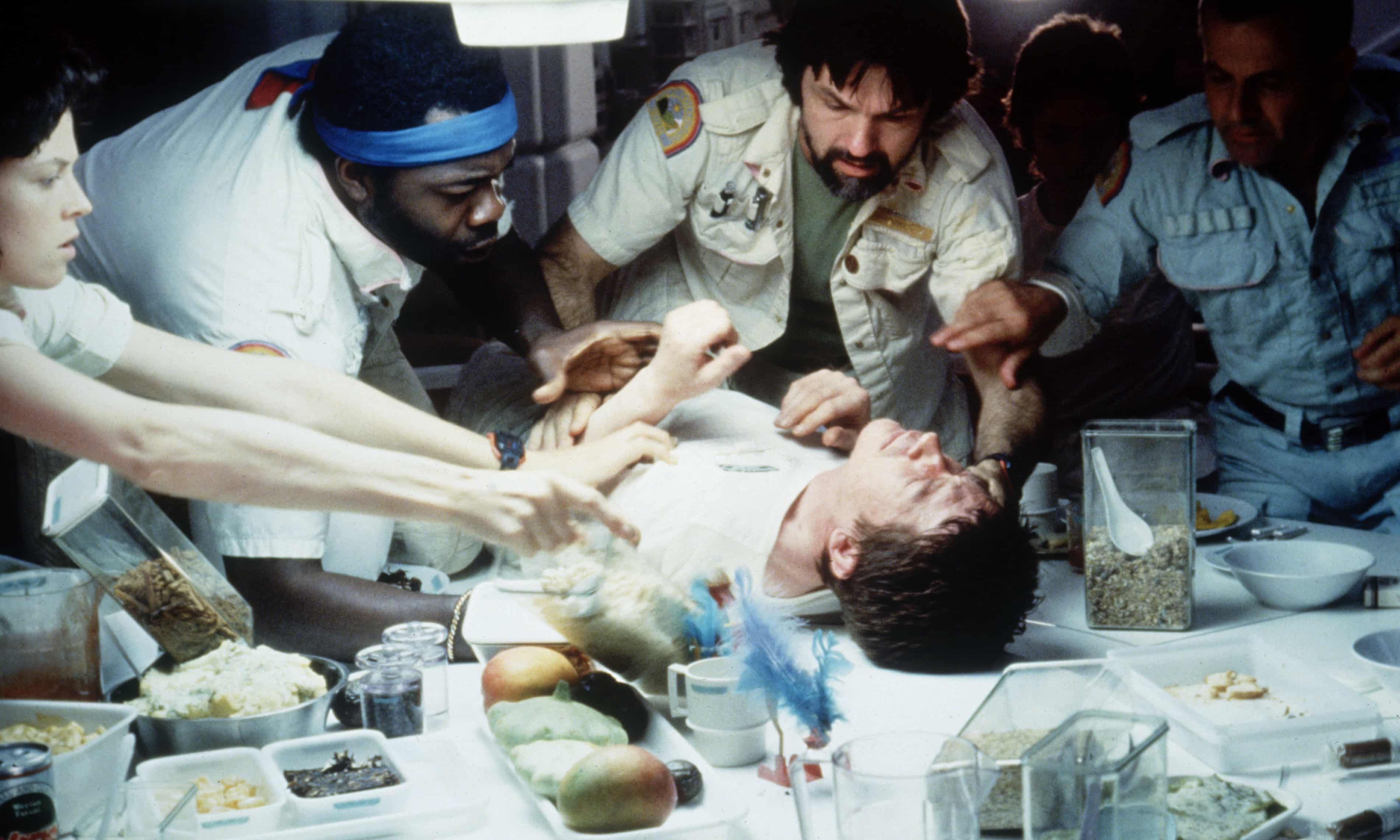
John Hurt’s final scene in Alien. If you don’t want to know the result, look away now… Photograph: ronaldgrantarchive.com
Over the past four decades, dozens of books, hundreds of journal articles and innumerable college courses have analysed, frame by frame, Ridley Scott’s story of a bloodthirsty creature stalking the crew of the spaceship Nostromo. No other film, not even The Godfather or Psycho, has generated quite that amount of attention.
Esto es increíble: no tenía idea de la repercusión de Alien en el mundo académico.
¿Qué tipo de análisis hacen? ¿Con qué lo relacionan?
Todo esto me hace recuperar una aspiración casi olvidada: mi idea de escribir sobre análisis de cine (a diferencia de crítica de cine).
Kreyszig, Erwin. Introductory Functional Analysis with Applications. John Wiley & Sons, Inc., 1978.
Eleanor Rigby by the Beatles
有了比較,體會往往更深!
關於「聽出和弦」這個活動(我可說一輩子都試圖在鍛鍊這個能力!):
關於Eleanor Rigby的和弦分析,我是先看了另一位老師Aimee Nolte的「聽出和弦」影片: https://www.youtube.com/watch?v=imj7FniRzyY
然後再來到Ethan老師這裡。兩位的手法非常不同,看完都各有收穫。
Proof:
The essense of the proof is to note that the open neighbourhood family of \(y\) form a cauchy and open filter base, the inverse of it is also cauchy and open, thus y is in the image of f(B(0,1))
Environmentallyextended input-output analysis(EE-IOA) focuses on the biophysical and monetary interrelations between economic sectors. It linksproduction, consumption and environmental stressors within and across countries. EE-IOA goes back to the work of Wassily Leontief (Fig2)86and has been proposed early on as a means to “integrate the world of commodities into the larger economy of nature”87
Material and energy flow analysis(MEFA)focuses on the role of resources for social and economic developmentand aims to inform sustainable resource management. One of itsfoundersis Robert U. Ayres59,76, who advocated the mass-balanced analysis of economic systemsas a counterpart to monetary-economic perspectives (Fig2).
Multi-scale integrated analysis of societal and ecosystemmetabolism, abbreviated MuSIASEM. This approach was developed by researchers around Mario Giampietroand Kozo Mayumi based on the work of Nicholas Georgescu-Roegen49
What if your sense of self, your seeing, your feeling, your very intelligibility as a “someone” are not possessions within a worldview, but part of an accommodation process issued from it, co-conditioned, emergent, and entangled?
for - quote - Sense of Self - worldview - Bayo - critique - worldview - Bayo - new trailmark - analysis
quote - Sense of Self - worldview - Bayo - What if, instead, worldviews are - not views from worlds - but the ways worlds come into view? - What if your sense of self, - your seeing, - your feeling, - your very intelligibility as a “someone” - are not possessions within a worldview, - but part of an accommodation process issued from it, - co-conditioned, - emergent, and - entangled?
analysis - Bayo juxtapositions - the normative subject/object dualistic view of a Self having an experience with objects with - a nondualistic view in which self and other, subject and object are two sides of the same seamless coin - The aggregate experience of "many diverse appearances" is imputed to be a "self" that is having these many diverse experiences of appearances - rather than apprehending the totality as an unbroken continuum<br /> - Are we not imaginative enough to break our deep conditioning of Self and other / subject and object and experience the totality of phenomena, instead imputing a self? - The individual "self" is indeed a compelling story because the biological individual inherently - has a distinct, and identifiable though dynamic boundary with its environment - has been bestowed with the evolutionary trait of instinct for survival - and therefore prioritizes securing resources required for its biological continuation - To see beyond this pyscho/physical appearance requires a high level of integration
for - youtube - Breaking Point - Yanis Varoufakis reveals Trump Tariff strategy - Trump's trade and deficit strategy - analysis - Yanis Varoufakis
summary - Good economic analysis of what Trump is trying to do with his Tariff strategy - Varoufakis points out that Trump's strategy is similar to Nixon's strategy many decades ago but he does not think Trump's strategy will succeed because he cannot completely eliminate the US deficit because it is how the US rentier class makes its huge profits: - Other countries export into US market and use the recycle the US dollars back into US Treasury bonds
Fucking stupid.
for - youtube - Trump tariffs - analysis - Jeffrey Sachs
Summary - Jeffrey Sachs provides very good analysis of Trump's tariffs and its consequences
dramaturgical analysis
for - definition - dramaturgy - invoking drama for presenting the self in different context - dramaturgical analysis - to - Wikipedia - dramaturgy - https://hyp.is/5ueHGA_0EfCaiB8s4MiYfQ/en.wikipedia.org/wiki/Dramaturgy_(sociology)
n 是 l² 中第 n个坐标为 1,其余坐标为 0 的元
\(l^2\)上的线性泛函若在一族无穷子基上每个向量都有\(f(v) \ge 1\), 则l不是有界的。考虑经典的\(\sum_n \frac{1}{n^2}\)
for - russia-ukraine war - geopolitical analysis - Trump's strategy with Putin - to end the cold war
summary - He doesn't offer any explanation of what will become of Ukraine if Trump gets his way
Donald knows that having minders or handlers or sycophants circling him isn't going to to contain his worsening psychopathologies or his worsening inability to have any kind of impulse control at all
for - quote - Donald Trump psychopathology - Mary Trump
for - Trump Zelensky Oval Office fiasco - analysis from Mary Trump
Summary - Mary Trump gives an insightful and thoughtful explanation of the psychopathology behind Donald Trump's immense insecurity streaming from his own childhood abuse from his father - Having a man in a position off power with this level of deeply unresolved psychopathology is incredibly dangerous for humanity
yes I do think there is something about his reaction that needs to be analyzed and explained not simply in the context of my family psychological history but in regards to uh the ways in which Donald's multifarious uh pathologies are having an impact not simply on his inner workings uh or on whom he surrounds himself with but the rest of the country and the world
for - Trump Zelensky Oval Office fiasco - analysis from Mary Trump
> - youtube - 5 Whys - youtube - Root cause analysis
Langes Interview mit Hans Joachim Schellnhuber im Standard, under anderem zu Kipppunkten und der Möglichkeit, dass wir uns schon auf dem Weg in ein „neues Klimaregime“ befinden. Schellnhuber geht davon aus, dass auch das 2°-Ziel überschritten werden wird. Der „Königsweg“, um der Atmosphäre danach wieder CO<sub>2</sub> zu entziehen, sei der weltweite Ersatz von Zement durch Holz beim Bauen, den er als Direktor des IIASA vor allem erforschen wolle. Die Wahrscheinlichkeit dafür, dass „noch alles gutgehen" werde, sei gering. https://www.derstandard.at/story/3000000204635/klimaforscher-schellnhuber-werden-auch-ueber-das-zwei-grad-ziel-hinausschiessen
Good books are complex and multi-dimensional books with a plethora of themes and symbols. Your job is to pick out the major ones, but maybe even focus your attention on a niche theme you want to tackle in an essay (if your teacher/ professor gives you the liberty of choosing).For example, when I read In Cold Blood, I decided to focus on how Capote portrayed the American Dream through both the victims and perpetrators. This required a much closer read for some parts, as the theme itself was woven through passages and not blatant or very apparent. Figuring this out early on will guide you as you read the book.Even if you aren’t reading a book for a class, it’s always lovely to see how a theme progresses throughout the book. I know a lot of people focus on character and character development, but themes are as equally as important. How does an author develop and deepen the reader’s understanding of a certain topic? How does it manifest in different characters? How does it branch out?
Die Ukraine.hat die Pipeline,durch die bisher russisches Gas nach Westeuropa geliefert wurde, unterbrochen. https://www.theguardian.com/world/2025/jan/01/breakaway-moldovan-region-cuts-heating-and-hot-water-as-russia-stops-gas-flowa
CEPA-Report:https://cepa.org/article/betraying-ukraine-for-blood-gas/
what does it mean that form is emptiness? What kind of experience is emptiness and how do we get there? Let’s look at this question from two sides, first intellectually and then experientially (through meditation).
for - Heart Sutra analysis - from Medium article - Heart Sutra and the nyams of Dzogchen - Aleander Vezhnevets - 2022, Sept 7
Heart Sutra analysis - Form is emptiness - Intellectual analysis - Reductionist analyzes into smaller and smaller parts but - where is the essence to be found?
We shall not sleep
Maybe meaning that, "we", referring to the fallen soldiers, are saying or attempting to get across to their "predecessors" or tose soldiers who are still alive and fighting on the battfield, that they "shall not sleep" until the soldiers get done what they need to get done.
heard amid the guns below.
Implying here, from the sensory perspective of the larks which are flying above the gunshots being shot across the battlefield in the sky.
Take up our quarrel with the fo
Addressing the next group of solider that are fighting the enemy
If ye break faith with us who die We shall not sleep, though poppies grow In Flanders fields.
The overall tone of this poem is almost nostalgic, however, the way the poem picks up in the middle, almost as if going down a hill at a faster pace, the tone shifts to be one of reflection and casts a heroic shadow on the fallen soldiers. Almost as if McCrae intentionally styled the poem in this manner to create more of a tribute to these soldiers that lost their lives in World War I.
from failing hands we throw
"..failing hands…" might refer to those of the solders who were struck and can no longer fight… "To you… we throw the torch…"
Perhaps with the hope of the falling soldeirs that their comrades will accept the "torch" from them to keep fighting for them and to accomplish what they can't help them to do anymore.
Dead
Interesting to make the word "dead" a proper noun. I wonder if McCrae capitalized the D to give tribute to those who fell during the war and is lost towards history.
We are the Dead. Short days ago We lived, felt dawn, saw sunset glow, Loved and were loved, and now we lie, In Flanders fields.
The entirety of this stanza is written from the first person perspective, most likely intended to be told from the fallen soldiers' point of view.
this suggests the fleeting window of life, and provides an indirect comparison to the poppies, as the soldiers are speaking of themselves as the poppies that grow in the field "currently" or had started growing after their deaths. "We lived, felt dawn, saw sunset glow, loved and were loved…" are all things that the poppies do as they continue to flourish in Flanders fields. "We are the Dead… We lived, felt dawn, saw sunset glow, loved and were loved, and now we lie in Flanders fields" (McCrae).
Scarce
"Scarce", here, refers to McCrae's reference to Larks singing in the line above, pointing to the idea that the sound of the Larks singing in the skies is muted or drowned out by the sound of gunshots involved in the battle happening below on the ground.
it's said that you can get there by doing like philosophical analysis, but this is using basically physiological techniques to get to the same place phenomenologically. So that's what "tukdam" is theoretically
for - key insight - Buddhism - Tibetan - Clear light meditation at time of death - Tukdam - a physiological technique to get to the same place as philosophical analysis - recognizing nondual, ultimate nature of reality - from Youtube - Between Life and Death: Understanding Tukdam - John D. Dunne
Take up our quarrel with the foe:
Addressing the next group of solider that are fighting the enemy
Dead
Interesting to make the word "dead" a proper noun. I wonder if McCrae capitalized the D to give tribute to those who fell during the war and is lost towards history.
from failing hands we throw
"..failing hands..." might refer to those of the solders who were struck and can no longer fight... "To you... we throw the torch..." - Perhaps with the hope of the falling soldeirs that their comrades will accept the "torch" from them to keep fighting for them and to accomplish what they can't help them to do anymore.
If ye break faith with us who die We shall not sleep, though poppies grow In Flanders fields.
We are the Dead. Short days ago We lived, felt dawn, saw sunset glow, Loved and were loved, and now we lie, In Flanders fields.
The entirety of this stanza is written from the first person perspective, most likely intended to be told from the fallen soldiers' point of view. - this suggests the fleeting window of life, and provides an indirect comparison to the poppies, as the soldiers are speaking of themselves as the poppies that grow in the field "currently" or had started growing after their deaths.
"We lived, felt dawn, saw sunset glow, loved and were loved..." are all things that the poppies do as they continue to flourish in Flanders fields. "We are the Dead... We lived, felt dawn, saw sunset glow, loved and were loved, and now we lie in Flanders fields" (McCrae).
Scarce
"Scarce", here, refers to McCrae's reference to Larks singing in the line above, pointing to the idea that the sound of the Larks singing in the skies is muted or drowned out by the sound of gunshots involved in the battle happening below on the ground.
I feel like sharing with you some of my observations as a frame analyst, as someone who analyzes semantic frames and how they structure a discourse to, in this case, to disempower us and keep us embedded within a conversation that is primarily about the actions of corporations and nation-states and that disengages us from direct grassroots action and taking power into our own hands
for - adjacency / validation - for justifying Tipping Point Festival - TPF - bottom up, grassroots direct action Vs - top down, corporate, policy action - Joe Brewer - framing analysis - using cognitive linguistics
adjacency / validation - between - ustifying Tipping Point Festival - TPF - - bottom up, grassroots direct action<br /> - top down, corporate, policy action<br /> - Joe Brewer - framing analysis - cognitive linguistics - adjacency relationship - We need both bottom up and top down section, but Joe's framing analysis provides an explanation why there isn't more bottom up direct action - It requires a lot of skill to find the leverage points as well as the weakness of people power is lack of money - To awaken the sleeping giant off the commons is the purpose of the Typing Point Festival (TPF)
mystery
"As another mystical image, the mystery can refer to the possibility of transformation the man believes is inherent in the child, and thus for hope in the future. But it can also represent primordial forces, like an apocalyptic event, that elude man’s knowledge and are beyond his control." (Gipko).
https://responsejournal.net/issue/2017-06/article/road-cormac-mccarthy
More on Ending here: https://ontheroadtotheroad7.wordpress.com/2024/11/26/ending/
Maps and mazes
"The centrality of natural forces in McCarthy's vision of the world is expressed in the novel's assertion that the maps and mazes on the trout's backs, cartographic puzzles through which life's mystery is both delineated and obscured, are visual schemata of natural processes which are beyond the power of humanity to restore to the world once they are lost." (Dowd 32).
https://www.jstor.org/stable/42909448
More on Ending here: https://ontheroadtotheroad7.wordpress.com/2024/11/26/ending/
Once
"[...] fleeting image of the past, before the religion of capitalism takes hold. [...] the past tense of the paragraph indicates that a human hand does eventually take the trout for its own possession, giving it over to the realm of property, closing off the common use and the cognizance of that mystery and wonder of the “world in its becoming.” (Dominy 156).
https://www.jstor.org/stable/10.5325/cormmccaj.13.1.0143
More on Ending here: https://ontheroadtotheroad7.wordpress.com/2024/11/26/ending/
"This achingly mournful passage alone would justify the novel's exaggerated representation of environmental collapse, as it closes the narrative with a poetic vision of vitality which is made all the more affecting through its analeptic framing within a desolated world. […] The destitution of the novel's present-day world heightens the affective power of this simple image of an organism swimming in fresh water […]." (Dowd 32).
https://www.jstor.org/stable/42909448
More on Worldbuilding here: https://ontheroadtotheroad7.wordpress.com/2024/11/26/worldbuilding/
Not be made right again
"While the boy seems to have found safety and a new family, some critics have suggested that this apparently hopeful ending may be deceptive. [...] There would, perhaps, be greater grounds for an optimistic reading if the novel’s ending remained focused on the boy, but it does not. [...] The ending yearns for the beginning but rules out any hope of a new one. The final sentence downgrades the importance of the human world and shows us a universe in which we are not the centre, and in which our passing may not after all be the ultimate tragedy." (Pudney 308).
More on Ending here: https://ontheroadtotheroad7.wordpress.com/2024/11/26/ending/
And I can go with you? Yes
"[…] the world represented by the father, the world of late industrial, patriarchal, capitalist individualism, cannot survive much longer without a change in our ethical comportment, a change that privileges community over goods and the relief of suffering over future-oriented calculations. It’s a simple, even childlike, moral prescription, yet one that McCarthy’s novel suggests might be the only hope for we humans at the end of the world." (Elmore 145-146).
https://www.jstor.org/stable/10.5325/cormmccaj.16.2.0133
More on Ending here: https://ontheroadtotheroad7.wordpress.com/2024/11/26/ending/
You’ll have to take a shot
"Instead of providing a rational, practical answer [...], the reader is asked to accept on faith that the boy will survive, because he deserves to. In other words, the reader is asked to make the same leap of faith as the boy’s father has, despite the crushing weight of the evidence of all that has happened so far." (Pudney 305).
More on Ending here: https://ontheroadtotheroad7.wordpress.com/2024/11/26/ending/
Goodness
"[...] the father was right about goodness: it arrives on cue as a deus ex machina that has been following the pair and swiftly enfolds the boy savior into a holy family, maybe a holy commune, where they talk of the breath of God passing “from man to man through all of time.” (Brooks).
www.nytimes.com/2021/10/21/books/review/review-the-road-by-cormac-mccarthy.html
More on Ending here: https://ontheroadtotheroad7.wordpress.com/2024/11/26/ending/
Do you remember that little boy, Papa?
"These questions and the boy’s anxiety about the fate of the other boy are, of course, as much anxious questions about his own fate." (Elmore 139).
https://www.jstor.org/stable/10.5325/cormmccaj.16.2.0133
More on Ending here: https://ontheroadtotheroad7.wordpress.com/2024/11/26/ending/
cave
"Beginning with the father’s dark dream of “a cave where the child led him by the hand”, the novel ends by closing the circle, as the dying father believes he is there once again [...]. He himself may never find the light but he does with the knowledge that his son carries it onward, still on the road [...]." (Mitchell 227).
https://doi.org/10.1093/litimag/imv028
More on Ending here: https://ontheroadtotheroad7.wordpress.com/2024/11/26/ending/
Do you hear?
"[...] in the father’s final attempt to bequeath his son the principles and wisdom that have led them throughout the novel, we discover that these rules are empty, ideological hopes rather than practical methods of success. Implicit in this concession is the notion not only that the father’s rules cannot assure his son’s survival, but that it is precisely doing the opposite of these rules, a willingness to take chances, to retrace one’s steps, and to leave one’s gun that open possibilities of future success." (Elmore 141).
https://www.jstor.org/stable/10.5325/cormmccaj.16.2.0133
More on Ending here: https://ontheroadtotheroad7.wordpress.com/2024/11/26/ending/
Just dont give up
"In the father we see, following Stark, a prototypical Western subject: masculine, American, white, Christian, middle-class, heteronormative, able-bodied, and well-educated. He is the very picture of rugged American individualism with his stereotypically masculine proclivity for tools and guns, his knowledge of woodcraft and survivalism, his no tears attitude, and his dogged persistence [...]." (Elmore 137).
https://www.jstor.org/stable/10.5325/cormmccaj.16.2.0133
More on Worldview here: https://ontheroadtotheroad7.wordpress.com/2024/11/26/worldview/
"The father even falls back on the heroic stoicism that we find in some of McCarthy 's other Southern characters, as he implores his son to keep trying [...]." (Walsh 53).
https://www.jstor.org/stable/42909381
More on Style here: https://ontheroadtotheroad7.wordpress.com/2024/11/26/style/
small figure
"McCarthy’s prose is for the most part functional and spare, describing actions rather than elaborating on inner states and feelings. The love that exists between the father and his son is beautifully depicted, but this is achieved without any hyperbole: the man’s frequent observation about his son’s thinness is quietly effective in communicating his love and his fears for the boy." (Pudney 300).
More on Style here: https://ontheroadtotheroad7.wordpress.com/2024/11/26/style/
He
"The lack of any personal names often leaves the reader in some doubt as to whom the pronoun “he” refers to. All this reflects the descent into a world in which the only imperative is survival." (Pudney 300).
"[...] The Road often relies on pronouns for character identification. Short by nature, pronouns allow McCarthy to emphasize the characters’ deeds by drawing away as little attention as possible from action verbs [...]." (Kunsa 61).
https://www.jstor.org/stable/10.2979/jml.2009.33.1.57
More on Style here: https://ontheroadtotheroad7.wordpress.com/2024/11/26/style/
burntlooking as the country
"The novel repeatedly transposes descriptive terms and metaphors from physiology to the environment." (Dowd 33).
More on Style here: https://ontheroadtotheroad7.wordpress.com/2024/11/26/style/
"The novel seems to suggest a correspondence between the functioning of a biological organism and the global ecosystems whose collapse is so apparent." (Dowd 35).
More on Worldbuilding here: https://ontheroadtotheroad7.wordpress.com/2024/11/26/worldbuilding/
tracks
"Obvious signs of indebtedness occur in the scene of footprints on hot macadam, recalling Daniel Defoe’s Robinson Crusoe (1719) in the heart-stopping glimpse of Friday’s footsteps on sand." (Mitchell 216).
https://doi.org/10.1093/litimag/imv028
More on Style here: https://ontheroadtotheroad7.wordpress.com/2024/11/26/style/
light, shuffling through the ash, each
"Cormac McCarthy was famously skeptical about punctuation. Throughout his career, he refrained from using citation marks, and in the interview, he (to the surprise of many) gave to Oprah Winfrey when she selected The Road for her book club, he said: “There’s no reason to blot up the page with weird little marks. If you write properly you shouldn’t have to punctuate. [. . .] I believe in periods, capitals, and the occasional comma. And that’s it.” (Andersen 4).
https://doi.org/10.1080/0895769X.2024.2420889
More on Style here: https://ontheroadtotheroad7.wordpress.com/2024/11/26/style/
wasted
"The pervasiveness of consumption in The Road is evident even in the word choices of its characters and narrator. If the novel portends an end of capitalism, its setting presents an environment that is merely what is left after absolutely every resource has been harvested or appropriated, leaving only refuse, junk, and litter. The destiny of the consumed thing is to become waste, a word that appears several times in The Road, always as descriptions of the ashen dead landscape. [...] the world is both vast and empty and also the waste of itself, spent, used up, the leftovers from the passing away of the consumer society and the society of vagabonds and bloodcults wrenching nearly every last resource from the land and finally killing and eating each other."
https://www.jstor.org/stable/10.5325/cormmccaj.13.1.0143
More on "Worlbuilding" here: https://ontheroadtotheroad7.wordpress.com/?p=194
"And the very topos of the world as wasteland extends from Eliot and Fitzgerald forward, though [...] It is Hemingway, however, whose adoption of the topos most prominently engages McCarthy, in his self-conscious revision of the Nick Adams stories with their focus on the relationship of father and son [...]." (Mitchell 217).
https://doi.org/10.1093/litimag/imv028
More on Style here: https://ontheroadtotheroad7.wordpress.com/2024/11/26/style/
I’m right here. I know
"Inevitably, language too will disappear if there are not enough speakers to maintain its many dialects and conventions. The dialogs between the man and the boy indicate that the loss of language is already well underway; their conversations are often simply reserved to matters of survival or the present situation and rarely involve abstract concepts or everyday elements of the old world." (Lodoen 88).
More on Style here: https://ontheroadtotheroad7.wordpress.com/2024/11/26/style/
here
"[...] Cormac McCarthy is known and admired for his careful research and close attention to the details of physical settings in his novels. [...] However, reviews by a number of apparently geographically challenged critics and commentators have suggested some novel [...] interpretations for the route." (Morgan 39).
https://www.jstor.org/stable/42909380
More on Style here: https://ontheroadtotheroad7.wordpress.com/2024/11/26/style/
With
"The Road has no traditional chapters, but consists of a long series of short, discrete paragraphs – 390, to be exact – that in the US first edition are separated by two lines of blank space. On the one hand, this accumulation of textual fragments emulates the broken landscape; on the other hand, the relentless progression of paragraphs mirrors the main characters’ eventful journey along the road." (Andersen 1).
https://doi.org/10.1080/0895769X.2024.2420889
"The solitary paragraphs of the novel, moreover, isolated by borders of white space, compel the abeyances, reversals, and shifts in direction that reinforce this general discontinuity—indeed, that make reading the novel similar to reading a poem, asking the reader to pause and reflect, to slow the tempo, to contemplate silences in the text as moments when language itself prepares to continue." (Mitchell 210).
https://doi.org/10.1093/litimag/imv028
More on Style here: https://ontheroadtotheroad7.wordpress.com/2024/11/26/style/
and turned and lurched away and
"Parataxis, according to the Oxford English Dictionary , is "the placing of propositions or clauses one after another, without indicating by connecting words the relation (of coordination or subordination) between them." Such a narrow literal definition is often broadened to encompass a more inclusive paratactic style, in which polysyndeton, the use of many coordinating conjunctions to connect clauses, also operates in a paratacticway. Examples of this rhetorical figure can be found throughoutMcCarthy's corpus." (Dowd 24).
"The parataxis both reflects the texture of the disjunctive and depleted post-apocalyptic world and diminishes conceptual categories with which the human mind customarily shapes its encounter with reality." (Dowd 29).
https://www.jstor.org/stable/42909448
More on Style here: https://ontheroadtotheroad7.wordpress.com/2024/11/26/style/
sightless
"The motive of blindness has often been dear to McCarthy who used the device several times in the past [...]." (Juge 23).
More on Style here: https://ontheroadtotheroad7.wordpress.com/2024/11/26/style/
"The father's oblivion has not reached the medical stage of blindness, but many around him have: his wife, for example, is blind by the time she nears her death; the man struck by lightning is also half blind [...]; and both are described as being bound to die. Blindness in The Road ,whether it is physical or spiritual, acts as a harbinger of death [...]." (Juge 23).
https://www.jstor.org/stable/42909396
More on Worldview here: https://ontheroadtotheroad7.wordpress.com/2024/11/26/worldview/
creature
"[...] the paragraph more generally echoes classics from Beowulf to The Faerie Queene, introducing a nightmarish monster as emblem for monstrous times." (Mitchell 216).
https://doi.org/10.1093/litimag/imv028
More on Style here: https://ontheroadtotheroad7.wordpress.com/2024/11/26/style/
dream
"Dreams play an important role in McCarthy's narratives; most of his stories are marked by the weirdness of reminiscence and the deceitful power of dream and dreamlike narratives." (Juge 21).
https://www.jstor.org/stable/42909396
"Flashbacks, memories, dreams: all regularly disrupt the narrative flow in a fashion that nonetheless makes the narrative come alive, forcing us to concentrate on sounds and images that reflect the man’s mood of puzzlement, anxiety, disjointedness. But they also help defy the abysmal present, offering a rearguard defense of a vivid, humanizing past that everywhere else—in the landscape, in encounters with cannibals and psychopaths— is being obliterated." (Mitchell 212).
https://doi.org/10.1093/litimag/imv028
More on Style here: https://ontheroadtotheroad7.wordpress.com/2024/11/26/style/
Like
"The three similes of this first paragraph (“Like the onset of some cold glaucoma . . . Like pilgrims in a fable swallowed up . . . sightless as the eggs of spiders”) are themselves weirdly disorienting, much as in a dream, establishing the dissociative aura experienced by father and child confronted by a nightmarish world." (Mitchell 211).
https://doi.org/10.1093/litimag/imv028
More on Style here: https://ontheroadtotheroad7.wordpress.com/2024/11/26/style/
the dark and the cold
"The darkness of the world is emphasized from the start: the first two sentences of the novel use the words “dark” or “darkness” three times, and the word “cold” appears twice in the first three sentences." (Pudney 295).
More on Style here: https://ontheroadtotheroad7.wordpress.com/2024/11/26/style/
When
"[...] the repeated “w” (“When he woke in the woods,” “wakened,” “wandered,” “wet,” “swallowed,” “inward,” “swung,” “water,” “bowels,” and so on) has itself an odd sonic effect, enhanced by the very slippage of “w” from consonance to assonance (as a labiolized velar consonant, it can be vowel as well). It is almost as if the dream signaled a release from pedestrian prose, from the simple diction of a paratactic style to a richer, more evocative and elaborate, even distinctly human (because embellished and man-made) realm." (Mitchell 211).
https://doi.org/10.1093/litimag/imv028
More on Style here: https://ontheroadtotheroad7.wordpress.com/2024/11/26/style/
and said his name over and over again
"In total, six pages are devoted to the boy’s grief, which stands in stark contrast to his quick acceptance of his mother’s death. The treatment of the parents’ deaths and the boy’s reaction to these sets up a dichotomy, with mother/death on one side and father/life on the other." (Åström 122).
More on Worldview here: https://ontheroadtotheroad7.wordpress.com/2024/11/26/worldview/
Old dreams
"[...] most of dreams or memories refer to the past as it once was, a past the father is struggling to let go.[...] The persistent rivalry between dreams and reality is one of the father's most difficult and tempting conflicts." (Juge 22).
https://www.jstor.org/stable/42909396
More on Worldview here: https://ontheroadtotheroad7.wordpress.com/2024/11/26/worldview/
best guy
"[...] as the man is dying, he calls the child “the best guy”, a superlative that elevates the boy above simple “good guy” status and sets him apart from his father and any other decent human beings." (Kunsa 65).
https://www.jstor.org/stable/10.2979/jml.2009.33.1.57
"When he tells the boy that he is the one carrying the fire, that he is "the best guy", he is indicating that the child has a crucial ability that he has lost. Only a good guy who has the ability to make connections with other people, to enter or help form a community, truly carries the fire. The child has this ability. This is why the child is the one who is really carrying the fire - and always has carried it. The man carries the fire only in a secondary sense: he carries the child." (Wielenberg 11).
https://www.jstor.org/stable/42909407
More on Worldview here: https://ontheroadtotheroad7.wordpress.com/2024/11/26/worldview/
I cant hold my son dead in my arms. I thought I could but I cant
"The man’s realization that he need not kill his son resembles the story of Abraham and Isaac, in which God commands Abraham to kill his son, only to reprieve him at the last minute." (Pudney 304).
More on Worldview here: https://ontheroadtotheroad7.wordpress.com/2024/11/26/worldview/
No chances
"Here we return to the fundamentally masculine and individualist orientation of the father’s worldview, the chance of survival requiring a cold, self-interested, and absolute calculation of cost and benefit. Yet McCarthy’s doubling down on this masculine ethos of cost benefit is hardly an endorsement, since the father undermines the truth of his logic through the link he draws between survival and luck." (Elmore 140).
https://www.jstor.org/stable/10.5325/cormmccaj.16.2.0133
More on Worldview here: https://ontheroadtotheroad7.wordpress.com/2024/11/26/worldview/
He wanted to be able to see
"Sight and blindness in the Bible are often associated with the power of God and therefore the power of faith upon mankind: men are cured from blindness thanks to the power of God and the power of faith. I would not say that McCarthy is setting the father's upcoming blindness as an example of moral disorder or sin per se, but I do think it connects with the loss of faith and the loss of will to see the truth since in The Road most of those who have lost sight and hope end up dead". (Juge 23).
https://www.jstor.org/stable/42909396
More on Worldview here: https://ontheroadtotheroad7.wordpress.com/2024/11/26/worldview/
I’m going to leave you the way you left us
"The encounter with the thief reveals the complete inhumanity of the father’s abandonment of community. [...] the mere reclamation of their lost goods quickly ceases to be the father’s principle aim; rather, he seeks revenge, taking everything the man has, despite its utter lack of value to them [...]." (Elmore 144).
https://www.jstor.org/stable/10.5325/cormmccaj.16.2.0133
More on Worldview here: https://ontheroadtotheroad7.wordpress.com/2024/11/26/worldview/
Papa please dont kill the man
"The relationship of father and son embodies a tension between pragmatic self-preservation and innocent morality, keeping alive for both a fear of what they may be becoming. The father’s shrewd sense of risk is repeatedly provoked by events on the road that prompt his son’s compassionate willingness to risk. Yet gradually, each schools the other, with filial compassion balanced by paternal anxiety until finally the boy protests killing a thief who has stolen their gear [...]." (Mitchell 221).
https://doi.org/10.1093/litimag/imv028
More on Worldview here: https://ontheroadtotheroad7.wordpress.com/2024/11/26/worldview/
Like who? I dont know. Like God? Yeah
"God is on the periphery of their hopes, present but not tangible enough to invest in." (Hibbs).
https://wm.wts.edu/read/a-reflection-on-mccarthys-the-road
More on Worldview here: https://ontheroadtotheroad7.wordpress.com/2024/11/26/worldview/
lessons
"Disappearing with traditions and customs like table manners is language [...]. Losing its referents, language itself comes to its extinction, but the father saves it by teaching his son to read." (Guo 5).
https://doi.org/10.7771/1481-4374.2732
More on Worldview here: https://ontheroadtotheroad7.wordpress.com/2024/11/26/worldview/
What’s on the other side?
"[...] the welcome prospect of a vital past leeching into the present comes to seem akin to the likelihood of people elsewhere, here in the present, acting like them. The boy first broaches this possibility in wondering whether “on the other side” of the ocean a father and son are doing the same as they are, recalled by the father later that night as he sits on the beach and contemplates others carrying “the fire"." (Mitchell 224).
https://doi.org/10.1093/litimag/imv028
More on Worldview here: https://ontheroadtotheroad7.wordpress.com/2024/11/26/worldview/
bad guys
"In the world of The Road , there is a simple rule for distinguishing the good guys from the bad guys. Bad guys eat people; good guys don't. This is what remains of the Categorical Imperative: don't treat people as mere food. While this is the most obvious principle to which good guys are committed, it is not the only one. It is possible to discern in The Road a Code of the Good Guys, a set of principles to which good guys are committed. That Code includes the following rules:
The man tries to teach these principles to the child and he tries to follow them himself. Throughout the novel we witness the man's struggle to be a good guy, to do what is right in a world in which most people seem to have abandoned morality altogether." (Wielenberg 5-6).
https://www.jstor.org/stable/42909407
"Every social institution and convention that could serve as a hallmark of civilization has passed so far into oblivion that, as Ashley Kunsa argues, the names of places, road, and people have passed into meaninglessness, leaving only the deeds of individuals to providing meaning and morality to the world (61–63). The most important dividing line for the boy is the assurance from his father that they will not eat people." (Dominy 146).
https://www.jstor.org/stable/10.5325/cormmccaj.13.1.0143
More on Worldview here: https://ontheroadtotheroad7.wordpress.com/2024/11/26/worldview/
We cant
"The child wants to help the other boy, but the man is reluctant. The man insists that they have to leave the town now that they have attracted attention to themselves. Initially the man denies that the child really saw another boy. Then he insists that there were adults around to take care of the other boy; they were just hiding. He tries to rationalize his actions. Good guys help others - they certainly don't abandon helpless children. The man wants to be a good guy; therefore, he cannot admit that he is abandoning another child." (Wielenberg 7).
https://www.jstor.org/stable/42909407
More on Worldview here: https://ontheroadtotheroad7.wordpress.com/2024/11/26/worldview/
A boy
"This is the only place in the book, before the man’s death, where the reader experiences things from the boy’s point of view for more than the odd sentence, and there are two ways to interpret what has happened. The first is that the boy is imagining things. This is certainly what his father thinks [...]. Certainly the boy’s intense loneliness makes this explanation plausible. But another possibility is that the boy’s goodness has attracted another “good guy”, as it will do again at the end of the novel." (Pudney 304).
More on Worldview here: https://ontheroadtotheroad7.wordpress.com/2024/11/26/worldview/
She’s gone isn’t she? And he said: Yes, she is
"In its representation of participatory, heroic fatherhood, Cormac McCarthy’s The Road constructs the mother as lacking care, love, warmth, nurturing and survival skills. She contributes nothing to the family or the story, beyond giving birth to the child and acting as a foil for the father, who provides for the boy’s physical and emotional needs. In so doing, the narrative represents this mother specifically and motherhood more generally as irrelevant. The novel participates in a continuing cultural trend of marginalizing mothers in order to privilege fathers. This is an aspect of the novel that requires much greater discussion and analysis than scholars have so far acknowledged or provided." (Åström 125).
More on Worldview here: https://ontheroadtotheroad7.wordpress.com/2024/11/26/worldview/
He’d taught her himself
"Throughout the narrative, the mother’s apparent lack of awareness of, and readiness for, dealing with disaster is juxtaposed with the man’s preparedness; her emotional weakness contrasts with his dogged determination. Where the man refuses to give in, the woman does not even see herself as in charge of her own existence [...]. Even when it comes to committing suicide, it seems that the man is better prepared than the woman." (Åström 121).
More on Worldview here: https://ontheroadtotheroad7.wordpress.com/2024/11/26/worldview/
No. I will not. I cannot
"In The Road, the father is pitted against, and trumps, the mother in three areas. In so doing, he shows that as a post-feminist father, he is a much better carer and guardian for the child than she is. First, he is emotionally involved with the boy and prepared to sacrifice himself for his survival, whereas the mother is emotionally distant and seems exclusively concerned with her own existence. Second, he is resourceful and quick-thinking. The mother, on the other hand, takes no independent action and appears to have no practical or survival skills. Third, the father is essential to the boy, even after his own death. The mother, in contrast, is quickly forgotten. Where the mother is constructed as expendable in every way, the father is presented as irreplaceable." (Åström 118-119).
More on Worldview here: https://ontheroadtotheroad7.wordpress.com/2024/11/26/worldview/
I cant help you
"The mother character is neither a traditional mother nor a ‘new’ mother. She is a non-entity with no relevance to the lives of her husband and son. By simultaneously reinforcing traditional stereotypes and embracing a ‘new’ fatherhood that is predicated on the elision of mothers, McCarthy and his critics present a futuristic world in which the only parent who is needed is the father." (Åström 114).
More on Worldview here: https://ontheroadtotheroad7.wordpress.com/2024/11/26/worldview/
I dont dream at all
"[...] dreams may affect perception but they are also a clear indicator of life since it indicates persistent perception. Once death is upon men dreams indeed cease, which is the case of the wife [...]." (Juge 22).
https://www.jstor.org/stable/42909396
More on Worldview here: https://ontheroadtotheroad7.wordpress.com/2024/11/26/worldview/
You’d rather wait for it to happen
"[...] misery necessitates faith. In the case of the man, his love for his son motivates him to keep going. His problem is that his desire to keep going appears to lack a rational foundation. [...] Nevertheless, the man keeps on going despite recognizing, at some level, that the struggle may very well be futile. Because it is in the nature of human beings to desire that the things they do make sense, he grasps for beliefs that will make his struggle make sense. Among these is the belief that he is on a divine mission. It is not that he wants to keep going because he believes that he is on a divine mission. Rather, the desire comes first: because he wants to keep going, he believes - or tries to believe - that he is on a divine mission." (Wielenberg 4).
https://www.jstor.org/stable/42909407
More on Worldview here: https://ontheroadtotheroad7.wordpress.com/2024/11/26/worldview/
I’m begging you. I dont care
"Not only does the mother refuse to live for her son, but she does not exhibit a moment’s remorse, anguish or worry about his future. The narrative describes the ‘coldness’ of her leaving as her ‘final gift’, showing the extent of her indifference towards her family. She leaves her husband and son, apparently without considering the impact it will have on them. The mother may be despondent, traumatized, depressed [...]. Nevertheless, the narrative’s contrasting of the father’s emotional outbursts [...] with the mother’s unemotional responses invites the reader to sympathize with the father." (Åström 120).
More on Worldview here: https://ontheroadtotheroad7.wordpress.com/2024/11/26/worldview/
Cant we help him Papa?
"[...] his son is a unique “product” of post-apocalyptic America. The boy is not only innocent due to his tender age; as an individual who has apparently not been exposed to the thriving American consumer culture that existed prior to the apocalypse, the boy represents a new socio-economic model—the non-consumer." (Kaminsky 1).
https://journals.openedition.org/ejas/13010
More on Worldview here: https://ontheroadtotheroad7.wordpress.com/2024/11/26/worldview/
There’s nothing to be done for him
"[...] the father’s reluctance to offer help to the man springs from his conviction that such help would ultimately imperil their own chances of survival." (Elmore 143).
https://www.jstor.org/stable/10.5325/cormmccaj.16.2.0133
More on Worldview here: https://ontheroadtotheroad7.wordpress.com/2024/11/26/worldview/
They pushed on
"[...] the pair’s journey acquires an explicitly religious quality, a sense of divine mission reinforced by the antonomastic refrain of “good guys” — that is, the substituting of this phrase for their proper names — and the repetition of “carrying the fire,” phrases that become incantatory in the manner of a litany or a prayer." (Kunsa 59).
https://www.jstor.org/stable/10.2979/jml.2009.33.1.57
More on Worldview here: https://ontheroadtotheroad7.wordpress.com/2024/11/26/worldview/
okay
"Serving as phatic discourse more than actual exchange of information, “okay” becomes an intermediate term, resonating as neither right nor wrong. [...] Depending on context, the word shelters layers of implication yet always expresses a determination of father and son to negotiate, to agree to disagree. [...] Father and son exchange “okay”s as a means of cementing their relationship, building on the very desire to maintain a verbal link that always gestures to something more than just keeping the conversation alive." (Mitchell 222).
https://doi.org/10.1093/litimag/imv028
More on Worldview here: https://ontheroadtotheroad7.wordpress.com/2024/11/26/worldview/
godless
"Great suffering appears to constitute evidence against the existence of a loving God, but it also has the capacity to produce or strengthen belief in such a God. It is when we suffer that we most need belief in a loving God to keep ourselves going. The more reason we have to doubt God's reality, the more we need to believe." (Wielenberg 3).
https://www.jstor.org/stable/42909407
More on Worldview here: https://ontheroadtotheroad7.wordpress.com/2024/11/26/worldview/
If he is not the word of God God never spoke
"The book of Genesis depicts God as creating through speech (Genesis 1:1-31); a God that does not speak is a God that does not create. Thus, the man's declaration is that either his son is the word of God, or, for all practical purposes, the universe is a godless one." (Wielenberg 1).
http://www.jstor.org/stable/42909407
More on Worldview here: https://ontheroadtotheroad7.wordpress.com/2024/11/26/worldview/
granitic beast
"[...] one of Plato's most famous theories - the often debated allegory of the Cave - [...] is interwoven in [...] The Road." (Juge 16).
"In The Road's narrative, father and son indeed wander in the vastest cave ever crafted in modern literature, a post apocalyptic, "barren, silent, godless" world." (Juge 19).
https://www.jstor.org/stable/42909396
More on Worldbuilding here: https://ontheroadtotheroad7.wordpress.com/2024/11/26/worldbuilding/
"His dream is symbolical: the cave in which he wanders seems to be the ethical dilemma he is trapped in and from which he struggles to get out. [...] The dream is his subconscious fear and struggle not to succumb to instincts against the principle of ethics." (Guo 4).
https://doi.org/10.7771/1481-4374.2732
More on Worldview here: https://ontheroadtotheroad7.wordpress.com/2024/11/26/worldview/
swallowed up and lost
"In the beginning of The Road, the father is awakened from a dream […]. This form of disembodiment, in the sense of losing control over one’s corporeality while surrendering to a greater force, is characteristic of the father, who struggles with his sense of body throughout the novel until his death. Thus, the father’s departure can be construed as the ultimate surrender to both the metaphorical and physical darkness." (Kaminsky 4).
https://journals.openedition.org/ejas/13010
More on Worldview here: https://ontheroadtotheroad7.wordpress.com/2024/11/26/worldview/
woke
"McCarthy’s dystopian tale is situated after the collapse of the “American Dream,” but it certainly engages its absence, most notably through the distinction between the consumerism of pre-apocalyptic America and the non-consumerism of the wasteland. This gap is portrayed by the inherent difference between the consumer consciousness of the father, who is portrayed at the beginning of the novel as a dreamer and a relic of American consumerism, and the son as a non-consumer, both a “pure” product of the palimpsestic wasteland and a literary allusion to anti-consumerism." (Kaminsky 5).
https://journals.openedition.org/ejas/13010
More on Worldview here: https://ontheroadtotheroad7.wordpress.com/2024/11/26/worldview/
fading light
"The real darkness from the book comes not from the ashen apocalyptic world they trudge through—with all of its rust, char, and desolation, its silhouettes of life once lived buried beneath the debris of death. It comes from the smallness of the light they think is worth chasing, a light they think is inside themselves, an earthly light. [...] The man and the boy struggle all the way to the end to maintain a light of hope that is essentially dark, because it is bound to a world not that is passing away, but that has passed away." (Hibbs).
https://wm.wts.edu/read/a-reflection-on-mccarthys-the-road
More on Worldbuilding here: https://ontheroadtotheroad7.wordpress.com/2024/11/26/worldbuilding/
Keep going south
"One of the most symbolic themes of the novel is that the South - as physical space, imaginative entity and narrative focus - acts as a redemptive agency when all else seems to have vanished." (Walsh 52).
"Although ashen, wasted and ostensibly dystopian, The Road succeeds in reviving the most cherished geocentric American myth of the frontier, of a new physical, imaginative and spatial beginning. In what is a major symbolic gesture McCarthy re-inscribes this national myth; in so doing, he reverses the westerly spatial movement of his own characters, and we leave the boy as he continues to carry his light into the South." (Walsh 54).
https://www.jstor.org/stable/42909381
More on Worldbuilding here: https://ontheroadtotheroad7.wordpress.com/2024/11/26/worldbuilding/
carrying the fire
"What does it mean to carry the fire? Throughout much of the story, the two are literally carrying fire, or at least the means to produce it. Fire sustains them; it keeps them warm and cooks their food. It allows them to play cards and allows the man to read to the child at night. Fire is the foundation of civilization. Of course, fire is also the primary implement of the destruction of civilization in The Road. Perhaps to carry the fire is to carry the seeds of civilization. If civilization is to return to the world, it will be throughthe efforts of "good guys" like the man and the child." (Wielenberg 5).
https://www.jstor.org/stable/42909407
More on Worldbuilding here: https://ontheroadtotheroad7.wordpress.com/2024/11/26/worldbuilding/
He could see the disappointment in his face
"McCarthy demonstrates that the journey of the man and boy may have been for naught, since they discover nothing that they haven’t already seen. So the end of the journey for them offers more of the same wasteland rather that John Winthrop’s “city upon a hill” or many a settler’s Promised Land. By setting his road narrative in a post-apocalyptic wasteland, McCarthy critiques the ultimate outcome of, not just Americans’, but man’s shortsightedness, vanity, and ego." (Gipko).
https://responsejournal.net/issue/2017-06/article/road-cormac-mccarthy
More on Worldbuilding here: https://ontheroadtotheroad7.wordpress.com/2024/11/26/worldbuilding/
slaves
"The remnant society of The Road has reached the totalizing end of capitalism, one in which everything and everyone is subject to ownership, exchange, and acquisition for consumption." (Dominy 149).
https://www.jstor.org/stable/10.5325/cormmccaj.13.1.0143
More on Worldbuilding here: https://ontheroadtotheroad7.wordpress.com/2024/11/26/worldbuilding/
fire
"In the absence of photosynthetic flora, the atmosphere of the planet would gradually slide into chemical equilibrium, all of its oxygen being locked away through oxidation (the rusting of iron, for example). In such an environment, fires would be increasingly difficult to ignite, relying as they do upon the presence of sufficient quantities of oxygen. Human existence would have become impossible long before such an occurrence, however, given our dependence upon oxygen. The ability to light a controlled fire, one of the activities repeated by the man and boy throughout the novel, is thus a feature of an environment which has a very specific chemical make-up, one which is conducive to life. Considered from this angle, to "carry the fire" is thus to carry the relatively modest hope that life could possibly return to the planet again, in the understanding that at least one necessary condition is still being met by the environment. While fire is closely associated with death and destruction in the novel, it also stands for life itself." (Dowd 38).
https://www.jstor.org/stable/42909448
More on Worldbuilding here: https://ontheroadtotheroad7.wordpress.com/2024/11/26/worldbuilding/
grocery cart
"[...] cannibalism as a critique of unchecked consumption of environmental resources and the products made with them. Images of marketing, branding, and shopping have survived the catastrophe and serve as markers of past consumption that have outlived its own heyday." (Dominy 146-147).
https://www.jstor.org/stable/10.5325/cormmccaj.13.1.0143
More on Worldbuilding here: https://ontheroadtotheroad7.wordpress.com/?p=194
he looked out through the trees toward the road
"[…] the road in the novel is very linear and stands out of the landscape as if stronger than the declining landscape, an echo of the declining society [...]." (Juge 20).
https://www.jstor.org/stable/42909396
More on Worldbuilding here: https://ontheroadtotheroad7.wordpress.com/2024/11/26/worldbuilding/
The segments of road down there among the dead trees
"For most road writers, the highway offers a chance for escape and represents the possibility inherent in the country itself. [...] In contrast, McCarthy corrupts the highway in The Road, both physically and in the imagination. No longer a place for safe travel and experience, the highway becomes instead a path through a destroyed land leading into an uncertain future." (Gipko).
https://responsejournal.net/issue/2017-06/article/road-cormac-mccarthy
More on Worldbuilding here: https://ontheroadtotheroad7.wordpress.com/2024/11/26/worldbuilding/
ash
"According to the Old Testament, God created Adam from “the dust of the ground”. Later, Abraham comments that he is “but dust and ashes”. This association raises the disturbing possibility that part of what the father and his son are breathing in is in fact human remains, reduced to the dust and ashes out of which humanity was created." (Pudney 295).
More on Worldbuilding here: https://ontheroadtotheroad7.wordpress.com/2024/11/26/worldbuilding/
south
"If they continue south, keeping near streams and rivers and traveling generally downstream, they would eventually reach the South Carolina coast." (Morgan 45).
https://www.jstor.org/stable/42909380
More on Worldbuilding here: https://ontheroadtotheroad7.wordpress.com/2024/11/26/worldbuilding/
for years
"The story takes place in a very specific timespan wherein the structures of the past world still exist, even if only as remnants or specters, and therefore continue to influence how people think and act. These structures, which are environmental (changing weather, climate, and ecosystems), architectural (such as the roadways and city buildings), institutional (religion, science, law), and foundational (time and language), are still very much present in the main character’s mind in the sense that they continue to shape his thoughts and actions. However, they have lost their former power to order and sustain life on a grand scale." (Lodoen 87).
More on Worldbuilding here: https://ontheroadtotheroad7.wordpress.com/2024/11/26/worldbuilding/
south
"It seems to me that the importance of the route is that McCarthy is fictionally returning once again to his own roots in Knoxville and the southeast, to some of the places where the author spent the earlier years of his life. I believe that it is no accident that these places are the ones that are described in the most detail. Observations such as these would seem to make other autobiographical interpretations of the text more plausible." (Morgan 46).
https://www.jstor.org/stable/42909380
More on Worldbuilding here: https://ontheroadtotheroad7.wordpress.com/2024/11/26/worldbuilding/
walked out to the road
"The road […] helps the duo out of the Cave to the Sun through a "process of enlightenment [which] is portrayed as a journey from darkness into light" (Annas 253,) from a light they desperately seek from the Sun that will be necessary to guide them out of the Cave, and therefore out of the land of despair." (Juge 21).
https://www.jstor.org/stable/42909396
More on Worldbuilding here: https://ontheroadtotheroad7.wordpress.com/2024/11/26/worldbuilding/
dark beyond darkness
"Color in the world — except for fire and blood — exists mainly in memory or dream." (Brooks).
www.nytimes.com/2021/10/21/books/review/review-the-road-by-cormac-mccarthy.html
More on Worldbuilding here: https://ontheroadtotheroad7.wordpress.com/2024/11/26/worldbuilding/
glaucoma
A disease of the eye marked by increased pressure within the eyeball that can result in damage to the optic disc and gradual loss of vision.
https://www.merriam-webster.com/dictionary/glaucoma
"[...] the darkness of the nights and the greyness of the days here are associated with deterioration of vision, blindness and the slow disappearance of the world from view." (Pudney 296).
More on Worldbuilding here: https://ontheroadtotheroad7.wordpress.com/2024/11/26/worldbuilding/
Road
"The twentieth century American road narrative began as an idealistic enterprise that examined the possibility and hope in America. Yet as the century progressed, road narratives increasingly criticized problems in the country like rampant materialism and commercialization. [...] The Road [...] fits squarely within the framework of the American road narrative as cultural critique. In fact, the novel becomes perhaps the most damning condemnation of America that issues from a road narrative." (Gipko).
https://responsejournal.net/issue/2017-06/article/road-cormac-mccarthy
"Readers saw something in this book that struck them deeply: […] maybe what calls people back to its pages so frequently is a deeper truth: we know full well that we're on a road. And though our lives may feel ashen and corrupt, stuck in a swirling haze, we keep getting up. We keep hunting for firewood. We keep chasing the possibility of forgotten canned goods in the storehouse of someone else's life. We keep "carrying the fire." (Hibbs).
https://wm.wts.edu/read/a-reflection-on-mccarthys-the-road
More on Worldbuilding here: https://ontheroadtotheroad7.wordpress.com/2024/11/26/worldbuilding/
The
"McCarthy's use of the define article "the" mythologizes the road and gives it its uniqueness, out of the countable and the ordinary, and symbolizes the journey undertaken by the father and the son." (Juge 20).
https://www.jstor.org/stable/42909396
More on Worldbuilding here: https://ontheroadtotheroad7.wordpress.com/2024/11/26/worldbuilding/
when we replace the monetarymetrics of mainstream economics with biophysical metrics
Argumentation aufgrund von Arbeiten zur Material Flow Analysis (MFA): Das Anthropozän ist ein Akkumulozän, weil sich die Extraktion und der internationale Handel mit Rohstoffen immer mehr beschleunigt haben. Die Ungleichheit hat dabei immer mehr zugenommen: Die reichen Länder importieren mehr Materialien denn je aus den ärmeren. Es gibt kaum Substitutionseffekte. Wenn ein Material wie Holz für einen bestimmten Zweck (z.B. Energieerzeugung) nicht mehr gebraucht wird, entstehen fast immer schnell neue Nutzungsformen, für die mehr von dem Material verwendet wird als vorher. Auch Kohle wurde kaum durch Öl substituiert: Durch das Internet nahm die Verbrennung von Kohle weiter zu.
Der Verbrauch und die Ansammlug an Rohstoffen steigern sich seit 2000 noch schneller als in der großen Beschleunigung nach 1950.
In der Einleitung sagt Fressoz sehr deutlich, dass sich der Audruck „Anthropozän“ auf eine geologische Bifurkation bezieht, ohne Möglichkeit der Rückkehr zum Holozän.
In the 1950s and 1960s, information retrieval (IR) theorists drew a distinction between“document retrieval systems” and “fact retrieval systems.” The former, were intendedto retrieve, in response to a user’s query, all documents that might contain informationpertinent to answering that query, while the latter were to lead the user directly tospecific pieces of information – facts – embedded within the documents being searchedthat would answer his or her question. The idea of information analysis clearlyprovided the theoretical impetus for fact retrieval (aka question-answering) systems
to be a forerunner of facet analysis [4].
Today he [Julius Kaiser] is best known for his method of “systematic indexing,” which is considered...
via [4] Svenonius, E. (1978). Facet definition: A case study. International Classification, 5(3), 131-141.
2023 wurde mit 55,5 Milliarden Fass Öläquivalent so viel Öl und Gas gefördert wie nie zuvor. 578 Unternehmen arbeiten daran, durch zusätzliche Förderstätten weitere 240 Milliarden Fass zu produzieren, obwohl zur Einhaltung des 1,5 Grad-Ziels keine Förderkapazitäten mehr aufgebaut werden dürfen. Zu den Unternehmen mit den größten Expansionsplänen gehört die an der OMV beteiligte Adnoc. Die Zahlen sind - neben vielen weiteren z.B. zur LNG-Expansion - in der aktualisierten Global Oil & Gas Exit List (Gogel) der NGO Urgewald enthalten https://www.derstandard.at/story/3000000244513/weltweite-oel-und-gasfoerderung-erreichte-2023-ein-allzeithoch