3,324 Matching Annotations
- Jun 2017
-
www.ateam-oracle.com www.ateam-oracle.com
- Apr 2017
-
edspace.american.edu edspace.american.edu
-
This shows
This what?
-
-
static1.squarespace.com static1.squarespace.com
-
Wild tongues can't be tamed, they can only be cut out.
“When you tear out a man's tongue, you are not proving him a liar, you're only telling the world that you fear what he might say.”
George R. R. Martin (through Tyrion Lannister)
-
-
nationalera.wordpress.com nationalera.wordpress.com
-
Ye say that the interest of the master is a sufficient protection to the slave. In the fury of man’s mad will, he will wittingly and with open eyes sell his own soul to the Devil to get his ends; and will he be more careful of his neighbor’s body?
Having a master's favor could mean a much better life, and since Legree hated Tom it meant that he wanted to kill him even though it likened him to sin.
-
-
www.folgerdigitaltexts.org www.folgerdigitaltexts.org
-
Because that I am more than common tall, FTLN 0583 That I did suit me all points like a man?
like a man: a stereotypical description
-
Good my complexion, dost thou think FTLN 1387 though I am caparisoned like a man,
issues of identity
-
I think he be transformed into a beast, FTLN 0960 For I can nowhere find him like a man
beastliness issues of identity
Tags
Annotators
URL
-
- Mar 2017
-
web.stanford.edu web.stanford.edu
-
Any communication between people about the same thing isa common revelatory experience about informational models of that thing.Each model is a conceptual structure of abstractions formulated initially inthe mind of one of the persons who would communicate, and if the conceptsin the mind of one would-be communicator are very different from those inthe mind of another, there is no common model and no communication
cf. Wittgenstein Beetle in a Box
-
-
via3.hypothes.is via3.hypothes.is
-
Learningto complete a whole task involves four levels ofinstruction: (a) the problem, (b) the tasks re-quired to solve the problem, (c) the operationsthat comprise the tasks, and (d) the actions thatcomprise the operations. Effective instructionshould engage students in all four levels of per-formance: the problem level, the task-level, theoperation-level, and the action-level.
Steps is learning to complete a whole task. This could be an extension of our matrix.
-
-
localhost:3000 localhost:3000Unswot1
-
https://travis-c
A test of the code base.
-
-
www.politico.com www.politico.com
-
President Donald Trump relishes the comforts of his Mar-a-Lago estate for repeated weekends away from Washington, but former Secret Service and intelligence officials say the resort is a security nightmare vulnerable to both casual and professional spies.
Yep. Saw this coming!
-
- Feb 2017
-
hypertension.stage.highwire.org hypertension.stage.highwire.org
-
A breakthrough in our understanding came about when we ablated the renin cells in mice by targeting diphtheria toxin subunit A into the renin gene.31 Although these animals had renal abnormalities, the arteriolar hypertrophy was prevented (Figure 1), indicating that the hypertrophy occurred because the cells themselves directly or by the production of a growth factor(s) contributed to the vascular lesions.
Fascinating discovery targeting diphtheria toxin subunit A.
-
-
clalliance.org clalliance.org
-
act like the heroes that they love by acting for a better world.
I feel so inspired by these words. It reminds me of the those posters that say change begins with you, Words that if you woke up to in the morning you wouldn't feel mad that you woke up early and inspire for greatness.
-
-
-
The contagious euphoria you felt has a name: “collective effervescence,” coined a century ago by the French sociologist Émile Durkheim. It’s that glowy, giddy feeling where your sense of self slackens, yielding to a connection with your fellow, synchronized humans.
-
-
thefunambulist.net thefunambulist.net
-
Rather than acting through a model of exclusion or opposition, ‘normalisation’ assimilates the ‘abnormal’ as part of the ‘normal’ state and its proper function, turning the body into an object of strict control and under constant surveillance.
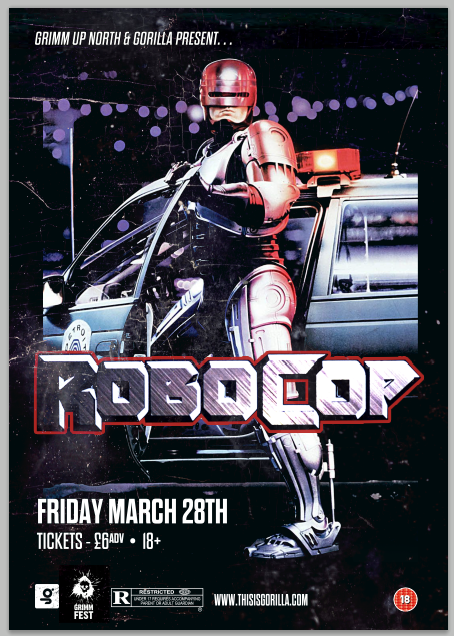
These same anxieties are the focus of so many post-human science fiction films (particularly those from the 80's) where an abnormal human body is normalized. The language of this passage especially reminded me of Robocop where the protagonist effectively loses control over his body and is constantly surveilled by his corporate creators.
-
- Jan 2017
-
habanaberlin.hypotheses.org habanaberlin.hypotheses.org
-
Paraphrasing Craig Muldrew’s findings, James B. argues that in the sixteenth and seventeenth centuries beer was more important as a source of energy (via calories both from grain and alcohol) than as an alternative to water (p 66
-
-
cloud.lib.wfu.edu cloud.lib.wfu.edu
-
auréolé par des spots qui l'éclairaient autant que les plateaux télévisuels dont il était familier, Balthazar Balsan se livrait à la séance de dédicaces avec une bonne humeur appliquée
Ici nous voyons que Balthazar est passionné dans ses romans. Il aime sa séance de signature.
-
Balthazar Balsan la regarda sans la regarder, ai-mable de façon professionnelle.–Avez-vous un livre sur vous ?
Il n'est pas très surprise et un peu calme au contraire parce que, peut-être, il a contré le même personne qui était nerveux autrefois.
-
Si toutes étaient des lectrices de Balthazar Balsan, aucune ne se révélait aussi assidue, précise et passionnée qu'Odette.
Pourquoi Odette adore les livres de Balthazar Balsan? Quelle partie de son roman fascinait-elle? Le Caractère?Le contenu?
-
Qui-conque voyait sa silhouette légère dévaler le mont des Arts sentait que cette femme, dont une plume ornait les boucles de cheveux, avait quelque chose d'un oiseau...
Quelle belle phrase! Il semble qu'elle est très inquietète.
-
« Pour Dette ».
C'est extrêmement malheureux! : ' (
-
... dette !–Pardon?–... dette !–Dette ?
Je n'ai jamais été tellement nerveuse en toute ma vie!
-
Calme-toi, Odette, calme-toi.
Elle était trop éxcité! Elle a l'air fou.
-
–Qui est-ce ? demanda-t-il au responsable com-
Il est évident, quelles sont ses préférences
-
Incapable d'articuler un mot.
Je peux comprendre pourquoi elle est si nerveuse. elle est starstruck
-
-
psgt.earth.lsa.umich.edu psgt.earth.lsa.umich.edu
-
Frictionial sliding refers to the movement on a preexisting surface when shear surface exceeds sliding resistance.
Frictional force is function of normal force. Frictional force is independent of the area of contact and independent of material used- weight of the block is dependent. whys is that?
There is roughness to every surface which anchor the surface in the asperities. ifthe block is heavier ore areas will touch and increase how anchored the object is to the surface.
A scaled up pool ball has higher topographical area than our own planet does if pool ball was size of earth.
Table with legs on carpet= contact points sliding along a surface
-
-
arstechnica.com arstechnica.com
-
Currently, each of the four pairs has a capacity of 10 terabits per second (Tbps), amounting to a total of 40Tbps on the TGN-A cable. At the time, a figure of 8Tbps was the current lit capacity on this Tata network cable.
Yet still, us end-users are getting data capped! How would you argue against this affirmation now, Virgin & Verizon, huh?!
-
-
www.tryscribble.com www.tryscribble.com
-
My chest, legs, and shoulders have gotten so big that I’ve outgrown all my suits.
-
His legs don't fit into his old blue jeans anymore
-
- Dec 2016
-
www.tryscribble.com www.tryscribble.com
-
source: https://s3.amazonaws.com/prod_foundationapp/364221/lessons/35/1384378776-john-carlton-1.pdf
-
you'll look like a Greek statue.
Tags
- PP (Problem or Pain)
- MBG (Money Back Guarantee)
- AO (Addressing Objections)
- F (Feature)
- OL (Open Loop)
- KD (Key Desire/Hot Button)
- P (Promise)
- ET (Emotional Trigger)
- H (The Hook)
- IG (Instant Gratification)
- CE (The Common Enemy)
- S (Scarcity)
- PAP (Painting a Picture)
- B (Benefit)
- SP (Social Proof)
- CTA (Call to Action)
- ITO (If > Then Opener)
- RR (Risk Reversal)
- CG (Curiosity Gap)
- WTC (What’s the Catch Addressed)
Annotators
URL
-
-
0-search.proquest.com.nell.boulderlibrary.org 0-search.proquest.com.nell.boulderlibrary.org
-
Diego Rivera Arrested in Mexican Capital In Row Over Changes in His Hotel Frescoes
Diego was extremely angry when his painted (Man, Controller of the Universe) was retouched. This was the same painting that was destroyed in New York. He said that the president was changed, colors of the flags were changed or erased. and Officers dancing with Indians were changed. Diego did not believe that his art or ideas should be changed. So he took a stand, and with 20 other communist, he marched into the hotel (where the painting was) with 5 pistols, shouting. He was later arrested.
-
-
gateway.ipfs.io gateway.ipfs.io
-
God works mysteriously. God is like a great attraction without a marquee or a billboard. God is pulling you along incessantly. Hopefully, the excess baggage in your life will be left aside sufficiently so that you can begin to experience the attraction itself, for this is the call of love to the lover. This is what you try to recreate with one another, this profound love and attraction.
God, the Great Strange Attractor
In the mathematical field of dynamical systems, an attractor is a set of numerical values toward which a system tends to evolve, for a wide variety of starting conditions of the system. System values that get close enough to the attractor values remain close even if slightly disturbed... An attractor is called strange if it has a fractal structure. This is often the case when the dynamics on it are chaotic, but strange nonchaotic attractors also exist. If a strange attractor is chaotic, exhibiting sensitive dependence on initial conditions, then any two arbitrarily close alternative initial points on the attractor, after any of various numbers of iterations, will lead to points that are arbitrarily far apart (subject to the confines of the attractor), and after any of various other numbers of iterations will lead to points that are arbitrarily close together. Thus a dynamic system with a chaotic attractor is locally unstable yet globally stable: once some sequences have entered the attractor, nearby points diverge from one another but never depart from the attractor.
-
-
journal.disruptivemedia.org.uk journal.disruptivemedia.org.uk
-
What is annotation as a genre? I think what he observed in the annotations was a wide range of reader responses, some highly engaging, others less clearly so.
This question seems like it should be more specific to disciplines. What is annotation in the legal world? How about for scientists? For beginning readers?
If I'm annotating a text to make meaning, that's different than if I'm a prof annotating a historical text to provide relevant background. The two notes have only their "noteness" in common, I'd say.
-
- Nov 2016
-
www.edutopia.org www.edutopia.org
-
"There is not a writer in our classrooms today who will not be producing something with a digital writing tool in her or his lifetime."
Almost all of the tools that I think most folks put in the digital writing camp are binary doppelgangers of their analogues. For example, Power point as used is mostly a flip chart with more bells and whistles. Note taking apps are 3X5 cards with a digital twist. Even hypothes.is is just marginalia with a social bent. So what I propose is that what we teach is how to apply ANY tool to the task at hand. What that means is that we need worthwhile work for our students and we need to do that work using the tools at hand. And by 'tools' I mean digital, analog, and any other that can be pressed into the larger service of gather, making sense of and sharing the problems and questions and solutions and stories of the world.
-
-
hypothes.is hypothes.is
-
Finding tutors can be a really tiring job if not taken in a proper direction. Also, it is equally important to find a competent and knowledgeable tutor, who can provide a proper direction and guidance in your studies rather than just basic teaching. As a student, you should always keep in mind that before hiring a tutor you should have a complete idea of his knowledge about that particular subject.
-
-
actualidad.rt.com actualidad.rt.com
-
Según Moore, Trump también encontró el apoyo de un numeroso grupo de hombres que ven como una amenaza el creciente poder de las mujeres, los gays y los miembros de varios grupos étnicos en la política y la sociedad estadounidense. Moore sostiene que el electorado masculino de raza blanca siente que pierde el control, que el poder se les escapa de las manos y que su supremacía está en peligro.
-
-
www.who.int www.who.int
-
Es necesario hacer tomar conciencia de los efectos del cambio climático en la salud, para impulsar la adopción de medidas de salud pública
-
-
www.vilaweb.cat www.vilaweb.cat
-
l’estratègia de final de campanya de Trump de recórrer els estats més disputats ha estat efectiva i s’han acabat decantant per ell
-
-
www.elmundo.es www.elmundo.es
-
En el caso de EEUU, una posible victoria de Trump recrudecería el enfrentamiento social en el país. Su indisimulado desprecio hacia las minorías raciales y hacia los inmigrantes, a los que culpa de acaparar los empleos en detrimento de los trabajadores estadounidenses, podrían desembocar en una ola de racismo y exclusión con nefastas consecuencias para la convivencia
-
sino que afectaría a la productividad empresarial y provocaría el cierre de muchas compañías
-
-
www.forbes.com www.forbes.com
-
So far Trump has shown little understanding of how technology and computers work. He referred to computer and cybersecurity as “The Cyber” during the presidential debates. And, more perplexingly, he suggested as president he could basically call up Bill Gates and “close up” parts
-
-
drive.google.com drive.google.com
-
Abierto a comentarios. Si deseas comentar anónimamente o sin registrarte, haz el Log in como:
Usuario: Anonimo<br> Contraseña: anonimo
-
-
sites.google.com sites.google.com
-
"American Idiot" - Green Day
Green Day's first number one album since 1994's multi-platinum Dookie--which is likely due to the fact that while the lyrics may have a deeper meaning, the hooks are still there, and they are played with the same intensity that made the group famous more than a decade ago. Spin said the title track was "Green Day's most epic song yet.
-
Now everybody do the propaganda,And sing along to the age of paranoia.
The work challenges listeners to dig deeper than the high-octane guitars and thundering drums that drive the record's jubilant pop sheen. This is a multi-layered, literate narrative that effectively wields anger, wit, and bombast to expose the ugliness that seeps below the surface of this country's patriotism, commercialism, and nationalism.
-
We're not the ones who're meant to follow.
"A lot of rock music lacks ambition. Rock has become stagnant. There are a lot of bands that aren't doing anything differently than what's currently going on in pop music--like issuing a single, putting out a record, making a video, and hopefully getting on a tour with a bigger band. I think the reason hip-hop has become so much bigger than rock lately is because those artists are much more ambitious, and they are making records that have a concept and characters. They sound like a script." ~Billy Joe Armstrong
-
Television dreams of tomorrow.
"All my songwriting is about creating a statement and taking action. On American Idiot, it's reflecting on what's going on in the world right now." ~Billy Joe Armstrong
Tags
- "Green Day." UXL Biographies. Detroit: UXL, 2011. Student Resources in Context. Web. 27 Oct. 2016.
- Porosky, Pamela. "Fear & loathing in a post-9/11 America: Green Day's Billie Joe Armstrong rails against idiocy and indifference." Guitar Player Feb. 2005: 70+. Student Resources in Context. Web. 27 Oct. 2016.
Annotators
URL
-
-
www.history.com www.history.com
-
After his father’s death, he became head of the household and shot a man who was harassing one of his sisters. He fled, but was caught and imprisoned. Villa escaped again and later became a bandit.
After his fathers death, he immediately became in charge shooting a man harassing his sister.
Tags
Annotators
URL
-
-
cloud.lib.wfu.edu cloud.lib.wfu.edu
-
qui tentaient de le libérer si l’arrivée inopinée de sa femme n’avait changé le cours de la cure.
Why did Balthazar's wife show up to the hospital unexpectedly?
-
Est-ce que vous m’aimez ?
Since Balthazar asked Odette if she loves him and Odette said yes without hesitation, does that mean Balthazar is going to have an affair with Odette like his wife Isabelle did with Olaf?
-
-
lti.hypothesislabs.com lti.hypothesislabs.com
-
Dick Flacks,

-
New Orleans Saints

-
- Oct 2016
-
lti.hypothesislabs.com lti.hypothesislabs.com
-
lti.hypothesislabs.com lti.hypothesislabs.com
-
Howard con-sistently expects her during their court-ship and engagement to take over roles his mother performed for him
Male lead expects female to take over "roles his mother performed". Wants her to do housework.
-
-
cloud.lib.wfu.edu cloud.lib.wfu.edu
-
A Namur, les lecteurs l’attendaient en moins grand nombre qu’à Bruxelles
La critique de Olaf Pims a effectué la success de Balthazar.
-
Je pense que la recontre d’Odette avec Balthazar est drôle. Odette est une femme maladroit parce qu’elle ne sait rien comme parler avec Balthazar!
-
Si mon éditeur passe plusieurs jours avec moi, c’est que ça va très mal, se disait-il.
Balthazar is now thinking the worst about himself and his writing. I agree wth the annotation above, this shows how much Olaf's comments affected him.
-
– Toulemonde. Odette Toulemonde.
Il est un miracle! Odette dit son nom!
-
pour lui soutenir le moral,
Balthazar used to be so confident and independent. The fact that he needs to have moral support (soutenir le moral) shows how much Olaf's review has affected him.
-
déchaîné la meute
Il est intéressant de voir comment une mauvaise chose peut rendre tout le monde dit de mauvaises choses. Pourquoi?
-
-
vk.com vk.com
- Sep 2016
-
creativecommons.org creativecommons.org
-
How can educators find and use OER in their classrooms?
-
-
f1000research.com f1000research.com
-
The academic, economic and societal impacts of Open Access: an evidence-based review
Tags
Annotators
URL
-
-
digitalcommons.mainelaw.maine.edu digitalcommons.mainelaw.maine.edu
-
Despite this deep theoretical understanding of the powerful role that archi-tecture plays in crafting experience
-
ROBERT A. CARO, THE POWER BROKER: ROBERT MOSES AND THE FALL OF NEW YORK 571 (1974)
-
-
klabonte.net klabonte.net
-
online realms
Is paper a realm? Have never thought of it that way. Every medium is a realm? Is it helpful analytically to make this distinction? Similarly, it is helpful to make the same distinction between digital and not digital?
-
- Aug 2016
-
lti.hypothesislabs.com lti.hypothesislabs.com
-
to America or the Colonies
As Steve Jones says in my attached article, the 19th century relationship between the US and Britain was actually quite strong. Doyle is using this brief mention of America to display the relationship between the nations at the time. Though America became independent from the UK in 1776, by the 1800's it has become quite reasonable for someone to possibly seek refuge in "the Colonies".
-
-
digitalpaxton.org digitalpaxton.org
-
Sample annotation using hypothes.is
A CONFERENCE between the D----L and Doctor D--E. Together with the Doctor's Epitaph on himself.
-
-
rbms.info rbms.info
-
VISITS
I'm not sure exactly where this would fit in, but some way to reporting total service hours (per week or other time period) would be useful, esp as we start gauging traffic, volume, usage against number of service hours. In our reporting for the Univ of California, we have to report on services hours for all public service points.
Likewise, it may be helpful to have a standard way to report staffing levels re: coverage of public service points? or in department? or who work on public services?
-
-
time.com time.com
-
So here’s a more rounded picture of millennials than the one I started with. All of which I also have data for. They’re earnest and optimistic. They embrace the system. They are pragmatic idealists, tinkerers more than dreamers, life hackers. Their world is so flat that they have no leaders, which is why revolutions from Occupy Wall Street to Tahrir Square have even less chance than previous rebellions. They want constant approval–they post photos from the dressing room as they try on clothes. They have massive fear of missing out and have an acronym for everything (including FOMO). They’re celebrity obsessed but don’t respectfully idolize celebrities from a distance. (Thus Us magazine’s “They’re just like us!” which consists of paparazzi shots of famous people doing everyday things.) They’re not into going to church, even though they believe in God, because they don’t identify with big institutions; one-third of adults under 30, the highest percentage ever, are religiously unaffiliated. They want new experiences, which are more important to them than material goods. They are cool and reserved and not all that passionate. They are informed but inactive: they hate Joseph Kony but aren’t going to do anything about Joseph Kony. They are probusiness. They’re financially responsible; although student loans have hit record highs, they have less household and credit-card debt than any previous generation on record–which, admittedly, isn’t that hard when you’re living at home and using your parents’ credit card. They love their phones but hate talking on them.
-
-
medium.com medium.com
-
Shawn and Cory and Tom are three of my best friends in the universe, they know me better than I know myself, and I met them online, thirteen years ago, on an Animal Crossing message board. Like, what the fuck is that? That’s beautiful.
-
- Jul 2016
-
medium.com medium.com
-
Postcolonial
In some ways, it’s quite remarkable that one of the key figures of post-development was also the one who called for “deschooling society”. As is obvious from observing humanitarian and philanthropic work is that “development” participates in neocolonialism, despite (or often because of) the best of intentions. MOOCs are closer to development than to postdevelopment. Even cMOOCs.
-
- Jun 2016
-
us9.campaign-archive2.com us9.campaign-archive2.com
-
fail a little less
Much insight in this phrase.
-
-
dogtrax.edublogs.org dogtrax.edublogs.org
-
What you get is a mess.
OR A MAZE?
-
-
www.ribbonfarm.com www.ribbonfarm.com
-
Annie Sauter says: May 28, 2016 at 9:28 am
Susan, did you read this comment. Kinda captured my own lostness but not quite. I get the feeling that I need to give up some of my...contextity? That's like saying "Hoist anchor" in a storm. And that really is a way of breaking smart if it saves your damned life. Our political life is exactly like this now. The contextity is killing us. Hoist the fucking anchor or be dragged down with it when the storm batters hell out of you. Here I am again trying to put down the meaning anchor. This is hard to do when you have spent your whole life trying to understand and do and drive uncertainty and ambiguity to ground. I think maybe the key for me to is to feel my way with a new set of antennae, nascent and emergent antennae.
-
-
us1.campaign-archive1.com us1.campaign-archive1.com
-
The 2x2 above
-
-
www.seethingbrains.com www.seethingbrains.comBook 21
-
But then his father finally said a resounding “No,” and nothing more would be spoken about it.
https://www.youtube.com/watch?v=8vpDIobFALk Jeremy Werner Anja Glumicic Hawken Paul Mark Chipollo
-
- Apr 2016
-
www.poetryfoundation.org www.poetryfoundation.org
-
-
According to Stemler, consistency estimates of interrater reliability assume that it is not necessary for judges to share a common meaning of the rating scale, so long as each judge is consistent in their classifications.
Wittgenstein's beetle in a box
-
- Mar 2016
-
mikealger.com mikealger.com
-
VR Interface Design Pre-Visualisation Methods
Meeeoow!!!
-
-
www.gutenberg.org www.gutenberg.org
-
Froissart
Best guess is having some kind of resemblance to the artistic renderings of Medieval historian Jean Froissart (~1470), whose large tapestries often depicted courtly life enacted in loud and theatrical fashion.

Tags
Annotators
URL
-
-
www.washingtonpost.com www.washingtonpost.com
-
Talk about brilliant: Fox News orchestrated a round of applause for a bigoted and unconstitutional policy proposal.
Thanks for witnessing to this.
-
- Feb 2016
-
bavatuesdays.com bavatuesdays.com
-
the MLA Commons is built on top of Commons in a Box
-
-
learning.ccsso.org learning.ccsso.org
-
Refer to parts of stories, dramas, and poems when writing or speaking about a text, using terms such as chapter, scene, and stanza; describe how each successive part builds on earlier sections.
A third grade student should be able to refer to different parts of a text by using specific vocabulary such as "chapter" or "stanza" to identify key details in the text.
Parts of a Story
A good example of this would be chapters books for third graders such as books from the Junie B. Jones series. These allow students to recall details from the text by referring to specific chapters of sections of the book.
-
-
faculty.humanities.uci.edu faculty.humanities.uci.edu
-
How did animals help create the world? • How were the earth, sun, and moon formed? • Who created human beings? 0 How did Coyote influence the world?
1) The animals were there for humans when they needed help. 2) They were created by the mother and father. 3) Human beings were created by the mother and father.
-
How were human beings created? • Where did they obtain their knowledge, and how did they provide for themselves?
1) Human beings were created by birth from mother and father.
2) The father passed on his offspring and that his how they gained knowledge.
-
What was the source of life? • What were the differences between Earth-mother and Sky-father? • Where did the moon and stars come from?
1) The animals were taking care of humans that were in need of help.
2) The difference was day and night. The mother and father both created the light and darkness in the day. Bringing the moon, sun and earth.
3) The sky-father created the moon and stars for the night time.
-
How did human beings arrive in the world? • How were animals helpful? • What did twins do to create the world?
1) The humans fell from heaven and came into the world with animals. 2) Animals cared for the human when she was ill and gave her a place to stay until she was healed. 3) The twins traveled the world to create environments and climates that humans could live in. This lead to mountains, trees, lakes, forest, rivers, etc.
-
- Jan 2016
-
faculty.humanities.uci.edu faculty.humanities.uci.edu
-
Now like all the surpassing beings the Earth-mother and the Sky-father were changeable, even as smoke in the wind; transmutable at thought, manifesting themselves in any form at will, like as dancers may by mask-making.
It is amazing how descriptive the world was made. The way things are being described in this document make me think of how peaceful this world was made to be. How come it could not be like this anymore?
-
The boy that remained in the lodge grew very rapidly, and soon was able to make himself bows and arrows and to go out to hunt in the vicinity. Finally, for several days he returned home without his bow and arrows. At last he was asked why he had to have a new bow and arrows every morning
The boy had to teach himself how to use things. When we grow up we do not rely on our parents as much, we have to explore the world on our own.
-
-
www.facebook.com www.facebook.comFacebook1
-
Te avisaremos antes de realiza
¿sabrás en el momento en que se realizará algún cambio a tu publicación?
Tags
Annotators
URL
-
-
www.gutenberg.org www.gutenberg.org
-
I really, truly wish that the author explained what bread is. What is its nature? What it symbolize? What does nut bread even stand for?
-
-
www.wired.com www.wired.com
-
the internet has become essential to our everyday life
What if we had pockets of non-Internet connectivity, though? A mesh network doesn’t necessarily need to have nodes on the Internet. For instance, a classroom could have a “course in a box”, with all sorts of resources provided on local network, but without a connection to the whole Internet… So many teachers keep complaining about their students’ use of the Internet that they end up banning devices. But what if we allowed devices and even encouraged them, as long as they’re not on the Internet? WiFi connections tend to be spotty, to this day, and some classes are cellular deadzones. A bit like Dogme 95, getting used to sans-Internet connectivity could help us “get creative”. What would we do if we were to do a tech-savvy course on the proverbial “desert island”, without Internet?
-
- Dec 2015
-
www.forbes.com www.forbes.com
-
wring out every ounce of performance
Now think of it with a learner in mind.
-
- Nov 2015
-
www.mmcr.us www.mmcr.us
-
distributing pamphlets that urged an overthrow of the government
The pamphlets were urging the resistance of the draft, but the book did not state that the attempt was to overthrow the government. Only to express his political ideals.
-
- Oct 2015
-
www.nationalreview.com www.nationalreview.com
-
owns
-
Obama
-
were
-
he
-
could stop
-
’re
-
you
-
post
-
you
-
oppose
-
who
-
tire
-
who
-
who
-
that
-
makes
Tags
- subject in the apodosis of a condition sentence
- verb in the protasis of a condition sentence
- subject in the apodosis of a condition clause
- verb in the apodosis of a condition sentence
- verb in the protasis of a conditional sentence
- subject in the protasis of a conditional sentence
- subject in the protasis of a condition sentence
- verb in the apodosis of a conditional sentence
- subject in a relative clause
- verb in a relative clause
- sbuject in a relative clause
Annotators
URL
-
- Sep 2015
-
ushistory151.files.wordpress.com ushistory151.files.wordpress.com
-
The era of Reconstruction that followed the Civil War was a time ofintense political and social conflict, in which the definition of freedomand the question of who was entitled to enjoy it played a central role.
-
- May 2015
-
files.eric.ed.gov files.eric.ed.gov
-
They provided a safe haven in which educators in critical process could confirm that they were not alone, and through which they could make sense of the changes they were experiencing.
Tags
Annotators
URL
-
- Apr 2015
-
www.resthavenfunerals.com www.resthavenfunerals.com
-
He worked for Gunner A. Olsen Corp. out of New York City building radio towers for the government and built nuclear power plants.
This is my uncle's business. Am marking this for my mother.
-
- Mar 2015
-
www.lowrisc.org www.lowrisc.orglowRISC1
-
lowRISC is producing fully open hardware systems. From the processor core to the development board, our goal is to create a completely open computing eco-system. Our open-source SoC (System-on-a-Chip) designs will be based on the 64-bit RISC-V instruction set architecture. Volume silicon manufacture is planned as is a low-cost development board. There are more details on our plans in these slides from a recent talk lowRISC is a not-for-profit organisation working closely with the University of Cambridge and the open-source community.
Tags
Annotators
URL
-
-
www.sparknotes.com www.sparknotes.com
-
Othello depends on his identity as a soldier to glorify himself in the public’s memory,
Tags
Annotators
URL
-
- Jan 2015
-
crowdfunding.direkt36.hu crowdfunding.direkt36.hu
-
Ahhoz azonban, hogy egy valóban ütőképes tényfeltáró központot hozzunk létre, szükségünk van minél több ember támogatására. Ha bővíteni tudjuk az egyelőre szűkös költségvetésünket, akkor több újságíróval tudunk dolgozni, és több, illetve mélyebb nyomozó munkát tudunk végezni.
-
A Direkt36 egy új oknyomozó újságírói központ, amelynek célja, hogy kitartó kérdéseken és szilárd tényeken alapuló cikkekkel ellenőrizze a hatalom birtokosait, és rámutasson a mindannyiunkat megkárosító visszaélésekre.
-
- Dec 2014
-
www.theatlantic.com www.theatlantic.com
-
you’d sound like a pompous jackass.
Holy, leaping jehosaphats of hyperbole, Batman. He's so hyperbolic he's asymptotic. Yeah. I said it.
-
- Aug 2014
-
www.theparisreview.org www.theparisreview.org
-
INTERVIEWER On the subject of being a woman writer in a man’s world, you’ve mentioned A Room of One’s Own as a touchstone. LE GUIN My mother gave it to me. It is an important book for a mother to give a daughter. She gave me A Room of One’s Own and Three Guineas when I was a teenager. So she corrupted me thoroughly, bless her heart. Though you know, in the 1950s, A Room of One’s Own was kind of tough going. Writing was something that men set the rules for, and I had never questioned that. The women who questioned those rules were too revolutionary for me even to know about them. So I fit myself into the man’s world of writing and wrote like a man, presenting only the male point of view. My early books are all set in a man’s world.
-
- Sep 2013
-
caseyboyle.net caseyboyle.net
-
So rhetoric and philosophy are nothing special, and those who say it is should stop.
Tags
Annotators
URL
-