"roundels are the oldest evidence of architecture in the whole of Europe," Řídký told Radio Prague International earlier this year.
2,971 Matching Annotations
- Sep 2022
-
www.livescience.com www.livescience.com
-
-
thevoroscope.com thevoroscope.com
-
thevoroscope.com thevoroscope.com
-
steamcommunity.com steamcommunity.com
-
Hi L0ki,as we depend on retailers with affiliate programs to run the site without ads, and Amazon being one of them, yes, we are following their rules so we can use API and their affiliate program.As Tomas said, we are also trying to get the history back, though we noticed we aren't the only site being affected by this.As for ignoring their API and doing it the hard way - that could be possible I guess but really not preferable.And we also understand anybody not wanting to buy from Amazon anymore (as some already told us), but to be fair, if the game is available anywhere else (and I have yet to randomly find a game which is available only at Amazon), you can always check the game info on ITAD to compare the price to other retailers.
-
If it's not, it should be illegal for them to forbid you from showing price history. This is restricting access to information, and it's probably supposed to benefit them from shady sales (increasing the base price just before a sale, so that the "X % off" is higher).
-
"We are not allowed to show you Amazon history"? What prompted this? Fill me in if I missed something :).EDIT: Camelcamelcamel can still show Amazon price history, so a bit befuddled here.
-
I would be interested to know what the legality of this is either way. I mean, do they really have any legal right to compel you not to list their price history? However, just knowing that Amazon doesn't want you to do this will make me less likely to purchase from them in the future. Anti-consumer behavior pisses me off. Edit: If this is related to API access couldn't you just manually scrape prices off the site instead and hammer their server? Or is this more related to not wanting to bite the hand that feeds you so to speak related to the funding you can get through referral links?
-
-
www.washingtonpost.com www.washingtonpost.com
-
The song, known as the Black national anthem, was played more than 20 minutes before “The Star-Spangled Banner,” which was written by slaveholder Francis Scott Key and includes lyrics about the capture of escaped slaves who fought for the British during the War of 1812.
Do you believe that we should countinue with the current national anthem "The Star-Spangled Banner" or should we change it to "Lift Every Voice" ? Is it wrong that we are singing a song written by a slaveholder towards our country ?
-
-
docdrop.org docdrop.org
-
we can kind of make an assumption that 00:04:22 complex brains and by extension complex intelligence should also be somewhat common in terms of evolutionary success and assuming that it's evolutionary preferential or basically that evolves many times throughout the history of the 00:04:35 planet we can then make a conjecture that it should exist somewhere out there where life exists on other planets okay just to rephrase this if we truly believe that extraterrestrial intelligence exists out there and that 00:04:48 it kind of evolved in the same way that it evolved here on planet earth it's pretty safe to assume that it might have evolved several times on the planet because we're making an assumption here that this is an evolutionary advantage 00:05:00 that all planets that potentially have life on them are going to end up with some kind of a species that's going to become super intelligent and that's going to be self-aware able to use technology and essentially kind of communicate in the same way that we 00:05:13 communicate using for example radio waves
!- in other words : there should be signs of complex intelligence like ours in the paleontological records
-
-
docdrop.org docdrop.org
-
the greatest technology ever invented was language
Language is the greatest technology ever invented
-
-
-
you can think about the invention of powerful representations and the invention of powerful media to host powerful 00:11:27 representations as being one of the big drivers of last 2,000 years of the intellectual progress of humanity because each representation allows us to think thoughts that we couldn't think before we kind of 00:11:39 continuously expand our think about territory so you can think of this as tied to you know the grand meta-narrative of the scent of humanity moving away from myth and superstition 00:11:51 and ignorance and towards a deeper understanding of ourselves in the world around us I bring this up explicitly because I think it's good for people to acknowledge the motivation for their 00:12:02 work and this is this story of the intellectual progress of humanity is something that I find very motivating inspiring and is something that I feel like I want to contribute to but I think 00:12:16 that if this if you take this as your motivation you kind of have to be honest with yourself that that there definitely has been ascent we have improved in many 00:12:27 ways but there are also other ways in which our history has not been ascent so we invent technology we media technology 00:12:39 to kind of help us make this this climb but every technology is a double-edged sword every technology enables us has a potential de navels in certain ways while debilitating us in other ways and 00:12:51 that's especially true for representations because the way the reputations work is they draw on certain capabilities that we have so if we go all in in a particular medium like we 00:13:03 did with print so the capabilities that are not well supported in that medium they get neglected in they atrophy and we atrophy I wish I knew who drew the picture 00:13:20 because it's it's a wonderful depiction of what I'm trying to express here and even a little misleading because the person the last stage they're kind of hunched over is tiny rectangle we reach 00:13:31 that stage accomplish that stage with the printing press and cheap paper book based knowledge the invention of paper-based bureaucracy paper-based 00:13:44 working we invented this lifestyle this way of working where to do knowledge work meant to sit at a desk and stare at your little tiny rectangle make a little motions of your hand you know started 00:13:56 out as sitting at a desk staring at papers or books and making little motions with a pen and now it's sitting at a desk staring at a computer screen making a little motions with your on a keyboard but it's basically the same 00:14:08 thing we've this is what it means to do knowledge work nowadays this is what it means to be a thinker it means to be sitting and working with symbols on a little tiny rectangle to the extent that 00:14:20 again it almost seems inseparable you can't separate the representation for what it actually is and and this is basically just an accident of history this is just the way that our media 00:14:32 technology happen to evolve and then we kind of designed a way of knowledge work for that media that we happen to have and I think so I'm going to make the claim that this style of knowledge work 00:14:47 this lifestyle is inhumane
!- for : symbolic representation - language - the representation is closely tied to the media - a knowledge worker sits at a desk and plays with symbols in a small area all day! - This is actually inhumane when you think about it
-
-
mleddy.blogspot.com mleddy.blogspot.com
-
I've been spelunking through your posts from roughly the decade from 2005 onward which reference your interest in index cards. Thanks for unearthing and writing about all the great index card material from that time period. Have you kept up with your practices?
I noticed that at least one of your posts had a response by MK (Manfred Kuehn, maintainer of the now defunct Taking Note blog (2007-2018). Was it something you read at the time or kept up with?
Have you been watching the productivity or personal knowledge management space since roughly 2017 where the idea of the Zettelkasten (slip box or card index) has taken off (eg. https://zettelkasten.de/, Sonke Ahren's book How to Take Smart Notes, Obsidian.md, Roam Research, etc.?) I'd be curious to hear your thoughts on them or even what your practice has meant over time.
Thanks again.
Cheers! -CJA
-
-
mleddy.blogspot.com mleddy.blogspot.com
-
https://mleddy.blogspot.com/2005/05/tools-for-serious-readers.html
Interesting (now discontinued) reading list product from Levenger that in previous generations may have been covered by a commonplace book but was quickly replaced by digital social products (bookmark applications or things like Goodreads.com or LibraryThing.com).
Presently I keep a lot of this sort of data digitally myself using either/both: Calibre or Zotero.
-
-
hypothes.is hypothes.is
-
Why is this important in this history of psychology?
"The present work will, I venture to think, prove that I both saw at the time the value and scope of the law which I had discovered, and have since been able to apply it to some purpose in a few original lines of investigation. But here my claims cease. I have felt all my life, and I still feel, the most sincere satisfaction that Mr. Darwin had been at work long before me, and that it was not left for me to attempt to write 'The Origin of Species.' I have long since measured my own strength, and know well that it would be quite unequal to that task. Far abler men than myself may confess that they have not that untiring patience in accumulating and that wonderful skill in using large masses of facts of the most varied kinds, -- that wide and accurate physiological knowledge, -- that acuteness in devising, and skill in carrying out, experiments, and that admirable style of composition, at once clear, persuasive, and judicial, -- qualities which, in their harmonious combination, mark out Mr. Darwin as the man, perhaps of all men now living, best fitted for the great work he has undertaken and accomplished." This comes from the Classics in the History of Psychology Limits of Natural Selection By Chauncey Wright (1870). This shows us the importamce of the limits including in theories like this one. Natural selection indicates that the strongest will be the ones that will survive and there for will be the ones that will be able to have offsprings and make their generation endure. But thjis has a limit due to the sexual selection because it shows that the natural selection can not be impossed to people in any way or form. I see this working in psychology in a very big way because now that we are in a generation that is so ruled out by the social media this concept wants to persist and endure no matter what. I can see natural selecetion slowly decreasing amd really another type of selection evolving with the next future generations.
Angela Cruz Cubero (Christian Cruz Cubero)
-
-
-
So this is one of these things where the idea that you could make an internet is 100%, just from biology being so much more complex and working so well for decades.DEVON: And why is the decentralization of biological systems and of the internet so important for scalability?
!- relationship : internet to biology - internet was designed to biomimic biological systems for redundancy, resiliency, decentralized
-
Right? You said... No, no, bullshit. Let's write it all down and we can go check it. Let's not argue about what was said. We've got this thing called writing. And once we do that, that means we can make an argument out of a much larger body of evidence than you can ever do in an oral society. It starts killing off stories, because stories don't refer back that much. And so anyway, a key book for people who are wary of McLuhan, to understand this, or one of the key books is by Elizabeth Eisenstein. It's a mighty tome. It's a two volume tome, called the "Printing Press as an Agent of Change." And this is kind of the way to think about it as a kind of catalyst. Because it happened. The printing press did not make the Renaissance happen. The Renaissance was already starting to happen, but it was a huge accelerant for what had already started happening and what Kenneth Clark called Big Thaw.
!- for : difference between oral and written tradition - writing is an external memory, much larger than the small one humans are endowed with. Hence, it allowed for orders of magnitude more reasoning.
-
-
www.youtube.com www.youtube.com
-
one of the things that's worked the best the last three or 00:10:05 four hundred years is you get simplicity by finding a slightly more sophisticated building block to build your theories out of its when you go for a simple building block that anybody can 00:10:18 understand through common sense that is when you start screwing yourself right and left because it just might not be able to ramify through the degrees of freedom and scaling you have to go through and it's this 00:10:31 inability to fix the building blocks that is one of the largest problems that computing has today in large organizations people just won't do it
!- example : simplicity - astronomy example is perfect - paradigm shift to go to slightly more complex fundamental building block that CAN scale
Tags
Annotators
URL
-
-
Local file Local file
-
Such was the opinion of Mark Pattison,who said, History cannot he written from manuscripts,which is as much as to say : " It is impossible fora man to write history from documents which heis obliged to put for himself into a condition inwhich they can be used."
-
We need not interpret in the Jewish oretymological sense the dictum of Renan : " I do notthink it possible for any one to acquire a clearnotion of history, its limits, and the amount ofconfidence to be placed in the different categoriesof historical investigation, unless he is in the habitof handling original documents." ^
Renan, Essais de morale et de critique, p. 36
-
There is only one argumentfor the legitimacy and honourable character ofthe obscure labours of erudition, but it is a de-cisive argument: it rests on their indispensability.No erudition, no history. " Non sunt contemnendaquasi parva" says St. Jerome, ''sine quihus magnaconstare non possunt"
-
Every one admits nowadays that it is advisable tocollect materials on separate cards or slips of paper.
A zettelkasten or slip box approach was commonplace, at least by historians, (excuse the pun) by 1898.
Given the context as mentioned in the opening that this books is for a broader public audience, the idea that this sort of method extends beyond just historians and even the humanities is very likely.
-
-
en.wikipedia.org en.wikipedia.org
-
The book's controversial assertions that the life of Jesus should be written like the life of any historic person, and that the Bible could and should be subject to the same critical scrutiny as other historical documents caused controversy[19] and enraged many Christians,[20][21][22][23] and Jews because of its depiction of Judaism as foolish and absurdly illogical and for its insistence that Jesus and Christianity were superior.[17]
Ernest Renan argued in Life of Jesus that Jesus should be studied and written about like any other historic person or process. His life and the history and writings around it should be open to critical scrutiny just like any other biography or autobiography.
-
-
journals.sagepub.com journals.sagepub.com
-
Compare to earlier archived draft from 2016: https://web.archive.org/web/20160629004859/https://wordsinspace.net/wordpress/2016/06/28/small-moving-intelligent-parts/
-
-
- Aug 2022
-
www.bbc.com www.bbc.com
-
Ro, C. (2021, November 1). Why mandatory vaccination is nothing new. https://www.bbc.com/future/article/20211029-why-mandatory-vaccination-is-nothing-new
-
-
gidmk.medium.com gidmk.medium.com
-
Gideon, M.-K. (2022, February 23). Has Covid-19 Been Worse Than the 1918 Influenza Pandemic? Medium. https://gidmk.medium.com/has-covid-19-been-worse-than-the-1918-influenza-pandemic-1c3362f01bcc
-
-
www.paperblog.fr www.paperblog.fr
-
paulstamatiou.com paulstamatiou.com
-
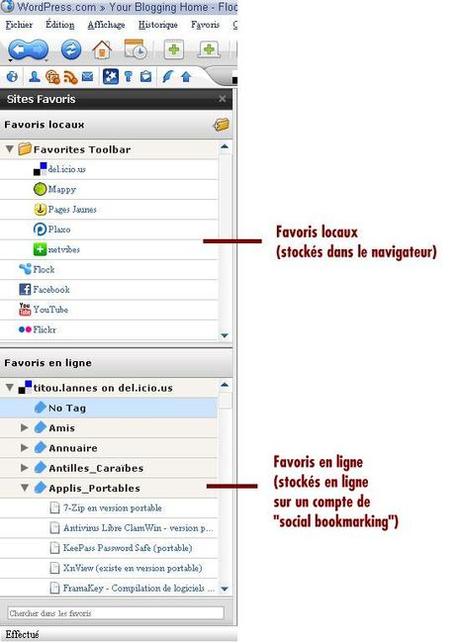
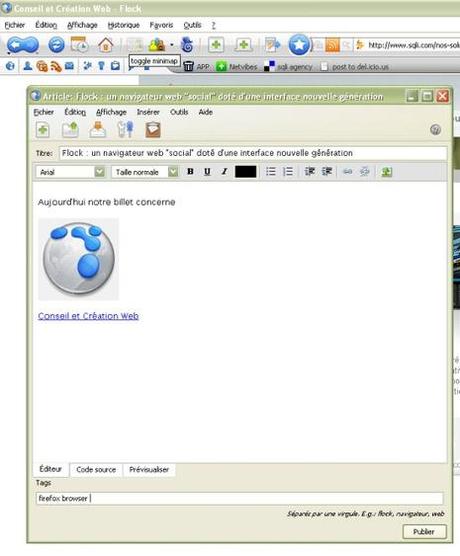
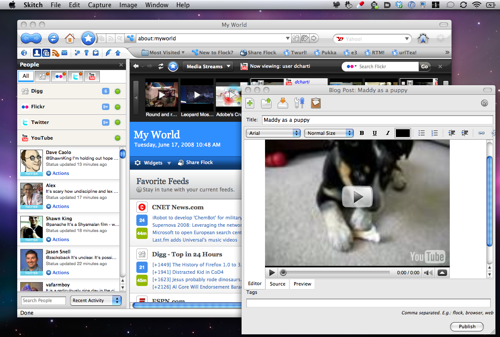
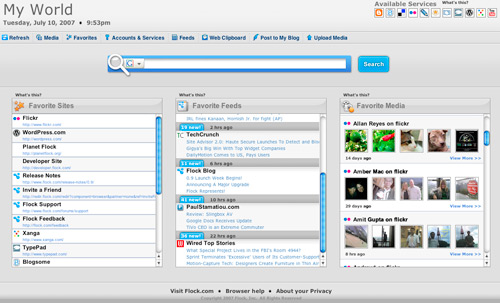
Integrated Blogging


Del.icio.us Integration

Flickr Integration

-
-
paulstamatiou.com paulstamatiou.com
-
www.bundleiq.com www.bundleiq.com
-
AI-powered Zettelkasten: A note-taking system for the modern knowledge worker.
Oh dear god, it's worse, the writer seems to be affiliated with bundleIQ, a product that's an AI applied to the knowledge space. It's a major mistake for AI people to be playing in spaces in which they have absolutely no founding in the history of...
-
-
icannwiki.org icannwiki.org
-
-
Local file Local file
-
Fickert, Kevin-Steven. “Die Geschichte des Zettelkatalogs : eine historisch-kritische Betrachtung eines Verzeichnismediums und seiner Regelwerke.” Fachhochschule Stuttgart Hochschule der Medien, 2003. https://hdms.bsz-bw.de/frontdoor/index/index/docId/141
via Ton Zijlstra
-
-
en.wikipedia.org en.wikipedia.org
-
-
theGerman library handwriting style invented by E. Ackerknecht is recommended in order toensure equal handwriting style.
https://en.wikipedia.org/wiki/Erwin_Ackerknecht<br /> Influential historian of medicine
<ins datetime="2022-08-24T15:44:48+00:00"> Erwin Heinz Ackerknecht (1 June 1906, in Stettin – 18 November 1988, in Zurich), the historian of medicine, did some library related work, but didn't invent this handwriting style, his father Erwin Julius Ackerknecht did. see: https://de.wikipedia.org/w/index.php?title=Erwin_Ackerknecht</ins>
What does this handwriting style look like?
-
-
www.reddit.com www.reddit.com
-
ManuelRodriguez331 · 8 hr. agotaurusnoises wrote on Aug 20, 2022: Technik des Wissenschaftlichen Arbeitens by Johannes Erich HeydeThe idea of grouping similar notes together with the help of index cards was mainstream knowledge in the 1920'er. Melvil Dewey has invented the decimal classification in 1876 and it was applied to libraries and personal note taking as well.quote: “because for every note there is a systematically related one in the immediate vicinity. [...] A good, scholarly book can grow out of the mere collection of notes — not an ingenious one, indeed" [1]The single cause why it wasn't applied more frequently was because of the limitation of the printing press. In the year 1900 only 100 scholarly journals were available in the world. There was no need to write more manuscripts and teach the art of Scientific Writing to a larger audience.[1] Kuntze, Friedrich: Die Technik der geistigen Arbeit, 1922
Index card systems were insanely popular in the early 1900's for note taking and uses of all other sorts (business administration, libraries, etc.). The note taking tradition of the slip box goes back even further in intellectual history with precedents including miscellanies, commonplace books, and florilegia. Konrad Gessner may have been one of the first to have created a method using slips of rearrangeable paper in the 1500s, but this general pattern of excerpting, note taking and writing goes back to antiquity with the concept of locus communis (Latin) and tópos koinós (Greek).
What some intellectual historians are hoping for evidence of in this particular source is a possible origin of the idea of the increased complexity of direct links from one card to another as well as the juxtaposition of ideas which build on each other. Did Luhmann innovate this himself or was this something he read or was in general practice which he picked up? Most examples of zettelkasten outside of Luhmann's until those in the present, could be described reasonably accurately as commonplace books on index cards usually arranged by topic/subject heading/head word (with or without internal indices).
Perhaps it was Luhmann's familiarity with Aktenzeichen (German administrative "file numbers") prior to his academic work which inspired the dramatically different form his index card-based commonplace took? See: https://hyp.is/CqGhGvchEey6heekrEJ9WA/www.wikiwand.com/de/Aktenzeichen_(Deutschland)
Is it possible that he was influenced by Beatrice Webb's ideas on note taking from Appendix C of My Apprenticeship (1924) which was widely influential in the humanities and particularly sociology and anthropology? Would he have been aware of the work of historians Ernst Bernheim followed by Charles Victor Langlois and Charles Seignobos? (see: https://hypothes.is/a/DLP52hqFEe2nrIMdrd4U7g) Did Luhmann's law studies expose him to the work of jurist Johann Jacob Moser (1701-1785) who wrote about his practice in his autobiography and subsequently influenced generations of practitioners including Jean Paul and potentially Hegel?
There are obviously lots of unanswered questions...
-
-
minnstate.pressbooks.pub minnstate.pressbooks.pub
-
Allosso, Dan. US History and Primary Source Anthology, Vol. 1. 2 vols. Minnesota State Pressbooks, 2022. https://minnstate.pressbooks.pub/ushistory1/
-
-
danallosso.substack.com danallosso.substack.com
-
www.w3.org www.w3.org
-
www.reddit.com www.reddit.com
-
Zettelkasten history: Johann Siegmund Stoy and The World in a Box
For those interested in the history of the zettelkasten, you're sure to appreciate The World in a Box: The Story of an Eighteenth-Century Picture Encyclopedia by Anke te Heesen.
https://www.google.com/books/edition/The_World_in_a_Box/OXhsE2zYigkC?hl=en&gbpv=0
This is a book about a box that contained the world. The box was the Picture Academy for the Young, a popular encyclopedia in pictures invented by preacher-turned-publisher Johann Siegmund Stoy in eighteenth-century Germany. Children were expected to cut out the pictures from the Academy, glue them onto cards, and arrange those cards in ordered compartments—the whole world filed in a box of images.
As Anke te Heesen demonstrates, Stoy and his world in a box epitomized the Enlightenment concern with the creation and maintenance of an appropriate moral, intellectual, and social order. The box, and its images from nature, myth, and biblical history, were intended to teach children how to collect, store, and order knowledge. te Heesen compares the Academy with other aspects of Enlightenment material culture, such as commercial warehouses and natural history cabinets, to show how the kinds of collecting and ordering practices taught by the Academy shaped both the developing middle class in Germany and Enlightenment thought. The World in a Box, illustrated with a multitude of images of and from Stoy's Academy, offers a glimpse into a time when it was believed that knowledge could be contained and controlled.
-
-
www.nz.histinst.rwth-aachen.de www.nz.histinst.rwth-aachen.de
-
www.cognexus.org www.cognexus.org
-
-
111. RESEARC
Dutcher suggest that there are three "purposes in reading": information, thought, and style.
-
-
support.apple.com support.apple.com
-
Import notes on your iPhone, iPad, or iPod touch You can import Evernote Export files (.enex files) to Notes on your iPhone, iPad, or iPod touch. Each .enex file can include one or many notes. When you import an .enex file, each note from Evernote will be converted to a new note in Notes. Before you import to your Notes app, send yourself the .enex file via email or save it to iCloud Drive from your computer. Use Mail Open Mail and tap the email with the file that you want to import to Notes. Touch and hold the file, tap Share, then tap Notes. After your file downloads, you get a confirmation message. Tap Import Notes. Use the Files app Open the Files app and go to the file that you want to import to Notes. Touch and hold the file, tap Share, then tap Notes. After your file downloads, you get a confirmation message. Tap Import Notes. When you open the Notes app and select your iCloud notes, a new folder appears called Imported Notes. If you're not using Notes with iCloud, the new folder appears in the On My Device notes.
Stumbling across obscure/obscured shit like this in these operating systems used to be legitimately fun but uh... Well, it's been a while.
It works ridiculously well though! As in, the import process can handle far too many notes far too quickly for the device's actual ability to index them lol.
-
-
brockton.ma.us brockton.ma.us
-
neighborhood of Campelloemerged as a hub of shoe production, especially with the establishmentand growth of the Walk-Over Shoe Company, founded by the Keith family
Walk-Over Shoes Company in Brockton's Campello Neighborhood
-
-
theinformed.life theinformed.life
-
First, it taught me that there was a history to this stuff, and it also expanded the frontiers of what I understood I was doing
'History of stuff' not being seen is a recurring pattern. e.g. wrt Luhmann vs commonplacing, in the Roam/Obsidian wave e.g. wrt open data around 2010 when there was little realisation of efforts by re-users to get to the PSI Directive, only the new wave of coders using the fact it existed.
It's also a repeating pattern in generations. Open Space and unconferencing e.g. needs to be retaught with every new wave of people. The open web of two decades ago needs to be explained to those now starting their professional work using online tools.
Spaced repetition for groups/society?
In order to expand understanding what one is actually doing / building on.
Doet me denken aan die '90s exchange student die me ooit vroeg of ik geschiedenis studeerde ipv elektro: ik legde bij alles ook het ontwikkelingspad uit.
-
-
www.w3.org www.w3.org
-
-
en.wikipedia.org en.wikipedia.org
-
Magie's game was becoming increasingly popular around the Northeastern United States. College students attending Harvard, Columbia, and University of Pennsylvania, left-leaning middle class families, and Quakers were all playing her board game. Three decades after The Landlord's Game was invented in 1904, Parker Brothers published a modified version, known as Monopoly. Charles Darrow claimed the idea as his own, stating that he invented the game in his basement. Magie spoke out against them and reported that she had made a mere $500 from her invention and received none of the credit for Monopoly.[7] In January 1936, an interview with Magie appeared in a Washington, D.C. newspaper, in which she was critical of Parker Brothers. Magie spoke to reporters about the similarities between Monopoly and The Landlord's Game. The article published spoke to the fact that Magie spent more money making her game than she received in earnings, especially with the lack of credit she received after Monopoly was created. After the interviews, Parker Brothers agreed to publish two more of her games but continued to give Darrow the credit for inventing the game itself.[11] Darrow was known as the inventor of Monopoly until Ralph Anspach discovered Magie's patents and her relation to the Monopoly game while fighting a legal battle with the Parker Brothers because of his Anti-Monopoly game. Subsequently, her invention of The Landlord's Game has been given more attention and research. Despite the fact that Darrow and the Parker Brothers capitalized on and were credited with her idea, she posthumously received credit for one of the most popular board games.[3]
This is a fascinating bit of trivia, and that should be better known by the general public.
Tags
Annotators
URL
-
-
en.wikipedia.org en.wikipedia.org
-
On the Internet there are many collective projects where users interact only by modifying local parts of their shared virtual environment. Wikipedia is an example of this.[17][18] The massive structure of information available in a wiki,[19] or an open source software project such as the FreeBSD kernel[19] could be compared to a termite nest; one initial user leaves a seed of an idea (a mudball) which attracts other users who then build upon and modify this initial concept, eventually constructing an elaborate structure of connected thoughts.[20][21]
Just as eusocial creatures like termites create pheromone infused mudballs which evolve into pillars, arches, chambers, etc., a single individual can maintain a collection of notes (a commonplace book, a zettelkasten) which contains memetic seeds of ideas (highly interesting to at least themselves). Working with this collection over time and continuing to add to it, modify it, link to it, and expand it will create a complex living community of thoughts and ideas.
Over time this complexity involves to create new ideas, new structures, new insights.
Allowing this pattern to move from a single person and note collection to multiple people and multiple collections will tend to compound this effect and accelerate it, particularly with digital tools and modern high speed communication methods.
(Naturally the key is to prevent outside selfish interests from co-opting this behavior, eg. corporate social media.)
-
-
Local file Local file
-
seventeenth century, “the century ofgenius,”
-
-
worldwideweb.cern.ch worldwideweb.cern.ch
-
www.youtube.com www.youtube.com
Tags
Annotators
URL
-
-
digital-archaeology.org digital-archaeology.org
-
www.ischool.berkeley.edu www.ischool.berkeley.edu
-
mitpress.mit.edu mitpress.mit.edu
-
History and Foundations of Information Science
This series of books focuses on the historical approach or theoretical approach to information science and seeks a broader interpretation of what we consider as information (i.e., information is in the eye of the beholder, be it sets of data, scholarly publications, works of art, material objects, or DNA samples), and an emphasis upon how people access and interact with this information.
https://mitpress.mit.edu/books/series/history-and-foundations-information-science
-
-
en.wikipedia.org en.wikipedia.org
-
Neurath claimed that magic was unfalsifiable and therefore disenchantment could never be complete in a scientific age.[18]
- Josephson-Storm, Jason (2017). The Myth of Disenchantment: Magic, Modernity, and the Birth of the Human Sciences. Chicago: University of Chicago Press. p. 227. ISBN 978-0-226-40336-6.
-
-
podcasts.apple.com podcasts.apple.com
-
podcasts.apple.com podcasts.apple.com
-
multimediaman.blog multimediaman.blog
-
https://multimediaman.blog/2016/09/30/how-the-index-card-launched-the-information-age/
A quick overview of the index card and it's role in history from Linnaeus to Dewey to the Mundaneum.
-
One year ago this month, the final order of library catalog cards was printed by the Online Computer Library Center (OCLC) in Dublin, Ohio. On October 2, 2015, The Columbus Dispatch wrote, “Shortly before 3 p.m. Thursday, an era ended. About a dozen people gathered in a basement workroom to watch as a machine printed the final sheets of library catalog cards to be made …”
-
-
-
ConradCeltes, a German poet of some renown,‘born in 1459, made the great discoverythat the alphabet could be substituted in
Mnemonics for the places or pictures used by his predecessors. The historians of Mnemonics, especially Aretin, Reventlow, and the learned and famous bibliographer, Edward Marie Oettinger, in Leipzic, to whom I owe the above-mentioned and some of the following details on the history of Mnemonics, give a dozen other names of authors on Mnemonics belonging to this epoch.*
Edward Pick mentions Conrad Celtes in passing for having "made the great discovery that the alphabet could be substituted in Mnemonics for the places and pictures used by his predecessors. He doesn't provide a textual source for the information.
Pick indicates that his primary sources were Edward Marie Oettinger, (Johann Christoph Freiherr von) Aretin, and (Carl Otto) Reventlow who may have more detail on Celte's potential influence on the major system as well as potential alternate names from that era.
see also: - https://en.wikipedia.org/wiki/Eduard_Maria_Oettinger<br /> - History of Mnemonics by J. Ch, Baron von Aretin
-
-
-
tedunderwood.com tedunderwood.com
-
Neural models more closely resemble movable type: they will change the way culture is transmitted in many social contexts.
-
-
www.levenger.com www.levenger.com
-
Interesting piece of material culture hearkening back to an older analog era, but compatible with new digital technology (note the cut out for a power cord with use of a tablet or other digital reading/display device.)

-
-
www.preservearticles.com www.preservearticles.com
-
This page seems to be broadly copied from the book Secretarial Practice and Company Law by Arun Kumar and Rachana Sharma (Atlantic Publishers & Distributors (P) Limited, 1998) # and specifically page 529.
It contains no other history or references that I can immediately see. The book seems to be written for a secretarial audience in India in the 1990's, and while interesting not otherwise pertinent to immediate to my historical questions.
-
-
docdrop.org docdrop.org
-
I like to imagine all the thoughts and ideas I’vecollected in my system of notes as a forest. I imagine itas three-dimensional, because the trains of thought I’vebeen working on for some time look like trees, withbranches of argument, point, and counterpoint andleaves of source-based evidence. Actually, the forest isfour-dimensional, because it changes over time, growingas I add more to it. A piece of output I make using thisforest of thoughts is like a path through the woods. It’sa one-dimensional narrative or interpretation that startsat one point, moves in a line or an arc (sometimes azig-zag) through the woods, touching some but not allof the trees and leaves. I like this imagery, because itsuggests there are many ways to move through the forest.
-
- Jul 2022
-
press.uchicago.edu press.uchicago.edu
-
https://press.uchicago.edu/ucp/books/book/chicago/L/bo63098990.html Lines of Thought: Branching Diagrams and the Medieval Mind by Ayelet Even-Ezra
Mentioned during Tinderbox Meetup: https://forum.eastgate.com/t/tagging-meetup-saturday-august-7/4841
They apparently discussed the book last week. (May be able to find the video of the discussion)
-
-
usefulcharts.com usefulcharts.com
-
See also their book:
Timeline of World History by Matt Baker (Editor), John Andrews (Editor)<br /> October 20, 2020<br /> https://www.amazon.com/Timeline-World-History-Matt-Baker/dp/1645174174/
Mentioned by Mathew Lowry at [[Friends of the Link 2022-07-28]]; he's got the world history map on the wall of his office
Tags
Annotators
URL
-
-
reallifemag.com reallifemag.com
-
For example, in the Phaedrus, one of Plato’s dialogues from the 4th century BCE, Socrates relates the myth of the king Thamus and the god Theuth. Theuth was the inventor of letters — the first technology of thinking!
Another of the abounding examples of people thinking that writing and literacy are the first technology of thinking.
-
-
niklas-luhmann-archiv.de niklas-luhmann-archiv.de
-
Langlois, Charles-Victor / Seignobos, Charles (1898): Introduction to the Study of History. London
Niklas Luhmann cites Langlois and Seignobos' Introduction to the Study of History (1898) at least once, so there's evidence that he read at least a portion of the book which outlines some portions of note taking practice that resemble portions of his zettelkasten method.
-
-
Local file Local file
-
On many occasions we have been com¬pelled to break off the writing of a particular chapter, or even of aparticular paragraph, in order to test, by reshuffling the whole of ournotes dealing with a particular subject, a particular place, a particularorganisation or a particular date, the relative validity of hypotheses asto cause and effect. I may remark, parenthetically, that we have foundthis “ game with reality ”, this building up of one hypothesis andknocking it down in favour of others that had been revealed or verifiedby a new shuffle of the notes—especially when we severally “ backed ”rival hypotheses—a most stimulating recreation! In that way alonehave we been able “ to put our bias out of gear ”, and to make ourorder of thought correspond, not with our own prepossessions, butwith the order of things discovered by our investigations.
Beatrice Webb's note taking system here shows indications of being actively used as a database system!
-
“ Every one agrees nowadays ”, observethe most noted French writers on the study of history, “ that it is advisable to collectmaterials on separate cards or slips of paper. . . . The advantages of this artifice areobvious; the detachability of the slips enables us to group them at will in a host ofdifferent combinations; if necessary, to change their places; it is easy to bring textsof the same kind together, and to incorporate additions, as they are acquired, in theinterior of the groups to which they belong ” (Introduction to the Study of History,by Charles Langlois and Charles Seignobos, translated by C. G. Berry, 1898, p.103). “
-
-
Local file Local file
-
Lima, Manuel. The Book of Trees: Visualizing Branches of Knowledge, 2014. https://papress.com/products/the-book-of-trees-visualizing-branches-of-knowledge.

-
-
onezero.medium.com onezero.medium.com
-
This is an interesting article. It gives a historical perspective on a societal pattern in which technological changes lead to changes in architecture, which in turn changes how families and communities and societies changes.
The one thing they seem to have overlooked is the existence of a room called a "study". It was a thing, and now, perhaps, the "home office" will become the modern study.
-
-
Local file Local file
-
The present "Introduction to the Study of History''is thus intended, not as a summary of ascertained factsor a system of general ideas on universal history, butas an essay on the method of the historical sciences.
General purpose of the text.
-
Langlois, Charles Victor, and Charles Seignobos. Introduction to the Study of History. Translated by George Godfrey Berry. First. New York: Henry Holt and company, 1898. http://archive.org/details/cu31924027810286.
Suggested by footnote in Beatrice Webb's My Apprenticeship.
-
-
Local file Local file
-
Bernheim, Ernst. Lehrbuch der historischen Methode und der Geschichtsphilosophie: mit Nachweis der wichtigsten Quellen und Hilfsmittel zum Studium der Geschichte. Leipzig : Duncker & Humblot, 1908. http://archive.org/details/lehrbuchderhist03berngoog.
Title translation: Textbook of the historical method and the philosophy of history : with reference to the most important sources and aids for the study of history
A copy of the original 1889 copy can be found at https://digital.ub.uni-leipzig.de/mirador/index.php
-
der Beschaffenheit des Themas und des Materials wird es oft_ praktisch sein, von sachlicher Ordnung abzusehen und nur dieHuGBerlich chronologische anzuwenden. Gerade dann ist es vongréBtem Wert, die Eintragungen auf lose Blu&tter zu machen,damit man dieselben nach den verschiedenen Gesichtspunktender Zusammengehirigkeit zeitweilig umordnen und dann wiederin die Grundordoung zurticklegen kann. Um die einzelnenNotizen leicht auffinden zu kinnen, ist es ratsam, die Datenoder Schlagwirter oben dartiberzuschreiben; und die Bl&tteroder Zettel miissen von nicht zu diinnem Papier sein, damitman sie schnell durchblattern kann.Soweit es sich um Abschriften ganzer Akten oder Nach-richten handelt, bedarf es keiner besonderen Erérterungen.Doch solche véllige Abschriften wird man nur machen, wo essich um archivalische Quellen oder entlegenere Drucke handelt,die man nicht so leicht wieder erreichen kann. Im tibrigenwird man sich mit Ausztigen und Notizen begniigen, welcheentweder das aus den Quellen ausheben, was fiir das Themain Betracht kommt, oder nur im allgemeinen auf die Quellen-stellen hinweisen. Im ersteren Falle kommt es darauf an, dasBrauchbare und Wichtige scharf zu erkennen und prizis zunotieren; im letzteren Falle mu8 die Hindeutung wenigstensderart prizisiert sein, daf8 man beim sp&teren Durchsehen derNotizen gleich ersieht, was in der betreffenden Quellenstellezu erwarten ist, und da® die Identit&t der Notiz mit dem Inhaltder Quellenstelle nicht zweifelhaft sein kann; bei Urkundenerfordert letzteres besondere Sorgfalt, da nicht selten iiber den-selben (tegenstand zur selben Zeit mehrere dhnliche Dokumenteausgestellt worden sind: man tut daher gut, die Identitét jedesStiickes durch Aufnotierung des Anfanges und Schlusses (In-cipit und Explicit) sicherzustellen, wobei zu bemerken ist, dafhier als Anfang und Schlu8 nicht die formelhaften Teile, diesogenannten Protokolle, welche eben als feststehende Formelnnicht fiir die einzelne Urkunde unterscheidend sind, gelten,sondern daf man Anfang und Schlu8 des individuellen Textesnotiert, eine Art der Bezeichnung, die allgemein bei den pupst-lichen Bullen angewandt wird, indem man von der Bulle Unamsanctam oder Ausculta fili usw. spricht.
Je nach der Beschaffenheit des Themas und des Materials wird es oft praktisch sein, von sachlicher Ordnung abzusehen und nur die äußerlich chronologische anzuwenden. Gerade dann ist es von größtem Wert, die Eintragungen auf lose Blätter zu machen, damit man dieselben nach den verschiedenen Gesichtspunkten der Zusammengehörigkeit zeitweilig umordnen und dann wieder in die Grundordoung zurücklegen kann. Um die einzelnen Notizen leicht auffinden zu können, ist es ratsam, die Daten oder Schlagwörter oben darüberzuschreiben; und die Blätter oder Zettel müssen von nicht zu dünnem Papier sein, damit man sie schnell durchblättern kann.
Soweit es sich um Abschriften ganzer Akten oder Nachrichten handelt, bedarf es keiner besonderen Erörterungen. Doch solche völlige Abschriften wird man nur machen, wo es sich um archivalische Quellen oder entlegenere Drucke handelt, die man nicht so leicht wieder erreichen kann. Im übrigen wird man sich mit Auszügen und Notizen begnügen, welche entweder das aus den Quellen ausheben, was für das Thema in Betracht kommt, oder nur im allgemeinen auf die Quellenstellen hinweisen. Im ersteren Falle kommt es darauf an, das Brauchbare und Wichtige scharf zu erkennen und präzis zu notieren; im letzteren Falle muß die Hindeutung wenigstens derart präzisiert sein, daß man beim späteren Durchsehen der Notizen gleich ersieht, was in der betreffenden Quellenstelle zu erwarten ist, und daß die Identität der Notiz mit dem Inhalt der Quellenstelle nicht zweifelhaft sein kann; bei Urkunden erfordert letzteres besondere Sorgfalt, da nicht selten über den-selben (tegenstand zur selben Zeit mehrere ähnliche Dokumente ausgestellt worden sind: man tut daher gut, die Identität jedes Stückes durch Aufnotierung des Anfanges und Schlusses (Incipit und Explicit) sicherzustellen, wobei zu bemerken ist, daf hier als Anfang und Schluß nicht die formelhaften Teile, die sogenannten Protokolle, welche eben als feststehende Formeln nicht für die einzelne Urkunde unterscheidend sind, gelten, sondern daß man Anfang und Schluß des individuellen Textes notiert, eine Art der Bezeichnung, die allgemein bei den päpstlichen Bullen angewandt wird, indem man von der Bulle Unam sanctam oder Ausculta fili usw. spricht.
Google translation:
Depending on the nature of the subject and the material, it will often be practical to dispense with factual order and use only the outwardly chronological one. It is precisely then that it is of the greatest value to make the entries on loose sheets of paper, so that they can be temporarily rearranged according to the various aspects of belonging together and then put back into the basic order. In order to be able to easily find the individual notes, it is advisable to write the dates or keywords above them; and the sheets or slips of paper must be of paper that is not too thin so that they can be leafed through quickly.
As far as copies of entire files or messages are concerned, no special discussion is required. But such complete copies will only be made from archival sources or more remote prints that cannot easily be accessed again. For the rest, one will be content with excerpts and notes, which either extract from the sources what comes into consideration for the subject, or only refer to the sources in general. In the first case it is important to clearly recognize what is useful and important and to write it down precisely; in the latter case, the indication must at least be specified in such a way that, when looking through the notes later, one can immediately see what is to be expected in the relevant source and that the identity of the note with the content of the source cannot be in doubt; for certificates the latter requires special care, as it is not uncommon for same (te, several similar documents existed at the same time have been issued: one does therefore well, the identity of each piece by notating the beginning and end (Incipit and explicit), noting that here as beginning and end not the formulaic parts that so-called protocols, which are simply fixed formulas are not distinctive for the individual document, apply, but that one sees the beginning and end of the individual text noted, a form of designation commonly applied to the papal bulls, speaking of the bull Unam sanctam or Ausculta fili, etc.
Continuing on in his advice on note taking, Bernheim tells us that notes on loose sheets of paper (presumably in contrast with the bound pages of a commonplace book or other types of notebooks), "can be temporarily rearranged according to the various aspects of belonging together and then put back into the basic order". He recommends giving them dates (presumably to be able to put them back into their temporal order), as well as keywords. He also suggest that "the sheets or slips of paper must be of paper that is not too thin so that they can be leafed through quickly." (translated from German)
Note that he doesn't specify the exact size of the paper (at least not in this general section) other than to specify either "die Blätter oder Zettel" (sheets or slips) . Other practices may be more indicative of the paper size he may have had in mind. Are his own papers extant? Might those have an indication of his own personal practice as it may have differed from his published advice?
-
-
docdrop.org docdrop.org
-
von neumann was furious at him furious that he would waste precious machine time 00:04:20 doing the assembly that was clerical work that was supposed to be for people right and so we saw the same story happened just a little bit later when john backus and friends came up with us idea they called fortran this is so call high-level language where you could write out your formulas as if your writing mathmatical notation you could write out loops and this was shown to the assembly programmers and once again they just 00:04:46 they weren't interested they don't see any value in that they just didn't get it so um I want you to keep this in mind as I talk about the four big ideas that I'm going to talk about today that it's easy to think that technology technology is always getting better because Moore's law because computers are getting always more capable but ideas that require people to unlearn what they've learned and think in new ways there's often 00:05:10 enormous amount of resistance people over here they think they know what they're doing they think they know a programming is this programming that's not programming and so there's going to be a lot of resistance to adopting new ideas
Cumulative cultural learning seems to be stuck in its own recursive loop- the developers of the old paradigm become the old "guard", resistant to any change that will disrupt their change. Paradigm shifts are resisted tooth and nail.
-
-
-
I am not worried about disillusioning young people by pointing tothe aws in the traditional heroes.
It's odd that a historian would have to say this about history... it's definitely not mythology that we're creating here.
-
it is wrong to treat young readersas if they are not mature enough to look at their nation’s policieshonestly
-
Zinn, Howard. A Young People’s History of the United States. Seven Stories, 2009. https://www.sevenstories.com/books/2852-a-young-people-s-history-of-the-united-states.
-
-
Local file Local file
-
Mechanical and vitalist systems existed concurrently, and although it might seem easy to distinguish them,when we come to look at most specific characters and their thought, the distinctions appear blurred
Mechanical philosophy and vitalism were popular and co-existed on a non-mutually exclusive spectrum in the seventeenth century.
Mechanical philosophy is a philosophy of nature which arose broadly in the 17th century and sought to explain all natural phenomenon in terms of matter and motion without relying on "action at a distance" or the idea of a cause and effect that occurred without any physical contact or direct motivation.
René Descartes, Pierre Gassendi, and Marin Mersenne all held mechanistic viewpoints.
See also: - https://en.wikipedia.org/wiki/Vitalism - https://en.wikipedia.org/wiki/Mechanical_philosophy
Link to: - spooky action at a distance (quantum mechanics)
-
This perspective has been called an “emblematic worldview”; it is clearly visible in the iconography ofmedieval and Renaissance art, for example. Plants and animals are not merely specimens, as in modernscience; they represent a huge raft of associated things and ideas.
Medieval culture had imbued its perspective of the natural world with a variety of emblematic associations. Plants and animals were not simply specimens or organisms in the world but were emblematic representations of ideas which were also associated with them.
example: peacock / pride
Did this perspective draw from some of the older possibly pagan forms of orality and mnemonics? Or were the potential associations simply natural ones which (re-?)grew either historically or as the result of the use of the art of memory from antiquity?
-
Humanist critiques began to erode Pliny—the major source for natural history since antiquity—in the1490s. The lengthy critiques of Ermolao Barbaro (1454–1493) and Niccolò Leoniceno (1428–1524) were,however, based on Greek texts prior to Pliny, not on the natural world.
Pliny's work had been the standard text for natural history since antiquity. The early humanist movement including critiques by Ermolao Barbaro and Niccolò Leoniceno in the mid 1400s began to erode his stature in the area. Interestingly however, it wasn't new discoveries or science that was displacing Pliny so much as comparison of Pliny with even earlier Greek texts.
Tags
- vitalism
- orality and memory
- mechanical philosophy
- history of science
- open questions
- Pliny
- action at a distance
- Ermolao Barbaro
- associative memory
- René Descartes
- humanism
- natural history
- Niccolò Leoniceno
- Pierre Gassendi
- emblematic wordview
- spooky action at a distance
- natural philosophy
Annotators
-
-
www.npr.org www.npr.org
-
Vinzenz Brinkmann, Head of the Department of Antiquity at the Liebieghaus Sculpture Collection in Frankfurt am Main, said when he first started researching polychromy 40 years ago, "no one had interest in this for years, no one collected the clearly visible evidence. Except for me. I collected the evidence like a stamp collection."
Ancient statuary wasn't white as we often see now in museums, but was brightly colored. Statuary that was outside would have been sun bleached over time as well as subject to other weathering to mute or entirely remove color.
-
-
bilge.world bilge.world
-
StarPterano I very vaguely remember happening upon StarPterano in my very first moments on Mastodon, so finding it still published on the App Store – buried as it was – brought me a particular sort of joy. If I’m not mistaken, it holds a special personal accolade as the only iOS app which has caused me to involuntarily shriek. This might sound like an insult, but it is actually the peak of my praise. I believe my knowledge of iOS development safely allows me to suppose that StarPterano was built with complete disregard for any established UI element libraries. That is, the familiar toggles and buttons developers rely on to standardize the iOS experience were cast aside entirely in favor of handbuilt, translucent buttons of a sort of neon quality which call menus and text entry fields no less alien to the platform. The most astonishing bit, though, is that it works. On my 12 Pro Max, it’s exceptionally smooth, in fact. I would imagine those real iOS developers among you should find StarPterano’s GitHub Repository particularly interesting, considering. In the interest of preservation, I have forked it as well, and fully intend to dive in to its code, one of these days. The audio player embedded above cites a three-second .mp3 file in the repository which perhaps once accounted for the “Sounds” toggle still found in the Settings menu of StarPterano’s current build. I couldn’t get the app to reproduce it, which is actually what set me on the hunt that led to the repo.
I shall always love you, StarPterano. NEVER DIE.
Tags
Annotators
URL
-
-
soranews24.com soranews24.com
-
Apparently many Japanese bookstores sort and arrange their books by Publisher rather than by author name!
While this may make some esthetic sense on behalf of publishers in a commercial space, it isn't necessarily easy for customers to find books this way.
-
-
drive.google.com drive.google.com
-
Peter Drucker, the distinguished commentator onorganisation and management, has popularised theterm “knowledge worker” to describe the role of agrowing percentage of employees in businessorganisations: “The manual worker is yesterday..,..The basic capital resource, the fundamentalinvestment, but also the cost centre for a developedeconomy is the knowledge worker who puts to work
what he has learned in systematic education, that is, concepts, ideas and theories, rather than the man who puts to work manual skill or muscle, ” [5]. 5. Drucker, P. F. Management: Tasks, Responsibilities and Practices, Harper & Row; New York, 1973.
Influential management consultant, educator, and author Peter Drucker helped to popularize the concept of the "knowledge worker" by way of his book Management: Tasks, Responsibilities and Practices (Harper & Row, 1973).
Who/where is the origin of the neologism/idea of "knowledge worker"?
-
-
dash.harvard.edu dash.harvard.edu
-
Reading Strategies for CopingWith Information Overloadca. 1550-1700
Interesting take from way back.
-
-
fnp.huma-num.fr fnp.huma-num.fr
-
-
Ronald Wright: Can We Still Dodge the Progress Trap? Author of 2004’s ‘A Short History of Progress’ issues a progress report.
Title: Ronald Wright: Can We Still Dodge the Progress Trap? Author of 2004’s ‘A Short History of Progress’ issues a progress report.
Ronald Wright is the author of the 2004 "A Short History of Progress" and popularized the term "Progress Trap" in the Martin Scroses 2011 documentary based on Wright's book, called "Surviving Progress". Earlier Reesarcher's such as Dan O'Leary investigated this idea in earlier works such as "Escaping the Progress Trap http://www.progresstrap.org/content/escaping-progress-trap-book
-
- Jun 2022
-
www.kcet.org www.kcet.org
-
Lois Weber<br /> - First woman accepted to Motion Picture Director's Association, precursor of Director's Guild<br /> - First directors committee of the Academy of Motion Picture Arts and Sciences<br /> - Mayor of Universal City<br /> - One of the highest paid and most influential directors in Hollywood of her day<br /> - one of first directors to form her own production company
See also: - https://en.wikipedia.org/wiki/Lois_Weber
-
Where are My Children?, Universal's top film of 1916, written and directed by their top director Lois Weber, discussed abortion and birth control. It was added to the National Film Registry in 1993.
See also - Stamp, Shelley. Lois Weber in Early Hollywood. University of California Press, May 2015. ISBN 9780520284463
Watched this last night
-
-
www.kcet.org www.kcet.orgLost LA1
-
https://www.kcet.org/shows/lost-la
This is a stunningly excellent little series! It started auto streaming last night after I watched PBS News Hour and I watched it in the background all evening.
I'd seen at least one episode previously, but definitely worth re-watching in its entirety. So much history hiding around us...
Tags
Annotators
URL
-
-
www.kcet.org www.kcet.org
-
If a guy got lucky at a restaurant, it got included.” Jauregui waxes poetic about The Address Book, calling it “sexual memory…told by spaces.”
Something interesting here about a "gossipy collaboration" of an address book that crystallized a "sexual memory...told by spaces".
-
-
library.oapen.org library.oapen.org
-
century that the archival discipline began flourishing and has continued since. It did so by borrowing from different fields: the debate between historians and archivists led to the affirmation of the historical method of analysis; the strong relationship with library science affected retrieval practices and theories; the first attempts to introduce mechanisation in public administration changed documentation processes; information science changed the relationship of archives with technology; social sciences questioned archival behaviour, processes, and policies; and post-modernism spurred a debate about archival identity and purposes. However, the core of archival knowledge dating back to Sumerian times has not changed, and neither has the body of concepts and principles that accrued around that core between the 16th and the 19th centuries, because the core has controlled the use of knowledge taken from other disciplines and shaped the outcome of interactions with them.
-
-
en.wikipedia.org en.wikipedia.org
-
https://en.wikipedia.org/wiki/Hodge-podge
How is this broadly related to the intellectual history of commonplace books, zettelkasten, and other note taking matters.
I recall an idea of a Hodge-podge book from my youth, but these may have been published children's activity books for fun rather than collecting tidbits as in something closer to a scrapbook.
Link to: - Eminem's stacking ammo - Thought about this randomly while editing notes for [[Forte2022]]
-
-
hcommons.org hcommons.org
-
https://hcommons.org/deposits/item/hc:33585/
See also Wiki created in combination with this course: https://digitalbookhistory.com/culturesofthebook/Main_Page
-
-
digitalbookhistory.com digitalbookhistory.com
-
https://digitalbookhistory.com/culturesofthebook/Main_Page
<small><cite class='h-cite via'>ᔥ <span class='p-author h-card'> whitney trettien </span> in whitney trettien on Twitter: "Curious about the development of different book technologies? The students in my "Cultures of the Book" seminar last semester made a wiki for you! Each entry is a short essay that uses examples from @upennlib. Open & free to use/remix: https://t.co/XN0C51MLrv" / Twitter (<time class='dt-published'>06/20/2022 01:10:21</time>)</cite></small>
-
-
www.americanyawp.com www.americanyawp.com
-
Apparently this is one of the most annotated texts within Hypothes.is. Interestingly, almost none of the annotations on it are public.
Tags
Annotators
URL
-
-
www.sas.ac.uk www.sas.ac.uk
-
The course Marginalia in Books from Christopher Ohge is just crying out to have an annotated syllabus.
Wish I could follow along directly, but there's some excellent reference material hiding in the brief outline of the course.
Perhaps a list of interesting people here too for speaking at https://iannotate.org/ 2022 hiding in here? A session on the history of annotation and marginalia could be cool there.
-
Archaeology of Reading project
https://archaeologyofreading.org/
The Archaeology of Reading in Early Modern Europe (AOR) uses digital technologies to enable the systematic exploration of the historical reading practices of Renaissance scholars nearly 450 years ago. This is possible through AOR’s corpus of thirty-six fully digitized and searchable versions of early printed books filled with tens of thousands of handwritten notes, left by two of the most dedicated readers of the early modern period: John Dee and Gabriel Harvey.
Perhaps some overlap here with: - Workshop in the History of Material Texts https://pennmaterialtexts.org/about/events/ - Book Traces https://booktraces.org via Andrew Stauffer, et al. - Schoenberg Institute's Coffe with a Codex https://schoenberginstitute.org/coffee-with-a-codex/ (perhaps to a lesser degree)
Tags
- Mary Astell
- annotation history
- Book Traces
- John Keates
- Frank Fay
- IAnno
- courses on annotation
- Hypothes.is
- annotated syllabus
- Herman Melville
- reading practices
- archaeology
- Archaeology of Reading
- material culture
- book history
- W. B. Yeates
- annotations
- Christopher Ohge
- Workshop in the History of Material Texts
- digital humanities
Annotators
URL
-
-
zettelkasten.de zettelkasten.de
-
Before we begin, please note that this piece assumes intermediate familiarity with Zettelkasten and its original creator, the social scientist Niklas Luhmann (1927–1998).
Even the long running (2013) zettelkasten.de website credits Niklas Luhmann as being the "original creator" of the zettelkasten.
sigh
We really need to track down the origin of linking one idea to another. Obviously writers, and especially novelists, would have had some sort of at least linear order in their writing due to narrative needs in using such a system. What does this tradition look like on the non-fiction side?
Certainly some of the puzzle stems from the commonplace book tradition, but this is more likely to have relied on natural memory as well as searching and finding via index methods.
Perhaps looking more closely at Hans Blumenberg's instantiation would be more helpful. Similarly looking at the work of Claude Lévi-Strauss and his predecessors like Marcel Mauss may provide at least an attack on this problem.
My working hypothesis is that given the history of the Viennese numbering system, it may have stemmed from the late 1700s and this certainly wasn't an innovation by Luhmann.
link to: https://hyp.is/hLy7NNtqEeuWQIP1UDkM6g/web.archive.org/web/20130916081433/https://christiantietze.de/posts/2013/06/zettelkasten-improves-thinking-writing/ for evidence of start of zettelkasten.de
-
-
chelseatroy.com chelseatroy.com
-
The creator of GraphQL admits this. During his presentation on the library at a Facebook internal conference, an audience member asked him about the difference between GraphQL and SOAP. His response: SOAP requires XML. GraphQL defaults to JSON—though you can use XML.
-
Conclusion There are decades of history and a broad cast of characters behind the web requests you know and love—as well as the ones that you might have never heard of. Information first traveled across the internet in 1969, followed by a lot of research in the ’70s, then private networks in the ’80s, then public networks in the ’90s. We got CORBA in 1991, followed by SOAP in 1999, followed by REST around 2003. GraphQL reimagined SOAP, but with JSON, around 2015. This all sounds like a history class fact sheet, but it’s valuable context for building our own web apps.
-
-
www.supremecourt.gov www.supremecourt.gov
-
www.bunkhistory.org www.bunkhistory.orgBunk1
-
Bunk is a shared home for the web’s most interesting writing and thinking about the American past. Join us to explore the multi-dimensional connections between past and present.
Tags
Annotators
URL
-
-
-
evolution works on a much longer time scale right than than 00:35:09 any given life and so we need to we rely pretty heavily on helpful social norms right these cultural norms that actually teach us the right way to engage with each other and that can transcend any 00:35:22 one generation um and you know we worked really hard um in the west you know not just i mean this has happened everywhere but it you know we're where we're from um to acquire norms from from that we would 00:35:35 have called you know liberal democracy right that tolerance and respect and and these things and individual rights and you know it you see those things start to erode now and you start to see some of that base 00:35:48 nature taking back over the tribalism and the seeing the other as the enemy um the outgrouping of people and it we know from history it doesn't end well there right like the erosion of these norms 00:36:02 not only will continue to exacerbate collective illusions they i i think they're the biggest threat to free society that we face in a very long time yeah yeah you made a very convincing case for that
Biological evolution works on relatively long time scales. Cultural evolution works on very short time scales. If we do not seriously listen to the lessons of history that teach valuable social norms, then we don't learn from history and history repeats.
-
-
en.wikipedia.org en.wikipedia.org
-
The monastic practice of Lectio Divina was first established in the 6th century by Benedict of Nursia and was then formalized as a four-step process by the Carthusian monk Guigo II during the 12th century.[3] In the 20th century, the constitution Dei verbum of the Second Vatican Council recommended Lectio Divina to the general public and its importance was affirmed by Pope Benedict XVI at the start of the 21st century.
-
-
www.nytimes.com www.nytimes.com
-
https://www.nytimes.com/2018/05/24/opinion/second-amendment-slavery-james-madison.html
-
Only four of the 13 state Constitutions had such a provision.
Prior to the Bill of Rights, only four of the thirteen state Constitutions had a provision for a right to bear arms.
-
-
teachingamericanhistory.org teachingamericanhistory.org
-
Some minds are agitated by foreign alarms. Happily for us, there is no real danger from Europe; that country is engaged in more arduous business: from that quarter there is no cause of fear: you may sleep in safety forever for them.
When talking about "disciplined armies", "defense", and "militias" at the Virginia Ratifying Convention in 1788, Patrick Henry explicitly says that the United States is not in danger from European powers:
Some minds are agitated by foreign alarms. Happily for us, there is no real danger from Europe; that country is engaged in more arduous business: from that quarter there is no cause of fear: you may sleep in safety forever for them.
-
-
-
Harness collective intelligence augmented by digital technology, and unlock exponential innovation. Beyond old hierarchical structures and archaic tools.
https://twitter.com/augmented_CI
The words "beyond", "hierarchical", and "archaic" are all designed to marginalize prior thought and tools which all work, and are likely upon which this broader idea is built. This is a potentially toxic means of creating "power over" this prior art rather than a more open spirit of "power with".
-
-
-
Professor Carl Bogus: Carl T. Bogus, “Was Slavery a Factor in the SecondAmendment?” e New York Times, May 24, 2018.
Professor Carl Bogus: Carl T. Bogus, “Was Slavery a Factor in the Second Amendment?” The New York Times, May 24, 2018. https://www.nytimes.com/2018/05/24/opinion/second-amendment-slavery-james-madison.html
-
Patrick Henry and George Mason: Dave Davies, “Historian Uncovers eRacist Roots of the 2nd Amendment,” NPR, June 2, 2021.
https://www.npr.org/2021/06/02/1002107670/historian-uncovers-the-racist-roots-of-the-2nd-amendment
Transcript: https://www.npr.org/transcripts/1002107670 Audio: <audio src="">
<audio controls> <source src="https://ondemand.npr.org/anon.npr-mp3/npr/fa/2021/06/20210602_fa_01.mp3" type="audio/mpeg"> <br />
Your browser doesn't support HTML5 audio. Here is a link to the audio instead.
</audio>
-
-
www.youtube.com www.youtube.com
-
And that identity, like most of us was white, male, American, and vaguely libertarian. That's how the Internet got personified in those early days. Again, this wasn't everyone If you gathered all of us to talk about those early days, the women, the people of color, they would tell different stories. But it was most of us.
Early culture on the internet: "white, male, American, and vaguely libertarian"
-
-
wicg.github.io wicg.github.io
Tags
Annotators
URL
-
-
developer.chrome.com developer.chrome.com
-
www.theatlantic.com www.theatlantic.com
-
https://www.theatlantic.com/magazine/archive/2011/09/the-secret-history-of-guns/308608/
Fascinating...
-
When Congress was considering the first significant federal gun law of the 20th century—the National Firearms Act of 1934, which imposed a steep tax and registration requirements on “gangster guns” like machine guns and sawed-off shotguns—the NRA endorsed the law. Karl Frederick and the NRA did not blindly support gun control; indeed, they successfully pushed to have similar prohibitive taxes on handguns stripped from the final bill, arguing that people needed such weapons to protect their homes. Yet the organization stood firmly behind what Frederick called “reasonable, sensible, and fair legislation.”
-
The very next day, Congress passed the Omnibus Crime Control and Safe Streets Act of 1968, the first federal gun-control law in 30 years. Months later, the Gun Control Act of 1968 amended and enlarged it.
-
A 1792 federal law mandated every eligible man to purchase a military-style gun and ammunition for his service in the citizen militia. Such men had to report for frequent musters—where their guns would be inspected and, yes, registered on public rolls.
-
-
Local file Local file
-
K. Pomeranz, The Great Divergence: China, Europe and the Making of the ModernWorld Economy (Princeton, NJ: Princeton University Press, 2000)
-
- May 2022
-
www.macquariedictionary.com.au www.macquariedictionary.com.au
-
Published criticisms of this excellent book bear the hallmarks of a style of racism that is extraordinarily difficult to counter, because so few people have the intellectual training to understand the difference between evidence-based accounts of Indigenous Australia and popular mythologies that misrepresent the facts. These criticisms are entirely unreasonable.
This sounds a bit like Australian political culture is facing the same sort of issues that are being see in the United States with respect to ideas like critical race theory. Groups are protesting parts of history and culture that they don't understand instead spending some time learning about them.
-
-
www.goodreads.com www.goodreads.com
-
Local file Local file
-
One of the masters of the school, Hugh (d. 1140 or 1141), wrote a text, the Didascalicon, on whatshould be learned and why. The emphasis differs significantly from that of William of Conches. It isdependent on the classical trivium and quadrivium and pedagogical traditions dating back to St.Augustine and Imperial Rome.
Hugh of St. Victor wrote Didascalicon, a text about what topics should be learned and why. In it, he outlined seven mechanical arts (or technologies) in analogy with the seven liberal arts (trivium and quadrivium) as ways to repair the weaknesses inherit in humanity.
These seven mechanical arts he defines are: - fabric making - armament - commerce - agriculture - hunting - medicine - theatrics
Hugh of St. Victor's description of the mechanical art of commerce here is fascinating. He says "reconciles nations, calms wars, strengthens peace, and turns the private good of individuals into a benefit for all" (doublcheck the original quotation, context, and source). This sounds eerily familiar to the common statement in the United States about trade and commerce.
Link this to the quote from Albie Duncan in The West Wing (season 5?) about trade.
Other places where this sentiment occurs?
Is Hugh of St. Victor the first in history to state this sentiment?
-
Consequently, we cannot understand the history of science if we take a narrow (that is, modern) viewof its content, goals, and practitioners.5. Such a narrow view is sometimes called “Whiggism” (an interest only in historical developments thatlead directly to current scientific beliefs) and the implementation of modern definitions andevaluations on the past.
Historians need to be cautious not to take a whiggist and teleological view of historical events. They should be careful to place events into their appropriate context to be able to evaluate them accurately.
The West, in particular, has a tendency to discount cultural contexts and view human history as always bending toward improvement when this is not the case.
link to Dawn of Everything notes
-
The term “scientist” is aneologism, coined jocularly by William Whewell in 1834.
"Scientist" is a neologism coined in 1834, by William Whewell and was originally meant tongue-in-cheek.
Who coined the word "scientist" in 1834? :: William Whewell
-
Chief among these is the need to understand scientific study and discoveryin historical context. Theological, philosophical, social, political, and economic factors deeply impact thedevelopment and shape of science.
Science needs to be seen and understood in its appropriate historical context. Modern culture (and even scientists themselves) often forget the profound impact of theological, philosophical, social, political, and economic factors on how science develops and how we perceive it.
-
Principe, Lawrence M. (2013, July 8). History of Science: Antiquity to 1700 (Vol. 1200) [.mp3]. https://www.thegreatcourses.com/courses/history-of-science-antiquity-to-1700
Tags
- economics
- mechanical arts
- liberal arts
- context collapse
- peace through trade
- history of science
- historical context
- teleology
- trade
- quadrivium
- science
- trivium
- Hugh of St. Victor
- commerce
- teleological narrative
- references
- pedagogy
- whig history
- 1834
- Didascalicon
- William Whewell
- peace
- history of pedagogy
- neologisms
- Lawrence M. Principe
Annotators
-
-
via3.hypothes.is via3.hypothes.is
-
Thus, the sensitive seismographer of avant-garde develop-ments, Walter Benjamin, logically conceived of this scenario in 1928, of communicationwith card indices rather than books: “And even today, as the current scientific methodteaches us, the book is an archaic intermediate between two different card indexsystems. For everything substantial is found in the slip box of the researcher who wroteit and the scholar who studies in it, assimilated into its own card index.” 47
- Walter Benjamin, Einbahnstra ß e, in Gesammelte Schriften, vol. 4 (Frankfurt am Main: Suhrkamp Verlag, 1928/1981), 98 – 140, at 103.
Does Walter Benjamin prefigure the idea of card indexes conversing with themselves in a communicative method similar to that of Vannevar Bush's Memex?
This definitely sounds like the sort of digital garden inter-communication afforded by the Anagora as suggested by @Flancian.
-
-
scolarcardiff.wordpress.com scolarcardiff.wordpress.com
-
en.wikipedia.org en.wikipedia.org
-
https://en.wikipedia.org/wiki/Gift_book
Found looking for information about the tradition of birthday books.
-
-
www.radiofrance.fr www.radiofrance.fr
-
www.citroenorigins.fr www.citroenorigins.fr
Tags
Annotators
URL
-
-
Local file Local file
-
Ken Pomeranz’s study, published in 2000, on the “greatdivergence” between Europe and China in the eighteenth and nine-teenth centuries,1 prob ably the most important and influential bookon the history of the world-economy (économie-monde) since the pub-lication of Fernand Braudel’s Civilisation matérielle, économie etcapitalisme in 1979 and the works of Immanuel Wallerstein on “world-systems analysis.”2 For Pomeranz, the development of Western in-dustrial capitalism is closely linked to systems of the internationaldivision of labor, the frenetic exploitation of natural resources, andthe European powers’ military and colonial domination over the restof the planet. Subsequent studies have largely confirmed that conclu-sion, whether through the research of Prasannan Parthasarathi orthat of Sven Beckert and the recent movement around the “new his-tory of capitalism.”3
-
By exam-ining how movement toward equality has actually been produced, wecan learn precious lessons for our future and better understand thestruggles and mobilizations that have made this movement possible,as well as the institutional structures and legal, social, fiscal, educa-tional, and electoral systems that have allowed equality to become alasting reality.
Understanding the history of inequality and how changes in institutional structures in legal, social, fiscal educational, and electoral systems have encouraged change toward equality, we might continue to change and modify these to ensure even greater equality.
-
-
www.maisondelaradioetdelamusique.fr www.maisondelaradioetdelamusique.fr
-
www.youtube.com www.youtube.com
-
danallosso.substack.com danallosso.substack.com
-
I think it may have been the British Library interview in which Wengrow says something like, you know, no one ever challenges a new conservative book and says, so and so has just offered a neoliberal perspective on X. But when an anarchist says something, people are sure to spend most of their time remarking on his politics. I think it's relevant that G&W call out Pinker's cherry-picking of Ötzi the ice man. They counter this with the Romito 2 specimen, but they insist that it is no more conclusive than Ötzi. So how does a challenging new interpretation gain ground in the face of an entrenched dominant narrative?
This sentiment is very similar to one in a recent lecture series I'd started listening to: The Modern Intellectual Tradition: From Descartes to Derrida #.
Lawrence Cahoone specifically pointed out that he would be highlighting the revolutionary (and also consequently the most famous) writers because they were the ones over history that created the most change in their field of thought.
How does the novel and the different manage to break through?
How does this relate to the broad thesis of Thomas S. Kuhn's The Structure of Scientific Revolutions?
The comment Wengrow makes about "remarking on [an anarchist's] politics" as a means of attacking their ideas is quite similar to the sort of attacks that are commonly made on women. When female politicians make relevant remarks and points, mainstream culture goes to standbys about their voice or appearance: "She's 'shrill'", or "She doesn't look very good in that dress." They attack anything but the idea itself.
-
-
hardhistoriesjhu.substack.com hardhistoriesjhu.substack.com
-
https://hardhistoriesjhu.substack.com/p/a-ritual-of-remembrance-on-the-jhu
Dr. Martha S. Jones reflects on the recent Ritual of Remembrance at the Homewood Museum at Johns Hopkins University.
Given the root word for museum, I'm reminded that the mother of the nine muses was Mnemosyne ("Memory"). I'm glad that there's a re-memory held there for those who history has conspired to erase.
-
-
Local file Local file
-
The last element in his file system was an index, from which hewould refer to one or two notes that would serve as a kind of entrypoint into a line of thought or topic.
Indices are certainly an old construct. One of the oldest structured examples in the note taking space is that of John Locke who detailed it in Méthode nouvelle de dresser des recueils (1685), later translated into English as A New Method of Organizing Common Place Books (1706).
Previously commonplace books had been structured with headwords done alphabetically. This meant starting with a preconceived structure and leaving blank or empty space ahead of time without prior knowledge of what would fill it or how long that might take. By turning that system on its head, one could fill a notebook from front to back with a specific index of the headwords at the end. Then one didn't need to do the same amount of pre-planning or gymnastics over time with respect to where to put their notes.
This idea combined with that of Konrad Gessner's design for being able to re-arrange slips of paper (which later became index cards based on an idea by Carl Linnaeus), gives us an awful lot of freedom and flexibility in almost any note taking system.
Building blocks of the note taking system
- atomic ideas
- written on (re-arrangeable) slips, cards, or hypertext spaces
- cross linked with each other
- cross linked with an index
- cross linked with references
are there others? should they be broken up differently?
Godfathers of Notetaking
- Aristotle, Cicero (commonplaces)
- Seneca the Younger (collecting and reusing)
- Raymond Llull (combinatorial rearrangements)
- Konrad Gessner (storage for re-arrangeable slips)
- John Locke (indices)
- Carl Linnaeus (index cards)
-
-
-
In §§ 4–5, I examine the socio-evolutionary circumstances under which a closed combinatory, such as the one triggered by the Llullian art, was replaced by an open-ended combinatory, such as the one triggered by a card index based on removable entries. In early modernity, improvement in abstraction compelled scholars to abandon the idea that the order of knowledge should mirror the order of nature. This development also implied giving up the use of space as a type of externalization and as the main rule for checking consis-tency.
F*ck! I've been scooped!
Apparently I'm not the only one who has noticed this, though I notice that he doesn't cite Frances A. Yates, which would have certainly been the place for having come up with this historical background (at least that's where I found it.)
The Llullian arts can be more easily practiced with ideas placed on moveable index cards than they might be with ideas stored in one's own memory. Thus the index card as a tool significantly decreases the overhead and provides an easier user interface for permuting one's ideas and combining them. This decrease in mental work appearing at a time of information overload also puts specific pressure on the older use of the art of memory to put it out of fashion.
-
-
journals.sagepub.com journals.sagepub.com
-
Smith recognizes the role of bargaining by the workers as an important determinant of real wages (Aspromourgos, 2010, p. 1173; Stirati, 1994, p. 51; WN, p. 85). Thus, there is a central role for history and institutions to determine real wages (see Aspromourgos, 2009, pp. 248–249). Smith is also open to the possibility of workers’ wages rising significantly above customary subsistence such that it enables them to engage in “conveniences” consumption—especially when the economy is growing. This rise in wages, for Smith, occurs through strengthening of workers’ bargaining power (Aspromourgos, 2010, p. 1179). Smith believes that competition generates innovation which causes productivity growth and subsequently perhaps higher real wages (Aspromourgos, 2009, p. 208).
Adam smith on the effect of competition of wagers & capitalists as beneficial for the increase of wealth.
-
-
www.snopes.com www.snopes.com
-
https://www.snopes.com/news/2022/05/16/ben-franklin-abortion-math-textbook/
some good references at the bottom
-
Jesuit’s bark, also known to us as quinine, was an important anti-malarial drug. According to Molly Farrell, an associate professor of English and the history of science who first reported on Franklin’s abortion entry in Slate, it was also “mistakenly thought to be an abortifacient.”
-
-
theconversation.com theconversation.com
-
by Treva B. Lindsey, Professor of Women's, Gender and Sexuality Studies, The Ohio State University
-
-
www.civilwarmed.org www.civilwarmed.org
-
<small><cite class='h-cite via'>ᔥ <span class='p-author h-card'>Treva B. Lindsey </span> in Abortion has been common in the US since the 18th century -- and debate over it started soon after (<time class='dt-published'>05/18/2022 12:10:32</time>)</cite></small>
some interesting looking references at the bottom
-
-
www.wired.com www.wired.com
-
Instead of emphasizing the role of popular innovation and amateur invention, the dominant myths in internet history focus on the trajectory of a single military-funded experiment in computer networking: the Arpanet. Though fascinating, the Arpanet story excludes the everyday culture of personal computing and grassroots internetworking. In truth, the histories of Arpanet and BBS networks were interwoven—socially and materially—as ideas, technologies, and people flowed between them
Interwoven history between Arpanet and BBS networks
There is some truth to this statement. The necessary protocol underpinnings were from the Arpanet part of the pair, but the social pieces were derived from BBS interconnections via dialup protocols like UUCP. Is there an evolutionary link between UUCP and NNTP?
In the calls for loosely linked independent social networks to replace the large, global private social networks, there are echos of loosely connected BBS networks.
-
-
www.jstor.org www.jstor.org
-
Related site with content based on this article: https://history.uconn.edu/taking-the-trade/#
-
-
currentpub.com currentpub.com
-
https://currentpub.com/2022/05/06/is-abortion-deeply-rooted-in-american-history/
A meta post with a brief synopsis and links to several other related articles and resources.
-
-
slate.com slate.com
-
In this week’s leaked draft of a Supreme Court opinion overturning Roe v. Wade, Justice Samuel Alito wrote, “The inescapable conclusion is that a right to abortion is not deeply rooted in the Nation’s history and traditions.” Yet abortion was so “deeply rooted” in colonial America that one of our nation’s most influential architects went out of his way to insert it into the most widely and enduringly read and reprinted math textbook of the colonial Americas—and he received so little pushback or outcry for the inclusion that historians have barely noticed it is there. Abortion was simply a part of life, as much as reading, writing, and arithmetic.
Supreme Court Justice Samuel Alito has written in a leaked draft opinion of Dobs v. Jackson Women's Health that "The inescapable conclusion is that a right to abortion is not deeply rooted in the Nation's history and traditions."
However, historians have shown that in fact it was so deeply rooted in in early America that Benjamin Franklin, one of the founding fathers of the country actively inserted medical advice about abortion into a widely read and popular primer on math and reading.
-
-
workingcopyapp.com workingcopyapp.com
-
You could also start a new email with the contents of this file, by making x-success use the mailto: scheme with something like working-copy://x-callback-url/read/?repo=my%20repo&path=README.md&x-success=mailto%3A%3Fbody%3D If you need to debug your callbacks, setting x-success=mailto%3A%3Fbody%3D
Holy god in fuck...
-
-
www.otherlife.co www.otherlife.co
-
The PKM space has gotten crazy, but mostly through bad practice, lack of history, and hype. There are a few valid points I see mirrored here, but on the whole this piece is broadly off base due to a lack of proper experience, practice and study. I definitely would recommend he take a paid course to fix the issue, but delve more deeply into recommended historical practices.
-
Many writers have devised lots of little systems, and the fact that everyone into PKM mentions this one guy supports my argument. What percentage of history's greatest and most prolific writers did not use a Zettelkasten? More than 99%, probably. Luhmann is an exception that proves the rule.
There is a heavy availability heuristic at play here. Most people in the recent/modern PKM space are enamored with the idea of zettelkasten and no one (or very few) have delved in more deeply to the history to uncover more than Luhmann. There definitely are many, many more. If we expand the circle to include looser forms like the commonplace book then we find that nearly every major thinker since the Renaissance kept some sort of note taking system and it's highly likely that their work was heavily influenced by their notes, notebooks, and commonplace books.
Hell, Newton invented the calculus in his waste book, a form of pre-commonplace book from which he apparently never got his temporary notes out into a more personal permanent form.
A short trip to even the scant references on the Wikipedia pages for commonplace book and zettelkasten will reveal a fraction of the extant examples.
-
Everyone is overloaded with information thanks to the digital revolution, so—the PKM people tell us—we need new software and systems to survive and thrive.
Information overload goes back much further in history than the digital revolution. I might argue that information managers have tamed large portions of the beast already and we've forgotten many of the methods and as a result we're now either reinventing or rediscovering them as we transfer them to the digital space.
Tags
- Niklas Luhmann's zettelkasten
- commonplace books
- intellectual history
- waste books
- Niklas Luhmann
- note taking
- read
- history
- Roam Research
- availability heuristic
- digital revolution
- knowledge graphs
- zettelkasten
- wikis
- information management
- information overload
- personal knowledge management
Annotators
URL
-
-
www.reddit.com www.reddit.com
-
This is all too correct. Sadly the older methods for writing, note taking, thinking, and memory have fallen by the wayside, so most literate moderns don't have the tradition most of (elite educated) Western culture has had for the past 2000+ years. The long tradition of commonplace books and their related versions including waste books, florilegium, sudelbücher, scholia, glossae, notebooks, anthologies, sylvae, table books, vade mecum, memoranda books, diaries, miscellanies, pocket books, thesauruses, etc. underlines your thesis well. The Zettelkasten, exactly like almost all of these others, is simply an iteration of the commonplace book instantiated into index card form. One of the reasons that Umberto Eco's advice on writing seems so similar to the zettelkasten method is that he was a medievalist scholar who was aware of these long traditions of writing, note taking, and memory and leveraged these for himself, though likely in a slightly different manner. Would anyone suggest that he didn't have a voluminous output or an outsized impact on society and culture? If one really wants to go crazy on the idea of backlinks and the ideas of creativity and invention, perhaps they ought to brush up on their Catalan and read some Ramon Llull? He was an 11th century philosopher and polymath who spent a lot of time not only memorizing much of his personal knowledge, but who invented combinatorial creative methods for juxtaposing his volumes of information to actively create new ideas. I guarantee no backlinking system held a match to his associative methods. Now if someone wanted to mix some mysticism into the fray, then perhaps there might be a competition... Many who are now writing so positively about Zettelkasten or backlinks are doing so in much the same way that humanist scholars like Desiderius Erasmus, Rodolphus Agricola, and Philip Melanchthon did when writing about and re-popularizing commonplace books in the 1500s. The primary difference being that the chance that they leave as lasting a legacy is much smaller. Worse many of them are crediting Luhmann for the actual invention of the Zettelkasten when his is but one instantiation on a long evolution of many note taking devices over literal millennia. I'm still waiting for folks to spend more time talking about Carl Linnaeus' revolutionary invention and use of the index card. Or John Locke's system for creating a new indexing system for commonplace books. Generally we don't talk about these innovations because their users spent more of their time using their systems to get other more important things done for their legacies. In the end, the message seems clear, anyone can be incredibly productive; most of it boils down to having some sort of system of reading, thinking, note taking, and new production and sticking with it for a while. Have a system; use your system; evolve it slowly to work well for you and the way you think and work.
-
-
en.wikipedia.org en.wikipedia.org
-
Whig history (or Whig historiography), often appearing as whig history, is an approach to historiography that presents history as a journey from an oppressive and benighted past to a "glorious present".[1] The present described is generally one with modern forms of liberal democracy and constitutional monarchy: it was originally a satirical term for the patriotic grand narratives praising Britain's adoption of constitutional monarchy and the historical development of the Westminster system.[2] The term has also been applied widely in historical disciplines outside of British history (e.g. in the history of science) to describe "any subjection of history to what is essentially a teleological view of the historical process".[3] When the term is used in contexts other than British history, "whig history" (lowercase) is preferred.[3]
Stemming from British history, but often applied in other areas including the history of science, whig history is a historiography that presents history as a path from an oppressive, backward, and wretched past to a glorious present. The term was coined by British Historian Herbert Butterfield in The Whig Interpretation of History (1931). It stems from the British Whig party that advocated for the power of Parliament as opposed to the Tories who favored the power of the King.
It would seem to be an unfortunate twist of fate for indigenous science and knowledge that it was almost completely dismissed when the West began to dominate indigenous cultures during the Enlightenment which was still heavily imbued with the influence of scholasticism. Had religion not played such a heavy role in science, we may have had more respect and patience to see and understand the value of indigenous ways of knowing.
Link this to notes from The Dawn of Everything.
-
-
trac.cymru trac.cymru
-
Where there wasn’t a local real Mari Lwyd to hand, the flat-pack Mari designed by David Pitt has been incredibly useful.
Modern celebrations of the Mari Lwyd which haven't had easy access to a horse skull to decorate have used a flat-pack cardboard version of a skull designed by David Pitt.
-
-
medium.com medium.com
-
If overused, “Progressive Summarization” indirectly develops habits of over-collecting, over-summarizing, and under-thinking.
side-effect of progressive summarisation
-
- Apr 2022
-
-
Theories of note-taking can tell us about how memory and writingwere understood, and practices of note-taking, about the tools that proved mostuseful in managing textual information in early modern Europe.
Historical note taking practices can tell us many things aside from just the ways in which textual information was managed. They can also tell us about how people lived, how they thought, how they used memory and writing and how these things were understood culturally.
We do however need to be careful in how we interpret these documents historically. We need to attempt to view them exegetically and not eisegetically. We also need to be careful to look at them from a "large world" perspective and not presume that small things had large and heavy influence on things to come in the future.
-
Wax tablets were the standard erasable surfacefrom antiquity to the Renaissance: one or more boards, often bound togetherin a codex form, were coated in wax to be inscribed with a stylus then erased forreuse.7 In early modern England one could also purchase pocket-sized writingtablets featuring paper that had been treated so as to offer a rigid writing surfaceon which markings made with the accompanying metal stylus could be erasedwith a little moisture.8 The slate blackboard is also attested in Europe in musicinstruction in the sixteenth century, sized either for group or for personal use(as is still the case today), and was used at least by the eighteenth century in theteaching of astronomy. The sand tray, a board or slab spread with a fine layer ofsand that one inscribed with a stick and could easily erase, was another long-lived medium: used in ancient Babylon and medieval Islam for calculations andin Europe principally for children and artists learning to write or sketch down tothe Victorian period.9 None of these temporary notes have left any traces, exceptthrough extant higher- order notes made from them.
-
Even as he was critical of overabundance, Gesner exulted in it, seeking exhaustiveness in his accumulation of both themes and works from which others could choose according to their judgment and interests.
Note here the presumed freedom to pick and choose based on interest and judgement. Who's judgement really? Book banning and religious battles would call to question which people got to exercise their own judgement.
-
To make a more radical correction, printers could also replace a whole page or quire with a new one (called a cancel).
-
Medieval manuscripts did not include title pages, and bibliographers identify them by incipit or opening words: no special markers were needed to recognize a book that one had commissioned and waited for while it was copied.185 By contrast, a printed book needed to ap-peal to buyers who had no advance knowledge of the book, so the title page served as an advertisement, announcing title and author, printer and/or book-seller (where the book could be purchased), generally a date of publication, and also additional boasts about useful features—“very copious indexes” or a “cor-rected and much augmented” text. T
-
In this way the pressures of the multitude and diversity of authorita-tive opinion, already articulated in the previous century by Peter Abelard (1079–1142), were heightened by the development of reference books, from indexes and concordances that made originalia searchable and to the large compilations that excerpted and summarized from diverse sources.
Prior to the flourishing of reference materials, Peter Abelard (1079-1142) had articulated the idea of "the multitude and diversity of authoritative opinion" to be found in available material. How was one to decide which authority to believe in a time before the scientific method?
-
Even if the Speculum was copied only in parts, Vincent of Beauvais exposed the reader to multiple opinions on any topic he discussed. Neither the concordance nor the encyclo-pedic compendium resolved the textual difficulties or contradictions that they helped bring to light. Vincent explicitly left to the reader the task of reaching a final conclusion amid the diversity of authoritative opinions that might exist on a question: “I am not unaware of the fact that philosophers have said many contradictory things, especially about the nature of things. . . . I warn the reader, lest he perhaps be horrified, if he finds some contradictions of this kind among the names of diverse authors in many places of this work, especially since I have acted in this work not as an author, but as an excerptor, that I did not try to reduce the sayings of the philosophers to agreement but report what each said or wrote on each thing; leaving to the judgment of the reader to decide which opinion to prefer.”161
Interesting that Vincent of Beauvais indicates that there were discrepancies between the authors, but leaves it up to the reader to decide for themself.
What would the reader do in these cases in a culture before the scientific method and the coming scientific revolutions? Does this statement prefigure the beginning of a cultural shift?
Are there other examples of (earlier) writers encouraging the the comparison of two different excerpts from "expert" or authoritative sources to determine which should have precedence?
What other methods would have encouraged this sort of behavior?
-
the biblical concordances that indexed every word in the Holy Scriptures (the first one completed ca. 1247);
The first biblical concordance was completed in 1247.
When was the first biblical concordance completed? :: 1247 (anorak)
-
A number of ancient compilations, like those of Pliny, Diogenes Laertius, and Stobaeus, were indeed valued as both sources and models in the Renaissance, and authors of miscellaneously arranged compila-tions invoked Aulus Gellius as the founder of that genre.
While there are ancient compilations by writers including Pliny, Diogenes Laertius, and Stobaeus, many authors in the Renaissance credited Aulus Gellius as the founder of the genre.
-
On leaf numbering in the Middle Ages, see Saenger (1996), 258, 275–76, and Stoneman (1999), 6. Saenger notes nonetheless that printing created the context in which leaf numbering flourished in both print and manuscript.
Leaf numbering was seen in the Middle Ages, but printing in the Renaissance greatly increased the number of books with page numbers.
Tags
- diversity equity and inclusion
- memory
- reference books
- concordances
- scientific method
- paper
- art
- compilation
- Diogenes Laertius
- Babylon
- eisegesis vs. exegesis
- intellectual history
- fc
- incipit
- Europe
- music
- evidence
- page numbers
- Vincent of Beauvais
- writing
- Aulus Gellius
- book history
- authority
- Stobaeus
- information management
- Konrad Gessner
- title pages
- institutional racism
- sand trays
- scientific revolutions
- pagination
- quotes
- ars excerpendi
- manuscript studies
- judgement
- foliation
- history
- institutional power
- tablets
- marketing
- Peter Abelard
- history of reading
- cancels
- note taking methods
- Pliny
- publishing
- wax tablets
- choice
Annotators
URL
-
-
blog.joinmastodon.org blog.joinmastodon.org
-
Funnily enough one of the reasons I started looking into the decentralized social media space in 2016, which ultimately led me to go on to create Mastodon, were rumours that Twitter, the platform I’d been a daily user of for years at that point, might get sold to another controversial billionaire.
😬
-
-
psychclassics.yorku.ca psychclassics.yorku.ca
-
Thus have been briefly noticed the results obtained by research in the Leipsic laboratory during the past seven years. They prove conclusively that it is possible to apply experimental methods to the study of mind. The positive results are, besides, not insignificant, and will compare favourably with what has been accomplished during the same period in many chemical, physical and physiological laboratories. An increased interest is everywhere being taken in experimental psychology, and we may hope that we shall some day have as accurate and complete knowledge of mind as of the physical world.
As experimental psychology was being pushed to evolve into new science through development of experimentation, observation, appliance of external stimuli and reaction of the psyche; the results produced equate to the ones in other scientific fields. The importance of having psychology be a natural science is to understand how an individual's psychology functions in response to the stimuli. Experimentation would allow better understanding of conscious beings. The experiments discussed provide value to adapting psychology as an experimental science that would benefit students and provide equality to psychology in comparison to a field like chemistry.
-
-
twitter.com twitter.com
-
ReconfigBehSci [@SciBeh]. ‘RT @firefoxx66: The @nextstrain Http://CoVariants.Org Focal Build for 21K (B.1.1.529) Is Now Live. Http://Nextstrain.Org/Groups/Neherlab/Ncov/21K As Previously…’. Tweet. Twitter, 26 November 2021. https://twitter.com/SciBeh/status/1464265981220560901.
-
-
blog.whatwg.org blog.whatwg.org
-
A brief and extremely biased timeline of standardization
How is it biased?
-
-
-
Humans’ tendency to“overimitate”—to reproduce even the gratuitous elements of another’s behavior—may operate on a copy now, understand later basis. After all, there might begood reasons for such steps that the novice does not yet grasp, especially sinceso many human tools and practices are “cognitively opaque”: not self-explanatory on their face. Even if there doesn’t turn out to be a functionalrationale for the actions taken, imitating the customs of one’s culture is a smartmove for a highly social species like our own.
Is this responsible for some of the "group think" seen in the Republican party and the political right? Imitation of bad or counter-intuitive actions outweights scientifically proven better actions? Examples: anti-vaxxers and coronavirus no-masker behaviors? (Some of this may also be about or even entangled with George Lakoff's (?) tribal identity theories relating to "people like me".
Explore this area more deeply.
Another contributing factor for this effect may be the small-town effect as most Republican party members are in the countryside (as opposed to the larger cities which tend to be more Democratic). City dwellers are more likely to be more insular in their interpersonal relations whereas country dwellers may have more social ties to other people and groups and therefor make them more tribal in their social interrelationships. Can I find data to back up this claim?
How does link to the thesis put forward by Joseph Henrich in The WEIRDest People in the World: How the West Became Psychologically Peculiar and Particularly Prosperous? Does Henrich have data about city dwellers to back up my claim above?
What does this tension have to do with the increasing (and potentially evolutionary) propensity of humans to live in ever-increasingly larger and more dense cities versus maintaining their smaller historic numbers prior to the pre-agricultural timeperiod?
What are the biological effects on human evolution as a result of these cultural pressures? Certainly our cultural evolution is effecting our biological evolution?
What about the effects of communication media on our cultural and biological evolution? Memes, orality versus literacy, film, radio, television, etc.? Can we tease out these effects within the socio-politico-cultural sphere on the greater span of humanity? Can we find breaks, signs, or symptoms at the border of mass agriculture?
total aside, though related to evolution: link hypercycles to evolution spirals?
-
Gerard Tellis and Peter Golder, both professors of marketing, conducted ahistorical analysis of fifty consumer product categories (including diapers, fromwhich the Pampers versus Chux example was taken). Their results showed thatthe failure rate of “market pioneers” is an alarming 47 percent, while the meanmarket share they capture is only 10 percent. Far better than being first, Tellisand Golder concluded, is being what some have called a “fast second”: an agileimitator. Companies that capitalize on others’ innovations have “a minimalfailure rate” and “an average market share almost three times that of marketpioneers,” they found. In this category they include Timex, Gillette, and Ford,firms that are often recalled—wrongly—as being first in their field.
Tags
- relationships
- anti-intellectualism
- imitation
- group think
- culture
- innovation
- anti-science
- evolution
- identity
- urban vs. rural
- human evolution
- WEIRD
- history
- hypercycle
- Joseph Henrich
- imitation > innovation
- marketing
- fast second
- comparative anthropology
- spatial relationships
- anti-vaccines
- evolution spirals
- Big History
- market pioneers
- follow the herd
- anthropology
- pioneers
- city vs. town
Annotators
-
-
twitter.com twitter.com
-
Ed Yong. (2021, February 9). The incomparable @sarahzhang is still ruling the vaccine beat; here’s her latest on what vaccines, variants, and herd immunity. Https://t.co/np7viqRU1T [Tweet]. @edyong209. https://twitter.com/edyong209/status/1359234289448189952
-
-
twitter.com twitter.com
-
Adam Kucharski. (2021, March 24). This is an interesting perspective on Taiwan (& glad it mentions data/privacy), although I’d like to see more references to what local officials were actually saying about approach in real-time, rather than what UK-based researchers later say it was: Https://t.co/FDu0mQoISh 1/ [Tweet]. @AdamJKucharski. https://twitter.com/AdamJKucharski/status/1374638777814167555
-
-
makingmaps.net makingmaps.net
-
“The oldest town plan in existence” says Jeremy Harwood in To the Ends of the Earth: 100 Maps that Changed the World. “The oldest authenticated map in the world” says J.B. Harley in the UNESCO Courier. Of maps, it is, says Catherine Delano Smith in Imago Mundi, “the oldest known.” “The Catal Huyuk map … is perhaps 2000 years older than the oldest known writing system and 4000 or more years older than the oldest known alphabetical writing system…” says James Blaut in Transactions of the Institute of British Geographers. Heck, I even towed the party line in my introductory maps course lecture on the history of mapping.
Now someone mentioned it. You look again at the map proposal and it seems pretty thin. First Taken out of context, second well the pattern is superficially similar to an actual map of the city but that 'map' has streets and Catalhoyuk is famous for not having streets. http://hyperionhistory.blogspot.com/2017/06/catalhoyuk-city-with-no-streets.html
-
-
mitpress.mit.edu mitpress.mit.edu
-
story begins with Konrad Gessner, a sixteenth-century Swiss polymath who described a new method of processing data: to cut up a sheet of handwritten notes into slips of paper, with one fact or topic per slip, and arrange as desired.
Origin of Atomic notes (zettels) Konrad Gessner
Tags
Annotators
URL
-
-
greensboro.com greensboro.com
-
<small><cite class='h-cite via'>ᔥ <span class='p-author h-card'>Martha S. Jones</span> in An Unexpected Connection - by Martha S. Jones (<time class='dt-published'>04/14/2022 09:17:10</time>)</cite></small>
-
-
hardhistoriesjhu.substack.com hardhistoriesjhu.substack.com
-
We headed to the recent meeting of the Universities Studying Slavery (USS) consortium eager to learn about the work of others. We returned with valuable lessons about ourselves. At USS meetings, research teams like Hard Histories compare notes with colleagues across the country engaged in similar projects. In late March, Guilford College and Wake Forest University hosted a two-day-long deep dive into research underway in North Carolina and beyond.
There are now enough colleges and universities looking into the overlap of their own histories and that of slavery and its effects on their development that there is now a consortium of them (the Universities Studying Slavery (USS)) and two day long conference.
-
-
pioneerworks.org pioneerworks.org
-
https://pioneerworks.org/broadcast/scientology-psychiatry/
A discussion of how Scientology got roped into the anti-psychiatry movement of the 70s and lead up to the existence of Psychiatry: An Industry of Death museum as part of the Citizens Commission of Human Rights International.
-
-
en.wikipedia.org en.wikipedia.org
-
mitpress.mit.edu mitpress.mit.edu
-
https://mitpress.mit.edu/books/how-history-gets-things-wrong
How History Gets Things Wrong: The Neuroscience of Our Addiction to Stories by Alex Rosenberg
-
- Mar 2022
-
hackeducation.com hackeducation.com
-
"Who controls the past controls the future. Who controls the present controls the past," as Rage Against the Machine sang in their 1999 song "Testify." OK, actually it's a quote from George Orwell's 1984, but hey.
-
Too many people who try to predict the future of education and education technology have not bothered to learn the alphabet — the grammar of schooling, to borrow a phrase from education historian Larry Cuban. That grammar includes the beliefs and practices and memory of schooling — our collective memory, not just our own personal experiences of school. That collective memory — that's history.
Collective memory is our history.
Something interesting here tying collective memory to education. Dig into this and expand on it.
-
The tech industry's historical amnesia — the inability to learn about, to recognize, to remember what has come before — is deeply intertwined with the idea of "disruption" and its firm belief that new technologies are necessarily innovative and are always "progress." I like to cite, as an example, a New Yorker article from a few years ago, an interview with an Uber engineer who'd pleaded guilty to stealing Google's self-driving car technology. "The only thing that matters is the future," he told the magazine. "I don't even know why we study history. It's entertaining, I guess — the dinosaurs and the Neanderthals and the Industrial Revolution, and stuff like that. But what already happened doesn't really matter. You don't need to know that history to build on what they made. In technology, all that matters is tomorrow." (I could tie this attitude to the Italian Futurists and to fascism, but that’s a presentation for another day.)
-
-
hackeducation.com hackeducation.com
-
-
Bells, primarily handbells, have been a technology of school since their outset, well before "the factory" they were purportedly modeled on. They were used, as were the bells in churches, to summon students to ye old one room schoolhouse for the beginning of the day.
-