https://blog.archive.org/2022/11/13/we-have-added-a-mastodon-server/
757 Matching Annotations
- Nov 2022
-
www.jwz.org www.jwz.org
-
It's gonna go great!
It will be as messay as, the internet itself, as the web itself. Which works. The abberation imo is centralised website silos on top of a fully federated internet and web. At least AP embraces the underlying srtucture of the internet, and the underlying structure of human networks. Federation brings the human and tech networks to a closer resemblance, which brings more digital affordances, esp social ones we have offline already.
Tags
Annotators
URL
-
- Oct 2022
-
-
And one day, while having a little smackerel of something, the absurdity of this just hit me.How absurd it is that we create something like the Internet. A global web of interconnected computers. And someone makes us believe that to communicate with each other we need the help of a dysfunctional, closed building that shuts people out and harms people and the environment with their business model.The internet is out here, outside those walls. And it won’t exclude anyone or throw anyone out.The internet is already a social medium.
Jaron Lanier once gave a similar example. How weird it is that to have a conversation with a person, a third party has to be involved. Like a social network. Why not just have the conversation on your own domains? This also reaches out to the idea of webmentions and having conversations through your blog or website.
-
-
readwrite.com readwrite.com
-
“Cheap and democratic as it was, Berners-Lee’s Web didn’t have half the features Xanadu promised to, and two-way linking was one of them
Ted Nelson and TBL were for a long time not sharing the same vision. Also see http://hyperland.com/TBLpage
Tags
Annotators
URL
-
-
www.theatlantic.com www.theatlantic.com
-
Some information sticks around when it shouldn’t, while other information vanishes when it should remain.
Dit is een ironisch gegeven. Sommige ogenschijnlijk tijdelijke posts blijven lang online (van memes op social media tot cyberbullying) terwijl duurzame en relevante kennis over tijd verdwijnt. Ik merkte dit zelf tijdens het schrijven van [[Bloghelden]], over de geschiedenis van blogs in Nederland. Veel blogs waren begrijpelijk verdwenen en opslag op bv The Internet Archive had veel gaten.
-
The web, like the internet, is a collective hallucination, a set of independent efforts united by common technological protocols to appear as a seamless, magical whole.
Dit ligt dicht bij het idee van David Weinberger "Small Pieces Loosely Joined"
-
the internet had and has no main menu, no CEO, no public stock offering, no formal organization at all. There are only engineers who meet every so often to refine its suggested communications protocols that hardware and software makers, and network builders, are then free to take up as they please.
Het internet is één groot succes voor decentralisatie. Als het internet succesvol was gestart als centraal systeem (denk aan Compuserve, AOL en ons eigen Het Net) dan zou het er veel anders uitzien. Dankzij het decentrale protocol kan het internet zijn wat het nu is.
-
-
-
The firefox hypothes.is bookmarklet I use doesn’t seem to play nice with archive.org. There’s another I haven’t tested yet.
I noticed the same thing. Does hypothes.is work with the Internet Archive in any scenario? I think it's a great tool and concept, but link rot limits it compared to saving pages and annotations locally (my preferred solution for that is Mark-It to turn a page into markdown or SingeFile to turn it into HTML and then adding highlights).
-
-
read.aupress.ca read.aupress.ca
-
gestation
Another metaphor! Gestation - childhood - teenage years!
-
-
Local file Local file
-
Walter Benjamin termed the book ‘an outdated mediationbetween two filing systems’
reference for this quote? date?
Walter Benjamin's fantastic re-definition of a book presaged the invention of the internet, though his instantiation was as a paper based machine.
-
-
www.newyorker.com www.newyorker.com
-
He started work at COMSAT, where he had access to funding from the Department of Defense, some of which was earmarked for the ARPANET. “It was a sandbox,” he later told an interviewer. “We just were told, ‘Do good deeds.’ But the good deeds were things like develop electronic mail, and protocols.”
Early ARPANET: Do Good Deeds
-
“I always thought that was sort of black magic,” Vint Cerf, a pioneer of Internet infrastructure, told me.
Vint Cerf on NTP
If Vint Cerf thinks it is black magic, you know it is going to be deeply complex code. The rest of the article bears this out.
-
- Sep 2022
-
-
Artificial intelligence is the defining industrial and technical paradigm of the remainder of our lifetimes.
BOOM! This is a strong claim. 20-30 years ago we would have said the same, starting with the word "internet". which begs the question - what's the Venn diagram for AI and the internet? Are they the same? Is one a necessary condition for the other?
-
-
www.forbes.com www.forbes.com
-
imagine a future where educators are able to trace the impact they have had on learners' journeys. Educators can identify which teaching methods worked best for which learners and which approaches were most effective at enabling the learners to translate that learning into practice
There is some transformative potential here for these insights to be valuable for Educators as well as to serve as data points that help Learners. be more informed consumers (especially when the data allows for "twinning" that allows for Learners to approximate anticipated outcomes based on historical outcomes for people who share characteristics with them). At the same time, a clear hurdle separating the aspirations from the reality is the priority of the ownership. It seems that for all the exciting potential, getting there necessarily triggers a dynamic of multiple stakeholders having legitimate assertions of ownership over the data, meaning that compromises must be made, and that we may quickly begin to see qualifications to the notion of learner ownership that are a far cry from any absolute, binary interpretation. This is not necessarily a bad thing, but if it is in fact a thing, it's something to be acknowledged and centered so as to avoid appearing (or being) disingenuous brokers of the conversation.
-
-
-
So this is one of these things where the idea that you could make an internet is 100%, just from biology being so much more complex and working so well for decades.DEVON: And why is the decentralization of biological systems and of the internet so important for scalability?
!- relationship : internet to biology - internet was designed to biomimic biological systems for redundancy, resiliency, decentralized
-
The ARPA community was about, "Hey, we're in deep trouble and we're getting in deeper trouble. We need to get more enlightened and we need to do what Doug Engelbart called... we need to not just augment human beings, augment human intellect, but we have to augment the collective IQ of groups." Because most important things are done by groups of people. And so we have to think about what it means to have a group that's smarter than any member rather than a group that is less than the stupidest members.
!- salient : collaboration - the key point of the internet, or what was then called the "intergalactic network" was collaboration at scale to solve global challenges - The Most Important things are done by groups of people
-
- Aug 2022
-
archive.org archive.org
-
The Tegos Tapes is an interesting example of an obscure and heretofore unreleased Vangelis soundtrack unknown by many of even his most devoted fans.The Tegos Tapes were produced originally by the Greek medical professional Dr. Stergios Tegos, and contain educational examples of his microneurosurgery work. This VHS set of tapes was not intended for general release to the Public as these training videos were mainly intended for student surgeons in training or offered to other microneurosurgeons via Dr. Tegos exclusively.Dr. Tegos asked his close friend Vangelis to create a background soundtrack to accompany these videos and Vangelis agreed, composing nearly 8 hours of some of his more pleasing and ambient music. Dr. Tegos thought that a background musical score composed and performed by Vangelis himself would ease the monotony and dryness of the subject matter and help the viewer to focus more effectively.
-
-
www.vox.com www.vox.com
-
Right, it’s a problem of authority. When people don’t trust those charged with conveying the truth, they won’t accept it. And at some point, like I said, we’ll have to reconfigure our democracy. Our politicians and institutions are going to have to adjust to the new world in which the public can’t be walled off or controlled. Leaders can’t stand at the top of pyramids anymore and talk down to people. The digital revolution flattened everything. We’ve got to accept that.
Martin Gurri holds that we need to reconfigure our democracy where the public cannot be walled off or controlled by politicians or institutions because the digital revolution flattened everything.
-
-
news.ycombinator.com news.ycombinator.com
-
All in all the internet seems to be getting smaller and smaller, I don't use any social media apart from HN and Reddit, and I only use Reddit because I seem to still be addicted to it since it's probably one of the most censored of all of them.10 years ago as a 20 year old I benefited greatly from how the internet was, here is an example: I grew up on the idea that there was nothing wrong with porn, and there isn't per se, and no one ever spoke about addiction like behavior when it came to watching it, then one day I discover a controversial post on Reddit and dove down the rabbit hole and lo and behold I had the same problems as this community of people trying to quit watching it, and I benefited from their experiences and knowledge, same about discovering communities against social media like Facebook, which pushed me to research the subject and deleting my account, etc. but now it seems like any controversial community is quickly banned or pushed aside in its own unfindable bubble and that to me is a great loss.I want to see people have an opposite opinion than mine, and I want to be able to get into heated non censored discussions in comment sections and get suggestions about articles, studies and content to challenge my views.
Opinions different from your own exist only in "unfindable bubbles" on today's internet.
Tags
Annotators
URL
-
- Jul 2022
-
www.peoplevsalgorithms.com www.peoplevsalgorithms.com
-
Media is a game of intent and attention. The most valuable platforms dominate one or the other. Few win at both. On the internet, our intent is funneled into commercial action.
people vs. algorithms
-
-
julian.bearblog.dev julian.bearblog.dev
-
#Software #Hardware #Technology #Programming #Internet #Web Development #Data #Beginner Tutorial #Computer Science #Computers #Engineering
-
-
www.eff.org www.eff.org
-
I think actually the most critical component is going to be leveraging existing security mechanisms that have been built for resilience and incorporating those into these devices, which is actually what I'm building right now. That's what Thistle Technologies is doing, we're trying to help companies get to that place where they've got modern security mechanisms in their devices without having to build all the infrastructure that's required in order to deliver that.
Third-party tool for IoT device updates
Trying to make them as regular and predictable as what we have for desktop devices now.
-
-
bafybeiac2nvojjb56tfpqsi44jhpartgxychh5djt4g4l4m4yo263plqau.ipfs.dweb.link bafybeiac2nvojjb56tfpqsi44jhpartgxychh5djt4g4l4m4yo263plqau.ipfs.dweb.link
-
The Human Takeover: A Call for a Venture into anExistential Opportunity
- Title: The Human Takeover: A Call for a Venture into an Existential Opportunity
- Author: Marta Lenartowicz, David R. Weinbaum, Francis Heylighen, Kate Kingsbury and Tjorven Harmsen
- Date: 5 April, 2018
Tags
Annotators
URL
-
-
blog.jgc.org blog.jgc.org
-
WiFi QR code is simply a text QR code with a special format as follows:WIFI:S:<SSID>;T:<WEP|WPA|blank>;P:<PASSWORD>;H:<true|false|blank>;;The S sets the SSID of the network, T defines the security in use, P is the password and H whether the network is hidden or not.
WiFi QR code format
-
-
theconvivialsociety.substack.com theconvivialsociety.substack.com
-
Each theses circles around the same basic premise: life online is life lived in the past.
-
-
newsletters.theatlantic.com newsletters.theatlantic.com
-
The internet, as a mediator of human interactions, is not a place, it is a time. It is the past. I mean this in a literal sense. The layers of artifice that mediate our online interactions mean that everything that comes to us online comes to us from the past—sometimes the very recent past, but the past nonetheless.
-
-
Local file Local file
-
. Denn durch das Aufkommen der neu-en Medien, insbesondere des Internets, tragen Medien nichtnur in sich und an sich bereits Botschaften aus, sondern werdenselbst zu ontologischen Faktoren unserer Lebenswelt, hinter de-nen ihr medialer und technologischer Charakter zunehmendverschwinde
Verschwindet der technologische Charakter u.a. auch aufgrund der Fluidität, der Reibungslosigkeit, wie sie auch Floridi anspricht?
-
-
docdrop.org docdrop.org
-
National Emergency Library
Internet Archive's National Emergency Library
Also not CDL: no limit on simultaneous use, author opt-out, book must have been published more than 5 years prior.
Tags
Annotators
URL
-
- Jun 2022
-
www.robinsloan.com www.robinsloan.com
-
-
kollektive person kennen wir auch durch zb staaten oder auch unternehmen juristische personen
Korporationen - Kollektive - schon wieder ein latourscher Begriff
-
hier hat man jetzt schon aus soziologischer sicht eine ganz ähnliche blickrichtung auf diese finden also ein sehr lesenswertes buch für diejenigen unter ihnen die sich ihre soziologisch diesem phänomen der 00:06:26 digitalität zuwenden wollen
Manuel Castells - Der Aufstieg der Netzwerkgesellschaft
-
der raum der ströme und die zeitlose zeit
Man kann nicht zweimal in dasselbe Internet steigen.
-
-
blogs.oii.ox.ac.uk blogs.oii.ox.ac.uk
-
-
das internet verdienen eigentlich gar nicht mehr so meine these medium 00:11:52 genannt zu werden weil das internet vermittelt nicht primär wie es zum beispiel ein telefonbuch oder ein anderes medium eine zeitung oder so die 00:12:04 zwischen einem sender und einem empfänger irgendeine information getauscht sondern das internet selbst ist gewissermaßen eine neue ebene die 00:12:16 sender und empfänger auf derselben ebene miteinander in beziehung setzt und eben diese unterscheidung dadurch auf hebt das internet ist nicht nur ein medium es ist ein virtueller handlungsraum auf dem 00:12:31 natürlich wieder neuen medien entstehen können das sei unbestrittenes geht internet zeitschrift und ganz klar die dann wieder diesem sender boten modell entsprechen aber das internet selbst 00:12:43 scheint mir nicht mehr im rahmen eines mediums medienbetriebs adäquat erfassen zu sein das heißt die neuen medien verändern nicht nur unsere weise der wahl gewählt was sich sicherlich tun sind sie schaffen auch neue realität 00:12:56 nämlich virtuelle realität das internet wird schon sagt ist nicht nur ein medium ist es auch im medium aber ich glaube nicht vor allem soll jetzt ein virtueller handlungsraum
-
-
-
einkaufsmeilen aber die straßen usw spricht die infrastruktur zum glück in deutschland jedenfalls ist nicht so stark kommerzialisiert das beginnt jetzt mit einer autobahn-maut
Freie Infrastruktur als grundsätzlich demokratische Forderung, bezieht sich auch auf das Internet
-
wikipedia und das ist in meinen augen ein paradigma für die erkenntnistheorie die app is technologie der digitalität
Wikipedia als Paradigma für die Erkenntnistheorie des Internets
-
-
-
sicherlich kann das internet auch ein raum des kommerzes seien aber in seiner 00:37:23 grundstruktur sollte ist das nicht sein
So sollte auch ein so basaler Aspekt wie die Aufmerksamkeit nicht kommerzialisiert werden. Wenn mein Instagram Feed derart konzipiert ist, dass er mir immerzu das zeigt, was meine Aufmerksamkeit bindet, damit ich Werbeeinnahmen einspielen kann, richtet sich das gegen das, wie mE das Internet sein sollte. Es ist dann im Bereich des Grundsätzlichen schon kein freier Raum mehr.
-
das internet hat als eine gewissermaßen eine transzendente tendenz es die in seiner richtung her vom intranet von etwas abgekapselten zum 00:27:11 internet als hatten sich die tendenz alle grenzen zu überschreiten und alles miteinander zu vernetzen alles miteinander in beziehung zu setzen das finde ich interessant das internet besitzt und es auch nicht interessanter 00:27:24 punkt eine epidemische eigenlogik die vor allem mit dem suchen nach informationen
Transzendente Tendenz des Internets - umgreifende Vernetzung - Erinnert mich jetzt an die Zone der nächsten Entwicklung von Vygotsky. Hat das lernende Subjekt auch eine transzendente Tendenz?
-
-
www.eff.org www.eff.org
-
A Declaration of the Independence of Cyberspace
-
-
Local file Local file
-
Even if the original webpage disappears, you can often use this informationto locate an archived version using the Wayback Machine, a project of theInternet Archive that preserves a record of websites: https://archive.org/web/.
It would be useful to suggest here:
Ideally one's note taking applications would automatically archive web pages to the Internet Archive as you take notes from them. This means that if they should disappear in the future, you'd have recourse to a useful and workable back up.
-
-
storage.courtlistener.com storage.courtlistener.com
-
We write on behalf of plaintiffs Hachette Book Group, Inc., HarperCollins PublishersLLC, John Wiley & Sons, Inc. and Penguin Random House LLC (the “Plaintiffs”) to request apre-motion summary judgment conference pursuant to Individual Practice 2(B).
Purpose of Letter
-
-
storage.courtlistener.com storage.courtlistener.com
-
I write on behalf of Defendant Internet Archive pursuant to Paragraph 2-B of Your Honor’s IndividualPractices to request a pre-motion conference on a motion for summary judgment in the above matter.
A letter from the law firm representing the Internet Archives that summarizes the four-point fair use argument and details the extraordinary circumstances behind the the IA's National Emergency Library.
Hachette Book Group, Inc. et al. v. Internet Archive, Case No. 1:20-CV-04160-JGK
-
-
www.youtube.com www.youtube.com
-
And that identity, like most of us was white, male, American, and vaguely libertarian. That's how the Internet got personified in those early days. Again, this wasn't everyone If you gathered all of us to talk about those early days, the women, the people of color, they would tell different stories. But it was most of us.
Early culture on the internet: "white, male, American, and vaguely libertarian"
-
- May 2022
-
www.wired.com www.wired.com
-
Instead of emphasizing the role of popular innovation and amateur invention, the dominant myths in internet history focus on the trajectory of a single military-funded experiment in computer networking: the Arpanet. Though fascinating, the Arpanet story excludes the everyday culture of personal computing and grassroots internetworking. In truth, the histories of Arpanet and BBS networks were interwoven—socially and materially—as ideas, technologies, and people flowed between them
Interwoven history between Arpanet and BBS networks
There is some truth to this statement. The necessary protocol underpinnings were from the Arpanet part of the pair, but the social pieces were derived from BBS interconnections via dialup protocols like UUCP. Is there an evolutionary link between UUCP and NNTP?
In the calls for loosely linked independent social networks to replace the large, global private social networks, there are echos of loosely connected BBS networks.
-
-
Local file Local file
-
Zugsystem ausklügelt, das dieOpfer möglichst schnell und reibungslos nach Auschwitz bringt, darübervergißt, was in Auschwitz mit ihnen geschieht.
nicht vergleichbar, aber auch ein Bsp für Technik, die dadurch, dass sie als Selbstzweck missverstanden wird, missbraucht wird - Facebook und der Menschenhandel -- siehe Jan Böhmermann Folge zu Facebookleaks
-
-
policyreview.info policyreview.info
-
The idea of Public Service Internet platforms is one of those alternatives, where “users manage their data, download and re-use their self-curated data for reuse on other platforms [… which] minimise and decentralise data storage and have no need to monetise and monitor Internet use” (Fuchs & Unterberger, 2021, p. 13).
-
-
oldavista.com oldavista.com
-
Old'aVista, a play on the old Altavista search engine.
-
-
www.eff.org www.eff.org
-
We've had three things happen simultaneously: we've moved from an open web where people start lots of small projects to one where it really feels like if you're not on a Facebook or a YouTube, you're not going to reach a billion users, and at that point, why is it worth doing this? Second, we've developed a financial model of surveillance capitalism, where the default model for all of these tools is we're going to collect as much information as we can about you and monetize your attention. Then we've developed a model for financing these, which is venture capital, where we basically say it is your job to grow as quickly as possible, to get to the point where you have a near monopoly on a space and you can charge monopoly rents. Get rid of two aspects of that equation and things are quite different.
How We Got Here: Concentration of Reach, Surveillance Capitalism, and Venture Capital
These three things combined drove the internet's trajectory. Without these three components, we wouldn't have seen the concentration of private social spaces and the problems that came with them.
-
- Apr 2022
-
blog.joinmastodon.org blog.joinmastodon.org
-
Funnily enough one of the reasons I started looking into the decentralized social media space in 2016, which ultimately led me to go on to create Mastodon, were rumours that Twitter, the platform I’d been a daily user of for years at that point, might get sold to another controversial billionaire.
😬
-
-
hedgehogreview.com hedgehogreview.com
-
www.internetsociety.org www.internetsociety.org
-
The Internet owes its strength and success to a foundation of critical properties that, when combined, represent the Internet Way of Networking (IWN). This includes: an accessible Infrastructure with a common protocol, a layered architecture of interoperable building blocks, decentralized management and distributed routing, a common global identifier system, and a technology neutral, general-purpose network.
Definition of the Internet Way of Networking
-
-
docs.google.com docs.google.com
-
All the evidence indicates that at the edge of the Internet lies an endless frontier of new potential applications and that new transmission technologies are eagerly absorbed as we have seen with the arrival of smartphones, 4G and 5G. The Internet continues to evolve as new ideas for its use and implementation bubble to the surface in the minds of inventors everywhere.
Will the future of the internet always be open
This paragraph has an embedded assumption that open standards of encapsulated protocols will continue to the the norm on the internet. Is there so much momentum in that direction that we can assume this to be true? What would it look like if this started to change?
-
-
www.unicef.org www.unicef.org
-
Si a tu hijo le preocupa el acoso en persona o en internet, es importante que le asegures que no está solo y que siempre puede hablar contigo o con otro adulto de confianza. Cuanto más les hables a tus hijos sobre el acoso, más cómodos se sentirán a la hora de decirte si han sido testigos o víctimas de esta práctica. Habla con ellos a diario, pregúntales cómo les ha ido en la escuela y en sus actividades en internet e interésate por sus sentimientos. Es posible que algunos niños no expresen sus emociones verbalmente, así que deberías estar atento para percibir cualquier conducta nerviosa o agresiva que pueda indicar que algo va mal.
La comunicación es esencial para que los padres identifiquen cuales son las situaciones de riesgo, cabe recordar que todo proceso de los niños, niñas u adolescentes debe estar protegido a través de la corresponsabilidad, en la cual se encuentra estado, sociedad y padres o cuidadores responsables, esto mas que una obligación legar es una necesidad moral de los profesionales que enseñamos tanto a padres como a niños y colaborar para que estos últimos tengan un crecimiento integral.
-
-
mutabit.com mutabit.com
-
La tecnología digital ya ha cambiado el mundo y, a medida que aumenta el número de niños que se conectan en línea en todos los países, está cambiando cada vez más su infancia.Los jóvenes (de 15 a 24 años) son el grupo de edad más conectado. En todo el mundo, el 71% están en línea en comparación con el 48% de la población total.Los niños y adolescentes menores de 18 años representan aproximadamente uno de cada tres usuarios de internet en todo el mundo.Un número mayor de pruebas empíricas revelan que los niños están accediendo a internet a edades cada vez más tempranas. En algunos países, los niños menores de 15 años tienen la misma probabilidad de usar internet que los adultos mayores de 25 años.Los teléfonos inteligentes están alimentando una “cultura del dormitorio”, y para muchos niños el acceso en línea es cada vez más personal, tiene un carácter más privado y está menos supervisado
Como el internet transforma a la infancia aquella que deseaba estar en la calle ahora quiere estar al frente de un ordenador todo el tiempo, además el porcentaje de conectados
-
Alrededor del 29% de los jóvenes de todo el mundo, unos 346 millones de personas, no están conectados en línea
En pleno siglo XXI alarma la cantidad de personas que no se conectan a internet.
-
Los niños y adolescentes menores de 18 años representan aproximadamente uno de cada tres usuarios de internet en todo el mundo.Un número mayor de pruebas empíricas revelan que los niños están accediendo a internet a edades cada vez más tempranas. En algunos países, los niños menores de 15 años tienen la misma probabilidad de usar internet que los adultos mayores de 25 años.Los teléfonos inteligentes están alimentando
los niños y los adolescentes hacen gran parte del internet
-
- Mar 2022
-
psyarxiv.com psyarxiv.com
-
Uittenhove, K., Jeanneret, S., & Vergauwe, E. (2022). From lab-based to web-based behavioural research: Who you test is more important than how you test. PsyArXiv. https://doi.org/10.31234/osf.io/uy4kb
-
-
-
medium is the message also das medium ist die botschaft es ist nicht die überbringerin der botschaft zumindest 00:32:30 selbst bedeutsam strukturiert ich würde noch einen schritt weiter gehen das medium selbst hat auch unter logische funktion es selbst verändert unsere wirklichkeit wie wir zum beispiel in handels internet sehen was die ich 00:32:44 glaube gar nicht zutreffend als medium beschrieben werden kann da auch in der neue begriffe ich würde vorschlägen schlagen als ein handlungsraum
medium is the message Noller: Aber Internet ist eher Handlungsraum als Medium
-
-
www.cs.umd.edu www.cs.umd.edu
-
Important tools are still needed for group formation and discussion within communities of tens, thousands, and millions of people. Participation in democratic political processes are appealing, but ensuring informed participation, respect for opposing views, and adequate time for deliberation will be difficult. A major research effort would help to grapple with complex issues of thousand of active participants in discussion groups. How would an electronic Robert's Rules of meetings help to keep orde r, permit caucusing of subgroups, support voting, and allow objections to be aired?
Highlights of some important humanist problems that haven't had nearly enough work on the internet. Instead we allow rampant capitalism of certain areas without forcing companies to spend time working at the harder problems.
-
Distance education by tele-mentoring, tele-lecturing, and computer mediated conferencing is gradually reshaping education, and is likely to accelerate as the technology becomes more widely available. Additional research and development is needed to ex plore how education can be reshaped in a 24-hour electronic environment in which the teacher shifts from being the "sage on the stage to the guide on the side." The web supports collaborative teaching methods in which students do more than surf the net - - they learn to make waves. Ambitious team projects can provide valuable services to clients who are outside the classroom. These authentic projects can be highly motivating to students as they learn business-oriented and personally enriching skills of communicating, critiquing, and collaborating (Shneiderman, 1998b).
Example of techno-utopianism within the edtech space which largely hasn't come to fruition.
Were there prior references to "sage on the stage to the guide on the side" that indicated the guide on the side not being a person, but the Internet or technology instead?
-
The danger of working at "internet time" is that hasty decisions may be poor, and rapid changes may cause troubling turbulence for many users.
In 1998, Ben Shneiderman wrote "The danger of working at "internet time" is that hasty decisions may be poor, and rapid changes may cause troubling turbulence for many users." He's essentially admonishing against the dangerous and anti-social idea of what Mark Zuckerberg would later encourage at Facebook when he said "move fast and break things."
-
There is a growing risk that advancing technology will widen the gap between rich and poor, and produce further disadvantages for poorly educated citizens.
Nice that he takes this sort of inclusive approach so early in the evolution of the internet.
-
- Feb 2022
-
www.mentalnodes.com www.mentalnodes.com
-
The Internet is a giant mental network. In theory, it would be possible to create a miniature version of the web by creating one node with some content (an idea, a thought) and to ask people to create a branch off that node with a label of their own—based on what the initial node made them think about. People would keep on adding nodes, which would create interesting stories, like a non-linear cadavre exquis.
-
-
louisedrulhe.fr louisedrulhe.fr
Tags
Annotators
URL
-
-
queue.acm.org queue.acm.org
-
Witness the hundreds of millions of CPE (customer-premises equipment) boxes with literally too much memory for buffering packets. As Jim Gettys and Dave Taht have been demonstrating in recent years, more is not better when it comes to packet memory.1 Wireless networks in homes and coffee shops and businesses all degrade shockingly when the traffic load increases. Rather than the "fair-share" scheduling we expect, where N network flows will each get roughly 1/Nth of the available bandwidth, network flows end up in quicksand where they each get 1/(N2) of the available bandwidth. This isn't because CPE designers are incompetent; rather, it's because the Internet is a big place with a lot of subtle interactions that depend on every device and software designer having the same—largely undocumented—assumptions.
Good example of complexity and ecosystem behaviour in a human system - the Internet ...
Tags
Annotators
URL
-
-
therebooting.substack.com therebooting.substack.com
-
Aligning editorial mission and business model is critical.
One of the most complex questions in journalism in the past decade or more is how can one best align editorial mission with the business model? This is particularly difficult because the traditional business model(s) have been shifting in the move to online.
-
- Jan 2022
-
en.itpedia.nl en.itpedia.nl
-
Web 4.0: The Internet of Things and AI
Web 4.0 : The Internet of Things en AI Web 4.0 article Web_4.0 comes after Web 3.0, Web 2.0 and Web 1.0. What does it mean and what can we expect from it? The new web 4.0 has the following internet
 features....
-
- Dec 2021
-
thewebisfucked.com thewebisfucked.com
-
twitter.com twitter.comTwitter1
-
it seems we’re moving to that direction
None of this is really relevant. Of all the apps listed, none are especially relevant to the Web. They'd best be classified as internet apps. Granted, they might be dealing in HTTP(S) at some point as a bodge, but then again, almost everything else does, too, whether it's part of the Web or not.
(re @eric_young_1 https://twitter.com/eric_young_1/status/1470524708730851328—not sure how well the twitter.com client and Hypothesis interact)
Tags
Annotators
URL
-
-
-
Fiber optic WiFi vs. ADSL: which is better?
Fiber optic WiFi vs. ADSL: which is better? https://en.itpedia.nl/2021/10/08/glasvezel-wifi-versus-adsl-wat-is-beter/ An unreliable or slow Internet can lead to slow transaction processing, such as bill failures, video conferences that often lag or buffer, or business orders that take too long to process. There are several options for fast internet. Two of these options are fiber optic WiFi and ADSL. Which of these two can better meet our need for fast internet?

-
-
fortune.com fortune.com
-
This Internet of Everything needs a Ledger of Everything. Business, commerce, and the economy need a Digital Reckoning.
Internet of Everything -- Ledger of Everything
-
- Nov 2021
-
archivebox.io archivebox.io
-
bilge.world bilge.world
-
ʰᵉʳᵉ ᵃʳᵉ ᵗʰᵉ ᵈʳʸʷᵃˡˡ ʷᵉᵇˢᶤᵗᵉ ᵉᵃˢᵗᵉʳ ᵉᵍᵍˢ
Please be warned: a friend noticed some very insensitive language I had forgotten about entirely. I've chosen to leave it since this website should not be surfaced in any discovery engines beyond NeoCities... Hoping that isn't a stupid idea.
Tags
Annotators
URL
-
-
twitter.com twitter.com
-
I spend most of my day in iOS Notes app.
Did I ever really find this man intelligent??? Things sincerely do make a lot more sense now. Such a specific lack of aspiration.
-
-
www.theverge.com www.theverge.com
-
You.com’s big differentiating feature is that it lets people influence which sources they see. You can “upvote” and “downvote” specific categories, so when you run searches, you’ll see preferred sources first, neutral searches next, and downvoted sources last.
THIS IS LITERALLY THE ANSWER TO SEARCH.
Just… FYI.
All you need to do is give users more control.
-
-
www.investopedia.com www.investopedia.com
-
drive.google.com drive.google.com
-
ew Research Centre also in 2019shows that there are striking differenc
access to broadband internet in US and Europe similar re socio-economic disparity
-
-
www.frontiersin.org www.frontiersin.org
-
Al-Hasan, A., Khuntia, J., & Yim, D. (2021). Does Seeing What Others Do Through Social Media Influence Vaccine Uptake and Help in the Herd Immunity Through Vaccination? A Cross-Sectional Analysis. Frontiers in Public Health, 9, 1668. https://doi.org/10.3389/fpubh.2021.715931
-
-
www.theatlantic.com www.theatlantic.com
-
But dig into the story of anyone who has been a genuine victim of modern mob justice and you will often find not an obvious argument between “woke” and “anti-woke” perspectives but rather incidents that are interpreted, described, or remembered by different people in different ways, even leaving aside whatever political or intellectual issue might be at stake.
Cancel culture and modern mob justice are possible as the result of volumes of more detail and data as well as large doses of context collapse.
In some cases, it's probably justified to help level the playing field for those in power who are practicing hypocrisy, but in others, it's simply a lack of context by broader society who have kneejerk reactions which have the ability to be "remembered" by broader society with search engines.
How might Google allow the right to forget to serve as a means of restorative justice?
-
-
www.lib.uchicago.edu www.lib.uchicago.edu
-
Contemporary English Homers
Notice the careful use of contemporary here. One can find a plethora of translations and related materials in the Internet Archive.
-
- Oct 2021
-
www.theatlantic.com www.theatlantic.com
-
Facebook could say that its platform is not for everyone. It could sound an alarm for those who wander into the most dangerous corners of Facebook, and those who encounter disproportionately high levels of harmful content. It could hold its employees accountable for preventing users from finding these too-harmful versions of the platform, thereby preventing those versions from existing.
The "moral majority" has screamed for years about the dark corners of the internet, and now they seem to be actively supporting a company that actively pushes people to those very extremes.
-
-
undocs.org undocs.org
-
India voted in favour of a resolution condemning Internet shutdowns when it orders the largest number of Internet shutdowns.
-
-
www.duckware.com www.duckware.com
-
Supporting 4×4 MIMO takes a lot more power, and for battery powered devices, runtime is FAR more important.
Reason why client devices still use 2x2 MIMO, not 4x4 MIMO
-
How did your router even get a 'rating' of 5300 Mbps in the first place? Router manufacturers combine/add the maximum physical network speeds for ALL wifi bands (usually 2 or 3 bands) in the router to produce a single aggregate (grossly inflated) Mbps number. But your client device only connects to ONE band (not all bands) on the router at once. So, '5300 Mbps' is all marketing hype.
Why routers get such a high rating
-
The only thing that really matters to you is the maximum speed of a single 5 GHz band (using all MIMO antennas).
What to focus on when choosing a router
-
You have 1 Gbps Internet, and just bought a very expensive AX11000 class router with advertised speeds of up to 11 Gbps, but when you run a speed test from your iPhone XS Max (at a distance of around 32 feet), you only get around 450 Mbps (±45 Mbps). Same for iPad Pro. Same for Samsung Galaxy S8. Same for a laptop computer. Same for most wireless clients. Why? Because that is the speed expected from these (2×2 MIMO) devices!
Reason why you may be getting slow internet speed on your client device (2x2 MIMO one)
Tags
Annotators
URL
-
-
api.gdeltproject.org api.gdeltproject.org
-
GDELT Summary: Television Explorer: hydroxychloroquine AND (Station:CNN OR Station:FOXNEWS OR Station:MSNBC) AND PublicationDate>=3/1/2020. (n.d.). Retrieved May 14, 2021, from https://api.gdeltproject.org/api/v2/summary/summary?d=iatv&t=summary&k=hydroxychloroquine+&ts=custom&sdt=20200301000000&fs=station%3ACNN&fs=station%3AFOXNEWS&fs=station%3AMSNBC&svt=zoom&swvt=zoom&ssc=yes&sshc=yes&swc=yes&stcl=yes&c=1
-
- Sep 2021
-
www.datacenterdynamics.com www.datacenterdynamics.com
-
With Amazon the sole customer of the substation it will (via Oppidan) pay for the 26 month-long design and construction process, with the exception of the City-owned control building. It is expected to cost $5,388,260 across three payment milestones, one of which has already been paid.After it is built, property rights will transfer over to SVP, which will operate and maintain the substation.
OK. so it's not so much a substation owned like a block box.But Amazon is the sole customer, and it likely bought the site so :
a) it would stop others making a datacentre there b) it could then make use of the substation, and providing extra distribution for the other DCs it wants to operate and use so it can expand further
-
-
gauthierroussilhe.com gauthierroussilhe.com
-
This verticalization will have the great flaw of making the real consumption of these infrastructures invisible. Today we can still retrieve some data from water and energy providers but when Amazon builds its own substations, like in Santa Clara, or Google its own pumping stations then the black box will continue to grow.
I had no idea Amazon is building its own substations.
-
At the environmental level, the territorial approach makes it possible to get out of the mystique of relative efficiency values to align consumption in absolute value with a local stock and a precise environment.
Absolutt comsumption as a percentage of the local resources would be a huge jump forward here
-
However, the possible unsustainability of the new data center project was outweighed by an $800 million project with various financial benefits to the community, so the construction project was voted 6-1 in the city council.
It's worth comparing this to other water reservations for context. Comparing it to agriculture in the same area might help, to see the choices people are facing
-
It also raises the point that data centers could crowd out renewable energy capacity on the grid, slowing down the country's energy transition.
I think the arguent made here is that the load can exceed the generation coming from renewable sources, meaning that this would end up leading to more dirty power coming online to meet the demand.
The alternative might be to adjust demand, with the virtual capacity curves proposed in the google paper,and supplemen that with storage
-
Energy used in a mine, in freight, in the supply and production chain is much less likely to be renewable.
It's worth considering things like how a CBAM a carbon border adjustment mechanism might affect this, as it's designed specifically to address this issue of high carbon intensity goods crossing country or trading block borders, like the EU
-
The US giant advertises that its data center in Eemshaven in the Netherlands would be 100% powered by RE since its opening in 2016. However, on Google's electricity supply matrices we can clearly see that 69% of the electricity supply was provided by RE. The remaining 31% is offset by RECs or virtual PPAs. Google's statement in the preamble is therefore not factually correct.
These might still be offset by RECs that are tied to a specific point in time, sometimes referred to as TEACS.
-
In this scientific literature, it is estimated that the manufacturing phase (construction of the building + manufacturing of the IT equipment) represents on average 15% of the energy and GHG footprint of a data center in a country with "medium" carbon electricity (approx. 150-200gCO2/kWh).. To get to this figure, it is assumed that the building is new and will last 20 years and that the IT equipment is replaced every 4 to 5 years. Based on GAFAM's Scopes 3, a recent publication by researchers from Facebook, Harvard and Arizona University estimated that the carbon impact of data centers related to IT equipment, construction and infrastructure was higher than imagined. There is therefore a growing interest in better understanding these "omissions".
This is a good point. Refresh rates can be closer to a 1-2 years in some hyperscalers. Good for use phase carbon, bad for embodied carbon
-
-
www.datacenterdynamics.com www.datacenterdynamics.com
-
The Commission found that the arrangement, as currently written, could result in annual revenue shortfalls ranging in the millions of dollars, which other customers would have to cover due to the credits that could completely zero-out Facebook’s bill.“The Commission noted this is not logical— that a customer could reduce its bill by using more resources,” it said.
As I understand this, structuring this deal to give a a low cost for a loooong term agreement would mean bills would have to be raised on other rate payers to make sure the company with the monopoly is able to make the pre-agreed rate of return it as allowed to make each year.
-
-
www.datacenterdynamics.com www.datacenterdynamics.com
-
After techUk’s Emma Fryer released the results of the second period of the UK data center sectors climate change agreement (CCA) 2nd Period findings in 2017, I conducted some desk-based research which looked at the issue from a UK PLC perspective and included all those enterprise data centers, server cupboards and machine rooms that are largely hidden.
John mentioned to me the the CCA notes from 2017 might be a little out. It's worth sanity checking that.
-
-
-
What’s left are two options, but only one for the WWW. To capture the most internet users, the best option is to use a .is TLD; however, for true anonimity and control, a .onion is superior.
The 2 most liberal domains: .is (Iceland) and .onion (world)
-
- Aug 2021
-
-
Sirlin, N., Epstein, Z., Arechar, A. A., & Rand, D. (2021). Digital literacy and susceptibility to misinformation. PsyArXiv. https://doi.org/10.31234/osf.io/7rb2m
-
-
datatracker.ietf.org datatracker.ietf.orgrfc88901
Tags
Annotators
URL
-
-
zero.sci-hub.se zero.sci-hub.se
-
The Internet, to dateboth a repository of information that could be useful for acting in the worldand an instrument of fantasy escape, has expanded potentiality. We do not yetknow to what end.
-
What the Internet has done to date is expand the potentiality formore widespread, instantaneous awareness of activity and consequences on aglobal scale. This means that verifiability need not be personal—so long asreliable information can be retrieved from information systems. But havingretrieved the information or having it instantaneously available does not meanthat we have the capacity to act upon it.
-
-
sci-hub.se sci-hub.se
-
metamaps.cc metamaps.cc
Tags
Annotators
URL
-
-
personalpages.manchester.ac.uk personalpages.manchester.ac.uk
-
https://personalpages.manchester.ac.uk/staff/m.dodge/cybergeography/atlas/atlas.html
Cool atlas of early cyberspaces.
-
- Jul 2021
-
github.com github.com
-
There is currently no standard for transporting instances of JSON text within a stream protocol
-
-
datatracker.ietf.org datatracker.ietf.orgrfc64552
-
It is similarly intended to fail to establish a connection when data from other protocols, especially HTTP, is sent to a WebSocket server, for example, as might happen if an HTML "form" were submitted to a WebSocket server. This is primarily achieved by requiring that the server prove that it read the handshake, which it can only do if the handshake contains the appropriate parts, which can only be sent by a WebSocket client. In particular, at the time of writing of this specification, fields starting with |Sec-| cannot be set by an attacker from a web browser using only HTML and JavaScript APIs such as XMLHttpRequest [XMLHttpRequest].
-
The WebSocket Protocol is designed on the principle that there should be minimal framing (the only framing that exists is to make the protocol frame-based instead of stream-based and to support a distinction between Unicode text and binary frames). It is expected that metadata would be layered on top of WebSocket by the application Fette & Melnikov Standards Track [Page 9] RFC 6455 The WebSocket Protocol December 2011 layer, in the same way that metadata is layered on top of TCP by the application layer (e.g., HTTP). Conceptually, WebSocket is really just a layer on top of TCP that does the following: o adds a web origin-based security model for browsers o adds an addressing and protocol naming mechanism to support multiple services on one port and multiple host names on one IP address o layers a framing mechanism on top of TCP to get back to the IP packet mechanism that TCP is built on, but without length limits o includes an additional closing handshake in-band that is designed to work in the presence of proxies and other intermediaries Other than that, WebSocket adds nothing. Basically it is intended to be as close to just exposing raw TCP to script as possible given the constraints of the Web. It's also designed in such a way that its servers can share a port with HTTP servers, by having its handshake be a valid HTTP Upgrade request. One could conceptually use other protocols to establish client-server messaging, but the intent of WebSockets is to provide a relatively simple protocol that can coexist with HTTP and deployed HTTP infrastructure (such as proxies) and that is as close to TCP as is safe for use with such infrastructure given security considerations, with targeted additions to simplify usage and keep simple things simple (such as the addition of message semantics).
-
-
psyarxiv.com psyarxiv.com
-
Akhther, N. (2021). Internet Memes as Form of Cultural Discourse: A Rhetorical Analysis on Facebook. PsyArXiv. https://doi.org/10.31234/osf.io/sx6t7
-
-
www.theatlantic.com www.theatlantic.com
-
By making the storage and organization of information everyone’s responsibility and no one’s, the internet and web could grow, unprecedentedly expanding access, while making any and all of it fragile rather than robust in many instances in which we depend on it.
-
A solid overview article about the architectural deficiencies of the web for long term archival and access as well as some ideas for fixing the issue and a plea to attempt to make things better for the future.
-
Suppose Google were to change what’s on that page, or reorganize its website anytime between when I’m writing this article and when you’re reading it, eliminating it entirely. Changing what’s there would be an example of content drift; eliminating it entirely is known as link rot.
We don't talk about content drift very much. I like that some sites, particularly wiki sites, actually document their content drift in diffs and surface that information directly to the user. Why don't we do this for more websites? The Wayback machine also has this sort of feature.
-
-
aeon.co aeon.co
-
It’s a familiar trick in the privatisation-happy US – like, say, underfunding public education and then criticising the institution for struggling.
This same thing is being seen in the U.S. Post Office now too. Underfund it into failure rather than provide a public good.
Capitalism definitely hasn't solved the issue, and certainly without government regulation. See also the last mile problem for internet service, telephone service, and cable service.
UPS and FedEx apparently rely on the USPS for last mile delivery in remote areas. (Source for this?)
The poor and the remote are inordinately effected in almost all these cases. What other things do these examples have in common? How can we compare and contrast the public service/government versions with the private capitalistic ones to make the issues more apparent. Which might be the better solution: capitalism with tight government regulation to ensure service at the low end or a government monopoly of the area? or something in between?
-
-
brasil.elpais.com brasil.elpais.com
-
www.jayeless.net www.jayeless.net
-
Another interpretation of the “Small Web” concept is that it refers to the use of alternative protocols to the dominant HTTP(S), lightweight ones like the older Gopher and newer Gemini. For example, the blog post Introduction to Gemini describes these collectively as “the Small Internet”.
Maybe the idea of a "personal internet" is what we're all really looking for? Something with some humanity? Something that's fun? Something that has some serendipity?
-
- Jun 2021
-
-
Jung, Y., Lee, Y. K., & Hahn, S. (2021). Web-scraping the Expression of Loneliness during COVID-19. PsyArXiv. https://doi.org/10.31234/osf.io/59gwk
-
-
blog.archive.org blog.archive.org
-
For example, the Wikipedia article on Martin Luther King, Jr cites the book To Redeem the Soul of America, by Adam Fairclough. That citation now links directly to page 299 inside the digital version of the book provided by the Internet Archive. There are 66 cited and linked books on that article alone.
I'd love to have a commonplace book robot that would do this sort of linking process within it for me. In the meanwhile, I continue to plod along.
This article was referenced today at [[I Annotate 2021]] by [[Mark Graham]].
-
-
pubmed.ncbi.nlm.nih.gov pubmed.ncbi.nlm.nih.gov
-
Betsch, C., & Sachse, K. (2013). Debunking vaccination myths: Strong risk negations can increase perceived vaccination risks. Health Psychology: Official Journal of the Division of Health Psychology, American Psychological Association, 32(2), 146–155. https://doi.org/10.1037/a0027387
-
-
www.theatlantic.com www.theatlantic.com
-
Once I was a scuba diver in the sea of words. Now I zip along the surface like a guy on a Jet Ski.
A great metaphor for the Internet.
-
- May 2021
-
www.halcyonmaps.com www.halcyonmaps.com
-
www.nytimes.com www.nytimes.com
-
Recently, Apple released a seemingly innocuous software update: a new privacy feature that would explicitly ask iPhone users whether an app should be allowed to track them across the other apps and sites that they use.
Apple privacy feature
-
-
www.diveintomark.link www.diveintomark.link
-
halfanhour.blogspot.com halfanhour.blogspot.com
-
My assertion is based on the observation that a great deal of learning does take place in connective environments on the world wide web, that these have scaled to large numbers, and that often they do not require any institutional or instructional support.
I wrote some thoughts on this here: Without anyone's permission: The open web and online learning.
-
- Apr 2021
-
maggieappleton.com maggieappleton.com
-
I like the metaphors of Dark Forrest and Cozy Web, but I'm not sure that this visualization of it really works for me.
Tags
Annotators
URL
-
-
www.jmir.org www.jmir.org
-
Grant, L., Hausman, B. L., Cashion, M., Lucchesi, N., Patel, K., & Roberts, J. (2015). Vaccination Persuasion Online: A Qualitative Study of Two Provaccine and Two Vaccine-Skeptical Websites. Journal of Medical Internet Research, 17(5), e4153. https://doi.org/10.2196/jmir.4153
-
-
defaultfriend.substack.com defaultfriend.substack.com
-
There's a certain sort of irony that this essay is on Substack.
-
-
www.baldurbjarnason.com www.baldurbjarnason.com
-
Binstock: You once referred to computing as pop culture. Kay: It is. Complete pop culture. I’m not against pop culture. Developed music, for instance, needs a pop culture. There’s a tendency to over-develop. Brahms and Dvorak needed gypsy music badly by the end of the nineteenth century. The big problem with our culture is that it’s being dominated, because the electronic media we have is so much better suited for transmitting pop-culture content than it is for high-culture content. I consider jazz to be a developed part of high culture. Anything that’s been worked on and developed and you [can] go to the next couple levels. Binstock: One thing about jazz aficionados is that they take deep pleasure in knowing the history of jazz. Kay: Yes! Classical music is like that, too. But pop culture holds a disdain for history. Pop culture is all about identity and feeling like you’re participating. It has nothing to do with cooperation, the past or the future—it’s living in the present. I think the same is true of most people who write code for money. They have no idea where [their culture came from]—and the Internet was done so well that most people think of it as a natural resource like the Pacific Ocean, rather than something that was man-made. When was the last time a technology with a scale like that was so error-free? The Web, in comparison, is a joke. The Web was done by amateurs.
This is a great definition of pop culture and a good contrast to high-culture.
Here's the link to the entire interview: https://link.springer.com/content/pdf/bbm%3A978-3-319-90008-7%2F1.pdf
-
-
www.youtube.com www.youtube.com
-
Social and Economic Impacts of COVID: Education—YouTube. (n.d.). Retrieved April 15, 2021, from https://www.youtube.com/watch?v=9kLghwyYVrY
-
-
www.colecamplese.com www.colecamplese.com
-
a keyword could get you to encyclopedia entries, travel information, weather, and even soap opera summaries of the week.
A keyword could get you to encyclopedia entries, travel information, weather, and even soap opera summaries of the week.
-
- Mar 2021
-
www.theatlantic.com www.theatlantic.com
-
There's a reasonably good overview of some ideas about fixing the harms social media is doing to democracy here and it's well framed by history.
Much of it appears to be a synopsis from the perspective of one who's only managed to attend Pariser and Stround's recent Civic Signals/New_Public Festival.
There could have been some touches of other research in the social space including those in the Activity Streams and IndieWeb spaces to provide some alternate viewpoints.
-
-
docdrop.org docdrop.org
-
his environment of uncontrolled information is not all bliss, however. Some critics point out that the same giant media companies that dominated the older forms of media produce much of the content available on the internet.
Tada! And major companies also own most of the infrastructure on which the internet runs.
-
-
docdrop.org docdrop.org
-
internet being used as the screening venue
Add this to a growing list I call "Internet as..."
Internet as human right Internet as film screening venue Internet as public square Internet as digital library Internet as tool/instrument for creative expression Internet as....
-
“The Internet is a diverse set of independent networks, interlinked to provide its users with the appearance ofa single, uniform network.”
I prefer this definition from former Google CEO Eric Schmidt, "The Internet is the first thing that humanity has built that humanity doesn't understand, the largest experiment in anarchy that we have ever had" at Internet World Trade Show, New York, 18 November 1999
-
-
www.sciencedirect.com www.sciencedirect.com
-
Fabry, P., Gagneur, A., & Pasquier, J.-C. (2011). Determinants of A (H1N1) vaccination: Cross-sectional study in a population of pregnant women in Quebec. Vaccine, 29(9), 1824–1829. https://doi.org/10.1016/j.vaccine.2010.12.109
-
-
www.tandfonline.com www.tandfonline.com
-
Meleo-Erwin, Z., Basch, C., MacLean, S. A., Scheibner, C., & Cadorett, V. (2017). “To each his own”: Discussions of vaccine decision-making in top parenting blogs. Human Vaccines & Immunotherapeutics, 13(8), 1895–1901. https://doi.org/10.1080/21645515.2017.1321182
-
-
reader.elsevier.com reader.elsevier.com
-
Kata, A. (2012). Anti-vaccine activists, Web 2.0, and the postmodern paradigm – An overview of tactics and tropes used online by the anti-vaccination movement. Vaccine, 30(25), 3778–3789. https://doi.org/10.1016/j.vaccine.2011.11.112
-
-
www.sciencedirect.com www.sciencedirect.com
-
Finnegan, G., Holt, D., English, P. M., Glismann, S., Thomson, A., Salisbury, D. M., Bogaerts, H., & Bonanni, P. (2018). Lessons from an online vaccine communication project. Vaccine, 36(44), 6509–6511. https://doi.org/10.1016/j.vaccine.2018.05.007
-
-
www.bbc.co.uk www.bbc.co.uk
-
Recording history of lockdown for the future. (2020, May 24). BBC News. https://www.bbc.com/news/uk-wales-52652489
-
-
www.eff.org www.eff.org
-
Or think of the iPhone owners who patronize independent service centers instead of using Apple's service: Apple's opening bid is "You only ever get your stuff fixed from us, at a price we set," and the owners of Apple devices say, "Hard pass." Now it's up to Apple to make a counteroffer. We'll know it's a fair one if iPhone owners decide to patronize Apple's service centers.
Een vergelijkbaar voorbeeld is het schoonmaken van gebouwen. Het zou vreemd zijn als je een vloer die je laat leggen alleen door bepaalde schoonmakers kan laten schoonmaken. Of garages. Er zijn merkgarages maar net zoveel generieke garages. Soms zijn merkgarages beter, maar vaak kun je ook prima terecht bij een generieke garage.
-
-
-
For a really competitive, innovative, dynamic marketplace, you need adversarial interoperability: that’s when you create a new product or service that plugs into the existing ones without the permission of the companies that make them. Think of third-party printer ink, alternative app stores, or independent repair shops that use compatible parts from rival manufacturers to fix your car or your phone or your tractor.
De term adversial interoperability is een belangrijke term om te snappen hoe open platformen en protocollen kunnen werken. En wat ze bijdragen aan een meer divers landschap aan producten en diensten.
-
-
www.propublica.org www.propublica.org
-
Kao, R. Z., Paul Mozur,Aaron Krolik,Jeff. (n.d.). Leaked Documents Show How China’s Army of Paid Internet Trolls Helped Censor the Coronavirus. ProPublica. Retrieved 2 March 2021, from https://www.propublica.org/article/leaked-documents-show-how-chinas-army-of-paid-internet-trolls-helped-censor-the-coronavirus
Tags
- censor
- pandemic
- is:article
- lang:en
- internet
- COVID-19
- policy
- outbreak
- media
- government
- China
- virus
- propaganda
- social media
- misinformation
Annotators
URL
-
- Feb 2021
-
hyperallergic.com hyperallergic.com
-
Worlds Chat and many other such spaces are relics exemplifying the boundless imagination of an earlier era of the internet. Documenting these worlds does more than highlight history that could otherwise be lost; it preserves a time when users were creators and not products.
Ik zou het iets breder willen zien. Het was een tijd dat internetgebruikers bijna standaard ook creeëren ipv alleen consumeren en data afstaan. De naald was meer die kant uitgeslagen
-
-
internet-map.net internet-map.net
-
-
www.otsukare.info www.otsukare.info
-
Bookmark This Selection What I would like from the bookmark feature in the browser is the ability to not only bookmark the full page but be able to select a piece of the page that is reflected in the bookmark, be through the normal menu as we have seen above or through the contextual menu of the browser.
Sounds kind of like they're wishing for Hypothes.is?
-
-
en.wikipedia.org en.wikipedia.org
-
which have recently become umbrella terms referring to any piece of quickly-consumed comedic or relatable content
-
-
www.superlinguo.com www.superlinguo.com
-
Evidentials indicate source of evidence for claims made by the author.
-
-
-
A fun whinging blogpost blaming the 20-30 somethings for our woes.
-
-
invisibleup.com invisibleup.com
-
A long, but worthwhile read. This goes into some valuable ideas about public spaces that the typical article on the independent web doesn't explore.
<small><cite class='h-cite via'>ᔥ <span class='p-author h-card'>Fluffy</span> in Notes: All Our Selves In One Basket (<time class='dt-published'>2021-01-31 12:31:00 </time>)</cite></small>
Tags
Annotators
URL
-
-
michael-lewis.com michael-lewis.com
-
A broad overview of the original web and where we are today. Includes an outline of three business models that don't include advertising including:
- Passion projects
- Donation-based sites
- Subscription-based sites
-
- Jan 2021
-
seirdy.one seirdy.one
-
Ever since a certain car salesman tweeted “Use Signal”
I've seen this linking pattern once or twice before in the wild. This is an obvious subtweet of Elon Musk, but the link is an archived version of a Tweet that is mirrored through Nitter. This is done to ensure that the original Tweet link is as heavily demoted as possible.
-
-
www.technologyreview.es www.technologyreview.es
-
Jardines digitales: la respuesta espiritual a la futilidad de las redes sociales
Jardines digitales
-
-
maggieappleton.com maggieappleton.com
-
A Brief History & Ethos of the Digital Garden
Sobre jardines digitales
-
- Dec 2020
-
www.repubblica.it www.repubblica.it
-
-
CodeCarbon, sviluppato nel suo Montreal Institute for Learning Algorithms (Mila), assieme Bcg Gamma, Haverford College e Comet.
-
(infografiche animate a cura di Gedi Visual)
CO2-Ausstoß:
<table> <thead><tr> <th></th> <th></th> </tr> </thead> <tbody> <tr> <td>0,014g</td> <td>eine SMS oder eine Telefonat von einer Minute</td> </tr> <tr> <td>3-50 g</td> <td>Senden einer Chat-Botschaft</td> </tr> <tr> <td>28-57g</td> <td>30 Minuten Video-Streaming</td> </tr> <tr> <td>0,2g</td> <td>ein Tweet</td> </tr> <tr> <td>4-50g</td> <td>eine Mail</td> </tr> <tr> <td>299g</td> <td>ein Facebook-Nutzer im Jahr</td> </tr> </tbody> </table>
-
-
-
The carbon footprint of our gadgets, the internet and the systems supporting them account for about 3.7% of global greenhouse emissions, according to some estimates. It is similar to the amount produced by the airline industry globally, explains Mike Hazas, a researcher at Lancaster University. And these emissions are predicted to double by 2025.
-
, it means each of us is responsible for 400g (14oz) of carbon dioxide a year.
400g CO2-Ausstoß jährlich pro Internet-User (zur Zeit 4,1 Milliarden), Verdoppelung wird bis 2025 erwartet.
-
-
www.scottharney.com www.scottharney.com
-
My next move will be to further lower my visibility to 3rd party tracking with a combination of pi-hole caching DNS blocker and wireguard VPN .
-
- Nov 2020
-
css-tricks.com css-tricks.com
-
They are often cited as the first website to feature banner ads.
If, indeed, Wired invented the banner ad, it is also worth mentioning that wired.com was one of the last websites to be rendered completely unusable by them (when it was still running on the old CMS. idk about now.)
<script async src="https://platform.twitter.com/widgets.js" charset="utf-8"></script>I love @LaurenGoode and find her insight very worthwhile even in this format, but I really wish the platform on which it now resides (Wired's CMS) wasn't *completely* and *entirely* broken. Chorus should've been a package deal. https://t.co/OweeG30jR6
— ※ David Blue ※ (@NeoYokel) July 13, 2019 -
The first Wired website, therefore, has a unique distinction of being an unofficial, amateur project led by two people from a different country uploading copyrighted content they didn’t own to a site that lacked any of the panache, glitz, or unconventional charm that had made Wired famous.
Not sure how to feel about this...
Now that I have read the story this way, I'm wondering...
Might one say that Wired only went online as early as it did because of their ban from Singapore?
-
-
archive-it.org archive-it.orgAbout Us1
-
To learn more about our mission, please visit http://archive.org/about
Tags
Annotators
URL
-
-
openlibrary.org openlibrary.org
-
The ultimate goal of the Open Library is to make all the published works of humankind available to everyone in the world. While large in scope and ambition, this goal is within our grasp.
-
-
github.com github.com
-
This library is part of a general project at the Internet Archive (archive.org) to support the decentralized web.
-
-
github.com github.com
Tags
Annotators
URL
-
-
drive.google.com drive.google.com
-
www.geekweek.pl www.geekweek.pl
-
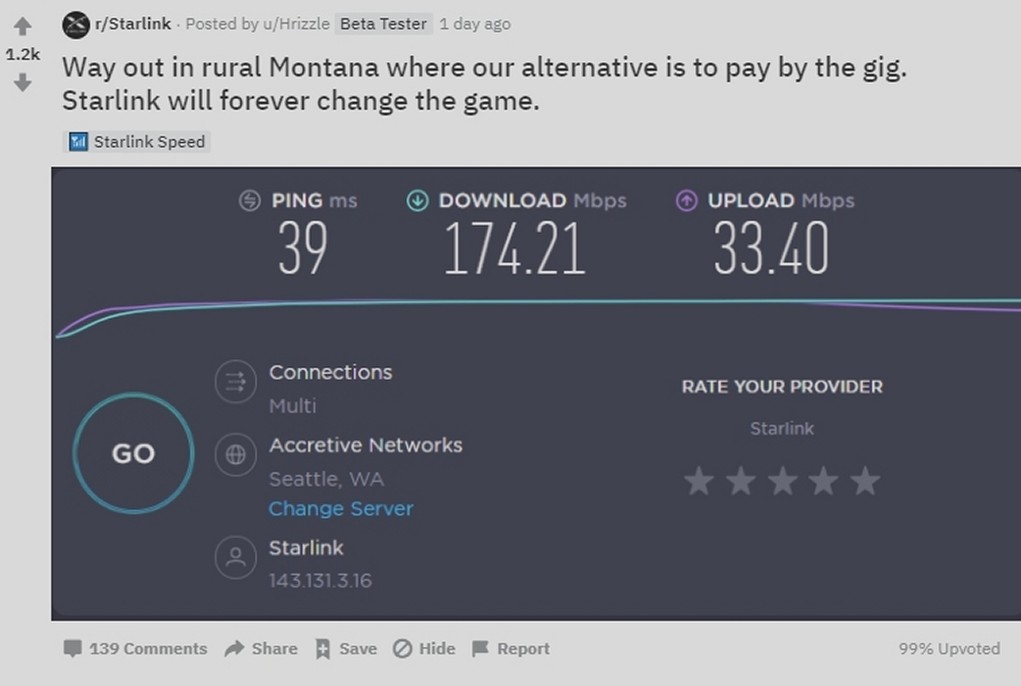
SpaceX każe sobie zapłacić jednorazowo 500 dolarów za modem i talerz oraz 100 dolarów miesięcznie za dostęp do sieci. Musk zapowiedział, że jeszcze w tym roku po ziemskiej orbicie będzie przemieszczało się blisko 1000 satelitów Starlink. Dzięki temu, sprawność sieci ma jeszcze wzrosnąć, a użytkownicy będą mogli liczyć na download z prędkością 200 Mb/s, upload z prędkością 50 Mb/s i ping na poziomie 20 ms. Starlink ma zawitać do Europy już w marcu przyszłego roku.
Cost of Starlink internet:
- 500$ for modem
- 100$/month for access to the internet
Speed of Starlink internet:
- generally, Starlink has a great availability
- possible download of 200 Mb/s, upload of 50 Mb/s, pink of 20 ms
- Starlink should be in Europe in March 2021
-
- Oct 2020
-
stackoverflow.com stackoverflow.com
-
In the end, the IETF (RFC 5280), browsers and CAs run fast and loose, so it probably does not matter what key usage you provide.
-
-
karl-voit.at karl-voit.at
-
every page on my blog contains a link to its archive in the page footer. This ensures that you can not only browse the latest version of all of my blog articles in case of a server breakdown. This also enables you to browse all previous version, probably changed over time. Go ahead, try a few "Archive" links of my articles. If any of my articles start with an "Updates:" section, you know for sure that there are older versions accessible via the Internet Archive.
This is an interesting pattern. How could one make this more obvious from a uI perspective?
-
-
scolaire.loupbrun.ca scolaire.loupbrun.ca
-
ot only is it wired, but it is also relatively centralized—far from the early vision of the Internet as a rhizomatic and distributed network
Intéressant compte tenu qu'on décrit Internet comme un réseau de réseaux et qu'on le dit donc décentralisé.
-
-
www.arnoldkling.com www.arnoldkling.com
-
To escape from the chaos, we will need new norms of behavior that incline us away from gossip.
To balance out this gossip-driven world, Arnold Kling argues we need new norms of behavior (I would argue perhaps we need new mechanisms), to incline us away from gossip.
-
-
www.tiktok.com www.tiktok.com
-
you are granting us the right to use your User Content without the obligation to pay royalties to any third party
-
You or the owner of your User Content still own the copyright in User Content sent to us, but by submitting User Content via the Services, you hereby grant us an unconditional irrevocable, non-exclusive, royalty-free, fully transferable, perpetual worldwide licence to use, modify, adapt, reproduce, make derivative works of, publish and/or transmit, and/or distribute and to authorise other users of the Services and other third-parties to view, access, use, download, modify, adapt, reproduce, make derivative works of, publish and/or transmit your User Content in any format and on any platform, either now known or hereinafter invented.
-
-
twitter.com twitter.com
-
By submitting, posting or displaying Content on or through the Services, you grant us a worldwide, non-exclusive, royalty-free license (with the right to sublicense) to use, copy, reproduce, process, adapt, modify, publish, transmit, display and distribute such Content in any and all media or distribution methods now known or later developed (for clarity, these rights include, for example, curating, transforming, and translating). This license authorizes us to make your Content available to the rest of the world and to let others do the same.
-
-
www.facebook.com www.facebook.com
-
you grant us a non-exclusive, transferable, sub-licensable, royalty-free, and worldwide license to host, use, distribute, modify, run, copy, publicly perform or display, translate, and create derivative works of your content (consistent with your privacy and application settings).
-
-
www.cairn.info www.cairn.info
-
Alors que la référence est investie de significations multiples par celui qui la place dans son texte (honorer, critiquer, marquer l’antériorité, préciser, faire acte d’ostentation, etc.), en revanche, la citation efface en une abstraction univoque la diversité des significations contextuelles de la référence qui l’a fait naître.
C'est là un grand élément qui facilite les manipulations des algorithmes de PageRank. D'où le fait que Google sévisse contre les compagnies qui tentent de manipuler les résultats de recherche de plusieurs manières différentes: https://www.smartinsights.com/search-engine-optimisation-seo/seo-strategy/companies-tried-cheat-google-lost-infographic/.
-
-
en.wikipedia.org en.wikipedia.org
-
journals.sagepub.com journals.sagepub.com
-
I first briefly lay out alternative media theory as it existed prior to the dominance of Facebook, Google, and Twitter.
I've been thinking about it for a while but even if all social sites were interoperable, I suspect that a small handful of 2 or 3 would have the largest market share. This is as the result of some of the network theory and research found in Linked: How Everything Is Connected to Everything Else and What It Means for Business, Science, and Everyday Life by Alberto-Llaszlo Barabasi
-
-
dezz.ie dezz.ie
-
And so The Year of Intentional Internet began.
After reading just a few posts by Desiree Zamora Garcia, I'd like to nominate her to give a keynote at the upcoming IndieWeb Summit in June. I totally want to hear her give a talk with the title Year of Intentional Internet.
-
-
www.metamute.org www.metamute.org
-
We need to debate what kind of hypermedia suit our vision of society - how we create the interactive products and on-line services we want to use, the kind of computers we like and the software we find most useful. We need to find ways to think socially and politically about the machines we develop. While learning from the can-do attitude of the Californian individualists, we also must recognise that the potentiality of hypermedia can never solely be realised through market forces. We need an economy which can unleash the creative powers of hi-tech artisans. Only then can we fully grasp the Promethean opportunities of hypermedia as humanity moves into the next stage of modernity.
Great ending. These words are as true today as they were 25 years ago.
-
-
langwitches.org langwitches.org
-
What’s lateral reading?
lateral reading, noun
When you open up the Hypothes.is sidebar on a website and read the highlights and annotations that provide additional context to the main context.
-
-
-
That’s why it’s so important to us that we help you drive sustainable revenue and businesses.
Compared to Facebook which just uses your content to drive you out of business like it did for Funny or Die. Reference: http://splitsider.com/2018/02/how-facebook-is-killing-comedy/
-
-
elladawson.com elladawson.com
-
To summarize his argument, the media industry wants to broaden our definition of the public so that it will be fair game for discussion and content creation, meaning they can create more articles and videos, meaning they can sell more ads. The tech industry wants everything to be public because coding for privacy is difficult, and because our data, if public, is something they can sell. Our policy makers have failed to define what’s public in this digital age because, well, they don’t understand it and wouldn’t know where to begin. And also, because lobbyists don’t want them to.
-
-
solidproject.org solidproject.orgSolid1
-
The last login you'll ever need Solid provides for the first time a single global logon system, so that when you log into any web site, instead of having to log in with the usual 'f' and 'g', etc, blue buttons, and then be tracked by Facebook, Google, or some other large social network, instead you can log in with any Solid provider you trust, and that won't track you.
Tags
Annotators
URL
-
-
covid-19.iza.org covid-19.iza.org
-
IZA – Institute of Labor Economics. ‘COVID-19 and the Labor Market’. Accessed 6 October 2020. https://covid-19.iza.org/publications/dp13644/.
Tags
- student survey
- financial burden
- CARES Act
- educational burden
- college students
- low-income urban
- Pell Grant
- drop a course
- personal burden
- childcare responsibility
- online classes
- is:report
- lang:en
- internet
- unemployment benefit
- New York
- COVID-19
- emergency relief grant
- financial distress
- stress
Annotators
URL
-
- Sep 2020
-
mutabit.com mutabit.com
-
sitios web autónomos
Esto viene muy bien para fortalecer una web distribuida
-
-
gerriteicker.de gerriteicker.de
-
durch politische Entscheidungen der großen Spieler
Ehrlicherweise gab es das "globale Internet" ja nie...es war ein Netz des Westens/globalen Nordens... Ansonsten stimme ich zu, dass wir im Zeitalter einer Netz-Zersplitterung sind...aber die ist auch nicht eindimensional...so bietet DSGVO bzw. GDPR eben notwendigen Schutz (Menschenrechte), die US Unternehmen verweigern. Was dazu führt, dass ich etliche Seiten nicht mehr aufrufen kann ohne auf meine Rechte zu verzichten... Das ist ja dann eine "gute Zersplitterung"...
-
-
snarp.github.io snarp.github.io
-
The Chelicerae popped up on the occasional paranormal site or edgy message board, each time accompanied by a now-defunct link. According to those who followed such things, all you had to do was start a new thread as a Guest, something Greg had been instructed to make sure was possible, and the title of that thread should be the name of someone you want dead. As the stories went, you would receive a reply almost immediately, and it would simply ask you for a story. You would have to write out, and post, in full, a horrible event that had happened to you, or someone that you loved. All the instructions were very clear that the target would only die, if the account satisfied the “Story-spinner.” None of them made any mention of what would happen if it did not.
-
-
psyarxiv.com psyarxiv.com
-
Yang, Scott Cheng-Hsin, Chirag Rank, Jake Alden Whritner, Olfa Nasraoui, and Patrick Shafto. ‘Unifying Recommendation and Active Learning for Information Filtering and Recommender Systems’. Preprint. PsyArXiv, 25 August 2020. https://doi.org/10.31234/osf.io/jqa83.
Tags
- parameterized model
- recommendation accuracy
- active learning
- AI
- experimental approach
- machine learning
- computer science
- predictive accuracy
- artificial intelligence
- is:preprint
- exploration-exploitation tradeoff
- algorithms
- lang:en
- Internet
- information filtering
- recommender system
- cognitive science
Annotators
URL
-
- Aug 2020
-
tools.ietf.org tools.ietf.org
-
although there are concerns about the complexity of the Web creating barriers to entry for new implementations
See: Gemini
-
End users are not necessarily a homogenous group
They also live in different countries with different infrastructure capabilities and in different economic situations. They may also live in the future!
-
-
www.mnot.net www.mnot.net
-
In doing so, it applied technical reasoning informed by principles and the global nature of the Internet; designing Internet standards to suit the laws of one or a few countries isn’t appropriate.
IETF as an expert of a large-scale system that may behave in ways unexpected
Tags
Annotators
URL
-