There’s none so foul and foolish thereunto,But does foul pranks which fair and wise ones do.
Generalisation about women, that all are the same, like in-group out-group, the alienisation of women as if they are another kind.
There’s none so foul and foolish thereunto,But does foul pranks which fair and wise ones do.
Generalisation about women, that all are the same, like in-group out-group, the alienisation of women as if they are another kind.
To fall in love with what she feared to look on?
Is she a mirror of Brabantio's own fears, and ideals, and therefore so appeals to him -- he compliments what he sees in Desdemona that resembles him, himself.
les papas cadres font moins que les papas profs et instit et moins que 00:54:36 les papas des professions intermédiaires et des employés donc on va y revenir
documentons ce que j'appelle l'escalator éducatif
en prenant en compte l’ensemble des éléments d’ordre éducatif, médical et social apporté par ses membres, le conseil de classe examine le déroulement de la scolarité de chaque élève afin de mieux l’accompagner dans son parcours scolaire, à la fois dans la progression de ses apprentissages à l’intérieur d’un cycle, dans son passage d’un cycle à l’autre et dans la construction de son projet personnel. »
c'est c'est issu d'un modèle théorique de 00:08:46 méta-analyse on a analysé des recherches et bien bon on peut on peut estimer à 15% l'impact génétique sur notre santé et puis vous voyez tout en haut à gauche à 00:09:00 l'environnement social et économique pèse pour 50% dans la santé de l'individu et l'environnement social et économique c'est l'école alors il y a pas que l'école bien évidemment mais l'école compte énormément il y a tout le 00:09:12 périscolaire aussi et les associations il y a des clubs sportifs tout ce qui constitue l'environnement économique et social de l'enfant donc 00:09:23 vous voyez que l'école voilà impacte pour 50% dans la santé de l'élève
qu'est-ce qu'on 00:59:30 voit on voit des effets de ce de ce dispositif pour les bénéficiaires de l'intervention la probabilité de candidater à une université dont le niveau est au moins égal au leur c'est la même norme que 00:59:43 celle qu'on a utilisé dans les graphiques que vous vous rappelez bleu clair et bleu foncé plus haut augmente elle augmente beaucoup elle augmente de 56 % et ça c'est demandé l'université et leur inscription effective dans 00:59:55 l'université augmente de presque autant 46 % ça veut dire qu'ils vont être pris dans ces universités il y a pas de problème ils ont le niveau et ils auraient dû le faire et ils peuvent le faire mais ils ne le font pas et leur donner l'information les les aider à 01:00:09 comprendre comment faire et bien vous voyez ça change énormément de choses
l'étude de de de Guillon et Willer euh elle montre que les élèves 00:49:21 d'origine défavorisé ont une connaissance moins complète des formations de la diversité hein des formations à la fois au lycée et dans le supérieur que les élèves d'origine 00:49:32 favorisé et il y a aussi une littérature qui est partiellement sociologique qui décrit l'influence on revient un peu aux idées initiales de Bourdieu l'influence de ce qui est observver dans l'environnement immédiat sur ces 00:49:45 connaissances ce que je connais ce que je sais qui existe ce que je sais à quoi ça mène c'est ce que les gens autour de moi ont fait mais des filières des des potentiels euh dont personne autour de 00:49:59 moi ne peut me donner l'exemple et ben d'une certaine manière ça n'existe pas ça n'existe pas pour moi et ça c'est susceptible de créer de forts gradients social
ce que vous voyez 00:30:19 d'extrêmement frappant c'est que on est dans les 4 % les plus forts du pays et bien les familles rich les enfants de famille riches demandent beaucoup plus des formations sélectives et très peu 00:30:32 les formations pas du tout sélectives
vous voyez sur ce 00:06:30 graphique c'est une corrélation très spectaculaire extrêmement forte entre la richesse des parents et la richesse des enfants
donc si je résume ce que j'ai dit
il y a un rapport de de de France ça 00:09:28 m'échappe sur le sur sur la la les déterminations sociales de la réussite scolaire euh qui 00:09:40 qui documente aussi de façon extrêmement extrêmement complète il est sorti en septembre dernier France stratégie pardon qui il est sorti en septembre dernier qui documente de façon extrêmement complète à tous les niveaux exactement ce type de phénomène c'est 00:09:52 quelque chose qui est qui est extrêmement extrêmement bien compris
c'est un outil de toute façon pour gérer l'hétérogénéité de la population scolaire hétérogénéité scolaire et aussi hétérogénité sociale les deux sont liés qui est le produit 00:50:40 cette double htérogénité c'est le produit à la fois heureux et et en même temps incompressible de la massification scolaire
Résumé de la vidéo [00:00:04][^1^][1] - [00:22:44][^2^][2]:
La vidéo présente une analyse des inégalités sociales dans le système éducatif français, en se concentrant sur les expériences et les recherches menées par des chercheurs du CNRS. Elle explore les mécanismes de production des inégalités dès la maternelle, l'impact des stéréotypes de genre et d'origine sociale sur les performances scolaires, et les stratégies pour réduire ces inégalités, notamment par l'utilisation d'outils numériques et la promotion de la mixité sociale dans les écoles.
Points clés: + [00:00:04][^3^][3] Démocratisation de l'éducation * Augmentation du taux de diplômés * Persistance des inégalités + [00:01:04][^4^][4] Inégalités dès la maternelle * Influence du genre et de l'origine sociale + [00:04:09][^5^][5] Stéréotypes et performances * Effets des stéréotypes sur les élèves + [00:07:01][^6^][6] Méritocratie et éducation * Croyance en la méritocratie et ses conséquences + [00:09:17][^7^][7] Recherche et mixité sociale * Expérimentations pour la mixité sociale + [00:18:15][^8^][8] Aspirations élevées et système éducatif * Ambitions des élèves face à un système inadapté
Résumé de la vidéo [00:00:00][^1^][1] - [00:27:19][^2^][2]: La vidéo présente une conférence sur les inégalités sociales et scolaires chez les enfants en France. Bernard Lahire, sociologue à l'ENS de Lyon, discute d'une enquête approfondie menée auprès de 35 enfants de différentes classes sociales, révélant des disparités significatives dans leurs expériences et conditions de vie.
Points clés: + [00:00:00][^3^][3] Introduction de la conférence * Présentation de Bernard Lahire * Thème des inégalités chez les enfants + [00:02:04][^4^][4] Contexte de l'enquête * Importance de comprendre le monde social * Méthodologie de l'étude + [00:04:13][^5^][5] Détails de l'enquête * Sélection des enfants et familles * Diversité des classes sociales + [00:10:44][^6^][6] Observations et entretiens * Entretiens avec parents et enseignants * Observations en classe + [00:14:01][^7^][7] Exercices langagiers * Évaluation des compétences des enfants * Différences dans l'expression et les goûts + [00:20:46][^8^][8] Impact des inégalités * Effets sur la scolarité et la vie quotidienne * Importance de la prise de conscience sociale Résumé de la vidéo [00:27:21][^1^][1] - [00:53:56][^2^][2]: La vidéo présente une analyse sociologique des différences d'ambitions et de ressources entre les familles selon leur position sociale. Elle met en lumière l'impact de ces différences sur l'éducation et le développement des enfants.
Points clés: + [00:27:21][^3^][3] Ambitions familiales * Varient selon la classe sociale * Influencent les aspirations pour les enfants + [00:28:07][^4^][4] Ressources éducatives * Accès inégal aux activités et au soutien * Affecte le développement langagier et social + [00:31:47][^5^][5] Pratiques culturelles * Divergent entre les milieux sociaux * Déterminent les opportunités et l'exposition des enfants + [00:37:08][^6^][6] Éducation et méritocratie * Perçues différemment selon le milieu * Liées à la notion de réussite et d'intelligence + [00:42:03][^7^][7] Système éducatif et inégalités * Tri social par l'éducation * Conscience des enjeux scolaires variable selon les familles + [00:51:02][^8^][8] Dépendance et socialisation * Importance du milieu familial dans le développement * Influence sur la socialisation et l'apprentissage Résumé de la vidéo [00:53:58][^1^][1] - [01:20:58][^2^][2]: La vidéo aborde l'impact des inégalités sur la vie des individus, en soulignant l'importance de l'accès à l'éducation et aux ressources dès le plus jeune âge. Elle discute également de la manière dont les inégalités affectent la santé et l'espérance de vie, et de l'importance d'une réalité augmentée accessible à tous.
Points forts: + [00:54:00][^3^][3] Impact des inégalités * Importance de l'éducation précoce * Effets sur la santé et la longévité + [00:56:06][^4^][4] Progrès de l'humanité * Avancées médicales et techniques * Accès inégal à ces progrès + [00:57:01][^5^][5] Réalité augmentée * Inégalités d'accès * Importance des ressources communes + [00:58:00][^6^][6] Exemple de Valentine * Accès aux acquis de l'humanité * Comparaison avec Louis XIV + [01:00:01][^7^][7] Conséquences pour les enfants * Effets dévastateurs des inégalités * Nécessité d'interventions précoces + [01:02:17][^8^][8] Rôle des enseignants * Importance des rencontres éducatives * Exemple d'Albert Camus + [01:04:50][^9^][9] Méritocratie, une chimère * Pouvoir des classes pensantes * Essentialisation des classes + [01:06:00][^10^][10] Préconisations * Interventions précoces et soutien scolaire * Réduction des effectifs en classe + [01:08:00][^11^][11] Création d'institutions * Importance de l'éducation populaire * Accès à la culture pour tous Résumé de la vidéo 01:20:59 - 01:40:32 : La vidéo aborde les défis de l'éducation en France, en particulier dans les milieux populaires et les classes spécialisées. Elle souligne l'importance d'une approche éducative précoce et inclusive pour réduire les inégalités scolaires et sociales.
Points forts : + [01:21:00][^1^][1] Inégalités éducatives * Manque d'accès aux ressources + [01:21:40][^2^][2] Réduction de l'échec scolaire * Importance des actions pédagogiques + [01:23:01][^3^][3] Progrès et écarts persistants * Évolution des qualifications professionnelles + [01:25:20][^4^][4] Appel à l'équité * Encouragement à la participation féminine + [01:26:02][^5^][5] Existence de la classe moyenne * Diversité au sein des classes moyennes + [01:32:47][^6^][6] Critique de l'école républicaine * Écart croissant entre riches et pauvres
3:50 "options are the right but not obligation to buy or sell"<br /> who on earth is so stupid to take part in such a gamble?<br /> this is just another intelligence test, exploiting the fact that most people are idiots.
Synergies for Europe's Research Infrastructures in the Social Sciences (SERISS)
Résumé de la vidéo [00:00:04][^1^][1] - [00:25:09][^2^][2]:
La vidéo présente une discussion sur l'utilisation des pratiques numériques dans le travail social, animée par Morgane Killuw, éducatrice spécialisée et formatrice. Elle est accompagnée de collègues belges, Anne Philipard et Pascal Peau, pour explorer les questions transfrontalières et l'éthique numérique dans le secteur.
Points forts: + [00:00:04][^3^][3] Introduction de la session * Présentation des intervenants et contexte de la rencontre + [00:01:03][^4^][4] Structure de la session * Répartition du temps entre présentation et échange + [00:01:25][^5^][5] Rôle des travailleurs sociaux * Importance de la formation numérique dans leur travail + [00:02:37][^6^][6] Éthique numérique * Nécessité de transformer les habitudes face au numérique + [00:03:22][^7^][7] Adaptation au numérique * Les travailleurs sociaux face à l'évolution numérique non formée + [00:04:17][^8^][8] Impact du numérique sur la société * La société se numérise, influençant les pratiques sociales + [00:05:02][^9^][9] Usage personnel vs professionnel * Différences entre les usages numériques personnels et professionnels + [00:06:13][^10^][10] Recherche en Belgique * Diagnostic des utilisations numériques par les travailleurs sociaux + [00:08:17][^11^][11] Sécurité numérique * Importance de la sécurité numérique dans le travail social + [00:10:50][^12^][12] Schéma d'utilisation du numérique * Présentation d'un schéma pour comprendre l'usage du numérique + [00:13:11][^13^][13] Application du schéma * Utilisation du schéma dans la formation continue + [00:16:17][^14^][14] Conflits éthiques * Dilemmes éthiques rencontrés par les travailleurs sociaux + [00:18:04][^15^][15] Missions d'utilité publique * Responsabilités et défis liés aux données personnelles + [00:19:01][^16^][16] Outils numériques utilisés * Réflexion sur les outils numériques et leur conformité éthique + [00:20:13][^17^][17] Législation française * Lois encadrant le traitement des données personnelles + [00:22:58][^18^][18] Éthique et numérique * Discussion sur l'éthique professionnelle et son application au numérique Résumé de la vidéo [00:25:11][^1^][1] - [00:50:54][^2^][2] : La vidéo traite de l'importance de la réflexion éthique et technocritique dans le travail social, en particulier concernant la gestion des données et l'utilisation des technologies numériques. Elle souligne le manque de formation et de sensibilisation parmi les travailleurs sociaux et propose des initiatives pour intégrer une approche plus critique et éthique du numérique dans le secteur social.
Points forts : + [00:25:11][^3^][3] Importance de la réflexion éthique * Gestion des données * Sensibilisation des travailleurs sociaux + [00:27:00][^4^][4] Différences entre la France et la Belgique * Codes de déontologie * Approches du numérique + [00:31:01][^5^][5] Choix des outils numériques * Confiance et légalité * Alternatives éthiques + [00:35:38][^6^][6] Présentation de projets * Initiatives technocritiques * Projets éducatifs + [00:39:01][^7^][7] Projet ACESA * Open Lab en travail social * Mutualisation des connaissances + [00:49:24][^8^][8] Collectif d'enseignants * Réflexion sur le numérique * Approche technocritique
Kelkes ne s’attache pas à la définition de l’imaginiaire mais de l’imaginaire social. Intéressant peut-être de compléter cette définition par des recherches sur l’imaginaire tel qu’envisagé par la sociologie de l’imaginaire et la philosophie. Claudia Strauss dans l’article dont ce chapitre est un résumé très synthétique, note qu’imaginaire dans le contexte des sciences sociales (dont l’anthropologie) en est venu à remplacer le terme de culture (au sens d’ensemble de pratiques, valeurs et significations partagé au sein d’un groupe humain). Elle retrace la formation de cette acception d’imaginaire aux travaux de Castoriadis (critiqué pour sa vision trop globalisante et abstraite): UN imganiraire pour UNE société, l’imaginaire comme éthos d’une société, Lacan, imaginaire comme relevant du fantasme, de l’illusion et qui est constitutif de la psyché humaine dans une relation dynamique à la symbolique et au réel (inconnaissable, le plancher sur la moquette) Anderson (la nation comme communauté imaginée) puis Taylor. Elle insiste sur une définition de l’imaginaire inspirée de la tradition de l’anthropologie psychologique (?), c’est à dire centrée sur la personne dans sa relation concrète au groupe social et à la réalité sociale.
on va travailler notamment sur trois 00:31:25 dimensions sur les domaines cognitifs sur les domaines sociaux et sur les domaines comportementaux et vous voyez bien que ces domaines cognitifs sociaux et comportementaux qui sont pas forcément réservés à l'éducation nationale 00:31:36 si vous êtes membre d'une association si vous êtes entraîneur sportif si vous êtes médiateur dans un musée ça ça doit vous parler non
ce qui veut donc dire que cette santé encore une fois elle est indispensable elle doit être prise en compte par l'Éducation nationale et par tous les acteurs d'éducation nationale et du 00:12:09 secteur social
Résumé de la vidéo [00:00:03][^1^][1] - [00:21:44][^2^][2]:
Cette vidéo est une conférence sur la plateforme Manager Hub, discutant des inégalités sociales et de l'éducation. Les intervenants, Céline Darmon et Sébastien Bozzo, présentent leurs recherches sur l'impact des valeurs et des messages transmis à l'école sur les élèves et la reproduction des inégalités de classe et de genre.
Points forts: + [00:00:14][^3^][3] Introduction de la conférence * Présentation de la plateforme collaborative + [00:02:01][^4^][4] Céline Darmon explique ses recherches * Impact des valeurs éducatives sur les inégalités + [00:02:33][^5^][5] Sébastien Bozzo partage son travail * Effet des contextes sur l'apprentissage et les inégalités + [00:03:01][^6^][6] Laurent Kaufmann modère la discussion * Rôle de l'école dans la lutte contre les inégalités + [00:05:02][^7^][7] Débat sur la sélection et la compétition à l'école * Influence sur la performance et la motivation des élèves + [00:12:04][^8^][8] Influence de la famille sur l'éducation * Pratiques familiales et leur impact en classe
Résumé de la vidéo [00:15:00][^1^][1] - [01:01:44][^2^][2]:
Cette partie de la vidéo aborde les influences des contextes familiaux et éducatifs sur les inégalités sociales dans le système scolaire. Les intervenants discutent de la manière dont les pratiques de socialisation varient selon l'origine sociale et comment cela affecte les performances et l'expérience des élèves en classe.
Points clés: + [00:15:00][^3^][3] Influence de la famille * Pratiques culturelles et socialisation * Impact sur les performances en classe + [00:17:00][^4^][4] Système éducatif et compétition * Effets de la compétition sur les élèves * Rôle des enseignants et perception des enjeux + [00:20:00][^5^][5] Mobilité sociale et méritocratie * Réalité de la mobilité ascendante * Reproduction des inégalités malgré les exceptions Résumé de la vidéo [00:21:45][^1^][1] - [00:44:53][^2^][2] : La vidéo aborde les défis de l'éducation en France, en se concentrant sur la méritocratie scolaire, la formation des enseignants, et les pratiques pédagogiques. Elle souligne l'importance de reconnaître les inégalités et de promouvoir des parcours individuels de réussite.
Points clés : + [00:21:45][^3^][3] Méritocratie scolaire * Questionnement sur l'équité * Impact des croyances sur la réussite + [00:22:05][^4^][4] Passerelles éducatives * Existence de possibilités malgré les statistiques * Importance des parcours individuels + [00:23:19][^5^][5] Formation des enseignants * Débat sur le contenu et la méthodologie * Influence des enseignants-chercheurs + [00:25:32][^6^][6] Responsabilité des enseignants * Risque de surcharge de responsabilités * Importance de la formation continue + [00:30:21][^7^][7] Expérience internationale * Témoignage sur l'enseignement à l'étranger * Comparaison des systèmes éducatifs + [00:37:02][^8^][8] Pédagogie en Finlande * Autonomie des élèves * Approche différente de l'évaluation
Résumé de la vidéo [00:15:00][^1^][1] - [01:01:44][^2^][2] : La vidéo discute de l'importance de la collaboration et de la communication entre les enseignants dans les écoles françaises, comparant les pratiques avec d'autres pays. Elle aborde également l'évaluation des élèves, l'impact de la suppression des notes et le rôle de l'évaluation formative.
Points forts : + [00:45:15][^3^][3] Collaboration enseignante * Bureaux partagés * Échanges disciplinaires + [00:47:19][^4^][4] Anxiété scolaire * Élèves et enseignants anxieux * Culture scolaire à changer + [00:48:08][^5^][5] Suppression des notes * Étude sur l'effet des notes * Collaboration pour l'impact positif + [00:49:15][^6^][6] Évaluation par compétences * Expérimentation en établissement * Impact sur le climat scolaire + [00:50:03][^7^][7] Compétences psychosociales * Importance dans l'éducation * Lien avec l'évaluation + [00:54:07][^8^][8] Intensité horaire * Comparaison internationale * Développement des compétences
Soutien à la parentalité
Actions sociales
Le gouvernement a rendu à l'Etat 60millions d'euros non dépensés pour le social alors que la précarité augmente
Résumé de la vidéo [00:00:00][^1^][1] - [00:54:04][^2^][2] :
Cette vidéo est une table ronde sur le thème de l'antipsychiatrie, qui regroupe des intervenants de différents horizons : une militante ex-psychiatrisée, un psychologue, un juriste et un animateur. Ils abordent les origines, les courants, les critiques et les alternatives à la psychiatrie institutionnelle, en s'appuyant sur des exemples concrets, des témoignages personnels et des références théoriques. Ils échangent leurs points de vue, parfois divergents, sur les enjeux politiques, sociaux et philosophiques de la santé mentale, ainsi que sur les droits et les besoins des personnes concernées.
Points forts : + [00:02:34][^3^][3] La définition de l'antipsychiatrie * Un terme apparu en 1961 par David Cooper, un psychiatre réformiste * Un mouvement hétérogène, composé d'universitaires (Foucault, Deleuze, Goffman...) et de militants (psychiatrisés, survivants, ex-patients...) * Une critique politique, sociale et philosophique de la psychiatrie institutionnelle + [00:10:45][^4^][4] La recherche sur la psychiatrie * Les limites du modèle biomédical, qui réduit la souffrance humaine à des symptômes, des maladies et des traitements * Les effets néfastes de la psychiatrie sur les patients, notamment la stigmatisation, la violence, la perte d'autonomie et la chronicisation * Les alternatives possibles, comme la psychothérapie, la pair-aidance, les lieux de vie communautaires ou les approches transculturelles + [00:27:21][^5^][5] Le droit et la psychiatrie * L'évolution du droit du patient, grâce à l'influence de l'antipsychiatrie et à la protection constitutionnelle des libertés * Le rôle du juge des libertés et de la détention, qui contrôle les mesures d'hospitalisation sans consentement * Les difficultés de la pratique judiciaire, face à la complexité des situations, à la pression des experts et à la pénurie de moyens + [00:39:08][^6^][6] Les témoignages des patients * Les expériences vécues en psychiatrie, parfois bénéfiques, souvent traumatisantes * Les revendications des patients, comme le droit à l'autodétermination, le refus du diagnostic, le choix du soin ou la dénonciation des maltraitances * Les initiatives des patients, comme les associations, les collectifs, les médias ou les actions militantes
Résumé de la vidéo de [00:00:00][^1^][1] à [00:52:27][^2^][2] :
Cette vidéo présente deux outils pour évaluer le niveau de maturité d'un projet d'innovation sociale : le schéma du cycle de vie et la grille d'évaluation. Ces outils ont été co-construits avec des acteurs de l'écosystème de l'innovation sociale au Québec. Ils permettent de situer un projet dans les différentes phases du processus d'innovation sociale et d'identifier les indicateurs qualitatifs correspondants. La vidéo explique le contexte, les sources d'inspiration, la démarche de co-construction, l'organisation et l'utilisation des deux outils. Elle donne aussi un exemple concret d'application de la grille à un projet.
Points saillants : + [00:00:08][^3^][3] Présentation du webinaire et des intervenants * Marie-Chantal Bach, directrice du RQIS * Gabriel Salathé-Beaulieu, animateur du webinaire * David Longtin, chercheur et présentateur des outils * Josée Baudoin, témoin d'un projet d'innovation sociale + [00:03:58][^4^][4] Contexte et objectifs du projet d'outils d'évaluation * Besoin exprimé par les acteurs de l'innovation sociale au Québec * Financement du ministère de l'Économie et de l'Innovation * Portage par imonovis, RQIS, CEDRIC et TIESS * Revue de littérature et groupes de discussion en 2021 * Co-construction de cinq outils avec une trentaine de partenaires en 2022 + [00:06:25][^5^][5] Sources d'inspiration et démarche de co-construction des deux outils présentés * Schéma du RQIS (2014) et revue de littérature (2021) comme points de départ * Deuxième groupe de travail avec six ateliers pour revisiter le schéma et élaborer la grille * Intégration des propositions et des tests des participants + [00:09:25][^6^][6] Organisation et utilisation du schéma du cycle de vie d'une innovation sociale * Quatre grandes phases : émergence, expérimentation, pérennisation ou changement d'échelle, institutionnalisation * Douze niveaux de maturité identifiés par des numéros et des lettres * Possibilité d'allers-retours, de rétroactions, de refocalisation ou de fin du projet * Correspondance avec la grille d'évaluation du niveau de maturité + [00:16:06][^7^][7] Organisation et utilisation de la grille d'évaluation du niveau de maturité d'un projet avec un potentiel d'innovation sociale * Version détaillée avec des indicateurs qualitatifs à vérifier par oui ou non * Version synthétique avec le critère principal de chaque niveau * Prise de notes pour documenter les éléments du projet qui justifient le niveau de maturité * Exemple d'application de la grille à un projet situé à la phase d'émergence + [00:22:22][^8^][8] Témoignage de Josée Baudoin sur l'utilisation de la grille pour son projet de médiation culturelle * Projet qui vise à favoriser l'accès à la culture pour les personnes en situation de vulnérabilité * Utilisation de la grille pour situer le projet à la phase d'expérimentation * Avantages de la grille : clarté, simplicité, adaptabilité, réflexivité * Limites de la grille : subjectivité, complexité, temporalité + [00:26:19][^9^][9] Période de questions et réponses avec les participants * Questions sur la définition de l'innovation sociale, la différence entre les phases, la durée du cycle de vie, etc. * Réponses de David Longtin, Gabriel Salathé-Beaulieu et Marie-Chantal Bach * Renvoi aux autres outils et au prochain webinaire
les case ou care managers par exemple. Ce sont des professionnels qui accompagnent les patients (qui ont souvent de problèmes pour s'organiser du fait de leur pathologie ndlr) dans leur vie quotidienne, pour s'inscrire à la fac par exemple ou tout ce qui leur permet de mieux s'intégrer dans la société. De même, nous travaillons avec des pairs aidants et des familles aidantes qui apporte leur savoir d'expérience à celui des professionnels.
Résumé de la vidéo de [00:00:00][^1^][1] à [00:22:00][^2^][2]:
Cette vidéo est la première partie d'une conférence sur la physiopathologie des troubles du neurodéveloppement, organisée par l'Institut des Sciences Cognitives Marc Jeannerod. La conférencière, Angela Sirigu, présente ses recherches sur les bases cérébrales et moléculaires des comportements sociaux et leur implication pour les troubles du spectre de l'autisme.
Points clés: + [00:00:00][^3^][3] L'introduction de la conférence * Présentation des organisateurs, des invités et du sujet * Annonce du plan de la conférence et des intervenants + [00:04:41][^4^][4] La question de la représentation sociale * Définition du concept d'être social et de ses dimensions * Exemples de comportements sociaux chez les humains et les primates non humains * Illustration de l'influence des autres sur nos décisions et nos émotions + [00:10:01][^5^][5] Les bases cérébrales de la représentation sociale * Présentation du cortex orbitofrontal comme une région candidate pour le traitement de l'information sociale * Résultats d'expériences chez les singes macaques et les humains montrant l'activité de cette région en fonction du contexte social * Rôle du contact oculaire et de l'amygdale dans la perception des visages et des émotions + [00:15:01][^6^][6] Le substrat moléculaire de la représentation sociale * Présentation de l'ocytocine comme une molécule clé pour la modulation des comportements sociaux * Association entre les niveaux d'ocytocine et les traits de personnalité liés à la sociabilité * Implication de l'ocytocine dans le développement des neurones et la plasticité cérébrale
3:15 My technique would be to copy it, paste it on stackoverflow and ask if someone knows what it does.
in south america, they would find the original author, drug him with scopolamine, and make him give out the original source code : D aka social engineering<br /> they use this method to steal crypto from wealthy smart asses, who believe their money is "safe"
similar to the $5 wrench in the "security" xkcd https://xkcd.com/538/
see also<br /> https://www.youtube.com/watch?v=XJwU8Hiq4HM<br /> Careful with the New Crime Wave of Latin America
1:42<br /> Scopolamine is a drug<br /> that basically makes you into a little slave, into a little servant,<br /> and you'll do whatever the attacker wants.
Résumé de la vidéo [00:00:00][^1^][1] - [00:56:00][^2^][2] :
Cette vidéo est une conférence organisée par l'Institut d'études avancées de Paris et l'École Pratique des Hautes Études sur le thème "Comment peut-on changer les systèmes urbains ?". Elle réunit deux intervenants : Stéphanie Vermeersch, sociologue et directrice adjointe scientifique à l'Institut des sciences humaines et sociales du CNRS, et François Croquette, diplomate et directeur de la transition écologique et du climat à la Ville de Paris. Ils abordent les principaux défis et les actions concrètes liés à la crise climatique, à la crise sociale et à la crise sanitaire dans les villes.
Points clés : + [00:03:04][^3^][3] Les défis des systèmes urbains * La croissance démographique et la densité urbaine * Les risques climatiques (îlots de chaleur, inondations, canicules, etc.) * Les inégalités sociales et spatiales * Les problèmes de mobilité et de pollution * Les menaces sanitaires et sécuritaires + [00:07:34][^4^][4] Les actions de la Ville de Paris * Le plan climat pour réduire les émissions de gaz à effet de serre et atteindre la neutralité carbone en 2050 * Les secteurs prioritaires d'intervention : le logement, l'alimentation, les transports, l'énergie * Les leviers d'adaptation et d'innovation : la végétalisation, le vélo, le télétravail, la rénovation thermique, les circuits courts, etc. * La coopération avec les autres acteurs : les citoyens, les territoires voisins, les partenaires internationaux + [00:41:51][^5^][5] Les Jeux olympiques et paralympiques de 2024 * Un événement majeur et un défi logistique * Une opportunité pour accélérer la transition écologique * Un exemple de résilience et de solidarité
Résumé de la vidéo [00:00:00][^1^][1] - [01:07:00][^2^][2] :
Cette vidéo est un webinaire sur la coordination parentale, une pratique alternative de résolution des conflits pour les parents séparés en situation de haute conflictualité. Il s'agit d'un mode amiable centré sur les besoins des enfants, encadré par le tribunal et basé sur l'interdisciplinarité. La vidéo présente les origines, les principes, le déroulement et les résultats de la coordination parentale, ainsi que l'expérience d'une expérimentation menée à La Rochelle depuis 2021.
Points forts : + [00:06:00][^3^][3] La coordination parentale : définition et historique * Née aux États-Unis dans les années 1990 * Développée dans une trentaine de pays * Vulgarisée par Lorraine Fillon et Dominique Dabate, formateurs québécois + [00:15:00][^4^][4] Le rôle du coordinateur parental : une posture pluridimensionnelle * Soutien, analyse, éducation, coordination, gestion de conflits, décision * Adaptation au contexte et aux besoins de chaque famille * Travail en partenariat avec les avocats et les autres professionnels + [00:28:00][^5^][5] Le déroulement d'une mesure de coordination parentale : les étapes clés * Proposition du juge à l'audience * Convention d'entrée en coordination parentale * Entretiens individuels et collectifs avec les parents et les enfants * Bilan intermédiaire et final transmis au juge + [00:35:00][^6^][6] Les résultats de la coordination parentale : les bénéfices pour les parents et les enfants * Amélioration de la communication, de la coparentalité, du respect du plan parental * Diminution des conflits, des recours au tribunal, du stress * Prise en compte des besoins et des intérêts des enfants * Satisfaction et adhésion des parents + [00:49:00][^7^][7] Les perspectives de développement de la coordination parentale en France * Formation des professionnels intéressés * Mise en réseau des acteurs * Recherche de financements * Création d'une plateforme nationale
Résumé de la vidéo de [00:50:00][^1^][1] à [01:07:00][^2^][2] :
Cette partie de la vidéo présente la coordination parentale, une pratique alternative de résolution des conflits pour les parents séparés qui sont en situation de haute conflictualité. La coordinatrice parentale, Marie-Clotilde, explique les origines, les principes, le déroulement, le rôle et les résultats de cette pratique, ainsi que son expérience sur La Rochelle. Elle répond également aux questions des participants sur les différences avec la médiation, le coaching, l'expertise, le coût, la formation, le cadre juridique et les limites de la coordination parentale.
Points forts : + [00:50:00][^3^][3] La coordination parentale : origines et définition * Née aux États-Unis dans les années 1990 * Centrée sur les besoins des enfants * Encadrée par le tribunal * Interdisciplinaire et partenariale + [00:57:00][^4^][4] Le déroulement d'une mesure de coordination parentale * Proposée par le juge aux parents * Convention d'entrée signée par les parties * Entretiens individuels et collectifs * Bilan écrit transmis au juge + [01:01:00][^5^][5] Le rôle du coordinateur parentale * Soutenir, analyser, éduquer, coordonner, gérer les conflits * Avoir une formation et de l'expérience en médiation * Pouvoir prendre des décisions mineures si mandaté * Travailler en lien avec les avocats et les autres professionnels + [01:04:00][^6^][6] Les résultats de l'expérience sur La Rochelle * 50 situations orientées par les juges en 18 mois * 25 mesures mises en place * Satisfaction des parents, des enfants et des professionnels * Amélioration de la communication, de la coparentalité et du bien-être des enfants + [01:06:00][^7^][7] Les questions des participants * Différences avec la médiation, le coaching, l'expertise * Coût, financement, durée, fréquence des séances * Formation, supervision, réseau des coordinateurs * Cadre juridique, confidentialité, éthique, limites
Belonging is one of the fundamental aspects of membership in a group
And everyone experiences this differently. For example, I need to relate to people on a professional level before I'm comfortable relating to them on a personal level. Others need to connect personally before they connect on matters of content/learning, etc.
We conducted surveys and focus group interviews with student participants
This is getting into methods of this study.
Cette juge atypique, qui exerce en milieu rural, mise avant tout sur la prévention. Le Tribunal pour enfants de Coutances, en Normandie, nous ouvre ses portes. Trois familles sont auditionnées. Que va décider la Juge ? Que deviennent ces mineurs ? Deux jeunes dont Catherine de la Hougue s’est occupée témoignent de leur parcours. Une plongée dans l’univers de la Justice des mineurs avec des professionnels du département qui les prennent en charge pour leur donner « une seconde chance ».
Titre original : Les enfants de la juge Un film d'Anne-Valérie Jara
© 2012, Licensed by LUKARN
Lorsque l’ASE, l’organisme en charge de la protection de l’enfance, que vous connaissez peut-être sous l’acronyme de la DDASS avant qu’elle ne change de nom, s’invite dans l’actualité, c’est souvent dans la rubrique des faits divers ou par le biais de témoignages tous plus choquants les uns que les autres. Ils font froid dans le dos et posent chaque fois les mêmes questions : Comment la protection de l’enfance en est-elle arrivée là ? Et surtout, est-elle encore capable d’assurer sa mission principale : celle de protéger les enfants ? Au-delà de ces faits divers qui défraient la chronique, on sait en réalité peu de choses sur l’Aide Sociale à l’Enfance ?
Alors à Blast, à l’occasion de la Journée Internationale des Droits de l’Enfant le dimanche 20 novembre, nous avons voulu comprendre les rouages de ce service public pour le moins méconnu et défaillant, et nous intéresser en particulier à ceux qui sont au cœur de ce système, les travailleurs sociaux.
Amélia est éducatrice parentale : elle soutient des familles pour les guider dans leur rôle de parents et assurer la protection des enfants pour éviter leur placement. Nous avons suivi pendant 7 mois le quotidien de deux familles. Celui de Jason, 9 ans, dont le père est SDF : « si j’avais une baguette magique, je souhaiterais qu’il arrête de boire ». Celui de Malya, 9 mois, et de ses parents, 19 ans, qui risquent de perdre sa garde.
Quand l'enseignement est aussi un combat contre la misère sociale, les fractures familiales et leurs conséquences. Immersion dans le réseau d'éducation prioritaire Gérard Philipe à Soissons où la communauté scolaire est mise à rude épreuve.
other cultures do not think this and that suggests that our sense of self is largely culturally constructed
for - quote - Sarah Stein Lubrano - quote - self as cultural construction in WEIRD culture - sense of self
quote - (immediately below)
discussion - sense of self is complex. See the work of - Michael Levin and - https://jonudell.info/h/facet/?max=100&expanded=true&user=stopresetgo&exactTagSearch=true&any=michael+levin - Major Evolutionary Transition in Individuality - https://jonudell.info/h/facet/?max=100&expanded=true&user=stopresetgo&exactTagSearch=true&any=major+evolutionary+transition+in+individuality
Stable pseudonymity is helpful in maintaining civility. You can be anonymous, but you still have a reputation within a context or across several contexts. The mentioned article is based on Huffpost comment section account experiments. Strongly reminds me of Jimmy Wales on Wikipedia at Reboot7 in CPH 2005: [[Situationele identiteit vs absolute identiteit 20050621121100]] "I don’t need to know who you are exactly, as long as I am able to know you in Wikipedia. " I dubbed it 'situational identity' in 2005. The consistency of behaviour over time is enough for a reputation. This also connects to the importance of time dimension, Vgl [[Blogs als avatar 20030731084659]] where time is the key factor in id stability.
Résumé vidéo [00:00:00][^1^][1] - [00:24:18][^2^][2]:
Cette vidéo présente le travail de J-PAL Europe en matière d'expérimentation et d'évaluation des politiques publiques en France, notamment dans les domaines de l'éducation, de l'emploi et de la migration. Elle s'inscrit dans le cadre du 20e anniversaire de J-PAL, une organisation de recherche qui vise à réduire la pauvreté en s'appuyant sur des preuves scientifiques.
Points forts: + [00:00:23][^3^][3] L'histoire et le contexte de J-PAL Europe en France * Créé en 2008 à l'École d'économie de Paris * Inspiré par la réforme constitutionnelle de 2003 qui permet l'expérimentation sociale * Impliqué dans des projets innovants comme le RSA, le fonds d'expérimentation pour la jeunesse ou le programme IDEE + [00:04:09][^4^][4] Le rôle de l'expérimentation dans les politiques publiques en France * Témoignage de Martin Hirsch, ancien haut-commissaire aux solidarités actives contre la pauvreté * Plaidoyer pour une culture de la preuve et de l'évaluation rigoureuse * Exemples de sujets sociaux qui mériteraient des expérimentations contrôlées + [00:21:01][^5^][5] La collaboration entre J-PAL Europe et Pôle emploi * Présentation de Bruno Crépon, chercheur au Crest et co-directeur du programme marché de l'emploi de J-PAL * Retour sur plusieurs expérimentations menées depuis 20 ans sur l'accompagnement renforcé, le coaching personnalisé ou le suivi intensif des demandeurs d'emploi * Discussion avec Cyril Nouveau, directeur des statistiques, des études et de l'évaluation de Pôle emploi, sur l'utilité et l'impact de ces expérimentations
Résumé vidéo [00:24:20][^1^][1] - [00:48:08][^2^][2]:
La deuxième partie de la vidéo parle des expérimentations et des évaluations menées par Pôle emploi pour améliorer l'accompagnement des demandeurs d'emploi et des entreprises. Le conférencier présente les résultats de plusieurs études qui utilisent des méthodes rigoureuses pour estimer les effets des dispositifs sur le retour à l'emploi, la satisfaction des usagers et la demande de travail.
Points forts: + [00:24:20][^3^][3] L'impact de l'accompagnement renforcé des demandeurs d'emploi * Une étude randomisée qui compare trois groupes : accompagnement standard, accompagnement renforcé par le secteur public (CVE) et accompagnement renforcé par le secteur privé (OPP) * Un effet positif et significatif de l'accompagnement renforcé sur le taux de retour à l'emploi, surtout pour le CVE * Un effet négatif sur les demandeurs d'emploi qui ne bénéficient pas de l'accompagnement renforcé, surtout dans les marchés déprimés + [00:32:01][^4^][4] L'impact de l'accompagnement des entreprises dans leur recrutement * Une étude randomisée qui compare deux groupes : entreprises prospectées et accompagnées par Pôle emploi et entreprises non prospectées * Un effet positif et significatif sur le nombre d'offres déposées à Pôle emploi et sur le nombre d'embauches en CDI * Un effet plus important pour les entreprises qui étaient déjà clientes de Pôle emploi + [00:36:00][^5^][5] Les perspectives de recherche pour améliorer les recommandations d'offres * Deux études en cours qui visent à personnaliser les offres proposées aux demandeurs d'emploi en fonction de leurs préférences ou de leurs caractéristiques * Une approche participative qui demande aux demandeurs d'emploi de pondérer les critères des offres (métier, salaire, localisation, etc.) * Une approche prédictive qui utilise les données administratives pour identifier les appariements réussis entre demandeurs d'emploi et offres
Cette partie de la vidéo parle de la recherche expérimentale en éducation, en prenant l’exemple d’une intervention menée par l’association Énergie Jeunes dans des collèges de l’académie de Versailles. L’intervention vise à développer les compétences socio-émotionnelles des élèves, notamment leur estime de soi, leur persévérance et leur conception de l’intelligence. Les chercheurs ont évalué l’impact de l’intervention sur ces dimensions, ainsi que sur les résultats scolaires des élèves, en utilisant un protocole rigoureux avec un groupe de contrôle.
As such, learners are encouraged to construct their own understandings and then to validate, through social negotiation, these new perspectives.
I had to look up "social negotiation" to fully understand this sentence in context. From Fandom, "Social negotiation is a subset of the first class collaborative element, cultural negotiation, which is itself a subset of information exchange. The amount and type of social negotiation involved in a collaborative process is linked to the characteristics of the collaborative media and the participants." Here is the source if you are baffled with the language as I am: https://collaboration.fandom.com/wiki/Social_negotiation#:~:text=Social%20negotiation%20is%20a%20subset,collaborative%20media%20and%20the%20participants.
Die Biden-Administration hat die Genehmigung des LNG-Terminals Calcasieu Pass 2 gestoppt, um die Klimawirkung des Projekts zu prüfen. Die Entscheidung gilt als Sieg von Klima-Aktivist:innen. Sie ist ein Signal im Wahlkampf und kann Folgen für 16 ähnliche geplante Projekte haben. Ihr war eine intensive Kampagne vorausgegangen. Auch ohne CO2 werden sich die LNG-Exportkapazitäten der USA in den nächsten Jahren nahezu vervierfachen. https://www.nytimes.com/2024/01/25/climate/a-huge-win-for-activists-puts-climate-on-the-2024-agenda.html
Eine der wichtigsten wirtschaftswissenschaftlichen Konferenzen der USA, die Allied Social Science Association conference der American Economic Association, war von Themen beherrscht, die mit der globalen Erhitzung zusammenhängen. In dem Bericht der New York Times wird das als Signal für einen Umschwung in der Wirtschaftswissenschaft interpretiert und unter anderem mit den Rekordtemperaturen des vergangenen Jahres in Verbindung gebracht. https://www.nytimes.com/2024/01/23/business/economy/climate-change-economics.html
World Social Forum
for - World Social Forum - failure to reach action consensus
The systems involvedare complex, involving interaction among and feedback between manyparts. Any changes to such a system will cascade in ways that are diffi-cult to predict; this is especially true when human actions are involved.
Perhaps the evolution to solve AI-resistance (mentioned in https://hypothes.is/a/-JjZurr3Ee6EtG8G_Sbt8Q) won't be done at the level of the individual human genome, but will be done at the human society level genome.
Political groups of people have an internal memetic genome which can evolve and change over time much more quickly than the individual human's genes would work.
World Social Forum
for -globalization from below - example - World Social Forum
Battle of Seattle
for - globalization from below - example
globalisation from below - example - Battle of Seattle - World Social Forum
bien sûr on n'est pas très bon en terme de réussite scolaire mais on est un peu 00:03:41 dans la Grosse moyenne alors pas de aucune raison de jouer cocorico mais on n'est pas dernier là où on est dernier c'est sur le déterminisme social donc là effectivement on a un vrai problématique
once you dissolve that boundary you can't tell whose memories or who's anymore that's kind of the big thing about um that that kind of memory wiping the the wiping the identity on these 00:06:18 memories is a big part of multicellularity
for - key insight - multicellularity - memory wiping
investigate - salience of memory wiping for multicellularity - This is a very important biological behavior. - Perform a literature review to understand examples of this
question - biological memory wiping - can it be extrapolated to social superorganism?
you have the slime mold and you put a piece of oat which the Slime wants to eat
for - individual or collective behavior - slime mold - prisoner's dilemma and slime molds - slime molds - me vs we - me vs we - slime molds - adjacency - slime molds - me vs we - multicellular organisms
adjacency between - slime molds - me vs we -multicellular organisms - social superorganism and societal breakdown - adjacency statement - A simple slime mold experiment could make an excellent BEing journey - to demonstrate how multicellular beings operate through higher order organizational principle of collaboration that - keeps cells aligned with a common purpose, - but that each cellular unit also comes equipped with - an evolutionarily inherited legacy of individual control system - normally, the evolutionarily later and higher order collaborative signaling that keeps the multi-cellular being unified overrides the lower order, evolutionarily more primitive autonomous cellular control system - however, pathological conditions can occur that disrupt the collaborative signaling, causing an override condition, and individual cells to revert back to their more primitive legacy survival system - The same principles happen at a societal level. - In a healthy, well-functioning society, the collaborative signaling keeps the society together - but if it is severely disrupted, social order breakdown ensues and - individual human beings and small groups resort to individual survival behavior
for - social transition - rapid whole system change - cosmolocal - cosmo-local - anywheres - everywheres - commons - Michel Bauwens - P2P Foundation - somewheres - meme - glocalization - meme - cosmos-localization
summary - A good article introducing cosmo-localism as a logical vasilation of failed markets and states, swinging the pendulum back to the commons as a necessary precursor to rapid whole system change
Cosmo-local identities. A new type of glue, based on the commons
for - cosmo local identity - new social glue - cosmo local identity - new social laminin
What does contributing to a common mean?
Take permaculture as an example:
- Accompagnement socialdes Gens du voyage
les enfants de origine défavorisé ont moitié moins de chance d'entrer en seconde générale et technologique puisqu'ils sont 42 % à y rentrer que ceux dont 00:10:36 l'origine social est plus favorable ils sont 85 % à rentré les sociologues yel encelem mingi et Laurent Lardeux l'expliquent dans le livre génération désenchanté avoir des parents exerçant une profession libérale intellectuelle 00:10:49 ou scientifique prédispose à faire des études plus longues 70 % d'entre eux étudient ainsi jusqu'à leur 21 ans ce qui n'est pas le cas lorsqu'on est enfant d'agriculteur puisque que seulement 23 % d'entre eux étudient jusqu'à leurs 21 ans ou d'ouvriers non 00:11:02 qualifiés seulement 24 %. cette tendance inégalitaire s'accentue dans l'accès aux filières sélectiv moins d'un jeune sur 10 issu des 70 % des ménages les moins aisés entrent en master à l'opposé ils 00:11:15 sont plus d'un tiers à venir des 10 % les ménages les plus riches l'écart est colossal en une décennie les inégalités à l'école se sont considérablement aggravé en France selon le classement de l'OCDE alors que notre pays était déjà 00:11:29 le plus mauvais élève du fait de la forte corrélation entre origine sociale et résultats scolaires en France plus qu'ailleurs l'origine sociale détermine les résultats scolaires c'est que l'école ne parvient pas à réduire les 00:11:41 inégalités elle a plutôt tance à les amplifier par rapport à d'autres pays et les pays qui ont les meilleures performances moyennes sont aussi souvent des pays qui ont plutôt moins d'inégalité comme les pays du nord de l'Europe une tendance confirmée par le 00:11:54 rapport du knesco sur les inégalités scolaires réalisées en 2016 les auteurs y expliquent que non seulement l'école hérite d'inégalité familial mais qu'elle les amplifie favorisant un effet boule 00:12:06 de neige entre inégalité de résultats d'orientation de diplôme et d'accès à l'emploi après le diplôme à l'arrivée seul 18 % des élèves issus des familles les plus défavorisées ont un diplôme de 00:12:18 l'enseignement supérieur contre 68 % pour les enfants de cadre n'en jetez plus tous les chiffres montrent que les mécanismes de reproduction sociale en France aujourd'hui sont sont extrêmement puissants alors pourquoi de telles 00:12:31 inégalités et bien car l'école ne corrige pas tout le célèbre sociologue Pierre Bourdieu le montrait déjà dès les années 60 les individus sont dotés d'un capital économique social et culturel qui pèse tout au long de leur vie
le milieu social a un fort impact sur 00:09:33 l'orientation à note égale un élève issu de milieu défavorisé a deux fois moins de probabilité d'accéder à une seconde générale ou technologique qu'un élève issu d'un environnement favorisé
Read Minority Rules: Scientists Discover Tipping Point for the Spread of Ideas by Gabrielle DeMarco
found via: https://hypothes.is/a/kMVt4rC4Ee6E5bdC29_e_g
Even now, now, very now, an old black ramIs tupping your white ewe.
Dehumanization and picturing the relationship as a horrid rape and beastiality between Desdemona and Othello, capturing the Social Identity Theory at its finest.
you’ll have yourdaughter covered with a Barbary horse. You’ll have yournephews neigh to you. You’ll have coursers for cousinsand gennets for germans.
The comparison of Black people to beastly beings, such as horses. It nearly shows a predatory danger for Desdemona like getting eaten up by wolves. He describes a human loving relationship as an animalistic dynamic
We need to trigger exponential change across sectors and geographies by phasing out fossil fuels while taking advantage of positive social and economic tipping points.
for: quote - Johan Rockstrom, quote - positive tipping points, quote - social tipping points, social tipping points, stop, positive tipping points
quote: Johan Rockstrom
there are certain areas within CSS that are reluctant to adopt rigorous scientific practices from other fields, which can be observed through an overreliance on passively collected data (e.g., through digital traces, wearables) without questioning the validity of such data.
as Computational Social Science (CSS) grows up, it must strike a balance between its own practices and those of neighboring disciplines to achieve scientific rigor and refine its identity.
computational social science as an interdisciplinary scientific field in which contributions develop and test theories or provide systematic descriptions of human, organizational, and institutional behavior through the use of computational methods and practices.
ᔥ[[Doug Belshaw]] in I am so tired of moving platforms
The Evaporative Cooling Effect describes the phenomenon that high value contributors leave a community because they cannot gain something from it, which leads to the decrease of the quality of the community. Since the people most likely to join a community are those whose quality is below the average quality of the community, these newcomers are very likely to harm the quality of the community. With the expansion of community, it is very hard to maintain the quality of the community.
via ref to Xianhang Zhang in Social Software Sundays #2 – The Evaporative Cooling Effect « Bumblebee Labs Blog [archived] who saw it
via [[Eliezer Yudkowsky]] in Evaporative Cooling of Group Beliefs
By its very nature, moderation is a form of censorship. You, as a community, space, or platform are deciding who and what is unacceptable. In Substack’s case, for example, they don’t allow pornography but they do allow Nazis. That’s not “free speech” but rather a business decision. If you’re making moderation based on financials, fine, but say so. Then platform users can make choices appropriately.
you don't start a feminist revolution by arguing with your dad. (Marjorie laughs) He might be the one who needs to change, but that doesn't mean that you start there. 00:22:55 You start by talking to each other. We need to come together. We need to have solidarity.
for: system change - where to start
paraphrase
comment
for: COP28 talk - later is too late, Global tipping points report, question - are there maps of feedbacks of positive tipping points?, My Climate Risk, ICICLE, positive tipping points, social tipping points
NOTE
SUMMARY
This video has not been uploaded on youtube yet so there is no transcription and I am manually annotating on this page.
Positive tipping points
SPEAKER PANEL
Global Carbon Budget report summary
0:19:47: Graph of largest emitters
00:20:51: Land Use Emissions
three countries represent 55% of all land use emissions - Brazil - DRC - Indonesia
00:21:55: CDR
00:23:00: Remaining Carbon Budget
Advancing an Inclusive Process for Adaptation Planning and Action
adaptation is underfinanced. The gap is:
-00:29:46: My Climate Risk Regional Hubs - Looking at climate risks from a local perspective. - @Nate, @SoNeC - 00:30:33 ""ICICLE** storyllines - need bottom-up approach (ICICLE - Integrated Climate Livelihood and and Environment storylines)
00:32:58: Global Tipping Points
00:33:46: Five of planetary systems can tip at the current 1.2 Deg C
00:35:39
00:36:00
-00:37:00 - We have accelerating positive feedbacks and if we coordinate policy changes with consumer behavior change and business behavior change to reinforce these positive feedbacks, we can help accelerate change in the other sectors of the global economy responsible for all the other emissions
00:37:30
00:38:10
Hans Steinmüller: Comparaciones implícitas o por qué es inevitable estudiar a China en perspectiva comparada
site:: [[Facebook]] date:: 2023-04-18 author:: [[Hans Steinmüller]] url:: https://www.facebook.com/IDAES/videos/1399579184127619 accessed:: 2023-12-29
And now I will introduce a phrase,New Encyclopedism. I want to suggestthat something which for a time I shallcall World Encyclopedia is the meanswhereby we can solve the problem ofthat jigsaw puzzle and bring all the scat-tered and ineffective mental wealth ofour world into something like a commonunderstanding and into effective reac-tion upon our political, social, and eco-nomic life.
Is it the dramatically increased complexity of a polity so organized that prevents it from being organized in the first place? If some who believe in conspiracies or who can't come to terms with the complexity of evolution and prefer to rely on God as a motivating factor similarly can't come to terms with such a complex society, could it be formed? Many today have issues with the complexity of international trade much less more complex forms of organization.
Might there be a way to leverage "God" sociologically to improve upon this as the motivating force instead? Could that or something similar be a solution?
I dislike isolated events anddisconnected details. I really hate state-ments, views, prejudices, and beliefsthat jump at you suddenly out of mid-air.
Wells would really hate social media, which he seems to have perfectly defined with this statement.
One could easily replace World War I and idea of war here with social media/media and the essay broadly reads well today.
This leads to a sense of belonging, more trust and solidarity among each other.
new portmanteau: recommunitify - means to put community back in the world community, to build social capital in a community that is lacking it
Untangling Threads by Erin Kissane
Untangling Threads by Erin Kissane on 2023-12-21
This immediately brings up the questions of how the following - founder effects and being overwhelmed by the scale of an eternal September - communism of community interactions being subverted bent for the purposes of (surveillance) capitalism (see @Graeber2011, Debt)
Made by Loura: https://heyloura.com/
On the “Death” of the Typosphere, a Few Thoughts and Ideas by Ted Munk on 2018-06-02
TTSSASTT = To Type, Shoot Straight, and Speak the Truth…
In my book Technology’s Child: Digital Media’s Role in the Ages and Stages of Growing Up, I explore how the design of platforms and the way people engage with those designs helps to shape the cultures that emerge on different social media platforms. I propose three layers for understanding this process.
I think part and you see this kind of delicate dance that when things are going uh uh too slow so people vote in a more 00:25:29 liberal Administration that will speed things up and will be more creative Bolder in its social experiments and when things go too fast then you say okay liberals you had your chance now 00:25:41 let's bring the conservatives to slow down a little and and have a bit of of a breath
for: insight - conservative vs liberal - speed of sdopting social norm
insight
what you see in a lot of modern politics is this delicate dance between conservatives and 00:24:40 liberals which I think that uh uh for many generations they agreed on the basics their main disagreement was about the pace that both conservatives and 00:24:52 liberals they basically agree we need some rules and also we need the ability to to change the rules but the conservatives prefer a much slower Pace
for: quote - social constructs - liberals and conservatives, social norms - liberals and conservatives, insight - social norms
in other words
insight
adjacency between
does your scholarship suggest why so many societies do that rather than 00:20:09 saying maybe we start with a Declaration of Human Rights today maybe we write a new one from scratch based on what we know today um because it's very difficult to reach an agreement between a lot of 00:20:21 people and also you know you need to base a a a a real Society is something something extremely complex which you need to base on empirical experience 00:20:34 every time that people try to create a completely new social order just by inventing some Theory it ends very badly you need on yes you do need the ability 00:20:46 to change things a long time but not too quickly and not everything at once so most of the time you have these founding principles and shr find in this 00:20:58 or that text also orally it doesn't have to be written down and at least good societies also have mechanisms to change it but you have to start from some kind 00:21:12 of of of of social consensus and some kind of of social experience if every year we try to invent everything from scratch then Society will just collapse
for: insight - creating new social norms is difficult
insight
analogy: changing social norms, sports
What is needed is a breakaway group of nations willing to get serious about the climate emergency. Who would join it? Most of the world’s countries, potentially.
for: key point: alternative COP - breakaway group of nations, quote - alternative COP
quote
date: Dec 4, 2021
comment
Rupert Read has the best idea I have heard re international climate negotiations: countries that are serious should have their own conference where they collaborate on strong targets, plans, etc. Part of which should be recognising the dangers of remaining reliant on the petrostates, planning to transcend that reliance and sanctioning them
for: good idea - COP alternative, COP alternative - coalition of the willing, COP alternative - social tipping point, Rupert Read - alternative to COP
good idea: COP alternative
question: alternative COP
reference
In the 18th century these expectations were reinforced by the widespread conviction that since nature herself (as Isaac Newton had shown) worked by invariable laws and not divine caprice, human affairs should also be conducted so far as was possible according to fixed and regular principles, rooted in rationality, in which the scope for arbitrariness was reduced to a minimum.
Public increasingly expected reason and rational government
The most powerful groups in society, in any case, had elaborated persuasive rationales for exemption. The clergy, a vast corporation drawing revenues from a sixth of the kingdom’s land, and creaming off, in the form of tithes, a notional tenth of the yield of the rest, paid no direct taxes on the grounds that it performed its service to society by praying and interceding with God. The nobility, the social elite which owned over a quarter of the land, levied feudal dues over much of the rest, and steadily sucked most of the newly rich into its ranks via ennobling offices, resisted the payment of direct taxes as well. Nobles, the argument went, served the kingdom with their blood, by fighting to defend it.
Tax evasion of 1st and 2nd estates
It was not that France lacked the resources to survive as a great power. Over the next generation the French would dominate the European continent more completely than they had ever done. It was rather that many of these resources were locked up by the system of government, the organization of society, and the culture of what revolutionaries would soon be calling the ancien régime, the old or former order. It took the Revolution to release them.
Discontent with status quo and diminishing legitimacy
Yet it was hard to see how a French king could keep up his international pretensions without some modification in his subjects’ time-honoured privileges and inequalities. Nowhere was the kingdom’s lack of uniformity more glaring than in the structure of privilege and exemption which gave each and every institution, group, or area a status not quite like any other.
Privileges of stratified society
1:04:00 Build information capital and social capital
the French Revolution happened in Denmark
for: social tipping points - political, quote - french Revolution - Denmark
quote.
well I'll start with two extremely optimistic points
for: answer to above question
answer : two answers
for: social tipping point, STP, social tipping point - misapplication, social tipping points - 4 application errors
title: Social tipping points everywhere?—Patterns and risks of overuse
date: Nov 17, 2022
abstract
for: system justification theory, status quo bias
summary
Take these two statements:“I see what you're saying, but in my experience, the other way has worked best.”“In my experience, the other way has worked best, but I see what you're saying.”The first one negates “I see what you’re saying.”The second one negates “In my experience, the other way has worked best.”When you use “but”, it’s important to understand which part you are negating.
always end positively.
comment on fait pour faire partager les valeurs à la publique 00:44:39 à des élèves en grande précarité ce qui est question compliquée je je sais bien mais comme vous l'avez toutes et tous vécu comment on peut faire en sorte que ça reste pas du discours creux pour des 00:44:51 élèves qui sont parfois en grande difficulté social et familial
While social media emphasizes the show-off stuff — the vacation in Puerto Vallarta, the full kitchen remodel, the night out on the town — on blogs it still seems that people are sharing more than signalling.
Yes!
In the West, social welfare guarantees everyone a place to sleep, food, and free education.
for: social welfare
comment
In contrast, media ecologists focus on understanding media as environments and how those environments affect society.
The World Wide Web takes on an ecological identity in that it is defined by the ecology of relationships exercised within, determining the "environmental" aspects of the online world. What of media ecology and its impact on earth's ecology? There are climate change ramifications simply in the use of social media itself, yet alone the influences or behaviors associated with it: here is a carbon emissions calculator for seemingly "innocent" internet use:
What are the benefits of social login?
the curse of the climate crisis is that relative to covet and relative to the war moves in slower motion yes and that's a challenge
RECOMMANDATION 6 Renforcer l’information et l’accompagnement des enfants des familles les plus vulnérables, notamment des jeunes non-scolarisés ainsi que ceux en situation de précarité, pour la mobilisation du pass Culture et du pass’Sport, en prévoyant notamment des procédures d’information et d’accès hors voie dématérialisée ; augmenter le montant forfaitaire alloué par le pass’Sport pour les familles aux revenus les plus modestes, tout en encourageant le financement des licences sportives par les collectivités territoriales et l’organisation de sorties culturelles et sportives gratuites.Destinataires : Ministre des Sports et des Jeux Olympiques et Paralympiques ; Ministre de la Culture ; Présidents des conseils départementaux.
I've highlighted the shit out of this because I believe it actually argues a fundamental truth: communicating electronically is, indeed, a better way of communicating.
I don't think this friendship had to die, but the illusion of romance probably did. I'm going to do my best to choose to ignore the confirmation bias within me - could it be the absence of stigma that enabled these realizations? Is the stigma, itself, then, now a virtually all-powerful (beyond any measure of reflection) force which will never allow us to progress???
Fuck hype, man.
What do change over time "are the particular rituals and customs and expectations and rules pertaining to trust in society," she adds. "As those norms are shifting, as they did quite massively in the 19th century, you have the perfect conditions for exploiting the gaps between new and old. That shift to modernity was often the very script of the con."
Many confidence games rely on information imbalance in the gaps between old and new ways of doing things.
This was certainly true in the 19 C. as well as with technology changes in the 20th and 21st C.
blah. this surveillance system is one big personality test.<br /> the problem is, they do not want a balance of all personality types or "natural order",<br /> but they do a one-sided selection by personality type.<br /> aka socialdarwinism, socialism, survival of the social, social credit score, civilization, high culture, progress, "made order", human laws, human rights, humanism, ...
why is all this happening well I could tell a bunch of stories one of them would be the 00:09:16 technology story social media is driving us crazy one would be a sociology story we're not as involved in Civic Life as we used to be wouldn't be an economic story there's more in income inequality than there used to be and so we leave 00:09:27 desperate lives but the story I emphasize is the most direct which is we become sadder and meaner because we don't treat each other with the consideration that we deserve and treating each other with 00:09:41 consideration and Reserve we deserve
quote: not recognizing the sacred - we've become sadder and meaner because we don't treat each other with the consideration that we deserve
I'm tempted to say you can look at uh broadscale social organization uh or like Network Dynamics as an even larger portion of that light 00:32:43 cone but it doesn't seem to have the same continuity well I don't you mean uh it doesn't uh like first person continuity like it doesn't like you think it doesn't it isn't like anything to be 00:32:55 that social AG agent right and and we we both are I think sympathetic to pan psychism so saying even if we only have conscious access to what it's like to be 00:33:08 us at this higher level like it's there's it's possible that there's something that it's like to be a cell but I'm not sure it's possible that there's something that there's something it's like to be say a country
for: social superorganism - vs human multicellular being, social superorganism, Homni, major evolutionary transition, MET, MET in Individuality, Indyweb, Indranet, Indyweb/Indranet, CCE cumulative cultural evolution, symmathesy, Gyuri Lajos, individual/collective gestalt, interwingled sensemaking, Deep Humanity, DH, meta crisis, meaning crisis, polycrisis
comment
insight
quote: Gien
i'm interested in finding out how we can use this model in in with the aim of changing the society
16:00 brain conserves energy when you think you don't have internal control (locus of control)
17:00 social justice folks have victim mindset
"Der Verfassungsschutz hat die Aufgabe, Bürger vor Verfassungsfeinden zu schützen."
und wer schützt mich vor "bürger"? also vor "zivilisten"?
das hier ist noch mehr sozialdarwinismus, also "survival of the social",<br /> also sozialisten, die unter sich sein wollen in ihrer echokammer, eugenik.<br /> "antisoziale" menschen sollen ausgerottet werden, euthanasie.
der witz ist, ein antisoziales weltbild ist angeboren,<br /> es ist ausdruck von angeborenem persönlichkeitstyp.
erziehung kann den subtyp ändern,<br /> aber wir brauchen alle persönlichkeitstypen für eine "gerechte" welt,<br /> für ein biodynamisches gleichgewicht, für symbiose.
also die sozialdarwinisten sagen:<br /> "die natur ist schuld, dass unser sozialismus nicht funktioniert,<br /> also müssen wir eine hälfte der natur ausrotten."
ich sage:<br /> "wenn ihr die halbe natur ausrotten müsst, damit eure erwartungen erfüllt werden,<br /> dann habt ihr falsche erwartungen."
aber ja... sozialisten (und pazifisten) sind schon circa 10.000 jahre auf diesem "trip",<br /> dass sie die natur "beherrschen" müssen, damit ihre "schöne" zivilisation funktioniert.
und wie immer, diese idealisten interessieren sich keine sekunde für das "hier und jetzt",<br /> sondern es geht immer um eine "bessere" zukunft oder ein "besseres" leben nach dem tod.
also die sozialisten marschieren wieder...<br /> in dem sinn: leute, wir sehn uns im knast
The forthcoming 6th IPCC report includes a chapter ondemand-side mitigation solutions, which estimates thatsociobehavioral changes (on top of changes in infra-structure or technology) have the potential to reduceCO 2 emissions by 40% to 70% by 2050
for: IPCC - social behavioral change impact, quote, quote - IPCC social behavioral change
quote
In recent years, scholars have called for policymakersworking on the environment and other large-scalecollective-action problems to harness social norms andsocial tipping dynamics to “stabilize the earth’s climate”
caling Up Change: A Critical Reviewand Practical Guide to HarnessingSocial Norms for Climate Action
for: social tipping points - climate action, climate action - social tipping points, social norms - climate action, climate action - social norms, Damon Centola
title: Scaling Up Change: A Critical Review and Practical Guide to Harnessing Social Norms for Climate Action
Doleac, Jennifer. “New Evidence That Lead Exposure Increases Crime.” Brookings (blog), June 1, 2017. https://www.brookings.edu/articles/new-evidence-that-lead-exposure-increases-crime/.
A brief meta analysis of the evidence provided by three different studies on the effects of lead exposure to children and the increased incidence of their potential adult criminal behavior.
Compare this with the levels of insanity induced in TEL production discussed in https://doi.org/10.1179/oeh.2005.11.4.384 (or alternately at https://environmentalhistory.org/about/ethyl-leaded-gasoline/) via https://hypothes.is/a/7MBWvHW7Ee6a8dvvDy9Aqw
Following the Not So Online<br /> by Ryan Barrett
Everyone is super ambitious and that creates a little bit of a toxic environment where people feel like it's a very comparative space
Competitive in what way? Grades? Jobs? Finances? Material things? Relationships?
"And I think social media turbocharged us all of this.
wow...tell me more.
Description: The European Language Social Science Thesaurus (ELSST) is a broad-based, multilingual thesaurus for the social sciences. It is owned and published by the Consortium of European Social Science Data Archives (CESSDA) and its national Service Providers. The thesaurus consists of over 3,000 concepts and covers the core social science disciplines: politics, sociology, economics, education, law, crime, demography, health, employment, information and communication technology and, increasingly, environmental science.
Managing a half-dozen identities on a half-dozen platforms is too much work!
In both cases, it's up to us now to discipline ourselves to avoid the fats in junk food, and the breaking news and dopamine thrill-ride of social media.
A nice encapsulation of evolutionary challenges that humans are facing.
Television, radio, and all the sources of amusement andinformation that surround us in our daily lives are also artificialprops. They can give us the impression that our minds are active, because we are required to react to stimuli from outside.But the power of those external stimuli to keep us going islimited. They are like drugs. We grow used to them, and wecontinuously need more and more of them. Eventually, theyhave little or no effect. Then, if we lack resources within ourselves, we cease to grow intellectually, morally, and spiritually.And when we cease to grow, we begin to die.
One could argue that Adler and Van Doren would lump social media into the sources of amusement category.
for: imitation - child - mother, social learning, cultural learning - origin, altricial, mother - child relation
problem of defining social science
e hard scientist doesis to say that he "stipulates his usage"-that is, he informs youwhat terms are essential to his argument and how he is goingto use them. Such stipulations usually occur at the beginningof the book, in the form of definitions, postulates, axioms, andso forth. Since stipulation of usage is characteristic of thesefields, it has been said that they are like games or have a"game structure."
Depending on what level a writer stipulates their usage, they may come to some drastically bad conclusions. One should watch out for these sorts of biases.
Compare with the results of accepting certain axioms within mathematics and how that changes/shifts one's framework of truth.
DiResta, Renee. “Free Speech Is Not the Same As Free Reach.” Wired, August 30, 2018. https://www.wired.com/story/free-speech-is-not-the-same-as-free-reach/.
we we are made of of a kind of nesting doll architecture not just structurally I mean that part's obvious that each thing is made of smaller things but in fact 00:01:58 that each of these layers has their own problem-solving capacity uh in many cases various kinds of ability to learn from experience and and uh the the 00:02:10 competencies of various kinds and this turns out to be very important
for: superorganism, social superorganism, bottom-up movement,
comment
Coffeehouses also became more numerous and functioned as community hubs. Before their introduction, the home, the mosque, and the shop were the primary sites of interpersonal interaction.[3]
coffeehouses as place of social gathering
Die Biden-Administration hat alle amerikanischen Bundesbehörden angewiesen, bei allen Projekten die Kosten, die durch die globale Erhitzung verursacht werden, mit zu budgetieren. Damit wird eine bisher schon von der Umweltbehörde EPA verwendete Metrik der "social costs of carbon" auf die gesamte Regierungstätigkeit ausgeweitet.Mit einem Budget von ungefähr 600 Milliarden Dollar im Jahr ist die amerikanische Bundesregierung der größte Verbraucher von Gütern und Dienstleistungenn in der Welt. https://www.nytimes.com/2023/09/21/climate/biden-climate-change-economic-cost.html
for: social tipping point, multi-scale competency architecture, MET, major evolutionary transition of individuality
Title: Using emergence to take social innovation to scale
for: annotate, annotate - social media, progress trap - social media
source: connectathon 2023 09 23
But I’m increasingly inclined to the view that the genius of ZK is the simple fact that it forces its user to continually interact with, and create connections among their thoughts and the thoughts of others.To the extent that’s correct, the work that ZK demands is not a drawback at all. It is in fact ZKs primary benefit; it’s a serious feature and not at all a bug.
reply to u/TeeMcBee and u/taurusnoises at https://www.reddit.com/r/Zettelkasten/comments/16njtfx/comment/k1ic0ot/?utm_source=reddit&utm_medium=web2x&context=3
And two more big yeses.
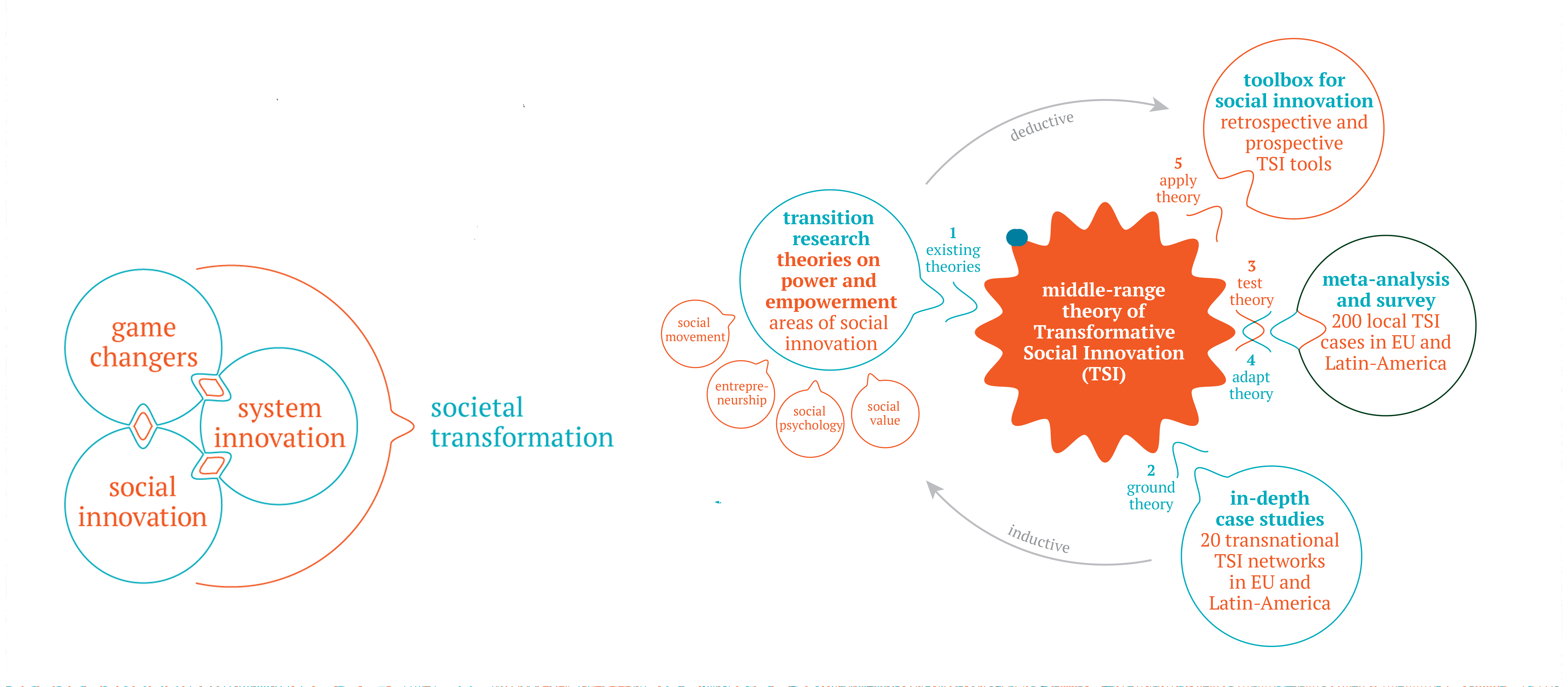
There is a growing amount of literature in the educational social annotation space in which teachers/professors are using it specifically to encourage their students to interact with class material and readings. The mechanics on the front end are exactly the same as in most ZK set ups, the difference is what happens with the annotations one makes.
An entry point into some of this research:
07:00 circumstances making a person hard; not getting picked up by his mom, but standing up himself
in a normal distribution, from over here you have the denialists and over here you have the environmental activists. But in between you have a lot of different types of people. And the majority are actually – we know this from opinion polls – they are very supportive of science. They're very supportive of and concerned about climate change. They want climate action. It's just that they live their normal lives, they have many preoccupations in life. 01:01:44 They have their children, their health, their school, their financing, their incomes. You know, many, many things to be worried about. But that's the question: how do we get this majority, the silent majority, to join us? And I don't think that the way to make them join us is to scare them. And I don't think the way to join is to fight with the denialists. I think the way to join... to make them join... is to show that this pathway can get a better life.
date: Sept., 2023
comment
cartoon animation - using art as a form of collective self reflection of mainstream culture
Best video I've seen in years!
Social tipping points and physical tipping points are interrelated. With environmental stress, the former could arrive before the latter, and then cascades develop. Hamburg Climate Futures Outlook 2023: https://www.cliccs.uni-hamburg.de/results/hamburg-climate-futures-outlook.html
Diagnostic PRAPS île de France1. Caractéristiques de la population
for: Michael Levine, developmental biology, human superorganism, multi-scale competency architecture, eukaryote multi-cellular superorganism - interlevel communication, interoception
definition: multi-scale competency architecture
comment
Recent work has revealed several new and significant aspects of the dynamics of theory change. First, statistical information, information about the probabilistic contingencies between events, plays a particularly important role in theory-formation both in science and in childhood. In the last fifteen years we’ve discovered the power of early statistical learning.
The data of the past is congruent with the current psychological trends that face the education system of today. Developmentalists have charted how children construct and revise intuitive theories. In turn, a variety of theories have developed because of the greater use of statistical information that supports probabilistic contingencies that help to better inform us of causal models and their distinctive cognitive functions. These studies investigate the physical, psychological, and social domains. In the case of intuitive psychology, or "theory of mind," developmentalism has traced a progression from an early understanding of emotion and action to an understanding of intentions and simple aspects of perception, to an understanding of knowledge vs. ignorance, and finally to a representational and then an interpretive theory of mind.
The mechanisms by which life evolved—from chemical beginnings to cognizing human beings—are central to understanding the psychological basis of learning. We are the product of an evolutionary process and it is the mechanisms inherent in this process that offer the most probable explanations to how we think and learn.
Bada, & Olusegun, S. (2015). Constructivism Learning Theory : A Paradigm for Teaching and Learning.
We sing along with the chorus and remain silent for the verse; we answer the singer’s “call” with the appropriate response. And we do these things in unison as a single voice.
Murray writes about call and response as a a kind of participatory engagement but with limited engagement because it's a form with expected patterns. I think this kind of repetition in traditional forms speaks to a kind of social agency if not to individual agency
Steve Bannon I mean to my to my delight 00:25:29 and horror read an entire section of my book team human aloud on war room pandemic and it was a section of the book that I looked at and I still there's nothing I can really change in it to defend it from being used in that 00:25:42 context
A social network for "organizing and sharing your knowledge".
T9 (text prediction):generative AI::handgun:machine gun
Without a solid spiritual foundation, humanity may well continue on its path toward self-destruction, whether it be through environmental collapse, nuclear war or Artificial Intelligence gone haywire. On the other hand, if we evolve our culture to value inner work as much as we value outer work, then our individual and collective spiritual wisdom might just catch up with our rapidly advancing technology.
title
summary
Comment
Timmy Broderick in Evidence Undermines ‘Rapid Onset Gender Dysphoria’ Claims In Scientific American at 2023-08-24 (accessed:: 2023-08-25 09:26:00)
The task is to have a communitynevertheless, and to discover means of using specialties topromote it. This can be done through the Great Conversa-tion.
Perhaps there's a framing of "the commons" as a larger entity from which we not only draw, but to which we contribute and in which we participate that glues us all together.
Link under: https://hypothes.is/a/mEgAiEIFEe6trVPf7HjFhQ
Even before mechanization had gone as far as it has now,one factor prevented vocational training, or any other formof ad hoc instruction, from accomplishing what was expectedof it, and that factor was the mobility of the Americanpopulation. This was a mobility of every kind —in space, inoccupation, and in economic position.
Democracy and Education was written before the assemblyline had achieved its dominant position in the industrialworld and before mechanization had depopulated the farmsof America.
Interesting history and possible solutions.
Dewey on the humanization of work front running the dramatic changes of and in work in an industrial age?
Note here the potential coupling of democracy and education as dovetailing ideas rather than separate ideas which can be used simultaneously. We should take care here not to end up with potential baggage that could result in society and culture the way scholasticism combined education and religion in the middle ages onward.
Dewey was first of all a social reformer.
Kristóf, T., & Nováky, E. (2023). The Story of Futures Studies: An Interdisciplinary Field Rooted in Social Sciences. Social Sciences, 12(3), 192. MDPI AG. Retrieved from http://dx.doi.org/10.3390/socsci12030192
Health care is an area that will likely see many innovations. There are already multiple research prototypes underway looking at monitoring of one’s physical and mental health. Some of my colleagues (and myself as well) are also looking at social behaviors, and how those behaviors not only impact one’s health but also how innovations spread through one’s social network.
Four billion people are now connected to the same infrastructure, the internet, that we the science and technology community put in place just decades ago. This is creating the conditions for an explosion of open creativity and innovation never seen before. A huge wave of labs of all kinds (living labs, fablabs, social labs, edulabs, innovation spaces, even policy labs) is emerging as the new kind of groups and communities of the digital era. We are moving from the net to the lab. On the 2030 horizon, many of these labs will gather and agree in generating the first universal innovation ecosystems in regions and countries.
Thomas Jefferson’s aphorism ‘Do well by doing good’ is timely and trendy in a way it hasn’t been for centuries. Because that ethos for technology entrepreneurs is increasingly recognized as the only way many people will expect firms offering technology innovations to approach them: humbly and with a broader social mission and accounting not just as a corporate social responsibility afterthought, but as a core value of the products and companies themselves
I do expect new social platforms to emerge that focus on privacy and ‘fake-free’ information, or at least they will claim to be so. Proving that to a jaded public will be a challenge. Resisting the temptation to exploit all that data will be extremely hard. And how to pay for it all? If it is subscriber-paid, then only the wealthy will be able to afford it.
Will members-only, perhaps subscription-based ‘online communities’ reemerge instead of ‘post and we’ll sell your data’ forms of social media? I hope so, but at this point a giant investment would be needed to counter the mega-billions of companies like Facebook!
David E. Williams, Spencer P. Greenhalgh. (2022). Pseudonymous academics: Authentic tales from the Twitter trenches. The Internet and Higher Education. Volume 55, October 2022 https://doi.org/10.1016/j.iheduc.2022.100870
The big tech companies, left to their own devices (so to speak), have already had a net negative effect on societies worldwide. At the moment, the three big threats these companies pose – aggressive surveillance, arbitrary suppression of content (the censorship problem), and the subtle manipulation of thoughts, behaviors, votes, purchases, attitudes and beliefs – are unchecked worldwide
In our early experiments, reported by The Washington Post in March 2013, we discovered that Google’s search engine had the power to shift the percentage of undecided voters supporting a political candidate by a substantial margin without anyone knowing.
What if, early in the morning on Election Day in 2016, Mark Zuckerberg had used Facebook to broadcast “go-out-and-vote” reminders just to supporters of Hillary Clinton? Extrapolating from Facebook’s own published data, that might have given Mrs. Clinton a boost of 450,000 votes or more, with no one but Mr. Zuckerberg and a few cronies knowing about the manipulation.
hat kinds of individuals or teams or communities or systems cognitively are like the early canary in 00:39:47 the coal mine that you think are ready to transform or somebody who like might hear something about a system they're involved in and think actually yeah that sounds like my organization or self might be at this sort of transition 00:39:58 point
these are the seven main thrusts of the series
The seven main ideas for societal design: 1. societal transformation - is necessary to avoid catastrophe 2. the specific type of transformation is science-based transformation based on entirely new systems - de novo design - 3. A practical way to implement the transformation in the real world - it must be economical, and doable within the short time window for system change before us. - Considering a time period of 50 years for total change, with some types of change at a much higher priority than others. - The change would be exponential so starting out slower, and accelerating - Those communities that are the first to participate would make the most rapid improvements. 4. Promoting a worldview of society as a social superorganism, a cognitive organism, and its societal systems as a cognitive architecture. 5. Knowing the intrinsic purpose of a society - each subsystem must be explained in terms of the overall intrinsic purpose. 6. The reason for transformation - Transformation that improves cognition reduces the uncertainty that our society's intrinsic purpose is fulfilled. 7. Forming a partnership between the global science community and all the local communities of the world.
i make the distinction between reform and trends and transformation
KDNA is still on-air and continues its community-building tradition, as do many other independent and community radio stations nationwide. One unique example is WGXC in New York’s Upper Hudson Valley. A program division of the nonprofit arts organization Wave Farm, WGXC is the only station in the country that dedicates significant airtime to radio as an artistic medium.
definition
Tweedledums
Tweedledees
there is a critical tipping threshold of 35% of the population, for plausible distributions of risk/conformity preferences and expectations.
Can policy promote beneficial norm change? The model suggests that effective interventions lower the tipping threshold.
Two factors consistently helped hasten beneficial change in our study.
An interdisciplinary framework for navigating social–climatic tipping points
Climate change can drive social tipping points – for better or for worse
for: social tipping point, social tipping points, leverage point, leverage points, STP, 25% STP threshold
title
We might view human social organization in general in this lens: social organization exists to maximize the extraction of energy from the environment to the group and individual (X), and the efficiency of the conversion of extracted energy into offspring (E). This is identical to the claim that social organization exists to maximize the fitness of the group (Wilson and Sober 1994) and/or the individuals which compose the group (Nowak et al. 2010), given an energetic definition of fitness.
for: social tipping points, STP, social tipping point, leverage point, Sirkku Juhola
title
abstract
reference
for: social tipping point, social tipping points, leverage point, STP
reference
One of the things I loved most about Twitter was the way it could throw things in front of me that I never would have even thought to go look for on my own.
I'm afraid this is one of those sentiments that should absolutely be tossed in the because of lack of user control category
Constantly being told I was somewhat dim because I didn’t understand how to do things or what the unwritten rules were.
This, I particularly hate and hope desperately I did not contribute to.
which I pulled out of the API as a JSON file by tweaking a bash script a nice stranger wrote up on the spot when I asked about JSON export
This I would very much like to learn more details about... I've been unable to find comprehensive documentation of Bluesky's API thus far.
But it's so essential that we go to this place that our brain gave us a solution. Evolution gave us a solution. And it's possibly one of the most profound perceptual experiences. And it's the experience of awe.
-for: awe, wonder, Deep Humanity, inner transformation, transition, inner/outer transformation, social tipping point, individual tipping point - Awe / wonder (getting in touch with the sacred) is evolutions solution to helping us transition into the unknown - This is in alignment with the essence of the open source Deep Humanity praxis - helping individuals to rediscover the sacred, to transform life back into a living experience of awe and wonder - Deep Humanity's purpose is to rekindle awe so that - we may bring about an individual tipping point, and collectively, - collective tipping point in global society to accelerate the transition out of the polycrisis
...moving from the scared back to the sacred