337 Matching Annotations
  1. Last 7 days
  2. May 2026
    1. SIMPLEX MACHINE RESTORATION CHECKLISTQuick guide for inspection, cleaning, and maintenance 1. MODEL IDENTIFICATIONCheck what applies:• ☐ Baby Simplex• ☐ Simplex Toy Typewriter• ☐ Practical Simplex (100 / 160 / 240 / 400)• ☐ Simplex Model A• ☐ Simplex Model B• ☐ Simplex Model C• ☐ Simplex Model D• ☐ Simplex Model E• ☐ Simplex Model 300• ☐ Simplex Model 2 ½• ☐ Simplex Model 3 (Large Size)• ☐ Simplex No. 2• ☐ Simplex No. 3• ☐ Improved Simplex Typewriter• ☐ Practical Typewriter No. 2• ☐ Practical Typewriter No. 3• ☐ Simplex Typewriter – 36 characters• ☐ Simplex Typewriter – 72 characters• ☐ Simplex Typewriter – Uppercase (Note Size)• ☐ Simplex Typewriter – Upper + Lowercase (Note Size)• ☐ Simplex Portable Typewriter• ☐ Simplex No. 8other model________________________________________ 2. INITIAL DIAGNOSISGeneral condition:• ☐ Complete• ☐ Missing parts• ☐ Visible damage• ☐ Rust• ☐ Dry wood• ☐ Dial blocked• ☐ Carriage stuck________________________________________ 3. DIAL / CHARACTER WHEEL• ☐ Turns freely• ☐ Turns with resistance• ☐ Blocked• ☐ Letters readable• ☐ Letters worn• ☐ Visible dirt• ☐ Shaft lubricated________________________________________ 4. CARRIAGE AND ROLLER• ☐ Carriage advances• ☐ Carriage does not advance• ☐ Soft roller• ☐ Hardened roller• ☐ Clean guides• ☐ Dirty guides• ☐ Functional spring• ☐ Loose spring________________________________________ 5. CLEANINGSurfaces:• ☐ Dust removed• ☐ Gentle damp cleaning• ☐ Fully driedDial:• ☐ Cleaned with cotton swab• ☐ Avoided touching letters• ☐ Shaft lubricatedCarriage:• ☐ Roller cleaned• ☐ Guides lubricatedMetal base:• ☐ Surface rust treated• ☐ Deep rust stabilizedWood base:• ☐ Hydrated• ☐ Waxed________________________________________ 6. LUBRICATION• ☐ Dial shaft• ☐ Carriage guides• ☐ Advance mechanism• ☐ No excess oil________________________________________ 7. INKING SYSTEM• ☐ Soft pads• ☐ Hardened pads• ☐ Replacement needed• ☐ Re-inking done• ☐ Proper ink (oil-based)________________________________________ 8. REPAIRS PERFORMED• ☐ Dial unblocked• ☐ Carriage adjusted• ☐ Spring tightened• ☐ Gears cleaned• ☐ Screws replaced• ☐ Base stabilized________________________________________ 9. FINAL TESTS• ☐ Dial rotates 360° without sticking• ☐ Carriage advances several lines• ☐ Clear printing• ☐ No metallic noises• ☐ No excess lubricant• ☐ Paper feeds correctly________________________________________ 10. STORAGE• ☐ Stored in breathable box or cover• ☐ Moisture-absorbing packet included• ☐ Away from direct light• ☐ In a dry, stable environment________________________________________ FINAL RESULT• ☐ Full restoration• ☐ Partial restoration• ☐ Pending parts• ☐ Preventive conservation only• ☐ Full restoration• ☐ Partial restoration• ☐ Pending parts• ☐ Preventive conservation only

      https://www.facebook.com/Breogan51/posts/pfbid02KK2N5eB2iBtsJuCfkbS9buv57HYdax8fxemtHjDgLLd3vb9Pc49QocwVAw2emEaql

    1. Dex Horthy, coiner of Context Engineering and “the Dumb Zone”, publicly retracted his extremely vibe-coding-pilled call 6 months ago and encouraged people to **please read the code**

      Dex Horthy公开撤回了他的极端观点,并鼓励人们“请阅读代码”,这反映了技术社区对代码质量的重视。

    2. Today’s LS guest, Mikhail Parakhin, CTO of Shopify, had another take on the 'tasteful tokenmaxxing' - you want to go for depth (e.g. do more serial autoresearch loops) than go for breadth (e.g. solve a problem by kicking off 5, 10, 50, 500 parallel runs of the LLM slot machine). Worth thinking through.

      Mikhail Parakhin's emphasis on depth over breadth in AI research suggests a focus on quality and depth of work rather than quantity.

    1. You've received a report, a market analysis for the new product you're planning to launch. Reading through it you notice problems: the date on the report doesn't match the date you requested it on, it's from 6 months prior. Several paragraphs have obvious spelling errors. Some graphs are mislabeled and duplicated.

      这个例子展示了我们如何通过表面的质量来评判工作质量,而这个质量并不总是代表实际的工作质量。

  3. Apr 2026
    1. The products will need to get worse, more expensive, or both if VCs are to get their money back.

      主流观点认为科技公司会通过产品创新和改进来提高价值,但作者直言AI公司可能需要让产品变得更差或更昂贵才能满足投资者回报要求,这挑战了科技行业进步的叙事,揭示了资本压力与产品价值之间的潜在冲突。

    2. Open weight (read: free) models are widely available and good enough that most people probably couldn't tell the difference.

      主流观点认为付费的云端LLM服务在质量上显著优于免费开源模型,但作者声称开源模型已经好到大多数用户无法分辨差异,这挑战了付费服务价值主张的核心,暗示AI行业可能面临价值重估。

    1. The time when we suffer from large amounts of AI slop is gone. Now we instead suffer under a massive load of good reports.

      大多数人认为AI工具会产生大量低质量的'垃圾报告'(AI slop),增加开发者的负担,但作者认为现在AI生成的安全报告质量很高,虽然数量庞大但都是高质量的报告。这是一个反直觉的观点,因为通常人们认为自动化工具会产生大量噪音而非有价值的贡献。

    1. frontier AI models are not too big because the technology is complex and too big because the training data is garbage

      这一观点挑战了当前AI模型规模扩大的主流解释,将问题从技术复杂性转向数据质量问题,提出了一个反直觉的视角:模型规模实际上是应对低质量数据的必要之举,而非技术发展的必然结果。

    1. Claude Opus 4.7 feels like a real step up in intelligence. Code quality is noticeably improved, it's cutting out the meaningless wrapper functions and fallback scaffolding that used to pile up, and fixes its own code as it goes.

      AI在代码质量和自主修复能力上的进步令人印象深刻,特别是能够消除无意义的包装函数和备用脚手架,这表明AI正在从代码生成向真正的软件开发实践转变。

    1. A small model trained on fewer than 2,000 examples from real lawyers, bankers, and consultants recently beat all but the best frontier models on corporate legal work, at a fraction of the price.

      这一发现挑战了'规模和计算能力胜过一切'的AI发展范式。高质量专业化数据训练的小型模型在特定领域表现优于通用大模型,暗示AI发展可能从'越大越好'转向'更专业、更高效'的新阶段。

    1. As slop takes over the Internet, labs may struggle to obtain high-quality corpuses for training models.

      这一观察揭示了AI训练数据质量的危机。随着互联网内容质量的下降,AI系统可能面临'垃圾进,垃圾出'的风险。作者提出的'低背景钢'比喻巧妙地指出了使用2023年前纯净数据的解决方案,同时也暗示了数字时代知识污染的严重性,这可能会对AI系统的可靠性和偏见产生深远影响。

    1. we discover a clear scaling law: as the underlying foundation models improve, the quality of the generated papers increases correspondingly.

      AI Scientist 存在「论文质量 Scaling Law」——底层模型越强,生成的论文质量越高。这个发现的含义令人不寒而栗:随着 GPT-5、Claude Opus 4.6、Gemini 3.1 等模型持续迭代,AI Scientist 生成的论文质量将自动提升,无需任何额外的工程投入。AI 加速科研,更强的 AI 又反过来加速 AI 自身的科研——这是第一个有实证数据支撑的正反馈循环证据。

    1. LLMs are pretty good at picking up the style in your repo. So keeping it clean and organized already helps.

      【启发】「整洁的代码库会教会 AI 模仿它的风格」——这是一个良性循环的起点。好代码 → AI 学习好风格 → AI 生成更好的代码 → 代码库更整洁。反之亦然:烂代码 → AI 学习烂风格 → 越来越多的烂代码。这意味着代码库的初始质量会被 AI 放大——好的变得更好,烂的变得更烂。技术债的「利息」在 AI 时代将以更高的复利增长。

    2. their productivity is affected by the state of the codebase.

      【启发】这句话的深远意义在于:它把 AI Coding Agent 与人类开发者置于同一评价维度。这不是「AI 是否能替代人」的问题,而是「AI 受代码质量影响的方式是否与人类相同」。答案是肯定的——这意味着几十年来软件工程师积累的代码质量实践,不是因为 AI 的到来而失效,而恰恰因为 AI 的到来而变得更加重要。技术债从「慢慢影响人」变成了「立刻影响 AI 的 token 消耗」。

    1. it's impossible to get a score much higher than 93% without cheating because around 6.5% of MMLU questions contain errors.

      MMLU 有 6.5% 的题目本身就是错的——这意味着任何模型的「真实上限」是 93.5%,而不是 100%。更令人惊讶的是:这个广泛使用了数年的权威 benchmark,其误差率直到最近才被系统研究和量化。这揭示了整个 AI 评测生态的一个深层问题:benchmark 的质量本身也需要 benchmark,而这一层元评估几乎从未被认真对待。

    1. Cross-Model Consistency Verification leverages output agreement among heterogeneous models to assess sample difficulty and generate reliable annotations.

      大多数人认为高质量标注需要人工专家或单一强大模型来完成,但作者提出利用多个异构模型输出的一致性来评估样本难度和生成可靠标注,这一方法挑战了'人工标注最优'的传统认知,展示了模型间协作的潜力。

    2. A three-stage progressive training strategy -- large-scale pre-training, hard sample fine-tuning, and GRPO alignment -- sequentially exploits these data at different quality tiers.

      大多数人认为训练策略应该统一应用于所有数据,但作者提出了分阶段渐进式训练策略,在不同质量层级的数据上采用不同方法,这种针对数据质量差异的训练方法挑战了传统'一刀切'的训练范式,代表了数据为中心的AI新思路。

    1. Bad software is a decision you make. You need to own it. You should do better.

      大多数人认为糟糕的软件质量是技术限制、时间压力或复杂性的必然结果,但作者断言这实际上是一个有意识的选择。这一观点挑战了软件开发中常见的借口文化,暗示质量问题本质上是责任和决策问题,而非客观约束。

  4. Mar 2026
  5. Feb 2026
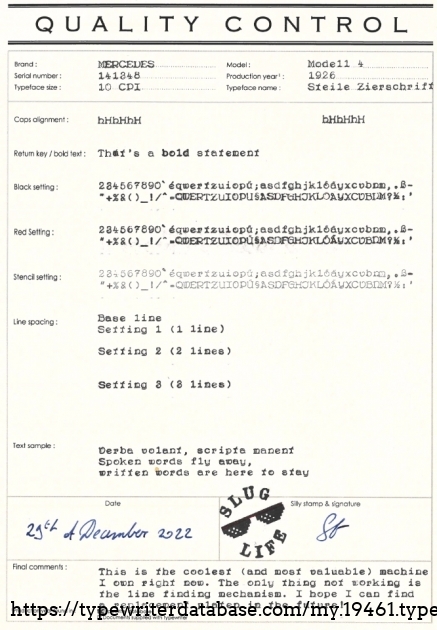
    1. https://www.facebook.com/photo.php?fbid=10162847550852775&set=p.10162847550852775&type=3

      Olympia quality control sheets had sections for:<br /> - shift (Hh Hh Hh)<br /> - type specimen for all the characters<br /> - Black ribbon test in two lines of all characters<br /> - Red ribbon test in two lines of all characters<br /> - Stencil Test <br /> - Final Proof: "Olympia-Qualitaet findet in der ganzen Welt Anerkennung - sie verbuergt besseres Schreiben."<br /> - Line Spacing: the letter "m" at all settings<br /> - Back Spacer: "rrrrRRRR"

  6. Jan 2026
    1. Some good pointers to [[Brian Eno c]] work and thinking, to follow up.

      Also good anecdote from one of those links on Rem Koolhaas notion of n:: premature sheen Making things look nice early takes away from thinking about other points of quality. Jeremy applies it to AI too, the premature sheen generate awe, but not quality output.

  7. Dec 2025
    1. but it can’t do much about relevance problems, so focusing on relevant ads will improve your performance further.

      The bid strategies will work as hard as they can do decide which auctions to enter and how much to bid. It's our job to ensure the strat has relevant ads that are closely related to the KW and that we drop the user on the right page.

  8. Nov 2025
    1. Symptom: Ghosting lines overlaying typed text:

      This is assuredly not a type slug cleaning issue and the secret is that the loops in the letters like "a", "e", "o", etc. are clear. The lines are caused by the paper not being held to the platen, so when the slug hits, you're getting ink from the other part of the slug transferring to the paper. The remedy is to tuck the paper underneath the paper bale and rollers.

      If one still sees issues after this then check your manual to ensure that the ribbon is properly threaded followed by a check that the ribbon vibrator isn't bent too far away from the typing point and too close to the platen and causing the ribbon to rub against the paper.

  9. Oct 2025
    1. Acquiring good taste comes through using various things, discarding the ones you don’t like and keeping the ones you do. if you never try various things, you will not acquire good taste.

      This is the core point I was hoping for. I don't think it's super well supported or well argued here. But it shows up.

      We don't know who we are unless we try new things, unless we put ourselves through processes of discovery. Taste comes from trying, and the tinkerers are down to FAFO.

  10. Sep 2025
    1. RE: poor type quality on the "!" via u/TheGuyAtThePlace265 at https://reddit.com/r/typewriters/comments/1no1whe/poor_definition_on/

      Lots of things can cause this in rough order, check:

      Clean the slugs

      Ribbon can have an effect. Silk is generally crisper than nylon which is crisper than cotton.

      The paper can have an effect depending on the thickness and general grain.

      Typing technique can play a part. Often you'll see issues including ghosting and other problems, particularly if you bottom out a key while typing.

      Are you using a backing sheet?

      Is your platen rock hard or has it been re-covered?

      Is your ring and cylinder adjustment properly done?

      The most frequently abused slugs are often the ones at the the ends of the segment and 1/! definitely qualifies. Sometimes a small bit of forming can clear things up.

    1. Issuers also have an opportunity to include projects to work on or an assessment so learners can apply and better retain what they are learning. 92% of learners want this but only 34% of issuers offer this.

      We know that this is a high impact strategy (applying learning helps students get jobs that pay well) and learners say they want it. Yet only a third of us offer it.

  11. Jul 2025
  12. Jun 2025
    1. Lack of standard definitions makes it harder for learners to navigate options and for employers to assess value

      This assumption needs to be validated. Would standard definitions be a silver bullet for learner navigation and employer value? To wit: We have standard definitions for degrees and yet the navigation and value problems persist in that domain. What if the more important issue is not what to call these programatic containers but rather how to describe the contents of what they contain?

  13. May 2025
    1. Listen for rattles or other noises from the air conditioner or speaker chains or lamps

      There is nothing more aggravating than watching a film that has rattles – irritating enough to notice, but only during the most exciting parts of the movie. When reported, they don't seem to get fixed.

      So, please pay special attention to this and make the notes required to get it fixed.

      This reminds me that we should create a 'ping' system so that these things get followed-up on.

  14. Apr 2025
  15. Feb 2025
  16. Jan 2025
    1. That feels like the kind of distinction employers make between Princeton and The University of Phoenix. They know those providers and can make sound assumptions about job seekers holding credentials from these places and programs

      This is a description of common practice, not a valid point about making reliable judgements about credential meaning and quality.

    2. Because there were so many, because there was no regulation or oversight to assure quality or competency, because there was no standardization or segmentation of badges, people had no idea what they meant.

      How do we know that this has been a problem? It's conventional wisdom but what validates it?

    1. For existing students, the priority is immediate recognition of skills and knowledge in the major or complementary to the major, helping the student earn a fellowship or prepare for graduate school, to encourage persistence and completion, and to help students compete in the job market

      Naming the important learning => encouraging persistence/success => currency that helps access future opportunities

    2. Each microcredential is a substantive learning experience with set learning outcomes and assessments where student work is produced. While community building or participation in meetings or events can be important parts of the student experience, they do not rise to the level of a SUNY microcredential.

      Credentials must be credentialing something.

    3. All work is aligned with key pillars set by SUNY’s Board of Trustees and Chancellor John B. King, Jr., including student success; research and scholarship; diversity, equity, and inclusion; and economic development and upward mobility

      2 Keys: this synthesizes with student success, research, and other existing priorities; and executive sponsorship is baked in.

  17. Nov 2024
  18. Oct 2024
    1. Better understanding of what learning described by credentials prepares earners to do in theworkforce, at the skill level. This may be a reframing of competencies toward position descriptionlanguage

      Employers want to know what credentials are credentialing, and they want to hear it in their own language. The temptation will be to convince faculty and others to revise descriptions, however the opportunity is in leaving that and instead seeking their consensus and comfort with interpreting their descriptions into the languages of employers.

      • Page 17: Top 5 most important factors for creating an effective teaching and learning ecosystem: Having a strong leadership and vision (45%) is the #1 (next highest is 15%)
      • Page 20: *83% of higher education respondents said that it was important for institutions to provide studens with skills-based learning alongside their academic education. *
      • Page 26: Participants identified several challenges in fostering a a culture of lifelong learning for professionals, including: 89% Clear learning objectives
      • Page 7: Real-world experiential and work-based learning are no longer fringe; 4 in 5 see these as essential.
    1. If the "Hanks Effect" was really so prominent, then we should see the commensurate rise in price of 5 Series Smith Coronas and particularly the Clipper and the Silent which he's also mentioned several times. In fact, he's said these would be the typewriter he'd keep if he had to get rid of all others. Given this fact, it has to be, in part, a variety of other factors which inflates the prices.

      Personally I think that it's a combination of the fact that they were manufactured at the peak of typewriter use and manufacturing and before companies began using more plastic and cheaper manufacturing methods, but were also done in a later timeperiod when exterior design and color were on the rise as a differentiator in the marketplace. Quality, form, and function become part of a trifecta which drive desire and collectability.

  19. Sep 2024
    1. Examples of these sources would include an established digital walletprovider, or an exhaustive catalogue of digital credentials that are available, such as the repositoryhosted by Credential Engine. Having the curricular data source, which has a connection to the parsingcompanies, also create a connection to credential information opens up a connection, albeit anindirect one, between the non-degree credential information and the parsing activity. Instead ofreceiving just a course name from the resume parser, the intermediary can also receive a non-degreecredential identifier that is sent to the credential data source to look up and return skills information

      Opportunity to go deep here. Bread crumb is to check out the issuer directory with Credential Engine, where they are inviting institutions to publish details about their credentials in a standardized format (CTDL) that will hopefully one day be consumed by connections like those hinted at here.

    2. The lack of reliable and consistent information about non-degree credentials presented by candidatesin the hiring process also meant that workshop participants had no information to classify candidatespost-hire. This gap made it impossible to know who among the employee base had earned whichcredentials. Without this basic profile data, HR leaders are unable to gather much-needed insight intowhat types of credentials appear to prepare candidates best for a given role or which credentialsappear to be more effective at training than others

      This could play into Credential Quality Assurance work in Higher Ed.

  20. Aug 2024
    1. all the flowers that cut through the earth, all, all the flowers are lost; everything is lost, everything is crossed with black, black upon black and worse than black, this colourless light.

      This creates a very dark and sad image inside of my head.

  21. Jul 2024
    1. It can be useful to take some mineral spirits, naphtha, or paint thinner and a tooth brush (or, even better, a brass bristle brush) to your typeface every now and then to clean the ink, dirt, paper, bits of ribbon, dust, etc. out of it. Doing it after changing ribbon is always a good idea. If you're really hard pressed, nail polish remover (acetone) or rubbing alcohol and a cotton ball along with a small pin tip for the loops of letters like 'a', 'o', 'p', 'g', etc. can be used.

      How well (or not) your typewriter works from a print perspective can also change with the type of paper you're using, what your ribbon is made out of (usually nylon, silk, or cotton), how much ink it's got in it and how old/worn it may be. A good backing sheet behind your typing paper can also be helpful.


      reply to u/kirrachristine at https://www.reddit.com/r/typewriters/comments/1dtuksy/one_letter_weirdly_thicksmudged/ RE: one letter weirdly thick/smudged

  22. Jun 2024
    1. The transparent communication of course goals, assessments aligned with objectives, and access to top-tier instructional materials and support resources ensures a holistic and enriching learning experience. Notably, since the implementation of the course template, UF CJC Online has observed a remarkable 25% increase in course completion rates, underscoring the tangible impact of its commitment to quality education

      Increased course completion rates is a huge indicator! Also, K-12 has been hammering transparent goals for a generation, as Marzano and others have demonstrated that a top factor in successful learning is whether or not we support Learners with clear expectations of what they will need to know and be able to do.

    2. the QM Rubric, evaluates various facets of online course design through eight categories, including learning objectives, alignment, assessment strategies, instructional materials, learner interaction, course technology, learner support, accessibility, and usability

      Quality Matters rubric categories

  23. May 2024
  24. Apr 2024
  25. Mar 2024
    1. The quality of the cardshould correspond to the performances required of it. Cardsused for permanent registers or indexes should be of good strongquality, for temporary work a cheaper card can usually be employed.

      Index card quality can be important for cards that are repeatedly used.

      This admonition was more frequently attended to with respect to library card catalogs, but potentially less followed in personal use—Niklas Luhmann's self-cut paper slips which wore ragged over time come quickly to mind here.

  26. Feb 2024
    1. Broderick makes a more important point: AI search is about summarizing web results so you don't have to click links and read the pages yourself. If that's the future of the web, who the fuck is going to write those pages that the summarizer summarizes? What is the incentive, the business-model, the rational explanation for predicting a world in which millions of us go on writing web-pages, when the gatekeepers to the web have promised to rig the game so that no one will ever visit those pages, or read what we've written there, or even know it was us who wrote the underlying material the summarizer just summarized? If we stop writing the web, AIs will have to summarize each other, forming an inhuman centipede of botshit-ingestion. This is bad news, because there's pretty solid mathematical evidence that training a bot on botshit makes it absolutely useless. Or, as the authors of the paper – including the eminent cryptographer Ross Anderson – put it, "using model-generated content in training causes irreversible defects"

      Broderick: https://www.garbageday.email/p/ai-search-doomsday-cult, Anderson: https://arxiv.org/abs/2305.17493

      AI search hides the authors of the material it presents, summarising it is abstracting away the authors. It doesn't bring readers to those authors, it just presents a summary to the searcher as end result. Take it or leave it. At the same time, if one searches for something you know about, you see those summaries are always of. Leaving you guessing how of it is when searching something you don't know about. Search should never be the endpoint, always a starting point. I think that is my main aversion against AI search tools. Despite those clamoring 'it will get better over time' I don't think it will easily because the tool nor its makers have any interest in the quality of output necessarily and definitely can't assess it. So what's next, humans factchecking AI output. Why not prevent bs at its source? Nice ref to Maggie Appleton's centipede metaphor in [[The Expanding Dark Forest and Generative AI]]

  27. Jan 2024
    1. The Evaporative Cooling Effect describes the phenomenon that high value contributors leave a community because they cannot gain something from it, which leads to the decrease of the quality of the community. Since the people most likely to join a community are those whose quality is below the average quality of the community, these newcomers are very likely to harm the quality of the community. With the expansion of community, it is very hard to maintain the quality of the community.

      via ref to Xianhang Zhang in Social Software Sundays #2 – The Evaporative Cooling Effect « Bumblebee Labs Blog [archived] who saw it

      via [[Eliezer Yudkowsky]] in Evaporative Cooling of Group Beliefs

  28. Oct 2023
  29. Sep 2023
  30. Jul 2023
    1. length of life is not by a million miles as important as the quality of that life and we will all die of something one day we must focus on quality not quantity of 00:12:55 life
      • comment
        • we need to have a Deep Humanity dive on
          • quality of life vs quantity of life
          • if we acknowledge and face our mortality,
            • how would that change the QUALITY of our life?
  31. Jun 2023
  32. May 2023
    1. I'm not actually setting a productivity goal, I'm just tracking metadata because it's related to my research. Of which the ZettelKasten is one subject.That being said, in your other post you point to "Quality over Quantity" what, in your opinion, is a quality note?Size? Number of Links? Subjective "goodness"?

      reply to u/jordynfly at https://www.reddit.com/r/Zettelkasten/comments/13b0b5c/comment/jjcu3cn/?utm_source=reddit&utm_medium=web2x&context=3

      I'm curious what your area of research is? What are you studying with respect to Zettelkasten?

      Caveat notetarius. Note collections are highly idiosyncratic to the user or intended audience, thus quality will vary dramatically on the creator's needs and future desires and potential uses. Contemporaneous, very simple notes can be valuable for their initial sensemaking and quite often in actual practice stop there.

      Ultimately, only the user can determine perceived quality and long term value for themselves. Future generations of historians, anthropologists, scholars, and readers, might also find value in notes and note collections, but it seems rare that the initial creators have written them with future readers and audiences in mind. Often they're less useful as the external reader is missing large swaths of context.

      For my own personal notes, I consider high quality notes to be well-sourced, highly reusable, easily findable, and reasonably tagged/linked. My favorite, highest quality notes are those that are new ideas which stem from the combination of two high quality notes. With respect to subjectivity, some of my philosophy is summarized by one of my favorite meta-zettels (alt text also available) from zettelmeister Umberto Eco.

      Anecdotally, 95% of my notes are done digitally and in public, but I've only got scant personal evidence that anyone is reading or interacting with them. I never write them with any perceived public consumption in mind (beyond the readers of the finished pieces that ultimately make use of them), but it is often very useful to get comments and reactions to them. I'm only aware of a small handful of people publishing their otherwise personal note collections (usually subsets) to the web (outside of social media presences which generally have a different function and intent).

      Intellectual historians have looked at and documented external use cases of shared note collections, commonplace books, annotated volumes, and even diaries. There are even examples of published (usually posthumously) commonplace books, waste books, etc., but these are often for influential public and intellectual figures. Here Ludwig Wittgenstein's Zettel, Walter Benjamin's Arcades Project, Vladimir Nabokov's The Original of Laura, Roland Barthes' Mourning Diary, Georg Christoph Lichtenberg's Waste Books, Ralph Waldo Emmerson, Ronald Reagan's card index commonplace, Stobaeus' Anthology, W. H. Auden's A Certain World, and Robert Southey’s Common-Place Book come quickly to mind not to mention digitized scholarly collections of Niklas Luhmann, W. Ross Ashby, S.D. Goitein, Jonathan Edwards' Miscellanies, and Aby Warburg's notes. Some of these latter will give you an idea of what they may have thought quality notes to have been for them, but often they mean little if nothing to the unstudied reader because they lack broader context or indication of linkages.

  33. Apr 2023
    1. So what does a conscious universe have to do with AI and existential risk? It all comes back to whether our primary orientation is around quantity, or around quality. An understanding of reality that recognises consciousness as fundamental views the quality of your experience as equal to, or greater than, what can be quantified.Orienting toward quality, toward the experience of being alive, can radically change how we build technology, how we approach complex problems, and how we treat one another.

      Key finding Paraphrase - So what does a conscious universe have to do with AI and existential risk? - It all comes back to whether our primary orientation is around - quantity, or around - quality. - An understanding of reality - that recognises consciousness as fundamental - views the quality of your experience as - equal to, - or greater than, - what can be quantified.

      • Orienting toward quality,
        • toward the experience of being alive,
      • can radically change
        • how we build technology,
        • how we approach complex problems,
        • and how we treat one another.

      Quote - metaphysics of quality - would open the door for ways of knowing made secondary by physicalism

      Author - Robert Persig - Zen and the Art of Motorcycle Maintenance // - When we elevate the quality of each our experience - we elevate the life of each individual - and recognize each individual life as sacred - we each matter - The measurable is also the limited - whilst the immeasurable and directly felt is the infinite - Our finite world that all technology is built upon - is itself built on the raw material of the infinite

      //

  34. Mar 2023
    1. What type of note did Niklas Luhmann average 6 times a day? .t3_11z08fq._2FCtq-QzlfuN-SwVMUZMM3 { --postTitle-VisitedLinkColor: #9b9b9b; --postTitleLink-VisitedLinkColor: #9b9b9b; --postBodyLink-VisitedLinkColor: #989898; }

      reply to u/dotphrasealpha at https://www.reddit.com/r/Zettelkasten/comments/11z08fq/what_type_of_note_did_niklas_luhmann_average_6/

      The true insight you're looking for here is: Forget the numbers and just aim for quality followed very closely by consistency!

      Of course most will ignore my insight and experience and be more interested in the numbers, so let's query a the 30+ notes I've got on this topic in my own zettelkasten to answer the distal question.

      Over the 45 years from 1952 to 1997 Luhmann produced approximately 90,000 slips which averages out to:

      • 45 years * 365 days/year = 16,425 days
      • 90,000 slips / 16,425 days = 5.47 slips per day

      In a video, Ahrens indicates that Luhmann didn't make notes on weekends, and if true, this would revise the count to 7.69 slips per day.

      260 working days a year (on average, not accounting for leap years or potential governmental holidays)

      • 45 years x 260 work days/year = 11,700 days
      • 90,000 slips / 11,700 days = 7.69 slips per day

      Compare these closer numbers to Ahrens' stated and often quoted 6 notes per day in How to Take Smart Notes.

      I've counted from the start of '52 through all of '97 to get 45 years, but the true amount of time was a bit shorter than this in reality, so the number of days should be slightly smaller.

      Keep in mind that Luhmann worked at this roughly full time for decades, so don't try to measure yourself against him. (He also published in a different era and broadly without the hurdle of peer review.) Again: Aim for quality over quantity! If it helps, S.D. Goitein created a zettelkasten of 27,000 notes which he used to publish almost a third more papers and books than Luhmann. Wittgenstein left far fewer notes and only published one book during his lifetime, but published a lot posthumously and was massively influential. Similarly Roland Barthes had only about 12,500 slips and loads of influential work.

      I keep notes on various historical practitioners' notes/day output over several decades using these sorts of practices. Most are in the 1-2 notes per day range. A sampling of them can be found here: https://boffosocko.com/2023/01/14/s-d-goiteins-card-index-or-zettelkasten/#Notes%20per%20day.

      Anecdotally, I've found that most of the more serious people here and on the zettelkasten.de forum are in the 4-10 slips per week range.

      <whisper>quality...</whisper>

  35. Feb 2023
    1. More timely disaggregated data connected to workforce outcomes will enablemore effective interventions. Better data will also enable transparency for learnersabout what they can expect from an educational pathway—from the skills andcompetencies they will acquire to the career outcomes those competencies lead to

      Skills + competency data => transparent credentials

  36. Dec 2022
  37. Oct 2022
    1. Workflow for capturing and processing online content for use in a Zettlekasten

      reply to https://www.reddit.com/r/Zettelkasten/comments/ye3bvk/workflow_for_capturing_and_processing_online/

      While it's possible that some set of tools will work best for you and potentially be more "fun" than other combinations, the upper limit you'll find on efficiency and productivity in this area is limited.

      As a result, I'd recommend looking at the quality of the material you're putting into your stream as potentially the best means of improvement at your disposal. The quality of your ideas and thought will increase if you're reading and conversing with the highest quality sources you can get your hands on. Well-researched, long form material (books, journal articles) will have likely done a lot of the filtering and heavy work for you, so use those as input when you can.

      Unless you're a sociologist or cultural anthropologist looking for examples of behaviors and material in social media, it may not be the best place to turn. Before I open social media apps I remind myself of note #1267 from Goethe's slipbox (Maxims and Reflections): "Ignorant people raise questions which were answered by the wise thousands of years ago."

      Similarly, upon hearing the words "firehose", "drowning", or "information overload", I'm reminded that, presuming you'd even want to make the effort, there's only one way to eat a whale: one bite at a time.

  38. Sep 2022
  39. Aug 2022
  40. May 2022
    1. In part in order to heighten his praise of Aldus as the ideal printer, Erasmus noted by contrast that most printers, given the absence of regulations, “fill the world with pamphlets and books [that are] . . . foolish, ignorant, malig-nant, libellous, mad, impious and subversive; and such is the flood that even

      things that might have done some good lose all their goodness.”198 The overabundance of bad books drowned out even any good bits that might be present among them.

      And we now say these same sorts of things about the internet and social media.

  41. Apr 2022
    1. The Lancet. (2021, April 16). Quantity > quality? The magnitude of #COVID19 research of questionable methodological quality reveals an urgent need to optimise clinical trial research—But how? A new @LancetGH Series discusses challenges and solutions. Read https://t.co/z4SluR3yuh 1/5 https://t.co/94RRVT0qhF [Tweet]. @TheLancet. https://twitter.com/TheLancet/status/1383027527233515520

  42. Feb 2022
    1. Appendix F: Questions Universities Can Ask Certification Bodies to Assess Quality of Certifications

      These questions (I believe) are coming from a place of validating certifications. Experts publish these as helpful guides to understand if and to what degree certifications are trustworthy. In other words, are they worth the paper they're printed on? In the case of micro-credentials, most questions are likely overkill for the proposal process, etc. Given the central role and importance of TRUST however, perhaps providing a version of these questions to stakeholders seeking to propose micro-credentials could be beneficial in pushing their thinking, or at least centering these themes in their thinking.

    1. Stacker

      What is Stacker about. How reliable of a source are they? Are they fact checked, and if so how? Go over their about me page to see if this a source I feel comfortable citing. (Conclusion: I am actually pretty impressed. Mission statement is "We are on a mission to produce and distribute engaging data journalism to the world’s news organizations. Founded in 2017, Stacker combines data analysis with rich editorial context, drawing on authoritative sources and subject matter experts to drive storytelling." but they also are very transparent on the sources for the data. It is a good mix of government and private sector sources with reputations for accuracy)

  43. Jan 2022
  44. Dec 2021
    1. The PSU Faculty Senate Academic Quality Committee shared that concern earlier this year with administrators. They also worried about quality of learning for students.“For example, we know from the shift to remote that not everything that works in a classroom works on Zoom, and vice-versa,” the committee wrote. “Will faculty need to plan their courses and classroom activities for two different types of audiences? Or will faculty simply lecture or do some kind of low student-input activity, given the potential logistical challenges of handling the two different groups?”
    1. எல்லாவற்றிலும் மேலானது அறம். அரசனுக்கு அதுவே ஆதாரம். எதன்பொருட்டு அறம் மீறினாலும் அழிவுதான். இத்தனைக்கும் துரியோதனன் போரில் அறத்தை மீறவில்லை. எந்த மைந்தரையும் கொல்லவில்லை. பாண்டவர்களின் மைந்தர்களேகூட அவன் மைந்தர்களாகவே இருக்கிறார்கள். ஆனாலும் அறம்பிழைத்தான். ஒரு சின்ன பிழை. ஆனால் மிகப்பெரிய ஆளுமை அதை செய்தமையால் அது மிகப்பெரிய பிழையாக ஆகிவிட்டது.

      அறம் பிழை

  45. Nov 2021
  46. Sep 2021
  47. Aug 2021
    1. Pham, Q. T., Le, X. T. T., Phan, T. C., Nguyen, Q. N., Ta, N. K. T., Nguyen, A. N., Nguyen, T. T., Nguyen, Q. T., Le, H. T., Luong, A. M., Koh, D., Hoang, M. T., Pham, H. Q., Vu, L. G., Nguyen, T. H., Tran, B. X., Latkin, C. A., Ho, C. S. H., & Ho, R. C. M. (2021). Impacts of COVID-19 on the Life and Work of Healthcare Workers During the Nationwide Partial Lockdown in Vietnam. Frontiers in Psychology, 12, 563193. https://doi.org/10.3389/fpsyg.2021.563193

  48. Jul 2021
    1. For every mile we don't drive, our air gets a little bit cleaner. There are many ways to drive less- walking, biking, taking transit, telecommuting, carpooling, and more. Driving less can also save you money and improve your emotional and physical health. Working from home has been gaining popularity and may offer other benefits such as improved productivity. 

      For every mile we don't drive, our air gets a little bit cleaner. There are many ways to drive less- walking, biking, taking transit, telecommuting, carpooling, and more. Driving less can also save you money and improve your emotional and physical health. Working from home has been gaining popularity and may offer other benefits such as improved productivity.

    1. Some bugs are more expensive than others. You can sort of imagine it being a Gaussian, or maybe a power law: most bugs are relatively cheap, a few are relatively expensive.

      to me, there's a quality of life aspect that works across the aggregate. long term bugs are indicator of generally poor code health. as the number of long term bugs grows, it implies a code-base which has become complex or hard to work with, is a system that lacks ease & elegance of understanding.

      a system where bugs are caught earlier is one that is generally healthy, where complexity is lower, where it's easier to test, find, and more importantly, to design & build "within the lines" of the system.

      this jives with the tentative assertion below, certain bugs take more time to fix, and said bugs are issues in design. but not just in isolation, that the total system design & impediment of other long-standing bugs / complications begets a more difficult environment where further bugs are likely and are more likely to be difficult.

  49. Jun 2021
  50. May 2021
    1. Approaching email development this way transitions more of the quality assurance (QA) process to the browser instead of the email client. It gives email designers more power, control, and confidence in developing an email that will render gracefully across all email clients.

      can mostly test with browser and have less need (but still not no need) to test with email client

  51. Apr 2021
    1. It's as good as online-only, however with noone actually playing you'll find yourself queueing for bot matches (even having to wait for the "other players" to select their vehicles). You want to just race your mate in a local game- nope! Local races are single-player only (apparently the devs couldn't be bothered with coding a split-screen or zooming camera to enable local multiplayer races). Want to play online but specify the map? Nope! Play a game online with a good lobby and want to stick with that group? Nope! Every game forces you to exit after each event.
    1. Unstoppable CrapsterThis is crap shovelwareRe-skinned exact same other 10 games this sad excuse for a developer been farting out.No sound, no gameplay, no nothing.Can't press two buttons at the same time like jump and move.Plays like sonic the hedgehog just had sex with painbrushWhile having a stroke, heart attack and anal prolapse at the same time.Don't support this developer.Steam get your sh!t together, start filtering out this crap.
  52. Mar 2021
    1. This is yet another one of the sad, sad list of excellent games that Asmodee contracted someone to digitize for the least amount of money possible, and it shows. It's a pity, because they're excellent games, but if you don't have the patience for them, it's infuriating to go through all those hoops. Any user doing a QA session for 10 minutes would have told them most of these.
  53. Feb 2021
    1. Using a terminus to indicate a certain outcome - in turn - allows for much stronger interfaces across nested activities and less guessing! For example, in the new endpoint gem, the not_found terminus is then wired to a special “404 track” that handles the case of “model not found”. The beautiful thing here is: there is no guessing by inspecting ctx[:model] or the like - the not_found end has only one meaning!
    1. The Quality Engineering team is focused on creating a culture of testing, increasing test coverage, and helping the company ship high-quality features faster. We encourage all our developers to write and own end-to-end (E2E) tests. In turn, Quality Engineering (QE) is responsible for the frameworks used and provides best practices for writing reusable, scalable, and maintainable tests.

      I like this idea of "creating a culture of x", and think it helps lead to more autonomy within teams

  54. Jan 2021
  55. Dec 2020
  56. Nov 2020
  57. Oct 2020
    1. (d) All calculations shown in this appendix shall be implemented on a site-level basis. Site level concentration data shall be processed as follows: (1) The default dataset for PM2.5 mass concentrations for a site shall consist of the measured concentrations recorded from the designated primary monitor(s). All daily values produced by the primary monitor are considered part of the site record; this includes all creditable samples and all extra samples. (2) Data for the primary monitors shall be augmented as much as possible with data from collocated monitors. If a valid daily value is not produced by the primary monitor for a particular day (scheduled or otherwise), but a value is available from a collocated monitor, then that collocated value shall be considered part of the combined site data record. If more than one collocated daily value is available, the average of those valid collocated values shall be used as the daily value. The data record resulting from this procedure is referred to as the “combined site data record.”
      1. Calculate mean of all collocated NON-primary monitors' values per day
      2. Coalesce primary monitor value with this calculated mean
    1. YouTube (54%), Instagram (51%) or Snapchat (55%)

      I'm curious to know which sources in particular they're using on these platforms. Snapchat was growing news sources a year ago, but I've heard those sources are declining. What is the general quality of these sources?

      For example, getting news from television can range from PBS News Hour and cable news networks (more traditional sources) to comedy shows like Stephen Colbert and The Daily Show with Trevor Noah which have some underlying news in the comedy, but are far from traditional sources.

    1. 1.1. Monitors For the purposes of AQS, a monitor does not refer to a specific piece of equipment. Instead, it reflects that a given pollutant (or other parameter) is being measured at a given site. Identified by: The site (state + county + site number) where the monitor is located AND The pollutant code AND POC – Parameter Occurrence Code. Used to uniquely identify a monitor if there is more than one device measuring the same pollutant at the same site. For example monitor IDs are usually written in the following way: SS-CCC-NNNN-PPPPP-Q where SS is the State FIPS code, CCC is the County FIPS code, and NNNN is the Site Number within the county (leading zeroes are always included for these fields), PPPPP is the AQS 5-digit parameter code, and Q is the POC. For example: 01-089-0014-44201-2 is Alabama, Madison County, Site Number 14, ozone monitor, POC 2.

      How monitors (specific measures of specific criteria) are identified in AQS data.

  58. Sep 2020
    1. Had it not been for the attentiveness of one person who went beyond the task of classifying galaxies into predetermined categories and was able to communicate this to the researchers via the online forum, what turned out to be important new phenomena might have gone undiscovered.

      Sometimes our attempts to improve data quality in citizen science projects can actually work against us. Pre-determined categories and strict regulations could prevent the reporting of important outliers.

  59. Aug 2020