At the same time that we were trying to find some fruitful categories in which to group our inter- viewees, we were analysing issues or themes in the in- terviews.
iterative methodological process.
At the same time that we were trying to find some fruitful categories in which to group our inter- viewees, we were analysing issues or themes in the in- terviews.
iterative methodological process.
This attempt to make sense out of our information by placing the women into categories of ‘changers’ and ‘non-chang
Categorization of womens' roles ignored complexities of their situations.
However, we recognized a usually unarticulated tension between friendships and the goal of research.3 The researcher’s goal is always to gather information; thus the danger always exists of manipulating friendships to that end.
Mentions weakness of the method of the study - manipulation.
is As we pointed out, our commitment to minimizing the power differentials of the relationship in the research was further confounded when it came to the analysis. We found that we had to assume the role of the people with the power to define. The act of look- ing at interviews, summarizing another’s life, and placing it within a context is an act of objectification.
Weakness of method in upholding feminist ideals - the fundamental objectification of the participants during the analysis. What is objectification.. depersonalization of women, perpetuating historical harms?
er part of the attempt to deal with the subject-object problem was to try to establish some reciprocity by offering, at the end of the first inter- view, to tell the women something about ourselves if we had not done so earlier. Often we didn’t have to offer - it was a request made to us. We always responded as honestly as we could, talking about aspects of our lives that were similar to the things we had been discussing about the experience of the inter- viewee - our marriages, our children, our jobs, our parents. Often this meant also that our relationship was defined as something which existed beyond the limits of the interview situation. We formed friend- ships with many of the women in the study.
"Subject-object problem" addressed.
The women were interviewed in their own homes by one of the three of us as investigators. We had in- terviews with 65 women and followed a sub-group of 30 women for four to five years. We tried not to im- pose our ideas about what was important; our inten- tion was to let the concepts, explanations and inter- pretations of those participating in the study become the data we would analyse (Glazer and Strauss, 1973). While we tried to avoid determining what was to be considered in the content of consciousness, we were still aware of our own theoretical ideas. In our continual process of analysis we had to confront discrepancies between our ideas and interpretations and those of the women we interviewed. As the inter- view process proceeded, we decided to bring up cer- tain questions if they did not emerge in the inter- views.
65 women interviewed in their own home... HOW WERE THEY SELECTED?
e decided to look at the experiences of women who had been primarily mothers and wives and were attempting to move into the labor market.
Research sample: Women who were first mother's and wives entering the job market.
We chose repeated, unstructured, individual interviews as well as some group interviews.
Unstructed interviews of individuals and group interviews. (sampling structure???)
The following is an account of our research process and the problems we encountered. The feminist critique of social
Methods section begins here - an account of the research process.
n this analysis, we use a dialectical method, in order to arrive . . . ‘at adequate descrip- tion and analysis of how it actually works. Our methods cannot rest in procedures for deciding among different formalized “opinions” about the world’ (Smith, 1977). Rather, this is a method of ex- ploration and discovery, a way to begin to search for understandings that may contribute to the goals of liberation. E
Dialectical method? Qual research method aimed at finding the "truth"through interrogation of complex ideas, perspectives or arguments. Not about a hypothesis, rather, an attempt to generate a new understanding. Works with ideas rather than data. Applications: organizational processes, or to understand the philosophy of a movement. (WIKI)
In this case, it's about understanding the goals of liberation.
Aleta, A., Blas-Laína, J. L., Anglés, G. T., & Moreno, Y. (2021). Unraveling the COVID-19 hospitalization dynamics in Spain using publicly available data (p. 2021.09.03.21263086). https://www.medrxiv.org/content/10.1101/2021.09.03.21263086v1
Bracher, J., Wolffram, D., Deuschel, J., Görgen, K., Ketterer, J. L., Ullrich, A., Abbott, S., Barbarossa, M. V., Bertsimas, D., Bhatia, S., Bodych, M., Bosse, N. I., Burgard, J. P., Castro, L., Fairchild, G., Fuhrmann, J., Funk, S., Gogolewski, K., Gu, Q., … Xu, F. T. (2021). A pre-registered short-term forecasting study of COVID-19 in Germany and Poland during the second wave. Nature Communications, 12(1), 5173. https://doi.org/10.1038/s41467-021-25207-0
Then there are the really exotic hands, which are turned into a visual feast. Fig. 7 shows and an arm that was turned into the body of a dragon, while the hands in Fig. 8 (which look like ladies’ gloves) are attached to the wrong location on the human body. These hands are not just meant to point out an important passage, they must also have been intended to bring a smile on the reader’s face.
Far beyond this, they're most likely used as mnemonic devices to associate the important information with a more memorable image for storing in one's memory palace.
I'd start with the basics of 0-9 of the Major System and then introduce the method of loci. Once they've got those two basics down reasonably I'd expand their Major system up to 99 at a minimum.
The tougher part then is expanding your pedagogy to build these tools into the curriculum so that you're actively using them with your content.
You might appreciate the experience from Lynne Kelly here: https://www.lynnekelly.com.au/?p=4794. Her excellent book Memory Craft also has some interesting examples and stories for children including the use of what she calls rapscallions for use in multiplication tables, languages, and other educational applications. Her book also has a wealth of other methods and potential applications depending on the subjects you're teaching.
I'd love to hear your experiences as you progress with your class.
commonplace tabulae effectively functioned as memory aids to beused in conjunction with other texts and the direct observation of objects.
The commonplace tabulae created by Linnaeus used spatial layout which also served as memory aids.
This connection between the topical space of book pages andcabinet interiors was reinforced by the very word, loculus, which Linnaeus generally used to referto cabinet compartments. This term was diminutive of locus, that is, the word employed by clas-sical orators to denote a ‘place’ in the mind reserved for related ideas or concepts. Early modernhumanists drew direct analogies between the label assigned to such places in the mind and theheads that they used to gloss the content of quotations and personal observations. This relationshipbetween the ‘space’ of the mind and space on the page facilitated the logic of commonplacing all
the way through the eighteenth century.
Direct linguistic analogies for commonplacing one's notes and the placing of ideas into the memory via the word locus.
It was today as I was doing Chinese vocabulary that it struck me. I tried to add words using the locations from memory because it was cold, and I didn’t want to go out. I know each of the houses in the songline, but adding vocabulary is way way easier when I walk and do the learning in the physical space. I couldn’t do it from home.
I seem to recall reading anecdotes of aboriginal peoples who knew areas and water holes in places they'd never visited in their lives. I'm wondering how they may have encoded these in songlines for places they'd never been to and physically seen.
It would seem that it's better to use a physical space when you have access to it, but I don't think I have as much issue adding things to pre-existing palaces/songlines as Kelly describes here. I wonder how this works out for others?
I am beginning to think that the significant difference is that with songlines, learning is always done in the physical ‘memory palace’ which is constantly revisited. It can be recalled from memory, but is encoded in place. For me, that is way more effective, but I have aphantasia and very poor visualisation, so it may not be as big a factor for others. So recalling your childhood home can be a memory palace, but not a songline.
Lynne Kelly is correct here that we need better delineations of the words we're using here.
To some of us, we're taking historical methods and expanding them into larger super sets based on our personal experiences. I've read enough of Kelly's work and her personal experiences on her website (and that of many others) that I better understand the shorthand she uses when she describes pieces.
Even in the literature throughout the middle ages and the Renaissance we see this same sort of picking and choosing of methods in descriptions of various texts. Some will choose to focus on one or two keys, which seemed to work for them, but they'd leave out the others which means that subsequent generations would miss out on the lost bits and pieces.
Having a larger superset of methods to choose from as well as encouraging further explorations is certainly desired.
Anecdotal mention here of someone using sketchnotes or doodling as a mnemonic device.
Sketchnotes could be a means of implementing visual method of loci in one's note taking. Like creating a faux memory palace. Also somewhat similar, expecially in the case of the leaf doodle mentioned above, to the idea of drolleries, but in this case, they're not taking advantage of the memory's greater capacity of imagination to make things even more memorable for long term retention.
Science is like competitive sports | NWO. (n.d.). Retrieved 11 August 2021, from https://www.nwo.nl/en/science-competitive-sports
https://www.reddit.com/r/commonplacebook/comments/jb8x3d/what_does_your_indexing_system_look_like/
Brief discussion of indexing systems for commonplace books. Locke's system is mentioned. Another person uses a clunky system at the bottom of pages to create threaded links.
Intriguingly, one person mentions visiting theirs often enough that they remember where things are. (spaced repetition with a bit of method of loci going on here)
McIntyre, L. (2021). Talking to science deniers and sceptics is not hopeless. Nature, 596(7871), 165–165. https://doi.org/10.1038/d41586-021-02152-y
Murphy, C., Laurence, E., & Allard, A. (2021). Deep learning of contagion dynamics on complex networks. Nature Communications, 12(1), 4720. https://doi.org/10.1038/s41467-021-24732-2
After a long and influential career, commonplace books lost their influence in the late seventeenth century. Classical passages were relegated to the anti- quarian scholar; they no longer molded discourse and life. Men who sought confirmation in empirical evidence and scientific measurement had little use for commonplace books.
I believe that Earle Havens disputes the idea of the waning of the commonplace book after this.
I would draw issue with it as well. Perhaps it lost some ground in the classrooms of the youth, but Harvard was teaching the idea during Ralph Waldo Emerson's time during the 1800s. Then there's the rise of the Zettelkasten in Germany in the 1700s (and later officially in the 1900s).
Lichtenberg specifically mentions using his commonplace as a scientific tool for sharpening his ideas.
Can we find references to other commonplacers like Francis Bacon mentioning the use of them for science?
https://ideas.ted.com/how-you-can-use-the-power-of-celebration-to-make-new-habits-stick/
B=MAT
behavior = motivation + ability + trigger
Psychologist BJ Fogg is the founder and director of the Behavior Design Lab at Stanford University — he’s coached over 40,000 people in his behavior change methods and influenced countless more. His Tiny Habits method states that a new behavior happens when three elements come together: motivation, ability and a prompt.
Inasaridze, K. (2021). Behavioral activation method for depression therapy [Preprint]. PsyArXiv. https://doi.org/10.31234/osf.io/ge8s3
Nan, X., Wang, Y., & Thier, K. (2021). Health Misinformation. PsyArXiv. https://doi.org/10.31234/osf.io/jt3ur
‘Trust the science’ is the mantra of the Covid crisis – but what about human fallibility? | Margaret Simons | The Guardian. (n.d.). Retrieved July 27, 2021, from https://www.theguardian.com/commentisfree/2021/jul/24/trust-the-science-is-the-mantra-of-the-covid-crisis-but-what-about-human-fallibility?CMP=Share_iOSApp_Other
The difference between PUT and POST is that PUT is idempotent: calling it once or several times successively has the same effect (that is no side effect), whereas successive identical POST requests may have additional effects, akin to placing an order several times.
> I should have used "side-effect-free" instead of "idempotent" in my tweetsThe HTTP term is "safe method".
So long as the filters are only using GET requests to pull down links, there’s nothing fundamentally wrong with them. It’s a basic (though oft-ignored) tenet of web development that GET requests should be idempotent; that is, they shouldn’t somehow change anything important on the server. That’s what POST is for. A lot of people ignore this for convenience’s sake, but this is just one way that you can get bitten. Anyone remember the Google Web Accelerator that came out a while ago, then promptly disappeared? It’d pre-fetch links on a page to speed up things if you clicked them later on. And if one of those links happened to delete something from a blog, or log you out… well, then you begin to see why GET shouldn’t change things. So yes, the perfect solution to this is a 2-step unsubscribe link: the first step takes to you a page with a form on it, and that form then POSTs something back that finalizes the unsubscribe request.
Idempotent just means that following a link twice has exactly the same effect on persistent state as clicking it once. It does not mean that following the link must not change state, just that after following it once, following it again must not change state further. There are good reasons to avoid GET requests for changing state, but that’s not what idempotent means.
https://hyp.is/JTNJ6uaLEeuFtzvtkXWaeA/developer.mozilla.org/en-US/docs/Glossary/Safe/HTTP confirms this claim and states it even more clearly.
Arguably any link that performs such an action via GET is fundamentally broken. A proper unsubscribe should direct to a page with a form that requires a POST submission. (Of course, in the real world, few things are proper.)
This is not advice. A GET is defined in this way in the HTTP protocol. It is supposed to be idempotent and safe.
An HTTP method is safe if it doesn't alter the state of the server. In other words, a method is safe if it leads to a read-only operation.
All safe methods are also idempotent, but not all idempotent methods are safe. For example, PUT and DELETE are both idempotent but unsafe.
Each of them implements a different semantic, but some common features are shared by a group of them: e.g. a request method can be safe, idempotent, or cacheable.
Which ones are in each group?
Never mind. The answer is in the pages that are being linked to.
request method can be safe, idempotent, or cacheable.
Park, A., & Velez, C. (2021). A mixed methods study of the psychological impact of the COVID-19 pandemic on American life. PsyArXiv. https://doi.org/10.31234/osf.io/tjz32
How a memory palace works When we’re learning something new, it requires less effort if we connect it to something we already know, such as a physical place. This is known as elaborative encoding. Once we need to remember the information, we can “walk” around the palace and “see” the various pieces. The idea is to give your memories something to hang on to. We are pretty terrible at remembering things, especially when these memories float freely in our heads. But our spatial memory is actually pretty decent, and when we give our memories some needed structure, we provide that missing order and context. For example, if you struggle to remember names, it can be helpful to link people you meet to names you already know. If you meet someone called Fred and your grandmother had a cat called Fred, you could connect the two. Creating a multisensory experience in your head is the other part of the trick. In this case, you could imagine the sound of Fred meowing loudly. To further aid in recall, the method of loci is most effective if we take advantage of the fact that it’s easiest to remember memorable things. Memory specialists typically recommend mentally placing information within a physical space in ways that are weird and unusual. The stranger the image, the better.
This notion of using spatial memory to encode other concepts - or even the P-A-O sytem where a 2 digit number encodes a person performing an action is an interesting idea for someone like me who forgets quite a bit.
Simon DeDeo and Elizabeth Hobson on equality and hierarchy | Santa Fe Institute. (n.d.). Retrieved 30 June 2021, from https://www.santafe.edu/news-center/news/simon-dedeo-and-elizabeth-hobson-equality-and-hierarchy
Soderberg, C. K., Errington, T. M., Schiavone, S. R., Bottesini, J., Thorn, F. S., Vazire, S., Esterling, K. M., & Nosek, B. A. (2021). Initial evidence of research quality of registered reports compared with the standard publishing model. Nature Human Behaviour, 1–8. https://doi.org/10.1038/s41562-021-01142-4
Health, A. G. D. of. (2021, March 13). COVID-19 vaccines – Is it true? [Text]. Australian Government Department of Health; Australian Government Department of Health. https://www.health.gov.au/initiatives-and-programs/covid-19-vaccines/is-it-true
Derrick, G. (2021). A year after lockdowns began, has research got any kinder? Nature. https://doi.org/10.1038/d41586-021-01579-7
We just cannot know all that life will throw at us, and if we want our grading contract to be fair and equitable for everyone, we need to reexamine it, reflect on how it has been working for each of us, and perhaps adjust it.
This idea of re-evaluating at regular time points can be a very useful and powerful tool in more areas than just writing.
Society as a whole needs to look carefully at where it is do do this same sort of readjustment as well.
It's the same sort of negative feedback mechanism which is at work in the scientific method and constantly improving the state-of-the art.
WHO voices concerns over Sputnik V Covid vaccine plant. (2021, June 23). The Guardian. http://www.theguardian.com/society/2021/jun/23/who-voices-concerns-over-sputnik-v-covid-vaccine-plant
Lynne Kelly's observation that oral cultures revised useful knowledge into their memories appears to me to be a simple precursor to annotation and the idea of the scientific method all in one...
Scholars are likely familiar with the so-called “Great Conversation,” or the idea in Western thought that we collectively participate in an iterative process of knowledge production through reference, review, and refinement. As our conversation continues over time, an ever-expanding network of annotation–through notation, citation, links, and data–traces an interconnected lineage of ideas and insight.
Again, Dr. Lynne Kelly discusses this sort of process in non-Western and primarily oral cultures as well. Songlines has some interesting discussion of this in the Australian aboriginal cultures.
Yet even thisdecline is followed by an unexpected resurgence in mnemonics in the 1800s, when Connors claimsthat writing was replacing speaking in school settings (127).
I would question this statement, as annotated separately in this article. I have a feeling that the mnemonic tradition into the 1800's was more heavily influenced by the rise of the idea of the major system and not so much by the memory palace or the method of loci. This definitely seems to be the case in the United States based on my readings.
Ong puts it this way:“Ramus can adopt memory intodialectic because his entire topically conceived logic is itself a system of local memory”(Ramus280).However, it is a simplified systemunlike the classical one: The ancient precepts about images and theirfacilitation of invention have been dropped.
What is gained and lost in the Ramist tradition versus the method of loci?
There is some simplicity to be sure and structure/organization aid in the structured memory.
We lose the addition work, creativity, and invention. We also loose some of the interest that students might have. I recently read something to the effect that we always seem to make education boring and dull. (cross reference this, which I haven't read: https://daily.jstor.org/why-school-is-boring/)
How does this interact with Mihaly Csikszentmihalyi's idea of flow? Does Ramism beat out the fun of flow?
How also, is this similar to Kelly's idea of the third archive as a means of bringing these all back together?
Ramist method does away withimaginesand architecturalloci, replacing them with asystem of abstract, logical arrangement.
Similar to Yates' theory.
Memory treatises published in Europe, by half-century.
In looking at this, I immediately wonder about the nature of the treatises. I would suspect there's a slow decline of treatises on the method of loci while the 1800's sees an increase of those writing about the major system and which I've found generally aren't aware of the method of loci or earlier methods.
Todate, however, no scholar has taken advantage of bibliographic resources to verify whether or notmemory treatises did in fact decline in England in the latter sixteenth and early seventeenthcenturies, a period that coincides with the continuing influence of iconoclasm and the risinginfluence of English Ramism. In this article I provide such bibliographic evidence, demonstratingthat the publication of memory treatises abated in England following Henry VIII’s reforms andduring the English Civil War
When reading Yates and thinking about the disappearance of these traditions in the West, I've wanted to delve into this exact question!
Glad to see the work has already been done for me.
Agarwal, A. (2021). Ripple Effect of a Pandemic: Analysis of the Psychological Stress Landscape during COVID19. PsyArXiv. https://doi.org/10.31234/osf.io/dm5x2
Data Collection and Integration to Enhance Public Health Registration, Thu, Jun 10, 2021 at 1:00 PM | Eventbrite. (n.d.). Retrieved May 28, 2021, from https://www.eventbrite.com/e/data-collection-and-integration-to-enhance-public-health-registration-156146370999
Ezgi. (n.d.). SIOP/CARMA Open Science Virtual Summer Series. Consortium for the Advancement of Research Methods and Analysis (CARMA). Retrieved May 28, 2021, from https://carmattu.com/siop-carma-open-science-virtual-summer-series/
This study reveals several subtle, but important advantages for teaching of the Australian Aboriginal memorization method as compared to the more widely known memory palace technique. In particular the Australian Aboriginal method seems better suited to teaching in a single, relatively short instruction period. This is evidenced by the increased probability of obtaining complete recall of the target list after a 20 minute teaching period, and the pronounced improvement in correct sequencing of information which was observed compared to the memory palace approach.
Here's the tl;dr version of the study:
Australian Aboriginal memorization methods >> Western method of loci methods
Both methods of loci improved upon the already high level of recall among medical students relative to those who received no memory training.
I'm saddened to see the erasure of the Australian Aboriginal approach (possibly better termed Songlines or Dreaming for specificity) here only to have it lumped into the Western method. This is worse when their general results show the Australian approach to be significantly better.
This may be due to over-familiarity with the techniques which are broadly similar, but for rigor and respect they should remain separate in this paper.
A full description of the classical memory palace technique can be found in [12].
A full one, but not necessarily a good one, particularly for beginners.
As someone who knows both methods and has likely practiced them in reasonable depth, I'm curious what Dr. @LynneKelly thinks. I'd love to see this same study done to include song, dance, painting, etc. to expand the potential effects.
If nothing else, it's good to see some positive research on the methods which will hopefully draw more attention to the pedagogy and classroom use.
Dr. Reser said the Monash School of Rural Health is considering incorporating these memory tools into the medical curriculum once teaching returns to a post-COVID normal. “This year we hope to offer this to students as a way to not only facilitate their learning but to reduce the stress associated with a course that requires a lot of rote learning,” he said. —https://scitechdaily.com/ancient-australian-aboriginal-memory-tool-superior-to-memory-palace-learning-technique/
Great news on Memory. Was song and art used too?
My wife taught me to add some color after some pages are filled and the more I do that, the more I like browsing through the journal. Watercolor is still too heavy for most notebooks and I don’t bother to bring colored pencils on location. That’s a relaxing activity to do at home.
Color also adds creativity and additional loci to one's pages which also can help to make them more memorable.
Long before Vannevar Bush, Francis Bacon cited Seneca to describe a similar ambition for his scientific method, which he hoped would “abridge the infinity of individual experience ... and remedy the complaint of vita brevis, ars longa.”
Blair’s previous work demonstrated that the practices of literary reading and writing were central to the rise of scientific method. Focusing on the lawyer and scientist Jean Bodin in the sixteenth century, she meticulously examined how Bodin collected commonplace reading notes and then stored and analyzed them as scientific evidence.
I really do need to create a historical timeline for commonplace books already.
Georg Christoph Lichtenberg also did this in the late 1700's and became famous for it after his death and the publication of his Waste Books. Worth looking into who his influences may have been?
Cringing at your own memories does no one any good. On the other hand, systematically reviewing your older work to find the patterns in where you got it wrong (and right!) is hugely beneficial — it’s a useful process of introspection that makes it easier to spot and avoid your own pitfalls.
This idea is far from new and is roughly what Georg Christoph Lichtenberg was doing with the science portions of his Waste Books in the late 1700's where he was running experiments, noting wins, losses, and making progress using the scientific method.
The ‘Learning Bayesian Statistics’ podcast. (n.d.). Retrieved 13 May 2021, from https://www.learnbayesstats.com
The scrapbooks reveal a critical and analytical way of thinking and emphasis on experimental evidence in physics, through which he became one of the early founders and advocates of modern scientific methodology. The more experience and experiments are accumulated during the exploration of nature, the more faltering its theories become. It is always good though not to abandon them instantly. For every hypothesis which used to be good at least serves the purpose of duly summarizing and keeping all phenomena until its own time. One should lay down the conflicting experience separately, until it has accumulated sufficiently to justify the efforts necessary to edifice a new theory. (Lichtenberg: scrapbook JII/1602)
Georg Christoph Lichtenberg used his notebooks as thinking tools with respect to scientific methodology.
Daly, M., & Robinson, E. (2020). Psychological distress and adaptation to the COVID-19 crisis in the United States [Preprint]. PsyArXiv. https://doi.org/10.31234/osf.io/79f5v
(20) ReconfigBehSci on Twitter: ‘RT @martikagv: New book “Urban Informatics”, #OpenAccess https://t.co/wp45uWU9Mi Edited by @jmichaelbatty @CUHKofficial Michael Goodchild,…’ / Twitter. (n.d.). Retrieved 21 April 2021, from https://twitter.com/SciBeh/status/1384411081456582662
Niemeyer, H., Aert, R. C. M. van, Schmid, S., Uelsmann, D., Knaevelsrud, C., & Schulte-Herbrueggen, O. (2020). Publication Bias in Meta-Analyses of Posttraumatic Stress Disorder Interventions. Meta-Psychology, 4. https://doi.org/10.15626/MP.2018.884
This approach also splits email development for modern email clients and older clients in two. You can use Safari/Chrome to test and develop modern techniques for WebKit-supported clients while using Firefox for your baseline experience for older clients like Outlook.
Epidemiology 101 for Journalists. (n.d.). Epidemiology, Biostatistics and Occupational Health. Retrieved 23 February 2021, from https://www.mcgill.ca/epi-biostat-occh/epidemiology-101-journalists
Evaluating computerised health information systems: hard lessons still to be learnt
The article used a Qualitative study design method as it only highlights the problems within the health system in South Africa which is posing threat to the use of health information system in our healthcare centres.
Ten scientific reasons in support of airborne transmission of SARS-CoV-2—The Lancet. (n.d.). Retrieved April 19, 2021, from https://www.thelancet.com/journals/lancet/article/PIIS0140-6736(21)00869-2/fulltext
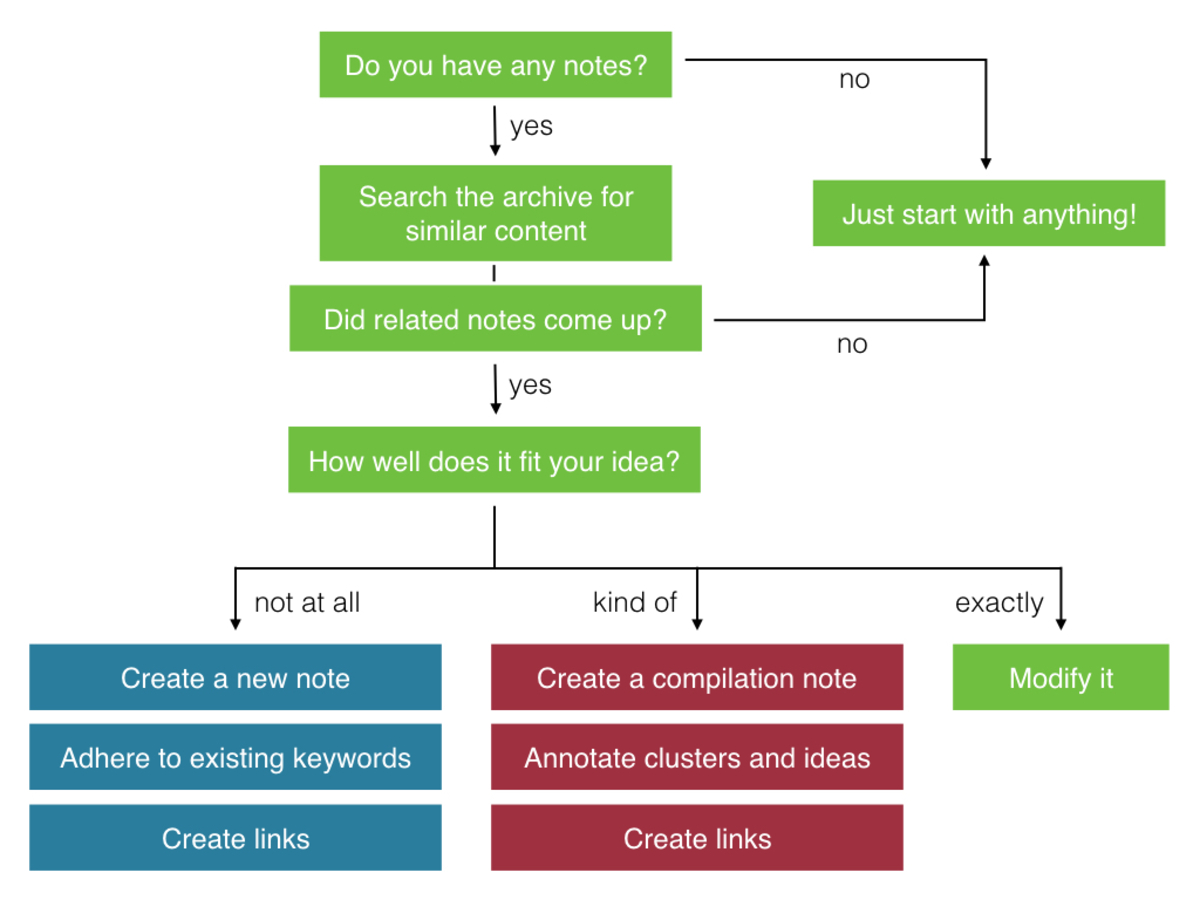
When Should You Start a New Note?
note taking suggestions
Goal, is to figure out if I can do this with Notion.

The zettel is the smallest unit, a note entered into the system. It requires a unique identifier, the body/content for the note, and footer/references.


Actively include citations to other Zettels.

Two types of structures depicted graphically
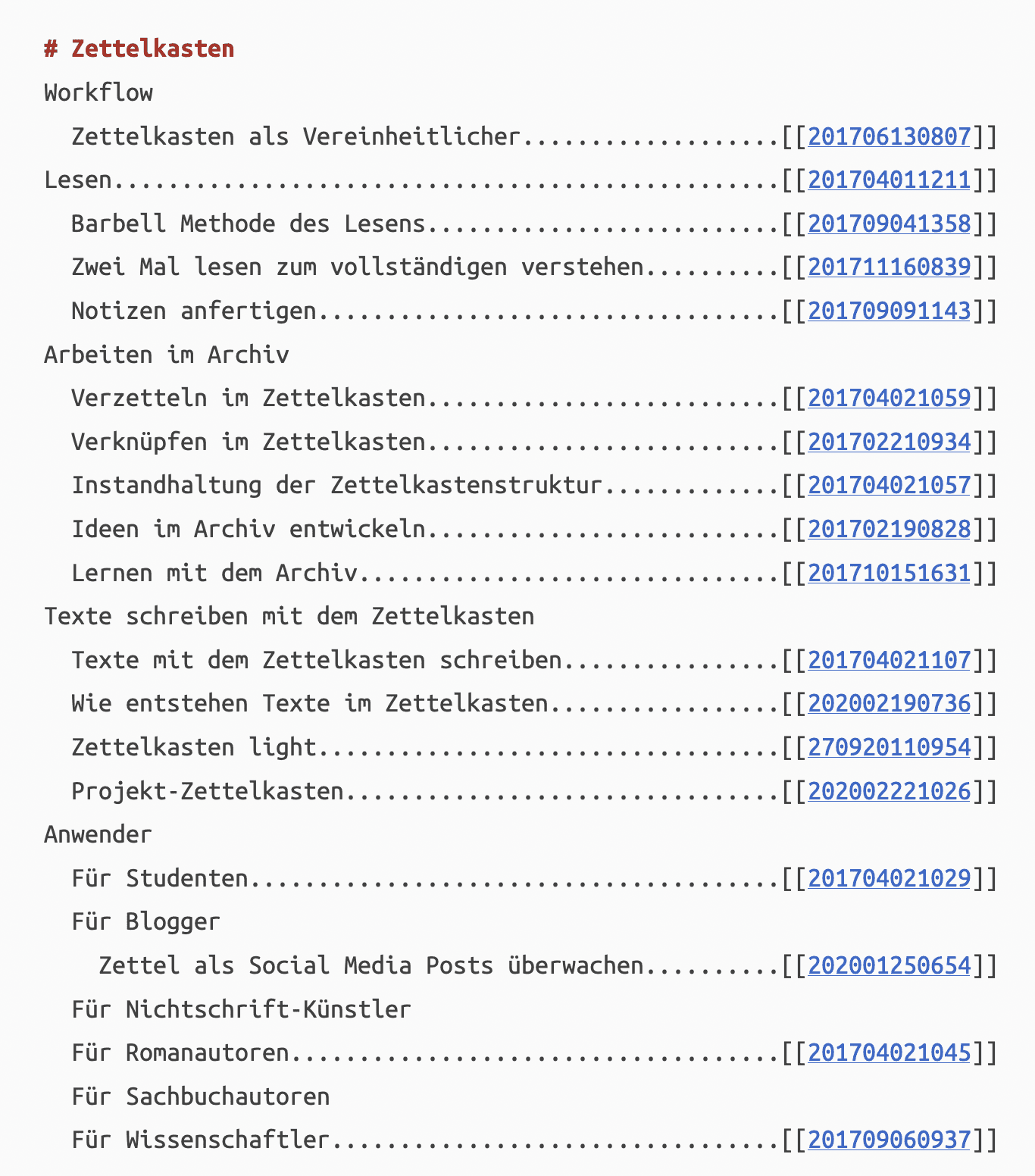
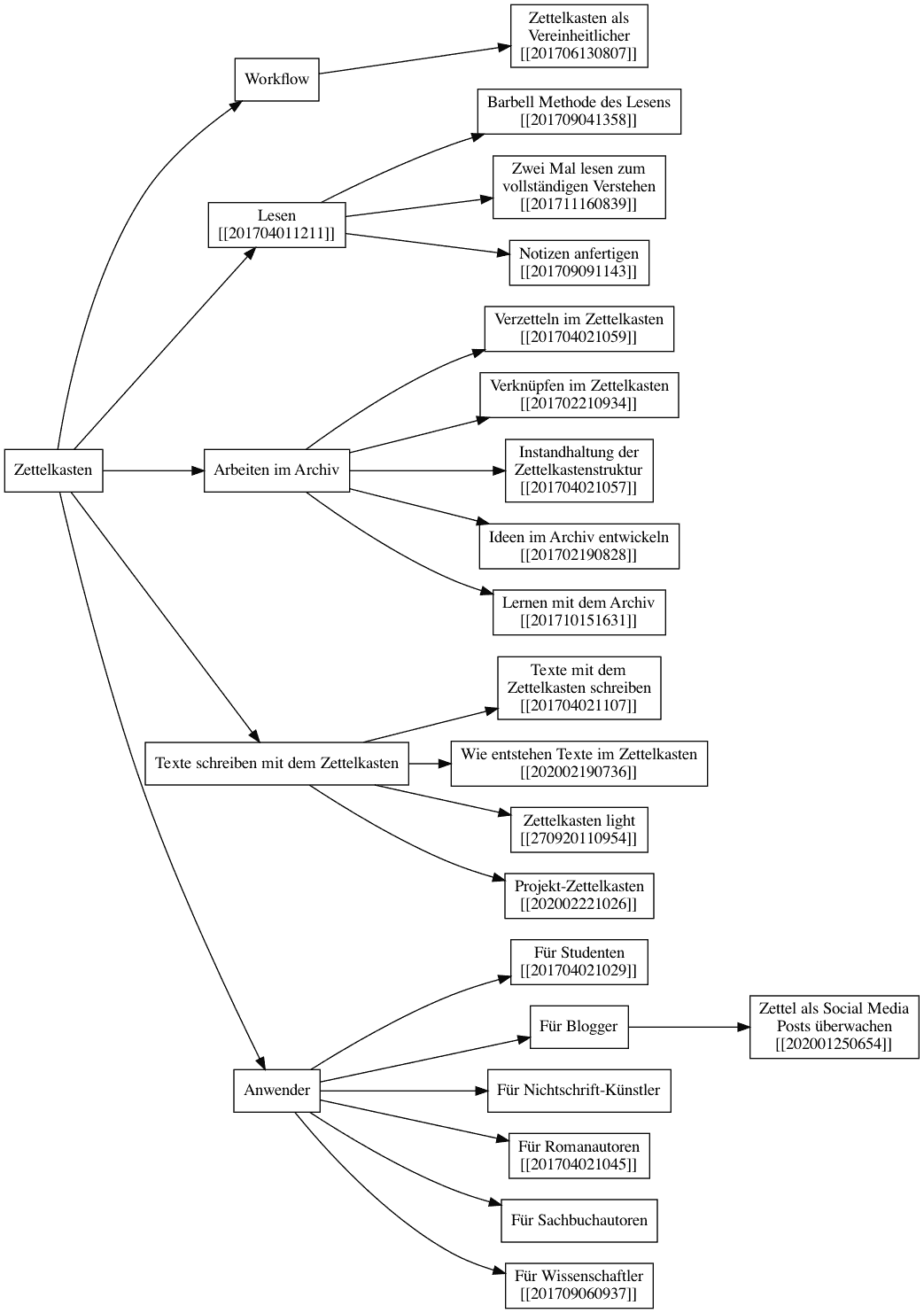
To make the most of a connection, always state explicitly why you made it. This is the link context. An example link context looks like this:
So ACTIVELY include the equivalent of citations to other ZETTELS.
The most important aspect of the body of the Zettel is that you write it in your own words. There is nothing wrong with capturing a verbatim quote on top. But one of the core rules to make the Zettelkasten work for you is to use your own words, instead of just copying and pasting something you believe is useful or insightful. This forces you to at least create a different version of it, your own version. This is one of the steps that lead to increased understanding of the material, and it improves recall of the information you process. Your Zettelkasten will truly be your own if its content is yours and not just a bunch of thoughts of other people.
If you enter the content in your own words you take active ownership. Also, as a grad student, you don't want the extra work of not only finding the reference you'd like to allude to but additionally having to rephrase it at the time of writing a paper or book.
A Zettelkasten is a personal tool for thinking and writing. It has hypertextual features to make a web of thought possible. The difference to other systems is that you create a web of thoughts instead of notes of arbitrary size and form, and emphasize connection, not a collection
definition
Communicating with Slip Boxes An Empirical Account Niklas Luhmann
Manual for the Zettelkasten method from the man himself.
Białek, M., & Grossmann, I. (2021). Social bias insights concern judgments rather than real-world decisions. PsyArXiv. https://doi.org/10.31234/osf.io/y3h7n
West, J. D., & Bergstrom, C. T. (2021). Misinformation in and about science. Proceedings of the National Academy of Sciences, 118(15). https://doi.org/10.1073/pnas.1912444117
Indians were not to be appeased—and certainly not brought into British public life.
India Company violated its treaty obligations
The government also decided to collect taxes directly from peasants, displacing the landed nobles as intermediaries.
replacing East India Company rule by crown government in 1858,
In return, the Mughal emperor would receive a hefty annual pension.
The East India Company’s Monopoly
Economic control -> political, military control
During the first half of the nineteenth century the British rulers of India had dismantled most of the traditional powers of the nobility and the rights of peasants.
The first half of the 1800s saw:
This appears to be the longer book form of the prior paper I'd noticed. I'll buy and download a copy shortly.
Oh! This looks cool! and apparently a longer book length version has just come out too...
Read chapter 11 "Memorizing Number" to see what Gardner says about available techniques. He only covers the phoenetic major system and some basic associative techniques.
No mention of the method of loci. Some interesting references listed for the chapter however.
‘bold’ means to have many observational consequences
As I said at the wiki I saw this link from, you don't test the hypothesis directly, you test the predictions, the "observational consequences", from the hypothesis.
Maarten van Smeden. (2021, March 25). 🚨🚨NEW EVIDENCE PYRAMID🚨🚨 https://t.co/RnGfl337tD [Tweet]. @MaartenvSmeden. https://twitter.com/MaartenvSmeden/status/1375008127737851904
Breznau, N., Rinke, E. M., Wuttke, A., Adem, M., Adriaans, J., Alvarez-Benjumea, A., Andersen, H. K., Auer, D., Azevedo, F., Bahnsen, O., Balzer, D., Bauer, G., Bauer, P. C., Baumann, M., Baute, S., Benoit, V., Bernauer, J., Berning, C., Berthold, A., … Nguyen, H. H. V. (2021). Observing Many Researchers using the Same Data and Hypothesis Reveals a Hidden Universe of Data Analysis. MetaArXiv. https://doi.org/10.31222/osf.io/cd5j9
Machine learning models for diagnosing COVID-19 are not yet suitable for clinical use. (2021, March 15). University of Cambridge. https://www.cam.ac.uk/research/news/machine-learning-models-for-diagnosing-covid-19-are-not-yet-suitable-for-clinical-use
Coenen, A., & Gureckis, T. (2021). The distorting effects of deciding to stop sampling information. PsyArXiv. https://doi.org/10.31234/osf.io/tbrea
Gupta, Prateek, Tegan Maharaj, Martin Weiss, Nasim Rahaman, Hannah Alsdurf, Abhinav Sharma, Nanor Minoyan, et al. ‘COVI-AgentSim: An Agent-Based Model for Evaluating Methods of Digital Contact Tracing’. ArXiv:2010.16004 [Cs], 29 October 2020. http://arxiv.org/abs/2010.16004.
Blakely, Tony, John Lynch, Koen Simons, Rebecca Bentley, and Sherri Rose. ‘Reflection on Modern Methods: When Worlds Collide—Prediction, Machine Learning and Causal Inference’. International Journal of Epidemiology 49, no. 6 (1 December 2020): 2058–64. https://doi.org/10.1093/ije/dyz132.
Bergot, N. (2020, October 24). Battling fake science: University of Alberta launches free online science literacy course. Edmonton Journal. https://edmontonjournal.com/news/local-news/battling-fake-science-ualberta-launches-free-online-science-literacy-course
Mentioned at the Liquid Margins session on 2021-03-12.
Collabovid. (n.d.). Retrieved 6 March 2021, from https://www.collabovid.org/
PRINCIPIA - Decentralized peer review. (n.d.). Retrieved 5 March 2021, from http://www.principia.network/
PhD, D. D. (n.d.). Managing scientific discourse on Twitter. Retrieved 5 March 2021, from https://statsepi.substack.com/p/managing-scientific-discourse-on
Cailin O’Connor. (2020, November 10). New paper!!! @psmaldino look at what causes the persistence of poor methods in science, even when better methods are available. And we argue that interdisciplinary contact can lead better methods to spread. 1 https://t.co/C5beJA5gMi [Tweet]. @cailinmeister. https://twitter.com/cailinmeister/status/1326221893372833793
Market, R. T. (n.d.). Build trust through criticism. Red Team Market. Retrieved 4 March 2021, from https://redteammarket.com/
Lakens, D. (2020, November 29). The 20% Statistician: Why I care about replication studies. The 20% Statistician. https://daniellakens.blogspot.com/2020/11/why-i-care-about-replication-studies.html
Pennycook, Gordon. ‘How the COVID-19 Crisis Exposes Widespread Climate Change Hypocrisy’. CBC, 22 May 2020. https://www.cbc.ca/news/canada/saskatchewan/opinion-climate-change-should-believe-dont-understand-1.5482416.
built using nullary type constructors
first sighting nullary 
Oreskes, N. (2019). Systematicity is necessary but not sufficient: On the problem of facsimile science. Synthese, 196(3), 881–905. https://doi.org/10.1007/s11229-017-1481-1
A scientist who does not utilize the scientific method is as much use as a carpenter who cannot make chairs or a plumber who cannot fix toilets. A science that exists as a fixed absolute, whose premises are not to be questioned, whose data is not to be examined and whose conclusions are not to be debated, is a pile of wood or a leaky toilet. Not the conclusion of a process, but its absence.
Understanding science is a process.
This is fascinating. I recognize it as something that is common knowledge to trained Feldenkrais Method practitioners. I have gained similar benefits from visiting a Feldenkrais practitioner and many more musculo skeletal benefits as well. They use very gentle, gradual and time-consuming "movement training" to "reset" muscular habits, many of which are harmful. It is amazing how much they can improve in every part of the musculo-skeleture, there are hundreds of muscles in complex patterns that can be getting inefficiently and parasitically employed. It can make a massive difference to the ease of daily life.When it comes to posture, trying to force the correct posture is hopeless; what is needed, is to "switch off" the muscles that shouldn't be "on", and vice versa. Most people can't just do that by mimicking a position. In Feldenkrais, mostly you are relaxed and lying on your back, and the practitioner gently performs repetitive counter-intuitive movements of your limbs etc which "persuade" muscles a certain way. Then when you sit up or stand up again, you tend to be "relaxed in the correct posture" rather than trying to force yourself into it.
What is the STAR interview method?The STAR interview method is a technique you can use to prepare for behavioral and situational interview questions. STAR stands for: situation, task, action and result.This method will help you prepare clear and concise responses using real-life examples.Hiring managers ask behavioral interview questions to determine whether you are the right fit for a job. By using the STAR strategy, you can make sure you’re fully addressing the interviewer’s question while also demonstrating how you were able to overcome previous challenges and be successful.
The [[STAR method]] can help people prepare for [[behavioural interview]] questions
GET is the primary mechanism of information retrieval and the focus of almost all performance optimizations.
Case study analysis of the communities of Shishmaref, Newtok,Kivalina, and Quinhagak, Alaska, USA, was the primary methodused to understand the environmental impacts
semi-quantitative assessment
iy
διαδικασία Definition from Wiktionary, the free dictionary Jump to navigation Jump to search Greek
Greek Noun
διαδικασία • (diadikasía) f (plural διαδικασίες)
Open Science Community Tilburg on Twitter. (n.d.). Twitter. Retrieved October 28, 2020, from https://twitter.com/OpenTilburg/status/1318518990000607234
Brañas-Garza, P., Jorrat, D., Espín, A. M., & Sánchez, A. (2020). Paid and hypothetical time preferences are the same: Lab, field and online evidence. ArXiv:2010.09262 [Physics]. http://arxiv.org/abs/2010.09262
Science as Amateur Software Development. (2020, September 26). https://www.youtube.com/watch?v=zwRdO9_GGhY&feature=youtu.be
Krumsvik, R. J. (2020). Extended Editorial. Nordic Journal of Digital Literacy, 15(03), 141–152. https://doi.org/10.18261/issn.1891-943x-2020-03-01
An Evaluation of Problem-based Learning Supported by Information and Communication Technology: A Pilot Study
(Under "Viewing Options", select PDF.) In this article, Ernawaty and Sujono (2019) summarize results of a study funded by the Research and Higher Education Directorate of Indonesia. The study aimed to evaluate the cogency of information and communication technologies (ICTs) in problem based learning (PBL) and traditional teaching methods (TTM) based upon learner test scores. The concepts of PBL, TTM, and implications of ICTs are briefly reviewed. Results of the study revealed that PBL with the support of an ICT yielded the highest test scores. (6/10)
Methods
But thirdly, and most valuably, the template gives you a big space at the bottom to write sentences that summarise the page. That is, you start writing your critical response on the notes themselves.
I do much this same thing, however, I'm typically doing it using Hypothes.is to annotate and highlight. These pieces go back to my own website where I can keep, categorize, and even later search them. If I like, I'll often do these sorts of summaries on related posts themselves (usually before I post them publicly if that's something I'm planning on doing for a particular piece.)
Weber notes that according to any economic theory that posited man as a rational profit-maximizer, raising the piece-work rate should increase labor productivity. But in fact, in many traditional peasant communities, raising the piece-work rate actually had the opposite effect of lowering labor productivity: at the higher rate, a peasant accustomed to earning two and one-half marks per day found he could earn the same amount by working less, and did so because he valued leisure more than income. The choices of leisure over income, or of the militaristic life of the Spartan hoplite over the wealth of the Athenian trader, or even the ascetic life of the early capitalist entrepreneur over that of a traditional leisured aristocrat, cannot possibly be explained by the impersonal working of material forces,
Science could learn something from this. Science is too far focused on the idealized positive outcomes that it isn't paying attention to the negative outcomes and using that to better define its outline or overall shape. We need to define a scientific opportunity cost and apply it to the negative side of research to better understand and define what we're searching for.
Of course, how can we define a new scientific method (or amend/extend it) to better take into account negative results--particularly in an age when so many results aren't even reproducible?
Fieldwork usually means living with and living like those who are studied
o be sure, ethnography has a long history, and its techniques, goals, and representational styles mean different things, not always complementary, to its many cu-rious readers.
This leads me to my bet: by analyzing the form and content of futures talk in such sitesof hyperprojectivity, we can understand the mechanisms by which future projectionsaffect decisions, relations, and institutions
I have made a number of theoretical arguments and placed somemethodological bets for future researc
I have made a number of theoretical arguments and placed somemethodological bets for future researc
This leads me to my bet: by analyzing the form and content of futures talk in such sitesof hyperprojectivity, we can understand the mechanisms by which future projectionsaffect decisions, relations, and institutions
2020 Conference on Computational Sociology | IRiSS. (n.d.). Retrieved 30 September 2020, from https://iriss.stanford.edu/css/conferences/2020-conference-computational-sociology
he PSH,1 at present year, counts with a tower of 36 m height, a control room and a field of 29 heliostats. The total of the installed heliostats can be separated in two sizes, as follows: 12 heliostats of 36 m2 (each one having 25 flat mirrors of 1.2 m × 1.2 m); 17 heliostats of 37.44 m2 (each one with 32 flat mirrors of 1.3 m × 0.9 m). The total reflecting-area is close to 1,070 m2. The heliostats installed on the field allow reaching a theoretical solar radiation concentration factor of 25, which corresponds to a thermal power of approximat
method, control
Table 2. Reference values for WBGT (°C) at corresponding work intensity.
foundational research to base heat stress on productivity analysis: reference values for WBGT to work intensity
Caniglia, E.C., Murray, E.J. (2020) Difference-in-Difference in the Time of Cholera: a Gentle Introduction for Epidemiologists. Current Epidemiology Reports. https://doi.org/10.1007/s40471-020-00245-2
Nagaraj, A., Shears, E., & Vaan, M. de. (2020). Improving data access democratizes and diversifies science. Proceedings of the National Academy of Sciences, 117(38), 23490–23498. https://doi.org/10.1073/pnas.2001682117
The Behaviour Change Wheel Book—A Guide To Designing Interventions. (n.d.). Retrieved September 17, 2020, from http://www.behaviourchangewheel.com/
Materialism and the Dialectical Method
to read
EWB Hub x GRiPS Student Workshop—Introduction to Experience Sampling Methods. (2020, June 29). https://www.youtube.com/watch?v=RcEfuSkiR8I
Susan Athey, July 22, 2020. (2020, August 2). https://www.youtube.com/watch?v=hqTOPrUxDzM
Kasy, M. (2020). How to run an adaptive field experiment. Retrieved from https://maxkasy.github.io/home/files/slides/adaptive_field_slides_kasy.pdf
r/BehSciMeta - Comment by u/VictorVenema on ”Can one distinguish between argument and fact? And, if yes, how?”. (n.d.). Reddit. Retrieved July 10, 2020, from https://www.reddit.com/r/BehSciMeta/comments/ho0qr1/can_one_distinguish_between_argument_and_fact_and/fxezalm
Steven Goodman: Statistical methods as social technologies versus analytic tools: Implications for metascience and research reform (Video). (n.d.). Metascience.com. Retrieved 2 September 2020, from https://metascience.com/events/metascience-2019-symposium/steven-goodman-statistical-methods-versus-analytic-tools/
get
The HTTP method for which the middleware function applies.
"Routes HTTP GET requests to the specified path with the specified callback functions."
https://expressjs.com/en/5x/api.html#app.get
What is GET? via MDN:
HTTP defines a set of request methods to indicate the desired action to be performed for a given resource.
The GET method requests a representation of the specified resource. Requests using GET should only retrieve data.
van Smeden, M., Lash, T. L., & Groenwold, R. H. H. (2020). Reflection on modern methods: Five myths about measurement error in epidemiological research. International Journal of Epidemiology, 49(1), 338–347. https://doi.org/10.1093/ije/dyz251
Mitze, T., Kosfeld, R., Rode, J., & Wälde, K. (2020). Face Masks Considerably Reduce COVID-19 Cases in Germany: A Synthetic Control Method Approach. IZA Discussion Paper, 13319.
Guo, L., Boocock, J., Tome, J. M., Chandrasekaran, S., Hilt, E. E., Zhang, Y., Sathe, L., Li, X., Luo, C., Kosuri, S., Shendure, J. A., Arboleda, V. A., Flint, J., Eskin, E., Garner, O. B., Yang, S., Bloom, J. S., Kruglyak, L., & Yin, Y. (2020). Rapid cost-effective viral genome sequencing by V-seq. BioRxiv, 2020.08.15.252510. https://doi.org/10.1101/2020.08.15.252510
Frias‐Navarro, D., Pascual‐Llobell, J., Pascual‐Soler, M., Perezgonzalez, J., & Berrios‐Riquelme, J. (n.d.). Replication crisis or an opportunity to improve scientific production? European Journal of Education, n/a(n/a). https://doi.org/10.1111/ejed.12417
CSM_seminar Causal Inference Isn't What You Think It Is. (2020). Retrieved 24 August 2020, from https://panopto.lshtm.ac.uk/Panopto/Pages/Viewer.aspx?id=ac88b49f-7e63-458d-823e-abe50152fb66
Arqoub, O. A., Elega, A. A., Özad, B. E., Dwikat, H., & Oloyede, F. A. (2020). Mapping the Scholarship of Fake News Research: A Systematic Review. Journalism Practice, 0(0), 1–31. https://doi.org/10.1080/17512786.2020.1805791
Laghaie, A., & Otter, T. (2020). Measuring evidence for mediation in the presence of measurement error [Preprint]. PsyArXiv. https://doi.org/10.31234/osf.io/5bz3f
Young, J.-G., Cantwell, G. T., & Newman, M. E. J. (2020). Robust Bayesian inference of network structure from unreliable data. ArXiv:2008.03334 [Physics, Stat]. http://arxiv.org/abs/2008.03334
Baker, S. R., Bloom, N., Davis, S. J., Kost, K. J., Sammon, M. C., & Viratyosin, T. (2020). The Unprecedented Stock Market Impact of COVID-19 (Working Paper No. 26945; Working Paper Series). National Bureau of Economic Research. https://doi.org/10.3386/w26945
Parikh, D. (2020, May 27). How we write rebuttals. Medium. https://medium.com/@deviparikh/how-we-write-rebuttals-dc84742fece1
van Rooij, I., & Baggio, G. (2020). Theory development requires an epistemological sea change [Preprint]. PsyArXiv. https://doi.org/10.31234/osf.io/rnw9q
Travis Whitfill MPH on Twitter: “A quick visual aid of major studies & levels of evidence against #hydroxychloroquine for the use in COVID-19 patients. No robust studies have found any type of benefit for HCQ. https://t.co/YbSjvaoEoO” / Twitter. (n.d.). Twitter. Retrieved August 2, 2020, from https://twitter.com/twhitfill/status/1288825416975708161
Hortaçsu, A., Liu, J., & Schwieg, T. (2020). Estimating the Fraction of Unreported Infections in Epidemics with a Known Epicenter: An Application to COVID-19 (Working Paper No. 27028; Working Paper Series). National Bureau of Economic Research. https://doi.org/10.3386/w27028
Dudel, C., Riffe, T., Acosta, E., van Raalte, A. A., Strozza, C., & Myrskylä, M. (2020). Monitoring trends and differences in COVID-19 case fatality rates using decomposition methods: Contributions of age structure and age-specific fatality [Preprint]. SocArXiv. https://doi.org/10.31235/osf.io/j4a3d
Cazabet, R., Boudebza, S., & Rossetti, G. (2020). Evaluating Community Detection Algorithms for Progressively Evolving Graphs. ArXiv:2007.08635 [Physics]. http://arxiv.org/abs/2007.08635
Weed, M. (2020). Models and methods to analyse the interaction of evidence and policy in the first 100 days of the UK government’s response to COVID-19 (v1.1). https://doi.org/10.31235/osf.io/f73u4
Fuhrer, J., & Cova, F. (2020). “Quick and dirty”: Intuitive cognitive style predicts trust in Didier Raoult and his hydroxychloroquine-based treatment against COVID-19. https://doi.org/10.31234/osf.io/ju62p
Sperrin, M., Martin, G. P., Sisk, R., & Peek, N. (2020). Missing data should be handled differently for prediction than for description or causal explanation. Journal of Clinical Epidemiology, 0(0). https://doi.org/10.1016/j.jclinepi.2020.03.028
Olsson-Collentine, A., van Assen, M. A. L. M., & Wicherts, J. M. (2020). Postprint—Heterogeneity in direct replications in psychology and its association with effect size [Preprint]. PsyArXiv. https://doi.org/10.31234/osf.io/m23v4
Candelieri, A., Giordani, I., Ponti, A., & Archetti, F. (2020). Resilience in urban networked infrastructure: The case of Water Distribution Systems. ArXiv:2006.14622 [Physics]. http://arxiv.org/abs/2006.14622
Mis-allocated scrutiny. (2020, June 24). The 100% CI. http://www.the100.ci/2020/06/24/mis-allocated-scrutiny/
van Smeden, M., Groenwold, R.H.H., & Moons, K. GM. (2020, June 18). A cautionary note on the use of the missing indicator method for handling missing data in prediction research. Journal of Clinical Epidemiology. https://doi.org/10.1016/j.jclinepi.2020.06.007
'We use Shakespeare's heartbeat': lockdown theatre for autistic audiences.(n.d.). The Guardian. Retrieved June 17, 2020 from https://www.theguardian.com/stage/2020/jun/17/shakespeare-autistic-audiences-lockdown-flute-theatre-pericles
Camacho, D., Panizo-LLedot, Á., Bello-Orgaz, G., Gonzalez-Pardo, A., & Cambria, E. (2020). The Four Dimensions of Social Network Analysis: An Overview of Research Methods, Applications, and Software Tools. Information Fusion. https://doi.org/10.1016/j.inffus.2020.05.009
Mitze, T., Kosfeld, R., Rode, J., & Wälde, K. (2020). Face Masks Considerably Reduce COVID-19 Cases in Germany: A Synthetic Control Method Approach (No. 13319). Institute of Labor Economics (IZA).
Horn, S. R., Weston, S. J., & Fisher, P. (2020). Identifying causal role of COVID-19 in immunopsychiatry models [Preprint]. PsyArXiv. https://doi.org/10.31234/osf.io/w4d5u
Efron, B. (2020). Prediction, Estimation, and Attribution. Journal of the American Statistical Association, 115(530), 636–655. https://doi.org/10.1080/01621459.2020.1762613
Han, H., & Dawson, K. J. (2020). JASP (Software) [Preprint]. PsyArXiv. https://doi.org/10.31234/osf.io/67dcb
Muthukrishna, M., Bell, A. V., Henrich, J., Curtin, C. M., Gedranovich, A., McInerney, J., & Thue, B. (2020). Beyond Western, Educated, Industrial, Rich, and Democratic (WEIRD) Psychology: Measuring and Mapping Scales of Cultural and Psychological Distance: Psychological Science. https://doi.org/10.1177/0956797620916782
Rosenbusch, H., Hilbert, L. P., Evans, A. M., & Zeelenberg, M. (2020). StatBreak: Identifying “Lucky” Data Points Through Genetic Algorithms. Advances in Methods and Practices in Psychological Science, 2515245920917950. https://doi.org/10.1177/2515245920917950
Padilla, L., Kay, M., & Hullman, J. (2020). Uncertainty Visualization [Preprint]. PsyArXiv. https://doi.org/10.31234/osf.io/ebd6r
Lewis, N. A., Bravo, M., Naiman, S., Pearson, A. R., Romero-Canyas, R., Schuldt, J., & Song, H. (2020). Using Qualitative Approaches to Improve Quantitative Inferences in Environmental Psychology [Preprint]. PsyArXiv. https://doi.org/10.31234/osf.io/eqyjp
Mei, X., Lee, H.-C., Diao, K., Huang, M., Lin, B., Liu, C., Xie, Z., Ma, Y., Robson, P. M., Chung, M., Bernheim, A., Mani, V., Calcagno, C., Li, K., Li, S., Shan, H., Lv, J., Zhao, T., Xia, J., … Yang, Y. (2020). Artificial intelligence for rapid identification of the coronavirus disease 2019 (COVID-19). MedRxiv, 2020.04.12.20062661. https://doi.org/10.1101/2020.04.12.20062661
Samuel, J.; Ali, G.G.M.N.; Rahman, M.M.; Esawi, E.; Samuel, Y. COVID-19 Public Sentiment Insights and Machine Learning for Tweets Classification. Preprints 2020, 2020050015 (doi: 10.20944/preprints202005.0015.v1)
Mandel, D. R., Collins, R. N., Risko, E. F., & Fugelsang, J. A. (2020). Effect of Confidence Interval Construction on Judgment Accuracy. https://doi.org/10.31234/osf.io/mktgj
Moore, D. A., & Wallsten, T. S. (2020). Rolling Forecasts. https://doi.org/10.31234/osf.io/ryvg3
Riolo, M. A., & Newman, M. E. J. (2020). Consistency of community structure in complex networks. Physical Review E, 101(5), 052306. https://doi.org/10.1103/PhysRevE.101.052306
West, R., Michie, S., Rubin, G. J., & Amlôt, R. (2020). Applying principles of behaviour change to reduce SARS-CoV-2 transmission. Nature Human Behaviour, 1–9. https://doi.org/10.1038/s41562-020-0887-9
Kojaku, S., Hébert-Dufresne, L., & Ahn, Y.-Y. (2020). The effectiveness of contact tracing in heterogeneous networks. ArXiv:2005.02362 [Physics, q-Bio]. http://arxiv.org/abs/2005.02362
Interdonato, R., Magnani, M., Perna, D., Tagarelli, A., & Vega, D. (2020). Multilayer network simplification: Approaches, models and methods. ArXiv:2004.14808 [Physics]. http://arxiv.org/abs/2004.14808
Modi, C., Boehm, V., Ferraro, S., Stein, G., & Seljak, U. (2020). Total COVID-19 Mortality in Italy: Excess Mortality and Age Dependence through Time-Series Analysis. MedRxiv, 2020.04.15.20067074. https://doi.org/10.1101/2020.04.15.20067074
most probable number (MPN) method. The MPN is determined by serial diluting the water sample in triplicate or pentaplicate followed by incubation in selective growth media
Through comparing data with data, we learn what our research partic-ipants view as problematic and begin to treat it analytically.